Category: Healthcare Services

  • Global Telemedicine Services Market Projected to Hit $250.54 Billion by 2030

    Global Telemedicine Services Market Projected to Hit $250.54 Billion by 2030

    The Business Research Company’s 2026 market reports feature enhanced tools like market attractiveness analysis, TAM assessment, and company scoring matrices, along with interactive dashboards, deeper supply chain insights, and startup coverage strengthening the depth, usability, and strategic value of insights.

    How Is The Market Size Of The Telemedicine Services Market Expected To Change From 2026 To 2030?

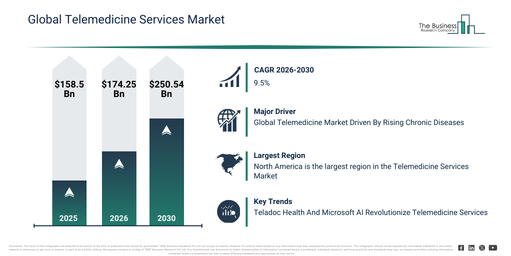
    The telemedicine services market has witnessed substantial growth in recent years. It is projected to expand from $158.5 billion in 2025 to $174.25 billion in 2026, showing a compound annual growth rate (CAGR) of 9.9%. This historical expansion can be attributed to the development of digital healthcare infrastructure, increasing smartphone and internet adoption, rising difficulties in accessing healthcare, the integration of electronic health records, and the broader acceptance of virtual consultations.

    The telemedicine services market size is anticipated to undergo significant expansion over the next few years. It is forecast to reach $250.54 billion by 2030, demonstrating a compound annual growth rate (CAGR) of 9.5%. This projected growth is driven by factors such as an escalating demand for easily accessible healthcare, increasing investments in digital health platforms, the broadening scope of chronic disease management programs, a heightened emphasis on cost-efficient care delivery, and the growing integration of AI-enabled clinical support tools. Noteworthy trends during this period include the wider uptake of virtual consultation platforms, an increase in the integration of remote patient monitoring tools, the expanded utilization of asynchronous care models, the diversification of specialty telemedicine services, and a stronger focus on secure digital health platforms.

    Access Your Free Sample Report For In-Depth Market Analysis:

    https://www.thebusinessresearchcompany.com/sample.aspx?id=3977&type=smp

    Which Key Factors Are Driving The Telemedicine Services Market Growth?

    The expanding prevalence of chronic illnesses is acting as a key catalyst for the telemedicine service market. These persistent health conditions, also known as non-communicable diseases (NCDs), are characterized by their long duration and typically slow progression. Telemedicine provides a convenient way for patients to consult with healthcare providers from their own homes, which is particularly advantageous for individuals with chronic diseases who might encounter difficulties traveling to medical facilities due to mobility challenges or the need for frequent consultations. For instance, in June 2023, the Institute for Health Metrics and Evaluation, a US-based public health research institute, reported that over half a billion people globally were living with diabetes, a number expected to more than double, reaching 1.3 billion people by 2050. Therefore, the increasing global burden of chronic diseases is anticipated to significantly boost the demand for the telemedicine services market.

    Which Segment Classifications Are Used In The Telemedicine Services Market Segment Analysis?

    The telemedicine services market covered in this report is segmented –

    1) By Type: Web-based, Cloud-based, On-premises

    2) By Technology Outlook: Real-Time Telemedicine Services, Store-And-Forward Telemedicine Services

    3) By Application: Teleradiology, Telepsychiatry, Telepathology, Teledermatology, Telecardiology, Other Applications

    Subsegments:

    1) By Web-based: Telehealth Platforms Accessible via Web Browsers, Online Consultation Services, Patient Portals for Managing Health Records and Appointments

    2) By Cloud-based: Telemedicine Applications Hosted on Cloud Servers, Remote Patient Monitoring Systems, Cloud-based Electronic Health Records (EHR) Integrated with Telehealth Services

    3) By On-premises: Telemedicine Systems Installed on Local Servers, Private Healthcare Facility Telemedicine Setups, Integrated Healthcare IT Systems for Telemedicine within Hospitals

    Which Trends Are Guiding The Direction Of The Telemedicine Services Market?

    Leading telemedicine providers are deploying advanced AI and chatbot solutions to secure a market advantage. The integration of artificial intelligence, featuring Microsoft’s services powered by OpenAI’s ChatGPT technology, is designed to alleviate pressure on healthcare professionals during virtual consultations. As an illustration, Teladoc Health, a US-based telemedicine firm, integrated Microsoft’s AI tools and chatbot features into its services in July 2023, thereby improving patient engagement with virtual care. This integration now allows users to get preliminary advice pre-consultation, streamlining triage and aiding more efficient management of health queries. Furthermore, the AI-driven platform optimizes appointment booking, facilitating easier access to prompt care for patients. Additionally, chatbots offer medication reminders to boost treatment compliance and deliver rapid answers to common health inquiries. Collectively, these enhancements markedly elevate the convenience and responsiveness of Teladoc Health’s digital healthcare experience.

    Which Firms Are Contributing To The Telemedicine Services Market Ecosystem?

    Major companies operating in the telemedicine services market are Teladoc Health Inc., Doctolib, Doctor on Demand, Amwell (American Well), MDLIVE Inc., Zocdoc Inc., Alina TeleHealth, HealthTap Inc., 2nd.MD, PlushCare Inc., AMD Global Telemedicine, Apollo Hospitals, SHL Telemedicine, KSYOS Telemedicine Centre, Medgate, Medi24, Immedicare LLP, Babylon Health UK, Push Doctor, Tele Medicine Clinic, Doctor Care Anywhere Limited, DOC+, BestDoctor, TeleMD, Specialist Telemed, SOC Telemed, Eagle Telemedicine, Blue Sky Telehealth, VSee, OKADOC, Doxy.me, GetBEE, Mind Mina Telemedicine, Abu Dhabi Telemedicine Centre

    Get The Full Telemedicine Services Market Report:

    https://www.thebusinessresearchcompany.com/report/telemedicine-services-global-market-report

    Which Region Is The Leading Market For The Telemedicine Services Market?

    North America was the largest region in the telemedicine services market in 2025. Asia-Pacific was the second largest region in global telemedicine services market share. The regions covered in the telemedicine services market report are Asia-Pacific, South East Asia, Western Europe, Eastern Europe, North America, South America, Middle East, Africa.

    Request A Customized Telemedicine Services Market Report For Competitive Insights:

    https://www.thebusinessresearchcompany.com/report/telemedicine-services-global-market-report

    Browse Through More Reports Similar to the Global Telemedicine Services Market 2026, By The Business Research Company

    Telemedicine Equipment Market Report 2026

    https://www.thebusinessresearchcompany.com/report/telemedicine-equipment-global-market-report

    Telemetry Market Report

    https://www.thebusinessresearchcompany.com/report/telemetry-global-market-report

    Network Telemetry Market Report

    https://www.thebusinessresearchcompany.com/report/network-telemetry-global-market-report

    Get in touch with us:

    The Business Research Company: https://www.thebusinessresearchcompany.com/

    Americas +1 310-496-7795

    Asia +44 7882 955267 & +91 8897263534

    Europe +44 7882 955267

    Email us at info@tbrc.info

    Follow us on:

    LinkedIn: https://in.linkedin.com/company/the-business-research-company

    YouTube: https://www.youtube.com/channel/UC24_fI0rV8cR5DxlCpgmyFQ

    Global Market Model: https://www.thebusinessresearchcompany.com/global-market-model
  • Telemedicine Equipment Market to Reach $15.42 Billion by 2030 at 17.5% CAGR

    Telemedicine Equipment Market to Reach $15.42 Billion by 2030 at 17.5% CAGR

    The Business Research Company’s 2026 market reports feature enhanced tools like market attractiveness analysis, TAM assessment, and company scoring matrices, along with interactive dashboards, deeper supply chain insights, and startup coverage strengthening the depth, usability, and strategic value of insights.

    From Its 2026 Market Size, What Value Is The Telemedicine Equipment Market Projected To Reach By 2030?

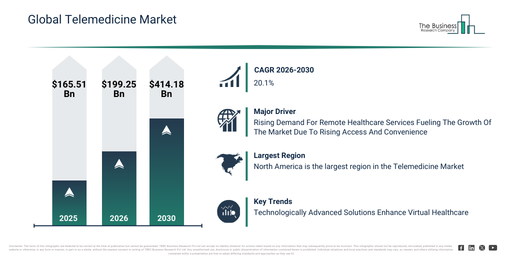
    The telemedicine equipment market has experienced rapid expansion in its size over recent years. This market is projected to expand from $6.9 billion in 2025 to reach $8.1 billion in 2026, demonstrating a compound annual growth rate (CAGR) of 17.3%. Historically, this expansion has been driven by increasing demand for remote healthcare delivery, the expansion of hospital telemedicine programs, rising adoption of digital diagnostic tools, the growth of outpatient care settings, and improvements in medical device connectivity.

    The telemedicine equipment market size is anticipated to undergo substantial expansion over the next few years. It is projected to climb to $15.42 billion by 2030, demonstrating a compound annual growth rate (CAGR) of 17.5%. This growth during the forecast period is fueled by several factors, such as increased investments in connected medical devices, the rising acceptance of home-based care models, the widening of telemedicine infrastructure in emerging regions, a growing need for portable diagnostic equipment, and an intensified focus on device interoperability standards. Prominent trends for this period include a greater adoption of integrated telemedicine hardware solutions, an escalating demand for mobile telemedicine carts, a broader deployment of remote diagnostic peripherals, the expansion of home-based telemedicine equipment, and an increased emphasis on interoperable medical devices.

    Access Your Free Sample Report For In-Depth Market Analysis:

    https://www.thebusinessresearchcompany.com/sample.aspx?id=14213&type=smp

    What Primary Drivers Are Shaping The Telemedicine Equipment Market?

    The increasing incidence of infectious diseases is poised to drive the telemedicine equipment market’s growth. These illnesses are ailments resulting from pathogenic microorganisms, including bacteria, viruses, fungi, or parasites, which can spread between people or from animals to humans. Through telemedicine, healthcare providers offer remote consultations, allowing patients to get medical advice and guidance without needing to visit a physical facility. As an illustration, a report from the UK Health Security Agency in August 2024 indicated that in 2023, the West Midlands region recorded the highest number of measles cases, totaling 160 cases (44%), with London following at 122 cases (33%). It was observed that children under 10 accounted for 63% of all cases, amounting to 232 instances. Measles activity notably surged late in the year, with 157 new cases in December, contrasting with only 45 cases in November. This escalating prevalence of infectious diseases is thus propelling the growth within the telemedicine equipment market.

    How Is The Telemedicine Equipment Market Organized By Segment Classification?

    The telemedicine equipment market covered in this report is segmented –

    1) By Product: Telemedicine Cart, Telemedicine Kit, Telemedicine Kiosk, Peripherals

    2) By Application: Teleradiology, Telepsychiatry, Telepathology, Teledermatology, Telecardiology, Other Applications

    3) By End User: Hospitals, Clinics, Specialty Centers, Home Care Settings, Other End Users

    Subsegments:

    1) By Telemedicine Cart: Mobile Telemedicine Carts, Stationary Telemedicine Carts

    2) By Telemedicine Kit: Basic Telemedicine Kits, Advanced Telemedicine Kits

    3) By Telemedicine Kiosk: Self-Service Kiosks, Staff-Assisted Kiosks

    4) By Peripherals: Diagnostic Cameras, Vital Signs Monitors, Stethoscopes, Otoscopes

    What Trends Are Affecting The Growth Of The Telemedicine Equipment Market?

    Major companies operating in the telemedicine equipment market are concentrating on developing innovative solutions, such as AI-powered telemedicine devices, to enhance the delivery of remote healthcare and improve patient outcomes. AI-powered telemedicine equipment refers to advanced healthcare devices and systems that integrate artificial intelligence to facilitate remote diagnosis, monitoring, and treatment of patients. For instance, in June 2024, C3 Med-Tech Private Limited, an India-based company manufacturing affordable and portable smartphone ophthalmic screening devices, secured an undisclosed investment from Industrial Metal Powders. This funding aims to launch innovative portable telemedicine and AI-enabled equipment designed for efficient eye checkups and real-time detection of eye diseases. This integration of telemedicine and AI technology enables immediate and accurate diagnoses, thereby enhancing the potential for timely interventions to prevent visual impairment and blindness. This strategic funding represents a significant milestone for C3 Med-Tech, allowing the company to expand its presence in India and globally through enhanced marketing, team development, and research and development efforts for future product innovations.

    Who Are The Industry Participants Involved In The Telemedicine Equipment Market?

    Major companies operating in the telemedicine equipment market are Medtronic plc, Koninklijke Philips N.V., Omron Healthcare Inc., TytoCare Inc., Butterfly Network Inc., AliveCor Inc., AMD Global Telemedicine Inc., iHealth Labs Inc., InTouch Technologies Inc., Visionary Medical Devices Inc., Eko Devices Inc., MedWand Technologies Inc., Welch Allyn Inc., BioIntelliSense Inc., Parsys Medical Inc., BioTel Systems Inc, Cloud DX Inc, GlobalMed, Thinklabs, Nonin Medical, Masimo

    Get The Full Telemedicine Equipment Market Report:

    https://www.thebusinessresearchcompany.com/report/telemedicine-equipment-global-market-report

    Where Is The Telemedicine Equipment Market Primarily Concentrated By Region?

    North America was the largest region in the telemedicine equipment market in 2025. The regions covered in the telemedicine equipment market report are Asia-Pacific, South East Asia, Western Europe, Eastern Europe, North America, South America, Middle East, Africa.

    Request A Customized Telemedicine Equipment Market Report For Competitive Insights:

    https://www.thebusinessresearchcompany.com/report/telemedicine-equipment-global-market-report

    Browse Through More Reports Similar to the Global Telemedicine Equipment Market 2026, By The Business Research Company

    Telemedicine Services Market

    https://www.thebusinessresearchcompany.com/report/telemedicine-services-market

    Telemetry Market Report

    https://www.thebusinessresearchcompany.com/report/telemetry-global-market-report

    Network Telemetry Market Report

    https://www.thebusinessresearchcompany.com/report/network-telemetry-global-market-report

    Get in touch with us:

    The Business Research Company: https://www.thebusinessresearchcompany.com/

    Americas +1 310-496-7795

    Asia +44 7882 955267 & +91 8897263534

    Europe +44 7882 955267

    Email us at info@tbrc.info

    Follow us on:

    LinkedIn: https://in.linkedin.com/company/the-business-research-company

    YouTube: https://www.youtube.com/channel/UC24_fI0rV8cR5DxlCpgmyFQ

    Global Market Model: https://www.thebusinessresearchcompany.com/global-market-model
  • Telemedicine Market Forecast Highlighting Expansion Across Sectors

    Telemedicine Market Forecast Highlighting Expansion Across Sectors

    The Business Research Company’s 2026 market reports feature enhanced tools like market attractiveness analysis, TAM assessment, and company scoring matrices, along with interactive dashboards, deeper supply chain insights, and startup coverage strengthening the depth, usability, and strategic value of insights.

    How Much Growth In Market Value Is Expected For The Telemedicine Market Between 2026 And 2030?

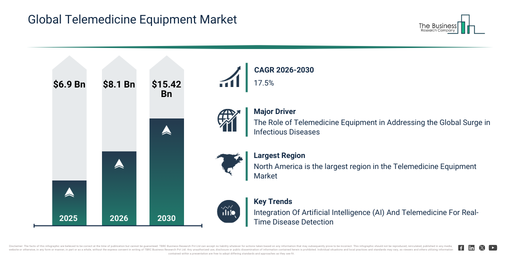
    The telemedicine market has experienced exponential expansion in recent years. It is projected to expand from $165.51 billion in 2025 to $199.25 billion in 2026, demonstrating a compound annual growth rate (CAGR) of 20.4%. The historical growth can be attributed to the broader reach of broadband connectivity, increasing disparities in healthcare access for rural populations, higher adoption of digital healthcare services, an increase in chronic disease prevalence, and improvements in video conferencing technologies.

    The telemedicine market is projected to experience substantial expansion over the upcoming years. Its valuation is anticipated to reach $414.18 billion by 2030, demonstrating a robust compound annual growth rate (CAGR) of 20.1%. This projected increase during the forecast period is primarily driven by a surging need for economical healthcare services, escalating capital expenditure in digital health frameworks, the broadening of value-based care approaches, increasing incorporation of AI-powered clinical assistance, and a heightened emphasis on patient-centered care strategies. Prominent developments expected in this period encompass a rise in virtual medical consultations, increased deployment of platforms for remote patient monitoring, greater incorporation of wearable health gadgets, the proliferation of mobile health applications, and a strengthened commitment to data security and regulatory adherence.

    Access Your Free Sample Report For In-Depth Market Analysis:

    https://www.thebusinessresearchcompany.com/sample.aspx?id=24720&type=smp

    Which Major Drivers Are Influencing The Expansion Of The Telemedicine Market?

    The anticipated expansion of the telemedicine market is fueled by an escalating need for remote healthcare provisions. Remote healthcare services encompass the provision of medical care, consultations, monitoring, and support remotely, utilizing digital communication tools. This includes offerings such as virtual consultations, telehealth services, digital prescriptions, mental health assistance, and web-based health education. The growing uptake of these services is primarily driven by enhanced healthcare accessibility, enabling individuals in geographically isolated or underserved regions to obtain prompt medical attention without physical travel. Telemedicine facilitates remote healthcare by allowing real-time virtual interactions between patients and medical professionals, thereby lessening the necessity for physical appointments and boosting care availability, particularly in distant locations. An illustrative example comes from FAIR Health Inc., a US-based non-profit organization, which reported in April 2023 that national telehealth utilization in 2023 saw a 7.3% increase, climbing from 5.5% of medical claim lines in December 2022 to 5.9% in January 2023. Consequently, the increasing requirement for remote healthcare services is propelling the expansion of the telemedicine market.

    Which Segments Define The Telemedicine Market Segment Structure?

    The telemedicine market covered in this report is segmented –

    1) By Type: Telehospital, Telehome

    2) By Service Type: Real-Time Consultation, Remote Patient Monitoring, Store-And-Forward Telemedicine, Mobile Health Applications

    3) By Technology: Video Conferencing, Mobile Health Applications, Web-based Platforms, Wearable Devices

    4) By Application: Teleradiology, Telepathology, Teledermatology, Telepsychiatry, Telecardiology, Other Applications

    5) By End User: Providers, Payers, Patients, Other End Users

    Subsegments:

    1) By Telehospital: Tele- Intensive Care Unit (ICU), Telepsychiatry, Teleradiology, Telecardiology, Telepathology

    2) By Telehome: Remote Patient Monitoring (RPM), Chronic Disease Management, Mobile Health (mHealth) Applications, Home-Based Tele-Rehabilitation, Virtual Consultations

    Which Trends Are Shaping The Telemedicine Market?

    Leading companies within the telemedicine market are concentrating on developing technologically advanced solutions, such as telemedicine platforms, to improve virtual healthcare services, encompassing consultations, mental health support, and remote monitoring. A telemedicine platform serves as a digital system facilitating remote healthcare, enabling patients to engage with healthcare providers, access medical advice, and manage their health conditions online. For instance, in June 2024, VS Digital Health Inc., a Canada-based company, unveiled VSDHOne. This telemedicine platform empowers businesses to swiftly launch compliant, nationwide telemedicine brands, thereby offering convenient and accessible healthcare across all 50 states. It further streamlines virtual consultations, prescriptions, and delivery, enhancing both patient access and provider efficiency.

    Who Are The Established Players Within The Telemedicine Market?

    Major companies operating in the telemedicine market are Cisco Systems Inc., Oracle Corporation, Siemens Healthineers AG, Koninklijke Philips NV, GE HealthCare Technologies Inc., Resideo Technologies Inc., Zoom Video Communications Inc., Teladoc Health Inc., Ping An Healthcare and Technology Company Limited, Veradigm LLC, Practo Technologies Private Limited, American Well Corporation, MDlive Inc., Doctor On Demand Inc., AMC Health LLC, SOC Telemed Inc., Eagle Telemedicine LLC, VSee Lab Inc., AMD Global Telemedicine Inc., NXGN Management LLC, Specialist Telemed LLC.

    Get The Full Telemedicine Market Report:

    https://www.thebusinessresearchcompany.com/report/telemedicine-global-market-report

    Which Region Has The Greatest Market Share In The Telemedicine Market?

    North America was the largest region in the telemedicine market in 2025. Asia-Pacific is expected to be the fastest-growing region in the forecast period. The regions covered in the telemedicine market report are Asia-Pacific, South East Asia, Western Europe, Eastern Europe, North America, South America, Middle East, Africa.

    Request A Customized Telemedicine Market Report For Competitive Insights:

    https://www.thebusinessresearchcompany.com/report/telemedicine-global-market-report

    Browse Through More Reports Similar to the Global Telemedicine Market 2026, By The Business Research Company

    Video Telemedicine Market Report 2026

    https://www.thebusinessresearchcompany.com/report/video-telemedicine-global-market-report

    Telemedicine Equipment Market Report

    https://www.thebusinessresearchcompany.com/report/telemedicine-equipment-global-market-report

    Telehealth Market Report

    https://www.thebusinessresearchcompany.com/report/telehealth-global-market-report

    Get in touch with us:

    The Business Research Company: https://www.thebusinessresearchcompany.com/

    Americas +1 310-496-7795

    Asia +44 7882 955267 & +91 8897263534

    Europe +44 7882 955267

    Email us at info@tbrc.info

    Follow us on:

    LinkedIn: https://in.linkedin.com/company/the-business-research-company

    YouTube: https://www.youtube.com/channel/UC24_fI0rV8cR5DxlCpgmyFQ

    Global Market Model: https://www.thebusinessresearchcompany.com/global-market-model
  • West Syndrome Market Growth Forecast to $1.61 Billion by 2030 at 7.8% CAGR

    West Syndrome Market Growth Forecast to $1.61 Billion by 2030 at 7.8% CAGR

    The Business Research Company’s 2026 market reports feature enhanced tools like market attractiveness analysis, TAM assessment, and company scoring matrices, along with interactive dashboards, deeper supply chain insights, and startup coverage strengthening the depth, usability, and strategic value of insights.

    How Is The Market Size Of The West Syndrome Market Expected To Scale Between 2026 And 2030?

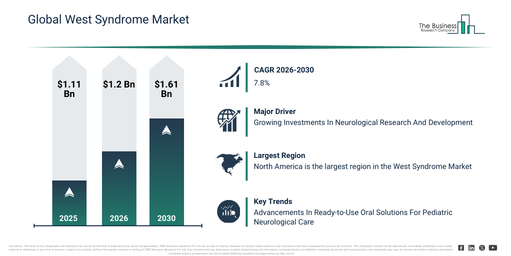
    The west syndrome market has demonstrated robust growth in recent years. Its value is projected to rise from $1.11 billion in 2025 to $1.2 billion in 2026, exhibiting a compound annual growth rate (CAGR) of 8.1%. This historical expansion can be primarily attributed to several factors, including improved recognition of rare pediatric neurological disorders, the availability of established anticonvulsant therapies, the expansion of pediatric neurology centers, increasing access to hospital-based treatment, and growing awareness among healthcare professionals.

    The west syndrome market is projected to experience substantial expansion over the upcoming years. It is anticipated to reach $1.61 billion by 2030, exhibiting a compound annual growth rate (CAGR) of 7.8%. This anticipated growth during the forecast period stems from factors such as heightened investments in the development of rare disease drugs, a stronger emphasis on precision neurology treatments, the broadening of early screening initiatives, an uptick in the use of new therapeutic combinations, and increased clinical trial activity specifically for pediatric epilepsy. Key trends expected within the forecast timeframe encompass an intensified focus on the early diagnosis of infantile spasms, a greater utilization of advanced neuroimaging and EEG monitoring techniques, the increasing acceptance of combination drug therapies, the broadening of clinical research into rare neurological disorders, and a reinforced emphasis on tracking treatment outcomes.

    Access Your Free Sample Report For In-Depth Market Analysis:

    https://www.thebusinessresearchcompany.com/sample.aspx?id=21322&type=smp

    What Leading Drivers Are Supporting The West Syndrome Market Expansion?

    Elevated expenditure on research and development for neurological conditions is projected to fuel the expansion of the west syndrome market in the future. This spending encompasses financial allocations and investments aimed at enhancing comprehension, diagnostic methods, and therapeutic approaches for neurological disorders. This surge in R&D investment is driven by factors such as the rising incidence of neurological disorders, progress in medical technology, increased understanding and desire for novel therapies, and significant funding efforts from both governmental and private entities. Higher R&D expenditure in neurological illnesses leads to improvements in diagnostic tools, treatments, and therapeutic alternatives, thereby stimulating the growth of the west syndrome market. For example, in May 2023, the National Institute of Neurological Disorders and Stroke (NINDS), a US government agency under the National Institutes of Health, was allocated USD 2.809 billion in 2023, with a request for a slightly higher amount of USD 2.825 billion for 2024, to back various neurological research endeavors. Consequently, the elevated research and developmental expenditure on neurological illness is a key catalyst for the expansion of the west syndrome market.

    How Is The West Syndrome Market Segmented Across Different Segment Categories?

    The west syndrome market covered in this report is segmented –

    1) By Treatment: Anticonvulsant, Benzodiazepine, Corticosteroids, Vitamin B

    2) By Route Of Administration: Parenteral Route, Oral Route, Other Routes Of Administration

    3) By Distribution Channel: Hospitals Pharmacies, Online Pharmacies, Retail Pharmacies

    4) By End-User: Hospitals, Homecare, Clinics

    Subsegments:

    1) By Anticonvulsant: Traditional Anticonvulsants, Newer Anticonvulsants

    2) By Benzodiazepine: Diazepam, Lorazepam, Clonazepam

    3) By Corticosteroids: Prednisolone, Adrenocorticotropic Hormone (ACTH), Dexamethasone

    4) By Vitamin B: Vitamin B6 (Pyridoxine), Vitamin B12 (Cobalamin)

    What Emerging Trends Are Seen In The West Syndrome Market?

    Key companies active in the west syndrome market are concentrating on developing innovative solutions, such as ready-to-use oral vigabatrin solutions, to enhance ease of administration, ensure accurate dosing, and improve treatment adherence in infants and young children. These ready-to-use oral vigabatrin formulations are specifically designed to deliver antiepileptic drugs, including vigabatrin or adrenocorticotropic hormone (ACTH), in a patient-friendly format. For instance, in June 2024, Pryos Pharmaceuticals, a US-based pharmaceutical firm, received Food and Drug Administration (FDA) approval for a ready-to-use oral solution of vigabatrin for the treatment of infantile spasms. Vigabatrin works by irreversibly inhibiting GABA transaminase (GABA-T), an enzyme responsible for breaking down gamma-aminobutyric acid (GABA) in the brain. The resulting increase in GABA acts as a restraint on the excitatory processes that can initiate seizure activity.

    Which Organizations Play A Role In The West Syndrome Market Landscape?

    Major companies operating in the west syndrome market are Takeda Pharmaceuticals, Jazz Pharmaceuticals, UCB S.A., H. Lundbeck A/S, Mallinckrodt Pharmaceuticals plc, Marinus Pharmaceuticals Inc., Ovid Therapeutics Inc., GW Pharmaceuticals Limited, SK Biopharmaceuticals Co Ltd, Catalyst Pharmaceuticals Inc., Eisai Co Ltd, Neurelis Inc, Ultragenyx Pharmaceutical Inc, Sanofi S.A., Novartis AG, Pfizer Inc, GlaxoSmithKline plc, Recordati Rare Diseases, Bial Portela & Ca SA, Supernus Pharmaceuticals Inc, Praxis Precision Medicines, Encodia Therapeutics, Insys Therapeutics, Orphelia Pharma SA, Valerion Therapeutics, Retrophin Inc, Medice Arzneimittel Pütter GmbH & Co KG

    Get The Full West Syndrome Market Report:

    https://www.thebusinessresearchcompany.com/report/west-syndrome-global-market-report

    Where Is The West Syndrome Market Most Concentrated Geographically?

    North America was the largest region in the west syndrome market in 2025. Asia-Pacific is expected to be the fastest-growing region in the forecast period. The regions covered in the west syndrome market report are Asia-Pacific, South East Asia, Western Europe, Eastern Europe, North America, South America, Middle East, Africa.

    Request A Customized West Syndrome Market Report For Competitive Insights:

    https://www.thebusinessresearchcompany.com/report/west-syndrome-global-market-report

    Browse Through More Reports Similar to the Global West Syndrome Market 2026, By The Business Research Company

    Wolff Parkinson White Syndrome Market Report 2026

    https://www.thebusinessresearchcompany.com/report/wolff-parkinson-white-syndrome-global-market-report

    Dry Eye Syndrome Market Report

    https://www.thebusinessresearchcompany.com/report/dry-eye-syndrome-global-market-report

    Gardner Syndrome Treatment Market Report

    https://www.thebusinessresearchcompany.com/report/gardner-syndrome-treatment-global-market-report

    Get in touch with us:

    The Business Research Company: https://www.thebusinessresearchcompany.com/

    Americas +1 310-496-7795

    Asia +44 7882 955267 & +91 8897263534

    Europe +44 7882 955267

    Email us at info@tbrc.info

    Follow us on:

    LinkedIn: https://in.linkedin.com/company/the-business-research-company

    YouTube: https://www.youtube.com/channel/UC24_fI0rV8cR5DxlCpgmyFQ

    Global Market Model: https://www.thebusinessresearchcompany.com/global-market-model
  • Wellness Genomics Market Forecast to Reach $10.61 Billion by 2030 at 13.3% CAGR

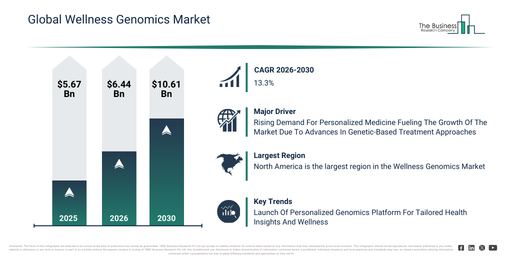
    Wellness Genomics Market Forecast to Reach $10.61 Billion by 2030 at 13.3% CAGR

    The Business Research Company’s 2026 market reports feature enhanced tools like market attractiveness analysis, TAM assessment, and company scoring matrices, along with interactive dashboards, deeper supply chain insights, and startup coverage strengthening the depth, usability, and strategic value of insights.

    What Level Of Market Value Growth Is Predicted For The Wellness Genomics Market From 2026 To 2030?

    The wellness genomics market has experienced substantial expansion in recent times. Projections indicate its size will increase from $5.67 billion in 2025 to $6.44 billion by 2026, demonstrating a compound annual growth rate (CAGR) of 13.6%. This historical growth is primarily driven by factors such as increased consumer understanding of genetic health insights, a reduction in the expenses associated with genetic testing, the proliferation of online wellness platforms, a heightened emphasis on preventive healthcare measures, and the growing uptake of personalized health programs.

    The wellness genomics market is projected to experience substantial growth in the coming years, with its size forecast to reach $10.61 billion by 2030, exhibiting a compound annual growth rate (CAGR) of 13.3%. This expansion during the projection period stems from factors such as greater integration of genomics with digital health applications, a rising need for predictive wellness analytics, the broadening of AI-driven lifestyle advice, an increasing emphasis on optimizing long-term health, and higher adoption of genomics in everyday wellness choices. Key trends anticipated for this period encompass a surge in direct-to-consumer genomic testing uptake, a growing convergence of lifestyle and genetic data platforms, an increasing desire for tailored nutrition and fitness information, the broadening scope of preventive health genomics applications, and a heightened commitment to data privacy and genetic security.

    Access Your Free Sample Report For In-Depth Market Analysis:

    https://www.thebusinessresearchcompany.com/sample.aspx?id=24430&type=smp

    Which Key Factors Are Driving The Wellness Genomics Market Growth?

    The anticipated rise in the demand for personalized medicine is projected to drive the expansion of the wellness genomics market in the future. This medical strategy customizes treatments and care based on a person’s specific genetic profile, way of life, and health status, aiming for highly accurate and successful results. The need for personalized medicine is on the rise, primarily due to advances in genetic technology that facilitate the customization of treatments according to individual genetic profiles, resulting in more potent and focused therapeutic interventions. Wellness genomics complements personalized medicine by offering genetic insights, which in turn aid in adapting lifestyle choices and preventative health measures to an individual’s distinct biological composition. As an illustration, in February 2024, the Personalized Medicine Coalition, a US-based non-profit entity, reported that the FDA sanctioned 16 novel personalized treatments for individuals suffering from rare diseases in 2023, which represented over twice the six approvals issued in 2022. Consequently, the escalating demand for personalized medicine is fueling the expansion of the wellness genomics market.

    What Are The Main Segments Within The Wellness Genomics Market Segment Structure?

    The wellness genomics market covered in this report is segmented –

    1) By Type: Predictive Testing, Consumer Genomics, Other Types

    2) By Setting Type: Direct-To Consumer (DTC), Professional

    3) By Application: Breast And Ovarian Cancer Screening, Diabetic Screening And Monitoring, Colon Cancer Screening, Alzheimer’s Disease, Prostate Cancer Screening, Orthopedic And Musculoskeletal Screening, Other Applications

    Subsegments:

    1) By Predictive Testing: Nutrigenomics Testing, Fitness Genomics Testing, Disease Susceptibility Testing

    2) By Consumer Genomics: Ancestry And Heritage Analysis, Personal Trait Analysis, Direct-To-Consumer (DTC) Wellness Kits

    3) By Other Types: Epigenetic Testing, Microbiome And Gut Health Genomics, Pharmacogenomics For Lifestyle Drugs

    Which Trends Are Guiding The Direction Of The Wellness Genomics Market?

    Major companies operating within the wellness genomics market are prioritizing the development of innovative solutions, including personalized genomics platforms, to provide customized health insights and lifestyle recommendations derived from an individual’s genetic makeup. A personalized genomics platform is defined as a technology or service that analyzes a person’s genetic data to deliver tailored health insights and suggestions. For example, in September 2024, Neuberg Diagnostics Private Limited, an India-based diagnostic service provider, launched Geniee, a personalized genomics platform intended to offer individuals bespoke health insights based on their genetic composition. Geniee conducts thorough genetic testing, assisting users in understanding how their genes influence responses to medications, diet, exercise, and nutrition. Leveraging this information enables users to optimize their health through personalized wellness plans, early risk detection, and enhanced treatment strategies. The platform’s objective is to empower individuals to proactively manage their health, marking a notable progression in personalized medicine and preventive healthcare.

    Who Are The Companies Participating In The Wellness Genomics Market?

    Major companies operating in the wellness genomics market are 23andMe Holding Co., Color Health Inc., Variantyx Inc., Segterra Inc., Dante Labs Inc., Pathway Genomics Corporation, Futura Genetics Ltd., Genopalate Inc., OhMyGene Inc., Rootine Labs Inc., Toolbox Genomics Inc., Xcode Life Sciences Pvt Ltd., GenepoweRx Healthcare Pvt Ltd., Gx Sciences Inc., Nebula Genomics Inc., AncestryDNA, MyHeritage, Living DNA, Helix, Vitagene, DNAfit, CircleDNA, NutriGenomix

    Get The Full Wellness Genomics Market Report:

    https://www.thebusinessresearchcompany.com/report/wellness-genomics-global-market-report

    Which Region Dominates The Wellness Genomics Market By Market Share?

    North America was the largest region in the wellness genomics market in 2025. Asia-Pacific is expected to be the fastest-growing region in the forecast period. The regions covered in the wellness genomics market report are Asia-Pacific, South East Asia, Western Europe, Eastern Europe, North America, South America, Middle East, Africa.

    Request A Customized Wellness Genomics Market Report For Competitive Insights:

    https://www.thebusinessresearchcompany.com/report/wellness-genomics-global-market-report

    Browse Through More Reports Similar to the Global Wellness Genomics Market 2026, By The Business Research Company

    Genomics Market Report 2026

    https://www.thebusinessresearchcompany.com/report/genomics-global-market-report

    Genomics Services Market Report

    https://www.thebusinessresearchcompany.com/report/genomics-services-global-market-report

    Health And Wellness Market Report

    https://www.thebusinessresearchcompany.com/report/health-and-wellness-global-market-report

    Get in touch with us:

    The Business Research Company: https://www.thebusinessresearchcompany.com/

    Americas +1 310-496-7795

    Asia +44 7882 955267 & +91 8897263534

    Europe +44 7882 955267

    Email us at info@tbrc.info

    Follow us on:

    LinkedIn: https://in.linkedin.com/company/the-business-research-company

    YouTube: https://www.youtube.com/channel/UC24_fI0rV8cR5DxlCpgmyFQ

    Global Market Model: https://www.thebusinessresearchcompany.com/global-market-model
  • Global Weight Loss Products and Services Market Expected to Hit $556.72 Billion by 2030 at 9.5% CAGR

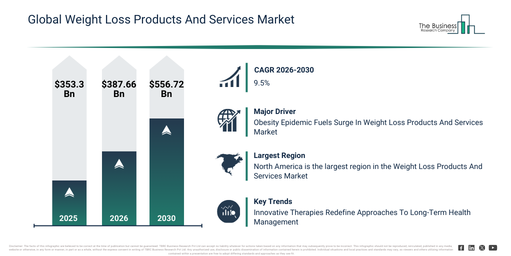
    Global Weight Loss Products and Services Market Expected to Hit $556.72 Billion by 2030 at 9.5% CAGR

    The Business Research Company’s 2026 market reports feature enhanced tools like market attractiveness analysis, TAM assessment, and company scoring matrices, along with interactive dashboards, deeper supply chain insights, and startup coverage strengthening the depth, usability, and strategic value of insights.

    How Will The Market Value Of The Weight Loss Products And Services Market Progress Between 2026 And 2030?

    The weight loss products and services market has shown significant growth in recent years. It is anticipated to increase from $353.3 billion in 2025 to $387.66 billion in 2026, exhibiting a compound annual growth rate (CAGR) of 9.7%. This historic growth can be attributed to a rising consumer focus on lifestyle wellness, the expansion of commercial weight loss programs, greater retail availability of diet products, increasing awareness of obesity risks, and the proliferation of e-commerce health platforms.

    The weight loss products and services market is projected to experience substantial expansion in the coming years, reaching $556.72 billion by 2030, exhibiting a compound annual growth rate (CAGR) of 9.5%. This anticipated growth is driven by factors such as the increasing uptake of digital coaching platforms, a rising call for personalized diet plans, the broadening of online wellness communities, a heightened emphasis on sustainable and clean-label offerings, and the incorporation of AI-driven nutrition analytics. Key trends anticipated during this period include a greater need for comprehensive weight loss strategies, the growing appeal of subscription-based wellness programs, the increasing integration of mobile health applications, an expansion in personalized nutrition items, and a stronger focus on long-term weight management.

    Access Your Free Sample Report For In-Depth Market Analysis:

    https://www.thebusinessresearchcompany.com/sample.aspx?id=8051&type=smp

    What Primary Drivers Are Shaping The Weight Loss Products And Services Market?

    The escalating prevalence of obesity is projected to drive the future growth of the weight loss products and services market. Obesity is defined as a medical condition where excessive body fat accumulates to an extent that it can negatively affect health. Weight loss products and services are utilized to address obesity by assisting individuals in reducing surplus body weight, improving their overall health, and encouraging sustainable lifestyle adjustments. For instance, in May 2025, data from the Office for Health Improvement and Disparities, a UK-based government body, revealed that from 2023 to 2024, an estimated 64.5% of adults aged 18 and over in England were overweight or living with obesity, an increase from 64.0% in 2022 to 2023. Thus, the increasing prevalence of obesity is a key factor propelling the expansion of the weight loss products and services market.

    How Is Segmentation Applied In The Weight Loss Products And Services Market Segment Analysis?

    The weight loss products and services market covered in this report is segmented –

    1) By Products: Food, Beverage, Supplements, Other Weight Loss Products

    2) By Services: Fitness Centers, Slimming Centers, Consultation Services, Other Services, Fat Replacers

    3) By Sales Channel: Supermarkets And Hypermarkets, Convenience Stores, Retail Pharmacies, E-Commerce

    Subsegments:

    1) By Food: Low-Calorie Snacks, Meal Replacement Bars, Diet Frozen Meals

    2) By Beverage: Weight Loss Shakes, Detox Teas, Low-Calorie Drinks

    3) By Supplements: Herbal Weight Loss Supplements, Protein Supplements, Fat Burners

    4) By Other Weight Loss Products: Weight Loss Devices, Fitness Equipment, Weight Management Apps And Programs

    What Trends Are Affecting The Growth Of The Weight Loss Products And Services Market?

    Leading companies within the weight loss products and services market are concentrating on creating novel solutions, including GLP-1 receptor agonist medications, to address the growing need for effective clinical obesity treatment and safe, medically supervised weight loss. These GLP-1 receptor agonists are injectable pharmaceuticals designed to replicate the glucagon-like peptide-1 hormone, which plays a role in appetite regulation, slowing down stomach emptying, and enhancing blood sugar stability, thus providing a more precise method than conventional dietary plans, physical activity, or non-prescription supplements. As an illustration, in June 2025, the Danish pharmaceutical firm Novo Nordisk A/S introduced Wegovy in India, an advanced GLP-1 receptor agonist therapy specifically formulated for adults experiencing obesity or being overweight with co-occurring health conditions. Wegovy’s primary component is semaglutide, delivered once weekly through a subcutaneous injection. This medication operates by suppressing hunger, increasing feelings of fullness, and facilitating lasting weight reduction when used in conjunction with lifestyle modifications. Its notable attributes comprise a clinically demonstrated weight loss of up to 15% over a period of 68 weeks, extensive support for metabolic well-being, and structured dosing regimens to enhance patient compliance.

    Who Are The Companies Participating In The Weight Loss Products And Services Market Environment?

    Major companies operating in the weight loss products and services market are Abbott Laboratories, GlaxoSmithKline PLC, Glanbia PLC, MuscleBlaze, Gold’s Gym International Inc., Hammer Nutrition Direct, Jarrow Formulas Inc., Apollo Endosurgery Inc., WW Health Solutions, Nutrisystem, Jenny Craig Inc., Slimming World, Atkins Nutritionals Inc., Medifast Inc., VLCC Healthcare Ltd., Curves International Inc., Fitbit Inc., Herbalife Nutrition Ltd., Noom Inc., Novo Nordisk, HealthifyMe, CalorieKing

    Get The Full Weight Loss Products And Services Market Report:

    https://www.thebusinessresearchcompany.com/report/weight-loss-products-and-services-global-market-report

    Which Region Is The Largest In The Weight Loss Products And Services Market?

    North America was the largest region in the weight loss products and services market in 2025. Asia-Pacific is expected to be the fastest-growing region in the weight loss products and services market report during the forecast period. The regions covered in the weight loss products and services market report are Asia-Pacific, South East Asia, Western Europe, Eastern Europe, North America, South America, Middle East, Africa.

    Request A Customized Weight Loss Products And Services Market Report For Competitive Insights:

    https://www.thebusinessresearchcompany.com/report/weight-loss-products-and-services-global-market-report

    Browse Through More Reports Similar to the Global Weight Loss Products And Services Market 2026, By The Business Research Company

    Weight Loss Services Market Report 2026

    https://www.thebusinessresearchcompany.com/report/weight-loss-services-global-market-report

    Weight Loss Supplements Market Report

    https://www.thebusinessresearchcompany.com/report/weight-loss-supplements-global-market-report

    Exercise And Weight Loss Apps Market Report

    https://www.thebusinessresearchcompany.com/report/exercise-and-weight-loss-apps-global-market-report

    Get in touch with us:

    The Business Research Company: https://www.thebusinessresearchcompany.com/

    Americas +1 310-496-7795

    Asia +44 7882 955267 & +91 8897263534

    Europe +44 7882 955267

    Email us at info@tbrc.info

    Follow us on:

    LinkedIn: https://in.linkedin.com/company/the-business-research-company

    YouTube: https://www.youtube.com/channel/UC24_fI0rV8cR5DxlCpgmyFQ

    Global Market Model: https://www.thebusinessresearchcompany.com/global-market-model
  • Weight Loss Drugs Market Projected to Reach $23.59 Billion by 2030 at 41% CAGR

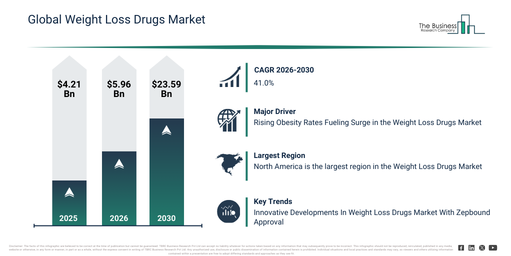
    Weight Loss Drugs Market Projected to Reach $23.59 Billion by 2030 at 41% CAGR

    The Business Research Company’s 2026 market reports feature enhanced tools like market attractiveness analysis, TAM assessment, and company scoring matrices, along with interactive dashboards, deeper supply chain insights, and startup coverage strengthening the depth, usability, and strategic value of insights.

    What Are The Market Size Estimates For The Weight Loss Drugs Market In 2026 And 2030?

    The weight loss drugs market has experienced substantial expansion in its size over recent years. It is projected to advance from $4.21 billion in 2025 to $5.96 billion in 2026, demonstrating a compound annual growth rate (CAGR) of 41.8%. Historically, this growth has been influenced by factors such as the increasing clinical recognition of obesity as a disease, expanded pharmaceutical research investments, rising prescription rates for weight management drugs, growing awareness among healthcare providers, and the availability of FDA-approved therapies.

    The weight loss drugs market is projected to experience substantial growth in the upcoming years. This market is anticipated to reach $23.59 billion by 2030, exhibiting a compound annual growth rate (CAGR) of 41.0%. This projected growth during the forecast period is fueled by several factors, including the increasing demand for next-generation anti-obesity medications, greater investments in metabolic disorder research, the expansion of personalized drug treatments, a rising global prevalence of obesity, and ongoing innovation in drug delivery methods. Key trends anticipated for the forecast period encompass the escalating development of glp-1 and new drug classes, a heightened focus on clinically proven weight loss medications, an increasing uptake of long-acting formulations, the broadening of prescription-based obesity treatments, and a stronger emphasis on regulatory compliance.

    Access Your Free Sample Report For In-Depth Market Analysis:

    https://www.thebusinessresearchcompany.com/sample.aspx?id=13761&type=smp

    Which Major Drivers Are Influencing The Expansion Of The Weight Loss Drugs Market?

    The projected expansion of the weight loss drugs market is fueled by escalating obesity rates. An obesity rate indicates the proportion of individuals within a population whose Body Mass Index (BMI) is equal to or greater than 30. Weight loss drugs are therapeutic agents employed in obesity treatment, assisting individuals in achieving weight reduction by either curbing appetite, enhancing satiety, or inhibiting nutrient absorption. For instance, in March 2023, the World Obesity Federation, a UK-based not-for-profit organization, estimated that over 4 billion people are anticipated to be obese by 2035. Consequently, the rising prevalence of obesity serves as a primary driver for the growth of the weight loss drugs market.

    What Segment Categories Shape The Weight Loss Drugs Market Segment Landscape?

    The weight loss drugs market covered in this report is segmented –

    1) By Type: Liquid, Tablets, Capsules

    2) By Distribution Channel: Hospital Pharmacy, Retail Pharmacy, Online Pharmacy

    3) By Application: Weight-Reducing Aid, Fat Absorption Inhibitors, Metabolic Boosters

    Subsegments:

    1) By Liquid: Syrups, Solutions, Suspensions

    2) By Tablets: Immediate-Release Tablets, Extended-Release Tablets

    3) By Capsules: Hard Capsules, Softgel Capsules

    Which Trends Are Shaping The Weight Loss Drugs Market?

    Leading companies in the weight loss drug market are developing innovative products, such as Zepbound (tirzepatide) injection, to improve patient services. Zepbound operates as a once-weekly injectable dual glucose-dependent insulinotropic polypeptide (GIP) and glucagon-like peptide-1 (GLP-1) receptor agonist. For example, in November 2023, Eli Lilly and Company, a US-based pharmaceutical company, obtained FDA approval for tirzepatide injection (Zepbound) for the chronic management of weight in adults who are overweight or obese and have at least one weight-related condition. Zepbound is expected to be a commercially successful drug, as it represents the first and only FDA-approved obesity treatment that activates both GIP and GLP-1 receptors.

    Who Are The Companies Operating Across The Weight Loss Drugs Market Value Chain?

    Major companies operating in the weight loss drugs market are Pfizer Inc. , Roche , Merck & Co. , AbbVie Inc. , Novartis AG , Bristol Myers Squibb , Sanofi S.A. , AstraZeneca plc , GlaxoSmithKline , Takeda Pharmaceutical Company , Eli Lilly and Company , Bayer AG , Amgen Inc. , Boehringer Ingelheim group , Novo Nordisk A/S , Merck KGaA , Rhythm Pharmaceuticals Inc. , Structure Therapeutics , Viking Therapeutics Inc. , Saniona , Zealand Pharma A/S

    Get The Full Weight Loss Drugs Market Report:

    https://www.thebusinessresearchcompany.com/report/weight-loss-drugs-global-market-report

    Which Region Leads The Weight Loss Drugs Market In Terms Of Market Share?

    North America was the largest region in the Weight Loss Drugs market in 2025. The regions covered in the weight loss drugs market report are Asia-Pacific, South East Asia, Western Europe, Eastern Europe, North America, South America, Middle East, Africa.

    Request A Customized Weight Loss Drugs Market Report For Competitive Insights:

    https://www.thebusinessresearchcompany.com/report/weight-loss-drugs-global-market-report

    Browse Through More Reports Similar to the Global Weight Loss Drugs Market 2026, By The Business Research Company

    Weight Loss Supplements Market Report 2026

    https://www.thebusinessresearchcompany.com/report/weight-loss-supplements-global-market-report

    Metabolic Disorders Drugs Market Report

    https://www.thebusinessresearchcompany.com/report/metabolic-disorders-drugs-global-market-report

    Diet Pills Market Report

    https://www.thebusinessresearchcompany.com/report/diet-pills-global-market-report

    Get in touch with us:

    The Business Research Company: https://www.thebusinessresearchcompany.com/

    Americas +1 310-496-7795

    Asia +44 7882 955267 & +91 8897263534

    Europe +44 7882 955267

    Email us at info@tbrc.info

    Follow us on:

    LinkedIn: https://in.linkedin.com/company/the-business-research-company

    YouTube: https://www.youtube.com/channel/UC24_fI0rV8cR5DxlCpgmyFQ

    Global Market Model: https://www.thebusinessresearchcompany.com/global-market-model
  • Weight Loss and Obesity Management Market Forecast Highlighting Industry Expansion 2026–2030

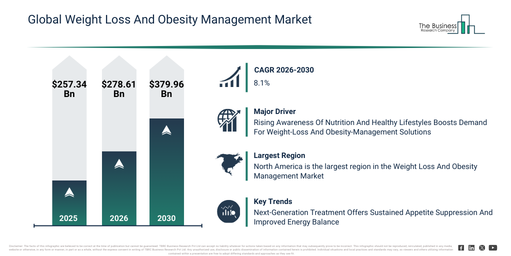
    Weight Loss and Obesity Management Market Forecast Highlighting Industry Expansion 2026–2030

    The Business Research Company’s 2026 market reports feature enhanced tools like market attractiveness analysis, TAM assessment, and company scoring matrices, along with interactive dashboards, deeper supply chain insights, and startup coverage strengthening the depth, usability, and strategic value of insights.

    What Expansion In Market Value Is Forecasted For The Weight Loss And Obesity Management Market Between 2026 And 2030?

    The weight loss and obesity management market size has witnessed strong expansion in recent years. It is anticipated to increase from $257.34 billion in 2025 to $278.61 billion in 2026, achieving a compound annual growth rate (CAGR) of 8.3%. The market’s historical growth can be credited to the rising prevalence of obesity-related health conditions, increasing public health awareness initiatives, expansion of fitness and wellness centers, growing acceptance of medical weight management, and the availability of diverse weight loss solutions.

    The weight loss and obesity management market size is anticipated to experience substantial growth in the upcoming years. It is projected to expand to $379.96 billion by 2030, exhibiting a compound annual growth rate (CAGR) of 8.1%. The expansion during the forecast period can be attributed to the increasing uptake of digital therapeutics, a rising need for personalized obesity treatments, the broadening of employer-sponsored wellness programs, the growing incorporation of AI-based health analytics, and an increased emphasis on maintaining weight over the long term. Prominent trends for the forecast period include the increasing adoption of personalized weight management programs, the rising integration of digital health platforms, the expanding use of data-driven behavioral therapy, the growth of medically supervised weight loss solutions, and an enhanced focus on preventive health outcomes.

    Access Your Free Sample Report For In-Depth Market Analysis:

    https://www.thebusinessresearchcompany.com/sample.aspx?id=24429&type=smp

    What Key Drivers Are Fueling The Growth Of The Weight Loss And Obesity Management Market?

    Increasing understanding of nutrition and healthy living is anticipated to fuel the expansion of the weight loss and obesity management market in the future. This concept encompasses adopting a balanced diet and participating in physical activities that promote sustained well-being. This heightened awareness is attributed to the internet and social media, which offer readily available information, guidance, and suggestions, simplifying the process for individuals to educate themselves on healthy eating and habits. Greater consciousness of nutrition and healthy lifestyles aids weight loss and obesity management by empowering individuals to make informed food choices, incorporate consistent physical activity, and sustain beneficial habits. For example, in Jun 2024, the International Food Information Council (IFIC), a US based non-profit organization, reported that a significant 54% of Americans continued to follow a particular diet or eating pattern in the preceding year. A majority of people are focused on boosting their protein consumption, with interest climbing from 59% in 2022 to 67% in 2023, and further to 71% in 2024. Furthermore, approximately half of consumers are looking to eat more fresh foods, generally considered the most nutritious dietary choices. Consequently, this increasing understanding of healthy eating and dietary practices is fueling expansion within the weight loss and obesity management market.

    Which Segment Types Are Examined In The Weight Loss And Obesity Management Market Segment Study?

    The weight loss and obesity management market covered in this report is segmented –

    1) By Product And Services: Drugs, Supplements, Equipment, Services

    2) By Category: Prescribed, Over The Counter (OTC)

    3) By Age Group: Children, Adults, Geriatric

    4) By Distribution Channel: Institutional Sales, Retail Sales

    5) By Industry Type: Fitness Centers, Slimming Centers, Consulting Services, Online Weight Loss Programs

    Subsegments:

    1) By Drugs: Prescription Drugs, Over-The-Counter (OTC) Drugs, Herbal Drugs

    2) By Supplements: Dietary Supplements, Meal Replacements, Protein Supplements, Fat Burners, Fiber Supplements

    3) By Equipment: Fitness Equipment, Surgical Equipment

    4) By Services: Fitness Centers And Health Clubs, Consultation Services, Online Weight Loss Programs, Behavioral Therapy Services, Diet And Nutrition Counseling, Medical Weight Loss Clinics

    What Trends Are Influencing The Weight Loss And Obesity Management Market?

    Leading companies in the weight loss and obesity management market are concentrating on developing advanced solutions, such as dual incretin GLP-1/GIP receptor agonists, with the aim of boosting treatment efficacy, aiding sustained weight reduction, and improving metabolic outcomes. These dual incretin agonists are medications that concurrently activate GLP-1 and GIP receptors, leading to decreased appetite, slowed gastric emptying, and enhanced insulin sensitivity, thereby offering more potent and durable effects compared to traditional single-target therapies. For instance, in November 2023, Eli Lilly, a U.S.-based pharmaceutical company, launched Zepbound (tirzepatide) injection, designed for chronic weight management in adults with obesity or those who are overweight with at least one weight-related comorbidity. Tirzepatide mimics the activity of two hormones to prolong satiety, suppress hunger, and support clinically significant, sustained weight loss, providing a convenient once-weekly administration. This therapy marks a major advancement in obesity care by delivering a highly effective, long-term management option for patients.

    Which Players Are Part Of The Competitive Landscape Of The Weight Loss And Obesity Management Market?

    Major companies operating in the weight loss and obesity management market are F. Hoffmann-La Roche Ltd., Medtronic plc, Takeda Pharmaceutical Company Limited, Novo Nordisk A/S, Boehringer Ingelheim International GmbH, Apollo Endosurgery Inc., Biocon Limited, WW International Inc., Equinox Holdings Inc., Noom Inc., Jenny Craig Inc., Nutrisystem Inc., Virta Health Corp., Allurion Technologies Inc., Atkins Nutritionals Inc., ReShape Lifesciences Inc., Nalpropion Pharmaceuticals Inc., OptiBiotix Health plc, PRISTYN CARE

    Get The Full Weight Loss And Obesity Management Market Report:

    https://www.thebusinessresearchcompany.com/report/weight-loss-and-obesity-management-global-market-report

    Which Region Leads The Weight Loss And Obesity Management Market In Overall Market Size?

    North America was the largest region in the weight loss and obesity management market in 2025. The regions covered in the weight loss and obesity management market report are Asia-Pacific, South East Asia, Western Europe, Eastern Europe, North America, South America, Middle East, Africa.

    Request A Customized Weight Loss And Obesity Management Market Report For Competitive Insights:

    https://www.thebusinessresearchcompany.com/report/weight-loss-and-obesity-management-global-market-report

    Browse Through More Reports Similar to the Global Weight Loss And Obesity Management Market 2026, By The Business Research Company

    Weight Management Market Report 2026

    https://www.thebusinessresearchcompany.com/report/weight-management-global-market-report

    Weight Loss Services Market Report

    https://www.thebusinessresearchcompany.com/report/weight-loss-services-global-market-report

    Weight Loss Drugs Market Report

    https://www.thebusinessresearchcompany.com/report/weight-loss-drugs-global-market-report

    Get in touch with us:

    The Business Research Company: https://www.thebusinessresearchcompany.com/

    Americas +1 310-496-7795

    Asia +44 7882 955267 & +91 8897263534

    Europe +44 7882 955267

    Email us at info@tbrc.info

    Follow us on:

    LinkedIn: https://in.linkedin.com/company/the-business-research-company

    YouTube: https://www.youtube.com/channel/UC24_fI0rV8cR5DxlCpgmyFQ

    Global Market Model: https://www.thebusinessresearchcompany.com/global-market-model
  • Global Wearable Robot Technology Market Strategic Analysis 2026–2030

    Global Wearable Robot Technology Market Strategic Analysis 2026–2030

    The Business Research Company’s 2026 market reports feature enhanced tools like market attractiveness analysis, TAM assessment, and company scoring matrices, along with interactive dashboards, deeper supply chain insights, and startup coverage strengthening the depth, usability, and strategic value of insights.

    How Large Will The Wearable Robot Technology Market Be By 2030 Compared To Its 2026 Market Size?

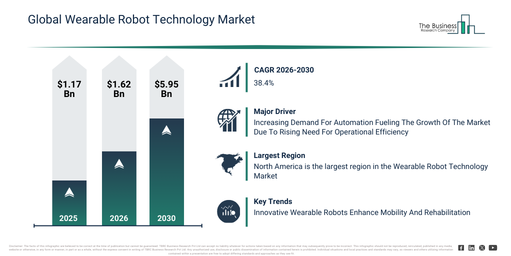
    The wearable robot technology market has seen significant expansion in recent years. It is projected to increase from $1.17 billion in 2025 to $1.62 billion in 2026, at a compound annual growth rate (CAGR) of 39.1%. The historical growth of this market is attributable to advancements in robotic actuator technologies, increasing workplace injury prevention initiatives, growth in rehabilitation robotics research, rising demand for mobility assistance solutions, and early adoption in industrial environments.

    The wearable robot technology market is projected to experience rapid expansion over the coming years. By 2030, its valuation is anticipated to reach $5.95 billion, demonstrating a compound annual growth rate (CAGR) of 38.4%. This anticipated growth during the forecast period can be primarily attributed to several factors, including the proliferation of technologies supporting an aging population, increased investments in assistive robotics, wider integration in logistics and manufacturing sectors, a surge in demand for tailored rehabilitation systems, and ongoing advancements in lightweight and flexible materials. Key trends identified for the forecast period encompass the expanded deployment of industrial exoskeletons, a rise in the use of rehabilitation wearable robots, the increasing incorporation of sensor-driven motion control, the spread of soft wearable assistive technologies, and a heightened emphasis on human-robot interaction.

    Access Your Free Sample Report For In-Depth Market Analysis:

    https://www.thebusinessresearchcompany.com/sample.aspx?id=23579&type=smp

    Which Drivers Are Supporting The Wearable Robot Technology Market Growth?

    The escalating need for automation is anticipated to fuel expansion in the wearable robot technology market in the future. Automation involves employing technology or machinery to carry out tasks requiring little to no human involvement. This escalating demand stems from the necessity for enhanced operational efficiency, as enterprises strive to lower expenses, decrease inaccuracies, and improve output. Wearable robot technology improves automation through the incorporation of human-machine teamwork, rendering it highly suitable for sectors demanding extensive labor and for healthcare environments. It alleviates physical exertion by enhancing motion and power, thereby boosting productivity and operational effectiveness. For example, in September 2024, the International Federation of Robotics, a Germany-based non-profit organization, reported that about 4.2 million robotic units were active in global factories during 2023, representing a 10% increase from 3.9 units in 2022. Consequently, the escalating need for automation is propelling the expansion of the wearable robot technology market.

    How Are Different Segments Classified In The Wearable Robot Technology Market Segment Analysis?

    The wearable robot technology market covered in this report is segmented –

    1) By Type: Rigid Type, Soft Type

    2) By Mode Of Operation: Passive, Active And Powered

    3) By Application: Rehabilitation, Assistive, Body Parts Support, Sports, Supply Chain Industry, Other Applications

    4) By End User: Healthcare, Consumer Electronics, Enterprise And Industrial Applications, Other End Users

    Subsegments:

    1) By Rigid Type: Exoskeletons With Metallic Frames, Powered Rigid Suits For Industrial Lifting, Military-Grade Wearable Robots, Medical Rehabilitation Robots, Full-Body Rigid Assistive Devices

    2) By Soft Type: Soft Robotic Exosuits, Pneumatic, Textile-Based Wearable Assistive Devices, Cable-Driven Flexible Actuators, Soft Wearable Robots For Elderly Mobility Support

    Which Trends Are Expected To Impact The Wearable Robot Technology Market?

    Leading companies active in the wearable robot technology market are concentrating on developing novel solutions, such as wearable assistive robotics, to boost user mobility and enhance their quality of life. Wearable assistive robotics refers to robotic devices worn on the body that support or augment physical movement, frequently aiding individuals with mobility impairments or physical limitations. For instance, in July 2024, CosmoRobotics Co., Ltd., a technology company based in South Korea, launched a series of innovative wearable robots. These products include Bambini Teens, EA2Pro, EAM, GRANY, and EXA-W, all designed to improve daily life by assisting with muscle strength and rehabilitation. Key features of these robots include Bambini Teens, intended for children, and EA2Pro, a second-generation exoskeleton equipped with advanced motor sensors and an ergonomic design for rehabilitation.

    Who Are The Companies Driving Activity In The Wearable Robot Technology Market?

    Major companies operating in the wearable robot technology market are Toyota Corporation, Samsung Electronics Co Ltd., Hyundai Motor Company, Lockheed Martin Corporation, Honda Motor Co Ltd., Parker Hannifin Corporation, Myomo Inc, Sarcos Technology and Robotics Corporation, Zimmer Biomet Holdings Inc, Ottobock SE & Co KGaA, Comau LLC, Cyberdyne Inc., Hocoma AG, Ekso Bionics Holdings Inc, Laevo B V, Innophys Co Ltd, Marsi Bionics, Näder Holding GmbH & Co KG, Technaid S L, ReWalk Robotics Ltd, German Bionic

    Get The Full Wearable Robot Technology Market Report:

    https://www.thebusinessresearchcompany.com/report/wearable-robot-technology-global-market-report

    Which Region Is The Top Contributor To The Wearable Robot Technology Market By Share?

    North America was the largest region in the wearable robot technology market in 2025. Asia-Pacific is expected to be the fastest-growing region in the forecast period. The regions covered in the wearable robot technology market report are Asia-Pacific, South East Asia, Western Europe, Eastern Europe, North America, South America, Middle East, Africa.

    Request A Customized Wearable Robot Technology Market Report For Competitive Insights:

    https://www.thebusinessresearchcompany.com/report/wearable-robot-technology-global-market-report

    Browse Through More Reports Similar to the Global Wearable Robot Technology Market 2026, By The Business Research Company

    Wearable Ai Market Report 2026

    https://www.thebusinessresearchcompany.com/report/wearable-ai-global-market-report

    Smart Wearables Market Report

    https://www.thebusinessresearchcompany.com/report/smart-wearables-global-market-report

    Wearable Ai Devices Market Report

    https://www.thebusinessresearchcompany.com/report/wearable-ai-devices-global-market-report

    Get in touch with us:

    The Business Research Company: https://www.thebusinessresearchcompany.com/

    Americas +1 310-496-7795

    Asia +44 7882 955267 & +91 8897263534

    Europe +44 7882 955267

    Email us at info@tbrc.info

    Follow us on:

    LinkedIn: https://in.linkedin.com/company/the-business-research-company

    YouTube: https://www.youtube.com/channel/UC24_fI0rV8cR5DxlCpgmyFQ

    Global Market Model: https://www.thebusinessresearchcompany.com/global-market-model
  • Wearable Fitness Trackers Market Outlook Driven by Key Growth Factors and Market Trends

    Wearable Fitness Trackers Market Outlook Driven by Key Growth Factors and Market Trends

    The Business Research Company’s 2026 market reports feature enhanced tools like market attractiveness analysis, TAM assessment, and company scoring matrices, along with interactive dashboards, deeper supply chain insights, and startup coverage strengthening the depth, usability, and strategic value of insights.

    What Is The Projected Increase In Market Value Of The Wearable Fitness Trackers Market During 2026–2030?

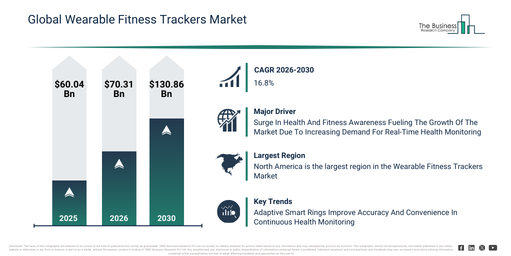
    The market size for wearable fitness trackers has shown substantial growth in recent years. This market is projected to expand from $60.04 billion in 2025 to $70.31 billion in 2026, recording a compound annual growth rate (CAGR) of 17.1%. Historically, this expansion has been driven by increased consumer focus on personal health, a surge in the adoption of smartphones and connected devices, the wider application of preventive healthcare strategies, the growing appeal of fitness-centric lifestyles, and the presence of affordable wearable electronics.

    The market for wearable fitness trackers is poised for significant expansion in the coming years. It is forecast to reach $130.86 billion by 2030, demonstrating a compound annual growth rate (CAGR) of 16.8%. This anticipated growth during the forecast period is due to a surge in demand for continuous health monitoring solutions, increased integration with telehealth platforms, the broadening of personalized fitness and wellness programs, rising adoption among elderly demographics, and advancements in sensor accuracy and battery efficiency. Prominent trends expected in this period include the increased embrace of advanced health monitoring sensors, a rise in the integration of multi-metric wellness tracking, expanding demand for app-based fitness ecosystems, the growth of smart clothing and other wearable accessories, and a stronger focus on personalized fitness insights.

    Access Your Free Sample Report For In-Depth Market Analysis:

    https://www.thebusinessresearchcompany.com/sample.aspx?id=24427&type=smp

    What Key Factors Are Affecting The Wearable Fitness Trackers Market Demand?

    Increased consciousness regarding health and fitness is projected to stimulate the expansion of the wearable fitness trackers market in the future. Health and fitness pertain to the complete well-being of both the body and mind, achieved through consistent physical activity, proper nutrition, and a balanced way of life. Awareness of health and fitness is escalating due to an increase in lifestyle-related illnesses, which motivates individuals to adopt healthier practices to prevent conditions such as obesity, diabetes, and heart disease. This heightened awareness of health and fitness boosts the demand for wearable fitness trackers, as people seek convenient ways to monitor their activity, heart rate, and overall well-being in real time. For instance, in April 2023, a nationwide survey conducted by the International Food Information Council (IFIC), a US-based non-profit organization, based on responses from 1,022 individuals aged 18 to 80, found that 52% of Americans were following a specific diet or eating pattern. Younger generations were at the forefront of this trend, with 66% of Gen Z and 63% of Millennials reporting adherence to a diet, compared to 50% of Gen X and 41% of Boomers. Notably, Baby Boomers exhibited a significant surge in diet adherence, climbing from 29% in 2022 to 41% in 2023. This data underscores a rising national interest in health-conscious and deliberate eating behaviors across all age groups. Therefore, increasing awareness towards health and fitness is driving the growth of the wearable fitness trackers market.

    How Is The Wearable Fitness Trackers Market Categorized Across Its Segment Groups?

    The wearable fitness trackers market covered in this report is segmented –

    1) By Product Type: Smartwatches, Activity Monitors, Smart Clothing

    2) By Connectivity: Bluetooth, Wireless Fidelity (Wi-Fi), Cellular, Near Field Communication (NFC), Other Connectivities

    3) By Operating System: Android, iOS, Windows, Tizen

    4) By Distribution Channel: Online, Offline

    5) By Application: Heart Rate Tracking, Sleep Measurement Tracking, Sport, Running, Cycling Tracking, Glucose Measurement Tracking

    Subsegments:

    1) By Smartwatches: GPS Smartwatches, Heart Rate Monitoring Smartwatches, Blood Oxygen (Spo2) Monitoring Smartwatches, Sleep Tracking Smartwatches, Multi-Sport Smartwatches

    2) By Activity Monitors: Clip-On Trackers, Wristband Trackers, Ankle Or Waist-Worn Trackers, Pedometers, Continuous Glucose Monitors (CGMs)

    3) By Smart Clothing: Smart Shirts, Smart Shoes, Smart Socks, Smart Sports Bras, Smart Tights Or Pants

    What Trends Are Influencing Changes In The Wearable Fitness Trackers Market?

    Major companies operating within the wearable fitness trackers market are prioritizing the creation of innovative solutions, such as smart rings equipped with adaptive sensing technology, to enhance continuous health monitoring, refine measurement accuracy, and offer a discreet, user-friendly alternative to traditional wrist-worn devices. Smart rings are compact wearables worn on the finger that integrate advanced sensors to track metrics including heart rate, blood oxygen (SpO2), sleep patterns, activity levels, and body temperature, providing a subtle form factor with extended battery life due to optimized power consumption. For instance, in October 2024, Oura, a Finland-based wellness technology company, introduced the Oura Ring 4, featuring “Smart Sensing” technology, an algorithm that adapts to the wearer’s finger shape for more precise measurements. This particular ring incorporates 18 signal pathways (up from 8 in previous models), boasts recessed sensors for comfort, a titanium build, 100 m water resistance, and offers up to 8 days of battery life. Crafted to deliver accurate and reliable health insights while maintaining a minimalist and stylish design, the Oura Ring 4 exemplifies the next generation of wearable fitness technology.

    Which Firms Are Influencing Competition In The Wearable Fitness Trackers Market?

    Major companies operating in the wearable fitness trackers market are Apple Inc., Samsung Electronics Co. Ltd., Huawei Technologies Co. Ltd., NIKE Inc., Xiaomi Inc., Garmin Ltd., Fossil Group Inc., Fitbit Inc., Polar Electro Oy, MAD Apparel Inc., GOQii, Honor, Moov Inc., Boltt, Sensoria Inc., Ambiotex GmbH, Activinsights Ltd., Atlas Wearables Inc.

    Get The Full Wearable Fitness Trackers Market Report:

    https://www.thebusinessresearchcompany.com/report/wearable-fitness-trackers-global-market-report

    Which Region Represents The Largest Share Of The Wearable Fitness Trackers Market?

    North America was the largest region in the wearable fitness trackers market in 2025. Asia-Pacific is expected to be the fastest-growing region in the forecast period. The regions covered in the wearable fitness trackers market report are Asia-Pacific, South East Asia, Western Europe, Eastern Europe, North America, South America, Middle East, Africa.

    Request A Customized Wearable Fitness Trackers Market Report For Competitive Insights:

    https://www.thebusinessresearchcompany.com/report/wearable-fitness-trackers-global-market-report

    Browse Through More Reports Similar to the Global Wearable Fitness Trackers Market 2026, By The Business Research Company

    Smart Wearables Market Report 2026

    https://www.thebusinessresearchcompany.com/report/smart-wearables-global-market-report

    Wearable Heart Monitoring Devices Market Report

    https://www.thebusinessresearchcompany.com/report/wearable-heart-monitoring-devices-global-market-report

    Gps Tracking Device Market Report

    https://www.thebusinessresearchcompany.com/report/gps-tracking-device-global-market-report

    Get in touch with us:

    The Business Research Company: https://www.thebusinessresearchcompany.com/

    Americas +1 310-496-7795

    Asia +44 7882 955267 & +91 8897263534

    Europe +44 7882 955267

    Email us at info@tbrc.info

    Follow us on:

    LinkedIn: https://in.linkedin.com/company/the-business-research-company

    YouTube: https://www.youtube.com/channel/UC24_fI0rV8cR5DxlCpgmyFQ

    Global Market Model: https://www.thebusinessresearchcompany.com/global-market-model