Category: Healthcare Services

  • VR Stroke Rehabilitation Market Forecast Highlighting Industry Expansion Trends

    VR Stroke Rehabilitation Market Forecast Highlighting Industry Expansion Trends

    The Business Research Company’s 2026 market reports feature enhanced tools like market attractiveness analysis, TAM assessment, and company scoring matrices, along with interactive dashboards, deeper supply chain insights, and startup coverage strengthening the depth, usability, and strategic value of insights.

    How Does The Market Size Of The Virtual Reality (VR) Stroke Rehabilitation Market Compare Between 2026 And 2030?

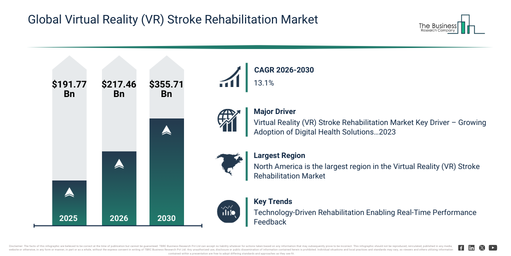
    The virtual reality (VR) stroke rehabilitation market has seen rapid expansion in recent years. It is anticipated to grow from $191.77 billion in 2025 to $217.46 billion in 2026, at a compound annual growth rate (CAGR) of 13.4%. The observed growth in the past can be attributed to the rising worldwide prevalence of stroke, the expansion of rehabilitation infrastructure, the adoption of technology-assisted therapy methods, an increasing focus on repetitive task-based rehabilitation, and the availability of VR platforms for clinical use.

    The virtual reality (vr) stroke rehabilitation market is projected to experience substantial expansion over the upcoming years. By 2030, its valuation is anticipated to reach $355.71 billion, growing at a compound annual growth rate (CAGR) of 13.1%. This anticipated growth during the forecast period is primarily driven by several factors, including a heightened demand for customized stroke rehabilitation programs, increased investments in digital neurorehabilitation, the expansion of remote rehabilitation services, the rising incorporation of AI-based therapy analytics, and the growing adoption of VR within clinical protocols. Key trends identified for this period encompass the increasing widespread adoption of VR-based neuroplasticity training, a greater utilization of task-specific motor recovery simulations, the expanding integration of both cognitive and physical rehabilitation modules, the proliferation of home-based VR stroke therapy solutions, and an intensified emphasis on tracking therapy progress through data insights.

    Access Your Free Sample Report For In-Depth Market Analysis:

    https://www.thebusinessresearchcompany.com/sample.aspx?id=28354&type=smp

    What Factors Are Contributing To The Growth Of The Virtual Reality (VR) Stroke Rehabilitation Market?

    The increasing integration of digital health solutions is anticipated to propel the expansion of the virtual reality (VR) stroke rehabilitation market. Digital health solutions involve leveraging digital technologies, platforms, and connected instruments to enhance healthcare provision, improve patient outcomes, and streamline health management. The growing adoption of these solutions is driven by the convenience of remote access to care, which allows individuals to receive medical support and monitoring without frequent in-person appointments. The virtual reality (VR) stroke rehabilitation supports this trend by delivering immersive, technology-driven therapy complete with personalized exercises and remote monitoring, enabling more effective and accessible stroke recovery. For instance, in April 2024, Queen Margaret University, a UK-based public university, noted that as of November 2023, 189 NHS trusts had adopted new electronic patient record systems, representing 90% adoption across all trusts. Thus, the increasing adoption of digital health solutions is a significant factor driving the growth of the virtual reality (VR) stroke rehabilitation market.

    How Is The Virtual Reality (VR) Stroke Rehabilitation Market Organized By Segment Classification?

    The virtual reality (vr) stroke rehabilitation market covered in this report is segmented –

    1) By Rehabilitation Type: Physical Rehabilitation, Cognitive Rehabilitation

    2) By Technology Type: Hardware, Software Platforms, Therapeutic Content

    3) By Patient Type: Short Term Patients, Long Term Patients

    4) By Virtual Reality (VR) Application: Motor Skills Training, Cognitive Skills Training, Sensory Training, Pain Management

    5) By End-User: Hospitals, Rehabilitation Centers, Clinics, Home-Based Rehabilitation

    Subsegments:

    1) By Physical Rehabilitation: Upper Limb Rehabilitation, Lower Limb Rehabilitation, Balance And Gait Training, Motor Function Recovery

    2) By Cognitive Rehabilitation: Memory Training, Attention And Concentration Training, Problem-Solving And Executive Function Training, Visual And Spatial Perception Training

    What Trends Are Shaping The Future Of The Virtual Reality (VR) Stroke Rehabilitation Market?

    Leading companies within the global virtual reality (VR) stroke rehabilitation market are concentrating on developing advanced solutions, such as immersive VR-based upper-limb rehabilitation systems, to enhance motor recovery, improve functional independence, and increase patient engagement during post-stroke therapy. These immersive VR-based upper-limb rehabilitation systems are virtual reality platforms that utilize head-mounted displays and interactive, gamified environments to deliver intensive, task-specific arm and hand exercises, while simultaneously monitoring real-time performance metrics to guide personalized rehabilitation. For instance, in 2024, researchers at Beijing Tiantan Hospital, Capital Medical University, a China-based academic medical center, introduced an immersive virtual reality–based upper-extremity rehabilitation system in a randomized controlled trial. This trial encompassed five sessions per week of immersive VR therapy for three weeks, combined with conventional rehabilitation, featuring interactive reaching and grasping tasks performed in fully immersive environments, and resulted in clinically significant improvements in Fugl-Meyer Assessment Upper Extremity and Barthel Index scores, alongside favorable motor-network brain connectivity changes.

    Who Are The Industry Participants Involved In The Virtual Reality (VR) Stroke Rehabilitation Market?

    Major companies operating in the virtual reality (vr) stroke rehabilitation market are Penumbra Inc., Shepherd Center Inc., Evolv Rehabilitation Technologies S.L., DIH Technology Co. Ltd., Tyromotion GmbH, BTS Bioengineering S.p.A., Floreo Inc., Saebo Inc., Motus Nova LLC, Immergo Labs Inc., Kinestica d.o.o., Cognihab Private Limited, Evolv Solutions LLC, Rehametrics S.L., RecoveryVR Pty Ltd, Neuro Rehab VR Inc., PhysioFunction Limited, XRHealth USA Inc., Bended S.r.l., Jintronix Inc.

    Get The Full Virtual Reality (VR) Stroke Rehabilitation Market Report:

    https://www.thebusinessresearchcompany.com/report/virtual-reality-vr-stroke-rehabilitation-global-market-report

    Which Region Is The Largest In The Virtual Reality (VR) Stroke Rehabilitation Market?

    North America was the largest region in the virtual reality (VR) stroke rehabilitation market in 2025. Asia Pacific is expected to be the fastest-growing region in the forecast period. The regions covered in the virtual reality (vr) stroke rehabilitation market report are Asia-Pacific, South East Asia, Western Europe, Eastern Europe, North America, South America, Middle East, Africa.

    Request A Customized Virtual Reality (VR) Stroke Rehabilitation Market Report For Competitive Insights:

    https://www.thebusinessresearchcompany.com/report/virtual-reality-vr-stroke-rehabilitation-global-market-report

    Browse Through More Reports Similar to the Global Virtual Reality (VR) Stroke Rehabilitation Market 2026, By The Business Research Company

    Virtual Reality Vr In Medical Simulation Market Report 2026

    https://www.thebusinessresearchcompany.com/report/virtual-reality-vr-in-medical-simulation-global-market-report

    Virtual Reality In Healthcare Market Report

    https://www.thebusinessresearchcompany.com/report/virtual-reality-in-healthcare-global-market-report

    Stroke Management Market Report

    https://www.thebusinessresearchcompany.com/report/stroke-management-global-market-report

    Get in touch with us:

    The Business Research Company: https://www.thebusinessresearchcompany.com/

    Americas +1 310-496-7795

    Asia +44 7882 955267 & +91 8897263534

    Europe +44 7882 955267

    Email us at info@tbrc.info

    Follow us on:

    LinkedIn: https://in.linkedin.com/company/the-business-research-company

    YouTube: https://www.youtube.com/channel/UC24_fI0rV8cR5DxlCpgmyFQ

    Global Market Model: https://www.thebusinessresearchcompany.com/global-market-model
  • VR Metaverse Concussion Rehabilitation Market Analysis Covering Growth Drivers and Future Outlook

    VR Metaverse Concussion Rehabilitation Market Analysis Covering Growth Drivers and Future Outlook

    The Business Research Company’s 2026 market reports feature enhanced tools like market attractiveness analysis, TAM assessment, and company scoring matrices, along with interactive dashboards, deeper supply chain insights, and startup coverage strengthening the depth, usability, and strategic value of insights.

    What Is The Forecasted Market Size Trajectory Of The Virtual Reality (VR) Metaverse Concussion Rehabilitation Market From 2026 To 2030?

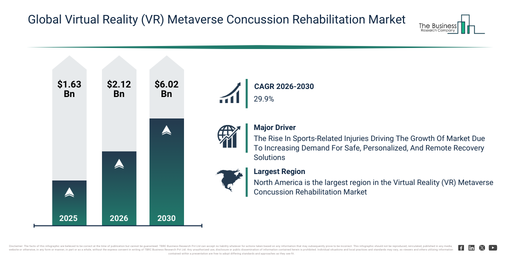
    The virtual reality (vr) metaverse concussion rehabilitation market size has shown substantial growth in recent years. This market is anticipated to expand from $1.63 billion in 2025 to $2.12 billion in 2026, achieving a compound annual growth rate (CAGR) of 30.2%. The historical increase can be attributed to factors such as the rising incidence of sports-related concussions, enhanced awareness of digital rehabilitation solutions, the integration of VR in neurological therapy, increasing access to VR hardware in healthcare, and the broadening of outpatient rehabilitation services.

    The virtual reality (VR) metaverse concussion rehabilitation market is anticipated to experience substantial expansion over the upcoming years. Its valuation is projected to reach $6.02 billion by 2030, demonstrating a compound annual growth rate (CAGR) of 29.9%. This projected increase can be attributed to several factors during the forecast period, including heightened investments in metaverse-enabled healthcare platforms, an escalating demand for at-home concussion recovery options, the broader adoption of AI-powered therapy customization, the proliferation of remote patient monitoring technologies, and a greater embrace of digital therapeutics. Key trends identified for the forecast timeframe involve the wider uptake of immersive VR rehabilitation programs, an increase in the utilization of tailored cognitive recovery modules, the deeper integration of remote tele-rehabilitation platforms, the growth of motion tracking and sensory feedback systems, and a strengthened emphasis on patient involvement and adherence to therapy.

    Access Your Free Sample Report For In-Depth Market Analysis:

    https://www.thebusinessresearchcompany.com/sample.aspx?id=28353&type=smp

    Which Strong Drivers Are Impacting The Virtual Reality (VR) Metaverse Concussion Rehabilitation Market Growth?

    A growing incidence of sports-related injuries is projected to stimulate the expansion of the virtual reality (VR) metaverse concussion rehabilitation market. Sports-related injuries encompass physical harm sustained during athletic or exercise activities, commonly affecting muscles, bones, joints, and the head. The rise in these injuries stems from increased participation in high-intensity, competitive, and recreational sports since the pandemic. The virtual reality (VR) metaverse concussion rehabilitation supports this trend by providing immersive and controlled environments for cognitive-physical therapy, promoting safer recovery, personalized rehabilitation, and remote monitoring for return-to-play. For instance, in October 2024, according to Insideworldfootball, a UK-based web-based news-driven service, sports injuries totaled 4,123 during the 2023-24 season, representing a 4% increase compared to the 2022-23 period. Consequently, the increasing prevalence of sports-related injuries is propelling the virtual reality (VR) metaverse concussion rehabilitation market.

    Which Segments Define The Virtual Reality (VR) Metaverse Concussion Rehabilitation Market Segment Structure?

    The virtual reality (vr) metaverse concussion rehabilitation market covered in this report is segmented –

    1) By Component: Hardware, Software, Services

    2) By Deployment Mode: On-Premises, Cloud-Based

    3) By Therapy Type: Physical Therapy, Cognitive Therapy, Occupational Therapy, Speech Therapy, Other Therapy Types

    4) By End-User: Hospitals And Clinics, Rehabilitation Centers, Homecare Settings, Other End-Users

    Subsegments:

    1) By Hardware: Virtual Reality (VR) Headsets, Motion Sensors And Trackers, Controllers And Haptics Devices, Cameras And Wearables, Computing Devices

    2) By Software: Therapy And Rehabilitation Software, Cognitive Training Programs, Balance And Motor Skills Training Software, Speech And Occupational Therapy Software, Cloud-Based Virtual Reality (VR) Platforms

    3) By Services: Deployment And Integration Services, Training And Education Services, Support And Maintenance Services, Tele-rehabilitation And Remote Monitoring Services, Customization And Consulting Services

    Who Are The Established Players Within The Virtual Reality (VR) Metaverse Concussion Rehabilitation Market?

    Major companies operating in the virtual reality (vr) metaverse concussion rehabilitation market are MindMaze SA, Oculus Health Inc., XRHealth Inc., Cureosity GmbH, AppliedVR Inc., Takeaway Reality Ltd., Mieron VR Inc., Virtualis Sàrl, Rehametrics S.L., TechVillage Technologies Pvt. Ltd., Neuromersiv Pty Ltd., Cognihab, ORamaVR SA, BehaVR Inc., Neuro Rehab VR Inc., Eye-Sync Inc., HeadRehab VR Inc., Kinesim S.r.l., MindMotion SA, Corpus VR B.V.

    Get The Full Virtual Reality (VR) Metaverse Concussion Rehabilitation Market Report:

    https://www.thebusinessresearchcompany.com/report/virtual-reality-vr-metaverse-concussion-rehabilitation-global-market-report

    Which Region Leads The Virtual Reality (VR) Metaverse Concussion Rehabilitation Market In Terms Of Market Share?

    North America was the largest region in the virtual reality (VR) metaverse concussion rehabilitation market in 2025. The regions covered in the virtual reality (vr) metaverse concussion rehabilitation market report are Asia-Pacific, South East Asia, Western Europe, Eastern Europe, North America, South America, Middle East, Africa.

    Request A Customized Virtual Reality (VR) Metaverse Concussion Rehabilitation Market Report For Competitive Insights:

    https://www.thebusinessresearchcompany.com/report/virtual-reality-vr-metaverse-concussion-rehabilitation-global-market-report

    Browse Through More Reports Similar to the Global Virtual Reality (VR) Metaverse Concussion Rehabilitation Market 2026, By The Business Research Company

    Virtual Reality Vr In Medical Simulation Market Report 2026

    https://www.thebusinessresearchcompany.com/report/virtual-reality-vr-in-medical-simulation-global-market-report

    Traumatic Brain Injury Market Report

    https://www.thebusinessresearchcompany.com/report/traumatic-brain-injury-global-market-report

    Concussion Market Report

    https://www.thebusinessresearchcompany.com/report/concussion-global-market-report

    Get in touch with us:

    The Business Research Company: https://www.thebusinessresearchcompany.com/

    Americas +1 310-496-7795

    Asia +44 7882 955267 & +91 8897263534

    Europe +44 7882 955267

    Email us at info@tbrc.info

    Follow us on:

    LinkedIn: https://in.linkedin.com/company/the-business-research-company

    YouTube: https://www.youtube.com/channel/UC24_fI0rV8cR5DxlCpgmyFQ

    Global Market Model: https://www.thebusinessresearchcompany.com/global-market-model
  • Virtual Reality in Telerehabilitation Market Insights Highlighting Growth Opportunities

    Virtual Reality in Telerehabilitation Market Insights Highlighting Growth Opportunities

    The Business Research Company’s 2026 market reports feature enhanced tools like market attractiveness analysis, TAM assessment, and company scoring matrices, along with interactive dashboards, deeper supply chain insights, and startup coverage strengthening the depth, usability, and strategic value of insights.

    How Much Will The Market Value Of The Virtual Reality (VR) In Telerehabilitation Market Grow Between 2026 And 2030?

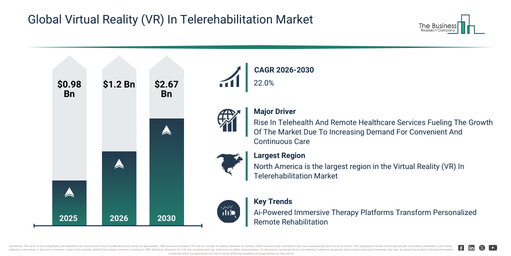
    The virtual reality (vr) in telerehabilitation market size has experienced significant growth in recent years. This market is projected to expand from $0.98 billion in 2025 to $1.2 billion in 2026, achieving a compound annual growth rate (CAGR) of 22.3%. The factors contributing to this historical growth include the expansion of telerehabilitation services, the increasing adoption of digital therapeutics, a growing emphasis on patient-centered care, the availability of consumer vr hardware, and the advancement of remote healthcare delivery.

    The virtual reality (vr) in telerehabilitation market size is anticipated to experience substantial growth over the coming years, reaching a valuation of $2.67 billion by 2030, exhibiting a compound annual growth rate (CAGR) of 22.0%. This projected expansion during the forecast period is primarily driven by factors such as increasing investment in immersive healthcare technologies, a rising demand for home-based rehabilitation solutions, the expansion of AI-enabled therapy platforms, growing integration with wearable devices, and an increasing focus on outcome-based rehabilitation models. Significant trends anticipated for this period encompass the increasing adoption of immersive remote rehabilitation programs, the growing use of gamified therapy environments, rising integration of AI-based progress tracking, the expansion of home-based VR therapy solutions, and an enhanced focus on patient engagement and adherence.

    Access Your Free Sample Report For In-Depth Market Analysis:

    https://www.thebusinessresearchcompany.com/sample.aspx?id=28352&type=smp

    What Key Factors Are Shaping The Virtual Reality (VR) In Telerehabilitation Market Landscape?

    The increasing use of telehealth and remote healthcare services is anticipated to drive the expansion of the virtual reality (VR) in telerehabilitation market in the future. Telehealth and remote healthcare services refer to the provision of clinical care to patients through digital and telecommunication technologies, eliminating the necessity for in-person visits. The embrace of telehealth is rising as patients seek convenient home-based consultations and continuous monitoring, which helps reduce travel, waiting periods, and interruptions in care. The virtual reality (VR) in telerehabilitation market supports this trend by enhancing remote rehabilitation therapy through immersive, interactive, and clinically structured VR environments that improve recovery outcomes. For instance, in August 2023, according to Vivalink, a US-based healthcare technology company, 81% of clinicians reported using remote patient monitoring (RPM) technologies in 2023, indicating a strong and accelerating adoption of remote care tools. Consequently, the growing adoption of telehealth and remote healthcare services is fueling the growth of the virtual reality (VR) in telerehabilitation market.

    How Is The Virtual Reality (VR) In Telerehabilitation Market Segmented Across Different Segment Categories?

    The virtual reality (vr) in telerehabilitation market covered in this report is segmented –

    1) By Component: Hardware, Software, Services

    2) By Rehabilitation: In-Person Rehabilitation, Remote Rehabilitation

    3) By Application: Physical Rehabilitation, Neurological Rehabilitation, Cardiac Rehabilitation, Psychological Rehabilitation, Orthopedic Rehabilitation

    4) By End-User: Healthcare Providers, Rehabilitation Centers, Homecare Settings, Fitness And Wellness Centers, Corporates

    Subsegments:

    1) By Hardware: Head-Mounted Displays (HMDs), Motion Tracking Sensors, Haptic Feedback Devices, Virtual Reality (VR) Gloves, Virtual Reality (VR) Treadmills, Eye-Tracking Devices, Cameras And Depth Sensors, Computing And Graphics Processing Units (GPUs)

    2) By Software: Immersive Virtual Reality (VR) Therapy Applications, Non-Immersive Virtual Reality (VR) Therapy Applications, Mixed Reality Therapy Applications, Artificial Intelligence (AI)-Based Therapy Modules, Gamified Rehabilitation Software, Patient Data Management And Analytics Platforms, Cloud-Based Therapy Software

    3) By Services: Clinical Implementation Services, Remote Patient Monitoring Services, Maintenance And Support Services, Training And Education Services, Consultation And Integration Services

    What Market Trends Are Affecting The Virtual Reality (VR) In Telerehabilitation Market?

    Leading companies operating within the virtual reality (VR) telerehabilitation market are concentrating on developing sophisticated solutions, such as AI-driven immersive therapy platforms, to deliver tailored, remote rehabilitation and cognitive support. These AI-powered immersive therapy platforms are digital systems designed to integrate virtual reality (VR) environments with artificial intelligence, thereby producing personalized and interactive therapeutic experiences suitable for rehabilitation, mental health, or cognitive training purposes. For instance, in November 2024, XRHealth Inc., a US-based digital therapeutics company, introduced an AI-enhanced multidisciplinary extended reality (XR) therapeutic platform that combines advanced artificial intelligence with immersive XR experiences to provide personalized and interactive therapeutic environments. This platform notably features an AI Generator Space, enabling clinicians to create custom 360-degree therapeutic environments tailored to individual patient needs, and incorporates dynamic avatars for enhanced patient interaction.

    Which Organizations Play A Role In The Virtual Reality (VR) In Telerehabilitation Market Landscape?

    Major companies operating in the virtual reality (vr) in telerehabilitation market are Penumbra Inc., DIH Holding US Inc., MindMaze, Reflexion Interactive Technologies Inc., Saebo, VR Rehab Inc., CUREosity GmbH, InfiVR, SyncVR Medical, Rehametrics, GestureTek Health, Doctor Kinetic, Cognihab Inc., Neuro Rehab VR, Virtualware, Mice Labs, Evolv Rehabilitation Technologies, XR4REHAB, MIRA Rehab Limited, LiteGait.

    Get The Full Virtual Reality (VR) In Telerehabilitation Market Report:

    https://www.thebusinessresearchcompany.com/report/virtual-reality-vr-in-telerehabilitation-global-market-report

    Which Region Leads The Virtual Reality (VR) In Telerehabilitation Market In Overall Market Size?

    North America was the largest region in the virtual reality (VR) in telerehabilitation market in 2025. Asia-Pacific is expected to be the fastest-growing region in the forecast period. The regions covered in the virtual reality (vr) in telerehabilitation market report are Asia-Pacific, South East Asia, Western Europe, Eastern Europe, North America, South America, Middle East, Africa.

    Request A Customized Virtual Reality (VR) In Telerehabilitation Market Report For Competitive Insights:

    https://www.thebusinessresearchcompany.com/report/virtual-reality-vr-in-telerehabilitation-global-market-report

    Browse Through More Reports Similar to the Global Virtual Reality (VR) In Telerehabilitation Market 2026, By The Business Research Company

    Virtual Reality In Healthcare Market Report 2026

    https://www.thebusinessresearchcompany.com/report/virtual-reality-in-healthcare-global-market-report

    Virtual Rehabilitation Market Report

    https://www.thebusinessresearchcompany.com/report/virtual-rehabilitation-global-market-report

    Virtual Reality Vr Fitness Game Market Report

    https://www.thebusinessresearchcompany.com/report/virtual-reality-vr-fitness-game-global-market-report

    Get in touch with us:

    The Business Research Company: https://www.thebusinessresearchcompany.com/

    Americas +1 310-496-7795

    Asia +44 7882 955267 & +91 8897263534

    Europe +44 7882 955267

    Email us at info@tbrc.info

    Follow us on:

    LinkedIn: https://in.linkedin.com/company/the-business-research-company

    YouTube: https://www.youtube.com/channel/UC24_fI0rV8cR5DxlCpgmyFQ

    Global Market Model: https://www.thebusinessresearchcompany.com/global-market-model
  • Virtual Reality in Medical Simulation Market Expected to Reach $24.17 Billion by 2030 at 30.2% CAGR

    Virtual Reality in Medical Simulation Market Expected to Reach $24.17 Billion by 2030 at 30.2% CAGR

    The Business Research Company’s 2026 market reports feature enhanced tools like market attractiveness analysis, TAM assessment, and company scoring matrices, along with interactive dashboards, deeper supply chain insights, and startup coverage strengthening the depth, usability, and strategic value of insights.

    What Changes In Market Value Are Expected For The Virtual Reality (VR) In Medical Simulation Market Over The 2026–2030 Period?

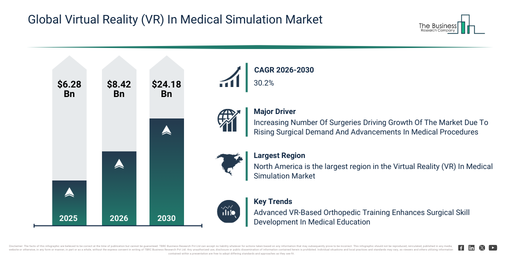
    The virtual reality (vr) in medical simulation market size has seen substantial growth in recent years. It is projected to expand from $6.28 billion in 2025 to $8.42 billion in 2026, at a compound annual growth rate (CAGR) of 34.2%. Historically, this growth can be attributed to several factors, including the expansion of medical education infrastructure, increasing demand for standardized clinical training, growing adoption of simulation-based learning, rising investments in medical training technologies, and improved accessibility of vr hardware.

    The virtual reality (VR) in medical simulation market is anticipated to experience substantial expansion over the next few years. It is projected to reach $24.18 billion by 2030, driven by a compound annual growth rate (CAGR) of 30.2%. This expected growth can be attributed to heightened investments in immersive medical education, a growing requirement for remote and scalable training solutions, the extended application of VR in clinical assessment, the increasing incorporation of AI-driven feedback systems, and wider adoption across healthcare institutions. Significant trends during the forecast period involve the rising adoption of VR-based medical training simulations, increased utilization of virtual surgical practice platforms, the expanding integration of AI-assisted clinical scenarios, the broadening of remote medical education programs, and an amplified focus on developing skills without risk.

    Access Your Free Sample Report For In-Depth Market Analysis:

    https://www.thebusinessresearchcompany.com/sample.aspx?id=16211&type=smp

    Which Factors Are Influencing The Growth Of The Virtual Reality (VR) In Medical Simulation Market?

    A growing volume of surgeries is projected to boost the expansion of virtual reality (VR) within the medical simulation market moving forward. Surgeries are medical interventions performed by surgeons for the diagnosis, treatment, or prevention of diseases or injuries, frequently involving incisions to access tissues or internal organs. This rise in surgical volumes is fueled by advancements in medical technologies, enhancements in surgical techniques, and broader patient eligibility for surgical procedures across various specialties. VR in medical simulation supports this trend by delivering immersive, highly realistic training environments that accurately replicate complex anatomy and surgical scenarios, thereby enabling surgeons to develop essential skills safely before operating on patients. For instance, in June 2024, the International Society of Aesthetic Plastic Surgery (ISAPS), a US-based professional association, reported in its Global Survey 2023 that total aesthetic procedures reached 34.9 million, including more than 15.8 million surgical procedures performed by plastic surgeons in 2023, representing a 5.5% year-over-year increase and a 40% rise over four years. Thus, the increasing number of surgeries is actively driving the growth of virtual reality (VR) in the medical simulation market.

    What Are The Main Segments Within The Virtual Reality (VR) In Medical Simulation Market Segment Structure?

    The virtual reality (vr) in medical simulation market covered in this report is segmented –

    1) By Age Group: Adult, Children, Infant

    2) By Application: Medical Education, Virtual Reality In Diagnostics, Pain Management, Mental Illness Treatment, Physical Fitness And Therapy, Virtual Reality In Surgery, Human Simulation Techniques, Virtual Reality In Dentistry, Virtual Reality In Nursing, Other Applications

    3) By End-User: Hospitals, Physician Clinics, Ambulatory Surgical Centers, Medical Institutes, Research Laboratory, Pharmaceutical Industry, Other End-Users

    Subsegments:

    1) By Adult: Vr Medical Simulations For Surgical Training, Vr Simulations For Clinical Diagnosis And Procedures, Vr For Pain Management And Physical Rehabilitation, Vr For Emergency And Trauma Care Training, Vr For Mental Health Therapy (Anxiety, Ptsd)

    2) By Children: Pediatric Vr Simulations For Medical Procedures, Vr For Pediatric Pain Management And Relaxation, Vr For Children’s Health Education (Explaining Procedures), Vr For Pediatric Physical Therapy And Rehabilitation, Vr For Cognitive And Emotional Development

    3) By Infant: Neonatal Vr Simulations For Caregivers And Healthcare Providers, Vr For Infant Care Training (Resuscitation Techniques), Vr For Monitoring Infant Vital Signs And Development, Vr For Early Developmental Therapy (Sensory Stimulation)

    Which Trends Are Influencing Demand In The Virtual Reality (VR) In Medical Simulation Market?

    Major companies within the virtual reality (VR) in the medical simulation market are concentrating on developing advanced solutions, including immersive arthroscopic training modules, to improve surgical competency, mitigate training risks, and provide anatomically accurate, repeatable practice environments for learners. Arthroscopic VR training modules are instructional tools powered by virtual reality that replicate minimally invasive orthopedic procedures, allowing trainees to practice instrument handling, triangulation, arm positioning, and repair techniques in a controlled, lifelike setting that significantly transcends the limitations of traditional cadaver labs or textbook learning. For instance, in May 2023, PrecisionOS, a Canada-based medical simulation technology company, launched its VR Shoulder Simulation Module, an innovative arthroscopic double-row rotator cuff repair training solution sponsored by CONMED. This module is designed to strengthen trainee proficiency by offering high-fidelity anatomical visualization, real-time feedback, procedural step guidance, rotator cuff tear pattern assessment, and the flexibility to practice independently or with remote mentorship, ultimately assisting residents and fellows in building the skill set required for safe and effective surgical performance.

    Who Are The Companies Participating In The Virtual Reality (VR) In Medical Simulation Market?

    Major companies operating in the virtual reality (vr) in medical simulation market are CAE Healthcare Inc, Brainlab AG, Surgical Science Sweden AB, Osso VR Inc, Mentice AB, Augmedics, Virtalis Holdings Ltd, VirtaMed AG, Oxford Medical Simulation Ltd, Health Scholars Inc, AppliedVR Inc, Medisim Ltd, Fundamental Surgery, ImmersiveTouch Inc, SimforHealth, SimX, PrecisionOS Technologies Inc, Body Interact, XRHealth, Oxford Medical Simulation Ltd, Psious, Surgical Theater, MedVR Education, Medical Realities

    Get The Full Virtual Reality (VR) In Medical Simulation Market Report:

    https://www.thebusinessresearchcompany.com/report/virtual-reality-vr-in-medical-simulation-global-market-report

    Which Region Is The Top Contributor To The Virtual Reality (VR) In Medical Simulation Market By Share?

    North America was the largest region in the virtual reality (VR) in medical simulation market in 2025. Asia-Pacific is expected to be the fastest-growing region in the forecast period. The regions covered in the virtual reality (vr) in medical simulation market report are Asia-Pacific, South East Asia, Western Europe, Eastern Europe, North America, South America, Middle East, Africa.

    Request A Customized Virtual Reality (VR) In Medical Simulation Market Report For Competitive Insights:

    https://www.thebusinessresearchcompany.com/report/virtual-reality-vr-in-medical-simulation-global-market-report

    Browse Through More Reports Similar to the Global Virtual Reality (VR) In Medical Simulation Market 2026, By The Business Research Company

    Virtual Reality In Healthcare Market Report 2026

    https://www.thebusinessresearchcompany.com/report/virtual-reality-in-healthcare-global-market-report

    Ar Or Vr Medical Simulation Market Report

    https://www.thebusinessresearchcompany.com/report/ar-or-vr-medical-simulation-global-market-report

    Patient Simulators Market Report

    https://www.thebusinessresearchcompany.com/report/patient-simulators-global-market-report

    Get in touch with us:

    The Business Research Company: https://www.thebusinessresearchcompany.com/

    Americas +1 310-496-7795

    Asia +44 7882 955267 & +91 8897263534

    Europe +44 7882 955267

    Email us at info@tbrc.info

    Follow us on:

    LinkedIn: https://in.linkedin.com/company/the-business-research-company

    YouTube: https://www.youtube.com/channel/UC24_fI0rV8cR5DxlCpgmyFQ

    Global Market Model: https://www.thebusinessresearchcompany.com/global-market-model
  • Virtual Nutrition Coach App Market Outlook Projected to Reach $898.4 Billion by 2030

    Virtual Nutrition Coach App Market Outlook Projected to Reach $898.4 Billion by 2030

    The Business Research Company’s 2026 market reports feature enhanced tools like market attractiveness analysis, TAM assessment, and company scoring matrices, along with interactive dashboards, deeper supply chain insights, and startup coverage strengthening the depth, usability, and strategic value of insights.

    By 2030, What Market Size Is The Virtual Nutrition Coach App Market Expected To Reach Based On Its 2026 Value?

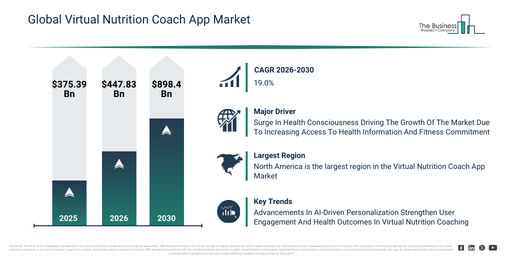
    The market size for virtual nutrition coach apps has seen rapid expansion in recent years. This market is set to increase from $375.39 billion in 2025 to $447.83 billion in 2026, achieving a compound annual growth rate (CAGR) of 19.3%. The historical growth of this market is attributable to several factors, including the rise in smartphone penetration, greater consumer awareness of healthy lifestyles, the broadening of digital health applications, increased availability of health data analytics tools, and the growing adoption of remote wellness solutions.

    The virtual nutrition coach app market size is projected to experience substantial expansion in the coming years. This market is anticipated to reach $898.4 billion by 2030, exhibiting a compound annual growth rate (CAGR) of 19.0%. Key factors driving this growth during the forecast period include a rising demand for tailored healthcare solutions, the increasing incorporation of AI into consumer health applications, the broadening scope of data-driven nutrition guidance, a heightened emphasis on preventing chronic diseases, and a greater uptake of subscription-model digital health services. Noteworthy trends for the forecast period encompass the increasing embrace of AI-powered individualized nutrition plans, growing connectivity with wearable health devices, an expanding utilization of real-time diet monitoring functionalities, the proliferation of subscription-model nutrition platforms, and an intensified concentration on health maintenance and wellness.

    Access Your Free Sample Report For In-Depth Market Analysis:

    https://www.thebusinessresearchcompany.com/sample.aspx?id=24425&type=smp

    What Leading Drivers Are Supporting The Virtual Nutrition Coach App Market Expansion?

    The increasing health awareness among consumers is anticipated to boost the expansion of the virtual nutrition coach app market in the future. This term denotes an individual’s recognition of and active approach to preserving and enhancing their overall health and welfare. Consumer health awareness is on the rise, driven by enhanced access to health-related data via social media, which empowers individuals to make better-informed choices regarding their well-being. For health-conscious users, a virtual nutrition coach app offers valuable assistance by delivering tailored dietary advice, monitoring nutritional objectives, providing immediate feedback, and enabling users to select foods wisely, thereby fostering improved eating habits and general well-being. As an illustration, data from Experian Information Solutions, Inc., a US-based information services firm, indicated that in February 2025, expenditures on gym memberships increased by 11% over the Christmas period and 4% in January, demonstrating an early commitment to fitness in 2025. Furthermore, individuals in the 35-44 age bracket experienced a 7% increase in fitness-related spending, highlighting their emphasis on health and well-being. Consequently, heightened consumer health consciousness is a significant impetus behind the expansion of the virtual nutrition coach app market.

    How Is Segmentation Applied In The Virtual Nutrition Coach App Market Segment Analysis?

    The virtual nutrition coach app market covered in this report is segmented –

    1) By Product Type: Live Streaming, On-Demand Streaming

    2) By Device Type: Smart TVs, Smartphones, Laptops Desktops, Other Device Types

    3) By Revenue Model: Subscription, Advertisement

    Subsegments:

    1) By Live Streaming: One-On-One Coaching Sessions, Group Coaching Sessions, Interactive Q&A Sessions, Real-Time Meal Planning, Live Fitness and Nutrition Integration

    2) By On-Demand Streaming: Pre-Recorded Nutrition Courses, Diet-Specific Modules, Meal Prep Tutorials, Habit-Building Video Series, Expert-Led Educational Content

    What Emerging Trends Are Seen In The Virtual Nutrition Coach App Market?

    Leading companies within the virtual nutrition coach app market are concentrating on employing advanced solutions, particularly artificial intelligence (AI)-driven personalized nutrition planning platforms, to boost user engagement, assist in preventing chronic diseases, and improve health outcomes. These AI-powered platforms utilize machine learning algorithms to analyze diverse user data, including dietary patterns, health metrics, lifestyle behaviors, and wellness objectives. This analysis allows them to offer tailored meal guidance, real-time dietary feedback, and adaptive coaching that evolves with individual progress, presenting a more precise alternative to conventional, generic diet plans. For example, in June 2024, Cleveland Clinic, a U.S.-based healthcare organization, unveiled the Cleveland Clinic Diet App, an innovative wellness and diet-coaching platform created in partnership with FitNow, Inc. This platform is engineered to enhance nutritional decision-making and long-term adherence, providing programs designed by clinicians, intelligent food recognition through photo, barcode, and voice logging, an extensive food database, personalized tracking utilities, and structured lifestyle-guidance modules like the “BodyGuard” and “HeartSmart” plans. By merging evidence-based programs with AI-driven personalization, the app facilitates users in accessing individualized, actionable, and scalable nutrition support.

    Who Are The Companies Participating In The Virtual Nutrition Coach App Market Environment?

    Major companies operating in the virtual nutrition coach app market are Noom Inc., GOQii Inc., MyFitnessPal Inc., HealthifyMe Inc., Lark Health Inc., Zoe Global Ltd., 8fit Inc., Lifesum AB., Fooducate Inc., DayTwo Ltd., Asken Diet Inc., GB HealthWatch Inc., Yazio GmbH., Nourishly Inc., Eat This Much Inc., MacroFactor, Cronometer, Fitia, FoodNoms, CalBye, RP Strength (RP Diet Coach App), Fastic, Lose It!, My Macros Plus, Nutrium

    Get The Full Virtual Nutrition Coach App Market Report:

    https://www.thebusinessresearchcompany.com/report/virtual-nutrition-coach-app-global-market-report

    Which Region Represents The Largest Share Of The Virtual Nutrition Coach App Market?

    North America was the largest region in the virtual nutrition coach app market in 2025. Asia-Pacific is expected to be the fastest-growing region in the forecast period. The regions covered in the virtual nutrition coach app market report are Asia-Pacific, South East Asia, Western Europe, Eastern Europe, North America, South America, Middle East, Africa.

    Request A Customized Virtual Nutrition Coach App Market Report For Competitive Insights:

    https://www.thebusinessresearchcompany.com/report/virtual-nutrition-coach-app-global-market-report

    Browse Through More Reports Similar to the Global Virtual Nutrition Coach App Market 2026, By The Business Research Company

    Diet And Nutrition Apps Market Report 2026

    https://www.thebusinessresearchcompany.com/report/diet-and-nutrition-apps-global-market-report

    Fitness App Market Report

    https://www.thebusinessresearchcompany.com/report/fitness-app-global-market-report

    Online Virtual Fitness Market Report

    https://www.thebusinessresearchcompany.com/report/online-virtual-fitness-global-market-report

    Get in touch with us:

    The Business Research Company: https://www.thebusinessresearchcompany.com/

    Americas +1 310-496-7795

    Asia +44 7882 955267 & +91 8897263534

    Europe +44 7882 955267

    Email us at info@tbrc.info

    Follow us on:

    LinkedIn: https://in.linkedin.com/company/the-business-research-company

    YouTube: https://www.youtube.com/channel/UC24_fI0rV8cR5DxlCpgmyFQ

    Global Market Model: https://www.thebusinessresearchcompany.com/global-market-model
  • Virtual ICU Market Revenue Expected to Reach $14.32 Billion by 2030 at 16.2% CAGR

    Virtual ICU Market Revenue Expected to Reach $14.32 Billion by 2030 at 16.2% CAGR

    The Business Research Company’s 2026 market reports feature enhanced tools like market attractiveness analysis, TAM assessment, and company scoring matrices, along with interactive dashboards, deeper supply chain insights, and startup coverage strengthening the depth, usability, and strategic value of insights.

    What Is The Anticipated Rise In Market Value Of The Virtual Intensive Care Unit (ICU) Market During The Forecast Period?

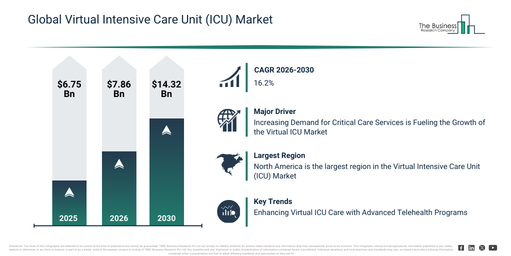
    The virtual intensive care unit (icu) market has expanded quickly in recent years. This market is set to expand from $6.75 billion in 2025 to $7.86 billion in 2026, achieving a compound annual growth rate (CAGR) of 16.5%. The historical growth of this market is due to a rising scarcity of on-site intensivists, the development of telemedicine infrastructure, increasing volumes of ICU patients, the adoption of electronic health records, and the necessity for centralized critical care management.

    The virtual intensive care unit (icu) market is anticipated to experience significant expansion in the coming years. Its value is projected to reach $14.32 billion by 2030, exhibiting a compound annual growth rate (CAGR) of 16.2%. This projected growth stems from factors such as a heightened demand for scalable critical care services, increased financial commitments towards digital health platforms, the broadening application of AI-assisted clinical monitoring, a stronger emphasis on value-based care models, and the growing uptake of virtual hospital solutions. Key trends anticipated during this period encompass the wider deployment of remote ICU monitoring systems, a greater incorporation of real-time patient data analytics, the extension of tele-intensivist support models, the increasing utilization of predictive clinical decision support tools, and an intensified focus on ongoing critical care supervision.

    Access Your Free Sample Report For In-Depth Market Analysis:

    https://www.thebusinessresearchcompany.com/sample.aspx?id=19752&type=smp

    Which Key Factors Are Driving The Virtual Intensive Care Unit (ICU) Market Growth?

    The increasing demand for critical care services is anticipated to fuel the expansion of the virtual intensive care unit (ICU) market moving forward. Critical care services refer to specialized medical attention given to patients with life-threatening conditions who require intensive monitoring and treatment. The need for these services arises from the rising prevalence of chronic diseases, an aging population, and the increasing complexity of medical conditions. Virtual ICUs enhance critical care through real-time remote monitoring and support from specialized intensivists, thereby improving patient outcomes and optimizing resource utilization, particularly in underserved or rural areas where access to on-site experts can be limited. For instance, in November 2025, the Organisation for Economic Co operation and Development, a France-based intergovernmental organization, reported that the average number of ICU beds across 31 OECD countries in 2023 was 17 ICU beds per 100,000 population. This number varied considerably, from approximately 40 beds or more per 100 000 population in Czechia and Estonia, down to below 5 beds per 100 000 in New Zealand and Sweden. Most countries have expanded their ICU capacity when compared to the pre-pandemic period. Therefore, the escalating requirement for critical care services is a key driver for the growth of the virtual intensive care unit (ICU) market.

    What Segment Categories Shape The Virtual Intensive Care Unit (ICU) Market Segment Landscape?

    The virtual intensive care unit (icu) market covered in this report is segmented –

    1) By Type: Traditional Medical Intensive Care Unit (ICU), Cardiac Care Unit, Neonatal Intensive Care Unit (ICU), Pediatric Intensive Care Unit (ICU), Trauma Intensive Care Unit (ICU), Psychiatric Intensive Care Unit (ICU), High-Dependency Unit, Other Types

    2) By Component: Software, Hardware

    3) By Technology: Machine Learning, Deep Learning, Artificial Intelligence, Other Technologies

    4) By End User: Payer, Patient, Provider

    Subsegments:

    1) By Traditional Medical Intensive Care Unit (ICU): General Medical ICU, Surgical ICU, Respiratory ICU

    2) By Cardiac Care Unit: Coronary Care Unit, Cardiac Surgery ICU

    3) By Neonatal Intensive Care Unit (ICU): Level I Neonatal ICU, Level II Neonatal ICU, Level III Neonatal ICU

    4) By Pediatric Intensive Care Unit (ICU): General Pediatric ICU, Cardiac Pediatric ICU, Neuro Pediatric ICU

    5) By Trauma Intensive Care Unit (ICU): Surgical Trauma ICU, Medical Trauma ICU

    6) By Psychiatric Intensive Care Unit (ICU): Adult Psychiatric ICU, Adolescent Psychiatric ICU

    7) By High-Dependency Unit: Step-Down Unit, Intermediate Care Unit

    8) By Other Types: Burn Unit, Post-Anesthesia Care Unit, Stroke Unit

    Which Trends Are Guiding The Direction Of The Virtual Intensive Care Unit (ICU) Market?

    Companies operating in the virtual intensive care unit (ICU) market are primarily focused on creating sophisticated solutions, such as telehealth programs, to improve ICU care. This approach facilitates continuous monitoring, expert consultations, and enhanced patient outcomes. Telehealth programs utilize digital communication technologies to deliver medical services and care remotely. These initiatives enable healthcare professionals to monitor individuals, conduct consultations, and provide treatment recommendations without requiring in-person visits. For example, in August 2024, Aster DM Healthcare, an India-based healthcare provider, introduced its Tele ICU service as part of the Aster Connected Care arm. Tele ICU is an advanced virtual critical care program that allows remote intensivists and critical care nurses to support patient care through real-time monitoring, virtual rounds, and clinical decision-support systems. This enhances the quality and accessibility of intensive care expertise via continuous remote oversight and 24/7 audio-visual communication with on-site medical teams.

    Who Are The Companies Operating Across The Virtual Intensive Care Unit (ICU) Market Value Chain?

    Major companies operating in the virtual intensive care unit (icu) market are Cisco Systems Inc., Oracle Corporation, Medtronic plc, Siemens Healthineers AG, Koninklijke Philips N.V., GE HealthCare Technologies Inc., ResMed Inc., Hill-Rom Holdings Inc., Teladoc Health Inc., Masimo Corporation, Nihon Kohden Corporation, American Well Corporation, Caregility Corporation, Hicuity Health Inc., Eagle Telemedicine, HealthNet Global, Apollo TeleHealth Services Private Limited, Philips Healthcare, Medsphere Systems Corporation, eCareManager

    Get The Full Virtual Intensive Care Unit (ICU) Market Report:

    https://www.thebusinessresearchcompany.com/report/virtual-intensive-care-unit-icu-global-market-report

    Which Geographic Region Dominates The Virtual Intensive Care Unit (ICU) Market?

    North America was the largest region in the virtual intensive care unit (ICU) market in 2025. Asia-Pacific is expected to be the fastest-growing region in the forecast period. The regions covered in the virtual intensive care unit (icu) market report are Asia-Pacific, South East Asia, Western Europe, Eastern Europe, North America, South America, Middle East, Africa.

    Request A Customized Virtual Intensive Care Unit (ICU) Market Report For Competitive Insights:

    https://www.thebusinessresearchcompany.com/report/virtual-intensive-care-unit-icu-global-market-report

    Browse Through More Reports Similar to the Global Virtual Intensive Care Unit (ICU) Market 2026, By The Business Research Company

    Neonatal Intensive Care Units Nicu Catheters Market Report 2026

    https://www.thebusinessresearchcompany.com/report/neonatal-intensive-care-units-nicu-catheters-global-market-report

    Wound Care Devices Market Report

    https://www.thebusinessresearchcompany.com/report/wound-care-devices-global-market-report

    Pharmacies And Healthcare Stores Market Report

    https://www.thebusinessresearchcompany.com/report/pharmacies-and-healthcare-stores-global-market-report

    Get in touch with us:

    The Business Research Company: https://www.thebusinessresearchcompany.com/

    Americas +1 310-496-7795

    Asia +44 7882 955267 & +91 8897263534

    Europe +44 7882 955267

    Email us at info@tbrc.info

    Follow us on:

    LinkedIn: https://in.linkedin.com/company/the-business-research-company

    YouTube: https://www.youtube.com/channel/UC24_fI0rV8cR5DxlCpgmyFQ

    Global Market Model: https://www.thebusinessresearchcompany.com/global-market-model
  • Virtual Human Anatomy Software Market Growth Forecast Through 2030

    Virtual Human Anatomy Software Market Growth Forecast Through 2030

    The Business Research Company’s 2026 market reports feature enhanced tools like market attractiveness analysis, TAM assessment, and company scoring matrices, along with interactive dashboards, deeper supply chain insights, and startup coverage strengthening the depth, usability, and strategic value of insights.

    How Is The Market Size Of The Virtual Human Anatomy Software Market Expected To Scale Between 2026 And 2030?

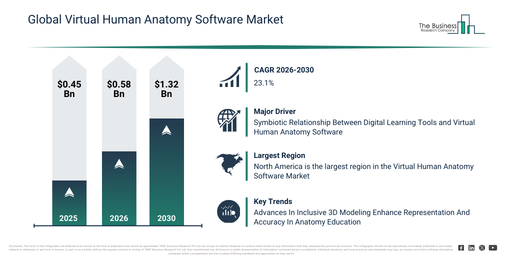
    The virtual human anatomy software market has experienced substantial expansion in its size over recent years. Projections indicate it will expand from $0.45 billion in 2025 to reach $0.58 billion by 2026, exhibiting a compound annual growth rate (CAGR) of 27.5%. This historical growth is attributable to several factors, including the increasing digitization within medical education, the expanding application of 3D visualization in healthcare training, the wider adoption of anatomy software across various institutions, increasing investments in medical simulation tools, and enhanced accessibility to high-performance computing systems.

    The virtual human anatomy software market is anticipated to experience substantial growth in the upcoming years. It is projected to expand to $1.32 billion by 2030, demonstrating a compound annual growth rate (CAGR) of 23.1%. This growth during the forecast period is driven by factors such as the increasing embrace of immersive learning technologies, a rising need for remote medical education solutions, broader integration of VR and AR into healthcare training, an elevated focus on personalized learning platforms, and the expanding use of cloud-based medical software. Notable trends for the forecast period encompass the wider adoption of interactive 3D anatomy visualization, increased utilization of VR-based anatomy learning platforms, greater integration of cloud-based anatomy software, the proliferation of simulation-driven medical education tools, and an enhanced emphasis on realistic anatomical modeling.

    Access Your Free Sample Report For In-Depth Market Analysis:

    https://www.thebusinessresearchcompany.com/sample.aspx?id=15021&type=smp

    What Primary Drivers Are Shaping The Virtual Human Anatomy Software Market?

    The burgeoning adoption of online education is poised to drive the future expansion of the virtual human anatomy software market. This learning mode, delivering content remotely via the internet and digital technologies, is gaining traction due to its accessibility, flexibility, affordability, technological advancements, and alignment with shifting societal and economic trends. Virtual human anatomy software significantly enriches this educational mode by offering immersive, interactive, and accessible learning experiences that deepen students’ understanding and appreciation of human anatomy. This trend is exemplified by data from January 2024; Eurostat, a Luxembourg-based statistical office of the European Union, reported that in 2023, 30% of EU internet users aged 16 to 74 participated in online courses or used online learning materials in the previous three months, a 2 %-point increase from 28% in 2022. Consequently, the growing embrace of online education is set to propel the virtual human anatomy software market’s growth.

    Which Segment Types Are Examined In The Virtual Human Anatomy Software Market Segment Study?

    The virtual human anatomy software market covered in this report is segmented –

    1) By Type: 3D Anatomy Software, VR Anatomy Software

    2) By Technology: Cloud-Based, On-Premise

    3) By Application: Educational Institution, Hospitals And Clinics, Other Applications

    Subsegments:

    1) By 3D Anatomy Software: Interactive 3D Visualization, 3D Rendering And Simulation, Anatomical Modeling Tools

    2) By VR Anatomy Software: Virtual Reality-Based Anatomy Exploration, VR Simulation For Medical Training, Immersive 3D Anatomy Visualization

    What Trends Are Affecting The Growth Of The Virtual Human Anatomy Software Market?

    Leading firms in the virtual human anatomy software market are prioritizing the creation of sophisticated tools, like diversity-enhanced 3D anatomical modeling, aimed at rectifying persistent deficiencies in racial representation and elevating the precision and accessibility of medical education. This diversity-enhanced 3D modeling involves incorporating a variety of skin tones, facial features, and anatomically accurate distinctions into virtual anatomy platforms, allowing learners to study using depictions that more accurately reflect actual patient demographics. For example, during January 2023, Elsevier, a Netherlands-headquartered supplier of clinical content and medical education technologies, released Complete Anatomy 2023, an enhanced iteration of its premier 3D anatomy instruction platform, which offers the broadest array of skin-tone selections yet seen in medical education. This platform integrates thoroughly researched anthropological information, adaptable models illustrating various physical traits, and highly accurate anatomical constructions to mitigate unconscious bias, sharpen diagnostic readiness, and boost the lifelike quality of virtual dissections. Such enhancements contribute to overcoming the shortcomings of conventional anatomy instruction, traditionally dependent on standardized, light-skinned models, by providing a more comprehensive, precise, and globally representative educational encounter.

    Which Players Are Part Of The Competitive Landscape Of The Virtual Human Anatomy Software Market?

    Major companies operating in the virtual human anatomy software market are VirtaMed AG, Wolters Kluwer Health, Inc., Anatomage Inc., Biomax Informatics AG, Visible Body, BioDigital Inc., 3D4Medical Ltd., Primal Pictures Ltd., BodyViz LLC, Kenhub GmbH, Zygote Media Group Inc., Medicalholodeck GmbH, Lifeliqe, s.r.o., 3D Organon Ltd., Vrtual Medicine, 4D Interactive Anatomy, Anatomy 3D Atlas, Elsevier B.V., Anatronica, Anomalous Medical, LLC, Cyber-Anatomy, Inc., Brain Science Tools B.V., BodyParts3D/Anatomography, BodyMaps, Digiscope Ltd., Human Anatomy VR

    Get The Full Virtual Human Anatomy Software Market Report:

    https://www.thebusinessresearchcompany.com/report/virtual-human-anatomy-software-global-market-report

    Which Region Is The Leading Market For The Virtual Human Anatomy Software Market?

    North America was the largest region in the virtual human anatomy market in 2025. The regions covered in the virtual human anatomy software market report are Asia-Pacific, South East Asia, Western Europe, Eastern Europe, North America, South America, Middle East, Africa.

    Request A Customized Virtual Human Anatomy Software Market Report For Competitive Insights:

    https://www.thebusinessresearchcompany.com/report/virtual-human-anatomy-software-global-market-report

    Browse Through More Reports Similar to the Global Virtual Human Anatomy Software Market 2026, By The Business Research Company

    Virtual Reality Software Market Report 2026

    https://www.thebusinessresearchcompany.com/report/virtual-reality-software-global-market-report

    Virtual Reality Vr In Medical Simulation Market Report

    https://www.thebusinessresearchcompany.com/report/virtual-reality-vr-in-medical-simulation-global-market-report

    Virtual Reality In Healthcare Market Report

    https://www.thebusinessresearchcompany.com/report/virtual-reality-in-healthcare-global-market-report

    Get in touch with us:

    The Business Research Company: https://www.thebusinessresearchcompany.com/

    Americas +1 310-496-7795

    Asia +44 7882 955267 & +91 8897263534

    Europe +44 7882 955267

    Email us at info@tbrc.info

    Follow us on:

    LinkedIn: https://in.linkedin.com/company/the-business-research-company

    YouTube: https://www.youtube.com/channel/UC24_fI0rV8cR5DxlCpgmyFQ

    Global Market Model: https://www.thebusinessresearchcompany.com/global-market-model
  • Virtual Health Services Market Expected to Reach $66.75 Billion by 2030 at 30.3% CAGR

    Virtual Health Services Market Expected to Reach $66.75 Billion by 2030 at 30.3% CAGR

    The Business Research Company’s 2026 market reports feature enhanced tools like market attractiveness analysis, TAM assessment, and company scoring matrices, along with interactive dashboards, deeper supply chain insights, and startup coverage strengthening the depth, usability, and strategic value of insights.

    What Level Of Market Value Growth Is Predicted For The Virtual Health Service Market From 2026 To 2030?

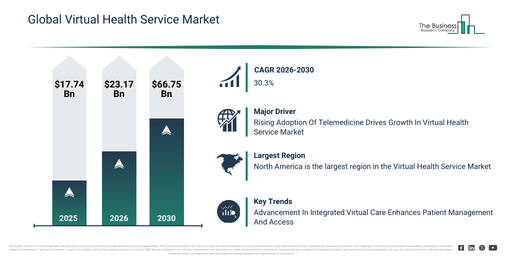
    The virtual health service market size has experienced substantial growth in recent years. This market is projected to expand from $17.74 billion in 2025 to $23.17 billion in 2026, reflecting a compound annual growth rate (CAGR) of 30.6%. Historically, this expansion can be attributed to the increasing spread of internet and smartphone use, greater embrace of telemedicine services, growing deficits in healthcare access, early adoption of digital health platforms, and a rising consumer desire for convenient care delivery.

    The virtual health service market is anticipated to undergo significant expansion over the next few years. It is projected to achieve a valuation of $66.75 billion by 2030, growing at a compound annual rate (CAGR) of 30.3%. This growth during the forecast period can be attributed to increased investments in virtual care infrastructure, a rising demand for the remote management of chronic diseases, the proliferation of digital-first healthcare models, an increase in employer-sponsored virtual health initiatives, and a greater integration of virtual care with traditional healthcare systems. Prominent trends for this period include a heightened adoption of teleconsultation platforms, the increasing incorporation of remote patient monitoring tools, a growing utilization of AI-enabled clinical decision support, the expansion of app-based healthcare delivery models, and an intensified focus on continuity of care.

    Access Your Free Sample Report For In-Depth Market Analysis:

    https://www.thebusinessresearchcompany.com/sample.aspx?id=20691&type=smp

    Which Major Drivers Are Influencing The Expansion Of The Virtual Health Service Market?

    The future expansion of the virtual health service market is anticipated due to the rising acceptance of telemedicine. Telemedicine, by definition, involves the provision of healthcare services and professional advice through digital communication platforms, allowing individuals to receive medical attention remotely from their homes. This expanding utilization of telemedicine is driven by progress in technology, a heightened patient demand for ease, and initiatives aimed at improving access to healthcare. Virtual health services facilitate telemedicine by supplying the necessary digital framework and instruments for consultations conducted at a distance, thus enabling medical professionals to assess, care for, and observe patients without requiring physical presence. As an illustration, the Ministry of Justice, a UK government body, reported in July 2023 that the count of people equipped with a location monitoring device (GPS) stood at 8,028 on 30 June 2023. This represented a substantial increase of 67% from the 4,799 recorded on 30 June 2022. Consequently, the rising prevalence of telemedicine is a key force propelling the virtual health service market.

    How Are Different Segments Classified In The Virtual Health Service Market Segment Analysis?

    The virtual health service market covered in this report is segmented –

    1) By Component: Software And Services, Hardware

    2) By Consultation Mode: Video, Audio, Messaging, Kiosks

    3) By Specialty And Use Case: General Medicine, Mental Health, Dermatology, Chronic Condition Management, Remote Surgery Assistance, Nutrition And Fitness, Women’s Health, Pediatrics

    4) By Mode Of Delivery: Web Based, App Based, Phone Based

    5) By End User: Patients, Healthcare Providers, Payers, Employers, Other End Users

    Subsegments:

    1) By Software And Services: Telemedicine Software, Health Monitoring Software, Electronic Health Records (EHR) Systems, Mobile Health Applications, Remote Patient Monitoring Services, Consultation Services, Analytics And Reporting Services

    2) By Hardware: Telehealth Kits, Medical Devices for Remote Monitoring, Computers and Tablets, Wearable Health Devices, Video Conferencing Equipment

    Which Trends Are Shaping The Virtual Health Service Market?

    Leading companies within the virtual health service market are concentrating on developing advanced solutions, including integrated virtual care platforms, to cater to the increasing demand for healthcare delivery that is coordinated, accessible, and driven by data. Integrated virtual care merges telemedicine, remote patient monitoring, digital health records, and patient engagement tools into a single, unified ecosystem, providing a more fluid and efficient option compared to conventional in-person services or fragmented digital health solutions. An example of this is Royal Philips, a healthcare technology company from the Netherlands, which launched Philips Virtual Care Management in March 2023. This platform integrates connected medical devices, cloud-based monitoring capabilities, clinical oversight, and engagement tools to assist health systems, provider organizations, payers, and employers throughout the United States. It enhances chronic disease management through ongoing data collection, supports collaborative care among clinical teams, and optimizes real-time decision-making. By seamlessly incorporating virtual care into existing workflows, this solution contributes to reducing hospitalizations and emergency visits while simultaneously improving patient outcomes, marking a significant step forward in scalable, technology-enabled care.

    Who Are The Companies Driving Activity In The Virtual Health Service Market?

    Major companies operating in the virtual health service market are Teladoc Health Inc., Babylon Health Limited, Allscripts Healthcare Solutions Inc., WELL Health Technologies Corp., American Well Corporation, MDLive Inc., Doctor On Demand Inc., HealthTap Inc., TytoCare Ltd, 98point6 Inc., Medici Inc., VSee Lab Inc., Doxy.me LLC, eVisit Inc., MDTech Inc., Lemonaid Health Inc., Epic Systems Corporation, Dell Technologies Inc., Cisco Systems Inc., Qualcomm Incorporated

    Get The Full Virtual Health Service Market Report:

    https://www.thebusinessresearchcompany.com/report/virtual-health-service-global-market-report

    Where Is The Virtual Health Service Market Primarily Concentrated By Region?

    North America was the largest region in the virtual health service market in 2025. The regions covered in the virtual health service market report are Asia-Pacific, South East Asia, Western Europe, Eastern Europe, North America, South America, Middle East, Africa.

    Request A Customized Virtual Health Service Market Report For Competitive Insights:

    https://www.thebusinessresearchcompany.com/report/virtual-health-service-global-market-report

    Browse Through More Reports Similar to the Global Virtual Health Service Market 2026, By The Business Research Company

    Equine Healthcare Market Report 2026

    https://www.thebusinessresearchcompany.com/report/equine-healthcare-global-market-report

    Connected Healthcare Market Report

    https://www.thebusinessresearchcompany.com/report/connected-healthcare-global-market-report

    Consumer Healthcare Market Report

    https://www.thebusinessresearchcompany.com/report/consumer-healthcare-global-market-report

    Get in touch with us:

    The Business Research Company: https://www.thebusinessresearchcompany.com/

    Americas +1 310-496-7795

    Asia +44 7882 955267 & +91 8897263534

    Europe +44 7882 955267

    Email us at info@tbrc.info

    Follow us on:

    LinkedIn: https://in.linkedin.com/company/the-business-research-company

    YouTube: https://www.youtube.com/channel/UC24_fI0rV8cR5DxlCpgmyFQ

    Global Market Model: https://www.thebusinessresearchcompany.com/global-market-model
  • Virtual Colonoscopy Software Market Forecast to Reach $51.61 Billion by 2030 at 7.6% CAGR

    Virtual Colonoscopy Software Market Forecast to Reach $51.61 Billion by 2030 at 7.6% CAGR

    The Business Research Company’s 2026 market reports feature enhanced tools like market attractiveness analysis, TAM assessment, and company scoring matrices, along with interactive dashboards, deeper supply chain insights, and startup coverage strengthening the depth, usability, and strategic value of insights.

    How Will The Market Value Of The Virtual Colonoscopy Software Market Progress Between 2026 And 2030?

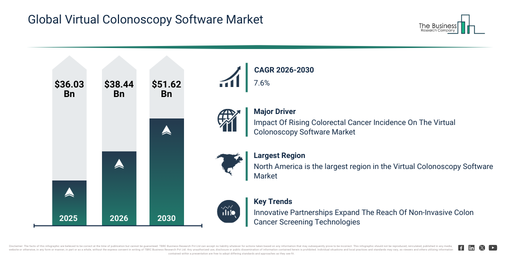
    The virtual colonoscopy software market has experienced robust expansion in recent years. It is forecast to grow from $36.03 billion in 2025 to $38.44 billion in 2026, achieving a compound annual growth rate (CAGR) of 6.7%. The growth witnessed in the past can be attributed to increasing colorectal cancer screening initiatives, the expansion of diagnostic imaging centers, the rising adoption of CT imaging in diagnostics, growing awareness of non-invasive procedures, and advancements in imaging software capabilities.

    The virtual colonoscopy software sector is projected to experience substantial expansion over the upcoming years. This market is anticipated to reach a valuation of $51.62 billion by 2030, exhibiting a compound annual growth rate (CAGR) of 7.6%. This projected growth is driven by several factors, including the wider uptake of AI-powered diagnostic instruments, increased funding in preventive healthcare initiatives, the proliferation of cloud-based medical imaging solutions, a rising need for prompt cancer identification, and enhanced integration with existing hospital information systems. Key developments expected during this timeframe involve the greater acceptance of 3D virtual colonoscopy imaging, the increasing utilization of AI for assisting in polyp detection, the broader implementation of cloud-based imaging platforms, the expansion of non-invasive screening methods, and a sharpened emphasis on improving diagnostic precision and operational efficiency.

    Access Your Free Sample Report For In-Depth Market Analysis:

    https://www.thebusinessresearchcompany.com/sample.aspx?id=13002&type=smp

    What Key Drivers Are Fueling The Growth Of The Virtual Colonoscopy Software Market?

    The rising incidence of colorectal cancer is projected to propel the growth of the virtual colonoscopy software market moving forward. Colorectal cancer is a malignancy that develops in the tissues of the colon or rectum. Virtual colonoscopy software plays a vital role in addressing colorectal cancer by providing a minimally invasive and non-invasive approach for screening and detecting abnormalities within the colon. For instance, in June 2023, the National Cancer Institution, a UK-based government agency, reported that new cases of colorectal cancer in individuals under the age of 50 have been increasing at an alarming pace over the last several decades. This observation was based on data from more than 5,000 people diagnosed before age 50, referred to as early-onset colorectal cancer, and over 22,000 individuals without cancer (controls). Consequently, the growing number of colorectal cancer incidents is driving the expansion of the virtual colonoscopy software market.

    How Is The Virtual Colonoscopy Software Market Categorized Across Its Segment Groups?

    The virtual colonoscopy software market covered in this report is segmented –

    1) By Product Type: Two Dimensional (2D), Three Dimensional (3D)

    2) By Deployment: On-Premises, Cloud-based

    3) By Application: Polyps, Crohn’s Disease, Ulcerative Colitis, Colorectal Cancer (CRC), Diverticulosis, Stenosis

    4) By End-User: Hospitals, Clinics, Diagnostic Centers, Ambulatory Surgical Centers

    Subsegments:

    1) By Two Dimensional (2D): Standard 2D Imaging Software, Advanced 2D Visualization Tools

    2) By Three Dimensional (3D): Standard 3D Imaging Software, Enhanced 3D Reconstruction Software, Interactive 3D Analysis Tools

    What Trends Are Influencing The Virtual Colonoscopy Software Market?

    Companies within the virtual colonoscopy software market are actively pursuing cutting-edge solutions, including turnkey access models, to broaden non-invasive colorectal cancer screening options and enhance patient results. These turnkey access models represent complete, ready-to-use virtual colonoscopy platforms that incorporate imaging capabilities, workflow management instruments, and standardized protocols, thereby empowering healthcare facilities to rapidly and effectively introduce screening services. As an illustration, in November 2024, Bracco Diagnostics Inc., a diagnostic imaging company from Italy, formed a partnership with ColoWatch, a US-based provider of virtual colonoscopy services. The objective of this collaboration is to expand the availability of virtual colonoscopy for the prompt identification of colon and rectal cancer. This alliance leverages Bracco’s specialized imaging knowledge alongside ColoWatch’s established virtual colonoscopy approach to provide an integrated solution, enabling clinics to offer colorectal screening services that are scalable, uniform, and accommodating for patients. The partnership improves access to early cancer detection, facilitates streamlined clinical operations, and ensures a dependable, superior patient experience by simplifying implementation across various imaging centers.

    Which Firms Are Influencing Competition In The Virtual Colonoscopy Software Market?

    Major companies operating in the virtual colonoscopy software market are Hitachi Medical Corporation, Siemens Healthineers, Koninklijke Philips N.V., GE HealthCare Technologies Inc., Carestream Health, Agfa Healthcare, Intelerad Medical Systems Incorporated, Canon Medical Informatics Inc., TeraRecon Inc., iCAD Inc., Median Technologies, Pie Medical Imaging, Ziosoft USA Inc., Intrasense SA, Medweb, Viatronix Inc., Fujifilm Holdings Corporation, Infervision, Rendoscopy AG, Radi Insight 3D, Neusoft Medical Systems

    Get The Full Virtual Colonoscopy Software Market Report:

    https://www.thebusinessresearchcompany.com/report/virtual-colonoscopy-software-global-market-report

    Which Region Has The Greatest Market Share In The Virtual Colonoscopy Software Market?

    North America was the largest region in the virtual colonoscopy software market in 2025. The regions covered in the virtual colonoscopy software market report are Asia-Pacific, South East Asia, Western Europe, Eastern Europe, North America, South America, Middle East, Africa.

    Request A Customized Virtual Colonoscopy Software Market Report For Competitive Insights:

    https://www.thebusinessresearchcompany.com/report/virtual-colonoscopy-software-global-market-report

    Browse Through More Reports Similar to the Global Virtual Colonoscopy Software Market 2026, By The Business Research Company

    Virtual Human Anatomy Software Market Report 2026

    https://www.thebusinessresearchcompany.com/report/virtual-human-anatomy-software-global-market-report

    Endoscopy Video Systems Market Report

    https://www.thebusinessresearchcompany.com/report/endoscopy-video-systems-global-market-report

    Gastrointestinal Endoscopy Market Report

    https://www.thebusinessresearchcompany.com/report/gastrointestinal-endoscopy-global-market-report

    Get in touch with us:

    The Business Research Company: https://www.thebusinessresearchcompany.com/

    Americas +1 310-496-7795

    Asia +44 7882 955267 & +91 8897263534

    Europe +44 7882 955267

    Email us at info@tbrc.info

    Follow us on:

    LinkedIn: https://in.linkedin.com/company/the-business-research-company

    YouTube: https://www.youtube.com/channel/UC24_fI0rV8cR5DxlCpgmyFQ

    Global Market Model: https://www.thebusinessresearchcompany.com/global-market-model
  • Virtual Clinical Trial Participant Avatars Market Projected to Reach $5.35 Billion by 2030 at 28.3% CAGR

    Virtual Clinical Trial Participant Avatars Market Projected to Reach $5.35 Billion by 2030 at 28.3% CAGR

    The Business Research Company’s 2026 market reports feature enhanced tools like market attractiveness analysis, TAM assessment, and company scoring matrices, along with interactive dashboards, deeper supply chain insights, and startup coverage strengthening the depth, usability, and strategic value of insights.

    What Are The Market Size Estimates For The Virtual Clinical-Trial Participant Avatars Market In 2026 And 2030?

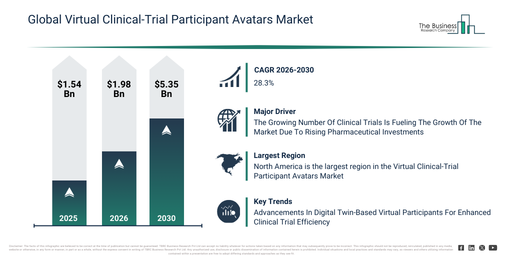
    The virtual clinical-trial participant avatars market has experienced substantial expansion in recent years. Projections indicate it will expand from $1.54 billion in 2025 to reach $1.98 billion in 2026, at a compound annual growth rate (CAGR) of 28.6%. The expansion observed in the past can be linked to several factors: challenges in recruiting for traditional clinical trials, the escalating costs of conducting physical trials, progress in computational modeling, enhanced access to health data, and the initial implementation of simulation-based trial tools.

    The market for virtual clinical-trial participant avatars is anticipated to show significant expansion in the coming years. This sector is forecast to reach $5.35 billion by 2030, exhibiting a compound annual growth rate (CAGR) of 28.3%. The projected growth during this period can be attributed to a heightened demand for quicker drug development cycles, increased investment in virtual trial infrastructure, the broadening scope of precision medicine research, greater regulatory acceptance of digital evidence, and the growing integration of avatars with authentic clinical data. Prominent trends for the forecast period include the increasing deployment of AI-driven patient simulation models, the rising adoption of digital twin technologies in trials, an enhanced integration of predictive analytics in trial design, the expansion of hybrid avatar modeling approaches, and a more pronounced focus on optimizing trial efficiency.

    Access Your Free Sample Report For In-Depth Market Analysis:

    https://www.thebusinessresearchcompany.com/sample.aspx?id=28351&type=smp

    Which Drivers Are Supporting The Virtual Clinical-Trial Participant Avatars Market Growth?

    The anticipated expansion of the virtual clinical-trial participant avatars market is largely driven by the increasing volume of clinical trials. These trials represent structured investigations aimed at assessing the safety and effectiveness of medical treatments involving human subjects. The increase in clinical trials stems from heightened pharmaceutical investments in drug development, as companies strive to innovate new treatments for intricate diseases and advancements in personalized medicine. The virtual clinical-trial participant avatars market facilitates this trend by creating AI-driven digital patient models capable of simulating disease advancement, responses to treatment, and safety results, which in turn allows for quicker recruitment, more intelligent trial designs, and a reduction in research expenditures and associated risks. For example, data from December 2024, released by the UK-based Association of the British Pharmaceutical Industry (ABPI), indicated that the count of pharmaceutical industry trials initiated within the UK saw an uptick for the second year running, progressing from 411 in 2022 to 426 in 2023. Consequently, the expanding volume of clinical trials acts as a primary catalyst for the growth experienced by the virtual clinical-trial participant avatars market.

    How Are Segments Identified Within The Virtual Clinical-Trial Participant Avatars Market Segment Framework?

    The virtual clinical-trial participant avatars market covered in this report is segmented –

    1) By Avatar Type: Artificial Intelligence-Generated Avatars, Digitally Modeled Human Avatars, Hybrid Avatars

    2) By Deployment Mode: Cloud-Based, On-Premises

    3) By Application: Drug Development, Patient Recruitment, Data Simulation, Remote Monitoring, Other Applications

    4) By End-User: Pharmaceutical Companies, Contract Research Organizations, Academic And Research Institutes, Other End-Users

    Subsegments:

    1) By Artificial Intelligence-Generated Avatars: Machine Learning-Based Avatars, Deep Learning-Based Avatars, Natural Language Processing (NLP)-Enabled Avatars, Generative Adversarial Network (GAN)-Based Avatars

    2) By Digitally Modeled Human Avatars: Three-Dimensional (3D) Scanned Human Avatars, Motion Capture Modeled Avatars, Photorealistic Rendered Avatars, Anatomically Accurate Human Avatars

    3) By Hybrid Avatars: Artificial Intelligence (AI)-Enhanced Digitally Modeled Avatars, Mixed Reality (MR) Enabled Avatars, Cognitive Simulation Avatars, Sensor-Integrated Virtual Avatars

    Which Trends Are Expected To Impact The Virtual Clinical-Trial Participant Avatars Market?

    Major companies in the virtual clinical trial participant avatars market are concentrating on developing advanced solutions, such as digital twin-based clinical trial participants, to boost trial efficiency and improve predictive accuracy in drug development. These digital twin-based clinical trial participants are virtual models of real patients designed to mimic their physiological and behavioral responses, allowing researchers to forecast treatment outcomes and optimize trial designs while minimizing the reliance on extensive physical testing. For instance, in July 2023, Unlearn.ai, Inc., a US-based AI clinical trial technology company, launched the updated digital twin generator (DTG) for Alzheimer’s disease, version 3.1. This enhancement improved the handling of missing baseline data by integrating a neural network imputation model within a Neural Boltzmann Machine architecture, leading to reduced sensitivity to missing data and better overall performance. The DTG leverages diverse patient datasets to create personalized digital twins that can reliably predict clinical and biomarker trajectories, thereby supporting clinical trials with more precise and robust modeling of Alzheimer’s progression.

    Who Are The Companies Competing Within The Virtual Clinical-Trial Participant Avatars Market?

    Major companies operating in the virtual clinical-trial participant avatars market are NVIDIA Corporation, Dassault Systèmes SE, Signant Health Holding Corp., Owkin Inc, Medable Inc., Insilico Medicine Inc., Science 37 Inc., THREAD Inc., Lindus Health Limited, Obvio Health, Sano Genetics Limited, GNS Healthcare, Unlearn.ai Inc., Novadiscovery SAS, Deep 6 AI, Ai Cure Technologies, Altis Labs Inc., Physiomics Plc, OneThree Biotech, Aitia Bio

    Get The Full Virtual Clinical-Trial Participant Avatars Market Report:

    https://www.thebusinessresearchcompany.com/report/virtual-clinical-trial-participant-avatars-global-market-report

    Which Region Accounts For The Largest Portion Of The Virtual Clinical-Trial Participant Avatars Market?

    North America was the largest region in the virtual clinical-trial participant avatars market in 2025. Asia-Pacific is expected to be the fastest-growing region in the forecast period. The regions covered in the virtual clinical-trial participant avatars market report are Asia-Pacific, South East Asia, Western Europe, Eastern Europe, North America, South America, Middle East, Africa.

    Request A Customized Virtual Clinical-Trial Participant Avatars Market Report For Competitive Insights:

    https://www.thebusinessresearchcompany.com/report/virtual-clinical-trial-participant-avatars-global-market-report

    Browse Through More Reports Similar to the Global Virtual Clinical-Trial Participant Avatars Market 2026, By The Business Research Company

    Patient Simulators Market Report 2026

    https://www.thebusinessresearchcompany.com/report/patient-simulators-global-market-report

    Virtual Human Anatomy Software Market Report

    https://www.thebusinessresearchcompany.com/report/virtual-human-anatomy-software-global-market-report

    Virtual Reality Vr In Medical Simulation Market Report

    https://www.thebusinessresearchcompany.com/report/virtual-reality-vr-in-medical-simulation-global-market-report

    Get in touch with us:

    The Business Research Company: https://www.thebusinessresearchcompany.com/

    Americas +1 310-496-7795

    Asia +44 7882 955267 & +91 8897263534

    Europe +44 7882 955267

    Email us at info@tbrc.info

    Follow us on:

    LinkedIn: https://in.linkedin.com/company/the-business-research-company

    YouTube: https://www.youtube.com/channel/UC24_fI0rV8cR5DxlCpgmyFQ

    Global Market Model: https://www.thebusinessresearchcompany.com/global-market-model