Category: Healthcare Services

  • Vertigo Treatment Market Insights on Emerging Trends and Growth Drivers

    Vertigo Treatment Market Insights on Emerging Trends and Growth Drivers

    The Business Research Company’s 2026 market reports feature enhanced tools like market attractiveness analysis, TAM assessment, and company scoring matrices, along with interactive dashboards, deeper supply chain insights, and startup coverage strengthening the depth, usability, and strategic value of insights.

    How Is The Market Size Of The Vertigo Treatment Market Expected To Change From 2026 To 2030?

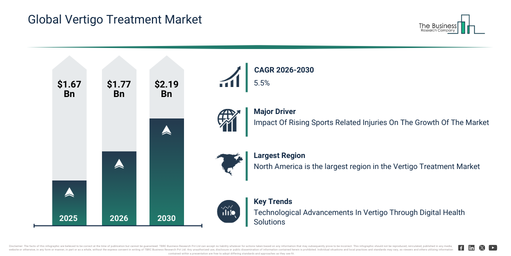
    The vertigo treatment market size has demonstrated robust expansion in recent years. This market is projected to grow from $1.67 billion in 2025 to $1.77 billion in 2026, with a compound annual growth rate (CAGR) of 5.7%. The historical growth for this sector can be attributed to an increasing prevalence of vestibular disorders, a rising geriatric population, improved awareness of vertigo symptoms, the expansion of neurology clinics, and an increased use of diagnostic imaging.

    The vertigo treatment market is projected to experience substantial expansion over the upcoming years, reaching a valuation of $2.19 billion by 2030, driven by a compound annual growth rate (CAGR) of 5.5%. This expansion during the projection period is linked to several factors, including the increasing uptake of customized vertigo treatment plans, a rising preference for non-invasive therapeutic options, the broadening availability of telemedicine consultations, an intensified emphasis on managing symptoms over the long term, and greater financial commitments to vestibular research. Key developments expected during this forecast timeframe encompass the wider implementation of vestibular rehabilitation therapy, a surge in the application of combined drug regimens, a heightened focus on the prompt diagnosis of bppv, the expansion of outpatient services for vertigo management, and enhancements in patient education and self-care initiatives.

    Access Your Free Sample Report For In-Depth Market Analysis:

    https://www.thebusinessresearchcompany.com/sample.aspx?id=21316&type=smp

    What Major Factors Are Driving The Vertigo Treatment Market Forward?

    An increasing incidence of sports-related injuries is anticipated to drive the expansion of the vertigo treatment market going forward. These injuries are defined as physical harm sustained during participation in sports or recreational physical activities. The growing occurrence of sports injuries stems from greater involvement in high-impact athletic activities, rigorous training schedules, and insufficient preventive strategies against injury. Vertigo therapy assists individuals with sports injuries by reducing feelings of dizziness, enhancing equilibrium, and re-establishing vestibular health via a mix of pharmaceutical interventions, vestibular rehabilitation exercises, and changes to daily habits, thereby allowing athletes quicker recovery, better coordination, and a safe return to their chosen sports. For example, in July 2025, the Australian Institute of Health and Welfare, an Australia-based national government health statistics agency, reported over 62,100 sports-related injury hospitalisations in Australia in 2023–24, identifying males in approximately 70% of cases (about 43,800) and females in nearly 30% (around 18,300). Consequently, the increasing occurrence of sports-related injuries is fueling the expansion of the vertigo treatment market.

    How Is The Vertigo Treatment Market Organized By Segment Classification?

    The vertigo treatment market covered in this report is segmented –

    1) By Type: Peripheral Vertigo, Central Vertigo

    2) By Treatment: Medication, Surgery, Therapy

    3) By Route Of Administration: Oral, Topical, Parenteral, Other Routes Of Administration

    4) By End User: Hospitals, Clinics, Other End Users

    Subsegments:

    1) By Peripheral Vertigo: Benign Paroxysmal Positional Vertigo (BPPV), Meniere’s Disease, Vestibular Neuritis, Labyrinthitis

    2) By Central Vertigo: Vestibular Migraine, Stroke-Related Vertigo, Multiple Sclerosis-Associated Vertigo, Brain Tumor-Related Vertigo

    Which Trends Are Impacting The Progress Of The Vertigo Treatment Market?

    Major companies in the vertigo treatment market are increasingly prioritizing technological advancements, including digital health solutions, to deliver patient care and improve treatment adherence. A digital health solution signifies technology-powered tools and platforms developed to enhance health management, diagnosis, treatment, and overall patient care. As an illustration, in August 2023, Abbott Laboratories, a US-based healthcare company, introduced the Vertigo Coach app in India. This digital health solution aims to assist individuals in managing vertigo by offering information and resources whenever needed. The app provides guidance on lifestyle choices, exercises, and common vertigo triggers, acting as a supportive companion for users. It functions as a comprehensive platform for managing symptoms, fostering improved communication between patients and physicians, and tracking medication schedules. Furthermore, the app features automated push notifications and pill reminders to ensure consistent medication adherence.

    Who Are The Industry Participants Involved In The Vertigo Treatment Market?

    Major companies operating in the vertigo treatment market are Pfizer Inc., Abbott Laboratories, Medtronic Plc, Boston Scientific Corp., Eisai Co. Ltd., Lupin Ltd., Vertigenius, Kracie Holdings Ltd. , Biologische Heilmittel Heel GmbH, Interacoustics A/S., AdvaCare Pharma, AuroPharma Inc., Biofield Pharma Pvt Ltd., Sound Pharmaceuticals Inc., Otolith Labs Inc., Ear Technology Corporation, NeuroEquilibrium Diagnostic Systems Pvt Ltd., Vestibular First, Natus Medical Incorporated, Ronish Bioceuticals

    Get The Full Vertigo Treatment Market Report:

    https://www.thebusinessresearchcompany.com/report/vertigo-treatment-global-market-report

    Which Region Represents The Largest Share Of The Vertigo Treatment Market?

    North America was the largest region in the vertigo treatment market in 2025. Asia-Pacific is expected to be the fastest-growing region in the forecast period. The regions covered in the vertigo treatment market report are Asia-Pacific, South East Asia, Western Europe, Eastern Europe, North America, South America, Middle East, Africa.

    Request A Customized Vertigo Treatment Market Report For Competitive Insights:

    https://www.thebusinessresearchcompany.com/report/vertigo-treatment-global-market-report

    Browse Through More Reports Similar to the Global Vertigo Treatment Market 2026, By The Business Research Company

    Myopia And Presbyopia Treatment Market Report 2026

    https://www.thebusinessresearchcompany.com/report/myopia-and-presbyopia-treatment-global-market-report

    Ear Health Market Report

    https://www.thebusinessresearchcompany.com/report/ear-health-global-market-report

    Hearing Loop Market Report

    https://www.thebusinessresearchcompany.com/report/hearing-loop-global-market-report

    Get in touch with us:

    The Business Research Company: https://www.thebusinessresearchcompany.com/

    Americas +1 310-496-7795

    Asia +44 7882 955267 & +91 8897263534

    Europe +44 7882 955267

    Email us at info@tbrc.info

    Follow us on:

    LinkedIn: https://in.linkedin.com/company/the-business-research-company

    YouTube: https://www.youtube.com/channel/UC24_fI0rV8cR5DxlCpgmyFQ

    Global Market Model: https://www.thebusinessresearchcompany.com/global-market-model
  • Vertebroplasty and Kyphoplasty Market Developments Shaping Industry Growth

    Vertebroplasty and Kyphoplasty Market Developments Shaping Industry Growth

    The Business Research Company’s 2026 market reports feature enhanced tools like market attractiveness analysis, TAM assessment, and company scoring matrices, along with interactive dashboards, deeper supply chain insights, and startup coverage strengthening the depth, usability, and strategic value of insights.

    From Its 2026 Market Size, What Value Is The Vertebroplasty And Kyphoplasty Market Projected To Reach By 2030?

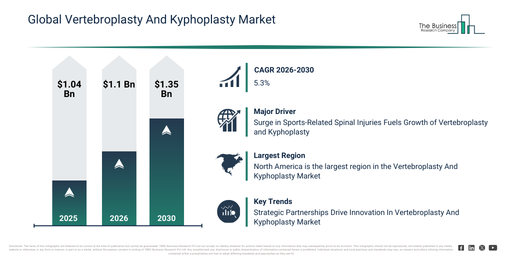
    The vertebroplasty and kyphoplasty market has demonstrated significant expansion in recent years. It is forecast to grow from $1.04 billion in 2025 to $1.1 billion in 2026, achieving a compound annual growth rate (CAGR) of 5.8%. Factors contributing to the historical growth include an increasing incidence of osteoporotic fractures, the rise of the aging population, an uptick in the diagnosis of vertebral compression fractures, the broadening of spinal intervention capabilities, and enhanced access to imaging technologies.

    The vertebroplasty and kyphoplasty market is projected to experience substantial expansion in the coming years. It is anticipated to reach $1.35 billion by 2030, exhibiting a compound annual growth rate (CAGR) of 5.3%. This growth during the projection period stems from several factors, including the rising uptake of outpatient spine procedures, an increasing need for quick pain relief solutions, the development of advanced spinal biomaterials, greater investment in minimally invasive devices, and an enhanced emphasis on quicker patient rehabilitation. Key trends anticipated during the forecast period involve a growing embrace of minimally invasive spine surgeries, increased utilization of balloon kyphoplasty instruments, a surge in demand for interventions guided by imaging, an expansion of outpatient facilities for spinal treatment, and advancements in bone cement delivery systems.

    Access Your Free Sample Report For In-Depth Market Analysis:

    https://www.thebusinessresearchcompany.com/sample.aspx?id=13556&type=smp

    Which Key Drivers Are Affecting The Vertebroplasty And Kyphoplasty Market Development?

    The escalating occurrence of spinal injuries stemming from sports activities is anticipated to drive the expansion of the vertebroplasty and kyphoplasty markets going forward. These sports-related spinal injuries involve damage to the spine that arises from engagement in athletics or other physical activities. The growing incidence of sports-related spinal trauma encompasses conditions like vertebral compression fractures, spondylolisthesis, and herniated discs, which require minimally invasive treatment options such as vertebroplasty and kyphoplasty procedures, involving the injection of bone cement into damaged vertebrae. For instance, in 2024, the National Spinal Cord Injury Statistical Center (NSCISC), a US-based nonprofit research registry, reported that approximately 305,000 persons (range 257,000–388,000) are living with traumatic spinal cord injury (tSCI) in the United States, with the annual incidence remaining around 18,000 new tSCI cases per year. Therefore, the rising frequency of spinal injuries linked to sports will stimulate the growth of the vertebroplasty and kyphoplasty market.

    Which Segments Define The Vertebroplasty And Kyphoplasty Market Segment Structure?

    The vertebroplasty and kyphoplasty market covered in this report is segmented –

    1) By Product Type: Kyphoplasty Devices, Vertebroplasty Devices

    2) By Surgery Type: Vertebroplastic Surgery, Kyphoplastic Surgery

    3) By End User: Hospitals, Ambulatory Surgical Centers

    Subsegments:

    1) By Kyphoplasty Devices: Balloon Kyphoplasty Devices, Inflation Devices, Vertebral Restoration Devices

    2) By Vertebroplasty Devices: Bone Cement Delivery Systems, Cannulas and Needles

    What Trends Are Transforming The Vertebroplasty And Kyphoplasty Market?

    Leading companies in the vertebroplasty and kyphoplasty market are adopting a strategic partnership model to provide unipedicular balloon catheters for the treatment of vertebral compression fractures. Strategic partnerships involve companies leveraging each other’s strengths and resources to achieve mutual benefits and success. For instance, in June 2024, Medtronic Plc, an Ireland-based medical technology company, formed a partnership with Merit Medical Systems Inc., a US-based medical device company. This collaboration will result in the development of a unipedicular, steerable balloon catheter for treating vertebral compression fractures (VCF) in the United States. This agreement builds upon the existing collaboration between Medtronic and Merit, with Merit already supplying Medtronic’s Kyphon Xpander Inflation Syringes for balloon kyphoplasty procedures. The Kyphon KyphoFlex is engineered to enable controlled, precise, and targeted cavity creation during vertebral augmentation. The introduction of this unipedicular solution will complement Medtronic’s current bipedicular balloon kyphoplasty offering, providing enhanced flexibility and options for clinicians.

    Who Are The Established Players Within The Vertebroplasty And Kyphoplasty Market?

    Major companies operating in the vertebroplasty and kyphoplasty market are Cardinal Health, Johnson and Johnson (DePuy Synthes), Medtronic Plc., Stryker Corporation, GS Solutions Inc., Lepu Medical Technology (Beijing)Co.Ltd., Merit Medical Systems Inc., Globus Medical Inc., Alphatec Spine Inc., Rontis Corporation, Spectrum Plastics Group., SOMATEX Medical Technologies GmbH, Zavation LLC, MJ Surgical, Benvenue Medical, Joimax GmbH, Laurane Medical LLC, Spine Wave Inc., G21 S.r.l., BM Korea Co. LTD, Teknimed, Joline GmbH And Co. KG, SCW Medicath Ltd., Stöckli Medical AG, Jiangsu ChangMei Medtech Co.Ltd., IZI Medical Products

    Get The Full Vertebroplasty And Kyphoplasty Market Report:

    https://www.thebusinessresearchcompany.com/report/vertebroplasty-and-kyphoplasty-global-market-report

    Which Geographic Region Dominates The Vertebroplasty And Kyphoplasty Market?

    North America was the largest region in the vertebroplasty and kyphoplasty market in 2025. Asia-Pacific is expected to be the fastest-growing region in the forecast period. The regions covered in the vertebroplasty and kyphoplasty market report are Asia-Pacific, South East Asia, Western Europe, Eastern Europe, North America, South America, Middle East, Africa.

    Request A Customized Vertebroplasty And Kyphoplasty Market Report For Competitive Insights:

    https://www.thebusinessresearchcompany.com/report/vertebroplasty-and-kyphoplasty-global-market-report

    Browse Through More Reports Similar to the Global Vertebroplasty And Kyphoplasty Market 2026, By The Business Research Company

    Vertebroplasty Needles Market Report 2026

    https://www.thebusinessresearchcompany.com/report/vertebroplasty-needles-global-market-report

    Minimally Invasive Vertebral Compression Fracture Treatment Market Report

    https://www.thebusinessresearchcompany.com/report/minimally-invasive-vertebral-compression-fracture-treatment-global-market-report

    Chondroplasty Market Report

    https://www.thebusinessresearchcompany.com/report/chondroplasty-global-market-report

    Get in touch with us:

    The Business Research Company: https://www.thebusinessresearchcompany.com/

    Americas +1 310-496-7795

    Asia +44 7882 955267 & +91 8897263534

    Europe +44 7882 955267

    Email us at info@tbrc.info

    Follow us on:

    LinkedIn: https://in.linkedin.com/company/the-business-research-company

    YouTube: https://www.youtube.com/channel/UC24_fI0rV8cR5DxlCpgmyFQ

    Global Market Model: https://www.thebusinessresearchcompany.com/global-market-model
  • Global Tele-ICU Command Center Market Strategic Analysis 2026–2030

    Global Tele-ICU Command Center Market Strategic Analysis 2026–2030

    The Business Research Company’s 2026 market reports feature enhanced tools like market attractiveness analysis, TAM assessment, and company scoring matrices, along with interactive dashboards, deeper supply chain insights, and startup coverage strengthening the depth, usability, and strategic value of insights.

    What Is The Estimated Market Size Of The Tele–Intensive Care Unit (ICU) Command Center Market In 2026, And How Will Its Value Evolve By 2030?

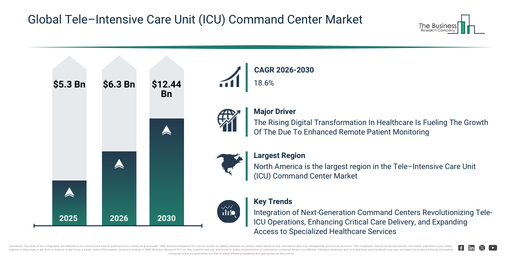
    The tele–intensive care unit (icu) command center market has experienced rapid expansion in its size over recent years. This market is projected to expand from $5.3 billion in 2025 to $6.3 billion by 2026, demonstrating a compound annual growth rate (CAGR) of 18.9%. Historically, this growth has been driven by factors such as a rising scarcity of intensivists, an increase in ICU patient numbers, the development of hospital digital infrastructure, the wider embrace of remote monitoring solutions, and a heightened emphasis on the excellence of critical care provision.

    The tele–intensive care unit (icu) command center market is poised for substantial expansion in the coming years. Its valuation is projected to reach $12.44 billion by 2030, advancing at an impressive compound annual growth rate (CAGR) of 18.6%. This anticipated growth during the forecast period is fueled by increasing investments in tele-critical care systems, a rising demand for scalable icu management solutions, the expansion of cloud-based clinical platforms, growing integration of ai-driven alerts, and increasing adoption across regional healthcare networks. Prominent trends throughout this period include the rising deployment of centralized remote icu monitoring platforms, enhanced integration of predictive clinical decision support tools, a growing reliance on real-time multisite patient surveillance, the broadening of data-driven icu workflow optimization, and an amplified focus on continuous critical care monitoring.

    Access Your Free Sample Report For In-Depth Market Analysis:

    https://www.thebusinessresearchcompany.com/sample.aspx?id=29226&type=smp

    What Key Drivers Are Fueling The Growth Of The Tele–Intensive Care Unit (ICU) Command Center Market?

    The tele-intensive care unit (ICU) command center market is anticipated to expand due to the escalating digital transformation within healthcare. This transformation involves incorporating advanced digital technologies such as telemedicine, remote patient monitoring, and virtual care platforms to enhance healthcare delivery and patient outcomes. The rise in digital transformation in healthcare is driven by the demand for more efficient patient care, encouraging the use of digital tools that streamline processes and improve treatment effectiveness. It enables tele-ICU command centers to remotely monitor patients in real time and analyze crucial data for efficient care coordination, thereby improving response times and patient outcomes, while also supporting on-site staff with sophisticated decision-making. For instance, in December 2023, the National Health Service, a UK-based government department, reported approximately 33.6 million monthly logins by NHS app users, marking a 54% increase over the past year from 16.8 million to 25.8 million. Consequently, the growing digital transformation in healthcare is propelling the expansion of the tele-intensive care unit (ICU) command center market.

    How Is The Tele–Intensive Care Unit (ICU) Command Center Market Segmented Across Different Segment Categories?

    The tele–intensive care unit (icu) command center market covered in this report is segmented –

    1) By Component: Hardware, Software, Services

    2) By Type: Centralized, Decentralized, Hybrid

    3) By Application: Patient Monitoring, Clinical Decision Support, Workflow Management, Other Applications

    4) By End-User: Hospitals, Specialty Clinics, Long-Term Care Facilities, Other End-Users

    Subsegments:

    1) By Hardware: Patient Monitoring Devices, Tele-Intensive Care Unit (ICU) Workstations, Communication Devices, Display Screens, Networking Equipment

    2) By Software: Remote Patient Monitoring Software, Electronic Health Record (EHR) Integration Software, Clinical Decision Support Systems (CDSS), Analytics And Reporting Software, Alarm Management Software

    3) By Services: Remote Monitoring Services, Implementation And Integration Services, Maintenance And Support Services, Training And Consultation Services, Data Management And Security Services

    What Trends Are Influencing The Tele–Intensive Care Unit (ICU) Command Center Market?

    Major companies operating in the tele-intensive care unit (ICU) command center market are focusing on integrating state-of-the-art command centers to enhance real-time patient monitoring, streamline critical care coordination, and improve clinical decision-making through advanced data analytics and remote connectivity. These advanced command centers are technology-driven hubs that combine real-time data analytics, artificial intelligence, high-speed communication networks, and centralized monitoring systems to enable seamless coordination, rapid decision-making, and proactive management of complex operations such as patient care in tele-ICUs across multiple locations. For instance, in July 2023, Medanta, an India-based multispecialty hospital group, collaborated with GE HealthCare Technologies Inc., a US-based health technology company, to launch Tele-ICU services in India through the Medanta e-ICU project. This initiative aims to expand access to superspeciality critical care by providing 24/7 remote monitoring, advanced consultation, and early interventions via a state-of-the-art command center supported by GE’s cutting-edge technology. The service is designed to address the critical shortage of qualified intensivists, especially in remote and smaller towns, thereby improving clinical outcomes and reducing healthcare costs.

    Which Organizations Play A Role In The Tele–Intensive Care Unit (ICU) Command Center Market Landscape?

    Major companies operating in the tele–intensive care unit (icu) command center market are Koninklijke Philips N.V., GE HealthCare Technologies Inc., Teladoc Health Inc, Access TeleCare Inc., Eagle Telemedicine LLC, iMDsoft Ltd., Etiometry Inc., Ceiba Health, Apollo TeleHealth, American TelePhysicians LLC, Intercept TeleMed Inc., EQUUM Medical, RemoteICU Ltd., VeeOne Health Inc., Teslon Technologies Private Limited, zMed Healthcare Technologies Pvt. Ltd., Masimo Corporation, Medtronic plc, Allscripts Healthcare Solutions, Drägerwerk AG & Co. KGaA

    Get The Full Tele–Intensive Care Unit (ICU) Command Center Market Report:

    https://www.thebusinessresearchcompany.com/report/tele-intensive-care-unit-icu-command-center-global-market-report

    Which Region Accounts For The Largest Portion Of The Tele–Intensive Care Unit (ICU) Command Center Market?

    North America was the largest region in the tele–intensive care unit (ICU) command center market in 2025. Asia-Pacific is expected to be the fastest-growing region in the forecast period. The regions covered in the tele–intensive care unit (icu) command center market report are Asia-Pacific, South East Asia, Western Europe, Eastern Europe, North America, South America, Middle East, Africa.

    Request A Customized Tele–Intensive Care Unit (ICU) Command Center Market Report For Competitive Insights:

    https://www.thebusinessresearchcompany.com/report/tele-intensive-care-unit-icu-command-center-global-market-report

    Browse Through More Reports Similar to the Global Tele–Intensive Care Unit (ICU) Command Center Market 2026, By The Business Research Company

    Tele Intensive Care Market Report 2026

    https://www.thebusinessresearchcompany.com/report/tele-intensive-care-global-market-report

    Tele Radiology Market Report

    https://www.thebusinessresearchcompany.com/report/tele-radiology-global-market-report

    Teleradiology Market Report

    https://www.thebusinessresearchcompany.com/report/teleradiology-global-market-report

    Get in touch with us:

    The Business Research Company: https://www.thebusinessresearchcompany.com/

    Americas +1 310-496-7795

    Asia +44 7882 955267 & +91 8897263534

    Europe +44 7882 955267

    Email us at info@tbrc.info

    Follow us on:

    LinkedIn: https://in.linkedin.com/company/the-business-research-company

    YouTube: https://www.youtube.com/channel/UC24_fI0rV8cR5DxlCpgmyFQ

    Global Market Model: https://www.thebusinessresearchcompany.com/global-market-model
  • Tele-Intensive Care Market Outlook Driven by Key Growth Factors

    Tele-Intensive Care Market Outlook Driven by Key Growth Factors

    The Business Research Company’s 2026 market reports feature enhanced tools like market attractiveness analysis, TAM assessment, and company scoring matrices, along with interactive dashboards, deeper supply chain insights, and startup coverage strengthening the depth, usability, and strategic value of insights.

    How Does The Market Size Of The Tele-Intensive Care Market Compare Between 2026 And 2030?

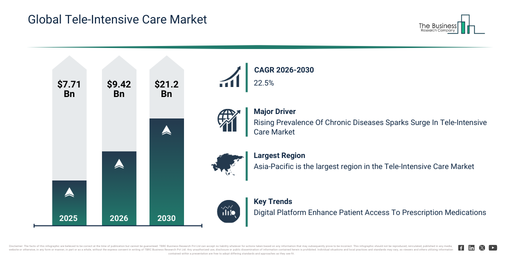
    The tele-intensive care market size has experienced significant growth in recent years. It is projected to expand from $7.71 billion in 2025 to $9.42 billion in 2026, demonstrating a compound annual growth rate (CAGR) of 22.1%. The expansion witnessed during the historic period can be ascribed to factors such as increasing demand for critical care capacity, a shortage of intensivist staff, the expansion of hospital ICU infrastructure, the adoption of electronic clinical monitoring systems, and a rising focus on patient safety in critical care.

    The tele-intensive care market is anticipated to experience significant expansion over the next few years. It is projected to achieve a value of $21.2 billion by 2030, growing at a compound annual growth rate (CAGR) of 22.5%. This growth throughout the forecast period stems from factors such as increasing investments in virtual critical care platforms, a rising demand for 24/7 remote ICU coverage, the expansion of tele-ICU services into community hospitals, the growing application of AI-driven patient risk scoring, and a heightened emphasis on cost-efficient ICU management. Key trends observed during this period include the increasing deployment of centralized tele-ICU monitoring systems, a rising adoption of real-time patient surveillance technologies, the growing integration of predictive analytics in critical care, the expansion of remote intensivist support models, and an enhanced focus on ICU resource optimization.

    Access Your Free Sample Report For In-Depth Market Analysis:

    https://www.thebusinessresearchcompany.com/sample.aspx?id=7081&type=smp

    Which Drivers Are Supporting The Tele-Intensive Care Market Growth?

    The escalating prevalence of chronic diseases is a significant factor propelling the growth of the tele-intensive care market. Chronic diseases are broad classifications for various illnesses that can affect any bodily part, potentially spreading to contiguous areas and other organs, which can result in fatalities. Tele-intensive care is employed for ongoing monitoring, remote device evaluation and management (including pacemakers and defibrillators), and the oversight of chronic patients, among other uses. For instance, in June 2023, the Institute for Health Metrics and Evaluation, a US-based public health research institute, reported that over half a billion people globally were living with diabetes. This figure is predicted to more than double, reaching 1.3 billion people by 2050. Consequently, the rising incidence of chronic diseases within the population is anticipated to drive the tele-intensive care market’s expansion going forward.

    What Are The Main Segments Within The Tele-Intensive Care Market Segment Structure?

    The tele-intensive care market covered in this report is segmented –

    1) By Type: Centralized Models, Decentralized Models, Other Types

    2) By Component: Hardware System, Software

    3) By Type of Management: Intensivist, Open, Co-Managed, Open with Consultant, Other Management Types

    Subsegments:

    1) By Centralized Models: Remote Monitoring Centers, Integrated Tele-ICU Services, Centralized Decision Support Systems

    2) By Decentralized Models: Bedside Telemedicine Systems, Distributed Tele-ICU Services, Localized Remote Patient Monitoring

    3) By Other Types: Hybrid Models, Mobile Tele-ICU Solutions, Specialized Telemedicine Platforms For Specific Conditions

    Which Trends Are Expected To Impact The Tele-Intensive Care Market?

    Major companies operating in the tele-intensive care market are implementing advanced technologies, such as digital platforms, to enhance patient monitoring, improve communication among healthcare providers, and facilitate timely interventions, ultimately leading to better patient outcomes and more efficient resource utilization. A digital platform is an online infrastructure that enables the creation, sharing, and exchange of information, products, or services among users. For instance, in January 2024, Eli Lilly, a US-based pharmaceutical company, introduced a digital platform named LillyDirect. This platform is designed to sell certain prescription drugs directly to consumers for conditions such as diabetes, obesity, and migraine, connecting patients with independent telehealth providers to obtain prescriptions and access medications through a convenient home delivery service. The initiative aims to simplify the patient experience, improve healthcare access, and offer affordability solutions for eligible patients.

    Who Are The Companies Participating In The Tele-Intensive Care Market?

    Major companies operating in the tele-intensive care market are Apollo TeleHealth Services Pvt. Ltd., Banner Health System, Ceiba Tele ICU, Cerner Corporation, Eagle Telemedicine, iMDsoft Ltd., Koninklijke Philips N.V., SOC Telemed Inc., University of Pittsburgh Medical Center, Advanced Medical Reviews, Banner iCare, Cambio Healthcare Systems AB, Harris Healthcare Group, Hicuity Health Inc., Honeywell Life Care Solutions, INTeLeICU, Intensive Care On-line Network, InTouch Health, Spacelabs Healthcare, Vivify Health Inc., Vocera Communications Inc., BioTelemetry Inc., Healthcare Business Intelligence Solutions, ICU Medical Inc., LifeWatch AG, Sotera Wireless Inc.

    Get The Full Tele-Intensive Care Market Report:

    https://www.thebusinessresearchcompany.com/report/tele-intensive-care-global-market-report

    Which Region Holds The Highest Market Share In The Tele-Intensive Care Market?

    Asia-Pacific was the largest region in the tele-intensive care market in 2025. Asia-Pacific is expected to be the fastest growing region in the forecast period. The regions covered in the tele-intensive care market report are Asia-Pacific, South East Asia, Western Europe, Eastern Europe, North America, South America, Middle East, Africa.

    Request A Customized Tele-Intensive Care Market Report For Competitive Insights:

    https://www.thebusinessresearchcompany.com/report/tele-intensive-care-global-market-report

    Browse Through More Reports Similar to the Global Tele-Intensive Care Market 2026, By The Business Research Company

    Tele Intensive Care Unit Market Report 2026

    https://www.thebusinessresearchcompany.com/report/tele-intensive-care-unit-global-market-report

    Tele Radiology Market Report

    https://www.thebusinessresearchcompany.com/report/tele-radiology-global-market-report

    Telehealth Market Report

    https://www.thebusinessresearchcompany.com/report/telehealth-global-market-report

    Get in touch with us:

    The Business Research Company: https://www.thebusinessresearchcompany.com/

    Americas +1 310-496-7795

    Asia +44 7882 955267 & +91 8897263534

    Europe +44 7882 955267

    Email us at info@tbrc.info

    Follow us on:

    LinkedIn: https://in.linkedin.com/company/the-business-research-company

    YouTube: https://www.youtube.com/channel/UC24_fI0rV8cR5DxlCpgmyFQ

    Global Market Model: https://www.thebusinessresearchcompany.com/global-market-model
  • Telehealth Software Market Developments and Growth Opportunities

    Telehealth Software Market Developments and Growth Opportunities

    The Business Research Company’s 2026 market reports feature enhanced tools like market attractiveness analysis, TAM assessment, and company scoring matrices, along with interactive dashboards, deeper supply chain insights, and startup coverage strengthening the depth, usability, and strategic value of insights.

    What Is The Forecasted Market Size Trajectory Of The Telehealth Software Market From 2026 To 2030?

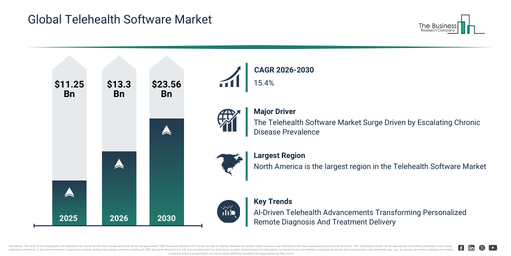
    The telehealth software market size has seen rapid expansion in recent years. It is projected to increase from $11.25 billion in 2025 to $13.3 billion in 2026, growing at a compound annual growth rate (CAGR) of 18.2%. Historically, this growth has been driven by increasing digitization of healthcare workflows, rising adoption of electronic prescribing systems, the expansion of cloud computing in healthcare, a growing need for care coordination tools, and improvements in healthcare data interoperability.

    The telehealth software market is projected to experience substantial expansion in the coming years. By 2030, this market is anticipated to reach $23.56 billion, exhibiting a compound annual growth rate (CAGR) of 15.4%. This projected growth is driven by several factors, including increased investments in AI-powered healthcare software, a heightened need for remote management of chronic diseases, the proliferation of value-based care models, a greater emphasis on cybersecurity compliance, and enhanced integration of telehealth software with existing clinical systems. Key trends anticipated during the forecast period encompass a wider adoption of integrated telehealth software platforms, an increase in the utilization of AI-driven clinical decision support tools, a rising need for solutions to monitor medication adherence, the expansion of cloud-based telehealth applications, and a reinforced focus on secure health data management.

    Access Your Free Sample Report For In-Depth Market Analysis:

    https://www.thebusinessresearchcompany.com/sample.aspx?id=14809&type=smp

    What Key Factors Are Affecting The Telehealth Software Market Demand?

    The increasing occurrence of chronic illnesses is anticipated to boost the expansion of the telehealth software market in the future. These are long-term conditions marked by persistent or recurring symptoms, often needing continuous management and care. Their rise is attributed to an aging populace, tobacco and alcohol consumption, and limited healthcare access. Telehealth software aids in managing chronic diseases by providing remote healthcare access, enabling patients to obtain consistent monitoring and consultations without physical visits. Such accessibility fosters early diagnosis, continuous support, and patient autonomy, ultimately leading to improved management and results for those with long-term ailments. For example, in June 2023, the Institute for Health Metrics and Evaluation, a US-based public health research institute, stated that more than half a billion people worldwide were suffering from diabetes. This figure is projected to more than double, reaching 1.3 billion people by 2050. Consequently, the increasing prevalence of chronic diseases is propelling the expansion of the telehealth software market.

    How Is Segmentation Applied In The Telehealth Software Market Segment Analysis?

    The telehealth software market covered in this report is segmented –

    1) By Component: Software, Services

    2) By Deployment: Cloud-Based, On-Premises

    3) By End User: Healthcare Providers, Healthcare Payers And Patients

    Subsegments:

    1) By Software: Telemedicine Software, Remote Patient Monitoring Software, Video Conferencing Software, Electronic Health Record (EHR) Integration Software, Clinical Decision Support Software, mHealth Applications, Patient Portals, Appointment Scheduling Software

    2) By Services: Telehealth Consulting Services, Telehealth Integration Services, Managed Services, Training And Support Services, Maintenance Services

    What Trends Are Influencing Changes In The Telehealth Software Market?

    Major companies operating in the telehealth software market are prioritizing the development of advanced, AI-powered platforms that deliver personalized, highly effective treatments and streamlined remote diagnoses. For example, in November 2025, ODDITY Tech Ltd., an Israel-based technology company, introduced METHODIQ, a telehealth platform intended to modernize medical care by offering personalized, high-efficacy treatments through online diagnosis. Launching initially in dermatology, the platform targets prevalent conditions such as acne, eczema, and hyperpigmentation, seeking to bridge the divide between ineffective over-the-counter choices and costly in-person doctor visits. Constructed with input from dermatologists, METHODIQ integrates AI-driven skin analysis, computer-vision tracking, and an extensive portfolio of prescription, OTC, and cosmetic products, including proprietary ingredients from ODDITY Labs. With over 100 tailored treatment plans and real-time clinician monitoring, METHODIQ provides a data-driven, accessible, and patient-centric approach, underpinned by years of research and large-scale consumer studies.

    Who Are The Companies Participating In The Telehealth Software Market Environment?

    Major companies operating in the telehealth software market are Teladoc Health Inc, American Well Corporation, Cerner Corporation, Allscripts Healthcare LLC, Oracle Corporation, Koninklijke Philips N.V, Zoom Video Communications Inc, Zocdoc Inc, CureMD Healthcare, Vocera Communications Inc, Care Innovations LLC, GlobalMedia Group LLC, Updox LLC, Capsule Technologies Inc, Biotricity Inc, BioTelemetry, Medtronic Inc, Masimo Corporation, Aerotel Medical Systems Ltd, PatientSafe Solutions Inc

    Get The Full Telehealth Software Market Report:

    https://www.thebusinessresearchcompany.com/report/telehealth-software-global-market-report

    Where Is The Telehealth Software Market Most Concentrated Geographically?

    North America was the largest region in the telehealth software market in 2025. Asia-Pacific is expected to be the fastest-growing region in the forecast period. The regions covered in the telehealth software market report are Asia-Pacific, South East Asia, Western Europe, Eastern Europe, North America, South America, Middle East, Africa.

    Request A Customized Telehealth Software Market Report For Competitive Insights:

    https://www.thebusinessresearchcompany.com/report/telehealth-software-global-market-report

    Browse Through More Reports Similar to the Global Telehealth Software Market 2026, By The Business Research Company

    Telehealth Market Report 2026

    https://www.thebusinessresearchcompany.com/report/telehealth-global-market-report

    Telemetry Market Report

    https://www.thebusinessresearchcompany.com/report/telemetry-global-market-report

    Telemedicine Equipment Market Report

    https://www.thebusinessresearchcompany.com/report/telemedicine-equipment-global-market-report

    Get in touch with us:

    The Business Research Company: https://www.thebusinessresearchcompany.com/

    Americas +1 310-496-7795

    Asia +44 7882 955267 & +91 8897263534

    Europe +44 7882 955267

    Email us at info@tbrc.info

    Follow us on:

    LinkedIn: https://in.linkedin.com/company/the-business-research-company

    YouTube: https://www.youtube.com/channel/UC24_fI0rV8cR5DxlCpgmyFQ

    Global Market Model: https://www.thebusinessresearchcompany.com/global-market-model
  • Telehealth and Telemedicine Market Long-Term Forecast and Industry Insights

    Telehealth and Telemedicine Market Long-Term Forecast and Industry Insights

    The Business Research Company’s 2026 market reports feature enhanced tools like market attractiveness analysis, TAM assessment, and company scoring matrices, along with interactive dashboards, deeper supply chain insights, and startup coverage strengthening the depth, usability, and strategic value of insights.

    How Much Will The Market Value Of The Telehealth And Telemedicine Market Grow Between 2026 And 2030?

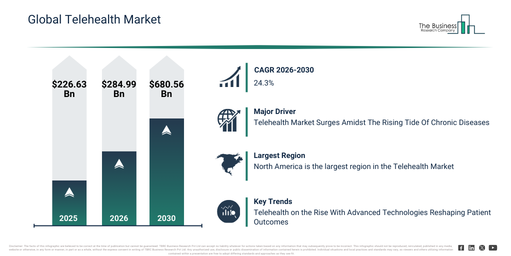
    The telehealth and telemedicine market has seen rapid expansion in recent years. This market is projected to increase from $152.44 billion in 2025 to $184.53 billion in 2026, at a compound annual growth rate (CAGR) of 21.1%. Historically, this growth can be attributed to the broadening of digital healthcare infrastructure, increased smartphone and internet penetration, the rising demand for remote care access, the proliferation of teleconsultation platforms, and supportive regulatory frameworks.

    The telehealth and telemedicine market is projected to experience substantial expansion in the coming years. Its valuation is anticipated to reach $392.01 billion by 2030, progressing at a compound annual growth rate (CAGR) of 20.7%. This growth over the forecast period stems from factors such as heightened demand for hybrid care models, the increasing incorporation of AI diagnostics within telehealth, the broadening of tele-ICU and telepsychiatry offerings, a surge in employer-led telehealth adoption, and a stronger emphasis on value-based care provision. Key trends expected during this period involve the wider availability of virtual care and remote consultations, the expanding integration of remote patient monitoring solutions, the increasing embrace of cloud-based healthcare platforms, a sharpened focus on data-driven clinical decision support, and the growing utilization of multi-specialty telemedicine services.

    Access Your Free Sample Report For In-Depth Market Analysis:

    https://www.thebusinessresearchcompany.com/sample.aspx?id=24719&type=smp

    Which Primary Drivers Are Impacting The Telehealth And Telemedicine Market Growth?

    The expanding adoption of smartphones is anticipated to fuel the expansion of the telehealth and telemedicine market moving forward. Smartphone penetration signifies the proportion of the populace possessing and utilizing these devices, reflecting the widespread integration of mobile technology into daily routines. The surge in smartphone penetration primarily stems from more competitive pricing and improved availability, making these devices accessible to a broader consumer base. Smartphones enhance telehealth and telemedicine by providing straightforward remote access to healthcare services, facilitating instant consultations, patient monitoring, and medical guidance. They boost healthcare convenience and reach, particularly for individuals in geographically isolated areas or those with mobility challenges. For instance, in October 2023, the UK-based non-profit organization GSM Association revealed that nearly 4.3 billion people, representing 53% of the global population, were using their smartphones to connect to the internet, with approximately 80% of mobile internet users now leveraging 4G or 5G smartphones, marking an increase of 330 million individuals from 2022 to 2023. Consequently, the rising smartphone penetration is a key driver for the growth of the telehealth and telemedicine market.

    What Segment Categories Shape The Telehealth And Telemedicine Market Segment Landscape?

    The telehealth and telemedicine market covered in this report is segmented –

    1) By Component: Hardware, Software, Services

    2) By Mode of Delivery: Cloud-Based, On-Premise, Web-Based

    3) By Application: Teleconsultation, Tele Intensive Care Unit (TeleICU), Telestroke, Teleradiology, Telepsychiatry, Teledermatology

    4) By End-User: Healthcare Providers, Patients, Payers, Employers, Other End Users

    Subsegments:

    1) By Hardware: Telemedicine Carts, Diagnostic Devices, Digital Imaging Devices, Wearable Devices, Video Conferencing Equipment, Peripheral Devices

    2) By Software: Real-time Communication Software, Remote Patient Monitoring (RRM) Software, Electronic Health Record (EHR) Integration Software, Scheduling And Billing Software, Diagnostic Software, Mobile Health Apps

    3) By Services: Teleconsultation Services, Telemonitoring Services, Store-and-forward Services, Support And Maintenance Services, Training And Education Services, Managed Services

    Which Trends Are Shaping Growth In The Telehealth And Telemedicine Market?

    Key companies active in the telehealth and telemedicine market are concentrating on creating innovative technological solutions, such as online platforms, to improve the delivery of virtual care, simplify interactions between patients and providers, and widen access to healthcare services from a distance. An online platform in telehealth and telemedicine serves as a digital interface allowing patients and healthcare professionals to connect remotely for consultations, diagnoses, treatment, and health monitoring through the internet. For instance, in August 2024, Pfizer Inc., a US-based biopharmaceutical company, introduced PfizerForAll. This free digital health online platform facilitates patient connections with telehealth providers, dispatches prescribed medications, and assists with coordinating vaccinations and diagnostic tests.

    Who Are The Companies Operating Across The Telehealth And Telemedicine Market Value Chain?

    Major companies operating in the telehealth and telemedicine market are Cisco Systems Inc, Oracle Corporation, Medtronic plc, Koninklijke Philips NV, Teladoc Health Inc, Monogram Health Inc, GoodRx Holdings Inc, Doximity Inc, Modernizing Medicine Inc, Doctor On Demand Inc, MDLIVE Inc, Azalea Health Innovations Inc, Sesame Inc, Apollo TeleHealth Services, TytoCare Ltd, Azova Inc, Push Doctor Ltd, Avel eCare LLC, CureCompanion Inc, CareClix Inc, Curve Health Inc, Amwell Corporation

    Get The Full Telehealth And Telemedicine Market Report:

    https://www.thebusinessresearchcompany.com/report/telehealth-and-telemedicine-global-market-report

    Which Region Dominates The Telehealth And Telemedicine Market By Market Share?

    North America was the largest region in the telehealth and telemedicine market in 2025. Asia-Pacific is expected to be the fastest-growing region in the forecast period. The regions covered in the telehealth and telemedicine market report are Asia-Pacific, South East Asia, Western Europe, Eastern Europe, North America, South America, Middle East, Africa.

    Request A Customized Telehealth And Telemedicine Market Report For Competitive Insights:

    https://www.thebusinessresearchcompany.com/report/telehealth-and-telemedicine-global-market-report

    Browse Through More Reports Similar to the Global Telehealth And Telemedicine Market 2026, By The Business Research Company

    Veterinary Telehealth Market Report 2026

    https://www.thebusinessresearchcompany.com/report/veterinary-telehealth-global-market-report

    Telemedicine Services Market Report

    https://www.thebusinessresearchcompany.com/report/telemedicine-services-global-market-report

    Video Telemedicine Market Report

    https://www.thebusinessresearchcompany.com/report/video-telemedicine-global-market-report

    Get in touch with us:

    The Business Research Company: https://www.thebusinessresearchcompany.com/

    Americas +1 310-496-7795

    Asia +44 7882 955267 & +91 8897263534

    Europe +44 7882 955267

    Email us at info@tbrc.info

    Follow us on:

    LinkedIn: https://in.linkedin.com/company/the-business-research-company

    YouTube: https://www.youtube.com/channel/UC24_fI0rV8cR5DxlCpgmyFQ

    Global Market Model: https://www.thebusinessresearchcompany.com/global-market-model
  • Telehealth Market Growth Analysis Highlighting Innovation and Competition

    Telehealth Market Growth Analysis Highlighting Innovation and Competition

    The Business Research Company’s 2026 market reports feature enhanced tools like market attractiveness analysis, TAM assessment, and company scoring matrices, along with interactive dashboards, deeper supply chain insights, and startup coverage strengthening the depth, usability, and strategic value of insights.

    What Changes In Market Value Are Expected For The Telehealth Market Over The 2026–2030 Period?

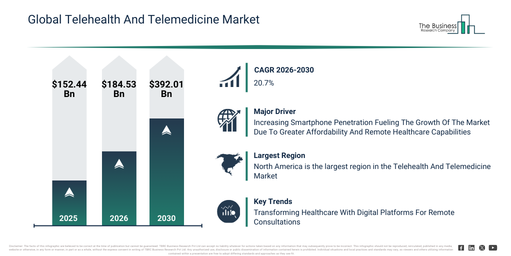
    The telehealth market size has experienced exponential expansion in recent years. It is anticipated to increase from $226.63 billion in 2025 to $284.99 billion in 2026, exhibiting a compound annual growth rate (CAGR) of 25.8%. This historical growth can be linked to expanding healthcare digitization initiatives, heightened demand for remote care access, wider broadband connectivity, increased adoption of electronic health records, and advancements in telecommunication infrastructure.

    The telehealth market’s size is projected to experience substantial growth in the next few years. It is expected to reach $680.56 billion by 2030, demonstrating a compound annual growth rate (CAGR) of 24.3%. The expansion observed throughout this forecast period can be attributed to the increasing adoption of hybrid care models, rising investments within digital health ecosystems, the broadening of tele-specialty services, a growing emphasis on population health management, and increasing regulatory support for telehealth reimbursement. Prominent trends for the forecast period encompass the rising uptake of virtual medical consultations, increased utilization of remote patient monitoring solutions, deeper integration of telehealth platforms with EHR systems, the expansion of cloud-based telehealth services, and an enhanced focus on maintaining virtual care continuity.

    Access Your Free Sample Report For In-Depth Market Analysis:

    https://www.thebusinessresearchcompany.com/sample.aspx?id=3954&type=smp

    What Significant Factors Are Influencing The Telehealth Market Expansion?

    The increasing occurrence of chronic illnesses, including cancer, diabetes, and hypertension, is anticipated to be a significant catalyst for the telehealth market. Extended working hours, limited physical activity, and unhealthy eating and drinking habits contribute to the widespread nature of chronic diseases, rendering affected individuals more vulnerable and thereby increasing the need for telehealth services platforms. For example, in September 2023, the World Health Organization, a specialized agency of the United Nations based in Switzerland, reported 41 million global deaths annually due to non-communicable diseases (NCDs) or chronic diseases, accounting for 74% of all deaths. Specifically, cardiovascular diseases were responsible for 17.9 million deaths, cancer for 9.3 million deaths, chronic respiratory diseases for 4.1 million deaths, and diabetes for 2.0 million deaths. Consequently, the growing incidence of chronic diseases is expected to accelerate the market’s expansion.

    Which Segment Types Are Examined In The Telehealth Market Segment Study?

    The telehealth market covered in this report is segmented –

    1) By Offering: Software, Services, Hardware

    2) By Mode Of Delivery: Cloud-based, On-Premise

    3) By Application: Teleradiology, Telepathology, Teledermatology, Telecardiology, Others

    4) By End-User: Healthcare Providers, Patients, Payers, Other End-Users

    Subsegments:

    1) By Software: Telemedicine Software, Remote Patient Monitoring Software, Practice Management Software, Electronic Health Record (EHR) Integration Software

    2) By Services: Telehealth Consultation Services, Remote Monitoring Services, Education and Training Services, Support And Maintenance Services

    3) By Hardware: Mobile Health Devices, Telemedicine Carts, Digital Stethoscopes, Diagnostic And Imaging Devices

    What Trends Are Affecting The Direction Of The Telehealth Market?

    Leading companies in the telehealth market are concentrating on integrating advanced technologies, such as remote patient monitoring and AI-driven diagnostic and disease management tools. This effort aims to enhance healthcare availability and improve patient outcomes across various medical conditions. Disease management resources are defined as tools and support services designed to help patients effectively manage their chronic conditions, encompassing educational materials, treatment plans, medication management, and access to healthcare professionals. For instance, in January 2024, Eli Lilly and Company, a US-based pharmaceutical company, launched LillyDirect. This digital healthcare experience was designed to support patients in the U.S. living with obesity, migraine, and diabetes. The platform provides disease management resources, access to independent healthcare providers, and direct home delivery of select Lilly medicines through third-party pharmacy services.

    Which Players Are Part Of The Competitive Landscape Of The Telehealth Market?

    Major companies operating in the telehealth market are Teladoc Health, Amwell (American Well), MDLIVE, Doctor On Demand, 1Life Healthcare, HealthTap, Babylon Health, PlushCare, MeMD, Pager, Lemonaid Health, SteadyMD, InTouch Health, SnapMD, Zipnosis, SOC Telemed, Vsee Lab, Maven Clinic, HeyDoctor, Kareo, Medici, OnCall Health, Qure4u, Spruce Health, GlobalMed, MDBox, Doxy.me, Vida Health

    Get The Full Telehealth Market Report:

    https://www.thebusinessresearchcompany.com/report/telehealth-global-market-report

    Which Region Is The Largest In The Telehealth Market?

    North America was the largest region in the telehealth market in 2025. The regions covered in the telehealth market report are Asia-Pacific, South East Asia, Western Europe, Eastern Europe, North America, South America, Middle East, Africa.

    Request A Customized Telehealth Market Report For Competitive Insights:

    https://www.thebusinessresearchcompany.com/report/telehealth-global-market-report

    Browse Through More Reports Similar to the Global Telehealth Market 2026, By The Business Research Company

    Telehealth Software Market Report 2026

    https://www.thebusinessresearchcompany.com/report/telehealth-software-global-market-report

    Veterinary Telehealth Market Report

    https://www.thebusinessresearchcompany.com/report/veterinary-telehealth-global-market-report

    Teledentistry Market Report

    https://www.thebusinessresearchcompany.com/report/teledentistry-global-market-report

    Get in touch with us:

    The Business Research Company: https://www.thebusinessresearchcompany.com/

    Americas +1 310-496-7795

    Asia +44 7882 955267 & +91 8897263534

    Europe +44 7882 955267

    Email us at info@tbrc.info

    Follow us on:

    LinkedIn: https://in.linkedin.com/company/the-business-research-company

    YouTube: https://www.youtube.com/channel/UC24_fI0rV8cR5DxlCpgmyFQ

    Global Market Model: https://www.thebusinessresearchcompany.com/global-market-model
  • Tele-Dermatology Prescription Market Forecast with Key Trends Through 2030

    Tele-Dermatology Prescription Market Forecast with Key Trends Through 2030

    The Business Research Company’s 2026 market reports feature enhanced tools like market attractiveness analysis, TAM assessment, and company scoring matrices, along with interactive dashboards, deeper supply chain insights, and startup coverage strengthening the depth, usability, and strategic value of insights.

    By 2030, What Market Size Is The Tele-Dermatology Prescription Market Expected To Reach Based On Its 2026 Value?

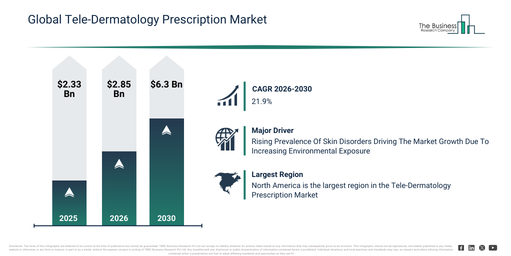
    The tele-dermatology prescription market size has experienced significant expansion in recent years. It is anticipated to increase from $2.33 billion in 2025 to $2.85 billion in 2026, achieving a compound annual growth rate (CAGR) of 22.2%. This historical growth can be linked to factors such as the broader adoption of telehealth services during healthcare disruptions, the increasing occurrence of chronic skin conditions, a scarcity of dermatologists in rural areas, the rise in smartphone-based healthcare accessibility, and the greater acceptance of virtual consultations.

    The tele-dermatology prescription market is projected to experience substantial expansion over the upcoming years. This market is set to reach $6.3 billion by 2030, exhibiting a compound annual growth rate (CAGR) of 21.9%. Factors contributing to this growth during the projection period include a heightened need for remote specialist services, increased capital allocation towards digital dermatology solutions, the broadening use of AI-driven diagnostic assistance, improved regulatory frameworks for tele-prescriptions, and progress in image analysis technologies. Key developments anticipated within this timeframe involve a greater acceptance of AI-supported remote skin diagnostics, an uptick in the utilization of store-and-forward consultation methods, the wider incorporation of e-prescription systems, the proliferation of mobile dermatology apps, and a stronger emphasis on ensuring secure patient information exchange.

    Access Your Free Sample Report For In-Depth Market Analysis:

    https://www.thebusinessresearchcompany.com/sample.aspx?id=28338&type=smp

    Which Important Drivers Are Guiding The Tele-Dermatology Prescription Market Growth?

    The increasing occurrence of skin conditions is anticipated to fuel the expansion of the tele-dermatology prescription market in the future. These conditions are medical ailments impacting the skin’s structure, performance, or look, manifesting as symptoms like erythema, pruritus, swelling, or lesions. The increase in these disorders is largely attributable to escalating environmental pollution, which exposes the skin to detrimental chemicals and irritants that initiate or exacerbate various dermatological problems. Tele-dermatology prescriptions offer enhanced management of skin disorders through quicker diagnoses, prompt treatment, and ongoing remote monitoring. For instance, in August 2023, Skin Health Institute Inc., an Australia-based non-profit organization, reported that psoriasis affects an estimated 2–3% of the population in Australia, indicating its widespread nature. Consequently, the growing incidence of skin disorders is a primary force behind the tele-dermatology prescription market.

    How Are Different Segments Classified In The Tele-Dermatology Prescription Market Segment Analysis?

    The tele-dermatology prescription market covered in this report is segmented –

    1) By Service Type: Real-Time Tele-Dermatology, Store-And-Forward Tele-Dermatology, Hybrid Tele-Dermatology

    2) By Delivery Mode: Web-Based, Cloud-Based, On-Premises

    3) By Application: Skin Cancer, Psoriasis, Acne, Eczema, Other Applications

    4) By End User: Hospitals And Clinics, Homecare, Pharmacies, Other End-Users

    Subsegments:

    1) By Real-Time Tele-Dermatology: Video Consultation, Live Chat Consultation, Remote Monitoring

    2) By Store-And-Forward Tele-Dermatology: Image-Based Consultation, Asynchronous Messaging, Medical Record Sharing

    3) By Hybrid Tele-Dermatology: Combined Live And Image Consultation, Integrated Remote Monitoring And Messaging, Synchronous And Asynchronous Follow-Up

    Who Are The Companies Driving Activity In The Tele-Dermatology Prescription Market?

    Major companies operating in the tele-dermatology prescription market are Teladoc Health Inc., PharmEasy Online Services Private Limited, American Well Corporation (Amwell), Hims & Hers Health Inc., Curology Inc., Doctor On Demand Inc., Zocdoc Inc., HealthTap Inc., Maple Corporation, Sesame Care Inc., Medweb Inc., SkyMD Inc., Dermatica Limited, CureSkin Technologies Pvt. Ltd., Nurx Inc., DermatologistOnCall Inc., Clinikally Ltd., MapleDerm Inc., MDLive Inc., eDermConsult GmbH, First Derm ApS, iCliniq Technologies Private Limited, Practo Technologies Private Limited, Babylon Health Services Limited, Push Health Inc., PlushCare Inc., HeyDoctor by GoodRx Inc., K Health Inc.

    Get The Full Tele-Dermatology Prescription Market Report:

    https://www.thebusinessresearchcompany.com/report/tele-dermatology-prescription-global-market-report

    Which Region Leads The Tele-Dermatology Prescription Market In Terms Of Market Share?

    North America was the largest region in the tele-dermatology prescription market in 2025. Asia-Pacific is expected to be the fastest-growing region in the forecast period. The regions covered in the tele-dermatology prescription market report are Asia-Pacific, South East Asia, Western Europe, Eastern Europe, North America, South America, Middle East, Africa.

    Request A Customized Tele-Dermatology Prescription Market Report For Competitive Insights:

    https://www.thebusinessresearchcompany.com/report/tele-dermatology-prescription-global-market-report

    Browse Through More Reports Similar to the Global Tele-Dermatology Prescription Market 2026, By The Business Research Company

    Tele Intensive Care Market Report 2026

    https://www.thebusinessresearchcompany.com/report/tele-intensive-care-global-market-report

    Tele Radiology Market Report

    https://www.thebusinessresearchcompany.com/report/tele-radiology-global-market-report

    Teleradiology Market Report

    https://www.thebusinessresearchcompany.com/report/teleradiology-global-market-report

    Get in touch with us:

    The Business Research Company: https://www.thebusinessresearchcompany.com/

    Americas +1 310-496-7795

    Asia +44 7882 955267 & +91 8897263534

    Europe +44 7882 955267

    Email us at info@tbrc.info

    Follow us on:

    LinkedIn: https://in.linkedin.com/company/the-business-research-company

    YouTube: https://www.youtube.com/channel/UC24_fI0rV8cR5DxlCpgmyFQ

    Global Market Model: https://www.thebusinessresearchcompany.com/global-market-model
  • Tele-Derm Robot Camera Arm Market Outlook 2026–2030 with Growth Drivers

    Tele-Derm Robot Camera Arm Market Outlook 2026–2030 with Growth Drivers

    The Business Research Company’s 2026 market reports feature enhanced tools like market attractiveness analysis, TAM assessment, and company scoring matrices, along with interactive dashboards, deeper supply chain insights, and startup coverage strengthening the depth, usability, and strategic value of insights.

    What Is The Anticipated Rise In Market Value Of The Tele-Derm Robot Camera Arm Market During The Forecast Period?

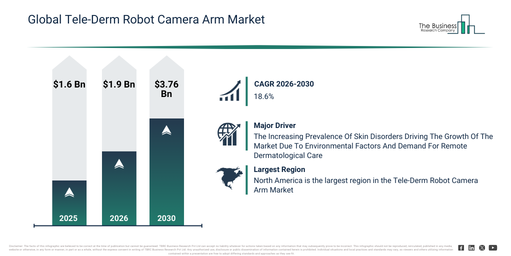
    The tele-derm robot camera arm market size has seen swift expansion in recent years. This market is set to increase from $1.6 billion in 2025 to $1.9 billion in 2026, exhibiting a compound annual growth rate (CAGR) of 18.9%. Several factors are responsible for its historical growth, including the surge in telemedicine adoption, a growing scarcity of dermatology specialists, the expansion of remote clinical consultation services, progress in robotic camera hardware, and increasing acceptance of digital diagnostics.

    The tele-derm robot camera arm market size is anticipated to see substantial growth in the coming years. It is forecast to grow to $3.76 billion in 2030, with a compound annual growth rate (CAGR) of 18.6%. The expansion during the forecast period is attributed to increasing investments in telehealth robotics, a rising demand for remote specialty care, the expansion of wireless medical imaging technologies, the growing integration of AI diagnostics, and increased deployment in outpatient and ambulatory settings. Key trends for the forecast period include a growing adoption of robotic-assisted teledermatology devices, rising demand for high-precision remote imaging systems, increasing integration of AI-enhanced skin analysis, an expansion of portable and flexible camera arm solutions, and an enhanced focus on remote diagnostic accuracy.

    Access Your Free Sample Report For In-Depth Market Analysis:

    https://www.thebusinessresearchcompany.com/sample.aspx?id=29225&type=smp

    What Major Factors Are Driving The Tele-Derm Robot Camera Arm Market Forward?

    The expanding prevalence of various skin conditions is anticipated to fuel the future growth of the tele-derm robot camera arm market. These conditions encompass any medical issues impacting the skin’s structure, function, or appearance, manifesting as symptoms such as rashes, lesions, inflammation, or alterations in color or texture. The rise in skin disorders stems from environmental influences, with exposure to factors like pollution, UV radiation, climate shifts, and harmful chemicals potentially damaging skin and triggering numerous dermatological problems. The tele-derm robot camera arm facilitates accurate remote skin evaluations, thereby improving the early detection, diagnosis, and ongoing management of diverse skin disorders, while also broadening access to dermatological care. For instance, in August 2023, data from Skin Health Institute Inc., an Australia-based non-profit organization, indicated that in Australia, psoriasis affects an estimated 2–3% of the population, underscoring its status as a relatively common skin ailment. Consequently, the increasing occurrence of skin disorders is acting as a catalyst for the tele-derm robot camera arm market. The escalating healthcare spending is projected to propel the tele-derm robot camera arm market forward. Healthcare expenditure represents the total financial outlay on medical services, equipment, and technologies designed to enhance health outcomes. This expenditure is climbing due to heightened demand for advanced medical technologies, as healthcare facilities like hospitals and clinics increase their investments in innovative equipment and digital solutions to elevate patient care and results. Elevated healthcare spending encourages the adoption of tele-derm robot camera arms by allowing healthcare providers to invest in cutting-edge diagnostic technologies that refine remote dermatological care and improve patient outcomes. For example, in June 2025, the Centers for Medicare & Medicaid Services, a US-based government agency, reported that in 2023, national health expenditures (NHE) expanded by 7.5%, reaching $4.9 trillion, which amounts to $14,570 per person and constitutes 17.6% of the Gross Domestic Product (GDP). Spending on Medicare saw an 8.1% increase, totaling $1,029.8 billion, making up 21% of the total NHE. Thus, the increasing healthcare expenditure is stimulating the expansion of the tele-derm robot camera arm market.

    How Is The Tele-Derm Robot Camera Arm Market Categorized Across Its Segment Groups?

    The tele-derm robot camera arm market covered in this report is segmented –

    1) By Product Type: Fixed Camera Arm, Articulated Camera Arm, Portable Camera Arm, Other Product Types

    2) By Technology: Wired, Wireless

    3) By Application: Teledermatology, Remote Patient Monitoring, Clinical Diagnostics, Other Applications

    4) By End-User: Hospitals, Clinics, Ambulatory Surgical Centers, Other End-Users

    Subsegments:

    1) By Fixed Camera Arm: Wall Mounted, Ceiling Mounted, Tripod Mounted, Desk Mounted

    2) By Articulated Camera Arm: Single Joint, Double Joint, Multi Joint, Telescopic

    3) By Portable Camera Arm: Handheld, Foldable, Collapsible, Lightweight

    4) By Other Product Types: Robotic, Motorized, Pneumatic, Hydraulic

    Which Firms Are Influencing Competition In The Tele-Derm Robot Camera Arm Market?

    Major companies operating in the tele-derm robot camera arm market are Olympus Corporation, KUKA Systems GmbH, Comau S.p.A., Universal Robots AS, FotoFinder Systems Inc., Canfield Scientific Inc., Mecademic Robotics, Blackcam Robotics, Dermavision Solutions S.L., Elephant Robotics, Fourth Arrow Camera Arms, Shenzhen Wisonic Medical Technology Co. Ltd, Adept Technology Inc., Kinova Robotics, Staubli Robotics, Denso Robotics, Robotiq Inc., iRobot Medical Systems, Yaskawa Motoman, ABB Robotics

    Get The Full Tele-Derm Robot Camera Arm Market Report:

    https://www.thebusinessresearchcompany.com/report/tele-derm-robot-camera-arm-global-market-report

    Which Region Leads The Tele-Derm Robot Camera Arm Market In Overall Market Size?

    North America was the largest region in the tele-derm robot camera arm market in 2025. Asia-Pacific is expected to be the fastest-growing region in the forecast period. The regions covered in the tele-derm robot camera arm market report are Asia-Pacific, South East Asia, Western Europe, Eastern Europe, North America, South America, Middle East, Africa.

    Request A Customized Tele-Derm Robot Camera Arm Market Report For Competitive Insights:

    https://www.thebusinessresearchcompany.com/report/tele-derm-robot-camera-arm-global-market-report

    Browse Through More Reports Similar to the Global Tele-Derm Robot Camera Arm Market 2026, By The Business Research Company

    Tele Intensive Care Unit Market Report 2026

    https://www.thebusinessresearchcompany.com/report/tele-intensive-care-unit-global-market-report

    Tele Radiology Market Report

    https://www.thebusinessresearchcompany.com/report/tele-radiology-global-market-report

    Telehealth Market Report

    https://www.thebusinessresearchcompany.com/report/telehealth-global-market-report

    Get in touch with us:

    The Business Research Company: https://www.thebusinessresearchcompany.com/

    Americas +1 310-496-7795

    Asia +44 7882 955267 & +91 8897263534

    Europe +44 7882 955267

    Email us at info@tbrc.info

    Follow us on:

    LinkedIn: https://in.linkedin.com/company/the-business-research-company

    YouTube: https://www.youtube.com/channel/UC24_fI0rV8cR5DxlCpgmyFQ

    Global Market Model: https://www.thebusinessresearchcompany.com/global-market-model
  • Increasing Oral Disease Burden Driving Growth in the Teledentistry Market

    Increasing Oral Disease Burden Driving Growth in the Teledentistry Market

    The Business Research Company’s 2026 market reports feature enhanced tools like market attractiveness analysis, TAM assessment, and company scoring matrices, along with interactive dashboards, deeper supply chain insights, and startup coverage strengthening the depth, usability, and strategic value of insights.

    How Is The Market Size Of The Teledentistry Market Expected To Scale Between 2026 And 2030?

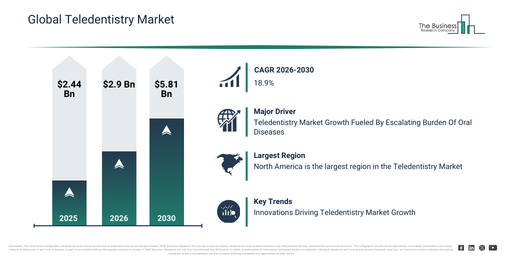
    The teledentistry market size has observed swift growth in recent years. It is anticipated to expand from $2.44 billion in 2025 to $2.9 billion in 2026, demonstrating a compound annual growth rate (CAGR) of 19.0%. The expansion witnessed during the historical period is attributable to several factors, including increasing internet adoption within healthcare, a growing scarcity of dental experts in rural areas, rising acceptance of remote healthcare solutions, the spread of digital dental records, and enhancements in video conferencing technologies.

    The teledentistry market is projected to experience substantial expansion over the coming years. By 2030, its valuation is anticipated to reach $5.81 billion, growing at a compound annual growth rate (CAGR) of 18.9%. This projected growth is driven by factors such as the escalating demand for remote access to oral healthcare, increased investments in digital dental platforms, a heightened emphasis on preventive dental care, the expansion of AI-supported dental diagnostics, and the greater integration of teledentistry into standard dental practices. Key trends during this period are expected to encompass a surge in virtual dental consultations, increased utilization of digital imaging and remote diagnostic tools, more widespread integration of practice management platforms, the proliferation of cloud-based dental communication tools, and an intensified focus on engaging patients remotely.

    Access Your Free Sample Report For In-Depth Market Analysis:

    https://www.thebusinessresearchcompany.com/sample.aspx?id=8311&type=smp

    Which Key Drivers Are Affecting The Teledentistry Market Development?

    The increasing prevalence of oral health conditions is projected to drive the expansion of the teledentistry market moving forward. These conditions refer to ailments impacting the mouth and its components, such as teeth, gums, and the tongue. Teledentistry serves to broaden access to oral health services and enhance the treatment of oral diseases. For example, in March 2025, the World Health Organization, a Switzerland-based intergovernmental organization, indicated that an estimated 389,846 new cases of lip and oral cavity cancers were recorded globally in 2022, resulting in approximately 188,438 deaths. Hence, the rising incidence of oral diseases is a significant impetus behind the growth of the teledentistry market.

    How Are Segments Identified Within The Teledentistry Market Segment Framework?

    The teledentistry market covered in this report is segmented –

    1) By Component: Hardware, Software

    2) By Delivery Mode: On-premise, Cloud-based

    3) By Application: Tele-consultation, Remote patient monitoring, Education and training

    4) By End User: Healthcare providers, Patients, Other End-Users

    Subsegments:

    1) By Hardware: Intraoral Cameras, X-Ray Scanners, Mobile Devices, Computer Systems

    2) By Software: Practice Management Software, Appointment Scheduling Software, Image Analysis and Diagnosis Software, Communication And Video Conferencing Software

    What Trends Are Transforming The Teledentistry Market?

    Leading firms within the teledentistry sector are prioritizing technological innovations, including diagnostic tools powered by AI and virtual consultation systems, to broaden patient access and elevate the standard of dental services, thereby promoting superior oral health results and greater patient contentment. AI applied to photo analysis employs algorithms to assess and interpret visual information from pictures, facilitating precise evaluations and diagnoses across diverse sectors, notably healthcare. As an example, in June 2023, Virtual Dental Care, Inc., a US-based provider of teledentistry software and services, introduced Teledentistry 3.0. Teledentistry 3.0 seeks to improve patient accessibility to dental services by offering a full spectrum of virtual options conveniently from patients’ residences. This version of teledentistry extends beyond conventional problem-solving services to encompass wellness-oriented provisions like preventive measures and continuous oral health surveillance. This inventive platform leverages cutting-edge technologies, such as artificial intelligence, to refine diagnoses and customize treatment strategies, consequently boosting the availability of dental care.

    Who Are The Companies Competing Within The Teledentistry Market?

    Major companies operating in the teledentistry market are The TeleDentists, Dentulu Inc, Toothpic, Virtudent Inc, SmileMate, DentalChat, Denteractive, DigiDentista, Odonto Virtual, Odontología Virtual, Dentaly.org, Teladent, Zahnarzt-Hotline, Dentist.cz, DentistulTau, Dentaltap, Dentalink, Odontovida, Smileneo, Teledentistry

    Get The Full Teledentistry Market Report:

    https://www.thebusinessresearchcompany.com/report/teledentistry-global-market-report

    Which Region Is The Top Contributor To The Teledentistry Market By Share?

    North America was the largest region in the teledentistry market in 2025. The regions covered in the teledentistry market report are Asia-Pacific, South East Asia, Western Europe, Eastern Europe, North America, South America, Middle East, Africa.

    Request A Customized Teledentistry Market Report For Competitive Insights:

    https://www.thebusinessresearchcompany.com/report/teledentistry-global-market-report

    Browse Through More Reports Similar to the Global Teledentistry Market 2026, By The Business Research Company

    Dermatology Drugs Market Report 2026

    https://www.thebusinessresearchcompany.com/report/dermatology-drugs-global-market-report

    Online Dermatology Consultation Market Report

    https://www.thebusinessresearchcompany.com/report/online-dermatology-consultation-global-market-report

    Dermatology Market Report

    https://www.thebusinessresearchcompany.com/report/dermatology-global-market-report

    Get in touch with us:

    The Business Research Company: https://www.thebusinessresearchcompany.com/

    Americas +1 310-496-7795

    Asia +44 7882 955267 & +91 8897263534

    Europe +44 7882 955267

    Email us at info@tbrc.info

    Follow us on:

    LinkedIn: https://in.linkedin.com/company/the-business-research-company

    YouTube: https://www.youtube.com/channel/UC24_fI0rV8cR5DxlCpgmyFQ

    Global Market Model: https://www.thebusinessresearchcompany.com/global-market-model