Category: Healthcare Services

  • Rising Remote Care Adoption Fueling Growth in the Telecare Market

    Rising Remote Care Adoption Fueling Growth in the Telecare Market

    The Business Research Company’s 2026 market reports feature enhanced tools like market attractiveness analysis, TAM assessment, and company scoring matrices, along with interactive dashboards, deeper supply chain insights, and startup coverage strengthening the depth, usability, and strategic value of insights.

    What Level Of Market Value Growth Is Predicted For The Telecare Market From 2026 To 2030?

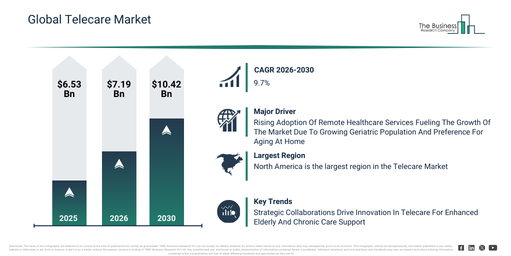
    The telecare market has experienced considerable expansion in recent years. It is projected to increase from $6.53 billion in 2025 to $7.19 billion in 2026, driven by a compound annual growth rate (CAGR) of 10.1%. Historically, this growth has been influenced by factors such as an aging population, the rising prevalence of chronic conditions, the broadening of home healthcare services, enhanced connectivity infrastructure, and the increasing adoption of remote care models.

    The telecare market is expected to experience significant expansion in the upcoming years. It is projected to achieve a size of $10.42 billion by 2030, exhibiting a compound annual growth rate (CAGR) of 9.7%. This anticipated growth during the forecast period stems from increased investments in digital health platforms, the rising adoption of AI-enabled telecare analytics, the expansion of smart home healthcare ecosystems, a heightened focus on preventive care, and an escalating demand for cost-efficient care delivery. Prominent trends for the forecast period include the increasing uptake of remote patient monitoring solutions, a growing utilization of wearable telecare devices, the broader integration of emergency alert systems, the expansion of home-based chronic care models, and an enhanced emphasis on aging-in-place solutions.

    Access Your Free Sample Report For In-Depth Market Analysis:

    https://www.thebusinessresearchcompany.com/sample.aspx?id=25921&type=smp

    What Factors Are Contributing To The Growth Of The Telecare Market?

    The expansion of remote healthcare service adoption is anticipated to fuel the telecare market’s future growth. These services involve delivering medical care using telecommunication technologies, allowing patients to get treatment remotely without physical visits to healthcare facilities. The increasing elderly population is driving the demand for remote healthcare, as a growing number of older individuals prefer to age in place, necessitating continuous remote monitoring and support. Telecare facilitates remote healthcare by providing real-time monitoring, emergency response, and communication via connected devices, ensuring care delivery without requiring a physical presence. For instance, in June 2024, Telehealth Access for America, a US-based non-profit advocacy organization, reported that in Q1 2024, close to 3 million Medicare beneficiaries (2,751,044) utilized telehealth services, highlighting a consistent national dependence on remote healthcare provision. Consequently, the rising uptake of remote healthcare services solutions is boosting the telecare market’s expansion.

    What Are The Key Segment Divisions In The Telecare Market Segment Structure?

    The telecare market covered in this report is segmented –

    1) By Type: Activity Monitoring, Remote Medication Management

    2) By Technology: Non Wearable, Wearable

    3) By End Use: Healthcare Consumers, Healthcare Providers, Payers

    Subsegments:

    1) By Activity Monitoring: Motion Sensors, Bed And Chair Occupancy Sensors, Door And Window Sensors, Wearable Activity Trackers, Fall Detection Devices

    2) By Remote Medication Management: Smart Pill Dispensers, Automated Medication Reminders, Mobile Medication Management Apps, Connected Inhalers, Remote Dose Monitoring Platforms

    What Trends Are Shaping The Future Of The Telecare Market?

    Leading companies within the telecare market are concentrating on bringing forth novel solutions via strategic collaborations to improve remote monitoring functions and broaden their service provisions, addressing the increasing need for support in elderly and chronic care. These strategic collaborations represent alliances where organizations merge their resources and specialized knowledge to create innovative solutions, elevate service delivery, and more effectively accomplish shared objectives. As an illustration, in December 2024, Skyresponse AB, a technology firm based in Sweden, and OneCo Technologies AS, a Norwegian company specializing in health technology, established a strategic partnership. Their goal is to supply cutting-edge, entirely digital, and cloud-based telecare solutions designed to foster independent living, as well as benefit care homes, institutions, and hospitals across both private and public domains. This cooperative effort unites Skyresponse’s sophisticated alarm management platform with OneCo’s proficiency in electronics, automation, and telecommunications, enabling the provision of adaptable, economical, and user-friendly telecare services. The partnership’s initial emphasis is on a remote night check-in solution, incorporating KeplerVision and the Skyresponse Responder App, with the largest private care home operator in Norway being among the first to deploy it.

    Which Organizations Are Engaged In The Telecare Market?

    Major companies operating in the telecare market are Philips Healthcare, The Access Group Limited, Tunstall Healthcare Group Limited, ConnectAmerica.com LLC, Ascom Holding AG, Resideo Technologies Inc., Cera Care Limited, Enovation Group B.V., iHealth Labs Inc., Vivify Health Inc., Careium AB, Essence SmartCare Ltd., Helios Telecare Inc., Rest Assured LLC, Tyto Care Ltd., Alarm.com, Legrand Care, Essence Group, Everon Group, AT Technology Services, Doro Care, Televic Healthcare

    Get The Full Telecare Market Report:

    https://www.thebusinessresearchcompany.com/report/telecare-global-market-report

    Which Region Represents The Largest Share Of The Telecare Market?

    North America was the largest region in the telecare market in 2025. Asia-Pacific is expected to be the fastest-growing region in the forecast period. The regions covered in the telecare market report are Asia-Pacific, South East Asia, Western Europe, Eastern Europe, North America, South America, Middle East, Africa.

    Request A Customized Telecare Market Report For Competitive Insights:

    https://www.thebusinessresearchcompany.com/report/telecare-global-market-report

    Browse Through More Reports Similar to the Global Telecare Market 2026, By The Business Research Company

    Teleradiology Market Report 2026

    https://www.thebusinessresearchcompany.com/report/teleradiology-global-market-report

    Telehealth Market Report

    https://www.thebusinessresearchcompany.com/report/telehealth-global-market-report

    Commercial Telematics Market Report

    https://www.thebusinessresearchcompany.com/report/commercial-telematics-global-market-report

    Get in touch with us:

    The Business Research Company: https://www.thebusinessresearchcompany.com/

    Americas +1 310-496-7795

    Asia +44 7882 955267 & +91 8897263534

    Europe +44 7882 955267

    Email us at info@tbrc.info

    Follow us on:

    LinkedIn: https://in.linkedin.com/company/the-business-research-company

    YouTube: https://www.youtube.com/channel/UC24_fI0rV8cR5DxlCpgmyFQ

    Global Market Model: https://www.thebusinessresearchcompany.com/global-market-model
  • Growing Geriatric Population Driving Expansion in the Tele-ICU Market

    Growing Geriatric Population Driving Expansion in the Tele-ICU Market

    The Business Research Company’s 2026 market reports feature enhanced tools like market attractiveness analysis, TAM assessment, and company scoring matrices, along with interactive dashboards, deeper supply chain insights, and startup coverage strengthening the depth, usability, and strategic value of insights.

    How Will The Market Value Of The Tele Intensive Care Unit Market Progress Between 2026 And 2030?

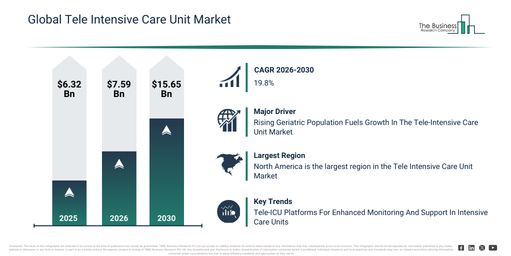
    The market size for tele intensive care units has seen rapid expansion in recent years. It is projected to increase from $6.32 billion in 2025 to $7.59 billion in 2026, achieving a compound annual growth rate (CAGR) of 20.0%. This growth observed in the past can be attributed to the expansion of hospital critical care capacity, a growing scarcity of intensivists, the increased adoption of telemedicine platforms, advancements in digital health infrastructure, and the need for continuous patient monitoring.

    The tele intensive care unit market is projected to experience substantial expansion over the upcoming years. This market is anticipated to reach $15.65 billion by 2030, driven by a compound annual growth rate (CAGR) of 19.8%. Key factors contributing to this growth during the forecast period include greater investments in smart hospital systems, the increasing uptake of cloud-based healthcare platforms, the broadening of remote critical care services, the expanding application of predictive analytics in ICU care, and a heightened emphasis on delivering cost-effective healthcare. Prominent trends expected over the forecast period encompass a greater adoption of remote ICU monitoring systems, the scaling of centralized tele-ICU models, the increasing incorporation of AI-based clinical decision support, a surging demand for real-time patient data analytics, and an intensified focus on optimizing the critical care workforce.

    Access Your Free Sample Report For In-Depth Market Analysis:

    https://www.thebusinessresearchcompany.com/sample.aspx?id=8164&type=smp

    Which Strong Drivers Are Impacting The Tele Intensive Care Unit Market Growth?

    The increasing geriatric population is projected to fuel the expansion of the tele-intensive care unit market moving forward. This demographic comprises older adults, typically defined as individuals aged 65 or above. Tele-Intensive Care Units (Tele-ICUs) guarantee prompt interventions and enhanced outcomes for senior patients. These setups deliver care to critically ill individuals and back on-site intensive care unit (ICU) personnel via secure audio–video and electronic links. For instance, in October 2025, the World Health Organization, a US-based specialized health agency, indicated that globally, 1 in 6 individuals would be 60 or older by 2030, and this figure is anticipated to reach 2.1 billion elderly people by 2050. Hence, the growing geriatric population is acting as a catalyst for the tele-intensive care unit market’s growth.

    Which Segment Categories Are Included In The Tele Intensive Care Unit Market Segment Analysis?

    The tele intensive care unit market covered in this report is segmented –

    1) By Type: Centralized Models, Decentralized Models, Other Types

    2) By Type Of Management: Intensivist, Open, Co-Managed, Open With Consultants, Other Types Of Management

    3) By Component: Hardware, Software

    4) By End User: Hospitals, Clinics, Other End Users

    Subsegments:

    1) By Centralized Models: Single Hub With Multiple Remote ICUs, Centralized Monitoring Systems, Integrated Care Coordination Platforms

    2) By Decentralized Models: Distributed Care Teams Across Multiple Locations, Localized Monitoring With Remote Support, Hybrid Care Models

    3) By Other Types: Mobile Tele-ICU Units, Cloud-Based Tele-ICU Solutions, Specialized Tele-ICU Applications

    Which Trends Are Contributing To Changes In The Tele Intensive Care Unit Market?

    Leading companies in the tele-intensive care unit market are increasingly focused on introducing a tele-ICU platform to gain a competitive edge. This platform is a technology-driven system that enables remote monitoring, consultation, and support for intensive care units (ICUs). For instance, in October 2023, HealthNet Global (HNG), an India-based healthcare company, launched a tele-ICU program at Apollo Spectra Hospitals in India. The program connects Apollo Spectra’s ICU facility to the Apollo Command Center using HNG’s state-of-the-art Tele-ICU platform, thereby enabling the delivery of critical care services with high precision. This initiative provides remote intensive care physicians and nurses who support the care of ICU patients through advanced telehealth technology.

    Who Are The Active Companies Shaping The Tele Intensive Care Unit Market?

    Major companies operating in the tele intensive care unit market are Hicuity Health LLC, Banner Health System, Teladoc Health Inc., Koninklijke Philips NV, University of Pittsburgh Medical Center, Inova Health System, Apollo TeleHealth Services Limited, Eagle Telemedicine LLC, iMDsoft Ltd., CLEW Medical Ltd., General Electric Company, Cloudphysician Healthcare Company, GlobalMed Inc., Mercy Virtual Inc., SynsorMed Inc., TeleICU by eCatalyst Healthcare Solutions LLC, Vidyo Inc., Vituity Telehealth Services Inc., CyberMed Inc., Dignity Health Telemedicine

    Get The Full Tele Intensive Care Unit Market Report:

    https://www.thebusinessresearchcompany.com/report/tele-intensive-care-unit-global-market-report

    Which Geographic Region Dominates The Tele Intensive Care Unit Market?

    North America was the largest region in the tele intensive care unit market in 2025. The regions covered in the tele intensive care unit market report are Asia-Pacific, South East Asia, Western Europe, Eastern Europe, North America, South America, Middle East, Africa.

    Request A Customized Tele Intensive Care Unit Market Report For Competitive Insights:

    https://www.thebusinessresearchcompany.com/report/tele-intensive-care-unit-global-market-report

    Browse Through More Reports Similar to the Global Tele Intensive Care Unit Market 2026, By The Business Research Company

    Tele Intensive Care Market Report 2026

    https://www.thebusinessresearchcompany.com/report/tele-intensive-care-global-market-report

    Tele Radiology Market Report

    https://www.thebusinessresearchcompany.com/report/tele-radiology-global-market-report

    Teleradiology Market Report

    https://www.thebusinessresearchcompany.com/report/teleradiology-global-market-report

    Get in touch with us:

    The Business Research Company: https://www.thebusinessresearchcompany.com/

    Americas +1 310-496-7795

    Asia +44 7882 955267 & +91 8897263534

    Europe +44 7882 955267

    Email us at info@tbrc.info

    Follow us on:

    LinkedIn: https://in.linkedin.com/company/the-business-research-company

    YouTube: https://www.youtube.com/channel/UC24_fI0rV8cR5DxlCpgmyFQ

    Global Market Model: https://www.thebusinessresearchcompany.com/global-market-model
  • Advanced Wavelength Innovations Boosting Growth in the Teeth Whitening Market

    Advanced Wavelength Innovations Boosting Growth in the Teeth Whitening Market

    The Business Research Company’s 2026 market reports feature enhanced tools like market attractiveness analysis, TAM assessment, and company scoring matrices, along with interactive dashboards, deeper supply chain insights, and startup coverage strengthening the depth, usability, and strategic value of insights.

    What Are The Market Size Estimates For The Teeth Whitening Market In 2026 And 2030?

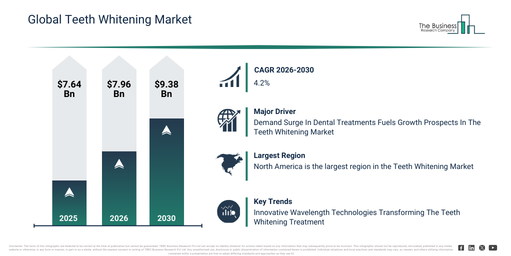
    The teeth whitening market size has experienced consistent growth in recent years. It is projected to expand from $7.64 billion in 2025 to $7.96 billion in 2026, exhibiting a compound annual growth rate (CAGR) of 4.3%. The market’s historical growth can be attributed to factors such as increasing awareness of cosmetic dentistry, a heightened consumer focus on personal aesthetics, the expansion of retail oral care products, rising disposable income levels, and the widespread availability of professional whitening treatments.

    The teeth whitening market is anticipated to experience consistent expansion over the upcoming years. It is projected to reach $9.38 billion by 2030, exhibiting a compound annual growth rate (CAGR) of 4.2%. This growth during the forecast period can be attributed to several factors, including the increasing integration of digital dental solutions, a surge in demand for high-end oral care products, the proliferation of cosmetic dental clinics, the expanding impact of social media aesthetics, and continuous advancements in whitening product formulations. Key trends anticipated during this period encompass a heightened demand for home-based whitening solutions, the growing use of LED-powered whitening devices, an increasing inclination towards non-invasive cosmetic dental procedures, the broadening scope of professional whitening services, and a greater emphasis on formulations that prioritize enamel safety.

    Access Your Free Sample Report For In-Depth Market Analysis:

    https://www.thebusinessresearchcompany.com/sample.aspx?id=13543&type=smp

    What Key Factors Are Shaping The Teeth Whitening Market Landscape?

    A growing demand for dental treatments is anticipated to propel the future expansion of the teeth whitening market. Dental treatments encompass medical procedures and interventions conducted by dental professionals to address various oral health issues and conditions. Dentists offer teeth whitening as a type of dental treatment to improve the color and appearance of teeth, thereby enhancing patients’ aesthetic appeal. For instance, in April 2025, Align Technology, Inc., a US-based medical device company, reported that clear aligner volumes in Q1 2025 reached 642.3 thousand cases, marking a 2.2% sequential increase and a 6.2% growth compared to the same period last year. Consequently, the increased demand for dental treatments will drive the growth of the teeth whitening market.

    How Is The Teeth Whitening Market Broken Down By Segment Categories?

    The teeth whitening market covered in this report is segmented –

    1) By Product Type: Whitening Toothpaste, Whitening Gels And Strips, Light Teeth Whitening Device, Other Product Types

    2) By Distribution Channel: Institutional Sales, Retail Sales

    3) By Application Type: In-Office, At-Home

    Subsegments:

    1) By Whitening Toothpaste: Abrasive Whitening Toothpaste, Enzyme-Based Whitening Toothpaste

    2) By Whitening Gels And Strips: Gel-Based Whitening Products, Whitening Strips

    3) By Light Teeth Whitening Device: LED Teeth Whitening Devices, UV Teeth Whitening Devices

    4) By Other Product Types: Whitening Mouthwashes, Whitening Pens, Professional Teeth Whitening Kits

    What Market Trends Are Affecting The Teeth Whitening Market?

    Major enterprises within the teeth whitening market are developing innovative oral care solutions featuring wavelength technology to gain a competitive advantage. These sophisticated oral care products, incorporating wavelength technology, utilize specific light frequencies to improve dental treatments and oral hygiene outcomes. For example, in February 2023, Colgate-Palmolive Company, a US-based dental and personal-care product manufacturer, introduced the Colgate Optic White ComfortFit LED Teeth Whitening Kit, which includes wavelength technology. It employs particular light wavelengths, such as those from the blue or violet spectrum, to boost the effectiveness of teeth whitening procedures. The kit’s design specifically aims to enhance the user experience by focusing on comfort, even whitening, simplicity of use, efficacy, and speed. This kit uses wavelength technology to apply a thin coat of whitening serum to the teeth with the included LED device for 10 minutes daily over a 10-day period, effectively removing stains quickly. The kit contains a flexible LED whitening light and a teeth whitening pen, and it can be conveniently powered by your smartphone, being compatible with both iPhone and Android devices.

    Which Players Are Present In The Teeth Whitening Market Space?

    Major companies operating in the teeth whitening market are Johnson And Johnson, Procter And Gamble, Unilever PLC, GlaxoSmithKline Plc, 3M Company, Koninklijke Philips N.V., Colgate-Palmolive Company, Church And Dwight Co, DENTSPLY International, Ivoclar Vivadent AG, Kerr Corp, Ultradent Products Inc., Dr. Fresh LLC, Onuge Personal Care (Guangzhou) Co. Ltd., TECNO-GAZ SpA, Pearl Smile GmbH, Beaming White LLC, WHITEsmile GmbH, WSD Labs USA INC., DentMate Technology Co. Ltd., Mavrik Dental Systems Ltd., GLO Science LLC, Cosmolab Manufacturing Ltd

    Get The Full Teeth Whitening Market Report:

    https://www.thebusinessresearchcompany.com/report/teeth-whitening-global-market-report

    Which Region Is The Leading Market For The Teeth Whitening Market?

    North America was the largest region in the teeth whitening market in 2025. Asia-Pacific is expected to be the fastest-growing region in the forecast period. The regions covered in the teeth whitening market report are Asia-Pacific, South East Asia, Western Europe, Eastern Europe, North America, South America, Middle East, Africa.

    Request A Customized Teeth Whitening Market Report For Competitive Insights:

    https://www.thebusinessresearchcompany.com/report/teeth-whitening-global-market-report

    Browse Through More Reports Similar to the Global Teeth Whitening Market 2026, By The Business Research Company

    Endodontics Market Report 2026

    https://www.thebusinessresearchcompany.com/report/endodontics-global-market-report

    Cosmetic Dentistry Market Report

    https://www.thebusinessresearchcompany.com/report/cosmetic-dentistry-global-market-report

    Mouthwash Market Report

    https://www.thebusinessresearchcompany.com/report/mouthwash-global-market-report

    Get in touch with us:

    The Business Research Company: https://www.thebusinessresearchcompany.com/

    Americas +1 310-496-7795

    Asia +44 7882 955267 & +91 8897263534

    Europe +44 7882 955267

    Email us at info@tbrc.info

    Follow us on:

    LinkedIn: https://in.linkedin.com/company/the-business-research-company

    YouTube: https://www.youtube.com/channel/UC24_fI0rV8cR5DxlCpgmyFQ

    Global Market Model: https://www.thebusinessresearchcompany.com/global-market-model
  • AI-Driven Healthcare Administration Tools Shaping Core Technology Spending Market

    AI-Driven Healthcare Administration Tools Shaping Core Technology Spending Market

    The Business Research Company’s 2026 market reports feature enhanced tools like market attractiveness analysis, TAM assessment, and company scoring matrices, along with interactive dashboards, deeper supply chain insights, and startup coverage strengthening the depth, usability, and strategic value of insights.

    What Expansion In Market Value Is Forecasted For The Technology Spending On Core Administration In Healthcare Market Between 2026 And 2030?

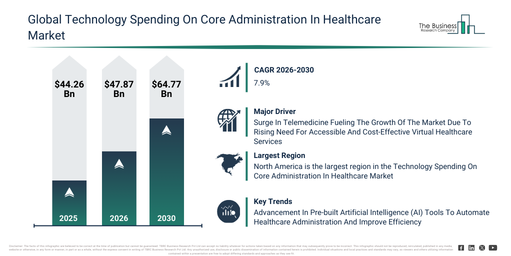
    The healthcare market for technology spending on core administration has experienced robust growth in recent years. This sector is projected to expand from $44.26 billion in 2025 to $47.87 billion in 2026, demonstrating a compound annual growth rate (CAGR) of 8.2%. Historically, this expansion has been influenced by factors such as the increasing administrative burden within healthcare systems, the adoption of electronic records for billing and enrollment, the rising complexity of healthcare operations, the expansion of insurance coverage programs, and the demand for efficient revenue cycle management.

    The market size for technology spending on core administration in healthcare is projected to experience substantial growth over the coming years. This market is anticipated to reach $64.77 billion by 2030, exhibiting a compound annual growth rate (CAGR) of 7.9%. Factors driving this growth during the forecast period include greater investments in intelligent automation tools, an increasing need for real-time financial analytics, the broadening of digital payer-provider ecosystems, a heightened emphasis on automating regulatory compliance, and the incorporation of advanced data management platforms. Key trends expected during this period involve the increasing automation of healthcare administrative processes, a rise in the uptake of cloud-based core administration platforms, the expansion of AI-powered claims and billing systems, an intensified focus on data accuracy and interoperability, and a stronger emphasis on cost optimization within healthcare operations.

    Access Your Free Sample Report For In-Depth Market Analysis:

    https://www.thebusinessresearchcompany.com/sample.aspx?id=27432&type=smp

    Which Factors Are Influencing The Growth Of The Technology Spending On Core Administration In Healthcare Market?

    The increasing need for telemedicine is anticipated to drive up technology expenditure on core administrative functions within the healthcare sector moving ahead. Telemedicine involves delivering healthcare remotely via digital tools like video calls, instant messages, or mobile applications for diagnosing, treating, and monitoring individuals. Its rising acceptance enables patients to obtain medical care from a distance, thereby minimizing travel requirements and enhancing accessibility, particularly for populations in remote or less-served regions. Investing in foundational administrative technology within healthcare strengthens telemedicine by automating tasks such as patient registration, appointment scheduling, billing, and claims processing. This boosts efficiency, shortens delays, and allows providers to concentrate on delivering timely virtual care. For example, data from November 2025, released by the Australian Bureau of Statistics (ABS), an Australia-based government statistical agency, indicated that 22.5% of Australians utilized telehealth services during 2024–25. Of those who experienced a telehealth consultation, 90.3% expressed their willingness to use it again if available, which is an increase from 89.2% in 2023–24. Consequently, the expanding demand for telemedicine is fueling increased technology investment in core administration across the healthcare market.

    What Are The Different Segment Types In The Technology Spending On Core Administration In Healthcare Market Segment Breakdown?

    The technology spending on core administration in healthcare market covered in this report is segmented –

    1) By Type: Software, Hardware, Services

    2) By Technology: Electronic Health Records (EHRs), Patient Management Systems, Financial Management Systems, Supply Chain Management Systems, Revenue Cycle Management System

    3) By Deployment Mode: On-Premise, Cloud-Based, Hybrid

    4) By Application: Patient Management, Staff Management, Inventory Management, Other Applications

    5) By End-User: Hospitals, Clinics, Insurance Providers, Other End-Users

    Subsegments:

    1) By Software: Electronic Health Record (EHR) Systems, Practice Management Software, Revenue Cycle Management (RCM) Software, Patient Scheduling Software, Claims Management Software

    2) By Hardware: Servers and Storage Devices, Workstations and Desktops, Networking Equipment, Scanners And Imaging Devices, Administrative Endpoints And Secure Access Devices

    3) By Services: Information Technology Consulting and Support, System Integration Services, Managed Services, Training and Education Services, Maintenance and Upgrades

    Which Trends Are Influencing Demand In The Technology Spending On Core Administration In Healthcare Market?

    Major companies engaged in technology spending on core administration within the healthcare market are prioritizing the development of advanced solutions, such as prebuilt artificial intelligence tools tailored for healthcare, to automate administrative responsibilities and enhance the accuracy of decision-making. Prebuilt artificial intelligence tools are ready-to-use AI solutions that remove the necessity for extensive custom development, thereby enabling quick adoption of sophisticated capabilities including automation, data analysis, and prediction to streamline workflows. For example, in February 2025, Salesforce Inc., a US-based cloud-based software company, launched Agentforce for Health. This is a library of prebuilt agentic AI tools designed to automate time-consuming administrative, clinical, and public health tasks across the healthcare sector. The platform incorporates features such as patient appointment scheduling, eligibility verification with insurers, and support for care coordination. It also assists in disease surveillance and clinical trial matching by consolidating data from various registries. This initiative seeks to diminish administrative burden, combat workforce burnout, and improve operational efficiency for providers and payers.

    Who Are The Well-Known Companies In The Technology Spending On Core Administration In Healthcare Market?

    Major companies operating in the technology spending on core administration in healthcare market are Microsoft Corporation, Siemens AG, International Business Machines Corporation, Oracle Corporation, Tata Consultancy Services Limited, Cognizant Technology Solutions Corporation, GE Healthcare Technologies Inc., Infosys Limited, Conduent Incorporated, Evolent Health Inc., Veradigm Inc., Tebra Inc., 314e Corporation, Qventus Inc., Meditab Software Inc., CodaMetrix Inc., Raintree Systems Inc., ReLi Med Solutions Inc., Cerner Corporation, Epic Systems Corporation, Allscripts Healthcare Solutions Inc., McKesson Corporation

    Get The Full Technology Spending On Core Administration In Healthcare Market Report:

    https://www.thebusinessresearchcompany.com/report/technology-spending-on-core-administration-in-healthcare-global-market-report

    Where Is The Technology Spending On Core Administration In Healthcare Market Primarily Concentrated By Region?

    North America was the largest region in the technology spending on core administration in healthcare market in 2025. Asia-Pacific is expected to be the fastest-growing region in the forecast period. The regions covered in the technology spending on core administration in healthcare market report are Asia-Pacific, South East Asia, Western Europe, Eastern Europe, North America, South America, Middle East, Africa.

    Request A Customized Technology Spending On Core Administration In Healthcare Market Report For Competitive Insights:

    https://www.thebusinessresearchcompany.com/report/technology-spending-on-core-administration-in-healthcare-global-market-report

    Browse Through More Reports Similar to the Global Technology Spending On Core Administration In Healthcare Market 2026, By The Business Research Company

    Smart Stadium Market Report 2026

    https://www.thebusinessresearchcompany.com/report/smart-stadium-global-market-report

    Hospitality Market Report

    https://www.thebusinessresearchcompany.com/report/hospitality-global-market-report

    Casino Market Report

    https://www.thebusinessresearchcompany.com/report/casino-global-market-report

    Get in touch with us:

    The Business Research Company: https://www.thebusinessresearchcompany.com/

    Americas +1 310-496-7795

    Asia +44 7882 955267 & +91 8897263534

    Europe +44 7882 955267

    Email us at info@tbrc.info

    Follow us on:

    LinkedIn: https://in.linkedin.com/company/the-business-research-company

    YouTube: https://www.youtube.com/channel/UC24_fI0rV8cR5DxlCpgmyFQ

    Global Market Model: https://www.thebusinessresearchcompany.com/global-market-model
  • Increasing Genetic Disorders Advancing Growth in the Tay-Sachs Disease Treatment Market

    Increasing Genetic Disorders Advancing Growth in the Tay-Sachs Disease Treatment Market

    The Business Research Company’s 2026 market reports feature enhanced tools like market attractiveness analysis, TAM assessment, and company scoring matrices, along with interactive dashboards, deeper supply chain insights, and startup coverage strengthening the depth, usability, and strategic value of insights.

    How Large Will The Tay-Sachs Disease Treatment Market Be By 2030 Compared To Its 2026 Market Size?

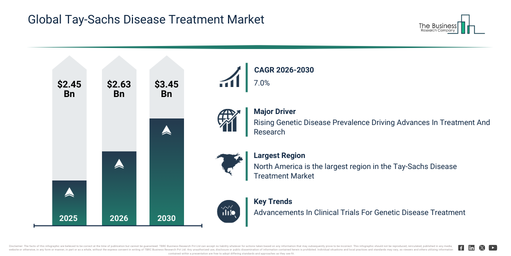
    The tay-sachs disease treatment market has demonstrated substantial growth over recent years. Projections indicate it will expand from $2.45 billion in 2025 to $2.63 billion in 2026, achieving a compound annual growth rate (CAGR) of 7.3%. Historically, this market expansion can be linked to several factors, including enhanced genetic screening capabilities, a rise in awareness of rare genetic disorders, the broadened scope of pediatric neurology care, the accessibility of supportive treatment options, and the increasing development of orphan drug research programs.

    The tay-sachs disease treatment market is anticipated to experience significant expansion in the coming years, with its size projected to reach $3.45 billion by 2030, growing at a compound annual growth rate (CAGR) of 7.0%. This projected increase throughout the forecast period is driven by various factors, including the rising number of clinical trials for gene-based therapies, enhanced regulatory support for orphan drugs, the increasing application of precision medicine in rare diseases, the broadening of patient advocacy initiatives, and greater investment in advanced biotechnologies. Notable trends expected during this period include a heightened focus on gene therapy development, the expansion of enzyme replacement research, the growing adoption of substrate reduction therapies, increased investment in the development of drugs for rare diseases, and refined supportive care protocols.

    Access Your Free Sample Report For In-Depth Market Analysis:

    https://www.thebusinessresearchcompany.com/sample.aspx?id=21295&type=smp

    What Leading Drivers Are Supporting The Tay-Sachs Disease Treatment Market Expansion?

    The increasing occurrence of genetic diseases is projected to propel the tay-sachs disease treatment market going forward. A genetic disease is a disorder caused by DNA abnormalities, which can be inherited or result from spontaneous mutations. The rise in genetic diseases is attributed to advanced diagnostics, increased awareness, environmental factors, and higher mutation rates from delayed parenthood and lifestyle changes. This growing prevalence emphasizes the need for advancements in tay-sachs disease treatment, thereby driving research in gene therapy, enzyme replacement, and early diagnostics. For instance, in October 2024, the UK-based Cystic Fibrosis Trust reported that cystic fibrosis, a genetic disorder, saw patient registrations increase from 11,148 in 2022 to 11,318 in 2023, representing a 1.5% year-over-year rise. Therefore, the expanding prevalence of genetic diseases will drive the tay-sachs disease treatment market.

    Which Segment Classifications Are Used In The Tay-Sachs Disease Treatment Market Segment Analysis?

    The tay-sachs disease treatment market covered in this report is segmented –

    1) By Treatment: Medication, Respiratory Care, Physical Therapy

    2) By Mode Of Administration: Injectable, Oral, Other Mode Of Administration

    3) By End-Users: Hospitals, Homecare, Specialty Clinics

    Subsegments:

    1) By Medication: Antiepileptic Drugs, Miglustat, Supportive Symptomatic Medications

    2) By Respiratory Care: Mechanical Ventilation, Airway Clearance Therapy, Oxygen Therapy

    3) By Physical Therapy: Motor Function Exercises, Hydrotherapy, Assistive Mobility Devices

    What Emerging Trends Are Seen In The Tay-Sachs Disease Treatment Market?

    Companies operating in the tay-sachs disease treatment market are primarily focused on developing innovative treatments, which includes conducting clinical trials to investigate new therapies such as gene therapy, enzyme replacement, and small-molecule drugs, all aimed at enhancing patient outcomes. A clinical trial is a research study designed to assess the safety, efficacy, and potential adverse effects of medical interventions, drugs, or procedures in humans. For example, in July 2024, IntraBio Inc., a biopharmaceutical company based in the US, announced it had received US Food and Drug Administration (FDA) approval for its Investigational New Drug (IND) Application. This approval allows for a clinical trial (IB1001-202) for IB1001, targeting GM2 Gangliosidosis (Tay-Sachs and Sandhoff Disease). The trial is currently underway in the U.S., UK, Germany, and Spain, seeking to address these fatal neurodegenerative disorders for which no approved treatments currently exist. IntraBio’s chairman emphasized the critical importance of developing effective therapies for these debilitating conditions.

    Which Firms Are Contributing To The Tay-Sachs Disease Treatment Market Ecosystem?

    Major companies operating in the tay-sachs disease treatment market are Pfizer Inc., Sanofi S.A., Novartis AG, Takeda Pharmaceutical Company Limited, Regeneron Pharmaceuticals Inc., Biogen Inc., Vertex Pharmaceuticals Incorporated, BioMarin Pharmaceutical Inc., Sarepta Therapeutics Inc., Ultragenyx Pharmaceutical Inc., Amicus Therapeutics Inc., Spark Therapeutics Inc., Rocket Pharmaceuticals Inc., RegenxBio Inc., Forge Biologics Inc., Passage Bio Inc., Protalix BioTherapeutics Inc., Orchard Therapeutics plc, Affinia Therapeutics Inc., IntraBio Inc., Taysha Gene Therapies Inc.

    Get The Full Tay-Sachs Disease Treatment Market Report:

    https://www.thebusinessresearchcompany.com/report/tay-sachs-disease-treatment-global-market-report

    Which Region Has The Greatest Market Share In The Tay-Sachs Disease Treatment Market?

    North America was the largest region in the tay-sachs disease treatment market in 2025. Asia-Pacific is expected to be the fastest-growing region in the forecast period. The regions covered in the tay-sachs disease treatment market report are Asia-Pacific, South East Asia, Western Europe, Eastern Europe, North America, South America, Middle East, Africa.

    Request A Customized Tay-Sachs Disease Treatment Market Report For Competitive Insights:

    https://www.thebusinessresearchcompany.com/report/tay-sachs-disease-treatment-global-market-report

    Browse Through More Reports Similar to the Global Tay-Sachs Disease Treatment Market 2026, By The Business Research Company

    Rare Diseases Treatment Market Report 2026

    https://www.thebusinessresearchcompany.com/report/rare-diseases-treatment-global-market-report

    Lysosomal Disease Treatment Market Report

    https://www.thebusinessresearchcompany.com/report/lysosomal-disease-treatment-global-market-report

    Malaria Treatment Market Report

    https://www.thebusinessresearchcompany.com/report/malaria-treatment-global-market-report

    Get in touch with us:

    The Business Research Company: https://www.thebusinessresearchcompany.com/

    Americas +1 310-496-7795

    Asia +44 7882 955267 & +91 8897263534

    Europe +44 7882 955267

    Email us at info@tbrc.info

    Follow us on:

    LinkedIn: https://in.linkedin.com/company/the-business-research-company

    YouTube: https://www.youtube.com/channel/UC24_fI0rV8cR5DxlCpgmyFQ

    Global Market Model: https://www.thebusinessresearchcompany.com/global-market-model
  • Rising Cancer Prevalence Driving Expansion in the Targeted Therapy Market

    Rising Cancer Prevalence Driving Expansion in the Targeted Therapy Market

    The Business Research Company’s 2026 market reports feature enhanced tools like market attractiveness analysis, TAM assessment, and company scoring matrices, along with interactive dashboards, deeper supply chain insights, and startup coverage strengthening the depth, usability, and strategic value of insights.

    What Is The Projected Increase In Market Value Of The Targeted Therapy Market During 2026–2030?

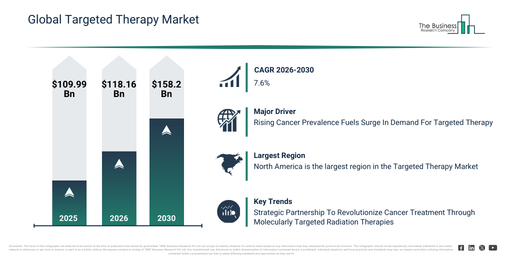
    The targeted therapy market has experienced substantial expansion in recent years. This market is projected to grow from $109.99 billion in 2025 to $118.16 billion by 2026, achieving a compound annual growth rate (CAGR) of 7.4%. Historically, this expansion is attributed to several factors, including the increasing global incidence of cancer, the expansion of oncology research funding, the growing adoption of monoclonal antibodies, advancements in molecular biology research, and the rising approval rate of targeted cancer drugs.

    The targeted therapy market is anticipated to experience robust expansion over the coming years. By 2030, its size is projected to reach $158.2 billion, achieving a compound annual growth rate (CAGR) of 7.6%. This growth during the forecast period stems from factors such as increased investment in personalized medicine, the expanding application of AI-driven drug discovery, broader adoption of precision diagnostics, a growing need for less harmful cancer treatments, and heightened clinical trial activity in the field of oncology. Key trends anticipated for this period encompass the accelerated development of precision oncology drugs, increased acceptance of biomarker-guided treatment selection, the broadening of combination targeted therapies, the wider implementation of companion diagnostics, and a heightened emphasis on designing drugs specific to tumors.

    Access Your Free Sample Report For In-Depth Market Analysis:

    https://www.thebusinessresearchcompany.com/sample.aspx?id=9129&type=smp

    Which Key Factors Are Driving The Targeted Therapy Market Growth?

    The rising incidence of cancer is anticipated to fuel the expansion of the targeted therapy market in the future. Cancer refers to medical conditions characterized by abnormal cells that spread into nearby tissues and multiply without control. This therapy works by interrupting the signals that promote cancer cell proliferation or by prompting these cells to undergo programmed cell death. It utilizes drugs to precisely pinpoint genes and proteins vital for the sustenance and proliferation of cancerous cells, thereby boosting its demand. As an illustration, the American Cancer Society, a US-based nonprofit cancer advocacy organization, reported in January 2024 that cancer cases rose to 2,001,140, up from 1,958,310 in 2023, indicating a 2.19% increase. Consequently, the growing occurrence of cancer will stimulate the growth of the targeted therapy market.

    How Is The Targeted Therapy Market Organized By Segment Classification?

    The targeted therapy market covered in this report is segmented –

    1) By Type: Small Molecule Medicines, Monoclonal Antibodies

    2) By Distribution Channel: Hospital Pharmacies, Retail Pharmacies, Online Pharmacies

    3) By Application: Breast Cancer, Colorectal Cancer, Leukemia, Lung Cancer, Lymphoma, Renal Cancer, Other Applications

    Subsegments:

    1) By Small Molecule Medicines: Tyrosine Kinase Inhibitors (TKIs), Proteasome Inhibitors, Phosphatidylinositol 3-Kinase (PI3K) Inhibitors, Other Small Molecule Therapies

    2) By Monoclonal Antibodies: Immune Checkpoint Inhibitors, Antibody-Drug Conjugates (ADCs), Cytokine Blockers, Other Monoclonal Antibodies

    Which Trends Are Guiding The Direction Of The Targeted Therapy Market?

    Leading companies in the targeted therapy market are increasingly focusing on strategic partnerships to provide reliable services to their customers. A strategic partnership involves an arrangement between two or more companies or organizations that assists each other or works collaboratively to achieve their respective goals. For instance, in September 2023, Shine Technologies, a US-based pharmaceutical industry company producing radioactive isotopes for medical applications, collaborated with Curadh MTR Inc., which is dedicated to improving and accelerating the development of molecularly targeted radiation therapies for solid tumors. This strategic alliance aims to harness the potential of radioisotopes to accurately target and eliminate cancer cells, offering new hope to patients and redefining the future of cancer treatment.

    Who Are The Industry Participants Involved In The Targeted Therapy Market?

    Major companies operating in the targeted therapy market are Pfizer Inc., Johnson & Johnson, F. Hoffmann-La Roche Ltd, Merck & Co Inc., AbbVie Inc., Bayer AG, Novartis AG, Sanofi SA, Bristol Myers Squibb, AstraZeneca, GlaxoSmithKline plc, Takeda Pharmaceutical Company Limited, Eli Lilly and Company, Gilead Sciences Inc., Amgen Inc., Genmab A/S, Regeneron Pharmaceuticals Inc., Biogen Inc., Vertex Pharmaceuticals Incorporated, Agilent Technologies Inc., Illumina Inc., Incyte Corporation, Sysmex Corporation, Exact Sciences Corporation, Seagen Inc., Exelixis Inc., Seattle Genetics Inc., Genentech Inc., Daiichi Sankyo Company Limited

    Get The Full Targeted Therapy Market Report:

    https://www.thebusinessresearchcompany.com/report/targeted-therapy-global-market-report

    Which Region Accounts For The Largest Portion Of The Targeted Therapy Market?

    North America was the largest region in the targeted therapy market in 2025. The regions covered in the targeted therapy market report are Asia-Pacific, South East Asia, Western Europe, Eastern Europe, North America, South America, Middle East, Africa.

    Request A Customized Targeted Therapy Market Report For Competitive Insights:

    https://www.thebusinessresearchcompany.com/report/targeted-therapy-global-market-report

    Browse Through More Reports Similar to the Global Targeted Therapy Market 2026, By The Business Research Company

    Music Therapy Market Report 2026

    https://www.thebusinessresearchcompany.com/report/music-therapy-global-market-report

    Neoantigen Targeted Therapies Market Report

    https://www.thebusinessresearchcompany.com/report/neoantigen-targeted-therapies-global-market-report

    Addictions Therapeutics Market Report

    https://www.thebusinessresearchcompany.com/report/addictions-therapeutics-global-market-report

    Get in touch with us:

    The Business Research Company: https://www.thebusinessresearchcompany.com/

    Americas +1 310-496-7795

    Asia +44 7882 955267 & +91 8897263534

    Europe +44 7882 955267

    Email us at info@tbrc.info

    Follow us on:

    LinkedIn: https://in.linkedin.com/company/the-business-research-company

    YouTube: https://www.youtube.com/channel/UC24_fI0rV8cR5DxlCpgmyFQ

    Global Market Model: https://www.thebusinessresearchcompany.com/global-market-model
  • Tadalafil Market Analysis Highlighting Growth Potential and Future Outlook

    Tadalafil Market Analysis Highlighting Growth Potential and Future Outlook

    The Business Research Company’s 2026 market reports feature enhanced tools like market attractiveness analysis, TAM assessment, and company scoring matrices, along with interactive dashboards, deeper supply chain insights, and startup coverage strengthening the depth, usability, and strategic value of insights.

    How Is The Market Size Of The Tadalafil Market Expected To Change From 2026 To 2030?

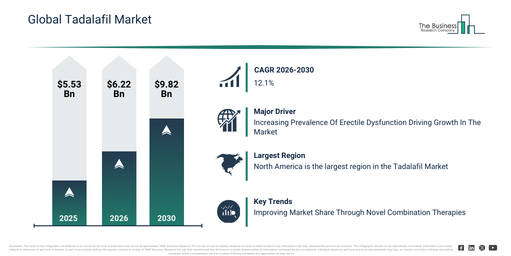
    The tadalafil market size has experienced substantial growth in recent years. It is anticipated to increase from $5.53 billion in 2025 to $6.22 billion in 2026, demonstrating a compound annual growth rate (CAGR) of 12.4%. This historical expansion can be ascribed to factors such as the rising prevalence of erectile dysfunction, an increase in the diagnosis of pulmonary arterial hypertension, broader availability of branded tadalafil, the expansion of retail pharmacy networks, and heightened physician awareness of PDE5 inhibitors.

    The tadalafil market size is anticipated to experience substantial growth in the coming years, projected to reach $9.82 billion by 2030, at a compound annual growth rate (CAGR) of 12.1%. This expansion during the forecast period can be attributed to factors such as an increasing aging male population, greater acceptance of online prescription platforms, a growing focus on chronic disease management, the expansion of combination therapy research, and improved access to affordable generic medications. Major trends expected in the forecast period include the increasing adoption of generic tadalafil formulations, a rising demand for long-acting PDE5 inhibitors, the broadening reach of online pharmacy distribution, a growing emphasis on patient-centric dosing options, and enhanced manufacturing efficiency for oral solid dosages.

    Access Your Free Sample Report For In-Depth Market Analysis:

    https://www.thebusinessresearchcompany.com/sample.aspx?id=20974&type=smp

    What Primary Drivers Are Shaping The Tadalafil Market?

    The growing incidence of erectile dysfunction is anticipated to drive the expansion of the tadalafil market moving forward. Erectile dysfunction (ED) is a medical condition defined by the consistent inability to achieve or maintain an erection adequate for satisfactory sexual performance. The rise in the prevalence of erectile dysfunction (ED) is largely attributed to factors such as an aging demographic, chronic health conditions, detrimental lifestyle choices, psychological stress, and the adverse effects of certain medications. Tadalafil addresses erectile dysfunction by relaxing the smooth muscles within the penile blood vessels, thereby enhancing blood flow and enabling the ability to achieve and sustain an erection during sexual stimulation. For instance, in February 2024, a report from the National Library of Medicine, a US-based National Institutes of Health (NIH), stated that the prevalence of erectile dysfunction (ED), measured using IIEF-5 scores, is 24.2% across the general population. This incidence markedly increases with age, affecting 52.2% of individuals aged 75 and older and 48.0% of those in the 65-74 age group. Therefore, the heightened prevalence of erectile dysfunction is propelling the growth of the tadalafil market.

    Which Segments Define The Tadalafil Market Segment Structure?

    The tadalafil market covered in this report is segmented –

    1) By Product Type: Tablets, Oral Suspensions

    2) By Distribution Channel: Hospital Pharmacy, Retail Pharmacy, Online Pharmacy

    3) By Application: Erectile Dysfunction, Pulmonary Arterial Hypertension, Benign Prostatic Hyperplasia

    Subsegments:

    1) By Tablets: 2.5 mg Tablets, 5 mg Tablets, 10 mg Tablets, 20 mg Tablets

    2) By Oral Suspensions: 2.5 mg/5 mL Oral Suspension, 10 mg Oral Suspension, Custom Dosing Oral Suspensions

    What Trends Are Affecting The Growth Of The Tadalafil Market?

    Companies active within the tadalafil market are prioritizing inventive formulations, such as combination therapy, to enhance treatment effectiveness, improve patient adherence, and expand their market presence in managing erectile dysfunction and pulmonary arterial hypertension. Combination therapy refers to the concurrent use of two or more medications or treatments to achieve superior therapeutic results, improve efficacy, and address various facets of a condition. For example, in March 2024, Johnson & Johnson, a US-based healthcare company, revealed that the U.S. Food and Drug Administration (FDA) had approved OPSYNVI. This single-tablet therapy integrates macitentan, an endothelin receptor antagonist (ERA), and tadalafil, a phosphodiesterase 5 (PDE5) inhibitor. OPSYNVI is indicated for the long-term management of pulmonary arterial hypertension (PAH) (WHO Group I) in adult patients categorized under WHO functional class II-III. It is suitable for patients new to treatment as well as those already receiving ERA, PDE5 inhibitors, or both therapies. Furthermore, it provides a simplified alternative for patients who have stabilized on separate administrations of macitentan 10 mg and tadalafil 40 mg (20 mg x 2).

    Who Are The Established Players Within The Tadalafil Market?

    Major companies operating in the tadalafil market are Eli Lilly and Company, Teva Pharmaceutical Industries Ltd., Sun Pharmaceutical Industries Limited, Cipla Limited, Aurobindo Pharma Limited, Dr. Reddy’s Laboratories Limited, Lupin Limited, Glenmark Pharmaceuticals Limited, Torrent Pharmaceuticals Limited, Jubilant Pharma Limited, Jiangsu Lianhuan Pharmaceutical Co. Ltd., Alembic Pharmaceuticals Limited, Polpharma SA, SMS Pharmaceuticals Limited, Camber Pharmaceuticals Inc., Century Pharmaceuticals Limited, Rakshit Drugs Private Limited, Ami Lifesciences Private Limited, Hangzhou Longshine Bio-Tech Co. Ltd., Dolphin Pharmaceuticals

    Get The Full Tadalafil Market Report:

    https://www.thebusinessresearchcompany.com/report/tadalafil-global-market-report

    Which Region Holds The Highest Market Share In The Tadalafil Market?

    North America was the largest region in the tadalafil market in 2025. Asia-Pacific is expected to be the fastest-growing region in the forecast period. The regions covered in the tadalafil market report are Asia-Pacific, South East Asia, Western Europe, Eastern Europe, North America, South America, Middle East, Africa.

    Request A Customized Tadalafil Market Report For Competitive Insights:

    https://www.thebusinessresearchcompany.com/report/tadalafil-global-market-report

    Browse Through More Reports Similar to the Global Tadalafil Market 2026, By The Business Research Company

    Talc Market Report 2026

    https://www.thebusinessresearchcompany.com/report/talc-global-market-report

    Propanol Market Report

    https://www.thebusinessresearchcompany.com/report/propanol-global-market-report

    Atenolol Market Report

    https://www.thebusinessresearchcompany.com/report/atenolol-global-market-report

    Get in touch with us:

    The Business Research Company: https://www.thebusinessresearchcompany.com/

    Americas +1 310-496-7795

    Asia +44 7882 955267 & +91 8897263534

    Europe +44 7882 955267

    Email us at info@tbrc.info

    Follow us on:

    LinkedIn: https://in.linkedin.com/company/the-business-research-company

    YouTube: https://www.youtube.com/channel/UC24_fI0rV8cR5DxlCpgmyFQ

    Global Market Model: https://www.thebusinessresearchcompany.com/global-market-model
  • Systemic Juvenile Idiopathic Arthritis Market Industry Progress and Growth Forecast

    Systemic Juvenile Idiopathic Arthritis Market Industry Progress and Growth Forecast

    The Business Research Company’s 2026 market reports feature enhanced tools like market attractiveness analysis, TAM assessment, and company scoring matrices, along with interactive dashboards, deeper supply chain insights, and startup coverage strengthening the depth, usability, and strategic value of insights.

    From Its 2026 Market Size, What Value Is The Systemic Juvenile Idiopathic Arthritis Market Projected To Reach By 2030?

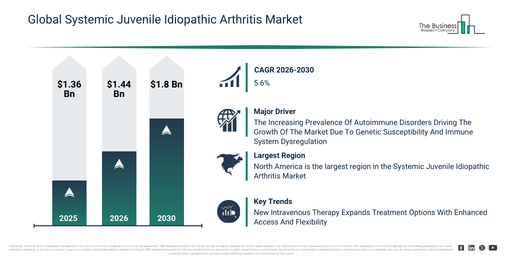
    The systemic juvenile idiopathic arthritis market size has demonstrated significant growth in recent years. It is anticipated to increase from $1.36 billion in 2025 to $1.44 billion in 2026, registering a compound annual growth rate (CAGR) of 5.9%. This historical expansion can be attributed to factors like the enhanced recognition of sjia as a distinct condition, the growing availability of biologic drugs, the widening scope of pediatric specialty care, the rise in academic research programs, and advancements in diagnostic criteria for inflammatory diseases.

    The systemic juvenile idiopathic arthritis market size is expected to show significant expansion in the coming years. It is projected to reach $1.8 billion by 2030, growing at a compound annual growth rate (CAGR) of 5.6%. This growth during the forecast period can be attributed to increased investments in pediatric autoimmune research, the rising adoption of interleukin-targeted therapies, the expansion of clinical trials for rare diseases, a growing emphasis on personalized medicine, and improved access to specialty pediatric care. Prominent trends expected in the forecast period include the increasing uptake of targeted biologic therapies, an intensifying focus on early and accurate sJIA diagnosis, the growing implementation of personalized treatment protocols, the expansion of clinical research within pediatric rheumatology, and enhanced monitoring of disease progression.

    Access Your Free Sample Report For In-Depth Market Analysis:

    https://www.thebusinessresearchcompany.com/sample.aspx?id=30417&type=smp

    Which Major Drivers Are Influencing The Expansion Of The Systemic Juvenile Idiopathic Arthritis Market?

    The rising occurrence of autoimmune conditions is anticipated to fuel the expansion of the systemic juvenile idiopathic arthritis market in the future. These disorders involve the body’s immune system erroneously targeting and attacking its own healthy cells, tissues, or organs. The escalating incidence of autoimmune disorders primarily stems from genetic predisposition, where inherited genes can make individuals susceptible to irregular immune reactions that incorrectly attack the body’s own tissues. Systemic juvenile idiopathic arthritis stands as a unique autoimmune disease, providing crucial understanding into the mechanisms of immune system malfunction and the inflammatory routes contributing to disease advancement. Research into SJIA allows for a more profound comprehension of how irregular immune responses lead to the extensive inflammation and tissue damage typical of autoimmune conditions. For example, in February 2024, Arthritis Australia, a non-profit organization based in Australia, reported that an estimated 212,136 males and 362,137 females are anticipated to have rheumatoid arthritis (RA). These figures are projected to climb by 2040, reaching approximately 280,040 males and 479,828 females. Consequently, the growing prevalence of autoimmune disorders is fueling the expansion of the systemic juvenile idiopathic arthritis market.

    How Is The Systemic Juvenile Idiopathic Arthritis Market Segmented Across Different Segment Categories?

    The systemic juvenile idiopathic arthritis market covered in this report is segmented –

    1) By Treatment Type: Drug Treatment, Biologics, Other Treatment Types

    2) By Age Group: Infants, Children, Adolescents

    3) By Distribution Channel: Hospital Pharmacies, Retail Pharmacies, Online Pharmacies

    4) By End-User: Hospitals, Specialty Clinics, Academic Research Centers, Other End-Users

    Subsegments:

    1) By Drug Treatment: Nonsteroidal Anti-Inflammatory Drugs, Corticosteroids, Disease-Modifying Antirheumatic Drugs

    2) By Biologics: Interleukin-1 Inhibitors, Interleukin-6 Inhibitors, Tumor Necrosis Factor Inhibitors

    3) By Other Treatment Types: Physical Therapy, Occupational Therapy, Supportive Care, Experimental Therapies

    Which Trends Are Shaping The Systemic Juvenile Idiopathic Arthritis Market?

    Leading companies in the systemic juvenile idiopathic arthritis market are concentrating on developing innovative products, such as intravenous formulations, to enhance efficacy, safety, and patient compliance. Intravenous formulations are medications designed for direct administration into a vein, facilitating rapid entry into the bloodstream for quick and controlled therapeutic effects. For instance, in October 2025, Celltrion Inc., a South Korea-based biopharmaceutical company, launched AVTOZMA, a tocilizumab biosimilar intravenous formulation, in the United States. This biosimilar serves as an alternative to the reference product Actemra and has secured regulatory approval for multiple indications, including systemic juvenile idiopathic arthritis (sJIA), rheumatoid arthritis, and cytokine release syndrome. The introduction of AVTOZMA is expected to significantly improve patient access to advanced therapies by offering a cost-effective treatment option while upholding comparable safety, efficacy, and quality standards to the originator drug. By providing both intravenous and subcutaneous formulations, AVTOZMA offers clinicians enhanced flexibility in customizing treatment regimens to address the diverse needs of individual patients, thereby optimizing therapeutic outcomes across various clinical settings.

    Which Organizations Play A Role In The Systemic Juvenile Idiopathic Arthritis Market Landscape?

    Major companies operating in the systemic juvenile idiopathic arthritis market are Johnson And Johnson, F. Hoffmann-La Roche Limited, Merck & Co. Inc., Pfizer Inc., AbbVie Inc., Sanofi S.A., Novartis AG, AstraZeneca PLC, Bristol-Myers Squibb Company, Eli Lilly And Company, Takeda Pharmaceutical Company Limited, Amgen Incorporated, Boehringer Ingelheim, Regeneron Pharmaceuticals Incorporated, Chugai Pharmaceutical Company Limited, Genentech Incorporated, Swedish Orphan Biovitrum Aktiebolag, Zydus Lifesciences Limited, Celltrion Incorporated, Mycenax Biotech Incorporated.

    Get The Full Systemic Juvenile Idiopathic Arthritis Market Report:

    https://www.thebusinessresearchcompany.com/report/global-systemic-juvenile-idiopathic-arthritis-market-report

    Where Is The Systemic Juvenile Idiopathic Arthritis Market Most Concentrated Geographically?

    North America was the largest region in the systemic juvenile idiopathic arthritis market in 2025. Asia-Pacific is expected to be the fastest-growing region in the forecast period. The regions covered in the systemic juvenile idiopathic arthritis market report are Asia-Pacific, South East Asia, Western Europe, Eastern Europe, North America, South America, Middle East, Africa.

    Request A Customized Systemic Juvenile Idiopathic Arthritis Market Report For Competitive Insights:

    https://www.thebusinessresearchcompany.com/report/global-systemic-juvenile-idiopathic-arthritis-market-report

    Browse Through More Reports Similar to the Global Systemic Juvenile Idiopathic Arthritis Market 2026, By The Business Research Company

    Osteoarthritis Market Report 2026

    https://www.thebusinessresearchcompany.com/report/osteoarthritis-global-market-report

    Rare Inflammatory Disease Treatment Market Report

    https://www.thebusinessresearchcompany.com/report/rare-inflammatory-disease-treatment-global-market-report

    Canine Arthritis Treatment Market Report

    https://www.thebusinessresearchcompany.com/report/canine-arthritis-treatment-global-market-report

    Get in touch with us:

    The Business Research Company: https://www.thebusinessresearchcompany.com/

    Americas +1 310-496-7795

    Asia +44 7882 955267 & +91 8897263534

    Europe +44 7882 955267

    Email us at info@tbrc.info

    Follow us on:

    LinkedIn: https://in.linkedin.com/company/the-business-research-company

    YouTube: https://www.youtube.com/channel/UC24_fI0rV8cR5DxlCpgmyFQ

    Global Market Model: https://www.thebusinessresearchcompany.com/global-market-model
  • Systemic Aspergillosis and Candidiasis Market Emerging Trends Influencing Growth

    Systemic Aspergillosis and Candidiasis Market Emerging Trends Influencing Growth

    The Business Research Company’s 2026 market reports feature enhanced tools like market attractiveness analysis, TAM assessment, and company scoring matrices, along with interactive dashboards, deeper supply chain insights, and startup coverage strengthening the depth, usability, and strategic value of insights.

    How Much Growth In Market Value Is Expected For The Systemic Aspergillosis And Systemic Candidiasis Market Between 2026 And 2030?

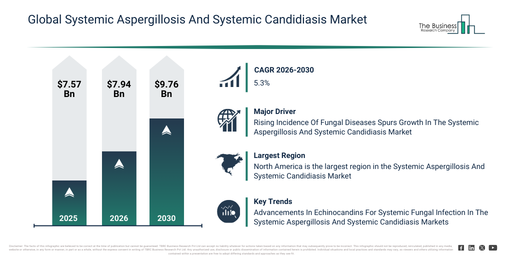
    The systemic aspergillosis and systemic candidiasis market size has seen consistent expansion in recent years. It is projected to grow from $7.57 billion in 2025 to $7.94 billion in 2026, demonstrating a compound annual growth rate (CAGR) of 4.9%. The market’s historical growth can be attributed to several factors, including an increasing number of immunocompromised patient populations, the rising prevalence of invasive fungal infections, the availability of azole and amphotericin formulations, the expansion of hospital intensive care units, and improved diagnostic awareness.

    The market size for systemic aspergillosis and systemic candidiasis is projected to experience robust expansion in the coming years. It is anticipated to grow to $9.76 billion in 2030, demonstrating a compound annual growth rate (CAGR) of 5.3%. This growth during the forecast period can be attributed to the increasing development of novel antifungal agents, a rising focus on antifungal resistance management, the expansion of targeted antifungal therapies, growing investments in infectious disease research, and the increasing adoption of combination treatment regimens. Major trends expected in the forecast period include a greater embrace of advanced antifungal therapies, an increased emphasis on the early diagnosis of systemic fungal infections, the broader implementation of combination antifungal treatment approaches, a growing demand for hospital-based critical care antifungals, and enhanced monitoring of drug resistance patterns.

    Access Your Free Sample Report For In-Depth Market Analysis:

    https://www.thebusinessresearchcompany.com/sample.aspx?id=12148&type=smp

    What Key Drivers Are Fueling The Growth Of The Systemic Aspergillosis And Systemic Candidiasis Market?

    The market for systemic aspergillosis and systemic candidiasis is anticipated to expand due to the rising occurrence of fungal diseases going forward. These diseases are defined as infections stemming from fungi, capable of impacting diverse areas of the body and leading to various symptoms and complications. Examples of such diseases encompass cutaneous skin infections, respiratory infections, and systemic infections. Treatment for fungal diseases involves antifungal medications, including oral azoles, voriconazole, and liposomal amphotericin B. For instance, in 2023, according to the Uk Health Security Agency, a UK-based government agency, in 2023, the rate of yeast-related bloodstream infections across England rose by 4% compared to 2022. Consequently, the rising prevalence of fungal disease is fueling the expansion of the systemic aspergillosis and systemic candidiasis market.

    What Are The Main Segments Within The Systemic Aspergillosis And Systemic Candidiasis Market Segment Structure?

    The systemic aspergillosis and systemic candidiasis market covered in this report is segmented –

    1) By Type: Systemic Oral Azoles, Voriconazole, Liposomal Amphotericin B, Topical Antifungal Agents, Other Types

    2) By Application: Allergic Bronchopulmonary Aspergillosis (ABPA), Chronic Pulmonary Aspergillosis (CPA), Gastrointestinal Candidiasis, Genitourinary Tract Candidiasis, Other Applications

    3) By End User: Clinic, Hospital, Other End Users

    Subsegments:

    1) By Systemic Oral Azoles: Fluconazole, Itraconazole, Posaconazole, Voriconazole

    2) By Voriconazole: Voriconazole Tablets, Voriconazole Injection

    3) By Liposomal Amphotericin B: Liposomal Amphotericin B For Systemic Aspergillosis, Liposomal Amphotericin B For Systemic Candidiasis

    4) By Topical Antifungal Agents: Topical Azoles, Topical Polyenes, Topical Allylamines

    5) By Other Types: Echinocandins, Antifungal Combination Therapies, Other Emerging Antifungal Agents

    What Trends Are Influencing The Systemic Aspergillosis And Systemic Candidiasis Market?

    Leading companies active in the systemic aspergillosis and systemic candidiasis markets are prioritizing the development of advanced products, such as echinocandins, to boost treatment efficacy and address the growing concerns of antifungal resistance. Echinocandins are a class of antifungal medicines that hinder the synthesis of β-glucan, a fundamental component of the fungal cell wall. For instance, in March 2023, Cidara Therapeutics, a US-based biotechnology company, and Melinta Therapeutics, a US-based biotechnology company, obtained approval from the Food and Drug Administration (FDA), a US-based federal agency for protecting public health, for REZZAYO (rezafungin for injection). REZZAYO (rezafungin for injection) is a novel once-weekly echinocandin intended for the treatment of candidemia in adults who have limited or no alternative therapeutic options. Designed for straightforward administration, REZZAYO’s once-weekly dosing regimen streamlines treatment and enhances the continuity of care for patients with invasive candidiasis. It proves especially beneficial for individuals in hospital settings, where the effective management of such infections is vital.

    Who Are The Companies Participating In The Systemic Aspergillosis And Systemic Candidiasis Market?

    Major companies operating in the systemic aspergillosis and systemic candidiasis market are Pfizer Inc, Merck & Co. Inc, AbbVie Inc, Bayer AG, Novartis AG, Bristol-Myers Squibb Company, Abbott Laboratories, Sanofi S.A, GlaxoSmithKline PLC, Gilead Sciences Inc, Astellas Pharma Inc, Matinas BioPharma Holdings Inc, Shionogi & Co. Ltd, Cipla Limited, Basilea Pharmaceutica Ltd, Cidara Therapeutics Inc, Entasis Therapeutics Inc, F2G Ltd, Mycovia Pharmaceuticals Inc, ContraFect Corporation, Enzon Pharmaceutical Inc, Pacgen Life Science Corporation, Biosergen AS

    Get The Full Systemic Aspergillosis And Systemic Candidiasis Market Report:

    https://www.thebusinessresearchcompany.com/report/systemic-aspergillosis-and-systemic-candidiasis-global-market-report

    Which Region Dominates The Systemic Aspergillosis And Systemic Candidiasis Market By Market Share?

    North America was the largest region in the systemic aspergillosis and systemic candidiasis market in 2025. Asia-Pacific is expected to be the fastest-growing region in the forecast period. The regions covered in the systemic aspergillosis and systemic candidiasis market report are Asia-Pacific, South East Asia, Western Europe, Eastern Europe, North America, South America, Middle East, Africa.

    Request A Customized Systemic Aspergillosis And Systemic Candidiasis Market Report For Competitive Insights:

    https://www.thebusinessresearchcompany.com/report/systemic-aspergillosis-and-systemic-candidiasis-global-market-report

    Browse Through More Reports Similar to the Global Systemic Aspergillosis And Systemic Candidiasis Market 2026, By The Business Research Company

    Aspergillosis Treatment Market Report 2026

    https://www.thebusinessresearchcompany.com/report/aspergillosis-treatment-global-market-report

    Candidiasis Therapeutics Market Report

    https://www.thebusinessresearchcompany.com/report/candidiasis-therapeutics-global-market-report

    Invasive Fungal Infections Market Report

    https://www.thebusinessresearchcompany.com/report/invasive-fungal-infections-global-market-report

    Get in touch with us:

    The Business Research Company: https://www.thebusinessresearchcompany.com/

    Americas +1 310-496-7795

    Asia +44 7882 955267 & +91 8897263534

    Europe +44 7882 955267

    Email us at info@tbrc.info

    Follow us on:

    LinkedIn: https://in.linkedin.com/company/the-business-research-company

    YouTube: https://www.youtube.com/channel/UC24_fI0rV8cR5DxlCpgmyFQ

    Global Market Model: https://www.thebusinessresearchcompany.com/global-market-model
  • Syphilis Immunoassay Diagnostics Market Growth Trends and Outlook Through 2030

    Syphilis Immunoassay Diagnostics Market Growth Trends and Outlook Through 2030

    The Business Research Company’s 2026 market reports feature enhanced tools like market attractiveness analysis, TAM assessment, and company scoring matrices, along with interactive dashboards, deeper supply chain insights, and startup coverage strengthening the depth, usability, and strategic value of insights.

    What Is The Estimated Market Size Of The Syphilis Immunoassay Diagnostics Market In 2026, And How Will Its Value Evolve By 2030?

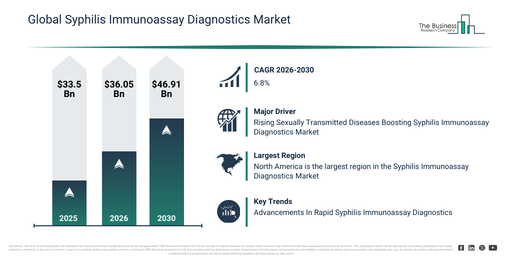
    The syphilis immunoassay diagnostics market size has experienced significant expansion in recent years. It is projected to grow from $33.5 billion in 2025 to $36.05 billion in 2026, showing a compound annual growth rate (CAGR) of 7.6%. This historical growth can be linked to the increasing occurrence of sexually transmitted infections, the broadening of routine screening programs, advancements in laboratory infrastructure, the availability of ELISA and CLIA technologies, and a heightened understanding of early syphilis diagnosis.

    The syphilis immunoassay diagnostics market is projected to experience robust expansion over the coming years. This market is anticipated to reach $46.91 billion by 2030, exhibiting a compound annual growth rate (CAGR) of 6.8%. This projected growth can be attributed to several factors including the rising adoption of rapid diagnostic tests, a heightened emphasis on decentralized testing models, the broadening of screening initiatives in developing areas, increasing investments in laboratory automation, and a growing demand for high-throughput diagnostic platforms. Key trends during this forecast period encompass the increasing integration of automated immunoassay analyzers, a surge in demand for high-sensitivity diagnostic kits, the expansion of point-of-care syphilis testing options, the growing incorporation of digital laboratory workflows, and a reinforced commitment to early and precise disease detection.

    Access Your Free Sample Report For In-Depth Market Analysis:

    https://www.thebusinessresearchcompany.com/sample.aspx?id=16806&type=smp

    Which Drivers Are Supporting The Syphilis Immunoassay Diagnostics Market Growth?

    The increasing prevalence of sexually transmitted diseases is anticipated to drive the expansion of the syphilis immunoassay diagnostics market moving forward. Sexually transmitted infections (STIs), also referred to as STDs, are infections predominantly transmitted through sexual contact, including vaginal, anal, and oral sex. This rise in sexually transmitted diseases is linked to factors such as declining condom use, antibiotic resistance, insufficient sexual education, evolving social and behavioral trends, associated stigma, reduced financial support for STD programs, and increased travel. Syphilis immunoassay diagnostics aid in the detection and management of sexually transmitted diseases by offering accurate and timely identification of syphilis infections, which enables appropriate treatment and prevention measures. For example, in June 2024, a report by the Terrence Higgins Trust, a UK-based organization, referencing the UK Health Security Agency (UKHSA), indicated that 401,800 sexually transmitted infections (STIs) were reported in England in 2023, marking a 5% rise from the preceding year. Thus, the growing number of sexually transmitted diseases is stimulating the syphilis immunoassay diagnostics market.

    How Is Segmentation Applied In The Syphilis Immunoassay Diagnostics Market Segment Analysis?

    The syphilis immunoassay diagnostics market covered in this report is segmented –

    1) By Product: Analyzers, Reagents, Kits, Other Products

    2) By Technology: Chemiluminescence Immunoassay (CLIA), Enzyme-Linked Immunosorbent Assay (ELISA), Other Technologies

    3) By Application: Men, Women

    4) By End-User: Hospitals, Blood Banks, Diagnostics Labs, Other End-Users

    Subsegments:

    1) By Analyzers: Automated Analyzers, Semi-Automated Analyzers, Manual Analyzers

    2) By Reagents: Enzyme-Linked Immunosorbent Assay Reagents, Chemiluminescent Immunoassay Reagents, Rapid Plasma Reagin Reagents, Treponemal And Non-Treponemal Reagents

    3) By Kits: ELISA Kits, Rapid Diagnostic Test Kits, CLIA Kits, Point-Of-Care Test Kits

    4) By Other Products: Control And Calibration Materials, Sample Collection Devices, Ancillary Testing Accessories

    Which Trends Are Expected To Impact The Syphilis Immunoassay Diagnostics Market?

    Leading companies in the syphilis immunoassay diagnostics market are prioritizing the development of innovative solutions, such as rapid syphilis tests, to improve the effectiveness and precision of syphilis detection. These rapid syphilis tests are straightforward, point-of-care instruments that identify syphilis antibodies in blood or other bodily fluids within minutes, facilitating quick diagnosis and prompt treatment. For instance, in February 2023, Chembio Diagnostics Inc., a US-based point-of-care diagnostics firm specializing in infectious diseases, obtained a CLIA waiver from the FDA for its DPP HIV-Syphilis System. The DPP HIV-Syphilis System is a dual rapid test designed for the concurrent detection of antibodies to HIV 1/2 and Treponema pallidum, the bacterium that causes syphilis. This quick, 15-minute test seeks to enhance diagnosis and treatment, particularly in preventing the mother-to-child transmission of syphilis and mitigating the risk of HIV acquisition among individuals with syphilis.

    Who Are The Companies Participating In The Syphilis Immunoassay Diagnostics Market Environment?

    Major companies operating in the syphilis immunoassay diagnostics market are F. Hoffmann-La Roche Ltd, Thermo Fisher Scientific Inc, Abbott Laboratories, Siemens Healthineers, Becton Dickinson and Company, bioMérieux SA, Bio-Rad Laboratories Inc, Meril Life Sciences Pvt Ltd, Randox Laboratories Ltd, SEKISUI Diagnostics, Trinity Biotech, Fujirebio, CTK Biotech Inc, bioLytical Laboratories Inc, ACON Laboratories Inc, InTec PRODUCTS INC, Quidel Corporation, Alere Inc, Ortho Clinical Diagnostics, DiaSorin Inc, Sekisui Medical, Beckman Coulter

    Get The Full Syphilis Immunoassay Diagnostics Market Report:

    https://www.thebusinessresearchcompany.com/report/syphilis-immunoassay-diagnostics-global-market-report

    Which Region Is The Largest In The Syphilis Immunoassay Diagnostics Market?

    North America was the largest region in the syphilis immunoassay diagnostics market in 2025. Asia-Pacific is expected to be the fastest-growing region in the forecast period. The regions covered in the syphilis immunoassay diagnostics market report are Asia-Pacific, South East Asia, Western Europe, Eastern Europe, North America, South America, Middle East, Africa.

    Request A Customized Syphilis Immunoassay Diagnostics Market Report For Competitive Insights:

    https://www.thebusinessresearchcompany.com/report/syphilis-immunoassay-diagnostics-global-market-report

    Browse Through More Reports Similar to the Global Syphilis Immunoassay Diagnostics Market 2026, By The Business Research Company

    Immunodiagnostics Market Report 2026

    https://www.thebusinessresearchcompany.com/report/immunodiagnostics-global-market-report

    Infectious Disease Diagnostics Testing Market Report

    https://www.thebusinessresearchcompany.com/report/infectious-disease-diagnostics-testing-global-market-report

    Diagnostic Specialty Antibodies Market Report

    https://www.thebusinessresearchcompany.com/report/diagnostic-specialty-antibodies-global-market-report

    Get in touch with us:

    The Business Research Company: https://www.thebusinessresearchcompany.com/

    Americas +1 310-496-7795

    Asia +44 7882 955267 & +91 8897263534

    Europe +44 7882 955267

    Email us at info@tbrc.info

    Follow us on:

    LinkedIn: https://in.linkedin.com/company/the-business-research-company

    YouTube: https://www.youtube.com/channel/UC24_fI0rV8cR5DxlCpgmyFQ

    Global Market Model: https://www.thebusinessresearchcompany.com/global-market-model