Category: Healthcare Services

  • Increasing genetic disorders due to aging and mutations are fueling growth in the rare disease genetic testing market

    Increasing genetic disorders due to aging and mutations are fueling growth in the rare disease genetic testing market

    The Business Research Company’s 2026 market reports feature enhanced tools like market attractiveness analysis, TAM assessment, and company scoring matrices, along with interactive dashboards, deeper supply chain insights, and startup coverage strengthening the depth, usability, and strategic value of insights.

    How Is The Market Size Of The Rare Disease Genetic Testing Market Expected To Change From 2026 To 2030?

    The rare disease genetic testing market size has experienced swift expansion in recent years. This market is projected to expand from $1.17 billion in 2025 to $1.33 billion in 2026, at a compound annual growth rate (CAGR) of 13.7%. The growth observed in the past can be attributed to enhancements in genomic sequencing technologies, an increase in rare disease research initiatives, greater awareness of genetic disorders, the availability of specialized diagnostic laboratories, and the proliferation of clinical genetics programs.

    The rare disease genetic testing market size is projected for significant expansion in the next few years. It is expected to reach $2.18 billion by 2030, demonstrating a compound annual growth rate (CAGR) of 13.1%. This anticipated growth during the forecast period is driven by factors such as the increasing demand for personalized medicine, rising investments in genomic data analytics, the expansion of population-scale genetic screening, the growing integration of genetics into routine clinical care, and advancements in bioinformatics platforms. Major trends anticipated in the same period include the increasing adoption of next-generation sequencing for rare diseases, the growing use of AI-driven variant interpretation, the expansion of comprehensive genetic testing panels, the rising integration of genetic data with clinical decision systems, and an enhanced focus on early and accurate diagnosis.

    Access Your Free Sample Report For In-Depth Market Analysis:

    https://www.thebusinessresearchcompany.com/sample.aspx?id=27404&type=smp

    What Leading Drivers Are Supporting The Rare Disease Genetic Testing Market Expansion?

    The escalating prevalence of genetic disorders is projected to fuel the expansion of the rare disease genetic testing market going forward. These disorders are health conditions resulting from anomalies in an individual’s deoxyribonucleic acid (DNA), which can be inherited from parents or manifest as new mutations. The increase in such disorders is often attributed to advancing parental age, as older parents face a greater likelihood of transmitting genetic mutations to their offspring. Rare disease genetic testing plays a crucial role in diagnosing these conditions by identifying specific mutations, thereby enabling accurate and early detection. Furthermore, it supports the development of personalized treatment plans, which leads to enhanced patient care and improved long-term health outcomes. A notable example includes data from May 2024, where the National Health Service, a UK-based government department, indicated that 17,000 people are living with sickle cell disease, an inherited genetic blood disorder, with approximately 250 new cases diagnosed each year. Consequently, the growing incidence of genetic disorders is a primary driver for the rare disease genetic testing market.

    Which Segment Classifications Are Used In The Rare Disease Genetic Testing Market Segment Analysis?

    The rare disease genetic testing market covered in this report is segmented –

    1) By Disease Type: Immunological Disorders, Cardiovascular Disorders, Neurological Disease, Endocrine And Metabolism Disorders Diseases, Hematological Diseases, Dermatological Disease, Other Disease Types

    2) By Technology: Next-Generation Sequencing, Sanger Sequencing, Polymerase Chain Reaction Based Testing, Array Based Testing, Fluorescence In Situ Hybridization, Other Technologies

    3) By Specialty: Molecular Genetic Tests, Chromosomal Genetic Tests, Biochemical Genetic Tests

    4) By End-User: Hospitals And Clinics, Research Laboratories And Contract Research Organizations, Diagnostic Laboratories, Other End Users

    Subsegments:

    1) By Immunological Disorders: Autoimmune Disorders, Allergic Conditions, Primary Immunodeficiency Disorders, Inflammatory Disorders

    2) By Cardiovascular Disorders: Congenital Heart Defects, Cardiomyopathies, Aortic Aneurysms, Pulmonary Hypertension

    3) By Neurological Disease: Neurodegenerative Disorders, Neuromuscular Disorders, Epileptic Syndromes, Movement Disorders

    4) By Endocrine And Metabolism Disorders Diseases: Inherited Metabolic Disorders, Thyroid Disorders, Adrenal Disorders, Diabetes Related Genetic Conditions

    5) By Hematological Diseases: Hemophilia, Thalassemia, Sickle Cell Disease, Clotting Disorders

    6) By Dermatological Disease: Genetic Skin Disorders, Connective Tissue Disorders, Pigmentary Disorders, Keratinization Disorders

    7) By Other Disease Types: Skeletal Dysplasia, Renal Genetic Disorders, Ophthalmic Genetic Conditions, Gastrointestinal Genetic Conditions

    What Emerging Trends Are Seen In The Rare Disease Genetic Testing Market?

    Key companies operating in the rare disease genetic testing market are concentrating on creating technologically advanced solutions, such as digital genomics platforms, to enhance the speed, accuracy, and scalability of rare disease diagnosis. Digital genomics platforms are sophisticated software systems that integrate genomic data analysis, interpretation, and reporting to streamline and accelerate genetic testing and diagnosis. For instance, in March 2025, Strand Life Sciences Private Limited, an India-based computer software company, introduced StrandOmics Portal, a digital platform aimed at improving the efficiency and accuracy of rare disease diagnosis. This portal provides clinicians with comprehensive insights into genetic variants, facilitating quicker and more precise diagnoses. It supports advanced variant interpretation, including prenatal diagnostics, and allows for independent reviews of genetic data. This launch demonstrates a strong commitment to advancing precision medicine and equipping healthcare professionals with effective tools to improve patient outcomes.

    Which Firms Are Contributing To The Rare Disease Genetic Testing Market Ecosystem?

    Major companies operating in the rare disease genetic testing market are Thermo Fisher Scientific Inc., Quest Diagnostics Inc., Eurofins Scientific SE, Agilent Technologies Inc., Illumina Inc., QIAGEN N.V., Natera Inc., OPKO Health Inc., Myriad Genetics Inc., Fulgent Genetics Inc., BioReference Laboratories Inc., Invitae Corporation, Ambry Genetics Corporation, Centogene N.V., Baylor Genetics Company, PreventionGenetics, Blueprint Genetics Oy, Artemis DNA Inc., BGI Genomics Co. Ltd., GeneDx Inc., Genomics England Ltd.

    Get The Full Rare Disease Genetic Testing Market Report:

    https://www.thebusinessresearchcompany.com/report/rare-disease-genetic-testing-global-market-report

    Which Region Leads The Rare Disease Genetic Testing Market In Terms Of Market Share?

    North America was the largest region in the rare disease genetic testing market in 2025. Asia-Pacific is expected to be the fastest-growing region in the forecast period. The regions covered in the rare disease genetic testing market report are Asia-Pacific, South East Asia, Western Europe, Eastern Europe, North America, South America, Middle East, Africa.

    Request A Customized Rare Disease Genetic Testing Market Report For Competitive Insights:

    https://www.thebusinessresearchcompany.com/report/rare-disease-genetic-testing-global-market-report

    Browse Through More Reports Similar to the Global Rare Disease Genetic Testing Market 2026, By The Business Research Company

    Rare Diseases Treatment Market Report 2026

    https://www.thebusinessresearchcompany.com/report/rare-diseases-treatment-global-market-report

    Clinical Diagnostics Market Report

    https://www.thebusinessresearchcompany.com/report/clinical-diagnostics-global-market-report

    Rare Kidney Diseases Market Report

    https://www.thebusinessresearchcompany.com/report/rare-kidney-diseases-global-market-report

    Get in touch with us:

    The Business Research Company: https://www.thebusinessresearchcompany.com/

    Americas +1 310-496-7795

    Asia +44 7882 955267 & +91 8897263534

    Europe +44 7882 955267

    Email us at info@tbrc.info

    Follow us on:

    LinkedIn: https://in.linkedin.com/company/the-business-research-company

    YouTube: https://www.youtube.com/channel/UC24_fI0rV8cR5DxlCpgmyFQ

    Global Market Model: https://www.thebusinessresearchcompany.com/global-market-model
  • Sanfilippo syndrome market to approach $15.01 billion by 2030

    Sanfilippo syndrome market to approach $15.01 billion by 2030

    The Business Research Company’s 2026 market reports feature enhanced tools like market attractiveness analysis, TAM assessment, and company scoring matrices, along with interactive dashboards, deeper supply chain insights, and startup coverage strengthening the depth, usability, and strategic value of insights.

    How Much Growth In Market Value Is Expected For The Sanfilippo Syndrome Market Between 2026 And 2030?

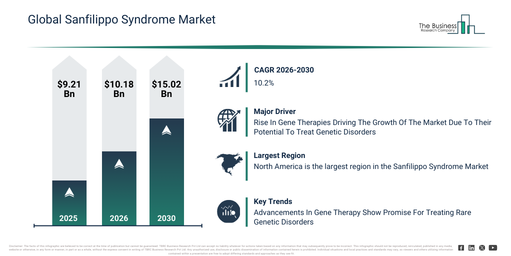
    The sanfilippo syndrome market size has seen substantial growth in recent years. It is anticipated to increase from $9.21 billion in 2025 to $10.18 billion in 2026, at a compound annual growth rate (CAGR) of 10.5%. The expansion witnessed in prior periods can be attributed to several factors, including the restricted treatment options available for sanfilippo syndrome, a growing understanding of lysosomal storage disorders, the proliferation of rare disease advocacy groups, incremental improvements in diagnostic capabilities, and initial funding for research into orphan diseases.

    The market size for sanfilippo syndrome is projected to experience significant expansion in the coming years. It is forecast to climb to $15.02 billion by 2030, achieving a compound annual growth rate (CAGR) of 10.2%. This growth during the forecast period can be attributed to advancements in AAV-based gene therapies, an increase in orphan drug designations and incentives, rising healthcare expenditure on rare diseases, expanding newborn screening initiatives, and growing investment from biotech and pharmaceutical companies. Prominent trends anticipated in the forecast period involve a surge in clinical trial activity for sanfilippo syndrome treatments, the increasing adoption of gene therapy approaches in pediatric neurodegenerative disorders, a rise in the use of advanced diagnostic techniques for early detection, the expansion of compassionate use and early access programs for rare diseases, and enhanced collaboration between biotech firms and research institutions.

    Access Your Free Sample Report For In-Depth Market Analysis:

    https://www.thebusinessresearchcompany.com/sample.aspx?id=23507&type=smp

    Which Strong Drivers Are Impacting The Sanfilippo Syndrome Market Growth?

    A growing emphasis on gene therapies is projected to fuel the expansion of the sanfilippo syndrome market in the future. These therapies involve medical interventions designed to alter or substitute defective genes, aiming to cure or avert illnesses. This heightened attention stems from their capability to address genetic disorders, rare ailments, and long-term conditions by pinpointing the underlying cause at a molecular level. Specifically for Sanfilippo syndrome, gene therapies assist by introducing working versions of the faulty gene, thereby restoring enzyme output and diminishing the buildup of detrimental substances within cells. As an illustration, in April 2024, the American Society of Gene & Cell Therapy, a US-based non-profit medical and scientific organization, indicated that phase III clinical trials for gene therapy saw a 10% increase in Q4 2023, representing the initial quarterly rise since Q3 2022. Consequently, the growing attention to gene therapies is stimulating the expansion of the sanfilippo syndrome market.

    Which Segment Types Are Examined In The Sanfilippo Syndrome Market Segment Study?

    The sanfilippo syndrome market covered in this report is segmented –

    1) By Treatment: Enzyme Replacement Therapy, Gene Therapy, Genistein, Other Treatments

    2) By Diagnosis: Glycosaminoglycan Analysis (GAG Analysis), Genomic Deoxyribonucleic Acid Sequencing (Genomic DNA Sequencing), Activity Assay, Other Diagnosis

    3) By End-User: Hospitals, Research Institutions

    Subsegments:

    1) By Enzyme Replacement Therapy: Intravenous Enzyme Replacement Therapy, Intrathecal Enzyme Replacement Therapy, Intracerebroventricular (ICV) Enzyme Replacement Therapy

    2) By Gene Therapy: Adeno-Associated Virus (AAV)-Based In Vivo Gene Therapy, Lentiviral Vector–Based Ex Vivo Gene Therapy, Non-Viral Vector Gene Delivery

    3) By Genistein: Oral Genistein Supplementation, High-Dose Genistein Regimens, Low-Dose Genistein Regimens

    4) By Other Treatments: Substrate Reduction Therapy (SRT), Stem Cell Therapy, Anti-Inflammatory Agents, Symptomatic Management Drugs

    Which Trends Are Contributing To Changes In The Sanfilippo Syndrome Market?

    Major companies operating in the sanfilippo syndrome market are prioritizing the development of innovative treatments, such as gene therapies, to enhance patient outcomes and slow the disease’s progression. Gene therapy represents a medical methodology that employs genes to prevent, treat, or cure diseases by correcting or replacing faulty genes in the body. For instance, in February 2025, Ultragenyx Pharmaceutical Inc., a US-based biopharmaceutical company, announced new findings concerning UX111 (ABO-102), an AAV gene therapy for sanfilippo syndrome Type A (MPS IIIA). This treatment demonstrated statistically significant improvements in Bayley-III raw scores for cognition, receptive communication, and expressive communication. Furthermore, it achieved a substantial and sustained reduction in cerebrospinal fluid (CSF) heparan sulfate (HS) levels, which correlated with improved clinical outcomes.

    Which Players Are Part Of The Competitive Landscape Of The Sanfilippo Syndrome Market?

    Major companies operating in the sanfilippo syndrome market are Takeda Pharmaceutical Company Limited, BioMarin Pharmaceutical Inc, Ultragenyx Pharmaceutical Inc, JCR Pharmaceuticals Co Ltd, Denali Therapeutics Inc, REGENXBIO Inc, Greenwood Genetic Center, ArmaGen Inc, Abeona Therapeutics Inc, Orchard Therapeutics plc, Allievex Corporation, Lysogene SA, Sio Gene Therapies Inc, Abeona Therapeutics Europe, Spark Therapeutics Inc, PTC Therapeutics Inc, Neurogene Inc, Taysha Gene Therapies Inc, MeiraGTx Holdings plc, Sangamo Therapeutics Inc, Freeline Therapeutics Holdings plc, LogicBio Therapeutics Inc

    Get The Full Sanfilippo Syndrome Market Report:

    https://www.thebusinessresearchcompany.com/report/sanfilippo-syndrome-global-market-report

    Which Region Accounts For The Largest Portion Of The Sanfilippo Syndrome Market?

    North America was the largest region in the sanfilippo syndrome market in 2025. The regions covered in the sanfilippo syndrome market report are Asia-Pacific, South East Asia, Western Europe, Eastern Europe, North America, South America, Middle East, Africa.

    Request A Customized Sanfilippo Syndrome Market Report For Competitive Insights:

    https://www.thebusinessresearchcompany.com/report/sanfilippo-syndrome-global-market-report

    Browse Through More Reports Similar to the Global Sanfilippo Syndrome Market 2026, By The Business Research Company

    Antiphospholipid Syndrome Treatment Market Report 2026

    https://www.thebusinessresearchcompany.com/report/antiphospholipid-syndrome-treatment-global-market-report

    Polycystic Ovarian Syndrome Treatment Market Report

    https://www.thebusinessresearchcompany.com/report/polycystic-ovarian-syndrome-treatment-global-market-report

    Dry Eye Syndrome Market Report

    https://www.thebusinessresearchcompany.com/report/dry-eye-syndrome-global-market-report

    Get in touch with us:

    The Business Research Company: https://www.thebusinessresearchcompany.com/

    Americas +1 310-496-7795

    Asia +44 7882 955267 & +91 8897263534

    Europe +44 7882 955267

    Email us at info@tbrc.info

    Follow us on:

    LinkedIn: https://in.linkedin.com/company/the-business-research-company

    YouTube: https://www.youtube.com/channel/UC24_fI0rV8cR5DxlCpgmyFQ

    Global Market Model: https://www.thebusinessresearchcompany.com/global-market-model

  • Rising incidence and improved diagnostics are transforming the rare disease diagnostics market

    Rising incidence and improved diagnostics are transforming the rare disease diagnostics market

    The Business Research Company’s 2026 market reports feature enhanced tools like market attractiveness analysis, TAM assessment, and company scoring matrices, along with interactive dashboards, deeper supply chain insights, and startup coverage strengthening the depth, usability, and strategic value of insights.

    From Its 2026 Market Size, What Value Is The Rare Disease Diagnostics Market Projected To Reach By 2030?

    The rare disease diagnostics market has experienced significant expansion recently. This market is projected to expand from $38.14 billion in 2025 to $41.91 billion in 2026, exhibiting a compound annual growth rate (CAGR) of 9.9%. Historical expansion has been driven by factors such as the broader availability of genetic testing, enhanced recognition of rare diseases among medical professionals, the expanded application of molecular diagnostics, the proliferation of specialized diagnostic laboratories, and better access to sophisticated imaging technologies.

    The rare disease diagnostics market size is anticipated to undergo significant growth in the coming years. Its value is projected to climb to $62.18 billion in 2030, displaying a compound annual growth rate (CAGR) of 10.4%. This expansion during the forecast period can be attributed to the wider adoption of personalized medicine, increasing investments in genomics research, a rising need for early-stage rare disease detection, the greater integration of AI-driven diagnostic tools, and the broadening of rare disease screening programs. Noteworthy trends in the forecast period encompass the increasing embrace of next-generation sequencing diagnostics, a growing utilization of multi-gene panel testing, the expanding integration of advanced imaging in rare disease diagnosis, the establishment of more centralized rare disease testing centers, and a heightened focus on early and accurate diagnosis.

    Access Your Free Sample Report For In-Depth Market Analysis:

    https://www.thebusinessresearchcompany.com/sample.aspx?id=12651&type=smp

    Which Key Factors Are Driving The Rare Disease Diagnostics Market Growth?

    A rise in the occurrence of rare diseases is projected to drive the expansion of the rare disease diagnostics market in the future. These conditions are health issues impacting a minor segment of the populace compared to widespread illnesses, frequently necessitating specialized diagnostic instruments for prompt and precise identification. Diagnostics for rare diseases contribute to better disease management, facilitate the discovery of potential therapies, and minimize needless or detrimental treatments, ultimately fostering more effective patient care. As an example, in March 2025, Kidney Research UK, an UK-based kidney disease charity, stated that the current scope of rare kidney diseases encompasses more than 150 distinct conditions, impacting approximately 70 per 100,000 people, primarily stemming from genetic changes. Consequently, the growing frequency of rare diseases is fueling the expansion of the rare disease diagnostics market.

    How Is The Rare Disease Diagnostics Market Organized By Segment Classification?

    The rare disease diagnostics market covered in this report is segmented –

    1) By Test Type: Genetic Test, General Lab Test, Imaging Test

    2) By Technology: Capillary Sequencing, Whole Genome Sequencing, Whole Exome Sequencing, Microarrays

    3) By Sample Type: Deoxyribonucleic Acid (DNA) Sample, Buccal Swab Sample, Blood, Saliva

    4) By Disease Type: Gastroenterology Disease, Endocrine And Metabolism Disorders Disease, Hematology And Oncology Disease, Dermatology Disease, Cardiovascular Disorders, Neurology Disease

    5) By End User: Hospital Laboratories, Diagnostics Laboratories, Genetic Testing Laboratories, Cancer Research Laboratories

    Subsegments:

    1) By Genetic Test: Whole Genome Sequencing, Targeted Gene Panels, Exome Sequencing, Carrier Testing

    2) By General Lab Test: Blood Tests, Biochemical Assays, Urine Tests, Cytogenetic Tests

    3) By Imaging Test: MRI (Magnetic Resonance Imaging), CT (Computed Tomography) Scans, Ultrasound, X-Rays

    Which Trends Are Guiding The Direction Of The Rare Disease Diagnostics Market?

    Leading companies in the rare disease diagnostics market are prioritizing the development of advanced solutions, such as high-sensitivity whole genome sequencing (WGS) platforms. Their goal is to enhance diagnostic precision, expand the scope of variant detection, and accelerate the identification of complex rare disorders. High-sensitivity WGS platforms allow for a comprehensive analysis of nearly all disease-causing genetic variants in a single test, thus facilitating earlier and more accurate diagnoses. For example, in April 2023, Centogene GmbH, a rare disease company from Germany, introduced CentoGenome. This enhanced next-generation sequencing (NGS)-based whole genome sequencing solution is tailored for the diagnosis of rare and neurodegenerative diseases. The platform provides broad variant coverage, which includes Copy Number Variations (CNVs) linked to spinal muscular atrophy (SMA) and intricate pathogenic variants associated with Gaucher disease (GD) and GBA1-related Parkinson’s disease. Additionally, CentoGenome integrates PCR-free technology to minimize sequencing bias in challenging genomic regions. This feature ensures higher-quality data and deeper insights into coding, regulatory, and intronic areas, thereby supporting more precise clinical interpretation.

    Who Are The Industry Participants Involved In The Rare Disease Diagnostics Market?

    Major companies operating in the rare disease diagnostics market are Thermo Fisher Scientific Inc., Roche Diagnostics, Laboratory Corporation of America Holdings, Quest Diagnostics Incorporated, Eurofins Scientific SE, Agilent Technologies Inc., PerkinElmer Inc., Sanofi Genzyme, Illumina Inc., Bio Rad Laboratories Inc., Qiagen NV, OPKO Health Inc., Natera Inc., Invitae Corporation, BGI Genomics Co. Ltd., 23andMe Holding Co., Ambry Genetics Corporation, Centogene N.V., GENEWIZ Inc., Blueprint Genetics Inc., Oxford Gene Technology Limited, Strand Life Sciences Pvt. Ltd., RareCyte Inc., Sophia Genetics SA, Foundation Medicine Inc.

    Get The Full Rare Disease Diagnostics Market Report:

    https://www.thebusinessresearchcompany.com/report/rare-disease-diagnostics-global-market-report

    Which Region Leads The Rare Disease Diagnostics Market In Overall Market Size?

    North America was the largest region in the rare disease diagnostics market in 2025. Asia-Pacific is expected to be the fastest-growing region in the forecast period. The regions covered in the rare disease diagnostics market report are Asia-Pacific, South East Asia, Western Europe, Eastern Europe, North America, South America, Middle East, Africa.

    Request A Customized Rare Disease Diagnostics Market Report For Competitive Insights:

    https://www.thebusinessresearchcompany.com/report/rare-disease-diagnostics-global-market-report

    Browse Through More Reports Similar to the Global Rare Disease Diagnostics Market 2026, By The Business Research Company

    Rare Disease Diagnostics Market Report 2026

    https://www.thebusinessresearchcompany.com/report/rare-disease-diagnostics-global-market-report

    Rare Diseases Treatment Market Report

    https://www.thebusinessresearchcompany.com/report/rare-diseases-treatment-global-market-report

    Rare Inflammatory Disease Treatment Market Report

    https://www.thebusinessresearchcompany.com/report/rare-inflammatory-disease-treatment-global-market-report

    Get in touch with us:

    The Business Research Company: https://www.thebusinessresearchcompany.com/

    Americas +1 310-496-7795

    Asia +44 7882 955267 & +91 8897263534

    Europe +44 7882 955267

    Email us at info@tbrc.info

    Follow us on:

    LinkedIn: https://in.linkedin.com/company/the-business-research-company

    YouTube: https://www.youtube.com/channel/UC24_fI0rV8cR5DxlCpgmyFQ

    Global Market Model: https://www.thebusinessresearchcompany.com/global-market-model

  • Pregnancy Test Kits Market Future Trends Influencing Growth

    Pregnancy Test Kits Market Future Trends Influencing Growth

    The Business Research Company’s 2026 market reports feature enhanced tools like market attractiveness analysis, TAM assessment, and company scoring matrices, along with interactive dashboards, deeper supply chain insights, and startup coverage strengthening the depth, usability, and strategic value of insights.

    What Level Of Market Value Growth Is Predicted For The Pregnancy Test Kits Market From 2026 To 2030?

    The pregnancy test kits market has experienced robust growth in recent years. This market is projected to expand from $1.87 billion in 2025 to $1.98 billion in 2026, demonstrating a compound annual growth rate (CAGR) of 5.9%. Historically, this growth can be attributed to increased awareness of reproductive health, widespread availability of OTC diagnostic products, expansion of retail pharmacy networks, rising use of home-based testing, and improvements in hcg detection sensitivity.

    The pregnancy test kits market is projected to experience substantial expansion over the upcoming period. This market is anticipated to reach a valuation of $2.6 billion by 2030, demonstrating a compound annual growth rate (CAGR) of 7.0%. Factors contributing to this growth during the projection period include a heightened demand for connected health diagnostics, an intensified focus on women’s health technologies, the broadened availability of telehealth-supported testing, increased use of digital readout tests, and a greater emphasis on sustainability within diagnostic products. Key trends anticipated during the forecast period involve the rising uptake of digital pregnancy test kits, a greater need for early and precise detection, an expanding inclination towards at-home diagnostic solutions, the proliferation of online distribution channels, and an improved emphasis on user-friendly test designs.

    Access Your Free Sample Report For In-Depth Market Analysis:

    https://www.thebusinessresearchcompany.com/sample.aspx?id=13192&type=smp

    Which Factors Are Influencing The Growth Of The Pregnancy Test Kits Market?

    The future expansion of the pregnancy test kits market is anticipated to be driven by increasing telehealth adoption. Telehealth adoption refers to the rising utilization of digital communication technologies for the remote delivery of healthcare services by both providers and patients. This trend is escalating due to its cost efficiency, as virtual consultations reduce healthcare delivery expenses by lessening hospital visits, infrastructure demands, and associated patient costs. Pregnancy test kits facilitate telehealth by enabling early at-home pregnancy detection, allowing users to swiftly share results with healthcare providers via teleconsultations, thereby receiving timely guidance, follow-up care, or prescriptions without the need for an in-person visit. For instance, in September 2024, according to the Australian Bureau of Statistics (ABS), the national statistical agency of Australia, 83.5% of males reported using telehealth services in 2023–24, an increase from 78.6% in 2022–23. Consequently, the expanding use of telehealth is fueling the growth of the pregnancy test kits market.

    What Are The Main Segments Within The Pregnancy Test Kits Market Segment Structure?

    The pregnancy test kits market covered in this report is segmented –

    1) By Type: Blood Test For Human Chorionic Gonadotropin (HCG), Urine Test For Human Chorionic Gonadotropin (HCG)

    2) By Distribution Channel: Retail, Online

    3) By Application: Hospitals, Clinics, Households, Pharmacies

    4) By End-Users: Professionals, Home-Based

    Subsegments:

    1) By Blood Test For Human Chorionic Gonadotropin (HCG): Qualitative Blood Test, Quantitative Blood Test

    2) By Urine Test For Human Chorionic Gonadotropin (HCG): Midstream Tests, Cassette Tests, Digital Tests

    Which Trends Are Influencing Demand In The Pregnancy Test Kits Market?

    Leading companies within the pregnancy test kits market are prioritizing the development of innovative solutions, such as saliva-based pregnancy tests, to boost user convenience, enable non-invasive testing, and enhance the accuracy of early detection. A saliva-based pregnancy test operates as a diagnostic kit that identifies pregnancy through the analysis of a woman’s saliva for human chorionic gonadotropin (hCG), the hormone generated in early pregnancy, thereby presenting a non-invasive and convenient substitute for conventional urine-based tests. For example, in June 2023, Salignostics Ltd., an Israel-based biotech company, introduced Salistick to offer a convenient, non-invasive saliva-based pregnancy testing product. This device can detect the β-hCG hormone with over 96% accuracy starting from one day after a missed period. Its notable advantages include eliminating the need for urine collection, facilitating hygienic and private testing anywhere without bathroom access, and providing results using a simple foam stick within 5-15 minutes. These benefits collectively encompass greater user comfort, ease of sharing with partners, and reliable performance that aligns with traditional tests, all while supporting global at-home diagnostics.

    Who Are The Companies Participating In The Pregnancy Test Kits Market?

    Major companies operating in the pregnancy test kits market are Johnson & Johnson, Procter & Gamble Co, Abbott Laboratories, Church & Dwight Co Inc, Alere Inc, Piramal Enterprises Ltd, Quidel Corporation, Mankind Pharma, Cardinal Health Inc, EKF Diagnostics Holdings PLC, Sugentech Inc, Egens Group, INTEC Group, Medsource Ozone Biomedicals, SPD Swiss Precision Diagnostics, Geratherm Medical AG, Princeton BioMeditech Corporation, Cupid Limited, Easy Healthcare Corporation, Axis Medicare Ltd, AccuQuik Test Kits, Sara Health Care Pvt Ltd, Hicks Thermometers India Limited, Fairhaven Health LLC

    Get The Full Pregnancy Test Kits Market Report:

    https://www.thebusinessresearchcompany.com/report/pregnancy-test-kits-global-market-report

    Which Region Leads The Pregnancy Test Kits Market In Overall Market Size?

    North America was the largest region in the pregnancy test kits market in 2025. Asia Pacific is expected to be the fastest-growing region in the forecast period. The regions covered in the pregnancy test kits market report are Asia-Pacific, South East Asia, Western Europe, Eastern Europe, North America, South America, Middle East, Africa.

    Request A Customized Pregnancy Test Kits Market Report For Competitive Insights:

    https://www.thebusinessresearchcompany.com/report/pregnancy-test-kits-global-market-report

    Browse Through More Reports Similar to the Global Pregnancy Test Kits Market 2026, By The Business Research Company

    Direct To Consumer Dtc Genetic Testing Market Report 2026

    https://www.thebusinessresearchcompany.com/report/direct-to-consumer-dtc-genetic-testing-global-market-report

    Genetic Testing Market Report

    https://www.thebusinessresearchcompany.com/report/genetic-testing-global-market-report

    Genetic Testing Services Market Report

    https://www.thebusinessresearchcompany.com/report/genetic-testing-services-global-market-report

    Get in touch with us:

    The Business Research Company: https://www.thebusinessresearchcompany.com/

    Americas +1 310-496-7795

    Asia +44 7882 955267 & +91 8897263534

    Europe +44 7882 955267

    Email us at info@tbrc.info

    Follow us on:

    LinkedIn: https://in.linkedin.com/company/the-business-research-company

    YouTube: https://www.youtube.com/channel/UC24_fI0rV8cR5DxlCpgmyFQ

    Global Market Model: https://www.thebusinessresearchcompany.com/global-market-model

  • Growing adoption of digital health solutions is driving expansion in the rare disease community app market

    Growing adoption of digital health solutions is driving expansion in the rare disease community app market

    The Business Research Company’s 2026 market reports feature enhanced tools like market attractiveness analysis, TAM assessment, and company scoring matrices, along with interactive dashboards, deeper supply chain insights, and startup coverage strengthening the depth, usability, and strategic value of insights.

    How Much Growth In Market Value Is Expected For The Rare Disease Community App Market Between 2026 And 2030?

    The market for rare disease community applications has seen substantial growth in recent years. This sector is anticipated to increase from $0.92 billion in 2025 to $1.05 billion in 2026, achieving a compound annual growth rate (CAGR) of 13.5%. The expansion observed during prior periods can be attributed to factors such as increased smartphone integration in healthcare, a heightened understanding of rare diseases, the development of digital health platforms, a growing demand for peer-to-peer patient assistance, and better connectivity infrastructure.

    The rare disease community app market size is forecast to experience significant expansion in the upcoming years. It is projected to reach $1.72 billion by 2030, driven by a compound annual growth rate (CAGR) of 13.2%. This anticipated growth during the forecast period stems from several factors, including increasing integration with electronic health records, a rising adoption of personalized digital health tools, the expansion of virtual patient communities, a growing focus on data privacy and compliance, and increasing collaboration with healthcare providers. Prominent trends expected in the forecast period encompass the increasing adoption of digital patient support platforms, a rising use of AI-driven community engagement tools, a growing focus on secure health data sharing, the expansion of integrated care coordination features, and an enhanced emphasis on user-centric app design.

    Access Your Free Sample Report For In-Depth Market Analysis:

    https://www.thebusinessresearchcompany.com/sample.aspx?id=28312&type=smp

    What Primary Drivers Are Shaping The Rare Disease Community App Market?

    The future expansion of the rare disease community app market is anticipated to be fueled by the growing embrace of digital health solutions. These solutions involve leveraging technology, software, and digital platforms to improve healthcare provision, administration, and patient results. A key factor behind this increased adoption is enhanced patient monitoring, which facilitates real-time data tracking and tailored health management. In support of this trend, the rare disease community app market provides virtual care options, immediate health data, and customized digital instruments designed for the unique requirements of rare disease patients. For example, Queen Margaret University, a UK-based public university, reported in April 2024 that by November 2023, 189 NHS trusts had adopted new electronic patient record systems, achieving 90% implementation among all trusts. Consequently, the expanding use of digital health solutions is a significant impetus for the growth of the rare disease community app market.

    Which Segments Define The Rare Disease Community App Market Segment Structure?

    The rare disease community app market covered in this report is segmented –

    1) By Platform: iPhone Operating System, Android, Web-Based

    2) By Deployment Mode: Cloud-Based, On-Premises

    3) By Application: Patient Support, Disease Management, Clinical Trial Recruitment, Information Sharing, Other Applications

    4) By End-User: Patients, Caregivers, Healthcare Professionals, Researchers, Other End-Users

    Subsegments:

    1) By iPhone Operating System: iPhone App Store Apps, iPad Optimized Apps, Universal iOS Apps

    2) By Android: Google Play Store Apps, Android Tablet Apps, Hybrid Android Apps

    3) By Web-Based: Browser-Based Platforms, Progressive Web Apps (PWAs), Cloud-Hosted Web Portals

    What Trends Are Affecting The Growth Of The Rare Disease Community App Market?

    Major companies within the rare disease community app market are prioritizing the creation of advanced solutions, such as natural language processing (NLP) analytics, to enhance patient participation, streamline interactions with healthcare providers, and improve support for disease management. Natural language processing (NLP) analytics involves artificial intelligence-driven techniques that process, interpret, and condense human language to generate actionable health insights for both patients and clinicians. As an illustration, in December 2024, Know Rare, Inc., a UK-based health technology company, launched its HealthStoryAI app. This application provides AI-generated summaries of patient-reported experiences, organized tracking for symptoms and daily health, and tailored insight dashboards designed to help patients and healthcare providers identify significant health patterns, thereby empowering individuals with rare diseases to better manage their conditions.

    Who Are The Established Players Within The Rare Disease Community App Market?

    Major companies operating in the rare disease community app market are The Mighty Networks, Inc., PicnicHealth, Inc., FDNA, Inc., RareConnect, Carenity SAS, MyHealthTeam, Inc., CureDuchenne, Inc., Aparito Limited, ThinkGenetic, Inc., Know Rare, Inc., Rare Patient Voice, LLC, Inspire, Inc., RareGuru, LLC, Xperiome Ltd., PatientsLikeMe, Inc., Rare Disease Connect, Inc., Cochrane Rare Diseases, Global Genes, Inc., EURORDIS – Rare Diseases Europe, StuffThatWorks Health Ltd., and HealthUnlocked Ltd.

    Get The Full Rare Disease Community App Market Report:

    https://www.thebusinessresearchcompany.com/report/rare-disease-community-app-global-market-report

    Which Region Is The Top Contributor To The Rare Disease Community App Market By Share?

    North America was the largest region in the rare disease community app market in 2025. Asia-Pacific is expected to be the fastest-growing region in the forecast period. The regions covered in the rare disease community app market report are Asia-Pacific, South East Asia, Western Europe, Eastern Europe, North America, South America, Middle East, Africa.

    Request A Customized Rare Disease Community App Market Report For Competitive Insights:

    https://www.thebusinessresearchcompany.com/report/rare-disease-community-app-global-market-report

    Browse Through More Reports Similar to the Global Rare Disease Community App Market 2026, By The Business Research Company

    Rare Disease Diagnostics Market Report 2026

    https://www.thebusinessresearchcompany.com/report/rare-disease-diagnostics-global-market-report

    Rare Inflammatory Disease Treatment Market Report

    https://www.thebusinessresearchcompany.com/report/rare-inflammatory-disease-treatment-global-market-report

    Rare Neurological Disease Treatment Market Report

    https://www.thebusinessresearchcompany.com/report/rare-neurological-disease-treatment-global-market-report

    Get in touch with us:

    The Business Research Company: https://www.thebusinessresearchcompany.com/

    Americas +1 310-496-7795

    Asia +44 7882 955267 & +91 8897263534

    Europe +44 7882 955267

    Email us at info@tbrc.info

    Follow us on:

    LinkedIn: https://in.linkedin.com/company/the-business-research-company

    YouTube: https://www.youtube.com/channel/UC24_fI0rV8cR5DxlCpgmyFQ

    Global Market Model: https://www.thebusinessresearchcompany.com/global-market-model
  • Sample processing systems market to reach $12.54 billion by 2030 at 8.2% CAGR

    Sample processing systems market to reach $12.54 billion by 2030 at 8.2% CAGR

    The Business Research Company’s 2026 market reports feature enhanced tools like market attractiveness analysis, TAM assessment, and company scoring matrices, along with interactive dashboards, deeper supply chain insights, and startup coverage strengthening the depth, usability, and strategic value of insights.

    What Is The Estimated Market Size Of The Sample Processing System Market In 2026, And How Will Its Value Evolve By 2030?

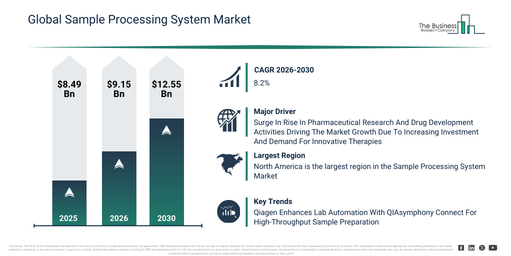
    The market for sample processing systems has experienced robust growth recently. This market is projected to expand from $8.49 billion in 2025 to $9.15 billion in 2026, demonstrating a compound annual growth rate (CAGR) of 7.9%. Historically, this expansion has been driven by several factors, including the increased scope of pharmaceutical research, the rise in clinical diagnostics testing, the growing implementation of laboratory automation, a heightened need for reliable analytical outcomes, and the presence of adaptable modular laboratory systems.

    The sample processing system market is anticipated to experience substantial expansion over the upcoming years. This market is projected to reach $12.55 billion by 2030, exhibiting a compound annual growth rate (CAGR) of 8.2%. The expansion during the forecast period is driven by factors such as increasing investments in precision medicine research, a rising demand for scalable laboratory automation, the expansion of genomics and proteomics studies, the growing integration of AI-driven laboratory workflows, and an increasing focus on operational efficiency in labs. Key trends anticipated over this period encompass the increasing adoption of automated sample processing platforms, a rising demand for high-throughput laboratory systems, the growing integration of robotics in sample handling, the expansion of data-integrated processing workflows, and an enhanced focus on accuracy and reproducibility.

    Access Your Free Sample Report For In-Depth Market Analysis:

    https://www.thebusinessresearchcompany.com/sample.aspx?id=29184&type=smp

    What Key Factors Are Shaping The Sample Processing System Market Landscape?

    The expansion of the sample processing system market is projected to be driven by an increase in pharmaceutical research and drug development activities. These activities involve the systematic processes of identifying, creating, evaluating, and launching new drugs or treatments into the market to prevent, manage, or cure illnesses. Pharmaceutical research and drug development efforts are on the rise as the increasing prevalence of chronic diseases creates a need for new, effective, and groundbreaking treatments, prompting companies to make substantial investments in sophisticated technologies, clinical trials, and personalized medicine to improve patient health outcomes and satisfy evolving global healthcare requirements. The sample processing system aids pharmaceutical research and drug development by enabling accurate, efficient, and high-throughput handling of biological and chemical samples, thus expediting drug discovery and testing. As an illustration, in June 2025, according to the Department for Science, Innovation & Technology, a UK government body, an investment of $114.38 billion (£86 billion) is set for four years to advance science and technology research and development, including drug discovery, with annual funding reaching $29.93 billion (£22.5 billion). Consequently, the surge in pharmaceutical research and drug development activities is stimulating the growth of the sample processing system market.

    How Are Different Segments Classified In The Sample Processing System Market Segment Analysis?

    The sample processing system market covered in this report is segmented –

    1) By Product Type: Automated Sample Processing Systems, Semi-Automated Sample Processing Systems, Manual Sample Processing Systems

    2) By Application: Genomics, Proteomics, Cell Culture, Diagnostics, Other Applications

    3) By End-User: Pharmaceutical and Biotechnology Companies, Hospitals And Diagnostic Laboratories, Academic And Research Institutes, Contract Research Organizations (CROs), Food And Beverage Industry, Forensic Laboratories

    Subsegments:

    1) By Automated Sample Processing Systems: High Throughput Processing, Laboratory Information Integrated Processing, Continuous Flow Processing

    2) By Semi-Automated Sample Processing Systems: Robotic Assisted Processing, Modular Bench Top Processing, Hybrid Manual Automated Processing

    3) By Manual Sample Processing Systems: Standalone Bench Processing, Multi Step Manual Processing, Basic Laboratory Processing

    What Market Trends Are Affecting The Sample Processing System Market?

    Leading companies in the sample processing system market are concentrating on automation and improving throughput, as demonstrated by Qiagen’s advanced sample preparation instruments. These next-generation instruments from Qiagen are fully automated systems designed for high-throughput purification of DNA, RNA, and proteins from various sample types, utilizing integrated robotic workflows and pre-filled reagent cartridges, which ensures efficient, standardized, and traceable molecular biology processes. For instance, in July 2025, QIAGEN, a biotechnology firm based in the Netherlands, unveiled QIAsymphony Connect, an automated solution for in vitro diagnostic sample preparation. This system can handle up to 96 samples in a single run, increases assay sensitivity through higher nucleic acid yield, improves sample tracking via digital connectivity, and reduces manual labor. This release serves as a prime example of the ongoing trend to integrate high-throughput, automated sample processing technologies to satisfy growing laboratory needs. The implementation of such platforms accelerates both the efficiency and accuracy of workflows, thereby strengthening competitive standing in the sample processing system market.

    Who Are The Companies Driving Activity In The Sample Processing System Market?

    Major companies operating in the sample processing system market are Thermo Fisher Scientific Inc., Danaher Corporation, Agilent Technologies Inc., Illumina Inc., F. Hoffmann-La Roche AG, PerkinElmer Inc., QIAGEN N.V., Merck KGaA, Becton, Dickinson and Company (BD), Shimadzu Corporation, bioMérieux SA, HORIBA Ltd., Eppendorf AG, Bruker Corporation, Miltenyi Biotec, Abbott Laboratories, Tecan Group Ltd., Sartorius AG, Promega Corporation, Analytik Jena GmbH+Co. KG, Biotage, CEM Corporation, Markes International, AusDiagnostics, Hitachi High-Tech Corporation, PromoChrom Technologies Ltd., MGI Tech Co. Ltd., Copan Italia SpA, A & T Corporation, Hamilton Bonaduz AG, P S Analytical Ltd.

    Get The Full Sample Processing System Market Report:

    https://www.thebusinessresearchcompany.com/report/sample-processing-system-global-market-report

    Which Region Holds The Highest Market Share In The Sample Processing System Market?

    North America was the largest region in the sample processing system market in 2025. Asia-Pacific is expected to be the fastest-growing region in the forecast period. The regions covered in the sample processing system market report are Asia-Pacific, South East Asia, Western Europe, Eastern Europe, North America, South America, Middle East, Africa.

    Request A Customized Sample Processing System Market Report For Competitive Insights:

    https://www.thebusinessresearchcompany.com/report/sample-processing-system-global-market-report

    Browse Through More Reports Similar to the Global Sample Processing System Market 2026, By The Business Research Company

    Laboratory Information System Market Report 2026

    https://www.thebusinessresearchcompany.com/report/laboratory-information-system-global-market-report

    Image Processing Systems Market Report

    https://www.thebusinessresearchcompany.com/report/image-processing-systems-global-market-report

    Data Preparation Software Market Report

    https://www.thebusinessresearchcompany.com/report/data-preparation-software-global-market-report

    Get in touch with us:

    The Business Research Company: https://www.thebusinessresearchcompany.com/

    Americas +1 310-496-7795

    Asia +44 7882 955267 & +91 8897263534

    Europe +44 7882 955267

    Email us at info@tbrc.info

    Follow us on:

    LinkedIn: https://in.linkedin.com/company/the-business-research-company

    YouTube: https://www.youtube.com/channel/UC24_fI0rV8cR5DxlCpgmyFQ

    Global Market Model: https://www.thebusinessresearchcompany.com/global-market-model

  • Predictive Genetic Testing and Consumer Genomics Market Growth Trends and Forecast Through 2030

    Predictive Genetic Testing and Consumer Genomics Market Growth Trends and Forecast Through 2030

    The Business Research Company’s 2026 market reports feature enhanced tools like market attractiveness analysis, TAM assessment, and company scoring matrices, along with interactive dashboards, deeper supply chain insights, and startup coverage strengthening the depth, usability, and strategic value of insights.

    How Will The Market Value Of The Predictive Genetic Testing And Consumer Genomics Market Progress Between 2026 And 2030?

    The predictive genetic testing and consumer genomics market size has experienced significant growth in recent years. It is projected to expand from $9.07 billion in 2025 to $10.49 billion in 2026, reflecting a compound annual growth rate (CAGR) of 15.7%. The historical expansion of this market can be attributed to factors such as increased consumer health awareness, wider accessibility of genetic testing, the growing availability of affordable sequencing technologies, heightened interest in ancestry testing, and the ongoing development of digital health ecosystems.

    The predictive genetic testing and consumer genomics market is anticipated to experience substantial expansion in the coming years. This market is projected to reach $18.61 billion in 2030, exhibiting a compound annual growth rate (CAGR) of 15.4%. The drivers for this growth during the forecast period encompass a heightened need for tailored preventive healthcare, greater uptake of pharmacogenomic testing, the widening scope of consumer genomics platforms, deeper integration with digital health applications, and enhanced regulatory supervision over genetic data utilization. Key trends anticipated in the forecast period include the growing popularity of direct-to-consumer genetic testing, an uptick in the use of digital health platforms, an increasing desire for proactive health information, the proliferation of at-home sample collection solutions, and a stronger emphasis on data privacy and security.

    Access Your Free Sample Report For In-Depth Market Analysis:

    https://www.thebusinessresearchcompany.com/sample.aspx?id=25884&type=smp

    What Leading Drivers Are Supporting The Predictive Genetic Testing And Consumer Genomics Market Expansion?

    The increasing recognition of personalized medicine is set to boost the expansion of the predictive genetic testing and consumer genomics market in the future. Personalized medicine defines a medical strategy that customizes treatment and prevention approaches based on an individual’s genetic profile, lifestyle, and environmental factors. The awareness regarding personalized medicine is expanding because it enhances treatment effectiveness by aligning therapies with a patient’s distinct biological characteristics. Predictive genetic testing and consumer genomics assist personalized medicine by pinpointing genetic risks and traits, which allows for customized prevention, early diagnosis, and treatment plans tailored to an individual’s genetic profile. For instance, in February 2024, the Personalized Medicine Coalition, a US-based professional membership organization, reported that the Food and Drug Administration (FDA) approved 16 new personalized medicines in 2023, an increase from 6 in 2022. Thus, the growing understanding of personalized medicine is propelling the growth of the predictive genetic testing and consumer genomics market.

    How Is Segmentation Applied In The Predictive Genetic Testing And Consumer Genomics Market Segment Analysis?

    The predictive genetic testing and consumer genomics market covered in this report is segmented –

    1) By Testing Type: Diagnostic Testing, Predictive Testing, Pharmacogenomic Testing, Carrier Screening

    2) By Technology: Polymerase Chain Reaction (PCR), Next-Generation Sequencing (NGS), Microarray Technology, DNA Sequencing

    3) By Service Type: Genetic Counseling Services, Sample Collection And Analysis, Data Interpretation And Reporting

    4) By Application: Breast And Ovarian Cancer, Cardiovascular Screening, Diabetic Screening And Monitoring, Colon Cancer, Parkinsonism Or Alzheimer’s Disease, Urologic Screening Or Prostate Cancer Screening, Orthopedic And Musculoskeletal, Other Cancer Screening, Other Diseases

    5) By End User: Healthcare Providers, Research Institutions, Diagnostic Laboratories, Consumers (Direct-to-Consumer Testing)

    Subsegments:

    1) By Diagnostic Testing: Cancer Diagnostic Testing, Neurological Disorder Testing, Rare Disease Diagnostics

    2) By Predictive Testing: Cancer Risk Prediction, Cardiovascular Disease Risk, Neurodegenerative Disorder Risk

    3) By Pharmacogenomic Testing: Adverse Drug Reaction Prediction, Psychiatric Medication Response, Dosage Optimization

    4) By Carrier Screening: Cystic Fibrosis Carrier Screening, Sickle Cell Anemia Carrier Screening, Tay-Sachs Carrier Screening

    What Emerging Trends Are Seen In The Predictive Genetic Testing And Consumer Genomics Market?

    Within the predictive genetic testing and consumer genomics market, leading companies are prioritizing technological advancements, specifically high-throughput and cost-efficient sequencing, to facilitate extensive, precise, and economical genomic analysis. This type of sequencing involves rapidly processing a large volume of genomes while simultaneously lowering the cost per genome, thereby enabling population-wide testing. An example is Ultima Genomics Inc., a U.S.-based sequencing firm, which introduced its UG 100 sequencing system alongside ppmSeq extreme-accuracy mode in February 2024. This system delivers up to 6–8 billion reads per wafer, with dual-wafer operations achieving approximately 4.8 Tb and anticipated run durations under 14 hours. Featuring a wafer-based substrate and adaptable reagent cartridges, the system is designed to advance an industry-leading ~$100-genome roadmap, supported by reagent expenses of roughly $2,000 per wafer. The ppmSeq mode provides Q60 SNV raw-read accuracy without requiring extra workflow stages. Thanks to its blend of minimal reagent cost, extensive automation, and AI-powered variant calling, the UG 100 is suitable for wide-ranging uses, including consumer genomics, population screening, clinical WGS, pharmacogenomics, and large-scale research. In summary, the platform facilitates genomic data generation that is quicker, more scalable, and more economical compared to previous NGS technologies.

    Who Are The Companies Participating In The Predictive Genetic Testing And Consumer Genomics Market Environment?

    Major companies operating in the predictive genetic testing and consumer genomics market are Thermo Fisher Scientific Inc., Abbott Laboratories, Laboratory Corporation of America Holdings, Quest Diagnostics Incorporated, QIAGEN N.V., Ancestry.com, Myriad Genetics Inc., ARUP Laboratories, BGI Genomics Co. Ltd., Invitae Corporation, 23andMe Inc., Helix Inc., Color Health Inc., Mapmygenome India Ltd., Reliance Life Sciences, Dante Labs Inc., EasyDNA, Gene by Gene Ltd., Nebula Genomics Inc., Pathway Genomics Corporation

    Get The Full Predictive Genetic Testing And Consumer Genomics Market Report:

    https://www.thebusinessresearchcompany.com/report/predictive-genetic-testing-and-consumer-genomics-global-market-report

    Which Region Is The Top Contributor To The Predictive Genetic Testing And Consumer Genomics Market By Share?

    North America was the largest region in the predictive genetic testing and consumer genomics market in 2025. Asia-Pacific is expected to be the fastest-growing region in the forecast period. The regions covered in the predictive genetic testing and consumer genomics market report are Asia-Pacific, South East Asia, Western Europe, Eastern Europe, North America, South America, Middle East, Africa.

    Request A Customized Predictive Genetic Testing And Consumer Genomics Market Report For Competitive Insights:

    https://www.thebusinessresearchcompany.com/report/predictive-genetic-testing-and-consumer-genomics-global-market-report

    Browse Through More Reports Similar to the Global Predictive Genetic Testing And Consumer Genomics Market 2026, By The Business Research Company

    Property Management Software Market

    https://www.thebusinessresearchcompany.com/report/property-management-software-market

    Property Management Service Market Report

    https://www.thebusinessresearchcompany.com/report/property-management-service-global-market-report

    Commercial Property Insurance Market Report

    https://www.thebusinessresearchcompany.com/report/commercial-property-insurance-global-market-report

    Get in touch with us:

    The Business Research Company: https://www.thebusinessresearchcompany.com/

    Americas +1 310-496-7795

    Asia +44 7882 955267 & +91 8897263534

    Europe +44 7882 955267

    Email us at info@tbrc.info

    Follow us on:

    LinkedIn: https://in.linkedin.com/company/the-business-research-company

    YouTube: https://www.youtube.com/channel/UC24_fI0rV8cR5DxlCpgmyFQ

    Global Market Model: https://www.thebusinessresearchcompany.com/global-market-model

  • Rebranding and specialization in clinical trials are influencing the rare disease clinical trials market

    Rebranding and specialization in clinical trials are influencing the rare disease clinical trials market

    The Business Research Company’s 2026 market reports feature enhanced tools like market attractiveness analysis, TAM assessment, and company scoring matrices, along with interactive dashboards, deeper supply chain insights, and startup coverage strengthening the depth, usability, and strategic value of insights.

    What Is The Estimated Market Size Of The Rare Disease Clinical Trials Market In 2026, And How Will Its Value Evolve By 2030?

    The rare disease clinical trials market has experienced swift expansion in recent years. Its value is anticipated to rise from $13.3 billion in 2025 to $14.65 billion in 2026, achieving a compound annual growth rate (CAGR) of 10.1%. The market’s past growth can be ascribed to the increasing expansion of orphan drug development programs, growing regulatory incentives for rare disease research, the rise in specialized clinical research organizations, strengthened collaboration between academia and industry, and improved diagnostic identification of rare diseases.

    The rare disease clinical trials market size is anticipated to show robust expansion over the next few years. It is projected to reach $21.34 billion by 2030, exhibiting a compound annual growth rate (CAGR) of 9.9%. This projected growth can be attributed to several factors, including the increasing implementation of virtual and hybrid trials, the rising application of AI-driven trial optimization, the expansion of global rare disease trial networks, a growing demand for expedited regulatory approvals, and increased investment in rare disease research and development. Furthermore, significant trends for the forecast period involve the rising adoption of decentralized clinical trial models, the increasing use of adaptive trial designs, the growing integration of digital tools for patient recruitment, the broadening of real-world evidence collection, and an enhanced emphasis on patient-centric trial protocols.

    Access Your Free Sample Report For In-Depth Market Analysis:

    https://www.thebusinessresearchcompany.com/sample.aspx?id=28311&type=smp

    Which Major Drivers Are Influencing The Expansion Of The Rare Disease Clinical Trials Market?

    The burgeoning field of personalized medicine is anticipated to significantly boost the expansion of the rare disease clinical trials market in the future. This approach involves customizing medical interventions to align with a patient’s unique attributes, including their genetic makeup, daily habits, and surroundings. The growing adoption of personalized medicine stems from its capacity to enhance treatment results by designing therapies that are specifically suited to individual patient profiles, thereby improving both effectiveness and safety. Furthermore, rare disease clinical trials play a crucial role in advancing personalized medicine through the generation of insights specific to patients, which in turn facilitates the creation of targeted treatments precisely matched to an individual’s distinct genetic and molecular characteristics. A relevant example is from February 2024, where the Personalized Medicine Coalition (PMC), a US-based nonprofit organization, cited Food and Drug Administration (FDA) data showing that personalized medicines constituted 34% of approved drugs in 2022, a figure that climbed to 38% in 2023. Consequently, the escalating prominence of personalized medicine is a key driver for the growth observed in the rare disease clinical trials market.

    How Is The Rare Disease Clinical Trials Market Segmented Across Different Segment Categories?

    The rare disease clinical trials market covered in this report is segmented –

    1) By Phase: Phase I, Phase II, Phase III, Phase IV

    2) By Therapeutic Area: Oncology, Cardiovascular Disorders, Neurological Disorders, Infectious Disease, Genetic Disorders, Autoimmune And Inflammation, Hematologic Disorders, Musculoskeletal Disorders, Other Therapeutic Areas

    3) By Study Design: Interventional, Observational, Expanded Access

    4) By End-User: Pharmaceutical Companies, Biotechnology Companies, Research Institutes, Other End-Users

    Subsegments:

    1) By Phase I: First In Human Trials, Dose Escalation Studies, Safety And Tolerability Studies

    2) By Phase II: Proof Of Concept Studies, Dose Response Studies, Efficacy And Safety Studies

    3) By Phase III: Randomized Controlled Trials, Comparative Effectiveness Studies, Large Scale Multicenter Trials

    4) By Phase IV: Post Marketing Surveillance, Long Term Safety Studies, Real World Evidence Studies

    Which Trends Are Shaping The Rare Disease Clinical Trials Market?

    Leading organizations engaged in the rare disease clinical trials market are emphasizing innovation, specifically by embracing a client-focused method to provide customized trial designs, elevate patient involvement, and hasten the creation of targeted treatments for rare conditions. This client-centric approach involves placing the needs, objectives, and preferences of biotech and pharmaceutical clients at the forefront to deliver customized and effective clinical trial solutions. An illustration of this is the introduction of Evestia Clinical Limited, a US-based pharmaceutical research company, in March 2025, as the new brand identity for EMAS Pharma. This strategic rebranding aims to expedite the company’s global expansion. The company is dedicated to accelerating the advancement of therapies for rare diseases by delivering expert-driven, personalized clinical trial solutions specifically tailored to address the unique challenges inherent in these conditions. This particular area of focus forms a vital component of its brand identity and overall service portfolio.

    Which Organizations Play A Role In The Rare Disease Clinical Trials Market Landscape?

    Major companies operating in the rare disease clinical trials market are F. Hoffmann-La Roche AG, Pfizer Inc., Novartis AG, AstraZeneca plc, Takeda Pharmaceutical Company Limited, IQVIA Holdings Inc., Laboratory Corporation of America Holdings, ICON plc, Moderna Inc., Charles River Laboratories International Inc., Parexel International Corporation, Revvity Inc., Sarepta Therapeutics Inc., TFS HealthScience, Inventiva S.A., Tonix Pharmaceuticals Holding Corp., SpringWorks Therapeutics Inc., OrphAI Therapeutics Inc., BBCR Consulting LLC, Credevo Inc.

    Get The Full Rare Disease Clinical Trials Market Report:

    https://www.thebusinessresearchcompany.com/report/rare-disease-clinical-trials-global-market-report

    Which Region Represents The Largest Share Of The Rare Disease Clinical Trials Market?

    North America was the largest region in the rare disease clinical trials market in 2025. The regions covered in the rare disease clinical trials market report are Asia-Pacific, South East Asia, Western Europe, Eastern Europe, North America, South America, Middle East, Africa.

    Request A Customized Rare Disease Clinical Trials Market Report For Competitive Insights:

    https://www.thebusinessresearchcompany.com/report/rare-disease-clinical-trials-global-market-report

    Browse Through More Reports Similar to the Global Rare Disease Clinical Trials Market 2026, By The Business Research Company

    Rare Inflammatory Disease Treatment Market Report 2026

    https://www.thebusinessresearchcompany.com/report/rare-inflammatory-disease-treatment-global-market-report

    Veterinary Dermatology Drugs Market Report

    https://www.thebusinessresearchcompany.com/report/veterinary-dermatology-drugs-global-market-report

    Dermatophytosis Treatment Market Report

    https://www.thebusinessresearchcompany.com/report/dermatophytosis-treatment-global-market-report

    Get in touch with us:

    The Business Research Company: https://www.thebusinessresearchcompany.com/

    Americas +1 310-496-7795

    Asia +44 7882 955267 & +91 8897263534

    Europe +44 7882 955267

    Email us at info@tbrc.info

    Follow us on:

    LinkedIn: https://in.linkedin.com/company/the-business-research-company

    YouTube: https://www.youtube.com/channel/UC24_fI0rV8cR5DxlCpgmyFQ

    Global Market Model: https://www.thebusinessresearchcompany.com/global-market-model

  • Advancements in redosable gene therapy are shaping the rare dermatological disease treatment market

    Advancements in redosable gene therapy are shaping the rare dermatological disease treatment market

    The Business Research Company’s 2026 market reports feature enhanced tools like market attractiveness analysis, TAM assessment, and company scoring matrices, along with interactive dashboards, deeper supply chain insights, and startup coverage strengthening the depth, usability, and strategic value of insights.

    How Does The Market Size Of The Rare Dermatological Disease Treatment Market Compare Between 2026 And 2030?

    The rare dermatological disease treatment market has demonstrated robust growth in recent years. This market is projected to expand from $5.57 billion in 2025 to $5.92 billion in 2026, achieving a compound annual growth rate (CAGR) of 6.3%. The historical expansion of this market can be ascribed to an enhanced understanding of rare skin disease pathophysiology, the expansion of orphan drug regulations, a rise in specialist dermatology research, improvements in biologics manufacturing capabilities, and increasing awareness of rare dermatological conditions.

    The rare dermatological disease treatment market size is anticipated to undergo significant expansion over the coming years. It is projected to achieve a value of $7.51 billion by 2030, demonstrating a compound annual growth rate (CAGR) of 6.1%. This projected growth during the forecast period is attributable to factors such as increased investments in gene therapy platforms, a heightened emphasis on personalized treatment protocols, the broadening of clinical research into rare skin disorders, the expanding application of advanced biologics, and augmented regulatory support for orphan therapies. Prominent trends expected in the forecast timeframe involve the accelerating development of targeted biologic therapies, an increase in the adoption of gene and cell-based treatments, a greater focus on personalized dermatology care, the enlargement of orphan drug pipelines, and the enhanced utilization of advanced diagnostic technologies.

    Access Your Free Sample Report For In-Depth Market Analysis:

    https://www.thebusinessresearchcompany.com/sample.aspx?id=28310&type=smp

    What Key Drivers Are Fueling The Growth Of The Rare Dermatological Disease Treatment Market?

    An escalating count of identified rare dermatological disorder cases is projected to fuel expansion within the rare dermatological disease treatment market. Uncommon skin conditions, including epidermolysis bullosa, pemphigus vulgaris, and cutaneous lupus erythematosus, impact a minority of individuals yet necessitate expert care and specific treatments. Progress in genetic screening, heightened understanding of these diseases, and earlier detection have led to a greater global incidence of recognized cases. This growing acknowledgment generates a need for novel therapeutic approaches, such as gene therapies, advanced biologics, and supportive care options, aimed at symptom management, facilitating wound recovery, and enhancing patient well-being. For example, in January 2025, as reported by the CDC, a US-based public health agency, Vyjuvek (beremagene geperpavec-svdt), a redosable gene therapy designed for dystrophic epidermolysis bullosa, showed considerable wound closure during clinical trials, highlighting how innovative therapies influence patient care. Consequently, the increasing occurrences of rare skin conditions are propelling the expansion of the rare dermatological disease treatment market.

    What Are The Main Segments Within The Rare Dermatological Disease Treatment Market Segment Structure?

    The rare dermatological disease treatment market covered in this report is segmented –

    1) By Indication: Systemic Sclerosis, Epidermolysis Bullosa, Pemphigus Vulgaris, Cutaneous Lupus Erythematosus

    2) By Treatment: Corticosteroid, Immunosuppressants, Anti-Inflammatory Agents, Other Treatments

    3) By Distribution Channel: Hospital Pharmacies, Retail Pharmacies, Online Pharmacies

    4) By Technology: Gene Therapy, Stem Cell Therapy, Nanotechnology

    5) By Application: Epidermolysis Bullosa, Ichthyosis, Other Applications

    Subsegments:

    1) By Systemic Sclerosis: Limited Cutaneous Systemic Sclerosis, Diffuse Cutaneous Systemic Sclerosis, Sine Scleroderma

    2) By Epidermolysis Bullosa: Epidermolysis Bullosa Simplex, Junctional Epidermolysis Bullosa, Dystrophic Epidermolysis Bullosa, Kindler Syndrome

    3) By Pemphigus Vulgaris: Mucosal Pemphigus Vulgaris, Mucocutaneous Pemphigus Vulgaris, Cutaneous Pemphigus Vulgaris

    4) By Cutaneous Lupus Erythematosus: Acute Cutaneous Lupus Erythematosus, Subacute Cutaneous Lupus Erythematosus, Chronic Cutaneous Lupus Erythematosus (Discoid Lupus)

    What Trends Are Influencing The Rare Dermatological Disease Treatment Market?

    Within the rare dermatological disease treatment market, leading companies are concentrating on developing intelligent and advanced gene therapy technologies, particularly redosable gene therapy, to enhance patient results, simplify treatment procedures, and improve life quality. This redosable gene therapy functions by delivering functional COL7A1 genes directly to affected skin regions, thereby enabling repeated, noninvasive applications, continuous protein restoration, and quicker wound healing. For example, in May 2023, Krystal Biotech, a U.S.-based biotechnology company, introduced Vyjuvek (beremagene geperpavec-svdt) for treating dystrophic epidermolysis bullosa. This product demonstrated that 65% of treated wounds achieved complete closure within 24 weeks, contrasting with 26% for placebo, allows once-weekly application to selected wounds, and reduces the need for surgical interventions. Vyjuvek additionally offers a noninvasive clinic-administered option, although it necessitates specialized cold-chain storage to preserve its effectiveness.

    Who Are The Companies Participating In The Rare Dermatological Disease Treatment Market?

    Major companies operating in the rare dermatological disease treatment market are Kyowa Kirin, Johnson and Johnson company, F. Hoffmann-La Roche Limited, Merck KGaA, Arcutis Biotherapeutics, Pfizer Inc., Abbvie, Sanofi, Novartis AG, AstraZeneca, Eli lilly and company, Amgen, Bristol Myers Squibb Company, Pierre Fabre Laboratories, LEO Pharma, Almirall, Castle Creek Biosciences, Inc., Azitra, Krystal Biotech, Inc., Avita Medical, NS Pharma, Replay, Eloxx Pharmaceuticals, Kamari Pharma, BPGbio

    Get The Full Rare Dermatological Disease Treatment Market Report:

    https://www.thebusinessresearchcompany.com/report/rare-dermatological-disease-treatment-global-market-report

    Which Geographic Region Dominates The Rare Dermatological Disease Treatment Market?

    North America was the largest region in the personalized genomics market in 2025. Asia-Pacific is expected to be the fastest-growing region in the forecast period. The regions covered in the rare dermatological disease treatment market report are Asia-Pacific, South East Asia, Western Europe, Eastern Europe, North America, South America, Middle East, Africa.

    Request A Customized Rare Dermatological Disease Treatment Market Report For Competitive Insights:

    https://www.thebusinessresearchcompany.com/report/rare-dermatological-disease-treatment-global-market-report

    Browse Through More Reports Similar to the Global Rare Dermatological Disease Treatment Market 2026, By The Business Research Company

    Clinical Biomarkers Market Report 2026

    https://www.thebusinessresearchcompany.com/report/clinical-biomarkers-global-market-report

    Biomarkers Market Report

    https://www.thebusinessresearchcompany.com/report/biomarkers-global-market-report

    Biomarker Discovery Outsourcing Services Market Report

    https://www.thebusinessresearchcompany.com/report/biomarker-discovery-outsourcing-services-global-market-report

    Get in touch with us:

    The Business Research Company: https://www.thebusinessresearchcompany.com/

    Americas +1 310-496-7795

    Asia +44 7882 955267 & +91 8897263534

    Europe +44 7882 955267

    Email us at info@tbrc.info

    Follow us on:

    LinkedIn: https://in.linkedin.com/company/the-business-research-company

    YouTube: https://www.youtube.com/channel/UC24_fI0rV8cR5DxlCpgmyFQ

    Global Market Model: https://www.thebusinessresearchcompany.com/global-market-model

  • NGS sample preparation products market to reach $85.53 billion by 2030 at 14.9% CAGR

    NGS sample preparation products market to reach $85.53 billion by 2030 at 14.9% CAGR

    The Business Research Company’s 2026 market reports feature enhanced tools like market attractiveness analysis, TAM assessment, and company scoring matrices, along with interactive dashboards, deeper supply chain insights, and startup coverage strengthening the depth, usability, and strategic value of insights.

    How Does The Market Size Of The Sample Preparation Products For Next Generation Sequencing Market Compare Between 2026 And 2030?

    The market for sample preparation products for next generation sequencing has seen significant growth in recent years. This sector is expected to expand from $42.52 billion in 2025 to $49.01 billion in 2026, achieving a compound annual growth rate (CAGR) of 15.3%. Historically, this growth can be attributed to several factors including the expansion of genomics research activities, increased application of NGS in clinical research, the introduction of advanced extraction and library preparation kits, a rise in oncology research applications, and the growing adoption of sequencing technologies.

    The market for sample preparation products essential for next generation sequencing is expected to demonstrate significant expansion in the foreseeable future. This sector is projected to attain a size of $85.54 billion by 2030, advancing at a compound annual growth rate (CAGR) of 14.9%. The anticipated growth during this period is largely influenced by the increasing demand for precision medicine applications, the expansion of clinical NGS diagnostics, a rise in investments dedicated to genomics research infrastructure, the growing adoption of automation in laboratory environments, and ongoing innovations in sequencing sample preparation technologies. Major shifts anticipated in the forecast duration include a greater embrace of automated sample preparation workflows, a rising need for high-throughput NGS sample processing, the broadening of targeted sequencing panels, an increased focus on standardizing workflows, and enhanced integration with NGS platforms.

    Access Your Free Sample Report For In-Depth Market Analysis:

    https://www.thebusinessresearchcompany.com/sample.aspx?id=20622&type=smp

    Which Factors Are Influencing The Growth Of The Sample Preparation Products For Next Generation Sequencing Market?

    The escalating need for precision medicine is projected to stimulate the expansion of sample preparation products within the next-generation sequencing market. Personalized medicine, also referred to as precision medicine, represents a medical methodology that customizes treatment and healthcare strategies for individual patients, considering their specific genetic makeup, environmental factors, and lifestyle. This increasing demand for precision medicine arises from the rising occurrence of chronic conditions such as cancer, diabetes, and cardiovascular disorders. Sample preparation products for NGS are fundamental to advancing precision medicine, as they enable the accurate and efficient examination of genetic information, which is critical for developing targeted therapies and improving patient outcomes in personalized healthcare. For instance, in February 2024, the Personalized Medicine Coalition, a US-based non-profit organization, reported that the FDA approved 16 novel personalized therapies for patients with rare diseases in 2023, an increase from six in 2022. Consequently, the rising demand for precision medicine is propelling the market for sample preparation products for next-generation sequencing.

    How Is The Sample Preparation Products For Next Generation Sequencing Market Categorized Across Its Segment Groups?

    The sample preparation products for next generation sequencing market covered in this report is segmented –

    1) By Type: Deoxyribonucleic Acid (DNA) Extraction Purification And Isolation Products, Ribonucleic Acid (RNA) Extraction Purification And Isolation Products, Panels, Exome Kits And Target Enrichment Products, Deoxyribonucleic Acid (DNA) Library Construction Or Preparation Products, Ribonucleic Acid (RNA)-sequencing (Seq) Transcriptome And Gene Expression Products, Small Ribonucleic Acid (RNA) Next Generation Sequencing Sample Preparation Products

    2) By Therapeutic Area: Oncology, Infectious Diseases, Human Genetics Or Population Genetics

    3) By Application: Biotechnology, Medical, Pharmaceutical, Other Applications

    Subsegments:

    1) By Deoxyribonucleic Acid (DNA) Extraction Purification And Isolation Products: DNA Extraction Kits, DNA Purification Reagents, Isolation Columns And Magnetic Beads

    2) By Ribonucleic Acid (RNA) Extraction Purification And Isolation Products: RNA Extraction Kits, RNA Purification Reagents, Isolation Columns And Magnetic Beads

    3) By Panels, Exome Kits, And Target Enrichment Products: Exome Enrichment Kits, Targeted Panels For Specific Genes, Custom Enrichment Solutions

    4) By Deoxyribonucleic Acid (DNA) Library Construction Or Preparation Products: DNA Library Preparation Kits, Fragmentation And End Repair Kits, Adapter Ligation Kits

    5) By Ribonucleic Acid (RNA)-Sequencing (Seq) Transcriptome And Gene Expression Products: RNA-Seq Library Preparation Kits, Quantification Reagents For RNA-Seq, Transcriptome Analysis Tools

    6) By Small Ribonucleic Acid (RNA) Next Generation Sequencing Sample Preparation Products: Small RNA Library Preparation Kits, Mirna Extraction And Quantification Products, Small RNA Enrichment Kits

    Which Trends Are Influencing Demand In The Sample Preparation Products For Next Generation Sequencing Market?

    Leading firms within the next-generation sequencing sample preparation products sector are introducing innovations, including advancements in next-generation sequencing itself, to secure a competitive advantage. Next-generation sequencing (NGS) represents a groundbreaking technology employed to ascertain the sequence of deoxyribonucleic acid (DNA) or ribonucleic acid (RNA), thereby facilitating the examination of genetic diversity and the investigation of various biological occurrences. As an illustration, QIAGEN N.V., a Germany-based supplier of sample and assay technologies, unveiled its QIAseq Normalizer Kits in July 2023. These kits provide researchers with an efficient, convenient, and economical method for pooling DNA libraries, which helps guarantee superior outcomes in NGS experiments. Furthermore, these kits are designed to be compatible with QIAGEN’s existing QIAseq library preparation solutions and other DNA/RNA preparation workflows specifically for Illumina platforms.

    Which Firms Are Influencing Competition In The Sample Preparation Products For Next Generation Sequencing Market?

    Major companies operating in the sample preparation products for next generation sequencing market are Merck & Co. Inc., Thermo Fisher Scientific Inc., F. Hoffmann-La Roche AG, Eurofins Scientific SE, Agilent Technologies Inc., PerkinElmer Inc., Illumina Inc., Beckman Coulter Inc., Bio-Rad Laboratories Inc., QIAGEN N.V., Eppendorf AG, Promega Corporation, Oxford Nanopore Technologies Ltd, Takara Bio Inc, New England Biolabs, Fluidigm Corporation, Pacific Biosciences of California Inc., Analytik Jena AG, SeraCare Life Sciences, Diagenode Inc., Zymo Research Corporation, Nugen Technologies Inc., Swift Biosciences Inc., Tecan Group Ltd.

    Get The Full Sample Preparation Products For Next Generation Sequencing Market Report:

    https://www.thebusinessresearchcompany.com/report/sample-preparation-products-for-next-generation-sequencing-global-market-report

    Where Is The Sample Preparation Products For Next Generation Sequencing Market Most Concentrated Geographically?

    North America was the largest region in the sample preparation products for next generation sequencing (NGS) market in 2025. The regions covered in the sample preparation products for next generation sequencing market report are Asia-Pacific, South East Asia, Western Europe, Eastern Europe, North America, South America, Middle East, Africa.

    Request A Customized Sample Preparation Products For Next Generation Sequencing Market Report For Competitive Insights:

    https://www.thebusinessresearchcompany.com/report/sample-preparation-products-for-next-generation-sequencing-global-market-report

    Browse Through More Reports Similar to the Global Sample Preparation Products For Next Generation Sequencing Market 2026, By The Business Research Company

    Next Generation Sequencing Market Report 2026

    https://www.thebusinessresearchcompany.com/report/next-generation-sequencing-global-market-report

    Next Generation Military Power Supply Market Report

    https://www.thebusinessresearchcompany.com/report/next-generation-military-power-supply-global-market-report

    Next Generation Computing Market Report

    https://www.thebusinessresearchcompany.com/report/next-generation-computing-global-market-report

    Get in touch with us:

    The Business Research Company: https://www.thebusinessresearchcompany.com/

    Americas +1 310-496-7795

    Asia +44 7882 955267 & +91 8897263534

    Europe +44 7882 955267

    Email us at info@tbrc.info

    Follow us on:

    LinkedIn: https://in.linkedin.com/company/the-business-research-company

    YouTube: https://www.youtube.com/channel/UC24_fI0rV8cR5DxlCpgmyFQ

    Global Market Model: https://www.thebusinessresearchcompany.com/global-market-model