Category: Healthcare Services

  • Nephrotic Syndrome Market Growth Trends and Forecast Through 2030

    Nephrotic Syndrome Market Growth Trends and Forecast Through 2030

    The Business Research Company’s 2026 market reports feature enhanced tools like market attractiveness analysis, TAM assessment, and company scoring matrices, along with interactive dashboards, deeper supply chain insights, and startup coverage strengthening the depth, usability, and strategic value of insights.

    How Does The Market Size Of The Nephrotic Syndrome Market Compare Between 2026 And 2030?

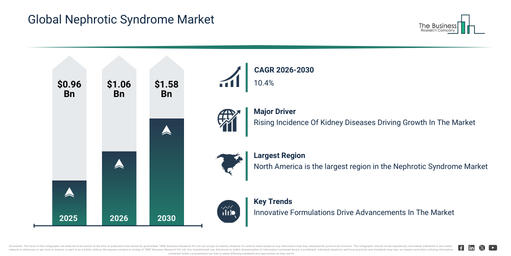
    The market size for nephrotic syndrome has shown rapid expansion in recent years. It is projected to increase from $0.96 billion in 2025 to $1.06 billion in 2026, demonstrating a compound annual growth rate (CAGR) of 10.6%. The historical growth of this market can be attributed to the high prevalence of diabetes and hypertension, the reliance on steroids for treatment, limited diagnostic awareness, the gradual adoption of dialysis technologies, and the rising incidence of childhood nephrotic syndrome.

    The market size for nephrotic syndrome is projected to experience swift expansion over the coming years. This market is anticipated to reach a valuation of $1.58 billion by 2030, exhibiting a compound annual growth rate (CAGR) of 10.4%. This projected growth is largely due to several factors, including breakthroughs in targeted therapies, the expanding application of precision nephrology, the creation of enhanced dialysis devices, increased funding for innovations in kidney replacement therapy, and the wider integration of molecular diagnostic instruments. Key developments anticipated during this period encompass the increased utilization of immunosuppressive therapies, a heightened need for sophisticated dialysis and kidney support systems, the broader implementation of early diagnostic screening initiatives, the escalating incidence of chronic kidney diseases necessitating treatment, and the broadening application of personalized medicine strategies within nephrology.

    Access Your Free Sample Report For In-Depth Market Analysis:

    https://www.thebusinessresearchcompany.com/sample.aspx?id=21228&type=smp

    Which Key Drivers Are Affecting The Nephrotic Syndrome Market Development?

    A growing occurrence of kidney diseases is projected to stimulate the expansion of the nephrotic syndrome market in the coming years. Kidney diseases encompass various conditions or disorders that impede the proper functioning of the kidneys, which are crucial organs responsible for filtering waste and excess fluids from the blood. This rising incidence of kidney diseases is attributed to factors such as diabetes, hypertension, obesity, an aging demographic, and evolving lifestyle choices, including high sodium intake and insufficient hydration. Nephrotic syndrome contributes to kidney diseases by causing damage to the glomeruli, which impairs the kidney’s ability to filter waste and retain essential proteins. For instance, in June 2023, according to the Oxford Academic, a UK-based Oxford University Press’s academic research platform, the prevalence of CKD in the UK is projected to rise by 4% from 8.27 million to 8.61 million people between 2022 and 2032, with stage distribution in 2032 expected at 30.36% for stage 1, 21.07% for stage 2, 29.78% for stage 3a, 11.86% for stage 3b, 4.15% for stage 4, and 2.78% for stage 5. Therefore, the increasing incidence of kidney diseases is driving the growth of the nephrotic syndrome market.

    How Is Segmentation Applied In The Nephrotic Syndrome Market Segment Analysis?

    The nephrotic syndrome market covered in this report is segmented –

    1) By Type: Drugs, Devices

    2) By Diagnosis Tests: Urinalysis, Glomerular Filtration Rate (GFR), Blood Test, Kidney Biopsy, Computerized Tomography (CT) Scan

    3) By Application: Clinics, Hospitals, Specialty Centres, Other Applications

    Subsegments:

    1) By Drugs: Steroids, Immunosuppressants, Diuretics, ACE Inhibitors

    2) By Devices: Dialysis Machines, Peritoneal Dialysis Catheters, Hemodialysis Catheters, Kidney Replacement Therapy Devices

    What Trends Are Transforming The Nephrotic Syndrome Market?

    Key companies within the nephrotic syndrome market are concentrating on developing advanced formulations, such as loop diuretic injections, to enhance fluid management and diminish edema in patients suffering from nephrotic syndrome. A loop diuretic injection is an injectable drug that prevents sodium and chloride reabsorption in the loop of Henle, thereby stimulating quick urine production. It is utilized to address conditions like acute pulmonary edema, heart failure, and severe hypertension by reducing fluid overload. For example, in March 2024, Avenacy Inc., a US-based pharmaceutical firm, introduced furosemide for Injection in the U.S., a generic equivalent to Lasix. This product received approval from the Food and Drug Administration for treating edema linked to heart failure, liver cirrhosis, and kidney diseases. Packaged in 25-unit packs of 100 mg/10 mL doses, this launch forms part of Avenacy’s wider strategy to expand its injectable medication portfolio, with plans to release over 20 products in 2024. This medication is indicated for both adults and pediatric patients for managing edema associated with congestive heart failure, cirrhosis of the liver, and renal disease, which encompasses nephrotic syndrome.

    Who Are The Companies Participating In The Nephrotic Syndrome Market Environment?

    Major companies operating in the nephrotic syndrome market are Pfizer Inc., F. Hoffmann-La Roche AG, AbbVie Inc., Bristol-Myers Squibb Company, Abbott Laboratories, Novartis AG, GlaxoSmithKline plc, Amgen Inc., Eli Lilly and Company, Asahi Kasei Corporation, Otsuka Pharmaceutical Co. Ltd., Astellas Pharma Inc., Vertex Pharmaceuticals, Chugai Pharmaceutical Co. Ltd., Mallinckrodt Company, Evotec SE, Travere Therapeutics Inc., Aurinia Pharmaceuticals Inc., Orbis Biosciences Inc., Alpine Immune Sciences, Kezar Life Sciences, Zenyaku Kogyo Co. Ltd

    Get The Full Nephrotic Syndrome Market Report:

    https://www.thebusinessresearchcompany.com/report/nephrotic-syndrome-global-market-report

    Which Region Is The Leading Market For The Nephrotic Syndrome Market?

    North America was the largest region in the nephrotic syndrome market in 2025. The regions covered in the nephrotic syndrome market report are Asia-Pacific, South East Asia, Western Europe, Eastern Europe, North America, South America, Middle East, Africa.

    Request A Customized Nephrotic Syndrome Market Report For Competitive Insights:

    https://www.thebusinessresearchcompany.com/report/nephrotic-syndrome-global-market-report

    Browse Through More Reports Similar to the Global Nephrotic Syndrome Market 2026, By The Business Research Company

    Neonatal Infant Care Market Report 2026

    https://www.thebusinessresearchcompany.com/report/neonatal-infant-care-global-market-report

    Acute Respiratory Distress Syndrome Ards Market Report

    https://www.thebusinessresearchcompany.com/report/acute-respiratory-distress-syndrome-ards-global-market-report

    Lower Respiratory Tract Therapeutics Market Report

    https://www.thebusinessresearchcompany.com/report/lower-respiratory-tract-therapeutics-global-market-report

    Get in touch with us:

    The Business Research Company: https://www.thebusinessresearchcompany.com/

    Americas +1 310-496-7795

    Asia +44 7882 955267 & +91 8897263534

    Europe +44 7882 955267

    Email us at info@tbrc.info

    Follow us on:

    LinkedIn: https://in.linkedin.com/company/the-business-research-company

    YouTube: https://www.youtube.com/channel/UC24_fI0rV8cR5DxlCpgmyFQ

    Global Market Model: https://www.thebusinessresearchcompany.com/global-market-model
  • Neonatal Respiratory Distress Syndrome Treatment Market Insights Covering Drivers, Trends, and Opportunities

    Neonatal Respiratory Distress Syndrome Treatment Market Insights Covering Drivers, Trends, and Opportunities

    The Business Research Company’s 2026 market reports feature enhanced tools like market attractiveness analysis, TAM assessment, and company scoring matrices, along with interactive dashboards, deeper supply chain insights, and startup coverage strengthening the depth, usability, and strategic value of insights.

    What Is The Forecasted Market Size Trajectory Of The Neonatal Respiratory Distress Syndrome Treatment Market From 2026 To 2030?

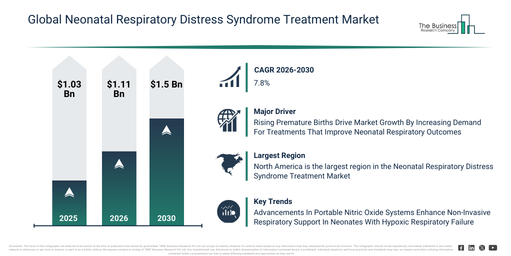
    The market size for neonatal respiratory distress syndrome treatment has experienced substantial growth over the past few years. Forecasts indicate it will expand from $1.03 billion in 2025 to $1.11 billion by 2026, demonstrating a compound annual growth rate (CAGR) of 8.0%. Historically, this growth has been driven by factors such as elevated premature birth rates, a continued reliance on conventional oxygen therapy, restricted access to neonatal intensive care units, the initial widespread use of natural surfactants, and a rise in infant respiratory morbidity.

    The neonatal respiratory distress syndrome treatment market is anticipated to show robust expansion over the next few years, projected to reach $1.5 billion by 2030, growing at a compound annual growth rate (CAGR) of 7.8%. This growth during the forecast period is primarily driven by factors such as the development of advanced synthetic surfactants, the expansion of non-invasive ventilation technologies, increasing investment in neonatal care equipment, rising global awareness of neonatal complications, and the modernization of hospital respiratory support systems. Major trends foreseen in the forecast period include the increasing adoption of surfactant replacement therapies, greater use of CPAP and non-invasive ventilation, enhanced neonatal intensive care infrastructure, a growing focus on premature birth management, and the ongoing development of synthetic and bioengineered surfactants.

    Access Your Free Sample Report For In-Depth Market Analysis:

    https://www.thebusinessresearchcompany.com/sample.aspx?id=20899&type=smp

    What Factors Are Contributing To The Growth Of The Neonatal Respiratory Distress Syndrome Treatment Market?

    The increasing incidence of premature births is anticipated to drive the expansion of the neonatal respiratory distress syndrome treatment market moving forward. Premature births are defined as the delivery of an infant before the completion of thirty-seven weeks of gestation, leading to underdeveloped organ systems that necessitate specialized medical support. A primary factor contributing to the rise in premature births is the growing prevalence of maternal health complications, as these conditions can disrupt normal fetal development and trigger early labor by imposing physiological strain on both the mother and the fetus. Neonatal respiratory distress syndrome treatment enhances survival outcomes and stabilizes premature infants whose immature lungs make them highly susceptible to respiratory failure. For instance, in September 2024, Statistique Canada, a Canada-based governmental organization, reported that the proportion of births occurring before 37 weeks of gestation rose slightly from 8.2% in 2022 to 8.3% in 2023, indicating a minor upward trend in preterm births. Therefore, the heightened incidence of premature births is propelling the growth of the neonatal respiratory distress syndrome treatment market.

    What Segment Categories Shape The Neonatal Respiratory Distress Syndrome Treatment Market Segment Landscape?

    The neonatal respiratory distress syndrome treatment market covered in this report is segmented –

    1) By Therapy: Oxygen Therapy, Surfactant Therapy

    2) By Route Of Administration: Parenteral, Inhalation, Other Routes Of Administration

    3) By End User: Hospitals, Sub-Acute Facilities, Home Care, Retail Pharmacies

    Subsegments:

    1) By Oxygen Therapy: Conventional Oxygen Therapy, High-Flow Nasal Cannula (HFNC) Oxygen Therapy, Continuous Positive Airway Pressure (CPAP) Oxygen Therapy, Invasive Mechanical Ventilation With Oxygen Therapy

    2) By Surfactant Therapy: Natural Surfactants, Synthetic Surfactants, Combined Surfactant Therapy (Natural + Synthetic), Prophylactic Surfactant Therapy, Rescue Surfactant Therapy

    What Trends Are Shaping The Future Of The Neonatal Respiratory Distress Syndrome Treatment Market?

    Leading enterprises within the neonatal respiratory distress syndrome treatment market are concentrating their efforts on creating sophisticated remedies, including advanced, portable nitric-oxide delivery systems, aiming to enhance oxygen supply, reduce complications from treatment, and extend availability beyond conventional NICU environments. These portable nitric-oxide systems function as medical instruments capable of generating and dispensing inhaled nitric oxide as needed, thereby boosting oxygenation and relieving pulmonary hypertension in newborns suffering from hypoxic respiratory failure, all while permitting secure operation during patient transportation. As an illustration, in June 2025, Beyond Air Inc., an American medical device firm, filed a PMA supplement with the U.S. Food and Drug Administration for its LungFit PH 2. This device is described as a more lightweight and transport-capable nitric oxide generator that utilizes the company’s proprietary Ionizer technology. Engineered for superior portability and ease of use, this equipment ensures uninterrupted nitric oxide delivery while simultaneously decreasing the generation of nitrogen dioxide, thus providing safer therapeutic care even when transporting neonates. Concurrently, phase-4 registry findings for INOmax, a widely recognized iNO treatment from Mallinckrodt, consistently show ongoing real-world advantages for neonates experiencing pulmonary hypertension, thereby underscoring the vital clinical role of inhaled nitric oxide in addressing hypoxic respiratory failure among newborns.

    Who Are The Companies Operating Across The Neonatal Respiratory Distress Syndrome Treatment Market Value Chain?

    Major companies operating in the neonatal respiratory distress syndrome treatment market are Medtronic Plc, GE Healthcare, Koninklijke Philips NV, Drägerwerk AG & Co. KGaA, Chiesi Farmaceutici, Fisher & Paykel Healthcare, Vyaire Medical, Laerdal Medical, Hamilton Medical, Inspiration Healthcare, Ventec Life Systems, Neotech Products, Windtree Therapeutics Inc., Discovery Laboratories Inc., ResMed Inc., Abbott Laboratories, Aerogen Pharma Corp., ONY Biotech, Yuhan Corporation, Atom Medical Corporation, Mindray Bio‑Medical Electronics, Getinge AB, Nihon Kohden Corporation, Siare Engineering Spa

    Get The Full Neonatal Respiratory Distress Syndrome Treatment Market Report:

    https://www.thebusinessresearchcompany.com/report/neonatal-respiratory-distress-syndrome-treatment-global-market-report

    Where Is The Neonatal Respiratory Distress Syndrome Treatment Market Primarily Concentrated By Region?

    North America was the largest region in the neonatal respiratory distress syndrome treatment market in 2025. Asia-Pacific is expected to be the fastest-growing region in the forecast period. The regions covered in the neonatal respiratory distress syndrome treatment market report are Asia-Pacific, South East Asia, Western Europe, Eastern Europe, North America, South America, Middle East, Africa.

    Request A Customized Neonatal Respiratory Distress Syndrome Treatment Market Report For Competitive Insights:

    https://www.thebusinessresearchcompany.com/report/neonatal-respiratory-distress-syndrome-treatment-global-market-report

    Browse Through More Reports Similar to the Global Neonatal Respiratory Distress Syndrome Treatment Market 2026, By The Business Research Company

    Neonatal Infant Care Market Report 2026

    https://www.thebusinessresearchcompany.com/report/neonatal-infant-care-global-market-report

    Light Therapy Market Report

    https://www.thebusinessresearchcompany.com/report/light-therapy-global-market-report

    Image Guided Radiation Therapy Market Report

    https://www.thebusinessresearchcompany.com/report/image-guided-radiation-therapy-global-market-report

    Get in touch with us:

    The Business Research Company: https://www.thebusinessresearchcompany.com/

    Americas +1 310-496-7795

    Asia +44 7882 955267 & +91 8897263534

    Europe +44 7882 955267

    Email us at info@tbrc.info

    Follow us on:

    LinkedIn: https://in.linkedin.com/company/the-business-research-company

    YouTube: https://www.youtube.com/channel/UC24_fI0rV8cR5DxlCpgmyFQ

    Global Market Model: https://www.thebusinessresearchcompany.com/global-market-model
  • Neonatal Phototherapy Market Developments Driving Growth

    Neonatal Phototherapy Market Developments Driving Growth

    The Business Research Company’s 2026 market reports feature enhanced tools like market attractiveness analysis, TAM assessment, and company scoring matrices, along with interactive dashboards, deeper supply chain insights, and startup coverage strengthening the depth, usability, and strategic value of insights.

    How Much Will The Market Value Of The Neonatal Phototherapy Market Grow Between 2026 And 2030?

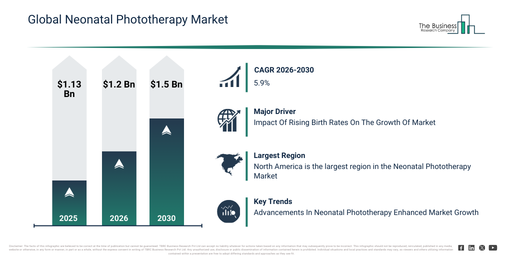
    The neonatal phototherapy market has experienced robust expansion in recent years. It is anticipated to increase from $1.13 billion in 2025 to $1.2 billion in 2026, achieving a compound annual growth rate (CAGR) of 6.1%. This growth witnessed in the past period can be attributed to the high prevalence of neonatal jaundice, reliance on fluorescent phototherapy units, limited neonatal care infrastructure in low-income regions, rising hospital birth rates, and the early adoption of conventional phototherapy methods.

    The neonatal phototherapy market size is projected to experience substantial expansion over the upcoming years. It is anticipated to reach $1.5 billion by 2030, exhibiting a compound annual growth rate (CAGR) of 5.9%. This projected growth during the forecast period can be attributed to factors such as a swift transition to LED phototherapy systems, increased investment in neonatal healthcare equipment, the broadening availability of home phototherapy devices, innovations in energy-efficient phototherapy technology, and heightened awareness regarding neonatal complications. Key trends anticipated within this period involve the rising utilization of LED phototherapy devices, increasing uptake of portable and home-based phototherapy units, a growing need for non-invasive neonatal care options, the expansion of neonatal jaundice screening initiatives, and the advancement of energy-efficient phototherapy technologies.

    Access Your Free Sample Report For In-Depth Market Analysis:

    https://www.thebusinessresearchcompany.com/sample.aspx?id=20898&type=smp

    Which Strong Drivers Are Impacting The Neonatal Phototherapy Market Growth?

    Increasing birth rates are projected to stimulate the growth of the neonatal phototherapy market in the future. These higher birth rates commonly result from factors such as enhanced healthcare, elevated fertility rates, cultural inclinations towards larger families, and a rise in immigration across certain regions. Neonatal phototherapy plays a vital role in addressing jaundice in premature infants by employing light to break down excess bilirubin in their blood. This method helps to lower the danger of severe complications, including brain damage, which are more frequent in preterm babies due to their undeveloped liver function and heightened susceptibility to jaundice. For example, a report released by the Centers for Disease Control and Prevention, a US-based national public health organization, stated that in January 2023, the United States experienced a 1% increase in registered births, reaching 3,664,292, when compared to the preceding year. Thus, the escalating birth rates are a key driver for the growth of the neonatal phototherapy market.

    Which Segment Types Are Examined In The Neonatal Phototherapy Market Segment Study?

    The neonatal phototherapy market covered in this report is segmented –

    1) By Type: Conventional Phototherapy Equipment, LED Phototherapy Equipment, Fiber Optic Phototherapy Equipment

    2) By Form Factor: Traditional Phototherapy Lamps, Phototherapy Beds, Flexible Phototherapy Lamps

    3) By Application: Skin Diseases Treatment, Neonatal Jaundice Management

    Subsegments:

    1) By Conventional Phototherapy Equipment: Fluorescent Tube Phototherapy Units, Incandescent Lamp Phototherapy Units

    2) By LED Phototherapy Equipment: Blue LED Phototherapy Units, White LED Phototherapy Units

    3) By Fiber Optic Phototherapy Equipment: Overhead Fiber Optic Phototherapy Units, Blanket Or Pad-Type Fiber Optic Phototherapy Units

    Which Trends Are Contributing To Changes In The Neonatal Phototherapy Market?

    Major companies operating in the neonatal phototherapy market are focusing on developing innovative solutions, such as advanced open warmers, to enhance postnatal care for newborns. An advanced open warmer (AOW) refers to a medical device commonly used in neonatal care and pediatric settings to maintain a stable body temperature in newborns and infants, especially in premature or low-birth-weight babies. For instance, in October 2024, Draeger India Pvt. Ltd, an India-based medical and safety technology company, launched the BabyRoo TN300, designed to offer flexibility in labor and delivery rooms as well as neonatal intensive care units. This innovative device aims to deliver optimal care for newborns, particularly those needing intensive care after birth. The BabyRoo TN300 features dual heat sources for consistent temperature maintenance, skin temperature regulation for personalized warming, a prewarm function for quick readiness, integrated thermomonitoring to detect thermal stress, lung-protective respiratory support with an AutoBreath module, and a family-centered care design to promote parental involvement in infant care.

    Which Players Are Part Of The Competitive Landscape Of The Neonatal Phototherapy Market?

    Major companies operating in the neonatal phototherapy market are Koninklijke Philips N.V., Drägerwerk AG & Co. KGaA, Medela AG, Heal Force Bio‑Meditech Holdings Limited, Natus Medical Incorporated, Ningbo David Medical Device Co Ltd, BPL Medical Technologies Pvt Ltd, Zhengzhou Dison Instrument and Meter Co Ltd., NeoLight LLC, Atom Medical Corporation, BabyBloom Healthcare B.V., Bistos Co Ltd., Phoenix Medical Systems Pvt Ltd, Nice Neotech Medical Systems Pvt Ltd, Herbert Waldmann GmbH & Co KG

    Get The Full Neonatal Phototherapy Market Report:

    https://www.thebusinessresearchcompany.com/report/neonatal-phototherapy-global-market-report

    Which Region Has The Greatest Market Share In The Neonatal Phototherapy Market?

    North America was the largest region in the neonatal phototherapy market in 2025. The regions covered in the neonatal phototherapy market report are Asia-Pacific, South East Asia, Western Europe, Eastern Europe, North America, South America, Middle East, Africa.

    Request A Customized Neonatal Phototherapy Market Report For Competitive Insights:

    https://www.thebusinessresearchcompany.com/report/neonatal-phototherapy-global-market-report

    Browse Through More Reports Similar to the Global Neonatal Phototherapy Market 2026, By The Business Research Company

    Fetal And Neonatal Monitoring Devices Market Report 2026

    https://www.thebusinessresearchcompany.com/report/fetal-and-neonatal-monitoring-devices-global-market-report

    Baby Care Products Market Report

    https://www.thebusinessresearchcompany.com/report/baby-care-products-global-market-report

    Pediatric And Neonatal Testing Kit Market Report

    https://www.thebusinessresearchcompany.com/report/pediatric-and-neonatal-testing-kit-global-market-report

    Get in touch with us:

    The Business Research Company: https://www.thebusinessresearchcompany.com/

    Americas +1 310-496-7795

    Asia +44 7882 955267 & +91 8897263534

    Europe +44 7882 955267

    Email us at info@tbrc.info

    Follow us on:

    LinkedIn: https://in.linkedin.com/company/the-business-research-company

    YouTube: https://www.youtube.com/channel/UC24_fI0rV8cR5DxlCpgmyFQ

    Global Market Model: https://www.thebusinessresearchcompany.com/global-market-model

  • Neonatal Infant Care Market Forecast With Demand and Growth Insights

    Neonatal Infant Care Market Forecast With Demand and Growth Insights

    The Business Research Company’s 2026 market reports feature enhanced tools like market attractiveness analysis, TAM assessment, and company scoring matrices, along with interactive dashboards, deeper supply chain insights, and startup coverage strengthening the depth, usability, and strategic value of insights.

    What Changes In Market Value Are Expected For The Neonatal Infant Care Market Over The 2026–2030 Period?

    The neonatal infant care market has shown strong growth in recent years. It is anticipated to expand from $3.4 billion in 2025 to $3.68 billion in 2026, at a compound annual growth rate (CAGR) of 8.4%. This historical growth can be attributed to several factors including high premature birth rates, insufficient neonatal care infrastructure, the early deployment of traditional incubators, increasing neonatal mortality rates, and the slow integration of basic screening devices.

    The neonatal infant care market size is set to experience robust growth in the upcoming years. It is projected to reach $5 billion by 2030, exhibiting a compound annual growth rate (CAGR) of 7.9%. This anticipated expansion during the forecast period stems from factors such as the increasing implementation of advanced neonatal monitoring systems, higher investments in neonatal ICU expansion, the surging adoption of digital and remote neonatal care technologies, a rapid move towards energy-efficient phototherapy solutions, and a heightened awareness of neonatal complications. Significant trends expected during this period include the wider acceptance of advanced neonatal monitoring devices, a rising demand for portable and home-based infant care equipment, the enlargement of neonatal intensive care units (NICUs), the growing utilization of LED phototherapy and modern thermoregulation devices, and an enhanced focus on early screening and diagnostic technologies.

    Access Your Free Sample Report For In-Depth Market Analysis:

    https://www.thebusinessresearchcompany.com/sample.aspx?id=7871&type=smp

    What Key Factors Are Shaping The Neonatal Infant Care Market Landscape?

    The increasing incidence of premature newborn babies is propelling the expansion of the neonatal infant care market. A premature birth is defined as the delivery of an infant prior to reaching 37 weeks of gestation. Neonatal infant care becomes essential for premature and sick infants with medical conditions, as it establishes safe and conducive surroundings for their development. For instance, in September 2024, figures from Statistique Canada, a Canada-based governmental organization, revealed a marginal rise in the proportion of births occurring before 37 weeks of gestation, from 8.2% in 2022 to 8.3% in 2023, indicating a slight upward trajectory in preterm births. Therefore, the growing number of premature births is serving as a key driver for the neonatal infant care market’s growth.

    How Are Different Segments Classified In The Neonatal Infant Care Market Segment Analysis?

    The neonatal infant care market covered in this report is segmented –

    1) By Product Type: Thermoregulation Devices, Phototherapy Devices, Monitoring Systems, Neonatal Hearing Screening, Neonatal Infant Resuscitator Devices, Vision Screening, Other Product Types

    2) By Prenatal And Fetal Equipment: Ultrasound And Ultrasonography Devices, Fetal Dopplers, Fetal Magnetic Resonance Imaging (MRI), Fetal Monitors

    3) By Neonatal Equipment: Infant Warmers And Incubators, Phototherapy Equipment, Neonatal Monitoring Devices And Respiratory Assistance

    4) By End-User: Hospitals, Pediatric And Neonatal Clinics

    Subsegments:

    1) By Thermoregulation Devices: Infant Warmers, Incubators, Warm Air Blankets

    2) By Phototherapy Devices: LED Phototherapy Units, Fiberoptic Phototherapy Systems

    3) By Monitoring Systems: Vital Sign Monitors, Cardiac Monitors, Pulse Oximeters

    4) By Neonatal Hearing Screening: Automated Auditory Brainstem Response (ABR) Systems, Otoacoustic Emission (OAE) Devices

    5) By Neonatal Infant Resuscitator Devices: Bag-Valve-Mask Resuscitators, Neonatal Resuscitation Systems

    6) By Vision Screening: Retinal Imaging Systems, Vision Assessment Tools

    7) By Other Product Types: Suction Devices, Feeding Equipment, Accessories And Consumables

    What Market Trends Are Affecting The Neonatal Infant Care Market?

    Companies operating in the neonatal infant care market are increasingly concentrating on innovative products to secure a competitive edge. These pioneering neonatal infant care products incorporate advanced technologies designed to enhance medical oversight, support developmental growth, and ensure optimal well-being for newborns. For instance, in August 2023, Cardinal Health Inc., a US-based health care company, introduced the NTrainer System 2.0. The NTrainer System 2.0 is a next-generation medical device specifically engineered to assist premature and newborn infants in developing crucial oral coordination skills. It furnishes clinicians with objective data to track an infant’s progress and instills confidence in parents regarding their infant’s development and potential to thrive after discharge. This system effectively supports proper suck-swallow-breathe coordination in premature infants, providing both consistent and repeatable assessment and therapy.

    Who Are The Companies Driving Activity In The Neonatal Infant Care Market?

    Major companies operating in the neonatal infant care market are Atom Medical Corp., Drägerwerk AG & Co. KGaA, Fisher & Paykel Healthcare Limited, GE Healthcare Technologies Inc., Ibis medical equipment and systems Pvt. Ltd., Medtronic PLC, Natus Medical Incorporated, International Biomedical Ltd., Koninklijke Philips NV, Weyer GmbH, Inspiration Healthcare Group PLC, Masimo Corp., CooperSurgical Inc., Abbott Laboratories, Edan Instruments Inc., Medela AG, Nihon Kohden Corporation, Getinge AB, Nice Neotech Medical Systems Pvt. Ltd., Becton, Dickinson and Company, Hill-Rom Holdings Inc., Edwards Lifesciences Corporation, Cardinal Health Inc., Smiths Medical International Ltd., Hamilton Medical AG, Vyaire Medical Inc., Air Liquide Medical Systems Pvt. Ltd., Draeger Medical Systems Inc., Siemens Healthineers AG, Danaher Corporation, B. Braun Melsungen AG

    Get The Full Neonatal Infant Care Market Report:

    https://www.thebusinessresearchcompany.com/report/neonatal-infant-care-global-market-report

    Which Region Accounts For The Largest Portion Of The Neonatal Infant Care Market?

    North America was the largest region in the neonatal infant care market share in 2025. The regions covered in the neonatal infant care market report are Asia-Pacific, South East Asia, Western Europe, Eastern Europe, North America, South America, Middle East, Africa.

    Request A Customized Neonatal Infant Care Market Report For Competitive Insights:

    https://www.thebusinessresearchcompany.com/report/neonatal-infant-care-global-market-report

    Browse Through More Reports Similar to the Global Neonatal Infant Care Market 2026, By The Business Research Company

    Targeted Therapy Market Report 2026

    https://www.thebusinessresearchcompany.com/report/targeted-therapy-global-market-report

    Anti Neoplastic Agents Market Report

    https://www.thebusinessresearchcompany.com/report/anti-neoplastic-agents-global-market-report

    Leukemia Therapeutics Market Report

    https://www.thebusinessresearchcompany.com/report/leukemia-therapeutics-global-market-report

    Get in touch with us:

    The Business Research Company: https://www.thebusinessresearchcompany.com/

    Americas +1 310-496-7795

    Asia +44 7882 955267 & +91 8897263534

    Europe +44 7882 955267

    Email us at info@tbrc.info

    Follow us on:

    LinkedIn: https://in.linkedin.com/company/the-business-research-company

    YouTube: https://www.youtube.com/channel/UC24_fI0rV8cR5DxlCpgmyFQ

    Global Market Model: https://www.thebusinessresearchcompany.com/global-market-model
  • Neoantigen Targeted Therapies Market Outlook Highlighting Key Drivers and Trends

    Neoantigen Targeted Therapies Market Outlook Highlighting Key Drivers and Trends

    The Business Research Company’s 2026 market reports feature enhanced tools like market attractiveness analysis, TAM assessment, and company scoring matrices, along with interactive dashboards, deeper supply chain insights, and startup coverage strengthening the depth, usability, and strategic value of insights.

    By 2030, What Market Size Is The Neoantigen Targeted Therapies Market Expected To Reach Based On Its 2026 Value?

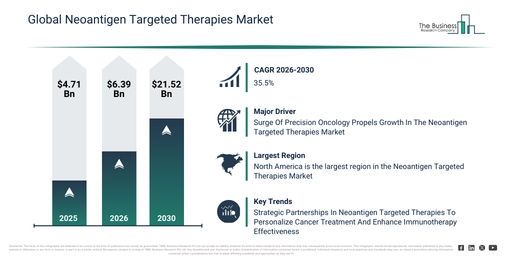
    The market size for neoantigen targeted therapies has experienced substantial expansion in recent years. This market is expected to expand from $4.71 billion in 2025 to $6.39 billion in 2026, achieving a compound annual growth rate (CAGR) of 35.8%. In previous periods, this growth was influenced by factors including a limited range of immunotherapy options, the slow advancement of cancer vaccines, the early adoption of genomic sequencing, restricted availability of clinical trials, and a reliance on traditional oncology treatments.

    The market for neoantigen targeted therapies is anticipated to experience substantial expansion over the upcoming years. This market is projected to reach $21.52 billion by 2030, exhibiting a compound annual growth rate (CAGR) of 35.5%. This expansion during the forecast period is driven by several factors, including the swift progress of personalized cancer treatments, increased capital allocated to genomic sequencing, the broadening scope of clinical research partnerships, the increasing integration of combination immunotherapies, and the rising need for precise oncology solutions. Key trends anticipated during this period encompass the wider acceptance of personalized cancer vaccines, the growth of research pipelines for targeted immunotherapies, an increase in clinical trials for neoantigen-based combination treatments, a rising requirement for early genetic profiling within oncology, and a significant rise in the development of TIL-based therapeutic strategies.

    Access Your Free Sample Report For In-Depth Market Analysis:

    https://www.thebusinessresearchcompany.com/sample.aspx?id=11944&type=smp

    Which Factors Are Influencing The Growth Of The Neoantigen Targeted Therapies Market?

    The increasing adoption of precision oncology is anticipated to fuel the expansion of the neoantigen targeted therapies market moving forward. Precision oncology represents a method for cancer treatment that employs comprehensive genetic and molecular details regarding a patient’s tumor to inform the choice of targeted therapies. It integrates neoantigen-targeted therapies by employing advanced genomic assessment to pinpoint distinct neoantigens present in an individual’s cancer cells. The application of neoantigen-targeted therapies within precision oncology demonstrates an approach designed to target the unique genetic composition of each patient’s tumor, thereby providing a more customized and potent treatment alternative. For instance, in March 2024, as per the Precision Oncology Clinical Trials & Statistics 2024 report released by Novotech, an Australia-based full-service clinical contract research organization engaged in developing innovative therapeutics across all phases, by November 2023, twelve treatments had secured FDA approval for particular biomarker-selected indications, with six of these also listed in the NCCN guidelines. By the close of the year, 43% of the 217 FDA-approved oncology therapies were categorized as precision oncology, and 78 of these therapies incorporated DNA or NGS-detectable biomarkers, underscoring the increasing significance of biomarker-guided treatments in managing cancer. Consequently, the growing field of precision oncology is propelling the expansion of the neoantigen-targeted therapies market.

    How Is The Neoantigen Targeted Therapies Market Categorized Across Its Segment Groups?

    The neoantigen targeted therapies market covered in this report is segmented –

    1) By Type: Monotherapy, Combination Therapy

    2) By Immunotherapy Type: DNA Or RNA-Based Vaccines, Protein-Based Vaccines, Dendritic Cell Vaccines, TIL-Based Therapies

    3) By Target Disease Indication: Colorectal Cancer, Renal Cell Carcinoma, Non-Small Cell Lung Cancer, Bone Cancer, Gynecological Cancer

    4) By Route Of Administration: Intradermal, Intravenous, Subcutaneous

    5) By Application: Medical Research Institution, Hospitals and Clinics, Other Applications

    Subsegments:

    1) By Monotherapy: Individual Neoantigen-Targeted Treatments

    2) By Combination Therapy: Neoantigen-Targeted Therapies Combined With Other Immunotherapies, Neoantigen-Targeted Therapies Combined With Chemotherapy, Neoantigen-Targeted Therapies Combined With Targeted Therapies

    Which Trends Are Influencing Demand In The Neoantigen Targeted Therapies Market?

    Major companies operating in the neoantigen targeted therapies market are embracing strategic partnerships to personalize neoantigen vaccines and monoclonal antibody drugs, aiming to overcome the challenges associated with existing immunotherapy in treating solid tumors. Strategic partnerships describe a process where companies leverage each other’s strengths and resources to achieve shared benefits and success. As an illustration, in April 2023, Moderna, Inc., a US-based pharmaceutical and biotechnology company, collaborated with Merck & Co., Inc., a US-based pharmaceutical company, to launch mRNA-4157 (V940). This investigational individualized neoantigen therapy (INT) is designed to create a customized antitumor immune response based on the distinct mutational signature of a patient’s tumor. mRNA-4157 (V940) operates by encoding up to 34 neoantigens to stimulate T cell responses, thereby enhancing the body’s ability to target and destroy tumor cells when combined with Merck’s immunotherapy KEYTRUDA. This combination therapy seeks to improve recurrence-free survival in patients diagnosed with high-risk resected melanoma.

    Which Firms Are Influencing Competition In The Neoantigen Targeted Therapies Market?

    Major companies operating in the neoantigen targeted therapies market are F. Hoffmann-La Roche AG, Merck and Co. Inc., Bristol Myers Squibb Company, Kite Pharma Inc., Amgen Inc., Moderna Inc., BioNTech SE, Bavarian Nordic Inc., Advaxis Inc., Immatics NV, Iovance Biotherapeutics Inc., Agenus Inc., Achilles Therapeutics Plc, Medigene AG, Gritstone Bio Inc., SQZ Biotechnologies Company, Aduro BioTech Inc., Inovio Pharmaceuticals Inc., Gradalis Inc., EpiVax Inc., ISA Pharmaceuticals BV, Vaxon Biotech SA, Ziopharm Oncology, Genocea Biosciences Inc., Cellular Biomedicine Group Inc., Immunovaccine Inc.

    Get The Full Neoantigen Targeted Therapies Market Report:

    https://www.thebusinessresearchcompany.com/report/neoantigen-targeted-therapies-global-market-report

    Which Region Holds The Highest Market Share In The Neoantigen Targeted Therapies Market?

    North America was the largest region in the neoantigen targeted therapies market in 2025. The regions covered in the neoantigen targeted therapies market report are Asia-Pacific, South East Asia, Western Europe, Eastern Europe, North America, South America, Middle East, Africa.

    Request A Customized Neoantigen Targeted Therapies Market Report For Competitive Insights:

    https://www.thebusinessresearchcompany.com/report/neoantigen-targeted-therapies-global-market-report

    Browse Through More Reports Similar to the Global Neoantigen Targeted Therapies Market 2026, By The Business Research Company

    Malaria Treatment Market Report 2026

    https://www.thebusinessresearchcompany.com/report/malaria-treatment-global-market-report

    Infectious Disease Therapeutics Market Report

    https://www.thebusinessresearchcompany.com/report/infectious-disease-therapeutics-global-market-report

    Influenza Treatment Market Report

    https://www.thebusinessresearchcompany.com/report/influenza-treatment-global-market-report

    Get in touch with us:

    The Business Research Company: https://www.thebusinessresearchcompany.com/

    Americas +1 310-496-7795

    Asia +44 7882 955267 & +91 8897263534

    Europe +44 7882 955267

    Email us at info@tbrc.info

    Follow us on:

    LinkedIn: https://in.linkedin.com/company/the-business-research-company

    YouTube: https://www.youtube.com/channel/UC24_fI0rV8cR5DxlCpgmyFQ

    Global Market Model: https://www.thebusinessresearchcompany.com/global-market-model

  • Neglected Tropical Disease Treatment Market Overview (2026–2030) With Industry Insights

    Neglected Tropical Disease Treatment Market Overview (2026–2030) With Industry Insights

    The Business Research Company’s 2026 market reports feature enhanced tools like market attractiveness analysis, TAM assessment, and company scoring matrices, along with interactive dashboards, deeper supply chain insights, and startup coverage strengthening the depth, usability, and strategic value of insights.

    What Is The Anticipated Rise In Market Value Of The Neglected Tropical Disease Treatment Market During The Forecast Period?

    The size of the neglected tropical disease treatment market has witnessed significant growth over the past few years. This market is anticipated to expand from $3.57 billion in 2025 to $3.8 billion in 2026, achieving a compound annual growth rate (CAGR) of 6.3%. Factors contributing to this historical growth include the enduring prevalence of these diseases in tropical regions, robust support from global health organizations, the broadening scope of donor-funded treatment programs, the accessibility of generic therapeutics, and intensified public health awareness campaigns.

    The neglected tropical disease treatment market size is projected to show robust expansion in the upcoming years, with an anticipated rise to $4.79 billion by 2030, growing at a compound annual growth rate (CAGR) of 6.0%. This growth during the forecast period is fueled by factors such as escalating investments in eradication programs, the increasing adoption of integrated disease management approaches, the broadening scope of novel antiparasitic drug development, the proliferation of public-private partnerships, and a greater concentration on healthcare access in remote regions. Significant trends anticipated over the forecast timeframe include the wider deployment of combination drug therapies, a heightened focus on early disease detection initiatives, the expanding utilization of mass drug administration strategies, the growth of community-based treatment models, and an intensified emphasis on treatment accessibility.

    Access Your Free Sample Report For In-Depth Market Analysis:

    https://www.thebusinessresearchcompany.com/sample.aspx?id=24616&type=smp

    What Leading Drivers Are Supporting The Neglected Tropical Disease Treatment Market Expansion?

    The expanding occurrence of infectious diseases is anticipated to propel the neglected tropical disease treatment market going forward. Infectious diseases are defined as ailments resulting from detrimental microorganisms, including bacteria, viruses, fungi, or parasites, capable of spreading from person to person either directly or indirectly. The increased prevalence of these diseases is linked to more extensive travel, which facilitates the swift dispersion of pathogens across borders. Neglected tropical disease treatment supports the management of infectious diseases by offering targeted therapies aimed at controlling and eradicating disease transmission. These therapeutic approaches improve public health outcomes, especially for vulnerable communities, by decreasing the disease load and preventing long-term disabilities. For example, in February 2024, the UK Health Security Agency, a UK-based government organization, reported that tuberculosis cases in England reached 4,850 in 2023, marking a 10.7% increase from 4,380 cases in 2022. Thus, the growing prevalence of infectious diseases is driving the growth of the neglected tropical disease treatment market.

    How Are Segments Identified Within The Neglected Tropical Disease Treatment Market Segment Framework?

    The neglected tropical disease treatment market covered in this report is segmented –

    1) By Drug Class: Anti-Parasite, Antifungal, Antibiotics, Other Drugs Class

    2) By Disease Type: Leishmaniasis, Schistosomiasis, Lymphatic Filariasis, Chagas Disease, African Trypanosomiasis, Other Disease Types

    3) By Route of Administration: Oral, Parenteral

    4) By Distribution Channel: Hospital Pharmacy, Retail Pharmacy, Online Pharmacy

    5) By End User: Hospital, Specialty Clinics, Homecare Settings, Other End Users

    Subsegments:

    1) By Anti-Parasite: Anthelmintics, Antiprotozoals, Antimalarials, Ectoparasiticides

    2) By Antifungal: Azoles, Polyenes, Allylamines, Echinocandins

    3) By Antibiotics: Tetracyclines, Macrolides, Rifamycins, Sulfonamides

    4) By Other Drug Classes: Antivirals, Corticosteroids, Combination Therapies, Supportive Treatments

    What Emerging Trends Are Seen In The Neglected Tropical Disease Treatment Market?

    Major companies operating in the neglected tropical disease treatment market are concentrating on developing innovative solutions, such as all-oral, field-deployable therapeutics, to simplify administration, improve safety, and expand access in low-resource settings. All-oral therapeutics for diseases like human African trypanosomiasis involve small-molecule drugs administered orally over a short course, which helps improve treatment reach, reduce the need for hospitalization, and lower operational barriers compared with traditional injectable therapies. For instance, in December 2023, Sanofi S.A., a France-based multinational pharmaceutical company, introduced Fexinidazole Winthrop, an oral treatment developed in partnership with not-for-profit organizations. Fexinidazole is a nitro-containing small molecule designed to replace older regimens requiring intravenous delivery or hospitalization. Its oral formulation, simplified dosing schedule, and favorable safety profile make it suitable for use across both stages of certain forms of sleeping sickness, expanding treatment access in remote settings. Furthermore, Fexinidazole contrasts with traditional alternatives such as melarsoprol and eflornithine, which are injectable, require complex monitoring, and have higher toxicity or operational challenges.

    Who Are The Companies Competing Within The Neglected Tropical Disease Treatment Market?

    Major companies operating in the neglected tropical disease treatment market are Pfizer Inc, Johnson And Johnson, Merck And Co Inc, AbbVie Inc, Bayer AG, Novartis AG, Sanofi SA, AstraZeneca PLC, Abbott Laboratories, GlaxoSmithKline plc, Takeda Pharmaceutical Company Limited, Astellas Pharma Inc, Eisai Co Ltd, Shionogi And Co Ltd, Dr Reddys Laboratories Ltd, Cipla Ltd, Gilead Sciences Inc, Bristol Myers Squibb Company, Teva Pharmaceutical Industries Ltd, Sun Pharmaceutical Industries Ltd, Lupin Limited, Alvogen

    Get The Full Neglected Tropical Disease Treatment Market Report:

    https://www.thebusinessresearchcompany.com/report/neglected-tropical-disease-treatment-global-market-report

    Where Is The Neglected Tropical Disease Treatment Market Most Concentrated Geographically?

    Asia-Pacific was the largest region in the neglected tropical disease treatment market in 2025. The regions covered in the neglected tropical disease treatment market report are Asia-Pacific, South East Asia, Western Europe, Eastern Europe, North America, South America, Middle East, Africa.

    Request A Customized Neglected Tropical Disease Treatment Market Report For Competitive Insights:

    https://www.thebusinessresearchcompany.com/report/neglected-tropical-disease-treatment-global-market-report

    Browse Through More Reports Similar to the Global Neglected Tropical Disease Treatment Market 2026, By The Business Research Company

    Benign Prostatic Hyperplasia Bph Treatment Devices And Equipment Market Report 2026

    https://www.thebusinessresearchcompany.com/report/benign-prostatic-hyperplasia-bph-treatment-devices-and-equipment-global-market-report

    Pain Management Devices And Therapies Market Report

    https://www.thebusinessresearchcompany.com/report/pain-management-devices-and-therapies-global-market-report

    Defibrillator Devices And Equipment Market Report

    https://www.thebusinessresearchcompany.com/report/defibrillator-devices-and-equipment-global-market-report

    Get in touch with us:

    The Business Research Company: https://www.thebusinessresearchcompany.com/

    Americas +1 310-496-7795

    Asia +44 7882 955267 & +91 8897263534

    Europe +44 7882 955267

    Email us at info@tbrc.info

    Follow us on:

    LinkedIn: https://in.linkedin.com/company/the-business-research-company

    YouTube: https://www.youtube.com/channel/UC24_fI0rV8cR5DxlCpgmyFQ

    Global Market Model: https://www.thebusinessresearchcompany.com/global-market-model
  • Negative Pressure Wound Therapy Market Forecast Highlighting Trends and Expansion Potential

    Negative Pressure Wound Therapy Market Forecast Highlighting Trends and Expansion Potential

    The Business Research Company’s 2026 market reports feature enhanced tools like market attractiveness analysis, TAM assessment, and company scoring matrices, along with interactive dashboards, deeper supply chain insights, and startup coverage strengthening the depth, usability, and strategic value of insights.

    How Is The Market Size Of The Negative Pressure Wound Therapy Market Expected To Scale Between 2026 And 2030?

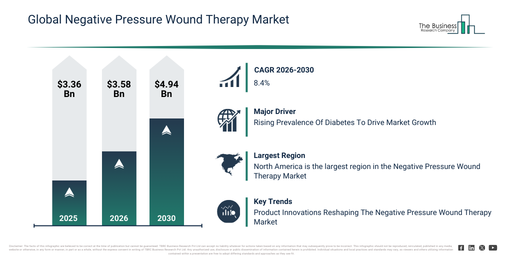
    The negative pressure wound therapy market size has shown substantial growth in recent years. This market is projected to expand from $3.36 billion in 2025 to $3.58 billion in 2026, at a compound annual growth rate (CAGR) of 6.4%. The historical growth can be attributed to factors such as the increasing incidence of chronic wounds, a rising number of surgical procedures, the growth in diabetic and elderly populations, the expansion of hospital wound care programs, and the availability of advanced wound therapy devices.

    The negative pressure wound therapy market is projected to experience substantial expansion in the coming years. Its valuation is set to reach $4.94 billion by 2030, demonstrating a compound annual growth rate (CAGR) of 8.4%. This projected growth is driven by several factors, including the increasing uptake of home healthcare services, a heightened emphasis on economical wound management, the proliferation of outpatient care facilities, a surging need for single-use wound care products, and advancements in wound therapy device technology. Key trends anticipated during this period encompass the wider adoption of portable NPWT systems, an increasing call for disposable NPWT devices, a stronger inclination towards wound care solutions delivered at home, the development of sophisticated dressing materials, and a greater prioritization of accelerated wound healing results.

    Access Your Free Sample Report For In-Depth Market Analysis:

    https://www.thebusinessresearchcompany.com/sample.aspx?id=5687&type=smp

    Which Key Factors Are Driving The Negative Pressure Wound Therapy Market Growth?

    The increasing incidence of diabetes is anticipated to fuel the expansion of the negative pressure wound therapy market. Diabetic foot ulceration (DFU) stands out as the primary application for negative pressure wound therapy. Wounds in individuals with diabetes are challenging to treat due to potential poor circulation in those with uncontrolled diabetes, leading to reduced oxygen supply to the wound and consequently slower tissue healing. Consequently, negative pressure wound therapy provides superior graft acceptance compared to traditional dressings for diabetic patients. To illustrate, in July 2023, the International Diabetes Federation (IDF), a Belgium-based non-profit body, disclosed that 540 million individuals aged 20-79 had diabetes in 2022, a figure expected to escalate to 643 million by 2030 and further to 783 million by 2045. Hence, the increasing occurrence of diabetes is a significant driver for the negative pressure wound therapy market.

    What Are The Key Segment Divisions In The Negative Pressure Wound Therapy Market Segment Structure?

    The negative pressure wound therapy market covered in this report is segmented –

    1) By Product: Conventional NPWT Devices, Single Use NPWT Devices

    2) By Wound Type: Surgical And Traumatic Wounds, Ulcers, Burns

    3) By End User: Hospitals, Homecare, Other End-Users

    Subsegments:

    1) By Conventional NPWT Devices: Portable NPWT Systems, Stationary NPWT Systems, Canister-Based NPWT Devices

    2) By Single-Use NPWT Devices: Disposable NPWT Systems, Battery-Operated NPWT Devices, Compact NPWT Units

    Which Trends Are Guiding The Direction Of The Negative Pressure Wound Therapy Market?

    Leading entities within the negative pressure wound therapy sector are innovating by creating new portable and disposable NPWT devices to uphold their market presence. These compact, single-use medical tools utilize controlled suction on wounds, facilitating recovery by clearing surplus fluids and fostering ideal conditions for tissue regeneration, all while providing easy portability and removing the necessity for intricate, conventional setups. An illustration of this trend is Advanced Oxygen Therapy Inc., a US-based medical equipment manufacturer, which introduced the NEXA Negative Pressure Wound Therapy (NPWT) system in June 2023. The NEXA NPWT system presents an innovative and adaptable platform, merging the straightforwardness of disposable NPWT with the robust capabilities of established durable NPWT technology. Designed to be portable, quiet, and economical, this system seeks to deliver enhanced wound care efficacy at a reduced expense. Furthermore, AOTI’s NEXA and its Topical Wound Oxygen (TWO2) therapy distinctly integrate elevated pressure oxygen delivery with non-contact cyclical compression and humidity, positioning it as a beneficial alternative for managing and healing chronic wounds.

    Which Organizations Are Engaged In The Negative Pressure Wound Therapy Market?

    Major companies operating in the negative pressure wound therapy market are Devon International Group, ConvaTec Group plc., DeRoyal Industries Inc., Smith & Nephew plc, Acelity L.P. Inc., Mölnlycke Health Care AB, ATMOS MedizinTechnik GmbH & Co. KG, Cardinal Health Inc., Talley Group Limited, Medela AG, Lohmann & Rauscher GmbH & Co. KG, Triage Meditech Pvt. Ltd., Carilex Medical GmbH, Shandong Weigao Xinsheng Medical Devices Co. Lt, Genadyne Biotechnologies Inc., B. Braun Melsungen AG, Cork Medical LLC, BSN medical GmbH, Investor AB, Olle Larsson Holding AG, PAUL HARTMANN Asia-Pacific Ltd., KCI Licensing Inc., Arjo USA Inc., 3M Company, MPM Medical Inc., Prospera Technologies Inc., Innovative Therapies Inc., Laboratoires URGO, 4L Health Co. Ltd, Pensar Medical LLC, Virchow Biotech Pvt. Ltd., Arobella Medical LLC, Spincare Inc., Ursapharm Arzneimittel GmbH

    Get The Full Negative Pressure Wound Therapy Market Report:

    https://www.thebusinessresearchcompany.com/report/negative-pressure-wound-therapy-global-market-report

    Which Region Dominates The Negative Pressure Wound Therapy Market By Market Share?

    North America was the largest region in the negative pressure wound therapy market in 2025. Asia-Pacific is the fastest-growing region in the negative pressure wound therapy market share. The regions covered in the negative pressure wound therapy market report are Asia-Pacific, South East Asia, Western Europe, Eastern Europe, North America, South America, Middle East, Africa.

    Request A Customized Negative Pressure Wound Therapy Market Report For Competitive Insights:

    https://www.thebusinessresearchcompany.com/report/negative-pressure-wound-therapy-global-market-report

    Browse Through More Reports Similar to the Global Negative Pressure Wound Therapy Market 2026, By The Business Research Company

    Botanical Extracts Market Report 2026

    https://www.thebusinessresearchcompany.com/report/botanical-extracts-global-market-report

    Vanilla Extract Market Report

    https://www.thebusinessresearchcompany.com/report/vanilla-extract-global-market-report

    Plant Extracts Market Report

    https://www.thebusinessresearchcompany.com/report/plant-extracts-global-market-report

    Get in touch with us:

    The Business Research Company: https://www.thebusinessresearchcompany.com/

    Americas +1 310-496-7795

    Asia +44 7882 955267 & +91 8897263534

    Europe +44 7882 955267

    Email us at info@tbrc.info

    Follow us on:

    LinkedIn: https://in.linkedin.com/company/the-business-research-company

    YouTube: https://www.youtube.com/channel/UC24_fI0rV8cR5DxlCpgmyFQ

    Global Market Model: https://www.thebusinessresearchcompany.com/global-market-model
  • Neem Extract Market Analysis Covering Drivers and Future Outlook

    Neem Extract Market Analysis Covering Drivers and Future Outlook

    The Business Research Company’s 2026 market reports feature enhanced tools like market attractiveness analysis, TAM assessment, and company scoring matrices, along with interactive dashboards, deeper supply chain insights, and startup coverage strengthening the depth, usability, and strategic value of insights.

    What Level Of Market Value Growth Is Predicted For The Neem Extract Market From 2026 To 2030?

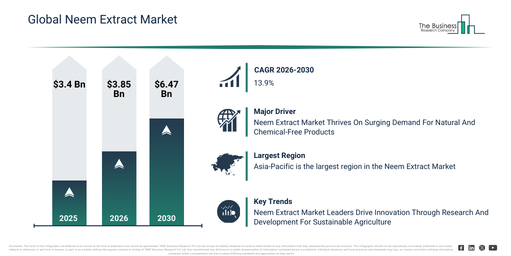
    The neem extract market has experienced significant expansion in recent years. It is anticipated to increase from $3.4 billion in 2025 to $3.85 billion in 2026, demonstrating a compound annual growth rate (CAGR) of 13.4%. Historically, this growth has been driven by factors such as the use of traditional medicine, a rise in the adoption of herbal products, reliance on natural pesticides, limited understanding of organic farming, and slow regulatory approval processes.

    The neem extract market is projected to undergo substantial expansion in the coming years. Its valuation is expected to reach $6.47 billion by 2030, exhibiting a compound annual growth rate (CAGR) of 13.9%. This anticipated growth throughout the forecast period stems from factors such as the increasing demand for clean-label products, the rise of organic farming practices, an expansion in herbal nutraceutical consumption, a growing preference for plant-based cosmetics, and advancements in extraction technologies. Key trends during this period include a heightened demand for herbal and natural remedies, the expanding use of neem in organic agriculture, a growing adoption of neem-based skincare and haircare products, the broadening application of neem in nutraceutical formulations, and a surge in neem-based antimicrobial and antifungal solutions.

    Access Your Free Sample Report For In-Depth Market Analysis:

    https://www.thebusinessresearchcompany.com/sample.aspx?id=10818&type=smp

    What Primary Drivers Are Shaping The Neem Extract Market?

    The rising consumer demand for organic products is anticipated to drive the expansion of the neem extract market in the future. Organic products are defined as items manufactured solely from natural ingredients, without the inclusion of synthetic chemicals, hormones, antibiotics, or genetically modified organisms (GMOs). Neem extract, possessing distinct antibacterial and antifungal properties, serves as an ideal component for various organic and natural formulations, finding applications across diverse sectors such as agriculture, personal care, pharmaceuticals, and animal feed. As an illustration, in April 2025, data released by the Organic Trade Association (OTA), a US business association for the organic sector, indicated that U.S. certified organic product sales surged by 5.2% in 2024, propelled by growing consumer interest. This growth was more than double the overall market’s 2.5% increase, pushing sales to an unprecedented USD 71.6 billion for the year. Consequently, the escalating demand for organic products is a key factor propelling the growth of the neem extract market. The expansion of the cosmetics industry is projected to fuel the future growth of the neem extract market. This industry encompasses the production, marketing, and retail of goods aimed at enhancing and beautifying the human physique. Neem extracts contribute natural and therapeutic benefits to cosmetic formulations, offering an inherent and effective solution for various dermatological concerns. For example, in August 2024, figures from the British Beauty Council, a UK-based non-profit body, revealed that the British beauty industry experienced an 11% expansion in 2023, showcasing robust sector momentum. Total product and service sales climbed to £27.2 billion (approximately USD 34.4 billion), and employment saw a 10% increase, reaching over 603,000 workers, with 224,000 directly engaged in hair and beauty services. Therefore, the burgeoning cosmetics industry is significantly contributing to the growth of the neem extract market.

    Which Segment Categories Are Included In The Neem Extract Market Segment Analysis?

    The neem extract market covered in this report is segmented –

    1) By Type: Leaf Extract, Fruit And Seed Extract, Bark Extract

    2) By Formulation: Dry, Liquid

    3) By Application: Food And Beverages, Pharmaceutical, Nutraceutical, Personal Care And Cosmetics, Agriculture And Farming, Other Applications

    Subsegments:

    1) By Leaf Extract: Neem Leaf Powder, Neem Leaf Oil, Neem Leaf Extract for Supplements

    2) By Fruit And Seed Extract: Neem Seed Oil, Neem Cake (byproduct of seed extraction), Neem Seed Powder

    3) By Bark Extract: Neem Bark Powder, Neem Bark Extract for Medicinal Use, Neem Bark Extract for Skincare Products

    What Trends Are Affecting The Growth Of The Neem Extract Market?

    Major companies operating in the neem extract market are focusing on creating advanced neem-based solutions, such as biofertilizers and biopesticides, to strengthen their market position and support sustainable agriculture. These innovations aim to improve product efficacy, enhance crop yield, and reduce environmental impact, while also opening new opportunities in global agricultural markets. For instance, in October 2023, the University of Ghana, a Ghana-based public university, conducted a research dissemination workshop, which shed light on neem-based solutions for cultivating healthy vegetables. Organized by ARPPIS at the University of Ghana, this workshop was focused on promoting safe vegetable production. The event served as a platform for diverse stakeholders and highlighted the importance of neem-based solutions for sustainable and safe vegetable farming in Ghana.

    Who Are The Active Companies Shaping The Neem Extract Market?

    Major companies operating in the neem extract market are Reddy International, Neeming Australia Pty Ltd., Bros India Group, Gramin India Agri BusiNest, Agro Extracts Limited, Fortune Biotech Ltd., The Indian Neem Tree Company, Ozone Biotech, PJ Margo Pvt Ltd., Trifolio-M-GmbH, GreeNeem Agri Pvt Ltd., Neem India Products Pvt Ltd., Phyto Life sciences Pvt Ltd., Green Earth Products Pvt Ltd., Ichimaru Pharcos Co Ltd., Greenchem Biotech, Sunrise Agriland Development & Research Pvt Ltd., Unjha Ayurvedic Pharmacy, Herbo Nutra Extract Private Limited, APEX INTERNATIONAL, MRIDA GREENS & DEVELOPMENT PRIVATE LIMITED, YAXON BIOCARE Pvt Ltd., AYUSH HERBALS & HEALTHCARE PRIVATE LIMITED, Herbal Creations, Cymbio Pharma Pvt Ltd, Truzt Organic

    Get The Full Neem Extract Market Report:

    https://www.thebusinessresearchcompany.com/report/neem-extract-global-market-report

    Which Region Is The Largest In The Neem Extract Market?

    Asia-Pacific was the largest region in the global neem extracts market in 2025. Western Europe is expected to be the fastest-growing region in the forecast period. The regions covered in the neem extract market report are Asia-Pacific, South East Asia, Western Europe, Eastern Europe, North America, South America, Middle East, Africa.

    Request A Customized Neem Extract Market Report For Competitive Insights:

    https://www.thebusinessresearchcompany.com/report/neem-extract-global-market-report

    Browse Through More Reports Similar to the Global Neem Extract Market 2026, By The Business Research Company

    Drug Delivery Devices Market Report 2026

    https://www.thebusinessresearchcompany.com/report/drug-delivery-devices-global-market-report

    Injectable Drug Delivery Devices Market Report

    https://www.thebusinessresearchcompany.com/report/injectable-drug-delivery-devices-global-market-report

    Drug Delivery Devices Market Report

    https://www.thebusinessresearchcompany.com/report/drug-delivery-devices-global-market-report

    Get in touch with us:

    The Business Research Company: https://www.thebusinessresearchcompany.com/

    Americas +1 310-496-7795

    Asia +44 7882 955267 & +91 8897263534

    Europe +44 7882 955267

    Email us at info@tbrc.info

    Follow us on:

    LinkedIn: https://in.linkedin.com/company/the-business-research-company

    YouTube: https://www.youtube.com/channel/UC24_fI0rV8cR5DxlCpgmyFQ

    Global Market Model: https://www.thebusinessresearchcompany.com/global-market-model

  • Needle-Free Drug Delivery Devices Market Insights Highlighting Growth Opportunities Through 2030

    Needle-Free Drug Delivery Devices Market Insights Highlighting Growth Opportunities Through 2030

    The Business Research Company’s 2026 market reports feature enhanced tools like market attractiveness analysis, TAM assessment, and company scoring matrices, along with interactive dashboards, deeper supply chain insights, and startup coverage strengthening the depth, usability, and strategic value of insights.

    How Will The Market Value Of The Needle-Free Drug Delivery Devices Market Progress Between 2026 And 2030?

    The needle-free drug delivery devices market size has seen swift expansion in recent years. It is projected to increase from $18.54 billion in 2025 to $20.65 billion in 2026, achieving a compound annual growth rate (CAGR) of 11.4%. This historical growth can be attributed to factors such as needle phobia among patients, a demand for safer injection alternatives, an increase in infectious disease vaccinations, the limitations of traditional needle-based methods, and early advancements in jet injection mechanisms.

    The needle-free drug delivery devices market size is projected to undergo significant expansion over the next few years, reaching $29.91 billion by 2030, demonstrating a compound annual growth rate (CAGR) of 9.7%. This anticipated growth can be linked to factors such as the increasing prevalence of chronic diseases, a growing embrace of self-administration therapies, the expansion of telemedicine and remote care services, an escalating demand for minimally invasive drug delivery solutions, and advancements in both microneedle and transdermal technologies. Prominent trends expected during this forecast period include an increasing requirement for painless drug delivery methods, a rise in the adoption of home-based drug delivery solutions, the growing utilization of needle-free devices in pediatric applications, an increase in self-administration treatments for chronic conditions, and the broadening of needle-free vaccine delivery systems.

    Access Your Free Sample Report For In-Depth Market Analysis:

    https://www.thebusinessresearchcompany.com/sample.aspx?id=15615&type=smp

    Which Major Drivers Are Influencing The Expansion Of The Needle-Free Drug Delivery Devices Market?

    The rising occurrence of diabetes is projected to fuel the expansion of the needle-free drug delivery device market in the future. Diabetes is a chronic health condition characterized by elevated blood glucose levels, resulting from insufficient insulin generation or the body’s inefficient use of insulin. The incidence of diabetes is increasing globally due to factors such as inactive lifestyles, poor eating habits, genetic susceptibility, urban development, and an aging demographic, further exacerbated by restricted access to medical services and growing obesity rates across the globe. For managing diabetes, needle-free drug delivery devices offer an alternative to traditional injectable methods for insulin delivery. These devices employ technologies like jet injectors or transdermal patches to administer insulin through the skin without requiring needles, thereby reducing the unease and apprehension commonly associated with injections and improving patient comfort. For example, in June 2024, data from the National Health Service, a UK-based government department, revealed that in 2023, the NHS identified over half a million (549,000) new individuals in England facing a risk of developing type 2 diabetes. This raised the total count of people diagnosed with non-diabetic hyperglycemia, or pre-diabetes, and registered with a GP to 3,615,330. This figure marks a substantial rise from 3,065,825 recorded in 2022, indicating an increase of nearly 20%. Consequently, the growing occurrence of diabetes is propelling the expansion of the needle-free drug delivery device market.

    How Is The Needle-Free Drug Delivery Devices Market Broken Down By Segment Categories?

    The needle-free drug delivery devices market covered in this report is segmented –

    1) By Device Type: Inhalers, Jet Injectors, Novel Needles, Transdermal Patches

    2) By Application: Pain Management, Vaccine Delivery, Pediatric Injections, Insulin Delivery, Other Applications

    3) By End-User: Hospitals And Clinics, Home Healthcare

    Subsegments:

    1) By Inhalers: Dry Powder Inhalers (DPI), Metered Dose Inhalers (MDI), Nebulizers

    2) By Jet Injectors: High-Pressure Jet Injectors, Spring-Powered Jet Injectors, Battery-Operated Jet Injectors

    3) By Novel Needles: Micro-Needle Arrays, Nano-Needle Arrays

    4) By Transdermal Patches: Microneedle Patches, Conventional Patches

    Which Trends Are Shaping The Needle-Free Drug Delivery Devices Market?

    Leading companies within the needle-free drug delivery device market are concentrating on advanced solutions, like dual-chamber inhalers, to elevate efficacy and ease of administration while meeting the changing demands of patients and healthcare providers. A dual-chamber inhaler is a device featuring two separate compartments for different medications, allowing for the combination of multiple drugs in a single unit, which streamlines treatment and improves patient convenience. For example, in April 2024, Berry Global, a US-based plastic manufacturing company, introduced the BerryHaler, an innovative dry powder inhaler (DPI) designed to enhance patient-centered healthcare. This dual-chamber inhaler integrates a dose counter for precise medication delivery. Its all-plastic construction, devoid of metal components, renders it ideal for complex inhalation treatments, simplifying dosing and effectively merging various drugs. Its advanced attributes include a bi-directional mouthpiece cover for convenience and hygiene, alongside audible signals to confirm proper usage. The built-in dose counter assists in accurately monitoring medication usage, thus preventing dosage errors.

    Which Players Are Present In The Needle-Free Drug Delivery Devices Market Space?

    Major companies operating in the needle-free drug delivery devices market are 3M Company, Medtronic plc, Novo Nordisk AS, Becton Dickinson and Company, Insulet Corporation, MannKind Corporation, Med-Jet Inc., Portal Instruments, PharmaJet, National Medical Products Inc., Mika Medical Co. Ltd., Medical International Technology Inc. (MTI), NanoPass Technologies Ltd., PenJet Corporation, Akra Dermojet S.A., NuGen Medical Devices Inc., Crossject SA, Injex Pharma AG, Bayer AG, Antares Pharma Inc., Inovio Pharmaceuticals Inc.

    Get The Full Needle-Free Drug Delivery Devices Market Report:

    https://www.thebusinessresearchcompany.com/report/needle-free-drug-delivery-devices-global-market-report

    Which Region Leads The Needle-Free Drug Delivery Devices Market In Terms Of Market Share?

    North America was the largest region in the needle-free drug delivery devices market in 2025. Asia-Pacific is expected to be the fastest-growing region in the forecast period. The regions covered in the needle-free drug delivery devices market report are Asia-Pacific, South East Asia, Western Europe, Eastern Europe, North America, South America, Middle East, Africa.

    Request A Customized Needle-Free Drug Delivery Devices Market Report For Competitive Insights:

    https://www.thebusinessresearchcompany.com/report/needle-free-drug-delivery-devices-global-market-report

    Browse Through More Reports Similar to the Global Needle-Free Drug Delivery Devices Market 2026, By The Business Research Company

    Rotavirus Prophylaxis Market Report 2026

    https://www.thebusinessresearchcompany.com/report/rotavirus-prophylaxis-global-market-report

    Appendicitis Treatment Market Report

    https://www.thebusinessresearchcompany.com/report/appendicitis-treatment-global-market-report

    Automotive Fascia Market Report

    https://www.thebusinessresearchcompany.com/report/automotive-fascia-global-market-report

    Get in touch with us:

    The Business Research Company: https://www.thebusinessresearchcompany.com/

    Americas +1 310-496-7795

    Asia +44 7882 955267 & +91 8897263534

    Europe +44 7882 955267

    Email us at info@tbrc.info

    Follow us on:

    LinkedIn: https://in.linkedin.com/company/the-business-research-company

    YouTube: https://www.youtube.com/channel/UC24_fI0rV8cR5DxlCpgmyFQ

    Global Market Model: https://www.thebusinessresearchcompany.com/global-market-model
  • Global Necrotizing Fasciitis Market to Hit $1.81 Billion by 2030 at 9.1% CAGR

    Global Necrotizing Fasciitis Market to Hit $1.81 Billion by 2030 at 9.1% CAGR

    The Business Research Company’s 2026 market reports feature enhanced tools like market attractiveness analysis, TAM assessment, and company scoring matrices, along with interactive dashboards, deeper supply chain insights, and startup coverage strengthening the depth, usability, and strategic value of insights.

    What Are The Market Size Estimates For The Necrotizing Fasciitis Market In 2026 And 2030?

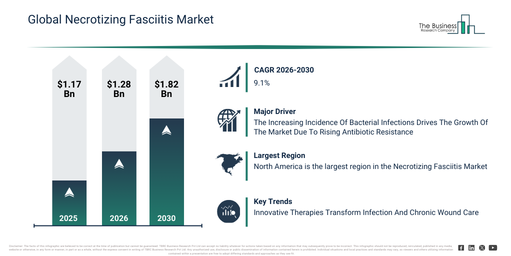
    The necrotizing fasciitis market has demonstrated significant expansion in recent years. Forecasts indicate it will increase from $1.17 billion in 2025 to $1.28 billion in 2026, achieving a compound annual growth rate (CAGR) of 9.4%. This historical growth can be linked to better surgical debridement techniques, the widespread availability of broad-spectrum antibiotics, upgraded intensive care unit capabilities, increasing medical understanding of severe soft tissue infections, and innovations in wound management.

    The necrotizing fasciitis market size is anticipated to undergo significant growth in the coming years, projected to reach $1.82 billion by 2030, with a compound annual growth rate (CAGR) of 9.1%. This expansion during the forecast period can be attributed to the development of targeted antimicrobial therapies, the increasing adoption of precision diagnostics, the enlargement of advanced critical care infrastructure, growing research into immunomodulatory treatments, and a rising focus on rapid-response infection management protocols. Prominent trends expected in the forecast period include an increasing emphasis on early diagnostic interventions, the rising adoption of advanced antibiotic regimens, the growing use of adjunctive therapies, the expansion of multidisciplinary critical care approaches, and an enhanced focus on rapid surgical management.

    Access Your Free Sample Report For In-Depth Market Analysis:

    https://www.thebusinessresearchcompany.com/sample.aspx?id=30334&type=smp

    What Key Drivers Are Fueling The Growth Of The Necrotizing Fasciitis Market?

    The expanding occurrence of bacterial infections is anticipated to boost the necrotizing fasciitis market. These infections involve detrimental bacteria invading and proliferating within the body, leading to cell damage and disease. This rise in bacterial infections largely stems from growing antibiotic resistance, which diminishes the efficacy of conventional therapies, allowing infections to endure and disseminate. Such an elevated frequency of bacterial infections fosters a more hazardous setting for severe soft tissue infections, thereby directly aiding the prevalence and swift advancement of necrotizing fasciitis as opportunistic pathogens capitalize on weakened immune systems to rapidly infiltrate fascial tissues. As an illustration, in March 2024, the Centers for Disease Control and Prevention, a US-based government agency, reported that tuberculosis cases surged from 8,320 in 2022 to 9,615 in 2023, marking an increase of 1,295 cases. Consequently, the escalating incidence of bacterial infections is propelling the expansion of the necrotizing fasciitis market.

    What Are The Different Segment Types In The Necrotizing Fasciitis Market Segment Breakdown?

    The necrotizing fasciitis market covered in this report is segmented –

    1) By Treatment Type: Surgical Debridement, Antibiotic Therapy, Hyperbaric Oxygen Therapy, Other Treatment Types

    2) By Type: Type I, Type II, Type III

    3) By Age Group: Pediatric, Adult, Geriatric

    4) By Distribution Channel: Hospital Pharmacies, Retail Pharmacies, Online Pharmacies

    5) By End-User: Hospitals, Specialized Clinics, Emergency Care Centers, Home Healthcare Providers, Pharmaceutical Companies

    Subsegments:

    1) By Surgical Debridement: Early Debridement, Radical Debridement, Serial Debridement, Fasciotomy

    2) By Antibiotic Therapy: Intravenous Antibiotics, Oral Antibiotics, Combination Therapy, Targeted Therapy

    3) By Hyperbaric Oxygen Therapy: Monoplace Chamber Therapy, Multiplace Chamber Therapy, Adjunctive Therapy, Postoperative Therapy

    4) By Other Treatment Types: Immunoglobulin Therapy, Supportive Care, Wound Care Management, Pain Management

    What Trends Are Influencing The Necrotizing Fasciitis Market?

    Leading companies in the necrotizing fasciitis market are concentrating on developing innovative therapies, including antibiotics and immunotherapies, to target biologics and novel wound care solutions. Antibiotics are medications designed to kill or inhibit bacterial growth, while immunotherapies are treatments that strengthen or modify the body’s immune system to combat infections or diseases. For example, in March 2025, Altru Health System, a US-based nonprofit physician-led healthcare organization, introduced Hyperbaric Oxygen Therapy (HBO) to improve wound healing and assist recovery for patients with chronic or difficult-to-heal conditions. This therapy delivers pure oxygen in a pressurized chamber, thereby enhancing tissue oxygenation and stimulating the body’s natural healing processes. It is intended for treating conditions such as diabetic foot ulcers, radiation-induced tissue damage, compromised skin grafts, and severe infections, serving as a non-invasive addition to traditional medical care.

    Who Are The Well-Known Companies In The Necrotizing Fasciitis Market?

    Major companies operating in the necrotizing fasciitis market are GlaxoSmithKline Public Limited Company, Gilead Sciences Inc., Teva Pharmaceutical Industries Limited, Merck And Co. Inc., bioMérieux S.A., Cipla Limited, Dr. Reddy’s Laboratories Limited, Hikma Pharmaceuticals PLC, Mankind Pharma Limited, Wockhardt Limited, Xellia Pharmaceuticals ApS, Basilea Pharmaceutica International Ltd., Avita Medical Inc., HiMedia Laboratories Pvt. Ltd., CutisCare Pvt. Ltd., NovaBay Pharmaceuticals Inc., TCS Biosciences Ltd., 3i Diagnostics Limited, Antabio S.A.P., Pfizer Inc.

    Get The Full Necrotizing Fasciitis Market Report:

    https://www.thebusinessresearchcompany.com/report/global-necrotizing-fasciitis-market-report

    Which Region Leads The Necrotizing Fasciitis Market In Overall Market Size?

    North America was the largest region in the necrotizing fasciitis market in 2025. Asia-Pacific is expected to be the fastest-growing region in the forecast period. The regions covered in the necrotizing fasciitis market report are Asia-Pacific, South East Asia, Western Europe, Eastern Europe, North America, South America, Middle East, Africa.

    Request A Customized Necrotizing Fasciitis Market Report For Competitive Insights:

    https://www.thebusinessresearchcompany.com/report/global-necrotizing-fasciitis-market-report

    Browse Through More Reports Similar to the Global Necrotizing Fasciitis Market 2026, By The Business Research Company

    Gastrointestinal Pathogen Testing Market Report 2026

    https://www.thebusinessresearchcompany.com/report/gastrointestinal-pathogen-testing-global-market-report

    Hospice Care Market Report

    https://www.thebusinessresearchcompany.com/report/hospice-care-global-market-report

    Viral Gastroenteritis Market Report

    https://www.thebusinessresearchcompany.com/report/viral-gastroenteritis-global-market-report

    Get in touch with us:

    The Business Research Company: https://www.thebusinessresearchcompany.com/

    Americas +1 310-496-7795

    Asia +44 7882 955267 & +91 8897263534

    Europe +44 7882 955267

    Email us at info@tbrc.info

    Follow us on:

    LinkedIn: https://in.linkedin.com/company/the-business-research-company

    YouTube: https://www.youtube.com/channel/UC24_fI0rV8cR5DxlCpgmyFQ

    Global Market Model: https://www.thebusinessresearchcompany.com/global-market-model