Category: Healthcare Services

  • Patent Analytics Market to Reach $2.1 Billion by 2030

    Patent Analytics Market to Reach $2.1 Billion by 2030

    The Business Research Company’s 2026 market reports feature enhanced tools like market attractiveness analysis, TAM assessment, and company scoring matrices, along with interactive dashboards, deeper supply chain insights, and startup coverage strengthening the depth, usability, and strategic value of insights.

    What Is The Anticipated Rise In Market Value Of The Patent Analytics Market During The Forecast Period?

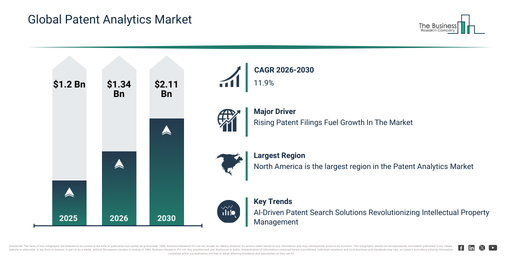
    The patent analytics market has experienced swift expansion recently. Its size is projected to increase from $1.2 billion in 2025 to $1.34 billion in 2026, exhibiting a compound annual growth rate (CAGR) of 12.3%. Historically, this expansion has been driven by factors such as the increasing volume of global patent filings, the rising intricacy of intellectual property environments, a greater demand for competitive benchmarking, a reliance on manual patent analysis techniques, and the broadening innovation strategies of multinational corporations.

    The patent analytics market is projected to experience substantial expansion in the coming years. Its valuation is anticipated to reach $2.11 billion by 2030, demonstrating a compound annual growth rate (CAGR) of 11.9%. This forecasted growth is attributable to several factors, including the integration of AI and machine learning into patent analytics tools, a surge in adoption among SMEs, an escalating need for real-time patent insights, the proliferation of cloud-based analytics deployments, and the broadening application of patent data for strategic investment choices. Significant trends during this period are expected to encompass the growing embrace of data-driven patent decision-making, an escalating requirement for competitive intelligence and landscape analysis, the expansion of cloud-based patent analytics platforms, an increase in patent valuation and monetization initiatives, and an enhanced emphasis on IP risk management and preparedness for litigation.

    Access Your Free Sample Report For In-Depth Market Analysis:

    https://www.thebusinessresearchcompany.com/sample.aspx?id=20916&type=smp

    What Key Factors Are Affecting The Patent Analytics Market Demand?

    The patent analytics market is anticipated to expand significantly due to the increasing volume of patent applications. Patent filings refer to the procedure of submitting applications to secure legal rights for an invention, granting the applicant exclusive ownership and protection for a specified period. This rise in patent applications can be attributed to several factors, such as increased R&D investment, growing IP awareness, and patent trolls. Patent analytics assists in identifying prior art, evaluating patentability, and formulating strong claims to enhance patent filing strategies. For instance, in August 2024, according to the World Intellectual Property Organization (WIPO), a Switzerland-based intergovernmental organization, global patent filings saw a 2.7% growth in 2023, reaching approximately 3.6 million. Consequently, the increasing number of patent filings is a primary driver for the growth of the patent analytics market.

    How Is Segmentation Applied In The Patent Analytics Market Segment Analysis?

    The patent analytics market covered in this report is segmented –

    1) By Component: Solutions, Services

    2) By Deployment Type: On-Premises, Cloud-Based

    3) By Enterprise Size: Large Enterprises, Small And Mid-Sized Enterprises (SMEs)

    4) By Application: Competitive Intelligence, Technology Landscape Analysis, Patent Valuation, Litigation Support

    5) By End-User: Corporates, Research Organizations, Intellectual Property Firms, Government Agencies

    Subsegments:

    1) By Solutions: Patent Search And Analytics Software, Patent Valuation Solutions, Competitive Intelligence Solutions, Patent Mapping And Landscape Tools, IP Portfolio Management Solutions

    2) By Services: Patent Search Services, Patent Licensing And Monetization Services, Patent Litigation Support Services, Patent Strategy And Consulting Services, Patent Filing And Prosecution Services

    What Trends Are Influencing Changes In The Patent Analytics Market?

    Leading companies within the patent analytics market are prioritizing the creation of sophisticated artificial intelligence-driven patent search solutions to improve decision-making within intellectual property management. Such AI-powered solutions employ advanced technologies to streamline and automate searches within patent databases, enabling users to efficiently locate pertinent patents, monitor innovation patterns, and evaluate patentability with greater precision. As an illustration, Clarivate Plc, a UK-based provider of transformative intelligence, introduced AI Search in Derwent in December 2024. This advanced patent search instrument integrates artificial intelligence with the Derwent World Patents Index (DWPI) to yield more precise and relevant patent search outcomes. By employing a language transformer model, the tool comprehends the context of entered text, empowering intellectual property (IP) professionals to conduct preliminary patentability searches, verify findings, and investigate new technology sectors more effectively. The AI tool substantially boosts both the pace and exactness of searches, allowing users to discover relevant patents faster and make more astute choices throughout the patent research endeavor.

    Who Are The Companies Participating In The Patent Analytics Market Environment?

    Major companies operating in the patent analytics market are Clarivate Plc, LexisNexis, IP.com, Patsnap, Anaqua Inc., TechInsights Inc., QUESTEL SAS, Sagacious IP, MaxVal Group Inc., RPX Corporation, Wynne-Jones IP Ltd., Ocean Tomo LLC, Minesoft Ltd., IDTechEx Limited, Excelon IP, Coller IP, Harrity & Harrity LLP, Patent iNSIGHT Pro, IPlytics GmbH, Dolcera, PatSeer Technologies Pvt. Ltd.

    Get The Full Patent Analytics Market Report:

    https://www.thebusinessresearchcompany.com/report/patent-analytics-global-market-report

    Which Region Holds The Highest Market Share In The Patent Analytics Market?

    North America was the largest region in the patent analytics market in 2025. Asia-Pacific is expected to be the fastest-growing region in the forecast period. The regions covered in the patent analytics market report are Asia-Pacific, South East Asia, Western Europe, Eastern Europe, North America, South America, Middle East, Africa.

    Request A Customized Patent Analytics Market Report For Competitive Insights:

    https://www.thebusinessresearchcompany.com/report/patent-analytics-global-market-report

    Browse Through More Reports Similar to the Global Patent Analytics Market 2026, By The Business Research Company

    Non Invasive Aesthetic Treatment Market Report 2026

    https://www.thebusinessresearchcompany.com/report/non-invasive-aesthetic-treatment-global-market-report

    Nasal Polyps Treatment Market Report

    https://www.thebusinessresearchcompany.com/report/nasal-polyps-treatment-global-market-report

    Agricultural Wastewater Treatment Market Report

    https://www.thebusinessresearchcompany.com/report/agricultural-wastewater-treatment-global-market-report

    Get in touch with us:

    The Business Research Company: https://www.thebusinessresearchcompany.com/

    Americas +1 310-496-7795

    Asia +44 7882 955267 & +91 8897263534

    Europe +44 7882 955267

    Email us at info@tbrc.info

    Follow us on:

    LinkedIn: https://in.linkedin.com/company/the-business-research-company

    YouTube: https://www.youtube.com/channel/UC24_fI0rV8cR5DxlCpgmyFQ

    Global Market Model: https://www.thebusinessresearchcompany.com/global-market-model

  • Pars Planitis Treatment Market to Reach $989.53 Billion by 2030 at 7.6% CAGR

    Pars Planitis Treatment Market to Reach $989.53 Billion by 2030 at 7.6% CAGR

    The Business Research Company’s 2026 market reports feature enhanced tools like market attractiveness analysis, TAM assessment, and company scoring matrices, along with interactive dashboards, deeper supply chain insights, and startup coverage strengthening the depth, usability, and strategic value of insights.

    How Is The Market Size Of The Pars Planitis Treatment Market Expected To Scale Between 2026 And 2030?

    The pars planitis treatment market size has experienced strong growth in recent years. It is projected to expand from $683.54 billion in 2025 to $737.86 billion in 2026, with a compound annual growth rate (CAGR) of 7.9%. Historically, this expansion can be ascribed to an improved understanding of uveitis pathophysiology, the availability of corticosteroid-based therapies, the proliferation of ophthalmology specialty clinics, increasing utilization of diagnostic imaging, and heightened clinical awareness of pars planitis.

    The pars planitis treatment market is anticipated to experience robust expansion over the coming years. Projections indicate it will reach $989.53 billion by 2030, demonstrating a compound annual growth rate (CAGR) of 7.6%. This projected growth is driven by several factors, including the increasing embrace of customized ophthalmic therapies, a heightened need for sustained inflammation management, the expansion of biologic drug development, an intensifying focus on methods to preserve vision, and greater financial commitments to cutting-edge ophthalmic diagnostic tools. Key trends anticipated during this period encompass the growing application of immunomodulatory interventions, the increasing uptake of biologic substances, a rising inclination towards specific anti-inflammatory approaches, the development of sophisticated ocular surgical methods, and an intensified emphasis on prompt diagnosis and continuous disease observation.

    Access Your Free Sample Report For In-Depth Market Analysis:

    https://www.thebusinessresearchcompany.com/sample.aspx?id=24649&type=smp

    Which Primary Drivers Are Impacting The Pars Planitis Treatment Market Growth?

    The rising occurrence of pars planitis is anticipated to boost the expansion of the pars planitis treatment market in the future. Pars planitis is defined as an idiopathic type of intermediate uveitis, predominantly leading to inflammation in the vitreous and the peripheral retina, commonly impacting individuals between 15 and 40 years old. This surge in pars planitis cases stems from enhanced awareness and better diagnostic abilities, facilitated by advanced imaging tools that allow for earlier and more precise detection. Treatments for pars planitis aid in its management by lessening ocular inflammation, thus proving crucial for vision preservation and complication prevention. These treatments improve patient care through targeted therapies, including corticosteroids and immunosuppressants, which contribute to better long-term eye health and an improved quality of life. For example, a case report from February 2025 by the US-based medical journal, Mega Journal of Case Reports, indicated that intermediate uveitis has an incidence of 1.4 to 2 cases per 100,000 people, with pars planitis, its idiopathic variant, making up 70% of these cases. Consequently, the rising prevalence of pars planitis is fueling the expansion of the pars planitis treatment market.

    What Segment Categories Shape The Pars Planitis Treatment Market Segment Landscape?

    The pars planitis treatment market covered in this report is segmented –

    1) By Treatment: Corticosteroid, Non-Steroidal Anti-Inflammatory Drugs (NSAIDs), Surgery, Cryotherapy, Immunomodulatory Therapy, Other Treatments

    2) By Diagnosis: Blood Tests, Fundus Examination And Optical Coherence Tomography, Magnetic Resonance Imaging (MRI), Other Diagnosis

    3) By Route Of Administration: Oral, Intravenous, Other Routes Of Administration

    4) By Distribution Channel: Hospital Pharmacy, Retail Pharmacy, Online Pharmacy

    5) By End-User: Clinic, Hospital, Other End-Users

    Subsegments:

    1) By Corticosteroid: Topical Corticosteroids, Periocular Corticosteroid Injections, Intravitreal Corticosteroid Implants, Systemic Corticosteroids

    2) By Non-Steroidal Anti-Inflammatory Drugs (NSAIDs): Oral Non-Steroidal Anti-Inflammatory Drugs (NSAIDs), Topical Non-Steroidal Anti-Inflammatory Drugs (NSAIDs), Injectable Non-Steroidal Anti-Inflammatory Drugs (NSAIDs)

    3) By Surgery: Pars Plana Vitrectomy, Cataract Surgery, Glaucoma Surgery

    4) By Cryotherapy: Trans-scleral Cryotherapy, Endocryotherapy

    5) By Immunomodulatory Therapy: Antimetabolites, Calcineurin Inhibitors, Biologic Agents

    6) By Other Treatments: Antibiotics, Antivirals, Laser therapy

    Which Trends Are Shaping Growth In The Pars Planitis Treatment Market?

    Leading companies in the pars planitis treatment market are focused on developing innovative solutions, such as bispecific antibodies, to enhance immune modulation, decrease ocular inflammation, and minimize systemic adverse effects. Bispecific antibodies are engineered proteins designed to simultaneously bind to two distinct antigens or targets, offering more precise and effective treatment with fewer side effects. For instance, in October 2023, Genentech Inc., a US-based biotechnology company, secured Food and Drug Administration (FDA) approval for Vabysmo (faricimab-svoa) for the treatment of retinal vein occlusion (RVO), supplementing its existing indications for age-related macular degeneration and diabetic macular edema. Vabysmo stands as the first bispecific antibody for ophthalmic use that targets both Angiopoietin-2 (Ang-2) and vascular endothelial growth factor A (VEGF-A), concurrently addressing inflammation and vascular leakage. This innovative mechanism is currently being explored for its potential application in intermediate uveitis, including pars planitis, where chronic inflammation in the retinal periphery necessitates durable and targeted intervention.

    Who Are The Companies Operating Across The Pars Planitis Treatment Market Value Chain?

    Major companies operating in the pars planitis treatment market are Johnson And Johnson, Merck And Co Inc, AbbVie Inc, Bayer AG, AstraZeneca plc, Novartis AG, EyePoint Pharmaceuticals Inc, Eli Lilly And Company, Teva Pharmaceutical Industries Ltd, Quantum Cryogenics Ltd, Zimmer MedizinSysteme GmbH, Sun Pharmaceutical Industries Ltd, Aurobindo Pharma Limited, Santen Pharmaceutical Co Ltd, Alimera Sciences Inc, Clearside Biomedical Inc, Roche Holding AG, Pfizer Inc, Bristol Myers Squibb Company, Regeneron Pharmaceuticals Inc, UCB SA, Bausch Health Companies Inc

    Get The Full Pars Planitis Treatment Market Report:

    https://www.thebusinessresearchcompany.com/report/pars-planitis-treatment-global-market-report

    Where Is The Pars Planitis Treatment Market Most Concentrated Geographically?

    North America was the largest region in the pars planitis treatment market in 2025. The regions covered in the pars planitis treatment market report are Asia-Pacific, South East Asia, Western Europe, Eastern Europe, North America, South America, Middle East, Africa.

    Request A Customized Pars Planitis Treatment Market Report For Competitive Insights:

    https://www.thebusinessresearchcompany.com/report/pars-planitis-treatment-global-market-report

    Browse Through More Reports Similar to the Global Pars Planitis Treatment Market 2026, By The Business Research Company

    Hemoglobinopathies Treatment Market Report 2026

    https://www.thebusinessresearchcompany.com/report/hemoglobinopathies-treatment-global-market-report

    Hemoglobin Testing Market Report

    https://www.thebusinessresearchcompany.com/report/hemoglobin-testing-global-market-report

    Acquired Hemophilia Treatment Market Report

    https://www.thebusinessresearchcompany.com/report/acquired-hemophilia-treatment-global-market-report

    Get in touch with us:

    The Business Research Company: https://www.thebusinessresearchcompany.com/

    Americas +1 310-496-7795

    Asia +44 7882 955267 & +91 8897263534

    Europe +44 7882 955267

    Email us at info@tbrc.info

    Follow us on:

    LinkedIn: https://in.linkedin.com/company/the-business-research-company

    YouTube: https://www.youtube.com/channel/UC24_fI0rV8cR5DxlCpgmyFQ

    Global Market Model: https://www.thebusinessresearchcompany.com/global-market-model

  • PNH Treatment Market to Approach $11.32 Billion by 2030

    PNH Treatment Market to Approach $11.32 Billion by 2030

    The Business Research Company’s 2026 market reports feature enhanced tools like market attractiveness analysis, TAM assessment, and company scoring matrices, along with interactive dashboards, deeper supply chain insights, and startup coverage strengthening the depth, usability, and strategic value of insights.

    What Level Of Market Value Growth Is Predicted For The Paroxysmal Nocturnal Hemoglobinuria (PNH) Treatment Market From 2026 To 2030?

    The paroxysmal nocturnal hemoglobinuria (pnh) treatment market has seen rapid expansion in recent years. This market is projected to increase from $6.07 billion in 2025 to $6.89 billion in 2026, exhibiting a compound annual growth rate (CAGR) of 13.4%. The historical growth can be attributed to several factors, including the limited availability of effective targeted therapies, the prevalent reliance on supportive care and transfusions, challenges in timely diagnosis due to the rarity of the disease, the elevated risk of life-threatening thrombosis, and the absence of standardized long-term treatment protocols.

    The paroxysmal nocturnal hemoglobinuria (pnh) treatment market size is anticipated to undergo significant expansion in the coming years, projected to reach $11.32 billion by 2030, at a compound annual growth rate (CAGR) of 13.2%. This growth during the forecast period can be attributed to the progression in developing next-generation complement inhibitors, an expanding clinical pipeline for oral and subcutaneous therapies, an increasing focus on innovation for orphan disease drugs, higher diagnosis rates through advanced testing methods, and improved reimbursement coverage for rare hematologic disorders. Prominent trends for the forecast period include the increasing adoption of complement c5 inhibitor therapies, a growing move towards long-acting and subcutaneous treatments, advancements in alternative pathway inhibitor development, the broadening of combination and dual complement inhibition strategies, and enhanced management of thrombotic and bone marrow complications.

    Access Your Free Sample Report For In-Depth Market Analysis:

    https://www.thebusinessresearchcompany.com/sample.aspx?id=23469&type=smp

    What Significant Factors Are Influencing The Paroxysmal Nocturnal Hemoglobinuria (PNH) Treatment Market Expansion?

    The rising occurrence of hematologic disorders is anticipated to stimulate the expansion of the paroxysmal nocturnal hemoglobinuria (PNH) treatment market in the coming years. Hematologic disorders encompass a diverse range of medical conditions that impact the blood and its producing organs, including irregularities in red blood cells, white blood cells, platelets, bone marrow, and the coagulation system, potentially resulting in conditions such as anemia, blood clotting problems, or various cancers. The escalating frequency of these disorders is fueled by factors like an aging demographic and genetic susceptibility, with genetic mutations playing a crucial role by initiating abnormal blood cell formation, which can lead to diverse hematologic conditions. Paroxysmal nocturnal hemoglobinuria (PNH) treatment offers effective management for hematologic disorders by providing specific therapies that lessen complement-mediated hemolysis, decrease complications from blood clots, and enhance patient survival rates. For illustration, data from July 2024, published by Cancer Research UK, a charity organization based in the UK, projects that the average number of new cases of leukemia (a type of hematologic disorder) in the UK is projected to rise from approximately 12,400 between 2023 and 2025 to around 14,500 by the period of 2038 to 2040. Consequently, the increasing prevalence of hematologic disorders acts as a significant driver for the growth of the paroxysmal nocturnal hemoglobinuria (PNH) treatment market.

    Which Segment Types Are Examined In The Paroxysmal Nocturnal Hemoglobinuria (PNH) Treatment Market Segment Study?

    The paroxysmal nocturnal hemoglobinuria (pnh) treatment market covered in this report is segmented –

    1) By Treatment Type: Complement C5 Inhibitors, Anti-Complement Component 5a Receptor (C5aR) Monoclonal Antibodies, Alternative Pathway Inhibitors, Hematopoietic Stem Cell Transplantation, Other Therapies

    2) By Route Of Administration: Intravenous, Subcutaneous, Oral

    3) By Market Availability: Approved, In Pipeline, Investigational

    4) By End-Use: Hospitals, Specialty Clinics, Homecare Settings, Other End-Users

    Subsegments:

    1) By Complement: C5 InhibitorsEculizumab (Soliris), Ravulizumab (Ultomiris), Emerging C5 Inhibitors, Biosimilars Of C5 Inhibitors,

    2) By Anti-Complement Component 5a Receptor Monoclonal Antibodies: Avacopan (Tavneos), Other Investigational C5aR mAbs, Monotherapy vs Combination Therapy, Clinical Trial Phase (Phase I, II, III)

    3) By Alternative Pathway Inhibitors: C3 Inhibitors, Factor B Inhibitors, Factor D Inhibitors, Targeting Complement Amplification, Combination Therapies And Dual Inhibition

    4) By Hematopoietic Stem Cell Transplantation (HSCT): Autologous HSCT vs. Allogeneic HSCT, Pre-Transplant Conditioning Therapies, Post-Transplant Immunosuppressive Therapies

    5) By Other Therapies: Immunosuppressive Therapy, Supportive Care, Anticoagulation Therapy, Gene Therapy

    What Trends Are Affecting The Direction Of The Paroxysmal Nocturnal Hemoglobinuria (PNH) Treatment Market?

    Leading companies in the paroxysmal nocturnal hemoglobinuria (PNH) treatment market are focused on developing innovative solutions, such as oral factor B inhibitors, to introduce new treatment options that enhance therapeutic effectiveness and improve patient convenience in managing PNH. An oral Factor B inhibitor is a specific small-molecule medication designed to selectively block Factor B in the alternative complement pathway, aiming to regulate excessive immune system activation and lessen inflammation in complement-mediated conditions. For instance, in December 2023, Novartis AG, a Switzerland-based pharmaceutical corporation, announced the food and drug administration (FDA) approval of Fabhalta (iptacopan) as the first oral monotherapy for treating paroxysmal nocturnal hemoglobinuria (PNH). This innovative Factor B inhibitor provides a more comprehensive method for controlling complement-mediated hemolysis by targeting the alternative complement pathway at an earlier stage, resulting in improved hemoglobin levels and a reduced need for blood transfusions. The approval of Fabhalta signifies a major advancement in PNH treatment, offering enhanced efficacy, better patient compliance, and an alternative to intravenous therapies, thereby transforming the treatment landscape for this rare hematologic disorder.

    Which Players Are Part Of The Competitive Landscape Of The Paroxysmal Nocturnal Hemoglobinuria (PNH) Treatment Market?

    Major companies operating in the paroxysmal nocturnal hemoglobinuria (pnh) treatment market are F. Hoffmann-La Roche Ltd, Novartis AG, Mayo Clinic, Cleveland Clinic Foundation, Johns Hopkins Medicine, Memorial Sloan Kettering Cancer Center, Stanford Health Care, University of California San Francisco (UCSF) Health, Emory Healthcare, Cedars-Sinai Medical Center, Duke University Health System, Mount Sinai Health System, Dana-Farber Cancer Institute, Swedish Orphan Biovitrum, Alnylam Pharmaceuticals, BioCryst Pharmaceuticals, Apellis Pharmaceuticals, Omeros Corporation, Takeda Pharmaceutical Company, Sanofi S A, Pfizer Inc, Akari Therapeutics Plc, NovelMed Therapeutics, Ionis Pharmaceuticals, Johnson & Johnson, Biogen Inc.

    Get The Full Paroxysmal Nocturnal Hemoglobinuria (PNH) Treatment Market Report:

    https://www.thebusinessresearchcompany.com/report/paroxysmal-nocturnal-hemoglobinuria-pnh-treatment-global-market-report

    Which Region Dominates The Paroxysmal Nocturnal Hemoglobinuria (PNH) Treatment Market By Market Share?

    North America was the largest region in the paroxysmal nocturnal hemoglobinuria (PNH) treatment market in 2025. Asia-Pacific is expected to be the fastest-growing region in the forecast period. The regions covered in the paroxysmal nocturnal hemoglobinuria (pnh) treatment market report are Asia-Pacific, South East Asia, Western Europe, Eastern Europe, North America, South America, Middle East, Africa.

    Request A Customized Paroxysmal Nocturnal Hemoglobinuria (PNH) Treatment Market Report For Competitive Insights:

    https://www.thebusinessresearchcompany.com/report/paroxysmal-nocturnal-hemoglobinuria-pnh-treatment-global-market-report

    Browse Through More Reports Similar to the Global Paroxysmal Nocturnal Hemoglobinuria (PNH) Treatment Market 2026, By The Business Research Company

    Hemoglobin Testing Market Report 2026

    https://www.thebusinessresearchcompany.com/report/hemoglobin-testing-global-market-report

    Hemoglobinopathies Treatment Market Report

    https://www.thebusinessresearchcompany.com/report/hemoglobinopathies-treatment-global-market-report

    Hemoglobin A1C Hba1C Testing Market Report

    https://www.thebusinessresearchcompany.com/report/hemoglobin-a1c-hba1c-testing-global-market-report

    Get in touch with us:

    The Business Research Company: https://www.thebusinessresearchcompany.com/

    Americas +1 310-496-7795

    Asia +44 7882 955267 & +91 8897263534

    Europe +44 7882 955267

    Email us at info@tbrc.info

    Follow us on:

    LinkedIn: https://in.linkedin.com/company/the-business-research-company

    YouTube: https://www.youtube.com/channel/UC24_fI0rV8cR5DxlCpgmyFQ

    Global Market Model: https://www.thebusinessresearchcompany.com/global-market-model
  • PNH and aHUS Market to Reach $8.41 Billion by 2030 at 7.1% CAGR

    PNH and aHUS Market to Reach $8.41 Billion by 2030 at 7.1% CAGR

    The Business Research Company’s 2026 market reports feature enhanced tools like market attractiveness analysis, TAM assessment, and company scoring matrices, along with interactive dashboards, deeper supply chain insights, and startup coverage strengthening the depth, usability, and strategic value of insights.

    How Will The Market Value Of The Paroxysmal Nocturnal Hemoglobinuria (PNH) And Atypical Hemolytic Uremic Syndrome (aHUS) Market Progress Between 2026 And 2030?

    The market size for paroxysmal nocturnal hemoglobinuria (pnh) and atypical hemolytic uremic syndrome (ahus) has experienced strong growth in recent years. It is projected to expand from $5.97 billion in 2025 to $6.41 billion in 2026, indicating a compound annual growth rate (CAGR) of 7.3%. The growth observed in the past can be attributed to factors such as the limited availability of targeted complement therapies, delayed diagnosis due to the rare nature of these diseases, reliance on plasma exchange and general supportive care, high treatment costs restricting access, and low awareness of complement-mediated disorders.

    The market for paroxysmal nocturnal hemoglobinuria (pnh) and atypical hemolytic uremic syndrome (ahus) is anticipated to experience robust expansion over the coming years, reaching $8.42 billion by 2030, with a compound annual growth rate (CAGR) of 7.1%. This growth during the forecast period is propelled by factors such as the creation of next-generation complement inhibitors, higher diagnosis rates due to advanced testing methods, an increasing emphasis on developing drugs for orphan diseases, broadened reimbursement coverage for rare conditions, and the growing establishment of specialized hematology and nephrology centers. Key developments expected in the forecast period encompass an increasing uptake of complement inhibitor therapies, expanded utilization of genetic and biomarker testing, the emergence of long-acting complement inhibition drugs, the proliferation of specialized rare disease treatment centers, and enhanced early detection of complement-mediated disorders.

    Access Your Free Sample Report For In-Depth Market Analysis:

    https://www.thebusinessresearchcompany.com/sample.aspx?id=24357&type=smp

    Which Important Drivers Are Guiding The Paroxysmal Nocturnal Hemoglobinuria (PNH) And Atypical Hemolytic Uremic Syndrome (aHUS) Market Growth?

    The growing incidence of rare diseases is anticipated to boost the paroxysmal nocturnal hemoglobinuria (PNH) and atypical hemolytic uremic syndrome (aHUS) market in the future. These conditions are defined as medical ailments affecting a minor portion of the populace, usually under 200,000 people, and are frequently marked by intricacy, seriousness, and a requirement for specialized medical care. The increase in rare disease prevalence can be linked to progress in diagnostic tools, facilitating improved detection and recognition of conditions that were previously not reported or identified. Paroxysmal nocturnal hemoglobinuria (PNH) and atypical hemolytic uremic syndrome (aHUS) play a role in advancing the comprehension and management of rare diseases, offering insights into their underlying mechanisms and potential treatment avenues for conditions where therapeutic choices are scarce. As an illustration, the Food and Drug Administration, a US federal agency, reported that by November 2024, over 7,000 rare diseases had affected more than 30 million individuals across the United States. Consequently, the expanding occurrence of rare diseases is fueling the expansion of the paroxysmal nocturnal hemoglobinuria (PNH) and atypical hemolytic uremic syndrome (aHUS) market.

    How Are Different Segments Classified In The Paroxysmal Nocturnal Hemoglobinuria (PNH) And Atypical Hemolytic Uremic Syndrome (aHUS) Market Segment Analysis?

    The paroxysmal nocturnal hemoglobinuria (pnh) and atypical hemolytic uremic syndrome (ahus) market covered in this report is segmented –

    1) By Type: Soliris, Ultomiris

    2) By Disease Type: Paroxysmal Nocturnal Hemoglobinuria(PNH), Atypical Hemolytic Uremic Syndrome(aHUS)

    3) By Treatment Type: Complement Inhibitors, Plasma Exchange Or Infusion, Other Symptomatic Treatments

    4) By Diagnosis Method: Clinical Diagnosis, Genetic Testing, Biomarker Testing

    5) By End-User: Hospitals, Specialty Clinics, Research Institutes, Other End-Users

    Subsegments:

    1) By Soliris: Eculizumab For PNH, Eculizumab For aHUS, Eculizumab Biosimilars

    2) By Ultomiris: Ravulizumab For PNH, Ravulizumab For aHUS, Ravulizumab Extended-Interval Dosing

    What Trends Are Influencing The Evolution Of The Paroxysmal Nocturnal Hemoglobinuria (PNH) And Atypical Hemolytic Uremic Syndrome (aHUS) Market?

    Leading companies in the paroxysmal nocturnal hemoglobinuria (PNH) and atypical hemolytic uremic syndrome (aHUS) market are prioritizing the creation of novel offerings, such as complement inhibitors, to elevate treatment effectiveness and simplify patient experience. Complement inhibitors represent medicinal agents that obstruct specific elements of the complement system, a segment of the immune system responsible for clearing disease-causing agents and damaged cells. For example, in December 2023, Novartis AG, a pharmaceutical firm headquartered in Switzerland, obtained U.S. Food and Drug Administration (FDA) approval for Fabhalta (iptacopan). This marks the first oral monotherapy designed for adults with paroxysmal nocturnal hemoglobinuria, delivering superior hemoglobin enhancement without requiring transfusions. This groundbreaking complement inhibitor operates by inhibiting Factor B in the alternative complement pathway, ensuring thorough control over both intravascular and extravascular hemolysis. Its oral method of delivery streamlines disease oversight and improves patients’ quality of life, removing the difficulties associated with frequent infusions.

    Who Are The Companies Driving Activity In The Paroxysmal Nocturnal Hemoglobinuria (PNH) And Atypical Hemolytic Uremic Syndrome (aHUS) Market?

    Major companies operating in the paroxysmal nocturnal hemoglobinuria (pnh) and atypical hemolytic uremic syndrome (ahus) market are Roche Holding AG, Alexion Pharmaceuticals Inc, Genentech Inc, Novartis AG, Apellis Pharmaceuticals Inc, Omeros Corporation, BioCryst Pharmaceuticals Inc, ChemoCentryx Inc, Sanofi SA, CSL Behring, Takeda Pharmaceutical Company, Pfizer Inc, Regeneron Pharmaceuticals Inc, Ionis Pharmaceuticals Inc, Horizon Therapeutics, Achillion Pharmaceuticals Inc, Sobi Swedish Orphan Biovitrum AB, ImmunoForge Co Ltd, Care Pharma, Daiichi Sankyo Co Ltd, Astellas Pharma Inc, Mallinckrodt Pharmaceuticals, CANbridge Pharmaceuticals Inc.

    Get The Full Paroxysmal Nocturnal Hemoglobinuria (PNH) And Atypical Hemolytic Uremic Syndrome (aHUS) Market Report:

    https://www.thebusinessresearchcompany.com/report/paroxysmal-nocturnal-hemoglobinuria-pnh-and-atypical-hemolytic-uremic-syndrome-ahus-global-market-report

    Which Region Is The Largest In The Paroxysmal Nocturnal Hemoglobinuria (PNH) And Atypical Hemolytic Uremic Syndrome (aHUS) Market?

    North America was the largest region in the paroxysmal nocturnal hemoglobinuria (PNH) and atypical hemolytic uremic syndrome (aHUS) market in 2025. Asia-Pacific is expected to be the fastest-growing region in the forecast period. The regions covered in the paroxysmal nocturnal hemoglobinuria (pnh) and atypical hemolytic uremic syndrome (ahus) market report are Asia-Pacific, South East Asia, Western Europe, Eastern Europe, North America, South America, Middle East, Africa.

    Request A Customized Paroxysmal Nocturnal Hemoglobinuria (PNH) And Atypical Hemolytic Uremic Syndrome (aHUS) Market Report For Competitive Insights:

    https://www.thebusinessresearchcompany.com/report/paroxysmal-nocturnal-hemoglobinuria-pnh-and-atypical-hemolytic-uremic-syndrome-ahus-global-market-report

    Browse Through More Reports Similar to the Global Paroxysmal Nocturnal Hemoglobinuria (PNH) And Atypical Hemolytic Uremic Syndrome (aHUS) Market 2026, By The Business Research Company

    Hemoglobin Testing Market Report 2026

    https://www.thebusinessresearchcompany.com/report/hemoglobin-testing-global-market-report

    Hemodialysis Market Report

    https://www.thebusinessresearchcompany.com/report/hemodialysis-global-market-report

    Hemoglobinopathies Treatment Market Report

    https://www.thebusinessresearchcompany.com/report/hemoglobinopathies-treatment-global-market-report

    Get in touch with us:

    The Business Research Company: https://www.thebusinessresearchcompany.com/

    Americas +1 310-496-7795

    Asia +44 7882 955267 & +91 8897263534

    Europe +44 7882 955267

    Email us at info@tbrc.info

    Follow us on:

    LinkedIn: https://in.linkedin.com/company/the-business-research-company

    YouTube: https://www.youtube.com/channel/UC24_fI0rV8cR5DxlCpgmyFQ

    Global Market Model: https://www.thebusinessresearchcompany.com/global-market-model

  • Paroxysmal Nocturnal Hemoglobinuria Market to Reach $7.42 Billion by 2030 at 9.9% CAGR

    Paroxysmal Nocturnal Hemoglobinuria Market to Reach $7.42 Billion by 2030 at 9.9% CAGR

    The Business Research Company’s 2026 market reports feature enhanced tools like market attractiveness analysis, TAM assessment, and company scoring matrices, along with interactive dashboards, deeper supply chain insights, and startup coverage strengthening the depth, usability, and strategic value of insights.

    What Are The Market Size Estimates For The Paroxysmal Nocturnal Hemoglobinuria (PNH) Market In 2026 And 2030?

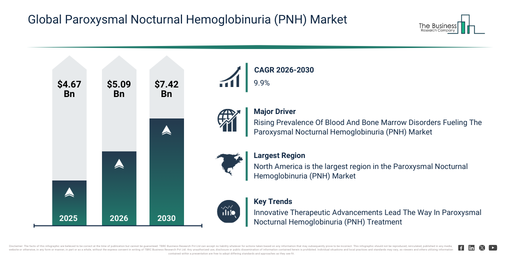
    The market size for paroxysmal nocturnal hemoglobinuria (pnh) has shown robust growth in recent years. It is anticipated to increase from $4.67 billion in 2025 to $5.09 billion in 2026, reflecting a compound annual growth rate (CAGR) of 9.1%. This historical expansion can be attributed to several factors such as the restricted availability of effective targeted therapies, delayed diagnosis stemming from the disease’s rarity, a reliance on supportive care and transfusions, the significant mortality rate associated with untreated pnh, and a general lack of awareness among healthcare providers.

    The paroxysmal nocturnal hemoglobinuria (PNH) market is projected to experience robust expansion over the coming years, anticipated to reach $7.42 billion by 2030, exhibiting a compound annual growth rate (CAGR) of 9.9%. Several factors will contribute to this growth during the forecast period, including the advancement of next-generation complement inhibitors, higher diagnosis rates facilitated by advanced testing, an intensified focus on treating orphan diseases, improved accessibility to specialized hematology centers, and broader reimbursement coverage for rare disease treatments. Key trends expected during this period involve the increasing uptake of complement inhibitor therapies, more widespread application of flow cytometry for precise diagnosis, the development of long-acting monoclonal antibody treatments, an increase in specialized rare hematology care initiatives, and enhanced approaches for managing thrombosis and hemolysis complications.

    Access Your Free Sample Report For In-Depth Market Analysis:

    https://www.thebusinessresearchcompany.com/sample.aspx?id=12936&type=smp

    What Major Factors Are Driving The Paroxysmal Nocturnal Hemoglobinuria (PNH) Market Forward?

    The anticipated expansion of the paroxysmal nocturnal hemoglobinuria (PNH) market is linked to the increasing prevalence of blood disorders and conditions affecting bone marrow. Blood disorders are defined as medical conditions impacting the makeup, performance, and creation of blood and its constituents. Conditions related to bone marrow arise when the bone marrow produces inadequate red, white, or platelet cells, or when the blood cells produced are flawed or damaged. PNH shares a strong connection with blood disorders and bone marrow ailments, given its influence on blood cell formation, immune system operation, and the microenvironment within the bone marrow. This rare blood disorder is associated with bone marrow failure diseases and manifests when a genetic defect disrupts the normal function of red blood cells and platelets. For example, Blood Cancer United, a UK-based nonprofit dedicated to advocating for blood cancer patients, forecasts that around 192,070 people in the U.S. will be diagnosed with leukemia, lymphoma, or myeloma in 2025. Consequently, the growing incidence of blood disorders and bone marrow-related conditions is propelling the expansion of the paroxysmal nocturnal hemoglobinuria (PNH) market.

    How Is The Paroxysmal Nocturnal Hemoglobinuria (PNH) Market Categorized Across Its Segment Groups?

    The paroxysmal nocturnal hemoglobinuria (pnh) market covered in this report is segmented –

    1) By Treatment Type: Medications, Bone Marrow Transplantation, Blood Transfusion, Immunosuppressive Therapy, Other Treatment Types

    2) By Diagnosis Type: Flow Cytometry, High-Resolution Mass Spectrometry, Other Diagnosis Types

    3) By End Use: Hospitals, Clinics, Other End Users

    Subsegments:

    1) By Medications: Eculizumab, Ravulizumab, Complement Inhibitors, Supportive Care Medications

    2) By Bone Marrow Transplantation: Allogeneic Stem Cell Transplantation, Autologous Stem Cell transplantation

    3) By Blood Transfusion: Red blood Cell Transfusion, Platelet Transfusion, Fresh Frozen Plasma Transfusion

    4) By Immunosuppressive Therapy: Corticosteroids, Azathioprine, Cyclophosphamide, Mycophenolate Mofetil

    5) By Other Treatment Types: Supportive Therapies, Management Of Complications

    Which Trends Are Impacting The Progress Of The Paroxysmal Nocturnal Hemoglobinuria (PNH) Market?

    Leading companies active in the paroxysmal nocturnal hemoglobinuria (PNH) market are concentrating on creating new and innovative drugs and therapies, including injectable C5 inhibitors for the treatment of paroxysmal nocturnal hemoglobinuria (PNH), to maintain their standing in the market. An injectable C5 inhibitor functions as a monoclonal antibody that impedes the complement component C5, thereby mitigating inflammation and tissue damage in autoimmune diseases and conditions such as paroxysmal nocturnal hemoglobinuria (PNH). For instance, in February 2024, Chugai Pharmaceutical Co., a Japan-based pharmaceutical firm, received priority review approval from China’s National Medical Products Administration (NMPA) for its paroxysmal nocturnal hemoglobinuria (PNH) treatment. This achievement designates China as the initial country to approve PIASKY, ahead of other significant markets, allowing it to commence National Reimbursement Drug List (NRDL) negotiations within the identical year. Paroxysmal nocturnal hemoglobinuria (PNH), classified as a rare condition, impacts an estimated 12,740 individuals in China, presenting substantial market potential.

    Which Firms Are Influencing Competition In The Paroxysmal Nocturnal Hemoglobinuria (PNH) Market?

    Major companies operating in the paroxysmal nocturnal hemoglobinuria (pnh) market are Pfizer Inc, Novartis AG, Thermo Fisher Scientific Inc, GE Healthcare, Grifols S.A, Genentech Inc, Bioverativ Inc, BioCryst Pharmaceuticals, Hansa Biopharma AB, Apellis Pharmaceuticals Inc, Akari Therapeutics Plc, RA Pharmaceuticals Inc, C5 Therapeutics Inc, Omeros Corporation, Amyndas Pharmaceuticals SA, CANbridge Pharmaceuticals, NovelMed Therapeutics Inc, Annexon Inc, Dianthus Therapeutics, DynamiCure Biotechnology, Kira Pharmaceuticals Ltd, Kyowa Kirin Co Ltd, Swedish Orphan Biovitrum AB, Arrowhead Pharmaceuticals, ReAlta Life Sciences, Q32 Bio, ISU Abxis

    Get The Full Paroxysmal Nocturnal Hemoglobinuria (PNH) Market Report:

    https://www.thebusinessresearchcompany.com/report/paroxysmal-nocturnal-hemoglobinuria-pnh-global-market-report

    Which Region Leads The Paroxysmal Nocturnal Hemoglobinuria (PNH) Market In Terms Of Market Share?

    North America was the largest region in the paroxysmal nocturnal hemoglobinuria (PNH) market in 2025. The regions covered in the paroxysmal nocturnal hemoglobinuria (pnh) market report are Asia-Pacific, South East Asia, Western Europe, Eastern Europe, North America, South America, Middle East, Africa.

    Request A Customized Paroxysmal Nocturnal Hemoglobinuria (PNH) Market Report For Competitive Insights:

    https://www.thebusinessresearchcompany.com/report/paroxysmal-nocturnal-hemoglobinuria-pnh-global-market-report

    Browse Through More Reports Similar to the Global Paroxysmal Nocturnal Hemoglobinuria (PNH) Market 2026, By The Business Research Company

    Neurological Disorder Drugs Market Report 2026

    https://www.thebusinessresearchcompany.com/report/neurological-disorder-drugs-global-market-report

    Wolff Parkinson White Syndrome Market Report

    https://www.thebusinessresearchcompany.com/report/wolff-parkinson-white-syndrome-global-market-report

    Rare Neurological Disease Treatment Market Report

    https://www.thebusinessresearchcompany.com/report/rare-neurological-disease-treatment-global-market-report

    Get in touch with us:

    The Business Research Company: https://www.thebusinessresearchcompany.com/

    Americas +1 310-496-7795

    Asia +44 7882 955267 & +91 8897263534

    Europe +44 7882 955267

    Email us at info@tbrc.info

    Follow us on:

    LinkedIn: https://in.linkedin.com/company/the-business-research-company

    YouTube: https://www.youtube.com/channel/UC24_fI0rV8cR5DxlCpgmyFQ

    Global Market Model: https://www.thebusinessresearchcompany.com/global-market-model
  • Global Parkinson’s Disease Market to Hit $5.31 Billion by 2030 at 8% CAGR

    Global Parkinson’s Disease Market to Hit $5.31 Billion by 2030 at 8% CAGR

    The Business Research Company’s 2026 market reports feature enhanced tools like market attractiveness analysis, TAM assessment, and company scoring matrices, along with interactive dashboards, deeper supply chain insights, and startup coverage strengthening the depth, usability, and strategic value of insights.

    What Expansion In Market Value Is Forecasted For The Parkinson’s Disease Market Between 2026 And 2030?

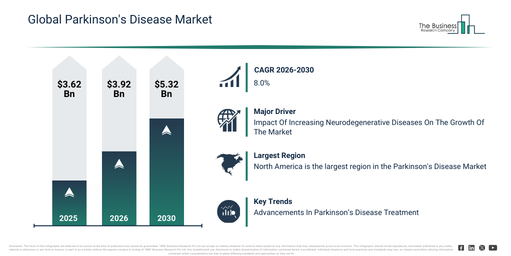
    The market size for Parkinson’s disease has experienced significant growth in recent years. It is anticipated to increase from $3.62 billion in 2025 to $3.92 billion in 2026, demonstrating a compound annual growth rate (CAGR) of 8.2%. The historical expansion can be attributed to several factors, including the restricted availability of treatment options for disease progression, a predominant reliance on levodopa-centric therapy, delayed diagnoses due to overlapping symptoms, a scarcity of specialized movement disorder clinics, and inconsistent access to advanced surgical interventions.

    The Parkinson’s disease market is anticipated to show strong expansion in the coming years. It is forecast to grow to $5.32 billion in 2030, exhibiting a compound annual growth rate (CAGR) of 8.0%. This projected growth during the forecast period stems from the development of novel dopamine and non-dopamine therapies, an increasing aging population, greater uptake of deep brain stimulation procedures, a heightened focus on personalized medicine approaches, and the proliferation of neurology specialty clinics. Key trends during this period include the rising adoption of combination drug therapies, an escalating use of deep brain stimulation procedures, advancements in early-stage diagnosis and intervention, the broadening of multidisciplinary Parkinson’s care programs, and enhanced symptom management through individualized treatment plans.

    Access Your Free Sample Report For In-Depth Market Analysis:

    https://www.thebusinessresearchcompany.com/sample.aspx?id=21247&type=smp

    Which Key Drivers Are Affecting The Parkinson’s Disease Market Development?

    The growing incidence of neurodegenerative diseases is anticipated to drive expansion in the parkinson’s disease market. These conditions encompass a range of disorders marked by the gradual deterioration and functional decline of neurons within the brain and nervous system. Their rising occurrence is linked to an aging demographic, genetic predispositions, environmental factors, enhanced diagnostic methods, increasing chronic health issues, and evolving lifestyles. Parkinson’s disease contributes significantly to advancing comprehension of neurodegenerative conditions, offering crucial insights into their fundamental mechanisms, potential treatment targets, and the formulation of novel therapeutic strategies. For example, the National Institutes of Health (NIH), a key US government medical research agency, predicted in 2025 that the prevalence of Parkinson’s disease for 2050 would be approximately 267 cases per 100,000 people, ranging from 230 to 320. Consequently, the expanding prevalence of neurodegenerative diseases is fueling growth within the parkinson’s disease market.

    How Are Segments Identified Within The Parkinson’s Disease Market Segment Framework?

    The parkinson’s disease market covered in this report is segmented –

    1) By Drug Class: Dopamine Agonists, Catechol-O-Methyltransferase Inhibitors, Monoamine Oxidase B Inhibitors, Anticholinergics, Carbidopa-Levodopa, Other Drug Classes

    2) By Route Of Administration: Oral, Injectable, Intestinal infusion, Subcutaneous, Other Routes Of Administrations

    3) By Distribution Channel: Retail Pharmacies, Hospital Pharmacies, Online Pharmacies

    4) By Patient Care Setting: Clinics, Hospitals

    Subsegments:

    1) By Dopamine Agonists: Ergot Derivatives, Non-Ergot Derivatives

    2) By Catechol-O-Methyltransferase (COMT) Inhibitors: Entacapone, Tolcapone, Opicapone

    3) By Monoamine Oxidase B (MAO-B) Inhibitors: Selegiline, Rasagiline, Safinamide

    4) By Anticholinergics: Trihexyphenidyl, Benztropine, Procyclidine

    5) By Carbidopa-Levodopa: Immediate-Release Formulation, Extended-Release Formulation, Inhaled And Intestinal Gel Formulations

    6) By Other Drug Classes: Amantadine And Derivatives, Adenosine A2A Receptor Antagonists, Glutamate Antagonists

    What Trends Are Transforming The Parkinson’s Disease Market?

    Leading companies within the parkinson’s disease market are concentrating on developing innovative solutions, such as levodopa-based therapy, to enhance motor function and provide continuous symptom management for individuals with advanced parkinson’s disease. Levodopa-based therapy utilizes levodopa, a medication that converts into dopamine in the brain, to improve motor function and alleviate symptoms of Parkinson’s disease. For instance, in October 2024, AbbVie Inc., a US-based biopharmaceutical company, received US Food and Drug Administration (FDA) approval for VYALEV, a combination therapy containing levodopa and carbidopa, specifically designed for the treatment of Parkinson’s disease. Its formulation aims to improve the efficacy of levodopa by inhibiting its breakdown before reaching the brain, consequently increasing dopamine levels. This medication is effective in managing motor symptoms of Parkinson’s disease, including tremors, rigidity, and bradykinesia, which in turn enhances a patient’s ability to perform daily tasks. It is recognized as a key therapeutic solution for patients with Parkinson’s disease experiencing motor fluctuations.

    Who Are The Companies Competing Within The Parkinson’s Disease Market?

    Major companies operating in the parkinson’s disease market are Roche Holding AG, AbbVie Inc., Novo Nordisk A/S, Takeda Pharmaceutical Company Limited, UCB S.A., Eisai Co. Ltd., Kyowa Kirin Co. Ltd., Amneal Pharmaceuticals Inc., Neurocrine Biosciences Inc., Supernus Pharmaceuticals Inc., Sunovion Pharmaceuticals Inc., Intracellular Therapies Inc., Voyager Therapeutics Inc., Sage Therapeutics Inc., Adamas Pharmaceuticals Inc., Sun Pharma Advanced Research Company Ltd., Neuraly Inc., Mitsubishi Tanabe Pharma Corporation, Athira Pharma Inc., VistaGen Therapeutics Inc.

    Get The Full Parkinson’s Disease Market Report:

    https://www.thebusinessresearchcompany.com/report/parkinsons-disease-global-market-report

    Which Region Leads The Parkinson’s Disease Market In Overall Market Size?

    North America was the largest region in the parkinson’s disease market in 2025. Asia-Pacific is expected to be the fastest-growing region in the forecast period. The regions covered in the parkinson’s disease market report are Asia-Pacific, South East Asia, Western Europe, Eastern Europe, North America, South America, Middle East, Africa.

    Request A Customized Parkinson’s Disease Market Report For Competitive Insights:

    https://www.thebusinessresearchcompany.com/report/parkinsons-disease-global-market-report

    Browse Through More Reports Similar to the Global Parkinson’s Disease Market 2026, By The Business Research Company

    Esophageal Cancer Market Report 2026

    https://www.thebusinessresearchcompany.com/report/esophageal-cancer-global-market-report

    Head And Neck Cancer Diagnostics Market Report

    https://www.thebusinessresearchcompany.com/report/head-and-neck-cancer-diagnostics-global-market-report

    Oral Cancer Treatment Market Report

    https://www.thebusinessresearchcompany.com/report/oral-cancer-treatment-global-market-report

    Get in touch with us:

    The Business Research Company: https://www.thebusinessresearchcompany.com/

    Americas +1 310-496-7795

    Asia +44 7882 955267 & +91 8897263534

    Europe +44 7882 955267

    Email us at info@tbrc.info

    Follow us on:

    LinkedIn: https://in.linkedin.com/company/the-business-research-company

    YouTube: https://www.youtube.com/channel/UC24_fI0rV8cR5DxlCpgmyFQ

    Global Market Model: https://www.thebusinessresearchcompany.com/global-market-model

  • Paranasal Sinus Cancer Market to Reach $1.51 Billion by 2030 at 6.5% CAGR

    Paranasal Sinus Cancer Market to Reach $1.51 Billion by 2030 at 6.5% CAGR

    The Business Research Company’s 2026 market reports feature enhanced tools like market attractiveness analysis, TAM assessment, and company scoring matrices, along with interactive dashboards, deeper supply chain insights, and startup coverage strengthening the depth, usability, and strategic value of insights.

    How Large Will The Paranasal Sinus Cancer Market Be By 2030 Compared To Its 2026 Market Size?

    The market size for paranasal sinus cancer has demonstrated substantial growth in recent years. It is expected to expand from $1.1 billion in 2025 to $1.18 billion in 2026, at a compound annual growth rate (CAGR) of 6.7%. The growth witnessed in the past can be attributed to several factors, including delayed diagnosis resulting from nonspecific symptoms, limited availability of specialized oncology centers, a dependence on traditional surgery and radiation therapy, low awareness concerning rare sinonasal cancers, and fragmented diagnostic and referral pathways.

    The market for paranasal sinus cancer is anticipated to experience substantial expansion in the coming years. Projections indicate it will reach a valuation of $1.51 billion by 2030, demonstrating a compound annual growth rate (CAGR) of 6.5%. This anticipated growth throughout the forecast period stems from factors such as progress in targeted therapy and immunotherapy, the growing integration of AI-assisted diagnostic imaging, heightened financial commitments to rare cancer investigations, the broadening of multidisciplinary approaches to cancer treatment, and the development of hospital-centric oncology facilities. Key developments foreseen during this period encompass the increased application of precision oncology methodologies, the uptake of less invasive surgical methods, the evolution of diverse treatment strategies, the wider availability of sophisticated imaging for early detection, and an elevated emphasis on patient quality of life within cancer care.

    Access Your Free Sample Report For In-Depth Market Analysis:

    https://www.thebusinessresearchcompany.com/sample.aspx?id=21246&type=smp

    What Factors Are Contributing To The Growth Of The Paranasal Sinus Cancer Market?

    Significant financial commitments toward oncology research and medicine are projected to fuel the expansion of the paranasal sinus cancer market moving forward. These investments encompass monetary provisions from governments, pharmaceutical companies, research institutions, and private investors, all dedicated to advancing the understanding, prevention, diagnosis, and treatment of cancer. The escalating investments in oncology research and medicine stem from factors such as the increasing global cancer burden, breakthroughs in precision medicine, a rising demand for innovative therapies, the proliferation of clinical trials, various government and private funding initiatives, and the emergence of targeted and immunotherapy treatments. These financial inputs specifically bolster paranasal sinus cancer efforts by fostering advancements in early detection, enhancing treatment modalities like targeted therapies and immunotherapy, funding clinical trials for more effective drugs, improving pediatric cancer care infrastructure, and promoting novel research to better comprehend the disease’s biology and progression. For instance, in May 2024, IQVIA, an India-based information technology company providing advanced analytics, reported that global spending on cancer medicine increased to $223 billion in 2023, marking a $25 billion rise from 2022, and is anticipated to hit $409 billion by 2028. Therefore, the growing investments in oncology research and medicine are a primary catalyst for the paranasal sinus cancer market.

    What Are The Key Segment Divisions In The Paranasal Sinus Cancer Market Segment Structure?

    The paranasal sinus cancer market covered in this report is segmented –

    1) By Type: Squamous Cell Carcinoma, Adenocarcinoma, Mucoepidermoid Carcinoma, Other Types

    2) By Diagnosis: Medical History And Physical Examination, Imaging Tests, Biopsy, Other Diagnosis

    3) By Treatment: Surgery, Radiation Therapy, Chemotherapy, Targeted Therapy, Immunotherapy

    4) By End-User: Hospital And Clinics, Cancer Treatment And Research Center, Research Laboratories, Other End-Users

    Subsegments:

    1) By Squamous Cell Carcinoma: Keratinizing Squamous Cell Carcinoma, Non-Keratinizing Squamous Cell Carcinoma, Basaloid Squamous Cell Carcinoma

    2) By Adenocarcinoma: Intestinal-Type Adenocarcinoma, Non-Intestinal-Type Adenocarcinoma

    3) By Mucoepidermoid Carcinoma: Low-Grade Mucoepidermoid Carcinoma, Intermediate-Grade Mucoepidermoid Carcinoma, High-Grade Mucoepidermoid Carcinoma

    4) By Other Types: Sinonasal Undifferentiated Carcinoma, Neuroendocrine Carcinoma, Adenoid Cystic Carcinoma, Melanoma, Sarcomas, Lymphoma

    What Trends Are Shaping The Future Of The Paranasal Sinus Cancer Market?

    Leading firms within the paranasal sinus cancer market are prioritizing the creation of cutting-edge innovations, including perioperative chemo immunotherapy regimens, to secure a competitive edge. This methodology integrates immune checkpoint blockade (for example, PD-1 antibodies) with conventional chemotherapy administered prior to surgery, with the goal of decreasing tumor volume and enhancing patient results post-operation. As an illustration, during June 2025, Coherus Biosciences, a US-based biopharma company, commenced a Phase II study involving toripalimab combined with carboplatin and docetaxel for individuals diagnosed with sinonasal cancers. This particular regimen presents the possibility of preoperative tumor reduction, allows for real-time immune observation, and seamlessly integrates into established treatment protocols. Such a development has the potential to broaden the range of treatment options available for uncommon paranasal sinus malignancies and enhance patient prognosis, though its long-term effectiveness and regulatory clearances are still pending confirmation.

    Which Organizations Are Engaged In The Paranasal Sinus Cancer Market?

    Major companies operating in the paranasal sinus cancer market are Bristol-Myers Squibb, Penn Medicine, MD Anderson Cancer Center, RWJBarnabas Health, Mayo Foundation for Medical Education and Research, Stanford Health Care, Memorial Sloan Kettering Cancer Center, Massachusetts General Hospital, The University of Chicago Medical Center, City of Hope, Moffitt Cancer Center, Northwestern Medicine, UK Markey Cancer Center, Karmanos Cancer Institute, Dana-Farber Cancer Institute Inc., VCU Massey Cancer Center, Vanderbilt-Ingram Cancer Center, Fulgent Pharma, Duke University Health System

    Get The Full Paranasal Sinus Cancer Market Report:

    https://www.thebusinessresearchcompany.com/report/paranasal-sinus-cancer-global-market-report

    Which Region Is The Top Contributor To The Paranasal Sinus Cancer Market By Share?

    North America was the largest region in the paranasal sinus cancer market in 2025. Asia-Pacific is expected to be the fastest-growing region in the forecast period. The regions covered in the paranasal sinus cancer market report are Asia-Pacific, South East Asia, Western Europe, Eastern Europe, North America, South America, Middle East, Africa.

    Request A Customized Paranasal Sinus Cancer Market Report For Competitive Insights:

    https://www.thebusinessresearchcompany.com/report/paranasal-sinus-cancer-global-market-report

    Browse Through More Reports Similar to the Global Paranasal Sinus Cancer Market 2026, By The Business Research Company

    Paraganglioma Market Report 2026

    https://www.thebusinessresearchcompany.com/report/paraganglioma-global-market-report

    Anaplastic Astrocytoma Market Report

    https://www.thebusinessresearchcompany.com/report/anaplastic-astrocytoma-global-market-report

    Anaplastic Astrocytoma Market Report

    https://www.thebusinessresearchcompany.com/report/anaplastic-astrocytoma-global-market-report

    Get in touch with us:

    The Business Research Company: https://www.thebusinessresearchcompany.com/

    Americas +1 310-496-7795

    Asia +44 7882 955267 & +91 8897263534

    Europe +44 7882 955267

    Email us at info@tbrc.info

    Follow us on:

    LinkedIn: https://in.linkedin.com/company/the-business-research-company

    YouTube: https://www.youtube.com/channel/UC24_fI0rV8cR5DxlCpgmyFQ

    Global Market Model: https://www.thebusinessresearchcompany.com/global-market-model
  • Paraganglioma Market Forecast (2026–2030) Highlighting Expansion Trends

    Paraganglioma Market Forecast (2026–2030) Highlighting Expansion Trends

    The Business Research Company’s 2026 market reports feature enhanced tools like market attractiveness analysis, TAM assessment, and company scoring matrices, along with interactive dashboards, deeper supply chain insights, and startup coverage strengthening the depth, usability, and strategic value of insights.

    What Is The Projected Increase In Market Value Of The Paraganglioma Market During 2026–2030?

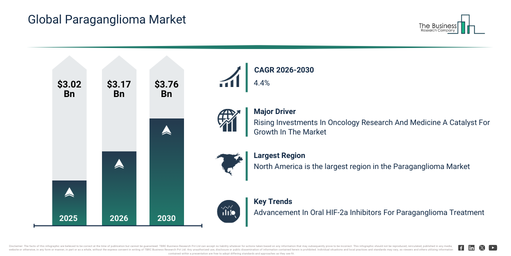
    The paraganglioma market has demonstrated a consistent increase in its size over recent years. It is projected to expand from $3.02 billion in 2025 to $3.17 billion by 2026, achieving this growth at a compound annual growth rate (CAGR) of 4.7%. The market’s historical growth can be attributed to several factors, including limited access to ophthalmology specialists, dependence on corticosteroid therapies, a lack of advanced diagnostic tools, low awareness of panuveitis complications, and a fragmented treatment infrastructure.

    The paraganglioma market size is anticipated to experience consistent expansion in the coming years. It is projected to reach $3.76 billion by 2030, showing a compound annual growth rate (CAGR) of 4.4%. This growth during the forecast period is primarily driven by advancements in biologic and immunotherapy drugs, a rising prevalence of autoimmune and infectious eye disorders, the expansion of teleophthalmology and digital monitoring, increasing investments in AI-based diagnostics, and the broadening of hospital and specialty clinic distribution channels. Significant trends expected in this period include the rising adoption of biologic and targeted therapies, the integration of teleophthalmology and remote monitoring, AI-assisted diagnostic tools for uveitis, the development of personalized eye care solutions, and the expansion of specialized ophthalmology centers.

    Access Your Free Sample Report For In-Depth Market Analysis:

    https://www.thebusinessresearchcompany.com/sample.aspx?id=21245&type=smp

    Which Strong Drivers Are Impacting The Paraganglioma Market Growth?

    The paraganglioma market is projected to expand moving forward, driven by increasing financial commitments in oncology research and medical developments. These financial commitments represent funds allocated by governments, pharmaceutical firms, research organizations, and private investors to advance the comprehension, prevention, diagnosis, and treatment of cancer. The growth in these investments is attributed to the rising global cancer burden, innovations in precision medicine, a growing need for novel therapies, an expansion of clinical trials, various governmental and private funding initiatives, and the development of targeted and immunotherapy treatments. These investments support paraganglioma by fostering improvements in early detection, improving treatment options like targeted therapies and immunotherapy, funding clinical trials for more effective drugs, enhancing infrastructure for pediatric cancer care, and promoting innovative research to better understand the disease’s biology and progression. For instance, in May 2024, IQVIA, an India-based information technology company specializing in advanced analytics, reported that global spending on cancer medicine climbed to $223 billion in 2023, a $25 billion increase from 2022, and is anticipated to reach $409 billion by 2028. Therefore, escalating investments in oncology research and medicine are a key driver for the paraganglioma market.

    Which Segment Categories Are Included In The Paraganglioma Market Segment Analysis?

    The paraganglioma market covered in this report is segmented –

    1) By Type: Sympathetic Paragangliomas, Parasympathetic Paragangliomas, Carotid Paragangliomas, Cervical Paragangliomas, Jugular Paragangliomas, Secretory Paragangliomas, Temporal Paragangliomas

    2) By Origin: Head And Neck, Abdomen, Pelvis, Other Origins

    3) By Treatment Type: Peptide Receptor Radionuclide Therapy, Surgery, Chemotherapy, Radiation Therapy, Other Treatment Types

    4) By Distribution Channel: Hospital Pharmacies, Drug Stores And Retail Pharmacies, Online Pharmacies

    5) By End-User: Hospitals, Specialty Clinics, Cancer Research Institutes, Other End-Users

    Subsegments:

    1) By Sympathetic Paragangliomas: Adrenal Sympathetic Paragangliomas, Extra-Adrenal Sympathetic Paragangliomas

    2) By Parasympathetic Paragangliomas: Head And Neck Parasympathetic Paragangliomas, Thoracic Parasympathetic Paragangliomas

    3) By Carotid Paragangliomas: Unilateral Carotid Paragangliomas, Bilateral Carotid Paragangliomas

    4) By Cervical Paragangliomas: Vagal Paragangliomas, Hypoglossal Paragangliomas

    5) By Jugular Paragangliomas: Type A, Type B, Type C, Type D

    6) By Secretory Paragangliomas: Catecholamine-Secreting Paragangliomas, Non-Catecholamine-Secreting Paragangliomas

    7) By Temporal Paragangliomas: Tympanic Paragangliomas, Mastoid Paragangliomas

    Which Trends Are Contributing To Changes In The Paraganglioma Market?

    Leading companies in the paraganglioma market are prioritizing the development of advanced therapies, specifically oral hypoxia-inducible factor-2 alpha (HIF-2a) inhibitors, to provide targeted treatment options for patients. An oral HIF-2a inhibitor represents a focused therapy designed to suppress HIF-2a activity, which is a pivotal factor in tumor proliferation under low-oxygen conditions, thereby assisting in retarding the progression of cancers like paraganglioma. For example, in January 2025, Merck, a US-based biopharmaceutical firm, announced that its supplemental new drug application for Welireg (belzutifan) was granted priority review by the U.S. Food and Drug Administration (FDA), a US-based government agency. This therapy is formulated for adult and pediatric patients (12 years and older) suffering from advanced, unresectable, or metastatic pheochromocytoma and paraganglioma (PPGL). The sNDA’s foundation lies in objective response rate (ORR) and duration of response (DOR) data derived from the Phase 2 LITESPARK-015 trial.

    Who Are The Active Companies Shaping The Paraganglioma Market?

    Major companies operating in the paraganglioma market are F. Hoffmann-La Roche Ltd., Merck & Co. Inc. , Mount Sinai, Penn Medicine, Stanford Health Care, St. Jude Children’s Research Hospital, UT Health San Antonio, The University of Chicago Medical Center, Fred Hutchinson Cancer Center, Florida Cancer Specialists & Research Institute, Invitae Corp., Clinigen Group plc, Fulgent Genetics, Dana-Farber Cancer Institute Inc., Oncology Hematology Care Inc., Enterome , National Institutes of Health Clinical Center, Progenics Pharmaceuticals Inc., Pheo Para Alliance, Saint John’s Cancer Institute

    Get The Full Paraganglioma Market Report:

    https://www.thebusinessresearchcompany.com/report/paraganglioma-global-market-report

    Which Region Represents The Largest Share Of The Paraganglioma Market?

    North America was the largest region in the paraganglioma market in 2025. Asia-Pacific is expected to be the fastest-growing region in the forecast period. The regions covered in the paraganglioma market report are Asia-Pacific, South East Asia, Western Europe, Eastern Europe, North America, South America, Middle East, Africa.

    Request A Customized Paraganglioma Market Report For Competitive Insights:

    https://www.thebusinessresearchcompany.com/report/paraganglioma-global-market-report

    Browse Through More Reports Similar to the Global Paraganglioma Market 2026, By The Business Research Company

    Sinusitis Treatment Market Report 2026

    https://www.thebusinessresearchcompany.com/report/sinusitis-treatment-global-market-report

    Pharyngitis Treatment Market Report

    https://www.thebusinessresearchcompany.com/report/pharyngitis-treatment-global-market-report

    Ocular Inflammation Treatment Market Report

    https://www.thebusinessresearchcompany.com/report/ocular-inflammation-treatment-global-market-report

    Get in touch with us:

    The Business Research Company: https://www.thebusinessresearchcompany.com/

    Americas +1 310-496-7795

    Asia +44 7882 955267 & +91 8897263534

    Europe +44 7882 955267

    Email us at info@tbrc.info

    Follow us on:

    LinkedIn: https://in.linkedin.com/company/the-business-research-company

    YouTube: https://www.youtube.com/channel/UC24_fI0rV8cR5DxlCpgmyFQ

    Global Market Model: https://www.thebusinessresearchcompany.com/global-market-model
  • Global Panuveitis Treatment Market Analysis (2026–2030) With Strategic Insights

    Global Panuveitis Treatment Market Analysis (2026–2030) With Strategic Insights

    The Business Research Company’s 2026 market reports feature enhanced tools like market attractiveness analysis, TAM assessment, and company scoring matrices, along with interactive dashboards, deeper supply chain insights, and startup coverage strengthening the depth, usability, and strategic value of insights.

    How Is The Market Size Of The Panuveitis Treatment Market Expected To Change From 2026 To 2030?

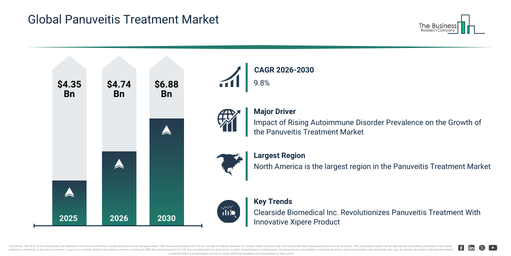
    The panuveitis treatment market size has demonstrated strong growth in recent years. It is projected to expand from $4.35 billion in 2025 to $4.74 billion in 2026, achieving a compound annual growth rate (CAGR) of 8.8%. The historical growth of this market is attributable to various factors including limited access to ophthalmology specialists, a prevailing dependence on corticosteroid therapies, the absence of advanced diagnostic tools, insufficient awareness of panuveitis complications, and a fragmented treatment infrastructure.

    The panuveitis treatment market is projected to undergo significant expansion in the upcoming years. Its value is expected to ascend to $6.88 billion by 2030, achieving a compound annual growth rate (CAGR) of 9.8%.

    This anticipated growth within the forecast period stems from various contributors, such as breakthroughs in biologic and immunotherapy drugs, a growing occurrence of autoimmune and infectious eye conditions, the advancement of teleophthalmology and digital monitoring, increasing investments into AI-powered diagnostics, and the widening reach of hospital and specialty clinic distribution channels.

    Prominent trends identified for the forecast period involve an increased embrace of biologic and targeted treatments, the integration of teleophthalmology and remote patient monitoring, the development of AI-assisted diagnostic tools specifically for uveitis, the expansion of personalized eye care options, and the establishment of more specialized ophthalmology centers.

    Access Your Free Sample Report For In-Depth Market Analysis:

    https://www.thebusinessresearchcompany.com/sample.aspx?id=13157&type=smp

    What Key Factors Are Shaping The Panuveitis Treatment Market Landscape?

    The increasing incidence of autoimmune disorders is projected to fuel the expansion of the panuveitis treatment market in the future. The growing number of autoimmune conditions stems from a mix of genetic susceptibilities, environmental elements such as pollution and shifts in diet, and greater contact with specific infections and stressors potentially leading to immune system imbalance. These disorders aid in progress for panuveitis treatment through stimulating studies on immune system modulation, given that numerous instances of panuveitis are linked to autoimmune processes. As an example, data from May 2023, provided by the University of Oxford, a UK-based research university, indicates that autoimmune disorders impact 10% of the global populace, affecting 13% of women and 7% of males. Consequently, the escalating occurrence of autoimmune disorders is boosting the expansion of the panuveitis treatment market.

    How Is The Panuveitis Treatment Market Broken Down By Segment Categories?

    The panuveitis treatment market covered in this report is segmented –

    1) By Drug Class: Anti-Inflammatory, Antimicrobial Drugs, Immunotherapy And Targeted Therapies

    2) By Route Of Administration: Oral, Topical

    3) By End Users: Hospitals, Home Care, Specialty Clinics, Other End Users

    Subsegments:

    1) By Anti-Inflammatory: Corticosteroids, Non-Steroidal Anti-Inflammatory Drugs (NSAIDs)

    2) By Antimicrobial Drugs: Antibiotics, Antifungal Agents, Antiviral Medications

    3) By Immunotherapy And Targeted Therapies: Biologic Agents, Janus Kinase (JAK) Inhibitors, Cytokine Modulators

    What Market Trends Are Affecting The Panuveitis Treatment Market?

    Leading companies within the panuveitis treatment market are concentrating on developing advanced products, such as oral dual TYK2/JAK1 inhibitors, to secure a competitive edge. This category of small-molecule immunomodulators works by suppressing multiple pro-inflammatory cytokine pathways, thereby lessening intraocular inflammation while providing the ease of oral administration. For example, in April 2024, Priovant Therapeutics, a US-based biotech firm, disclosed that its oral medication brepocitinib, which inhibits TYK2 and JAK1, exhibited robust efficacy in a mid-stage clinical study for non-infectious uveitis, reducing macular edema in several patients. The primary benefits include extensive cytokine inhibition, daily oral intake, and a decreased need for intravitreal injections. However, the associated risks encompass potential systemic immunosuppression and off-target effects, necessitating meticulous long-term observation.

    Which Players Are Present In The Panuveitis Treatment Market Space?

    Major companies operating in the panuveitis treatment market are Pfizer Inc., Johnson and Johnson Pvt. Ltd., Bausch Health Companies Inc., AbbVie Inc., Novartis AG, Allergan Inc., Regeneron Pharmaceuticals Inc., Santen Pharmaceutical Co. Ltd., Ocular Therapeutix Inc., EyeGate Pharmaceuticals Inc., Eyepoint Pharmaceuticals Inc., Graybug Vision Inc., Aciont Inc., Clearside Biomedical Inc., Aldeyra Therapeutics Inc., UCB S.A., Amgen Inc., Sanofi S.A., Galapagos NV, Kiora Pharmaceuticals Inc., ONL Therapeutics, Eyevensys, Nicox S.A., Abbott Laboratories

    Get The Full Panuveitis Treatment Market Report:

    https://www.thebusinessresearchcompany.com/report/panuveitis-treatment-global-market-report

    Which Geographic Region Dominates The Panuveitis Treatment Market?

    North America was the largest region in the panuveitis treatment market in 2025. The regions covered in the panuveitis treatment market report are Asia-Pacific, South East Asia, Western Europe, Eastern Europe, North America, South America, Middle East, Africa.

    Request A Customized Panuveitis Treatment Market Report For Competitive Insights:

    https://www.thebusinessresearchcompany.com/report/panuveitis-treatment-global-market-report

    Browse Through More Reports Similar to the Global Panuveitis Treatment Market 2026, By The Business Research Company

    Dermatitis Drugs Market Report 2026

    https://www.thebusinessresearchcompany.com/report/dermatitis-drugs-global-market-report

    Acute Pancreatitis Market Report

    https://www.thebusinessresearchcompany.com/report/acute-pancreatitis-global-market-report

    Scleroderma Market Report

    https://www.thebusinessresearchcompany.com/report/scleroderma-global-market-report

    Get in touch with us:

    The Business Research Company: https://www.thebusinessresearchcompany.com/

    Americas +1 310-496-7795

    Asia +44 7882 955267 & +91 8897263534

    Europe +44 7882 955267

    Email us at info@tbrc.info

    Follow us on:

    LinkedIn: https://in.linkedin.com/company/the-business-research-company

    YouTube: https://www.youtube.com/channel/UC24_fI0rV8cR5DxlCpgmyFQ

    Global Market Model: https://www.thebusinessresearchcompany.com/global-market-model
  • Panuveitis Market Outlook (2026–2030) Driven by Growth Factors

    Panuveitis Market Outlook (2026–2030) Driven by Growth Factors

    The Business Research Company’s 2026 market reports feature enhanced tools like market attractiveness analysis, TAM assessment, and company scoring matrices, along with interactive dashboards, deeper supply chain insights, and startup coverage strengthening the depth, usability, and strategic value of insights.

    From Its 2026 Market Size, What Value Is The Panuveitis Market Projected To Reach By 2030?

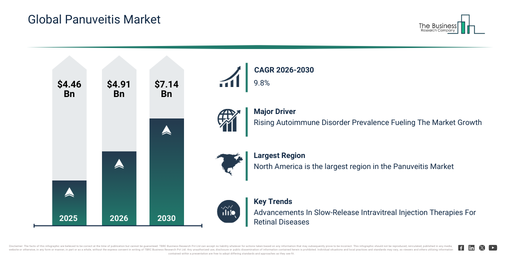
    The panuveitis market size has experienced rapid expansion in recent years. It is projected to grow from $4.46 billion in 2025 to $4.91 billion in 2026, at a compound annual growth rate (CAGR) of 10.1%. This historical growth can be attributed to several factors, including limited awareness of panuveitis, a continued reliance on conventional corticosteroid therapies, low accessibility to ophthalmology specialists, a fragmented treatment infrastructure, and the slow adoption of diagnostic imaging technologies.

    The panuveitis market is anticipated to experience substantial expansion over the upcoming years. Its valuation is projected to reach $7.14 billion by 2030, demonstrating a compound annual growth rate (CAGR) of 9.8%. This projected increase throughout the forecast timeframe stems from several factors, including developments in biologics and immunomodulatory medications, the rising incidence of autoimmune and infectious eye conditions, the expansion of teleophthalmology services, growing investments in AI-powered diagnostics, and the broadening of hospital and retail pharmacy distribution networks. Key trends expected during this period involve the growing acceptance of targeted biologic treatments, the increased application of teleophthalmology and remote monitoring, the incorporation of AI-driven diagnostic instruments for ocular inflammation, the progression of personalized therapeutic strategies, and the proliferation of specialized ophthalmology facilities.

    Access Your Free Sample Report For In-Depth Market Analysis:

    https://www.thebusinessresearchcompany.com/sample.aspx?id=21244&type=smp

    Which Factors Are Influencing The Growth Of The Panuveitis Market?

    The increasing occurrence of autoimmune conditions is anticipated to drive expansion in the panuveitis market in the future. These conditions develop when the immune system mistakenly attacks and harms the body’s own healthy cells and tissues. The growing number of autoimmune disease cases can be attributed to a combination of genetic predispositions, environmental factors like pollution and dietary changes, and greater exposure to specific infections and stressors, which can provoke immune system dysregulation. Autoimmune disorders foster progress in panuveitis treatment by stimulating research into immune system modulation, given that numerous instances of panuveitis are linked to autoimmune activity. As an illustration, data from May 2023, provided by the University of Oxford, a UK-based research university, indicates that 10% of the global population is impacted by autoimmune disorders, specifically affecting 13% of women and 7% of males. Consequently, the increasing prevalence of autoimmune conditions is a key factor propelling the expansion of the panuveitis market.

    What Are The Different Segment Types In The Panuveitis Market Segment Breakdown?

    The panuveitis market covered in this report is segmented –

    1) By Type: Infectious Panuveitis, Non-Infectious Panuveitis

    2) By Treatment: Pharmacological, Surgical, Phototherapy

    3) By Route Of Administration: Oral, Intravitreal, Topical

    4) By Distribution Channel: Hospital Pharmacies, Retail Pharmacies, Online Pharmacies

    Subsegments:

    1) By Infectious Panuveitis: Bacterial Panuveitis, Viral Panuveitis, Fungal Panuveitis, Parasitic Panuveitis

    2) By Non-Infectious Panuveitis: Autoimmune-Related Panuveitis, Idiopathic Panuveitis, Drug-Induced Panuveitis

    Which Trends Are Influencing Demand In The Panuveitis Market?

    Leading companies in the panuveitis market are concentrating on developing innovative products, such as oral TYK2/JAK-1 inhibitors, to achieve a competitive edge. These are small-molecule immunomodulators that function by blocking inflammatory signaling pathways through the inhibition of both TYK2 and JAK-1 kinases, thereby reducing cytokine-driven inflammation within the eye. For example, in April 2024, Roivant Sciences, a US-based biopharma company, announced positive mid-stage clinical data for brepocitinib from its NEPTUNE study concerning non-infectious uveitis, which encompasses panuveitis. The drug demonstrated efficacy in lowering inflammation and macular edema, was well tolerated, and presented no new safety signals. Simultaneously, Alumis, a US biotherapeutic company, initiated patient dosing in June 2023 for its Phase 2 proof-of-concept ESK-001 trial for non-infectious uveitis, including panuveitis; this molecule is highly selective, orally bioavailable, and specifically engineered to minimize off-target effects via allosteric TYK2 inhibition.

    Who Are The Well-Known Companies In The Panuveitis Market?

    Major companies operating in the panuveitis market are Pfizer Inc., AbbVie, Amgen, Mallinckrodt plc, EyePoint Pharmaceuticals Inc., Clearside Biomedical Inc., pSivida Corp., Santen Pharmaceutical Co Ltd, Alimera Sciences Inc, Novartis AG, F Hoffmann-La Roche AG, Regeneron Pharmaceuticals Inc, Sanofi S A, Bausch Health Companies Inc, Johnson & Johnson, UCB SA, Aldeyra Therapeutics Inc, Kiora Pharmaceuticals Inc, Lux Biosciences Inc, Aciont Inc, Sirion Therapeutics Inc, EyeGate Pharmaceuticals Inc, Oculis Pharma AG, Alcon Inc, Sun Pharmaceutical Industries Ltd, Aerie Pharmaceuticals Inc.

    Get The Full Panuveitis Market Report:

    https://www.thebusinessresearchcompany.com/report/panuveitis-global-market-report

    Which Region Is The Leading Market For The Panuveitis Market?

    North America was the largest region in the panuveitis market in 2025. The regions covered in the panuveitis market report are Asia-Pacific, South East Asia, Western Europe, Eastern Europe, North America, South America, Middle East, Africa.

    Request A Customized Panuveitis Market Report For Competitive Insights:

    https://www.thebusinessresearchcompany.com/report/panuveitis-global-market-report

    Browse Through More Reports Similar to the Global Panuveitis Market 2026, By The Business Research Company

    Generalized Anxiety Disorder Market Report 2026

    https://www.thebusinessresearchcompany.com/report/generalized-anxiety-disorder-global-market-report

    Major Depressive Disorder Market Report

    https://www.thebusinessresearchcompany.com/report/major-depressive-disorder-global-market-report

    Mental Health Market Report

    https://www.thebusinessresearchcompany.com/report/mental-health-global-market-report

    Get in touch with us:

    The Business Research Company: https://www.thebusinessresearchcompany.com/

    Americas +1 310-496-7795

    Asia +44 7882 955267 & +91 8897263534

    Europe +44 7882 955267

    Email us at info@tbrc.info

    Follow us on:

    LinkedIn: https://in.linkedin.com/company/the-business-research-company

    YouTube: https://www.youtube.com/channel/UC24_fI0rV8cR5DxlCpgmyFQ

    Global Market Model: https://www.thebusinessresearchcompany.com/global-market-model