Category: Healthcare Services

  • Increasing healthcare spending and demographic shifts are influencing the maprotiline hydrochloride API market

    Increasing healthcare spending and demographic shifts are influencing the maprotiline hydrochloride API market

    The Business Research Company’s 2026 market reports feature enhanced tools like market attractiveness analysis, TAM assessment, and company scoring matrices, along with interactive dashboards, deeper supply chain insights, and startup coverage strengthening the depth, usability, and strategic value of insights.

    What Is The Forecasted Market Size Trajectory Of The Maprotiline Hydrochloride API Market From 2026 To 2030?

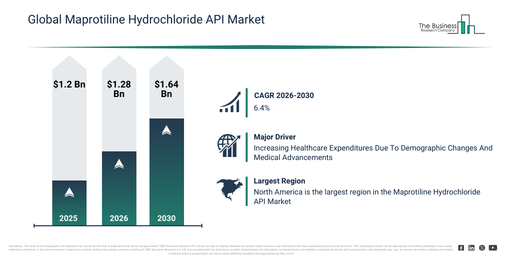
    The maprotiline hydrochloride API market has experienced significant growth in recent years. It is anticipated to expand from $1.2 billion in 2025 to $1.28 billion in 2026, demonstrating a compound annual growth rate (CAGR) of 6.4%. This historical expansion can be attributed to the long-established clinical utilization of maprotiline-based antidepressants, an increase in pharmaceutical manufacturing capabilities, rising rates of depression and anxiety diagnoses, the availability of cost-efficient synthetic processes, and the widening of generic drug markets.

    The maprotiline hydrochloride api market is projected to experience robust expansion over the forthcoming years. Its valuation is anticipated to reach $1.64 billion by 2030, demonstrating a compound annual growth rate (CAGR) of 6.4%. This anticipated growth throughout the forecast timeframe stems from several factors, including sustained demand for cost-effective mental health solutions, a rising dependency on contract API production, more stringent quality and regulatory mandates, an increase in pharmaceutical output within developing nations, and consistent demand originating from established antidepressant formulations. Key trends identified for the forecast period encompass an escalating demand for proven tricyclic and tetracyclic antidepressant APIs, an intensified emphasis on dependable API quality and adherence to regulations, a greater tendency to outsource API manufacturing to CMOs, stable demand from the production of generic antidepressants, and the broader application of APIs in combination and reformulated treatments.

    Access Your Free Sample Report For In-Depth Market Analysis:

    https://www.thebusinessresearchcompany.com/sample.aspx?id=24287&type=smp

    What Significant Factors Are Influencing The Maprotiline Hydrochloride API Market Expansion?

    Anticipated growth in the Maprotiline Hydrochloride API market is expected to be propelled by the continuous rise in healthcare spending. Healthcare expenditure refers to the aggregate sum invested in medical services, which includes hospital care, pharmaceutical products, and health insurance coverage. A significant factor contributing to the increase in these expenditures is the aging global population, as older individuals frequently require more extensive and complex medical attention, thereby inflating overall healthcare costs. These increasing healthcare expenditures directly bolster Maprotiline Hydrochloride by fueling greater demand for pharmaceutical treatments, particularly for conditions such as depression, which the drug is designed to address. For instance, according to data released in June 2025 by the Centers for Medicare & Medicaid Services, a US-based government agency, national health expenditures (NHE) grew by 7.5% in 2023, reaching $4.9 trillion. This amounted to an average of $14,570 per person and constituted 17.6% of the Gross Domestic Product (GDP). Concurrently, spending on Medicare saw an 8.1% increase, reaching $1,029.8 billion, which represented 21% of the total NHE. Consequently, the increasing prevalence of depression and anxiety is a key factor driving the expansion of the Maprotiline Hydrochloride API market.

    Which Segment Classifications Are Used In The Maprotiline Hydrochloride API Market Segment Analysis?

    The maprotiline hydrochloride api market covered in this report is segmented –

    1) By Product Type: Powder, Granules, Other Product Types

    2) By Formulation Type: Tablets, Capsules, Injectables, Oral Solutions

    3) By Distribution Channel: Direct Sales, Pharmacy Chains, Online Pharmacies, Hospital Pharmacies

    4) By Application: Antidepressant, Anxiolytic, Sleep Aid, Neuropathic Pain Management

    5) By End-User: Pharmaceutical Companies, Research Institutions, Healthcare Providers, Contract Manufacturing Organizations (CMOs)

    Subsegments:

    1) By Powder: Fine Crystalline Powder, Micronized Powder, Spray-Dried Powder

    2) By Granules: Direct Compressible Granules, Wet Granulated Form, Effervescent Granules

    3) By Other Product Types: Liquid Concentrate, Pelletized Form, Lyophilized (Freeze-Dried) Form

    Which Firms Are Contributing To The Maprotiline Hydrochloride API Market Ecosystem?

    Major companies operating in the maprotiline hydrochloride api market are Thermo Fisher Scientific Inc., Lupin Limited, Olon Società per Azioni, Cayman Chemical Company, Koa Shoji Co. Ltd., Simson Pharma Limited, Zydus Cadila, Conscientia Industrial Co. Ltd., Alsachim Société par Actions Simplifiée, Pharmaoffer B.V., SynZeal Research Private Limited, Jigs Chemical, Chem-Impex International Inc., Pharma Compass, Allmpus Corporation, Glentham Life Sciences Limited, LKT Laboratories Inc., Qingdao Fengchen Technology and Trade Co. Ltd., Beijing Merson Pharmaceutical, Enomark Pharma

    Get The Full Maprotiline Hydrochloride API Market Report:

    https://www.thebusinessresearchcompany.com/report/maprotiline-hydrochloride-api-global-market-report

    Which Region Is The Top Contributor To The Maprotiline Hydrochloride API Market By Share?

    North America was the largest region in the maprotiline hydrochloride API market in 2025. Asia-Pacific is expected to be the fastest-growing region in the forecast period. The regions covered in the maprotiline hydrochloride api market report are Asia-Pacific, South East Asia, Western Europe, Eastern Europe, North America, South America, Middle East, Africa.

    Request A Customized Maprotiline Hydrochloride API Market Report For Competitive Insights:

    https://www.thebusinessresearchcompany.com/report/maprotiline-hydrochloride-api-global-market-report

    Browse Through More Reports Similar to the Global Maprotiline Hydrochloride API Market 2026, By The Business Research Company

    Mammography Systems Market Report 2026

    https://www.thebusinessresearchcompany.com/report/mammography-systems-global-market-report

    Mammography Devices Market Report

    https://www.thebusinessresearchcompany.com/report/mammography-devices-global-market-report

    Breast Imaging Technologies Market Report

    https://www.thebusinessresearchcompany.com/report/breast-imaging-technologies-global-market-report

    Get in touch with us:

    The Business Research Company: https://www.thebusinessresearchcompany.com/

    Americas +1 310-496-7795

    Asia +44 7882 955267 & +91 8897263534

    Europe +44 7882 955267

    Email us at info@tbrc.info

    Follow us on:

    LinkedIn: https://in.linkedin.com/company/the-business-research-company

    YouTube: https://www.youtube.com/channel/UC24_fI0rV8cR5DxlCpgmyFQ

    Global Market Model: https://www.thebusinessresearchcompany.com/global-market-model
  • Rising breast cancer incidence is driving growth in the mammography market

    Rising breast cancer incidence is driving growth in the mammography market

    The Business Research Company’s 2026 market reports feature enhanced tools like market attractiveness analysis, TAM assessment, and company scoring matrices, along with interactive dashboards, deeper supply chain insights, and startup coverage strengthening the depth, usability, and strategic value of insights.

    How Much Will The Market Value Of The Mammography Market Grow Between 2026 And 2030?

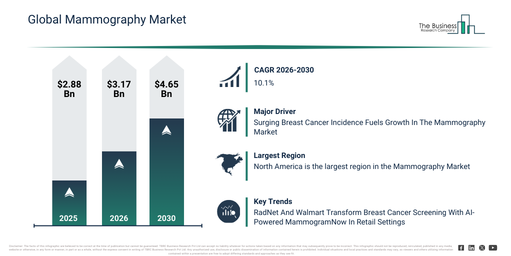
    The mammography market size has demonstrated robust expansion in recent years. Projections indicate it will increase from $2.88 billion in 2025 to $3.17 billion in 2026, at a compound annual growth rate (CAGR) of 9.8%. Historically, this growth can be attributed to factors such as an increase in breast cancer incidence rates, the widespread adoption of x-ray imaging techniques, government-led breast cancer awareness programs, the availability of film screen mammography systems, and the expansion of hospital-based diagnostic imaging services.

    The mammography market is projected for significant expansion in the coming years, with its valuation estimated to reach $4.65 billion by 2030, exhibiting a compound annual growth rate (CAGR) of 10.1%. This anticipated growth during the forecast period is fueled by several factors, including the expansion of population-based screening programs, increased financial commitments to women’s health diagnostics, a growing demand for prompt and precise detection methods, the transition in technology towards digital and tomosynthesis imaging, and the betterment of healthcare infrastructure within developing areas. Key developments expected throughout this period encompass the increasing integration of digital and 3D mammography systems, a heightened emphasis on early breast cancer screening campaigns, wider deployment of portable mammography devices in distant locales, a greater need for incorporating minimally invasive breast biopsy, and the extension of screening provisions into nascent healthcare markets.

    Access Your Free Sample Report For In-Depth Market Analysis:

    https://www.thebusinessresearchcompany.com/sample.aspx?id=10047&type=smp

    Which Important Drivers Are Guiding The Mammography Market Growth?

    The rising occurrence of breast cancer is anticipated to stimulate expansion within the mammography market. This condition involves the uncontrolled multiplication of cells in the breast. Globally, breast cancer prevalence is on the rise, and mammography stands as a highly significant and frequently employed screening method for its early identification and diagnosis. For example, data from Breastcancer.org, a US-based nonprofit organization, indicated that in 2023, approximately 297,790 new instances of invasive breast cancer, along with 55,720 new cases of DCIS, were projected for diagnosis among U.S. women. Additionally, the American Cancer Society, a US-based Voluntary organization, reported in January 2023 that a projected 287,850 new cases of invasive breast cancer and 51,400 new cases of non-invasive (in situ) breast cancer were identified in women in the United States during 2022. Consequently, the growing incidence of breast cancer acts as a key impetus for the mammography market.

    How Is The Mammography Market Organized By Segment Classification?

    The mammography market covered in this report is segmented –

    1) By Product: Film Screen Systems, Digital Systems, Analog Systems, Other Products

    2) By Modality: Portable Mammography Systems, Non-Portable Mammography Systems

    3) By Technology: Breast Tomosynthesis, CAD Mammography

    4) By End-User: Hospitals, Specialty Clinics, Diagnosis Centers, Other End-Users

    Subsegments:

    1) By Film Screen Systems: Standard Film Screen Systems, High-Resolution Film Screen Systems

    2) By Digital Systems: Full-Field Digital Mammography (FFDM), Digital Breast Tomosynthesis (DBT)

    3) By Analog Systems: Conventional Analog Mammography Systems

    4) By Other Products: Accessories And Consumables, Software Solutions

    What Trends Are Influencing The Evolution Of The Mammography Market?

    Leading companies in the mammography market are prioritizing advancements such as pilot programs for mammography services. These initiatives aim to enhance the early detection of breast cancer, improve patient outcomes, and expand access to underserved populations through mobile screening units and AI-enhanced diagnostic tools. The goal of these endeavors is to boost accuracy, reduce diagnostic times, and make mammography more available in remote and economically disadvantaged areas, ultimately contributing to improved healthcare equity. For instance, in December 2023, RadNet, Inc., a US-based healthcare company, launched a pilot program called MammogramNow, which offers mammography services within Walmart Supercenters. This initiative strives to increase breast health awareness and accessibility by integrating cutting-edge DeepHealth AI technology into a retail setting, making breast cancer screening more convenient. MammogramNow provides walk-in appointments where screenings are completed in approximately 15 minutes. Patients can also choose AI-enhanced screenings via RadNet’s DeepHealth subsidiary for improved detection accuracy. By bringing healthcare services into everyday retail environments, RadNet and Walmart aspire to redefine preventive healthcare delivery and accessibility in the US.

    Who Are The Industry Participants Involved In The Mammography Market?

    Major companies operating in the mammography market are Hologic Inc., Fujifilm Corporation, Siemens Healthcare AG, Canon Medical Systems Corporation, GE Healthcare Company, Koninklijke Philips N.V., Metaltronica S.p.A., PLANMED OY, Villa Sistemi Medicali S.p.A., Carestream Health, Konica Minolta Inc., Agfa-Gevaert N.V., Delphinus Medical Technologies Inc., Micrima Limited, Koning Corporation, Allengers Medical Systems Ltd., Trivitron Healthcare Pvt. Ltd., Genoray Co. Ltd., Analogic Corporation, BMI Biomedical International s.r.l., General Medical Merate S.p.A., IMS Srl, Medi-Future Co. Ltd., PerkinElmer Inc., QView Medical Inc., Radmirtech Co. Ltd.

    Get The Full Mammography Market Report:

    https://www.thebusinessresearchcompany.com/report/mammography-global-market-report

    Which Region Represents The Largest Share Of The Mammography Market?

    North America was the largest region in the mammography market in 2025. The regions covered in the mammography market report are Asia-Pacific, South East Asia, Western Europe, Eastern Europe, North America, South America, Middle East, Africa.

    Request A Customized Mammography Market Report For Competitive Insights:

    https://www.thebusinessresearchcompany.com/report/mammography-global-market-report

    Browse Through More Reports Similar to the Global Mammography Market 2026, By The Business Research Company

    Immunoglobulins Market Report 2026

    https://www.thebusinessresearchcompany.com/report/immunoglobulins-global-market-report

    Polyclonal Antibodies Market Report

    https://www.thebusinessresearchcompany.com/report/polyclonal-antibodies-global-market-report

    Hyperimmune Globulins Market Report

    https://www.thebusinessresearchcompany.com/report/hyperimmune-globulins-global-market-report

    Get in touch with us:

    The Business Research Company: https://www.thebusinessresearchcompany.com/

    Americas +1 310-496-7795

    Asia +44 7882 955267 & +91 8897263534

    Europe +44 7882 955267

    Email us at info@tbrc.info

    Follow us on:

    LinkedIn: https://in.linkedin.com/company/the-business-research-company

    YouTube: https://www.youtube.com/channel/UC24_fI0rV8cR5DxlCpgmyFQ

    Global Market Model: https://www.thebusinessresearchcompany.com/global-market-model
  • Mammalian Polyclonal IgG Antibody Market Analysis Focusing on Growth Potential and Future Outlook

    Mammalian Polyclonal IgG Antibody Market Analysis Focusing on Growth Potential and Future Outlook

    The Business Research Company’s 2026 market reports feature enhanced tools like market attractiveness analysis, TAM assessment, and company scoring matrices, along with interactive dashboards, deeper supply chain insights, and startup coverage strengthening the depth, usability, and strategic value of insights.

    What Changes In Market Value Are Expected For The Mammalian Polyclonal Immunoglobulin G (IgG) Antibody Market Over The 2026–2030 Period?

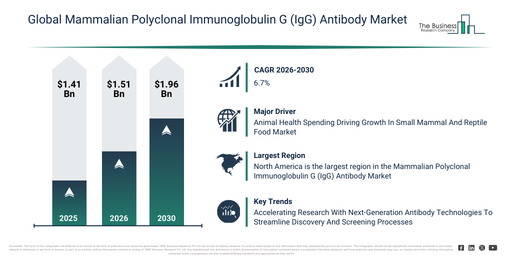
    The mammalian polyclonal immunoglobulin g (igg) antibody market has demonstrated robust expansion over the past few years. This market is projected to expand from $1.41 billion in 2025 to reach $1.51 billion by 2026, exhibiting a compound annual growth rate (CAGR) of 7.5%. Historically, this increase can be linked to several factors, including the rise in immunodiagnostic testing, the broad acceptance of ELISA techniques, increased funding for biomedical research, the established application of animal-derived antibodies, and the growing incidence of chronic and infectious diseases.

    The market for mammalian polyclonal immunoglobulin G (IgG) antibodies is anticipated to experience robust expansion over the coming years. This market is projected to reach $1.96 billion by 2030, demonstrating a compound annual growth rate (CAGR) of 6.7%. Key factors contributing to this growth during the forecast period include the broadening scope of precision diagnostics, an increase in biomarker-based testing, higher investments in pharmaceutical research and development, growing demand from developing healthcare markets, and the ongoing creation of advanced immunoassay platforms. Significant trends expected during this period involve the increasing application of polyclonal IgG in diagnostic assays, a heightened need for broad-spectrum antibody reagents, the expansion of immunoassay-based testing applications, greater utilization in translational and preclinical research, and an emphasis on producing high-affinity and batch-consistent antibodies.

    Access Your Free Sample Report For In-Depth Market Analysis:

    https://www.thebusinessresearchcompany.com/sample.aspx?id=16111&type=smp

    What Major Factors Are Driving The Mammalian Polyclonal Immunoglobulin G (IgG) Antibody Market Forward?

    Rising expenditures in animal health are anticipated to drive expansion in the mammalian polyclonal immunoglobulin G (IgG) antibody markets in the future. Animal health encompasses comprehensive care and management strategies focused on guaranteeing the welfare and prolonged life of various animals, such as domestic pets, farm animals, and wild species. The increase in animal health spending stems from several factors: a surge in pet ownership, higher demand for products derived from animals, continuous improvements in veterinary medicine, strengthened connections between humans and animals, and more stringent regulatory frameworks. This elevated investment in animal health fuels the need for specialized mammalian polyclonal immunoglobulin G (IgG) antibody, fostering innovation, enhancing customer loyalty, promoting cooperation among veterinarians, and stimulating market expansion within the pet care industry. As an illustration, data from March 2023, provided by the American Pet Products Association, a US-based not-for-profit industry association, indicated that pet foods and treats registered the highest spending, reaching $58.1 billion. This represented a substantial 16.2% rise, positioning it as the fastest-growing category. Consequently, the expanding financial outlay on animal health is projected to significantly advance the mammalian polyclonal immunoglobulin G (IgG) antibody market.

    Which Segments Define The Mammalian Polyclonal Immunoglobulin G (IgG) Antibody Market Segment Structure?

    The mammalian polyclonal immunoglobulin g (igg) antibody market covered in this report is segmented –

    1) By Product: Cardiac Markers, Metabolic Markers, Renal Markers, Other Products

    2) By Source Animal: Goat, Rabbit, Horse, Mouse, Other Source Animals

    3) By Application: Enzyme Linked Immuno Absorbent Assay (ELISA), Immunoturbidimetry, Immunoelectrophoresis, Antibody Identification, Immunohistochemistry, Immunocytochemistry, Western Blotting

    4) By End User: Pharmaceutical And Biotechnology Companies, Hospitals, Diagnostic Centers, Academic And Research Centers

    Subsegments:

    1) By Cardiac Markers: Troponin, BNP (B-Type Natriuretic Peptide), CK-MB (Creatine Kinase-MB), Myoglobin

    2) By Metabolic Markers: Glucose, Lipids, Insulin, HbA1c (Glycated Hemoglobin), Cholesterol

    3) By Renal Markers: Creatinine, Albumin, Urea, BUN (Blood Urea Nitrogen), Cystatin C

    4) By Other Products: Infectious Disease Markers, Tumor Markers, Autoimmune Disease Markers, Hormonal Markers, Inflammation Markers

    Which Trends Are Impacting The Progress Of The Mammalian Polyclonal Immunoglobulin G (IgG) Antibody Market?

    Leading companies in the mammalian polyclonal immunoglobulin G (IgG) Antibody market are concentrating on creating innovative products, such as high-throughput antibodies, to accelerate research and therapeutic development. These high-throughput antibodies are produced quickly and at scale using automated workflows, enabling researchers to screen numerous targets rapidly, reduce development timelines, and speed up therapeutic discovery. For example, in July 2024, Twist Bioscience Corporation, a US-based synthetic biology and genomics company, introduced Twist Express Antibodies, CHO, an innovative technology engineered to streamline antibody development. These antibodies are generated from user-defined sequences leveraging Twist’s silicon-based DNA synthesis platform, cloned into IgG scaffold vectors, and then produced in CHO cells, with turnaround times starting at 13 business days. Each antibody batch includes yield data for screening and quality assurance, making the process cost-effective, customizable, and well-suited for high-throughput candidate selection. The antibodies are applicable in biotherapeutic drug discovery, research screening, and experimental validation, presenting a robust and efficient alternative to traditional laboratory-based antibody synthesis methods.

    Who Are The Established Players Within The Mammalian Polyclonal Immunoglobulin G (IgG) Antibody Market?

    Major companies operating in the mammalian polyclonal immunoglobulin g (igg) antibody market are Thermo Fisher Scientific Inc., Merck KGaA, PerkinElmer Inc., Bio-Rad Laboratories Inc., GeneTex, GenScript Biotech Corporation, Jackson ImmunoResearch Laboratories, Abcam Inc., R&D Systems, Sino Biological, Fortis Life Sciences, OriGene Technologies, Cell Signaling Technology Inc., Cedarlane Labs, Capralogics Inc, Proteintech Group, ProSci LLC, Santa Cruz Biotechnology Inc., Rockland Immunochemicals Inc., Novus Biologicals LLC, Creative Diagnostics, Fitzgerald Industries International Inc.

    Get The Full Mammalian Polyclonal Immunoglobulin G (IgG) Antibody Market Report:

    https://www.thebusinessresearchcompany.com/report/mammalian-polyclonal-immunoglobulin-g-igg-antibody-global-market-report

    Which Geographic Region Dominates The Mammalian Polyclonal Immunoglobulin G (IgG) Antibody Market?

    North America was the largest region in the mammalian polyclonal immunoglobulin G (IgG) antibody market in 2025. The regions covered in the mammalian polyclonal immunoglobulin g (igg) antibody market report are Asia-Pacific, South East Asia, Western Europe, Eastern Europe, North America, South America, Middle East, Africa.

    Request A Customized Mammalian Polyclonal Immunoglobulin G (IgG) Antibody Market Report For Competitive Insights:

    https://www.thebusinessresearchcompany.com/report/mammalian-polyclonal-immunoglobulin-g-igg-antibody-global-market-report

    Browse Through More Reports Similar to the Global Mammalian Polyclonal Immunoglobulin G (IgG) Antibody Market 2026, By The Business Research Company

    Microbial Fermentation Technology Market Report 2026

    https://www.thebusinessresearchcompany.com/report/microbial-fermentation-technology-global-market-report

    Biopharmaceutical Fermentation Systems Market Report

    https://www.thebusinessresearchcompany.com/report/biopharmaceutical-fermentation-systems-global-market-report

    Cell Cultures Market Report

    https://www.thebusinessresearchcompany.com/report/cell-cultures-global-market-report

    Get in touch with us:

    The Business Research Company: https://www.thebusinessresearchcompany.com/

    Americas +1 310-496-7795

    Asia +44 7882 955267 & +91 8897263534

    Europe +44 7882 955267

    Email us at info@tbrc.info

    Follow us on:

    LinkedIn: https://in.linkedin.com/company/the-business-research-company

    YouTube: https://www.youtube.com/channel/UC24_fI0rV8cR5DxlCpgmyFQ

    Global Market Model: https://www.thebusinessresearchcompany.com/global-market-model
  • Mammalian Cell Fermentation Technology Market Forecast Showing Industry Trends and Progress

    Mammalian Cell Fermentation Technology Market Forecast Showing Industry Trends and Progress

    The Business Research Company’s 2026 market reports feature enhanced tools like market attractiveness analysis, TAM assessment, and company scoring matrices, along with interactive dashboards, deeper supply chain insights, and startup coverage strengthening the depth, usability, and strategic value of insights.

    By 2030, What Market Size Is The Mammalian Cell Fermentation Technology Market Expected To Reach Based On Its 2026 Value?

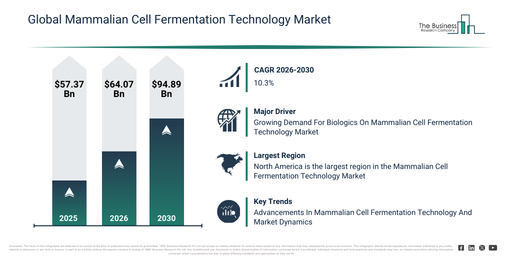
    The mammalian cell fermentation technology market size has experienced significant rapid growth recently. It is projected to increase from $57.37 billion in 2025 to $64.07 billion by 2026, achieving a compound annual growth rate (CAGR) of 11.7%. The expansion observed in the historic period is attributable to the growth of monoclonal antibody therapeutics, early success of mammalian cell expression systems, increasing biopharmaceutical approvals, reliance on batch-based fermentation processes, and the expansion of academic research in cell culture technologies.

    The mammalian cell fermentation technology market size is anticipated to experience substantial growth over the coming years. It is projected to expand to $94.89 billion by 2030, demonstrating a compound annual growth rate (CAGR) of 10.3%. This expansion during the forecast period can be attributed to several factors, including the increasing demand for biologics and biosimilars, enhanced investment in cell line engineering, the advancement of personalized medicine, expanding vaccine development pipelines, and rising biomanufacturing capacity in emerging markets. Significant trends for the forecast period involve a growing adoption of CHO cell-based production platforms, an increasing need for high-yield and scalable bioprocessing, greater outsourcing to CDMOs for biologic manufacturing, the expansion of single-use and modular bioreactor systems, and a heightened focus on process optimization and yield consistency.

    Access Your Free Sample Report For In-Depth Market Analysis:

    https://www.thebusinessresearchcompany.com/sample.aspx?id=16473&type=smp

    Which Key Drivers Are Affecting The Mammalian Cell Fermentation Technology Market Development?

    The escalating demand for biologics is projected to drive the growth of the mammalian cell fermentation technology market moving forward. Biologics are medical products derived from living organisms or their components, frequently utilized in treating conditions such as cancer, autoimmune disorders, and infectious diseases. The increasing need for biologics is propelled by advances in biotechnology, their proven effectiveness in managing common chronic diseases like cancer and autoimmune disorders, regulatory authorizations, and increased investment in research and development. Mammalian cell fermentation technology efficiently produces complex biologics, thereby fulfilling the rising demand for personalized and targeted therapeutics. Its scalability, versatility, and capability to yield high-quality proteins foster innovation within the biopharmaceutical industry. For instance, in February 2024, according to the National Library of Medicine, a US-based medical library, in 2023, the Food and Drug Administration (FDA) approved 55 new drugs, which included 29 new chemical entities (NCEs) and 25 new biological entities (NBEs), marking a 50% increase compared to the 37 approvals in 2022. Therefore, the expanding demand for biologics is stimulating the growth of the bacterial cell fermentation technology market.

    How Is The Mammalian Cell Fermentation Technology Market Segmented Across Different Segment Categories?

    The mammalian cell fermentation technology market covered in this report is segmented –

    1) By Type: Chinese Hamster Ovary Cell Fermentation, Human Embryonic Kidney Cell Fermentation, Baby Hamster Kidney Cell Fermentation, Murine Myeloma Cell Fermentation, Other Types

    2) By Application: Monoclonal Antibodies, Recombinant Proteins, Vaccines, Hormones, Enzymes, Other Applications

    3) By End-Use: Biopharmaceutical Companies, Contract Research Organizations And Contract Development and Manufacturing Organizations, Academic And Research Institutes

    Subsegments:

    1) By Chinese Hamster Ovary (CHO) Cell Fermentation: Suspension CHO Cell Lines, Serum-Free CHO Fermentation, High-Yield Recombinant Protein Production

    2) By Human Embryonic Kidney (HEK) Cell Fermentation: Transient Transfection-Based Fermentation, Viral Vector Production Systems, Serum-Free HEK Cell Cultures

    3) By Baby Hamster Kidney (BHK) Cell Fermentation: Vaccine Antigen Production, Stable Cell Line Fermentation, Suspension BHK Cell Cultures

    4) By Murine Myeloma Cell Fermentation: Monoclonal Antibody Production, Hybridoma-Based Fermentation, Serum-Free Antibody Expression Systems

    5) By Other Types: Insect Cell Line Fermentation, Stem Cell–Derived Mammalian Cells, Custom Engineered Cell Line Fermentation

    What Trends Are Transforming The Mammalian Cell Fermentation Technology Market?

    Leading companies in the mammalian cell fermentation technology market are prioritizing the development of innovative technologies, such as mammalian cell culture, to enhance their market standing. Mammalian cell culture is a vital tool across various domains, including biomanufacturing, research, and regenerative medicine, facilitating the creation of therapeutic proteins, vaccines, and functional cells or tissue analogs. For example, in June 2024, Syntegon, a Germany-based biotechnology company, introduced its new Modular Bioprocessing Platform (MBP) at Achema 2024, specifically engineered to address key hurdles in biopharmaceutical production. This cutting-edge platform delivers an extremely flexible, fully integrated, and automated solution appropriate for a wide range of applications, including microbial and mammalian cell cultures, proteins, peptides, oligonucleotides, plasmid DNA, and recombinant vaccines. The MBP’s modular construction enables faster lead times and lower costs while preserving high functionality and quality, in accordance with the “made in Germany” standard. Its prefabricated cleanroom layout positions all supporting technology outside the cleanroom, thereby improving efficiency and simplifying upkeep.

    Which Organizations Play A Role In The Mammalian Cell Fermentation Technology Market Landscape?

    Major companies operating in the mammalian cell fermentation technology market are AbbVie Inc., Thermo Fisher Scientific Inc, AstraZeneca PLC, Roche Holdings Inc., Merck KGaA, AGC Group, Lonza Group Ltd., Boehringer Ingelheim GmbH, Catalent Inc., Sartorius AG, Samsung Biologics Co. Ltd., WuXi Biologics, Biocon Limited, Eppendorf AG, KBI Biopharma Inc., Fujifilm Diosynth Biotechnologies, Avid Bioservices Inc., BiOZEEN, Nordmark Pharma GmbH, Scorpius BioManufacturing Inc

    Get The Full Mammalian Cell Fermentation Technology Market Report:

    https://www.thebusinessresearchcompany.com/report/mammalian-cell-fermentation-technology-global-market-report

    Which Region Is The Leading Market For The Mammalian Cell Fermentation Technology Market?

    North America was the largest region in the mammalian cell fermentation technology market in 2025. Asia-Pacific is expected to be the fastest-growing region in the forecast period. The regions covered in the mammalian cell fermentation technology market report are Asia-Pacific, South East Asia, Western Europe, Eastern Europe, North America, South America, Middle East, Africa.

    Request A Customized Mammalian Cell Fermentation Technology Market Report For Competitive Insights:

    https://www.thebusinessresearchcompany.com/report/mammalian-cell-fermentation-technology-global-market-report

    Browse Through More Reports Similar to the Global Mammalian Cell Fermentation Technology Market 2026, By The Business Research Company

    Primary Cell Culture Market Report 2026

    https://www.thebusinessresearchcompany.com/report/primary-cell-culture-global-market-report

    Cell Culture Media Market Report

    https://www.thebusinessresearchcompany.com/report/cell-culture-media-global-market-report

    Cell Cultures Market Report

    https://www.thebusinessresearchcompany.com/report/cell-cultures-global-market-report

    Get in touch with us:

    The Business Research Company: https://www.thebusinessresearchcompany.com/

    Americas +1 310-496-7795

    Asia +44 7882 955267 & +91 8897263534

    Europe +44 7882 955267

    Email us at info@tbrc.info

    Follow us on:

    LinkedIn: https://in.linkedin.com/company/the-business-research-company

    YouTube: https://www.youtube.com/channel/UC24_fI0rV8cR5DxlCpgmyFQ

    Global Market Model: https://www.thebusinessresearchcompany.com/global-market-model
  • Mammalian Cell Culture Market Future Trends Influencing Growth

    Mammalian Cell Culture Market Future Trends Influencing Growth

    The Business Research Company’s 2026 market reports feature enhanced tools like market attractiveness analysis, TAM assessment, and company scoring matrices, along with interactive dashboards, deeper supply chain insights, and startup coverage strengthening the depth, usability, and strategic value of insights.

    What Is The Anticipated Rise In Market Value Of The Mammalian Cell Culture Market During The Forecast Period?

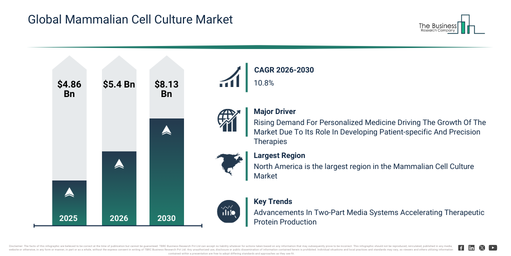
    The mammalian cell culture market has seen substantial growth in recent years. Its value is projected to rise from $4.86 billion in 2025 to $5.4 billion in 2026, indicating a compound annual growth rate (CAGR) of 11.1%. This historical expansion can be traced back to the expansion of monoclonal antibody production, growth in vaccine manufacturing capacity, increasing use of mammalian cells in drug discovery, rising availability of advanced culture equipment, and the growth of biopharmaceutical research.

    The mammalian cell culture market is anticipated to experience significant expansion in the coming years. It is forecast to grow to $8.13 billion by 2030, demonstrating a compound annual growth rate (CAGR) of 10.8%. This growth during the forecast period can be attributed to increasing investments in cell and gene therapy, rising demand for biologics production, the expansion of regenerative medicine research, a growing focus on scalable cell culture technologies, and the increasing adoption of continuous bioprocessing. Major trends expected within this period include the growing adoption of serum-free mammalian cell culture media, rising demand for large-scale biopharmaceutical production, the increasing use of automated cell culture systems, an expansion of cell-based vaccine manufacturing, and an enhanced focus on process consistency and yield optimization.

    Access Your Free Sample Report For In-Depth Market Analysis:

    https://www.thebusinessresearchcompany.com/sample.aspx?id=30318&type=smp

    What Factors Are Contributing To The Growth Of The Mammalian Cell Culture Market?

    A growing requirement for personalized medicine is anticipated to drive the expansion of the mammalian cell culture market in the future. This approach to medicine tailors healthcare solutions, taking into account an individual’s genetic makeup, environmental influences, and lifestyle choices, to deliver highly effective and accurate care. The surge in personalized medicine’s appeal stems from its ability to improve treatment efficacy by customizing therapies to match unique genetic and biological profiles, which in turn elevates patient results. Mammalian cell culture plays a crucial role in facilitating personalized medicine; it offers a regulated setting where patient-specific cells can be examined, thereby enabling the creation of bespoke treatments and the evaluation of drug reactions, leading to more exact and potent therapeutic interventions. As an illustration, the Personalized Medicine Coalition, a US-based non-profit organization, announced in February 2024 that the FDA had cleared 16 novel personalized treatments for individuals suffering from rare diseases in 2023, marking a substantial rise from the six approved in 2022. Consequently, the expanding need for personalized medicine is fueling the development of the mammalian cell culture market.

    What Are The Main Segments Within The Mammalian Cell Culture Market Segment Structure?

    The mammalian cell culture market covered in this report is segmented –

    1) By Product: Media, Sera, Reagents, Equipment

    2) By Cell Line: Chinese Hamster Ovary (CHO), Wistar Institute-38 (WI-38), Rat Glial Tumor Cell Line (C6), Human Embryonic Kidney 293 (HEK293), Henrietta Lacks (HeLa)

    3) By Application: Biopharmaceutical Production, Vaccine Production, Toxicity Testing, Drug Screening and Development, Tissue Engineering And Regenerative Medicine

    4) By End-Use: Pharmaceutical And Biotechnology Companies, Hospitals And Diagnostic Laboratories, Research And Academic Institutes, Contract Research Organizations (CROs)

    Subsegments:

    1) By Media: Serum-free Media, Chemically Defined Media, Classical Media, Protein-free Media, Specialty Media, Custom Media Formulations

    2) By Sera: Fetal Bovine Serum (FBS), Newborn Calf Serum, Adult Bovine Serum, Donor Horse Serum

    3) By Reagents: Growth Factors And Cytokines, Cell Dissociation Reagents, Supplements And Additives, Cryoprotective Agents, Buffers And Salt Solutions, Antibiotics And Antimycotics

    4) By Equipment: Bioreactors And Fermenters, Culture Vessels, Filtration Systems, Centrifuges, Cell Counters And Analyzers, Incubators, Biosafety Cabinets, Microscopes, Refrigeration And Cryostorage Equipment

    What Trends Are Shaping The Future Of The Mammalian Cell Culture Market?

    Leading companies within the mammalian cell culture market are prioritizing advancements in cell culture media, including approaches like two-part production systems. This focus aims to boost protein yield, increase cell viability, and optimize scalable bioprocess workflows for use in therapeutics. Specifically, a two-part production system represents a cell culture methodology employing two separate media components: one designed for supporting general cell proliferation, and the other for boosting protein expression, thereby leading to enhanced productivity. As an illustration, Lonza Group Ltd., a contract development and manufacturing organization (CDMO) based in Switzerland, introduced the TheraPRO CHO Media System in July 2023. This novel platform comprises a chemically defined, animal-component-free cell culture medium crafted specifically for GS-CHO mammalian cell lines. The system’s objective is to improve the generation of therapeutic proteins and monoclonal antibodies by ensuring superior cell viability and increased protein yields. Its scalable nature facilitates support for every phase of bioprocess manufacturing, ranging from initial cell line development to extensive large-scale production. Through this introduction, Lonza endeavors to optimize workflows, elevate product quality, and expedite time-to-market for manufacturers in the biopharmaceutical sector.

    Who Are The Companies Participating In The Mammalian Cell Culture Market?

    Major companies operating in the mammalian cell culture market are Novartis AG, Thermo Fisher Scientific Inc., Merck KGaA, Danaher Corporation, GE Healthcare, Becton Dickinson and Company, Lonza Group AG, Avantor Inc., Agilent Technologies Inc., Charles river laboratories, Sartorius AG, Samsung biologics, Wuxi biologics, Bio-Techne Corporation, Miltenyi Biotec, STEMCELL Technologies, Takara Bio Inc., Goodwin biotechnology, HiMedia Laboratories Private Limited, Promocell GmbH, Eppendorf AG, Cell Culture Company LLC, Cell X Technologies.

    Get The Full Mammalian Cell Culture Market Report:

    https://www.thebusinessresearchcompany.com/report/global-mammalian-cell-culture-market-report

    Where Is The Mammalian Cell Culture Market Primarily Concentrated By Region?

    North America was the largest region in the mammalian cell culture market in 2025. Asia-Pacific is expected to be the fastest-growing region in the forecast period. The regions covered in the mammalian cell culture market report are Asia-Pacific, South East Asia, Western Europe, Eastern Europe, North America, South America, Middle East, Africa.

    Request A Customized Mammalian Cell Culture Market Report For Competitive Insights:

    https://www.thebusinessresearchcompany.com/report/global-mammalian-cell-culture-market-report

    Browse Through More Reports Similar to the Global Mammalian Cell Culture Market 2026, By The Business Research Company

    Pulmonary Embolism Market Report 2026

    https://www.thebusinessresearchcompany.com/report/pulmonary-embolism-global-market-report

    Esophageal Cancer Market Report

    https://www.thebusinessresearchcompany.com/report/esophageal-cancer-global-market-report

    Aortic Aneurysm Market Report

    https://www.thebusinessresearchcompany.com/report/aortic-aneurysm-global-market-report

    Get in touch with us:

    The Business Research Company: https://www.thebusinessresearchcompany.com/

    Americas +1 310-496-7795

    Asia +44 7882 955267 & +91 8897263534

    Europe +44 7882 955267

    Email us at info@tbrc.info

    Follow us on:

    LinkedIn: https://in.linkedin.com/company/the-business-research-company

    YouTube: https://www.youtube.com/channel/UC24_fI0rV8cR5DxlCpgmyFQ

    Global Market Model: https://www.thebusinessresearchcompany.com/global-market-model
  • Malignant Pleural Effusion Market Growth Trends and Forecast Through 2030

    Malignant Pleural Effusion Market Growth Trends and Forecast Through 2030

    The Business Research Company’s 2026 market reports feature enhanced tools like market attractiveness analysis, TAM assessment, and company scoring matrices, along with interactive dashboards, deeper supply chain insights, and startup coverage strengthening the depth, usability, and strategic value of insights.

    How Is The Market Size Of The Malignant Pleural Effusion Market Expected To Scale Between 2026 And 2030?

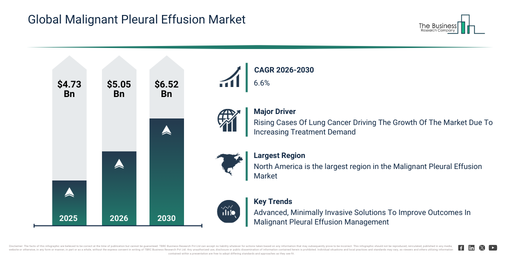
    The malignant pleural effusion market size has experienced strong growth in recent years. It is projected to increase from $4.73 billion in 2025 to $5.05 billion in 2026, achieving a compound annual growth rate (CAGR) of 6.8%. This historical growth can be attributed to factors such as the rising incidence of metastatic cancers, the limited curative treatment options available, the reliance on repeated thoracentesis for symptom management, the expansion of hospital-based cancer care, and the progressive adoption of pleurodesis techniques.

    The malignant pleural effusion market is projected to experience robust expansion over the coming years. By 2030, its valuation is anticipated to reach $6.52 billion, exhibiting a compound annual growth rate (CAGR) of 6.6%. This projected growth during the forecast period is driven by several factors, including the increasing global incidence of cancer, continuous improvements in pleural catheter technologies, a greater focus on outpatient and home-based care models, enhanced precision in diagnostic imaging, and an escalating need for treatments prioritizing patient quality of life. Key developments expected within this period involve the rising adoption of indwelling pleural catheters for sustained management, a growing inclination towards minimally invasive pleural procedures, the broader incorporation of systemic cancer therapies into MPE management strategies, an increased emphasis on symptom alleviation and palliative care methods, and the wider application of imaging-guided diagnostic and treatment interventions.

    Access Your Free Sample Report For In-Depth Market Analysis:

    https://www.thebusinessresearchcompany.com/sample.aspx?id=22047&type=smp

    Which Strong Drivers Are Impacting The Malignant Pleural Effusion Market Growth?

    An anticipated increase in lung cancer cases is poised to drive the growth of the Malignant Pleural Effusion Market in the foreseeable future. Lung cancer is a condition marked by the uncontrolled multiplication of abnormal cells within the lungs, which can develop into tumors and disrupt normal lung function. This rise in lung cancer cases is primarily linked to smoking and tobacco use, as prolonged exposure to harmful chemicals in cigarettes damages lung tissues, triggers genetic mutations, and fosters the unrestrained proliferation of cancerous cells, substantially increasing the risk of developing the disease. Malignant pleural effusion signifies advanced lung cancer progression by facilitating the spread of tumors within the pleural cavity, leading to impaired respiratory function and a less favorable prognosis. For instance, in January 2023, data from the American Cancer Society Facts and Figures, a US-based professional organizations company, estimated new lung and bronchus cancer cases at 236,740 in 2022 and 238,340 in 2023. During the same period, estimated deaths were 130,180 in 2022 and 127,070 in 2023. Consequently, the increasing incidence of lung cancer is a significant factor propelling the expansion of the Malignant Pleural Effusion Market. The enhancement of healthcare infrastructure is anticipated to drive the expansion of the Malignant Pleural Effusion Market in the future. Healthcare infrastructure refers to the foundational physical, technological, and organizational elements required for delivering medical services, including hospitals, clinics, specialized equipment, IT systems, and personnel. Improvements in this infrastructure are driven by the need for more effective disease management, contributing to greater healthcare accessibility, efficiency, and quality of care. Such advancements facilitate the diagnosis, treatment, and management of malignant pleural effusion by offering access to cutting-edge medical technologies, well-equipped facilities, and expert care, ultimately leading to improved patient outcomes. For instance, in May 2023, the American Health Care Association, a US-based nonprofit organization, noted a 0.591% increase in the number of hospitals in the United States from the preceding year, rising from 6,093 to 6,129. Therefore, the betterment of healthcare infrastructure is a key factor stimulating the growth of the Malignant Pleural Effusion Market.

    How Is Segmentation Applied In The Malignant Pleural Effusion Market Segment Analysis?

    The malignant pleural effusion market covered in this report is segmented –

    1) By Treatment: Systemic Therapy, Therapeutic Thoracentesis, Thoracic Drainage And Pleurodesis, Indwelling Pleural Catheter

    2) By Diagnosis: Pleural Fluid Cytology, Immunohistochemical Tests, Imaging Tests, Pleural Thoracentosis, Pleuroscopy, Pleural Biopsy

    3) By End Users: Hospitals, Ambulatory Clinics, Other End Users

    Subsegments:

    1) By Systemic Therapy: Chemotherapy, Targeted Therapy, Immunotherapy

    2) By Therapeutic Thoracentesis: Single-Time Thoracentesis, Repeated Thoracentesis

    3) By Thoracic Drainage And Pleurodesis: Chemical Pleurodesis, Mechanical Pleurodesis

    4) By Indwelling Pleural Catheter: Tunneled Pleural Catheter, Non-Tunneled Pleural Catheter

    Which Trends Are Contributing To Changes In The Malignant Pleural Effusion Market?

    Leading companies in the malignant pleural effusion market are concentrating on developing advanced products, such as fully-implantable automatic fluid-shunt devices, to enhance patient comfort and decrease hospital visits. A fully-implantable automatic fluid-shunt device is a medical apparatus placed within the body that autonomously drains excess pleural fluid from the lungs into the abdomen or another region, thereby helping to relieve breathlessness, reduce the necessity for repeated hospital procedures, and improve the patient’s quality of life. For example, in October 2023, Pleural Dynamics, a US-based medical device company, introduced the ACES Automatic Continuous Effusion Shunt System. This device consists of a resilient, flexible pump chamber implanted beneath the skin between the ribs, with one catheter situated in the pleural space and another in the peritoneal space. As the patient inhales and exhales, the internal pump extension compresses and decompresses between adjacent ribs, propelling fluid from the pleural cavity to the abdomen where it is reabsorbed; additionally, the system permits manual activation via an external compression extension. Significant characteristics of this system include its entirely implantable design, absence of external drainage tubing or suction bottles, a pumping function that automatically activates with breathing, a short hospital stay for its placement, and continuous symptom relief for recurring effusions.

    Who Are The Companies Participating In The Malignant Pleural Effusion Market Environment?

    Major companies operating in the malignant pleural effusion market are Becton Dickinson and Company, Cook Medical LLC, Merit Medical Systems Inc, Argon Medical Devices Inc, B Braun SE, Medtronic plc, Smiths Medical, Teleflex Incorporated, Cardinal Health Inc, Getinge AB, AngioDynamics Inc, Rocket Medical plc, Redax SpA, Atrium Medical Corporation, PolyMedicure Ltd, Troge Medical GmbH, Vygon SA, ICU Medical Inc, ConvaTec Group plc, Baxter International Inc

    Get The Full Malignant Pleural Effusion Market Report:

    https://www.thebusinessresearchcompany.com/report/malignant-pleural-effusion-global-market-report

    Which Region Has The Greatest Market Share In The Malignant Pleural Effusion Market?

    North America was the largest region in the malignant pleural effusion market in 2025. Asia-Pacific is expected to be the fastest-growing region in the forecast period. The regions covered in the malignant pleural effusion market report are Asia-Pacific, South East Asia, Western Europe, Eastern Europe, North America, South America, Middle East, Africa.

    Request A Customized Malignant Pleural Effusion Market Report For Competitive Insights:

    https://www.thebusinessresearchcompany.com/report/malignant-pleural-effusion-global-market-report

    Browse Through More Reports Similar to the Global Malignant Pleural Effusion Market 2026, By The Business Research Company

    Acoustic Neuroma Market Report 2026

    https://www.thebusinessresearchcompany.com/report/acoustic-neuroma-global-market-report

    Paraganglioma Market Report

    https://www.thebusinessresearchcompany.com/report/paraganglioma-global-market-report

    Adult Malignant Glioma Therapeutics Market Report

    https://www.thebusinessresearchcompany.com/report/adult-malignant-glioma-therapeutics-global-market-report

    Get in touch with us:

    The Business Research Company: https://www.thebusinessresearchcompany.com/

    Americas +1 310-496-7795

    Asia +44 7882 955267 & +91 8897263534

    Europe +44 7882 955267

    Email us at info@tbrc.info

    Follow us on:

    LinkedIn: https://in.linkedin.com/company/the-business-research-company

    YouTube: https://www.youtube.com/channel/UC24_fI0rV8cR5DxlCpgmyFQ

    Global Market Model: https://www.thebusinessresearchcompany.com/global-market-model
  • Malignant Mesothelioma Market Insights Covering Trends and Opportunities

    Malignant Mesothelioma Market Insights Covering Trends and Opportunities

    The Business Research Company’s 2026 market reports feature enhanced tools like market attractiveness analysis, TAM assessment, and company scoring matrices, along with interactive dashboards, deeper supply chain insights, and startup coverage strengthening the depth, usability, and strategic value of insights.

    What Level Of Market Value Growth Is Predicted For The Malignant Mesothelioma Market From 2026 To 2030?

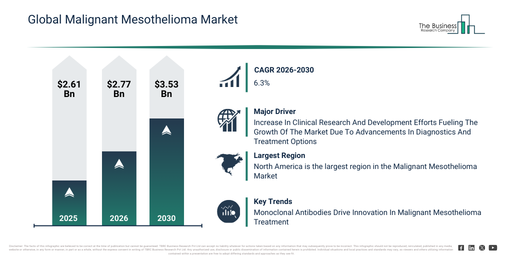
    The malignant mesothelioma market has experienced robust expansion in recent years. It is anticipated to increase from $2.61 billion in 2025 to $2.77 billion in 2026, achieving a compound annual growth rate (CAGR) of 6.3%. The growth observed historically can be attributed to previous asbestos exposure in construction and manufacturing, the extended latency period of the disease, restricted early treatment options, growing awareness of occupational health, and progressive enhancements in diagnostic imaging.

    The malignant mesothelioma market size is anticipated to experience substantial growth in the coming years. It is projected to expand to $3.53 billion by 2030, demonstrating a compound annual growth rate (CAGR) of 6.3%. This expansion during the forecast period is attributable to breakthroughs in immunotherapy and targeted drugs, increased investment in rare cancer research, a rising number of clinical trials, enhanced diagnostic technologies, and growing healthcare spending on oncology. Significant trends expected in the forecast period include the increasing adoption of immunotherapy and targeted therapy, a greater emphasis on multimodal treatment approaches, an escalating demand for early and accurate diagnosis, the expansion of specialized mesothelioma treatment centers, and higher participation in clinical trials for rare cancers.

    Access Your Free Sample Report For In-Depth Market Analysis:

    https://www.thebusinessresearchcompany.com/sample.aspx?id=22046&type=smp

    What Key Factors Are Shaping The Malignant Mesothelioma Market Landscape?

    Ongoing expansion in clinical research and development endeavors is projected to stimulate the growth of the malignant mesothelioma market moving forward. These R&D efforts encompass conducting scientific investigations and trials aimed at inventing new pharmaceuticals, therapies, and medical devices, which includes assessing their safety, efficacy, and potential adverse reactions through structured clinical trials. The heightened focus on clinical R&D is attributable to the escalating need for innovative and enhanced treatments, particularly with the increasing prevalence of chronic diseases and intricate conditions. Such research and development initiatives propel the malignant mesothelioma market by accelerating progress in diagnostics, treatments, and precise therapies, thereby fostering inventive strategies to improve early detection, boost survival rates, and devise more effective, less invasive therapeutic alternatives. For instance, in January 2025, as reported by Anadolu Agency, a state-run news agency based in Turkey, clinical trials constitute nearly 40% of the U.S. pharmaceutical research budget, amounting to approximately $7 billion annually. Consequently, the escalating research and development activities are driving the expansion of the malignant mesothelioma market.

    What Segment Categories Shape The Malignant Mesothelioma Market Segment Landscape?

    The malignant mesothelioma market covered in this report is segmented –

    1) By Treatment Type: Chemotherapy, Radiation Therapy, Surgery, Immunotherapy, Targeted Therapy

    2) By Route Of Administration: Oral, Intravenous, Injectable

    3) By Distribution Channel: Hospital Pharmacies, Specialty Pharmacies

    4) By End-User: Hospitals, Oncology Clinics

    Subsegments:

    1) By Chemotherapy: Alkylating Agents, Antimetabolites, Combination Therapy

    2) By Radiation Therapy: External Beam Radiation Therapy (EBRT), Intensity-Modulated Radiation Therapy (IMRT), Stereotactic Body Radiation Therapy (SBRT), Proton Therapy

    3) By Surgery: Pleurectomy Or Decortication (P/D), Extrapleural Pneumonectomy (EPP), Cytoreductive Surgery, Palliative Surgery

    4) By Immunotherapy: Immune Checkpoint Inhibitors, Monoclonal Antibodies, Tumor Vaccines, Adoptive Cell Therapy

    5) By Targeted Therapy: Tyrosine Kinase Inhibitors (TKIs), Angiogenesis Inhibitors, Mesothelin-Targeted Agents, Gene Therapy-Based Approaches

    What Market Trends Are Affecting The Malignant Mesothelioma Market?

    Key companies operating in the malignant mesothelioma market are concentrating on developing advanced treatment options, such as monoclonal antibody therapies, with the goal of inhibiting tumor growth and improving treatment precision. Monoclonal antibodies are laboratory-produced proteins designed to mimic the immune system’s inherent ability to detect and target specific antigens, like those found on cancer cells. For instance, in November 2023, Ono Pharmaceutical Co. Ltd., a pharmaceutical company located in Japan, received supplemental approval in Japan for the expanded use of Opdivo (nivolumab), a human anti-human PD-1 monoclonal antibody for treating malignant mesothelioma (excluding malignant pleural mesothelioma). This approval establishes Opdivo as a new therapeutic choice for this condition, for which no standard treatments had previously been established. Opdivo was also designated an orphan drug for this indication, emphasizing its potential to address a significant medical need.

    Who Are The Companies Operating Across The Malignant Mesothelioma Market Value Chain?

    Major companies operating in the malignant mesothelioma market are AstraZeneca PLC, Bristol Myers Squibb Company, Merck & Co. Inc., F. Hoffmann-La Roche Ltd, Novartis AG, Pfizer Inc., Eli Lilly and Company, Johnson & Johnson, AbbVie Inc., Amgen Inc., Regeneron Pharmaceuticals Inc., Sanofi S.A., Gilead Sciences Inc., Takeda Pharmaceutical Company Limited, Boehringer Ingelheim International GmbH, Bayer AG, Eisai Co. Ltd., Astellas Pharma Inc., Ono Pharmaceutical Co. Ltd., PharmaMar S.A.

    Get The Full Malignant Mesothelioma Market Report:

    https://www.thebusinessresearchcompany.com/report/malignant-mesothelioma-global-market-report

    Which Region Accounts For The Largest Portion Of The Malignant Mesothelioma Market?

    North America was the largest region in the malignant mesothelioma market in 2025. Asia-Pacific is expected to be the fastest-growing region in the forecast period. The regions covered in the malignant mesothelioma market report are Asia-Pacific, South East Asia, Western Europe, Eastern Europe, North America, South America, Middle East, Africa.

    Request A Customized Malignant Mesothelioma Market Report For Competitive Insights:

    https://www.thebusinessresearchcompany.com/report/malignant-mesothelioma-global-market-report

    Browse Through More Reports Similar to the Global Malignant Mesothelioma Market 2026, By The Business Research Company

    Melanoma Therapeutics Market Report 2026

    https://www.thebusinessresearchcompany.com/report/melanoma-therapeutics-global-market-report

    Metastatic Melanoma Therapeutics Market Report

    https://www.thebusinessresearchcompany.com/report/metastatic-melanoma-therapeutics-global-market-report

    Melanoma Drugs Market Report

    https://www.thebusinessresearchcompany.com/report/melanoma-drugs-global-market-report

    Get in touch with us:

    The Business Research Company: https://www.thebusinessresearchcompany.com/

    Americas +1 310-496-7795

    Asia +44 7882 955267 & +91 8897263534

    Europe +44 7882 955267

    Email us at info@tbrc.info

    Follow us on:

    LinkedIn: https://in.linkedin.com/company/the-business-research-company

    YouTube: https://www.youtube.com/channel/UC24_fI0rV8cR5DxlCpgmyFQ

    Global Market Model: https://www.thebusinessresearchcompany.com/global-market-model
  • Malignant Melanoma Treatment Market Developments Driving Growth

    Malignant Melanoma Treatment Market Developments Driving Growth

    The Business Research Company’s 2026 market reports feature enhanced tools like market attractiveness analysis, TAM assessment, and company scoring matrices, along with interactive dashboards, deeper supply chain insights, and startup coverage strengthening the depth, usability, and strategic value of insights.

    How Will The Market Value Of The Malignant Melanoma Treatment Market Progress Between 2026 And 2030?

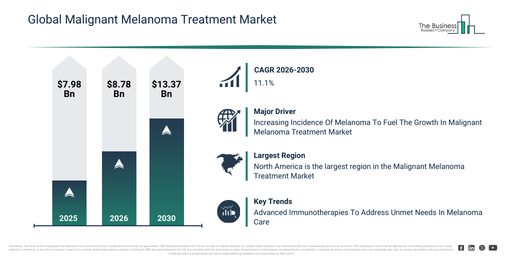
    The malignant melanoma treatment market size has seen rapid expansion in recent years. It is anticipated to grow from $7.98 billion in 2025 to $8.78 billion in 2026, achieving a compound annual growth rate (CAGR) of 10.1%. The increase observed historically can be attributed to the rising incidence of skin cancer globally, increased exposure to ultraviolet radiation, early development of chemotherapy-based melanoma treatments, growing awareness of melanoma symptoms, and the initial success of surgical melanoma management.

    The malignant melanoma treatment market size is anticipated to experience substantial growth over the next few years, reaching $13.37 billion by 2030, with a compound annual growth rate (CAGR) of 11.1%. This expansion during the forecast period is fueled by the increasing approval of advanced immunotherapies, a growing emphasis on personalized cancer treatment, rising investment in oncology research and development, the broadening of melanoma screening programs, and improved healthcare access in emerging markets. Significant trends expected in this period include the increasing adoption of immunotherapy-based treatments, a rise in the use of combination treatment regimens, a heightened focus on early-stage melanoma intervention, the expansion of clinical trials for novel melanoma therapies, and a greater demand for specialized oncology care centers.

    Access Your Free Sample Report For In-Depth Market Analysis:

    https://www.thebusinessresearchcompany.com/sample.aspx?id=13252&type=smp

    Which Factors Are Influencing The Growth Of The Malignant Melanoma Treatment Market?

    The malignant melanoma treatment market is projected to expand due to the rising occurrence of melanoma. Melanoma, a type of skin cancer, originates in melanocytes, which are the skin cells producing pigment. Treatment for melanoma typically includes surgical removal of the tumor, and depending on the cancer’s stage and spread, supplementary therapies such as immunotherapy or targeted therapy might be advised. As an illustration, data from February 2023 by the US-based Melanoma Research Foundation indicated that the total melanoma cases in the United States reached 1,87,000 in 2023, subsequently growing by 7.3% to 2,00,651 cases in 2024. Consequently, the growing frequency of melanoma is fueling the expansion of the malignant melanoma treatment market.

    Which Segment Types Are Examined In The Malignant Melanoma Treatment Market Segment Study?

    The malignant melanoma treatment market covered in this report is segmented –

    1) By Treatment: Immunotherapy, Radiation Therapy, Chemotherapy, Other Treatments

    2) By Disease Type: Lentigo Maligna Melanoma, Acral Lentiginous Melanoma, Nodular Melanoma, Superficial Spreading Melanoma

    3) By End-User: Hospitals, Specialty Clinics, Other End Users

    Subsegments:

    1) By Immunotherapy: Checkpoint Inhibitors, Cytokine Therapy, Oncolytic Virus Therapy

    2) By Radiation Therapy: External Beam Radiation Therapy, Stereotactic Radiation Therapy

    3) By Chemotherapy: Traditional Chemotherapy Agents, Combination Chemotherapy Regimens

    4) By Other Treatments: Targeted Therapy, Surgical Interventions, Clinical Trials For Novel Therapies

    Which Trends Are Influencing Demand In The Malignant Melanoma Treatment Market?

    Leading companies within the malignant melanoma treatment market are concentrating on creating novel solutions, including autologous tumor-infiltrating lymphocyte (TIL) therapies. This effort aims to address the growing need for potent post-checkpoint immunotherapies and tailored cell-based choices for individuals whose condition advances following PD-1 inhibitors and targeted treatments. Autologous tumor-infiltrating lymphocyte (TIL) therapy represents an immunotherapy approach where a patient’s own immune cells, which have penetrated their tumor, are gathered, multiplied in a laboratory setting, and then readministered to bolster the body’s capacity to identify and eliminate cancer cells with greater efficacy. As an example, Iovance Biotherapeutics, a US-based biopharmaceutical firm, introduced AMTAGVI (lifileucel) in February 2024. This autologous TIL therapy is intended for adults suffering from unresectable or metastatic melanoma who have experienced disease progression despite previous PD-1 therapy (and targeted therapy if they possess a BRAF V600-mutant). AMTAGVI (lifileucel) consists of expanded tumor-infiltrating lymphocytes obtained from the patient’s own tumor and subsequently reinfused after a conditioning phase; its mechanism involves enhancing tumor-reactive T cells to facilitate the destruction of tumor cells. Distinct characteristics of this therapy encompass personalized manufacturing, a treatment model based on a single administration, and the ability to identify a variety of tumor antigens.

    Which Players Are Part Of The Competitive Landscape Of The Malignant Melanoma Treatment Market?

    Major companies operating in the malignant melanoma treatment market are Johnson & Johnson Private Limited, Pfizer Inc., Hoffmann-La Roche AG, Bayer AG, Novartis AG, Merck & Co. Inc., GlaxoSmithKline plc, Bristol-Myers Squibb Company, Sanofi S.A., AstraZeneca plc, Takeda Pharmaceutical Company Limited, Eli Lilly and Company, Amgen Inc., Daiichi Sankyo Company Limited, Mylan N.V., Chugai Pharmaceutical Co. Ltd., Sun Pharmaceutical Industries Limited, Ono Pharmaceutical Co. Ltd., Exelixis Inc., Array BioPharma Inc., Pierre Fabre Group, Clinigen Group, Iovance Biotherapeutics Inc., X4 Pharmaceuticals Inc., Mirati Therapeutics Inc., Moleculin Biotech Inc., Polynoma LLC, Enzon Pharmaceuticals Inc., Northwest Biotherapeutics Inc.

    Get The Full Malignant Melanoma Treatment Market Report:

    https://www.thebusinessresearchcompany.com/report/malignant-melanoma-treatment-global-market-report

    Which Region Holds The Highest Market Share In The Malignant Melanoma Treatment Market?

    North America was the largest region in the malignant melanoma treatment market in 2025. Asia-Pacific is expected to be the fastest-growing region in the forecast period. The regions covered in the malignant melanoma treatment market report are Asia-Pacific, South East Asia, Western Europe, Eastern Europe, North America, South America, Middle East, Africa.

    Request A Customized Malignant Melanoma Treatment Market Report For Competitive Insights:

    https://www.thebusinessresearchcompany.com/report/malignant-melanoma-treatment-global-market-report

    Browse Through More Reports Similar to the Global Malignant Melanoma Treatment Market 2026, By The Business Research Company

    Fertility Treatments Market Report 2026

    https://www.thebusinessresearchcompany.com/report/fertility-treatments-global-market-report

    Male Hypogonadism Market Report

    https://www.thebusinessresearchcompany.com/report/male-hypogonadism-global-market-report

    Fertility Services Market Report

    https://www.thebusinessresearchcompany.com/report/fertility-services-global-market-report

    Get in touch with us:

    The Business Research Company: https://www.thebusinessresearchcompany.com/

    Americas +1 310-496-7795

    Asia +44 7882 955267 & +91 8897263534

    Europe +44 7882 955267

    Email us at info@tbrc.info

    Follow us on:

    LinkedIn: https://in.linkedin.com/company/the-business-research-company

    YouTube: https://www.youtube.com/channel/UC24_fI0rV8cR5DxlCpgmyFQ

    Global Market Model: https://www.thebusinessresearchcompany.com/global-market-model
  • Male Fertility Market Forecast With Demand and Growth Insights

    Male Fertility Market Forecast With Demand and Growth Insights

    The Business Research Company’s 2026 market reports feature enhanced tools like market attractiveness analysis, TAM assessment, and company scoring matrices, along with interactive dashboards, deeper supply chain insights, and startup coverage strengthening the depth, usability, and strategic value of insights.

    What Are The Market Size Estimates For The Male Fertility Market In 2026 And 2030?

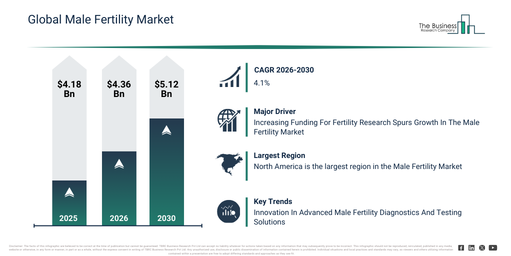
    The male fertility market has shown consistent expansion in recent years. This market is projected to expand from $4.18 billion in 2025 to $4.36 billion in 2026, demonstrating a compound annual growth rate (CAGR) of 4.3%. Historically, this expansion has been driven by factors such as the trend towards delayed parenthood, a rise in lifestyle-related infertility, the increasing occurrence of varicocele and hormonal disorders, the early embrace of IVF and ICSI procedures, and enhanced awareness regarding male reproductive health.

    The male fertility market is projected to experience consistent expansion over the upcoming years. This market is anticipated to reach $5.12 billion by 2030, exhibiting a compound annual growth rate (CAGR) of 4.1%. Key drivers for this growth during the forecast period include higher diagnosis rates of male infertility, increased willingness among men to undergo fertility testing, the broadening of fertility services in developing regions, greater investment in reproductive health research, and an expanded uptake of preventive fertility supplements. Noteworthy trends expected during the forecast period encompass a heightened understanding of male infertility issues, the wider implementation of sophisticated semen analysis methods, an escalating need for assisted reproductive technologies, increased utilization of male fertility supplements, and the establishment of more specialized male fertility clinics.

    Access Your Free Sample Report For In-Depth Market Analysis:

    https://www.thebusinessresearchcompany.com/sample.aspx?id=13699&type=smp

    What Leading Drivers Are Supporting The Male Fertility Market Expansion?

    Expanded financial backing for fertility studies is anticipated to boost the expansion of the male fertility market in the future. This research involves the scientific exploration and examination of elements affecting reproductive well-being, such as conception, pregnancy, and enhancing fertility results. Financial support for fertility research places a strong emphasis on studies related to male fertility, aiming for a thorough understanding of reproductive health, betterment of overall fertility results, and recognition of the crucial part male factors contribute to conception and successful reproduction. An example of this is in October 2023, when the Eunice Kennedy Shriver National Institute of Child Health and Human Development, a health department located in the US, awarded $2.26 million for research into fertility-sparing treatments. Consequently, the growing investment in fertility research is fueling the expansion of the male fertility market.

    How Are Different Segments Classified In The Male Fertility Market Segment Analysis?

    The male fertility market covered in this report is segmented –

    1) By Test Type: Sperm Agglutination, DNA Fragmentation Technique, Oxidative Stress Analysis, Computer Assisted Semen Analysis, Sperm Penetration Assay, Other Test Types

    2) By Treatment Type: Assisted Reproductive Technology, Varicocele Surgery, Medication

    3) By Supplement: Antioxidants, Vitamins, Minerals, Amino Acids, Enzymes

    4) By End User: Hospitals And Clinics, Fertility Centers, Research Institutes, Other End Users

    Subsegments:

    1) By Sperm Agglutination: Seminal Plasma Agglutination Test, Sperm-Bound Antibody Tests

    2) By DNA Fragmentation Technique: Sperm DNA Fragmentation Index (DFI) Tests, Comet Assay

    3) By Oxidative Stress Analysis: Reactive Oxygen Species (ROS) Measurement, Antioxidant Capacity Tests

    4) By Computer Assisted Semen Analysis (CASA): Motility Analysis, Morphology Assessment

    5) By Sperm Penetration Assay: Sperm-oocyte Interaction Tests, In Vitro Fertilization (IVF) Models

    6) By Other Test Types: Hormonal Tests, Genetic Testing, Semen Culture Tests

    What Emerging Trends Are Seen In The Male Fertility Market?

    Major companies within the male fertility market are focusing on developing innovative solutions, such as portable computer-assisted semen analysis (CASA) systems, to address the increasing demand driven by delayed parenthood, a heightened awareness of male-factor infertility, and a push for decentralized, patient-friendly diagnostics. A portable computer-assisted semen analysis (CASA) system operates as a handheld or mobile device that utilizes software and imaging technology to automatically assess sperm quality, encompassing count, motility, and morphology, thereby facilitating quick, accurate, and on-site fertility assessments. For instance, in November 2023, ExSeed Health, a UK-based, privately held medical-device and digital-health company, introduced the ExSeed CASA Lite, a compact computer-assisted semen analysis system specifically designed for clinics and satellite laboratories. The ExSeed CASA Lite integrates a plug-and-play brightfield microscopy module with high-resolution video capture and cloud-enabled analysis software; it is classified as an IVD-class solution intended to measure key parameters such as concentration, motility, and selected morphology metrics, complete with automated reporting. The system’s distinctive features include a large field-of-view high-resolution camera for whole-sample imaging, a web-based interface for rapid results and clinic integration, and a small laboratory footprint, which collectively render advanced semen analysis accessible beyond major ART centres.

    Who Are The Companies Driving Activity In The Male Fertility Market?

    Major companies operating in the male fertility market are Bayer Healthcare Inc., Sanofi S.A., MERCK KGaA, Essity AB, Laboratory Corporation Of America Holdings, Endo International plc., Cook Medical, Zydus Lifesciences Ltd., Intas Pharmaceuticals Ltd., ASKA Pharmaceutical Co. Ltd, EMD Serono Inc., Dendreon Pharmaceuticals LLC, Vitrolife, CinnaGen Co., Aytu BioScience Inc., Kindbody, Cryos International, AdvaCare Pharma USA, Ferring Pharmaceuticals, Apricus Biosciences, Reprotech Ltd., Vios Fertility Institute, Andrology Solutions, DxNow, INVO Bioscience

    Get The Full Male Fertility Market Report:

    https://www.thebusinessresearchcompany.com/report/male-fertility-global-market-report

    Where Is The Male Fertility Market Most Concentrated Geographically?

    North America was the largest region in the male fertility market in 2025. Asia-Pacific is expected to be the fastest-growing region in the forecast period. The regions covered in the male fertility market report are Asia-Pacific, South East Asia, Western Europe, Eastern Europe, North America, South America, Middle East, Africa.

    Request A Customized Male Fertility Market Report For Competitive Insights:

    https://www.thebusinessresearchcompany.com/report/male-fertility-global-market-report

    Browse Through More Reports Similar to the Global Male Fertility Market 2026, By The Business Research Company

    Malaria Treatment Market Report 2026

    https://www.thebusinessresearchcompany.com/report/malaria-treatment-global-market-report

    Vaccines Market Report

    https://www.thebusinessresearchcompany.com/report/vaccines-global-market-report

    Therapeutic Bcg Vaccines Market Report

    https://www.thebusinessresearchcompany.com/report/therapeutic-bcg-vaccines-global-market-report

    Get in touch with us:

    The Business Research Company: https://www.thebusinessresearchcompany.com/

    Americas +1 310-496-7795

    Asia +44 7882 955267 & +91 8897263534

    Europe +44 7882 955267

    Email us at info@tbrc.info

    Follow us on:

    LinkedIn: https://in.linkedin.com/company/the-business-research-company

    YouTube: https://www.youtube.com/channel/UC24_fI0rV8cR5DxlCpgmyFQ

    Global Market Model: https://www.thebusinessresearchcompany.com/global-market-model
  • Malaria Vaccines Market Outlook Highlighting Key Drivers and Market Evolution

    Malaria Vaccines Market Outlook Highlighting Key Drivers and Market Evolution

    The Business Research Company’s 2026 market reports feature enhanced tools like market attractiveness analysis, TAM assessment, and company scoring matrices, along with interactive dashboards, deeper supply chain insights, and startup coverage strengthening the depth, usability, and strategic value of insights.

    What Expansion In Market Value Is Forecasted For The Malaria Vaccines Market Between 2026 And 2030?

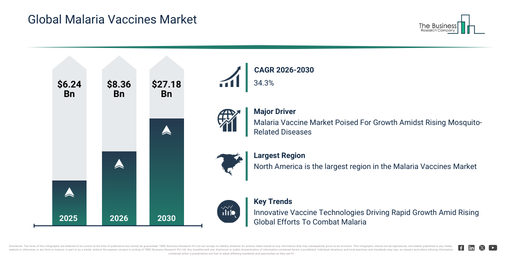
    The malaria vaccines market has experienced substantial expansion in recent years. It is projected to increase from $6.24 billion in 2025 to $8.36 billion in 2026, achieving a compound annual growth rate (CAGR) of 33.9%. The historical growth can be attributed to several factors, including the high malaria burden in endemic regions, long-standing global malaria eradication initiatives, funding support from international health organizations, limitations of antimalarial drug resistance, and the early success of first-generation malaria vaccines.

    The malaria vaccines market is projected to experience rapid expansion over the coming years, with its size anticipated to reach $27.18 billion by 2030, growing at a compound annual growth rate (CAGR) of 34.3%. This growth during the forecast period can be attributed to factors such as increased government funding for the prevention of infectious diseases, the climate-driven expansion of malaria-prone areas, a rising demand for vaccines that provide long-lasting immunity, continuous advancements in vaccine research and clinical trials, and the broadening of immunization coverage in low-income countries. Key trends expected in the forecast period include the expansion of next-generation malaria vaccines, a heightened focus on pediatric immunization programs, a surge in public-private partnerships for vaccine deployment, an increasing emphasis on multi-antigen and combination vaccines, and the strengthening of mass vaccination campaigns in regions where the disease is endemic.

    Access Your Free Sample Report For In-Depth Market Analysis:

    https://www.thebusinessresearchcompany.com/sample.aspx?id=13698&type=smp

    Which Key Factors Are Driving The Malaria Vaccines Market Growth?

    The increasing prevalence of mosquito-related illnesses is anticipated to drive the expansion of the malaria vaccine market in the future. These encompass a wide range of sicknesses transmitted through the bite of an infected mosquito. Specifically, the RTS, S/AS01 (RTS, S) malaria vaccine functions by instructing the immune system to identify and combat the parasite, thereby preventing and mitigating the effects of mosquito-borne infectious diseases. As an illustration, the UK Health Security Agency (UKHSA), a government department based in the UK, indicated in December 2024 that its 2023 annual malaria report recorded 2,106 imported malaria cases in the UK. This figure represents a 26% increase compared to the cases documented in 2022. Consequently, the growing occurrence of mosquito-related diseases is a significant factor boosting the growth of the malaria vaccine market.

    How Is The Malaria Vaccines Market Categorized Across Its Segment Groups?

    The malaria vaccines market covered in this report is segmented –

    1) By Agent: Plasmodium Falciparum, Plasmodium Vivax

    2) By Vaccine Type: Pre-Erythrocytic, Erythrocytic, Multi-antigen, Other Vaccines

    3) By Route Of Administration: Intramuscular, Subcutaneous, Intradermal, Other Routes Of Administration

    4) By Distribution Channel: Public, Private

    Subsegments:

    1) By Plasmodium Falciparum: RTS,S/AS01 Vaccine, Experimental Vaccines

    2) By Plasmodium Vivax: Candidate Vaccines In Development, Combination Vaccines

    Which Trends Are Guiding The Direction Of The Malaria Vaccines Market?

    Companies operating significantly within the malaria vaccines market are prioritizing the development of inventive solutions, notably next-generation recombinant vaccines. This focus aims to satisfy the increasing demand propelled by rising malaria prevalence, governmental support, and expanding immunization initiatives. Next-generation recombinant vaccines employ advanced genetic engineering techniques to target multiple stages of the malaria parasite’s life cycle, leading to improved immune responses and more sustained protection compared to conventional vaccines that often target a single stage and provide limited efficacy. For example, in October 2025, the Government of the Republic of Zambia introduced the malaria vaccine R21/Matrix-M as part of its Expanded Programme on Immunisation. This vaccine, a collaborative effort by the University of Oxford and the Serum Institute of India, utilizes a recombinant protein platform integrated with the Matrix-M adjuvant to strengthen the immune response. It is administered in a four-dose schedule beginning from 6 months of age and is conceived to complement existing anti-malaria interventions. The vaccine exhibits higher efficacy rates and intends to safeguard children in high and moderate transmission districts across Zambia, contributing considerably to malaria eradication endeavors.

    Which Firms Are Influencing Competition In The Malaria Vaccines Market?

    Major companies operating in the malaria vaccines market are GlaxoSmithKline Plc, Bharat Biotech International Limited, Serum Institute of India Private Limited, Sanaria Inc, BioNTech SE, Moderna Inc, Pfizer Inc, Novavax Inc, Takeda Pharmaceutical Company Limited, Sanofi SA, Zydus Lifesciences Limited, Valneva SE, GeoVax Labs Inc, Inovio Pharmaceuticals Inc, Vaxart Inc, CanSino Biologics Inc, Sinovac Biotech Ltd, Clover Biopharmaceuticals Inc, Biological E Limited, Emergent BioSolutions Inc

    Get The Full Malaria Vaccines Market Report:

    https://www.thebusinessresearchcompany.com/report/malaria-vaccines-global-market-report

    Which Region Dominates The Malaria Vaccines Market By Market Share?

    North America was the largest region in the malaria vaccines market in 2025. Asia-Pacific is expected to be the fastest growing region in the forecast period. The regions covered in the malaria vaccines market report are Asia-Pacific, South East Asia, Western Europe, Eastern Europe, North America, South America, Middle East, Africa.

    Request A Customized Malaria Vaccines Market Report For Competitive Insights:

    https://www.thebusinessresearchcompany.com/report/malaria-vaccines-global-market-report

    Browse Through More Reports Similar to the Global Malaria Vaccines Market 2026, By The Business Research Company

    Generalized Anxiety Disorder Market Report 2026

    https://www.thebusinessresearchcompany.com/report/generalized-anxiety-disorder-global-market-report

    Antidepressant Market Report

    https://www.thebusinessresearchcompany.com/report/antidepressant-global-market-report

    Panic Disorders Market Report

    https://www.thebusinessresearchcompany.com/report/panic-disorders-global-market-report

    Get in touch with us:

    The Business Research Company: https://www.thebusinessresearchcompany.com/

    Americas +1 310-496-7795

    Asia +44 7882 955267 & +91 8897263534

    Europe +44 7882 955267

    Email us at info@tbrc.info

    Follow us on:

    LinkedIn: https://in.linkedin.com/company/the-business-research-company

    YouTube: https://www.youtube.com/channel/UC24_fI0rV8cR5DxlCpgmyFQ

    Global Market Model: https://www.thebusinessresearchcompany.com/global-market-model