Category: Healthcare Services

  • Rising liver disease cases are boosting demand in the liver metastases treatment market

    Rising liver disease cases are boosting demand in the liver metastases treatment market

    The Business Research Company’s 2026 market reports feature enhanced tools like market attractiveness analysis, TAM assessment, and company scoring matrices, along with interactive dashboards, deeper supply chain insights, and startup coverage strengthening the depth, usability, and strategic value of insights.

    How Much Growth In Market Value Is Expected For The Liver Metastases Treatment Market Between 2026 And 2030?

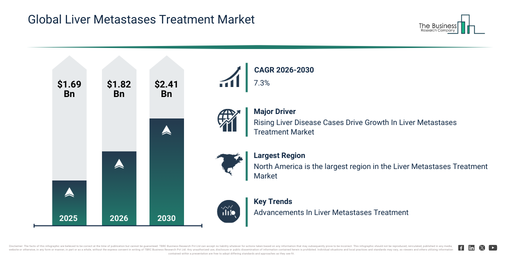
    The liver metastases treatment market size has seen significant growth in recent years. It is forecast to increase from $1.69 billion in 2025 to $1.82 billion in 2026, achieving a compound annual growth rate (CAGR) of 8.0%. This historical expansion can be attributed to the rising occurrence of colorectal and breast cancer, a historical reliance on chemotherapy for metastatic disease, limited surgical alternatives for advanced liver metastases, the expansion of hospital-based oncology care, and the early adoption of targeted cancer therapies.

    The liver metastases treatment market is poised for significant growth in the coming years. Its valuation is projected to reach $2.41 billion by 2030, demonstrating a compound annual growth rate (CAGR) of 7.3%. This projected growth during the forecast period stems from several key factors, including the expanding immunotherapy pipelines, an increasing emphasis on personalized oncology treatment, improved survival rates among primary cancer patients, a rising need for advanced care for metastatic cancer, and greater investment in the development of oncology drugs. Key trends anticipated during the forecast timeframe encompass the escalating incidence of metastatic cancers spreading to the liver, wider adoption of targeted therapies, the expanding application of immunotherapy for metastatic liver cancer, the proliferation of combination treatment strategies, and an enhanced focus on improving patients’ quality of life outcomes.

    Access Your Free Sample Report For In-Depth Market Analysis:

    https://www.thebusinessresearchcompany.com/sample.aspx?id=15849&type=smp

    Which Primary Drivers Are Impacting The Liver Metastases Treatment Market Growth?

    The increasing incidence of liver disease is anticipated to boost the growth of the liver metastases treatment market moving forward. Liver disease refers to any condition of the liver that can impede its function or prevent it from working effectively. Metastasis treatments contribute to overall well-being by preserving liver function, which is essential for metabolism, detoxification, and other critical bodily processes. Additionally, in certain scenarios, intensive therapies like surgical resection, ablation, or targeted treatments are necessary for sustained remission, particularly when combined with systemic medications such as chemotherapy or immunotherapy. For instance, in December 2024, the Office for Health Improvement and Disparities, a UK-based government department, reported that in 2023, premature deaths from alcoholic liver disease saw an increase of 3.6%, reaching 5,984, up from 5,776 in 2022. As a result, the escalating cases of liver disease are driving the liver metastases treatment market.

    How Is The Liver Metastases Treatment Market Organized By Segment Classification?

    The liver metastases treatment market covered in this report is segmented –

    1) By Treatment Type: Chemotherapy, Targeted Therapy, Immunotherapy

    2) By Primary Cancer: Colorectal Cancer, Breast Cancer

    3) By Distribution Channel: Hospital Pharmacies, Specialty Pharmacies

    Subsegments:

    1) By Chemotherapy: Cytotoxic Chemotherapy, Neoadjuvant Chemotherapy, Adjuvant Chemotherapy

    2) By Targeted Therapy: Tyrosine Kinase Inhibitors (TKIs), Monoclonal Antibodies

    3) By Immunotherapy: Immune Checkpoint Inhibitors, Cancer Vaccines, Adoptive Cell Transfer Therapy

    Which Trends Are Shaping Growth In The Liver Metastases Treatment Market?

    Leading companies within the liver metastases treatment market are prioritizing the development of liver-directed therapies to provide both efficient and accessible treatment options. These therapies are defined as medications or procedures specifically designed to address diseases or conditions directly impacting the liver. They work to manage liver metastases by focusing on malignant cells exclusively within the liver, achieving this by either destroying them directly or by interrupting their blood supply, through techniques like surgical resection, radiofrequency ablation, transarterial chemoembolization, radioembolization, and stereotactic body radiation therapy. As an example, in August 2023, Delcath Systems Incorporated, an interventional oncology firm based in the US, introduced the Hepzato kit. This kit offers a liver-directed treatment for adult patients diagnosed with metastatic uveal melanoma (mUM) who have unresectable hepatic metastases impacting less than 50% of the liver and either no extrahepatic disease or a limited form of extrahepatic disease that can be addressed by resection or radiation. The Hepzato kit functions as a combination product, delivering melphalan, a chemotherapeutic agent, directly into the liver via Delcath’s Hepatic Delivery System (HDS). This system facilitates greater drug concentration in the targeted tissues while simultaneously reducing overall systemic toxicity.

    Who Are The Industry Participants Involved In The Liver Metastases Treatment Market?

    Major companies operating in the liver metastases treatment market are Pfizer Inc., Johnson & Johnson, F. Hoffmann-La Roche AG, Merck & Co., AbbVie Inc., Bayer AG, Sanofi S.A., Novartis AG, Bristol Myers Squibb, AstraZeneca plc, Eli Lilly and Company, Amgen Inc., Boehringer Ingelheim, Gilead Sciences Inc., Takeda Pharmaceutical Company, Astellas Pharma Inc., Daiichi Sankyo Company Ltd., Eisai Co. Ltd., Incyte Corporation, Ipsen, Exelixis Inc., Taiho Pharmaceutical Co. Ltd.

    Get The Full Liver Metastases Treatment Market Report:

    https://www.thebusinessresearchcompany.com/report/liver-metastases-treatment-global-market-report

    Which Region Has The Greatest Market Share In The Liver Metastases Treatment Market?

    North America was the largest region in the liver metastases treatment market in 2025. Asia-Pacific is expected to be the fastest-growing region in the forecast period. The regions covered in the liver metastases treatment market report are Asia-Pacific, South East Asia, Western Europe, Eastern Europe, North America, South America, Middle East, Africa.

    Request A Customized Liver Metastases Treatment Market Report For Competitive Insights:

    https://www.thebusinessresearchcompany.com/report/liver-metastases-treatment-global-market-report

    Browse Through More Reports Similar to the Global Liver Metastases Treatment Market 2026, By The Business Research Company

    Fatty Liver Treatment Market Report 2026

    https://www.thebusinessresearchcompany.com/report/fatty-liver-treatment-global-market-report

    Liver Diseases Therapeutics Market Report

    https://www.thebusinessresearchcompany.com/report/liver-diseases-therapeutics-global-market-report

    Metastatic Breast Cancer Treatment Market Report

    https://www.thebusinessresearchcompany.com/report/metastatic-breast-cancer-treatment-global-market-report

    Get in touch with us:

    The Business Research Company: https://www.thebusinessresearchcompany.com/

    Americas +1 310-496-7795

    Asia +44 7882 955267 & +91 8897263534

    Europe +44 7882 955267

    Email us at info@tbrc.info

    Follow us on:

    LinkedIn: https://in.linkedin.com/company/the-business-research-company

    YouTube: https://www.youtube.com/channel/UC24_fI0rV8cR5DxlCpgmyFQ

    Global Market Model: https://www.thebusinessresearchcompany.com/global-market-model
  • Increasing prevalence of liver diseases is driving growth in the liver disease therapeutics market

    Increasing prevalence of liver diseases is driving growth in the liver disease therapeutics market

    The Business Research Company’s 2026 market reports feature enhanced tools like market attractiveness analysis, TAM assessment, and company scoring matrices, along with interactive dashboards, deeper supply chain insights, and startup coverage strengthening the depth, usability, and strategic value of insights.

    What Is The Estimated Market Size Of The Liver Diseases Therapeutics Market In 2026, And How Will Its Value Evolve By 2030?

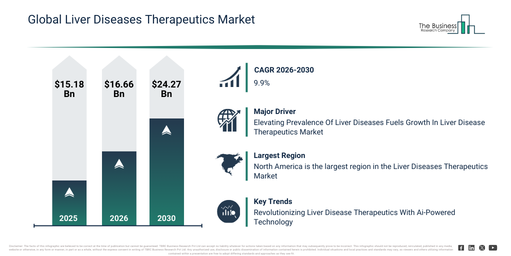
    The market size for liver diseases therapeutics has experienced robust growth in recent years. It is anticipated to expand from $15.18 billion in 2025 to $16.66 billion in 2026, demonstrating a compound annual growth rate (CAGR) of 9.8%. The historical growth can be mainly ascribed to the high prevalence of viral hepatitis infections, a rise in alcohol-induced liver disease cases, an initial reliance on antiviral and supportive therapies, the limited treatment options for chronic liver conditions, and the expansion of hospital-based liver care.

    The liver diseases therapeutics market is projected to undergo significant growth in the forthcoming years. It is forecast to expand to $24.27 billion by 2030, achieving a compound annual growth rate (CAGR) of 9.9%. This expansion over the forecast period is primarily driven by an increasing burden of metabolic liver diseases, the growing adoption of immunosuppressive and targeted therapies, the expansion of liver cancer treatment pipelines, greater awareness regarding the benefits of early treatment, and increased healthcare spending on chronic liver conditions. Prominent trends expected during this period include a heightened demand for antiviral treatments in hepatitis management, a stronger focus on NAFLD and NASH management, the increasing utilization of immunotherapy for liver cancer, the broader application of combination drug therapies, and a rising emphasis on long-term disease management.

    Access Your Free Sample Report For In-Depth Market Analysis:

    https://www.thebusinessresearchcompany.com/sample.aspx?id=7969&type=smp

    What Significant Factors Are Influencing The Liver Diseases Therapeutics Market Expansion?

    The increasing incidence of liver diseases is projected to boost the expansion of the liver disease therapeutics market moving forward. Liver disease refers to any condition affecting the liver, and liver disease therapeutics are employed to manage these conditions through various treatments. For instance, in December 2024, the Office for Health Improvement and Disparities, a UK-based government department, reported that in 2023, premature deaths due to alcoholic liver disease escalated by 3.6%, reaching 5,984, up from 5,776 in 2022. Thus, the rising prevalence of liver diseases is a key factor driving the growth of the liver disease therapeutics market.

    Which Segments Define The Liver Diseases Therapeutics Market Segment Structure?

    The liver diseases therapeutics market covered in this report is segmented –

    1) By Disease Type: Hepatitis, Non-Alcoholic Fatty Liver Disease, Alcohol-Induced, Liver Cancer

    2) By Treatment: Antiviral, Chemotherapy, Immunosuppressive Agents, Corticosteroids

    3) By End User: Hospitals, Ambulatory Surgery Centers

    Subsegments:

    1) By Hepatitis: Hepatitis A, Hepatitis B, Hepatitis C, Hepatitis D

    2) By Non-Alcoholic Fatty Liver Disease (NAFLD): Non-Alcoholic Steatohepatitis (NASH), Simple Fatty Liver

    3) By Alcohol-Induced: Alcoholic Hepatitis, Alcoholic Cirrhosis

    4) By Liver Cancer: Hepatocellular Carcinoma (HCC), Cholangiocarcinoma

    What Trends Are Affecting The Direction Of The Liver Diseases Therapeutics Market?

    Major companies in the liver disease therapeutics market are increasingly prioritizing innovative technologies, such as artificial intelligence, to empower clinicians in identifying patients with liver fibrosis at early stages of disease progression. The application of artificial intelligence in liver disease therapeutics entails employing advanced computational algorithms and machine learning techniques to meticulously analyze medical data, thereby assisting in the prompt detection, precise diagnosis, and personalized treatment strategies for various liver diseases. For instance, in February 2023, Predictive Health Intelligence, a UK-based healthcare information management company, unveiled hepatoSIGHT. This innovative AI-powered tool is designed to predict liver fibrosis in patients afflicted with chronic liver disease. Serving as a case-finding and cohort mapping instrument, it aims to pinpoint individuals susceptible to chronic liver disease (CLD). It operates as a secure, intuitive, and user-friendly system, capable of scrutinizing millions of data lines within seconds to identify patients who satisfy predefined criteria. Moreover, its capabilities include comprehensive data analysis, sophisticated machine learning algorithms, real-time risk stratification, and an easily navigable interface.

    Who Are The Established Players Within The Liver Diseases Therapeutics Market?

    Major companies operating in the liver diseases therapeutics market are Astellas Pharma Inc., Bristol-Myers Squibb Company, F. Hoffmann-La Roche AG, Merck & Co. Inc., Novartis AG, GlaxoSmithKline PLC, Abbott Laboratories Inc., Pfizer Inc., Sanofi SA, Johnson & Johnson Services Inc., Bayer AG, AbbVie Inc., Takeda Pharmaceutical Company Limited, AstraZeneca PLC, Gilead Sciences Inc., Alnylam Pharmaceuticals Inc., Intercept Pharmaceuticals Inc., Conatus Pharmaceuticals Inc., CymaBay Therapeutics Inc., Viking Therapeutics Inc., Madrigal Pharmaceuticals Inc., NGM Biopharmaceuticals Inc., Arrowhead Pharmaceuticals Inc., Dicerna Pharmaceuticals Inc., Ionis Pharmaceuticals Inc., Enanta Pharmaceuticals Inc.

    Get The Full Liver Diseases Therapeutics Market Report:

    https://www.thebusinessresearchcompany.com/report/liver-diseases-therapeutics-global-market-report

    Which Region Accounts For The Largest Portion Of The Liver Diseases Therapeutics Market?

    North America was the largest region in the liver diseases therapeutics market in 2025. Asia-Pacific is expected to be the fastest-growing region in the liver diseases therapeutics market report during the forecast period. The regions covered in the liver diseases therapeutics market report are Asia-Pacific, South East Asia, Western Europe, Eastern Europe, North America, South America, Middle East, Africa.

    Request A Customized Liver Diseases Therapeutics Market Report For Competitive Insights:

    https://www.thebusinessresearchcompany.com/report/liver-diseases-therapeutics-global-market-report

    Browse Through More Reports Similar to the Global Liver Diseases Therapeutics Market 2026, By The Business Research Company

    Hepatitis Therapeutics Market Report 2026

    https://www.thebusinessresearchcompany.com/report/hepatitis-therapeutics-global-market-report

    Liver Health Supplements Market Report

    https://www.thebusinessresearchcompany.com/report/liver-health-supplements-global-market-report

    Fatty Liver Treatment Market Report

    https://www.thebusinessresearchcompany.com/report/fatty-liver-treatment-global-market-report

    Get in touch with us:

    The Business Research Company: https://www.thebusinessresearchcompany.com/

    Americas +1 310-496-7795

    Asia +44 7882 955267 & +91 8897263534

    Europe +44 7882 955267

    Email us at info@tbrc.info

    Follow us on:

    LinkedIn: https://in.linkedin.com/company/the-business-research-company

    YouTube: https://www.youtube.com/channel/UC24_fI0rV8cR5DxlCpgmyFQ

    Global Market Model: https://www.thebusinessresearchcompany.com/global-market-model
  • Global Microbiology And Bacterial Culture Media Market Analysis Featuring Strategic Insights Through 2030

    Global Microbiology And Bacterial Culture Media Market Analysis Featuring Strategic Insights Through 2030

    The Business Research Company’s 2026 market reports feature enhanced tools like market attractiveness analysis, TAM assessment, and company scoring matrices, along with interactive dashboards, deeper supply chain insights, and startup coverage strengthening the depth, usability, and strategic value of insights.

    What Changes In Market Value Are Expected For The Microbiology And Bacterial Culture Media Market Over The 2026–2030 Period?

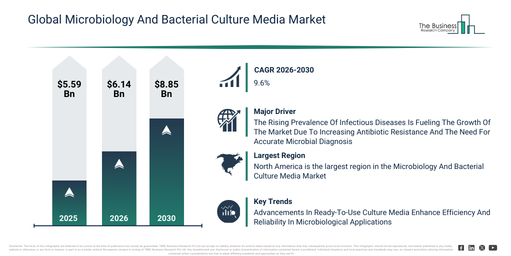
    The microbiology and bacterial culture media market has seen substantial growth in recent years. It is forecast to expand from $5.59 billion in 2025 to $6.14 billion in 2026, achieving a compound annual growth rate (CAGR) of 9.8%. The market’s past growth can be linked to the expansion of pharmaceutical manufacturing activities, the rise in clinical diagnostics testing, more extensive food and water safety testing, the increasing application of microbiology in research laboratories, and the accessibility of standardized culture media products.

    The market size for microbiology and bacterial culture media is projected to experience substantial expansion over the upcoming years. This market is anticipated to reach $8.85 billion by 2030, exhibiting a compound annual growth rate (CAGR) of 9.6%. Drivers for this growth during the forecast period include the increasing uptake of rapid microbial detection techniques, greater investments in biopharmaceutical quality assurance, the broadening scope of microbiology testing within developing markets, an expanding need for single-use media configurations, and an intensified emphasis on laboratory automation. Key trends expected within this period encompass a heightened demand for chromogenic and selective media, the increasing embrace of ready-to-use culture media formats, an upward trend in customizing specialty media formulations, the broadening of automated microbiology workflows, and a stronger emphasis on managing contamination.

    Access Your Free Sample Report For In-Depth Market Analysis:

    https://www.thebusinessresearchcompany.com/sample.aspx?id=27344&type=smp

    Which Major Drivers Are Influencing The Expansion Of The Microbiology And Bacterial Culture Media Market?

    An increasing incidence of infectious diseases is anticipated to fuel the expansion of the microbiology and bacterial culture media market in the future. These diseases are health conditions caused by harmful microbes that possess the ability to spread from one individual to another. The escalating prevalence of infectious diseases is partly due to increasing antibiotic resistance, as this growing resistance renders standard treatments less effective, allowing infections to persist longer and spread more easily. Microbiology and culture media are instrumental in the detection and cultivation of these harmful microbes, thereby supporting the precise diagnosis of infectious diseases and guiding targeted treatment approaches. For instance, in March 2024, the Centers for Disease Control and Prevention, a US-based government agency, reported that the count of tuberculosis cases climbed from 8,320 in 2022 to 9,615 in 2023, signifying an increase of 1,295 cases. Thus, the rising prevalence of infectious diseases is propelling the growth of the microbiology and bacterial culture media market.

    How Is The Microbiology And Bacterial Culture Media Market Segmented Across Different Segment Categories?

    The microbiology and bacterial culture media market covered in this report is segmented –

    1) By Product Type: Dehydrated Culture Media, Prepared (Ready-To-Use) Culture Media, Chromogenic And Selective Culture Media, Enriched And Enrichment Media, Other Product Types

    2) By Media Composition: Complex Media, Defined Media, Selective Media, Differential Media, Transport Media

    3) By Formulation: Bulk Packaged Media, Single-Use Media Formats, Custom Or Specialty Formulated Media

    4) By Application: Pharmaceutical And Biopharmaceutical Production, Diagnostics, Food And Water Testing, Bioenergy And Agricultural Research, Cosmetics And Personal Care Applications, Other Applications

    Subsegments:

    1) By Dehydrated Culture Media: Powdered Media, Agar Media, Broth Media

    2) By Prepared (Ready-To-Use) Culture Media: Plates, Slants, Tubes, Bottles

    3) By Chromogenic And Selective Culture Media: Chromogenic Media, Selective Media

    4) By Enriched And Enrichment Media: Enriched Media, Enrichment Broth

    5) By Other Product Types: Synthetic Media, Minimal Media, Transport Media

    Which Trends Are Shaping The Microbiology And Bacterial Culture Media Market?

    Leading entities within the microbiology and bacterial culture media market are concentrating on the development of sophisticated products, such as ready-to-use culture media, to support high-volume diagnostic and research applications. These ready-to-use culture media are sterile, pre-prepared substrates intended for the cultivation of microorganisms, thereby eliminating the need for manual preparation, saving significant time, mitigating contamination risks, and ensuring consistent laboratory results. For instance, in April 2025, AnalytiChem, a Germany-based manufacturer of laboratory equipment, reagents, and consumables, launched Redipor, a line of ready-to-use culture media. Redipor culture media is formulated to satisfy the rigorous standards and compliance requirements of microbiologists working in various life sciences sectors, including pharmaceuticals, food and beverage, environmental, and healthcare. The product line offers a wide array of media types and packaging choices, featuring plates, bottles, tubes, vials, chromogenic and irradiated media, and universal operator broth transfer kits. These offerings can also be tailored to specific customer needs and regulatory frameworks.

    Which Organizations Play A Role In The Microbiology And Bacterial Culture Media Market Landscape?

    Major companies operating in the microbiology and bacterial culture media market are Thermo Fisher Scientific Inc., Merck KGaA, Becton Dickinson and Company, Nissui Pharmaceutical Co. Ltd., bioMérieux SA, Bio-Rad Laboratories Inc., Neogen Corporation, Eiken Chemical Co. Ltd., Hardy Diagnostics, Teknova Inc., Microbiologics Inc., HiMedia Laboratories Pvt. Ltd., Scharlab S.L., Solabia Group, Conda Laboratories, Biotecnica Instruments S.p.A., Liofilchem S.r.l., Carl Roth GmbH + Co. KG, Central Drug House Pvt. Ltd., Oxoid Limited, Titan Biotech Ltd., Sisco Research Laboratories Pvt. Ltd.

    Get The Full Microbiology And Bacterial Culture Media Market Report:

    https://www.thebusinessresearchcompany.com/report/microbiology-and-bacterial-culture-media-global-market-report

    Which Region Is The Top Contributor To The Microbiology And Bacterial Culture Media Market By Share?

    North America was the largest region in the microbiology and bacterial culture media market in 2025. Asia-Pacific is expected to be the fastest-growing region in the forecast period. The regions covered in the microbiology and bacterial culture media market report are Asia-Pacific, South East Asia, Western Europe, Eastern Europe, North America, South America, Middle East, Africa.

    Request A Customized Microbiology And Bacterial Culture Media Market Report For Competitive Insights:

    https://www.thebusinessresearchcompany.com/report/microbiology-and-bacterial-culture-media-global-market-report

    Browse Through More Reports Similar to the Global Microbiology And Bacterial Culture Media Market 2026, By The Business Research Company

    Industrial Microbiology Market Report 2026

    https://www.thebusinessresearchcompany.com/report/industrial-microbiology-global-market-report

    Microbiology Diagnostic Devices And Equipment Market Report

    https://www.thebusinessresearchcompany.com/report/microbiology-diagnostic-devices-and-equipment-global-market-report

    Clinical Microbiology Market Report

    https://www.thebusinessresearchcompany.com/report/clinical-microbiology-global-market-report

    Get in touch with us:

    The Business Research Company: https://www.thebusinessresearchcompany.com/

    Americas +1 310-496-7795

    Asia +44 7882 955267 & +91 8897263534

    Europe +44 7882 955267

    Email us at info@tbrc.info

    Follow us on:

    LinkedIn: https://in.linkedin.com/company/the-business-research-company

    YouTube: https://www.youtube.com/channel/UC24_fI0rV8cR5DxlCpgmyFQ

    Global Market Model: https://www.thebusinessresearchcompany.com/global-market-model
  • Microbiology And Bacterial Culture For Industrial Testing Market Outlook Driven By Industry Growth Factors

    Microbiology And Bacterial Culture For Industrial Testing Market Outlook Driven By Industry Growth Factors

    The Business Research Company’s 2026 market reports feature enhanced tools like market attractiveness analysis, TAM assessment, and company scoring matrices, along with interactive dashboards, deeper supply chain insights, and startup coverage strengthening the depth, usability, and strategic value of insights.

    By 2030, What Market Size Is The Microbiology And Bacterial Culture For Industrial Testing Market Expected To Reach Based On Its 2026 Value?

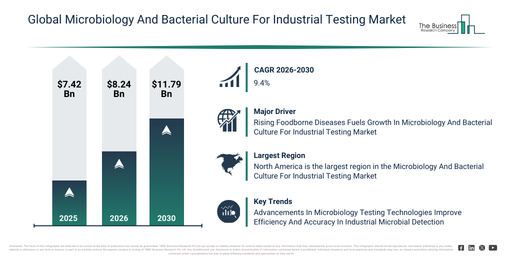
    The market size for microbiology and bacterial culture used in industrial testing has experienced swift growth recently. It is projected to expand from $7.42 billion in 2025 to $8.24 billion by 2026, demonstrating a compound annual growth rate (CAGR) of 11.1%. This historical expansion is attributable to several elements, including an increase in foodborne contamination incidents, heightened regulatory microbiological testing, the development of industrial fermentation processes, an increase in pharmaceutical quality testing, and the adoption of traditional culture-based methodologies.

    The microbiology and bacterial culture for industrial testing market is projected to experience substantial expansion over the next few years. This market is anticipated to reach $11.79 billion by 2030, demonstrating a compound annual growth rate (CAGR) of 9.4%. The projected growth is fueled by various elements, such as the increasing demand for rapid microbial analysis, the development of automated culture equipment, a growing need for contamination-free production, the broadening of bioenergy and agricultural biotechnology, and increased investments in advanced microbial diagnostics. Significant developments anticipated in this forecast period involve advanced genomic profiling in industrial microbiology, cloud-based microbial data management, the automation of culture and testing procedures, AI-enhanced microbial identification, and IoT-integrated environmental monitoring systems.

    Access Your Free Sample Report For In-Depth Market Analysis:

    https://www.thebusinessresearchcompany.com/sample.aspx?id=15607&type=smp

    What Key Drivers Are Fueling The Growth Of The Microbiology And Bacterial Culture For Industrial Testing Market?

    The increasing occurrences of foodborne disease are anticipated to propel the expansion of the microbiology and bacterial culture for industrial testing market moving forward. Foodborne diseases are ailments caused by consuming contaminated food or beverages containing pathogenic microorganisms, toxins, or chemical substances. The surge in foodborne incidents can be attributed to several factors, including alterations in food production, distribution, and consumption patterns, the globalization of food supply chains, inadequate food safety measures, antimicrobial resistance, climate change impacts on food production, and an increased consumption of high-risk foods. Microbiology and bacterial culture are essential for industrial testing related to foodborne diseases, assisting in the detection and identification of pathogens, ensuring food safety, and preventing outbreaks through stringent quality control measures. For instance, in February 2024, according to the UK Health Security Agency, a UK-based government body, in 2022, England and Wales reported 167 cases of listeriosis (severe infection caused by eating food contaminated with the bacterium Listeria monocytogenes), compared to 160 cases in 2021. Therefore, the growing incidences of foodborne diseases are driving the growth of the microbiology and bacterial culture for industrial testing market.

    What Are The Main Segments Within The Microbiology And Bacterial Culture For Industrial Testing Market Segment Structure?

    The microbiology and bacterial culture for industrial testing market covered in this report is segmented –

    1) By Consumable: Media, Reagents, Sera

    2) By Application: Food And Water Testing, Bioenergy And Agricultural Research, Other Applications

    3) By End User: Industrial Laboratories, Research Laboratories, Food Testing Laboratories, Diagnostic Laboratories, Other End Users

    Subsegments:

    1) By Media: Agar Plates, Broth Media, Selective Media, Differential Media, Transport Media

    2) By Reagents: Staining Reagents (Gram Stain, Acid-Fast Stain), Biochemical Reagents, PCR Reagents, Enzyme-Based Reagents, Chromogenic Reagents

    3) By Sera: Blood Serum, Animal Sera (Bovine Serum), Human Sera, Culture Sera

    What Trends Are Influencing The Microbiology And Bacterial Culture For Industrial Testing Market?

    Major companies in the industrial microbiology and bacterial culture testing market are focusing on developing innovative, pre-prepared culture media plates to improve microbial detection efficiency, simplify workflow, and enhance the accuracy of contamination monitoring across various industries. Ready-to-use culture media plates offer an optimized method for enumerating and identifying microbial loads, thereby reducing preparation time and increasing safety in laboratory environments. For instance, in February 2023, Hardy Diagnostics, a US-based manufacturer of microbiology products, launched CompactDry TCR, a ready-to-use dehydrated culture medium plate designed for the rapid detection and enumeration of microorganisms. The CompactDry TCR plate provides total aerobic plate counts in as little as 24 hours, is AOAC PTM-certified, and features an innovative, self-diffusing design that allows for easy colony reading, enhances user safety, and simplifies microbial testing workflows.

    Who Are The Companies Participating In The Microbiology And Bacterial Culture For Industrial Testing Market?

    Major companies operating in the microbiology and bacterial culture for industrial testing market are Thermo Fisher Scientific Inc., 3M Company, Danaher Corporation, Merck KGaA, Becton Dickinson and Company BD, Avantor Inc., bioMérieux SA, IDEXX Laboratories Inc., Bio-Rad Laboratories Inc., Bruker Microbiology and Diagnostics, Eiken Chemical Co Ltd, Hain Lifescience GmbH, Neogen Corporation, Hardy Diagnostics, LaMotte Company, Himedia Laboratories Pvt Ltd, Titan Biotech Limited, Serosep Ltd, Sartorius AG, Liofilchem Srl, R-Biopharm AG, MP Biomedicals LLC, CONDALAB, Alpha Teknova Inc.

    Get The Full Microbiology And Bacterial Culture For Industrial Testing Market Report:

    https://www.thebusinessresearchcompany.com/report/microbiology-and-bacterial-culture-for-industrial-testing-global-market-report

    Which Region Represents The Largest Share Of The Microbiology And Bacterial Culture For Industrial Testing Market?

    North America was the largest region in the microbiology and bacterial culture for industrial testing market in 2025. The regions covered in the microbiology and bacterial culture for industrial testing market report are Asia-Pacific, South East Asia, Western Europe, Eastern Europe, North America, South America, Middle East, Africa.

    Request A Customized Microbiology And Bacterial Culture For Industrial Testing Market Report For Competitive Insights:

    https://www.thebusinessresearchcompany.com/report/microbiology-and-bacterial-culture-for-industrial-testing-global-market-report

    Browse Through More Reports Similar to the Global Microbiology And Bacterial Culture For Industrial Testing Market 2026, By The Business Research Company

    Microbial Identification Market Report 2026

    https://www.thebusinessresearchcompany.com/report/microbial-identification-global-market-report

    Agricultural Microbial Market Report

    https://www.thebusinessresearchcompany.com/report/agricultural-microbial-global-market-report

    Industrial Microbiology Market Report

    https://www.thebusinessresearchcompany.com/report/industrial-microbiology-global-market-report

    Get in touch with us:

    The Business Research Company: https://www.thebusinessresearchcompany.com/

    Americas +1 310-496-7795

    Asia +44 7882 955267 & +91 8897263534

    Europe +44 7882 955267

    Email us at info@tbrc.info

    Follow us on:

    LinkedIn: https://in.linkedin.com/company/the-business-research-company

    YouTube: https://www.youtube.com/channel/UC24_fI0rV8cR5DxlCpgmyFQ

    Global Market Model: https://www.thebusinessresearchcompany.com/global-market-model
  • Microbial Identification Methods Market Developments Highlighting Growth Opportunities Across The Forecast Period

    Microbial Identification Methods Market Developments Highlighting Growth Opportunities Across The Forecast Period

    The Business Research Company’s 2026 market reports feature enhanced tools like market attractiveness analysis, TAM assessment, and company scoring matrices, along with interactive dashboards, deeper supply chain insights, and startup coverage strengthening the depth, usability, and strategic value of insights.

    What Is The Anticipated Rise In Market Value Of The Microbial Identification Methods Market During The Forecast Period?

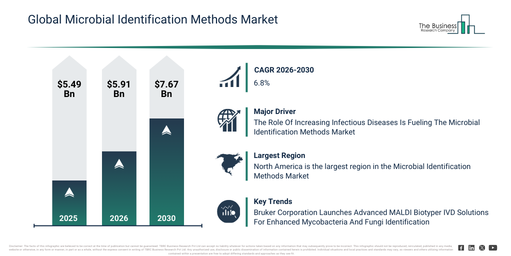
    The microbial identification methods market size has demonstrated significant expansion in recent years. This market is anticipated to increase from $5.49 billion in 2025 to $5.91 billion in 2026, achieving a compound annual growth rate (CAGR) of 7.7%. The market’s past growth can be attributed to several factors including a rise in infectious disease outbreaks, the continued reliance on culture-based identification, an increase in food safety testing, a greater regulatory focus on contamination control, and the expansion of clinical diagnostic microbiology.

    The market for microbial identification methods is projected to experience robust expansion over the coming years. This market is anticipated to reach $7.67 billion by 2030, exhibiting a compound annual growth rate (CAGR) of 6.8%. Several factors are driving this anticipated growth, including the increasing uptake of genomic sequencing tests, a need for automation in identification processes, the expansion of rapid microbial testing innovations, greater incorporation of digital laboratory infrastructure, and increased funding in precision microbiology. Key developments expected during this forecast period encompass the incorporation of genomic sequencing into microbial identification, analytical tools for microbial data based in the cloud, AI-powered microbial classification, automated identification systems within industrial laboratories, and IoT-driven solutions for contamination monitoring.

    Access Your Free Sample Report For In-Depth Market Analysis:

    https://www.thebusinessresearchcompany.com/sample.aspx?id=16118&type=smp

    Which Drivers Are Supporting The Microbial Identification Methods Market Growth?

    The expanding occurrence of infectious diseases is projected to drive the expansion of the microbial identification methods market in the future. These diseases are ailments resulting from detrimental agents (pathogens) like viruses, bacteria, fungi, and parasites entering the human body. Key examples of such diseases include HIV/AIDS (human immunodeficiency virus/acquired immunodeficiency syndrome), tuberculosis, and malaria, among others. The rising spread of infectious diseases can be linked to factors such as antimicrobial resistance, climate change, and growth in population. These microbial identification methods are vital for the diagnosis, treatment, and prevention of infectious diseases, as they offer comprehensive data about the pathogens responsible for an infection, thus empowering healthcare professionals to make well-informed choices for patient management. For example, a report released by the Government of Canada, a federal authority based in Canada, indicated that in January 2023, 135 rabies samples were submitted in October 2022 and 159 rabies samples in November 2022. Consequently, the growing incidence of infectious diseases fuels the expansion of the microbial identification methods market.

    How Is Segmentation Applied In The Microbial Identification Methods Market Segment Analysis?

    The microbial identification methods market covered in this report is segmented –

    1) By Method: Genotypic, Phenotypic, Proteotypic

    2) By Type: Bacterial Identification System, Microbial Enumeration System, Bacterial Resistance Identification Systems, Microbiology Analyzer, Other Types

    3) By End User: Pharmaceutical And Biotechnology Companies, Hospitals And Diagnostic Laboratories, Food Testing Laboratories, Other End-Users

    Subsegments:

    1) By Genotypic: Polymerase Chain Reaction (PCR), 16S rRNA Sequencing, DNA Microarrays, Next-Generation Sequencing (NGS), Whole Genome Sequencing (WGS), Ribotyping, Fluorescence In Situ Hybridization (FISH), Random Amplified Polymorphic DNA (RAPD) Analysis

    2) By Phenotypic: Culture-Based Methods, Biochemical Testing, Microscopic Examination, Gram Staining, Antibiotic Susceptibility Testing (AST), Growth Pattern Identification, Colony Morphology Characterization

    3) By Proteotypic: Mass Spectrometry (MALDI-TOF MS), Western Blotting, Protein Profiling, Immunoassays (ELISA), Two-Dimensional Gel Electrophoresis

    Which Trends Are Expected To Impact The Microbial Identification Methods Market?

    Leading companies in the microbial identification methods market are concentrating on developing innovative solutions, such as mycobacteria and fungi IVD solutions, to enhance their market standing. Mycobacteria and fungi in vitro diagnostic (IVD) solutions encompass various products and technologies designed to detect, identify, and characterize mycobacterial and fungal pathogens within clinical samples. For example, in April 2023, Bruker Corporation, a US-based manufacturer of scientific instruments for molecular and materials research, introduced MALDI Biotyper IVD software, a novel mycobacteria and fungi IVD solution. Its distinctive attributes comprise improved accuracy and speed in microbial identification, utilizing MALDI-TOF (matrix-assisted laser desorption/ionization-time of flight) mass spectrometry technology. This system offers swift identification of mycobacteria and fungi from cultured samples within minutes, considerably shortening the processing duration compared to conventional techniques. Furthermore, these novel solutions incorporate expanded databases and powerful software algorithms for better specificity and sensitivity, facilitating the precise identification of a wider array of mycobacterial and fungal species.

    Who Are The Companies Participating In The Microbial Identification Methods Market Environment?

    Major companies operating in the microbial identification methods market are Merck KGaA, Thermo Fisher Scientific Inc., Abbott Laboratories, Becton Dickinson and Company, GE Healthcare, Avantor Inc., Eurofins Scientific SE, Lonza Group AG, Sartorius AG, Charles River Laboratories International Inc., bioMerieux SA, Shimadzu Corporation, Waters Corporation, Bio-Rad Laboratories Inc., Bruker Corporation, Qiagen N.V., Beckman Coulter Inc., HiMedia Laboratories, Hardy Diagnostics, LuminUltra Technologies Ltd., Biolog Inc.

    Get The Full Microbial Identification Methods Market Report:

    https://www.thebusinessresearchcompany.com/report/microbial-identification-methods-global-market-report

    Which Geographic Region Dominates The Microbial Identification Methods Market?

    North America was the largest region in the microbial identification methods market in 2025. The regions covered in the microbial identification methods market report are Asia-Pacific, South East Asia, Western Europe, Eastern Europe, North America, South America, Middle East, Africa.

    Request A Customized Microbial Identification Methods Market Report For Competitive Insights:

    https://www.thebusinessresearchcompany.com/report/microbial-identification-methods-global-market-report

    Browse Through More Reports Similar to the Global Microbial Identification Methods Market 2026, By The Business Research Company

    Microbial Identification Methods Market Report 2026

    https://www.thebusinessresearchcompany.com/report/microbial-identification-methods-global-market-report

    Bactericide Market Report

    https://www.thebusinessresearchcompany.com/report/bactericide-global-market-report

    Agricultural Microbial Market Report

    https://www.thebusinessresearchcompany.com/report/agricultural-microbial-global-market-report

    Get in touch with us:

    The Business Research Company: https://www.thebusinessresearchcompany.com/

    Americas +1 310-496-7795

    Asia +44 7882 955267 & +91 8897263534

    Europe +44 7882 955267

    Email us at info@tbrc.info

    Follow us on:

    LinkedIn: https://in.linkedin.com/company/the-business-research-company

    YouTube: https://www.youtube.com/channel/UC24_fI0rV8cR5DxlCpgmyFQ

    Global Market Model: https://www.thebusinessresearchcompany.com/global-market-model
  • Microbial Identification Market Forecast 2026–2030 Covering Future Industry Developments

    Microbial Identification Market Forecast 2026–2030 Covering Future Industry Developments

    The Business Research Company’s 2026 market reports feature enhanced tools like market attractiveness analysis, TAM assessment, and company scoring matrices, along with interactive dashboards, deeper supply chain insights, and startup coverage strengthening the depth, usability, and strategic value of insights.

    How Is The Market Size Of The Microbial Identification Market Expected To Scale Between 2026 And 2030?

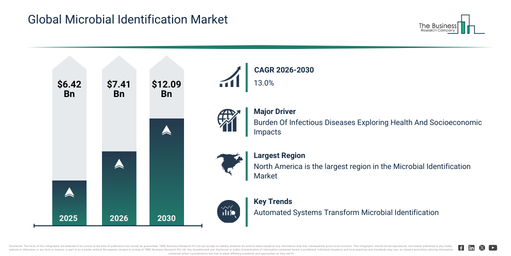
    The microbial identification market size has experienced rapid growth in recent years. It is projected to expand from $6.42 billion in 2025 to $7.41 billion in 2026, demonstrating a compound annual growth rate (CAGR) of 15.4%. This historical growth can be attributed to the increasing infectious disease prevalence, reliance on culture-based diagnostics, expansion of food and water safety programs, rising regulatory compliance requirements, and growing adoption of clinical microbiology testing.

    The microbial identification market is projected for substantial expansion in the coming years. It is anticipated to reach $12.09 billion by 2030, demonstrating a compound annual growth rate (CAGR) of 13.0%. This growth during the forecast period is attributed to progress in sequencing technologies, an increasing need for rapid diagnostic techniques, heightened automation in laboratory workflows, the integration of digital platforms in microbial testing, and broadening applications in pharmaceutical quality control. Noteworthy trends for the forecast period include the incorporation of genomic sequencing into microbial identification, cloud-based systems for managing microbial data, AI-supported classification of microorganisms, automated identification platforms in industrial testing, and IoT-enabled monitoring in microbial detection.

    Access Your Free Sample Report For In-Depth Market Analysis:

    https://www.thebusinessresearchcompany.com/sample.aspx?id=15606&type=smp

    What Key Factors Are Affecting The Microbial Identification Market Demand?

    The future expansion of the microbial identification market is anticipated to be driven by the increasing incidence of infectious diseases. These diseases are health conditions resulting from harmful microorganisms like bacteria, viruses, fungi, parasites, or prions. Their development is linked to factors such as climate change, ecological imbalances, antimicrobial resistance, compromised immune systems, and environmental interference. Identifying microbes is crucial for precise diagnoses, effective treatments, monitoring diseases, managing outbreaks, and promoting responsible antibiotic use in the context of infectious disease management. An illustrative example demonstrates this trend: in March 2024, data from the Centers for Disease Control and Prevention, a US-based government agency, showed that tuberculosis cases increased by 1,295, climbing from 8,320 in 2022 to 9,615 in 2023. Consequently, the expanding occurrence of infectious diseases propels the microbial identification market.

    What Segment Categories Shape The Microbial Identification Market Segment Landscape?

    The microbial identification market covered in this report is segmented –

    1) By Products And Services: Instruments, Consumables, Services

    2) By Methods: Phenotypic Methods, Proteotypic Methods, Genotypic Methods

    3) By Application: Diagnostic Application, Environmental Application, Food and Beverages Testing, Pharmaceutical Application, Other Applications

    4) By End User: Pharmaceutical And Biotechnology Industry, Food And Beverage Industry, Water And Environment Industry, Independent Research Laboratories, Diagnostic Laboratories, Hospitals, Other End Users

    Subsegments:

    1) By Instruments: Mass Spectrometers ( Maldi-Tof), Chromatography Systems, Pcr Systems, Microplate Readers, Automated Identification Systems

    2) By Consumables: Reagents And Kits ( Pcr Reagents, Biochemical Reagents), Culture Media, Sample Collection Tools ( Swabs, Vials), Test Strips

    3) By Services: Microbial Identification Services ( Laboratory Testing), Consulting And Training Services, Technical Support Services, Data Analysis Services

    What Trends Are Influencing Changes In The Microbial Identification Market?

    Major companies operating in the microbial identification market are concentrating on developing sophisticated solutions, such as automated sample preparation platforms, to enhance the speed and accuracy of microbial detection. Sample preparation platforms are technological systems that process and prepare biological or clinical samples for analysis, thereby improving efficiency and diagnostic precision. For instance, in September 2024, Accelerate Diagnostics Inc., a US-based in vitro diagnostics company, obtained FDA clearance for its Accelerate Arc system, an advanced automated solution designed for the rapid identification of microbes directly from positive blood culture samples. By automating the sample preparation process through integration with the Bruker MALDI Biotyper CA System, the solution significantly reduces the waiting time for results, empowering clinicians to initiate targeted antibiotic therapy earlier, improve patient outcomes, and mitigate the risk of antimicrobial resistance. As an FDA-cleared product, the Accelerate Arc system is engineered to boost operational efficiency in clinical laboratories.

    Who Are The Companies Operating Across The Microbial Identification Market Value Chain?

    Major companies operating in the microbial identification market are Merck & Co Inc, ThermoFisher Scientific Inc, Danaher Corporation, Siemens Healthineers, Becton Dickinson and Company, Avantor Inc, Eurofins Scientific Corporation, Beckman Coulter Inc, VWR International LLC, Charles River Laboratories International Inc, PerkinElmer Inc, Wickham Micro Limited, Bruker Corporation, bioMérieux SA, Biolog Inc, Liofilchem Srl, Shimadzu Corporation, Scenker Biological Technology Co Ltd, Agilent Technologies Inc, Bio Rad Laboratories Inc, QIAGEN NV, Roche Diagnostics, Illumina Inc, Oxford Nanopore Technologies

    Get The Full Microbial Identification Market Report:

    https://www.thebusinessresearchcompany.com/report/microbial-identification-global-market-report

    Which Region Is The Leading Market For The Microbial Identification Market?

    North America was the largest region in the microbial identification market in 2025. Asia-Pacific is expected to be the fastest-growing region in the forecast period. The regions covered in the microbial identification market report are Asia-Pacific, South East Asia, Western Europe, Eastern Europe, North America, South America, Middle East, Africa.

    Request A Customized Microbial Identification Market Report For Competitive Insights:

    https://www.thebusinessresearchcompany.com/report/microbial-identification-global-market-report

    Browse Through More Reports Similar to the Global Microbial Identification Market 2026, By The Business Research Company

    Agricultural Surfactants Market Report 2026

    https://www.thebusinessresearchcompany.com/report/agricultural-surfactants-global-market-report

    Amphoteric Surfactants Market Report

    https://www.thebusinessresearchcompany.com/report/amphoteric-surfactants-global-market-report

    Eubiotics Market Report

    https://www.thebusinessresearchcompany.com/report/eubiotics-global-market-report

    Get in touch with us:

    The Business Research Company: https://www.thebusinessresearchcompany.com/

    Americas +1 310-496-7795

    Asia +44 7882 955267 & +91 8897263534

    Europe +44 7882 955267

    Email us at info@tbrc.info

    Follow us on:

    LinkedIn: https://in.linkedin.com/company/the-business-research-company

    YouTube: https://www.youtube.com/channel/UC24_fI0rV8cR5DxlCpgmyFQ

    Global Market Model: https://www.thebusinessresearchcompany.com/global-market-model

  • Microbial Bio-Surfactants Market Growth Analysis 2026–2030 Highlighting Innovation And Industry Trends

    Microbial Bio-Surfactants Market Growth Analysis 2026–2030 Highlighting Innovation And Industry Trends

    The Business Research Company’s 2026 market reports feature enhanced tools like market attractiveness analysis, TAM assessment, and company scoring matrices, along with interactive dashboards, deeper supply chain insights, and startup coverage strengthening the depth, usability, and strategic value of insights.

    What Level Of Market Value Growth Is Predicted For The Microbial Bio-Surfactants Market From 2026 To 2030?

    The microbial bio-surfactants market has seen rapid expansion in recent years. Its value is anticipated to rise from $0.86 billion in 2025 to $0.99 billion in 2026, exhibiting a compound annual growth rate (CAGR) of 14.9%. Historically, this growth can be attributed to several factors including increased environmental regulations on synthetic surfactants, initial deployment in oilfield and remediation applications, developments in microbial fermentation, escalating demand for industrial cleaning, and expanding research in green chemistry.

    The market for microbial bio-surfactants is anticipated to experience substantial expansion in the coming years, reaching a valuation of $1.71 billion by 2030, propelled by a compound annual growth rate (CAGR) of 14.6%. This projected growth throughout the forecast period is primarily driven by factors such as an escalating demand for sustainable chemicals, the diversification of bio-based product portfolios, increasing investments in industrial biotechnology, wider adoption in personal care and food processing sectors, and an intensified focus on circular economy practices. Significant trends expected during this forecast timeframe include the rising incorporation of bio-based surface active agents, a growing consumer demand for eco-friendly formulations, their expanding utility in industrial and agricultural applications, the proliferation of fermentation-based production processes, and an enhanced emphasis on biodegradability.

    Access Your Free Sample Report For In-Depth Market Analysis:

    https://www.thebusinessresearchcompany.com/sample.aspx?id=24605&type=smp

    Which Primary Drivers Are Impacting The Microbial Bio-Surfactants Market Growth?

    The increasing requirement for sustainable products is projected to fuel the growth of the microbial biosurfactants market moving ahead. Sustainable products are commodities developed, produced, and consumed in ways that minimize environmental impact, conserve natural resources, and support social and economic well-being throughout their entire lifecycle. This escalating demand for sustainable products is primarily driven by heightened environmental awareness, as consumers become more mindful of their purchases’ ecological implications and seek alternatives that reduce harm to the planet. Microbial biosurfactants support sustainable products by offering environmentally friendly, biodegradable options that reduce reliance on synthetic chemicals and minimize ecological footprints. For instance, In April 2024, according to the National Association of Convenience Stores, a US-based trade association representing the convenience and fuel retailing industry, the 2024 survey results indicate that 80% of consumers are concerned about the environmental impact of their purchases, an increase from 68% in 2023 and 66% in 2022. Therefore, the expanding demand for sustainable products is propelling the microbial biosurfactants market.

    Which Segment Types Are Examined In The Microbial Bio-Surfactants Market Segment Study?

    The microbial bio-surfactants market covered in this report is segmented –

    1) By Ionic Character: Anionic Biosurfactants, Cationic Biosurfactants, Non Ionic Biosurfactants, Amphoteric Biosurfactants

    2) By Product: Methyl Ethyl Sulfonates, Alkyl Polyglucosides, Sorbitan Esters, Sophorolipids, Rhamnolipids, Sucrose Esters, Lipopeptides

    3) By Source: Plant Based, Microbial Based, Genetically Engineered Microbial Sources

    4) By Applications: Household Detergents, Agricultural Chemicals, Industrial Cleaners, Food Processing, Oilfield Chemicals, Personal Care, Textiles

    Subsegments:

    1) By Anionic Biosurfactants: Surfactin, Lichenysin, Fatty Acid Salts

    2) By Cationic Biosurfactants: Amino Acid-Based Biosurfactants, Peptide-Lipid Conjugates

    3) By Non-Ionic Biosurfactants: Trehalose Lipids, Mannosylerythritol Lipids, Polyol Lipids

    4) By Amphoteric Biosurfactants: Zwitterionic Glycolipids, Zwitterionic Lipopeptides

    Which Trends Are Shaping Growth In The Microbial Bio-Surfactants Market?

    Leading companies within the microbial biosurfactants market are intensifying efforts to develop sustainable offerings, particularly waste-based biosurfactants, with the dual aim of mitigating environmental harm and lowering production expenditures. These waste-based biosurfactants are defined as surface-active compounds generated by microbes that leverage waste materials as primary inputs, thereby promoting production that is both ecological and economical. An illustrative example occurred in October 2024, when AmphiStar BV, a biotechnology enterprise situated in Belgium, unveiled two novel waste-based biosurfactants, AmphiCare and AmphiClean, designed for the personal care and home care industries. AmphiCare delivers high-performance, gentle, and skin-friendly cleansing for personal care products, being crafted entirely from upcycled bio-waste. It is notably devoid of sulfates, palm oil, and fossil-based ingredients, leading to a substantial reduction in its environmental footprint. For home care, AmphiClean provides robust, biodegradable cleaning solutions, exclusively utilizing food and agricultural waste streams. This product effectively tackles grease and dirt, while maintaining its palm-free, fossil-free, and ecosystem-safe attributes.

    Which Players Are Part Of The Competitive Landscape Of The Microbial Bio-Surfactants Market?

    Major companies operating in the microbial bio-surfactants market are Kaneka Corporation, BASF SE, Evonik Industries AG, Solvay S.A., Givaudan SA, Clariant International AG, Stepan Company, Croda International Plc, AmphiStar BV, Jeneil Biotech Inc., BiOWiSH Technologies Inc., Geocon Products Inc., Holiferm Limited, AGAE Technologies LLC, Biotensidon GmbH, GlycoSurf Inc., Tensiogreen LLC, Locus Performance Ingredients LLC, Toyobo Corporation Ltd., Shaanxi Deguan Biotechnology Co. Ltd.

    Get The Full Microbial Bio-Surfactants Market Report:

    https://www.thebusinessresearchcompany.com/report/microbial-bio-surfactants-global-market-report

    Where Is The Microbial Bio-Surfactants Market Primarily Concentrated By Region?

    North America was the largest region in the microbial bio-surfactants market in 2025. Asia-Pacific is expected to be the fastest-growing region in the forecast period. The regions covered in the microbial bio-surfactants market report are Asia-Pacific, South East Asia, Western Europe, Eastern Europe, North America, South America, Middle East, Africa.

    Request A Customized Microbial Bio-Surfactants Market Report For Competitive Insights:

    https://www.thebusinessresearchcompany.com/report/microbial-bio-surfactants-global-market-report

    Browse Through More Reports Similar to the Global Microbial Bio-Surfactants Market 2026, By The Business Research Company

    Dna Microarray Market Report 2026

    https://www.thebusinessresearchcompany.com/report/dna-microarray-global-market-report

    Tissue Microarray Market Report

    https://www.thebusinessresearchcompany.com/report/tissue-microarray-global-market-report

    Microarray Scanners Market Report

    https://www.thebusinessresearchcompany.com/report/microarray-scanners-global-market-report

    Get in touch with us:

    The Business Research Company: https://www.thebusinessresearchcompany.com/

    Americas +1 310-496-7795

    Asia +44 7882 955267 & +91 8897263534

    Europe +44 7882 955267

    Email us at info@tbrc.info

    Follow us on:

    LinkedIn: https://in.linkedin.com/company/the-business-research-company

    YouTube: https://www.youtube.com/channel/UC24_fI0rV8cR5DxlCpgmyFQ

    Global Market Model: https://www.thebusinessresearchcompany.com/global-market-model
  • Microarray Market Forecast Through 2030 Highlighting Market Patterns And Developments

    Microarray Market Forecast Through 2030 Highlighting Market Patterns And Developments

    The Business Research Company’s 2026 market reports feature enhanced tools like market attractiveness analysis, TAM assessment, and company scoring matrices, along with interactive dashboards, deeper supply chain insights, and startup coverage strengthening the depth, usability, and strategic value of insights.

    How Will The Market Value Of The Microarray Market Progress Between 2026 And 2030?

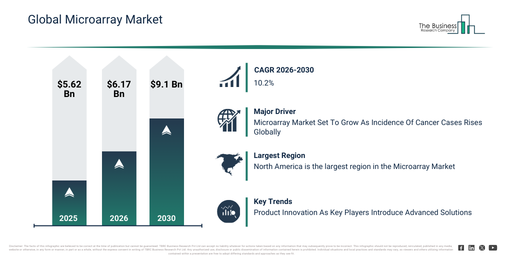
    The microarray market has experienced robust expansion in recent years. This market is projected to expand from $5.62 billion in 2025 to $6.17 billion in 2026, exhibiting a compound annual growth rate (CAGR) of 9.8%. Historically, this expansion has been driven by factors such as the increasing adoption of gene expression profiling, advancements in dna sequencing technologies, a surge in the application of microarrays in cancer research, the broadening of drug discovery programs, and the increasing prevalence of genetic disorders.

    The microarray market is projected to experience substantial expansion over the coming years. Its value is anticipated to reach $9.1 billion by 2030, exhibiting a compound annual growth rate (CAGR) of 10.2%. This projected growth during the forecast period stems from factors such as the increasing demand for personalized medicine, enhancements in bioinformatics processing tools, the rising incorporation of automation into microarray workflows, broadening applications in toxicological testing, and the expanding requirement for high-throughput genomic analysis. Key trends expected within this period encompass genomics-driven microarray optimization, cloud-based data processing specifically for microarray analysis, AI-enhanced gene expression interpretation, automated microarray manufacturing systems, and IoT-enabled sample tracking and monitoring.

    Access Your Free Sample Report For In-Depth Market Analysis:

    https://www.thebusinessresearchcompany.com/sample.aspx?id=10742&type=smp

    What Significant Factors Are Influencing The Microarray Market Expansion?

    The escalating occurrence of cancer cases is anticipated to propel the expansion of the microarray market in the coming years. Cancer is characterized as a condition where certain cells within the body proliferate uncontrollably and disseminate to other bodily regions. The increase in cancer diagnoses primarily stems from the growing prevalence of established cancer risk factors, exposure to particular chemicals, an aging demographic, and common cancers such as breast cancer, lung cancer, and bronchial cancer. Microarray technology plays a crucial role here, allowing researchers to pinpoint alterations in gene expression that may be associated with cancer. For instance, in January 2023, the American Cancer Society, a US-based voluntary health organization, reported that approximately 9,910 children in the US under the age of 15 were diagnosed with cancer, and roughly 1,040 children under the age of 15 died from cancer in 2023. Consequently, the upward trend in cancer incidence is fueling the growth of the microarray market.

    How Are Different Segments Classified In The Microarray Market Segment Analysis?

    The microarray market covered in this report is segmented –

    1) By Type: DNA Microarray, Protein Microarray, Other Types

    2) By Application: Disease Diagnosis, Cancer Genomic Analysis, Drug Discovery, Genomic Sequencing, Expression Analysis, Toxicological Research, Other Applications

    3) By End-User: Pharmaceutical Industry, Biotechnology Industry, Academic and Research Laboratories, Other End-Users

    Subsegments:

    1) By DNA Microarray: CDNA Microarray, Oligonucleotide Microarray, SNP Microarray, Comparative Genomic Hybridization (CGH) Microarray

    2) By Protein Microarray: Antibody Microarray, Antigen Microarray, Receptor Microarray, Enzyme Microarray

    3) By Other Types: Cell Microarray, Tissue Microarray, RNA Microarray

    What Trends Are Affecting The Direction Of The Microarray Market?

    Leading companies in the microarray sector are concentrating their efforts on developing chromosomal microarrays to solidify their standing in the market. Chromosomal Microarray Analysis (CMA) stands as a leading transformative technology in genomic medicine, significantly advancing diagnostic capabilities. For example, in August 2023, Thermo Fisher Scientific, Inc., a US-based provider of analytical instruments, life sciences solutions, specialty diagnostics, laboratory, pharmaceutical, and biotechnology services, unveiled the Applied Biosystems CytoScan HD Accel array. This new chromosomal microarray is engineered to boost productivity, efficiency, and profitability in cytogenetic research laboratories. A key feature of this innovative array is its industry-leading two-day turnaround time, marking a significant improvement in the field. The Applied Biosystems CytoScan HD Accel array conducts a thorough analysis of the entire human genome. With enhanced coverage spanning over 5,000 critical genomic regions, it offers invaluable insights into chromosomal variants. This advanced technology proves beneficial for a wide array of applications, including prenatal and postnatal research, as well as cancer-related investigations.

    Who Are The Companies Driving Activity In The Microarray Market?

    Major companies operating in the microarray market are Agilent Technologies Inc., Arrayit Corporation, Bio-Rad Laboratories Inc., Danaher Corporation, GE Healthcare Inc., Illumina Inc., Merck KGaA, Microarray Inc., PerkinElmer Inc., Thermo Fisher Scientific Inc., Molecular Devices LLC, RayBiotech Life Inc., Schott Minifab AG, Full Moon Biosystems Inc., CapitalBio Technology Co. Ltd., Roche Diagnostics Ltd., Affymetrix Inc., SCIENION AG, NextGen Sciences Inc., PathogenDx Inc., BioGenomics Limited, BioMicro Systems Inc., Biostatus Limited, Biotechrabbit GmbH, INanoBio Inc.

    Get The Full Microarray Market Report:

    https://www.thebusinessresearchcompany.com/report/microarray-global-market-report

    Which Region Has The Greatest Market Share In The Microarray Market?

    North America was the largest region in the microarray market in 2025.Asia-Pacific is expected to be the fastest-growing region in the global microarray market report during the forecast period. The regions covered in the microarray market report are Asia-Pacific, South East Asia, Western Europe, Eastern Europe, North America, South America, Middle East, Africa.

    Request A Customized Microarray Market Report For Competitive Insights:

    https://www.thebusinessresearchcompany.com/report/microarray-global-market-report

    Browse Through More Reports Similar to the Global Microarray Market 2026, By The Business Research Company

    Cone Beam Computed Tomography Market Report 2026

    https://www.thebusinessresearchcompany.com/report/cone-beam-computed-tomography-global-market-report

    Medical Imaging Market Report

    https://www.thebusinessresearchcompany.com/report/medical-imaging-global-market-report

    Computed Tomography Ct Scanner Market Report

    https://www.thebusinessresearchcompany.com/report/computed-tomography-ct-scanner-global-market-report

    Get in touch with us:

    The Business Research Company: https://www.thebusinessresearchcompany.com/

    Americas +1 310-496-7795

    Asia +44 7882 955267 & +91 8897263534

    Europe +44 7882 955267

    Email us at info@tbrc.info

    Follow us on:

    LinkedIn: https://in.linkedin.com/company/the-business-research-company

    YouTube: https://www.youtube.com/channel/UC24_fI0rV8cR5DxlCpgmyFQ

    Global Market Model: https://www.thebusinessresearchcompany.com/global-market-model
  • Micro Computed Tomography Market Outlook 2026–2030 Covering Growth Drivers And Industry Trends

    Micro Computed Tomography Market Outlook 2026–2030 Covering Growth Drivers And Industry Trends

    The Business Research Company’s 2026 market reports feature enhanced tools like market attractiveness analysis, TAM assessment, and company scoring matrices, along with interactive dashboards, deeper supply chain insights, and startup coverage strengthening the depth, usability, and strategic value of insights.

    What Are The Market Size Estimates For The Micro Computed Tomography Market In 2026 And 2030?

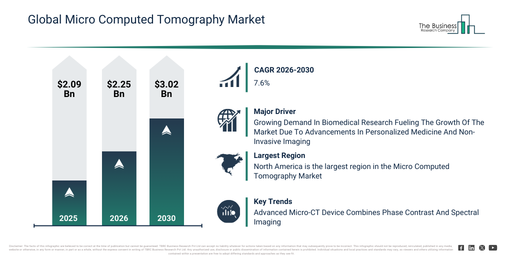
    The micro computed tomography market has shown robust expansion in recent years. It is forecast to grow from $2.09 billion in 2025 to $2.25 billion in 2026, achieving a compound annual growth rate (CAGR) of 7.8%. This historical growth can be attributed to factors such as the increasing utilization of micro-CT in material analysis, a rising demand for non-destructive testing, its adoption in orthopedic and dental research, advancements in imaging resolution technology, and its expanding application in geological core analysis.

    The micro computed tomography market is expected to witness substantial expansion over the next few years. It is projected to reach $3.02 billion by 2030, demonstrating a compound annual growth rate (CAGR) of 7.6%. This growth during the forecast period is propelled by factors such as the broadening applications in life sciences and agribio, the increasing adoption of automation in imaging workflows, a rising need for high-throughput micro-ct systems, continuous improvements in imaging software and data analytics, and the expansion of personalized medicine research. Significant trends anticipated for this period include precision imaging made possible by genomics integration, automated micro-ct systems designed for smart manufacturing, cloud-based 3D imaging analytics, artificial intelligence-assisted microstructure interpretation, and IoT-connected micro-ct monitoring systems.

    Access Your Free Sample Report For In-Depth Market Analysis:

    https://www.thebusinessresearchcompany.com/sample.aspx?id=24321&type=smp

    Which Important Drivers Are Guiding The Micro Computed Tomography Market Growth?

    The micro computed tomography market is anticipated to expand due to the increasing need within biomedical research. Biomedical research involves the scientific examination of biological processes and illnesses, aiming to enhance medical understanding, create new therapies, and improve human well-being. This rising demand in biomedical research largely stems from a heightened emphasis on personalized medicine, which customizes treatments based on individual genetic profiles for more accurate and efficacious healthcare. Micro computed tomography (micro-CT) supports biomedical research by offering high-resolution, non-invasive imaging that enables detailed visualization of biological structures, thereby aiding in the investigation of diseases, tissue engineering, and drug development. As an illustration, the BioIndustry Association (BIA), a UK-based trade association, reported in January 2025 that the UK biotech sector experienced substantial growth in 2024, drawing £3.5 billion (around $4.4 billion) in investment, which marks a notable 94% increase from 2023. Consequently, the rising demand in biomedical research is fueling the expansion of the micro computed tomography market.

    How Is The Micro Computed Tomography Market Categorized Across Its Segment Groups?

    The micro computed tomography market covered in this report is segmented –

    1) By Product Type: In-Vivo, In-Vitro

    2) By Application: Life Sciences, Orthopedics, Dentistry, Agribio, Material Science, Geology Or Oil And Gas Geology

    3) By End User: Industries, Research Institutes, Diagnostic Imaging Labs, Dental Laboratories, Other End Users

    Subsegments:

    1) By In-Vivo: Small Animal Imaging Systems, Live Tissue Imaging, Functional Imaging, Longitudinal Studies

    2) By In-Vitro: Bone And Hard Tissue Analysis, Material Characterization, Industrial Inspection, Ex Vivo Biological Imaging, Forensic Imaging

    What Trends Are Influencing The Evolution Of The Micro Computed Tomography Market?

    Prominent companies within the micro computed tomography market are concentrating on creating advanced technological products, such as non-destructive imaging systems, to improve high-resolution internal structure analysis without causing sample damage. These systems, designed to capture detailed images of objects or structures without harm, are typically employed for inspection, analysis, and quality control across various industries. As an illustration, in October 2024, KA Imaging Inc., a medical technology firm based in Canada, launched the inCiTe 2.0 3D X-ray microscope, an innovative micro computed tomography system that incorporates both phase contrast and spectral imaging capabilities. This imaging equipment, equipped with the BrillianSe detector featuring an 8-micron pixel size, provides high-resolution 3D imaging for non-destructive testing in aerospace, battery research, and academia, supporting phase contrast and spectral imaging to visualize low-density materials and differentiate multiple materials in a single scan.

    Which Firms Are Influencing Competition In The Micro Computed Tomography Market?

    Major companies operating in the micro computed tomography market are Bruker Corporation, General Electric Company, Hitachi Ltd., Thermo Fisher Scientific Inc., Baker Hughes Company, ZEISS Group, Nikon Corporation, Shimadzu Corporation, Varex Imaging Corporation, Comet Holding AG, ProCon X Ray GmbH, WENZEL Group, Matsusada Precision, Mediso Ltd., Illinois Tool Works Inc., KA Imaging Inc., Scanco Medical AG, North Star Imaging Inc, RX Solutions SAS, TESCAN Group, Rigaku Corporation, TriFoil Imaging Inc, MILabs B V

    Get The Full Micro Computed Tomography Market Report:

    https://www.thebusinessresearchcompany.com/report/micro-computed-tomography-global-market-report

    Which Region Accounts For The Largest Portion Of The Micro Computed Tomography Market?

    North America was the largest region in the micro computed tomography market in 2025. Asia-Pacific is expected to be the fastest-growing region in the forecast period. The regions covered in the micro computed tomography market report are Asia-Pacific, South East Asia, Western Europe, Eastern Europe, North America, South America, Middle East, Africa.

    Request A Customized Micro Computed Tomography Market Report For Competitive Insights:

    https://www.thebusinessresearchcompany.com/report/micro-computed-tomography-global-market-report

    Browse Through More Reports Similar to the Global Micro Computed Tomography Market 2026, By The Business Research Company

    Health Coaching Apps Market Report 2026

    https://www.thebusinessresearchcompany.com/report/health-coaching-apps-global-market-report

    Womens Health App Market Report

    https://www.thebusinessresearchcompany.com/report/womens-health-app-global-market-report

    Disease Management Apps Market Report

    https://www.thebusinessresearchcompany.com/report/disease-management-apps-global-market-report

    Get in touch with us:

    The Business Research Company: https://www.thebusinessresearchcompany.com/

    Americas +1 310-496-7795

    Asia +44 7882 955267 & +91 8897263534

    Europe +44 7882 955267

    Email us at info@tbrc.info

    Follow us on:

    LinkedIn: https://in.linkedin.com/company/the-business-research-company

    YouTube: https://www.youtube.com/channel/UC24_fI0rV8cR5DxlCpgmyFQ

    Global Market Model: https://www.thebusinessresearchcompany.com/global-market-model
  • The mHealth Apps Market Growth Supported By Rising Adoption Of Telemedicine Solutions

    The mHealth Apps Market Growth Supported By Rising Adoption Of Telemedicine Solutions

    The Business Research Company’s 2026 market reports feature enhanced tools like market attractiveness analysis, TAM assessment, and company scoring matrices, along with interactive dashboards, deeper supply chain insights, and startup coverage strengthening the depth, usability, and strategic value of insights.

    What Expansion In Market Value Is Forecasted For The mHealth Apps Market Between 2026 And 2030?

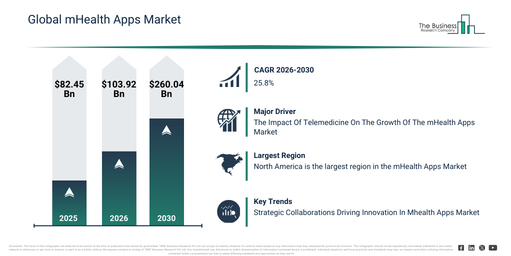
    The mhealth apps market size has experienced substantial growth in recent years. It is forecast to expand from $82.45 billion in 2025 to $103.92 billion in 2026, exhibiting a compound annual growth rate (CAGR) of 26.0%. The historical increase in this market can be attributed to the surge in smartphone adoption, the escalating prevalence of chronic diseases, the increasing utilization of wearable health devices, the broadening of telehealth services, and the heightened recognition of digital health solutions.

    The mhealth apps market size is projected to undergo significant expansion in the coming years, reaching $260.04 billion by 2030, with a compound annual growth rate (CAGR) of 25.8%. This growth during the forecast period is fueled by advancements in AI-driven diagnostics, a growing need for personalized health applications, the expansion of remote patient monitoring programs, the integration of genomics into mobile health platforms, and the increasing adoption of cloud-based healthcare ecosystems. Prominent trends expected in this period include AI-powered predictive health insights, cloud-based health data integration, IoT-enabled remote monitoring ecosystems, XR-based patient engagement platforms, and genomics-linked personalized health apps.

    Access Your Free Sample Report For In-Depth Market Analysis:

    https://www.thebusinessresearchcompany.com/sample.aspx?id=6519&type=smp

    What Major Factors Are Driving The mHealth Apps Market Forward?

    The mHealth apps market is anticipated to expand due to the rising uptake of telemedicine. Telemedicine refers to the provision of healthcare services through digital communication technologies, enabling patients to consult with medical professionals remotely. The growth of E-medicine is driven by an increasing demand for convenient and accessible healthcare options, a need particularly highlighted by the COVID-19 pandemic. Telemedicine benefits the mHealth apps market by integrating remote healthcare services, allowing users to conveniently consult doctors and manage their health via mobile devices. For instance, in May 2024, a report from Eurostat, a Luxembourg-based government agency, revealed that in 2023, 8.5% of individuals in the EU aged 16 to 74 participated in online consultations using the internet. Therefore, the increasing adoption of telemedicine is propelling the growth of the mHealth app market.

    How Are Segments Identified Within The mHealth Apps Market Segment Framework?

    The mhealth apps market covered in this report is segmented –

    1) By App Type: Disease And Treatment Management, Wellness Management, Other App Types

    2) By Connected Medical Devices: Heart Rate Meters, Wearable Fitness Sensor Device, Blood Pressure Monitors, Pulse Oximeters, Other Connected Medical Devices

    3) By Application: Monitoring Services, Fitness Solutions, Diagnostic Services, Treatment Services, Other Applications

    4) By End-User: Physicians, Patients, Insurance Companies, Research Centers, Pharmacy, Biopharmaceutical Companies, Government, Tech Companies, Other End-Users

    Subsegments:

    1) By Disease And Treatment Management: Chronic Disease Management Apps, Medication Adherence Apps, Remote Monitoring Apps

    2) By Wellness Management: Fitness And Exercise Tracking Apps, Nutrition And Diet Apps, Mental Health And Mindfulness Apps

    3) By Other App Types: Health Education And Awareness Apps, Telehealth And Virtual Consultation Apps, Personal Health Record (PHR) Apps

    Which Trends Are Impacting The Progress Of The mHealth Apps Market?

    Major companies in the mHealth Apps market are concentrating on strategic collaboration to deliver dependable services to their clientele. Strategic collaboration denotes a mutually beneficial alliance between independent entities that cooperate to achieve common objectives aligning with their individual strategic goals. As an illustration, in October 2023, Cedars-Sinai, a US-based non-profit medical center, announced its collaboration with K Health, a US-based primary care company. Cedars-Sinai, working with the digital primary care startup K Health, has launched a new mobile application, Cedars-Sinai Connect, which aims to offer convenient virtual care for both new and existing patients throughout California. This app, utilizing K Health’s technology, provides 24/7 access to virtual care providers for urgent matters, same-day primary care appointments, and smooth integration with Cedars-Sinai’s health record system. Through its AI-driven chat features, the application simplifies the intake process, allowing clinicians to prioritize patient care while improving access to outstanding medical services.

    Who Are The Companies Competing Within The mHealth Apps Market?

    Major companies operating in the mhealth apps market are Apple Inc., Johnson & Johnson, Sony Corporation, F. Hoffmann-La Roche Ltd., Sanofi, Orange S.A., Qualcomm Technologies Inc., Abbott Laboratories, GlaxoSmithKline plc, Philips Healthcare, Livongo Health Inc., Azumio Inc., Allscripts Healthcare Solutions Inc., Omron Healthcare Inc., BioTelemetry Inc., Withings S.A., AliveCor Inc., iHealth Labs Inc., Agamatrix Inc., Ovia Health Inc., Nutrimedy Inc., Dr. Pad S.r.l., Diversinet Corporation

    Get The Full mHealth Apps Market Report:

    https://www.thebusinessresearchcompany.com/report/mhealth-apps-global-market-report

    Which Region Holds The Highest Market Share In The mHealth Apps Market?

    North America was the largest region in the mHealth apps market in 2025. Asia-Pacific is expected to be the fastest-growing region in mHealth apps market share. The regions covered in the mhealth apps market report are Asia-Pacific, South East Asia, Western Europe, Eastern Europe, North America, South America, Middle East, Africa.

    Request A Customized mHealth Apps Market Report For Competitive Insights:

    https://www.thebusinessresearchcompany.com/report/mhealth-apps-global-market-report

    Browse Through More Reports Similar to the Global mHealth Apps Market 2026, By The Business Research Company

    Caprolactam Market Report 2026

    https://www.thebusinessresearchcompany.com/report/caprolactam-global-market-report

    Metformin Market Report

    https://www.thebusinessresearchcompany.com/report/metformin-global-market-report

    Drug Formulation Market Report

    https://www.thebusinessresearchcompany.com/report/drug-formulation-global-market-report

    Get in touch with us:

    The Business Research Company: https://www.thebusinessresearchcompany.com/

    Americas +1 310-496-7795

    Asia +44 7882 955267 & +91 8897263534

    Europe +44 7882 955267

    Email us at info@tbrc.info

    Follow us on:

    LinkedIn: https://in.linkedin.com/company/the-business-research-company

    YouTube: https://www.youtube.com/channel/UC24_fI0rV8cR5DxlCpgmyFQ

    Global Market Model: https://www.thebusinessresearchcompany.com/global-market-model