Category: Healthcare Services

  • Global Leukocytosis Market Analysis (2026–2030) With Strategic Insights

    Global Leukocytosis Market Analysis (2026–2030) With Strategic Insights

    The Business Research Company’s 2026 market reports feature enhanced tools like market attractiveness analysis, TAM assessment, and company scoring matrices, along with interactive dashboards, deeper supply chain insights, and startup coverage strengthening the depth, usability, and strategic value of insights.

    How Will The Market Value Of The Leukocytosis Market Progress Between 2026 And 2030?

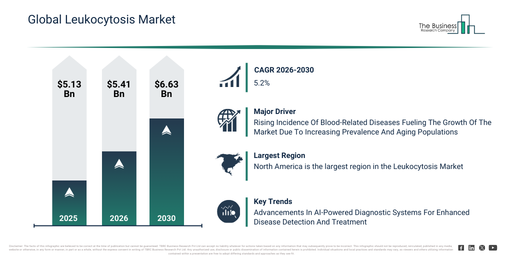
    The leukocytosis market has demonstrated significant growth in recent years. It is projected to expand from $5.13 billion in 2025 to $5.41 billion in 2026, achieving a compound annual growth rate (CAGR) of 5.4%. This historical growth can be attributed to the high prevalence of infectious diseases, a rising incidence of inflammatory disorders, an increase in leukemia cases, continued reliance on conventional blood tests, and the broadening of hospital-based diagnostic services.

    The leukocytosis market size is predicted to undergo significant expansion in the coming years. It is forecast to attain a value of $6.63 billion by 2030, advancing at a compound annual growth rate (CAGR) of 5.2%. This growth during the forecast period can be attributed to advancements in hematology diagnostics, rising adoption of personalized treatment approaches, growing awareness of early disease detection, increasing healthcare expenditure, and the expansion of laboratory automation. Prominent trends observed in the forecast period encompass increasing adoption of advanced blood diagnostics, growing focus on underlying disease-specific treatment, rising use of precision medicine in hematology, expansion of automated and high-throughput testing, and increasing integration of clinical decision support systems.

    Access Your Free Sample Report For In-Depth Market Analysis:

    https://www.thebusinessresearchcompany.com/sample.aspx?id=24278&type=smp

    What Primary Drivers Are Shaping The Leukocytosis Market?

    The increasing occurrence of blood-related diseases is anticipated to propel the expansion of the leukocytosis market in the coming years. These medical conditions affect components of the blood, including red blood cells, white blood cells, platelets, or plasma. The incidence of blood-related diseases is escalating due to aging populations, as older adults are more susceptible to conditions such as anemia, leukemia, and clotting disorders, resulting from diminishing immune function and accumulated health problems. Often, blood-related diseases lead to elevated white blood cell counts, a hallmark sign of leukocytosis, underscoring the demand for enhanced early diagnosis, improved monitoring tools, and more effective treatment options. For instance, in 2024, the American Cancer Society, a US-based cancer organization, documented 62,770 new cases of leukemia in 2024, a notable rise from 59,610 cases reported in 2023. Consequently, the escalating incidence of blood-related diseases is a key factor driving the growth of the leukocytosis market.

    How Is The Leukocytosis Market Broken Down By Segment Categories?

    The leukocytosis market covered in this report is segmented –

    1) By Disease Type: Infection, Leukemia

    2) By Diagnosis Type: Blood Tests, Bone Marrow Biopsy

    3) By End User: Hospitals, Diagnostic Laboratories

    Subsegments:

    1) By Infection: Bacterial Infections, Viral Infections, Parasitic Infections, Fungal Infections

    2) By Leukemia: Chronic Myeloid Leukemia, Chronic Lymphocytic Leukemia, Acute Lymphoblastic Leukemia (ALL) with Hyperleukocytosis

    What Trends Are Affecting The Growth Of The Leukocytosis Market?

    Companies actively engaged in the leukocytosis market are increasingly concentrating on embedding artificial intelligence into diagnostic systems to advance early identification, diagnostic exactness, and customized treatment blueprints. Artificial intelligence in diagnostic systems entails employing AI technologies such as machine learning, deep learning, and natural language processing to analyze health data and assist in or automate disease diagnosis. For example, in December 2024, Koninklijke Philips NV, a healthcare enterprise based in the Netherlands, released the CT 5300 system. This system integrates proprietary artificial intelligence technologies to refine computed tomography (CT) imaging operations. The CT 5300 system incorporates a smart workflow for computed tomography, utilizing AI-driven instruments like precise position, precise cardiac, and precise brain, which simplify scan preparation, boost diagnostic precision, and diminish radiation dosage.

    Which Players Are Present In The Leukocytosis Market Space?

    Major companies operating in the leukocytosis market are Pfizer Inc., Johnson & Johnson, Siemens Healthineers AG, Roche Diagnostics AG, Bristol Myers Squibb, Thermo Fisher Scientific Inc., Abbott Laboratories, Novartis International AG, Danaher Corporation, Merck KGaA, Becton Dickinson and Company (BD), Laboratory Corporation of America Holdings (LabCorp), Quest Diagnostics, Agilent Technologies Inc., Grifols SA, Hologic Inc., Illumina Inc., PerkinElmer Inc., Sysmex Corporation, Beckman Coulter Diagnostics Inc., Bio-Rad Laboratories, Bio-Techne Corporation, NeoGenomics Laboratories Inc., DiaSorin S.p.A.

    Get The Full Leukocytosis Market Report:

    https://www.thebusinessresearchcompany.com/report/leukocytosis-global-market-report

    Which Region Accounts For The Largest Portion Of The Leukocytosis Market?

    North America was the largest region in the leukocytosis market in 2025. Asia-Pacific is expected to be the fastest growing region in the forecast period. The regions covered in the leukocytosis market report are Asia-Pacific, South East Asia, Western Europe, Eastern Europe, North America, South America, Middle East, Africa.

    Request A Customized Leukocytosis Market Report For Competitive Insights:

    https://www.thebusinessresearchcompany.com/report/leukocytosis-global-market-report

    Browse Through More Reports Similar to the Global Leukocytosis Market 2026, By The Business Research Company

    Progressive Multifocal Leukoencephalopathy Treatment Market Report 2026

    https://www.thebusinessresearchcompany.com/report/progressive-multifocal-leukoencephalopathy-treatment-global-market-report

    Pheochromocytoma Market Report

    https://www.thebusinessresearchcompany.com/report/pheochromocytoma-global-market-report

    Leukotriene Modifiers Market Report

    https://www.thebusinessresearchcompany.com/report/leukotriene-modifiers-global-market-report

    Get in touch with us:

    The Business Research Company: https://www.thebusinessresearchcompany.com/

    Americas +1 310-496-7795

    Asia +44 7882 955267 & +91 8897263534

    Europe +44 7882 955267

    Email us at info@tbrc.info

    Follow us on:

    LinkedIn: https://in.linkedin.com/company/the-business-research-company

    YouTube: https://www.youtube.com/channel/UC24_fI0rV8cR5DxlCpgmyFQ

    Global Market Model: https://www.thebusinessresearchcompany.com/global-market-model

  • Leukocyte Adhesion Deficiency Management Market Outlook (2026–2030) Driven by Growth Factors

    Leukocyte Adhesion Deficiency Management Market Outlook (2026–2030) Driven by Growth Factors

    The Business Research Company’s 2026 market reports feature enhanced tools like market attractiveness analysis, TAM assessment, and company scoring matrices, along with interactive dashboards, deeper supply chain insights, and startup coverage strengthening the depth, usability, and strategic value of insights.

    What Are The Market Size Estimates For The Leukocyte Adhesion Deficiency Management Market In 2026 And 2030?

    The leukocyte adhesion deficiency management market has exhibited substantial growth in recent years. Projections indicate it will expand from $8.59 billion in 2025 to reach $9.16 billion by 2026, advancing at a compound annual growth rate (CAGR) of 6.6%. Historically, this growth is primarily due to factors such as the scarcity of effective treatment choices for uncommon immunodeficiency conditions, elevated mortality resulting from infections, a dependence on antimicrobial treatments, insufficient public understanding of leukocyte adhesion deficiency, and restricted availability of sophisticated transplantation infrastructure.

    The market for leukocyte adhesion deficiency management is projected to experience robust expansion in the coming years. This market is anticipated to reach a valuation of $12.2 billion by 2030, exhibiting a compound annual growth rate (CAGR) of 7.4%. This expansion over the forecast period stems from progress in stem cell transplantation methods, increased access to genetic screening, escalating investment in research for rare diseases, the rising embrace of personalized immunotherapy, and the proliferation of specialized immunology treatment centers. Key trends anticipated during this period encompass the broader implementation of hematopoietic stem cell transplantation, a growing uptake of gene-based diagnostic tests, an increasing application of prophylactic immunoglobulin therapy, an amplified emphasis on preventing early infections, and developments in targeted immunomodulatory therapies.

    Access Your Free Sample Report For In-Depth Market Analysis:

    https://www.thebusinessresearchcompany.com/sample.aspx?id=13172&type=smp

    Which Major Drivers Are Influencing The Expansion Of The Leukocyte Adhesion Deficiency Management Market?

    The leukocyte adhesion deficiency management market is anticipated to expand due to the increasing occurrence of primary immunodeficiency. Primary immunodeficiency (PID) encompasses inherited conditions that compromise the body’s immune system, rendering individuals more vulnerable to infections and diseases because of impaired immune responses. Managing leukocyte adhesion deficiency assists primary immunodeficiency by furthering comprehension of immune system disorders and potentially fostering enhanced diagnostic methods and treatments applicable to both ailments. For example, data gathered during World Primary Immunodeficiency (WPI) Awareness Week 2023, as reported by Peace Hospital, an India-based multi-specialty hospital, in April 2023, indicates that primary immunodeficiency (PI) impacts approximately 60 lakh individuals worldwide, with 70% to 90% remaining undiagnosed. Consequently, the growing prevalence of primary immunodeficiency is set to stimulate the expansion of the leukocyte adhesion deficiency management market.

    What Are The Different Segment Types In The Leukocyte Adhesion Deficiency Management Market Segment Breakdown?

    The leukocyte adhesion deficiency management market covered in this report is segmented –

    1) By Treatment: Hematopoietic Stem Cell Transplantation, Recombinant Human Interferon-Gamma Treatment, Prophylactic Immunoglobulin Therapy, Antimicrobial Therapy, Prophylactic Therapy, Fucose Supplementation

    2) By Diagnosis: Blood Test, Genetic Testing

    3) By End-Users: Hospitals, Specialty Clinics, Other End-Users

    Subsegments:

    1) By Hematopoietic Stem Cell Transplantation: Related Donor Transplant, Unrelated Donor Transplant

    2) By Recombinant Human Interferon-Gamma Treatment: Standard Dosing, Customized Dosing

    3) By Prophylactic Immunoglobulin Therapy: Intravenous Immunoglobulin (IVIG), Subcutaneous Immunoglobulin (SCIG)

    4) By Antimicrobial Therapy: Antibiotics, Antifungal Treatments

    5) By Prophylactic Therapy: Vaccination Strategies, Infection Prevention Protocols

    6) By Fucose Supplementation: Oral Supplements, Intravenous Supplements

    Which Trends Are Shaping The Leukocyte Adhesion Deficiency Management Market?

    Leading firms within the leukocyte adhesion deficiency management market are advancing lentiviral vector-based gene therapy technology with the aim of refining targeted interventions and elevating patient results. This lentiviral vector-based gene therapy provides a focused method in leukocyte adhesion deficiency management by inserting corrective genes directly into cells, thereby holding the promise of restoring immune capabilities. As an example, in February 2024, Rocket Pharmaceuticals, a biotechnology company based in the US, introduced kresladi (marnetegragene autotemcel) specifically for the treatment of severe leukocyte adhesion deficiency-I (LAD-I). During a Phase 1/2 study, it demonstrated 100% survival at 12 months, leading to a substantial decrease in infections and an amelioration of symptoms. Kresladi presents an innovative choice in the LAD management market, tackling essential unfulfilled requirements.

    Who Are The Well-Known Companies In The Leukocyte Adhesion Deficiency Management Market?

    Major companies operating in the leukocyte adhesion deficiency management market are F. Hoffmann-La Roche Ltd., Novartis AG, GlaxoSmithKline Plc, Gilead Sciences Inc, Teva Pharmaceuticals Industries Limited, CSL Behring LLC, Vertex Pharmaceuticals Inc., Grifols International S.A., Aurobindo Pharma Ltd., BioMarin Pharmaceutical Inc., Cadila Healthcare Ltd., Ipca Laboratories Ltd, Sana Biotechnology Inc., Rocket Pharmaceuticals Inc., PT Sanbe Farma, Magenta Therapeutics Inc, Avalo Therapeutics Inc., Aspen Neuroscience Inc., Sandoz International GmbH, Orpha Labs Inc., Swiss Pharm Holding AG, Rubius Therapeutics Inc., Enochian Biosciences Inc., Sigma-Aldrich LLC, Bluebird Bio Inc.

    Get The Full Leukocyte Adhesion Deficiency Management Market Report:

    https://www.thebusinessresearchcompany.com/report/leukocyte-adhesion-deficiency-management-global-market-report

    Which Region Holds The Highest Market Share In The Leukocyte Adhesion Deficiency Management Market?

    North America was the largest region in the leukocyte adhesion deficiency management market in 2025. Asia-Pacific is expected to be the fastest-growing region in the forecast period. The regions covered in the leukocyte adhesion deficiency management market report are Asia-Pacific, South East Asia, Western Europe, Eastern Europe, North America, South America, Middle East, Africa.

    Request A Customized Leukocyte Adhesion Deficiency Management Market Report For Competitive Insights:

    https://www.thebusinessresearchcompany.com/report/leukocyte-adhesion-deficiency-management-global-market-report

    Browse Through More Reports Similar to the Global Leukocyte Adhesion Deficiency Management Market 2026, By The Business Research Company

    Acquired Hemophilia Treatment Market Report 2026

    https://www.thebusinessresearchcompany.com/report/acquired-hemophilia-treatment-global-market-report

    Hepatitis Therapeutics Market Report

    https://www.thebusinessresearchcompany.com/report/hepatitis-therapeutics-global-market-report

    Hyperhidrosis Treatment Market Report

    https://www.thebusinessresearchcompany.com/report/hyperhidrosis-treatment-global-market-report

    Get in touch with us:

    The Business Research Company: https://www.thebusinessresearchcompany.com/

    Americas +1 310-496-7795

    Asia +44 7882 955267 & +91 8897263534

    Europe +44 7882 955267

    Email us at info@tbrc.info

    Follow us on:

    LinkedIn: https://in.linkedin.com/company/the-business-research-company

    YouTube: https://www.youtube.com/channel/UC24_fI0rV8cR5DxlCpgmyFQ

    Global Market Model: https://www.thebusinessresearchcompany.com/global-market-model

  • Lennox-Gastaut Syndrome Drug Market Developments and Opportunities Through 2030

    Lennox-Gastaut Syndrome Drug Market Developments and Opportunities Through 2030

    The Business Research Company’s 2026 market reports feature enhanced tools like market attractiveness analysis, TAM assessment, and company scoring matrices, along with interactive dashboards, deeper supply chain insights, and startup coverage strengthening the depth, usability, and strategic value of insights.

    What Expansion In Market Value Is Forecasted For The Lennox-Gastaut Syndrome Drug Market Between 2026 And 2030?

    The Lennox-Gastaut Syndrome drug market size has demonstrated robust expansion in recent years. It is projected to grow from $1.4 billion in 2025 to $1.5 billion in 2026, at a compound annual growth rate (CAGR) of 7.6%. The historical growth can be attributed to several factors, including limited treatment options for severe epilepsy syndromes, an increase in the diagnosis of pediatric epilepsy disorders, the reliance on traditional anticonvulsant therapies, heightened awareness among neurologists, and the expansion of hospital-based epilepsy care services.

    The lennox-gastaut syndrome drug market size is projected to experience robust expansion in the coming years. It is anticipated to reach $2.01 billion by 2030, displaying a compound annual growth rate (CAGR) of 7.6%. This growth during the forecast period is attributable to progress in rare epilepsy drug development, an increase in orphan drug approvals, the rising acceptance of personalized epilepsy treatments, heightened investment in neuroscience research, and broader access to specialty epilepsy centers. Noteworthy trends for the same period involve the widening use of cannabidiol-based therapies, an uptick in adjunctive and combination drug regimens, an intensified focus on epilepsy that is resistant to treatment, enhancements in pediatric epilepsy drug formulations, and a growing number of clinical trials for innovative antiepileptic drugs.

    Access Your Free Sample Report For In-Depth Market Analysis:

    https://www.thebusinessresearchcompany.com/sample.aspx?id=24276&type=smp

    What Key Drivers Are Fueling The Growth Of The Lennox-Gastaut Syndrome Drug Market?

    The expanding emphasis on pediatric epilepsy is projected to fuel the expansion of the lennox-gastaut syndrome drug market. Pediatric epilepsy, a neurological condition marked by recurring seizures in young individuals, is experiencing an increase in its prevalence. This rise is attributed to the growing incidence of brain injuries in newborns and infants, which can lead to the onset of epilepsy early in life. The focus on pediatric epilepsy bolsters the lennox-gastaut syndrome drugs by underscoring the necessity of early intervention. Specialized medications are vital for controlling challenging seizures and averting developmental delays in epileptic children, thereby highlighting the demand for tailored treatments to address their distinct neurological issues. A notable example is from November 2023, where the American Academy of Pediatrics, a US-based professional organization, reported that epilepsy stands as the most common childhood brain disorder in the United States, impacting roughly 470,000 children and adolescents aged between 0 and 17. Consequently, the intensified attention on pediatric epilepsy is propelling the growth of the lennox-gastaut syndrome drug market.

    Which Segment Classifications Are Used In The Lennox-Gastaut Syndrome Drug Market Segment Analysis?

    The lennox-gastaut syndrome drug market covered in this report is segmented –

    1) By Drug Type: Central Nervous System Depressants, Anticonvulsants, Perampanel, Cannabidiol, Neural Regeneration Peptide 2945, Other Drug Types

    2) By Route of Administration: Oral, Injection, Intranasal, Topical

    3) By Therapeutic Use: Long-Term Management, Acute Seizure Treatment, Adjunctive Therapy, Rescue Medications

    4) By Distribution Channel: Hospital Pharmacy, Retail Pharmacy, Online Pharmacy

    5) By End-User: Hospitals And Clinics, Home Care Settings, Specialized Epilepsy Centers, Pharmaceutical Retail Pharmacies

    Subsegments:

    1) By Central Nervous System Depressants: Benzodiazepines, Barbiturates, Sleep-Inducing Agents

    2) By Anticonvulsants: Valproate, Lamotrigine, Topiramate, Felbamate, Rufinamide

    3) By Perampanel: Branded Formulations, Generic Formulations

    4) By Cannabidiol: Plant-Derived Cannabidiol, Synthetic Cannabidiol

    5) By Neural Regeneration Peptide 2945: Peptide-Based Monotherapy, Combination Therapies

    6) By Other Drug Types: Corticosteroids, Immunoglobulins, Ketogenic Agents

    What Trends Are Influencing The Lennox-Gastaut Syndrome Drug Market?

    Major companies in the lennox-gastaut syndrome drug market are intensifying their efforts on advancements in orphan drug designation. This strategic focus aims to enhance regulatory support, secure market exclusivity, and accelerate the commercialization of treatments for this rare and severe condition. Orphan drug designation is a unique status awarded by regulatory agencies, including the FDA, to medications created for rare diseases or conditions affecting fewer than 200,000 individuals in a specific area. For instance, in March 2023, Marinus Pharmaceuticals Inc., a US-based pharmaceutical company, disclosed that the US Food and Drug Administration (FDA) had granted Orphan Drug Designation (ODD) to ganaxolone for the treatment of lennox-gastaut syndrome (LGS). LGS is a severe form of epilepsy that begins in childhood, characterized by intractable seizures and neurodevelopmental impairment. This designation offers benefits such as market exclusivity upon regulatory approval, exemption from FDA application fees, and tax credits for qualified clinical trials.

    Which Firms Are Contributing To The Lennox-Gastaut Syndrome Drug Market Ecosystem?

    Major companies operating in the lennox-gastaut syndrome drug market are Pfizer Inc., Johnson & Johnson, F. Hoffmann-La Roche AG, AbbVie Inc., Sanofi SA, Abbott Laboratories, Novartis AG, GlaxoSmithKline plc, Takeda Pharmaceutical Company, UCB SA, Eisai Co Ltd., Amneal Pharmaceuticals Inc., Supernus Pharmaceuticals Inc., Lundbeck A/S, GW Pharmaceuticals Plc, Ultragenyx Pharmaceutical Inc., Marinus Pharmaceuticals Inc., Stoke Therapeutics Inc., Zynerba Pharmaceuticals Inc., Ovid Therapeutics Inc.

    Get The Full Lennox-Gastaut Syndrome Drug Market Report:

    https://www.thebusinessresearchcompany.com/report/lennox-gastaut-syndrome-drug-global-market-report

    Where Is The Lennox-Gastaut Syndrome Drug Market Most Concentrated Geographically?

    North America was the largest region in the lennox-gastaut syndrome drug market in 2025. Asia-Pacific is expected to be the fastest-growing region in the forecast period. The regions covered in the lennox-gastaut syndrome drug market report are Asia-Pacific, South East Asia, Western Europe, Eastern Europe, North America, South America, Middle East, Africa.

    Request A Customized Lennox-Gastaut Syndrome Drug Market Report For Competitive Insights:

    https://www.thebusinessresearchcompany.com/report/lennox-gastaut-syndrome-drug-global-market-report

    Browse Through More Reports Similar to the Global Lennox-Gastaut Syndrome Drug Market 2026, By The Business Research Company

    Gastric Cancer Drugs Market Report 2026

    https://www.thebusinessresearchcompany.com/report/gastric-cancer-drugs-global-market-report

    Metabolic Disorders Drugs Market Report

    https://www.thebusinessresearchcompany.com/report/metabolic-disorders-drugs-global-market-report

    Gastrointestinal Drugs Market

    https://www.thebusinessresearchcompany.com/report/gastrointestinal-drugs-global-market

    Get in touch with us:

    The Business Research Company: https://www.thebusinessresearchcompany.com/

    Americas +1 310-496-7795

    Asia +44 7882 955267 & +91 8897263534

    Europe +44 7882 955267

    Email us at info@tbrc.info

    Follow us on:

    LinkedIn: https://in.linkedin.com/company/the-business-research-company

    YouTube: https://www.youtube.com/channel/UC24_fI0rV8cR5DxlCpgmyFQ

    Global Market Model: https://www.thebusinessresearchcompany.com/global-market-model
  • Lenegre’s Disease Market Forecast (2026–2030) Offering Long-Term Insights

    Lenegre’s Disease Market Forecast (2026–2030) Offering Long-Term Insights

    The Business Research Company’s 2026 market reports feature enhanced tools like market attractiveness analysis, TAM assessment, and company scoring matrices, along with interactive dashboards, deeper supply chain insights, and startup coverage strengthening the depth, usability, and strategic value of insights.

    How Large Will The Lenegre’s Disease Market Be By 2030 Compared To Its 2026 Market Size?

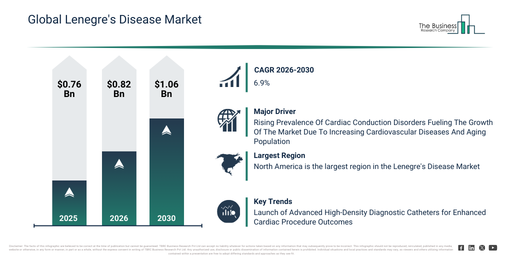
    The market for lenegre’s disease has demonstrated robust expansion over recent years. Forecasting shows this market is projected to expand from $0.76 billion in 2025 to $0.82 billion in 2026, exhibiting a compound annual growth rate (CAGR) of 6.9%. Historically, this market’s expansion can be ascribed to several factors, including limited awareness of rare cardiac conduction disorders, a reliance on symptomatic arrhythmia management, the rise in the aging population presenting with conduction abnormalities, the early adoption of pacemaker therapy, and the general growth in cardiology specialty care.

    The lenegre’s disease market is projected for significant expansion over the coming years, reaching a valuation of $1.06 billion by 2030, exhibiting a compound annual growth rate (CAGR) of 6.9%. This anticipated growth can be linked to several factors during the forecast period, including breakthroughs in cardiac electrophysiology research, an increasing need for early arrhythmia detection, the broadening scope of personalized cardiac care, greater access to remote cardiac monitoring, and heightened investment in research for rare cardiac diseases. Key trends anticipated in the same period involve enhanced electrophysiological diagnostic methods, the increasing adoption of cardiac implantable electronic devices, a greater emphasis on genetic and familial cardiac disorders, the expanding application of continuous cardiac monitoring, and ongoing progress in conduction system disease research.

    Access Your Free Sample Report For In-Depth Market Analysis:

    https://www.thebusinessresearchcompany.com/sample.aspx?id=22034&type=smp

    Which Drivers Are Supporting The Lenegre’s Disease Market Growth?

    The lenegre disease market is projected to be driven by the increasing occurrence of cardiac conduction disorders, which are conditions that disrupt the heart’s electrical signaling, leading to irregular rhythms or uncoordinated heartbeats. The prevalence of these disorders is growing due to the rising incidence of cardiovascular diseases and an aging population. Cardiovascular conditions such as hypertension, coronary artery disease, and heart failure directly impact the heart’s electrical conduction system, resulting in disorders like arrhythmias and heart block. Cardiac conduction disorders cause Lenègre’s disease by progressively degenerating the heart’s conduction system, leading to blockages and arrhythmias. For instance, in October 2024, the Centers for Disease Control and Prevention, a US-based government agency, reported that cardiovascular disease claimed 919,032 lives in 2023, accounting for one in every three deaths, with coronary heart disease remaining the most prevalent form; notably, approximately one in six deaths from cardiovascular diseases occurred among adults younger than 65 years. Therefore, the increasing prevalence of cardiac conduction disorders fuels the lenegre disease market.

    Lenegre’s Disease Market Driver: Surge In Healthcare Spending Fueling The Growth Due To Increased Need For Long-Term Cardiac Care

    How Is The Lenegre’s Disease Market Organized By Segment Classification?

    The lenegre’s disease market covered in this report is segmented –

    1) By Disease Classification: Idiopathic Lenègre’s Disease, Familial And Genetic Lenègre’s Disease, Age-Related Degenerative Lenègre’s Disease

    2) By Treatment Type: Pacemaker Therapy, Implantable Cardiac Rhythm Management Devices, Pharmacological Management, Supportive And Symptomatic, Monitoring And Diagnostic Follow-up

    3) By Route of Treatment Delivery: Implantable Device-Based Therapy, Non-Implantable Drug And Monitoring-Based Management

    4) By End User: Hospitals, Cardiology Clinics, Ambulatory Surgical Centers, Specialty Cardiac Care Centers

    Subsegments:

    1) By Idiopathic Lenègre’s Disease: Isolated Progressive Cardiac Conduction Disease, Sporadic Lenègre’s Disease, Non-Syndromic Conduction System Degeneration

    2) By Familial and Genetic Lenègre’s Disease: SCN5A-Mutation–Associated Lenègre’s Disease, Other Ion-Channel Gene–Associated Lenègre’s Disease, Autosomal Dominant Progressive Cardiac Conduction Disease

    3) By Age-Related Degenerative Lenègre’s Disease: Senile Fibrosis-Related Conduction Disease, Degenerative His–Purkinje System Disease, Age-Associated Progressive Atrioventricular Block

    Which Trends Are Expected To Impact The Lenegre’s Disease Market?

    Leading companies in the lenegre disease market are prioritizing the introduction of advanced products, such as high-density diagnostic catheters, to boost the accuracy and effectiveness of cardiac procedures. High-density diagnostic catheters are specialized medical instruments employed in cardiology to precisely map electrical activity within the heart, allowing for thorough diagnosis and treatment of cardiac arrhythmias. For instance, in July 2023, Biosense Webster Inc., a medical equipment manufacturing company based in the US, unveiled an OPTRELL mapping catheter incorporating TRUEref technology. This OPTRELL mapping catheter, with TRUEref technology and powered by the CARTO 3 System, provides high-definition electrophysiological mapping through 48 small electrodes, empowering clinicians to map complex cardiac arrhythmias with improved precision and formulate more effective ablation strategies.

    Who Are The Industry Participants Involved In The Lenegre’s Disease Market?

    Major companies operating in the lenegre’s disease market are Medtronic plc, Boston Scientific Corporation, Abbott Laboratories, Biotronik SE & Co. KG, LivaNova PLC, MicroPort Scientific Corporation, Lepu Medical Technology Co. Ltd., Osypka AG, Medico S.R.L., Shree Pacetronix Ltd., Pacetronix Medical Equipment Pvt. Ltd., Cardiac Science Corporation, Japan Lifeline Co. Ltd., Cook Medical, Integer Holdings Corporation, Merit Medical Systems Inc., Nipro Corporation, Teleflex Incorporated, Edwards Lifesciences Corporation, Getinge AB

    Get The Full Lenegre’s Disease Market Report:

    https://www.thebusinessresearchcompany.com/report/lenegres-disease-global-market-report

    Which Region Dominates The Lenegre’s Disease Market By Market Share?

    North America was the largest region in the lenegre’s disease market in 2025. The regions covered in the lenegre’s disease market report are Asia-Pacific, South East Asia, Western Europe, Eastern Europe, North America, South America, Middle East, Africa.

    Request A Customized Lenegre’s Disease Market Report For Competitive Insights:

    https://www.thebusinessresearchcompany.com/report/lenegres-disease-global-market-report

    Browse Through More Reports Similar to the Global Lenegre’s Disease Market 2026, By The Business Research Company

    Rare Neurological Disease Treatment Market Report 2026

    https://www.thebusinessresearchcompany.com/report/rare-neurological-disease-treatment-global-market-report

    Rare Diseases Treatment Market Report

    https://www.thebusinessresearchcompany.com/report/rare-diseases-treatment-global-market-report

    Rare Disease Diagnostics Market Report

    https://www.thebusinessresearchcompany.com/report/rare-disease-diagnostics-global-market-report

    Get in touch with us:

    The Business Research Company: https://www.thebusinessresearchcompany.com/

    Americas +1 310-496-7795

    Asia +44 7882 955267 & +91 8897263534

    Europe +44 7882 955267

    Email us at info@tbrc.info

    Follow us on:

    LinkedIn: https://in.linkedin.com/company/the-business-research-company

    YouTube: https://www.youtube.com/channel/UC24_fI0rV8cR5DxlCpgmyFQ

    Global Market Model: https://www.thebusinessresearchcompany.com/global-market-model

  • Leber Hereditary Optic Neuropathy Treatment Market Analysis (2026–2030) Highlighting Innovation and Competition

    Leber Hereditary Optic Neuropathy Treatment Market Analysis (2026–2030) Highlighting Innovation and Competition

    The Business Research Company’s 2026 market reports feature enhanced tools like market attractiveness analysis, TAM assessment, and company scoring matrices, along with interactive dashboards, deeper supply chain insights, and startup coverage strengthening the depth, usability, and strategic value of insights.

    What Is The Projected Increase In Market Value Of The Leber Hereditary Optic Neuropathy Treatment Market During 2026–2030?

    The leber hereditary optic neuropathy treatment market size has experienced robust expansion in recent years. It is anticipated to increase from $0.39 billion in 2025 to $0.42 billion in 2026, exhibiting a compound annual growth rate (CAGR) of 7.9%. This past growth can be attributed to several factors including the scarcity of treatment options for mitochondrial disorders, a rise in the diagnosis of inherited optic neuropathies, the early adoption of idebenone therapy, increasing public awareness of genetic eye diseases, and advancements in neuro-ophthalmology research.

    The leber hereditary optic neuropathy treatment market size is projected to experience substantial expansion over the upcoming years. This market is forecast to reach $0.56 billion by 2030, exhibiting a compound annual growth rate (CAGR) of 7.6%. This expansion during the projection period stems from escalating investment in mitochondrial medicine research, a rise in clinical trials for gene and stem cell therapies, broader precision medicine initiatives, enhanced availability of genetic testing technologies, and an increasing emphasis on strategies for early intervention. Key trends anticipated for the forecast period encompass an increase in mitochondrial gene therapy research, growing uptake of antioxidant-based pharmacological treatments, an expansion in genetic counseling and family risk assessment, a heightened focus on early molecular diagnosis, and progress in stem cell–based optic nerve regeneration.

    Access Your Free Sample Report For In-Depth Market Analysis:

    https://www.thebusinessresearchcompany.com/sample.aspx?id=23438&type=smp

    What Key Factors Are Affecting The Leber Hereditary Optic Neuropathy Treatment Market Demand?

    The increasing occurrence of glaucoma and optic neuritis is anticipated to propel the expansion of the leber hereditary optic neuropathy treatment market in the future. Both glaucoma and optic neuritis are ocular conditions that cause damage to the optic nerve; glaucoma generally arises from elevated intraocular pressure, while optic neuritis stems from inflammation, frequently associated with autoimmune disorders, both ultimately leading to impaired vision. The rising prevalence of glaucoma and optic neuritis can be attributed to an aging populace and advancements in diagnostic methods. A significantly elevated risk of developing glaucoma, an ailment marked by heightened intraocular pressure causing optic nerve damage, accompanies the aging of the global population. Optic nerve damage and subsequent vision loss are central to glaucoma and optic neuritis, characteristics they share with LHON. With the increasing prevalence of these conditions, there is a heightened focus on awareness and research into therapies targeting optic nerve degeneration. This ongoing research holds direct benefits for LHON treatment, given that the underlying mechanisms of optic nerve damage are fundamental to all three conditions. For example, data from October 2024, provided by the Centers for Disease Control and Prevention, a US-based federal agency, indicates that over 3 million Americans presently suffer from glaucoma, with this figure expected to climb to 6.3 million by 2050, primarily due to the aging U.S. population. Consequently, the increasing occurrence of glaucoma and optic neuritis is propelling the expansion of the leber hereditary optic neuropathy treatment market.

    Which Segments Define The Leber Hereditary Optic Neuropathy Treatment Market Segment Structure?

    The leber hereditary optic neuropathy treatment market covered in this report is segmented –

    1) By Treatment: Medication, Stem Cell Therapy, Gene Therapy, Genetic Counseling

    2) By Route Of Administration: Intramuscular, Oral, Other Routes Of Administration

    3) By Diagnosis: Molecular Genetic Testing, Magnetic Resonance Imaging (MRI), Blood tests, Other Diagnosis

    4) By Distribution Channel: Hospital Pharmacy, Retail Pharmacy, Online Pharmacy

    5) By End-Users: Clinic, Hospital, Other End-Users

    Subsegments:

    1) By Medication: Idebenone, Antioxidants, Mitochondrial-Targeted Therapies, Neuroprotective Agents

    2) By Stem Cell Therapy: Autologous Stem Cell Therapy, Allogeneic Stem Cell Therapy, Induced Pluripotent Stem Cell (iPSC) Therapy

    3) By Gene Therapy: Adeno-Associated Virus (AAV)-Mediated Therapy, Mitochondrial Gene Editing, RNA-Based Therapies

    4) By Genetic Counseling: Carrier Screening, Predictive Testing, Family Risk Assessment, Pre-Symptomatic Genetic Counseling

    What Trends Are Influencing Changes In The Leber Hereditary Optic Neuropathy Treatment Market?

    Leading companies in the leber hereditary optic neuropathy (LHON) treatment market are concentrating on developing innovative solutions, such as gene therapy clinical trials, to improve treatment efficacy, restore mitochondrial function, and address the underlying genetic causes of LHON. Gene therapy trials aim to restore vision by introducing functional copies of defective mitochondrial genes, such as ND4. These studies must pass through several stages, including preclinical research, phase 1, phase 2, and phase 3 trials, before they can receive regulatory approval. For instance, in August 2023, Neurophth Therapeutics, a China-based gene therapy company, initiated a Phase I/II clinical trial to treat leber hereditary optic neuropathy targeting ND1-LHON in China and the U.S. The trial seeks to evaluate the safety, tolerability, and efficacy of NFS-02 after receiving approvals from the U.S. FDA and China’s NMPA. The first patient has been dosed, marking a significant milestone in Neurophth’s global efforts towards accelerated drug approval and commercialization. The company is also speeding up patient enrollment and exploring additional gene therapy applications for other unmet medical needs.

    Who Are The Established Players Within The Leber Hereditary Optic Neuropathy Treatment Market?

    Major companies operating in the leber hereditary optic neuropathy treatment market are GenSight Biologics S.A., Chiesi Farmaceutici S.p.A., Stealth BioTherapeutics Corp., Astellas Pharma Inc., BridgeBio Pharma Inc., Reneo Pharmaceuticals Inc., Abliva AB, Khondrion B.V., Mitotech S.A.P., Neurophth Therapeutics Co. Ltd., Genethon, F. Hoffmann-La Roche Ltd, Novartis AG, Pfizer Inc., Sanofi S.A., Bayer AG, Takeda Pharmaceutical Company Limited, AbbVie Inc., Johnson & Johnson, Biogen Inc.

    Get The Full Leber Hereditary Optic Neuropathy Treatment Market Report:

    https://www.thebusinessresearchcompany.com/report/leber-hereditary-optic-neuropathy-treatment-global-market-report

    Which Region Is The Largest In The Leber Hereditary Optic Neuropathy Treatment Market?

    North America was the largest region in the leber hereditary optic neuropathy treatment market in 2025. Asia-Pacific is expected to be the fastest-growing region in the forecast period. The regions covered in the leber hereditary optic neuropathy treatment market report are Asia-Pacific, South East Asia, Western Europe, Eastern Europe, North America, South America, Middle East, Africa.

    Request A Customized Leber Hereditary Optic Neuropathy Treatment Market Report For Competitive Insights:

    https://www.thebusinessresearchcompany.com/report/leber-hereditary-optic-neuropathy-treatment-global-market-report

    Browse Through More Reports Similar to the Global Leber Hereditary Optic Neuropathy Treatment Market 2026, By The Business Research Company

    Retinal Disorder Treatment Market Report 2026

    https://www.thebusinessresearchcompany.com/report/retinal-disorder-treatment-global-market-report

    Peripheral Neuropathy Market Report

    https://www.thebusinessresearchcompany.com/report/peripheral-neuropathy-global-market-report

    Optic Atrophy Management Market Report

    https://www.thebusinessresearchcompany.com/report/optic-atrophy-management-global-market-report

    Get in touch with us:

    The Business Research Company: https://www.thebusinessresearchcompany.com/

    Americas +1 310-496-7795

    Asia +44 7882 955267 & +91 8897263534

    Europe +44 7882 955267

    Email us at info@tbrc.info

    Follow us on:

    LinkedIn: https://in.linkedin.com/company/the-business-research-company

    YouTube: https://www.youtube.com/channel/UC24_fI0rV8cR5DxlCpgmyFQ

    Global Market Model: https://www.thebusinessresearchcompany.com/global-market-model
  • Leber Congenital Amaurosis Market Forecast to 2030 With Key Insights and Developments

    Leber Congenital Amaurosis Market Forecast to 2030 With Key Insights and Developments

    The Business Research Company’s 2026 market reports feature enhanced tools like market attractiveness analysis, TAM assessment, and company scoring matrices, along with interactive dashboards, deeper supply chain insights, and startup coverage strengthening the depth, usability, and strategic value of insights.

    How Is The Market Size Of The Leber Congenital Amaurosis Market Expected To Change From 2026 To 2030?

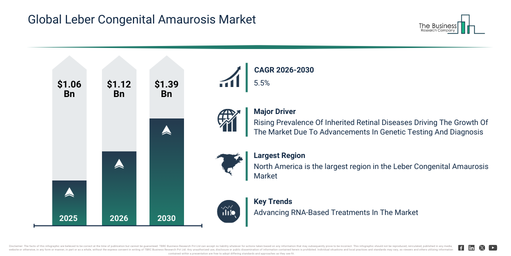
    The leber congenital amaurosis market has demonstrated substantial expansion in recent years. This market is set to increase from $1.06 billion in 2025 to $1.12 billion in 2026, reflecting a compound annual growth rate (CAGR) of 5.5%. The notable growth observed historically stems from elements like the scarcity of treatment options for inherited retinal disorders, greater recognition of rare genetic eye conditions, progress in retinal imaging technologies, an expansion in pediatric ophthalmology services, and foundational research into gene replacement therapy.

    The leber congenital amaurosis market is anticipated to experience robust expansion over the coming years. It is projected to reach $1.39 billion by 2030, demonstrating a compound annual growth rate (CAGR) of 5.5%. This projected growth during the forecast period is attributable to several factors, including increased investment in ophthalmic gene therapy research, the broadening scope of precision medicine initiatives, a rise in regulatory approvals for rare disease treatments, the wider uptake of advanced genetic testing, and enhanced healthcare access for rare genetic disorders. Key trends anticipated in the same period encompass the increasing number of gene therapy approvals for inherited retinal conditions, a heightened emphasis on early genetic screening and diagnosis, an expansion in clinical trials for innovative retinal regeneration treatments, a growing embrace of assistive vision technologies, and progress in retinal prosthesis and bionic eye solutions.

    Access Your Free Sample Report For In-Depth Market Analysis:

    https://www.thebusinessresearchcompany.com/sample.aspx?id=22033&type=smp

    Which Primary Drivers Are Impacting The Leber Congenital Amaurosis Market Growth?

    The rising occurrence of inherited retinal disorders is projected to boost the expansion of the leber congenital amaurosis (LCA) market. Inherited retinal diseases (IRDs) are defined as genetic conditions impacting the retina, which is the light-sensitive tissue located at the back of the eye crucial for sight. The growth in inherited retinal diseases can be linked to enhancements in genetic testing, increased awareness and diagnostic capabilities, and extended life spans. Progress in genetic testing has facilitated the diagnosis of inherited retinal diseases, resulting in the detection of a greater number of cases. Leber congenital amaurosis contributes to a deeper comprehension of inherited retinal diseases by uncovering genetic mutations and mechanisms of the disease, which aids in the creation of targeted therapies and interventions. For example, data from January 2025, provided by the UK Parliament’s House of Commons Library, a UK-based government body, indicated that around 25,000 individuals in the UK suffered from inherited retinal diseases in 2024, representing an annual rise of 2%. Consequently, the growing incidence of inherited retinal diseases is a key driver for the leber congenital amaurosis market.

    How Is The Leber Congenital Amaurosis Market Segmented Across Different Segment Categories?

    The leber congenital amaurosis market covered in this report is segmented –

    1) By Treatment Type: Gene Therapy, Pharmaceutical Drugs, Retinal Prosthesis, Assistive Devices, Other Treatments

    2) By Age Of Onset: Congenital Leber Congenital Amaurosis (LCA) (From Birth), Early Childhood Leber Congenital Amaurosis (LCA) (1-5 Years), Late-Onset Leber Congenital Amaurosis (LCA) (6 Years And Above)

    3) By Distribution Channel: Direct Tender, Retail Sales

    4) By End User: Hospitals, Specialized Eye Clinics, Ophthalmology Research Centers, Home Care Settings, Other End Users

    Subsegments:

    1) By Gene Therapy: RPE65 Gene Replacement Therapy, CRISPR-Based Gene Editing, AAV (Adeno-Associated Virus) Vector Therapy, Emerging Experimental Gene Therapies

    2) By Pharmaceutical Drugs: Retinoid-Based Therapies, Neuroprotective Agents, Anti-Inflammatory Drugs, Antioxidant Therapies

    3) By Retinal Prosthesis: Implantable Retinal Chips, Artificial Retinal Stimulation Devices, Bionic Eye Technology

    4) By Assistive Devices: Low Vision Aids, Screen Readers and Braille Devices, Mobility Aids for Vision Impairment

    5) By Other Treatments: Stem Cell Therapy, Optogenetics-Based Treatments, Visual Rehabilitation Programs, Nutritional and Dietary Interventions

    Which Trends Are Shaping Growth In The Leber Congenital Amaurosis Market?

    Leading companies in the leber congenital amaurosis market are concentrating on developing innovative solutions, such as RNA-based treatments, to enhance vision restoration and disease management. RNA-based treatments utilize RNA molecules to address diseases by targeting genetic processes, including mRNA vaccines, siRNA therapies, antisense oligonucleotides, and RNA aptamers. For instance, in January 2025, Laboratoires Théa S.A.S., a France-based pharmaceutical company, introduced Sepul Bio, a dedicated business unit focused on advancing RNA therapies for inherited retinal diseases, specifically targeting sepofarsen for leber congenital amaurosis 10 (LCA10) and ultevursen for USH2A-associated retinitis pigmentosa. With the successful dosing of the first patient in the LUNA Phase 2b clinical trial for ultevursen, Sepul Bio is set to achieve significant progress in managing these rare genetic disorders.

    Which Organizations Play A Role In The Leber Congenital Amaurosis Market Landscape?

    Major companies operating in the leber congenital amaurosis market are Sanofi S.A., Novartis AG, Astellas Pharma Inc., Invitae Corporation, Novelion Therapeutics Inc., Andelyn Biosciences Inc., CD Genomics Inc., Editas Medicine Inc., MeiraGTx Holdings plc, Sangamo Therapeutics Inc., LKC Technologies Inc., Aldeyra Therapeutics Inc., Asper Biogene OÜ, Allergan Inc., ProQR Therapeutics N.V., GenSight Biologics S.A., Ocugen Inc., Ophthotech Corporation, Atsena Therapeutics Inc., HuidaGene Therapeutics Co. Ltd.

    Get The Full Leber Congenital Amaurosis Market Report:

    https://www.thebusinessresearchcompany.com/report/leber-congenital-amaurosis-global-market-report

    Which Region Leads The Leber Congenital Amaurosis Market In Terms Of Market Share?

    North America was the largest region in the leber congenital amaurosis market in 2025. Asia-Pacific is expected to be the fastest-growing region in the forecast period. The regions covered in the leber congenital amaurosis market report are Asia-Pacific, South East Asia, Western Europe, Eastern Europe, North America, South America, Middle East, Africa.

    Request A Customized Leber Congenital Amaurosis Market Report For Competitive Insights:

    https://www.thebusinessresearchcompany.com/report/leber-congenital-amaurosis-global-market-report

    Browse Through More Reports Similar to the Global Leber Congenital Amaurosis Market 2026, By The Business Research Company

    Congenital Heart Disease Chd Market Report 2026

    https://www.thebusinessresearchcompany.com/report/congenital-heart-disease-chd-global-market-report

    Progressive Multifocal Leukoencephalopathy Treatment Market Report

    https://www.thebusinessresearchcompany.com/report/progressive-multifocal-leukoencephalopathy-treatment-global-market-report

    Gauchers Disease Market Report

    https://www.thebusinessresearchcompany.com/report/gauchers-disease-global-market-report

    Get in touch with us:

    The Business Research Company: https://www.thebusinessresearchcompany.com/

    Americas +1 310-496-7795

    Asia +44 7882 955267 & +91 8897263534

    Europe +44 7882 955267

    Email us at info@tbrc.info

    Follow us on:

    LinkedIn: https://in.linkedin.com/company/the-business-research-company

    YouTube: https://www.youtube.com/channel/UC24_fI0rV8cR5DxlCpgmyFQ

    Global Market Model: https://www.thebusinessresearchcompany.com/global-market-model
  • Leadless Pacemakers Market Outlook (2026–2030) Covering Growth Drivers and Trends

    Leadless Pacemakers Market Outlook (2026–2030) Covering Growth Drivers and Trends

    The Business Research Company’s 2026 market reports feature enhanced tools like market attractiveness analysis, TAM assessment, and company scoring matrices, along with interactive dashboards, deeper supply chain insights, and startup coverage strengthening the depth, usability, and strategic value of insights.

    From Its 2026 Market Size, What Value Is The Leadless Pacemakers Market Projected To Reach By 2030?

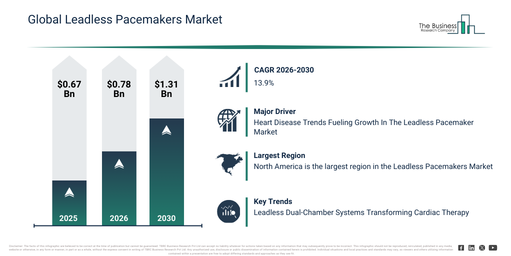
    The market for leadless pacemakers has experienced significant expansion recently. This market is projected to expand from $0.67 billion in 2025 to $0.78 billion in 2026, demonstrating a compound annual growth rate (CAGR) of 15.6%. Factors contributing to its historical growth include the drawbacks of conventional lead-based pacemakers, an uptick in cardiac arrhythmia cases, an expanding elderly demographic, heightened recognition of complications linked to leads, and progress in the miniaturization of cardiac devices.

    The leadless pacemakers market is anticipated to undergo significant expansion in the coming years. By 2030, its size is expected to reach $1.31 billion, exhibiting a compound annual growth rate (CAGR) of 13.9%. This growth in the forecast period stems from factors such as increasing demand for minimally invasive cardiac therapies, advancements in battery and device longevity, wider adoption of remote patient monitoring, the expansion of electrophysiology centers, and rising investment in next-generation cardiac devices. Key trends for the forecast period include the growing acceptance of leadless cardiac pacing systems, a move towards minimally invasive cardiac implant procedures, a heightened preference for devices with reduced infection risk, the broadening development of dual-chamber leadless pacemakers, and greater integration of remote cardiac monitoring.

    Access Your Free Sample Report For In-Depth Market Analysis:

    https://www.thebusinessresearchcompany.com/sample.aspx?id=15846&type=smp

    What Significant Factors Are Influencing The Leadless Pacemakers Market Expansion?

    The increasing incidence of heart disease is anticipated to propel the expansion of the leadless pacemaker market moving forward. Heart diseases encompass a spectrum of conditions that impact the heart’s structure or function, resulting in impaired blood flow, irregular heart rhythms, or other cardiovascular complications. The escalating prevalence of heart diseases is attributed to factors such as population growth and aging, various lifestyle choices, elevated stress levels, physical inactivity, challenges within healthcare systems, and a combination of genetic and environmental influences. Leadless pacemakers offer considerable advantages in managing certain heart conditions by providing effective pacing while simultaneously mitigating the risk of complications related to leads and offering a less invasive implantation process. For instance, in February 2024, according to the World Health Organization (WHO), a Switzerland-based intergovernmental organization, it is projected that there will be over 35 million new cases of cancer by 2050, representing a 77% increase over the estimated 20 million cases in 2022. Consequently, the rise in heart disease is serving as a driving force for the growth of the leadless pacemaker market.

    Leadless Pacemakers Market Driver: Surge In Minimally Invasive Procedures Fueling Growth Due To Reduced Recovery Time And Lower Postoperative Discomfort

    The growing preference for minimally invasive procedures is expected to drive the growth in the leadless pacemaker market in the coming years. Minimally invasive procedures refer to medical interventions carried out through small incisions or natural body openings, employing specialized instruments and imaging guidance to lessen tissue damage, pain, and recovery time, all while ensuring effective diagnostic or therapeutic outcomes. The increasing inclination towards minimally invasive procedures is primarily due to their capacity to reduce recovery time and postoperative discomfort, encouraging more patients and healthcare providers to select these techniques over traditional open surgeries. Leadless pacemakers support minimally invasive procedures by removing the necessity for surgical pockets and transvenous leads, enabling implantation through a small catheter-based method that reduces tissue disruption and accelerates recovery. For instance, in March 2024, according to a report published by the American Society of Plastic Surgeons (ASPS), a US-based professional medical organization, total cosmetic minimally invasive procedures saw an increase from 23,672,269 in 2022 to 25,442,640 in 2023, reflecting a 7% year-over-year growth. Therefore, the growing preference for minimally invasive procedures is a key driver for the leadless pacemaker market.

    What Are The Main Segments Within The Leadless Pacemakers Market Segment Structure?

    The leadless pacemakers market covered in this report is segmented –

    1) By Product Type: Ventricular Leadless Pacemakers, Atrioventricular (AV) Synchronous Leadless Pacemakers, Dual-Chamber Leadless Pacemaker Systems

    2) By Fixation Mechanism: Passive Fixation, Active Fixation

    3) By Indication: Bradycardia, Atrioventricular Block, Atrial Fibrillation with Slow Ventricular Response, Other Indications

    4) By End User: Hospitals, Cardiac Specialty Clinics, Ambulatory Surgical Centers

    Subsegments:

    1) By Ventricular Leadless Pacemakers: VVI-Mode Leadless Pacemakers, Rate-Responsive Ventricular Leadless Pacemakers (VVIR), Single-Module Ventricular Leadless Pacemakers

    2) By Atrioventricular (AV) Synchronous Leadless Pacemakers: Accelerometer-Based AV Synchronous Leadless Pacemakers, Algorithm-Driven AV Synchrony Leadless Pacemakers, Single-Module AV Synchronous Leadless Pacemakers

    3) By Dual-Chamber Leadless Pacemaker Systems: Modular Dual-Chamber Leadless Pacemaker Systems, Communicating Leadless Atrial and Ventricular Pacemaker Systems, Wireless Synchronized Dual-Chamber Leadless Pacemakers

    What Trends Are Affecting The Direction Of The Leadless Pacemakers Market?

    Leading companies in the leadless pacemakers market are concentrating on developing advanced products, such as dual-chamber systems, to enhance cardiac pacing efficiency and patient outcomes. A dual chamber system is a type of pacemaker that simultaneously monitors and stimulates both the heart’s atrium and ventricle, helping to maintain proper timing between the upper and lower chambers, improve blood flow, prevent irregular heart rhythms, and boost overall cardiac efficiency and patient quality of life. For instance, in July 2023, Abbott Laboratories, a US-based medical-device company, received US Food and Drug Administration (FDA) approval for its AVEIR DR dual-chamber leadless pacemaker system. This system enables two tiny devices, one in the atrium and one in the ventricle, to communicate beat-to-beat via its implant-to-implant (i2i) technology. By eliminating the necessity for transvenous leads, this system substantially decreases the risk of infection and mechanical complications while delivering more physiologic pacing. As the adoption of dual-chamber leadless pacemakers expands, these innovations are projected to broaden the patient population eligible for minimally invasive cardiac pacing and improve long-term clinical outcomes.

    Who Are The Companies Participating In The Leadless Pacemakers Market?

    Major companies operating in the leadless pacemakers market are Medtronic Plc, Abbott Laboratories, Boston Scientific Corporation, BIOTRONIK SE & Co. KG, MicroPort Scientific Corporation, LivaNova PLC, EBR Systems Inc., Cairdac, Imricor Medical Systems Inc., Osypka Medical GmbH, Shree Pacetronix Ltd., Lepu Medical Technology Co. Ltd., Terumo Corporation, MEDICO S.p.A., Vitatron Holding B.V., Oscor Inc., CathRx Ltd., Japan Lifeline Co. Ltd., Cardiac Pacemakers Inc., NVT AG

    Get The Full Leadless Pacemakers Market Report:

    https://www.thebusinessresearchcompany.com/report/leadless-pacemakers-global-market-report

    Which Region Leads The Leadless Pacemakers Market In Overall Market Size?

    North America was the largest region in the leadless pacemakers market in 2025. Asia-Pacific is expected to be the fastest-growing region in the forecast period. The regions covered in the leadless pacemakers market report are Asia-Pacific, South East Asia, Western Europe, Eastern Europe, North America, South America, Middle East, Africa.

    Request A Customized Leadless Pacemakers Market Report For Competitive Insights:

    https://www.thebusinessresearchcompany.com/report/leadless-pacemakers-global-market-report

    Browse Through More Reports Similar to the Global Leadless Pacemakers Market 2026, By The Business Research Company

    Pacemakers Market Report 2026

    https://www.thebusinessresearchcompany.com/report/pacemakers-global-market-report

    Cardiac Pacemakers Market Report

    https://www.thebusinessresearchcompany.com/report/cardiac-pacemakers-global-market-report

    External Pacemakers Market Report

    https://www.thebusinessresearchcompany.com/report/external-pacemakers-global-market-report

    Get in touch with us:

    The Business Research Company: https://www.thebusinessresearchcompany.com/

    Americas +1 310-496-7795

    Asia +44 7882 955267 & +91 8897263534

    Europe +44 7882 955267

    Email us at info@tbrc.info

    Follow us on:

    LinkedIn: https://in.linkedin.com/company/the-business-research-company

    YouTube: https://www.youtube.com/channel/UC24_fI0rV8cR5DxlCpgmyFQ

    Global Market Model: https://www.thebusinessresearchcompany.com/global-market-model
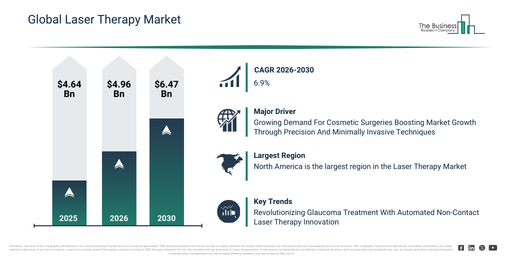
  • Growing demand for minimally invasive cosmetic procedures is boosting the laser therapy market

    Growing demand for minimally invasive cosmetic procedures is boosting the laser therapy market

    The Business Research Company’s 2026 market reports feature enhanced tools like market attractiveness analysis, TAM assessment, and company scoring matrices, along with interactive dashboards, deeper supply chain insights, and startup coverage strengthening the depth, usability, and strategic value of insights.

    How Much Growth In Market Value Is Expected For The Laser Therapy Market Between 2026 And 2030?

    The laser therapy market has shown substantial growth over recent years. It is anticipated to increase from $4.64 billion in 2025 to $4.96 billion in 2026, demonstrating a compound annual growth rate (CAGR) of 7.0%. The expansion observed in prior periods can be attributed to several factors, including the increasing prevalence of chronic pain conditions, the growing adoption of minimally invasive surgeries, a rising demand for dermatological procedures, the broader application of dental and ophthalmic laser use, and ongoing technological advancements in laser devices.

    The laser therapy market is set to experience substantial growth over the next few years, with projections indicating it will reach $6.47 billion by 2030, driven by a compound annual growth rate (CAGR) of 6.9%. This expansion throughout the forecast period can be attributed to several factors: an increasing desire for non-invasive therapeutic solutions, continuous improvements in laser precision and control systems, greater investments in healthcare infrastructure, a heightened public understanding of laser-based treatments, and the proliferation of ambulatory surgical centers. Significant trends expected during this period include the rising acceptance of minimally invasive laser procedures, the broadening application of lasers across various medical fields, an escalating demand for aesthetic and cosmetic laser treatments, expanded utilization of laser therapy in managing pain, and ongoing enhancements in the precision and safety aspects of laser systems.

    Access Your Free Sample Report For In-Depth Market Analysis:

    https://www.thebusinessresearchcompany.com/sample.aspx?id=24273&type=smp

    Which Important Drivers Are Guiding The Laser Therapy Market Growth?

    The increasing requirement for cosmetic procedures is anticipated to fuel the expansion of the laser therapy market in the future. Cosmetic surgeries are defined as optional surgical interventions designed to improve or modify an individual’s look, frequently encompassing the reshaping of facial characteristics, body sculpting, or skin revitalization to meet aesthetic objectives. A growing emphasis on physical appearance, influenced by society and media, along with advancements in less invasive methods and increased accessibility, is boosting the desire for cosmetic procedures. Laser therapy improves cosmetic surgical results by facilitating precise, less invasive procedures that lead to quicker recovery, less scarring, and better skin revitalization effects. For example, data released in June 2024 by the American Society of Plastic Surgeons (ASPS), a US-based organization, indicated that in 2023, liposuction was the leading plastic surgery, with approximately 350,000 procedures conducted, marking a 7% increase from 2022. Additionally, hand surgeries amounted to 207,887, showing a 2% rise, and maxillofacial surgeries reached 52,868, representing a 1% growth compared to the prior year. Consequently, the increased need for cosmetic interventions is propelling the expansion of the laser therapy market.

    How Is Segmentation Applied In The Laser Therapy Market Segment Analysis?

    The laser therapy market covered in this report is segmented –

    1) By Type: Diode Lasers, Solid State Lasers, Liquid Lasers, Semiconductor Lasers, Gas Lasers, Dye Lasers, Other Types

    2) By Mode Of Delivery: Contact Mode, Non-Contact Mode

    3) By Application: Dermatology And Aesthetics, Dental, Ophthalmology, Urology, Cardiovascular, Oncology

    4) By End User: Hospitals, Specialized Clinics, Ambulatory Surgical Centers, Other End Users

    Subsegments:

    1) By Diode Lasers: Low-Level Diode Lasers, High-Intensity Diode Lasers, Aesthetic Diode Lasers, Dental Diode Lasers

    2) By Solid State Lasers: Neodymium-Doped Yttrium Aluminum Garnet Lasers, Erbium-Doped Yttrium Aluminum Garnet Lasers, Holmium-Doped Yttrium Aluminum Garnet Lasers, Alexandrite Lasers

    3) By Liquid Lasers: Dye-Based Liquid Lasers, Tunable Liquid Lasers

    4) By Semiconductor Lasers: Vertical-Cavity Surface-Emitting Lasers, Distributed Feedback Lasers, Quantum Cascade Lasers

    5) By Gas Lasers: Carbon Dioxide Lasers, Helium-Neon Lasers, Argon Lasers, Excimer Lasers

    6) By Dye Lasers: Rhodamine Dye Lasers, Coumarin Dye Lasers

    7) By Other Types: Fiber Lasers, Ultrafast Lasers, Hybrid Laser Systems

    What Trends Are Influencing The Evolution Of The Laser Therapy Market?

    Leading companies within the laser therapy market are concentrating on developing novel products, such as automated non-contact laser therapy devices, to broaden access to effective and patient-friendly laser-based treatment solutions. These automated non-contact laser therapy devices are medical systems engineered to deliver laser energy to targeted areas of the body without physical contact, utilizing programmable settings and robotic or automated mechanisms to ensure consistent, hands-free application for therapeutic purposes including pain management, inflammation reduction, and tissue regeneration. As an illustration, in February 2025, Alcon, an ophthalmic surgical product company based in Switzerland, introduced Voyager Direct Selective Laser Trabeculoplasty (DSLT) for addressing glaucoma and ocular hypertension in the United States. This system delivers laser pulses with high precision using its proprietary eye-tracking technology, thereby removing the requirement for a gonio lens and manual targeting. This innovation simplifies clinical workflows, improves treatment accessibility, and establishes laser therapy as a more practical initial treatment choice for a wider array of patients.

    Who Are The Companies Participating In The Laser Therapy Market Environment?

    Major companies operating in the laser therapy market are Coherent Corp., IPG Photonics Corporation, El.En. S.p.A., Lumenis Ltd., Candela Medical, Cynosure, Alma Lasers, Fotona, Biolase Inc., Iridex Corporation, AngioDynamics Inc., Erchonia, Convergent Dental, biolitec Group, BTL Industries, Asclepion Laser Technologies, Quanta System, Dornier MedTech, LightScalpel, Ziemer Ophthalmic Systems

    Get The Full Laser Therapy Market Report:

    https://www.thebusinessresearchcompany.com/report/laser-therapy-global-market-report

    Which Region Is The Top Contributor To The Laser Therapy Market By Share?

    North America was the largest region in the laser therapy market in 2025. Asia-Pacific is expected to be the fastest-growing region in the forecast period. The regions covered in the laser therapy market report are Asia-Pacific, South East Asia, Western Europe, Eastern Europe, North America, South America, Middle East, Africa.

    Request A Customized Laser Therapy Market Report For Competitive Insights:

    https://www.thebusinessresearchcompany.com/report/laser-therapy-global-market-report

    Browse Through More Reports Similar to the Global Laser Therapy Market 2026, By The Business Research Company

    Laser Technology Market Report 2026

    https://www.thebusinessresearchcompany.com/report/laser-technology-global-market-report

    Dermatology Medical Lasers Market Report

    https://www.thebusinessresearchcompany.com/report/dermatology-medical-lasers-global-market-report

    Cosmetic Lasers Market

    https://www.thebusinessresearchcompany.com/report/cosmetic-lasers-market

    Get in touch with us:

    The Business Research Company: https://www.thebusinessresearchcompany.com/

    Americas +1 310-496-7795

    Asia +44 7882 955267 & +91 8897263534

    Europe +44 7882 955267

    Email us at info@tbrc.info

    Follow us on:

    LinkedIn: https://in.linkedin.com/company/the-business-research-company

    YouTube: https://www.youtube.com/channel/UC24_fI0rV8cR5DxlCpgmyFQ

    Global Market Model: https://www.thebusinessresearchcompany.com/global-market-model

  • Rising tobacco consumption and associated cancer cases are influencing the laryngeal cancer therapeutics market

    Rising tobacco consumption and associated cancer cases are influencing the laryngeal cancer therapeutics market

    The Business Research Company’s 2026 market reports feature enhanced tools like market attractiveness analysis, TAM assessment, and company scoring matrices, along with interactive dashboards, deeper supply chain insights, and startup coverage strengthening the depth, usability, and strategic value of insights.

    What Is The Estimated Market Size Of The Laryngeal Cancer Therapeutics Market In 2026, And How Will Its Value Evolve By 2030?

    The laryngeal cancer therapeutics market has experienced significant expansion in recent years. Forecasts show it will increase from $3.24 billion in 2025 to $3.42 billion in 2026, reflecting a compound annual growth rate (CAGR) of 5.5%. This historical growth has been driven by several factors, including the high prevalence of tobacco and alcohol consumption, the increasing incidence of head and neck cancers, greater utilization of chemotherapy and radiation therapy, the expansion of oncology treatment centers, and improved rates of cancer diagnosis.

    The laryngeal cancer therapeutics market size is forecast to undergo substantial growth over the next few years. It is projected to expand to $4.42 billion by 2030, demonstrating a compound annual growth rate (CAGR) of 6.6%. This expansion during the forecast period is driven by the increasing adoption of immunotherapy drugs, breakthroughs in targeted therapy development, higher healthcare spending on oncology, greater awareness of early cancer screening, and the establishment of more specialty cancer treatment centers. Prominent trends anticipated in the forecast period include the increasing use of immunotherapy for laryngeal cancer, a move towards organ-preserving treatment options, the growing application of combination therapy regimens, an intensified focus on managing early-stage cancer, and the wider implementation of personalized treatment plans.

    Access Your Free Sample Report For In-Depth Market Analysis:

    https://www.thebusinessresearchcompany.com/sample.aspx?id=13238&type=smp

    What Major Factors Are Driving The Laryngeal Cancer Therapeutics Market Forward?

    The rising occurrence of tobacco use is projected to boost the expansion of the laryngeal cancer therapeutics market. Tobacco consists of leaves from Nicotiana plants, processed for various applications such as smoking, chewing, and snuffing. Its consumption is a primary risk factor for laryngeal cancer, crucially influencing its progression and the effectiveness of its treatment. Consequently, laryngeal cancer therapeutics often involve addressing the impact of tobacco use on the condition’s management. An illustration of this trend is found in the October 2024 2024 National Youth Tobacco Survey, released by the US Food and Drug Administration (USFDA), a federal agency based in the US, which revealed that 1.1% of all students (approximately 2.25 million) reported current use of tobacco products. This included 10.1% of high school students (about 1.58 million) and 5.4% of middle school students (around 640,000) using tobacco. Additionally, 2.8% of students (about 760,000) reported current use of any combustible tobacco product, while 3.0% (approximately 840,000) reported using multiple tobacco products. Therefore, the heightened prevalence of tobacco is a significant factor driving the growth of the laryngeal cancer therapeutics market.

    What Segment Categories Shape The Laryngeal Cancer Therapeutics Market Segment Landscape?

    The laryngeal cancer therapeutics market covered in this report is segmented –

    1) By Treatment Type: Chemotherapy, Immunotherapy, Other Treatments

    2) By Route Of Administration: Oral, Parenteral

    3) By Distribution Channel: Hospital Pharmacy, Online Pharmacy, Retail Pharmacy

    4) By End-User: Hospitals, Homecare, Specialty Centers, Other End-Users

    Subsegments:

    1) By Chemotherapy: Neoadjuvant Chemotherapy, Adjuvant Chemotherapy, Palliative Chemotherapy

    2) By Immunotherapy: Checkpoint Inhibitors, Monoclonal Antibodies, Cancer Vaccines

    3) By Other Treatments: Radiation Therapy, Targeted Therapy, Surgery

    Which Trends Are Impacting The Progress Of The Laryngeal Cancer Therapeutics Market?

    Major companies active within the laryngeal cancer therapeutics market are directing their efforts toward developing innovative products, such as perioperative checkpoint inhibitor therapies, to improve patient survival and reduce recurrence rates. These perioperative checkpoint inhibitor therapies are treatments administered around the time of surgery (either before, after, or both) that utilize immune checkpoint inhibitors to boost the immune system’s ability to combat cancer cells, thereby helping to diminish tumor size, prevent recurrence, and improve overall survival. For example, in June 2025, Merck & Co. Inc., a US-based pharmaceutical company, secured US Food and Drug Administration (FDA) approval for Keytruda (pembrolizumab) as a neoadjuvant and adjuvant therapy for resectable locally advanced head and neck squamous cell carcinoma (HNSCC) demonstrating PD-L1 expression (CPS ≥1). Keytruda is given before surgery (neoadjuvant) and continued after surgery (adjuvant) in combination with radiotherapy, which may or may not include cisplatin, with the goal of reducing recurrence risk and enhancing progression-free survival. By engaging the patient’s immune system to target residual cancer cells while integrating with existing surgical and radiation protocols, this innovation supports more precise, patient-tailored care, improves treatment outcomes, and signifies a transition toward combination immunotherapy strategies in the management of laryngeal and other head and neck cancers.

    Who Are The Companies Operating Across The Laryngeal Cancer Therapeutics Market Value Chain?

    Major companies operating in the laryngeal cancer therapeutics market are Pfizer Inc., F. Hoffmann La Roche Ltd., Merck & Co., AbbVie Inc., Novartis AG , Bayer AG, Sanofi-Aventis LLC , Bristol Myers Squibb, AstraZeneca plc, GlaxoSmithKline plc, Eli Lilly and Company, Amgen Inc., C.H. Boehringer Sohn AG & Co. KG., Regeneron Pharmaceuticals Inc., Incyte Corporation, Aurobindo Pharma Ltd., Cipla Inc., Hikma Pharmaceuticals plc, Amneal Pharmaceuticals LLC, Lupin Limited , Seagen Inc., Exelixis Pharmaceuticals Inc., BeiGene Ltd., Taiho Pharmaceutical Co. Ltd., Genentech Inc., Mirati Therapeutics Inc.

    Get The Full Laryngeal Cancer Therapeutics Market Report:

    https://www.thebusinessresearchcompany.com/report/laryngeal-cancer-therapeutics-global-market-report

    Which Region Represents The Largest Share Of The Laryngeal Cancer Therapeutics Market?

    North America was the largest region in the laryngeal cancer therapeutics market in 2025. Asia-Pacific is expected to be the fastest-growing region in the forecast period. The regions covered in the laryngeal cancer therapeutics market report are Asia-Pacific, South East Asia, Western Europe, Eastern Europe, North America, South America, Middle East, Africa.

    Request A Customized Laryngeal Cancer Therapeutics Market Report For Competitive Insights:

    https://www.thebusinessresearchcompany.com/report/laryngeal-cancer-therapeutics-global-market-report

    Browse Through More Reports Similar to the Global Laryngeal Cancer Therapeutics Market 2026, By The Business Research Company

    Head And Neck Cancer Therapeutics Market Report 2026

    https://www.thebusinessresearchcompany.com/report/head-and-neck-cancer-therapeutics-global-market-report

    Oral Cancer Treatment Market Report

    https://www.thebusinessresearchcompany.com/report/oral-cancer-treatment-global-market-report

    Small Cell Lung Cancer Therapeutics Market Report

    https://www.thebusinessresearchcompany.com/report/small-cell-lung-cancer-therapeutics-global-market-report

    Get in touch with us:

    The Business Research Company: https://www.thebusinessresearchcompany.com/

    Americas +1 310-496-7795

    Asia +44 7882 955267 & +91 8897263534

    Europe +44 7882 955267

    Email us at info@tbrc.info

    Follow us on:

    LinkedIn: https://in.linkedin.com/company/the-business-research-company

    YouTube: https://www.youtube.com/channel/UC24_fI0rV8cR5DxlCpgmyFQ

    Global Market Model: https://www.thebusinessresearchcompany.com/global-market-model

  • Increasing chronic disease prevalence is fueling growth in the large volume parenteral market

    Increasing chronic disease prevalence is fueling growth in the large volume parenteral market

    The Business Research Company’s 2026 market reports feature enhanced tools like market attractiveness analysis, TAM assessment, and company scoring matrices, along with interactive dashboards, deeper supply chain insights, and startup coverage strengthening the depth, usability, and strategic value of insights.

    How Does The Market Size Of The Large Volume Parenteral (LVP) Market Compare Between 2026 And 2030?

    The large volume parenteral (lvp) market size has demonstrated robust expansion over recent years. Forecasts indicate it will expand from $13.53 billion in 2025 to $14.76 billion in 2026, achieving a compound annual growth rate (CAGR) of 9.1%. Historically, this growth was driven by factors such as increasing hospitalization rates, a rise in intravenous fluid therapy usage, more surgical procedures, the broadening of critical care infrastructure, and the increase in infectious disease treatment.

    The large volume parenteral (lvp) market is anticipated to experience robust expansion over the coming years. It is projected to reach $21.37 billion by 2030, demonstrating a compound annual growth rate (CAGR) of 9.7%. This growth during the forecast period can be attributed to factors such as an expanding aging population, the increasing incidence of chronic diseases, a greater need for parenteral nutrition, the development of healthcare infrastructure in new markets, and an uptick in emergency and trauma care services. Key trends expected during this period involve a heightened demand for non-pvc and environmentally friendly lvp packaging, the proliferation of ready-to-use and premixed infusion solutions, a sharper emphasis on sterility and preventing contamination, the increasing application of lvps in critical care and emergency medicine, and a rise in the volume of hospital-based infusion therapies.

    Access Your Free Sample Report For In-Depth Market Analysis:

    https://www.thebusinessresearchcompany.com/sample.aspx?id=12195&type=smp

    Which Key Drivers Are Affecting The Large Volume Parenteral (LVP) Market Development?

    The increasing occurrence of chronic diseases is anticipated to fuel the expansion of the large-volume parenteral market going forward. Chronic diseases are long-term health issues or conditions, usually persisting for three months or more, with the potential for deterioration. Factors contributing significantly to the increase in chronic diseases include tobacco consumption, exposure to smoke, and inadequate nutrition. Patients with such conditions necessitate a balanced intake of vital nutrients to maintain vigor. The parenteral administration method ensures precise drug dosing as the majority of the medication enters circulation directly, bypassing the digestive system. For instance, in September 2023, according to the World Health Organization, a Switzerland-based specialized agency of the United Nations, there were 41 million deaths, which is 74% of those caused by non-communicable diseases (NCDs) or chronic diseases every year globally. Consequently, the rising prevalence of chronic diseases is a key factor propelling the expansion of the large-volume parenteral market.

    Which Segment Types Are Examined In The Large Volume Parenteral (LVP) Market Segment Study?

    The large volume parenteral (lvp) market covered in this report is segmented –

    1) By Type: Soft Bag LVP, Plastic Bag LVP, Glass Bottle LVP

    2) By Volume: 100 ML – 250 ML, 250 ML – 500 ML, 500 ML – 1000 ML, 1000 ML -2000 ML, 2000 And More

    3) By Application: Basic Infusion, Therapeutics Infusion, Nutritious Infusion

    4) By End-User: Hospital, Medical Centers, Other End Users

    Subsegments:

    1) By Soft Bag LVP: PVC Soft Bags, Non-PVC Soft Bags

    2) By Plastic Bag LVP: Polypropylene Bags, Polyethylene Bags

    3) By Glass Bottle LVP: Single-Use Glass Bottles, Multi-Dose Glass Bottles

    What Trends Are Transforming The Large Volume Parenteral (LVP) Market?

    Major companies operating within the Large Volume Parenteral (LVP) market are prioritizing the development of innovative smart infusion devices, such as intelligent large-volume infusion pumps. This focus addresses the increasing demand for safer, more automated, and connected intravenous therapy, driven by the expansion of hospital-based infusion services, remote patient monitoring, and the drive towards standardized, error-resistant medication delivery. An intelligent large-volume infusion pump is engineered to deliver high-volume IV fluids (LVP) and incorporates dose-error reduction software, connectivity for smart drug libraries, and alarm management. Unlike traditional infusion pumps, which rely purely on manual programming and limited automation, these next-generation pumps aid in preventing dosing mistakes, reducing workflow burden, and integrating with hospital IT systems. As an illustration, in April 2024, Baxter International Inc., a US-based pharmaceutical and medical-device company, obtained U.S. FDA clearance for its Novum IQ Large-Volume Infusion Pump, equipped with Dose IQ smart-dose software. This device supports high-rate fluid delivery, including large-volume infusions, offers safety features like drug library integration to minimize dosing errors, and enables connectivity to hospital electronic medical records and smart monitoring platforms. By facilitating the safe, automated, and reliable infusion of large volumes, the Novum IQ pump empowers healthcare providers to improve infusion accuracy, decrease the risk of dosing errors, and streamline high-volume IV therapy workflows.

    Which Players Are Part Of The Competitive Landscape Of The Large Volume Parenteral (LVP) Market?

    Major companies operating in the large volume parenteral (lvp) market are Pfizer Inc., Fresenius Kabi AG, Abbott Laboratories Inc., Otsuka Holdings Co. Ltd., Baxter International Inc., B. Braun Melsungen AG, Grifols S.A., Cipla Limited, ICU Medical Inc., Biocon Limited, Sichuan Kelun Pharmaceutical Co. Ltd., Alembic Pharmaceuticals Limited, Cadila Healthcare Ltd., Gland Pharma Limited, Akums Drugs & Pharmaceuticals Ltd., Beximco Pharmaceutical Ltd., Taj Pharmaceuticals Limited, Albert David Ltd., Amanta Healthcare Ltd., Unique Pharmaceutical Laboratories Ltd., Ahlcon Parenterals India Ltd., Parenteral Drugs Limited, Abaris Healthcare Pvt. Ltd., BML Parenteral Drugs, Denis Chem Lab Ltd., Pentagon Labs Ltd., DJ Labs Pvt. Ltd., Higgs Healthcare

    Get The Full Large Volume Parenteral (LVP) Market Report:

    https://www.thebusinessresearchcompany.com/report/large-volume-parenteral-lvp-global-market-report

    Which Geographic Region Dominates The Large Volume Parenteral (LVP) Market?

    North America was the largest region in the large volume parenteral (LVP) market in 2025. Asia-Pacific is expected to be the fastest-growing region in the forecast period. The regions covered in the large volume parenteral (lvp) market report are Asia-Pacific, South East Asia, Western Europe, Eastern Europe, North America, South America, Middle East, Africa.

    Request A Customized Large Volume Parenteral (LVP) Market Report For Competitive Insights:

    https://www.thebusinessresearchcompany.com/report/large-volume-parenteral-lvp-global-market-report

    Browse Through More Reports Similar to the Global Large Volume Parenteral (LVP) Market 2026, By The Business Research Company

    Small Volume Parenteral Market Report 2026

    https://www.thebusinessresearchcompany.com/report/small-volume-parenteral-global-market-report

    Small Volume Parenteral Market Report

    https://www.thebusinessresearchcompany.com/report/small-volume-parenteral-global-market-report

    Parenteral Nutrition Market Report

    https://www.thebusinessresearchcompany.com/report/parenteral-nutrition-global-market-report

    Get in touch with us:

    The Business Research Company: https://www.thebusinessresearchcompany.com/

    Americas +1 310-496-7795

    Asia +44 7882 955267 & +91 8897263534

    Europe +44 7882 955267

    Email us at info@tbrc.info

    Follow us on:

    LinkedIn: https://in.linkedin.com/company/the-business-research-company

    YouTube: https://www.youtube.com/channel/UC24_fI0rV8cR5DxlCpgmyFQ

    Global Market Model: https://www.thebusinessresearchcompany.com/global-market-model