Category: Healthcare Services

  • IVF services market forecast through 2030 showing industry developments

    IVF services market forecast through 2030 showing industry developments

    The Business Research Company’s 2026 market reports feature enhanced tools like market attractiveness analysis, TAM assessment, and company scoring matrices, along with interactive dashboards, deeper supply chain insights, and startup coverage strengthening the depth, usability, and strategic value of insights.

    From Its 2026 Market Size, What Value Is The IVF Services Market Projected To Reach By 2030?

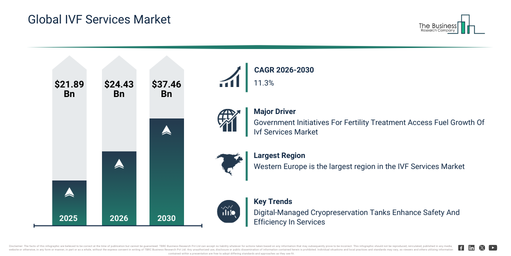
    The ivf services market has experienced rapid expansion in recent years. Projections indicate it will grow from $21.89 billion in 2025 to $24.43 billion in 2026, achieving a compound annual growth rate (CAGR) of 11.6%. The historical expansion can be attributed to increasing infertility rates, the trend of delayed parenthood, growing awareness regarding fertility treatments, advancements in embryology techniques, and the rising availability of specialized fertility clinics.

    The ivf services market size is projected to experience substantial expansion over the coming years, reaching $37.46 billion by 2030, demonstrating a compound annual growth rate (CAGR) of 11.3%. This anticipated growth during the forecast period is attributable to several factors, including the increasing embrace of ivf across various age demographics, a heightened demand for donor egg cycles, the expansion of medical tourism for fertility care, enhanced affordability of ivf services, and broader insurance coverage for fertility interventions. Key trends expected during this period encompass a surging demand for assisted reproductive technologies, the increasing integration of preimplantation genetic testing, a growing inclination towards frozen embryo transfer cycles, the expansion of donor egg ivf initiatives, and enhanced success rates achieved through sophisticated clinical methodologies.

    Access Your Free Sample Report For In-Depth Market Analysis:

    https://www.thebusinessresearchcompany.com/sample.aspx?id=3348&type=smp

    What Major Factors Are Driving The IVF Services Market Forward?

    The IVF services market is projected to grow significantly, driven by government initiatives designed to improve access to fertility treatments. Such initiatives encompass specific actions, programs, policies, or projects undertaken by governmental bodies to address particular issues or achieve societal goals. Many government authorities are launching various programs to support the IVF services market. For instance, in January 2023, the New South Wales (NSW) government, operating under the New South Wales Ministry of Health, an Australia-based government organization, committed $80 million from 2022-23 to 2025-26 to broaden access to affordable fertility treatments through the NSW Affordable IVF Program. Therefore, government initiatives focused on the accessibility of fertility treatments are a primary driver for the IVF services market.

    How Are Different Segments Classified In The IVF Services Market Segment Analysis?

    The ivf services market covered in this report is segmented –

    1) By Cycle Type: Fresh IVF Cycles (Non-donor), Thawed IVF Cycles (Non-donor), Donor Egg IVF Cycles

    2) By Service Provider: Fertility Clinics, Hospitals

    3) By End User: Infertile Couples, Single Women, Same-Sex Couples

    Subsegments:

    1) By Fresh IVF Cycles (Non-donor): Standard Fresh IVF Cycles, IVF Cycles With Preimplantation Genetic Testing (PGT)

    2) By Thawed IVF Cycles (Non-donor): Thawed Embryo Transfer (TET) Cycles, Thawed Blastocyst Transfer Cycles

    3) By Donor Egg IVF Cycles: IVF Cycles Using Fresh Donor Eggs, IVF Cycles Using Frozen Donor Eggs

    Which Trends Are Impacting The Progress Of The IVF Services Market?

    Leading firms within the IVF services market are concentrating on creating novel solutions, like digitally controlled cryopreservation tanks, to boost specimen safety, augment storage scalability, and guarantee precise tracking of frozen gametes and embryos. Such a digitally managed cryopreservation tank integrates a conventional liquid nitrogen storage setup with sophisticated digital tracking, specimen verification, and remote monitoring capabilities, effectively merging the dependability of manual storage with the security and traceability offered by an automated system. As an illustration, in March 2025, TMRW Life Sciences, a fertility technology firm based in the US, introduced the TMRW Vault. This innovation comprises a liquid nitrogen smart tank and digital workstation, leveraging RFID tagging and its exclusive ivfOS software to oversee frozen specimens with a complete chain-of-custody. The system allows for manual specimen access while conducting thousands of daily environmental checks through its Overwatch system, and it expands capacity to accommodate up to ten traditional dewars within one tank. This innovative solution empowers IVF clinics to mitigate risks, enhance retrieval accuracy, and handle storage expansion with greater efficiency.

    Who Are The Companies Driving Activity In The IVF Services Market?

    Major companies operating in the ivf services market are Monash IVF Group, Virtus Health Limited, Genea Limited, Boston IVF, IVF Spain, Bourn Hall Clinic, Indira IVF, Cloudnine Fertility, Chelsea and Westminster Hospital NHS Foundation Trust, Bumrungrad International Hospital, CHA Fertility Center, CREATE Fertility, The Centre for Reproductive & Genetic Health, The Bridge Centre, UNICA Clinic – Prague, Repromeda s.r.o., Australian Concept Infertility Medical Center (ACIMC), Dubai Gynecology and Fertility Centre, Cairo Fertility Centre, Queens Fertility Centre (Egypt), Instituto de Fertilidad Humana

    Get The Full IVF Services Market Report:

    https://www.thebusinessresearchcompany.com/report/ivf-services-global-market-report

    Which Region Holds The Highest Market Share In The IVF Services Market?

    Western Europe was the largest region in the IVF services market in 2025. North America was the second largest region in global IVF services market share. The regions covered in the ivf services market report are Asia-Pacific, South East Asia, Western Europe, Eastern Europe, North America, South America, Middle East, Africa.

    Request A Customized IVF Services Market Report For Competitive Insights:

    https://www.thebusinessresearchcompany.com/report/ivf-services-global-market-report

    Browse Through More Reports Similar to the Global IVF Services Market 2026, By The Business Research Company

    Donor Egg In Vitro Fertilization Ivf Services Market Report 2026

    https://www.thebusinessresearchcompany.com/report/donor-egg-in-vitro-fertilization-ivf-services-global-market-report

    Fertility Services Market Report

    https://www.thebusinessresearchcompany.com/report/fertility-services-global-market-report

    Sterilization Services Market Report

    https://www.thebusinessresearchcompany.com/report/sterilization-services-global-market-report

    Get in touch with us:

    The Business Research Company: https://www.thebusinessresearchcompany.com/

    Americas +1 310-496-7795

    Asia +44 7882 955267 & +91 8897263534

    Europe +44 7882 955267

    Email us at info@tbrc.info

    Follow us on:

    LinkedIn: https://in.linkedin.com/company/the-business-research-company

    YouTube: https://www.youtube.com/channel/UC24_fI0rV8cR5DxlCpgmyFQ

    Global Market Model: https://www.thebusinessresearchcompany.com/global-market-model
  • IVD raw materials market outlook 2026–2030 highlighting key trends

    IVD raw materials market outlook 2026–2030 highlighting key trends

    The Business Research Company’s 2026 market reports feature enhanced tools like market attractiveness analysis, TAM assessment, and company scoring matrices, along with interactive dashboards, deeper supply chain insights, and startup coverage strengthening the depth, usability, and strategic value of insights.

    How Much Growth In Market Value Is Expected For The IVD Raw Materials Market Between 2026 And 2030?

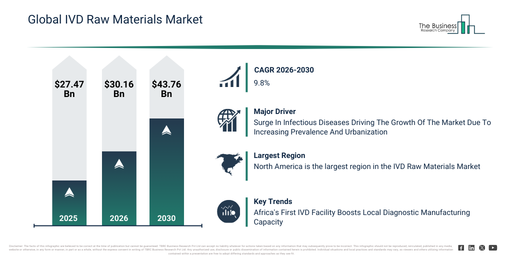
    The ivd raw materials market size has shown robust expansion in recent years. It is forecast to rise from $27.47 billion in 2025 to $30.16 billion by 2026, exhibiting a compound annual growth rate (CAGR) of 9.8%. This historical growth can be linked to several factors, including an increase in clinical diagnostic testing volumes, the rising adoption of immunoassays, the ongoing expansion of molecular diagnostics, a greater demand for early disease detection, and the widespread application of enzymes and antibodies in ivd kits.

    The ivd raw materials market size is projected to experience substantial expansion in the coming years. This market is anticipated to reach a valuation of $43.76 billion by 2030, demonstrating a compound annual growth rate (CAGR) of 9.8%. The drivers for this growth during the forecast period include an escalating prevalence of chronic and infectious diseases, increased capital expenditure in precision diagnostics, the expansion of point-of-care testing, broader biopharmaceutical research and development activities, and a greater need for tailored ivd raw materials. Key trends expected during the forecast timeframe encompass an increasing requirement for high-purity diagnostic reagents, wider acceptance of recombinant antibodies and proteins, the extended use of raw materials for molecular diagnostics, a heightened emphasis on quality and consistency across batches, and the diversification of supply chains for essential ivd components.

    Access Your Free Sample Report For In-Depth Market Analysis:

    https://www.thebusinessresearchcompany.com/sample.aspx?id=24270&type=smp

    Which Key Drivers Are Affecting The IVD Raw Materials Market Development?

    The **IVD raw materials market** is anticipated to expand due to the rising occurrence of infectious diseases, which are conditions resulting from detrimental microorganisms capable of transmission between individuals or organisms. This growing prevalence stems from swift urbanization, fostering disease spread by boosting population density and overtaxing sanitation and healthcare facilities. **IVD raw materials** are vital in combating such diseases as they facilitate the creation of precise diagnostic tools for timely detection and efficient disease control. A notable example is the increase in **tuberculosis cases** reported by the **Centers for Disease Control and Prevention**, a **US-based government agency**, in **March 2024**, where numbers rose from **8,320 in 2022** to **9,615 in 2023**, marking a **rise of 1,295 cases**. Consequently, the escalating incidence of infectious diseases is a key driver for the growth of the **IVD raw materials market**.

    How Is The IVD Raw Materials Market Categorized Across Its Segment Groups?

    The ivd raw materials market covered in this report is segmented –

    1) By Product: Antibodies, Antigens, Enzymes, Proteins, Biological Buffers

    2) By Technology: Molecular Diagnostics, Clinical Chemistry, Immunochemistry

    3) By End User: Pharmaceutical And Biotechnology Companies, Contract Research Organizations

    Subsegments:

    1) By Antibodies: Monoclonal Antibodies, Polyclonal Antibodies, Recombinant Antibodies

    2) By Antigens: Recombinant Antigens, Native Antigens, Synthetic Antigens

    3) By Enzymes: Polymerases, Reverse Transcriptases, Oxidases

    4) By Proteins: Carrier Proteins, Blocking Proteins, Recombinant Proteins

    5) By Biological Buffers: Tris Buffers, HEPES Buffers, Phosphate Buffers

    What Trends Are Transforming The IVD Raw Materials Market?

    Major companies operating in the IVD raw materials market are focusing on developing advanced solutions, such as IVD manufacturing facilities, to strengthen regional diagnostic capabilities and support healthcare self-sufficiency. An in vitro diagnostic (IVD) manufacturing facility is a specialized site where devices and equipment used for diagnosing diseases and conditions through laboratory testing of samples outside the human body are designed, produced, and tested for quality and compliance. For instance, in January 2024, Colexa Biosensor Limited, a Nigeria-based health technology company, partnered with Codix Pharma Limited, a Nigeria-based pharmaceutical manufacturing company, to launch Sub-Saharan Africa’s first in vitro diagnostics (IVD) manufacturing facility in Lagos. This facility, which produces the onpoint blood glucose meter and strips, is a significant milestone in Africa’s healthcare industry, designed to address the rising diabetes prevalence and improve diagnostic access. The facility can produce 3.6 million packs annually, with the potential for expansion to 10.8 million packs, focusing initially on meeting the demands of West Africa.

    Which Firms Are Influencing Competition In The IVD Raw Materials Market?

    Major companies operating in the ivd raw materials market are Merck KGaA, Thermo Fisher Scientific Inc., Bio-Rad Laboratories Inc., LGC Limited, Neogen Corporation, MP Biomedicals, CUSABIO Technology, Fujirebio, Fapon Biotech, ABclonal Technology, Creative Diagnostics, AIVD Biotech Inc., OPERON, Beijing Diagreat Biotechnology Co. Ltd., Biosynth, Aalto Bio Reagents, Angstrom Biotech, Eximio Biotech, Glentham Life Sciences Limited, OYC Americas Inc., NOVA Biologics Inc., Sino Biological Inc., ACROBiosystems, ProSpec-Tany TechnoGene Ltd.

    Get The Full IVD Raw Materials Market Report:

    https://www.thebusinessresearchcompany.com/report/ivd-raw-materials-global-market-report

    Where Is The IVD Raw Materials Market Most Concentrated Geographically?

    North America was the largest region in the IVD raw materials market in 2025. Asia-Pacific is expected to be the fastest-growing region in the forecast period. The regions covered in the ivd raw materials market report are Asia-Pacific, South East Asia, Western Europe, Eastern Europe, North America, South America, Middle East, Africa.

    Request A Customized IVD Raw Materials Market Report For Competitive Insights:

    https://www.thebusinessresearchcompany.com/report/ivd-raw-materials-global-market-report

    Browse Through More Reports Similar to the Global IVD Raw Materials Market 2026, By The Business Research Company

    Medical Engineered Materials Market Report 2026

    https://www.thebusinessresearchcompany.com/report/medical-engineered-materials-global-market-report

    International Wholesale Voice Carrier Market Report

    https://www.thebusinessresearchcompany.com/report/international-wholesale-voice-carrier-global-market-report

    Messenger Ribonucleic Acid Mrna Synthesis Raw Materials Market Report

    https://www.thebusinessresearchcompany.com/report/messenger-ribonucleic-acid-mrna-synthesis-raw-materials-global-market-report

    Get in touch with us:

    The Business Research Company: https://www.thebusinessresearchcompany.com/

    Americas +1 310-496-7795

    Asia +44 7882 955267 & +91 8897263534

    Europe +44 7882 955267

    Email us at info@tbrc.info

    Follow us on:

    LinkedIn: https://in.linkedin.com/company/the-business-research-company

    YouTube: https://www.youtube.com/channel/UC24_fI0rV8cR5DxlCpgmyFQ

    Global Market Model: https://www.thebusinessresearchcompany.com/global-market-model

  • Autoimmune disease prevalence is driving isotype control antibody market growth

    Autoimmune disease prevalence is driving isotype control antibody market growth

    The Business Research Company’s 2026 market reports feature enhanced tools like market attractiveness analysis, TAM assessment, and company scoring matrices, along with interactive dashboards, deeper supply chain insights, and startup coverage strengthening the depth, usability, and strategic value of insights.

    What Is The Estimated Market Size Of The Isotype Control Antibody Market In 2026, And How Will Its Value Evolve By 2030?

    The isotype control antibody market size has observed rapid expansion in recent years. It is anticipated to expand from $105.78 billion in 2025 to $122.62 billion in 2026, exhibiting a compound annual growth rate (CAGR) of 15.9%. This historic period’s growth can be linked to the broadening of immunology and oncology research, an increase in the utilization of flow cytometry techniques, the greater availability of commercial antibodies, an upswing in academic laboratory research, and the embrace of standardized experimental protocols.

    The isotype control antibody market is projected to experience swift expansion in the coming years. It is anticipated to reach $219.3 billion by 2030, exhibiting a compound annual growth rate (CAGR) of 15.6%. This growth during the forecast period can be attributed to escalating investments in translational research, a rising demand for high-throughput assay platforms, the expansion of precision medicine research, a growing focus on data accuracy and reliability, and the increasing use of advanced immunostaining methods. Major trends identified for the forecast period include an increasing demand for high-quality isotype controls, the rising adoption of flow cytometry-based assays, a growing emphasis on experimental reproducibility, the expansion of multiplex immunoassays, and an enhanced focus on assay validation controls.

    Access Your Free Sample Report For In-Depth Market Analysis:

    https://www.thebusinessresearchcompany.com/sample.aspx?id=30308&type=smp

    What Factors Are Contributing To The Growth Of The Isotype Control Antibody Market?

    The rising occurrence of autoimmune diseases is anticipated to boost the expansion of the isotype control antibody market in the future. These conditions are characterized by the immune system mistakenly targeting and attacking the body’s own healthy cells, tissues, or organs, resulting in persistent inflammation, tissue damage, and compromised organ function. The growing incidence of autoimmune diseases is linked to genetic predisposition, where individuals inherit specific gene variations that increase their immune system’s likelihood of erroneous self-attack. Isotype control antibodies play a crucial role in autoimmune disease research by establishing a baseline, which allows for the accurate differentiation of specific antibody responses from non-specific binding, thereby facilitating precise detection and tracking of immune system irregularities. As an illustration, in February 2024, data from Arthritis Australia, an Australia-based non-profit organization, indicated that an estimated 212,136 males and 362,137 females are predicted to suffer from rheumatoid arthritis (RA) in 2025. These figures are projected to climb by 2040, reaching approximately 280,040 males and 479,828 females. Consequently, the increasing prevalence of autoimmune diseases is propelling the growth of the isotype control antibody market.

    How Are Segments Identified Within The Isotype Control Antibody Market Segment Framework?

    The isotype control antibody market covered in this report is segmented –

    1) By Product Type: Monoclonal Antibodies, Polyclonal Antibodies, Recombinant Antibodies

    2) By Disease Indication: Central Nervous System Disorders, Cardiovascular Diseases, Cancer, Autoimmune Disorders

    3) By Application: Flow Cytometry, Immunohistochemistry, Western Blotting, Enzyme-Linked Immunosorbent Assay, Immunofluorescence

    4) By End-Use: Research Institutes, Pharmaceutical Companies, Biotechnology Companies, Diagnostic Laboratories, Contract Research Organizations

    Subsegments:

    1) By Monoclonal Antibodies: Mouse Monoclonal Antibodies, Human Monoclonal Antibodies, Chimeric Monoclonal Antibodies, Humanized Monoclonal Antibodies

    2) By Polyclonal Antibodies: Rabbit Polyclonal Antibodies, Goat Polyclonal Antibodies, Sheep Polyclonal Antibodies, Donkey Polyclonal Antibodies

    3) By Recombinant Antibodies: Single Chain Variable Fragment Antibodies, Fragment Antigen Binding Antibodies, Bispecific Recombinant Antibodies, Fully Recombinant Monoclonal Antibodies

    What Trends Are Shaping The Future Of The Isotype Control Antibody Market?

    Leading companies operating within the isotype control antibody market are concentrating on developing innovative solutions, such as pre-titrated antibody cocktails, to enhance accuracy and convenience. A pre-titrated antibody cocktail is a ready-to-use antibody mixture that has been meticulously measured and optimized to deliver the correct concentration for reliable and reproducible experimental results, removing the necessity for additional dilution or titration. For instance, in November 2023, Proteintech Group Inc., a US-based biotechnology company, unveiled the MultiPro Human Fixed Cell Immune Profiling Antibody Cocktail, which is the first commercially available solution for detecting intracellular proteins in single-cell RNA sequencing (scRNA-seq) experiments. This comprehensive cocktail contains 53 antibodies designed to target both intracellular and cell surface proteins, along with 5 isotype controls. It is entirely compatible with the 10x Genomics Chromium Single Cell Gene Expression Flex assay, enabling the simultaneous detection of protein markers and whole-transcriptome gene expression in fixed cells. Engineered for high multiplexing, the cocktail provides detailed insights into immune cell functions with validated targets across nuclear, cytosolic, secreted, and surface proteins, thereby supporting advanced multiomic studies.

    Who Are The Companies Competing Within The Isotype Control Antibody Market?

    Major companies operating in the isotype control antibody market are Thermo Fisher Scientific Inc., Biogen Inc., Sartorius AG, Beckman Coulter Life Sciences, Bio-Rad Laboratories Inc., Miltenyi Biotec GmbH, OriGene Technologies Inc., Becton, Dickinson and Company, RayBiotech Inc., Rockland Immunochemicals Inc., Amerigo Scientific Ltd., Creative Biolabs Inc., Novus Biologicals LLC, Absolute Antibody Ltd., Bioss Inc., Ichorbio Inc., Abbexa Ltd., Bio X Cell Inc., Biorbyt Ltd., Leinco Technologies Inc.

    Get The Full Isotype Control Antibody Market Report:

    https://www.thebusinessresearchcompany.com/report/global-isotype-control-antibody-market-report

    Which Region Dominates The Isotype Control Antibody Market By Market Share?

    North America was the largest region in the isotype control antibody market in 2025. Asia-Pacific is expected to be the fastest-growing region in the forecast period. The regions covered in the isotype control antibody market report are Asia-Pacific, South East Asia, Western Europe, Eastern Europe, North America, South America, Middle East, Africa.

    Request A Customized Isotype Control Antibody Market Report For Competitive Insights:

    https://www.thebusinessresearchcompany.com/report/global-isotype-control-antibody-market-report

    Browse Through More Reports Similar to the Global Isotype Control Antibody Market 2026, By The Business Research Company

    Antibody Discovery Market Report 2026

    https://www.thebusinessresearchcompany.com/report/antibody-discovery-global-market-report

    Research Antibodie And Reagent Market Report

    https://www.thebusinessresearchcompany.com/report/research-antibodie-and-reagent-global-market-report

    Diagnostic Specialty Antibodies Market Report

    https://www.thebusinessresearchcompany.com/report/diagnostic-specialty-antibodies-global-market-report

    Get in touch with us:

    The Business Research Company: https://www.thebusinessresearchcompany.com/

    Americas +1 310-496-7795

    Asia +44 7882 955267 & +91 8897263534

    Europe +44 7882 955267

    Email us at info@tbrc.info

    Follow us on:

    LinkedIn: https://in.linkedin.com/company/the-business-research-company

    YouTube: https://www.youtube.com/channel/UC24_fI0rV8cR5DxlCpgmyFQ

    Global Market Model: https://www.thebusinessresearchcompany.com/global-market-model

  • Rising infectious and chronic diseases are increasing demand for INAAT technology

    Rising infectious and chronic diseases are increasing demand for INAAT technology

    The Business Research Company’s 2026 market reports feature enhanced tools like market attractiveness analysis, TAM assessment, and company scoring matrices, along with interactive dashboards, deeper supply chain insights, and startup coverage strengthening the depth, usability, and strategic value of insights.

    How Does The Market Size Of The Isothermal Nucleic Acid Amplification Technology (INAAT) Market Compare Between 2026 And 2030?

    The market size for isothermal nucleic acid amplification technology (inaat) has expanded rapidly in recent years. This market is expected to increase from $4.33 billion in 2025 to $4.95 billion in 2026, achieving a compound annual growth rate (CAGR) of 14.3%. The historic growth can be attributed to several factors including the rising prevalence of infectious diseases, an increasing demand for quick diagnostic techniques, the limitations inherent in traditional PCR methods, the growing adoption of molecular diagnostics in hospitals, and the expansion of blood screening programs.

    The isothermal nucleic acid amplification technology (inaat) market is projected to experience swift expansion in the coming years. It is forecast to reach $8.57 billion by 2030, exhibiting a compound annual growth rate (CAGR) of 14.7%. This growth during the forecast period can be attributed to factors such as an increase in decentralized diagnostic testing, the growing acceptance of portable diagnostic instruments, a heightened focus on early disease detection, the broadening applications in oncology diagnostics, and increasing healthcare investments in developing markets. Key trends anticipated during the forecast period encompass the swift adoption of point-of-care molecular testing, a rising demand for portable inaat instruments, the expansion of isothermal amplification in infectious disease testing, greater utilization of inaat in blood screening programs, and a growing preference for diagnostic workflows that are both fast and have low complexity.

    Access Your Free Sample Report For In-Depth Market Analysis:

    https://www.thebusinessresearchcompany.com/sample.aspx?id=2505&type=smp

    Which Strong Drivers Are Impacting The Isothermal Nucleic Acid Amplification Technology (INAAT) Market Growth?

    The Isothermal Nucleic Acid Amplification Technology (INAAT) market is experiencing growth fueled by the rising prevalence of infectious and chronic diseases. Specifically, the growing occurrences of infectious conditions like H. influenzae, S. pneumonia (respiratory tract infections), N. gonorrhoeae, C. trachomatis (genital infections), and TB necessitate diagnosis through isothermal nucleic acid amplification technology (INAAT). As an illustration, the World Health Organization (WHO), a health organization based in Switzerland, reported in 2023 that approximately 10 million individuals contract tuberculosis, an infectious disease, and 1.5 million succumb to it annually. This escalation in infectious or chronic diseases ultimately propels the expansion of the isothermal nucleic acid amplification technology market.

    What Are The Key Segment Divisions In The Isothermal Nucleic Acid Amplification Technology (INAAT) Market Segment Structure?

    The isothermal nucleic acid amplification technology (inaat) market covered in this report is segmented –

    1) By Product: Instrument, Reagent

    2) By Technology: NASBA, Loop-Mediated Isothermal Amplification (LAMP)

    3) By Application: Blood Screening, Infectious Disease Diagnostics

    4) By End-User: Hospital, Reference Laboratories, Other End-Users

    Subsegments:

    1) By Instrument: Portable Instruments, Benchtop Instruments

    2) By Reagent: Enzymes, Primers And Probes, Buffers

    Which Trends Are Contributing To Changes In The Isothermal Nucleic Acid Amplification Technology (INAAT) Market?

    Leading firms within the isothermal nucleic acid amplification technology market are crafting advanced products, like the QIAstat-Dx syndromic testing solution, to enhance their market competitiveness. This QIAstat-Dx system represents an all-in-one, multiplex molecular testing platform, integrating sample preparation, nucleic acid amplification, and detection processes into a singular cartridge. Illustratively, in April 2023, Qiagen, a company based in the Netherlands specializing in developing isothermal nucleic acid amplification technology (INAAT) for diverse uses, introduced its QIAstat-Dx syndromic testing solution. The system offers Ct (cycle threshold) values and straightforward access to amplification curves, enabling medical professionals to observe the amplification process’s progression and arrive at well-grounded diagnostic conclusions.

    Which Organizations Are Engaged In The Isothermal Nucleic Acid Amplification Technology (INAAT) Market?

    Major companies operating in the isothermal nucleic acid amplification technology (inaat) market are Abbott Laboratories, bioMérieux SA, Qiagen NV, Becton, Dickinson and Company, Hologic Inc., Quidel Corporation, Thermo Fisher Scientific Inc., New England Biolabs Inc., Lucigen Corporation, BioHelix Corporation, Meridian Bioscience Inc., Ustar Biotechnologies Ltd., Atila Biosystems Incorporated, OptiGene Limited, DiaSorin SpA, Grifols SA, LGC Ltd., Jena Bioscience GmbH, Eiken Chemical Co., Ltd., Canon Medical Systems Corporation, Roche Diagnostics International AG

    Get The Full Isothermal Nucleic Acid Amplification Technology (INAAT) Market Report:

    https://www.thebusinessresearchcompany.com/report/isothermal-nucleic-acid-amplification-technology-global-market-report

    Which Region Is The Largest In The Isothermal Nucleic Acid Amplification Technology (INAAT) Market?

    North America was the largest region in the isothermal nucleic acid amplification technology (INAAT) market in 2025. Western Europe was the second largest region in the isothermal nucleic acid amplification technology (INAAT) market. The regions covered in the isothermal nucleic acid amplification technology (inaat) market report are Asia-Pacific, South East Asia, Western Europe, Eastern Europe, North America, South America, Middle East, Africa.

    Request A Customized Isothermal Nucleic Acid Amplification Technology (INAAT) Market Report For Competitive Insights:

    https://www.thebusinessresearchcompany.com/report/isothermal-nucleic-acid-amplification-technology-global-market-report

    Browse Through More Reports Similar to the Global Isothermal Nucleic Acid Amplification Technology (INAAT) Market 2026, By The Business Research Company

    Automated Nucleic Acid Extraction Devices Market Report 2026

    https://www.thebusinessresearchcompany.com/report/automated-nucleic-acid-extraction-devices-global-market-report

    Nucleic Acid Extraction Instruments And Reagents Market Report

    https://www.thebusinessresearchcompany.com/report/nucleic-acid-extraction-instruments-and-reagents-global-market-report

    Nucleic Acid Isolation And Purification Market Report

    https://www.thebusinessresearchcompany.com/report/nucleic-acid-isolation-and-purification-global-market-report

    Get in touch with us:

    The Business Research Company: https://www.thebusinessresearchcompany.com/

    Americas +1 310-496-7795

    Asia +44 7882 955267 & +91 8897263534

    Europe +44 7882 955267

    Email us at info@tbrc.info

    Follow us on:

    LinkedIn: https://in.linkedin.com/company/the-business-research-company

    YouTube: https://www.youtube.com/channel/UC24_fI0rV8cR5DxlCpgmyFQ

    Global Market Model: https://www.thebusinessresearchcompany.com/global-market-model
  • Isosorbide mononitrate tablet market growth is driven by rising cardiovascular disease prevalence

    Isosorbide mononitrate tablet market growth is driven by rising cardiovascular disease prevalence

    The Business Research Company’s 2026 market reports feature enhanced tools like market attractiveness analysis, TAM assessment, and company scoring matrices, along with interactive dashboards, deeper supply chain insights, and startup coverage strengthening the depth, usability, and strategic value of insights.

    What Is The Forecasted Market Size Trajectory Of The Isosorbide Mononitrate Tablet Market From 2026 To 2030?

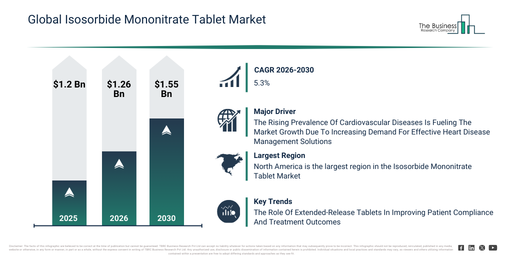
    The isosorbide mononitrate tablet market size has demonstrated robust growth in recent years. It is anticipated to expand from $1.2 billion in 2025 to $1.26 billion in 2026, registering a compound annual growth rate (CAGR) of 5.3%. The market’s expansion historically can be ascribed to an increase in the prevalence of coronary artery disease, the prolonged use of nitrates in angina management, a rising aging population, the availability of cost-effective generic drugs, and the development of hospital and retail pharmacy infrastructure.

    The isosorbide mononitrate tablet market size is projected to experience robust expansion over the coming years. It is anticipated to grow to $1.55 billion in 2030, exhibiting a compound annual growth rate (CAGR) of 5.3%. This growth during the forecast period can be attributed to the rise in chronic cardiovascular conditions, increasing demand for extended-release tablets, rising adoption of online pharmacies, improved diagnosis of angina and heart failure, and expanding access to cardiovascular medicines in emerging markets. Major trends foreseen in this period include long-acting cardiovascular maintenance therapies, a rising preference for extended-release formulations, the growing use of generic nitrate medications, improved patient adherence through once-daily dosing, and the expansion of online and retail pharmacy access.

    Access Your Free Sample Report For In-Depth Market Analysis:

    https://www.thebusinessresearchcompany.com/sample.aspx?id=24268&type=smp

    What Key Factors Are Shaping The Isosorbide Mononitrate Tablet Market Landscape?

    The increasing incidence of heart and blood vessel conditions is anticipated to fuel the expansion of the isosorbide mononitrate tablet market in the future. These conditions, known as CVDs, encompass ailments like coronary artery disease, heart failure, and hypertension, which impact the heart and its associated blood vessels. A key factor behind this increase is poor dietary habits, characterized by excessive saturated fats, trans fats, sodium, and added sugars, which contribute to health issues such as obesity, high blood pressure, and elevated cholesterol levels. Isosorbide mononitrate tablets play a role in treating cardiovascular diseases by promoting the relaxation and dilation of blood vessels. This action enhances blood circulation, lessens the strain on the heart, mitigates chest pain (angina), decreases blood pressure, and boosts oxygen supply to the cardiac muscle. An illustrative example highlights this trend: the American College of Cardiology, a US-based medical non-profit and cardiologists’ professional body, reported from the Global Burden of Disease study in September 2025 that global cardiovascular disease fatalities reached 19.2 million in 2023. Consequently, the escalating occurrence of cardiovascular diseases is a primary catalyst for the expansion of the isosorbide mononitrate tablet market.

    Which Segment Categories Are Included In The Isosorbide Mononitrate Tablet Market Segment Analysis?

    The isosorbide mononitrate tablet market covered in this report is segmented –

    1) By Dosage Form: Immediate-Release Tablets, Extended-Release Tablets

    2) By Indication Type: Angina Pectoris, Coronary Artery Disease (CAD)

    3) By Distribution Channel: Hospital Pharmacies, Retail Pharmacies, Online Pharmacies

    Subsegments:

    1) By Immediate-Release Tablets: Low-Dose, Single Strength Tablets

    2) By Extended-Release Tablets: Moderate-Dose, High-Dose, Once-Daily Formulation, Twice-Daily Formulation

    What Market Trends Are Affecting The Isosorbide Mononitrate Tablet Market?

    Companies operating in the isosorbide mononitrate tablet market are prioritizing the development of innovative products, such as extended-release (ER) formulations. This strategic focus aims to enhance patient compliance, provide sustained therapeutic effects, and optimize treatment outcomes for conditions like angina pectoris. An extended-release formulation is an advanced drug delivery system designed to gradually release medication over an extended period, which helps in reducing dosing frequency and maintaining consistent blood levels. For instance, in February 2024, Zydus Lifesciences Limited, an India-based pharmaceutical manufacturing company, obtained approval from the United States Food and Drug Administration (USFDA) to manufacture and market isosorbide mononitrate extended-release tablets USP in strengths of 30 mg, 60 mg, and 120 mg. These tablets are prescribed to prevent chest pain (angina) in patients with coronary artery disease and are considered equivalent to the reference listed drug (RLD), imdur extended-release tablets.

    Who Are The Active Companies Shaping The Isosorbide Mononitrate Tablet Market?

    Major companies operating in the isosorbide mononitrate tablet market are Pfizer Inc., Merck & Co., Inc., AstraZeneca plc, Abbott Laboratories, Teva Pharmaceutical Industries Ltd., Sun Pharmaceutical Industries Ltd., Aurobindo Pharma Ltd., Cipla Ltd., Zydus Lifesciences Limited, Torrent Pharmaceuticals Ltd., Micro Labs Ltd., Lupin Limited, Dr. Reddy’s Laboratories Ltd., Glenmark Pharmaceuticals Ltd., Alkem Laboratories Ltd., Mylan N.V., Hikma Pharmaceuticals PLC, Sandoz International GmbH, Qilu Pharmaceutical Co., Ltd., Lunan Pharmaceutical Group, Shandong Keyuan Pharmaceutical Co., Ltd.

    Get The Full Isosorbide Mononitrate Tablet Market Report:

    https://www.thebusinessresearchcompany.com/report/isosorbide-mononitrate-tablet-global-market-report

    Which Region Leads The Isosorbide Mononitrate Tablet Market In Terms Of Market Share?

    North America was the largest region in the isosorbide mononitrate tablet market in 2025. Asia-Pacific is expected to be the fastest-growing region in the forecast period. The regions covered in the isosorbide mononitrate tablet market report are Asia-Pacific, South East Asia, Western Europe, Eastern Europe, North America, South America, Middle East, Africa.

    Request A Customized Isosorbide Mononitrate Tablet Market Report For Competitive Insights:

    https://www.thebusinessresearchcompany.com/report/isosorbide-mononitrate-tablet-global-market-report

    Browse Through More Reports Similar to the Global Isosorbide Mononitrate Tablet Market 2026, By The Business Research Company

    Effervescent Tablet Market Report 2026

    https://www.thebusinessresearchcompany.com/report/effervescent-tablet-global-market-report

    Tablets Market Report

    https://www.thebusinessresearchcompany.com/report/tablets-global-market-report

    Isoprene Market Report

    https://www.thebusinessresearchcompany.com/report/isoprene-global-market-report

    Get in touch with us:

    The Business Research Company: https://www.thebusinessresearchcompany.com/

    Americas +1 310-496-7795

    Asia +44 7882 955267 & +91 8897263534

    Europe +44 7882 955267

    Email us at info@tbrc.info

    Follow us on:

    LinkedIn: https://in.linkedin.com/company/the-business-research-company

    YouTube: https://www.youtube.com/channel/UC24_fI0rV8cR5DxlCpgmyFQ

    Global Market Model: https://www.thebusinessresearchcompany.com/global-market-model
  • Innovations in neuroprotective therapies are transforming ischemia reperfusion injury market

    Innovations in neuroprotective therapies are transforming ischemia reperfusion injury market

    The Business Research Company’s 2026 market reports feature enhanced tools like market attractiveness analysis, TAM assessment, and company scoring matrices, along with interactive dashboards, deeper supply chain insights, and startup coverage strengthening the depth, usability, and strategic value of insights.

    How Much Will The Market Value Of The Ischemia Reperfusion Injury Market Grow Between 2026 And 2030?

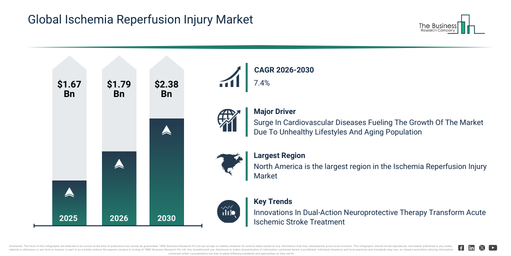
    The ischemia reperfusion injury market has experienced significant expansion in recent years. It is anticipated to increase from $1.67 billion in 2025 to $1.79 billion in 2026, exhibiting a compound annual growth rate (CAGR) of 7.5%. This historical growth can be attributed to several factors including a rise in cardiovascular disease incidence, an increasing number of organ transplant procedures, the expanding prevalence of stroke and heart attack cases, advancements in acute care infrastructure, and the greater utilization of pharmacological therapies.

    The market for ischemia reperfusion injury is projected to experience substantial expansion over the upcoming years. This market is anticipated to reach $2.38 billion by 2030, exhibiting a compound annual growth rate (CAGR) of 7.4%. Factors contributing to this growth during the projected period include advancements in stem cell and gene therapy research, a growing acceptance of non-pharmacological conditioning treatments, increased funding for critical care technologies, a rise in clinical trials focusing on mitochondrial protective agents, and enhanced understanding of ischemia-reperfusion processes. Key trends expected in the forecast timeframe encompass AI-powered prediction of ischemia-reperfusion injury outcomes, targeted therapeutics for safeguarding cellular and mitochondrial health, clinical decision support systems reliant on data, networked monitoring of tissue perfusion and oxygenation, and sophisticated production methods for precise therapeutics.

    Access Your Free Sample Report For In-Depth Market Analysis:

    https://www.thebusinessresearchcompany.com/sample.aspx?id=22025&type=smp

    Which Factors Are Influencing The Growth Of The Ischemia Reperfusion Injury Market?

    The rising incidence of cardiovascular diseases is projected to fuel the expansion of the ischemia-reperfusion injury market in the coming years. These conditions encompass a range of disorders affecting the heart and blood vessels, such as coronary artery disease, heart failure, and stroke. This surge in cardiovascular diseases is attributed to both detrimental lifestyle choices and an aging demographic. Poor dietary habits, characterized by high intake of saturated fats, sugar, and salt, combined with insufficient physical activity, have contributed to a rise in obesity, hypertension, and diabetes, all significant contributors to cardiovascular disease. Ischemia-reperfusion injury exacerbates the progression of these heart conditions by intensifying tissue damage through mechanisms like oxidative stress, inflammation, and cell death, ultimately compromising cardiac function and elevating the likelihood of heart failure and other related issues. For instance, data from October 2024, released by the US-based Centers for Disease Control and Prevention, revealed that 919,032 individuals succumbed to cardiovascular disease in 2023, accounting for one in three fatalities. Consequently, the growing prevalence of cardiovascular diseases is serving as a primary catalyst for the ischemia-reperfusion injury market’s growth. The growing occurrence of organ transplantation is anticipated to fuel the expansion of the ischemia-reperfusion injury market in the foreseeable future. Organ transplantation involves the surgical transfer of a healthy organ from a donor to a recipient to substitute a damaged or failing one. This surge in transplant procedures is a consequence of both breakthroughs in medical technology and an increasing number of individuals experiencing organ failure. Progress in surgical methods, immunosuppressive treatments, and organ preservation techniques has significantly elevated the success rates of these transplants. Organ transplantation offers a means to mitigate ischemia-reperfusion injury (IRI) by employing sophisticated preservation strategies. These techniques minimize the damage incurred during the ischemic phase, thereby enhancing the survival and function of the transplanted organ upon reperfusion. For illustration, figures released in January 2024 by the Organ Procurement and Transplantation Network, a US Department of Health and Human Services program, indicated a total of 46,632 organ transplants from both living and deceased donors in 2023. This marked an 8.7 percent increase compared to 2022, with 39,679 of these procedures originating from deceased donors, reflecting an 8.9 percent rise over the prior year. Thus, the rising frequency of organ transplantation is a key driver for the growth of the ischemia-reperfusion injury market.

    How Is The Ischemia Reperfusion Injury Market Broken Down By Segment Categories?

    The ischemia reperfusion injury market covered in this report is segmented –

    1) By Treatment Type: Pharmacological Therapy, Non-pharmacological Therapy

    2) By Application: Cardiovascular Diseases, Stroke, Organ Transplantation, Heart Attack

    3) By End User: Hospitals, Clinics, Ambulatory Services

    Subsegments:

    1) By Pharmacological Therapy: Antioxidants, Anti-inflammatory Agents, Calcium Channel Blockers, Free Radical Scavengers, Nitric Oxide Donors, Mitochondrial Protective Agents

    2) By Non-Pharmacological Therapy: Ischemic Preconditioning (IPC), Ischemic Postconditioning (IPO), Remote Ischemic Conditioning (RIC), Hypothermia Therapy, Mechanical Interventions

    Which Trends Are Influencing Demand In The Ischemia Reperfusion Injury Market?

    Companies operating within the ischemia-reperfusion injury market are increasingly concentrating on advanced therapeutics, such as dual-acting stroke treatments, to enhance patient recuperation, minimize disability, and improve overall treatment results. These dual-acting neuroprotective therapeutics represent sophisticated small-molecule agents that integrate selective NMDA receptor modulation with antioxidant free-radical scavenging. This mechanism allows them to reduce reperfusion-induced neuronal damage, improve tissue survival post-occlusion, and support functional recovery. For example, in July 2025, GNT Pharma, a biopharmaceutical firm located in South Korea, secured regulatory clearance to begin multinational Phase 3 clinical trials for Nelonemdaz. This drug is a next-generation, dual-acting neuroprotective medication specifically designed to mitigate neuronal injury in patients undergoing endovascular thrombectomy for acute ischemic stroke. The therapy’s efficacy stems from its selective inhibition of NMDA receptor-mediated excitotoxicity and its potent free-radical scavenging capabilities, which work to reduce oxidative damage. Nelonemdaz has been shown to enhance neuroprotection, facilitate functional recovery, and improve post-reperfusion outcomes for ischemic stroke patients.

    Which Players Are Present In The Ischemia Reperfusion Injury Market Space?

    Major companies operating in the ischemia reperfusion injury market are Pfizer Inc, Novartis AG, AstraZeneca PLC, Bristol Myers Squibb, F. Hoffmann-La Roche Ltd, Sanofi, Merck KGaA, Takeda Pharmaceutical Company, Bayer AG, Amgen Inc, Otsuka Pharmaceutical Co Ltd, Simcere Innovation Inc, Faron Pharmaceuticals Oy, Faraday Pharmaceuticals Inc, Prolong Pharmaceuticals LLC, Angion Biomedica Corp, CalciMedica Inc, Athersys Inc, Oxitope Pharma BV, LUCA Science Inc

    Get The Full Ischemia Reperfusion Injury Market Report:

    https://www.thebusinessresearchcompany.com/report/ischemia-reperfusion-injury-global-market-report

    Which Region Leads The Ischemia Reperfusion Injury Market In Overall Market Size?

    North America was the largest region in the ischemia reperfusion injury market in 2025. Asia-Pacific is expected to be the fastest-growing region in the forecast period. The regions covered in the ischemia reperfusion injury market report are Asia-Pacific, South East Asia, Western Europe, Eastern Europe, North America, South America, Middle East, Africa.

    Request A Customized Ischemia Reperfusion Injury Market Report For Competitive Insights:

    https://www.thebusinessresearchcompany.com/report/ischemia-reperfusion-injury-global-market-report

    Browse Through More Reports Similar to the Global Ischemia Reperfusion Injury Market 2026, By The Business Research Company

    Myocardial Ischemia Market Report 2026

    https://www.thebusinessresearchcompany.com/report/myocardial-ischemia-global-market-report

    Acute Ischemic Stroke Diagnosis Market Report

    https://www.thebusinessresearchcompany.com/report/acute-ischemic-stroke-diagnosis-global-market-report

    Acute Ischemic Stroke Drugs Market Report

    https://www.thebusinessresearchcompany.com/report/acute-ischemic-stroke-drugs-global-market-report

    Get in touch with us:

    The Business Research Company: https://www.thebusinessresearchcompany.com/

    Americas +1 310-496-7795

    Asia +44 7882 955267 & +91 8897263534

    Europe +44 7882 955267

    Email us at info@tbrc.info

    Follow us on:

    LinkedIn: https://in.linkedin.com/company/the-business-research-company

    YouTube: https://www.youtube.com/channel/UC24_fI0rV8cR5DxlCpgmyFQ

    Global Market Model: https://www.thebusinessresearchcompany.com/global-market-model
  • Digital therapeutics integration is shaping irritable bowel syndrome (IBS) treatment market

    Digital therapeutics integration is shaping irritable bowel syndrome (IBS) treatment market

    The Business Research Company’s 2026 market reports feature enhanced tools like market attractiveness analysis, TAM assessment, and company scoring matrices, along with interactive dashboards, deeper supply chain insights, and startup coverage strengthening the depth, usability, and strategic value of insights.

    What Changes In Market Value Are Expected For The Irritable Bowel Syndrome (IBS) Treatment Market Over The 2026–2030 Period?

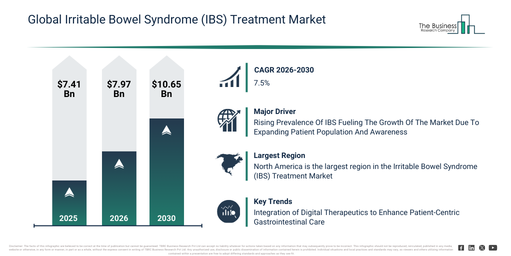
    The irritable bowel syndrome (ibs) treatment market size has demonstrated significant expansion in recent years. It is projected to increase from $7.41 billion in 2025 to $7.97 billion in 2026, with a compound annual growth rate (CAGR) of 7.6%. This historical growth can be ascribed to the rising prevalence of gastrointestinal disorders, increased diagnosis rates of ibs, growing awareness of digestive health, availability of prescription ibs drugs, and the expansion of hospital and retail pharmacy networks.

    The market for irritable bowel syndrome (ibs) treatments is projected to experience substantial expansion over the upcoming years. Its valuation is set to reach $10.65 billion by 2030, exhibiting a compound annual growth rate (CAGR) of 7.5%. This projected growth during the forecast timeframe is primarily driven by progress in precision medicine, the wider acceptance of digital health platforms, the expansion of online pharmacy channels, a heightened emphasis on microbiome research, and increased healthcare spending on chronic illnesses. Key trends anticipated within this period encompass precision medicine and microbiome-centered therapies, the integration of digital therapeutics and mobile health, AI-powered ibs diagnosis and treatment optimization, remote patient monitoring alongside smart gut health devices, and the development of sustainable, patient-focused drugs.

    Access Your Free Sample Report For In-Depth Market Analysis:

    https://www.thebusinessresearchcompany.com/sample.aspx?id=11978&type=smp

    What Leading Drivers Are Supporting The Irritable Bowel Syndrome (IBS) Treatment Market Expansion?

    The increasing occurrence of Irritable Bowel Syndrome (IBS) is anticipated to drive the expansion of the IBS treatment market. IBS is a chronic digestive condition impacting the large intestine, characterized by symptoms like constipation, diarrhea, stomach pain, and bloating, which notably diminishes life quality. This rise in IBS cases stems from lifestyle elements such as inadequate diet, stress, and environmental factors, leading to more people developing the condition. The IBS treatment market addresses patient requirements through pharmacological options like antispasmodics and gut-specific drugs, alongside non-pharmacological methods such as cognitive behavioral therapy, hypnotherapy, and dietary adjustments. As an illustration, the IBD Registry, a UK-based non-profit organization, reported reaching over 5,300 individuals with Inflammatory Bowel Disease (IBD) by December 2023, indicating an increase of over 3,000 members compared to 2022. Consequently, the increasing prevalence of IBS is a key driver for the expansion of the IBS treatment market.

    What Are The Different Segment Types In The Irritable Bowel Syndrome (IBS) Treatment Market Segment Breakdown?

    The irritable bowel syndrome (ibs) treatment market covered in this report is segmented –

    1) By Drug Type: Eluxadoline, Alosetron, Other Drugs

    2) By Indication: IBS With Constipation, IBS With Diarrhea, IBS With Alternating Constipation And Diarrhea

    3) By Distribution Channel: Hospital Pharmacies, Online Pharmacies, Retail Pharmacies

    4) By End-Users: Hospitals, Clinics, Homecare Settings

    Subsegments:

    1) By Eluxadoline: IBS with Diarrhea (IBS-D) Treatment, Moderate IBS-D Treatment

    2) By Alosetron: Severe IBS-D Treatment for Women, Refractory IBS-D Treatment

    3) By Other Drugs: Prucalopride, Tenapanor, Plecanatide

    What Emerging Trends Are Seen In The Irritable Bowel Syndrome (IBS) Treatment Market?

    Leading companies in the irritable bowel syndrome (IBS) treatment market are increasingly focusing on integrating digital therapeutics, such as mobile applications utilizing gut-directed hypnotherapy, to improve patient engagement, enhance treatment accessibility, and facilitate symptom management. These gut-directed hypnotherapy-based mobile applications are prescription digital platforms that deliver structured hypnotherapy sessions via a smartphone interface to modify the gut–brain interaction, offering capabilities like guided behavioral therapy, real-time symptom tracking, and automated monitoring of patient progress. As an illustration, in May 2023, Launchit DTx, a Canada-based digital health commercialization company, introduced Regulora, a digital therapeutic based on gut-directed hypnotherapy. Regulora is designed to assist adults in managing abdominal pain related to irritable bowel syndrome (IBS), featuring evidence-based hypnotherapy modules, workflows for clinician prescribing, and a mobile application that monitors patient responses over time. Regulora enhances treatment access, supports self-management, and provides overall symptom relief for IBS patients by presenting a non-pharmacologic, digitally delivered therapeutic option.

    Who Are The Well-Known Companies In The Irritable Bowel Syndrome (IBS) Treatment Market?

    Major companies operating in the irritable bowel syndrome (ibs) treatment market are Ironwood Pharmaceuticals Inc., AbbVie Inc., Takeda Pharmaceutical Company Limited, Pfizer Inc., Johnson & Johnson Services Inc., AstraZeneca plc, Novartis AG, Abbott Laboratories, Eli Lilly and Company, Astellas Pharma Inc., Bausch Health Companies Inc., Sebela Pharmaceuticals Inc., Prometheus Laboratories Inc., RedHill Biopharma Ltd., Ardelyx Inc., Renexxion Ireland Ltd., 4D Pharma plc, Biora Therapeutics Inc., Salix Pharmaceuticals Ltd., Allergan plc, Synergy Pharmaceuticals Inc.

    Get The Full Irritable Bowel Syndrome (IBS) Treatment Market Report:

    https://www.thebusinessresearchcompany.com/report/irritable-bowel-syndrome-ibs-treatment-global-market-report

    Which Region Is The Top Contributor To The Irritable Bowel Syndrome (IBS) Treatment Market By Share?

    North America was the largest region in the irritable bowel syndrome (IBS) treatment market in 2025. Europe is expected to be the fastest-growing region in the forecast period. The regions covered in the irritable bowel syndrome (ibs) treatment market report are Asia-Pacific, South East Asia, Western Europe, Eastern Europe, North America, South America, Middle East, Africa.

    Request A Customized Irritable Bowel Syndrome (IBS) Treatment Market Report For Competitive Insights:

    https://www.thebusinessresearchcompany.com/report/irritable-bowel-syndrome-ibs-treatment-global-market-report

    Browse Through More Reports Similar to the Global Irritable Bowel Syndrome (IBS) Treatment Market 2026, By The Business Research Company

    Inflammatory Bowel Disease Treatment Market Report 2026

    https://www.thebusinessresearchcompany.com/report/inflammatory-bowel-disease-treatment-global-market-report

    Bowel Management Systems Market Report

    https://www.thebusinessresearchcompany.com/report/bowel-management-systems-global-market-report

    Constipation Treatment Market Report

    https://www.thebusinessresearchcompany.com/report/constipation-treatment-global-market-report

    Get in touch with us:

    The Business Research Company: https://www.thebusinessresearchcompany.com/

    Americas +1 310-496-7795

    Asia +44 7882 955267 & +91 8897263534

    Europe +44 7882 955267

    Email us at info@tbrc.info

    Follow us on:

    LinkedIn: https://in.linkedin.com/company/the-business-research-company

    YouTube: https://www.youtube.com/channel/UC24_fI0rV8cR5DxlCpgmyFQ

    Global Market Model: https://www.thebusinessresearchcompany.com/global-market-model

  • Irradiation sterilization services market growth is fueled by rising healthcare-associated infections

    Irradiation sterilization services market growth is fueled by rising healthcare-associated infections

    The Business Research Company’s 2026 market reports feature enhanced tools like market attractiveness analysis, TAM assessment, and company scoring matrices, along with interactive dashboards, deeper supply chain insights, and startup coverage strengthening the depth, usability, and strategic value of insights.

    By 2030, What Market Size Is The Irradiation Sterilization Services Market Expected To Reach Based On Its 2026 Value?

    The irradiation sterilization services market has experienced substantial growth in recent years. It is projected to increase from $3.01 billion in 2025 to $3.41 billion in 2026, achieving a compound annual growth rate (CAGR) of 13.4%. This historical growth can be ascribed to factors such as the expansion of medical device manufacturing, the rising dangers of healthcare-associated infections, regulatory directives for sterile goods, the enlargement of pharmaceutical production, and the established efficacy of irradiation sterilization.

    The irradiation sterilization services market is projected to experience substantial expansion in the coming years. This market is anticipated to reach a valuation of $5.33 billion by 2030, demonstrating a compound annual growth rate (CAGR) of 11.8%. Factors contributing to this projected growth include the escalating production of biologics and injectable drugs, a heightened need for sterile food processing, the expansion of contract sterilization offerings, the development of healthcare infrastructure in nascent markets, and improvements in irradiation techniques. Key trends anticipated during this period encompass the growing requirement for single-use medical devices, a rise in the outsourcing of sterilization operations, broader utilization within pharmaceutical and biologics manufacturing, the enlargement of applications in food and laboratory sterilization, and an increased emphasis on adherence to regulations and validation processes.

    Access Your Free Sample Report For In-Depth Market Analysis:

    https://www.thebusinessresearchcompany.com/sample.aspx?id=15839&type=smp

    Which Key Factors Are Driving The Irradiation Sterilization Services Market Growth?

    The escalating occurrence of healthcare-associated infections (HAIs) is anticipated to drive the future expansion of the irradiation sterilization services market. HAIs are infections acquired by patients while receiving medical care in various facilities such as hospitals, long-term care facilities, and outpatient clinics, typically developing within a specified timeframe after admission, rather than being present initially. This rise in HAIs is attributed to factors like antibiotic resistance, insufficient infection control protocols, and the increasing complexity of medical procedures. Irradiation sterilization services play a crucial role in healthcare by preventing these infections, ensuring medical instruments and surfaces are free from harmful microorganisms. For example, in May 2024, the European Centre for Disease Prevention and Control, a Sweden-based government agency focused on public health and infectious diseases, reported that 4.3 million hospital patients in the EU/EEA are affected by healthcare-associated infections annually. Hence, the growing prevalence of healthcare-associated infections is a significant factor propelling the growth of the irradiation sterilization services market.

    Which Segment Classifications Are Used In The Irradiation Sterilization Services Market Segment Analysis?

    The irradiation sterilization services market covered in this report is segmented –

    1) By Type: Onsite Sterilization Services, Offsite Sterilization Services

    2) By Technology: Gamma Irradiation, X-Ray Irradiation, E-Beam Irradiation

    3) By Application: Medical Instruments, Drug, Food And Laboratory, Other Applications

    Subsegments:

    1) By Onsite Sterilization Services: Mobile Irradiation Units, In-Facility Contract Sterilization Services

    2) By Offsite Sterilization Services: Centralized Commercial Irradiation Facilities, Third-Party Contract Sterilization Services

    Which Trends Are Guiding The Direction Of The Irradiation Sterilization Services Market?

    Leading companies within the irradiation sterilization services market are innovating products, such as intelligent UVC disinfection, to offer customers enhanced features. Intelligent UVC disinfection employs advanced UV-C light technology to effectively eradicate microorganisms on surfaces and in the air, ensuring a high standard of sanitation. As an illustration, in March 2023, PDI Healthcare, a US-based company focused on infection prevention in healthcare, hospitality, and communities, released the Tru-D SmartUVC, representing the next generation of intelligent UVC disinfection products. This device utilizes ultraviolet-C (UVC) light for disinfection, specifically engineered to eliminate pathogens in healthcare environments. It generates UVC light energy that modifies the DNA or RNA structure of infectious cells, effectively destroying harmful microorganisms like MRSA and C. difficile. This technology is a component of a comprehensive approach to improve infection control and reduce hospital-acquired infections (HAIs) through advanced sterilization techniques.

    Which Firms Are Contributing To The Irradiation Sterilization Services Market Ecosystem?

    Major companies operating in the irradiation sterilization services market are Steris plc, Sotera Health, Sterigenics N.V., Synergy Health plc, IBA Industrial, Nordion Inc., Ionisos SAS, BGS Beta-Gamma-Service GmbH & Co. KG, E-BEAM Services Inc., SteriTek, Microtrol Sterilisation Services Pvt. Ltd., BBF Sterilisationsservice GmbH, Gamma Service Recycling GmbH, VPT Rad Inc., Reviss Services (UK) Ltd., Scapa Sterilisation Services, Medisafe International, Aragogamma SA, Radiation Sterilization Services Inc.

    Get The Full Irradiation Sterilization Services Market Report:

    https://www.thebusinessresearchcompany.com/report/irradiation-sterilization-services-global-market-report

    Which Region Represents The Largest Share Of The Irradiation Sterilization Services Market?

    North America was the largest region in the irradiation sterilization services market in 2025. Asia-Pacific is expected to be the fastest-growing region in the forecast period. The regions covered in the irradiation sterilization services market report are Asia-Pacific, South East Asia, Western Europe, Eastern Europe, North America, South America, Middle East, Africa.

    Request A Customized Irradiation Sterilization Services Market Report For Competitive Insights:

    https://www.thebusinessresearchcompany.com/report/irradiation-sterilization-services-global-market-report

    Browse Through More Reports Similar to the Global Irradiation Sterilization Services Market 2026, By The Business Research Company

    Sterilization Services Market Report 2026

    https://www.thebusinessresearchcompany.com/report/sterilization-services-global-market-report

    Offsite Sterilization Service Market Report

    https://www.thebusinessresearchcompany.com/report/offsite-sterilization-service-global-market-report

    Terminal Sterilization Services Market Report

    https://www.thebusinessresearchcompany.com/report/terminal-sterilization-services-global-market-report

    Get in touch with us:

    The Business Research Company: https://www.thebusinessresearchcompany.com/

    Americas +1 310-496-7795

    Asia +44 7882 955267 & +91 8897263534

    Europe +44 7882 955267

    Email us at info@tbrc.info

    Follow us on:

    LinkedIn: https://in.linkedin.com/company/the-business-research-company

    YouTube: https://www.youtube.com/channel/UC24_fI0rV8cR5DxlCpgmyFQ

    Global Market Model: https://www.thebusinessresearchcompany.com/global-market-model

  • Growth in iron deficiency injectable market is driven by rising PCOS prevalence

    Growth in iron deficiency injectable market is driven by rising PCOS prevalence

    The Business Research Company’s 2026 market reports feature enhanced tools like market attractiveness analysis, TAM assessment, and company scoring matrices, along with interactive dashboards, deeper supply chain insights, and startup coverage strengthening the depth, usability, and strategic value of insights.

    What Is The Anticipated Rise In Market Value Of The Iron Deficiency Injectable Market During The Forecast Period?

    The iron deficiency injectable market size has demonstrated significant expansion in recent years. It is projected to increase from $15.22 billion in 2025 to $16.74 billion in 2026, achieving a compound annual growth rate (CAGR) of 10.0%. This historical growth can be attributed to the high prevalence of iron deficiency anemia, the limited efficacy of oral iron therapies, a rise in chronic kidney disease cases, the growth in hospital-based infusion treatments, and wider clinical acceptance of injectable iron.

    The iron deficiency injectable market is projected to experience substantial growth in the coming years, reaching $25.69 billion by 2030, demonstrating a compound annual growth rate (CAGR) of 11.3%. This expansion during the forecast period is driven by factors such as an increasing geriatric population, rising prevalence of cancer and IBD, the spread of homecare infusion services, enhanced safety profiles of newer formulations, and expanding healthcare access in emerging markets. Significant trends anticipated during this period include a growing preference for injectable iron over oral therapies, increased application in chronic kidney disease management, the development of day-care and short-duration infusion protocols, the proliferation of generic injectable iron products, and greater adoption in oncology and chronic disease treatment.

    Access Your Free Sample Report For In-Depth Market Analysis:

    https://www.thebusinessresearchcompany.com/sample.aspx?id=12907&type=smp

    What Primary Drivers Are Shaping The Iron Deficiency Injectable Market?

    The increasing occurrence of polycystic ovary syndrome (PCOS) is projected to fuel the expansion of the iron deficiency injectables market in the future. PCOS is recognized as a prevalent hormonal disorder impacting individuals with ovaries, primarily women in their reproductive years. PCOS can lead to various issues, including iron overload, and notably contributes to excessive blood loss during menstruation. This blood loss often renders patients anemic, a condition that injectable iron deficiency medications can address. As an illustration, data from June 2023, provided by the World Health Organization, a US-based specialized health agency, indicates that globally, approximately 8–13% of reproductive-aged women are affected by PCOS, with 70% of these cases going undiagnosed. Consequently, the widespread nature of polycystic ovary syndrome (PCOS) is a primary driver for the growth of the iron deficiency injectables market.

    How Is The Iron Deficiency Injectable Market Organized By Segment Classification?

    The iron deficiency injectable market covered in this report is segmented –

    1) By Type: Iron Dextran, Ferric Carboxymaltose

    2) By Branded or Generics: Branded, Generics

    3) By Application: Chronic Kidney Disease, Inflammatory Bowel Disease, Cancer, Other Applications

    4) By End User: Hospitals, Homecare, Specialty Clinics, Other End Users

    Subsegments:

    1) By Iron Dextran: Low Molecular Weight Iron Dextran, High Molecular Weight Iron Dextran

    2) By Ferric Carboxymaltose: Injectafer, Ferinject

    What Trends Are Affecting The Growth Of The Iron Deficiency Injectable Market?

    Key companies in the iron deficiency injectables market are developing new treatments, such as INJECTAFER, to maintain their market presence. For example, in June 2023, Daiichi Sankyo Company, a US-based healthcare provider, and American Regent Inc., a US-based injectables manufacturer, launched INJECTAFER (ferric carboxymaltose injection) for iron deficiency, which received approval from the Food And Drug Administration, a US-based government agency. This product represents the first and only intravenous iron replacement therapy approved by the FDA for adult patients suffering from chronic and progressive heart failure. INJECTAFER’s performance was assessed through more than 40 clinical trials involving over 8,800 participants from various countries. This recent approval further validates INJECTAFER’s successful and demonstrated application in these patient populations, including adult and pediatric patients with iron-deficient anemia and heart failure.

    Who Are The Industry Participants Involved In The Iron Deficiency Injectable Market?

    Major companies operating in the iron deficiency injectable market are Daiichi Sankyo Company Limited, Pfizer Inc., Fresenius Medical Care, AbbVie Inc., Bayer AG, AstraZeneca Plc, GSK Plc, Teva Pharmaceutical Industries Ltd., Mylan N.V., B Braun Medical Inc., Sandoz, Fresenius Kabi AG, AMAG Pharmaceuticals Inc., Luitpold Pharmaceuticals Inc., Akebia Therapeutics Inc., Covis Pharma GmbH , Keryx Biopharmaceuticals Inc., Rockwell Medical Inc., American Regent Inc.

    Get The Full Iron Deficiency Injectable Market Report:

    https://www.thebusinessresearchcompany.com/report/iron-deficiency-injectable-global-market-report

    Which Geographic Region Dominates The Iron Deficiency Injectable Market?

    North America was the largest region in the iron deficiency injectable market in 2025. The regions covered in the iron deficiency injectable market report are Asia-Pacific, South East Asia, Western Europe, Eastern Europe, North America, South America, Middle East, Africa.

    Request A Customized Iron Deficiency Injectable Market Report For Competitive Insights:

    https://www.thebusinessresearchcompany.com/report/iron-deficiency-injectable-global-market-report

    Browse Through More Reports Similar to the Global Iron Deficiency Injectable Market 2026, By The Business Research Company

    Hemochromatosis Iron Overload Disease Treatment Market Report 2026

    https://www.thebusinessresearchcompany.com/report/hemochromatosis-iron-overload-disease-treatment-global-market-report

    Direct Reduced Iron Market Report

    https://www.thebusinessresearchcompany.com/report/direct-reduced-iron-global-market-report

    Foundries Market Report

    https://www.thebusinessresearchcompany.com/report/foundries-global-market-report

    Get in touch with us:

    The Business Research Company: https://www.thebusinessresearchcompany.com/

    Americas +1 310-496-7795

    Asia +44 7882 955267 & +91 8897263534

    Europe +44 7882 955267

    Email us at info@tbrc.info

    Follow us on:

    LinkedIn: https://in.linkedin.com/company/the-business-research-company

    YouTube: https://www.youtube.com/channel/UC24_fI0rV8cR5DxlCpgmyFQ

    Global Market Model: https://www.thebusinessresearchcompany.com/global-market-model
  • Iron deficiency anemia market analysis highlighting growth potential

    Iron deficiency anemia market analysis highlighting growth potential

    The Business Research Company’s 2026 market reports feature enhanced tools like market attractiveness analysis, TAM assessment, and company scoring matrices, along with interactive dashboards, deeper supply chain insights, and startup coverage strengthening the depth, usability, and strategic value of insights.

    How Is The Market Size Of The Iron Deficiency Anemia Market Expected To Scale Between 2026 And 2030?

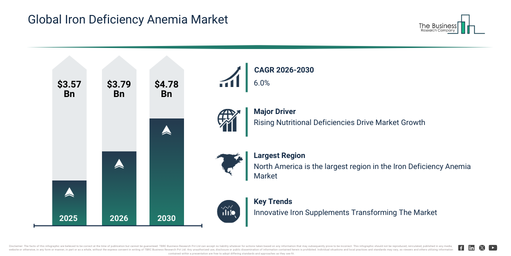
    The market for iron deficiency anemia solutions has experienced significant growth in recent years. It is anticipated to increase from $3.57 billion in 2025 to $3.79 billion in 2026, growing at a compound annual growth rate (CAGR) of 6.2%. Historically, this expansion can be attributed to factors such as the high prevalence of nutritional iron deficiency, the widespread use of oral iron supplements, chronic blood loss stemming from gastrointestinal disorders, maternal anemia in developing regions, and limited access to advanced parenteral therapies.

    The market for iron deficiency anemia is projected to experience robust expansion in the coming years. Its valuation is anticipated to reach $4.78 billion by 2030, exhibiting a compound annual growth rate (CAGR) of 6.0%. This projected growth is driven by factors such as a growing worldwide burden of anemia, increased embrace of intravenous iron treatments, an expanding elderly population, wider availability of healthcare in developing economies, and enhanced diagnostic and screening efforts. Key trends expected during this period encompass a greater acceptance of parenteral iron therapies, heightened emphasis on managing anemia in mothers and children, increased utilization of high-dose and prolonged-release iron formulations, an expansion of at-home iron therapy and infusion services, and intensified awareness and screening campaigns for iron deficiency.

    Access Your Free Sample Report For In-Depth Market Analysis:

    https://www.thebusinessresearchcompany.com/sample.aspx?id=21212&type=smp

    Which Major Drivers Are Influencing The Expansion Of The Iron Deficiency Anemia Market?

    The iron deficiency anemia market is projected to expand in the future due to the escalating instances of nutritional deficiencies. A nutritional deficiency is defined as a state where the body does not receive adequate amounts of crucial nutrients, including vitamins, minerals, proteins, or fats, essential for maintaining optimal health. These deficiencies are becoming more prevalent, largely attributed to unhealthy eating habits, widespread consumption of processed foods, and food insecurity, which restricts access to nutritious choices for lower-income groups. Specifically, iron deficiency anemia, a prevalent type of nutritional deficiency, arises when insufficient dietary iron results in a reduced red blood cell count, hindering the body’s capacity to deliver oxygen. For example, estimates from the World Health Organization, a Switzerland-based intergovernmental body, indicate that by February 2025, anaemia is expected to impact 40% of children aged 6–59 months, 37% of pregnant women, and 30% of women between 15 and 49 years old. Consequently, the rising prevalence of nutritional deficiencies acts as a significant catalyst for the iron deficiency anemia market.

    Which Segments Define The Iron Deficiency Anemia Market Segment Structure?

    The iron deficiency anemia market covered in this report is segmented –

    1) By Therapy Type: Oral Iron Therapy, Parenteral Iron Therapy, Red Blood Cell Transfusion

    2) By Distribution Channel: Hospital Pharmacy, Drug Stores and Retail Pharmacies, Online Pharmacies

    3) By End Users: Hospitals, Clinics, Home Healthcare

    Subsegments:

    1) By Oral Iron Therapy: Ferrous Sulfate, Ferrous Gluconate, Ferrous Fumarate, Polysaccharide-Iron Complex, Carbonyl Iron

    2) By Parenteral Iron Therapy: Iron Sucrose, Ferric Carboxymaltose, Iron Dextran, Ferumoxytol, Ferric Gluconate

    3) By Red Blood Cell Transfusion: Leukocyte-Reduced Red Blood Cell Transfusion, Washed Red Blood Cell Transfusion, Irradiated Red Blood Cell Transfusion

    Which Trends Are Shaping The Iron Deficiency Anemia Market?

    Major companies within the iron deficiency anemia market are prioritizing the development of innovative solutions, such as intravenous iron injection, to deliver a precise nutrient combination that maximizes absorption and enhances tolerance, thereby effectively addressing iron deficiency. Intravenous iron injection is a medical procedure designed to directly administer iron into the bloodstream for treating iron deficiency or anemia when oral supplements are found to be ineffective or insufficient. For instance, in March 2024, Cadila Pharmaceuticals, an India-based pharmaceutical company, launched Redshot FCM, an intravenous iron injection formulated with ferric carboxymaltose to effectively manage iron deficiency anemia (IDA). This innovative product is suitable for both adults and children over one year old who cannot tolerate oral iron supplements. With a strong safety profile and minimal risk of anaphylaxis, Redshot FCM permits the administration of high iron doses in a single session, leading to rapid improvement in hemoglobin levels. It is particularly beneficial for vulnerable groups including pregnant women, the elderly, and cancer patients.

    Who Are The Established Players Within The Iron Deficiency Anemia Market?

    Major companies operating in the iron deficiency anemia market are Sanofi S.A., Abbott Laboratories, Fresenius SE & Co. KGaA, Sandoz International GmbH, Perrigo Company, Cipla Limited, Dr. Reddy’s Laboratories Limited, Cadila Healthcare Limited, Zydus Cadila, Lupin Limited, Alkem Laboratories Limited, AMAG Pharmaceuticals Inc., Rockwell Medical Inc., Pharmacosmos A/S, Shield Therapeutics plc, AdvaCare Pharma LLC

    Get The Full Iron Deficiency Anemia Market Report:

    https://www.thebusinessresearchcompany.com/report/iron-deficiency-anemia-global-market-report

    Which Region Is The Leading Market For The Iron Deficiency Anemia Market?

    North America was the largest region in the iron deficiency anemia market in 2025. Asia-Pacific is expected to be the fastest-growing region in the forecast period. The regions covered in the iron deficiency anemia market report are Asia-Pacific, South East Asia, Western Europe, Eastern Europe, North America, South America, Middle East, Africa.

    Request A Customized Iron Deficiency Anemia Market Report For Competitive Insights:

    https://www.thebusinessresearchcompany.com/report/iron-deficiency-anemia-global-market-report

    Browse Through More Reports Similar to the Global Iron Deficiency Anemia Market 2026, By The Business Research Company

    Hemochromatosis Iron Overload Disease Treatment Market Report 2026

    https://www.thebusinessresearchcompany.com/report/hemochromatosis-iron-overload-disease-treatment-global-market-report

    Anemia And Other Blood Disorder Drugs Market Report

    https://www.thebusinessresearchcompany.com/report/anemia-and-other-blood-disorder-drugs-global-market-report

    Chemotherapy Induced Anemia Market Report

    https://www.thebusinessresearchcompany.com/report/chemotherapy-induced-anemia-global-market-report

    Get in touch with us:

    The Business Research Company: https://www.thebusinessresearchcompany.com/

    Americas +1 310-496-7795

    Asia +44 7882 955267 & +91 8897263534

    Europe +44 7882 955267

    Email us at info@tbrc.info

    Follow us on:

    LinkedIn: https://in.linkedin.com/company/the-business-research-company

    YouTube: https://www.youtube.com/channel/UC24_fI0rV8cR5DxlCpgmyFQ

    Global Market Model: https://www.thebusinessresearchcompany.com/global-market-model