Category: Healthcare Services

  • Nanoparticles Contract Manufacturing Market Analysis (2026–2030) Highlighting Innovation and Competition

    Nanoparticles Contract Manufacturing Market Analysis (2026–2030) Highlighting Innovation and Competition

    The Business Research Company’s 2026 market reports feature enhanced tools like market attractiveness analysis, TAM assessment, and company scoring matrices, along with interactive dashboards, deeper supply chain insights, and startup coverage strengthening the depth, usability, and strategic value of insights.

    What Is The Anticipated Rise In Market Value Of The Nanoparticles Contract Manufacturing Market During The Forecast Period?

    The nanoparticles contract manufacturing market size has seen a rapid expansion in recent years. It is anticipated to grow from $3.67 billion in 2025 to $4.13 billion in 2026, exhibiting a compound annual growth rate (CAGR) of 12.7%. The growth observed in the historic period can be attributed to early adoption of nanomedicine, limited in-house manufacturing capacity, rising research collaborations, initial development of lipid nanoparticles, and growth in pre-clinical nanotechnology studies.

    The nanoparticles contract manufacturing market size is anticipated to experience swift expansion over the coming years. It is projected to reach $6.38 billion by 2030, exhibiting a compound annual growth rate (CAGR) of 11.5%. This forecast period’s expansion is primarily driven by factors such as the burgeoning mRNA vaccine manufacturing sector, escalating demand for biotech outsourcing, continuous advancements in nanoparticle engineering, increasing capital expenditure in nanotechnology infrastructure, and the proliferation of precision medicine applications. Key developments expected during this period encompass a growing tendency to outsource nanoparticle production, wider integration of lipid nanoparticles in drug delivery systems, an increase in clinical-scale manufacturing capacities, a surge in the need for tailor-made nanoparticle formulations, and a heightened emphasis on adhering to quality standards and regulatory frameworks.

    Access Your Free Sample Report For In-Depth Market Analysis:

    https://www.thebusinessresearchcompany.com/sample.aspx?id=15869&type=smp

    Which Key Factors Are Driving The Nanoparticles Contract Manufacturing Market Growth?

    The expansion of research investments is projected to fuel the growth of the nanoparticle contract manufacturing market. Research investments are defined as financial resources allocated towards conducting investigative activities with the aim of generating new understanding, advancing scientific knowledge, developing innovative technologies, or addressing specific challenges. The increase in research investments is attributed to several elements, including a strong focus on innovation and technology, rising awareness of global issues, support for developing technologies, strategic policy initiatives and long-term planning, and government-led funding programs. These investments are crucial for the progression of nanoparticle contract manufacturing because they foster technological innovation, customization capabilities, stringent quality assurance, scalability, cross-disciplinary cooperation, market penetration, and overall economic advancement. For instance, in April 2023, the House of Commons, a UK-based governing body, reported that the Chancellor announced a substantial increase in public Research and Development (R&D) expenditures. The aim is to elevate the budget to £22 billion ($27.64 billion) by the fiscal year 2024–2025, from approximately £9 billion ($11.30 billion) in the preceding year, thereby constituting 0.8% of GDP, which signifies a commitment to bolstering R&D efforts and stimulating domestic innovation. Therefore, the significant rise in research investments is propelling the growth of the nanoparticle contract manufacturing market.

    Which Segment Categories Are Included In The Nanoparticles Contract Manufacturing Market Segment Analysis?

    The nanoparticles contract manufacturing market covered in this report is segmented –

    1) By Type Of Nanoparticle: Metal Nanoparticles, Lipid Nanoparticles, Other Types Of Nanoparticles

    2) By Manufacturing Scale: Commercial, Clinical, Pre-Clinical

    3) By Application: Therapeutics, Diagnostics, Vaccines

    4) By End-User: Pharmaceutical Companies, Biotechnology Companies

    Subsegments:

    1) By Metal Nanoparticles: Gold Nanoparticles, Silver Nanoparticles, Copper Nanoparticles, Iron Nanoparticles

    2) By Lipid Nanoparticles: Solid Lipid Nanoparticles (SLNs), Nanostructured Lipid Carriers (NLCs), Lipid-Core Micelles

    3) By Other Types of Nanoparticles: Polymeric Nanoparticles, Carbon Nanotubes, Quantum Dots, Dendrimers

    Which Trends Are Guiding The Direction Of The Nanoparticles Contract Manufacturing Market?

    Leading companies in the nanoparticle contract manufacturing market are advancing innovative technologies, such as commercial formulation systems, to produce medications for clinical and commercial manufacturing and gain a competitive edge. A commercial formulation system is defined as a comprehensive platform designed for the efficient development and production of products based on nanoparticles. For instance, in July 2023, Cytiva, a US-based provider of life sciences products and solutions, introduced the NanoAssemblr commercial formulation system. This system is engineered to minimize the risk of cross-contamination, a crucial aspect for genomic medicines. It features a single-use fluid path that helps increase production by reducing downtime for sanitizing and cleaning, thereby allowing for the manufacture of multiple lipid nanoparticle products within the same facility. The system is driven by 21 CFR Part 11-compliant software, which supports electronic batch records, records in-process monitoring of flow rate, and automates the priming, calibrating, formulating, and in-line dilution processes.

    Who Are The Active Companies Shaping The Nanoparticles Contract Manufacturing Market?

    Major companies operating in the nanoparticles contract manufacturing market are Evonik Industries AG, CordenPharma International GmbH, Ajinomoto Bio-Pharma Services, BioVectra Inc., Fortis Life Sciences, LSNE Contract Manufacturing, Precision NanoSystems Inc., Ardena Holding NV, American Elements, Polymun Scientific Immunbiologische Forschung GmbH, Hitachi Chemical Advanced Therapeutics Solutions LLC, Axolabs GmbH, Cytodiagnostics Inc., Encapsula NanoSciences LLC, Nanochemazone, TechNano India, Lonza, Phosphorex, TRANSFERRA Nanosciences Inc, DIANT Pharma, Nano Labs Corporation, Nanoscale Corporation

    Get The Full Nanoparticles Contract Manufacturing Market Report:

    https://www.thebusinessresearchcompany.com/report/nanoparticles-contract-manufacturing-global-market-report

    Which Region Leads The Nanoparticles Contract Manufacturing Market In Overall Market Size?

    North America was the largest region in the nanoparticles contract manufacturing market in 2025. The regions covered in the nanoparticles contract manufacturing market report are Asia-Pacific, South East Asia, Western Europe, Eastern Europe, North America, South America, Middle East, Africa.

    Request A Customized Nanoparticles Contract Manufacturing Market Report For Competitive Insights:

    https://www.thebusinessresearchcompany.com/report/nanoparticles-contract-manufacturing-global-market-report

    Browse Through More Reports Similar to the Global Nanoparticles Contract Manufacturing Market 2026, By The Business Research Company

    Antibody Discovery Market Report 2026

    https://www.thebusinessresearchcompany.com/report/antibody-discovery-global-market-report

    Healthcare Nanotechnology Market Report

    https://www.thebusinessresearchcompany.com/report/healthcare-nanotechnology-global-market-report

    Next Generation Antibody Therapeutics Market Report

    https://www.thebusinessresearchcompany.com/report/next-generation-antibody-therapeutics-global-market-report

    Get in touch with us:

    The Business Research Company: https://www.thebusinessresearchcompany.com/

    Americas +1 310-496-7795

    Asia +44 7882 955267 & +91 8897263534

    Europe +44 7882 955267

    Email us at info@tbrc.info

    Follow us on:

    LinkedIn: https://in.linkedin.com/company/the-business-research-company

    YouTube: https://www.youtube.com/channel/UC24_fI0rV8cR5DxlCpgmyFQ

    Global Market Model: https://www.thebusinessresearchcompany.com/global-market-model
  • Nano Antibodies Market Forecast to 2030 With Key Insights and Developments

    Nano Antibodies Market Forecast to 2030 With Key Insights and Developments

    The Business Research Company’s 2026 market reports feature enhanced tools like market attractiveness analysis, TAM assessment, and company scoring matrices, along with interactive dashboards, deeper supply chain insights, and startup coverage strengthening the depth, usability, and strategic value of insights.

    How Is The Market Size Of The Nano Antibodies Market Expected To Scale Between 2026 And 2030?

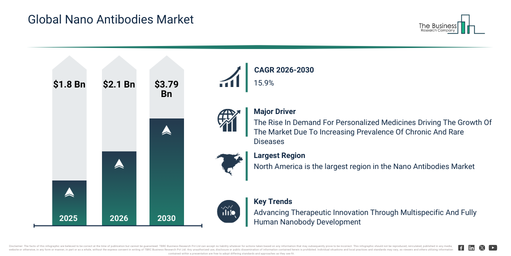
    The nano antibodies market size has experienced significant expansion in recent years. It is projected to increase from $1.8 billion in 2025 to $2.1 billion in 2026, demonstrating a compound annual growth rate (CAGR) of 16.2%. The market’s historic growth can be linked to factors such as advancements in antibody engineering research, the discovery of camelid antibody structures, early clinical validation studies, the expansion of biotechnology research funding, and enhancements in recombinant expression systems.

    The nano antibodies market is projected to experience swift expansion in the coming years. Its valuation is set to reach $3.79 billion by 2030, exhibiting a compound annual growth rate (CAGR) of 15.9%. This anticipated growth during the forecast period stems from factors such as an escalating need for precision therapeutics, greater investments in the development of biologics, the broadening of oncology and infectious disease treatment pipelines, progress in molecular targeting technologies, and a heightened focus on innovative antibody formats. Key trends anticipated for this period encompass the accelerated creation of target-specific nano antibodies, their increased application in diagnostic and imaging fields, wider integration into targeted cancer treatments, the broadening of recombinant production systems, and an intensified emphasis on multispecific antibody engineering.

    Access Your Free Sample Report For In-Depth Market Analysis:

    https://www.thebusinessresearchcompany.com/sample.aspx?id=30332&type=smp

    What Primary Drivers Are Shaping The Nano Antibodies Market?

    The rising requirement for personalized medicines is projected to boost the growth of the nano antibodies market moving forward. Personalized medicines refer to medical treatments specifically adapted to an individual’s genetic makeup, lifestyle, and environment, ensuring the most efficacious therapy for that particular patient. This heightened demand for personalized medicines is attributed to the increasing prevalence of chronic and rare diseases, which necessitate targeted, patient-specific therapies for more effective treatment outcomes. Nano antibodies enable personalized medicine by providing highly specific, customizable, and focused therapeutic solutions tailored to individual patient profiles and disease mechanisms. For instance, in February 2024, according to the Personalized Medicine Coalition, a US-based non-profit organization, in 2023, the FDA approved 16 new personalized therapies for patients with rare diseases, marking a significant increase from the six approvals recorded in 2022. Therefore, the increasing demand for personalized medicines is propelling the growth of the nano antibodies market.

    How Is The Nano Antibodies Market Broken Down By Segment Categories?

    The nano antibodies market covered in this report is segmented –

    1) By Product: Single-Domain Antibodies, Heavy-Chain Antibodies, Recombinant Nano Antibodies, Conjugated Nano Antibodies, Bispecific And Multispecific Nano Antibodies

    2) By Technology: Phage Display Technology, Recombinant Deoxyribonucleic Acid (DNA) Technology, Molecular Cloning

    3) By Source: Animal-Derived, Recombinant, Plant-Derived

    4) By Application: Disease Detection In Vitro, Non-Invasive Diagnosis In Vivo, Tumor Targeted Therapy, Nervous System Disease, Circulatory Disease, Infectious Disease, Other Applications

    5) By End-User: Pharmaceutical Companies, Biotechnology Firms, Academic And Research Institutions, Hospitals And Diagnostic Laboratories

    Subsegments:

    1) By Single-Domain Antibodies: Human Single-Domain Antibodies, Camelid Single-Domain Antibodies, Synthetic Single-Domain Antibodies, Shark-Derived Single-Domain Antibodies

    2) By Heavy-Chain Antibodies: Camelid Heavy-Chain Antibodies, Shark Heavy-Chain Antibodies, Engineered Heavy-Chain Antibodies, Chimeric Heavy-Chain Antibodies

    3) By Recombinant Nano Antibodies: Bacterial Expression Nano Antibodies, Yeast Expression Nano Antibodies, Mammalian Expression Nano Antibodies, Cell-Free Expression Nano Antibodies

    4) By Conjugated Nano Antibodies: Drug-Conjugated Nano Antibodies, Fluorescent-Conjugated Nano Antibodies, Enzyme-Conjugated Nano Antibodies, Radiolabeled Nano Antibodies

    5) By Bispecific And Multispecific Nano Antibodies: Dual-Target Nano Antibodies, Tri-Specific Nano Antibodies, Tetravalent Nano Antibodies, Multifunctional Nano Antibodies

    What Trends Are Affecting The Growth Of The Nano Antibodies Market?

    Leading companies in the nanoantibodies market are prioritizing the creation of novel solutions, such as fully multispecific therapeutics, to improve disease targeting and the effectiveness of treatments. These advanced biologic drugs, known as fully multispecific therapeutics, are engineered to simultaneously attach to two or more distinct targets, thereby facilitating more precise and potent treatment for intricate conditions. An illustration of this trend is seen in February 2023, when Biocytogen Pharmaceuticals (Beijing) Co., Ltd., a biopharmaceutical firm based in China, initiated the Nano 100 Project. This project aims to produce fully human nanobody therapeutics for over 100 targets. The initiative leverages Biocytogen’s exclusive RenNan mouse platform, which generates fully human nanobodies without requiring the humanization process. By incorporating high-throughput in vitro and in vivo screening technologies, the project seeks to expedite target coverage and the discovery of nanobody drugs. These nanobodies possess excellent tissue penetration, stability, and adaptability in engineering, making them ideal for innovative therapeutic approaches including cell therapies, bispecific antibodies, antibody-drug conjugates (ADCs), and radionuclide antibody conjugates. Ultimately, the Nano 100 Project endeavors to streamline the creation of new therapeutics and provide a wide array of high-affinity nanobody candidates for treating cancer, immune disorders, and neurological diseases.

    Which Players Are Present In The Nano Antibodies Market Space?

    Major companies operating in the nano antibodies market are Sanofi S.A., AstraZeneca plc, Bio-Rad Laboratories Inc., Bio-Techne Corporation, Innovent Biologics Inc., GenScript Biotech Corporation, Biocytogen Pharmaceuticals Co. Ltd., Beroni Group Limited., Cusabio Technology LLC, Harbour BioMed Co. Ltd., MoonLake Immunotherapeutics Co. Ltd., Alphamab Oncology Co. Ltd., Santa Cruz Biotechnology Inc., Rockland Immunochemicals Inc., Creative Biolabs Inc., Promab Biotechnologies Inc., ExeVir Bio N.V., Isogenica Ltd., Allele Biotechnology And Pharmaceuticals Inc., Gulliver Biomed Inc., Capralogics Inc.

    Get The Full Nano Antibodies Market Report:

    https://www.thebusinessresearchcompany.com/report/global-nano-antibodies-market-report

    Which Region Is The Top Contributor To The Nano Antibodies Market By Share?

    North America was the largest region in the nano antibodies market in 2025. Asia-Pacific is expected to be the fastest-growing region in the forecast period. The regions covered in the nano antibodies market report are Asia-Pacific, South East Asia, Western Europe, Eastern Europe, North America, South America, Middle East, Africa.

    Request A Customized Nano Antibodies Market Report For Competitive Insights:

    https://www.thebusinessresearchcompany.com/report/global-nano-antibodies-market-report

    Browse Through More Reports Similar to the Global Nano Antibodies Market 2026, By The Business Research Company

    Amblyopia Market Report 2026

    https://www.thebusinessresearchcompany.com/report/amblyopia-global-market-report

    Ocular Hypertension Treatment Market Report

    https://www.thebusinessresearchcompany.com/report/ocular-hypertension-treatment-global-market-report

    Hyperpigmentation Disorder Treatment Market Report

    https://www.thebusinessresearchcompany.com/report/hyperpigmentation-disorder-treatment-global-market-report

    Get in touch with us:

    The Business Research Company: https://www.thebusinessresearchcompany.com/

    Americas +1 310-496-7795

    Asia +44 7882 955267 & +91 8897263534

    Europe +44 7882 955267

    Email us at info@tbrc.info

    Follow us on:

    LinkedIn: https://in.linkedin.com/company/the-business-research-company

    YouTube: https://www.youtube.com/channel/UC24_fI0rV8cR5DxlCpgmyFQ

    Global Market Model: https://www.thebusinessresearchcompany.com/global-market-model
  • Myopia Treatment Market Outlook (2026–2030) Covering Growth Drivers and Trends

    Myopia Treatment Market Outlook (2026–2030) Covering Growth Drivers and Trends

    The Business Research Company’s 2026 market reports feature enhanced tools like market attractiveness analysis, TAM assessment, and company scoring matrices, along with interactive dashboards, deeper supply chain insights, and startup coverage strengthening the depth, usability, and strategic value of insights.

    What Level Of Market Value Growth Is Predicted For The Myopia Treatment Market From 2026 To 2030?

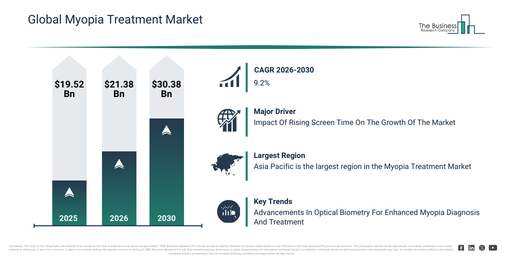
    The myopia treatment market has shown strong expansion in recent years. It is forecast to grow from $19.52 billion in 2025 to $21.38 billion in 2026, progressing at a compound annual growth rate (CAGR) of 9.5%. The expansion witnessed in the historical period stems from increasing screen time exposure, a rise in childhood myopia prevalence, limited access to preventive eye care, the early development of refractive surgery techniques, and the initial adoption of corrective eyewear solutions.

    The market for myopia treatment is projected to experience substantial expansion over the coming years, with forecasts indicating it will reach a valuation of $30.38 billion by 2030, demonstrating a compound annual growth rate (CAGR) of 9.2%. Key factors driving this growth during the projected period include heightened awareness regarding myopia control treatments, advancements in laser treatment technologies, an increasing need for orthokeratology, greater investment in ophthalmic research, and the integration of sophisticated diagnostic instruments. Noteworthy trends anticipated in the same forecast timeframe encompass the expanding use of orthokeratology (ortho-k), a rising inclination towards less invasive refractive surgical procedures, an escalating requirement for myopia control lenses among children, a greater incidence of myopia linked to digital eye strain, and the proliferation of initiatives promoting preventive eye care.

    Access Your Free Sample Report For In-Depth Market Analysis:

    https://www.thebusinessresearchcompany.com/sample.aspx?id=20892&type=smp

    Which Major Drivers Are Influencing The Expansion Of The Myopia Treatment Market?

    The myopia treatment market is anticipated to expand as screen time rises. Screen time encompasses the duration individuals spend interacting with digital displays like smartphones, tablets, computers, and televisions. This surge in screen time is attributed to a rise in streaming services, increased social media engagement, the prevalence of remote work, and frequent virtual meetings. Myopia treatment offers relief from eye strain and discomfort stemming from extended screen use, thereby boosting focus, comfort, and visual clarity. For example, data from the Centers for Disease Control and Prevention, a US-based government agency, revealed in October 2024 that from July 2021 to December 2023, among teenagers aged 12–17, 50.4% used screens for 4 or more hours daily, 22.8% for 3 hours, 17.8% for 2 hours, 6.1% for 1 hour, and 3.0% for less than 1 hour per day. Consequently, the increasing screen time is a key factor propelling the growth of the myopia treatment market.

    What Are The Different Segment Types In The Myopia Treatment Market Segment Breakdown?

    The myopia treatment market covered in this report is segmented –

    1) By Type: Simple Myopia, High Myopia, Pathological Myopia

    2) By Treatment: Eyeglasses, Contact Lenses, Refractive Surgery, Laser-Assisted In Situ Keratomileusis (LASIK), Photorefractive Keratectomy (PRK), Orthokeratology (Ortho-K)

    3) By Route Of Administration: Oral, Parenteral, Other Routes Of Administration

    4) By Distribution Channel: Direct Tender, Retail Sales, Other Distribution Channels

    5) By End-User: Physician Offices, Reference Laboratories, Other End-Users

    Subsegments:

    1) By Simple Myopia: Mild Myopia, Moderate Myopia

    2) By High Myopia: Severe Myopia, Very Severe Myopia

    3) By Pathological Myopia: Degenerative Myopia, Malignant Myopia

    Which Trends Are Shaping The Myopia Treatment Market?

    Leading entities within the myopia treatment market are prioritizing the creation of sophisticated solutions, including optical biometers, to improve diagnostic accuracy and customize highly effective, personalized therapies. These optical biometers leverage light-based technology to assess ocular parameters like axial length and corneal curvature, facilitating the diagnosis and ongoing surveillance of various eye conditions. An example of this trend is NIDEK Co., Ltd., an ophthalmic product manufacturer located in Japan, which introduced the AL-Scan M and MV-1 in February 2023. The AL-Scan M device features integrated 3D auto-tracking and auto-shot capabilities, allowing for efficient and straightforward measurements comparable to those obtained with an autorefractor. Such functionalities contribute to better patient flow, especially benefiting younger individuals. Meticulously designed, the AL-Scan M delivers accurate axial length measurements, which are vital for tracking the advancement of myopia. Furthermore, it offers seamless integration with the MV-1 Myopia Viewer software, assisting in the documentation of treatment history and patient conduct.

    Who Are The Well-Known Companies In The Myopia Treatment Market?

    Major companies operating in the myopia treatment market are Regeneron Pharmaceuticals Inc., Alcon Inc., Bausch Health Companies Inc., Hoya Corporation, Johnson & Johnson Vision Care Inc., CooperVision Inc., Menicon Co. Ltd., Topcon Healthcare Inc., Essilor Ltd., NIDEK CO. LTD., SightGlass Vision Inc., SCHWIND eye-tech-solutions GmbH, Visioneering Technologies Inc., MEDMONT INTERNATIONAL PTY LTD., Vyluma Inc., Haag-Streit Holding AG, NovaSight Ltd., Euclid Vision Corporation, Treehouse Eyes LLC, Sydnexis Inc., Neurobit Technologies Co. Ltd., Kubota Pharmaceutical Holdings Co. Ltd.

    Get The Full Myopia Treatment Market Report:

    https://www.thebusinessresearchcompany.com/report/myopia-treatment-global-market-report

    Which Region Represents The Largest Share Of The Myopia Treatment Market?

    Asia Pacific was the largest region in the myopia treatment market in 2025. Asia-Pacific is expected to be the fastest-growing region in the forecast period. The regions covered in the myopia treatment market report are Asia-Pacific, South East Asia, Western Europe, Eastern Europe, North America, South America, Middle East, Africa.

    Request A Customized Myopia Treatment Market Report For Competitive Insights:

    https://www.thebusinessresearchcompany.com/report/myopia-treatment-global-market-report

    Browse Through More Reports Similar to the Global Myopia Treatment Market 2026, By The Business Research Company

    Amblyopia Market Report 2026

    https://www.thebusinessresearchcompany.com/report/amblyopia-global-market-report

    Ocular Hypertension Treatment Market Report

    https://www.thebusinessresearchcompany.com/report/ocular-hypertension-treatment-global-market-report

    Retinal Disorder Treatment Market Report

    https://www.thebusinessresearchcompany.com/report/retinal-disorder-treatment-global-market-report

    Get in touch with us:

    The Business Research Company: https://www.thebusinessresearchcompany.com/

    Americas +1 310-496-7795

    Asia +44 7882 955267 & +91 8897263534

    Europe +44 7882 955267

    Email us at info@tbrc.info

    Follow us on:

    LinkedIn: https://in.linkedin.com/company/the-business-research-company

    YouTube: https://www.youtube.com/channel/UC24_fI0rV8cR5DxlCpgmyFQ

    Global Market Model: https://www.thebusinessresearchcompany.com/global-market-model

  • Increasing vision impairment cases are driving growth in the myopia and presbyopia treatment market

    Increasing vision impairment cases are driving growth in the myopia and presbyopia treatment market

    The Business Research Company’s 2026 market reports feature enhanced tools like market attractiveness analysis, TAM assessment, and company scoring matrices, along with interactive dashboards, deeper supply chain insights, and startup coverage strengthening the depth, usability, and strategic value of insights.

    How Will The Market Value Of The Myopia and Presbyopia Treatment Market Progress Between 2026 And 2030?

    The myopia and presbyopia treatment market size has experienced robust expansion in recent years. It is anticipated to increase from $22.63 billion in 2025 to $24.56 billion in 2026, exhibiting a compound annual growth rate (CAGR) of 8.6%. The historical growth of this market was primarily driven by factors such as an increase in the aging population, widespread adoption of corrective lenses, a rise in screen-induced myopia, early developments in refractive surgery, and limited awareness regarding preventive eye care.

    The myopia and presbyopia treatment market is projected to experience substantial expansion over the upcoming years, with its size anticipated to reach $33.57 billion by 2030, exhibiting an impressive compound annual growth rate (CAGR) of 8.1%. This projected growth throughout the forecast period stems from several factors, including the escalating demand for sophisticated surgical remedies, the rising uptake of lenses designed to correct presbyopia, the increased application of pharmacological interventions, advancements in eye care diagnostic technologies, and the broadening reach of preventive screening initiatives. Furthermore, key trends anticipated in this period encompass the growing popularity of multifocal and advanced contact lenses, an increasing call for laser and refractive surgical operations, a stronger inclination towards orthokeratology (ortho-k) for myopia management, greater deployment of pharmacological eye drops to address presbyopia, and the widening scope of early vision screening and preventive care programs.

    Access Your Free Sample Report For In-Depth Market Analysis:

    https://www.thebusinessresearchcompany.com/sample.aspx?id=7892&type=smp

    What Key Drivers Are Fueling The Growth Of The Myopia and Presbyopia Treatment Market?

    The anticipated increase in vision impairment cases is projected to propel the expansion of the myopia and presbyopia treatment market. Vision impairment describes a state where an individual’s capacity to see and process visual data is considerably diminished, causing challenges in recognizing and comprehending their surroundings. This escalating prevalence of vision impairment can stimulate the advancement of myopia and presbyopia treatments, fostering greater awareness, driving innovation, attracting investments, enhancing treatment accessibility, and ultimately yielding improved results for individuals addressing their vision problems. For instance, in August 2023, according to the World Health Organization (WHO), a Switzerland-based United Nations agency, global estimates indicate that 2.2 billion people have near or distance vision impairment, including 1 billion cases that are preventable or untreated, while refractive errors and cataracts remain the leading global causes of vision loss, and only 36% of individuals with refractive-error–related distance impairment and just 17% of those with cataract-related impairment have received appropriate care. Consequently, the increasing occurrence of vision impairment is a key factor fueling the growth of the myopia and presbyopia treatment market.

    Which Segment Classifications Are Used In The Myopia and Presbyopia Treatment Market Segment Analysis?

    The myopia and presbyopia treatment market covered in this report is segmented –

    1) By Type: Myopia, Presbyopia

    2) By Age Group: Children And Young Adults, Adults, Geriatrics

    3) By End-Use: Hospitals, Eye Care Clinics Or Ophthalmic Centers

    Subsegments:

    1) By Myopia: Pharmacological Treatments, Orthokeratology Lenses, Refractive Surgery, Spectacles And Contact Lenses

    2) By Presbyopia: Multifocal Lenses, Monovision Contact Lenses, Corneal Inlays, Presbyopia-Correcting Surgery

    What Trends Are Influencing The Myopia and Presbyopia Treatment Market?

    Leading companies in the myopia and presbyopia treatment market are actively developing innovative products, such as myopia-combating sun spectacle lenses, to reach broader customer bases, increase sales, and boost revenue. Myopia-combating sun spectacle lenses are defined as eyeglass lenses designed to help slow the progression of myopia, also known as near-sightedness, when worn in outdoor or bright sunlight conditions. For example, in May 2023, HOYA, an optical technology company based in Thailand, introduced MiYOSMART sun spectacle lenses specifically to address myopia in children. The unique characteristic of MiYOSMART lies in its novel strategy for slowing down myopia progression in children while simultaneously offering protection from intense sunlight. This is achieved through two specialized lens options: the photochromic spectacle lenses, MiYOSMART Chameleon, and the polarized spectacle lenses, MiYOSMART Sunbird, both of which integrate DIMS Technology (Defocus Incorporated Multiple Segments). DIMS Technology, developed in partnership with the Hong Kong Polytechnic University, operates on the principle of generating simultaneous defocus during both distance and near viewing. This involves establishing one plane on the retina from the lens’s single vision zone(s) and creating another plane of myopic defocus using +3.50D defocus lenslets.

    Which Firms Are Contributing To The Myopia and Presbyopia Treatment Market Ecosystem?

    Major companies operating in the myopia and presbyopia treatment market are ALCON Inc., Bausch & Lomb Incorporated, Carl Zeiss AG, Essilor Ltd., Johnson & Johnson Vision Inc., Nidek Corporation, Topcon Corporation, Zimmer Ophthalmic Systems AG, AbbVie Inc., Orasis Pharmaceuticals Ltd., The Cooper Companies Inc., Staar Surgical Co., Eyenovia Inc., Allergan PLC, Hoya Corporation, Menicon Co. Ltd., CooperVision Inc., Visioneering Technologies Inc., AcuFocus Inc., Ocular Therapeutix Inc., SightGlass Vision Inc., Presbia PLC, LensGen Inc., RxSight Inc., Perfect Lens LLC

    Get The Full Myopia and Presbyopia Treatment Market Report:

    https://www.thebusinessresearchcompany.com/report/myopia-and-presbyopia-treatment-global-market-report

    Which Geographic Region Dominates The Myopia and Presbyopia Treatment Market?

    North America was the largest region in the myopia and presbyopia treatment market share in 2025. Asia-Pacific is expected to be the fastest-growing region in the forecast period. The regions covered in the myopia and presbyopia treatment market report are Asia-Pacific, South East Asia, Western Europe, Eastern Europe, North America, South America, Middle East, Africa.

    Request A Customized Myopia and Presbyopia Treatment Market Report For Competitive Insights:

    https://www.thebusinessresearchcompany.com/report/myopia-and-presbyopia-treatment-global-market-report

    Browse Through More Reports Similar to the Global Myopia and Presbyopia Treatment Market 2026, By The Business Research Company

    Surgical Stapling Devices Market Report 2026

    https://www.thebusinessresearchcompany.com/report/surgical-stapling-devices-global-market-report

    Powered Surgical Instruments Market Report

    https://www.thebusinessresearchcompany.com/report/powered-surgical-instruments-global-market-report

    Urology Surgical Instruments Market Report

    https://www.thebusinessresearchcompany.com/report/urology-surgical-instruments-global-market-report

    Get in touch with us:

    The Business Research Company: https://www.thebusinessresearchcompany.com/

    Americas +1 310-496-7795

    Asia +44 7882 955267 & +91 8897263534

    Europe +44 7882 955267

    Email us at info@tbrc.info

    Follow us on:

    LinkedIn: https://in.linkedin.com/company/the-business-research-company

    YouTube: https://www.youtube.com/channel/UC24_fI0rV8cR5DxlCpgmyFQ

    Global Market Model: https://www.thebusinessresearchcompany.com/global-market-model
  • Rising uterine disorder cases are supporting expansion in the myomectomy market

    Rising uterine disorder cases are supporting expansion in the myomectomy market

    The Business Research Company’s 2026 market reports feature enhanced tools like market attractiveness analysis, TAM assessment, and company scoring matrices, along with interactive dashboards, deeper supply chain insights, and startup coverage strengthening the depth, usability, and strategic value of insights.

    What Are The Market Size Estimates For The Myomectomy Market In 2026 And 2030?

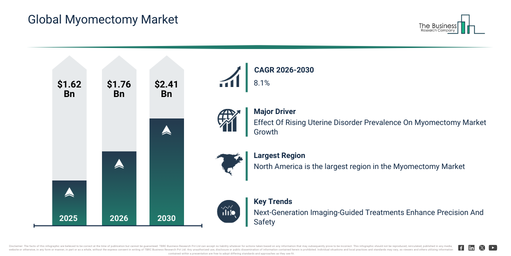
    The myomectomy market has shown strong growth in recent years. It is projected to increase from $1.62 billion in 2025 to $1.76 billion in 2026, achieving a compound annual growth rate (CAGR) of 8.5%. This historical growth can be linked to the increasing prevalence of uterine fibroids, a rising awareness of fertility preservation options, the growth in gynecological surgical procedures, the expansion of hospital surgical infrastructure, and the availability of advanced laparoscopic tools.

    The myomectomy market size is expected to show robust expansion over the next few years. It is predicted to reach $2.41 billion in 2030, with a compound annual growth rate (CAGR) of 8.1%. This projected growth can be linked to the increasing uptake of robotic gynecologic surgeries, growing investments in minimally invasive technologies, an escalating demand for patient-centric treatment options, the expansion of specialized women’s health centers, and a rising emphasis on quicker post-surgical recovery. Noteworthy trends for the forecast period include the wider adoption of minimally invasive surgical techniques, an increase in the use of robotic-assisted myomectomy procedures, a developing preference for fertility-preserving treatments, the broadening of advanced surgical instrumentation, and an intensified focus on precision surgical outcomes.

    Access Your Free Sample Report For In-Depth Market Analysis:

    https://www.thebusinessresearchcompany.com/sample.aspx?id=20576&type=smp

    Which Drivers Are Supporting The Myomectomy Market Growth?

    An increase in uterine disorders is anticipated to fuel the expansion of the myomectomy market in the future. These conditions encompass various medical issues impacting the uterus, such as fibroids, endometriosis, and uterine cancer, often leading to discomfort, irregular bleeding, and fertility problems. The growing incidence of uterine disorders stems from factors like heightened awareness, postponing childbirth, hormonal imbalances, and evolving lifestyles. Myomectomy, a surgical procedure, addresses uterine disorders by removing fibroids, thereby easing symptoms like pain, heavy menstrual flow, and reproductive difficulties while preserving the uterus. For example, data from Cancer Council Victoria, an Australia-based government organization, showed that in 2023, 926 women were diagnosed with uterine cancer, with an incidence rate of 22.3 per 100,000 females, making up 2.4% of all cancers diagnosed and 1.2% of all cancer-related deaths in 2023. This positioned uterine cancer as the 5th most commonly diagnosed cancer among females in the region that year, as reported in May 2025. Consequently, the rising occurrence of uterine disorders is propelling the growth of the myomectomy market.

    How Is The Myomectomy Market Organized By Segment Classification?

    The myomectomy market covered in this report is segmented –

    1) By Surgical Approach: Abdominal Myomectomy, Hysteroscopic Myomectomy, Laparoscopic Myomectomy

    2) By Product: Laparoscopic Power Morcellators, Harmonic Scalpel, Laparoscopic Sealer, Other Products

    3) By End-User: Hospitals And Clinics, Surgical Centers, Other End-Users

    Subsegments:

    1) By Abdominal Myomectomy: Open Abdominal Myomectomy (Laparotomy), Mini-Laparotomy Myomectomy

    2) By Hysteroscopic Myomectomy: Resectoscopic Myomectomy, Non-Resectoscopic Techniques

    3) By Laparoscopic Myomectomy: Conventional Laparoscopic Myomectomy, Robotic-Assisted Laparoscopic Myomectomy

    Which Trends Are Expected To Impact The Myomectomy Market?

    Leading companies within the myomectomy market are concentrating on developing advanced solutions, such as next-generation robotic-assisted surgical systems, to address the increasing demand for minimally invasive procedures, enhanced surgical precision, and quicker patient recovery. Robotic-assisted systems are sophisticated surgical platforms that boost a surgeon’s capabilities through high-definition 3D visualization, articulating instruments, and precise motion scaling, offering a considerable improvement over traditional open or laparoscopic surgeries. For instance, in March 2023, Intuitive Surgical Inc., a U.S.-based medical technology firm, unveiled the da Vinci Xi fifth-generation robotic surgical system, an innovative platform engineered to aid complex gynecological procedures, including myomectomy. This system integrates improved imaging, ergonomically designed controls, and multi-quadrant access, allowing surgeons to execute accurate dissections with reduced tissue trauma. Its uses span uterine fibroid removal, hysterectomy, and other gynecologic surgeries, providing patients with less post-operative pain, shorter hospital durations, and swifter recuperation.

    Who Are The Industry Participants Involved In The Myomectomy Market?

    Major companies operating in the myomectomy market are Medtronic plc, Stryker Corporation, Boston Scientific Corporation, B. Braun Melsungen AG, Olympus Corporation, Intuitive Surgical Inc., Smith & Nephew plc, Hologic Inc., CooperSurgical Inc., Teleflex Incorporated, Karl Storz SE & Co. KG, CONMED Corporation, Richard Wolf GmbH, ERBE Elektromedizin GmbH, LiNA Medical ApS, KLS Martin Group, Aspen Surgical, BOWA Medical, Aesculap AG, Mindray Medical International Limited

    Get The Full Myomectomy Market Report:

    https://www.thebusinessresearchcompany.com/report/myomectomy-global-market-report

    Which Region Is The Leading Market For The Myomectomy Market?

    North America was the largest region in the myomectomy market in 2025. Asia-Pacific is expected to be the fastest-growing region in the forecast period. The regions covered in the myomectomy market report are Asia-Pacific, South East Asia, Western Europe, Eastern Europe, North America, South America, Middle East, Africa.

    Request A Customized Myomectomy Market Report For Competitive Insights:

    https://www.thebusinessresearchcompany.com/report/myomectomy-global-market-report

    Browse Through More Reports Similar to the Global Myomectomy Market 2026, By The Business Research Company

    Myocardial Infarction Market Report 2026

    https://www.thebusinessresearchcompany.com/report/myocardial-infarction-global-market-report

    Cardiometabolic Diseases Market Report

    https://www.thebusinessresearchcompany.com/report/cardiometabolic-diseases-global-market-report

    Heart Attack Diagnostic Market Report

    https://www.thebusinessresearchcompany.com/report/heart-attack-diagnostic-global-market-report

    Get in touch with us:

    The Business Research Company: https://www.thebusinessresearchcompany.com/

    Americas +1 310-496-7795

    Asia +44 7882 955267 & +91 8897263534

    Europe +44 7882 955267

    Email us at info@tbrc.info

    Follow us on:

    LinkedIn: https://in.linkedin.com/company/the-business-research-company

    YouTube: https://www.youtube.com/channel/UC24_fI0rV8cR5DxlCpgmyFQ

    Global Market Model: https://www.thebusinessresearchcompany.com/global-market-model
  • Increasing prevalence of chronic diseases is driving growth in the myocarditis market

    Increasing prevalence of chronic diseases is driving growth in the myocarditis market

    The Business Research Company’s 2026 market reports feature enhanced tools like market attractiveness analysis, TAM assessment, and company scoring matrices, along with interactive dashboards, deeper supply chain insights, and startup coverage strengthening the depth, usability, and strategic value of insights.

    What Expansion In Market Value Is Forecasted For The Myocarditis Disease Market Between 2026 And 2030?

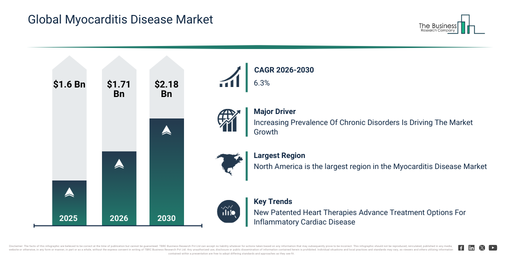
    The myocarditis disease market size has experienced strong growth in recent years. It is anticipated to expand from $1.6 billion in 2025 to $1.71 billion in 2026, demonstrating a compound annual growth rate (CAGR) of 6.5%. The historical growth in this market can be attributed to factors such as a rise in viral infection cases, limited diagnostic capabilities, reliance on traditional inflammation treatments, lack of public awareness, and an increasing incidence of drug-induced myocarditis.

    The myocarditis disease market is projected to experience robust expansion in the coming years. It is anticipated to reach $2.18 billion by 2030, demonstrating a compound annual growth rate (CAGR) of 6.3%. This growth during the forecast period can be attributed to several factors, including enhanced imaging technologies, increased financial commitment to cardiac research, a growing need for specific immunotherapy, refined diagnostic screening initiatives, and the broadening availability of telecardiology services. Key trends expected within this period involve the greater acceptance of biomarker-driven diagnostic methods, increased utilization of sophisticated imaging techniques for prompt diagnosis, a developing requirement for anti-inflammatory and immunomodulatory treatments, the scaling up of awareness campaigns regarding initial symptoms and preventative measures, and a stronger emphasis on managing myocarditis associated with infections.

    Access Your Free Sample Report For In-Depth Market Analysis:

    https://www.thebusinessresearchcompany.com/sample.aspx?id=21227&type=smp

    What Key Factors Are Affecting The Myocarditis Disease Market Demand?

    The expanding occurrence of chronic conditions is anticipated to fuel the progression of the myocarditis disease market in the future. Chronic conditions are defined as health issues lasting a year or longer, frequently demanding continuous medical care, management, or modifications to one’s lifestyle. The rising frequency of these disorders stems from factors like aging demographics, inactive lifestyles, inadequate dietary practices, escalating rates of obesity, and heightened exposure to environmental contaminants. Myocarditis disease, a condition marked by inflammation of the heart muscle, contributes to chronic disorders as it can potentially result in enduring complications such as heart failure, irregular heart rhythms, and cardiomyopathy, all of which necessitate continuous management and profoundly affect cardiovascular well-being over time. For example, data released by the British Heart Foundation, a UK-based cardiovascular research charity, in September 2024 indicated that in the UK, around 7.6 million individuals suffer from heart and circulatory diseases, comprising approximately 4 million males and 3.6 million females. These conditions account for about 27% of all fatalities in the UK, amounting to more than 170,000 deaths annually, or roughly 480 deaths daily, which translates to one death every three minutes. Consequently, the growing prevalence of chronic disorders is a key impetus for the expansion of the myocarditis disease market.

    Which Segments Define The Myocarditis Disease Market Segment Structure?

    The myocarditis disease market covered in this report is segmented –

    1) By Type: Acute Myocarditis, Chronic Myocarditis, Lymphocytic Myocarditis

    2) By Treatment: Medication, Surgery, Other Treatments

    3) By Diagnosis: Blood Tests, Imaging Tests, Cardiac Catheterization, Heart Muscle Biopsy, Other Diagnostic Methods

    4) By Distribution Channel: Hospital Pharmacy, Retail Pharmacy, Online Pharmacy, Other Distribution Channels

    5) By End-Users: Hospitals, Specialty Clinics, Homecare, Other End-Users

    Subsegments:

    1) By Acute Myocarditis: Viral Myocarditis, Bacterial Myocarditis, Fungal Myocarditis

    2) By Chronic Myocarditis: Autoimmune Myocarditis, Chronic Active Myocarditis, Chronic Inflammatory Myocarditis

    3) By Lymphocytic Myocarditis: Idiopathic Lymphocytic Myocarditis, Drug-Induced Lymphocytic Myocarditis, Lymphocytic Myocarditis Associated With Viral Infections

    What Trends Are Influencing Changes In The Myocarditis Disease Market?

    Leading companies in the myocarditis disease market are prioritizing the development of advanced anti-inflammatory and anti-fibrotic therapies to enhance long-term cardiac health and prevent disease progression. These therapies function by modulating key cellular pathways to reduce inflammation and scarring in the heart, thereby preserving cardiac function and reducing the risk of chronic disease. For instance, in November 2025, Cardiol Therapeutics, a Canada-based clinical-stage life sciences company, secured a U.S. patent allowance for its heart drug candidates CardiolRx and CRD-38, extending intellectual property protection through October 2040. The allowance covers their use in a broad range of cardiac disorders, including acute myocarditis, inflammatory cardiomyopathy, heart failure, and pericarditis. CardiolRx is a small-molecule therapy that modulates the inflammasome pathway, which is linked to inflammation and fibrosis in myocarditis, while CRD-38 is a novel subcutaneous formulation under development. The new patent strengthens Cardiol’s long-term market position and supports its late-stage clinical programs, including a Phase II trial of CardiolRx in acute myocarditis (ARCHER) and future first-in-human evaluation of CRD-38.

    Who Are The Established Players Within The Myocarditis Disease Market?

    Major companies operating in the myocarditis disease market are Pfizer Inc., Merck & Co Inc., Bristol-Myers Squibb Company, AstraZeneca PLC, Novartis AG, Eli Lilly and Company, Gilead Sciences Inc., Teva Pharmaceutical Industries Ltd., Regeneron Pharmaceuticals Inc., Sun Pharmaceutical Industries Ltd., Cipla Limited, Cardiol Therapeutics Inc., Amgen Inc., Sanofi, Bayer AG, Johnson & Johnson, AbbVie Inc., Acticor Biotech, Cardurion Pharmaceuticals, Serca Pharmaceuticals, Verve Therapeutics, Biohaven Pharmaceuticals, Tenaya Therapeutics, Berlin Cures, Acesion Pharma, Apitope, Amarin Corporation

    Get The Full Myocarditis Disease Market Report:

    https://www.thebusinessresearchcompany.com/report/myocarditis-disease-global-market-report

    Where Is The Myocarditis Disease Market Primarily Concentrated By Region?

    North America was the largest region in the myocarditis disease market in 2025. The regions covered in the myocarditis disease market report are Asia-Pacific, South East Asia, Western Europe, Eastern Europe, North America, South America, Middle East, Africa.

    Request A Customized Myocarditis Disease Market Report For Competitive Insights:

    https://www.thebusinessresearchcompany.com/report/myocarditis-disease-global-market-report

    Browse Through More Reports Similar to the Global Myocarditis Disease Market 2026, By The Business Research Company

    Myocardial Infarction Market Report 2026

    https://www.thebusinessresearchcompany.com/report/myocardial-infarction-global-market-report

    Ischemic Heart Disease Ihd Drugs Market Report

    https://www.thebusinessresearchcompany.com/report/ischemic-heart-disease-ihd-drugs-global-market-report

    Coronary Artery Disease Market Report

    https://www.thebusinessresearchcompany.com/report/coronary-artery-disease-global-market-report

    Get in touch with us:

    The Business Research Company: https://www.thebusinessresearchcompany.com/

    Americas +1 310-496-7795

    Asia +44 7882 955267 & +91 8897263534

    Europe +44 7882 955267

    Email us at info@tbrc.info

    Follow us on:

    LinkedIn: https://in.linkedin.com/company/the-business-research-company

    YouTube: https://www.youtube.com/channel/UC24_fI0rV8cR5DxlCpgmyFQ

    Global Market Model: https://www.thebusinessresearchcompany.com/global-market-model
  • Innovations such as FDA-approved colchicine treatments are influencing the myocardial ischemia market

    Innovations such as FDA-approved colchicine treatments are influencing the myocardial ischemia market

    The Business Research Company’s 2026 market reports feature enhanced tools like market attractiveness analysis, TAM assessment, and company scoring matrices, along with interactive dashboards, deeper supply chain insights, and startup coverage strengthening the depth, usability, and strategic value of insights.

    How Large Will The Myocardial Ischemia Market Be By 2030 Compared To Its 2026 Market Size?

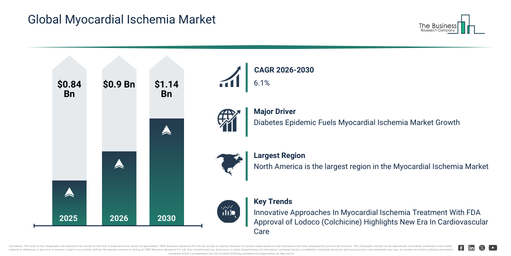
    The myocardial ischemia market has demonstrated significant growth in recent years. It is projected to expand from $0.84 billion in 2025 to $0.9 billion in 2026, reflecting a compound annual growth rate (CAGR) of 6.8%. The historical expansion of this market can be attributed to factors such as an increase in coronary artery disease cases, limited early screening programs, the growing prevalence of hypertension, a dependency on traditional diagnostic methods, and various lifestyle-related risk factors.

    The myocardial ischemia market is set for significant expansion over the next few years, with projections indicating it will reach $1.14 billion by 2030, growing at a compound annual growth rate (CAGR) of 6.1%. This anticipated growth during the forecast period is fueled by advancements in imaging technologies, the increasing adoption of precision medicine, the expansion of preventive cardiology programs, heightened investment in cardiac research and development, and a rising demand for minimally invasive treatments. Key trends expected in the coming period include a greater embrace of advanced cardiac imaging technologies, a growing preference for minimally invasive cardiac interventions, the increasing utilization of combination drug therapies, an intensified focus on preventive cardiology and early risk screening, and a high demand for personalized cardiac treatment plans.

    Access Your Free Sample Report For In-Depth Market Analysis:

    https://www.thebusinessresearchcompany.com/sample.aspx?id=16488&type=smp

    Which Primary Drivers Are Impacting The Myocardial Ischemia Market Growth?

    The anticipated surge in diabetes cases is projected to stimulate the growth of the myocardial ischemia market moving forward. Diabetes is characterized as a collection of metabolic conditions where the body either fails to produce or effectively utilize insulin, a hormone secreted by the pancreas responsible for regulating blood sugar levels. This increasing prevalence of diabetes is attributed to factors like obesity and severe obesity, insufficient physical activity, and genetic predispositions. The expanding incidence of diabetes contributes to a higher occurrence of myocardial ischemia, consequently boosting the demand for diagnostic, therapeutic, and management solutions for myocardial ischemia. For example, in April 2023, a report from The British Diabetic Association, a UK-based diabetes charity, stated that 4.3 million individuals in the UK had been diagnosed with diabetes. Registration data for 2021-22 indicated an increase of 148,951 cases compared to 2020-21. Furthermore, over 2.4 million people in the UK are at significant risk of developing type 2 diabetes. The escalating incidence of diabetes is thus a key driver for the growth of the myocardial ischemia market.

    How Is The Myocardial Ischemia Market Segmented Across Different Segment Categories?

    The myocardial ischemia market covered in this report is segmented –

    1) By Type: Symptomatic, Asymptomatic

    2) By Treatment And Diagnosis: Diagnosis, Treatment

    3) By End User: Hospitals And Clinics, Diagnostic Centers, Ambulatory Surgery Centers

    Subsegments:

    1) By Symptomatic: Acute Myocardial Ischemia, Chronic Myocardial Ischemia, Stable Angina, Unstable Angina

    2) By Asymptomatic: Silent Myocardial Ischemia, Exercise-Induced Asymptomatic Ischemia

    Which Trends Are Shaping Growth In The Myocardial Ischemia Market?

    Leading companies in the myocardial ischemia market are actively developing innovative drugs like Lodoco (colchicine) to diminish inflammation and reduce the likelihood of cardiovascular events in individuals with coronary artery disease. Lodoco is indicated to lessen the risk of myocardial infarction (MI), stroke, coronary revascularization, and cardiovascular death in adult patients with established atherosclerotic disease or possessing multiple cardiovascular risk factors. For instance, in June 2023, Agepha Pharma, a US-based pharmaceutical company, introduced Lodoco (colchicine), following its approval by the Food and Drug Administration, a US-based government agency. This approval represents the initial Food and Drug Administration-sanctioned treatment specifically addressing cardiovascular inflammation. The basis for this endorsement stemmed from data compiled during the LoDoCo2 trial, which revealed a 31% relative decrease in the risk of cardiovascular events when utilizing colchicine 0.5 mg once daily compared to a placebo. Lodoco is prescribed to diminish the chances of myocardial infarction (MI), stroke, coronary revascularization, and cardiovascular death in adult patients with established atherosclerotic disease or multiple cardiovascular risk factors.

    Which Organizations Play A Role In The Myocardial Ischemia Market Landscape?

    Major companies operating in the myocardial ischemia market are Cardinal Health Inc., Pfizer Inc., Roche Holding AG, Bayer AG, Sanofi SA, Novartis AG, Bristol-Myers Squibb Company, AstraZeneca Plc, Abbott Laboratories Inc., Eli Lilly and Company, Medtronic Plc, Boehringer Ingelheim International GmbH, Siemens Healthineers AG, Merck KGaA, GE HealthCare Technologies Inc., Fujifilm Holdings Corporation, Boston Scientific Corporation, Daiichi Sankyo Company Limited, Canon Medical Systems Corporation, Johnson & Johnson, Koninklijke Philips NV, Biotronik SE & Co KG, Edwards Lifesciences Corporation, Teva Pharmaceutical Industries Ltd, Schiller AG, AliveCor Inc.

    Get The Full Myocardial Ischemia Market Report:

    https://www.thebusinessresearchcompany.com/report/myocardial-ischemia-global-market-report

    Which Region Has The Greatest Market Share In The Myocardial Ischemia Market?

    North America was the largest region in the myocardial ischemia market in 2025. Europe is expected to be the fastest-growing region in the forecast period. The regions covered in the myocardial ischemia market report are Asia-Pacific, South East Asia, Western Europe, Eastern Europe, North America, South America, Middle East, Africa.

    Request A Customized Myocardial Ischemia Market Report For Competitive Insights:

    https://www.thebusinessresearchcompany.com/report/myocardial-ischemia-global-market-report

    Browse Through More Reports Similar to the Global Myocardial Ischemia Market 2026, By The Business Research Company

    Myocardial Ischemia Market Report 2026

    https://www.thebusinessresearchcompany.com/report/myocardial-ischemia-global-market-report

    Coronary Artery Disease Market Report

    https://www.thebusinessresearchcompany.com/report/coronary-artery-disease-global-market-report

    Acute Coronary Syndrome Market Report

    https://www.thebusinessresearchcompany.com/report/acute-coronary-syndrome-global-market-report

    Get in touch with us:

    The Business Research Company: https://www.thebusinessresearchcompany.com/

    Americas +1 310-496-7795

    Asia +44 7882 955267 & +91 8897263534

    Europe +44 7882 955267

    Email us at info@tbrc.info

    Follow us on:

    LinkedIn: https://in.linkedin.com/company/the-business-research-company

    YouTube: https://www.youtube.com/channel/UC24_fI0rV8cR5DxlCpgmyFQ

    Global Market Model: https://www.thebusinessresearchcompany.com/global-market-model
  • Advancements in targeted cardiovascular therapies are shaping the myocardial infarction market

    Advancements in targeted cardiovascular therapies are shaping the myocardial infarction market

    The Business Research Company’s 2026 market reports feature enhanced tools like market attractiveness analysis, TAM assessment, and company scoring matrices, along with interactive dashboards, deeper supply chain insights, and startup coverage strengthening the depth, usability, and strategic value of insights.

    What Is The Projected Increase In Market Value Of The Myocardial Infarction Market During 2026–2030?

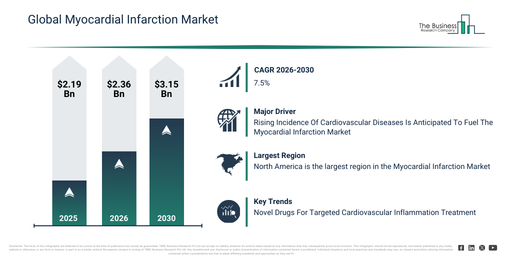
    The myocardial infarction market has experienced significant growth in recent years. It is anticipated to expand from $2.19 billion in 2025 to $2.36 billion in 2026, exhibiting a compound annual growth rate (CAGR) of 7.3%. The historical expansion can be attributed to factors like a rise in smoking prevalence, increasing cases of hypertension, high ldl levels in the population, limited access to early cardiac screening, and widespread sedentary lifestyle habits.

    The myocardial infarction market is anticipated to show significant expansion over the next few years. It is expected to reach $3.15 billion by 2030, demonstrating a compound annual growth rate (CAGR) of 7.5%. The projected increase during this period can be attributed to advancements in cardiac drug formulations, the rising adoption of telecardiology, increased investment in cardiology research and development, the expanding use of AI for cardiac diagnosis, and improvements in emergency cardiac care infrastructure. Noteworthy trends in the forecast period include the growing implementation of advanced cardiac rehabilitation programs, the increased application of combination drug therapies for post-MI care, a heightened focus on early detection and prevention of heart attacks, the wider use of minimally invasive procedures in acute MI management, and an intensified emphasis on lifestyle changes and long-term risk reduction.

    Access Your Free Sample Report For In-Depth Market Analysis:

    https://www.thebusinessresearchcompany.com/sample.aspx?id=12164&type=smp

    What Significant Factors Are Influencing The Myocardial Infarction Market Expansion?

    The increasing occurrence of cardiovascular diseases is anticipated to fuel the expansion of the myocardial infarction market in the coming years. Cardiovascular diseases are defined as a group of conditions impacting the heart and blood vessels. Drug classes for myocardial infarction are utilized in the management and treatment of cardiovascular diseases, specifically addressing the aftermath of heart attacks. For example, in September 2024, data published by the British Heart Foundation, a UK-based cardiovascular research charity, revealed that in the UK, approximately 7.6 million individuals are living with heart and circulatory diseases, including around 4 million males and 3.6 million females. These conditions are linked to about 27% of all fatalities in the UK, equating to over 170,000 deaths annually, or roughly 480 deaths each day, which signifies one death every three minutes. Consequently, the rising incidence of cardiovascular diseases is propelling the myocardial infarction market.

    What Are The Main Segments Within The Myocardial Infarction Market Segment Structure?

    The myocardial infarction market covered in this report is segmented –

    1) By Drug Class: Antiplatelet Agents, Glycoprotein IIb Or IIIa Inhibitors, Antithrombotic Agents, Beta-Adrenergic Blockers, Vasodilators, Angiotensin-Converting Enzyme (ACE) Inhibitors, Angiotensin-Receptor Blockers, Analgesics, Thrombolytics

    2) By Route Of Administration: Oral, Injectable

    3) By Distribution Channel: Hospital Pharmacies, Retail Pharmacies, Online Pharmacies

    Subsegments:

    1) By Antiplatelet Agents: Aspirin, Clopidogrel, Ticagrelor

    2) By Glycoprotein IIb Or IIIa Inhibitors: Abciximab, Eptifibatide, Tirofiban

    3) By Antithrombotic Agents: Heparins, Direct Oral Anticoagulants (DOACs)

    4) By Beta-Adrenergic Blockers: Metoprolol, Carvedilol

    5) By Vasodilators: Nitroglycerin, Isosorbide Dinitrate

    6) By Angiotensin-Converting Enzyme (ACE) Inhibitors: Lisinopril, Enalapril

    7) By Angiotensin-Receptor Blockers: Losartan, Valsartan

    8) By Analgesics: Morphine, Non-Steroidal Anti-Inflammatory Drugs (NSAIDs)

    9) By Thrombolytics: Alteplase, Reteplase

    What Trends Are Affecting The Direction Of The Myocardial Infarction Market?

    Key players in the myocardial infarction market are concentrating on developing novel drugs, such as anti-inflammatory drugs, for targeted cardiovascular inflammation treatment and to gain a competitive advantage. Anti-inflammatory drugs function by reducing inflammation, thereby easing pain and swelling through their action on the body’s immune response. For instance, in June 2023, Agepha Pharma, a Slovakia-based medical product manufacturer, secured FDA approval for its medication, Lodoco (colchicine), which is the first anti-inflammatory drug to target the root cause of atherosclerotic cardiovascular disease. Lodoco seeks to lower the risk of myocardial infarction, stroke, coronary revascularization, and cardiovascular death in adult patients. It can be administered either alone or alongside cholesterol-lowering medications. Clinical trials showed that Lodoco, a reformulated low-dose colchicine, resulted in a 31% reduction in the overall risk of cardiovascular death, myocardial infarction, stroke, or coronary revascularization.

    Who Are The Companies Participating In The Myocardial Infarction Market?

    Major companies operating in the myocardial infarction market are Pfizer Inc, Johnson & Johnson Services Inc, Bayer AG, Novartis AG, Sanofi SA, Bristol Myers Squibb Company, AstraZeneca PLC, Boehringer Ingelheim GmbH, Daiichi Sankyo Co Ltd, Apotex Inc, Par Pharmaceutical Companies Inc, Amgen Inc, Merck & Co Inc, Takeda Pharmaceutical Company Ltd, Gilead Sciences Inc, Eli Lilly and Company, Teva Pharmaceutical Industries Ltd, Sun Pharmaceutical Industries Ltd, Dr Reddy’s Laboratories Ltd, Lupin Ltd, United Therapeutics Corporation, CSPC Pharmaceutical Group Ltd, Zhejiang Huahai Pharmaceutical Co Ltd, Qilu Pharmaceutical Co Ltd, Chia Tai Tianqing Pharmaceutical Group Co Ltd.

    Get The Full Myocardial Infarction Market Report:

    https://www.thebusinessresearchcompany.com/report/myocardial-infarction-global-market-report

    Which Region Accounts For The Largest Portion Of The Myocardial Infarction Market?

    North America was the largest region in the myocardial infarction market in 2025. Europe is expected to be the fastest-growing region in the forecast period. The regions covered in the myocardial infarction market report are Asia-Pacific, South East Asia, Western Europe, Eastern Europe, North America, South America, Middle East, Africa.

    Request A Customized Myocardial Infarction Market Report For Competitive Insights:

    https://www.thebusinessresearchcompany.com/report/myocardial-infarction-global-market-report

    Browse Through More Reports Similar to the Global Myocardial Infarction Market 2026, By The Business Research Company

    Multiple Myeloma Market Report 2026

    https://www.thebusinessresearchcompany.com/report/multiple-myeloma-global-market-report

    Myeloproliferative Disorders Drugs Market Report

    https://www.thebusinessresearchcompany.com/report/myeloproliferative-disorders-drugs-global-market-report

    Idiopathic Pulmonary Fibrosis Market Report

    https://www.thebusinessresearchcompany.com/report/idiopathic-pulmonary-fibrosis-global-market-report

    Get in touch with us:

    The Business Research Company: https://www.thebusinessresearchcompany.com/

    Americas +1 310-496-7795

    Asia +44 7882 955267 & +91 8897263534

    Europe +44 7882 955267

    Email us at info@tbrc.info

    Follow us on:

    LinkedIn: https://in.linkedin.com/company/the-business-research-company

    YouTube: https://www.youtube.com/channel/UC24_fI0rV8cR5DxlCpgmyFQ

    Global Market Model: https://www.thebusinessresearchcompany.com/global-market-model
  • Increasing demand for targeted therapies is fueling growth in the myelofibrosis market

    Increasing demand for targeted therapies is fueling growth in the myelofibrosis market

    The Business Research Company’s 2026 market reports feature enhanced tools like market attractiveness analysis, TAM assessment, and company scoring matrices, along with interactive dashboards, deeper supply chain insights, and startup coverage strengthening the depth, usability, and strategic value of insights.

    How Is The Market Size Of The Myelofibrosis (MF) Market Expected To Change From 2026 To 2030?

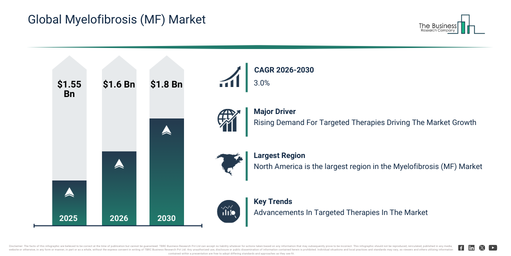
    The myelofibrosis (mf) market has demonstrated consistent expansion in recent years. It is anticipated to increase from $1.55 billion in 2025 to $1.6 billion in 2026, achieving a compound annual growth rate (CAGR) of 3.2%. This historical expansion can be attributed to factors including the limited availability of treatment options, a high prevalence of anemia among mf patients, a rise in autoimmune-related conditions, persistent diagnostic challenges, and a reliance on corticosteroid-based management strategies.

    The market for myelofibrosis (mf) is projected to experience consistent expansion over the upcoming years. This market is anticipated to reach $1.8 billion by 2030, demonstrating a compound annual growth rate (CAGR) of 3.0%. This projected growth is driven by several factors, including progress in JAK inhibitor development, wider acceptance of precision medicine, greater investment in hematology research and development, evolving stem-cell therapy breakthroughs, and the increasing accessibility of targeted oral treatments. Key developments expected during this period involve the increasing uptake of JAK inhibitor-based therapies, a greater focus on combined therapeutic strategies, a heightened priority on early detection and screening initiatives, broadened research into stem-cell transplantation and regenerative treatments, and a more widespread application of supportive care to alleviate patient symptoms.

    Access Your Free Sample Report For In-Depth Market Analysis:

    https://www.thebusinessresearchcompany.com/sample.aspx?id=21226&type=smp

    Which Important Drivers Are Guiding The Myelofibrosis (MF) Market Growth?

    The myelofibrosis (MF) market is projected to experience growth in the coming years, primarily propelled by the increasing demand for targeted therapies. These therapies constitute a medical methodology that tailors treatments and healthcare decisions specifically to an individual’s genetic, environmental, and lifestyle characteristics. The surge in demand for targeted therapies is a result of advancements in genomics, biotechnology, and data analytics, enabling the development of more precise, effective, and individualized treatment options. Myelofibrosis (MF) plays a vital role in establishing a framework for targeted therapy development by identifying key molecular pathways, such as JAK-STAT signaling. This identification facilitates the design of precision treatments like JAK inhibitors (Ruxolitinib, Fedratinib, and Pacritinib) aimed at managing symptoms and decelerating disease progression. For instance, in May 2024, the American Cancer Society, a US-based non-profit organization, estimated approximately 81,610 new cases of kidney cancer (52,380 men and 29,230 women) are anticipated in the United States in 2024, along with an estimated 14,390 deaths (9,450 men and 4,940 women). Hence, the rising demand for targeted therapies is a significant driver of growth within the myelofibrosis (MF) market.

    How Is Segmentation Applied In The Myelofibrosis (MF) Market Segment Analysis?

    The myelofibrosis (mf) market covered in this report is segmented –

    1) By Drug Type: Jak Inhibitor, Immunomodulators, Hydroxyurea, Other Drug Types

    2) By Treatment Type: Chemotherapy, Targeted Therapy, Other Treatment Types

    3) By Route Of Administration: Oral, Parenteral, Other Routes Of Administration

    4) By Distribution Channel: Hospital Pharmacy, Online Pharmacy, Retail Pharmacy

    5) By End-User: Hospitals, Homecare, Specialty Clinics, Other End-Users

    Subsegments:

    1) By Jak Inhibitor: Ruxolitinib, Fedratinib, Momelotinib, Itacitinib

    2) By Immunomodulators: Thalidomide, Lenalidomide, Pomalidomide

    3) By Hydroxyurea: Oral Hydroxyurea, Injectable Hydroxyurea

    4) By Other Drug Types: Erythropoiesis-Stimulating Agents (ESAs), Danazol, Monoclonal Antibodies, Chemotherapy Agents

    What Trends Are Influencing The Evolution Of The Myelofibrosis (MF) Market?

    Leading firms within the myelofibrosis (MF) market are concentrating on broadening the availability of targeted treatments, including JAK1/JAK2 and ACVR1 inhibitors, with the aim of boosting treatment effectiveness, managing disease advancement, and bettering patient results in myelofibrosis (MF). JAK1/JAK2 inhibitors function by targeting the Janus kinase pathway, thereby diminishing inflammation and irregular blood cell formation in myelofibrosis, whereas ACVR1 inhibitors impede activin receptor-like kinase 2 (ALK2) to control bone marrow fibrosis and the disease’s progression. As an illustration, in September 2023, GSK plc, a pharmaceutical firm based in the UK, obtained approval from the US Food and Drug Administration (FDA) for Ojjaara (momelotinib), which is prescribed for the management of intermediate- or high-risk myelofibrosis. This medication’s dual mechanism, which acts on both JAK1/JAK2 and ACVR1, assists in governing inflammatory pathways and simultaneously elevates hemoglobin levels, thus lessening the necessity for transfusions. This significant approval not only broadens the available treatment choices but also establishes a novel benchmark in MF management, particularly benefiting patients suffering from anemia, which represents a critical unaddressed requirement within the disease context.

    Who Are The Companies Participating In The Myelofibrosis (MF) Market Environment?

    Major companies operating in the myelofibrosis (mf) market are Pfizer Inc, Novartis AG, Incyte Corporation, CTI BioPharma Corp, Karyopharm Therapeutics Inc, Sierra Oncology Inc, Kartos Therapeutics Inc, NS Pharma Inc, Keros Therapeutics Inc, Pharmaxis Ltd, Sumitomo Pharma Oncology, Galecto Biotech AB, Actuate Therapeutics Inc, AbbVie Inc, Bristol-Myers Squibb Company, Chia Tai Tianqing Pharmaceutical Group Co Ltd, Taiga Biotechnologies Inc, Rigel Pharmaceuticals Inc, Imago BioSciences Inc, Samus Therapeutics Inc.

    Get The Full Myelofibrosis (MF) Market Report:

    https://www.thebusinessresearchcompany.com/report/myelofibrosis-mf-global-market-report

    Which Region Holds The Highest Market Share In The Myelofibrosis (MF) Market?

    North America was the largest region in the myelofibrosis (MF) market in 2025. Asia-Pacific is expected to be the fastest-growing region in the forecast period. The regions covered in the myelofibrosis (mf) market report are Asia-Pacific, South East Asia, Western Europe, Eastern Europe, North America, South America, Middle East, Africa.

    Request A Customized Myelofibrosis (MF) Market Report For Competitive Insights:

    https://www.thebusinessresearchcompany.com/report/myelofibrosis-mf-global-market-report

    Browse Through More Reports Similar to the Global Myelofibrosis (MF) Market 2026, By The Business Research Company

    Myelodysplastic Syndrome Drugs Market Report 2026

    https://www.thebusinessresearchcompany.com/report/myelodysplastic-syndrome-drugs-global-market-report

    Myelodysplastic Syndrome Drugs Market Report

    https://www.thebusinessresearchcompany.com/report/myelodysplastic-syndrome-drugs-global-market-report

    Myeloproliferative Disorders Drugs Market Report

    https://www.thebusinessresearchcompany.com/report/myeloproliferative-disorders-drugs-global-market-report

    Get in touch with us:

    The Business Research Company: https://www.thebusinessresearchcompany.com/

    Americas +1 310-496-7795

    Asia +44 7882 955267 & +91 8897263534

    Europe +44 7882 955267

    Email us at info@tbrc.info

    Follow us on:

    LinkedIn: https://in.linkedin.com/company/the-business-research-company

    YouTube: https://www.youtube.com/channel/UC24_fI0rV8cR5DxlCpgmyFQ

    Global Market Model: https://www.thebusinessresearchcompany.com/global-market-model
  • Rising incidence of rare blood cancers is driving growth in the myelodysplastic syndrome market

    Rising incidence of rare blood cancers is driving growth in the myelodysplastic syndrome market

    The Business Research Company’s 2026 market reports feature enhanced tools like market attractiveness analysis, TAM assessment, and company scoring matrices, along with interactive dashboards, deeper supply chain insights, and startup coverage strengthening the depth, usability, and strategic value of insights.

    From Its 2026 Market Size, What Value Is The Myelodysplastic Syndrome Market Projected To Reach By 2030?

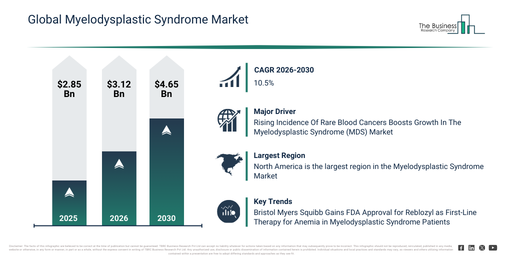
    The market for myelodysplastic syndrome has experienced substantial growth over recent years. This market is projected to expand from $2.85 billion in 2025 to $3.12 billion by 2026, demonstrating a compound annual growth rate (CAGR) of 9.8%. Historically, this expansion can be ascribed to factors such as a scarcity of treatment options, an increase in the occurrence of hematologic disorders, a heightened progression to aml, a reliance on supportive care, and difficulties associated with early diagnosis.

    The myelodysplastic syndrome market is projected to experience substantial growth over the next few years. It is anticipated to achieve a valuation of $4.65 billion by 2030, demonstrating a compound annual growth rate (CAGR) of 10.5%. This expected expansion during the forecast period can be attributed to advancements in targeted therapies, the wider availability of precision medicine solutions, increased investment in oncology research and development, progress in stem cell transplantation techniques, and the rising acceptance of oral hypomethylating drugs. Dominant trends during this period will encompass the increasing adoption of hypomethylating agents, a growing reliance on combination therapy approaches, an intensified focus on early detection and diagnostic precision, the expansion of stem cell transplantation and regenerative treatment options, and a heightened demand for supportive care and growth factor therapies.

    Access Your Free Sample Report For In-Depth Market Analysis:

    https://www.thebusinessresearchcompany.com/sample.aspx?id=12920&type=smp

    What Major Factors Are Driving The Myelodysplastic Syndrome Market Forward?

    The anticipated rise in the occurrence of rare blood cancers is projected to fuel expansion within the myelodysplastic syndrome (MDS) market in the coming period. These cancers, categorized as hematologic malignancies, have a low incidence rate among the population and develop from cells found in the bone marrow, lymph nodes, as well as other blood and immune system elements. Treatment for myelodysplastic syndrome (MDS) focuses on managing the condition, enhancing blood cell creation, and alleviating related symptoms to halt blood cancer advancement within the bone marrow. To illustrate, data from September 2024 by the Leukemia and Lymphoma Society, a professional organization located in the US, indicates that every 3 minutes, an individual in the US receives a diagnosis of leukemia, lymphoma, or myeloma. During 2024, approximately 187,740 people are anticipated to be affected by these cancers, constituting 9.4% of the foreseen 2,001,140 new cancer diagnoses in the US. Consequently, the growing frequency of blood cancer acts as a primary catalyst for the expansion of the myelodysplastic syndrome (MDS) market.

    What Segment Categories Shape The Myelodysplastic Syndrome Market Segment Landscape?

    The myelodysplastic syndrome market covered in this report is segmented –

    1) By Type: Myelodysplastic Syndrome With Unilineage Dysplasia, Myelodysplastic Syndrome With Multilineage Dysplasia, Myelodysplastic Syndrome With Ring Sideroblasts, Other Types

    2) By Drug: Azacitidine, Lenalidomide, Decitabine, Deferasirox

    3) By Treatment: Supportive Therapy, Growth Factors, Chemotherapy, Stem Cell Transplant, Other Treatments

    4) By Route Of Administration: Oral, Injectable, Other Routes Of Administrations

    5) By End-Users: Hospitals, Homecare, Specialty Centers, Other End-Users

    Subsegments:

    1) By Myelodysplastic Syndrome With Unilineage Dysplasia: Type Of Dysplasia, Patient Demographics

    2) By Myelodysplastic Syndrome With Multilineage Dysplasia: Severity Of Dysplasia, Patient Demographics

    3) By Myelodysplastic Syndrome With Ring Sideroblasts: Percentage Of Ring Sideroblasts, Treatment Options

    4) By Other Types: Specific Types, Treatment Options

    Which Trends Are Impacting The Progress Of The Myelodysplastic Syndrome Market?

    Leading companies in the myelodysplastic syndrome (MDS) market are prioritizing the development of novel advancements, specifically first-line erythroid maturation therapies, to enhance anemia management and reduce the need for recurrent red blood cell transfusions. These initial erythroid maturation treatments are targeted interventions designed to promote late-stage red blood cell development, facilitating earlier and more sustained correction of anemia in patients who have not previously received erythropoiesis-stimulating agents. As an illustration, in August 2023, Bristol Myers Squibb, a US-based pharmaceutical firm, obtained FDA approval for Reblozyl (luspatercept-aamt) for use as a first-line therapy for anemia in ESA-naïve adults diagnosed with low- to intermediate-risk myelodysplastic syndromes (MDS) who may require regular RBC transfusions. Data from the Phase 3 COMMANDS trial demonstrated Reblozyl’s superior effectiveness in achieving RBC transfusion independence and increasing hemoglobin levels compared to epoetin alfa, thereby addressing anemia earlier in a wider patient population.

    Who Are The Companies Operating Across The Myelodysplastic Syndrome Market Value Chain?

    Major companies operating in the myelodysplastic syndrome market are Pfizer Inc., Johnson and Johnson Limited, AbbVie Inc., Bayer AG, Novartis AG, Merck & Co., Sanofi S.A., Bristol-Myers Squibb Company, AstraZeneca Plc., Takeda Pharmaceutical Company Limited, Eli Lilly and Company, Amgen Inc., Boehringer Ingelheim International GmbH, Otsuka Pharmaceutical Co. Ltd., Teva Pharmaceutical Industries Ltd., Astellas Pharma Inc., Daiichi Sankyo Company Ltd., Jazz Pharmaceuticals, Dr. Reddy’s Laboratories Ltd., Lupin Limited, BeiGene, Janssen Biotech, Accord Healthcare, Acceleron Pharma Inc.

    Get The Full Myelodysplastic Syndrome Market Report:

    https://www.thebusinessresearchcompany.com/report/myelodysplastic-syndrome-global-market-report

    Where Is The Myelodysplastic Syndrome Market Most Concentrated Geographically?

    North America was the largest region in the myelodysplastic syndrome market in 2025. The regions covered in the myelodysplastic syndrome market report are Asia-Pacific, South East Asia, Western Europe, Eastern Europe, North America, South America, Middle East, Africa.

    Request A Customized Myelodysplastic Syndrome Market Report For Competitive Insights:

    https://www.thebusinessresearchcompany.com/report/myelodysplastic-syndrome-global-market-report

    Browse Through More Reports Similar to the Global Myelodysplastic Syndrome Market 2026, By The Business Research Company

    Histoplasmosis Treatment Market Report 2026

    https://www.thebusinessresearchcompany.com/report/histoplasmosis-treatment-global-market-report

    Onychomycosis Treatment Market Report

    https://www.thebusinessresearchcompany.com/report/onychomycosis-treatment-global-market-report

    Vitiligo Treatment Market Report

    https://www.thebusinessresearchcompany.com/report/vitiligo-treatment-global-market-report

    Get in touch with us:

    The Business Research Company: https://www.thebusinessresearchcompany.com/

    Americas +1 310-496-7795

    Asia +44 7882 955267 & +91 8897263534

    Europe +44 7882 955267

    Email us at info@tbrc.info

    Follow us on:

    LinkedIn: https://in.linkedin.com/company/the-business-research-company

    YouTube: https://www.youtube.com/channel/UC24_fI0rV8cR5DxlCpgmyFQ

    Global Market Model: https://www.thebusinessresearchcompany.com/global-market-model