Category: Healthcare Services

  • Mycosis Fungoides Treatment Market Analysis Focusing on Growth Potential and Outlook

    Mycosis Fungoides Treatment Market Analysis Focusing on Growth Potential and Outlook

    The Business Research Company’s 2026 market reports feature enhanced tools like market attractiveness analysis, TAM assessment, and company scoring matrices, along with interactive dashboards, deeper supply chain insights, and startup coverage strengthening the depth, usability, and strategic value of insights.

    How Much Growth In Market Value Is Expected For The Mycosis Fungoides Treatment Market Between 2026 And 2030?

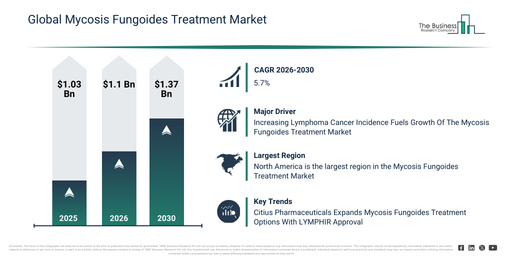
    The mycosis fungoides treatment market size has demonstrated significant expansion in recent years. It is projected to expand from $1.03 billion in 2025 to $1.1 billion in 2026, exhibiting a compound annual growth rate (CAGR) of 6.7%. The growth witnessed during earlier periods is attributable to elements such as restricted treatment options, the rising prevalence of cutaneous t-cell lymphoma, a dependence on radiation therapy, instances of delayed diagnosis, and reliance on topical steroids.

    The mycosis fungoides treatment market size is expected to show robust expansion over the next few years. It is forecast to grow to $1.37 billion by 2030, achieving a compound annual growth rate (CAGR) of 5.7%. The anticipated growth during this period stems from the advancement in targeted therapies, increasing application of immunotherapy, the proliferation of dermatology oncology centers, enhanced diagnostic capabilities, and a rise in investment dedicated to rare cancer research. Significant trends expected in the forecast period include the increasing uptake of combination therapy strategies, a greater reliance on topical steroids for managing early stages, a growing preference for targeted therapies and immunotherapy, the broadening of photodynamic and radiation therapy options, and an elevated demand for specialized dermatology and oncology clinics.

    Access Your Free Sample Report For In-Depth Market Analysis:

    https://www.thebusinessresearchcompany.com/sample.aspx?id=15613&type=smp

    Which Key Drivers Are Affecting The Mycosis Fungoides Treatment Market Development?

    An anticipated increase in lymphoma cancer cases is projected to fuel expansion within the mycosis fungoides treatment market. Lymphoma is defined as a malignancy affecting the lymphatic system, encompassing components like lymph nodes, the spleen, the thymus gland, and bone marrow. The growing occurrence of lymphoma cancer is attributed to several contributing elements, such as environmental factors, a rise in viral infections, an expanding elderly demographic, and various lifestyle choices. Therapies for mycosis fungoides, including topical corticosteroids, phototherapy, and systemic treatments, are employed for the management of cutaneous T-cell lymphomas. The objective of these treatments is to alleviate skin lesions, lessen symptoms, and regulate the advancement of the disease in individuals with lymphoma. For example, data from January 2024 provided by the American Cancer Society, a non-profit organization based in the United States, indicated that non-Hodgkin lymphoma (NHL) constituted approximately 4% of all cancers, making it one of the most prevalent cancers in the United States. Predictions for 2024 suggested around 80,620 individuals (comprising 44,590 males and 36,030 females) would receive an NHL diagnosis, with approximately 20,140 people (11,780 males and 8,360 females) succumbing to the disease. Consequently, the escalating incidence of lymphoma cancer is a key factor propelling the expansion of the mycosis fungoides treatment market.

    Which Segment Types Are Examined In The Mycosis Fungoides Treatment Market Segment Study?

    The mycosis fungoides treatment market covered in this report is segmented –

    1) By Drug Type: Topical Steroids, Mechlorethamine

    2) By Treatment Type: Photodynamic Therapy, Radiation Therapy, Targeted Therapy, Chemotherapy

    3) By End-user: Hospitals, Private Clinics, Specialty Clinics

    Subsegments:

    1) By Topical Steroids: Corticosteroid Creams Or Ointments ( Hydrocortisone, Clobetasol), Topical Steroid Lotions

    2) By Mechlorethamine: Topical Mechlorethamine ( Nitrogen Mustard Cream), Injectable Mechlorethamine

    What Trends Are Transforming The Mycosis Fungoides Treatment Market?

    Leading companies in the mycosis fungoides treatment market are concentrating on developing sophisticated solutions, such as targeted immunotherapy, to improve the effectiveness of treatment and patient quality of life. Targeted immunotherapy is designed to specifically attack malignant T-cells and regulatory T-cells while leaving healthy tissue intact, resulting in quicker disease control and fewer adverse effects. For instance, in August 2024, Citius Pharmaceuticals, a US-based biopharmaceutical company, announced the U.S. Food and Drug Administration (FDA)’s approval of LYMPHIR (denileukin diftitox-cxdl), which utilizes IL-2 receptor-targeted immunotherapy. This therapy is approved for adults suffering from relapsed or refractory cutaneous T-cell lymphoma, including mycosis fungoides, after at least one previous systemic treatment. LYMPHIR employs a novel mechanism of action that directly eliminates malignant T-cells and depletes Tregs to enhance the immune response. Clinical data demonstrated an objective response rate of 36% with a rapid median time to response of 1.4 months. The treatment reduced skin disease in 84% of patients and improved pruritus without cumulative toxicity. LYMPHIR offers a unique systemic option for Stage I-III patients and addresses the need for effective therapies in a population with limited treatment alternatives.

    Which Players Are Part Of The Competitive Landscape Of The Mycosis Fungoides Treatment Market?

    Major companies operating in the mycosis fungoides treatment market are Pfizer Inc., Merck & Co. Inc., Bristol Myers Squibb, Abbott Laboratories, Novartis AG, GlaxoSmithKline plc, Tocris Bioscience, Viatris Inc., Astellas Pharma Inc., Daiichi Sankyo Company, Takeda Pharmaceutical Company Limited, Bausch Health, Eisai Co. Ltd., Horizon Therapeutics plc, Varian Medical Systems, Kyowa Kirin Co. Ltd., Seattle Genetics Inc., Azurity Pharmaceuticals Inc., Innate Pharma S.A., Helsinn Therapeutics, Jubilant Cadista Pharmaceuticals Inc., Elorac Inc., Soligenix Inc., Ceptaris Therapeutics Inc.

    Get The Full Mycosis Fungoides Treatment Market Report:

    https://www.thebusinessresearchcompany.com/report/mycosis-fungoides-treatment-global-market-report

    Which Region Dominates The Mycosis Fungoides Treatment Market By Market Share?

    North America was the largest region in the mycosis fungoides treatment market in 2025. Asia-Pacific is expected to be the fastest-growing region in the forecast period. The regions covered in the mycosis fungoides treatment market report are Asia-Pacific, South East Asia, Western Europe, Eastern Europe, North America, South America, Middle East, Africa.

    Request A Customized Mycosis Fungoides Treatment Market Report For Competitive Insights:

    https://www.thebusinessresearchcompany.com/report/mycosis-fungoides-treatment-global-market-report

    Browse Through More Reports Similar to the Global Mycosis Fungoides Treatment Market 2026, By The Business Research Company

    In Vitro Diagnostics Market Report 2026

    https://www.thebusinessresearchcompany.com/report/in-vitro-diagnostics-global-market-report

    Immunoglobulin E Ige Allergy Blood Tests Market Report

    https://www.thebusinessresearchcompany.com/report/immunoglobulin-e-ige-allergy-blood-tests-global-market-report

    Immunodiagnostics Market Report

    https://www.thebusinessresearchcompany.com/report/immunodiagnostics-global-market-report

    Get in touch with us:

    The Business Research Company: https://www.thebusinessresearchcompany.com/

    Americas +1 310-496-7795

    Asia +44 7882 955267 & +91 8897263534

    Europe +44 7882 955267

    Email us at info@tbrc.info

    Follow us on:

    LinkedIn: https://in.linkedin.com/company/the-business-research-company

    YouTube: https://www.youtube.com/channel/UC24_fI0rV8cR5DxlCpgmyFQ

    Global Market Model: https://www.thebusinessresearchcompany.com/global-market-model
  • Mycoplasma Testing Market Forecast Highlighting Industry Trends and Progress

    Mycoplasma Testing Market Forecast Highlighting Industry Trends and Progress

    The Business Research Company’s 2026 market reports feature enhanced tools like market attractiveness analysis, TAM assessment, and company scoring matrices, along with interactive dashboards, deeper supply chain insights, and startup coverage strengthening the depth, usability, and strategic value of insights.

    What Is The Estimated Market Size Of The Mycoplasma Testing Market In 2026, And How Will Its Value Evolve By 2030?

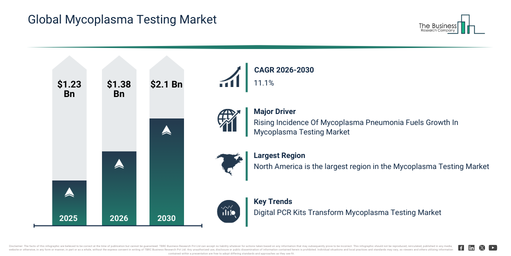
    The mycoplasma testing market has seen rapid expansion in recent years. Its valuation is expected to climb from $1.23 billion in 2025 to $1.38 billion in 2026, reflecting a compound annual growth rate (CAGR) of 12.1%. This historical growth can be linked to the high prevalence of mycoplasma contamination, a greater reliance on cell culture testing, an increased demand for diagnostic testing, the early adoption of PCR methods, and the rising utilization of ELISA techniques.

    The mycoplasma testing market size is poised for substantial expansion over the next few years. It is projected to achieve a value of $2.1 billion by 2030, exhibiting a compound annual growth rate (CAGR) of 11.1%. This anticipated growth during the forecast period is influenced by several factors, including the expansion of biopharmaceutical manufacturing, an increase in CRO outsourcing, greater investment in genomic testing, a heightened regulatory focus on contamination control, and the adoption of automated testing platforms. Significant trends for the forecast period comprise the increasing uptake of pcr-based mycoplasma detection, a rise in the use of rapid test kits for cell culture screening, growing demand for automated mycoplasma detection systems, the wider application of assay and reagent usage in biopharmaceutical production, and an elevated need for mycoplasma testing in research and cro settings.

    Access Your Free Sample Report For In-Depth Market Analysis:

    https://www.thebusinessresearchcompany.com/sample.aspx?id=4103&type=smp

    What Factors Are Contributing To The Growth Of The Mycoplasma Testing Market?

    The rising incidence of mycoplasma pneumonia is projected to drive the expansion of the mycoplasma testing market moving forward. Mycoplasma pneumonia is a respiratory infection caused by the bacterium Mycoplasma pneumoniae. Mycoplasma testing is essential for diagnosing Mycoplasma pneumonia by identifying the presence of Mycoplasma pneumoniae bacteria in respiratory samples, thereby facilitating the prompt and accurate detection of the infection for proper medical management and treatment. For instance, in December 2023, the Centers for Disease Control and Prevention, a US-based government agency, estimated that approximately 2 million cases of Mycoplasma pneumoniae infections occur each year in the United States. Therefore, the increasing prevalence of mycoplasma pneumonia is fueling the growth of the mycoplasma testing market.

    How Are Different Segments Classified In The Mycoplasma Testing Market Segment Analysis?

    The mycoplasma testing market covered in this report is segmented –

    1) By Product: Instruments, Assay, Kits, Reagents

    2) By Technology: PCR, Elisa, Enzymatic Methods, DNA Staining, Other Technologies

    3) By Application: Cell Line Testing, Virus Testing, End- Of- Production Cell Testing

    4) By End User: Pharmaceutical & Biotechnology Companies, Cell Banks And Laboratories, Contract Research Organizations, Academic Research Institutes

    Subsegments:

    1) By Instruments: Mycoplasma Detection Systems, Automated Test Equipment, PCR Equipment

    2) By Assay: Mycoplasma Assays, Qualitative Assays, Quantitative Assays

    3) By Kits: Mycoplasma Detection Kits, Mycoplasma Testing Kits For Cell Cultures, Sample Preparation Kits

    4) By Reagents: Nucleic Acid Reagents, Cell Culture Reagents, Staining Reagents

    What Trends Are Shaping The Future Of The Mycoplasma Testing Market?

    Major entities operating within the mycoplasma testing market are increasingly concentrating on introducing digital PCR kits to secure a competitive advantage. These digital PCR kits represent molecular biology instruments that facilitate the exact quantification and examination of nucleic acids, such as DNA or RNA, through a digital methodology. For instance, in November 2023, QIAGEN, a diagnostics company based in Germany, released three new QIAcuity digital PCR kits along with enhanced software, aiming to broaden the utility of digital PCR applications in biopharmaceutical investigations and food safety. The recently introduced QIAcuity kits are engineered for accurate quantification and come in configurations of one, four, and eight plates, with the single-plate model capable of processing as many as 384 samples within an eight-hour shift. Among the new kits launched is the QIAcuity Mycoplasma Quant Kit, which provides researchers with a reliable and precise method for identifying mycoplasma contaminants at every stage of research.

    Who Are The Companies Driving Activity In The Mycoplasma Testing Market?

    Major companies operating in the mycoplasma testing market are Merck KGaA, Thermo Fisher Scientific Inc., Agilent Technologies Inc., Lonza Group AG, Roche Diagnostics International AG, Charles River Laboratories International Inc., Nelson Laboratories Fairfield Inc., Creative Bioarray, Biological Industries Israel Beit Haemek Ltd., Biotools B & M Labs S.A, PromoCell GmbH, American Type Culture Collection, Bionique Testing Laboratories Inc., InvivoGen, Clongen Laboratories LLC, Norgen Biotek Corporation, Gen Bio Sciences (P) Ltd., GeneCopoeia Inc., Minerva Biolabs GmbH, Mycoplasma Experience, Savyon Diagnostics, ScienCell Research Laboratories Inc.

    Get The Full Mycoplasma Testing Market Report:

    https://www.thebusinessresearchcompany.com/report/mycoplasma-testing-global-market-report

    Which Region Is The Largest In The Mycoplasma Testing Market?

    North America was the largest region in the mycoplasma testing market in 2025. Asia-Pacific is expected to be the fastest growing region in the forecast period. The regions covered in the mycoplasma testing market report are Asia-Pacific, South East Asia, Western Europe, Eastern Europe, North America, South America, Middle East, Africa.

    Request A Customized Mycoplasma Testing Market Report For Competitive Insights:

    https://www.thebusinessresearchcompany.com/report/mycoplasma-testing-global-market-report

    Browse Through More Reports Similar to the Global Mycoplasma Testing Market 2026, By The Business Research Company

    Tuberculosis Diagnostics Market Report 2026

    https://www.thebusinessresearchcompany.com/report/tuberculosis-diagnostics-global-market-report

    Bactericide Market Report

    https://www.thebusinessresearchcompany.com/report/bactericide-global-market-report

    Amoxicillin Market Report

    https://www.thebusinessresearchcompany.com/report/amoxicillin-global-market-report

    Get in touch with us:

    The Business Research Company: https://www.thebusinessresearchcompany.com/

    Americas +1 310-496-7795

    Asia +44 7882 955267 & +91 8897263534

    Europe +44 7882 955267

    Email us at info@tbrc.info

    Follow us on:

    LinkedIn: https://in.linkedin.com/company/the-business-research-company

    YouTube: https://www.youtube.com/channel/UC24_fI0rV8cR5DxlCpgmyFQ

    Global Market Model: https://www.thebusinessresearchcompany.com/global-market-model

  • Mycobacterium Tuberculosis Market Future Trends Influencing Growth

    Mycobacterium Tuberculosis Market Future Trends Influencing Growth

    The Business Research Company’s 2026 market reports feature enhanced tools like market attractiveness analysis, TAM assessment, and company scoring matrices, along with interactive dashboards, deeper supply chain insights, and startup coverage strengthening the depth, usability, and strategic value of insights.

    How Does The Market Size Of The Mycobacterium Tuberculosis Market Compare Between 2026 And 2030?

    The mycobacterium tuberculosis market has experienced substantial growth in recent years. It is projected to expand from $3.73 billion in 2025 to $3.92 billion in 2026, demonstrating a compound annual growth rate (CAGR) of 5.1%. This historical growth can be ascribed to several factors, including a high incidence of TB in developing regions, the widespread adoption of culture-based testing, increased investment in public health programs, a rise in global disease surveillance, and the early development of PCR-based methods.

    The mycobacterium tuberculosis market size is projected to experience consistent expansion over the upcoming years. This market is predicted to reach $4.75 billion by 2030, exhibiting a compound annual growth rate (CAGR) of 4.9%. Factors contributing to this growth during the projected period include the increased application of molecular diagnostics, the broadening scope of telemedicine-based TB screening, a surge in the need for rapid detection kits, augmented government investment in TB eradication initiatives, and improvements in automated detection systems. Key trends anticipated in the forecast timeframe encompass the increasing embrace of molecular TB diagnostic technologies, a greater prevalence of rapid antigen and antibody test kits, the expansion of culture-based testing in areas with high disease burden, an escalating requirement for TB screening within research and public health endeavors, and a heightened consumption of reagents and consumables for standard TB testing procedures.

    Access Your Free Sample Report For In-Depth Market Analysis:

    https://www.thebusinessresearchcompany.com/sample.aspx?id=24325&type=smp

    Which Strong Drivers Are Impacting The Mycobacterium Tuberculosis Market Growth?

    The increase in research and development investments is expected to propel the growth of the mycobacterium tuberculosis market in the future. Research and development is defined as the systematic process of creating new knowledge or enhancing existing products, services, or technologies through investigation and experimentation. The upward trend in R&D is driven by rapid technological advancements, which necessitate continuous innovation to remain competitive in evolving global markets. Research and development plays a crucial role in supporting mycobacterium tuberculosis treatment by enabling the discovery of novel drug candidates capable of overcoming resistance to current therapies, thereby improving treatment effectiveness and patient outcomes. For instance, in March 2024, a report from the Foreign, Commonwealth, and Development Office, a UK government department, indicated that the UK government announced a $5 million (£4 million) funding boost for the TB REACH program. This funding aims to support innovative strategies to enhance tuberculosis diagnosis and treatment in low- and middle-income countries. With this support, 500,000 people are expected to receive health care, 37,000 people will have their TB detected, and more than 15,000 lives could potentially be saved. Therefore, the heightened investments in research and development will significantly drive the growth of the mycobacterium tuberculosis market.

    How Is The Mycobacterium Tuberculosis Market Categorized Across Its Segment Groups?

    The mycobacterium tuberculosis market covered in this report is segmented –

    1) By Product Type: Instruments, Reagents And Consumables, Software Solutions

    2) By Diagnostic Method: Culture-Based Methods, Molecular Diagnosis, Immunological Tests

    3) By Route Of Administration: Oral, Injectable

    4) By End User: Hospitals, Diagnostic Laboratories, Research Institutions

    Subsegments:

    1) By Instruments: Diagnostic Instruments, Detection Instruments, Molecular Diagnostic Instruments, Tuberculosis Culture Systems

    2) By Reagents And Consumables: Polymerase Chain Reaction Reagents, Tuberculosis Culture Media, Antigen Kits, Test Strips, Tuberculosis Diagnostic Kits

    3) By Software Solutions: Laboratory Information Management Systems (LIMS), Diagnostic Software, Data Management Software, Telemedicine Solutions For TB Diagnosis

    Which Trends Are Contributing To Changes In The Mycobacterium Tuberculosis Market?

    Key companies operating in the mycobacterium tuberculosis market are concentrating on developing advanced solutions, such as automated tuberculosis tests, to provide quicker and more precise results. Automated tuberculosis tests are diagnostic tools that utilize automated systems and advanced technology to rapidly and accurately identify Mycobacterium tuberculosis and drug resistance with minimal human involvement. For example, in April 2025, Revvity Inc., a US-based biotechnology company, announced that the U.S. Food and Drug Administration (FDA) had approved its Auto-Pure 2400 liquid handling platform in conjunction with the T-SPOT TB test. The integration of the Auto-Pure 2400 platform with the T-SPOT.TB test enhances automated tuberculosis testing by enabling higher volume processing without sacrificing accuracy. It combines liquid handling and magnetic cell isolation technology, processing up to 24 samples per run and completing Day 1 of testing in under 3.5 hours with minimal user intervention. The T-SPOT.TB test, recognized by the WHO as the only ELISPOT-based IGRA, ensures reproducible results with fewer indeterminate outcomes, a reduced need for repeat testing, and dependable performance in immunocompromised patients.

    Which Firms Are Influencing Competition In The Mycobacterium Tuberculosis Market?

    Major companies operating in the mycobacterium tuberculosis market are F. Hoffmann-La Roche Ltd., Thermo Fisher Scientific Inc., Abbott Laboratories, Novartis AG, Becton Dickinson and Company, Viatris Inc., Macleods Pharmaceuticals Limited, bioMérieux SA, Bio-Rad Laboratories Inc., Bruker Corporation, QIAGEN N.V., Lupin Limited, Zydus Cadila Healthcare Limited, Cepheid Inc., Serum Institute of India Pvt. Ltd., Oxford Immunotec USA Inc., Panacea Biotec Limited, International AIDS Vaccine Initiative Inc., HiMedia Laboratories Private Limited, Akonni Biosystems Inc.

    Get The Full Mycobacterium Tuberculosis Market Report:

    https://www.thebusinessresearchcompany.com/report/mycobacterium-tuberculosis-global-market-report

    Which Region Leads The Mycobacterium Tuberculosis Market In Terms Of Market Share?

    North America was the largest region in the mycobacterium tuberculosis market in 2025. Asia-Pacific is expected to be the fastest-growing region in the forecast period. The regions covered in the mycobacterium tuberculosis market report are Asia-Pacific, South East Asia, Western Europe, Eastern Europe, North America, South America, Middle East, Africa.

    Request A Customized Mycobacterium Tuberculosis Market Report For Competitive Insights:

    https://www.thebusinessresearchcompany.com/report/mycobacterium-tuberculosis-global-market-report

    Browse Through More Reports Similar to the Global Mycobacterium Tuberculosis Market 2026, By The Business Research Company

    Muscle Pain Treatment Market Report 2026

    https://www.thebusinessresearchcompany.com/report/muscle-pain-treatment-global-market-report

    Muscle Tension Dysphonia Treatment Market Report

    https://www.thebusinessresearchcompany.com/report/muscle-tension-dysphonia-treatment-global-market-report

    Musculoskeletal Disorder Drugs Market Report

    https://www.thebusinessresearchcompany.com/report/musculoskeletal-disorder-drugs-global-market-report

    Get in touch with us:

    The Business Research Company: https://www.thebusinessresearchcompany.com/

    Americas +1 310-496-7795

    Asia +44 7882 955267 & +91 8897263534

    Europe +44 7882 955267

    Email us at info@tbrc.info

    Follow us on:

    LinkedIn: https://in.linkedin.com/company/the-business-research-company

    YouTube: https://www.youtube.com/channel/UC24_fI0rV8cR5DxlCpgmyFQ

    Global Market Model: https://www.thebusinessresearchcompany.com/global-market-model

  • Myasthenia Gravis Treatment Market Growth Trends and Forecast Through 2030

    Myasthenia Gravis Treatment Market Growth Trends and Forecast Through 2030

    The Business Research Company’s 2026 market reports feature enhanced tools like market attractiveness analysis, TAM assessment, and company scoring matrices, along with interactive dashboards, deeper supply chain insights, and startup coverage strengthening the depth, usability, and strategic value of insights.

    What Is The Forecasted Market Size Trajectory Of The Myasthenia Gravis Treatment Market From 2026 To 2030?

    The myasthenia gravis treatment market has demonstrated significant growth in recent years. This market is projected to expand from $1.66 billion in 2025 to $1.79 billion in 2026, exhibiting a compound annual growth rate (CAGR) of 7.8%. Historically, this expansion has been driven by the increasing prevalence of autoimmune disorders, the early adoption of corticosteroids, the widespread clinical use of cholinesterase inhibitors, the expansion of hospital-based MG treatment programs, and rising awareness of neuromuscular diseases.

    The myasthenia gravis treatment market size is anticipated to experience substantial growth in the upcoming years, with projections indicating it will expand to $2.43 billion by 2030, growing at a compound annual growth rate (CAGR) of 8.0%. This growth throughout the forecast period is primarily driven by advancements in monoclonal antibody development, increasing demand for minimally invasive surgery, the expansion of specialty clinics, a rising adoption of IVIG and advanced immunotherapies, and enhanced diagnostic capabilities through AI-based tools. Furthermore, major trends in the forecast period include the increasing uptake of immunosuppressive therapies, the growing utilization of monoclonal antibodies for MG treatment, a heightened preference for minimally invasive thymectomy, a greater demand for IVIG and plasmapheresis in severe cases, and the expansion of supportive and combination therapy approaches.

    Access Your Free Sample Report For In-Depth Market Analysis:

    https://www.thebusinessresearchcompany.com/sample.aspx?id=11980&type=smp

    What Key Factors Are Shaping The Myasthenia Gravis Treatment Market Landscape?

    An increasing incidence of myasthenia gravis is projected to drive expansion within the myasthenia gravis treatment market moving ahead. Myasthenia gravis is defined as an autoimmune neuromuscular disorder where individuals suffer from exhaustion and muscle weakness in their skeletal muscles. The treatment for myasthenia gravis encompasses delivering healthcare services and managing patient care to address the disease. Consequently, the rising occurrence of myasthenia gravis is escalating sales in the myasthenia gravis treatment market. For example, data from January 2024, provided by Myaware, a charity based in the UK, indicates that within a United Kingdom population of around 67,817,100, an estimated 22,855 people currently have myasthenia gravis, 204 are affected by Lambert-Eaton myasthenic syndrome, and 2,103 by congenital myopathies. This demonstrates that the increased prevalence of myasthenia gravis is fueling the expansion of the myasthenia gravis treatment market.

    How Are Segments Identified Within The Myasthenia Gravis Treatment Market Segment Framework?

    The myasthenia gravis treatment market covered in this report is segmented –

    1) By Treatment: Anticholinesterase Agents, Immunosuppressants, Monoclonal Antibodies, Plasmapheresis Or Intravenous Immunoglobulin (IVIg), Thymectomy Or Surgical Options, Other Treatments

    2) By Route Of Administration: Oral, Intravenous, Subcutaneous

    3) By Distribution Channel: Hospital Pharmacies, Retail Pharmacies, Online Pharmacies Or E-commerce

    4) By End User: Hospitals, Clinics, Other End-Users

    Subsegments:

    1) By Anticholinesterase Agents: Pyridostigmine, Neostigmine, Ambenonium

    2) By Immunosuppressants: Corticosteroids, Azathioprine, Mycophenolate Mofetil, Cyclosporine, Tacrolimus

    3) By Monoclonal Antibodies: Eculizumab, Rituximab

    4) By Plasmapheresis Or Intravenous Immunoglobulin (IVIg): Plasma Exchange Therapy, IVIg Infusions

    5) By Thymectomy Or Surgical Options: Transsternal Thymectomy, Minimally Invasive Thymectomy, Robot-Assisted Thymectomy

    6) By Other Treatments: Symptomatic Therapy, Complement Inhibitors, Experimental Therapies

    What Market Trends Are Affecting The Myasthenia Gravis Treatment Market?

    Major companies operating in the myasthenia gravis treatment market are directing their focus towards creating innovative products such as self-administered complement C5 inhibitors, aiming to improve treatment convenience, enhance patient autonomy, and lessen reliance on infusion-based care. These self-administered complement C5 inhibitors are defined as targeted autoimmune therapies developed for subcutaneous use, enabling patients to manage excessive complement activation by independently administering their treatment at home rather than within clinical infusion settings. As an instance, in October 2023, UCB Pharma, a Belgium-based pharmaceutical company, announced the US Food and Drug Administration (FDA)’s approval of Zilucoplan. This medication is utilized for treating adults with generalized myasthenia gravis (gMG) who are positive for anti-acetylcholine receptor (AChR) antibodies. This approval introduces a fresh option in the management of gMG, a condition characterized by muscle weakness resulting from an autoimmune response. ZILBRYSQ is notably a self-administered, once-daily subcutaneous complement C5 inhibitor, providing a convenient alternative to the traditional intravenous therapies that have served as the standard for gMG treatment.

    Who Are The Companies Competing Within The Myasthenia Gravis Treatment Market?

    Major companies operating in the myasthenia gravis treatment market are Pfizer Inc., F. Hoffmann-La Roche Ltd., AbbVie Inc., Novartis AG, Takeda Pharmaceutical Company Limited, Baxter International Inc., Biogen Idec, CSL Limited, Chugai Pharmaceutical Co. Ltd., Grifols S.A, UCB Inc., Mitsubishi Tanabe Pharma Corp., Genentech Inc., Horizon Therapeutics plc, Amneal Pharmaceuticals Inc., Argenx SE, Immunovant Inc., Cabaletta Bio Inc., RemeGen Co. Ltd., Kedrion SpA

    Get The Full Myasthenia Gravis Treatment Market Report:

    https://www.thebusinessresearchcompany.com/report/myasthenia-gravis-treatment-global-market-report

    Which Region Leads The Myasthenia Gravis Treatment Market In Overall Market Size?

    North America was the largest region in the myasthenia gravis treatment market in 2025. Asia-Pacific is expected to be the fastest-growing region in the forecast period. The regions covered in the myasthenia gravis treatment market report are Asia-Pacific, South East Asia, Western Europe, Eastern Europe, North America, South America, Middle East, Africa.

    Request A Customized Myasthenia Gravis Treatment Market Report For Competitive Insights:

    https://www.thebusinessresearchcompany.com/report/myasthenia-gravis-treatment-global-market-report

    Browse Through More Reports Similar to the Global Myasthenia Gravis Treatment Market 2026, By The Business Research Company

    Muscle Spasticity Market Report 2026

    https://www.thebusinessresearchcompany.com/report/muscle-spasticity-global-market-report

    Duchenne Muscular Dystrophy Market Report

    https://www.thebusinessresearchcompany.com/report/duchenne-muscular-dystrophy-global-market-report

    Muscle Pain Treatment Market Report

    https://www.thebusinessresearchcompany.com/report/muscle-pain-treatment-global-market-report

    Get in touch with us:

    The Business Research Company: https://www.thebusinessresearchcompany.com/

    Americas +1 310-496-7795

    Asia +44 7882 955267 & +91 8897263534

    Europe +44 7882 955267

    Email us at info@tbrc.info

    Follow us on:

    LinkedIn: https://in.linkedin.com/company/the-business-research-company

    YouTube: https://www.youtube.com/channel/UC24_fI0rV8cR5DxlCpgmyFQ

    Global Market Model: https://www.thebusinessresearchcompany.com/global-market-model
  • Muscle Wasting Disorders Market Insights Covering Drivers, Trends, and Opportunities

    Muscle Wasting Disorders Market Insights Covering Drivers, Trends, and Opportunities

    The Business Research Company’s 2026 market reports feature enhanced tools like market attractiveness analysis, TAM assessment, and company scoring matrices, along with interactive dashboards, deeper supply chain insights, and startup coverage strengthening the depth, usability, and strategic value of insights.

    How Much Will The Market Value Of The Muscle Wasting Disorders Market Grow Between 2026 And 2030?

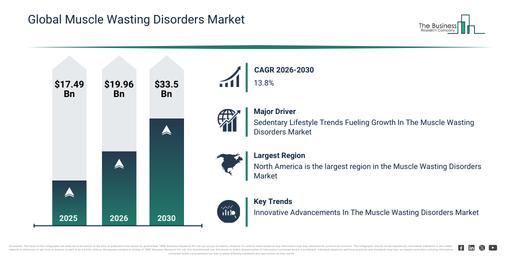
    The muscle wasting disorders market size has seen rapid growth in recent years. It is anticipated to increase from $17.49 billion in 2025 to $19.96 billion in 2026, exhibiting a compound annual growth rate (CAGR) of 14.2%. This historic growth can be attributed to the prevalence of muscular dystrophy and ALS, the expanded use of physical therapy, an increase in nutritional supplement usage, the early adoption of anti-inflammatory treatments, and the development of hospital-based rehabilitation services.

    The muscle wasting disorders market size is anticipated to undergo significant expansion in the coming years, projected to reach $33.5 billion by 2030, demonstrating a compound annual growth rate (CAGR) of 13.8%. This growth during the forecast period is driven by advancements in gene therapy technologies, increasing investment in regenerative medicine, the expansion of specialized rehabilitation centers, a growing demand for personalized treatment plans, and a heightened focus on nutritional interventions. Key trends for the forecast period include the increasing adoption of gene therapy for muscle regeneration, a rising utilization of nutritional and protein supplementation, an increased demand for physical rehabilitation programs, the expansion of targeted therapies for muscular dystrophy, and a growing application of hormonal and anti-inflammatory medications.

    Access Your Free Sample Report For In-Depth Market Analysis:

    https://www.thebusinessresearchcompany.com/sample.aspx?id=13706&type=smp

    Which Factors Are Influencing The Growth Of The Muscle Wasting Disorders Market?

    The muscle wasting disorders market is projected to experience growth due to the increasing adoption of sedentary lifestyles. A sedentary lifestyle describes a way of living where an individual is physically inactive, engaging in minimal or no physical movement or exercise. Such behavior can negatively impact muscle function, resulting in a decline in muscle strength and endurance, contributing to muscle wasting disorders, and making it more challenging for individuals to preserve their muscle mass and function. For example, in March 2025, NHS England, a UK-based executive non-departmental public body, reported that over one-quarter of adults were considered inactive, while in 2023, nearly one-third of children and young people (30.2 percent) engaged in less than 30 minutes of daily physical activity. Consequently, the rising adherence to a sedentary lifestyle is fueling the expansion of the muscle wasting disorders market.

    What Are The Key Segment Divisions In The Muscle Wasting Disorders Market Segment Structure?

    The muscle wasting disorders market covered in this report is segmented –

    1) By Treatment Type: Medications, Physical Therapy, Nutritional Therapy, Surgery, Gene Therapy, Other Treatment Types

    2) By Disorder Type: Muscular Dystrophy, Amyotrophic Lateral Sclerosis (ALS), Other Disorder Types

    3) By End-User: Hospitals, Rehab Centers, Specialty Clinics, Other End-Users

    Subsegments:

    1) By Medications: Anabolic Steroids, Hormonal Treatments, Anti-Inflammatory Drugs, Immunomodulatory Agents

    2) By Physical Therapy: Resistance Training, Stretching Exercises, Aerobic Conditioning, Rehabilitation Programs

    3) By Nutritional Therapy: Protein Supplements, Nutritional Counseling, Dietary Modifications, Micronutrient Supplements

    4) By Surgery: Surgical Interventions For Muscle Repair, Orthopedic Surgeries, Procedures For Underlying Conditions

    5) By Gene Therapy: Gene Replacement Therapy, CRISPR-Based Approaches, RNA Interference Techniques

    6) By Other Treatment Types: Complementary Therapies, Psychological Support, Assistive Devices

    Which Trends Are Influencing Demand In The Muscle Wasting Disorders Market?

    Major companies operating in the muscle wasting disorders market are developing innovative products, such as novel gene therapy, to better serve patients with muscle wasting disorders. Novel gene therapy refers to a medical technology that aims to produce a therapeutic effect through the manipulation of gene expression or altering the biological properties of living cells. For instance, in June 2023, Sarepta Therapeutics, a US-based biotechnology company, introduced Elevidys, which is the first gene therapy approved by the U.S. Food and Drug Administration (FDA) for the treatment of Duchenne muscular dystrophy (DMD) in pediatric patients between the ages of 4 and 5 years old. Elevidys is a recombinant gene therapy designed to deliver into the body a gene that leads to a shortened protein that contains selected domains of the dystrophin protein of normal muscle cells. The product is administered as a single intravenous infusion.

    Which Organizations Are Engaged In The Muscle Wasting Disorders Market?

    Major companies operating in the muscle wasting disorders market are Pfizer Inc., F. Hoffmann-La Roche Ltd., Roche Holding AG, Novartis AG, Sanofi, GlaxoSmithKline (GSK), Regeneron Pharmaceuticals, Acceleron Pharma Inc., Biogen Inc., Santhera Pharmaceuticals Holding AG, Mitsubishi Tanabe Pharma, Sarepta Therapeutics Inc., PTC Therapeutics Inc., Ionis Pharmaceuticals Inc., Cytokinetics Incorporated, Scholar Rock, Akashi Therapeutics, aTyr Pharma, MyoTherix Inc., Pephexia Therapeutics, Biophytis SA, TNF Pharmaceuticals Inc., Rejuvenate Biomed, Edgewise Therapeutics

    Get The Full Muscle Wasting Disorders Market Report:

    https://www.thebusinessresearchcompany.com/report/muscle-wasting-disorders-global-market-report

    Which Region Is The Top Contributor To The Muscle Wasting Disorders Market By Share?

    North America was the largest region in the muscle wasting disorder market in 2025. Asia-Pacific is expected to be the fastest-growing region in the forecast period. The regions covered in the muscle wasting disorders market report are Asia-Pacific, South East Asia, Western Europe, Eastern Europe, North America, South America, Middle East, Africa.

    Request A Customized Muscle Wasting Disorders Market Report For Competitive Insights:

    https://www.thebusinessresearchcompany.com/report/muscle-wasting-disorders-global-market-report

    Browse Through More Reports Similar to the Global Muscle Wasting Disorders Market 2026, By The Business Research Company

    Spasmodic Dysphonia Treatment Market Report 2026

    https://www.thebusinessresearchcompany.com/report/spasmodic-dysphonia-treatment-global-market-report

    Muscle Pain Treatment Market Report

    https://www.thebusinessresearchcompany.com/report/muscle-pain-treatment-global-market-report

    Muscle Spasticity Market Report

    https://www.thebusinessresearchcompany.com/report/muscle-spasticity-global-market-report

    Get in touch with us:

    The Business Research Company: https://www.thebusinessresearchcompany.com/

    Americas +1 310-496-7795

    Asia +44 7882 955267 & +91 8897263534

    Europe +44 7882 955267

    Email us at info@tbrc.info

    Follow us on:

    LinkedIn: https://in.linkedin.com/company/the-business-research-company

    YouTube: https://www.youtube.com/channel/UC24_fI0rV8cR5DxlCpgmyFQ

    Global Market Model: https://www.thebusinessresearchcompany.com/global-market-model

  • Muscle Tension Dysphonia Treatment Market Developments Driving Growth

    Muscle Tension Dysphonia Treatment Market Developments Driving Growth

    The Business Research Company’s 2026 market reports feature enhanced tools like market attractiveness analysis, TAM assessment, and company scoring matrices, along with interactive dashboards, deeper supply chain insights, and startup coverage strengthening the depth, usability, and strategic value of insights.

    What Changes In Market Value Are Expected For The Muscle Tension Dysphonia Treatment Market Over The 2026–2030 Period?

    The muscle tension dysphonia treatment market has observed consistent growth over recent years. It is projected to expand from $13.29 billion in 2025 to $13.84 billion by 2026, achieving a compound annual growth rate (CAGR) of 4.1%. The expansion seen in prior periods can be attributed to factors such as an increase in vocal strain cases, heightened awareness regarding speech therapy, a rise in ENT clinical visits, the early adoption of NSAIDs for voice disorders, and the widespread occurrence of chronic stress-related vocal issues.

    The muscle tension dysphonia treatment market size is anticipated to experience consistent expansion over the upcoming years. This market is projected to reach $16.17 billion by 2030, exhibiting a compound annual growth rate (CAGR) of 4.0%. The anticipated growth during the forecast timeframe is attributable to several factors, including enhanced digital voice therapy tools, the growing use of telehealth for vocal care, a heightened need for customized vocal recovery, the increased incorporation of behavioral therapy, and the broadening availability of therapeutic programs conducted at home. Significant trends expected during this period encompass the wider acceptance of voice therapy initiatives, an escalating requirement for behavioral counseling, a greater deployment of anti-inflammatory drugs, increased application of proton-pump inhibitors, and an intensified focus on managing stress and anxiety.

    Access Your Free Sample Report For In-Depth Market Analysis:

    https://www.thebusinessresearchcompany.com/sample.aspx?id=18683&type=smp

    What Leading Drivers Are Supporting The Muscle Tension Dysphonia Treatment Market Expansion?

    The increasing incidence of voice disorders is projected to drive the expansion of the muscle tension dysphonia treatment market moving forward. Voice disorders encompass conditions affecting a person’s vocal pitch, volume, tone, and overall quality. The rise in voice disorder prevalence stems from multiple factors, including amplified vocal strain from prolonged talking, loud environments, and the growing demand for professions where voice use is critical. Treating muscle tension dysphonia proves beneficial for managing voice disorders by targeting excessive muscle tension around the larynx through various interventions such as voice therapy, physical exercises, and stress management techniques. For instance, in March 2024, according to the National Institutes of Health, a US-based government agency, in the past year, approximately 17.9 million U.S. adults aged 18 or older, constituting 7.6% of the population, reported experiencing voice problems, with around 9.4 million (4.0%) having issues lasting a week or more. Hence, the increasing prevalence of voice disorders is stimulating the growth of the muscle tension dysphonia treatment market.

    Which Segment Categories Are Included In The Muscle Tension Dysphonia Treatment Market Segment Analysis?

    The muscle tension dysphonia treatment market covered in this report is segmented –

    1) By Treatment Type: Nonsteroidal Anti-Inflammatory Drugs (NSAIDs), Analgesics, Voice Therapy, Behavioral Counseling

    2) By Age Group: Pediatrics, Adults, Elderly

    3) By Cause: Muscle Tension, Vocal Cord Damage, Other Causes

    4) By Distribution Channel: Institutional Sales, Hospitals, Clinics, Specialized Centers, Retail Sales, Retail Pharmacies, Online Pharmacies, Drug Store

    Subsegments:

    1) By Nonsteroidal Anti-Inflammatory Drugs (NSAIDs): Ibuprofen, Naproxen, Aspirin

    2) By Analgesics: Acetaminophen, Opioid Analgesics, Combination Analgesics

    3) By Voice Therapy: Resonant Voice Therapy, Semi-Occluded Vocal Tract Exercises, Lee Silverman Voice Treatment (LSVT)

    4) By Behavioral Counseling: Stress Management Techniques, Cognitive Behavioral Therapy (CBT), Relaxation Training

    What Emerging Trends Are Seen In The Muscle Tension Dysphonia Treatment Market?

    Companies active in the muscle tension dysphonia treatment market are prioritizing the creation of technologically advanced medical solutions, such as medications for cervical dystonia, aiming to boost treatment effectiveness and patient results. Cervical dystonia is a neurological disorder characterized by involuntary neck muscle contractions, leading to atypical movements and postures. As an example, in August 2023, Daxxify, a US-based pharmaceutical company, secured FDA approval for its inaugural therapeutic indication, specifically for treating cervical dystonia in adults. This approval was founded on data derived from phase 3 clinical trials, including ASPEN-1 and ASPEN-OLS. The primary goal of ASPEN-1, which encompassed 382 participants, was achieved, demonstrating notable improvement in the Toronto Western Spasmodic Torticollis Rating Scale (TWSTRS) at weeks 4 and 6. The median duration of the effect was 20.3 weeks for the high-dose cohort and 24.0 weeks for the low-dose cohort. Frequent treatment-related adverse events observed included dysphagia, muscular weakness, and pain at the injection site. Furthermore, in ASPEN-OLS, 357 participants were administered up to 4 sequential doses of Daxxify, exhibiting improvements in TWSTRS with a median duration ranging from 19.9 to 26.0 weeks. Common adverse events reported in this particular study involved injection site pain, headache, and injection site erythema.

    Who Are The Active Companies Shaping The Muscle Tension Dysphonia Treatment Market?

    Major companies operating in the muscle tension dysphonia treatment market are Mayo Clinic, Cleveland Clinic, Mount Sinai Health System, Johns Hopkins Medicine, NYU Langone Hospitals, University of Michigan Health System, UCLA Health, Children’s Hospital of Philadelphia, Emory Healthcare, Massachusetts General Hospital, American Laryngological Association, Weill Cornell Medicine, Duke University Health System, The Center for Voice Northwestern Medicine, UT Southwestern Medical Center Voice Care, IU Health Voice Disorders, Lions Voice Clinic University of Minnesota, Royal National ENT and Eastman Dental Hospitals, UCL Ear Institute, Medical Voice Center Russia, British Voice Association, The Voice Foundation, Karnataka ENT Hospital Voice Clinic

    Get The Full Muscle Tension Dysphonia Treatment Market Report:

    https://www.thebusinessresearchcompany.com/report/muscle-tension-dysphonia-treatment-global-market-report

    Which Region Represents The Largest Share Of The Muscle Tension Dysphonia Treatment Market?

    North America was the largest region in the muscle tension dysphonia treatment market in 2025. Europe is expected to be the fastest-growing region in the forecast period. The regions covered in the muscle tension dysphonia treatment market report are Asia-Pacific, South East Asia, Western Europe, Eastern Europe, North America, South America, Middle East, Africa.

    Request A Customized Muscle Tension Dysphonia Treatment Market Report For Competitive Insights:

    https://www.thebusinessresearchcompany.com/report/muscle-tension-dysphonia-treatment-global-market-report

    Browse Through More Reports Similar to the Global Muscle Tension Dysphonia Treatment Market 2026, By The Business Research Company

    Muscle Wasting Disorders Market Report 2026

    https://www.thebusinessresearchcompany.com/report/muscle-wasting-disorders-global-market-report

    Muscle Tension Dysphonia Treatment Market Report

    https://www.thebusinessresearchcompany.com/report/muscle-tension-dysphonia-treatment-global-market-report

    Muscle Pain Treatment Market Report

    https://www.thebusinessresearchcompany.com/report/muscle-pain-treatment-global-market-report

    Get in touch with us:

    The Business Research Company: https://www.thebusinessresearchcompany.com/

    Americas +1 310-496-7795

    Asia +44 7882 955267 & +91 8897263534

    Europe +44 7882 955267

    Email us at info@tbrc.info

    Follow us on:

    LinkedIn: https://in.linkedin.com/company/the-business-research-company

    YouTube: https://www.youtube.com/channel/UC24_fI0rV8cR5DxlCpgmyFQ

    Global Market Model: https://www.thebusinessresearchcompany.com/global-market-model
  • Muscle Spasticity Market Forecast With Demand and Growth Insights

    Muscle Spasticity Market Forecast With Demand and Growth Insights

    The Business Research Company’s 2026 market reports feature enhanced tools like market attractiveness analysis, TAM assessment, and company scoring matrices, along with interactive dashboards, deeper supply chain insights, and startup coverage strengthening the depth, usability, and strategic value of insights.

    By 2030, What Market Size Is The Muscle Spasticity Market Expected To Reach Based On Its 2026 Value?

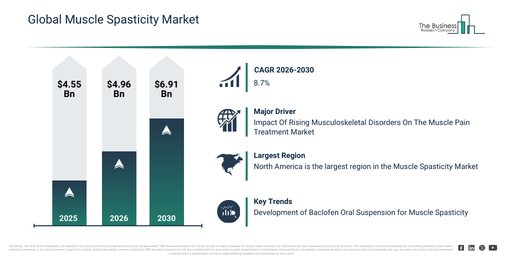
    The muscle spasticity market size has shown significant expansion in recent years. It is anticipated to increase from $4.55 billion in 2025 to $4.96 billion in 2026, exhibiting a compound annual growth rate (CAGR) of 8.8%. Historically, this market’s growth can be linked to an escalation in neurological injury cases, a greater occurrence of spinal cord disorders, a surge in post-stroke complications, the prompt utilization of oral muscle relaxants, and restricted accessibility to targeted treatments.

    The muscle spasticity market is set to witness robust expansion in the coming years, with expectations for it to reach $6.91 billion by 2030, growing at a compound annual growth rate (CAGR) of 8.7%. This projected increase during the forecast period stems from various factors, including advancements in drug delivery systems, the escalating adoption of botox-based treatments, the development of home-based rehabilitation solutions, increased investment in neurological care, and broadened clinical research into spasticity therapies. Significant trends anticipated in this period include a rising preference for botulinum toxin treatments, increased implementation of intrathecal baclofen therapy, a growing demand for oral muscle relaxants, the expansion of rehabilitation and physical therapy programs, and a greater focus on personalized spasticity management.

    Access Your Free Sample Report For In-Depth Market Analysis:

    https://www.thebusinessresearchcompany.com/sample.aspx?id=18411&type=smp

    Which Key Factors Are Driving The Muscle Spasticity Market Growth?

    The growing incidence of musculoskeletal disorders is anticipated to propel the muscle spasticity market forward. These conditions, which impact the body’s muscles, bones, and joints, frequently result in pain, stiffness, and restricted movement. The increase in musculoskeletal cases stems from factors such as an aging populace, inactive lifestyles, and the rising presence of chronic illnesses. The treatment of muscle spasticity aims to alleviate symptoms of musculoskeletal disorders by reducing pain, enhancing mobility, preventing complications, and improving patients’ overall quality of life and functional capabilities. For instance, in January 2024, data from the Office for Health Improvement and Disparities, a UK-based government department, indicated that in 2023, 18.4% of people aged 16 and over reported having a long-term musculoskeletal condition, a slight rise from 17.6% in 2022. Males reported these conditions less often (15.8%) compared to females (20.9%). Thus, the increasing prevalence of musculoskeletal disorders is a key driver for the muscle spasticity market.

    How Is The Muscle Spasticity Market Broken Down By Segment Categories?

    The muscle spasticity market covered in this report is segmented –

    1) By Drug Type: Baclofen, Botulinum Toxin, Diazepam, Dantrolene Sodium, Other Drugs

    2) By Route Of Administration: Oral, Intramuscular, Other Routes Of Administrations

    3) By Distribution Channel: Hospital Pharmacies, Retail Pharmacies, Online Pharmacies

    Subsegments:

    1) By Baclofen: Oral Baclofen, Intrathecal Baclofen (Pump)

    2) By Botulinum Toxin: Botox (Botulinum Toxin Type A), Dysport (Botulinum Toxin Type A), Xeomin (Botulinum Toxin Type A), Myobloc (Botulinum Toxin Type B)

    3) By Diazepam: Oral Diazepam, Injectable Diazepam

    4) By Dantrolene Sodium: Oral Dantrolene, Injectable Dantrolene

    5) By Other Drugs: Tizanidine, Clonidine, Gabapentin

    Which Trends Are Guiding The Direction Of The Muscle Spasticity Market?

    Leading companies in the muscle spasticity market are prioritizing the creation of innovative oral muscle-relaxant formulations. This focus aims to enhance dosing versatility, increase patient compliance, and serve the needs of individuals encountering difficulty in swallowing conventional solid-dose treatments. Novel oral muscle-relaxant formulations are defined as liquid or otherwise altered oral dosage types, designed to deliver established antispasmodic agents in a more accessible and patient-friendly format, thereby supporting accurate dosing and improved tolerability. For example, in April 2024, ANI Pharmaceuticals, a US-based pharmaceutical manufacturing company, introduced baclofen oral suspension. Baclofen oral suspension, a generic version of fleqsuvy, is prescribed to address muscle spasms caused by conditions such as multiple sclerosis and spinal cord injuries by aiding in muscle relaxation.

    Which Players Are Present In The Muscle Spasticity Market Space?

    Major companies operating in the muscle spasticity market are F. Hoffmann-La Roche AG, AbbVie Inc., Abbott Laboratories, Novartis AG, Teva Pharmaceutical Industries Ltd., Ipsen Pharma, Endo Pharmaceuticals Inc., Neurocrine Biosciences Inc., Merz Pharmaceuticals GmbH, Revance Therapeutics Inc., Acorda Therapeutics Inc., Zydus Cadila, Pfizer Inc., Merck & Co. Inc., Sanofi S.A., UCB Pharma S.A., Jazz Pharmaceuticals plc, Daiichi Sankyo Company Limited, GlaxoSmithKline plc, InMed Pharmaceuticals Inc., MediciNova Inc., Genentech Inc., Beximco Pharmaceuticals Ltd., Sun Pharmaceutical Industries Ltd., Taj Pharmaceuticals Limited

    Get The Full Muscle Spasticity Market Report:

    https://www.thebusinessresearchcompany.com/report/muscle-spasticity-global-market-report

    Which Geographic Region Dominates The Muscle Spasticity Market?

    North America was the largest region in the muscle spasticity market in 2025. Asia-Pacific is expected to be the fastest-growing region in the forecast period. The regions covered in the muscle spasticity market report are Asia-Pacific, South East Asia, Western Europe, Eastern Europe, North America, South America, Middle East, Africa.

    Request A Customized Muscle Spasticity Market Report For Competitive Insights:

    https://www.thebusinessresearchcompany.com/report/muscle-spasticity-global-market-report

    Browse Through More Reports Similar to the Global Muscle Spasticity Market 2026, By The Business Research Company

    Neuralgia Treatment Market Report 2026

    https://www.thebusinessresearchcompany.com/report/neuralgia-treatment-global-market-report

    Pain Management Drugs Market Report

    https://www.thebusinessresearchcompany.com/report/pain-management-drugs-global-market-report

    Fibromyalgia Treatment Market Report

    https://www.thebusinessresearchcompany.com/report/fibromyalgia-treatment-global-market-report

    Get in touch with us:

    The Business Research Company: https://www.thebusinessresearchcompany.com/

    Americas +1 310-496-7795

    Asia +44 7882 955267 & +91 8897263534

    Europe +44 7882 955267

    Email us at info@tbrc.info

    Follow us on:

    LinkedIn: https://in.linkedin.com/company/the-business-research-company

    YouTube: https://www.youtube.com/channel/UC24_fI0rV8cR5DxlCpgmyFQ

    Global Market Model: https://www.thebusinessresearchcompany.com/global-market-model

  • Muscle Pain Treatment Market Outlook Highlighting Key Drivers and Trends

    Muscle Pain Treatment Market Outlook Highlighting Key Drivers and Trends

    The Business Research Company’s 2026 market reports feature enhanced tools like market attractiveness analysis, TAM assessment, and company scoring matrices, along with interactive dashboards, deeper supply chain insights, and startup coverage strengthening the depth, usability, and strategic value of insights.

    What Is The Anticipated Rise In Market Value Of The Muscle Pain Treatment Market During The Forecast Period?

    The muscle pain treatment market has experienced robust expansion recently. Forecasts indicate it will expand from $13.59 billion in 2025 to $14.33 billion by 2026, demonstrating a compound annual growth rate (CAGR) of 5.4%. Historically, this expansion can be attributed to factors such as a rise in physical injuries, the increased prevalence of strenuous work conditions, the early adoption of OTC pain relievers, growth in sports-related muscle strain cases, and limited awareness of non-pharmacological therapies.

    The muscle pain treatment market is anticipated to experience robust growth in the coming years. Its valuation is projected to reach $17.42 billion by 2030, progressing at a compound annual growth rate (CAGR) of 5.0%. The projected increase in this period stems from factors such as enhancements in topical formulations, an escalating desire for individualized pain management, increased deployment of muscle relaxants in healthcare, the proliferation of physiotherapy centers, and rising investments in alternative pain treatments. Prominent trends for the forecast period encompass a heightened demand for topical analgesic items, greater application of muscle relaxants for acute pain, wider embrace of physical and massage therapies, the expansion of over-the-counter pain relief solutions, and an increasing emphasis on combination therapy for persistent muscle discomfort.

    Access Your Free Sample Report For In-Depth Market Analysis:

    https://www.thebusinessresearchcompany.com/sample.aspx?id=17206&type=smp

    What Primary Drivers Are Shaping The Muscle Pain Treatment Market?

    The rising occurrence of musculoskeletal disorders is anticipated to propel the muscle pain treatment market moving forward. These conditions involve the body’s muscles, bones, and joints, frequently leading to discomfort, rigidity, and hindered movement. The growth in musculoskeletal cases can be attributed to elements such as an aging demographic, inactive routines, and the increasing prevalence of chronic conditions. Muscle pain treatment seeks to ease the symptoms of musculoskeletal disorders by diminishing pain, boosting mobility, preventing adverse outcomes, and improving patients’ overall quality of life and functional capabilities. For instance, in January 2024, the Office for Health Improvement and Disparities, a UK-based government department, reported that in 2023, 18.4% of people aged 16 and over stated they had a long-term musculoskeletal condition, a slight rise from 17.6% in 2022. These issues were less often reported by males (15.8%) compared with females (20.9%). Thus, the escalating prevalence of musculoskeletal disorders is a significant driver for the muscle pain treatment market.

    What Are The Different Segment Types In The Muscle Pain Treatment Market Segment Breakdown?

    The muscle pain treatment market covered in this report is segmented –

    1) By Pharmacological Treatment: Analgesics, Muscle Relaxants, Topical Analgesics, Other Pharmacological Treatments

    2) By Non-Pharmacological Treatment: Physical Therapy, Massage Therapy, Acupuncture, Heat And Cold Therapy, Exercise And Stretching, Other Non-Pharmacological Treatments

    3) By Type Of Pain: Acute Muscle Pain, Chronic Muscle Pain

    4) By Cause Of Muscle Pain: Overuse And Strain, Injury Or Trauma, Inflammatory Conditions, Neurological Conditions, Infections, Other Cause Of Muscle Pains

    5) By Application: Hospital, Clinic, Other Applications

    Subsegments:

    1) By Analgesics: Nonsteroidal Anti-Inflammatory Drugs (NSAIDs), Acetaminophen

    2) By Muscle Relaxants: Centrally Acting Muscle Relaxants, Peripherally Acting Muscle Relaxants

    3) By Topical Analgesics: Creams & Ointments, Gels & Sprays, Patches

    4) By Other Pharmacological Treatments: Corticosteroids, Antidepressants, Anticonvulsants

    What Trends Are Affecting The Growth Of The Muscle Pain Treatment Market?

    Major companies operating in the muscle pain treatment market are focusing on developing innovative solutions, such as topical analgesic products, to enhance their effectiveness and user convenience. Topical analgesic products are medications directly applied to the skin to relieve pain by targeting the affected region and are commonly used for conditions like muscle aches, arthritis, and minor injuries. For instance, in July 2024, Wellness Formulations LLC, a US-based company providing health and wellness products, launched Ralli Rapid Pain Relief, a new product that features menthol’s pain-relieving benefits combined with advanced penetration enhancers and skin conditioners. It delivers effective pain relief without leaving a greasy residue, offering quick and lasting relief from muscle aches, joint pain, arthritis, strains, and sprains. Available in gel, spray, and roll-on formats, it provides convenient application directly to the affected area, eliminating the need for rubbing or massaging.

    Who Are The Well-Known Companies In The Muscle Pain Treatment Market?

    Major companies operating in the muscle pain treatment market are Pfizer Inc., Johnson & Johnson, Roche Holding AG, Merck & Co. Inc., AbbVie Inc., Bayer AG, Sanofi SA, Bristol Myers Squibb Company, AstraZeneca PLC, Novartis International AG, GlaxoSmithKline plc (GSK), Eli Lilly and Company, Amgen Inc., Teva Pharmaceutical Industries Ltd., Baxter International Inc., Haleon Plc, Select Medical Holdings Corporation, Purdue Pharma, Endo Pharmaceuticals Inc., Concentra Inc., Athletico Physical Therapy, ATI Physical Therapy Inc., Physiotherapy Associates Inc, NovaCare Rehabilitation Inc, CORA Health Services Inc., Select Physical Therapy Holdings Inc., ProActive Physical Therapy

    Get The Full Muscle Pain Treatment Market Report:

    https://www.thebusinessresearchcompany.com/report/muscle-pain-treatment-global-market-report

    Which Region Is The Leading Market For The Muscle Pain Treatment Market?

    North America was the largest region in the muscle pain treatment market in 2025. Asia-Pacific is expected to be the fastest-growing region in the forecast period. The regions covered in the muscle pain treatment market report are Asia-Pacific, South East Asia, Western Europe, Eastern Europe, North America, South America, Middle East, Africa.

    Request A Customized Muscle Pain Treatment Market Report For Competitive Insights:

    https://www.thebusinessresearchcompany.com/report/muscle-pain-treatment-global-market-report

    Browse Through More Reports Similar to the Global Muscle Pain Treatment Market 2026, By The Business Research Company

    Muscarinic Acetylcholine Receptor Market Report 2026

    https://www.thebusinessresearchcompany.com/report/muscarinic-acetylcholine-receptor-global-market-report

    Cholinergic Drugs Market Report

    https://www.thebusinessresearchcompany.com/report/cholinergic-drugs-global-market-report

    Glp 1 Receptor Agonist Market Report

    https://www.thebusinessresearchcompany.com/report/glp-1-receptor-agonist-global-market-report

    Get in touch with us:

    The Business Research Company: https://www.thebusinessresearchcompany.com/

    Americas +1 310-496-7795

    Asia +44 7882 955267 & +91 8897263534

    Europe +44 7882 955267

    Email us at info@tbrc.info

    Follow us on:

    LinkedIn: https://in.linkedin.com/company/the-business-research-company

    YouTube: https://www.youtube.com/channel/UC24_fI0rV8cR5DxlCpgmyFQ

    Global Market Model: https://www.thebusinessresearchcompany.com/global-market-model
  • Muscarinic Acetylcholine Receptor Market Overview (2026–2030) With Industry Insights

    Muscarinic Acetylcholine Receptor Market Overview (2026–2030) With Industry Insights

    The Business Research Company’s 2026 market reports feature enhanced tools like market attractiveness analysis, TAM assessment, and company scoring matrices, along with interactive dashboards, deeper supply chain insights, and startup coverage strengthening the depth, usability, and strategic value of insights.

    How Is The Market Size Of The Muscarinic Acetylcholine Receptor Market Expected To Scale Between 2026 And 2030?

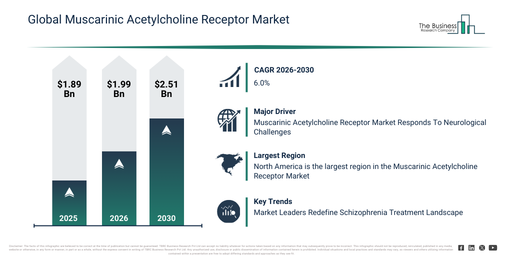
    The muscarinic acetylcholine receptor market has experienced substantial growth in recent years. Projections indicate it will expand from $1.89 billion in 2025 to $1.99 billion in 2026, achieving a compound annual growth rate (CAGR) of 5.5%. This market’s growth during the historical period can be attributed to the increased prevalence of nervous system disorders, early research on g protein pathways, a rising demand for respiratory condition treatments, advances in pharmaceutical R&D, and the limited availability of selective receptor targeting options.

    The muscarinic acetylcholine receptor market is expected to experience substantial growth in the upcoming years. It is projected to expand to $2.51 billion by 2030, progressing at a compound annual growth rate (CAGR) of 6.0%. This anticipated growth during the forecast period is largely due to advancements in receptor-specific drug discovery, increased investment in therapies for neurodegenerative diseases, the expansion of personalized medicine, the development of combination receptor products, and a greater emphasis on targeted molecular modulation. Significant trends for the forecast period include a rising focus on selective receptor targeting, an increasing need for neurological disorder therapies, an uptick in research concerning G protein-coupled receptor modulation, the broadening of drug development for memory impairment, and a growing interest in combination receptor modulators.

    Access Your Free Sample Report For In-Depth Market Analysis:

    https://www.thebusinessresearchcompany.com/sample.aspx?id=10861&type=smp

    Which Major Drivers Are Influencing The Expansion Of The Muscarinic Acetylcholine Receptor Market?

    The rising occurrence of neurological disorders is anticipated to fuel the expansion of the muscarinic acetylcholine receptor market moving ahead. These conditions are defined as health issues impacting the nervous system, encompassing the brain, spinal cord, and peripheral nerves. Muscarinic acetylcholine receptors (mAChR) play a vital role in controlling intricate behaviors such as cognition, movement, and reward, positioning them as viable therapeutic targets for numerous neurological diseases. For example, in October 2023, information from the World Federation of Neurology, a UK-based charity, highlighted the escalating global health crisis where neurological disorders have become the second-leading cause of death and the primary cause of disability worldwide. This report also noted that more than 40 percent of the global population was affected in 2023, and the population living with brain disease is projected to nearly double by 2050. Consequently, the increasing prevalence of neurological disorders is propelling the expansion of the muscarinic acetylcholine receptor market.

    Which Segment Classifications Are Used In The Muscarinic Acetylcholine Receptor Market Segment Analysis?

    The muscarinic acetylcholine receptor market covered in this report is segmented –

    1) By Type: M1 Receptor, M4 Receptor, M5 Receptor, Other Types

    2) By Distribution Channel: Hospitals, Clinics, Retail Pharmacies, Online Pharmacies, Specialty Centers

    3) By Application: Chronic Obstructive Pulmonary Disease, Attention Deficit Hyperactivity Disorder, Alzheimer’s Disease, Memory Impairment, Psychiatric Disorders, Other Applications

    Subsegments:

    1) By M1 Receptor: Centrally Acting Antagonists, Centrally Acting Agonists, Peripherally Acting Compounds

    2) By M4 Receptor: Selective Agonists, Selective Antagonists, Non-Selective Agents

    3) By M5 Receptor: Agonists, Antagonists

    4) By Other Types: M2 Receptor, M3 Receptor, Combination Receptor Products

    Which Trends Are Shaping The Muscarinic Acetylcholine Receptor Market?

    Leading companies operating in the muscarinic acetylcholine receptor market are prioritizing the creation of novel products to bolster their market presence and secure regulatory authorization for addressing schizophrenia. Schizophrenia is a severe mental illness that impacts an individual’s thoughts, emotions, and conduct. Those afflicted with schizophrenia may seem detached from reality, which can be distressing for them and their families. For example, in September 2023, Karuna Therapeutics, Inc., a US-based clinical-stage biopharmaceutical company, disclosed that it had filed a New Drug Application (NDA) with the FDA for KarXT (xanomeline-trospium), designated for schizophrenia treatment. The company remains dedicated to the identification, development, and delivery of innovative therapies for individuals experiencing neurological and psychiatric disorders.

    Which Firms Are Contributing To The Muscarinic Acetylcholine Receptor Market Ecosystem?

    Major companies operating in the muscarinic acetylcholine receptor market are Heptares Therapeutics Ltd., Sumitomo Dainippon Pharma Co. Ltd., Anavex Life Sciences Corp., NeuroHealing Pharmaceuticals Inc., AstraZeneca plc, Karuna Pharmaceuticals Inc., Anven AlzDx Inc., Merck & Co Inc., Eli Lilly and Co., GlaxoSmithKline plc, Johnson & Johnson, Pfizer Inc., Novartis AG, AbbVie Inc., Boehringer Ingelheim International GmbH, Takeda Pharmaceutical Company Limited, Teva Pharmaceutical Industries Ltd., F. Hoffmann-La Roche Ltd., Eisai Co. Ltd., Astellas Pharma Inc., Sanofi SA, Sun Pharmaceutical Industries Ltd.

    Get The Full Muscarinic Acetylcholine Receptor Market Report:

    https://www.thebusinessresearchcompany.com/report/muscarinic-acetylcholine-receptor-global-market-report

    Where Is The Muscarinic Acetylcholine Receptor Market Primarily Concentrated By Region?

    North America was the largest region in the muscarinic acetylcholine receptor market in 2025.Asia-Pacific is expected to be the fastest-growing region in the global muscarinic acetylcholine receptor market during the forecast period. The regions covered in the muscarinic acetylcholine receptor market report are Asia-Pacific, South East Asia, Western Europe, Eastern Europe, North America, South America, Middle East, Africa.

    Request A Customized Muscarinic Acetylcholine Receptor Market Report For Competitive Insights:

    https://www.thebusinessresearchcompany.com/report/muscarinic-acetylcholine-receptor-global-market-report

    Browse Through More Reports Similar to the Global Muscarinic Acetylcholine Receptor Market 2026, By The Business Research Company

    Clinical Biomarkers Market Report 2026

    https://www.thebusinessresearchcompany.com/report/clinical-biomarkers-global-market-report

    Multiplex Assays Market

    https://www.thebusinessresearchcompany.com/report/multiplex-assays-market

    Biomarkers Market Report

    https://www.thebusinessresearchcompany.com/report/biomarkers-global-market-report

    Get in touch with us:

    The Business Research Company: https://www.thebusinessresearchcompany.com/

    Americas +1 310-496-7795

    Asia +44 7882 955267 & +91 8897263534

    Europe +44 7882 955267

    Email us at info@tbrc.info

    Follow us on:

    LinkedIn: https://in.linkedin.com/company/the-business-research-company

    YouTube: https://www.youtube.com/channel/UC24_fI0rV8cR5DxlCpgmyFQ

    Global Market Model: https://www.thebusinessresearchcompany.com/global-market-model
  • Multiplex Biomarker Imaging Market Forecast Highlighting Trends and Expansion Potential

    Multiplex Biomarker Imaging Market Forecast Highlighting Trends and Expansion Potential

    The Business Research Company’s 2026 market reports feature enhanced tools like market attractiveness analysis, TAM assessment, and company scoring matrices, along with interactive dashboards, deeper supply chain insights, and startup coverage strengthening the depth, usability, and strategic value of insights.

    What Level Of Market Value Growth Is Predicted For The Multiplex Biomarker Imaging Market From 2026 To 2030?

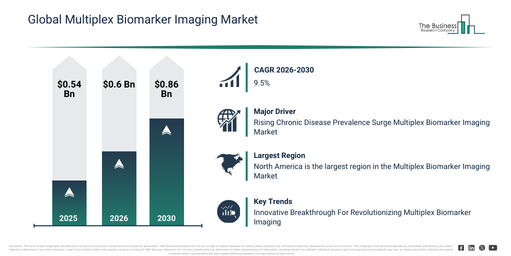
    The multiplex biomarker imaging market has seen significant expansion in recent years. Its valuation is projected to increase from $0.54 billion in 2025 to $0.6 billion in 2026, registering a compound annual growth rate (CAGR) of 10.8%. This historical growth can be linked to an upsurge in cancer research studies, a greater demand for biomarker-driven analysis, the initial integration of fluorescence imaging, the limitations of single-marker analysis techniques, and the proliferation of molecular pathology testing.

    The multiplex biomarker imaging market is projected to experience robust growth in the upcoming years, with its size expected to reach $0.86 billion by 2030, demonstrating a compound annual growth rate (CAGR) of 9.5%. This expansion during the forecast period can be attributed to advancements in imaging platforms, an increasing demand for personalized medicine, the broadening use of multiplex assay applications, the growth of pharmaceutical biomarker programs, and heightened investment in spatial biology research. Key trends anticipated in this period include the expanding application of multiplex imaging in oncology research, a rising demand for high-resolution tissue mapping, the increased adoption of advanced immunofluorescence techniques, the proliferation of automated image analysis solutions, and the integration of multiplex imaging with drug discovery platforms.

    Access Your Free Sample Report For In-Depth Market Analysis:

    https://www.thebusinessresearchcompany.com/sample.aspx?id=16127&type=smp

    What Key Drivers Are Fueling The Growth Of The Multiplex Biomarker Imaging Market?

    The increasing incidence of chronic diseases is projected to drive the expansion of the multiplex biomarker imaging market moving forward. These are long-lasting health conditions that endure or reappear, often involving complex etiologies, multiple risk factors, and extended incubation periods. The growing occurrence of chronic diseases stems from various factors, including the rapid aging of the population, improved identification and diagnosis, enhanced disease treatment and management, and modifications in lifestyle and environmental risk factors. Multiplex biomarker imaging plays a crucial role in chronic disease management, facilitating comprehensive analysis and characterization of disease progression and responses to therapy. As an illustration, a report published in January 2023 by the National Institutes of Health (NIH), a US-based biomedical research agency, forecasts that the population aged 50 and older with at least one chronic illness will increase by 99.5%, from 71.52 million in 2020 to 142.66 million in 2050. This surge in chronic disease prevalence is thus propelling the growth of the multiplex biomarker imaging market.

    How Is The Multiplex Biomarker Imaging Market Organized By Segment Classification?

    The multiplex biomarker imaging market covered in this report is segmented –

    1) By Component Type: Instruments, Software, Services

    2) By Imaging Techniques: Immunofluorescence (IF) Assay, Tissue Microarray (TMA) Assay, Immunohistochemistry (IHC) Assay, Fluorescent In Situ Hybridization (FISH) Assay, Toponome Imaging System (TIS)

    3) By Application: Drug Safety, Oncology Studies, Genetic Characterization Studies

    4) By End User: Research Institutes, Government And Private, Clinical Labs, Pharmaceutical And Biotechnology

    Subsegments:

    1) By Instruments: Imaging Systems (Microscopes, Scanners), Detection Devices, Reagents And Kits

    2) By Software: Image Analysis Software, Data Management Software, Visualization And Interpretation Software

    3) By Services: Technical Support And Maintenance, Consultation And Training, Imaging And Analysis Services

    What Trends Are Influencing The Multiplex Biomarker Imaging Market?

    Companies operating in the multiplex biomarker imaging market are prioritizing the development of innovative slides, including automated slide loaders, to provide advanced imaging solutions and enhance customer service. Automated slide loaders optimize sample handling, significantly reducing manual effort and boosting throughput, which is essential for high-volume multiplex biomarker imaging experiments. For example, in April 2024, Standard BioTools Inc., a US-based provider of analytical systems and instruments, introduced a Hyperion XTi Imaging System featuring a new high-throughput multiplexed whole slide to incorporate automation and flexibility. This system offers three modes for rapid analysis: preview, tissue, and cell, enabling researchers to quickly visualize tissue heterogeneity and perform deeper analysis. This novel whole slide imaging method, utilizing imaging mass cytometry (IMC), achieves up to 10 times higher throughput than cyclic immunofluorescent imaging. Additionally, a new automated slide loader facilitates high-throughput imaging, cutting down hands-on time and allowing for standardization. These advancements aim to accelerate breakthroughs in spatial proteomics, delivering dependable insights into health and disease.

    Who Are The Industry Participants Involved In The Multiplex Biomarker Imaging Market?

    Major companies operating in the multiplex biomarker imaging market are Merck KGaA, Thermo Fisher Scientific Inc., Danaher Corporation, Becton Dickinson and Company (BD), Carl Zeiss AG, Illumina Inc, PerkinElmer Inc., Bio-Rad Laboratories Inc, Bruker Corporation, Bio-Techne Corporation, Leica Biosystems Nussloch GmbH, Abcam Plc, Meso Scale Diagnostics LLC, Fluidigm Corporation, NanoString Technologies, Quanterix Corporation, Akoya Biosciences, Enzo Biochem Inc, Cisbio Bioassays, Flagship Biosciences, Aushon BioSystems Ltd, Ionpath Inc., Biosims Technologies

    Get The Full Multiplex Biomarker Imaging Market Report:

    https://www.thebusinessresearchcompany.com/report/multiplex-biomarker-imaging-global-market-report

    Which Region Has The Greatest Market Share In The Multiplex Biomarker Imaging Market?

    North America was the largest region in the multiplex biomarker imaging market in 2025. Asia-Pacific is expected to be the fastest-growing region in the forecast period. The regions covered in the multiplex biomarker imaging market report are Asia-Pacific, South East Asia, Western Europe, Eastern Europe, North America, South America, Middle East, Africa.

    Request A Customized Multiplex Biomarker Imaging Market Report For Competitive Insights:

    https://www.thebusinessresearchcompany.com/report/multiplex-biomarker-imaging-global-market-report

    Browse Through More Reports Similar to the Global Multiplex Biomarker Imaging Market 2026, By The Business Research Company

    Multiplex Pcr Assays Market Report 2026

    https://www.thebusinessresearchcompany.com/report/multiplex-pcr-assays-global-market-report

    Multiplex Biomarker Imaging Market Report

    https://www.thebusinessresearchcompany.com/report/multiplex-biomarker-imaging-global-market-report

    Cell Based Assays Market Report

    https://www.thebusinessresearchcompany.com/report/cell-based-assays-global-market-report

    Get in touch with us:

    The Business Research Company: https://www.thebusinessresearchcompany.com/

    Americas +1 310-496-7795

    Asia +44 7882 955267 & +91 8897263534

    Europe +44 7882 955267

    Email us at info@tbrc.info

    Follow us on:

    LinkedIn: https://in.linkedin.com/company/the-business-research-company

    YouTube: https://www.youtube.com/channel/UC24_fI0rV8cR5DxlCpgmyFQ

    Global Market Model: https://www.thebusinessresearchcompany.com/global-market-model