Category: Healthcare Services

  • HDAC Inhibitors Market Forecast (2026–2030): Expansion Trends

    HDAC Inhibitors Market Forecast (2026–2030): Expansion Trends

    The Business Research Company’s 2026 market reports feature enhanced tools like market attractiveness analysis, TAM assessment, and company scoring matrices, along with interactive dashboards, deeper supply chain insights, and startup coverage strengthening the depth, usability, and strategic value of insights.

    What Is The Projected Increase In Market Value Of The Histone Deacetylase (HDAC) Inhibitors Market During 2026–2030?

    The histone deacetylase (hdac) inhibitors market has shown strong expansion in recent years. It is projected to grow from $1.32 billion in 2025 to $1.42 billion in 2026, with a compound annual growth rate (CAGR) of 7.5%. This historical growth can be linked to factors such as increased oncology drug research activity, a greater understanding of epigenetic mechanisms, the expansion of clinical trial programs, rising pharmaceutical R&D investments, and the availability of advanced molecular screening tools.

    The histone deacetylase (hdac) inhibitors market size is forecast to experience robust expansion over the next few years, projected to achieve $1.89 billion by 2030, growing at a compound annual growth rate (CAGR) of 7.4%. This anticipated growth during the forecast period stems from factors such as the increasing adoption of personalized cancer therapies, rising investments in epigenetic drug development, an expansion of neurology-related hdac research, a growing demand for targeted therapeutics, and increasing regulatory approvals for novel hdac inhibitors. Significant trends expected during this period include a heightened focus on targeted epigenetic therapies, the rising development of selective hdac inhibitors, an expanding use of combination oncology treatments, the enlargement of precision medicine drug pipelines, and an enhanced emphasis on biomarker-driven drug discovery.

    Access Your Free Sample Report For In-Depth Market Analysis:

    https://www.thebusinessresearchcompany.com/report/histone-deacetylase-hdac-inhibitors-global-market-report

    What Leading Drivers Are Supporting The Histone Deacetylase (HDAC) Inhibitors Market Expansion?

    The increasing occurrence of neurodegenerative disorders is anticipated to propel the expansion of the histone deacetylase (HDAC) inhibitors market moving forward. These conditions, which involve the progressive degeneration and death of neurons in the brain and spinal cord, result in cognitive and motor dysfunction and include diseases such as Alzheimer’s, distinguished by memory loss and cognitive decline due to amyloid plaques and tau tangles. The growing incidence of neurodegenerative disorders can be attributed to several factors, including age, longevity, genetics, and environmental influences. Histone deacetylase (HDAC) inhibitors are being investigated as potential treatments for neurodegenerative disorders because of their capacity to modulate gene expression and provide neuroprotective effects. For instance, in August 2024, according to the Centers for Disease Control and Prevention, a US-based federal agency, an estimated 6.7 million older adults in the United States are currently living with Alzheimer’s disease, a number that is projected to rise to nearly 14 million by 2060. Therefore, the rising incidence of neurodegenerative disorders is driving the growth of the histone deacetylase (HDAC) inhibitors market.

    Which Segment Types Are Examined In The Histone Deacetylase (HDAC) Inhibitors Market Segment Study?

    The histone deacetylase (hdac) inhibitors market covered in this report is segmented –

    1) By Class: Class I HDACs, Class II HDACs, Class III HDACs

    2) By Route Of Administration: Oral HDAC Inhibitors, Parenteral HDAC Inhibitors

    3) By Application: Oncology, Neurology, Other Applications

    4) By End User: Hospitals, Academic And Research Institutes, Pharmaceutical Companies, Other End Users

    Subsegments:

    1) By Class I HDACs: HDAC1, HDAC2, HDAC3, HDAC8

    2) By Class II HDACs: HDAC4, HDAC5, HDAC6, HDAC7, HDAC9, HDAC10

    3) By Class III HDACs (Sirtuins): SIRT1, SIRT2, SIRT3, SIRT4, SIRT5, SIRT6, SIRT7

    What Emerging Trends Are Seen In The Histone Deacetylase (HDAC) Inhibitors Market?

    Leading firms within the histone deacetylase (HDAC) inhibitors market are concentrating their efforts on creating novel remedies, including HDAC inhibitors for the management of cancer, with the goal of improving their effectiveness and minimizing adverse reactions. These inhibitors represent a category of pharmaceutical agents employed in oncology. Their mechanism involves impeding the function of HDAC enzymes, which are responsible for cleaving acetyl groups from histone proteins. This impediment subsequently results in elevated histone acetylation, thereby modifying chromatin architecture and impacting gene expression. An illustrative example occurred in September 2023, when Shuttle Pharmaceuticals Holdings Inc., a US-based entity specializing in pioneering cancer therapies, secured New HDAC Inhibitor Patents for Cancer Treatment from the U.S. Patent and Trademark Office. These cutting-edge inhibitors are specifically engineered to home in on particular HDAC enzymes involved in the advancement of cancer, intending to disrupt irregular gene expression profiles that fuel tumor proliferation and spread. The patented compounds exhibit superior potency and selectivity, which helps in reducing unintended effects and boosting the safety records for individuals receiving therapy.

    Which Players Are Part Of The Competitive Landscape Of The Histone Deacetylase (HDAC) Inhibitors Market?

    Major companies operating in the histone deacetylase (hdac) inhibitors market are Bristol-Myers Squibb Company, Novartis AG, Merck KGaA, Abcam plc, Pharmacyclics LLC, R&D Systems Inc., Tenaya Therapeutics Inc., Syndax Pharmaceuticals Inc., Italfarmaco SpA, InvivoGen Corporation, TCI Chemicals (India) Pvt. Ltd., 4SC AG, Medivir AB, Mirati Therapeutics Inc., Spectrum Pharmaceuticals Inc., Curis Inc., Acetylon Pharmaceuticals Inc., Oryzon Genomics SA, Xynomic Pharmaceuticals Inc., Celleron Therapeutics Ltd., Midatech Pharma PLC, Karus Therapeutics Ltd., Shenzhen Chipscreen Biosciences Co. Ltd.

    Get The Full Histone Deacetylase (HDAC) Inhibitors Market Report:

    https://www.thebusinessresearchcompany.com/report/histone-deacetylase-hdac-inhibitors-global-market-report

    Which Region Leads The Histone Deacetylase (HDAC) Inhibitors Market In Terms Of Market Share?

    North America was the largest region in the histone deacetylase (HDAC) inhibitors market in 2025. Asia-Pacific is expected to be the fastest-growing region in the forecast period. The regions covered in the histone deacetylase (hdac) inhibitors market report are Asia-Pacific, South East Asia, Western Europe, Eastern Europe, North America, South America, Middle East, Africa.

    Request A Customized Histone Deacetylase (HDAC) Inhibitors Market Report For Competitive Insights:

    https://www.thebusinessresearchcompany.com/report/histone-deacetylase-hdac-inhibitors-global-market-report

    Browse Through More Reports Similar to the Global Histone Deacetylase (HDAC) Inhibitors Market 2026, By The Business Research Company

    Anti Infective Drugs Market 2026

    https://www.thebusinessresearchcompany.com/report/anti-infective-drugs-market

    Histone Deacetylase Inhibitors Market Report 2026

    https://www.thebusinessresearchcompany.com/report/histone-deacetylase-inhibitors-global-market-report

    Kinase Inhibitors Market Report 2026

    https://www.thebusinessresearchcompany.com/report/kinase-inhibitors-global-market-report

    Get in touch with us:

    The Business Research Company: https://www.thebusinessresearchcompany.com/

    Americas +1 310-496-7795

    Asia +44 7882 955267 & +91 8897263534

    Europe +44 7882 955267

    Email us at info@tbrc.info

    Follow us on:

    LinkedIn: https://in.linkedin.com/company/the-business-research-company

    YouTube: https://www.youtube.com/channel/UC24_fI0rV8cR5DxlCpgmyFQ

    Global Market Model: https://www.thebusinessresearchcompany.com/global-market-model
  • Global Histology and Cytology Market Analysis (2026–2030): Strategic Insights

    Global Histology and Cytology Market Analysis (2026–2030): Strategic Insights

    The Business Research Company’s 2026 market reports feature enhanced tools like market attractiveness analysis, TAM assessment, and company scoring matrices, along with interactive dashboards, deeper supply chain insights, and startup coverage strengthening the depth, usability, and strategic value of insights.

    How Is The Market Size Of The Histology And Cytology Market Expected To Change From 2026 To 2030?

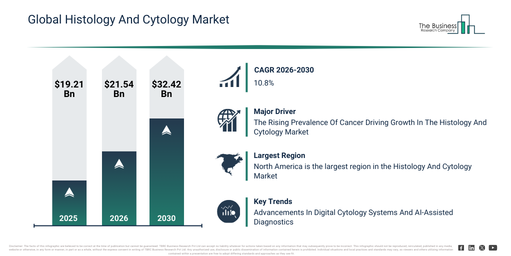
    The histology and cytology market size has shown rapid expansion in recent years. This market is expected to grow from $19.21 billion in 2025 to $21.54 billion in 2026, at a compound annual growth rate (CAGR) of 12.1%. The increase observed in the historic period can be attributed to increasing cancer diagnostic testing volumes, expansion of hospital laboratory infrastructure, rising adoption of microscopy-based diagnostics, growth in clinical research activities, and the availability of standardized staining reagents.

    The histology and cytology market is projected for substantial expansion, reaching $32.42 billion by 2030, exhibiting a compound annual growth rate (CAGR) of 10.8%. This anticipated growth is driven by factors such as a heightened need for early disease identification, the rising incorporation of AI-powered diagnostics, the broadening scope of personalized medicine, increased capital allocation for laboratory automation, and the wider uptake of remote pathology systems. Key trends during this period encompass the greater embrace of digital pathology platforms, the expanding deployment of automated tissue processing technologies, the deeper integration of AI for image analysis, the development of sophisticated cytology screening methods, and a sharpened emphasis on optimizing high-throughput laboratory processes.

    Access Your Free Sample Report For In-Depth Market Analysis:

    https://www.thebusinessresearchcompany.com/report/histology-and-cytology-global-market-report

    Which Key Factors Are Driving The Histology And Cytology Market Growth?

    The rising incidence of cancer is anticipated to fuel expansion in the histology and cytology market moving ahead. Cancer encompasses a wide range of illnesses marked by the unregulated proliferation and dissemination of atypical cells within the body. Such cells are capable of invading and obliterating healthy tissue, and possess the capacity to migrate to distant body regions (metastasis). Various elements contribute to cancer’s occurrence, including an aging populace, inadequate nutrition, insufficient physical movement, heavy alcohol intake, environmental contaminants, and inherited genetic alterations. These fields, histology and cytology, play a vital role across the entire spectrum of cancer care, encompassing initial detection, therapy formulation, and tracking treatment effectiveness, thereby significantly influencing patient results in cancer medicine. As an illustration, in July 2024, data from the Australian Institute of Health and Welfare, an Australia-based governmental body, indicated that approximately 165,000 Australians received a new cancer diagnosis in 2023, translating to more than 450 new cases daily, with males accounting for roughly 55% of these reported diagnoses. Consequently, the growing incidence of cancer is a key impetus for the histology and cytology market.

    How Are Different Segments Classified In The Histology And Cytology Market Segment Analysis?

    The histology and cytology market covered in this report is segmented –

    1) By Product: Instruments And Analysis Software System, Consumable And Reagents

    2) By Test Type: Microscopy Methods, Flow Cytometry, Molecular Genetic Methods

    3) By Application: Drug Discovery And Designing, Clinical Diagnostics, Academic Research

    4) By End User: Pharma And Biotech Companies, Diagnostic Laboratories, Other End Users

    Subsegments:

    1) By Instruments And Analysis Software System: Microtomes, Tissue Processors, Stainers, Coverslippers, Cytology Slide Preparation Instruments, Digital Imaging Systems, Histology And Cytology Analysis Software

    2) By Consumables And Reagents: Staining Reagents, Fixatives, Embedding Media, Antibodies, Cytology Collection Kits, Histology Slides

    Which Trends Are Guiding The Direction Of The Histology And Cytology Market?

    Leading companies in the histology and cytology market are concentrating on developing innovative solutions, such as AI-assisted cervical cytology platforms, to enhance diagnostic accuracy, optimize workflows, and improve patient outcomes. An AI-assisted cervical cytology platform is a diagnostic system utilizing artificial intelligence to analyze cervical cell samples, thereby improving detection accuracy, reducing errors, and accelerating Pap smear screening. For instance, in February 2024, Hologic Inc., a US-based medical technology company, secured approval for the Genius™ Digital Diagnostics System, which is the first and only FDA-cleared digital cytology system integrating deep-learning-based artificial intelligence (AI) with advanced volumetric imaging technology. It is designed to aid in identifying precancerous lesions and cervical cancer cells more accurately than traditional microscopy methods.

    Who Are The Companies Driving Activity In The Histology And Cytology Market?

    Major companies operating in the histology and cytology market are Thermo Fisher Scientific Inc., Roche Diagnostics International Ltd., Agilent Technologies Inc., Hologic Inc., Leica Microsystems Nussloch GmbH, Sakura Finetechnical Company Ltd., Biogenex Laboratories Inc., StatLab Medical Products Inc., Biocare Medical LLC, A. Menarini Diagnostics S.r.l, Milestone Medical Inc., Diapath S.p.A., CellPath USA, Medite Medical GmbH, Histo-Line Laboratories s.r.l., Hacker Instruments & Industries Inc., Amos Scientific Pty. Ltd., TissueGnostics GmbH, Konfoong Bioinformation Tech Co. Ltd., Intelsint Srl

    Get The Full Histology And Cytology Market Report:

    https://www.thebusinessresearchcompany.com/report/histology-and-cytology-global-market-report

    Which Region Leads The Histology And Cytology Market In Overall Market Size?

    North America was the largest region in the histology and cytology market in 2025. Asia-Pacific is expected to be the fastest-growing region in the forecast period. The regions covered in the histology and cytology market report are Asia-Pacific, South East Asia, Western Europe, Eastern Europe, North America, South America, Middle East, Africa.

    Request A Customized Histology And Cytology Market Report For Competitive Insights:

    https://www.thebusinessresearchcompany.com/report/histology-and-cytology-global-market-report

    Browse Through More Reports Similar to the Global Histology And Cytology Market 2026, By The Business Research Company

    Digital Pathology Market Report 2026

    https://www.thebusinessresearchcompany.com/report/digital-pathology-global-market-report

    Histology Equipment Market Report 2026

    https://www.thebusinessresearchcompany.com/report/histology-equipment-global-market-report

    Immunohematology Market Report 2026

    https://www.thebusinessresearchcompany.com/report/immunohematology-global-market-report

    Get in touch with us:

    The Business Research Company: https://www.thebusinessresearchcompany.com/

    Americas +1 310-496-7795

    Asia +44 7882 955267 & +91 8897263534

    Europe +44 7882 955267

    Email us at info@tbrc.info

    Follow us on:

    LinkedIn: https://in.linkedin.com/company/the-business-research-company

    YouTube: https://www.youtube.com/channel/UC24_fI0rV8cR5DxlCpgmyFQ

    Global Market Model: https://www.thebusinessresearchcompany.com/global-market-model
  • His-Tag Antibody Market Outlook (2026–2030): Growth Drivers and Projections

    His-Tag Antibody Market Outlook (2026–2030): Growth Drivers and Projections

    The Business Research Company’s 2026 market reports feature enhanced tools like market attractiveness analysis, TAM assessment, and company scoring matrices, along with interactive dashboards, deeper supply chain insights, and startup coverage strengthening the depth, usability, and strategic value of insights.

    From Its 2026 Market Size, What Value Is The Histidine Tag (His-Tag) Antibody Market Projected To Reach By 2030?

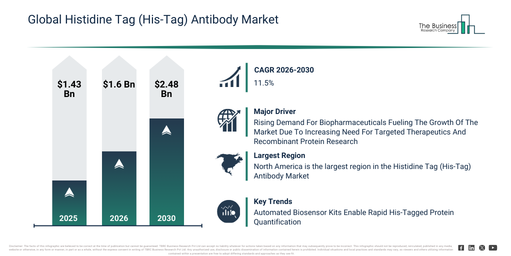
    The histidine tag (his-tag) antibody market has seen rapid expansion in recent years. Its value is expected to increase from $1.43 billion in 2025 to $1.6 billion in 2026, at a compound annual growth rate (CAGR) of 11.8%. The growth recorded historically can be attributed to several factors, including an increase in recombinant protein research, the expansion of academic life science laboratories, a greater use of affinity purification techniques, the availability of standardized tagging methods, and rising financial support for molecular biology research.

    The histidine tag (his-tag) antibody market size is projected for substantial expansion in the upcoming years, with an expected value of $2.48 billion by 2030, demonstrating a compound annual growth rate (CAGR) of 11.5%. This growth during the forecast period is fueled by factors such as the escalating demand for sophisticated protein analysis instruments, the enlargement of biopharmaceutical research pipelines, the increasing embrace of recombinant and nanobody formats, a heightened emphasis on the sensitivity and accuracy of assays, and the increasing incorporation of automation into laboratory procedures. Prominent trends observed in this period include an amplified need for highly specific research antibodies, the expanding application of his-tag antibodies in protein purification, the wider adoption of recombinant antibody formats, an increase in studies focused on tagged protein expression, and a strengthened commitment to reproducibility in life science research.

    Access Your Free Sample Report For In-Depth Market Analysis:

    https://www.thebusinessresearchcompany.com/report/global-histidine-tag-his-tag-antibody-market-report

    What Primary Drivers Are Shaping The Histidine Tag (His-Tag) Antibody Market?

    The increasing need for biopharmaceuticals is anticipated to fuel expansion in the histidine tag (His-Tag) antibody market. Biopharmaceuticals are defined as therapeutic agents derived from biological sources or biotechnological processes, as opposed to traditional chemical synthesis. This escalating demand stems from the growing incidence of chronic and intricate diseases, which necessitates advanced, targeted treatments that conventional medications often cannot adequately address. Histidine tag (His-Tag) antibodies play a crucial role in biopharmaceutical research by facilitating accurate detection and purification of recombinant proteins, thereby becoming indispensable for drug development and the creation of therapeutic proteins. Their high specificity and reproducibility minimize experimental inaccuracies, enhancing research effectiveness and the dependability of bioprocesses. An illustrative example is seen in June 2025, where, as reported by the Centers for Medicare & Medicaid Services (CMS), a US federal agency, prescription drug spending increased by 11.4% in 2023, reaching $449.7 billion, a significant acceleration from the 7.8% growth recorded in 2022. Consequently, the heightened demand for biopharmaceuticals is propelling the growth of the histidine tag (His-Tag) antibody market.

    How Is The Histidine Tag (His-Tag) Antibody Market Categorized Across Its Segment Groups?

    The histidine tag (his-tag) antibody market covered in this report is segmented –

    1) By Product Type: Monoclonal Antibodies, Polyclonal Antibodies, Recombinant Antibodies, Nanobodies, Other Product Types

    2) By Application: Western Blotting, Immunoprecipitation, Flow Cytometry, Other Applications

    3) By End-User: Pharmaceutical Companies, Biotechnology Companies, Academic and Research Institutions, Contract Research Organizations (CROs), Other End-Users

    Subsegments:

    1) By Monoclonal Antibodies: Mouse Monoclonal, Rabbit Monoclonal, Rat Monoclonal, Humanized Monoclonal, Chimeric Monoclonal, Isotype Control Monoclonal

    2) By Polyclonal Antibodies: Rabbit Polyclonal, Goat Polyclonal, Chicken Polyclonal, Donkey Polyclonal, Sheep Polyclonal, Serum Free Polyclonal

    3) By Recombinant Antibodies: Recombinant Rabbit Monoclonal, Recombinant Mouse Monoclonal, Single Chain Variable Fragment, Fragment Antigen Binding, Multispecific Engineered Antibody, Recombinant Antibody Pair Capture And Detection

    4) By Nanobodies: Single Domain Antibody Camelid, Single Domain Antibody Alpaca, Fluorescent Protein Fused Nanobody, Enzyme Conjugated Nanobody, Immobilized Nanobody For Affinity Purification, Intrabody Nanobody For Intracellular Detection

    5) By Other Product Types: Secondary Antibodies Against Histidine Tag, Conjugated Secondary Antibodies Against Histidine Tag, Magnetic Beads Nickel Nitrilotriacetic Acid, Agarose Beads Nickel Nitrilotriacetic Acid, Enzyme Linked Immunosorbent Assay Kits For Histidine Tag, Lateral Flow Assays For Histidine Tag

    What Trends Are Affecting The Growth Of The Histidine Tag (His-Tag) Antibody Market?

    Major companies operating in the **histidine tag (His-Tag) antibody market** are focusing on developing advanced products, such as automated biosensor-based His-tag quantification kits, to accelerate and standardize protein detection from crude and purified samples. Automated biosensor-based His Tag quantification kits refer to commercial assay kits that use biosensor technology to detect and measure His-tagged proteins automatically. For instance, in **November 2025**, **HexagonFab Limited (trading as Abselion)**, a UK-based life-science tools company, launched the **Tagged Protein Quantification Kit or His-tag** and **Tagged Protein Sensor or His-tag Quantification**. It is built for the **Amperia platform** and developed with **GenScript’s THE His Tag monoclonal antibodies**. The automated biosensor-based His-tag quantification kit provides a rapid, mix-and-read, antibody-free method for quantifying His-tagged proteins directly in crude samples. When used with **Abselion’s Amperia biosensors**, the system enables real-time, label-free analysis, streamlining the protein characterization workflow without the need for multiple, separate instruments. Its main purpose is to accelerate expression screening, bioprocess optimization, and quality control by providing dependable His-tagged protein measurements without specialist training.

    Which Firms Are Influencing Competition In The Histidine Tag (His-Tag) Antibody Market?

    Major companies operating in the histidine tag (his-tag) antibody market are Thermo Fisher Scientific Inc., Danaher Corporation, Merck KGaA, Bio-Rad Laboratories Inc., GeneTex Inc., Bio-Techne Corporation, GenScript Biotech Corporation, Sino Biological Inc., Cell Signaling Technology Inc., Wuhan Elabscience Biotechnology Co. Ltd., ABclonal Technology Co. Ltd., Proteintech Group Inc., Santa Cruz Biotechnology Inc., Rockland Immunochemicals Inc., Creative Diagnostics Inc., Aviva Systems Biology Corporation, Abnova Corporation, Boster Biological Technology Co. Ltd., Columbia Biosciences Corporation, NSJ Bioreagents

    Get The Full Histidine Tag (His-Tag) Antibody Market Report:

    https://www.thebusinessresearchcompany.com/report/global-histidine-tag-his-tag-antibody-market-report

    Which Region Is The Top Contributor To The Histidine Tag (His-Tag) Antibody Market By Share?

    North America was the largest region in the histidine tag (His-Tag) antibody market in 2025. Asia-Pacific is expected to be the fastest-growing region in the forecast period. The regions covered in the histidine tag (his-tag) antibody market report are Asia-Pacific, South East Asia, Western Europe, Eastern Europe, North America, South America, Middle East, Africa.

    Request A Customized Histidine Tag (His-Tag) Antibody Market Report For Competitive Insights:

    https://www.thebusinessresearchcompany.com/report/global-histidine-tag-his-tag-antibody-market-report

    Browse Through More Reports Similar to the Global Histidine Tag (His-Tag) Antibody Market 2026, By The Business Research Company

    Monoclonal Antibodies Market Report 2026

    https://www.thebusinessresearchcompany.com/report/monoclonal-antibodies-global-market-report

    Diagnostic Specialty Antibodies Market Report 2026

    https://www.thebusinessresearchcompany.com/report/diagnostic-specialty-antibodies-global-market-report

    Polyclonal Antibodies Market Report 2026

    https://www.thebusinessresearchcompany.com/report/polyclonal-antibodies-global-market-report

    Get in touch with us:

    The Business Research Company: https://www.thebusinessresearchcompany.com/

    Americas +1 310-496-7795

    Asia +44 7882 955267 & +91 8897263534

    Europe +44 7882 955267

    Email us at info@tbrc.info

    Follow us on:

    LinkedIn: https://in.linkedin.com/company/the-business-research-company

    YouTube: https://www.youtube.com/channel/UC24_fI0rV8cR5DxlCpgmyFQ

    Global Market Model: https://www.thebusinessresearchcompany.com/global-market-model
  • Hip Replacement Market (2026–2030): Opportunities and Developments

    Hip Replacement Market (2026–2030): Opportunities and Developments

    The Business Research Company’s 2026 market reports feature enhanced tools like market attractiveness analysis, TAM assessment, and company scoring matrices, along with interactive dashboards, deeper supply chain insights, and startup coverage strengthening the depth, usability, and strategic value of insights.

    How Much Growth In Market Value Is Expected For The Hip Replacement Market Between 2026 And 2030?

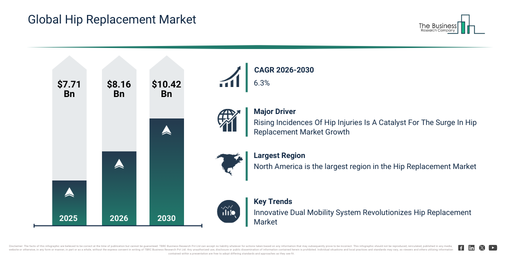
    The hip replacement market has experienced substantial expansion in recent years. It is anticipated to grow from $7.71 billion in 2025 to $8.16 billion in 2026, exhibiting a compound annual growth rate (CAGR) of 5.9%. This historical growth can be ascribed to several factors, including the increasing prevalence of osteoarthritis, an aging global population, improved access to orthopedic surgery, the expansion of hospital surgical capacity, and advancements in implant design.

    The hip replacement market is projected to experience robust expansion over the forthcoming years. This market is anticipated to reach a valuation of $10.42 billion by 2030, exhibiting a compound annual growth rate (CAGR) of 6.3%. The upward trend during the forecast period is attributable to factors such as the increasing embrace of robotic-assisted surgical techniques, a heightened demand for customized orthopedic implants, the expansion of outpatient joint replacement operations, a concentrated effort towards quicker patient recovery, and greater financial commitment to orthopedic innovation. Key developments expected within the same period encompass a wider adoption of minimally invasive hip replacement methods, the increasing utilization of cutting-edge implant materials, an elevated demand for revision surgeries, the broadened application of robotic-assisted orthopedic surgery, and an intensified emphasis on outcomes following surgery.

    Access Your Free Sample Report For In-Depth Market Analysis:

    https://www.thebusinessresearchcompany.com/report/hip-replacement-global-market-report

    Which Major Drivers Are Influencing The Expansion Of The Hip Replacement Market?

    The escalating occurrence of hip injuries is expected to fuel the growth of the hip replacement market going forward. Hip injuries arise when one of the muscles supporting the hip joint is overstretched or damaged. Patients suffering from arthritis, avascular necrosis, or other types of hip joint deterioration often experience hip pain and stiffness, conditions that can be treated with a hip replacement. As an illustration, in August 2024, data from the National Library of Medicine, a US-based government agency, indicated that annual incidences are projected to reach between 3 and 11 million by 2030 and potentially increase to 5 to 21 million by 2050, depending on various estimating assumptions. Therefore, the rise in incidences of hip injuries is a significant factor driving the growth of the hip replacement market going forward.

    How Are Segments Identified Within The Hip Replacement Market Segment Framework?

    The hip replacement market covered in this report is segmented –

    1) By Procedure: Total Hip Replacement, Partial Hip Replacement, Revision Hip Replacement, Hip Resurfacing

    2) By Material: Metal-On-Metal, Metal-On-Polyethylene, Ceramic-On-Polyethylene, Ceramic-On-Metal, Ceramic-On-Ceramic

    3) By End-User: Hospitals, Specialty Clinics, Ambulatory Surgery Centers

    Subsegments:

    1) By Total Hip Replacement: Cemented Total Hip Replacement, Cementless Total Hip Replacement

    2) By Partial Hip Replacement: Hemiarthroplasty, Bipolar Hip Replacement

    3) By Revision Hip Replacement: Acetabular Component Revision, Femoral Component Revision

    4) By Hip Resurfacing: Metal-on-Metal Hip Resurfacing, Ceramic-on-Ceramic Hip Resurfacing

    Which Trends Are Shaping The Hip Replacement Market?

    Major companies in the hip replacement market are concentrating on innovative offerings, such as dual mobility systems, to increase their market revenues. A dual mobility system is an artificial hip joint designed to lower the risk of dislocation. It is primarily employed in patients at high risk for dislocation, including those with a history of hip dislocation, a weak hip capsule, or individuals undergoing revision hip replacement surgery. For example, in August 2023, Smith & Nephew plc, a UK-based medical equipment manufacturing company, launched its OR3O dual mobility system. The system features characteristics that streamline the dual mobility method, such as acetabular cup selection or simple liner insertion and removal. The OR3O dual mobility system consists of an insert made of highly cross-linked polyethylene and an oxidized, diffusion-hardened zirconium acetabular liner (OR3O liner). This marks the first system to utilize the latest OXINIUM DH advanced bearing technology, which redefines the next generation of total hip bearing technology and offers enhanced stability.

    Who Are The Companies Competing Within The Hip Replacement Market?

    Major companies operating in the hip replacement market are Johnson & Johnson, Stryker Corporation, Smith & Nephew PLC, B. Braun Melsungen AG, ConforMIS Inc., Exactech Inc., MicroPort Scientific Corporation, Zimmer Biomet Holdings Inc., Corin Group PLC, Gruppo Bioimpianti S.R.L., Integra LifeSciences, Medacta International, Merete GmbH, MicroPort Orthopedics Inc., DJO Global Inc., Waldemar Link GmbH & Co. KG, Peter Brehm GmbH, Synimed Synergie Ingénierie Médicale S.A.R.L., Elite Surgical Industries, Corentec Co. Ltd., FH Ortho S.A.S

    Get The Full Hip Replacement Market Report:

    https://www.thebusinessresearchcompany.com/report/hip-replacement-global-market-report

    Which Region Represents The Largest Share Of The Hip Replacement Market?

    North America was the largest region in the hip replacement market in 2025.Asia-Pacific is expected to be the fastest-growing region in the global hip replacement market report during the forecast period. The regions covered in the hip replacement market report are Asia-Pacific, South East Asia, Western Europe, Eastern Europe, North America, South America, Middle East, Africa.

    Request A Customized Hip Replacement Market Report For Competitive Insights:

    https://www.thebusinessresearchcompany.com/report/hip-replacement-global-market-report

    Browse Through More Reports Similar to the Global Hip Replacement Market 2026, By The Business Research Company

    Bone Grafts And Substitutes Market Report 2026

    https://www.thebusinessresearchcompany.com/report/bone-grafts-and-substitutes-global-market-report

    Hip Replacement Implants Market Report 2026

    https://www.thebusinessresearchcompany.com/report/hip-replacement-implants-global-market-report

    Total Hip And Knee Replacements Market Report 2026

    https://www.thebusinessresearchcompany.com/report/total-hip-and-knee-replacements-global-market-report

    Get in touch with us:

    The Business Research Company: https://www.thebusinessresearchcompany.com/

    Americas +1 310-496-7795

    Asia +44 7882 955267 & +91 8897263534

    Europe +44 7882 955267

    Email us at info@tbrc.info

    Follow us on:

    LinkedIn: https://in.linkedin.com/company/the-business-research-company

    YouTube: https://www.youtube.com/channel/UC24_fI0rV8cR5DxlCpgmyFQ

    Global Market Model: https://www.thebusinessresearchcompany.com/global-market-model
  • High-Level Disinfection Services Market Forecast (2026–2030): Long-Term Insights

    High-Level Disinfection Services Market Forecast (2026–2030): Long-Term Insights

    The Business Research Company’s 2026 market reports feature enhanced tools like market attractiveness analysis, TAM assessment, and company scoring matrices, along with interactive dashboards, deeper supply chain insights, and startup coverage strengthening the depth, usability, and strategic value of insights.

    What Is The Estimated Market Size Of The High Level Disinfection Services Market In 2026, And How Will Its Value Evolve By 2030?

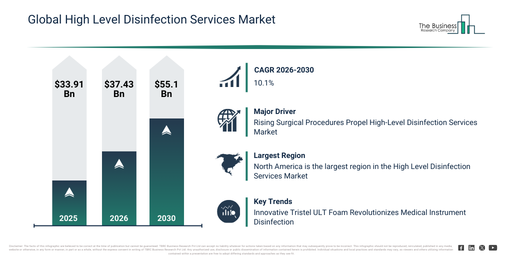
    The high level disinfection services market size has experienced significant expansion in recent years. This market is projected to grow from $33.91 billion in 2025 to $37.43 billion in 2026, exhibiting a compound annual growth rate (CAGR) of 10.4%. Historically, this expansion has been attributed to a rise in healthcare-associated infections, the more widespread use of reusable medical devices, increased regulatory emphasis on sterilization, the development of hospital infrastructure, and enhanced availability of chemical disinfectants.

    The market size for high-level disinfection services is expected to witness rapid expansion in the coming years, forecast to reach $55.1 billion by 2030, demonstrating a compound annual growth rate (CAGR) of 10.1%. This growth during the projection period can be attributed to several factors, including an escalating demand for infection control provisions, the increasing embrace of automated disinfection technologies, the expansion of outpatient healthcare facilities, a heightened emphasis on sustainable healthcare practices, and increased investment in infrastructure for preventive healthcare. Noteworthy trends anticipated during this period include a greater adoption of outsourced disinfection services, a rise in the utilization of automated high-level disinfection systems, an intensified focus on infection prevention protocols, the broader development of eco-friendly disinfectant compounds, and enhanced adherence to sterilization standards.

    Access Your Free Sample Report For In-Depth Market Analysis:

    https://www.thebusinessresearchcompany.com/report/high-level-disinfection-services-global-market-report

    What Key Drivers Are Fueling The Growth Of The High Level Disinfection Services Market?

    A rise in surgical procedures is anticipated to fuel the expansion of the high-level disinfection services market. Surgery encompasses a medical specialty that employs operative manual and instrumental techniques on individuals to assess or treat pathological conditions like sickness or injury, enhance bodily function and aesthetics, or mend undesirable ruptured areas. During all invasive procedures, medical devices or surgical tools come into contact with a patient’s sterile tissue or mucous membranes. Failure to adequately disinfect or sterilize reusable medical equipment presents a risk of breaching these host barriers. For example, a September 2023 report from the National Library of Medicine, a US-based federal government entity, indicated that as of 2023, 7,733 robotic surgical systems were deployed globally, and over 10 million robotic surgeries had been completed. Consequently, the escalating demand for antibiotics is projected to stimulate the growth of the high-level disinfection market.

    What Are The Key Segment Divisions In The High Level Disinfection Services Market Segment Structure?

    The high level disinfection services market covered in this report is segmented –

    1) By Services: In House, Outsource

    2) By Compound: Formaldehyde, Glutaraldehyde, Ortho-Phthalaldehyde, Hydrogen Peroxide, Peracetic Acid, Other Compounds

    3) By End-User: Hospitals And Clinics, Diagnostic Laboratories, Pharmaceutical And Biotechnology Companies, Academic And Research Institutes, Other End Users

    Subsegments:

    1) By In House: Facility-Based Disinfection, Staff Training And Protocol Development

    2) By Outsource: Third-Party Disinfection Services, Contract Cleaning Services

    What Trends Are Influencing The High Level Disinfection Services Market?

    Major companies in the high-level disinfection services market are intensifying their efforts to introduce innovative products, such as Tristel ULT disinfecting foam, to gain a competitive edge. Tristel ULT disinfecting foam provides a highly effective and convenient solution for medical instrument disinfection, ensuring quick and reliable hygiene in healthcare settings. For instance, in July 2023, Parker Laboratories, Inc., a US-based chemical company, obtained approval from the United States Food and Drug Administration (USFDA) for its Tristel ULT disinfecting foam. This foam contains chlorine dioxide and is specifically designed for use as a high-level disinfectant for ultrasound probes. Tristel ULT is currently the only high-level disinfectant foam proven safe for ultrasound probes. It has demonstrated effectiveness in eradicating pathogens including SARS-CoV-2 and Mycobacterium tuberculosis. The product is packaged in a dual-chambered pump bottle containing two separate chemicals, a base and an activator. When the user activates the pump, the two chemicals combine to generate a consistent dose of chlorine dioxide foam. The foam is very safe to handle and is considered, at most, a mild skin and eye irritant.

    Which Organizations Are Engaged In The High Level Disinfection Services Market?

    Major companies operating in the high level disinfection services market are Altapure LLC, Steris Corporation, Microchem Laboratory LLC, Metrex Research LLC, Rentokil Initial PLC., Advanced Sterilization Products Services Inc., Aseptic Health LLC, Bio Decontamination Ltd., Getinge AB, ISS World Services A/S, Ecolab Inc., Olympus Corporation, Sterigenics U.S.LLC, Belimed Deutschland GmbH, Cantel Medical Corp, Matachana Group, MMM Münchener Medizin Mechanik GmbH, Steelco S.p.A., Tuttnauer Ltd., Becton Dickinson and Company, Johnson & Johnson Inc., CISA Group, Diversey Inc.

    Get The Full High Level Disinfection Services Market Report:

    https://www.thebusinessresearchcompany.com/report/high-level-disinfection-services-global-market-report

    Which Geographic Region Dominates The High Level Disinfection Services Market?

    North America was the largest region in the high-level disinfection services market in 2025 and is expected to be the fastest-growing region in the forecast period. The regions covered in the high level disinfection services market report are Asia-Pacific, South East Asia, Western Europe, Eastern Europe, North America, South America, Middle East, Africa.

    Request A Customized High Level Disinfection Services Market Report For Competitive Insights:

    https://www.thebusinessresearchcompany.com/report/high-level-disinfection-services-global-market-report

    Browse Through More Reports Similar to the Global High Level Disinfection Services Market 2026, By The Business Research Company

    Agricultural Disinfectants Market Report 2026

    https://www.thebusinessresearchcompany.com/report/agricultural-disinfectants-global-market-report

    Disinfectants Market Report 2026

    https://www.thebusinessresearchcompany.com/report/disinfectants-global-market-report

    Sterilization Equipment And Disinfectants Market 2026

    https://www.thebusinessresearchcompany.com/report/sterilization-equipment-and-disinfectants-market

    Get in touch with us:

    The Business Research Company: https://www.thebusinessresearchcompany.com/

    Americas +1 310-496-7795

    Asia +44 7882 955267 & +91 8897263534

    Europe +44 7882 955267

    Email us at info@tbrc.info

    Follow us on:

    LinkedIn: https://in.linkedin.com/company/the-business-research-company

    YouTube: https://www.youtube.com/channel/UC24_fI0rV8cR5DxlCpgmyFQ

    Global Market Model: https://www.thebusinessresearchcompany.com/global-market-model
  • High Acuity Information Systems Market Analysis (2026–2030): Innovation and Competition

    High Acuity Information Systems Market Analysis (2026–2030): Innovation and Competition

    The Business Research Company’s 2026 market reports feature enhanced tools like market attractiveness analysis, TAM assessment, and company scoring matrices, along with interactive dashboards, deeper supply chain insights, and startup coverage strengthening the depth, usability, and strategic value of insights.

    How Does The Market Size Of The High Acuity Information Systems Market Compare Between 2026 And 2030?

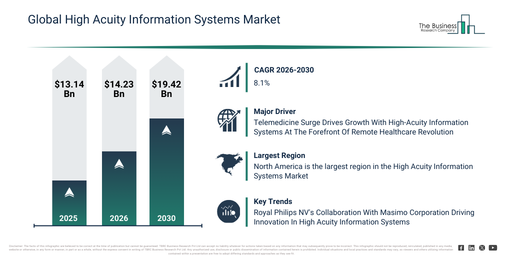
    The high acuity information systems market size has experienced substantial growth recently. It is forecast to increase from $13.14 billion in 2025 to $14.23 billion in 2026, advancing at a compound annual growth rate (CAGR) of 8.3%. This historical expansion can be linked to several factors, including a rising number of critical care admissions, the expansion of intensive care infrastructure, the increasing adoption of electronic health records, a growing necessity for clinical workflow optimization, and improved funding for healthcare IT.

    The high acuity information systems market is anticipated to experience substantial expansion over the upcoming years. Projections indicate it will reach $19.42 billion by 2030, progressing at a compound annual growth rate (CAGR) of 8.1%. This projected growth is driven by several factors, including increasing capital allocation towards smart hospital infrastructure, an escalating need for predictive analytics within acute care settings, the expansion of tele-ICU offerings, a heightened emphasis on obtaining real-time clinical data, and the rising uptake of cloud-based healthcare platforms. Key trends anticipated during this period encompass the greater embrace of AI-powered clinical decision support tools, increased integration of real-time patient monitoring solutions, a surging requirement for interoperable health IT systems, the broadening of ICU workflow automation, and a stronger emphasis on care coordination guided by data.

    Access Your Free Sample Report For In-Depth Market Analysis:

    https://www.thebusinessresearchcompany.com/report/high-acuity-information-systems-global-market-report

    Which Drivers Are Supporting The High Acuity Information Systems Market Growth?

    The increasing need for telemedicine is projected to fuel expansion in the high acuity information systems market moving forward. Telemedicine involves diagnosing and treating patients from a distance using telecommunication tools. These high-acuity information systems boost telemedicine capabilities by offering precise, live patient data, which is crucial for remote decision-making in critical and intricate medical scenarios. An example of this trend is seen in September 2024, when data from the Australian Bureau of Statistics (ABS), Australia’s national statistical agency, revealed that 83.5% of males in 2023–24 utilized telehealth services, representing a rise from 78.6% in 2022–23. Consequently, the growing requirement for telemedicine is boosting the high acuity information systems market’s development.

    Which Segment Categories Are Included In The High Acuity Information Systems Market Segment Analysis?

    The high acuity information systems market covered in this report is segmented –

    1) By Type: Intensive Care Unit (ICU) Systems, Perioperative Systems, Emergency Department Systems

    2) By Application: Patient Monitoring Systems, Clinical Decision Support Systems, Documentation Systems

    3) By End User: Hospitals, Ambulatory Surgical Centers, Nursing Care Facilities, Other End Users

    Subsegments:

    1) By Intensive Care Unit (ICU) Systems: Patient Monitoring Systems, Data Management Systems, Alarm Management Systems, Clinical Decision Support Systems

    2) By Perioperative Systems: Surgical Management Systems, Anesthesia Information Management Systems (AIMS), Operating Room Scheduling Systems, Post-Anesthesia Care Unit (PACU) Systems

    3) By Emergency Department Systems: Emergency Department Management Systems, Triage Systems, Electronic Health Record (EHR) Systems For ED, Patient Tracking Systems

    Which Trends Are Expected To Impact The High Acuity Information Systems Market?

    Leading companies in the high acuity information systems market are prioritizing strategic collaborations to create innovative product solutions. Such a partnership represents a cooperative arrangement, often between businesses, established to achieve mutually advantageous results. For instance, in June 2023, Royal Philips NV, a Netherlands-based health technology company, formed a partnership with Masimo Corporation, a US-based health technology and consumer electronics company, to develop high acuity patient monitors. The objective of this alliance is to optimize patient data accessibility by integrating Masimo technology into Philips’ monitors, thereby delivering contextual and relevant information at the bedside and during transport.

    Who Are The Active Companies Shaping The High Acuity Information Systems Market?

    Major companies operating in the high acuity information systems market are Epic Systems Corporation, Meditech Information Technology Inc., McKesson Corporation, Siemens Healthineers AG, GE Healthcare, Philips, Dragerwerk AG, Nihon Kohden Corporation, Athenahealth Inc., CompuGroup Medical SE & Co. KGaA, eClinicalWorks, Computer Programs and Systems Inc., Allscripts Healthcare Solutions Inc., Masimo Corporation, Getinge AB, Baxter International Inc., Becton Dickinson and Company, Oracle Health, Dedalus Group, InterSystems Corporation

    Get The Full High Acuity Information Systems Market Report:

    https://www.thebusinessresearchcompany.com/report/high-acuity-information-systems-global-market-report

    Which Region Is The Leading Market For The High Acuity Information Systems Market?

    North America was the largest region in the high acuity information systems market in 2025. The regions covered in the high acuity information systems market report are Asia-Pacific, South East Asia, Western Europe, Eastern Europe, North America, South America, Middle East, Africa.

    Request A Customized High Acuity Information Systems Market Report For Competitive Insights:

    https://www.thebusinessresearchcompany.com/report/high-acuity-information-systems-global-market-report

    Browse Through More Reports Similar to the Global High Acuity Information Systems Market 2026, By The Business Research Company

    Information Technology Market Report 2026

    https://www.thebusinessresearchcompany.com/report/information-technology-global-market-report

    Customer Information System Market Report 2026

    https://www.thebusinessresearchcompany.com/report/customer-information-system-global-market-report

    Healthcare Information System Market Report 2026

    https://www.thebusinessresearchcompany.com/report/healthcare-information-system-global-market-report

    Get in touch with us:

    The Business Research Company: https://www.thebusinessresearchcompany.com/

    Americas +1 310-496-7795

    Asia +44 7882 955267 & +91 8897263534

    Europe +44 7882 955267

    Email us at info@tbrc.info

    Follow us on:

    LinkedIn: https://in.linkedin.com/company/the-business-research-company

    YouTube: https://www.youtube.com/channel/UC24_fI0rV8cR5DxlCpgmyFQ

    Global Market Model: https://www.thebusinessresearchcompany.com/global-market-model
  • Hidradenitis Suppurativa Market Forecast to 2030: Trends and Developments

    Hidradenitis Suppurativa Market Forecast to 2030: Trends and Developments

    The Business Research Company’s 2026 market reports feature enhanced tools like market attractiveness analysis, TAM assessment, and company scoring matrices, along with interactive dashboards, deeper supply chain insights, and startup coverage strengthening the depth, usability, and strategic value of insights.

    What Is The Forecasted Market Size Trajectory Of The Hidradenitis Suppurativa Market From 2026 To 2030?

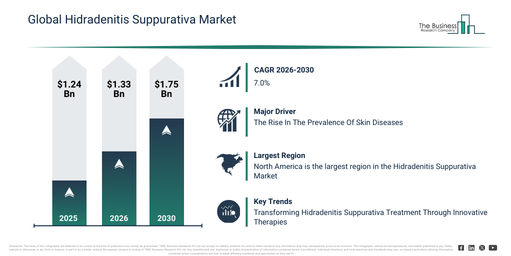
    The size of the hidradenitis suppurativa market has shown robust growth in recent years. Projections indicate it will expand from $1.24 billion in 2025 to $1.33 billion in 2026, achieving a compound annual growth rate (CAGR) of 6.8%. This expansion over the historical period stems from factors such as the growing occurrence of chronic inflammatory skin disorders, enhanced dermatology diagnostic capabilities, increased awareness of HS symptoms, the proliferation of dermatology clinics, and the availability of antibiotic treatment alternatives.

    The hidradenitis suppurativa market is projected to experience substantial expansion in the coming years. It is anticipated to reach a valuation of $1.75 billion by 2030, exhibiting a compound annual growth rate (CAGR) of 7.0%. This projected increase during the forecast period is fueled by several factors, including an escalating demand for targeted biologic medications, a heightened emphasis on sustained disease management, the proliferation of personalized dermatological services, the increasing uptake of advanced laser treatments, and greater investment in research for chronic skin conditions. Key developments expected within this period encompass the wider embrace of biologic therapies for HS, an uptick in the utilization of minimally invasive surgical interventions, a stronger emphasis on prompt disease identification, the broader application of combined treatment strategies, and the improvement of patient-focused care models.

    Access Your Free Sample Report For In-Depth Market Analysis:

    https://www.thebusinessresearchcompany.com/report/hidradenitis-suppurativa-global-market-report

    What Key Factors Are Affecting The Hidradenitis Suppurativa Market Demand?

    An increasing incidence of skin conditions is propelling the expansion of the hidradenitis suppurativa market into the future. These dermatological ailments encompass a broad spectrum of issues, such as those stemming from bacterial, viral, or fungal infections, allergic reactions, skin cancers, and parasitic infestations. Hidradenitis suppurativa (HS), being a chronic and severe dermatological condition, is spurring the creation of innovative products and services for its treatment, driven by heightened public awareness, improved diagnostic accuracy, an expanding patient population, and progress in research. As an illustration, the American Cancer Society, a US-based non-profit organization focused on eradicating cancer, projected 108,270 reported skin cancer cases in January 2024, representing a 3.2% rise from the 104,930 cases documented in 2023. Consequently, the expanding occurrence of skin ailments fuels the development of the hidradenitis suppurativa market.

    How Is The Hidradenitis Suppurativa Market Broken Down By Segment Categories?

    The hidradenitis suppurativa market covered in this report is segmented –

    1) By Disease Severity: Hurley Stage I, Hurley Stage II, Hurley Stage III

    2) By Treatment: Medications, Surgical Treatment

    3) By Route of Administration: Oral, Subcutaneous, Topical

    4) By Distribution Channel: Hospital Pharmacies, Retail Pharmacies, Online Pharmacies, Specialty Pharmacies

    5) By End User: Hospitals, Dermatology Clinics Or Specialty Clinics, Ambulatory Surgical Centers

    Subsegments:

    1) By Medications: Antibiotics, Biologics, Hormonal Therapy, Immunosuppressants, Retinoids

    2) By Surgical Treatment: Incision and Drainage, Deroofing, Wide Excision, Laser & Light-Based Therapy

    What Trends Are Influencing Changes In The Hidradenitis Suppurativa Market?

    Leading companies within the hidradenitis suppurativa market are dedicating efforts to developing advanced biologic treatments aimed at enhancing patient outcomes and addressing current medical needs. Biologics are medicines derived from living organisms that specifically target components of the immune system involved in the progression of the disease. For instance, in June 2023, Novartis AG, a pharmaceutical company headquartered in Switzerland, obtained European regulatory approval for Cosentyx for hidradenitis suppurativa. Cosentyx is the inaugural and sole fully human biologic that specifically inhibits interleukin-17A, a crucial cytokine linked to hidradenitis suppurativa. Supported by over 14 years of clinical research, Cosentyx offers an established and targeted therapeutic solution, solidifying Novartis’s presence in the hidradenitis suppurativa market.

    Which Players Are Present In The Hidradenitis Suppurativa Market Space?

    Major companies operating in the hidradenitis suppurativa market are AbbVie Inc., Pfizer Inc., Johnson & Johnson, Novartis AG, Eli Lilly and Company, UCB S.A., LEO Pharma A/S, Almirall S.A., AstraZeneca plc, Bayer AG, Otsuka Pharmaceutical Co. Ltd., Sun Pharmaceutical Industries Ltd., Taro Pharmaceutical Industries Ltd., AnaptysBio Inc., Acelyrin Inc., Arcutis Biotherapeutics Inc., Priovant Therapeutics, Aristea Therapeutics, Union Therapeutics, Revance Therapeutics

    Get The Full Hidradenitis Suppurativa Market Report:

    https://www.thebusinessresearchcompany.com/report/hidradenitis-suppurativa-global-market-report

    Where Is The Hidradenitis Suppurativa Market Primarily Concentrated By Region?

    North America was the largest region in the hidradenitis suppurativa market in 2025. The regions covered in the hidradenitis suppurativa market report are Asia-Pacific, South East Asia, Western Europe, Eastern Europe, North America, South America, Middle East, Africa.

    Request A Customized Hidradenitis Suppurativa Market Report For Competitive Insights:

    https://www.thebusinessresearchcompany.com/report/hidradenitis-suppurativa-global-market-report

    Browse Through More Reports Similar to the Global Hidradenitis Suppurativa Market 2026, By The Business Research Company

    Chronic Spontaneous Urticaria Market Report 2026

    https://www.thebusinessresearchcompany.com/report/chronic-spontaneous-urticaria-global-market-report

    Dermatitis Drugs Market Report 2026

    https://www.thebusinessresearchcompany.com/report/dermatitis-drugs-global-market-report

    Seborrheic Dermatitis Market Report 2026

    https://www.thebusinessresearchcompany.com/report/seborrheic-dermatitis-global-market-report

    Get in touch with us:

    The Business Research Company: https://www.thebusinessresearchcompany.com/

    Americas +1 310-496-7795

    Asia +44 7882 955267 & +91 8897263534

    Europe +44 7882 955267

    Email us at info@tbrc.info

    Follow us on:

    LinkedIn: https://in.linkedin.com/company/the-business-research-company

    YouTube: https://www.youtube.com/channel/UC24_fI0rV8cR5DxlCpgmyFQ

    Global Market Model: https://www.thebusinessresearchcompany.com/global-market-model
  • Heterozygous Familial Hypercholesterolemia Management Market Outlook (2026–2030): Trends and Drivers

    Heterozygous Familial Hypercholesterolemia Management Market Outlook (2026–2030): Trends and Drivers

    The Business Research Company’s 2026 market reports feature enhanced tools like market attractiveness analysis, TAM assessment, and company scoring matrices, along with interactive dashboards, deeper supply chain insights, and startup coverage strengthening the depth, usability, and strategic value of insights.

    How Much Will The Market Value Of The Heterozygous Familial Hypercholesterolemia Management Market Grow Between 2026 And 2030?

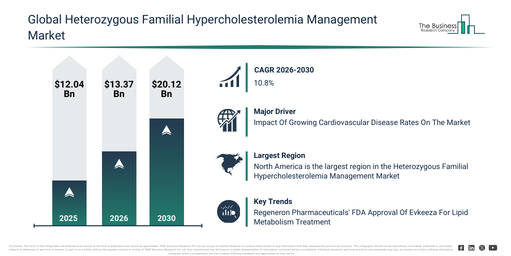
    The heterozygous familial hypercholesterolemia management market size has experienced rapid growth in recent years. Projections show it will expand from $12.04 billion in 2025 to $13.37 billion in 2026, achieving a compound annual growth rate (CAGR) of 11.1%. This historical growth can be attributed to factors such as increased diagnosis of inherited hypercholesterolemia, wider availability of statin therapies, improved clinical awareness regarding cardiovascular disease risk, the expansion of lipid clinics, and the growing implementation of cholesterol screening programs.

    The heterozygous familial hypercholesterolemia management market size is expected to experience significant growth in the coming years, with its value set to reach $20.12 billion in 2030, demonstrating a compound annual growth rate (CAGR) of 10.8%. This expansion during the forecast period can be attributed to the rising adoption of advanced biologic therapies, an increasing focus on personalized cardiovascular care, the expansion of genetic testing initiatives, a growing demand for long-term LDL-C management, and increasing healthcare investments in preventive cardiology. Key trends in the forecast period include the increasing adoption of PCSK9 inhibitor therapies, a rising use of combination lipid-lowering regimens, a growing emphasis on early genetic screening, the expansion of injectable cholesterol therapies, and an enhanced focus on personalized treatment protocols.

    Access Your Free Sample Report For In-Depth Market Analysis:

    https://www.thebusinessresearchcompany.com/report/heterozygous-familial-hypercholesterolemia-management-global-market-report

    Which Primary Drivers Are Impacting The Heterozygous Familial Hypercholesterolemia Management Market Growth?

    The expanding incidence of cardiovascular diseases is anticipated to fuel the expansion of the heterozygous familial hypercholesterolemia management market in the coming years. These diseases, known as CVDs, encompass various conditions impacting the heart and blood vessels, such as coronary artery disease, heart failure, and stroke. Globally, CVDs are becoming more widespread, a trend attributed to escalating risk factors like unhealthy lifestyles, poor dietary habits, physical inactivity, obesity, and an aging population. Effectively managing heterozygous familial hypercholesterolemia is vital for averting cardiovascular diseases, as it adeptly manages elevated cholesterol levels, a primary contributor to atherosclerosis and related heart issues. As an illustration, in October 2024, according to the Centers for Disease Control and Prevention, is a US-based, government agency, in 2023, cardiovascular disease claimed 919,032 lives, accounting for approximately one in every three deaths. Consequently, the increasing occurrence of cardiovascular diseases is boosting the growth of the heterozygous familial hypercholesterolemia management market.

    What Are The Different Segment Types In The Heterozygous Familial Hypercholesterolemia Management Market Segment Breakdown?

    The heterozygous familial hypercholesterolemia management market covered in this report is segmented –

    1) By Treatment Type: Statins, Ezetimibe, PCSK9 Inhibitors

    2) By Route Of Administration: Oral, Injectable

    3) By Patient Demographics: Children, Adults, Elderly

    4) By Application: Hospitals, Medical Centers, Clinics, Other Applications

    Subsegments:

    1) By Statins: Atorvastatin, Simvastatin, Rosuvastatin, Pravastatin

    2) By Ezetimibe: Ezetimibe (Monotherapy), Ezetimibe Combination Therapy (With Statins)

    3) By PCSK9 Inhibitors: Alirocumab, Evolocumab

    Which Trends Are Shaping Growth In The Heterozygous Familial Hypercholesterolemia Management Market?

    Leading companies in the heterozygous familial hypercholesterolemia management market are prioritizing the creation of innovative products, such as angiopoietin, to target lipid metabolism and lower cholesterol levels. Angiopoietin describes a group of proteins vital for regulating blood vessel formation (angiogenesis) and maintaining blood vessel stability. For instance, in March 2023, Regeneron Pharmaceuticals Inc., a US-based biotechnology company, obtained approval from the U.S. Food and Drug Administration (FDA) for Evkeeza (evinacumab-dgnb) for children aged 5 to 11 years with homozygous familial hypercholesterolemia (HoFH). This groundbreaking monoclonal antibody operates by inhibiting ANGPTL3, a protein that impedes lipid metabolism, thereby decreasing low-density lipoprotein (LDL) cholesterol and triglyceride levels. The approval presents a new therapeutic alternative for pediatric patients who have limited treatment choices and face a high likelihood of cardiovascular events.

    Who Are The Well-Known Companies In The Heterozygous Familial Hypercholesterolemia Management Market?

    Major companies operating in the heterozygous familial hypercholesterolemia management market are Pfizer Inc., Johnson & Johnson, Roche Holding AG, Merck & Co. Inc., AbbVie Inc., Sanofi S.A., Bristol-Myers Squibb, AstraZeneca plc, Novartis International AG, Takeda Pharmaceutical Company Limited, Eli Lilly and Company, Gilead Sciences Inc., Amgen Inc., Merck KGaA, Regeneron Pharmaceuticals Inc., Ipsen S.A., Chiesi Farmaceutici S.p.A., Ferring Pharmaceuticals Limited, Esperion Therapeutics Inc., Aegerion Pharmaceuticals Inc., Verve Therapeutics Inc.

    Get The Full Heterozygous Familial Hypercholesterolemia Management Market Report:

    https://www.thebusinessresearchcompany.com/report/heterozygous-familial-hypercholesterolemia-management-global-market-report

    Which Region Has The Greatest Market Share In The Heterozygous Familial Hypercholesterolemia Management Market?

    North America was the largest region in the heterozygous familial hypercholesterolemia management market in 2025. The regions covered in the heterozygous familial hypercholesterolemia management market report are Asia-Pacific, South East Asia, Western Europe, Eastern Europe, North America, South America, Middle East, Africa.

    Request A Customized Heterozygous Familial Hypercholesterolemia Management Market Report For Competitive Insights:

    https://www.thebusinessresearchcompany.com/report/heterozygous-familial-hypercholesterolemia-management-global-market-report

    Browse Through More Reports Similar to the Global Heterozygous Familial Hypercholesterolemia Management Market 2026, By The Business Research Company

    Hyperlipidemia Market Report 2026

    https://www.thebusinessresearchcompany.com/report/hyperlipidemia-global-market-report

    Low Density Lipoprotein Test Market Report 2026

    https://www.thebusinessresearchcompany.com/report/low-density-lipoprotein-test-global-market-report

    Poc Cholesterol Test Market 2026

    https://www.thebusinessresearchcompany.com/report/poc-cholesterol-test-market

    Get in touch with us:

    The Business Research Company: https://www.thebusinessresearchcompany.com/

    Americas +1 310-496-7795

    Asia +44 7882 955267 & +91 8897263534

    Europe +44 7882 955267

    Email us at info@tbrc.info

    Follow us on:

    LinkedIn: https://in.linkedin.com/company/the-business-research-company

    YouTube: https://www.youtube.com/channel/UC24_fI0rV8cR5DxlCpgmyFQ

    Global Market Model: https://www.thebusinessresearchcompany.com/global-market-model
  • Increasing STI cases are accelerating expansion in the herpes simplex virus treatment market

    Increasing STI cases are accelerating expansion in the herpes simplex virus treatment market

    The Business Research Company’s 2026 market reports feature enhanced tools like market attractiveness analysis, TAM assessment, and company scoring matrices, along with interactive dashboards, deeper supply chain insights, and startup coverage strengthening the depth, usability, and strategic value of insights.

    What Changes In Market Value Are Expected For The Herpes Simplex Virus Treatment Market Over The 2026–2030 Period?

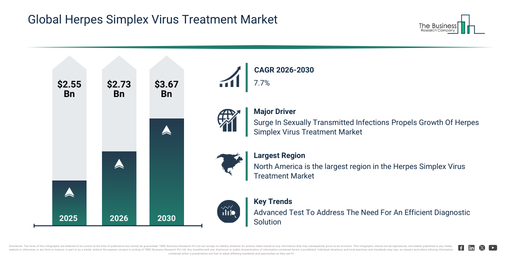
    The market size for herpes simplex virus treatment has exhibited significant growth in recent years. This market is projected to expand from $2.55 billion in 2025 to $2.73 billion in 2026, registering a compound annual growth rate (CAGR) of 7.2%. Several factors underpinned this historical growth, including the rising prevalence of HSV infections, the widespread availability of acyclovir-based treatments, an expansion in sexual health clinics, better access to diagnostic testing, and an increase in public health awareness campaigns.

    The herpes simplex virus treatment market size is projected for substantial expansion in the coming years. By 2030, its valuation is anticipated to reach $3.67 billion, demonstrating a compound annual growth rate (CAGR) of 7.7%. This robust growth during the forecast period is primarily driven by the advancement of next-generation antiviral drug development, increased investment in hsv vaccine research, the rising adoption of telemedicine for treatment access, a growing emphasis on patient-centric care models, and improved long-term infection management strategies. Key trends identified for the forecast period include the increasing adoption of long-term antiviral suppressive therapy, a rising demand for oral antiviral medications, a heightened focus on symptom management and recurrence prevention, the expansion of vaccine research programs, and enhanced patient awareness leading to earlier diagnosis.

    Access Your Free Sample Report For In-Depth Market Analysis:

    https://www.thebusinessresearchcompany.com/report/herpes-simplex-virus-treatment-global-market-report

    What Significant Factors Are Influencing The Herpes Simplex Virus Treatment Market Expansion?

    An increase in the occurrence of sexually transmitted infections is projected to drive the expansion of the herpes simplex virus treatment market in the future. Sexually transmitted diseases (STDs), also known as sexually transmitted infections (STIs), are conditions resulting from infections by particular bacteria, viruses, or other microorganisms, which can be transmitted between individuals via blood, semen, vaginal secretions, or other bodily fluids during sexual contact with an infected partner. Treatment for herpes simplex virus, or HSV, is predominantly utilized for managing sexually transmitted conditions such as urethritis, cervicitis, and infections leading to genital ulcers. As an illustration, in August 2024, data from the Minority HIV/AIDS Fund (MHAF), an US-based government agency, indicated that an estimated 39.9 million individuals globally were living with HIV in 2023, comprising 38.6 million adults and 1.4 million children, which represents a change from preceding years. Consequently, the rising incidence of sexually transmitted infections is fueling the expansion of the herpes simplex virus treatment market.

    Which Segment Classifications Are Used In The Herpes Simplex Virus Treatment Market Segment Analysis?

    The herpes simplex virus treatment market covered in this report is segmented –

    1) By Type: Herpes Simplex Virus-1 Infection, Herpes Simplex Virus-2 Infection

    2) By Drug Type: Acyclovir, Valacyclovir, Famciclovir, Other Drugs

    3) By Route Of Administration: Oral, Injection, Topical

    4) By Distribution Channel: Hospital Pharmacies, Drug store, Retail Pharmacies, Online Providers

    Subsegments:

    1) By Herpes Simplex Virus-1 Infection: Oral Herpes, Cold Sores, Herpes Labialis

    2) By Herpes Simplex Virus-2 Infection: Genital Herpes, Neonatal Herpes, Other Complications

    What Trends Are Affecting The Direction Of The Herpes Simplex Virus Treatment Market?

    Leading companies in the herpes simplex virus treatment market are prioritizing the development of advanced diagnostic tools, such as the chip-based RT-PCR test, to meet the demand for effective diagnostic solutions and increase their market profits. This diagnostic method employs microchip technology to perform reverse transcription-polymerase chain reaction, enabling swift and efficient amplification of nucleic acids. For example, in January 2023, Molbio Diagnostics, an India-based molecular diagnostics manufacturer, introduced Truenat HSV 1/2, a CDSCO-approved chip-based RT-PCR test for rapid herpes diagnosis. This test is compatible with the Truelab infrastructure and delivers sample-to-results within an hour without requiring additional setup. Utilizing real-time PCR technology, it distinguishes between HSV-1 and HSV-2, thereby facilitating the prompt detection of oral and genital herpes, respectively.

    Which Firms Are Contributing To The Herpes Simplex Virus Treatment Market Ecosystem?

    Major companies operating in the herpes simplex virus treatment market are GlaxoSmithKline plc, Pfizer Inc., Teva Pharmaceuticals Industries Ltd., Viatris Inc., AbbVie Inc., Gilead Sciences Inc., Merck & Co. Inc., Merck KGaA, Novartis AG, Sanofi S.A., Bayer AG, Eli Lilly and Company, Bristol Myers Squibb Company, F. Hoffmann-La Roche AG, Johnson & Johnson, AstraZeneca plc, BioCryst Pharmaceuticals Inc., Chimerix Inc., AiCuris Anti-infective Cures GmbH, CureVac AG, Takeda Pharmaceutical Company Limited

    Get The Full Herpes Simplex Virus Treatment Market Report:

    https://www.thebusinessresearchcompany.com/report/herpes-simplex-virus-treatment-global-market-report

    Which Region Accounts For The Largest Portion Of The Herpes Simplex Virus Treatment Market?

    North America was the largest region in the herpes simplex virus treatment market in 2025.Asia-Pacific is expected to be the fastest-growing region in the global herpes simplex virus treatment market report during the forecast period. The regions covered in the herpes simplex virus treatment market report are Asia-Pacific, South East Asia, Western Europe, Eastern Europe, North America, South America, Middle East, Africa.

    Request A Customized Herpes Simplex Virus Treatment Market Report For Competitive Insights:

    https://www.thebusinessresearchcompany.com/report/herpes-simplex-virus-treatment-global-market-report

    Browse Through More Reports Similar to the Global Herpes Simplex Virus Treatment Market 2026, By The Business Research Company

    Genital Herpes Market Report 2026

    https://www.thebusinessresearchcompany.com/report/genital-herpes-global-market-report

    Antiviral Combination Therapy Market Report 2026

    https://www.thebusinessresearchcompany.com/report/antiviral-combination-therapy-global-market-report

    Oncolytic Virus Therapy Market Report 2026

    https://www.thebusinessresearchcompany.com/report/oncolytic-virus-therapy-global-market-report

    Get in touch with us:

    The Business Research Company: https://www.thebusinessresearchcompany.com/

    Americas +1 310-496-7795

    Asia +44 7882 955267 & +91 8897263534

    Europe +44 7882 955267

    Email us at info@tbrc.info

    Follow us on:

    LinkedIn: https://in.linkedin.com/company/the-business-research-company

    YouTube: https://www.youtube.com/channel/UC24_fI0rV8cR5DxlCpgmyFQ

    Global Market Model: https://www.thebusinessresearchcompany.com/global-market-model

  • Growing awareness and early diagnosis are supporting growth in the herpes simplex keratitis treatment market

    Growing awareness and early diagnosis are supporting growth in the herpes simplex keratitis treatment market

    The Business Research Company’s 2026 market reports feature enhanced tools like market attractiveness analysis, TAM assessment, and company scoring matrices, along with interactive dashboards, deeper supply chain insights, and startup coverage strengthening the depth, usability, and strategic value of insights.

    By 2030, What Market Size Is The Herpes Simplex Keratitis Treatment Market Expected To Reach Based On Its 2026 Value?

    The herpes simplex keratitis treatment market size has seen robust growth in recent years. It is projected to expand from $5.26 billion in 2025 to $5.67 billion in 2026, exhibiting a compound annual growth rate (CAGR) of 7.8%. This historical expansion is primarily attributable to the increasing prevalence of HSV infections, wider availability of antiviral medications, improved ophthalmic diagnostic capabilities, growing awareness of corneal viral diseases, and the expansion of hospital-based ophthalmology services.

    The herpes simplex keratitis treatment market size is anticipated to experience substantial expansion over the upcoming years. Projections indicate it will reach $7.57 billion by 2030, demonstrating a compound annual growth rate (CAGR) of 7.5%. This projected growth is driven by factors such as intensified research into innovative antiviral compounds, the rising acceptance of customized eye care solutions, the broadening of outpatient ophthalmology services, an increased emphasis on averting vision impairment, and the greater implementation of sophisticated drug delivery methods. Key trends anticipated during this period encompass the accelerated development of targeted antiviral treatments, the expanding application of combined drug therapies, a heightened concentration on prompt diagnosis and intervention, the widening adoption of steroid-reducing treatment strategies, and improved surveillance for disease relapse.

    Access Your Free Sample Report For In-Depth Market Analysis:

    https://www.thebusinessresearchcompany.com/report/herpes-simplex-keratitis-treatment-global-market-report

    Which Important Drivers Are Guiding The Herpes Simplex Keratitis Treatment Market Growth?

    The increasing focus on eye health and early diagnosis is anticipated to drive the expansion of the herpes simplex keratitis treatment market in the coming years. Eye health and early diagnosis involve preserving optimal vision and identifying ocular conditions promptly to prevent sight impairment and enhance therapeutic results. This heightened attention to eye health and early detection is fueled by greater public understanding, as more individuals recognize the significance of routine eye examinations in averting severe vision issues. Herpes simplex keratitis treatment improves eye health and early diagnosis by providing targeted antiviral therapies, proving effective in preventing corneal damage and vision loss. It minimizes complications by enabling timely interventions and continuous monitoring, thereby improving patient outcomes and overall ocular well-being. For instance, in May 2024, according to the Office for Health Improvement and Disparities, a UK-based government agency, the vision outpatient attendances in England reached over 8.9 million in 2023, an increase from 8.4 million in 2022, with a rate of 15,362 per 100,000 population. Consequently, the growing emphasis on eye health and early diagnosis is stimulating the growth of the herpes simplex keratitis treatment market. The escalating integration of telemedicine is poised to propel the growth of the herpes simplex keratitis treatment market moving forward. Telemedicine refers to the utilization of digital communication technologies to provide clinical healthcare services remotely. The adoption of telemedicine is increasing due to its enhanced convenience, enabling patients to access medical services from a distance, thereby saving time and eliminating the need for travel, which boosts overall accessibility and efficiency. Telemedicine enhances herpes simplex keratitis treatment by facilitating remote eye care consultations, making it particularly beneficial for patients in underserved or distant areas. It reduces delays in diagnosis and treatment by allowing prompt virtual assessments and prescription management, leading to improved patient outcomes and greater ease. For instance, in April 2023, according to FAIR Health Inc., a US-based non-profit organization, in 2023, national telehealth use increased by 7.3%, rising from 5.5% of medical claim lines in December 2022 to 5.9% in January 2023. Therefore, the increasing adoption of telemedicine is driving the growth of the herpes simplex keratitis treatment market.

    How Is The Herpes Simplex Keratitis Treatment Market Organized By Segment Classification?

    The herpes simplex keratitis treatment market covered in this report is segmented –

    1) By Treatment Type: Topical Antiviral Drugs, Oral Antiviral Drugs, Antibiotics, Corticosteroids, Other Therapies

    2) By Drug: Famciclovir, Valacyclovir, Acyclovir, Other Drugs

    3) By Disease Severity: Mild, Moderate, Severe

    4) By Route of Administration: Topical, Oral, Intravenous

    5) By End-User: Hospitals, Clinics, Ambulatory Surgical Centers, Home Care Settings

    Subsegments:

    1) By Topical Antiviral Drugs: Trifluridine, Ganciclovir, Acyclovir

    2) By Oral Antiviral Drugs: Acyclovir, Valacyclovir, Famciclovir

    3) By Antibiotics: Erythromycin, Gentamicin, Tobramycin

    4) By Corticosteroids: Prednisolone Acetate, Dexamethasone, Loteprednol

    5) By Other Therapies: Debridement, Amniotic Membrane Transplantation, Corneal Transplantation

    Who Are The Industry Participants Involved In The Herpes Simplex Keratitis Treatment Market?

    Major companies operating in the herpes simplex keratitis treatment market are Pfizer Inc., Merck & Co. Inc., Novartis AG, GlaxoSmithKline plc, Bausch Health Companies Inc., Aurobindo Pharma Limited, Dr. Reddy’s Laboratories Limited, Cipla Limited, Micro Labs Limited, Ocular Therapeutix Inc., Chimerix Inc., AiCuris Anti-infective Cures GmbH, Taj Pharmaceuticals Limited, Fera Pharmaceuticals LLC, Kevy’s Labs Private Limited, A.S. Lifesciences Private Limited, Sun Pharmaceutical Industries Limited, Alcon Inc., AbbVie Inc., Santen Pharmaceutical Co. Ltd., Lupin Limited, Hikma Pharmaceuticals PLC

    Get The Full Herpes Simplex Keratitis Treatment Market Report:

    https://www.thebusinessresearchcompany.com/report/herpes-simplex-keratitis-treatment-global-market-report

    Which Region Holds The Highest Market Share In The Herpes Simplex Keratitis Treatment Market?

    North America was the largest region in the herpes simplex keratitis treatment market in 2025. Asia-Pacific is expected to be the fastest-growing region in the forecast period. The regions covered in the herpes simplex keratitis treatment market report are Asia-Pacific, South East Asia, Western Europe, Eastern Europe, North America, South America, Middle East, Africa.

    Request A Customized Herpes Simplex Keratitis Treatment Market Report For Competitive Insights:

    https://www.thebusinessresearchcompany.com/report/herpes-simplex-keratitis-treatment-global-market-report

    Browse Through More Reports Similar to the Global Herpes Simplex Keratitis Treatment Market 2026, By The Business Research Company

    Lotions Market Report 2026

    https://www.thebusinessresearchcompany.com/report/lotions-global-market-report

    Skin Care Products Market Report 2026

    https://www.thebusinessresearchcompany.com/report/skin-care-products-global-market-report

    Face Creams Market Report 2026

    https://www.thebusinessresearchcompany.com/report/face-creams-global-market-report

    Get in touch with us:

    The Business Research Company: https://www.thebusinessresearchcompany.com/

    Americas +1 310-496-7795

    Asia +44 7882 955267 & +91 8897263534

    Europe +44 7882 955267

    Email us at info@tbrc.info

    Follow us on:

    LinkedIn: https://in.linkedin.com/company/the-business-research-company

    YouTube: https://www.youtube.com/channel/UC24_fI0rV8cR5DxlCpgmyFQ

    Global Market Model: https://www.thebusinessresearchcompany.com/global-market-model