Category: Healthcare Services

  • Frasier Syndrome Market: Steady Growth Outlook Through 2030

    Frasier Syndrome Market: Steady Growth Outlook Through 2030

    The Business Research Company’s 2026 market reports feature enhanced tools like market attractiveness analysis, TAM assessment, and company scoring matrices, along with interactive dashboards, deeper supply chain insights, and startup coverage strengthening the depth, usability, and strategic value of insights.

    How Is The Market Size Of The Frasier Syndrome Market Expected To Change From 2026 To 2030?

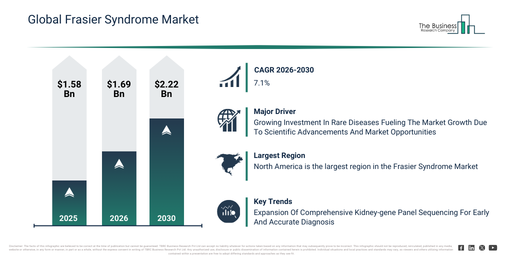
    The frasier syndrome market has experienced substantial growth in recent years. It is anticipated to expand from $1.58 billion in 2025 to $1.69 billion in 2026, at a compound annual growth rate (CAGR) of 7.1%. The expansion observed historically can be attributed to developments in genetic diagnostics, the identification of wt1 mutations, better nephrology care, the accessibility of supportive therapies, and an increase in rare disease research.

    The market size for Frasier syndrome is anticipated to experience robust expansion over the coming years. It is projected to attain a valuation of $2.22 billion by 2030, demonstrating a compound annual growth rate (CAGR) of 7.1%. This projected growth throughout the forecast period stems from various factors, including the broadened scope of genomic screening programs, progress in precision medicine, augmented investment in therapies for rare diseases, the incorporation of genetic counseling services, and enhanced long-term care models. Significant trends expected during this period encompass the escalating adoption of genetic testing for early detection, an intensified focus on managing rare diseases, the proliferation of multidisciplinary treatment methodologies, increasing recognition of WT1 gene mutations, and a strong emphasis on sustained patient monitoring.

    Access Your Free Sample Report For In-Depth Market Analysis:

    https://www.thebusinessresearchcompany.com/report/frasier-syndrome-global-market-report

    Which Strong Drivers Are Impacting The Frasier Syndrome Market Growth?

    The increasing financial commitment to rare diseases is projected to drive the expansion of the Frasier syndrome market moving ahead. A rare disease is a health condition that impacts a small portion of the population, generally fewer than 1 in 2,000 people. These conditions are often long-term, worsen over time, and can be fatal or cause disability. Investment in rare diseases is largely influenced by the growing recognition of critical unmet medical needs and the potential for high profitability through regulatory benefits such as orphan drug designation, exclusive market rights, and reduced development costs. Frasier Syndrome highlights the crucial requirement for dedicated research and development, thereby encouraging funding for rare diseases by demonstrating the potential for effective, niche-specific therapies. For instance, in April 2024, according to Global Genes, a US-based nonprofit organization, companies focused on developing drugs for rare diseases raised $7.1 billion in the first quarter of 2024, indicating a 307% increase compared to the $1.8 billion raised in the same period in 2023. Thus, the growing investment in rare diseases is boosting the growth of the Frasier syndrome market.

    Which Segments Define The Frasier Syndrome Market Segment Structure?

    The frasier syndrome market covered in this report is segmented –

    1) By Treatment Type: Surgical Intervention, Hormone Therapy, Supportive Care, Genetic Counseling

    2) By Diagnosis Method: Genetic Testing, Clinical Evaluation, Imaging Techniques, Biochemical Testing

    3) By Symptoms: Hypospadias, Nephropathy, Hearing Loss, Dental Anomalies

    4) By End Users: Hospitals, Diagnostic Centers, Research Institutes, Other End Users

    Subsegments:

    1) By Surgical Intervention: Nephrectomy, Renal Transplantation, Testicular Biopsy

    2) By Hormone Therapy: Testosterone Replacement Therapy, Estrogen Therapy, Growth Hormone Therapy

    3) By Supportive Care: Blood Pressure Management, Renal Replacement Therapy (Dialysis), Pain Management

    4) By Genetic Counseling: Preconception Counseling, Post-Diagnosis Counseling, Family Planning Guidance

    Which Trends Are Contributing To Changes In The Frasier Syndrome Market?

    Leading firms within the Frasier Syndrome market are prioritizing technological innovations, specifically broad kidney-gene panel sequencing, to secure a competitive edge. Broad kidney-gene panel sequencing describes genetic examinations that scrutinize numerous genes implicated in kidney and urogenital conditions through a single test, aiming to identify mutations linked to uncommon syndromes, such as those related to the WT1 gene. An example is Natera, a US-based genetic-testing enterprise, which launched its enhanced panel test, Renasight, in October 2024. This test covers 397 genes associated with chronic kidney disease, including conditions related to WT1. The Renasight panel provides convenient remote sample collection (using blood or saliva), delivers results in approximately 3 weeks, and offers integrated genetic-counseling assistance. Increased utilization of these panels facilitates earlier and more precise diagnosis of ailments such as Frasier Syndrome and fosters tailored management strategies; nevertheless, the syndrome’s infrequent occurrence and the inconsistent expressivity of mutations might hinder diagnostic effectiveness.

    Who Are The Established Players Within The Frasier Syndrome Market?

    Major companies operating in the frasier syndrome market are Quest Diagnostics Incorporated, Illumina Inc., Natera Inc., PTC Therapeutics, Myriad Genetics Inc., Fulgent Genetics Inc., Invitae Corporation, GeneDx LLC, Travere Therapeutics, Centogene N V, Prevention Genetics, Medicover Hospitals, 3billion Inc, Ambry Genetics, Strand Life Sciences Pvt Ltd, REGENXBIO, Ultragenyx Pharmaceutical Inc, Editas Medicine Inc, Passage Bio, Chimeron Bio, Aro Biotherapeutics, Purespring Therapeutics

    Get The Full Frasier Syndrome Market Report:

    https://www.thebusinessresearchcompany.com/report/frasier-syndrome-global-market-report

    Where Is The Frasier Syndrome Market Most Concentrated Geographically?

    North America was the largest region in the frasier syndrome market in 2025. Europe is expected to be the fastest-growing region in the forecast period. The regions covered in the frasier syndrome market report are Asia-Pacific, South East Asia, Western Europe, Eastern Europe, North America, South America, Middle East, Africa.

    Request A Customized Frasier Syndrome Market Report For Competitive Insights:

    https://www.thebusinessresearchcompany.com/report/frasier-syndrome-global-market-report

    Browse Through More Reports Similar to the Global Frasier Syndrome Market 2026, By The Business Research Company

    Amblyopia Market Report 2026

    https://www.thebusinessresearchcompany.com/report/amblyopia-global-market-report

    Dumping Syndrome Market Report 2026

    https://www.thebusinessresearchcompany.com/report/dumping-syndrome-global-market-report

    Myelodysplastic Syndrome Market Report 2026

    https://www.thebusinessresearchcompany.com/report/myelodysplastic-syndrome-global-market-report

    Get in touch with us:

    The Business Research Company: https://www.thebusinessresearchcompany.com/

    Americas +1 310-496-7795

    Asia +44 7882 955267 & +91 8897263534

    Europe +44 7882 955267

    Email us at info@tbrc.info

    Follow us on:

    LinkedIn: https://in.linkedin.com/company/the-business-research-company

    YouTube: https://www.youtube.com/channel/UC24_fI0rV8cR5DxlCpgmyFQ

    Global Market Model: https://www.thebusinessresearchcompany.com/global-market-model
  • Food Allergy Treatment Market to Reach $12.72B by 2030 at 10.6% CAGR

    Food Allergy Treatment Market to Reach $12.72B by 2030 at 10.6% CAGR

    The Business Research Company’s 2026 market reports feature enhanced tools like market attractiveness analysis, TAM assessment, and company scoring matrices, along with interactive dashboards, deeper supply chain insights, and startup coverage strengthening the depth, usability, and strategic value of insights.

    From Its 2026 Market Size, What Value Is The Food Allergy Treatment Market Projected To Reach By 2030?

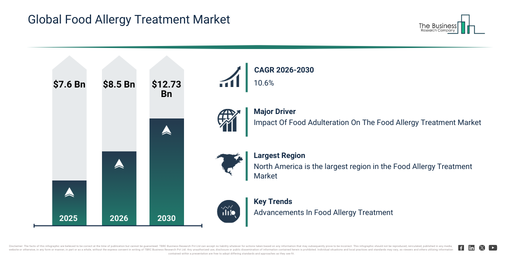
    The food allergy treatment market has experienced substantial expansion in recent years. It is projected to increase from $7.6 billion in 2025 to $8.5 billion in 2026, achieving a compound annual growth rate (CAGR) of 11.8%. This historical growth can be attributed to factors such as an increase in food allergy prevalence, the widespread availability of antihistamines, the adoption of epinephrine therapy, higher rates of allergy diagnosis, and the development of clinical guidelines.

    The food allergy treatment market is projected to experience substantial expansion in the coming years, reaching a valuation of $12.73 billion by 2030, exhibiting a compound annual growth rate (CAGR) of 10.6%. This anticipated growth during the forecast period is primarily driven by advancements in oral immunotherapy, the broader availability of biologic treatments, an increase in pediatric allergy care, the rising need for ongoing allergy management solutions, and improved access to healthcare services. Key trends emerging during this period encompass the growing acceptance of immunotherapy-based therapies, a greater utilization of epinephrine auto-injectors, an intensified focus on proactive allergy prevention, the development of more personalized allergy treatment strategies, and heightened public awareness regarding food allergy conditions.

    Access Your Free Sample Report For In-Depth Market Analysis:

    https://www.thebusinessresearchcompany.com/report/food-allergy-treatment-global-market-report

    What Key Factors Are Shaping The Food Allergy Treatment Market Landscape?

    The escalating incidence of food adulteration is anticipated to fuel the expansion of the food allergy treatment market in the foreseeable future. Food adulteration describes the deliberate modification of food items, involving either the addition of substandard, detrimental, or illicit substances, or the extraction of essential components, primarily to boost volume or improve aesthetic appeal, frequently jeopardizing both quality and safety. This phenomenon is on the rise, attributed to several factors including economic gain, intricate supply chain complexities, insufficient regulatory oversight, advancements in technology, the growing demand for convenience, globalization, environmental influences, consumer awareness, pressure for higher profit margins, and inadequate enforcement of existing regulations. A significant driver behind the expansion of food adulteration is the heightened consumer demand for more affordable goods, which motivates producers to reduce expenses and optimize profits through unscrupulous methods. Such practices can elevate the potential for allergic reactions, either by inadvertently incorporating allergens into food items or by undermining the overall safety and integrity of the food supply chain. As an illustration, in 2023, data from the FDA CORE Network, a U.S.-based government agency, indicated its team assessed 69 incidents, addressed 25, and disseminated 10 public health advisories. This contrasts with 2022, when they recorded 65 incidents, 28 responses, and 11 advisories. Consequently, the escalating problem of food adulteration is a key catalyst for the expansion of the food allergy treatment market.

    How Is The Food Allergy Treatment Market Segmented Across Different Segment Categories?

    The food allergy treatment market covered in this report is segmented –

    1) By Drug Type: Antihistamines, Decongestants, Corticosteroids, Mast Cell Stabilizers, Leukotriene Inhibitors, Nasal Anti-Cholinergic, Immuno-Modulators, Epinephrine, Immunotherapy

    2) By Route Of Administration: Parenteral, Oral

    3) By Allergen Type: Dairy Products, Poultry Product, Tree Nuts, Peanuts, Shellfish, Wheat, Soys, Other Allergens

    4) By End-Use: Hospital Pharmacies, Retail Pharmacies, Other End-Uses

    Subsegments:

    1) By Antihistamines: Oral Antihistamines, Topical Antihistamines, Intranasal Antihistamines

    2) By Decongestants: Oral Decongestants, Nasal Decongestants

    3) By Corticosteroids: Oral Corticosteroids, Topical Corticosteroids, Intranasal Corticosteroids

    4) By Mast Cell Stabilizers: Cromolyn Sodium, Nedocromil

    5) By Leukotriene Inhibitors: Montelukast, Zafirlukast

    6) By Nasal Anti-Cholinergic: Ipratropium Bromide

    7) By Immuno-Modulators: Omalizumab, Dupilumab

    8) By Epinephrine: Injectable Epinephrine, Auto-Injectors

    9) By Immunotherapy: Oral Immunotherapy (OIT), Sublingual Immunotherapy (SLIT), Epicutaneous Immunotherapy (EPIT)

    What Market Trends Are Affecting The Food Allergy Treatment Market?

    Leading corporations within the food allergy treatment market are actively developing innovative therapeutic options, such as monoclonal antibodies, to address the root causes of food allergies and offer more effective solutions for patients. Monoclonal antibodies present a promising strategy for managing food allergies by specifically targeting immune system components involved in allergic reactions, thus providing more precise and potent treatments for individuals. For example, in February 2024, Novartis AG, a pharmaceutical company located in Switzerland, secured FDA approval for Xolair (omalizumab) for the reduction of IgE-mediated food allergies. This humanized monoclonal antibody is administered subcutaneously and functions by preventing the binding of IgE antibodies, subsequently reducing the release of chemicals that cause allergy symptoms. The FDA’s approval stems from positive data yielded by the Phase III OUtMATCH study, which indicated that a significantly larger proportion of food allergy patients, including those as young as 1 year, who were treated with Xolair, could tolerate small amounts of peanut, milk, egg, and cashews without an allergic response, compared to those receiving a placebo.

    Which Organizations Play A Role In The Food Allergy Treatment Market Landscape?

    Major companies operating in the food allergy treatment market are Pfizer Inc., F. Hoffmann-La Roche Ltd., Merck & Co. Inc., Bayer AG, Sanofi S.A., AstraZeneca PLC, Novartis AG, Amgen Inc., Regeneron Pharmaceuticals Inc., ALK-Abelló A/S, Stallergenes Greer, Kaleo Inc., HAL Allergy B.V., Vedanta Biosciences Inc., Aimmune Therapeutics, AnaptysBio Inc., Immunomic Therapeutics Inc., Alladapt Immunotherapeutics Inc., Aravax, Prota Therapeutics Pty Ltd., DBV Technologies, Adamis Pharmaceuticals Corporation

    Get The Full Food Allergy Treatment Market Report:

    https://www.thebusinessresearchcompany.com/report/food-allergy-treatment-global-market-report

    Which Region Dominates The Food Allergy Treatment Market By Market Share?

    North America was the largest region in the food allergy treatment market in 2025. Asia-Pacific is expected to be the fastest-growing region in the forecast period. The regions covered in the food allergy treatment market report are Asia-Pacific, South East Asia, Western Europe, Eastern Europe, North America, South America, Middle East, Africa.

    Request A Customized Food Allergy Treatment Market Report For Competitive Insights:

    https://www.thebusinessresearchcompany.com/report/food-allergy-treatment-global-market-report

    Browse Through More Reports Similar to the Global Food Allergy Treatment Market 2026, By The Business Research Company

    Allergy Immunotherapy Market Report 2026

    https://www.thebusinessresearchcompany.com/report/allergy-immunotherapy-global-market-report

    Allergy Treatment Market Report 2026

    https://www.thebusinessresearchcompany.com/report/allergy-treatment-global-market-report

    Peanut Allergy Treatment Market Report 2026

    https://www.thebusinessresearchcompany.com/report/peanut-allergy-treatment-global-market-report

    Get in touch with us:

    The Business Research Company: https://www.thebusinessresearchcompany.com/

    Americas +1 310-496-7795

    Asia +44 7882 955267 & +91 8897263534

    Europe +44 7882 955267

    Email us at info@tbrc.info

    Follow us on:

    LinkedIn: https://in.linkedin.com/company/the-business-research-company

    YouTube: https://www.youtube.com/channel/UC24_fI0rV8cR5DxlCpgmyFQ

    Global Market Model: https://www.thebusinessresearchcompany.com/global-market-model
  • Food Allergen Testing Market to Reach $1.7B by 2030 at 8.7% CAGR

    Food Allergen Testing Market to Reach $1.7B by 2030 at 8.7% CAGR

    The Business Research Company’s 2026 market reports feature enhanced tools like market attractiveness analysis, TAM assessment, and company scoring matrices, along with interactive dashboards, deeper supply chain insights, and startup coverage strengthening the depth, usability, and strategic value of insights.

    How Much Growth In Market Value Is Expected For The Food Allergen Testing Market Between 2026 And 2030?

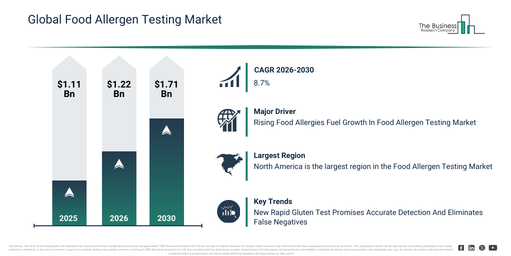
    The food allergen testing market has experienced substantial expansion in recent years. This market is set to increase from $1.11 billion in 2025 to $1.22 billion in 2026, driven by a compound annual growth rate (CAGR) of 10.2%. The historical growth of the market is largely due to factors such as an increase in food allergy prevalence, the implementation of food labeling regulations, the growth of the packaged food industry, the expansion of food testing laboratories, and the adoption of ELISA testing.

    The food allergen testing market is projected to experience substantial expansion in the coming years. This market is set to reach a value of $1.71 billion by 2030, exhibiting a compound annual growth rate (CAGR) of 8.7%. This anticipated growth during the forecast period stems from factors such as increased demand for highly sensitive detection methods, an uptick in global food trade, the broadening application of PCR-based testing, more stringent allergen regulations, and greater automation in food testing procedures. Key trends anticipated within this period involve an escalating demand for food safety testing, more rigorous regulatory compliance demands, broader implementation of allergen detection in processed food products, the increasing deployment of rapid testing technologies, and the uptake of advanced molecular diagnostic approaches.

    Access Your Free Sample Report For In-Depth Market Analysis:

    https://www.thebusinessresearchcompany.com/report/food-allergen-testing-global-market-report

    Which Factors Are Influencing The Growth Of The Food Allergen Testing Market?

    The rising occurrence of food allergies is projected to fuel the expansion of the food allergen testing market in the future. Food allergies are defined as unfavorable immune system reactions triggered by specific food proteins, which can manifest in a spectrum of symptoms ranging from mild discomfort to severe responses. The increasing incidence of food allergies stems from genetic predispositions, environmental influences, alterations in diet, and improved awareness coupled with better diagnosis. Food allergen testing serves to identify and quantify allergenic substances present in food products, thereby aiding in the prevention of allergic reactions for individuals afflicted by food allergies. For instance, in March 2024, as per CPD Online College Limited, a UK-based company, approximately 2 million people in the UK are believed to have a diagnosed food allergy. In the US, an estimated 33 million individuals are thought to have allergies. Australia exhibits some of the highest allergy rates globally, with food allergies impacting 10% of infants, 4-8% of children, and 2% of adults. Consequently, the growing number of food allergy cases is propelling the growth of the food allergen testing market.

    What Are The Main Segments Within The Food Allergen Testing Market Segment Structure?

    The food allergen testing market covered in this report is segmented –

    1) By Test Type: Allergen Testing, Intolerance Testing

    2) By Technology: Biosensors, Immunoassay Or Enzyme Linked Immunosorbent Assay (ELISA), Polymerase Chain Reaction (PCR), Other Technologies

    3) By Application: Seafood And Meat Products, Dairy Products, Beverages, Bakery And Confectionery, Baby Food And Infant Formula, Other Applications

    Subsegments:

    1) By Allergen Testing: Immunoassay-Based Tests, PCR-Based Tests, Mass Spectrometry-Based Tests, Luminex xMAP Technology, Chromatography-Based Tests

    2) By Intolerance Testing: Breath Tests, Blood Tests, Elimination Diets And Food Challenge Testing

    Which Trends Are Influencing Demand In The Food Allergen Testing Market?

    Leading firms within the food allergen testing sector are concentrating on creating quick tests, like immunochromatographic assays, to identify allergens and secure a competitive advantage. An immunochromatographic assay is defined as a fast diagnostic testing approach designed to pinpoint particular allergenic proteins in food items by utilizing chromatographic and immunological principles. For example, in March 2024, Gold Standard Diagnostics Budapest Kft, a Hungarian diagnostic solutions provider, introduced the SENSIStrip Gluten PowerLine lateral flow test. This product aims to reduce false negative outcomes in rapid gluten detection. This test employs an immunochromatographic assay. It functions as a highly sensitive detection system, relying on a monoclonal antibody, and is specifically adept at identifying gluten traces across food matrices, rinse water, and swabs. The test enables prompt and sensitive gluten detection, which is vital for individuals suffering from gluten intolerance or celiac disease. Additionally, it features an integrated hook line designed to prevent false-negative interpretations in samples with high contamination levels. While results are interpretable visually, quantitative assessment is also achievable when used alongside their RapidScan ST5 lateral flow reader.

    Who Are The Companies Participating In The Food Allergen Testing Market?

    Major companies operating in the food allergen testing market are Thermo Fisher Scientific, Ecolab Inc., Eurofins Scientific, SGS SA, Bureau Veritas, Intertek Group plc, Bio-Rad Laboratories Inc., ALS Limited, Neogen Corporation, IEH Laboratories & Consulting Group, AsureQuality Limited, Mérieux NutriSciences, Microbac Laboratories Inc, R-Biopharm AG, TUV SUD America, Symbio Laboratories, Campden BRI, Romer Labs, Q Laboratories Inc., NSL Analytical Services Inc.

    Get The Full Food Allergen Testing Market Report:

    https://www.thebusinessresearchcompany.com/report/food-allergen-testing-global-market-report

    Which Region Is The Largest In The Food Allergen Testing Market?

    North America was the largest region in the food allergen testing market in 2025. Asia-Pacific is expected to be the fastest-growing region in the forecast period. The regions covered in the food allergen testing market report are Asia-Pacific, South East Asia, Western Europe, Eastern Europe, North America, South America, Middle East, Africa.

    Request A Customized Food Allergen Testing Market Report For Competitive Insights:

    https://www.thebusinessresearchcompany.com/report/food-allergen-testing-global-market-report

    Browse Through More Reports Similar to the Global Food Allergen Testing Market 2026, By The Business Research Company

    Food Diagnostics Market Report 2026

    https://www.thebusinessresearchcompany.com/report/food-diagnostics-global-market-report

    Food Safety Testing Market Report 2026

    https://www.thebusinessresearchcompany.com/report/food-safety-testing-global-market-report

    Food Pathogen Testing Market Report 2026

    https://www.thebusinessresearchcompany.com/report/food-pathogen-testing-global-market-report

    Get in touch with us:

    The Business Research Company: https://www.thebusinessresearchcompany.com/

    Americas +1 310-496-7795

    Asia +44 7882 955267 & +91 8897263534

    Europe +44 7882 955267

    Email us at info@tbrc.info

    Follow us on:

    LinkedIn: https://in.linkedin.com/company/the-business-research-company

    YouTube: https://www.youtube.com/channel/UC24_fI0rV8cR5DxlCpgmyFQ

    Global Market Model: https://www.thebusinessresearchcompany.com/global-market-model
  • Global Foley Catheters Market to Reach $2.35B by 2030 at 6.8% CAGR

    Global Foley Catheters Market to Reach $2.35B by 2030 at 6.8% CAGR

    The Business Research Company’s 2026 market reports feature enhanced tools like market attractiveness analysis, TAM assessment, and company scoring matrices, along with interactive dashboards, deeper supply chain insights, and startup coverage strengthening the depth, usability, and strategic value of insights.

    What Is The Estimated Market Size Of The Foley Catheters Market In 2026, And How Will Its Value Evolve By 2030?

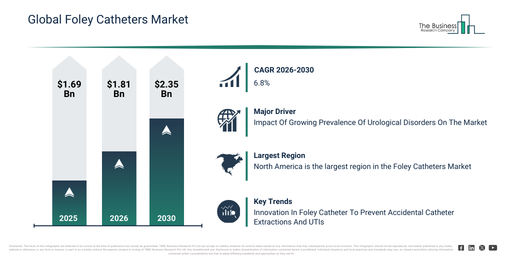
    The foley catheters market has exhibited significant expansion over recent years. It is anticipated to expand from $1.69 billion in 2025 to $1.81 billion in 2026, achieving a compound annual growth rate (CAGR) of 7.0%. The past growth in this market can be linked to an increase in surgical procedures, the widespread occurrence of urinary retention disorders, a growing aging population, the frequent use of catheters in hospitals, and the accessibility of latex catheters.

    The foley catheters market is projected to experience substantial expansion in the coming years, with its size anticipated to reach $2.35 billion by 2030, reflecting a compound annual growth rate (CAGR) of 6.8%. This growth can be primarily attributed to an increasing demand for infection-resistant devices, the broadening of home healthcare services, a growing preference for silicone materials, the escalating burden of chronic diseases, and advancements in catheter coatings. Key trends shaping the market include a rising demand for long-term urinary drainage solutions, increased application in post-surgical care, growing adoption of silicone-based catheters, a strong focus on infection prevention and antibacterial coatings, and the expansion of their usage in homecare and elderly care settings.

    Access Your Free Sample Report For In-Depth Market Analysis:

    https://www.thebusinessresearchcompany.com/report/foley-catheters-global-market-report

    What Leading Drivers Are Supporting The Foley Catheters Market Expansion?

    The increasing incidence of urological conditions is expected to propel the expansion of the Foley catheters market in the future. These disorders encompass conditions affecting the urinary system and male reproductive organs, including issues like kidney stones, bladder infections, prostate complications, and urinary incontinence. This rise in urological disorder prevalence stems from multiple factors such as an aging demographic, chronic illnesses, lifestyle decisions, and environmental factors. Foley catheters assist in mitigating urological disorders through efficient urine drainage, managing urinary retention, and facilitating post-surgical recovery, thereby averting complications and improving patient care. A notable example is data from October 2023, where the National Health Service (NHS) England, a UK-based government department, reported 147,285 hospital admissions with a primary diagnosis of urinary tract infection (UTI) during the 2022/23 period. Among these, 56% (82,392 cases) were patients aged 65 and older. Furthermore, over 800,000 hospital admissions across the nation have been attributed to UTIs in the past five-year period. Consequently, the increasing prevalence of urological conditions is fueling the expansion of the Foley catheters market.

    How Is Segmentation Applied In The Foley Catheters Market Segment Analysis?

    The foley catheters market covered in this report is segmented –

    1) By Product Type: 2-Way Foley Catheter, 3-Way Foley Catheter, 4-Way Foley Catheter

    2) By Material Type: Latex, Silicone, Other Materials

    3) By Application Type: Surgery, Benign Prostatic Hyperplasia, Urinary Incontinence, Other Application Types

    4) By End User: Hospitals, Long-Term Care Facilities, Other End Users

    Subsegments:

    1) By 2-Way Foley Catheter: Standard 2-Way Foley Catheters, Antibacterial Coated 2-Way Foley Catheters, Latex 2-Way Foley Catheters, Silicone 2-Way Foley Catheters, Hydrophilic Coated 2-Way Foley Catheters

    2) By 3-Way Foley Catheter: Standard 3-Way Foley Catheters, 3-Way Foley Catheters With Irrigation Port, Latex 3-Way Foley Catheters, Silicone 3-Way Foley Catheters, Antibacterial Coated 3-Way Foley Catheters

    3) By 4-Way Foley Catheter: Standard 4-Way Foley Catheters, 4-Way Foley Catheters With Continuous Bladder Irrigation (Cbi), Latex 4-Way Foley Catheters, Silicone 4-Way Foley Catheters, Antibacterial Coated 4-Way Foley Catheters

    What Emerging Trends Are Seen In The Foley Catheters Market?

    Leading companies in the Foley catheters market are prioritizing the development of advanced solutions, such as catheter stabilizers, to improve patient comfort and minimize complications related to catheters. A catheter stabilizer is a medical device designed to securely fix a catheter to a patient’s skin, thereby preventing its dislodgement or shifting during lengthy procedures like intravenous (IV) infusions, urinary catheterizations, or dialysis. For instance, in January 2023, Cathetrix Inc., an Israel-based medical device company, launched the Foley/Safe 2.0, an advanced catheter stabilizer intended to prevent accidental Foley catheter extractions and urinary tract infections (UTIs). The product features three protective layers: a fixation adhesive patch, an anti-slide smart mechanism, and a disconnection mechanism that safely severs the catheter when necessary. This innovative device aims to enhance patient safety and reduce the requirement for surgery or extended hospitalization.

    Who Are The Companies Participating In The Foley Catheters Market Environment?

    Major companies operating in the foley catheters market are Cardinal Health Inc, Medtronic PLC, Becton Dickinson and Company, Boston Scientific Corporation, B. Braun Melsungen AG, Coloplast A/S, Teleflex Incorporated, Cook Medical, ConvaTec Group PLC, Lepu Medical Technology, Amsino International Inc, Vygon S.A., Medi-Globe, VOGT Medical, Angiplast Pvt Ltd, Bard Medical, BACTIGUARD AB, AdvaCare Pharma, GWS Surgicals LLP, M. C. Johnson Co. Inc., Ribble International Limited, Advin Health Care, Hospital Equipment Manufacturing Company (HEMC), Sterimed Group

    Get The Full Foley Catheters Market Report:

    https://www.thebusinessresearchcompany.com/report/foley-catheters-global-market-report

    Which Region Leads The Foley Catheters Market In Terms Of Market Share?

    North America was the largest region in the foley catheters market in 2025. Asia-Pacific is expected to be the fastest-growing region in the forecast period. The regions covered in the foley catheters market report are Asia-Pacific, South East Asia, Western Europe, Eastern Europe, North America, South America, Middle East, Africa.

    Request A Customized Foley Catheters Market Report For Competitive Insights:

    https://www.thebusinessresearchcompany.com/report/foley-catheters-global-market-report

    Browse Through More Reports Similar to the Global Foley Catheters Market 2026, By The Business Research Company

    Deflectable Catheters Market Report 2026

    https://www.thebusinessresearchcompany.com/report/deflectable-catheters-global-market-report

    Urinary Catheters Market Report 2026

    https://www.thebusinessresearchcompany.com/report/urinary-catheters-global-market-report

    Diagnostic Catheters Market Report 2026

    https://www.thebusinessresearchcompany.com/report/diagnostic-catheters-global-market-report

    Get in touch with us:

    The Business Research Company: https://www.thebusinessresearchcompany.com/

    Americas +1 310-496-7795

    Asia +44 7882 955267 & +91 8897263534

    Europe +44 7882 955267

    Email us at info@tbrc.info

    Follow us on:

    LinkedIn: https://in.linkedin.com/company/the-business-research-company

    YouTube: https://www.youtube.com/channel/UC24_fI0rV8cR5DxlCpgmyFQ

    Global Market Model: https://www.thebusinessresearchcompany.com/global-market-model
  • Fluoxetine Market to Reach $1.27B by 2030 at 4.1% CAGR

    Fluoxetine Market to Reach $1.27B by 2030 at 4.1% CAGR

    The Business Research Company’s 2026 market reports feature enhanced tools like market attractiveness analysis, TAM assessment, and company scoring matrices, along with interactive dashboards, deeper supply chain insights, and startup coverage strengthening the depth, usability, and strategic value of insights.

    How Does The Market Size Of The Fluoxetine Market Compare Between 2026 And 2030?

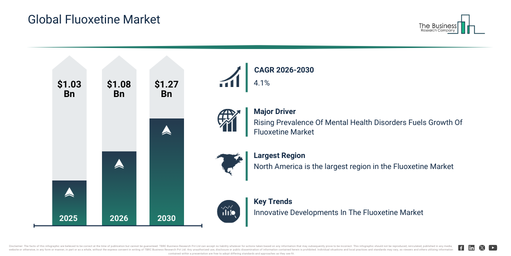
    The fluoxetine market size has demonstrated consistent expansion in recent years. It is anticipated to expand from $1.03 billion in 2025 to $1.08 billion in 2026, exhibiting a compound annual growth rate (CAGR) of 4.7%. This historical growth can be linked to the significant prevalence of depressive disorders, the proven clinical effectiveness of SSRIs, the widespread availability of generic formulations, an increase in psychiatric consultations, and enhanced diagnosis of mental health conditions.

    The fluoxetine market is anticipated to show consistent growth over the next few years, projected to reach $1.27 billion by 2030, with a compound annual growth rate (CAGR) of 4.1%. This expansion during the forecast period is driven by improved access to mental health treatment, the proliferation of telepsychiatry services, an increase in stress-related disorders, broader application in pediatric and geriatric care, and innovations in antidepressant therapy management. Significant trends for the forecast period encompass the increasing use of SSRIs in mental health care, higher rates of prescription for depression and anxiety disorders, the rising adoption of generic fluoxetine, the expansion of mental health awareness initiatives, and a preference for oral antidepressant therapies.

    Access Your Free Sample Report For In-Depth Market Analysis:

    https://www.thebusinessresearchcompany.com/report/fluoxetine-global-market-report

    Which Key Factors Are Driving The Fluoxetine Market Growth?

    The growing occurrence of mental health conditions is anticipated to fuel the expansion of the fluoxetine market in the future. These conditions encompass a wide array of issues impacting cognitive, emotional, and behavioral functions, often resulting in distress or daily life impairment. Their increase stems from a complex interplay of factors, including societal pressures, economic strains, lifestyle modifications, and enhanced awareness and diagnosis. Fluoxetine is utilized for these disorders as it aids in symptom relief by elevating serotonin levels in the brain, a neurotransmitter vital for mood and emotion regulation. For instance, in August 2024, data from the Substance Abuse and Mental Health Services Administration (SAMHSA), a U.S.-based government agency, indicated that nearly 25 percent of adults reported experiencing any mental illness (AMI) in 2023, with approximately 17.1 percent meeting criteria for substance use disorder (SUD). Thus, the increasing incidence of mental health disorders is propelling the growth of the fluoxetine market.

    Fluoxetine Market Driver: Rising Healthcare Expenditure Drives Growth In The Fluoxetine Market

    Elevated healthcare spending is projected to stimulate the expansion of the fluoxetine market moving forward. Healthcare costs are escalating due to the increasing expense of advanced medical technologies, an aging population, and the prevalence of chronic illnesses. Higher healthcare expenditure improves the availability and affordability of medications like fluoxetine, thereby enhancing patient access and adherence for those requiring treatment for depression and anxiety disorders. This can lead to superior overall mental health outcomes and a reduction in long-term healthcare costs. For instance, in May 2024, according to the Office for National Statistics, a UK-based national statistical institute, in 2023, UK healthcare expenditure reached approximately $385 billion (£292 billion), an increase from $373 billion (£283 billion) in 2022. Consequently, the rise in healthcare expenditure is driving the growth of the fluoxetine market.

    What Segment Categories Shape The Fluoxetine Market Segment Landscape?

    The fluoxetine market covered in this report is segmented –

    1) By Dosage Form: Tablet, Capsule, Other Dosage Forms

    2) By Route Of Administration: Oral, Other Routes Of Administration

    3) By Demographic: Adult, Pediatric, Geriatric

    4) By Application: Obsessive-Compulsive Disorder, Panic Disorder, Depression, Bulimia Nervosa, Other Applications

    5) By End User: Clinic, Hospital, Other End Users

    Subsegments:

    1) By Tablet: Regular Tablets, Extended-Release Tablets

    2) By Capsule: Standard Capsules, Delayed-Release Capsules

    3) By Other Dosage Forms: Injection Form, Topical Form

    Which Trends Are Guiding The Direction Of The Fluoxetine Market?

    Key companies operating in the fluoxetine market are concentrating on developing innovative products, specifically fluoxetine tablets, aimed at treating a range of mental health disorders, such as major depressive disorder. These fluoxetine tablets are pharmaceutical formulations that contain fluoxetine hydrochloride, an antidepressant medication categorized as a selective serotonin reuptake inhibitor (SSRI). As an example, in April 2024, Strides Pharma Global Pte. Limited, a Singapore-based pharmaceutical company, announced that its Fluoxetine Tabs 10 mg and 20 mg had received approval from the United States Food and Drug Administration (USFDA). This approval significantly bolsters the company’s fluoxetine product offering by adding fluoxetine tablets to its existing line of approved capsules. Fluoxetine, which is classified as an SSRI antidepressant, is used for the management of conditions including major depressive disorder (MDD), obsessive-compulsive disorder (OCD), bulimia nervosa, and panic disorder, both with and without agoraphobia. The introduction of fluoxetine tablets provides an expanded array of treatment choices within the company’s fluoxetine portfolio, giving patients and healthcare providers greater flexibility and alternatives in addressing these mental health challenges.

    Who Are The Companies Operating Across The Fluoxetine Market Value Chain?

    Major companies operating in the fluoxetine market are Eli Lilly and Company, Viatris Inc., Teva Pharmaceutical Industries Ltd., Sun Pharmaceutical Industries Ltd., Hetero Ltd., Torrent Pharmaceuticals GmbH, Aurobindo Pharma, Cadila Pharmaceuticals Ltd., Dr. Reddy’s Laboratories Limited, Apotex Inc., Amneal Pharmaceuticals Inc., Lupin Ltd., Glenmark Pharmaceuticals Inc., Alvogen, Alembic Pharmaceuticals Limited, Accord Healthcare Ltd., PERRIGO Company plc, Wockhardt Ltd., Jubilant Life Sciences Ltd., Lannett Company Inc., Mayne Pharma International Pty Ltd., Par Pharmaceutical Companies Inc., Zydus Pharmaceuticals USA Inc., Ascend Laboratories LLC

    Get The Full Fluoxetine Market Report:

    https://www.thebusinessresearchcompany.com/report/fluoxetine-global-market-report

    Which Region Leads The Fluoxetine Market In Overall Market Size?

    North America was the largest region in the fluoxetine market in 2025. Asia-Pacific is expected to be the fastest-growing region in the forecast period. The regions covered in the fluoxetine market report are Asia-Pacific, South East Asia, Western Europe, Eastern Europe, North America, South America, Middle East, Africa.

    Request A Customized Fluoxetine Market Report For Competitive Insights:

    https://www.thebusinessresearchcompany.com/report/fluoxetine-global-market-report

    Browse Through More Reports Similar to the Global Fluoxetine Market 2026, By The Business Research Company

    Fluorochemicals Market Report 2026

    https://www.thebusinessresearchcompany.com/report/fluorochemicals-global-market-report

    Anticoccidial Drugs Market Report 2026

    https://www.thebusinessresearchcompany.com/report/anticoccidial-drugs-global-market-report

    Antipsychotic Drugs Market Report 2026

    https://www.thebusinessresearchcompany.com/report/antipsychotic-drugs-global-market-report

    Get in touch with us:

    The Business Research Company: https://www.thebusinessresearchcompany.com/

    Americas +1 310-496-7795

    Asia +44 7882 955267 & +91 8897263534

    Europe +44 7882 955267

    Email us at info@tbrc.info

    Follow us on:

    LinkedIn: https://in.linkedin.com/company/the-business-research-company

    YouTube: https://www.youtube.com/channel/UC24_fI0rV8cR5DxlCpgmyFQ

    Global Market Model: https://www.thebusinessresearchcompany.com/global-market-model
  • Fluoropolymer in Healthcare Market Forecast (2026–2030): Expansion Trends

    Fluoropolymer in Healthcare Market Forecast (2026–2030): Expansion Trends

    The Business Research Company’s 2026 market reports feature enhanced tools like market attractiveness analysis, TAM assessment, and company scoring matrices, along with interactive dashboards, deeper supply chain insights, and startup coverage strengthening the depth, usability, and strategic value of insights.

    What Is The Forecasted Market Size Trajectory Of The Fluoropolymer In Healthcare Market From 2026 To 2030?

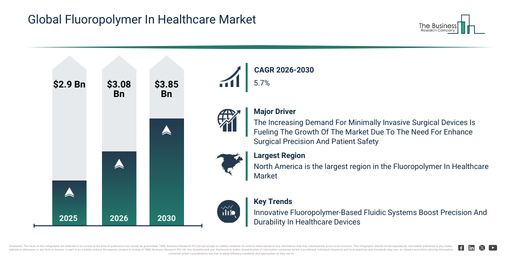
    The fluoropolymer in healthcare market size has shown robust growth in recent years. It is forecast to increase from $2.9 billion in 2025 to $3.08 billion in 2026, reflecting a compound annual growth rate (CAGR) of 6.0%. The expansion observed in the historical period can be attributed to the growth in medical device manufacturing, the rising use of advanced polymer materials, the broadening of pharmaceutical packaging needs, the increasing demand for laboratory consumables, and improved fluoropolymer processing technologies.

    The fluoropolymer in healthcare market is set for significant expansion over the coming years, with its size projected to reach $3.85 billion by 2030, demonstrating a compound annual growth rate (CAGR) of 5.7%. This growth within the forecast period is attributed to the increasing adoption of single-use medical devices, a heightened focus on infection control standards, the expansion of high-purity fluid handling systems, growing investments in healthcare material innovation, and an increasing regulatory emphasis on material safety. Key trends for the forecast period involve the expanded use of fluoropolymers in medical devices, a rising demand for sterilization-resistant materials, increased adoption in pharmaceutical packaging, the broadening of fluoropolymer tubing applications, and an enhanced focus on biocompatible material design.

    Access Your Free Sample Report For In-Depth Market Analysis:

    https://www.thebusinessresearchcompany.com/report/fluoropolymer-in-healthcare-global-market-report

    What Primary Drivers Are Shaping The Fluoropolymer In Healthcare Market?

    The escalating requirement for minimally invasive surgical devices is projected to boost the expansion of fluoropolymers within the healthcare market. Minimally Invasive Surgical Devices (MISDs) are sophisticated instruments employed for performing procedures via small incisions, with the goal of reducing recovery periods and minimizing complications. This surge in MISDs is prompted by the desire for quicker patient recovery, as these devices diminish bodily trauma and shorten hospital stays. Fluoropolymers are vital in minimally invasive surgical devices due to their chemical inertness, low coefficient of friction, and biocompatibility, all of which enhance device performance and ensure patient safety. Their inherent durability also supports the precision and reliability required for surgical procedures. As an illustration, in January 2025, Intuitive Surgical, Inc., a US-based medical device company, stated that their surgical products were utilized in close to 2.7 million procedures in 2024, marking a 17% rise from 2023. Thus, the growing demand for minimally invasive surgical devices is a primary catalyst for the increased use of fluoropolymers in the healthcare market.

    Which Segment Types Are Examined In The Fluoropolymer In Healthcare Market Segment Study?

    The fluoropolymer in healthcare market covered in this report is segmented –

    1) By Type: Polytetrafluoroethylene (PTFE), Polyvinylidene Difluoride (PVDF), Fluorinated Ethylene Propylene (FEP), Ethylene Tetrafluoroethylene (ETFE), Polyvinyl Fluoride (PVF), Other Types

    2) By Form: Films, Coatings, Wrappings, Tubings

    3) By Application: Medical Devices, Pharmaceutical Packaging, Laboratory Equipment, Protective Clothing

    4) By End-User: Hospitals And Clinics, Pharmaceutical Companies, Research Laboratories, Contract Manufacturing Organizations (CMOs)

    Subsegments:

    1) By Polytetrafluoroethylene (PTFE): Expanded Polytetrafluoroethylene (ePTFE), Virgin Polytetrafluoroethylene, Filled Polytetrafluoroethylene, Sintered Polytetrafluoroethylene

    2) By Polyvinylidene Difluoride (PVDF): Homopolymer Polyvinylidene Difluoride (PVDF), Copolymer Polyvinylidene Difluoride (PVDF), Melt-processable Polyvinylidene Difluoride (PVDF), Polyvinylidene Difluoride (PVDF) Membranes

    3) By Fluorinated Ethylene Propylene (FEP): Virgin Fluorinated Ethylene Propylene (FEP), Filled Fluorinated Ethylene Propylene (FEP), Transparent Fluorinated Ethylene Propylene (FEP), High Melt Flow Fluorinated Ethylene Propylene (FEP)

    4) By Ethylene Tetrafluoroethylene (ETFE): Virgin Ethylene Tetrafluoroethylene (ETFE), Filled Ethylene Tetrafluoroethylene (ETFE), Ethylene Tetrafluoroethylene (ETFE) Films, Ethylene Tetrafluoroethylene (ETFE) Coatings

    5) By Polyvinyl Fluoride (PVF): Polyvinyl Fluoride (PVF) Films, Polyvinyl Fluoride (PVF) Coatings, Laminated Polyvinyl Fluoride (PVF), Polyvinyl Fluoride (PVF) Sheets

    6) By Other Types: Perfluoroalkoxy (PFA), Fluorinated Elastomers, Chlorotrifluoroethylene (CTFE), Fluoroethylene Vinyl Ether (FEVE)

    What Trends Are Affecting The Growth Of The Fluoropolymer In Healthcare Market?

    Leading firms within the fluoropolymers in the healthcare market are concentrating on creating sophisticated offerings, like fluoropolymer-based fluidic systems, to improve the accuracy and longevity of medical equipment and diagnostic tools. These fluidic systems leverage fluoropolymer materials for the precise and secure control of fluid movement in clinical and lab environments. Their inherent resistance to chemicals, minimal friction, and biological compatibility guarantee reliable operation in essential healthcare uses. An example is May 2023, when Biotech Fluidics AB, a Swedish company offering degassing and fluidic solutions, introduced a new series of traceable, certified PEEK and fluoropolymer flexible tubing. This tubing is specifically engineered for regulated sectors like medical and life sciences, complying with rigorous benchmarks such as ISO 10993, US Pharmacopeia Class VI, FDA Title 21, and EU Regulation 1907/2006 (DEHP content). This product is obtainable in both bulk and pre-cut forms, offering complete traceability, and can be provided sterilized within cleanroom assemblies when necessary. The tubing is designed to satisfy numerous strict international norms and regulatory mandates, affirming its appropriateness for crucial applications where safety, biocompatibility, and traceability are of utmost importance.

    Which Players Are Part Of The Competitive Landscape Of The Fluoropolymer In Healthcare Market?

    Major companies operating in the fluoropolymer in healthcare market are Saint-Gobain S.A., Daikin Industries Ltd., Solvay S.A., AGC Inc., DuPont de Nemours Inc., Arkema S.A., The Chemours Company, Datwyler, Kureha Corporation, Gujarat Fluorochemicals Ltd., Specialty Coating Systems Inc., W.L. Gore & Associates, Everflon Fluoropolymers, Zeus Industrial Products, Hitachi Ltd., Holscot Fluoropolymers Ltd., Shin-Etsu Chemical Co Ltd., Syensqo Specialty Polymers, Toray Industries Inc., Adtech Polymer Engineering Ltd., Dongyue Group Ltd., Zhejiang Juhua Co Ltd., Kuraray Co Ltd.

    Get The Full Fluoropolymer In Healthcare Market Report:

    https://www.thebusinessresearchcompany.com/report/fluoropolymer-in-healthcare-global-market-report

    Which Region Is The Top Contributor To The Fluoropolymer In Healthcare Market By Share?

    North America was the largest region in the fluoropolymers in the healthcare market in 2025. Asia-Pacific is expected to be the fastest-growing region in the forecast period. The regions covered in the fluoropolymer in healthcare market report are Asia-Pacific, South East Asia, Western Europe, Eastern Europe, North America, South America, Middle East, Africa.

    Request A Customized Fluoropolymer In Healthcare Market Report For Competitive Insights:

    https://www.thebusinessresearchcompany.com/report/fluoropolymer-in-healthcare-global-market-report

    Browse Through More Reports Similar to the Global Fluoropolymer In Healthcare Market 2026, By The Business Research Company

    Fluorochemicals Market Report 2026

    https://www.thebusinessresearchcompany.com/report/fluorochemicals-global-market-report

    Fluoropolymer Films Market Report 2026

    https://www.thebusinessresearchcompany.com/report/fluoropolymer-films-global-market-report

    Fluorotelomers Market Report 2026

    https://www.thebusinessresearchcompany.com/report/fluorotelomers-global-market-report

    Get in touch with us:

    The Business Research Company: https://www.thebusinessresearchcompany.com/

    Americas +1 310-496-7795

    Asia +44 7882 955267 & +91 8897263534

    Europe +44 7882 955267

    Email us at info@tbrc.info

    Follow us on:

    LinkedIn: https://in.linkedin.com/company/the-business-research-company

    YouTube: https://www.youtube.com/channel/UC24_fI0rV8cR5DxlCpgmyFQ

    Global Market Model: https://www.thebusinessresearchcompany.com/global-market-model
  • Global Flowable Hemostats Market: Strategic Growth Insights

    Global Flowable Hemostats Market: Strategic Growth Insights

    The Business Research Company’s 2026 market reports feature enhanced tools like market attractiveness analysis, TAM assessment, and company scoring matrices, along with interactive dashboards, deeper supply chain insights, and startup coverage strengthening the depth, usability, and strategic value of insights.

    How Much Will The Market Value Of The Flowable Hemostats Market Grow Between 2026 And 2030?

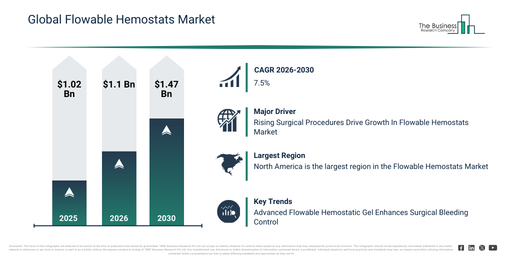
    The market for flowable hemostats has seen robust expansion in recent years. Its valuation is expected to climb from $1.02 billion in 2025 to $1.1 billion in 2026, achieving a compound annual growth rate (CAGR) of 7.8%. The historical increase in this market can be attributed to several factors including a rise in surgical procedure volumes, the increasing adoption of sophisticated surgical tools, the availability of gelatin-based hemostatic agents, the growth of specialty surgical disciplines, and heightened surgeon awareness regarding flowable hemostats.

    The flowable hemostats market size is expected to undergo significant expansion in the coming years. It is projected to climb to $1.47 billion by 2030, achieving a compound annual growth rate (CAGR) of 7.5%. This anticipated growth during the forecast period is propelled by factors such as the increasing necessity for faster bleeding control, a heightened focus on patient safety outcomes, the expansion of minimally invasive and robotic surgical techniques, advancements in bioresorbable materials, and their rising utilization in emergency and trauma care settings. Major trends foreseen for this period include the increased application of flowable hemostats in complex surgical procedures, the growing adoption of combination hemostatic products, an increasing demand for rapid hemostasis solutions, the broadening scope of minimally invasive surgical applications, and an enhanced emphasis on biocompatible materials.

    Access Your Free Sample Report For In-Depth Market Analysis:

    https://www.thebusinessresearchcompany.com/report/flowable-hemostats-global-market-report

    Which Major Drivers Are Influencing The Expansion Of The Flowable Hemostats Market?

    The growth of the flowable hemostats market is expected to be propelled by an increasing volume of surgical procedures in the coming period. The rise in surgical procedures is attributed to an aging global population, which in turn boosts the demand for age-related surgeries, as well as technological advancements that have made operations safer and more readily available. Flowable hemostats are highly effective in surgical settings because they assist in controlling bleeding in areas that are difficult to access or where traditional methods may not be sufficient. For instance, in June 2024, a report from the International Society of Aesthetic Plastic Surgery (ISAPS), a US-based professional non-governmental organization, indicated that in 2023, the combined total of surgical and non-surgical procedures grew by 3.4%, reaching 34.9 million, compared to the previous year. Thus, the escalating number of surgical procedures is a primary driver for the expansion of the flowable hemostats market.

    How Are Different Segments Classified In The Flowable Hemostats Market Segment Analysis?

    The flowable hemostats market covered in this report is segmented –

    1) By Product: Active Hemostats, Passive Hemostats, Combination Hemostats

    2) By Material: Porcine Gelatin, Bovine Gelatin

    3) By Application: General Surgery, Cardiac Surgery, Vascular Surgery, Neuro And Spine Surgery, Orthopedic Surgery, Other Applications

    4) By End User: Hospital And Clinics, Ambulatory Surgery Centers

    Subsegments:

    1) By Active Hemostats: Fibrin Sealants, Thrombin-Based Hemostats, Collagen-Based Hemostats, Biodegradable Polymer Hemostats

    2) By Passive Hemostats: Gauze-Based Hemostats, Sponges and Pads, Cellulose-Based Hemostats, Granule-Based Hemostats

    3) By Combination Hemostats: Fibrinogen and Thrombin Combination Products, Collagen and Fibrin Combination Products, Synthetic Combination Hemostats, Bioresorbable Combination Hemostats

    Which Trends Are Shaping The Flowable Hemostats Market?

    Major companies operating in the flowable hemostats market are concentrating on developing surgically advanced hemostatic agents, such as no-swell technology, to address the evolving requirements of surgical procedures. No-swell technology refers to a characteristic of a hemostatic agent that prevents it from absorbing fluids and expanding, making it suitable for utilization in surgeries where swelling could lead to complications. For instance, in January 2023, Medcura Inc., a US-based surgical technology platform, received Food and Drug Administration (FDA) breakthrough device designation for its LifeGel flowable technology, which controls bleeding during surgery for procedures where swelling cannot be tolerated. Medcura’s LifeGel is the initial and only flowable hemostatic gel designed to tackle challenges specific to hemostatic swelling. The absorbable agent does not swell as it is fully hydrated and ready-to-use, potentially mitigating risks associated with swelling, such as nerve injury and paralysis. It is cost-effective, retains antimicrobial properties, is relatively transparent, and mucoadheres to tissues, offering a safer and more effective solution for managing bleeding during complex surgical procedures.

    Who Are The Companies Driving Activity In The Flowable Hemostats Market?

    Major companies operating in the flowable hemostats market are Pfizer Inc., Johnson & Johnson Services Inc., Medtronic plc, Medline Industries Inc., Stryker Corporation, Baxter International Inc., B Braun Melsungen AG, Becton Dickinson and Company, Cook Medical Inc., Teleflex Incorporated, Mallinckrodt Pharmaceuticals, Integra LifeSciences Holdings Corporation, Gelita Medical GmbH, Ferrosan Medical Devices A/S, Marine Polymer Technologies Inc, Axio Biosolutions Private Limited, Hemostasis LLC, Aegis Lifesciences Private Limited, Medcura Health Inc, Arch Therapeutics Inc., Starch Medical Inc.

    Get The Full Flowable Hemostats Market Report:

    https://www.thebusinessresearchcompany.com/report/flowable-hemostats-global-market-report

    Which Region Represents The Largest Share Of The Flowable Hemostats Market?

    North America was the largest region in the flowable hemostats market in 2025. The regions covered in the flowable hemostats market report are Asia-Pacific, South East Asia, Western Europe, Eastern Europe, North America, South America, Middle East, Africa.

    Request A Customized Flowable Hemostats Market Report For Competitive Insights:

    https://www.thebusinessresearchcompany.com/report/flowable-hemostats-global-market-report

    Browse Through More Reports Similar to the Global Flowable Hemostats Market 2026, By The Business Research Company

    Cyclic Heavy Menstrual Bleeding Market Report 2026

    https://www.thebusinessresearchcompany.com/report/cyclic-heavy-menstrual-bleeding-global-market-report

    Gastrointestinal Bleeding Treatment Devices Market Report 2026

    https://www.thebusinessresearchcompany.com/report/gastrointestinal-bleeding-treatment-devices-global-market-report

    Bleeding Disorders Treatment Market Report 2026

    https://www.thebusinessresearchcompany.com/report/bleeding-disorders-treatment-global-market-report

    Get in touch with us:

    The Business Research Company: https://www.thebusinessresearchcompany.com/

    Americas +1 310-496-7795

    Asia +44 7882 955267 & +91 8897263534

    Europe +44 7882 955267

    Email us at info@tbrc.info

    Follow us on:

    LinkedIn: https://in.linkedin.com/company/the-business-research-company

    YouTube: https://www.youtube.com/channel/UC24_fI0rV8cR5DxlCpgmyFQ

    Global Market Model: https://www.thebusinessresearchcompany.com/global-market-model
  • Flow Cytometry in Oncology and Immunology Market: Growth Drivers and Outlook

    Flow Cytometry in Oncology and Immunology Market: Growth Drivers and Outlook

    The Business Research Company’s 2026 market reports feature enhanced tools like market attractiveness analysis, TAM assessment, and company scoring matrices, along with interactive dashboards, deeper supply chain insights, and startup coverage strengthening the depth, usability, and strategic value of insights.

    What Changes In Market Value Are Expected For The Flow Cytometry In Oncology And Immunology Market Over The 2026–2030 Period?

    The flow cytometry in oncology and immunology market size has seen rapid growth in recent years. It is anticipated to expand from $2.32 billion in 2025 to $2.56 billion in 2026, achieving a compound annual growth rate (CAGR) of 10.2%. This historical expansion can be linked to several factors, including an increase in cancer research funding, the development of immunotherapy, the presence of advanced cytometry platforms, a rise in clinical trial activity, and an escalating demand for immune monitoring.

    The flow cytometry in oncology and immunology market is projected for substantial expansion over the next few years. Its valuation is anticipated to climb to $3.82 billion by 2030, growing at a compound annual growth rate (CAGR) of 10.5%. This growth throughout the forecast period is fueled by several factors, including the rising demand for personalized oncology diagnostics, the integration of genomic data, advancements in immuno-oncology therapies, the enlargement of clinical research pipelines, and progress in multiplex analysis. Furthermore, significant trends expected during this timeframe involve an increasing adoption in cancer biomarker identification, broader use in immune cell profiling, the expansion of minimal residual disease detection capabilities, a growing application within translational research, and the integration of high-dimensional data analysis techniques.

    Access Your Free Sample Report For In-Depth Market Analysis:

    https://www.thebusinessresearchcompany.com/report/flow-cytometry-in-oncology-and-immunology-global-market-report

    What Key Drivers Are Fueling The Growth Of The Flow Cytometry In Oncology And Immunology Market?

    The increasing occurrence of HIV/AIDS is anticipated to boost the growth of flow cytometry in the oncology and immunology market moving forward. HIV is a virus that targets the body’s immune system, specifically CD4 cells, which are white blood cells vital for combating infections. If left untreated, HIV can eventually lead to AIDS, which represents the final stage of HIV infection. Flow cytometry serves as a potent method utilized in HIV/AIDS research and clinical settings to examine and characterize cells, particularly immune cells, based on their physical and chemical attributes. This technology can also pinpoint latently infected T cells that contain the HIV genome but are not actively producing the virus. For example, in July 2024, UNAIDS, a UN program situated in Switzerland, stated that in 2023, approximately 39.9 million people were living with HIV globally, an increase from 39.0 million in 2022. Hence, the escalating prevalence of HIV/AIDS is propelling the flow cytometry market within oncology and immunology.

    How Is The Flow Cytometry In Oncology And Immunology Market Categorized Across Its Segment Groups?

    The flow cytometry in oncology and immunology market covered in this report is segmented –

    1) By Type: Immunology, Oncology

    2) By Technology: Cell-Based Flow Cytometry, Bead-Based Flow Cytometry

    3) By Application: Translational Research, Clinical Research

    4) By End User: Hospitals, Diagnostic Laboratories, Reference Laboratories, Pharmaceutical And Biotechnology Companies, Academic Research Institutes, Contract Research Organizations, Other End Users

    Subsegments:

    1) By Immunology: Immune Cell Profiling, Cytokine Detection, T-Cell And B-Cell Analysis, Autoimmune Disease Testing

    2) By Oncology: Cancer Cell Analysis, Tumor Microenvironment Studies, Minimal Residual Disease Detection, Biomarker Discovery And Validation

    What Trends Are Influencing The Flow Cytometry In Oncology And Immunology Market?

    Leading firms within the flow cytometry sector, specifically those engaged in the oncology and immunology market, are prioritizing the creation of advanced solutions, like spectral flow cytometry, to secure a stronger market position. This technology, spectral flow cytometry, operates by capturing the complete emission spectrum from individual fluorescent markers instead of relying on fixed, narrow-band signal detection, thus facilitating advanced, multiparametric cell analysis with a significantly increased number of parameters. An illustrative example occurred in May 2024 when Agilent Technologies, a life science company headquartered in the US, unveiled its NovoCyte Opteon spectral flow cytometer. This system is capable of accommodating three to five lasers, features up to 73 detectors, and allows for the examination of more than 40 markers within a single experimental run. Such a system significantly improves the capabilities for in-depth immunophenotyping investigations in both oncology and immunology research. Its benefits encompass greater flexibility in panel configuration, diminished spectral overlap, and enhanced signal resolution. Nevertheless, a drawback is its need for more intricate data unmixing algorithms, which could extend the time required for analysis.

    Which Firms Are Influencing Competition In The Flow Cytometry In Oncology And Immunology Market?

    Major companies operating in the flow cytometry in oncology and immunology market are Thermo Fisher Scientific Inc., Danaher Corporation, Merck KGaA, Becton Dickinson and Company, Agilent Technologies Inc., Sartorius AG, Beckman Coulter Inc., Bio-Rad Laboratories Inc., Sysmex Partec GmbH, Miltenyi Biotec, Luminex Corporation, Q2 Solutions LLC, BioLegend Inc., Cytek Biosciences Inc., Cell Signaling Technology Inc., Standard BioTools Inc., Sony Biotechnology Inc., NanoCellect Biomedical Inc., Nexcelom Bioscience LLC, CytoReason

    Get The Full Flow Cytometry In Oncology And Immunology Market Report:

    https://www.thebusinessresearchcompany.com/report/flow-cytometry-in-oncology-and-immunology-global-market-report

    Which Geographic Region Dominates The Flow Cytometry In Oncology And Immunology Market?

    North America was the largest region in the flow cytometry in oncology and immunology market in 2025. The regions covered in the flow cytometry in oncology and immunology market report are Asia-Pacific, South East Asia, Western Europe, Eastern Europe, North America, South America, Middle East, Africa.

    Request A Customized Flow Cytometry In Oncology And Immunology Market Report For Competitive Insights:

    https://www.thebusinessresearchcompany.com/report/flow-cytometry-in-oncology-and-immunology-global-market-report

    Browse Through More Reports Similar to the Global Flow Cytometry In Oncology And Immunology Market 2026, By The Business Research Company

    Tumor Infiltrating Lymphocytes Market Report 2026

    https://www.thebusinessresearchcompany.com/report/tumor-infiltrating-lymphocytes-global-market-report

    Flow Cytometry Market Report 2026

    https://www.thebusinessresearchcompany.com/report/flow-cytometry-global-market-report

    Circulating Tumor Cells Market Report 2026

    https://www.thebusinessresearchcompany.com/report/circulating-tumor-cells-global-market-report

    Get in touch with us:

    The Business Research Company: https://www.thebusinessresearchcompany.com/

    Americas +1 310-496-7795

    Asia +44 7882 955267 & +91 8897263534

    Europe +44 7882 955267

    Email us at info@tbrc.info

    Follow us on:

    LinkedIn: https://in.linkedin.com/company/the-business-research-company

    YouTube: https://www.youtube.com/channel/UC24_fI0rV8cR5DxlCpgmyFQ

    Global Market Model: https://www.thebusinessresearchcompany.com/global-market-model
  • Flow Cytometry Market: Developments and Growth Opportunities

    Flow Cytometry Market: Developments and Growth Opportunities

    The Business Research Company’s 2026 market reports feature enhanced tools like market attractiveness analysis, TAM assessment, and company scoring matrices, along with interactive dashboards, deeper supply chain insights, and startup coverage strengthening the depth, usability, and strategic value of insights.

    By 2030, What Market Size Is The Flow Cytometry Market Expected To Reach Based On Its 2026 Value?

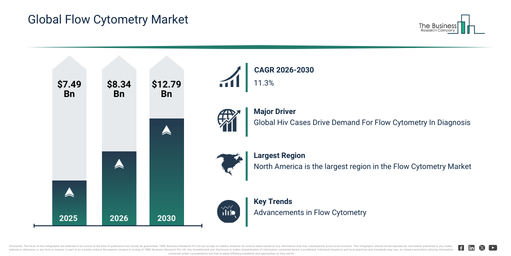
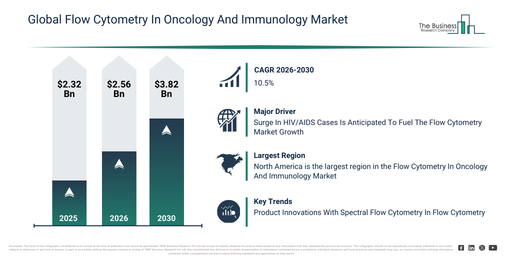
    The size of the flow cytometry market has experienced rapid expansion in recent years. This market is projected to expand from $7.49 billion in 2025 to $8.34 billion in 2026, demonstrating a compound annual growth rate (CAGR) of 11.3%. Historically, this growth has been driven by factors such as increased biomedical research, the broadening scope of cancer diagnostics, the introduction of advanced cytometers, greater funding for life sciences, and an increasing need for cell-based analysis.

    The flow cytometry market size is anticipated to undergo swift expansion over the next few years. It is projected to climb to $12.79 billion by 2030, demonstrating a compound annual growth rate (CAGR) of 11.3%. This expansion during the forecast period is attributable to the integration of ai-driven analytics, an increase in precision medicine research, the broadening of stem cell therapies, elevated pharmaceutical r&d investment, and the demand for high-throughput analysis. Significant trends expected during this time frame include the growing adoption in clinical diagnostics, a greater need for multi-parameter cell analysis, the expansion of flow cytometry in drug discovery, its increasing application in immunology and hematology research, and the integration of advanced data analysis software.

    Access Your Free Sample Report For In-Depth Market Analysis:

    https://www.thebusinessresearchcompany.com/report/flow-cytometry-global-market-report

    Which Drivers Are Supporting The Flow Cytometry Market Growth?

    A rising count of HIV cases across the globe serves as a key impetus for the flow cytometry market. This correlation stems from the direct applicability of the flow cytometry technique in HIV diagnosis. Flow cytometry operates by utilizing light scattering to ascertain cell identity. Cells receive specific markers, termed CDs (clusters of differentiation), corresponding to their scattering behavior. For instance, in July 2024, according to UNAIDS, a Switzerland-based UN program, in 2023, approximately 39.9 million people were living with HIV globally, up from 39.0 million in 2022. Hence, the increasing number of HIV cases is driving the flow cytometry market.

    How Are Segments Identified Within The Flow Cytometry Market Segment Framework?

    The flow cytometry market covered in this report is segmented –

    1) By Type: Instruments, Reagents And Consumables, Software, Accessories, Services

    2) By Technology: Cell-Based, Bead-Based

    3) By Application: Oncology, Drug Discovery, Disease Diagnosis, Stem Cell Therapy, Organ Transplantation, Hematology

    4) By End User: Hospitals And Clinics, Academia And Research Institutes, Pharmaceutical And Biotechnology Companies, Other End Users

    Subsegments:

    1) By Instruments: Cell Analyzers, Cell Sorters, Multi-Parameter Flow Cytometers, High-Throughput Flow Cytometers

    2) By Reagents And Consumables: Antibodies, Dyes And Fluorescent Probes, Kits And Assays, Sample Preparation Consumables (Tubes, Filters)

    3) By Software: Data Analysis Software, Visualization Software, Acquisition Software, Cell Sorting Software

    4) By Accessories: Lasers And Optics, Filters, Flow Cells, Sample Preparation Tools

    5) By Services: Maintenance And Repair Services, Calibration And Validation Services, Training And Support Services

    Which Trends Are Expected To Impact The Flow Cytometry Market?

    Major companies in the flow cytometry market are focusing on developing innovative products, such as automated sample preparation systems, to ensure faster and more accurate results while minimizing hands-on time for technicians. An automated sample preparation system optimizes lab processes by automating tasks like mixing, staining, and dilution, guaranteeing consistent and precise sample preparation. This reduces manual effort and improves efficiency, making it ideal for high-throughput labs and clinical diagnostics. For instance, in June 2023, Becton, Dickinson, and Company, a US-based medical device company, launched BD FACSDuet. This is a premium sample preparation system designed for seamless integration with the BD FACSLyric clinical flow cytometry system, enabling a fully automated ‘walkaway’ workflow. It automates key processes, including cocktailing, washing, and centrifuging of samples. Prepared samples are transferred to the flow cytometer without any human intervention, minimizing manual steps and reducing hands-on time. This system significantly enhances standardization and reproducibility in clinical diagnostics, improving overall lab efficiency.

    Who Are The Companies Competing Within The Flow Cytometry Market?

    Major companies operating in the flow cytometry market are Beckman Coulter Inc., Bio-Rad Laboratories Inc, Thermo Fisher Scientific Inc., Luminex Corporation, Miltenyi Biotec Ltd., Becton Dickinson and Company, Danaher Corporation, Apogee Flow Systems Ltd., Stratedigm Inc., EMD Millipore Corporation, Cytonome St LLC, Enzo Life Sciences Inc., Sony Biotechnology Inc., Life Technologies Corporation, ACEA Biosciences Inc., Takara Bio Inc., Union Biometrica Inc., Cytek Biosciences Inc., Nexcelom Bioscience LLC, Verity Software House Inc., Spectral Cytometry Systems GmbH, InstruNor AS

    Get The Full Flow Cytometry Market Report:

    https://www.thebusinessresearchcompany.com/report/flow-cytometry-global-market-report

    Which Region Is The Leading Market For The Flow Cytometry Market?

    North America was the largest region in the flow cytometry market in 2025. Western Europe was the second largest region in the flow cytometry market analysis. The regions covered in the flow cytometry market report are Asia-Pacific, South East Asia, Western Europe, Eastern Europe, North America, South America, Middle East, Africa.

    Request A Customized Flow Cytometry Market Report For Competitive Insights:

    https://www.thebusinessresearchcompany.com/report/flow-cytometry-global-market-report

    Browse Through More Reports Similar to the Global Flow Cytometry Market 2026, By The Business Research Company

    Lateral Flow Assays Market Report 2026

    https://www.thebusinessresearchcompany.com/report/lateral-flow-assays-global-market-report

    Flow Cytometry In Oncology And Immunology Market Report 2026

    https://www.thebusinessresearchcompany.com/report/flow-cytometry-in-oncology-and-immunology-global-market-report

    Flow Chemistry Market Report 2026

    https://www.thebusinessresearchcompany.com/report/flow-chemistry-global-market-report

    Get in touch with us:

    The Business Research Company: https://www.thebusinessresearchcompany.com/

    Americas +1 310-496-7795

    Asia +44 7882 955267 & +91 8897263534

    Europe +44 7882 955267

    Email us at info@tbrc.info

    Follow us on:

    LinkedIn: https://in.linkedin.com/company/the-business-research-company

    YouTube: https://www.youtube.com/channel/UC24_fI0rV8cR5DxlCpgmyFQ

    Global Market Model: https://www.thebusinessresearchcompany.com/global-market-model
  • Dental Fintech Payment Solutions Market (2026–2030): Industry Trends

    Dental Fintech Payment Solutions Market (2026–2030): Industry Trends

    The Business Research Company’s 2026 market reports feature enhanced tools like market attractiveness analysis, TAM assessment, and company scoring matrices, along with interactive dashboards, deeper supply chain insights, and startup coverage strengthening the depth, usability, and strategic value of insights.

    What Is The Anticipated Rise In Market Value Of The Flexible Payment Fintech for Dental Care Market During The Forecast Period?

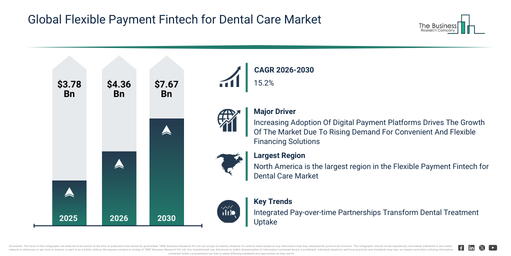
    The market size for flexible payment fintech in dental care has expanded considerably in recent years. It is projected to increase from $3.78 billion in 2025 to $4.36 billion in 2026, at a compound annual growth rate (CAGR) of 15.4%. This historic growth is linked to factors such as the escalating cost of advanced dental treatments, restricted dental insurance coverage in numerous regions, increasing consumer adoption of digital payments, the growth of private dental clinics, and the broader expansion of fintech healthcare platforms.

    The market size for flexible payment fintech in dental care is anticipated to experience substantial expansion over the upcoming years. This market is projected to reach $7.67 billion by 2030, demonstrating a compound annual growth rate (CAGR) of 15.2%. Factors contributing to this growth during the forecast period include the escalating demand for economical oral healthcare, the expanding presence of cloud-based fintech platforms, a heightened inclination towards cashless healthcare transactions, the broadening of personalized financing options, and improved regulatory frameworks for healthcare fintech solutions. Key trends anticipated for the forecast period encompass a greater uptake of installment-based dental payment plans, the growing application of buy now pay later models within dental care, enhanced integration of payment systems with dental practice management software, the proliferation of subscription-based dental financing, and a stronger emphasis on ensuring patient financial transparency.

    Access Your Free Sample Report For In-Depth Market Analysis:

    https://www.thebusinessresearchcompany.com/report/global-flexible-payment-fintech-for-dental-care-market-report

    What Key Factors Are Affecting The Flexible Payment Fintech for Dental Care Market Demand?

    The future expansion of the flexible payment fintech for dental care market is anticipated to be fueled by the growing uptake of digital payment platforms. These platforms are technology-based systems facilitating electronic transactions for various products and services, characterized by features like immediate processing, adaptable payment options, and effortless integration with existing business applications. This rise in adoption stems from escalating consumer desire for ease and adaptable financial solutions, the necessity for dental clinics to optimize administrative operations and enhance cash flow, coupled with the broader digital shift occurring within the healthcare industry. Flexible payment fintech specifically designed for dental care aids the embrace of digital payment platforms by offering tailored, patient-centric financing solutions that connect directly with dental practice management systems, consequently elevating the patient journey and boosting the acceptance rates for treatment plans. For example, data from UK Finance, a UK-based trade association, in October 2025, indicated that approximately half of mobile payment users made monthly payments, while 44% paid weekly or more frequently. Usage was highest among individuals aged 16–24 at 88%, and there was an increase among those 65 and older, rising from 14% in 2023 to 25% in 2024. Consequently, the expanding use of digital payment platforms is a key factor propelling the expansion of the flexible payment fintech for dental care market.

    What Are The Key Segment Divisions In The Flexible Payment Fintech for Dental Care Market Segment Structure?

    The flexible payment fintech for dental care market covered in this report is segmented –

    1) By Solution Type: Point-Of-Sale Financing, Buy Now Pay Later, Subscription Plans, Installment Loans, Other Solution Types

    2) By Deployment Mode: Cloud-Based, On-Premises

    3) By Application: Orthodontics, Cosmetic Dentistry, General Dentistry, Oral Surgery, Other Applications

    4) By End-User: Dental Clinics, Hospitals, Specialty Dental Centers, Other End-Users

    Subsegments:

    1) By Point-Of-Sale Financing: In-Clinic Point-Of-Sale Financing, Mobile Device Point-Of-Sale Financing, Dental Practice Integrated Point-Of-Sale Financing, Third Party Point-Of-Sale Financing Platforms

    2) By Buy Now Pay Later: Short Term Buy Now Pay Later Plans, Long Term Buy Now Pay Later Plans, Interest Free Buy Now Pay Later Services, Low Interest Buy Now Pay Later Services

    3) By Subscription Plans: Preventive Dental Care Subscription Plans, Comprehensive Dental Care Subscription Plans, Family Dental Subscription Plans, Cosmetic Dental Care Subscription Plans

    4) By Installment Loans: Secured Dental Installment Loans, Unsecured Dental Installment Loans, Fixed Interest Installment Loans, Variable Interest Installment Loans

    5) By Other Solution Types: Dental Savings Membership Programs, Employer Sponsored Dental Financing Programs, Charity Based Dental Payment Assistance, Peer To Peer Dental Financing Platforms

    What Trends Are Influencing Changes In The Flexible Payment Fintech for Dental Care Market?

    Leading companies in the flexible payment fintech for dental care market are concentrating on integrated pay-over-time partnerships, such as point-of-sale buy-now-pay-later (BNPL) platforms, which embed financing directly into practice workflows to boost treatment acceptance and reduce upfront cost friction. These point-of-sale BNPL platforms enable patients to apply for and obtain short- or long-term installment financing at the clinic or through a mobile device, utilizing soft or no-hard credit checks to provide near-instant approval decisions. They also connect with practice management and billing systems, allowing clinics to automate patient onboarding and repayments. For instance, in September 2023, Sunbit, a US-based financial technology company, introduced a partnership with Overjet, a US-based provider of AI-powered dental software, to bring Sunbit’s pay-over-time technology into dental practices. This initiative combined Sunbit’s near-instant mobile and front-desk application flow, characterized by high approval rates, with integrations that empower clinicians to present financing alongside Overjet’s AI treatment insights.

    Which Organizations Are Engaged In The Flexible Payment Fintech for Dental Care Market?

    Major companies operating in the flexible payment fintech for dental care market are Henry Schein Inc., CareCredit LLC, Affirm Inc., LendingClub Bank National Association, BHG Financial LLC, Sezzle Inc., Sunbit Inc., Wisetack Inc., PatientFi LLC, Splitit Payments Ltd., iCare Financial LLC, Dentulu Inc., Proceed Finance LLC, Prosper Marketplace Inc., United National Credit Advisors LLC, Klarna Inc., Afterpay Limited, PayPal Credit, Greensky Inc., FuturePay LLC

    Get The Full Flexible Payment Fintech for Dental Care Market Report:

    https://www.thebusinessresearchcompany.com/report/global-flexible-payment-fintech-for-dental-care-market-report

    Where Is The Flexible Payment Fintech for Dental Care Market Primarily Concentrated By Region?

    North America was the largest region in the flexible payment fintech for dental care market in 2025. Asia-Pacific is expected to be the fastest-growing region in the forecast period. The regions covered in the flexible payment fintech for dental care market report are Asia-Pacific, South East Asia, Western Europe, Eastern Europe, North America, South America, Middle East, Africa.

    Request A Customized Flexible Payment Fintech for Dental Care Market Report For Competitive Insights:

    https://www.thebusinessresearchcompany.com/report/global-flexible-payment-fintech-for-dental-care-market-report

    Browse Through More Reports Similar to the Global Flexible Payment Fintech for Dental Care Market 2026, By The Business Research Company

    Dental Insurance Market Report 2026

    https://www.thebusinessresearchcompany.com/report/dental-insurance-global-market-report

    Dental Services Market 2026

    https://www.thebusinessresearchcompany.com/report/dental-services-market

    Payment Processing Solutions Market Report 2026

    https://www.thebusinessresearchcompany.com/report/payment-processing-solutions-global-market-report

    Get in touch with us:

    The Business Research Company: https://www.thebusinessresearchcompany.com/

    Americas +1 310-496-7795

    Asia +44 7882 955267 & +91 8897263534

    Europe +44 7882 955267

    Email us at info@tbrc.info

    Follow us on:

    LinkedIn: https://in.linkedin.com/company/the-business-research-company

    YouTube: https://www.youtube.com/channel/UC24_fI0rV8cR5DxlCpgmyFQ

    Global Market Model: https://www.thebusinessresearchcompany.com/global-market-model