Category: Healthcare Services

  • Direct-to-Consumer Testing Market Outlook Through 2030

    Direct-to-Consumer Testing Market Outlook Through 2030

    The Business Research Company’s 2026 market reports feature enhanced tools like market attractiveness analysis, TAM assessment, and company scoring matrices, along with interactive dashboards, deeper supply chain insights, and startup coverage strengthening the depth, usability, and strategic value of insights.

    How Is The Market Size Of The Direct To Consumer Testing Market Expected To Scale Between 2026 And 2030?

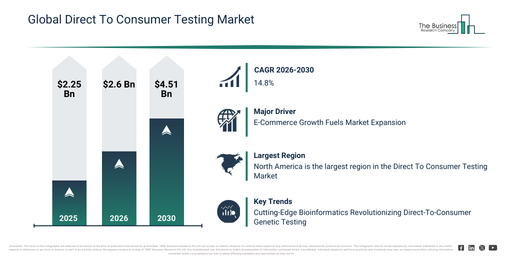
    The direct to consumer testing market size has expanded significantly in recent years. It is anticipated to increase from $2.25 billion in 2025 to $2.6 billion in 2026, registering a compound annual growth rate (CAGR) of 15.2%. Historically, this growth can be attributed to factors like restricted access to diagnostics, growing health awareness, the early adoption of genetic testing, the expansion of e-commerce healthcare, and prevailing consumer empowerment trends.

    The direct to consumer testing market size is projected to experience swift expansion over the coming years. This market is predicted to reach $4.51 billion by 2030, demonstrating a compound annual growth rate (CAGR) of 14.8%. Factors contributing to this growth during the forecast period include enhanced test accuracy, clearer regulatory frameworks, AI-driven result analysis, individualized health insights, and the broader availability of home diagnostics. Key trends anticipated during this period encompass an increasing consumer appetite for health tests performed at home, the proliferation of genetic and biomarker testing kits, the broadening of online health testing platforms, a heightened emphasis on proactive health screening, and greater receptiveness to insights gained from self-managed health data.

    Access Your Free Sample Report For In-Depth Market Analysis:

    https://www.thebusinessresearchcompany.com/report/direct-to-consumer-testing-global-market-report

    What Leading Drivers Are Supporting The Direct To Consumer Testing Market Expansion?

    The direct-to-consumer testing market is expected to be significantly propelled by the expansion of e-commerce platforms moving forward. An e-commerce platform functions as a software solution that facilitates the online buying and selling of goods and services. The growth of these platforms is driven by increased internet penetration, consumer preference for convenience, the rise of mobile commerce, and a supportive regulatory environment. Direct-to-consumer testing enables e-commerce platforms to gather crucial insights into customer preferences, behaviors, and product performance by allowing for real-time feedback and data-driven decision-making, thereby enhancing user experience, optimizing product offerings, and boosting sales and customer satisfaction. For instance, in October 2024, ECommerce Europe, a Belgium-based non-profit government organization, projected that total business-to-customer (B2C) e-commerce sales in Europe would grow 8% in 2024, reaching $992.8 billion (€958 billion), an increase from $916.80 billion (€887 billion) in 2023. Consequently, the increasing growth of e-commerce platforms is a primary driver for the market.

    Which Segment Classifications Are Used In The Direct To Consumer Testing Market Segment Analysis?

    The direct to consumer testing market covered in this report is segmented –

    1) By Test Type: Genetic Direct To Consumer Tests, Biomarker-Based Direct To Consumer Tests, Microbiome Direct To Consumer Tests

    2) By Distribution Channel: Online Channel, Retail Channel

    3) By Application: Health And Wellness Testing, Ancestry And Genealogy Testing, Disease Risk Assessment, Carrier Screening, Pharmacogenetic Testing, Whole Genome Sequence-Based Direct To Consumer Testing, Other Direct To Consumer Tests

    Subsegments:

    1) By Genetic Direct To Consumer Tests: Ancestry Testing, Health Risk And Carrier Screening, DNA Paternity And Relationship Testing

    2) By Biomarker-Based Direct To Consumer Tests: Hormonal Level Testing, Cardiovascular Risk Testing, Metabolic And Nutritional Testing

    3) By Microbiome Direct To Consumer Tests: Gut Health And Digestive System Testing, Skin Microbiome Testing, Oral Microbiome Testing

    What Emerging Trends Are Seen In The Direct To Consumer Testing Market?

    Major companies in the direct-to-consumer testing market are prioritizing the development of advanced technological solutions, such as sophisticated bioinformatics, to enhance the accuracy of data analysis, offer personalized insights, and improve the overall experience for consumers. Advanced bioinformatics involves utilizing complex computational tools and algorithms to analyze intricate biological data, including genomic sequences or protein structures. For example, in November 2024, ProPhase Labs Inc., a US-based diagnostic company, launched DNA Complete. This direct-to-consumer genetic testing service provides several key features designed to transform the market for health, wellness, and ancestry insights. The service employs cutting-edge bioinformatics tools to analyze the extensive data generated from whole genome sequencing. This capability enables a more refined interpretation of genetic information, leading to improved health insights and ancestry analysis. The service operates on a subscription model, ensuring ongoing customer engagement by providing regular updates and new insights.

    Which Firms Are Contributing To The Direct To Consumer Testing Market Ecosystem?

    Major companies operating in the direct to consumer testing market are Ancestry LLC, 23andMe Holding Co., Color Genomics Inc., Helix Inc., Everlywell Inc., LetsGetChecked Inc., MyHeritage Ltd., Viome Lifesciences Inc., GenePlanet, Orig3n Inc., Mapmygenome India Limited, Family Tree DNA, Xcode Life Sciences Private Limited, Living DNA, EasyDNA, DNAfit, Pathway Genomics Corporation, Veritas Genetics, CircleDNA, Vitagene Inc., Nebula Genomics Inc., CRI Genetics, Full Genomes Corporation, FitnessGenes Ltd., Atlas Biomed, DayTwo, Imaware Inc, Privapath Diagnostics, Segterra Inc.

    Get The Full Direct To Consumer Testing Market Report:

    https://www.thebusinessresearchcompany.com/report/direct-to-consumer-testing-global-market-report

    Which Geographic Region Dominates The Direct To Consumer Testing Market?

    North America was the largest region in the direct to consumer testing market in 2025. Europe is expected to be the fastest-growing region in the forecast period. The regions covered in the direct to consumer testing market report are Asia-Pacific, South East Asia, Western Europe, Eastern Europe, North America, South America, Middle East, Africa.

    Request A Customized Direct To Consumer Testing Market Report For Competitive Insights:

    https://www.thebusinessresearchcompany.com/report/direct-to-consumer-testing-global-market-report

    Browse Through More Reports Similar to the Global Direct To Consumer Testing Market 2026, By The Business Research Company

    Dietary Supplement Testing Services Market Report 2026

    https://www.thebusinessresearchcompany.com/report/dietary-supplement-testing-services-global-market-report

    Direct To Consumer Dtc Genetic Testing Market Report 2026

    https://www.thebusinessresearchcompany.com/report/direct-to-consumer-dtc-genetic-testing-global-market-report

    Self Testing Market Report 2026

    https://www.thebusinessresearchcompany.com/report/self-testing-global-market-report

    Get in touch with us:

    The Business Research Company: https://www.thebusinessresearchcompany.com/

    Americas +1 310-496-7795

    Asia +44 7882 955267 & +91 8897263534

    Europe +44 7882 955267

    Email us at info@tbrc.info

    Follow us on:

    LinkedIn: https://in.linkedin.com/company/the-business-research-company

    YouTube: https://www.youtube.com/channel/UC24_fI0rV8cR5DxlCpgmyFQ

    Global Market Model: https://www.thebusinessresearchcompany.com/global-market-model
  • Direct Primary Care Market: Trends, Drivers, and Opportunities

    Direct Primary Care Market: Trends, Drivers, and Opportunities

    The Business Research Company’s 2026 market reports feature enhanced tools like market attractiveness analysis, TAM assessment, and company scoring matrices, along with interactive dashboards, deeper supply chain insights, and startup coverage strengthening the depth, usability, and strategic value of insights.

    What Level Of Market Value Growth Is Predicted For The Direct Primary Care Market From 2026 To 2030?

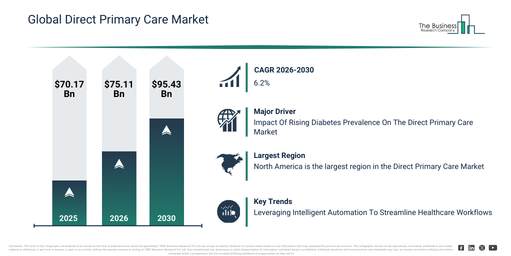
    The direct primary care market size has demonstrated strong expansion in recent years. This market is set to expand from $70.17 billion in 2025 to $75.11 billion in 2026, achieving a compound annual growth rate (CAGR) of 7.0%. The historical growth of this market can be attributed to several factors including high insurance administrative costs, physician burnout, patient dissatisfaction with traditional care, limited appointment availability, and an increasing shortage of primary care.

    The direct primary care market is poised for significant expansion over the upcoming years. Its valuation is projected to reach $95.43 billion by 2030, exhibiting a compound annual growth rate (CAGR) of 6.2%. This anticipated growth during the forecast period can be primarily attributed to factors such as the increasing acceptance of value-based care, the proliferation of employer-sponsored DPC initiatives, the integration of digital practice instruments, the rising demand for consumer-centric healthcare, and adaptable regulatory frameworks. Key trends anticipated within this forecast timeframe encompass the increasing embrace of subscription-based healthcare models, a growing desire for clear healthcare pricing, the broadening availability of personalized primary care offerings, augmented utilization of telehealth services in primary care, and efforts to lessen the administrative load in care provision.

    Access Your Free Sample Report For In-Depth Market Analysis:

    https://www.thebusinessresearchcompany.com/report/direct-primary-care-global-market-report

    Which Key Factors Are Driving The Direct Primary Care Market Growth?

    The increasing prevalence of diabetes is anticipated to fuel the expansion of the direct primary care market. Diabetes is a chronic medical condition marked by elevated blood glucose levels, with its incidence climbing due to factors such as growing obesity rates, inactive lifestyles, unhealthy diets, an aging population, and genetic susceptibility. Direct primary care practices provide unrestricted access to primary care services for a fixed monthly fee, enabling patients with diabetes to receive consistent check-ups, manage medications, obtain lifestyle advice, and benefit from ongoing support from their primary care providers. For instance, as per the International Diabetes Federation in April 2025, an estimated 589 million adults aged 20–79 globally were living with diabetes, a figure expected to rise to 853 million by 2050. Consequently, the increasing occurrence of diabetes is a key driver for the growth of the direct primary care market.

    How Is The Direct Primary Care Market Organized By Segment Classification?

    The direct primary care market covered in this report is segmented –

    1) By Type: Clinical Services, Laboratory Services, Consultative Services, Care Coordination, Comprehensive Care Management

    2) By Practice Setting: Solo Practices, Group Practices, Other Practice Settings

    3) By Application: Cardiology, Internal Medicine, Primary Care, Osteopathy, Psychiatry, Pediatrics

    Subsegments:

    1) By Clinical Services: Preventive Care, Chronic Disease Management, Acute Care, Pediatric Care, Geriatric Care

    2) By Laboratory Services: Diagnostic Testing, Blood Tests, Imaging Services, Genetic Testing

    3) By Consultative Services: Telemedicine Consultations, Health Coaching, Wellness Consultations, Second Opinion Services

    4) By Care Coordination: Referral Management, Patient Navigation Services, Medication Management, Care Plan Development

    5) By Comprehensive Care Management: Case Management, Disease Management Programs, Care Transitions Management, Patient Education And Support

    Which Trends Are Guiding The Direction Of The Direct Primary Care Market?

    Major companies operating within the direct primary care (DPC) market are strategically integrating innovative technologies, such as large-language-model (LLM)–based AI, to significantly improve clinical efficiency, documentation accuracy, and the management of patient workflows. Large-language-model (LLM)-based AI offers advanced functionalities including real-time transcription, the automatic generation of clinical notes, and optimized workflow processes. For instance, in September 2023, Hint Health, a US-based provider of platforms for DPC practices encompassing membership, billing, and technology, unveiled Hint AI. This AI-driven solution is engineered to streamline DPC documentation and alleviate administrative burdens, featuring automated transcription utilizing OpenAI Whisper, LLM-generated draft clinical notes, and full integration into the company’s unified DPC practice platform. Hint AI contributes to enhanced care efficiency, faster documentation, and improved overall practice productivity.

    Who Are The Industry Participants Involved In The Direct Primary Care Market?

    Major companies operating in the direct primary care market are Oak Street Health Inc., One Medical Group, Crossover Health Medical Group APC, Everside Health Inc., Elation Health, Paladina Health, SignatureMD, PeakMed, DPC Frontier, MedLion, Salud Healthcare LLC, Turntable Health, Atlas.md, Freedom Healthworks LLC, R-Health, EverMed DPC, Boston Direct Health, Nextera Healthcare, Forward Family Healthcare, Hint Health, Qliance Medical Management

    Get The Full Direct Primary Care Market Report:

    https://www.thebusinessresearchcompany.com/report/direct-primary-care-global-market-report

    Which Region Is The Leading Market For The Direct Primary Care Market?

    North America was the largest region in the direct primary care market in 2025. Asia-Pacific is expected to be the fastest-growing region in the forecast period. The regions covered in the direct primary care market report are Asia-Pacific, South East Asia, Western Europe, Eastern Europe, North America, South America, Middle East, Africa.

    Request A Customized Direct Primary Care Market Report For Competitive Insights:

    https://www.thebusinessresearchcompany.com/report/direct-primary-care-global-market-report

    Browse Through More Reports Similar to the Global Direct Primary Care Market 2026, By The Business Research Company

    Direct Primary Care Market Report 2026

    https://www.thebusinessresearchcompany.com/report/direct-primary-care-global-market-report

    Direct Primary Care Market Report 2026

    https://www.thebusinessresearchcompany.com/report/direct-primary-care-global-market-report

    Primary Health Care Service Market Report 2026

    https://www.thebusinessresearchcompany.com/report/primary-health-care-service-global-market-report

    Get in touch with us:

    The Business Research Company: https://www.thebusinessresearchcompany.com/

    Americas +1 310-496-7795

    Asia +44 7882 955267 & +91 8897263534

    Europe +44 7882 955267

    Email us at info@tbrc.info

    Follow us on:

    LinkedIn: https://in.linkedin.com/company/the-business-research-company

    YouTube: https://www.youtube.com/channel/UC24_fI0rV8cR5DxlCpgmyFQ

    Global Market Model: https://www.thebusinessresearchcompany.com/global-market-model
  • Direct Coombs Test Antibody Market: Developments Driving Growth

    Direct Coombs Test Antibody Market: Developments Driving Growth

    The Business Research Company’s 2026 market reports feature enhanced tools like market attractiveness analysis, TAM assessment, and company scoring matrices, along with interactive dashboards, deeper supply chain insights, and startup coverage strengthening the depth, usability, and strategic value of insights.

    How Will The Market Value Of The Direct Coombs Test (DCT) Antibody Market Progress Between 2026 And 2030?

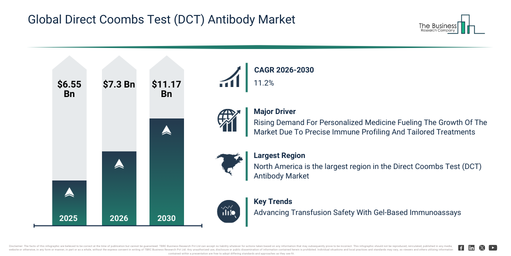
    The direct coombs test (dct) antibody market size has experienced rapid growth in recent years. This market is projected to expand from $6.55 billion in 2025 to $7.3 billion in 2026, achieving a compound annual growth rate (CAGR) of 11.5%. Historically, this expansion has been propelled by increased biomedical research funding, a rise in cancer research programs, the growth of academic laboratory infrastructure, wider adoption of antibodies in diagnostics, and advancements in antibody engineering techniques.

    The direct coombs test (dct) antibody market size is anticipated to undergo significant expansion over the next few years. It is projected to reach $11.17 billion by 2030, exhibiting a compound annual growth rate (CAGR) of 11.2%. This projected growth can be attributed to several factors including the expansion of precision oncology research, increasing demand for next-generation antibody formats, rising investments in biologics manufacturing, the growth of personalized medicine applications, and advances in antibody discovery platforms. Prominent trends observed during the forecast period encompass the increasing use of recombinant antibody technologies, a growing demand for high-specificity monoclonal antibodies, the expansion of antibody applications in oncology research, rising adoption of bispecific antibody formats, and an enhanced focus on scalable antibody production.

    Access Your Free Sample Report For In-Depth Market Analysis:

    https://www.thebusinessresearchcompany.com/report/global-direct-coombs-test-dct-antibody-market-report

    What Primary Drivers Are Shaping The Direct Coombs Test (DCT) Antibody Market?

    The anticipated future growth of the direct coombs test (DCT) antibody market is driven by the increasing need for personalized medicine. Personalized medicine is a medical method that customizes treatments for individual patients, considering their unique genetic, environmental, and lifestyle factors to optimize results and enhance care. The demand for personalized medicine is escalating due to advancements in genomic technologies, which facilitate the precise identification of genetic variations and the development of tailored treatments for individuals. The direct coombs test (DCT) antibody improves personalized medicine by enabling the accurate detection of antibodies or complement attached to red blood cells. This assists in identifying immune-mediated hemolytic conditions, allowing clinicians to customize treatments based on a patient’s specific immune profile, thus improving diagnostic accuracy and therapeutic outcomes. For instance, in February 2024, according to the Personalized Medicine Coalition (PMC), a US-based nonprofit organization, the U.S. Food and Drug Administration (FDA) approved 26 new personalized medicines in 2023, which is a significant increase from the 12 approved in 2022. Therefore, the rising demand for personalized medicine is propelling the growth of the direct coombs test (DCT) antibody market.

    Which Segments Define The Direct Coombs Test (DCT) Antibody Market Segment Structure?

    The direct coombs test (dct) antibody market covered in this report is segmented –

    1) By Type: Monoclonal Antibodies, Polyclonal Antibodies, Recombinant Antibodies, Bispecific Antibodies

    2) By Source: Human, Mouse, Rabbit, Other Sources

    3) By Application: Cancer Treatment, Autoimmune Diseases, Infectious Diseases, Transplant Rejection, Other Applications

    4) By End-User: Pharmaceutical Companies, Biotechnology Firms, Contract Research Organizations (CROs), Academic And Research Institutes, Diagnostic Laboratories

    Subsegments:

    1) By Monoclonal Antibodies: Mouse Monoclonal Antibodies, Rabbit Monoclonal Antibodies, Humanized Monoclonal Antibodies, Chimeric Monoclonal Antibodies, Fully Human Monoclonal Antibodies

    2) By Polyclonal Antibodies: Rabbit Polyclonal Antibodies, Goat Polyclonal Antibodies, Sheep Polyclonal Antibodies, Chicken Polyclonal Antibodies, Donkey Polyclonal Antibodies

    3) By Recombinant Antibodies: Mammalian Expression Recombinant Antibodies, Bacterial Expression Recombinant Antibodies, Yeast Expression Recombinant Antibodies, Insect Expression Recombinant Antibodies, Plant Expression Recombinant Antibodies

    4) By Bispecific Antibodies: Immune Cell Engager Bispecific Antibodies, Dual Variable Domain Bispecific Antibodies, Cross Format Bispecific Antibodies, Knob And Hole Bispecific Antibodies, Fragment-Based Bispecific Antibodies

    What Trends Are Affecting The Growth Of The Direct Coombs Test (DCT) Antibody Market?

    Leading entities operating within the direct coombs test (DCT) antibody market are concentrating on developing technologically advanced solutions, such as gel-based immunoassays, to ensure dependability, enhance laboratory processes, and uphold stringent benchmarks in pre-transfusion evaluations. Gel-based immunoassays describe a type of laboratory assessment where antibodies and antigens interact within a gel medium, enabling the visible identification of reactions like agglutination. For instance, in October 2025, QuidelOrtho Corporation, a US-based in-vitro diagnostics company, obtained Food and Drug Administration (FDA) clearance for its MTS DAT Card for gel-based direct antiglobulin testing on the ORTHO VISION platform. This card features ready-to-use anti-IgG and anti-C3d monospecific reagents embedded within the gel matrix of separate microtubes. This design facilitates clear, objective, and simultaneous differentiation between IgG and complement sensitization, thereby streamlining the investigation of immune-mediated hemolytic anemias and hemolytic disease of the fetus and newborn (HDFN). Its fundamental purpose is to detect immunoglobulin G or complement bound to red blood cells, supporting hemolysis investigation and improving transfusion safety.

    Who Are The Established Players Within The Direct Coombs Test (DCT) Antibody Market?

    Major companies operating in the direct coombs test (dct) antibody market are Johnson & Johnson, F. Hoffmann-La Roche Ltd, Merck & Co. Inc., AbbVie Inc., Bio-Rad Laboratories Inc., Fortress Diagnostics Limited, Lab-Care Diagnostics (India) Pvt. Ltd., SIFIN Diagnostics GmbH, Hemo Bioscience Inc., Rapid Labs Ltd, AnaMol Laboratories Pvt. Ltd., Jiangyin Libo Biotechnology Co. Ltd., MicroSidd India Pvt. Ltd., Atlas Medical GmbH, Lorne Laboratories Ltd, Sanquin Reagents B.V., BAG Diagnostics GmbH, CE-Immundiagnostika GmbH, Biolab Diagnostics (India) Pvt. Ltd., Singapore Biosciences Pte. Ltd.

    Get The Full Direct Coombs Test (DCT) Antibody Market Report:

    https://www.thebusinessresearchcompany.com/report/global-direct-coombs-test-dct-antibody-market-report

    Where Is The Direct Coombs Test (DCT) Antibody Market Primarily Concentrated By Region?

    North America was the largest region in the direct coombs test (DCT) antibody market in 2025. Asia-Pacific is expected to be the fastest-growing region in the forecast period. The regions covered in the direct coombs test (dct) antibody market report are Asia-Pacific, South East Asia, Western Europe, Eastern Europe, North America, South America, Middle East, Africa.

    Request A Customized Direct Coombs Test (DCT) Antibody Market Report For Competitive Insights:

    https://www.thebusinessresearchcompany.com/report/global-direct-coombs-test-dct-antibody-market-report

    Browse Through More Reports Similar to the Global Direct Coombs Test (DCT) Antibody Market 2026, By The Business Research Company

    C Reactive Protein Testing Market Report 2026

    https://www.thebusinessresearchcompany.com/report/c-reactive-protein-testing-global-market-report

    Antibody Discovery Market Report 2026

    https://www.thebusinessresearchcompany.com/report/antibody-discovery-global-market-report

    Research Antibodie And Reagent Market Report 2026

    https://www.thebusinessresearchcompany.com/report/research-antibodie-and-reagent-global-market-report

    Get in touch with us:

    The Business Research Company: https://www.thebusinessresearchcompany.com/

    Americas +1 310-496-7795

    Asia +44 7882 955267 & +91 8897263534

    Europe +44 7882 955267

    Email us at info@tbrc.info

    Follow us on:

    LinkedIn: https://in.linkedin.com/company/the-business-research-company

    YouTube: https://www.youtube.com/channel/UC24_fI0rV8cR5DxlCpgmyFQ

    Global Market Model: https://www.thebusinessresearchcompany.com/global-market-model
  • Diphtheria Market: Demand Trends and Growth Outlook

    Diphtheria Market: Demand Trends and Growth Outlook

    The Business Research Company’s 2026 market reports feature enhanced tools like market attractiveness analysis, TAM assessment, and company scoring matrices, along with interactive dashboards, deeper supply chain insights, and startup coverage strengthening the depth, usability, and strategic value of insights.

    What Are The Market Size Estimates For The Diphtheria Market In 2026 And 2030?

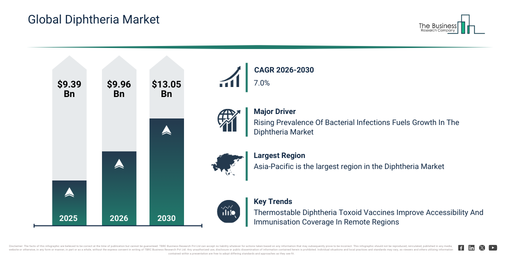
    The diphtheria market size has experienced robust growth in recent years. It is anticipated to expand from $9.39 billion in 2025 to $9.96 billion in 2026, at a compound annual growth rate (CAGR) of 6.1%. The increase observed in the past can be linked to factors such as previous disease outbreaks, insufficient vaccination coverage, inadequate sanitation conditions, a lack of prompt diagnosis, and disparities in healthcare access.

    The diphtheria market is projected to experience substantial expansion over the upcoming years. This market is anticipated to reach $13.05 billion by 2030, demonstrating a compound annual growth rate (CAGR) of 7.0%. This projected increase can be attributed to factors such as worldwide immunization drives, enhanced availability of diagnostic tools, financial support for public health initiatives, digitalization of disease surveillance, and robust outbreak preparedness strategies. Key developments expected during this period involve an ongoing need for vaccination and immunization efforts, a heightened emphasis on timely diagnosis and monitoring, an increased application of antibiotic and antitoxin treatments, the broadening of public health awareness campaigns, and the reinforcement of systems for tracking infectious diseases.

    Access Your Free Sample Report For In-Depth Market Analysis:

    https://www.thebusinessresearchcompany.com/report/diphtheria-global-market-report

    Which Major Drivers Are Influencing The Expansion Of The Diphtheria Market?

    The increasing occurrence of bacterial infections is projected to fuel the expansion of the diphtheria market in the future. Such an infection refers to an illness or state resulting from the multiplication of bacteria or the poisons they generate upon entering the body. Diphtheria itself is a severe infection caused by bacterial strains that weaken the immune system and encourage the spread of Corynebacterium diphtheria. As an example, the Centers for Disease Control and Prevention, a US government body, reported in March 2024 that tuberculosis cases climbed from 8,320 in 2022 to 9,615 in 2023, showing an increase of 1,295 cases. Consequently, the growing frequency of bacterial infections will propel the diphtheria market.

    How Is The Diphtheria Market Segmented Across Different Segment Categories?

    The diphtheria market covered in this report is segmented –

    1) By Type: Diphtheria, Skin Diphtheria, Other Types

    2) By Diagnosis: Physical Examination, Throat Culture, Other Diagnosis

    3) By Treatment: Antibiotics, Antitoxin, Other Treatments

    4) By Distribution Channel: Hospital Pharmacy, Online Pharmacy, Retail Pharmacy

    5) By End-Users: Hospitals, Homecare, Specialty Clinics, Other End-Users

    Subsegments:

    1) By Diphtheria: Respiratory Diphtheria, Non-respiratory Diphtheria

    2) By Skin Diphtheria: Cutaneous Diphtheria

    3) By Other Types: Diphtheritic Myocarditis, Diphtheritic Neuritis

    Which Trends Are Shaping The Diphtheria Market?

    Leading companies in the diphtheria market are increasingly adopting advanced formulation trends, such as thermostabilisation technology, to enhance distribution efficiency, temperature resilience, and independence from cold chains. These thermostabilisation technologies are sophisticated formulation methods designed to protect vaccine antigens from degradation due to heat or temperature fluctuations, thereby enabling capabilities like room-temperature stability, reduced product wastage, and improved last-mile delivery. For instance, in April 2025, Stablepharma Ltd, a UK-based biotechnology company, initiated Phase 1 clinical trials with SPVX02, a fridge-free tetanus–diphtheria vaccine engineered to maintain potency after exposure to temperature cycles ranging from -20°C to +40°C and provide up to 18 months of room-temperature shelf life, featuring heat-resilient antigen preservation and cold-chain-free deployment potential. SPVX02 consequently improves vaccine stability, supply-chain reliability, and access in low-infrastructure regions.

    Which Organizations Play A Role In The Diphtheria Market Landscape?

    Major companies operating in the diphtheria market are Sanofi Pasteur, GlaxoSmithKline plc, Serum Institute of India Pvt Ltd, Biological E Limited, Bharat Biotech International Limited, Panacea Biotec Ltd, Mitsubishi Tanabe Pharma Corporation, KM Biologics (Meiji Holdings), AJ Vaccines, Bionet-Asia, Wuhan Institute of Biological Products, Walvax Biotechnology Co Ltd, Chengdu Institute of Biological Products Co Ltd, Minhai Biotechnology, Bio Farma Persero, Indian Immunologicals Ltd, LG Chem Ltd, Astellas Pharma Inc, Takeda Pharmaceutical Company Limited, MassBiologics, Shanghai Institute of Biological Products Co Ltd, Changchun Institute of Biological Products Co Ltd, Hualan Biological Engineering Inc, Valneva SE, Pasteur Institute of India, Beijing Tiantan Biological Products Co Ltd, Chongqing Zhifei Biological Products Co Ltd, Shenzhen Kangtai Biological Products Co Ltd.

    Get The Full Diphtheria Market Report:

    https://www.thebusinessresearchcompany.com/report/diphtheria-global-market-report

    Which Region Has The Greatest Market Share In The Diphtheria Market?

    Asia-Pacific was the largest region in the diphtheria market in 2025. The regions covered in the diphtheria market report are Asia-Pacific, South East Asia, Western Europe, Eastern Europe, North America, South America, Middle East, Africa.

    Request A Customized Diphtheria Market Report For Competitive Insights:

    https://www.thebusinessresearchcompany.com/report/diphtheria-global-market-report

    Browse Through More Reports Similar to the Global Diphtheria Market 2026, By The Business Research Company

    Naphthalene Sulfonate Market Report 2026

    https://www.thebusinessresearchcompany.com/report/naphthalene-sulfonate-global-market-report

    Porcine Epidemic Diarrhea Vaccines Market Report 2026

    https://www.thebusinessresearchcompany.com/report/porcine-epidemic-diarrhea-vaccines-global-market-report

    Lenalidomide Market Report 2026

    https://www.thebusinessresearchcompany.com/report/lenalidomide-global-market-report

    Get in touch with us:

    The Business Research Company: https://www.thebusinessresearchcompany.com/

    Americas +1 310-496-7795

    Asia +44 7882 955267 & +91 8897263534

    Europe +44 7882 955267

    Email us at info@tbrc.info

    Follow us on:

    LinkedIn: https://in.linkedin.com/company/the-business-research-company

    YouTube: https://www.youtube.com/channel/UC24_fI0rV8cR5DxlCpgmyFQ

    Global Market Model: https://www.thebusinessresearchcompany.com/global-market-model
  • Digital Vaccination Credential Verification Market: Key Drivers and Evolution

    Digital Vaccination Credential Verification Market: Key Drivers and Evolution

    The Business Research Company’s 2026 market reports feature enhanced tools like market attractiveness analysis, TAM assessment, and company scoring matrices, along with interactive dashboards, deeper supply chain insights, and startup coverage strengthening the depth, usability, and strategic value of insights.

    What Expansion In Market Value Is Forecasted For The Digital Vaccination Credential Verification Market Between 2026 And 2030?

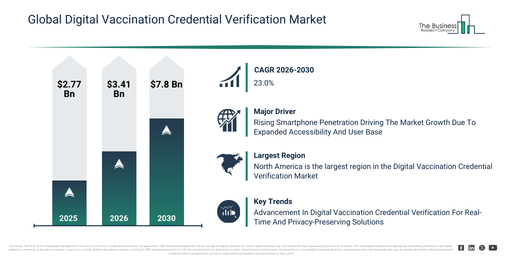
    The digital vaccination credential verification market size has witnessed substantial growth in recent years. It is anticipated to expand from $2.77 billion in 2025 to $3.41 billion in 2026, exhibiting a compound annual growth rate (CAGR) of 23.3%. Historically, this expansion is attributable to the scaling up of mass vaccination programs, an increasing need for digital health records, stricter international travel mandates, the adoption of QR-based verification methods, and the advancement of public health digitization.

    The market for digital vaccination credential verification is anticipated to experience substantial growth in the next few years, projected to reach $7.8 billion by 2030 with a compound annual growth rate (CAGR) of 23.0%. This expected growth during the forecast period is attributed to an increasing emphasis on interoperable digital health identity systems, rising investments in blockchain-based verification, broader adoption across workplaces and institutions, the expansion of cross-border health data frameworks, and a heightened regulatory focus on data security. Key trends in the forecast period include the increasing uptake of secure digital health credentials, a rising utilization of encrypted verification platforms, greater integration with border and travel systems, the broadening of interoperable health data standards, and an enhanced focus on privacy-preserving authentication.

    Access Your Free Sample Report For In-Depth Market Analysis:

    https://www.thebusinessresearchcompany.com/report/digital-vaccination-credential-verification-global-market-report

    What Key Drivers Are Fueling The Growth Of The Digital Vaccination Credential Verification Market?

    A rise in smartphone adoption is anticipated to boost the expansion of the digital vaccination credential verification market in the coming period. Smartphone penetration signifies the proportion of a population or specific market segment that possesses or regularly utilizes a smartphone. This uptick in smartphone use stems from devices becoming more affordable, thereby making them available to a broader demographic. The widespread use of smartphones facilitates broader acceptance of digital vaccination credential verification, as it simplifies how users store, access, and disseminate their vaccination records. As an illustration, data from Exploding Topics, a US-based trend discovery platform, indicated in June 2025 that the global count of smartphone users climbed from 6.974 billion in 2023 to 7.211 billion in 2024, marking an increase of 247 million users and a growth of approximately 3.4% compared to the prior year. Consequently, the expanding penetration of smartphones is a key factor propelling the growth of the digital vaccination credential verification market.

    What Are The Main Segments Within The Digital Vaccination Credential Verification Market Segment Structure?

    The digital vaccination credential verification market covered in this report is segmented –

    1) By Component: Software, Hardware, Services

    2) By Deployment Mode: On-Premises, Cloud-Based

    3) By Application: Airports And Border Control, Healthcare Facilities, Educational Institutions, Corporate Offices, Hospitality, Other Applications

    4) By End-User: Government, Healthcare Providers, Employers, Individuals, Other End-Users

    Subsegments:

    1) By Software: Web Based Platforms, Mobile Applications, Analytics And Reporting Tools

    2) By Hardware: Near Field Communication Readers, Quick Response Code Scanners, Biometric Devices

    3) By Services: Implementation And Integration, Maintenance And Support, Consulting

    What Trends Are Influencing The Digital Vaccination Credential Verification Market?

    Major companies operating in the digital vaccination credential verification market are focusing on developing sophisticated solutions, such as digital signatures, which facilitate real-time public health surveillance by enabling accurate and centralized vaccination data aggregation while upholding individual privacy. A digital signature refers to a cryptographic method used to confirm the genuineness and completeness of digital documents and serves as a secure electronic substitute for a handwritten signature. For instance, in November 2025, El Salvador and Costa Rica, a US-based development finance institution, with support from the Inter-American Development Bank (IDB) and the Pan American Health Organization (PAHO), launched the first digital yellow fever vaccination certificates, an electronically stored and verifiable record that provides proof of a person’s immunization against yellow fever and replaces the traditional paper-based international certificate of vaccination or prophylaxis (ICVP). Additionally, these certificates also offer solutions to address challenges associated with paper certificates by enabling prompt public health responses through quick and reliable verification of vaccination status in emergencies.

    Who Are The Companies Participating In The Digital Vaccination Credential Verification Market?

    Major companies operating in the digital vaccination credential verification market are Microsoft Corporation, IBM Corporation, SAP SE, Salesforce Inc., Infosys Limited, DocuSign Inc., NEC Corporation, Clear Secure Inc., Entrust Corporation, MATTR Limited, ID.me Inc., Jumio Inc., Daon Inc., IntelliCentrics Inc., EverCheck Inc., Evernym Inc., The Commons Project Foundation, BioRugged, IDEMIA Identity & Security USA LLC, Vault Health, STChealth LLC.

    Get The Full Digital Vaccination Credential Verification Market Report:

    https://www.thebusinessresearchcompany.com/report/digital-vaccination-credential-verification-global-market-report

    Which Region Accounts For The Largest Portion Of The Digital Vaccination Credential Verification Market?

    North America was the largest region in the digital vaccination credential verification market in 2025. Asia-Pacific is expected to be the fastest-growing region in the forecast period. The regions covered in the digital vaccination credential verification market report are Asia-Pacific, South East Asia, Western Europe, Eastern Europe, North America, South America, Middle East, Africa.

    Request A Customized Digital Vaccination Credential Verification Market Report For Competitive Insights:

    https://www.thebusinessresearchcompany.com/report/digital-vaccination-credential-verification-global-market-report

    Browse Through More Reports Similar to the Global Digital Vaccination Credential Verification Market 2026, By The Business Research Company

    Cervical Cancer Vaccine Market Report 2026

    https://www.thebusinessresearchcompany.com/report/cervical-cancer-vaccine-global-market-report

    Digital Credential Management Software Market Report 2026

    https://www.thebusinessresearchcompany.com/report/digital-credential-management-software-global-market-report

    Vaccines Market Report 2026

    https://www.thebusinessresearchcompany.com/report/vaccines-global-market-report

    Get in touch with us:

    The Business Research Company: https://www.thebusinessresearchcompany.com/

    Americas +1 310-496-7795

    Asia +44 7882 955267 & +91 8897263534

    Europe +44 7882 955267

    Email us at info@tbrc.info

    Follow us on:

    LinkedIn: https://in.linkedin.com/company/the-business-research-company

    YouTube: https://www.youtube.com/channel/UC24_fI0rV8cR5DxlCpgmyFQ

    Global Market Model: https://www.thebusinessresearchcompany.com/global-market-model
  • Digital Twins in Healthcare Market (2026–2030): Industry Developments

    Digital Twins in Healthcare Market (2026–2030): Industry Developments

    The Business Research Company’s 2026 market reports feature enhanced tools like market attractiveness analysis, TAM assessment, and company scoring matrices, along with interactive dashboards, deeper supply chain insights, and startup coverage strengthening the depth, usability, and strategic value of insights.

    How Large Will The Digital Twins In Healthcare Market Be By 2030 Compared To Its 2026 Market Size?

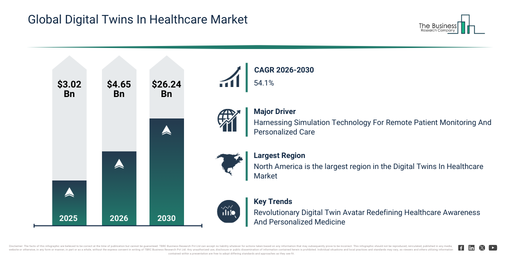
    The digital twins in healthcare market has observed substantial growth in recent years. This market is anticipated to expand from $3.02 billion in 2025 to $4.65 billion in 2026, reflecting a compound annual growth rate (CAGR) of 54.3%. Historically, this expansion can be attributed to advancements in medical imaging, the introduction of early simulation-based planning tools, the increasing availability of healthcare data, the complexity of treatment pathways, and the demand for precision medicine.

    The digital twins in healthcare market size is projected to experience rapid expansion over the upcoming years. This market is forecasted to reach $26.24 billion by 2030, demonstrating a robust compound annual growth rate (CAGR) of 54.1%. The anticipated increase during the forecast period is fueled by factors such as ai-powered modeling platforms, real-time iot data integration, the growth of personalized medicine, various digital hospital initiatives, and improved clinical workflow optimization. Significant trends for the same period encompass the growing use of virtual patient modeling, an increasing embrace of predictive healthcare analytics, the broader expansion of digital twins in hospital operations, a heightened focus on personalized treatment simulation, and the integration of real-time clinical data streams.

    Access Your Free Sample Report For In-Depth Market Analysis:

    https://www.thebusinessresearchcompany.com/report/digital-twins-in-healthcare-global-market-report

    Which Drivers Are Supporting The Digital Twins In Healthcare Market Growth?

    The increasing adoption of telehealth is projected to boost the advancement of digital twins within the healthcare market in the future. Telehealth involves leveraging telecommunications to deliver health services and information from a distance. This includes a range of medical services such as remote consultations, patient monitoring, health education, and the exchange of health information, all facilitated by digital communication. Digital twins are capable of mimicking individual patients’ physiological reactions and disease development in real-time. Telehealth systems can utilize this data for distant oversight, allowing medical professionals to monitor patients’ vital signs, compliance with medication, and general well-being from afar. As an illustration, in November 2025, the Australian Bureau of Statistics (ABS), a governmental statistical body based in Australia, reported that 22.5% of Australians utilized telehealth services during 2024–25. Of those who had a telehealth appointment, 90.3% stated they would use it again if available, an increase from 89.2% in 2023–24, signifying growing acceptance and ongoing uptake. Consequently, the proliferation of telehealth is fostering the development of digital twins in the healthcare market.

    How Is Segmentation Applied In The Digital Twins In Healthcare Market Segment Analysis?

    The digital twins in healthcare market covered in this report is segmented –

    1) By Type: Process And System Digital Twin, Product Digital Twin

    2) By Application: Asset And Process Management, Personalized Medicine, Drug Discovery

    3) By End-User: Clinical Research Organizations (CROs), Research And Diagnostic Laboratories, Hospitals And Clinics

    Subsegments:

    1) By Process And System Digital Twin: Patient Journey Digital Twin, Hospital Operations Digital Twin, Healthcare Workflow Digital Twin, Clinical Process Digital Twin

    2) By Product Digital Twin: Medical Device Digital Twin, Drug Development Digital Twin, Equipment Maintenance Digital Twin, Personalized Medicine Digital Twin

    Which Trends Are Expected To Impact The Digital Twins In Healthcare Market?

    Leading companies in the digital twins in the healthcare market are developing advanced digital twin-enabled technologies, such as Emma, to highlight the significance of virtual twins in accelerating medical research and providing personalized care. Emma is a digital twin-supported technology that delivers an interactive, realistic virtual replica, complete with additional data points, insights, and analysis to enhance the overall experience. This technology has the potential to optimize surgical procedures and offer patients a clearer understanding of their treatment options. For example, in September 2023, Dassault Systèmes SE, a France-based software company, introduced a digital twin avatar named Emma to foster awareness about health research. Emma is a virtual model designed to accurately reflect the characteristics of a physical being. Its creation utilized anonymous health data to perform numerous tests, thereby gaining valuable insights into various diseases and therapies.

    Who Are The Companies Participating In The Digital Twins In Healthcare Market Environment?

    Major companies operating in the digital twins in healthcare market are Amazon.com Inc., Microsoft Corporation, IBM Corporation, Oracle Corporation, SAP SE, NVIDIA Corporation, Siemens AG, Koninklijke Philips N.V., GE HealthCare Technologies Inc., NTT DATA Corporation, Atos SE, Dassault Systemes SE, Ansys Inc., PTC Inc., Twin Health Inc., Faststream Technologies, Rescale Inc., ThoughWire Corp., Q Bio Inc., Verto Healthcare, Unlearn.AI Inc., PrediSurge, QiO Technologies Ltd., NUREA, Predictive Care Inc., Virtonomy GMbH

    Get The Full Digital Twins In Healthcare Market Report:

    https://www.thebusinessresearchcompany.com/report/digital-twins-in-healthcare-global-market-report

    Which Region Holds The Highest Market Share In The Digital Twins In Healthcare Market?

    North America was the largest region in the digital twins in healthcare market in 2025. The regions covered in the digital twins in healthcare market report are Asia-Pacific, South East Asia, Western Europe, Eastern Europe, North America, South America, Middle East, Africa.

    Request A Customized Digital Twins In Healthcare Market Report For Competitive Insights:

    https://www.thebusinessresearchcompany.com/report/digital-twins-in-healthcare-global-market-report

    Browse Through More Reports Similar to the Global Digital Twins In Healthcare Market 2026, By The Business Research Company

    Digital Twin Financial Services And Insurance Market Report 2026

    https://www.thebusinessresearchcompany.com/report/digital-twin-financial-services-and-insurance-global-market-report

    Digital Twin Market Report 2026

    https://www.thebusinessresearchcompany.com/report/digital-twin-global-market-report

    Digital Twin Technology Market Report 2026

    https://www.thebusinessresearchcompany.com/report/digital-twin-technology-global-market-report

    Get in touch with us:

    The Business Research Company: https://www.thebusinessresearchcompany.com/

    Americas +1 310-496-7795

    Asia +44 7882 955267 & +91 8897263534

    Europe +44 7882 955267

    Email us at info@tbrc.info

    Follow us on:

    LinkedIn: https://in.linkedin.com/company/the-business-research-company

    YouTube: https://www.youtube.com/channel/UC24_fI0rV8cR5DxlCpgmyFQ

    Global Market Model: https://www.thebusinessresearchcompany.com/global-market-model
  • Digital Twin NICU Market: Trends and Expansion Potential

    Digital Twin NICU Market: Trends and Expansion Potential

    The Business Research Company’s 2026 market reports feature enhanced tools like market attractiveness analysis, TAM assessment, and company scoring matrices, along with interactive dashboards, deeper supply chain insights, and startup coverage strengthening the depth, usability, and strategic value of insights.

    What Is The Projected Increase In Market Value Of The Digital Twin Neonatal Intensive Care Unit (ICU) Market During 2026–2030?

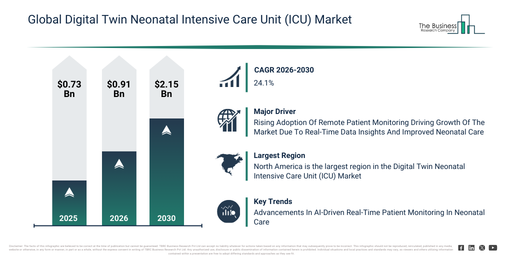
    The digital twin neonatal intensive care unit (ICU) market has seen substantial growth over recent years. It is anticipated to increase from $0.73 billion in 2025 to $0.91 billion in 2026, exhibiting a compound annual growth rate (CAGR) of 24.3%. The historical expansion of this market can be attributed to a rise in neonatal intensive care admissions, the development of digital health infrastructure in hospitals, improved availability of patient monitoring data, a greater emphasis on outcome-based neonatal care, and increased funding for clinical simulation tools.

    The digital twin neonatal intensive care unit (icu) market is anticipated to experience substantial expansion in the coming years. Its valuation is projected to reach $2.15 billion by 2030, demonstrating a compound annual growth rate (CAGR) of 24.1%. This growth during the forecast period can be attributed to several factors, including the wider adoption of AI-driven clinical decision support systems, a surging demand for individualized neonatal care pathways, the proliferation of cloud-based healthcare platforms, a heightened emphasis on predictive and preventive care models, and the expanded application of digital twins in hospital operations. Key trends for the forecast period encompass the increasing uptake of real-time virtual ICU modeling, the enhanced utilization of predictive analytics for assessing neonatal risks, the broadening integration of multi-source patient data streams, the expansion of simulation-based clinical decision support, and an increased focus on proactive neonatal care management.

    Access Your Free Sample Report For In-Depth Market Analysis:

    https://www.thebusinessresearchcompany.com/report/digital-twin-neonatal-intensive-care-unit-icu-global-market-report

    What Key Factors Are Affecting The Digital Twin Neonatal Intensive Care Unit (ICU) Market Demand?

    The increasing emphasis on Remote Patient Monitoring is projected to fuel the expansion of the digital twin neonatal intensive care unit (ICU) market moving ahead. Remote Patient Monitoring (RPM) involves utilizing digital technologies to gather and transmit patients’ health data to healthcare providers, allowing for continuous oversight and prompt interventions without the need for in-person visits. The integration of remote patient monitoring is expanding, thanks to IoT-enabled devices that deliver real-time patient information to healthcare professionals for ongoing surveillance and timely action. A digital twin neonatal intensive care unit aids remote patient monitoring by generating a virtual duplicate of a newborn’s health condition and the NICU surroundings, empowering clinicians to continuously track vital signs, simulate medical procedures, anticipate complications, and render data-driven decisions without physically disturbing the infant. For instance, in August 2025, according to the US Department of Health and Human Services, a US-based government administration, in 2024, nearly 1 million enrollees received remote patient monitoring, a 27% increase from 2023. As a result, the growing focus on remote patient monitoring is stimulating the growth of the digital twin neonatal intensive care unit (ICU) market.

    What Segment Categories Shape The Digital Twin Neonatal Intensive Care Unit (ICU) Market Segment Landscape?

    The digital twin neonatal intensive care unit (icu) market covered in this report is segmented –

    1) By Component: Software, Hardware, Services

    2) By Deployment Mode: On-Premises, Cloud-Based

    3) By Application: Patient Monitoring, Predictive Analytics, Workflow Optimization, Training And Simulation, Other Applications

    4) By End User: Hospitals, Specialty Clinics, Research Institutes, Other End-Users

    Subsegments:

    1) By Hardware: Monitoring Sensors, Imaging Devices, Computing Units

    2) By Software: Simulation And Modeling Software, Data Integration Platforms, Analytics And Visualization Tools

    3) By Services: Implementation And Integration Services, Consulting And Training Services, Maintenance And Support Services

    What Trends Are Influencing Changes In The Digital Twin Neonatal Intensive Care Unit (ICU) Market?

    Leading companies within the digital twin neonatal intensive care unit (ICU) market are concentrating on developing advanced methods, such as real-time AI-assisted patient monitoring, to optimize continuous vital sign tracking and facilitate prompt interventions for critically ill neonates. Real-time AI-assisted patient monitoring entails the ongoing observation and analysis of a patient’s vital signs and health data utilizing artificial intelligence algorithms, which allows for immediate detection of abnormalities and timely clinical actions. For example, in April 2025, AngelEye Health Inc., a US-based technology company, introduced AIVision, a groundbreaking enhancement to its platform that integrates artificial intelligence (AI) and computer vision into neonatal intensive care unit (NICU) and pediatric unit settings. This system employs AI and computer vision, incorporated into NICU bedside cameras, to deliver real-time, intelligent clinical insights, empowering healthcare teams to identify early signs of neonatal distress and neuromotor risks. The technology improves patient safety with features including virtual bed rails and AI-assisted monitoring of pain, sedation, and respiratory status, thereby enhancing the swiftness of interventions. Its objective is to transform neonatal and pediatric care into a more interconnected, data-driven environment that streamlines workflows, fosters personalized care, and ultimately betters health outcomes for vulnerable infants.

    Who Are The Companies Operating Across The Digital Twin Neonatal Intensive Care Unit (ICU) Market Value Chain?

    Major companies operating in the digital twin neonatal intensive care unit (icu) market are Koninklijke Philips N.V., GE HealthCare Technologies Inc., Envision Health Inc., Sibel Health Inc., Genzeon Corporation, Gaumard Scientific Company Inc., Owlet Inc., Caregility Inc., Child Health Imprints Pte. Ltd., NeoLight, Eagle Telemedicine Inc., Wildflower Health Inc., AngelEye Health Inc., Amnion Life Inc., Elevate Healthcare, mOm Incubators Ltd., Pomelo Care Inc., AIIMS-Nagpur Tele-SNCU, Pediatrix & Obstetrix TeleNICU, Techginity Inc.

    Get The Full Digital Twin Neonatal Intensive Care Unit (ICU) Market Report:

    https://www.thebusinessresearchcompany.com/report/digital-twin-neonatal-intensive-care-unit-icu-global-market-report

    Where Is The Digital Twin Neonatal Intensive Care Unit (ICU) Market Most Concentrated Geographically?

    North America was the largest region in the digital twin neonatal intensive care unit (ICU) market in 2025. Asia-Pacific is expected to be the fastest-growing region in the forecast period. The regions covered in the digital twin neonatal intensive care unit (icu) market report are Asia-Pacific, South East Asia, Western Europe, Eastern Europe, North America, South America, Middle East, Africa.

    Request A Customized Digital Twin Neonatal Intensive Care Unit (ICU) Market Report For Competitive Insights:

    https://www.thebusinessresearchcompany.com/report/digital-twin-neonatal-intensive-care-unit-icu-global-market-report

    Browse Through More Reports Similar to the Global Digital Twin Neonatal Intensive Care Unit (ICU) Market 2026, By The Business Research Company

    Neonatal Infant Care Market Report 2026

    https://www.thebusinessresearchcompany.com/report/neonatal-infant-care-global-market-report

    Digital Twins In Healthcare Market Report 2026

    https://www.thebusinessresearchcompany.com/report/digital-twins-in-healthcare-global-market-report

    Tele Intensive Care Unit Market Report 2026

    https://www.thebusinessresearchcompany.com/report/tele-intensive-care-unit-global-market-report

    Get in touch with us:

    The Business Research Company: https://www.thebusinessresearchcompany.com/

    Americas +1 310-496-7795

    Asia +44 7882 955267 & +91 8897263534

    Europe +44 7882 955267

    Email us at info@tbrc.info

    Follow us on:

    LinkedIn: https://in.linkedin.com/company/the-business-research-company

    YouTube: https://www.youtube.com/channel/UC24_fI0rV8cR5DxlCpgmyFQ

    Global Market Model: https://www.thebusinessresearchcompany.com/global-market-model
  • Digital Twin Operating Room Market: Drivers and Future Outlook

    Digital Twin Operating Room Market: Drivers and Future Outlook

    The Business Research Company’s 2026 market reports feature enhanced tools like market attractiveness analysis, TAM assessment, and company scoring matrices, along with interactive dashboards, deeper supply chain insights, and startup coverage strengthening the depth, usability, and strategic value of insights.

    How Is The Market Size Of The Digital Twin Hospital Operating Room Market Expected To Change From 2026 To 2030?

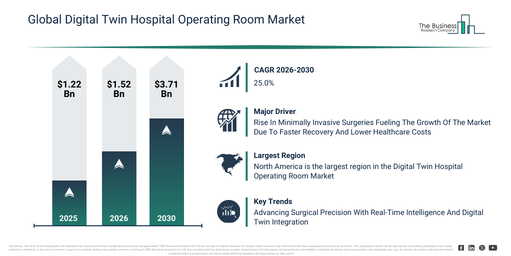
    The digital twin hospital operating room market size has experienced significant expansion in recent years. This market is projected to expand from $1.22 billion in 2025 to reach $1.52 billion by 2026, exhibiting a compound annual growth rate (CAGR) of 25.3%. Historically, this growth has been driven by several factors, including the increasing scope of complex surgical procedures, a heightened need for operational efficiency in hospitals, the wider uptake of connected medical devices, the greater use of surgical robotics, and initial investments in digital hospital infrastructure.

    The market for digital twin hospital operating rooms is projected to experience rapid expansion over the coming years. This market is forecast to reach $3.71 billion by 2030, exhibiting a compound annual growth rate (CAGR) of 25.0%. Several factors contribute to this anticipated growth, including a heightened focus on developing smart hospitals, a rising need for data-driven approaches to surgical optimization, the broadening application of AI-assisted surgical planning, the increasing embrace of cloud-based hospital twin technologies, and a greater emphasis on patient safety analytics. Key trends for this period encompass the growing uptake of real-time or simulation platforms, an increased reliance on predictive equipment maintenance tools, the wider implementation of workflow optimization solutions, the expansion of virtual training and simulation systems, and improved integration of sensor-driven monitoring technologies.

    Access Your Free Sample Report For In-Depth Market Analysis:

    https://www.thebusinessresearchcompany.com/report/digital-twin-hospital-operating-room-global-market-report

    Which Primary Drivers Are Impacting The Digital Twin Hospital Operating Room Market Growth?

    An anticipated increase in minimally invasive surgeries is projected to drive expansion within the digital twin hospital operating room market in the future. These surgical methods utilize small incisions, resulting in less tissue trauma, quicker patient recovery, and a lower incidence of complications compared to traditional open surgical procedures. The growing adoption of minimally invasive surgeries is attributed to their benefits, such as quicker patient recuperation, leading to shorter hospital admissions and reduced healthcare expenditures. Digital twin hospital operating rooms facilitate minimally invasive procedures through features like real-time simulations and three-dimensional visualizations, which allow for meticulous planning, enhanced navigation during surgery, and ultimately, superior patient results. For example, data from June 2024, reported by the American Society of Plastic Surgeons, a US-based organization, indicated a 7% rise in minimally invasive procedures in 2023, surpassing the 2% growth observed in general surgical procedures. Consequently, the increasing prevalence of minimally invasive surgeries is a key factor propelling the expansion of the digital twin hospital operating room market.

    Which Segment Types Are Examined In The Digital Twin Hospital Operating Room Market Segment Study?

    The digital twin hospital operating room market covered in this report is segmented –

    1) By Components: Software, Hardware, Services

    2) By Deployment Mode: On-Premises, Cloud

    3) By Application: Surgical Planning, Training And Simulation, Workflow Optimization, Asset Management, Patient Monitoring, Other Applications

    4) By End User: Hospitals, Ambulatory Surgical Centers, Specialty Clinics, Other End Users

    Subsegments:

    1) By Software: Simulation Software, Data Analytics Software, Workflow Management Software, Visualization And Imaging Software, AI And Machine Learning Platforms

    2) By Hardware: Sensors, IoT Devices, Imaging Devices, Surgical Robots, Workstations And Servers

    3) By Services: Consulting Services, Integration And Implementation Services, Support And Maintenance Services, Training And Education Services, Remote Monitoring Services

    Which Trends Are Shaping Growth In The Digital Twin Hospital Operating Room Market?

    Leading companies in the digital twin hospital operating room market are concentrating on developing advanced solutions, such as real-time intelligence platforms, to enhance surgical decision-making, improve workflow efficiency, and ensure superior patient outcomes through dynamic data integration and visualization. A real-time intelligence platform serves as an intelligent tool that processes live data instantly, enabling users to make quick and accurate decisions. For example, in February 2025, VeroSource Solutions Inc., a Canada-based software company, introduced additional Digital Twin capability to its proprietary VS Data-as-a-Service Platform. A digital twin is a virtual representation of a healthcare system or facility, acting as a digital copy that permits study and prediction without directly affecting the operations of the healthcare institution. Moreover, VeroSource’s Digital Twin technology incorporates other data sources, including population demographics, illness patterns, and other crucial external elements, thereby allowing healthcare practitioners to make more precise and data-driven choices.

    Which Players Are Part Of The Competitive Landscape Of The Digital Twin Hospital Operating Room Market?

    Major companies operating in the digital twin hospital operating room market are Microsoft Corporation, Johnson & Johnson, International Business Machines Corporation, Oracle Corporation, Honeywell International Inc., Medtronic plc, Siemens Healthineers, Philips Healthcare, Stryker Corporation, GE Healthcare Technologies Inc., Zimmer Biomet Holding Inc., Olympus Corporation, Intuitive Surgical, Getinge AB, Karl Storz, Ansys Inc., AVEVA Group plc, Bentley Systems Inc., Dassault Systèmes SE, Schneider Electric SE, NVIDIA Corporation

    Get The Full Digital Twin Hospital Operating Room Market Report:

    https://www.thebusinessresearchcompany.com/report/digital-twin-hospital-operating-room-global-market-report

    Which Region Dominates The Digital Twin Hospital Operating Room Market By Market Share?

    North America was the largest region in the digital twin hospital operating room market in 2025. Asia-Pacific is expected to be the fastest-growing region in the forecast period. The regions covered in the digital twin hospital operating room market report are Asia-Pacific, South East Asia, Western Europe, Eastern Europe, North America, South America, Middle East, Africa.

    Request A Customized Digital Twin Hospital Operating Room Market Report For Competitive Insights:

    https://www.thebusinessresearchcompany.com/report/digital-twin-hospital-operating-room-global-market-report

    Browse Through More Reports Similar to the Global Digital Twin Hospital Operating Room Market 2026, By The Business Research Company

    Whole Life Insurance Market Report 2026

    https://www.thebusinessresearchcompany.com/report/whole-life-insurance-global-market-report

    Term Life Insurance Market 2026

    https://www.thebusinessresearchcompany.com/report/term-life-insurance-market

    Insurance Market Report 2026

    https://www.thebusinessresearchcompany.com/report/insurance-global-market-report

    Get in touch with us:

    The Business Research Company: https://www.thebusinessresearchcompany.com/

    Americas +1 310-496-7795

    Asia +44 7882 955267 & +91 8897263534

    Europe +44 7882 955267

    Email us at info@tbrc.info

    Follow us on:

    LinkedIn: https://in.linkedin.com/company/the-business-research-company

    YouTube: https://www.youtube.com/channel/UC24_fI0rV8cR5DxlCpgmyFQ

    Global Market Model: https://www.thebusinessresearchcompany.com/global-market-model
  • Digital Twin Blood Bank Logistics Market: Growth Opportunities Through 2030

    Digital Twin Blood Bank Logistics Market: Growth Opportunities Through 2030

    The Business Research Company’s 2026 market reports feature enhanced tools like market attractiveness analysis, TAM assessment, and company scoring matrices, along with interactive dashboards, deeper supply chain insights, and startup coverage strengthening the depth, usability, and strategic value of insights.

    From Its 2026 Market Size, What Value Is The Digital Twin Blood Bank Logistics Market Projected To Reach By 2030?

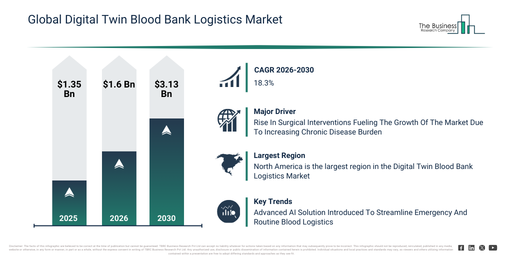
    The digital twin blood bank logistics market size has experienced significant expansion in recent years. It is anticipated to grow from $1.35 billion in 2025 to $1.6 billion in 2026, demonstrating a compound annual growth rate (CAGR) of 18.5%. This historical growth can be attributed to several factors, including escalating blood demand volatility, the broadening of centralized blood bank networks, the uptake of cold-chain monitoring technologies, the emergence of more stringent regulatory compliance requirements, and the initial deployment of logistics analytics platforms.

    The digital twin blood bank logistics market size is projected to experience rapid expansion over the coming years. It is anticipated to grow to $3.13 billion in 2030, exhibiting a compound annual growth rate (CAGR) of 18.3%. The forecasted growth during this period can be attributed to increasing investments in smart healthcare logistics, a rising adoption of cloud-based digital twins, the expansion of AI-driven demand forecasting, a growing focus on zero-waste blood management, and increasing integration with hospital information systems. Major trends anticipated in the forecast period include the increasing adoption of real-time blood supply chain simulation, the rising use of predictive inventory optimization models, the growing integration of IoT-based temperature monitoring, the expansion of end-to-end traceability platforms, and an enhanced focus on waste reduction and efficiency.

    Access Your Free Sample Report For In-Depth Market Analysis:

    https://www.thebusinessresearchcompany.com/report/digital-twin-blood-bank-logistics-global-market-report

    What Significant Factors Are Influencing The Digital Twin Blood Bank Logistics Market Expansion?

    The expanding volume of surgical procedures is anticipated to propel the growth of the digital twin blood bank logistics market going forward. Surgical procedures are defined as medical interventions performed by trained professionals to diagnose, treat, or correct health conditions using manual or instrumental methods. The rise in these procedures is attributed to an aging population, leading to a greater demand for treatments such as joint replacements and cardiovascular surgeries. Digital twin blood bank logistics aids surgical procedures by ensuring real-time visibility and efficient management of blood supply, thereby minimizing delays and shortages during critical operations. For instance, in April 2025, according to the Australian Institute of Health and Welfare (AIHW), an Australia-based government agency, during 2023–24, the number of patients undergoing elective surgery in Australia’s public hospitals reached a record high, with 778,500 admissions from elective surgery waitlists, marking a 5.8% rise from 735,500 admissions in 2022–23. Consequently, the global increase in surgical procedures is a significant driver for the growth of the digital twin blood bank logistics market.

    How Are Different Segments Classified In The Digital Twin Blood Bank Logistics Market Segment Analysis?

    The digital twin blood bank logistics market covered in this report is segmented –

    1) By Component: Software, Hardware, Services

    2) By Deployment Mode: On-Premises, Cloud

    3) By Application: Inventory Management, Temperature Monitoring, Transportation Optimization, Compliance And Traceability, Other Applications

    4) By End-User: Hospitals, Blood Banks, Diagnostic Laboratories, Research Institutes

    Subsegments:

    1) By Software: Simulation Platforms, Data Analytics Tools, Workflow Management Software, Real-Time Monitoring Systems, Inventory Optimization Software

    2) By Hardware: Sensors, Radio Frequency Identification Tags, Smart Storage Units, Temperature Monitoring Devices, Communication Gateways

    3) By Services: Consulting Services, System Integration, Maintenance And Support, Training And Education, Cloud Hosting Services

    What Trends Are Affecting The Direction Of The Digital Twin Blood Bank Logistics Market?

    Key players within the digital twin blood bank logistics market are concentrating on implementing cutting-edge solutions, including AI-driven on-demand blood delivery platforms. These initiatives aim to streamline inventory processes, improve real-time monitoring, minimize wastage, and guarantee a prompt and effective blood distribution to healthcare facilities. Such AI-powered platforms are intelligent systems employing artificial intelligence to forecast demand, oversee stock levels, and coordinate the efficient, real-time delivery of blood products to healthcare providers. An illustrative example is seen in June 2025, when Lytus HealthTech, an India-based healthcare technology firm, introduced BLOD, its AI-powered on-demand blood delivery platform. This pioneering system utilizes sophisticated artificial intelligence alongside autonomous logistics to facilitate continuous (24×7), swift, cold-chain delivery of blood units within 90 minutes, significantly cutting down waiting periods for both hospitals and patients. BLOD’s objectives include eradicating delays, decreasing blood spoilage caused by transportation or cold-chain issues, and establishing a new benchmark for emergency blood distribution within India’s healthcare landscape.

    Who Are The Companies Driving Activity In The Digital Twin Blood Bank Logistics Market?

    Major companies operating in the digital twin blood bank logistics market are Deutsche Post AG, FedEx Corporation, Mærsk A/S, Owens & Minor Inc., SenSat Ltd., KNAPP AG, World Courier Management Inc., Siemens Logistics LLC, Swisslog AG, GPI S.p.A., Zipline International Inc., OnWay Transport LLC, Mediware Information Systems Inc., Logivations GmbH, Medi-Ops LLC, Certainty Health LLC, Sifio Health Inc., UPS Healthcare, Körber Supply Chain, Dematic Group, Zebra Technologies Corporation, Controlant Inc.

    Get The Full Digital Twin Blood Bank Logistics Market Report:

    https://www.thebusinessresearchcompany.com/report/digital-twin-blood-bank-logistics-global-market-report

    Which Region Is The Largest In The Digital Twin Blood Bank Logistics Market?

    North America was the largest region in the digital twin blood bank logistics market in 2025. Asia-Pacific is expected to be the fastest-growing region in the forecast period. The regions covered in the digital twin blood bank logistics market report are Asia-Pacific, South East Asia, Western Europe, Eastern Europe, North America, South America, Middle East, Africa.

    Request A Customized Digital Twin Blood Bank Logistics Market Report For Competitive Insights:

    https://www.thebusinessresearchcompany.com/report/digital-twin-blood-bank-logistics-global-market-report

    Browse Through More Reports Similar to the Global Digital Twin Blood Bank Logistics Market 2026, By The Business Research Company

    Cargo Transportation Insurance Market Report 2026

    https://www.thebusinessresearchcompany.com/report/cargo-transportation-insurance-global-market-report

    Insurance Market Report 2026

    https://www.thebusinessresearchcompany.com/report/insurance-global-market-report

    Usage Based Insurance Market 2026

    https://www.thebusinessresearchcompany.com/report/usage-based-insurance-market

    Get in touch with us:

    The Business Research Company: https://www.thebusinessresearchcompany.com/

    Americas +1 310-496-7795

    Asia +44 7882 955267 & +91 8897263534

    Europe +44 7882 955267

    Email us at info@tbrc.info

    Follow us on:

    LinkedIn: https://in.linkedin.com/company/the-business-research-company

    YouTube: https://www.youtube.com/channel/UC24_fI0rV8cR5DxlCpgmyFQ

    Global Market Model: https://www.thebusinessresearchcompany.com/global-market-model
  • Global Healthcare Digital Transformation Market to Hit $219.67B by 2030 at 17.3% CAGR

    Global Healthcare Digital Transformation Market to Hit $219.67B by 2030 at 17.3% CAGR

    The Business Research Company’s 2026 market reports feature enhanced tools like market attractiveness analysis, TAM assessment, and company scoring matrices, along with interactive dashboards, deeper supply chain insights, and startup coverage strengthening the depth, usability, and strategic value of insights.

    How Much Growth In Market Value Is Expected For The Digital Transformation In Healthcare Market Between 2026 And 2030?

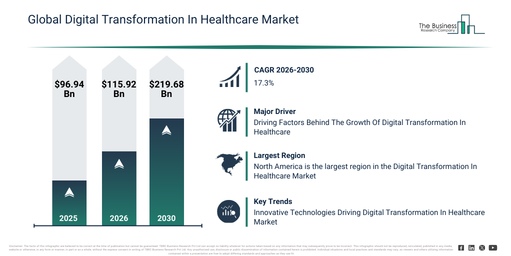
    The digital transformation in healthcare market has seen substantial growth in recent years. It is projected to expand from $96.94 billion in 2025 to $115.92 billion in 2026, at a compound annual growth rate (CAGR) of 19.6%. Historically, this growth can be attributed to factors such as paper-based clinical workflows, increasing healthcare operational costs, early health IT adoption, fragmented care delivery systems, and growing patient data volumes.

    The digital transformation in healthcare market size is projected to experience substantial expansion in the coming years. This market is anticipated to reach $219.68 billion by 2030, demonstrating a compound annual growth rate (CAGR) of 17.3%. Factors contributing to this growth include AI-enabled care optimization, government-led digital health initiatives, the adoption of value-based care models, continued cloud infrastructure expansion, and increased cybersecurity investments. Concurrently, major trends for the forecast period encompass the accelerated uptake of electronic health records, the broadening of telemedicine and virtual care services, the increasing use of data-driven clinical decision support, the growing integration of digital patient engagement tools, and a rising demand for interoperable healthcare systems.

    Access Your Free Sample Report For In-Depth Market Analysis:

    https://www.thebusinessresearchcompany.com/report/digital-transformation-in-healthcare-global-market-report

    Which Important Drivers Are Guiding The Digital Transformation In Healthcare Market Growth?

    The rising integration of electronic health records (EHRs) is anticipated to stimulate the expansion of digital transformation within the healthcare market in the future. EHRs represent digital counterparts of traditional patient paper charts, offering up-to-the-minute, patient-focused information readily and securely available to approved individuals. This uptake of EHRs stems from various factors including improved patient care, regulatory incentives, enhanced data exchange, greater patient participation, advanced data analytics, and more effective population health management. Digital transformation within healthcare markedly improves EHRs through the incorporation of cutting-edge technologies and refined system capabilities, facilitating smooth data sharing and synchronized patient care among diverse healthcare providers. For example, data from October 2023, sourced from a report by Oxford Academic, a UK-based research platform offering academic resources, indicated that basic EHR adoption grew from 6.6% to 81.2%, and comprehensive systems saw an increase from 3.6% to 63.2%. Large hospitals demonstrated a 7% higher rate of comprehensive EHR adoption compared to medium-sized hospitals, and surpassed small hospitals by over 34%. Consequently, the expanding use of electronic health records is propelling the growth of digital transformation in the healthcare market.

    How Is The Digital Transformation In Healthcare Market Categorized Across Its Segment Groups?

    The digital transformation in healthcare market covered in this report is segmented –

    1) By Solution: Software, Service

    2) By Organization Size: Small And Medium Size Enterprises, Large Enterprises

    3) By Technology: Artificial Intelligence, Cloud Computing, Big Data And Analytics, Internet Of Things, Cybersecurity

    4) By End User: Hospitals And Clinics, Pharma Companies, Life Science And Biotech Companies, Healthcare Insurance Providers

    Subsegments:

    1) By Software: Electronic Health Records (Ehr), Telemedicine Solutions, Healthcare Analytics Software, Clinical Decision Support Systems (Cdss), Patient Management Software, Healthcare CRM Software, Blockchain Solutions For Healthcare

    2) By Service: Consulting Services, Implementation Services, Integration Services, Support And Maintenance Services, Training Services, Managed Services

    What Trends Are Influencing The Evolution Of The Digital Transformation In Healthcare Market?

    Leading companies active in the digital transformation of the healthcare market are concentrating on creating advanced technologies, such as digitalization solutions, to bolster their market presence. Digitalization solutions involve technologies, strategies, and services that convert traditional analog or manual processes into digital formats, empowering organizations to optimize operations, improve effectiveness, and boost output. For example, in February 2024, Huawei Technologies Co. Ltd., a China-based information and communications technology firm, unveiled its Medical Technology Digitalization Solution to streamline various healthcare workflows. This innovative solution integrates state-of-the-art technologies to revolutionize medical practices, presenting several distinctive attributes. It harnesses artificial intelligence (AI) and machine learning algorithms to enhance medical imaging analysis, allowing for quicker and more precise diagnosis of conditions like cancer and cardiovascular diseases. The solution also incorporates Internet of Things (IoT) devices and sensors to enable real-time patient oversight and remote healthcare provision, thereby improving accessibility and patient outcomes.

    Which Firms Are Influencing Competition In The Digital Transformation In Healthcare Market?

    Major companies operating in the digital transformation in healthcare market are Roche Diagnostics, Medtronic plc, Siemens Healthineers, Philips Healthcare, Stryker Corporation, GE Healthcare, Boston Scientific, Omron Corporation, Intuitive Surgical Inc., Omnicell Inc., Allscripts Healthcare Solutions, InTouch Health, Blue Ocean Robotics ApS, Vecna Robotics, Stereotaxis Inc., Aethon Inc., VGo Communications Inc., ReWalk Robotics Ltd., Epic Systems Corporation, athenahealth Inc., Truveta Inc., Merative L P, K Health, Eko Health Inc., Suki

    Get The Full Digital Transformation In Healthcare Market Report:

    https://www.thebusinessresearchcompany.com/report/digital-transformation-in-healthcare-global-market-report

    Which Region Leads The Digital Transformation In Healthcare Market In Terms Of Market Share?

    North America was the largest region in the digital transformation in healthcare market in 2025. Asia-Pacific is expected to be the fastest-growing region in the forecast period. The regions covered in the digital transformation in healthcare market report are Asia-Pacific, South East Asia, Western Europe, Eastern Europe, North America, South America, Middle East, Africa.

    Request A Customized Digital Transformation In Healthcare Market Report For Competitive Insights:

    https://www.thebusinessresearchcompany.com/report/digital-transformation-in-healthcare-global-market-report

    Browse Through More Reports Similar to the Global Digital Transformation In Healthcare Market 2026, By The Business Research Company

    Retail Digital Transformation Market Report 2026

    https://www.thebusinessresearchcompany.com/report/retail-digital-transformation-global-market-report

    Digital Transformation Market Report 2026

    https://www.thebusinessresearchcompany.com/report/digital-transformation-global-market-report

    Digital Health Market Report 2026

    https://www.thebusinessresearchcompany.com/report/digital-health-global-market-report

    Get in touch with us:

    The Business Research Company: https://www.thebusinessresearchcompany.com/

    Americas +1 310-496-7795

    Asia +44 7882 955267 & +91 8897263534

    Europe +44 7882 955267

    Email us at info@tbrc.info

    Follow us on:

    LinkedIn: https://in.linkedin.com/company/the-business-research-company

    YouTube: https://www.youtube.com/channel/UC24_fI0rV8cR5DxlCpgmyFQ

    Global Market Model: https://www.thebusinessresearchcompany.com/global-market-model