Category: Healthcare Services

  • Increasing chronic disease prevalence is boosting the antibody validation market

    Increasing chronic disease prevalence is boosting the antibody validation market

    The Business Research Company’s 2026 market reports feature enhanced tools like market attractiveness analysis, TAM assessment, and company scoring matrices, along with interactive dashboards, deeper supply chain insights, and startup coverage strengthening the depth, usability, and strategic value of insights.

    What Is The Forecasted Market Size Trajectory Of The Antibody Validation Market From 2026 To 2030?

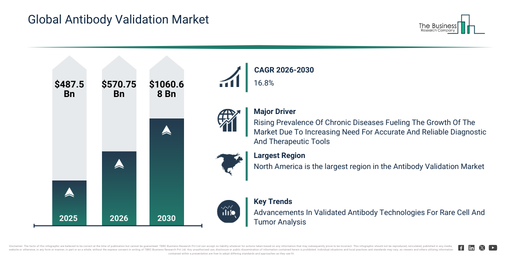
    The antibody validation market size has experienced rapid growth in recent years. It is projected to expand from $487.5 billion in 2025 to $570.75 billion in 2026, showing a compound annual growth rate (CAGR) of 17.1%. This historic growth can be attributed to escalating concerns regarding variability in research antibodies, the broadening scope of proteomics and genomics research, increased regulatory scrutiny concerning research reproducibility, the rise of antibody-based assays, and greater funding allocated to life sciences research.

    The antibody validation market is poised for substantial growth in the upcoming years, with projections indicating it will reach $1060.68 billion by 2030, exhibiting a compound annual growth rate (CAGR) of 16.8%. The expansion during this forecast period can be attributed to factors such as an escalating demand for rigor and reproducibility, the increasing application of antibodies in clinical research, the broadening of precision diagnostics, a greater adoption of validated antibodies in drug discovery, and the enhanced integration of digital validation data platforms. Prominent trends anticipated in this period include the widespread implementation of standardized antibody validation protocols, a growing need for application-specific validation services, an increased utilization of multiplex validation techniques, the development of reproducibility-focused testing frameworks, and a reinforced emphasis on data transparency.

    Access Your Free Sample Report For In-Depth Market Analysis:

    https://www.thebusinessresearchcompany.com/report/global-antibody-validation-market-report

    What Key Factors Are Shaping The Antibody Validation Market Landscape?

    The increasing occurrence of chronic illnesses is anticipated to fuel the expansion of the antibody validation market in the future. These long-term health conditions develop gradually and persist for extended periods, often demanding ongoing medical attention. A key factor contributing to the rising incidence of chronic diseases is sedentary lifestyles, where prolonged sitting and limited physical activity elevate the risk of ailments such as heart conditions and diabetes. Antibody validation plays a crucial role in managing chronic diseases by guaranteeing the precision, distinctiveness, and dependability of antibodies utilized in diagnostic and therapeutic applications. It facilitates better identification of disease biomarkers, aids in accurate monitoring, and enhances the creation of targeted therapies, thereby promoting effective and customized care for chronic conditions. For instance, in June 2024, data from the National Health Service, a UK-based government department, revealed that 3,615,330 individuals registered with a general practitioner (GP) were diagnosed with non-diabetic hyperglycemia or pre-diabetes (a condition with elevated blood sugar levels, not high enough to be classified as diabetes) in 2023, indicating an 18% rise from 3,065,825 cases recorded in 2022. Consequently, the growing prevalence of chronic diseases is a significant driver for the growth of the antibody validation market.

    How Is Segmentation Applied In The Antibody Validation Market Segment Analysis?

    The antibody validation market covered in this report is segmented –

    1) By Product Type: Monoclonal Antibodies, Polyclonal Antibodies, Anti-Body Drug Complexes

    2) By Disease Indication: Cardiovascular Diseases, Central Nervous System (CNS) Disorders, Cancer, Autoimmune Disorders

    3) By End User: Pharmaceutical And Biotechnological Firms, Contract Research Organizations, Research Institutes

    Subsegments:

    1) By Monoclonal Antibodies: Recombinant Monoclonal Antibodies, Humanized Monoclonal Antibodies, Chimeric Monoclonal Antibodies, Murine Monoclonal Antibodies

    2) By Polyclonal Antibodies: Rabbit Polyclonal Antibodies, Goat Polyclonal Antibodies, Sheep Polyclonal Antibodies, Donkey Polyclonal Antibodies

    3) By Antibody Drug Complexes: Immunoconjugates, Radioimmunoconjugates, Immunotoxins, Bispecific Antibody Drug Complexes

    What Market Trends Are Affecting The Antibody Validation Market?

    Leading companies in the antibody validation market are emphasizing advanced innovations, such as Celselect slides enumeration stain kits, to improve the accuracy and sensitivity of identifying rare cells and circulating tumor cells, enhance validation efficiency, and support high-precision cancer research and diagnostic applications. Celselect slides enumeration stain kits specifically refer to specialized reagent kits designed to enable the detection, staining, and counting of rare cells and circulating tumor cells (CTCs). For instance, in March 2024, Bio-Rad Laboratories Inc., a US-based life science research company, launched celselect slides validated antibodies for rare cell and circulating tumor cell (CTC) enumeration. This product aims to enable sensitive and specific identification of CTC surface markers, enhance tumor heterogeneity studies, and support high-precision cancer research through improved rare cell capture, enrichment, and analysis. This launch expanded the company’s single-cell oncology portfolio by equipping researchers with validated reagents for accurate immunostaining and enumeration of CTCs.

    Who Are The Companies Participating In The Antibody Validation Market Environment?

    Major companies operating in the antibody validation market are F. Hoffmann-La Roche Ltd., Merck & Co. Inc., Thermo Fisher Scientific Inc., Danaher Corporation, Becton Dickinson and Company, Agilent Technologies Inc., PerkinElmer Inc., Bio-Rad Laboratories Inc., Azenta Inc., GenScript Biotech Corporation, Promega Corporation, Sino Biological Inc., Cell Signaling Technology Inc., Fortis Life Sciences, Proteintech Group Inc., Santa Cruz Biotechnology Inc., Novus Biologicals LLC, Creative Diagnostics, Rockland Immunochemicals Inc., Biorbyt Ltd.

    Get The Full Antibody Validation Market Report:

    https://www.thebusinessresearchcompany.com/report/global-antibody-validation-market-report

    Which Region Holds The Highest Market Share In The Antibody Validation Market?

    North America was the largest region in the antibody validation market in 2025. The regions covered in the antibody validation market report are Asia-Pacific, South East Asia, Western Europe, Eastern Europe, North America, South America, Middle East, Africa.

    Request A Customized Antibody Validation Market Report For Competitive Insights:

    https://www.thebusinessresearchcompany.com/report/global-antibody-validation-market-report

    Browse Through More Reports Similar to the Global Antibody Validation Market 2026, By The Business Research Company

    Neuroscience Antibodies And Assays Market Report 2026

    https://www.thebusinessresearchcompany.com/report/neuroscience-antibodies-and-assays-global-market-report

    Diagnostic Specialty Antibodies Market Report 2026

    https://www.thebusinessresearchcompany.com/report/diagnostic-specialty-antibodies-global-market-report

    Research Antibodie And Reagent Market Report 2026

    https://www.thebusinessresearchcompany.com/report/research-antibodie-and-reagent-global-market-report

    Get in touch with us:

    The Business Research Company: https://www.thebusinessresearchcompany.com/

    Americas +1 310-496-7795

    Asia +44 7882 955267 & +91 8897263534

    Europe +44 7882 955267

    Email us at info@tbrc.info

    Follow us on:

    LinkedIn: https://in.linkedin.com/company/the-business-research-company

    YouTube: https://www.youtube.com/channel/UC24_fI0rV8cR5DxlCpgmyFQ

    Global Market Model: https://www.thebusinessresearchcompany.com/global-market-model

  • Rising chronic diseases are driving growth in the antibody production services market

    Rising chronic diseases are driving growth in the antibody production services market

    The Business Research Company’s 2026 market reports feature enhanced tools like market attractiveness analysis, TAM assessment, and company scoring matrices, along with interactive dashboards, deeper supply chain insights, and startup coverage strengthening the depth, usability, and strategic value of insights.

    How Much Will The Market Value Of The Antibody Production Services Market Grow Between 2026 And 2030?

    The antibody production services market has experienced rapid expansion in recent years. It is anticipated to increase from $6.44 billion in 2025 to $7.24 billion in 2026, demonstrating a compound annual growth rate (CAGR) of 12.4%. This historical growth can be ascribed to the broadening of biomedical research activities, the rise of monoclonal antibody therapeutics, the increasing application of antibodies in diagnostics, escalating investments in life science research, and the presence of advanced antibody engineering techniques.

    The antibody production services market is anticipated to experience substantial growth over the next few years. Projections indicate it will reach $11.45 billion by 2030, exhibiting a compound annual growth rate (CAGR) of 12.1%. This expansion is attributed to several factors, including the increasing demand for personalized medicine, the expanding pipelines for biologics drug development, the growing trend of outsourcing among pharmaceutical companies, the development of advanced antibody formats, and a heightened emphasis on reproducibility and quality control. Prominent trends throughout this period encompass a rising demand for custom antibody generation, increased adoption of recombinant antibody technologies, a sharpened focus on high-affinity and high-specificity antibodies, the broadening of outsourced antibody production services, and a greater emphasis on stringent quality validation standards.

    Access Your Free Sample Report For In-Depth Market Analysis:

    https://www.thebusinessresearchcompany.com/report/global-antibody-production-services-market-report

    Which Factors Are Influencing The Growth Of The Antibody Production Services Market?

    The increasing incidence of chronic illnesses is anticipated to drive the expansion of the antibody production services market. These are long-term health issues that progress gradually and persist for prolonged durations, frequently necessitating ongoing medical attention. The escalating occurrence of chronic diseases is partly attributed to sedentary lifestyles, where extended periods of sitting and insufficient physical activity heighten the likelihood of developing conditions like heart disease and diabetes. Antibody production services assist in managing chronic ailments by offering specific therapeutic and diagnostic options, proving crucial for diseases including cancer, autoimmune disorders, and diabetes. These services enhance treatment accuracy through early detection, continuous monitoring, and customized therapies, thereby improving patient results and the overall effectiveness of disease management. For example, in June 2024, data from the National Health Service, a UK government department, revealed that 3,615,330 individuals registered with a general practitioner (GP) were diagnosed with non-diabetic hyperglycemia or pre-diabetes (a condition characterized by elevated blood sugar levels, though not severe enough for a diabetes diagnosis) in 2023. This represented an 18% rise from 3,065,825 cases reported in 2022. Consequently, the increasing prevalence of chronic diseases is fueling the expansion of the antibody production services market.

    What Segment Categories Shape The Antibody Production Services Market Segment Landscape?

    The antibody production services market covered in this report is segmented –

    1) By Type: Monoclonal Antibodies, Chimeric Antibodies, Humanized Antibodies, Recombinant Antibodies, Polyclonal Antibodies

    2) By Technology: Hybridoma Technology, Phage Display Technology, Yeast Display Technology, Cell-Based Technology

    3) By Application: Therapeutic, Research, Diagnostic

    4) By End User: Pharmaceutical and Biotechnology Companies, Academic and Research Institutes, Hospitals and Clinics, Contract Research Organizations

    Subsegments:

    1) By Monoclonal Antibodies: Human Monoclonal Antibodies, Mouse Monoclonal Antibodies, Rabbit Monoclonal Antibodies, Rat Monoclonal Antibodies

    2) By Chimeric Antibodies: Mouse-Human Chimeric Antibodies, Rat-Human Chimeric Antibodies, Rabbit-Human Chimeric Antibodies, Primate-Human Chimeric Antibodies

    3) By Humanized Antibodies: Complementarity Determining Region Grafted Antibodies, Framework Shuffling Antibodies, Resurfaced Humanized Antibodies, Germline Humanized Antibodies

    4) By Recombinant Antibodies: Single Chain Variable Fragment Antibodies, Fragment Antigen Binding Antibodies, Bispecific Recombinant Antibodies, Nanobodies

    5) By Polyclonal Antibodies: Rabbit Polyclonal Antibodies, Goat Polyclonal Antibodies, Sheep Polyclonal Antibodies, Donkey Polyclonal Antibodies

    Which Trends Are Influencing Demand In The Antibody Production Services Market?

    Leading companies within the antibody production services market are concentrating on developing advanced digital solutions, such as AI-powered analytics, to enhance efficiency, deepen data-driven insights, and accelerate discovery timelines. These AI-driven analytical methods involve sophisticated computational models that process complex biological and chemical data to predict outcomes, identify patterns, and generate novel designs, particularly for therapeutic antibodies. For example, in August 2025, Zifo, an India-based provider of scientific informatics services, introduced the Zifo AI Engine for Antibody Engineering application on the Snowflake Marketplace. This cloud-native application leverages generative AI and machine learning models to rapidly design and optimize antibody-based therapeutics. Its capabilities include predictive affinity maturation and humanization, allowing for seamless data analysis and candidate generation within a secure, scalable data platform without requiring extensive internal AI infrastructure.

    Who Are The Companies Operating Across The Antibody Production Services Market Value Chain?

    Major companies operating in the antibody production services market are Pfizer Inc., AbbVie Inc., Novartis AG, Thermo Fisher Scientific Inc., Merck KGaA, Danaher Corporation, Agilent Technologies Inc., PerkinElmer Inc., Sartorius AG, Bio-Rad Laboratories Inc., Bio-Techne Corporation, Azenta Inc., GenScript Biotech Corporation, Invenra Inc., Sino Biological Inc., Proteintech Group Inc., Rapid Novor, Rockland Immunochemicals Inc., Biorbyt Ltd., [New Company: Creative Biolabs

    Get The Full Antibody Production Services Market Report:

    https://www.thebusinessresearchcompany.com/report/global-antibody-production-services-market-report

    Where Is The Antibody Production Services Market Most Concentrated Geographically?

    North America was the largest region in the antibody production services market in 2025. Asia-Pacific is expected to be the fastest-growing region in the forecast period. The regions covered in the antibody production services market report are Asia-Pacific, South East Asia, Western Europe, Eastern Europe, North America, South America, Middle East, Africa.

    Request A Customized Antibody Production Services Market Report For Competitive Insights:

    https://www.thebusinessresearchcompany.com/report/global-antibody-production-services-market-report

    Browse Through More Reports Similar to the Global Antibody Production Services Market 2026, By The Business Research Company

    Next Generation Antibody Therapeutics Market Report 2026

    https://www.thebusinessresearchcompany.com/report/next-generation-antibody-therapeutics-global-market-report

    Research Antibodie And Reagent Market Report 2026

    https://www.thebusinessresearchcompany.com/report/research-antibodie-and-reagent-global-market-report

    Antibody Discovery Market Report 2026

    https://www.thebusinessresearchcompany.com/report/antibody-discovery-global-market-report

    Get in touch with us:

    The Business Research Company: https://www.thebusinessresearchcompany.com/

    Americas +1 310-496-7795

    Asia +44 7882 955267 & +91 8897263534

    Europe +44 7882 955267

    Email us at info@tbrc.info

    Follow us on:

    LinkedIn: https://in.linkedin.com/company/the-business-research-company

    YouTube: https://www.youtube.com/channel/UC24_fI0rV8cR5DxlCpgmyFQ

    Global Market Model: https://www.thebusinessresearchcompany.com/global-market-model

  • Antibody production market analysis with future outlook

    Antibody production market analysis with future outlook

    The Business Research Company’s 2026 market reports feature enhanced tools like market attractiveness analysis, TAM assessment, and company scoring matrices, along with interactive dashboards, deeper supply chain insights, and startup coverage strengthening the depth, usability, and strategic value of insights.

    What Changes In Market Value Are Expected For The Antibody Production Market Over The 2026–2030 Period?

    The market for antibody production has experienced substantial expansion in recent times. It is projected to expand from $25.89 billion in 2025 to $30.02 billion in 2026, advancing at a compound annual growth rate (CAGR) of 16.0%. This growth observed in the past can be credited to the broadening of pharmaceutical and biotechnology research, the escalating application of monoclonal antibodies in therapies, developments in bioprocessing technologies, an increasing need for research-grade antibodies, and the rise of CRO and CDMO services.

    The antibody production market is anticipated to experience substantial expansion in the coming years, reaching a valuation of $53.78 billion by 2030, driven by a compound annual growth rate (CAGR) of 15.7%. This projected growth during the forecast period is primarily due to several factors: increasing financial commitments to biologics manufacturing, a rise in the use of continuous bioprocessing, the broadening of therapeutic antibody pipelines, an escalating need for economical antibody production, and the greater incorporation of digital biomanufacturing systems. Key developments expected within the same period include a greater embrace of recombinant antibody production techniques, an increasing requirement for high-yield expression systems, enhanced automation in upstream and downstream processes, the expansion of contract antibody manufacturing services, and a heightened emphasis on achieving scalability and reproducibility.

    Access Your Free Sample Report For In-Depth Market Analysis:

    https://www.thebusinessresearchcompany.com/report/global-antibody-production-market-report

    What Leading Drivers Are Supporting The Antibody Production Market Expansion?

    The increasing occurrence of chronic diseases is anticipated to boost the expansion of the antibody production market in the future. These are long-term health issues that progress gradually and persist for a considerable duration, frequently necessitating ongoing medical attention. The rising incidence of chronic illnesses is partly linked to sedentary lifestyles, since extended periods of sitting and insufficient physical activity heighten the likelihood of developing conditions like heart disease and diabetes. Antibody production supports the management of chronic diseases by offering specific therapeutic and diagnostic options, rendering them vital for illnesses such as cancer, autoimmune disorders, and diabetes. These solutions enhance the effectiveness of treatment and patient oversight through precise interventions and early detection, thereby improving overall healthcare results. As an example, in June 2024, data from the National Health Service, a UK-based government department, showed that 3,615,330 individuals registered with a general practitioner (GP) received a diagnosis of non-diabetic hyperglycemia or pre-diabetes (a condition with elevated blood sugar levels, not high enough to be classified as diabetes) in 2023. This represented an 18% rise from 3,065,825 cases recorded in 2022. Consequently, the increasing prevalence of chronic diseases is fueling the expansion of the antibody production market.

    Which Segment Types Are Examined In The Antibody Production Market Segment Study?

    The antibody production market covered in this report is segmented –

    1) By Type: Monoclonal Antibody, Polyclonal Antibody

    2) By Process: Upstream Processing, Downstream Processing

    3) By End-User: Pharmaceutical and Biotechnology Companies, Research Laboratories, Contract Research Organizations And Contract Development And Manufacturing Organizations

    Subsegments:

    1) By Monoclonal Antibody: Mouse Monoclonal Antibody, Human Monoclonal Antibody, Rabbit Monoclonal Antibody, Rat Monoclonal Antibody

    2) By Polyclonal Antibody: Rabbit Polyclonal Antibody, Goat Polyclonal Antibody, Sheep Polyclonal Antibody, Donkey Polyclonal Antibody

    What Emerging Trends Are Seen In The Antibody Production Market?

    Leading companies operating within the antibody production market are concentrating on developing sophisticated service models, such as rapid-access platforms, to accelerate research efforts, foster enhanced collaboration, and reduce overall development timelines. Rapid-access platforms are defined as streamlined service offerings that allow collaborating companies to promptly evaluate and leverage a proprietary technology for their specific drug development initiatives. For instance, in April 2025, Invenra Inc., a US-based biotechnology firm, introduced the B-Body Express Service. This service provides swift entry to Invenra’s premier B-Body bispecific antibody platform, empowering researchers to expedite the initial phases of therapeutic discovery. The offering encompasses a standardized methodology for generating functional bispecific antibodies tailored to a partner’s targets of interest, thereby considerably shortening the typical waiting period before testing novel drug candidates.

    Which Players Are Part Of The Competitive Landscape Of The Antibody Production Market?

    Major companies operating in the antibody production market are Johnson & Johnson, Roche Holding AG, Merck & Co. Inc., Pfizer Inc., AbbVie Inc., Bayer AG, Novartis AG, Thermo Fisher Scientific Inc., Amgen Inc., Danaher Corporation, Agilent Technologies Inc., Bio-Rad Laboratories Inc., Azenta Inc., GenScript Biotech Corporation, Sino Biological Inc., Proteintech Group Inc., Rapid Novor, Rockland Immunochemicals Inc., Biorbyt Ltd., Invenra Inc

    Get The Full Antibody Production Market Report:

    https://www.thebusinessresearchcompany.com/report/global-antibody-production-market-report

    Which Region Dominates The Antibody Production Market By Market Share?

    North America was the largest region in the antibody production market in 2025. Asia-Pacific is expected to be the fastest-growing region in the forecast period. The regions covered in the antibody production market report are Asia-Pacific, South East Asia, Western Europe, Eastern Europe, North America, South America, Middle East, Africa.

    Request A Customized Antibody Production Market Report For Competitive Insights:

    https://www.thebusinessresearchcompany.com/report/global-antibody-production-market-report

    Browse Through More Reports Similar to the Global Antibody Production Market 2026, By The Business Research Company

    Next Generation Antibody Therapeutics Market Report 2026

    https://www.thebusinessresearchcompany.com/report/next-generation-antibody-therapeutics-global-market-report

    Antibody Discovery Market Report 2026

    https://www.thebusinessresearchcompany.com/report/antibody-discovery-global-market-report

    Research Antibodie And Reagent Market Report 2026

    https://www.thebusinessresearchcompany.com/report/research-antibodie-and-reagent-global-market-report

    Get in touch with us:

    The Business Research Company: https://www.thebusinessresearchcompany.com/

    Americas +1 310-496-7795

    Asia +44 7882 955267 & +91 8897263534

    Europe +44 7882 955267

    Email us at info@tbrc.info

    Follow us on:

    LinkedIn: https://in.linkedin.com/company/the-business-research-company

    YouTube: https://www.youtube.com/channel/UC24_fI0rV8cR5DxlCpgmyFQ

    Global Market Model: https://www.thebusinessresearchcompany.com/global-market-model
  • Antibody contract manufacturing market forecast and growth trends

    Antibody contract manufacturing market forecast and growth trends

    The Business Research Company’s 2026 market reports feature enhanced tools like market attractiveness analysis, TAM assessment, and company scoring matrices, along with interactive dashboards, deeper supply chain insights, and startup coverage strengthening the depth, usability, and strategic value of insights.

    By 2030, What Market Size Is The Antibody Contract Manufacturing Market Expected To Reach Based On Its 2026 Value?

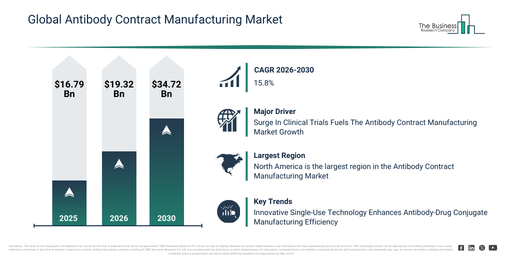
    The antibody contract manufacturing market size has seen rapid expansion in recent years. It is forecast to rise from $16.79 billion in 2025 to $19.32 billion in 2026, exhibiting a compound annual growth rate (CAGR) of 15.0%. The past growth can be attributed to several factors including an increase in biologics development pipelines, greater outsourcing by biopharmaceutical companies, the broadening of mammalian cell culture platforms, heightened clinical trial activity for antibodies, and the presence of specialized CMO infrastructure.

    The antibody contract manufacturing market is anticipated to experience substantial expansion in the coming years, with its size projected to reach $34.72 billion by 2030, demonstrating a compound annual growth rate (CAGR) of 15.8%. This growth throughout the forecast period is primarily fueled by the increasing demand for commercial-scale antibody production, greater investments in next-generation biologics, a heightened focus on cost-efficient manufacturing models, the broadening of personalized medicine pipelines, and an uptick in regulatory approvals for antibody therapies. Significant trends influencing this period encompass the expansion of large-scale antibody manufacturing capacity, the rising adoption of single-use bioprocessing systems, increasing demand for bispecific antibodies and ADCs, an intensified focus on flexible and scalable manufacturing models, and an enhanced emphasis on regulatory compliance and quality control.

    Access Your Free Sample Report For In-Depth Market Analysis:

    https://www.thebusinessresearchcompany.com/report/antibody-contract-manufacturing-global-market-report

    Which Key Factors Are Driving The Antibody Contract Manufacturing Market Growth?

    The growing count of clinical trials is anticipated to boost the expansion of the antibody contract manufacturing market moving forward. Clinical trials are investigative studies undertaken with human subjects to evaluate the safety and efficacy of novel medical treatments, interventions, or diagnostic protocols. As the volume of clinical trials involving antibody-based therapeutics or diagnostics rises, it generates a demand for premium quality antibodies, thereby ensuring a punctual and compliant supply for these trials. For instance, in May 2023, data from ClinicalTrials.gov, a component of the National Institutes of Health (NIH), a US-based government agency, indicated that the number of registered clinical trial studies across all 50 states of the United States and 221 countries escalated from 399,499 in 2022 to 437,533 in 2023. Additionally, about 241,498 studies, making up 53% of the total, were registered outside the United States, in contrast to 140,492 studies, or 31%, which were registered solely within the United States. Consequently, the increasing number of clinical trials is a primary force driving the growth of the antibody contract manufacturing market.

    How Are Different Segments Classified In The Antibody Contract Manufacturing Market Segment Analysis?

    The antibody contract manufacturing market covered in this report is segmented –

    1) By Product: Monoclonal Antibodies, Polyclonal Antibodies, Other Products

    2) By Source: Mammalian, Microbial

    3) By Scale Of Operation: Preclinical, Clinical, Commercial

    4) By End-User: Biopharmaceutical Companies, Research Laboratories, Other End Users

    Subsegments:

    1) By Monoclonal Antibodies: Therapeutic Monoclonal Antibodies, Diagnostic Monoclonal Antibodies

    2) By Polyclonal Antibodies: Research Polyclonal Antibodies, Therapeutic Polyclonal Antibodies

    3) By Other Products: Bispecific Antibodies, Antibody-Drug Conjugates (ADCs), Fusion Proteins

    Which Trends Are Guiding The Direction Of The Antibody Contract Manufacturing Market?

    Leading firms in the antibody contract manufacturing market are prioritizing breakthroughs like single-use technology, which serves to diminish cross-contamination hazards and lower operational expenditures. Single-use technology (SUT) describes components and systems that are disposable and utilized within biopharmaceutical production workflows. As an illustration, during September 2024, the US-based pharmaceutical entity Merck & Co. introduced the Mobius ADC Reactor, specifically engineered to improve the production of antibody-drug conjugates. This novel single-use reactor, tailored for antibody-drug conjugate manufacturing, substantially boosts production efficiency by 70% when contrasted with conventional stainless steel or glass techniques. Its disposable nature reduces the likelihood of cross-contamination and cuts down on operating expenses, thereby enabling quicker processing cycles. Furthermore, sophisticated film technology enhances the durability and leak resistance of the bags, safeguarding the quality of highly potent active pharmaceutical ingredients. Such advancements assist biopharmaceutical enterprises in manufacturing essential therapies with greater safety and efficiency.

    Who Are The Companies Driving Activity In The Antibody Contract Manufacturing Market?

    Major companies operating in the antibody contract manufacturing market are Lonza Group AG, Catalent Inc, Samsung Biologics Co Ltd, Wuxi Biologics Cayman Inc, Thermo Fisher Scientific Inc, Boehringer Ingelheim BioXcellence, AGC Biologics, FUJIFILM Diosynth Biotechnologies, AbbVie Inc, Charles River Laboratories International Inc, mAbxience, KBI Biopharma Inc, Abzena Ltd, Just-Evotec Biologics, Northway Biotech, Cerbios-Pharma, Scorpius BioManufacturing, Lotte Biologics, Rentschler Biopharma SE, Cytiva (Life Sciences CDMO), Xcellon Biologics, Celonic AG, Syngene International Ltd

    Get The Full Antibody Contract Manufacturing Market Report:

    https://www.thebusinessresearchcompany.com/report/antibody-contract-manufacturing-global-market-report

    Which Region Is The Largest In The Antibody Contract Manufacturing Market?

    North America was the largest region in the antibody contract manufacturing market in 2025. Asia-Pacific is expected to be the fastest-growing region in the forecast period. The regions covered in the antibody contract manufacturing market report are Asia-Pacific, South East Asia, Western Europe, Eastern Europe, North America, South America, Middle East, Africa.

    Request A Customized Antibody Contract Manufacturing Market Report For Competitive Insights:

    https://www.thebusinessresearchcompany.com/report/antibody-contract-manufacturing-global-market-report

    Browse Through More Reports Similar to the Global Antibody Contract Manufacturing Market 2026, By The Business Research Company

    Antibody Discovery Market Report 2026

    https://www.thebusinessresearchcompany.com/report/antibody-discovery-global-market-report

    Vaccine Contract Manufacturing Market Report 2026

    https://www.thebusinessresearchcompany.com/report/vaccine-contract-manufacturing-global-market-report

    Biopharmaceuticals Contract Manufacturing Market Report 2026

    https://www.thebusinessresearchcompany.com/report/biopharmaceuticals-contract-manufacturing-global-market-report

    Get in touch with us:

    The Business Research Company: https://www.thebusinessresearchcompany.com/

    Americas +1 310-496-7795

    Asia +44 7882 955267 & +91 8897263534

    Europe +44 7882 955267

    Email us at info@tbrc.info

    Follow us on:

    LinkedIn: https://in.linkedin.com/company/the-business-research-company

    YouTube: https://www.youtube.com/channel/UC24_fI0rV8cR5DxlCpgmyFQ

    Global Market Model: https://www.thebusinessresearchcompany.com/global-market-model
  • Antibodies market trends influencing future growth

    Antibodies market trends influencing future growth

    The Business Research Company’s 2026 market reports feature enhanced tools like market attractiveness analysis, TAM assessment, and company scoring matrices, along with interactive dashboards, deeper supply chain insights, and startup coverage strengthening the depth, usability, and strategic value of insights.

    What Is The Anticipated Rise In Market Value Of The Antibodies Market During The Forecast Period?

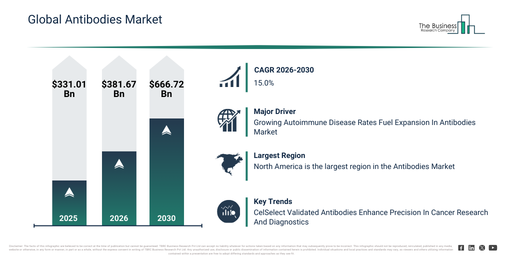
    The antibodies market size has seen rapid expansion in recent years. It is anticipated to grow from $331.01 billion in 2025 to $381.67 billion in 2026, achieving a compound annual growth rate (CAGR) of 15.3%. This growth during the historical period can be attributed to advancements in immunology research, increased investment in biologics development, the expansion of oncology treatment programs, a growing prevalence of autoimmune diseases, and improved antibody production technologies.

    The antibodies market is projected for rapid expansion over the coming years, with its valuation anticipated to reach $666.72 billion by 2030, exhibiting a compound annual growth rate (CAGR) of 15.0%. This projected growth during the forecast period stems from factors such as the heightened uptake of precision immunotherapies, a growing need for advanced antibody formats, the widening scope of biosimilar antibody development, an intensifying emphasis on personalized medicine, and an increase in global biologics production capabilities. Key trends foreseen for the forecast period encompass the broadening of monoclonal antibody development pipelines, an escalating requirement for antibody-drug conjugates, a sharper focus on targeted immunotherapies, an expanded application of antibodies in treating chronic diseases, and a greater prioritization of scalable biomanufacturing.

    Access Your Free Sample Report For In-Depth Market Analysis:

    https://www.thebusinessresearchcompany.com/report/antibodies-global-market-report

    What Primary Drivers Are Shaping The Antibodies Market?

    The increasing occurrence of autoimmune diseases is projected to stimulate the expansion of the antibodies market in the future. These conditions involve the immune system mistakenly attacking and harming its own bodily tissues, encompassing ailments like rheumatoid arthritis, lupus, and multiple sclerosis. The heightened incidence of autoimmune diseases stems from environmental elements, genetic predispositions, and changes in lifestyle. Antibodies function by targeting and neutralizing particular immune cells or inflammatory molecules that erroneously assault the body’s own tissues, consequently diminishing inflammation and relieving symptoms. As an illustration, data from May 2024, provided by the Multiple Sclerosis International Federation, a UK-based non-profit organization, showed a rise in the worldwide population affected by multiple sclerosis, climbing from 2.8 million in 2020 to 2.9 million in 2023. Consequently, the escalating occurrence of autoimmune diseases is propelling the antibodies market.

    How Is The Antibodies Market Categorized Across Its Segment Groups?

    The antibodies market covered in this report is segmented –

    1) By Product Type: Monoclonal Antibodies, Polyclonal Antibodies, Antibody Drug Complexes

    2) By Disease Indication: Cardiovascular Diseases, Central Nervous System (CNS) Disorders, Cancer, Autoimmune Disorders, Other Indications

    3) By End User: Hospitals, Long Term Care Facilities, Research Institutes, Other End Users

    Subsegments:

    1) By Monoclonal Antibodies: IgG Monoclonal Antibodies, IgM Monoclonal Antibodies, IgA Monoclonal Antibodies, Other Isotypes

    2) By Polyclonal Antibodies: Serum-derived Polyclonal Antibodies, Purified Polyclonal Antibodies, Antibody Fractionation Products

    3) By Antibody Drug Complexes: Conjugated Antibodies, Bispecific Antibodies, Antibody-Drug Conjugates (ADCs)

    What Trends Are Affecting The Growth Of The Antibodies Market?

    Leading firms in the antibodies market are focused on developing validated antibodies, aiming to boost precision and guarantee uniform outcomes in diagnostic and therapeutic applications. These validated antibodies are defined by their confirmed accuracy and specificity in identifying target proteins, which in turn elevates the trustworthiness of research findings and secures the efficacy and standard of products reliant on antibodies. An illustration of this trend is seen in March 2024, when Bio-Rad Laboratories, a US-based manufacturer specializing in life science research and clinical diagnostics, introduced Celselect slides validated antibodies. These were designed for the enumeration of rare cells and circulating tumor cells (CTCs), thereby advancing the understanding of tumor heterogeneity and disease progression. These particular antibodies are compatible with Bio-Rad’s Celselect Slides Enumeration Stain Kits, facilitating accurate CTC detection and representing a pivotal stride in bolstering sophisticated cancer research and diagnostics.

    Which Firms Are Influencing Competition In The Antibodies Market?

    Major companies operating in the antibodies market are Pfizer Inc., Johnson & Johnson Services Inc., F. Hoffmann-La Roche Ltd., Merck & Co Inc., AbbVie Inc., Sanofi S.A., Bristol Myers Squibb Company, Novartis AG, GSK plc, Takeda Pharmaceutical Company Limited, Eli Lilly and Company, Amgen Inc., Regeneron Pharmaceuticals Inc., Biogen Inc., Alexion Pharmaceuticals Inc., Incyte Corporation, Kyowa Kirin Co Ltd, Ultragenyx Pharmaceutical Inc, Xencor Inc., MacroGenics Inc., ImmunoGen Inc., Sorrento Therapeutics Inc., Beam Therapeutics Inc., SAB Biotherapeutics Inc., bluebird bio Inc., Iovance Biotherapeutics Inc.

    Get The Full Antibodies Market Report:

    https://www.thebusinessresearchcompany.com/report/antibodies-global-market-report

    Which Region Leads The Antibodies Market In Terms Of Market Share?

    North America was the largest region in the antibodies market in 2025. Asia-Pacific is expected to be the fastest-growing region in the forecast period. The regions covered in the antibodies market report are Asia-Pacific, South East Asia, Western Europe, Eastern Europe, North America, South America, Middle East, Africa.

    Request A Customized Antibodies Market Report For Competitive Insights:

    https://www.thebusinessresearchcompany.com/report/antibodies-global-market-report

    Browse Through More Reports Similar to the Global Antibodies Market 2026, By The Business Research Company

    Conjugated Monoclonal Antibodie Market Report 2026

    https://www.thebusinessresearchcompany.com/report/conjugated-monoclonal-antibodie-global-market-report

    Biosimilar Monoclonal Antibodie Market Report 2026

    https://www.thebusinessresearchcompany.com/report/biosimilar-monoclonal-antibodie-global-market-report

    Research Antibodie And Reagent Market Report 2026

    https://www.thebusinessresearchcompany.com/report/research-antibodie-and-reagent-global-market-report

    Get in touch with us:

    The Business Research Company: https://www.thebusinessresearchcompany.com/

    Americas +1 310-496-7795

    Asia +44 7882 955267 & +91 8897263534

    Europe +44 7882 955267

    Email us at info@tbrc.info

    Follow us on:

    LinkedIn: https://in.linkedin.com/company/the-business-research-company

    YouTube: https://www.youtube.com/channel/UC24_fI0rV8cR5DxlCpgmyFQ

    Global Market Model: https://www.thebusinessresearchcompany.com/global-market-model
  • Antibiotic resistance market growth outlook through 2030

    Antibiotic resistance market growth outlook through 2030

    The Business Research Company’s 2026 market reports feature enhanced tools like market attractiveness analysis, TAM assessment, and company scoring matrices, along with interactive dashboards, deeper supply chain insights, and startup coverage strengthening the depth, usability, and strategic value of insights.

    How Is The Market Size Of The Antibiotic Resistance Market Expected To Scale Between 2026 And 2030?

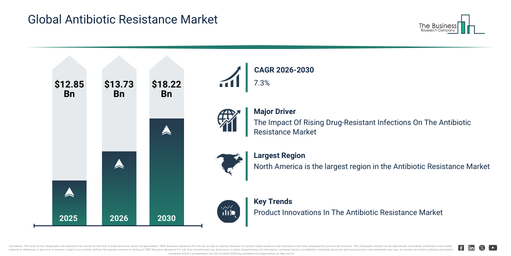
    The antibiotic resistance market has experienced robust expansion in recent years. This market is projected to expand from $12.85 billion in 2025 to $13.73 billion in 2026, achieving a compound annual growth rate (CAGR) of 6.8%. Historically, this growth has been driven by factors such as widespread antibiotic misuse, increasing hospital-acquired infections, expansion of broad-spectrum antibiotic use, limited availability of novel antibiotics, and a rising prevalence of resistant pathogens.

    The antibiotic resistance market is anticipated to show strong expansion in the upcoming years. It is projected to grow to $18.22 billion by 2030, demonstrating a compound annual growth rate (CAGR) of 7.3%. This growth during the forecast period can be attributed to increased investments in antimicrobial R&D, a broader adoption of precision diagnostics, the enlargement of global resistance surveillance networks, a rising emphasis on alternative therapies, and an increase in public-private partnerships. Major trends anticipated in the forecast period include a heightened focus on novel antibiotic development, the increasing use of combination drug therapies, wider implementation of rapid diagnostic testing, the expansion of antimicrobial stewardship programs, and improved surveillance of resistant pathogens.

    Access Your Free Sample Report For In-Depth Market Analysis:

    https://www.thebusinessresearchcompany.com/report/antibiotic-resistance-global-market-report

    Which Major Drivers Are Influencing The Expansion Of The Antibiotic Resistance Market?

    The escalating incidence of drug-resistant infections is projected to fuel the expansion of the antibiotic-resistance market moving forward. Such infections are illnesses caused by resistant bacteria, leading to a condition that is considerably more challenging or impossible to cure. Antimicrobial resistance medications assist in treating various drug-resistant infections, delivering improved antibiotic treatment outcomes for both targeted and non-targeted pathogens, depending on the specifics of resistance mechanisms and the interaction structure of the microbiome community. For illustration, in November 2025, as reported by the UK Health Security Agency, a UK-based government organization responsible for all health security in England, the count of fatalities among individuals with antibiotic-resistant infections increased from 2,041 in 2023 to 2,379 in 2024, signifying a jump of 338 deaths within a single year. Thus, the widespread occurrence of drug-resistant infections is a key factor driving the antibiotic resistance market.

    How Are Segments Identified Within The Antibiotic Resistance Market Segment Framework?

    The antibiotic resistance market covered in this report is segmented –

    1) By Drug Class: Beta Lactum Antibiotic, Cephalosporins, Quinolones Antibiotics, Macrolide Antibiotics, Tetracyclines, Oxazolidinones, Other Drug Classes

    2) By Pathogen: Staphylococcus Aureus, Staphylococcus Pneumonia, Neisseria Gonorrhoeae, Enterococcus Faecium, Escherichia Coli, Klebsiella Pneumonia, Shigella, Clostridium Difficile, Other Pathogens

    3) By Disease Type: Urinary Tract Infection, Intra-Abdominal Infection, Blood Stream infections, Clostridium Difficile Infections, Other Disease Types

    4) By Mechanism Of Action: Protein Synthesis Inhibitors, Cell Wall Synthesis Inhibitors, RNA Synthesis Inhibitors, DNA Synthesis Inhibitors, Other Mechanism Of Actions

    5) By End Users: Hospitals, Homecare, Specialty Clinics, Other End-users

    Subsegments:

    1) By Beta Lactam Antibiotics: Penicillins, Cephalosporins, Carbapenems, Monobactams

    2) By Cephalosporins: First-generation, Second-generation, Third-generation, Fourth-generation

    3) By Quinolones Antibiotics: Fluoroquinolones, Other Quinolones

    4) By Macrolide Antibiotics: Erythromycin, Azithromycin, Clarithromycin

    5) By Tetracyclines: Doxycycline, Minocycline, Tetracycline

    6) By Oxazolidinones: Linezolid, Tedizolid

    7) By Other Drug Classes: Glycopeptides, Lipopeptides, Streptogramins, Polymyxins

    Which Trends Are Shaping The Antibiotic Resistance Market?

    Companies operating within the antibiotic resistance market are primarily focused on developing novel products to improve treatment effectiveness, guarantee patient safety, and address the growing issue of multi-drug resistant (MDR) infections. An illustrative example occurred in January 2023, when Alkem Laboratories Limited, an India-based pharmaceutical firm, launched Zidavi, an innovative antibiotic designed to combat MDR infections, thereby enhancing its availability, affordability, and accessibility while aiming to save the lives of critically ill patients. Zidavi represents a unique blend of ceftazidime and avibactam capable of treating infections caused by MDR gram-negative pathogens. It is provided as a sterile powdered concentrate requiring reconstitution, with each single-dose vial comprising ceftazidime pentahydrate equivalent to 2 g of ceftazidime and avibactam sodium equivalent to 0.5 g of avibactam. This medication offers an effective alternative for addressing hospital-acquired pneumonia (HAP) and severe intra-abdominal infections (IAIs) that are resistant to meropenem and colistin.

    Who Are The Companies Competing Within The Antibiotic Resistance Market?

    Major companies operating in the antibiotic resistance market are Pfizer Inc., Johnson and Johnson, F. Hoffmann-La Roche Ltd, AbbVie Inc., Novartis AG, Merck and Co. Inc., Bristol-Myers Squibb, Sanofi S.A., AstraZeneca, GlaxoSmithKline Plc, Eli Lilly and Company, Boehringer Ingelheim International GmbH, Astellas Pharma, Daiichi Sankyo, Chugai Pharmaceutical Co. Ltd., Teva Pharmaceutical Industries Ltd., Paratek Pharmaceuticals Inc., Basilea Pharmaceutica Ltd., Theravance Biopharma Inc., Nabriva Therapeutics Plc, Seres Therapeutics Inc., Armata Pharmaceuticals Inc.

    Get The Full Antibiotic Resistance Market Report:

    https://www.thebusinessresearchcompany.com/report/antibiotic-resistance-global-market-report

    Which Region Leads The Antibiotic Resistance Market In Overall Market Size?

    North America was the largest region in the antibiotic resistance market in 2025. Asia-Pacific is expected to be the fastest-growing region in the forecast period. The regions covered in the antibiotic resistance market report are Asia-Pacific, South East Asia, Western Europe, Eastern Europe, North America, South America, Middle East, Africa.

    Request A Customized Antibiotic Resistance Market Report For Competitive Insights:

    https://www.thebusinessresearchcompany.com/report/antibiotic-resistance-global-market-report

    Browse Through More Reports Similar to the Global Antibiotic Resistance Market 2026, By The Business Research Company

    Veterinary Antibiotics Market Report 2026

    https://www.thebusinessresearchcompany.com/report/veterinary-antibiotics-global-market-report

    Multidrug Resistant Bacteria Market Report 2026

    https://www.thebusinessresearchcompany.com/report/multidrug-resistant-bacteria-global-market-report

    Antibiotics Market Report 2026

    https://www.thebusinessresearchcompany.com/report/antibiotics-global-market-report

    Get in touch with us:

    The Business Research Company: https://www.thebusinessresearchcompany.com/

    Americas +1 310-496-7795

    Asia +44 7882 955267 & +91 8897263534

    Europe +44 7882 955267

    Email us at info@tbrc.info

    Follow us on:

    LinkedIn: https://in.linkedin.com/company/the-business-research-company

    YouTube: https://www.youtube.com/channel/UC24_fI0rV8cR5DxlCpgmyFQ

    Global Market Model: https://www.thebusinessresearchcompany.com/global-market-model
  • Anti-acne dermal patch market insights on trends and opportunities

    Anti-acne dermal patch market insights on trends and opportunities

    The Business Research Company’s 2026 market reports feature enhanced tools like market attractiveness analysis, TAM assessment, and company scoring matrices, along with interactive dashboards, deeper supply chain insights, and startup coverage strengthening the depth, usability, and strategic value of insights.

    What Level Of Market Value Growth Is Predicted For The Anti-Acne Dermal Patch Market From 2026 To 2030?

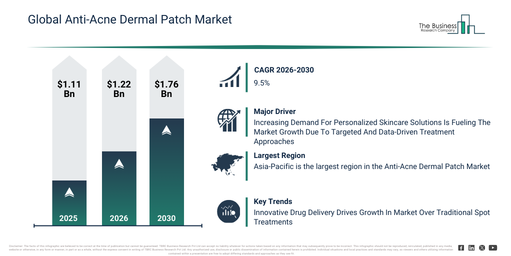
    The anti-acne dermal patch market size has seen substantial growth recently. It is set to expand from $1.11 billion in 2025 to $1.22 billion in 2026, achieving a compound annual growth rate (CAGR) of 9.9%. This historical growth can be linked to the rising prevalence of acne conditions, the increase in over-the-counter skincare solutions, growing awareness of targeted acne treatments, wider availability of personal care products, and a greater consumer preference for non-invasive skincare.

    The anti-acne dermal patch market is anticipated to experience robust expansion over the coming years. By 2030, its valuation is projected to reach $1.76 billion, demonstrating a compound annual growth rate (CAGR) of 9.5%. This anticipated growth during the forecast period stems from factors such as a heightened demand for tailored skincare options, an escalating emphasis on clean-label dermatological items, the proliferation of online skincare selling channels, advancements in transdermal delivery innovations, and increasing usage by adult acne sufferers. Key trends expected during this period involve the increasing embrace of hydrocolloid acne patches, a surge in demand for microneedle-based targeted therapies, the broader availability of drug-free acne patch versions, a heightened consideration for skin-compatible adhesive substances, and the development of inconspicuous and clear patch designs.

    Access Your Free Sample Report For In-Depth Market Analysis:

    https://www.thebusinessresearchcompany.com/report/anti-acne-dermal-patch-global-market-report

    What Key Drivers Are Fueling The Growth Of The Anti-Acne Dermal Patch Market?

    The anti-acne dermal patch market is expected to grow due to the increasing demand for personalized skincare solutions. Personalized skincare involves products and routines specifically tailored to an individual’s distinct skin type, concerns, and lifestyle, often utilizing data-driven analysis. This escalating demand is primarily fueled by consumers’ heightened awareness of their unique skin needs, leading them to seek products that deliver more effective and targeted results. Anti-acne dermal patches augment personalized skincare by providing targeted treatment based on specific individual skin concerns, reducing irritation, and improving treatment efficacy through controlled ingredient release, precise application, and real-time responsiveness to skin conditions, thereby offering a customized approach that aligns with the expanding need for tailored dermatological care. For example, in December 2024, according to the Bureau of Labor Statistics, a US-based government agency, consumer spending on personal care products and services increased from USD 866 in 2022 to USD 950 in 2023, marking a 9.7% year-over-year rise after a 12.3% increase in 2022. Consequently, the increasing demand for personalized skincare solutions is a significant driver for the growth of the anti-acne dermal patch market.

    What Are The Key Segment Divisions In The Anti-Acne Dermal Patch Market Segment Structure?

    The anti-acne dermal patch market covered in this report is segmented –

    1) By Product Type: Hydrocolloid, Microneedle, Other Product Types

    2) By Source: Bovine Collagen, Marine Collagen, Pork Collagen, Chicken Collagen

    3) By Application: Cosmetics And Personal Care, Food And Beverages, Health And Nutrition, Pharmaceuticals, Other Applications

    4) By End-User: Men, Women

    Subsegments:

    1) By Hydrocolloid: With Salicylic Acid, With Tea Tree Oil, Plain Hydrocolloid (Drug-Free), Tinted Hydrocolloid, Waterproof Hydrocolloid

    2) By Microneedle: Hyaluronic Acid-Based, Niacinamide-Based, Retinol-Based, Peptide-Infused, Multi-Ingredient

    3) By Other Product Types: Silicone-Based Patches, Charcoal-Infused Patches, Clay-Based Patches, Transparent Film Patches, Herbal Or Botanical Extract-Based Patches

    What Trends Are Influencing The Anti-Acne Dermal Patch Market?

    Leading companies in the anti-acne dermal patch market are prioritizing the development of advanced solutions, such as microdart delivery systems, to enhance the accuracy and effectiveness of acne management. Microdart delivery systems are cutting-edge skincare technologies that utilize tiny, dissolvable microneedles to deposit active ingredients deep within the skin. They aid in treating acne by penetrating the outer epidermal layer and directly releasing blemish-fighting components into the affected area, which helps reduce inflammation and accelerate the healing process. For example, in January 2023, Starface, a US-based skincare company, introduced Micro-Cloud patches featuring microdart delivery technology that integrates hydrocolloid protection with targeted quantities of salicylic acid, niacinamide, and hyaluronic acid to effectively address developing breakouts before they fully form. These microdarts dissolve upon contact, delivering active acne-fighting ingredients deep into the skin to diminish inflammation, soothe redness, and speed up recovery. This innovative strategy not only aids in preventing pimples from emerging but also offers a more precise and efficient treatment compared to traditional spot applications, emphasizing the increasing tendency among major firms to incorporate advanced delivery methods into anti-acne dermal patches.

    Which Organizations Are Engaged In The Anti-Acne Dermal Patch Market?

    Major companies operating in the anti-acne dermal patch market are 3M Company, Neogen Dermalogy Co. Ltd., Neutrogena Corporation, Redcliffe Hygiene Private Limited, Plix Life Private Limited, Peace Out Skincare Inc., Julep Beauty Inc., Peach and Lily Inc., Dr. Jart+, Innisfree Corporation, Rael Inc., Clearsil LLC, Patchology LLC, Truly Organic LLC, Starface World Inc., The Inkey List Limited, Gush Beauty, Lely’s Acne Pimple Patches, COSRX, Avarelle, ZitSticka, DermaAngel, Peach Slices, Grace & Stella

    Get The Full Anti-Acne Dermal Patch Market Report:

    https://www.thebusinessresearchcompany.com/report/anti-acne-dermal-patch-global-market-report

    Which Region Is The Top Contributor To The Anti-Acne Dermal Patch Market By Share?

    Asia-Pacific was the largest region in the anti-acne dermal patch market in 2025. North America is expected to be the fastest-growing region in the forecast period. The regions covered in the anti-acne dermal patch market report are Asia-Pacific, South East Asia, Western Europe, Eastern Europe, North America, South America, Middle East, Africa.

    Request A Customized Anti-Acne Dermal Patch Market Report For Competitive Insights:

    https://www.thebusinessresearchcompany.com/report/anti-acne-dermal-patch-global-market-report

    Browse Through More Reports Similar to the Global Anti-Acne Dermal Patch Market 2026, By The Business Research Company

    Premium Cosmetics Market Report 2026

    https://www.thebusinessresearchcompany.com/report/premium-cosmetics-global-market-report

    Transdermal Skin Patche Market Report 2026

    https://www.thebusinessresearchcompany.com/report/transdermal-skin-patche-global-market-report

    Electronic Skin Patch Market Report 2026

    https://www.thebusinessresearchcompany.com/report/electronic-skin-patch-global-market-report

    Get in touch with us:

    The Business Research Company: https://www.thebusinessresearchcompany.com/

    Americas +1 310-496-7795

    Asia +44 7882 955267 & +91 8897263534

    Europe +44 7882 955267

    Email us at info@tbrc.info

    Follow us on:

    LinkedIn: https://in.linkedin.com/company/the-business-research-company

    YouTube: https://www.youtube.com/channel/UC24_fI0rV8cR5DxlCpgmyFQ

    Global Market Model: https://www.thebusinessresearchcompany.com/global-market-model

  • Anti-hemagglutinin antibody market trends shaping future growth

    Anti-hemagglutinin antibody market trends shaping future growth

    The Business Research Company’s 2026 market reports feature enhanced tools like market attractiveness analysis, TAM assessment, and company scoring matrices, along with interactive dashboards, deeper supply chain insights, and startup coverage strengthening the depth, usability, and strategic value of insights.

    How Will The Market Value Of The Anti Hemagglutinin (Ha) Antibody Market Progress Between 2026 And 2030?

    The anti hemagglutinin (ha) antibody market has experienced swift expansion in its size during recent years. It is projected to expand from $1.66 billion in 2025 to reach $1.83 billion in 2026, exhibiting a compound annual growth rate (CAGR) of 10.5%. The market’s historical expansion is largely due to the broadening of influenza research activities, advancements in molecular biology research, the increasing utilization of tagged protein systems, a heightened demand for diagnostic reagents, and innovations in antibody engineering techniques.

    The anti hemagglutinin (ha) antibody market is poised for significant expansion in the coming years. Projections indicate its value will reach $2.7 billion by 2030, exhibiting a compound annual growth rate (CAGR) of 10.2%. This anticipated growth over the forecast period is fueled by factors such as increasing investments in infectious disease research, wider adoption of recombinant protein expression systems, advancements in diagnostic assay development, a surging demand for standardized antibodies, and ongoing innovation within antibody production technologies. Key trends during this period are expected to encompass a heightened demand for high-specificity research antibodies, an increased embrace of recombinant antibody formats, their expanding utility in vaccine and virology research, broader applications in diagnostic testing, and a reinforced emphasis on maintaining batch-to-batch consistency.

    Access Your Free Sample Report For In-Depth Market Analysis:

    https://www.thebusinessresearchcompany.com/report/global-anti-hemagglutinin-ha-antibody-market-report

    Which Drivers Are Supporting The Anti Hemagglutinin (Ha) Antibody Market Growth?

    The escalating occurrence of influenza is projected to stimulate the expansion of the anti hemagglutinin (Ha) antibody market moving forward. Influenza, a highly contagious respiratory viral infection (the flu), manifests as fever, cough, sore throat, and body aches, with symptoms varying from mild to severe. The heightened prevalence of influenza is largely attributed to regular international travel, which facilitates the rapid cross-border transmission of this highly communicable virus. Anti-hemagglutinin (Ha) antibodies play a crucial role in influenza management by precisely targeting the viral HA protein, making them indispensable for diagnostics, research, and vaccine development. They refine treatment approaches by enabling accurate identification and monitoring of influenza infections, thereby supporting effective disease control and prevention. For instance, in February 2025, the World Health Organization, a Switzerland-based intergovernmental organization, reported that seasonal influenza impacts approximately one billion people globally, resulting in 3–5 million severe cases and causing 290,000 to 650,000 respiratory-related deaths each year. Consequently, the rising prevalence of influenza is fueling the growth of the anti hemagglutinin (Ha) antibody market.

    Which Segment Categories Are Included In The Anti Hemagglutinin (Ha) Antibody Market Segment Analysis?

    The anti hemagglutinin (ha) antibody market covered in this report is segmented –

    1) By Product Type: Monoclonal Antibodies, Polyclonal Antibodies, Recombinant Antibodies

    2) By Technology: Enzyme-Linked Immunosorbent Assay (ELISA)-Based Technologies, Flow Cytometry-Based Technologies, Immunohistochemistry Technologies, Western Blot-Based Technologies

    3) By Source: Mouse, Rabbit, Goat, Chicken

    4) By Application: Research, Diagnostics, Therapeutics

    5) By End-User: Academic Research Institutes, Biotechnology Companies, Pharmaceutical Companies, Diagnostic Laboratories

    Subsegments:

    1) By Monoclonal Antibodies: Human Monoclonal Antibodies, Humanized Monoclonal Antibodies, Chimeric Monoclonal Antibodies, Murine Monoclonal Antibodies

    2) By Polyclonal Antibodies: Rabbit Polyclonal Antibodies, Goat Polyclonal Antibodies, Sheep Polyclonal Antibodies, Donkey Polyclonal Antibodies

    3) By Recombinant Antibodies: Single Chain Variable Fragment Antibodies, Fragment Antigen Binding Antibodies, Bispecific Recombinant Antibodies, Synthetic Recombinant Antibodies

    Which Trends Are Expected To Impact The Anti Hemagglutinin (Ha) Antibody Market?

    Leading companies in the anti hemagglutinin (Ha) antibody market are concentrating on advanced innovation, such as authentic virus architecture, to develop safer and more precise virus-like models for evaluating vaccine efficacy and antibody response. Authentic virus architecture refers to a structural design that closely mimics the natural composition and surface proteins of a live virus without containing genetic material. For example, in November 2023, Integral Molecular, a US-based biotechnology company, introduced TiterSafe influenza virus-like particles, designed as an off-the-shelf and non-infectious substitute for live influenza virus. This authentic virus architecture enables researchers to safely and efficiently perform hemagglutination inhibition (HAI) assays, which are the FDA-accepted standard for assessing influenza vaccine effectiveness. TiterSafe eliminates the need for culturing infectious viruses and specialized biosafety facilities, considerably reducing laboratory risks. These particles accurately mirror the structure of live viruses, including key surface proteins like hemagglutinin (HA) and neuraminidase (NA), thus guaranteeing precision in experiments. This advancement facilitates high-throughput and dependable influenza antibody testing, simultaneously improving laboratory safety and operational efficiency.

    Who Are The Active Companies Shaping The Anti Hemagglutinin (Ha) Antibody Market?

    Major companies operating in the anti hemagglutinin (ha) antibody market are Johnson & Johnson, F. Hoffmann-La Roche AG, Pfizer Inc., AbbVie Inc., AstraZeneca plc, Bristol-Myers Squibb Company, Thermo Fisher Scientific Inc., Amgen Inc., Merck KGaA, Danaher Corporation, Bio-Rad Laboratories Inc., Bio-Techne Corporation, GenScript Biotech Corporation, Sino Biological Inc., Cell Signaling Technology Inc., Proteintech Group Inc., Santa Cruz Biotechnology Inc., Integral Molecular, Rockland Immunochemicals Inc., Biorbyt Ltd.

    Get The Full Anti Hemagglutinin (Ha) Antibody Market Report:

    https://www.thebusinessresearchcompany.com/report/global-anti-hemagglutinin-ha-antibody-market-report

    Which Region Represents The Largest Share Of The Anti Hemagglutinin (Ha) Antibody Market?

    North America was the largest region in the anti hemagglutinin (Ha) antibody market in 2025. Asia-Pacific is expected to be the fastest-growing region in the forecast period. The regions covered in the anti hemagglutinin (ha) antibody market report are Asia-Pacific, South East Asia, Western Europe, Eastern Europe, North America, South America, Middle East, Africa.

    Request A Customized Anti Hemagglutinin (Ha) Antibody Market Report For Competitive Insights:

    https://www.thebusinessresearchcompany.com/report/global-anti-hemagglutinin-ha-antibody-market-report

    Browse Through More Reports Similar to the Global Anti Hemagglutinin (Ha) Antibody Market 2026, By The Business Research Company

    Hematology Drug Market Report 2026

    https://www.thebusinessresearchcompany.com/report/hematology-drug-global-market-report

    Mammalian Polyclonal Immunoglobulin G Igg Antibody Market Report 2026

    https://www.thebusinessresearchcompany.com/report/mammalian-polyclonal-immunoglobulin-g-igg-antibody-global-market-report

    Hemoglobin Testing Market Report 2026

    https://www.thebusinessresearchcompany.com/report/hemoglobin-testing-global-market-report

    Get in touch with us:

    The Business Research Company: https://www.thebusinessresearchcompany.com/

    Americas +1 310-496-7795

    Asia +44 7882 955267 & +91 8897263534

    Europe +44 7882 955267

    Email us at info@tbrc.info

    Follow us on:

    LinkedIn: https://in.linkedin.com/company/the-business-research-company

    YouTube: https://www.youtube.com/channel/UC24_fI0rV8cR5DxlCpgmyFQ

    Global Market Model: https://www.thebusinessresearchcompany.com/global-market-model

  • Anterior uveitis market forecast with demand insights

    Anterior uveitis market forecast with demand insights

    The Business Research Company’s 2026 market reports feature enhanced tools like market attractiveness analysis, TAM assessment, and company scoring matrices, along with interactive dashboards, deeper supply chain insights, and startup coverage strengthening the depth, usability, and strategic value of insights.

    What Are The Market Size Estimates For The Anterior Uveitis Market In 2026 And 2030?

    The market size for anterior uveitis has observed rapid expansion in recent years. It is projected to climb from $0.57 billion in 2025 to $0.64 billion in 2026, exhibiting a compound annual growth rate (CAGR) of 11.6%. The historical surge can be attributed to improved ophthalmic diagnostic capabilities, an increase in the prevalence of autoimmune-related eye disorders, wider access to corticosteroids, the expansion of eye care infrastructure, and the growth of specialist ophthalmology services.

    The anterior uveitis market is projected to experience substantial expansion over the coming years, reaching $0.98 billion by 2030, demonstrating a compound annual growth rate (CAGR) of 11.2%. This growth during the forecast period is fueled by factors such as the increasing demand for biologic eye therapies, greater integration of precision diagnostics, the expanding scope of advanced ophthalmic drug pipelines, a heightened emphasis on vision preservation, and increased investment in research related to inflammatory eye diseases. Key trends anticipated during this period encompass the wider adoption of biologic therapies, an uptick in the use of advanced diagnostic biomarkers, a growing inclination towards targeted immunosuppressive treatments, the broadening of outpatient ophthalmic care services, and an intensified focus on identifying diseases early.

    Access Your Free Sample Report For In-Depth Market Analysis:

    https://www.thebusinessresearchcompany.com/report/anterior-uveitis-global-market-report

    What Key Factors Are Affecting The Anterior Uveitis Market Demand?

    The growing incidence of autoimmune diseases is anticipated to spur the advancement of the anterior uveitis market moving forward. Autoimmune conditions develop when the immune system erroneously attacks the body’s healthy cells and tissues, perceiving them as foreign threats. This aberrant reaction leads to inflammation and injury across various organs and systems. The increase in autoimmune diseases is linked to genetic predispositions, environmental factors, shifts in lifestyle, and heightened awareness, which contributes to improved diagnosis. Anterior uveitis commonly manifests in autoimmune diseases, causing inflammation in the eye’s anterior segment, and is frequently associated with conditions such as rheumatoid arthritis and ankylosing spondylitis. For instance, in February 2024, according to Arthritis Australia, an Australia-based charitable not-for-profit organisation advocating for people with arthritis and musculoskeletal conditions, it is projected that by 2025, approximately 562,378 Australians will be living with rheumatoid arthritis (RA), accounting for 14% of the total arthritis population. Thus, the escalating prevalence of autoimmune diseases is a key factor driving the growth of the anterior uveitis market.

    How Is The Anterior Uveitis Market Broken Down By Segment Categories?

    The anterior uveitis market covered in this report is segmented –

    1) By Treatment Type: Pharmacological Treatments, Surgical Treatments, Biologic Therapy

    2) By Diagnosis Method: Clinical Diagnosis, Diagnostic Imaging, Biomarkers

    3) By Cause: Infectious, Non-Infectious

    4) By End-User: Hospitals And Clinics, Ambulatory Surgical Centers

    Subsegments:

    1) By Pharmacological Treatments: Corticosteroids, Non-Steroidal Anti-Inflammatory Drugs (NSAIDs), Immunosuppressive Drugs

    2) By Surgical Treatments: Cataract Surgery, Glaucoma Surgery, Vitrectomy

    3) By Biologic Therapy: Tumor Necrosis Factor (TNF) Inhibitors, Interleukin-6 (IL-6) Inhibitors, Monoclonal Antibodies

    What Trends Are Influencing Changes In The Anterior Uveitis Market?

    Major companies operating in the anterior uveitis market are focusing on developing advanced drug formulations, such as eye drops, to improve patient compliance, enhance drug delivery, and reduce inflammation with fewer side effects. Eye drops are frequently used in the treatment of anterior uveitis to manage inflammation, alleviate pain, and prevent potential complications. For instance, in January 2024, Tarsier Pharma Ltd., an Israel-based pharmaceutical company, received approval from the U.S. Food and Drug Administration (FDA) under a Special Protocol Assessment (SPA) for the clinical trial protocol and statistical analysis plan of the Tarsier-04 Phase 3 trial. This trial aims to evaluate the effectiveness of TRS01 eye drops in treating non-infectious uveitis, including uveitic glaucoma. The Tarsier-04 trial is a multicenter, randomized, double-masked, active-controlled study enrolling up to 300 patients in the U.S., with the goal of demonstrating TRS01’s safety and efficacy, particularly in controlling inflammation without increasing glaucoma risk.

    Which Players Are Present In The Anterior Uveitis Market Space?

    Major companies operating in the anterior uveitis market are AbbVie Inc, Novartis AG, Bausch Health Companies Inc, EyePoint Pharmaceuticals Inc, Santen Pharmaceutical Co Ltd, Alimera Sciences Inc, Clearside Biomedical Inc, Eyegate Pharmaceuticals Inc, Horizon Therapeutics Plc, Mylan NV, Sun Pharmaceutical Industries Ltd, Regeneron Pharmaceuticals Inc, Pfizer Inc, Amgen Inc, Sanofi, Galapagos NV, Tarsier Pharma Ltd, TopiVert Ltd, Ocular Therapeutix Inc, Ophthotech Corporation, Aciont Inc, Sirion Therapeutics Inc, Aldeyra Therapeutics Inc, Kiora Pharmaceuticals Inc, UCB SA, ANI Pharmaceuticals Inc, Priovant Therapeutics, Roivant Sciences Inc, Active Biotech

    Get The Full Anterior Uveitis Market Report:

    https://www.thebusinessresearchcompany.com/report/anterior-uveitis-global-market-report

    Which Geographic Region Dominates The Anterior Uveitis Market?

    North America was the largest region in the anterior uveitis market in 2025. The regions covered in the anterior uveitis market report are Asia-Pacific, South East Asia, Western Europe, Eastern Europe, North America, South America, Middle East, Africa.

    Request A Customized Anterior Uveitis Market Report For Competitive Insights:

    https://www.thebusinessresearchcompany.com/report/anterior-uveitis-global-market-report

    Browse Through More Reports Similar to the Global Anterior Uveitis Market 2026, By The Business Research Company

    Intraocular Lens Market Report 2026

    https://www.thebusinessresearchcompany.com/report/intraocular-lens-global-market-report

    Bacterial Conjunctivitis Market Report 2026

    https://www.thebusinessresearchcompany.com/report/bacterial-conjunctivitis-global-market-report

    Dermatitis Drugs Market Report 2026

    https://www.thebusinessresearchcompany.com/report/dermatitis-drugs-global-market-report

    Get in touch with us:

    The Business Research Company: https://www.thebusinessresearchcompany.com/

    Americas +1 310-496-7795

    Asia +44 7882 955267 & +91 8897263534

    Europe +44 7882 955267

    Email us at info@tbrc.info

    Follow us on:

    LinkedIn: https://in.linkedin.com/company/the-business-research-company

    YouTube: https://www.youtube.com/channel/UC24_fI0rV8cR5DxlCpgmyFQ

    Global Market Model: https://www.thebusinessresearchcompany.com/global-market-model
  • Anosmia market outlook with key growth drivers

    Anosmia market outlook with key growth drivers

    The Business Research Company’s 2026 market reports feature enhanced tools like market attractiveness analysis, TAM assessment, and company scoring matrices, along with interactive dashboards, deeper supply chain insights, and startup coverage strengthening the depth, usability, and strategic value of insights.

    What Expansion In Market Value Is Forecasted For The Anosmia Market Between 2026 And 2030?

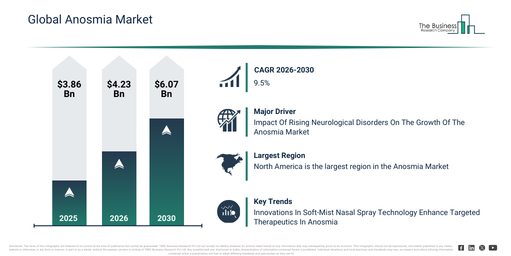
    The anosmia market size has experienced robust growth in recent years. Projections indicate it will expand from $3.86 billion in 2025 to $4.23 billion in 2026, demonstrating a compound annual growth rate (CAGR) of 9.4%. This historical growth is attributable to several factors, including a rise in the incidence of viral-induced anosmia, heightened awareness regarding olfactory disorders, broader access to diagnostic instruments, an increase in ENT specialty care, and more frequent reporting of sensory loss.

    The anosmia market is projected to experience robust expansion over the coming years. This market is anticipated to reach $6.07 billion by 2030, driven by a compound annual growth rate (CAGR) of 9.5%. Factors contributing to this growth during the projected period encompass increased research into olfactory nerve regeneration, the wider acceptance of innovative therapies, the broadening of post-infectious care initiatives, a heightened desire for treatments enhancing quality of life, and an uptick in clinical trial engagements. Key developments expected in the forecast timeframe involve a greater emphasis on regenerative therapies, the expanding implementation of smell training programs, the increased uptake of specific pharmacological treatments, the wider availability of diagnostic imaging and testing, and a stronger focus on managing recovery after viral infections.

    Access Your Free Sample Report For In-Depth Market Analysis:

    https://www.thebusinessresearchcompany.com/report/anosmia-global-market-report

    Which Primary Drivers Are Impacting The Anosmia Market Growth?

    The increasing occurrence of neurological conditions is anticipated to boost the expansion of the anosmia market in the future. These disorders encompass a broad spectrum of ailments that affect the nervous system, including the brain, spinal cord, and nerves throughout the body. The growing frequency of neurological disorders is attributed to an aging demographic and the heightened occurrence of chronic illnesses like diabetes and hypertension. Neurological disorders can induce anosmia by damaging the olfactory pathways or regions in the brain responsible for processing smell, leading to a loss of the ability to detect or perceive odors. For instance, in March 2023, according to the Alzheimer’s Association, a US-based nonprofit voluntary health organization, 6.7 million Americans aged 65 and older are living with Alzheimer’s dementia, with projections indicating this could rise to 13.8 million by 2060. Consequently, the increased prevalence of neurological disorders is fueling the expansion of the anosmia market.

    What Are The Different Segment Types In The Anosmia Market Segment Breakdown?

    The anosmia market covered in this report is segmented –

    1) By Type: Idiopathic Anosmia, Congenital Anosmia

    2) By Treatment: Therapies, Medications

    3) By End User: Hospitals, Clinics, Other End Users

    Subsegments:

    1) By Idiopathic Anosmia: Partial Idiopathic Anosmia, Complete Idiopathic Anosmia

    2) By Congenital Anosmia: Isolated Congenital Anosmia, Syndromic Congenital Anosmia (Associated With Other Conditions Or Syndromes)

    Which Trends Are Shaping Growth In The Anosmia Market?

    Leading companies in the anosmia market are prioritizing the development of sophisticated delivery methods, such as soft-mist nasal sprays, to enhance effectiveness, improve drug uptake, and more accurately target the olfactory area. This soft-mist nasal spray technology utilizes a controlled droplet size and slow spray velocity to optimize deposition within the olfactory region, thereby increasing its therapeutic impact. For example, in April 2025, Cyrano Therapeutics, a U.S.-based regenerative medicine company in the clinical stage, concluded enrollment for its Phase 2 FLAVOR trial of CYR-064, a soft-mist nasal spray candidate designed for post-viral smell loss. This product incorporates a patent-protected intranasal formulation of a broad-spectrum phosphodiesterase (PDE) inhibitor, intended to heighten olfactory neuron excitability. Furthermore, by employing the Ursatec 3K pump system alongside Resyca’s soft-mist spray technology, it ensures accurate and targeted delivery to the olfactory region.

    Who Are The Well-Known Companies In The Anosmia Market?

    Major companies operating in the anosmia market are Cyrano Therapeutics, Regeneron Pharmaceuticals, Novartis AG, GlaxoSmithKline PLC, Otsuka Pharmaceutical Co Ltd, Bayer AG, AstraZeneca PLC, Eli Lilly and Company, Pfizer Inc, Sanofi SA, NeuroNascent Inc, Immunome Therapeutics, Olfactory Therapeutics Ltd, ENT Therapeutics Inc, NeuroSense Therapeutics LLC, SmellSense Bio, Olfactricity Therapeutics, Sensory Neurogenics Inc, Olfaxion Biotech, SmellGen Therapeutics, Post-Viral Sensory Recovery Inc, Hyposmia Therapeutics LLC

    Get The Full Anosmia Market Report:

    https://www.thebusinessresearchcompany.com/report/anosmia-global-market-report

    Which Region Is The Leading Market For The Anosmia Market?

    North America was the largest region in the anosmia market in 2025. Asia-Pacific is expected to be the fastest-growing region in the market going forward. The regions covered in the anosmia market report are Asia-Pacific, South East Asia, Western Europe, Eastern Europe, North America, South America, Middle East, Africa.

    Request A Customized Anosmia Market Report For Competitive Insights:

    https://www.thebusinessresearchcompany.com/report/anosmia-global-market-report

    Browse Through More Reports Similar to the Global Anosmia Market 2026, By The Business Research Company

    Anoscope Market Report 2026

    https://www.thebusinessresearchcompany.com/report/anoscope-global-market-report

    Aplastic Anemia Market Report 2026

    https://www.thebusinessresearchcompany.com/report/aplastic-anemia-global-market-report

    Hyperlipidemia Market Report 2026

    https://www.thebusinessresearchcompany.com/report/hyperlipidemia-global-market-report

    Get in touch with us:

    The Business Research Company: https://www.thebusinessresearchcompany.com/

    Americas +1 310-496-7795

    Asia +44 7882 955267 & +91 8897263534

    Europe +44 7882 955267

    Email us at info@tbrc.info

    Follow us on:

    LinkedIn: https://in.linkedin.com/company/the-business-research-company

    YouTube: https://www.youtube.com/channel/UC24_fI0rV8cR5DxlCpgmyFQ

    Global Market Model: https://www.thebusinessresearchcompany.com/global-market-model