Category: Healthcare Services

  • AI in Oncology Analytics Market to Reach $6.26B by 2030 at 34.2% CAGR

    AI in Oncology Analytics Market to Reach $6.26B by 2030 at 34.2% CAGR

    The Business Research Company’s 2026 market reports feature enhanced tools like market attractiveness analysis, TAM assessment, and company scoring matrices, along with interactive dashboards, deeper supply chain insights, and startup coverage strengthening the depth, usability, and strategic value of insights.

    What Is The Anticipated Rise In Market Value Of The AI In Oncology For Analytical Solutions Market During The Forecast Period?

    The market size for ai in oncology for analytical solutions has seen rapid expansion in recent years. This market is expected to grow from $1.44 billion in 2025 to $1.93 billion in 2026, at a compound annual growth rate (CAGR) of 34.2%. The historical growth can be attributed to several factors including limited ai adoption in oncology, reliance on conventional diagnostic methods, growing cancer prevalence globally, increasing clinical research activities, and rising demand for personalized medicine.

    The ai in oncology for analytical solutions market size is projected to experience substantial expansion in the coming years. It is anticipated to reach $6.26 billion by 2030, demonstrating a compound annual growth rate (CAGR) of 34.2%. This expansion during the forecast period is primarily driven by several factors, including ongoing progress in AI algorithms for oncology, the broadening of oncology data licensing services, enhanced integration of AI with genomic data, a surge in the embrace of clinical decision support software, and increased partnerships between healthcare providers and AI solution providers. Key developments anticipated in this period encompass the wider deployment of AI-based imaging and diagnostic tools, an increased application of predictive analytics in oncology research, the extension of clinical decision support systems designed for treatment planning, a greater merging of genomic data with cancer treatment approaches, and an escalating need for data licensing and analytical services.

    Access Your Free Sample Report For In-Depth Market Analysis:

    https://www.thebusinessresearchcompany.com/report/ai-in-oncology-for-analytical-solutions-global-market-report

    Which Drivers Are Supporting The AI In Oncology For Analytical Solutions Market Growth?

    The increasing occurrence of cancer is projected to drive the expansion of the AI in oncology for the analytical solutions market in the future. Cancer is defined as a collection of illnesses marked by the unregulated proliferation and dissemination of atypical cells. In cancer treatment, AI in oncology for analytical solutions is employed to offer tailored therapies, prompt diagnosis, and enhanced patient results, thanks to its capability to rapidly and effectively process vast volumes of intricate data. As an example, the National Cancer Institute, a US-based Government agency, reported in May 2024 that an estimated 2 million new cancer cases are anticipated to be diagnosed in the US during 2024, alongside more than 611,000 projected deaths. Looking ahead to 2040, global new cancer diagnoses are estimated to climb to 29.9 million, with fatalities linked to cancer projected to reach 15.3 million. Consequently, the growing incidence of cancer is a key factor propelling the AI in oncology for the analytical solutions market.

    Which Segment Classifications Are Used In The AI In Oncology For Analytical Solutions Market Segment Analysis?

    The ai in oncology for analytical solutions market covered in this report is segmented –

    1) By Component: Data Licensing Services, Software Solutions, Analytics and Other Services

    2) By Cancer Type: Breast Cancer, Lung Cancer, Prostate Cancer, Colorectal Cancer, Brain Tumor, Kidney Cancer, Non-Hodgkin Lymphoma, Bladder Cancer

    3) By Application: Diagnostic And Screening, Prognostic And Risk Stratification, Treatment Planning And Clinical Decision Support, Biomarker Discovery And Drug Development

    Subsegments:

    1) By Data Licensing Services: Oncology Data Licensing, Genomic Data Licensing

    2) By Software Solutions: AI-Based Imaging Software, Diagnostic Software, Clinical Decision Support Software

    3) By Analytics And Other Services: Predictive Analytics Services, AI Training And Support Services, Data Analysis Services

    Which Trends Are Expected To Impact The AI In Oncology For Analytical Solutions Market?

    Leading firms in the AI in oncology analytical solutions sector are concentrating on developing AI innovations, including novel real-world data platforms designed to expedite cancer research and enhance generative AI models within oncology. A real-world data platform is defined as a system that combines and oversees observational data originating from diverse sources beyond standard clinical research environments, encompassing electronic health records, health insurance claims, patient surveys, and disease registries. For example, in October 2023, the US-based Central Ohio Transit Authority introduced Vista, a new real-world data platform aimed at accelerating cancer research and improving generative AI models in oncology. This platform seeks to offer a more comprehensive and standardized method for managing cancer research data through the consolidation of various databases, such as the data portal and genomic databases. Furthermore, Vista is anticipated to streamline data sharing, elevate data quality, and support numerous applications within oncology and other healthcare domains.

    Which Firms Are Contributing To The AI In Oncology For Analytical Solutions Market Ecosystem?

    Major companies operating in the ai in oncology for analytical solutions market are IBM Watson Health, NVIDIA Corporation, Siemens Healthineers, GE Healthcare, Tempus, DeepMind Health, Paige.AI, PathAI, Aidoc, Nucleai, OWKIN, SOPHiA Genetics, Imagen Technologies, Atomwise, Enlitic, Inspirata, 3Scan, Zebra Medical Vision, Ibex Medical Analytics, Vuno Inc., Proscia, Google Health, Huiying Medical

    Get The Full AI In Oncology For Analytical Solutions Market Report:

    https://www.thebusinessresearchcompany.com/report/ai-in-oncology-for-analytical-solutions-global-market-report

    Which Region Is The Largest In The AI In Oncology For Analytical Solutions Market?

    North America was the largest region in the AI In oncology for analytical solutions market in 2025. Asia-Pacific is expected to be the fastest-growing region in the forecast period. The regions covered in the ai in oncology for analytical solutions market report are Asia-Pacific, South East Asia, Western Europe, Eastern Europe, North America, South America, Middle East, Africa.

    Request A Customized AI In Oncology For Analytical Solutions Market Report For Competitive Insights:

    https://www.thebusinessresearchcompany.com/report/ai-in-oncology-for-analytical-solutions-global-market-report

    Browse Through More Reports Similar to the Global AI In Oncology For Analytical Solutions Market 2026, By The Business Research Company

    Ai In Pharma Market Report 2026

    https://www.thebusinessresearchcompany.com/report/ai-in-pharma-global-market-report

    Artificial Intelligence In Oncology Market Report 2026

    https://www.thebusinessresearchcompany.com/report/artificial-intelligence-in-oncology-global-market-report

    Ai In Cancer Diagnostics Market Report 2026

    https://www.thebusinessresearchcompany.com/report/ai-in-cancer-diagnostics-global-market-report

    Get in touch with us:

    The Business Research Company: https://www.thebusinessresearchcompany.com/

    Americas +1 310-496-7795

    Asia +44 7882 955267 & +91 8897263534

    Europe +44 7882 955267

    Email us at info@tbrc.info

    Follow us on:

    LinkedIn: https://in.linkedin.com/company/the-business-research-company

    YouTube: https://www.youtube.com/channel/UC24_fI0rV8cR5DxlCpgmyFQ

    Global Market Model: https://www.thebusinessresearchcompany.com/global-market-model
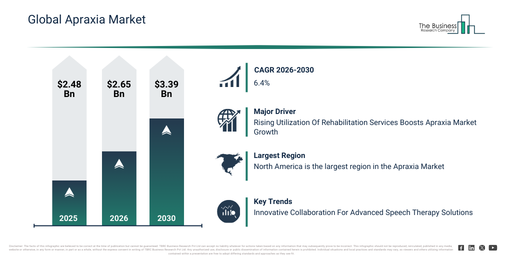
  • Apraxia market forecast to reach $3.39B by 2030 at 6.4% CAGR

    Apraxia market forecast to reach $3.39B by 2030 at 6.4% CAGR

    The Business Research Company’s 2026 market reports feature enhanced tools like market attractiveness analysis, TAM assessment, and company scoring matrices, along with interactive dashboards, deeper supply chain insights, and startup coverage strengthening the depth, usability, and strategic value of insights.

    What Is The Forecasted Market Size Trajectory Of The Apraxia Market From 2026 To 2030?

    In recent years, the apraxia market has demonstrated robust growth. This market is projected to expand from $2.48 billion in 2025 to $2.65 billion in 2026, exhibiting a compound annual growth rate (CAGR) of 6.7%. Factors underpinning this historical growth include an enhanced understanding of motor planning disorders, the provision of specialized rehabilitation therapies, expanded neurological diagnostic capabilities, an increase in speech and occupational therapy practices, and heightened awareness of neurodevelopmental disorders.

    The apraxia market is projected to experience robust expansion over the coming years. This market is set to reach $3.39 billion by 2030, exhibiting a compound annual growth rate (CAGR) of 6.4%. Factors driving this growth during the projected period include innovations in neurorehabilitation technologies, the increasing uptake of digital therapy platforms, heightened investment in neurological research, the broadening of personalized rehabilitation programs, and a greater need for timely diagnosis and intervention. Key trends anticipated during this period encompass the wider embrace of speech and occupational therapy programs, expanded application of neuroimaging for precise diagnosis, increased incorporation of digital rehabilitation tools, the proliferation of multidisciplinary treatment approaches, and a sharpened emphasis on early intervention strategies.

    Access Your Free Sample Report For In-Depth Market Analysis:

    https://www.thebusinessresearchcompany.com/report/apraxia-global-market-report

    Which Strong Drivers Are Impacting The Apraxia Market Growth?

    The apraxia market is anticipated to expand due to the rising adoption of rehabilitation services. These services encompass a wide array of therapeutic approaches, such as physical, occupational, cognitive, and speech therapy, designed to restore functional capabilities in patients following neurological damage or illness. For apraxia, a condition characterized by compromised motor planning for speech or limb movements, greater access to and use of these services enables more individuals to obtain prompt, specialized treatment to regain motor control and communication abilities. As an illustration, the World Health Organization (WHO), a Switzerland-based intergovernmental body, reported in February 2025 that by 2025, an estimated 2.5 billion people will suffer from some degree of hearing impairment, with more than 700 million requiring hearing rehabilitation. Unattended hearing loss could lead to a worldwide economic cost of nearly US$1 trillion annually. Consequently, the growing application of rehabilitation services is fueling the expansion of the apraxia market.

    How Is The Apraxia Market Segmented Across Different Segment Categories?

    The apraxia market covered in this report is segmented –

    1) By Type: Ideomotor Apraxia, Ideational Or Conceptual Apraxia, Buccofacial Or Orofacial Apraxia, Constructional Apraxia, Gait Apraxia, Limb-Kinetic Apraxia, Oculomotor Apraxia, Apraxia Of Speech

    2) By Treatment: Speech Therapy, Occupational Therapy, Physical Therapy, Other Treatments

    3) By Diagnosis: Test To Measure Upper Limb Apraxia, Magnetic Resonance Imaging (MRI), Other Diagnosis

    Subsegments:

    1) By Ideomotor Apraxia: Limb Apraxia, Facial Apraxia, Non-dominant Hand Apraxia

    2) By Ideational Or Conceptual Apraxia: Complex Task Apraxia, Sequential Action Disorder, Apraxia Of Tool Use

    3) By Buccofacial Or Orofacial Apraxia: Lip Movements Apraxia, Tongue And Cheek Apraxia, Swallowing And Mastication Apraxia

    4) By Constructional Apraxia: Drawing Apraxia, Building And Construction Apraxia

    5) By Gait Apraxia: Frontal Gait Apraxia, Parkinsonian Gait Apraxia

    6) By Limb-Kinetic Apraxia: Upper Limb Kinetic Apraxia, Lower Limb Kinetic Apraxia

    7) By Oculomotor Apraxia: Saccadic Eye Movement Apraxia, Smooth Pursuit Apraxia

    8) By Apraxia Of Speech: Verbal Apraxia, Phonemic Apraxia, Apraxia Of Speech With Dysarthria

    Which Trends Are Contributing To Changes In The Apraxia Market?

    Major companies operating in the apraxia market are concentrating on strategic alliances to enhance their research capabilities, expand their treatment offerings, and improve patient outcomes. For instance, in July 2024, Trios Health, a US-based healthcare company, collaborated with Washington State University’s Department of Speech and Hearing Sciences, a US-based academic department, to inaugurate an innovative “Camp I Can Say It!”. This specialized program is designed to provide support for children aged 5 to 7 who are experiencing difficulties with childhood apraxia of speech (CAS) and other severe speech disorders. The camp provides bilingual speech therapy, serving both English- and Spanish-speaking children, and incorporates early literacy development, presenting a comprehensive approach to improving communication and academic skills.

    Which Organizations Play A Role In The Apraxia Market Landscape?

    Major companies operating in the apraxia market are Creative Expression Therapy (CET), North Shore Pediatric Therapy, Meredith Brand Therapy LLC, Chicago Speech Therapy, Expressable, Lingraphica, Instrumental Speech Language Pathology (Instrumental SLP), Voz Speech Therapy, Kaufman Children’s Center, Chatterboxes Speech-Language & Occupational Therapy, TalkTools, Speech Therapy Centres of Canada, Speak Live Play, Northeast Hearing & Speech, The Center for Speech, Language, Occupational Therapy and Applied Behavior Analysis, Speech Bee, Dynamic Speech Therapy, A Mile High Speech Therapy, Tactus Therapy Solutions, Con Moto Speech Services.

    Get The Full Apraxia Market Report:

    https://www.thebusinessresearchcompany.com/report/apraxia-global-market-report

    Which Region Is The Leading Market For The Apraxia Market?

    North America was the largest region in the apraxia market in 2025. Asia-Pacific is expected to be the fastest-growing region in the forecast period. The regions covered in the apraxia market report are Asia-Pacific, South East Asia, Western Europe, Eastern Europe, North America, South America, Middle East, Africa.

    Request A Customized Apraxia Market Report For Competitive Insights:

    https://www.thebusinessresearchcompany.com/report/apraxia-global-market-report

    Browse Through More Reports Similar to the Global Apraxia Market 2026, By The Business Research Company

    Eylea Market Report 2026

    https://www.thebusinessresearchcompany.com/report/eylea-global-market-report

    Absinthe Market Report 2026

    https://www.thebusinessresearchcompany.com/report/absinthe-global-market-report

    Vanadium Market Report 2026

    https://www.thebusinessresearchcompany.com/report/vanadium-global-market-report

    Get in touch with us:

    The Business Research Company: https://www.thebusinessresearchcompany.com/

    Americas +1 310-496-7795

    Asia +44 7882 955267 & +91 8897263534

    Europe +44 7882 955267

    Email us at info@tbrc.info

    Follow us on:

    LinkedIn: https://in.linkedin.com/company/the-business-research-company

    YouTube: https://www.youtube.com/channel/UC24_fI0rV8cR5DxlCpgmyFQ

    Global Market Model: https://www.thebusinessresearchcompany.com/global-market-model

  • AI in Mental Health Market to Reach $8.89B by 2030 at 34.8% CAGR

    AI in Mental Health Market to Reach $8.89B by 2030 at 34.8% CAGR

    The Business Research Company’s 2026 market reports feature enhanced tools like market attractiveness analysis, TAM assessment, and company scoring matrices, along with interactive dashboards, deeper supply chain insights, and startup coverage strengthening the depth, usability, and strategic value of insights.

    How Is The Market Size Of The AI in Mental Health Market Expected To Scale Between 2026 And 2030?

    The market size for ai in mental health has experienced substantial growth in recent years. It is projected to increase from $2 billion in 2025 to $2.7 billion in 2026, achieving a compound annual growth rate (CAGR) of 34.7%. The expansion observed in the historic period can be ascribed to several factors, including the constrained adoption of ai within healthcare, a persistent reliance on traditional therapy approaches, the escalating prevalence of mental health conditions, an uptick in digital health initiatives, and initial investments in ai tools for the healthcare sector.

    The ai in mental health market size is projected to experience substantial growth over the coming years. Its valuation is anticipated to reach $8.89 billion by 2030, demonstrating a compound annual growth rate (CAGR) of 34.8%. This expansion during the forecast period is fueled by several factors, including advancements in machine learning algorithms for mental health, increasing demand for remote patient monitoring, the proliferation of virtual therapy and SaaS solutions, the integration of AI with wearable and VR devices, and growing collaborations between hospitals and tech companies. Key trends for the upcoming period encompass the merging of AI chatbots with virtual therapy platforms, the adoption of predictive analytics for patient oversight, an increase in wearable devices and brain-computer interfaces, the broadening application of context-aware computing in mental health, and the growing utilization of AI for recognizing patient behavioral patterns.

    Access Your Free Sample Report For In-Depth Market Analysis:

    https://www.thebusinessresearchcompany.com/report/ai-in-mental-health-global-market-report

    What Key Factors Are Affecting The AI in Mental Health Market Demand?

    The projected rise in suicide occurrences is set to boost the expansion of artificial intelligence in the mental health market. Suicidal cases describe situations where individuals experience thoughts, feelings, or behaviors aimed at intentionally harming themselves with the intent to end their lives. Key contributors to these suicidal thoughts and behaviors include mental health disorders such as depression, bipolar disorder, schizophrenia, and substance abuse. AI in mental health assists in identifying early indicators of suicide risk by examining patterns in user data, thus facilitating timely intervention and necessary support. For example, in April 2025, the American Foundation for Suicide Prevention, a US-based voluntary health organization, reported that the overall age-adjusted suicide rate in the United States remained largely consistent, measured at 14.21 per 100,000 in 2022 and 14.12 per 100,000 in 2023. Therefore, the growing number of suicidal cases is a significant factor driving the growth of AI in the mental health sector.

    How Is The AI in Mental Health Market Organized By Segment Classification?

    The ai in mental health market covered in this report is segmented –

    1) By Component: Software-As-A-Service (SaaS), Hardware

    2) By Technology: Natural Language Processing (NLP), Context-Aware Computing, Computer Vision, Machine learning

    3) By Application: Conversational Interfaces, Patient Behavioral Pattern Recognition

    4) By End-User: Hospitals And Clinics, Mental Health Centers, Research Institutions

    Subsegments:

    1) By Software-As-A-Service (SaaS): AI-Powered Chatbots, Virtual Therapy Platforms, Mental Health Assessment Tools, Predictive Analytics Solutions

    2) By Hardware: Wearable Devices, Brain-Computer Interfaces, Virtual Reality Systems For Therapy

    What Trends Are Influencing Changes In The AI in Mental Health Market?

    Prominent companies operating in the AI in the mental health market are developing innovative technology, such as an AI-powered behavioral health system named Discovery365, to broaden their market offerings. Discovery365 serves as a system designed to track patient progress for one year after their discharge from a behavioral treatment program, a timeframe during which relapse rates are notably high. As an illustration, in September 2023, Discovery Behavioral Health Inc., a US-based mental health service company, collaborated with Videra Health and Brigham and Women’s Hospital, a US-based academic medical center, to introduce Discovery365. This is the first of its kind AI-powered system specifically designed to address the one-year recovery gap in behavioral health. The platform leverages advanced AI technology to analyze patient data post-discharge, with a particular focus on video-captured analytics to evaluate patient progress and pinpoint potential signs of struggle or relapse. Discovery365 endeavors to reduce relapse rates and provide support to patients during the critical year subsequent to treatment completion by extending care beyond the confines of typical treatment programs.

    Who Are The Industry Participants Involved In The AI in Mental Health Market?

    Major companies operating in the ai in mental health market are BetterHelp, Lyra Health, American Well Corporation, Doctor on Demand, Cerebral, MDLive, Talkspace Inc., Ginger, Quartet Health, Meditopia, Mantra Health, Happify Health, Woebot Health, Kintsugi, Marigold Health, SilverCloud Health, Cognoa, BioBeats, MeQuilibrium, Mightier, Nue Life, Mindstrong Health, Oliva Health, Wysa Ltd

    Get The Full AI in Mental Health Market Report:

    https://www.thebusinessresearchcompany.com/report/ai-in-mental-health-global-market-report

    Which Region Leads The AI in Mental Health Market In Terms Of Market Share?

    North America was the largest region in the AI in mental health market in 2025. Asia-Pacific is expected to be the fastest-growing region in the forecast period. The regions covered in the ai in mental health market report are Asia-Pacific, South East Asia, Western Europe, Eastern Europe, North America, South America, Middle East, Africa.

    Request A Customized AI in Mental Health Market Report For Competitive Insights:

    https://www.thebusinessresearchcompany.com/report/ai-in-mental-health-global-market-report

    Browse Through More Reports Similar to the Global AI in Mental Health Market 2026, By The Business Research Company

    Ai In Medical Devices Market Report 2026

    https://www.thebusinessresearchcompany.com/report/ai-in-medical-devices-global-market-report

    Emotional Ai Market Report 2026

    https://www.thebusinessresearchcompany.com/report/emotional-ai-global-market-report

    Mental Health Market Report 2026

    https://www.thebusinessresearchcompany.com/report/mental-health-global-market-report

    Get in touch with us:

    The Business Research Company: https://www.thebusinessresearchcompany.com/

    Americas +1 310-496-7795

    Asia +44 7882 955267 & +91 8897263534

    Europe +44 7882 955267

    Email us at info@tbrc.info

    Follow us on:

    LinkedIn: https://in.linkedin.com/company/the-business-research-company

    YouTube: https://www.youtube.com/channel/UC24_fI0rV8cR5DxlCpgmyFQ

    Global Market Model: https://www.thebusinessresearchcompany.com/global-market-model
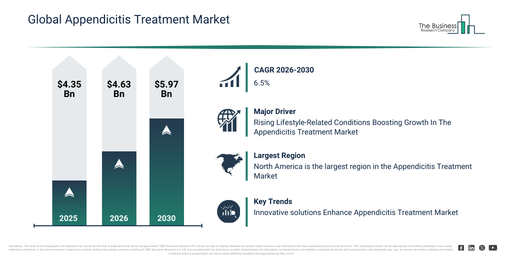
  • Appendicitis treatment market projected to hit $5.96B by 2030 at 6.5% CAGR

    Appendicitis treatment market projected to hit $5.96B by 2030 at 6.5% CAGR

    The Business Research Company’s 2026 market reports feature enhanced tools like market attractiveness analysis, TAM assessment, and company scoring matrices, along with interactive dashboards, deeper supply chain insights, and startup coverage strengthening the depth, usability, and strategic value of insights.

    How Much Will The Market Value Of The Appendicitis Treatment Market Grow Between 2026 And 2030?

    The appendicitis treatment market size has experienced strong growth in recent years. It is projected to expand from $4.35 billion in 2025 to $4.63 billion in 2026, exhibiting a compound annual growth rate (CAGR) of 6.5%. The historical growth of this market can be attributed to the expansion of emergency surgical care facilities, an increased incidence of acute appendicitis, the availability of standardized surgical procedures, the growth of hospital-based emergency departments, and improved access to diagnostic imaging technologies.

    The appendicitis treatment market is projected to experience substantial expansion in the coming years. It is anticipated to reach a size of $5.97 billion by 2030, demonstrating a compound annual growth rate (CAGR) of 6.5%. This growth during the forecast period is attributable to the increasing adoption of minimally invasive surgical instruments, a rise in the utilization of outpatient surgical facilities, a growing emphasis on shortening hospital stays, the expansion of antibiotic-based treatment protocols, and advancements in emergency care diagnostics. Key trends expected within this timeframe include a heightened preference for minimally invasive appendectomy, increased application of laparoscopic surgical techniques, a growing embrace of antibiotic-first treatment strategies, greater precision in emergency diagnostics, and refined postoperative recovery procedures.

    Access Your Free Sample Report For In-Depth Market Analysis:

    https://www.thebusinessresearchcompany.com/report/appendicitis-treatment-global-market-report

    What Key Factors Are Shaping The Appendicitis Treatment Market Landscape?

    The rising occurrence of lifestyle-related conditions is projected to stimulate the growth of the appendicitis treatment market moving forward. The increase in these diseases is largely attributable to greater sedentary behavior, inadequate dietary practices, and elevated stress levels. Factors associated with lifestyle, such as diet and physical inactivity, can contribute to appendicitis risk by influencing gut health and raising the probability of inflammation. A diet deficient in fiber and abundant in processed foods has the potential to disturb the digestive system and increase susceptibility. For instance, in March 2025, according to the World Obesity Federation, a UK-based membership organization, by 2030, nearly 3 billion adults, around 50% of the global adult population, will be affected by overweight or obesity. Thus, the increasing prevalence of lifestyle-related conditions is propelling the appendicitis treatment market.

    What Are The Main Segments Within The Appendicitis Treatment Market Segment Structure?

    The appendicitis treatment market covered in this report is segmented –

    1) By Type: Acute Appendicitis, Chronic Appendicitis

    2) By Treatment: Surgery, Laparoscopic Surgery, Open Laparotomy, Medication, Other Treatments

    3) By Route Of Administration: Oral, Parenteral

    4) By End Users: Hospitals, Ambulatory Surgical Centers, Specialty Clinics, Other End Users

    Subsegments:

    1) By Acute Appendicitis: Surgical Treatment (Appendectomy), Non-Surgical Treatment (Antibiotics and Observation)

    2) By Chronic Appendicitis: Surgical Treatment (Appendectomy), Medical Management (Antibiotics, Pain Management)

    What Market Trends Are Affecting The Appendicitis Treatment Market?

    Major companies in the appendicitis treatment market are concentrating on developing sophisticated technology, such as artificial intelligence (AI)-integrated live stream surgical technology, to significantly improve surgical precision and patient outcomes. This AI-integrated live-stream surgical technology represents a pioneering medical innovation where artificial intelligence (AI) is employed to enhance surgical procedures by incorporating real-time video streaming capabilities. For instance, in April 2024, Medtronic plc, an Ireland-based medical device company, introduced novel AI-driven algorithms and live streaming technology. This new artificial intelligence (AI)-driven algorithm and live streaming technology effectively enhance the touch surgery performance insights platform by providing comprehensive surgical insights and enabling secure live broadcasts of operations. These advancements improve appendicitis treatment by refining surgical techniques, accelerating training for trainee surgeons, and expanding access to expert guidance, leading to superior outcomes and a broader availability of high-quality care.

    Who Are The Companies Participating In The Appendicitis Treatment Market?

    Major companies operating in the appendicitis treatment market are Pfizer Inc., Johnson & Johnson, Merck & Co Inc., Sanofi, Bayer AG, Novartis AG, GlaxoSmithKline plc, AbbVie Inc., AstraZeneca plc, Medtronic plc, Stryker Corporation, Olympus Corporation, B. Braun Melsungen AG, Boston Scientific Corporation, Smith & Nephew plc, Cook Medical, Baxter International Inc., Fresenius SE & Co. KGaA, Cipla Limited, Hikma Pharmaceuticals

    Get The Full Appendicitis Treatment Market Report:

    https://www.thebusinessresearchcompany.com/report/appendicitis-treatment-global-market-report

    Where Is The Appendicitis Treatment Market Primarily Concentrated By Region?

    North America was the largest region in the appendicitis treatment market in 2025. The regions covered in the appendicitis treatment market report are Asia-Pacific, South East Asia, Western Europe, Eastern Europe, North America, South America, Middle East, Africa.

    Request A Customized Appendicitis Treatment Market Report For Competitive Insights:

    https://www.thebusinessresearchcompany.com/report/appendicitis-treatment-global-market-report

    Browse Through More Reports Similar to the Global Appendicitis Treatment Market 2026, By The Business Research Company

    Inflammatory Bowel Disease Treatment Market Report 2026

    https://www.thebusinessresearchcompany.com/report/inflammatory-bowel-disease-treatment-global-market-report

    Appendiceal Cancer Treatment Market Report 2026

    https://www.thebusinessresearchcompany.com/report/appendiceal-cancer-treatment-global-market-report

    Epidural Abscess Treatment Market Report 2026

    https://www.thebusinessresearchcompany.com/report/epidural-abscess-treatment-global-market-report

    Get in touch with us:

    The Business Research Company: https://www.thebusinessresearchcompany.com/

    Americas +1 310-496-7795

    Asia +44 7882 955267 & +91 8897263534

    Europe +44 7882 955267

    Email us at info@tbrc.info

    Follow us on:

    LinkedIn: https://in.linkedin.com/company/the-business-research-company

    YouTube: https://www.youtube.com/channel/UC24_fI0rV8cR5DxlCpgmyFQ

    Global Market Model: https://www.thebusinessresearchcompany.com/global-market-model
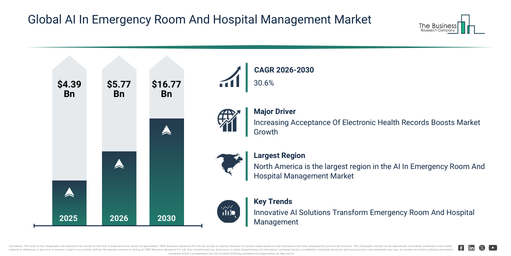
  • AI in ER and Hospital Management Market (2026–2030): Expansion Trends

    AI in ER and Hospital Management Market (2026–2030): Expansion Trends

    The Business Research Company’s 2026 market reports feature enhanced tools like market attractiveness analysis, TAM assessment, and company scoring matrices, along with interactive dashboards, deeper supply chain insights, and startup coverage strengthening the depth, usability, and strategic value of insights.

    What Level Of Market Value Growth Is Predicted For The AI In Emergency Room And Hospital Management Market From 2026 To 2030?

    The market size for ai in emergency room and hospital management has witnessed remarkable growth over recent years. Projections indicate it will expand from $4.39 billion in 2025 to $5.77 billion in 2026, demonstrating a compound annual growth rate (CAGR) of 31.2%. This past growth is attributable to several factors, including the limited adoption of ai technologies in healthcare, the reliance on manual hospital workflows, increasing patient volumes in er and hospitals, rising investment in hospital it infrastructure, and the early implementations of machine learning in healthcare analytics.

    The ai in emergency room and hospital management market size is projected to experience substantial expansion in the coming years, reaching $16.77 billion by 2030, demonstrating a compound annual growth rate (CAGR) of 30.6%. This anticipated growth is fueled by several factors, including the increasing availability of AI platforms and solutions within healthcare, a rising need for real-time patient data analysis, the implementation of AI-powered decision support tools, the expansion of predictive and prescriptive analytics, and the incorporation of AI into electronic health records (EHRs). Key developments anticipated during this period involve the integration of AI for patient monitoring, the application of predictive analytics in managing emergency rooms, the optimization of hospital workflows using AI, the embrace of context-aware computing for better decision-making, and a greater reliance on AI-driven applications to boost operational efficiency.

    Access Your Free Sample Report For In-Depth Market Analysis:

    https://www.thebusinessresearchcompany.com/report/ai-in-emergency-room-and-hospital-management-global-market-report

    Which Primary Drivers Are Impacting The AI In Emergency Room And Hospital Management Market Growth?

    The increasing adoption of electronic health records is projected to spur the expansion of AI in emergency room and hospital management markets moving forward. Electronic health records (EHRs) are digital versions of a patient’s paper medical history, containing comprehensive health data. This growing acceptance of EHRs stems from improvements in patient care through enhanced data accessibility, streamlined operational procedures, better communication among healthcare providers, and the potential for data analytics to inform clinical decisions. AI in emergency rooms and hospital management supports EHRs by simplifying data entry, refining patient triage with predictive analytics, automating administrative tasks, and offering clinical decision support, which leads to faster diagnoses and more customized treatment plans. For instance, in April 2024, a report by the National Center for Health Statistics, a US-based government agency, revealed that 88.2% of office-based physicians reported using an electronic health record (EHR) system, with 77.8% employing a certified EHR system. Therefore, the expanding acceptance of electronic health records will fuel the growth of AI in emergency room and hospital management market.

    Which Segments Define The AI In Emergency Room And Hospital Management Market Segment Structure?

    The ai in emergency room and hospital management market covered in this report is segmented –

    1) By Offering: Hardware, Software, Services

    2) By Technology: Machine Learning, Natural Language Processing, Context-Aware Computing, Computer Vision

    3) By End User: Hospitals and Emergency Departments, Ambulatory and Urgent Care Centers, Other End Users

    Subsegments:

    1) By Hardware: Graphics Processing Units, AI-Optimized Servers and Computing Systems, Medical-Grade Sensors and Monitoring Devices

    2) By Software: Ai Platforms, Ai-Powered Applications, Analytics Solutions, Workflow Management Solutions

    3) By Services: Implementation And Integration Services, Support And Maintenance Services, Training And Consulting Services

    Which Trends Are Shaping Growth In The AI In Emergency Room And Hospital Management Market?

    Leading companies in the AI in emergency rooms and hospital management market are concentrating on managing patient flow and optimizing operations through advanced tools like Gen AI-based SaaS solutions. This facilitates digital transformation, allowing hospitals to adjust to evolving requirements and enhance system-wide governance. Generative AI-based SaaS tools are cloud-based software solutions that utilize artificial intelligence to create content, insights, or automation features, thereby improving decision-making and operational effectiveness across various industries. For example, in June 2023, LeanTaaS, a US-based provider of SaaS solutions for hospital operations, introduced iQueue Autopilot, a generative AI tool designed to improve patient flow and capacity management. This solution provides human-like interactions to aid decision-making in both inpatient and outpatient settings. iQueue Autopilot employs three methods: Lean Forward for real-time recommendations, Lean Back for proactive alerts, and Moment in Time Problem Solving for immediate risk management. It merges AI/ML expertise with a large collection of hospital operational data to offer actionable insights, ensuring hospitals can optimize resources and enhance patient outcomes.

    Who Are The Established Players Within The AI In Emergency Room And Hospital Management Market?

    Major companies operating in the ai in emergency room and hospital management market are International Business Machines Corporation, Microsoft Corporation, Oracle Corporation, SAP SE, Salesforce Inc., Palantir Technologies, Accenture plc, Capgemini SE, Deloitte, PricewaterhouseCoopers, NVIDIA Corporation, Intel Corporation, Epic Systems, Koninklijke Philips N.V., Medtronic, Boston Scientific, Baxter International, Johnson & Johnson, Roche, Aidoc, Qure.ai, Health Catalyst, Dascena

    Get The Full AI In Emergency Room And Hospital Management Market Report:

    https://www.thebusinessresearchcompany.com/report/ai-in-emergency-room-and-hospital-management-global-market-report

    Which Region Leads The AI In Emergency Room And Hospital Management Market In Overall Market Size?

    North America was the largest region in the AI in emergency room and hospital management market in 2025. The regions covered in the ai in emergency room and hospital management market report are Asia-Pacific, South East Asia, Western Europe, Eastern Europe, North America, South America, Middle East, Africa.

    Request A Customized AI In Emergency Room And Hospital Management Market Report For Competitive Insights:

    https://www.thebusinessresearchcompany.com/report/ai-in-emergency-room-and-hospital-management-global-market-report

    Browse Through More Reports Similar to the Global AI In Emergency Room And Hospital Management Market 2026, By The Business Research Company

    Artificial Intelligence In Disaster Response And Emergency Management Market Report 2026

    https://www.thebusinessresearchcompany.com/report/artificial-intelligence-in-disaster-response-and-emergency-management-global-market-report

    Ai In Medical Devices Market Report 2026

    https://www.thebusinessresearchcompany.com/report/ai-in-medical-devices-global-market-report

    Artificial Intelligence Ai In Operating Room Market Report 2026

    https://www.thebusinessresearchcompany.com/report/artificial-intelligence-ai-in-operating-room-global-market-report

    Get in touch with us:

    The Business Research Company: https://www.thebusinessresearchcompany.com/

    Americas +1 310-496-7795

    Asia +44 7882 955267 & +91 8897263534

    Europe +44 7882 955267

    Email us at info@tbrc.info

    Follow us on:

    LinkedIn: https://in.linkedin.com/company/the-business-research-company

    YouTube: https://www.youtube.com/channel/UC24_fI0rV8cR5DxlCpgmyFQ

    Global Market Model: https://www.thebusinessresearchcompany.com/global-market-model

  • Global appendiceal cancer treatment market to reach $5.46B by 2030 at 5.8% CAGR

    Global appendiceal cancer treatment market to reach $5.46B by 2030 at 5.8% CAGR

    The Business Research Company’s 2026 market reports feature enhanced tools like market attractiveness analysis, TAM assessment, and company scoring matrices, along with interactive dashboards, deeper supply chain insights, and startup coverage strengthening the depth, usability, and strategic value of insights.

    What Changes In Market Value Are Expected For The Appendiceal Cancer Treatment Market Over The 2026–2030 Period?

    The appendiceal cancer treatment market has experienced consistent expansion in recent years. This market is projected to grow from $4.17 billion in 2025 to $4.36 billion in 2026, at a compound annual growth rate (CAGR) of 4.7%. The historical growth can be attributed to several factors, including the increased clinical recognition of rare gastrointestinal cancers, the availability of advanced surgical oncology techniques, the expansion of specialized cancer treatment centers, the growth of oncology drug pipelines, and improved diagnostic imaging technologies.

    The appendiceal cancer treatment market size is projected for substantial expansion over the upcoming years. This market is anticipated to reach $5.46 billion by 2030, exhibiting a compound annual growth rate (CAGR) of 5.8%. This forecasted expansion can be ascribed to progress in precision oncology treatments, increased funding for rare cancer research, wider acceptance of personalized chemotherapy protocols, an increase in clinical trials for appendiceal cancers, and the creation of new targeted therapies. Key trends during this period are expected to involve the growing application of cytoreductive surgery methods, increased utilization of targeted chemotherapy regimens, a heightened emphasis on early detection, the broadening of multidisciplinary treatment strategies, and enhanced post-operative care protocols.

    Access Your Free Sample Report For In-Depth Market Analysis:

    https://www.thebusinessresearchcompany.com/report/appendiceal-cancer-treatment-global-market-report

    Which Factors Are Influencing The Growth Of The Appendiceal Cancer Treatment Market?

    The appendiceal cancer treatment market is projected to grow due to an increasing number of clinical trials. These trials are prospective biomedical or behavioral research studies involving human participants, aimed at answering specific questions about various interventions, including both novel therapies and established ones that require further investigation and comparison. Clinical trials are vital for advancing understanding of appendiceal cancer and improving treatment options for patients by developing more effective and targeted approaches to manage the disease. For instance, in December 2024, the Association of the British Pharmaceutical Industry, a UK-based trade association, reported that the number of pharmaceutical industry trials initiated in the UK increased for the second consecutive year, rising from 411 in 2022 to 426 in 2023. Consequently, the growth in clinical trials is a key driver for the appendiceal cancer market. The future expansion of the appendiceal cancer treatment market is anticipated to be driven by rising healthcare expenditure. Healthcare expenditure refers to the total financial outlay on healthcare-related goods and services within a specific healthcare system or economy. For appendiceal cancer treatment, this spending encompasses all costs associated with diagnosing, managing, and treating patients, as well as providing medical services, therapies, and support systems within the allocated healthcare budget. For example, according to a report published in May 2023 by the Office for National Statistics, a UK-based government department, healthcare spending in the UK increased by 5.6% between 2022 and 2023, which is significantly higher than the 0.9% growth seen in 2022. Total UK healthcare expenditure in 2023 was approximately $317.63 billion (£292 billion). Thus, increasing healthcare expenditure is fueling the growth of the appendiceal cancer treatment market.

    How Is Segmentation Applied In The Appendiceal Cancer Treatment Market Segment Analysis?

    The appendiceal cancer treatment market covered in this report is segmented –

    1) By Type: Colonic-Type Adenocarcinoma, Mucinous Adenocarcinoma Of Appendix, Goblet Cell Adenocarcinoma, Neuroendocrine Carcinoma, Other Types

    2) By Treatment: Surgery, Chemotherapy, Radiation Therapy, Other Treatments

    3) By Route Of Administration: Oral, Intravenous, Other Routes Of Administration

    4) By End User: Hospitals, Cancer Research Institutes, Other End Users

    Subsegments:

    1) By Colonic-Type Adenocarcinoma: Stage I, Stage II, Stage III, Stage IV

    2) By Mucinous Adenocarcinoma Of Appendix: Low-Grade Mucinous Adenocarcinoma, High-Grade Mucinous Adenocarcinoma

    3) By Goblet Cell Adenocarcinoma: Mixed Type, Pure Goblet Cell Carcinoma

    4) By Neuroendocrine Carcinoma: Well-Differentiated Neuroendocrine Tumors, Poorly Differentiated Neuroendocrine Carcinomas

    5) By Other Types: Sarcomas, Lymphomas, Appendix Carcinoid Tumors

    Which Trends Are Influencing Demand In The Appendiceal Cancer Treatment Market?

    Major companies in the appendiceal cancer treatment market are developing advanced technologies, including digital health solutions, AI-driven diagnostic tools, personalized treatment platforms, and telemedicine services, which aim to boost patient engagement and streamline care delivery. Digital health solutions encompass technologies that utilize digital instruments to improve healthcare provision, such as telemedicine, mobile health applications, and remote patient monitoring systems. For instance, in October 2024, CancerX, a US-based biotechnology or healthcare company, launched the 2025 Accelerator Program. The 2025 cohort will introduce a specific emphasis on pediatric oncology, with two out of the fifteen available positions dedicated to startups innovating in this area. This partnership with KidsX is designed to leverage the strengths of over 30 pediatric hospitals to improve outcomes for young patients.

    Who Are The Companies Participating In The Appendiceal Cancer Treatment Market Environment?

    Major companies operating in the appendiceal cancer treatment market are Pfizer Inc., Roche Holding AG, F. Hoffmann-La Roche Ltd., Merck & Co. Inc., AbbVie Inc., Bayer AG, Novartis AG, Sanofi S.A., Bristol-Myers Squibb Company, Eli Lilly & Company, Boehringer Ingelheim International GmbH, Gilead Sciences Inc., Amgen Inc., AstraZeneca plc, ImmunoGen Inc., Fresenius Kabi USA, Teva Pharmaceutical Industries Ltd., Sun Pharmaceutical Industries Ltd., Aurobindo Pharma Ltd., Cipla Inc., Lupin Limited, Gland Pharma Limited, Accord Healthcare Limited

    Get The Full Appendiceal Cancer Treatment Market Report:

    https://www.thebusinessresearchcompany.com/report/appendiceal-cancer-treatment-global-market-report

    Which Region Has The Greatest Market Share In The Appendiceal Cancer Treatment Market?

    North America was the largest region in the appendiceal cancer treatment market in 2025. Asia-Pacific is expected to be the fastest-growing region in the forecast period. The regions covered in the appendiceal cancer treatment market report are Asia-Pacific, South East Asia, Western Europe, Eastern Europe, North America, South America, Middle East, Africa.

    Request A Customized Appendiceal Cancer Treatment Market Report For Competitive Insights:

    https://www.thebusinessresearchcompany.com/report/appendiceal-cancer-treatment-global-market-report

    Browse Through More Reports Similar to the Global Appendiceal Cancer Treatment Market 2026, By The Business Research Company

    Appendicitis Treatment Market Report 2026

    https://www.thebusinessresearchcompany.com/report/appendicitis-treatment-global-market-report

    Cancer Supportive Care Drugs Market Report 2026

    https://www.thebusinessresearchcompany.com/report/cancer-supportive-care-drugs-global-market-report

    Intratumoral Cancer Therapies Market Report 2026

    https://www.thebusinessresearchcompany.com/report/intratumoral-cancer-therapies-global-market-report

    Get in touch with us:

    The Business Research Company: https://www.thebusinessresearchcompany.com/

    Americas +1 310-496-7795

    Asia +44 7882 955267 & +91 8897263534

    Europe +44 7882 955267

    Email us at info@tbrc.info

    Follow us on:

    LinkedIn: https://in.linkedin.com/company/the-business-research-company

    YouTube: https://www.youtube.com/channel/UC24_fI0rV8cR5DxlCpgmyFQ

    Global Market Model: https://www.thebusinessresearchcompany.com/global-market-model

  • Global AI in Cancer Diagnostics Market (2026–2030): Strategic Insights

    Global AI in Cancer Diagnostics Market (2026–2030): Strategic Insights

    The Business Research Company’s 2026 market reports feature enhanced tools like market attractiveness analysis, TAM assessment, and company scoring matrices, along with interactive dashboards, deeper supply chain insights, and startup coverage strengthening the depth, usability, and strategic value of insights.

    How Will The Market Value Of The AI In Cancer Diagnostics Market Progress Between 2026 And 2030?

    The ai in cancer diagnostics market has experienced substantial growth in its size over recent years. It is projected to expand from $0.79 billion in 2025 to $0.96 billion in 2026, demonstrating a compound annual growth rate (CAGR) of 20.2%. Historically, this growth has been fueled by factors such as limited AI integration into early diagnostic processes, continued dependence on traditional imaging techniques, a global increase in cancer cases, a rising demand for early detection solutions, and the expansion of diagnostic centers.

    The ai in cancer diagnostics market size is poised for significant expansion in the coming years, with projections indicating a rise to $1.97 billion by 2030, demonstrating a compound annual growth rate (CAGR) of 19.9%. This anticipated growth during the forecast period is propelled by advancements in deep learning and machine learning algorithms, the increasing presence of AI-powered imaging systems, the growing integration of predictive analytics in healthcare, escalating investments in digital health technologies, and enhanced collaboration between AI developers and medical institutions. Major trends influencing this period encompass the wider adoption of AI-based imaging and diagnostic tools, the incorporation of predictive analytics into cancer screening, a rising utilization of AI for tumor identification and classification, the expansion of AI-driven monitoring and follow-up systems, and an increasing collaboration between hospitals and AI solution providers.

    Access Your Free Sample Report For In-Depth Market Analysis:

    https://www.thebusinessresearchcompany.com/report/ai-in-cancer-diagnostics-global-market-report

    What Significant Factors Are Influencing The AI In Cancer Diagnostics Market Expansion?

    The escalating prevalence of cancer is set to boost the expansion of artificial intelligence in the cancer diagnostics market. Cancer is defined as a group of diseases characterized by abnormal cell proliferation with the potential to invade or spread to other parts of the body. The integration of AI into cancer care aims to improve efficiency, accuracy, and personalized treatment options, ultimately leading to better outcomes for cancer patients. For instance, in May 2024, according to the National Cancer Institute, a US-based Government agency, approximately 2 million new cancer cases are expected to be diagnosed in the U.S. in 2024, with over 611,000 deaths projected. By 2040, new cancer cases are estimated to increase to 29.9 million globally, and cancer-related deaths are projected to rise to 15.3 million. Thus, the rising occurrence of cancer is acting as a significant catalyst for the growth of artificial intelligence in the cancer diagnostics market.

    How Is The AI In Cancer Diagnostics Market Segmented Across Different Segment Categories?

    The ai in cancer diagnostics market covered in this report is segmented –

    1) By Component: Software Solutions, Hardware, Services

    2) By Cancer Type: Breast Cancer, Lung Cancer, Brain Tumor, Skin Cancer And Cervical Cancer, Prostate And Colorectal Cancer, Other Cancer Types

    3) By Application: Screening And Diagnosis, Tumor Identification, Monitoring

    4) By End User: Hospitals, Diagnostic Centers, Medical Research Institutes

    Subsegments:

    1) By Software Solutions: Machine Learning Software, Deep Learning Software, Image Analysis Software

    2) By Hardware: AI-Powered Imaging Systems, Diagnostic Devices

    3) By Services: AI Integration Services, Consulting And Training Services, Support And Maintenance Services

    What Trends Are Affecting The Direction Of The AI In Cancer Diagnostics Market?

    Companies involved in the AI in cancer diagnostics market are experiencing substantial expansion, driven by progress in AI-enabled digital pathology solutions for diagnosing cancer. These AI-enabled digital pathology solutions for cancer diagnosis involve employing artificial intelligence (AI) algorithms to identify cancer and other diagnostic characteristics across various tissue types, thereby delivering precise and prompt cancer diagnoses, aiding in case prioritization, and ensuring consistent diagnoses. For example, in November 2023, Dedalus & Ibex Medical Analytics, a health software firm based in Europe, introduced an integrated end-to-end AI-powered digital pathology solution aimed at cancer diagnosis throughout Europe. The objective of this solution is to enhance accuracy, offer AI-driven decision support tools, simplify reporting processes, boost laboratory efficiency, and build greater diagnostic confidence.

    Which Organizations Play A Role In The AI In Cancer Diagnostics Market Landscape?

    Major companies operating in the ai in cancer diagnostics market are Microsoft Corporation, IBM Corporation, Verily Life Sciences LLC, Tempus Labs Inc, Guardant Health Inc, Lunit Inc, Paige AI Inc, Viz.ai Inc, Enlitic Inc, Ibex Medical Analytics Ltd, Kheiron Medical Technologies Limited, CureMetrix Inc, CancerIQ Inc, MultiplAI Health Inc, Freenome Holdings Inc, SkinVision B V, Owkin Inc, Imagen Technologies Inc, Cyrcadia Health Inc, Oncora Medical Inc, Xilis Inc

    Get The Full AI In Cancer Diagnostics Market Report:

    https://www.thebusinessresearchcompany.com/report/ai-in-cancer-diagnostics-global-market-report

    Which Region Is The Top Contributor To The AI In Cancer Diagnostics Market By Share?

    North America was the largest region in the artificial intelligence in cancer diagnostics market in 2025. The regions covered in the ai in cancer diagnostics market report are Asia-Pacific, South East Asia, Western Europe, Eastern Europe, North America, South America, Middle East, Africa.

    Request A Customized AI In Cancer Diagnostics Market Report For Competitive Insights:

    https://www.thebusinessresearchcompany.com/report/ai-in-cancer-diagnostics-global-market-report

    Browse Through More Reports Similar to the Global AI In Cancer Diagnostics Market 2026, By The Business Research Company

    Artificial Intelligence In The Diagnostic Market Report 2026

    https://www.thebusinessresearchcompany.com/report/artificial-intelligence-in-the-diagnostic-global-market-report

    Artificial Intelligence In Cancer Diagnostics Market Report 2026

    https://www.thebusinessresearchcompany.com/report/artificial-intelligence-in-cancer-diagnostics-global-market-report

    Ai In Medical Diagnostics Market Report 2026

    https://www.thebusinessresearchcompany.com/report/ai-in-medical-diagnostics-global-market-report

    Get in touch with us:

    The Business Research Company: https://www.thebusinessresearchcompany.com/

    Americas +1 310-496-7795

    Asia +44 7882 955267 & +91 8897263534

    Europe +44 7882 955267

    Email us at info@tbrc.info

    Follow us on:

    LinkedIn: https://in.linkedin.com/company/the-business-research-company

    YouTube: https://www.youtube.com/channel/UC24_fI0rV8cR5DxlCpgmyFQ

    Global Market Model: https://www.thebusinessresearchcompany.com/global-market-model

  • Apoptosis assay kit market to reach $12.02B by 2030 at 11.8% CAGR

    Apoptosis assay kit market to reach $12.02B by 2030 at 11.8% CAGR

    The Business Research Company’s 2026 market reports feature enhanced tools like market attractiveness analysis, TAM assessment, and company scoring matrices, along with interactive dashboards, deeper supply chain insights, and startup coverage strengthening the depth, usability, and strategic value of insights.

    By 2030, What Market Size Is The Apoptosis Assay Kit Market Expected To Reach Based On Its 2026 Value?

    The apoptosis assay kit market has experienced rapid expansion in recent years. It is anticipated to increase from $6.91 billion in 2025 to $7.69 billion in 2026, growing at a compound annual growth rate (CAGR) of 11.3%. This historical growth can be attributed to the expansion of cell biology research activities, the rising utilization of apoptosis assays in drug screening, an increase in academic research funding, the growing adoption of in vitro testing methods, and the availability of standardized assay reagents.

    The apoptosis assay kit market size is projected to experience substantial expansion in the coming years. By 2030, this market is anticipated to reach $12.02 billion, exhibiting a compound annual growth rate (CAGR) of 11.8%. This forecasted growth is primarily driven by several factors, including heightened investments in discovering oncology drugs, the increasing embrace of high-throughput screening platforms, advancements in stem cell and regenerative medicine research, the broadening scope of precision medicine studies, and a greater need for sophisticated cell analysis instruments. Key developments anticipated during this period encompass a rising requirement for highly sensitive apoptosis detection kits, the expanded use of multiplex assay technologies, the extension of flow cytometry applications for apoptosis analysis, the growing incorporation of automated data analysis tools, and a stronger emphasis on ensuring reproducibility and accuracy.

    Access Your Free Sample Report For In-Depth Market Analysis:

    https://www.thebusinessresearchcompany.com/report/apoptosis-assay-kit-global-market-report

    What Leading Drivers Are Supporting The Apoptosis Assay Kit Market Expansion?

    The rising occurrence of infectious and chronic illnesses is anticipated to boost the expansion of the apoptosis assay kit market. Infectious illnesses are defined as conditions brought on by disease-causing microorganisms like bacteria, viruses, fungi, or parasites. Chronic illnesses denote persistent health issues that typically emerge over an extended duration and endure for months or years, for example, diabetes. Apoptosis assays find application in research environments for exploring the fundamental mechanisms of infectious and chronic diseases and examining the impact of pathogens. As an illustration, in March 2024, data from the Centers for Disease Control and Prevention, a US-based government agency, revealed that tuberculosis cases grew from 8,320 in 2022 to 9,615 in 2023, signifying a surge of 1,295 cases. Consequently, the growing prevalence of infectious and chronic diseases is fostering the expansion of the apoptosis assay kit market.

    What Segment Categories Shape The Apoptosis Assay Kit Market Segment Landscape?

    The apoptosis assay kit market covered in this report is segmented –

    1) By Product: Kits, Reagents, Instruments, Other Products

    2) By Assay Type: Caspase Assay, DNA Fragmentation Assay, Cell Permeability Assay, Mitochondrial Assay

    3) By Detection Technique: Flow Cytometry, Cell Imaging And Analysis System, Spectrophotometry, Other Detection Techniques

    4) By Application: Drug Discovery And Development, Clinical Research, Stem Cell Research, Basic Research

    5) By End-Use: Pharmaceutical And Biotechnology Companies, Hospital And Diagnostic Laboratories, Academic And Research Institutes

    Subsegments:

    1) By Kits: Caspase Activity Kits, Annexin V Kits, TUNEL Assay Kits

    2) By Reagents: Staining Reagents, Detection Reagents, Buffer Solutions

    3) By Instruments: Flow Cytometers, Microscopes, Imaging Systems

    4) By Other Products: Software For Data Analysis, Sample Preparation Tools, Control And Calibration Products

    What Emerging Trends Are Seen In The Apoptosis Assay Kit Market?

    Major companies within the apoptosis assay kit market are concentrating on bringing next-generation solutions, such as cell invasion assay kits, to market to gain a competitive edge. Cell invasion assay kits are vital tools for cell biology research, particularly for the study of cancer progression, wound healing, and other processes involving cell migration through extracellular matrices (ECM). For instance, in December 2023, TheWell Bioscience, a US-based biotechnology company, introduced VitroGel-Based Cell Invasion Assay Kits. These VitroGel-Based Cell Invasion Assay Kits deliver exceptional accuracy, efficiency, and reliability for cell migration assays, allowing completion within 30 minutes compared to hours for assay kits utilizing an animal-based extracellular matrix (ECM). This aids researchers in studying cell migration and invasion.

    Who Are The Companies Operating Across The Apoptosis Assay Kit Market Value Chain?

    Major companies operating in the apoptosis assay kit market are Thermo Fisher Scientific Inc., Danaher Corporation, Merck Group, Becton Dickinson and Company, Agilent Technologies Inc., Lonza Group Ltd., Sartorius AG, Bio-Rad Laboratories Inc., Bio-Techne Corporation, Promega Corporation, GenScript Biotech Corporation, Abcam plc, BioLegend Inc., Enzo Life Sciences AG, Cayman Chemical Company, BioVision Inc., Cell Signaling Technology Inc., Santa Cruz Biotechnology Inc., GeneTex Inc., Creative Bioarray, GE Healthcare Bio Sciences AB, Active Motif Inc., Novus Biologicals LLC, BPS Bioscience Inc., RayBiotech Life Inc., Geno Technology Inc., Biotium Inc., GeneCopoeia Inc., Trevigen Inc., AAT Bioquest Inc.

    Get The Full Apoptosis Assay Kit Market Report:

    https://www.thebusinessresearchcompany.com/report/apoptosis-assay-kit-global-market-report

    Which Region Accounts For The Largest Portion Of The Apoptosis Assay Kit Market?

    North America was the largest region in the apoptosis assay kit market in 2025. The regions covered in the apoptosis assay kit market report are Asia-Pacific, South East Asia, Western Europe, Eastern Europe, North America, South America, Middle East, Africa.

    Request A Customized Apoptosis Assay Kit Market Report For Competitive Insights:

    https://www.thebusinessresearchcompany.com/report/apoptosis-assay-kit-global-market-report

    Browse Through More Reports Similar to the Global Apoptosis Assay Kit Market 2026, By The Business Research Company

    Genotyping Assay Market Report 2026

    https://www.thebusinessresearchcompany.com/report/genotyping-assay-global-market-report

    Anti Cancer Mabs Market Report 2026

    https://www.thebusinessresearchcompany.com/report/anti-cancer-mabs-global-market-report

    Cell Based Assays Market Report 2026

    https://www.thebusinessresearchcompany.com/report/cell-based-assays-global-market-report

    Get in touch with us:

    The Business Research Company: https://www.thebusinessresearchcompany.com/

    Americas +1 310-496-7795

    Asia +44 7882 955267 & +91 8897263534

    Europe +44 7882 955267

    Email us at info@tbrc.info

    Follow us on:

    LinkedIn: https://in.linkedin.com/company/the-business-research-company

    YouTube: https://www.youtube.com/channel/UC24_fI0rV8cR5DxlCpgmyFQ

    Global Market Model: https://www.thebusinessresearchcompany.com/global-market-model
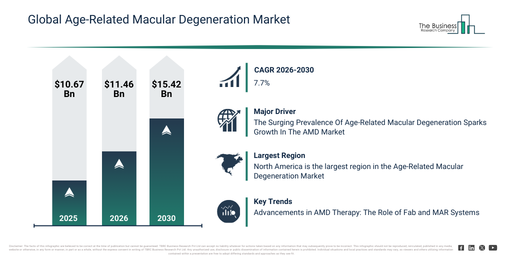
  • Age-Related Macular Degeneration Market (2026–2030): Growth Drivers and Outlook

    Age-Related Macular Degeneration Market (2026–2030): Growth Drivers and Outlook

    The Business Research Company’s 2026 market reports feature enhanced tools like market attractiveness analysis, TAM assessment, and company scoring matrices, along with interactive dashboards, deeper supply chain insights, and startup coverage strengthening the depth, usability, and strategic value of insights.

    What Are The Market Size Estimates For The Age-Related Macular Degeneration Market In 2026 And 2030?

    The age-related macular degeneration market has experienced substantial expansion in recent years. It is anticipated to increase from $10.67 billion in 2025 to $11.46 billion by 2026, exhibiting a compound annual growth rate (CAGR) of 7.5%. The historical growth of this market can be linked to a global aging population, the rising prevalence of AMD, previously limited treatment options, increased awareness of eye health, and the expansion of hospital and ophthalmology clinic infrastructure.

    The age-related macular degeneration market size is anticipated to expand significantly over the next few years. It is expected to reach $15.42 billion in 2030, demonstrating a compound annual growth rate (CAGR) of 7.7%. This expansion during the forecast period can be linked to factors such as the development of next-generation anti-VEGF drugs, increasing investment in ophthalmology research, the proliferation of specialty pharmacies and online pharmacy channels, a growing application of combination therapies, and the rising adoption of personalized treatment approaches. Key trends for the forecast period involve the increasing embrace of anti-VEGF therapies, a rising use of nutritional supplements and low vision aids, an increase in photodynamic and laser therapy procedures, the expansion of intravitreal and intravenous administration routes, and heightened awareness coupled with regular eye screening programs.

    Access Your Free Sample Report For In-Depth Market Analysis:

    https://www.thebusinessresearchcompany.com/report/age-related-macular-degeneration-global-market-report

    Which Important Drivers Are Guiding The Age-Related Macular Degeneration Market Growth?

    The increasing prevalence of age-related macular degeneration (AMD) is expected to boost the growth of the age-related macular degeneration (AMD) market in the future. Age-related macular degeneration (AMD) is an advancing eye condition that affects the macula, a vital part of the retina responsible for central vision. Treatments for age-related macular degeneration (AMD) assist patients with retinal disorders by mitigating the intensity of the disease. For instance, in February 2023, according to reports provided by Optimaxa, a UK-based laser eye treatment specialist, age-related macular degeneration (AMD) impacted 196 million individuals globally and is forecast to reach 288 million in 2040, accounting for 8.7 percent of the world’s population. Therefore, the rising prevalence of age-related macular degeneration (AMD) is a key driver for the age-related macular degeneration market.

    What Are The Main Segments Within The Age-Related Macular Degeneration Market Segment Structure?

    The age-related macular degeneration market covered in this report is segmented –

    1) By Type: Wet Age-Related Macular Degeneration (AMD), Dry Age-Related Macular Degeneration (AMD)

    2) By Drug: Eylea, Lucentis, Avastin, Other Drugs

    3) By Distribution Channel: Hospital Pharmacy, Specialty Pharmacy

    Subsegments:

    1) By Wet Age-Related Macular Degeneration (AMD): Anti-VEGF Injections, Photodynamic Therapy, Laser Surgery

    2) By Dry Age-Related Macular Degeneration (AMD): Nutritional Supplements, Low Vision Aids, Therapies For Geographic Atrophy

    What Trends Are Influencing The Evolution Of The Age-Related Macular Degeneration Market?

    Leading companies in the age-related macular degeneration (AMD) market are pushing forward with advanced technologies, including recombinant antigen-binding fragments. Recombinant antigen-binding fragments (Fab) are specialized proteins created from antibodies that selectively attach to specific target antigens, frequently utilized in medical treatments to impede disease-related processes. For instance, in December 2023, Enzene Biosciences, an Indian biotechnology company, released ranibizumab, which is a recombinant monoclonal antibody fragment (Fab) specifically designed to block vascular endothelial growth factor (VEGF), a primary protein involved in the growth of abnormal blood vessels in conditions such as age-related macular degeneration (AMD) and diabetic macular edema (DME). Through its action of obstructing VEGF, ranibizumab effectively minimizes the leakage and growth of these blood vessels, thus aiding in vision preservation for patients with these eye conditions. Administered via intravitreal injection, it has gained extensive recognition in clinical settings for its effectiveness in managing various retinal ailments. The launch of ranibizumab has substantially improved the treatment options available for patients dealing with these serious disorders.

    Who Are The Companies Participating In The Age-Related Macular Degeneration Market?

    Major companies operating in the age-related macular degeneration market are F. Hoffmann-La Roche Ltd., Novartis AG, Bayer AG, Pfizer Inc., Bausch Health Companies Inc., Regeneron Pharmaceuticals Inc., Alimera Sciences Inc., Alkeus Pharmaceuticals Inc., Outlook Therapeutics Inc., Samsung Bioepis Co. Ltd., Biocon Ltd., Bio-Thera Biopharmaceutical Co. Ltd., Acucela Inc., Ophthotech Corporation, Kodiak Sciences Inc., REGENXBIO Inc., Alkahest Inc., Opthea Limited, Apellis Pharmaceuticals Inc., Graybug Vision Inc., IVERIC bio Inc., Santen Pharmaceutical Co. Ltd., Ocular Therapeutix Inc., Chengdu Kanghong Pharmaceutical Group Co. Ltd., pSivida Corp., Clearside Biomedical Inc., SciFluor Life Sciences LLC, Lineage Cell Therapeutics Inc.

    Get The Full Age-Related Macular Degeneration Market Report:

    https://www.thebusinessresearchcompany.com/report/age-related-macular-degeneration-global-market-report

    Which Region Represents The Largest Share Of The Age-Related Macular Degeneration Market?

    North America was the largest region in the global age-related macular degeneration market in 2025.Asia-Pacific is expected to be the fastest-growing region in the forecast period. The regions covered in the age-related macular degeneration market report are Asia-Pacific, South East Asia, Western Europe, Eastern Europe, North America, South America, Middle East, Africa.

    Request A Customized Age-Related Macular Degeneration Market Report For Competitive Insights:

    https://www.thebusinessresearchcompany.com/report/age-related-macular-degeneration-global-market-report

    Browse Through More Reports Similar to the Global Age-Related Macular Degeneration Market 2026, By The Business Research Company

    Non Proliferative Diabetic Retinopathy Market Report 2026

    https://www.thebusinessresearchcompany.com/report/non-proliferative-diabetic-retinopathy-global-market-report

    Macular Degeneration Treatment Market Report 2026

    https://www.thebusinessresearchcompany.com/report/macular-degeneration-treatment-global-market-report

    Macular Edema And Macular Degeneration Market Report 2026

    https://www.thebusinessresearchcompany.com/report/macular-edema-and-macular-degeneration-global-market-report

    Get in touch with us:

    The Business Research Company: https://www.thebusinessresearchcompany.com/

    Americas +1 310-496-7795

    Asia +44 7882 955267 & +91 8897263534

    Europe +44 7882 955267

    Email us at info@tbrc.info

    Follow us on:

    LinkedIn: https://in.linkedin.com/company/the-business-research-company

    YouTube: https://www.youtube.com/channel/UC24_fI0rV8cR5DxlCpgmyFQ

    Global Market Model: https://www.thebusinessresearchcompany.com/global-market-model
  • Apolipoprotein testing market forecast (2026–2030)

    Apolipoprotein testing market forecast (2026–2030)

    The Business Research Company’s 2026 market reports feature enhanced tools like market attractiveness analysis, TAM assessment, and company scoring matrices, along with interactive dashboards, deeper supply chain insights, and startup coverage strengthening the depth, usability, and strategic value of insights.

    What Is The Anticipated Rise In Market Value Of The Apolipoprotein Testing Market During The Forecast Period?

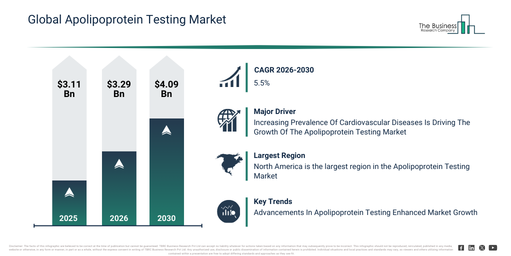
    The apolipoprotein testing market has experienced significant expansion in its size over recent years. Projections indicate its value will rise from $3.11 billion in 2025 to $3.29 billion by 2026, demonstrating a compound annual growth rate (CAGR) of 5.9%. Historically, this growth has stemmed from factors such as the rising incidence of cardiovascular diseases, the broader implementation of lipid testing protocols, the enlargement of diagnostic laboratory networks, heightened public understanding of preventive healthcare, and the widespread availability of standardized apolipoprotein assays.

    The apolipoprotein testing market is projected to experience substantial expansion in the coming years, reaching a valuation of $4.09 billion by 2030, driven by a compound annual growth rate (CAGR) of 5.5%. This anticipated growth during the forecast period is fueled by factors such as a heightened demand for accurate cardiovascular diagnostics, the increasing incorporation of molecular diagnostics into standard testing, the broadening application of personalized medicine strategies, rising capital allocations towards automated diagnostic technologies, and an amplified emphasis on early disease risk assessment. Key developments anticipated within this period encompass the greater uptake of sophisticated lipid risk assessment tools, an escalating need for preventative cardiovascular diagnostic solutions, the deepening integration of genetic and protein testing methods, the expansion of automated immunoassay platforms, and a strengthened concentration on individualized cardiac risk evaluations.

    Access Your Free Sample Report For In-Depth Market Analysis:

    https://www.thebusinessresearchcompany.com/report/apolipoprotein-testing-global-market-report

    Which Key Factors Are Driving The Apolipoprotein Testing Market Growth?

    The escalating occurrence of cardiovascular diseases is projected to drive the expansion of the apolipoprotein testing market in the coming years. Cardiovascular disease (CVD) encompasses a range of conditions affecting the heart and blood vessels, leading to serious events such as heart attacks, strokes, and peripheral vascular disease. The increase in these disorders is influenced by multiple elements, including unhealthy eating habits, rising rates of obesity, and an aging population. Apolipoproteins, specifically ApoA-I and ApoB, play a critical role in transporting lipids within the blood. Measuring their levels helps in evaluating cardiovascular disease risk and in personalizing lipid-lowering treatments for better patient outcomes. For example, in January 2024, data from the American Heart Association, a US-based nonprofit organization, indicated that the age-adjusted death rate from cardiovascular disease had climbed to 233.3 per 100,000. This figure represented a 4.0% increase from the previous year’s rate of 224.4 per 100,000, following a 4.6% rise in 2023, marking the first such increase recorded in numerous years. Therefore, the heightened prevalence of cardiovascular diseases serves as a key impetus for the growth of the apolipoprotein testing market.

    Which Segment Types Are Examined In The Apolipoprotein Testing Market Segment Study?

    The apolipoprotein testing market covered in this report is segmented –

    1) By Type Of Apolipoprotein: Apolipoprotein A-I, Apolipoprotein B, Apolipoprotein E

    2) By Technology: Immunoassays, Polymerase Chain Reaction (PCR)

    3) By Application: Cardiovascular Disease Risk Assessment, Genetic Testing, Other Applications

    4) By End-User: Hospitals And Clinics, Diagnostic Laboratories, Research And Academic Institutes

    Subsegments:

    1) By Apolipoprotein A-I: Quantitative Testing, Qualitative Testing, Functional Testing

    2) By Apolipoprotein B: Total Apolipoprotein B Testing, Apolipoprotein B100 Testing, Apolipoprotein B48 Testing

    3) By Apolipoprotein E: Genotyping Tests, Protein Level Testing, Functional Assays

    Which Trends Are Guiding The Direction Of The Apolipoprotein Testing Market?

    Major companies operating in the apolipoprotein market are rolling out enhanced heart health plans, aiming to deliver more thorough assessments and individualized recommendations for managing cholesterol levels and reducing the risk of cardiovascular diseases. These improved wellness programs offer detailed evaluations and custom suggestions to boost cardiovascular well-being. For instance, in January 2023, InsideTracker, a US-based personal health analysis company, introduced its Ultimate Plan to include Apolipoprotein B (ApoB) measurement, a vital indicator of heart health. This enhancement allows users to understand their cardiovascular status comprehensively, as elevated ApoB levels are associated with higher risks of atherosclerosis and heart disease. The plan provides users with insights into their ApoB levels compared to standard ranges and tailored lifestyle recommendations based on extensive research by InsideTracker’s science team.

    Which Players Are Part Of The Competitive Landscape Of The Apolipoprotein Testing Market?

    Major companies operating in the apolipoprotein testing market are F. Hoffmann-La Roche Ltd., Thermo Fisher Scientific Inc., Mayo Clinic Laboratories, Laboratory Corporation of America Holdings, Quest Diagnostics Incorporated, Bio-Rad Laboratories Inc., Randox Laboratories Ltd., R&D Systems Inc., Elabscience Bionovation Inc., Sekisui Diagnostics LLC, RayBiotech Inc., Mabtech AB, Bioss Inc., Aviva Systems Biology Corporation, Abnova Corporation, DiaSys Diagnostic Systems GmbH, Enzo Life Sciences Inc., Eagle Biosciences Inc., CLOUD-CLONE CORP., ELK Biotechnology CO. Ltd., LifeSpan BioSciences Inc.,

    Get The Full Apolipoprotein Testing Market Report:

    https://www.thebusinessresearchcompany.com/report/apolipoprotein-testing-global-market-report

    Which Region Holds The Highest Market Share In The Apolipoprotein Testing Market?

    North America was the largest region in the apolipoprotein testing market in 2025. The regions covered in the apolipoprotein testing market report are Asia-Pacific, South East Asia, Western Europe, Eastern Europe, North America, South America, Middle East, Africa.

    Request A Customized Apolipoprotein Testing Market Report For Competitive Insights:

    https://www.thebusinessresearchcompany.com/report/apolipoprotein-testing-global-market-report

    Browse Through More Reports Similar to the Global Apolipoprotein Testing Market 2026, By The Business Research Company

    Prenatal Testing And Newborn Screening Market Report 2026

    https://www.thebusinessresearchcompany.com/report/prenatal-testing-and-newborn-screening-global-market-report

    Pharmaceutical Sterility Testings Market Report 2026

    https://www.thebusinessresearchcompany.com/report/pharmaceutical-sterility-testings-global-market-report

    Pcr And Realtime Pcr Testing Market Report 2026

    https://www.thebusinessresearchcompany.com/report/pcr-and-realtime-pcr-testing-global-market-report

    Get in touch with us:

    The Business Research Company: https://www.thebusinessresearchcompany.com/

    Americas +1 310-496-7795

    Asia +44 7882 955267 & +91 8897263534

    Europe +44 7882 955267

    Email us at info@tbrc.info

    Follow us on:

    LinkedIn: https://in.linkedin.com/company/the-business-research-company

    YouTube: https://www.youtube.com/channel/UC24_fI0rV8cR5DxlCpgmyFQ

    Global Market Model: https://www.thebusinessresearchcompany.com/global-market-model