Category: Healthcare Services

  • Adult T-Cell Leukemia/Lymphoma Treatment Market Growth Influenced by Clinical Trials

    Adult T-Cell Leukemia/Lymphoma Treatment Market Growth Influenced by Clinical Trials

    The Business Research Company’s 2026 market reports feature enhanced tools like market attractiveness analysis, TAM assessment, and company scoring matrices, along with interactive dashboards, deeper supply chain insights, and startup coverage strengthening the depth, usability, and strategic value of insights.

    What Changes In Market Value Are Expected For The Adult T-Cell Leukemia/Lymphoma Treatment Market Over The 2026–2030 Period?

    The adult t-cell leukemia/lymphoma treatment market has experienced robust expansion in recent times. This market is projected to expand from $1.99 billion in 2025 to $2.16 billion in 2026, demonstrating a compound annual growth rate (CAGR) of 8.7%. Historically, this growth has been driven by factors such as the restricted access to specialized therapies, an increase in the occurrence of adult t-cell leukemia/lymphoma, improvements in hospital and specialty cancer center facilities, the ongoing use of traditional chemotherapy regimens, and a heightened understanding of rare hematologic cancers.

    The adult t-cell leukemia/lymphoma treatment market is projected to experience substantial growth over the next few years. It is anticipated to expand to $2.99 billion by 2030, demonstrating a compound annual growth rate (CAGR) of 8.5%. This growth during the forecast period can be attributed to factors such as the development of innovative monoclonal antibodies and TKIs, the expansion of CAR-T and interferon-based therapies, an increase in precision medicine initiatives, rising investments in clinical trials, and the proliferation of hospital and specialty cancer center networks. Significant trends for the forecast period include the increasing adoption of targeted therapies and immunotherapies, a growing reliance on combination therapy regimens, the expansion of stem cell transplantation procedures, a heightened focus on subtype-specific treatment approaches, and enhanced clinical research and trial activities.

    Access Your Free Sample Report For In-Depth Market Analysis:

    https://www.thebusinessresearchcompany.com/report/adult-t-cell-leukemialymphoma-treatment-global-market-report

    What Key Drivers Are Fueling The Growth Of The Adult T-Cell Leukemia/Lymphoma Treatment Market?

    The adult T-cell leukaemia or lymphoma treatment market is anticipated to expand due to a growing number of clinical trials. These trials are research investigations carried out on humans to evaluate the safety, effectiveness, and potential adverse reactions of medical therapies, medications, or devices, with the objective of improving healthcare results. Clinical trials are vital for Adult T-Cell Leukemia or Lymphoma treatment as they involve testing novel therapies, refining existing treatment plans, and assessing the safety and efficacy of innovative drugs, ultimately leading to better patient outcomes and an expansion of treatment choices for this rare and difficult disease. For example, in February 2024, ClinicalTrials.gov, a US-based government web resource, indicated that the number of clinical trials publishing findings increased from 4,024 in 2022 to 5,063 in 2023. Consequently, the increasing volume of clinical trials is a key driver for the growth of the adult T-cell leukaemia or lymphoma treatment market.

    Which Segment Classifications Are Used In The Adult T-Cell Leukemia/Lymphoma Treatment Market Segment Analysis?

    The adult t-cell leukemia/lymphoma treatment market covered in this report is segmented –

    1) By Treatment Approach: Chemotherapy, Targeted Therapies, Immunotherapies, Combination Therapies, Stem Cell Transplantation

    2) By Disease Subtype: Acute Adult T-Cell Leukemia Or Lymphoma, Lymphomatous Adult T-Cell Leukemia Or Lymphoma, Chronic Adult T-Cell Leukemia Or Lymphoma, Smoldering Adult T-Cell Leukemia Or Lymphoma

    3) By Distribution Channel: Hospital Pharmacies, Retail Pharmacies, Online Pharmacies, Other Channels

    4) By End-User: Hospitals And Clinics, Specialty Cancer Centers, Research Institutes

    Subsegments:

    1) By Chemotherapy: Alkylating Agents, Antimetabolites, Topoisomerase Inhibitors

    2) By Targeted Therapies: Monoclonal Antibodies, Tyrosine Kinase Inhibitors (TKIs), Histone Deacetylase (HDAC) Inhibitors

    3) By Immunotherapies: Immune Checkpoint Inhibitors, CAR-T Cell Therapy, Interferon-Based Therapies

    4) By Combination Therapies: Chemotherapy + Targeted Therapy, Chemotherapy + Immunotherapy, Multi-Drug Regimens

    5) By Stem Cell Transplantation: Autologous Stem Cell Transplantation, Allogeneic Stem Cell Transplantation

    What Trends Are Influencing The Adult T-Cell Leukemia/Lymphoma Treatment Market?

    Leading entities within the adult T-cell leukemia and lymphoma treatment market are dedicating efforts to create sophisticated solutions, including commercial-scale supply restoration, aimed at improving treatment availability and guaranteeing uninterrupted patient access. This commercial-scale supply restoration involves initiatives focused on bringing back crucial oncology medications that have experienced significant market scarcity, consequently enhancing the consistency of care for patients dependent on these treatments. As an illustration, Shorla Oncology, an Ireland-based specialized pharmaceutical firm, collaborated with EVERSANA, a US-based supplier of commercialization services to the life science industry, in May 2023 to introduce Nelarabine Injection. This is a fully FDA-approved formulation specifically for T-cell Acute Lymphoblastic Leukemia (T-ALL) and T-Cell Lymphoblastic Lymphoma (T-LBL). The treatment aims to resolve persistent supply deficits and provides assistance to both adult and pediatric patients aged one year and above who suffer from relapsed or refractory disease following a minimum of two previous chemotherapy regimens. Shorla chose EVERSANA to deliver extensive commercialization aid, covering sales distribution, medical information, pharmacovigilance, and trade relationship management, with the goal of achieving strong market adoption.

    Which Firms Are Contributing To The Adult T-Cell Leukemia/Lymphoma Treatment Market Ecosystem?

    Major companies operating in the adult t-cell leukemia/lymphoma treatment market are Pfizer Inc, Sanofi SA, Bristol Myers Squibb Company, Novartis AG, Takeda Pharmaceutical Company Limited, Gilead Sciences Inc, Astellas Pharma Inc, Daiichi Sankyo Co Ltd, Kyowa Kirin Co Ltd, Merck KGaA, AstraZeneca plc, Roche Holding AG, Eli Lilly and Company, AbbVie Inc, Johnson and Johnson, Amgen Inc, BeiGene Ltd, Incyte Corporation, Regeneron Pharmaceuticals Inc, Seagen Inc, Adaptive Biotechnologies Corporation

    Get The Full Adult T-Cell Leukemia/Lymphoma Treatment Market Report:

    https://www.thebusinessresearchcompany.com/report/adult-t-cell-leukemialymphoma-treatment-global-market-report

    Which Region Leads The Adult T-Cell Leukemia/Lymphoma Treatment Market In Overall Market Size?

    North America was the largest region in the adult T-cell leukemia or lymphoma treatment market in 2025. The regions covered in the adult t-cell leukemia/lymphoma treatment market report are Asia-Pacific, South East Asia, Western Europe, Eastern Europe, North America, South America, Middle East, Africa.

    Request A Customized Adult T-Cell Leukemia/Lymphoma Treatment Market Report For Competitive Insights:

    https://www.thebusinessresearchcompany.com/report/adult-t-cell-leukemialymphoma-treatment-global-market-report

    Browse Through More Reports Similar to the Global Adult T-Cell Leukemia/Lymphoma Treatment Market 2026, By The Business Research Company

    Diffuse Large B Cell Lymphoma Therapeutics Market Report 2026

    https://www.thebusinessresearchcompany.com/report/diffuse-large-b-cell-lymphoma-therapeutics-global-market-report

    Chronic Myeloid Leukemia Treatment Market Report 2026

    https://www.thebusinessresearchcompany.com/report/chronic-myeloid-leukemia-treatment-global-market-report

    Leukemia Therapeutics Market Report 2026

    https://www.thebusinessresearchcompany.com/report/leukemia-therapeutics-global-market-report

    Get in touch with us:

    The Business Research Company: https://www.thebusinessresearchcompany.com/

    Americas +1 310-496-7795

    Asia +44 7882 955267 & +91 8897263534

    Europe +44 7882 955267

    Email us at info@tbrc.info

    Follow us on:

    LinkedIn: https://in.linkedin.com/company/the-business-research-company

    YouTube: https://www.youtube.com/channel/UC24_fI0rV8cR5DxlCpgmyFQ

    Global Market Model: https://www.thebusinessresearchcompany.com/global-market-model

  • Silver-ion bioresorbable polymers improving wound care are driving the antimicrobial regenerative wound matrix market

    Silver-ion bioresorbable polymers improving wound care are driving the antimicrobial regenerative wound matrix market

    The Business Research Company’s 2026 market reports feature enhanced tools like market attractiveness analysis, TAM assessment, and company scoring matrices, along with interactive dashboards, deeper supply chain insights, and startup coverage strengthening the depth, usability, and strategic value of insights.

    What Is The Estimated Market Size Of The Antimicrobial Regenerative Wound Matrix Market In 2026, And How Will Its Value Evolve By 2030?

    The market for antimicrobial regenerative wound matrices has experienced significant growth over recent years. This market is projected to expand from $4.03 billion in 2025 to $4.32 billion by 2026, demonstrating a compound annual growth rate (CAGR) of 7.4%. Historically, this expansion has been driven by several key factors, including the increasing prevalence of chronic wounds, a rising incidence of diabetes-related ulcers, the expansion of surgical procedures, growing awareness of advanced wound care solutions, and the availability of antimicrobial biomaterials.

    The antimicrobial regenerative wound matrix market is poised for significant expansion in the upcoming years. It is projected to reach $5.68 billion by 2030, exhibiting a compound annual growth rate (CAGR) of 7.1%. This anticipated growth during the forecast period is driven by factors such as an expanding aging population, increasing demand for sophisticated wound management, the proliferation of home healthcare services, a heightened emphasis on curbing hospital-acquired infections, and continuous innovation in regenerative biomaterials. Notable trends anticipated in this period include the wider acceptance of advanced wound care biomaterials, an escalating need for healing solutions that resist infection, the growing utilization of bioactive regenerative matrices, the broadening of applications for chronic wound treatment, and an intensified focus on accelerating tissue regeneration.

    Access Your Free Sample Report For In-Depth Market Analysis:

    https://www.thebusinessresearchcompany.com/report/global-antimicrobial-regenerative-wound-matrix-market-report

    What Factors Are Contributing To The Growth Of The Antimicrobial Regenerative Wound Matrix Market?

    The growing occurrence of chronic wounds is anticipated to propel the expansion of the antimicrobial regenerative wound matrix market in the future. Chronic wounds are defined as injuries that fail to heal within a typical timeframe, usually lasting beyond 4 to 6 weeks, often due to underlying issues such as diabetes, infection, or poor circulation. This rise in chronic wounds is attributed to the increasing incidence of diabetes, obesity, and vascular diseases, coupled with an aging population. These factors collectively impair natural healing processes, leading to a higher number of non-healing or slow-healing wounds that require advanced care solutions. Antimicrobial regenerative wound matrices facilitate tissue regeneration while preventing infection, thereby accelerating healing in chronic, non-healing wounds. For example, in June 2024, United Behavioral Health, a US-based managed healthcare company, reported that approximately 7 million Americans suffered from chronic wounds. With rising diabetes, obesity, and aging populations, the demand for wound care is expected to increase by about 2% annually over the next decade. Therefore, the expanding prevalence of chronic wounds is driving the growth of the antimicrobial regenerative wound matrix market.

    How Is The Antimicrobial Regenerative Wound Matrix Market Segmented Across Different Segment Categories?

    The antimicrobial regenerative wound matrix market covered in this report is segmented –

    1) By Product Type: Antimicrobial Matrix, Regenerative Matrix

    2) By Wound Type: Acute, Chronic

    3) By Material: Collagen-Based Matrix, Chitosan-Based Matrix, Hyaluronic Acid-Based Matrix

    4) By Application: Diabetic Foot Ulcers, Pressure Ulcers, Venous Leg Ulcers, Burns

    5) By End User: Hospitals, Clinics, Ambulatory Surgical Centers, Home Healthcare

    Subsegments:

    1) By Antimicrobial Matrix: Silver-Ion Impregnated Matrices, Iodine-Based Matrices, PHMB (Polyhexamethylene Biguanide)-Based Matrices, Honey-Infused Matrices, Chitosan-Based Matrices, Antibiotic-Loaded Polymer Matrices, Enzyme Or Peptide-Based Antimicrobial Matrices

    2) By Regenerative Matrix: Collagen-Based Matrices, Hydrogel Matrices, Hyaluronic Acid-Based Matrices, Human Or Animal-Derived Dermal Substitutes, Synthetic Polymer (Bioresorbable) Matrices, Amniotic Membrane-Derived Matrices, Composite (Hybrid) Regenerative Matrices

    What Trends Are Shaping The Future Of The Antimicrobial Regenerative Wound Matrix Market?

    Major companies operating in the antimicrobial regenerative wound matrix market are increasingly integrating antimicrobial agents, such as silver-ion–impregnated bioresorbable polymer matrices, to address the escalating need for faster healing, reduced infection risk, and lower hospitalization costs in chronic and surgical wound care. A silver-ion–impregnated bioresorbable polymer matrix serves as a wound-healing scaffold, crafted from biodegradable polymers infused with silver ions, designed to support tissue regeneration while offering sustained antimicrobial protection as it gradually resorbs into the body. For instance, in August 2025, Imbed Biosciences Inc., a US-based medical device firm specializing in advanced wound care, launched SAM PainGuard with Lidocaine, a dual-action wound matrix composed of a bioresorbable polymer scaffold infused with ionic silver for antimicrobial protection and lidocaine HCl for rapid pain relief. This matrix conforms to wound microtextures, ensures sustained microbial reduction of =99.99% for up to 72 hours, and provides immediate analgesia. FDA 510(k)-cleared for use in surgical, burn, donor-site, and trauma wounds, the product represents a significant advancement over traditional antimicrobial dressings and standard collagen matrices.

    Which Organizations Play A Role In The Antimicrobial Regenerative Wound Matrix Market Landscape?

    Major companies operating in the antimicrobial regenerative wound matrix market are Cardinal Health Inc., Medline Industries Inc., 3M Company, Essity AB, DSM Biomedical, Baxter International Inc., B. Braun Melsungen AG, Mölnlycke Health Care AB, ConvaTec Group plc, MTF Biologics, Organogenesis Inc., DeRoyal Industries Inc., MiMedx Group Inc., AdMedSol, Avita Medical, Aroa Biosurgery Ltd., Harbor Medtech Inc., Omeza LLC, ProgenaCare Global, RenovoDerm.

    Get The Full Antimicrobial Regenerative Wound Matrix Market Report:

    https://www.thebusinessresearchcompany.com/report/global-antimicrobial-regenerative-wound-matrix-market-report

    Which Region Has The Greatest Market Share In The Antimicrobial Regenerative Wound Matrix Market?

    North America was the largest region in the antimicrobial regenerative wound matrix market in 2025. Asia-Pacific is expected to be the fastest-growing region in the forecast period. The regions covered in the antimicrobial regenerative wound matrix market report are Asia-Pacific, South East Asia, Western Europe, Eastern Europe, North America, South America, Middle East, Africa.

    Request A Customized Antimicrobial Regenerative Wound Matrix Market Report For Competitive Insights:

    https://www.thebusinessresearchcompany.com/report/global-antimicrobial-regenerative-wound-matrix-market-report

    Browse Through More Reports Similar to the Global Antimicrobial Regenerative Wound Matrix Market 2026, By The Business Research Company

    Topical Wound Agents Market Report 2026

    https://www.thebusinessresearchcompany.com/report/topical-wound-agents-global-market-report

    Biomaterial Wound Dressing Market Report 2026

    https://www.thebusinessresearchcompany.com/report/biomaterial-wound-dressing-global-market-report

    Preoperative Infection Prevention And Wound Cleansing Devices Market Report 2026

    https://www.thebusinessresearchcompany.com/report/preoperative-infection-prevention-and-wound-cleansing-devices-global-market-report

    Get in touch with us:

    The Business Research Company: https://www.thebusinessresearchcompany.com/

    Americas +1 310-496-7795

    Asia +44 7882 955267 & +91 8897263534

    Europe +44 7882 955267

    Email us at info@tbrc.info

    Follow us on:

    LinkedIn: https://in.linkedin.com/company/the-business-research-company

    YouTube: https://www.youtube.com/channel/UC24_fI0rV8cR5DxlCpgmyFQ

    Global Market Model: https://www.thebusinessresearchcompany.com/global-market-model

  • Adult Stem Cell Assay Market Growth Driven by Rising Demand for Regenerative Medicine

    Adult Stem Cell Assay Market Growth Driven by Rising Demand for Regenerative Medicine

    The Business Research Company’s 2026 market reports feature enhanced tools like market attractiveness analysis, TAM assessment, and company scoring matrices, along with interactive dashboards, deeper supply chain insights, and startup coverage strengthening the depth, usability, and strategic value of insights.

    By 2030, What Market Size Is The Adult Stem Cell Assay Market Expected To Reach Based On Its 2026 Value?

    The adult stem cell assay market has experienced substantial expansion in recent years. The market is anticipated to rise from $11.93 billion in 2025 to $13.84 billion in 2026, exhibiting a compound annual growth rate (CAGR) of 16.0%. This historical growth can be linked to the expansion of stem cell research programs, increased funding allocated for regenerative medicine, a rise in academic and clinical research activities, the availability of advanced laboratory instruments, and intensifying collaborations between academia and industry.

    The adult stem cell assay market is projected to experience substantial growth in the upcoming years, reaching a valuation of $24.75 billion in 2030 at a compound annual growth rate (CAGR) of 15.6%. This expansion during the forecast period is driven by factors such as the rising clinical application of stem cell therapies, a growing need for precision medicine research instruments, the broadening scope of cell-based drug discovery efforts, increasing automation within laboratory processes, and heightened regulatory scrutiny on assay validation. Furthermore, notable trends projected for the forecast period involve the growing integration of high-throughput assay platforms, an increase in multiparametric stem cell analysis applications, the expanding requirement for regenerative medicine testing, the proliferation of automated cell sorting technologies, and a stronger emphasis on assay standardization and ensuring reproducibility.

    Access Your Free Sample Report For In-Depth Market Analysis:

    https://www.thebusinessresearchcompany.com/report/adult-stem-cell-assay-global-market-report

    Which Drivers Are Supporting The Adult Stem Cell Assay Market Growth?

    The increasing need for regenerative medicine is anticipated to drive the expansion of the adult stem cell assay market in the foreseeable future. Regenerative medicine encompasses biomedical approaches focused on replacing, repairing, or restoring normal functioning to human cells, tissues, or organs that have been compromised by age, disease, trauma, or congenital conditions. The global aging population contributes to the demand for regenerative medicine due to its potential in treating age-related illnesses such as arthritis and cardiovascular conditions. Adult stem cell assays are utilized to assess differentiation into specific cell types, proliferation, migration, and interactions, all to confirm cell viability and efficacy. These evaluations are crucial for developing safe and effective regenerative medicine, including stem cell therapies. For instance, in July 2023, a report published by the American Society of Gene & Cell Therapy (ASGCT), a US-based professional membership organization, and Citeline, a US-based provider of drugs and devices, stated that at the end of Q1 2023, there were 247 gene therapies in Phase II, a number that subsequently rose by 5% to reach 260 by the end of Q2. Thus, the growing demand for regenerative medicine is a key factor propelling the adult stem cell assay market.

    How Is The Adult Stem Cell Assay Market Organized By Segment Classification?

    The adult stem cell assay market covered in this report is segmented –

    1) By Type: Viability Or Cytotoxicity, Isolation And Purification, Cell Identification, Proliferation, Differentiation, Function, Apoptosis

    2) By Application: Regenerative Medicine And Therapy Development, Drug Discovery And Development, Clinical Research

    3) By End-User: Government Research Institutes, Private Research Institutes, Industry Research

    Subsegments:

    1) By Viability or Cytotoxicity: Cell Viability Assays, Cytotoxicity Assays, Live Or Dead Cell Staining Assays

    2) By Isolation and Purification: Magnetic-Activated Cell Sorting (MACS), Fluorescence-Activated Cell Sorting (FACS), Density Gradient Centrifugation, Enzymatic Digestion Methods

    3) By Cell Identification: Surface Marker Analysis, Immunocytochemistry, Gene Expression Profiling

    4) By Proliferation: Cell Proliferation Assays, CFSE Dilution Assays, Colony-Forming Unit (CFU) Assays

    5) By Differentiation: Lineage Tracing Assays, Differentiation Marker Analysis, Multipotent Differentiation Assays

    6) By Function: Functional Assays, In Vitro Functional Assays, Metabolic Activity Assays

    7) By Apoptosis: Caspase Activity Assays, TUNEL Assay (Terminal deoxynucleotidyl transferase dUTP nick end labeling), Annexin V/Propidium Iodide Staining

    Which Trends Are Expected To Impact The Adult Stem Cell Assay Market?

    Major companies engaged in the adult stem cell assay market are creating sophisticated, pre-packaged adult stem cell organoid tubule assay models to improve the prediction of therapeutic outcomes and expedite the development of personalized treatments. A ready-to-use adult stem cell organoid tubule assay model is defined as a pre-assembled system leveraging organoids derived from adult stem cells, designed for immediate use in research. For instance, in March 2023, MIMETAS, a Netherlands-based supplier of organ-on-a-chip-based disease models, introduced its OrganoReady product line. This offers a completely prepared adult stem cell (ASC)-derived organoid tubule-based assay model, which eliminates the intricate nature of cell culture and tissue formation, thus enabling rapid experimentation. It incorporates ASC-derived colon and kidney organoid tubules, specifically tailored for application in mechanistic toxicology and studies on drug-induced organ injury. Containing 64 organoids per plate, these are suitable for medium- to high-throughput screening, providing a strong foundation for adult stem cell assays.

    Who Are The Industry Participants Involved In The Adult Stem Cell Assay Market?

    Major companies operating in the adult stem cell assay market are Thermo Fisher Scientific Inc., Becton, Dickinson and Company, Lonza Group AG, Sartorius AG, Sigma Aldrich Chemicals Pvt. Ltd., STEMCELL Technologies Inc., Miltenyi Biotec B.V. & Co. KG, Promega Corporation, Abcam Plc, R&D Systems Inc., BioLegend Inc., Sino Biological Inc., Cell Signaling Technology, Inc., Enzo Biochem Inc., Creative Bioarray, ScienCell Research Laboratories Inc., Cell Biolabs Inc., Abnova Corporation, American Type Culture Collection, AMSBIO LLC

    Get The Full Adult Stem Cell Assay Market Report:

    https://www.thebusinessresearchcompany.com/report/adult-stem-cell-assay-global-market-report

    Which Region Is The Top Contributor To The Adult Stem Cell Assay Market By Share?

    North America was the largest region in the adult stem cell assay market in 2025. Asia-Pacific is expected to be the fastest-growing region in the forecast period. The regions covered in the adult stem cell assay market report are Asia-Pacific, South East Asia, Western Europe, Eastern Europe, North America, South America, Middle East, Africa.

    Request A Customized Adult Stem Cell Assay Market Report For Competitive Insights:

    https://www.thebusinessresearchcompany.com/report/adult-stem-cell-assay-global-market-report

    Browse Through More Reports Similar to the Global Adult Stem Cell Assay Market 2026, By The Business Research Company

    Stem Cells Therapy Market Report 2026

    https://www.thebusinessresearchcompany.com/report/stem-cells-therapy-global-market-report

    Induced Pluripotent Stem Cell Market Report 2026

    https://www.thebusinessresearchcompany.com/report/induced-pluripotent-stem-cell-global-market-report

    Stem Cell Market Report 2026

    https://www.thebusinessresearchcompany.com/report/stem-cell-global-market-report

    Get in touch with us:

    The Business Research Company: https://www.thebusinessresearchcompany.com/

    Americas +1 310-496-7795

    Asia +44 7882 955267 & +91 8897263534

    Europe +44 7882 955267

    Email us at info@tbrc.info

    Follow us on:

    LinkedIn: https://in.linkedin.com/company/the-business-research-company

    YouTube: https://www.youtube.com/channel/UC24_fI0rV8cR5DxlCpgmyFQ

    Global Market Model: https://www.thebusinessresearchcompany.com/global-market-model
  • Innovations in antidiabetics are shaping the antidiabetic market

    Innovations in antidiabetics are shaping the antidiabetic market

    The Business Research Company’s 2026 market reports feature enhanced tools like market attractiveness analysis, TAM assessment, and company scoring matrices, along with interactive dashboards, deeper supply chain insights, and startup coverage strengthening the depth, usability, and strategic value of insights.

    How Does The Market Size Of The Antidiabetics Market Compare Between 2026 And 2030?

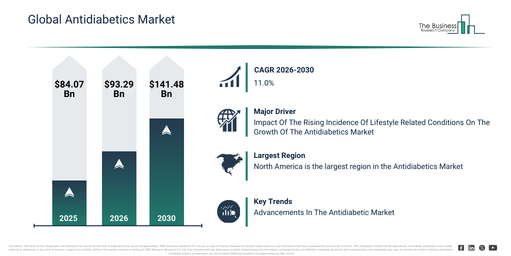
    The antidiabetics market size has experienced rapid growth in recent years. It is forecast to expand from $84.07 billion in 2025 to $93.29 billion in 2026, achieving a compound annual growth rate (CAGR) of 11.0%. This historical expansion can be linked to factors such as the rising global prevalence of diabetes, increased availability of insulin therapies, the expansion of oral antidiabetic medications, improved disease awareness and diagnosis, and an increase in healthcare access.

    The antidiabetics market is projected to experience substantial expansion in the coming years. This market is forecast to reach $141.48 billion by 2030, exhibiting a compound annual growth rate (CAGR) of 11.0%. Key drivers for this growth during the outlook period include the increased uptake of advanced diabetes medications, a stronger emphasis on long-acting and once-weekly treatments, wider integration of digital diabetes management solutions, growing financial commitments to metabolic disorder research, and a rising need for patient-focused care approaches. Significant trends anticipated in the forecast timeframe encompass the expanding use of GLP-1 and SGLT2 therapies, a heightened interest in combination drug protocols, an increasing desire for individualized diabetes treatment, broader application of oral antidiabetic drugs, and a greater accentuation on cardiovascular and weight-related advantages.

    Access Your Free Sample Report For In-Depth Market Analysis:

    https://www.thebusinessresearchcompany.com/report/antidiabetics-global-market-report

    Which Strong Drivers Are Impacting The Antidiabetics Market Growth?

    The increasing occurrence of lifestyle-related health conditions is projected to drive the expansion of the antidiabetics market moving forward. These lifestyle-related conditions are health problems that are either caused or aggravated by behaviors such as an unhealthy diet, lack of exercise, smoking, and excessive alcohol consumption. The incidence of such conditions is escalating due to factors like inadequate nutrition, physical inactivity, and heightened stress levels. Antidiabetic medications can assist in managing lifestyle-associated conditions like obesity and metabolic syndrome by enhancing insulin sensitivity and regulating blood sugar levels. For instance, in August 2024, as per Statistics Canada, a Canada-based government agency, Canadian manufacturers produced 1.2 billion cigarettes in July 2024, which represented a 4.3% increase from June 2024 and a 2.3% rise compared to July 2023. Thus, the growing prevalence of lifestyle-related conditions is propelling the antidiabetic market.

    What Are The Main Segments Within The Antidiabetics Market Segment Structure?

    The antidiabetics market covered in this report is segmented –

    1) By Drug Class: Insulin, GLP-1 Receptor Agonists, DPP- 4 Inhibitors, SGLT2 Inhibitors, Other Drug Classes

    2) By Diabetes Type: Type 1, Type 2

    3) By Patient Population: Antidiabetics For Pediatrics, Antidiabetics For Adults, Antidiabetics For Geriatrics

    4) By Route Of Administration: Antidiabetics Administration Through Insulin Syringes Or Insulin Pens, Antidiabetics Administration Through Insulin Pumps, Intravenous Antidiabetics Infusion, Oral Antidiabetics Administration, Other Routes Of Antidiabetics Administration

    5) By Distribution Channel: Online Pharmacies, Hospital Pharmacies, Retail Pharmacies

    Subsegments:

    1) By Insulin: Rapid-Acting Insulin, Short-Acting Insulin, Intermediate-Acting Insulin, Long-Acting Insulin, Premixed Insulin

    2) By GLP-1 Receptor Agonists: Exenatide, Liraglutide, Dulaglutide, Semaglutide, Lixisenatide

    3) By DPP-4 Inhibitors: Sitagliptin, Saxagliptin, Linagliptin, Alogliptin

    4) By SGLT2 Inhibitors: Canagliflozin, Dapagliflozin, Empagliflozin, Ertugliflozin

    5) By Other Drug Classes: Sulfonylureas, Thiazolidinediones (TZDs), Alpha-Glucosidase Inhibitors, Meglitinides, GLP-1/Insulin Combination Therapy

    Which Trends Are Contributing To Changes In The Antidiabetics Market?

    Major companies operating in the antidiabetics market are developing advanced products, such as the anti-diabetic biosimilar, to enhance glycemic control, diminish the risk of cardiovascular events, and present more effective treatment options for individuals with diabetes. An anti-diabetic biosimilar is a biologically similar medication to an already approved reference drug utilized for treating diabetes, providing comparable safety, effectiveness, and quality. For instance, in January 2024, Glenmark Pharmaceuticals Limited, an India-based pharmaceutical company, introduced the first biosimilar of Liraglutide, an anti-diabetic drug. The biosimilar of the Liraglutide anti-diabetic drug, launched as Lirafit, improves glycemic control in adults with type 2 diabetes mellitus. Clinical trials have indicated it lowers glycemic parameters, contributes to weight loss, and improves cardiovascular safety. As a GLP-1 receptor agonist, it promotes glucose-dependent insulin secretion and decreases inappropriate glucagon secretion. It is globally approved for managing type 2 diabetes in adults.

    Who Are The Companies Participating In The Antidiabetics Market?

    Major companies operating in the antidiabetics market are Pfizer Inc., Johnson & Johnson, Merck & Co. Inc., Sanofi S.A., Bristol-Myers Squibb Company, AstraZeneca plc, Abbott Laboratories, Novartis AG, Takeda Pharmaceutical Company Limited, GSK plc, Eli Lilly and Company, Boehringer Ingelheim International GmbH, Novo Nordisk A/S, Teva Pharmaceutical Industries Ltd., Astellas Pharma Inc., Sun Pharmaceutical Industries Limited, Cipla Limited, Dr. Reddy’s Laboratories, Lupin Limited, Torrent Pharmaceuticals Ltd, Biocon Limited, Glenmark Pharmaceuticals Ltd.

    Get The Full Antidiabetics Market Report:

    https://www.thebusinessresearchcompany.com/report/antidiabetics-global-market-report

    Which Region Accounts For The Largest Portion Of The Antidiabetics Market?

    North America was the largest region in the antidiabetics market in 2025. The regions covered in the antidiabetics market report are Asia-Pacific, South East Asia, Western Europe, Eastern Europe, North America, South America, Middle East, Africa.

    Request A Customized Antidiabetics Market Report For Competitive Insights:

    https://www.thebusinessresearchcompany.com/report/antidiabetics-global-market-report

    Browse Through More Reports Similar to the Global Antidiabetics Market 2026, By The Business Research Company

    Biobetters Market Report 2026

    https://www.thebusinessresearchcompany.com/report/biobetters-global-market-report

    Antidiabetics Market Report 2026

    https://www.thebusinessresearchcompany.com/report/antidiabetics-global-market-report

    Antidiabetics Market Report 2026

    https://www.thebusinessresearchcompany.com/report/antidiabetics-global-market-report

    Get in touch with us:

    The Business Research Company: https://www.thebusinessresearchcompany.com/

    Americas +1 310-496-7795

    Asia +44 7882 955267 & +91 8897263534

    Europe +44 7882 955267

    Email us at info@tbrc.info

    Follow us on:

    LinkedIn: https://in.linkedin.com/company/the-business-research-company

    YouTube: https://www.youtube.com/channel/UC24_fI0rV8cR5DxlCpgmyFQ

    Global Market Model: https://www.thebusinessresearchcompany.com/global-market-model

  • Adult Spinal Deformity Market: Growth Potential and Future Outlook

    Adult Spinal Deformity Market: Growth Potential and Future Outlook

    The Business Research Company’s 2026 market reports feature enhanced tools like market attractiveness analysis, TAM assessment, and company scoring matrices, along with interactive dashboards, deeper supply chain insights, and startup coverage strengthening the depth, usability, and strategic value of insights.

    What Is The Anticipated Rise In Market Value Of The Adult Spinal Deformity Market During The Forecast Period?

    The adult spinal deformity market has experienced significant growth over recent years. It is anticipated to expand from $2.57 billion in 2025 to $2.73 billion in 2026, achieving a compound annual growth rate (CAGR) of 6.1%. This historical expansion can be primarily attributed to the growing prevalence of adult spinal deformities, an increase in spinal surgeries and fusion procedures, the rising geriatric population, the adoption of traditional spinal fixation devices, and the expansion of hospital-based spine care programs.

    The adult spinal deformity market size is anticipated to experience robust growth in the coming years. It is projected to reach $3.37 billion by 2030, exhibiting a compound annual growth rate (CAGR) of 5.4%. This expansion during the forecast period can be attributed to the development of advanced minimally invasive spinal devices, a growing awareness of spinal deformity correction options, the increasing number of ambulatory surgical centers, the rising adoption of image-guided and robotic-assisted spine surgeries, and the expansion of post-operative rehabilitation services. Furthermore, significant trends in the forecast period include the increasing uptake of minimally invasive spinal surgeries, a rising demand for spinal fusion and deformity correction procedures, advancements in cervical and thoracolumbar fixation devices, the broadening of ambulatory surgical centers for spine care, and an enhanced focus on post-surgical rehabilitation and patient outcomes.

    Access Your Free Sample Report For In-Depth Market Analysis:

    https://www.thebusinessresearchcompany.com/report/adult-spinal-deformity-global-market-report

    What Key Factors Are Affecting The Adult Spinal Deformity Market Demand?

    The adult spinal deformity market is anticipated to expand due to increasing obesity rates. Obesity rates indicate the proportion or percentage of a population deemed obese, determined by body mass index (BMI) measurements, typically defined as a BMI of 30 or higher. The rise in obesity rates stems from greater intake of high-calorie, processed foods and inactive lifestyles. Additionally, restricted access to nutritious foods and environmental elements also contribute to this upward trend. Solutions for adult spinal deformity are increasingly being employed in obese individuals to manage the elevated mechanical stress on the spine and lessen the risk and advancement of obesity-related spinal deformities. For example, the World Obesity Federation, a UK-based membership organization, projected in March 2025 that by 2030, close to 3 billion adults, representing approximately 50% of the global adult population, will be living with overweight or obesity. Consequently, increasing obesity rates will stimulate the expansion of the adult spinal deformity market.

    Which Segments Define The Adult Spinal Deformity Market Segment Structure?

    The adult spinal deformity market covered in this report is segmented –

    1) By Deformity Type: Scoliosis, Kyphosis, Lordosis

    2) By Product Type: Interbody Fusion Devices, Thoracolumbar Devices

    3) By Procedure: Spinal Fusion Surgery, Osteotomy, Spinal Deformity Correction, Spinal Arthrodesis, Spinal Fixation, Minimally Invasive Spinal Surgeries, Other Procedures

    Subsegments:

    1) By Scoliosis: Degenerative And Adult-Onset Scoliosis, Adult Idiopathic Scoliosis, Adult Neuromuscular Scoliosis, Residual And Progressive Congenital Scoliosis in Adults

    2) By Kyphosis: Degenerative Kyphosis, Postural Kyphosis in Adults, Adult Scheuermann’s Kyphosis, Post-Traumatic Kyphosis

    3) By Lordosis: Hyperlordosis And Excessive Lumbar Curvature, Hypolordosis Or Flatback Syndrome, Iatrogenic Lordosis

    What Trends Are Influencing Changes In The Adult Spinal Deformity Market?

    Major companies in the adult spinal deformity market are concentrating on developing customized patient solutions, such as implant technologies, designed to categorize and evaluate congenital anomalies affecting the upper limb, particularly those of the hand and wrist. Spinal deformity devices incorporate sophisticated implant technologies, including titanium alloys and polymer composites, to provide enhanced structural support and facilitate corrective procedures. For example, in January 2023, Orthofix Medical Inc., a U.S.-based medical device company, introduced the mariner deformity pedicle screw system following its merger with SeaSpine. This system is specifically designed for complex adult deformity spine cases, offering advanced reduction tools, specialized implants, and robust osteotomy instruments. It leverages Mariner’s modular technology to provide a comprehensive implant solution, thereby reducing surgical trays and improving operational efficiency in hospitals through better workflow and lowered costs.

    Who Are The Established Players Within The Adult Spinal Deformity Market?

    Major companies operating in the adult spinal deformity market are Abbott Laboratories, Medtronic plc, Johnson & Johnson MedTech, Stryker Corporation, B Braun Melsungen AG, Zimmer Biomet Holdings Inc, NuVasive Inc, Globus Medical Inc, Medacta International, Orthofix Medical Inc, Alphatec Holdings Inc, Exactech Inc, RTI Surgical Holdings Inc, SeaSpine Holdings Corporation, Centinel Spine LLC, Spine Wave Inc, Zavation Medical Products LLC., Spinal Elements Holdings Inc., Simplify Medical Inc, Aurora Spine Corporation, Premia Spine Ltd, Innovasis Inc, Osseus Fusion Systems, SpineGuard SA

    Get The Full Adult Spinal Deformity Market Report:

    https://www.thebusinessresearchcompany.com/report/adult-spinal-deformity-global-market-report

    Which Region Represents The Largest Share Of The Adult Spinal Deformity Market?

    North America was the largest region in the adult spinal deformity market in 2025. Asia-Pacific is expected to be the fastest-growing region in the forecast period The regions covered in the adult spinal deformity market report are Asia-Pacific, South East Asia, Western Europe, Eastern Europe, North America, South America, Middle East, Africa.

    Request A Customized Adult Spinal Deformity Market Report For Competitive Insights:

    https://www.thebusinessresearchcompany.com/report/adult-spinal-deformity-global-market-report

    Browse Through More Reports Similar to the Global Adult Spinal Deformity Market 2026, By The Business Research Company

    Spinal Surgery Devices And Equipment Market Report 2026

    https://www.thebusinessresearchcompany.com/report/spinal-surgery-devices-and-equipment-global-market-report

    Spinal Imaging Market Report 2026

    https://www.thebusinessresearchcompany.com/report/spinal-imaging-global-market-report

    Spine Biologics Market Report 2026

    https://www.thebusinessresearchcompany.com/report/spine-biologics-global-market-report

    Get in touch with us:

    The Business Research Company: https://www.thebusinessresearchcompany.com/

    Americas +1 310-496-7795

    Asia +44 7882 955267 & +91 8897263534

    Europe +44 7882 955267

    Email us at info@tbrc.info

    Follow us on:

    LinkedIn: https://in.linkedin.com/company/the-business-research-company

    YouTube: https://www.youtube.com/channel/UC24_fI0rV8cR5DxlCpgmyFQ

    Global Market Model: https://www.thebusinessresearchcompany.com/global-market-model
  • Increasing chronic disease prevalence is boosting the antibody validation market

    Increasing chronic disease prevalence is boosting the antibody validation market

    The Business Research Company’s 2026 market reports feature enhanced tools like market attractiveness analysis, TAM assessment, and company scoring matrices, along with interactive dashboards, deeper supply chain insights, and startup coverage strengthening the depth, usability, and strategic value of insights.

    What Is The Forecasted Market Size Trajectory Of The Antibody Validation Market From 2026 To 2030?

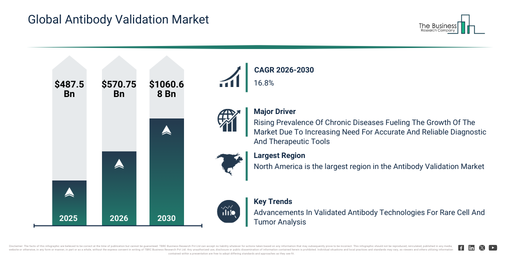
    The antibody validation market size has experienced rapid growth in recent years. It is projected to expand from $487.5 billion in 2025 to $570.75 billion in 2026, showing a compound annual growth rate (CAGR) of 17.1%. This historic growth can be attributed to escalating concerns regarding variability in research antibodies, the broadening scope of proteomics and genomics research, increased regulatory scrutiny concerning research reproducibility, the rise of antibody-based assays, and greater funding allocated to life sciences research.

    The antibody validation market is poised for substantial growth in the upcoming years, with projections indicating it will reach $1060.68 billion by 2030, exhibiting a compound annual growth rate (CAGR) of 16.8%. The expansion during this forecast period can be attributed to factors such as an escalating demand for rigor and reproducibility, the increasing application of antibodies in clinical research, the broadening of precision diagnostics, a greater adoption of validated antibodies in drug discovery, and the enhanced integration of digital validation data platforms. Prominent trends anticipated in this period include the widespread implementation of standardized antibody validation protocols, a growing need for application-specific validation services, an increased utilization of multiplex validation techniques, the development of reproducibility-focused testing frameworks, and a reinforced emphasis on data transparency.

    Access Your Free Sample Report For In-Depth Market Analysis:

    https://www.thebusinessresearchcompany.com/report/global-antibody-validation-market-report

    What Key Factors Are Shaping The Antibody Validation Market Landscape?

    The increasing occurrence of chronic illnesses is anticipated to fuel the expansion of the antibody validation market in the future. These long-term health conditions develop gradually and persist for extended periods, often demanding ongoing medical attention. A key factor contributing to the rising incidence of chronic diseases is sedentary lifestyles, where prolonged sitting and limited physical activity elevate the risk of ailments such as heart conditions and diabetes. Antibody validation plays a crucial role in managing chronic diseases by guaranteeing the precision, distinctiveness, and dependability of antibodies utilized in diagnostic and therapeutic applications. It facilitates better identification of disease biomarkers, aids in accurate monitoring, and enhances the creation of targeted therapies, thereby promoting effective and customized care for chronic conditions. For instance, in June 2024, data from the National Health Service, a UK-based government department, revealed that 3,615,330 individuals registered with a general practitioner (GP) were diagnosed with non-diabetic hyperglycemia or pre-diabetes (a condition with elevated blood sugar levels, not high enough to be classified as diabetes) in 2023, indicating an 18% rise from 3,065,825 cases recorded in 2022. Consequently, the growing prevalence of chronic diseases is a significant driver for the growth of the antibody validation market.

    How Is Segmentation Applied In The Antibody Validation Market Segment Analysis?

    The antibody validation market covered in this report is segmented –

    1) By Product Type: Monoclonal Antibodies, Polyclonal Antibodies, Anti-Body Drug Complexes

    2) By Disease Indication: Cardiovascular Diseases, Central Nervous System (CNS) Disorders, Cancer, Autoimmune Disorders

    3) By End User: Pharmaceutical And Biotechnological Firms, Contract Research Organizations, Research Institutes

    Subsegments:

    1) By Monoclonal Antibodies: Recombinant Monoclonal Antibodies, Humanized Monoclonal Antibodies, Chimeric Monoclonal Antibodies, Murine Monoclonal Antibodies

    2) By Polyclonal Antibodies: Rabbit Polyclonal Antibodies, Goat Polyclonal Antibodies, Sheep Polyclonal Antibodies, Donkey Polyclonal Antibodies

    3) By Antibody Drug Complexes: Immunoconjugates, Radioimmunoconjugates, Immunotoxins, Bispecific Antibody Drug Complexes

    What Market Trends Are Affecting The Antibody Validation Market?

    Leading companies in the antibody validation market are emphasizing advanced innovations, such as Celselect slides enumeration stain kits, to improve the accuracy and sensitivity of identifying rare cells and circulating tumor cells, enhance validation efficiency, and support high-precision cancer research and diagnostic applications. Celselect slides enumeration stain kits specifically refer to specialized reagent kits designed to enable the detection, staining, and counting of rare cells and circulating tumor cells (CTCs). For instance, in March 2024, Bio-Rad Laboratories Inc., a US-based life science research company, launched celselect slides validated antibodies for rare cell and circulating tumor cell (CTC) enumeration. This product aims to enable sensitive and specific identification of CTC surface markers, enhance tumor heterogeneity studies, and support high-precision cancer research through improved rare cell capture, enrichment, and analysis. This launch expanded the company’s single-cell oncology portfolio by equipping researchers with validated reagents for accurate immunostaining and enumeration of CTCs.

    Who Are The Companies Participating In The Antibody Validation Market Environment?

    Major companies operating in the antibody validation market are F. Hoffmann-La Roche Ltd., Merck & Co. Inc., Thermo Fisher Scientific Inc., Danaher Corporation, Becton Dickinson and Company, Agilent Technologies Inc., PerkinElmer Inc., Bio-Rad Laboratories Inc., Azenta Inc., GenScript Biotech Corporation, Promega Corporation, Sino Biological Inc., Cell Signaling Technology Inc., Fortis Life Sciences, Proteintech Group Inc., Santa Cruz Biotechnology Inc., Novus Biologicals LLC, Creative Diagnostics, Rockland Immunochemicals Inc., Biorbyt Ltd.

    Get The Full Antibody Validation Market Report:

    https://www.thebusinessresearchcompany.com/report/global-antibody-validation-market-report

    Which Region Holds The Highest Market Share In The Antibody Validation Market?

    North America was the largest region in the antibody validation market in 2025. The regions covered in the antibody validation market report are Asia-Pacific, South East Asia, Western Europe, Eastern Europe, North America, South America, Middle East, Africa.

    Request A Customized Antibody Validation Market Report For Competitive Insights:

    https://www.thebusinessresearchcompany.com/report/global-antibody-validation-market-report

    Browse Through More Reports Similar to the Global Antibody Validation Market 2026, By The Business Research Company

    Neuroscience Antibodies And Assays Market Report 2026

    https://www.thebusinessresearchcompany.com/report/neuroscience-antibodies-and-assays-global-market-report

    Diagnostic Specialty Antibodies Market Report 2026

    https://www.thebusinessresearchcompany.com/report/diagnostic-specialty-antibodies-global-market-report

    Research Antibodie And Reagent Market Report 2026

    https://www.thebusinessresearchcompany.com/report/research-antibodie-and-reagent-global-market-report

    Get in touch with us:

    The Business Research Company: https://www.thebusinessresearchcompany.com/

    Americas +1 310-496-7795

    Asia +44 7882 955267 & +91 8897263534

    Europe +44 7882 955267

    Email us at info@tbrc.info

    Follow us on:

    LinkedIn: https://in.linkedin.com/company/the-business-research-company

    YouTube: https://www.youtube.com/channel/UC24_fI0rV8cR5DxlCpgmyFQ

    Global Market Model: https://www.thebusinessresearchcompany.com/global-market-model

  • Adult Malignant Glioma Therapeutics Market: Growth Trends and Forecast

    Adult Malignant Glioma Therapeutics Market: Growth Trends and Forecast

    The Business Research Company’s 2026 market reports feature enhanced tools like market attractiveness analysis, TAM assessment, and company scoring matrices, along with interactive dashboards, deeper supply chain insights, and startup coverage strengthening the depth, usability, and strategic value of insights.

    How Is The Market Size Of The Adult Malignant Glioma Therapeutics Market Expected To Scale Between 2026 And 2030?

    The adult malignant glioma therapeutics market size has seen substantial growth in recent times. It is anticipated to increase from $2.47 billion in 2025 to $2.7 billion in 2026, at a compound annual growth rate (CAGR) of 9.1%. The expansion observed historically is attributable to a scarcity of therapeutic choices for malignant gliomas, continued dependence on standard chemotherapy and radiotherapy, a rising incidence of adult brain tumors, the growth of hospital oncology services, and increased awareness regarding glioma treatment requirements.

    The adult malignant glioma therapeutics market is poised for significant expansion in the coming years. This market is projected to reach $3.94 billion by 2030, exhibiting a compound annual growth rate (CAGR) of 9.9%. Key drivers for this anticipated growth include the advancement of targeted molecular therapies, the broadening of clinical trials for innovative glioma treatments, increased funding in precision oncology, growing partnerships between biotechnology firms and healthcare providers, and the integration of sophisticated radiotherapy and combination therapy methods. Noteworthy trends shaping this period encompass the escalating creation of targeted glioma therapies, the expanding use of combined treatment strategies, the wider application of experimental and personalized medicine, an increasing emphasis on enhancing patient quality of life, and the greater implementation of advanced radiotherapy techniques.

    Access Your Free Sample Report For In-Depth Market Analysis:

    https://www.thebusinessresearchcompany.com/report/adult-malignant-glioma-therapeutics-global-market-report

    Which Primary Drivers Are Impacting The Adult Malignant Glioma Therapeutics Market Growth?

    Government funding allocated to support brain cancer research is anticipated to propel the growth of the adult malignant glioma therapeutics market. This financial support, provided by federal, state, or local government entities, extends to various organizations, initiatives, projects, programs, or individuals. Such funding proves beneficial for adult malignant glioma therapeutics by facilitating the development of novel treatments, supporting customized drug development, enabling efforts targeting pyrimidine synthesis, and aiding in orphan drug approval processes. For instance, in June 2023, the Australian Department of Health and Aged Care, an Australia-based government authority, launched the Australian Brain Cancer Mission, committing a fund of $136.66 million to advance brain cancer research. The objective of this initiative is to double the survival rates and thereby enhance the quality of life for patients diagnosed with brain cancer, including anaplastic astrocytoma. Therefore, government funding directed towards brain cancer research actively drives the adult malignant glioma therapeutics market.

    How Is The Adult Malignant Glioma Therapeutics Market Segmented Across Different Segment Categories?

    The adult malignant glioma therapeutics market covered in this report is segmented –

    1) By Type Of Disease: Glioblastoma Multiforme, Anaplastic Astrocytoma, Anaplastic Oligodendroglioma, Anaplastic Oligoastrocytoma, Other Types

    2) By Therapy: Chemotherapy, Targeted Therapy, Radiotherapy, Other Therapies

    3) By End-User: Hospitals, Specialty Clinics, Cancer And Radiation Therapy Centers, Other End Users

    Subsegments:

    1) By Glioblastoma Multiforme: Standard Treatments, Experimental Therapies

    2) By Anaplastic Astrocytoma: Chemotherapy Options, Targeted Therapies

    3) By Anaplastic Oligodendroglioma: Radiation Therapy, Combination Therapies

    4) By Anaplastic Oligoastrocytoma: Surgical Interventions, Adjuvant Therapies

    5) By Other Types: Rare Gliomas, Emerging Therapies

    Which Trends Are Shaping Growth In The Adult Malignant Glioma Therapeutics Market?

    Leading companies within the adult malignant glioma therapeutics market are engaged in developing innovative products, such as small molecule targeted degraders, with the aim of delivering reliable customer service. A small-molecule targeted degrader operates as a pharmaceutical agent utilizing small molecules to prompt the degradation of specific proteins by concurrently targeting a protein of interest (POI) and an E3 ubiquitin ligase. For instance, in February 2023, Beactica Therapeutics AB, a precision oncology company based in Sweden, secured orphan drug designation approval from the U.S. Food and Drug Administration (FDA) for BEA-17, intended for the treatment of glioblastoma (GBM). This particular compound is a small-molecule targeted degrader of the epigenetic enzyme LSD1 and its co-factor CoREST, both of which have been implicated in the pathogenesis of various cancers, including GBM. BEA-17 exerts its effect by degrading LSD1 and CoREST, which subsequently leads to the reactivation of tumor suppressor genes and the suppression of cancer cell growth.

    Which Organizations Play A Role In The Adult Malignant Glioma Therapeutics Market Landscape?

    Major companies operating in the adult malignant glioma therapeutics market are Johnson & Johnson Private Limited, Pfizer Inc., F. Hoffmann-La Roche Ltd., Allergan plc, AbbVie Inc., Novartis AG, Bayer AG, Merck & Co Inc., GlaxoSmithKline plc, Bristol-Myers Squibb Company, AstraZeneca plc, Eli Lilly and Company, Amgen Inc., Teva Pharmaceutical Industries Ltd., GT Medical Technologies Inc., Lupin Limited, Mylan NV, Sanofi SA, Bausch Health Companies Inc., Sun Pharmaceutical Industries Ltd., Aurobindo Pharma Limited, Genentech Inc., Amneal Pharmaceuticals LLC, Emcure Pharmaceuticals Limited, Novocure Ltd., Arbour Pharmaceuticals LLC, Basilea Pharmaceuticals Ltd.

    Get The Full Adult Malignant Glioma Therapeutics Market Report:

    https://www.thebusinessresearchcompany.com/report/adult-malignant-glioma-therapeutics-global-market-report

    Which Geographic Region Dominates The Adult Malignant Glioma Therapeutics Market?

    North America was the largest region in the adult malignant glioma therapeutics market in 2025. Asia Pacific is expected to be the fastest-growing region in the forecast period. The regions covered in the adult malignant glioma therapeutics market report are Asia-Pacific, South East Asia, Western Europe, Eastern Europe, North America, South America, Middle East, Africa.

    Request A Customized Adult Malignant Glioma Therapeutics Market Report For Competitive Insights:

    https://www.thebusinessresearchcompany.com/report/adult-malignant-glioma-therapeutics-global-market-report

    Browse Through More Reports Similar to the Global Adult Malignant Glioma Therapeutics Market 2026, By The Business Research Company

    Brain Tumor Drugs Market Report 2026

    https://www.thebusinessresearchcompany.com/report/brain-tumor-drugs-global-market-report

    Glioma Treatment Market Report 2026

    https://www.thebusinessresearchcompany.com/report/glioma-treatment-global-market-report

    Pontine Glioma Drugs Market Report 2026

    https://www.thebusinessresearchcompany.com/report/pontine-glioma-drugs-global-market-report

    Get in touch with us:

    The Business Research Company: https://www.thebusinessresearchcompany.com/

    Americas +1 310-496-7795

    Asia +44 7882 955267 & +91 8897263534

    Europe +44 7882 955267

    Email us at info@tbrc.info

    Follow us on:

    LinkedIn: https://in.linkedin.com/company/the-business-research-company

    YouTube: https://www.youtube.com/channel/UC24_fI0rV8cR5DxlCpgmyFQ

    Global Market Model: https://www.thebusinessresearchcompany.com/global-market-model

  • Rising chronic diseases are driving growth in the antibody production services market

    Rising chronic diseases are driving growth in the antibody production services market

    The Business Research Company’s 2026 market reports feature enhanced tools like market attractiveness analysis, TAM assessment, and company scoring matrices, along with interactive dashboards, deeper supply chain insights, and startup coverage strengthening the depth, usability, and strategic value of insights.

    How Much Will The Market Value Of The Antibody Production Services Market Grow Between 2026 And 2030?

    The antibody production services market has experienced rapid expansion in recent years. It is anticipated to increase from $6.44 billion in 2025 to $7.24 billion in 2026, demonstrating a compound annual growth rate (CAGR) of 12.4%. This historical growth can be ascribed to the broadening of biomedical research activities, the rise of monoclonal antibody therapeutics, the increasing application of antibodies in diagnostics, escalating investments in life science research, and the presence of advanced antibody engineering techniques.

    The antibody production services market is anticipated to experience substantial growth over the next few years. Projections indicate it will reach $11.45 billion by 2030, exhibiting a compound annual growth rate (CAGR) of 12.1%. This expansion is attributed to several factors, including the increasing demand for personalized medicine, the expanding pipelines for biologics drug development, the growing trend of outsourcing among pharmaceutical companies, the development of advanced antibody formats, and a heightened emphasis on reproducibility and quality control. Prominent trends throughout this period encompass a rising demand for custom antibody generation, increased adoption of recombinant antibody technologies, a sharpened focus on high-affinity and high-specificity antibodies, the broadening of outsourced antibody production services, and a greater emphasis on stringent quality validation standards.

    Access Your Free Sample Report For In-Depth Market Analysis:

    https://www.thebusinessresearchcompany.com/report/global-antibody-production-services-market-report

    Which Factors Are Influencing The Growth Of The Antibody Production Services Market?

    The increasing incidence of chronic illnesses is anticipated to drive the expansion of the antibody production services market. These are long-term health issues that progress gradually and persist for prolonged durations, frequently necessitating ongoing medical attention. The escalating occurrence of chronic diseases is partly attributed to sedentary lifestyles, where extended periods of sitting and insufficient physical activity heighten the likelihood of developing conditions like heart disease and diabetes. Antibody production services assist in managing chronic ailments by offering specific therapeutic and diagnostic options, proving crucial for diseases including cancer, autoimmune disorders, and diabetes. These services enhance treatment accuracy through early detection, continuous monitoring, and customized therapies, thereby improving patient results and the overall effectiveness of disease management. For example, in June 2024, data from the National Health Service, a UK government department, revealed that 3,615,330 individuals registered with a general practitioner (GP) were diagnosed with non-diabetic hyperglycemia or pre-diabetes (a condition characterized by elevated blood sugar levels, though not severe enough for a diabetes diagnosis) in 2023. This represented an 18% rise from 3,065,825 cases reported in 2022. Consequently, the increasing prevalence of chronic diseases is fueling the expansion of the antibody production services market.

    What Segment Categories Shape The Antibody Production Services Market Segment Landscape?

    The antibody production services market covered in this report is segmented –

    1) By Type: Monoclonal Antibodies, Chimeric Antibodies, Humanized Antibodies, Recombinant Antibodies, Polyclonal Antibodies

    2) By Technology: Hybridoma Technology, Phage Display Technology, Yeast Display Technology, Cell-Based Technology

    3) By Application: Therapeutic, Research, Diagnostic

    4) By End User: Pharmaceutical and Biotechnology Companies, Academic and Research Institutes, Hospitals and Clinics, Contract Research Organizations

    Subsegments:

    1) By Monoclonal Antibodies: Human Monoclonal Antibodies, Mouse Monoclonal Antibodies, Rabbit Monoclonal Antibodies, Rat Monoclonal Antibodies

    2) By Chimeric Antibodies: Mouse-Human Chimeric Antibodies, Rat-Human Chimeric Antibodies, Rabbit-Human Chimeric Antibodies, Primate-Human Chimeric Antibodies

    3) By Humanized Antibodies: Complementarity Determining Region Grafted Antibodies, Framework Shuffling Antibodies, Resurfaced Humanized Antibodies, Germline Humanized Antibodies

    4) By Recombinant Antibodies: Single Chain Variable Fragment Antibodies, Fragment Antigen Binding Antibodies, Bispecific Recombinant Antibodies, Nanobodies

    5) By Polyclonal Antibodies: Rabbit Polyclonal Antibodies, Goat Polyclonal Antibodies, Sheep Polyclonal Antibodies, Donkey Polyclonal Antibodies

    Which Trends Are Influencing Demand In The Antibody Production Services Market?

    Leading companies within the antibody production services market are concentrating on developing advanced digital solutions, such as AI-powered analytics, to enhance efficiency, deepen data-driven insights, and accelerate discovery timelines. These AI-driven analytical methods involve sophisticated computational models that process complex biological and chemical data to predict outcomes, identify patterns, and generate novel designs, particularly for therapeutic antibodies. For example, in August 2025, Zifo, an India-based provider of scientific informatics services, introduced the Zifo AI Engine for Antibody Engineering application on the Snowflake Marketplace. This cloud-native application leverages generative AI and machine learning models to rapidly design and optimize antibody-based therapeutics. Its capabilities include predictive affinity maturation and humanization, allowing for seamless data analysis and candidate generation within a secure, scalable data platform without requiring extensive internal AI infrastructure.

    Who Are The Companies Operating Across The Antibody Production Services Market Value Chain?

    Major companies operating in the antibody production services market are Pfizer Inc., AbbVie Inc., Novartis AG, Thermo Fisher Scientific Inc., Merck KGaA, Danaher Corporation, Agilent Technologies Inc., PerkinElmer Inc., Sartorius AG, Bio-Rad Laboratories Inc., Bio-Techne Corporation, Azenta Inc., GenScript Biotech Corporation, Invenra Inc., Sino Biological Inc., Proteintech Group Inc., Rapid Novor, Rockland Immunochemicals Inc., Biorbyt Ltd., [New Company: Creative Biolabs

    Get The Full Antibody Production Services Market Report:

    https://www.thebusinessresearchcompany.com/report/global-antibody-production-services-market-report

    Where Is The Antibody Production Services Market Most Concentrated Geographically?

    North America was the largest region in the antibody production services market in 2025. Asia-Pacific is expected to be the fastest-growing region in the forecast period. The regions covered in the antibody production services market report are Asia-Pacific, South East Asia, Western Europe, Eastern Europe, North America, South America, Middle East, Africa.

    Request A Customized Antibody Production Services Market Report For Competitive Insights:

    https://www.thebusinessresearchcompany.com/report/global-antibody-production-services-market-report

    Browse Through More Reports Similar to the Global Antibody Production Services Market 2026, By The Business Research Company

    Next Generation Antibody Therapeutics Market Report 2026

    https://www.thebusinessresearchcompany.com/report/next-generation-antibody-therapeutics-global-market-report

    Research Antibodie And Reagent Market Report 2026

    https://www.thebusinessresearchcompany.com/report/research-antibodie-and-reagent-global-market-report

    Antibody Discovery Market Report 2026

    https://www.thebusinessresearchcompany.com/report/antibody-discovery-global-market-report

    Get in touch with us:

    The Business Research Company: https://www.thebusinessresearchcompany.com/

    Americas +1 310-496-7795

    Asia +44 7882 955267 & +91 8897263534

    Europe +44 7882 955267

    Email us at info@tbrc.info

    Follow us on:

    LinkedIn: https://in.linkedin.com/company/the-business-research-company

    YouTube: https://www.youtube.com/channel/UC24_fI0rV8cR5DxlCpgmyFQ

    Global Market Model: https://www.thebusinessresearchcompany.com/global-market-model

  • Adult Intraventricular Hemorrhage Market: Emerging Trends and Outlook

    Adult Intraventricular Hemorrhage Market: Emerging Trends and Outlook

    The Business Research Company’s 2026 market reports feature enhanced tools like market attractiveness analysis, TAM assessment, and company scoring matrices, along with interactive dashboards, deeper supply chain insights, and startup coverage strengthening the depth, usability, and strategic value of insights.

    What Level Of Market Value Growth Is Predicted For The Adult Intraventricular Hemorrhage Market From 2026 To 2030?

    The adult intraventricular hemorrhage market has experienced robust expansion over recent years. Forecasts indicate a rise from $2.22 billion in 2025 to $2.35 billion by 2026, demonstrating a compound annual growth rate (CAGR) of 6.1%. This historical growth can be linked to factors such as a greater occurrence of stroke and brain trauma, heightened awareness of neurological conditions, restricted access to sophisticated neurosurgical equipment, the implementation of standard IVH management strategies, and the expansion of hospital and specialized clinic facilities.

    The adult intraventricular hemorrhage market size is anticipated to demonstrate strong expansion in the upcoming years. It is forecast to grow to $2.9 billion in 2030, achieving a compound annual growth rate (CAGR) of 5.4%. This projected growth over the forecast period is primarily driven by the advancement of minimally invasive surgical devices, the increasing deployment of smart monitoring technologies, a rise in the adoption of novel hemostatic and neuroprotective drugs, the expansion of ivh-focused clinical research, and a growing need for homecare and ambulatory intervention solutions. Key trends expected in the forecast period include the rising acceptance of external ventricular drainage (evd) systems, more extensive use of minimally invasive neurosurgical tools, an increasing requirement for hemostatic and antihypertensive drugs, the proliferation of advanced intracranial monitoring devices, and a sharpened focus on rapid diagnosis and early intervention in ivh.

    Access Your Free Sample Report For In-Depth Market Analysis:

    https://www.thebusinessresearchcompany.com/report/adult-intraventricular-hemorrhage-global-market-report

    What Significant Factors Are Influencing The Adult Intraventricular Hemorrhage Market Expansion?

    The adult intraventricular hemorrhage market is anticipated to expand due to the rising occurrence of strokes going forward. A stroke constitutes a medical emergency characterized by impaired or cut-off blood supply to the brain, resulting in damage to brain cells. This escalating number of strokes largely stems from an aging demographic, increased prevalence of hypertension, diabetes, and obesity, along with lifestyle factors like smoking and insufficient physical activity. Strokes can induce adult intraventricular hemorrhage (IVH) through causing bleeding inside the brain’s ventricular system, frequently originating from burst blood vessels. To illustrate, in October 2025, the Australian Institute of Health and Welfare, an Australia-based independent statutory government agency, indicated that in 2023, Australia recorded approximately 41,100 stroke incidents, averaging about 113 cases each day. Consequently, the heightened frequency of strokes is fueling the expansion of the adult intraventricular hemorrhage market.

    What Are The Main Segments Within The Adult Intraventricular Hemorrhage Market Segment Structure?

    The adult intraventricular hemorrhage market covered in this report is segmented –

    1) By Product Type: Surgical Devices, Drugs, Monitoring Devices

    2) By Distribution Channel: Direct Sales, Distributors, Online Platforms, Other Distribution Channels

    3) By Application: Primary Intraventricular Hemorrhage, Secondary Intraventricular Hemorrhage, Post-Traumatic Intraventricular Hemorrhage, IVH with Hydrocephalus, Other Applications

    4) By End-User: Hospitals, Specialty Clinics, Diagnostic Centers, Other End-Users

    Subsegments:

    1) By Surgical Devices: Craniotomy Instruments, External Ventricular Drainage (EVD) Systems, Surgical Clips And Staples, Endoscopic Tools

    2) By Drugs: Hemostatic Agents, Antihypertensive Drugs, Sedatives And Analgesics

    3) By Monitoring Devices: Intracranial Pressure (ICP) Monitors, Brain Oxygenation Monitors, Cerebral Blood Flow (CBF) Monitors, Neuroimaging Devices

    What Trends Are Affecting The Direction Of The Adult Intraventricular Hemorrhage Market?

    Leading companies within the adult intraventricular hemorrhage market are concentrating on developing innovative products, such as neuroaccess devices, for the neurovascular management of ischemic and hemorrhagic strokes. Neuroaccess devices are specialized medical instruments utilized to gain entry into the brain or spinal cord for various diagnostic or therapeutic procedures. For example, in June 2024, Penumbra Inc., a US-based medical device company, publicly announced the acquisition of CE Mark approval and the subsequent European launch of its BMX81 and BMX96 neuroaccess devices, specifically designed for managing ischemic and hemorrhagic stroke. These particular devices are engineered for the neurovascular management of ischemic and hemorrhagic strokes and stand as Penumbra’s most cutting-edge neuroaccess offerings. In contrast to conventional access catheters, the BMX81 and BMX96 utilize laser-cut stainless steel hypo tube technology, which delivers superior stability and trackability, facilitating physicians’ navigation through the intricate anatomy of the brain.

    Who Are The Companies Participating In The Adult Intraventricular Hemorrhage Market?

    Major companies operating in the adult intraventricular hemorrhage market are Johnson and Johnson, Abbott Laboratories, Medtronic Plc, Siemens Healthineers, Medline Industries, Philips Healthcare Inc., Stryker Corporation, GE HealthCare Technologies Inc., Teva Pharmaceutical Industries Ltd., Boston Scientific Corporation, B. Braun Melsungen AG, Alcon Inc., Zimmer Biomet Holdings Inc., Olympus Corporation, Smith and Nephew, Kaneka Corporation, Karl Storz SE and Co. KG, Carl Zeiss Meditec AG, Integra Lifesciences Holdings Corp, Elekta AB, Leica Microsystems GmbH, KLS Martin Group, Natus Medical Incorporated, Aesculap Inc., NeuroPace Inc., Sophysa USA Inc, Spiegelberg GmbH and Co. KG, Vivonics Inc.

    Get The Full Adult Intraventricular Hemorrhage Market Report:

    https://www.thebusinessresearchcompany.com/report/adult-intraventricular-hemorrhage-global-market-report

    Which Region Is The Leading Market For The Adult Intraventricular Hemorrhage Market?

    North America was the largest region in the adult intraventricular hemorrhage market in 2025. Asia-Pacific is expected to be the fastest-growing region in the forecast period. The regions covered in the adult intraventricular hemorrhage market report are Asia-Pacific, South East Asia, Western Europe, Eastern Europe, North America, South America, Middle East, Africa.

    Request A Customized Adult Intraventricular Hemorrhage Market Report For Competitive Insights:

    https://www.thebusinessresearchcompany.com/report/adult-intraventricular-hemorrhage-global-market-report

    Browse Through More Reports Similar to the Global Adult Intraventricular Hemorrhage Market 2026, By The Business Research Company

    Vascular Embolization Market Report 2026

    https://www.thebusinessresearchcompany.com/report/vascular-embolization-global-market-report

    Intracranial Stents Market Report 2026

    https://www.thebusinessresearchcompany.com/report/intracranial-stents-global-market-report

    Intravascular Catheters Market Report 2026

    https://www.thebusinessresearchcompany.com/report/intravascular-catheters-global-market-report

    Get in touch with us:

    The Business Research Company: https://www.thebusinessresearchcompany.com/

    Americas +1 310-496-7795

    Asia +44 7882 955267 & +91 8897263534

    Europe +44 7882 955267

    Email us at info@tbrc.info

    Follow us on:

    LinkedIn: https://in.linkedin.com/company/the-business-research-company

    YouTube: https://www.youtube.com/channel/UC24_fI0rV8cR5DxlCpgmyFQ

    Global Market Model: https://www.thebusinessresearchcompany.com/global-market-model

  • Antibody production market analysis with future outlook

    Antibody production market analysis with future outlook

    The Business Research Company’s 2026 market reports feature enhanced tools like market attractiveness analysis, TAM assessment, and company scoring matrices, along with interactive dashboards, deeper supply chain insights, and startup coverage strengthening the depth, usability, and strategic value of insights.

    What Changes In Market Value Are Expected For The Antibody Production Market Over The 2026–2030 Period?

    The market for antibody production has experienced substantial expansion in recent times. It is projected to expand from $25.89 billion in 2025 to $30.02 billion in 2026, advancing at a compound annual growth rate (CAGR) of 16.0%. This growth observed in the past can be credited to the broadening of pharmaceutical and biotechnology research, the escalating application of monoclonal antibodies in therapies, developments in bioprocessing technologies, an increasing need for research-grade antibodies, and the rise of CRO and CDMO services.

    The antibody production market is anticipated to experience substantial expansion in the coming years, reaching a valuation of $53.78 billion by 2030, driven by a compound annual growth rate (CAGR) of 15.7%. This projected growth during the forecast period is primarily due to several factors: increasing financial commitments to biologics manufacturing, a rise in the use of continuous bioprocessing, the broadening of therapeutic antibody pipelines, an escalating need for economical antibody production, and the greater incorporation of digital biomanufacturing systems. Key developments expected within the same period include a greater embrace of recombinant antibody production techniques, an increasing requirement for high-yield expression systems, enhanced automation in upstream and downstream processes, the expansion of contract antibody manufacturing services, and a heightened emphasis on achieving scalability and reproducibility.

    Access Your Free Sample Report For In-Depth Market Analysis:

    https://www.thebusinessresearchcompany.com/report/global-antibody-production-market-report

    What Leading Drivers Are Supporting The Antibody Production Market Expansion?

    The increasing occurrence of chronic diseases is anticipated to boost the expansion of the antibody production market in the future. These are long-term health issues that progress gradually and persist for a considerable duration, frequently necessitating ongoing medical attention. The rising incidence of chronic illnesses is partly linked to sedentary lifestyles, since extended periods of sitting and insufficient physical activity heighten the likelihood of developing conditions like heart disease and diabetes. Antibody production supports the management of chronic diseases by offering specific therapeutic and diagnostic options, rendering them vital for illnesses such as cancer, autoimmune disorders, and diabetes. These solutions enhance the effectiveness of treatment and patient oversight through precise interventions and early detection, thereby improving overall healthcare results. As an example, in June 2024, data from the National Health Service, a UK-based government department, showed that 3,615,330 individuals registered with a general practitioner (GP) received a diagnosis of non-diabetic hyperglycemia or pre-diabetes (a condition with elevated blood sugar levels, not high enough to be classified as diabetes) in 2023. This represented an 18% rise from 3,065,825 cases recorded in 2022. Consequently, the increasing prevalence of chronic diseases is fueling the expansion of the antibody production market.

    Which Segment Types Are Examined In The Antibody Production Market Segment Study?

    The antibody production market covered in this report is segmented –

    1) By Type: Monoclonal Antibody, Polyclonal Antibody

    2) By Process: Upstream Processing, Downstream Processing

    3) By End-User: Pharmaceutical and Biotechnology Companies, Research Laboratories, Contract Research Organizations And Contract Development And Manufacturing Organizations

    Subsegments:

    1) By Monoclonal Antibody: Mouse Monoclonal Antibody, Human Monoclonal Antibody, Rabbit Monoclonal Antibody, Rat Monoclonal Antibody

    2) By Polyclonal Antibody: Rabbit Polyclonal Antibody, Goat Polyclonal Antibody, Sheep Polyclonal Antibody, Donkey Polyclonal Antibody

    What Emerging Trends Are Seen In The Antibody Production Market?

    Leading companies operating within the antibody production market are concentrating on developing sophisticated service models, such as rapid-access platforms, to accelerate research efforts, foster enhanced collaboration, and reduce overall development timelines. Rapid-access platforms are defined as streamlined service offerings that allow collaborating companies to promptly evaluate and leverage a proprietary technology for their specific drug development initiatives. For instance, in April 2025, Invenra Inc., a US-based biotechnology firm, introduced the B-Body Express Service. This service provides swift entry to Invenra’s premier B-Body bispecific antibody platform, empowering researchers to expedite the initial phases of therapeutic discovery. The offering encompasses a standardized methodology for generating functional bispecific antibodies tailored to a partner’s targets of interest, thereby considerably shortening the typical waiting period before testing novel drug candidates.

    Which Players Are Part Of The Competitive Landscape Of The Antibody Production Market?

    Major companies operating in the antibody production market are Johnson & Johnson, Roche Holding AG, Merck & Co. Inc., Pfizer Inc., AbbVie Inc., Bayer AG, Novartis AG, Thermo Fisher Scientific Inc., Amgen Inc., Danaher Corporation, Agilent Technologies Inc., Bio-Rad Laboratories Inc., Azenta Inc., GenScript Biotech Corporation, Sino Biological Inc., Proteintech Group Inc., Rapid Novor, Rockland Immunochemicals Inc., Biorbyt Ltd., Invenra Inc

    Get The Full Antibody Production Market Report:

    https://www.thebusinessresearchcompany.com/report/global-antibody-production-market-report

    Which Region Dominates The Antibody Production Market By Market Share?

    North America was the largest region in the antibody production market in 2025. Asia-Pacific is expected to be the fastest-growing region in the forecast period. The regions covered in the antibody production market report are Asia-Pacific, South East Asia, Western Europe, Eastern Europe, North America, South America, Middle East, Africa.

    Request A Customized Antibody Production Market Report For Competitive Insights:

    https://www.thebusinessresearchcompany.com/report/global-antibody-production-market-report

    Browse Through More Reports Similar to the Global Antibody Production Market 2026, By The Business Research Company

    Next Generation Antibody Therapeutics Market Report 2026

    https://www.thebusinessresearchcompany.com/report/next-generation-antibody-therapeutics-global-market-report

    Antibody Discovery Market Report 2026

    https://www.thebusinessresearchcompany.com/report/antibody-discovery-global-market-report

    Research Antibodie And Reagent Market Report 2026

    https://www.thebusinessresearchcompany.com/report/research-antibodie-and-reagent-global-market-report

    Get in touch with us:

    The Business Research Company: https://www.thebusinessresearchcompany.com/

    Americas +1 310-496-7795

    Asia +44 7882 955267 & +91 8897263534

    Europe +44 7882 955267

    Email us at info@tbrc.info

    Follow us on:

    LinkedIn: https://in.linkedin.com/company/the-business-research-company

    YouTube: https://www.youtube.com/channel/UC24_fI0rV8cR5DxlCpgmyFQ

    Global Market Model: https://www.thebusinessresearchcompany.com/global-market-model