Category: Healthcare Services

  • Adult Day Care Market Outlook Through 2030: Growth Trends

    Adult Day Care Market Outlook Through 2030: Growth Trends

    The Business Research Company’s 2026 market reports feature enhanced tools like market attractiveness analysis, TAM assessment, and company scoring matrices, along with interactive dashboards, deeper supply chain insights, and startup coverage strengthening the depth, usability, and strategic value of insights.

    How Will The Market Value Of The Adult Day Care Market Progress Between 2026 And 2030?

    The adult day care market size has experienced robust growth in recent years. It is anticipated to expand from $18.11 billion in 2025 to $19.32 billion in 2026, achieving a compound annual growth rate (CAGR) of 6.7%. The market’s historical expansion can be attributed to an increasing aging population, a rising prevalence of chronic illnesses, the proliferation of community-based care services, greater participation of caregivers in support programs, and the availability of public funding for adult care services.

    The adult day care market is projected to experience robust expansion over the coming years. This market is anticipated to reach $24.73 billion by 2030, exhibiting a compound annual growth rate (CAGR) of 6.4%. This projected growth during the forecast timeframe is attributable to factors such as increasing demand for dementia and memory care services, the expansion of hybrid medical-social care models, the rising adoption of digital health monitoring tools, growing investments in senior care infrastructure, and an increasing focus on preventive and wellness-based care. Key trends emerging during the forecast period encompass the expansion of medical-focused day care programs, growing demand for dementia-specific care services, the rising integration of therapeutic and recreational activities, an increasing focus on caregiver support services, and an enhanced emphasis on personalized care plans.

    Access Your Free Sample Report For In-Depth Market Analysis:

    https://www.thebusinessresearchcompany.com/report/adult-day-care-global-market-report

    Which Important Drivers Are Guiding The Adult Day Care Market Growth?

    The rising prevalence of Alzheimer’s disease is anticipated to fuel the expansion of the adult day care market moving forward. Alzheimer’s disease is a progressive neurological condition characterized by memory loss, declining cognitive function, and eventually the inability to perform daily activities. Its development is influenced by a combination of biological factors, including the buildup of amyloid plaques and tau tangles, genetic predispositions, inflammatory responses, and other elements that lead to the gradual loss of neurons and cognitive function. Adult day care services assist those with Alzheimer’s by offering structured activities, specialized support, and social interaction within a secure environment, which aids in symptom management, improves their quality of life, and provides support to caregivers. For instance, in May 2024, data from the Office for National Statistics Census, a UK-based government agency, revealed that in 2023, dementia and Alzheimer’s disease were the leading causes of death in England and Wales, responsible for 66,876 deaths (11.5%), an increase from 65,967 deaths (11.4%) recorded in 2022. Thus, the increasing number of individuals diagnosed with Alzheimer’s disease is propelling the adult day care market.

    How Is Segmentation Applied In The Adult Day Care Market Segment Analysis?

    The adult day care market covered in this report is segmented –

    1) By Type: Medical Focused, Dementia Specific, Respite Care, Recreational, Other Types

    2) By Service: Adult Social Day Services, Adult Day Healthcare Services, Specialized Day Care Services

    3) By Funding: Private, Public

    4) By End-User: Elderly, Disabled Individuals, Other End-Users

    Subsegments:

    1) By Medical Focused: Chronic Disease Management, Post-Surgical Care, Medication Management, Pain Management, Physical Therapy And Rehabilitation

    2) By Dementia Specific: Alzheimer’s Care, Parkinson’s Disease Care, Memory Care Services, Cognitive Support Programs, Behavior Management Programs

    3) By Respite Care: Short-Term Care, Family Caregiver Support, Emergency Respite Services, Overnight Respite Services

    4) By Recreational: Social And Group Activities, Arts And Crafts Programs, Fitness and Wellness Programs, Outdoor Activities and Excursions, Music And Therapy Programs

    5) By Other Types: Hospice Care, Palliative Care, Multi-Disciplinary Services, Spiritual Or Religious Services

    What Trends Are Influencing The Evolution Of The Adult Day Care Market?

    Leading companies within the adult day care market are concentrating on integrating care models, such as the Program of All-Inclusive Care for the Elderly (PACE), to improve benefits like coordinated healthcare provision, enhanced monitoring, and greater social engagement. PACE is a comprehensive care framework that combines adult day services with primary care, rehabilitation, transportation, meals, and personalized assistance, helping seniors maintain independence in their communities while receiving ongoing supervision and medical attention. For example, in October 2025, ArchCare, a US-based nonprofit elder care organization, introduced the Senior Life Harlem PACE Center. This community-focused integrated care facility is designed to offer social activities, meals, and medical services for older adults, featuring dedicated recreation areas, therapeutic spaces, and on-site clinical support. The Senior Life Harlem PACE Center boosts care quality and promotes independence through its coordinated services, continuous supervision, and a more engaging community experience for participants in the adult day care environment.

    Who Are The Companies Participating In The Adult Day Care Market Environment?

    Major companies operating in the adult day care market are Orpea Group, Home Instead Inc., Trinity Health Corporation, Encompass Health Corporation, Bayada Home Health Care Inc., Interim HealthCare Inc., Brookdale Senior Living Inc., BrightStar Care, Amedisys Inc., LHC Group Inc., FC Compassus LLC, Extendicare Inc., Exceptional Living Centers, Age U.K., Rosewood Care Group, St Luke’s ElderCare Ltd., Living Assistance Services Inc., Caring People Inc., Right at Home LLC, Senior Care Centers of America, Ascension Living Saint Joseph, SH Town Square Franchising Inc., United Medicare Pte Ltd,

    Get The Full Adult Day Care Market Report:

    https://www.thebusinessresearchcompany.com/report/adult-day-care-global-market-report

    Where Is The Adult Day Care Market Primarily Concentrated By Region?

    North America was the largest region in the adult day care market in 2025. Asia-Pacific is expected to be the fastest-growing region in the forecast period. The regions covered in the adult day care market report are Asia-Pacific, South East Asia, Western Europe, Eastern Europe, North America, South America, Middle East, Africa.

    Request A Customized Adult Day Care Market Report For Competitive Insights:

    https://www.thebusinessresearchcompany.com/report/adult-day-care-global-market-report

    Browse Through More Reports Similar to the Global Adult Day Care Market 2026, By The Business Research Company

    Adult Malignant Glioma Therapeutics Market Report 2026

    https://www.thebusinessresearchcompany.com/report/adult-malignant-glioma-therapeutics-global-market-report

    Children And Young Adult Books Market Report 2026

    https://www.thebusinessresearchcompany.com/report/children-and-young-adult-books-global-market-report

    Adult Vaccines Market Report 2026

    https://www.thebusinessresearchcompany.com/report/adult-vaccines-global-market-report

    Get in touch with us:

    The Business Research Company: https://www.thebusinessresearchcompany.com/

    Americas +1 310-496-7795

    Asia +44 7882 955267 & +91 8897263534

    Europe +44 7882 955267

    Email us at info@tbrc.info

    Follow us on:

    LinkedIn: https://in.linkedin.com/company/the-business-research-company

    YouTube: https://www.youtube.com/channel/UC24_fI0rV8cR5DxlCpgmyFQ

    Global Market Model: https://www.thebusinessresearchcompany.com/global-market-model
  • Antibody contract manufacturing market forecast and growth trends

    Antibody contract manufacturing market forecast and growth trends

    The Business Research Company’s 2026 market reports feature enhanced tools like market attractiveness analysis, TAM assessment, and company scoring matrices, along with interactive dashboards, deeper supply chain insights, and startup coverage strengthening the depth, usability, and strategic value of insights.

    By 2030, What Market Size Is The Antibody Contract Manufacturing Market Expected To Reach Based On Its 2026 Value?

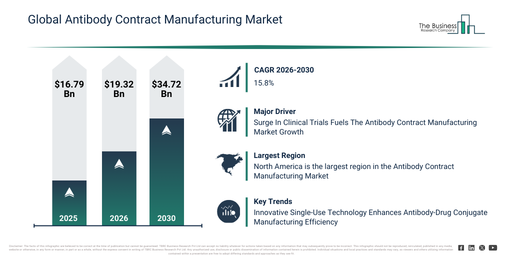
    The antibody contract manufacturing market size has seen rapid expansion in recent years. It is forecast to rise from $16.79 billion in 2025 to $19.32 billion in 2026, exhibiting a compound annual growth rate (CAGR) of 15.0%. The past growth can be attributed to several factors including an increase in biologics development pipelines, greater outsourcing by biopharmaceutical companies, the broadening of mammalian cell culture platforms, heightened clinical trial activity for antibodies, and the presence of specialized CMO infrastructure.

    The antibody contract manufacturing market is anticipated to experience substantial expansion in the coming years, with its size projected to reach $34.72 billion by 2030, demonstrating a compound annual growth rate (CAGR) of 15.8%. This growth throughout the forecast period is primarily fueled by the increasing demand for commercial-scale antibody production, greater investments in next-generation biologics, a heightened focus on cost-efficient manufacturing models, the broadening of personalized medicine pipelines, and an uptick in regulatory approvals for antibody therapies. Significant trends influencing this period encompass the expansion of large-scale antibody manufacturing capacity, the rising adoption of single-use bioprocessing systems, increasing demand for bispecific antibodies and ADCs, an intensified focus on flexible and scalable manufacturing models, and an enhanced emphasis on regulatory compliance and quality control.

    Access Your Free Sample Report For In-Depth Market Analysis:

    https://www.thebusinessresearchcompany.com/report/antibody-contract-manufacturing-global-market-report

    Which Key Factors Are Driving The Antibody Contract Manufacturing Market Growth?

    The growing count of clinical trials is anticipated to boost the expansion of the antibody contract manufacturing market moving forward. Clinical trials are investigative studies undertaken with human subjects to evaluate the safety and efficacy of novel medical treatments, interventions, or diagnostic protocols. As the volume of clinical trials involving antibody-based therapeutics or diagnostics rises, it generates a demand for premium quality antibodies, thereby ensuring a punctual and compliant supply for these trials. For instance, in May 2023, data from ClinicalTrials.gov, a component of the National Institutes of Health (NIH), a US-based government agency, indicated that the number of registered clinical trial studies across all 50 states of the United States and 221 countries escalated from 399,499 in 2022 to 437,533 in 2023. Additionally, about 241,498 studies, making up 53% of the total, were registered outside the United States, in contrast to 140,492 studies, or 31%, which were registered solely within the United States. Consequently, the increasing number of clinical trials is a primary force driving the growth of the antibody contract manufacturing market.

    How Are Different Segments Classified In The Antibody Contract Manufacturing Market Segment Analysis?

    The antibody contract manufacturing market covered in this report is segmented –

    1) By Product: Monoclonal Antibodies, Polyclonal Antibodies, Other Products

    2) By Source: Mammalian, Microbial

    3) By Scale Of Operation: Preclinical, Clinical, Commercial

    4) By End-User: Biopharmaceutical Companies, Research Laboratories, Other End Users

    Subsegments:

    1) By Monoclonal Antibodies: Therapeutic Monoclonal Antibodies, Diagnostic Monoclonal Antibodies

    2) By Polyclonal Antibodies: Research Polyclonal Antibodies, Therapeutic Polyclonal Antibodies

    3) By Other Products: Bispecific Antibodies, Antibody-Drug Conjugates (ADCs), Fusion Proteins

    Which Trends Are Guiding The Direction Of The Antibody Contract Manufacturing Market?

    Leading firms in the antibody contract manufacturing market are prioritizing breakthroughs like single-use technology, which serves to diminish cross-contamination hazards and lower operational expenditures. Single-use technology (SUT) describes components and systems that are disposable and utilized within biopharmaceutical production workflows. As an illustration, during September 2024, the US-based pharmaceutical entity Merck & Co. introduced the Mobius ADC Reactor, specifically engineered to improve the production of antibody-drug conjugates. This novel single-use reactor, tailored for antibody-drug conjugate manufacturing, substantially boosts production efficiency by 70% when contrasted with conventional stainless steel or glass techniques. Its disposable nature reduces the likelihood of cross-contamination and cuts down on operating expenses, thereby enabling quicker processing cycles. Furthermore, sophisticated film technology enhances the durability and leak resistance of the bags, safeguarding the quality of highly potent active pharmaceutical ingredients. Such advancements assist biopharmaceutical enterprises in manufacturing essential therapies with greater safety and efficiency.

    Who Are The Companies Driving Activity In The Antibody Contract Manufacturing Market?

    Major companies operating in the antibody contract manufacturing market are Lonza Group AG, Catalent Inc, Samsung Biologics Co Ltd, Wuxi Biologics Cayman Inc, Thermo Fisher Scientific Inc, Boehringer Ingelheim BioXcellence, AGC Biologics, FUJIFILM Diosynth Biotechnologies, AbbVie Inc, Charles River Laboratories International Inc, mAbxience, KBI Biopharma Inc, Abzena Ltd, Just-Evotec Biologics, Northway Biotech, Cerbios-Pharma, Scorpius BioManufacturing, Lotte Biologics, Rentschler Biopharma SE, Cytiva (Life Sciences CDMO), Xcellon Biologics, Celonic AG, Syngene International Ltd

    Get The Full Antibody Contract Manufacturing Market Report:

    https://www.thebusinessresearchcompany.com/report/antibody-contract-manufacturing-global-market-report

    Which Region Is The Largest In The Antibody Contract Manufacturing Market?

    North America was the largest region in the antibody contract manufacturing market in 2025. Asia-Pacific is expected to be the fastest-growing region in the forecast period. The regions covered in the antibody contract manufacturing market report are Asia-Pacific, South East Asia, Western Europe, Eastern Europe, North America, South America, Middle East, Africa.

    Request A Customized Antibody Contract Manufacturing Market Report For Competitive Insights:

    https://www.thebusinessresearchcompany.com/report/antibody-contract-manufacturing-global-market-report

    Browse Through More Reports Similar to the Global Antibody Contract Manufacturing Market 2026, By The Business Research Company

    Antibody Discovery Market Report 2026

    https://www.thebusinessresearchcompany.com/report/antibody-discovery-global-market-report

    Vaccine Contract Manufacturing Market Report 2026

    https://www.thebusinessresearchcompany.com/report/vaccine-contract-manufacturing-global-market-report

    Biopharmaceuticals Contract Manufacturing Market Report 2026

    https://www.thebusinessresearchcompany.com/report/biopharmaceuticals-contract-manufacturing-global-market-report

    Get in touch with us:

    The Business Research Company: https://www.thebusinessresearchcompany.com/

    Americas +1 310-496-7795

    Asia +44 7882 955267 & +91 8897263534

    Europe +44 7882 955267

    Email us at info@tbrc.info

    Follow us on:

    LinkedIn: https://in.linkedin.com/company/the-business-research-company

    YouTube: https://www.youtube.com/channel/UC24_fI0rV8cR5DxlCpgmyFQ

    Global Market Model: https://www.thebusinessresearchcompany.com/global-market-model

  • Adrenogenital Syndrome Treatment Market: Trends and Opportunities

    Adrenogenital Syndrome Treatment Market: Trends and Opportunities

    The Business Research Company’s 2026 market reports feature enhanced tools like market attractiveness analysis, TAM assessment, and company scoring matrices, along with interactive dashboards, deeper supply chain insights, and startup coverage strengthening the depth, usability, and strategic value of insights.

    What Are The Market Size Estimates For The Adrenogenital Syndrome Treatment Market In 2026 And 2030?

    The adrenogenital syndrome treatment market has experienced significant expansion recently. Projections indicate it will expand from $12.8 billion in 2025 to reach $13.56 billion by 2026, demonstrating a compound annual growth rate (CAGR) of 6.0%. Factors contributing to its historical growth include the restricted supply of synthetic corticosteroids, heightened awareness regarding adrenogenital syndrome, the development of hospital and clinic infrastructure, an increase in the prevalence of congenital adrenal hyperplasia, and the uptake of oral and parenteral administration methods.

    The adrenogenital syndrome treatment market is projected to experience substantial expansion in the upcoming years. Its size is anticipated to reach $16.95 billion by 2030, demonstrating a compound annual growth rate (CAGR) of 5.7%. This projected growth during the forecast period stems from several factors, including progress in genetic testing methods, an increasing need for tailored hormone therapies, greater acceptance of home care treatments, the introduction of novel corticosteroid formulations, and the widening reach of hospital and retail pharmacy networks. Key trends observed within this period encompass the growing integration of hormone replacement therapies, the escalated application of genetic testing for prompt diagnosis, the broadening scope of mineralocorticoid and glucocorticoid interventions, the proliferation of home care and individualized treatment alternatives, and a heightened emphasis on patient oversight and safety.

    Access Your Free Sample Report For In-Depth Market Analysis:

    https://www.thebusinessresearchcompany.com/report/adrenogenital-syndrome-treatment-global-market-report

    What Major Factors Are Driving The Adrenogenital Syndrome Treatment Market Forward?

    The adrenogenital syndrome treatment market is anticipated to expand due to the increasing adoption of personalized medicines. These medicines represent treatments customized to an individual’s genetic profile, lifestyle, and health needs, aiming for improved efficacy and safety. The growing preference for personalized medicine is influenced by advancements in genetics, rising patient demand for tailored treatments, and improvements in healthcare technologies. For adrenogenital syndrome, personalized medicines specifically adjust treatment based on an individual’s unique genetic profile and hormone levels, optimizing effectiveness and minimizing side effects. For instance, in February 2024, the Personalized Medicine Coalition, a US-based non-profit organization, reported that FDA approvals for personalized treatments rose to 16 in 2023, including seven for cancer and three for other conditions, a rise from six in 2022. This trend highlights how the increasing adoption of personalized medicines will drive the growth of the adrenogenital syndrome treatment market.

    What Segment Categories Shape The Adrenogenital Syndrome Treatment Market Segment Landscape?

    The adrenogenital syndrome treatment market covered in this report is segmented –

    1) By Drug Type: Mineralocorticoids, Glucocorticoids

    2) By Route of Administration: Oral, Parenteral, Intravenous

    3) By Distribution Channel: Hospital Pharmacies, Retail Pharmacies, Other Distribution Channels

    4) By End-User: Hospitals, Clinics, Home Care Settings

    Subsegments:

    1) By Mineralocorticoids: Fludrocortisone, Desoxycorticosterone Pivalate

    2) By Glucocorticoids: Hydrocortisone, Prednisolone, Dexamethasone

    Which Trends Are Impacting The Progress Of The Adrenogenital Syndrome Treatment Market?

    Leading companies in the adrenogenital syndrome treatment market are prioritizing the development of advanced treatment options, including innovative orphan drugs. Their aim is to address unmet medical requirements, enhance patient outcomes, and expand their market footprint through targeted therapies for rare and intricate conditions. These orphan drugs are specifically designed to treat rare, often severe ailments affecting a limited patient population, for which therapeutic choices are generally scarce or nonexistent. A pertinent example occurred in December 2024, when Neurocrine Biosciences, a US-based biotechnology company, declared it had secured approval from the U.S. Food and Drug Administration (FDA) for CRENESSITY (crinecerfont). This innovative treatment is intended for children and adults diagnosed with classic Congenital Adrenal Hyperplasia (CAH), a specific form of adrenogenital syndrome. This authorization represents a pivotal milestone, introducing the inaugural new therapeutic option for CAH in seventy years and thereby filling a critical void in managing this uncommon endocrine disorder.

    Who Are The Companies Operating Across The Adrenogenital Syndrome Treatment Market Value Chain?

    Major companies operating in the adrenogenital syndrome treatment market are Pfizer Inc, Novartis AG, Sanofi SA, Merck KGaA, Bayer AG, GlaxoSmithKline plc, AstraZeneca plc, Eli Lilly and Company, AbbVie Inc, Bristol Myers Squibb Company, Takeda Pharmaceutical Company Limited, Boehringer Ingelheim GmbH, Teva Pharmaceutical Industries Ltd, Viatris Inc, Sun Pharmaceutical Industries Limited, Dr Reddy’s Laboratories Ltd, Cipla Limited, Lupin Limited, Aurobindo Pharma Limited, Zydus Lifesciences Limited, Hikma Pharmaceuticals plc, Amneal Pharmaceuticals Inc, Endo International plc, Alkermes plc, Neurocrine Biosciences Inc.

    Get The Full Adrenogenital Syndrome Treatment Market Report:

    https://www.thebusinessresearchcompany.com/report/adrenogenital-syndrome-treatment-global-market-report

    Which Region Has The Greatest Market Share In The Adrenogenital Syndrome Treatment Market?

    North America was the largest region in the adrenogenital syndrome treatment market in 2025. The regions covered in the adrenogenital syndrome treatment market report are Asia-Pacific, South East Asia, Western Europe, Eastern Europe, North America, South America, Middle East, Africa.

    Request A Customized Adrenogenital Syndrome Treatment Market Report For Competitive Insights:

    https://www.thebusinessresearchcompany.com/report/adrenogenital-syndrome-treatment-global-market-report

    Browse Through More Reports Similar to the Global Adrenogenital Syndrome Treatment Market 2026, By The Business Research Company

    Testosterone Replacement Therapy Market Report 2026

    https://www.thebusinessresearchcompany.com/report/testosterone-replacement-therapy-global-market-report

    Hormone Therapy Market Report 2026

    https://www.thebusinessresearchcompany.com/report/hormone-therapy-global-market-report

    Hepatorenal Syndrome Treatment Market Report 2026

    https://www.thebusinessresearchcompany.com/report/hepatorenal-syndrome-treatment-global-market-report

    Get in touch with us:

    The Business Research Company: https://www.thebusinessresearchcompany.com/

    Americas +1 310-496-7795

    Asia +44 7882 955267 & +91 8897263534

    Europe +44 7882 955267

    Email us at info@tbrc.info

    Follow us on:

    LinkedIn: https://in.linkedin.com/company/the-business-research-company

    YouTube: https://www.youtube.com/channel/UC24_fI0rV8cR5DxlCpgmyFQ

    Global Market Model: https://www.thebusinessresearchcompany.com/global-market-model
  • Antibodies market trends influencing future growth

    Antibodies market trends influencing future growth

    The Business Research Company’s 2026 market reports feature enhanced tools like market attractiveness analysis, TAM assessment, and company scoring matrices, along with interactive dashboards, deeper supply chain insights, and startup coverage strengthening the depth, usability, and strategic value of insights.

    What Is The Anticipated Rise In Market Value Of The Antibodies Market During The Forecast Period?

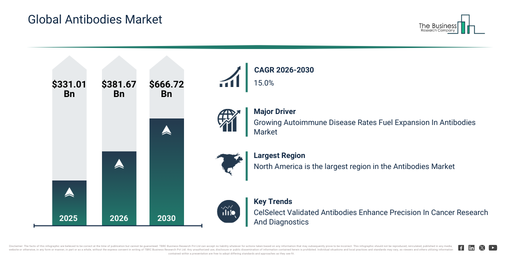
    The antibodies market size has seen rapid expansion in recent years. It is anticipated to grow from $331.01 billion in 2025 to $381.67 billion in 2026, achieving a compound annual growth rate (CAGR) of 15.3%. This growth during the historical period can be attributed to advancements in immunology research, increased investment in biologics development, the expansion of oncology treatment programs, a growing prevalence of autoimmune diseases, and improved antibody production technologies.

    The antibodies market is projected for rapid expansion over the coming years, with its valuation anticipated to reach $666.72 billion by 2030, exhibiting a compound annual growth rate (CAGR) of 15.0%. This projected growth during the forecast period stems from factors such as the heightened uptake of precision immunotherapies, a growing need for advanced antibody formats, the widening scope of biosimilar antibody development, an intensifying emphasis on personalized medicine, and an increase in global biologics production capabilities. Key trends foreseen for the forecast period encompass the broadening of monoclonal antibody development pipelines, an escalating requirement for antibody-drug conjugates, a sharper focus on targeted immunotherapies, an expanded application of antibodies in treating chronic diseases, and a greater prioritization of scalable biomanufacturing.

    Access Your Free Sample Report For In-Depth Market Analysis:

    https://www.thebusinessresearchcompany.com/report/antibodies-global-market-report

    What Primary Drivers Are Shaping The Antibodies Market?

    The increasing occurrence of autoimmune diseases is projected to stimulate the expansion of the antibodies market in the future. These conditions involve the immune system mistakenly attacking and harming its own bodily tissues, encompassing ailments like rheumatoid arthritis, lupus, and multiple sclerosis. The heightened incidence of autoimmune diseases stems from environmental elements, genetic predispositions, and changes in lifestyle. Antibodies function by targeting and neutralizing particular immune cells or inflammatory molecules that erroneously assault the body’s own tissues, consequently diminishing inflammation and relieving symptoms. As an illustration, data from May 2024, provided by the Multiple Sclerosis International Federation, a UK-based non-profit organization, showed a rise in the worldwide population affected by multiple sclerosis, climbing from 2.8 million in 2020 to 2.9 million in 2023. Consequently, the escalating occurrence of autoimmune diseases is propelling the antibodies market.

    How Is The Antibodies Market Categorized Across Its Segment Groups?

    The antibodies market covered in this report is segmented –

    1) By Product Type: Monoclonal Antibodies, Polyclonal Antibodies, Antibody Drug Complexes

    2) By Disease Indication: Cardiovascular Diseases, Central Nervous System (CNS) Disorders, Cancer, Autoimmune Disorders, Other Indications

    3) By End User: Hospitals, Long Term Care Facilities, Research Institutes, Other End Users

    Subsegments:

    1) By Monoclonal Antibodies: IgG Monoclonal Antibodies, IgM Monoclonal Antibodies, IgA Monoclonal Antibodies, Other Isotypes

    2) By Polyclonal Antibodies: Serum-derived Polyclonal Antibodies, Purified Polyclonal Antibodies, Antibody Fractionation Products

    3) By Antibody Drug Complexes: Conjugated Antibodies, Bispecific Antibodies, Antibody-Drug Conjugates (ADCs)

    What Trends Are Affecting The Growth Of The Antibodies Market?

    Leading firms in the antibodies market are focused on developing validated antibodies, aiming to boost precision and guarantee uniform outcomes in diagnostic and therapeutic applications. These validated antibodies are defined by their confirmed accuracy and specificity in identifying target proteins, which in turn elevates the trustworthiness of research findings and secures the efficacy and standard of products reliant on antibodies. An illustration of this trend is seen in March 2024, when Bio-Rad Laboratories, a US-based manufacturer specializing in life science research and clinical diagnostics, introduced Celselect slides validated antibodies. These were designed for the enumeration of rare cells and circulating tumor cells (CTCs), thereby advancing the understanding of tumor heterogeneity and disease progression. These particular antibodies are compatible with Bio-Rad’s Celselect Slides Enumeration Stain Kits, facilitating accurate CTC detection and representing a pivotal stride in bolstering sophisticated cancer research and diagnostics.

    Which Firms Are Influencing Competition In The Antibodies Market?

    Major companies operating in the antibodies market are Pfizer Inc., Johnson & Johnson Services Inc., F. Hoffmann-La Roche Ltd., Merck & Co Inc., AbbVie Inc., Sanofi S.A., Bristol Myers Squibb Company, Novartis AG, GSK plc, Takeda Pharmaceutical Company Limited, Eli Lilly and Company, Amgen Inc., Regeneron Pharmaceuticals Inc., Biogen Inc., Alexion Pharmaceuticals Inc., Incyte Corporation, Kyowa Kirin Co Ltd, Ultragenyx Pharmaceutical Inc, Xencor Inc., MacroGenics Inc., ImmunoGen Inc., Sorrento Therapeutics Inc., Beam Therapeutics Inc., SAB Biotherapeutics Inc., bluebird bio Inc., Iovance Biotherapeutics Inc.

    Get The Full Antibodies Market Report:

    https://www.thebusinessresearchcompany.com/report/antibodies-global-market-report

    Which Region Leads The Antibodies Market In Terms Of Market Share?

    North America was the largest region in the antibodies market in 2025. Asia-Pacific is expected to be the fastest-growing region in the forecast period. The regions covered in the antibodies market report are Asia-Pacific, South East Asia, Western Europe, Eastern Europe, North America, South America, Middle East, Africa.

    Request A Customized Antibodies Market Report For Competitive Insights:

    https://www.thebusinessresearchcompany.com/report/antibodies-global-market-report

    Browse Through More Reports Similar to the Global Antibodies Market 2026, By The Business Research Company

    Conjugated Monoclonal Antibodie Market Report 2026

    https://www.thebusinessresearchcompany.com/report/conjugated-monoclonal-antibodie-global-market-report

    Biosimilar Monoclonal Antibodie Market Report 2026

    https://www.thebusinessresearchcompany.com/report/biosimilar-monoclonal-antibodie-global-market-report

    Research Antibodie And Reagent Market Report 2026

    https://www.thebusinessresearchcompany.com/report/research-antibodie-and-reagent-global-market-report

    Get in touch with us:

    The Business Research Company: https://www.thebusinessresearchcompany.com/

    Americas +1 310-496-7795

    Asia +44 7882 955267 & +91 8897263534

    Europe +44 7882 955267

    Email us at info@tbrc.info

    Follow us on:

    LinkedIn: https://in.linkedin.com/company/the-business-research-company

    YouTube: https://www.youtube.com/channel/UC24_fI0rV8cR5DxlCpgmyFQ

    Global Market Model: https://www.thebusinessresearchcompany.com/global-market-model

  • Adrenocortical Carcinoma Market: Key Developments Driving Growth

    Adrenocortical Carcinoma Market: Key Developments Driving Growth

    The Business Research Company’s 2026 market reports feature enhanced tools like market attractiveness analysis, TAM assessment, and company scoring matrices, along with interactive dashboards, deeper supply chain insights, and startup coverage strengthening the depth, usability, and strategic value of insights.

    What Expansion In Market Value Is Forecasted For The Adrenocortical Carcinoma Market Between 2026 And 2030?

    The adrenocortical carcinoma market has demonstrated consistent expansion over recent years. It is projected to increase from $3.76 billion in 2025 to $3.92 billion in 2026, reflecting a compound annual growth rate (CAGR) of 4.4%. The historical growth of this market was influenced by factors such as limited awareness of ACC symptoms, a primary reliance on traditional surgery methods, minimal research funding due to its low prevalence, a scarcity of specialized treatment centers, and an increase in diagnoses through imaging technologies.

    The adrenocortical carcinoma market is anticipated to experience consistent expansion over the upcoming years. Its valuation is projected to reach $4.62 billion by 2030, exhibiting a compound annual growth rate (CAGR) of 4.2%. This growth during the projection period can be ascribed to progress in targeted treatments, an increase in minimally invasive and laparoscopic surgical methods, the proliferation of specialized cancer research institutions, heightened patient understanding and prompt diagnosis, and the increasing implementation of combination therapy regimens. Key developments anticipated in the forecast timeframe encompass a greater emphasis on early diagnostic and screening methods, the growing preference for minimally invasive surgical interventions, the broadening scope of targeted and adjuvant treatments, increased recognition of symptoms related to hormonal imbalance, and intensified cancer research focusing on both localized and metastatic adrenocortical carcinoma.

    Access Your Free Sample Report For In-Depth Market Analysis:

    https://www.thebusinessresearchcompany.com/report/adrenocortical-carcinoma-global-market-report

    Which Key Drivers Are Affecting The Adrenocortical Carcinoma Market Development?

    A rise in the prevalence of rare cancers is anticipated to fuel the expansion of the adrenocortical carcinoma market. These cancers are characterized by their infrequent occurrence and profound impact on patients, necessitating specialized diagnostic and therapeutic approaches. This upward trend in rare cancer prevalence stems from various elements, including advancements in diagnostic techniques. These improvements have boosted the detection of adrenocortical carcinoma, allowing for the prompt identification of cases that previously might have been missed. Adrenocortical carcinoma (ACC) itself contributes to the rising prevalence of rare cancers, being an infrequent but aggressive malignancy that underscores the importance of better diagnostic and treatment approaches. For example, in February 2024, a report from the International Agency for Research for Cancer of the World Health Organization, an intergovernmental body based in Switzerland, specified rare cancers as those with fewer than 6 new cases per 100,000 people annually. Overall, rare cancers account for approximately 25% of all cancer diagnoses. Consequently, the rising prevalence of rare cancers is set to be a key driver for the adrenocortical carcinoma market’s expansion.

    Which Segment Types Are Examined In The Adrenocortical Carcinoma Market Segment Study?

    The adrenocortical carcinoma market covered in this report is segmented –

    1) By Type: Localized Adrenocortical Carcinoma, Metastatic Adrenocortical Carcinoma

    2) By Therapy: Surgery, Laparoscopic Surgery, Open Surgery, Chemotherapy, Targeted Therapy, Radiation Therapy, External Beam Radiation Therapy, Adjuvant Therapy

    3) By End User: Hospitals And Clinics, Specialized Oncology & Endocrine Cancer Centers, Academic Medical Centers

    Subsegments:

    1) By Localized Adrenocortical Carcinoma: Early-Stage Localized Adrenocortical Carcinoma, Advanced Localized Adrenocortical Carcinoma

    2) By Metastatic Adrenocortical Carcinoma: Metastasis To Distant Organs, Local Regional Metastasis

    What Trends Are Transforming The Adrenocortical Carcinoma Market?

    Major companies within the adrenocortical carcinoma market are concentrating on developing novel therapies, including small-molecule drugs, to precisely target tumor pathways and improve patient outcomes. A small-molecule drug is characterized as a low molecular weight compound capable of penetrating cells to interact with proteins or enzymes, thereby modulating biological processes and addressing diseases like adrenocortical carcinoma by inhibiting tumor growth pathways. As an illustration, in January 2023, Orphagen Pharmaceuticals, Inc., a US-based pharmaceutical company, revealed that the U.S. Food and Drug Administration (FDA) had granted Rare Pediatric Disease Designation (RPDD) for its investigational drug OR-449. This medication aims to treat pediatric adrenocortical carcinoma (ACC), a rare and aggressive cancer predominantly affecting children, which frequently manifests with symptoms tied to hormonal overproduction, such as virilization and Cushing syndrome. Diagnosis of this condition relies on imaging and hormonal assessments, with the prognosis being affected by elements like the patient’s age at diagnosis and the resectability of the tumor.

    Which Players Are Part Of The Competitive Landscape Of The Adrenocortical Carcinoma Market?

    Major companies operating in the adrenocortical carcinoma market are HRA Pharma S.A., Servier Laboratories, Roche Holding AG, Merck & Co. Inc., Bristol-Myers Squibb Company, AstraZeneca PLC, Eli Lilly and Company, Sanofi S.A., Ipsen S.A., Exelixis Inc., Tempest Therapeutics Inc., Orphagen Pharmaceuticals Inc., Millendo Therapeutics Inc., Pfizer Inc, Novartis AG, Bayer AG, Takeda Pharmaceutical Company, Astellas Pharma Inc., Johnson & Johnson, Gilead Sciences

    Get The Full Adrenocortical Carcinoma Market Report:

    https://www.thebusinessresearchcompany.com/report/adrenocortical-carcinoma-global-market-report

    Which Region Accounts For The Largest Portion Of The Adrenocortical Carcinoma Market?

    North America was the largest region in the adrenocortical carcinoma market in 2025. Asia-Pacific is expected to be the fastest-growing region in the forecast period. The regions covered in the adrenocortical carcinoma market report are Asia-Pacific, South East Asia, Western Europe, Eastern Europe, North America, South America, Middle East, Africa.

    Request A Customized Adrenocortical Carcinoma Market Report For Competitive Insights:

    https://www.thebusinessresearchcompany.com/report/adrenocortical-carcinoma-global-market-report

    Browse Through More Reports Similar to the Global Adrenocortical Carcinoma Market 2026, By The Business Research Company

    Basal Cell Carcinoma Treatment Market Report 2026

    https://www.thebusinessresearchcompany.com/report/basal-cell-carcinoma-treatment-global-market-report

    Neuroendocrine Tumor Treatment Market Report 2026

    https://www.thebusinessresearchcompany.com/report/neuroendocrine-tumor-treatment-global-market-report

    Adrenocortical Carcinoma Market Report 2026

    https://www.thebusinessresearchcompany.com/report/adrenocortical-carcinoma-global-market-report

    Get in touch with us:

    The Business Research Company: https://www.thebusinessresearchcompany.com/

    Americas +1 310-496-7795

    Asia +44 7882 955267 & +91 8897263534

    Europe +44 7882 955267

    Email us at info@tbrc.info

    Follow us on:

    LinkedIn: https://in.linkedin.com/company/the-business-research-company

    YouTube: https://www.youtube.com/channel/UC24_fI0rV8cR5DxlCpgmyFQ

    Global Market Model: https://www.thebusinessresearchcompany.com/global-market-model
  • Antibiotic resistance market growth outlook through 2030

    Antibiotic resistance market growth outlook through 2030

    The Business Research Company’s 2026 market reports feature enhanced tools like market attractiveness analysis, TAM assessment, and company scoring matrices, along with interactive dashboards, deeper supply chain insights, and startup coverage strengthening the depth, usability, and strategic value of insights.

    How Is The Market Size Of The Antibiotic Resistance Market Expected To Scale Between 2026 And 2030?

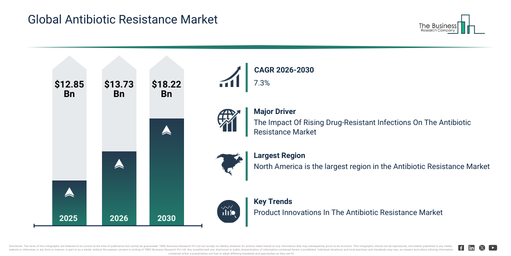
    The antibiotic resistance market has experienced robust expansion in recent years. This market is projected to expand from $12.85 billion in 2025 to $13.73 billion in 2026, achieving a compound annual growth rate (CAGR) of 6.8%. Historically, this growth has been driven by factors such as widespread antibiotic misuse, increasing hospital-acquired infections, expansion of broad-spectrum antibiotic use, limited availability of novel antibiotics, and a rising prevalence of resistant pathogens.

    The antibiotic resistance market is anticipated to show strong expansion in the upcoming years. It is projected to grow to $18.22 billion by 2030, demonstrating a compound annual growth rate (CAGR) of 7.3%. This growth during the forecast period can be attributed to increased investments in antimicrobial R&D, a broader adoption of precision diagnostics, the enlargement of global resistance surveillance networks, a rising emphasis on alternative therapies, and an increase in public-private partnerships. Major trends anticipated in the forecast period include a heightened focus on novel antibiotic development, the increasing use of combination drug therapies, wider implementation of rapid diagnostic testing, the expansion of antimicrobial stewardship programs, and improved surveillance of resistant pathogens.

    Access Your Free Sample Report For In-Depth Market Analysis:

    https://www.thebusinessresearchcompany.com/report/antibiotic-resistance-global-market-report

    Which Major Drivers Are Influencing The Expansion Of The Antibiotic Resistance Market?

    The escalating incidence of drug-resistant infections is projected to fuel the expansion of the antibiotic-resistance market moving forward. Such infections are illnesses caused by resistant bacteria, leading to a condition that is considerably more challenging or impossible to cure. Antimicrobial resistance medications assist in treating various drug-resistant infections, delivering improved antibiotic treatment outcomes for both targeted and non-targeted pathogens, depending on the specifics of resistance mechanisms and the interaction structure of the microbiome community. For illustration, in November 2025, as reported by the UK Health Security Agency, a UK-based government organization responsible for all health security in England, the count of fatalities among individuals with antibiotic-resistant infections increased from 2,041 in 2023 to 2,379 in 2024, signifying a jump of 338 deaths within a single year. Thus, the widespread occurrence of drug-resistant infections is a key factor driving the antibiotic resistance market.

    How Are Segments Identified Within The Antibiotic Resistance Market Segment Framework?

    The antibiotic resistance market covered in this report is segmented –

    1) By Drug Class: Beta Lactum Antibiotic, Cephalosporins, Quinolones Antibiotics, Macrolide Antibiotics, Tetracyclines, Oxazolidinones, Other Drug Classes

    2) By Pathogen: Staphylococcus Aureus, Staphylococcus Pneumonia, Neisseria Gonorrhoeae, Enterococcus Faecium, Escherichia Coli, Klebsiella Pneumonia, Shigella, Clostridium Difficile, Other Pathogens

    3) By Disease Type: Urinary Tract Infection, Intra-Abdominal Infection, Blood Stream infections, Clostridium Difficile Infections, Other Disease Types

    4) By Mechanism Of Action: Protein Synthesis Inhibitors, Cell Wall Synthesis Inhibitors, RNA Synthesis Inhibitors, DNA Synthesis Inhibitors, Other Mechanism Of Actions

    5) By End Users: Hospitals, Homecare, Specialty Clinics, Other End-users

    Subsegments:

    1) By Beta Lactam Antibiotics: Penicillins, Cephalosporins, Carbapenems, Monobactams

    2) By Cephalosporins: First-generation, Second-generation, Third-generation, Fourth-generation

    3) By Quinolones Antibiotics: Fluoroquinolones, Other Quinolones

    4) By Macrolide Antibiotics: Erythromycin, Azithromycin, Clarithromycin

    5) By Tetracyclines: Doxycycline, Minocycline, Tetracycline

    6) By Oxazolidinones: Linezolid, Tedizolid

    7) By Other Drug Classes: Glycopeptides, Lipopeptides, Streptogramins, Polymyxins

    Which Trends Are Shaping The Antibiotic Resistance Market?

    Companies operating within the antibiotic resistance market are primarily focused on developing novel products to improve treatment effectiveness, guarantee patient safety, and address the growing issue of multi-drug resistant (MDR) infections. An illustrative example occurred in January 2023, when Alkem Laboratories Limited, an India-based pharmaceutical firm, launched Zidavi, an innovative antibiotic designed to combat MDR infections, thereby enhancing its availability, affordability, and accessibility while aiming to save the lives of critically ill patients. Zidavi represents a unique blend of ceftazidime and avibactam capable of treating infections caused by MDR gram-negative pathogens. It is provided as a sterile powdered concentrate requiring reconstitution, with each single-dose vial comprising ceftazidime pentahydrate equivalent to 2 g of ceftazidime and avibactam sodium equivalent to 0.5 g of avibactam. This medication offers an effective alternative for addressing hospital-acquired pneumonia (HAP) and severe intra-abdominal infections (IAIs) that are resistant to meropenem and colistin.

    Who Are The Companies Competing Within The Antibiotic Resistance Market?

    Major companies operating in the antibiotic resistance market are Pfizer Inc., Johnson and Johnson, F. Hoffmann-La Roche Ltd, AbbVie Inc., Novartis AG, Merck and Co. Inc., Bristol-Myers Squibb, Sanofi S.A., AstraZeneca, GlaxoSmithKline Plc, Eli Lilly and Company, Boehringer Ingelheim International GmbH, Astellas Pharma, Daiichi Sankyo, Chugai Pharmaceutical Co. Ltd., Teva Pharmaceutical Industries Ltd., Paratek Pharmaceuticals Inc., Basilea Pharmaceutica Ltd., Theravance Biopharma Inc., Nabriva Therapeutics Plc, Seres Therapeutics Inc., Armata Pharmaceuticals Inc.

    Get The Full Antibiotic Resistance Market Report:

    https://www.thebusinessresearchcompany.com/report/antibiotic-resistance-global-market-report

    Which Region Leads The Antibiotic Resistance Market In Overall Market Size?

    North America was the largest region in the antibiotic resistance market in 2025. Asia-Pacific is expected to be the fastest-growing region in the forecast period. The regions covered in the antibiotic resistance market report are Asia-Pacific, South East Asia, Western Europe, Eastern Europe, North America, South America, Middle East, Africa.

    Request A Customized Antibiotic Resistance Market Report For Competitive Insights:

    https://www.thebusinessresearchcompany.com/report/antibiotic-resistance-global-market-report

    Browse Through More Reports Similar to the Global Antibiotic Resistance Market 2026, By The Business Research Company

    Veterinary Antibiotics Market Report 2026

    https://www.thebusinessresearchcompany.com/report/veterinary-antibiotics-global-market-report

    Multidrug Resistant Bacteria Market Report 2026

    https://www.thebusinessresearchcompany.com/report/multidrug-resistant-bacteria-global-market-report

    Antibiotics Market Report 2026

    https://www.thebusinessresearchcompany.com/report/antibiotics-global-market-report

    Get in touch with us:

    The Business Research Company: https://www.thebusinessresearchcompany.com/

    Americas +1 310-496-7795

    Asia +44 7882 955267 & +91 8897263534

    Europe +44 7882 955267

    Email us at info@tbrc.info

    Follow us on:

    LinkedIn: https://in.linkedin.com/company/the-business-research-company

    YouTube: https://www.youtube.com/channel/UC24_fI0rV8cR5DxlCpgmyFQ

    Global Market Model: https://www.thebusinessresearchcompany.com/global-market-model

  • Adrenal Cancer Diagnostics Market: Demand Trends and Growth Outlook

    Adrenal Cancer Diagnostics Market: Demand Trends and Growth Outlook

    The Business Research Company’s 2026 market reports feature enhanced tools like market attractiveness analysis, TAM assessment, and company scoring matrices, along with interactive dashboards, deeper supply chain insights, and startup coverage strengthening the depth, usability, and strategic value of insights.

    How Large Will The Adrenal Cancer Diagnostics Market Be By 2030 Compared To Its 2026 Market Size?

    The adrenal cancer diagnostics market has demonstrated substantial growth over recent years. It is anticipated to expand from $148.54 billion in 2025 to $157.36 billion in 2026, achieving a compound annual growth rate (CAGR) of 5.9%. This historical growth can be ascribed to factors such as the constrained availability of high-resolution imaging technologies, the increasing incidence of adrenal tumors, greater awareness regarding adrenal cancer, a continued reliance on conventional biopsy procedures, and the expansion of hospital infrastructure.

    The adrenal cancer diagnostics market size is predicted to undergo substantial growth over the next few years, with projections indicating it will reach $206.14 billion by 2030, expanding at a compound annual growth rate (CAGR) of 7.0%. This anticipated growth during the forecast period is attributable to advancements in contrast-enhanced imaging technologies, an increase in targeted adrenal cancer therapies, the growing adoption of PET-CT combination scans, the proliferation of specialized cancer centers, and rising government funding for cancer diagnostics. Significant trends expected in this period include the increased embrace of advanced imaging techniques for adrenal cancer, a rise in the use of minimally invasive biopsy procedures, growth in the applications of targeted cancer therapy, the expansion of multidisciplinary cancer diagnostic centers, and a heightened emphasis on early detection and personalized treatment.

    Access Your Free Sample Report For In-Depth Market Analysis:

    https://www.thebusinessresearchcompany.com/report/adrenal-cancer-diagnostics-global-market-report

    What Factors Are Contributing To The Growth Of The Adrenal Cancer Diagnostics Market?

    The increasing prevalence of cigarette smoking is projected to boost the expansion of the adrenal cancer diagnostics market in the future. Cigarette smoking involves drawing in and expelling the smoke from ignited tobacco, which contains nicotine, an addictive alkaloid known for its stimulating and tranquilizing psychoactive effects. This habit has been linked to an elevated risk of developing adrenal cancer, encompassing conditions such as adrenal adenomas and adrenocortical carcinomas. Carcinogenic substances present in tobacco smoke can harm the DNA within adrenal cells, resulting in mutations that may lead to cancer. As an illustration, Statistics Canada, a government agency based in Canada, reported in August 2024 that Canadian manufacturers produced 1.2 billion cigarettes in July 2024, representing a 4.3% increase from June 2024 and a 2.3% rise compared to July 2023. Consequently, the uptick in cigarette smoking is fueling the growth of the adrenal cancer diagnostics market.

    How Are Different Segments Classified In The Adrenal Cancer Diagnostics Market Segment Analysis?

    The adrenal cancer diagnostics market covered in this report is segmented –

    1) By Test: Magnetic Resonance Imaging (MRI), Computed Tomography (CT) Scan, Positron Emission Tomography (PET) Scan, Biopsy

    2) By Tumor Type: Pheochromocytoma, Adrenal Cortical Carcinoma, Other Tumor Types

    3) By End-User: Hospitals, Ambulatory Surgical Centers, Cancer Centers, Other End-Users

    Subsegments:

    1) By Magnetic Resonance Imaging (MRI): Contrast-Enhanced MRI, Functional MRI

    2) By Computed Tomography (CT) Scan: Contrast-Enhanced CT, Abdomen And Pelvis CT Scans

    3) By Positron Emission Tomography (PET) Scan: PET-CT Combination Scans, Standalone PET Scans

    4) By Biopsy: Fine Needle Aspiration Biopsy (FNA), Core Needle Biopsy, Surgical Biopsy

    What Trends Are Shaping The Future Of The Adrenal Cancer Diagnostics Market?

    Leading companies in the adrenal cancer diagnostics market are implementing inventive programs through advanced collaborative frameworks, such as the CancerX Startup Accelerator, to enhance digital innovations in cancer care. The Accelerator aims to provide promising startups with mentorship, training, and direct access to key stakeholders in the healthcare industry, including providers and pharmaceutical firms. For instance, in November 2023, CanceRx, LLC, a US-based public-private partnership focused on accelerating innovation in the fight against cancer, announced the launch of this initiative at the Future of Cancer Care Summit in Tampa, Florida. The program is set to select its inaugural cohort of approximately 15 to 20 companies starting in March 2024, with a focus on crucial themes like clinical research, screening, diagnosis, and treatment. This is expected to considerably advance the objectives of the Cancer Moonshot initiative by addressing unfulfilled needs in cancer care and promoting the development of effective digital health tools in oncology.

    Who Are The Companies Driving Activity In The Adrenal Cancer Diagnostics Market?

    Major companies operating in the adrenal cancer diagnostics market are Johnson And Johnson Pvt Ltd., F. Hoffmann-La Roche Ltd., Thermo Fisher Scientific, Abbott Laboratories, Siemens Healthcare GmbH, Becton Dickinson and Company, Koninklijke Philips N.V., GE HealthCare Technologies Inc., Agilent Technologies, Hologic Inc., PerkinElmer Inc., Illumina Inc., Roche Diagnostics, BioMerieux SA, Sysmex Corporation, Bio-Rad Laboratories Inc., Bruker Corporation, Exact Sciences Corp., Natera Inc., Invitae Corporation, Qiagen NV, Guardant Health Inc., Foundation Medicine Inc., NanoString Technologies Inc.

    Get The Full Adrenal Cancer Diagnostics Market Report:

    https://www.thebusinessresearchcompany.com/report/adrenal-cancer-diagnostics-global-market-report

    Which Region Holds The Highest Market Share In The Adrenal Cancer Diagnostics Market?

    North America was the largest region in the adrenal cancer diagnostics market in 2025. Asia-Pacific is expected to be the fastest-growing region in the forecast period. The regions covered in the adrenal cancer diagnostics market report are Asia-Pacific, South East Asia, Western Europe, Eastern Europe, North America, South America, Middle East, Africa.

    Request A Customized Adrenal Cancer Diagnostics Market Report For Competitive Insights:

    https://www.thebusinessresearchcompany.com/report/adrenal-cancer-diagnostics-global-market-report

    Browse Through More Reports Similar to the Global Adrenal Cancer Diagnostics Market 2026, By The Business Research Company

    Breast Cancer Diagnostics Market Report 2026

    https://www.thebusinessresearchcompany.com/report/breast-cancer-diagnostics-global-market-report

    Cancer Diagnostics Market Report 2026

    https://www.thebusinessresearchcompany.com/report/cancer-diagnostics-global-market-report

    Skin Cancer Diagnostics Market Report 2026

    https://www.thebusinessresearchcompany.com/report/skin-cancer-diagnostics-global-market-report

    Get in touch with us:

    The Business Research Company: https://www.thebusinessresearchcompany.com/

    Americas +1 310-496-7795

    Asia +44 7882 955267 & +91 8897263534

    Europe +44 7882 955267

    Email us at info@tbrc.info

    Follow us on:

    LinkedIn: https://in.linkedin.com/company/the-business-research-company

    YouTube: https://www.youtube.com/channel/UC24_fI0rV8cR5DxlCpgmyFQ

    Global Market Model: https://www.thebusinessresearchcompany.com/global-market-model

  • Anti-acne dermal patch market insights on trends and opportunities

    Anti-acne dermal patch market insights on trends and opportunities

    The Business Research Company’s 2026 market reports feature enhanced tools like market attractiveness analysis, TAM assessment, and company scoring matrices, along with interactive dashboards, deeper supply chain insights, and startup coverage strengthening the depth, usability, and strategic value of insights.

    What Level Of Market Value Growth Is Predicted For The Anti-Acne Dermal Patch Market From 2026 To 2030?

    The anti-acne dermal patch market size has seen substantial growth recently. It is set to expand from $1.11 billion in 2025 to $1.22 billion in 2026, achieving a compound annual growth rate (CAGR) of 9.9%. This historical growth can be linked to the rising prevalence of acne conditions, the increase in over-the-counter skincare solutions, growing awareness of targeted acne treatments, wider availability of personal care products, and a greater consumer preference for non-invasive skincare.

    The anti-acne dermal patch market is anticipated to experience robust expansion over the coming years. By 2030, its valuation is projected to reach $1.76 billion, demonstrating a compound annual growth rate (CAGR) of 9.5%. This anticipated growth during the forecast period stems from factors such as a heightened demand for tailored skincare options, an escalating emphasis on clean-label dermatological items, the proliferation of online skincare selling channels, advancements in transdermal delivery innovations, and increasing usage by adult acne sufferers. Key trends expected during this period involve the increasing embrace of hydrocolloid acne patches, a surge in demand for microneedle-based targeted therapies, the broader availability of drug-free acne patch versions, a heightened consideration for skin-compatible adhesive substances, and the development of inconspicuous and clear patch designs.

    Access Your Free Sample Report For In-Depth Market Analysis:

    https://www.thebusinessresearchcompany.com/report/anti-acne-dermal-patch-global-market-report

    What Key Drivers Are Fueling The Growth Of The Anti-Acne Dermal Patch Market?

    The anti-acne dermal patch market is expected to grow due to the increasing demand for personalized skincare solutions. Personalized skincare involves products and routines specifically tailored to an individual’s distinct skin type, concerns, and lifestyle, often utilizing data-driven analysis. This escalating demand is primarily fueled by consumers’ heightened awareness of their unique skin needs, leading them to seek products that deliver more effective and targeted results. Anti-acne dermal patches augment personalized skincare by providing targeted treatment based on specific individual skin concerns, reducing irritation, and improving treatment efficacy through controlled ingredient release, precise application, and real-time responsiveness to skin conditions, thereby offering a customized approach that aligns with the expanding need for tailored dermatological care. For example, in December 2024, according to the Bureau of Labor Statistics, a US-based government agency, consumer spending on personal care products and services increased from USD 866 in 2022 to USD 950 in 2023, marking a 9.7% year-over-year rise after a 12.3% increase in 2022. Consequently, the increasing demand for personalized skincare solutions is a significant driver for the growth of the anti-acne dermal patch market.

    What Are The Key Segment Divisions In The Anti-Acne Dermal Patch Market Segment Structure?

    The anti-acne dermal patch market covered in this report is segmented –

    1) By Product Type: Hydrocolloid, Microneedle, Other Product Types

    2) By Source: Bovine Collagen, Marine Collagen, Pork Collagen, Chicken Collagen

    3) By Application: Cosmetics And Personal Care, Food And Beverages, Health And Nutrition, Pharmaceuticals, Other Applications

    4) By End-User: Men, Women

    Subsegments:

    1) By Hydrocolloid: With Salicylic Acid, With Tea Tree Oil, Plain Hydrocolloid (Drug-Free), Tinted Hydrocolloid, Waterproof Hydrocolloid

    2) By Microneedle: Hyaluronic Acid-Based, Niacinamide-Based, Retinol-Based, Peptide-Infused, Multi-Ingredient

    3) By Other Product Types: Silicone-Based Patches, Charcoal-Infused Patches, Clay-Based Patches, Transparent Film Patches, Herbal Or Botanical Extract-Based Patches

    What Trends Are Influencing The Anti-Acne Dermal Patch Market?

    Leading companies in the anti-acne dermal patch market are prioritizing the development of advanced solutions, such as microdart delivery systems, to enhance the accuracy and effectiveness of acne management. Microdart delivery systems are cutting-edge skincare technologies that utilize tiny, dissolvable microneedles to deposit active ingredients deep within the skin. They aid in treating acne by penetrating the outer epidermal layer and directly releasing blemish-fighting components into the affected area, which helps reduce inflammation and accelerate the healing process. For example, in January 2023, Starface, a US-based skincare company, introduced Micro-Cloud patches featuring microdart delivery technology that integrates hydrocolloid protection with targeted quantities of salicylic acid, niacinamide, and hyaluronic acid to effectively address developing breakouts before they fully form. These microdarts dissolve upon contact, delivering active acne-fighting ingredients deep into the skin to diminish inflammation, soothe redness, and speed up recovery. This innovative strategy not only aids in preventing pimples from emerging but also offers a more precise and efficient treatment compared to traditional spot applications, emphasizing the increasing tendency among major firms to incorporate advanced delivery methods into anti-acne dermal patches.

    Which Organizations Are Engaged In The Anti-Acne Dermal Patch Market?

    Major companies operating in the anti-acne dermal patch market are 3M Company, Neogen Dermalogy Co. Ltd., Neutrogena Corporation, Redcliffe Hygiene Private Limited, Plix Life Private Limited, Peace Out Skincare Inc., Julep Beauty Inc., Peach and Lily Inc., Dr. Jart+, Innisfree Corporation, Rael Inc., Clearsil LLC, Patchology LLC, Truly Organic LLC, Starface World Inc., The Inkey List Limited, Gush Beauty, Lely’s Acne Pimple Patches, COSRX, Avarelle, ZitSticka, DermaAngel, Peach Slices, Grace & Stella

    Get The Full Anti-Acne Dermal Patch Market Report:

    https://www.thebusinessresearchcompany.com/report/anti-acne-dermal-patch-global-market-report

    Which Region Is The Top Contributor To The Anti-Acne Dermal Patch Market By Share?

    Asia-Pacific was the largest region in the anti-acne dermal patch market in 2025. North America is expected to be the fastest-growing region in the forecast period. The regions covered in the anti-acne dermal patch market report are Asia-Pacific, South East Asia, Western Europe, Eastern Europe, North America, South America, Middle East, Africa.

    Request A Customized Anti-Acne Dermal Patch Market Report For Competitive Insights:

    https://www.thebusinessresearchcompany.com/report/anti-acne-dermal-patch-global-market-report

    Browse Through More Reports Similar to the Global Anti-Acne Dermal Patch Market 2026, By The Business Research Company

    Premium Cosmetics Market Report 2026

    https://www.thebusinessresearchcompany.com/report/premium-cosmetics-global-market-report

    Transdermal Skin Patche Market Report 2026

    https://www.thebusinessresearchcompany.com/report/transdermal-skin-patche-global-market-report

    Electronic Skin Patch Market Report 2026

    https://www.thebusinessresearchcompany.com/report/electronic-skin-patch-global-market-report

    Get in touch with us:

    The Business Research Company: https://www.thebusinessresearchcompany.com/

    Americas +1 310-496-7795

    Asia +44 7882 955267 & +91 8897263534

    Europe +44 7882 955267

    Email us at info@tbrc.info

    Follow us on:

    LinkedIn: https://in.linkedin.com/company/the-business-research-company

    YouTube: https://www.youtube.com/channel/UC24_fI0rV8cR5DxlCpgmyFQ

    Global Market Model: https://www.thebusinessresearchcompany.com/global-market-model

  • ADME Toxicology Testing Market: Drivers and Market Evolution

    ADME Toxicology Testing Market: Drivers and Market Evolution

    The Business Research Company’s 2026 market reports feature enhanced tools like market attractiveness analysis, TAM assessment, and company scoring matrices, along with interactive dashboards, deeper supply chain insights, and startup coverage strengthening the depth, usability, and strategic value of insights.

    What Is The Projected Increase In Market Value Of The ADME Toxicology Testing Market During 2026–2030?

    The adme toxicology testing market has experienced rapid expansion over recent years. It is projected to increase from $11.5 billion in 2025 to $12.83 billion in 2026, achieving a compound annual growth rate (CAGR) of 11.6%. The historical growth can be ascribed to several factors, including the limited availability of automated ADME testing systems, a dependency on traditional biochemical assays, an increasing regulatory focus on drug safety, growing pharmaceutical research initiatives, and the adoption of LC-MS and HPLC instruments.

    The adme toxicology testing market is projected to experience substantial expansion in the coming years. This market is anticipated to reach a valuation of $20.25 billion by 2030, demonstrating a compound annual growth rate (CAGR) of 12.1%. Factors contributing to this growth during the forecast period include the evolution of integrated adme platforms, the expanding utilization of omics and molecular imaging technologies, increased capital allocation towards predictive toxicology software, the broader implementation of adme testing in the cosmetics and food sectors, and the embrace of AI-powered risk assessment solutions. Key trends anticipated for the forecast timeframe encompass the increasing deployment of high-throughput screening instruments, the enhanced application of cell-based and in vitro assays, a surge in demand for omics-based toxicology technologies, the broader integration of adme testing within pharmaceutical development, and the incorporation of simulation and modeling software for risk assessment.

    Access Your Free Sample Report For In-Depth Market Analysis:

    https://www.thebusinessresearchcompany.com/report/adme-toxicology-testing-global-market-report

    Which Strong Drivers Are Impacting The ADME Toxicology Testing Market Growth?

    The increasing need for novel drugs is projected to fuel the expansion of the ADME toxicology testing market in the future. Novel drugs are defined as pharmaceutical substances not previously approved or sold for therapeutic use. ADME toxicity testing is a vital phase in drug development, ensuring that these new drugs are safe and do not generate harmful toxins within the body. For example, in January 2024, the New Drug Therapy Approvals 2023 report from the Center for Drug Evaluation and Research (CDER), a US-based branch of the U.S. Food and Drug Administration (FDA), revealed that CDER approved 55 novel drugs in 2023, with 20 (36%) classified as first-in-class, an increase from 37 novel drug approvals in 2022. Consequently, the rising demand for novel drugs is propelling the growth of the ADME toxicology testing market. The expansion of the pharmaceutical industry is anticipated to drive the ADME toxicology testing market forward. This industry encompasses the discovery, development, and manufacture of drugs and medicines by both governmental and private entities. The pharmaceutical sector employs ADME toxicology testing to evaluate the absorption, distribution, metabolism, and excretion (ADME) characteristics of potential drug candidates and to gauge their potential toxicity. This testing is essential for forecasting how a drug will act inside the human body, including its absorption rates, distribution to target tissues, metabolic pathways, and elimination. For instance, in June 2023, the European Federation of Pharmaceutical Industries and Associations (EFPIA), a Belgium-based trade association representing Europe’s pharmaceutical industry, reported that Europe’s total pharmaceutical production reached €390,000 million ($422,803 million) in 2023, marking an increase from €363,300 million ($393,857 million) in 2022. Thus, the expanding pharmaceutical industry is a significant driver for the growth of the ADME toxicology testing market.

    How Is The ADME Toxicology Testing Market Categorized Across Its Segment Groups?

    The adme toxicology testing market covered in this report is segmented –

    1) By Product Type: Instruments, Software Solutions, Assays Systems, Reagents, Other Product Types

    2) By Method: Cellular Assay, Biochemical Assay, In Silica, Ex-Vivo

    3) By Technology: Cell Culture, High Throughput, Molecular Imaging, OMICS Technology, Other Technologies

    4) By Application: Systemic Toxicity, Renal Toxicity, Hepatotoxicity, Neurotoxicity, Other Applications

    5) By End-User: Cosmetics And Household Products, Pharmaceutical Industry, Animal Industry, Food Industry, Other End Users

    Subsegments:

    1) By Instruments: High-Throughput Screening Instruments, LC-MS Or MS (Liquid Chromatography-Mass Spectrometry), HPLC (High-Performance Liquid Chromatography), Automated Workstations

    2) By Software Solutions: Data Management Software, Simulation And Modeling Software, Risk Assessment Software

    3) By Assay Systems: Cell-Based Assays, In Vitro Assays, Bioanalytical Assays

    4) By Reagents: Biochemicals, Buffer Solutions, Culture Media

    5) By Other Products: Kits And Consumables, Analytical Standards

    Which Trends Are Contributing To Changes In The ADME Toxicology Testing Market?

    Major companies operating in the ADME toxicology testing market are integrating advanced technologies, such as the Cyprotex e-Store, to enable online ordering of ADME-Tox services. These ADME-Tox services aim to conserve development costs and time, lessen the likelihood of failure at a subsequent stage, and facilitate the selection of the most suitable candidate for clinical development. For instance, in October 2023, Evotec SE, a Germany-based biotechnology company, introduced the Cyprotex e-Store, an e-commerce platform designed to offer simplified online access to the company’s comprehensive range of ADME-Tox services. The e-Store streamlines and accelerates the purchasing process, allowing registered users to evaluate and order Cyprotex’ offerings around the clock, seven days a week. It provides instant online access to prices and detailed protocols, and users can effortlessly place orders, track their progress, and reorder as needed. This efficient platform reduces the lead time for services, enabling users to receive their data quicker.

    Which Firms Are Influencing Competition In The ADME Toxicology Testing Market?

    Major companies operating in the adme toxicology testing market are AbbVie Inc., Thermo Fisher Scientific Inc., Boehringer Ingelheim GmbH, Laboratory Corporation of America Holdings, Corning Incorporated, Eurofins Scientific SE, Agilent Technologies Inc., Lonza Group AG, Dassault Systèmes SE, Catalent Inc., Charles River Laboratories International Inc., Beckman Coulter Inc., PerkinElmer Inc., Bio-Rad Laboratories Inc., Curia Global Inc, Promega Corporation, Takara Bio Inc, AB Sciex LLC, QPS Holdings LLC, Simulations Plus Inc., Cyprotex, XenoTech LLC, BioIVT LLC, Absorption Systems, Creative Bioarray, SOLVO Biotechnology Rt., Creative Biolabs Inc, Gentronix Limited, Admecell Inc., Molecular Discovery Ltd.

    Get The Full ADME Toxicology Testing Market Report:

    https://www.thebusinessresearchcompany.com/report/adme-toxicology-testing-global-market-report

    Where Is The ADME Toxicology Testing Market Most Concentrated Geographically?

    North America was the largest region in the ADME toxicology testing market in 2025. Asia-Pacific is expected to be the fastest-growing region in the forecast period. The regions covered in the adme toxicology testing market report are Asia-Pacific, South East Asia, Western Europe, Eastern Europe, North America, South America, Middle East, Africa.

    Request A Customized ADME Toxicology Testing Market Report For Competitive Insights:

    https://www.thebusinessresearchcompany.com/report/adme-toxicology-testing-global-market-report

    Browse Through More Reports Similar to the Global ADME Toxicology Testing Market 2026, By The Business Research Company

    In Vitro Toxicology Testing Market Report 2026

    https://www.thebusinessresearchcompany.com/report/in-vitro-toxicology-testing-global-market-report

    Pharma Admet Testing Market Report 2026

    https://www.thebusinessresearchcompany.com/report/pharma-admet-testing-global-market-report

    Genetic Toxicology Testing Market Report 2026

    https://www.thebusinessresearchcompany.com/report/genetic-toxicology-testing-global-market-report

    Get in touch with us:

    The Business Research Company: https://www.thebusinessresearchcompany.com/

    Americas +1 310-496-7795

    Asia +44 7882 955267 & +91 8897263534

    Europe +44 7882 955267

    Email us at info@tbrc.info

    Follow us on:

    LinkedIn: https://in.linkedin.com/company/the-business-research-company

    YouTube: https://www.youtube.com/channel/UC24_fI0rV8cR5DxlCpgmyFQ

    Global Market Model: https://www.thebusinessresearchcompany.com/global-market-model

  • Anti-hemagglutinin antibody market trends shaping future growth

    Anti-hemagglutinin antibody market trends shaping future growth

    The Business Research Company’s 2026 market reports feature enhanced tools like market attractiveness analysis, TAM assessment, and company scoring matrices, along with interactive dashboards, deeper supply chain insights, and startup coverage strengthening the depth, usability, and strategic value of insights.

    How Will The Market Value Of The Anti Hemagglutinin (Ha) Antibody Market Progress Between 2026 And 2030?

    The anti hemagglutinin (ha) antibody market has experienced swift expansion in its size during recent years. It is projected to expand from $1.66 billion in 2025 to reach $1.83 billion in 2026, exhibiting a compound annual growth rate (CAGR) of 10.5%. The market’s historical expansion is largely due to the broadening of influenza research activities, advancements in molecular biology research, the increasing utilization of tagged protein systems, a heightened demand for diagnostic reagents, and innovations in antibody engineering techniques.

    The anti hemagglutinin (ha) antibody market is poised for significant expansion in the coming years. Projections indicate its value will reach $2.7 billion by 2030, exhibiting a compound annual growth rate (CAGR) of 10.2%. This anticipated growth over the forecast period is fueled by factors such as increasing investments in infectious disease research, wider adoption of recombinant protein expression systems, advancements in diagnostic assay development, a surging demand for standardized antibodies, and ongoing innovation within antibody production technologies. Key trends during this period are expected to encompass a heightened demand for high-specificity research antibodies, an increased embrace of recombinant antibody formats, their expanding utility in vaccine and virology research, broader applications in diagnostic testing, and a reinforced emphasis on maintaining batch-to-batch consistency.

    Access Your Free Sample Report For In-Depth Market Analysis:

    https://www.thebusinessresearchcompany.com/report/global-anti-hemagglutinin-ha-antibody-market-report

    Which Drivers Are Supporting The Anti Hemagglutinin (Ha) Antibody Market Growth?

    The escalating occurrence of influenza is projected to stimulate the expansion of the anti hemagglutinin (Ha) antibody market moving forward. Influenza, a highly contagious respiratory viral infection (the flu), manifests as fever, cough, sore throat, and body aches, with symptoms varying from mild to severe. The heightened prevalence of influenza is largely attributed to regular international travel, which facilitates the rapid cross-border transmission of this highly communicable virus. Anti-hemagglutinin (Ha) antibodies play a crucial role in influenza management by precisely targeting the viral HA protein, making them indispensable for diagnostics, research, and vaccine development. They refine treatment approaches by enabling accurate identification and monitoring of influenza infections, thereby supporting effective disease control and prevention. For instance, in February 2025, the World Health Organization, a Switzerland-based intergovernmental organization, reported that seasonal influenza impacts approximately one billion people globally, resulting in 3–5 million severe cases and causing 290,000 to 650,000 respiratory-related deaths each year. Consequently, the rising prevalence of influenza is fueling the growth of the anti hemagglutinin (Ha) antibody market.

    Which Segment Categories Are Included In The Anti Hemagglutinin (Ha) Antibody Market Segment Analysis?

    The anti hemagglutinin (ha) antibody market covered in this report is segmented –

    1) By Product Type: Monoclonal Antibodies, Polyclonal Antibodies, Recombinant Antibodies

    2) By Technology: Enzyme-Linked Immunosorbent Assay (ELISA)-Based Technologies, Flow Cytometry-Based Technologies, Immunohistochemistry Technologies, Western Blot-Based Technologies

    3) By Source: Mouse, Rabbit, Goat, Chicken

    4) By Application: Research, Diagnostics, Therapeutics

    5) By End-User: Academic Research Institutes, Biotechnology Companies, Pharmaceutical Companies, Diagnostic Laboratories

    Subsegments:

    1) By Monoclonal Antibodies: Human Monoclonal Antibodies, Humanized Monoclonal Antibodies, Chimeric Monoclonal Antibodies, Murine Monoclonal Antibodies

    2) By Polyclonal Antibodies: Rabbit Polyclonal Antibodies, Goat Polyclonal Antibodies, Sheep Polyclonal Antibodies, Donkey Polyclonal Antibodies

    3) By Recombinant Antibodies: Single Chain Variable Fragment Antibodies, Fragment Antigen Binding Antibodies, Bispecific Recombinant Antibodies, Synthetic Recombinant Antibodies

    Which Trends Are Expected To Impact The Anti Hemagglutinin (Ha) Antibody Market?

    Leading companies in the anti hemagglutinin (Ha) antibody market are concentrating on advanced innovation, such as authentic virus architecture, to develop safer and more precise virus-like models for evaluating vaccine efficacy and antibody response. Authentic virus architecture refers to a structural design that closely mimics the natural composition and surface proteins of a live virus without containing genetic material. For example, in November 2023, Integral Molecular, a US-based biotechnology company, introduced TiterSafe influenza virus-like particles, designed as an off-the-shelf and non-infectious substitute for live influenza virus. This authentic virus architecture enables researchers to safely and efficiently perform hemagglutination inhibition (HAI) assays, which are the FDA-accepted standard for assessing influenza vaccine effectiveness. TiterSafe eliminates the need for culturing infectious viruses and specialized biosafety facilities, considerably reducing laboratory risks. These particles accurately mirror the structure of live viruses, including key surface proteins like hemagglutinin (HA) and neuraminidase (NA), thus guaranteeing precision in experiments. This advancement facilitates high-throughput and dependable influenza antibody testing, simultaneously improving laboratory safety and operational efficiency.

    Who Are The Active Companies Shaping The Anti Hemagglutinin (Ha) Antibody Market?

    Major companies operating in the anti hemagglutinin (ha) antibody market are Johnson & Johnson, F. Hoffmann-La Roche AG, Pfizer Inc., AbbVie Inc., AstraZeneca plc, Bristol-Myers Squibb Company, Thermo Fisher Scientific Inc., Amgen Inc., Merck KGaA, Danaher Corporation, Bio-Rad Laboratories Inc., Bio-Techne Corporation, GenScript Biotech Corporation, Sino Biological Inc., Cell Signaling Technology Inc., Proteintech Group Inc., Santa Cruz Biotechnology Inc., Integral Molecular, Rockland Immunochemicals Inc., Biorbyt Ltd.

    Get The Full Anti Hemagglutinin (Ha) Antibody Market Report:

    https://www.thebusinessresearchcompany.com/report/global-anti-hemagglutinin-ha-antibody-market-report

    Which Region Represents The Largest Share Of The Anti Hemagglutinin (Ha) Antibody Market?

    North America was the largest region in the anti hemagglutinin (Ha) antibody market in 2025. Asia-Pacific is expected to be the fastest-growing region in the forecast period. The regions covered in the anti hemagglutinin (ha) antibody market report are Asia-Pacific, South East Asia, Western Europe, Eastern Europe, North America, South America, Middle East, Africa.

    Request A Customized Anti Hemagglutinin (Ha) Antibody Market Report For Competitive Insights:

    https://www.thebusinessresearchcompany.com/report/global-anti-hemagglutinin-ha-antibody-market-report

    Browse Through More Reports Similar to the Global Anti Hemagglutinin (Ha) Antibody Market 2026, By The Business Research Company

    Hematology Drug Market Report 2026

    https://www.thebusinessresearchcompany.com/report/hematology-drug-global-market-report

    Mammalian Polyclonal Immunoglobulin G Igg Antibody Market Report 2026

    https://www.thebusinessresearchcompany.com/report/mammalian-polyclonal-immunoglobulin-g-igg-antibody-global-market-report

    Hemoglobin Testing Market Report 2026

    https://www.thebusinessresearchcompany.com/report/hemoglobin-testing-global-market-report

    Get in touch with us:

    The Business Research Company: https://www.thebusinessresearchcompany.com/

    Americas +1 310-496-7795

    Asia +44 7882 955267 & +91 8897263534

    Europe +44 7882 955267

    Email us at info@tbrc.info

    Follow us on:

    LinkedIn: https://in.linkedin.com/company/the-business-research-company

    YouTube: https://www.youtube.com/channel/UC24_fI0rV8cR5DxlCpgmyFQ

    Global Market Model: https://www.thebusinessresearchcompany.com/global-market-model