Category: Healthcare Services

  • Actinic Keratosis Treatment Market: Future Trends and Growth Outlook

    Actinic Keratosis Treatment Market: Future Trends and Growth Outlook

    The Business Research Company’s 2026 market reports feature enhanced tools like market attractiveness analysis, TAM assessment, and company scoring matrices, along with interactive dashboards, deeper supply chain insights, and startup coverage strengthening the depth, usability, and strategic value of insights.

    How Will The Market Value Of The Actinic Keratosis Treatment Market Progress Between 2026 And 2030?

    The actinic keratosis treatment market has experienced robust growth in recent years. It is projected to expand from $3.41 billion in 2025 to $3.67 billion in 2026, demonstrating a compound annual growth rate (CAGR) of 7.7%. Historically, this market’s expansion can be attributed to the rising incidence of actinic keratoses due to UV exposure, the limited therapeutic alternatives available in earlier periods, an increase in dermatology awareness campaigns, the growing acceptance of cryotherapy and laser therapy, and the accessibility of prescription medications.

    The actinic keratosis treatment market is projected to experience substantial expansion in the coming years, reaching a valuation of $4.94 billion by 2030, demonstrating a compound annual growth rate (CAGR) of 7.7%. This anticipated growth during the forecast period is driven by factors such as the introduction of new topical and photodynamic therapies, increased financial commitment in dermatology clinics, the growing embrace of multi-therapy approaches, the rise of homecare and self-application choices, and progress in less invasive procedural techniques. Key trends expected over the forecast period encompass a greater acceptance of topical treatments specifically for actinic keratosis, a developing preference for photodynamic therapy methods, the increasing application of medications like fluorouracil, imiquimod, and diclofenac, the ongoing expansion of dermatology clinics and laser therapy facilities, and enhanced public understanding regarding sun protection and at-home care solutions.

    Access Your Free Sample Report For In-Depth Market Analysis:

    https://www.thebusinessresearchcompany.com/report/actinic-keratosis-treatment-global-market-report

    Which Key Drivers Are Affecting The Actinic Keratosis Treatment Market Development?

    The increasing need for minimally invasive therapies is anticipated to stimulate the expansion of the actinic keratosis treatment market in the future. These therapies involve medical interventions that necessitate only minor or no incisions, thereby minimizing tissue damage and encouraging quicker recovery compared to conventional open surgeries. The growing preference for minimally invasive procedures stems from the aging demographics in developed nations, where older individuals increasingly look for treatments providing rapid recovery with fewer associated issues. Such therapies directly support the growth of actinic keratosis treatment by presenting patients with more accessible and potent choices, leading to less discomfort and accelerated healing. For example, in April 2025, the British Association of Aesthetic Plastic Surgeons, a UK-based surgical organization, reported that cosmetic surgical procedures rose by 5% between 2023 and 2024, totaling 27,462 procedures conducted in 2024. Consequently, the rising demand for minimally invasive therapies is fueling the progression of the actinic keratosis treatment market.

    How Is The Actinic Keratosis Treatment Market Categorized Across Its Segment Groups?

    The actinic keratosis treatment market covered in this report is segmented –

    1) By Treatment: Topical Treatment, Procedural Modality, Photodynamic Therapy

    2) By Medication: Fluorouracil Cream, Imiquimod Cream, Ingenol Mebutate Gel, Diclofenac Gel

    3) By End User: Hospitals, Private Dermatology Clinics, Laser Therapy Centers, Homecare

    Subsegments:

    1) By Topical Treatment: 5-Fluorouracil (5-FU), Imiquimod, Ingenol Mebutate, Diclofenac

    2) By Procedural Modality: Cryotherapy, Curettage And Electrosurgery, Laser Therapy

    3) By Photodynamic Therapy: ALA-Based PDT, MAL-Based PDT

    What Trends Are Transforming The Actinic Keratosis Treatment Market?

    Leading companies in the actinic keratosis treatment market are concentrating on developing advanced solutions, such as combination topical therapies, to enhance treatment efficacy, minimize adverse effects, and provide convenient prescription choices for dermatology providers. Combination topical therapies are formulations that integrate multiple active ingredients to target abnormal skin growths while supporting overall skin health. For example, in April 2025, SKNV, a US-based dermatologic innovation company, introduced Kefunova Cream, a topical therapy containing fluorouracil 5% and calcipotriene 0.005%, utilized for treating actinic keratosis (AK) and superficial basal cell carcinoma (sBCC). This treatment involves applying the cream directly to affected skin areas, providing a prescription-only option that addresses the needs of dermatology providers managing these conditions.

    Which Firms Are Influencing Competition In The Actinic Keratosis Treatment Market?

    Major companies operating in the actinic keratosis treatment market are Sun Pharmaceutical Industries Ltd., Hill Dermaceuticals Inc., Bausch Health Companies Inc., LEO Pharma A/S, Almirall SA, Biofrontera AG, Galderma SA, Mylan NV, Cipher Pharmaceuticals Inc., Pierre Fabre Pharmaceuticals Inc., Cutanea Life Sciences Inc., DUSA Pharmaceuticals Inc., Foamix Pharmaceuticals Ltd., Hikma Pharmaceuticals PLC, Innocutis Holdings LLC, Mayne Pharma Group Limited, Meda AB, Merz Pharma GmbH & Co KGaA, Perrigo Company PLC, Promius Pharma LLC, Ranbaxy Laboratories Limited, Sandoz International GmbH, Stiefel Laboratories Inc., Teva Pharmaceutical Industries Ltd., Valeant Pharmaceuticals International Inc., Zydus Pharmaceuticals Inc., Dermira Inc., Sol-Gel Technologies Ltd., Verrica Pharmaceuticals Inc.

    Get The Full Actinic Keratosis Treatment Market Report:

    https://www.thebusinessresearchcompany.com/report/actinic-keratosis-treatment-global-market-report

    Which Region Leads The Actinic Keratosis Treatment Market In Overall Market Size?

    North America was the largest region in the actinic keratosis treatment market in 2025. Asia-Pacific is expected to be the fastest-growing region in the forecast period. The regions covered in the actinic keratosis treatment market report are Asia-Pacific, South East Asia, Western Europe, Eastern Europe, North America, South America, Middle East, Africa.

    Request A Customized Actinic Keratosis Treatment Market Report For Competitive Insights:

    https://www.thebusinessresearchcompany.com/report/actinic-keratosis-treatment-global-market-report

    Browse Through More Reports Similar to the Global Actinic Keratosis Treatment Market 2026, By The Business Research Company

    Hypertrophic And Keloid Scar Treatment Market Report 2026

    https://www.thebusinessresearchcompany.com/report/hypertrophic-and-keloid-scar-treatment-global-market-report

    Neurotrophic Keratitis Treatment Market Report 2026

    https://www.thebusinessresearchcompany.com/report/neurotrophic-keratitis-treatment-global-market-report

    Keloids Treatment Market Report 2026

    https://www.thebusinessresearchcompany.com/report/keloids-treatment-global-market-report

    Get in touch with us:

    The Business Research Company: https://www.thebusinessresearchcompany.com/

    Americas +1 310-496-7795

    Asia +44 7882 955267 & +91 8897263534

    Europe +44 7882 955267

    Email us at info@tbrc.info

    Follow us on:

    LinkedIn: https://in.linkedin.com/company/the-business-research-company

    YouTube: https://www.youtube.com/channel/UC24_fI0rV8cR5DxlCpgmyFQ

    Global Market Model: https://www.thebusinessresearchcompany.com/global-market-model

  • Alpha-1 Antitrypsin Deficiency Therapy Market Growth Driven by Rising Clinical Trials

    Alpha-1 Antitrypsin Deficiency Therapy Market Growth Driven by Rising Clinical Trials

    The Business Research Company’s 2026 market reports feature enhanced tools like market attractiveness analysis, TAM assessment, and company scoring matrices, along with interactive dashboards, deeper supply chain insights, and startup coverage strengthening the depth, usability, and strategic value of insights.

    How Much Will The Market Value Of The Alpha-1 Antitrypsin Deficiency Augmentation Therapy Market Grow Between 2026 And 2030?

    The market size for alpha-1 antitrypsin deficiency augmentation therapy has seen substantial growth over recent years. It is anticipated to expand from $1.8 billion in 2025 to $1.93 billion in 2026, achieving a compound annual growth rate (CAGR) of 7.3%. This historical growth can be attributed to several factors, including the limited treatment options available for alpers disease, increasing awareness regarding rare genetic disorders, a reliance on hospital-based care, the expanding pediatric patient population, and the development of supportive care programs.

    The market for alpha-1 antitrypsin deficiency augmentation therapy is projected to experience robust expansion over the coming years. This market is anticipated to reach a valuation of $2.68 billion by 2030, exhibiting a compound annual growth rate (CAGR) of 8.5%. This projected growth is driven by factors such as the advancement of gene-targeted therapies, increased investment in rare disease research, enhanced partnerships between hospitals and biotechnology companies, the integration of advanced drug delivery technologies, and the establishment of more specialty clinics catering to pediatric neurology. Key trends expected during this period involve an escalating demand for symptomatic and supportive care solutions, a heightened emphasis on research into rare genetic disorders, an increase in pediatric neurology therapeutics, the proliferation of specialized clinics and hospital offerings, and the incorporation of new drug formulations and administration techniques.

    Access Your Free Sample Report For In-Depth Market Analysis:

    https://www.thebusinessresearchcompany.com/report/alpha-1-antitrypsin-deficiency-augmentation-therapy-global-market-report

    Which Key Factors Are Driving The Alpha-1 Antitrypsin Deficiency Augmentation Therapy Market Growth?

    An increasing number of clinical trials is anticipated to drive the growth of the alpha-1 antitrypsin deficiency augmentation therapy market moving forward. These trials are biomedical research studies conducted with human participants to evaluate the safety, effectiveness, and optimal use of various therapeutic interventions, including new recombinant therapies, gene therapies, and long-acting augmentation products. The surge in clinical trials is primarily attributable to expanding research investment, increased interest in next-generation treatment modalities, and the critical need to address the substantial unmet medical burden associated with alpha-1 antitrypsin deficiency. Alpha-1 antitrypsin deficiency augmentation therapy works by restoring functional AAT protein levels in the blood and lungs, which helps slow disease progression, reduce lung tissue damage, and improve long-term respiratory outcomes for affected individuals. For instance, in December 2024, according to ClinicalTrials.gov, a US-based government clinical trial registry, clinical trial registrations increased from 477,203 at the start of 2024 to 558,474 by late 2025, indicating tens of thousands of new studies added annually. Therefore, the escalating clinical trial activity is fueling the expansion of the alpha-1 antitrypsin deficiency augmentation therapy market.

    How Are Segments Identified Within The Alpha-1 Antitrypsin Deficiency Augmentation Therapy Market Segment Framework?

    The alpha-1 antitrypsin deficiency augmentation therapy market covered in this report is segmented –

    1) By Treatment Type: Symptomatic Drug Therapy, Supportive Care Therapy, Palliative Care

    2) By Symptom Management: Seizure Management, Liver Dysfunction Management, Neurodevelopmental Support, Metabolic and Nutritional Support

    3) By Drug Class: Antiepileptic Drugs (excluding valproate), Hepatoprotective and Liver Support Medications, Metabolic Cofactor and Vitamin Therapies, Supportive Adjunct Medications

    4) By Route of Administration: Oral, Injectable

    5) By End User: Hospitals, Specialty Neurology and Metabolic Clinics, Palliative Care Centers

    Subsegments:

    1) By Symptomatic Drug Therapy: Antiepileptic Drug Therapy (non-valproate based), Acute Seizure Control Medications, Management of Movement Disorders and Spasticity, Supportive Medications for Gastrointestinal Symptoms, Infection Management and Prophylactic Medications

    2) By Supportive Care Therapy: Liver Function Monitoring and Support, Nutritional Support and Metabolic Supplementation, Respiratory Support and Assisted Ventilation, Physical, Occupational, and Speech Therapy, Management of Metabolic Decompensation

    3) By Palliative Care: Pain and Symptom Relief Management, End-of-Life Supportive Care, Psychological and Family Counseling

    Which Trends Are Guiding The Direction Of The Alpha-1 Antitrypsin Deficiency Augmentation Therapy Market?

    Leading companies in the alpha-1 antitrypsin deficiency augmentation therapy market are concentrating on developing innovative products like augmentation therapy vials to simplify administration, optimize infusion procedures, and improve patient experiences with treatment. An augmentation therapy vial is an alpha-1 antitrypsin product derived from plasma, packaged in standard quantities to support accurate dosing based on weight and consistent AAT protein replacement. For example, in February 2024, Grifols, a Spain-based producer of plasma-derived medicines, launched PROLASTIN 4-gram and 5-gram vials. These larger vial formats enable clinicians to fulfill weekly dosing requirements more efficiently while decreasing packaging waste and storage needs. The expanded options support a more streamlined preparation of treatments and strengthen the well-established PROLASTIN portfolio for patients with severe alpha-1 antitrypsin deficiency.

    Who Are The Companies Competing Within The Alpha-1 Antitrypsin Deficiency Augmentation Therapy Market?

    Major companies operating in the alpha-1 antitrypsin deficiency augmentation therapy market are Pfizer Inc., Sanofi S.A., Takeda Pharmaceutical Company Limited, Biogen Inc., UCB S.A., Eisai Co. Ltd., Jazz Pharmaceuticals plc, GW Pharmaceuticals plc, BioMarin Pharmaceutical Inc., Ultragenyx Pharmaceutical Inc., PTC Therapeutics Inc., Alexion Pharmaceuticals Inc., Ionis Pharmaceuticals Inc., Vertex Pharmaceuticals Incorporated, Roche Holding AG, Novartis AG, Merck & Co. Inc., AbbVie Inc., Bristol Myers Squibb Company, Lundbeck A/S

    Get The Full Alpha-1 Antitrypsin Deficiency Augmentation Therapy Market Report:

    https://www.thebusinessresearchcompany.com/report/alpha-1-antitrypsin-deficiency-augmentation-therapy-global-market-report

    Which Region Is The Leading Market For The Alpha-1 Antitrypsin Deficiency Augmentation Therapy Market?

    North America was the largest region in the alpha-1 antitrypsin deficiency augmentation therapy market in 2025. The regions covered in the alpha-1 antitrypsin deficiency augmentation therapy market report are Asia-Pacific, South East Asia, Western Europe, Eastern Europe, North America, South America, Middle East, Africa.

    Request A Customized Alpha-1 Antitrypsin Deficiency Augmentation Therapy Market Report For Competitive Insights:

    https://www.thebusinessresearchcompany.com/report/alpha-1-antitrypsin-deficiency-augmentation-therapy-global-market-report

    Browse Through More Reports Similar to the Global Alpha-1 Antitrypsin Deficiency Augmentation Therapy Market 2026, By The Business Research Company

    5 Alpha Reductase Deficiency Market Report 2026

    https://www.thebusinessresearchcompany.com/report/5-alpha-reductase-deficiency-global-market-report

    Antiphospholipid Syndrome Treatment Market Report 2026

    https://www.thebusinessresearchcompany.com/report/antiphospholipid-syndrome-treatment-global-market-report

    Combined Pituitary Hormone Deficiencies Market Report 2026

    https://www.thebusinessresearchcompany.com/report/combined-pituitary-hormone-deficiencies-global-market-report

    Get in touch with us:

    The Business Research Company: https://www.thebusinessresearchcompany.com/

    Americas +1 310-496-7795

    Asia +44 7882 955267 & +91 8897263534

    Europe +44 7882 955267

    Email us at info@tbrc.info

    Follow us on:

    LinkedIn: https://in.linkedin.com/company/the-business-research-company

    YouTube: https://www.youtube.com/channel/UC24_fI0rV8cR5DxlCpgmyFQ

    Global Market Model: https://www.thebusinessresearchcompany.com/global-market-model

  • Atopic Dermatitis Clinical Trials Market: Drivers and Future Outlook

    Atopic Dermatitis Clinical Trials Market: Drivers and Future Outlook

    The Business Research Company’s 2026 market reports feature enhanced tools like market attractiveness analysis, TAM assessment, and company scoring matrices, along with interactive dashboards, deeper supply chain insights, and startup coverage strengthening the depth, usability, and strategic value of insights.

    What Expansion In Market Value Is Forecasted For The Atopic Dermatitis Clinical Trials Market Between 2026 And 2030?

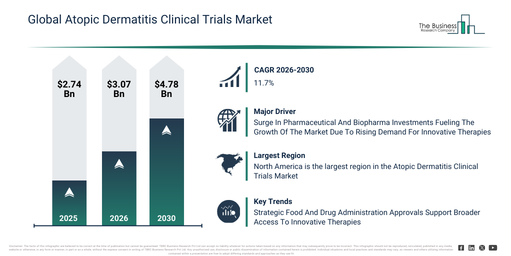
    The atopic dermatitis clinical trials market has expanded quickly in recent years. It is anticipated to grow from $2.74 billion in 2025 to $3.07 billion in 2026, with a compound annual growth rate (CAGR) of 12.0%. This past growth can be attributed to the increasing occurrence of atopic dermatitis, the expansion of drug pipelines focused on dermatology, a rise in clinical research investments, greater involvement of Contract Research Organizations (CROs) in dermatology trials, and enhancements in trial design methodologies.

    The atopic dermatitis clinical trials market size is projected to experience swift expansion in the coming years. This market is anticipated to reach $4.78 billion by 2030, demonstrating a compound annual growth rate (CAGR) of 11.7%. Factors contributing to this growth over the forecast period include an increasing demand for innovative biologics and JAK inhibitors, the growing acceptance of decentralized clinical trials, greater utilization of real-world evidence studies, the broadening of personalized treatment methods, and a rise in regulatory approvals for advanced therapies. Key trends identified for the forecast period encompass a wider embrace of biologic and targeted therapies within trials, increased deployment of digital tools for patient monitoring, a stronger focus on clinical trial designs centered around patients, an increase in late-phase multicenter research, and a heightened emphasis on endpoints related to long-term safety and quality of life.

    Access Your Free Sample Report For In-Depth Market Analysis:

    https://www.thebusinessresearchcompany.com/report/atopic-dermatitis-clinical-trials-global-market-report

    Which Key Factors Are Driving The Atopic Dermatitis Clinical Trials Market Growth?

    The escalating investments in the pharmaceutical and biopharmaceutical sectors are anticipated to fuel the expansion of the atopic dermatitis clinical trials market in the coming years. These investments encompass financial backing and capital allocation dedicated to the exploration, development, production, and market introduction of both drug and biologic treatments. The surge in pharmaceutical and biopharma funding stems from a heightened demand for novel therapies, which provide precise treatment solutions and better patient outcomes. Such financial commitments facilitate atopic dermatitis clinical trials by sponsoring the investigation and evaluation of emerging treatments, enabling researchers to conduct thorough studies that validate their efficacy and safety. For illustration, in December 2024, data from the Association of Australian Medical Research Institutes (AAMRI), an Australia-based nonprofit entity, indicated that Australian medical-research institutes collectively generated approximately AUD 2.5 billion (~ USD 1.65 billion) in total revenue during 2023. Consequently, the growing pharmaceutical and biopharma investments are indeed fostering the advancement of the atopic dermatitis clinical trials market.

    Which Segments Define The Atopic Dermatitis Clinical Trials Market Segment Structure?

    The atopic dermatitis clinical trials market covered in this report is segmented –

    1) By Phase: Phase I, Phase II, Phase III, Phase IV

    2) By Molecule Type: Small Molecules, Large Molecules

    3) By Study Designs: Interventional, Observational

    4) By Mode: Outsourced, In-House

    5) By Industry: Contract Research Organizations, Pharmaceutical And Biotechnology Companies, Research And Academic Institutes

    Subsegments:

    1) By Phase I: Safety And tolerability studies, Dose-Escalation studies, Pharmacokinetics (PK) And Pharmacodynamics (PD) Studies

    2) By Phase II: Dose-Ranging Studies, Efficacy And Safety Studies, Randomized Controlled Trials (RCTs), Biomarker Identification Studies

    3) By Phase III: Large-Scale Efficacy Studies, Comparative Effectiveness Trials, Multicenter Randomized Trials, Long-Term Safety Assessment

    4) By Phase IV: Post-Marketing Surveillance, Real-World Evidence Studies, Drug Utilization Studies, Health Outcomes And Quality Of Life Studies

    Which Trends Are Guiding The Direction Of The Atopic Dermatitis Clinical Trials Market?

    Leading companies in the atopic dermatitis clinical trials market are prioritizing the development of innovative solutions, such as oral inhibitors, to maintain consistent therapeutic effects over time. These oral inhibitors are orally administered medications designed to block specific enzymes or signaling pathways involved in disease progression. For instance, in February 2023, Pfizer Inc., a US-based pharmaceutical and biotechnology firm, announced that the US Food and Drug Administration had approved its supplemental New Drug Application for CIBINQO (abrocitinib). This approval extended the drug’s indication to adolescents aged 12 to under 18 who have moderate-to-severe atopic dermatitis that has not responded to other systemic treatments or biologics. Previously, CIBINQO was only approved for adults 18 and older. This expansion introduces a new treatment choice for younger patients battling difficult-to-treat AD. The decision was supported by clinical trial data demonstrating its safety and effectiveness within this age group.

    Who Are The Established Players Within The Atopic Dermatitis Clinical Trials Market?

    Major companies operating in the atopic dermatitis clinical trials market are Pfizer Inc., Johnson & Johnson, AbbVie Inc., Novartis International AG, Sanofi S.A., GlaxoSmithKline Plc, Eli Lilly and Company, Amgen Inc., Regeneron Pharmaceuticals Inc., Organon & Co., Charles River Laboratories International Inc., LEO Pharma A/S, QIMA Limited, Medpace Holdings Inc., Novotech Health Holdings Pte Ltd., Biocytogen Pharmaceuticals Co. Ltd., REPROCELL Inc., AnaptysBio Inc., Imavita S.A.S., Oncodesign Services S.A.S.

    Get The Full Atopic Dermatitis Clinical Trials Market Report:

    https://www.thebusinessresearchcompany.com/report/atopic-dermatitis-clinical-trials-global-market-report

    Which Region Has The Greatest Market Share In The Atopic Dermatitis Clinical Trials Market?

    North America was the largest region in the atopic dermatitis clinical trials market in 2025. Asia-Pacific is expected to be the fastest-growing region in the forecast period. The regions covered in the atopic dermatitis clinical trials market report are Asia-Pacific, South East Asia, Western Europe, Eastern Europe, North America, South America, Middle East, Africa.

    Request A Customized Atopic Dermatitis Clinical Trials Market Report For Competitive Insights:

    https://www.thebusinessresearchcompany.com/report/atopic-dermatitis-clinical-trials-global-market-report

    Browse Through More Reports Similar to the Global Atopic Dermatitis Clinical Trials Market 2026, By The Business Research Company

    Drill Pipe Market Report 2026

    https://www.thebusinessresearchcompany.com/report/drill-pipe-global-market-report

    Plastic Pipes And Pipe Fittings Market Report 2026

    https://www.thebusinessresearchcompany.com/report/plastic-pipes-and-pipe-fittings-global-market-report

    Hot Dip Galvanizing Market Report 2026

    https://www.thebusinessresearchcompany.com/report/hot-dip-galvanizing-global-market-report

    Get in touch with us:

    The Business Research Company: https://www.thebusinessresearchcompany.com/

    Americas +1 310-496-7795

    Asia +44 7882 955267 & +91 8897263534

    Europe +44 7882 955267

    Email us at info@tbrc.info

    Follow us on:

    LinkedIn: https://in.linkedin.com/company/the-business-research-company

    YouTube: https://www.youtube.com/channel/UC24_fI0rV8cR5DxlCpgmyFQ

    Global Market Model: https://www.thebusinessresearchcompany.com/global-market-model
  • Actinic Keratosis Market Outlook Through 2030: Growth Trends and Forecast

    Actinic Keratosis Market Outlook Through 2030: Growth Trends and Forecast

    The Business Research Company’s 2026 market reports feature enhanced tools like market attractiveness analysis, TAM assessment, and company scoring matrices, along with interactive dashboards, deeper supply chain insights, and startup coverage strengthening the depth, usability, and strategic value of insights.

    What Are The Market Size Estimates For The Actinic Keratosis Market In 2026 And 2030?

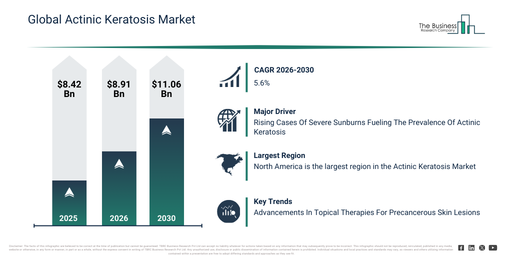
    The actinic keratosis market has shown strong growth in recent years. It is projected to increase from $8.42 billion in 2025 to $8.91 billion in 2026, progressing at a compound annual growth rate (CAGR) of 5.8%. This expansion in past periods can be attributed to factors such as rising UV exposure and sunburn incidence, the limited availability of effective topical agents, an increasing prevalence of skin cancer, the growth of dermatology infrastructure, and the adoption of conventional surgical procedures.

    The actinic keratosis market is projected to experience robust expansion over the coming years, with its valuation expected to reach $11.06 billion by 2030, demonstrating a compound annual growth rate (CAGR) of 5.6%. This anticipated growth can be attributed to several factors, including the development of advanced photodynamic therapies, an increasing application of combined topical and procedural treatments, the expansion of hospital and dermatology clinic networks, heightened consumer awareness regarding early intervention, and the introduction of innovative homecare treatment solutions. Key trends influencing the market during the forecast period involve a growing emphasis on sun protection and skin health awareness, the rising adoption of non-invasive photodynamic therapy, an increase in the usage of topical therapeutics for early-stage actinic keratosis, the proliferation of dermatology clinics and homecare treatment options, and a growing preference for combination therapies.

    Access Your Free Sample Report For In-Depth Market Analysis:

    https://www.thebusinessresearchcompany.com/report/actinic-keratosis-global-market-report

    What Factors Are Contributing To The Growth Of The Actinic Keratosis Market?

    The actinic keratosis market is anticipated to expand due to the rising incidence of severe sunburns. These intense skin burns, known as severe sunburns, stem from overexposure to ultraviolet (UV) radiation, leading to symptoms such as redness, pain, swelling, and occasionally blisters. Contributing factors to sunburns include extended exposure to ultraviolet (UV) radiation, insufficient sun protection, more outdoor pursuits during intense UV periods, and increasing temperatures resulting from climate change. Sunburns induce actinic keratosis by inflicting DNA damage in skin cells via ultraviolet (UV) radiation, which creates mutations that impede normal cellular function, subsequently forming precancerous lesions, particularly after recurrent or prolonged sun exposure. For example, data from May 2024, provided by Melanoma Focus, a UK-based charity, indicates that during 2022-23, 201 hospital admissions were linked to sunburns, comprising 89 children and 25 babies under one year old. Furthermore, the charity discovered that 66% of UK adults aged 16-65 recalled having sunburns in childhood, with 65% of these individuals enduring severe sunburns accompanied by blisters at least once. This percentage climbed to 77% for individuals possessing light, pale, or white skin. Consequently, the growing incidence of severe sunburns is fueling the expansion of the actinic keratosis market.

    How Are Segments Identified Within The Actinic Keratosis Market Segment Framework?

    The actinic keratosis market covered in this report is segmented –

    1) By Treatment Type: Topical Treatment, Surgical Procedure, Photodynamic Therapy, Other Treatment Types

    2) By Distribution Channels: Hospital Pharmacies, Drug Stores And Retail Pharmacies

    3) By End-User: Hospitals, Dermatology Clinics, Homecare Settings, Other End-Users

    Subsegments:

    1) By Topical Treatment: 5-Fluorouracil (5-FU), Imiquimod, Diclofenac

    2) By Surgical Procedure: Cryotherapy, Curettage And Electrodessication

    3) By Photodynamic Therapy: Aminolevulinic Acid (ALA) Plus Light Therapy, Methyl Aminolevulinate (MAL) Plus Light Therapy

    4) By Other Treatment Types: Laser Therapy, Combination Therapies

    What Trends Are Shaping The Future Of The Actinic Keratosis Market?

    Leading firms within the actinic keratosis market are concentrating their efforts on creating topical ointments aimed at effectively addressing and removing precancerous lesions, lowering recurrence rates, and boosting patient adherence through shorter treatment times and better safety profiles. These topical ointments consist of medicated creams or gels directly applied to the affected skin, containing active ingredients like tirbanibulin, which function by targeting abnormal keratinocytes to manage precancerous lesions. An example of this is in June 2024, when Almirall SA, a biopharmaceutical company based in Spain, obtained approval from the US Food and Drug Administration (FDA) for a supplemental new drug application (sNDA) allowing the expanded application area for its medication, Klisyri, up to 100 cm2. Klisyri (tirbanibulin) 1% ointment acts as a microtubule inhibitor, formulated to hinder the uncontrolled growth of abnormal keratinocytes, thereby effectively diminishing both the count and dimensions of precancerous lesions in the treatment of actinic keratosis (AK) located on the face or scalp.

    Who Are The Companies Competing Within The Actinic Keratosis Market?

    Major companies operating in the actinic keratosis market are Galderma SA, LEO Pharma A/S, Almirall S.A., Bausch Health Companies Inc., Perrigo Company plc, Pfizer Inc, F. Hoffmann-La Roche AG, Merck & Co. Inc., AbbVie Inc., Sanofi S.A., Novartis AG, GSK plc, Amgen Inc., Incyte Corporation, Aclaris Therapeutics Inc., Biofrontera AG, Hill Dermaceuticals Inc., Sun Pharmaceutical Industries Ltd., Dr. Reddy’s Laboratories Ltd., Viatris Inc.

    Get The Full Actinic Keratosis Market Report:

    https://www.thebusinessresearchcompany.com/report/actinic-keratosis-global-market-report

    Which Region Is The Top Contributor To The Actinic Keratosis Market By Share?

    North America was the largest region in the actinic keratosis market in 2025. Asia-Pacific is expected to be the fastest-growing region in the forecast period. The regions covered in the actinic keratosis market report are Asia-Pacific, South East Asia, Western Europe, Eastern Europe, North America, South America, Middle East, Africa.

    Request A Customized Actinic Keratosis Market Report For Competitive Insights:

    https://www.thebusinessresearchcompany.com/report/actinic-keratosis-global-market-report

    Browse Through More Reports Similar to the Global Actinic Keratosis Market 2026, By The Business Research Company

    Keloids Treatment Market Report 2026

    https://www.thebusinessresearchcompany.com/report/keloids-treatment-global-market-report

    Neurotrophic Keratitis Treatment Market Report 2026

    https://www.thebusinessresearchcompany.com/report/neurotrophic-keratitis-treatment-global-market-report

    Scleroderma Market Report 2026

    https://www.thebusinessresearchcompany.com/report/scleroderma-global-market-report

    Get in touch with us:

    The Business Research Company: https://www.thebusinessresearchcompany.com/

    Americas +1 310-496-7795

    Asia +44 7882 955267 & +91 8897263534

    Europe +44 7882 955267

    Email us at info@tbrc.info

    Follow us on:

    LinkedIn: https://in.linkedin.com/company/the-business-research-company

    YouTube: https://www.youtube.com/channel/UC24_fI0rV8cR5DxlCpgmyFQ

    Global Market Model: https://www.thebusinessresearchcompany.com/global-market-model

  • Alpers Disease Treatment Market Growth Driven by Expanded Diagnostic Testing

    Alpers Disease Treatment Market Growth Driven by Expanded Diagnostic Testing

    The Business Research Company’s 2026 market reports feature enhanced tools like market attractiveness analysis, TAM assessment, and company scoring matrices, along with interactive dashboards, deeper supply chain insights, and startup coverage strengthening the depth, usability, and strategic value of insights.

    What Changes In Market Value Are Expected For The Alpers Disease Treatment Market Over The 2026–2030 Period?

    The alpers disease treatment market size has experienced considerable growth recently. It is anticipated to grow from $1.43 billion in 2025 to $1.52 billion in 2026, with a compound annual growth rate (CAGR) of 5.7%. Several factors contributed to this historic growth, including limited awareness of alpers disease, a lack of specialized diagnostic tools, restricted access to rare disease therapies, reliance on traditional anticonvulsant medications, and a small patient population affecting treatment adoption.

    The alpers disease treatment market is projected to experience consistent expansion over the upcoming years. This market is anticipated to reach $1.84 billion by 2030, exhibiting a compound annual growth rate (CAGR) of 5.0%. Factors driving this growth during the forecast period include progress in genetic testing methods, the creation of specific supportive treatments, increased funding for rare disease research, the broadening of specialized medical centers, and a rise in partnerships between hospitals and therapy services. Key trends expected during this period involve the increasing use of anticonvulsant medications for managing seizures, a greater emphasis on comprehensive, multidisciplinary therapeutic strategies, the expanded application of molecular genetic testing for diagnostic purposes, the broadening of dedicated clinics and hospital services for rare conditions, and improved development of supportive and nutritional interventions.

    Access Your Free Sample Report For In-Depth Market Analysis:

    https://www.thebusinessresearchcompany.com/report/alpers-disease-treatment-global-market-report

    What Primary Drivers Are Shaping The Alpers Disease Treatment Market?

    The escalating diagnostic testing is expected to drive the Alpers disease treatment market going forward. Diagnostic testing involves the systematic evaluation of biological samples, physiological functions, or imaging results to identify, monitor, or rule out medical conditions and guide appropriate clinical decision-making. A primary factor fueling the rise in diagnostic testing is the increasing emphasis on early and accurate disease detection, as healthcare providers prioritize timely diagnosis to improve outcomes, prevent complications, and support more effective long-term management. Alpers disease treatment benefits from this growth in diagnostic testing by enabling earlier identification of mitochondrial dysfunction, which supports timely intervention and more informed clinical care for affected patients. For instance, in August 2025, according to the NHS England, a UK-based executive non-departmental public body, the number of patients waiting for key diagnostic tests rose to 1,657,600, up by 95,500 from August 2024, while completed diagnostic procedures reached 2,370,800, reflecting an increase of 18,600 over the same timeframe. Therefore, the rising diagnostic testing is driving the Alpers disease treatment market. The increasing number of personalized medicines is anticipated to fuel the growth of the Alpers disease treatment market going forward. Personalized medicine refers to a medical approach that tailors healthcare decisions, practices, interventions, and treatments to the individual characteristics of each patient. This increase in personalized medicines is attributed to a better understanding of genetics, patient-specific data, and regulatory support. Personalized medicines aid in Alpers disease treatment by customizing therapies based on an individual’s genetic makeup, targeting the specific genetic mutations and biochemical pathways involved in the disease, which can improve treatment efficacy and reduce adverse effects. For instance, in February 2024, according to the Personalized Medicine Coalition, a US-based non-profit organization, the FDA approved 16 novel personalized therapies for patients with rare diseases in 2023, compared to six in 2022. Therefore, the increasing number of personalized medicines is driving the growth of the Alpers disease treatment market.

    What Are The Key Segment Divisions In The Alpers Disease Treatment Market Segment Structure?

    The alpers disease treatment market covered in this report is segmented –

    1) By Treatment: Anticonvulsant Drugs, Speech Therapy, Physical Therapy, Occupational Therapy

    2) By Diagnosis: Genetic and Molecular Testing, Neurodiagnostic Tests, Biochemical and Metabolic Tests

    3) By Dosage: Tablet, Injection, Other Dosages

    4) By Symptom: Seizures, Spasticity, Liver Dysfunction, Cerebral Degeneration

    Subsegments:

    1) By Anticonvulsant Drugs: Levetiracetam, Lamotrigine, Topiramate, Clonazepam

    2) By Speech Therapy: Articulation Therapy, Language Development Therapy, Swallowing Therapy, Cognitive Communication Therapy

    3) By Physical Therapy: Motor Skill Therapy, Balance And Coordination Training, Stretching And Strengthening Exercises, Gait Training

    4) By Occupational Therapy: Fine Motor Skill Training, Sensory Integration Therapy, Adaptive Techniques For Daily Living, Cognitive Rehabilitation

    What Trends Are Affecting The Growth Of The Alpers Disease Treatment Market?

    Leading companies in the alpers disease treatment market are creating advanced solutions, such as Injectable anti-seizure drugs (ASDs), aimed at achieving a faster and more dependable start to action than conventional oral medications. Injectable anti-seizure drugs (ASDs) offer benefits for individuals afflicted with Alpers disease by providing quick and reliable control over seizures, bypassing potential absorption problems in the digestive system, guaranteeing consistent and potent dosages, and presenting a more accurate therapeutic choice for addressing this intricate neurological condition. For example, in April 2024, Eisai Co. Ltd., a pharmaceutical firm based in Japan, released FYCOMPA, an injection formulation designed to treat epilepsy. This medication acts as a selective, noncompetitive AMPA receptor antagonist, hypothesized to lessen neuronal over-excitation connected to seizures by targeting glutamate activity at AMPA receptors situated on postsynaptic membranes. Nevertheless, its application in patients with Alpers disease demands meticulous thought due to the particular complexities and vulnerabilities associated with the illness.

    Which Organizations Are Engaged In The Alpers Disease Treatment Market?

    Major companies operating in the alpers disease treatment market are UCB S.A., Jazz Pharmaceuticals, Eisai Co. Ltd., Otsuka Pharmaceutical Co. Ltd., H. Lundbeck A/S, Biogen Inc., Ultragenyx Pharmaceutical Inc., PTC Therapeutics Inc., Ionis Pharmaceuticals Inc., Sarepta Therapeutics Inc., GW Pharmaceuticals plc, Supernus Pharmaceuticals Inc., SK Biopharmaceuticals Co. Ltd., Marinus Pharmaceuticals Inc., Neurelis Inc., Zogenix Inc., Aquestive Therapeutics Inc., Bial – Portela & Cª S.A., Desitin Arzneimittel GmbH, Adamas Pharmaceuticals Inc.

    Get The Full Alpers Disease Treatment Market Report:

    https://www.thebusinessresearchcompany.com/report/alpers-disease-treatment-global-market-report

    Where Is The Alpers Disease Treatment Market Primarily Concentrated By Region?

    North America was the largest region in the alpers disease treatment market in 2025. The regions covered in the alpers disease treatment market report are Asia-Pacific, South East Asia, Western Europe, Eastern Europe, North America, South America, Middle East, Africa.

    Request A Customized Alpers Disease Treatment Market Report For Competitive Insights:

    https://www.thebusinessresearchcompany.com/report/alpers-disease-treatment-global-market-report

    Browse Through More Reports Similar to the Global Alpers Disease Treatment Market 2026, By The Business Research Company

    Albuterol Market Report 2026

    https://www.thebusinessresearchcompany.com/report/albuterol-global-market-report

    Rare Diseases Treatment Market Report 2026

    https://www.thebusinessresearchcompany.com/report/rare-diseases-treatment-global-market-report

    Condyloma Acuminata Treatment Market Report 2026

    https://www.thebusinessresearchcompany.com/report/condyloma-acuminata-treatment-global-market-report

    Get in touch with us:

    The Business Research Company: https://www.thebusinessresearchcompany.com/

    Americas +1 310-496-7795

    Asia +44 7882 955267 & +91 8897263534

    Europe +44 7882 955267

    Email us at info@tbrc.info

    Follow us on:

    LinkedIn: https://in.linkedin.com/company/the-business-research-company

    YouTube: https://www.youtube.com/channel/UC24_fI0rV8cR5DxlCpgmyFQ

    Global Market Model: https://www.thebusinessresearchcompany.com/global-market-model
  • Acromegaly Market: Growth Drivers, Trends, and Opportunities

    Acromegaly Market: Growth Drivers, Trends, and Opportunities

    The Business Research Company’s 2026 market reports feature enhanced tools like market attractiveness analysis, TAM assessment, and company scoring matrices, along with interactive dashboards, deeper supply chain insights, and startup coverage strengthening the depth, usability, and strategic value of insights.

    What Expansion In Market Value Is Forecasted For The Acromegaly Market Between 2026 And 2030?

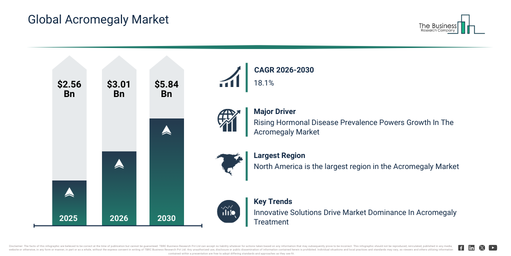
    The acromegaly market size has seen a swift increase in recent years. The market is projected to expand from $2.56 billion in 2025 to $3.01 billion in 2026, driven by a compound annual growth rate (CAGR) of 17.5%. Historically, this expansion has been driven by the scarce availability of acromegaly diagnostic tools, a rising prevalence of growth hormone disorders, the expansion of hospital and specialty clinic infrastructure, the uptake of conventional treatment methods, and increasing awareness of rare endocrine disorders.

    The acromegaly market is anticipated to experience substantial growth over the next few years. It is projected to expand to $5.84 billion by 2030, demonstrating a compound annual growth rate (CAGR) of 18.1%. This projected growth can be attributed to several factors, including the advancement of somatostatin analogues, an increase in parenteral treatment options, the growing adoption of precision medicine, the rise of homecare and outpatient treatment models, and the integration of digital health and remote monitoring technologies. Key trends during this period are expected to include a greater emphasis on growth hormone measurement and IGF-I testing, increased application of somatostatin analogues and dopamine agonists, the expansion of minimally invasive surgical techniques and radiation therapy, an enhanced focus on tailored treatment plans for patients, and improvements in awareness and early diagnosis initiatives.

    Access Your Free Sample Report For In-Depth Market Analysis:

    https://www.thebusinessresearchcompany.com/report/acromegaly-global-market-report

    Which Strong Drivers Are Impacting The Acromegaly Market Growth?

    The rising incidence of hormonal conditions, such as diabetes, is projected to drive expansion in the acromegaly market. Hormonal diseases, also identified as endocrine disorders, are medical issues resulting from a malfunction within the endocrine system. Diabetes is recognized as one of the most widespread and significant hormonal ailments. Acromegaly, along with other endocrine illnesses, can arise from an excessive production of specific hormones, including growth hormone or cortisol. Moreover, given the influence of high growth hormone levels on insulin synthesis, approximately 50% of individuals with acromegaly are susceptible to developing insulin resistance or type 2 diabetes mellitus. For example, in March 2024, the Office for Health Improvement and Disparities, a UK-based government body, reported that between March 2022 and March 2023, the proportion of people with type 1 diabetes receiving all eight recommended care processes climbed by 22%, and for type 2 diabetes, it grew by 21%. During the same period, the percentage achieving target HbA1c levels reached 37.9%, marking the highest figure ever recorded by the National Diabetes Audit (NDA). Hence, the increasing prevalence of hormonal diseases is serving as a primary catalyst for the growth of the acromegaly market.

    What Are The Key Segment Divisions In The Acromegaly Market Segment Structure?

    The acromegaly market covered in this report is segmented –

    1) By Type: Ectopic Acromegaly, Acromegaly Due To Growth Hormone

    2) By Diagnosis: GH And IGF-I Measurement, Growth Hormone Suppression Test, Imaging, Other Diagnosis

    3) By Route Of Administration: Oral, Parental, Other Routes Of Administration

    4) By Treatment: Medication, Somatostatin analogues, Dopamine Agonists, Growth Hormone Antagonist, Surgery, Radiation, Other Treatments

    5) By End Users: Hospitals, Specialty Clinics, Other End Users

    Subsegments:

    1) By Ectopic Acromegaly: Tumor-Induced Ectopic Acromegaly, Non-Tumor-Induced Ectopic Acromegaly

    2) By Acromegaly Due To Growth Hormone: Primary Growth Hormone Excess, Secondary Growth Hormone Excess

    Which Trends Are Contributing To Changes In The Acromegaly Market?

    Leading companies in the acromegaly market are concentrating on creating innovative products and solutions, such as generic lanreotide, to enhance treatment possibilities and improve patient outcomes. Generic lanreotide is defined as an unbranded formulation of the medicine used for treating acromegaly and certain neuroendocrine tumors. It functions as a somatostatin analogue, which reduces growth hormone secretion and increases patient accessibility to effective treatment options. For example, in October 2024, Teva Pharmaceutical Industries Ltd., an Israel-based pharmaceutical company focused on generic drugs, introduced the first and only generic version of Sandostatin LAR Depot in the United States. The injectable suspension, octreotide acetate, is indicated for managing acromegaly and severe diarrhea associated with carcinoid syndrome. This introduction significantly improves access to crucial therapy for patients who require these treatments.

    Which Organizations Are Engaged In The Acromegaly Market?

    Major companies operating in the acromegaly market are Pfizer Inc., Johnson & Johnson Private Limited, Merck & Co Inc., AbbVie Inc., Bayer AG, Novartis AG, Sanofi S.A., AstraZeneca plc, GlaxoSmithKline plc, Eli Lilly and Company, Gilead Sciences Inc., Boehringer Ingelheim International GmbH., Amgen Inc., Allergan Inc., Teva Pharmaceutical Industries Ltd., Mylan N.V., Ipsen Pharma S.A., Hikma Pharmaceuticals PLC, Lupin Ltd., Recordati S.p.A., Ionis Pharmaceuticals Inc., Amryt Pharma plc , Strongbridge Biopharma plc, Aquestive Therapeutics Inc., Peptron Inc., Crinetics Pharmaceuticals, Chiasma Inc.

    Get The Full Acromegaly Market Report:

    https://www.thebusinessresearchcompany.com/report/acromegaly-global-market-report

    Which Region Represents The Largest Share Of The Acromegaly Market?

    North America was the largest region in the acromegaly market in 2025. The regions covered in the acromegaly market report are Asia-Pacific, South East Asia, Western Europe, Eastern Europe, North America, South America, Middle East, Africa.

    Request A Customized Acromegaly Market Report For Competitive Insights:

    https://www.thebusinessresearchcompany.com/report/acromegaly-global-market-report

    Browse Through More Reports Similar to the Global Acromegaly Market 2026, By The Business Research Company

    Mastopexy Market Report 2026

    https://www.thebusinessresearchcompany.com/report/mastopexy-global-market-report

    Thrombophilia Market Report 2026

    https://www.thebusinessresearchcompany.com/report/thrombophilia-global-market-report

    Hormone Therapy Market Report 2026

    https://www.thebusinessresearchcompany.com/report/hormone-therapy-global-market-report

    Get in touch with us:

    The Business Research Company: https://www.thebusinessresearchcompany.com/

    Americas +1 310-496-7795

    Asia +44 7882 955267 & +91 8897263534

    Europe +44 7882 955267

    Email us at info@tbrc.info

    Follow us on:

    LinkedIn: https://in.linkedin.com/company/the-business-research-company

    YouTube: https://www.youtube.com/channel/UC24_fI0rV8cR5DxlCpgmyFQ

    Global Market Model: https://www.thebusinessresearchcompany.com/global-market-model
  • Alopecia Areata Market: Growth Potential and Outlook

    Alopecia Areata Market: Growth Potential and Outlook

    The Business Research Company’s 2026 market reports feature enhanced tools like market attractiveness analysis, TAM assessment, and company scoring matrices, along with interactive dashboards, deeper supply chain insights, and startup coverage strengthening the depth, usability, and strategic value of insights.

    By 2030, What Market Size Is The Alopecia Areata Market Expected To Reach Based On Its 2026 Value?

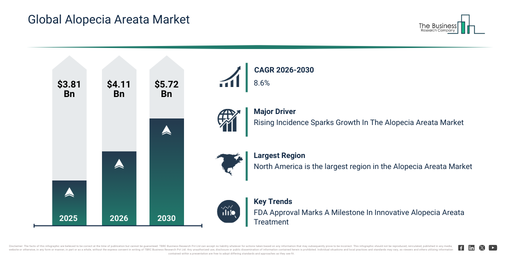
    The alopecia areata market has experienced substantial growth in recent years. It is anticipated to expand from $3.81 billion in 2025 to $4.11 billion in 2026, demonstrating a compound annual growth rate (CAGR) of 7.9%. The market’s growth in previous periods can be attributed to factors such as the increasing global prevalence of alopecia areata, historically limited treatment options, a growing demand for dermatology care, the expansion of hospital and specialty clinic infrastructure, and the adoption of traditional herbal and natural remedies.

    The alopecia areata market is projected to experience substantial expansion over the upcoming years, with its size anticipated to reach $5.72 billion by 2030, exhibiting a compound annual growth rate (CAGR) of 8.6%. This anticipated growth during the forecast period is propelled by several factors, including the emergence of new immunotherapy drugs, increased funding for dermatology research, a growing inclination towards customized hair loss treatments, the broadened availability of homecare and teledermatology services, and the expansion of clinical trials aimed at hair regrowth. Key developments anticipated within the forecast period encompass a heightened understanding of autoimmune hair conditions, increased uptake of topical and oral treatment options, the proliferation of specialized clinics and at-home solutions, technological progress in trichoscopy and diagnostic methods, and intensified research into innovative hair regrowth therapies.

    Access Your Free Sample Report For In-Depth Market Analysis:

    https://www.thebusinessresearchcompany.com/report/alopecia-areata-global-market-report

    Which Major Drivers Are Influencing The Expansion Of The Alopecia Areata Market?

    The rising occurrence of alopecia is anticipated to propel the expansion of the alopecia areata market. Alopecia is defined as the total or partial hair loss, typically from the scalp, but it can also occur on other body parts. This growing prevalence of alopecia stems mainly from an increase in autoimmune conditions, elevated stress, genetic predispositions, and environmental factors that interfere with regular hair follicle function. Treatments for alopecia areata aim to alleviate this increasing issue by focusing on immune-driven inflammation in hair follicles, encouraging hair restoration, and enhancing patients’ quality of life with more efficient and quicker therapeutic solutions. As an example, in July 2023, data from an article published by the U.S. Department of Health and Human Services indicated that over 50 Mn men and 30 Mn women in the U.S. are estimated to experience androgenetic alopecia annually. Consequently, the expanding incidence of alopecia is driving the growth of the alopecia areata market.

    Which Segment Categories Are Included In The Alopecia Areata Market Segment Analysis?

    The alopecia areata market covered in this report is segmented –

    1) By Type: Patchy Alopecia Areata, Alopecia Totalis, Alopecia Universalis, Diffuse Alopecia Areata, Ophiasis Alopecia

    2) By Diagnosis: Trichoscopy, Skin Biopsy, Other Diagnoses

    3) By Route Of Administration: Oral, Topical, Parenteral, Other Routes Of Administration

    4) By End-Users: Hospitals, Specialty Clinics

    Which Trends Are Shaping The Alopecia Areata Market?

    Leading companies in the alopecia areata market are concentrating on the approval of innovative drugs, such as Janus kinase (JAK) inhibitors, to solidify their market position and provide advanced therapies. JAK inhibitors represent a category of medications that impede specific enzymes (JAK1/JAK2) contributing to the autoimmune response that targets hair follicles, thereby encouraging hair regrowth in individuals with severe alopecia areata. For instance, in June 2023, Pfizer Inc., a US-based biotechnology and pharmaceutical company, disclosed that the US Food and Drug Administration (FDA), a US-based federal agency of the Department of Health and Human Services responsible for protecting public health, had approved LITFULOTM (ritlecitinib). This approval designates it as the inaugural and sole treatment for severe alopecia areata approved for patients starting at 12 years of age. It functions as a once-daily oral treatment for alopecia areata, an autoimmune ailment for which there were previously no FDA-approved options for teenagers and limited choices for adults. LITFULO is a kinase inhibitor designed to block Janus kinase 3 (JAK3) and the tyrosine kinase family of kinases (TEC).

    Who Are The Active Companies Shaping The Alopecia Areata Market?

    Major companies operating in the alopecia areata market are Pfizer Inc., Eli Lilly and Company, Incyte Corporation, AbbVie Inc., Novartis AG, Sanofi SA, Bristol Myers Squibb, GlaxoSmithKline plc, Aclaris Therapeutics Inc., Almirall SA, Lupin Ltd., Sun Pharmaceutical Industries Ltd., Cipla Ltd., Glenmark Pharmaceuticals Ltd., Dr Reddys Laboratories Ltd., Teva Pharmaceutical Industries Ltd., Janssen Pharmaceuticals, Arena Pharmaceuticals, AnaptysBio Inc., Viela Bio, Priovant Therapeutics

    Get The Full Alopecia Areata Market Report:

    https://www.thebusinessresearchcompany.com/report/alopecia-areata-global-market-report

    Which Region Has The Greatest Market Share In The Alopecia Areata Market?

    North America was the largest region in the alopecia areata market in 2025. Asia-Pacific is expected to be the fastest-growing region in the forecast period. The regions covered in the alopecia areata market report are Asia-Pacific, South East Asia, Western Europe, Eastern Europe, North America, South America, Middle East, Africa.

    Request A Customized Alopecia Areata Market Report For Competitive Insights:

    https://www.thebusinessresearchcompany.com/report/alopecia-areata-global-market-report

    Browse Through More Reports Similar to the Global Alopecia Areata Market 2026, By The Business Research Company

    Hair Preparations Market Report 2026

    https://www.thebusinessresearchcompany.com/report/hair-preparations-global-market-report

    Alopecia Market Report 2026

    https://www.thebusinessresearchcompany.com/report/alopecia-global-market-report

    Androgenetic Alopecia Treatment Market Report 2026

    https://www.thebusinessresearchcompany.com/report/androgenetic-alopecia-treatment-global-market-report

    Get in touch with us:

    The Business Research Company: https://www.thebusinessresearchcompany.com/

    Americas +1 310-496-7795

    Asia +44 7882 955267 & +91 8897263534

    Europe +44 7882 955267

    Email us at info@tbrc.info

    Follow us on:

    LinkedIn: https://in.linkedin.com/company/the-business-research-company

    YouTube: https://www.youtube.com/channel/UC24_fI0rV8cR5DxlCpgmyFQ

    Global Market Model: https://www.thebusinessresearchcompany.com/global-market-model
  • Atopic Dermatitis Market: Growth Opportunities Through 2030

    Atopic Dermatitis Market: Growth Opportunities Through 2030

    The Business Research Company’s 2026 market reports feature enhanced tools like market attractiveness analysis, TAM assessment, and company scoring matrices, along with interactive dashboards, deeper supply chain insights, and startup coverage strengthening the depth, usability, and strategic value of insights.

    How Large Will The Atopic Dermatitis Market Be By 2030 Compared To Its 2026 Market Size?

    The atopic dermatitis market size has experienced rapid growth in recent years. This market is projected to expand from $9.88 billion in 2025 to reach $11.34 billion in 2026, demonstrating a compound annual growth rate (CAGR) of 14.8%. Factors contributing to its historical growth include the rising prevalence of chronic skin conditions, the greater availability of topical corticosteroids, the expansion of dermatology care services, increased awareness regarding eczema management, and advancements in diagnostic accuracy.

    The atopic dermatitis market is anticipated to experience substantial growth over the coming years, with its size projected to reach $19.53 billion by 2030, exhibiting a compound annual growth rate (CAGR) of 14.6%. This expansion during the forecast period can be primarily attributed to the increasing adoption of biologics and JAK inhibitors, a rising focus on personalized dermatology treatments, the expansion of injectable therapy options, growing investment in dermatology research, and an increasing demand for long-term symptom control. Major trends expected in the forecast period include the increasing uptake of biologic therapies, a rising demand for targeted immunomodulators, a growing focus on long-term disease management, the expansion of advanced topical formulations, and an enhanced emphasis on patient-centric treatment.

    Access Your Free Sample Report For In-Depth Market Analysis:

    https://www.thebusinessresearchcompany.com/report/atopic-dermatitis-global-market-report

    What Primary Drivers Are Shaping The Atopic Dermatitis Market?

    The atopic dermatitis market is projected to expand in the future, driven by the escalating demand for personalized medicine. This innovative medical and healthcare strategy customizes medical decisions, practices, interventions, and drug therapies to suit each individual patient. For atopic dermatitis, personalized medicine involves pinpointing specific genetic and molecular elements that influence the condition, facilitating the creation of targeted therapies tailored to the unique traits of every patient. This methodology not only enhances the effectiveness of treatment but also minimizes unfavorable side effects. Illustratively, in February 2024, the Personalized Medicine Coalition, a US-based advocacy organization for customized medical treatments, reported that the FDA approved 16 new personalized treatments for rare disease patients in 2023, which was an increase from six approvals in 2022. Consequently, the rising requirement for personalized medicine is propelling the growth of the atopic dermatitis market.

    How Is The Atopic Dermatitis Market Segmented Across Different Segment Categories?

    The atopic dermatitis market covered in this report is segmented –

    1) By Drug Class: Corticosteroids, Emollients Or Moisturizers, IL-4 And PDE4 Inhibitors, Calcineurin Inhibitors, Other Drug Classes

    2) By Mode of Administration: Topical, Injectable, Oral

    3) By Distribution Channel: Hospital Pharmacies, Retail Pharmacies, Online Pharmacies

    Subsegments:

    1) By Corticosteroids: Topical Corticosteroids, Systemic Corticosteroids

    2) By Emollients Or Moisturizers: Creams and Lotions, Ointments and Balms, Barrier Repair Creams

    3) By IL-4 And PDE4 Inhibitors: Dupilumab (IL-4 Inhibitor), Apremilast (PDE4 Inhibitor)

    4) By Calcineurin Inhibitors: Tacrolimus Ointment, Pimecrolimus Cream

    5) By Other Drug Classes: Biologics, JAK Inhibitors

    What Trends Are Affecting The Growth Of The Atopic Dermatitis Market?

    Leading companies in the atopic dermatitis market are focused on developing innovative therapies, such as IL-31 receptor antagonists, to manage chronic itch, improve skin symptom control, and lessen systemic side effects compared to traditional corticosteroids or immunosuppressants. An IL-31 receptor antagonist functions by blocking the IL-31 signaling pathway, which is directly implicated in itch sensation and inflammation, thus offering a more targeted approach than broad immune suppression. For instance, in December 2024, Galderma, a Switzerland-based dermatology company, secured FDA approval for Nemluvio (nemolizumab), which is the first monoclonal antibody designed to specifically target the IL-31 receptor alpha to inhibit IL-31 signaling in moderate-to-severe atopic dermatitis. The therapy is given via subcutaneous injection, works by binding to the IL-31 receptor to prevent activation by the IL-31 cytokine, and has been shown in clinical trials to provide rapid relief from itch and meaningful improvement in skin symptoms when used alongside topical treatments.

    Which Organizations Play A Role In The Atopic Dermatitis Market Landscape?

    Major companies operating in the atopic dermatitis market are Sanofi SA, Regeneron Pharmaceuticals Inc., Novartis International AG, Pfizer Inc., AbbVie Inc., Astellas Pharma Inc., Arcutis Biotherapeutics Inc., Asana Biosciences LLC, Dermavant Sciences Inc., Eli Lilly and Company, Galderma SA, Incyte Corporation, Bayer AG, Bausch Health Companies Inc., GlaxoSmithKline PLC, LEO Pharma A/S, Teva Pharmaceutical Industries Ltd., Allergan PLC, Menlo Therapeutics Inc., Johnson & Johnson, Merck & Co Inc., Amgen Inc., AstraZeneca PLC, Bristol-Myers Squibb Company, Eisai Co. Ltd., Kyowa Kirin Co. Ltd., Mallinckrodt Pharmaceuticals Limited

    Get The Full Atopic Dermatitis Market Report:

    https://www.thebusinessresearchcompany.com/report/atopic-dermatitis-global-market-report

    Which Region Accounts For The Largest Portion Of The Atopic Dermatitis Market?

    North America was the largest region in the atopic dermatitis market in 2025. Asia-Pacific is expected to be the fastest-growing region in the forecast period. The regions covered in the atopic dermatitis market report are Asia-Pacific, South East Asia, Western Europe, Eastern Europe, North America, South America, Middle East, Africa.

    Request A Customized Atopic Dermatitis Market Report For Competitive Insights:

    https://www.thebusinessresearchcompany.com/report/atopic-dermatitis-global-market-report

    Browse Through More Reports Similar to the Global Atopic Dermatitis Market 2026, By The Business Research Company

    Allergic Rhinitis Market Report 2026

    https://www.thebusinessresearchcompany.com/report/allergic-rhinitis-global-market-report

    Dermatitis Drugs Market Report 2026

    https://www.thebusinessresearchcompany.com/report/dermatitis-drugs-global-market-report

    Dermatology Market Report 2026

    https://www.thebusinessresearchcompany.com/report/dermatology-global-market-report

    Get in touch with us:

    The Business Research Company: https://www.thebusinessresearchcompany.com/

    Americas +1 310-496-7795

    Asia +44 7882 955267 & +91 8897263534

    Europe +44 7882 955267

    Email us at info@tbrc.info

    Follow us on:

    LinkedIn: https://in.linkedin.com/company/the-business-research-company

    YouTube: https://www.youtube.com/channel/UC24_fI0rV8cR5DxlCpgmyFQ

    Global Market Model: https://www.thebusinessresearchcompany.com/global-market-model

  • AIDS Market: Key Developments Driving Growth Over the Forecast Period

    AIDS Market: Key Developments Driving Growth Over the Forecast Period

    The Business Research Company’s 2026 market reports feature enhanced tools like market attractiveness analysis, TAM assessment, and company scoring matrices, along with interactive dashboards, deeper supply chain insights, and startup coverage strengthening the depth, usability, and strategic value of insights.

    How Large Will The Acquired Immunodeficiency Syndrome (AIDS) Market Be By 2030 Compared To Its 2026 Market Size?

    The market size for acquired immunodeficiency syndrome (aids) has shown substantial growth in recent years. It is forecast to expand from $33.75 billion in 2025 to $35.53 billion in 2026, reflecting a compound annual growth rate (CAGR) of 5.3%. Historically, this growth can be attributed to the significant worldwide prevalence of HIV infections, expanding awareness and screening initiatives, government-supported HIV treatment programs, the availability of first-generation antiretroviral drugs, and an escalating incidence of opportunistic infections.

    The market size for acquired immunodeficiency syndrome (aids) is projected to undergo substantial expansion in the next few years. It is anticipated to reach $43.28 billion in 2030, demonstrating a compound annual growth rate (CAGR) of 5.1%. This growth throughout the forecast period can be primarily attributed to the ongoing development of next-generation antiretroviral therapies, the expansion of PrEP and PEP programs, heightened research efforts for HIV vaccines, the increasing adoption of digital health monitoring solutions, and a rise in public-private partnerships aimed at HIV management. Significant trends expected during this forecast period encompass the increasing uptake of antiretroviral therapy (ART), a growing reliance on pre-exposure prophylaxis (PrEP) and post-exposure prophylaxis (PEP), the broadening of HIV diagnostic and surveillance programs, an intensified focus on HIV vaccine research and development, and the integration of services provided by hospital and retail pharmacies.

    Access Your Free Sample Report For In-Depth Market Analysis:

    https://www.thebusinessresearchcompany.com/report/acquired-immunodeficiency-syndrome-aids-global-market-report

    What Key Factors Are Shaping The Acquired Immunodeficiency Syndrome (AIDS) Market Landscape?

    Rising instances of HIV infections are anticipated to boost the expansion of the acquired immunodeficiency syndrome (AIDS) market in the future. HIV infections describe a state triggered by the human immunodeficiency virus (HIV), which compromises the immune system, thereby diminishing the body’s capacity to combat infections and illnesses. The surge in HIV infection rates stems from factors such as unprotected sexual contact with an infected individual, the shared use of needles or syringes, exposure to tainted blood products, engaging with multiple sexual partners, and having a compromised immune system or pre-existing sexually transmitted infections. Management of acquired immunodeficiency syndrome (AIDS) supports patients with HIV infection by encouraging prompt diagnosis, broadening availability of potent antiretroviral treatments, improving prevention tactics, and reinforcing healthcare infrastructure, all of which aid in better managing the virus’s dissemination. As an illustration, data released in November 2024 by the European Centre for Disease Prevention and Control (ECDC), a Sweden-based European Union agency, indicated that 112,883 HIV diagnoses were documented in 2023 across 47 out of 53 regional countries, including 24,731 cases within the European Union/European Economic Area (EU/EEA). The total crude rate for HIV diagnoses reached 12.7 per 100,000 population, representing a 2.4% rise from the 12.4 per 100,000 rate noted in 2022. Consequently, the rising number of HIV infections is propelling the acquired immunodeficiency syndrome (AIDS) market.

    Which Segment Categories Are Included In The Acquired Immunodeficiency Syndrome (AIDS) Market Segment Analysis?

    The acquired immunodeficiency syndrome (aids) market covered in this report is segmented –

    1) By Type: Human Immunodeficiency Virus 1, Human Immunodeficiency Virus 2

    2) By Drug Type: Nucleoside-Analog Reverse Transcriptase Inhibitors, Non-Nucleoside Reverse Transcriptase Inhibitors, Fusion Inhibitors, CCR5 Anatagonists And Post-Attachment Inhibitors, Protease Inhibitors, Integrase Inhibitors, Pre-Exposure Prophylaxis And Post-Exposure Prophylaxis

    3) By Route Of Administration: Oral, Parenteral

    4) By Application: Hospital Pharmacy, Retail Pharmacy, Other Applications

    5) By Distribution Channel: Offline, Online

    Subsegments:

    1) By Human Immunodeficiency Virus 1 (HIV-1): Antiretroviral Therapy (ART), Pre-Exposure Prophylaxis (PrEP), Post-Exposure Prophylaxis (PEP), HIV-1 Diagnostic Tests, HIV-1 Vaccine Development, HIV-1 Opportunistic Infection Management

    2) By Human Immunodeficiency Virus 2 (HIV-2): Antiretroviral Therapy (ART) For HIV-2, HIV-2 Diagnostic Tests, HIV-2 Surveillance And Epidemiology, HIV-2 Vaccine Research, Management Of HIV-2 Co-Infections

    What Market Trends Are Affecting The Acquired Immunodeficiency Syndrome (AIDS) Market?

    Major companies engaged in the acquired immunodeficiency syndrome (AIDS) market are concentrating on creating novel therapies, such as long-acting injectables, which enhance patient adherence, decrease dosing frequency, and offer a more practical option than daily oral antiretroviral medications. Long-acting injectables are medications given by injection, designed to gradually release their active components over an extended period, allowing for less frequent administration compared to traditional oral drugs. As an illustration, in January 2025, the UK-based pharmaceutical company, GSK plc, declared that the European Commission had granted approval for its long-acting injectable treatment, Vocabria (cabotegravir) plus Rekambys (rilpivirine). This treatment is sanctioned for use in adolescents aged 12 years and older who are living with HIV, administered via intramuscular injection typically every one or two months, based on the specific treatment regimen. The extended duration of these injections has the potential to boost adherence among adolescents who find daily pill regimens challenging.

    Who Are The Active Companies Shaping The Acquired Immunodeficiency Syndrome (AIDS) Market?

    Major companies operating in the acquired immunodeficiency syndrome (aids) market are Pfizer Inc., Johnson and Johnson, F. Hoffmann-La Roche Ltd, Merck & Co. Inc., Sanofi SA, Bristol-Myers Squibb Company, Abbott, GSK plc, Takeda Pharmaceuticals, Gilead Sciences, Viatris Inc., Teva Pharmaceuticals, Aurobindo Pharma, Cipla Ltd, Shionogi and Co., Dr. Reddy’s Laboratories, Lupin, Hetero Drugs Limited, Glenmark Pharmaceuticals Limited, ViiV Healthcare

    Get The Full Acquired Immunodeficiency Syndrome (AIDS) Market Report:

    https://www.thebusinessresearchcompany.com/report/acquired-immunodeficiency-syndrome-aids-global-market-report

    Which Geographic Region Dominates The Acquired Immunodeficiency Syndrome (AIDS) Market?

    North America was the largest region in the acquired immunodeficiency syndrome (AIDS) market in 2025. Asia-Pacific is expected to be the fastest-growing region in the forecast period. The regions covered in the acquired immunodeficiency syndrome (aids) market report are Asia-Pacific, South East Asia, Western Europe, Eastern Europe, North America, South America, Middle East, Africa.

    Request A Customized Acquired Immunodeficiency Syndrome (AIDS) Market Report For Competitive Insights:

    https://www.thebusinessresearchcompany.com/report/acquired-immunodeficiency-syndrome-aids-global-market-report

    Browse Through More Reports Similar to the Global Acquired Immunodeficiency Syndrome (AIDS) Market 2026, By The Business Research Company

    Immunoassay Market Report 2026

    https://www.thebusinessresearchcompany.com/report/immunoassay-global-market-report

    Acne Drugs Market Report 2026

    https://www.thebusinessresearchcompany.com/report/acne-drugs-global-market-report

    Walking Aids Market Report 2026

    https://www.thebusinessresearchcompany.com/report/walking-aids-global-market-report

    Get in touch with us:

    The Business Research Company: https://www.thebusinessresearchcompany.com/

    Americas +1 310-496-7795

    Asia +44 7882 955267 & +91 8897263534

    Europe +44 7882 955267

    Email us at info@tbrc.info

    Follow us on:

    LinkedIn: https://in.linkedin.com/company/the-business-research-company

    YouTube: https://www.youtube.com/channel/UC24_fI0rV8cR5DxlCpgmyFQ

    Global Market Model: https://www.thebusinessresearchcompany.com/global-market-model
  • Alopecia Market: Growth Trends and Forecast

    Alopecia Market: Growth Trends and Forecast

    The Business Research Company’s 2026 market reports feature enhanced tools like market attractiveness analysis, TAM assessment, and company scoring matrices, along with interactive dashboards, deeper supply chain insights, and startup coverage strengthening the depth, usability, and strategic value of insights.

    What Is The Anticipated Rise In Market Value Of The Alopecia Market During The Forecast Period?

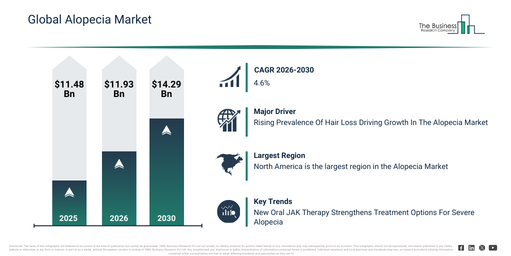
    The alopecia market has experienced consistent growth over the past few years. Projections indicate it will expand from $11.48 billion in 2025 to $11.93 billion in 2026, exhibiting a compound annual growth rate (CAGR) of 3.9%. This historical expansion is primarily due to the increasing global incidence of alopecia, a rise in dermatology clinic consultations, a previous scarcity of treatment choices, advancements in research for hair loss solutions, and heightened cosmetic consciousness.

    The alopecia market size is projected to experience consistent expansion over the upcoming years. It is anticipated to reach $14.29 billion by 2030, exhibiting a compound annual growth rate (CAGR) of 4.6%. This anticipated growth during the forecast period is attributable to several factors, including the emergence of new regenerative medicine therapies, advancements in lltt device technology, the increasing uptake of personalized alopecia solutions, the broadening reach of online pharmacy distribution channels, and greater investment in research for hair restoration. Key trends expected within this period encompass a rising embrace of pharmaceutical remedies for hair loss, increased utilization of low-level laser therapy (lllt) devices, an uptick in hair transplant procedures, the widening application of regenerative medicine for alopecia, and enhanced awareness and availability of homecare solutions for hair loss.

    Access Your Free Sample Report For In-Depth Market Analysis:

    https://www.thebusinessresearchcompany.com/report/alopecia-global-market-report

    What Key Drivers Are Fueling The Growth Of The Alopecia Market?

    The rising incidence of hair loss is anticipated to fuel the expansion of the alopecia market moving ahead. Hair loss is defined as the total or partial absence of hair in regions where it typically develops. Treatments for alopecia assist patients by tackling various hair loss concerns, achieved through methods such as promoting hair regrowth, developing personalized treatment strategies, employing combined therapies, and addressing the physical manifestations of hair loss, all of which can considerably improve an individual’s emotional health and overall quality of life. For instance, in April 2023, data from the National Health Commission, an executive department based in China, revealed that more than 250 million Chinese individuals suffered from hair loss, with 42% of them being between the ages of 26 and 30. Additionally, in February 2023, the Statistic Brain Research Institute, a US-based educational body, reported that approximately 40% of men are expected to experience noticeable hair loss by the age of 35. Consequently, the growing occurrence of hair loss is a key driver for the alopecia market.

    How Is The Alopecia Market Broken Down By Segment Categories?

    The alopecia market covered in this report is segmented –

    1) By Type: Alopecia Areata, Androgenetic Alopecia, Traction Alopecia, Cicatricial Alopecia, Other Types

    2) By Treatment: Pharmaceutical, Low Level Laser Therapy (LLLT) Devices, Hair Transplant, Regenerative Medicine, Other Treatments

    3) By Gender: Male, Female

    4) By Distribution Channel: Hospital Pharmacies, Retail Pharmacies, Online Pharmacies, Other Distribution Channels

    5) By End-User: Dermatology Clinics, Homecare Settings, Other End-Users

    Subsegments:

    1) By Alopecia Areata: Patchy Alopecia Areata, Persistent Patchy Alopecia Areata, Alopecia Universalis, Diffuse Alopecia Areata, Ophiasis

    2) By Androgenetic Alopecia: Male Pattern Baldness, Female Pattern Hair Loss

    3) By Traction Alopecia: Frontal Traction Alopecia, Occipital Traction Alopecia

    4) By Cicatricial Alopecia: Lichen Planopilaris, Discoid Lupus Erythematosus, Central Centrifugal Cicatricial Alopecia, Frontal Fibrosing Alopecia, Folliculitis Decalvans

    5) By Other Types: Telogen Effluvium, Anagen Effluvium, Trichotillomania

    What Trends Are Influencing The Alopecia Market?

    Major companies in the alopecia market are concentrating on developing innovative products, such as oral JAK inhibitors, to enhance treatment effectiveness and achieve faster, more durable hair regrowth for patients suffering from autoimmune hair loss. An oral JAK inhibitor functions as a targeted pharmacologic agent that modulates immune-mediated inflammation by blocking Janus kinase pathways implicated in follicular attacks. For instance, in July 2025, Sun Pharmaceutical Industries Limited, an India-based pharmaceutical company focused on specialty generics and dermatology, launched LEQSELVI (deuruxolitinib) in the United States. This therapy demonstrated rapid clinical improvement, with a substantial portion of patients showing meaningful scalp hair regrowth within just eight weeks. Its introduction provides a timely, evidence-backed treatment option for severe alopecia areata, expanding therapeutic choices for both medical practitioners and patients.

    Which Players Are Present In The Alopecia Market Space?

    Major companies operating in the alopecia market are Pfizer Inc., Johnson and Johnson Ltd., Merck and Co. Inc., Bayer AG, Novartis AG, Sanofi SA, Eli Lilly and Company, Boehringer Ingelheim International GmbH, Allergan Plc, Teva Pharmaceutical Industries Ltd., Mylan N.V., Sun Pharmaceutical Industries Ltd., Perrigo Company Plc, Dr. Reddy’s Laboratories Ltd., Cipla Limited, Almirall S.A., Aclaris Therapeutics Inc., Curallux LLC, Theradome Inc., Lexington International LLC, Histogen Inc., Apira Science Inc.

    Get The Full Alopecia Market Report:

    https://www.thebusinessresearchcompany.com/report/alopecia-global-market-report

    Which Region Accounts For The Largest Portion Of The Alopecia Market?

    North America was the largest region in the alopecia market in 2025. Asia-Pacific is expected to be the fastest-growing region in the forecast period. The regions covered in the alopecia market report are Asia-Pacific, South East Asia, Western Europe, Eastern Europe, North America, South America, Middle East, Africa.

    Request A Customized Alopecia Market Report For Competitive Insights:

    https://www.thebusinessresearchcompany.com/report/alopecia-global-market-report

    Browse Through More Reports Similar to the Global Alopecia Market 2026, By The Business Research Company

    Hair Preparations Market Report 2026

    https://www.thebusinessresearchcompany.com/report/hair-preparations-global-market-report

    Alopecia Areata Market Report 2026

    https://www.thebusinessresearchcompany.com/report/alopecia-areata-global-market-report

    Androgenetic Alopecia Treatment Market Report 2026

    https://www.thebusinessresearchcompany.com/report/androgenetic-alopecia-treatment-global-market-report

    Get in touch with us:

    The Business Research Company: https://www.thebusinessresearchcompany.com/

    Americas +1 310-496-7795

    Asia +44 7882 955267 & +91 8897263534

    Europe +44 7882 955267

    Email us at info@tbrc.info

    Follow us on:

    LinkedIn: https://in.linkedin.com/company/the-business-research-company

    YouTube: https://www.youtube.com/channel/UC24_fI0rV8cR5DxlCpgmyFQ

    Global Market Model: https://www.thebusinessresearchcompany.com/global-market-model