Category: Healthcare Services

  • Global At-Home Genetic Testing Market to Hit $8.28B by 2030 at 15.5% CAGR

    Global At-Home Genetic Testing Market to Hit $8.28B by 2030 at 15.5% CAGR

    The Business Research Company’s 2026 market reports feature enhanced tools like market attractiveness analysis, TAM assessment, and company scoring matrices, along with interactive dashboards, deeper supply chain insights, and startup coverage strengthening the depth, usability, and strategic value of insights.

    What Is The Projected Increase In Market Value Of The At-Home Genetic Testing Market During 2026–2030?

    The size of the at-home genetic testing market has seen swift growth recently. Its valuation is projected to rise from $4.02 billion in 2025 to $4.66 billion in 2026, demonstrating a compound annual growth rate (CAGR) of 15.8%. Historically, this expansion has been driven by factors such as a heightened consumer desire for customized health information, a reduction in the expenses associated with genetic sequencing, the proliferation of online health platforms, a greater understanding of the dangers posed by inherited diseases, and the widespread availability of convenient home sampling solutions.

    The market for at-home genetic testing is projected to experience swift expansion over the coming years, reaching a valuation of $8.29 billion by 2030, driven by a compound annual growth rate (CAGR) of 15.5%. This anticipated expansion is primarily due to several factors, including the increasing incorporation of genetic information into digital health platforms, a heightened demand for preventative health options, the broadening scope of customized nutrition and fitness programs, clearer regulatory guidelines for direct-to-consumer testing, and ongoing progress in genomic data analysis. Key trends emerging within this period involve a greater uptake of direct-to-consumer genetic health kits, an increasing interest in ancestry and ethnic background analysis, the expanding application of pharmacogenomic tests, the proliferation of tailored wellness information, and a reinforced emphasis on data confidentiality and user consent.

    Access Your Free Sample Report For In-Depth Market Analysis:

    https://www.thebusinessresearchcompany.com/report/at-home-genetic-testing-global-market-report

    Which Major Drivers Are Influencing The Expansion Of The At-Home Genetic Testing Market?

    Increased acceptance of telehealth is anticipated to stimulate expansion within the at-home genetic testing market in the future. Telehealth involves utilizing digital communication and information tools, including computers, smartphones, and video conferencing, to deliver and oversee healthcare services from a distance. The rising uptake of telehealth stems from its ease of use and capacity to enhance healthcare accessibility, particularly for individuals residing in remote, rural, or inadequately served regions. At-home genetic testing complements telehealth by supplying customized genetic data, which healthcare professionals can leverage during online consultations. Such information enables doctors to customize treatment strategies, oversee long-term illnesses, and deliver accurate health advice remotely. An example of this trend is seen in November 2025, where data from the Australian Bureau of Statistics (ABS), an Australia-based government statistical agency, indicated that 22.5% of Australians utilized telehealth services during 2024–25. Of those who engaged in a telehealth consultation, 90.3% stated they would opt for telehealth once more if available, marking an increase from 89.2% in 2023–24, which signals growing approval and sustained integration. Consequently, the increased use of telehealth fuels the expansion of the at-home genetic testing market.

    What Are The Main Segments Within The At-Home Genetic Testing Market Segment Structure?

    The at-home genetic testing market covered in this report is segmented –

    1) By Test Type: Ancestry Testing, Health And Wellness Testing, Disease Risk Assessment, Carrier Testing, Other Test Types

    2) By Sample Type: Saliva, Blood, Cheek Swab, Urine, Other Specimens

    3) By Technology: Next-Generation Sequencing, Polymerase Chain Reaction, Microarray, Other Technologies

    4) By Application: Personal Use, Clinical Use, Research Use, Pharmaceutical Use, Nutritional Use

    5) By Distribution Channel: Online Platforms, Retail Pharmacies, Other Distribution Channels

    Subsegments:

    1) By Ancestry Testing: Ethnicity Estimation, Genetic Heritage Mapping, Migration Pattern Analysis, Deep Ancestry Tracing

    2) By Health And Wellness Testing: Nutrigenomics, Fitness and Exercise Response, Sleep Pattern Analysis, Stress and Behavioral Traits, Skin and Aging Traits

    3) By Disease Risk Assessment: Cardiovascular Disease Risk, Cancer Risk Assessment, Neurological Disorder Risk, Autoimmune Disease Risk, Metabolic Disorder Risk

    4) By Carrier Testing: Cystic Fibrosis Carrier Screening, Tay-Sachs Disease Screening, Sickle Cell Anemia Carrier Testing, Thalassemia Carrier Testing, Fragile X Syndrome Screening

    5) By Other Test Types: Pharmacogenomics (Drug Response), Prenatal Genetic Testing, Pediatric Genetic Testing, Rare Disease Screening, Behavioral Trait Testing

    Which Trends Are Shaping The At-Home Genetic Testing Market?

    Major companies in the at-home genetic testing market are increasingly concentrating on integrating innovative solutions, such as health membership models, to deliver continuous, personalized preventive care. These health membership models are subscription-based programs that provide ongoing access to services like advanced genetic testing, regular biomarker monitoring, and virtual clinician consultations, thereby helping users continuously track health risks and receive personalized prevention plans. For instance, in November 2023, 23andMe, a US-based personal genomics company, launched 23andMe+ Total Health, a membership program that offers clinical-grade exome sequencing for over 100 medically relevant genes linked to more than 55 health conditions, biannual testing for 55+ blood biomarkers, and virtual consultations with genetics-trained clinicians. This service is designed to support personalized prevention planning by integrating advanced genetic insights with ongoing monitoring and telehealth support, effectively evolving at-home genetic testing from a one-time product into a continuous preventive health service.

    Who Are The Companies Participating In The At-Home Genetic Testing Market?

    Major companies operating in the at-home genetic testing market are AncestryDNA, LetsGetChecked, Helix OpCo LLC, Everlywell Inc., Genos Inc., Vitagene Inc., Orig3n Inc., Mapmygenome India Limited, CircleDNA, EasyDNA Limited, African Ancestry Inc., Futura Genetics Ltd., Living DNA Ltd., Nebula Genomics Inc., TellmeGen S.L., Xcode Life Sciences Pvt Ltd., Color Health Inc., MyHeritage Ltd, FamilyTreeDNA (Gene By Gene Ltd), Color Genomics Inc, DNAfit, Pathway Genomics Inc.

    Get The Full At-Home Genetic Testing Market Report:

    https://www.thebusinessresearchcompany.com/report/at-home-genetic-testing-global-market-report

    Which Region Holds The Highest Market Share In The At-Home Genetic Testing Market?

    North America was the largest region in the at-home genetic testing market in 2025. Asia-Pacific is expected to be the fastest-growing region in the forecast period. The regions covered in the at-home genetic testing market report are Asia-Pacific, South East Asia, Western Europe, Eastern Europe, North America, South America, Middle East, Africa.

    Request A Customized At-Home Genetic Testing Market Report For Competitive Insights:

    https://www.thebusinessresearchcompany.com/report/at-home-genetic-testing-global-market-report

    Browse Through More Reports Similar to the Global At-Home Genetic Testing Market 2026, By The Business Research Company

    Prenatal And Newborn Genetic Testing Market Report 2026

    https://www.thebusinessresearchcompany.com/report/prenatal-and-newborn-genetic-testing-global-market-report

    Molecular Breeding Market Report 2026

    https://www.thebusinessresearchcompany.com/report/molecular-breeding-global-market-report

    Genetic Testing Services Market Report 2026

    https://www.thebusinessresearchcompany.com/report/genetic-testing-services-global-market-report

    Get in touch with us:

    The Business Research Company: https://www.thebusinessresearchcompany.com/

    Americas +1 310-496-7795

    Asia +44 7882 955267 & +91 8897263534

    Europe +44 7882 955267

    Email us at info@tbrc.info

    Follow us on:

    LinkedIn: https://in.linkedin.com/company/the-business-research-company

    YouTube: https://www.youtube.com/channel/UC24_fI0rV8cR5DxlCpgmyFQ

    Global Market Model: https://www.thebusinessresearchcompany.com/global-market-model

  • Acquired Hemophilia Treatment Market: Demand Trends and Growth Outlook

    Acquired Hemophilia Treatment Market: Demand Trends and Growth Outlook

    The Business Research Company’s 2026 market reports feature enhanced tools like market attractiveness analysis, TAM assessment, and company scoring matrices, along with interactive dashboards, deeper supply chain insights, and startup coverage strengthening the depth, usability, and strategic value of insights.

    What Is The Projected Increase In Market Value Of The Acquired Hemophilia Treatment Market During 2026–2030?

    Recent years have seen a consistent rise in the size of the acquired hemophilia treatment market. Its valuation is set to increase from $12.83 billion in 2025 to $13.39 billion by 2026, achieving a compound annual growth rate (CAGR) of 4.4%. The upward trend observed historically can be linked to the restricted supply of specialized hemophilia treatments, a surge in the prevalence of acquired hemophilia cases, the predominant use of hospital-based care, enhanced public understanding of bleeding disorders, and the uptake of on-demand treatment strategies.

    The acquired hemophilia treatment market size is projected to experience consistent expansion over the upcoming years. This market is forecasted to reach $15.91 billion by 2030, exhibiting a compound annual growth rate (CAGR) of 4.4%. Factors contributing to this anticipated growth include innovations in gene therapy technology, a wider acceptance of prophylaxis treatment, the expansion of personalized medicine approaches in hematology, increased funding for hemophilia research, and improved availability of sophisticated treatment choices in developing areas. Key trends expected during this period encompass a growing uptake of clotting factor replacement therapies, greater application of gene therapy for preventing hemophilia, the development of individualized treatment strategies for acquired hemophilia, enhanced public awareness and initiatives for early diagnosis, and an emphasis on minimizing bleeding incidents and eliminating inhibitors.

    Access Your Free Sample Report For In-Depth Market Analysis:

    https://www.thebusinessresearchcompany.com/report/acquired-hemophilia-treatment-global-market-report

    Which Factors Are Influencing The Growth Of The Acquired Hemophilia Treatment Market?

    An increasing volume of ongoing clinical trials is projected to fuel the expansion of the acquired hemophilia treatment market moving forward. These research studies involve human participants to assess the safety and effectiveness of new medical treatments, interventions, or diagnostic procedures. Specifically, clinical trials evaluate the safety and efficacy of novel treatments for acquired hemophilia, thereby advancing research to enhance patient outcomes and establish effective therapeutic interventions. For example, in December 2024, the Association of the British Pharmaceutical Industry, a UK-based trade association, indicated that the count of pharmaceutical industry trials launched in the UK increased for the second consecutive year, climbing from 411 in 2022 to 426 in 2023. Thus, a growing number of ongoing clinical trials is stimulating the growth of the acquired hemophilia treatment market.

    How Is The Acquired Hemophilia Treatment Market Broken Down By Segment Categories?

    The acquired hemophilia treatment market covered in this report is segmented –

    1) By Treatment Approach: Bleeding Control Therapy (On-Demand Treatment), Inhibitor Eradication Therapy (Immunosuppressive Treatment)

    2) By Route of Administration: Intravenous, Subcutaneous

    3) By End User: Hospitals, Specialty Hematology Clinics, Other End Users

    Subsegments:

    1) By Bleeding Control Therapy (On-Demand Treatment): Bypassing Agents, Recombinant Activated Factor VII (rFVIIa), Activated Prothrombin Complex Concentrates (aPCC), Recombinant Porcine Factor VIII, Desmopressin

    2) By Inhibitor Eradication Therapy (Immunosuppressive Treatment): Corticosteroid Monotherapy, Corticosteroids + Cytotoxic Agents (e.g., Cyclophosphamide), Rituximab-Based Immunotherapy, Combination Immunosuppressive Regimens

    Which Trends Are Influencing Demand In The Acquired Hemophilia Treatment Market?

    Leading companies within the acquired hemophilia treatment market are concentrating on delivering and securing approval for medications with enhanced attributes to maintain their market standing. Approvals for drugs intended for routine prophylaxis are on the rise, primarily driven by the demand for more effective and safer solutions. For example, in June 2023, Chugai Pharmaceutical Co., Ltd., a Japan-based drug producer, revealed the final analysis data from its Japanese Phase III clinical trial (AGEHA Study) on Hemlibra (emicizumab) for acquired hemophilia A at the 31st ISTH Annual Congress. The study enrolled patients who were both receiving and ineligible for immunosuppressive therapy. Hemlibra exhibited long-term effectiveness in managing bleeding occurrences, thus supporting its wider adoption among individuals with acquired hemophilia A who need timely and impactful treatment.

    Which Players Are Present In The Acquired Hemophilia Treatment Market Space?

    Major companies operating in the acquired hemophilia treatment market are Roche Holding AG, Novo Nordisk A/S, Takeda Pharmaceutical Company Limited, Pfizer Inc., Bayer AG, CSL Limited, Grifols SA, Octapharma AG, Kedrion Biopharma Inc., Sanofi SA, Sobi Inc., Chugai Pharmaceutical Co. Ltd., Novartis AG, Bristol-Myers Squibb Company, Johnson & Johnson, Medexus Pharmaceuticals Inc., Ferring Pharmaceuticals BV, Hema Biologics LLC, Bio Products Laboratory Ltd., LFB SA

    Get The Full Acquired Hemophilia Treatment Market Report:

    https://www.thebusinessresearchcompany.com/report/acquired-hemophilia-treatment-global-market-report

    Which Region Is The Leading Market For The Acquired Hemophilia Treatment Market?

    North America was the largest region in the acquired hemophilia treatment market in 2025. Asia-Pacific is expected to be the fastest-growing region in the forecast period. The regions covered in the acquired hemophilia treatment market report are Asia-Pacific, South East Asia, Western Europe, Eastern Europe, North America, South America, Middle East, Africa.

    Request A Customized Acquired Hemophilia Treatment Market Report For Competitive Insights:

    https://www.thebusinessresearchcompany.com/report/acquired-hemophilia-treatment-global-market-report

    Browse Through More Reports Similar to the Global Acquired Hemophilia Treatment Market 2026, By The Business Research Company

    Hemoglobinopathies Treatment Market Report 2026

    https://www.thebusinessresearchcompany.com/report/hemoglobinopathies-treatment-global-market-report

    Hepatitis Therapeutics Market Report 2026

    https://www.thebusinessresearchcompany.com/report/hepatitis-therapeutics-global-market-report

    Hemophilia Market Report 2026

    https://www.thebusinessresearchcompany.com/report/hemophilia-global-market-report

    Get in touch with us:

    The Business Research Company: https://www.thebusinessresearchcompany.com/

    Americas +1 310-496-7795

    Asia +44 7882 955267 & +91 8897263534

    Europe +44 7882 955267

    Email us at info@tbrc.info

    Follow us on:

    LinkedIn: https://in.linkedin.com/company/the-business-research-company

    YouTube: https://www.youtube.com/channel/UC24_fI0rV8cR5DxlCpgmyFQ

    Global Market Model: https://www.thebusinessresearchcompany.com/global-market-model

  • Allogeneic Cell Therapy Market: Future Trends and Outlook

    Allogeneic Cell Therapy Market: Future Trends and Outlook

    The Business Research Company’s 2026 market reports feature enhanced tools like market attractiveness analysis, TAM assessment, and company scoring matrices, along with interactive dashboards, deeper supply chain insights, and startup coverage strengthening the depth, usability, and strategic value of insights.

    How Is The Market Size Of The Allogeneic Cell Therapy Market Expected To Scale Between 2026 And 2030?

    The allogeneic cell therapy market has experienced substantial growth in its size over recent years. This market is anticipated to expand from $1.2 billion in 2025 to $1.34 billion in 2026, achieving a compound annual growth rate (CAGR) of 11.5%. Historically, this growth was influenced by factors including the initial limited availability of allogeneic cell therapy products, the expansion of early-stage clinical trials, an increasing prevalence of hematological disorders, growing hospital adoption of cell therapies, and a reliance on donor cell banks.

    The allogeneic cell therapy market size is projected to experience substantial expansion over the coming years. This market is anticipated to reach $1.97 billion by 2030, exhibiting a compound annual growth rate (CAGR) of 10.2%. Factors contributing to this growth during the forecast period include progress in stem cell and immune cell engineering, a wider array of dermatological and other therapeutic uses, increased funding for cell therapy manufacturing sites, partnerships forged between hospitals and biotechnology companies, and the integration of automated cell processing techniques. Key trends foreseen for this period encompass a rise in the use of stem cell therapies, greater emphasis on t-cell and NK cell therapies, the broadening of iPSC-based therapeutic uses, an escalating need for personalized cell therapy solutions, and strengthened regulatory supervision along with improved safety protocols.

    Access Your Free Sample Report For In-Depth Market Analysis:

    https://www.thebusinessresearchcompany.com/report/allogeneic-cell-therapy-global-market-report

    Which Drivers Are Supporting The Allogeneic Cell Therapy Market Growth?

    The rising incidence of chronic diseases is anticipated to fuel the expansion of the allogeneic cell therapy market. A chronic disease is an enduring health condition that typically demands continuous medical attention and can restrict daily activities or diminish the quality of life. The widespread occurrence of chronic disease is attributed to altered lifestyle habits, genetic factors, and exposure to chemicals, toxins, and airborne pollutants. Allogeneic cell therapy offers considerable promise for treating a broad spectrum of chronic diseases by employing healthy cells from a donor to repair, replace, or regulate dysfunctional cells or tissues in the recipient. For instance, in January 2023, according to the National Center for Biotechnology Information (NCBI), a US-based medicine library, the number of individuals aged 50 and above who experience one or more chronic illnesses is projected to increase by 99.5% by 2050, growing from 71.52 million in 2020 to 142.66 million. Thus, the escalating prevalence of chronic diseases is a significant driver for the growth of the allogeneic cell therapy market.

    What Are The Different Segment Types In The Allogeneic Cell Therapy Market Segment Breakdown?

    The allogeneic cell therapy market covered in this report is segmented –

    1) By Type: Stem Cell Therapies, Non-Stem Cell Therapies

    2) By Therapeutic Area: Hematological Disorders, Dermatological Disorders

    3) By End User: Hospitals, Specialty Clinics

    Subsegments:

    1) By Stem Cell Therapies: Hematopoietic Stem Cell Therapy (Hematopoietic Stem Cells), Mesenchymal Stem Cell Therapy (MSC-Based Therapies), Induced Pluripotent Stem Cells (iPSC-Based Therapies), Neural Stem Cell Therapy

    2) By Non-Stem Cell Therapies: T-cell Therapies, Natural Killer (NK) Cell Therapies, Dendritic Cell Therapies

    Which Trends Are Expected To Impact The Allogeneic Cell Therapy Market?

    Leading firms within the allogeneic cell therapy sector are concentrating on creating novel solutions, including cell processing platforms, to bolster their market standing. These platforms constitute systems and technologies designed for preparing and handling cells in therapeutic contexts, covering their isolation, purification, expansion, modification, and quality control to certify their appropriateness for clinical application. An illustrative example is the collaboration in March 2024 between Getinge, a healthcare company headquartered in Sweden, and CellRev, a UK-based biotechnology firm, which resulted in the introduction of Livit ACE, a platform dedicated to continuous cell processing (Adherent Cell Expansion). This groundbreaking platform integrates cutting-edge automation and bioprocessing technologies, substantially improving the efficiency and scalability of cell manufacturing. Its distinct functionalities comprise advanced cell isolation and purification systems guaranteeing elevated cell purity and viability, strong expansion capacities for generating substantial amounts of therapeutic cells, sophisticated genetic modification instruments for accurate cell engineering, and stringent quality control protocols to assure the safety and effectiveness of the final cell products.

    Who Are The Well-Known Companies In The Allogeneic Cell Therapy Market?

    Major companies operating in the allogeneic cell therapy market are Novartis AG, Bristol Myers Squibb Company, Takeda Pharmaceutical Company Limited, Bluebird Bio Inc., Poseida Therapeutics Inc., Fate Therapeutics Inc., Fortress Biotech Inc., Sorrento Therapeutics Inc., Eureka Therapeutics Inc., Juno Therapeutics Inc., Adaptimmune Therapeutics plc, Cellectis SA, Ziopharm Oncology Inc., Allogene Therapeutics Inc., Century Therapeutics Inc., Autolus Therapeutics plc, Bellicum Pharmaceuticals Inc., Celyad SA, TILT Biotherapeutics Ltd., CRISPR Therapeutics AG

    Get The Full Allogeneic Cell Therapy Market Report:

    https://www.thebusinessresearchcompany.com/report/allogeneic-cell-therapy-global-market-report

    Which Region Holds The Highest Market Share In The Allogeneic Cell Therapy Market?

    North America was the largest region in the allogeneic cell therapy market in 2025. Asia-Pacific is expected to be the fastest-growing region in the forecast period. The regions covered in the allogeneic cell therapy market report are Asia-Pacific, South East Asia, Western Europe, Eastern Europe, North America, South America, Middle East, Africa.

    Request A Customized Allogeneic Cell Therapy Market Report For Competitive Insights:

    https://www.thebusinessresearchcompany.com/report/allogeneic-cell-therapy-global-market-report

    Browse Through More Reports Similar to the Global Allogeneic Cell Therapy Market 2026, By The Business Research Company

    Autologous Cell Therapy Market Report 2026

    https://www.thebusinessresearchcompany.com/report/autologous-cell-therapy-global-market-report

    Cells Therapy Market Report 2026

    https://www.thebusinessresearchcompany.com/report/cells-therapy-global-market-report

    Cell Therapy Technologies Market Report 2026

    https://www.thebusinessresearchcompany.com/report/cell-therapy-technologies-global-market-report

    Get in touch with us:

    The Business Research Company: https://www.thebusinessresearchcompany.com/

    Americas +1 310-496-7795

    Asia +44 7882 955267 & +91 8897263534

    Europe +44 7882 955267

    Email us at info@tbrc.info

    Follow us on:

    LinkedIn: https://in.linkedin.com/company/the-business-research-company

    YouTube: https://www.youtube.com/channel/UC24_fI0rV8cR5DxlCpgmyFQ

    Global Market Model: https://www.thebusinessresearchcompany.com/global-market-model
  • Acoustic Neuroma Market: Key Drivers and Evolution Trends

    Acoustic Neuroma Market: Key Drivers and Evolution Trends

    The Business Research Company’s 2026 market reports feature enhanced tools like market attractiveness analysis, TAM assessment, and company scoring matrices, along with interactive dashboards, deeper supply chain insights, and startup coverage strengthening the depth, usability, and strategic value of insights.

    How Is The Market Size Of The Acoustic Neuroma Market Expected To Change From 2026 To 2030?

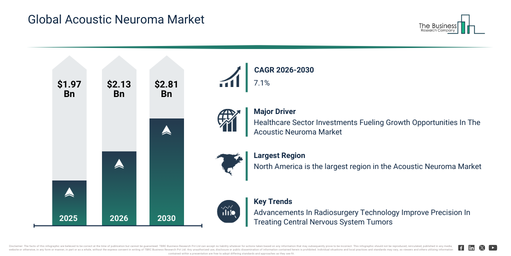
    The acoustic neuroma market has experienced robust expansion over recent years. This market is projected to expand from $1.97 billion in 2025 to $2.13 billion in 2026, demonstrating a compound annual growth rate (CAGR) of 8.2%. Factors contributing to this historical growth include insufficient public understanding of acoustic neuroma, a reliance on traditional radiation therapy methods, the gradual uptake of sophisticated imaging technologies, a rising incidence of hearing-related conditions, and a scarcity of specialized surgical centers.

    The acoustic neuroma market size is projected for significant expansion over the coming years, with an expected increase to $2.81 billion by 2030, reflecting a compound annual growth rate (CAGR) of 7.1%. This projected growth is driven by several factors, including ongoing technological advancements in MRI and CT-scan, the expanding adoption of proton therapy and stereotactic radiosurgery, increasing investments in hospitals and surgical centers, heightened patient awareness leading to earlier diagnoses, and the development of specialized treatment facilities. Additionally, major trends during this forecast period include the increasing integration of advanced imaging techniques, a rising preference for minimally invasive treatments, the continued growth of proton therapy and stereotactic radiosurgery, the development of personalized treatment approaches, and enhanced awareness regarding vestibular schwannoma symptoms.

    Access Your Free Sample Report For In-Depth Market Analysis:

    https://www.thebusinessresearchcompany.com/report/acoustic-neuroma-global-market-report

    What Leading Drivers Are Supporting The Acoustic Neuroma Market Expansion?

    The increasing financial commitment to the healthcare sector is anticipated to propel the growth of the acoustic neuroma market. This sector encompasses a broad spectrum of services and facilities dedicated to promoting health, delivering medical care, and enhancing the overall well-being of individuals and populations. Investment in healthcare stems from rising demand, technological advancements, changes in regulations, and global health challenges. Such investments in the healthcare sector facilitate innovation in diagnostics and treatments for acoustic neuroma conditions, thereby improving patient outcomes and quality of life. For instance, in April 2025, the Office for National Statistics, an independent producer of official statistics based in the UK, indicated that in 2024, the UK’s healthcare spending reached around £317 billion, representing a 6.5% nominal increase compared with 2023. Therefore, the expanding investment in the healthcare sector is a driving force behind the growth of the acoustic neuroma market.

    What Are The Different Segment Types In The Acoustic Neuroma Market Segment Breakdown?

    The acoustic neuroma market covered in this report is segmented –

    1) By Type: Unilateral Vestibular Schwannomas, Bilateral Vestibular Schwannomas

    2) By Treatment Type: Radiation Therapy, Proton Therapy, Stereotactic Radiosurgery

    3) By Diagnosis Type: Magnetic Resonance Imaging (MRI), Hearing Tests

    4) By End User: Hospitals, Surgical Centers

    Subsegments:

    1) By Unilateral Vestibular Schwannomas: Small Unilateral Vestibular Schwannomas, Medium Unilateral Vestibular Schwannomas, Large Unilateral Vestibular Schwannomas

    2) By Bilateral Vestibular Schwannomas: Familial Bilateral Vestibular Schwannomas, Sporadic Bilateral Vestibular Schwannomas

    What Emerging Trends Are Seen In The Acoustic Neuroma Market?

    Leading companies in the acoustic neuroma market are concentrating on developing advanced solutions, such as high-precision image-guided delivery, to elevate treatment accuracy, mitigate damage to surrounding tissues, and enhance patient outcomes. High-precision image-guided delivery represents a technological feature within radiosurgery that facilitates real-time targeting and tracking of tumors, thereby ensuring precise radiation delivery to the affected area. For instance, in April 2025, Accuray Incorporated, a US-based medical device company specializing in advanced radiosurgery systems, announced new clinical data regarding the CyberKnife System, underscoring its broad capabilities in providing SRS and SBRT. Designed to address central nervous system (CNS) tumors, including acoustic neuroma, the system offers noninvasive, targeted treatment options that improve both safety and clinical efficacy.

    Who Are The Well-Known Companies In The Acoustic Neuroma Market?

    Major companies operating in the acoustic neuroma market are Pfizer Inc, F. Hoffmann-La Roche AG, Merck & Co. Inc., Sanofi S.A., AstraZeneca plc, Novartis AG, GSK plc, Amgen Inc., Teva Pharmaceuticals Industries Ltd, General Electric Company, Siemens Healthineers, Canon Medical Systems Corporation, Toshiba Medical Systems Corporation, Shimadzu Corporation, Varian Medical Systems, Elekta AB, Medtronic plc, Olympus Corporation, Cochlear Limited, Brainlab AG, Natus Medical Incorporated, Abbott Laboratories

    Get The Full Acoustic Neuroma Market Report:

    https://www.thebusinessresearchcompany.com/report/acoustic-neuroma-global-market-report

    Where Is The Acoustic Neuroma Market Primarily Concentrated By Region?

    North America was the largest region in the acoustic neuroma market in 2025. The regions covered in the acoustic neuroma market report are Asia-Pacific, South East Asia, Western Europe, Eastern Europe, North America, South America, Middle East, Africa.

    Request A Customized Acoustic Neuroma Market Report For Competitive Insights:

    https://www.thebusinessresearchcompany.com/report/acoustic-neuroma-global-market-report

    Browse Through More Reports Similar to the Global Acoustic Neuroma Market 2026, By The Business Research Company

    Neurofibromatosis Treatment Market Report 2026

    https://www.thebusinessresearchcompany.com/report/neurofibromatosis-treatment-global-market-report

    Acoustic Neuroma Market Report 2026

    https://www.thebusinessresearchcompany.com/report/acoustic-neuroma-global-market-report

    Neuroendovascular Coil Market Report 2026

    https://www.thebusinessresearchcompany.com/report/neuroendovascular-coil-global-market-report

    Get in touch with us:

    The Business Research Company: https://www.thebusinessresearchcompany.com/

    Americas +1 310-496-7795

    Asia +44 7882 955267 & +91 8897263534

    Europe +44 7882 955267

    Email us at info@tbrc.info

    Follow us on:

    LinkedIn: https://in.linkedin.com/company/the-business-research-company

    YouTube: https://www.youtube.com/channel/UC24_fI0rV8cR5DxlCpgmyFQ

    Global Market Model: https://www.thebusinessresearchcompany.com/global-market-model
  • Allergy Treatment Market Outlook Through 2030: Growth Trends

    Allergy Treatment Market Outlook Through 2030: Growth Trends

    The Business Research Company’s 2026 market reports feature enhanced tools like market attractiveness analysis, TAM assessment, and company scoring matrices, along with interactive dashboards, deeper supply chain insights, and startup coverage strengthening the depth, usability, and strategic value of insights.

    What Level Of Market Value Growth Is Predicted For The Allergy Treatment Market From 2026 To 2030?

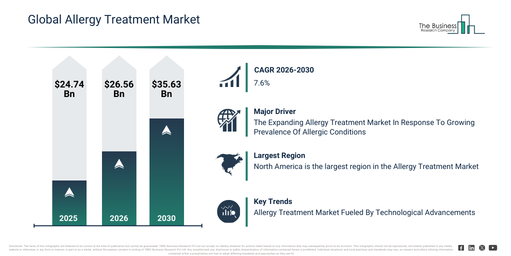
    The allergy treatment market size has witnessed strong expansion over recent years. It is anticipated to rise from $24.74 billion in 2025 to $26.56 billion in 2026, exhibiting a compound annual growth rate (CAGR) of 7.3%. The historical period’s growth can be linked to the increasing global occurrence of allergies, a surge in allergy treatments offered by hospitals and clinics, limited understanding of advanced immunotherapy, reliance on standard antihistamines, and the broader reach of retail pharmacy networks.

    The allergy treatment market is projected to experience robust expansion over the coming years, set to reach $35.63 billion by 2030, exhibiting a compound annual growth rate (CAGR) of 7.6%. Key drivers for this growth during the forecast period include the increasing demand for tailored allergy care, breakthroughs in immunotherapy delivery technologies, the broadening reach of online pharmacy platforms, greater investment in allergy-related research, and the rising occurrence of asthma and rhinitis in both children and adults. Noteworthy trends anticipated during this period encompass the increasing uptake of anti-allergy medications and immunotherapy, enhanced public understanding of allergy control and prevention, the expansion of services provided by homecare and specialized clinics, a heightened emphasis on individualized allergy therapies, and the growing preference for nasal and oral routes of drug administration.

    Access Your Free Sample Report For In-Depth Market Analysis:

    https://www.thebusinessresearchcompany.com/report/allergy-treatment-global-market-report

    What Key Factors Are Affecting The Allergy Treatment Market Demand?

    The increasing occurrence of allergic conditions is anticipated to drive expansion in the allergy treatment market moving ahead. This type of condition arises when the immune system exhibits an excessive reaction to an allergen, which is frequently a benign substance. Such treatments provide allergic therapies, utilizing either over-the-counter or prescription medications, to help identify and steer clear of diverse allergy triggers. This, in turn, prevents allergic reactions, lessens symptoms, mitigates the severity of allergies, and enhances individuals’ overall well-being. For example, data from April 2024, reported by Allergy UK, a national charity based in the UK, revealed that over 21 million people in the UK suffer from allergies, making it the most frequently reported chronic health condition in 2022. Furthermore, forecasts suggest that by 2026, half of Europe’s population will be affected by at least one allergy. Consequently, the rising incidence of allergic conditions is fueling the expansion of the allergy treatment market.

    Which Segment Classifications Are Used In The Allergy Treatment Market Segment Analysis?

    The allergy treatment market covered in this report is segmented –

    1) By Treatment Type: Anti-Allergy Drugs, Immunotherapy

    2) By Type: Eye Allergy, Skin Allergy, Food Allergy, Rhinitis, Other Types

    3) By Route of Administration: Oral, Parenteral, Nasal, Other Routes of Administration

    4) By Distribution Channels: Hospital Pharmacies, Retail Pharmacies, Online Retailers, Other Distribution Channels

    5) By End-Users: Hospitals, Specialty Clinics, Homecare, Other End-Users

    Subsegments:

    1) By Anti-Allergy Drugs: Antihistamines, Corticosteroids, Leukotriene Receptor Antagonists, Decongestants

    2) By Immunotherapy: Allergy Shots, Sublingual Immunotherapy (SLIT), Oral Immunotherapy

    What Trends Are Influencing Changes In The Allergy Treatment Market?

    Major companies operating in the allergy treatment market are intently focused on integrating advanced technologies to enhance patient care, improve treatment delivery mechanisms, and optimize diagnostic and therapeutic outcomes. Technological innovations in allergy treatment encompass digital health platforms, telehealth solutions, wearable monitoring devices, and precision immunotherapy tools. These advancements effectively streamline patient management, facilitate the tracking of allergic reactions, and enable the provision of personalized therapy options. For instance, in May 2023, Metropolis Healthcare Limited, an India-based chain of pathology labs and diagnostic centers, launched AI-powered allergy component testing, which is based on Component Resolved Diagnostics (CRD). This component testing utilizes artificial intelligence (AI) to assist physicians in making informed clinical decisions and offers valuable insights for selecting and optimizing an individual’s allergic disease treatment plan. It operates through a nanotechnology-based multiplex system that employs molecular components, capable of identifying specific IgE antibodies against 295 different allergens using a simple blood test, and provides findings for 158 food allergens, ten contact allergens, and 127 respiratory allergens.

    Which Firms Are Contributing To The Allergy Treatment Market Ecosystem?

    Major companies operating in the allergy treatment market are Pfizer Inc., Johnson and Johnson, Allergy Therapeutics PLC, F. Hoffmann-La Roche Ltd, AbbVie Inc., Novartis AG, Merck & Co. Inc., Sanofi S.A., Thermo Fisher Scientific Inc., AstraZeneca, GlaxoSmithKline PLC, Eli Lilly and Company, Boehringer Ingelheim International GmbH, Regeneron Pharmaceuticals, Bausch Health Companies Inc., Teva Pharmaceutical Industries Ltd., Almirall S.A, Akorn Operating Company LLC, Alembic Pharmaceuticals Limited, ALK-Abelló A/S, Stallergenes Greer International AG, Adamis Pharmaceuticals, HollisterStier Allergy, Leti Pharma SL

    Get The Full Allergy Treatment Market Report:

    https://www.thebusinessresearchcompany.com/report/allergy-treatment-global-market-report

    Where Is The Allergy Treatment Market Most Concentrated Geographically?

    North America was the largest region in the allergy treatment market in 2025. Asia-Pacific is expected to be the fastest-growing region in the forecast period. The regions covered in the allergy treatment market report are Asia-Pacific, South East Asia, Western Europe, Eastern Europe, North America, South America, Middle East, Africa.

    Request A Customized Allergy Treatment Market Report For Competitive Insights:

    https://www.thebusinessresearchcompany.com/report/allergy-treatment-global-market-report

    Browse Through More Reports Similar to the Global Allergy Treatment Market 2026, By The Business Research Company

    Peanut Allergy Treatment Market Report 2026

    https://www.thebusinessresearchcompany.com/report/peanut-allergy-treatment-global-market-report

    Food Allergy Treatment Market Report 2026

    https://www.thebusinessresearchcompany.com/report/food-allergy-treatment-global-market-report

    Allergy Immunotherapy Market Report 2026

    https://www.thebusinessresearchcompany.com/report/allergy-immunotherapy-global-market-report

    Get in touch with us:

    The Business Research Company: https://www.thebusinessresearchcompany.com/

    Americas +1 310-496-7795

    Asia +44 7882 955267 & +91 8897263534

    Europe +44 7882 955267

    Email us at info@tbrc.info

    Follow us on:

    LinkedIn: https://in.linkedin.com/company/the-business-research-company

    YouTube: https://www.youtube.com/channel/UC24_fI0rV8cR5DxlCpgmyFQ

    Global Market Model: https://www.thebusinessresearchcompany.com/global-market-model
  • Acne Vulgaris Market (2026–2030): Industry Trends and Developments

    Acne Vulgaris Market (2026–2030): Industry Trends and Developments

    The Business Research Company’s 2026 market reports feature enhanced tools like market attractiveness analysis, TAM assessment, and company scoring matrices, along with interactive dashboards, deeper supply chain insights, and startup coverage strengthening the depth, usability, and strategic value of insights.

    From Its 2026 Market Size, What Value Is The Acne Vulgaris Market Projected To Reach By 2030?

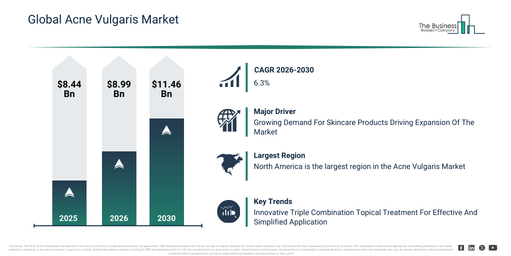
    In recent years, the acne vulgaris market has experienced substantial growth. The market is anticipated to expand, reaching $8.99 billion in 2026 from $8.44 billion in 2025, driven by a compound annual growth rate (CAGR) of 6.5%. Historically, this expansion has been driven by factors such as the increasing incidence of acne vulgaris among adolescents, heightened recognition of dermatological solutions, broader accessibility of hospitals and clinics, the availability of prescribed acne remedies, and an increasing focus on cosmetic and skincare knowledge.

    The acne vulgaris market is anticipated to experience robust expansion over the forthcoming years. It is projected to reach $11.46 billion by 2030, growing at a compound annual growth rate (CAGR) of 6.3%. This projected growth can be attributed to several factors, including the development of targeted acne therapeutics, the increasing embrace of teledermatology and digital health platforms, an expansion in anti-inflammatory and retinoid formulations, a rising demand for personalized skincare regimens, and the widening reach of online pharmacy and e-commerce channels. Prominent trends expected during the forecast period involve a growing demand for combination topical therapies, the increased adoption of hormonal treatments for acne management, an increase in laser and light-based physical treatments, the expansion of oral retinoids and antibiotic therapies, and a heightened preference for herbal, natural, and emerging therapeutic options.

    Access Your Free Sample Report For In-Depth Market Analysis:

    https://www.thebusinessresearchcompany.com/report/acne-vulgaris-global-market-report

    Which Key Factors Are Driving The Acne Vulgaris Market Growth?

    The increasing demand for skincare products is anticipated to drive the growth of the acne vulgaris market in the future. Skincare products are specialized formulations designed to enhance the skin’s health and aesthetic appeal, covering a broad spectrum of items that address diverse skin concerns, from cleansing to moisturizing and protective care. The heightened demand for these products is attributable to social media influence, a rise in dermatological issues, continuous product innovations, and a general shift towards preventive skincare approaches, all contributing to greater awareness. Skincare products play a crucial role in managing acne vulgaris by targeting its fundamental causes, such as excessive sebum production, clogged pores, and bacterial overgrowth. They incorporate ingredients like salicylic acid, benzoyl peroxide, and retinoids, which work to exfoliate the skin, reduce inflammation, and promote a clearer, healthier complexion. For example, as reported by The Cosmetic, Toiletry and Perfumery Association (CTPA) in August 2024, the European cosmetics market reached a valuation of €96 billion (approximately $105 billion) at retail sales price (RSP) in 2023, establishing it as one of the world’s largest markets alongside the USA, a notable increase from €88 billion (approximately $93 billion) RSP in 2022. Thus, the growing awareness and adoption of skincare are significant factors propelling the acne vulgaris market.

    Which Segment Classifications Are Used In The Acne Vulgaris Market Segment Analysis?

    The acne vulgaris market covered in this report is segmented –

    1) By Type: Systemic Therapy, Hormonal Therapy, Physical Treatment, Topical Combination Therapy, Other Types

    2) By Age Group: 10 To 17 Years, 18 To 44 Years, 45 To 64 Years

    3) By Distribution Channel: Hospital Pharmacies, Online Pharmacies

    Subsegments:

    1) By Systemic Therapy: Oral Antibiotics, Oral Retinoids, Oral Anti-Inflammatory Agents

    2) By Hormonal Therapy: Oral Contraceptives, Androgen Receptor Inhibitors

    3) By Physical Treatment: Laser Therapy, Light-Based Therapy, Chemical Peels, Microdermabrasion

    4) By Topical Combination Therapy: Retinoid And Antibiotic Combinations, Benzoyl Peroxide And Antibiotic Combinations, Retinoid And Benzoyl Peroxide Combinations

    5) By Other Types: Herbal And Natural Remedies, Biologic Therapies, Emerging Therapies

    Which Trends Are Guiding The Direction Of The Acne Vulgaris Market?

    Leading companies in the acne vulgaris market are directing their efforts toward developing innovative solutions, specifically triple-combination topical treatments, to deliver a simplified, once-daily application for acne vulgaris. A triple-combination topical treatment is a formulation that incorporates three active ingredients, typically targeting distinct aspects of a condition, to achieve enhanced therapeutic outcomes in managing skin disorders such as acne or psoriasis. For instance, in October 2023, Bausch Health Companies Inc., a Canada-based pharmaceutical company, announced that Cabtreo (clindamycin phosphate, adapalene, and benzoyl peroxide) received Food and Drug Administration (FDA) approval. This topical gel is formulated for the treatment of acne vulgaris in patients aged 12 years and older. This cutting-edge formulation combines an antibiotic, a retinoid, and an antibacterial agent to effectively target existing acne lesions and prevent future breakouts. Cabtreo offers a convenient application method and exhibits a favorable safety profile for a wide range of patients.

    Which Firms Are Contributing To The Acne Vulgaris Market Ecosystem?

    Major companies operating in the acne vulgaris market are Pfizer Inc., Johnson and Johnson, AbbVie Inc., L’Oréal Paris, GlaxoSmithKline Plc., Reckitt Benckiser Group plc, Viatris Inc., Teva Pharmaceuticals, Bausch Health Companies, Sun Pharmaceutical Industries Ltd., Incyte, Aurobindo Pharma, Lupin Ltd., Torrent Pharmaceuticals, Biocon, Stiefel Laboratories, Mayne Pharma Group Limited, Paratek Pharmaceuticals, Cosmo Pharmaceuticals, AOBiome

    Get The Full Acne Vulgaris Market Report:

    https://www.thebusinessresearchcompany.com/report/acne-vulgaris-global-market-report

    Which Region Has The Greatest Market Share In The Acne Vulgaris Market?

    North America was the largest region in the acne vulgaris market in 2025. Asia-Pacific is expected to be the fastest-growing region in the forecast period. The regions covered in the acne vulgaris market report are Asia-Pacific, South East Asia, Western Europe, Eastern Europe, North America, South America, Middle East, Africa.

    Request A Customized Acne Vulgaris Market Report For Competitive Insights:

    https://www.thebusinessresearchcompany.com/report/acne-vulgaris-global-market-report

    Browse Through More Reports Similar to the Global Acne Vulgaris Market 2026, By The Business Research Company

    Dermatology Market Report 2026

    https://www.thebusinessresearchcompany.com/report/dermatology-global-market-report

    Dermatitis Drugs Market Report 2026

    https://www.thebusinessresearchcompany.com/report/dermatitis-drugs-global-market-report

    Organic Skincare Market Report 2026

    https://www.thebusinessresearchcompany.com/report/organic-skincare-global-market-report

    Get in touch with us:

    The Business Research Company: https://www.thebusinessresearchcompany.com/

    Americas +1 310-496-7795

    Asia +44 7882 955267 & +91 8897263534

    Europe +44 7882 955267

    Email us at info@tbrc.info

    Follow us on:

    LinkedIn: https://in.linkedin.com/company/the-business-research-company

    YouTube: https://www.youtube.com/channel/UC24_fI0rV8cR5DxlCpgmyFQ

    Global Market Model: https://www.thebusinessresearchcompany.com/global-market-model
  • Allergy Immunotherapy Market: Trends, Drivers, and Opportunities

    Allergy Immunotherapy Market: Trends, Drivers, and Opportunities

    The Business Research Company’s 2026 market reports feature enhanced tools like market attractiveness analysis, TAM assessment, and company scoring matrices, along with interactive dashboards, deeper supply chain insights, and startup coverage strengthening the depth, usability, and strategic value of insights.

    How Will The Market Value Of The Allergy Immunotherapy Market Progress Between 2026 And 2030?

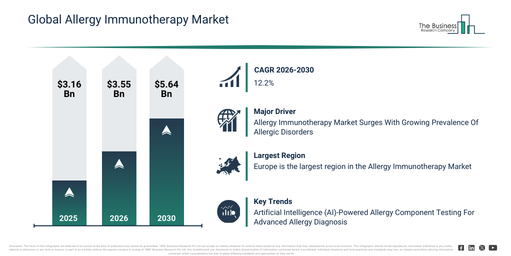
    The allergy immunotherapy market size has experienced rapid expansion in recent years. It is forecast to increase from $3.16 billion in 2025 to $3.55 billion in 2026, at a compound annual growth rate (CAGR) of 12.3%. The growth observed in the historic period is attributable to limited awareness about allergy immunotherapy, a rising incidence of seasonal allergic rhinitis, dependency on hospital-based treatment channels, the adoption of traditional treatment methods, and regulatory approvals for immunotherapy products.

    The allergy immunotherapy market is projected for substantial expansion over the next few years. It is forecast to achieve a valuation of $5.64 billion by 2030, progressing at a compound annual growth rate (CAGR) of 12.2%. This anticipated growth is influenced by several factors, including the proliferation of personalized immunotherapy solutions, the increasing use of online pharmacy channels, the expansion of pediatric allergy treatment options, a surge in investment dedicated to immunotherapy research, and the ongoing development of combination immunotherapy products. Prominent trends for the forecast duration encompass the growing acceptance of subcutaneous and sublingual immunotherapy, an escalating incidence of allergic rhinitis and asthma, the broadening scope of food and venom allergy treatments, an enhanced focus on tailored allergy treatment protocols, and improved awareness leading to earlier diagnosis of allergic conditions.

    Access Your Free Sample Report For In-Depth Market Analysis:

    https://www.thebusinessresearchcompany.com/report/allergy-immunotherapy-global-market-report

    Which Primary Drivers Are Impacting The Allergy Immunotherapy Market Growth?

    The increasing incidence of allergic disorders is projected to fuel the expansion of the allergy immunotherapy market moving forward. Allergic disorders are defined as exaggerated immune responses to specific antigens, distinct from autoimmune diseases where immune responses are mistakenly directed against the body’s own components. Allergy immunotherapy is available for atopic individuals who suffer from conditions such as IgE-mediated allergic rhinitis and allergic asthma, triggered by inhaled allergens including pollens and house dust mites (HDMs). For example, in August 2023, the Medicines and Healthcare Products Regulatory Agency (MHRA), a UK-based executive agency, reported that English hospitals recorded over 25,000 admissions for allergies and anaphylaxis in 2022-23, a figure more than double that seen in the last twenty years. Additionally, in May 2024, the Food Standards Agency, a UK-based government department, published its Patterns and Prevalence of Adult Food Allergy (PAFA) report, revealing that around 6% of adults in the UK, approximately 2.4 million individuals, are affected by food allergies. Hence, the growing prevalence of allergic disorders is a key factor driving the growth of the allergy immunotherapy market.

    How Is The Allergy Immunotherapy Market Organized By Segment Classification?

    The allergy immunotherapy market covered in this report is segmented –

    1) By Allergy Type: Allergic Rhinitis, Allergic Asthma, Food Allergy, Venom Allergy, Allergic Conjunctivitis, Environmental Allergies

    2) By Treatment: Subcutaneous Immunotherapy (SCIT), Sublingual Immunotherapy, Specific Immunotherapy (SIT)

    3) By Channel: Hospital Pharmacy, Retail Pharmacy

    Subsegments:

    1) By Allergic Rhinitis: Seasonal Allergic Rhinitis, Perennial Allergic Rhinitis

    2) By Allergic Asthma: House Dust Mite–Induced Allergic Asthma, Pollen-Induced Allergic Asthma, Animal Dander–Induced Allergic Asthma

    3) By Food Allergy: Peanut Allergy, Tree Nut Allergy, Milk Allergy, Egg Allergy, Other Food Allergies

    4) By Venom Allergy: Bee Venom Allergy, Wasp Venom Allergy, Hornet Venom Allergy, Other Insect Venom Allergies

    5) By Allergic Conjunctivitis: Seasonal Allergic Conjunctivitis, Perennial Allergic Conjunctivitis

    6) By Environmental Allergies: House Dust Mite Allergy, Pollen Allergy, Mold Allergy, Animal Dander Allergy

    Which Trends Are Shaping Growth In The Allergy Immunotherapy Market?

    Major companies operating within the allergy immunotherapy market are innovating technological products, such as artificial intelligence (AI)-powered allergy component testing, to sustain their market position. This AI-powered allergy component testing is a novel diagnostic platform rooted in component resolved diagnostics (CRD) designed for diagnosing diverse forms of allergies. As an example, in May 2023, Metropolis Healthcare Limited, an Indian-based Medical laboratory company, launched its artificial intelligence (AI)-powered allergy component testing. This innovative fourth-generation allergy testing technology utilizes Artificial Intelligence (AI) to assist clinicians in their clinical decision-making. It offers significant insights for selecting and optimizing the treatment course for allergic diseases. Moreover, it can predict the effectiveness of immunotherapy for allergy vaccinations, indicating their potential success.

    Who Are The Industry Participants Involved In The Allergy Immunotherapy Market?

    Major companies operating in the allergy immunotherapy market are LETI Pharma, Stallergenes Greer International AG, Allergy Therapeutics plc, ALK-Abelló A/S, HAL Allergy B.V., DBV Technologies, Circassia Pharmaceuticals Inc., Jubilant HollisterStier LLC, Allergopharma GmbH & Co. KG, Biomay AG, Anergis SA, HollisterStier Allergy, Desentum Oy, WOLW Pharma Limited, AllerGenics Inc., Greer Laboratories Inc., Aimmune Therapeutics Inc., Reliant Laboratories Inc., Mylan N.V., Adamis Pharmaceuticals Corporation, Endo Pharmaceuticals Inc., Sun Pharmaceutical Industries Ltd., Cipla Ltd.

    Get The Full Allergy Immunotherapy Market Report:

    https://www.thebusinessresearchcompany.com/report/allergy-immunotherapy-global-market-report

    Which Region Dominates The Allergy Immunotherapy Market By Market Share?

    Europe was the largest region in the allergy immunotherapy market in 2025. Asia-Pacific is expected to be the fastest-growing region in the allergy immunotherapy market report during the forecast period. The regions covered in the allergy immunotherapy market report are Asia-Pacific, South East Asia, Western Europe, Eastern Europe, North America, South America, Middle East, Africa.

    Request A Customized Allergy Immunotherapy Market Report For Competitive Insights:

    https://www.thebusinessresearchcompany.com/report/allergy-immunotherapy-global-market-report

    Browse Through More Reports Similar to the Global Allergy Immunotherapy Market 2026, By The Business Research Company

    Cellulars Immunotherapy Market Report 2026

    https://www.thebusinessresearchcompany.com/report/cellulars-immunotherapy-global-market-report

    Allergy Treatment Market Report 2026

    https://www.thebusinessresearchcompany.com/report/allergy-treatment-global-market-report

    Allergy Diagnostics Market Report 2026

    https://www.thebusinessresearchcompany.com/report/allergy-diagnostics-global-market-report

    Get in touch with us:

    The Business Research Company: https://www.thebusinessresearchcompany.com/

    Americas +1 310-496-7795

    Asia +44 7882 955267 & +91 8897263534

    Europe +44 7882 955267

    Email us at info@tbrc.info

    Follow us on:

    LinkedIn: https://in.linkedin.com/company/the-business-research-company

    YouTube: https://www.youtube.com/channel/UC24_fI0rV8cR5DxlCpgmyFQ

    Global Market Model: https://www.thebusinessresearchcompany.com/global-market-model
  • Atenolol Market Outlook: Growth Expected to Reach $17.85B by 2030

    Atenolol Market Outlook: Growth Expected to Reach $17.85B by 2030

    The Business Research Company’s 2026 market reports feature enhanced tools like market attractiveness analysis, TAM assessment, and company scoring matrices, along with interactive dashboards, deeper supply chain insights, and startup coverage strengthening the depth, usability, and strategic value of insights.

    How Is The Market Size Of The Atenolol Market Expected To Change From 2026 To 2030?

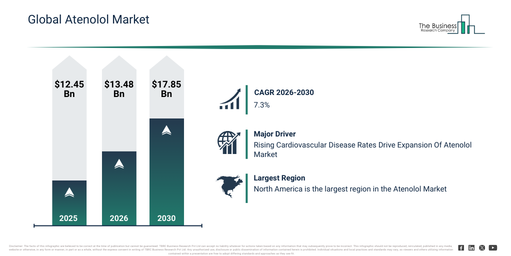
    The atenolol market has demonstrated robust growth in recent years. It is projected to expand from $12.45 billion in 2025 to $13.48 billion in 2026, achieving a compound annual growth rate (CAGR) of 8.2%. This historical growth can be attributed to factors such as the increasing prevalence of hypertension and heart disease, the expansion of generic drug adoption, the availability of beta-blocker therapies, a rise in pharmaceutical manufacturing capacity, and wider access to cardiovascular medications.

    The atenolol market is poised for significant expansion in the coming years, projected to reach $17.85 billion by 2030, showing a compound annual growth rate (CAGR) of 7.3%. This anticipated growth during the forecast period is driven by several factors, including the increasing need for economical chronic disease treatments, greater investments in improving pharmaceutical quality, the expansion of branded-generic drug sectors, a heightened focus on robust supply chains, and the wider adoption of advanced drug formulation technologies. Key developments expected within this period include a rising demand for generic cardiovascular medications, a concentrated effort on high-purity pharmaceutical components, a growing preference for oral solid dosage forms, the scaling of cost-effective drug production, and a stronger emphasis on regulatory compliance.

    Access Your Free Sample Report For In-Depth Market Analysis:

    https://www.thebusinessresearchcompany.com/report/atenolol-global-market-report

    What Key Drivers Are Fueling The Growth Of The Atenolol Market?

    The atenolol market is anticipated to expand due to the increasing occurrence of cardiovascular diseases. These conditions, often called CVDs, involve various ailments of the heart and blood vessels. The rise in CVD prevalence stems from factors like an expanding and aging population, various risk factors, and insufficient application of effective prevention and treatment methods. Atenolol is vital in addressing diverse cardiovascular conditions by decreasing heart rate, lowering blood pressure, alleviating angina, averting heart attacks, and regulating arrhythmias. It aids in stabilizing cardiac function, managing blood pressure, and preventing complications, thereby enhancing long-term cardiovascular well-being. For example, in January 2024, the American Heart Association, a US-based nonprofit organization, reported a minor increase in total cardiovascular deaths this year, reaching 931,578, which is a marginal rise of 3,000 fatalities from the previous year’s 928,741. Consequently, the increasing incidence of cardiovascular diseases is boosting the atenolol market’s expansion. The atenolol market’s expansion is anticipated to be driven by the rising occurrence of hypertension. Hypertension, or high blood pressure, is a medical condition characterized by persistently elevated pressure of blood against arterial walls. The increasing frequency of hypertension is linked to factors including lifestyle choices, nutritional patterns, stress levels, and shifts in demographics. Atenolol assists in controlling hypertension through mechanisms like lowering heart rate, diminishing the strength of heart contractions, and suppressing the renin-angiotensin-aldosterone system. These collective actions help reduce blood pressure, thereby averting complications associated with hypertension and enhancing patient results. For example, in March 2023, the World Health Organization, a Switzerland-based health organization, estimated that around 1.28 billion adults globally, aged 30–79 years, suffer from hypertension. Thus, the growing incidence of hypertension is a key factor propelling the atenolol market.

    How Is Segmentation Applied In The Atenolol Market Segment Analysis?

    The atenolol market covered in this report is segmented –

    1) By Type: 98% Purity, 99% Purity

    2) By Distribution Channel: Hospital Pharmacies, Drug Stores, Online Pharmacies, Other Distribution Channels

    3) By Application: Hypertension, Angina, Arrhythmia, Other Applications

    Subsegments:

    1) By 98% Purity: Atenolol With 98% Purity For Pharmaceutical Formulations, Atenolol 98% Purity For Generic Drug Production, Atenolol 98% Purity For Bulk Production And Manufacturing

    2) By 99% Purity: Atenolol With 99% Purity For High-Quality Pharmaceutical Products, Atenolol 99% Purity For Branded Drug Formulations

    Who Are The Companies Participating In The Atenolol Market Environment?

    Major companies operating in the atenolol market are AstraZeneca Plc, Abbott Laboratories Inc., Shanghai Pharmaceuticals Holding Co. Ltd., LGM Pharma, Torrent Pharmaceuticals GmbH, Cipla Inc., Intas Pharmaceuticals Limited, Lupin Limited, Macleods Pharmaceuticals Ltd., Ipca Laboratories Limited, Aristo Pharmaceuticals Pvt. Ltd., Medley Pharmaceuticals Ltd., Micro Labs Ltd., Unichem Laboratories Limited, Harman Finochem Ltd., Axplora, Erregierre SpA, Darou Pakhsh Pharma Chem Co., Zydus Pharmaceuticals (USA) Inc., Anant Pharmaceuticals Pvt. Ltd., Enomark LLC, Hairui Chemical, Octavius Pharma Pvt. Ltd., Hoventa Pharma

    Get The Full Atenolol Market Report:

    https://www.thebusinessresearchcompany.com/report/atenolol-global-market-report

    Where Is The Atenolol Market Most Concentrated Geographically?

    North America was the largest region in the atenolol market in 2025. Asia-Pacific is expected to be the fastest-growing region in the forecast period. The regions covered in the atenolol market report are Asia-Pacific, South East Asia, Western Europe, Eastern Europe, North America, South America, Middle East, Africa.

    Request A Customized Atenolol Market Report For Competitive Insights:

    https://www.thebusinessresearchcompany.com/report/atenolol-global-market-report

    Browse Through More Reports Similar to the Global Atenolol Market 2026, By The Business Research Company

    N Butanol Market Report 2026

    https://www.thebusinessresearchcompany.com/report/n-butanol-global-market-report

    Oryzanol Market Report 2026

    https://www.thebusinessresearchcompany.com/report/oryzanol-global-market-report

    Kaempferol Market Report 2026

    https://www.thebusinessresearchcompany.com/report/kaempferol-global-market-report

    Get in touch with us:

    The Business Research Company: https://www.thebusinessresearchcompany.com/

    Americas +1 310-496-7795

    Asia +44 7882 955267 & +91 8897263534

    Europe +44 7882 955267

    Email us at info@tbrc.info

    Follow us on:

    LinkedIn: https://in.linkedin.com/company/the-business-research-company

    YouTube: https://www.youtube.com/channel/UC24_fI0rV8cR5DxlCpgmyFQ

    Global Market Model: https://www.thebusinessresearchcompany.com/global-market-model
  • Acne Treatments Market Forecast: Key Trends and Expansion Opportunities

    Acne Treatments Market Forecast: Key Trends and Expansion Opportunities

    The Business Research Company’s 2026 market reports feature enhanced tools like market attractiveness analysis, TAM assessment, and company scoring matrices, along with interactive dashboards, deeper supply chain insights, and startup coverage strengthening the depth, usability, and strategic value of insights.

    How Much Growth In Market Value Is Expected For The Acne Treatments Market Between 2026 And 2030?

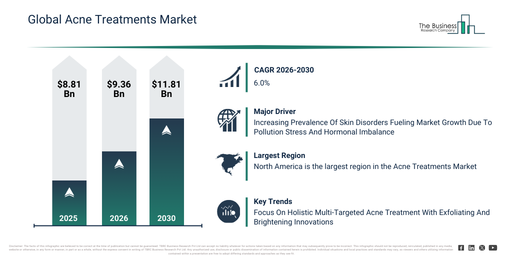
    The acne treatments market has seen robust growth in recent years. This market is projected to expand from $8.81 billion in 2025 to $9.36 billion in 2026, achieving a compound annual growth rate (CAGR) of 6.3%. Historically, this expansion has been driven by the increasing occurrence of acne across various age groups, the broader availability of dermatological treatments, the proliferation of clinical dermatology practices, a rising acceptance of prescription acne medications, and the growth of healthcare services focused on skincare.

    The acne treatments market size is anticipated to undergo significant growth over the next few years. It is projected to expand to $11.81 billion by 2030, achieving a compound annual growth rate (CAGR) of 6.0%. The expansion during the forecast period is fueled by an increasing demand for personalized dermatology solutions, a rising adoption of advanced therapeutic acne treatments, the expansion of teledermatology services, a growing emphasis on scar prevention and skin repair, and the increasing integration of digital skin assessment tools. Prominent trends observed in this period include the increasing adoption of combination acne therapies, a rising demand for personalized acne treatment plans, the growing use of topical prescription medications, the expansion of laser and light-based acne treatments, and an enhanced focus on long-term skin health management.

    Access Your Free Sample Report For In-Depth Market Analysis:

    https://www.thebusinessresearchcompany.com/report/acne-treatments-global-market-report

    What Primary Drivers Are Shaping The Acne Treatments Market?

    The rising occurrence of skin conditions is anticipated to drive the future expansion of the acne treatments market. A skin disorder refers to any medical ailment affecting the skin, leading to changes in its appearance, texture, or functionality. The increasing frequency of skin disorders is attributed to factors such as elevated pollution, stress, and hormonal imbalances, prompting individuals to seek specific treatments that yield noticeable results, minimize adverse effects, and can be easily incorporated into their daily routines. Acne treatments prove beneficial for skin disorders by effectively reducing inflammation, preventing breakouts, and supporting the healing process of damaged skin. For instance, in July 2024, Cancer Research UK, a UK-based charity, reported that the average annual number of new melanoma skin cancer cases in the UK for 2023-2025 is approximately 20,800, with an expected increase to 26,500 by 2038-2040. Therefore, the growing prevalence of skin disorders is a significant catalyst for growth in the acne treatments market.

    How Is The Acne Treatments Market Organized By Segment Classification?

    The acne treatments market covered in this report is segmented –

    1) By Product: Retinoids, Antibiotics, Isotretinoin, Other Products

    2) By Acne Type: Inflammatory Acne, Cystic Acne, Post-Surgical Or Wound Acne

    3) By Treatment: Medication, Therapeutic, Laser Treatment

    4) By End User: Hospitals, Clinics, Ambulatory Surgical Centers

    Subsegments:

    1) By Retinoids: Topical Retinoids, Oral Retinoids

    2) By Antibiotics: Topical Antibiotics, Oral Antibiotics

    3) By Isotretinoin: Oral Isotretinoin, Topical Isotretinoin

    4) By Other Products: Benzoyl Peroxide, Salicylic Acid, Hormonal Treatments, Herbal And Natural Products, Combination Formulations

    What Trends Are Affecting The Growth Of The Acne Treatments Market?

    Major companies operating in the acne treatments market are increasingly focusing on comprehensive and multi-pronged approaches to acne treatment, such as multi-functional exfoliating and brightening formulations. This emphasis is to offer consumers potent solutions that not only address acne but also enhance skin texture and reduce discoloration. A multi-functional exfoliating and brightening formulation integrates ingredients designed to gently remove dead skin cells while simultaneously diminishing dark spots and refining overall skin tone. For instance, in November 2024, Proactiv Company, a US-based skincare firm, introduced four new dermatologist-developed products targeting acne and associated concerns like skin texture, hyperpigmentation, and body blemishes. This range encompasses a salicylic acid cleanser, a brightening resurfacing mask, a blemish control body cream, and a travel-sized mini kit, collectively providing a thorough and effective acne treatment routine for achieving clearer, healthier skin.

    Who Are The Industry Participants Involved In The Acne Treatments Market?

    Major companies operating in the acne treatments market are Pfizer Inc., Johnson & Johnson, AbbVie Inc., Bayer AG, Sanofi S.A., L’Oréal S.A., GlaxoSmithKline plc, Teva Pharmaceutical Industries Ltd., Shiseido Company Ltd., Sun Pharmaceutical Industries Ltd., Dr. Reddy’s Laboratories Ltd., Zydus Lifesciences Ltd., Glenmark Pharmaceuticals Ltd., Almirall S.A., Cipher Pharmaceuticals, Diomed Developments Limited, Galderma S.A., Bausch Health Companies Inc., F. Hoffmann‑La Roche Ltd., Novartis AG, Leo Pharma A/S, Mayne Pharma Group Ltd.

    Get The Full Acne Treatments Market Report:

    https://www.thebusinessresearchcompany.com/report/acne-treatments-global-market-report

    Which Region Accounts For The Largest Portion Of The Acne Treatments Market?

    North America was the largest region in the acne treatments market in 2025. Asia-Pacific is expected to be the fastest-growing region in the forecast period. The regions covered in the acne treatments market report are Asia-Pacific, South East Asia, Western Europe, Eastern Europe, North America, South America, Middle East, Africa.

    Request A Customized Acne Treatments Market Report For Competitive Insights:

    https://www.thebusinessresearchcompany.com/report/acne-treatments-global-market-report

    Browse Through More Reports Similar to the Global Acne Treatments Market 2026, By The Business Research Company

    Skin Cancer Drugs Market Report 2026

    https://www.thebusinessresearchcompany.com/report/skin-cancer-drugs-global-market-report

    Skin Care Supplements Market Report 2026

    https://www.thebusinessresearchcompany.com/report/skin-care-supplements-global-market-report

    Skin Care Products Market Report 2026

    https://www.thebusinessresearchcompany.com/report/skin-care-products-global-market-report

    Get in touch with us:

    The Business Research Company: https://www.thebusinessresearchcompany.com/

    Americas +1 310-496-7795

    Asia +44 7882 955267 & +91 8897263534

    Europe +44 7882 955267

    Email us at info@tbrc.info

    Follow us on:

    LinkedIn: https://in.linkedin.com/company/the-business-research-company

    YouTube: https://www.youtube.com/channel/UC24_fI0rV8cR5DxlCpgmyFQ

    Global Market Model: https://www.thebusinessresearchcompany.com/global-market-model
  • Allergy Diagnostics Market: Developments Driving Growth

    Allergy Diagnostics Market: Developments Driving Growth

    The Business Research Company’s 2026 market reports feature enhanced tools like market attractiveness analysis, TAM assessment, and company scoring matrices, along with interactive dashboards, deeper supply chain insights, and startup coverage strengthening the depth, usability, and strategic value of insights.

    What Are The Market Size Estimates For The Allergy Diagnostics Market In 2026 And 2030?

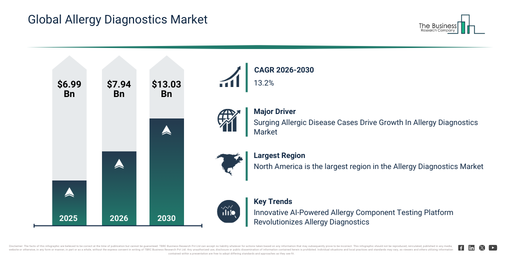
    The allergy diagnostics market size has seen rapid expansion in recent years. It is anticipated to increase from $6.99 billion in 2025 to $7.94 billion in 2026, exhibiting a compound annual growth rate (CAGR) of 13.5%. The historical growth of this market can be ascribed to the rising global incidence of allergies, the adoption of skin prick and intradermal tests, the expansion of hospital-based laboratories, increasing awareness regarding allergy management, and the limited availability of advanced in-vitro kits.

    The allergy diagnostics market is projected to experience substantial expansion over the upcoming years. This market is anticipated to reach $13.03 billion by 2030, exhibiting a compound annual growth rate (CAGR) of 13.2%. Several factors contribute to this growth during the forecast period, including progress in component-resolved diagnostics, the incorporation of automation into allergy testing, increased funding for research into new allergens, the proliferation of academic and diagnostic laboratories, and a rising need for individualized allergy treatment. Key trends expected during the forecast period encompass an escalating need for precise allergy diagnostics, the increasing acceptance of in-vitro testing techniques, broader application of food and drug allergen testing, enhanced utilization of ELISA, RAST, and CRD kits, and an emphasis on swift and point-of-care allergy detection.

    Access Your Free Sample Report For In-Depth Market Analysis:

    https://www.thebusinessresearchcompany.com/report/allergy-diagnostics-global-market-report

    What Significant Factors Are Influencing The Allergy Diagnostics Market Expansion?

    The escalating prevalence of allergic diseases is set to drive the expansion of the allergy diagnostics market. This increase in allergic conditions has been attributed to heightened environmental pollution stemming from traffic and various industries. An allergic reaction is defined as an abnormal immune system response to a specific allergen. Allergy diseases encompass anaphylaxis, allergic rhinitis (frequently referred to as ‘hay fever’), food allergies, skin allergies, and allergic asthma. The most crucial treatment for allergic disorders involves avoiding the allergen; therefore, accurate allergy diagnosis is essential for effective allergy treatment. For instance, in September 2024, data from Anaphylaxis UK, a UK-based charity, revealed that 20% of food allergy reactions occur at school. One in five children with food allergies experience bullying, and one in five parents report moderate-to-extreme anxiety. Nearly all parents of affected children exhibit post-traumatic stress symptoms (PTSS), with rates seven times higher among those whose children use adrenaline auto-injectors (AAIs). Consequently, the growing incidence of allergic diseases will further support the growth of the allergic diagnostics market.

    Which Segments Define The Allergy Diagnostics Market Segment Structure?

    The allergy diagnostics market covered in this report is segmented –

    1) By Test Type: In-Vivo Allergy Tests, In-Vitro Allergy Tests

    2) By Allergen: Inhaled Allergens, Food Allergens, Drug Allergens

    3) By Products: Consumables, Instruments

    4) By End User: Diagnostics Laboratories, Hospital-based Laboratories, Academic and Research Institutes

    Subsegments:

    1) By In-Vivo Allergy Tests: Skin Prick Tests, Intradermal Tests, Patch Tests, Oral Food Challenge Tests

    2) By In-Vitro Allergy Tests: Enzyme-Linked Immunosorbent Assay (ELISA), Radioallergosorbent Test (RAST), Component-Resolved Diagnostics (CRD), Basophil Activation Tests (BAT)

    What Trends Are Affecting The Direction Of The Allergy Diagnostics Market?

    Major enterprises operating within the allergy diagnostics market are developing new technologies, including an AI-powered allergy component testing platform, to enhance their market profitability. An AI-powered allergy component testing platform functions as an advanced system employing artificial intelligence (AI) to interpret and analyze allergy testing outcomes. As an illustration, in May 2023, Metropolis, an India-based pathology lab and diagnostic center, launched an artificial intelligence (AI)-driven platform for allergy component testing that can identify 127 respiratory allergens, 10 contact allergens, and 158 food allergens. This testing platform furnishes extensive knowledge for establishing and refining an individual’s allergy treatment plan and assists clinicians in formulating informed clinical decisions by leveraging component-resolved diagnostics (CRD) and artificial intelligence (AI).

    Who Are The Established Players Within The Allergy Diagnostics Market?

    Major companies operating in the allergy diagnostics market are bioMérieux SA, Danaher Corporation, HOB Biotech Group Corp. Ltd., HYCOR Biomedical, Lincoln Diagnostics Inc., Omega Diagnostics Group PLC, Siemens Healthineers AG, Thermo Fisher Scientific Inc., PerkinElmer Inc., R-Biopharm AG, Abbott Laboratories, HollisterStier Allergy, NEOGEN Corporation, AESKU.GROUP GmbH, ACON Laboratories Inc., Erba Group, Stallergenes Greer, HAL Allergy Group, INDOOR Biotechnologies Inc., MacroArray Technologies LLC, Phadia AB, Quest Diagnostics, Randox Laboratories Ltd., Eurofins Viracor Inc., VRL Laboratories

    Get The Full Allergy Diagnostics Market Report:

    https://www.thebusinessresearchcompany.com/report/allergy-diagnostics-global-market-report

    Which Region Is The Largest In The Allergy Diagnostics Market?

    North America was the largest region in the allergy diagnostics market in 2025. The regions covered in the allergy diagnostics market report are Asia-Pacific, South East Asia, Western Europe, Eastern Europe, North America, South America, Middle East, Africa.

    Request A Customized Allergy Diagnostics Market Report For Competitive Insights:

    https://www.thebusinessresearchcompany.com/report/allergy-diagnostics-global-market-report

    Browse Through More Reports Similar to the Global Allergy Diagnostics Market 2026, By The Business Research Company

    Immunoglobulin E Ige Allergy Blood Tests Market Report 2026

    https://www.thebusinessresearchcompany.com/report/immunoglobulin-e-ige-allergy-blood-tests-global-market-report

    Allergy Treatment Market Report 2026

    https://www.thebusinessresearchcompany.com/report/allergy-treatment-global-market-report

    Allergy Immunotherapy Market Report 2026

    https://www.thebusinessresearchcompany.com/report/allergy-immunotherapy-global-market-report

    Get in touch with us:

    The Business Research Company: https://www.thebusinessresearchcompany.com/

    Americas +1 310-496-7795

    Asia +44 7882 955267 & +91 8897263534

    Europe +44 7882 955267

    Email us at info@tbrc.info

    Follow us on:

    LinkedIn: https://in.linkedin.com/company/the-business-research-company

    YouTube: https://www.youtube.com/channel/UC24_fI0rV8cR5DxlCpgmyFQ

    Global Market Model: https://www.thebusinessresearchcompany.com/global-market-model