Category: Healthcare Services

  • RPX AI launch is transforming diagnostics and shaping the AI radiology tools market

    RPX AI launch is transforming diagnostics and shaping the AI radiology tools market

    The Business Research Company’s 2026 market reports feature enhanced tools like market attractiveness analysis, TAM assessment, and company scoring matrices, along with interactive dashboards, deeper supply chain insights, and startup coverage strengthening the depth, usability, and strategic value of insights.

    What Is The Estimated Market Size Of The Artificial Intelligence (AI) Radiology Tool Market In 2026, And How Will Its Value Evolve By 2030?

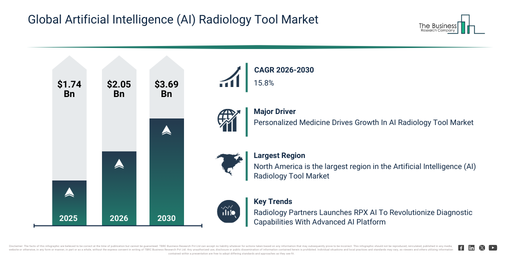
    The artificial intelligence (AI) radiology tool market has seen rapid expansion over recent years. It is anticipated to increase from $1.74 billion in 2025 to $2.05 billion in 2026, achieving a compound annual growth rate (CAGR) of 17.8%. The historical growth of this market can be attributed to factors like increasing volumes of medical imaging, a growing shortage of radiologists, the early adoption of computer-aided detection systems, the expansion of digital radiology infrastructure, and rising demand for healthcare imaging.

    The artificial intelligence (AI) radiology tool market is projected to experience substantial expansion in the coming years. Its valuation is anticipated to reach $3.69 billion by 2030, exhibiting a compound annual growth rate (CAGR) of 15.8%. This growth during the forecast period is primarily driven by factors such as the greater implementation of cloud-based radiology AI platforms, a heightened emphasis on precision diagnostics, the broader application of AI in interventional radiology, increased capital expenditure in automated reporting systems, and more frequent regulatory clearances for AI imaging tools. Key emerging trends during this period encompass the greater uptake of AI-based image interpretation tools, enhanced incorporation of workflow automation in radiology, expanded utilization of AI for early anomaly detection, the proliferation of AI-supported diagnostic accuracy solutions, and a stronger emphasis on alleviating radiologist workload.

    Access Your Free Sample Report For In-Depth Market Analysis:

    https://www.thebusinessresearchcompany.com/report/artificial-intelligence-ai-radiology-tool-global-market-report

    What Major Factors Are Driving The Artificial Intelligence (AI) Radiology Tool Market Forward?

    The market for artificial intelligence (AI) radiology tools is anticipated to expand due to the growing adoption of personalized medicine. This approach, also known as precision medicine, represents a modern medical strategy focusing on customizing treatments and healthcare plans based on each patient’s unique attributes. This movement towards personalized medicine is fueled by significant factors, including advancements in genomics and molecular biology. AI radiology tools support personalized medicine by delivering accurate diagnostics, predictive insights, continuous monitoring of treatment responses, seamless integration with genomic information, and better patient grouping, ultimately leading to tailored and successful healthcare solutions. For example, in February 2024, the Personalized Medicine Coalition, a US-based non-profit organization, reported that the FDA approved 16 novel personalized therapies for patients with rare diseases in 2023, an increase from six in 2022. Consequently, the rising focus on personalized medicine acts as a key driver for the artificial intelligence (AI) radiology tool market.

    What Are The Different Segment Types In The Artificial Intelligence (AI) Radiology Tool Market Segment Breakdown?

    The artificial intelligence (AI) radiology tool market covered in this report is segmented –

    1) By Type: Diagnostic Radiology, Interventional Radiology

    2) By Application: Eye Care, Oncology, Radiology, Cardiovascular, Pathology, Other Applications

    3) By End-User: Clinics, Hospitals, Diagnostic Centers, Other End-Users

    Subsegments:

    1) By Diagnostic Radiology: AI For Image Interpretation (Detecting Fractures, Tumors, Or Abnormalities), Ai In Ct (Computed Tomography) Scanning, Ai In Mri (Magnetic Resonance Imaging) Scanning, Ai For X-Ray Imaging And Analysis, Ai In Ultrasound Imaging, Ai-Based Computer-Aided Detection (Cad) Systems, Ai For Radiology Workflow Automation (Prioritizing Cases, Report Generation)

    2) By Interventional Radiology: AI For Image-Guided Procedures (Guiding Catheter Placement), Ai In Minimally Invasive Surgery (Tumor Ablation, Biopsies), Ai For Real-Time Decision Support In Interventional Procedures, Ai In Radiation Dose Optimization For Interventional Radiology, Ai-Assisted Navigation Systems For Procedures Like Angioplasty, Ai In Post-Procedure Monitoring And Outcome Prediction

    Which Trends Are Impacting The Progress Of The Artificial Intelligence (AI) Radiology Tool Market?

    Leading companies operating in the artificial intelligence (AI) radiology tool market are developing sophisticated solutions, such as AI platforms, to enhance the diagnostic capabilities of radiologists. An advanced artificial intelligence platform integrates AI algorithms to analyze medical imaging data, providing radiologists with enhanced insights and assisting in the accurate detection and diagnosis of various medical conditions. For instance, in November 2023, Radiology Partners (RP), a US-based radiology practice company, launched RPX AI, a cloud-based advanced artificial intelligence platform for the rapid deployment of AI medical imaging tools at scale, utilizing Amazon Web Services (AWS) HealthImaging. This platform aims to simplify the integration and implementation process for medical imaging AI models, making them more accessible and efficient for hospitals and health systems.

    Who Are The Well-Known Companies In The Artificial Intelligence (AI) Radiology Tool Market?

    Major companies operating in the artificial intelligence (AI) radiology tool market are Google LLC, Microsoft Corporation, NVIDIA Corporation, Siemens Healthcare Private Limited, Koninklijke Philips N.V., GE HealthCare, Nuance Communications Inc., Aidoc Medical, Subtle Medical Inc., Enlitic Inc., Arterys Inc., Aidence.com, Oxipit.ai, Zebra Medical Vision

    Get The Full Artificial Intelligence (AI) Radiology Tool Market Report:

    https://www.thebusinessresearchcompany.com/report/artificial-intelligence-ai-radiology-tool-global-market-report

    Which Region Is The Largest In The Artificial Intelligence (AI) Radiology Tool Market?

    North America was the largest region in the artificial intelligence (AI) radiology tool market in 2025. The regions covered in the artificial intelligence (AI) radiology tool market report are Asia-Pacific, South East Asia, Western Europe, Eastern Europe, North America, South America, Middle East, Africa.

    Request A Customized Artificial Intelligence (AI) Radiology Tool Market Report For Competitive Insights:

    https://www.thebusinessresearchcompany.com/report/artificial-intelligence-ai-radiology-tool-global-market-report

    Browse Through More Reports Similar to the Global Artificial Intelligence (AI) Radiology Tool Market 2026, By The Business Research Company

    Ai Enabled Medical Imaging Solutions Market Report 2026

    https://www.thebusinessresearchcompany.com/report/ai-enabled-medical-imaging-solutions-global-market-report

    Artificial Intelligence In Radiology Market Report 2026

    https://www.thebusinessresearchcompany.com/report/artificial-intelligence-in-radiology-global-market-report

    Ai In Medical Diagnostics Market Report 2026

    https://www.thebusinessresearchcompany.com/report/ai-in-medical-diagnostics-global-market-report

    Get in touch with us:

    The Business Research Company: https://www.thebusinessresearchcompany.com/

    Americas +1 310-496-7795

    Asia +44 7882 955267 & +91 8897263534

    Europe +44 7882 955267

    Email us at info@tbrc.info

    Follow us on:

    LinkedIn: https://in.linkedin.com/company/the-business-research-company

    YouTube: https://www.youtube.com/channel/UC24_fI0rV8cR5DxlCpgmyFQ

    Global Market Model: https://www.thebusinessresearchcompany.com/global-market-model
  • Rising demand for personalized medicine is boosting the AI pathology QC market

    Rising demand for personalized medicine is boosting the AI pathology QC market

    The Business Research Company’s 2026 market reports feature enhanced tools like market attractiveness analysis, TAM assessment, and company scoring matrices, along with interactive dashboards, deeper supply chain insights, and startup coverage strengthening the depth, usability, and strategic value of insights.

    How Does The Market Size Of The Artificial Intelligence (AI) Pathology Quality Control Market Compare Between 2026 And 2030?

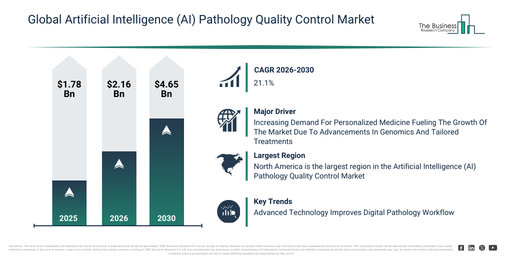
    The artificial intelligence (AI) pathology quality control market has experienced substantial expansion in recent years. It is projected to increase from $1.78 billion in 2025 to $2.16 billion in 2026, demonstrating a compound annual growth rate (CAGR) of 21.4%. This historical growth can be primarily attributed to factors such as rising pathology workload volumes, the early adoption of digitized pathology slides, the increasing complexity associated with cancer diagnostics, a strong demand for standardized reporting, and the initial implementation of AI-assisted pathology tools.

    The artificial intelligence (AI) pathology quality control market is projected to experience rapid expansion in the coming years. Its size is anticipated to reach $4.65 billion by 2030, achieving a compound annual growth rate (CAGR) of 21.1%. This growth during the forecast period is fueled by factors such as increased investments in digital pathology platforms, a surging demand for precision diagnostics, the broadening of AI validation in clinical workflows, the expanding integration of pathology data analytics, and a heightened regulatory focus on diagnostic quality control. Key trends emerging in this period include the wider deployment of AI-based slide quality assessment, the increasing uptake of automated error detection tools, the ongoing standardization of pathology workflows, the extended integration of digital pathology, and a stronger emphasis on ensuring diagnostic accuracy.

    Access Your Free Sample Report For In-Depth Market Analysis:

    https://www.thebusinessresearchcompany.com/report/artificial-intelligence-ai-pathology-quality-control-global-market-report

    Which Key Drivers Are Affecting The Artificial Intelligence (AI) Pathology Quality Control Market Development?

    The growing need for personalized medicine is projected to stimulate the expansion of the artificial intelligence (AI) pathology quality control market in the future. Personalized medicine defines a medical strategy that customizes treatment and prevention plans to an individual’s distinct genetic makeup, lifestyle, and environmental factors. The rising adoption of personalized medicine is largely driven by developments in genomics, which enable precise identification of genetic variations and the creation of tailored treatments for individuals. Artificial intelligence (AI) pathology quality control enhances personalized medicine by providing accurate and consistent diagnostic insights, thus facilitating customized treatment approaches. It aids in reducing diagnostic errors through automated quality assessments, leading to improved accuracy and reliability, and ultimately advancing care specific to each patient. For instance, in February 2024, the Personalized Medicine Coalition (PMC), a US-based nonprofit organization, stated that the U.S. Food and Drug Administration (FDA) sanctioned 26 new personalized medicines in 2023, representing a notable increase from the 12 approved in 2022. Thus, the escalating demand for personalized medicine will be a key driver for the artificial intelligence (AI) pathology quality control market.

    Which Segment Classifications Are Used In The Artificial Intelligence (AI) Pathology Quality Control Market Segment Analysis?

    The artificial intelligence (AI) pathology quality control market covered in this report is segmented –

    1) By Component: Software, Hardware, Services

    2) By Deployment Mode: On-Premises, Cloud-Based

    3) By Application: Cancer Diagnostics, Infectious Disease Diagnostics, Digital Pathology, Research, Other Applications

    4) By End-User: Hospitals, Diagnostic Laboratories, Research Institutes, Pharmaceutical And Biotechnology Companies, Other End Users

    Subsegments:

    1) By Software: Image Analysis Software, Diagnostic Decision Support Software, Workflow Management Software, Reporting And Visualization Software

    2) By Hardware: Digital Pathology Scanners, Imaging Devices, Servers And Storage Systems, Laboratory Equipment

    3) By Services: Implementation Services, Training And Support Services, Maintenance And Upgrade Services, Consulting Services

    What Trends Are Transforming The Artificial Intelligence (AI) Pathology Quality Control Market?

    Leading firms within the artificial intelligence (AI) pathology quality control market are concentrating on creating sophisticated tools, specifically advanced AI-powered solutions, aimed at improving diagnostic precision, optimizing laboratory processes, and guaranteeing the dependability of pathology information. These advanced AI-powered solutions represent cutting-edge technologies that leverage artificial intelligence to execute intricate operations with increased exactness, rapidity, and effectiveness. For example, in November 2023, PathAI, a US-based biotechnology company, introduced Artifact Detect 1 on its AISight digital pathology platform. This instrument automates the identification and measurement of artifacts in whole slide images (WSI)—these are irrelevant morphological features that have the potential to degrade diagnostic precision. ArtifactDetect reduces incorrect diagnoses and the need for repeat scans by automatically pre-screening slides for any quality problems, thereby boosting accuracy, laboratory operational efficiency, and overall production capacity. Such an advancement facilitates prompt corrective measures, including re-staining or re-scanning, which ultimately refines the digital workflow and preserves valuable resources for both technicians and pathologists.

    Which Firms Are Contributing To The Artificial Intelligence (AI) Pathology Quality Control Market Ecosystem?

    Major companies operating in the artificial intelligence (AI) pathology quality control market are Roche Diagnostics GmbH, Danaher Corporation, Philips Healthcare, Agilent Technologies Inc., Hologic Inc., Clinisys Group Ltd., Sectra AB, PathAI Inc., OptraSCAN Inc., Paige.AI Inc., Proscia Inc., Quibim S.L., 3DHISTECH Ltd., Visiopharm A/S, Indica Labs Inc., Ibex Medical Analytics Ltd., Aiosyn B.V., DeepBio Inc., Nucleai Ltd., Gestalt Diagnostics LLC

    Get The Full Artificial Intelligence (AI) Pathology Quality Control Market Report:

    https://www.thebusinessresearchcompany.com/report/artificial-intelligence-ai-pathology-quality-control-global-market-report

    Which Region Leads The Artificial Intelligence (AI) Pathology Quality Control Market In Terms Of Market Share?

    North America was the largest region in the artificial intelligence (AI) pathology quality control market in 2025. Asia-Pacific is expected to be the fastest-growing region in the forecast period. The regions covered in the artificial intelligence (AI) pathology quality control market report are Asia-Pacific, South East Asia, Western Europe, Eastern Europe, North America, South America, Middle East, Africa.

    Request A Customized Artificial Intelligence (AI) Pathology Quality Control Market Report For Competitive Insights:

    https://www.thebusinessresearchcompany.com/report/artificial-intelligence-ai-pathology-quality-control-global-market-report

    Browse Through More Reports Similar to the Global Artificial Intelligence (AI) Pathology Quality Control Market 2026, By The Business Research Company

    Artificial Intelligence In Healthcare Diagnosis Market Report 2026

    https://www.thebusinessresearchcompany.com/report/artificial-intelligence-in-healthcare-diagnosis-global-market-report

    Ai In Medical Diagnostics Market Report 2026

    https://www.thebusinessresearchcompany.com/report/ai-in-medical-diagnostics-global-market-report

    Ai In Cancer Diagnostics Market Report 2026

    https://www.thebusinessresearchcompany.com/report/ai-in-cancer-diagnostics-global-market-report

    Get in touch with us:

    The Business Research Company: https://www.thebusinessresearchcompany.com/

    Americas +1 310-496-7795

    Asia +44 7882 955267 & +91 8897263534

    Europe +44 7882 955267

    Email us at info@tbrc.info

    Follow us on:

    LinkedIn: https://in.linkedin.com/company/the-business-research-company

    YouTube: https://www.youtube.com/channel/UC24_fI0rV8cR5DxlCpgmyFQ

    Global Market Model: https://www.thebusinessresearchcompany.com/global-market-model
  • Growing telemedicine adoption is driving the AI oral health app market

    Growing telemedicine adoption is driving the AI oral health app market

    The Business Research Company’s 2026 market reports feature enhanced tools like market attractiveness analysis, TAM assessment, and company scoring matrices, along with interactive dashboards, deeper supply chain insights, and startup coverage strengthening the depth, usability, and strategic value of insights.

    What Is The Forecasted Market Size Trajectory Of The Artificial Intelligence (AI) Oral Health App Market From 2026 To 2030?

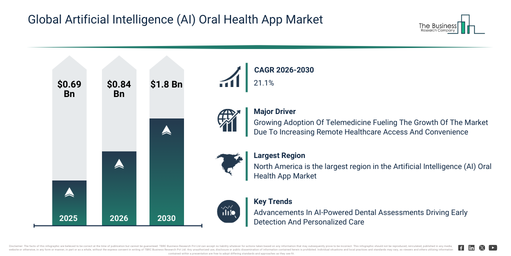
    The artificial intelligence (AI) oral health app market size has seen remarkable growth in recent years. It is projected to expand from $0.69 billion in 2025 to $0.84 billion in 2026, exhibiting a compound annual growth rate (CAGR) of 21.4%. This historical growth can be attributed to various factors, including increasing smartphone penetration within healthcare, a growing awareness of oral hygiene, the early adoption of digital dental diagnostics, the proliferation of telehealth platforms, and the availability of dental imaging data.

    The artificial intelligence (AI) oral health app market size is projected to experience rapid expansion in the coming years. This market is forecast to reach $1.8 billion by 2030, exhibiting a compound annual growth rate (CAGR) of 21.1%. Factors contributing to this growth during the forecast period include a rising demand for remote dental care solutions, greater adoption of AI-powered preventive healthcare, the spread of cloud-based health applications, a stronger emphasis on individualized patient engagement, and increased financial commitments to digital health ecosystems. Key trends anticipated during this period encompass a rise in AI-based dental image analysis adoption, an increased utilization of personalized oral health monitoring tools, the broadening integration of remote dental diagnostics, the proliferation of preventive dental care applications, and a heightened emphasis on the prompt identification of oral diseases.

    Access Your Free Sample Report For In-Depth Market Analysis:

    https://www.thebusinessresearchcompany.com/report/artificial-intelligence-ai-oral-health-app-global-market-report

    What Factors Are Contributing To The Growth Of The Artificial Intelligence (AI) Oral Health App Market?

    The future expansion of the artificial intelligence (AI) oral health app market is anticipated to be driven by the increasing integration of telemedicine. Telemedicine itself involves the remote delivery of clinical healthcare services through digital communication methods, enabling individuals to consult medical professionals, obtain diagnoses, and oversee their treatments without requiring physical attendance at a healthcare facility. Its rising acceptance stems from enhanced convenience, facilitating remote access to healthcare, conserving time, and removing travel necessities, thereby boosting general accessibility and operational efficiency. Artificial intelligence (AI) oral health apps augment telemedicine ecosystems by providing remote dental oversight, making them particularly suitable for individuals who face restricted availability of physical care. These applications streamline diagnostic processes through immediate analysis of oral images, thereby increasing healthcare convenience and supporting the early identification of dental problems. As an illustration, PubMed Central, a US-based government-operated digital archive, reported in February 2025 that in March 2023, telemedicine facilitated 29% of all mental health care consultations and 21% of substance use disorder treatments. Furthermore, payment parity mandates were linked to a 2.5 percentage point rise in telemedicine utilization during the first quarter of 2023, in contrast to states lacking such mandates. Consequently, the expanding use of telemedicine is propelling the expansion of the artificial intelligence (AI) oral health app market.

    How Is The Artificial Intelligence (AI) Oral Health App Market Organized By Segment Classification?

    The artificial intelligence (AI) oral health app market covered in this report is segmented –

    1) By Component: Software, Services

    2) By Deployment Mode: Cloud-Based, On-Premises

    3) By Application: Dental Diagnostics, Oral Health Monitoring, Patient Education, Other Applications

    4) By End User: Dental Clinics, Hospitals, Individual Users, Other End-Users

    Subsegments:

    1) By Software: Diagnostic Software, Monitoring Software, Treatment Planning Software, Imaging Software

    2) By Services: Consultation Services, Data Analytics Services, Maintenance And Support Services, Integration Services

    What Trends Are Shaping The Future Of The Artificial Intelligence (AI) Oral Health App Market?

    Leading companies in the artificial intelligence (AI) oral health app market are concentrating on developing sophisticated solutions, such as AI-powered dental assessments, to enhance early detection, improve personalized care, boost patient engagement, and offer accessible oral healthcare options. These AI-powered dental assessments involve the application of artificial intelligence algorithms to examine images of teeth and gums, identify potential oral health problems, and deliver immediate, practical recommendations to users. For example, in May 2025, Mars Inc., a US-based global pet nutrition and healthcare company, launched GREENIES Canine Dental Check. This AI-powered dental assessment tool scrutinizes photos of dogs’ teeth and gums to spot tartar buildup and gum irritation, providing results in seconds along with subsequent recommendations. The tool also connects users to licensed veterinary technicians through the PETconnect by GREENIES service, representing a modern approach to leveraging AI for ongoing, at-home oral health monitoring and support. This innovation enables pet owners to detect dental issues promptly, thereby reducing the likelihood of severe oral diseases and costly veterinary treatments.

    Who Are The Industry Participants Involved In The Artificial Intelligence (AI) Oral Health App Market?

    Major companies operating in the artificial intelligence (AI) oral health app market are Dentsply Sirona Inc., Align Technology Inc., Straumann Group, Planmeca Oy, 3Shape A/S, Dexis Corp., Dandy Inc., Carestream Health Inc., Dental Monitoring SAS, Pearl Inc., Overjet Inc., VideaHealth Inc., Zenyum Pte. Ltd., Candid Care Co., MouthWatch LLC, Dentem Inc., Denti.AI Technology Inc., OraQ AI Inc., Oryx Dental Software LLC, SOTA Imaging, Denota Ltd.

    Get The Full Artificial Intelligence (AI) Oral Health App Market Report:

    https://www.thebusinessresearchcompany.com/report/artificial-intelligence-ai-oral-health-app-global-market-report

    Which Region Leads The Artificial Intelligence (AI) Oral Health App Market In Overall Market Size?

    North America was the largest region in the artificial intelligence (AI) oral health app market in 2025. Asia-Pacific is expected to be the fastest-growing region in the forecast period. The regions covered in the artificial intelligence (AI) oral health app market report are Asia-Pacific, South East Asia, Western Europe, Eastern Europe, North America, South America, Middle East, Africa.

    Request A Customized Artificial Intelligence (AI) Oral Health App Market Report For Competitive Insights:

    https://www.thebusinessresearchcompany.com/report/artificial-intelligence-ai-oral-health-app-global-market-report

    Browse Through More Reports Similar to the Global Artificial Intelligence (AI) Oral Health App Market 2026, By The Business Research Company

    Artificial Intelligence Ai Software Market Report 2026

    https://www.thebusinessresearchcompany.com/report/artificial-intelligence-ai-software-global-market-report

    Oral Care Market Report 2026

    https://www.thebusinessresearchcompany.com/report/oral-care-global-market-report

    Womens Health App Market Report 2026

    https://www.thebusinessresearchcompany.com/report/womens-health-app-global-market-report

    Get in touch with us:

    The Business Research Company: https://www.thebusinessresearchcompany.com/

    Americas +1 310-496-7795

    Asia +44 7882 955267 & +91 8897263534

    Europe +44 7882 955267

    Email us at info@tbrc.info

    Follow us on:

    LinkedIn: https://in.linkedin.com/company/the-business-research-company

    YouTube: https://www.youtube.com/channel/UC24_fI0rV8cR5DxlCpgmyFQ

    Global Market Model: https://www.thebusinessresearchcompany.com/global-market-model
  • AI in wound care market analysis with future outlook

    AI in wound care market analysis with future outlook

    The Business Research Company’s 2026 market reports feature enhanced tools like market attractiveness analysis, TAM assessment, and company scoring matrices, along with interactive dashboards, deeper supply chain insights, and startup coverage strengthening the depth, usability, and strategic value of insights.

    How Much Will The Market Value Of The Artificial Intelligence (AI) In Wound Care Market Grow Between 2026 And 2030?

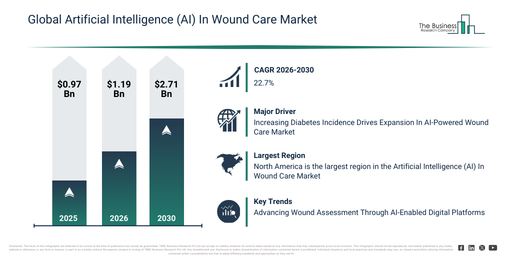
    The artificial intelligence (AI) in wound care market size has experienced substantial expansion in recent years. It is projected to increase from $0.97 billion in 2025 to $1.19 billion in 2026, demonstrating a compound annual growth rate (CAGR) of 23.0%. The historical growth of this market can be attributed to the increasing prevalence of chronic wounds, the rising incidence of diabetes-related ulcers, the adoption of digital wound documentation, the expansion of hospital-based wound care programs, and the availability of imaging-based assessment tools.

    The artificial intelligence (AI) in wound care market is anticipated to undergo substantial growth in the coming years. By 2030, its valuation is set to reach $2.71 billion, exhibiting a compound annual growth rate (CAGR) of 22.7%. This anticipated growth is driven by several factors, including an escalating need for individualized wound care, the growing acceptance of remote patient monitoring, the broader availability of AI-powered clinical decision support, a heightened emphasis on economical wound management solutions, and the increased blending of AI with telehealth platforms. Key developments expected during this period encompass a greater utilization of AI-driven wound assessment instruments, an uptick in the adoption of analytics for predicting healing outcomes, wider incorporation of remote wound monitoring technologies, the proliferation of customized wound care algorithms, and improved automation of clinical record-keeping.

    Access Your Free Sample Report For In-Depth Market Analysis:

    https://www.thebusinessresearchcompany.com/report/artificial-intelligence-ai-in-wound-care-global-market-report

    Which Strong Drivers Are Impacting The Artificial Intelligence (AI) In Wound Care Market Growth?

    The increasing occurrence of diabetes is projected to fuel the expansion of the artificial intelligence (AI) in wound care market in the future. Diabetes, a long-term condition marked by elevated blood sugar, can result in severe health issues including heart disease, kidney failure, nerve damage (neuropathy), and impaired vision. This growing prevalence of diabetes is largely influenced by rising obesity levels, which elevate the risk of type 2 diabetes, and by an aging demographic, as the likelihood of developing diabetes increases with age. AI in wound care assists in managing diabetes by offering precise wound evaluations and customized treatment strategies, thereby improving the effectiveness and efficiency of care for diabetic ulcers. As an illustration, in May 2024, the US-based governmental organization, the Centers for Disease Control and Prevention, reported that 38.4 million Americans, or 11.6% of the population in the U.S., had diabetes. For adults aged 65 and older, this prevalence was notably higher, reaching 29.2%. Consequently, the increased occurrence of diabetes is stimulating the expansion of the artificial intelligence (AI) in wound care market.

    Which Segments Define The Artificial Intelligence (AI) In Wound Care Market Segment Structure?

    The artificial intelligence (AI) in wound care market covered in this report is segmented –

    1) By Type Of Wound: Acute Wounds, Chronic Wounds

    2) By Technology: Deep Learning, Machine Learning, Other Technologies

    3) By End User: Clinical Trials And Research Centers, Home Health Agencies, Hospitals, Nursing Facilities, Other End Users

    Subsegments:

    1) By Acute Wounds: Surgical Wounds, Traumatic Wounds, Burns

    2) By Chronic Wounds: Diabetic Foot Ulcers, Pressure Ulcers (Bedsores), Venous Leg Ulcers, Arterial Ulcers

    Which Trends Are Contributing To Changes In The Artificial Intelligence (AI) In Wound Care Market?

    Prominent companies operating in the artificial intelligence (AI) in wound care market are focusing on integrating advanced solutions such as artificial intelligence (AI)-powered digital wound management systems to enhance clinical effectiveness, wound monitoring, documentation precision, and the prediction of healing outcomes. Artificial intelligence (AI)-driven digital wound management solutions represent software systems that employ computer vision and machine-learning techniques to analyze wound images and clinical data, thereby enabling real-time wound measurement, automated record-keeping, and tracking of healing progress. For instance, in October 2024, Swift Medical, a Canada-based digital wound-care technology company, unveiled Skin & Wound 2, an AI-based digital wound-care platform created to assist clinicians across diverse care settings, incorporating sub-millimetre-accuracy imaging, electronic medical record (EMR) integration via fast healthcare interoperability resources (FHIR), and automated tracking of healing timelines. Skin & Wound 2 improves the consistency of wound assessment, reduces the burden of documentation, and supports data-driven decisions in patient care.

    Who Are The Established Players Within The Artificial Intelligence (AI) In Wound Care Market?

    Major companies operating in the artificial intelligence (AI) in wound care market are Medtronic plc, Stryker Corporation, Smith & Nephew plc, Convatec Group plc, Mölnlycke Health Care AB, Derma Sciences Inc., Implicity Inc., Cecelia Health, Swift Medical Inc., Spectral MD Inc., PolarityTE Inc., eKare Inc., KroniKare Pte Ltd, Perceptive Solutions Inc., Tissue Analytics Inc., WoundZoom Inc., Intellicure Inc., WoundMatrix Inc., WoundVision LLC, The Wound Pros LLC

    Get The Full Artificial Intelligence (AI) In Wound Care Market Report:

    https://www.thebusinessresearchcompany.com/report/artificial-intelligence-ai-in-wound-care-global-market-report

    Which Region Is The Top Contributor To The Artificial Intelligence (AI) In Wound Care Market By Share?

    North America was the largest region in the artificial intelligence (AI) in wound care market in 2025. The regions covered in the artificial intelligence (AI) in wound care market report are Asia-Pacific, South East Asia, Western Europe, Eastern Europe, North America, South America, Middle East, Africa.

    Request A Customized Artificial Intelligence (AI) In Wound Care Market Report For Competitive Insights:

    https://www.thebusinessresearchcompany.com/report/artificial-intelligence-ai-in-wound-care-global-market-report

    Browse Through More Reports Similar to the Global Artificial Intelligence (AI) In Wound Care Market 2026, By The Business Research Company

    Ai In Real Estate Market Report 2026

    https://www.thebusinessresearchcompany.com/report/ai-in-real-estate-global-market-report

    Ai In Construction Market Report 2026

    https://www.thebusinessresearchcompany.com/report/ai-in-construction-global-market-report

    Ai In Manufacturing Market Report 2026

    https://www.thebusinessresearchcompany.com/report/ai-in-manufacturing-global-market-report

    Get in touch with us:

    The Business Research Company: https://www.thebusinessresearchcompany.com/

    Americas +1 310-496-7795

    Asia +44 7882 955267 & +91 8897263534

    Europe +44 7882 955267

    Email us at info@tbrc.info

    Follow us on:

    LinkedIn: https://in.linkedin.com/company/the-business-research-company

    YouTube: https://www.youtube.com/channel/UC24_fI0rV8cR5DxlCpgmyFQ

    Global Market Model: https://www.thebusinessresearchcompany.com/global-market-model

  • Acne Teledermatology Market Outlook: Growth Opportunities Through 2030

    The Business Research Company’s 2026 market reports feature enhanced tools like market attractiveness analysis, TAM assessment, and company scoring matrices, along with interactive dashboards, deeper supply chain insights, and startup coverage strengthening the depth, usability, and strategic value of insights.

    How Does The Market Size Of The Acne Teledermatology Market Compare Between 2026 And 2030?

    The acne teledermatology market has experienced substantial growth in recent years. This market is anticipated to expand from $1.98 billion in 2025 to $2.42 billion in 2026, achieving a compound annual growth rate (CAGR) of 22.3%. Historically, this market expansion can be linked to factors such as the increasing adoption of telemedicine, the growing prevalence of acne conditions, enhanced smartphone penetration, the broader reach of digital healthcare platforms, and a greater acceptance of remote consultations.

    The acne teledermatology market is projected to experience substantial expansion in the coming years. It is anticipated to grow to $5.36 billion by 2030, achieving a compound annual growth rate (CAGR) of 22.0%. This growth during the forecast period stems from factors such as increasing demand for personalized digital dermatology care, rising investments in telehealth platforms, the expansion of AI-assisted skin analysis tools, a growing focus on preventive dermatology, and increasing integration with electronic health records. Major trends foreseen in this period include the increasing adoption of image-based remote acne diagnosis, the rising use of app-based dermatology platforms, a growing preference for hybrid teledermatology models, the expansion of personalized acne treatment protocols, and an enhanced focus on continuous treatment monitoring.

    Access Your Free Sample Report For In-Depth Market Analysis:

    https://www.thebusinessresearchcompany.com/report/acne-teledermatology-global-market-report

    What Key Drivers Are Fueling The Growth Of The Acne Teledermatology Market?

    The growing reach of smartphones and the internet is anticipated to fuel the expansion of the acne teledermatology market in the future. This penetration signifies the widespread adoption and utilization of smartphones and internet services across the population. The rise in smartphone and internet penetration stems from the increasing affordability and accessibility of mobile devices and online services, alongside improvements in network infrastructure and broader coverage in urban and suburban areas. This enhanced access empowers more individuals to conveniently use teledermatology platforms, enabling patients to consult dermatologists remotely, submit high-resolution images of their acne, receive prompt diagnoses, and adhere to personalized treatment plans without needing in-person appointments. For instance, in May 2025, according to the Federal Communications Commission, a US-based government agency, total connections climbed by approximately 2.5% between June 2023 and June 2024, reaching 549 million. Mobile connections expanded by 2.5% year over year to 416 million by June 2024, while fixed connections increased by about 2.3% to 133 million during the identical period. Thus, the increasing smartphone and internet penetration is propelling the growth of the acne teledermatology market.

    How Is The Acne Teledermatology Market Segmented Across Different Segment Categories?

    The acne teledermatology market covered in this report is segmented –

    1) By Service Type: Store-And-Forward, Real-Time, Hybrid

    2) By Acne Type: Mild, Moderate, Severe

    3) By Platform: Web-Based, App-Based

    4) By End-Users: Hospitals And Clinics, Homecare, Dermatology Centers, Other End-Users

    Subsegments:

    1) By Store-And-Forward: Asynchronous Image-Based Consultations, Delayed Review Teleconsultations, Patient Data Upload Services, Specialist Follow-Up Reviews

    2) By Real-Time: Live Video Consultations, Synchronous Teleconsultations, Interactive Patient-Specialist Sessions, Real-Time Diagnostic Support

    3) By Hybrid: Combined Asynchronous and Synchronous Consultations, Mixed-Mode Teledermatology Services, Integrated Patient Monitoring and Consultation, Multi-Channel Dermatology Services

    What Trends Are Influencing The Acne Teledermatology Market?

    Leading companies in the acne teledermatology market are concentrating on employing innovative technologies such as artificial intelligence (AI)-powered skin analysis to deliver personalized, remote, and efficient acne diagnosis and treatment. AI-powered skin analysis entails the application of AI algorithms to assess skin conditions from images or scans, thereby assisting in identifying acne severity, monitoring changes over time, and recommending tailored treatments effectively and remotely. For example, in September 2025, Nolla Health AS, a digital healthcare company based in Norway, launched its AI-powered Acne Treatment App in the U.S. This app offers a teledermatology platform that integrates real-time skin scans, treatment plans reviewed by clinicians, and custom-compounded medications shipped directly to patients’ homes, making personalized acne care more accessible and convenient across 40+ states. The platform employs proprietary AI models to continuously observe patients’ skin, track treatment progress, and adapt care plans dynamically, thereby reducing the necessity for in-person consultations and shortening the average wait time to receive effective treatment. Nolla Health AS merges AI with clinician oversight to offer a comprehensive, end-to-end solution that improves patient outcomes, lowers costs, and modernizes acne management within the digital healthcare sector.

    Which Organizations Play A Role In The Acne Teledermatology Market Landscape?

    Major companies operating in the acne teledermatology market are Teladoc Health Inc., Doctolib SAS, Amwell Inc., Curology Inc., Zocdoc Inc., Doctor Anywhere Pte. Ltd., Practo Technologies Private Limited, Skin + Me Ltd, Altibbi UK Ltd., Clinikally Ltd., SkyMD Inc., Dermatica Ltd., Cureskin Ltd., MetaOptima Technology Inc., First Derm Inc., Miiskin Ltd., Strut Health LLC, DermCafé Ltd., Nolla Health Inc., Acne Connect Inc.

    Get The Full Acne Teledermatology Market Report:

    https://www.thebusinessresearchcompany.com/report/acne-teledermatology-global-market-report

    Where Is The Acne Teledermatology Market Most Concentrated Geographically?

    North America was the largest region in the acne teledermatology market in 2025. Asia-Pacific is expected to be the fastest-growing region in the forecast period. The regions covered in the acne teledermatology market report are Asia-Pacific, South East Asia, Western Europe, Eastern Europe, North America, South America, Middle East, Africa.

    Request A Customized Acne Teledermatology Market Report For Competitive Insights:

    https://www.thebusinessresearchcompany.com/report/acne-teledermatology-global-market-report

    Browse Through More Reports Similar to the Global Acne Teledermatology Market 2026, By The Business Research Company

    Teledentistry Market Report 2026

    https://www.thebusinessresearchcompany.com/report/teledentistry-global-market-report

    Electronic Skin Patch Market Report 2026

    https://www.thebusinessresearchcompany.com/report/electronic-skin-patch-global-market-report

    Transdermal Skin Patche Market Report 2026

    https://www.thebusinessresearchcompany.com/report/transdermal-skin-patche-global-market-report

    Get in touch with us:

    The Business Research Company: https://www.thebusinessresearchcompany.com/

    Americas +1 310-496-7795

    Asia +44 7882 955267 & +91 8897263534

    Europe +44 7882 955267

    Email us at info@tbrc.info

    Follow us on:

    LinkedIn: https://in.linkedin.com/company/the-business-research-company

    YouTube: https://www.youtube.com/channel/UC24_fI0rV8cR5DxlCpgmyFQ

    Global Market Model: https://www.thebusinessresearchcompany.com/global-market-model

  • Global Acne Pimple Patches Market to Hit $2.02B by 2030 at 11.4% CAGR

    The Business Research Company’s 2026 market reports feature enhanced tools like market attractiveness analysis, TAM assessment, and company scoring matrices, along with interactive dashboards, deeper supply chain insights, and startup coverage strengthening the depth, usability, and strategic value of insights.

    What Is The Forecasted Market Size Trajectory Of The Acne Pimple Patches Market From 2026 To 2030?

    The acne pimple patches market size has experienced rapid growth in recent years. It is projected to expand from $1.18 billion in 2025 to $1.31 billion in 2026, at a compound annual growth rate (CAGR) of 11.7%. This historical growth can be attributed to factors such as the increasing prevalence of acne among teenagers and adults, rising awareness of non-invasive acne care solutions, the growth of personal skincare routines, the expansion of over-the-counter dermatology products, and the increasing influence of social media skincare trends.

    The acne pimple patches market is projected for significant expansion over the coming years, reaching a valuation of $2.03 billion by 2030, exhibiting a compound annual growth rate (CAGR) of 11.4%. This anticipated growth during the forecast period is fueled by several factors, including a heightened demand for clean-label skincare items, a greater uptake of targeted spot treatments, the broadening reach of e-commerce skincare platforms, an increasing emphasis on multifunctional acne patches, and a growing consumer inclination towards rapid-acting acne solutions. Key developments expected within the forecast timeframe encompass an escalating demand for hydrocolloid-based acne products, the burgeoning popularity of discreet and daytime patches, an expanded utilization of patches incorporating various active ingredients, the enlargement of online distribution channels for skincare items, and an intensified concentration on adhesive technologies that are safe for the skin.

    Access Your Free Sample Report For In-Depth Market Analysis:

    https://www.thebusinessresearchcompany.com/report/acne-pimple-patches-global-market-report

    Which Drivers Are Supporting The Acne Pimple Patches Market Growth?

    The increasing occurrence of skin conditions is anticipated to drive the growth of the acne pimple patches market moving forward. Skin issues, which are conditions affecting the skin and potentially leading to rashes, inflammation, itchiness, or other changes, are becoming more prevalent. This rise is attributed to escalating pollution levels, which expose the skin to detrimental airborne elements like dust, smoke, and chemical pollutants. Acne pimple patches help manage these skin concerns by forming a protective barrier that absorbs pus and oil, prevents bacterial contamination, diminishes inflammation, and facilitates quicker healing with reduced scarring risk. For instance, in October 2023, the European Academy of Dermatology and Venereology (EADV), a Switzerland-based nonprofit professional medical organization in Europe, indicated that about 43% of EU citizens reported experiencing at least one skin disease in the previous 12 months, with fungal skin infections among the most common. Consequently, the increasing prevalence of skin issues is a significant driver for the acne pimple patches market.

    What Are The Main Segments Within The Acne Pimple Patches Market Segment Structure?

    The acne pimple patches market covered in this report is segmented –

    1) By Type: Hydrocolloid Patches, Salicylic Acid Patches

    2) By Age Group: Teenagers, Adults

    3) By Distribution Channel: Online Stores, Supermarkets Or Hypermarkets, Specialty Stores, Pharmacies, Other Distribution Channels

    Subsegments:

    1) By Hydrocolloid Patches: Tea Tree Oil, Niacinamide, Transparent Hydrocolloid, Tinted Or Invisible Finish, Spot Treatment Dots, Microdart Hydrocolloid Patches

    2) By Salicylic Acid Patches: Low-Concentration (0.5–1%), Medium-Concentration (1–2%), Beta Hydroxy Acid or Alpha Hydroxy Acid, Soothing Ingredients, Overnight Patches, Daywear Patches

    Which Trends Are Expected To Impact The Acne Pimple Patches Market?

    Leading companies within the acne pimple patches market are concentrating on creating novel products, specifically advanced hydrocolloid and microneedle patch technologies, to boost the effectiveness of early-stage acne treatment and promote skin recovery. This hydrocolloid and microneedle patch technology integrates a hydrocolloid polymer layer with microneedles that dissolve into the skin, ensuring active ingredients are delivered precisely beneath the surface. This approach facilitates focused delivery of active compounds, deeper penetration, and potentially quicker alleviation of blemishes. For example, in December 2023, Peace Out Skincare, a clean-beauty skincare firm based in the US, introduced its “peace out early-stage acne dot.” This particular patch is engineered to address breakouts in their initial stages and diminish pimples before they completely emerge. The product incorporates 430 self-dissolving microneedles, alongside 2% salicylic acid, niacinamide, and succinic acid, ingredients specifically formulated to tackle clogged pores, surplus sebum, and inflammation. The “peace out early-stage acne dot” seeks to enhance proactive management of acne, lessen redness and the size of bumps, and aid in more rapid surface-level healing of nascent acne lesions.

    Who Are The Companies Participating In The Acne Pimple Patches Market?

    Major companies operating in the acne pimple patches market are Neogen Dermalogy, Peace Out Skincare, Julep Beauty Inc., Peach & Lily, Dr. Jart+, Rael Beauty, Clearasil, Patchology LLC, Starface LLC, The Inkey List, DermaAngel, Acropass, COSRX, ZitSticka, Peach Slices, MediPatch, Mediheal, Peter Thomas Roth, AcneFree, Soothe & Heal, TULA Skincare, Dot & Key

    Get The Full Acne Pimple Patches Market Report:

    https://www.thebusinessresearchcompany.com/report/acne-pimple-patches-global-market-report

    Which Region Dominates The Acne Pimple Patches Market By Market Share?

    North America was the largest region in the acne pimple patches market in 2025. Asia-Pacific is expected to be the fastest-growing region in the forecast period. The regions covered in the acne pimple patches market report are Asia-Pacific, South East Asia, Western Europe, Eastern Europe, North America, South America, Middle East, Africa.

    Request A Customized Acne Pimple Patches Market Report For Competitive Insights:

    https://www.thebusinessresearchcompany.com/report/acne-pimple-patches-global-market-report

    Browse Through More Reports Similar to the Global Acne Pimple Patches Market 2026, By The Business Research Company

    Skin Care Supplements Market Report 2026

    https://www.thebusinessresearchcompany.com/report/skin-care-supplements-global-market-report

    Transdermal Skin Patche Market Report 2026

    https://www.thebusinessresearchcompany.com/report/transdermal-skin-patche-global-market-report

    Electronic Skin Patch Market Report 2026

    https://www.thebusinessresearchcompany.com/report/electronic-skin-patch-global-market-report

    Get in touch with us:

    The Business Research Company: https://www.thebusinessresearchcompany.com/

    Americas +1 310-496-7795

    Asia +44 7882 955267 & +91 8897263534

    Europe +44 7882 955267

    Email us at info@tbrc.info

    Follow us on:

    LinkedIn: https://in.linkedin.com/company/the-business-research-company

    YouTube: https://www.youtube.com/channel/UC24_fI0rV8cR5DxlCpgmyFQ

    Global Market Model: https://www.thebusinessresearchcompany.com/global-market-model

  • ACL Reconstruction Procedures Market to Reach $11.2B by 2030

    The Business Research Company’s 2026 market reports feature enhanced tools like market attractiveness analysis, TAM assessment, and company scoring matrices, along with interactive dashboards, deeper supply chain insights, and startup coverage strengthening the depth, usability, and strategic value of insights.

    How Much Will The Market Value Of The ACL Reconstruction Procedures Market Grow Between 2026 And 2030?

    The acl reconstruction procedures market has shown significant growth in recent years. It is projected to expand from $7.94 billion in 2025 to $8.48 billion in 2026, experiencing a compound annual growth rate (CAGR) of 6.9%. The market’s past expansion is attributed to factors such as the limited availability of skilled orthopedic surgeons, an increasing incidence of sports-related knee injuries, greater awareness of acl injuries, the adoption of conventional reconstruction techniques, and the growth of hospital infrastructure.

    The acl reconstruction procedures market is anticipated to experience significant growth in the coming years, with projections indicating it will reach $11.2 billion by 2030, expanding at a compound annual growth rate (CAGR) of 7.2%. This growth during the forecast period is primarily driven by technological advancements in graft fixation devices, a surging preference for minimally invasive surgeries, increased participation in sports leading to more injuries, the development of improved rehabilitation programs, and the global expansion of orthopedic care centers. Key trends for the forecast period include a rising adoption of arthroscopic and minimally invasive techniques, an increasing preference for autograft and allograft procedures, a heightened demand for knee ligament reconstruction surgeries, the ongoing expansion of orthopedic clinics and ambulatory surgical centers, and a stronger emphasis on post-operative rehabilitation and patient outcomes.

    Access Your Free Sample Report For In-Depth Market Analysis:

    https://www.thebusinessresearchcompany.com/report/acl-reconstruction-procedures-global-market-report

    What Key Factors Are Affecting The ACL Reconstruction Procedures Market Demand?

    The anticipated expansion of the ACL reconstruction procedure market is attributed to the increasing number of sports-related injuries and incidents moving forward. Sports injuries encompass harms sustained during athletic activities or workouts, which may manifest acutely or chronically. Contributing factors to these injuries include inadequate training protocols, irregularities in the skeletal structure, muscular deficiencies, and hazardous practices. The ACL reconstruction procedure offers an effective solution for restoring knee stability and function by directly addressing the underlying issue; consequently, the growing incidence of sports-related injuries and events fuels the demand for ACL reconstruction procedures. As an illustration, data from Insideworldfootball, a UK-based online news service, indicated that in October 2024, sports injuries totaled 4,123 throughout the 2023-24 season, representing a 4% rise compared to the 2022-23 season. Thus, the escalation in sports-induced injuries and events is accelerating the expansion of the home healthcare equipment market.

    How Is Segmentation Applied In The ACL Reconstruction Procedures Market Segment Analysis?

    The acl reconstruction procedures market covered in this report is segmented –

    1) By Type: Intra-Articular ACL Reconstruction, Extra-Articular Augmentation ACL Reconstruction, Combined Intra-Articular and Extra-Articular Reconstruction

    2) By Fixation Type: Femoral, Tibial

    3) By End User: Hospitals, Orthopedic Clinics, Ambulatory Surgical Centers

    Subsegments:

    1) By Intra-Articular ACL Reconstruction: Hamstring Tendon Autograft, Bone–Patellar Tendon–Bone (BPTB) Autograft, Quadriceps Tendon Autograft, Allograft Reconstruction, Primary Arthroscopic ACL Reconstruction, Revision ACL Reconstruction

    2) By Extra-Articular Augmentation ACL Reconstruction: Iliotibial Band (ITB) Tenodesis, Anterolateral Ligament (ALL) Reconstruction, Lateral Extra-Articular Tenodesis (LET), Isolated Extra-Articular Augmentation

    3) By Combined Intra-Articular and Extra-Articular Reconstruction: Intra-Articular ACL + ALL Reconstruction, Intra-Articular ACL + ITB Tenodesis, Intra-Articular ACL + LET Procedure, Combined Primary Reconstruction, Combined Revision Reconstruction

    What Trends Are Influencing Changes In The ACL Reconstruction Procedures Market?

    Prominent companies in the ACL reconstruction procedure market are dedicated to advancing technology, including integrated guide systems, to aid minimally invasive methods. This integrated guide system functions as a surgical instrument, boosting precision and command during tendon harvesting for ACL reconstruction, thereby streamlining the process and enhancing patient outcomes. For example, in March 2023, Smith & Nephew plc, a UK-based medical equipment manufacturing company, introduced the UltraTRAC QUAD ACL Reconstruction Technique. This innovative surgical strategy for ACL reconstruction uses the quadriceps tendon as the graft source and includes sophisticated technologies like the QUADTRAC Quadriceps Tendon Harvest Guide System, which facilitates precise and minimally invasive tendon harvesting. Moreover, the technique incorporates the X-WING Graft Preparation System and UltraBUTTON Adjustable Fixation Devices to ensure the secure placement and positioning of the graft. By improving tendon visualization and simplifying graft harvesting, this approach enhances the efficiency of ACL reconstruction procedures and promotes superior surgical results.

    Who Are The Companies Participating In The ACL Reconstruction Procedures Market Environment?

    Major companies operating in the acl reconstruction procedures market are Arthrex Inc., Citieffe s.r.l, CONMED Corporation., DJO Global LLC, Tissue Regenix Group, Medtronic plc, Miach Orthopaedics, MEIRA Inc., Zimmer Biomet Holdings Inc., Smith & Nephew plc, Stryker Corporation, Johnson & Johnson Services Inc., RTI Surgical Holdings Inc., Mathys AG Bettlach + Mathys (Schweiz) GmbH, United Orthopedic Corporation, Acumed LLC, Biomet Inc., Cayenne Medical, Corin Group plc, Ceterix Orthopaedics, Cousin Biotech, OrthoSpace Ltd., B. Braun Melsungen AG, Imperial Surgical Ltd., Vivorte Inc., LifeNet Health, Moximed Inc., ConforMIS Inc., Ossur

    Get The Full ACL Reconstruction Procedures Market Report:

    https://www.thebusinessresearchcompany.com/report/acl-reconstruction-procedures-global-market-report

    Which Region Is The Largest In The ACL Reconstruction Procedures Market?

    North America was the largest region in the ACL reconstruction procedures market in 2025. The regions covered in the acl reconstruction procedures market report are Asia-Pacific, South East Asia, Western Europe, Eastern Europe, North America, South America, Middle East, Africa.

    Request A Customized ACL Reconstruction Procedures Market Report For Competitive Insights:

    https://www.thebusinessresearchcompany.com/report/acl-reconstruction-procedures-global-market-report

    Browse Through More Reports Similar to the Global ACL Reconstruction Procedures Market 2026, By The Business Research Company

    Cartilage Repair Market Report 2026

    https://www.thebusinessresearchcompany.com/report/cartilage-repair-global-market-report

    Joint Reconstruction Devices And Equipment Market Report 2026

    https://www.thebusinessresearchcompany.com/report/joint-reconstruction-devices-and-equipment-global-market-report

    Knee Cartilage Repair Market Report 2026

    https://www.thebusinessresearchcompany.com/report/knee-cartilage-repair-global-market-report

    Get in touch with us:

    The Business Research Company: https://www.thebusinessresearchcompany.com/

    Americas +1 310-496-7795

    Asia +44 7882 955267 & +91 8897263534

    Europe +44 7882 955267

    Email us at info@tbrc.info

    Follow us on:

    LinkedIn: https://in.linkedin.com/company/the-business-research-company

    YouTube: https://www.youtube.com/channel/UC24_fI0rV8cR5DxlCpgmyFQ

    Global Market Model: https://www.thebusinessresearchcompany.com/global-market-model

  • Accountable Care Solutions Market to Reach $55.4B by 2030 at 13.7% CAGR

    The Business Research Company’s 2026 market reports feature enhanced tools like market attractiveness analysis, TAM assessment, and company scoring matrices, along with interactive dashboards, deeper supply chain insights, and startup coverage strengthening the depth, usability, and strategic value of insights.

    What Changes In Market Value Are Expected For The Accountable Care Solutions Market Over The 2026–2030 Period?

    The accountable care solutions market has witnessed rapid expansion in recent years. It is anticipated to increase from $29.03 billion in 2025 to $33.11 billion in 2026, demonstrating a compound annual growth rate (CAGR) of 14.0%. The historical growth of this market can be attributed to factors such as increasing healthcare cost pressures, the early adoption of accountable care organizations, the rising use of electronic health records, the expansion of integrated care networks, and a regulatory push for outcome-based reimbursement.

    The accountable care solutions market is projected to experience significant expansion in the coming years. Its size is anticipated to reach $55.41 billion by 2030, exhibiting a compound annual growth rate (CAGR) of 13.7%. This projected growth is driven by several factors, including a heightened focus on value-based reimbursement models, increased capital expenditure in healthcare data analytics, a surge in the implementation of interoperable health IT systems, the broadening of patient-centric care frameworks, and an escalating need for cost optimization strategies. Key developments expected during this period involve a greater embrace of value-based care platforms, an uptick in the utilization of healthcare analytics solutions, the increased incorporation of population health management tools, the expansion of cloud-based accountable care infrastructure, and a reinforced emphasis on coordinating care.

    Access Your Free Sample Report For In-Depth Market Analysis:

    https://www.thebusinessresearchcompany.com/report/accountable-care-solutions-global-market-report

    Which Primary Drivers Are Impacting The Accountable Care Solutions Market Growth?

    The increasing occurrence of chronic illnesses is projected to fuel the expansion of the accountable care market moving forward. Chronic diseases are long-term health issues lasting over a year, typically demanding continuous management and affecting everyday life. An aging population, longer average lifespans, and a higher incidence of conditions like heart disease and diabetes are key contributors to chronic diseases. Accountable care solutions assist in managing chronic diseases by optimizing patient care, enhancing outcomes, and lowering costs through integrated and preventive methods. For instance, in January 2023, according to the National Center for Biotechnology Information (NCBI), a US-based National Library of Medicine, it was estimated that by 2035, 35.66% of adults aged 50 and older will experience at least one chronic condition, increasing to 47.81% by 2050. Therefore, the rising prevalence of chronic diseases is driving the growth of the accountable care market.

    What Segment Categories Shape The Accountable Care Solutions Market Segment Landscape?

    The accountable care solutions market covered in this report is segmented –

    1) By Component: Software, Services

    2) By Solutions: Electronic Health Or Medical Records, Healthcare Analytics, Revenue Cycle Management Solutions (RCM), Patient Engagement Solutions, Population Health Management (PHM) Solutions, Claims Management Solutions, Healthcare Information Exchange (HIE), Other Solutions

    3) By Deployment: On-Premise, Web And Cloud-Based

    4) By End-User: Healthcare Providers, Healthcare Payers

    Subsegments:

    1) By Software: Population Health Management (PHM) Software, Electronic Health/Medical Records (EHR/EMR) Software, Care Management Software, Health Information Exchange (HIE) Software, Revenue Cycle Management (RCM) Software, Clinical Decision Support Systems (CDSS), Claims Management Software, Patient Engagement Software

    2) By Services: Implementation Services, Consulting Services, Support & Maintenance Services, Training & Education Services, Managed Services, Analytics and Reporting Services.

    Which Trends Are Shaping Growth In The Accountable Care Solutions Market?

    Major companies within the accountable care solutions market are actively developing artificial intelligence (AI)-based models to better serve customers with enhanced and more effective healthcare options. These AI-based models denote advanced systems designed with cutting-edge algorithms and technologies to elevate healthcare delivery, performance, and efficiency. The goal of these models is to improve patient care, optimize the allocation of resources, and ensure cost-effective management through sophisticated algorithms and data analytics. For example, in April 2024, Innovaccer, a US-based digital healthcare company, launched an AI-assisted quality management solution. This solution is crafted to support accountable care organizations (ACOs) in complying with the new electronic clinical quality measures (eCQMs) reporting requirements mandated by the Centers for Medicare & Medicaid Services (CMS) for 2025. Key attributes of this solution encompass artificial intelligence (AI)-powered predictive models that optimize gap closure and patient outreach, advanced analytics and reporting capabilities for the efficient processing of electronic clinical quality measures (eCQMs) and merit-based incentive payment system clinical quality measures (MIPS CQMs), and seamless data flow facilitated by optimized worklist management.

    Who Are The Companies Operating Across The Accountable Care Solutions Market Value Chain?

    Major companies operating in the accountable care solutions market are UnitedHealth Group, McKesson Corporation, Optum Inc., Oracle Corporation, Infosys Limited, Change Healthcare, Aetna Inc., Athenahealth Inc., Lumeris, Inovalon Holdings Inc., eClinicalWorks LLC, NXGN Management LLC, Health Catalyst, Innovaccer Inc., ZeOmega Inc., MedeAnalytics Inc., HealthEC LLC, Azara Healthcare LLC, ISalus Healthcare LLC, Ayoka L.L.C.,

    Get The Full Accountable Care Solutions Market Report:

    https://www.thebusinessresearchcompany.com/report/accountable-care-solutions-global-market-report

    Which Region Leads The Accountable Care Solutions Market In Terms Of Market Share?

    North America was the largest region in the accountable care solutions market in 2025. Asia-Pacific is expected to be the fastest-growing region in the forecast period. The regions covered in the accountable care solutions market report are Asia-Pacific, South East Asia, Western Europe, Eastern Europe, North America, South America, Middle East, Africa.

    Request A Customized Accountable Care Solutions Market Report For Competitive Insights:

    https://www.thebusinessresearchcompany.com/report/accountable-care-solutions-global-market-report

    Browse Through More Reports Similar to the Global Accountable Care Solutions Market 2026, By The Business Research Company

    Connected Health And Wellness Solutions Market Report 2026

    https://www.thebusinessresearchcompany.com/report/connected-health-and-wellness-solutions-global-market-report

    Patient Engagement Solutions Market Report 2026

    https://www.thebusinessresearchcompany.com/report/patient-engagement-solutions-global-market-report

    Eclinical Solutions Market Report 2026

    https://www.thebusinessresearchcompany.com/report/eclinical-solutions-global-market-report

    Get in touch with us:

    The Business Research Company: https://www.thebusinessresearchcompany.com/

    Americas +1 310-496-7795

    Asia +44 7882 955267 & +91 8897263534

    Europe +44 7882 955267

    Email us at info@tbrc.info

    Follow us on:

    LinkedIn: https://in.linkedin.com/company/the-business-research-company

    YouTube: https://www.youtube.com/channel/UC24_fI0rV8cR5DxlCpgmyFQ

    Global Market Model: https://www.thebusinessresearchcompany.com/global-market-model

  • Academic Medical Center Market to Near $896.6B by 2030 with Steady Growth

    The Business Research Company’s 2026 market reports feature enhanced tools like market attractiveness analysis, TAM assessment, and company scoring matrices, along with interactive dashboards, deeper supply chain insights, and startup coverage strengthening the depth, usability, and strategic value of insights.

    By 2030, What Market Size Is The Academic Medical Center Market Expected To Reach Based On Its 2026 Value?

    The market size for academic medical centers has seen rapid expansion in recent years. This sector is anticipated to increase from $509.36 billion in 2025 to $571.65 billion in 2026, achieving a compound annual growth rate (CAGR) of 12.2%. The observed growth in past periods is primarily due to factors such as the expansion of tertiary healthcare institutions, a rise in medical education demand, enhanced government funding for research hospitals, the increasing complexity of clinical cases, and the development of teaching hospital networks.

    The academic medical center market size is projected to experience substantial expansion over the coming years. It is anticipated to reach $896.61 billion by 2030, demonstrating a compound annual growth rate (CAGR) of 11.9%. This growth throughout the forecast period is primarily driven by factors such as increased investments in precision medicine research, the broadening of digital medical education platforms, a heightened focus on collaborations between academia and industry, the rising adoption of AI in clinical research, and an increased demand for specialized referral centers. Key trends expected during this period include a greater integration of research and clinical care models, the growing use of advanced medical training technologies, the expansion of translational research programs, an increasing reliance on data-driven clinical decision support, and an enhanced emphasis on interdisciplinary education.

    Access Your Free Sample Report For In-Depth Market Analysis:

    https://www.thebusinessresearchcompany.com/report/academic-medical-center-global-market-report

    What Significant Factors Are Influencing The Academic Medical Center Market Expansion?

    The future expansion of the academic medical center market is anticipated to be driven by the rising incidence of chronic diseases. These conditions are enduring health issues that manifest gradually and persist over long durations, frequently necessitating ongoing medical attention. A contributing factor to the escalating occurrence of chronic illnesses is sedentary lifestyles, given that extended periods of sitting and insufficient physical activity elevate the likelihood of developing ailments like cardiac conditions and diabetes. Academic medical centers facilitate the management of chronic diseases through the provision of comprehensive care, sophisticated diagnostic tools, and tailored treatment initiatives, positioning them as optimal choices for individuals with intricate health requirements. By integrating clinical proficiency, research efforts, and educational components, these centers improve patient results, thereby upgrading the general quality and efficacy of healthcare services. As an illustration, in June 2024, data from the National Health Service, a UK-based government department, indicated that 3,615,330 persons registered with a general practitioner (GP) received a diagnosis of non-diabetic hyperglycemia or pre-diabetes (a state characterized by heightened blood sugar levels, though not severe enough to be categorized as full diabetes) in 2023. This represented an 18% rise from the 3,065,825 instances recorded in 2022. Consequently, the expanding incidence of chronic conditions is stimulating the growth within the academic medical center market.

    Which Segment Types Are Examined In The Academic Medical Center Market Segment Study?

    The academic medical center market covered in this report is segmented –

    1) By Academic Level: Undergraduate, Graduate, Postgraduate

    2) By Hospital Type: University Teaching Hospitals, Community Hospitals, Private Hospitals, Public Hospitals

    3) By Focus Area: Clinical Care, Research, Education

    4) By Funding Source: Government Funding, University Funding, Private Donations, Patient Revenue

    5) By Affiliation: Academic Health Centers, Independent Academic Medical Centers, Healthcare Networks

    Subsegments:

    1) By Undergraduate: MBBS Or MD, Bachelor Of Nursing, Bachelor Of Pharmacy, Bachelor Of Dentistry (BDS/DDS), Allied Health Sciences, Public Health And Health Administration

    2) By Graduate: Master Of Medicine Or Surgery (MS/MD), Master Of Nursing, Master Of Pharmacy, Master Of Dentistry (MDS), Master Of Public Health (MPH), Master Of Biomedical Sciences

    3) By Postgraduate: Doctor Of Philosophy (PhD) In Medical Or Health Sciences, Postdoctoral Fellowships, Clinical Fellowships, Residency Training Programs, Subspecialty Certifications, Advanced Professional Diplomas In Healthcare

    What Trends Are Affecting The Direction Of The Academic Medical Center Market?

    Companies operating within the academic medical center market are prioritizing strategic alliances with healthcare technology providers to integrate AI-driven diagnostics, sophisticated imaging tools, and data-centric research, thereby enhancing early detection, personalized treatment, and overall patient outcomes. For example, in June 2025, Tata Memorial Centre (TMC), an India-based medical institute, collaborated with Wipro GE HealthCare, an India-based healthcare company, to establish an advanced cancer research and innovation center focused on progressing precision-led cancer care in India. Tata Memorial Centre provides its expertise in oncology and research, while Wipro GE HealthCare contributes advanced imaging tools, AI-powered platforms, and digital healthcare solutions. This partnership emphasizes AI-driven diagnostics, optimized clinical workflows, and data-informed research to improve early detection and individualized treatment. This initiative is expected to strengthen the cancer care ecosystem, foster academic-industry collaboration, and serve as a model for public-private healthcare partnerships.

    Which Players Are Part Of The Competitive Landscape Of The Academic Medical Center Market?

    Major companies operating in the academic medical center market are University of Pennsylvania Health System, Mayo Clinic, Massachusetts General Hospital Inc., Northwestern Medicine, NYU Langone Health System, UCSF Health, The Cleveland Clinic Foundation, Mount Sinai Health System Inc., Johns Hopkins Medicine Inc., University of Michigan Health System, Yale New Haven Health Services Corporation, Emory Healthcare Inc., University of Chicago Medical Center, Stanford Health Care, The Ottawa Hospital, Sunnybrook Health Sciences Centre, Toronto General Hospital, Weill Cornell Medicine, University of Colorado Anschutz Medical Campus, Columbia University Irving Medical Center

    Get The Full Academic Medical Center Market Report:

    https://www.thebusinessresearchcompany.com/report/academic-medical-center-global-market-report

    Which Region Leads The Academic Medical Center Market In Overall Market Size?

    North America was the largest region in the personalized genomics market in 2025. Asia-Pacific is expected to be the fastest-growing region in the forecast period. The regions covered in the academic medical center market report are Asia-Pacific, South East Asia, Western Europe, Eastern Europe, North America, South America, Middle East, Africa.

    Request A Customized Academic Medical Center Market Report For Competitive Insights:

    https://www.thebusinessresearchcompany.com/report/academic-medical-center-global-market-report

    Browse Through More Reports Similar to the Global Academic Medical Center Market 2026, By The Business Research Company

    Green Hospitals Market Report 2026

    https://www.thebusinessresearchcompany.com/report/green-hospitals-global-market-report

    Hospitality Market Report 2026

    https://www.thebusinessresearchcompany.com/report/hospitality-global-market-report

    Medical Centrifuge Market Report 2026

    https://www.thebusinessresearchcompany.com/report/medical-centrifuge-global-market-report

    Get in touch with us:

    The Business Research Company: https://www.thebusinessresearchcompany.com/

    Americas +1 310-496-7795

    Asia +44 7882 955267 & +91 8897263534

    Europe +44 7882 955267

    Email us at info@tbrc.info

    Follow us on:

    LinkedIn: https://in.linkedin.com/company/the-business-research-company

    YouTube: https://www.youtube.com/channel/UC24_fI0rV8cR5DxlCpgmyFQ

    Global Market Model: https://www.thebusinessresearchcompany.com/global-market-model

  • Ablation Technology Market to Reach $8.83B by 2030 at 8.7% CAGR

    The Business Research Company’s 2026 market reports feature enhanced tools like market attractiveness analysis, TAM assessment, and company scoring matrices, along with interactive dashboards, deeper supply chain insights, and startup coverage strengthening the depth, usability, and strategic value of insights.

    What Is The Anticipated Rise In Market Value Of The Ablation Technology Market During The Forecast Period?

    The ablation technology market has experienced robust expansion in recent years. This market is projected to expand from $5.82 billion in 2025 to $6.34 billion in 2026, demonstrating a compound annual growth rate (CAGR) of 8.8%. The historical expansion of this market can be attributed to several factors, including the advancement of early ablation devices, the rising incidence of chronic pain and cardiovascular disorders, increased hospital adoption of minimally invasive technologies, heightened awareness regarding alternative cancer treatments, and the proliferation of surgical centers.

    The ablation technology market is anticipated to experience robust expansion in the coming years. Projections indicate it will reach $8.84 billion by 2030, demonstrating a compound annual growth rate (CAGR) of 8.7%. This forecasted growth is linked to several factors, including ongoing technological advancements in laser, rf, and cryoablation devices, an increase in ambulatory surgical centers, rising demand for aesthetic and cosmetic procedures, greater investment in precision surgical equipment, and the broadening application of ablation therapies in developing regions. Key trends anticipated during this period encompass the growing preference for minimally invasive procedures, the extending scope of ablation therapies in cancer treatment, a surge in the utilization of both thermal and non-thermal ablation technologies, an increase in cardiovascular and pain management applications, and a strong emphasis on precision and safety during ablation procedures.

    Access Your Free Sample Report For In-Depth Market Analysis:

    https://www.thebusinessresearchcompany.com/report/ablation-technology-global-market-report

    Which Important Drivers Are Guiding The Ablation Technology Market Growth?

    The increasing demand for minimally invasive treatments is expected to propel the growth of the ablation technology market in the future. Minimally invasive treatments refer to medical procedures performed through tiny incisions or natural body openings, employing specialized instruments guided by imaging techniques. These treatments are gaining traction due to their ability to reduce recovery times, minimize surgical risks, and improve patient outcomes compared to traditional surgical methods. Ablation technology is utilized in minimally invasive procedures to precisely target and destroy diseased tissues while minimizing damage to surrounding healthy tissues. For instance, in January 2023, data published by the American Society of Plastic Surgeons, a US-based association of plastic surgeons, revealed that approximately 23,672,269 minimally invasive cosmetic surgeries were carried out in the USA in 2022, which increased by 7% to reach 25,442,640 surgeries in 2023. Therefore, the growing demand for minimally invasive treatments is driving the growth of the ablation technology market.

    How Are Different Segments Classified In The Ablation Technology Market Segment Analysis?

    The ablation technology market covered in this report is segmented –

    1) By Product: Cryoablation Devices, Electrical Ablators, Hydrothermal Or Hydromechanical Ablators, Laser Or Light Ablators, Microwave Ablators, Radiofrequency Ablators, Ultrasound Ablators, Other Products

    2) By Technologies: Thermal Ablation Technology, Non-Thermal Ablation Technology, Other Technologies

    3) By Applications: Cardiovascular Disease Treatment, Cancer Treatment, Gynecological Treatment, Pain Management, Urological Treatment

    4) By End Users: Ambulatory Surgical Centers, Hospitals And Ablation Centers, Other End Users

    Subsegments:

    1) By Cryoablation Devices: Cryoprobes, Cryoablation Catheters

    2) By Electrical Ablators: Electrosurgical Units, Electrode Catheters

    3) By Hydrothermal Or Hydromechanical Ablators: Steam-Based Ablation Devices, Water-Jet Ablation Devices

    4) By Laser Or Light Ablators: Diode Laser Ablation Devices, Fiber-Optic Laser Ablation Systems

    5) By Microwave Ablators: Microwave Ablation Catheters, Microwave Generator Systems

    6) By Radiofrequency Ablators: RF Ablation Catheters, RF Ablation Generators

    7) By Ultrasound Ablators: Focused Ultrasound Ablation Devices, Ultrasound-Guided Ablation Systems

    8) By Other Products: Balloon Ablation Systems, Cryoanalgesia Systems

    What Trends Are Influencing The Evolution Of The Ablation Technology Market?

    Leading companies in the ablation technology market are advancing sophisticated techniques, such as thin-film electrode technology, to heighten precision and effectiveness in addressing cardiac arrhythmias, decrease procedure durations, and improve patient recovery. Thin-film electrode technology describes a technique that employs ultra-thin conductive layers to produce exact electrodes for targeted ablation procedures. For instance, in March 2024, NeuroOne, a US-based medical equipment manufacturing company, launched its OneRF Ablation System. This system leverages thin-film, stereoelectroencephalography (SEEG)-guided radiofrequency (RF) technology to detect electrical activity and conduct precise ablation of nervous tissue with temperature controls, utilizing the same electrode for both diagnostic and therapeutic purposes. The OneRF ablation system is NeuroOne’s first device designated for therapeutic use and its third device to achieve FDA clearance. This system extends the company’s Evo cortical and stereoelectroencephalography (sEEG) electrode product lines, which are primarily employed for recording electrical activity in the brain for less than 30 days.

    Who Are The Companies Driving Activity In The Ablation Technology Market?

    Major companies operating in the ablation technology market are Johnson & Johnson, Abbott Laboratories, Medtronic plc, Boston Scientific Corporation, Stryker Corporation, Olympus Corporation, Terumo Corporation, Smith & Nephew plc, Hologic Inc., ConMed Corporation, Accuray Incorporated, AtriCure Inc., AngioDynamics Inc., HealthTronics Inc., Creo Medical Group plc, Misonix Inc., MedWaves Inc., Theraclion SA, IceCure Medical Ltd, EDAP TMS SA, Merit Medical Systems Inc.

    Get The Full Ablation Technology Market Report:

    https://www.thebusinessresearchcompany.com/report/ablation-technology-global-market-report

    Which Region Is The Top Contributor To The Ablation Technology Market By Share?

    North America was the largest region in the ablation technology market in 2025. Asia-Pacific is expected to be the fastest-growing region in the forecast period. The regions covered in the ablation technology market report are Asia-Pacific, South East Asia, Western Europe, Eastern Europe, North America, South America, Middle East, Africa.

    Request A Customized Ablation Technology Market Report For Competitive Insights:

    https://www.thebusinessresearchcompany.com/report/ablation-technology-global-market-report

    Browse Through More Reports Similar to the Global Ablation Technology Market 2026, By The Business Research Company

    Tumor Ablation Therapy Devices Market Report 2026

    https://www.thebusinessresearchcompany.com/report/tumor-ablation-therapy-devices-global-market-report

    Ablation Devices Market Report 2026

    https://www.thebusinessresearchcompany.com/report/ablation-devices-global-market-report

    Radiofrequency Ablation Devices Market Report 2026

    https://www.thebusinessresearchcompany.com/report/radiofrequency-ablation-devices-global-market-report

    Get in touch with us:

    The Business Research Company: https://www.thebusinessresearchcompany.com/

    Americas +1 310-496-7795

    Asia +44 7882 955267 & +91 8897263534

    Europe +44 7882 955267

    Email us at info@tbrc.info

    Follow us on:

    LinkedIn: https://in.linkedin.com/company/the-business-research-company

    YouTube: https://www.youtube.com/channel/UC24_fI0rV8cR5DxlCpgmyFQ

    Global Market Model: https://www.thebusinessresearchcompany.com/global-market-model