Category: Healthcare Services

  • Next-generation therapeutics and virtual care shaping the Excessive Daytime Sleepiness Market

    Next-generation therapeutics and virtual care shaping the Excessive Daytime Sleepiness Market

    The Business Research Company’s 2026 market reports include new capabilities such as market attractiveness scoring and analysis, total addressable market analysis, company scoring matrix, interactive excel data dashboard, improved supply chain analysis, upcoming startups in the market, and overview of key products, aimed at improving the depth, usability, and strategic value of the insights delivered.

    What Is The Expected Market Size Of The Excessive Daytime Sleepiness Market From 2026 To 2030?

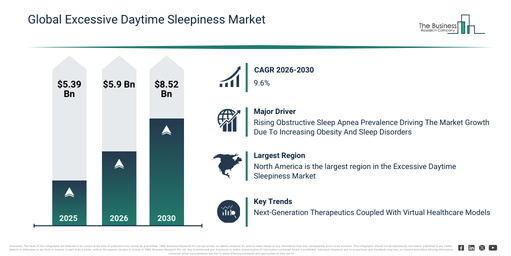
    The excessive daytime sleepiness market size has seen robust expansion in recent years. It is projected to expand from $5.39 billion in 2025 to $5.9 billion in 2026, exhibiting a compound annual growth rate (CAGR) of 9.4%. This historical growth can be attributed to several factors, including an increasing prevalence of sleep disorders, a heightened awareness of sleep health impacts, the development of sleep clinic infrastructure, the availability of pharmacological wake-promoting agents, and the broader expansion of diagnostic sleep testing services.

    The excessive daytime sleepiness market size is projected to experience substantial growth in the upcoming years, with an expectation to reach $8.52 billion in 2030, exhibiting a compound annual growth rate (CAGR) of 9.6%. This expansion over the forecast period is primarily driven by factors such as the escalating demand for personalized sleep treatment plans, the growing integration of digital therapeutics into sleep care, the broadening adoption of remote patient monitoring, an increasing emphasis on preventive sleep healthcare, and rising investments in sleep medicine research. Significant trends anticipated during this forecast period include the expanding adoption of wearable sleep monitoring devices, the increasing utilization of combination therapy approaches, the widespread development of home-based sleep disorder management solutions, a heightened focus on early diagnosis and screening programs, and the enhanced integration of digital sleep health platforms.

    Download the Free Sample Report to Explore Key Market Insights:

    https://www.thebusinessresearchcompany.com/sample.aspx?id=33109&type=smp

    Which Economic Or Industry Drivers Are Impacting The Excessive Daytime Sleepiness Market?

    An increase in obstructive sleep apnea (OSA) cases is anticipated to boost the excessive daytime sleepiness (EDS) market’s expansion moving ahead. Obstructive sleep apnea is defined as a sleep condition marked by recurrent breathing interruptions while sleeping, caused by an obstructed upper airway, which results in disrupted sleep and diminished sleep quality. The increasing occurrence of obstructive sleep apnea stems from escalating obesity rates, wherein excess fat around the neck and throat constricts the airway, prompting breathing pauses during sleep. Excessive daytime sleepiness is a prevalent and debilitating indicator of obstructive sleep apnea, frequently remaining present in a considerable number of patients, thus necessitating specific therapeutic and management approaches. For example, data from August 2026, provided by the National Library of Medicine, a US-based medical library, projects that by 2050, roughly 76.6 million adults in the United States, aged 30–69, will likely suffer from obstructive sleep apnea. This increasing incidence of obstructive sleep apnea is thus a key factor propelling the growth of the excessive daytime sleepiness market.

    Which Segments Are Included In The Analysis Of The Excessive Daytime Sleepiness Market?

    The excessive daytime sleepiness market covered in this report is segmented –

    1) By Treatment Type: Pharmacological Treatment; Behavioral Therapy; Continuous Positive Airway Pressure Therapy; Lifestyle Modification Programs; Combination Therapies

    2) By Diagnosis Method: Polysomnography; Multiple Sleep Latency Test; Actigraphy; Clinical Evaluation; Questionnaire Based Assessments

    3) By Type Of Disorder: Narcolepsy; Obstructive Sleep Apnea; Insomnia; Circadian Rhythm Disorders; Idiopathic Hypersomnia; Restless Legs Syndrome; Other Type Of Disorders

    4) By Distribution Channel: Hospital Pharmacies; Retail Pharmacies; Online Pharmacies

    5) By End User: Hospitals; Sleep Clinics; Ambulatory Surgical Centers; Home Care Settings

    Subsegments:

    1) By Pharmacological Treatment: Wake Promoting Medications; Central Nervous System Stimulant Medications; Dopamine Reuptake Inhibitor Medications; Histamine Receptor Modulating Medications

    2) By Behavioral Therapy: Cognitive Behavioral Therapy For Sleep; Sleep Hygiene Education Programs; Stimulus Control Therapy; Sleep Restriction Therapy

    3) By Continuous Positive Airway Pressure Therapy: Fixed Pressure Airway Therapy; Auto Adjusting Airway Therapy; Bilevel Airway Therapy; Adaptive Pressure Support Therapy

    4) By Lifestyle Modification Programs: Sleep Schedule Regulation Programs; Diet And Nutrition Management Programs; Physical Activity And Exercise Programs; Stress Management And Relaxation Programs

    5) By Combination Therapies: Medication And Behavioral Therapy Combinations; Airway Therapy And Lifestyle Modification Combinations; Medication And Airway Therapy Combinations; Integrated Multimodal Treatment Approaches

    Which Trends Are Impacting The Growth Of The Excessive Daytime Sleepiness Market?

    Leading firms within the excessive daytime sleepiness market are concentrating on creating novel treatments, including central nervous system depressants, aimed at boosting wakefulness and elevating patients’ quality of life. A central nervous system depressant is defined as a compound that diminishes nervous system function, leading to effects like sedation, tranquility, or sleepiness. For example, in September 2025, Amneal Pharmaceuticals Inc., a pharmaceutical company based in the US, secured FDA approval for its sodium oxybate oral solution, a product designed to directly address excessive daytime sleepiness (EDS) in individuals with narcolepsy. This solution aids in maintaining continuous treatment by enabling virtual consultations with specialists, remote dispensing of prescriptions, and broader patient access in areas lacking adequate services. Its goal is to broaden availability, make treatment more affordable, and integrate existing drug therapies with contemporary digital and telehealth approaches to care for excessive daytime sleepiness.

    Who Are The Top Companies Competing In The Excessive Daytime Sleepiness Market?

    Major companies operating in the excessive daytime sleepiness market are Eli Lilly and Company, Takeda Pharmaceutical Company Limited, Teva Pharmaceutical Industries Ltd., Cleveland Clinic, EisAI Co. Ltd, Jazz Pharmaceuticals plc., Emory Healthcare Inc., Alkermes plc., Fisher & Paykel Healthcare Corporation Limited, Harmony Biosciences Holdings Inc., Medanta, Axsome Therapeutics Inc., Compumedics Limited, BIOPROJET, Apnimed Inc., Nox Health Inc., Somnogen Canada Inc., Suven Life Sciences Limited, Theranexus, XWPharma, NLS Pharmaceutics AG.

    Read the full excessive daytime sleepiness market report here:

    https://www.thebusinessresearchcompany.com/report/excessive-daytime-sleepiness-market-report

    Which Global Regions Are Shaping The Competitive Landscape Of The Excessive Daytime Sleepiness Market?

    North America was the largest region in the excessive daytime sleepiness market in 2025. Asia-Pacific is expected to be the fastest-growing region in the forecast period. The regions covered in the excessive daytime sleepiness market report are Asia-Pacific, South East Asia, Western Europe, Eastern Europe, North America, South America, Middle East, Africa.

    Request A Tailored Excessive Daytime Sleepiness Market Research Report For Competitive Advantage:

    https://www.thebusinessresearchcompany.com/customise?id=33109&type=smp

    Browse Through More Reports Similar to the Global Excessive Daytime Sleepiness Market 2026, By The Business Research Company

    Insomnia Market Report 2026

    https://www.thebusinessresearchcompany.com/report/insomnia-global-market-report

    Sleep Testing Services Market Report 2026

    https://www.thebusinessresearchcompany.com/report/sleep-testing-services-global-market-report

    Sleep Monitoring Apps Market Report 2026

    https://www.thebusinessresearchcompany.com/report/sleep-monitoring-apps-global-market-report

    Get in touch with us:

    The Business Research Company: https://www.thebusinessresearchcompany.com/

    Americas +1 310-496-7795

    Asia +44 7882 955267 & +91 8897263534

    Europe +44 7882 955267

    Email us at info@tbrc.info

    Follow us on:

    LinkedIn: https://in.linkedin.com/company/the-business-research-company

    YouTube: https://www.youtube.com/channel/UC24_fI0rV8cR5DxlCpgmyFQ

    Global Market Model: https://www.thebusinessresearchcompany.com/global-market-model
  • Rising hypertension and cardiovascular risks driving the Endothelial Dysfunction Market

    Rising hypertension and cardiovascular risks driving the Endothelial Dysfunction Market

    The Business Research Company’s 2026 market reports include new capabilities such as market attractiveness scoring and analysis, total addressable market analysis, company scoring matrix, interactive excel data dashboard, improved supply chain analysis, upcoming startups in the market, and overview of key products, aimed at improving the depth, usability, and strategic value of the insights delivered.

    What Is The Market Size Of The Endothelial Dysfunction Market In 2026 And What Value Is Projected For 2030?

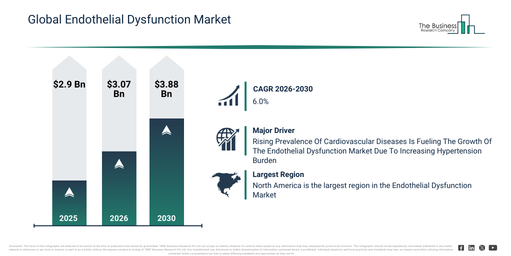
    The endothelial dysfunction market has demonstrated robust growth over recent years. It is anticipated to expand from $2.9 billion in 2025 to $3.07 billion in 2026, achieving a compound annual growth rate (CAGR) of 5.8%. This historical growth can be attributed to various factors, including the increasing prevalence of cardiovascular diseases, a rising incidence of metabolic disorders, the expansion of preventive healthcare screening, the availability of endothelial biomarkers, and a growing clinical focus on vascular health.

    The endothelial dysfunction market is anticipated to observe substantial expansion over the next few years, with its value projected to reach $3.88 billion by 2030, growing at a compound annual growth rate (CAGR) of 6.0%. This expansion during the forecast period is driven by factors such as the increasing adoption of precision medicine approaches, a rising demand for remote patient monitoring, the growth of AI-driven cardiovascular diagnostics, growing investments in preventive cardiology, and an increasing focus on personalized treatment pathways. Noteworthy trends for the forecast period encompass the increasing use of advanced endothelial function diagnostics, a rising adoption of biomarker-based screening, the growing integration of digital health monitoring tools, an expansion of personalized vascular treatment approaches, and an enhanced focus on early cardiovascular risk detection.

    Download the Free Sample Report to Explore Key Market Insights:

    https://www.thebusinessresearchcompany.com/sample.aspx?id=33102&type=smp

    What Underlying Factors Are Accelerating The Growth Of The Endothelial Dysfunction Market?

    The increasing occurrence of cardiovascular diseases is projected to stimulate the expansion of the endothelial dysfunction market in the future. Cardiovascular diseases encompass a wide array of conditions impacting the heart and blood vessels, with their prevalence consistently growing worldwide due to shifts in population demographics and health risks linked to lifestyle choices. The escalating burden of cardiovascular diseases is largely fueled by an aging populace, urban living, unhealthy eating habits, lack of physical activity, and prolonged exposure to metabolic and vascular stress, all of which progressively contribute to endothelial damage. A crucial function of endothelial dysfunction is its involvement in the onset and progression of cardiovascular diseases, as compromised endothelial regulation contributes to vascular inflammation, reduced nitric oxide availability, impaired vasodilation, and the formation of atherosclerotic plaques. For example, in January 2024, the American Heart Association, a US-based non-profit organization, reported an increase in the age-adjusted death rate from cardiovascular disease to 233.3 per 100,000 in 2024, marking a 4.0% rise from 224.4 per 100,000 in 2023. Consequently, the growing prevalence and weight of cardiovascular diseases are propelling the growth of the endothelial dysfunction market. The increasing need for precision medicine is projected to propel the growth of the endothelial dysfunction market moving forward. Precision medicine is a medical strategy that customizes prevention and treatment plans for individual patients, considering their genetic makeup, environment, and lifestyle. The heightened emphasis on precision medicine stems from enhanced treatment efficacy, as therapeutic approaches are specifically adapted to a person’s genetic and biological profile, leading to superior results and a reduced likelihood of adverse reactions. The expanding requirement for precision medicine supports the treatment of endothelial dysfunction by employing genetic, molecular, and biomarker profiling to pinpoint the precise biological mechanisms causing endothelial damage in specific patients. This allows clinicians to choose or develop targeted treatments that boost therapeutic effectiveness while minimizing superfluous or ineffective interventions. For instance, in February 2025, according to NHS England, a UK-based public healthcare body, the NHS Genomic Medicine Service provided over 810,000 genomic tests for patients across their lifespan in England during 2024. This figure has seen continuous year-on-year growth since the service’s inception, marking an 8% increase compared to 2023. Hence, the escalating demand for precision medicine is driving the growth of the endothelial dysfunction market.

    What Are The Key Segments Of The Endothelial Dysfunction Market?

    The endothelial dysfunction market covered in this report is segmented –

    1) By Product Type: Diagnostics; Therapeutics; Digital Health Solutions; Pharmacological Agents; Non-Pharmacological Interventions; Biological Therapies

    2) By Technology: Biotechnology; Nanotechnology; Genomics; Proteomics

    3) By Application: Cardiovascular Risk; Metabolic Syndrome; Chronic Kidney Disease; Other Application

    4) By End User: Hospitals; Diagnostic Laboratories; Specialty Clinics; Primary Care Providers

    Subsegments:

    1) By Diagnostics: Endothelial Function Assays; Vascular Imaging Tests; Biomarker Panels; Nitric Oxide Measurement Kits; Flow-Mediated Dilation Tests

    2) By Therapeutics: Pharmacological Treatments; Lifestyle Modification Programs; Physiotherapy Interventions; Surgical Procedures; Nutritional Interventions

    3) By Digital Health Solutions: Remote Patient Monitoring Platforms; Telehealth Consultation Systems; Mobile Health Applications; Wearable Health Devices; Cloud-Based Analytics Solutions

    4) By Pharmacological Agents: Statins; Angiotensin Converting Enzyme Inhibitors; Beta Blockers; Calcium Channel Blockers; Anti-Inflammatory Agents

    5) By Non-Pharmacological Interventions: Dietary Programs; Exercise Regimens; Stress Management Programs; Smoking Cessation Programs; Behavioral Therapy

    6) By Biological Therapies: Gene Therapy Treatments; Stem Cell Therapies; Monoclonal Antibody Treatments; Endothelial Progenitor Cell Therapy; Protein-Based Therapeutics

    Which Major Firms Influence Developments In The Endothelial Dysfunction Market?

    Major companies operating in the endothelial dysfunction market are F. Hoffmann-La Roche AG, Merck & Co. Inc., Pfizer Inc., Bayer Aktiengesellschaft, Sanofi S.A., Novartis Aktiengesellschaft, Bristol-Myers Squibb Company, Abbott Laboratories, GlaxoSmithKline plc, Eli Lilly and Company, Takeda Pharmaceutical Company Limited, Amgen Inc., Gilead Sciences Inc., Siemens Healthineers AG, Boehringer Ingelheim International GmbH, Teva Pharmaceutical Industries Limited, Boston Scientific Corporation, Astellas Pharma Inc., Daiichi Sankyo Company Limited, Biogen Inc., ChugAI Pharmaceutical Co. Ltd., ZOLL Medical Corporation, OrbusNeich Medical Group Holdings Limited, Stealth Peptides Inc., Perimed AB, and Glucox Biotech AB.

    Read the full endothelial dysfunction market report here:

    https://www.thebusinessresearchcompany.com/report/endothelial-dysfunction-market-report

    Which Region Is Expected To Experience The Fastest Growth In The Endothelial Dysfunction Market?

    North America was the largest region in the endothelial dysfunction market in 2025. Asia-Pacific is expected to be the fastest-growing region in the forecast period. The regions covered in the endothelial dysfunction market report are Asia-Pacific, South East Asia, Western Europe, Eastern Europe, North America, South America, Middle East, Africa.

    Request A Tailored Endothelial Dysfunction Market Research Report For Competitive Advantage:

    https://www.thebusinessresearchcompany.com/customise?id=33102&type=smp

    Browse Through More Reports Similar to the Global Endothelial Dysfunction Market 2026, By The Business Research Company

    Anti Vascular Endothelial Growth Factor Therapeutics Market Report 2026

    https://www.thebusinessresearchcompany.com/report/anti-vascular-endothelial-growth-factor-therapeutics-global-market-report

    Biopreservation Market Report 2026

    https://www.thebusinessresearchcompany.com/report/biopreservation-global-market-report

    Aortic Endograft Market Report 2026

    https://www.thebusinessresearchcompany.com/report/aortic-endograft-global-market-report

    Get in touch with us:

    The Business Research Company: https://www.thebusinessresearchcompany.com/

    Americas +1 310-496-7795

    Asia +44 7882 955267 & +91 8897263534

    Europe +44 7882 955267

    Email us at info@tbrc.info

    Follow us on:

    LinkedIn: https://in.linkedin.com/company/the-business-research-company

    YouTube: https://www.youtube.com/channel/UC24_fI0rV8cR5DxlCpgmyFQ

    Global Market Model: https://www.thebusinessresearchcompany.com/global-market-model

  • Global Early Phase Clinical Trial Outsourcing Market Expected to Reach $14.79 Billion by 2030 at 9.2% CAGR

    Global Early Phase Clinical Trial Outsourcing Market Expected to Reach $14.79 Billion by 2030 at 9.2% CAGR

    The Business Research Company’s 2026 market reports include new capabilities such as market attractiveness scoring and analysis, total addressable market analysis, company scoring matrix, interactive excel data dashboard, improved supply chain analysis, upcoming startups in the market, and overview of key products, aimed at improving the depth, usability, and strategic value of the insights delivered.

    What Is The Forecasted Market Value Of The Early Phase Clinical Trial Outsourcing Market Across 2026–2030?

    The early phase clinical trial outsourcing market size has experienced robust growth recently. This market is projected to expand from $9.53 billion in 2025 to $10.39 billion in 2026, demonstrating a compound annual growth rate (CAGR) of 9.0%. Historically, this expansion can be linked to factors such as the increasing intricacy of drug development pipelines, mounting cost pressures faced by pharmaceutical sponsors, the proliferation of biotech startup activity, a heightened demand for regulatory expertise, and a greater dependence on specialized clinical research organizations.

    The early phase clinical trial outsourcing market size is projected to experience robust expansion over the next few years. It is anticipated to reach $14.8 billion in 2030, reflecting a compound annual growth rate (CAGR) of 9.2%. This growth observed in the forecast period is attributable to factors such as the increasing adoption of decentralized trial elements, a heightened focus on precision medicine studies, the expansion of rare disease clinical research, the growing utilization of AI-enabled trial analytics, and increasing global harmonization of early-phase regulations. Key trends emerging in the forecast period include a rise in the outsourcing of Phase I clinical studies, an increasing demand for integrated early-phase CRO services, the growing application of data-driven trial design approaches, the expansion of adaptive and first-in-human trials, and an enhanced emphasis on accelerated study timelines.

    Download the Free Sample Report to Explore Key Market Insights:

    https://www.thebusinessresearchcompany.com/sample.aspx?id=33097&type=smp

    What Key Drivers Are Influencing The Growth Of The Early Phase Clinical Trial Outsourcing Market?

    A rising emphasis on personalized medicine is anticipated to drive the expansion of the early-phase clinical trial outsourcing market in the future. Personalized medicine describes the heightened attention within healthcare and life sciences towards creating and providing treatments specifically customized for individual patients or clearly defined patient groups, considering their genetic and molecular traits. This increased focus on personalized medicine stems largely from advancements in genomic sequencing and molecular diagnostics, allowing for accurate identification of genetic and biomarker profiles unique to specific diseases. Early-phase clinical trial outsourcing facilitates personalized medicine and targeted therapies by offering specialized knowledge, flexible trial designs, and study capabilities guided by biomarkers, thereby enabling accurate patient grouping and quick validation of concepts. For example, data from February 2024, shared by the US-based nonprofit, Personalized Medicine Coalition (PMC), showed that personalized therapies for rare diseases more than doubled, rising from 6 in 2022 to 16 in 2023. Consequently, the expanding focus on personalized medicine is a key factor propelling the growth of the early-phase clinical trial outsourcing market.

    What Segmentation Levels Are Considered In The Early Phase Clinical Trial Outsourcing Market?

    The early phase clinical trial outsourcing market covered in this report is segmented –

    1) By Type: Regulatory Services; Clinical Data Management (CDM); Medical Writing; Site Management; Pharmacovigilance (PV); Risk-Based Monitoring; Bio Statistical Services; Protocol Development; Other Types

    2) By Therapeutic Area: Oncology; Central Nervous System (CNS) And Neurology; Cardiovascular And Metabolic Diseases; Infectious Diseases; Immunology And Inflammatory Diseases; Rare Diseases And Genetic Disorders

    3) By Trial Phase: Phase 0; Phase 1; Phase 2

    4) By Applications: Pharmaceutical Companies; Biopharmaceutical Companies; Drug Discovery Companies; Medical Devices Companies; Other Applications

    Subsegments:

    1) By Regulatory Services: Regulatory Strategy Planning; Regulatory Submission Preparation; Health Authority Liaison; Ethics Committee Submission Management; Regulatory Compliance Auditing; Trial Registration Support

    2) By Clinical Data Management (CDM): Case Report Form Design; Data Entry And Validation; Database Development And Maintenance; Data Cleaning And Query Management; Clinical Data Integration; Data Lock And Archival

    3) By Medical Writing: Clinical Study Protocol Writing; Investigator Brochure Development; Clinical Study Report Writing; Informed Consent Document Preparation; Regulatory Dossier Writing; Scientific Publication Support

    4) By Site Management: Site Feasibility Assessment; Site Selection And Initiation; Investigator Training And Support; Site Performance Management; Site Close Out Services; Vendor Coordination At Site Level

    5) By Pharmacovigilance (PV): Safety Data Collection; Adverse Event Processing; Serious Adverse Event Reporting; Safety Database Management; Signal Detection And Evaluation; Periodic Safety Report Preparation

    6) By Risk-Based Monitoring: Risk Assessment And Categorization; Centralized Monitoring Activities; Key Risk Indicator Development; Remote Monitoring Services; On Site Monitoring Optimization; Monitoring Plan Design

    7) By Bio Statistical Services: Statistical Analysis Plan Development; Sample Size Determination; Randomization Design; Interim Analysis; Final Statistical Analysis; Data Interpretation And Reporting

    8) By Protocol Development: Study Design Consulting; Endpoint Definition; Eligibility Criteria Development; Schedule Of Assessments Design; Protocol Amendment Management; Feasibility Driven Protocol Optimization

    9) By Other Types: Clinical Trial Supply Management; Patient Recruitment Support; Quality Assurance Services; Trial Master File Management; Vendor And Project Management

    What Trends Are Projected To Affect The Early Phase Clinical Trial Outsourcing Market?

    Major companies operating in the early-phase clinical trial outsourcing market are intensifying their focus on technological advancements in decentralized and hybrid early-phase clinical trial models, such as integrated early development trial ecosystems. This is done to address the increasing demand among biotechnology sponsors for faster execution, heightened scientific rigor, and minimized risk in early-stage clinical development. Integrated early development trial ecosystems represent purpose-built clinical research environments that combine specialized infrastructure, experienced early-phase investigators, continuous safety monitoring, and streamlined regulatory and operational workflows, thereby enabling greater efficiency and consistency in early-phase trials. As an illustration, in October 2025, Avance Clinical, an Australia-based contract research organization (CRO), announced the introduction of a Dedicated Center of Excellence. This center aims to accelerate early-phase biotech trials to enhance operational efficiency, scientific rigor, and the speed at which products reach the market for emerging biotechnology companies. The Dedicated Center of Excellence provides a centralized early-phase trial environment that brings together specialized clinical units, seasoned early-phase investigators, and coordinated operational oversight to expedite both the initiation and execution of studies.

    Which Key Industry Participants Are Active In The Early Phase Clinical Trial Outsourcing Market?

    Major companies operating in the early phase clinical trial outsourcing market are IQVIA Holdings Inc., ICON plc, Syneos Health Inc., Parexel International Corporation, Medpace Holdings Inc., Pharmaron Beijing Co. Ltd., Premier Research Group Limited, ProPharma Group Holdings Inc., Precision for Medicine Group LLC, Worldwide Clinical Trials LLC, Catalyst Clinical Research LLC, Avance Clinical Pty Ltd, Quanticate International Ltd, Clinilabs Drug Development Corporation, Optimapharm d.o.o., RICe – Richmond Pharmacology Ltd, Novotech Health Holdings Pty Ltd, CMIC Holdings Co. Ltd., Medpace Reference Laboratories Inc., iNGENu CRO Pty Ltd

    Read the full early phase clinical trial outsourcing market report here:

    https://www.thebusinessresearchcompany.com/report/early-phase-clinical-trial-outsourcing-market-report

    How Does The Early Phase Clinical Trial Outsourcing Market Perform Across Major Global Regions?

    North America was the largest region in the early phase clinical trial outsourcing market in 2025. Asia-Pacific is expected to be the fastest-growing region in the forecast period. The regions covered in the early phase clinical trial outsourcing market report are Asia-Pacific, South East Asia, Western Europe, Eastern Europe, North America, South America, Middle East, Africa.

    Request A Tailored Early Phase Clinical Trial Outsourcing Market Research Report For Competitive Advantage:

    https://www.thebusinessresearchcompany.com/customise?id=33097&type=smp

    Browse Through More Reports Similar to the Global Early Phase Clinical Trial Outsourcing Market 2026, By The Business Research Company

    Biomarker Clinical Phase Outsourcing Services Market Report 2026

    https://www.thebusinessresearchcompany.com/report/biomarker-clinical-phase-outsourcing-services-global-market-report

    Advanced Therapeutics Pharmaceutical Outsourcing Market Report 2026

    https://www.thebusinessresearchcompany.com/report/advanced-therapeutics-pharmaceutical-outsourcing-global-market-report

    Clinical Trial Supply And Logistics Market Report 2026

    https://www.thebusinessresearchcompany.com/report/clinical-trial-supply-and-logistics-global-market-report

    Get in touch with us:

    The Business Research Company: https://www.thebusinessresearchcompany.com/

    Americas +1 310-496-7795

    Asia +44 7882 955267 & +91 8897263534

    Europe +44 7882 955267

    Email us at info@tbrc.info

    Follow us on:

    LinkedIn: https://in.linkedin.com/company/the-business-research-company

    YouTube: https://www.youtube.com/channel/UC24_fI0rV8cR5DxlCpgmyFQ

    Global Market Model: https://www.thebusinessresearchcompany.com/global-market-model
  • Dental Service Organization Market Projected to Reach $379.41 Billion by 2030 at 15.8% CAGR

    Dental Service Organization Market Projected to Reach $379.41 Billion by 2030 at 15.8% CAGR

    The Business Research Company’s 2026 market reports include new capabilities such as market attractiveness scoring and analysis, total addressable market analysis, company scoring matrix, interactive excel data dashboard, improved supply chain analysis, upcoming startups in the market, and overview of key products, aimed at improving the depth, usability, and strategic value of the insights delivered.

    What Is The Estimated Market Size Of The Dental Service Organization Market During 2026–2030?

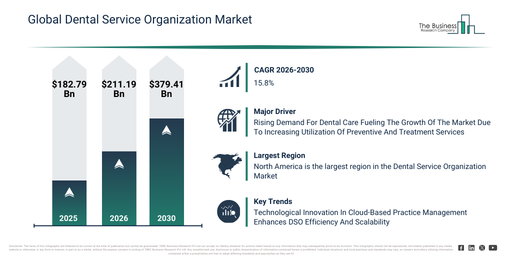
    The dental service organization market has experienced rapid expansion in recent years. It is anticipated to grow from $182.79 billion in 2025 to $211.19 billion in 2026, achieving a compound annual growth rate (CAGR) of 15.5%. This growth observed in the past can be attributed to an increasing administrative burden on dental practices, rising operating costs in independent clinics, the expansion of private dental practices, a growing demand for professional management services, and the adoption of electronic health records.

    The dental service organization market is anticipated to experience substantial growth in the upcoming years. It is projected to reach $379.41 billion by 2030, demonstrating a compound annual growth rate (CAGR) of 15.8%. This expansion during the forecast period is driven by factors such as the increasing consolidation of dental practices, a rising demand for scalable dental service platforms, the growing adoption of tele-dentistry services, the broadening of data-driven patient acquisition strategies, and the increasing utilization of AI-based diagnostic support. Significant trends for this period encompass a greater adoption of centralized practice management models, an increasing deployment of AI-driven scheduling and billing systems, the deepening integration of digital patient records, the enlargement of multi-specialty dental networks, and a heightened focus on operational efficiency and standardization.

    Download the Free Sample Report to Explore Key Market Insights:

    https://www.thebusinessresearchcompany.com/sample.aspx?id=33086&type=smp

    What Drivers Are Shaping The Future Growth Of The Dental Service Organization Market?

    The dental service organization market is expected to expand moving forward, driven by the increasing demand for dental care. Dental care involves the prevention, diagnosis, treatment, and management of conditions affecting the teeth, gums, and oral cavity, covering routine checkups, cleanings, restorative procedures, and specialized treatments essential for maintaining oral health and overall well-being. This surge in dental care utilization is attributed to heightened awareness of oral health and preventive dentistry, prompting higher engagement in routine checkups and treatments. Dental service organizations support dental care by offering centralized management, technology investments, and operational assistance, which empowers dental practices to provide more accessible, efficient, and high-quality patient services. For instance, in August 2024, according to the NHS Business Services Authority, a UK-based government agency, in 2023/24, approximately 34 million courses of dental treatment were delivered, marking a 4.3% year-over-year increase. Furthermore, about 18 million adult patients were treated in the 24 months ending March 2024, and total units of dental activity rose by 3.4% compared to 2022/23 to reach 73 million, indicating consistent growth in overall dental service utilization. Consequently, the rising demand for dental care is a key factor propelling the growth of the dental service organization market.

    How Are The Various Segments Of The Dental Service Organization Market Categorized?

    The dental service organization market covered in this report is segmented –

    1) By Type of Services: General Dentistry; Pediatric Dentistry; Orthodontics; Oral Maxillofacial Surgery; Periodontics; Cosmetic Dentistry; Endodontics; Prosthodontics

    2) By Practice Model: Single Specialty; Multi-Specialty; Corporate Owned; Independent Practitioner Networks; Franchise Models

    3) By Patient Demographics: Pediatric Patients; Adult Patients; Geriatric Patients; Special Needs Patients; Preventive Care Patients

    4) By Technology Utilization: Traditional Practices; Digital Records Management; Treatment Planning Software; Tele-dentistry Services; 3D Imaging And Printing Technologies; Artificial Intelligence (AI)-Driven Diagnostics

    5) By End-User: General Dentists; Dental Surgeons And Specialists

    Subsegments:

    1) By General Dentistry: Preventive Dental Care; Routine Oral Examinations; Dental Fillings And Restorations; Oral Health Education; Basic Tooth Extractions

    2) By Pediatric Dentistry: Infant Oral Health Care; Child Preventive Dental Services; Pediatric Restorative Dentistry; Behavior Management Dentistry; Special Needs Pediatric Dentistry

    3) By Orthodontics: Metal Braces Treatment; Ceramic Braces Treatment; Clear Aligner Therapy; Lingual Orthodontics; Early Interceptive Orthodontics

    4) By Oral Maxillofacial Surgery: Tooth Extraction Surgery; Dental Implant Surgery; Corrective Jaw Surgery; Facial Trauma Surgery; Oral Pathology Treatment

    5) By Periodontics: Gum Disease Treatment; Scaling And Root Planning; Periodontal Surgery; Gum Grafting Procedures; Dental Implant Maintenance

    6) By Cosmetic Dentistry: Teeth Whitening Services; Dental Veneers Treatment; Cosmetic Bonding; Smile Makeover Services; Aesthetic Dental Contouring

    7) By Endodontics: Root Canal Treatment; Endodontic Retreatment; Apical Surgery; Traumatic Dental Injury Management; Pulp Therapy

    8) By Prosthodontics: Dental Crowns And Bridges; Complete Dentures; Partial Dentures; Implant Supported Prosthetics

    What Trends Are Affecting The Expansion Of The Dental Service Organization Market?

    Key companies operating within the dental service organization market are increasingly focusing on technological innovation, specifically integrated cloud-based practice management platforms, to boost operational efficiency, enable multi-location scalability, and enhance centralized oversight. These integrated cloud-based practice management platforms are enterprise software systems that allow dental service organizations to manage administrative, financial, clinical, and patient engagement tasks across numerous affiliated practices through a single digital infrastructure. For instance, in February 2024, Planet DDS, a US-based dental technology company, introduced Denticon Reimagined, an advanced cloud-based dental practice management platform designed for large dental groups and DSOs. The platform provides sophisticated analytics for real-time performance tracking, includes patient communication and engagement tools, and features a scalable cloud architecture that supports centralized billing, scheduling, and reporting across multiple locations.

    Which Companies Are Expanding Their Footprint In The Dental Service Organization Market?

    Major companies operating in the dental service organization market are Heartland Dental LLC, Aspen Dental Management Inc., Smile Brands Inc., Western Dental Services Inc., Dental Care Alliance LLC, Great Expressions Dental Centers LLC, Dykema Gossett PLLC, Affordable Dentures & Implants LLC, MB2 Dental Solutions LLC, InterDent Service Corporation, Guardian Dentistry Partners LLC, Benevis LLC, Specialty1 Partners LLC, Pacific Dental Services LLC, Bluetree Dental LLC, iDental Group LLC, Affordable Care LLC, Lollipop Dental LLC, Straine Dental Management LLC, Family Dental Care LLC.

    Read the full dental service organization market report here:

    https://www.thebusinessresearchcompany.com/report/dental-service-organization-market-report

    Which Regions Are Poised For Strategic Growth In The Dental Service Organization Market?

    North America was the largest region in the dental service organization market in 2025. Asia-Pacific is expected to be the fastest-growing region in the forecast period. The regions covered in the dental service organization market report are Asia-Pacific, South East Asia, Western Europe, Eastern Europe, North America, South America, Middle East, Africa.

    Request A Tailored Dental Service Organization Market Research Report For Competitive Advantage:

    https://www.thebusinessresearchcompany.com/customise?id=33086&type=smp

    Browse Through More Reports Similar to the Global Dental Service Organization Market 2026, By The Business Research Company

    Dental Services Market 2026

    https://www.thebusinessresearchcompany.com/report/dental-services-market

    Dental Services Market 2026

    https://www.thebusinessresearchcompany.com/report/dental-services-market

    Dental Practice Management Market Report 2026

    https://www.thebusinessresearchcompany.com/report/dental-practice-management-global-market-report

    Get in touch with us:

    The Business Research Company: https://www.thebusinessresearchcompany.com/

    Americas +1 310-496-7795

    Asia +44 7882 955267 & +91 8897263534

    Europe +44 7882 955267

    Email us at info@tbrc.info

    Follow us on:

    LinkedIn: https://in.linkedin.com/company/the-business-research-company

    YouTube: https://www.youtube.com/channel/UC24_fI0rV8cR5DxlCpgmyFQ

    Global Market Model: https://www.thebusinessresearchcompany.com/global-market-model

  • Global Custom Recombinant Protein Production Services Market to Reach $10.21 Billion by 2030 at 12.1% CAGR

    Global Custom Recombinant Protein Production Services Market to Reach $10.21 Billion by 2030 at 12.1% CAGR

    The Business Research Company’s 2026 market reports include new capabilities such as market attractiveness scoring and analysis, total addressable market analysis, company scoring matrix, interactive excel data dashboard, improved supply chain analysis, upcoming startups in the market, and overview of key products, aimed at improving the depth, usability, and strategic value of the insights delivered.

    How Large Is The Custom Recombinant Protein Production Services Market Projected To Become By 2030 Based On Its 2026 Valuation?

    The custom recombinant protein production services market has observed swift expansion over recent years. It is anticipated to increase from $5.79 billion in 2025 to $6.47 billion in 2026, exhibiting a compound annual growth rate (CAGR) of 11.8%. The historical growth of this market is attributable to several factors, including the broadened scope of academic and clinical research, an elevated utilization of recombinant proteins in drug discovery, the expansion within biopharmaceutical R&D pipelines, the introduction of advanced expression technologies, and a growing demand for specialized research offerings.

    The custom recombinant protein production services market is anticipated to experience significant expansion in the coming years. It is projected to reach a value of $10.21 billion in 2030, demonstrating a compound annual growth rate (CAGR) of 12.1%. This growth during the forecast period is largely driven by the accelerating development of biologics and biosimilars, increasing investments in precision medicine, the expansion of contract research outsourcing, a rising demand for scalable protein production, and the greater adoption of advanced purification technologies. Foremost trends for this period include a heightened demand for custom protein expression services, the increased utilization of mammalian expression systems, a growing emphasis on high-purity protein production, the expansion of rapid turnaround research services, and an enhanced focus on quality control and validation.

    Download the Free Sample Report to Explore Key Market Insights:

    https://www.thebusinessresearchcompany.com/sample.aspx?id=33077&type=smp

    What Major Drivers Are Influencing Demand In The Custom Recombinant Protein Production Services Market?

    An increasing emphasis on targeted and personalized therapies is anticipated to stimulate the expansion of the custom recombinant protein production services market in the future. These medical treatments are designed to address individual patient characteristics, such as genetic profile or specific disease markers, with the goal of improving treatment effectiveness and reducing side effects. The surge in targeted and personalized therapies is attributed to advancements in precision medicine, which facilitates the tailoring of treatments to individual patient biology, thereby enhancing clinical outcomes and therapeutic efficiency. The custom recombinant protein production services support targeted and personalized therapies by providing precisely engineered proteins necessary for patient-specific drug development, biomarker targeting, and advanced biologic treatments. For instance, in February 2024, according to the Personalized Medicine Coalition, a US-based hospital and health care organization, in 2023, the FDA approved 16 new personalized treatments for rare disease patients, an increase from six in 2022. Consequently, the heightened attention on targeted and personalized therapies is driving the growth of the custom recombinant protein production services market.

    What Segment Groups Are Identified Within The Custom Recombinant Protein Production Services Market?

    The custom recombinant protein production services market covered in this report is segmented –

    1) By Product: Antibodies; Enzymes; Cytokines; Growth Factors; Recombinant Hormones

    2) By Expression System: Mammalian; Bacteria; Insect; Yeast; Other Expression Systems

    3) By Application: Drug Discovery; Biopharmaceutical Production; Diagnostics Development; Academic Research; Industrial Enzymes

    4) By End User: Research Institutes; Biotechnology And Pharmaceutical Companies; Contract Research Organizations (CROs); Other End-Users

    Subsegments:

    1) By Antibodies: Monoclonal Antibodies; Polyclonal Antibodies; Chimeric Antibodies; Humanized Antibodies; Single Chain Antibodies

    2) By Enzymes: Proteases; Lipases; Amylases; Cellulases; Polymerases

    3) By Cytokines: Interleukins; Interferons; Tumor Necrosis Factors; Colony Stimulating Factors; Chemokines

    4) By Growth Factors: Epidermal Growth Factors; Fibroblast Growth Factors; Vascular Endothelial Growth Factors; Transforming Growth Factors; Platelet Derived Growth Factors

    5) By Recombinant Hormones: Insulin; Erythropoietin; Growth Hormone; Thyroid Stimulating Hormone; Follicle Stimulating Hormone

    What Trends Are Advancing Progress In The Custom Recombinant Protein Production Services Market?

    Major companies operating in the custom recombinant protein production services market are prioritizing the introduction of innovative microbial expression platforms, including their proprietary E. coli expression systems. This focus aims to boost protein production, enhance scalability, and reduce costs, thereby accelerating the delivery of next-generation biologics. A proprietary E. coli expression system is defined as a specialized, engineered E. coli bacterial strain utilized for producing recombinant proteins and plasmid DNA with high yield, stability, and efficiency, often customized for specific biotechnological or pharmaceutical applications. For instance, in March 2025, WuXi Biologics (Cayman) Inc., a China-based contract research, development, and manufacturing organization (CRDMO), launched its new EffiX Microbial Expression Platform. This platform boasts impressive titers exceeding 15 g/L for non-mAb recombinant proteins and more than 1 g/L for plasmid DNA. EffiX is positioned as a comprehensive solution for the development and manufacturing of microbial-derived biologics, improving scalability, quality, and productivity across the biopharmaceutical industry.

    Which Global Companies Are Actively Competing In The Custom Recombinant Protein Production Services Market?

    Major companies operating in the custom recombinant protein production services market are Thermo Fisher Scientific Inc., Merck KGaA, Applied Biological Materials Inc., R&D Systems Inc., GenScript Biotech Corporation, Sino Biological Inc, Biointron Biological Inc., OriGene Technologies Inc., Crown Bioscience Inc., Premas Biotech, Eurofins Discovery, ATUM, BPS Bioscience Inc., Novoprotein Scientific Inc., Kempbio Inc., Proteos Inc., Trenzyme GmbH, LakePharma Inc., Icosagen AS, and ProteoGenix SAS.

    Read the full custom recombinant protein production services market report here:

    https://www.thebusinessresearchcompany.com/report/custom-recombinant-protein-production-services-market-report

    Which Region Is Expected To Experience The Fastest Growth In The Custom Recombinant Protein Production Services Market?

    North America was the largest region in the custom recombinant protein production services market in 2025. Asia-Pacific is expected to be the fastest-growing region in the forecast period. The regions covered in the custom recombinant protein production services market report are Asia-Pacific, South East Asia, Western Europe, Eastern Europe, North America, South America, Middle East, Africa.

    Request A Tailored Custom Recombinant Protein Production Services Market Research Report For Competitive Advantage:

    https://www.thebusinessresearchcompany.com/customise?id=33077&type=smp

    Browse Through More Reports Similar to the Global Custom Recombinant Protein Production Services Market 2026, By The Business Research Company

    Recombinant Proteins Market Report 2026

    https://www.thebusinessresearchcompany.com/report/recombinant-proteins-global-market-report

    Protein Engineering Market Report 2026

    https://www.thebusinessresearchcompany.com/report/protein-engineering-global-market-report

    Cell And Gene Therapy Supply Chain Or Logistics Market Report 2026

    https://www.thebusinessresearchcompany.com/report/cell-and-gene-therapy-supply-chain-or-logistics-global-market-report

    Get in touch with us:

    The Business Research Company: https://www.thebusinessresearchcompany.com/

    Americas +1 310-496-7795

    Asia +44 7882 955267 & +91 8897263534

    Europe +44 7882 955267

    Email us at info@tbrc.info

    Follow us on:

    LinkedIn: https://in.linkedin.com/company/the-business-research-company

    YouTube: https://www.youtube.com/channel/UC24_fI0rV8cR5DxlCpgmyFQ

    Global Market Model: https://www.thebusinessresearchcompany.com/global-market-model
  • Consumer mHealth Market Forecast 2026–2035 Reflecting Growth Opportunities

    Consumer mHealth Market Forecast 2026–2035 Reflecting Growth Opportunities

    The Business Research Company’s 2026 market reports include new capabilities such as market attractiveness scoring and analysis, total addressable market analysis, company scoring matrix, interactive excel data dashboard, improved supply chain analysis, upcoming startups in the market, and overview of key products, aimed at improving the depth, usability, and strategic value of the insights delivered.

    What Is The Expected Market Size Of The Consumer mHealth Market From 2026 To 2030?

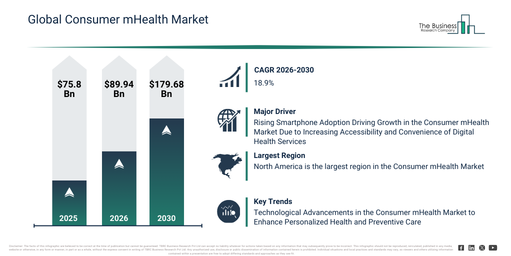
    The consumer mhealth market size has experienced rapid growth in recent years. This market is projected to expand from $75.8 billion in 2025 to $89.94 billion in 2026, achieving a compound annual growth rate (CAGR) of 18.7%. Historically, this expansion has been driven by factors such as increased smartphone and wearable penetration, a rise in consumer health awareness, the proliferation of fitness and wellness applications, wider adoption of mobile health platforms, and growing demand for self-managed healthcare.

    The consumer mhealth market is anticipated to expand swiftly over the coming years. It is projected to reach $179.68 billion in 2030, exhibiting a compound annual growth rate (CAGR) of 18.9%. This expansion during the forecast period is propelled by several factors, including the rising uptake of tailored digital health solutions, greater incorporation of artificial intelligence into consumer health applications, broader implementation of remote monitoring for long-term illnesses, a heightened emphasis on managing mental well-being, and a surge in the need for wellness insights derived from data. Key developments expected within this period encompass a rise in the use of wearable devices for health tracking, an increase in the application of AI-powered wellness analytics, further integration of remote health oversight, the growth of platforms offering personalized health coaching, and a stronger emphasis on managing healthcare preventively.

    Download the Free Sample Report to Explore Key Market Insights:

    https://www.thebusinessresearchcompany.com/sample.aspx?id=33073&type=smp

    What Underlying Factors Are Accelerating The Growth Of The Consumer mHealth Market?

    The consumer mHealth market is anticipated to expand in the coming years, largely driven by increasing smartphone adoption. Smartphone adoption signifies the degree to which individuals or households possess and actively utilize smartphones, frequently assessed as the proportion of mobile users equipped with these devices. The widespread availability of affordable mobile internet and smartphones has substantially elevated adoption rates. Enhanced smartphone penetration facilitates greater access to various mobile health applications, remote monitoring solutions, fitness trackers, and telehealth services, thereby fostering the growth of the consumer mHealth market. For instance, in January 2025, according to Priori Data, a Germany-based market intelligence platform, smartphone adoption in the U.S. maintained its consistent upward trajectory, rising from approximately 311 million users in 2023 to about 316 million in 2024. Therefore, the expanding smartphone adoption is a significant force propelling the growth of the consumer mHealth market.

    Which Segments Are Included In The Analysis Of The Consumer mHealth Market?

    The consumer mhealth market covered in this report is segmented –

    1) By Product Type: Wearable Devices; Mobile Health Apps; Telemedicine; Other Product Types

    2) By Technology: Bluetooth; Wireless Fidelity (Wi Fi); Near-Field Communication (NFC); Cloud-Based Platforms

    3) By Application: Healthcare; Fitness; Wellness; Chronic Disease Management; Mental Health

    4) By End-User: Hospitals; Clinics; Home Healthcare; Individuals

    Subsegments:

    1) By Wearable Devices: Smart Watches; Fitness Trackers; Smart Bands; Health Monitoring Patches; Wearable Medical Sensors

    2) By Mobile Health Apps: Fitness And Wellness Apps; Chronic Disease Management Apps; Medication Reminder Apps; Mental Health And Stress Management Apps; Nutrition And Diet Tracking Apps

    3) By Telemedicine: Virtual Doctor Consultation Platforms; Remote Patient Monitoring Solutions; Telepsychiatry Services; Teleconsultation And Follow Up Services; Digital Prescription And Reporting Platforms

    4) By Other Product Types: Connected Medical Devices; Home Health Monitoring Systems; Health Data Management Platforms; Wellness And Preventive Care Solutions

    Which Trends Are Impacting The Growth Of The Consumer mHealth Market?

    Major companies operating in the consumer mHealth market are increasingly prioritizing technological innovations, such as AI-integrated preventive health diagnostics platforms. This is to address the growing need for personalized, real-time health insights and early disease detection, a demand fueled by greater consumer understanding of proactive health management and preventing chronic conditions. These AI-integrated preventive health diagnostics platforms leverage artificial intelligence alongside conventional biometric data collection, like wearables or blood tests, to deliver predictive analytics, continuous tracking, and practical health recommendations. They surpass basic, isolated health checks by linking lifestyle patterns with clinical biomarkers, thereby offering a more comprehensive perspective on well-being. A notable example occurred in July 2025, when Ultrahuman Healthcare, an India-based health-tech firm, introduced Blood Vision. This innovative AI-enabled preventive blood-testing and diagnostics service merges insights from over 100 biomarkers with real-time wearable lifestyle data gathered by its Ultrahuman Ring AIR and associated devices, providing users with a thorough longitudinal health profile complete with personalized recommendations and summaries suitable for clinicians.

    Who Are The Dominant Players Shaping The Consumer mHealth Market Landscape?

    Major companies operating in the consumer mhealth market are Apple Inc., Samsung Electronics Co. Ltd., Abbott Laboratories, Medtronic plc, Philips Healthcare, Omron Healthcare Inc., Dexcom Inc., Teladoc Health Inc., Athenahealth Inc., Masimo Corporation, Fitbit Inc, Veradigm Inc., Ada Health GmbH, Withings, MyFitnessPal Inc., AliveCor Inc., AgaMatrix Inc., DarioHealth Corp., Ovia Health Inc., Higi SH LLC

    Read the full consumer mhealth market report here:

    https://www.thebusinessresearchcompany.com/report/consumer-mhealth-market-report

    Which Region Is Projected To Lead The Consumer mHealth Market During The Forecast Period?

    North America was the largest region in the consumer mHealth market in 2025. Asia-Pacific is expected to be the fastest-growing region in the forecast period. The regions covered in the consumer mhealth market report are Asia-Pacific, South East Asia, Western Europe, Eastern Europe, North America, South America, Middle East, Africa.

    Request A Tailored Consumer mHealth Market Research Report For Competitive Advantage:

    https://www.thebusinessresearchcompany.com/customise?id=33073&type=smp

    Browse Through More Reports Similar to the Global Consumer mHealth Market 2026, By The Business Research Company

    Consumer Healthcare Market Report 2026

    https://www.thebusinessresearchcompany.com/report/consumer-healthcare-global-market-report

    Mhealth Apps Market Report 2026

    https://www.thebusinessresearchcompany.com/report/mhealth-apps-global-market-report

    Healthcare Advertising Market Report 2026

    https://www.thebusinessresearchcompany.com/report/healthcare-advertising-global-market-report

    Get in touch with us:

    The Business Research Company: https://www.thebusinessresearchcompany.com/

    Americas +1 310-496-7795

    Asia +44 7882 955267 & +91 8897263534

    Europe +44 7882 955267

    Email us at info@tbrc.info

    Follow us on:

    LinkedIn: https://in.linkedin.com/company/the-business-research-company

    YouTube: https://www.youtube.com/channel/UC24_fI0rV8cR5DxlCpgmyFQ

    Global Market Model: https://www.thebusinessresearchcompany.com/global-market-model
  • Global Clinically Isolated Syndrome Market Analysis 2026–2030 Offering Strategic Insights

    Global Clinically Isolated Syndrome Market Analysis 2026–2030 Offering Strategic Insights

    The Business Research Company’s 2026 market reports include new capabilities such as market attractiveness scoring and analysis, total addressable market analysis, company scoring matrix, interactive excel data dashboard, improved supply chain analysis, upcoming startups in the market, and overview of key products, aimed at improving the depth, usability, and strategic value of the insights delivered.

    What Market Valuation Is Forecasted For The Clinically Isolated Syndrome Market By 2030 Starting From Its 2026 Size?

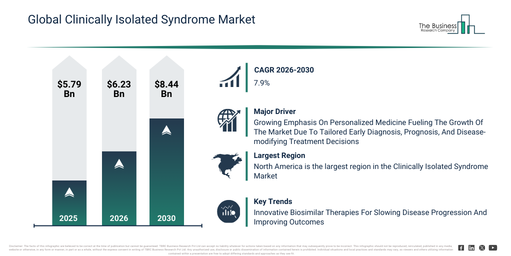
    The clinically isolated syndrome market has experienced significant expansion in recent years. Its valuation is anticipated to rise from $5.79 billion in 2025 to $6.23 billion in 2026, reflecting a compound annual growth rate (CAGR) of 7.6%. The historical development in this sector is attributable to improved access to magnetic resonance imaging diagnostics, greater recognition of early neurological symptoms, the proliferation of neurology specialty clinics, the implementation of disease-modifying therapies, and the existence of standardized diagnostic protocols.

    The clinically isolated syndrome market is projected to experience robust growth over the next few years. It is anticipated to achieve a valuation of $8.44 billion in 2030, exhibiting a compound annual growth rate (CAGR) of 7.9%. This expansion during the forecast period stems from a heightened focus on early multiple sclerosis prevention, the increasing application of artificial intelligence in neurodiagnostics, the broadening of remote patient monitoring solutions, greater investment in biomarker research, and the rising demand for personalized neurological care. Notable trends expected during this period include the expanded use of advanced neuroimaging analytics, the greater adoption of early intervention treatment strategies, the increasing integration of digital patient monitoring platforms, the development of biomarker-based risk assessment, and an enhanced emphasis on personalized disease management.

    Download the Free Sample Report to Explore Key Market Insights:

    https://www.thebusinessresearchcompany.com/sample.aspx?id=33067&type=smp

    Which Growth Drivers Are Contributing To The Progress Of The Clinically Isolated Syndrome Market?

    The increasing focus on personalized medicine is anticipated to fuel the expansion of the clinically isolated syndrome market moving forward. This medical strategy customizes treatment and prevention plans according to an individual’s unique genetic composition, lifestyle, and environmental factors. The heightened importance of personalized medicine stems from its capacity to enhance treatment efficacy and mitigate side effects by directing therapies to specific patient characteristics. Within the context of clinically isolated syndrome, personalized medicine allows healthcare providers to customize early diagnostic, prognostic, and disease-modifying treatment choices based on specific patient biomarkers, imaging results, and risk profiles, thereby aiming to postpone or avert the development of multiple sclerosis. As an illustration, in February 2024, the Personalized Medicine Coalition, a US-based non-profit organization, noted that in 2023, the US Food and Drug Administration (FDA) approved 16 new personalized treatments for rare disease patients, a significant rise from the six approvals in 2022. Consequently, the rising emphasis on personalized medicine is propelling the growth of the clinically isolated syndrome market.

    Which Segment Categories Define The Clinically Isolated Syndrome Market?

    The clinically isolated syndrome market covered in this report is segmented –

    1) By Product And Service Type: Diagnostic Services; Disease-Modifying Therapies; Monitoring And Management Services; Digital Monitoring And Decision Support Tools

    2) By Drug Class: Interferon Beta; Glatiramer Acetate; Monoclonal Antibodies; Oral Immunomodulators; Other Drug Classes

    3) By Route Of Administration: Oral; Injectable; Intravenous

    4) By End User: Hospitals; Neurology Clinics; Diagnostic Centers; Home Care Settings

    Subsegments:

    1) By Diagnostic Services: Magnetic Resonance Imaging Diagnostic Services; Cerebrospinal Fluid Analysis Services; Evoked Potential Testing Services; Neurological Examination Services; Laboratory Biomarker Testing Services; Advanced Imaging Interpretation Services

    2) By Disease-Modifying Therapies: Injectable Immunomodulatory Therapies; Oral Disease Modifying Therapies; Monoclonal Antibody Based Therapies; Corticosteroid Based Therapies; Emerging Pharmacological Therapies

    3) By Monitoring And Management Services: Clinical Follow Up Monitoring Services; Relapse Management Services; Physical And Cognitive Rehabilitation Services; Patient Counseling And Support Services; Long Term Disease Management Programs

    4) By Digital Monitoring And Decision Support Tools: Remote Patient Monitoring Platforms; Clinical Decision Support Software; Mobile Health Applications; Artificial Intelligence Based Analytics Tools; Electronic Health Record Integrated Solutions

    What Major Market Trends Are Driving Changes In The Clinically Isolated Syndrome Market?

    Leading companies operating within the clinically isolated syndrome market are concentrating on creating innovative solutions, including biosimilar disease-modifying therapies, with the goal of slowing disease progression, reducing relapse rates, and improving long-term neurological outcomes. Biosimilar disease-modifying therapies are biological drugs that are highly similar to an already approved reference biologic, engineered to alter the underlying disease process rather than just alleviate symptoms, while offering equivalent safety, efficacy, and quality. As an example, in August 2023, Sandoz, a generic and biosimilar medicines company based in Switzerland, obtained FDA approval for Tyruko (natalizumab-sztn), making it the first and only biosimilar for relapsing forms of multiple sclerosis (MS). Its primary aim is to reduce MS relapses by up to 70%, slow the progression of disability, and limit new brain lesions by preventing immune cells from crossing into the central nervous system. It is administered via IV infusion every four weeks under a REMS program due to the risk of PML. Key benefits include equivalent efficacy, safety, and immunogenicity compared to the originator, and its November 2025 US launch is expected to provide significant cost savings and broader access for patients with highly active disease unresponsive to other therapies.

    Which Companies Are Leading Innovation In The Clinically Isolated Syndrome Market?

    Major companies operating in the clinically isolated syndrome market are F. Hoffmann-La Roche Ltd., Bayer AG., Sanofi S.A., Novartis AG., Bristol-Myers Squibb Company, Siemens Healthineers AG., Merck KGaA, GE HealthCare, Teva Pharmaceutical Industries Ltd., Laboratory Corporation of America Holdings, Biogen Inc., Atara Biotherapeutics, Cipla Limited, Lupin Limited, Alembic Pharmaceuticals, TG Therapeutics Inc., Metropolis Healthcare, Mapi Pharma, Cortechs.AI Inc., Polpharma Biologics

    Read the full clinically isolated syndrome market report here:

    https://www.thebusinessresearchcompany.com/report/clinically-isolated-syndrome-market-report

    Which Region Currently Holds The Largest Share Of The Clinically Isolated Syndrome Market?

    North America was the largest region in the clinically isolated syndrome market in 2025. Asia-Pacific is expected to be the fastest-growing region in the forecast period. The regions covered in the clinically isolated syndrome market report are Asia-Pacific, South East Asia, Western Europe, Eastern Europe, North America, South America, Middle East, Africa.

    Request A Tailored Clinically Isolated Syndrome Market Research Report For Competitive Advantage:

    https://www.thebusinessresearchcompany.com/customise?id=33067&type=smp

    Browse Through More Reports Similar to the Global Clinically Isolated Syndrome Market 2026, By The Business Research Company

    Rare Diseases Treatment Market Report 2026

    https://www.thebusinessresearchcompany.com/report/rare-diseases-treatment-global-market-report

    Rare Neurological Disease Treatment Market Report 2026

    https://www.thebusinessresearchcompany.com/report/rare-neurological-disease-treatment-global-market-report

    Rare Disease Diagnostics Market Report 2026

    https://www.thebusinessresearchcompany.com/report/rare-disease-diagnostics-global-market-report

    Get in touch with us:

    The Business Research Company: https://www.thebusinessresearchcompany.com/

    Americas +1 310-496-7795

    Asia +44 7882 955267 & +91 8897263534

    Europe +44 7882 955267

    Email us at info@tbrc.info

    Follow us on:

    LinkedIn: https://in.linkedin.com/company/the-business-research-company

    YouTube: https://www.youtube.com/channel/UC24_fI0rV8cR5DxlCpgmyFQ

    Global Market Model: https://www.thebusinessresearchcompany.com/global-market-model

  • Global Chronic Idiopathic Urticaria Treatment Market Forecast 2026–2035 with Long-Term Outlook

    Global Chronic Idiopathic Urticaria Treatment Market Forecast 2026–2035 with Long-Term Outlook

    The Business Research Company’s 2026 market reports include new capabilities such as market attractiveness scoring and analysis, total addressable market analysis, company scoring matrix, interactive excel data dashboard, improved supply chain analysis, upcoming startups in the market, and overview of key products, aimed at improving the depth, usability, and strategic value of the insights delivered.

    What Will Be The Estimated Market Valuation Of The Chronic Idiopathic Urticaria Treatment Market By The End Of 2030?

    The chronic idiopathic urticaria treatment market has demonstrated strong growth over recent years. It is projected to increase from $7.24 billion in 2025 to $7.89 billion in 2026, showing a compound annual growth rate (CAGR) of 9.0%. This historical growth can be linked to factors such as an uptick in chronic urticaria diagnoses, the availability of second-line antihistamine therapies, the implementation of stepwise treatment protocols, an expansion of allergy specialty clinics, and the rising application of immunomodulatory drugs.

    The chronic idiopathic urticaria treatment market is projected to experience substantial expansion in the coming years. Its size is predicted to reach $11.23 billion in 2030, driven by a compound annual growth rate (CAGR) of 9.2%. This growth during the forecast period is attributable to several factors, including the escalating demand for biologic treatment options, a heightened emphasis on personalized immunology care, the expansion of digital disease management tools, increased investment in new urticaria therapies, and enhanced patient awareness alongside improved treatment adherence. Key trends anticipated in this period encompass the wider adoption of biologic therapies for refractory patients, the expanding application of personalized treatment pathways, the increasing integration of digital tools for symptom monitoring, a broadening array of injectable treatment options, and a greater emphasis on sustained disease control.

    Download the Free Sample Report to Explore Key Market Insights:

    https://www.thebusinessresearchcompany.com/sample.aspx?id=33064&type=smp

    What Key Drivers Are Influencing The Growth Of The Chronic Idiopathic Urticaria Treatment Market?

    The rising emphasis on biologics is anticipated to stimulate the expansion of the chronic idiopathic urticaria treatment market in the future. These are therapeutic agents originating from living systems or their constituents, designed to target particular immune system pathways for disease management. This increased attention on biologics stems from progress in biotechnology and immunology, facilitating the creation of more accurate and potent therapies that address the fundamental mechanisms of immune-related ailments, instead of only alleviating symptoms. Specifically for chronic idiopathic urticaria, biologics target the foundational immune pathways and mast cell activation involved, thereby transforming treatment approaches and offering patients superior and enduring symptom management. For example, in February 2025, the World Health Organization (WHO), a Switzerland-based intergovernmental organization, reported that its 2023 WHO Essential Medicines List features 81 biologic therapies, which constitutes over 15% of all listed medicines. Consequently, the heightened focus on biologics is propelling the expansion of the chronic idiopathic urticaria treatment market.

    Which Segment Classifications Shape The Chronic Idiopathic Urticaria Treatment Market?

    The chronic idiopathic urticaria treatment market covered in this report is segmented –

    1) By Types: Tablets; Capsules; Creams; Lotions; Injections

    2) By Drug Class: Antihistamines; Corticosteroids; Leukotriene Receptor Antagonists; Immunosuppressants; Biologic Therapies; Other Drug Class

    3) By Route Of Administration: Oral; Injectable; Topical

    4) By Distribution Channel: Hospital Pharmacies; Retail Pharmacies; Online Pharmacies

    Subsegments:

    1) By Tablets: Immediate Release Tablets; Extended Release Tablets; Enteric Coated Tablets; Chewable Tablets; Orally Disintegrating Tablets

    2) By Capsules: Hard Gelatin Capsules; Soft Gelatin Capsules; Sustained Release Capsules; Delayed Release Capsules

    3) By Creams: Medicated Topical Creams; Anti Inflammatory Creams; Antifungal Creams; Antibacterial Creams; Moisturizing Therapeutic Creams

    4) By Lotions: Medicated Therapeutic Lotions; Anti Inflammatory Lotions; Antiseptic Lotions; Moisturizing Lotions; Specialty Dermatological Lotions

    5) By Injections: Intravenous Injections; Intramuscular Injections; Subcutaneous Injections; Pre Filled Syringe Injections; Auto Injector Based Injections

    How Are Trends Impacting The Chronic Idiopathic Urticaria Treatment Market?

    Leading companies within the chronic idiopathic urticaria treatment market are channeling their efforts into developing innovative solutions, including monoclonal antibody therapies, to deliver targeted, lasting relief for individuals whose conditions are resistant to conventional treatments. Monoclonal antibody therapies are a class of biologic drugs specifically engineered to target immune system components, such as immunoglobulin E (IgE) or other inflammatory mediators implicated in chronic hives, thereby offering a more precise intervention compared to standard antihistamines or corticosteroids. As an illustration, in September 2025, Celltrion Inc., a biopharmaceutical company based in South Korea, launched Omriclo, an omalizumab biosimilar, in Norway. This product features the identical active monoclonal antibody as Xolair, functions by neutralizing circulating IgE, and is administered via subcutaneous injection. Its distinguishing attributes encompass a first-mover advantage in the European market, enhanced access through local distribution networks, and potential economic benefits for healthcare providers. It is designed for chronic idiopathic urticaria patients who continue to experience symptoms despite receiving standard therapy, providing a biologic alternative to traditional treatments and promising improved symptom management, a reduction in the frequency of flare-ups, and the potential to elevate overall quality of life by lessening the reliance on prolonged antihistamine or corticosteroid usage.

    Who Are The Primary Competitors In The Chronic Idiopathic Urticaria Treatment Market?

    Major companies operating in the chronic idiopathic urticaria treatment market are F. Hoffmann-La Roche Ltd., Sanofi S.A., Novartis AG., AstraZeneca PLC, GlaxoSmithKline plc, Teva Pharmaceutical Industries Ltd., Regeneron Pharmaceuticals Inc., Incyte Corporation, Dr. Reddy’s Laboratories Ltd., Celltrion Inc., Yuhan Corporation, Kiniksa Pharmaceuticals Ltd., Celldex Therapeutics Inc., Septerna Therapeutics Inc., Carna Biosciences Inc., United BioPharma Inc., Recludix Pharma Inc., Jasper Therapeutics Inc., Evommune Inc., ARS Pharmaceuticals Inc

    Read the full chronic idiopathic urticaria treatment market report here:

    https://www.thebusinessresearchcompany.com/report/chronic-idiopathic-urticaria-treatment-market-report

    Which Region Is Anticipated To See The Fastest Growth In The Chronic Idiopathic Urticaria Treatment Market?

    North America was the largest region in the chronic idiopathic urticaria treatment market in 2025. Asia-Pacific is expected to be the fastest-growing region in the forecast period. The regions covered in the chronic idiopathic urticaria treatment market report are Asia-Pacific, South East Asia, Western Europe, Eastern Europe, North America, South America, Middle East, Africa.

    Request A Tailored Chronic Idiopathic Urticaria Treatment Market Research Report For Competitive Advantage:

    https://www.thebusinessresearchcompany.com/customise?id=33064&type=smp

    Browse Through More Reports Similar to the Global Chronic Idiopathic Urticaria Treatment Market 2026, By The Business Research Company

    Chronic Spontaneous Urticaria Market Report 2026

    https://www.thebusinessresearchcompany.com/report/chronic-spontaneous-urticaria-global-market-report

    Allergic Rhinitis Drugs Market Report 2026

    https://www.thebusinessresearchcompany.com/report/allergic-rhinitis-drugs-global-market-report

    Allergy Treatment Market Report 2026

    https://www.thebusinessresearchcompany.com/report/allergy-treatment-global-market-report

    Get in touch with us:

    The Business Research Company: https://www.thebusinessresearchcompany.com/

    Americas +1 310-496-7795

    Asia +44 7882 955267 & +91 8897263534

    Europe +44 7882 955267

    Email us at info@tbrc.info

    Follow us on:

    LinkedIn: https://in.linkedin.com/company/the-business-research-company

    YouTube: https://www.youtube.com/channel/UC24_fI0rV8cR5DxlCpgmyFQ

    Global Market Model: https://www.thebusinessresearchcompany.com/global-market-model
  • Global Cheek Augmentation Market Outlook 2026–2035 Highlighting Expansion Opportunities

    Global Cheek Augmentation Market Outlook 2026–2035 Highlighting Expansion Opportunities

    The Business Research Company’s 2026 market reports include new capabilities such as market attractiveness scoring and analysis, total addressable market analysis, company scoring matrix, interactive excel data dashboard, improved supply chain analysis, upcoming startups in the market, and overview of key products, aimed at improving the depth, usability, and strategic value of the insights delivered.

    How Will The Market Size Of The Cheek Augmentation Market Evolve From 2026 To 2030?

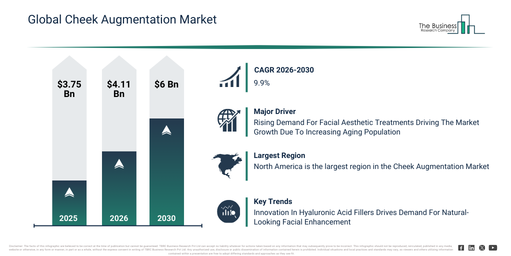
    The cheek augmentation market has experienced substantial growth in recent years. It is projected to increase in value from $3.75 billion in 2025 to $4.11 billion in 2026, exhibiting a compound annual growth rate (CAGR) of 9.7%. This historical expansion can be linked to factors such as the growing acceptance of cosmetic procedures, the rise of medical aesthetics clinics, the availability of advanced dermal fillers, the increasing influence of aesthetic medicine, and the proliferation of urban cosmetic service providers.

    The cheek augmentation market is projected to experience substantial expansion over the upcoming years. By 2030, its valuation is anticipated to reach $6 billion, demonstrating a compound annual growth rate (CAGR) of 9.9%. This expansion during the projection period stems from several factors, including a heightened demand for minimally invasive cosmetic procedures, the increasing integration of AI-powered facial analysis, the broadening scope of medical tourism for aesthetic purposes, an intensifying emphasis on customized beauty solutions, and a surge in investments within aesthetic technology platforms. Key trends anticipated throughout this period involve a greater utilization of 3D facial imaging for devising treatment plans, an escalating demand for non-surgical injectable procedures, a growing inclination towards bespoke aesthetic designs, the widespread adoption of minimally invasive facial contouring techniques, and a stronger emphasis on achieving natural-looking outcomes.

    Download the Free Sample Report to Explore Key Market Insights:

    https://www.thebusinessresearchcompany.com/sample.aspx?id=33062&type=smp

    Which Growth Drivers Are Contributing To The Progress Of The Cheek Augmentation Market?

    The increasing need for facial aesthetic treatments is anticipated to stimulate the expansion of the cheek augmentation market. These treatments encompass cosmetic procedures aimed at improving or restoring facial features to enhance appearance and foster self-confidence. The surge in demand for facial aesthetic treatments arises from a growing aging population striving for youthful appearances, as natural facial volume loss and the emergence of wrinkles prompt many individuals to pursue procedures that restore a more youthful look and boost self-confidence. Cheek augmentation is instrumental in supporting facial aesthetic treatments by replenishing mid-face volume, refining facial contours, correcting symmetry, and creating a natural lifting effect, all of which contribute to a more youthful, balanced, and rejuvenated overall facial appearance. For instance, in June 2024, according to the American Society of Plastic Surgeons, a US-based non-profit organization, minimally invasive procedures increased by 7% in 2023, outperforming surgical procedures by 2%. Plastic surgeries saw a 5% rise, while minimally invasive procedures experienced a 7% year-over-year growth. Therefore, the growing demand for facial aesthetic treatments is propelling the development of the cheek augmentation market.

    Which Segment Areas Are Covered In The Cheek Augmentation Market Analysis?

    The cheek augmentation market covered in this report is segmented –

    1) By Procedure Type: Surgical Cheek Implants; Injectable Fillers; Fat Grafting Or Autologous Fat Transfer

    2) By Product: Derma Fillers; Implant; Malar Implant; Submalar Implant; Combined Implant; Other Products

    3) By Technique: Minimally Invasive Procedures; Conventional Surgical Procedures

    4) By End-User: Specialty Aesthetic Clinics Market; Medical Spas Market; Hospitals Market

    Subsegments:

    1) By Surgical Cheek Implants: Silicone Implants; Porous Polyethylene Implants; Anatomical Implants

    2) By Injectable Fillers: Hyaluronic Acid Fillers; Calcium Hydroxylapatite Fillers; Poly L Lactic Acid Fillers; Polymethyl Methacrylate Fillers

    3) By Fat Grafting Or Autologous Fat Transfer: Micro Fat Grafting; Nano Fat Grafting; Structural Fat Grafting

    What Key Developments And Trends Are Impacting The Cheek Augmentation Market?

    Leading firms in the cheek augmentation sector are prioritizing the creation of novel offerings, including sophisticated hyaluronic acid-based dermal fillers, aimed at improving facial volume and contour through heightened safety and extended efficacy. These advanced hyaluronic acid-based dermal fillers are injectable gel preparations designed to replicate the body’s intrinsic hyaluronic acid, thereby assisting in the restoration of cheek volume, refinement of contour, and enhancement of facial symmetry by drawing in and holding moisture, leading to a more even and younger-looking complexion. An example is the U.S. Food and Drug Administration (FDA) approval granted in January 2026 to Revance Therapeutics Inc., a US-based pharmaceutical company, and TEOXANE SA., a Switzerland-based manufacturing company, for RHA Dynamic Volume. This product is a next-generation hyaluronic acid dermal filler specifically formulated for cheek augmentation and rectifying midface contour deficiencies linked to aging. Utilizing Preserved Network Technology, a gentle, heat-free crosslinking process, the product is engineered to preserve the natural architecture of hyaluronic acid, which confers superior dynamic strength, elasticity, and durability when contrasted with traditional fillers. This design aims to offer profound structural support while conforming to facial movements, ensuring aesthetic outcomes appear natural both statically and dynamically. Furthermore, late-stage clinical studies have shown its equivalent clinical effectiveness, requiring fewer treatment sessions and follow-up adjustments.

    Who Are The Prominent Organizations Shaping The Cheek Augmentation Market?

    Major companies operating in the cheek augmentation market are AbbVie Inc., LG Chem Life Sciences Ltd., Stryker Corporation, Zimmer Biomet Holdings Inc., Merz Aesthetics GmbH, KLS Martin Group, Sinclair Pharma Limited, Medartis Holding AG, Hugel Inc., Revance Therapeutics Inc., Medytox Inc., Anika Therapeutics Inc., Croma-Pharma GmbH, GC Aesthetics Ltd., Regen Lab SA, Teoxane Laboratories SA, Human Med AG, BioPlus Co. Ltd., Polytech Health & Aesthetics GmbH, and Sebbin Group.

    Read the full cheek augmentation market report here:

    https://www.thebusinessresearchcompany.com/report/cheek-augmentation-market-report

    Which Regions Are Poised For Strategic Growth In The Cheek Augmentation Market?

    North America was the largest region in the cheek augmentation market in 2025. Asia-Pacific is expected to be the fastest-growing region in the forecast period. The regions covered in the cheek augmentation market report are Asia-Pacific, South East Asia, Western Europe, Eastern Europe, North America, South America, Middle East, Africa.

    Request A Tailored Cheek Augmentation Market Research Report For Competitive Advantage:

    https://www.thebusinessresearchcompany.com/customise?id=33062&type=smp

    Browse Through More Reports Similar to the Global Cheek Augmentation Market 2026, By The Business Research Company

    Chin Augmentation Market Report 2026

    https://www.thebusinessresearchcompany.com/report/chin-augmentation-global-market-report

    Human Augmentation Market Report 2026

    https://www.thebusinessresearchcompany.com/report/human-augmentation-global-market-report

    Buttock Augmentation Market Report 2026

    https://www.thebusinessresearchcompany.com/report/buttock-augmentation-global-market-report

    Get in touch with us:

    The Business Research Company: https://www.thebusinessresearchcompany.com/

    Americas +1 310-496-7795

    Asia +44 7882 955267 & +91 8897263534

    Europe +44 7882 955267

    Email us at info@tbrc.info

    Follow us on:

    LinkedIn: https://in.linkedin.com/company/the-business-research-company

    YouTube: https://www.youtube.com/channel/UC24_fI0rV8cR5DxlCpgmyFQ

    Global Market Model: https://www.thebusinessresearchcompany.com/global-market-model

  • Technology expansion enhancing development capabilities in the Cell and Gene Therapy CRO Market

    Technology expansion enhancing development capabilities in the Cell and Gene Therapy CRO Market

    The Business Research Company’s 2026 market reports include new capabilities such as market attractiveness scoring and analysis, total addressable market analysis, company scoring matrix, interactive excel data dashboard, improved supply chain analysis, upcoming startups in the market, and overview of key products, aimed at improving the depth, usability, and strategic value of the insights delivered.

    What Is The Estimated Market Size Of The Cell And Gene Therapy Contract Research Organization Market During 2026–2030?

    The market size for cell and gene therapy contract research organizations has experienced rapid expansion recently. This market is projected to expand from $6.92 billion in 2025 to $7.76 billion in 2026, demonstrating a compound annual growth rate (CAGR) of 12.1%. Historically, this growth has been driven by factors such as a rising number of early-stage cell and gene therapy programs, constrained internal development capacities, an increase in rare disease research pipelines, growing regulatory challenges in advanced therapies, and a greater dependency on external research expertise.

    The cell and gene therapy contract research organization market size is poised for significant expansion in the upcoming years. It is projected to reach $12.36 billion in 2030, exhibiting a compound annual growth rate (CAGR) of 12.3%. This projected growth can be attributed to heightened clinical trial activity in gene therapies, the expansion of personalized medicine development, increased investments in oncology and genetic disorder research, a growing need for accelerated development timelines, and enhanced collaboration between biotechnology firms and CROs. Prominent trends anticipated during this period include a rise in outsourcing of cell and gene therapy research, an escalating demand for integrated preclinical and clinical services, a stronger focus on regulatory and compliance expertise, the expansion of vector development and manufacturing support, and improved utilization of data-driven trial management.

    Download the Free Sample Report to Explore Key Market Insights:

    https://www.thebusinessresearchcompany.com/sample.aspx?id=33057&type=smp

    What Drivers Are Expected To Influence The Cell And Gene Therapy Contract Research Organization Market During The Forecast Period?

    An increasing emphasis on personalized medicine and targeted therapeutics is anticipated to drive expansion in the cell and gene therapy contract research organization (CRO) market going forward. These approaches entail crafting treatments specifically for an individual’s unique genetic, molecular, or cellular profile, aiming to enhance effectiveness and minimize unwanted side effects. The heightened attention on personalized medicine stems from regulators and healthcare systems giving precedence to precision-based therapies for tackling intricate diseases and attaining better clinical outcomes. Cell and gene therapy contract research organizations (CROs) play a crucial role in advancing personalized medicine by offering expert preclinical, clinical, and regulatory assistance essential for the creation, evaluation, and validation of sophisticated gene- and cell-based therapeutic products. As an illustration, in April 2025, the Personalized Medicine Coalition, a US-based nonprofit organization, reported that the Food and Drug Administration (FDA) sanctioned 18 personalized medicines in 2024, constituting approximately 38% of all newly authorized therapeutic molecular entities. Consequently, the growing concentration on personalized medicine and targeted therapeutics is fueling the expansion of the cell and gene therapy contract research organization (CRO) market.

    How Are The Various Segments Of The Cell And Gene Therapy Contract Research Organization Market Categorized?

    The cell and gene therapy contract research organization market covered in this report is segmented –

    1) By Type: Preclinical Contract Research Organization; Clinical Stage Contract Research Organization; Other Types

    2) By Service: Project And Clinical Trial Management; Regulatory Strategy; Data Management And Medical Writing; Clinical Monitoring; Quality Management And Good Manufacturing Practice Compliance; Biostatistics And Safety Monitoring; Patient And Site Recruitment; Technology Transfer; Other Services

    3) By Indication: Oncology; Central Nervous System Disorders; Infectious Diseases; Immunological Disorders; Cardiovascular Diseases; Respiratory Diseases; Diabetes; Ophthalmology; Pain Management; Other Indications

    4) By Modality: Cell-Based Therapies; Gene Therapies; Gene-Modified Cell Therapies

    5) By Application: Hospital; Research Institute; Other Applications

    Subsegments:

    1) By Preclinical Contract Research Organization: In Vitro Testing Services; In Vivo Animal Model Services; Toxicology And Safety Assessment; Other Preclinical Services

    2) By Clinical Stage Contract Research Organization: Phase I Clinical Trial Services; Phase II Clinical Trial Services; Phase III Clinical Trial Services; Other Clinical Stage Services

    3) By Other Types: Regulatory Consulting Services; Process Development Services; Manufacturing Support Services; Other Support Services

    What Trends Are Affecting The Expansion Of The Cell And Gene Therapy Contract Research Organization Market?

    Key players within the cell and gene therapy contract research organization (CRO) market are prioritizing the creation of innovative solutions, including expanded laboratory and analytical services, to boost therapy development efficiency, ensure regulatory compliance, and refine research precision. This is achieved by offering cutting-edge facilities, specialized equipment, and integrated capabilities for cell and gene therapy testing. Expanded laboratory and analytical services represent contract research organization (CRO) provisions that increase operational capacity, enable the execution of complex assays, and support sponsors through the complete development cycle of advanced cell and gene therapies. For example, in August 2025, Labcorp Holdings Inc., a US-based healthcare company, enlarged its cell and gene therapy laboratory in madison, wisconsin, thereby improving its proficiency in cell characterization, vector analytics, and testing that meets regulatory requirements. This enhanced facility delivers specialized infrastructure for intricate cell and gene therapy workflows, facilitates high-throughput sample processing, and integrates advanced analytical platforms, establishing itself as a holistic solution for accelerating cell and gene therapy research and development.

    Which Major Firms Influence Developments In The Cell And Gene Therapy Contract Research Organization Market?

    Major companies operating in the cell and gene therapy contract research organization market are Thermo Fisher Scientific Inc., IQVIA Holdings Inc., Laboratory Corporation of America Holdings (Labcorp), ICON plc, WuXi AppTec Co. Ltd., Syneos Health Inc., Charles River Laboratories International Inc., Parexel International Corporation, Fortrea Holdings Inc., CMIC Co. Ltd., Medpace Holdings Inc., PharmaLex GmbH, Premier Research International LLC, Worldwide Clinical Trials Inc., Novotech (Australia) Pty Ltd., Precision for Medicine Inc., Syngene International Limited, Allucent Inc., TFS HealthScience AB, QPS Holdings LLC, Altasciences Company Inc., Veristat LLC, Linical Co. Ltd., Aixial Group, ProRelix Research LLC

    Read the full cell and gene therapy contract research organization market report here:

    https://www.thebusinessresearchcompany.com/report/cell-and-gene-therapy-contract-research-organization-market-report

    Which Region Currently Holds The Largest Share Of The Cell And Gene Therapy Contract Research Organization Market?

    North America was the largest region in the cell and gene therapy contract research organization (CRO) market in 2025. Asia-Pacific is expected to be the fastest-growing region in the forecast period. The regions covered in the cell and gene therapy contract research organization market report are Asia-Pacific, South East Asia, Western Europe, Eastern Europe, North America, South America, Middle East, Africa.

    Request A Tailored Cell And Gene Therapy Contract Research Organization Market Research Report For Competitive Advantage:

    https://www.thebusinessresearchcompany.com/customise?id=33057&type=smp

    Browse Through More Reports Similar to the Global Cell And Gene Therapy Contract Research Organization Market 2026, By The Business Research Company

    Cell And Gene Therapy Contract Development And Manufacturing Organization Cdmo Market Report 2026

    https://www.thebusinessresearchcompany.com/report/cell-and-gene-therapy-contract-development-and-manufacturing-organization-cdmo-global-market-report

    Cell And Gene Therapy Clinical Trial Services Market Report 2026

    https://www.thebusinessresearchcompany.com/report/cell-and-gene-therapy-clinical-trial-services-global-market-report

    Cell And Gene Therapy Supply Chain Or Logistics Market Report 2026

    https://www.thebusinessresearchcompany.com/report/cell-and-gene-therapy-supply-chain-or-logistics-global-market-report

    Get in touch with us:

    The Business Research Company: https://www.thebusinessresearchcompany.com/

    Americas +1 310-496-7795

    Asia +44 7882 955267 & +91 8897263534

    Europe +44 7882 955267

    Email us at info@tbrc.info

    Follow us on:

    LinkedIn: https://in.linkedin.com/company/the-business-research-company

    YouTube: https://www.youtube.com/channel/UC24_fI0rV8cR5DxlCpgmyFQ

    Global Market Model: https://www.thebusinessresearchcompany.com/global-market-model