Category: Healthcare Services

  • Ribose-Nucleic Acid (RNA)-Based Therapeutics Market Expected to Record Steady Growth and Approach $26.17 Billion by 2030

    Ribose-Nucleic Acid (RNA)-Based Therapeutics Market Expected to Record Steady Growth and Approach $26.17 Billion by 2030

    The Business Research Company’s 2026 market reports include new capabilities such as market attractiveness scoring and analysis, total addressable market analysis, company scoring matrix, interactive excel data dashboard, improved supply chain analysis, upcoming startups in the market, and overview of key products, aimed at improving the depth, usability, and strategic value of the insights delivered.

    How Is The Market Size Of The Ribose-Nucleic Acid (RNA)-Based Therapeutics Market Expected To Change Between 2026 And 2030?

    The ribose-nucleic acid (rna)-based therapeutics market size has experienced substantial growth in recent years. It is anticipated to expand from $17.22 billion in 2025 to $18.75 billion in 2026, achieving a compound annual growth rate (CAGR) of 8.9%. This historical growth can be linked to advancements in molecular biology research, the early success of rna-based drugs, the broadening scope of genetic disease research, increased pharmaceutical R&D investments, and an enhanced understanding of gene regulation.

    The ribose-nucleic acid (rna)-based therapeutics market is anticipated to experience significant expansion over the coming years. This market is projected to reach $26.17 billion by 2030, exhibiting a compound annual growth rate (CAGR) of 8.7%. This expected growth can be attributed to factors such as an increase in regulatory approvals for RNA therapies, a rising need for personalized medicine, an expansion of oncology-focused RNA development pipelines, growing investments in delivery technologies, and more collaborations among biotechnology firms. Prominent trends for the forecast period include the increasing development of RNA-based targeted therapies, a rising adoption of siRNA and ASO technologies, a growing focus on rare and genetic disorders, an expansion of clinical trials for RNA therapeutics, and innovations in drug delivery systems.

    Download the Free Sample Report to Explore Key Market Insights:

    https://www.thebusinessresearchcompany.com/sample.aspx?id=18454&type=smp

    What Underlying Factors Are Accelerating The Growth Of The Ribose-Nucleic Acid (RNA)-Based Therapeutics Market?

    The anticipated rise in cancer cases is projected to fuel the expansion of the ribose-nucleic acid (RNA)-based therapeutics market in the future. Cancer is defined as a disease characterized by the uncontrolled proliferation and dissemination of abnormal cells, which can be fatal if left untreated. Factors contributing to cancer’s widespread occurrence include an aging demographic, shifts in lifestyle, increased exposure to various risks, and enhanced detection techniques. Ribonucleic acid (RNA)-based therapies present a promising approach for combating cancer, as they directly address its genetic and molecular underpinnings. As an illustration, data from August 2023 provided by the Australian Institute of Health and Welfare, an Australian government health administration, indicated that approximately 151,000 individuals were diagnosed with cancer (excluding basal cell carcinomas (BCC) and squamous cell carcinomas (SCC) of the skin) in 2021, a number projected to climb to 185,000 by 2030. Consequently, the growing incidence of cancer is propelling the ribose-nucleic acid (RNA)-based therapeutics market.

    How Is The Ribose-Nucleic Acid (RNA)-Based Therapeutics Market Structured Across Different Segments?

    The ribose-nucleic acid (rna)-based therapeutics market covered in this report is segmented –

    1) By Type: RNA Interference (RNAi), RNA Antisense

    2) By Technology: Enabling Technology, Enabled Technology

    3) By Therapeutic Area: Oncology, Genetic Disorder, Ophthalmology, Hematological Disorders, Acute Hepatic Porphyria (AHP), Other Therapeutic Areas

    4) By End User: Research Institutes, Hospitals And Clinics

    Subsegments:

    1) By RNA Interference (RNAi): Small Interfering RNA (siRNA), MicroRNA (miRNA)

    2) By RNA Antisense: Antisense Oligonucleotides (ASOs), Antisense RNA

    Which Trends Are Influencing The Ribose-Nucleic Acid (RNA)-Based Therapeutics Market?

    Companies operating within the ribose nucleic acid (RNA)-based therapeutics market are primarily focused on developing advanced medicinal solutions, such as messenger RNA (mRNA)-based booster vaccines. This development aims to improve the effectiveness of vaccinations, tackle emerging viral strains, and increase the long-term durability of immunity provided by vaccines. An mRNA-based booster vaccine functions by using messenger RNA to direct cells to synthesize a protein, which in turn enhances the body’s immune response against a specific pathogen. For example, in June 2023, Gennova Biopharmaceuticals Ltd., an India-based pharmaceutical company, introduced GEMCOVAC-OM, which is India’s first mRNA booster vaccine specifically targeting the Omicron variant of COVID-19. This booster is crucial because the initial vaccines had limited effectiveness against the Omicron variant. By employing mRNA technology, GEMCOVAC-OM enhances immunity and offers improved protection against the evolving virus.

    Which Major Players Dominate The Ribose-Nucleic Acid (RNA)-Based Therapeutics Market?

    Major companies operating in the ribose-nucleic acid (rna)-based therapeutics market are F Hoffmann La Roche AG, Eli Lilly And Company, Novo Nordisk AS, Regeneron Pharmaceuticals, Biogen Inc., BioNTech, Alnylam Pharmaceuticals, Sarepta Therapeutics, Ionis Pharmaceuticals, Akcea Therapeutics Inc, Arrowhead Pharmaceuticals, Dicerna Pharmaceuticals, Wave Life Sciences, Quark Pharmaceuticals, Tekmira Pharmaceuticals, ReCode Therapeutics, Arbutus Biopharma Corporation, Benitec Biopharma Inc., Olix Pharmaceuticals, Alltrna Inc., Orbital Therapeutics, Moderna Inc., CureVac NV, Silence Therapeutics plc, ProQR Therapeutics NV

    Read the full ribose-nucleic acid (rna)-based therapeutics market report here:

    https://www.thebusinessresearchcompany.com/report/ribose-nucleic-acid-rna-based-therapeutics-global-market-report

    Which Region Is Projected To Dominate The Ribose-Nucleic Acid (RNA)-Based Therapeutics Market During The Forecast Period?

    North America was the largest region in the ribose-nucleic acid (RNA)-based therapeutics market in 2025. The regions covered in the ribose-nucleic acid (rna)-based therapeutics market report are Asia-Pacific, South East Asia, Western Europe, Eastern Europe, North America, South America, Middle East, Africa.

    Request A Tailored Ribose-Nucleic Acid (RNA)-Based Therapeutics Market Research Report For Competitive Advantage:

    https://www.thebusinessresearchcompany.com/customise?id=18454&type=smp

    Browse Through More Reports Similar to the Global Ribose-Nucleic Acid (RNA)-Based Therapeutics Market 2026, By The Business Research Company

    Dna Sequencing Global Market Report

    https://www.thebusinessresearchcompany.com/report/dna-sequencing-global-market-report

    Rna Sequencing Services Global Market Report

    https://www.thebusinessresearchcompany.com/report/rna-sequencing-services-global-market-report

    Protein Sequencing Global Market Report

    https://www.thebusinessresearchcompany.com/report/protein-sequencing-global-market-report

    Get in touch with us:

    The Business Research Company: https://www.thebusinessresearchcompany.com/

    Americas +1 310-496-7795

    Asia +44 7882 955267 & +91 8897263534

    Europe +44 7882 955267

    Email us at info@tbrc.info

    Follow us on:

    LinkedIn: https://in.linkedin.com/company/the-business-research-company

    YouTube: https://www.youtube.com/channel/UC24_fI0rV8cR5DxlCpgmyFQ

    Global Market Model: https://www.thebusinessresearchcompany.com/global-market-model

  • Ribonucleic Acid (RNA) Sequencing Industry Expansion Forecast Showing Market Size of $9.62 Billion by 2030 at 18.8% CAGR

    Ribonucleic Acid (RNA) Sequencing Industry Expansion Forecast Showing Market Size of $9.62 Billion by 2030 at 18.8% CAGR

    The Business Research Company’s 2026 market reports include new capabilities such as market attractiveness scoring and analysis, total addressable market analysis, company scoring matrix, interactive excel data dashboard, improved supply chain analysis, upcoming startups in the market, and overview of key products, aimed at improving the depth, usability, and strategic value of the insights delivered.

    What Is The Market Size Of The Ribonucleic Acid (RNA) Sequencing Market In 2026 And What Value Is Projected For 2030?

    The ribonucleic acid (rna) sequencing market has experienced significant expansion in recent years. Its value is anticipated to climb from $3.96 billion in 2025 to $4.84 billion in 2026, demonstrating a compound annual growth rate (CAGR) of 22.3%. This past growth can be attributed to factors such as the proliferation of genomics research initiatives, a decrease in sequencing costs, an increase in academic research funding, wider adoption of next-generation sequencing, and a heightened demand for gene expression analysis.

    The ribonucleic acid (rna) sequencing market is poised for significant expansion in the upcoming years. Its valuation is anticipated to climb to $9.63 billion by 2030, driven by a compound annual growth rate (CAGR) of 18.8%. This projected increase is primarily due to the rising acceptance of precision medicine strategies, increased funding in transcriptomics studies, the expansion of clinical diagnostic sequencing capabilities, the growing incorporation of AI-powered data analysis, and an intensified focus on personalized treatments. Dominant trends during the forecast period encompass the wider implementation of single-cell RNA sequencing, increased reliance on high-throughput sequencing technologies, deeper integration of advanced bioinformatics instruments, the broadening scope of clinical and translational research uses, and an elevated commitment to data precision and replicability.

    Download the Free Sample Report to Explore Key Market Insights:

    https://www.thebusinessresearchcompany.com/sample.aspx?id=15665&type=smp

    Which Growth Drivers Are Contributing To The Progress Of The Ribonucleic Acid (RNA) Sequencing Market?

    An escalating emphasis on precision medicine is poised to spur the growth of the ribonucleic acid (RNA) sequencing market moving forward. Precision medicine, also known as personalized medicine, represents an innovative strategy for medical treatment and prevention that accounts for individual variations in genes, environment, and lifestyle. Personalized medicine holds the promise of delivering more effective treatments, driven by advancements in genomics, increasing disease complexity, and regulatory backing. RNA sequencing technologies are instrumental in determining the sequence and quantifying the expression levels of RNA molecules within a sample. This allows for thorough analysis of transcriptomes and provides valuable insights into gene expression patterns, alternative splicing events, and RNA modifications. For instance, in February 2024, as per the Personalized Medicine Coalition, a US-based non-profit organization, the FDA approved 16 novel personalized therapies for patients with rare diseases in 2023, in contrast to six in 2022. Thus, the increasing focus on precision medicine is a primary driver for the ribonucleic acid (RNA) sequencing market.

    What Are The Key Segments Of The Ribonucleic Acid (RNA) Sequencing Market?

    The ribonucleic acid (rna) sequencing market covered in this report is segmented –

    1) By Product Type: Instruments, Reagents And Kits, Software

    2) By Technology: Single Molecule Based Sequencing, Sequence By Synthesis Technology, Nanopore Sequencing Technology, Ion Torrent Semiconductor Sequencing

    3) By Applications: Diagnostics, Drug Discovery, Translational Medicine, Other Applications

    4) By End User: Research And Academia, Hospitals And Clinics, Pharmaceutical And Biotechnology Companies, Other End Users

    Subsegments:

    1) By Instruments: Next-Generation Sequencers, Microarray Instruments, Single-Cell Rna Sequencing Instruments

    2) By Reagents And Kits: Rna Extraction Kits, Rna Sequencing Kits, Library Preparation Kits

    3) By Software: Data Analysis Software, Data Management Software, Bioinformatics Software

    What Trends Are Advancing Progress In The Ribonucleic Acid (RNA) Sequencing Market?

    Companies operating within the ribonucleic acid (RNA) sequencing market are prioritizing RNA next-generation sequencing assays to enhance patient care through data-driven insights and precision medicine. An RNA next-generation sequencing assay is a next-generation exome sequencing platform that leverages advanced genomic sequencing technologies to analyze a patient’s entire exome. For instance, in June 2023, Tempus, a US-based precision medicine technology company, introduced its new standalone RNA next-generation sequencing assay, Tempus xR. This innovative assay, developed for solid tumors, provides a comprehensive analysis of the entire transcriptome, identifying clinically significant fusions in over 100 targeted genes and altered splicing for MET Exon 14 and EGFRvIII. This offering serves physicians with a specific interest in RNA fusions or altered splicing, alongside providers, researchers, and biopharma companies seeking detailed RNA sequencing analysis of their existing samples.

    Who Are The Leading Companies Operating In The Ribonucleic Acid (RNA) Sequencing Market?

    Major companies operating in the ribonucleic acid (rna) sequencing market are F Hoffmann La Roche Ltd, Thermo Fisher Scientific Inc, Danaher Corporation, Merck KGaA, Becton Dickinson And Company, Eurofins Scientific SE, Agilent Technologies Inc, Illumina Inc, PerkinElmer Inc, Beckman Coulter Inc, Bio Rad Laboratories Inc, QIAGEN NV, Tecan Genomics Inc, BGI Genomics Co Ltd, Takara Bio Inc, Abcam Limited, Oxford Nanopore Technologies plc, Pacific Biosciences Of California Inc, Macrogen Inc, Standard BioTools Inc, CD Genomics, Genewiz Inc, Novogene Co Ltd, GENEWIZ Germany GmbH, Azenta Life Sciences

    Read the full ribonucleic acid (rna) sequencing market report here:

    https://www.thebusinessresearchcompany.com/report/ribonucleic-acid-rna-sequencing-global-market-report

    What Are The Leading Geographic Regions In The Ribonucleic Acid (RNA) Sequencing Market?

    North America was the largest region in the ribonucleic acid (RNA) sequencing market in 2025. Asia-Pacific is expected to be the fastest-growing region in the forecast period. The regions covered in the ribonucleic acid (rna) sequencing market report are Asia-Pacific, South East Asia, Western Europe, Eastern Europe, North America, South America, Middle East, Africa.

    Request A Tailored Ribonucleic Acid (RNA) Sequencing Market Research Report For Competitive Advantage:

    https://www.thebusinessresearchcompany.com/customise?id=15665&type=smp

    Browse Through More Reports Similar to the Global Ribonucleic Acid (RNA) Sequencing Market 2026, By The Business Research Company

    Brachioplasty Global Market Report

    https://www.thebusinessresearchcompany.com/report/brachioplasty-global-market-report

    Cosmetic Surgery Global Market Report

    https://www.thebusinessresearchcompany.com/report/cosmetic-surgery-global-market-report

    Nasal Splints Global Market Report

    https://www.thebusinessresearchcompany.com/report/nasal-splints-global-market-report

    Get in touch with us:

    The Business Research Company: https://www.thebusinessresearchcompany.com/

    Americas +1 310-496-7795

    Asia +44 7882 955267 & +91 8897263534

    Europe +44 7882 955267

    Email us at info@tbrc.info

    Follow us on:

    LinkedIn: https://in.linkedin.com/company/the-business-research-company

    YouTube: https://www.youtube.com/channel/UC24_fI0rV8cR5DxlCpgmyFQ

    Global Market Model: https://www.thebusinessresearchcompany.com/global-market-model
  • Rhinoplasty Market Revenue Expected to Reach $9.16 Billion by 2030 with 7.1% CAGR

    Rhinoplasty Market Revenue Expected to Reach $9.16 Billion by 2030 with 7.1% CAGR

    The Business Research Company’s 2026 market reports include new capabilities such as market attractiveness scoring and analysis, total addressable market analysis, company scoring matrix, interactive excel data dashboard, improved supply chain analysis, upcoming startups in the market, and overview of key products, aimed at improving the depth, usability, and strategic value of the insights delivered.

    What Will Be The Estimated Market Valuation Of The Rhinoplasty Market By The End Of 2030?

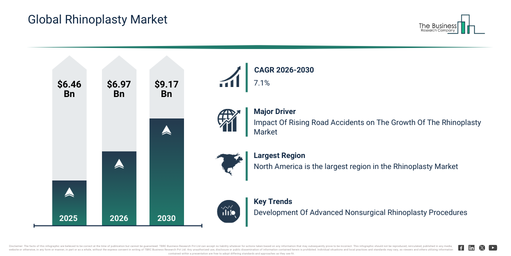
    The rhinoplasty market has experienced significant expansion in recent years. It is projected to grow from $6.46 billion in 2025 to $6.97 billion in 2026, exhibiting a compound annual growth rate (CAGR) of 8.0%. This growth in past periods can be attributed to factors such as the rising social acceptance of cosmetic surgery, the increased availability of trained plastic surgeons, the growth of private aesthetic clinics, advancements in surgical techniques, and an increasing demand for functional nasal corrections.

    The rhinoplasty market is anticipated to exhibit substantial growth over the next few years. It is projected to expand to $9.17 billion by 2030, demonstrating a compound annual growth rate (CAGR) of 7.1%. The expansion throughout the forecast period can be attributed to the rising integration of virtual surgical planning, an escalating demand for aesthetic enhancement procedures, the broadening scope of medical tourism, a greater emphasis on optimizing post-surgical outcomes, and the increased application of injectable fillers. Prominent trends within this period include a growing preference for minimally invasive procedures, the increasing acceptance of non-surgical rhinoplasty techniques, the expanded utilization of 3D imaging and simulation tools, an increase in revision and reconstructive procedures, and an enhanced focus on achieving personalized aesthetic results.

    Download the Free Sample Report to Explore Key Market Insights:

    https://www.thebusinessresearchcompany.com/sample.aspx?id=15919&type=smp

    What Primary Drivers Are Shaping The Development Of The Rhinoplasty Market?

    The increasing incidence of road accidents is anticipated to fuel the expansion of the rhinoplasty market in the future. A road accident, also known as a traffic or motor vehicle incident, constitutes an unforeseen occurrence on public roads involving one or more vehicles, leading to property damage, injuries, or fatalities. The surge in road accidents can be attributed to a rise in vehicle populations, inattentive driving, and insufficient road safety protocols. In instances of road accidents, rhinoplasty serves to reconstruct and mend nasal injuries, thereby reinstating both functionality and aesthetic appeal. This procedure addresses deformities resulting from trauma and respiratory problems stemming from nasal fractures. For example, data from April 2025, provided by the National Highway Traffic Safety Administration (NHTSA), a US-based U.S. Department of Transportation agency, indicated that the estimated number of roadway injuries reached 2.44 million in 2023, marking a 2.5% increase from 2.38 million in 2022. Consequently, the increasing prevalence of road accidents is propelling the development of the rhinoplasty market.

    Which Segment Classifications Shape The Rhinoplasty Market?

    The rhinoplasty market covered in this report is segmented –

    1) By Treatment Type: Augmentation, Reduction, Post traumatic, Reconstructive, Revision, Filler, Other Treatment Types

    2) By Technique: Open Rhinoplasty, Closed Rhinoplasty

    3) By End User: Hospitals, Specialty Clinics, Aesthetic Clinic, Others End Users

    Subsegments:

    1) By Augmentation: Nasal Implants, Bone Grafting, Cartilage Grafting

    2) By Reduction: Alar Reduction, Nasal Tip Reduction, Dorsal Hump Reduction

    3) By Post Traumatic: Functional Surgery, Cosmetic Surgery

    4) By Reconstructive: Post-Surgical Reconstruction, Congenital Reconstruction

    5) By Revision: Secondary Rhinoplasty, Tertiary Rhinoplasty

    6) By Filler: Injectable Fillers, Fat Grafting

    7) By Other Treatment Types: Non-Surgical Rhinoplasty, Hybrid Surgical

    How Are Trends Transforming The Rhinoplasty Market Landscape?

    Leading companies in the rhinoplasty market are increasingly concentrating on the development of sophisticated nonsurgical methods to uphold their market presence. Nonsurgical procedures are defined as medical treatments and interventions that do not necessitate making incisions into the body or removing tissue. Such procedures are less intrusive compared to surgical options and frequently involve a short recovery period. For example, TrueAesthetics, a US-based cosmetic services provider, launched a nonsurgical nose job procedure in February 2023. This procedure involves the deliberate injection of fillers into the nose to achieve a smoother, more aesthetically pleasing look without surgery. The most prevalent nonsurgical nose job corrects a bump on the bridge of the nose by filling the radix area, which is the nose’s highest point situated directly between the eyes, through injections along the middle of the bridge.

    Which Companies Are Expanding Their Footprint In The Rhinoplasty Market?

    Major companies operating in the rhinoplasty market are Medtronic PLC, Stryker Corporation, Zimmer Biomet, Integra Lifesciences Holdings Corporation, MTF Biologics, KLS Martin Group, Syneron Medical Ltd, Sientra Inc., Koken Co Ltd, GC Aesthetics, Merz Aesthetics, Suneva Medical Inc., Implantech Associates Inc., Luminera Derm Ltd, NOUVAG AG, COMEG Medical Technologies, Contura Ltd, Anthony Products Inc, Osteopore, Allergan Aesthetics, Galderma SA, Mentor Worldwide LLC, Establishment Labs Holdings Inc

    Read the full rhinoplasty market report here:

    https://www.thebusinessresearchcompany.com/report/rhinoplasty-global-market-report

    How Does The Rhinoplasty Market Perform Across Major Global Regions?

    North America was the largest region in the rhinoplasty market in 2025. Asia-Pacific is expected to be the fastest-growing region in the forecast period. The regions covered in the rhinoplasty market report are Asia-Pacific, South East Asia, Western Europe, Eastern Europe, North America, South America, Middle East, Africa.

    Request A Tailored Rhinoplasty Market Research Report For Competitive Advantage:

    https://www.thebusinessresearchcompany.com/customise?id=15919&type=smp

    Browse Through More Reports Similar to the Global Rhinoplasty Market 2026, By The Business Research Company

    Heart Attack Diagnostic Global Market Report

    https://www.thebusinessresearchcompany.com/report/heart-attack-diagnostic-global-market-report

    Peripheral Artery Disease Global Market Report

    https://www.thebusinessresearchcompany.com/report/peripheral-artery-disease-global-market-report

    Peripheral Arterial Disease Global Market Report

    https://www.thebusinessresearchcompany.com/report/peripheral-arterial-disease-global-market-report

    Get in touch with us:

    The Business Research Company: https://www.thebusinessresearchcompany.com/

    Americas +1 310-496-7795

    Asia +44 7882 955267 & +91 8897263534

    Europe +44 7882 955267

    Email us at info@tbrc.info

    Follow us on:

    LinkedIn: https://in.linkedin.com/company/the-business-research-company

    YouTube: https://www.youtube.com/channel/UC24_fI0rV8cR5DxlCpgmyFQ

    Global Market Model: https://www.thebusinessresearchcompany.com/global-market-model

  • A key trend shaping the Clinical Communication And Collaboration Software Market involves the Advancements In Clinical Communication And Collaboration Platforms For Enhanced Healthcare Delivery

    A key trend shaping the Clinical Communication And Collaboration Software Market involves the Advancements In Clinical Communication And Collaboration Platforms For Enhanced Healthcare Delivery

    The Business Research Company’s 2026 market reports include new capabilities such as market attractiveness scoring and analysis, total addressable market analysis, company scoring matrix, interactive excel data dashboard, improved supply chain analysis, upcoming startups in the market, and overview of key products, aimed at improving the depth, usability, and strategic value of the insights delivered.

    What Is The Forecasted Market Value Of The Clinical Communication And Collaboration Software Market Across 2026–2030?

    The market for clinical communication and collaboration software has experienced rapid expansion over recent years. Projections indicate it will expand from $2.3 billion in 2025 to reach $2.74 billion by 2026, demonstrating a compound annual growth rate (CAGR) of 18.7%. Factors contributing to this historical growth include the expansion of digital health infrastructure, increasing adoption of electronic health records, a rising need for coordinated clinical workflows, the growth in hospital information systems, and the availability of secure communication technologies.

    The clinical communication and collaboration software market size is projected to experience swift expansion over the coming years. This market is set to reach $5.38 billion by 2030, exhibiting a compound annual growth rate (CAGR) of 18.4%. Several factors contribute to this anticipated growth during the forecast period, including a heightened need for real-time clinical collaboration, increased integration of AI-enabled clinical decision support, the broadening scope of telehealth services, a greater emphasis on the efficiency of care coordination, and stricter regulatory requirements concerning data security. Key developments anticipated during this period encompass the wider adoption of cloud-based clinical communication platforms, the growing incorporation of secure messaging solutions, expanded utilization of mobile health collaboration tools, the proliferation of interoperable healthcare communication systems, and a sharpened focus on optimizing workflows.

    Download the Free Sample Report to Explore Key Market Insights:

    https://www.thebusinessresearchcompany.com/sample.aspx?id=19370&type=smp

    What Primary Drivers Are Shaping The Development Of The Clinical Communication And Collaboration Software Market?

    The increasing integration of digital technologies is projected to drive the expansion of the clinical communication and collaboration software markets in the future. These technologies encompass electronic tools and systems for managing, storing, or processing data, such as personal computers, mobile devices or applications, cloud services, and artificial intelligence (AI). The growing uptake of digital technology is primarily motivated by businesses’ need to enhance operational efficiency and maintain a competitive edge, enabling them to optimize processes and make informed choices. Digital technologies enhance clinical communication and collaboration software by facilitating immediate data exchange, unifying various digital platforms, and refining patient information handling, thereby aiding healthcare professionals in improving coordination and patient care quality. For example, the European Commission, a Belgium-based organization, reported in July 2024 that Europe demonstrated advancements in eHealth maturity during 2024, as the EU27-average overall composite score climbed to 79% from 72% in the preceding year. Consequently, the expanding adoption of digital technologies is propelling the growth within the clinical communication and collaboration software market.

    What Segmentation Levels Are Considered In The Clinical Communication And Collaboration Software Market?

    The clinical communication and collaboration software market covered in this report is segmented –

    1) By Type: Cloud Based, Web Based

    2) By Functionality: Secure Messaging, Medical Alerts And Alarms, Mobile Health Integration

    3) By Application: Clinical Workflows, Administrative Workflows

    4) By End User: Hospitals, Clinics And Ambulatory Settings, Long-Term Care Facilities

    Subsegments:

    1) By Cloud Based: SaaS (Software as a Service) Solutions, Cloud Messaging Platforms, Cloud Storage and File Sharing Solutions

    2) By Web Based: Web-Based Communication Portals, Online Collaboration Tools, Web-Based Telemedicine Platforms

    What Major Market Trends Are Driving Changes In The Clinical Communication And Collaboration Software Market?

    Prominent organizations within the clinical communication and collaboration software market are concentrating on developing platforms that support patient monitoring, community care, and augmented reality, aiming to improve real-time care delivery and health outcomes. Such a platform functions as an integrated digital solution, facilitating continuous health tracking, coordinating care across various communities, and leveraging augmented reality technology to boost patient engagement and refine clinical processes. For example, in June 2024, Mitel Networks Corporation, a US-based cloud computing firm specializing in software solutions, introduced its Virtual Care and Collaboration Service (VCCS), a platform specifically crafted to enhance digital healthcare offerings. Initially rolled out in seven European nations, including the UK, France, and Italy, the company intends to expand its availability globally by year-end. VCCS is designed to streamline patient-centered care by providing secure, digital video consultations along with integrated communication capabilities such as voice and video calls, messaging, screen sharing, and file sharing. These tools are designed for ease of use, requiring no additional software installations. By seamlessly integrating into current healthcare workflows, the platform assists providers in improving both operational efficiency and patient results.

    Which Leading Firms Are Contributing To The Growth Of The Clinical Communication And Collaboration Software Market?

    Major companies operating in the clinical communication and collaboration software market are Microsoft Corporation, Oracle Corporation, Hillrom Holdings Inc., Everbridge Inc., Ascom Holding AG, Vocera Communications Inc., Spok Holdings Inc., Imprivata Inc., Symplr, PerfectServe Inc., QliqSOFT Inc., Voalte Inc., Agnity Inc., Telmediq Inc., AMTELCO, PatientSafe Solutions Inc., OnPage Corporation, TigerConnect Inc., NHSmail, Pulsara Inc., Mobile Heartbeat Inc.

    Read the full clinical communication and collaboration software market report here:

    https://www.thebusinessresearchcompany.com/report/clinical-communication-and-collaboration-software-global-market-report

    How Does The Clinical Communication And Collaboration Software Market Perform Across Major Global Regions?

    North America was the largest region in the clinical communication and collaboration software market in 2025. Asia-Pacific is expected to be the fastest-growing region in the forecast period. The regions covered in the clinical communication and collaboration software market report are Asia-Pacific, South East Asia, Western Europe, Eastern Europe, North America, South America, Middle East, Africa.

    Request A Tailored Clinical Communication And Collaboration Software Market Research Report For Competitive Advantage:

    https://www.thebusinessresearchcompany.com/customise?id=19370&type=smp

    Browse Through More Reports Similar to the Global Clinical Communication And Collaboration Software Market 2026, By The Business Research Company

    Clinical Chemistry Analyzers Global Market Report

    https://www.thebusinessresearchcompany.com/report/clinical-chemistry-analyzers-global-market-report

    Dental Diagnostic Imaging Devices And Equipment Global Market Report

    https://www.thebusinessresearchcompany.com/report/dental-diagnostic-imaging-devices-and-equipment-global-market-report

    Laboratory Chemicals Global Market Report

    https://www.thebusinessresearchcompany.com/report/laboratory-chemicals-global-market-report

    Get in touch with us:

    The Business Research Company: https://www.thebusinessresearchcompany.com/

    Americas +1 310-496-7795

    Asia +44 7882 955267 & +91 8897263534

    Europe +44 7882 955267

    Email us at info@tbrc.info

    Follow us on:

    LinkedIn: https://in.linkedin.com/company/the-business-research-company

    YouTube: https://www.youtube.com/channel/UC24_fI0rV8cR5DxlCpgmyFQ

    Global Market Model: https://www.thebusinessresearchcompany.com/global-market-model

  • Global Rheumatic Heart Disease Market Set for Strong Expansion Reaching $3.6 Billion by 2030 at 5.8% CAGR

    Global Rheumatic Heart Disease Market Set for Strong Expansion Reaching $3.6 Billion by 2030 at 5.8% CAGR

    The Business Research Company’s 2026 market reports include new capabilities such as market attractiveness scoring and analysis, total addressable market analysis, company scoring matrix, interactive excel data dashboard, improved supply chain analysis, upcoming startups in the market, and overview of key products, aimed at improving the depth, usability, and strategic value of the insights delivered.

    What Market Size Growth Is Projected For The Rheumatic Heart Disease Market During The Forecast Period 2026–2030?

    The rheumatic heart disease market size has seen substantial growth over recent years. It is anticipated to expand from $2.71 billion in 2025 to $2.88 billion in 2026, achieving a compound annual growth rate (CAGR) of 6.1%. The historical development of this market can be linked to a high incidence of untreated streptococcal infections, restricted access to initial healthcare in developing regions, the enduring impact of rheumatic fever, reliance on clinical diagnostic approaches, and the limited provision of advanced cardiac treatment.

    The rheumatic heart disease market size is projected to witness substantial growth in the coming years, reaching $3.6 billion in 2030 with a compound annual growth rate (CAGR) of 5.8%. This expansion during the forecast period can be ascribed to escalating investments in public health screening programs, the rising adoption of digital cardiac diagnostics, growing awareness about the advantages of early intervention, the expansion of cardiac surgical infrastructure, and an increased emphasis on disease prevention strategies. Key trends anticipated during this period include a broader adoption of early diagnostic screening programs, an increasing utilization of echocardiography and imaging tools, a developing focus on preventive antibiotic therapies, the expansion of valve repair and replacement procedures, and enhanced monitoring for pediatric and adolescent patients.

    Download the Free Sample Report to Explore Key Market Insights:

    https://www.thebusinessresearchcompany.com/sample.aspx?id=23502&type=smp

    Which Major Factors Are Driving The Expansion Of The Rheumatic Heart Disease Market?

    The rheumatic heart disease market is anticipated to expand, driven by the increasing prevalence of strep throat. Strep throat is a bacterial infection caused by Streptococcus pyogenes (Group A Streptococcus), which results in inflammation and pain in the throat, frequently accompanied by fever, swollen lymph nodes, and difficulty swallowing. Growing antibiotic resistance is making streptococcal infections more challenging to treat effectively, leading to prolonged illness and increased transmission rates in communities. Rheumatic heart disease develops as a long-term complication when strep throat infections are left untreated or recur, highlighting the critical need for early diagnosis and treatment of streptococcal infections to prevent severe heart damage. For instance, in April 2023, according to the Centers for Disease Control and Prevention, a US-based government department, strep throat is responsible for an estimated 5.2 million outpatient visits annually among individuals younger than 65 years old. These visits lead to 2.8 million antibiotic prescriptions each year. Therefore, the increasing prevalence of strep throat is propelling the growth of the rheumatic heart disease market.

    What Market Segments Are Evaluated Within The Rheumatic Heart Disease Market?

    The rheumatic heart disease market covered in this report is segmented –

    1) By Type: Valve, Myocarditis, Pericarditis

    2) By Age Group: Pediatric, Adolescent, Adult, Geriatric

    3) By Application: Hospital, Diagnostic Centre, Research Centre

    4) By Distribution Channel: Hospital Pharmacies, Retail Pharmacies, Online Pharmacies, Direct Sales

    Subsegments:

    1) By Valve: Mitral Valve Disease, Aortic Valve Disease, Tricuspid Valve Disease, Pulmonary Valve Disease

    2) By Myocarditis: Acute Myocarditis, Chronic Myocarditis, Fulminant Myocarditis

    3) By Pericarditis: Acute Pericarditis, Chronic Pericarditis, Constrictive Pericarditis, Effusive Pericarditis

    Which Trends Are Impacting The Growth Of The Rheumatic Heart Disease Market?

    Leading organizations active in the rheumatic heart disease market are increasingly pursuing strategic collaborations to advance the creation of novel treatments and diagnostic solutions. These strategic alliances in the realm of rheumatic heart disease (RHD) management bring together diverse resources and specialized knowledge, aiming to propel research and development, improve diagnostic and therapeutic breakthroughs, broaden market reach, and expedite commercialization processes. As an illustration, in July 2023, the World Heart Federation (WHF), a non-governmental organization headquartered in Switzerland, entered into a partnership with the Philips Foundation, a nonprofit entity from the Netherlands, with the goal of enhancing awareness, providing medical education, and facilitating the prompt detection of rheumatic heart disease (RHD) across the Asia-Pacific (APAC) region. This initiative, which commenced in the Philippines, endeavors to boost healthcare accessibility for more than half a million at-risk Filipino children by furnishing medical centers with skilled personnel and sophisticated diagnostic equipment. The joint effort highlights a collective dedication to reinforcing the healthcare framework and ensuring prompt treatment for individuals with RHD.

    Who Are The Top Market Participants Influencing The Rheumatic Heart Disease Market?

    Major companies operating in the rheumatic heart disease market are Pfizer Inc., Merck And Co Inc., Bayer AG, Sanofi SA, AstraZeneca plc, Novartis AG, Abbott Laboratories, GlaxoSmithKline plc, Medtronic plc, Siemens Healthineers AG, Becton Dickinson And Company, GE HealthCare Technologies Inc., Boston Scientific Corporation, Terumo Corporation, Apollo Hospitals Enterprise Limited, Fortis Healthcare Limited, Medanta, Johnson And Johnson Services Inc., Roche Holding AG, Bristol Myers Squibb Company, Takeda Pharmaceutical Company Limited, Daiichi Sankyo Company, Boehringer Ingelheim International GmbH, Edwards Lifesciences Corporation

    Read the full rheumatic heart disease market report here:

    https://www.thebusinessresearchcompany.com/report/rheumatic-heart-disease-global-market-report

    Which Region Currently Holds The Largest Share Of The Rheumatic Heart Disease Market?

    North America was the largest region in the rheumatic heart disease market in 2025. The regions covered in the rheumatic heart disease market report are Asia-Pacific, South East Asia, Western Europe, Eastern Europe, North America, South America, Middle East, Africa.

    Request A Tailored Rheumatic Heart Disease Market Research Report For Competitive Advantage:

    https://www.thebusinessresearchcompany.com/customise?id=23502&type=smp

    Browse Through More Reports Similar to the Global Rheumatic Heart Disease Market 2026, By The Business Research Company

    Soft Tissue Sarcoma Global Market Report

    https://www.thebusinessresearchcompany.com/report/soft-tissue-sarcoma-global-market-report

    Medulloblastoma Drug Global Market Report

    https://www.thebusinessresearchcompany.com/report/medulloblastoma-drug-global-market-report

    Emphysema Global Market Report

    https://www.thebusinessresearchcompany.com/report/emphysema-global-market-report

    Get in touch with us:

    The Business Research Company: https://www.thebusinessresearchcompany.com/

    Americas +1 310-496-7795

    Asia +44 7882 955267 & +91 8897263534

    Europe +44 7882 955267

    Email us at info@tbrc.info

    Follow us on:

    LinkedIn: https://in.linkedin.com/company/the-business-research-company

    YouTube: https://www.youtube.com/channel/UC24_fI0rV8cR5DxlCpgmyFQ

    Global Market Model: https://www.thebusinessresearchcompany.com/global-market-model
  • Rhabdomyosarcoma Market Growth Expected to Reach $2.97 Billion by 2030 with 15.7% CAGR

    Rhabdomyosarcoma Market Growth Expected to Reach $2.97 Billion by 2030 with 15.7% CAGR

    The Business Research Company’s 2026 market reports include new capabilities such as market attractiveness scoring and analysis, total addressable market analysis, company scoring matrix, interactive excel data dashboard, improved supply chain analysis, upcoming startups in the market, and overview of key products, aimed at improving the depth, usability, and strategic value of the insights delivered.

    How Will The Market Size Of The Rhabdomyosarcoma Market Evolve From 2026 To 2030?

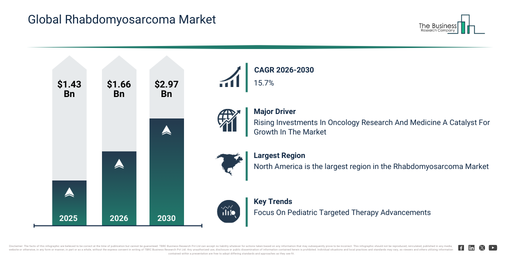
    The market for rhabdomyosarcoma has experienced significant expansion recently. This market is projected to expand from $1.43 billion in 2025 to reach $1.66 billion in 2026, demonstrating a compound annual growth rate (CAGR) of 16.1%. Historically, this growth can be ascribed to several factors, including enhancements in cancer diagnostic imaging, the proliferation of oncology treatment centers, the accessibility of combination chemotherapy protocols, a heightened understanding of pediatric cancers, and breakthroughs in surgical oncology techniques.

    The rhabdomyosarcoma market is anticipated to experience substantial growth over the next few years. It is projected to expand to $2.97 billion by 2030, demonstrating a compound annual growth rate (CAGR) of 15.7%. This expansion during the forecast period is attributable to increasing investment in precision oncology drugs, the rising adoption of immunotherapy and targeted treatments, the expansion of clinical trials for rare cancers, the growing use of AI-assisted diagnostics, and an increasing focus on early-stage cancer detection. Significant trends expected in the forecast period include the increasing development of targeted cancer therapies, a rising use of advanced imaging for early diagnosis, the growing adoption of multimodal treatment approaches, the expansion of pediatric oncology research, and an enhanced focus on precision oncology.

    Download the Free Sample Report to Explore Key Market Insights:

    https://www.thebusinessresearchcompany.com/sample.aspx?id=21276&type=smp

    What Key Drivers Are Influencing The Growth Of The Rhabdomyosarcoma Market?

    Future expansion of the rhabdomyosarcoma market is anticipated to be fueled by growing financial commitments to oncology research and medical advancements. These investments signify monetary provisions from governments, pharmaceutical companies, research institutions, and private contributors, directed towards enhancing comprehension, prevention, detection, and therapy for cancer. The surge in oncology research and medicine funding is attributable to factors like the escalating worldwide cancer prevalence, breakthroughs in precision medicine, a heightened need for novel treatments, the expansion of clinical studies, governmental and private funding efforts, and the emergence of targeted and immunotherapy options. Such financial support significantly benefits rhabdomyosarcoma through facilitating progress in early detection, improving treatment modalities including targeted and immunotherapies, financing clinical trials for superior medications, upgrading pediatric cancer care facilities, and stimulating novel investigations into the disease’s biological mechanisms and advancement. An illustrative example highlights this trend: in May 2024, data from IQVIA, an India-based information technology company specializing in advanced analytics, indicated that global expenditure on cancer medicines reached $223 billion in 2023, representing a $25 billion rise from 2022, with projections estimating an increase to $409 billion by 2028. Consequently, heightened investments in oncology research and medicine are a key catalyst for the rhabdomyosarcoma market.

    Which Segment Areas Are Covered In The Rhabdomyosarcoma Market Analysis?

    The rhabdomyosarcoma market covered in this report is segmented –

    1) By Type: Embryonal Rhabdomyosarcoma, Alveolar Rhabdomyosarcoma, Other Types

    2) By Treatment: Surgery, Radiation Therapy, Chemotherapy, Stem Cell Therapy

    3) By Diagnosis: Imaging Tests, X-Ray, Computed Tomography Scan, Magnetic Resonance Imaging Scan, Positron Emission Tomography Scan, Bone Scan, Biopsy, Needle Biopsy, Surgical Biopsy

    Subsegments:

    1) By Embryonal Rhabdomyosarcoma: Botryoid Rhabdomyosarcoma, Spindle Cell Rhabdomyosarcoma

    2) By Alveolar Rhabdomyosarcoma (ARMS): Fusion-Positive ARMS, Fusion-Negative ARMS

    3) By Other Types of Rhabdomyosarcoma: Pleomorphic Rhabdomyosarcoma, Mixed-Type Rhabdomyosarcoma, Sclerosing Rhabdomyosarcoma

    What Major Market Trends Are Driving Changes In The Rhabdomyosarcoma Market?

    Leading companies in the rhabdomyosarcoma market are prioritizing the development of sophisticated targeted therapy solutions to boost treatment efficacy and patient recovery. Targeted therapy utilizes medications designed to specifically interfere with molecular pathways essential for cancer cell growth and survival, thereby minimizing damage to healthy tissues and enhancing therapeutic precision. For instance, in October 2023, Oncoheroes Biosciences, Inc., a US-based biotechnology company, obtained U.S. Food and Drug Administration (FDA) approval to initiate clinical trials for two compounds, volasertib and dovitinib. Volasertib operates as a Polo-like-kinase 1 inhibitor, initially created for acute myeloid leukemia, and exhibits promise in treating rhabdomyosarcoma and other pediatric cancers. Dovitinib acts as a pan-tyrosine kinase inhibitor, targeting FGFR, VEGFR, and other receptor tyrosine kinases, with potential for pediatric bone sarcomas and employing exploratory biomarkers to identify potential responders. Both drugs are intended to deliver accurate intervention, lessen side effects, and provide improved outcomes for pediatric patients. The trials involve careful patient selection, biomarker-driven methods, and close observation to evaluate safety and effectiveness, signifying a key advancement in pediatric oncology and fresh hope for children impacted by rhabdomyosarcoma.

    Which Global Companies Are Actively Competing In The Rhabdomyosarcoma Market?

    Major companies operating in the rhabdomyosarcoma market are Pfizer Inc., Merck And Co Inc., Bristol Myers Squibb Company, AstraZeneca PLC, Novartis AG, Eli Lilly And Company, Eisai Co Ltd, Ipsen SA, Elekta AB, Acrivon Therapeutics Inc., Oasmia Pharmaceutical AB, Immix Biopharma Inc., Cellectar Biosciences Inc., Lantern Pharma Inc., Oncoheroes Biosciences Inc., Roche Holding AG, Sanofi SA, Bayer AG, Johnson And Johnson Services Inc., Takeda Pharmaceutical Company Limited, Amgen Inc., Daiichi Sankyo Company, GlaxoSmithKline Plc, Teva Pharmaceutical Industries Ltd

    Read the full rhabdomyosarcoma market report here:

    https://www.thebusinessresearchcompany.com/report/rhabdomyosarcoma-global-market-report

    Which Region Is Expected To Register The Fastest Growth In The Rhabdomyosarcoma Market?

    North America was the largest region in the rhabdomyosarcoma market in 2025. Asia-Pacific is expected to be the fastest-growing region in the forecast period. The regions covered in the rhabdomyosarcoma market report are Asia-Pacific, South East Asia, Western Europe, Eastern Europe, North America, South America, Middle East, Africa.

    Request A Tailored Rhabdomyosarcoma Market Research Report For Competitive Advantage:

    https://www.thebusinessresearchcompany.com/customise?id=21276&type=smp

    Browse Through More Reports Similar to the Global Rhabdomyosarcoma Market 2026, By The Business Research Company

    Airway Stent Global Market Report

    https://www.thebusinessresearchcompany.com/report/airway-stent-global-market-report

    Tracheitis Treatment Global Market Report

    https://www.thebusinessresearchcompany.com/report/tracheitis-treatment-global-market-report

    Respiratory Disease Drugs Global Market Report

    https://www.thebusinessresearchcompany.com/report/respiratory-disease-drugs-global-market-report

    Get in touch with us:

    The Business Research Company: https://www.thebusinessresearchcompany.com/

    Americas +1 310-496-7795

    Asia +44 7882 955267 & +91 8897263534

    Europe +44 7882 955267

    Email us at info@tbrc.info

    Follow us on:

    LinkedIn: https://in.linkedin.com/company/the-business-research-company

    YouTube: https://www.youtube.com/channel/UC24_fI0rV8cR5DxlCpgmyFQ

    Global Market Model: https://www.thebusinessresearchcompany.com/global-market-model
  • Reversible Airway Diseases Treatment Market Forecast 2026–2035 Reflecting Expansion Opportunities Across Industries

    Reversible Airway Diseases Treatment Market Forecast 2026–2035 Reflecting Expansion Opportunities Across Industries

    The Business Research Company’s 2026 market reports include new capabilities such as market attractiveness scoring and analysis, total addressable market analysis, company scoring matrix, interactive excel data dashboard, improved supply chain analysis, upcoming startups in the market, and overview of key products, aimed at improving the depth, usability, and strategic value of the insights delivered.

    What Is The Forecasted Market Value Of The Reversible Airway Diseases Treatment Market Across 2026–2030?

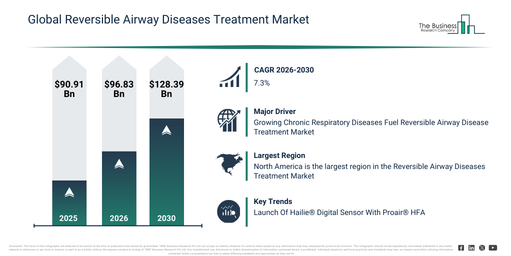
    The reversible airway diseases treatment market size has experienced strong growth in recent years. It is anticipated to increase from $90.91 billion in 2025 to $96.83 billion in 2026, at a compound annual growth rate (CAGR) of 6.5%. The expansion witnessed in the historic period can be attributed to the increasing prevalence of asthma and bronchitis, the expansion of pulmonary care infrastructure, the availability of inhalation therapies, rising environmental pollution levels, and improved access to diagnostic imaging.

    The reversible airway diseases treatment market is projected to experience substantial expansion over the coming years. This market is set to reach a size of $128.39 billion by 2030, exhibiting a compound annual growth rate (CAGR) of 7.3%. Several factors are expected to fuel this growth during the forecast period, including an increasing emphasis on biologic respiratory drugs, the growing acceptance of remote patient monitoring, the broadening scope of minimally invasive pulmonary procedures, a heightened focus on preventive respiratory care, and increased investment in research for respiratory diseases. Key developments anticipated in this period encompass the rising uptake of personalized respiratory therapies, a greater utilization of advanced diagnostic imaging, a concentrated effort on early disease detection, the wider availability of combination drug therapies, and improved integration of digital pulmonary monitoring.

    Download the Free Sample Report to Explore Key Market Insights:

    https://www.thebusinessresearchcompany.com/sample.aspx?id=12944&type=smp

    What Major Growth Drivers Are Shaping The Outlook Of The Reversible Airway Diseases Treatment Market?

    An increasing prevalence of chronic respiratory illnesses is anticipated to drive the expansion of the reversible airway disease treatment market in the future. These conditions are health issues impacting the respiratory system, encompassing organs such as the lungs, bronchi, trachea, larynx, pharynx, and nasal passages. Early testing and therapeutic interventions for chronic respiratory diseases facilitate the prompt identification and diagnosis of ailments like acute respiratory distress syndrome, thereby aiding in preventing their advancement and mitigating the risk of complications. For example, data from February 2024 published by the UK Health Security Agency, a government body located in the UK, indicated that tuberculosis (TB) incidents in England saw a 10.7% rise in 2023, increasing from 4,380 occurrences in 2022 to 4,850. This signifies a considerable increase in TB occurrences throughout that year. Consequently, the rising incidence of chronic respiratory conditions is projected to boost the expansion of the reversible airway disease treatment market.

    What Segmentation Levels Are Considered In The Reversible Airway Diseases Treatment Market?

    The reversible airway diseases treatment market covered in this report is segmented –

    1) By Treatment: Chest X Ray, Computed Tomography (CT) Scan, Lung Therapies, Surgery Transplant, Medications

    2) By Diseases: Asthma, Chronic Bronchitis, Allergic Rhinitis, Bronchiolitis, Other Diseases

    3) By End-Users: Hospitals, Specialty Clinics, Other End-Users

    Subsegments:

    1) By Chest X-Ray: Standard Chest X-Ray, Digital Chest X-Ray

    2) By Computed Tomography (CT) Scan: High-Resolution CT Scan, Spiral CT Scan

    3) By Lung Therapies: Inhalation Therapy, Pulmonary Rehabilitation, Oxygen Therapy

    4) By Surgery Transplant: Lung Transplant, Bronchoscopic Procedures, Other Surgical Interventions

    5) By Medications: Bronchodilators, Corticosteroids, Anticholinergics, Other Medications

    Which Trends Are Shaping The Future Of The Reversible Airway Diseases Treatment Market?

    Leading companies within the reversible airway disease treatment market are prioritizing the development of sophisticated digital sensor solutions to enhance patient monitoring and care. This digital sensor technology captures real-time physiological parameters and medication usage data, allowing healthcare providers to remotely track patient inhaler adherence and technique. For instance, in March 2023, Adherium Limited, an Australia-based digital health company, secured U.S. FDA 510(k) clearance for its next-generation Hailie sensor, designed to integrate with Teva’s ProAir HFA and Albuterol Sulphate inhalers. The Hailie sensor provides comprehensive insights into inhaler use and physiological parameters, enabling physicians to monitor both maintenance and rescue medications. It delivers real-time feedback on inhaler technique, supports clinical decision-making, and facilitates remote patient monitoring under U.S. CMS reimbursement codes. The device allows doctors to maintain control over medication decisions while accessing actionable data to improve patient outcomes. Adherium’s solution is compatible with multiple inhalers, covering a significant portion of top U.S. branded medications, and integrates seamlessly with mobile and desktop applications, offering a drug-agnostic platform for enhanced respiratory disease management.

    Which Leading Firms Are Contributing To The Growth Of The Reversible Airway Diseases Treatment Market?

    Major companies operating in the reversible airway diseases treatment market are Pfizer Inc., F Hoffmann La Roche AG, Merck And Co Inc., AbbVie Inc., Novartis AG, Sanofi SA, GlaxoSmithKline Plc, Medtronic plc, Eli Lilly And Company, Boehringer Ingelheim International GmbH, Viatris Inc., Teva Pharmaceutical Industries Ltd, Sumitomo Dainippon Pharma Co Ltd, Sun Pharmaceutical Industries Ltd, Drägerwerk AG And Co KGaA, Dr Reddys Laboratories Ltd, Cipla Limited, Getinge AB, Hikma Pharmaceuticals plc, Amneal Pharmaceuticals LLC, Lupin Limited, Fisher And Paykel Healthcare Corporation Limited, AstraZeneca Plc, Chiesi Farmaceutici SpA

    Read the full reversible airway diseases treatment market report here:

    https://www.thebusinessresearchcompany.com/report/reversible-airway-diseases-treatment-global-market-report

    Which Regions Are Projected To Dominate The Reversible Airway Diseases Treatment Market In The Coming Years?

    North America was the largest region in the reversible airway diseases treatment market in 2025. Asia-Pacific is expected to be the fastest-growing region in the forecast period. The regions covered in the reversible airway diseases treatment market report are Asia-Pacific, South East Asia, Western Europe, Eastern Europe, North America, South America, Middle East, Africa.

    Request A Tailored Reversible Airway Diseases Treatment Market Research Report For Competitive Advantage:

    https://www.thebusinessresearchcompany.com/customise?id=12944&type=smp

    Browse Through More Reports Similar to the Global Reversible Airway Diseases Treatment Market 2026, By The Business Research Company

    Revenue Cycle Management Rcm Global Market Report

    https://www.thebusinessresearchcompany.com/report/revenue-cycle-management-rcm-global-market-report

    Tax Management Software Global Market Report

    https://www.thebusinessresearchcompany.com/report/tax-management-software-global-market-report

    Healthcare Revenue Cycle Management Global Market Report

    https://www.thebusinessresearchcompany.com/report/healthcare-revenue-cycle-management-global-market-report

    Get in touch with us:

    The Business Research Company: https://www.thebusinessresearchcompany.com/

    Americas +1 310-496-7795

    Asia +44 7882 955267 & +91 8897263534

    Europe +44 7882 955267

    Email us at info@tbrc.info

    Follow us on:

    LinkedIn: https://in.linkedin.com/company/the-business-research-company

    YouTube: https://www.youtube.com/channel/UC24_fI0rV8cR5DxlCpgmyFQ

    Global Market Model: https://www.thebusinessresearchcompany.com/global-market-model
  • Global Revenue Cycle Management Software Market Analysis for 2026–2030 with Strategic Forecast Insights for Businesses

    Global Revenue Cycle Management Software Market Analysis for 2026–2030 with Strategic Forecast Insights for Businesses

    The Business Research Company’s 2026 market reports include new capabilities such as market attractiveness scoring and analysis, total addressable market analysis, company scoring matrix, interactive excel data dashboard, improved supply chain analysis, upcoming startups in the market, and overview of key products, aimed at improving the depth, usability, and strategic value of the insights delivered.

    What Market Size Increase Is Anticipated For The Revenue Cycle Management Software Market Over The 2026–2030 Period?

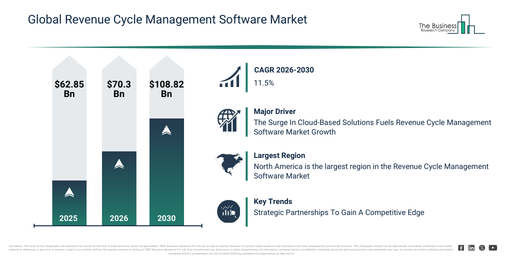
    The revenue cycle management software market has experienced swift expansion in recent years. It is anticipated to increase from $62.85 billion in 2025 to $70.3 billion in 2026, exhibiting a compound annual growth rate (CAGR) of 11.8%. The historical growth can be attributed to several factors, including the increasing digitization of healthcare records, the uptake of practice management software, the expansion of outpatient care facilities, the growing intricacy of insurance, and the demand for operational efficiency.

    The revenue cycle management software market is projected to experience swift expansion in the coming years, with its size anticipated to reach $108.82 billion by 2030, exhibiting a compound annual growth rate (CAGR) of 11.5%. This projected growth during the forecast period stems from factors such as a heightened demand for scalable cloud RCM software, a greater emphasis on achieving real-time financial visibility, the proliferation of subscription-based software models, the increasing incorporation of AI-driven analytics, and an escalating regulatory focus on data protection. Key trends anticipated during this period encompass the wider adoption of AI-powered billing software, a rise in the deployment of cloud-based RCM platforms, deeper integration with EHR systems, the broadened availability of automated payment and remittance tools, and an intensified commitment to data security and compliance.

    Download the Free Sample Report to Explore Key Market Insights:

    https://www.thebusinessresearchcompany.com/sample.aspx?id=3377&type=smp

    What Drivers Are Expected To Influence The Revenue Cycle Management Software Market During The Forecast Period?

    The increasing use of cloud-based solutions is projected to fuel the expansion of the revenue cycle management software market moving forward. Such solutions involve programs, storage spaces, on-demand services, computer networks, and other offerings that can be accessed via an internet connection through a shared cloud computing framework provided by another entity. Implementing cloud-based solutions within revenue cycle management software enhances scalability, accessibility, and cost-efficiency for healthcare financial activities. For instance, in June 2024, AAG IT Services, a non-government organization based in the UK, indicated that public cloud service revenue surged to more than $415 billion in 2022, before rising to $526 billion in 2023. Thus, the growing embrace of cloud-based solutions is actively propelling the growth of the revenue cycle management software market.

    How Is The Revenue Cycle Management Software Market Segmented Across Key Categories?

    The revenue cycle management software market covered in this report is segmented –

    1) By Product: Integrated, Standalone

    2) By Function: Claim And Denial, Medical Biling And Coding, Patient Insurance Eligibility Check, Payment Remittance, Electronic Health Record (EHR), Clinical Documentation Improvement (CDI), Other Functions

    3) By Deployment: Web based, On premise, Cloud based

    Subsegments:

    1) By Integrated: Hospital-Integrated, Physician-Integrated, Payer-Integrated

    2) By Standalone: Billing And Coding Software, Payment Processing Software, Denial Management Software, Accounts Receivable Management Software, Others (Reporting And Analytics Software)

    What Key Trends Are Influencing The Development Of The Revenue Cycle Management Software Market?

    Leading entities in the revenue cycle management software market are concentrating on forging strategic alliances to generate market revenue. These inter-company collaborations yield numerous advantages, including enhanced access to new technologies, a wider array of choices for customers, global service provision capabilities, a unified global platform for cooperation, and the seamless integration of services. For example, in April 2023, Accenture PLC, an Ireland-based professional services company, entered into a partnership with Conga, a US-based provider of revenue lifecycle management solutions, with the goal of assisting organizations in transforming their revenue lifecycle management (RLM) processes. This joint effort merges Accenture’s strengths in delivery, advisory, and industry experience with Conga’s revenue lifecycle management solutions, specifically targeting the healthcare, life sciences, financial services, high-tech, and industrial industries.

    Who Are The Dominant Players Shaping The Revenue Cycle Management Software Market Landscape?

    Major companies operating in the revenue cycle management software market are Accretive Health Inc., 3M Health Information Systems, QWay Healthcare, R1 RCM, Epic Systems, McKesson Corporation, Cerner Corporation, Allscripts Healthcare Solutions, Waystar, Kareo, DrChrono, Availity, Optum360 Solutions LLC, Care Cloud Concierge, TriZetto Provider Solutions, Athenahealth, EclinicalWorks, AdvantEdge Healthcare Solutions, AGS Health, BillingParadise, Change Healthcare, Conifer Health Solutions, Craneware, Experian Health

    Read the full revenue cycle management software market report here:

    https://www.thebusinessresearchcompany.com/report/revenue-cycle-management-software-global-market-report

    Which Region Is Forecast To Lead The Revenue Cycle Management Software Market In Terms Of Market Size?

    North America was the largest region in the revenue cycle management software market in 2025. Western Europe was the second-largest region in the revenue cycle management software market report. The regions covered in the revenue cycle management software market report are Asia-Pacific, South East Asia, Western Europe, Eastern Europe, North America, South America, Middle East, Africa.

    Request A Tailored Revenue Cycle Management Software Market Research Report For Competitive Advantage:

    https://www.thebusinessresearchcompany.com/customise?id=3377&type=smp

    Browse Through More Reports Similar to the Global Revenue Cycle Management Software Market 2026, By The Business Research Company

    Revenue Cycle Management Software Global Market Report

    https://www.thebusinessresearchcompany.com/report/revenue-cycle-management-software-global-market-report

    Healthcare Revenue Cycle Management Global Market Report

    https://www.thebusinessresearchcompany.com/report/healthcare-revenue-cycle-management-global-market-report

    Telecom Billing And Revenue Management Global Market Report

    https://www.thebusinessresearchcompany.com/report/telecom-billing-and-revenue-management-global-market-report

    Get in touch with us:

    The Business Research Company: https://www.thebusinessresearchcompany.com/

    Americas +1 310-496-7795

    Asia +44 7882 955267 & +91 8897263534

    Europe +44 7882 955267

    Email us at info@tbrc.info

    Follow us on:

    LinkedIn: https://in.linkedin.com/company/the-business-research-company

    YouTube: https://www.youtube.com/channel/UC24_fI0rV8cR5DxlCpgmyFQ

    Global Market Model: https://www.thebusinessresearchcompany.com/global-market-model
  • Revenue Cycle Management (RCM) Market Outlook 2026–2035 Driven by Key Growth Factors and Industry Projections

    Revenue Cycle Management (RCM) Market Outlook 2026–2035 Driven by Key Growth Factors and Industry Projections

    The Business Research Company’s 2026 market reports include new capabilities such as market attractiveness scoring and analysis, total addressable market analysis, company scoring matrix, interactive excel data dashboard, improved supply chain analysis, upcoming startups in the market, and overview of key products, aimed at improving the depth, usability, and strategic value of the insights delivered.

    How Much Is The Revenue Cycle Management (RCM) Market Expected To Grow In Terms Of Market Value Between 2026 And 2030?

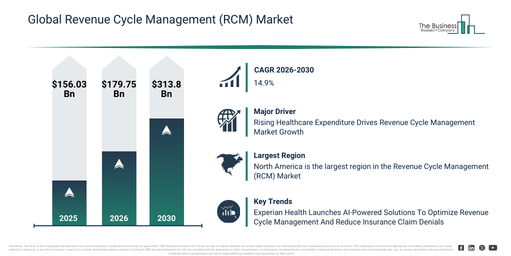
    Over recent years, the market for revenue cycle management (rcm) has experienced significant expansion. It is projected to increase from $156.03 billion in 2025 to $179.75 billion in 2026, exhibiting a compound annual growth rate (CAGR) of 15.2%. Historically, this growth has been driven by factors such as the increasing complexity of healthcare administration, a rise in insurance claim volumes, the adoption of electronic health records, the expansion of outsourced billing services, and the imperative to reduce revenue leakage.

    The revenue cycle management (rcm) market is projected to experience significant expansion in the upcoming years, with its size anticipated to reach $313.8 billion by 2030, exhibiting a compound annual growth rate (CAGR) of 14.9%. This projected growth is driven by several factors, including a heightened demand for real-time revenue analytics, an uptake in end-to-end digital rcm solution implementation, the proliferation of value-based care models, an increased emphasis on interoperability across various healthcare systems, and the expanding utilization of predictive financial analytics. Key trends anticipated during this period encompass the increasing integration of AI-driven coding and billing instruments, a noticeable migration towards cloud-based rcm platforms, a surging requirement for automated claims management, the widening scope of analytics-driven revenue optimization, and a sharper focus on ensuring compliance and regulatory precision.

    Download the Free Sample Report to Explore Key Market Insights:

    https://www.thebusinessresearchcompany.com/sample.aspx?id=7712&type=smp

    What Drivers Are Influencing The Revenue Cycle Management (RCM) Market?

    Rising healthcare spending is projected to drive the expansion of the revenue cycle management market in the future. This category encompasses all costs associated with providing health services, family planning, nutrition programs, and health-specific emergency assistance. Given the escalating costs in healthcare, medical facilities are increasingly implementing sophisticated solutions like revenue cycle management to oversee both administrative and clinical operations. Such solutions are integral to efficiently handling claims processing, managing payments, and generating revenue. As an illustration, in April 2025, data from the American Medical Association (AMA), a US-based professional organization, indicated that U.S. health spending experienced a significant increase of 7.5% in 2023, totaling $4.9 trillion, which translates to approximately $14,570 per individual. This marked a considerable acceleration from the 4.6% growth rate observed in 2022. Consequently, the escalating healthcare expenditure is a primary factor fueling the expansion of the revenue cycle management market.

    What Major Segment Divisions Exist Within The Revenue Cycle Management (RCM) Market?

    The revenue cycle management (rcm) market covered in this report is segmented –

    1) By Product: Integrated, Standalone

    2) By Component: Software, Services

    3) By Function: Claims And Denial Management, Medical Coding And Billing, Electronic Health Record (EHR), Clinical Documentation Improvement (CDI), Insurance, Other Functions

    4) By Deployment: Web-Based, Cloud-Based, On-Premises

    5) By End User: Hospitals, General Physicians, Labs, Other End Users

    Subsegments:

    1) By Integrated RCM: Comprehensive Solutions, Multi-Function Platforms, End-to-End Solutions

    2) By Standalone RCM: Billing and Invoicing Solutions, Claims Management Solutions, Payment Processing Solutions, Revenue Analytics Tools

    What Key Trends Are Influencing The Development Of The Revenue Cycle Management (RCM) Market?

    Leading companies in the revenue cycle management (RCM) sector are concentrating on creating sophisticated solutions, such as predictive analytics, to bolster financial recovery and operational efficiency. Predictive analytics employs artificial intelligence to analyze historical claims data, evaluate the probability of denials, and guide decisions to avert and overturn problematic claims. For instance, in February 2023, Experian Health, a US-based healthcare revenue cycle management company, introduced its AI Advantage suite, which integrates predictive modeling and real-time intelligence. This product includes two systems: AI Advantage Predictive Denials, which assesses each claim’s risk of rejection and identifies elements likely to cause denial before submission, and AI Advantage Denial Triage, which prioritizes post-denial efforts by scoring denials based on their likelihood of a successful appeal. The solution continuously learns from large-scale historical payment data, integrates seamlessly into existing workflows and work queues, and is fully customizable according to criteria like denial codes, payer, dollar amount, or probability. Implemented via Experian’s ClaimSource® claims management system, AI Advantage helps providers minimize avoidable denials, accelerate reimbursement, and improve cash flow.

    Which Companies Are Leading Innovation In The Revenue Cycle Management (RCM) Market?

    Major companies operating in the revenue cycle management (rcm) market are The SSI Group LLC, Allscripts Healthcare Solutions Inc., Experian Health Inc., R1 RCM Inc., McKesson Corporation, Athenahealth Inc., Epic Systems Corporation, Cerner Corporation, eClinicalWorks India Private Limited, NXGN Management LLC, CareCloud Corporation, AdvantEdge Healthcare Solutions, Huron Consulting Group, Optum Inc., 3M Company, Cognizant Technology Solutions Corp., GeBBS Healthcare Solutions, Infosys Limited, Oracle Corporation, Accenture plc, Conifer Health Solutions LLC, Access Healthcare Services Pvt Ltd, CareStack, Dental Revenue Group Inc., eAssist Dental Solutions, Med Healthcare Revenue Cycle Management, Medusind Solutions, Drchrono Inc.

    Read the full revenue cycle management (rcm) market report here:

    https://www.thebusinessresearchcompany.com/report/revenue-cycle-management-rcm-global-market-report

    Which Regions Are Expected To Experience Rapid Expansion In The Revenue Cycle Management (RCM) Market?

    North America was the largest region in the revenue cycle management (RCM) market in 2025. Asia-Pacific is expected to be the fastest-growing region in the forecast period. The regions covered in the revenue cycle management (rcm) market report are Asia-Pacific, South East Asia, Western Europe, Eastern Europe, North America, South America, Middle East, Africa.

    Request A Tailored Revenue Cycle Management (RCM) Market Research Report For Competitive Advantage:

    https://www.thebusinessresearchcompany.com/customise?id=7712&type=smp

    Browse Through More Reports Similar to the Global Revenue Cycle Management (RCM) Market 2026, By The Business Research Company

    Retinol Global Market Report

    https://www.thebusinessresearchcompany.com/report/retinol-global-market-report

    Gardner Syndrome Treatment Global Market Report

    https://www.thebusinessresearchcompany.com/report/gardner-syndrome-treatment-global-market-report

    Surgical Retractors Global Market Report

    https://www.thebusinessresearchcompany.com/report/surgical-retractors-global-market-report

    Get in touch with us:

    The Business Research Company: https://www.thebusinessresearchcompany.com/

    Americas +1 310-496-7795

    Asia +44 7882 955267 & +91 8897263534

    Europe +44 7882 955267

    Email us at info@tbrc.info

    Follow us on:

    LinkedIn: https://in.linkedin.com/company/the-business-research-company

    YouTube: https://www.youtube.com/channel/UC24_fI0rV8cR5DxlCpgmyFQ

    Global Market Model: https://www.thebusinessresearchcompany.com/global-market-model
  • Rett Syndrome Market Developments and Growth Opportunities Across 2026–2030

    Rett Syndrome Market Developments and Growth Opportunities Across 2026–2030

    The Business Research Company’s 2026 market reports include new capabilities such as market attractiveness scoring and analysis, total addressable market analysis, company scoring matrix, interactive excel data dashboard, improved supply chain analysis, upcoming startups in the market, and overview of key products, aimed at improving the depth, usability, and strategic value of the insights delivered.

    What Market Value Is Expected For The Rett Syndrome Market At The End Of The 2026–2030 Forecast Period?

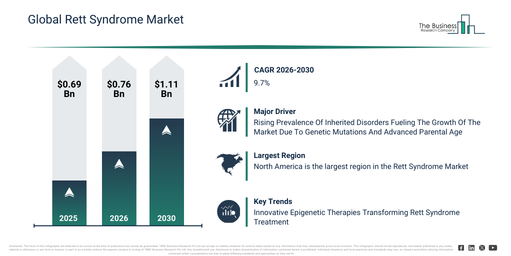
    The rett syndrome market has demonstrated robust growth in recent years. It is projected to expand from $0.69 billion in 2025 to $0.76 billion in 2026, marking a compound annual growth rate (CAGR) of 9.9%. This historical growth can be ascribed to a number of factors, such as enhanced clinical understanding of rare neurological disorders, the widespread availability of genetic testing for MECP2 mutations, the establishment of specialized care centers, the expansion of supportive therapy programs, and increasing advocacy and patient support initiatives.

    The rett syndrome market is projected to experience substantial expansion in the coming years, reaching $1.11 billion by 2030, exhibiting a compound annual growth rate (CAGR) of 9.7%. This anticipated growth during the forecast period is fueled by advancements in gene therapy platforms, increased investment in developing drugs for rare diseases, the broadening application of personalized medicine strategies, the rising utilization of digital health tools within neurology, and a heightened emphasis on early diagnosis and intervention. Key trends during this period include the expansion of gene-based therapeutic investigations, a greater focus on precise diagnostic instruments, an increase in the adoption of multidisciplinary care models, the escalating development of therapies targeting specific symptoms, and improved integration of digital patient monitoring systems.

    Download the Free Sample Report to Explore Key Market Insights:

    https://www.thebusinessresearchcompany.com/sample.aspx?id=24391&type=smp

    What Drivers Are Shaping The Future Growth Of The Rett Syndrome Market?

    The increasing occurrence of genetic conditions is anticipated to fuel the expansion of the rett syndrome market in the future. These genetic disorders are ailments or states resulting from genetic changes transmitted from parents to their offspring, encompassing conditions such as cystic fibrosis, sickle cell anemia, hemophilia, and Huntington’s disease. The rise in inherited disorders can be linked to older parental age, which increases the probability of genetic mutations being transferred to children. Rett syndrome improves our comprehension of inherited disorders by emphasizing the significance of genetic alterations, particularly within the methyl-CpG-binding protein 2 (MECP2) gene. It offers clarity into neurodevelopmental mechanisms, thereby furthering investigations into gene-based treatments and remedies for comparable conditions. For example, data from February 2024, provided by the Genetic Alliance UK, a national organization alliance in the UK, indicates that rare conditions, characterized as affecting less than 1 in 2,000 people, currently affect more than 3.5 million individuals in the UK, with 1 in 17 people encountering such conditions at some point in their lifetime. Out of the 7,000 identified rare conditions, 70% impact children, and over 30% of these affected children succumb to these serious disorders before reaching their fifth birthday. Consequently, the growing incidence of inherited disorders is propelling the expansion of the rett syndrome market.

    What Segment Types Make Up The Rett Syndrome Market?

    The rett syndrome market covered in this report is segmented –

    1) By Type: Classic Rett Syndrome, Atypical Rett Syndrome

    2) By Stages: Stage IV Late Motor Deterioration, Stage III Plateau, Stage II Rapid Destruction, Stage I Early Onset

    3) By Treatment: Medication, Physical Therapy, Occupational Therapy, Speech Language Therapy, Other Treatments

    4) By Diagnosis: Blood Test, Genetic Testing, Other Diagnosis

    5) By End-Users: Hospitals, Specialty Clinics, Homecare, Other End Users

    Subsegments:

    1) By Classic Rett Syndrome: Early-Onset Classic Rett Syndrome, Late-Onset Classic Rett Syndrome

    2) By Atypical Rett Syndrome: Rett-Like Syndrome, Syndrome With Neurodevelopmental Delays, Sporadic Atypical Rett Syndrome

    How Are Trends Impacting The Rett Syndrome Market?

    Major companies in the rett syndrome market are concentrating on developing innovative products, such as epigenetic therapies. These treatments aim to address the disorder’s core genetic causes, re-establish methyl-CpG-binding protein 2 (MECP2) function, and potentially reverse or significantly reduce symptoms. Epigenetic therapies are defined as treatments designed to modify gene expression without altering the underlying deoxyribonucleic acid (DNA) sequence. They typically achieve this by targeting mechanisms like DNA methylation, histone modification, or ribonucleic acid (RNA) regulation to influence gene activity. For instance, in May 2024, Unravel Biosciences Inc., a US-based biotechnology company, received approval from the U.S. Food and Drug Administration (FDA) for vorinostat (RVL-001) as a potential treatment for rett syndrome. RVL-001 functions as an epigenetic therapy by inhibiting histone deacetylases (HDACs), which restores proper gene expression in neurons. This epigenetic modulation helps compensate for the methyl-CpG-binding protein 2 (MECP2) mutation, potentially improving neural function.

    Who Are The Key Players Driving Competition In The Rett Syndrome Market?

    Major companies operating in the rett syndrome market are Sarepta Therapeutics Inc., Ionis Pharmaceuticals Inc., Acadia Pharmaceuticals Inc., Regenxbio Inc., Beam Therapeutics Inc., Shape Therapeutics Inc., Unravel Biosciences Inc., Neuren Pharmaceuticals Limited, Taysha Gene Therapies, Prilenia Therapeutics Inc., Anavex Life Sciences Corp, Neurogene Inc., Neurolixis Inc., Neurotech International Limited, PTC Therapeutics Inc., Ultragenyx Pharmaceutical Inc., Zogenix Inc., Bluebird Bio Inc., Astellas Gene Therapies Inc., Rocket Pharmaceuticals Inc., Passage Bio Inc., Homology Medicines Inc., Abeona Therapeutics Inc., Orchard Therapeutics plc

    Read the full rett syndrome market report here:

    https://www.thebusinessresearchcompany.com/report/rett-syndrome-global-market-report

    Which Geographic Regions Are Influencing Demand In The Rett Syndrome Market?

    North America was the largest region in the rett syndrome market in 2025. Asia-Pacific is expected to be the fastest-growing region in the forecast period. The regions covered in the rett syndrome market report are Asia-Pacific, South East Asia, Western Europe, Eastern Europe, North America, South America, Middle East, Africa.

    Request A Tailored Rett Syndrome Market Research Report For Competitive Advantage:

    https://www.thebusinessresearchcompany.com/customise?id=24391&type=smp

    Browse Through More Reports Similar to the Global Rett Syndrome Market 2026, By The Business Research Company

    Retinol Global Market Report

    https://www.thebusinessresearchcompany.com/report/retinol-global-market-report

    Pediatric Neuroblastoma Treatment Global Market Report

    https://www.thebusinessresearchcompany.com/report/pediatric-neuroblastoma-treatment-global-market-report

    Retinitis Pigmentosa Global Market Report

    https://www.thebusinessresearchcompany.com/report/retinitis-pigmentosa-global-market-report

    Get in touch with us:

    The Business Research Company: https://www.thebusinessresearchcompany.com/

    Americas +1 310-496-7795

    Asia +44 7882 955267 & +91 8897263534

    Europe +44 7882 955267

    Email us at info@tbrc.info

    Follow us on:

    LinkedIn: https://in.linkedin.com/company/the-business-research-company

    YouTube: https://www.youtube.com/channel/UC24_fI0rV8cR5DxlCpgmyFQ

    Global Market Model: https://www.thebusinessresearchcompany.com/global-market-model