Category: Healthcare Services

  • Psychiatrists Market Developments and Growth Opportunities Across 2026–2030

    Psychiatrists Market Developments and Growth Opportunities Across 2026–2030

    The Business Research Company’s 2026 market reports include new capabilities such as market attractiveness scoring and analysis, total addressable market analysis, company scoring matrix, interactive excel data dashboard, improved supply chain analysis, upcoming startups in the market, and overview of key products, aimed at improving the depth, usability, and strategic value of the insights delivered.

    What Market Valuation Is Forecasted For The Psychiatrists Market By 2030 Starting From Its 2026 Size?

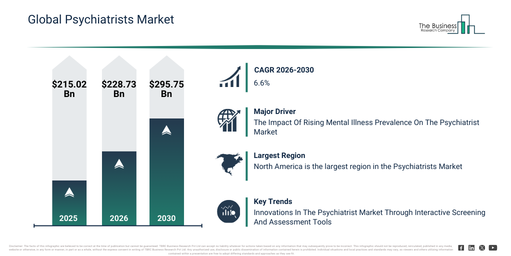
    The psychiatrists market has shown considerable growth in recent years. It is anticipated to expand from $215.02 billion in 2025 to $228.73 billion in 2026, demonstrating a compound annual growth rate (CAGR) of 6.4%. This historical expansion can be attributed to several factors including the rising occurrence of mental health disorders, the broadening of outpatient psychiatric services, increased understanding of mental health conditions, greater acceptance of psychiatric treatment, and the availability of skilled mental health professionals.

    The psychiatrists market is set for substantial growth over the next few years. It is projected to expand to $295.75 billion by 2030, achieving a compound annual growth rate (CAGR) of 6.6%. The expansion during this forecast period can be linked to elevated investments in digital mental health solutions, an escalating demand for customized psychiatric care, the proliferation of AI-assisted diagnostic instruments, increasing integration of behavioral health analytics, and a heightened emphasis on preventive mental healthcare. Significant trends expected in the forecast period encompass the wider adoption of telepsychiatry services, a rise in the use of digital mental health platforms, deeper integration of precision psychiatry methods, the broadening of multidisciplinary treatment models, and a sharpened focus on outcome-driven mental healthcare.

    Download the Free Sample Report to Explore Key Market Insights:

    https://www.thebusinessresearchcompany.com/sample.aspx?id=6835&type=smp

    What Major Growth Drivers Are Shaping The Outlook Of The Psychiatrists Market?

    The expansion of the psychiatrist market is anticipated to be driven by increasing government backing for mental health reforms. These reforms involve modifications aimed at enhancing the organization, funding, and delivery of mental health services, with the goal of providing improved care, support, and treatment for individuals facing mental health challenges. The rise in mental health reforms stems from a growing awareness of mental health issues, prompting governments to dedicate greater investment to services and policies that assist affected individuals. Psychiatrists contribute to the escalation of government support for these reforms by offering expert advice on treatment necessities and outcomes, highlighting existing gaps in care, and advocating for policies that elevate mental health services. As an illustration, in May 2023, the Department of Health & Social Care, a UK-based government agency, reported that NHS mental health services are prepared to assist an additional 2 million people, with an extra £2.3 ($2.67) billion annually allocated in real terms by 2023–2024. Consequently, increased government support for mental health reforms is fueling the growth of the psychiatrist market. The growing occurrence of mental illness is projected to stimulate the psychiatrist market’s development in the future. Mental illness, also recognized as a mental health condition, encompasses a broad array of disorders that impact an individual’s cognitive, emotional, and behavioral well-being, frequently impairing their daily functions. Psychiatrists play a vital role in diagnosing and treating mental illness through conducting patient interviews, administering psychological assessments, and occasionally performing physical examinations to comprehend the individual’s symptoms, medical background, and personal circumstances. For example, a survey released by the National Alliance on Mental Illness (NAMI), a US-based nation’s largest grassroots mental health organization, in 2025 indicated that 23.4% of U.S. adults experienced mental illness in 2024 (61.5 million people). This figure represents over 1 in 5 adults, with 52.1% of U.S. adults with mental illness receiving treatment in 2024, and 9.6% having no insurance coverage in 2024. The population surveyed included 2,866 children and young individuals. Thus, the increasing prevalence of mental illness is a significant factor driving the expansion of the psychiatrist market.

    Which Segment Categories Define The Psychiatrists Market?

    The psychiatrists market covered in this report is segmented –

    1) By Mental Disorder Type: Alcohol Abuse Mental And Behavioral Disorders, Psychoactive Substance Use Mental And Behavioral Disorders, Schizophrenia, Schizotypal And Delusional Disorders, Mood (Anxiety And Depression) Disorders, Other Mental And Behavioral Disorders

    2) By Patient Type: Inpatient, Outpatient

    3) By Psychology Type: Social, Abnormal, Biological, Other Psychology Types

    Subsegments:

    1) By Alcohol Abuse Mental And Behavioral Disorders: Alcohol Dependence, Alcohol Abuse

    2) By Psychoactive Substance Use Mental And Behavioral Disorders: Opioid Use Disorder, Stimulant Use Disorder, Hallucinogen Use Disorder

    3) By Schizophrenia, Schizotypal And Delusional Disorders: Schizophrenia, Schizotypal Disorder, Delusional Disorder

    4) By Mood (Anxiety and Depression) Disorders: Major Depressive Disorder, Generalized Anxiety Disorder, Bipolar Disorder

    5) By Other Mental And Behavioral Disorders: Attention Deficit Hyperactivity Disorder (ADHD), Post-Traumatic Stress Disorder (PTSD), Obsessive-Compulsive Disorder (OCD)

    What Industry Trends Are Redefining The Psychiatrists Market?

    Leading firms within the psychiatrists market are creating novel offerings, including mental disorder screening tools, with the aim of reaching broader customer segments, boosting sales, and enhancing revenue streams. Such a tool represents a standardized method or collection of queries developed to evaluate and pinpoint possible mental health concerns or conditions in people. As an illustration, in May 2023, the American Psychiatric Association (APA), a US-based professional organization comprising psychiatrists, collaborated with AvoMD, a US-based software company, to introduce an interactive screening and assessment tool specifically for eating disorders. This interactive tool for screening and assessment, available at no cost via the electronic health record (EHR), the APA website, and the AvoMD mobile app, furnishes clinicians with a guided, sequential process for screening, assessing, diagnosing, and formulating treatment plans for individuals afflicted by diverse eating disorders. Intended for use by pediatricians, family physicians, and mental health clinicians, which encompasses psychiatrists and therapists, the tool functions on both desktop and mobile platforms and includes options for EHR integration. Its unique characteristics cover extensive evaluation and treatment management strategies, addressing aspects like screening tools, levels of care, nutrition, exercise, psychotherapy, and additional elements. Significantly, the tool simplifies documentation by generating a summary of the responses gathered during the assessment process.

    Who Are The Top Companies Competing In The Psychiatrists Market?

    Major companies operating in the psychiatrists market are Massachusetts General Hospital, Mayo Clinic, Universal Health Services Inc., NewYork Presbyterian University Hospital of Columbia and Cornell, Johns Hopkins Hospital, McLean Hospital, National Center for Neurology and Psychiatry, Wenzhou Kangning Hospital, National Institute of Mental Health and Neurosciences, East London Health and Social Care Partnership NHS Trust, Vidyasagar Institute of Mental Health and Neurosciences, Central Institute of Psychiatry, Institute of Behaviour and Allied Sciences, The University of Tokyo Hospital, Baillie Henderson Hospital, Graylands Hospital, Seiwa Hospital, Tokyo Metropolitan Matsuzawa Hospital, Tokyo Saiseikai Central Hospital, St. Luke’s International Hospital, Nightingale Hospital, Tyne and Wear Hospitals NHS Foundation Trust, Forest Independent Hospital, Max Planck Institute of Psychiatry, Kursk Clinical Psychiatric Hospital, Menninger Clinic, Sheppard Pratt Health System, Resnick Neuropsychiatric Hospital at UCLA, Centre for Addiction and Mental Health, Al Amal Psychiatric Complex, King Faisal Specialist Hospital and Research Centre, Denmar Specialist Psychiatrist Hospital PTY Ltd, Umzimzulu Hospital

    Read the full psychiatrists market report here:

    https://www.thebusinessresearchcompany.com/report/psychiatrists-global-market-report

    Which Regions Are Projected To Dominate The Psychiatrists Market In The Coming Years?

    North America was the largest region in the Psychiatrists market in 2025. The regions covered in the psychiatrists market report are Asia-Pacific, South East Asia, Western Europe, Eastern Europe, North America, South America, Middle East, Africa.

    Request A Tailored Psychiatrists Market Research Report For Competitive Advantage:

    https://www.thebusinessresearchcompany.com/customise?id=6835&type=smp

    Browse Through More Reports Similar to the Global Psychiatrists Market 2026, By The Business Research Company

    Pruritus Therapeutics Global Market Report

    https://www.thebusinessresearchcompany.com/report/pruritus-therapeutics-global-market-report

    Pertussis Vaccine Global Market Report

    https://www.thebusinessresearchcompany.com/report/pertussis-vaccine-global-market-report

    Infectious Disease Therapeutics Global Market Report

    https://www.thebusinessresearchcompany.com/report/infectious-disease-therapeutics-global-market-report

    Get in touch with us:

    The Business Research Company: https://www.thebusinessresearchcompany.com/

    Americas +1 310-496-7795

    Asia +44 7882 955267 & +91 8897263534

    Europe +44 7882 955267

    Email us at info@tbrc.info

    Follow us on:

    LinkedIn: https://in.linkedin.com/company/the-business-research-company

    YouTube: https://www.youtube.com/channel/UC24_fI0rV8cR5DxlCpgmyFQ

    Global Market Model: https://www.thebusinessresearchcompany.com/global-market-model
  • Global Pruritus Therapeutic Market Forecast 2026–2035 Presenting Long-Term Industry Expansion Insights

    Global Pruritus Therapeutic Market Forecast 2026–2035 Presenting Long-Term Industry Expansion Insights

    The Business Research Company’s 2026 market reports include new capabilities such as market attractiveness scoring and analysis, total addressable market analysis, company scoring matrix, interactive excel data dashboard, improved supply chain analysis, upcoming startups in the market, and overview of key products, aimed at improving the depth, usability, and strategic value of the insights delivered.

    How Is The Market Size Of The Pruritus Therapeutic Market Expected To Change Between 2026 And 2030?

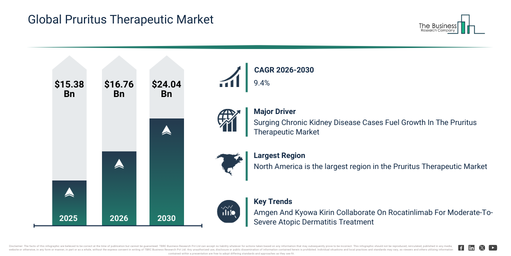
    The pruritus therapeutic market size has seen strong growth recently. It is forecast to increase from $15.38 billion in 2025 to $16.76 billion in 2026, demonstrating a compound annual growth rate (CAGR) of 9.0%. Historically, this growth can be attributed to the rising prevalence of dermatological and systemic conditions, expanded use of antihistamines and corticosteroids, the growth of outpatient dermatology services, increased patient awareness of itch-related disorders, and the availability of various therapeutic options.

    The pruritus therapeutic market size is anticipated to demonstrate robust expansion over the forthcoming years. It is predicted to reach $24.04 billion by 2030, registering a compound annual growth rate (CAGR) of 9.4%. This projected growth during the forecast period is attributable to escalating investment in new itch-modulating therapies, a heightened focus on individualized pruritus treatment, the broadening of biologic and immunomodulatory drug pipelines, an increasing demand for non-steroidal treatments, and intensified clinical research activities. Significant trends expected in the forecast period encompass the accelerated development of targeted antipruritic drugs, the increasing adoption of combination drug therapies, a growing emphasis on disease-specific pruritus management, the expansion of advanced topical formulations, and a greater commitment to achieving long-term symptom relief.

    Download the Free Sample Report to Explore Key Market Insights:

    https://www.thebusinessresearchcompany.com/sample.aspx?id=9925&type=smp

    What Drivers Are Expected To Influence The Pruritus Therapeutic Market During The Forecast Period?

    The rising occurrence of chronic kidney disease is anticipated to drive expansion in the pruritus therapeutic market over the forthcoming years. Chronic Kidney Disease (CKD) is defined as a persistent condition where the kidneys progressively lose their proper functioning capability, categorized into five stages of severity. Pruritus, commonly referred to as itching, frequently manifests as a symptom of Chronic Kidney Disease (CKD). While the exact mechanisms remain unclear, pruritus in CKD can stem from diverse underlying causes. As an illustration, data from June 2023, provided by Kidney Research UK, a charitable body in the UK dedicated to research and advocacy for kidney diseases, indicated that roughly 7.19 million individuals in the UK suffered from chronic kidney disease in 2023. This figure accounted for over 10% of the UK’s population and is forecast to climb to 7.61 million people by 2033. Consequently, the rising prevalence of chronic kidney disease is a key driver for the pruritus therapeutic market.

    How Is The Pruritus Therapeutic Market Structured Across Different Segments?

    The pruritus therapeutic market covered in this report is segmented –

    1) By Type: Corticosteroids, Antihistamines, Local Anesthetics, Counterirritants, Immunosuppressant, Calcineurin Inhibitors, Others Types

    2) By Disease Type: Atopic Dermatitis Or Eczema, Allergic Contact Dermatitis, Urticaria, Cutaneous T-Cell, Other Disease Types

    3) By Application: External Use, Oral, Injection

    4) By End Use: Hospitals, Clinics, Other Uses

    Subsegments:

    1) By Corticosteroids: Topical Corticosteroids, Systemic Corticosteroids

    2) By Antihistamines: First-Generation Antihistamines, Second-Generation Antihistamines

    3) By Local Anesthetics: Topical Local Anesthetics, Injectable Local Anesthetics

    4) By Counterirritants: Menthol-Based Products, Camphor-Based Products

    5) By Immunosuppressants: Systemic Immunosuppressants, Topical Immunosuppressants

    6) By Calcineurin Inhibitors: Tacrolimus, Pimecrolimus

    7) By Other Types: Antidepressants, Phototherapy Treatments, Biologic And Targeted Therapies

    What Key Developments And Trends Are Impacting The Pruritus Therapeutic Market?

    Leading companies within the pruritus therapeutic market are adopting a strategic partnership approach aimed at treating moderate-to-severe atopic dermatitis. These strategic partnerships involve companies leveraging each other’s strengths and resources to achieve mutual benefits and success. For example, in January 2023, Amgen Inc., a US-based biopharmaceutical company, in collaboration with Kyowa Kirin, is investigating rocatinlimab (AMG 451/KHK4083), a potential first-in-class anti-OX40 monoclonal antibody being studied for those with moderate to severe atopic dermatitis. Amgen and Kyowa Kirin have recently started enrolling participants in a worldwide Phase 3 trial (ROCKET) to assess the safety and effectiveness of rocatinlimab in a diverse population of moderate-to-severe atopic dermatitis patients with a high disease burden. The ROCKET Phase 3 program comprises seven worldwide investigations. Kyowa Kirin Co., Ltd. is a pharmaceutical and biotechnology company based in Japan.

    Which Major Players Dominate The Pruritus Therapeutic Market?

    Major companies operating in the pruritus therapeutic market are Astellas Pharma Inc., Bristol Myers Squibb Company, Cipla Inc., Eli Lilly And Company, Galderma Laboratories LP, GlaxoSmithKline plc, Merck And Co. Inc., Novartis AG, Pfizer Inc., Sanofi SA, Abbott Laboratories, Almirall SA, Eisai Co. Ltd., Glenmark Pharmaceuticals Ltd., Ipca Laboratories Ltd., Lupin Chemicals Ltd., Cara Therapeutics Inc., EPI Health LLC, AbbVie Inc., Bayer AG, Bausch Health Companies Inc., Regeneron Pharmaceuticals Inc., Huapont Life Sciences Co. Ltd., LEO Pharma AS, MC2 Therapeutics Ltd., Novan Inc., Trevi Therapeutics Inc., UCB SA, Viatris Inc., Teva Pharmaceutical Industries Ltd.

    Read the full pruritus therapeutic market report here:

    https://www.thebusinessresearchcompany.com/report/pruritus-therapeutic-global-market-report

    Which Region Is Forecast To Lead The Pruritus Therapeutic Market In Terms Of Market Size?

    North America was the largest region in the pruritus therapeutic market in 2025. The regions covered in the pruritus therapeutic market report are Asia-Pacific, South East Asia, Western Europe, Eastern Europe, North America, South America, Middle East, Africa.

    Request A Tailored Pruritus Therapeutic Market Research Report For Competitive Advantage:

    https://www.thebusinessresearchcompany.com/customise?id=9925&type=smp

    Browse Through More Reports Similar to the Global Pruritus Therapeutic Market 2026, By The Business Research Company

    Pruritus Therapeutics Global Market Report

    https://www.thebusinessresearchcompany.com/report/pruritus-therapeutics-global-market-report

    Tinea Pedis Treatment Global Market Report

    https://www.thebusinessresearchcompany.com/report/tinea-pedis-treatment-global-market-report

    Vitiligo Treatment Global Market Report

    https://www.thebusinessresearchcompany.com/report/vitiligo-treatment-global-market-report

    Get in touch with us:

    The Business Research Company: https://www.thebusinessresearchcompany.com/

    Americas +1 310-496-7795

    Asia +44 7882 955267 & +91 8897263534

    Europe +44 7882 955267

    Email us at info@tbrc.info

    Follow us on:

    LinkedIn: https://in.linkedin.com/company/the-business-research-company

    YouTube: https://www.youtube.com/channel/UC24_fI0rV8cR5DxlCpgmyFQ

    Global Market Model: https://www.thebusinessresearchcompany.com/global-market-model

  • Prurigo Nodularis Treatment Market Outlook 2026–2030 Exploring New Business Opportunities

    Prurigo Nodularis Treatment Market Outlook 2026–2030 Exploring New Business Opportunities

    The Business Research Company’s 2026 market reports include new capabilities such as market attractiveness scoring and analysis, total addressable market analysis, company scoring matrix, interactive excel data dashboard, improved supply chain analysis, upcoming startups in the market, and overview of key products, aimed at improving the depth, usability, and strategic value of the insights delivered.

    What Is The Market Size Of The Prurigo Nodularis Treatment Market In 2026 And What Value Is Projected For 2030?

    The prurigo nodularis treatment market size has seen substantial expansion in recent years. It is anticipated to increase from $1.72 billion in 2025 to $1.81 billion in 2026, at a compound annual growth rate (CAGR) of 5.2%. The expansion observed historically can be attributed to several factors, including a heightened awareness of chronic inflammatory skin disorders, increasing rates of prurigo nodularis diagnoses, the broader establishment of dermatology specialty clinics, a rise in the application of topical corticosteroids, and an intensified focus by physicians on managing itch.

    The prurigo nodularis treatment market size is anticipated to undergo steady expansion in the forthcoming years. It is projected to reach $2.2 billion by 2030, demonstrating a compound annual growth rate (CAGR) of 5.0%. The expansion during the forecast period can be attributed to the rising approvals of innovative biologics, increasing investments in dermatology research and development, the broader implementation of precision medicine techniques, a growing need for long-term symptom management, and the increased embrace of advanced laser-based therapies. Significant trends expected in the forecast period encompass the increasing adoption of biologic therapies, a heightened focus on targeted anti-inflammatory treatments, the growing utilization of combination therapy approaches, the proliferation of advanced phototherapy techniques, and an enhanced emphasis on patient-centric treatment protocols.

    Download the Free Sample Report to Explore Key Market Insights:

    https://www.thebusinessresearchcompany.com/sample.aspx?id=24390&type=smp

    What Drivers Are Influencing The Prurigo Nodularis Treatment Market?

    The increasing occurrence of persistent skin ailments is anticipated to fuel expansion in the prurigo nodularis treatment market moving ahead. These conditions are defined as enduring or repetitive dermatological disorders frequently necessitating continuous care and capable of considerably impacting an individual’s life quality. The surge in chronic skin issues is attributable to heightened exposure to environmental contaminants, which can compromise the skin’s inherent protective layer and induce sustained inflammation. Prurigo nodularis therapies tackle the underlying origins of chronic skin maladies by focusing on the inflammatory mechanisms that lead to persistent itching and dermal lesions. These treatments effectively alleviate symptoms and improve the life quality for individuals with chronic prurigo nodularis by moderating the immune system’s excessive activity. As an illustration, in July 2023, data from the Office of Health Economics (OHE), a registered charity based in the UK, indicated that hidradenitis suppurativa (HS), a painful chronic skin disease, impacts a minimum of 200,000 people within the UK, with its economic burden estimated at approximately £3.83 ($4.35) billion annually. Consequently, the escalating prevalence of chronic skin conditions is propelling the expansion of the prurigo nodularis treatment market.

    What Are The Key Segments Of The Prurigo Nodularis Treatment Market?

    The prurigo nodularis treatment market covered in this report is segmented –

    1) By Treatment: Medication, Cryotherapy, Phototherapy, Pulsed Dye Laser, Other Treatments

    2) By Diagnosis: Skin Biopsy, Blood Tests, Other Diagnosis

    3) By Route Of Administration: Topical Administration, Oral Administration, Parenteral Administration

    4) By Distribution Channel: Hospital Pharmacies, Retail Pharmacies, Online Pharmacies

    5) By End-Users: Clinic, Hospital, Other End-Users

    Subsegments:

    1) By Medication: Topical Corticosteroids, Antihistamines, Immunosuppressants, Neuromodulators, Biologic Therapies

    2) By Cryotherapy: Liquid Nitrogen Application, Spray-Freezing Techniques, Cryoprobe Therapy

    3) By Phototherapy: Narrowband Ultraviolet B (NB-UVB), Broadband Ultraviolet B (BB-UVB), Psoralen Plus Ultraviolet A (PUVA)

    4) By Pulsed Dye Laser: 585 Nanometer (nm) Wavelength Therapy, 595 Nanometer (nm) Wavelength Therapy

    5) By Other Treatments: Behavioral Therapy, Psychological Itch Management Programs, Emollients and Moisturizers, Surgical Excision

    What Trends Are Projected To Affect The Prurigo Nodularis Treatment Market?

    Companies at the forefront of the prurigo nodularis treatment market are prioritizing the creation of advanced therapies, notably monoclonal antibodies, designed to target specific immune pathways and deliver more effective symptom alleviation. Monoclonal antibodies are laboratory-produced molecules crafted to emulate the immune system’s capacity to combat detrimental pathogens, such as viruses. For example, in August 2024, Galderma, a pharmaceutical company based in Switzerland, disclosed that the U.S. Food and Drug Administration (FDA) had granted approval to Nemluvio (nemolizumab) for the treatment of adult patients with prurigo nodularis. This approval was predicated on favorable findings from the OLYMPIA clinical trials, which showcased Nemluvio’s significant efficacy in reducing itch intensity and skin nodules. This particular treatment specifically targets IL-31 signaling, thereby addressing a crucial element driving prurigo nodularis symptoms.

    Who Are The Leading Companies Operating In The Prurigo Nodularis Treatment Market?

    Major companies operating in the prurigo nodularis treatment market are Roche Holding AG, Sanofi S.A., Amgen Inc., Regeneron Pharmaceuticals Inc., Galderma S.A, Incyte Corporation, LEO Pharma A/S, Almirall S.A., Maruho Co. Ltd., VYNE Therapeutics Inc., Kiniksa Pharmaceuticals Ltd., Trevi Therapeutics Inc., Keymed Biosciences Inc., Shanghai SIGMA High-tech Co. Ltd., Celgene Corporation, Celldex Therapeutics Inc., Pfizer Inc., Eli Lilly And Company, AbbVie Inc., Johnson And Johnson, Bristol Myers Squibb, Novartis AG, AstraZeneca PLC

    Read the full prurigo nodularis treatment market report here:

    https://www.thebusinessresearchcompany.com/report/prurigo-nodularis-treatment-global-market-report

    Which Regions Are Expected To Experience Rapid Expansion In The Prurigo Nodularis Treatment Market?

    North America was the largest region in the prurigo nodularis treatment market in 2025. Asia-Pacific is expected to be the fastest-growing region in the forecast period. The regions covered in the prurigo nodularis treatment market report are Asia-Pacific, South East Asia, Western Europe, Eastern Europe, North America, South America, Middle East, Africa.

    Request A Tailored Prurigo Nodularis Treatment Market Research Report For Competitive Advantage:

    https://www.thebusinessresearchcompany.com/customise?id=24390&type=smp

    Browse Through More Reports Similar to the Global Prurigo Nodularis Treatment Market 2026, By The Business Research Company

    Bilirubin Blood Test Global Market Report

    https://www.thebusinessresearchcompany.com/report/bilirubin-blood-test-global-market-report

    Proteomics Global Market Report

    https://www.thebusinessresearchcompany.com/report/proteomics-global-market-report

    Juice Concentrates Global Market Report

    https://www.thebusinessresearchcompany.com/report/juice-concentrates-global-market-report

    Get in touch with us:

    The Business Research Company: https://www.thebusinessresearchcompany.com/

    Americas +1 310-496-7795

    Asia +44 7882 955267 & +91 8897263534

    Europe +44 7882 955267

    Email us at info@tbrc.info

    Follow us on:

    LinkedIn: https://in.linkedin.com/company/the-business-research-company

    YouTube: https://www.youtube.com/channel/UC24_fI0rV8cR5DxlCpgmyFQ

    Global Market Model: https://www.thebusinessresearchcompany.com/global-market-model

  • Global Prothrombin Complex Concentrate Market Report 2026–2035 Highlighting Expansion Outlook and Forecast Opportunities

    Global Prothrombin Complex Concentrate Market Report 2026–2035 Highlighting Expansion Outlook and Forecast Opportunities

    The Business Research Company’s 2026 market reports include new capabilities such as market attractiveness scoring and analysis, total addressable market analysis, company scoring matrix, interactive excel data dashboard, improved supply chain analysis, upcoming startups in the market, and overview of key products, aimed at improving the depth, usability, and strategic value of the insights delivered.

    What Will Be The Estimated Market Valuation Of The Prothrombin Complex Concentrate Market By The End Of 2030?

    The prothrombin complex concentrate market size has observed substantial growth in recent years. It is forecast to increase from $1.38 billion in 2025 to $1.48 billion in 2026, achieving a compound annual growth rate (CAGR) of 7.4%. This historical growth can be attributed to several factors, including the rising prevalence of coagulation disorders, the expansion of emergency care infrastructure, the increasing availability of plasma-derived therapies, growing surgical procedure volumes, and the broadening use of anticoagulant medications.

    The prothrombin complex concentrate market is anticipated to experience substantial expansion over the coming years. Its valuation is projected to reach $1.96 billion by 2030, exhibiting a compound annual growth rate (CAGR) of 7.2%. This projected growth during the forecast timeframe stems from a heightened need for rapid-onset coagulation treatments, escalating investments in developing recombinant factors, an increase in trauma care infrastructure, a greater emphasis on ensuring patient safety during anticoagulant administration, and the wider implementation of standardized bleeding guidelines. Key trends anticipated for the forecast period encompass the wider acceptance of four-factor pcc products, a surge in the application of pcc for swift anticoagulant reversal, an expanding requirement for emergency bleeding control solutions, the broadening availability of recombinant coagulation products, and a stronger emphasis on quick-acting hemostatic treatments.

    Download the Free Sample Report to Explore Key Market Insights:

    https://www.thebusinessresearchcompany.com/sample.aspx?id=23488&type=smp

    What Drivers Are Shaping The Future Growth Of The Prothrombin Complex Concentrate Market?

    The expanding occurrence of bleeding disorders is anticipated to boost the prothrombin complex concentrate market’s expansion in the future. These disorders are health issues where blood fails to coagulate correctly, resulting in excessive blood loss because of absent or defective clotting factors or platelets. The rise in bleeding disorders is primarily attributed to the growing incidence of genetic ailments like hemophilia, more cases of liver disease, increased consumption of anticoagulant drugs, and a greater occurrence of vitamin K deficiencies. Prothrombin complex concentrate aids in managing bleeding disorders by quickly restoring clotting factors, vital for proper blood coagulation and stopping bleeding. For example, an October 2024 report from the World Federation of Hemophilia, a Canada-based non-profit, indicated that in 2023, 179,703 cases of hemophilia A were recorded. Of these, 162,040 cases (90%) were male, 6,990 cases were female, and 10,673 cases (6%) lacked specified sex information. Consequently, the expanding prevalence of bleeding disorders is fueling the expansion of the prothrombin complex concentrate market.

    Which Segment Classifications Shape The Prothrombin Complex Concentrate Market?

    The prothrombin complex concentrate market covered in this report is segmented –

    1) By Product: 3-Factor Prothrombin Complex Concentrates, 4-Factor Prothrombin Complex Concentrates, Other Products

    2) By Indication: Haemorrhagic Episodes In Factor IX Deficiency (Haemophilia B), Trauma, Life-Threatening Coagulopathy With Acute Bleeding, Warfarin-Associated Acute, Life-Threatening Bleeding, Non-Warfarin Anticoagulant Reversal With Acute Bleeding

    3) By Route Of Administration: Intravenous, Intravenous Infusion Variants, Intravenous Bolus Administration

    4) By End-Use: Hospital And Ambulatory Surgical Centers, Specialty Clinics, Other End Users

    Subsegments:

    1) By 3-Factor PCC Type: Low-Dose 3-Factor Prothrombin Complex Concentrates (PCC), High-Dose 3-Factor Prothrombin Complex Concentrates (PCC), Lyophilized 3-Factor Prothrombin Complex Concentrates (PCC)

    2) By 4-Factor PCC Typ: Low-Dose 4-Factor Prothrombin Complex Concentrates (PCC), High-Dose 4-Factor Prothrombin Complex Concentrates (PCC), Activated 4-Factor Prothrombin Complex Concentrates (PCC)

    3) By Other Products: Recombinant Coagulation Factor Complexes, Plasma-Derived Coagulation Factor Complexes, Combination Therapy Products

    Which Upcoming Trends Are Expected To Influence The Prothrombin Complex Concentrate Market?

    Leading companies in the prothrombin complex concentrate market are developing advanced formulations, such as lyophilized powder, to improve stability, optimize storage, and simplify administration. This lyophilized powder is a freeze-dried formulation designed to remove water, thereby increasing shelf life and maintaining potency. Consequently, this enables superior storage conditions and rapid reconstitution for emergency situations. For instance, in July 2023, Octapharma USA Inc., a US-based biotechnology company, obtained FDA approval for Balfaxar, a four-factor prothrombin complex concentrate (4F-PCC), intended for urgent warfarin reversal during surgeries and invasive procedures. This approval was granted following the LEX-209 trial, which recorded a 94.6% hemostatic efficacy, confirming its effectiveness comparable to Kcentra. This significant advancement emphasizes the industry’s commitment to enhancing coagulation therapies to improve patient outcomes in critical care environments.

    Which Companies Are Expanding Their Footprint In The Prothrombin Complex Concentrate Market?

    Major companies operating in the prothrombin complex concentrate market are Pfizer Inc., Takeda Pharmaceutical Company Limited, CSL Behring GmbH, Baxter International Inc, Grifols S.A., Octapharma AG, Kedrion S.p.A, Green Cross Corporation, Shanghai RAAS Blood Products Co. Ltd, LFB Group, Hualan Biological Engineering Chongqing Co. Ltd., Sanquin Blood Supply Foundation, Bio Products Laboratory Ltd BPL, Prothya Biosolutions B.V., China Biologic Products Holdings Inc., Intas Pharmaceuticals Ltd, Biotest AG, Octapharma Plasma, Kamada Ltd, SK Plasma Co. Ltd, Reliance Life Sciences, Bharat Serums And Vaccines Limited

    Read the full prothrombin complex concentrate market report here:

    https://www.thebusinessresearchcompany.com/report/prothrombin-complex-concentrate-global-market-report

    Which Geographic Regions Are Influencing Demand In The Prothrombin Complex Concentrate Market?

    North America was the largest region in the prothrombin complex concentrate market in 2025. The regions covered in the prothrombin complex concentrate market report are Asia-Pacific, South East Asia, Western Europe, Eastern Europe, North America, South America, Middle East, Africa.

    Request A Tailored Prothrombin Complex Concentrate Market Research Report For Competitive Advantage:

    https://www.thebusinessresearchcompany.com/customise?id=23488&type=smp

    Browse Through More Reports Similar to the Global Prothrombin Complex Concentrate Market 2026, By The Business Research Company

    Proteomics Global Market Report

    https://www.thebusinessresearchcompany.com/report/proteomics-global-market-report

    Serine Proteases Global Market Report

    https://www.thebusinessresearchcompany.com/report/serine-proteases-global-market-report

    Pruritus Therapeutic Global Market Report

    https://www.thebusinessresearchcompany.com/report/pruritus-therapeutic-global-market-report

    Get in touch with us:

    The Business Research Company: https://www.thebusinessresearchcompany.com/

    Americas +1 310-496-7795

    Asia +44 7882 955267 & +91 8897263534

    Europe +44 7882 955267

    Email us at info@tbrc.info

    Follow us on:

    LinkedIn: https://in.linkedin.com/company/the-business-research-company

    YouTube: https://www.youtube.com/channel/UC24_fI0rV8cR5DxlCpgmyFQ

    Global Market Model: https://www.thebusinessresearchcompany.com/global-market-model
  • Proteus Syndrome Market Growth Prospects 2026–2030 with Innovation Trends and Competitive Landscape

    Proteus Syndrome Market Growth Prospects 2026–2030 with Innovation Trends and Competitive Landscape

    The Business Research Company’s 2026 market reports include new capabilities such as market attractiveness scoring and analysis, total addressable market analysis, company scoring matrix, interactive excel data dashboard, improved supply chain analysis, upcoming startups in the market, and overview of key products, aimed at improving the depth, usability, and strategic value of the insights delivered.

    What Market Size Growth Is Projected For The Proteus Syndrome Market During The Forecast Period 2026–2030?

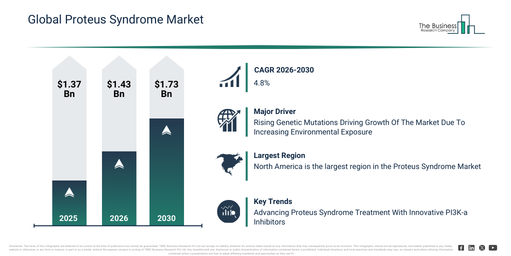
    The proteus syndrome market has experienced robust growth in recent years. It is anticipated to expand from $1.37 billion in 2025 to $1.43 billion in 2026, demonstrating a compound annual growth rate (CAGR) of 5.1%. The historical market expansion is attributable to a better understanding of genetic mutation pathways, the provision of supportive treatment options, the proliferation of rare disease research initiatives, the rise of patient advocacy programs, and increased clinical recognition of rare disorders.

    The Proteus syndrome market is projected to experience consistent expansion over the upcoming years, with an anticipation to reach $1.73 billion by 2030, exhibiting a compound annual growth rate (CAGR) of 4.8%. This projected growth is driven by factors such as increased funding for rare disease drug research, the growing acceptance of individualized treatment strategies, the broadening scope of genetic screening initiatives, a heightened emphasis on developing orphan drugs, and greater partnerships among research bodies. Key trends during this period involve a stronger focus on developing targeted therapies, increased utilization of precision diagnostics for uncommon conditions, the expanding incorporation of genetic testing into disease management, the proliferation of specialized treatment guidelines, and a greater emphasis on prompt diagnosis.

    Download the Free Sample Report to Explore Key Market Insights:

    https://www.thebusinessresearchcompany.com/sample.aspx?id=23487&type=smp

    Which Economic Or Industry Drivers Are Impacting The Proteus Syndrome Market?

    A rise in the occurrences of genetic mutations is projected to drive the expansion of the Proteus syndrome market in the future. These mutations are defined as lasting alterations in DNA sequences, which modify genetic information and can result in diverse diseases or distinct characteristics. The growing frequency of genetic mutations is mainly attributed to environmental exposure to substances like radiation, pollutants, and chemicals, all of which damage DNA and cause genetic changes. Proteus syndrome aids in comprehending genetic mutations by demonstrating how a somatic AKT1 gene mutation initiates irregular cell proliferation, thereby providing insights into mosaicism and the progression of the disease. For example, as reported by the UK Health Security Agency, a government body in the UK, in November 2025, the year 2024 saw 12.5% of referred carbapenemase-positive Enterobacterales isolates containing multiple carbapenemase genes, which represents an increase from 7% in 2023. Consequently, the rising number of genetic mutation cases is fueling the expansion of the Proteus syndrome market.

    What Market Segments Are Evaluated Within The Proteus Syndrome Market?

    The proteus syndrome market covered in this report is segmented –

    1) By Product Type: Tablets, Capsules, Injectables, Other Product Types

    2) By Route of Administration: Oral, Parenteral, Other Route Of Administration

    3) By Distribution Channel: Online, Offline

    4) By End User: Hospital Pharmacy, Retail Pharmacy, Specialty Clinics

    Subsegments:

    1) By Tablets: Immediate-Release Tablets, Extended-Release Tablets, Effervescent Tablets

    2) By Capsules: Hard Gelatin Capsules, Soft Gelatin Capsules, Delayed-Release Capsules

    3) By Injectables: Intravenous (IV) Injectables, Intramuscular (IM) Injectables, Subcutaneous (SC) Injectables

    4) By Other Product Types: Oral Liquid Formulations, Targeted Molecular Therapies, Liquid Suspensions

    How Are Trends Shaping The Direction Of The Proteus Syndrome Market?

    Leading firms within the proteus syndrome market are concentrating on executing clinical trials aimed at creating novel products, including PI3K-α inhibitors, with the goal of improving treatment effectiveness and broadening available therapies. These PI3K-α inhibitors function as medications specifically designed to target the PI3K-alpha enzyme, an enzyme responsible for governing cellular growth and division. By diminishing the abnormal tissue overgrowth stemming from mutations in the PIK3CA gene—mutations that result in an overactive PI3K/AKT pathway—these inhibitors assist in the management of proteus syndrome. As an example, in November 2024, Risen (Suzhou) Pharma Technology Co., Ltd., which is a China-based pharmaceutical company, disclosed that its joint venture had obtained implicit approval for two clinical trials involving its Class 1 new drug, RP903 tablets, identified by acceptance numbers CXHL2400566 and CXHL2400565. RP903 is characterized as a PI3K-α inhibitor specifically formulated to address PIK3CA gene mutations linked to proteus syndrome (PROS). This achievement underscores the company’s dedication to developing advanced and innovative treatments for rare diseases and widening the array of therapeutic choices for PROS patients.

    Who Are The Top Market Participants Influencing The Proteus Syndrome Market?

    Major companies operating in the proteus syndrome market are Pfizer Inc., Merck Sharp & Dohme Corp, Intas Pharmaceuticals Ltd, Dr Reddy’s Laboratories Ltd, Zydus Pharmaceuticals Inc., Biocon Limited, Glenmark Pharmaceuticals Ltd, Curia Global, Concord Biotech Limited, Camber Pharmaceuticals, Chunghwa Chemical Synthesis & Biotech Co Ltd, Farmhispania Group SL, LGM Pharma LLC, ChemWerth Inc, Simson Pharma Limited, Actiza Pharmaceutical, AXXO GmbH, MedicaPharma, Sumar Biotech LLP, Kachhela Medex Private Limited.

    Read the full proteus syndrome market report here:

    https://www.thebusinessresearchcompany.com/report/proteus-syndrome-global-market-report

    What Are The Top-Performing Regions Within The Proteus Syndrome Market?

    North America was the largest region in the proteus syndrome market in 2025 and it is expected to be the fastest-growing region in the forecast period. The regions covered in the proteus syndrome market report are Asia-Pacific, South East Asia, Western Europe, Eastern Europe, North America, South America, Middle East, Africa.

    Request A Tailored Proteus Syndrome Market Research Report For Competitive Advantage:

    https://www.thebusinessresearchcompany.com/customise?id=23487&type=smp

    Browse Through More Reports Similar to the Global Proteus Syndrome Market 2026, By The Business Research Company

    Genomics Global Market Report

    https://www.thebusinessresearchcompany.com/report/genomics-global-market-report

    Metagenomics Global Market Report

    https://www.thebusinessresearchcompany.com/report/metagenomics-global-market-report

    Metabolomics Global Market Report

    https://www.thebusinessresearchcompany.com/report/metabolomics-global-market-report

    Get in touch with us:

    The Business Research Company: https://www.thebusinessresearchcompany.com/

    Americas +1 310-496-7795

    Asia +44 7882 955267 & +91 8897263534

    Europe +44 7882 955267

    Email us at info@tbrc.info

    Follow us on:

    LinkedIn: https://in.linkedin.com/company/the-business-research-company

    YouTube: https://www.youtube.com/channel/UC24_fI0rV8cR5DxlCpgmyFQ

    Global Market Model: https://www.thebusinessresearchcompany.com/global-market-model
  • Proteomics Market Forecast 2026–2035 Highlighting Market Data Patterns and Industry Insights

    Proteomics Market Forecast 2026–2035 Highlighting Market Data Patterns and Industry Insights

    The Business Research Company’s 2026 market reports include new capabilities such as market attractiveness scoring and analysis, total addressable market analysis, company scoring matrix, interactive excel data dashboard, improved supply chain analysis, upcoming startups in the market, and overview of key products, aimed at improving the depth, usability, and strategic value of the insights delivered.

    How Will The Market Size Of The Proteomics Market Evolve From 2026 To 2030?

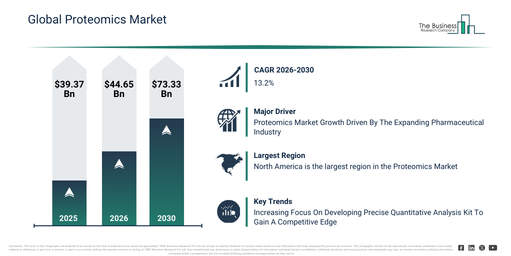
    The proteomics market has experienced rapid expansion in recent years. It is anticipated to grow from $39.37 billion in 2025 to $44.65 billion in 2026, achieving a compound annual growth rate (CAGR) of 13.4%. The increase observed in the historical period can be attributed to factors such as the expansion of life sciences research funding, the increasing use of proteomics in drug discovery, the availability of high-performance analytical instruments, the growth of academic research programs, and a rising demand for biomarker discovery.

    The proteomics market is anticipated to undergo significant expansion in the next few years, with its size projected to reach $73.33 billion by 2030, exhibiting a compound annual growth rate (CAGR) of 13.2%. This growth over the forecast period is largely driven by increased investments in precision medicine initiatives, a rising demand for multi-omics analysis, the broadening of clinical proteomics applications, the greater adoption of AI-driven data analysis tools, and an intensified focus on disease pathway analysis. Prominent trends for this period include the wider acceptance of advanced proteomic analysis techniques, an increased reliance on mass spectrometry-based proteomics, the growing integration of proteomics with genomics data, the expansion of cloud-based proteomics platforms, and a stronger emphasis on quantitative proteomics.

    Download the Free Sample Report to Explore Key Market Insights:

    https://www.thebusinessresearchcompany.com/sample.aspx?id=2828&type=smp

    What Major Drivers Are Influencing Demand In The Proteomics Market?

    The expanding pharmaceutical industry is projected to boost the proteomics market’s growth. This sector is dedicated to researching, developing, manufacturing, and distributing drugs and medications for healthcare purposes. Its growth is fueled by the increasing global prevalence of chronic diseases, which necessitates continuous drug innovation and advanced therapeutic options, thereby sustaining market expansion. Proteomics is vital in drug development, as it involves identifying, characterizing, and monitoring proteins for potential drug targets and the discovery of biomarkers. For instance, in June 2023, the European Federation of Pharmaceutical Industries and Associations (EFPIA), a Belgium-based trade association representing the pharmaceutical industry in Europe, reported that total pharmaceutical production in Europe reached €390,000 million ($422,803 million) in 2023, an increase from €363,300 million ($393,857 million) in 2022. Consequently, the expanding pharmaceutical industry is a key driver for the growth of the proteomics market.

    Which Segment Areas Are Covered In The Proteomics Market Analysis?

    The proteomics market covered in this report is segmented –

    1) By Component: Reagents, Instruments, Software

    2) By Instrument: Protein Microarrays, Spectroscopy, X-ray Crystallography, Chromatography, Electrophoresis, Surface Plasmon Resonance, Protein Fractionation

    3) By Type: Core Instrument Services, Proteomic Analytical Services

    Subsegments:

    1) By Reagents: Protein Assays, Immunoassay Reagents, Spectroscopy Reagents, Chromatography Reagents, Electrophoresis Reagents

    2) By Instruments: Mass Spectrometry, Chromatography Equipment, Electrophoresis Equipment, Microarray Instruments, X-ray Crystallography Instruments

    3) By Software: Data Analysis Software, Bioinformatics Tools, Cloud-Based Platforms For Proteomics

    Which Market Trends Are Creating New Opportunities In The Proteomics Market?

    Leading entities within the proteomics market are concentrating on developing accurate quantitative analysis kits to achieve a competitive advantage. These kits are utilized for the precise measurement of protein expression levels and the identification of biomarkers in various biological samples. For example, in January 2023, SCIEX, a US-based producer of mass spectrometry instrumentation, launched the Fast Glycan Labeling and Analysis kit, designed for precise quantitative glycan analysis, along with an update to the Biologics Explorer software, intended to improve crucial workflows for the examination of protein therapeutics. These offerings are crafted to accelerate the investigation and recognition of glycans linked to proteins. They equip researchers with advanced resources for thorough biopharmaceutical analysis. The software allows researchers to make educated decisions concerning the most appropriate analytical methods and tools for their specific applications, which subsequently improves the efficiency and efficacy of protein characterization studies.

    Which Global Companies Are Actively Competing In The Proteomics Market?

    Major companies operating in the proteomics market are Thermo Fisher Scientific Inc., Merck KGaA, Agilent Technologies Inc., PerkinElmer Inc., Bruker Corporation, Bio-Rad Laboratories Inc., Promega Corporation, Waters Corporation, Creative Proteomics, Sino Biological, EIAab, DIMA Biotechnology, GE Healthcare, Perseus Proteomics Inc., JEOL, APTBIO, Vproteomics, Shimadzu Corporation, Abcam plc, MRM Proteomics Inc., Biognosys AG, Olink Proteomics, Horiba, MS Bioworks, LC Sciences, MtoZ Biolabs, Integrated Proteomics Applications, Quantumbio Inc., Luminex Corporation, Applied Biomics Inc., Isoplexis Corporation, Caprion Proteomics Inc.

    Read the full proteomics market report here:

    https://www.thebusinessresearchcompany.com/report/proteomics-global-market-report

    Which Region Shows The Strongest Potential For Future Growth In The Proteomics Market?

    North America was the largest region in the proteomics market in 2025. Western Europe was the second largest region in the global proteomics market share. The regions covered in the proteomics market report are Asia-Pacific, South East Asia, Western Europe, Eastern Europe, North America, South America, Middle East, Africa.

    Request A Tailored Proteomics Market Research Report For Competitive Advantage:

    https://www.thebusinessresearchcompany.com/customise?id=2828&type=smp

    Browse Through More Reports Similar to the Global Proteomics Market 2026, By The Business Research Company

    Therapeutic Proteins Global Market Report

    https://www.thebusinessresearchcompany.com/report/therapeutic-proteins-global-market-report

    Protein Labelings Global Market Report

    https://www.thebusinessresearchcompany.com/report/protein-labelings-global-market-report

    Protein Inhibitor Global Market Report

    https://www.thebusinessresearchcompany.com/report/protein-inhibitor-global-market-report

    Get in touch with us:

    The Business Research Company: https://www.thebusinessresearchcompany.com/

    Americas +1 310-496-7795

    Asia +44 7882 955267 & +91 8897263534

    Europe +44 7882 955267

    Email us at info@tbrc.info

    Follow us on:

    LinkedIn: https://in.linkedin.com/company/the-business-research-company

    YouTube: https://www.youtube.com/channel/UC24_fI0rV8cR5DxlCpgmyFQ

    Global Market Model: https://www.thebusinessresearchcompany.com/global-market-model

  • Protein Stability Analysis Market Outlook 2026–2030 with Major Growth Drivers and Emerging Industry Trends

    Protein Stability Analysis Market Outlook 2026–2030 with Major Growth Drivers and Emerging Industry Trends

    The Business Research Company’s 2026 market reports include new capabilities such as market attractiveness scoring and analysis, total addressable market analysis, company scoring matrix, interactive excel data dashboard, improved supply chain analysis, upcoming startups in the market, and overview of key products, aimed at improving the depth, usability, and strategic value of the insights delivered.

    What Is The Forecasted Market Value Of The Protein Stability Analysis Market Across 2026–2030?

    The protein stability analysis market has witnessed substantial growth over recent years. Its valuation is anticipated to climb from $2.62 billion in 2025 to $2.95 billion in 2026, achieving a compound annual growth rate (CAGR) of 12.7%. This market’s past expansion can be linked to the rise in biologics and biosimilar development, the introduction of sophisticated analytical instruments, a stronger emphasis on optimizing formulations, increased investment in pharmaceutical R&D, and the widespread adoption of stability testing protocols.

    The protein stability analysis market is projected to experience swift expansion in the coming years. Its valuation is anticipated to reach $4.7 billion by 2030, exhibiting a compound annual growth rate (CAGR) of 12.4%. This expansion during the projection period stems from factors such as a heightened demand for accelerated stability assessments, increased incorporation of AI-powered data analytics, broadening of contract research offerings, the evolving intricacy of protein-based therapies, and a stronger regulatory focus on product longevity. Key developments foreseen within the forecast period encompass a greater uptake of high-throughput stability evaluations, an increased utilization of sophisticated spectroscopy methods, the progressive integration of automation into protein analytics, the broadening scope of data-informed stability modeling, and a heightened emphasis on the development of biologic drugs.

    Download the Free Sample Report to Explore Key Market Insights:

    https://www.thebusinessresearchcompany.com/sample.aspx?id=24672&type=smp

    Which Market Drivers Are Supporting The Expansion Of The Protein Stability Analysis Market?

    The protein stability analysis market is anticipated to grow in response to the increasing demand for biologics and biosimilars. Biologics are elaborate, large-molecule pharmaceuticals derived from living organisms, utilized for managing diverse diseases, while biosimilars are highly similar, more economical versions of established biologics with no significant clinical distinctions. The rising interest in biologics and biosimilars comes from patients and healthcare providers seeking advanced, precise therapies that offer improved therapeutic results, greater access, and reduced costs for long-term and complex ailments. Protein stability analysis is essential for biologics and biosimilars to ensure their safety, efficacy, and extended shelf life by overseeing their structural integrity and preventing degradation. For instance, according to Samsung Bioepis Co. Ltd., a South Korea-based biopharmaceutical company, the Food and Drug Administration (FDA), a US-based federal agency, approved 45 biosimilars in 2024, with 38 of these subsequently launched in the US, demonstrating robust market penetration compared to the total approvals. Therefore, the heightened demand for biologics and biosimilars is a primary driver for the expansion of the protein stability analysis market.

    What Segmentation Levels Are Considered In The Protein Stability Analysis Market?

    The protein stability analysis market covered in this report is segmented –

    1) By Product: Reagents And Assay Kits, Instruments, Consumable And Accessories, Software, Other Products

    2) By Technique: Chromatography, Spectroscopy, Surface Plasma Resonance Imaging (SPRI), Differential Scanning Calorimetry (DSC), Differential Scanning Fluorimetry (DSF), Others Techniques

    3) By End-User: Pharmaceutical And Biotechnology Companies, Contract Research Organizations, Academic And Research Institutes, Other End-Users

    Subsegments:

    1) By Reagents And Assay Kits: Thermal Shift Assay Kits, Fluorescence-Based Assay Kits, Colorimetric Assay Kits, Binding Assay Kits, Aggregation Detection Kits

    2) By Instruments: Differential Scanning Calorimeters, Fluorescence Spectrometers, Chromatography Systems, Mass Spectrometers, Circular Dichroism Spectrometers, Surface Plasmon Resonance Instruments

    3) By Consumable And Accessories: Microplates And Cuvettes, Pipette Tips, Filters And Membranes, Sample Tubes And Vials, Calibration Standards

    4) By Software: Data Analysis Software, Protein Modeling Software, Thermal Stability Analysis Software, Chromatography Data Systems, Mass Spectrometry Data Software

    5) By Other Products: Calibration Kits, Sample Preparation Devices, Automation Systems, Maintenance Kits, Laboratory Storage Solutions

    What Trends Are Affecting The Expansion Of The Protein Stability Analysis Market?

    Leading companies within the protein stability analysis market are emphasizing technological advancements, including the Veloci biopharma analyzer, to provide sophisticated molecular fingerprinting tools that enhance the accuracy, speed, and efficiency of protein characterization and quality assessment. The Veloci biopharma analyzer stands as an advanced instrument utilizing A-TEEM technology to offer rapid, label-free molecular fingerprinting for life science applications such as protein stability analysis and vaccine characterization. For example, in March 2025, Horiba Advanced Techno Co. Ltd., a Japan-based company specializing in analytical solutions and measurement equipment, unveiled four new analytical instruments. These included a biopharma analyzer featuring A-TEEM technology, a high-throughput Raman plate reader, and an advanced atomic force microscopy system, all designed to improve molecular fingerprinting, real-time reaction monitoring, and multimodal material analysis. These innovations are aimed at supporting critical applications in biopharmaceutical research, such as cell culture media analysis, vaccine development, and protein characterization.

    Which Leading Firms Are Contributing To The Growth Of The Protein Stability Analysis Market?

    Major companies operating in the protein stability analysis market are Roche Diagnostics GmbH, Thermo Fisher Scientific Inc, General Electric Healthcare Inc, Agilent Technologies Inc, Charles River Laboratories International Inc, PerkinElmer Inc, Shimadzu Corporation, Sartorius AG, Waters Corporation, Bruker Corporation, HORIBA Ltd, Spectris plc, Unchained Labs Inc, NanoTemper Technologies GmbH, Enzo Life Sciences Inc, Jasco Inc, Setaram Instrumentation SAS, Luminex Corporation, Malvern Panalytical Ltd, BioRad Laboratories Inc, Danaher Corporation, Merck KGaA

    Read the full protein stability analysis market report here:

    https://www.thebusinessresearchcompany.com/report/protein-stability-analysis-global-market-report

    How Is The Protein Stability Analysis Market Distributed Across Key Geographic Regions?

    North America was the largest region in the protein stability analysis market in 2025. Asia-Pacific is expected to be the fastest-growing region in the forecast period. The regions covered in the protein stability analysis market report are Asia-Pacific, South East Asia, Western Europe, Eastern Europe, North America, South America, Middle East, Africa.

    Request A Tailored Protein Stability Analysis Market Research Report For Competitive Advantage:

    https://www.thebusinessresearchcompany.com/customise?id=24672&type=smp

    Browse Through More Reports Similar to the Global Protein Stability Analysis Market 2026, By The Business Research Company

    Dna Sequencing Global Market Report

    https://www.thebusinessresearchcompany.com/report/dna-sequencing-global-market-report

    Next Generation Sequencing Market

    https://www.thebusinessresearchcompany.com/report/next-generation-sequencing-market

    Metagenomic Sequencing Global Market Report

    https://www.thebusinessresearchcompany.com/report/metagenomic-sequencing-global-market-report

    Get in touch with us:

    The Business Research Company: https://www.thebusinessresearchcompany.com/

    Americas +1 310-496-7795

    Asia +44 7882 955267 & +91 8897263534

    Europe +44 7882 955267

    Email us at info@tbrc.info

    Follow us on:

    LinkedIn: https://in.linkedin.com/company/the-business-research-company

    YouTube: https://www.youtube.com/channel/UC24_fI0rV8cR5DxlCpgmyFQ

    Global Market Model: https://www.thebusinessresearchcompany.com/global-market-model
  • One of the Major Drivers of the Protein Sequencing Market Is the Genetic Illness Propels Protein Sequencing Market Growth

    One of the Major Drivers of the Protein Sequencing Market Is the Genetic Illness Propels Protein Sequencing Market Growth

    The Business Research Company’s 2026 market reports include new capabilities such as market attractiveness scoring and analysis, total addressable market analysis, company scoring matrix, interactive excel data dashboard, improved supply chain analysis, upcoming startups in the market, and overview of key products, aimed at improving the depth, usability, and strategic value of the insights delivered.

    What Market Size Increase Is Anticipated For The Protein Sequencing Market Over The 2026–2030 Period?

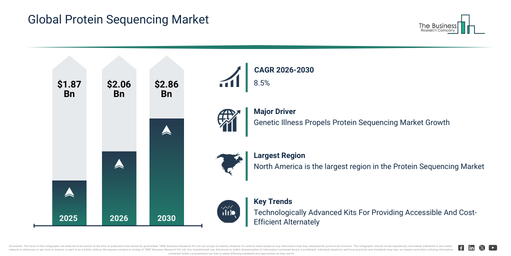
    The protein sequencing market has experienced rapid expansion in recent years. It is projected to increase from $1.87 billion in 2025 to $2.06 billion in 2026, achieving a compound annual growth rate (CAGR) of 10.1%. Historically, this growth has been driven by factors such as the broadening of biomedical research activities, a heightened demand for protein structure analysis, increased pharmaceutical R&D investments, the accessibility of sophisticated analytical instruments, and a growing emphasis on molecular biology studies.

    The protein sequencing market is projected to experience substantial growth over the upcoming years, reaching a valuation of $2.86 billion by 2030, driven by a compound annual growth rate (CAGR) of 8.5%. This expansion during the forecast period is primarily fueled by factors such as the increasing demand for personalized medicine research, greater investments in proteomics-based drug discovery initiatives, the expansion of bioinformatics-enabled sequencing platforms, the growing acceptance of automated sequencing workflows, and a heightened focus on identifying biomarkers. Key trends anticipated during this period involve the wider adoption of high-throughput protein sequencing techniques, the increased utilization of advanced mass spectrometry methods, the growing integration of bioinformatics within sequencing workflows, the expansion of customized protein sequencing services, and an intensified emphasis on achieving highly accurate sequencing results.

    Download the Free Sample Report to Explore Key Market Insights:

    https://www.thebusinessresearchcompany.com/sample.aspx?id=14981&type=smp

    What Underlying Factors Are Accelerating The Growth Of The Protein Sequencing Market?

    The protein sequencing market is anticipated to experience growth driven by the increasing incidence of genetic illnesses, which are disorders caused by abnormalities or mutations in an individual’s genetic material, typically their DNA. These genetic illnesses often arise from mutations that can occur spontaneously or be passed down from parents. Protein sequencing offers a valuable tool by assisting in the identification of specific genetic variants responsible for diseases, thereby aiding in the discovery of protein biomarkers, which are molecules indicating a particular disease state or physiological condition. For example, according to the Cystic Fibrosis Trust, a national charity in the UK, it was reported in October 2024 that the number of people living with cystic fibrosis (CF) in the UK increased from 11,148 in 2022 to 11,318 in 2023. This rise in genetic illness is, therefore, a significant factor propelling the expansion of the protein sequencing market.

    How Is The Protein Sequencing Market Segmented Across Key Categories?

    The protein sequencing market covered in this report is segmented –

    1) By Product And Service: Protein Sequencing Products, Protein Sequencing Services

    2) By Application: Bio-Therapeutics, Genetic Engineering, Other Applications

    3) By End User: Pharmaceutical And Biotechnology Companies, Other End-Users

    Subsegments:

    1) By Protein Sequencing Products: Sequencing Kits, Reagents, Instruments, Consumables

    2) By Protein Sequencing Services: Custom Protein Sequencing, Analytical Protein Sequencing, Bioinformatics Services, Proteomics Services

    Which Trends Are Influencing The Protein Sequencing Market?

    Key companies operating within the protein sequencing market are actively developing enhanced technology products, such as upgraded sequencing kits, to secure a competitive edge. Sequencing kits consist of various reagents, chemicals, and materials necessary for preparing samples and conducting sequencing experiments. For instance, in February 2024, Quantum-Si, a US-based protein sequencing company, launched Protein Sequencing Kit V2, which improves its Platinum protein sequencing platform. This kit provides better sequencing performance due to assay enhancements, including a new amino acid recognizer, and enables the identification of unknown proteins through advanced analytical and inference tools. These improvements offer increased sequencing performance, the ability to identify unknown proteins, high reproducibility, and a three-fold reduction in cost per amino acid.

    Who Are The Dominant Players Shaping The Protein Sequencing Market Landscape?

    Major companies operating in the protein sequencing market are F Hoffmann-La Roche Ltd, Thermo Fisher Scientific Inc, Merck KGaA, Eurofins Scientific SE, Beckman Coulter Inc, PerkinElmer Inc, GenScript Biotech Corporation, Agilent Technologies Inc, CeMIA SA, Shimadzu Corporation, Bruker Corporation, Waters Corporation, Bio-Rad Laboratories Inc, SCIEX, Protein Metrics Inc, Alphalyse A S, Rapid Novor Inc, Creative Proteomics, Bioproximity LLC, Protagen AG, MS Bioworks LLC, Charles River Laboratories Inc

    Read the full protein sequencing market report here:

    https://www.thebusinessresearchcompany.com/report/protein-sequencing-global-market-report

    Which Region Is Projected To Dominate The Protein Sequencing Market During The Forecast Period?

    North America was the largest region in the protein sequencing market in 2025. Europe is expected to be the fastest-growing region in the forecast period. The regions covered in the protein sequencing market report are Asia-Pacific, South East Asia, Western Europe, Eastern Europe, North America, South America, Middle East, Africa.

    Request A Tailored Protein Sequencing Market Research Report For Competitive Advantage:

    https://www.thebusinessresearchcompany.com/customise?id=14981&type=smp

    Browse Through More Reports Similar to the Global Protein Sequencing Market 2026, By The Business Research Company

    Soy Protein Market

    https://www.thebusinessresearchcompany.com/report/soy-protein-market

    C Reactive Protein Testing Global Market Report

    https://www.thebusinessresearchcompany.com/report/c-reactive-protein-testing-global-market-report

    Egg Protein Powder Global Market Report

    https://www.thebusinessresearchcompany.com/report/egg-protein-powder-global-market-report

    Get in touch with us:

    The Business Research Company: https://www.thebusinessresearchcompany.com/

    Americas +1 310-496-7795

    Asia +44 7882 955267 & +91 8897263534

    Europe +44 7882 955267

    Email us at info@tbrc.info

    Follow us on:

    LinkedIn: https://in.linkedin.com/company/the-business-research-company

    YouTube: https://www.youtube.com/channel/UC24_fI0rV8cR5DxlCpgmyFQ

    Global Market Model: https://www.thebusinessresearchcompany.com/global-market-model
  • A key trend shaping the Protein Microarray Market involves the Enhanced Protein Microarray Platform with KREX Technology for Advanced Disease Diagnosis

    A key trend shaping the Protein Microarray Market involves the Enhanced Protein Microarray Platform with KREX Technology for Advanced Disease Diagnosis

    The Business Research Company’s 2026 market reports include new capabilities such as market attractiveness scoring and analysis, total addressable market analysis, company scoring matrix, interactive excel data dashboard, improved supply chain analysis, upcoming startups in the market, and overview of key products, aimed at improving the depth, usability, and strategic value of the insights delivered.

    How Much Is The Protein Microarray Market Expected To Grow In Terms Of Market Value Between 2026 And 2030?

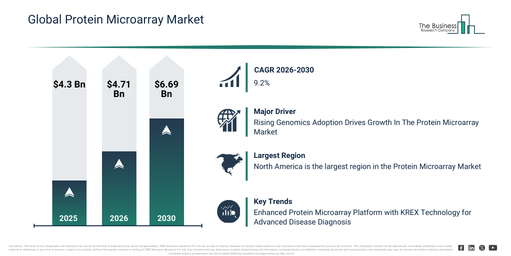
    The protein microarray market size has observed significant growth in recent years. Its valuation is projected to increase from $4.3 billion in 2025 to $4.71 billion in 2026, achieving a compound annual growth rate (CAGR) of 9.5%. The expansion witnessed in prior periods is largely due to the rise in proteomics research endeavors, the expanding application of microarrays in disease studies, the establishment of more academic and clinical research facilities, innovations in surface chemistry technologies, and the availability of advanced high-density microarray platforms.

    The protein microarray market is anticipated to experience substantial expansion in the coming years, with its valuation projected to reach $6.69 billion by 2030, demonstrating a compound annual growth rate (CAGR) of 9.2%. This growth during the forecast period is primarily driven by the escalating demand for personalized diagnostics, the increasing integration with AI-powered protein analytics, the broadening of translational research activities, its expanding role in drug target validation, and the rise in funding for precision medicine research. Noteworthy trends for the forecast period include the greater adoption of high-throughput protein microarrays, their growing utilization in biomarker discovery programs, enhanced integration with automated sample processing, the expansion of multiplex protein profiling applications, and an increased emphasis on data-rich proteomic analysis.

    Download the Free Sample Report to Explore Key Market Insights:

    https://www.thebusinessresearchcompany.com/sample.aspx?id=20605&type=smp

    Which Growth Drivers Are Contributing To The Progress Of The Protein Microarray Market?

    The expanded use of genomics is projected to drive an upward trend in the protein microarray market. Genomics encompasses the study of an organism’s entire genetic makeup, examining its arrangement, purpose, and evolutionary transformations. This increase in genomics adoption is propelled by advancements in technology, more affordable sequencing, and the potential for personalized medical therapies. Genomics aids protein microarrays by supplying detailed genetic data, enabling the identification and analysis of proteins, their interconnections, and roles, which facilitates more precise and efficient protein profiling. As an illustration, in December 2023, the World Health Organization, a public health agency based in Switzerland, reported that 163 out of 194 surveyed nations, approximately 84%, had established national capabilities for pathogen genomic sequencing. Consequently, the growing integration of genomics is acting as a primary catalyst for the protein microarray market.

    What Major Segment Divisions Exist Within The Protein Microarray Market?

    The protein microarray market covered in this report is segmented –

    1) By Type: Lab On Chips, Protein Chips, Arrayers, Integrated Systems, Microarray Systems

    2) By Technology: Functional Protein Microarrays, Analytical Microarrays, Reverse Phase Protein Microarrays

    3) By Application: Proteomics, Diagnostics, Antibody Characterization, Protein Functional Analysis

    4) By End User: Hospitals And Clinics, Research Centers, Academic Institutes, Diagnostic Centers

    Subsegments:

    1) By Lab On Chips: Diagnostic Lab-on-Chip, Analytical Lab-on-Chip, Microfluidic Chips

    2) By Protein Chips: Analytical Protein Microarrays, Functional Protein Microarrays, Reverse Phase Protein Microarrays

    3) By Arrayers: Contact Spotting Arrayers, Non-contact Spotting Arrayers

    4) By Integrated Systems: Automated Sample Processing Systems, Integrated Analysis Systems

    5) By Microarray Systems: High-density Microarray Systems, Low-density Microarray Systems, Multiplex Microarray Systems

    What Trends Are Advancing Progress In The Protein Microarray Market?

    Leading enterprises in the protein microarray market are developing novel platforms by incorporating advanced technologies, such as KREX technology. These platforms aim to enable high-throughput analysis of protein interactions, biomarker discovery, and disease diagnostics. KREX technology specifically ensures that only correctly folded, full-length proteins are immobilized on the protein microarray surface, while misfolded proteins are effectively washed away. For instance, in October 2023, Sengenics Corporation LLC, a US-based biotechnology company, launched i-ome discovery. This extensive protein microarray platform enhances disease diagnosis and therapeutic interventions by analyzing over 1,800 autoantigens. Utilizing patented KREX technology and an advanced AI-based pipeline, it delivers susceptible and precise autoantibody detection, marking a significant advancement in the protein microarray market.

    Which Companies Are Leading Innovation In The Protein Microarray Market?

    Major companies operating in the protein microarray market are PerkinElmer Inc., Merck Group, Thermo Fisher Scientific Inc., Agilent Technologies Inc., Bio-Rad Laboratories Inc., GenScript Biotech Corporation, Quanterix Corporation, Standard BioTools Inc., RayBiotech Life Inc., Sengenics Corporation LLC, PepperPrint GmbH, Quansys Biosciences Inc., Sciomics GmbH, Arrayit Corporation, LC Sciences, Full Moon BioSystems Inc., Meso Scale Diagnostics LLC, CDI Laboratories Inc., Grace Bio-Labs Inc., Zyomyx Inc.

    Read the full protein microarray market report here:

    https://www.thebusinessresearchcompany.com/report/protein-microarray-global-market-report

    What Are The Leading Geographic Regions In The Protein Microarray Market?

    North America was the largest region in the protein microarray market in 2025. Asia-Pacific is expected to be the fastest-growing region in the forecast period. The regions covered in the protein microarray market report are Asia-Pacific, South East Asia, Western Europe, Eastern Europe, North America, South America, Middle East, Africa.

    Request A Tailored Protein Microarray Market Research Report For Competitive Advantage:

    https://www.thebusinessresearchcompany.com/customise?id=20605&type=smp

    Browse Through More Reports Similar to the Global Protein Microarray Market 2026, By The Business Research Company

    Protein Purification And Isolation Global Market Report

    https://www.thebusinessresearchcompany.com/report/protein-purification-and-isolation-global-market-report

    Animal Based Protein Supplements Global Market Report

    https://www.thebusinessresearchcompany.com/report/animal-based-protein-supplements-global-market-report

    Alternative Protein Global Market Report

    https://www.thebusinessresearchcompany.com/report/alternative-protein-global-market-report

    Get in touch with us:

    The Business Research Company: https://www.thebusinessresearchcompany.com/

    Americas +1 310-496-7795

    Asia +44 7882 955267 & +91 8897263534

    Europe +44 7882 955267

    Email us at info@tbrc.info

    Follow us on:

    LinkedIn: https://in.linkedin.com/company/the-business-research-company

    YouTube: https://www.youtube.com/channel/UC24_fI0rV8cR5DxlCpgmyFQ

    Global Market Model: https://www.thebusinessresearchcompany.com/global-market-model
  • A significant industry trend in the Protein Extracts From Single Cell Protein And Other Conventional Sources Market includes the Advancements In Biomass Fermentation For Protein Extraction

    A significant industry trend in the Protein Extracts From Single Cell Protein And Other Conventional Sources Market includes the Advancements In Biomass Fermentation For Protein Extraction

    The Business Research Company’s 2026 market reports include new capabilities such as market attractiveness scoring and analysis, total addressable market analysis, company scoring matrix, interactive excel data dashboard, improved supply chain analysis, upcoming startups in the market, and overview of key products, aimed at improving the depth, usability, and strategic value of the insights delivered.

    What Market Value Is Expected For The Protein Extracts From Single Cell Protein And Other Conventional Sources Market At The End Of The 2026–2030 Forecast Period?

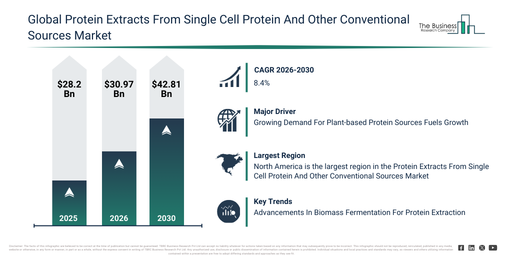
    The market size for protein extracts from single cell protein and other conventional sources has demonstrated strong growth in recent years. It is projected to increase from $28.2 billion in 2025 to $30.97 billion in 2026, exhibiting a compound annual growth rate (CAGR) of 9.8%. The expansion witnessed during the historical period can be attributed to the rising demand for alternative protein sources, the enlargement of animal nutrition industries, the growing use of protein supplements, the availability of extensive fermentation infrastructure, and the development of food and feed processing industries.

    The market size for protein extracts derived from single cell protein and other conventional sources is poised for significant expansion in the coming years. It is projected to reach $42.81 billion by 2030, demonstrating a compound annual growth rate (CAGR) of 8.4%. The projected growth during the forecast period can be attributed to an increasing emphasis on sustainable protein production, rising investments in microbial fermentation technologies, the broadening of alternative protein applications, a growing demand for high-quality protein ingredients, and increasing regulatory backing for novel protein sources. Major trends expected in this period include the increasing adoption of single cell protein sources, a rising demand for plant-based protein extracts, the expanding use of fermentation-based protein production, the development of high-purity protein extraction processes, and an enhanced focus on functional protein applications.

    Download the Free Sample Report to Explore Key Market Insights:

    https://www.thebusinessresearchcompany.com/sample.aspx?id=15644&type=smp

    What Primary Drivers Are Shaping The Development Of The Protein Extracts From Single Cell Protein And Other Conventional Sources Market?

    The rising consumer preference for plant-derived protein is projected to boost the expansion of protein extracts sourced from single-cell organisms and other traditional origins in the future. These plant-based proteins encompass edible items originating from protein-rich botanical sources, including legumes like beans and lentils, various nuts, seeds, tofu, tempeh, and ancient grains such as quinoa and buckwheat. This surging interest in plant-based proteins stems from a heightened understanding of ecological sustainability, numerous health advantages, and moral considerations surrounding animal farming, prompting consumers to explore alternative protein choices derived from plants. Consequently, protein extracts from single-cell sources, alongside conventional varieties, are seeing increased adoption as plant-based protein options, valued for their rich nutrient content and eco-friendliness. Such extracts provide a broad spectrum of amino acids, meeting nutritional requirements while simultaneously endorsing environmentally sound food production methods. Illustratively, data from the Good Food Institute, a US-based non-profit, indicated that the retail plant-based food market in the United States reached approximately $8.1 billion in 2024. Therefore, the increasing appetite for plant-based protein sources is a key factor propelling the growth of protein extracts from both single-cell protein and other conventional origins.

    What Segment Types Make Up The Protein Extracts From Single Cell Protein And Other Conventional Sources Market?

    The protein extracts from single cell protein and other conventional sources market covered in this report is segmented –

    1) By Source: Plant Protein Extract Sources, Microbial Sources – Single Cell Proteins, Microbial Sources – Direct Use

    2) By Feedstock: Organic, Conventional

    3) By Application: Biotechnology, Animal Feed, Agriculture And Fertilizers, Other Applications

    Subsegments:

    1) By Plant Protein Extract Sources: Soy Protein Extracts, Pea Protein Extracts, Rice Protein Extracts, Hemp Protein Extracts, Wheat Protein Extracts, Chickpea Protein Extracts, Potato Protein Extracts, Algae Protein Extracts, Other Plant-Based Protein Extracts

    2) By Microbial Sources – Single Cell Proteins: Yeast-Based Proteins, Bacterial Proteins, Fungal Proteins, Algal Proteins, Protozoan Proteins, Other Single-cell Proteins

    3) By Microbial Sources – Direct Use: Bacterial Protein Extracts, Fungal Protein Extracts, Algal Protein Extracts, Bacteriophage Proteins, Enzyme-Based Proteins

    How Are Trends Transforming The Protein Extracts From Single Cell Protein And Other Conventional Sources Market Landscape?

    Major companies engaged in the market for protein extracts derived from single-cell protein and other traditional sources are prioritizing the creation of expedited production methods through biomass fermentation technology to secure their position in the market. The swift production method for single-cell protein ingredients entails employing biomass fermentation technology to cultivate microorganisms, such as bacteria or yeast, thereby enabling the efficient transformation of organic matter into protein-rich biomass for various applications. For instance, in November 2023, MicroHarvest GmbH, a Germany-based biotechnology company, inaugurated a pilot plant in Lisbon to accelerate the commercialization of its single-cell protein ingredients. This facility allows the company to refine its technology, generate prototypes, and conduct test production runs with the aim of launching its first commercial product in early 2024. It is capable of producing sustainable, high-quality protein ingredients containing over 60% raw protein within 24 hours using biomass fermentation technology.

    Who Are The Key Players Driving Competition In The Protein Extracts From Single Cell Protein And Other Conventional Sources Market?

    Major companies operating in the protein extracts from single cell protein and other conventional sources market are Cargill Incorporated, The Archer-Daniels-Midland Company, BASF SE, DuPont de Nemours Inc., International Flavors & Fragrances Inc., Koninklijke DSM N.V., Ajinomoto Co. Inc., Kerry Group plc, Ingredion Inc., Lonza Group AG, Glanbia plc, Symrise AG, Roquette Frères, Novozymes A/S, Ashland Global Holdings Inc., Bioproton Pty Ltd., CP Kelco ApS, Omega Protein Corporation, Axiom Foods, Fermentalg SA, Cellana LLC

    Read the full protein extracts from single cell protein and other conventional sources market report here:

    https://www.thebusinessresearchcompany.com/report/protein-extracts-from-single-cell-protein-and-other-conventional-sources-global-market-report

    How Does The Protein Extracts From Single Cell Protein And Other Conventional Sources Market Perform Across Major Global Regions?

    North America was the largest region in the protein extracts from single cell protein and other conventional sources market in 2025. The regions covered in the protein extracts from single cell protein and other conventional sources market report are Asia-Pacific, South East Asia, Western Europe, Eastern Europe, North America, South America, Middle East, Africa.

    Request A Tailored Protein Extracts From Single Cell Protein And Other Conventional Sources Market Research Report For Competitive Advantage:

    https://www.thebusinessresearchcompany.com/customise?id=15644&type=smp

    Browse Through More Reports Similar to the Global Protein Extracts From Single Cell Protein And Other Conventional Sources Market 2026, By The Business Research Company

    Gene Expression Global Market Report

    https://www.thebusinessresearchcompany.com/report/gene-expression-global-market-report

    Difficult To Express Proteins Global Market Report

    https://www.thebusinessresearchcompany.com/report/difficult-to-express-proteins-global-market-report

    Protein Engineering Global Market Report

    https://www.thebusinessresearchcompany.com/report/protein-engineering-global-market-report

    Get in touch with us:

    The Business Research Company: https://www.thebusinessresearchcompany.com/

    Americas +1 310-496-7795

    Asia +44 7882 955267 & +91 8897263534

    Europe +44 7882 955267

    Email us at info@tbrc.info

    Follow us on:

    LinkedIn: https://in.linkedin.com/company/the-business-research-company

    YouTube: https://www.youtube.com/channel/UC24_fI0rV8cR5DxlCpgmyFQ

    Global Market Model: https://www.thebusinessresearchcompany.com/global-market-model