Category: Healthcare Services

  • Prostate Cancer Diagnostics Industry Expansion Forecast Showing Market Size of $9.19 Billion by 2030 at 12.9% CAGR

    The Business Research Company’s 2026 market reports include new capabilities such as market attractiveness scoring and analysis, total addressable market analysis, company scoring matrix, interactive excel data dashboard, improved supply chain analysis, upcoming startups in the market, and overview of key products, aimed at improving the depth, usability, and strategic value of the insights delivered.

    How Will The Market Size Of The Prostate Cancer Diagnostics Market Evolve From 2026 To 2030?

    The prostate cancer diagnostics market size has experienced rapid expansion in recent years. It is projected to grow from $5.02 billion in 2025 to $5.66 billion in 2026, demonstrating a compound annual growth rate (CAGR) of 12.8%. The growth observed in the historic period is attributable to the increasing prevalence of prostate cancer, the expansion of clinical diagnostic infrastructure, a rise in the use of PSA and biopsy testing, the availability of imaging-based diagnostic tools, and growing awareness concerning early cancer detection.

    The prostate cancer diagnostics market is anticipated to experience significant expansion over the coming years. By 2030, this market is projected to reach $9.19 billion, exhibiting a compound annual growth rate (CAGR) of 12.9%. This anticipated growth during the forecast timeframe is primarily driven by the progression of molecular and genomic diagnostics, the increasing uptake of precision oncology methods, the broadening of population screening programs, escalating investments in diagnostic automation, and a rising need for personalized cancer diagnostics. Key trends foreseen in this period encompass the wider acceptance of sophisticated diagnostic assays, the increasing application of biomarker-driven prostate cancer tests, the expanding incorporation of AI-powered imaging analysis, the enlargement of early detection screening efforts, and a heightened emphasis on diagnostic precision and risk assessment.

    Download the Free Sample Report to Explore Key Market Insights:

    https://www.thebusinessresearchcompany.com/sample.aspx?id=12003&type=smp

    Which Growth Drivers Are Contributing To The Progress Of The Prostate Cancer Diagnostics Market?

    The rising incidence of prostate cancer is projected to drive expansion within the prostate cancer diagnostics market in the future. Prostate cancer is a medical condition where malignant cells develop in the prostate gland, which serves as a component of the male and female reproductive systems. These diagnostic tools facilitate early detection of the disease through various methods, including prostate-specific antigen (PSA) testing and advanced imaging techniques. For example, in January 2023, data from the American Cancer Society (ACS), a US-based non-profit organization dedicated to eliminating cancer, indicated approximately 288,300 new prostate cancer diagnoses and 34,700 related deaths in 2023. Consequently, the escalating prevalence of prostate cancer is anticipated to fuel the expansion of the prostate cancer diagnostics market.

    Which Segment Areas Are Covered In The Prostate Cancer Diagnostics Market Analysis?

    The prostate cancer diagnostics market covered in this report is segmented –

    1) By Products: Instruments, Reagents And Consumables, Accessories

    2) By Test Type: Preliminary Tests, Confirmatory Tests

    3) By Prostate Cancer: Squamous Cell Cancer, Small Cell Carcinoma, Transitional Cell Cancer, Prostatic Adenocarcinoma, Ductal Adenocarcinoma, Small Cell Prostate Cancer, Acinar Adenocarcinoma

    4) By Peer Groups: Adult, Geriatrics

    5) By End User: Hospitals, Independent Diagnostic Laboratories, Cancer Research Institutes, Other End-Users

    Subsegments:

    1) By Instruments: Biopsy Instruments, Imaging Devices, Digital Rectal Examination Tools

    2) By Reagents And Consumables: Diagnostic Assay Kits, Staining Reagents, Sample Collection Materials

    3) By Accessories: Biopsy Guides, Specimen Handling Accessories, Calibration And Maintenance Tools

    How Are Trends Shaping The Direction Of The Prostate Cancer Diagnostics Market?

    Leading companies active in the prostate cancer diagnostics market are concentrating on developing advanced AI-enabled solutions designed to enhance diagnostic accuracy, reduce interpretation periods, and support the early detection of prostate cancer. AI-powered tools for diagnosing prostate cancer utilize machine learning algorithms to identify prostatic adenocarcinoma regions and analyze whole slide images from prostate core needle biopsies, thereby assisting pathologists in delivering precise and timely diagnoses. For instance, in March 2023, Qritive, a Singapore-based company specializing in diagnostic technologies, launched QAi Prostate, an advanced AI-driven prostate cancer diagnosis tool for pathologists. This solution aids in streamlining workflows, improves diagnostic precision, and lessens the time needed for treatment planning.

    Which Global Companies Are Actively Competing In The Prostate Cancer Diagnostics Market?

    Major companies operating in the prostate cancer diagnostics market are F Hoffmann La Roche AG, Bayer AG, Thermo Fisher Scientific Inc, Abbott Laboratories Inc, Siemens Healthineers AG, Becton Dickinson And Company, Agilent Technologies Inc, Hologic Inc, bioMerieux SA, Beckman Coulter Inc, Qiagen NV, Exact Sciences Corporation, DiaSorin SpA, OPKO Health Inc, Myriad Genetics Inc, Cepheid Inc, NeoGenomics Laboratories Inc, Fujirebio Diagnostics Inc, Ambry Genetics Corporation, MDxHealth SA, Exosome Diagnostics Inc, Cellanyx Diagnostics Inc, A3P Biomedical AB, Roche Diagnostics GmbH, Sysmex Corporation

    Read the full prostate cancer diagnostics market report here:

    https://www.thebusinessresearchcompany.com/report/prostate-cancer-diagnostics-global-market-report

    What Are The Leading Geographic Regions In The Prostate Cancer Diagnostics Market?

    North America was the largest region in the prostate cancer diagnostics market in 2025. Asia-Pacific is expected to be the fastest-growing region in the forecast period. The regions covered in the prostate cancer diagnostics market report are Asia-Pacific, South East Asia, Western Europe, Eastern Europe, North America, South America, Middle East, Africa.

    Request A Tailored Prostate Cancer Diagnostics Market Research Report For Competitive Advantage:

    https://www.thebusinessresearchcompany.com/customise?id=12003&type=smp

    Browse Through More Reports Similar to the Global Prostate Cancer Diagnostics Market 2026, By The Business Research Company

    Caprolactam Global Market Report

    https://www.thebusinessresearchcompany.com/report/caprolactam-global-market-report

    Quinoa Global Market Report

    https://www.thebusinessresearchcompany.com/report/quinoa-global-market-report

    Doas Global Market Report

    https://www.thebusinessresearchcompany.com/report/doas-global-market-report

    Get in touch with us:

    The Business Research Company: https://www.thebusinessresearchcompany.com/

    Americas +1 310-496-7795

    Asia +44 7882 955267 & +91 8897263534

    Europe +44 7882 955267

    Email us at info@tbrc.info

    Follow us on:

    LinkedIn: https://in.linkedin.com/company/the-business-research-company

    YouTube: https://www.youtube.com/channel/UC24_fI0rV8cR5DxlCpgmyFQ

    Global Market Model: https://www.thebusinessresearchcompany.com/global-market-model

  • Promacta Market Revenue Expected to Reach $6.09 Billion by 2030 with 8.1% CAGR

    The Business Research Company’s 2026 market reports include new capabilities such as market attractiveness scoring and analysis, total addressable market analysis, company scoring matrix, interactive excel data dashboard, improved supply chain analysis, upcoming startups in the market, and overview of key products, aimed at improving the depth, usability, and strategic value of the insights delivered.

    What Is The Forecasted Market Value Of The Promacta Market Across 2026–2030?

    The promacta market has experienced robust expansion in recent years. This market is projected to expand from $4.11 billion in 2025 to $4.46 billion in 2026, achieving a compound annual growth rate (CAGR) of 8.4%. Several factors contributed to its historical growth, including the escalating diagnosis of immune thrombocytopenia, expanded therapeutic options for aplastic anemia, enhanced clinical awareness regarding platelet disorders, the emergence of oral TPO receptor agonists, and a greater uptake of specialty hematology drugs.

    The promacta market size is anticipated to experience substantial growth in the coming years. It is projected to expand to $6.1 billion by 2030, achieving a compound annual growth rate (CAGR) of 8.1%. The expansion during this forecast period can be attributed to the proliferation of personalized hematology treatments, an increased focus on managing rare blood disorders, the rising adoption of long-term outpatient therapies, growing investments in hematology drug innovation, and broader access to advanced thrombopoietin therapies. Key trends expected in the forecast period include the increasing uptake of targeted thrombopoietin receptor therapies, a rising emphasis on personalized treatment for thrombocytopenia, a growing demand for oral platelet-stimulating drugs, the expansion of indication-specific treatment protocols, and an enhanced focus on long-term patient management.

    Download the Free Sample Report to Explore Key Market Insights:

    https://www.thebusinessresearchcompany.com/sample.aspx?id=21264&type=smp

    What Primary Drivers Are Shaping The Development Of The Promacta Market?

    The rising incidence of aplastic anemia is anticipated to boost the Promacta market’s expansion. Aplastic anemia is an uncommon condition where the bone marrow fails to adequately produce blood cells, leading to symptoms such as fatigue, susceptibility to infections, and elevated bleeding risk. This condition’s occurrence is linked to factors like exposure to toxic substances, specific medications, viral illnesses, autoimmune conditions, and inherited genetic tendencies. Promacta works by stimulating stem cells in the bone marrow to generate blood cells, thereby increasing levels of platelets, red blood cells, and neutrophils. This treatment lessens the necessity for transfusions and lowers the likelihood of bleeding and infections in individuals suffering from aplastic anemia. For example, in April 2024, the Anthony Nolan, a UK-based charity focusing on leukemia and hematopoietic stem cell transplantation, reported that around 100 to 150 individuals in the UK are diagnosed with aplastic anemia each year. Consequently, the growing prevalence of aplastic anemia is a key factor propelling the Promacta market. The increasing spending on healthcare is projected to drive the Promacta market’s growth in the foreseeable future. Healthcare expenditure encompasses the total costs associated with medical services, therapies, and infrastructure aimed at maintaining and improving both public and personal health. This upward trend in healthcare spending is influenced by elements such as an older demographic, progress in medical technology, and broader health insurance coverage. Elevated healthcare expenditure improves patients’ ability to access sophisticated treatments for thrombocytopenia and other blood-related conditions. It also strengthens diagnostic abilities, aiding in earlier disease detection and boosting the uptake of Promacta. For example, in May 2024, a report from the Office for National Statistics, a UK government body, indicated that total healthcare spending rose by 5.6% nominally in 2023. The UK’s healthcare expenditure reached approximately £292 ($338.58) billion in 2023, based on more current yet less exhaustive data sources compared to prior years. Thus, the escalating healthcare expenditure is a significant force behind the expansion of the Promacta market.

    What Segmentation Levels Are Considered In The Promacta Market?

    The promacta market covered in this report is segmented –

    1) By Indication: Chronic Immune Thrombocytopenia, Severe Aplastic Anemia, Hepatitis C-associated Thrombocytopenia, Other Indications

    2) By Dosage Form: Tablets, Oral Suspension

    3) By Distribution Channel: Hospital Pharmacies, Retail Pharmacies, Online Pharmacies

    Subsegments:

    1) By Chronic Immune Thrombocytopenia (ITP): Primary Immune Thrombocytopenia, Secondary Immune Thrombocytopenia

    2) By Severe Aplastic Anemia: Adult Severe Aplastic Anemia, Pediatric Severe Aplastic Anemia

    3) By Hepatitis C-associated Thrombocytopenia: Genotype 1 Hepatitis C-associated Thrombocytopenia, Genotype 2 Hepatitis C-associated Thrombocytopenia, Genotype 3 Hepatitis C-associated Thrombocytopenia

    4) By Other Indications: Myelodysplastic Syndromes (MDS), Bone Marrow Disorders, Radiation-Induced Thrombocytopenia

    Which Leading Firms Are Contributing To The Growth Of The Promacta Market?

    Major companies operating in the promacta market are Novartis AG, Amgen Inc, Pfizer Inc, Takeda Pharmaceutical Company Limited, Bristol Myers Squibb Company, Roche Holding AG, Sanofi SA, AbbVie Inc, AstraZeneca plc, GlaxoSmithKline plc, Merck And Co Inc, Johnson And Johnson, CSL Behring, Grifols SA, Octapharma AG, Kedrion Biopharma, ADMA Biologics Inc, Bio Products Laboratory Ltd, Apotex Inc, Teva Pharmaceutical Industries Ltd, Sandoz International GmbH, Dr Reddys Laboratories Ltd

    Read the full promacta market report here:

    https://www.thebusinessresearchcompany.com/report/promacta-global-market-report

    How Does The Promacta Market Perform Across Major Global Regions?

    North America was the largest region in the promacta market in 2025. Asia-Pacific is expected to be the fastest-growing region in the forecast period. The regions covered in the promacta market report are Asia-Pacific, South East Asia, Western Europe, Eastern Europe, North America, South America, Middle East, Africa.

    Request A Tailored Promacta Market Research Report For Competitive Advantage:

    https://www.thebusinessresearchcompany.com/customise?id=21264&type=smp

    Browse Through More Reports Similar to the Global Promacta Market 2026, By The Business Research Company

    Non Proliferative Diabetic Retinopathy Global Market Report

    https://www.thebusinessresearchcompany.com/report/non-proliferative-diabetic-retinopathy-global-market-report

    Diabetic Retinopathy Global Market Report

    https://www.thebusinessresearchcompany.com/report/diabetic-retinopathy-global-market-report

    Diabetic Neuropathy Global Market Report

    https://www.thebusinessresearchcompany.com/report/diabetic-neuropathy-global-market-report

    Get in touch with us:

    The Business Research Company: https://www.thebusinessresearchcompany.com/

    Americas +1 310-496-7795

    Asia +44 7882 955267 & +91 8897263534

    Europe +44 7882 955267

    Email us at info@tbrc.info

    Follow us on:

    LinkedIn: https://in.linkedin.com/company/the-business-research-company

    YouTube: https://www.youtube.com/channel/UC24_fI0rV8cR5DxlCpgmyFQ

    Global Market Model: https://www.thebusinessresearchcompany.com/global-market-model
  • Global Reproductive Genetics Market Expected to Reach $16.21 Billion by 2030 with 15.4% CAGR

    Global Reproductive Genetics Market Expected to Reach $16.21 Billion by 2030 with 15.4% CAGR

    The Business Research Company’s 2026 market reports include new capabilities such as market attractiveness scoring and analysis, total addressable market analysis, company scoring matrix, interactive excel data dashboard, improved supply chain analysis, upcoming startups in the market, and overview of key products, aimed at improving the depth, usability, and strategic value of the insights delivered.

    What Is The Estimated Market Size Of The Reproductive Genetics Market During 2026–2030?

    The reproductive genetics market size has seen rapid growth in recent years. It is forecast to expand from $7.91 billion in 2025 to $9.15 billion in 2026, exhibiting a compound annual growth rate (CAGR) of 15.7%. This historical growth can be linked to several factors, including an increase in assisted reproductive technologies usage, a rising maternal age at conception, the expansion of fertility clinics, greater awareness of inherited genetic disorders, and the availability of advanced molecular diagnostic tools.

    The reproductive genetics market is projected for substantial growth over the next few years. It is expected to reach $16.22 billion by 2030, exhibiting a compound annual growth rate (CAGR) of 15.4%. This anticipated growth throughout the forecast period can be attributed to the increasing adoption of precision reproductive medicine, rising investments in fertility genomics research, the expansion of non-invasive prenatal testing, greater use of AI-driven genetic interpretation, and advancements in sequencing accuracy and affordability. Key trends for the forecast period include the increasing uptake of preimplantation genetic testing, a rising demand for carrier screening solutions, the growing application of NGS-based reproductive diagnostics, the expansion of personalized fertility treatment planning, and enhanced integration of laboratory automation.

    Download the Free Sample Report to Explore Key Market Insights:

    https://www.thebusinessresearchcompany.com/sample.aspx?id=28320&type=smp

    What Underlying Factors Are Accelerating The Growth Of The Reproductive Genetics Market?

    The rising incidence of genetic conditions is anticipated to drive the expansion of the reproductive genetics market in the future. Genetic disorders are defined as illnesses resulting from anomalies in an individual’s deoxyribonucleic acid (DNA), encompassing everything from singular gene mutations to chromosomal imperfections. This increase in genetic disorders is linked to the prevalence of reproductive genetic testing, as families pursue early information to minimize ambiguity, enable educated reproductive decisions, and aid in preventing the passing down of hereditary conditions. Reproductive genetics plays a crucial role in the detection and management of genetic conditions, assisting families in making well-informed choices and lowering the likelihood of transmitting these conditions to subsequent generations. An example illustrates this: in July 2024, Cystic Fibrosis Australia, a national consumer organization based in Australia, reported that the count of individuals affected by Cystic Fibrosis (CF) within the Australian Cystic Fibrosis Data Registry (ACFDR) climbed from 3,738 in 2022 to 3,798 in 2023, marking a 1.6% increase. Consequently, the growing occurrence of genetic conditions is projected to fuel the expansion of the reproductive genetics market.

    How Are The Various Segments Of The Reproductive Genetics Market Categorized?

    The reproductive genetics market covered in this report is segmented –

    1) By Product Type: Kits, Laboratory Developed Tests (LDT), Reagents And Consumables

    2) By Technology: Polymerase Chain Reaction (PCR), Next-Generation Sequencing (NGS), In-Situ Hybridization (ISH), Microarray Analysis

    3) By Application: Aneuploidy, Single Gene Disorder, Structural Chromosomal Abnormality, Other Applications

    4) By End User: Hospitals, Diagnostic Laboratories, Fertility Clinics, Research Institutions

    Subsegments:

    1) By Kits: Sample Collection Kits, Extraction Kits, Amplification Kits, Sequencing Kits, Hybridization Kits

    2) By Laboratory Developed Tests: Carrier Screening Tests, Preimplantation Genetic Tests, Prenatal Diagnostic Tests, Aneuploidy Detection Tests, Single Gene Disorder Tests

    3) By Reagents And Consumables: Enzymes, Buffers, Probes, Fluorescent Labels, Laboratory Plasticware

    How Are Trends Impacting The Reproductive Genetics Market?

    Major companies in the reproductive genetics market are prioritizing the development of advanced solutions, such as comprehensive multi-trait embryo comparison, to enable more precise, data-driven, and personalized embryo selection for IVF patients. Comprehensive multi-trait embryo comparison describes an analytical approach that concurrently evaluates multiple embryos for hundreds of hereditary conditions and complex traits using genomic and polygenic scoring, assisting prospective parents in making more informed decisions during in vitro fertilization. For instance, in June 2025, Nucleus Genomics Inc., a US-based biotechnology company, launched Nucleus Embryo, a reproductive genetics platform. This platform allows patients to analyze and compare up to 20 embryos across more than 900 inherited conditions, incorporating polygenic scoring for complex traits such as appearance, cognitive ability, and mental health, and providing a comprehensive, multi-trait comparison interface that significantly expands embryo-selection capabilities beyond traditional screening methods.

    Which Major Firms Influence Developments In The Reproductive Genetics Market?

    Major companies operating in the reproductive genetics market are F. Hoffmann-La Roche Ltd., Thermo Fisher Scientific Inc., Quest Diagnostics Incorporated, Agilent Technologies Inc., Illumina Inc., Revvity Inc., Medicover AB, OPKO Health Inc., Natera Inc., Myriad Genetics Inc., Fulgent Genetics Inc., The Cooper Companies Inc., Vitrolife AB, BillionToOne Inc., Sophia Genetics SA, Eurofins Genomics India Private Limited, Invitae Corporation, Igenomix, Gonagen GmbH, Darwin AG.

    Read the full reproductive genetics market report here:

    https://www.thebusinessresearchcompany.com/report/reproductive-genetics-global-market-report

    Which Region Is Projected To Dominate The Reproductive Genetics Market During The Forecast Period?

    North America was the largest region in the reproductive genetics market in 2025. Asia-Pacific is expected to be the fastest-growing region in the forecast period. The regions covered in the reproductive genetics market report are Asia-Pacific, South East Asia, Western Europe, Eastern Europe, North America, South America, Middle East, Africa.

    Request A Tailored Reproductive Genetics Market Research Report For Competitive Advantage:

    https://www.thebusinessresearchcompany.com/customise?id=28320&type=smp

    Browse Through More Reports Similar to the Global Reproductive Genetics Market 2026, By The Business Research Company

    Genes Therapy Global Market Report

    https://www.thebusinessresearchcompany.com/report/genes-therapy-global-market-report

    Genotyping Assay Global Market Report

    https://www.thebusinessresearchcompany.com/report/genotyping-assay-global-market-report

    Gene Expression Global Market Report

    https://www.thebusinessresearchcompany.com/report/gene-expression-global-market-report

    Get in touch with us:

    The Business Research Company: https://www.thebusinessresearchcompany.com/

    Americas +1 310-496-7795

    Asia +44 7882 955267 & +91 8897263534

    Europe +44 7882 955267

    Email us at info@tbrc.info

    Follow us on:

    LinkedIn: https://in.linkedin.com/company/the-business-research-company

    YouTube: https://www.youtube.com/channel/UC24_fI0rV8cR5DxlCpgmyFQ

    Global Market Model: https://www.thebusinessresearchcompany.com/global-market-model

  • Reporter Gene Assay Market Future Outlook Showing Expansion Toward $10.23 Billion by 2030

    Reporter Gene Assay Market Future Outlook Showing Expansion Toward $10.23 Billion by 2030

    The Business Research Company’s 2026 market reports include new capabilities such as market attractiveness scoring and analysis, total addressable market analysis, company scoring matrix, interactive excel data dashboard, improved supply chain analysis, upcoming startups in the market, and overview of key products, aimed at improving the depth, usability, and strategic value of the insights delivered.

    What Market Size Expansion Is Predicted For The Reporter Gene Assay Market Between 2026 And 2030?

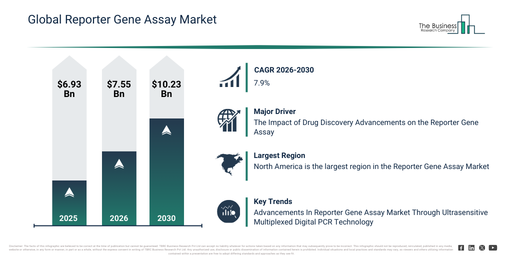
    The reporter gene assay market size has experienced robust expansion in recent years. It is projected to increase from $6.93 billion in 2025 to $7.55 billion in 2026, exhibiting a compound annual growth rate (CAGR) of 8.9%. This historical growth can be credited to factors including rising investment in molecular biology research, the broadening scope of gene expression studies, the increasing adoption of in-vitro screening models, intensified pharmaceutical R&D activity, and the improved availability of advanced assay reagents.

    The reporter gene assay market size is expected to experience robust growth over the next few years. It is projected to reach $10.23 billion by 2030, demonstrating a compound annual growth rate (CAGR) of 7.9%. This expansion during the forecast period can be attributed to the increasing adoption of high-throughput screening methods, a rising demand for precision medicine research tools, the ongoing expansion of cell and gene therapy development, the growing use of automated laboratory workflows, and an increasing focus on translational research efficiency. Major trends foreseen for the forecast period include the increasing adoption of high-sensitivity reporter assay systems, a rising use of luciferase-based detection technologies, growing demand for cell-based functional assays, the expansion of multiplex reporter assay platforms, and an enhanced focus on reproducibility and data accuracy.

    Download the Free Sample Report to Explore Key Market Insights:

    https://www.thebusinessresearchcompany.com/sample.aspx?id=16526&type=smp

    Which Growth Drivers Are Contributing To The Progress Of The Reporter Gene Assay Market?

    The expansion of drug discovery and development research is projected to stimulate the growth of the reporter gene assay market. This research encompasses a systematic process within the medical, biotechnology, and pharmacology sectors, aimed at identifying, creating, and introducing new medications to the market. Its rise is attributed to advancements in proteomics, high-throughput screening, genomics, and the successful development and approval of novel drugs. Reporter gene assays are vital instruments in this discovery and development research, allowing researchers to understand gene regulation, pinpoint potential drug targets, screen compound libraries, and evaluate the efficacy and safety of candidate drugs. For instance, in January 2024, the New Drug Therapy Approvals 2023 report, issued by the Center for Drug Evaluation and Research (CDER), a US-based branch of the U.S. Food and Drug Administration (FDA), indicated that CDER approved 55 novel drugs in 2023, with 20 (36%) identified as first-in-class, an increase from 37 novel drug approvals in 2022. Thus, the increasing drug discovery and development research is a primary driver for the reporter gene assay market’s growth.

    Which Market Segments Are Examined In The Reporter Gene Assay Market Study?

    The reporter gene assay market covered in this report is segmented –

    1) By Product: Assay Kits, Reagents

    2) By Application: Promoter Structural And Functional Analysis, Cell Signaling Pathways, Protein Interaction, Clinical And Gene Regulation

    3) By End-User: Biotechnology And Pharmaceutical Companies, Research And Academic Institutes, Hospital And Diagnostic Laboratories, Contract Research Organizations

    Subsegments:

    1) By Assay Kits: Luciferase Reporter Assay Kits, ß-galactosidase Reporter Assay Kits, Fluorescent Reporter Assay Kits, Secreted Alkaline Phosphatase (SEAP) Assay Kits

    2) By Reagents: Luciferase Substrates, ß-galactosidase Substrates, Fluorescent Proteins, Detection Buffers And Enhancers

    What Industry Trends Are Redefining The Reporter Gene Assay Market?

    Leading firms active within the reporter gene assay market are concentrating on creating novel solutions, including ultrasensitive multiplexed digital PCR assays, to enhance their market standing. These ultrasensitive multiplexed digital PCR (dPCR) assays accurately identify and measure nucleic acids through the process of dividing a sample into numerous separate reactions, each holding tiny quantities of target DNA or RNA molecules. As an illustration, Bio-Rad Laboratories Inc., a US-based life science research company, introduced the ddPLEX ESR1 Mutation Detection Kit in April 2024, marking it as the initial ultrasensitive multiplexed digital PCR assay. This recently released ultrasensitive multiplexed digital PCR assay, designed for breast cancer mutation detection, demonstrates exceptional sensitivity, enabling the identification of tiny mutations in intricate samples for prompt and accurate disease tracking. Furthermore, its multiplexing capability facilitates the simultaneous identification of numerous mutations, streamlining the testing process. This innovative assay is expected to transform both breast cancer research and individualized treatment approaches.

    Who Are The Primary Competitors In The Reporter Gene Assay Market?

    Major companies operating in the reporter gene assay market are Roche Diagnostics, Thermo Fisher Scientific, Danaher Corporation, Merck KGaA, Becton Dickinson and Company (BD Biosciences), GE Healthcare, Lonza Group, Agilent Technologies, Sartorius AG, PerkinElmer Inc., Bio-Rad Laboratories Inc., QIAGEN N.V., GenScript Biotech Corporation, Abcam plc, Promega Corporation, Promega Corporation, Takara Bio Inc., New England Biolabs (NEB), OriGene Technologies Inc., Cell Signaling Technology Inc., SABiosciences, Enzo Biochem Inc., InvivoGen, Biotium Inc., Enzo Life Sciences Inc., BioAssay Systems, Indigo Biosciences Inc.

    Read the full reporter gene assay market report here:

    https://www.thebusinessresearchcompany.com/report/reporter-gene-assay-global-market-report

    What Are The Leading Geographic Regions In The Reporter Gene Assay Market?

    North America was the largest region in the reporter gene assay market in 2025. Asia-Pacific is expected to be the fastest-growing region in the forecast period. The regions covered in the reporter gene assay market report are Asia-Pacific, South East Asia, Western Europe, Eastern Europe, North America, South America, Middle East, Africa.

    Request A Tailored Reporter Gene Assay Market Research Report For Competitive Advantage:

    https://www.thebusinessresearchcompany.com/customise?id=16526&type=smp

    Browse Through More Reports Similar to the Global Reporter Gene Assay Market 2026, By The Business Research Company

    Physical Therapy Rehabilitation Global Market Report

    https://www.thebusinessresearchcompany.com/report/physical-therapy-rehabilitation-global-market-report

    Rehabilitation Products Global Market Report

    https://www.thebusinessresearchcompany.com/report/rehabilitation-products-global-market-report

    Rehabilitation Equipment Global Market Report

    https://www.thebusinessresearchcompany.com/report/rehabilitation-equipment-global-market-report

    Get in touch with us:

    The Business Research Company: https://www.thebusinessresearchcompany.com/

    Americas +1 310-496-7795

    Asia +44 7882 955267 & +91 8897263534

    Europe +44 7882 955267

    Email us at info@tbrc.info

    Follow us on:

    LinkedIn: https://in.linkedin.com/company/the-business-research-company

    YouTube: https://www.youtube.com/channel/UC24_fI0rV8cR5DxlCpgmyFQ

    Global Market Model: https://www.thebusinessresearchcompany.com/global-market-model

  • Repetitive Strain Injury (RSI) Treatment Market Revenue Growth Expected to Reach $3.55 Billion by 2030 with 8.9% CAGR

    Repetitive Strain Injury (RSI) Treatment Market Revenue Growth Expected to Reach $3.55 Billion by 2030 with 8.9% CAGR

    The Business Research Company’s 2026 market reports include new capabilities such as market attractiveness scoring and analysis, total addressable market analysis, company scoring matrix, interactive excel data dashboard, improved supply chain analysis, upcoming startups in the market, and overview of key products, aimed at improving the depth, usability, and strategic value of the insights delivered.

    How Large Is The Repetitive Strain Injury (RSI) Treatment Market Projected To Become By 2030 Based On Its 2026 Valuation?

    The repetitive strain injury (rsi) treatment market size has shown significant growth over recent years. Forecasts indicate its expansion from $2.34 billion in 2025 to $2.52 billion in 2026, achieving a compound annual growth rate (CAGR) of 8.0%. The primary drivers for its historical development include the increasing occurrence of repetitive work-related injuries, a broader adoption of physiotherapy treatments, the extension of occupational health services, heightened awareness regarding musculoskeletal disorders, and enhanced access to pain management therapies.

    The repetitive strain injury (rsi) treatment market is poised for significant expansion in the upcoming years. It is projected to climb to $3.55 billion by 2030, exhibiting a compound annual growth rate (CAGR) of 8.9%. This growth throughout the forecast period is largely attributed to the increasing uptake of digital physiotherapy platforms, a rising emphasis on preventive ergonomic care, the expansion of minimally invasive treatment options, the growing implementation of personalized rehabilitation plans, and an increasing demand for homecare-based treatment solutions. Prominent trends for the forecast period include a surging demand for non-surgical treatment alternatives, increased adoption of physiotherapy and rehabilitation programs, a heightened focus on workplace ergonomic solutions, the expansion of home-based pain management therapies, and enhanced awareness regarding the benefits of early intervention.

    Download the Free Sample Report to Explore Key Market Insights:

    https://www.thebusinessresearchcompany.com/sample.aspx?id=13127&type=smp

    What Primary Drivers Are Shaping The Development Of The Repetitive Strain Injury (RSI) Treatment Market?

    An anticipated increase in the geriatric population is projected to fuel the expansion of the repetitive strain injury (RSI) treatment market in the future. This demographic encompasses individuals who are 65 years old or more. Older adults are more susceptible to repetitive strain injuries due to physiological changes associated with aging in their muscles and tendons, such as diminished muscle strength and mass, as well as reduced flexibility. For example, data from a report issued by the US-based Pew Research Center Organization in January 2024 indicates that the geriatric population stood at 0.2% in 2024 and is projected to grow by 0.5% by 2054. Consequently, the expanding geriatric demographic is a key factor stimulating the growth of the repetitive strain injury (RSI) treatment market.

    What Segment Groups Are Identified Within The Repetitive Strain Injury (RSI) Treatment Market?

    The repetitive strain injury (rsi) treatment market covered in this report is segmented –

    1) By Type: Carpal Tunnel Syndrome, Bursitis, Tennis Elbow, Other Types

    2) By Treatment: Medication, Physiotherapy, Steroid Injections, Surgery, Other Treatments

    3) By End Users: Hospitals, Specialty Clinics, Homecare, Other End Users

    Subsegments:

    1) By Carpal Tunnel Syndrome: Mild Cases, Moderate Cases, Severe Cases

    2) By Bursitis: Shoulder Bursitis, Hip Bursitis, Knee Bursitis

    3) By Tennis Elbow: Lateral Epicondylitis

    4) By Other Types: Tendonitis, Trigger Finger, De Quervain’s Tenosynovitis

    What Key Developments And Trends Are Impacting The Repetitive Strain Injury (RSI) Treatment Market?

    Major entities operating in the repetitive strain injury (RSI) treatment market are embracing advanced technology, including hydrotherapy systems with integrated water management capabilities, to deliver consistent customer service. Such a hydrotherapy system, equipped with built-in water management technology, aids individuals with particular illnesses or injuries by enabling them to exercise in water. For instance, in January 2023, Hydro Physio, a UK-based manufacturer of aquatic therapy treadmills, unveiled a new hydrotherapy system. This technology presents a remedy for private, hygienic aquatic therapeutic environments. It features a treadmill chamber, an entryway, and incorporated water management technology. The Hydro Physio system is designed to assist with osteoarthritis, post-surgical recovery, weight reduction, pain alleviation, stress reduction, improvement of overall well-being, and reduction of pressure on sore joints.

    Which Companies Hold Significant Positions In The Repetitive Strain Injury (RSI) Treatment Market?

    Major companies operating in the repetitive strain injury (rsi) treatment market are Pfizer Inc., Merck & Co. Inc., Novartis AG, GlaxoSmithKline plc., Eli Lilly and Co Ltd., Select Medical Holdings, Sun Pharmaceutical Industries Limited, ATI Holdings Inc., Professional Physical Therapy, Lifemark Health Group, Physiotherapy Associates Inc., The Physio Company Ltd., Fyzical Therapy & Balance Centers, Kinetic Physical Therapy and Wellness Inc., PhysioworksInc., Rehab Pro, Agility Physiotherapy & Sports Injury, BodyTech Physiotherapy, CorePhysio LLC, Dynamic Physical Therapy Services LLC, Peak Physical Therapy LLC, Pure Physio Pty. Ltd., Spectrum Physio Centre, Strive Physiotherapy & Performance

    Read the full repetitive strain injury (rsi) treatment market report here:

    https://www.thebusinessresearchcompany.com/report/repetitive-strain-injury-rsi-treatment-global-market-report

    How Does The Repetitive Strain Injury (RSI) Treatment Market Perform Across Major Global Regions?

    North America was the largest region in the repetitive strain injury (RSI) treatment market in 2025. The regions covered in the repetitive strain injury (rsi) treatment market report are Asia-Pacific, South East Asia, Western Europe, Eastern Europe, North America, South America, Middle East, Africa.

    Request A Tailored Repetitive Strain Injury (RSI) Treatment Market Research Report For Competitive Advantage:

    https://www.thebusinessresearchcompany.com/customise?id=13127&type=smp

    Browse Through More Reports Similar to the Global Repetitive Strain Injury (RSI) Treatment Market 2026, By The Business Research Company

    End Stage Renal Disease Esrd Drug Global Market Report

    https://www.thebusinessresearchcompany.com/report/end-stage-renal-disease-esrd-drug-global-market-report

    Hepatorenal Syndrome Treatment Global Market Report

    https://www.thebusinessresearchcompany.com/report/hepatorenal-syndrome-treatment-global-market-report

    Renal Denervation Devices Global Market Report

    https://www.thebusinessresearchcompany.com/report/renal-denervation-devices-global-market-report

    Get in touch with us:

    The Business Research Company: https://www.thebusinessresearchcompany.com/

    Americas +1 310-496-7795

    Asia +44 7882 955267 & +91 8897263534

    Europe +44 7882 955267

    Email us at info@tbrc.info

    Follow us on:

    LinkedIn: https://in.linkedin.com/company/the-business-research-company

    YouTube: https://www.youtube.com/channel/UC24_fI0rV8cR5DxlCpgmyFQ

    Global Market Model: https://www.thebusinessresearchcompany.com/global-market-model
  • Renal Medical Devices Service Market Expected to Record Steady Growth and Approach $12.39 Billion by 2030

    Renal Medical Devices Service Market Expected to Record Steady Growth and Approach $12.39 Billion by 2030

    The Business Research Company’s 2026 market reports include new capabilities such as market attractiveness scoring and analysis, total addressable market analysis, company scoring matrix, interactive excel data dashboard, improved supply chain analysis, upcoming startups in the market, and overview of key products, aimed at improving the depth, usability, and strategic value of the insights delivered.

    What Market Value Is Anticipated For The Renal Medical Devices Service Market Over The Period 2026–2030?

    The market for renal medical device services has shown consistent growth over recent years. Its size is projected to increase from $10.1 billion in 2025 to $10.55 billion in 2026, experiencing a compound annual growth rate (CAGR) of 4.4%. Historically, this growth can be attributed to several factors, including the rising incidence of kidney diseases, the worldwide expansion of dialysis centers, the increasing deployment of advanced dialysis equipment, the necessity for regulatory adherence in device upkeep, and the widespread availability of specialized renal devices.

    The renal medical devices service market size is anticipated to undergo consistent growth in the coming years, projected to reach $12.4 billion by 2030 with a compound annual growth rate (CAGR) of 4.1%. This expansion during the forecast period is fueled by an increasing demand for home dialysis services, the rising adoption of connected renal devices, the broadening of service outsourcing models, a greater emphasis on cost-efficient healthcare operations, and the growing application of analytics for optimizing device performance. Significant trends in this period include the increasing uptake of predictive maintenance services, the wider use of remote device monitoring solutions, the expansion of preventive service contracts, an enhanced focus on equipment uptime and safety, and the rising integration of data-driven service models.

    Download the Free Sample Report to Explore Key Market Insights:

    https://www.thebusinessresearchcompany.com/sample.aspx?id=24683&type=smp

    Which Major Factors Are Driving The Expansion Of The Renal Medical Devices Service Market?

    The growing incidence of chronic kidney disease (CKD) is anticipated to boost the expansion of the renal medical devices service market in the future. Chronic kidney disease is a condition characterized by a gradual decline in the kidneys’ capacity to filter waste from the blood, potentially resulting in the accumulation of waste products and other health complications. The increase in chronic kidney disease cases is attributed to diabetes, where elevated blood sugar levels harm kidney blood vessels, thereby diminishing their waste-filtering efficiency. Renal medical device service plays a crucial role in supporting chronic kidney disease treatment by guaranteeing the optimal functioning of dialysis and associated equipment. It minimizes operational interruptions through timely maintenance and technical assistance, thereby enhancing treatment dependability and patient well-being. For example, in June 2023, Kidney Research UK reported an estimated 7.19 million individuals in the UK suffered from chronic kidney disease in 2023, constituting over 10% of the UK population, with projections indicating an rise to 7.61 million people by 2033. Consequently, the increasing prevalence of chronic kidney disease (CKD) is fueling the growth of the renal medical devices service market.

    How Is The Renal Medical Devices Service Market Divided Into Its Major Segments?

    The renal medical devices service market covered in this report is segmented –

    1) By Type: Dialysis Devices, Catheters, Kidney Monitoring Devices, Kidney Transplant Devices

    2) By Usage: Invasive, Non-Invasive

    3) By Application: Kidney Failure, Chronic Kidney Disease, End-Stage Kidney Disease, Renal Kidney Stone Disease, Hypertension, Diabetes

    4) By End User: Hospitals, Dialysis Centers, Home Healthcare

    Subsegments:

    1) By Dialysis Devices: Hemodialysis Machines, Peritoneal Dialysis Equipment, Dialysis Filters And Membranes, Dialysis Fluid Delivery Systems, Portable Dialysis Devices, Dialysis Consumables And Accessories

    2) By Catheters: Temporary Hemodialysis Catheters, Permanent Hemodialysis Catheters, Peritoneal Dialysis Catheters, Vascular Access Catheters, Central Venous Catheters For Renal Care

    3) By Kidney Monitoring Devices: Creatinine Monitoring Devices, Glomerular Filtration Rate (GFR) Monitoring Devices, Blood Urea Nitrogen (BUN) Monitoring Devices, Electrolyte Monitoring Devices, Continuous Renal Function Monitors

    4) By Kidney Transplant Devices: Organ Preservation Systems, Transplant Surgery Instruments, Immunosuppressant Delivery Devices, Kidney Perfusion Systems, Post-Transplant Monitoring Devices

    What Trends Are Projected To Affect The Renal Medical Devices Service Market?

    Leading companies within the renal medical devices service market are concentrating on developing advanced technological solutions, such as hypothermic perfusion technology, to enhance organ viability and patient outcomes. This hypothermic perfusion technology describes an organ preservation method where a chilled, oxygenated solution is continuously circulated through donor organs at reduced temperatures (typically 0-12°C) to maintain their viability prior to transplantation. For instance, in January 2025, Paragonix Technologies Inc., a medical device company situated in the US, obtained US Food and Drug Administration (FDA) clearance for its KidneyVault portable renal perfusion system, designed for the hypothermic oxygenated perfusion of kidneys. This system functions as a portable renal perfusion device that ensures kidney viability during transit by employing hypothermic machine perfusion and SherpaCool phase-change cooling to sustain a temperature of 4–8°C without requiring ice. Furthermore, its integrated digital platform provides real-time monitoring of temperature, pressure, flow, and resistance, thereby enabling remote management of organ preservation.

    Who Are The Prominent Organizations Shaping The Renal Medical Devices Service Market?

    Major companies operating in the renal medical devices service market are Abbott Laboratories, Medtronic plc, Fresenius Medical Care AG & Co. KGaA, Asahi Kasei Medical Co Ltd., Toray Medical Co Ltd., Boston Scientific Corporation, DaVita Inc., Terumo Corporation, Nipro Corporation, Teleflex Incorporated, ConvaTec Group Plc, Nikkiso Co Ltd., Japan Medical Supply Co Ltd., NxStage Medical Inc., B. Braun Melsungen AG, Outset Medical Inc., Rockwell Medical Inc., Quanta Dialysis Technologies Ltd., AWAK Technologies Pte Ltd., Dialife SA.

    Read the full renal medical devices service market report here:

    https://www.thebusinessresearchcompany.com/report/renal-medical-devices-service-global-market-report

    Which Region Currently Holds The Largest Share Of The Renal Medical Devices Service Market?

    North America was the largest region in the renal medical devices service market in 2025. The regions covered in the renal medical devices service market report are Asia-Pacific, South East Asia, Western Europe, Eastern Europe, North America, South America, Middle East, Africa.

    Request A Tailored Renal Medical Devices Service Market Research Report For Competitive Advantage:

    https://www.thebusinessresearchcompany.com/customise?id=24683&type=smp

    Browse Through More Reports Similar to the Global Renal Medical Devices Service Market 2026, By The Business Research Company

    Kidney Dialysis Global Market Report

    https://www.thebusinessresearchcompany.com/report/kidney-dialysis-global-market-report

    Chronic Kidney Disease Global Market Report

    https://www.thebusinessresearchcompany.com/report/chronic-kidney-disease-global-market-report

    Rare Kidney Diseases Global Market Report

    https://www.thebusinessresearchcompany.com/report/rare-kidney-diseases-global-market-report

    Get in touch with us:

    The Business Research Company: https://www.thebusinessresearchcompany.com/

    Americas +1 310-496-7795

    Asia +44 7882 955267 & +91 8897263534

    Europe +44 7882 955267

    Email us at info@tbrc.info

    Follow us on:

    LinkedIn: https://in.linkedin.com/company/the-business-research-company

    YouTube: https://www.youtube.com/channel/UC24_fI0rV8cR5DxlCpgmyFQ

    Global Market Model: https://www.thebusinessresearchcompany.com/global-market-model

  • Renal Insufficiency Industry Expansion Forecast Showing Market Size of $20.5 Billion by 2030 at 11.1% CAGR

    Renal Insufficiency Industry Expansion Forecast Showing Market Size of $20.5 Billion by 2030 at 11.1% CAGR

    The Business Research Company’s 2026 market reports include new capabilities such as market attractiveness scoring and analysis, total addressable market analysis, company scoring matrix, interactive excel data dashboard, improved supply chain analysis, upcoming startups in the market, and overview of key products, aimed at improving the depth, usability, and strategic value of the insights delivered.

    What Is The Expected Market Size Of The Renal Insufficiency Market From 2026 To 2030?

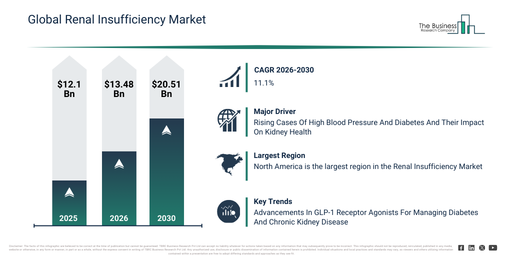
    The renal insufficiency market has seen substantial growth in recent years. Its value is expected to rise from $12.1 billion in 2025 to $13.48 billion in 2026, indicating a compound annual growth rate (CAGR) of 11.4%. The historical expansion of this market stems from factors such as the increasing occurrence of diabetes and hypertension, the broadening of dialysis center networks, a greater adoption of ACE inhibitors and ARBs, the rising identification of chronic kidney disease, and better access to renal care provisions.

    The market for renal insufficiency is anticipated to undergo significant expansion over the forthcoming years. By 2030, its value is projected to reach $20.51 billion, expanding at a compound annual growth rate (CAGR) of 11.1%. This projected growth is driven by factors such as the increasing acceptance of home dialysis options, heightened investments in regenerative medical treatments, the broadening scope of digital patient oversight, a rising need for individualized renal care strategies, and a stronger emphasis on decelerating the disease’s advancement. Notable trends foreseen for this period encompass a greater integration of advanced dialysis methods, an intensified focus on managing the disease in its initial stages, an expanding application of multi-drug therapies, the proliferation of at-home treatment alternatives, and a reinforced commitment to patient-centered care approaches.

    Download the Free Sample Report to Explore Key Market Insights:

    https://www.thebusinessresearchcompany.com/sample.aspx?id=21271&type=smp

    What Key Drivers Are Influencing The Growth Of The Renal Insufficiency Market?

    The rising incidence of high blood pressure and diabetes cases is projected to stimulate the expansion of the renal insufficiency market moving forward. These conditions are linked to various factors such as unhealthy dietary habits, insufficient physical activity, obesity, genetic predisposition, and an aging demographic. High blood pressure contributes to kidney damage by scarring blood vessels and reducing their filtration capacity, while diabetes leads to the thickening and overworking of kidney vessels due to elevated blood sugar. Both conditions accelerate kidney deterioration, ultimately resulting in renal insufficiency. For example, according to the National Health Service, a UK-based government agency, it was reported in May 2024 that the number of high blood pressure diagnoses in the South East increased by 71,120 patients in December 2023, showing a 5.4% rise compared to December 2022. Additionally, in April 2023, the British Diabetic Association, a UK-based charity organization, stated that 4.3 million people in the UK are living with a diabetes diagnosis. Thus, the increasing occurrence of high blood pressure and diabetes cases is driving the growth of the renal insufficiency market.

    Which Segments Are Included In The Analysis Of The Renal Insufficiency Market?

    The renal insufficiency market covered in this report is segmented –

    1) By Treatment Type: Medications, Dialysis, Kidney Transplantation, Other Treatment Types

    2) By Disease Stage: Chronic Kidney Disease (CKD) Stages, End-Stage Renal Disease (ESRD)

    3) By Distribution Channel: Hospital Pharmacies, Retail Pharmacies, Online Pharmacies

    4) By End-User: Dialysis Centers, Hospital And Clinics, Research And Academic Institutes

    Subsegments:

    1) By Medications: Angiotensin-Converting Enzyme (ACE) Inhibitors, Angiotensin II Receptor Blockers (ARBs), Diuretics, Erythropoiesis-Stimulating Agents (ESAs), Phosphate Binders, Sodium Bicarbonate

    2) By Dialysis: Hemodialysis, Peritoneal Dialysis, Home Dialysis, Continuous Renal Replacement Therapy (CRRT)

    3) By Kidney Transplantation: Living Donor Kidney Transplant, Deceased Donor Kidney Transplant, Kidney Transplant Immunosuppressive Therapy

    4) By Other Treatment Types: Lifestyle And Dietary Modifications, Stem Cell Therapy, Gene Therapy

    Which Upcoming Trends Are Expected To Influence The Renal Insufficiency Market?

    Leading companies in the renal insufficiency market are actively developing glucagon-like peptide-1 receptor agonists (GLP-1 RAs) with the aim of addressing renal and cardiovascular complications in patients diagnosed with diabetes and chronic kidney disease (CKD). These GLP-1 RAs work by improving glucose control, reducing inflammation, and lowering oxidative stress within the kidneys, thereby hindering the advancement of renal insufficiency. For instance, in January 2025, Novo Nordisk, a pharmaceutical firm based in Denmark, secured Food and Drug Administration (FDA) approval for its medication, Ozempic (semaglutide). This approval specifically allows for its use to decrease the risk of kidney disease worsening, kidney failure, and cardiovascular death in adults suffering from type 2 diabetes and chronic kidney disease (CKD). This regulatory milestone emphasizes the growing importance of glucagon-like peptide-1 receptor agonists (GLP-1 RAs) as a comprehensive strategy for managing both diabetes and renal insufficiency, thereby meeting significant unmet needs in patients with progressive CKD.

    Which Key Industry Participants Are Active In The Renal Insufficiency Market?

    Major companies operating in the renal insufficiency market are Kaiser Permanente, Johnson & Johnson, Roche Holding AG, Sanofi S.A., Abbott Laboratories, Medtronic plc, Amgen Inc., Asahi Kasei Medical Co. Ltd., Fujifilm Holdings Corporation, Fresenius Medical Care, Toray Industries Inc., Baxter International Inc., Boehringer Ingelheim, DaVita Inc., Eisai Co. Ltd., Nipro Corporation, Biocon Limited, HemoCue AB, Rockwell Medical, Mitsubishi Tanabe Pharma Corporation

    Read the full renal insufficiency market report here:

    https://www.thebusinessresearchcompany.com/report/renal-insufficiency-global-market-report

    Which Region Is Expected To Register The Fastest Growth In The Renal Insufficiency Market?

    North America was the largest region in the renal insufficiency market in 2025. The regions covered in the renal insufficiency market report are Asia-Pacific, South East Asia, Western Europe, Eastern Europe, North America, South America, Middle East, Africa.

    Request A Tailored Renal Insufficiency Market Research Report For Competitive Advantage:

    https://www.thebusinessresearchcompany.com/customise?id=21271&type=smp

    Browse Through More Reports Similar to the Global Renal Insufficiency Market 2026, By The Business Research Company

    Rare Kidney Diseases Global Market Report

    https://www.thebusinessresearchcompany.com/report/rare-kidney-diseases-global-market-report

    Chronic Kidney Disease Global Market Report

    https://www.thebusinessresearchcompany.com/report/chronic-kidney-disease-global-market-report

    Veterinary Renal Disease Global Market Report

    https://www.thebusinessresearchcompany.com/report/veterinary-renal-disease-global-market-report

    Get in touch with us:

    The Business Research Company: https://www.thebusinessresearchcompany.com/

    Americas +1 310-496-7795

    Asia +44 7882 955267 & +91 8897263534

    Europe +44 7882 955267

    Email us at info@tbrc.info

    Follow us on:

    LinkedIn: https://in.linkedin.com/company/the-business-research-company

    YouTube: https://www.youtube.com/channel/UC24_fI0rV8cR5DxlCpgmyFQ

    Global Market Model: https://www.thebusinessresearchcompany.com/global-market-model

  • Global Proliferative Diabetic Retinopathy (PDR) Market Set for Strong Expansion Reaching $4.49 Billion by 2030 at 11% CAGR

    The Business Research Company’s 2026 market reports include new capabilities such as market attractiveness scoring and analysis, total addressable market analysis, company scoring matrix, interactive excel data dashboard, improved supply chain analysis, upcoming startups in the market, and overview of key products, aimed at improving the depth, usability, and strategic value of the insights delivered.

    What Market Size Increase Is Anticipated For The Proliferative Diabetic Retinopathy (PDR) Market Over The 2026–2030 Period?

    The market size for proliferative diabetic retinopathy (pdr) has shown rapid growth in recent years. It is projected to increase from $2.69 billion in 2025 to $2.96 billion in 2026, achieving a compound annual growth rate (CAGR) of 10.3%. This historical expansion can be attributed to various factors, including the rising prevalence of diabetes mellitus, the broader adoption of retinal laser therapies, the proliferation of ophthalmology clinics, enhanced access to eye care services, and the development of diabetic screening programs.

    The proliferative diabetic retinopathy (PDR) market size is projected to experience substantial growth in the upcoming years, with an anticipated expansion to $4.49 billion by 2030, reflecting a compound annual growth rate (CAGR) of 11.0%. This projected growth can be attributed to several factors including an escalating demand for long-acting injectable therapies, the increasing embrace of AI-based retinal diagnostics, the broadening availability of outpatient ophthalmic procedures, a heightened focus on strategies for vision preservation, and greater investment in the management of diabetic eye diseases. Key trends expected within this forecast period encompass the rising adoption of anti-VEGF therapies, more frequent use of advanced retinal imaging technologies, an increased emphasis on early screening and diagnosis, the expansion of minimally invasive surgical interventions, and enhanced integration of multidisciplinary diabetes care approaches.

    Download the Free Sample Report to Explore Key Market Insights:

    https://www.thebusinessresearchcompany.com/sample.aspx?id=12911&type=smp

    Which Major Factors Are Driving The Expansion Of The Proliferative Diabetic Retinopathy (PDR) Market?

    The increasing incidence of diabetes is projected to boost the expansion of the proliferative diabetic retinopathy (PDR) market in the future. Diabetes, a chronic medical condition marked by elevated blood glucose (sugar) levels, is the primary cause of proliferative diabetic retinopathy, a disease treatable by various methods to prevent further retinal damage and preserve vision. For instance, the National Health Service (NHS) in the UK reported in June 2024 an increase in individuals under 40 from 173,166 in 2022 to 216,440 in 2023. This significant growth highlights a concerning trend and a rapid escalation in diabetes prevalence among younger populations. Consequently, the growing occurrence of diabetes fuels the proliferative diabetic retinopathy (PDR) market.

    How Is The Proliferative Diabetic Retinopathy (PDR) Market Segmented Across Key Categories?

    The proliferative diabetic retinopathy (pdr) market covered in this report is segmented –

    1) By Treatment Type: Anti-VEGF (Vascular Endothelial Growth Factor) Therapy, Intraocular Steroids, Laser Surgery, Vitrectomy

    2) By Mode of Administration: Injectables, Intravitreal Administration Focus, Other Mode Of Administrations

    3) By Application: Hospitals, Clinics, Other Applications

    Subsegments:

    1) By Anti-VEGF Therapy: Aflibercept, Ranibizumab, Bevacizumab

    2) By Intraocular Steroids: Triamcinolone Acetonide, Dexamethasone Implant, Fluocinolone Acetonide

    3) By Laser Surgery: Focal Laser Photocoagulation, Panretinal Laser Photocoagulation

    4) By Vitrectomy: Pars Plana Vitrectomy, Anterior Vitrectomy

    What Trends Are Affecting The Expansion Of The Proliferative Diabetic Retinopathy (PDR) Market?

    Leading companies active in the proliferative diabetic retinopathy (PDR) market are concentrating on developing innovative solutions, such as AI-based autonomous retinal screening systems and handheld fundus cameras, to enhance early detection and improve patient outcomes. AI-based autonomous screening systems are designed to analyze retinal images without human intervention, providing rapid and accurate identification of diabetic retinopathy, while handheld fundus cameras allow portable and accessible retinal imaging. For instance, in April 2024, Optomed Plc, a Finland-based medical technology company, received U.S. Food and Drug Administration (FDA) clearance for its Optomed Aurora with AEYE, a handheld AI fundus camera capable of autonomously detecting referable diabetic retinopathy, thereby expanding the accessibility and efficiency of PDR screening beyond traditional clinical settings.

    Who Are The Dominant Players Shaping The Proliferative Diabetic Retinopathy (PDR) Market Landscape?

    Major companies operating in the proliferative diabetic retinopathy (pdr) market are Johnson And Johnson Limited, F Hoffmann La Roche Ltd, AbbVie Inc, Bayer AG, Novartis AG, Merck KGaA, Kubota Vision Inc, Teva Pharmaceutical Industries Ltd, Regeneron Pharmaceuticals Inc, Mylan NV, Santen Pharmaceutical Co Ltd, Lupin Limited, Genentech Inc, Alcon Inc, Carl Zeiss Meditec AG, Topcon Corporation, Nidek Co Ltd, Bausch And Lomb Corporation, Heidelberg Engineering GmbH, Iridex Corporation, Lumenis Ltd, Optos plc, Zeiss Meditec India Pvt Ltd, Alimera Sciences Inc

    Read the full proliferative diabetic retinopathy (pdr) market report here:

    https://www.thebusinessresearchcompany.com/report/proliferative-diabetic-retinopathy-pdr-global-market-report

    Which Region Currently Holds The Largest Share Of The Proliferative Diabetic Retinopathy (PDR) Market?

    North America was the largest region in the proliferative diabetic retinopathy market in 2025. Asia Pacific is expected to be the fastest-growing region in the forecast period. The regions covered in the proliferative diabetic retinopathy (pdr) market report are Asia-Pacific, South East Asia, Western Europe, Eastern Europe, North America, South America, Middle East, Africa.

    Request A Tailored Proliferative Diabetic Retinopathy (PDR) Market Research Report For Competitive Advantage:

    https://www.thebusinessresearchcompany.com/customise?id=12911&type=smp

    Browse Through More Reports Similar to the Global Proliferative Diabetic Retinopathy (PDR) Market 2026, By The Business Research Company

    Encephalitis Treatment Global Market Report

    https://www.thebusinessresearchcompany.com/report/encephalitis-treatment-global-market-report

    Dysphagia Management Global Market Report

    https://www.thebusinessresearchcompany.com/report/dysphagia-management-global-market-report

    Rare Neurological Disease Treatment Global Market Report

    https://www.thebusinessresearchcompany.com/report/rare-neurological-disease-treatment-global-market-report

    Get in touch with us:

    The Business Research Company: https://www.thebusinessresearchcompany.com/

    Americas +1 310-496-7795

    Asia +44 7882 955267 & +91 8897263534

    Europe +44 7882 955267

    Email us at info@tbrc.info

    Follow us on:

    LinkedIn: https://in.linkedin.com/company/the-business-research-company

    YouTube: https://www.youtube.com/channel/UC24_fI0rV8cR5DxlCpgmyFQ

    Global Market Model: https://www.thebusinessresearchcompany.com/global-market-model

  • Renal Fanconi Syndrome Market Revenue Expected to Reach $0.64 Billion by 2030 with 3.5% CAGR

    Renal Fanconi Syndrome Market Revenue Expected to Reach $0.64 Billion by 2030 with 3.5% CAGR

    The Business Research Company’s 2026 market reports include new capabilities such as market attractiveness scoring and analysis, total addressable market analysis, company scoring matrix, interactive excel data dashboard, improved supply chain analysis, upcoming startups in the market, and overview of key products, aimed at improving the depth, usability, and strategic value of the insights delivered.

    What Market Valuation Is Forecasted For The Renal Fanconi Syndrome Market By 2030 Starting From Its 2026 Size?

    The renal Fanconi syndrome market has experienced consistent expansion in recent years. This market is projected to expand from $0.55 billion in 2025 to $0.57 billion in 2026, demonstrating a compound annual growth rate (CAGR) of 3.7%. Historically, this growth can be ascribed to several factors, including enhanced identification of inherited kidney conditions, the existence of cystinosis treatment alternatives, the broadening of hospital-based nephrology services, a rise in diagnostic screening for metabolic irregularities, and progress in supportive renal treatments.

    The market for renal Fanconi syndrome is projected to experience consistent expansion over the upcoming years. By 2030, this market is anticipated to reach a valuation of $0.65 billion, demonstrating a compound annual growth rate (CAGR) of 3.5%. Key drivers behind this anticipated growth include the wider embrace of tailored treatment plans, increased funding for research into rare diseases, the proliferation of diagnostic methods based on genetics, a heightened emphasis on early intervention approaches, and the ongoing creation of innovative supportive treatments. Significant trends observed during this period encompass a greater focus on genetic testing and precise diagnosis, an escalating need for therapies designed for long-term symptom management, increasing public and medical understanding of uncommon kidney conditions, the broadening availability of supportive and nutritional care, and a strengthened emphasis on identifying the disease at its initial stages.

    Download the Free Sample Report to Explore Key Market Insights:

    https://www.thebusinessresearchcompany.com/sample.aspx?id=21270&type=smp

    What Major Growth Drivers Are Shaping The Outlook Of The Renal Fanconi Syndrome Market?

    The rising occurrence of genetic disorders is projected to boost the expansion of the renal fanconi syndrome market in the future. These disorders are propelled by elements such as advancements in genetic testing, increased public knowledge, environmental factors, and an uptick in inherited conditions passed down through generations. A substantial number of Fanconi syndrome cases are associated with hereditary genetic conditions, including cystinosis or Wilson’s disease. As the frequency of these genetic disorders climbs, so does the requirement for specialized diagnostic methods, targeted treatments, and management approaches to address the related proximal tubular dysfunction, which in turn fuels market growth. For example, in March 2024, data from the United Nations, a US-based international organization, indicated that Down syndrome affects approximately 1 in 1,000 to 1 in 1,100 live births globally, resulting in an estimated 3,000 to 5,000 children born with this chromosomal disorder annually. Thus, the growing prevalence of genetic disorders is a key factor driving the renal fanconi syndrome market forward.

    Which Segment Categories Define The Renal Fanconi Syndrome Market?

    The renal fanconi syndrome market covered in this report is segmented –

    1) By Disease Type: Inherited (Genetic), Acquired

    2) By Treatment: Cystinosis Treatment, Symptomatic Management, Dietary Changes And Adjustments, Antibiotics, Kidney Transplantation, Supplements

    3) By Route Of Administration: Oral, Intravenous

    4) By Distribution Channel: Hospital Pharmacy, Retail Pharmacy, Online Pharmacy, Other Distribution Channels

    5) By End-User: Hospitals, Specialty Clinics, Homecare, Other End-Users

    Subsegments:

    1) By Inherited (Genetic): Cystinosis, Wilson Disease, Lowe Syndrome, Dent Disease

    2) By Acquired: Drug-Induced Fanconi Syndrome, Heavy Metal Toxicity, Multiple Myeloma-Associated Fanconi Syndrome, Other Acquired Conditions

    Who Are The Top Companies Competing In The Renal Fanconi Syndrome Market?

    Major companies operating in the renal fanconi syndrome market are Pfizer Inc., F Hoffmann La Roche AG, Merck And Co Inc, AbbVie Inc., Novartis AG, Sanofi, Bristol Myers Squibb, Gilead Sciences Inc., Amgen Inc., Teva Pharmaceutical Industries Ltd, Baxter International Inc., Boehringer Ingelheim, Eisai Co Ltd, Hikma Pharmaceuticals plc, Astellas Pharma Inc., Mallinckrodt Pharmaceuticals plc, CSL Vifor, Alnylam Pharmaceuticals Inc., Otsuka Pharmaceutical Co Ltd, Takeda Pharmaceutical Company Limited, Alexion Pharmaceuticals Inc., Recordati Rare Diseases, Chiesi Farmaceutici S.p.A., Kyowa Kirin Co Ltd

    Read the full renal fanconi syndrome market report here:

    https://www.thebusinessresearchcompany.com/report/renal-fanconi-syndrome-global-market-report

    Which Regions Are Projected To Dominate The Renal Fanconi Syndrome Market In The Coming Years?

    North America was the largest region in the renal fanconi syndrome market in 2025. Asia-Pacific is expected to be the fastest-growing region in the forecast period. The regions covered in the renal fanconi syndrome market report are Asia-Pacific, South East Asia, Western Europe, Eastern Europe, North America, South America, Middle East, Africa.

    Request A Tailored Renal Fanconi Syndrome Market Research Report For Competitive Advantage:

    https://www.thebusinessresearchcompany.com/customise?id=21270&type=smp

    Browse Through More Reports Similar to the Global Renal Fanconi Syndrome Market 2026, By The Business Research Company

    Kidney Cancer Diagnostics And Therapeutics Global Market Report

    https://www.thebusinessresearchcompany.com/report/kidney-cancer-diagnostics-and-therapeutics-global-market-report

    Adrenocortical Carcinoma Global Market Report

    https://www.thebusinessresearchcompany.com/report/adrenocortical-carcinoma-global-market-report

    Kidney Cancer Drugs Global Market Report

    https://www.thebusinessresearchcompany.com/report/kidney-cancer-drugs-global-market-report

    Get in touch with us:

    The Business Research Company: https://www.thebusinessresearchcompany.com/

    Americas +1 310-496-7795

    Asia +44 7882 955267 & +91 8897263534

    Europe +44 7882 955267

    Email us at info@tbrc.info

    Follow us on:

    LinkedIn: https://in.linkedin.com/company/the-business-research-company

    YouTube: https://www.youtube.com/channel/UC24_fI0rV8cR5DxlCpgmyFQ

    Global Market Model: https://www.thebusinessresearchcompany.com/global-market-model

  • Global Renal Cell Carcinoma Market Set for Strong Expansion Reaching $6.08 Billion by 2030 at 4.4% CAGR

    Global Renal Cell Carcinoma Market Set for Strong Expansion Reaching $6.08 Billion by 2030 at 4.4% CAGR

    The Business Research Company’s 2026 market reports include new capabilities such as market attractiveness scoring and analysis, total addressable market analysis, company scoring matrix, interactive excel data dashboard, improved supply chain analysis, upcoming startups in the market, and overview of key products, aimed at improving the depth, usability, and strategic value of the insights delivered.

    How Is The Market Size Of The Renal Cell Carcinoma Market Expected To Change Between 2026 And 2030?

    The renal cell carcinoma market has observed consistent expansion in recent years. It is anticipated to increase from $4.96 billion in 2025 to $5.13 billion in 2026, achieving a compound annual growth rate (CAGR) of 3.5%. The upward trend during the past period can be linked to the rising occurrence of kidney cancer, enhanced accessibility to imaging-based diagnostics, the implementation of surgical nephrectomy procedures, an increase in oncology treatment centers, and better survival outcomes through early detection.

    The market for renal cell carcinoma is projected to experience consistent expansion over the upcoming years. This market is anticipated to reach $6.09 billion by 2030, exhibiting a compound annual growth rate (CAGR) of 4.4%. Factors contributing to this growth during the forecast period include the increasing creation of new targeted treatments, the growing application of immunotherapy combinations, the enlargement of precision oncology initiatives, the wider acceptance of biomarker-informed treatment choices, and increased funding for oncology research and clinical trials. Key trends for the forecast duration encompass a greater uptake of targeted cancer treatments, an increase in the utilization of combination therapy regimens, an intensified focus on prompt and precise diagnosis, the broadening of minimally invasive surgical techniques, and a heightened prioritization of personalized oncology care.

    Download the Free Sample Report to Explore Key Market Insights:

    https://www.thebusinessresearchcompany.com/sample.aspx?id=20944&type=smp

    What Drivers Are Expected To Influence The Renal Cell Carcinoma Market During The Forecast Period?

    The anticipated expansion of the renal cell carcinoma market is linked to the increasing geriatric population. This demographic comprises older persons, typically 65 years and older, who often have specific healthcare and social needs. Factors such as advancements in healthcare, improved nutrition, and extended lifespans contribute to the expansion of the elderly population. Renal cell carcinoma (RCC) shows a growing prevalence among the elderly, underscoring the necessity for age-appropriate screening and therapeutic approaches. As an illustration, a January 2024 report from the Population Reference Bureau, a US-based non-profit entity dedicated to statistical data collection for research and academia, projected that the population of Americans aged 65 and above will climb from 58 million in 2022 to 82 million by 2050, representing a 47% increase. Consequently, the expanding geriatric population is propelling the growth of the renal cell carcinoma market.

    How Is The Renal Cell Carcinoma Market Structured Across Different Segments?

    The renal cell carcinoma market covered in this report is segmented –

    1) By Type: Clear Cell Renal Cell Carcinoma (RCC), Papillary Renal Cell Carcinoma (RCC), Chromophobe Renal Cell Carcinoma (RCC)

    2) By Diagnosis: Urine Tests, Computed Tomography (CT) Scan, Nephrectomy, Blood Tests, Ultrasound, Biopsy

    3) By Treatment: Medication, Ablation, Targeted Therapy, Chemotherapy, Surgery, Other Treatments

    4) By End-Users: Hospitals, Specialty Clinics, Oncology Treatment Centers, Other End-Users

    Subsegments:

    1) By Clear Cell Renal Cell Carcinoma (RCC): Sporadic Clear Cell RCC, Hereditary Clear Cell RCC

    2) By Papillary Renal Cell Carcinoma (RCC): Type 1 Papillary RCC, Type 2 Papillary RCC

    3) By Chromophobe Renal Cell Carcinoma (RCC): Classic Chromophobe RCC, Hybrid Chromophobe RCC

    Which Market Trends Are Creating New Opportunities In The Renal Cell Carcinoma Market?

    Leading companies operating in the renal cell carcinoma market are concentrating on developing technologically advanced products, such as integrating artificial intelligence (AI)-powered solutions designed for analyzing kidney biopsies to enhance diagnostic precision, streamline procedures, and improve patient outcomes. An artificial intelligence (AI)-powered solution for analyzing kidney biopsies is a technology-driven tool that leverages machine learning algorithms and computer vision to assist pathologists and nephrologists in evaluating kidney tissue samples. These solutions aim to enhance accuracy, efficiency, and consistency in diagnosing kidney diseases and assessing kidney health. For instance, in March 2024, Aiosyn, a Netherlands-based software company, launched the NephroPath platform, an advanced AI-powered solution designed to analyze kidney biopsies. The NephroPath platform uses computational pathology algorithms to analyze histological biomarkers in kidney biopsies, including identifying tissue types, measuring interstitial fibrosis, and precisely counting and assessing glomeruli. This AI-driven analysis ensures consistent, detailed, and reproducible scoring of renal pathology biomarkers, overcoming the drawbacks of traditional scoring methods and observer subjectivity.

    Which Major Players Dominate The Renal Cell Carcinoma Market?

    Major companies operating in the renal cell carcinoma market are Pfizer Inc., Johnson And Johnson, F Hoffmann La Roche Ltd, Merck And Co Inc, Bayer AG, Bristol Myers Squibb Company, AstraZeneca Plc, Novartis AG, GSK plc, Takeda Pharmaceutical Company Limited, Amgen Inc., Viatris Inc, Astellas Pharma Inc., Eisai Co Ltd, Sun Pharmaceutical Industries Ltd, Ipsen Pharma, Cipla Inc., Hikma Pharmaceuticals PLC, Amneal Pharmaceuticals LLC, Exelixis Inc., Nektar Therapeutics, BeiGene Ltd, Incyte Corporation, Regeneron Pharmaceuticals Inc., AbbVie Inc.

    Read the full renal cell carcinoma market report here:

    https://www.thebusinessresearchcompany.com/report/renal-cell-carcinoma-global-market-report

    Which Region Is Forecast To Lead The Renal Cell Carcinoma Market In Terms Of Market Size?

    North America was the largest region in the renal cell carcinoma market in 2025. Asia-Pacific is expected to be the fastest-growing region in the forecast period. The regions covered in the renal cell carcinoma market report are Asia-Pacific, South East Asia, Western Europe, Eastern Europe, North America, South America, Middle East, Africa.

    Request A Tailored Renal Cell Carcinoma Market Research Report For Competitive Advantage:

    https://www.thebusinessresearchcompany.com/customise?id=20944&type=smp

    Browse Through More Reports Similar to the Global Renal Cell Carcinoma Market 2026, By The Business Research Company

    Kidney Cancer Diagnostics And Therapeutics Global Market Report

    https://www.thebusinessresearchcompany.com/report/kidney-cancer-diagnostics-and-therapeutics-global-market-report

    Clinical Biomarkers Global Market Report

    https://www.thebusinessresearchcompany.com/report/clinical-biomarkers-global-market-report

    Biomarkers Global Market Report

    https://www.thebusinessresearchcompany.com/report/biomarkers-global-market-report

    Get in touch with us:

    The Business Research Company: https://www.thebusinessresearchcompany.com/

    Americas +1 310-496-7795

    Asia +44 7882 955267 & +91 8897263534

    Europe +44 7882 955267

    Email us at info@tbrc.info

    Follow us on:

    LinkedIn: https://in.linkedin.com/company/the-business-research-company

    YouTube: https://www.youtube.com/channel/UC24_fI0rV8cR5DxlCpgmyFQ

    Global Market Model: https://www.thebusinessresearchcompany.com/global-market-model