Category: HealthcareServices

  • Market Analysis on Central Venous Catheters Industry – Insights for Corporate Strategy and R&D

    Claim your 30% discount on Global Market Reports with code ONLINE30. Limited time only.

    What Are the Projected Market Size and Growth Rates for the Central Venous Catheters Market From 2025 To 2029?

    In recent times, the market size for central venous catheters has seen significant growth. It’s predicted to continue growing from $3.94 billion in 2024 to an anticipated $4.31 billion in 2025, with a compound annual growth rate (CAGR) of 9.5%. The earlier growth can be associated with the surge in chronic diseases, improved infection control measures, increasing demand for intravenous therapy, additional usage in cases of medical emergencies, and in trauma care assistance.

    What Is the Projected Market Size of the Central Venous Catheters Market?

    The market for central venous catheters is anticipated to witness substantial growth in the impending years. It is projected to expand to $6.14 billion by 2029, with a compound annual growth rate (CAGR) of 9.2%. This growth anticipated in the forecast period could be due to factors such as the escalating prevalence of chronic diseases, growing demand for minimally invasive procedures, enhanced focus on preventing infections, the development of healthcare infrastructure, and an increasing patient count in the cardiovascular sector. Major trends expected during the forecast period encompass the adoption of catheters coated with antimicrobial substances, technological progress, development in bioresorbable materials, increased use of power-injectable CVCs, and advancements in catheter tip designs.

    Download The Free Sample Report Here:

    https://www.thebusinessresearchcompany.com/sample.aspx?id=18291&type=smp

    Who are the Major Competitors in the Central Venous Catheters Market Outlook?

    Major companies operating in the central venous catheters market are Medtronic plc, Becton, Dickinson and Company (BD), Boston Scientific Corporation, B. Braun Holding GmbH & Co. KG, Terumo Corporation, Edwards Lifesciences Corporation, Teleflex Incorporated, Cook Group Incorporated, ICU Medical Inc., Lepu Medical Technology (Beijing) Co. Ltd, Merit Medical Systems Inc, Vygon SAS, AngioDynamics Inc., Argon Medical Devices Inc., Poly Medicure Limited, Vogt Medical Vertrieb GmbH, MedCath Corporation, GaltNeedleTech Inc., Romsons International, Newtech Medical Devices Private Limited, NIPRO Medical Corporation, DemeTECH Corporation, Scitech Medical Products SA, Prodimed, P. K. Scientific & Chemicals

    What Is Fueling Growth in the Central Venous Catheters Market?

    The escalation in kidney diseases cases is anticipated to bolster the central venous catheter market’s growth in the future. Factors such as growing incidences of chronic illnesses like diabetes and hypertension, which necessitate measures like central venous catheters for crucial treatments such as dialysis, are driving this increase. Central venous catheters play a crucial role in controlling kidney diseases by providing critical access to hemodialysis, medication delivery, nutritional aid, and regular blood draws. For instance, as per Kidney Research UK, a UK-based charity, in June 2023, kidney disease’s prevalence in the UK is projected to impact 7.19 million people in 2023, constituting more than 10% of the population. It is projected to touch 7.61 million by 2033, with the percentage of patients in the latter stages of the disease rising from 45% to 51%. Therefore, the growing instances of kidney diseases will fuel the central venous catheter market’s expansion.

    Request For A Customized Report:

    https://www.thebusinessresearchcompany.com/customise?id=18291&type=smp

    Which Central Venous Catheters Market Segments Are Growing the Fastest?

    The central venous catheters market covered in this report is segmented –

    1) By Type: Single-lumen, Double-lumen, Triple-lumen, Other Types

    2) By Property: Antimicrobial Coated, Non-Antimicrobial Coated

    3) By Application: Jugular Vein, Subclavian Vein, Femoral Vein, Other Applications

    4) By End User: Hospitals, Ambulatory Surgical Centers, Other End Users

    Subsegments:

    1) By Single-Lumen: Non-Tunneled Single-Lumen Catheters, Tunneled Single-Lumen Catheters

    2) By Double-Lumen: Non-Tunneled Double-Lumen Catheters, Tunneled Double-Lumen Catheters

    3) By Triple-Lumen: Non-Tunneled Triple-Lumen Catheters, Tunneled Triple-Lumen Catheters

    4) By Other Types: Quad-Lumen Catheters, Peripherally Inserted Central Catheters (PICC)

    Which Industry Trends Are Shaping the Future of the Central Venous Catheters Market?

    There’s a trend among leading players in the central venous catheter market towards producing superior ultrasound systems that enhance accuracy and safety during the catheter placement process. These innovative ultrasound systems are designed to boost the correctness of central venous catheter placement by delivering live visuals, minimizing errors, lessening complications, and enhancing patient experience and procedure speed. A prime example occurred in November 2023 when Becton, Dickinson, and Company (BD), an American medical technology firm, introduced SiteRite 9. This advanced vascular access ultrasound system is designed to boost medical professional’s efficiency when placing a range of vascular access devices like peripherally inserted central catheters (PICCs), central venous catheters, IV lines etc. The user-friendly SiteRite 9 operates with a 15.6-inch touchscreen and enhanced imaging quality. It is equipped with the Cue needle tracking feature for real-time needle location and the Sherlock 3CG+ tip confirmation system for precise catheter guiding. BD designed this top-notch ultrasound technology with the goal of simplifying vascular access procedures by integrating intelligent, connected features such as automated data recording and vessel evaluation.

    Access The Full Report Here:

    https://www.thebusinessresearchcompany.com/report/central-venous-catheters-global-market-report

    Which Countries Are Leading the Central Venous Catheters Market?

    North America was the largest region in the central venous catheters market in 2023. The regions covered in the central venous catheters market report are Asia-Pacific, Western Europe, Eastern Europe, North America, South America, Middle East, Africa.

    Purchase The Full Report Today:

    https://www.thebusinessresearchcompany.com/purchaseoptions.aspx?id=18291

    This Report Delivers Insight On:

    1. How big is the central venous catheters market, and how is it changing globally?

    2. Who are the major companies in the central venous catheters market, and how are they performing?

    3. What are the key opportunities and risks in the central venous catheters market right now?

    4. Which products or customer segments are growing the most in the central venous catheters market?

    5. What factors are helping or slowing down the growth of the central venous catheters market?

    About The Business Research Company:

    With over 15000+ reports from 27 industries covering 60+ geographies, The Business Research Company has built a reputation for offering comprehensive, data-rich research and insights. Armed with 1,500,000 datasets, the optimistic contribution of in-depth secondary research, and unique insights from industry leaders, you can get the information you need to stay ahead in the game.

    Get in touch with us:

    The Business Research Company: https://www.thebusinessresearchcompany.com/

    Americas +1 310-496-7795

    Asia +44 2071930708

    Europe +44 7882 955267

    Email us at info@tbrc.info

    Follow us on:

    LinkedIn: https://in.linkedin.com/company/the-business-research-company

    YouTube: https://www.youtube.com/channel/UC24_fI0rV8cR5DxlCpgmyFQ

    Global Market Model: https://www.thebusinessresearchcompany.com/global-market-model
  • Central Fill Pharmacy Automation Forecast Report – Designed for Decision Makers and Product Teams

    Central Fill Pharmacy Automation Forecast Report – Designed for Decision Makers and Product Teams

    Claim your 30% discount on Global Market Reports with code ONLINE30. Limited time only.

    What Is the Estimated Market Size of the Central Fill Pharmacy Automation Market In 2029?

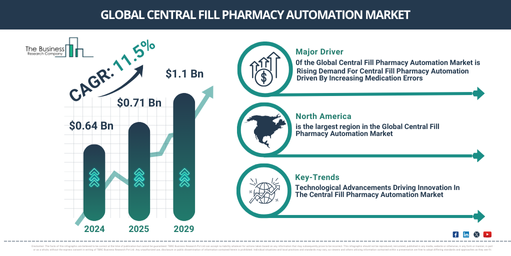
    The growth of the central fill pharmacy automation market has been swift in the last few years, with its size projected to increase from $0.64 billion in 2024 to $0.71 billion in 2025, boasting a compound annual growth rate (CAGR) of 11.9%. The historic expansion can be tied back to factors such as the rise in prescription demands, a shortage in labor, enhancement in medication safety and precision, the escalating costs of healthcare, and the broadening of pharmacy service offerings.

    What Growth Rate Is Forecasted for the Central Fill Pharmacy Automation Market by 2029?

    In the coming years, the market size of central fill pharmacy automation is predicted to undergo a swift expansion. By 2029, it’s forecasted to reach a value of $1.1 billion, having a compound annual growth rate (CAGR) of 11.5%. This anticipated growth during the forecast period can be credited to factors such as increased demand for prescriptions, focus on patient safety and quality, regulatory compliance necessities, and the presence of E-commerce and telepharmacy. Key trends during this period will include the incorporation of telehealth and remote care, interoperability and health information exchange, regulatory compliance and quality assurance, along with green initiatives and sustainability.

    Download The Free Sample Report Here:

    https://www.thebusinessresearchcompany.com/sample.aspx?id=15538&type=smp

    Which Key Companies Are Shaping the Future of the Central Fill Pharmacy Automation Market?

    Major companies operating in the central fill pharmacy automation market are McKesson Corporation, Cencora Inc., Cardinal Health Inc., Becton Dickinson and Company, Grifols SA, Kuka AG, J M Smith Corporation, Omnicell Inc., Swisslog Healthcare, Parata Systems LLC, ScriptPro LLC, PBA Health, Capsa Healthcare, Cornerstone Automation Systems LLC, ARxIUM Inc., Talyst LLC, Kirby Lester, Quality Manufacturing Systems Inc., R/X Automation Solutions, RxSafe LLC, Innovation Associates Inc.

    Which Factors Are Driving Demand in the Central Fill Pharmacy Automation Industry?

    The demand for reduction in medication errors is anticipated to incite growth in the central fill pharmacy automation market. Medication errors, which are events that could potentially cause improper use of medication or harm to the patient and are preventable, are increasing due to growing complexity in healthcare systems, an increase in patient volumes, and a surge in new medications. The central fill pharmacy automation helps cut down medication errors by improving the medication dispensing process, guaranteeing precise and consistent prescription preparation. This technology diminishes human errors and boosts efficiency when dealing with a large number of prescriptions. For example, in September 2022, the World Health Organization, a Switzerland-based intergovernmental organization, reported that medication errors have cost $2.16 billion, which constitutes 3% of the entire national health expenditure. Also, 237 million medication errors are noted each year, with 66 million possibly having clinical importance. The projected costs to the government for avoidable adverse reactions to medication are around $106.24 million on an annual basis. Hence, the pressing need to cut down medication errors fuels the expansion of the central fill pharmacy automation market.

    Request For A Customized Report:

    https://www.thebusinessresearchcompany.com/customise?id=15538&type=smp

    How Is the Central Fill Pharmacy Automation Market Segmented by Several Divisions?

    The central fill pharmacy automation market covered in this report is segmented –

    1) By Product: Equipment, Software, Services

    2) By Vendor: Equipment Vendor, Consulting Vendor

    3) By Application: Inpatient Pharmacy, Outpatient Pharmacy, Retail Pharmacy, Other Applications

    Subsegments:

    1) By Equipment: Robotic Dispensing Systems, Automated Medication Storage Systems, Barcode Scanning Systems, Medication Counting Machines, Automated Labeling Systems, Packaging Systems, Other Pharmacy Automation Equipment

    2) By Software: Prescription Management Software, Inventory Management Software, Workflow Management Software, Data Analytics And Reporting Software, Medication Verification Software, Integration And Interoperability Software, Cloud-Based Software Solutions

    3) By Services: Installation And Configuration Services, Maintenance And Support Services, Consulting Services, Training Services, Managed Services, System Upgrades And Customization Services

    What are the Emerging Market Trends Driving the Growth of the Central Fill Pharmacy Automation Industry?

    Leading businesses in the central fill pharmacy automation market are concentrating their efforts on creating innovative tech solutions like cloud-based pharmacy automation to gain a competitive advantage. Cloud-based pharmacy automation involves utilizing cloud computing technology to aid and manage pharmacy activities. For instance, Innovation Associates Inc., a company based in the US that specializes in large-scale pharmacy automation technology and software solutions, rolled out Shared Central Fulfillment in February 2024. This new cloud-based solution allows owners of pharmacy fulfillment to provide central fulfillment services to several pharmacy affiliates from one fulfillment center. It’s intended to establish a more sustainable work environment for pharmacy providers and elevate the role of pharmacists in healthcare. It provides a way for both large and small pharmacy operations to benefit from central fill functions, extending prescription fulfillment options to multiple pharmacy partners from a single site.

    Access The Full Report Here:

    https://www.thebusinessresearchcompany.com/report/central-fill-pharmacy-automation-global-market-report

    Which Regions Are Driving Growth in the Central Fill Pharmacy Automation Market?

    North America was the largest region in the central fill pharmacy automation market in 2023. Asia-Pacific is expected to be the fastest-growing region in the forecast period. The regions covered in the central fill pharmacy automation market report are Asia-Pacific, Western Europe, Eastern Europe, North America, South America, Middle East, Africa.

    Purchase The Full Report Today:

    https://www.thebusinessresearchcompany.com/purchaseoptions.aspx?id=15538

    This Report Delivers Insight On:

    1. How big is the central fill pharmacy automation market, and how is it changing globally?

    2. Who are the major companies in the central fill pharmacy automation market, and how are they performing?

    3. What are the key opportunities and risks in the central fill pharmacy automation market right now?

    4. Which products or customer segments are growing the most in the central fill pharmacy automation market?

    5. What factors are helping or slowing down the growth of the central fill pharmacy automation market?

    About The Business Research Company:

    With over 15000+ reports from 27 industries covering 60+ geographies, The Business Research Company has built a reputation for offering comprehensive, data-rich research and insights. Armed with 1,500,000 datasets, the optimistic contribution of in-depth secondary research, and unique insights from industry leaders, you can get the information you need to stay ahead in the game.

    Get in touch with us:

    The Business Research Company: https://www.thebusinessresearchcompany.com/

    Americas +1 310-496-7795

    Asia +44 2071930708

    Europe +44 7882 955267

    Email us at info@tbrc.info

    Follow us on:

    LinkedIn: https://in.linkedin.com/company/the-business-research-company

    YouTube: https://www.youtube.com/channel/UC24_fI0rV8cR5DxlCpgmyFQ

    Global Market Model: https://www.thebusinessresearchcompany.com/global-market-model

  • Non-Insulin Therapies For Diabetes Industry Growth Expected to Reach $27.9 Billion by 2029 at a CAGR of 6.8% | Segmentation and Growth Opportunities

    Claim your 30% discount on Global Market Reports with code ONLINE30. Limited time only.

    #How Has the Non-Insulin Therapies For Diabetes Market Growth Performance Trended Historically, And What Lies Ahead?

    Over the past few years, there’s been robust growth in the market size of non-insulin therapies for diabetes. It’s projected to increase from $19.98 billion in 2024 to $21.41 billion in 2025, demonstrating a compound annual growth rate (CAGR) of 7.1%. The escalation during the historic period is largely due to rising cases of diabetes, heightened awareness of diabetes management techniques, increased healthcare spending, lifestyle alterations resulting in higher incidence rates, a spike in diagnoses, more government initiatives towards diabetes care, and the surge in investment for pharmaceutical research and development.

    What Is the Forecast for the Non-Insulin Therapies For Diabetes Market Size Through 2029?

    It is forecasted that the market size for non-insulin diabetes treatments will experience considerable expansion in the next few years, reaching $27.9 billion in 2029 with a CAGR of 6.8%. The projected growth during this period can be associated with several factors such as an increase in diabetes occurrence, heightened awareness regarding diabetes control, a rise in the use of combination therapies, a larger aging population, escalating healthcare expenses, the proliferation of telemedicine, and a growing favorability towards oral meds. Key trends anticipated during this forecast period encompass developments in oral and injectable medications, improvements in drug delivery techniques, progress in oral peptide delivery, acceptance of telemedicine and digital health solutions, as well as advancements in combination therapies.

    Download The Free Sample Report Here:

    https://www.thebusinessresearchcompany.com/sample.aspx?id=16494&type=smp

    What are the Key Market Players in Non-Insulin Therapies For Diabetes Market and How They’re Evolving?

    Major companies operating in the non-insulin therapies for diabetes market are Pfizer Inc., F. Hoffmann-La Roche AG, Merck & Co. Inc., Sanofi, The Bristol-Myers Squibb Company, AstraZeneca plc, Novartis AG, GSK plc, Takeda Pharmaceutical Company Limited, Eli Lilly and Company, Novo Nordisk A/S, Boehringer Ingelheim International GmbH, Les Servier Laboratories, Sumitomo Dainippon Pharma Co. Ltd., Jiangsu Hansoh Pharmaceutical Group Co. Ltd., Uni-Bio Science Group Ltd., Intarcia Therapeutics, Janssen Pharmaceuticals, Boan Biotech, SatRx LLC

    What Are the Primary Growth Drivers in the Non-Insulin Therapies For Diabetes Market?

    The surge in diabetes cases is projected to push the growth of non-insulin treatments in the diabetes market. Diabetes, an enduring health disorder characterised by elevated blood glucose (sugar) levels, arises when the body is unable to generate sufficient insulin or utilise the produced insulin correctly. The rising diabetes cases can be attributed to inactive lifestyles, improper diets, genetic tendencies, expanding elderly populations, obesity, ethnicity, unawareness, restricted healthcare access, and environmental elements. Non-insulin diabetes treatments serve to manage the ailment by enhancing insulin responsiveness, decreasing liver glucose production, boosting glucose absorption in muscle cells, and augmenting overall glycemic regulation. For example, a report in April 2023 by The British Diabetic Association, a diabetes charity based in the UK, revealed that 4.3 million individuals in the UK were diagnosed with diabetes. Data from 2021-22 show an increase of 148,951 cases compared to 2020-21. Moreover, over 2.4 million people in the UK are at a raised risk of developing type 2 diabetes. Thus, the surge in diabetes cases is fuelling the growth of non-insulin treatments in the diabetes market.

    Request For A Customized Report:

    https://www.thebusinessresearchcompany.com/customise?id=16494&type=smp

    What Are the Leading Segments in the Global Non-Insulin Therapies For Diabetes Industry?

    The non-insulin therapies for diabetes market covered in this report is segmented –

    1) By Drug Class: Biguanides, Sulfonylureas, Thiazolidinedione’s, Alpha-Glucosidase Inhibitors, Dipeptidyl peptidase-4 (DPP-4) Inhibitors, Glucagon-like peptide-1 (GLP-1) Analogs, Sodium-glucose co-transporter-2 (SGLT2) Inhibitors

    2) By Route Of Administration: Oral, Intramuscular

    3) By Distribution Channel: Retail Pharmacy, Hospital Pharmacy, Online Pharmacy

    4) By Application: Monitoring, Diagnosis, Treatment, Other Applications

    Subsegments:

    1) By Biguanides: Metformin, Combination Of Metformin With Other Drugs

    2) By Sulfonylureas: Glimepiride, Glipizide, Glyburide

    3) By Thiazolidinediones: Pioglitazone, Rosiglitazone

    4) By Alpha-Glucosidase Inhibitors: Acarbose, Miglitol

    5) By Dipeptidyl Peptidase-4 (DPP-4) Inhibitors: Sitagliptin, Saxagliptin, Linagliptin, Alogliptin

    6) By Glucagon-Like Peptide-1 (GLP-1) Analogs: Exenatide, Liraglutide, Dulaglutide, Semaglutide

    7) By Sodium-Glucose Co-Transporter-2 (SGLT2) Inhibitors: Canagliflozin, Dapagliflozin, Empagliflozin

    What Are the Key Market Trends in the Non-Insulin Therapies For Diabetes Industry?

    Leading firms in the non-insulin treatments for diabetes sector are pioneering individualized diabetes management systems. They aim to improve patient results by facilitating instant monitoring, data analysis, and personalized treatment plans. This innovative system modifies treatment and supervision as per the unique needs of each patient, utilizing live data and analytics to boost care and outcomes. For example, Eli Lilly and Company, an American pharmaceutical enterprise, inaugurated the Tempo personalized diabetes management platform in November 2022. The Tempo platform incorporates three key parts: the Tempo Smart Button, the TempoSmart application, and the preloaded insulin pen named the Tempo Pen. Together, these pieces work to offer personalized guidance for adults suffering from diabetes. This innovation aims to support adults with either type 1 or type 2 diabetes and their medical teams to make knowledgeable, evidence-based treatment choices using Lilly insulins.

    Access The Full Report Here:

    https://www.thebusinessresearchcompany.com/report/non-insulin-therapies-for-diabetes-global-market-report

    What Is the Regional Outlook for the Non-Insulin Therapies For Diabetes Market?

    North America was the largest region in the non-insulin therapies for diabetes market in 2024. The regions covered in the non-insulin therapies for diabetes market report are Asia-Pacific, Western Europe, Eastern Europe, North America, South America, Middle East, Africa.

    Purchase The Full Report Today:

    https://www.thebusinessresearchcompany.com/purchaseoptions.aspx?id=16494

    This Report Delivers Insight On:

    1. How big is the non-insulin therapies for diabetes market, and how is it changing globally?

    2. Who are the major companies in the non-insulin therapies for diabetes market, and how are they performing?

    3. What are the key opportunities and risks in the non-insulin therapies for diabetes market right now?

    4. Which products or customer segments are growing the most in the non-insulin therapies for diabetes market?

    5. What factors are helping or slowing down the growth of the non-insulin therapies for diabetes market?

    About The Business Research Company:

    With over 15000+ reports from 27 industries covering 60+ geographies, The Business Research Company has built a reputation for offering comprehensive, data-rich research and insights. Armed with 1,500,000 datasets, the optimistic contribution of in-depth secondary research, and unique insights from industry leaders, you can get the information you need to stay ahead in the game.

    Get in touch with us:

    The Business Research Company: https://www.thebusinessresearchcompany.com/

    Americas +1 310-496-7795

    Asia +44 2071930708

    Europe +44 7882 955267

    Email us at info@tbrc.info

    Follow us on:

    LinkedIn: https://in.linkedin.com/company/the-business-research-company

    YouTube: https://www.youtube.com/channel/UC24_fI0rV8cR5DxlCpgmyFQ

    Global Market Model: https://www.thebusinessresearchcompany.com/global-market-model

  • Cell-Free DNA Isolation And Extraction Market Projected at $2.66 Billion by 2029 | Strategic Insights and Forecast Data

    Claim your 30% discount on Global Market Reports with code ONLINE30. Limited time only.

    #How Has The Cell-Free DNA Isolation And Extraction Market Size Shifted, And What Is the Outlook Through 2034?

    Over the past few years, the market size for cell-free DNA isolation and extraction has been expanding robustly. It is projected to escalate from $1.93 billion in 2024 to $2.06 billion in 2025, exhibiting a compound annual growth rate (CAGR) of 6.9%. Factors such as an increase in cancer prevalence, developments in microbial sequencing, substantial funding by healthcare firms, escalating investments in genomics and biotechnology, and a surge in research and development investment have all contributed to the growth during the historic period.

    How Much Will the Cell-Free DNA Isolation And Extraction Market Be Worth in 2029?

    The market size for cell-free DNA isolation and extraction is predicted to experience substantial growth in the coming years, reaching $2.66 billion in 2029 with a compound annual growth rate of 6.6%. Factors contributing to this anticipated growth during the forecast period include an increasing uptake of cell-free DNA isolation and extraction kits and tubes, escalated investments in the fields of genomics and biotechnology, progress in molecular diagnostics, a rising demand for personalised medicine, and a growing incidence of chronic and infectious diseases. Notable trends during the forecast period will likely be the introduction of innovative products, strategic alliances and collaboration, mergers and acquisitions, technological advances, and the launch of new products.

    Download The Free Sample Report Here:

    https://www.thebusinessresearchcompany.com/sample.aspx?id=16371&type=smp

    Which is the Largest Company in the Cell-Free DNA Isolation And Extraction Market?

    Major companies operating in the cell-free DNA isolation and extraction market are F. Hoffmann-La Roche AG, Merck KGaA, Novartis AG, Thermo Fisher Scientific Inc., Agilent Technologies Inc., Illumina Inc., QIAGEN N.V., Natera Inc., Promega Corporation, STRATEC Biomedical AG, STRECK Inc., Omega Bio-tek Inc., SeraCare Life Sciences Inc., Yourgene Health plc, System Biosciences LLC, PreAnalytiX GmbH, Bioo Scientific Corporation, BioCAT GmbH, Norgen Biotek Corp., Epigentek Group Inc., NVIGEN Inc.

    What Are the Main Market Drivers in the Cell-Free DNA Isolation And Extraction Industry?

    The increasing cancer cases are anticipated to boost the expansion of the cell-free DNA isolation and extraction market. Cancer, a group of complicated diseases characterized by abnormal cell growth and the potential to impact other body parts, causes severe illness or death when not treated. The rise in cancer cases can be attributed to obesity, inherited genetic disorders, hepatitis B and C, Epstein-Barr virus (EBV), and human papillomavirus (HPV). Techniques of cell-free DNA (cfDNA) isolation and extraction provide pivotal data about cancer’s genome for understanding tumor biology, tracking treatment effectiveness, and disease advancement. These innovative techniques may bring about significant changes in cancer management by promoting early detection, tailoring treatment plans, and enhancing patients’ prognosis. As per the American Society of Clinical Oncology’s data from May 2024, about 20 million new cancer cases were reported in 2022 expected to surge to 35 million by 2050 leading to nearly 9.7 million deaths attributed to the disease. Thus, the surging cancer prevalence is stimulating the expansion of the cell-free DNA isolation and extraction market.

    Cell-Free DNA Isolation And Extraction Market Driver: Influence of Personalized Medicine on The Expansion of The Cell-Free DNA Isolation And Extraction Market


    Request For A Customized Report:

    https://www.thebusinessresearchcompany.com/customise?id=16371&type=smp

    How Is the Cell-Free DNA Isolation And Extraction Market Segments Structured?

    The cell-free DNA isolation and extraction market covered in this report is segmented –

    1) By Product Type: Kits, Reagents, Instruments

    2) By Technology: Column-Based Isolation And Extraction, Magnetic Beads, Silica Membranes

    3) By Application: Non-Invasive Prenatal Testing (NIPT), Oncology, Transplant Rejection, Other Applications

    4) By End-User: Hospitals, Diagnostic Laboratories, Research Institutes, Biotech And Pharma Companies

    Subsegments:

    1) By Kits: Dna Extraction Kits, Cfdna Isolation Kits, Cfdna Purification Kits, Cfdna Extraction And Purification Kits

    2) By Reagents: Cfdna Extraction Reagents, Buffer Solutions For Cfdna Extraction, Enzymes For Cfdna Isolation, Chemical Reagents For Dna Stabilization

    3) By Instruments: Automated Cfdna Extraction Instruments, Manual Cfdna Extraction Devices, Magnetic Bead Separation Instruments, Centrifugation-Based Cfdna Isolation Instruments

    What Strategic Trends Are Transforming the Cell-Free DNA Isolation And Extraction Market?

    To gain a competitive advantage in the cell-free DNA isolation and extraction market, leading companies are focusing on the creation of innovative products, like automated DNA extraction machinery. These high-tech lab devices are engineered to simplify and automate the DNA segregation process from a variety of biological sources. For example, Yourgene Health plc, a molecular diagnostics firm from the UK, introduced the MagBench Automated DNA Extraction Instrument and Kit in September 2023. It was particularly developed to enhance the Sage 32 NIPT workflow in Asia-Pacific and the Middle East. This cutting-edge solution provides several distinct features aimed at optimizing the procedure of extracting DNA for prenatal examinations. The MagBench instrument merges automation and accuracy, employing magnetic bead-based technology to effectively isolate high-quality DNA from maternal blood specimens.

    Access The Full Report Here:

    https://www.thebusinessresearchcompany.com/report/cell-free-dna-isolation-and-extraction-global-market-report

    Which Global Regions Offer the Highest Growth in the Cell-Free DNA Isolation And Extraction Market?

    North America was the largest region in the cell-free DNA isolation and extraction market in 2023. The regions covered in the cell-free DNA isolation and extraction market report are Asia-Pacific, Western Europe, Eastern Europe, North America, South America, Middle East, Africa.

    Purchase The Full Report Today:

    https://www.thebusinessresearchcompany.com/purchaseoptions.aspx?id=16371

    This Report Delivers Insight On:

    1. How big is the cell-free dna isolation and extraction market, and how is it changing globally?

    2. Who are the major companies in the cell-free dna isolation and extraction market, and how are they performing?

    3. What are the key opportunities and risks in the cell-free dna isolation and extraction market right now?

    4. Which products or customer segments are growing the most in the cell-free dna isolation and extraction market?

    5. What factors are helping or slowing down the growth of the cell-free dna isolation and extraction market?

    About The Business Research Company:

    With over 15000+ reports from 27 industries covering 60+ geographies, The Business Research Company has built a reputation for offering comprehensive, data-rich research and insights. Armed with 1,500,000 datasets, the optimistic contribution of in-depth secondary research, and unique insights from industry leaders, you can get the information you need to stay ahead in the game.

    Get in touch with us:

    The Business Research Company: https://www.thebusinessresearchcompany.com/

    Americas +1 310-496-7795

    Asia +44 2071930708

    Europe +44 7882 955267

    Email us at info@tbrc.info

    Follow us on:

    LinkedIn: https://in.linkedin.com/company/the-business-research-company

    YouTube: https://www.youtube.com/channel/UC24_fI0rV8cR5DxlCpgmyFQ

    Global Market Model: https://www.thebusinessresearchcompany.com/global-market-model

  • Non-Cystic Fibrosis Bronchiectasis Industry Valued at $4.82 Billion by 2029 With CAGR of 6.6% | Size and Share Insights

    Non-Cystic Fibrosis Bronchiectasis Industry Valued at $4.82 Billion by 2029 With CAGR of 6.6% | Size and Share Insights

    Claim your 30% discount on Global Market Reports with code ONLINE30. Limited time only.

    What Are the Projected Market Size and Growth Rates for the Non-Cystic Fibrosis Bronchiectasis Market From 2025 To 2029?

    The market size of non-cystic fibrosis bronchiectasis has seen robust growth in recent times. The market is projected to swell from $3.5 billion in 2024 to $3.74 billion in 2025, boasting a compound annual growth rate (CAGR) of 6.9%. The compelling growth witnessed in the past can be credited to factors like growing incidence and prevalence of the disease, advancements in diagnostic technologies, a rising elderly population, support and funding from the government, improved facilities in healthcare, heightened diagnosis awareness, an expanding geriatric population, and exposure to certain environmental factors.

    What Is the Projected Market Size of the Non-Cystic Fibrosis Bronchiectasis Market?

    Anticipated to witness robust expansion in the coming years, the market size of non-cystic fibrosis bronchiectasis is predicted to reach $4.82 billion in 2029, with a compound annual growth rate (CAGR) of 6.6%. The predicted growth within the forecast period can be accredited to advancements in individualized medicine, the introduction of new biomarkers, heightened investment in respiratory medicine, burgeoning research and development, public health campaigns, the worldwide aging demographic, and the evolution of specific therapy methods. Significant trends anticipated during the forecast period incorporate digital health remedies, a concentration on targeted treatments, the incorporation of AI and machine learning, a transition to home-based care, patient-oriented strategies, and the expansion of mobile health (mHealth) solutions.

    Download The Free Sample Report Here:

    https://www.thebusinessresearchcompany.com/sample.aspx?id=17209&type=smp

    Who are the Major Competitors in the Non-Cystic Fibrosis Bronchiectasis Market Outlook?

    Major companies operating in the non-cystic fibrosis bronchiectasis market are Pfizer Inc., F Hoffmann-La Roche Ltd., Merck & Co. Inc., Bayer AG, Sanofi SA, Bristol-Myers Squibb Company, AstraZeneca plc, Abbott Laboratories, Novartis AG, GlaxoSmithKline plc (GSK), Boehringer Ingelheim International GmbH, Viatris Inc, Teva Pharmaceutical Industries Ltd, Vertex Pharmaceuticals, Sun Pharmaceutical Industries Ltd, Aurobindo Pharma Ltd, Dr Reddy’s Laboratories Ltd, Chiesi Farmaceutici SpA, Lupin Limited, Zambon Company SpA, Sunovion Pharmaceuticals Inc, Insmed Incorporated, Genentech, Zydus Cadila, Santhera Pharmaceuticals, TSRL Inc

    What Is Fueling Growth in the Non-Cystic Fibrosis Bronchiectasis Market?

    The non-cystic fibrosis bronchiectasis market is anticipated to experience growth due to the increasing incidence of respiratory diseases. Conditions impacting the lungs and respiratory system, and subsequently affecting breathing and overall respiratory functionality, fall under the umbrella of respiratory diseases. Mainly, environmental pollution, inclusive of outdoor contaminants and indoor annoyances like tobacco smoke, is driving the surge in respiratory diseases. There’s also a rising trend of respiratory infections, which potentially opens up opportunities for better understanding, diagnosing, and managing non-cystic fibrosis bronchiectasis via directed interventions and public health initiatives. For instance, data published by the Office for Health Improvement and Disparities, a UK governmental agency, in June 2023, indicates that between week 37 and week 46 of the 2022-2023 season, there were a total of 4,622 reported cases of Group A Streptococcus bacteria, a causal agent of scarlet fever, in England. A whopping 851 cases were reported in week 46 alone, a significant jump from the average 1,294 cases (ranging between 258 and 2,008) reported during the same timeframe (weeks 37 to 46) in the preceding five years. Therefore, the mounting incidence of respiratory diseases is likely to serve as a catalyst for the growth of the non-cystic fibrosis bronchiectasis market.

    Request For A Customized Report:

    https://www.thebusinessresearchcompany.com/customise?id=17209&type=smp

    Which Non-Cystic Fibrosis Bronchiectasis Market Segments Are Growing the Fastest?

    The non-cystic fibrosis bronchiectasis market covered in this report is segmented –

    1) By Diagnosis: Computed Tomography (CT) Scan, Bronchoscopy, Chest X Ray, Lung Function, Sputum Culture Test, Blood Tests, Other Diagnosis Types

    2) By Treatment: Surgery, Physiotherapy, Vaccination, Airway Pharmacotherapy, Antibiotics, Other Treatments

    3) By End Use: Hospitals And Clinics, Ambulatory Care Centers, Other End Uses

    Subsegments:

    1) By Computed Tomography (CT) Scan: High-Resolution CT (HRCT), Standard CT

    2) By Bronchoscopy: Flexible Bronchoscopy, Rigid Bronchoscopy

    3) By Chest X-Ray: Standard Chest X-Ray, Digital Chest X-Ray

    4) By Lung Function: Spirometry, Peak Flow Measurement

    5) By Sputum Culture Test: Bacterial Culture, Fungal Culture, Viral Culture

    6) By Blood Tests: Complete Blood Count (CBC), C-Reactive Protein (CRP), Immunoglobulin Levels

    7) By Other Diagnosis Types: Sweat Test, Genetic Testing, Exhaled Nitric Oxide Test

    Which Industry Trends Are Shaping the Future of the Non-Cystic Fibrosis Bronchiectasis Market?

    Leading firms in the non-cystic fibrosis bronchiectasis industry are adopting personalized medicine strategies such as nebulization solutions to improve the efficiency of medication delivery and increase patient compliance. Nebulization solutions provide state-of-the-art technology for the accurate and effective administration of respiratory drugs, which enhances patient adherence and the success of treatments. For instance, Zambon S.P.A, a multinational pharmaceutical corporation based in Italy, achieved a US FDA designation for CMS I-neb therapy for patients with non-cystic fibrosis bronchiectasis (NCFB) in April 2022. CMS I-neb is an under-investigation treatment, anticipated to be the first-of-its-kind inhaled therapy for adult patients with NCFB colonized with P. aeruginosa. NCFB is a chronic, progressive, and incurable respiratory ailment. The breakthrough designation affirms the registration route for CMS I-neb in NCFB and potentially fast-tracks its development and assessment.

    Access The Full Report Here:

    https://www.thebusinessresearchcompany.com/report/non-cystic-fibrosis-bronchiectasis-global-market-report

    Which Countries Are Leading the Non-Cystic Fibrosis Bronchiectasis Market?

    North America was the largest region in the non-cystic fibrosis bronchiectasis market in 2023. The regions covered in the non-cystic fibrosis bronchiectasis market report are Asia-Pacific, Western Europe, Eastern Europe, North America, South America, Middle East, Africa.

    Purchase The Full Report Today:

    https://www.thebusinessresearchcompany.com/purchaseoptions.aspx?id=17209

    This Report Delivers Insight On:

    1. How big is the non-cystic fibrosis bronchiectasis market, and how is it changing globally?

    2. Who are the major companies in the non-cystic fibrosis bronchiectasis market, and how are they performing?

    3. What are the key opportunities and risks in the non-cystic fibrosis bronchiectasis market right now?

    4. Which products or customer segments are growing the most in the non-cystic fibrosis bronchiectasis market?

    5. What factors are helping or slowing down the growth of the non-cystic fibrosis bronchiectasis market?

    About The Business Research Company:

    With over 15000+ reports from 27 industries covering 60+ geographies, The Business Research Company has built a reputation for offering comprehensive, data-rich research and insights. Armed with 1,500,000 datasets, the optimistic contribution of in-depth secondary research, and unique insights from industry leaders, you can get the information you need to stay ahead in the game.

    Get in touch with us:

    The Business Research Company: https://www.thebusinessresearchcompany.com/

    Americas +1 310-496-7795

    Asia +44 2071930708

    Europe +44 7882 955267

    Email us at info@tbrc.info

    Follow us on:

    LinkedIn: https://in.linkedin.com/company/the-business-research-company

    YouTube: https://www.youtube.com/channel/UC24_fI0rV8cR5DxlCpgmyFQ

    Global Market Model: https://www.thebusinessresearchcompany.com/global-market-model
  • Cell Viability Assays Industry Growth Expected to Reach $2.58 Billion by 2029 at a CAGR of 10.5% | Segmentation and Growth Opportunities

    Cell Viability Assays Industry Growth Expected to Reach $2.58 Billion by 2029 at a CAGR of 10.5% | Segmentation and Growth Opportunities

    Claim your 30% discount on Global Market Reports with code ONLINE30. Limited time only.

    #How Has the Cell Viability Assays Market Growth Performance Trended Historically, And What Lies Ahead?

    The scale of the cell viability assays market has expanded swiftly in recent times, increasing from $1.56 billion in 2024 to anticipated $1.73 billion in 2025, exhibiting a compound annual growth rate (CAGR) of 10.8%. Factors contributing to this surge during the historic period include heightened funding for cancer studies, escalating spendings on pharmaceutical research & development, enlargement of the biotechnology sector, acceleration in progress in cell culture techniques, surge in stem cell research demand, growing necessity for toxicity testing, elevated use of real-time cell analysis systems, and an increase in the amount of contract research organizations (CROs).

    What Is the Forecast for the Cell Viability Assays Market Size Through 2029?

    The foreseeable advancement in the market size of cell viability assays is impressive, with anticipated growth hitting $2.58 billion by 2029, reflecting a compound annual growth rate (CAGR) of 10.5%. This expected increase within the forecasted period is due to the increased need for personalized healthcare, enhanced government support for cell-based studies, a more significant focus on precision medicine and stem cell research, and more accessible automated cell viability analyzers. A surge in the spread of infectious diseases, efforts towards boosting the precision and sensitivity of assays, better understanding of cell viability assays benefits, increasing development of organ-on-a-chip technologies, as well as heightened demand for regenerative medicine are other contributing factors. The forecast period also indicates trends such as improvements in high throughput screening, incorporation of artificial intelligence and machine learning, real-time monitoring systems development, application of automated fluid management systems, progression in the creation of multiplex assays for simultaneous cell viability measurement, usage of sustainable, environmentally friendly reagents, user-friendly assay kits development, advancements in electrochemical assays, scalable cell viability assays integration, as well as the development of assays that are compatible with primary and stem cells.

    Download The Free Sample Report Here:

    https://www.thebusinessresearchcompany.com/sample.aspx?id=16014&type=smp

    What are the Key Market Players in Cell Viability Assays Market and How They’re Evolving?

    Major companies operating in the cell viability assays market are Thermo Fisher Scientific Inc., Danaher Corporation, Merck KGaA, Becton, Dickinson, and Company, Agilent Technologies Inc., Lonza Group Ltd., PerkinElmer Inc., Sartorius AG, Charles River Laboratories, Bio-Rad Laboratories Inc., Bio-Techne Corporation, Beckman Coulter Inc., Promega Corporation, Abcam Limited, MP Biomedicals, Cayman Chemical Company, Cell Signaling Technology Inc., Enzo Biochem Inc., Creative Bioarray, Abnova Corporation, Biotium, Canvax, Nexcelom Bioscience LLC, G-Biosciences, AAT Bioquest Inc.

    What Are the Primary Growth Drivers in the Cell Viability Assays Market?

    The surge in cell-based therapeutics is anticipated to boost the expansion of the cell viability assay market. Cell-based therapeutics involve treatments deploying living cells to mend or substitute damaged tissues, address diseases, or reestablish usual functioning. The escalation in cell-based therapeutics owes to breakthroughs in biotechnology, rising investment in regenerative medicine, a broadening acceptance and implementation of cell therapies, coupled with enhancement in cell engineering and manufacturing technologies. This therapeutics gains from cell viability assays by maintaining the well-being, functionality, and security of therapeutic cells, consequently amplifying treatment efficacy and quality control. For example, according to the American Society of Gene & Cell Therapy, a non-profit medical and scientific organization located in the US, they commenced 38 trials for non-genetically modified cell therapies in Q1 2023, an increase of 7 from the prior quarter, Q4 2022. Thus, the growing trend of cell-based therapeutics is influencing the growth of the cell viability assay market.

    Request For A Customized Report:

    https://www.thebusinessresearchcompany.com/customise?id=16014&type=smp

    What Are the Leading Segments in the Global Cell Viability Assays Industry?

    The cell viability assays market covered in this report is segmented –

    1) By Product: Consumables, Instruments

    2) By Application: Basic Research, Stem Cell Research, Drug Discovery And Development, Clinical And Diagnostic Applications, Other Applications

    3) By End-User: Academic And Research Institutes, Pharmaceutical And Biotechnology Companies, Hospital And Diagnostic Laboratories, Other End-Users

    Subsegments:

    1) By Consumables: Reagents, Kits, Assay Plates (96-Well plates), Microplates

    2) By Instruments: Spectrophotometers, Fluorometers, Microplate Readers, Flow Cytometers, Imaging Systems

    What Are the Key Market Trends in the Cell Viability Assays Industry?

    Leading organizations in the cell viability assays marketplace are engineering advanced cell screening procedures to enhance precision and expedite the drug discovery process. These cell screening techniques amplify the effectiveness of cell viability assays through their ability to perform a quick, detailed, and high-volume investigation of cell health and reactions. This optimizes experimental circumstances and advances the formulation of therapeutic methodologies. For example, in May 2024, Arralyze, a tech firm based in Germany, launched CellShepherd, a ground-breaking platform for single-cell examination. It leverages unique nanowell glass arrays for shrinking cell-based assays, facilitating real-time observation. The self-sufficient system provides exact cell dispensing, co-culturing under sterile conditions, and imaging using brightfield and fluorescent channels. The AI-fueled analysis ensures precise cell counting and tracing, making it a user-friendly platform that meets the growing demand for accurate single-cell studies in the biomedical and life science sectors.

    Access The Full Report Here:

    https://www.thebusinessresearchcompany.com/report/cell-viability-assays-global-market-report

    What Is the Regional Outlook for the Cell Viability Assays Market?

    North America was the largest region in the cell viability assays market in 2023. Asia-Pacific is expected to be the fastest-growing region in the forecast period. The regions covered in the cell viability assays market report are Asia-Pacific, Western Europe, Eastern Europe, North America, South America, Middle East, Africa.

    Purchase The Full Report Today:

    https://www.thebusinessresearchcompany.com/purchaseoptions.aspx?id=16014

    This Report Delivers Insight On:

    1. How big is the cell viability assays market, and how is it changing globally?

    2. Who are the major companies in the cell viability assays market, and how are they performing?

    3. What are the key opportunities and risks in the cell viability assays market right now?

    4. Which products or customer segments are growing the most in the cell viability assays market?

    5. What factors are helping or slowing down the growth of the cell viability assays market?

    About The Business Research Company:

    With over 15000+ reports from 27 industries covering 60+ geographies, The Business Research Company has built a reputation for offering comprehensive, data-rich research and insights. Armed with 1,500,000 datasets, the optimistic contribution of in-depth secondary research, and unique insights from industry leaders, you can get the information you need to stay ahead in the game.

    Get in touch with us:

    The Business Research Company: https://www.thebusinessresearchcompany.com/

    Americas +1 310-496-7795

    Asia +44 2071930708

    Europe +44 7882 955267

    Email us at info@tbrc.info

    Follow us on:

    LinkedIn: https://in.linkedin.com/company/the-business-research-company

    YouTube: https://www.youtube.com/channel/UC24_fI0rV8cR5DxlCpgmyFQ

    Global Market Model: https://www.thebusinessresearchcompany.com/global-market-model

  • Non Invasive Fat Reduction Market to Reach $2.67 Billion by 2029 | Key Drivers and Future Outlook

    Non Invasive Fat Reduction Market to Reach $2.67 Billion by 2029 | Key Drivers and Future Outlook

    Claim your 30% discount on Global Market Reports with code ONLINE30. Limited time only.

    What Is the Estimated Market Size of the Non Invasive Fat Reduction Market In 2029?

    Rapid expansion has been seen in the non-invasive fat reduction market size in the past few years. At a compound annual growth rate (CAGR) of 16.0%, it is projected to rise from $1.29 billion in 2024 to $1.5 billion in 2025. The remarkable growth observed during the historical period is largely due to the rising consciousness towards body image, improvements in technology related to non-invasive fat reduction operations, an increase in disposable income, higher demand for minimally invasive beauty procedures, and the growth of the aging population who are opting for aesthetic treatments.

    What Growth Rate Is Forecasted for the Non Invasive Fat Reduction Market by 2029?

    In the upcoming years, the market size for non-invasive fat reduction modalities is predicted to witness a swift expansion, reaching $2.67 billion in 2029 with a Compound Annual Growth Rate (CAGR) of 15.6%. This prospective growth during the forecast period is likely due to incessant breakthroughs in technology, contributing to much safer and more efficient procedures, the expanding market reach in the developing economies, an increased emphasis on health and body positivity, advancements in bespoke treatment alternatives, and a surge in acceptance of combination therapies for improved outcomes. Major forecast period trends encompass continuous technological innovation, a growing preference for minimally invasive procedures, increasing market penetration, growing acceptance of combination therapies, an intensified focus on wellness and body positivity, advancements in individualized treatment options, and an escalating older population pursuing aesthetic treatments.

    Download The Free Sample Report Here:

    https://www.thebusinessresearchcompany.com/sample.aspx?id=15872&type=smp

    Which Key Companies Are Shaping the Future of the Non Invasive Fat Reduction Market?

    Major companies operating in the non invasive fat reduction market are Cynosure LLC, Hologic Inc., Alma Lasers, Lumenis Ltd., BTL Industries, ZELTIQ Aesthetics Inc., LPG Systems S.A., Sono Bello, Solta Medical, Cutera Inc., Merz Pharma GmbH & Co. KGaA, Sciton Inc., Venus Concept, Syneron Candela, Sientra Inc., Zimmer MedizinSysteme GmbH (Zimmer Aesthetics), Fotona d.o.o., Apyx Medical Corporation, Erchonia Corporation, Aesthetics Biomedical Inc., Lynton Lasers Ltd., Allergan Aesthetics, Body BeneFits Inc., INDIBA S.A.

    Which Factors Are Driving Demand in the Non Invasive Fat Reduction Industry?

    The escalation of obesity worldwide is anticipated to drive the expansion of the non-invasive fat reduction market in the future. Obesity refers to individuals possessing a body mass index of 30 or more, suggesting a significant level of body fat, increasing the likelihood of health issues. The surge in the obese population is attributed to various factors such as the growing intake of high-calorie, processed foods, inactive lifestyles, genetic influences, and socio-economic aspects restricting access to nutritious food and exercise. Techniques of non-invasive fat reduction like cryolipolysis and laser lipolysis are utilized to assist the obese community in diminishing localized fat deposits without the need for surgery, providing a safer substitute to invasive operations. For example, in a report that was published by the World Obesity Federation, a UK-based entity centered around the fight against obesity through research, advocacy, and policy backing in March 2024, it was projected that adults living with obesity will rise from 0.81 billion in 2020 to 1.53 billion in 2035. Hence, the escalating obese population is fueling the expansion of the non-invasive fat reduction market.

    Request For A Customized Report:

    https://www.thebusinessresearchcompany.com/customise?id=15872&type=smp

    How Is the Non Invasive Fat Reduction Market Segmented by Several Divisions?

    The non invasive fat reduction market covered in this report is segmented –

    1) By Technology: Cryolipolysis, Ultrasound, Low Level Lasers

    2) By Gender: Female, Male

    3) By End Users: Hospitals, Stand Alone Practices, Multispecialty Clinic

    Subsegments:

    1) By Cryolipolysis: CoolSculpting, Cryolipolysis With Vacuum-Assisted Technology

    2) By Ultrasound: High-Intensity Focused Ultrasound (HIFU), Low-Intensity Ultrasound

    3) By Low Level Lasers: Red Light Therapy, Diode Laser Systems

    What are the Emerging Market Trends Driving the Growth of the Non Invasive Fat Reduction Industry?

    Leading firms in the non-invasive fat reduction market are turning their attention to the creation of sophisticated technologies such as muscle-stimulating technologies, with the aim of amplifying fat loss results and ameliorating treatment consequences. These advanced technologies use electrical surges to cause muscle contractions which, in turn, aids in fat dissolution and body toning without the need for surgical intervention. For example, in April 2024, Cartessa Aesthetics, a US-based company offering cutting-edge aesthetic medical devices, introduced PHYSIQ 360, a state-of-the-art body sculpting technology. PHYSIQ 360 proposes an improved, adjustable approach to fat reduction and muscle enhancement, adaptable to a wide array of skin and body types. The technology incorporates exclusive Sequential Thermal and Electrical Pulse (STEP) technology, thus uniting Laser Energy (LZR) with a unique pure beam technology, used in unison for an even fat reduction along with Electrical Muscle Stimulation (EMS) for effective muscle contractions. The device comes featuring four independently programmable applicators that concurrently target several body areas for treatment.

    Access The Full Report Here:

    https://www.thebusinessresearchcompany.com/report/non-invasive-fat-reduction-global-market-report

    Which Regions Are Driving Growth in the Non Invasive Fat Reduction Market?

    North America was the largest region in the non invasive fat reduction market in 2023. The regions covered in the non invasive fat reduction market report are Asia-Pacific, Western Europe, Eastern Europe, North America, South America, Middle East and Africa.

    Purchase The Full Report Today:

    https://www.thebusinessresearchcompany.com/purchaseoptions.aspx?id=15872

    This Report Delivers Insight On:

    1. How big is the non invasive fat reduction market, and how is it changing globally?

    2. Who are the major companies in the non invasive fat reduction market, and how are they performing?

    3. What are the key opportunities and risks in the non invasive fat reduction market right now?

    4. Which products or customer segments are growing the most in the non invasive fat reduction market?

    5. What factors are helping or slowing down the growth of the non invasive fat reduction market?

    About The Business Research Company:

    With over 15000+ reports from 27 industries covering 60+ geographies, The Business Research Company has built a reputation for offering comprehensive, data-rich research and insights. Armed with 1,500,000 datasets, the optimistic contribution of in-depth secondary research, and unique insights from industry leaders, you can get the information you need to stay ahead in the game.

    Get in touch with us:

    The Business Research Company: https://www.thebusinessresearchcompany.com/

    Americas +1 310-496-7795

    Asia +44 2071930708

    Europe +44 7882 955267

    Email us at info@tbrc.info

    Follow us on:

    LinkedIn: https://in.linkedin.com/company/the-business-research-company

    YouTube: https://www.youtube.com/channel/UC24_fI0rV8cR5DxlCpgmyFQ

    Global Market Model: https://www.thebusinessresearchcompany.com/global-market-model

  • Night Blindness Treatment Market Size to Exceed $5.39 Billion by 2029 | Growth and Industry Trends

    Night Blindness Treatment Market Size to Exceed $5.39 Billion by 2029 | Growth and Industry Trends

    Claim your 30% discount on Global Market Reports with code ONLINE30. Limited time only.

    How Fast Is The Night Blindness Treatment Market Expected to Grow Between 2025 And 2029?

    In recent times, the market size for the treatment of night blindness has significantly escalated. The market, which stands at $3.95 billion in 2024, is projected to reach $4.21 billion by 2025, with a compound annual growth rate (CAGR) of 6.7%. The growth observed during the historic period can be credited to the escalating incidence of vitamin A deficiency, the increase in the elderly population susceptible to night vision issues, the development of healthcare infrastructure, a growing emphasis on nutritional interventions for preserving vision health, and an upward trend in cases of retinitis pigmentosa.

    What Growth Rate Is Anticipated for the Night Blindness Treatment Market in the Coming Years?

    The market size of treatment for night blindness is projected to experience significant growth in the upcoming years, scaling up to $5.39 billion by 2029, with a compound annual growth rate (CAGR) of 6.3%. This surge during the forecast period can be linked to the extensive adoption of cutting-edge diagnostic technologies, growing educational campaigns on eye health, burgeoning demand for tailor-made medicine, emergence of eye care clinics and facilities, and advancement in healthcare infrastructure. Noteworthy trends foreseen in the forecast period encompass acceptance of modern diagnostic technologies, enforcement of personalized treatment regimens, evolution of gene therapy and stem cell treatments, assimilation of wearable technology for real-time monitoring, and the establishment of multi-disciplinary clinics.

    Download The Free Sample Report Here:

    https://www.thebusinessresearchcompany.com/sample.aspx?id=18413&type=smp

    Who Are the Leading Companies in the Night Blindness Treatment Market?

    Major companies operating in the night blindness treatment market are Johnson & Johnson Private Limited, F. Hoffmann-La Roche Ltd., Bayer AG, Abbott Laboratories, Novartis AG, Boehringer Ingelheim, Regeneron Pharmaceuticals Inc., Astellas Pharma Inc., Biogen Inc., Bausch Health Companies Inc., Eisai Co. Ltd, Cipla Inc., Nature’s Way, Spark Therapeutics Inc., Garden of Life, Apellis Pharmaceuticals Inc, Solgar, Acucela Inc., Swanson Health Products, NOW Foods

    What Are the Key Drivers of the Night Blindness Treatment Market?

    The growth of the night blindness treatment market is anticipated to be driven by the escalating prevalence of cataracts. The development of cataracts, a condition characterized by clouding of the eye’s lens resulting in impaired vision, is often influenced by increased exposure to ultraviolet (UV) sunlight, smoking and an unhealthy diet. The ability of the eye to differentiate between varying intensities of light and darkness, essential for night vision, is significantly impacted by cataracts. Consequently, identifying objects and navigation in low-light situations becomes challenging due to diminished contrast sensitivity. For example, the Well-being of Future Generations Act (WFG), a UK Government agency, reported in its national UK Eye Care Statistics Survey (2021-23) conducted in July 2023, an estimated 16,500 (16,510) cataract cases during 2022-23. This was 23.7% higher than the previous year. It is evident from this data that the growing prevalence of cataracts necessitates the advancement of the night blindness treatment market.

    Request For A Customized Report:

    https://www.thebusinessresearchcompany.com/customise?id=18413&type=smp

    What Are the Key Market Segments in the Night Blindness Treatment Industry?

    The night blindness treatment market covered in this report is segmented –

    1) By Treatment: Medication, Surgery, Other Treatments

    2) By Diagnosis: Blood Tests, Color Vision Testing, Pupil Light Reflex, Refraction, Retinal Exam, Electroretinogram (ERG), Other Diagnoses

    3) By Symptom: Eye Pain, Vomiting, Cloudy Vision, Halos, Light Sensitivity, Distance Vision Problem, Headache, Other Symptoms

    4) By End User: Clinic, Hospital, Other End Users

    Subsegments:

    1) By Medication: Vitamin A Supplements, Retinoid Therapy, Beta-Carotene Supplements, Anti-Glaucoma Medications, Other Pharmaceutical Treatments

    2) By Surgery: Cataract Surgery, Retinal Surgery, Corneal Transplantation, LASIK Surgery

    3) By Other Treatments: Light Therapy, Gene Therapy, Low Vision Aids And Assistive Devices, Nutritional Therapy

    What Are the Latest Trends in the Night Blindness Treatment Market?

    Leading firms engaged in the market for night blindness treatment are progressing new genetic therapies to tackle the root cause of genetic mutations that enhance the effectiveness of treatment for better patient results. Genetic therapies play a vital role in dealing with night blindness by focusing on and repairing certain genetic mutations that interfere with retina functionality, potentially restoring sight in individuals suffering from inherited retinal anomalies like retinitis pigmentosa. For example, in August 2023, HuidaGene Therapeutics.’s clinical-stage biotechnology company in the US, unveiled HG004, a gene therapy specifically intended to address inherited retinal ailments such as Leber’s congenital amaurosis. As per preclinical studies, this therapy appears to be superior than existing treatments, with the aim of restoring retina functionality and mitigating night blindness and other associated conditions due to RPE65-induced disorders.

    Access The Full Report Here:

    https://www.thebusinessresearchcompany.com/report/night-blindness-treatment-global-market-report

    What Are the Key Regional Markets in the Night Blindness Treatment Industry?

    North America was the largest region in the night blindness treatment market in 2024. Asia-Pacific is expected to be the fastest-growing region in the forecast period. The regions covered in the night blindness treatment market report are Asia-Pacific, Western Europe, Eastern Europe, North America, South America, Middle East, Africa.

    Purchase The Full Report Today:

    https://www.thebusinessresearchcompany.com/purchaseoptions.aspx?id=18413

    This Report Delivers Insight On:

    1. How big is the night blindness treatment market, and how is it changing globally?

    2. Who are the major companies in the night blindness treatment market, and how are they performing?

    3. What are the key opportunities and risks in the night blindness treatment market right now?

    4. Which products or customer segments are growing the most in the night blindness treatment market?

    5. What factors are helping or slowing down the growth of the night blindness treatment market?

    About The Business Research Company:

    With over 15000+ reports from 27 industries covering 60+ geographies, The Business Research Company has built a reputation for offering comprehensive, data-rich research and insights. Armed with 1,500,000 datasets, the optimistic contribution of in-depth secondary research, and unique insights from industry leaders, you can get the information you need to stay ahead in the game.

    Get in touch with us:

    The Business Research Company: https://www.thebusinessresearchcompany.com/

    Americas +1 310-496-7795

    Asia +44 2071930708

    Europe +44 7882 955267

    Email us at info@tbrc.info

    Follow us on:

    LinkedIn: https://in.linkedin.com/company/the-business-research-company

    YouTube: https://www.youtube.com/channel/UC24_fI0rV8cR5DxlCpgmyFQ

    Global Market Model: https://www.thebusinessresearchcompany.com/global-market-model

  • Cell Signaling Market to Reach $6.83 Billion by 2029 | Key Drivers and Future Outlook

    Claim your 30% discount on Global Market Reports with code ONLINE30. Limited time only.

    What Is the Estimated Market Size of the Cell Signaling Market In 2029?

    In recent years, the size of the cell signaling market has seen robust growth. It is projected to expand from $4.59 billion in 2024 to $4.98 billion in 2025, demonstrating a compound annual growth rate (CAGR) of 8.4%. The growth observed in the historic period can be associated with factors such as the development of pharmaceutical and biotechnology sectors, advancement in regenerative medicine, an aging populace, initiatives for personalized medicine, and an escalating rate of chronic diseases.

    What Growth Rate Is Forecasted for the Cell Signaling Market by 2029?

    Over the coming years, the cell signaling market is predicted to experience robust growth, and it is estimated to be valued at $6.83 billion by 2029, with a compound annual growth rate of 8.3%. Various factors such as the increasing adoption of precision medicine, government backing, enhanced funding for research, its vital role in development and homeostasis, and a surge in endocrine-linked diseases contribute to this growth during the forecast period. Key trends likely to impact the market include advancements in technology, incorporation of machine learning and artificial intelligence in signal analysis, the application of bioprinting technology, next-generation sequencing, and the single-cell analysis technique.

    Download The Free Sample Report Here:

    https://www.thebusinessresearchcompany.com/sample.aspx?id=15758&type=smp

    Which Key Companies Are Shaping the Future of the Cell Signaling Market?

    Major companies operating in the cell signaling market are Johnson & Johnson, F. Hoffmann-La Roche Ltd., Pfizer Inc., Bayer AG, Bristol-Myers Squibb Company, Thermo Fisher Scientific Inc., Novartis AG, GlaxoSmithKline plc, Eli Lilly and Company, Gilead Sciences Inc., Danaher Corporation, Merck KGaA, Becton Dickinson and Company, Agilent Technologies Inc., PerkinElmer Inc., Beckman Coulter Inc., Bio-Rad Laboratories Inc., Qiagen N.V., Bio-Techne Corporation, Miltenyi Biotec, Promega Corporation, Janssen Pharmaceuticals Inc., Abcam plc, Horizon Discovery Ltd., Cell Signaling Technology Inc., Cisbio Bioassays, Rockland Immunochemicals Inc.

    Which Factors Are Driving Demand in the Cell Signaling Industry?

    The surge in chronic diseases is anticipated to fuel the expansion of the cell signaling market in the future. Chronic diseases are medical conditions that last for a long time, develop gradually, and continue for extended periods, often for several years or even a lifetime. These ailments are identified by their extended duration and often necessitate constant management and treatment to alleviate symptoms, avert complications, and uphold the quality of life. The occurrence of chronic disease is attributable to an aging population, poor health habits, and the accessibility and facilities of healthcare. Cell signaling research offers crucial perspectives and tools for comprehending, diagnosing, treating, and averting chronic diseases, offering optimism for enhanced results and quality of life for those affected. For example, in January 2023, according to the National Library of Medicine, a US-based biomedical library, the count of individuals 50 years of age and older suffering from at least one chronic illness is projected to climb from 71.522 million in 2020 to 142.66 million in 2050, marking a 99.5% increase. Consequently, the escalating prevalence of chronic diseases is propelling the growth of the cell signaling market.

    Request For A Customized Report:

    https://www.thebusinessresearchcompany.com/customise?id=15758&type=smp

    How Is the Cell Signaling Market Segmented by Several Divisions?

    The cell signaling market covered in this report is segmented –

    1) By Product: Consumables, Instruments

    2) By Signaling Type: Endocrine Signaling, Paracrine Signaling, Autocrine Signaling, Synaptic Signaling Source, Other Signaling Types

    3) By Pathway: Akt Signaling Pathway, AMPK Signaling Pathway, ErbB/HER Signaling Pathway, Other Signaling Pathways

    4) By Technology: Microscopy, Western Blotting, Flow Cytometry, Immunohistochemistry (IHC), Enzyme-Linked Immunosorbent Assay (ELISA), Mass Spectrometry, Other Technologies

    5) By Application: Research Applications, Medical Applications

    Subsegments:

    1) By Consumables: Reagents, Antibodies, Kits (ELISA, Western Blotting, etc.), Chemicals and Enzymes

    2) By Instruments: Flow Cytometers, Microplate Readers, Cell Counters, Western Blotting Systems, Real-Time PCR Systems

    What are the Emerging Market Trends Driving the Growth of the Cell Signaling Industry?

    Key players in the cell signaling market are concentrating on the development of cutting-edge technologies, such as immunohistochemistry (IHC) assays, to consolidate their market standing. These IHC assays are lab procedures used to identify and visualize particular proteins or antigens in tissue samples. For example, in September 2023, Cell Signaling Technology (CST), a life sciences discovery firm based in the US, unveiled the SignalStar Multiplex IHC technology. This is a groundbreaking tool used in the investigation of spatial biology using mid-plex, high-yield immunohistochemistry (IHC) assays. This advanced technology equips scientists to locate multiple targets at once in formalin-fixed, paraffin-embedded (FFPE) tissues, exhibiting high sensitivity and accuracy. It exploits a mix of antibodies, oligonucleotides, and fluorophores to heighten the antibody signal, thus facilitating the detection of targets with low expression levels of up to eight proteins in a solitary tissue.

    Access The Full Report Here:

    https://www.thebusinessresearchcompany.com/report/cell-signaling-global-market-report

    Which Regions Are Driving Growth in the Cell Signaling Market?

    North America was the largest region in the cell signaling market in 2023. Asia-Pacific is expected to be the fastest-growing region in the forecast period. The regions covered in the cell signaling market report are Asia-Pacific, Western Europe, Eastern Europe, North America, South America, Middle East and Africa.

    Purchase The Full Report Today:

    https://www.thebusinessresearchcompany.com/purchaseoptions.aspx?id=15758

    This Report Delivers Insight On:

    1. How big is the cell signaling market, and how is it changing globally?

    2. Who are the major companies in the cell signaling market, and how are they performing?

    3. What are the key opportunities and risks in the cell signaling market right now?

    4. Which products or customer segments are growing the most in the cell signaling market?

    5. What factors are helping or slowing down the growth of the cell signaling market?

    About The Business Research Company:

    With over 15000+ reports from 27 industries covering 60+ geographies, The Business Research Company has built a reputation for offering comprehensive, data-rich research and insights. Armed with 1,500,000 datasets, the optimistic contribution of in-depth secondary research, and unique insights from industry leaders, you can get the information you need to stay ahead in the game.

    Get in touch with us:

    The Business Research Company: https://www.thebusinessresearchcompany.com/

    Americas +1 310-496-7795

    Asia +44 2071930708

    Europe +44 7882 955267

    Email us at info@tbrc.info

    Follow us on:

    LinkedIn: https://in.linkedin.com/company/the-business-research-company

    YouTube: https://www.youtube.com/channel/UC24_fI0rV8cR5DxlCpgmyFQ

    Global Market Model: https://www.thebusinessresearchcompany.com/global-market-model

  • Cell Separation Technologies Market Size to Exceed $21.79 Billion by 2029 | Growth and Industry Trends

    Cell Separation Technologies Market Size to Exceed $21.79 Billion by 2029 | Growth and Industry Trends

    Claim your 30% discount on Global Market Reports with code ONLINE30. Limited time only.

    How Fast Is The Cell Separation Technologies Market Expected to Grow Between 2025 And 2029?

    Recent years have seen a rapid expansion in the cell separation technologies market. Predictions suggest an increase from $10.07 billion in 2024 to $11.76 billion in 2025, with a compound annual growth rate (CAGR) of 16.8%. This previous growth is linked to several factors including a higher demand for personalized medicine, a rise in chronic illness cases, increased funding allocated to life sciences research, growth in the biotechnology sector, advancements in technology, and the wide-ranging applications in regenerative medicine.

    What Growth Rate Is Anticipated for the Cell Separation Technologies Market in the Coming Years?

    In the forthcoming years, the cell separation technologies market is set to experience swift expansion, climbing to $21.79 billion in 2029 with a compound annual growth rate (CAGR) of 16.7%. The driving forces contributing to this surge can largely be linked to increased funding towards regenerative medicine studies, the broadening scope of usage in cancer diagnostics and therapy, heightened incidence of chronic ailments motivating the demand for cell-based cures, the introduction of innovative cell separation methods, and regulatory assistance for cell therapy advancement and commercialization. Among the notable trends anticipated within this timeframe are the incorporation of artificial intelligence and machine learning, the emergence of microfluidic-based platforms, the innovation of point-of-care cell separation devices, a growing emphasis on label-free separation methods, the adoption of single-cell isolation technologies, extended applications in regenerative medicine and stem cell studies, and the development of new cell sorting techniques.

    Download The Free Sample Report Here:

    https://www.thebusinessresearchcompany.com/sample.aspx?id=16013&type=smp

    Who Are the Leading Companies in the Cell Separation Technologies Market?

    Major companies operating in the cell separation technologies market are Sony Corporation, Merck KGaA, Thermo Fisher Scientific Inc., Danaher Corporation, Becton Dickinson and Company, GE HealthCare Technologies, Corning Incorporated, Lonza Group, Sartorius AG, Bio-Rad Laboratories Inc., Pall Corporation, Eppendorf AG, Miltenyi Biotec B.V. & Co. KG, Stemcell Technologies Inc., 10X Genomics Inc., Cytena GmbH, Pluriselect GmbH, Akadeum Life Sciences Inc., Cellenion, NanoCellect Biomedical Inc.

    What Are the Key Drivers of the Cell Separation Technologies Market?

    The rise in the occurrence of chronic diseases is anticipated to fuel the expansion of the cell separation technology market. Chronic ailments, which comprise of cancer, heart disease, stroke, diabetes, and arthritis, are persistent issues that last a year or beyond and require ongoing medical assistance or limit daily activities, or both. Contributing factors to the rise of chronic ailments include changeable lifestyle choices, social inequalities, infections, genetics, autoimmunity, and mental health concerns. Cell separation technologies have the potential to improve chronic disease treatments by offering methods for isolating relevant cells such as cancer cells and immune cells. For example, the US-based National Library of Medicine, National Center for Biotechnology Information (NCBI), predicted in January 2023 that by 2050, the population of individuals aged 50 and above with at least one chronic illness will increase by 99.5%, growing from 71.522 million in 2020 to 142.66 million. Thus, the escalating occurrence of chronic diseases is propelling the growth of the cell separation technology market.

    Request For A Customized Report:

    https://www.thebusinessresearchcompany.com/customise?id=16013&type=smp

    What Are the Key Market Segments in the Cell Separation Technologies Industry?

    The cell separation technologies market covered in this report is segmented –

    1) By Product: Instruments, Consumables And Reagents

    2) By Technology: Gradient Centrifugation, Surface Markers Separation, Fluorescence Activated Cell Sorting, Magnetic Cell Sorting, Filtration Based Separation

    3) By Application: Stem Cell Research, Immunology, Neuroscience, Cancer Research, Other Applications

    4) By End-User: Biotechnology And Pharmaceutical Companies, Hospitals And Diagnostic Laboratories, Academic And Research Institutes, Other End-Users

    Subsegments:

    1) By Instruments: Centrifuges, Magnetic Cell Sorters, Flow Cytometers, Laser Capture Microdissection Systems, Cell Sorters

    2) By Consumables And Reagents: Separation Columns, Cell Separation Kits, Filters, Microbeads, Other Consumables, Antibodies, Fluorescent Dyes, Enzymes, Buffers, Other Reagents

    What Are the Latest Trends in the Cell Separation Technologies Market?

    Key players in the cell separation technologies market are concentrating their efforts on creating cutting-edge technologies such as automated cell isolation technology. This approach aims to advance precision, enhance efficiency, and simplify the workflows for cell sorting and therapy development. The technology entails utilizing automated machines to distinguish specific cells from a mixed cellular grouping. For instance, a medical equipment, analytical instruments, reagents, and consumables company based in the US, named Thermo Fisher Scientific, launched the Gibco CTS DynaCellect Magnetic Separation System in October 2022. This automated, enclosed system aids in accurate cell isolation, activation, depletion, and the removal of Dynabeads magnetic beads. Its objective is to assist those developing cell therapies in transitioning smoothly from clinical development to commercial manufacture, delivering scalability, fluidity, and a complete solution from start to finish.

    Access The Full Report Here:

    https://www.thebusinessresearchcompany.com/report/cell-separation-technologies-global-market-report

    What Are the Key Regional Markets in the Cell Separation Technologies Industry?

    North America was the largest region in the cell separation technologies market in 2023. Asia-Pacific is expected to be the fastest-growing region in the forecast period. The regions covered in the cell separation technologies market report are Asia-Pacific, Western Europe, Eastern Europe, North America, South America, Middle East, Africa.

    Purchase The Full Report Today:

    https://www.thebusinessresearchcompany.com/purchaseoptions.aspx?id=16013

    This Report Delivers Insight On:

    1. How big is the cell separation technologies market, and how is it changing globally?

    2. Who are the major companies in the cell separation technologies market, and how are they performing?

    3. What are the key opportunities and risks in the cell separation technologies market right now?

    4. Which products or customer segments are growing the most in the cell separation technologies market?

    5. What factors are helping or slowing down the growth of the cell separation technologies market?

    About The Business Research Company:

    With over 15000+ reports from 27 industries covering 60+ geographies, The Business Research Company has built a reputation for offering comprehensive, data-rich research and insights. Armed with 1,500,000 datasets, the optimistic contribution of in-depth secondary research, and unique insights from industry leaders, you can get the information you need to stay ahead in the game.

    Get in touch with us:

    The Business Research Company: https://www.thebusinessresearchcompany.com/

    Americas +1 310-496-7795

    Asia +44 2071930708

    Europe +44 7882 955267

    Email us at info@tbrc.info

    Follow us on:

    LinkedIn: https://in.linkedin.com/company/the-business-research-company

    YouTube: https://www.youtube.com/channel/UC24_fI0rV8cR5DxlCpgmyFQ

    Global Market Model: https://www.thebusinessresearchcompany.com/global-market-model