Category: HealthcareServices

  • Robotic Prosthetics Industry Valued at $2.84 Billion by 2029 With CAGR of 10.7% | Size and Share Insights

    Robotic Prosthetics Industry Valued at $2.84 Billion by 2029 With CAGR of 10.7% | Size and Share Insights

    Claim your 30% discount on Global Market Reports with code ONLINE30. Limited time only.

    What Is the Forecast for the Robotic Prosthetics Market from 2024 to 2025?

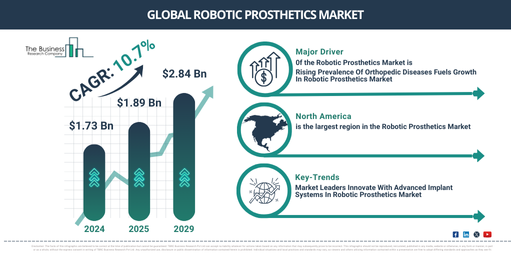
    The market size for robotic prosthetics has witnessed a robust growth over the past few years. The market is expected to expand from $1.73 billion in 2024 to $1.89 billion in 2025, growing at a compound annual growth rate (CAGR) of 9.5%. The remarkable growth experienced during the historical period can be credited to the increase in chronic diseases, an aging population, a rise in the number of amputees, and various governmental initiatives.

    What Is the Projected Market Size of the Robotic Prosthetics Market?

    The market for robotic prosthetics is projected to experience significant growth in the coming years, expanding to a value of $2.84 billion by 2029, with a compound annual growth rate (CAGR) of 10.7%. This anticipated expansion during the forecast period can be credited to the escalated funding towards medical robot research, the increasing occurrence of traumatic injuries, the rising demand for sustainable and eco-friendly prosthetics, and heightened awareness regarding prosthetic solutions. Leading trends expected during this forecast period include advancements in the field of material science and technology, the integration of wearable technology, progresses in prosthetic technology, introduction of sensory feedback systems, and the innovation in neuroprosthetics.

    Download The Free Sample Report Here:

    https://www.thebusinessresearchcompany.com/sample.aspx?id=12898&type=smp

    Who are the Major Competitors in the Robotic Prosthetics Market Outlook?

    Major companies operating in the robotic prosthetics market are Ottobock SE and Co. KGaA, Össur hf., Blatchford Limited, HDT Global Inc., DEKA Research & Development Corp., Cyberdyne Inc., College Park Industries Inc., Neuralink Corp., Touch Bionics Ltd., Myomo Inc., Kinova Inc., Open Bionics Ltd., Sarcos Technology and Robotics Corporation, SynTouch LLC, Ekso Bionics Holdings Inc., Fillauer LLC, WillowWood Global LLC, Shadow Robot Company Limited, Infinite Biomedical Technologies LLC, Marsi Bionics S.L., Aether Biomedical Pvt Ltd., Coapt LLC, Esper Bionics Inc., Psyonic Inc., Vincent Systems GmbH.

    What Is Fueling Growth in the Robotic Prosthetics Market?

    The escalating prevalence of orthopedic illnesses is predicted to stimulate the expansion of the robotic prosthetics sector in the future. Orthopedic diseases encompass maladies and disorders impacting the musculoskeletal mechanism, consisting of muscles, bones, nerves, and joints. In orthopedics, robotic prosthetics find crucial applications, mainly in addressing and rectifying musculoskeletal disorders and injuries through limb substitution, stride rehabilitation, and augmentation of precision in orthopedic surgical procedures. For example, the World Health Organization reported in July 2022 that an estimated 1.71 billion individuals globally are afflicted by musculoskeletal conditions such as lower back pain, neck discomfort, fractures, injuries, osteoarthritis, amputations, and rheumatoid arthritis. Consequently, the increasing prevalence of orthopedic illnesses is fostering the expansion of the robotic prosthetics industry. Increasing amputation rates are projected to stimulate the expansion of the robotic prosthetics sector. Amputation is a surgical operation where a section or the totality of a limb or extremity is surgically excised from the body. The rise in the number of amputations is a critical factor driving the progression and acceptance of robotic prosthetics. Given the increasing instances of amputations, there is an escalating need for robotic prosthetic solutions. For example, an article in the JAMA Network Open Medical Journal suggested in March 2022 that there was a significant increase in the rate of amputation, rising from 13.5 per 100,000 population annually to 14.8 per 100,000 population annually. This represented an increase of 9% to 16% post-expansion. Therefore, the rising rate of amputation will foster market growth for robotic prosthetics.

    Request For A Customized Report:

    https://www.thebusinessresearchcompany.com/customise?id=12898&type=smp

    Which Robotic Prosthetics Market Segments Are Growing the Fastest?

    The robotic prosthetics market covered in this report is segmented –

    1) By Product Type: Prosthetic Arm, Prosthetic Knee, Prosthetic Feet Or Ankle, Prosthetic Hand, Other Products

    2) By Technology: Microprocessor-Controlled Prosthetics, Myoelectric Prosthetics

    3) By Extremity: Lower Body Prosthetics, Upper Body Prosthetics

    4) By End User: Hospitals, Specialty Clinics, Other End Users

    Subsegments:

    1) By Prosthetic Arm: Upper Limb Prosthetics, Body-Powered Prosthetics, Electrically Controlled Prosthetics

    2) By Prosthetic Knee: Mechanical Knee Prosthetics, Microprocessor-Controlled Knee Prosthetics, Hydraulic Knee Prosthetics

    3) By Prosthetic Feet Or Ankle: Energy-Storing Feet, Multi-Axis Feet, Microprocessor-Controlled Feet

    4) By Prosthetic Hand: Mechanical Hand Prosthetics, Myoelectric Hand Prosthetics, Hybrid Hand Prosthetics

    5) By Other Products: Exoskeletons, Adaptive Devices, Assistive Technologies

    Which Industry Trends Are Shaping the Future of the Robotic Prosthetics Market?

    Leading firms in the robotic prosthetics industry are debuting unique implant systems in a bid to consolidate their market standing. Implant systems are medical devices which either replace a lost bone or joint, or provide support to a damaged bone. For example, in April 2023, the medical equipment manufacturer Integrum, based in Sweden, was granted approval for its OPRA Implant System within Australia’s market. The OPRA Implant System is a distinctive bone-anchored prosthesis that employs osseointegration to secure the prosthesis to the human body, representing a groundbreaking technique enabling the direct attachment of an artificial limb to the skeleton. Moreover, the product’s patent coverage extends past transfemoral uses to encompass therapy in additional kinds of long bone prosthetic applications, such as the lower leg or upper arm.

    Access The Full Report Here:

    https://www.thebusinessresearchcompany.com/report/robotic-prosthetics-global-market-report

    Which Countries Are Leading the Robotic Prosthetics Market?

    North America was the largest region in the robotic prosthetics market in 2024. Asia-Pacific is expected to be the fastest-growing region in the forecast period. The regions covered in robotic prosthetics market report are Asia-Pacific, Western Europe, Eastern Europe, North America, South America, Middle East and Africa.

    Purchase The Full Report Today:

    https://www.thebusinessresearchcompany.com/purchaseoptions.aspx?id=12898

    This Report Delivers Insight On:

    1. How big is the robotic prosthetics market, and how is it changing globally?

    2. Who are the major companies in the robotic prosthetics market, and how are they performing?

    3. What are the key opportunities and risks in the robotic prosthetics market right now?

    4. Which products or customer segments are growing the most in the robotic prosthetics market?

    5. What factors are helping or slowing down the growth of the robotic prosthetics market?

    About The Business Research Company:

    With over 15000+ reports from 27 industries covering 60+ geographies, The Business Research Company has built a reputation for offering comprehensive, data-rich research and insights. Armed with 1,500,000 datasets, the optimistic contribution of in-depth secondary research, and unique insights from industry leaders, you can get the information you need to stay ahead in the game.

    Get in touch with us:

    The Business Research Company: https://www.thebusinessresearchcompany.com/

    Americas +1 310-496-7795

    Asia +44 2071930708

    Europe +44 7882 955267

    Email us at info@tbrc.info

    Follow us on:

    LinkedIn: https://in.linkedin.com/company/the-business-research-company

    YouTube: https://www.youtube.com/channel/UC24_fI0rV8cR5DxlCpgmyFQ

    Global Market Model: https://www.thebusinessresearchcompany.com/global-market-model
  • Robotic Process Automation In Healthcare Market to Reach $3.97 Billion by 2029 | Key Drivers and Future Outlook

    Robotic Process Automation In Healthcare Market to Reach $3.97 Billion by 2029 | Key Drivers and Future Outlook

    Claim your 30% discount on Global Market Reports with code ONLINE30. Limited time only.

    What Is the Growth Rate of the Robotic Process Automation In Healthcare Market?

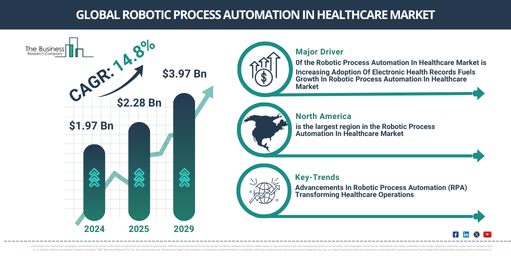
    The market size for robotic process automation in healthcare has seen a swift expansion in the past years. The numbers will escalate from $1.97 billion in 2024 to $2.28 billion in 2025, with a compound annual growth rate (CAGR) of 15.8%. The historic period’s growth can be explained by a surge in the use of telehealth services, an increasing emphasis on optimizing the supply chain, a rising requirement for interoperability solutions, the escalating intricacy of healthcare billing processes and the swift digitization of healthcare data.

    What Growth Rate Is Forecasted for the Robotic Process Automation In Healthcare Market by 2029?

    In the coming years, the healthcare sector’s robotic process automation market is anticipated to experience a rapid expansion. By 2029, it is forecasted to have grown to $3.97 billion, with a Compound Annual Growth Rate (CAGR) of 14.8%. Factors contributing to the growth during the forecast period include a heightened focus on cost reduction, an increasing need for improved operational efficiency, a surge in demand for a better patient experience, a growing acceptance of electronic health records (EHR), and escalating healthcare labor costs. Notable trends during the forecast period encompass advancements in technology, implementation of blockchain technology in healthcare proceedings, a shift towards outcome-based reimbursement models, incorporation of artificial intelligence (AI) in healthcare procedures, and the move towards value-based care models.

    Download The Free Sample Report Here:

    https://www.thebusinessresearchcompany.com/sample.aspx?id=14480&type=smp

    Which Key Companies Are Shaping the Future of the Robotic Process Automation In Healthcare Market?

    Major companies operating in the robotic process automation in healthcare market are International Business Machines Corporation, EnterBridge, NICE Ltd., Thoughtonomy Limited, Datamatics Global Services Limited, Pegasystems Inc., iRobot Corp., UiPath Inc., Verint System, Celonis SE, BlackLine Inc., Automation Anywhere Inc., HelpSystems LLC, Kofax Inc., Appian Corp., Kryon Systems Ltd., Digital Workforce Service, Redwood Software Inc., OpenConnect Systems Incorporated, AutomationEdge Solutions Limited, WorkFusion Inc., FortressIQ Inc.

    Which Factors Are Driving Demand in the Robotic Process Automation In Healthcare Industry?

    The growth of the robotic process automation in the healthcare market is anticipated to be fueled by a growing acceptance of electronic health records (EHR). These are digital versions of patients’ medical records that can be accessed by authorized healthcare professionals. As EHR systems increase, a unified and readily accessible database of patient information is created, enabling healthcare professionals to concentrate more on patient care rather than administrative duties. Robotic process automation (RPA) in healthcare is advantageous because it enhances data accuracy, simplifies repeated tasks, and improves operational efficiency in managing patient information. For example, the Department of Health and Social Care, a UK government department, stated in June 2022 that they expect 90% of NHS trusts to have electronic health records in place by December 2023, with all trusts obligated to adopt them by March 2025. Consequently, the growing adoption of electronic health records is boosting the expansion of the robotic process automation in healthcare market.

    Request For A Customized Report:

    https://www.thebusinessresearchcompany.com/customise?id=14480&type=smp

    How Is the Robotic Process Automation In Healthcare Market Segmented by Several Divisions?

    The robotic process automation in healthcare market covered in this report is segmented –

    1) By Solution: Software, Services, Implementation, Support And Maintenance, Training And Consulting

    2) By Operations: Rule-based Operation, Knowledge-based Operation

    3) By Application: Claims Management, Clinical Documentation, Billing And Compliance Management, Appointment Scheduling, Workflow Management

    Subsegments:

    1) By Software: RPA Software for Healthcare Workflow Automation, Intelligent Automation Software, AI and Machine Learning Integration Software

    2) By Services: RPA as a Service (RPAaaS), Managed RPA Services, Custom RPA Solutions

    3) By Implementation: RPA Deployment and Integration in Healthcare Systems, System Configuration and Customization, Workflow Design and Automation

    4) By Support and Maintenance: RPA Monitoring and Optimization Services, Post-Deployment Support, Software Updates and Patches

    5) By Training and Consulting: RPA Training for Healthcare Staff, Consulting Services for RPA Strategy and Roadmap, Change Management and RPA Adoption Assistance

    What are the Emerging Market Trends Driving the Growth of the Robotic Process Automation In Healthcare Industry?

    Top firms active in the healthcare sector’s robotic process automation are prioritizing the presentation of ground-breaking solutions like generative AI. This innovation furthers operational efficiency, cuts expenses, and betters patient care services. Generative AI, an artificial intelligence subset, can generate fresh content like text, images, or music by interpreting patterns from current data. For instance, in September 2023, the US-based computer software firm, Oracle Corporation, unveiled the Oracle Clinical Digital Assistant. This innovative tool uses generative AI to simplify electronic health record (EHR) procedures for healthcare providers. By automating routine tasks such as noting and prescribing medications, this platform alleviates a significant portion of documentation work from clinicians. The Clinical Digital Assistant allows providers to handle patient records through voice commands, thus improving workflow efficiency. This capability enables healthcare professionals to dedicate more time to patient care rather than admin tasks. The tool is designed to enhance EHR user experience and foster digital transformation within the healthcare institutions.

    Access The Full Report Here:

    https://www.thebusinessresearchcompany.com/report/robotic-process-automation-in-healthcare-global-market-report

    Which Regions Are Driving Growth in the Robotic Process Automation In Healthcare Market?

    North America was the largest region in the robotic process automation in healthcare market in 2024. The regions covered in the robotic process automation in healthcare market report are Asia-Pacific, Western Europe, Eastern Europe, North America, South America, Middle East, Africa.

    Purchase The Full Report Today:

    https://www.thebusinessresearchcompany.com/purchaseoptions.aspx?id=14480

    This Report Delivers Insight On:

    1. How big is the robotic process automation in healthcare market, and how is it changing globally?

    2. Who are the major companies in the robotic process automation in healthcare market, and how are they performing?

    3. What are the key opportunities and risks in the robotic process automation in healthcare market right now?

    4. Which products or customer segments are growing the most in the robotic process automation in healthcare market?

    5. What factors are helping or slowing down the growth of the robotic process automation in healthcare market?

    About The Business Research Company:

    With over 15000+ reports from 27 industries covering 60+ geographies, The Business Research Company has built a reputation for offering comprehensive, data-rich research and insights. Armed with 1,500,000 datasets, the optimistic contribution of in-depth secondary research, and unique insights from industry leaders, you can get the information you need to stay ahead in the game.

    Get in touch with us:

    The Business Research Company: https://www.thebusinessresearchcompany.com/

    Americas +1 310-496-7795

    Asia +44 2071930708

    Europe +44 7882 955267

    Email us at info@tbrc.info

    Follow us on:

    LinkedIn: https://in.linkedin.com/company/the-business-research-company

    YouTube: https://www.youtube.com/channel/UC24_fI0rV8cR5DxlCpgmyFQ

    Global Market Model: https://www.thebusinessresearchcompany.com/global-market-model
  • RNA Sequencing Services Market Size to Exceed $6.13 Billion by 2029 | Growth and Industry Trends

    RNA Sequencing Services Market Size to Exceed $6.13 Billion by 2029 | Growth and Industry Trends

    Claim your 30% discount on Global Market Reports with code ONLINE30. Limited time only.

    How Has the RNA Sequencing Services Market Grown from 2024 to 2025?

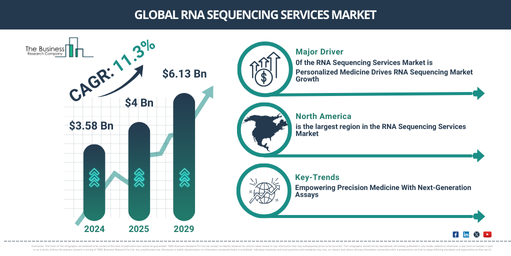
    There has been a swift expansion in the size of the RNA sequencing services market in the last few years. The market’s growth is projected to surge from $3.58 billion in 2024 to $4 billion in 2025, registering a compound annual growth rate (CAGR) of 11.6%. The substantial growth experienced in the past can be accredited to the escalating demand for personalized medicine, progress in bioinformatics tools, a growing emphasis on drug discovery and development, an increased tendency for RNA sequencing in agricultural research, and widening uses in clinical diagnostics.

    What Growth Rate Is Anticipated for the RNA Sequencing Services Market in the Coming Years?

    A significant expansion is expected in the RNA sequencing services market in the coming years, with predictions of it reaching $6.13 billion by 2029, displaying a compound annual growth rate (CAGR) of 11.3%. The expected growth within this forecast period is linked to the development of single-cell RNA sequencing technologies, the incorporation of artificial intelligence and machine learning into data examination, the growing research around non-coding RNA biomarkers, and an increased requirement for transcriptomic analysis in immunotherapy research. Moreover, growing partnership between academic institutions and industry players in genomic research is another driving factor. Prominent trends for this period include the adoption of long-read sequencing, the use of cloud-based analysis platforms, increased demand for RNA splicing analysis, and the integration of multi-omics data.

    Download The Free Sample Report Here:

    https://www.thebusinessresearchcompany.com/sample.aspx?id=14991&type=smp

    Who Are the Leading Companies in the RNA Sequencing Services Market?

    Major companies operating in the RNA sequencing services market are Thermo Fisher Scientific Inc., Feng Chi Biotech Corp., Illumina Inc., Qiagen NV, BGI Genomics Co. Ltd., Azenta Inc., Abcam Limited, Novogene Co. Ltd., Genewiz Inc., Diagenode LLC, CD Genomics, CeGaT GmbH, Lexogen GmbH, BaseClear BV, Active Motif Inc., Microsynth AG, RayBiotech Inc., Genomax Technologies Pte. Ltd., Phalanx Biotech Group Inc., Creative Biogene, SeqMatic LLC, Genohub Inc., Otogenetics, LC Sciences, Admera Health, Arraystar Inc., IGA Technology, Yaazh Xenomics

    What Are the Key Drivers of the RNA Sequencing Services Market?

    The surge in the need for customized medicinal treatment is playing a substantial role in propelling the RNA sequencing services industry’s growth. Customized medicine involves adapting healthcare treatments to suit individual traits such as genetics or lifestyle, to maximize efficiency and reduce negative effects. This spike in demand for personalized medical care is influenced by its capacity to provide more efficient treatments, advancements in genomics, evolving disease complexity, and legislative support. RNA sequencing services aid in determining disease variants, finding biomarkers, identifying therapeutic targets, forecasting therapy responses, and monitoring disease progression and treatment outcomes. Customized medical practices employ RNA sequencing technologies to provide personalized and effective drugs, catering to the unique molecular specifics of individual patients. For example, in February 2024, the Personalized Medicine Coalition, a not-for-profit organization based in the US, reported that the FDA (Food and Drug Administration) sanctioned 16 new personalized therapies for patients with uncommon diseases in 2023, a significant increase from six in 2022. The freshly approved personalized treatments in 2023 also comprised seven drugs for cancer and three for other disease types and conditions. Hence, the escalating demand for customized medicine is stimulating the growth of the RNA sequencing services market in the future.

    Request For A Customized Report:

    https://www.thebusinessresearchcompany.com/customise?id=14991&type=smp

    What Are the Key Market Segments in the RNA Sequencing Services Industry?

    The RNA sequencing services market covered in this report is segmented –

    1) By Type: Ribosomal RNA (rRNA), Transfer RNA (tRNA), Long non-coding RNA (lncRNA)

    2) By Sequencing Method: Next Generation Sequencing Methods, Other Sequencing Methods

    3) By Application Area: Research Purposes, Diagnostic Purposes

    4) By End Users: Academic And Government Institutes And Research Centers, Hospitals And Clinics, Pharmaceutical And Biotechnology Companies, Other End Users

    Subsegments:

    1) By Ribosomal RNA (rRNA): Total RRNA Sequencing, RRNA Depletion

    2) By Transfer RNA (tRNA): TRNA Profiling, TRNA Sequencing

    3) By Long Non-Coding RNA (lncRNA): lncRNA Profiling, lncRNA Sequencing

    What Are the Latest Trends in the RNA Sequencing Services Market?

    Major corporations in the RNA sequencing services sector are focusing on incorporating automation to minimise possible human errors like the next-generation sequencing (NGS) assay with the goal of increasing productivity and precision in data creation and interpretation. RNA next-generation sequencing (RNA-seq) assay, a crucial instrument used in genomics and molecular biology, provides an in-depth examination of the transcriptome of a biological sample. Taking a case in point, Tempus, a precision medicine technology entity based in the US, launched its distinct RNA-next generation sequencing assay known as Tempus xR in June 2023. Primarily designed for solid tumours, this novel assay provides an exhaustive analysis of the complete transcriptome and identifies clinically significant fusions in more than 100 targeted genes, including altered splicing for MET Exon 14 and EGFRvIII. Acknowledging the relevance of RNA sequencing data, Tempus has factored in both RNA and DNA sequencing into its standard xT broad-panel assay traditionally. At present, customers can opt to order each test separately or concurrently while availing the opportunity to supplement xR with particular Tempus algorithmic tests. This service is specifically tailored for physicians interested in RNA fusions or altered splicing, and for providers, researchers, and biopharma companies looking for an in-depth RNA sequencing analysis of their available samples.

    Access The Full Report Here:

    https://www.thebusinessresearchcompany.com/report/rna-sequencing-services-global-market-report

    What Are the Key Regional Markets in the RNA Sequencing Services Industry?

    North America was the largest region in the RNA sequencing services market in 2024. Asia-Pacific is expected to be the fastest-growing region in the forecast period. The regions covered in the RNA sequencing services market report are Asia-Pacific, Western Europe, Eastern Europe, North America, South America, Middle East, Africa.

    Purchase The Full Report Today:

    https://www.thebusinessresearchcompany.com/purchaseoptions.aspx?id=14991

    This Report Delivers Insight On:

    1. How big is the rna sequencing services market, and how is it changing globally?

    2. Who are the major companies in the rna sequencing services market, and how are they performing?

    3. What are the key opportunities and risks in the rna sequencing services market right now?

    4. Which products or customer segments are growing the most in the rna sequencing services market?

    5. What factors are helping or slowing down the growth of the rna sequencing services market?

    About The Business Research Company:

    With over 15000+ reports from 27 industries covering 60+ geographies, The Business Research Company has built a reputation for offering comprehensive, data-rich research and insights. Armed with 1,500,000 datasets, the optimistic contribution of in-depth secondary research, and unique insights from industry leaders, you can get the information you need to stay ahead in the game.

    Get in touch with us:

    The Business Research Company: https://www.thebusinessresearchcompany.com/

    Americas +1 310-496-7795

    Asia +44 2071930708

    Europe +44 7882 955267

    Email us at info@tbrc.info

    Follow us on:

    LinkedIn: https://in.linkedin.com/company/the-business-research-company

    YouTube: https://www.youtube.com/channel/UC24_fI0rV8cR5DxlCpgmyFQ

    Global Market Model: https://www.thebusinessresearchcompany.com/global-market-model
  • Earwax Removal Market Size to Exceed $2.54 Billion by 2029 | Growth and Industry Trends

    Earwax Removal Market Size to Exceed $2.54 Billion by 2029 | Growth and Industry Trends

    Claim your 30% discount on Global Market Reports with code ONLINE30. Limited time only.

    How Has the Earwax Removal Market Grown from 2024 to 2025?

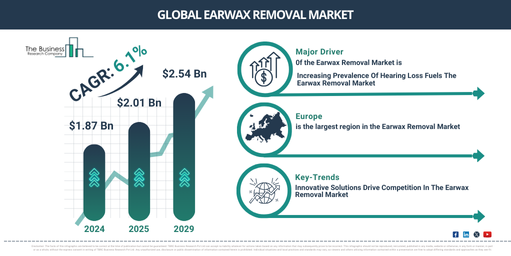
    In recent years, the market size for earwax removal has seen impressive growth. The market value is expected to escalate from $1.87 billion in 2024 to $2.01 billion in 2025, at a compound annual growth rate (CAGR) of 7.5%. The past growth rate of this market can be linked to several factors including the prevention of hearing loss, reduced discomfort and pain, treatment of conditions like tinnitus, management of dizziness and vertigo, and preventing infections.

    What Growth Rate Is Anticipated for the Earwax Removal Market in the Coming Years?

    In the forthcoming years, the earwax removal market is projected to witness robust growth, reaching a size of $2.54 billion in 2029, with a compound annual growth rate (CAGR) of 6.1%. Such advancement in the predicted timeframe could be ascribed to the expanded aging demographic, elevated consciousness about the significance of appropriate ear care, the inclusion of telehealth and distant diagnostics, continuous research within audiology and otolaryngology. Predominant trends expected during this period encase the surge in technological advancements, enhanced adoption of automated ear cleaning apparatus, growth of telehealth facilities, personalization of earwax removal options, and an intensified focus on preventative ear care.

    Download The Free Sample Report Here:

    https://www.thebusinessresearchcompany.com/sample.aspx?id=13843&type=smp

    Who Are the Leading Companies in the Earwax Removal Market?

    Major companies operating in the earwax removal market report are Cardinal Health, GlaxoSmithKline PLC, Medline Industries Inc., McKesson Medical-Surgical Inc, Cipla Limited, ENTO Pharmaceuticals, Kaizen Pharmaceuticals, Apothecary Products LLC, NeilMed Pharmaceuticals Inc., GPC Medical Ltd, Bionix, NuLife Pharmaceuticals, Albert Manufacturing USA, Audiolife, Eosera Inc, Clearwax Ltd, SafKan Health, Equadose, Henry Schein Inc., Audiology Services Inc., Prestige Consumers Healthcare Inc., Ear Labs, VorOtex, Wax-Rx., Tvidler, Squip Inc.

    What Are the Key Drivers of the Earwax Removal Market?

    Growth in the earwax removal market is anticipated to be propelled by the increasing incidence of hearing loss. A decline in an individual’s capacity to hear qualifies as hearing loss, and earwax removal plays a critical role in both the prevention and treatment of this condition by tackling compacted earwax that could block the ear canal and hinder sound transmission, resulting in impaired hearing. As an illustration, the National Council on Aging (NCOA), a charitable organization from the US, reported in November 2023 that around 60.7 million Americans aged 12 and above were impacted by hearing loss, with approximately 15.5% (44.1 million) of adults aged 20 and above experiencing some degree of hearing loss. Additionally, projections from the World Health Organization, a Switzerland-based global body, in February 2023 predicted that nearly 2.5 billion people will suffer from some kind of hearing loss by 2050, with at least 700 million people needing hearing rehabilitation. Hence, the escalating occurrence of hearing loss serves as a key catalyst for the growth of the earwax removal market.

    Request For A Customized Report:

    https://www.thebusinessresearchcompany.com/customise?id=13843&type=smp

    What Are the Key Market Segments in the Earwax Removal Industry?

    The earwax removal market covered in this report is segmented –

    1) By Product: Ear Drop And Spray, Automated Earwax Removal Devices, Microsuction Equipment

    2) By Age Group: Pediatric, Adult, Geriatric

    3) By Distribution Channel: Retail Pharmacy, Online Pharmacy, Super market, Hospital Pharmacy

    Subsegments:

    1) By Ear Drop And Spray: Cerumen Softening Drops, Saline Solutions, Oil-Based Drops

    2) By Automated Earwax Removal Devices: Electric Earwax Removal Kits, Ear Irrigation Systems

    3) By Microsuction Equipment: Portable Microsuction Devices, Clinic-Based Microsuction Systems

    What Are the Latest Trends in the Earwax Removal Market?

    Leading businesses in the earwax removal market are creating groundbreaking solutions, such as automatic ear-cleaning equipment, to establish a competitive advantage. Automated ear-cleaning devices are electronic tools designed to cleanse the ear canal. For instance, SafKan Inc., an American medical device startup, rolled out OtoSet in May 2022, marking the first automated ear-cleaning device in the US that has been cleared by the FDA. It utilizes irrigation and micro-suction technology to disintegrate and extract hardened earwax, providing a safer and more effective method to address this issue. Clinical studies have validated the device’s ability to swiftly and safely eliminate mild to severe earwax blockages. OtoSet symbolizes a remarkable innovation in earwax extraction technology, proposing a safer and more efficient option for health professionals and patients alike.

    Access The Full Report Here:

    https://www.thebusinessresearchcompany.com/report/earwax-removal-global-market-report

    What Are the Key Regional Markets in the Earwax Removal Industry?

    Europe was the largest region in the earwax removal market in 2024. The regions covered in the earwax removal market report are Asia-Pacific, Western Europe, Eastern Europe, North America, South America, Middle East, Africa.

    Purchase The Full Report Today:

    https://www.thebusinessresearchcompany.com/purchaseoptions.aspx?id=13843

    This Report Delivers Insight On:

    1. How big is the earwax removal market, and how is it changing globally?

    2. Who are the major companies in the earwax removal market, and how are they performing?

    3. What are the key opportunities and risks in the earwax removal market right now?

    4. Which products or customer segments are growing the most in the earwax removal market?

    5. What factors are helping or slowing down the growth of the earwax removal market?

    About The Business Research Company:

    With over 15000+ reports from 27 industries covering 60+ geographies, The Business Research Company has built a reputation for offering comprehensive, data-rich research and insights. Armed with 1,500,000 datasets, the optimistic contribution of in-depth secondary research, and unique insights from industry leaders, you can get the information you need to stay ahead in the game.

    Get in touch with us:

    The Business Research Company: https://www.thebusinessresearchcompany.com/

    Americas +1 310-496-7795

    Asia +44 2071930708

    Europe +44 7882 955267

    Email us at info@tbrc.info

    Follow us on:

    LinkedIn: https://in.linkedin.com/company/the-business-research-company

    YouTube: https://www.youtube.com/channel/UC24_fI0rV8cR5DxlCpgmyFQ

    Global Market Model: https://www.thebusinessresearchcompany.com/global-market-model
  • Central Precocious Puberty Market Outlook 2025 – Insights for Executive and Strategic Planning

    Central Precocious Puberty Market Outlook 2025 – Insights for Executive and Strategic Planning

    Claim your 30% discount on Global Market Reports with code ONLINE30. Limited time only.

    How Has the Central Precocious Puberty Market Grown from 2024 to 2025?

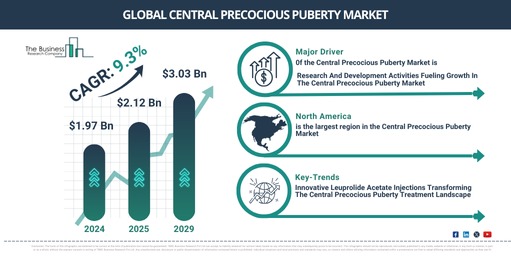
    Over the past few years, there has been a considerable increase in the market size of central precocious puberty. The market value, which is projected to be $1.97 billion in 2024, is expected to escalate to $2.12 billion in 2025, boasting a compound annual growth rate (CAGR) of 7.8%. This significant growth during the historical period can be accredited to the rising incidence of central precocious puberty, better treatment strategies, influence of environmental factors, expanded pediatric endocrinology services, heightened parental concerns leading to medical consultations, and patient advocacy initiatives.

    What Growth Rate Is Anticipated for the Central Precocious Puberty Market in the Coming Years?

    Predictions for the central precocious puberty market size indicate robust expansion in the upcoming years, with estimates predicting growth up to $3.03 billion in 2029, reflecting a compound annual growth rate (CAGR) of 9.3%. This projected growth for the forecast period is primarily due to the integration of pediatric healthcare and a trend towards personalized healthcare, along with initiatives focused on parent education and awareness, the development of longer-lasting treatment options, and early diagnosis and intervention. Other notable trends during the forecast period encompass long-lasting formulations, patient-focused practices, telehealth and remote supervision, individualized treatments, collaborative healthcare models, and the use of digital health instruments for monitoring.

    Download The Free Sample Report Here:

    https://www.thebusinessresearchcompany.com/sample.aspx?id=13184&type=smp

    Who Are the Leading Companies in the Central Precocious Puberty Market?

    Major companies operating in the central precocious puberty market report are Cipla Limited, Cigna Group, Pfizer Inc., AbbVie Inc., Sanofi S.A., AstraZeneca PLC, Abbott Laboratories, Molina Healthcare Inc., Sun Pharmaceutical Industries Ltd., Ipsen Ltd., Ferring Pharmaceuticals Private Limited, Endo Pharmaceuticals Inc., Amneal Pharmaceuticals Inc., Piramal Enterprises Limited, Livzon Pharmaceutical Group Inc., Salvavidas Pharmaceutical Pvt. Ltd., Actiza Pharmaceutical Private Limited, The Bachem Group, Arbor Pharmaceuticals LLC, Genentech Inc., Antares Pharma Inc., Tolmar Pharmaceuticals Inc., Debiopharm Group, AmbioPharm Inc., Foresee Pharmaceuticals Co. Ltd., Manus Aktteva Biopharma LLP, Midas Pharma GmbH, LGM Pharma LLC, Varian Pharmed Group, Shenzhen JYMed Technology Co. Ltd.

    What Are the Key Drivers of the Central Precocious Puberty Market?

    The central precocious puberty market’s forward momentum is predicted to be driven by a surge in research and development activities. These activities, encompassing the formation of new knowledge, services, products, or procedures or the advancement of existing ones, play a fundamental role in central precocious puberty (CPP) by expanding the comprehension of the ailment, refining diagnosis, and treatment methodologies, and enhancing general care for individuals with central precocious puberty. For example, in August 2023, Eurostat, a non-profit organization based in Luxembourg, disclosed that the European government set aside about $126,153 million (€117,368 million) for R&D in 2022 which is a 5.4% increase compared to the $119,730 million (€111,393 million) allocated in 2021. Thus, the amplified research and development efforts are fueling the development of the central precocious puberty market.

    Central Precocious Puberty Market Driver: Amplified Healthcare Expenditure Bolstering Central Precocious Puberty Market Growth


    Request For A Customized Report:

    https://www.thebusinessresearchcompany.com/customise?id=13184&type=smp

    What Are the Key Market Segments in the Central Precocious Puberty Industry?

    The central precocious puberty market covered in this report is segmented –

    1) By Drug: Leuprolide Acetate, Triptorelin, Histrelin Acetate, Nafarelin

    2) By Route Of Administration: Parenteral, Subcutaneous, Intramuscular, Other Routes Of Administrations

    3) By Distribution Channel: Hospital Pharmacy, Retail Pharmacy, Online Pharmacy

    4) By End-Users: Hospitals, Specialty Clinics, Homecare, Other End-Users

    Subsegments:

    1) By Leuprolide Acetate: Injectable Formulations, Depot Formulations

    2) By Triptorelin: Injectable Formulations, Long-acting Formulations

    3) By Histrelin Acetate: Implant Formulations, Injectable Formulations

    4) By Nafarelin: Nasal Spray Formulations, Injectable Formulations

    What Are the Latest Trends in the Central Precocious Puberty Market?

    Leading businesses in the central precocious puberty market are concentrating their efforts on creating unique injections like leuprolide acetate injections to secure a competitive advantage. These injections are artificial hormones that function similar to natural hormones, treating a variety of ailments including advanced prostate cancer and early onset of puberty. For example, in November 2022, India’s pharmaceutical firm, Cipla Limited, introduced the Leuprolide Acetate Injection Depot 22.5 mg, a treatment for central precocious puberty and advanced prostate cancer. This depot is a single-dose injection mechanism containing 22.5 mg of leuprolide acetate, sufficient for three months of therapy. The product is supplied as lyophilized microspheres in a single-use vial, forming part of a kit that incorporates a convenient MIXJECT transfer system and a pre-loaded syringe containing 2 mL of a 0.8% mannitol solution.

    Access The Full Report Here:

    https://www.thebusinessresearchcompany.com/report/central-precocious-puberty-global-market-report

    What Are the Key Regional Markets in the Central Precocious Puberty Industry?

    North America was the largest region in the central precocious puberty market in 2024. The regions covered in the central precocious puberty market report are Asia-Pacific, Western Europe, Eastern Europe, North America, South America, Middle East, Africa

    Purchase The Full Report Today:

    https://www.thebusinessresearchcompany.com/purchaseoptions.aspx?id=13184

    This Report Delivers Insight On:

    1. How big is the central precocious puberty market, and how is it changing globally?

    2. Who are the major companies in the central precocious puberty market, and how are they performing?

    3. What are the key opportunities and risks in the central precocious puberty market right now?

    4. Which products or customer segments are growing the most in the central precocious puberty market?

    5. What factors are helping or slowing down the growth of the central precocious puberty market?

    About The Business Research Company:

    With over 15000+ reports from 27 industries covering 60+ geographies, The Business Research Company has built a reputation for offering comprehensive, data-rich research and insights. Armed with 1,500,000 datasets, the optimistic contribution of in-depth secondary research, and unique insights from industry leaders, you can get the information you need to stay ahead in the game.

    Get in touch with us:

    The Business Research Company: https://www.thebusinessresearchcompany.com/

    Americas +1 310-496-7795

    Asia +44 2071930708

    Europe +44 7882 955267

    Email us at info@tbrc.info

    Follow us on:

    LinkedIn: https://in.linkedin.com/company/the-business-research-company

    YouTube: https://www.youtube.com/channel/UC24_fI0rV8cR5DxlCpgmyFQ

    Global Market Model: https://www.thebusinessresearchcompany.com/global-market-model
  • Reversible Airway Diseases Treatment Industry Insights 2025 – Market Forecast for Executives and Planners

    Reversible Airway Diseases Treatment Industry Insights 2025 – Market Forecast for Executives and Planners

    Claim your 30% discount on Global Market Reports with code ONLINE30. Limited time only.

    How Has the Reversible Airway Diseases Treatment Market Size Changed, over the years?

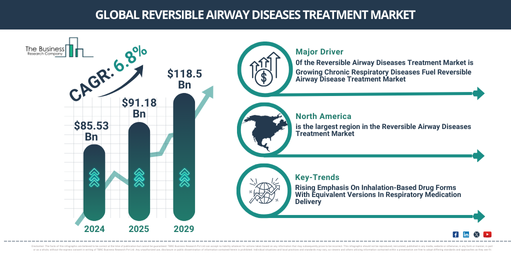
    In the past few years, the market for the treatment of reversible airway diseases has experienced substantial growth. The market size is projected to rise from $85.53 billion in 2024 to $91.18 billion in 2025, with a compound annual growth rate (CAGR) of 6.6%. The significant growth during the historical period can be linked to an increasing number of reversible airway disease cases, heightened awareness about these diseases, improved healthcare accessibility, and increased disposable incomes.

    How Much Will the Reversible Airway Diseases Treatment Market Be Worth in 2029?

    Anticipated to witness sturdy expansion in the upcoming years is the market for treatment of reversible airway diseases. With a compound annual growth rate (CAGR) of 6.8%, it is projected to reach a valuation of $118.5 billion by 2029. Several factors such as an aging population, increased incidence of chronic ailments, escalating urbanization and air pollution, and broader reach of healthcare services are set to propel growth during the forecast period. The period is also likely to see key trends such as advancements in digital health technologies, R&D for novel treatments, preventative measures and early interventions, and enhancements in inhaler technology.

    Download The Free Sample Report Here:

    https://www.thebusinessresearchcompany.com/sample.aspx?id=12944&type=smp

    Which is the Largest Company in the Reversible Airway Diseases Treatment Market?

    Major companies operating in the reversible airway diseases treatment market are Pfizer Inc., F. Hoffmann-La Roche AG, Merck & Co. Inc., AbbVie Inc., Novartis AG, Sanofi S.A., GlaxoSmithKline PLC, Medtronic PLC, Eli Lilly and Company, Gilead Sciences Inc., Amgen Inc., Boehringer Ingelheim International GmbH, Viatris Inc., Teva Pharmaceutical Industries Ltd., Grifols SA, Sumitomo Dainippon Pharma Co. Ltd., Sun Pharmaceutical Industries Ltd., Drägerwerk AG & Co. KGaA, Dr. Reddy’s Laboratories Ltd., Cipla Limited, Getinge AB, Hikma Pharmaceuticals PLC, Amneal Pharmaceuticals LLC, Lupin Limited, Fisher & Paykel Healthcare Corporation Limited.

    What Are the Main Market Drivers in the Reversible Airway Diseases Treatment Industry?

    The surge in chronic respiratory illnesses is projected to accelerate the expansion of the reversible airway disease treatment market. These diseases impact the respiratory system, which comprises the lungs, bronchi, trachea, larynx, pharynx, and nasal passages. Timely testing and treatment of chronic respiratory diseases pave the way for early detection and diagnosis of conditions like acute respiratory distress syndrome and assists in curbing the advancement by minimizing the possibility of complications. For instance, the UK Health Security Agency, a UK governmental agency, stated in February 2024 that the number of tuberculosis (TB) cases in England escalated by 10.7% in 2023, inflating from 4,380 cases in 2022 to 4,850. This illustrates a significant surge in TB incidences throughout the year. Consequently, the burgeoning chronic respiratory diseases are projected to drive the growth of the reversible airway disease treatment market. In relation to the growth of the reversible airway disease treatment market, the increasing expenditure on healthcare is anticipated to act as a significant contributor. This expenditure denotes the total cost incurred on healthcare services and related goods and operations within a specific healthcare framework or economy over a particular period. A rise in such expenditures significantly impacts the reversible airway disease treatment, enhancing research and development, patient education, access to pharmaceuticals, and technological progress. This ultimately results in superior management and treatment results for individuals suffering from reversible airway diseases. For example, the Canadian Institute for Health Information (CIHI), a Canadian health firm, reported in November 2022 that Canada’s healthcare expenditure had reached $328 billion in 2021 and augmented to $331 billion in 2022. Therefore, these escalating healthcare costs are propelling the growth of the reversible airway disease treatment market.

    Request For A Customized Report:

    https://www.thebusinessresearchcompany.com/customise?id=12944&type=smp

    How Is the Reversible Airway Diseases Treatment Market Segments Structured?

    The reversible airway diseases treatment market covered in this report is segmented –

    1) By Treatment : Chest X Ray, Computed Tomography (CT) Scan, Lung Therapies, Surgery Transplant, Medications

    2) By Diseases: Asthma, Chronic Bronchitis, Emphysema, Cystic Fibrosis, Bronchiolitis, Other Diseases

    3) By End-Users: Hospitals, Specialty Clinics, Other End-Users

    Subsegments:

    1) By Chest X-Ray: Standard Chest X-Ray, Digital Chest X-Ray

    2) By Computed Tomography (CT) Scan: High-Resolution CT Scan, Spiral CT Scan

    3) By Lung Therapies: Inhalation Therapy, Pulmonary Rehabilitation, Oxygen Therapy

    4) By Surgery Transplant: Lung Transplant, Bronchoscopic Procedures, Other Surgical Interventions

    5) By Medications: Bronchodilators, Corticosteroids, Anticholinergics, Other Medications

    What Strategic Trends Are Transforming the Reversible Airway Diseases Treatment Market?

    Major corporations in the reversible airway disease treatment market are prioritizing the development of inhalational dosage forms in their respiratory drug delivery methods to maintain their market leadership. For example, in May 2022, Alkem, a pharmaceutical company from India, initiated the launch of Innohaler, a device meant for dry powder inhalation (DPI). The device aims to make life easier for Asthma and COPD patients and to tackle predominant challenges in asthma care in India. With the launch of this device, Alkem is making a significant entry into the prime inhalation therapeutics market, making sure optimal drug delivery to the lungs. Moreover, patient education and compliance programs back the device, adding to its efficacy.

    Access The Full Report Here:

    https://www.thebusinessresearchcompany.com/report/reversible-airway-diseases-treatment-global-market-report

    Which Global Regions Offer the Highest Growth in the Reversible Airway Diseases Treatment Market?

    North America was the largest region in the reversible airway diseases treatment market in 2024. Asia-Pacific is expected to be the fastest-growing region in the forecast period. The regions covered in reversible airway disease treatment market report are Asia-Pacific, Western Europe, Eastern Europe, North America, South America, Middle East and Africa.

    Purchase The Full Report Today:

    https://www.thebusinessresearchcompany.com/purchaseoptions.aspx?id=12944

    This Report Delivers Insight On:

    1. How big is the reversible airway diseases treatment market, and how is it changing globally?

    2. Who are the major companies in the reversible airway diseases treatment market, and how are they performing?

    3. What are the key opportunities and risks in the reversible airway diseases treatment market right now?

    4. Which products or customer segments are growing the most in the reversible airway diseases treatment market?

    5. What factors are helping or slowing down the growth of the reversible airway diseases treatment market?

    About The Business Research Company:

    With over 15000+ reports from 27 industries covering 60+ geographies, The Business Research Company has built a reputation for offering comprehensive, data-rich research and insights. Armed with 1,500,000 datasets, the optimistic contribution of in-depth secondary research, and unique insights from industry leaders, you can get the information you need to stay ahead in the game.

    Get in touch with us:

    The Business Research Company: https://www.thebusinessresearchcompany.com/

    Americas +1 310-496-7795

    Asia +44 2071930708

    Europe +44 7882 955267

    Email us at info@tbrc.info

    Follow us on:

    LinkedIn: https://in.linkedin.com/company/the-business-research-company

    YouTube: https://www.youtube.com/channel/UC24_fI0rV8cR5DxlCpgmyFQ

    Global Market Model: https://www.thebusinessresearchcompany.com/global-market-model
  • Ear Infection Industry Insights 2025 – Market Forecast for Executives and Planners

    Ear Infection Industry Insights 2025 – Market Forecast for Executives and Planners

    Claim your 30% discount on Global Market Reports with code ONLINE30. Limited time only.

    How Has the Ear Infection Market Size Changed, over the years?

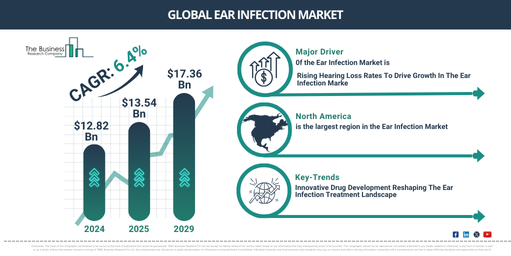
    In the past few years, the market for ear infection has seen substantial growth. The market is projected to expand from $12.82 billion in 2024 to $13.54 billion in 2025, indicating a compound annual growth rate (CAGR) of 5.7%. This growth from the historic period can be traced back to factors such as the usage of antibiotics, the increase in paediatric population, ear tube insertions, and advances in diagnosis.

    How Much Will the Ear Infection Market Be Worth in 2029?

    The market related to ear infection is predicted to witness robust escalation in the coming years, surging to $17.36 billion by 2029, with a compound annual growth rate (CAGR) of 6.4%. Such growth during the projection period can be credited to developments like antimicrobial resistance, utilization of telemedicine and remote consultations, sophisticated diagnostic apparatus, and patient-focused treatment. The ongoing trends during this period encompass preventive strategies, personalized treatment frameworks, home-based care and individual management, along with global proliferation.

    Download The Free Sample Report Here:

    https://www.thebusinessresearchcompany.com/sample.aspx?id=13034&type=smp

    Which is the Largest Company in the Ear Infection Market?

    Major companies operating in the ear infection market are Pfizer Inc., Johnson & Johnson, Roche Holdings AG, Merck & Co., AbbVie Inc., Bayer AG, Novartis AG, Sanofi SA, Bristol Myers Squibb Co., AstraZeneca PLC, GlaxoSmithKline PLC, Eli Lilly and Company, Viatris Inc., Teva Pharmaceutical Industries Ltd., Abbott Laboratories, Sun Pharmaceutical Industries Ltd., Lupin Limited, Dr. Reddy’s Laboratories, Wockhardt Ltd., Apotex Inc., Hikma Pharmaceuticals PLC, Endo International PLC, Zydus Lifescience Ltd., Glenmark Pharmaceuticals Ltd., Cipla Ltd., Torrent Pharmaceuticals Ltd., Ranbaxy Laboratories Ltd., Perrigo Company.

    What Are the Main Market Drivers in the Ear Infection Industry?

    The escalating occurrence of hearing loss is anticipated to spur the expansion of the ear infection market in the forthcoming years. Hearing loss, which encompasses a partial or total inability to hear, inflicts harm to the vestibulocochlear nerve, outer, middle, or inner ear. Ear infections result in serious hearing loss due to infectious fluid present in the middle ear, potentially culminating in permanent hearing loss or eardrum damage. To illustrate, the World Health Organization, a Switzerland-centered agency responsible for international public health, revealed in February 2024 that there will be 2.5 billion people experiencing hearing loss by 2050, necessitating rehabilitation for 700 million individuals. More than 5% of the global population, inclusive of 34 million children, will require hearing rehabilitation. Consequently, the rising occurrence of hearing loss will bolster the ear infection market. The growing incidence of ear infections in children is anticipated to motivate the expansion of the ear infection market in the forthcoming years. The inflammation of the middle ear due to bacteria or viruses, often evolving into pain and fluid buildup, constitutes an ear infection. The upsurge is tied to elements such as heightened pollution, resistance to antibiotics, and increasingly common respiratory infections. The escalating incidence of ear infections stimulates the demand for ear infection treatment, causing a surge in sales of medications, devices, and diagnostic equipment. To represent, the National Institute on Deafness and Other Communication Disorders (NIDCD), a U.S.-centric research institute, disclosed in September 2024 that 5 out of 6 children undergo ear infections (otitis media) by the time they turn 3. Therefore, the escalating incidence of ear infections in children is fueling the growth of the ear infection market.

    Request For A Customized Report:

    https://www.thebusinessresearchcompany.com/customise?id=13034&type=smp

    How Is the Ear Infection Market Segments Structured?

    The ear infection market covered in this report is segmented –

    1) By Type: Middle Ear, Outer Ear, Inner Ear

    2) By Pathogen: Bacteria, Virus

    3) By Treatment Type: Medication, Antibiotics, Analgesics, Antiviral, Surgery, Other Treatment Type

    4) By Distribution Channel: Hospital Pharmacy, Retail Pharmacy, Online Pharmacy, Other Distribution Channels

    5) By End-User: Hospitals, Specialty Clinics, Homecare, Other End-Users

    Subsegments:

    1) By Middle Ear: Acute Otitis Media, Chronic Otitis Media, Otitis Media With Effusion

    2) By Outer Ear: Otitis Externa, Eczematous Otitis Externa, Furunculosis

    3) By Inner Ear: Labyrinthitis, Vestibular Neuritis, Cochlear Implants Infections

    What Strategic Trends Are Transforming the Ear Infection Market?

    Leading corporations in the ear infection market are concentrating their efforts on creating innovative drugs to meet customer needs. These advanced drugs, including PREVNAR 20, strive to improve the efficacy, security, and convenience of ear infection treatments over what current medications offer. Pfizer Inc – a US-based pharmaceutical firm, introduced PREVNAR 20 in April 2023, which received the approval of the U.S. Food and Drug Administration (FDA). PREVNAR 20, a 20-valent Pneumococcal Conjugate Vaccine, is intended for preventing otitis media (Middle Ear Infection) among infants aged six weeks to 17 years, and for countering invasive pneumococcal disease (IPD) among infants aged six weeks to five years. With PREVNAR 20 getting approved for a pediatric indication, Pfizer possesses an expanded vaccine that aids in offering babies and children the most comprehensive serotype protection available in a PCV. This initiative helps guard the young ones against the strains present in the vaccine, including the serotypes that pose a considerable disease burden among children.

    Access The Full Report Here:

    https://www.thebusinessresearchcompany.com/report/ear-infection-global-market-report

    Which Global Regions Offer the Highest Growth in the Ear Infection Market?

    North America was the largest region in the ear infection market in 2024. Asia-Pacific is expected to be the fastest-growing region in the forecast period. The regions covered in ear infection market report are Asia-Pacific, Western Europe, Eastern Europe, North America, South America, Middle East and Africa.

    Purchase The Full Report Today:

    https://www.thebusinessresearchcompany.com/purchaseoptions.aspx?id=13034

    This Report Delivers Insight On:

    1. How big is the ear infection market, and how is it changing globally?

    2. Who are the major companies in the ear infection market, and how are they performing?

    3. What are the key opportunities and risks in the ear infection market right now?

    4. Which products or customer segments are growing the most in the ear infection market?

    5. What factors are helping or slowing down the growth of the ear infection market?

    About The Business Research Company:

    With over 15000+ reports from 27 industries covering 60+ geographies, The Business Research Company has built a reputation for offering comprehensive, data-rich research and insights. Armed with 1,500,000 datasets, the optimistic contribution of in-depth secondary research, and unique insights from industry leaders, you can get the information you need to stay ahead in the game.

    Get in touch with us:

    The Business Research Company: https://www.thebusinessresearchcompany.com/

    Americas +1 310-496-7795

    Asia +44 2071930708

    Europe +44 7882 955267

    Email us at info@tbrc.info

    Follow us on:

    LinkedIn: https://in.linkedin.com/company/the-business-research-company

    YouTube: https://www.youtube.com/channel/UC24_fI0rV8cR5DxlCpgmyFQ

    Global Market Model: https://www.thebusinessresearchcompany.com/global-market-model
  • Retinal Vein Occlusion Market Trends Report 2025 – For Business Development and Strategy Teams

    Retinal Vein Occlusion Market Trends Report 2025 – For Business Development and Strategy Teams

    Claim your 30% discount on Global Market Reports with code ONLINE30. Limited time only.

    What Is the Forecast for the Retinal Vein Occlusion Market Growth in 2025?

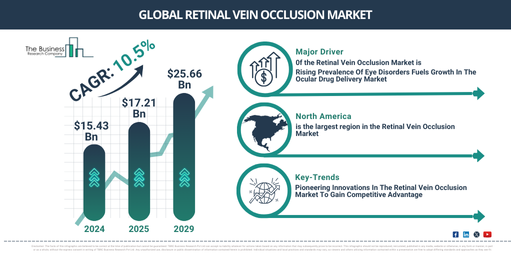
    The market size for retinal vein occlusion has seen a swift expansion in recent times. The market, which was valued at $15.43 billion in 2024, is projected to jump to $17.21 billion in 2025, recording a compound annual growth rate (CAGR) of 11.6%. The historic growth can be credited to factors such as an aging population, advancements in diagnostic imaging, progress in pharmaceuticals, and a rise in the prevalence of diabetes.

    What Is the Forecast for the Retinal Vein Occlusion Market Size Through 2029?

    The market size for retinal vein occlusion is poised for considerable expansion in the upcoming years. It is projected to surge to a valuation of $25.66 billion by 2029, growing at a compound annual growth rate (CAGR) of 10.5%. The anticipated growth during the forecast period is due largely to new treatment methodologies, the advent of telemedicine and remote supervision, custom-tailored medication, and regulatory sanctioning. The forecast period will also witness prominent trends including non-invasive therapeutic alternatives, advancements in gene therapy, patient-focused healthcare, and digital health apparatus.

    Download The Free Sample Report Here:

    https://www.thebusinessresearchcompany.com/sample.aspx?id=13058&type=smp

    What are the Key Market Players in Retinal Vein Occlusion Market and How They’re Evolving?

    Major companies operating in the retinal vein occlusion market are Pfizer Inc., Roche Holding AG, Merck & Co. Inc., Bayer AG, Novartis AG, Bristol-Myers Squibb Company, Amgen Inc., Allergan PLC, Regeneron Pharmaceuticals Inc., Biogen Idec Inc., Vertex Pharmaceuticals Inc., Bausch Health Companies Inc., Carl Zeiss AG, Santen Pharmaceutical Co. Ltd., Lumenis Ltd., Coherus Biosciences Inc., Genentech Inc., Topcon Corporation, Nidek Co. Ltd., IRIDEX Corporation, Alimera Sciences Inc., Ocular Therapeutix Inc., EyePoint Pharmaceuticals Inc., Kodiak Sciences Inc., Ellex Medical Lasers Ltd., Adverum Biotechnologies Inc., Avik Pharmaceutical Limited (Avik), Outlook Therapeutics Inc., Annexin Pharmaceuticals AB, Ingenia Therapeutics Inc.

    What Are the Primary Growth Drivers in the Retinal Vein Occlusion Market?

    The ocular medicine delivery market is anticipated to grow, fueled by the increasing prevalence of numerous eye conditions that seem to be on the rise. These involve conditions that affect eyes, vision or the structures surrounding the eyes, thereby also influencing the renal vein occlusion market. An increased incidence of renal vein occlusion prompts the need for innovative diagnostics and treatments. For instance, World Health Organization’s figures from March 2023 project that a global population of 2.2 billion will experience near- or far-sighted impairment, with cataracts (94 million) and uncorrected refractive issues (88.4 million) being the main culprits. It also cites glaucoma (7.7 million cases), corneal opacities (4.2 million cases), diabetic retinopathy (3.9 million cases) and trachoma (2 million cases) as leading causes of vision loss. Hence, the rise in the occurrence of these eye disorders will fuel the growth of the retinal vein occlusion market. A notable increase in glaucoma cases is expected to push the retinal vein occlusion market’s growth further. Characterized by high intraocular pressure that can damage the optic nerve and potentially lead to loss of vision or blindness if untreated, glaucoma’s growing incidence contributes significantly to the expansion of the retinal vein occlusion market, underlining the need for effective strategies for prevention and management. The aim of these strategies is to mitigate the risk of retinal vein occlusion and uplift the overall quality of life. BrightFocus Foundation, a United States based nonprofit organization divulged in October 2022, nearly 80 million people globally are affected by glaucoma, a figure that’s projected to escalate to over 111 million by 2040. Consequently, the glaucoma incidence surge will drive the robust growth of the optic atrophy management market.

    Request For A Customized Report:

    https://www.thebusinessresearchcompany.com/customise?id=13058&type=smp

    What Are the Leading Segments in the Global Retinal Vein Occlusion Industry?

    The retinal vein occlusion market covered in this report is segmented –

    1) By Type: Branch Retinal Artery Occlusion, Central Retinal Vein Occlusion

    2) By Condition: Non-Ischemic, Ischemic

    3) By Diagnosis: Optical Coherence Tomography, Fundoscopic Examination, Fluorescein Angiography

    4) By Treatment: Antivascular Endothelial Growth Factor, Corticosteroid Drugs, Laser Retinal Photocoagulation

    5) By End User: Hospitals And Clinics, Research And Academics Centers, Other End-Users

    Subsegments:

    1) By Branch Retinal Artery Occlusion: Non-ischemic Branch Retinal Artery Occlusion, Ischemic Branch Retinal Artery Occlusion

    2) By Central Retinal Vein Occlusion: Non-ischemic Central Retinal Vein Occlusion, Ischemic Central Retinal Vein Occlusion

    What Are the Key Market Trends in the Retinal Vein Occlusion Industry?

    Firms in the retinal vein occlusion market are adopting innovative strategies to improve patient care and treatment results, and maintain their market standing. Progress in drug discovery could broaden treatment choices for RVO, ensuring more specific and effective therapy. For example, in April 2023, Iridex Corporation, a US-based firm specializing in ophthalmic medical technology, introduced the advanced Iridex PASCAL. The ground-breaking platform incorporates a state-of-the-art technology bundle, including rapid and precise pattern scanning capabilities, endpoint management technology, a pattern scanning laser trabeculoplasty, and micropulse technology in a more streamlined, ergonomically designed integrated laser platform to deliver tailored care for patients suffering from retinal disease.

    Access The Full Report Here:

    https://www.thebusinessresearchcompany.com/report/retinal-vein-occlusion-global-market-report

    What Is the Regional Outlook for the Retinal Vein Occlusion Market?

    North America was the largest region in the retinal vein occlusion market in 2024. Asia-Pacific is expected to be the fastest-growing region in the forecast period. The regions covered in retinal vein occlusion market report are Asia-Pacific, Western Europe, Eastern Europe, North America, South America, Middle East and Africa.

    Purchase The Full Report Today:

    https://www.thebusinessresearchcompany.com/purchaseoptions.aspx?id=13058

    This Report Delivers Insight On:

    1. How big is the retinal vein occlusion market, and how is it changing globally?

    2. Who are the major companies in the retinal vein occlusion market, and how are they performing?

    3. What are the key opportunities and risks in the retinal vein occlusion market right now?

    4. Which products or customer segments are growing the most in the retinal vein occlusion market?

    5. What factors are helping or slowing down the growth of the retinal vein occlusion market?

    About The Business Research Company:

    With over 15000+ reports from 27 industries covering 60+ geographies, The Business Research Company has built a reputation for offering comprehensive, data-rich research and insights. Armed with 1,500,000 datasets, the optimistic contribution of in-depth secondary research, and unique insights from industry leaders, you can get the information you need to stay ahead in the game.

    Get in touch with us:

    The Business Research Company: https://www.thebusinessresearchcompany.com/

    Americas +1 310-496-7795

    Asia +44 2071930708

    Europe +44 7882 955267

    Email us at info@tbrc.info

    Follow us on:

    LinkedIn: https://in.linkedin.com/company/the-business-research-company

    YouTube: https://www.youtube.com/channel/UC24_fI0rV8cR5DxlCpgmyFQ

    Global Market Model: https://www.thebusinessresearchcompany.com/global-market-model
  • Ear Health Market Trends Report 2025 – For Business Development and Strategy Teams

    Ear Health Market Trends Report 2025 – For Business Development and Strategy Teams

    Claim your 30% discount on Global Market Reports with code ONLINE30. Limited time only.

    What Is the Forecast for the Ear Health Market Growth in 2025?

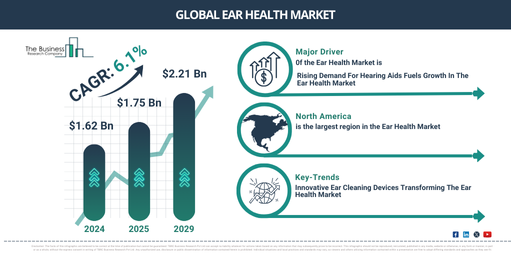
    The market size for ear health has been experiencing notable growth over the past few years. Projections show a rise from $1.62 billion in 2024 to $1.75 billion in 2025, featuring a compound annual growth rate (CAGR) of 7.6%. The past growth is linked to factors such as the increasing implementation of 5g network technology, the rise in the adoption of IoT devices, greater use of social media and e-commerce platforms, incorporation of AI in edge ecosystems, and the expansion of enterprise workloads on the cloud.

    What Is the Forecast for the Ear Health Market Size Through 2029?

    Anticipations for a substantial expansion in the ear health market size are high in the forthcoming years, with a prediction of it reaching $2.21 billion in 2029 with a 6.1% Compound Annual Growth Rate (CAGR). The prospective escalation in the forecast period can be credited to various factors such as the requirement for applications with low latency, concerns over privacy and security, the emergence of edge ai in self-governing systems, the increasing integration of edge ai in the healthcare sector, and modifications in data safety and confidentiality regulations. Throughout the forecast period, significant trends will likely encompass technological progression, the evolution of ai-powered IoT, the initiation of visual recognition technology, industry 4.0 and intelligent manufacturing, the growth of edge ai applications, the fusion of edge and cloud computing, decentralized ai structures, and the utilization of edge ai in edge-to-cloud orchestration.

    Download The Free Sample Report Here:

    https://www.thebusinessresearchcompany.com/sample.aspx?id=13642&type=smp

    What are the Key Market Players in Ear Health Market and How They’re Evolving?

    Major companies operating in the ear health market report are Pfizer Inc., Johnson & Johnson Private Limited, Procter & Gamble, Bayer AG, Novartis AG, GlaxoSmithKline PLC, Medtronic PLC, Siemens Healthineers, Siemens Healthineers, Stryker Corporation, Reckitt Benckiser Group PLC, DAIICHI SANKYO COMPANY LIMITED, Olympus Corp., Sonova Holdings AG, William Demant Holdings A/S, Apotex Inc., GN Store Nord A/S, Amplifon S.p.A., Starkey Hearing Technologies, Karl Storz GMBH & co. KG, Cochlear Limited, Prestige Consumer Healthcare Inc., Oticon A/S, Miracle-Ear Inc., Resound, Widex A/S, Audika Groupe SA, Oscar Remedies Pvt Ltd

    What Are the Primary Growth Drivers in the Ear Health Market?

    The ear health market is projected to grow due to the rise in demand for hearing aids. Hearing aids, small electronic devices that amplify sound, are essential for individuals with hearing loss. This surge in demand can be attributed to factors such as an aging population, enhanced awareness about hearing health, and the innovation in hearing aid technology, which makes such devices more user-friendly and efficient. Hearing aids are critical for improving the overall wellness and lifestyle of those suffering from hearing impairment. For example, the European Hearing Instrument Manufacturers Association (EHIMA), a trade association in Belgium, reported in July 2023 that there was a 4.7% rise in worldwide hearing aid sales in 2023. The total number of units sold escalated to 20.25 million in 2022 from 19.34 million units in 2021. As such, the growing demand for hearing aids is fueling the expansion of the ear health market.

    Request For A Customized Report:

    https://www.thebusinessresearchcompany.com/customise?id=13642&type=smp

    What Are the Leading Segments in the Global Ear Health Industry?

    The ear health market covered in this report is segmented –

    1) By Product: Ear Health Devices, Diagnostic Devices, Tinnitus And Ear Impairment Care Supplements, Ear Infection Treatment Medication

    2) By Application: Households, Hospitals And Clinics, Other Applications

    3) By Distribution Channel: Convenience Stores, Pharmacy Stores, Hyper markets And Super markets, Online Stores

    Subsegments:

    1) By Ear Health Devices: Hearing Aids, Ear Wax Removal Devices, Ear Plugs And Noise-Canceling Devices

    2) By Diagnostic Devices: Otoscopes, Audiometers, Tympanometers

    3) By Tinnitus And Ear Impairment Care Supplements: Herbal Supplements, Vitamins And Minerals, Homeopathic Remedies

    4) By Ear Infection Treatment Medication: Antibiotics, Antifungal Medications, Pain Relievers And Anti-inflammatory Drugs

    What Are the Key Market Trends in the Ear Health Industry?

    Leading firms in the ear health sector are innovating with new products like ear cleaning devices to maintain a competitive advantage. These ear cleaning devices, designed for earwax removal and ear care, have turned into a major focus. One example is SafKan Inc., which, in May 2022, unveiled their OtoSet Ear Cleaning Device, an automated solution that has been cleared by the FDA for the management of excessive earwax. The device operates on a swift cleaning cycle that uses liquid flow and ongoing micro suction to breakdown earwax, delivering a straightforward, risk-free, and clean procedure. This two-front approach improves the potency and productivity of ear cleaning, offering a well-rounded solution for the control of earwax accumulation. The OtoSet device, by providing improved hearing quality, clinical validation, and automation, is designed to solve the widespread problem of earwax impaction and decrease referrals to specialists, thereby making wax management readily available at the first point of care.

    Access The Full Report Here:

    https://www.thebusinessresearchcompany.com/report/ear-health-global-market-report

    What Is the Regional Outlook for the Ear Health Market?

    North America was the largest region in the ear health market in 2024 Asia-Pacific is expected to be the fastest-growing region in the forecast period. The regions covered in the ear health market report are Asia-Pacific, Western Europe, Eastern Europe, North America, South America, Middle East, Africa.

    Purchase The Full Report Today:

    https://www.thebusinessresearchcompany.com/purchaseoptions.aspx?id=13642

    This Report Delivers Insight On:

    1. How big is the ear health market, and how is it changing globally?

    2. Who are the major companies in the ear health market, and how are they performing?

    3. What are the key opportunities and risks in the ear health market right now?

    4. Which products or customer segments are growing the most in the ear health market?

    5. What factors are helping or slowing down the growth of the ear health market?

    About The Business Research Company:

    With over 15000+ reports from 27 industries covering 60+ geographies, The Business Research Company has built a reputation for offering comprehensive, data-rich research and insights. Armed with 1,500,000 datasets, the optimistic contribution of in-depth secondary research, and unique insights from industry leaders, you can get the information you need to stay ahead in the game.

    Get in touch with us:

    The Business Research Company: https://www.thebusinessresearchcompany.com/

    Americas +1 310-496-7795

    Asia +44 2071930708

    Europe +44 7882 955267

    Email us at info@tbrc.info

    Follow us on:

    LinkedIn: https://in.linkedin.com/company/the-business-research-company

    YouTube: https://www.youtube.com/channel/UC24_fI0rV8cR5DxlCpgmyFQ

    Global Market Model: https://www.thebusinessresearchcompany.com/global-market-model
  • Cell Lysis And Fractionation Industry Growth Expected to Reach $4.89 Billion by 2029 at a CAGR of 7% | Segmentation and Growth Opportunities

    Cell Lysis And Fractionation Industry Growth Expected to Reach $4.89 Billion by 2029 at a CAGR of 7% | Segmentation and Growth Opportunities

    Claim your 30% discount on Global Market Reports with code ONLINE30. Limited time only.

    What Is the Forecast for the Cell Lysis And Fractionation Market Growth in 2025?

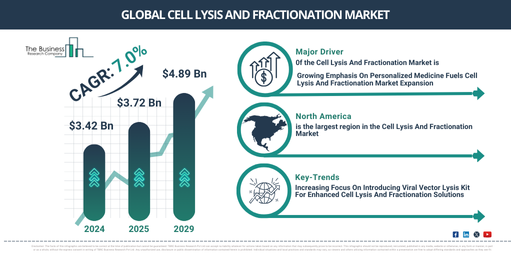
    The market size of cell lysis and fractionation has seen a robust growth in the last few years. Projected to increase from $3.42 billion in 2024 to $3.72 billion in 2025, the market will experience a compound annual growth rate (CAGR) of 8.8%. The historical growth is linked to factors such as heightened investment in life science research, a growing emphasis on personalized medicine, a high incidence of diseases, advancements in cell lysis and fractionation technologies, as well as an increased demand for both biopharmaceuticals and biotechnology products.

    What Is the Forecast for the Cell Lysis And Fractionation Market Size Through 2029?

    The market for cell lysis and fractionation is anticipated to experience robust growth in the coming years, with its market size estimated to reach $4.89 billion in 2029, expanding at a compound annual growth rate (CAGR) of 7.0%. This growth during the forecast period is ascribed to factors like the rising emphasis on personalized medicine, increased government backing for research, a strong demand for effective cell lysis and fractionation techniques, advancements in the realm of genomics and proteomics, and the increasing incidence of chronic and infectious diseases. Trends expected to shape the industry’s forecast period include sustained growth in the utilization of personalized medicine methodologies, growing incorporation of automation and robotics in lysis and fractionation procedures, widening of applications in clinical diagnostics and drug discovery, progress in microfluidics and lab-on-chip technologies for cell examination, and an increased focus on point-of-care and decentralized testing options.

    Download The Free Sample Report Here:

    https://www.thebusinessresearchcompany.com/sample.aspx?id=14064&type=smp

    What are the Key Market Players in Cell Lysis And Fractionation Market and How They’re Evolving?

    Major companies operating in the cell lysis and fractionation market are Hoffmann-La Roche Ltd, Merck & Co. Inc., Thermo Fisher Scientific Inc., Danaher Corporation, Becton, Dickinson and Company, Lonza Group AG, Illumina Inc., Beckman Coulter Inc., PerkinElmer Inc., IDEX Corporation, Bio-Rad Laboratories Inc., QIAGEN NV, Eppendorf AG, Miltenyi Biotec B.V. & Co. KG, Promega Corporation, Takara Bio Inc., Abcam plc, Cell Signaling Technology Inc., BioVision Inc., Diagenode LLC, Claremont BioSolutions LLC, Norgen Biotek Corp., Qsonica LLC, Labfreez Instruments Group Co. Ltd.

    What Are the Primary Growth Drivers in the Cell Lysis And Fractionation Market?

    The increasing emphasis on personalized medicine is anticipated to drive the expansion of the cell lysis and fractionation markets in the future. Personalized medicine, a budding field in medical practice, utilizes a person’s genetic background for disease detection and treatment. This entails adapting healthcare decisions and treatments specifically to each patient, primarily based on their genetic composition. Cell lysis and fractionation are instrumental in precision medicine by facilitating the separation and examination of individual subcellular components from patient specimens, such as proteins, organelles, and nucleic acids. This allows scientists and healthcare experts to explore the molecular mechanisms that trigger disease and develop tailored treatments corresponding to each patient’s unique molecular characteristics. For example, as per the Personalized Medicine Coalition (PMC) – a U.S.-based association advocating for the comprehension and embracement of personalized medicine, over 75,000 genetic testing products and 300 personalized medicines specifically designed for individuals with diverse cancer types, rare genetic diseases, and a variety of chronic and infectious diseases, will be available on the market as of October 2022. Thus, the escalation in the emphasis on personalized medicine is fueling the expansion of the cell lysis and fractionation markets.

    Request For A Customized Report:

    https://www.thebusinessresearchcompany.com/customise?id=14064&type=smp

    What Are the Leading Segments in the Global Cell Lysis And Fractionation Industry?

    The cell lysis and fractionation market covered in this report is segmented –

    1) By Type: Mammalian Cells, Microbial Cells

    2) By Application: Nucleic Acid Purification And Isolation, Protein Purification And Isolation

    3) By End-User: Research Laboratories And Institutes, Biopharmaceutical, Biotechnology Companies

    Subsegments:

    1) By Mammalian Cells: Adherent Mammalian Cells, Suspension Mammalian Cells, Primary Cells, Cell Lines

    2) By Microbial Cells: Bacterial Cells, Yeast Cells, Fungal Cells, Algal Cells

    What Are the Key Market Trends in the Cell Lysis And Fractionation Industry?

    The primary businesses within the cell lysis and fractionation market are innovating and presenting state-of-the-art solutions like CGT (cell and gene therapy) viral vector lysis kits, in an effort to outdo competitors. These kits provide a simpler AAV (Adeno-associated virus) lysis process that enhances standard operating procedures, safety measures, and quality checks while harmonizing bioprocessing operations. For example, in July 2023, QIAGEN, a leading sample and assay technology firm in Germany, introduced a new CGT Viral Vector Lysis Kit. This innovation enables the measurement of virus titers for multiple serotypes through a precise and consistent process utilizing cell lysates. The recent CGT viral vector lysis kit supplements QIAGEN’s swiftly growing digital PCR range for the biopharma sector. This range already includes three QIAcuity Residual DNA Quantification Kits that tests for the presence of host cell DNA residue and ten QIAcuity Cell and Gene Therapy (CGT) dPCR Assays, utilized for adeno-associated virus (AAV) titer quantification.

    Access The Full Report Here:

    https://www.thebusinessresearchcompany.com/report/cell-lysis-and-fractionation-global-market-report

    What Is the Regional Outlook for the Cell Lysis And Fractionation Market?

    North America was the largest region in the cell lysis and fractionation market in 2024. The regions covered in the cell lysis and fractionation market report are Asia-Pacific, Western Europe, Eastern Europe, North America, South America, Middle East, Africa.

    Purchase The Full Report Today:

    https://www.thebusinessresearchcompany.com/purchaseoptions.aspx?id=14064

    This Report Delivers Insight On:

    1. How big is the cell lysis and fractionation market, and how is it changing globally?

    2. Who are the major companies in the cell lysis and fractionation market, and how are they performing?

    3. What are the key opportunities and risks in the cell lysis and fractionation market right now?

    4. Which products or customer segments are growing the most in the cell lysis and fractionation market?

    5. What factors are helping or slowing down the growth of the cell lysis and fractionation market?

    About The Business Research Company:

    With over 15000+ reports from 27 industries covering 60+ geographies, The Business Research Company has built a reputation for offering comprehensive, data-rich research and insights. Armed with 1,500,000 datasets, the optimistic contribution of in-depth secondary research, and unique insights from industry leaders, you can get the information you need to stay ahead in the game.

    Get in touch with us:

    The Business Research Company: https://www.thebusinessresearchcompany.com/

    Americas +1 310-496-7795

    Asia +44 2071930708

    Europe +44 7882 955267

    Email us at info@tbrc.info

    Follow us on:

    LinkedIn: https://in.linkedin.com/company/the-business-research-company

    YouTube: https://www.youtube.com/channel/UC24_fI0rV8cR5DxlCpgmyFQ

    Global Market Model: https://www.thebusinessresearchcompany.com/global-market-model