Category: HealthcareServices

  • Physical Therapy Market to Reach $37.54 Billion by 2029 | Key Drivers and Future Outlook

    Physical Therapy Market to Reach $37.54 Billion by 2029 | Key Drivers and Future Outlook

    Claim your 30% discount on Global Market Reports with code ONLINE30. Limited time only.

    What Is the Growth Rate of the Physical Therapy Market?

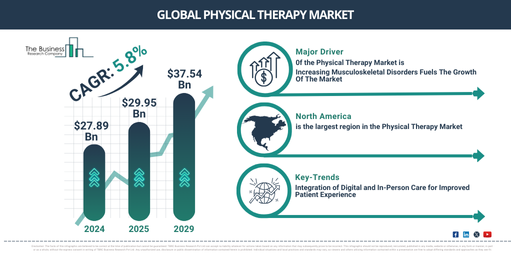
    The size of the physical therapy market has seen robust growth in recent past. The projections suggest an increase from $27.89 billion in 2024 to $29.95 billion in 2025, with a Compound Annual Growth Rate (CAGR) of 7.4%. Factors contributing to the growth during the historic period include an aging population, the rise in chronic conditions, occurrence of occupational and sports injuries, emphasis on preventative healthcare, and extended scope in healthcare settings.

    What Growth Rate Is Forecasted for the Physical Therapy Market by 2029?

    The market size of physical therapy is anticipated to experience robust expansion in the forthcoming years, expanding to a value of $37.54 billion in 2029 with a compound annual growth rate (CAGR) of 5.8%. This growth during the predicted time scale can be credited to the adoption of telehealth services, the growing understanding of physical activity benefits, strategies centered on aging-on-site, personalized therapy plans, and interdisciplinary healthcare methodologies. The forecasted period is expected to be defined by major trends such as technological evolution in rehabilitation, developments in rehabilitative technologies, digitized health amalgamation, as well as tech-facilitated rehabilitation in the areas of orthopedics and sports.

    Download The Free Sample Report Here:

    https://www.thebusinessresearchcompany.com/sample.aspx?id=13512&type=smp

    Which Key Companies Are Shaping the Future of the Physical Therapy Market?

    Major companies operating in the physical therapy market report are HCA Healthcare, Geisinger Health System (GHS), Select Medical Corporation, Kindred Healthcare Holdings LLC, Genesis HealthCare, Mercy Aged and Community Care Ltd., Rush-Copley Medical Center, Savaseniorcare LLC, DJO LLC, Concentra Inc., Professional Physical Therapy, Benchmark Physical Therapy, ATI Physical Therapy, US Physical Therapy Inc., PIVOT Physical Therapy, Athletico Physical Therapy, ProHealth Limited, NovaCare Rehabilitation, OrthoCarolina, Performance Health Supply Inc., Dynatronics Corporation, Enraf-Nonius B.V., Rehab Alternatives PLLC, BTL Industries, EMS Physio Ltd., Knight Health Holdings LLC, ProActive Physical Therapy, ITO Co. Ltd., AmeriCare Physical Therapy, Therapydia Inc.

    Which Factors Are Driving Demand in the Physical Therapy Industry?

    The escalating incidence of musculoskeletal disorders (MSDs) is set to boost the physical therapy market’s expansion. MSDs, a set of medical ailments affecting the muscles, bones, tendons, ligaments, and other components of the musculoskeletal system, necessitate physical therapy for prevention, treatment, and management. Physical therapy provides education, ergonomic training, workplace safety alterations, on-site treatment, and return-to-work programs. For example, the World Health Organization reported in July 2022 that nearly 1.71 billion people globally are afflicted with musculoskeletal conditions. A survey released in PubMed Central (PMC) in March 2022, which analyzed data from 282 students on digital device usage, physical activity, sitting duration, walking frequency, and ergonomics, revealed increased device usage and sedentary behavior amid decreased physical activity and walking during the pandemic. The survey reported that a significant 75.9% experienced musculoskeletal pain, concentrated mainly in the shoulders and neck (65%). Moreover, 46% of students using laptops or phones for remote work suffered from text neck syndrome. Thus, the surging prevalence of musculoskeletal disorders is anticipated to spur the physical therapy market’s growth. The surge in the physical therapy market is being fueled by a steadily aging population. This segment is defined by a demographic trend of an increasing number of elderly individuals in a population or society. Physical therapy is a critical healthcare strategy for the aging population to address age-related health issues, augment mobility, relieve pain, and enhance overall functional autonomy. In October 2022, the World Health Organization (WHO) projected the global population of individuals aged 60 and above to double by 2050 to reach 2.1 billion, highlighting the rapid aging trend. Hence, the swelling aging population is propelling the growth of the physical therapy market.

    Request For A Customized Report:

    https://www.thebusinessresearchcompany.com/customise?id=13512&type=smp

    How Is the Physical Therapy Market Segmented by Several Divisions?

    The physical therapy market covered in this report is segmented –

    1) By Type: Orthopedic Physical Therapy, Geriatric Physical Therapy, Neurological Physical Therapy, Cardiopulmonary and Pulmonary Physical Therapy, Other Types

    2) By Age Group: Pediatrics, Adults, Elderly

    3) By End-Use: Hospitals And Clinics, Community Centers, Sports Centers, Convalescent Homes, Schools And Sports Academies, Other End-Uses

    Subsegments:

    1) By Orthopedic Physical Therapy: Post-Surgical Rehabilitation, Sports Injury Rehabilitation, Joint And Muscle Pain Management, Fracture And Trauma Recovery

    2) By Geriatric Physical Therapy: Fall Prevention And Balance Training, Arthritis And Osteoporosis Management, Mobility And Strength Training, Neuromuscular Disorders Treatment

    3) By Neurological Physical Therapy: Stroke Rehabilitation, Parkinson’s Disease Therapy, Spinal Cord Injury Rehabilitation, Multiple Sclerosis Therapy, Traumatic Brain Injury (TBI) Recovery

    4) By Cardiopulmonary And Pulmonary Physical Therapy: Cardiovascular Rehabilitation, Pulmonary Rehabilitation (COPD, Asthma), Post-Heart Surgery Rehabilitation, Breathing Exercises And Techniques

    5) By Other Types: Pediatric Physical Therapy, Women’s Health Physical Therapy, Vestibular Therapy, Occupational Therapy And Pain Management

    What are the Emerging Market Trends Driving the Growth of the Physical Therapy Industry?

    Key players in the physical therapy sector are amalgamating digital technology with in-person care for an enhanced patient experience. This integrated approach allows patients to access tailored, tactile treatment while leveraging the comfort and reinforcement of digital resources. For instance, Hinge Health, a company in the US offering physical therapy services, initiated a home visit physical therapy service in January 2023, initially in Chicago with an ambition for nationwide expansion. This innovative service strives to provide face-to-face physical therapy, augmenting Hinge Health’s prevailing digital care services, and allows patients to undergo therapy in their own homes or offices. The service offers flexible scheduling, including appointments for the following day and weekends. Each therapy session typically runs for around 45 minutes and incorporates a meticulous evaluation of the patient’s physical abilities and domestic setting. This endeavor is intended to boost the patient experience by combining digital and in-person care, tackling obstacles like transport and technology availability, and ultimately promoting health equality.

    Access The Full Report Here:

    https://www.thebusinessresearchcompany.com/report/physical-therapy-global-market-report

    Which Regions Are Driving Growth in the Physical Therapy Market?

    North America was the largest region in the physical therapy market in 2024. Asia-Pacific is expected to be the fastest-growing region in the forecast period. The regions covered in the physical therapy market report are Asia-Pacific, Western Europe, Eastern Europe, North America, South America, Middle East, Africa.

    Purchase The Full Report Today:

    https://www.thebusinessresearchcompany.com/purchaseoptions.aspx?id=13512

    This Report Delivers Insight On:

    1. How big is the physical therapy market, and how is it changing globally?

    2. Who are the major companies in the physical therapy market, and how are they performing?

    3. What are the key opportunities and risks in the physical therapy market right now?

    4. Which products or customer segments are growing the most in the physical therapy market?

    5. What factors are helping or slowing down the growth of the physical therapy market?

    About The Business Research Company:

    With over 15000+ reports from 27 industries covering 60+ geographies, The Business Research Company has built a reputation for offering comprehensive, data-rich research and insights. Armed with 1,500,000 datasets, the optimistic contribution of in-depth secondary research, and unique insights from industry leaders, you can get the information you need to stay ahead in the game.

    Get in touch with us:

    The Business Research Company: https://www.thebusinessresearchcompany.com/

    Americas +1 310-496-7795

    Asia +44 2071930708

    Europe +44 7882 955267

    Email us at info@tbrc.info

    Follow us on:

    LinkedIn: https://in.linkedin.com/company/the-business-research-company

    YouTube: https://www.youtube.com/channel/UC24_fI0rV8cR5DxlCpgmyFQ

    Global Market Model: https://www.thebusinessresearchcompany.com/global-market-model
  • Basal Cell Carcinoma Treatment Market Size to Exceed $11.88 Billion by 2029 | Growth and Industry Trends

    Basal Cell Carcinoma Treatment Market Size to Exceed $11.88 Billion by 2029 | Growth and Industry Trends

    Claim your 30% discount on Global Market Reports with code ONLINE30. Limited time only.

    How Has the Basal Cell Carcinoma Treatment Market Grown from 2024 to 2025?

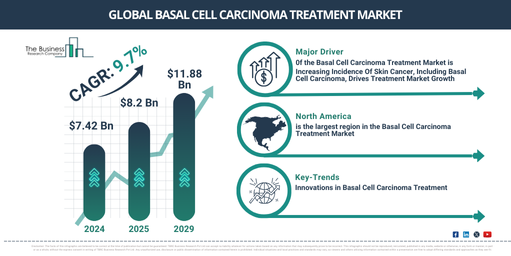
    In recent times, the market size for treating basal cell carcinoma has experienced swift growth. It is projected to increase from $7.42 billion in 2024 to $8.2 billion in 2025, at a compound annual growth rate (CAGR) of 10.6%. Factors contributing to this growth during the historical period include the rising incidence of skin cancer, increased demand for laser therapy and effective, minimally invasive treatments, as well as heightened awareness about basal cell carcinoma therapy.

    What Growth Rate Is Anticipated for the Basal Cell Carcinoma Treatment Market in the Coming Years?

    The market for treating basal cell carcinoma is poised for significant expansion in the coming years, with projections putting the market size at $11.88 billion by 2029, reflecting a compound annual growth rate (CAGR) of 9.7%. Factors contributing to this anticipated growth include an increased emphasis on life quality, an aging demographic, intensifying endeavours in immunotherapy research and development, along with governmental initiatives. Over the forecast period, the market is set to be shaped by ongoing advancements in treatment approaches, early diagnostic technologies, targeted therapy innovations, and the incorporation of telemedicine.

    Download The Free Sample Report Here:

    https://www.thebusinessresearchcompany.com/sample.aspx?id=12900&type=smp

    Who Are the Leading Companies in the Basal Cell Carcinoma Treatment Market?

    Major companies operating in the basal cell carcinoma treatment market are Pfizer Inc., F. Hoffmann-La Roche Ltd., Merck & Co. Inc., AbbVie Inc., Bayer AG, Novartis AG, Sanofi SA, Fresenius Kabi AG, AstraZeneca PLC, GlaxoSmithKline PLC, Eli Lilly and Company, Gilead Sciences Inc., Merck KGaA, Teva Pharmaceutical Industries Ltd., Regeneron Pharmaceuticals Inc., Bausch Health Companies Inc., Sun Pharmaceutical Industries Ltd., Perrigo Company PLC, Incyte Corporation, Ono Pharma UK Ltd., Cipla Inc., Lupin Limited, Mallinckrodt Pharmaceuticals, LEO Pharma A/S, BeiGene Ltd., Taro Pharmaceutical Industries Ltd., Blueprint Medicines Corporation, Array BioPharma Inc., Genentech USA Inc., Palvella Therapeutics LLC.

    What Are the Key Drivers of the Basal Cell Carcinoma Treatment Market?

    The escalating occurrence of skin cancer, particularly basal cell carcinoma, is foreseen to drive the growth of the market for its treatment. Skin cancer results from the uncontrolled growth of abnormal cells in the skin, typically caused by exposure to ultraviolet (UV) radiation from the sun or tanning beds. As the prevalence of skin cancer, most notably basal cell carcinoma, escalates, it stimulates the need for specific and targeted treatment options. This, in turn, promotes the development and availability of effective drugs tailored to treat this specific form of cancer. For example, in January 2023, about 5.4 million basal and squamous cell skin cancer incidences were reported annually in the US, affecting approximately 3.3 million people, according to the American Cancer Society, Inc., a US-based research entity. Further, eight out of ten cases account for basal cell carcinoma. Hence, the surging prevalence of skin cancer, including basal cell carcinoma, will propel the treatment market. Meanwhile, the basal cell carcinoma treatment market is expected to be advanced by the growing aging population worldwide. The geriatric population, typically individuals aged 65 or above, is more prone to basal cell carcinoma (BCC) due to their skin having been exposed to the sun extensively over time, a significant risk factor for BCC. This leads to a higher demand for diagnosis and treatment within this demographic. For instance, the United Nations Department of Economic and Social Affairs, a US-based organization focusing on global economic, social, and environmental issues with a keen emphasis on sustainable development, projected in July 2022 that the proportion of the world’s population aged 65 and above is expected to escalate from 10% in 2022 to 16% by 2050. Therefore, the increasing aging population worldwide is contributing to the growth of the basal cell carcinoma treatment market.

    Request For A Customized Report:

    https://www.thebusinessresearchcompany.com/customise?id=12900&type=smp

    What Are the Key Market Segments in the Basal Cell Carcinoma Treatment Industry?

    The basal cell carcinoma treatment market covered in this report is segmented –

    1) By Treatment: Surgery, Medication, Other Treatments

    2) By Route Of Administration: Oral, Parenteral, Other Route Of Administrations

    3) By Distribution Channel: Hospital Pharmacy, Online Pharmacy, Retail Pharmacy

    4) By End-User: Hospitals, Specialty Clinics, Other End-Users

    Subsegments:

    1) By Surgery: Mohs Micrographic Surgery, Excisional Surgery, Curettage And Electrodessication, Cryosurgery

    2) By Medication: Topical Chemotherapy, Immunotherapy, Systemic Chemotherapy

    3) By Other Treatments: Radiation Therapy, Photodynamic Therapy, Laser Therapy

    What Are the Latest Trends in the Basal Cell Carcinoma Treatment Market?

    Leading firms in the market for basal cell carcinoma treatment are working to pioneer new technologies like lyophilization, or freeze-drying technology, aiming to boost the efficiency and longevity of topical treatments and enhance the precision of active ingredient delivery to cancer cells. The technique of lyophilization involves freezing a substance before placing it under a vacuum, which causes the water to sublimate, leaving the material in a stable, dried form. For example, Accord Healthcare, Inc., an American pharmaceutical firm, introduced Carmustine in August 2022. This generic chemotherapy drug, given FDA approval, is used to treat specific brain tumors and blood cancers. It’s prescribed for different malignant brain tumors such as glioblastomas, astrocytomas, and medulloblastomas as well as relapsed or refractory Hodgkin’s lymphomas and multiple myelomas among other types of blood cancer.

    Access The Full Report Here:

    https://www.thebusinessresearchcompany.com/report/basal-cell-carcinoma-treatment-global-market-report

    What Are the Key Regional Markets in the Basal Cell Carcinoma Treatment Industry?

    North America was the largest region in the basal cell carcinoma treatment market in 2024. Asia-Pacific is expected to be the fastest-growing region in the forecast period. The regions covered in basal cell carcinoma treatment market report are Asia-Pacific, Western Europe, Eastern Europe, North America, South America, Middle East and Africa.

    Purchase The Full Report Today:

    https://www.thebusinessresearchcompany.com/purchaseoptions.aspx?id=12900

    This Report Delivers Insight On:

    1. How big is the basal cell carcinoma treatment market, and how is it changing globally?

    2. Who are the major companies in the basal cell carcinoma treatment market, and how are they performing?

    3. What are the key opportunities and risks in the basal cell carcinoma treatment market right now?

    4. Which products or customer segments are growing the most in the basal cell carcinoma treatment market?

    5. What factors are helping or slowing down the growth of the basal cell carcinoma treatment market?

    About The Business Research Company:

    With over 15000+ reports from 27 industries covering 60+ geographies, The Business Research Company has built a reputation for offering comprehensive, data-rich research and insights. Armed with 1,500,000 datasets, the optimistic contribution of in-depth secondary research, and unique insights from industry leaders, you can get the information you need to stay ahead in the game.

    Get in touch with us:

    The Business Research Company: https://www.thebusinessresearchcompany.com/

    Americas +1 310-496-7795

    Asia +44 2071930708

    Europe +44 7882 955267

    Email us at info@tbrc.info

    Follow us on:

    LinkedIn: https://in.linkedin.com/company/the-business-research-company

    YouTube: https://www.youtube.com/channel/UC24_fI0rV8cR5DxlCpgmyFQ

    Global Market Model: https://www.thebusinessresearchcompany.com/global-market-model
  • Pheochromocytoma Market Size to Exceed $3.74 Billion by 2029 | Growth and Industry Trends

    Pheochromocytoma Market Size to Exceed $3.74 Billion by 2029 | Growth and Industry Trends

    Claim your 30% discount on Global Market Reports with code ONLINE30. Limited time only.

    How Has the Pheochromocytoma Market Grown from 2024 to 2025?

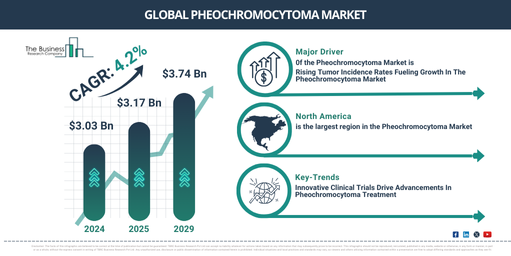
    There has been a consistent expansion in the size of the pheochromocytoma market in the past few years. It’s expected to swell from $3.03 billion in 2024 up to $3.17 billion in 2025, showing a compound annual growth rate (CAGR) of 4.7%. Several factors have contributed to this growth observed in the historic span, which include an increase in healthcare spending, enhanced diagnosis and awareness, advances in genetic research, along with government initiatives.

    What Growth Rate Is Anticipated for the Pheochromocytoma Market in the Coming Years?

    Expectations are for the pheochromocytoma market size to experience consistent growth in the forthcoming years, projecting a rise to $3.74 billion by 2029 with a compound annual growth rate (CAGR) of 4.2%. Factors contributing to the growth in the forecast period include the necessity for combination therapies, investments directed towards pheochromocytoma research and development, a high demand for minimally invasive procedures for pheochromocytoma, and a notable boost in research initiatives for rare diseases. The future market trends to watch out for involve an increase in the number of drugs undergoing clinical trials, breakthroughs in diagnostic and treatment methodologies, fostering expertise in gene therapy, and advancements made in medical imaging.

    Download The Free Sample Report Here:

    https://www.thebusinessresearchcompany.com/sample.aspx?id=12909&type=smp

    Who Are the Leading Companies in the Pheochromocytoma Market?

    Major companies operating in the pheochromocytoma market are Pfizer Inc., AbbVie Inc., Novartis AG, Sanofi S.A., Bristol-Myers Squibb Company, AstraZeneca PLC, Abbott Laboratories, Takeda Pharmaceutical Company Limited, Merck KGaA, Baxter International Inc., Teva Pharmaceutical Company Limited, Mylan N.V., Bausch Health Companies Inc., Daiichi Sankyo Company Limited, Eisai Co. Ltd., Apotex Inc., Sun Pharmaceutical Industries Ltd., Hikma Pharmaceuticals PLC, Endo International PLC, Exelixis Inc., Lupin Limited, Lantheus Holdings Inc., Curium Pharma, ANI Pharmaceuticals Inc., Jubilant Cadista Pharmaceuticals Inc., WellSpring Pharmaceutical Corporation, HRA Pharma SE.

    What Are the Key Drivers of the Pheochromocytoma Market?

    The escalation in tumor incidence rates is likely to stimulate the pheochromocytoma market’s ascension. Tumors, encompassing both benign (non-cancerous) and malignant (cancerous) varieties, are anomalous cell proliferations. The surge in tumor and cancer incidences calls for enhanced medical cognizance, precise diagnosing, and customised treatment protocols to effectively handle desmoid pheochromocytoma. For example, the American Cancer Society, a non-profit cancer advocacy organization based in the US, reported in January 2023 that the count of cancer cases had risen to 1,958,310 in 2023, marking a 3.16% growth from 1,898,160 in 2021. Therefore, the growth of the pheochromocytoma market will be driven by the escalating tumor incidence rates. Pheochromocytoma Market Driver: Escalation in Neuroendocrine Diseases Incidence Fuelling Pheochromocytoma Market Expansion

    Request For A Customized Report:

    https://www.thebusinessresearchcompany.com/customise?id=12909&type=smp

    What Are the Key Market Segments in the Pheochromocytoma Industry?

    The pheochromocytoma market covered in this report is segmented –

    1) By Type: Adrenal Pheochromocytoma, Extra-Adrenal Pheochromocytoma

    2) By Treatment: Medication, Surgery, Radionuclide Treatment, Other Treatments

    3) By Diagnosis: Laboratory Tests, Imaging Tests, Genetic Testing

    4) By End Users: Hospitals, Clinics, Research And Academic Institutes, Other End Users

    Subsegments:

    1) By Adrenal Pheochromocytoma: Unilateral Adrenal Pheochromocytoma, Bilateral Adrenal Pheochromocytoma

    2) By Extra-Adrenal Pheochromocytoma: Paraganglioma, Paraganglioma, Paraganglioma

    What Are the Latest Trends in the Pheochromocytoma Market?

    Leading entities within the pheochromocytoma market are undertaking clinical trials in order to explore new treatment methods, procedures and medications tailored for pheochromocytoma. These trials are facilitating the emergence of more effective, customized treatments which are enhancing patient outcomes. For example, in August 2022, leading Swiss pharmaceutical company, Novartis AG, initiated Phase 2 of a multicenter open-label study. This study aims to evaluate the safety and dosimetry of Lutathera in adolescents aged 12 to less than 18, who have somatostatin receptor-positive gastroenteropancreatic neuroendocrine tumors (GEP-NETs), as well as pheochromocytoma and paragangliomas (PPGL). This multicenter, open-label, single-arm research, includes an exploratory PPGL cohort with the objective of enlisting as many adolescents with PPGL as attainable.

    Access The Full Report Here:

    https://www.thebusinessresearchcompany.com/report/pheochromocytoma-global-market-report

    What Are the Key Regional Markets in the Pheochromocytoma Industry?

    North America was the largest region in the pheochromocytoma market in 2024. Asia-Pacific is expected to be the fastest-growing region in the forecast period. The regions covered in pheochromocytoma market report are Asia-Pacific, Western Europe, Eastern Europe, North America, South America, Middle East and Africa.

    Purchase The Full Report Today:

    https://www.thebusinessresearchcompany.com/purchaseoptions.aspx?id=12909

    This Report Delivers Insight On:

    1. How big is the pheochromocytoma market, and how is it changing globally?

    2. Who are the major companies in the pheochromocytoma market, and how are they performing?

    3. What are the key opportunities and risks in the pheochromocytoma market right now?

    4. Which products or customer segments are growing the most in the pheochromocytoma market?

    5. What factors are helping or slowing down the growth of the pheochromocytoma market?

    About The Business Research Company:

    With over 15000+ reports from 27 industries covering 60+ geographies, The Business Research Company has built a reputation for offering comprehensive, data-rich research and insights. Armed with 1,500,000 datasets, the optimistic contribution of in-depth secondary research, and unique insights from industry leaders, you can get the information you need to stay ahead in the game.

    Get in touch with us:

    The Business Research Company: https://www.thebusinessresearchcompany.com/

    Americas +1 310-496-7795

    Asia +44 2071930708

    Europe +44 7882 955267

    Email us at info@tbrc.info

    Follow us on:

    LinkedIn: https://in.linkedin.com/company/the-business-research-company

    YouTube: https://www.youtube.com/channel/UC24_fI0rV8cR5DxlCpgmyFQ

    Global Market Model: https://www.thebusinessresearchcompany.com/global-market-model
  • Bacterial Conjunctivitis Industry Insights 2025 – Market Forecast for Executives and Planners

    Bacterial Conjunctivitis Industry Insights 2025 – Market Forecast for Executives and Planners

    Claim your 30% discount on Global Market Reports with code ONLINE30. Limited time only.

    How Has the Bacterial Conjunctivitis Market Size Changed, over the years?

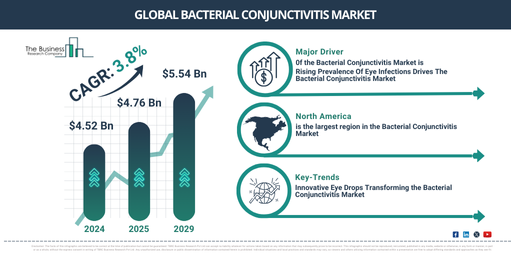
    Recent years have seen robust growth in the bacterial conjunctivitis market. The market, valued at $4.52 billion in 2024, is projected to expand to $4.76 billion in 2025, reflecting a compound annual growth rate (CAGR) of 5.3%. The significant growth during the historic period can be attributed to a rise in bacterial infection rates, enhanced diagnostic abilities, patient education and awareness initiatives, strict regulatory parameters, as well as advanced training and expertise of physicians.

    How Much Will the Bacterial Conjunctivitis Market Be Worth in 2029?

    Anticipated to witness a steady surge in the coming years, the market size of bacterial conjunctivitis is projected to reach a value of $5.54 billion in 2029, exhibiting a compound annual growth rate (CAGR) of 3.8%. Factors such as population growth worldwide, increased urbanization and pollution, enhanced focus on preventive measures in eye care, global health readiness initiatives, the growth of teleophthalmology services, and research and development collaborations contribute to this projection for the forecast period. Key trends expected during this period involve advancements in drug delivery technologies, personalization of treatment plans, use of comprehensive antibiotics, the launch of supplementary therapies, and a clear focus on patient education and preventive approaches.

    Download The Free Sample Report Here:

    https://www.thebusinessresearchcompany.com/sample.aspx?id=13383&type=smp

    Which is the Largest Company in the Bacterial Conjunctivitis Market?

    Major companies operating in the bacterial conjunctivitis market report are Pfizer Inc., Johnson & Johnson, F. Hoffman La-Roche Ltd., Merck & Co. Inc., AbbVie Inc., Bayer AG, Sanofi S.A., AstraZeneca PLC, GlaxoSmithKline PLC, Eli Lilly and Company, Teva Pharmaceutical Industries Ltd., Alcon, Sun Pharmaceutical Industries Ltd., Bausch + Lomb, Dr. Reddy’s Laboratories Ltd., Aurobindo Pharma Ltd., Cipla Ltd., Hikma Pharmaceuticals, Santen Pharmaceutical Co. Ltd., Lupin Pharmaceuticals, Glenmark Pharmaceuticals Ltd., Jubilant Life Sciences Ltd., Alembic Pharmaceuticals Ltd., Macleods Pharmaceuticals Ltd., Ocular Therapeutix Inc., Aldeyra Therapeutics, Nicox SA, IACTA Pharmaceuticals Inc., Cellics Therapeutics Inc.

    What Are the Main Market Drivers in the Bacterial Conjunctivitis Industry?

    The growth of the bacterial conjunctivitis market is predicted to be fueled by the rising prevalence of eye infections. Infections in the eye occur when harmful microorganisms like bacteria, viruses, fungi, or parasites invade and multiply in the eye. Such conditions include conjunctivitis, trachoma, and keratitis. Bacterial conjunctivitis is a type of eye infection that is usually managed with prescribed medications and self-care routines such as maintaining good hygiene. For example, The BrightFocus Foundation, a nonprofit organization based in the U.S, declared that as of October 2022, globally, there are about 80 million people suffering from glaucoma. This statistic is predicted to increase to 111 million in 2040. This growing prevalence of eye infections globally is a key factor contributing to the expansion of the bacterial conjunctivitis market.

    Growth of the Bacterial Conjunctivitis Market Boosted by the Rising Geriatric Population


    Request For A Customized Report:

    https://www.thebusinessresearchcompany.com/customise?id=13383&type=smp

    How Is the Bacterial Conjunctivitis Market Segments Structured?

    The bacterial conjunctivitis market covered in this report is segmented –

    1) By Types: Hyperacute Bacterial Conjunctivitis, Acute Bacterial Conjunctivitis, Chronic Bacterial Conjunctivitis

    2) By Drug Class: Antibiotics, Fluoroquinolones, Aminoglycosides, Macrolides, Antihistamines, Corticosteroids, Other Drug Classes

    3) By Route of Administration: Oral, Topical, Other Routes Of Administrations

    4) By Distribution Channel: Hospital Pharmacy, Retail Pharmacy, Online Pharmacy, Other Distribution Channels

    Subsegments:

    1) By Hyperacute Bacterial Conjunctivitis: Gonococcal Conjunctivitis, Other Hyperacute Infections

    2) By Acute Bacterial Conjunctivitis: Staphylococcus Aureus-Induced Conjunctivitis, Streptococcus Pneumoniae-Induced Conjunctivitis, Haemophilus Influenzae-Induced Conjunctivitis

    3) By Chronic Bacterial Conjunctivitis: Chronic Staphylococcal Conjunctivitis, Chronic Chlamydia Conjunctivitis

    What Strategic Trends Are Transforming the Bacterial Conjunctivitis Market?

    Prominent businesses within the bacterial conjunctivitis market are shifting their attention towards the development of innovative eye drops, like broad-spectrum eye drops, in an attempt to enhance their earnings within the industry. These broad-spectrum medicines are engineered to deal with diverse eye infections, not excluding those instigated by various bacteria. The antibiotic component in these eye drops can effectively suppress a broad range of bacteria, as opposed to focusing on a particular type. For instance, Vigamox (moxifloxacin hydrochloride ophthalmic solution) 0.5%, a fluoroquinolone antibiotic eye drop anticipated to treat bacterial conjunctivitis, was launched in the US by Harrow Health, a pharmaceutical firm, in June 2023.

    Access The Full Report Here:

    https://www.thebusinessresearchcompany.com/report/bacterial-conjunctivitis-global-market-report

    Which Global Regions Offer the Highest Growth in the Bacterial Conjunctivitis Market?

    North America was the largest region in the bacterial conjunctivitis market in 2024. Asia-Pacific is expected to be the fastest-growing region in the forecast period. The regions covered in the bacterial conjunctivitis market report are Asia-Pacific, Western Europe, Eastern Europe, North America, South America, Middle East, Africa.

    Purchase The Full Report Today:

    https://www.thebusinessresearchcompany.com/purchaseoptions.aspx?id=13383

    This Report Delivers Insight On:

    1. How big is the bacterial conjunctivitis market, and how is it changing globally?

    2. Who are the major companies in the bacterial conjunctivitis market, and how are they performing?

    3. What are the key opportunities and risks in the bacterial conjunctivitis market right now?

    4. Which products or customer segments are growing the most in the bacterial conjunctivitis market?

    5. What factors are helping or slowing down the growth of the bacterial conjunctivitis market?

    About The Business Research Company:

    With over 15000+ reports from 27 industries covering 60+ geographies, The Business Research Company has built a reputation for offering comprehensive, data-rich research and insights. Armed with 1,500,000 datasets, the optimistic contribution of in-depth secondary research, and unique insights from industry leaders, you can get the information you need to stay ahead in the game.

    Get in touch with us:

    The Business Research Company: https://www.thebusinessresearchcompany.com/

    Americas +1 310-496-7795

    Asia +44 2071930708

    Europe +44 7882 955267

    Email us at info@tbrc.info

    Follow us on:

    LinkedIn: https://in.linkedin.com/company/the-business-research-company

    YouTube: https://www.youtube.com/channel/UC24_fI0rV8cR5DxlCpgmyFQ

    Global Market Model: https://www.thebusinessresearchcompany.com/global-market-model
  • Pharyngitis Treatment Industry Insights 2025 – Market Forecast for Executives and Planners

    Pharyngitis Treatment Industry Insights 2025 – Market Forecast for Executives and Planners

    Claim your 30% discount on Global Market Reports with code ONLINE30. Limited time only.

    How Has the Pharyngitis Treatment Market Size Changed, over the years?

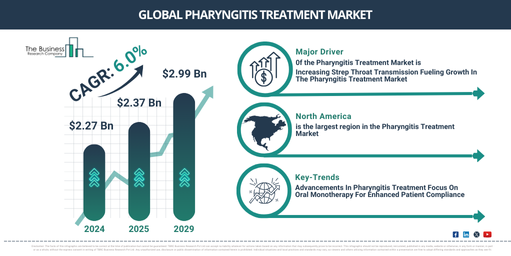
    In recent times, the market size for pharyngitis treatment has expanded continuously. It is projected to escalate from $2.27 billion in 2024 to approximately $2.37 billion in 2025, advancing at a compound annual growth rate (CAGR) of 4.5%. The expansion during the historic period is primarily due to a high number of recorded flu cases, an increased incidence of pharyngitis, raising awareness regarding pharyngitis, improved accessibility to healthcare facilities, and soaring personal disposable income.

    How Much Will the Pharyngitis Treatment Market Be Worth in 2029?

    The market size for pharyngitis treatment is set for robust expansion in the coming years, reaching a projected value of $2.99 billion by 2029, experiencing a compound annual growth rate of 6.0%. This predicted growth for the forecast period is due to several factors including the growing implementation of rapid point-of-care tests, increased demand for personalized medicine, the prevalence of antibiotic resistance, and a heightened focus on hand hygiene. Key trends projected for this forecast period encompass further advancements in research and development of pharyngitis therapies and the integration of digital health technologies and telehealth.

    Download The Free Sample Report Here:

    https://www.thebusinessresearchcompany.com/sample.aspx?id=12937&type=smp

    Which is the Largest Company in the Pharyngitis Treatment Market?

    Major companies operating in the pharyngitis treatment market are Pfizer Inc., GlaxoSmithKline PLC, Genentech Inc., Pliva Hrvatska D.o.o., Viatris Inc., Teva Pharmaceutical Industries Ltd., AbbVie Inc., Medtronic PLC, Takeda Pharmaceutical Company Limited, Eli Lilly and Company, Gilead Sciences Inc., Amgen Inc., Boehringer Ingelheim International GmbH, Viatris Inc., Teva Pharmaceutical Industries Ltd., Fresenius Kabi AG, Bausch Health Companies Inc., Sun Pharmaceutical Industries Ltd., Dr. Reddy’s Laboratories Ltd., Cipla Limited, Hikma Pharmaceuticals PLC, Lupin Limited, Pliva Hrvatska D.o.o., LivaNova PLC, Genentech Inc.

    What Are the Main Market Drivers in the Pharyngitis Treatment Industry?

    With a surge in the transmission of strep throat, the pharyngitis treatment market is set to witness an upward trajectory in its growth. Strep throat is an infectious bacterial disease primarily concentrated in the tonsils and throat. Timely and effective adherence to antibiotic treatments can help lessen the symptoms, reduce the chances of complications, and diminish the possibility of passing the infection onto others. As per data released by the Centers for Disease Control and Prevention, a government agency based in the United States, annually, there are reported around 14,000 to 25,000 incidents of invasive Group A strep disease within the country. Furthermore, strep diseases result in about 5.2 million outpatient visits along with around 2.8 million antibiotic prescriptions every year. This surge in strep throat transmission is instrumental in propelling the pharyngitis treatment market. Pharyngitis Treatment Market Driver: The pharyngitis treatment market is set to grow due to an escalation in cases of influenza. Influenza, also known as the flu, is an infectious disease affecting the respiratory system and is caused by influenza viruses. Treatments for pharyngitis are largely administered to treat influenza, and these are instrumental in soothing symptoms, which primarily include inflammation or irritation, besides focusing on relieving allergies and preventing possible complications such as bronchitis and pneumonia. As per a report by the European Centre for Disease Prevention and Control (ECDC), a government agency based in Sweden, during the 2022/2023 influenza season within the EU/EEA, the weekly percentage of positive influenza specimens reached a high of 42% in the 51st week of 2022. Thereafter, the positivity rate stayed around 28% from the 5th to the 12th week of 2023. The increasing incidence of influenza is therefore boosting the growth of the pharyngitis treatment market.

    Request For A Customized Report:

    https://www.thebusinessresearchcompany.com/customise?id=12937&type=smp

    How Is the Pharyngitis Treatment Market Segments Structured?

    The pharyngitis treatment market covered in this report is segmented –

    1) By Drug Class: Beta Lactams, Macrolides, Cephalosporins, Fluoroquinolones, Tetracycline, Other Drug Classes

    2) By Source of Infection: Viral, Bacterial

    3) By Modes Of Delivery: Oral, Intravenous, Intramuscular, Other Modes Of Delivery

    4) By End-Users: Hospitals, Homecare, Specialty Centers, Other End-Users

    Subsegments:

    1) By Beta Lactams: Penicillins, Amoxicillin, Ampicillin

    2) By Macrolides: Erythromycin, Azithromycin, Clarithromycin

    3) By Cephalosporins: Cefuroxime, Ceftriaxone, Cefdinir

    4) By Fluoroquinolones: Ciprofloxacin, Levofloxacin, Moxifloxacin

    5) By Tetracycline: Doxycycline, Minocycline, Tetracycline

    6) By Other Drug Classes: Clindamycin, Sulfonamides, Carbapenems

    What Strategic Trends Are Transforming the Pharyngitis Treatment Market?

    Leading enterprises within the pharyngitis treatment industry are concentrating their efforts on pioneering novel product solutions like oral monotherapy for improved patient adherence and to offer efficacious, accessible treatment options. Oral monotherapy involves usage of a singular pharmaceutical or medication orally ingested for the management of a particular disease or condition. The method solely includes one therapeutic agent instead of multiple treatments to accomplish the required therapeutic effect. For example, in December 2023, Swiss pharmaceutical firm Novartis AG received FDA endorsement for Fabhalta (iptacopan), marking it as the inaugural oral monotherapy for grown-up patients with paroxysmal nocturnal hemoglobinuria (PNH). This achievement, realized on [date], embodies a substantial progress by introducing a fresh treatment alternative that boosts hemoglobin quantities, thereby eliminating the necessity for blood transfusions.

    Access The Full Report Here:

    https://www.thebusinessresearchcompany.com/report/pharyngitis-treatment-global-market-report

    Which Global Regions Offer the Highest Growth in the Pharyngitis Treatment Market?

    North America was the largest region in the pharyngitis treatment market in 2024. Asia-Pacific is expected to be the fastest-growing region in the forecast period. The regions covered in pharyngitis treatment market report are Asia-Pacific, Western Europe, Eastern Europe, North America, South America, Middle East and Africa.

    Purchase The Full Report Today:

    https://www.thebusinessresearchcompany.com/purchaseoptions.aspx?id=12937

    This Report Delivers Insight On:

    1. How big is the pharyngitis treatment market, and how is it changing globally?

    2. Who are the major companies in the pharyngitis treatment market, and how are they performing?

    3. What are the key opportunities and risks in the pharyngitis treatment market right now?

    4. Which products or customer segments are growing the most in the pharyngitis treatment market?

    5. What factors are helping or slowing down the growth of the pharyngitis treatment market?

    About The Business Research Company:

    With over 15000+ reports from 27 industries covering 60+ geographies, The Business Research Company has built a reputation for offering comprehensive, data-rich research and insights. Armed with 1,500,000 datasets, the optimistic contribution of in-depth secondary research, and unique insights from industry leaders, you can get the information you need to stay ahead in the game.

    Get in touch with us:

    The Business Research Company: https://www.thebusinessresearchcompany.com/

    Americas +1 310-496-7795

    Asia +44 2071930708

    Europe +44 7882 955267

    Email us at info@tbrc.info

    Follow us on:

    LinkedIn: https://in.linkedin.com/company/the-business-research-company

    YouTube: https://www.youtube.com/channel/UC24_fI0rV8cR5DxlCpgmyFQ

    Global Market Model: https://www.thebusinessresearchcompany.com/global-market-model
  • Dental Hygiene Instrument Market Outlook 2025 – Insights for Executive and Strategic Planning

    Dental Hygiene Instrument Market Outlook 2025 – Insights for Executive and Strategic Planning

    Claim your 30% discount on Global Market Reports with code ONLINE30. Limited time only.

    How Has the Dental Hygiene Instrument Market Grown from 2024 to 2025?

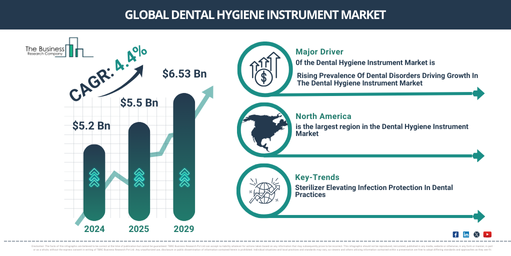
    The market for dental hygiene tools has seen robust growth in recent years. Its size is projected to increase from $5.2 billion in 2024 to $5.5 billion in 2025, reflecting a compound annual growth rate (CAGR) of 5.6%. The growth in the past period can be largely attributed to factors such as rising diabetes prevalence, patient preference towards pen devices, an increase in awareness and education, wider acceptance of injectable therapies, and a preference for self-administration.

    What Growth Rate Is Anticipated for the Dental Hygiene Instrument Market in the Coming Years?

    Expectations are that the dental hygiene instrument market will experience consistent expansion in the upcoming years, with its size projected to reach $6.53 billion in 2029, increasing at a compound annual growth rate (CAGR) of 4.4%. Factors such as a surge in type 2 diabetes cases, a growing inclination towards convenience and portability, enhanced glycemic control, a burgeoning elderly population, and governmental efforts and healthcare strategies are all contributing to the envisioned growth during the forecast period. Key trends to note include the worldwide spread of diabetes management, insulin sensitization, strategic partnerships and collaborations, technological evolution, and advances in needle technology.

    Download The Free Sample Report Here:

    https://www.thebusinessresearchcompany.com/sample.aspx?id=13638&type=smp

    Who Are the Leading Companies in the Dental Hygiene Instrument Market?

    Major companies operating in the dental hygiene instrument market report are Johnson & Johnson, BASF SE, 3M Company, Medtronic PLC, Evonik Industries AG, Covestro AG, Stryker Corporation, Baxter International Inc., Zimmer Biomet Holdings Inc., DENTSPLY SIRONA Inc., Carpenter Technology Corporation, Royal DSM N.V., Carestream Health, Corbion N.V., Integra LifeSciences Holdings Corporation, Wright Medical Group N.V., Biolase Inc., Orthofix Medical Inc., A-dec Inc., Hu-Friedy Mfg. Co. LLC, CAM Bioceramics B.V., Invibio Ltd., Biomatlante, Biomet Inc., Aap Implantate AG

    What Are the Key Drivers of the Dental Hygiene Instrument Market?

    The escalation in dental conditions is anticipated to stimulate the expansion of the dental hygiene instrument market. These conditions predominantly impinge on the oral cavity components such as the teeth, gums, tongue, lips, cheeks, palate, and other structures. The role of dental hygiene tools involves preventing and controlling dental problems by eliminating plaque, tartar, and supplementary debris from the teeth, conserving oral health, averting dental ailments, and rectifying extant issues. The World Health Organization, a Swiss intergovernmental body, revealed in November 2022 that there are currently about 3.55 billion individuals globally suffering from oral disorders, demonstrating a growth of 1 billion cases compared to previous years. Moreover, Byte, an American oral care platform, reported in December 2022 that over 90% of adult Americans’ permanent teeth are prone to cavities. As a result, the augmentation in dental conditions is promoting the rise of the dental hygiene instrument market.

    Request For A Customized Report:

    https://www.thebusinessresearchcompany.com/customise?id=13638&type=smp

    What Are the Key Market Segments in the Dental Hygiene Instrument Industry?

    The dental hygiene instrument market covered in this report is segmented –

    1) By Product: Periodontal Probes, Dental Hand Instruments, Dental Handpieces, Tongue Deplaquing Tools, Air Polishing Systems, Prophy Angles, Dental Scalers, Mouth Mirror, Accessories And Consumables

    2) By Usage: Disposable, Reusable

    3) By Application: Oral Examination, Periodontal Care, Restorative Care, Scaling And Cleaning, Orthodontic Care, Fluoride And Sealant Application

    4) By End User: Hospitals, Dental Clinics, Group Dental Practices, Ambulatory Centers, Academic And Research Institutions

    Subsegments:

    1) By Periodontal Probes: Standard Probes, Color-Coded Probes, Electronic Probes

    2) By Dental Hand Instruments: Excavators, Scissors, Forceps, Elevators

    3) By Dental Handpieces: High-Speed Handpieces, Low-Speed Handpieces, Surgical Handpieces, Electric Handpieces

    4) By Tongue Deplaquing Tools: Tongue Scrapers, Tongue Brushes, Coated Tongue Cleaners

    5) By Air Polishing Systems: Sodium Bicarbonate Systems, Glycine Powder Systems, Air Abrasion Devices

    6) By Prophy Angles: Disposable Prophy Angles, Reusable Prophy Angles, Angles With Cups And Brushes

    7) By Dental Scalers: Hand Scalers, Ultrasonic Scalers, Sonic Scalers

    8) By Mouth Mirror: Front Surface Mirrors, Double-Sided Mirrors, Disposable Mirrors

    9) By Accessories And Consumables: Disposable Gloves, Barrier Covers, Sterilization Bags, Dental Cotton Rolls

    What Are the Latest Trends in the Dental Hygiene Instrument Market?

    Leading businesses in the dental hygiene sector are honing their competitiveness by capitalizing on diversifying their products such as Lexa Plus B sterilizers. This innovation comes fully equipped with advanced technology features to facilitate maintenance and ensure robust infection control, thereby streamlining dental practices. This initiative heralded its launch in North America in January 2023, with W&H, a medical technology firm based in Austria, at the helm. The Lexa Plus B sterilizer intends to ramp up the standards of everyday dental infection management. It exhibits a user-friendly color touch-screen interface, offering a comprehensive menu that simplifies everyday dentistry tasks, thus promoting speed and efficiency. Coupled with a handy tray and rack setup, enhanced chamber capacity, swift cycle times, and rapid load drying, this device promises heightened productivity and adaptability.

    Access The Full Report Here:

    https://www.thebusinessresearchcompany.com/report/dental-hygiene-instrument-global-market-report

    What Are the Key Regional Markets in the Dental Hygiene Instrument Industry?

    North America was the largest region in the dental hygiene instrument market in 2024. The regions covered in the dental hygiene instrument market report are Asia-Pacific, Western Europe, Eastern Europe, North America, South America, Middle East, Africa.

    Purchase The Full Report Today:

    https://www.thebusinessresearchcompany.com/purchaseoptions.aspx?id=13638

    This Report Delivers Insight On:

    1. How big is the dental hygiene instrument market, and how is it changing globally?

    2. Who are the major companies in the dental hygiene instrument market, and how are they performing?

    3. What are the key opportunities and risks in the dental hygiene instrument market right now?

    4. Which products or customer segments are growing the most in the dental hygiene instrument market?

    5. What factors are helping or slowing down the growth of the dental hygiene instrument market?

    About The Business Research Company:

    With over 15000+ reports from 27 industries covering 60+ geographies, The Business Research Company has built a reputation for offering comprehensive, data-rich research and insights. Armed with 1,500,000 datasets, the optimistic contribution of in-depth secondary research, and unique insights from industry leaders, you can get the information you need to stay ahead in the game.

    Get in touch with us:

    The Business Research Company: https://www.thebusinessresearchcompany.com/

    Americas +1 310-496-7795

    Asia +44 2071930708

    Europe +44 7882 955267

    Email us at info@tbrc.info

    Follow us on:

    LinkedIn: https://in.linkedin.com/company/the-business-research-company

    YouTube: https://www.youtube.com/channel/UC24_fI0rV8cR5DxlCpgmyFQ

    Global Market Model: https://www.thebusinessresearchcompany.com/global-market-model
  • Pharmacy Automation Systems Market Trends Report 2025 – For Business Development and Strategy Teams

    Pharmacy Automation Systems Market Trends Report 2025 – For Business Development and Strategy Teams

    Claim your 30% discount on Global Market Reports with code ONLINE30. Limited time only.

    What Is the Forecast for the Pharmacy Automation Systems Market Growth in 2025?

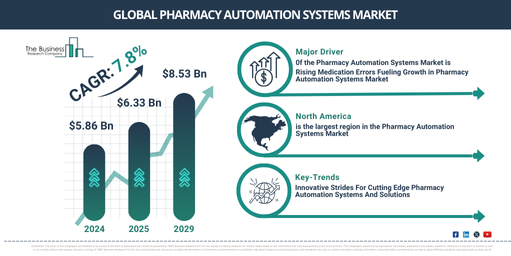
    In recent times, there has seen a substantial growth in the market size of pharmacy automation systems. The market, which stands at $5.86 billion in 2024, is forecasted to increase to $6.33 billion in 2025, with a compound annual growth rate (CAGR) of 8.0%. The noticeable growth in the historical term can be accredited to factors such as the eradication of the need for manual medicine delivery, enhanced pharmaceutical safety, and a reduction in medication mistakes.

    What Is the Forecast for the Pharmacy Automation Systems Market Size Through 2029?

    The market for pharmacy automation systems is predicted to witness significant expansion in the upcoming years. The projected growth rate is a compound annual growth rate (CAGR) of 7.8%, anticipating a market worth of $8.53 billion in 2029. The predicted growth in the forecast years can be associated with the rise in retail pharmacies, improved government regulations, and increased use of robotic pharmacy. The predominant trends in this duration are product novelties, advancements in technology, and business partnerships and collaborations.

    Download The Free Sample Report Here:

    https://www.thebusinessresearchcompany.com/sample.aspx?id=13721&type=smp

    What are the Key Market Players in Pharmacy Automation Systems Market and How They’re Evolving?

    Major companies operating in the pharmacy automation systems market report are CVS Health, AmerisourceBergen Corporation, Cardinal Health, Kroger Company, Danaher Corporation, Rite Aid Corporation, Becton, Dickinson and Company, Cerner Corporation, Epic Systems Corporation, KUKA AG (Swisslog Healthcare), Automated Healthcare Systems Incorporated, Omnicell Inc., Swisslog Holdings AG, Parata Systems LLC, Scriptpro LLC, Capsa Healthcare, Arxium Inc., Talyst LLC, Kirby Lester LLC, Yuyama Co. Ltd., Rx Safe LLC, Pharmatech Corporation, Pearson Medical Technologies, Hy-Tek Medical Limited, Rotech Healthcare

    What Are the Primary Growth Drivers in the Pharmacy Automation Systems Market?

    The escalating rate of medication mistakes is anticipated to boost the expansion of the pharmacy automation systems market in the future. Medication errors involve preventable mishaps or errors related to drug usage, which can happen at any stage in the healthcare process, from prescribing and dispensing to administering and monitoring. Pharmacy automation systems keep detailed and accurate records of dispensed medications and patient histories, thereby enabling healthcare professionals to easily retrieve information and lessen the possibility of errors due to incomplete or missing data. For example, the World Health Organization, a government agency based in Switzerland, reported in September 2022 that hospital medication error rates ranged between 0.3% and 9.1% in prescriptions and between 1.6% and 2.1% at the dispensing stage in 2022. Furthermore, medication errors cost €2 billion (2.17 billion) in 2022, making up 3% of the total national healthcare expenditure. As a result, the rising occurrence of medication errors propels the pharmacy automation systems market.

    Request For A Customized Report:

    https://www.thebusinessresearchcompany.com/customise?id=13721&type=smp

    What Are the Leading Segments in the Global Pharmacy Automation Systems Industry?

    The pharmacy automation systems market covered in this report is segmented –

    1) By Product Type: Automated Medication Dispensing Systems, Automated Medication Compounding Systems, Automated Packaging And Labelling Systems, Automated Table Top Counters, Automated Storage And Retrieval Systems

    2) By Mode Of Automation: Semi-Automatic Systems, Fully-Automatic Systems

    3) By End User: Inpatient Pharmacies, Outpatient Pharmacies, Retail Pharmacies, Pharmacy Benefit Management Organizations And Mail-Order Pharmacies

    Subsegments:

    1) By Automated Medication Dispensing Systems: Centralized Dispensing Systems, Decentralized Dispensing Systems

    2) By Automated Medication Compounding Systems: IV Compounding Systems, Oral Compounding Systems

    3) By Automated Packaging And Labelling Systems: Blister Packaging Systems, Bottle Filling And Labelling Systems

    4) By Automated Tabletop Counters: Tablet Counters, Capsule Counters

    5) By Automated Storage And Retrieval Systems: Robotic Storage Systems, Carousel Systems

    What Are the Key Market Trends in the Pharmacy Automation Systems Industry?

    Leading companies in the pharmacy automation systems market are investing in the creation of innovative products, such as medications repackaging systems, to maintain their market standing. These solutions, automated or manual, are employed to repackage medications from larger containers to smaller, patient-oriented doses. For example, in March 2022, Deenova Srl, a pharmacy automation systems company based in Italy, unveiled their EAHP D3 product, an innovative addition to their pharmacy automation systems. This comprises of AIDE-Cut, AIDE-Pack, and AIDE-Pick, with AIDE-Cut being a mechatronic system designed for packing oral solid medicines in individual doses. AIDE-Pack serves to repackage all types of pharmaceuticals (oral and non-oral) in unit dose formats. A data matrix code is utilized to identify each unit dose, encompassing significant drug properties like batch and expiration dates, unique serialization number, and medication code. Additionally, Deenova’s D3 series solution, AIDE-Pick, is used in centralized therapy preparation in sub-acute and multi-site healthcare facilities.

    Access The Full Report Here:

    https://www.thebusinessresearchcompany.com/report/pharmacy-automation-systems-global-market-report

    What Is the Regional Outlook for the Pharmacy Automation Systems Market?

    North America was the largest region in the pharmacy automation systems market in 2024. The regions covered in the pharmacy automation systems market report are Asia-Pacific, Western Europe, Eastern Europe, North America, South America, Middle East, Africa.

    Purchase The Full Report Today:

    https://www.thebusinessresearchcompany.com/purchaseoptions.aspx?id=13721

    This Report Delivers Insight On:

    1. How big is the pharmacy automation systems market, and how is it changing globally?

    2. Who are the major companies in the pharmacy automation systems market, and how are they performing?

    3. What are the key opportunities and risks in the pharmacy automation systems market right now?

    4. Which products or customer segments are growing the most in the pharmacy automation systems market?

    5. What factors are helping or slowing down the growth of the pharmacy automation systems market?

    About The Business Research Company:

    With over 15000+ reports from 27 industries covering 60+ geographies, The Business Research Company has built a reputation for offering comprehensive, data-rich research and insights. Armed with 1,500,000 datasets, the optimistic contribution of in-depth secondary research, and unique insights from industry leaders, you can get the information you need to stay ahead in the game.

    Get in touch with us:

    The Business Research Company: https://www.thebusinessresearchcompany.com/

    Americas +1 310-496-7795

    Asia +44 2071930708

    Europe +44 7882 955267

    Email us at info@tbrc.info

    Follow us on:

    LinkedIn: https://in.linkedin.com/company/the-business-research-company

    YouTube: https://www.youtube.com/channel/UC24_fI0rV8cR5DxlCpgmyFQ

    Global Market Model: https://www.thebusinessresearchcompany.com/global-market-model
  • Market Analysis on Pharmacy Automation Industry – Insights for Corporate Strategy and R&D

    Market Analysis on Pharmacy Automation Industry – Insights for Corporate Strategy and R&D

    Claim your 30% discount on Global Market Reports with code ONLINE30. Limited time only.

    What Is the Forecast for the Pharmacy Automation Market from 2024 to 2025?

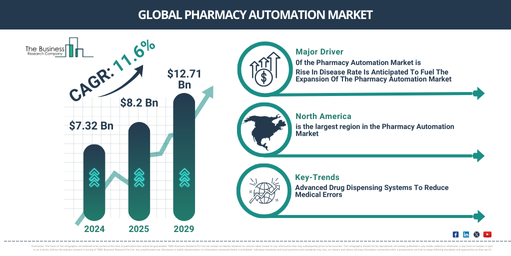
    Rapid expansion has been witnessed in the pharmacy automation market size in the past few years. It is projected to escalate from $7.32 billion in 2024 to $8.2 billion in 2025, with a compound annual growth rate (CAGR) of 12.0%. Factors such as the dearth of proficient pharmacy personnel, strict rules and norms, the imperative to diminish drug inaccuracies, improved data administration, and the demand from patients for quicker services have contributed to the growth in the past period.

    What Is the Projected Market Size of the Pharmacy Automation Market?

    In the coming years, the pharmacy automation market is projected to experience swift expansion. By 2029, it is predicted to reach $12.71 billion, registering a compound annual growth rate (CAGR) of 11.6%. This growth during the forecast period can be accredited to several factors such as proliferating prescription numbers due to elderly populations, expansion of retail pharmacy chains, emphasis on enhancing patient experience, surging labor expenses, and integration with electronic health record (EHR) systems. The key trends predicted in the forecast period consist of AI-driven systems, the embrace of telepharmacy solutions, escalating use of robotics, centralized approaches to prescription processing, and adoption of blockchain technology.

    Download The Free Sample Report Here:

    https://www.thebusinessresearchcompany.com/sample.aspx?id=15234&type=smp

    Who are the Major Competitors in the Pharmacy Automation Market Outlook?

    Major companies operating in the pharmacy automation market report are Mckesson Corporation; AmerisourceBergen Corporation; Oracle Corporation; Baxter International Inc.; Cerner Corporation; Pearson Medical Technologies LLC; Omnicell Inc.; Swisslog Holding AG; Tension Corporation; Noritsu Koki Co. Ltd.; Scriptpro LLC; Capsa Healthcare LLC; Alixar Healthcare Private Limited; Deenova S.R.L; ARxIUM Inc.; Talyst Systems LLC; Touchpoint Medical Solutions Pvt. Ltd.; Kirby Lester LLC; Yuyama Co. Ltd.; Willach GmbH; RxSafe LLC; Meditech Pharmacy Management Solutions Inc.; Accu-Chart Plus Healthcare System Inc.; PDX Pharmaceuticals Inc.; Newicon Ltd.

    What Is Fueling Growth in the Pharmacy Automation Market?

    An upsurge in disease prevalence is anticipated to fuel the pharmacy automation market’s expansion in the future. The term disease rate denotes the frequency of a certain disease’s occurrence within a specific population during a defined timeframe. Various factors, such as growing population, heightened travel and commerce, climate shifts, pollution, and the appearance of novel infectious agents or strains, contribute to the rise in disease rates. Pharmacy automation strategies aim to curtail disease rates by honing medication dispensation processes to improve precision and efficacy in disease control. Systems for pharmacy automation can expedite the dispensation and monitoring of medications, permitting healthcare specialists to respond swiftly if the health status of patients deteriorates. For instance, the World Health Organization, an intergovernmental entity based in Switzerland, predicted in February 2024 that by 2050, over 35 million fresh cancer cases would arise, which is a 77% increase relative to the projected 20 million cases in 2022. Consequently, the upswing in the disease rate propels the growth trajectory of the pharmacy automation market into the future.

    Request For A Customized Report:

    https://www.thebusinessresearchcompany.com/customise?id=15234&type=smp

    Which Pharmacy Automation Market Segments Are Growing the Fastest?

    The pharmacy automation market covered in this report is segmented –

    1) By Product: Dispensing Systems, Pill Sorting Machines, Labelling Machines, Packaging Machines, Inventory Management, Automated Storage and Retrieval Systems, Other Products

    2) By Application: Drug Dispensing And Packaging, Drug Storage, Inventory Management

    3) By End User: Inpatient Pharmacies, Outpatient Pharmacies, Retail Pharmacies, Pharmacy Benefit Management Organizations And Mail-Order Pharmacies

    Subsegments:

    1) By Dispensing Systems: Prescription Dispensing Systems, Automated Dispensing Cabinets, Robot-Assisted Dispensing

    2) By Pill Sorting Machines: Manual Pill Sorting Machines, Automated Pill Sorting Machines

    3) By Labelling Machines: Labeling For Bottles And Containers, Labeling For Blister Packs, Automated Label Application Machines

    4) By Packaging Machines: Pill Packaging Machines, Blister Packaging Machines, Bottle Packaging Machines

    5) By Inventory Management: Inventory Tracking Systems, Drug Replenishment Systems, Stock Auditing Systems

    6) By Automated Storage And Retrieval Systems: Vertical Lift Modules (Vlms), Automated Shelving Systems, Carousel Storage Systems

    7) By Other Products: Prescription Verification Systems, Pharmacy Workflow Automation Tools

    Which Industry Trends Are Shaping the Future of the Pharmacy Automation Market?

    To stay competitive in the pharmacy automation market, major companies are divulging into advanced technology solutions and expanding their product range with next-generation automatic medication dispensing systems. Such technology is designed to improve the efficiency and automation of drug dispensing in healthcare facilities. For example, in October 2023, JVM Co. Ltd, a South Korean enterprise known for its pharmacy automation systems, unveiled MENITH. This automated dispensing machine redefines innovation with its robotic arm movement. MENITH is a product of JVM that includes an advanced multi-joint collaborative robot arm created to automate the canister exchange process fully. It boasts a dispensing speed twice the speed of conventional pouch-type dispensers, handling up to 120 pouches per minute. Additionally, it is equipped with an automated inspection system that significantly cuts down the time and resources required in the pharmacy dispensing process.

    Access The Full Report Here:

    https://www.thebusinessresearchcompany.com/report/pharmacy-automation-global-market-report

    Which Countries Are Leading the Pharmacy Automation Market?

    North America was the largest region in the pharmacy automation market in 2024. Asia-Pacific is expected to be the fastest-growing region in the forecast period. The regions covered in the pharmacy automation market report are Asia-Pacific, Western Europe, Eastern Europe, North America, South America, Middle East, Africa.

    Purchase The Full Report Today:

    https://www.thebusinessresearchcompany.com/purchaseoptions.aspx?id=15234

    This Report Delivers Insight On:

    1. How big is the pharmacy automation market, and how is it changing globally?

    2. Who are the major companies in the pharmacy automation market, and how are they performing?

    3. What are the key opportunities and risks in the pharmacy automation market right now?

    4. Which products or customer segments are growing the most in the pharmacy automation market?

    5. What factors are helping or slowing down the growth of the pharmacy automation market?

    About The Business Research Company:

    With over 15000+ reports from 27 industries covering 60+ geographies, The Business Research Company has built a reputation for offering comprehensive, data-rich research and insights. Armed with 1,500,000 datasets, the optimistic contribution of in-depth secondary research, and unique insights from industry leaders, you can get the information you need to stay ahead in the game.

    Get in touch with us:

    The Business Research Company: https://www.thebusinessresearchcompany.com/

    Americas +1 310-496-7795

    Asia +44 2071930708

    Europe +44 7882 955267

    Email us at info@tbrc.info

    Follow us on:

    LinkedIn: https://in.linkedin.com/company/the-business-research-company

    YouTube: https://www.youtube.com/channel/UC24_fI0rV8cR5DxlCpgmyFQ

    Global Market Model: https://www.thebusinessresearchcompany.com/global-market-model
  • Market Analysis on Automated Microscopy Industry – Insights for Corporate Strategy and R&D

    Claim your 30% discount on Global Market Reports with code ONLINE30. Limited time only.

    What Is the Forecast for the Automated Microscopy Market from 2024 to 2025?

    The size of the automated microscopy market has seen significant growth in previous years. It is projected to swell from $7.85 billion in 2024 to $8.41 billion in 2025, marking a compound annual growth rate (CAGR) of 7.1%. The expansion observed in the historical phase can be accredited to the advances in imaging technology, intensifying complexity of biological studies, growing need for high throughput screenings, the incorporation of automation and workflow, reduced costs and improved accessibility, and the advent of multimodal imaging.

    What Is the Projected Market Size of the Automated Microscopy Market?

    Strong expansion is anticipated in the automated microscopy market in the ensuing years, with it being projected to reach $11.14 billion by 2029, posting a compound annual growth rate (CAGR) of 7.3%. The growth during this period is predicted to be driven by factors such as the incorporation of artificial intelligence, miniaturization and mobility, combined imaging and multi-method integration as well as interdisciplinary research challenges, along with an increased demand for personalized treatment and precision diagnostics. The forecast period is expected to see integration of multi-omics techniques, high-content screening for drug discovery, 3D and multi-modal imaging, open-source hardware and software platforms, and live cell imaging and dynamics analysis as major trends.

    Download The Free Sample Report Here:

    https://www.thebusinessresearchcompany.com/sample.aspx?id=14259&type=smp

    Who are the Major Competitors in the Automated Microscopy Market Outlook?

    Major companies operating in the automated microscopy market are Thermo Fisher Scientific Inc., FirstEnergy Corporation, Zeiss Group, Agilent Technologies Inc., Keyence Corporation, Hitachi High-Tech Corporation, PerkinElmer Inc., Nikon Corporation, Bruker Corporation, Hamamatsu Photonics K.K., Jenoptik AG, Lattice Semiconductor Corporation, HORIBA Scientific, Molecular Devices LLC, JEOL Ltd., Olympus Corporation, Prior Scientific Instruments Ltd., Phase Holographic Imaging PHI AB, Andor Technology Ltd., Crest Optics S.p.A, Delmic B.V., Nanolive SA, Nanosurf AG, Photometrics

    What Is Fueling Growth in the Automated Microscopy Market?

    The automated microscopy market is anticipated to expand, steered by heightened demand for personalized medicine. Personalized medicine, a healthcare tactic that considers each individual’s unique genetic, environmental, and lifestyle factors, is gaining traction. This is attributed to several elements including improved understanding of genetic differences, progress in genomics, and increasing instances of chronic diseases. Automated microscopy equips researchers and clinicians with the necessary resources and technologies to further develop personalized medicine. It aids in elucidating disease processes, pinpointing predictive biomarkers, and refining treatment approaches. For example, in October 2022, as stated by the Personalized Medicine Coalition (PMC), a US-based organization advocating the comprehension and implementation of personalized medicine, there will be over 75,000 genetic testing products and 300 tailored medicines in the market catering to individuals with varying types of cancer, rare genetic disorders, and chronic and infectious diseases. Consequently, the escalating demand for personalized medicine is fueling the growth of the automated microscopy market.

    Request For A Customized Report:

    https://www.thebusinessresearchcompany.com/customise?id=14259&type=smp

    Which Automated Microscopy Market Segments Are Growing the Fastest?

    The automated microscopy market covered in this report is segmented –

    1) By Product Type: Optical Microscopes, Electron Microscopes, Scanning Probe Microscopes

    2) By Application: Medical Diagnostics, Nanotechnology, Material Science, Life Sciences, Semiconductors

    3) By End User: Hospitals, Research Facilities, Diagnostic Clinics

    Subsegments:

    1) By Optical Microscopes: Automated Light Microscopes, Confocal Microscopes, Fluorescence Microscopes

    2) By Electron Microscopes: Scanning Electron Microscopes (SEM), Transmission Electron Microscopes (TEM), Scanning Transmission Electron Microscopes (STEM)

    3) By Scanning Probe Microscopes: Atomic Force Microscopes (AFM), Scanning Tunneling Microscopes (STM), Other Types Of Scanning Probe Microscopes

    Which Industry Trends Are Shaping the Future of the Automated Microscopy Market?

    Leading firms in the automated microscopy market are introducing cutting-edge products like the automated Cryo PFIB (Cryo-Plasma focused ion beam) microscopes to boost workflow efficiency, save time, and enhance applicability. The Automated Cryo-PFIB microscope is a highly specialised instrument that facilitates high-yield generation of cryo lamellae for cell-level cryo-electron tomography. To exemplify, Thermo Fisher Scientific Inc., an American biotech enterprise, unveiled their automated Cryo PFIB in August 2022 with the goal of simplifying cellular cryo-electron tomography investigations by effectively preparing cryo-lamellae. This groundbreaking technology aids in the creation of high-quality cryo lamella for cryo tomography and volumetric imaging of biological specimens, thereby amplifying the potential of microscopy in life sciences and research. It is designed to yield consistently thick samples while lowering the risk of sample contamination. Additionally, it introduces plasma FIB (Focused Ion Beam) technology for fast removal of substantial sample volumes and quick access to biologically interesting areas with automation functions to facilitate sample preparation and provide remote operation capabilities.

    Access The Full Report Here:

    https://www.thebusinessresearchcompany.com/report/automated-microscopy-global-market-report

    Which Countries Are Leading the Automated Microscopy Market?

    North America was the largest region in the automated microscopy market in 2024. Asia-Pacific is expected to be the fastest-growing region in the forecast period. The regions covered in the automated microscopy market report are Asia-Pacific, Western Europe, Eastern Europe, North America, South America, Middle East, Africa.

    Purchase The Full Report Today:

    https://www.thebusinessresearchcompany.com/purchaseoptions.aspx?id=14259

    This Report Delivers Insight On:

    1. How big is the automated microscopy market, and how is it changing globally?

    2. Who are the major companies in the automated microscopy market, and how are they performing?

    3. What are the key opportunities and risks in the automated microscopy market right now?

    4. Which products or customer segments are growing the most in the automated microscopy market?

    5. What factors are helping or slowing down the growth of the automated microscopy market?

    About The Business Research Company:

    With over 15000+ reports from 27 industries covering 60+ geographies, The Business Research Company has built a reputation for offering comprehensive, data-rich research and insights. Armed with 1,500,000 datasets, the optimistic contribution of in-depth secondary research, and unique insights from industry leaders, you can get the information you need to stay ahead in the game.

    Get in touch with us:

    The Business Research Company: https://www.thebusinessresearchcompany.com/

    Americas +1 310-496-7795

    Asia +44 2071930708

    Europe +44 7882 955267

    Email us at info@tbrc.info

    Follow us on:

    LinkedIn: https://in.linkedin.com/company/the-business-research-company

    YouTube: https://www.youtube.com/channel/UC24_fI0rV8cR5DxlCpgmyFQ

    Global Market Model: https://www.thebusinessresearchcompany.com/global-market-model

  • Assistive Technologies For Visually Impaired Market Projected at $12.31 Billion by 2029 | Strategic Insights and Forecast Data

    Assistive Technologies For Visually Impaired Market Projected at $12.31 Billion by 2029 | Strategic Insights and Forecast Data

    Claim your 30% discount on Global Market Reports with code ONLINE30. Limited time only.

    How Has the Assistive Technologies For Visually Impaired Market Size Changed, over the years?

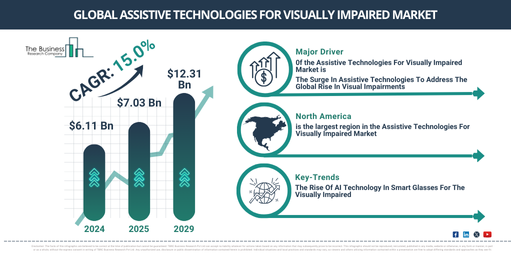
    The market for assistive technologies for the visually impaired has seen significant expansion in the past few years. The value of this market is projected to increase from $6.11 billion in 2024 to $7.03 billion in 2025, translating to a compound annual growth rate (CAGR) of 15.0%. The historic growth is largely due to an increase in the aging population, heightened awareness of assistive technologies, and a proliferation of government initiatives.

    How Much Will the Assistive Technologies For Visually Impaired Market Be Worth in 2029?

    The market size for assistive technologies for the visually impaired is projected to experience fast-tracked expansion in the upcoming years, escalating to $12.31 billion by 2029 with a compound annual growth rate (CAGR) of 15.0%. The acceleration during this forecast period can be credited to an increase in visual impairment and blindness cases, coupled with a rising demand to meet the neglected requirements of the patients. The major trends expected during this period encompass AI-integrated smart glasses, advanced screen readers, braille displays, and the use of augmented reality (AR) for navigation.

    Download The Free Sample Report Here:

    https://www.thebusinessresearchcompany.com/sample.aspx?id=13598&type=smp

    Which is the Largest Company in the Assistive Technologies For Visually Impaired Market?

    Major companies operating in the assistive technologies for visually impaired market report are Apple, Google Inc., Plantronics Inc., Cambium Learning Group, OrCam Technologies Ltd., Vispero, Freedom Scientific Inc., Humanware Pty. Ltd., Amedia Corporation, Aira Tech Corp., LVI Low Vision International AB, Maxi-Aids, AbleNet Inc., Dolphin Computer Access Ltd., Eschenbach Optik GmbH, eSight Corporation, Zoomax Inc., Attainment Company, Ash Technologies, Boundless Assistive Technology, Eye-D, Adaptivation Inc., American Thermoform Corporation, ABiSee Inc., ViewPlus Technologies Inc., Envision AI, Ai Squared Inc., Eyedaptic Inc., Access Ingenuity, Torchit

    What Are the Main Market Drivers in the Assistive Technologies For Visually Impaired Industry?

    The rise in cases of visual deficits and blindness is anticipated to fuel the expansion of the market for assisting technologies for the visually impaired. Visual deficits and blindness are terms used to describe conditions that infringe on one’s ability to see, limiting vision to various extents. Assisting technologies improve accessibility for people with visual deficits and blindness, offering essential assistance like braille displays, which enhance navigation, access to information, and communication. For example, in August 2023, the World Health Organization reported that a staggering 2.2 billion people across the globe suffered from vision impairment, with 1 billion cases either preventable or not adequately addressed. Of these, 36% are impacted by refractive errors and 17% suffer from impairment due to cataracts. Therefore, the surge in visual deficits and blindness is a key factor driving the expansion of the market for assisting technologies for the visually impaired.

    Request For A Customized Report:

    https://www.thebusinessresearchcompany.com/customise?id=13598&type=smp

    How Is the Assistive Technologies For Visually Impaired Market Segments Structured?

    The assistive technologies for visually impaired market covered in this report is segmented –

    1) By Type: Educational Devices And Software, Mobility Devices, Low Vision Devices

    2) By Distribution Channel: Hospital Pharmacies, Retail Pharmacies, Optical Stores, Online Pharmacies

    3) By End User: Blind Schools, Enterprises And Social Organizations, Personal Use, Hospitals, Other End Users

    Subsegments:

    1) By Educational Devices And Software: Braille Notetakers, Screen Readers, Accessible Learning Software

    2) By Mobility Devices: Canes (Traditional And Smart Canes), GPS Navigation Devices, Wearable Technology For Navigation

    3) By Low Vision Devices: Magnifiers (Handheld And Electronic), Telescopic Lenses, Digital Magnification Devices

    What Strategic Trends Are Transforming the Assistive Technologies For Visually Impaired Market?

    Large corporations in the market for assistive technologies for the visually impaired are concentrating their efforts on creating products with groundbreaking technology, such as AI-enabled smart glasses, in order to boost their market profitability. These AI-enhanced smart glasses permit visually impaired people to navigate and engage with their environment more independently and confidently. For example, Envision, a company based in the Netherlands, introduced their Next Generation AI-powered smart glasses for the visually impaired in March 2022. These visionary glasses offer advanced features like OCR, improved text recognition, support for multiple languages, and a comprehensive app ecosystem that facilitates the integration of custom applications, including specialized features like assistance for indoor and outdoor orientation and mobility. They are equipped with facial and object recognition, color detection, and scene description, as well as a secure video call feature for uninterrupted communication with trusted associates. These smart glasses transform visual information into auditory signals, encouraging independence and expanding the user’s spectrum of potential. The device is based on the Google Glass Enterprise Edition 2, weighs less than 50g, includes an 8MP wide-angle camera, guarantees consistent connectivity for 5-6 hours, and supports USB-C rapid charging.

    Access The Full Report Here:

    https://www.thebusinessresearchcompany.com/report/assistive-technologies-for-visually-impaired-global-market-report

    Which Global Regions Offer the Highest Growth in the Assistive Technologies For Visually Impaired Market?

    North America was the largest region in the assistive technologies for visually impaired market in 2024. Asia-Pacific is expected to be the fastest-growing region in the forecast period. The regions covered in the assistive technologies for visually impaired market report are Asia-Pacific, Western Europe, Eastern Europe, North America, South America, Middle East, Africa.

    Purchase The Full Report Today:

    https://www.thebusinessresearchcompany.com/purchaseoptions.aspx?id=13598

    This Report Delivers Insight On:

    1. How big is the assistive technologies for visually impaired market, and how is it changing globally?

    2. Who are the major companies in the assistive technologies for visually impaired market, and how are they performing?

    3. What are the key opportunities and risks in the assistive technologies for visually impaired market right now?

    4. Which products or customer segments are growing the most in the assistive technologies for visually impaired market?

    5. What factors are helping or slowing down the growth of the assistive technologies for visually impaired market?

    About The Business Research Company:

    With over 15000+ reports from 27 industries covering 60+ geographies, The Business Research Company has built a reputation for offering comprehensive, data-rich research and insights. Armed with 1,500,000 datasets, the optimistic contribution of in-depth secondary research, and unique insights from industry leaders, you can get the information you need to stay ahead in the game.

    Get in touch with us:

    The Business Research Company: https://www.thebusinessresearchcompany.com/

    Americas +1 310-496-7795

    Asia +44 2071930708

    Europe +44 7882 955267

    Email us at info@tbrc.info

    Follow us on:

    LinkedIn: https://in.linkedin.com/company/the-business-research-company

    YouTube: https://www.youtube.com/channel/UC24_fI0rV8cR5DxlCpgmyFQ

    Global Market Model: https://www.thebusinessresearchcompany.com/global-market-model