Category: HealthcareServices

  • Artificial Intelligence In Medical Coding Forecast Report – Designed for Decision Makers and Product Teams

    Artificial Intelligence In Medical Coding Forecast Report – Designed for Decision Makers and Product Teams

    Claim your 30% discount on Global Market Reports with code ONLINE30. Limited time only.

    What Is the Growth Rate of the Artificial Intelligence In Medical Coding Market?

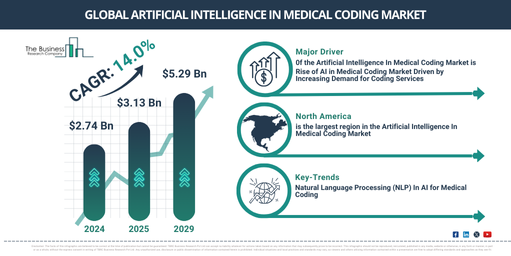
    The market size for artificial intelligence in medical coding has seen a swift expansion in the past few years. It is expected to rise from $2.74 billion in 2024 to $3.13 billion in 2025, indicating a compound annual growth rate (CAGR) of 14.2%. The escalation during the historical phase can be ascribed to factors such as amplified data volume in healthcare, improved coding precision and efficiency, strict regulatory norms, optimized revenue cycle management, and integration with electronic health records (EHRs).

    What Growth Rate Is Forecasted for the Artificial Intelligence In Medical Coding Market by 2029?

    Expectations for the artificial intelligence in medical coding market anticipate a swift expansion in the coming years, projecting it to escalate to $5.29 billion by 2029 with a 14.0% compound annual growth rate (CAGR). This surge through the forecast period can be ascribed to advancements in natural language processing (NLP), the relentless evolution of healthcare coding protocols, broadening of telehealth, clinical documentation enhancement propelled by AI, and a rising call for healthcare analytics. The forecasting period also signals notable trends such as the digitization of the healthcare industry, the advent of automated coding aid, enhancement in coding quality, compatibility with electronic health records, and solutions for risk adjustment coding.

    Download The Free Sample Report Here:

    https://www.thebusinessresearchcompany.com/sample.aspx?id=13588&type=smp

    Which Key Companies Are Shaping the Future of the Artificial Intelligence In Medical Coding Market?

    Major companies operating in the artificial intelligence in medical coding market report are Pfizer Inc., Johnson & Johnson Services Inc., International Business Corporation, Medtronic PLC, Siemens Healthineers, Cerner Corporation, Fathom Inc., Nuance Communications Inc., M-Scribe Technologies LLC, Aidee Technologies LLC, Clinton IT Services Pvt. Ltd., BUDDI AI, Coda Metrix, Optum360 Solutions LLC, Diagnoss Inc., 3M Health Information Systems, Oncora Medical, Bio Symetrics, Dolbey Systems Inc., Streamline Health, Talix, Health Record Services Corporation, Saince Inc., Genesis Therapeutics, Epic Systems Corporation

    Which Factors Are Driving Demand in the Artificial Intelligence In Medical Coding Industry?

    The surge in the need for coding services is forecasted to bolster the development of the artificial intelligence in medical coding market. Coding services pertain to the conversion of healthcare diagnoses, procedures, and medical services into universal medical alphanumeric codes, a crucial step for precise billing, insurance claim processing, and reimbursement. Utilizing AI in medical coding enhances the efficiency, precision, and adaptability of such services, providing significant advantages to healthcare organizations, medical coders, and patient care. For example, data from the American Bureau of Labor Statistics, a US government agency, shows about an 8% increase in employment for medical coders in 2022. As such, the escalating demand for coding services is fuelling the growth of the artificial intelligence in medical coding market.

    Request For A Customized Report:

    https://www.thebusinessresearchcompany.com/customise?id=13588&type=smp

    How Is the Artificial Intelligence In Medical Coding Market Segmented by Several Divisions?

    The artificial intelligence in medical coding market covered in this report is segmented –

    1) By Component: In-House, Outsourced

    2) By Technology: Machine Learning, Natural Language Processing (NLP), Generative AI

    3) By End-User: Healthcare Providers, Medical Billing Companies, Payers

    Subsegments:

    1) By In-House: Internal Coding Teams, AI-Enhanced Coding Solutions, Integration With Existing Systems

    2) By Outsourced: Third-Party Coding Services, AI-Powered Outsourcing Solutions, Vendor Management For Coding Services

    What are the Emerging Market Trends Driving the Growth of the Artificial Intelligence In Medical Coding Industry?

    Leading businesses in the medical coding sector of artificial intelligence are creating cutting-edge technology like Natural Language Processing (NLP). This innovation seeks to understand the setting in which words are used, making it more precise in interpreting patient conversations and documenting the fine details of their medical situations. As a subcategory of Artificial Intelligence (AI), Natural Language Processing (NLP) employs machines to make sense of and interpret data both spoken and written by humans. For example, in March 2023, Linguamatics, a software company out of the UK, launched the Healthcare Product Suite aimed at converting unfocused electronic health record data into useful information about the patient. This suite applies natural language processing (NLP) to pull out valuable details from disorganized data sources like EHRs, patient portals, and notes from call centres. Linguamatics’ NLP Data Factory caters to a wide array of healthcare data with scalable and automated NLP conversions for crucial applications. Similarly, the Health Language Data Interoperability Solution by Wolters Kluwer enables organizations to streamline structured, semi-structured, and disorganized data from varying sources within the healthcare space.

    Access The Full Report Here:

    https://www.thebusinessresearchcompany.com/report/artificial-intelligence-in-medical-coding-global-market-report

    Which Regions Are Driving Growth in the Artificial Intelligence In Medical Coding Market?

    North America was the largest region in the artificial intelligence in medical coding market in 2024. The regions covered in the artificial intelligence in medical coding market report are Asia-Pacific, Western Europe, Eastern Europe, North America, South America, Middle East, Africa.

    Purchase The Full Report Today:

    https://www.thebusinessresearchcompany.com/purchaseoptions.aspx?id=13588

    This Report Delivers Insight On:

    1. How big is the artificial intelligence in medical coding market, and how is it changing globally?

    2. Who are the major companies in the artificial intelligence in medical coding market, and how are they performing?

    3. What are the key opportunities and risks in the artificial intelligence in medical coding market right now?

    4. Which products or customer segments are growing the most in the artificial intelligence in medical coding market?

    5. What factors are helping or slowing down the growth of the artificial intelligence in medical coding market?

    About The Business Research Company:

    With over 15000+ reports from 27 industries covering 60+ geographies, The Business Research Company has built a reputation for offering comprehensive, data-rich research and insights. Armed with 1,500,000 datasets, the optimistic contribution of in-depth secondary research, and unique insights from industry leaders, you can get the information you need to stay ahead in the game.

    Get in touch with us:

    The Business Research Company: https://www.thebusinessresearchcompany.com/

    Americas +1 310-496-7795

    Asia +44 2071930708

    Europe +44 7882 955267

    Email us at info@tbrc.info

    Follow us on:

    LinkedIn: https://in.linkedin.com/company/the-business-research-company

    YouTube: https://www.youtube.com/channel/UC24_fI0rV8cR5DxlCpgmyFQ

    Global Market Model: https://www.thebusinessresearchcompany.com/global-market-model
  • Diphtheria Industry Insights 2025 – Market Forecast for Executives and Planners

    Diphtheria Industry Insights 2025 – Market Forecast for Executives and Planners

    Claim your 30% discount on Global Market Reports with code ONLINE30. Limited time only.

    How Has the Diphtheria Market Size Changed, over the years?

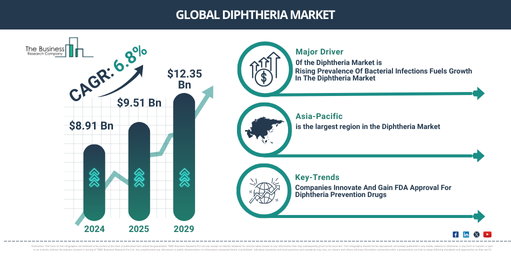
    In recent times, the market size of diphtheria has witnessed robust growth. It’s expected to escalate from $8.91 billion in 2024 and reach up to $9.51 billion in the following year with a compound annual growth rate (CAGR) of 6.7%. The growth in the historic period can be credited to the development of vaccines, immunization drives, increased cognizance, and improved healthcare infrastructure.

    How Much Will the Diphtheria Market Be Worth in 2029?

    In the coming years, robust expansion is anticipated in the diphtheria market, projected to reach $12.35 billion in 2029 with a compound annual growth rate (CAGR) of 6.8%. This promising growth during the predicted period can be attributed to factors such as emerging disease outbreaks, enhanced booster vaccination schemes, worldwide travel and migration, and public health readiness. Noteworthy trends expected during this period include the use of combination vaccines, the application of telemedicine for vaccination purposes, vaccine equity initiatives, and collaborations between public and private sectors.

    Download The Free Sample Report Here:

    https://www.thebusinessresearchcompany.com/sample.aspx?id=13016&type=smp

    Which is the Largest Company in the Diphtheria Market?

    Major companies operating in the diphtheria market are Pfizer Inc., Johnson & Johnson Co, Roche Holding AG, Merck & Co Inc., AbbVie Inc., Novartis AG, Sanofi SA, Bristol-Myers Squibb Co., AstraZeneca PLC, GlaxoSmithKline PLC, Eli Lilly and Company, Gilead Sciences Inc., Amgen Inc., Moderna Inc., BioNTech SE, Regeneron Pharmaceuticals Inc., Biogen Inc., Vertex Pharmaceuticals Inc., Serum Institute of India, Novavax Inc., Sinovac Biotech Ltd., Emergent BioSolutions Inc., Dynavax Technologies Corporation, Bharat Biotech International Limited, CureVac AG, Inovio Pharmaceuticals Inc., The Native Antigen Company.

    What Are the Main Market Drivers in the Diphtheria Industry?

    The increasing instances of bacterial infections are anticipated to drive the diphtheria market’s growth. Bacterial infections, which are illnesses or conditions caused by bacterial growth or bacterial-produced toxins invading the body, are becoming more common. Diphtheria, a severe infection initiated by bacteria strains that weaken the immune system and encourage the growth of Corynebacterium diphtheria, is a prime example. As reported by GOV.UK, a UK government website, in September 2024, NHS acute trusts in England reported 38,757 E. coli bacteremia cases in the 2022-2023 fiscal year, with 7,881 cases (20.3%) categorized as hospital-onset infections. Hence, the escalating prevalence of bacterial infections is expected to push forward the diphtheria market.

    Diphtheria Market Driver: Rising Immunization Programs Bolstering Diphtheria Market Growth


    Request For A Customized Report:

    https://www.thebusinessresearchcompany.com/customise?id=13016&type=smp

    How Is the Diphtheria Market Segments Structured?

    The diphtheria market covered in this report is segmented –

    1) By Type: Diphtheria, Skin Diphtheria, Other Types

    2) By Diagnosis: Physical Examination, Throat Culture, Other Diagnosis

    3) By Treatment: Antibiotics, Antitoxin, Other Treatments

    4) By Distribution Channel: Hospital Pharmacy, Online Pharmacy, Retail Pharmacy

    5) By End-Users: Hospitals, Homecare, Specialty Clinics, Other End-Users

    Subsegments:

    1) By Diphtheria: Respiratory Diphtheria, Non-respiratory Diphtheria

    2) By Skin Diphtheria: Cutaneous Diphtheria

    3) By Other Types: Diphtheritic Myocarditis, Diphtheritic Neuritis

    What Strategic Trends Are Transforming the Diphtheria Market?

    Leading firms in the diphtheria market are focusing on the development of novel drugs and securing necessary approvals to maintain their market standing. For instance, GlaxoSmithKline PLC, a pharmaceutical and biotechnology entity based in the UK, announced in October 2022 that BOOSTRIX (Tetanus Toxoid, Reduced Diphtheria Toxoid and Acellular Pertussis Vaccine, adsorbed; Tdap) had received approval from the US Food and Drug Administration (FDA). This vaccine is intended for immunization during the third month of pregnancy to aid in the prevention of pertussis (whooping cough) in babies under two months old. The Tdap vaccine, when administered during pregnancy, provides the utmost protection from whooping cough to newborns in their initial months. This mechanism works by the transfer of protective antibodies from the mother to the baby when the mother is immunized during pregnancy.

    Access The Full Report Here:

    https://www.thebusinessresearchcompany.com/report/diphtheria-global-market-report

    Which Global Regions Offer the Highest Growth in the Diphtheria Market?

    Asia-Pacific was the largest region in the diphtheria market in 2024. The regions covered in diphtheria market report are Asia-Pacific, Western Europe, Eastern Europe, North America, South America, Middle East and Africa.

    Purchase The Full Report Today:

    https://www.thebusinessresearchcompany.com/purchaseoptions.aspx?id=13016

    This Report Delivers Insight On:

    1. How big is the diphtheria market, and how is it changing globally?

    2. Who are the major companies in the diphtheria market, and how are they performing?

    3. What are the key opportunities and risks in the diphtheria market right now?

    4. Which products or customer segments are growing the most in the diphtheria market?

    5. What factors are helping or slowing down the growth of the diphtheria market?

    About The Business Research Company:

    With over 15000+ reports from 27 industries covering 60+ geographies, The Business Research Company has built a reputation for offering comprehensive, data-rich research and insights. Armed with 1,500,000 datasets, the optimistic contribution of in-depth secondary research, and unique insights from industry leaders, you can get the information you need to stay ahead in the game.

    Get in touch with us:

    The Business Research Company: https://www.thebusinessresearchcompany.com/

    Americas +1 310-496-7795

    Asia +44 2071930708

    Europe +44 7882 955267

    Email us at info@tbrc.info

    Follow us on:

    LinkedIn: https://in.linkedin.com/company/the-business-research-company

    YouTube: https://www.youtube.com/channel/UC24_fI0rV8cR5DxlCpgmyFQ

    Global Market Model: https://www.thebusinessresearchcompany.com/global-market-model
  • Artificial Intelligence In Life Sciences Market Outlook 2025 – Insights for Executive and Strategic Planning

    Artificial Intelligence In Life Sciences Market Outlook 2025 – Insights for Executive and Strategic Planning

    Claim your 30% discount on Global Market Reports with code ONLINE30. Limited time only.

    How Has the Artificial Intelligence In Life Sciences Market Grown from 2024 to 2025?

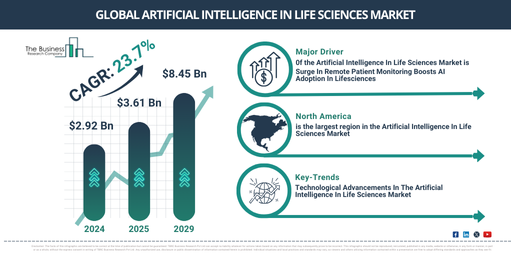
    The market size of artificial intelligence in life sciences has witnessed massive growth recently. It is predicted to increase from $2.92 billion in 2024 to $3.61 billion in 2025, with a compound annual growth rate (CAGR) of 23.7%. This growth trend during the historical period can be credited to factors such as increase in clinical trials, escalated use of AI in research and development sector, and a strong focus on developing precision medicine and personalized drugs.

    What Growth Rate Is Anticipated for the Artificial Intelligence In Life Sciences Market in the Coming Years?

    The market size for artificial intelligence in life sciences is predicted to witness significant growth in the coming years. It’s projected to escalate to $8.45 billion by 2029, with a compound annual growth rate (CAGR) of 23.7%. The anticipated growth during the forecast period can be ascribed to the rising interest in real-time, remote patient monitoring (rpm) systems, mounting demand for AI applications in drug discovery, and an increased propensity toward using AI in medical imagery analysis. Key trends expected to be observed over the forecast period comprise strategic alliances, novel product innovations, progress in technology, increased investments, and advanced research and development.

    Download The Free Sample Report Here:

    https://www.thebusinessresearchcompany.com/sample.aspx?id=13587&type=smp

    Who Are the Leading Companies in the Artificial Intelligence In Life Sciences Market?

    Major companies operating in the artificial intelligence in life sciences market report are Google LLC, Microsoft Corporation, Intel Corporation, IBM Corporation, Medtronic PLC, Nvidia Corporation, Novo Nordisk A/S, Siemens Healthineers AG, Philips Healthcare, Babylon Healthcare Services Ltd., Komodo Health Inc., Modernizing Medicine Inc., Viz.ai Inc., Butterfly Network Inc., Agueda, AiCure LLC, HealthTap Inc., Welltok Inc., Enlitic Inc., PathAI Inc., Nano-X Imaging Ltd., Berg LLC, Inserto, Sense.ly Inc., Subtle Medical Inc., Med sense Biometrics Limited, Immune, Atomwise Inc., Freenome Holdings Inc., Clouded Inc.

    What Are the Key Drivers of the Artificial Intelligence In Life Sciences Market?

    The escalating fascination towards real-time remote patient monitoring (RPM) systems is anticipated to boost the development of artificial intelligence in the life sciences sector. The RPM system is a technologically advanced healthcare solution tailored to track the health of patients outside conventional health grounds. The influence of AI in life sciences is substantial in remote patient monitoring as it offers constant, custom-made, and insights based on data that empower active healthcare management. For example, as per a poll by Livelink, a digital health company based in the US, in August 2023, the employment of remote patient monitoring (RPM) by medical practitioners rose by 20% in 2021 and hiked to 81% in 2022, showing a 305% hike. Hence, the growing fascination with real-time remote patient monitoring (RPM) systems is fueling the progression of artificial intelligence in the life sciences marketplace.

    Request For A Customized Report:

    https://www.thebusinessresearchcompany.com/customise?id=13587&type=smp

    What Are the Key Market Segments in the Artificial Intelligence In Life Sciences Industry?

    The artificial intelligence in life sciences market covered in this report is segmented –

    1) By Offering: Software, Hardware, Services

    2) By Deployment: On-Premises, Cloud-Based

    3) By Application: Drug Discovery, Medical Diagnosis, Biotechnology, Clinical Trails, Precision And Personalized Medicine, Patient Monitoring

    Subsegments:

    1) By Software: Drug Discovery Software, Genomic Analysis Software, Clinical Trial Management Software, Personalized Medicine Software, Laboratory Information Management Systems (LIMS)

    2) By Hardware: AI-Enabled Laboratory Equipment, Robotics And Automation Systems, Imaging Devices And Equipment, Sensor Technologies

    3) By Services: Consulting Services, Data Analytics Services, Research And Development Services, Implementation And Integration Services, Training And Support Services

    What Are the Latest Trends in the Artificial Intelligence In Life Sciences Market?

    Key players in the life sciences sector’s artificial intelligence market are concentrating on the creation of innovative products boosted by technological advancements, such as drug discovery software, to secure their market standing. Drug discovery software is a variety of software programs and apps developed to support researchers in the pharmaceutical and biotech industries in uncovering new drugs. For example, in December 2023, a groundbreaking drug discovery software, AIDDISON, was introduced by Merck, a Germany-based science and technology firm. This is the first software of its kind to integrate virtual molecule design with the practicality of manufacture, utilizing technologies such as generative AI, machine learning, and computer-aided drug design. AIDDISON has the ability to identify suitable drug candidates from an extensive range of possibilities, taking into account important characteristics like non-toxicity and solubility. Its capacity to act as a link between virtual molecule design and actual manufacture constitutes a significant usage of artificial intelligence in the life sciences industry.

    Access The Full Report Here:

    https://www.thebusinessresearchcompany.com/report/artificial-intelligence-in-life-sciences-global-market-report

    What Are the Key Regional Markets in the Artificial Intelligence In Life Sciences Industry?

    North America was the largest region in the Artificial Intelligence In Life Sciences market in 2024. Asia-Pacific is expected to be the fastest-growing region in the forecast period. The regions covered in the artificial intelligence in life sciences market report are Asia-Pacific, Western Europe, Eastern Europe, North America, South America, Middle East, Africa.

    Purchase The Full Report Today:

    https://www.thebusinessresearchcompany.com/purchaseoptions.aspx?id=13587

    This Report Delivers Insight On:

    1. How big is the artificial intelligence in life sciences market, and how is it changing globally?

    2. Who are the major companies in the artificial intelligence in life sciences market, and how are they performing?

    3. What are the key opportunities and risks in the artificial intelligence in life sciences market right now?

    4. Which products or customer segments are growing the most in the artificial intelligence in life sciences market?

    5. What factors are helping or slowing down the growth of the artificial intelligence in life sciences market?

    About The Business Research Company:

    With over 15000+ reports from 27 industries covering 60+ geographies, The Business Research Company has built a reputation for offering comprehensive, data-rich research and insights. Armed with 1,500,000 datasets, the optimistic contribution of in-depth secondary research, and unique insights from industry leaders, you can get the information you need to stay ahead in the game.

    Get in touch with us:

    The Business Research Company: https://www.thebusinessresearchcompany.com/

    Americas +1 310-496-7795

    Asia +44 2071930708

    Europe +44 7882 955267

    Email us at info@tbrc.info

    Follow us on:

    LinkedIn: https://in.linkedin.com/company/the-business-research-company

    YouTube: https://www.youtube.com/channel/UC24_fI0rV8cR5DxlCpgmyFQ

    Global Market Model: https://www.thebusinessresearchcompany.com/global-market-model
  • Digital Twins In Healthcare Market Trends Report 2025 – For Business Development and Strategy Teams

    Digital Twins In Healthcare Market Trends Report 2025 – For Business Development and Strategy Teams

    Claim your 30% discount on Global Market Reports with code ONLINE30. Limited time only.

    What Is the Forecast for the Digital Twins In Healthcare Market Growth in 2025?

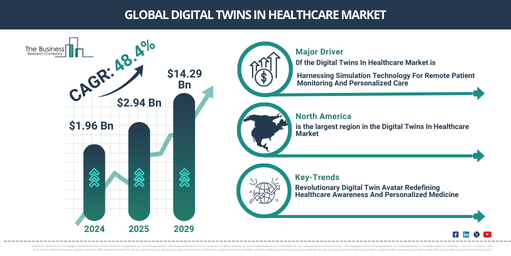
    The market size of digital twins in healthcare has seen a significant surge in its growth in the past few years. The market, which is expected to be worth $1.96 billion in 2024, is predicted to rise to $2.94 billion in 2025 with a compound annual growth rate (CAGR) of 50.5%. The historic surge is largely due to the increased incorporation of digital twin technology in both the manufacturing and aerospace industries, improvements in IoT and cloud computing technologies, rising demand for real-time analytics and predictive maintenance, and increasing investment in digital twin technology from public and private organizations.

    What Is the Forecast for the Digital Twins In Healthcare Market Size Through 2029?

    The market size for digital twins in healthcare is set to experience rapid expansion in the coming years, with projections stating a growth to $14.29 billion by 2029, coupled with a compound annual growth rate (CAGR) of approximately 48.4%. This prospective rise can be associated with multiple factors such as the healthcare industry adopting more digital twin technology, an amplified demand for real-time data analytics, machine learning and artificial intelligence advancements, a heightened focus on patient-centric care, and a boost in the requirement for predictive analytics and preventive interventions. The prediction period also foresees major trends including an upswing in the utilization of digital twins for drug discovery and development, a surge in demand for remote patient monitoring, an escalating use of digital twins for personalized medicine and surgical planning, and a growing application of digital twins in managing epidemics.

    Download The Free Sample Report Here:

    https://www.thebusinessresearchcompany.com/sample.aspx?id=14089&type=smp

    What are the Key Market Players in Digital Twins In Healthcare Market and How They’re Evolving?

    Major companies operating in the digital twins in healthcare market are Amazon.com Inc., Microsoft Corporation, IBM Corporation, Oracle Corporation, SAP SE, NVIDIA Corporation, Siemens AG, Koninklijke Philips N.V., GE HealthCare Technologies Inc., NTT DATA Corporation, Atos SE, Dassault Systemes SE, Ansys Inc., PTC Inc., Twin Health Inc., Faststream Technologies, Rescale Inc., ThoughWire Corp., Q Bio Inc., Verto Healthcare, Unlearn.AI Inc., PrediSurge, QiO Technologies Ltd., NUREA, Predictive Care Inc., Virtonomy GMbH

    What Are the Primary Growth Drivers in the Digital Twins In Healthcare Market?

    The surge in telehealth is predicted to fuel the advancement of digital twins in the healthcare industry. Telehealth involves the utilization of telecommunications technology to provide health care services and share information in a remote manner. It includes various medical services like consultations, monitoring, patient education, and exchange of health information, all managed through digital interfaces. Digital twins can mimic real-time biological responses and the progress of diseases in individual patients. This information can be utilised by telehealth platforms for remote observation, allowing healthcare professionals to monitor patients’ vital statistics, medication compliance and overall wellbeing remotely. In February 2023, as per Rock Health Inc., a health tech firm in the US, four in five consumers reportedly used a telemedicine service at least once. Telemedicine usage also saw a steep rise in 2022 among healthcare’s underrepresented sectors. There was a 12% rise in telemedicine adoption among individuals above 55, and adoption was 13% higher among rural residents. Hence, the growth of telehealth is fuelling the advancement of digital twins in the healthcare sphere.

    Request For A Customized Report:

    https://www.thebusinessresearchcompany.com/customise?id=14089&type=smp

    What Are the Leading Segments in the Global Digital Twins In Healthcare Industry?

    The digital twins in healthcare market covered in this report is segmented –

    1) By Type: Process And System Digital Twin, Product Digital Twin

    2) By Application: Asset And Process Management, Personalized Medicine, Drug Discovery,

    3) By End-User: Clinical Research Organizations (CROs), Research And Diagnostic Laboratories, Hospitals And Clinics

    Subsegments:

    1) By Process And System Digital Twin: Patient Journey Digital Twin, Hospital Operations Digital Twin, Healthcare Workflow Digital Twin, Clinical Process Digital Twin

    2) By Product Digital Twin: Medical Device Digital Twin, Drug Development Digital Twin, Equipment Maintenance Digital Twin, Personalized Medicine Digital Twin

    What Are the Key Market Trends in the Digital Twins In Healthcare Industry?

    Leading businesses in the healthcare digital twin market are advancing ground-breaking digital twin-supported technologies, such as Emma, to emphasize the significant role of virtual duplicates in expediting healthcare studies and providing individualized care. Emma is a technology backed by digital twin, offering an interactive, realistic virtual clone, supplemented with extra data inputs, insights, and assessable details that improve the overall experience. This technology has the potential to streamline surgical procedures and offer patients a broader understanding of treatment options. For example, in September 2023, Dassault Systèmesa SE, a software firm from France, introduced a digital twin persona called Emma to increase awareness around health investigations. Emma is a virtual representation that accurately mirrors the characteristics of an actual entity. Emma was created employing anonymous health data to perform a multitude of tests to deepen understanding about various diseases and therapies.

    Access The Full Report Here:

    https://www.thebusinessresearchcompany.com/report/digital-twins-in-healthcare-global-market-report

    What Is the Regional Outlook for the Digital Twins In Healthcare Market?

    North America was the largest region in the digital twins in healthcare market in 2024. The regions covered in the digital twins in healthcare market report are Asia-Pacific, Western Europe, Eastern Europe, North America, South America, Middle East, Africa.

    Purchase The Full Report Today:

    https://www.thebusinessresearchcompany.com/purchaseoptions.aspx?id=14089

    This Report Delivers Insight On:

    1. How big is the digital twins in healthcare market, and how is it changing globally?

    2. Who are the major companies in the digital twins in healthcare market, and how are they performing?

    3. What are the key opportunities and risks in the digital twins in healthcare market right now?

    4. Which products or customer segments are growing the most in the digital twins in healthcare market?

    5. What factors are helping or slowing down the growth of the digital twins in healthcare market?

    About The Business Research Company:

    With over 15000+ reports from 27 industries covering 60+ geographies, The Business Research Company has built a reputation for offering comprehensive, data-rich research and insights. Armed with 1,500,000 datasets, the optimistic contribution of in-depth secondary research, and unique insights from industry leaders, you can get the information you need to stay ahead in the game.

    Get in touch with us:

    The Business Research Company: https://www.thebusinessresearchcompany.com/

    Americas +1 310-496-7795

    Asia +44 2071930708

    Europe +44 7882 955267

    Email us at info@tbrc.info

    Follow us on:

    LinkedIn: https://in.linkedin.com/company/the-business-research-company

    YouTube: https://www.youtube.com/channel/UC24_fI0rV8cR5DxlCpgmyFQ

    Global Market Model: https://www.thebusinessresearchcompany.com/global-market-model
  • Artificial Intelligence (AI) In Respiratory Diseases Market Projected at $9.85 Billion by 2029 | Strategic Insights and Forecast Data

    Artificial Intelligence (AI) In Respiratory Diseases Market Projected at $9.85 Billion by 2029 | Strategic Insights and Forecast Data

    Claim your 30% discount on Global Market Reports with code ONLINE30. Limited time only.

    How Has the Artificial Intelligence (AI) In Respiratory Diseases Market Size Changed, over the years?

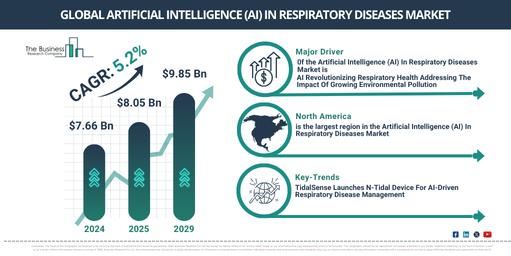
    The market size for artificial intelligence (AI) in respiratory diseases has seen substantial growth in the past few years. The market is projected to expand from $7.66 billion in 2024 to $8.05 billion in 2025, indicating a compound annual growth rate (CAGR) of 5.1%. Factors contributing to the historical growth include tightening government regulations, rising environmental concerns, an increasing older population, the evolution towards patient-focused healthcare practices and the escalation in healthcare infrastructure development.

    How Much Will the Artificial Intelligence (AI) In Respiratory Diseases Market Be Worth in 2029?

    In the coming years, the market for artificial intelligence (AI) in respiratory diseases is predicted to witness robust growth. The market is estimated to reach a value of $9.85 billion by 2029, growing at a compound annual growth rate (CAGR) of 5.2%. Factors contributing to this growth during the forecast period include rising cases of respiratory diseases, the increasing demand for early detection and diagnosis, escalating environmental pollution, growing healthcare expenditures, as well as research and development efforts. The forecast period is also set to see major trends like technological advancements, drug discovery and development, personalization of treatment strategies, the advent of telemedicine and remote patient monitoring.

    Download The Free Sample Report Here:

    https://www.thebusinessresearchcompany.com/sample.aspx?id=13792&type=smp

    Which is the Largest Company in the Artificial Intelligence (AI) In Respiratory Diseases Market?

    Major companies operating in the artificial intelligence (AI) in respiratory diseases market report are Siemens Healthineers, Philips Healthcare, General Electric (GE) Healthcare, Verily Life Sciences LLC, DeepMind Health, Merative L.P., Innovaccer, Freenome, Aidoc Medical, Butterfly Network, Infervision, Imagen Technologies, Caption Health, Gauss Surgical Inc., Swaasa AI, Inspirata Inc., VIDA Diagnostics Inc., Enlitic, Thirona B.v., ArtiQ, Icometrix, Zynnon AG, Aidence, Arterys, Dectrocel Healthcare, PneumoWave Ltd.

    What Are the Main Market Drivers in the Artificial Intelligence (AI) In Respiratory Diseases Industry?

    The escalation of environmental pollution is predicted to stimulate the expansion of artificial intelligence (AI) in the respiratory disease market. Environmental pollution involves introducing substances or energy to the environment at a pace that outstrips its safe dispersion or storage capacity. AI can potentially mitigate the adverse effects of environmental pollution on respiratory health through real-time surveillance, individualized risk evaluations, enlightened decision-making, and inventive solutions for people and communities. For example, the US Energy Information Administration, an American government entity, recorded that the CO2 emission in 2021 amounted to 35.72 billion metric tons and escalated to 38.50 billion metric tons in 2022 as recorded in June 2024. Consequently, the burgeoning environmental pollution is fostering the growth of artificial intelligence (AI) in the respiratory disease market.

    Request For A Customized Report:

    https://www.thebusinessresearchcompany.com/customise?id=13792&type=smp

    How Is the Artificial Intelligence (AI) In Respiratory Diseases Market Segments Structured?

    The artificial intelligence (AI) in respiratory diseases market covered in this report is segmented –

    1) By Imaging Type: Magnetic Resonance Imaging (MRI), Computed Tomography (CT) Scan, Electronic Patient-Reported Outcomes (ePRO)

    2) By Indication: Chronic Obstructive Pulmonary Disease, Interstitial Lung Disease, Pulmonary Infection

    3) By End Use: Hospital, Diagnostic Centers, Ambulatory Surgical Centers, Other End-Users

    Subsegments:

    1) By Magnetic Resonance Imaging (MRI): Lung Imaging, Thoracic Imaging, Cardiopulmonary Imaging

    2) By Computed Tomography (CT) Scan: High-Resolution CT (HRCT), Low-Dose CT, Thoracic CT

    3) By Electronic Patient-Reported Outcomes (ePRO): Symptom Tracking, Medication Adherence Monitoring, Quality Of Life Assessments

    What Strategic Trends Are Transforming the Artificial Intelligence (AI) In Respiratory Diseases Market?

    Major firms in the respiratory diseases market that focus on artificial intelligence (AI) are introducing innovative solutions such as N-Tidal devices to track patients’ tidal breathing. The n-Tidal device gauges the amount of air exchanged during regular respiration, offering critical insights into lung activity. For example, in August 2023, TidalSense, a UK-based firm specializing in respiratory technology, launched N-Tidal, a regulated AI solution for diagnosing and managing chronic obstructive pulmonary disease (COPD). The tech merges N-Tidal’s CO2 sensor data with an AI platform to spot changes in lung activity, with the goal of enhancing COPD diagnosis and management. Clinical trials have shown this technology to be highly accurate, and it’s poised to revolutionize the diagnostic procedure for respiratory ailments. This introduction marks a crucial advancement in the application of AI for respiratory disease evaluation, providing a more efficient, pleasant alternative to present diagnostic procedures.

    Access The Full Report Here:

    https://www.thebusinessresearchcompany.com/report/artificial-intelligence-ai-in-respiratory-diseases-global-market-report

    Which Global Regions Offer the Highest Growth in the Artificial Intelligence (AI) In Respiratory Diseases Market?

    North America was the largest region in the artificial Intelligence (AI) in respiratory diseases market in 2024. Asia-Pacific is expected to be the fastest-growing region in the forecast period. The regions covered in the artificial intelligence (AI) in respiratory diseases market report are Asia-Pacific, Western Europe, Eastern Europe, North America, South America, Middle East, Africa.

    Purchase The Full Report Today:

    https://www.thebusinessresearchcompany.com/purchaseoptions.aspx?id=13792

    This Report Delivers Insight On:

    1. How big is the artificial intelligence (ai) in respiratory diseases market, and how is it changing globally?

    2. Who are the major companies in the artificial intelligence (ai) in respiratory diseases market, and how are they performing?

    3. What are the key opportunities and risks in the artificial intelligence (ai) in respiratory diseases market right now?

    4. Which products or customer segments are growing the most in the artificial intelligence (ai) in respiratory diseases market?

    5. What factors are helping or slowing down the growth of the artificial intelligence (ai) in respiratory diseases market?

    About The Business Research Company:

    With over 15000+ reports from 27 industries covering 60+ geographies, The Business Research Company has built a reputation for offering comprehensive, data-rich research and insights. Armed with 1,500,000 datasets, the optimistic contribution of in-depth secondary research, and unique insights from industry leaders, you can get the information you need to stay ahead in the game.

    Get in touch with us:

    The Business Research Company: https://www.thebusinessresearchcompany.com/

    Americas +1 310-496-7795

    Asia +44 2071930708

    Europe +44 7882 955267

    Email us at info@tbrc.info

    Follow us on:

    LinkedIn: https://in.linkedin.com/company/the-business-research-company

    YouTube: https://www.youtube.com/channel/UC24_fI0rV8cR5DxlCpgmyFQ

    Global Market Model: https://www.thebusinessresearchcompany.com/global-market-model
  • Market Analysis on Digital Psychotherapeutics Industry – Insights for Corporate Strategy and R&D

    Market Analysis on Digital Psychotherapeutics Industry – Insights for Corporate Strategy and R&D

    Claim your 30% discount on Global Market Reports with code ONLINE30. Limited time only.

    What Is the Forecast for the Digital Psychotherapeutics Market from 2024 to 2025?

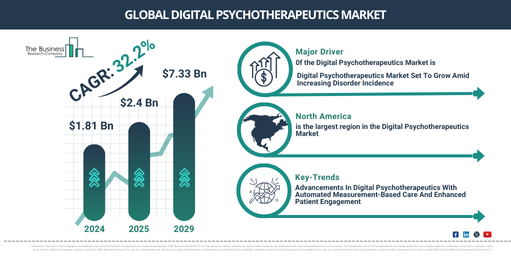
    In recent times, the scale of the digital psychotherapeutics market has seen an incredible expansion. The market, which is anticipated to be worth $1.81 billion in 2024, will surge to $2.4 billion in 2025, achieving a 32.6% Compound Annual Growth Rate (CAGR). This notable growth during the historic period is due to factors such as increased understanding of mental health concerns, supporting regulatory structures, the rise in healthcare expenses, an enhanced inclination of patients towards privacy and convenience, and an expanding body of research and evidence.

    What Is the Projected Market Size of the Digital Psychotherapeutics Market?

    There is an anticipation for robust expansion in the digital psychotherapeutics market within the coming years. It’s projected to escalate to a net worth of $7.33 billion by 2029, demonstrating a compound annual growth rate (CAGR) of 32.2%. Several factors contribute to this predicted growth during the forecast period such as the rise in mental health advocacy, the proliferation of telehealth services, the increasing older population and their mental health requirements, a shift towards preventive healthcare, and ongoing regulatory support and standardization. The forecast period is expected to witness several significant trends like the fusion of AI and data analytics, integration into healthcare systems, growing adoption of teletherapy, application of AI and machine learning, emphasis on data security and confidentiality, along with user-centric design and engagement tactics.

    Download The Free Sample Report Here:

    https://www.thebusinessresearchcompany.com/sample.aspx?id=14902&type=smp

    Who are the Major Competitors in the Digital Psychotherapeutics Market Outlook?

    Major companies operating in the digital psychotherapeutics market are AbleTo Inc., BetterHelp Inc., Ginger.io Inc., Meru Health Inc., Novartis International AG, Pear Therapeutics Inc., SilverCloud Health Limited, Spring Health Inc., Starling Minds Inc., SwissDT AG, Talkspace Inc., Woebot Health Inc., CBT Nuggets LLC, Quartet Health Inc., Neurotrack Technologies Inc., Limbix Health Inc., Happify Health LLC, Mindstrong Health Inc., Minddistrict B.V., Ieso Digital Health, Eleos Health, MDLIVE, Lyra Health

    What Is Fueling Growth in the Digital Psychotherapeutics Market?

    The escalating prevalence of mental health issues is projected to accelerate the digital psychotherapeutics market’s expansion in the future. Mental health disorders encompass a variety of conditions that impact an individual’s cognition, emotions, and behavior patterns. This often results in distress and diminished functioning in everyday activities. The rising tide of mental health illnesses can be traced back to elevated stress levels, societal pressures, and traumatic experiences, all of which drive the need for therapeutic solutions. Digital psychotherapy contributes to convenience by providing adjustable scheduling alternatives and obviating the necessity for commuting to therapy sessions. For instance, the Mental Health of Children and Young People in England report, issued in November 2022 by NHS Digital, a UK agency in charge of digital service provision and data administration in the healthcare industry, demonstrated that the incidence of probable mental ailments among individuals aged 17 to 19 spiked from 17.4% in 2021 to 25.7% in 2022. Moreover, in 2022, the likelihood of a probable mental disorder in boys aged 7 to 10 was almost double that of girls in the same age group (19.7% for boys versus 10.5% for girls). Consequently, the increased prevalence of mental health conditions is propelling the growth of the digital psychotherapeutics market.

    Request For A Customized Report:

    https://www.thebusinessresearchcompany.com/customise?id=14902&type=smp

    Which Digital Psychotherapeutics Market Segments Are Growing the Fastest?

    The digital psychotherapeutics market covered in this report is segmented –

    1) By Type: Mobile Apps, Online Platforms, Virtual Reality, Wearable Devices

    2) By Indication: Phobias And Anxiety Disorders, Psychotic Disorders, Other Indications

    3) By Business Model: Direct-To-Patients Or Consumers, Business-To-Business (B2B)

    4) By Application: Prevention, Management, Treatment

    5) By End User: Healthcare Providers, Payers

    Subsegments:

    1) By Mobile Apps: Mental Health Apps, Cognitive Behavioral Therapy (CBT) Apps, Meditation And Mindfulness Apps, Mood Tracking Apps, Sleep Management Apps

    2) By Online Platforms: Telehealth Platforms, Online Therapy Services, Web-Based Mental Health Counseling, Virtual Support Groups, Digital CBT Platforms

    3) By Virtual Reality (VR): VR-Based Exposure Therapy, VR-Assisted CBT, Immersive Meditation VR, VR For Stress Management, VR For PTSD And Anxiety Treatment

    4) By Wearable Devices: Biofeedback Wearables, Stress And Anxiety Monitoring Wearables, Sleep-Tracking Wearables, Heart Rate Variability Wearables, Wearables For Mood Tracking And Emotional Regulation

    Which Industry Trends Are Shaping the Future of the Digital Psychotherapeutics Market?

    Leading firms in the digital psychotherapeutics market are aiming to integrate high-end solutions such as automated measurement-based care to boost patient results and simplify the therapeutic procedure. The CarePaths Connect mobile application contributes to maximizing therapy sessions, customizing treatment programs according to unique needs, and ultimately augmenting patient results by monitoring progress throughout the therapy duration. For example, CarePaths Inc., an American firm that creates EHR platforms and related solutions for mental health, unveiled CarePaths Connect in August 2022. This new app includes a built-in, automated Measurement-Based Care (MBC), a method that monitors patient progress throughout therapy and uses the gathered information for clinical decisions. Besides, CarePaths Connect offers a Digital Front Door feature, enabling users to find clinicians, confirm insurance coverage, schedule appointments, and use secure messaging and teletherapy services. The aim of this technology is to escalate patient engagement, enhance results, and simplify the therapeutic procedure.

    Access The Full Report Here:

    https://www.thebusinessresearchcompany.com/report/digital-psychotherapeutics-global-market-report

    Which Countries Are Leading the Digital Psychotherapeutics Market?

    North America was the largest region in the digital psychotherapeutics market in 2024. Asia Pacific is expected to be the fastest-growing region in the forecast period. The regions covered in the digital psychotherapeutics market report are Asia-Pacific, Western Europe, Eastern Europe, North America, South America, Middle East, Africa.

    Purchase The Full Report Today:

    https://www.thebusinessresearchcompany.com/purchaseoptions.aspx?id=14902

    This Report Delivers Insight On:

    1. How big is the digital psychotherapeutics market, and how is it changing globally?

    2. Who are the major companies in the digital psychotherapeutics market, and how are they performing?

    3. What are the key opportunities and risks in the digital psychotherapeutics market right now?

    4. Which products or customer segments are growing the most in the digital psychotherapeutics market?

    5. What factors are helping or slowing down the growth of the digital psychotherapeutics market?

    About The Business Research Company:

    With over 15000+ reports from 27 industries covering 60+ geographies, The Business Research Company has built a reputation for offering comprehensive, data-rich research and insights. Armed with 1,500,000 datasets, the optimistic contribution of in-depth secondary research, and unique insights from industry leaders, you can get the information you need to stay ahead in the game.

    Get in touch with us:

    The Business Research Company: https://www.thebusinessresearchcompany.com/

    Americas +1 310-496-7795

    Asia +44 2071930708

    Europe +44 7882 955267

    Email us at info@tbrc.info

    Follow us on:

    LinkedIn: https://in.linkedin.com/company/the-business-research-company

    YouTube: https://www.youtube.com/channel/UC24_fI0rV8cR5DxlCpgmyFQ

    Global Market Model: https://www.thebusinessresearchcompany.com/global-market-model
  • Artificial Intelligence (AI) In Remote Patient Monitoring Industry Growth Expected to Reach $6.58 Billion by 2029 at a CAGR of 23.7% | Segmentation and Growth Opportunities

    Artificial Intelligence (AI) In Remote Patient Monitoring Industry Growth Expected to Reach $6.58 Billion by 2029 at a CAGR of 23.7% | Segmentation and Growth Opportunities

    Claim your 30% discount on Global Market Reports with code ONLINE30. Limited time only.

    What Is the Forecast for the Artificial Intelligence (AI) In Remote Patient Monitoring Market Growth in 2025?

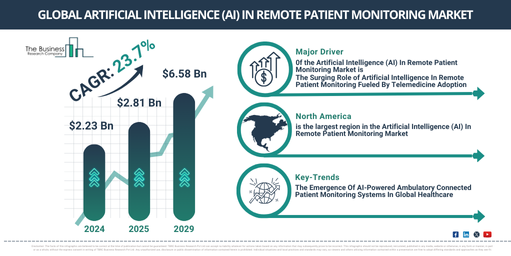
    In recent times, the market size for artificial intelligence (AI) in remote patient monitoring has experienced a phenomenal growth. It’s predicted that the growth will rise from $2.23 billion in 2024 to $2.81 billion in 2025, boasting a compound annual growth rate (CAGR) of 26.0%. The historical growth can be traced back to factors such as the surge in chronic diseases, advancement in data security, the development of AI-based applications aimed at boosting patient engagement, incorporation of electronic health records (EHR), and the increasing need to cut down healthcare expenses.

    What Is the Forecast for the Artificial Intelligence (AI) In Remote Patient Monitoring Market Size Through 2029?

    The market size of artificial intelligence (AI) in remote patient monitoring is predicted to experience remarkable growth over the years to come. It is anticipated to expand to $6.58 billion by 2029, with a compound annual growth rate (CAGR) of 23.7%. This projected rise in the upcoming period can be linked to global health issues, support from regulatory bodies, the ongoing advancement of AI-based diagnostic tools, telehealth implementation, and potential growth in predictive analytics. The forecast period will also see major trends such as wearable technology, advancements in AI algorithms and machine learning methods, cybersecurity and data protection, as well as individualized medicine and treatment strategies.

    Download The Free Sample Report Here:

    https://www.thebusinessresearchcompany.com/sample.aspx?id=13791&type=smp

    What are the Key Market Players in Artificial Intelligence (AI) In Remote Patient Monitoring Market and How They’re Evolving?

    Major companies operating in the artificial intelligence (AI) in remote patient monitoring market report are Medtronic plc, Siemens Healthineers, Koninklijke Philips N.V., GE Healthcare, DexCom Inc, Cerner Corporation, Infosys BPM, Tunstall Healthcare, Connect America LLC, American Well, Biofourmis, Tempus, Merative L.P., Vivify Health, Clarify Health Solutions, Current Health, BioIntelliSense, Preventice Solutions, AiCure LLC, Orbita, MobileHelp, EarlySense, Gyant, Myia Labs, Sentrian, Biobeat, ChroniSense Medical Ltd., Somatix Inc., Twistle, HealthWatch Technologies

    What Are the Primary Growth Drivers in the Artificial Intelligence (AI) In Remote Patient Monitoring Market?

    The surge in telemedicine usage is anticipated to fuel the expansion of artificial intelligence (AI) in the remote patient monitoring market in the forthcoming years. Telemedicine involves the employment of telecommunications technology, such as online messaging, phone and video calls, to deliver medical services from distance. Telemedicine, when paired with AI in remote patient monitoring, examines the data in real time, recognizing minute variations and notifying healthcare providers of potential problems before they escalate into emergencies. For example, in a 2022 study conducted by Rock Health, a non-profit organization based in the US, it was found that in February 2023, 80% of the participants reported having utilized telemedicine services at least once in their life, marking an 8% increase from the previous 72% in 2021. As a result, the widespread uptake of telemedicine is expected to boost the evolution of AI in the remote patient monitoring market.

    Request For A Customized Report:

    https://www.thebusinessresearchcompany.com/customise?id=13791&type=smp

    What Are the Leading Segments in the Global Artificial Intelligence (AI) In Remote Patient Monitoring Industry?

    The artificial intelligence (AI) in remote patient monitoring market covered in this report is segmented –

    1) By Solution: Software, Hardware, Services

    2) By Product: Vital Monitors, Special Monitors, Other Products

    3) By Technology: Natural Language Processing, Machine Learning, Querying Method, Speech Recognition

    4) By Application: Diabetes, Respiratory Issues, Weight Management And Fitness Monitoring, Cancer, Dehydration, Cardiovascular Diseases, Sleep Disorder, Viral Infection, Other Applications

    Subsegments:

    1) By Software: Predictive Analytics, Data Management, Monitoring Platforms, Mobile Applications

    2) By Hardware: Wearable Devices, Sensors, Medical Devices

    3) By Services: Implementation Services, Training And Education Services, Support And Maintenance Services

    What Are the Key Market Trends in the Artificial Intelligence (AI) In Remote Patient Monitoring Industry?

    The artificial intelligence (AI) in remote patient monitoring market is experiencing shifts as important players, focus on melding AI with wearable devices—a strategy intended to provide an edge in a competitive market and enhance healthcare services. Specifically, they are bringing into play AI-enabled ambulatory patient monitoring systems, allowing healthcare professionals to monitor patients’ health indicators persistently and in real-time. An illustration of this is from October 2023, when India’s medical equipment producer, Dozee, introduced the ‘Dozee Pro Ex;’ a groundbreaking ambulatory patient monitoring system crafted for a global customer base. A product of perfection engineered in India, it integrates wearable wireless sensors that continuously monitor essential parameters such as ECG rhythm, blood pressure, heart rate, oxygen saturation, respiratory rate, and temperature. The ‘Dozee Pro Ex’ stands out with its AI-run early warning system, set up to analyze trends in vital parameters, and provide timely notifications of potential health deteriorations. This revolutionary product is poised to reshape conventional healthcare by providing around-the-clock monitoring options for patients regardless of their location—be it a hospital bed, healthcare facility, or their residence.

    Access The Full Report Here:

    https://www.thebusinessresearchcompany.com/report/artificial-intelligence-ai-in-remote-patient-monitoring-global-market-report

    What Is the Regional Outlook for the Artificial Intelligence (AI) In Remote Patient Monitoring Market?

    North America was the largest region in the artificial intelligence (AI) in remote patient monitoring market in 2024. Asia-Pacific is expected to be the fastest-growing region in the forecast period. The regions covered in the artificial intelligence (AI) in remote patient monitoring market report are Asia-Pacific, Western Europe, Eastern Europe, North America, South America, Middle East, Africa.

    Purchase The Full Report Today:

    https://www.thebusinessresearchcompany.com/purchaseoptions.aspx?id=13791

    This Report Delivers Insight On:

    1. How big is the artificial intelligence (ai) in remote patient monitoring market, and how is it changing globally?

    2. Who are the major companies in the artificial intelligence (ai) in remote patient monitoring market, and how are they performing?

    3. What are the key opportunities and risks in the artificial intelligence (ai) in remote patient monitoring market right now?

    4. Which products or customer segments are growing the most in the artificial intelligence (ai) in remote patient monitoring market?

    5. What factors are helping or slowing down the growth of the artificial intelligence (ai) in remote patient monitoring market?

    About The Business Research Company:

    With over 15000+ reports from 27 industries covering 60+ geographies, The Business Research Company has built a reputation for offering comprehensive, data-rich research and insights. Armed with 1,500,000 datasets, the optimistic contribution of in-depth secondary research, and unique insights from industry leaders, you can get the information you need to stay ahead in the game.

    Get in touch with us:

    The Business Research Company: https://www.thebusinessresearchcompany.com/

    Americas +1 310-496-7795

    Asia +44 2071930708

    Europe +44 7882 955267

    Email us at info@tbrc.info

    Follow us on:

    LinkedIn: https://in.linkedin.com/company/the-business-research-company

    YouTube: https://www.youtube.com/channel/UC24_fI0rV8cR5DxlCpgmyFQ

    Global Market Model: https://www.thebusinessresearchcompany.com/global-market-model
  • Digital Genome Forecast Report – Designed for Decision Makers and Product Teams

    Digital Genome Forecast Report – Designed for Decision Makers and Product Teams

    Claim your 30% discount on Global Market Reports with code ONLINE30. Limited time only.

    What Is the Growth Rate of the Digital Genome Market?

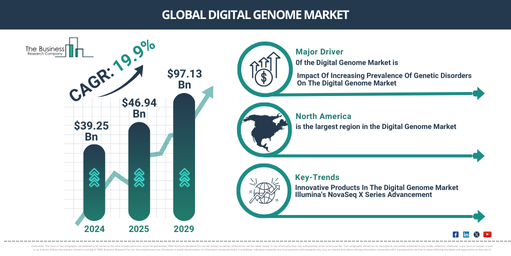
    The size of the digital genome market has seen a swift expansion in recent times. A rise from $39.25 billion in 2024 to $46.94 billion in 2025 is projected, exhibiting a compound annual growth rate (CAGR) of 19.6%. Factors such as increased finances for genomics, decrease in DNA sequencing costs and its rapid process, the introduction of fresh competitors and startups in emerging markets, a surge in drug discoveries, and the expansion of the biotech sector can be attributed to the substantial growth during the historical period.

    What Growth Rate Is Forecasted for the Digital Genome Market by 2029?

    In the coming years, the digital genome market size is anticipated to experience swift expansion. It is forecasted to surge to $97.13 billion by 2029, growing at a compound annual growth rate (CAGR) of 19.9%. The expected growth during the projection period is largely attributed to the growing occurrence of genetic disorders, increased research and development in digital genome, the increased use of personalized medicine, advancements in biotechnology, and the mounting prevalence of chronic diseases. Key trends for the forecast period encompass the escalating adoption of next-generation sequencing technologies, advanced technological developments, the widespread use of microorganisms in the diagnostics sector, the increasing need for personalized medication, and the accelerated adoption of digital genomic technology in hospitals and clinics.

    Download The Free Sample Report Here:

    https://www.thebusinessresearchcompany.com/sample.aspx?id=14086&type=smp

    Which Key Companies Are Shaping the Future of the Digital Genome Market?

    Major companies operating in the digital genome market are Roche Holding AG, Thermo Fisher Scientific Inc., GE HealthCare Technologies Inc., Quest Diagnostics, Eurofins Scientific SE, Agilent Technologies Inc., Illumina Inc., bioMerieux SA, PerkinElmer Inc., Bio-Rad Laboratories Inc., Qiagen N.V., BGI Genomics, Myriad Genetics Inc., Foundation Medicine Inc., ArcherDx Inc., Invitae Corporation, Oxford Nanopore Technologies Ltd., Luminex Corporation, GenMark Diagnostics Inc., NanoString Technologies Inc., Pacific Biosciences of California Inc., Genewiz, Inscripta Inc., Genomic Health Inc., Becton Dickinson and Company, GenomeMe, Regeneron Pharmaceuticals Inc.

    Which Factors Are Driving Demand in the Digital Genome Industry?

    The digital genome market is expected to expand due to the rising occurrence of genetic abnormalities. These disorders, brought about by irregularities or mutations in a person’s DNA – the genetic blueprint for body growth and functionality – are typically passed down through generations. Digital genome technologies make it possible to pinpoint these genetic alterations and disparities linked to genetic disorders. Such details facilitate the precise and early detection of these disorders, permitting immediate intervention and management. For example, statistics from the National Library of Medicine revealed in August 2023 that about 1 in 500 African Americans in the United States suffer from the genetic disorder known as sickle cell anemia. Furthermore, approximately 1 in 12 African Americans possesses the autosomal recessive mutation causing the disease, and an estimated 300,000 infants contract sickle cell anemia each year. Owing to these alarming statistics regarding genetic abnormalities, the digital genome market is set to grow significantly.

    Request For A Customized Report:

    https://www.thebusinessresearchcompany.com/customise?id=14086&type=smp

    How Is the Digital Genome Market Segmented by Several Divisions?

    The digital genome market covered in this report is segmented –

    1) By Type: Sequencing And Analyzer Instruments, Data Analysis And Management Tools

    2) By Application: Diagnostics, Agriculture And Animal Research, Personalized Medicine, Drug Discovery, Treatment Analysis

    3) By End User: Research Centers And Government Institutes, Academic Institutions, Pharmaceutical And Biotechnology Industries, Hospitals, Diagnostic Centers

    Subsegments:

    1) By Sequencing And Analyzer Instruments: Next-Generation Sequencing (NGS) Systems, Sanger Sequencing Systems, Single-Cell Sequencing Instruments, Third-Generation Sequencing Instruments

    2) By Data Analysis And Management Tools: Bioinformatics Software, Data Management Platforms, Cloud-Based Analysis Solutions, Workflow Management Tools

    What are the Emerging Market Trends Driving the Growth of the Digital Genome Industry?

    Key enterprises in the digital genome industry are advancing with novel products like the NovaSeq X Series to enhance disease comprehension and ultimately revolutionize patient healthcare. The NovaSeq X Series encompasses the NovaSeq X and NovaSeq X Plus devices, with the latter capable of performing over 128 genome sequencing per run and over 20,000 whole genomes annually. For example, Illumina, Inc., a biotech corporation based in the US, unveiled the NovaSeq X Series in September 2022, marking a significant leap in whole-genome sequencing technology. This system integrates cost-efficiency, simplified informatics, operational ease, sustainability improvements, and world-class support. It further facilitates comprehensive and more profound sequencing, thereby enabling users to upscale applications including more samples and efficient data analysis. The NovaSeq X Series is engineered to be the most powerful and cost-effective sequencing system, featuring enhanced reagent stability and swift data transfers due to optimized genomics data compression. The system is intentionally built for better sustainability, minimizing the data footprint that cuts down on storage and energy costs.

    Access The Full Report Here:

    https://www.thebusinessresearchcompany.com/report/digital-genome-global-market-report

    Which Regions Are Driving Growth in the Digital Genome Market?

    North America was the largest region in the digital genome market in 2024. Asia-Pacific is expected to be the fastest-growing region in the forecast period. The regions covered in the digital genome market report are Asia-Pacific, Western Europe, Eastern Europe, North America, South America, Middle East, Africa.

    Purchase The Full Report Today:

    https://www.thebusinessresearchcompany.com/purchaseoptions.aspx?id=14086

    This Report Delivers Insight On:

    1. How big is the digital genome market, and how is it changing globally?

    2. Who are the major companies in the digital genome market, and how are they performing?

    3. What are the key opportunities and risks in the digital genome market right now?

    4. Which products or customer segments are growing the most in the digital genome market?

    5. What factors are helping or slowing down the growth of the digital genome market?

    About The Business Research Company:

    With over 15000+ reports from 27 industries covering 60+ geographies, The Business Research Company has built a reputation for offering comprehensive, data-rich research and insights. Armed with 1,500,000 datasets, the optimistic contribution of in-depth secondary research, and unique insights from industry leaders, you can get the information you need to stay ahead in the game.

    Get in touch with us:

    The Business Research Company: https://www.thebusinessresearchcompany.com/

    Americas +1 310-496-7795

    Asia +44 2071930708

    Europe +44 7882 955267

    Email us at info@tbrc.info

    Follow us on:

    LinkedIn: https://in.linkedin.com/company/the-business-research-company

    YouTube: https://www.youtube.com/channel/UC24_fI0rV8cR5DxlCpgmyFQ

    Global Market Model: https://www.thebusinessresearchcompany.com/global-market-model
  • Central Precocious Puberty Market Outlook 2025 – Insights for Executive and Strategic Planning

    Central Precocious Puberty Market Outlook 2025 – Insights for Executive and Strategic Planning

    Claim your 30% discount on Global Market Reports with code ONLINE30. Limited time only.

    How Has the Central Precocious Puberty Market Grown from 2024 to 2025?

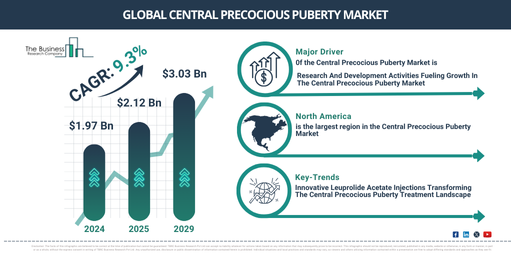
    Over the past few years, there has been a considerable increase in the market size of central precocious puberty. The market value, which is projected to be $1.97 billion in 2024, is expected to escalate to $2.12 billion in 2025, boasting a compound annual growth rate (CAGR) of 7.8%. This significant growth during the historical period can be accredited to the rising incidence of central precocious puberty, better treatment strategies, influence of environmental factors, expanded pediatric endocrinology services, heightened parental concerns leading to medical consultations, and patient advocacy initiatives.

    What Growth Rate Is Anticipated for the Central Precocious Puberty Market in the Coming Years?

    Predictions for the central precocious puberty market size indicate robust expansion in the upcoming years, with estimates predicting growth up to $3.03 billion in 2029, reflecting a compound annual growth rate (CAGR) of 9.3%. This projected growth for the forecast period is primarily due to the integration of pediatric healthcare and a trend towards personalized healthcare, along with initiatives focused on parent education and awareness, the development of longer-lasting treatment options, and early diagnosis and intervention. Other notable trends during the forecast period encompass long-lasting formulations, patient-focused practices, telehealth and remote supervision, individualized treatments, collaborative healthcare models, and the use of digital health instruments for monitoring.

    Download The Free Sample Report Here:

    https://www.thebusinessresearchcompany.com/sample.aspx?id=13184&type=smp

    Who Are the Leading Companies in the Central Precocious Puberty Market?

    Major companies operating in the central precocious puberty market report are Cipla Limited, Cigna Group, Pfizer Inc., AbbVie Inc., Sanofi S.A., AstraZeneca PLC, Abbott Laboratories, Molina Healthcare Inc., Sun Pharmaceutical Industries Ltd., Ipsen Ltd., Ferring Pharmaceuticals Private Limited, Endo Pharmaceuticals Inc., Amneal Pharmaceuticals Inc., Piramal Enterprises Limited, Livzon Pharmaceutical Group Inc., Salvavidas Pharmaceutical Pvt. Ltd., Actiza Pharmaceutical Private Limited, The Bachem Group, Arbor Pharmaceuticals LLC, Genentech Inc., Antares Pharma Inc., Tolmar Pharmaceuticals Inc., Debiopharm Group, AmbioPharm Inc., Foresee Pharmaceuticals Co. Ltd., Manus Aktteva Biopharma LLP, Midas Pharma GmbH, LGM Pharma LLC, Varian Pharmed Group, Shenzhen JYMed Technology Co. Ltd.

    What Are the Key Drivers of the Central Precocious Puberty Market?

    The central precocious puberty market’s forward momentum is predicted to be driven by a surge in research and development activities. These activities, encompassing the formation of new knowledge, services, products, or procedures or the advancement of existing ones, play a fundamental role in central precocious puberty (CPP) by expanding the comprehension of the ailment, refining diagnosis, and treatment methodologies, and enhancing general care for individuals with central precocious puberty. For example, in August 2023, Eurostat, a non-profit organization based in Luxembourg, disclosed that the European government set aside about $126,153 million (€117,368 million) for R&D in 2022 which is a 5.4% increase compared to the $119,730 million (€111,393 million) allocated in 2021. Thus, the amplified research and development efforts are fueling the development of the central precocious puberty market.

    Central Precocious Puberty Market Driver: Amplified Healthcare Expenditure Bolstering Central Precocious Puberty Market Growth


    Request For A Customized Report:

    https://www.thebusinessresearchcompany.com/customise?id=13184&type=smp

    What Are the Key Market Segments in the Central Precocious Puberty Industry?

    The central precocious puberty market covered in this report is segmented –

    1) By Drug: Leuprolide Acetate, Triptorelin, Histrelin Acetate, Nafarelin

    2) By Route Of Administration: Parenteral, Subcutaneous, Intramuscular, Other Routes Of Administrations

    3) By Distribution Channel: Hospital Pharmacy, Retail Pharmacy, Online Pharmacy

    4) By End-Users: Hospitals, Specialty Clinics, Homecare, Other End-Users

    Subsegments:

    1) By Leuprolide Acetate: Injectable Formulations, Depot Formulations

    2) By Triptorelin: Injectable Formulations, Long-acting Formulations

    3) By Histrelin Acetate: Implant Formulations, Injectable Formulations

    4) By Nafarelin: Nasal Spray Formulations, Injectable Formulations

    What Are the Latest Trends in the Central Precocious Puberty Market?

    Leading businesses in the central precocious puberty market are concentrating their efforts on creating unique injections like leuprolide acetate injections to secure a competitive advantage. These injections are artificial hormones that function similar to natural hormones, treating a variety of ailments including advanced prostate cancer and early onset of puberty. For example, in November 2022, India’s pharmaceutical firm, Cipla Limited, introduced the Leuprolide Acetate Injection Depot 22.5 mg, a treatment for central precocious puberty and advanced prostate cancer. This depot is a single-dose injection mechanism containing 22.5 mg of leuprolide acetate, sufficient for three months of therapy. The product is supplied as lyophilized microspheres in a single-use vial, forming part of a kit that incorporates a convenient MIXJECT transfer system and a pre-loaded syringe containing 2 mL of a 0.8% mannitol solution.

    Access The Full Report Here:

    https://www.thebusinessresearchcompany.com/report/central-precocious-puberty-global-market-report

    What Are the Key Regional Markets in the Central Precocious Puberty Industry?

    North America was the largest region in the central precocious puberty market in 2024. The regions covered in the central precocious puberty market report are Asia-Pacific, Western Europe, Eastern Europe, North America, South America, Middle East, Africa

    Purchase The Full Report Today:

    https://www.thebusinessresearchcompany.com/purchaseoptions.aspx?id=13184

    This Report Delivers Insight On:

    1. How big is the central precocious puberty market, and how is it changing globally?

    2. Who are the major companies in the central precocious puberty market, and how are they performing?

    3. What are the key opportunities and risks in the central precocious puberty market right now?

    4. Which products or customer segments are growing the most in the central precocious puberty market?

    5. What factors are helping or slowing down the growth of the central precocious puberty market?

    About The Business Research Company:

    With over 15000+ reports from 27 industries covering 60+ geographies, The Business Research Company has built a reputation for offering comprehensive, data-rich research and insights. Armed with 1,500,000 datasets, the optimistic contribution of in-depth secondary research, and unique insights from industry leaders, you can get the information you need to stay ahead in the game.

    Get in touch with us:

    The Business Research Company: https://www.thebusinessresearchcompany.com/

    Americas +1 310-496-7795

    Asia +44 2071930708

    Europe +44 7882 955267

    Email us at info@tbrc.info

    Follow us on:

    LinkedIn: https://in.linkedin.com/company/the-business-research-company

    YouTube: https://www.youtube.com/channel/UC24_fI0rV8cR5DxlCpgmyFQ

    Global Market Model: https://www.thebusinessresearchcompany.com/global-market-model
  • Difficile-Associated Diarrhea Treatment Market Outlook 2025 – Insights for Executive and Strategic Planning

    Difficile-Associated Diarrhea Treatment Market Outlook 2025 – Insights for Executive and Strategic Planning

    Claim your 30% discount on Global Market Reports with code ONLINE30. Limited time only.

    How Has the Difficile-Associated Diarrhea Treatment Market Grown from 2024 to 2025?

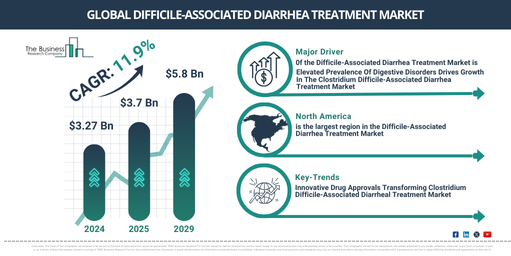
    In recent times, the market size of treatments for difficile-associated diarrhea has seen a swift increase. Projected to expand from $3.27 billion in 2024 to $3.7 billion in 2025, it anticipates a compound annual growth rate (CAGR) of 13.2%. The market’s growth during the historical period is attributable to factors such as the widespread occurrence of hospital-acquired infections, an older population, a rise in cases of clostridium difficile infections, and increasing urbanization.

    What Growth Rate Is Anticipated for the Difficile-Associated Diarrhea Treatment Market in the Coming Years?

    Over the next few years, the market for treatment of difficile-associated diarrhea is poised for swift expansion. Predictions suggest it will escalate to $5.8 billion by 2029, with a compound annual growth rate (CAGR) of 11.9%. This projected growth can be ascribed to several factors such as patient awareness, the emergence of new therapeutic strategies, global health efforts, increasing demand for antimicrobial therapy, climate change, and a rise in self-administered treatments. The future market is expected to be shaped by trends such as individualized care, the use of telemedicine for follow-up, research into innovative therapies, and advancements in diagnostic techniques.

    Download The Free Sample Report Here:

    https://www.thebusinessresearchcompany.com/sample.aspx?id=12930&type=smp

    Who Are the Leading Companies in the Difficile-Associated Diarrhea Treatment Market?

    Major companies operating in the difficile-associated diarrhea treatment market are Pfizer Inc., F. Hoffmann-La Roche AG, Merck & Co. Inc., AbbVie Inc., Novartis AG, Sanofi S.A., Bristol-Myers Squibb Company, AstraZeneca PLC, Abbott Laboratories, GlaxoSmithKline PLC, Takeda Pharmaceutical Company Limited, Boehringer Ingelheim International GmbH, Teva Pharmaceutical Industries Ltd., Mylan N.V., Astellas Pharma Inc., Bausch Health Companies Inc., UCB S.A., Sun Pharmaceutical Industries Ltd., Perrigo Company PLC, Dr. Reddy’s Laboratories Ltd., Aurobindo Pharma Limited, Cipla Limited, Ferring B.V., Hikma Pharmaceuticals PLC, Amneal Pharmaceuticals LLC, Zydus Lifesciences Ltd., Lupin Limited, Torrent Pharmaceuticals Ltd., Salix Pharmaceuticals Inc., Almirall S.A.

    What Are the Key Drivers of the Difficile-Associated Diarrhea Treatment Market?

    The escalating rates of digestive disorders are anticipated to fuel the expansion of the difficile-associated diarrhea treatment market. Digestive disorders comprise a collection of medical ailments hampering the regular functionality of the digestive system tasked with the breakdown of food and nutrient absorption. Infections from Clostridium difficile, or C. diff, have been linked to these disorders, specifically diarrhea and colitis. This bacterium can invade the bowel leading to the production of toxins that cause inflammation and damage to the intestinal lining. The rise in diagnoses for digestive disorders leads to an equally growing demand for effective treatments for symptoms such as difficile-associated diarrhea. For example, Crohn’s and Colitis Canada, a non-profit organization based in Canada, estimated in June 2023, that over 322,600 Canadians were living with inflammatory bowel diseases (IBD) in 2023, roughly 0.82% of the population. Moreover, predictions further estimate that around 470,000 Canadians will live with IBD by 2035. This accounts for about 1.1% of the population or 1 out of every 91 people in the country. Thus, the escalating prevalence of digestive disorders is predicted to stimulate the growth of the difficile-associated diarrhea treatment market.

    Difficile-Associated Diarrhea Treatment Market Driver: Influence Of Clostridium Difficile Infection On The Difficile-Associated Diarrhea Treatment Market


    Request For A Customized Report:

    https://www.thebusinessresearchcompany.com/customise?id=12930&type=smp

    What Are the Key Market Segments in the Difficile-Associated Diarrhea Treatment Industry?

    The difficile-associated diarrhea treatment market covered in this report is segmented –

    1) By Type: Narrow Spectrum Antibiotics, Broad Spectrum Antibiotics

    2) By Distribution Channel: Hospital Pharmacy, Online Pharmacy, Retail Pharmacy

    3) By End User: Hospitals, Homecare, Specialty Clinics, Other End-Users

    Subsegments:

    1) By Narrow Spectrum Antibiotics: Vancomycin, Fidaxomicin, Metronidazole

    2) By Broad Spectrum Antibiotics: Ampicillin, Ciprofloxacin, Clindamycin

    What Are the Latest Trends in the Difficile-Associated Diarrhea Treatment Market?

    Key players in the difficile-associated diarrhea treatment market are dedicating their efforts to the creation of innovative drugs and securing approval for them to ensure their stand in the market stays strong. Rising drug approvals in this sector are often due to the demand for more robust and safer treatments, like SER-109, which carves a fresh path in treating difficile-associated diarrhea. For example, in April 2023, the U.S. Food and Drug Administration, an American federal agency, gave their approval for SER-109. A product of Seres Therapeutics, a biotech company from the US, SER-109 is the first fecal microbiota product that can be orally administered, and is aimed at preventing a reoccurrence of Clostridioides difficile diarrhea. SER-109, a live, spore-form probiotic taken orally via a capsule, consists of Firmicutes bacteria typically found in the human gut. By helping reestablish bacterial balance in the stomach, SER-109 can prevent C. diff infections from coming back. This type of medication is effective in stopping the reoccurrence of Clostridioides difficile (C. diff) infection in individuals 18 years or older who have undergone antibacterial treatment.

    Access The Full Report Here:

    https://www.thebusinessresearchcompany.com/report/difficile-associated-diarrhea-treatment-global-market-report

    What Are the Key Regional Markets in the Difficile-Associated Diarrhea Treatment Industry?

    North America was the largest region in the difficile-associated diarrhea treatment market in 2024. The regions covered in difficile-associated diarrhea treatment market report are Asia-Pacific, Western Europe, Eastern Europe, North America, South America, Middle East and Africa.

    Purchase The Full Report Today:

    https://www.thebusinessresearchcompany.com/purchaseoptions.aspx?id=12930

    This Report Delivers Insight On:

    1. How big is the difficile-associated diarrhea treatment market, and how is it changing globally?

    2. Who are the major companies in the difficile-associated diarrhea treatment market, and how are they performing?

    3. What are the key opportunities and risks in the difficile-associated diarrhea treatment market right now?

    4. Which products or customer segments are growing the most in the difficile-associated diarrhea treatment market?

    5. What factors are helping or slowing down the growth of the difficile-associated diarrhea treatment market?

    About The Business Research Company:

    With over 15000+ reports from 27 industries covering 60+ geographies, The Business Research Company has built a reputation for offering comprehensive, data-rich research and insights. Armed with 1,500,000 datasets, the optimistic contribution of in-depth secondary research, and unique insights from industry leaders, you can get the information you need to stay ahead in the game.

    Get in touch with us:

    The Business Research Company: https://www.thebusinessresearchcompany.com/

    Americas +1 310-496-7795

    Asia +44 2071930708

    Europe +44 7882 955267

    Email us at info@tbrc.info

    Follow us on:

    LinkedIn: https://in.linkedin.com/company/the-business-research-company

    YouTube: https://www.youtube.com/channel/UC24_fI0rV8cR5DxlCpgmyFQ

    Global Market Model: https://www.thebusinessresearchcompany.com/global-market-model