Category: HealthcareServices

  • Critical Market Drivers Shaping the Outlook for Spinal Muscular Atrophy Market from 2025-2034: Impact Of Rising Prevalence Of Rare Genetic Diseases On the Market

    Critical Market Drivers Shaping the Outlook for Spinal Muscular Atrophy Market from 2025-2034: Impact Of Rising Prevalence Of Rare Genetic Diseases On the Market

    Stay ahead with our updated market reports featuring the latest on tariffs, trade flows, and supply chain transformations.

    What is the Projected CAGR for the Spinal Muscular Atrophy Market Size from 2025 to 2034?

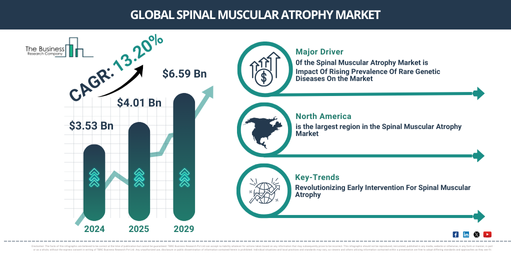
    The market for spinal muscular atrophy has experienced swift expansion in recent times. Its growth is projected to increase from $3.53 billion in 2024 to $4.01 billion in 2025, marking a compound annual growth rate (CAGR) of 13.5%. The notable growth during the historical period is due to factors such as enhanced diagnosis and early detection efforts, an increasing occurrence of rare genetic diseases, advancements in healthcare infrastructure, support from government and regulatory bodies, and the rise in unfulfilled healthcare requirements.

    Anticipated in the coming years is a swift upsurge in the market size of spinal muscular atrophy. A compound annual growth rate (CAGR) of 13.2% is forecasted, propelling the market to reach $6.59 billion by 2029. The projected growth within this period can be credited to factors like enhanced awareness and diagnosis rates, improved accessibility of treatment, rising investments in healthcare regarding rare diseases, a conducive regulatory climate, and escalating healthcare expenditure. Key trends predicted for the forecast period involve progress in oral therapies, the application of gene therapy, advancements in drug delivery technology, the incorporation of artificial intelligence in the development of SMA treatment, and gene editing technologies.

    Download a free sample to assess the report’s scope and structure:

    https://www.thebusinessresearchcompany.com/sample.aspx?id=20965&type=smp

    What Are the Core Growth Drivers Propelling the Spinal Muscular Atrophy Market Forward?

    The growth of the spinal muscular atrophy market is set to be largely influenced by the increased occurrence of uncommon genetic illnesses. These disorders, which only affect a small demographic due to gene mutations, often lead to significant, ongoing health challenges. The upsurge in the occurrence of such rare genetic conditions can be linked to enhanced diagnostic tools, a greater public consciousness, and easier access to genetic testing, which contribute to an increased number of diagnosed and reported cases. Spinal muscular atrophy (SMA) represents an example of the complexities and potential associated with understanding inherited diseases. Furthering the investigation into genetic disorders is therefore of vital importance. For instance, a report from the Office for National Statistics, a UK government department, reveals that as of July 2023, SMA, which affects between 1 in 10,000 and 20,000 live births with over 95% of sufferers being homozygous for SMN1 deletion, has been precisely recorded due to genetic testing of the SMN1 gene. As such, the increasing occurrence of rare genetic conditions is set to fuel the growth of the spinal muscular atrophy market.

    What Segment Types Define the Spinal Muscular Atrophy Market Structure?

    The spinal muscular atrophy market covered in this report is segmented –

    1) By Type: Type 1 (Severe), Type 2 (Intermediate), Type 3 (Mild), Type 4 (Adult)

    2) By Age: Pediatric, Adults

    3) By Treatment: Drug Therapy, Gene Therapy

    4) By End User: Hospital pharmacy, Online pharmacy, Retail pharmacy

    Subsegments:

    1) By Type 1 (Severe): Infantile-Onset SMA, Severe Progressive SMA

    2) By Type 2 (Intermediate): Early-Onset SMA, Non-progressive SMA

    3) By Type 3 (Mild): Juvenile-Onset SMA, Mild Progressive SMA

    4) By Type 4 (Adult): Adult-Onset SMA, Late-Onset SMA

    Request customized data on this market:

    https://www.thebusinessresearchcompany.com/customise?id=20965&type=smp

    Which Geographic Areas Hold the Strongest Growth Potential in the Spinal Muscular Atrophy Market?

    North America was the largest region in the spinal muscular atrophy market in 2024. Asia-Pacific is expected to be the fastest-growing region in the forecast period. The regions covered in the spinal muscular atrophy market report are Asia-Pacific, Western Europe, Eastern Europe, North America, South America, Middle East, Africa.

    What Key Market Trends and Innovations Are Shaping the Future of the Spinal Muscular Atrophy Industry?

    Notable businesses in the spinal muscular atrophy industry are working on the creation of novel items like dry syrup to provide better medication adherence and simplify administration for pediatric patients and others who find it challenging to swallow. Dry syrup refers to a powdery drug that is blended with water prior to consumption. This medication is primarily prescribed to infants and patients having trouble swallowing pills or capsules. In September 2024, for example, the Japan-centric pharmaceutical firm Chugai Pharmaceutical Co., Ltd. received authorization from the Ministry of Health, Labour and Welfare of Japan for its expanded drug indication, Evrysdi (risdiplam). This approval makes it possible for the drug to be used in unsymptomatic spinal muscular atrophy (SMA) cases and permits dosage to infants under two months old. This key development allows the commencement of treatment before the manifestation of symptoms, potentially boosting therapeutic results for affected babies. The approval was backed by findings from the RAINBOWFISH research which evaluated the safety and effectiveness of Evrysdi in infants diagnosed with SMA who do not have symptoms yet. Results indicated that the infants who received the treatment reached developmental milestones such as unsupported sitting and enhanced motor abilities by 12 months. This emphasizes the drug’s potential to alter the progression of this disease if given early.

    View the full report here:

    https://www.thebusinessresearchcompany.com/report/spinal-muscular-atrophy-global-market-report

    What Is the Definition of the Spinal Muscular Atrophy Market?

    Spinal muscular atrophy (SMA) is a genetic neuromuscular disorder characterized by the progressive loss of motor neurons in the spinal cord, leading to muscle weakness and atrophy. It is caused by mutations in the SMN1 gene, resulting in insufficient survival motor neuron (SMN) protein. SMA affects voluntary muscle movements, particularly those involved in walking, swallowing, and breathing.

    Purchase the full report and get a swift delivery:

    https://www.thebusinessresearchcompany.com/purchaseoptions.aspx?id=20965

    About The Business Research Company:

    With over 15000+ reports from 27 industries covering 60+ geographies, The Business Research Company has built a reputation for offering comprehensive, data-rich research and insights. Armed with 1,500,000 datasets, the optimistic contribution of in-depth secondary research, and unique insights from industry leaders, you can get the information you need to stay ahead in the game.

    Get in touch with us:

    The Business Research Company: https://www.thebusinessresearchcompany.com/

    Americas +1 3156230293

    Asia +44 2071930708

    Europe +44 2071930708

    Email us at info@tbrc.info

    Follow us on:

    LinkedIn: https://in.linkedin.com/company/the-business-research-company

    YouTube: https://www.youtube.com/channel/UC24_fI0rV8cR5DxlCpgmyFQ

    Global Market Model: https://www.thebusinessresearchcompany.com/global-market-model
  • Small Lymphocytic Lymphoma Growth Trajectory: Key Forecasts and Strategic Insights

    Small Lymphocytic Lymphoma Growth Trajectory: Key Forecasts and Strategic Insights

    Stay ahead with our updated market reports featuring the latest on tariffs, trade flows, and supply chain transformations.

    How Fast Is The Small Lymphocytic Lymphoma Market Expected to Grow Between 2025 And 2029?

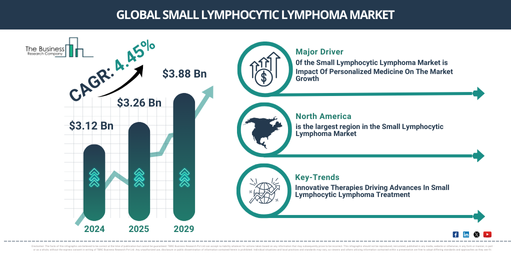
    In recent times, the market size for small lymphocytic lymphoma has experienced a steady growth. Projection suggests an expansion from $3.12 billion in 2024 to $3.26 billion in 2025, which translates to a compound annual growth rate (CAGR) of 4.71%. Factors that contributed to this growth in the past include enhanced understanding of the disease and its early detection, gaining regulatory approvals, extending clinical trials, heighted awareness about small lymphocytic lymphoma, and a rise in the number of individuals participating in clinical trials.

    The market for small lymphocytic lymphoma is projected to experience consistent growth in the coming years, increasing to $3.88 billion by 2029, with a compound annual growth rate (CAGR) of 4.45%. This projected growth within the forecast period is associated with factors such as an increased emphasis on immunotherapies, expanded research into targeted therapies, the growth of precision medicine, a rise in investment in cancer research, as well as an increase in clinical trials. Moreover, the forecast period will see trends such as advancements in targeted therapies, breakthroughs in immunotherapy, integrated treatments, the adoption of digital health solutions, and progress in supportive care therapies.

    Download a free sample to assess the report’s scope and structure:

    https://www.thebusinessresearchcompany.com/sample.aspx?id=20957&type=smp

    Which Factors and External Forces Are Driving Demand in the Small Lymphocytic Lymphoma Market?

    The surge in personalized healthcare is forecasted to boost the expansion of the small lymphocytic lymphoma market. This healthcare approach tailors interventions and medical choices based on a person’s unique genetic, environmental and lifestyle elements. Developments in genomics, biotechnology, and data analytics, which allow for more accurate, efficient, and customized treatments, fuel the progress of personalized medicine. Small lymphocytic lymphoma (SLL) bolsters the advancement of this personalized approach by offering valuable data about specific genetic mutations and biomarkers, paving the way for tailored therapies and bespoke treatment plans. To illustrate, in February 2024, the Personalized Medicine Coalition, a non-profit organization based in the US reported that FDA, in 2023, sanctioned 16 new treatments personalized for patients suffering from rare diseases. This marked a considerable growth from the six authorized in 2022. As a result, the rise in personalized medicine is set to catalyze the expansion of the small lymphocytic lymphoma market.

    Which Segments in the Small Lymphocytic Lymphoma Offer the Most Growth?

    The small lymphocytic lymphoma market covered in this report is segmented –

    1) By Product: Capsules, Tablets, Injections, Other Products

    2) By Route of Administration: Oral, Parenteral, Other Route of Administrations

    3) By Treatment: Chemotherapy, Targeted Therapy, Stem Cell Transplant, Monoclonal antibody therapy, Other Treatments

    4) By Distribution Channel: Hospital Pharmacy, Retail Pharmacy, Online Pharmacy, Other Distribution Channels

    5) By End-Users: Hospitals, Specialty Clinics, Homecare, Other End Users

    Subsegments:

    1) By Capsules: Oral Chemotherapy Capsules, Targeted Therapy Capsules, Immunomodulatory Capsules

    2) By Tablets: Oral Chemotherapy Tablets, Targeted Therapy Tablets, Immunotherapy Tablets

    3) By Injections: Chemotherapy Injections, Monoclonal Antibody Injections, Immunotherapy Injections, Biologic Injections

    4) By Other Products: Topical Medications, Infusion Therapies, Biosimilars For SLL, Radiopharmaceuticals

    Request customized data on this market:

    https://www.thebusinessresearchcompany.com/customise?id=20957&type=smp

    What Are the Fastest-Growing Geographies in the Small Lymphocytic Lymphoma Market?

    North America was the largest region in the small lymphocytic lymphoma market in 2024. Asia-Pacific is expected to be the fastest-growing region in the forecast period. The regions covered in the small lymphocytic lymphoma market report are Asia-Pacific, Western Europe, Eastern Europe, North America, South America, Middle East, Africa.

    What Are the Strategic Trends Steering the Small Lymphocytic Lymphoma Market Direction?

    Leading businesses in the small lymphocytic lymphoma market are pursuing the production of novel products, such as non-covalent BTK inhibitors, to increase the effectiveness of treatment, combat resistance to current treatments, and boost patient results. Non-covalent BTK inhibitors are a category of medication that reversibly attaches to the Bruton’s tyrosine kinase (BTK) enzyme. They aim at B-cell malignancies while lessening the resistance and side-effects linked to covalent inhibitors. For example, in December 2023, the U.S. Food and Drug Administration (FDA) passed approval of Jaypirca (pirtobrutinib) from Eli Lilly and Company—a pharmaceutical organization based in the U.S. for adults having chronic lymphocytic leukemia or small lymphocytic lymphoma (CLL/SLL). This endorsement is particularly significant due to its emphasis on individuals who have already received a minimum of two therapy lines, which incorporates a Bruton’s Tyrosine Kinase (BTK) inhibitor and a BCL-2 inhibitor. This addresses a key gap in treatment for heavily treated groups. The convenience of oral administration, while retaining strong targeted therapeutic activity, also benefits patients.

    View the full report here:

    https://www.thebusinessresearchcompany.com/report/small-lymphocytic-lymphoma-global-market-report

    What Are the Key Elements That Define the Small Lymphocytic Lymphoma Market?

    Small lymphocytic lymphoma (SLL) is a type of cancer that primarily affects the lymphocytes, a subset of white blood cells, and typically occurs in the lymph nodes. Its purpose of treatment is to control the growth of abnormal lymphocytes, alleviate symptoms, and improve the patient’s quality of life by targeting the cancerous cells with therapies such as chemotherapy, immunotherapy, or targeted treatments.

    Purchase the full report and get a swift delivery:

    https://www.thebusinessresearchcompany.com/purchaseoptions.aspx?id=20957

    About The Business Research Company:

    With over 15000+ reports from 27 industries covering 60+ geographies, The Business Research Company has built a reputation for offering comprehensive, data-rich research and insights. Armed with 1,500,000 datasets, the optimistic contribution of in-depth secondary research, and unique insights from industry leaders, you can get the information you need to stay ahead in the game.

    Get in touch with us:

    The Business Research Company: https://www.thebusinessresearchcompany.com/

    Americas +1 3156230293

    Asia +44 2071930708

    Europe +44 2071930708

    Email us at info@tbrc.info

    Follow us on:

    LinkedIn: https://in.linkedin.com/company/the-business-research-company

    YouTube: https://www.youtube.com/channel/UC24_fI0rV8cR5DxlCpgmyFQ

    Global Market Model: https://www.thebusinessresearchcompany.com/global-market-model
  • Next-Gen Sleep Apnea Diagnostic Systems: Market Forecast, Transformation, and Long-Term Trajectories

    Next-Gen Sleep Apnea Diagnostic Systems: Market Forecast, Transformation, and Long-Term Trajectories

    Stay ahead with our updated market reports featuring the latest on tariffs, trade flows, and supply chain transformations.

    What Are the Key Projections for the CAGR of the Sleep Apnea Diagnostic Systems Market Size From 2025 to 2034?

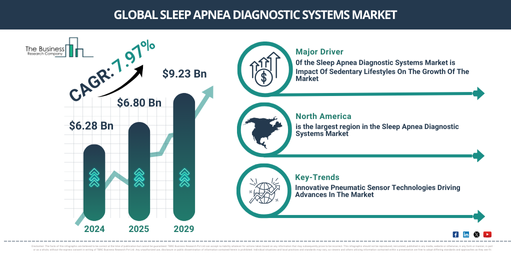
    In recent years, there’s been robust growth in the sleep apnea diagnostic systems market, with its value predicted to increase from $6.28 billion in 2024 to $6.80 billion in 2025, exhibiting a compound annual growth rate (CAGR) of 8.23%. Factors behind this historical growth include heightened awareness around sleep disorders, prevalence of obesity and aging populations, greater use of home sleep testing equipment, favorable healthcare regulations, and rapid expansion of healthcare infrastructure in developing economies.

    The market for sleep apnea diagnostic systems is anticipated to experience significant expansion in the coming years, with a projection to reach $9.23 billion by 2029, growing at a Compound Annual Growth Rate (CAGR) of 7.97%. This projected surge in the forthcoming period is linked to the escalating utilization of home sleep test apparatuses, the rising enlightenment regarding sleep disorders and their subsequent health effects, favourable governmental and insurance policies, an increase in obesity and elderly demographics, and the broadening scope of telemedicine. Emerging trends in the forecast period highlighting the growth comprise the fabrication of easily portable diagnostic devices, the incorporation of cloud-based data management systems, progress in polysomnography technology, the assimilation of smart home ecosystems, advancements in home sleep test devices, and the deployment of Artificial Intelligence for superior data interpretation and diagnosis.

    Download a free sample to assess the report’s scope and structure:

    https://www.thebusinessresearchcompany.com/sample.aspx?id=20956&type=smp

    Which Major Market Drivers Are Expected to Boost the Growth Potential of the Sleep Apnea Diagnostic Systems Market?

    The surge in sedentary lifestyles is anticipated to bolster the growth of the sleep apnea diagnostic systems market. Sedentary lifestyles are defined by extended durations of sitting or lying down and minimal physical activity. This lifestyle is on the rise as a result of factors like growing dependence on technology, urbanization, the quest for convenience, and extended working hours. Diagnostic systems for sleep apnea play a crucial role in managing the health risks associated with a sedentary lifestyle by facilitating early detection and monitoring of sleep disorders. This allows for prompt interventions to enhance sleep quality and control related conditions such as obesity, cardiovascular issues, and fatigue. For example, data from the Australian Institute of Health and Welfare in June 2024 indicated that according to self-reported data from the ABS National Health Survey (NHS) 2022, 83% of adolescents aged 15–17 and nearly four out of ten (37%) adults aged 18–64 did not engage in adequate physical activity to satisfy recommended levels. Further, the Office for National Statistics, a UK-based authority, reported in December 2022 that between April 2021 and March 2022, inactive lifestyle was prevalent among 15.8% of individuals aged 50 to 54, 24.1% of individuals aged 55 to 59, 43.4% of individuals aged 60 to 64, and 89.3% of individuals aged 65 and above. Thus, the rise in sedentary lifestyles is propelling the sleep apnea diagnostic systems market.

    Which Key Market Segments Comprise the Sleep Apnea Diagnostic Systems Market and Drive Its Revenue Growth?

    The sleep apnea diagnostic systems market covered in this report is segmented –

    1) By Product: Polysomnography Devices, Nasal Flow Sensors, Peripheral Capillary Oxygen Saturation, Actigraphy Monitoring Devices

    2) By Technology: Non-Invasive Technology, Invasive Technology, Wearable Technology, Diagnostic Software

    3) By End Users: Home Care Settings, Hospitals, Sleep Centers And Clinics

    Subsegments:

    1) By Polysomnography Devices: Full-Polysomnography Systems, Portable Polysomnography Devices, Wireless Polysomnography Devices

    2) By Nasal Flow Sensors: Single-Channel Nasal Flow Sensors, Multi-Channel Nasal Flow Sensors, Wireless Nasal Flow Sensors

    3) By Peripheral Capillary Oxygen Saturation (SpO2) Monitors: Finger Pulse Oximeters, Wrist Pulse Oximeters, Fingertip Pulse Oximeters

    4) By Actigraphy Monitoring Devices: Wrist-Worn Actigraphs, Chest-Worn Actigraphs, Smartwatch-Based Actigraphy Systems

    Request customized data on this market:

    https://www.thebusinessresearchcompany.com/customise?id=20956&type=smp

    Which Areas Are Leading Regions in the Sleep Apnea Diagnostic Systems Market Expansion Across the Globe?

    North America was the largest region in the sleep apnea diagnostic systems market in 2024. Asia-Pacific is expected to be the fastest-growing region in the forecast period. The regions covered in the sleep apnea diagnostic systems market report are Asia-Pacific, Western Europe, Eastern Europe, North America, South America, Middle East, Africa.

    What Long-Term Trends Are Transforming the Competitive Landscape of the Sleep Apnea Diagnostic Systems Market?

    Key firms in the sleep apnea diagnostic systems industry are prioritizing the creation of innovative technologies like pneumatic sensors to improve the precision, effectiveness, and convenience of sleep apnea detection and monitoring. This not only improves the results for patients but also increases their market presence. These pneumatic sensors track airflow and changes in pressure in the respiratory system to identify unusual breathing patterns, aiding in the diagnosis of sleep apnea. For example, in September 2024, Withings Inc., a consumer electronics company based in France, got clearance from the U.S. Food and Drug Administration for the Sleep Rx Mat. This is a non-contact sleep apnea diagnostic tool engineered to monitor sleep cycles, identify apnea episodes, and offer insightful data to enhance sleep health. This revolutionizing sleep monitoring gadget comes with a pneumatic sensor to monitor respiratory rate, body movement, and ongoing heart rate. Developed as a subtle mat, it requires a one-time installation and blends smoothly under any mattress, eliminating the need for masks or chunky machines. Upon setup, it provides in-depth analyses of sleep cycles, breathing, and heart activity during sleep.

    View the full report here:

    https://www.thebusinessresearchcompany.com/report/sleep-apnea-diagnostic-systems-global-market-report

    How Is the Sleep Apnea Diagnostic Systems Market Conceptually Defined?

    Sleep apnea diagnostic systems refer to medical technologies and devices designed to detect, monitor, and evaluate sleep-related breathing disorders, particularly sleep apnea. It is used for assessing physiological parameters such as airflow, oxygen saturation, heart rate, and brain activity during sleep to identify disruptions, enabling accurate diagnosis and effective management of the condition.

    Purchase the full report and get a swift delivery:

    https://www.thebusinessresearchcompany.com/purchaseoptions.aspx?id=20956

    About The Business Research Company:

    With over 15000+ reports from 27 industries covering 60+ geographies, The Business Research Company has built a reputation for offering comprehensive, data-rich research and insights. Armed with 1,500,000 datasets, the optimistic contribution of in-depth secondary research, and unique insights from industry leaders, you can get the information you need to stay ahead in the game.

    Get in touch with us:

    The Business Research Company: https://www.thebusinessresearchcompany.com/

    Americas +1 3156230293

    Asia +44 2071930708

    Europe +44 2071930708

    Email us at info@tbrc.info

    Follow us on:

    LinkedIn: https://in.linkedin.com/company/the-business-research-company

    YouTube: https://www.youtube.com/channel/UC24_fI0rV8cR5DxlCpgmyFQ

    Global Market Model: https://www.thebusinessresearchcompany.com/global-market-model
  • Single Tooth Implants And Dental Bridges Market Overview 2025: Competitive Shifts, Forecast Models, and Emerging Opportunities

    Single Tooth Implants And Dental Bridges Market Overview 2025: Competitive Shifts, Forecast Models, and Emerging Opportunities

    Stay ahead with our updated market reports featuring the latest on tariffs, trade flows, and supply chain transformations.

    How Has The Single Tooth Implants And Dental Bridges Market Growth Evolved From 2024 To 2025, And What’s Ahead?

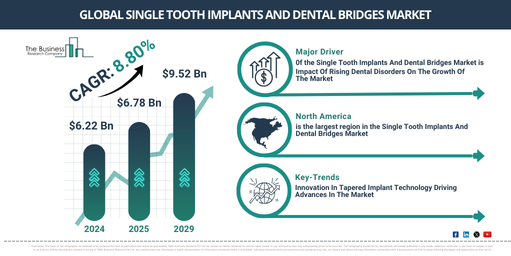
    Significant growth has been observed in the market of single tooth implants and dental bridges in the past few years. The market size is projected to expand from $6.22 billion in 2024 to $6.78 billion in 2025, with a compound annual growth rate (CAGR) of 9.1%. Factors contributing to the historical growth include developments in implant technologies, an aging population, expanded dental insurance coverage, better material longevity, and heightened consciousness about dental aesthetics.

    The market size for single tooth implants and dental bridges is forecasted to experience significant growth over the coming years. By 2029, it’s predicted to expand to a worth of $9.52 billion with a compound annual growth rate (CAGR) of 8.8%. This growth projection anticipates the advancements in 3D printing technology, heightened demand for less invasive procedures, increasing public consciousness about oral health, the booming elderly population, and the broader scope of dental healthcare facilities. Key trend indicators include the incorporation of artificial intelligence in procedure planning, an upward trend in personalized dental solutions, a surge in the demand for metal-free implants, evolved implant surface technologies, and a drive towards more economically accessible dental care options.

    Download a free sample to assess the report’s scope and structure:

    https://www.thebusinessresearchcompany.com/sample.aspx?id=20955&type=smp

    What Are the Core Growth Drivers Propelling the Single Tooth Implants And Dental Bridges Market Forward?

    The escalating instances of dental ailments are anticipated to fuel the expansion of the single tooth implants and dental bridges market in the future. Dental ailments include a variety of conditions that impair oral health or cause problems to teeth, gums, jaw, or oral cavity. Their occurrence is skyrocketing due to factors such as higher consumption of sugar-rich foods, inadequate oral hygiene, aging demographic, and the rising incidence of chronic lifestyle diseases like diabetes. Single tooth implants and dental bridges offer effective measures to individuals suffering from dental conditions by replacing lost or damaged teeth, enhancing oral function, improving aesthetics, uplifting overall self-esteem and avoiding potential issues like teeth movement and jawbone degradation. For instance, the National Board of Health and Welfare, a government agency based in Sweden, reported in May 2024 that almost 3.9 million residents, aged 24 and above, sought dental care services in Sweden in 2023, a rise from the previous year. Consequently, the escalating prevalence of dental ailments is stimulating the growth of the single tooth implants and dental bridges market.

    What Segment Types Define the Single Tooth Implants And Dental Bridges Market Structure?

    The single tooth implants and dental bridges market covered in this report is segmented –

    1) By Type: 3-Unit Bridges, 4-Unit Bridges, Titanium Bridges, Silicone Bridges, Maryland Bridges, Cantilever Bridges, Partial Bridges

    2) By Material: Porcelain-Fused-To-Metal (PFM), All Ceramics, Metal Alloys

    3) By Application: Hospitals, Density, Ambulatory Surgical Centers, Organ Transplant Centers, Orthopedic And Traumas Centers

    Subsegments:

    1) By 3-Unit Bridges: Fixed 3-Unit Bridges, Resin-Bonded 3-Unit Bridges

    2) By 4-Unit Bridges: Fixed 4-Unit Bridges, Cantilever 4-Unit Bridges

    3) By Titanium Bridges: Titanium-Alloy Bridges, Titanium-Based Fixed Bridges

    4) By Silicone Bridges: Flexible Silicone Bridges, Temporary Silicone Bridges

    5) By Maryland Bridges: Resin-Bonded Maryland Bridges, Metallic Framework Maryland Bridges

    6) By Cantilever Bridges: Single Cantilever Bridges, Multiple Cantilever Bridges

    7) By Partial Bridges: Partial Fixed Bridges, Removable Partial Bridges

    Request customized data on this market:

    https://www.thebusinessresearchcompany.com/customise?id=20955&type=smp

    Which Geographic Areas Hold the Strongest Growth Potential in the Single Tooth Implants And Dental Bridges Market?

    North America was the largest region in the single tooth implants and dental bridges market in 2024. Asia-Pacific is expected to be the fastest-growing region in the forecast period. The regions covered in the single tooth implants and dental bridges market report are Asia-Pacific, Western Europe, Eastern Europe, North America, South America, Middle East, Africa.

    What Key Market Trends and Innovations Are Shaping the Future of the Single Tooth Implants And Dental Bridges Industry?

    In the single tooth implants and dental bridges market, leading firms are coming up with pioneer products like tapered implant technology to boost osseointegration, increase stability and cut down patients’ recovery periods. This technology pertains to a dental implant design that imitates the natural structure of the tooth root through its conical or tapered form. This innovation supports primary stability by guaranteeing a secure positioning within the jawbone, especially in areas where bone volume or density is low. An example is the US company, ZimVie Inc., which in June 2022, introduced the T3 PRO Tapered Implant and Encode System, employing tapered implant technology. Thanks to its tapered design, it is easier to place within various types of bone and it raises primary stability, particularly in softer bone. The implant uses an exclusive surface treatment that encourages osseointegration, contributing to quicker healing times and improved long-term results.

    View the full report here:

    https://www.thebusinessresearchcompany.com/report/single-tooth-implants-and-dental-bridges-global-market-report

    What Is the Definition of the Single Tooth Implants And Dental Bridges Market?

    Single Tooth Implants and Dental Bridges refer to advanced dental prosthetic solutions designed to replace missing teeth. They are used for restoring oral functionality, enhancing aesthetics, and preventing further dental complications by filling gaps caused by tooth loss. Single tooth implants are individual, standalone replacements anchored in the jawbone, while dental bridges involve multiple connected prosthetic teeth supported by adjacent natural teeth or implants.

    Purchase the full report and get a swift delivery:

    https://www.thebusinessresearchcompany.com/purchaseoptions.aspx?id=20955

    About The Business Research Company:

    With over 15000+ reports from 27 industries covering 60+ geographies, The Business Research Company has built a reputation for offering comprehensive, data-rich research and insights. Armed with 1,500,000 datasets, the optimistic contribution of in-depth secondary research, and unique insights from industry leaders, you can get the information you need to stay ahead in the game.

    Get in touch with us:

    The Business Research Company: https://www.thebusinessresearchcompany.com/

    Americas +1 3156230293

    Asia +44 2071930708

    Europe +44 2071930708

    Email us at info@tbrc.info

    Follow us on:

    LinkedIn: https://in.linkedin.com/company/the-business-research-company

    YouTube: https://www.youtube.com/channel/UC24_fI0rV8cR5DxlCpgmyFQ

    Global Market Model: https://www.thebusinessresearchcompany.com/global-market-model
  • Robotic Radiotherapy Market Forecast Reaching $1.75 Billion by 2029 at 10.6% CAGR

    Robotic Radiotherapy Market Forecast Reaching $1.75 Billion by 2029 at 10.6% CAGR

    Stay ahead with our updated market reports featuring the latest on tariffs, trade flows, and supply chain transformations.

    How Fast Is The Robotic Radiotherapy Market Expected to Grow Between 2025 And 2029?

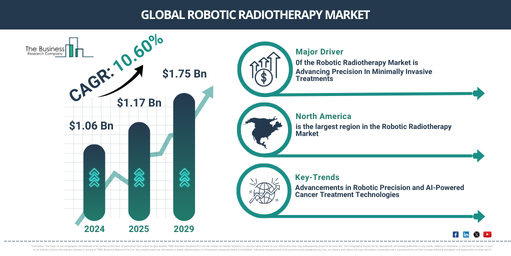
    The scope of the robotic radiotherapy market has expanded significantly in the previous few years. The market growth is projected from $1.06 billion in 2024 to $1.17 billion in 2025, equating to a compound annual growth rate (CAGR) of 10.9%. This substantial rise during the procedural period is credited to the enhancement in the precision of the robotic system, incorporation of AI in treatment scheming, broadened health care accessibility, an amplified emphasis on patient-oriented treatments, and an upward trend in investments within the private health care sector.

    In the coming years, the market size for robotic radiotherapy is projected to witness speedy escalation. By 2029, it is predicted to amplify to $1.75 billion with a compound annual growth rate (CAGR) of 10.6%. The factors stimulating this projection includes the rise in the global elderly population, advancements in machine learning for treatment plans, growing inclination towards outpatient treatments, extension of robotic-assisted surgical systems, and an increase in partnerships between healthcare providers and tech corporations. The primary emerging trends are enhancements in motion management systems, expansion of cloud-based radiotherapy platforms, assimilation of wearable technology for patient tracking, creation of compact and more efficient robotic systems, and a surge in the application of stereotactic radiosurgery techniques.

    Download a free sample to assess the report’s scope and structure:

    https://www.thebusinessresearchcompany.com/sample.aspx?id=20946&type=smp

    Which Major Market Drivers Are Expected to Boost the Growth Potential of the Robotic Radiotherapy Market?

    The robotic radiotherapy market is set to expand due to the increasing popularity of minimally invasive procedures. Enhanced medical technology, patient preference for faster recovery times and fewer complications, along with cost-effectiveness and improved patient outcomes that compel adoption by healthcare providers, are fueling these procedures. Robotic radiotherapy offers a marked improvement in such procedures with its targeted radiation doses which not only focus on tumors but also minimize damage to adjacent healthy tissues, expediting recovery, reducing complications, and meeting the growing preference for advanced, patient-focused treatments. In a report by the American Society of Plastic Surgeons in June 2024, a US pharmaceutical firm noted a growth of 7% in 2023 in minimally invasive procedures compared to the preceding year. Hence, the demand surge for minimally invasive procedures is igniting growth in the robotic radiotherapy market.

    Which Key Market Segments Comprise the Robotic Radiotherapy Market and Drive Its Revenue Growth?

    The robotic radiotherapy market covered in this report is segmented –

    1) By Product: Radiotherapy Systems, Softwares, 3D Cameras (Surface Guided)

    2) By Technology: Linear Accelerators, Conventional Linear Accelerators, Magnetic Resonance Imaging (MRI) – Linear Accelerators, Stereotactic Radiation Therapy Systems, Cyberknife, Gamma Knife, Particle Therapy, Proton Beam Therapy

    3) By Application: Prostate Cancer, Breast Cancer, Lung Cancer, Head & Neck Cancer, Colorectal Cancer

    4) By End User: Hospitals, Independent Radiotherapy Centers

    Subsegments:

    1) By Radiotherapy Systems: Robotic Linear Accelerators, Proton Therapy Systems, Stereotactic Radiosurgery Systems, Image-Guided Radiotherapy (IGRT) Systems, Intensity-Modulated Radiotherapy (IMRT) Systems

    2) By Softwares: Treatment Planning Software, Radiation Therapy Management Software, Robotic Radiotherapy Control Software, Integration Software For Robotic Systems

    3) By 3D Cameras (Surface Guided): 3D Optical Surface Imaging Systems, 3D Camera Systems For Patient Positioning, 3D Motion Tracking Cameras For Radiotherapy, Real-Time 3D Surface Imaging For Tumor Localization

    Request customized data on this market:

    https://www.thebusinessresearchcompany.com/customise?id=20946&type=smp

    Which Areas Are Leading Regions in the Robotic Radiotherapy Market Expansion Across the Globe?

    North America was the largest region in the robotic radiotherapy market in 2024. Asia-Pacific is expected to be the fastest-growing region in the forecast period. The regions covered in the robotic radiotherapy market report are Asia-Pacific, Western Europe, Eastern Europe, North America, South America, Middle East, Africa.

    What Long-Term Trends Are Transforming the Competitive Landscape of the Robotic Radiotherapy Market?

    Robotic radiotherapy market leaders are prioritizing the development of novel products equipped with advanced features, such as the preciseness of artificial intelligence (AI), for accomplishing tasks with superior accuracy, consistency, and virtually no errors. The robotic preciseness augments accuracy, curtails human error, boosts consistency, limits tissue damage, and speeds up recuperation through sensors, actuators, and algorithms. As an example, in January 2024, Tampa General Hospital, a cancer institute based in the US, introduced CyberKnife S7, a radio surgery instrument powered by AI. This advancement is a notable stride in the cancer care domain, offering patients a precise, non-invasive treatment alternative for various conditions, including both benign and malignant tumors, as well as neurological problems. The CyberKnife S7 facilitates targeted radiation application, thereby reducing the harm to adjacent healthy tissues, and offering a less invasive substitute to conventional surgical techniques.

    View the full report here:

    https://www.thebusinessresearchcompany.com/report/robotic-radiotherapy-global-market-report

    How Is the Robotic Radiotherapy Market Conceptually Defined?

    Robotic radiotherapy is an advanced cancer treatment method that combines robotic technology with precision radiation delivery to target tumors with sub-millimeter accuracy. It uses real-time imaging and motion tracking to adapt to tumor movement, such as that caused by breathing, ensuring minimal damage to surrounding healthy tissues. This approach allows for non-invasive, highly personalized treatments, improving patient outcomes and reducing side effects.

    Purchase the full report and get a swift delivery:

    https://www.thebusinessresearchcompany.com/purchaseoptions.aspx?id=20946

    About The Business Research Company:

    With over 15000+ reports from 27 industries covering 60+ geographies, The Business Research Company has built a reputation for offering comprehensive, data-rich research and insights. Armed with 1,500,000 datasets, the optimistic contribution of in-depth secondary research, and unique insights from industry leaders, you can get the information you need to stay ahead in the game.

    Get in touch with us:

    The Business Research Company: https://www.thebusinessresearchcompany.com/

    Americas +1 3156230293

    Asia +44 2071930708

    Europe +44 2071930708

    Email us at info@tbrc.info

    Follow us on:

    LinkedIn: https://in.linkedin.com/company/the-business-research-company

    YouTube: https://www.youtube.com/channel/UC24_fI0rV8cR5DxlCpgmyFQ

    Global Market Model: https://www.thebusinessresearchcompany.com/global-market-model
  • $1.54 Billion Forecast for Robotic Dentistry Market by 2029, Backed by Demand and Innovation

    $1.54 Billion Forecast for Robotic Dentistry Market by 2029, Backed by Demand and Innovation

    Stay ahead with our updated market reports featuring the latest on tariffs, trade flows, and supply chain transformations.

    What Are the Key Projections for the CAGR of the Robotic Dentistry Market Size From 2025 to 2034?

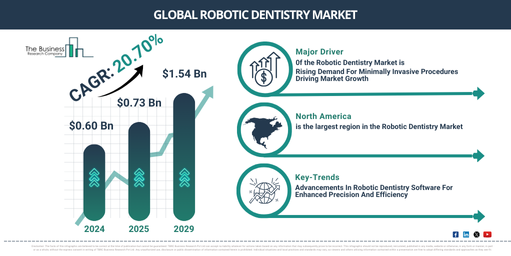
    In recent years, the market size for robotic dentistry has experienced exponential growth. Expected to increase from $0.60 billion in 2024 to $0.73 billion in 2025, the sector will witness a compound annual growth rate (CAGR) of 21.0%. The historic period’s growth can be credited to the adoption of robotics for pediatric dental care, improved capabilities for intricate oral surgeries, an intensified focus on patient safety, the integration of digitization into dental practices, and a high need for time-efficient dental solutions.

    The market size of robotic dentistry is anticipated to witness tremendous growth in the upcoming years, reaching $1.54 billion in 2029 with a compound annual growth rate (CAGR) of 20.7%. The predicted enlargement during the forecast period is due to the expansion of the tele-industry, the increasing application of robots in orthodontics, a surge in dental tourism, funding allocated for healthcare innovation, and an influx of tailored dental treatments for individuals. The key trends set to dominate the market during this forecast period include the creation of transportable equipment, the evolution of small-scale robotic dental technology, breakthroughs in tactile technology, the application of augmented reality (AR) for training purposes, and innovative technological tools for improved accuracy.

    Download a free sample to assess the report’s scope and structure:

    https://www.thebusinessresearchcompany.com/sample.aspx?id=20945&type=smp

    What Are the Core Growth Drivers Propelling the Robotic Dentistry Market Forward?

    The progression of the robotic dentistry market is anticipated to be fueled by the growing inclination towards minimally invasive procedures. These procedures, requiring little to no incisions, result in less tissue damage, accelerated recovery, and lesser risks than traditional surgery. Factors such as quicker recovery rates, diminished chances of complications, and greater patient comfortation are pushing the demand for minimally invasive procedures. Robotic dentistry systems contribute to enhancing dental procedures by offering superior precision, facilitating smaller incisions, minimizing tissue harm, lessening risks, and thereby contributing to improved overall results. For example, a significant increase of 102% in cosmetic surgeries has been recorded in the UK, with a total of 31,057 surgeries in 2022, as reported by the British Association of Aesthetic Plastic Surgeons, a UK-based surgical organization, in March 2023. Hence, the surging demand for minimally invasive procedures propels the progression of the robotic dentistry market.

    What Segment Types Define the Robotic Dentistry Market Structure?

    The robotic dentistry market covered in this report is segmented –

    1) By Products And Services: Standalone Robots, Robot-Assisted System, Services

    2) By Applications: Implantology, Endodontics, Other Applications

    3) By End-Users: Dental Hospitals And Clinics, Dental Academics, Other End-Users

    Subsegments:

    1) By Standalone Robots: Robotic Surgery Systems, Robotic Tooth Restoration Systems, Robotic Implant Placement Systems, Robotic Orthodontic Systems

    2) By Robot-Assisted Systems: Image-Guided Robotic Systems, Dental Navigation Systems, Robotic-Assisted Drilling And Cutting Systems, Robotic-Assisted Endodontic Systems, Robotic-Assisted Tooth Extraction Systems

    3) By Services: Installation Services, Maintenance And Repair Services, Training And Support Services, Consulting Services For Robotic Integration, Software Upgrades And Customization Services

    Request customized data on this market:

    https://www.thebusinessresearchcompany.com/customise?id=20945&type=smp

    Which Geographic Areas Hold the Strongest Growth Potential in the Robotic Dentistry Market?

    North America was the largest region in the robotic dentistry market in 2024. Asia-Pacific is expected to be the fastest-growing region in the forecast period. The regions covered in the robotic dentistry market report are Asia-Pacific, Western Europe, Eastern Europe, North America, South America, Middle East, Africa.

    What Key Market Trends and Innovations Are Shaping the Future of the Robotic Dentistry Industry?

    Leading organizations within the robotic dentistry sector are honing their focus on the creation of advanced dental robotic software suites to enhance patient-specific care. These advanced software suites are cutting-edge platforms that hone robotic systems for use in dental procedures, including features that enable highly-accurate, efficient, and less intrusive treatments for improved patient results. For instance, in August 2023, Neocis, a medical equipment producer headquartered in the US, debuted its YomiPlan Go Workflow for commercial usage. This sophisticated software suite enables clinicians to execute implant surgeries without the need for preoperative scans, thereby improving the speed and precision of procedures. By employing the Yomi robotic system, surgeons have the capability to ascertain implant location and angulation in real-time during surgery, amalgamating freehand techniques with robotic assistance to achieve heightened precision.

    View the full report here:

    https://www.thebusinessresearchcompany.com/report/robotic-dentistry-global-market-report

    What Is the Definition of the Robotic Dentistry Market?

    Robotic dentistry refers to the application of robotic systems and technologies to assist or automate dental procedures, enhancing precision, efficiency, and patient outcomes. These systems often incorporate advanced imaging, navigation, and artificial intelligence to aid in tasks such as implant placements, orthodontics, and minimally invasive surgeries. Robotic dentistry aims to improve treatment accuracy, reduce recovery times, and provide a better overall patient experience.

    Purchase the full report and get a swift delivery:

    https://www.thebusinessresearchcompany.com/purchaseoptions.aspx?id=20945

    About The Business Research Company:

    With over 15000+ reports from 27 industries covering 60+ geographies, The Business Research Company has built a reputation for offering comprehensive, data-rich research and insights. Armed with 1,500,000 datasets, the optimistic contribution of in-depth secondary research, and unique insights from industry leaders, you can get the information you need to stay ahead in the game.

    Get in touch with us:

    The Business Research Company: https://www.thebusinessresearchcompany.com/

    Americas +1 3156230293

    Asia +44 2071930708

    Europe +44 2071930708

    Email us at info@tbrc.info

    Follow us on:

    LinkedIn: https://in.linkedin.com/company/the-business-research-company

    YouTube: https://www.youtube.com/channel/UC24_fI0rV8cR5DxlCpgmyFQ

    Global Market Model: https://www.thebusinessresearchcompany.com/global-market-model
  • Global Renal Cell Carcinoma Market Projected to Reach $0.95 Billion by 2029 at a CAGR of 6.6%

    Global Renal Cell Carcinoma Market Projected to Reach $0.95 Billion by 2029 at a CAGR of 6.6%

    Stay ahead with our updated market reports featuring the latest on tariffs, trade flows, and supply chain transformations.

    How Has The Renal Cell Carcinoma Market Growth Evolved From 2024 To 2025, And What’s Ahead?

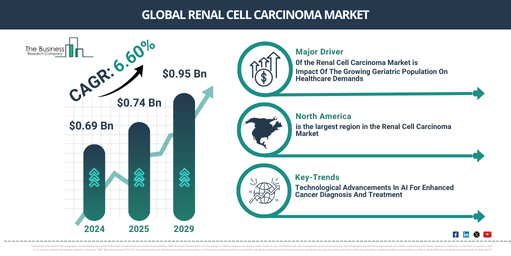
    In recent times, there has been powerful growth in the renal cell carcinoma market size. Projections indicate an expansion from $0.69 billion in 2024 to $0.74 billion in 2025, showcasing a compound annual growth rate (CAGR) of 7.0%. The surge seen in the historical period is credited to a rise in kidney cancer incidences, an increase in the elderly population, a growing inclination towards targeted therapies, an elevated consciousness about cancer screening, enhancements in healthcare facilities, and an escalation in funds dedicated to oncology research and development.

    In the coming years, the renal cell carcinoma market is anticipated to experience solid growth, expanding to a size of $0.95 billion by 2029 with a compound annual growth rate (CAGR) of 6.6%. This growth during the predicted period is believed to be driven by factors such as the increasing acceptance of personalized medicine, a growing awareness of the importance of early cancer detection, escalated investments in oncology within the healthcare sector, improved healthcare accessibility, and an increase in clinical trials and research into new treatment methods. Noteworthy trends emerging in this forecast period encompass the incorporation of AI in precision diagnostics, the creation of targeted therapies, breakthroughs in immunotherapy, progress in identifying biomarkers, the utilization of minimal invasive surgical techniques, and advancements in imaging technologies.

    Download a free sample to assess the report’s scope and structure:

    https://www.thebusinessresearchcompany.com/sample.aspx?id=20944&type=smp

    What are the Fundamental Drivers and Innovations Shaping the Renal Cell Carcinoma Market?

    The growth of the renal cell carcinoma market is anticipated to be fueled by the increasing elderly population. This consists of individuals typically aged 65 and over, who might have specific health and social needs. The expansion of this older demographic results from advances in healthcare, improved nutrition, and longer life expectancy. Renal cell carcinoma (RCC) is notably common among the elderly, underscoring the importance of creating screening and treatment plans tailored to seniors. For instance, a report from the Population Reference Bureau – a US non-profit organization that gathers data for research – published in January 2024 projects that the number of Americans aged 65 and up will ballooned from 58 million in 2022 to 82 million by 2050, a growth of 47%. Consequently, the uptick in the aging population is propelling the renal cell carcinoma market’s expansion.

    How Is the Renal Cell Carcinoma Market Segmented?

    The renal cell carcinoma market covered in this report is segmented –

    1) By Type: Clear Cell Renal Cell Carcinoma (RCC), Papillary Renal Cell Carcinoma (RCC), Chromophobe Renal Cell Carcinoma (RCC)

    2) By Diagnosis: Urine Tests, Computed Tomography (CT) Scan, Nephrectomy, Blood Tests, Ultrasound, Biopsy

    3) By Treatment: Medication, Ablation, Targeted Therapy, Chemotherapy, Surgery, Other Treatments

    4) By End-Users: Hospitals, Specialty Clinics, Homecare, Other End-Users

    Subsegments:

    1) By Clear Cell Renal Cell Carcinoma (RCC): Sporadic Clear Cell RCC, Hereditary Clear Cell RCC

    2) By Papillary Renal Cell Carcinoma (RCC): Type 1 Papillary RCC, Type 2 Papillary RCC

    3) By Chromophobe Renal Cell Carcinoma (RCC): Classic Chromophobe RCC, Hybrid Chromophobe RCC

    Request customized data on this market:

    https://www.thebusinessresearchcompany.com/customise?id=20944&type=smp

    Which Regions Are Driving the Next Phase of the Renal Cell Carcinoma Market Growth?

    North America was the largest region in the renal cell carcinoma market in 2024. Asia-Pacific is expected to be the fastest-growing region in the forecast period. The regions covered in the renal cell carcinoma market report are Asia-Pacific, Western Europe, Eastern Europe, North America, South America, Middle East, Africa.

    Which Technological Trends Are Reshaping the Renal Cell Carcinoma Industry Dynamics?

    Major firms in the renal cell carcinoma market are directing their focus towards the creation of advanced technological products, like artificial intelligence (AI)-powered tools designed specifically for kidney biopsy analysis. These tools are instrumental in enhancing diagnostic precision, simplifying procedures and improving patient outcomes. AI-powered tools for analyzing kidney biopsies utilize machine learning protocols and computer vision, which aid nephrologists and pathologists in investigating kidney tissue samples. The goal of these solutions is to augment accuracy, efficiency, and uniformity in kidney health assessment and disease diagnosis. For instance, NephroPath, an AI-powered solution designed to analyze kidney biopsies, was launched by Aiosyn, a software company based in the Netherlands, in March 2024. The platform applies computational pathology algorithms for scrutinizing histological biomarkers in kidney biopsies, including categorizing tissue types, gauging interstitial fibrosis, and accurately counting and evaluating glomeruli. This AI-facilitated analysis provides consistent, comprehensive, and repeatable scoring of renal pathology biomarkers, effectively addressing the limitations of conventional scoring methods and reducing observer bias.

    View the full report here:

    https://www.thebusinessresearchcompany.com/report/renal-cell-carcinoma-global-market-report

    How Is the Renal Cell Carcinoma Market Defined and What Are Its Core Parameters?

    Renal cell carcinoma (RCC) is a form of kidney cancer originating in the renal tubules, the structures in the kidneys responsible for filtering waste and producing urine. This cancer begins when cells in the kidney become abnormal and grow uncontrollably, forming a tumor. This can disrupt the kidney’s function, including its ability to filter waste from the blood and produce urine.

    Purchase the full report and get a swift delivery:

    https://www.thebusinessresearchcompany.com/purchaseoptions.aspx?id=20944

    About The Business Research Company:

    With over 15000+ reports from 27 industries covering 60+ geographies, The Business Research Company has built a reputation for offering comprehensive, data-rich research and insights. Armed with 1,500,000 datasets, the optimistic contribution of in-depth secondary research, and unique insights from industry leaders, you can get the information you need to stay ahead in the game.

    Get in touch with us:

    The Business Research Company: https://www.thebusinessresearchcompany.com/

    Americas +1 3156230293

    Asia +44 2071930708

    Europe +44 2071930708

    Email us at info@tbrc.info

    Follow us on:

    LinkedIn: https://in.linkedin.com/company/the-business-research-company

    YouTube: https://www.youtube.com/channel/UC24_fI0rV8cR5DxlCpgmyFQ

    Global Market Model: https://www.thebusinessresearchcompany.com/global-market-model
  • Radiation Toxicity Treatment Market 2025-2034: Key Highlights, Growth Dynamics, and Emerging Trends

    Radiation Toxicity Treatment Market 2025-2034: Key Highlights, Growth Dynamics, and Emerging Trends

    Stay ahead with our updated market reports featuring the latest on tariffs, trade flows, and supply chain transformations.

    What Is the Current and Projected Market Size of the Radiation Toxicity Treatment Market Through 2034?

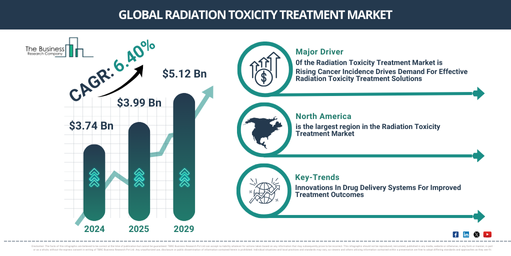
    The market for treating radiation toxicity has seen a robust expansion in recent times. It is projected to rise from a value of $3.74 billion in 2024 to $3.99 billion in 2025, representing a compound annual growth rate (CAGR) of 6.7%. The historical growth is linked to factors such as a global surge in cancer cases, increased preference for radiotherapy treatment, enhancements in healthcare infrastructure and services, a rise in radiation exposure incidents, and heightened cognizance of radiation toxicity.

    The market size for radiation toxicity treatment is projected to experience robust growth in the coming years, reaching $5.12 billion in 2029, with a compound annual growth rate (CAGR) of 6.4%. Factors contributing to this growth during the forecast period include the proliferation of personalized medicine, a heightened emphasis on preventative healthcare, increasing demand for outpatient care services, greater global awareness about radiation safety, and expanding government initiatives to enhance cancer care access. Key trends for the forecast period encompass the incorporation of artificial intelligence in treatment plans, advances in image-guided radiation therapy, progress in stereotactic body radiation therapy, improvements in nanoparticle drug delivery systems, and the merger of 3D printing for bespoke treatment solutions.

    Download a free sample to assess the report’s scope and structure:

    https://www.thebusinessresearchcompany.com/sample.aspx?id=20942&type=smp

    How Are Key Drivers in the Industry Acting as Catalysts for the Growth of the Radiation Toxicity Treatment Market?

    The escalation in cancer instances is anticipated to spur the development of the radiation toxicity treatment market in the future. Cancer comprises a group of ailments typified by the unrestrained expansion and proliferation of deviant cells that have the potential to infiltrate adjacent tissues and metastasize to distant regions of the body. The rising incidence of cancer is credited to aspects such as shifts in lifestyle, environmental contamination, genetic susceptibility, and advanced diagnostic proficiencies resulting in earlier detection. Radiation toxicity treatment is crucial for controlling the side effects brought about by radiation therapy in cancer management, facilitating patient recuperation, and reducing long-term harm. For instance, a report released in August 2024 by Macmillan Cancer Support, a charitable organization based in the UK, noted that currently, over 3 million individuals are living with cancer in the UK, a figure predicted to rise to 3.5 million by 2025, 4 million by 2030, and 5.3 million by 2040. Consequently, the escalating instances of cancer are fueling the expansion of the radiation toxicity treatment market.

    Which Segments in the Radiation Toxicity Treatment Offer the Most Growth?

    The radiation toxicity treatment market covered in this report is segmented –

    1) By Product: Colony Stimulating Factors, Potassium Iodide, Prussian Blue, Diethylenetriamine Pentaacetic Acid, Others Products

    2) By Indication: Acute Radiation Syndrome, Chronic Radiation Syndrome

    3) By Radiation Type: Ionizing Radiation, Non-Ionizing Radiation

    4) By End-User: Hospitals, Research And Academic Institutes

    Subsegments:

    1) By Colony Stimulating Factors: Granulocyte Colony-Stimulating Factor (G-CSF), Granulocyte-Macrophage Colony-Stimulating Factor (GM-CSF)

    2) By Potassium Iodide: Oral Potassium Iodide Tablets, Liquid Potassium Iodide Solution

    3) By Prussian Blue: Capsules Of Prussian Blue, Prussian Blue Resin

    4) By Diethylenetriamine Pentaacetic Acid (DTPA): DTPA Injection (Calcium And Zinc DTPA)

    5) By Other Products: Amifostine, Sodium Bicarbonate, Doxycycline, Activated Charcoal

    Request customized data on this market:

    https://www.thebusinessresearchcompany.com/customise?id=20942&type=smp

    What Are the Fastest-Growing Geographies in the Radiation Toxicity Treatment Market?

    North America was the largest region in the radiation toxicity treatment market in 2024. Asia-Pacific is expected to be the fastest-growing region in the forecast period. The regions covered in the radiation toxicity treatment market report are Asia-Pacific, Western Europe, Eastern Europe, North America, South America, Middle East, Africa.

    What Are the Key Market Trends in the Radiation Toxicity Treatment Market Over the Coming Years?

    Leading firms in the radiation toxicity treatment market are concentrating on technological progress, such as state-of-the-art drug delivery systems. These systems help improve treatment accuracy and effectiveness, boost patient adherence, and lessen adverse reactions, ultimately leading to superior healing results and quicker recovery periods. A drug delivery system is a technique that ensures medication reaches specific body parts, guaranteeing correct dosage and effectiveness while minimizing undesirable side effects. For example, in December 2023, the U.S. FDA gave its approval to Coherus BioSciences, a U.S.-based biopharmaceutical firm, for UDENYCA ONBODY, a new on-body injector for pegfilgrastim-cbqv. The device, aimed to decrease the risk of infections induced by febrile neutropenia post-chemotherapy, injects the drug in just five minutes and has a retractable needle for improved safety and convenience. This authorisation marks Coherus’ attempt to offer a more manageable and user-friendly method for dealing with chemotherapy side effects.

    View the full report here:

    https://www.thebusinessresearchcompany.com/report/radiation-toxicity-treatment-global-market-report

    What Are the Key Elements That Define the Radiation Toxicity Treatment Market?

    Radiation toxicity treatment encompasses medical approaches designed to address and mitigate the adverse effects resulting from excessive radiation exposure. These treatments focus on managing symptoms such as fatigue, nausea, and skin injuries, and severe conditions such as damage to organs or bone marrow, with the goal of aiding recovery and reducing long-term health risks.

    Purchase the full report and get a swift delivery:

    https://www.thebusinessresearchcompany.com/purchaseoptions.aspx?id=20942

    About The Business Research Company:

    With over 15000+ reports from 27 industries covering 60+ geographies, The Business Research Company has built a reputation for offering comprehensive, data-rich research and insights. Armed with 1,500,000 datasets, the optimistic contribution of in-depth secondary research, and unique insights from industry leaders, you can get the information you need to stay ahead in the game.

    Get in touch with us:

    The Business Research Company: https://www.thebusinessresearchcompany.com/

    Americas +1 3156230293

    Asia +44 2071930708

    Europe +44 2071930708

    Email us at info@tbrc.info

    Follow us on:

    LinkedIn: https://in.linkedin.com/company/the-business-research-company

    YouTube: https://www.youtube.com/channel/UC24_fI0rV8cR5DxlCpgmyFQ

    Global Market Model: https://www.thebusinessresearchcompany.com/global-market-model
  • Radiation Shielding Material Market Trends 2025-2034: Growth, Strategic Insights, and Opportunities Ahead

    Radiation Shielding Material Market Trends 2025-2034: Growth, Strategic Insights, and Opportunities Ahead

    Stay ahead with our updated market reports featuring the latest on tariffs, trade flows, and supply chain transformations.

    What is the Anticipated CAGR of the Radiation Shielding Material Market, and What Factors Will Drive It?

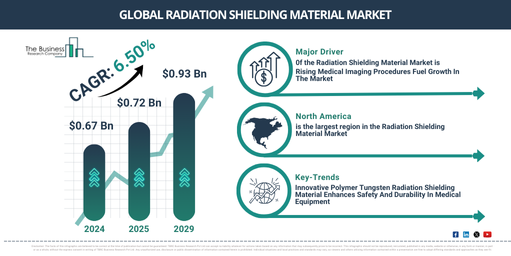
    In recent years, there has been a considerable growth in the radiation shielding material market. The market worth, which stood at $0.67 billion in 2024 is projected to climb to $0.72 billion in 2025, experiencing a compound annual growth rate (CAGR) of 6.8%. This surge during the historical period is credited to the rising use of ionizing radiation in medical imaging, growing need for radiotherapy procedures, escalating instances of cancer, heightened awareness about radiation safety, and increased spending on healthcare.

    There is a projection for significant expansion in the radiation shielding material market in the upcoming years, with the market scale set to reach $0.93 billion by 2029, growing at a compound annual growth rate (CAGR) of 6.5%. Factors driving this growth through the forecast period include the escalating use of nuclear medicine, an increased amount of diagnostic imaging procedures, a surge in the occurrence of diseases necessitating radiation therapy, a growing preference for medical imaging, and larger investments in healthcare infrastructure. Key trends for the forecast period encompass diagnostic and therapeutic technologies, developments in medical and material science, the incorporation of nanotechnology, and the use of advanced composites in creating lightweight solutions.

    Download a free sample to assess the report’s scope and structure:

    https://www.thebusinessresearchcompany.com/sample.aspx?id=20941&type=smp

    What Are the Major Market Drivers Behind the Rising Adoption of Radiation Shielding Material Market?

    The radiation shielding material market is predicted to expand due to the rise in medical imaging procedures. These diagnostic techniques, which utilize technologies such as X-rays, MRI, or ultrasound to examine the interior of the body for diagnosis and monitoring disease, are increasing. This escalation can be ascribed to improvements in imaging technology, increasing cases of chronic diseases, better awareness and access, and the government’s support for more sophisticated healthcare technologies. Radiation shielding materials, including lead and lead-free alloys, are instrumental in these imaging processes, protecting patients and healthcare staff from hazardous radiation exposure while simultaneously allowing for superior imaging. As evidence, the National Health Service, a UK government department, noted that in November 2023, England documented 45.0 million imaging tests in the year ended in March 2023, marking a 2.2% growth compared to the 44.0 million tests taken in the year prior. Consequently, this surge in medical imaging procedures is stimulating the radiation shielding material market.

    Which Key Market Segments Comprise the Radiation Shielding Material Market and Drive Its Revenue Growth?

    The radiation shielding material market covered in this report is segmented –

    1) By Type: Electromagnetic Radiation, Particle Radiation

    2) By Material: Lead Shielding, Lead Composite Shielding, Non-Lead And Lead Free Shielding

    3) By Form: Sheets, Blocks, Bricks, Panels, Castings

    4) By Application: Diagnostic X-Ray Room Shielding, CT Scanner Shielding Facility, MRI Room Shielding, Nuclear Medicine Imagingshielding, Radiotherapy Shielding, Radiation Protection Safety Aprons And Apparel And Equipments

    5) By End User: Healthcare, Manufacturing, Construction, Energy, Research

    Subsegments:

    1) By Electromagnetic Radiation: X-Rays, Gamma Rays, Ultraviolet (UV) Radiation, Microwaves, Radiofrequency (RF) Radiation

    2) By Particle Radiation: Neutron Radiation, Alpha Particles, Beta Particles, Heavy Ions

    Request customized data on this market:

    https://www.thebusinessresearchcompany.com/customise?id=20941&type=smp

    Which Areas Are Leading Regions in the Radiation Shielding Material Market Expansion Across the Globe?

    North America was the largest region in the radiation shielding material market in 2024. Asia-Pacific is expected to be the fastest-growing region in the forecast period. The regions covered in the radiation shielding material market report are Asia-Pacific, Western Europe, Eastern Europe, North America, South America, Middle East, Africa.

    Which Emerging Trends that Are Influencing the Radiation Shielding Material Industry Evolution?

    Key players in the radiation shielding material market, such as polymer tungsten radiation shielding developers, are channeling their efforts towards the creation of ground-breaking products. This is done with the aim to augment radiation defense, reduce weight, and bolster durability for a broad spectrum of industrial purposes. The product is a composite blend of tungsten and a polymer matrix, providing a lighter and effective substitute for the customary lead-based shielding. For instance, in November 2024, Stanford Advanced Materials (SAM), a company based in the U.S.A, unveiled Polymer Tungsten. This innovative material melds tungsten powder with polymer resins and serves as a flexible and eco-friendly substitute to the traditional lead-based shields that carry health hazards owing to their toxic nature. Polymer tungsten maintains high resistance to radiation yet is simpler to mold and work with. Thus, it is ideal for use in medical tools like X-ray machinery and Computed Tomography (CT) scanners.

    View the full report here:

    https://www.thebusinessresearchcompany.com/report/radiation-shielding-material-global-market-report

    How Is the Radiation Shielding Material Market Conceptually Defined?

    Radiation shielding materials refer to substances designed to protect individuals, equipment, or environments from harmful ionizing radiation, such as X-rays, gamma rays, and neutron radiation. These materials work by absorbing or scattering radiation, thereby reducing its intensity and mitigating its potential effects.

    Purchase the full report and get a swift delivery:

    https://www.thebusinessresearchcompany.com/purchaseoptions.aspx?id=20941

    About The Business Research Company:

    With over 15000+ reports from 27 industries covering 60+ geographies, The Business Research Company has built a reputation for offering comprehensive, data-rich research and insights. Armed with 1,500,000 datasets, the optimistic contribution of in-depth secondary research, and unique insights from industry leaders, you can get the information you need to stay ahead in the game.

    Get in touch with us:

    The Business Research Company: https://www.thebusinessresearchcompany.com/

    Americas +1 3156230293

    Asia +44 2071930708

    Europe +44 2071930708

    Email us at info@tbrc.info

    Follow us on:

    LinkedIn: https://in.linkedin.com/company/the-business-research-company

    YouTube: https://www.youtube.com/channel/UC24_fI0rV8cR5DxlCpgmyFQ

    Global Market Model: https://www.thebusinessresearchcompany.com/global-market-model
  • Top Trends Driving Innovation and Change in the Pollen Allergy Market: Innovative Allergy Care Platforms Transforming Diagnosis And Treatment

    Top Trends Driving Innovation and Change in the Pollen Allergy Market: Innovative Allergy Care Platforms Transforming Diagnosis And Treatment

    Stay ahead with our updated market reports featuring the latest on tariffs, trade flows, and supply chain transformations.

    What is the Anticipated CAGR of the Pollen Allergy Market, and What Factors Will Drive It?

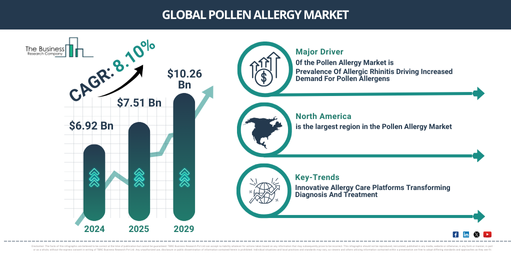
    The market for pollen allergies has seen robust growth in the past few years. There is a projected growth from $6.92 billion in 2024 to $7.51 billion in 2025, with a compound annual growth rate (CAGR) of 8.5%. Factors such as increased awareness about allergies, more investment in healthcare infrastructure, the effects of climate change causing extended pollen seasons, and increased urbanization, resulting in greater exposure to allergens are credited for the growth experienced in the past period.

    The market for pollen allergies is projected to experience robust growth in the coming years, reaching a valuation of $10.26 billion by the year 2029, with a Compound Annual Growth Rate (CAGR) of 8.1%. This surge in the prediction phase is attributable to factors such as growing allergic conditions, heightened pollution levels, escalating climate change, burgeoning awareness on allergy treatments, increased accessibility to various treatment alternatives, extended reach of healthcare facilities, and enhanced emphasis on both preventive tactics and environmental health. During the forecasting period, market trends are expected to encompass the progression of more effective immunotherapy treatments, the preference for personalized allergy medications, advancements in pollen-blocking nasal filters, refinement of air purifiers equipped with HEPA filters, amelioration of nasal spray formulae, favoring of natural and organic products for allergy relief, and technological advancements in wearable devices offering real-time allergen exposure monitoring.

    Download a free sample to assess the report’s scope and structure:

    https://www.thebusinessresearchcompany.com/sample.aspx?id=20930&type=smp

    What External and Internal Drivers Are Contributing to the Growth of the Pollen Allergy Market?

    The anticipated increase in allergic rhinitis cases is projected to fuel the expansion of the pollen allergen market. Allergic rhinitis is an allergy-induced condition that causes inflammation in the nose, evident through symptoms such as sneezing, nasal congestion, and eye irritation, which are usually triggered by exposure to pollen or dust. The escalation in cases of allergic rhinitis can be credited to factors such as environmental pollution, modifications in climate, rapid urbanization, and changes in lifestyle, which intensify exposure to allergens and pollutants. Allergic rhinitis, a condition often caused by pollen allergies, involves a reaction to pollen that results in inflammation within the nasal passageways. For example, in October 2023, the World Allergy Organization, a U.S. centered conglomerate specializing in clinical allergic research, indicated that allergic rhinitis affects more than 400 million individuals globally. The prevalence rates vary between 10% and 30% among adults and reach over 40% among children. As a result, the increasing ratio of allergic rhinitis cases contributes to the ongoing expansion of the pollen allergen market.

    What Segment Types Define the Pollen Allergy Market Structure?

    The pollen allergy market covered in this report is segmented –

    1) By Product Type: Instruments, Consumables, Services

    2) By Allergen Type: Food, Inhaled, Drug, Other Allergen Types

    3) By Therapeutics Drug class: Antihistamines, Decongestants, Corticosteroids, Mast Cell Stabilizers, Leukotriene Inhibitors, Nasal Anticholinergics, Immunomodulators, Auto injectable Epinephrine, Immunotherapy

    4) By End-User: Diagnostic Laboratories, Hospitals

    Subsegments:

    1) By Instruments: Allergy Testing Equipment, Diagnostic Devices, Monitoring Devices

    2) By Consumables: Allergy Test Kits, Pollen Filters, Diagnostic Reagents, Treatment Medications (Antihistamines)

    3) By Services: Allergy Testing Services, Immunotherapy Services, Consultation And Diagnostic Services

    Request customized data on this market:

    https://www.thebusinessresearchcompany.com/customise?id=20930&type=smp

    Which Geographic Areas Hold the Strongest Growth Potential in the Pollen Allergy Market?

    North America was the largest region in the pollen allergy market in 2024. Asia-Pacific is expected to be the fastest-growing region in the forecast period. The regions covered in the pollen allergy market report are Asia-Pacific, Western Europe, Eastern Europe, North America, South America, Middle East, Africa.

    What Key Trends Are Shaping the Future of the Pollen Allergy Market?

    Major businesses in the pollen allergy market are prioritizing the creation of all-encompassing allergy care platforms. These platforms aim to offer combined solutions for the diagnosis, treatment and management of allergies, thus ensuring better patient results and convenience. An all-around allergenic care system for pollen allergy is a holistic service or system providing complete support for sufferers of pollen allergies. As an illustration, Nectar Life Sciences, an Indian pharmaceutical company, launched their all-in-one allergy care platform, Nectar, in February 2023. Their first product was personalized sublingual immunotherapy drops. Developed from a CLIA-certified home allergy test, Nectar’s allergy drops specifically target the underlying cause of allergies. This provides an effective and handy alternative to traditional shots and antihistamines. The platform makes allergy treatment easier with home deliveries and recurring three-month prescriptions. Consequently, it helps moderate to severe allergy sufferers build long-term immunity and gradually reduce symptoms. This fresh approach hopes to transform allergy care by merging personalized service, convenience, and demonstrated efficacy.

    View the full report here:

    https://www.thebusinessresearchcompany.com/report/pollen-allergy-global-market-report

    What Is the Definition of the Pollen Allergy Market?

    Pollen allergy is an allergic reaction to pollen from trees, grasses, and weeds. It occurs when the immune system mistakenly identifies pollen as harmful and releases chemicals such as histamine to combat it. Pollen allergies are often seasonal, peaking during spring, summer, or fall, depending on the pollen an individual is sensitive to.

    Purchase the full report and get a swift delivery:

    https://www.thebusinessresearchcompany.com/purchaseoptions.aspx?id=20930

    About The Business Research Company:

    With over 15000+ reports from 27 industries covering 60+ geographies, The Business Research Company has built a reputation for offering comprehensive, data-rich research and insights. Armed with 1,500,000 datasets, the optimistic contribution of in-depth secondary research, and unique insights from industry leaders, you can get the information you need to stay ahead in the game.

    Get in touch with us:

    The Business Research Company: https://www.thebusinessresearchcompany.com/

    Americas +1 3156230293

    Asia +44 2071930708

    Europe +44 2071930708

    Email us at info@tbrc.info

    Follow us on:

    LinkedIn: https://in.linkedin.com/company/the-business-research-company

    YouTube: https://www.youtube.com/channel/UC24_fI0rV8cR5DxlCpgmyFQ

    Global Market Model: https://www.thebusinessresearchcompany.com/global-market-model