Category: HealthcareServices

  • Tick Borne Encephalitis Growth Trajectory: Key Forecasts and Strategic Insights

    Tick Borne Encephalitis Growth Trajectory: Key Forecasts and Strategic Insights

    Get 30% off on our Global Market Reports with code ONLINE30 – Hurry, limited time offer!

    How Fast Is The Tick Borne Encephalitis Market Expected to Grow Between 2025 And 2029?

    The market size for tick borne encephalitis has shown robust growth lately. The market is expected to rise from $9.77 billion in 2024 to $10.56 billion in 2025, displaying a compound annual growth rate (CAGR) of 8.0%. The uptick during the historical phase can be linked to a surge in the elderly population, escalation in tick bite cases, a rise in disease prevalence, and the heightened demand for reliable and safe vaccinations.

    In the coming years, a significant surge is projected in the market size of tick borne encephalitis, escalating to $14.21 billion in 2029 at a compound annual growth rate (CAGR) of 7.7%. This anticipated expansion during the forecast period can be accredited to factors such as the escalating number of tick-borne encephalitis cases, enhanced government funding for healthcare facilities, a rise in Japanese encephalitis incidences, and an expanding middle class. Key trends for the forecast period encompass progress in vaccine development, technological enhancements in diagnostics and therapeutics, government-led initiatives for surveillance and control, environmental modifications impacting disease transmission, and government-led efforts for control of infectious diseases.

    Download a free sample to assess the report’s scope and structure:

    https://www.thebusinessresearchcompany.com/sample.aspx?id=23542&type=smp

    Which Factors and External Forces Are Driving Demand in the Tick Borne Encephalitis Market?

    Climate change, marked by significant shifts in worldwide temperatures and weather patterns, is boosting the tick-borne encephalitis market. Primarily attributed to activities like the burning of fossil fuels and deforestation, this climatic shift releases large volumes of greenhouse gases into the atmosphere, thereby escalating global temperatures. Consequently, this propels the need for tick-borne encephalitis treatment as disease bearing ticks thrive in the modified habitats, leading to greater infection rates. The World Meteorological Organization reported a rise in global mean surface air temperature by 1.54°C in September 2024, thus validating the impact that an increasing climate change has on the growth of the tick-borne encephalitis market. As more people travel internationally due to improved disposable income, exposure to endemic regions is also on the rise, consequently stimulating the tick-borne encephalitis market. Cross-border movement of individuals for purposes like tourism, business ties, education, or migration contributes to higher instances of tick-borne encephalitis. This necessitates the demand for preventive vaccinations and post-exposure medical attention. The United Nations World Tourism Organization announced that an estimated 1.4 billion people undertook international travel in 2024, registering an 11% increase from the previous year. This reflects how rising cross-border travels impact the upward trajectory of the tick-borne encephalitis market.

    Which Segments in the Tick Borne Encephalitis Offer the Most Growth?

    The tick borne encephalitis market covered in this report is segmented –

    1) By Product Type: Tick-Borne Encephalitis (TBE) Vaccines, Tick Repellents, Diagnostic Tests, Antiviral Drugs

    2) By Virus Type: European Tick Borne Encephalitis Virus, Siberian Tick Borne Encephalitis Virus, Far Eastern Tick Borne Encephalitis Virus

    3) By Route of Administration: Parenteral, Other Routes Of Administration

    4) By Distribution Channel: Online, Offline

    5) By End-User: Travelers, Outdoor Enthusiasts, Healthcare Providers, Research Institutions

    Subsegments:

    1) By Tick-Borne Encephalitis (TBE) Vaccines: Inactivated (Killed) Vaccines, Live Attenuated Vaccines

    2) By Tick Repellents: DEET-Based Repellents, Picaridin-Based Repellents, Natural Or Plant-Based Repellents, Permethrin-Treated Clothing And Gear

    3) By Diagnostic Tests: ELISA (Enzyme-Linked Immunosorbent Assay), PCR (Polymerase Chain Reaction), Rapid Diagnostic Tests (RDTs), Neutralization Tests

    4) By Antiviral Drugs: Nucleoside Analogs, Interferons, Immunoglobulin Therapy, Supportive Therapy (Symptomatic Treatment)

    Request customized data on this market:

    https://www.thebusinessresearchcompany.com/customise?id=23542&type=smp

    What Are the Fastest-Growing Geographies in the Tick Borne Encephalitis Market?

    Europe was the largest region in the tick borne encephalitis market in 2024. North America is expected to be the fastest-growing region in the forecast period. The regions covered in the tick borne encephalitis market report are Asia-Pacific, Western Europe, Eastern Europe, North America, South America, Middle East, Africa.

    View the full report here:

    https://www.thebusinessresearchcompany.com/report/tick-borne-encephalitis-global-market-report

    What Are the Key Elements That Define the Tick Borne Encephalitis Market?

    Tick-borne encephalitis (TBE) is a viral infection transmitted to humans through the bite of an infected tick, primarily the Ixodes species. The virus affects the central nervous system, causing brain inflammation (encephalitis). The symptoms range from mild flu-like signs to severe neurological issues, including fever, headache, confusion, and, in some cases, paralysis or seizures.

    Purchase the full report and get a swift delivery:

    https://www.thebusinessresearchcompany.com/purchaseoptions.aspx?id=23542

    About The Business Research Company:

    With over 15000+ reports from 27 industries covering 60+ geographies, The Business Research Company has built a reputation for offering comprehensive, data-rich research and insights. Armed with 1,500,000 datasets, the optimistic contribution of in-depth secondary research, and unique insights from industry leaders, you can get the information you need to stay ahead in the game.

    Get in touch with us:

    The Business Research Company: https://www.thebusinessresearchcompany.com/

    Americas +1 3156230293

    Asia +44 2071930708

    Europe +44 2071930708

    Email us at info@tbrc.info

    Follow us on:

    LinkedIn: https://in.linkedin.com/company/the-business-research-company

    YouTube: https://www.youtube.com/channel/UC24_fI0rV8cR5DxlCpgmyFQ

    Global Market Model: https://www.thebusinessresearchcompany.com/global-market-model

  • Market Trends Influencing Strategic Decisions in the Encephalomyelitis Industry: Advancements In Monoclonal Antibody Therapies For Encephalomyelitis Treatment

    Market Trends Influencing Strategic Decisions in the Encephalomyelitis Industry: Advancements In Monoclonal Antibody Therapies For Encephalomyelitis Treatment

    Our market reports now include the latest updates on global tariffs, trade impacts, and evolving supply chain dynamics.

    What is the Projected CAGR for the Encephalomyelitis Market Size from 2025 to 2034?

    The market size for encephalomyelitis has experienced a notable growth spurt in the past few years. It is projected to increase from $21.16 billion in 2024 to $22.65 billion in 2025, boasting a compound annual growth rate (CAGR) of 7.0%. This growth I observed during the historic period is credited to a rise in cases of autoimmune and infectious diseases, heightened awareness of neurological disorders, escalation in research and development investments, enhancement in healthcare infrastructure, and the widened use of immunotherapy applications.

    It is projected that the market for encephalomyelitis will experience robust expansion in the upcoming years, with an expectation to escalate to $29.31 billion in 2029, reflecting a compound annual growth rate (CAGR) of 6.7%. The projected market growth during the forecast period can be ascribed to factors such as the growing acceptance of immunotherapy treatments, a heightened incidence of autoimmune disorders, increasing healthcare expenditure, broadening clinical research, improved consciousness and knowledge of encephalomyelitis, as well as escalating government and private sector investments into research on rare diseases. Notable market trends expected during this period encompass the creation of cutting-edge immunomodulatory therapies, progress in precision biologics, breakthrough biomarkers for preliminary diagnosis, advances in personalized treatments, the creation of next-generation antivirals, the incorporation of AI into clinical research, and novel gene therapy methods.

    Download a free sample to assess the report’s scope and structure:

    https://www.thebusinessresearchcompany.com/sample.aspx?id=21182&type=smp

    What Are the Major Market Drivers Behind the Rising Adoption of Encephalomyelitis Market?

    The escalating occurrence of autoimmune diseases, conditions where the immune system mistakenly attacks healthy cells and tissues, is anticipated to fuel the growth of the encephalomyelitis market. The increase in autoimmune diseases is linked to elements like genetic predisposition, environmental triggers, infections, and lifestyle modifications, such as diet and exposure to chemicals. Treatments for encephalomyelitis assist patients with autoimmune diseases by lessening inflammation, regulating immune system malfunctions, diminishing neurological symptoms, and halting disease proliferation, which ultimately enhances their general health and functional prosperity. For example, as reported by the Germany-based organization, Versorgungsatlas.de, in November 2024, among 73,241,305 insured individuals in 2022, an estimated 6,304,340 were diagnosed with at least one autoimmune disease, marking a crude prevalence rate of 8.61%. Hence, the escalating occurrence of autoimmune diseases is spearheading the growth of the encephalomyelitis market.

    Which Key Market Segments Comprise the Encephalomyelitis Market and Drive Its Revenue Growth?

    The encephalomyelitis market covered in this report is segmented –

    1) By Type: Equine Encephalomyelitis, Associated Encephalomyelitis, Anti-Myelin Oligodendrocyte Glycoprotein Antibody (AntiMOG), Encephalomyelitis Disseminata, Acute Disseminated Encephalomyelitis, AIDS-Related Encephalomyelitis, Other Types

    2) By Treatment: Surgery , Plasmapheresis, Drug Treatment, Other Treatments

    3) By End-users: Clinics , Hospitals, Other End-Users

    Subsegments:

    1) By Equine Encephalomyelitis: Eastern Equine Encephalomyelitis, Western Equine Encephalomyelitis, Venezuelan Equine Encephalomyelitis

    2) By Associated Encephalomyelitis: Acute Disseminated Encephalomyelitis, Paraneoplastic Encephalomyelitis, Infectious Encephalomyelitis

    3) By Anti-Myelin Oligodendrocyte Glycoprotein Antibody: Monophasic Myelin Oligodendrocyte Glycoprotein Antibody Encephalomyelitis, Relapsing Myelin Oligodendrocyte Glycoprotein Antibody Encephalomyelitis

    4) By Encephalomyelitis: Viral Encephalomyelitis, Bacterial Encephalomyelitis, Autoimmune Encephalomyelitis

    Request customized data on this market:

    https://www.thebusinessresearchcompany.com/customise?id=21182&type=smp

    Which Areas Are Leading Regions in the Encephalomyelitis Market Expansion Across the Globe?

    North America was the largest region in the encephalomyelitis market in 2024. Asia-Pacific is expected to be the fastest-growing region in the forecast period. The regions covered in the encephalomyelitis market report are Asia-Pacific, Western Europe, Eastern Europe, North America, South America, Middle East, Africa.

    What Are the Strategic Trends Steering theEncephalomyelitis Market Direction?

    Key players in the encephalomyelitis market are concentrating on the development of innovative monoclonal antibody for improved treatment effectiveness and targeted therapies for managing encephalomyelitis. Monoclonal antibody is a man-made protein that connects to unique antigens, facilitating the immune system’s fight against diseases. For example, Chugai Pharmaceutical Co. Ltd, a pharmaceutical firm based in Japan, disclosed in March 2023 that its humanized anti-IL-6 receptor monoclonal antibody, Enspryng, had been given forerunner designation by the Ministry of Health, Labor and Welfare (MHLW) for possible use in treating MOGAD and AIE. This designation highlights Enspryng’s potential as a groundbreaking treatment, hastening its development and regulatory scrutiny to meet the unmet health needs of individuals with these neurological disorders.

    View the full report here:

    https://www.thebusinessresearchcompany.com/report/encephalomyelitis-global-market-report

    How Is the Encephalomyelitis Market Conceptually Defined?

    Encephalomyelitis refers to the inflammation affecting both the brain and spinal cord, resulting from infections, immune system dysfunction, or other medical conditions. This condition causes neurological issues, including muscle weakness, paralysis, and cognitive disturbances.

    Purchase the full report and get a swift delivery:

    https://www.thebusinessresearchcompany.com/purchaseoptions.aspx?id=21182

    About The Business Research Company:

    With over 15000+ reports from 27 industries covering 60+ geographies, The Business Research Company has built a reputation for offering comprehensive, data-rich research and insights. Armed with 1,500,000 datasets, the optimistic contribution of in-depth secondary research, and unique insights from industry leaders, you can get the information you need to stay ahead in the game.

    Get in touch with us:

    The Business Research Company: https://www.thebusinessresearchcompany.com/

    Americas +1 3156230293

    Asia +44 2071930708

    Europe +44 2071930708

    Email us at info@tbrc.info

    Follow us on:

    LinkedIn: https://in.linkedin.com/company/the-business-research-company

    YouTube: https://www.youtube.com/channel/UC24_fI0rV8cR5DxlCpgmyFQ

    Global Market Model: https://www.thebusinessresearchcompany.com/global-market-model
  • Phenylketonuria (PKU) Market Forecast Reaching $1.3 Billion by 2029 at 8.8% CAGR

    Phenylketonuria (PKU) Market Forecast Reaching $1.3 Billion by 2029 at 8.8% CAGR

    Our market reports now include the latest updates on global tariffs, trade impacts, and evolving supply chain dynamics.

    #What is the Anticipated CAGR of the Phenylketonuria (PKU) Market, and What Factors Will Drive It?#_x000D_

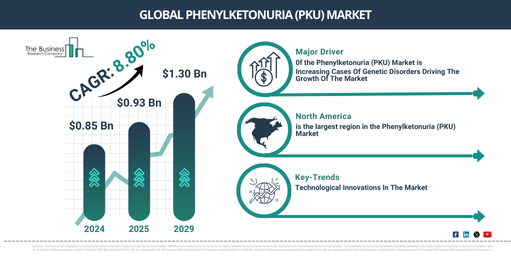
    The value of the phenylketonuria (PKU) industry has expanded substantially over the past few years. It’s expected to increase from $0.85 billion in 2024 to $0.93 billion in 2025, boasting a compound annual growth rate (CAGR) of 9.1%. Several factors have contributed to the growth during the historic period, including the proliferation of newborn screening programs, enhanced awareness about metabolic disorders, management of PKU through dietary approaches, wider availability of medical foods, and regulatory authorizations of treatments for PKU._x000D_

    _x000D_

    The market size for phenylketonuria (PKU) is predicted to experience significant growth in the upcoming years, expanding to a $1.30 billion valuation in 2029, with a compound annual growth rate (CAGR) of 8.8%. Factors contributing to this growth during the forecast period include increased usage of gene therapy, growth of enzyme replacement therapies, heightening investments in rare disease research, an escalated demand for personalized medicine, and governmental backing for PKU treatment coverage. Important trends during this prediction period encompass the emergence of RNA-based therapies, digital health strategies for PKU management, growing partnerships amongst biotech companies and research organizations, emphasis on non-dietary treatment options, and the broadening of telehealth services for patients with PKU._x000D_

    _x000D_

    #Download a free sample to assess the report’s scope and structure:#_x000D_

    https://www.thebusinessresearchcompany.com/sample.aspx?id=21257&type=smp_x000D_

    _x000D_

    #Which Major Market Drivers Are Expected to Boost the Growth Potential of the Phenylketonuria (PKU) Market?#_x000D_

    The escalation in genetic disorder incidences is anticipated to drive the phenylketonuria (PKU) market’s expansion. Genetic disorders are health issues resulting from DNA abnormalities like mutations, gene or chromosome deletions or duplications. The spike in genetic disorder cases is due to factors such as increased maternal age, environmental impacts, advancements in diagnostic technology, and enhanced awareness leading to higher detection rates. Phenylketonuria helps comprehend genetic disorders by demonstrating the potential serious metabolic complications from inherited enzyme deficiencies. For example, in March 2024, Gene People, a UK registered charity, indicated that genetic conditions affect an estimated 1 in 25 children, which is over 2.4 million children and adults in the UK. Also, roughly 30,000 newborns and children in the UK are diagnosed with a genetic condition each year. Thus, the rising cases of genetic disorders are propelling the phenylketonuria (PKU) market’s growth._x000D_

    _x000D_

    #Which Key Market Segments Comprise the Phenylketonuria (PKU) Market and Drive Its Revenue Growth?#_x000D_

    The phenylketonuria (PKU) market covered in this report is segmented –_x000D_

    _x000D_

    1) By Type: Hyperphenylalaninemia, Mild Phenylketonuria (PKU), Moderate And Variant, Classic Phenylketonuria (PKU)_x000D_

    2) By Treatment Type: Enzyme Replacement Therapy, Gene Therapy, Medication, Dietary Therapy_x000D_

    3) By Diagnosis: Genetic Testing, Biochemical Testing, Newborn Screening_x000D_

    4) By End-User: Specialty Clinics, Research Institutes, Home Healthcare, Hospitals_x000D_

    _x000D_

    Subsegments:_x000D_

    1) By Hyperphenylalaninemia: Mild Hyperphenylalaninemia, Moderate Hyperphenylalaninemia, Severe Hyperphenylalaninemia_x000D_

    2) By Mild Phenylketonuria (PKU): Mild PKU with dietary management, Mild PKU with enzyme supplementation_x000D_

    3) By Moderate And Variant: Moderate PKU with medication, Variant PKU with treatment variations_x000D_

    4) By Classic Phenylketonuria (PKU): Classic PKU with strict dietary management, Classic PKU with enzyme replacement therapy_x000D_

    _x000D_

    #Request customized data on this market:#_x000D_

    https://www.thebusinessresearchcompany.com/customise?id=21257&type=smp_x000D_

    _x000D_

    #Which Areas Are Leading Regions in the Phenylketonuria (PKU) Market Expansion Across the Globe?#_x000D_

    North America was the largest region in the phenylketonuria (PKU) market in 2024. Europe is expected to be the fastest-growing region in the forecast period. The regions covered in the phenylketonuria (PKU) market report are Asia-Pacific, Western Europe, Eastern Europe, North America, South America, Middle East, Africa._x000D_

    _x000D_

    #What Are the Key Market Trends in thePhenylketonuria (PKU) Market Over the Coming Years?#_x000D_

    Key enterprises within the phenylketonuria (PKU) market are prioritizing the creation of innovative offerings through the utilization of diverse technologies like physiognomic technology. This is aimed at magnifying the effectiveness and safety of PKU remedies by mimicking human physiological conditions for superior drug absorption and metabolism. Physiomimic technology is a holistic combination of hardware, consumables, and assay protocols, developed to mirror complex human biology and accurately anticipate human medication responses. As an example, Relief Therapeutics Holding SA, a biopharmaceutical firm based in Switzerland, unveiled PKU Golike in October 2022. PKU Golike, a medical food product of the latest generation, was created with patented, pharmaceutical-grade Physiomimic technology for managing diet in phenylketonuria (PKU) cases. Available as granules, packets, and medical food bars, PKU Golike is an extended-release amino acid product. It boasts a unique coating that facilitates the physiological absorption of amino acids like natural proteins and effectively masks their disagreeable taste, smell, and aftertaste._x000D_

    _x000D_

    #View the full report here:#_x000D_

    https://www.thebusinessresearchcompany.com/report/phenylketonuria-pku-global-market-report_x000D_

    _x000D_

    #How Is the Phenylketonuria (PKU) Market Conceptually Defined?#_x000D_

    Phenylketonuria (PKU) is a rare inherited metabolic disorder in which the body cannot break down an amino acid called phenylalanine (Phe) found in many protein-containing foods. This inability is due to a deficiency or malfunction of the phenylalanine hydroxylase (PAH) enzyme, which normally converts phenylalanine into another amino acid called tyrosine._x000D_

    _x000D_

    #Purchase the full report and get a swift delivery:#_x000D_

    https://www.thebusinessresearchcompany.com/purchaseoptions.aspx?id=21257_x000D_

    _x000D_

    #About The Business Research Company:#_x000D_

    With over 15000+ reports from 27 industries covering 60+ geographies, The Business Research Company has built a reputation for offering comprehensive, data-rich research and insights. Armed with 1,500,000 datasets, the optimistic contribution of in-depth secondary research, and unique insights from industry leaders, you can get the information you need to stay ahead in the game._x000D_

    _x000D_

    #Get in touch with us:#_x000D_

    The Business Research Company: https://www.thebusinessresearchcompany.com/_x000D_

    Americas +1 3156230293_x000D_

    Asia +44 2071930708_x000D_

    Europe +44 2071930708_x000D_

    Email us at info@tbrc.info_x000D_

    _x000D_

    #Follow us on:#_x000D_

    _x000D_

    LinkedIn: https://in.linkedin.com/company/the-business-research-company_x000D_

    YouTube: https://www.youtube.com/channel/UC24_fI0rV8cR5DxlCpgmyFQ_x000D_

    Global Market Model: https://www.thebusinessresearchcompany.com/global-market-model

  • CD20 Antibody Market Insights: In-Depth Look at Growth Trends, Market Size, and Opportunities for 2025-2034

    CD20 Antibody Market Insights: In-Depth Look at Growth Trends, Market Size, and Opportunities for 2025-2034

    Our market reports now include the latest updates on global tariffs, trade impacts, and evolving supply chain dynamics.

    What Is the Estimated Market Size of the CD20 Antibody Market In 2029?

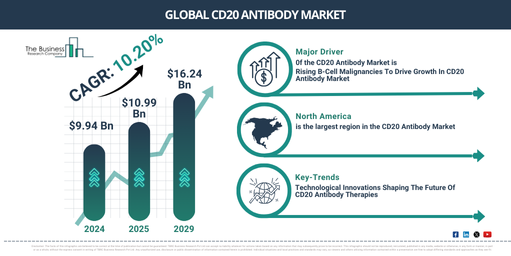
    The market size for the CD20 antibody has seen a quick expansion in the recent past. The growth is projected to rise from $9.94 billion in 2024 to $10.99 billion in 2025, with a compound annual growth rate (CAGR) of 10.6%. The surge in growth during the historic period is due to several factors including increasing cases of b-cell malignancies, growing incidence of autoimmune diseases, heightened demand for targeted therapies, more approvals of biosimilars, an increase in healthcare spending, enhanced healthcare infrastructure, and a rise in awareness of the advantages of immunotherapy.

    In the coming years, the CD20 antibody market is projected to experience rapid expansion. By the year 2029, it is anticipated to reach a market size of $16.24 billion, presenting a compound annual growth rate (CAGR) of 10.2%. This surge during the projected period can be accredited to escalating demand for cutting-edge cancer immunotherapies, rising occurrences of autoimmune diseases, increasing utilization of biosimilar CD20 antibodies, the broadening scope of applications in combination treatments, growing investments in biopharmaceutical research, and heightened understanding of personalized medicine. Notable forthcoming trends encompass the creation of next-generation CD20 antibodies, advancements in antibody-drug conjugate technology, incorporation of artificial intelligence in antibody blueprinting, enhancements in bispecific antibody technology, the emergence of CAR-T cell therapies targeting CD20, application of nanotechnology for improved delivery, and advancements in high-throughput screening techniques.

    Download a free sample to assess the report’s scope and structure:

    https://www.thebusinessresearchcompany.com/sample.aspx?id=21131&type=smp

    What External and Internal Drivers Are Contributing to the Growth of the CD20 Antibody Market?

    The expansion of the CD20 antibody market is expected to be fuelled by the escalating occurrences of B-cell malignancies. An increase in B-cell malignancies corresponds to a rise in the number of cancer cases impacting B cells, a variety of white blood cell integral to the immune response. Numerous factors contribute to this, including an aging population, genetics, exposure to the environment, lifestyle choices, enhanced detection methods, and shifts in the immune system. CD20 antibodies, like rituximab, are employed to target and eradicate malignant B-cells in B-cell malignancies such as non-Hodgkin lymphoma and chronic lymphocytic leukemia, leading to improved treatment results. For example, as per the report by the American College of Cardiology in 2024, it is estimated around 80,350 people, encompassing both children and adults (45,140 males and 35,210 females), will be diagnosed with non-Hodgkin lymphoma (NHL) in 2025. Furthermore, it is anticipated that around 19,390 individuals, comprising 11,060 males and 8,330 females, will succumb to this cancer. Consequently, the surging incidence of B-cell malignancies is spurring the growth of the CD-19 antibody market.

    What Segment Types Define the CD20 Antibody Market Structure?

    The CD20 antibody market covered in this report is segmented –

    1) By Type: Monoclonal Antibody, Polyclonal Antibody

    2) By Application: Flow Cytometry, Enzyme-Linked Immunosorbent Assay (ELISA), Western Blot, Immunoprecipitation, Immunofluorescence

    3) By End User: Hospitals, Specialty Clinics, Ambulatory Surgical Centers, Other End Users

    Subsegments:

    1) By Monoclonal Antibody: Rituximab, Obinutuzumab, Ofatumumab

    2) By Polyclonal Antibody: Conventional Polyclonal Antibodies, Human Polyclonal Antibodies, Recombinant Polyclonal Antibodies

    Request customized data on this market:

    https://www.thebusinessresearchcompany.com/customise?id=21131&type=smp

    Which Geographic Areas Hold the Strongest Growth Potential in the CD20 Antibody Market?

    North America was the largest region in the CD20 antibody market in 2024. The regions covered in the CD20 antibody market report are Asia-Pacific, Western Europe, Eastern Europe, North America, South America, Middle East, Africa.

    What Long-Term Trends Are Transforming the Competitive Landscape of the CD20 Antibody Market?

    Leading firms in the CD20 antibody market are honing in on the development of technological novelties, including biosimilars. Their aim is to improve the availability of treatments, decrease medical expenses, and meet the escalating demand for cost-effective and successful therapies for B-cell malignancies and autoimmune diseases. Biosimilars are biologic medicinal products that closely resemble a previously approved reference product without any significant variations in terms of safety, purity or effectiveness. For example, in July 2024, Indian-based Dr. Reddy’s Laboratories reported that they have received a complete response letter (CRL) from the US Food and Drug Administration (USFDA) regarding their rituximab biosimilar candidate. They also plan to work extensively with the USFDA to clear any issues within the set timelines with a goal to bring rituximab biosimilar to the patients in the United States. Rituximab biosimilar targets the CD20 protein on B-cells, triggering a response that leads to the elimination of these abnormal or hyperactive B-cells.

    View the full report here:

    https://www.thebusinessresearchcompany.com/report/cd20-antibody-global-market-report

    What Is the Definition of the CD20 Antibody Market?

    CD20 antibodies are monoclonal antibodies that specifically target CD20, a protein found on the surface of B cells (a type of white blood cell involved in the immune response). These antibodies are used primarily to treat diseases related to abnormal B-cell function, such as cancers and autoimmune disorders. The main function of CD20 antibodies is to bind to the CD20 protein on B cells and trigger their destruction.

    Purchase the full report and get a swift delivery:

    https://www.thebusinessresearchcompany.com/purchaseoptions.aspx?id=21131

    About The Business Research Company:

    With over 15000+ reports from 27 industries covering 60+ geographies, The Business Research Company has built a reputation for offering comprehensive, data-rich research and insights. Armed with 1,500,000 datasets, the optimistic contribution of in-depth secondary research, and unique insights from industry leaders, you can get the information you need to stay ahead in the game.

    Get in touch with us:

    The Business Research Company: https://www.thebusinessresearchcompany.com/

    Americas +1 3156230293

    Asia +44 2071930708

    Europe +44 2071930708

    Email us at info@tbrc.info

    Follow us on:

    LinkedIn: https://in.linkedin.com/company/the-business-research-company

    YouTube: https://www.youtube.com/channel/UC24_fI0rV8cR5DxlCpgmyFQ

    Global Market Model: https://www.thebusinessresearchcompany.com/global-market-model
  • Top Trends Driving Innovation and Change in the Embolotherapy Market: Introduction Of Absorbable Embolic Systems

    Top Trends Driving Innovation and Change in the Embolotherapy Market: Introduction Of Absorbable Embolic Systems

    Our market reports now include the latest updates on global tariffs, trade impacts, and evolving supply chain dynamics.

    What Is the Current and Projected Market Size of the Embolotherapy Market Through 2034?

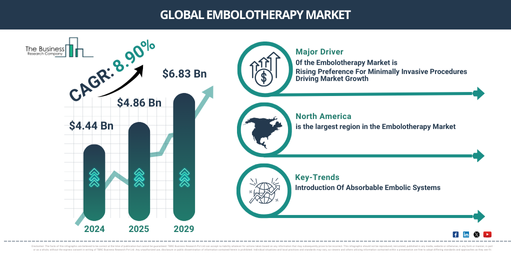
    The market size for embolotherapy has seen robust expansion in the past years. Its value is expected to increase from $4.44 billion in 2024 to $4.86 billion in 2025, with a compound annual growth rate (CAGR) of 9.3%. Elements contributing to the past period growth include a surge in the need for embolotherapy treatments, an escalating number of cancer cases, the rising prevalence of peripheral vascular diseases, increasing healthcare spending, and burgeoning investments aimed at research.

    In the following years, the embolotherapy market is projected to experience significant expansion, reaching a value of $6.83 billion in 2029 with a compound annual growth rate (CAGR) of 8.9%. This increase during the forecasted period is due to several factors such as an increase in disposable income, a rise in chronic disease prevalence, the expansion of its use in reproductive health, an uptick in cheoembolization procedures, and a growing incidence of liver cancer. The forecasted period will also see significant trends like advanced technologies, digital and analog devices, the inclusion of an insertable cardiac monitor, embolotherapy techniques, and strategic partnerships.

    Download a free sample to assess the report’s scope and structure:

    https://www.thebusinessresearchcompany.com/sample.aspx?id=21181&type=smp

    What External and Internal Drivers Are Contributing to the Growth of the Embolotherapy Market?

    The embolotherapy market is expected to expand due to the increased preference for minimally invasive procedures. These are cosmetic treatments that involve little to no surgical intervention, leading to less downtime and lower risks. The popularity of these procedures stems from quicker recovery times, less pain, fewer scars, diminished risk of complications, and ongoing technological developments. Embolotherapy contributes to the efficacy of minimally invasive procedures by specifically blocking blood circulation to specific vessels. This helps reduce bleeding, treat tumors, and control vascular irregularities more accurately and with fewer complications. According to the American Society of Plastic Surgeons, a non-profit organization based in the USA, there was a 7% increase in cosmetic minimally invasive procedures by September 2023, resulting in a rise from 23,672,269 in 2022 to 25,442,640. Consequently, this growing inclination towards minimally invasive procedures is fuelling the expansion of the embolotherapy market.

    What Segment Types Define the Embolotherapy Market Structure?

    The embolotherapy market covered in this report is segmented –

    1) By Product: Embolization Coil, Embolic Agents, Detachable Balloons, Embolic Plug Systems, Support Devices

    2) By Application: Oncology, Peripheral Vascular Diseases, Urology and Nephrology, Neurology, Gastrointestinal (GIT) Disorders

    3) By Procedure: Transcatheter Arterial Embolization (TAE), Transcatheter Arterial Radioembolization (TARE) Or Selective Internal Radiation Therapy (SIRT), Transarterial Chemoembolization (TACE)

    4) By End User: Ambulatory Surgical Centre, Hospitals And Clinics, Other End Users

    Subsegments:

    1) By Embolization Coil: Bare Coils, Coated Coils, Micro Coils

    2) By Embolic Agents: Liquid Embolic Agents, Particulate Embolic Agents, Gelatin Sponge, Polyvinyl Alcohol (PVA) Particles

    3) By Detachable Balloons: Single-Use Balloons, Multi-Use Balloons

    4) By Embolic Plug Systems: Plug Kits, Distal Occlusion Systems

    5) By Support Devices: Guidewires, Catheters, Sheath Introducers

    Request customized data on this market:

    https://www.thebusinessresearchcompany.com/customise?id=21181&type=smp

    Which Geographic Areas Hold the Strongest Growth Potential in the Embolotherapy Market?

    North America was the largest region in the embolotherapy market in 2024. Asia-Pacific is expected to be the fastest-growing region in the forecast period. The regions covered in the embolotherapy market report are Asia-Pacific, Western Europe, Eastern Europe, North America, South America, Middle East, Africa.

    What Long-Term Trends Are Transforming the Competitive Landscape of the Embolotherapy Market?

    Leading firms in the embolotherapy field are striving to develop revolutionary products like absorbable embolics systems to improve patient results and widen the range of treatment alternatives. Absorbable embolic systems utilize bioresorbable materials in embolization procedures to hinder blood supply to specific tissues such as tumors or aneurysms, and these materials eventually disintegrate within the body. To illustrate, in January 2025, Instylla Inc., a medical equipment manufacturer based in the U.S., obtained FDA 510(k) approval for its bioresorbable embolization agent named Tembo embolic system, constructed with dry-gelatin particles irregular in shape and ranging from 85 to 255 µm in size. This system is engineered to embolize hypervascular tumors and seal off blood vessels in the peripheral vasculature. As per Instylla, Tembo provides benefits like simple preparation, high visibility, and the capability to densely fill treated vessels, potentially enhancing the efficacy of existing permanent embolic solutions.

    View the full report here:

    https://www.thebusinessresearchcompany.com/report/embolotherapy-global-market-report

    What Is the Definition of the Embolotherapy Market?

    Embolotherapy is a minimally invasive medical procedure involving intentionally blocking blood vessels to treat various medical conditions. It is achieved by injecting embolic agents, such as microspheres, coils, gels, or liquid embolic, into targeted blood vessels to cut off blood supply to abnormal tissues or structures. Embolotherapy is a highly targeted and less invasive alternative to traditional surgery, often performed by interventional radiologists to improve patient outcomes with minimal recovery time.

    Purchase the full report and get a swift delivery:

    https://www.thebusinessresearchcompany.com/purchaseoptions.aspx?id=21181

    About The Business Research Company:

    With over 15000+ reports from 27 industries covering 60+ geographies, The Business Research Company has built a reputation for offering comprehensive, data-rich research and insights. Armed with 1,500,000 datasets, the optimistic contribution of in-depth secondary research, and unique insights from industry leaders, you can get the information you need to stay ahead in the game.

    Get in touch with us:

    The Business Research Company: https://www.thebusinessresearchcompany.com/

    Americas +1 3156230293

    Asia +44 2071930708

    Europe +44 2071930708

    Email us at info@tbrc.info

    Follow us on:

    LinkedIn: https://in.linkedin.com/company/the-business-research-company

    YouTube: https://www.youtube.com/channel/UC24_fI0rV8cR5DxlCpgmyFQ

    Global Market Model: https://www.thebusinessresearchcompany.com/global-market-model
  • $17.35 Billion Forecast for Persistent Epithelial Defect Management Market by 2029, Backed by Demand and Innovation

    $17.35 Billion Forecast for Persistent Epithelial Defect Management Market by 2029, Backed by Demand and Innovation

    Our market reports now include the latest updates on global tariffs, trade impacts, and evolving supply chain dynamics.

    #What Are the Key Milestones in the Persistent Epithelial Defect Management Market’s Growth Trajectory From 2025 To 2034?#_x000D_

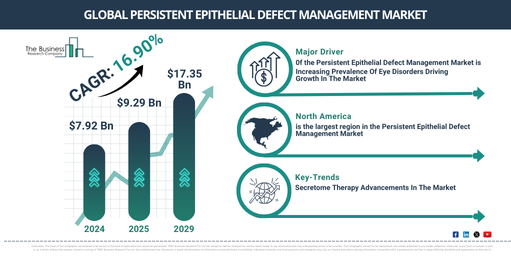
    The market for managing persistent epithelial defects has markedly expanded in the past few years. It is projected to increase from $7.92 billion in 2024 to $9.29 billion in 2025, exhibiting a compound annual growth rate (CAGR) of 17.3%. The historical growth is primarily due to factors such as enhanced research initiatives, greater hospital demand, an upward trend in ocular surface disorders and eye diseases, coupled with an aging population._x000D_

    _x000D_

    The market for managing persistent epithelial defects is predicted to experience accelerated expansion in the upcoming years, reaching a value of $17.35 billion in 2029 with a compound annual growth rate (CAGR) of 16.9%. The amplification in this predicted timeframe is ascribed to escalated partnerships and cooperations, augmented awareness and education, prioritizing value-based care, and growing incidence of health conditions such as diabetes and hypertension as well as early detection and management. Significant trends in this forecast period encompass technological progress, surging demand for creative treatment types, evolved treatment modalities, access to cutting-edge surgical tools and techniques, and inventive drugs._x000D_

    _x000D_

    #Download a free sample to assess the report’s scope and structure:#_x000D_

    https://www.thebusinessresearchcompany.com/sample.aspx?id=21256&type=smp_x000D_

    _x000D_

    #What Are the Core Growth Drivers Propelling the Persistent Epithelial Defect Management Market Forward?#_x000D_

    The expanding occurrence of eye disorders is anticipated to drive the persistent epithelial defect management market growth. Eye disorders encompass a wide array of health issues impacting the structure, function, or condition of the eyes, resulting in vision deterioration, unease, or potential blindness. The occurrence of eye disorders is influenced by aging populations, extended digital screen usage, and changes in the environment. Management of persistent epithelial defects is crucial in addressing eye disorders as it facilitates the healing process, reduces inflammation, and prevents potential complications like infection or scarring. For example, the World Health Organization, a Swiss intergovernmental organization, reported in December 2024 that the overall pooled prevalence of childhood myopia had a rate of 5.23% in 2023, with a sharply higher rate in females (4.90%) as compared to males (3.94%). Consequently, the burgeoning occurrence of eye disorders is fuelling the growth of the persistent epithelial defect management market. The Increasing Number of Eye Surgeries Influencing Market Growth_x000D_

    _x000D_

    #What Segment Types Define the Persistent Epithelial Defect Management Market Structure?#_x000D_

    The persistent epithelial defect management market covered in this report is segmented –_x000D_

    _x000D_

    1) By Disease Type: Epithalial Or Limbal, Inflammatory Disease, Neurotrophic Disease, Other Disease Types_x000D_

    2) By Distribution Channel: Direct Sales, Online Pharmacy, Retail Pharmacy, Hospitals_x000D_

    3) By End User: Hospital Or Clinical Laboratories, Physician Offices, Reference Laboratories, Other End Users_x000D_

    _x000D_

    Subsegments:_x000D_

    1) By Epithelial Or Limbal: Limbal Stem Cell Deficiency (LSCD), Limbal Transplantation, Conjunctival Transplantation_x000D_

    2) By Inflammatory Disease: Dry Eye Syndrome, Allergic Conjunctivitis, Uveitis_x000D_

    3) By Neurotrophic Disease: Herpes Simplex Virus (HSV) Keratitis, Diabetic Neuropathy, Neurotrophic Keratopathy_x000D_

    4) By Other Disease Types: Chemical Burns, Trauma-Induced Defects, Congenital Corneal Opacities_x000D_

    _x000D_

    #Request customized data on this market:#_x000D_

    https://www.thebusinessresearchcompany.com/customise?id=21256&type=smp_x000D_

    _x000D_

    #Which Geographic Areas Hold the Strongest Growth Potential in the Persistent Epithelial Defect Management Market?#_x000D_

    North America was the largest region in the persistent epithelial defect management market in 2024. Asia-Pacific is expected to be the fastest-growing region in the forecast period. The regions covered in the persistent epithelial defect management market report are Asia-Pacific, Western Europe, Eastern Europe, North America, South America, Middle East, Africa._x000D_

    _x000D_

    #Which Emerging Trends that Are Influencing thePersistent Epithelial Defect Management Industry Evolution?#_x000D_

    Leading firms in the persistent epithelial defect management market are focusing on inventing new therapies, like secretome therapy, to expedite recovery and enhance the efficacy of treatment for persistent epithelial defects. Secretome therapy involves the use of bioactive molecules, including proteins, lipids, and extracellular vesicles that cells secrete, which aids in tissue repair, immune response modulation, and the treatment of various ailments. In an example from April 2023, U.S.-based biopharmaceutical firm Kala Pharmaceuticals Inc. obtained a U.S. Food and Drug Administration (FDA) Fast Track Designation for KPI-012, a human MSC-S therapy targeted at persistent corneal epithelial defects. The drug utilizes a multi-faceted approach aimed to tackle all root causes of persistent epithelial defect management, enhancing corneal recovery through the use of bioactive molecules such as growth factors, protease inhibitors, and neurotrophic factors._x000D_

    _x000D_

    #View the full report here:#_x000D_

    https://www.thebusinessresearchcompany.com/report/persistent-epithelial-defect-management-global-market-report_x000D_

    _x000D_

    #What Is the Definition of the Persistent Epithelial Defect Management Market?#_x000D_

    Persistent Epithelial Defect (PED) Management refers to the medical strategies used to promote corneal healing in cases where the corneal epithelium fails to regenerate and close within two weeks despite standard treatment. It involves identifying and addressing underlying causes using therapeutic approaches such as lubricating eye drops, autologous serum tears, amniotic membrane transplantation, bandage contact lenses, and biologic therapies to facilitate epithelial healing and prevent corneal complications like ulcers or perforation._x000D_

    _x000D_

    #Purchase the full report and get a swift delivery:#_x000D_

    https://www.thebusinessresearchcompany.com/purchaseoptions.aspx?id=21256_x000D_

    _x000D_

    #About The Business Research Company:#_x000D_

    With over 15000+ reports from 27 industries covering 60+ geographies, The Business Research Company has built a reputation for offering comprehensive, data-rich research and insights. Armed with 1,500,000 datasets, the optimistic contribution of in-depth secondary research, and unique insights from industry leaders, you can get the information you need to stay ahead in the game._x000D_

    _x000D_

    #Get in touch with us:#_x000D_

    The Business Research Company: https://www.thebusinessresearchcompany.com/_x000D_

    Americas +1 3156230293_x000D_

    Asia +44 2071930708_x000D_

    Europe +44 2071930708_x000D_

    Email us at info@tbrc.info_x000D_

    _x000D_

    #Follow us on:#_x000D_

    _x000D_

    LinkedIn: https://in.linkedin.com/company/the-business-research-company_x000D_

    YouTube: https://www.youtube.com/channel/UC24_fI0rV8cR5DxlCpgmyFQ_x000D_

    Global Market Model: https://www.thebusinessresearchcompany.com/global-market-model

  • Emerging Growth Drivers in the Cardiac Tissue Engineering Market Landscape: Rising Cardiovascular Disease Rates Boost The Market Growth

    Emerging Growth Drivers in the Cardiac Tissue Engineering Market Landscape: Rising Cardiovascular Disease Rates Boost The Market Growth

    Our market reports now include the latest updates on global tariffs, trade impacts, and evolving supply chain dynamics.

    What Are the Key Projections for the CAGR of the Cardiac Tissue Engineering Market Size From 2025 to 2034?

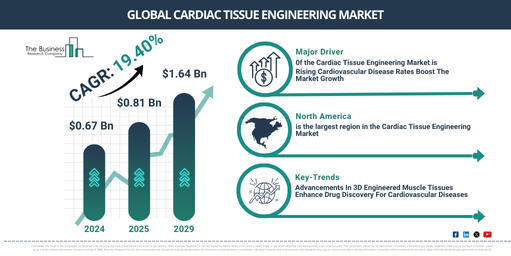
    In the recent times, the cardiac tissue engineering market has seen swift expansion. The market size is projected to escalate from $0.67 billion in 2024 to $0.81 billion in 2025, experiencing a Compound Annual Growth Rate (CAGR) of 19.7%. This significant increase during the historic phase is due to factors such as the shortage of organ donors, rise in cardiovascular disease prevalence, advancements in biomaterials, escalating investments in regenerative medicine, the demand for individually tailored medicine, improvements in bioreactor systems, augmented government funding for bio-medical research, and a growing emphasis on minimally invasive treatments.

    The market size of cardiac tissue engineering is projected to undergo a swift expansion in the forthcoming years, reaching a value of $1.64 billion in 2029, with a compound annual growth rate (CAGR) of 19.4%. This surge during the forecast period can be credited to a rising demand for personalized cardiac therapies, an increased emphasis on bioengineered heart tissues, the wide-ranging applications of regenerative medicine, growing partnerships between biotech companies and academics, augmented investment in preclinical testing platforms, and a rising incidence of chronic heart illnesses. Notable trends for the forecast period encompass AI’s incorporation into tissue engineering, developments in scaffolds based on nanotechnology, advancements in biodegradable hydrogels, strides in precision of 3D bioprinting, the employment of bioreactors for tissue maturation, and the usage of gene editing for enhancing cardiac cells.

    Download a free sample to assess the report’s scope and structure:

    https://www.thebusinessresearchcompany.com/sample.aspx?id=21129&type=smp

    Which Primay Drivers Are Accelerating Growth in the Cardiac Tissue Engineering Market?

    The escalating prevalence of heart-related illnesses is projected to spur the expansion of the cardiac tissue engineering market in the future. The interdisciplinary domain of cardiac tissue engineering is committed to creating biological or bioengineered structures to heal, regenerate, and replace damaged cardiac tissue. The surge in heart-related diseases is chiefly attributed to detrimental lifestyle habits such as unhealthy diet, lack of physical activity, smoking, along with growing obesity and diabetes rates. Cardiac tissue engineering employs the development of biomaterials, cell-based treatments, and bioengineered tissues to mend or regenerate injured heart muscle, ultimately restoring cardiac function. For instance, in May 2023, the Centers for Disease Control and Prevention, a US government agency, reported a slight rise in the percentage of coronary heart disease in women aged 18 and above, from 3.6% in 2022 to 3.7% in 2023. Therefore, the increasing prevalence of cardiovascular diseases is fueling the advancement of the cardiac tissue engineering market.

    Which Primary Segments of the Cardiac Tissue Engineering Market Are Driving Growth and Industry Transformations?

    The cardiac tissue engineering market covered in this report is segmented –

    1) By Product: Heart Valves, Vascular Grafts

    2) By Material: Stem Cells, Scaffolds

    3) By Application: Myocardial Infarction, Heart Valve Repair Or Replacement, Congenital Heart Disease Treatment, Other Applications

    4) By End Users: Hospitals And Clinics, Academic And Research Institutes, Other End Users

    Subsegments:

    1) By Heart Valves: Bioprosthetic Heart Valves, Mechanical Heart Valves, Tissue-Engineered Heart Valves

    2) By Vascular Grafts: Synthetic Vascular Grafts, Biologic Vascular Grafts, Tissue-Engineered Vascular Grafts

    Request customized data on this market:

    https://www.thebusinessresearchcompany.com/customise?id=21129&type=smp

    Which Regions Are Key Players in the Growth of the #Which Primay Drivers Are Accelerating Growth in the Cardiac Tissue Engineering Market?# Market?

    North America was the largest region in the cardiac tissue engineering market in 2024. The regions covered in the cardiac tissue engineering market report are Asia-Pacific, Western Europe, Eastern Europe, North America, South America, Middle East, Africa.

    Which Technological Trends Are Reshaping the Cardiac Tissue Engineering Industry Dynamics?

    Major corporations in the cardiac tissue engineering market are sharpening their focus on advancing technology, including 3D-engineered muscle tissues, to bolster precision and productivity in drug discovery for efficient cardiovascular disease treatments. These 3D-engineered muscle tissues are bioengineered constructs that imitate human muscle’s structural and functional attributes, typically employed for drug testing and disease simulation. For instance, in July 2022, US-based biotech firm Curi Bio Inc., rolled out the Mantarray platform for thorough analysis of human-relevant 3D heart and skeletal engineered muscle tissue (EMT) contractility. The platform, through its state-of-the-art tissue culture techniques, forms highly functional muscle tissues resembling the mechanical features and demeanor of natural muscle—providing a more accurate model for drug testing. This technology aims at bolstering therapeutic solutions’ development by enabling researchers to examine muscle contraction, stimulus response, and disease modeling at a microscopic level.

    View the full report here:

    https://www.thebusinessresearchcompany.com/report/cardiac-tissue-engineering-global-market-report

    What Parameters Are Used to Define the Cardiac Tissue Engineering Market?

    Cardiac tissue engineering refers to the use of advanced biomedical techniques to develop functional heart tissue that can repair or regenerate damaged heart muscles. It involves combining cells, biomaterials, and bioactive factors to create engineered tissues that can restore cardiac function or aid in heart disease treatment.

    Purchase the full report and get a swift delivery:

    https://www.thebusinessresearchcompany.com/purchaseoptions.aspx?id=21129

    About The Business Research Company:

    With over 15000+ reports from 27 industries covering 60+ geographies, The Business Research Company has built a reputation for offering comprehensive, data-rich research and insights. Armed with 1,500,000 datasets, the optimistic contribution of in-depth secondary research, and unique insights from industry leaders, you can get the information you need to stay ahead in the game.

    Get in touch with us:

    The Business Research Company: https://www.thebusinessresearchcompany.com/

    Americas +1 3156230293

    Asia +44 2071930708

    Europe +44 2071930708

    Email us at info@tbrc.info

    Follow us on:

    LinkedIn: https://in.linkedin.com/company/the-business-research-company

    YouTube: https://www.youtube.com/channel/UC24_fI0rV8cR5DxlCpgmyFQ

    Global Market Model: https://www.thebusinessresearchcompany.com/global-market-model
  • Emerging Trends Redefining the Eczema Market Landscape: Innovative Digital Tools Transforming Healthcare Delivery

    Emerging Trends Redefining the Eczema Market Landscape: Innovative Digital Tools Transforming Healthcare Delivery

    Our market reports now include the latest updates on global tariffs, trade impacts, and evolving supply chain dynamics.

    What is the Anticipated CAGR of the eHealth Market, and What Factors Will Drive It?

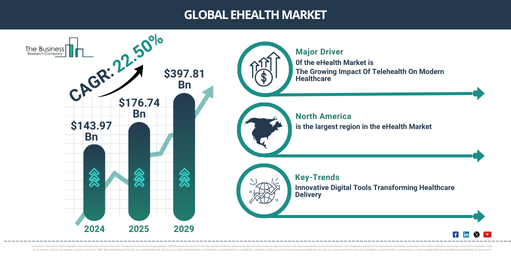
    In the past few years, the eHealth market has seen explosive growth. It is projected to expand from $143.97 billion in 2024 to $176.74 billion in 2025, with a compound annual growth rate (CAGR) of 22.8%. The significant growth throughout the historical phase is due to factors such as the widespread availability of the internet, increased usage of smartphones, escalating healthcare expenses, various governmental programs, and the rising need for remote monitoring.

    Expectations are high for the eHealth market size, which is set to undergo significant expansion in the coming years. It is projected to reach $397.81 billion by 2029, with a Compound Annual Growth Rate (CAGR) of 22.5%. This anticipated growth during the forecast period can be credited to various factors such as the rise in chronic diseases, an aging population, the emphasis on personalized medicine, the expansion of remote patient monitoring, and the inclusion of AI in diagnostics. Key trends anticipated during the forecast period incorporate the enhancement of telemedicine infrastructure, the creativity in AI-enhanced diagnostics, the progress in digital health records, the proliferation of intelligent medical devices, and the improvement in eHealth’s cybersecurity.

    Download a free sample to assess the report’s scope and structure:

    https://www.thebusinessresearchcompany.com/sample.aspx?id=21180&type=smp

    What Are the Core Market Drivers Propelling Growth in the eHealth Industry?

    The growth of the eHealth market is projected to be accelerated by the increasing use of telehealth. Telehealth encompasses the application of digital communication technologies to deliver remote healthcare services, including consulting, monitoring, and providing medical education. The factors propelling the increased use of telehealth are its accessibility, convenience, cost-effectiveness, and technological advancement. Telehealth is further enhanced by eHealth through facilitating remote patient observation, virtual consultations, and effortless accessibility to digital health records, contributing to better healthcare provision. For example, in a survey by Rock Health, a US-based health technology company, in February 2023, out of 8,014 respondents, 76% of individuals older than 55 have utilized telemedicine, and 80% of all respondents have received care via telemedicine at some point, demonstrating an increase of 8% from 72% in 2021. Therefore, the increased use of telehealth is stimulating the expansion of the eHealth market.

    How Is the eHealth Market Segmented?

    The ehealth market covered in this report is segmented –

    1) By Type: eHealth Solutions, eHealth Services

    2) By Component: Electronic Health Records, e-Prescribing, Clinical Decision Support Systems, Telemedicine, Other Components

    3) By Deployment: On-premise, Cloud-based

    4) By End User: Healthcare Providers, Payers, Healthcare Consumers, Other End-Users

    Subsegments:

    1) By eHealth Solutions: Electronic Health Records (EHR), Telemedicine And Telehealth Solutions, Health Information Systems (HIS), Mobile Health Applications (mHealth), Remote Monitoring Solutions

    2) By eHealth Services: Telemedicine Services, eConsultation And Virtual Care, Health Data Analytics Services, Health IT Support Services, eHealth Consulting Services

    Request customized data on this market:

    https://www.thebusinessresearchcompany.com/customise?id=21180&type=smp

    Which Regions Are Driving the Next Phase of the eHealth Market Growth?

    North America was the largest region in the eHealth market in 2024. Asia-Pacific is expected to be the fastest-growing region in the forecast period. The regions covered in the ehealth market report are Asia-Pacific, Western Europe, Eastern Europe, North America, South America, Middle East, Africa.

    What Key Market Trends and Innovations Are Shaping the Future of the eHealth Industry?

    Key players in the eHealth market are concentrating their efforts on the development of cutting-edge products such as electronic medical record (EMR) systems. These systems are designed to advance patient data handling, increase healthcare effectiveness and simplify clinical processes. An EMR system is an electronic medium that looks after, organizes and recalls patients’ medical histories, diagnoses, therapies, and other medical data within a medical institution. For example, in April 2024, eHealth Solutions Ltd, a UK-based medical IT firm, debuted its groundbreaking EMR system, EMRpro, specifically constructed for private medical firms. This avant-garde healthcare IT solution seeks to transform clinical effectiveness and patient management, taking healthcare technology to new heights. The EMRpro incorporates progressive features that improve medical workflows and care provision and differentiates from conventional EMR systems by putting clinical operation over administrative duties. EMRpro’s contemporary, cloud-based foundation further exemplifies this push for innovation in healthcare technology.

    View the full report here:

    https://www.thebusinessresearchcompany.com/report/ehealth-global-market-report

    How Is the eHealth Market Defined and What Are Its Core Parameters?

    eHealth (electronic health) refers to the use of digital technologies and electronic systems to manage healthcare services and information. It enhances communication, efficiency, and accessibility in healthcare delivery. eHealth includes digital solutions for patient care, administration, and decision-making. It supports healthcare providers, consumers, and stakeholders in improving health outcomes.

    Purchase the full report and get a swift delivery:

    https://www.thebusinessresearchcompany.com/purchaseoptions.aspx?id=21180

    About The Business Research Company:

    With over 15000+ reports from 27 industries covering 60+ geographies, The Business Research Company has built a reputation for offering comprehensive, data-rich research and insights. Armed with 1,500,000 datasets, the optimistic contribution of in-depth secondary research, and unique insights from industry leaders, you can get the information you need to stay ahead in the game.

    Get in touch with us:

    The Business Research Company: https://www.thebusinessresearchcompany.com/

    Americas +1 3156230293

    Asia +44 2071930708

    Europe +44 2071930708

    Email us at info@tbrc.info

    Follow us on:

    LinkedIn: https://in.linkedin.com/company/the-business-research-company

    YouTube: https://www.youtube.com/channel/UC24_fI0rV8cR5DxlCpgmyFQ

    Global Market Model: https://www.thebusinessresearchcompany.com/global-market-model
  • Global Peripheral T-Cell Lymphoma Market Projected to Reach $0.78 Billion by 2029 at a CAGR of 5.6%

    Global Peripheral T-Cell Lymphoma Market Projected to Reach $0.78 Billion by 2029 at a CAGR of 5.6%

    Our market reports now include the latest updates on global tariffs, trade impacts, and evolving supply chain dynamics.

    #How Has The Peripheral T-Cell Lymphoma Market Size Shifted, And What Is the Outlook Through 2034?#_x000D_

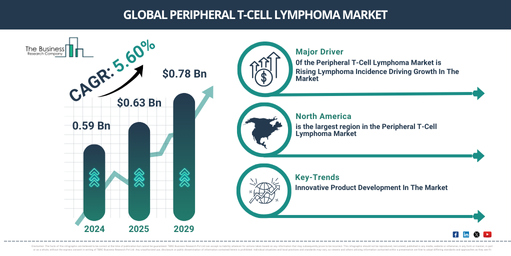
    The market for peripheral T-cell lymphoma has witnessed a substantial growth in the last few years. The market size is anticipated to escalate from $0.59 billion in 2024 to $0.63 billion in 2025, showcasing a compound annual growth rate (CAGR) of 5.9%. Factors contributing to the growth during the historic period include increased awareness of rare lymphomas, the advent of monoclonal antibodies, initial orphan drug designations, advancements in hematologic cancer research, a rise in stem cell transplant acceptance, enhancement in diagnostic precision, growth of oncology healthcare infrastructure, and initial innovations in immunotherapy._x000D_

    _x000D_

    Expectations are high for the peripheral T-cell lymphoma market, with substantial growth anticipated over the coming years. The market is projected to escalate to $0.78 billion by 2029, expanding at a compound annual growth rate (CAGR) of 5.6%. Factors like the progression in targeted therapies, surge in personalized medicine implementation, expansion in immunotherapy bearings, robust innovative medication pipeline, increased healthcare capital in emerging markets, broadened patient access programs, artificial intelligence incorporated diagnostics, imposing regulatory rewards for orphan drugs and the amplified attention on combination therapies are all contributing to this growth. Noteworthy trends for the forecasted period incorporate the creation of novel biologics, advancements in gene altering technologies, the utilization of liquid biopsy diagnostics, the incorporation of artificial intelligence in planning treatment, breakthroughs in CAR-T cell therapy, next-generation sequencing advancements, nanotechnology use in drug delivery, custom vaccine advancements, the coming of bispecific antibodies and automation being introduced into clinical trial processes._x000D_

    _x000D_

    #Download a free sample to assess the report’s scope and structure:#_x000D_

    https://www.thebusinessresearchcompany.com/sample.aspx?id=21255&type=smp_x000D_

    _x000D_

    #What are the Fundamental Drivers and Innovations Shaping the Peripheral T-Cell Lymphoma Market?#_x000D_

    The peripheral T-cell lymphoma market is expected to experience significant growth, primarily driven by the increasing incidence of lymphoma. Lymphoma is a cancer that starts in the lymphatic system, an integral component of the body’s defense mechanism. The heightened prevalence of lymphoma can be linked to genetic factors, environmental influences, certain viral infections like the Epstein-Barr virus, issues with immune deficiency, and lifestyle elements such as smoking and obesity. Peripheral T-cell lymphoma (PTCL), which arises from mature T-cells, exacerbates lymphoma progression with its aggressive nature, immune system disruption, and decreased response to treatment relative to other lymphoma variants. As an example, recent data provided by the American Cancer Society Facts and Figures, a professional organization based in the US, indicates that the projected new non-Hodgkin lymphoma cases totalled 80,550 in 2023 and remained the same in 2024. Consequently, the escalating incidence of lymphoma is fuelling the expansion of the peripheral T-cell lymphoma market._x000D_

    _x000D_

    #How Is the Peripheral T-Cell Lymphoma Market Segmented?#_x000D_

    The peripheral T-cell lymphoma market covered in this report is segmented –_x000D_

    _x000D_

    1) By Type: Peripheral T-Cell Lymphoma Not Otherwise Specified (PTCL-NOS), Angioimmunoblastic T- Cell Lymphoma (AITL), Anaplastic Large Cell Lymphoma (ALCL), Adult T- Cell Leukaemia Or Lymphoma (ATLL), Enteropathy-Associated T- Cell Lymphoma ( EATL), Hepatosplenic T- Cell Lymphoma, Other Types_x000D_

    2) By Treatment Type: Chemotherapy, Target Therapy, Immunotherapy, Stem Cell Therapy, Radiation Therapy_x000D_

    3) By Drug Class: Histone Deacetylase (HDAC) Inhibitors, Monoclonal Antibodies, Alkylating Angents, Antimetabolites, Other Drug Class_x000D_

    4) By Route Of Administration: Oral, Injectable_x000D_

    5) By End-User: Hospitals, Specialty Clinics, Ambulatory Surgical Center, Research Institute_x000D_

    _x000D_

    Subsegments:_x000D_

    1) By Peripheral T-Cell Lymphoma Not Otherwise Specified (PTCL-NOS): Cutaneous PTCL, Systemic PTCL_x000D_

    2) By Angioimmunoblastic T-Cell Lymphoma (AITL): Classical AITL, Variant AITL_x000D_

    3) By Anaplastic Large Cell Lymphoma (ALCL): Systemic ALCL, Cutaneous ALCL_x000D_

    4) By Adult T-Cell Leukaemia Or Lymphoma (ATLL): Acute ATLL, Chronic ATLL, Smoldering ATLL, Lymphoma Type ATLL_x000D_

    5) By Enteropathy-Associated T-Cell Lymphoma (EATL): Type 1 EATL, Type 2 EATL_x000D_

    6) By Hepatosplenic T-Cell Lymphoma: Hepatic Type, Splenic Type_x000D_

    7) By Other Types: Subcutaneous T-Cell Lymphoma, Lymphomatoid Granulomatosis_x000D_

    _x000D_

    #Request customized data on this market:#_x000D_

    https://www.thebusinessresearchcompany.com/customise?id=21255&type=smp_x000D_

    _x000D_

    #Which Regions Are Driving the Next Phase of the Peripheral T-Cell Lymphoma Market Growth?#_x000D_

    North America was the largest region in the peripheral T-cell lymphoma market in 2024. Asia-Pacific is expected to be the fastest-growing region in the forecast period. The regions covered in the peripheral T-cell lymphoma market report are Asia-Pacific, Western Europe, Eastern Europe, North America, South America, Middle East, Africa._x000D_

    _x000D_

    #What Key Trends Are Shaping the Future of the Peripheral T-Cell Lymphoma Market?#_x000D_

    Leading firms in the peripheral T-cell lymphoma market are concentrating their efforts to produce unique products like dihydrofolate reductase inhibitors, in order to enhance the effectiveness of treatment and better patient results. A dihydrofolate reductase inhibitor represents a category of drugs that inhibit the dihydrofolate reductase enzyme action crucial for DNA synthesis and cell replication. For example, in December 2024, Fresenius Kabi AG, a pharmaceutical company based in Germany, launched Pralatrexate Injection which serves as a generic alternative to Folotyn to treat relapsed or refractory peripheral T-cell lymphoma. This product launch enriches the company’s oncology range, offering high-quality, affordable treatment choice to healthcare providers and patients. The injection comes in 20 mg/1 mL and 40 mg/2 mL single-dose vials and is fast-tracked based on overall response rate, but requires confirmatory trials for continued approval._x000D_

    _x000D_

    #View the full report here:#_x000D_

    https://www.thebusinessresearchcompany.com/report/peripheral-t-cell-lymphoma-global-market-report_x000D_

    _x000D_

    #How Is the Peripheral T-Cell Lymphoma Market Defined and What Are Its Core Parameters?#_x000D_

    Peripheral T-cell lymphoma (PTCL) refers to a group of aggressive non-Hodgkin lymphomas that originate in mature T-cells, a type of white blood cell essential for immune function. PTCL can affect lymph nodes, spleen, bone marrow, liver, and other organs. Symptoms often include swollen lymph nodes, fever, night sweats, unexplained weight loss, skin rashes, and persistent fatigue._x000D_

    _x000D_

    #Purchase the full report and get a swift delivery:#_x000D_

    https://www.thebusinessresearchcompany.com/purchaseoptions.aspx?id=21255_x000D_

    _x000D_

    #About The Business Research Company:#_x000D_

    With over 15000+ reports from 27 industries covering 60+ geographies, The Business Research Company has built a reputation for offering comprehensive, data-rich research and insights. Armed with 1,500,000 datasets, the optimistic contribution of in-depth secondary research, and unique insights from industry leaders, you can get the information you need to stay ahead in the game._x000D_

    _x000D_

    #Get in touch with us:#_x000D_

    The Business Research Company: https://www.thebusinessresearchcompany.com/_x000D_

    Americas +1 3156230293_x000D_

    Asia +44 2071930708_x000D_

    Europe +44 2071930708_x000D_

    Email us at info@tbrc.info_x000D_

    _x000D_

    #Follow us on:#_x000D_

    _x000D_

    LinkedIn: https://in.linkedin.com/company/the-business-research-company_x000D_

    YouTube: https://www.youtube.com/channel/UC24_fI0rV8cR5DxlCpgmyFQ_x000D_

    Global Market Model: https://www.thebusinessresearchcompany.com/global-market-model
  • Tendinopathy Market Overview 2025–2034: CAGR Trends, Long-Term Growth Paths, and Business Implications

    Get 30% off on our Global Market Reports with code ONLINE30 – Hurry, limited time offer!

    What Is the Current and Projected Market Size of the Tendinopathy Market Through 2034?

    The market for tendinopathy has significantly expanded in recent years. The market size is projected to rise from $12.63 billion in 2024 to an estimated $13.32 billion in 2025, achieving a compound annual growth rate (CAGR) of 5.5%. This historic growth has been propelled by an increase in sports-related injuries, as well as a growing aged population. The heightened awareness of musculoskeletal disorders, broader access to physical therapy services, and increased worldwide healthcare spending have also contributed to the market’s growth.

    Anticipations are high for a significant upswing in the tendinopathy market within the next few years. It’s forecasted to burgeon to a robust $16.35 billion by 2029, with a compound annual growth rate (CAGR) hitting 5.3%. This spurt during the forecast period could be linked to a surge in active participation in sports and fitness regimes, a burgeoning elderly population, rising consciousness about the necessity of early intervention in tendon injuries, more accessibility to minimally invasive therapy options, growth in healthcare facilities, and increased utilization of wearable technology for monitoring of musculoskeletal health. The trajectory through the forecast duration also signals major trends such as embracement of regenerative therapies, creation of biological substances for tendon restorations, progress in minimally invasive surgical methodologies, enhancements in wearable technology for fostering rehabilitation monitoring, novelty in pain management compounds, and inclusion of AI-enabled diagnostic instruments.

    Download a free sample to assess the report’s scope and structure:

    https://www.thebusinessresearchcompany.com/sample.aspx?id=23538&type=smp

    What Are the Primary Drivers Supporting the Market Growth of the Tendinopathy Market?

    The tendinopathy market is expected to see accelerated growth as the prevalence of sports injuries rises. These injuries, spanning minor strains and sprains to significant fractures or dislocations, occur during physical exercise or other sports activities. The spike in these injuries is largely attributed to early-stage rigorous training and competition, subjecting underdeveloped muscles and joints to extreme stress. This undue stress leads to tendinopathy as it exposes tendons to repeated pressure or abrupt overload, instigating microscopic tears, inflammation, and deterioration over time. For example, Howden Group Holdings Ltd, a UK-based insurance broker, reported in November 2023 that the graveness of ankle injuries escalated by 170% from October 2022 to January 2023 in the English Premier League. In the same period, injuries to calves/shins and hamstrings increased by 200% and 130% respectively, tracing back to the 2022 FIFA World Cup in Qatar. Consequently, the surge in sports injuries is fueling the expansion of the tendinopathy market.

    Which Primary Segments of the Tendinopathy Market Are Driving Growth and Industry Transformations?

    The tendinopathy market covered in this report is segmented –

    1) By Type: Achilles Tendinopathy, Rotator Cuff Tendinopathy, Lateral Epicondylitis (Tennis Elbow), Patellar Tendinopathy, Other Types

    2) By Treatment Type: Therapy, Medication, Surgical Treatment, Regenerative Medicine

    3) By Route Of Administration: Oral, Topical, Injectable

    4) By End User: Hospitals, Clinics, Ambulatory Surgical Centers, Rehabilitation Centers

    Subsegments:

    1) By Achilles Tendinopathy: Insertional Achilles Tendinopathy, Non-insertional Achilles Tendinopathy

    2) By Rotator Cuff Tendinopathy: Supraspinatus Tendinopathy, Infraspinatus Tendinopathy, Subscapularis Tendinopathy, Teres Minor Tendinopathy

    3) By Lateral Epicondylitis (Tennis Elbow): Tendon Overuse Injuries, Tendon Degeneration Injuries

    4) By Patellar Tendinopathy: Proximal Patellar Tendinopathy, Distal Patellar Tendinopathy

    5) By Other Types: De Quervain’s Tenosynovitis, Peroneal Tendinopathy, Flexor Tendinopathy, Extensor Tendinopathy

    Request customized data on this market:

    https://www.thebusinessresearchcompany.com/customise?id=23538&type=smp

    Which Regions Are Key Players in the Growth of the Tendinopathy Market?

    North America was the largest region in the tendinopathy market in 2024. The regions covered in the tendinopathy market report are Asia-Pacific, Western Europe, Eastern Europe, North America, South America, Middle East, Africa.

    What Key Market Trends and Innovations Are Shaping the Future of the Tendinopathy Industry?

    Key businesses within the tendinopathy market are prioritizing the innovation of technologically superior goods, such as bioinductive implants, to speed up healing, promote tendon reconstruction, and decrease recuperation time. The bioinductive implant is a revolutionary medical tool that spurs the body’s natural healing mechanism by triggering growth of new tissue similar to tendon, thereby enhancing the success rate of tendon repair. For example, Smith+Nephew, a medical tech firm based in the UK, premiered the REGENETEN Bioinductive Implant in India in July 2023. This collagen-infused device transforms tendon repair by facilitating biological healing through the promotion of new tissue development at the injury site, notably in rotator cuff repair. The implant’s primary selling point is its minimally invasive application, which lets orthopedic surgeons reinforce the tendon biologically without changing the established surgical method, providing a faster, safer, and more efficient treatment route for tendinopathy sufferers.

    View the full report here:

    https://www.thebusinessresearchcompany.com/report/tendinopathy-global-market-report

    What Parameters Are Used to Define the Tendinopathy Market?

    Tendinopathy refers to a condition that affects the tendons, causing pain, swelling, and reduced movement or strength. It is usually caused by repetitive stress or overuse and involves the deterioration of tendon tissue rather than acute inflammation.

    Purchase the full report and get a swift delivery:

    https://www.thebusinessresearchcompany.com/purchaseoptions.aspx?id=23538

    About The Business Research Company:

    With over 15000+ reports from 27 industries covering 60+ geographies, The Business Research Company has built a reputation for offering comprehensive, data-rich research and insights. Armed with 1,500,000 datasets, the optimistic contribution of in-depth secondary research, and unique insights from industry leaders, you can get the information you need to stay ahead in the game.

    Get in touch with us:

    The Business Research Company: https://www.thebusinessresearchcompany.com/

    Americas +1 3156230293

    Asia +44 2071930708

    Europe +44 2071930708

    Email us at info@tbrc.info

    Follow us on:

    LinkedIn: https://in.linkedin.com/company/the-business-research-company

    YouTube: https://www.youtube.com/channel/UC24_fI0rV8cR5DxlCpgmyFQ

    Global Market Model: https://www.thebusinessresearchcompany.com/global-market-model