Category: HealthcareServices

  • Osteosarcoma Market Outlook 2026–2030: Key Business Drivers and Trends

    Osteosarcoma Market Outlook 2026–2030: Key Business Drivers and Trends

    Uncover key drivers, emerging technologies, and competitive movements shaping the osteosarcoma market from 2026–2035 with trusted insights from The Business Research Company

    How much is the Osteosarcoma Market valued at in 2026, and what valuation is forecast for 2030?

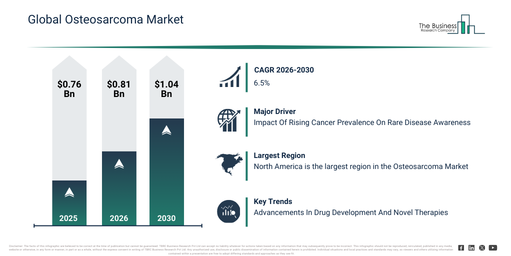
    The osteosarcoma market has seen robust expansion in recent years. Its value is projected to increase from $0.76 billion in 2025 to $0.81 billion in 2026, achieving a compound annual growth rate (CAGR) of 6.7%. This historical expansion is attributable to several factors, including the limited therapeutic options available in earlier periods, the high occurrence of osteosarcoma among teenagers, increasing public understanding of bone cancers, the widespread use of traditional chemotherapy and radiation treatment, and advancements in research concerning surgical procedures for bone tumors.

    The osteosarcoma market is poised for robust expansion in the coming years, with projections indicating a rise to $1.04 billion by 2030, at a compound annual growth rate (CAGR) of 6.5%. This anticipated growth during the forecast period is propelled by factors such as the increasing embrace of targeted therapy and immunotherapy, the greater utilization of minimally invasive surgical procedures, the expanding integration of AI and big data in diagnostics, the progression of genomic and molecular research for tailored therapies, and enhanced awareness alongside early detection initiatives for both pediatric and adult populations. Key developments anticipated within this timeframe encompass the surging adoption of targeted therapy and immunotherapy, a rise in advanced surgical techniques, deeper integration of AI and big data in diagnostic processes, a heightened emphasis on managing pediatric osteosarcoma, and increased investment in early detection and genomic research.

    Access Your Free Sample Report for In-Depth Market Insights:

    https://www.thebusinessresearchcompany.com/sample.aspx?id=21239&type=smp

    What Drivers Are Influencing The Growth Of The Osteosarcoma Market?

    The rising incidence of cancer is anticipated to drive the expansion of the osteosarcoma market in the coming years. Cancer is a condition marked by the uncontrolled proliferation and dissemination of atypical cells throughout the body, capable of invading and destroying healthy tissues. The growing number of cancer diagnoses can be attributed to several factors, including an aging population, shifts in lifestyle, environmental influences, various infections, and genetic predispositions. Treatment for osteosarcoma benefits cancer patients by promoting advancements in therapeutic approaches, encouraging early detection methods, and deepening knowledge of bone cancer. This ultimately leads to enhanced patient care, improved survival rates, and the creation of more efficacious treatments. For instance, in May 2024, the National Cancer Institute, a US-based government agency, stated that in 2022, roughly 20 million new cancer cases and 9.7 million cancer-related deaths were documented globally. Forecasts indicate these figures could climb to 29.9 million new cases and 15.3 million deaths each year by 2040. Consequently, the increasing prevalence of cancer is fueling the growth of the osteosarcoma market.

    What Segments Are Included Within The Osteosarcoma Market?

    The osteosarcoma market covered in this report is segmented –

    1) By Type: Intramedullary Osteosarcoma, Juxtacortical Osteosarcoma, Extraskeletal Osteosarcoma

    2) By Treatment Type: Surgery, Chemotherapy, Radiation Therapy, Targeted Therapy, Immunotherapy

    3) By Age Group: Pediatric, Adult

    4) By Distribution Channel: Online Channel, Offline Channel

    5) By End User: Hospitals And Clinics, Diagnostic Centers, Academic And Research Organizations

    Subsegments:

    1) By Intramedullary Osteosarcoma: Metaphyseal Osteosarcoma, Diaphyseal Osteosarcoma

    2) By Juxtacortical Osteosarcoma: Parosteal Osteosarcoma, Periosteal Osteosarcoma

    3) By Extraskeletal Osteosarcoma: Primary Extraskeletal Osteosarcoma, Secondary Extraskeletal Osteosarcoma

    Which Trends Are Guiding The Evolution Of The Osteosarcoma Market?

    Leading companies active in the osteosarcoma market are prioritizing the development of sophisticated medications with orphan drug status to boost treatment efficacy, lessen adverse effects, and enhance patient survival rates. Orphan drug designation is a classification bestowed by regulatory bodies upon drugs or biologics intended for rare disease treatment, offering benefits such as tax incentives, clinical trial support, and extended market exclusivity. For instance, in April 2024, Lisata Therapeutics Inc., a US-based pharmaceutical company, announced LSTA1 for osteosarcoma treatment was approved by the Food and Drug Administration (FDA), a US-based government agency that grants orphan drug designation. LSTA1 operates as an investigational drug, activating a unique uptake pathway to improve drug penetration and accumulation in osteosarcoma tumors, while also potentially altering the tumor microenvironment to enhance responsiveness to immunotherapies.

    Who Are The Major Companies Operating In The Osteosarcoma Market?

    Major companies operating in the osteosarcoma market are Pfizer Inc, Johnson & Johnson, Merck & Co. Inc, Bayer AG, Sanofi S.A, Bristol-Myers Squibb Company, Novartis AG, AstraZeneca PLC, GSK plc, Takeda Pharmaceutical Company Limited, Eli Lilly and Company, Amgen Inc, Spectrum Pharmaceuticals Inc, Bellicum Pharmaceuticals Inc, ADVAXIS Inc, Iovance Biotherapeutics Inc, Isofol Medical AB, Eisai Co Ltd, Y-mAbs Therapeutics Inc, Cellectis SA, Zentalis Pharmaceuticals Inc, Innovent Biologics Inc, MacroGenics Inc, Aadi Bioscience Inc, OS Therapies Inc.

    Access The Complete Report For Deeper Market Insights:

    https://www.thebusinessresearchcompany.com/report/osteosarcoma-global-market-report

    Which Regions Are Poised For Strategic Growth In The Osteosarcoma Market?

    North America was the largest region in the osteosarcoma market in 2025. Asia-Pacific is expected to be the fastest-growing region in the forecast period. The regions covered in the osteosarcoma market report are Asia-Pacific, South East Asia, Western Europe, Eastern Europe, North America, South America, Middle East, Africa.

    Request Your Customized Osteosarcoma Market Research Report for Competitive Advantage:

    https://www.thebusinessresearchcompany.com/customise?id=21239&type=smp

    Browse Through More Reports Similar to the Global Osteosarcoma Market 2026, By The Business Research Company

    Osteoporosis Treatment Market Report 2026

    https://www.thebusinessresearchcompany.com/report/osteoporosis-treatment-global-market-report

    Osteoporosis Drugs Market Report 2026

    https://www.thebusinessresearchcompany.com/report/osteoporosis-drugs-global-market-report

    Metastatic Bone Disease Market Report 2026

    https://www.thebusinessresearchcompany.com/report/metastatic-bone-disease-global-market-report

    Get in touch with us:

    The Business Research Company: https://www.thebusinessresearchcompany.com/

    Americas +1 310-496-7795

    Asia +44 7882 955267 & +91 8897263534

    Europe +44 7882 955267

    Email us at info@tbrc.info

    Follow us on:

    LinkedIn: https://in.linkedin.com/company/the-business-research-company

    YouTube: https://www.youtube.com/channel/UC24_fI0rV8cR5DxlCpgmyFQ

    Global Market Model: https://www.thebusinessresearchcompany.com/global-market-model
  • Osteoporosis Treatment Market Future Outlook: Strong Growth Expected Toward $18.72 Billion by 2030

    Osteoporosis Treatment Market Future Outlook: Strong Growth Expected Toward $18.72 Billion by 2030

    Uncover key drivers, emerging technologies, and competitive movements shaping the osteoporosis treatment market from 2026–2035 with trusted insights from The Business Research Company

    What upper market value could the Osteoporosis Treatment Market reach by 2030 starting from 2026 levels?

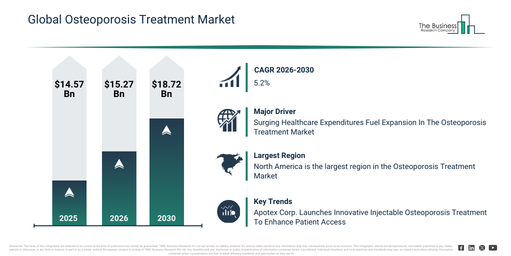
    The market for osteoporosis treatment has experienced consistent expansion over the past few years. This market is projected to expand from $14.57 billion in 2025 to reach $15.27 billion by 2026, demonstrating a compound annual growth rate (CAGR) of 4.8%. Historically, this upward trend can be ascribed to a number of elements, such as the increasing prevalence of osteoporosis among the aging population, the limited availability of advanced osteoporosis therapies in earlier times, heightened awareness regarding bone health and fracture prevention, the early adoption of calcium and vitamin D supplementation, and a growing geriatric population burdened with comorbidities impacting bone health.

    The osteoporosis treatment market is projected to experience substantial expansion in the coming years, with its size expected to reach $18.72 billion by 2030, demonstrating a compound annual growth rate (CAGR) of 5.2%. This anticipated growth is largely driven by factors such as the increasing uptake of targeted drug therapies, notably RANKL inhibitors and PTH analogs, along with greater utilization of digital diagnostics and AI-driven monitoring. Additionally, the expansion of healthcare infrastructure for managing osteoporosis, escalating investment in preventive and lifestyle interventions, and enhanced patient awareness and compliance with treatment programs contribute to this trajectory. Key trends anticipated during this forecast period encompass the growing adoption of bisphosphonates and RANKL inhibitors, a rise in the use of injectable osteoporosis treatments, and the expanding integration of AI-powered bone density monitoring. Furthermore, there’s an increasing emphasis on individualized osteoporosis management strategies and a greater commitment to preventive care and lifestyle-focused interventions.

    Access Your Free Sample Report for In-Depth Market Insights:

    https://www.thebusinessresearchcompany.com/sample.aspx?id=12166&type=smp

    Which Drivers Are Influencing Long-Term Growth In The Osteoporosis Treatment Market?

    Increasing healthcare expenditures are propelling the expansion of the osteoporosis treatment market. Healthcare expenditures represent the total sum of money allocated to healthcare services and products within a particular timeframe, typically assessed at a regional, national, or global scale. Treatment for osteoporosis significantly contributes to the escalation of these healthcare costs by covering expenses for diagnostic procedures, medications, rehabilitation services, and potential surgeries. For instance, in May 2024, data from the Office for National Statistics, a UK-based national statistical institute, indicated that the UK healthcare expenditure in 2023 reached approximately $384.3 billion (£292 billion), an increase from $372.1 billion (£283 billion) in 2022. Therefore, the rising healthcare expenditures are a primary driver for the growth of the osteoporosis treatment market.

    How Is The Osteoporosis Treatment Market Divided Into Segments?

    The osteoporosis treatment market covered in this report is segmented –

    1) By Drug Type: Bisphosphonates, Calcitonin, Hormone Therapy, Selective Estrogen Receptor Modulators (SERMs), Parathyroid Hormone-Related Protein (PTHrP) Analog

    2) By Route Of Administration: Oral, Injectable, Other Routes Of Administration

    3) By Distribution Channel: Hospitals, Retail Pharmacies And Stores, Online Pharmacies

    Subsegments:

    1) By Bisphosphonates: Alendronate, Risedronate, Ibandronate, Zoledronic Acid

    2) By Calcitonin: Salmon Calcitonin, Synthetic Calcitonin Formulations

    3) By Hormone Therapy: Estrogen Replacement Therapy, Combination Hormone Therapy (Estrogen And Progesterone)

    4) By Selective Estrogen Receptor Modulators (SERMs): Raloxifene, Bazedoxifene

    5) By Parathyroid Hormone-Related Protein (PTHrP) Analog: PTH Analog (Teriparatide)

    What Trends Are Projected To Support The Growth Of The Osteoporosis Treatment Market?

    Leading companies in the osteoporosis treatment market are concentrating on producing cutting-edge injectable osteoporosis treatments to maintain their presence. Injectable osteoporosis treatments are drugs administered via injection to inhibit bone loss and decrease fracture risk for individuals with osteoporosis. These solutions offer a direct route to boosting bone density and fortifying skeletal integrity. For example, in November 2023, Apotex Corp., a Canadian pharmaceutical firm, introduced Teriparatide Injection. This is a pre-filled pen designed for single-patient application in treating osteoporosis, featuring a concentration of 250 mcg/mL and providing 28 daily doses of 20 mcg each per pen. The product aims to broaden access to economical treatment for roughly 10 million Americans afflicted with osteoporosis. Its creation highlights Apotex’s commitment to manufacturing sophisticated generic medications, ensuring patients receive superior quality care.

    Which Key Market Players Are Investing In Expansion And Innovation Within The Osteoporosis Treatment Market?

    Major companies operating in the osteoporosis treatment market are Pfizer Inc., F. Hoffmann La Roche Ltd., Merck and Co Inc., AbbVie Inc., Novartis AG, GlaxoSmithKline Pharmaceutical Ltd., Takeda Pharmaceutical Company, Eli Lilly and Company, Amgen Inc., Radius Health Inc., UCB SA, Entera Bio Ltd, Cipla Limited, Sun Pharmaceutical Industries Ltd, Sanofi, Johnson & Johnson Services Inc, Bayer AG, Bristol-Myers Squibb Company, Kyowa Kirin Co Ltd, Teijin Pharma Ltd, Zhejiang Hisun Pharmaceutical Co Ltd, Jiangsu Hengrui Medicine Co Ltd, Servier Laboratories, Apotex Inc, Dr Reddy’s Laboratories Ltd, Ipsen

    Access The Complete Report For Deeper Market Insights:

    https://www.thebusinessresearchcompany.com/report/osteoporosis-treatment-global-market-report

    Which Regions Are Projected To Dominate The Osteoporosis Treatment Market In The Coming Years?

    North America was the largest region in the osteoporosis treatment market in 2025. Asia-Pacific is expected to be the fastest-growing region in the forecast period. The regions covered in the osteoporosis treatment market report are Asia-Pacific, South East Asia, Western Europe, Eastern Europe, North America, South America, Middle East, Africa.

    Request Your Customized Osteoporosis Treatment Market Research Report for Competitive Advantage:

    https://www.thebusinessresearchcompany.com/customise?id=12166&type=smp

    Browse Through More Reports Similar to the Global Osteoporosis Treatment Market 2026, By The Business Research Company

    Mineral And Bone Disorder Treatment Market Report 2026

    https://www.thebusinessresearchcompany.com/report/mineral-and-bone-disorder-treatment-global-market-report

    Postmenopausal Osteoporosis Treatment Market Report 2026

    https://www.thebusinessresearchcompany.com/report/postmenopausal-osteoporosis-treatment-global-market-report

    Osteoporosis Drugs Market Report 2026

    https://www.thebusinessresearchcompany.com/report/osteoporosis-drugs-global-market-report

    Get in touch with us:

    The Business Research Company: https://www.thebusinessresearchcompany.com/

    Americas +1 310-496-7795

    Asia +44 7882 955267 & +91 8897263534

    Europe +44 7882 955267

    Email us at info@tbrc.info

    Follow us on:

    LinkedIn: https://in.linkedin.com/company/the-business-research-company

    YouTube: https://www.youtube.com/channel/UC24_fI0rV8cR5DxlCpgmyFQ

    Global Market Model: https://www.thebusinessresearchcompany.com/global-market-model
  • Revenue of the Osteomyelitis Market Predicted to Achieve $1.69 Billion by 2030, Driven by 8.7% CAGR

    Revenue of the Osteomyelitis Market Predicted to Achieve $1.69 Billion by 2030, Driven by 8.7% CAGR

    Uncover key drivers, emerging technologies, and competitive movements shaping the osteomyelitis market from 2026–2035 with trusted insights from The Business Research Company

    What level of CAGR-driven expansion is anticipated in the Osteomyelitis Market between 2026 and 2030?

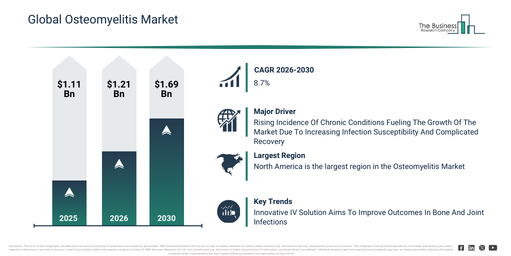
    The osteomyelitis market has experienced substantial expansion in recent years. It is projected to grow from $1.11 billion in 2025 to $1.21 billion in 2026, exhibiting a compound annual growth rate (CAGR) of 9.0%. The growth observed in the historic period can be attributed to factors such as the increasing incidence of bone infections, the rising prevalence of diabetes-related complications, an increase in orthopedic surgical procedures, improved diagnostic imaging availability, and the expansion of hospital-based infection management.

    The osteomyelitis market is projected to experience robust expansion in the coming years. This market is predicted to reach a valuation of $1.69 billion by 2030, exhibiting a compound annual growth rate (CAGR) of 8.7%. The anticipated growth during this period stems from factors such as the accelerated development of new antibiotics, a heightened emphasis on managing antimicrobial resistance, the expansion of outpatient parenteral antibiotic therapy, increased investments in infection diagnostics, and a rising demand for customized treatment approaches. Key trends observed within the forecast timeframe encompass the expanding utilization of targeted antimicrobial therapies, a growing preference for prolonged antibiotic regimens, an intensified focus on diagnosing infections early, the broadening of multidisciplinary treatment strategies, and a stronger emphasis on managing chronic infections.

    Access Your Free Sample Report for In-Depth Market Insights:

    https://www.thebusinessresearchcompany.com/sample.aspx?id=24640&type=smp

    What Drivers Are Affecting Demand-Supply Dynamics In The Osteomyelitis Market?

    The increasing prevalence of chronic conditions is anticipated to drive the expansion of the osteomyelitis market. These conditions are defined as persistent health problems lasting for extended periods, frequently necessitating continuous treatment and attention. The growing occurrence of chronic conditions stems from the world’s aging demographic, given that aging compromises the immune system and heightens susceptibility to prolonged illnesses and infections. Such conditions elevate the risk of osteomyelitis through immune system suppression and diminished blood circulation, particularly in ailments like diabetes and various vascular disorders. They establish an environment conducive to persistent infections, thereby raising the probability of bone compromise and hindering recovery. As an illustration, a survey study from August 2023 by the US-based public health research institute, Institute for Health Metrics and Evaluation, indicated that 15% of individuals aged 30 and older suffered from osteoarthritis in 2023, with projections showing approximately 1 billion affected individuals by 2050. Consequently, the increased incidence of chronic conditions is fueling the expansion of the osteomyelitis market.

    What Segments Are Included Within The Osteomyelitis Market?

    The osteomyelitis market covered in this report is segmented –

    1) By Type: Medullary Osteomyelitis, Superficial Osteomyelitis, Other Types

    2) By Drug Type: Antibiotics, Antifungals, Non-Steroidal Anti-Inflammatory Drugs, Other Drug Types

    3) By Route Of Administration: Oral, Parenteral

    4) By Distribution Channel: Hospital Pharmay, Online Pharmacy, Retail Pharmacy

    5) By End-User: Hospital And Clinics, Research Organization, Diagnostic Laboratories, Diagnostic Centers

    Subsegments:

    1) By Medullary Osteomyelitis: Acute Medullary Osteomyelitis, Chronic Medullary Osteomyelitis

    2) By Superficial Osteomyelitis: Acute Superficial Osteomyelitis, Chronic Superficial Osteomyelitis

    3) By Other Types: Diffuse Osteomyelitis, Sclerosing Osteomyelitis, Localized Osteomyelitis

    Which Trends Are Influencing The Performance And Direction Of The Osteomyelitis Market?

    Leading companies in the osteomyelitis market are concentrating on developing innovative approaches, such as premixed intravenous (IV) solutions, to counter antibiotic resistance and improve patient outcomes. These premixed intravenous (IV) solutions are sterile, ready-to-use liquids containing specific medications or electrolytes, designed to enhance safety and reduce preparation time in clinical settings. For instance, in September 2024, Hikma Pharmaceuticals Plc, a UK-based pharmaceutical company, introduced a clindamycin injection formulated with 5% dextrose. This medication is utilized for treating serious infections caused by susceptible anaerobic and gram-positive bacteria, including bone and joint infections like acute hematogenous osteomyelitis. It provides an immediate-use intravenous option, particularly useful for patients allergic to penicillin or in cases where penicillin is not appropriate.

    Who Are The Core Companies Influencing Trends In The Osteomyelitis Market?

    Major companies operating in the osteomyelitis market are Pfizer Inc, Johnson and Johnson, F Hoffmann La Roche Ltd, Sanofi SA, Abbott Laboratories, Novartis AG, GSK plc, Eli Lilly and Company, Otsuka Pharmaceutical Co Ltd, Fresenius Kabi AG, Sumitomo Pharma Company Limited, Hikma Pharmaceuticals PLC, Alkem Laboratories Ltd, Torrent Pharmaceuticals Ltd, Basilea Pharmaceutica Ltd, Paratek Pharmaceuticals Inc, Debiopharm International SA, Accord Healthcare Limited, Melinta Therapeutics LLC, Cempra Inc, MicuRx Pharmaceuticals Inc, Durata Therapeutics Inc

    Access The Complete Report For Deeper Market Insights:

    https://www.thebusinessresearchcompany.com/report/osteomyelitis-global-market-report

    Which Region Is Expected To Experience The Fastest Growth In The Osteomyelitis Market?

    North America was the largest region in the osteomyelitis market in 2025. Asia-Pacific is expected to be the fastest-growing region in the forecast period. The regions covered in the osteomyelitis market report are Asia-Pacific, South East Asia, Western Europe, Eastern Europe, North America, South America, Middle East, Africa.

    Request Your Customized Osteomyelitis Market Research Report for Competitive Advantage:

    https://www.thebusinessresearchcompany.com/customise?id=24640&type=smp

    Browse Through More Reports Similar to the Global Osteomyelitis Market 2026, By The Business Research Company

    Metastatic Bone Disease Market Report 2026

    https://www.thebusinessresearchcompany.com/report/metastatic-bone-disease-global-market-report

    Osteoporosis Drugs Market Report 2026

    https://www.thebusinessresearchcompany.com/report/osteoporosis-drugs-global-market-report

    Osteoporosis Treatment Market Report 2026

    https://www.thebusinessresearchcompany.com/report/osteoporosis-treatment-global-market-report

    Get in touch with us:

    The Business Research Company: https://www.thebusinessresearchcompany.com/

    Americas +1 310-496-7795

    Asia +44 7882 955267 & +91 8897263534

    Europe +44 7882 955267

    Email us at info@tbrc.info

    Follow us on:

    LinkedIn: https://in.linkedin.com/company/the-business-research-company

    YouTube: https://www.youtube.com/channel/UC24_fI0rV8cR5DxlCpgmyFQ

    Global Market Model: https://www.thebusinessresearchcompany.com/global-market-model
  • Osteoarthritis Therapeutics Sector Forecast Shows Robust Momentum, Climbing to $13.21 Billion With 8.2% CAGR

    Osteoarthritis Therapeutics Sector Forecast Shows Robust Momentum, Climbing to $13.21 Billion With 8.2% CAGR

    Uncover key drivers, emerging technologies, and competitive movements shaping the osteoarthritis therapeutics market from 2026–2035 with trusted insights from The Business Research Company

    What long-term size projections exist for the Osteoarthritis Therapeutics Market covering 2026–2035?

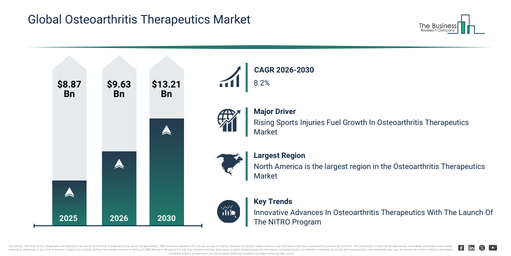
    The osteoarthritis therapeutics market size has observed substantial growth in recent years. It is projected to expand from $8.87 billion in 2025 to $9.63 billion in 2026, at a compound annual growth rate (CAGR) of 8.6%. The expansion observed historically is attributable to several factors, including the increasing prevalence of osteoarthritis, an aging global population, the widespread adoption of NSAIDs and analgesics, the broadening of orthopedic care services, and the presence of established pain management therapies.

    The osteoarthritis therapeutics market size is projected to experience robust expansion over the coming years. This market is anticipated to reach $13.21 billion by 2030, demonstrating a compound annual growth rate (CAGR) of 8.2%. Factors contributing to this growth during the forecast period include the increasing creation of dmoads, a rising need for minimally invasive treatments, the broader availability of biologic and cell-based therapies, a heightened emphasis on personalized osteoarthritis care, and greater investment in joint disease studies. Key trends for the upcoming period encompass the increasing embrace of disease-modifying osteoarthritis therapies, the expanding application of regenerative medicine methods, a heightened attention to non-opioid pain relief, the broadening of injectable and intra-articular treatments, and a stronger emphasis on prompt disease intervention.

    Access Your Free Sample Report for In-Depth Market Insights:

    https://www.thebusinessresearchcompany.com/sample.aspx?id=19634&type=smp

    Which Drivers Are Impacting The Competitive Landscape Of The Osteoarthritis Therapeutics Market?

    The escalating occurrence of sports injuries is projected to stimulate the growth of the osteoarthritis therapeutics market. A sports injury is defined as any physical harm or damage sustained during athletic or sports activities, varying from minor to severe and capable of affecting diverse body parts. The escalation in these injuries primarily stems from increased participation in sports activities and the heightened intensity and competitive nature inherent in them. Osteoarthritis therapeutics are applied in sports injury management to alleviate pain and inflammation and to enhance joint function in athletes afflicted by joint degeneration. For example, in July 2025, the Australian Institute of Health and Welfare, an Australia-based government agency, reported that in Australia, about 62,100 sports injuries resulted in hospital admissions during 2023–24. Specifically, males made up 70% of all hospitalizations (or 43,800 cases), while females accounted for nearly 30% (or 18,300 cases). Hence, the increasing prevalence of sports injuries is a key driver for the expansion of the osteoarthritis therapeutics market.

    What Leading Segments Are Studied In The Osteoarthritis Therapeutics Market?

    The osteoarthritis therapeutics market covered in this report is segmented –

    1) By Drug Type: Viscosupplementation Agents, Nonsteroidal Anti-inflammatory Drugs, Analgesics, Corticosteroids

    2) By Anatomy: Knee Osteoarthritis, Hip Osteoarthritis, Hand Osteoarthritis, Other Anatomies

    3) By Route Of Administration: Parenteral Route, Topical Route, Oral Route

    4) By Sales Channel: Prescription Drugs, Over-the-Counter Drugs

    5) By End-use: Hospital Pharmacies, Retail Pharmacies, Other End-Uses

    Subsegments:

    1) By Viscosupplementation Agents: Hyaluronic Acid Injections, Single-Injection Products, Multi-Injection Products

    2) By Nonsteroidal Anti-inflammatory Drugs: Oral NSAIDs, Topical NSAIDs, COX-2 Inhibitors

    3) By Analgesics: Non-Opioid Analgesics, Topical Analgesics

    4) By Corticosteroids: Injectable Corticosteroids, Intra-Articular Corticosteroids

    What Long-Term Trends Are Expected To Shape The Future Of The Osteoarthritis Therapeutics Market?

    Leading companies in the osteoarthritis therapeutics market are prioritizing the development of advanced solutions, particularly new approaches for tissue regeneration in osteoarthritis. This refers to the process of mending or substituting impaired cartilage and joint tissues to regain normal functionality and ease discomfort. For instance, in May 2023, the Advanced Research Projects Agency for Health (ARPA-H), a US-based government agency, introduced the Novel Innovations for Tissue Regeneration in Osteoarthritis (NITRO). The NITRO program, initiated by ARPA-H, focuses on creating cutting-edge injectable therapies designed to stimulate cartilage repair by utilizing biological pathways akin to those active during embryonic development. Its distinctive elements include a collaborative, multimodal strategy among research teams and sophisticated testing methods such as “joint-on-a-chip” platforms to mimic joint environments, with the objective of developing regenerative remedies that address the underlying causes of osteoarthritis.

    Which Major Industry Participants Are Leading The Osteoarthritis Therapeutics Market Growth?

    Major companies operating in the osteoarthritis therapeutics market are Pfizer Inc., Johnson & Johnson, Merck & Co. Inc., AbbVie Inc., Bayer AG, Sanofi S.A., Novartis AG, GlaxoSmithKline plc, Eli Lilly and Company, Teva Pharmaceutical Industries Ltd., Daiichi Sankyo Company Limited, Taisho Pharmaceutical Co. Ltd., Ferring Pharmaceuticals, Bioventus LLC, Flexion Therapeutics Inc., Anika Therapeutics Inc., Seikagaku Corporation, Galapagos NV, Regeneron Pharmaceuticals Inc., Samumed LLC, Kolon Life Science Inc., Horizon Therapeutics plc

    Access The Complete Report For Deeper Market Insights:

    https://www.thebusinessresearchcompany.com/report/osteoarthritis-therapeutics-global-market-report

    Which Geographic Areas Are Emerging As Strong Markets For The Osteoarthritis Therapeutics Market?

    North America was the largest region in the osteoarthritis therapeutics market in 2025. The regions covered in the osteoarthritis therapeutics market report are Asia-Pacific, South East Asia, Western Europe, Eastern Europe, North America, South America, Middle East, Africa.

    Request Your Customized Osteoarthritis Therapeutics Market Research Report for Competitive Advantage:

    https://www.thebusinessresearchcompany.com/customise?id=19634&type=smp

    Browse Through More Reports Similar to the Global Osteoarthritis Therapeutics Market 2026, By The Business Research Company

    Antisense And Rnai Therapeutics Market Report 2026

    https://www.thebusinessresearchcompany.com/report/antisense-and-rnai-therapeutics-global-market-report

    Neurodegenerative Disorder Therapeutic Market Report 2026

    https://www.thebusinessresearchcompany.com/report/neurodegenerative-disorder-therapeutic-global-market-report

    Respiratory Devices And Equipment Therapeutic Market Report 2026

    https://www.thebusinessresearchcompany.com/report/respiratory-devices-and-equipment-therapeutic-global-market-report

    Get in touch with us:

    The Business Research Company: https://www.thebusinessresearchcompany.com/

    Americas +1 310-496-7795

    Asia +44 7882 955267 & +91 8897263534

    Europe +44 7882 955267

    Email us at info@tbrc.info

    Follow us on:

    LinkedIn: https://in.linkedin.com/company/the-business-research-company

    YouTube: https://www.youtube.com/channel/UC24_fI0rV8cR5DxlCpgmyFQ

    Global Market Model: https://www.thebusinessresearchcompany.com/global-market-model
  • Osteoarthritis Market Anticipated to Record Steady Gains, Advancing to $11.91 Billion by 2030

    Osteoarthritis Market Anticipated to Record Steady Gains, Advancing to $11.91 Billion by 2030

    Uncover key drivers, emerging technologies, and competitive movements shaping the osteoarthritis market from 2026–2035 with trusted insights from The Business Research Company

    What total market size is anticipated for the Osteoarthritis Market in 2030?

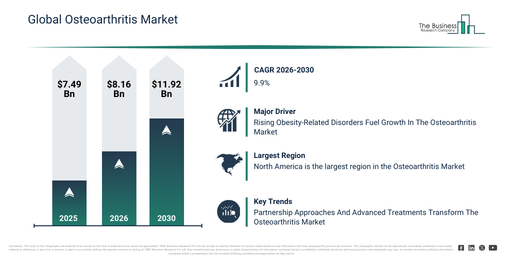
    The osteoarthritis market has experienced robust expansion in recent years. It is anticipated to grow from $7.49 billion in 2025 to $8.16 billion in 2026, exhibiting a compound annual growth rate (CAGR) of 8.9%. Historically, this market’s upward trend is attributable to the increasing global occurrence of osteoarthritis, the constrained availability of advanced joint therapies in earlier stages, a rising aging demographic suffering from joint degeneration, the initial adoption of conventional medications and surgical interventions, and an increased understanding of joint well-being and pain management.

    The osteoarthritis market is set for substantial growth in the upcoming years, with its size projected to reach $11.92 billion by 2030, demonstrating a compound annual growth rate (CAGR) of 9.9%. This expansion during the forecast period is attributable to several factors, including the increasing adoption of minimally invasive and robotic-assisted surgeries, the rising use of biologics and DMOADs, the expansion of healthcare infrastructure dedicated to joint care, the growing implementation of digital diagnostics and AI-based monitoring, and enhanced patient awareness regarding lifestyle and weight management programs. Key trends expected over the forecast period involve the increasing uptake of minimally invasive joint replacement surgeries, the greater application of biologic therapies and hyaluronic acid injections, the broadening integration of digital imaging and AI-powered diagnostics, a heightened focus on personalized osteoarthritis management plans, and increased investment in physical therapy and rehabilitation programs.

    Access Your Free Sample Report for In-Depth Market Insights:

    https://www.thebusinessresearchcompany.com/sample.aspx?id=13022&type=smp

    What Drivers Are Influencing Production Trends In The Osteoarthritis Market?

    The projected increase in obesity-related health conditions is anticipated to fuel the growth of the osteoarthritis market moving forward. Problems connected to obesity refer to a variety of health issues that can result from excessive body fat. This condition arises from consuming more calories than the body expends through physical activity and exercise, along with eating substantial amounts of processed or fast food, and excessive alcohol intake. Obesity can lead to osteoarthritis by exerting strain on joints, generating inflammation, and altering hormones, thereby increasing the load on these joints. For instance, in September 2024, according to the Centers for Disease Control and Prevention (CDC), a U.S.-based government agency, the number of states where adult obesity prevalence was 35% or higher rose from 22 states in 2022 to 23 states in 2023. Thus, the rising incidence of obesity-related disorders is stimulating the expansion of the osteoarthritis market.

    Which Segment Groups Are Influencing The Osteoarthritis Market?

    The osteoarthritis market covered in this report is segmented –

    1) By Treatment: Medication, Surgery, Therapy

    2) By Diagnosis: Imaging, Joint Fluid Analysis

    3) By Route Of Administration: Parenteral Route, Topical Route, Oral Route

    4) By Disease Type: Knee Osteoarthritis, Spine Osteoarthritis, Foot And Ankle Osteoarthritis, Shoulder Osteoarthritis, Hand Osteoarthritis

    5) By End-User: Hospitals, Medical Institutes

    Subsegments:

    1) By Medication: Pain Relievers, Corticosteroids, Hyaluronic Acid Injections, Disease-Modifying Osteoarthritis Drugs (DMOADs)

    2) By Surgery: Joint Replacement Surgery, Arthroscopy, Osteotomy, Joint Fusion

    3) By Therapy: Physical Therapy, Occupational Therapy, Weight Management Programs, Assistive Devices

    Which Market Trends Are Opening Growth Opportunities In The Osteoarthritis Market?

    Companies operating significantly in the osteoarthritis market are increasingly adopting a strategic partnership approach to improve technology integration and broaden their market reach. Such a partnership generally signifies a collaborative relationship between two or more entities, wherein they combine their resources, expertise, and efforts to achieve shared goals or objectives. For instance, in July 2024, LG Chem, a pharmaceutical company based in South Korea, entered the Chinese market through a partnership with Yifan Pharmaceutical Co., Ltd., a China-based pharmaceutical research and production company. This collaboration aims to launch Synovian injection for osteoarthritis, offering therapeutic effects similar to traditional multi-injection formulations but with only one administration. Key characteristics of Synovian include its high molecular weight (10 million Dalton) hyaluronic acid, which enhances viscoelasticity and joint function, and its proven capacity to significantly lessen knee pain, according to clinical phase 3 trial results. This development establishes Synovian as an effective choice for patients looking for convenient relief from osteoarthritis symptoms.

    Who Are The Prominent Global Companies Shaping The Osteoarthritis Market Landscape?

    Major companies operating in the osteoarthritis market are Pfizer Inc., Johnson & Johnson, Merck Sharp & Dohme Corp., Abbvie Inc., Bayer AG, Novartis AG, Sanofi SA, AstraZeneca plc, Abbott Laboratories Incorporation, Eli Lilly and Company, Boehringer Ingelheim, Novo Nordisk A/S, Teva Pharmaceutical Industries Ltd., Regeneron Pharmaceuticals Inc., Mylan N.V., Astellas Pharma Inc., Zimmer Biomet Holdings Inc., Eisai Co. Ltd., Horizon Therapeutics plc, Apotex Inc., Mallinckrodt Pharmaceuticals, Pacira BioSciences Inc., Bioventus Inc., Endo Pharmaceuticals Inc., Assertio Therapeutics Inc., Anika Therapeutics Inc., Abiogen Pharma Spa, Kolon TissueGene Inc., Ampio Pharmaceuticals Inc.

    Access The Complete Report For Deeper Market Insights:

    https://www.thebusinessresearchcompany.com/report/osteoarthritis-global-market-report

    Which Region Is Projected To Lead The Osteoarthritis Market During The Forecast Period?

    North America was the largest region in the osteoarthritis market in 2025. The regions covered in the osteoarthritis market report are Asia-Pacific, South East Asia, Western Europe, Eastern Europe, North America, South America, Middle East, Africa.

    Request Your Customized Osteoarthritis Market Research Report for Competitive Advantage:

    https://www.thebusinessresearchcompany.com/customise?id=13022&type=smp

    Browse Through More Reports Similar to the Global Osteoarthritis Market 2026, By The Business Research Company

    Osteoporosis Drugs Market Report 2026

    https://www.thebusinessresearchcompany.com/report/osteoporosis-drugs-global-market-report

    Axial Spondyloarthritis Axspa Market Report 2026

    https://www.thebusinessresearchcompany.com/report/axial-spondyloarthritis-axspa-global-market-report

    Gouty Arthritis Market Report 2026

    https://www.thebusinessresearchcompany.com/report/gouty-arthritis-global-market-report

    Get in touch with us:

    The Business Research Company: https://www.thebusinessresearchcompany.com/

    Americas +1 310-496-7795

    Asia +44 7882 955267 & +91 8897263534

    Europe +44 7882 955267

    Email us at info@tbrc.info

    Follow us on:

    LinkedIn: https://in.linkedin.com/company/the-business-research-company

    YouTube: https://www.youtube.com/channel/UC24_fI0rV8cR5DxlCpgmyFQ

    Global Market Model: https://www.thebusinessresearchcompany.com/global-market-model
  • Orthopedic Soft Tissue Repair Industry Poised for Rapid Growth, Forecast to Touch $9.68 Billion by 2030 at 8.1% CAGR

    Orthopedic Soft Tissue Repair Industry Poised for Rapid Growth, Forecast to Touch $9.68 Billion by 2030 at 8.1% CAGR

    Uncover key drivers, emerging technologies, and competitive movements shaping the orthopedic soft tissue repair market from 2026–2035 with trusted insights from The Business Research Company

    What is the expected shift in the Orthopedic Soft Tissue Repair Market’s size between 2026 and 2030?

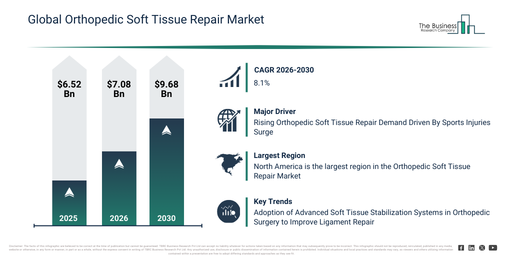
    The orthopedic soft tissue repair market has experienced substantial growth in recent years. It is anticipated to expand from $6.52 billion in 2025 to $7.08 billion in 2026, exhibiting a compound annual growth rate (CAGR) of 8.5%. The historical growth of this market can be attributed to a high prevalence of sports-related soft tissue injuries, the constrained availability of advanced soft tissue repair techniques, an increasing incidence of musculoskeletal injuries within the aging population, the early adoption of open surgical procedures, and a growing demand for improved surgical outcomes.

    The orthopedic soft tissue repair market is poised for significant expansion in the coming years. This market is projected to reach $9.68 billion by 2030, demonstrating a compound annual growth rate (CAGR) of 8.1%. Factors contributing to this anticipated growth include an increasing preference for minimally invasive techniques, the greater utilization of biologics and regenerative therapies, the expansion of hospital and orthopedic clinic infrastructure, rising investments in surgical robotics and simulation, and an enhanced focus on patient-specific repair and rehabilitation protocols. Key trends during the forecast period are expected to encompass the growing adoption of minimally invasive soft tissue repair procedures, increased application of biologic scaffolds and growth factors, the expanding integration of robotic assistance in soft tissue surgeries, an elevated focus on accelerated recovery and rehabilitation programs, and greater investment in surgeon training and surgical simulation.

    Access Your Free Sample Report for In-Depth Market Insights:

    https://www.thebusinessresearchcompany.com/sample.aspx?id=9411&type=smp

    Which Drivers Are Shaping Strategic Decisions In The Orthopedic Soft Tissue Repair Market?

    The rising occurrence of sports-related injuries is anticipated to drive the expansion of the orthopedic soft tissue repair market in the future. Sports injuries refer to physical harm incurred during sports or exercise activities. Orthopedic soft tissue repair addresses damage to muscles, blood vessels, fibrous tissues, and other supporting connective tissues resulting from sports injuries. For example, in July 2025, the Australian Institute of Health and Welfare, an Australia-based government agency, reported that in Australia during 2023–24, around 62,100 sports injuries resulted in hospital admissions in the country. Moreover, males constituted 70% of these hospitalizations, equating to 43,800 cases, whereas females made up nearly 30%, or 18,300 cases. Consequently, the growing frequency of sports-related injuries is fueling the expansion of the orthopedic soft tissue repair market.

    What Segment Classifications Make Up The Orthopedic Soft Tissue Repair Market?

    The orthopedic soft tissue repair market covered in this report is segmented –

    1) By Procedure: Cruciate Ligaments Repair, Rotator Cuff Repair, Lateral Epicondylitis, Achilles Tendinosis Repair, Pelvic Organ Prolapse, Gluteal Tendon Repair, Hip Arthroscopy, Biceps Tenodesis, Other Procedures

    2) By Injury Location: Knee, Shoulder, Hip, Small Joints

    3) By End User: Hospitals, Ambulatory Centers, Orthopedic Clinics

    Subsegments:

    1) By Cruciate Ligaments Repair: Anterior Cruciate Ligament (ACL) Repair, Posterior Cruciate Ligament (PCL) Repair

    2) By Rotator Cuff Repair: Partial Thickness Repair, Full Thickness Repair

    3) By Lateral Epicondylitis: Open Surgery, Arthroscopic Surgery

    4) By Achilles Tendinosis Repair: Open Repair, Percutaneous Repair

    5) By Pelvic Organ Prolapse: Anterior Vaginal Wall Repair, Posterior Vaginal Wall Repair, Sacrocolpopexy

    6) By Gluteal Tendon Repair: Open Repair, Arthroscopic Repair

    7) By Hip Arthroscopy: Labral Repair, Femoroacetabular Impingement (FAI) Surgery

    8) By Biceps Tenodesis: Open Biceps Tenodesis, Arthroscopic Biceps Tenodesis

    9) By Other Procedures: Tennis Elbow Repair, Shoulder Instability Repair

    How Are Emerging Trends Affecting The Progression Of The Orthopedic Soft Tissue Repair Market?

    Major companies operating in the orthopedic soft tissue repair market are concentrating on developing technological advancements, such as dynamic soft tissue stabilization systems, to enhance surgical precision, support physiological ligament motion, and reduce complications typically associated with rigid fixation. A dynamic soft tissue stabilization system utilizes a flexible construct that allows for controlled micromotion while securing ligaments, thereby closely mimicking natural biomechanics and fostering biological healing, in contrast to traditional rigid screw-based fixation devices which can limit movement and may require subsequent removal. For instance, in September 2024, Paragon 28, Inc., a medical device company based in the U.S., launched the R3FLEX Stabilization System, specifically engineered to anatomically repair ankle syndesmotic (soft-tissue) injuries that occur after fractures or high ankle sprains. The R3FLEX Stabilization System combines a titanium fibular component with a tibial all-suture anchor, linked by a short suture loop and a thermoplastic polyurethane (TPU) bumper, which collectively allow controlled micromotion while providing essential initial stability. This system also incorporates a turn-handle mechanism for intraoperative tension adjustment and visualization, accommodating a wide range of patient anatomies.

    Which Key Players Are Driving Competition In The Orthopedic Soft Tissue Repair Market?

    Major companies operating in the orthopedic soft tissue repair market are Arthrex Inc., DePuy Synthes Inc. Johnson & Johnson, Stryker Corporation, Wright Medical Group N V, Zimmer Biomet, CONMED Corporation, Integra LifeSciences Holding Corporation, Smith & Nephew plc, LifeNet Health, MTF Biologics, Tissue Regenix Group plc, Bioventus Inc., Mitek Corporation, Aesculap AG & Co KG, OsteoMed Ltd., Exactech Inc., Medtronic plc, RTI Surgical Holdings Inc., Acera Surgical Inc., AlloSource, Orthofix International NV, Parcus Medical LLC, Breg Inc

    Access The Complete Report For Deeper Market Insights:

    https://www.thebusinessresearchcompany.com/report/orthopedic-soft-tissue-repair-global-market-report

    Which Region Currently Holds The Largest Share Of The Orthopedic Soft Tissue Repair Market?

    North America was the largest region in the orthopedic soft tissue repair market in 2025. The regions covered in the orthopedic soft tissue repair market report are Asia-Pacific, South East Asia, Western Europe, Eastern Europe, North America, South America, Middle East, Africa.

    Request Your Customized Orthopedic Soft Tissue Repair Market Research Report for Competitive Advantage:

    https://www.thebusinessresearchcompany.com/customise?id=9411&type=smp

    Browse Through More Reports Similar to the Global Orthopedic Soft Tissue Repair Market 2026, By The Business Research Company

    Cartilage Repair Market Report 2026

    https://www.thebusinessresearchcompany.com/report/cartilage-repair-global-market-report

    Soft Tissue Repair Market Report 2026

    https://www.thebusinessresearchcompany.com/report/soft-tissue-repair-global-market-report

    Orthopedic Regenerative Surgical Products Market Report 2026

    https://www.thebusinessresearchcompany.com/report/orthopedic-regenerative-surgical-products-global-market-report

    Get in touch with us:

    The Business Research Company: https://www.thebusinessresearchcompany.com/

    Americas +1 310-496-7795

    Asia +44 7882 955267 & +91 8897263534

    Europe +44 7882 955267

    Email us at info@tbrc.info

    Follow us on:

    LinkedIn: https://in.linkedin.com/company/the-business-research-company

    YouTube: https://www.youtube.com/channel/UC24_fI0rV8cR5DxlCpgmyFQ

    Global Market Model: https://www.thebusinessresearchcompany.com/global-market-model
  • Orthopedic Navigation Systems Market Performance Outlook 2026–2030: Revenue to Hit $6.95 Billion at 15% CAGR

    Orthopedic Navigation Systems Market Performance Outlook 2026–2030: Revenue to Hit $6.95 Billion at 15% CAGR

    Uncover key drivers, emerging technologies, and competitive movements shaping the orthopedic navigation systems market from 2026–2035 with trusted insights from The Business Research Company

    What growth pattern is forecast for the Orthopedic Navigation Systems Market size between 2026 and 2035?

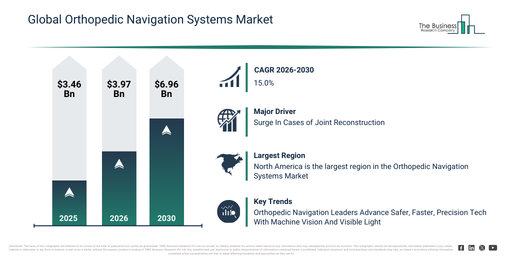
    The orthopedic navigation systems market has experienced significant expansion in recent years. It is projected to expand from $3.46 billion in 2025 to $3.97 billion in 2026, achieving a compound annual growth rate (CAGR) of 14.9%. This historical growth can be primarily attributed to the limitations in accuracy and precision in traditional orthopedic surgeries, the increasing prevalence of musculoskeletal disorders, a rising demand for joint replacement surgeries, the growing adoption of advanced imaging technologies, and early investments in surgical navigation solutions by leading hospitals.

    The size of the orthopedic navigation systems market is projected to experience substantial expansion in the coming years. This market is forecast to reach $6.96 billion by 2030, exhibiting a compound annual growth rate (CAGR) of 15.0%. This anticipated growth during the forecast period is driven by several factors, including the increasing demand for minimally invasive orthopedic interventions, the enhanced integration of artificial intelligence and imaging technologies with navigation systems, the rising acceptance of robotic-assisted surgical techniques, the expansion of hospital and surgical center facilities, and a heightened emphasis on enhancing surgical results while minimizing complications. Key trends anticipated during this period encompass the wider embrace of computer-assisted orthopedic operations, a deeper integration of navigation systems with robotic-assisted surgery, an expanding application of real-time imaging for superior surgical accuracy, a continued emphasis on minimally invasive orthopedic approaches, and increased investment in educating surgeons and training them on navigation systems.

    Access Your Free Sample Report for In-Depth Market Insights:

    https://www.thebusinessresearchcompany.com/sample.aspx?id=13502&type=smp

    Which Drivers Are Impacting Market Performance In The Orthopedic Navigation Systems Market?

    The growing incidence of joint reconstruction procedures is projected to drive the expansion of the orthopedic navigation systems market moving forward. Joint reconstruction is a surgical approach where damaged or arthritic joint components are removed and replaced with artificial implants made from metal, plastic, or ceramic materials. Orthopedic navigation systems offer guidance and assess several intraoperative parameters during joint replacement or arthroplasty procedures. These systems are employed in various types of joint reconstruction surgeries, including total knee arthroplasty, kinematic assessment, and hip replacement surgery, among others. For instance, in July 2025, the American Joint Replacement Registry, a US-based orthopedic organization, indicated that over 4 million hip and knee arthroplasty procedures were cumulatively recorded in 2024. Therefore, the increase in joint reconstruction cases is propelling the growth of the orthopedic navigation systems market.

    What Segment Types Are Examined In The Orthopedic Navigation Systems Market?

    The orthopedic navigation systems market covered in this report is segmented –

    1) By Technology: Electromagnetic Localizers, Optical Tracking, Fluoroscopy, Magnetic Resonance Imaging (MRI), Other Technologies

    2) By Application: Knee surgery, Spine surgery, Hip surgery, Other Applications

    3) By End Users: Hospitals, Ambulatory Surgical Centers, Other End Users

    Subsegments:

    1) By Electromagnetic Localizers: Active Electromagnetic Localizers, Passive Electromagnetic Localizers, Hybrid Electromagnetic Localizers

    2) By Optical Tracking: Infrared Optical Tracking Systems, Marker-Based Optical Tracking Systems, Markerless Optical Tracking Systems

    3) By Fluoroscopy: C-Arm Fluoroscopy Systems, 3D Fluoroscopy Systems, Mobile Fluoroscopy Units

    4) By Magnetic Resonance Imaging (MRI): Intraoperative MRI Systems, MRI-Based Navigation Systems, MRI-Guided Robotic Systems

    5) By Other Technologies: Ultrasound-Based Navigation Systems, Robot-Assisted Navigation Systems, Computer-Assisted Surgery Systems

    Which Innovation Trends Are Advancing Developments Within The Orthopedic Navigation Systems Market?

    Companies operating within the orthopedic navigation systems sector are intensifying their efforts on introducing more secure, rapid, and precise surgical technologies, such as visible light and machine-vision algorithms, to enhance their market position. These visible light and machine-vision algorithms deliver accurate, real-time imaging without the inherent limitations of traditional navigation systems. For example, in August 2023, Orthofix, a US-based medical device company, launched its 7D FLASH Navigation Percutaneous Module 2.0, successfully completing the first U.S. cases with advanced planning capabilities to better support minimally invasive spine surgery. The 7D FLASH Navigation System enables navigated spinal fusion procedures for both open and MIS techniques, with a strong focus on safety, speed, and efficiency. By employing visible light to swiftly generate 3D images, the system’s proprietary camera and machine-vision technology address common navigation challenges while simultaneously reducing radiation exposure for both staff and patients during open procedures.

    Who Are The Top-Performing Companies In The Orthopedic Navigation Systems Market In Recent Years?

    Major companies operating in the orthopedic navigation systems market are Medtronic Plc, Johnson & Johnson MedTech, Stryker Corporation, Zimmer Biomet Holdings Inc., Smith & Nephew PLC, NuVasive Inc., Globus Medical Inc., MicroPort Scientific Corporation, Brainlab, Amplitude Ortho SAS, Augmedics Inc., Intellijoint Surgical Inc., OrthAlign Inc., Fiagon GmbH, Orthokey Italia SRL, Image Navigation Inc., Neocis Inc., Proprio Vision, Ruthless Spine, Naviswiss AG, Exactech Inc, Arthrex Inc, Orthofix International NV, CAScination AG, THINK Surgical Inc, Renishaw PLC, Corin Group PLC

    Access The Complete Report For Deeper Market Insights:

    https://www.thebusinessresearchcompany.com/report/orthopedic-navigation-systems-global-market-report

    How Does The Orthopedic Navigation Systems Market Perform Across Major Global Regions?

    North America was the largest region in the orthopedic navigation systems market in 2025. Asia-Pacific is expected to be the fastest-growing region in the forecast period. The regions covered in the orthopedic navigation systems market report are Asia-Pacific, South East Asia, Western Europe, Eastern Europe, North America, South America, Middle East, Africa.

    Request Your Customized Orthopedic Navigation Systems Market Research Report for Competitive Advantage:

    https://www.thebusinessresearchcompany.com/customise?id=13502&type=smp

    Browse Through More Reports Similar to the Global Orthopedic Navigation Systems Market 2026, By The Business Research Company

    Surgical Navigation Systems Market Report 2026

    https://www.thebusinessresearchcompany.com/report/surgical-navigation-systems-global-market-report

    Surgical Navigation Systems Market Report 2026

    https://www.thebusinessresearchcompany.com/report/surgical-navigation-systems-global-market-report

    Orthopedic Support Systems Market Report 2026

    https://www.thebusinessresearchcompany.com/report/orthopedic-support-systems-global-market-report

    Get in touch with us:

    The Business Research Company: https://www.thebusinessresearchcompany.com/

    Americas +1 310-496-7795

    Asia +44 7882 955267 & +91 8897263534

    Europe +44 7882 955267

    Email us at info@tbrc.info

    Follow us on:

    LinkedIn: https://in.linkedin.com/company/the-business-research-company

    YouTube: https://www.youtube.com/channel/UC24_fI0rV8cR5DxlCpgmyFQ

    Global Market Model: https://www.thebusinessresearchcompany.com/global-market-model
  • Global Orthopantomogram (OPG) Market Set for Strong Expansion, Reaching $2.61 Billion With 7.5% CAGR by 2030

    Global Orthopantomogram (OPG) Market Set for Strong Expansion, Reaching $2.61 Billion With 7.5% CAGR by 2030

    Uncover key drivers, emerging technologies, and competitive movements shaping the orthopantomogram (opg) market from 2026–2035 with trusted insights from The Business Research Company

    How much larger will the Orthopantomogram (OPG) Market be in 2030 compared with 2026?

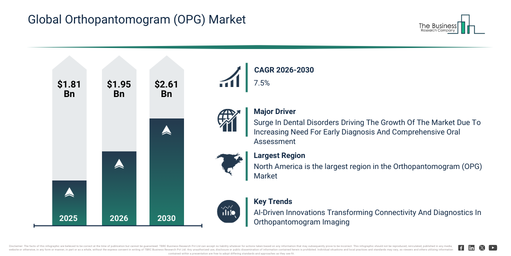
    The orthopantomogram (opg) market size has experienced significant expansion over recent years. Projections indicate it will rise from $1.81 billion in 2025 to $1.95 billion in 2026, reflecting a compound annual growth rate (CAGR) of 7.8%. The historic period’s growth drivers include the increasing prevalence of dental disorders, the expansion of dental clinic networks, advancements in digital radiography technology, a rising demand for comprehensive oral diagnostics, and the availability of affordable dental imaging systems.

    The orthopantomogram (opg) market is anticipated to exhibit substantial growth in the forthcoming years. It is projected to expand to $2.61 billion by 2030, achieving a compound annual growth rate (CAGR) of 7.5%. The expansion during this period is driven by factors such as the increasing utilization of AI-assisted dental diagnostics, heightened investments in digital dentistry infrastructure, the broadening scope of orthodontic and implantology procedures, a stronger emphasis on radiation safety standards, and the escalating demand for integrated dental imaging software. Key trends expected over the forecast horizon include a greater adoption of digital panoramic imaging systems, the growing integration of AI-based image analysis, an increasing need for low-radiation diagnostic imaging, the spread of software-driven dental diagnostics, and an intensified focus on workflow automation in dental practices.

    Access Your Free Sample Report for In-Depth Market Insights:

    https://www.thebusinessresearchcompany.com/sample.aspx?id=30344&type=smp

    What Drivers Are Guiding Growth Patterns In The Orthopantomogram (OPG) Market?

    The increasing occurrence of dental disorders is projected to propel the orthopantomogram (OPG) market’s expansion in the coming years. Dental disorders are defined as conditions impacting the teeth, gums, and their supporting structures, which can cause pain, infection, or impaired oral functionality. The rise in these disorders is primarily due to poor oral hygiene, leading to plaque buildup and a heightened risk of developing cavities and gum disease. An orthopantomogram is instrumental in diagnosing dental disorders by providing a comprehensive panoramic X-ray of the teeth, jaws, and surrounding structures, facilitating the detection of issues like cavities, impacted teeth, bone abnormalities, and various other oral problems. As an illustration, in February 2025, the Humble Memorial Dental Group, a US-based entity offering extensive dental services, reported that oral diseases affect nearly 3.5 billion people globally. Furthermore, almost half of adults aged 30 and above experience gum disease, and the United States spends approximately $124 billion annually on dental care, collectively emphasizing the escalating prevalence of dental disorders. Thus, the growing prevalence of dental disorders is serving as a key driver for the orthopantomogram (OPG) market’s growth.

    Which Segments Are Driving Activity In The Orthopantomogram (OPG) Market?

    The orthopantomogram (opg) market covered in this report is segmented –

    1) By Component: Hardware, Software

    2) By Technology: Digital Orthopantomogram, Film-Based Orthopantomogram, Computed Radiography Orthopantomogram

    3) By Application: Dental Diagnosis, Oral Surgery, Orthodontics, Implantology

    4) By End User: Hospitals, Dental Clinics, Diagnostic Centers

    Subsegments:

    1) By Hardware: Sensors, Detectors, X-Ray Tubes, Image Receptors, Scanners, Display Monitors

    2) By Software: Image Processing Software, Diagnostic Software, Data Management Software, Integration Software, Artificial Intelligence Analysis Software, Workflow Management Software

    Which Competitive Trends Are Impacting The Structure Of The Orthopantomogram (OPG) Market?

    Leading companies within the orthopantomogram (OPG) market are increasingly concentrating on developing sophisticated imaging solutions. These solutions integrate cloud-based connectivity, built-in diagnostic software, and intelligent image analysis tools, aiming to enhance workflow efficiency, improve diagnostic accuracy, and optimize patient care. Cloud-based connectivity allows imaging systems to store, access, and share data via secure online platforms, thereby facilitating real-time collaboration, enabling remote diagnostics, and ensuring smooth integration across various dental clinics or devices. For instance, in November 2023, Dental Imaging Technologies Corporation, a U.S.-based manufacturer of advanced dental imaging equipment, unveiled a new orthopantomograph (OPG) X-ray machine equipped with artificial intelligence (AI)-based software. The company’s DEXassist software aids dentists by employing AI-driven 2D image analysis to identify up to six different dental pathologies. Additionally, the DEXIS OPG OP 3D LX features an extended field of view (up to 15 cm × 20 cm), integrates with AI-enabled DTX Studio Clinic software, and includes cloud-based connectivity for secure data management and streamlined workflow integration.

    Which Leading Companies Dominate The Orthopantomogram (OPG) Market Share?

    Major companies operating in the orthopantomogram (opg) market are Fujifilm Holdings Corporation, Asahi Roentgen Ind. Co. Ltd., Dentsply Sirona, Planmeca Group, Castellini, Midmark Corporation, J. Morita Mfg. Corp., Air Techniques Inc., Yoshida Dental Mfg. Co. Ltd., Perlove Medical, Fussen Technology, Sasha Health Care, Trident S.r.l., Shanghai JPS Dental Co. Ltd., Genoray Co. Ltd., Bondent GmbH, INNOVATION MEDITECH PRIVATE LIMITED, BENAKA HEALTH CARE, BMI Biomedical International, Dürr Dental, FONA Dental s.r.o., Xline Imaging

    Access The Complete Report For Deeper Market Insights:

    https://www.thebusinessresearchcompany.com/report/global-orthopantomogram-opg-market-report

    Which Region Is Anticipated To See The Fastest Growth In The Orthopantomogram (OPG) Market?

    North America was the largest region in the orthopantomogram (OPG) market in 2025. Asia-Pacific is expected to be the fastest-growing region in the forecast period. The regions covered in the orthopantomogram (opg) market report are Asia-Pacific, South East Asia, Western Europe, Eastern Europe, North America, South America, Middle East, Africa.

    Request Your Customized Orthopantomogram (OPG) Market Research Report for Competitive Advantage:

    https://www.thebusinessresearchcompany.com/customise?id=30344&type=smp

    Browse Through More Reports Similar to the Global Orthopantomogram (OPG) Market 2026, By The Business Research Company

    Orthotics Market Report 2026

    https://www.thebusinessresearchcompany.com/report/orthotics-global-market-report

    Orthopedic Imaging Equipment Market Report 2026

    https://www.thebusinessresearchcompany.com/report/orthopedic-imaging-equipment-global-market-report

    Orthobiologics Market Report 2026

    https://www.thebusinessresearchcompany.com/report/orthobiologics-global-market-report

    Get in touch with us:

    The Business Research Company: https://www.thebusinessresearchcompany.com/

    Americas +1 310-496-7795

    Asia +44 7882 955267 & +91 8897263534

    Europe +44 7882 955267

    Email us at info@tbrc.info

    Follow us on:

    LinkedIn: https://in.linkedin.com/company/the-business-research-company

    YouTube: https://www.youtube.com/channel/UC24_fI0rV8cR5DxlCpgmyFQ

    Global Market Model: https://www.thebusinessresearchcompany.com/global-market-model
  • Orthodontic Wax Market Growth Projection: Expected to Surpass $1.73 Billion by 2030 at 6.9% CAGR

    Orthodontic Wax Market Growth Projection: Expected to Surpass $1.73 Billion by 2030 at 6.9% CAGR

    Uncover key drivers, emerging technologies, and competitive movements shaping the orthodontic wax market from 2026–2035 with trusted insights from The Business Research Company

    Starting from its 2026 valuation, what market size is the Orthodontic Wax Market expected to reach by 2030?

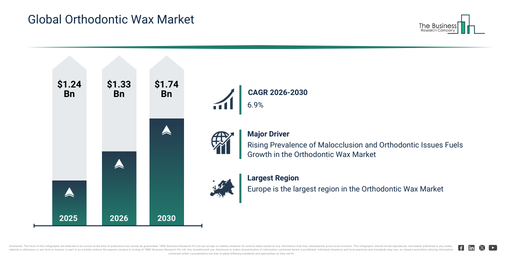
    The orthodontic wax market size has shown substantial growth over recent years. It is anticipated to expand from $1.24 billion in 2025 to $1.33 billion in 2026, registering a compound annual growth rate (CAGR) of 7.0%. The expansion observed historically can be attributed to the limited availability of customized orthodontic comfort products, a rising prevalence of malocclusion and orthodontic treatments, the increasing use of braces and dental appliances, growing awareness of oral hygiene among adolescents, and the early adoption of paraffin and beeswax-based dental products.

    The orthodontic wax market size is poised for robust expansion in the coming years, with projections indicating it will reach $1.74 billion by 2030, exhibiting a compound annual growth rate (CAGR) of 6.9%. This projected growth during the forecast period is primarily driven by factors such as the proliferation of homecare orthodontic products, a growing consumer inclination towards natural and organic dental items, the increasing uptake of waxes featuring innovative flavors and textures, a globally expanding orthodontic patient demographic, and a heightened emphasis on developing pain-free and user-friendly dental care solutions. Significant trends anticipated in this period include a surging demand for natural and organic wax formulations, the increasing application of orthodontic wax in domestic settings, a strong focus on enhancing comfort and minimizing discomfort for individuals with braces, the wider availability of multi-flavor and conveniently applicable waxes, and a rising awareness among orthodontic patients concerning the importance of oral health maintenance.

    Access Your Free Sample Report for In-Depth Market Insights:

    https://www.thebusinessresearchcompany.com/sample.aspx?id=18423&type=smp

    What Drivers Are Driving Adoption Within The Orthodontic Wax Market?

    The increasing occurrence of dental problems is anticipated to fuel the expansion of the orthodontic wax market. These problems encompass a variety of conditions affecting teeth, gums, and overall oral health. The widespread nature of dental issues stems from genetic factors, contemporary dietary habits, childhood oral practices, early tooth loss or delayed eruption, chronic mouth breathing, enhanced awareness, and better access to dental care. Orthodontic wax is primarily utilized to mitigate discomfort caused by braces or other orthodontic appliances when facing dental issues. It achieves this by creating a protective barrier between these devices and delicate tissues, thereby reducing friction and either preventing or soothing irritation. For instance, as reported by the National Board of Health and Welfare, a Sweden-based government agency, in 2023, approximately 3.94 million individuals aged 24 and older sought dental care, comprising 2.11 million women and 1.82 million men, indicating a slight rise from 2022. Consequently, the rising prevalence of dental issues is driving the orthodontic wax market.

    How Is The Orthodontic Wax Market Organized Into Various Segments?

    The orthodontic wax market covered in this report is segmented –

    1) By Type: Beeswax, Carnauba Wax, Paraffin Wax

    2) By Source: Natural, Synthetic

    3) By End User: Hospitals, Homecare Settings, Dental Clinic

    Subsegments:

    1) By Beeswax: Pure Beeswax, Beeswax Blends, Natural Or Organic Beeswax

    2) By Carnauba Wax: Pure Carnauba Wax, Carnauba Wax Blends, Synthetic Carnauba Wax

    3) By Paraffin Wax: Pure Paraffin Wax, Paraffin Wax Blends, Medical-Grade Paraffin Wax

    Who Are The Major Companies Operating In The Orthodontic Wax Market?

    Major companies operating in the orthodontic wax market are 3M Company, Dentsply Sirona Inc., Great Lakes Orthodontics Ltd., Ultradent Products Inc., Ormco Corporation, American Orthodontics Corporation, Dentaurum GmbH & Co. KG, TP Orthodontics Inc., RMO Inc., GC Corporation, Forestadent Ltd., G&H Orthodontics Inc., Ortho Technology Inc., DB Orthodontics Limited, Reliance Orthodontic Products Inc., Carmel Industries, Leone SpA, JJ Orthodontics Pvt.Ltd, Bilkim, Pyrex Polymars, Kerr Corporation, Ivoclar Vivadent AG, Penta Orthodontics

    Access The Complete Report For Deeper Market Insights:

    https://www.thebusinessresearchcompany.com/report/orthodontic-wax-global-market-report

    Which Region Is Anticipated To See The Fastest Growth In The Orthodontic Wax Market?

    Europe was the largest region in the orthodontic wax market in 2025. Asia-Pacific is expected to be the fastest-growing region in the forecast period. The regions covered in the orthodontic wax market report are Asia-Pacific, South East Asia, Western Europe, Eastern Europe, North America, South America, Middle East, Africa.

    Request Your Customized Orthodontic Wax Market Research Report for Competitive Advantage:

    https://www.thebusinessresearchcompany.com/customise?id=18423&type=smp

    Browse Through More Reports Similar to the Global Orthodontic Wax Market 2026, By The Business Research Company

    Prosthetics And Orthotics Market Report 2026

    https://www.thebusinessresearchcompany.com/report/prosthetics-and-orthotics-global-market-report

    Orthotics Market Report 2026

    https://www.thebusinessresearchcompany.com/report/orthotics-global-market-report

    Slack Wax Market Report 2026

    https://www.thebusinessresearchcompany.com/report/slack-wax-global-market-report

    Get in touch with us:

    The Business Research Company: https://www.thebusinessresearchcompany.com/

    Americas +1 310-496-7795

    Asia +44 7882 955267 & +91 8897263534

    Europe +44 7882 955267

    Email us at info@tbrc.info

    Follow us on:

    LinkedIn: https://in.linkedin.com/company/the-business-research-company

    YouTube: https://www.youtube.com/channel/UC24_fI0rV8cR5DxlCpgmyFQ

    Global Market Model: https://www.thebusinessresearchcompany.com/global-market-model
  • Orthobiologics Market Forecast 2026–2035: How to Leverage Market Growth

    Orthobiologics Market Forecast 2026–2035: How to Leverage Market Growth

    Uncover key drivers, emerging technologies, and competitive movements shaping the orthobiologics market from 2026–2035 with trusted insights from The Business Research Company

    Across 2026–2030, what is the expected market valuation path of the Orthobiologics Market?

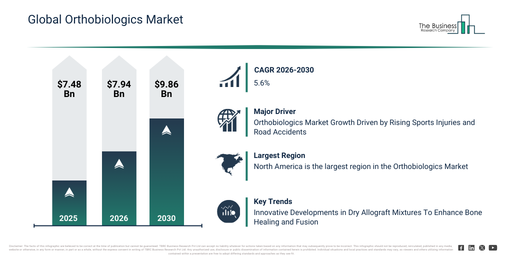
    The orthobiologics market has demonstrated robust growth in recent years. It is anticipated to expand from $7.48 billion in 2025 to $7.94 billion in 2026, achieving a compound annual growth rate (CAGR) of 6.1%. The historical increase can be ascribed to the limited availability of effective regenerative therapies, an increasing prevalence of musculoskeletal disorders, the growing adoption of surgical interventions like spinal fusion, rising awareness of orthobiologics among orthopedic surgeons, and the early use of autografts and allografts in clinical practice.

    The orthobiologics market size is poised for significant expansion in the coming years, projected to reach $9.86 billion by 2030, exhibiting a compound annual growth rate (CAGR) of 5.6%. This anticipated growth during the forecast period is fueled by an expanding portfolio of cellular and exosome-based orthobiologic products, escalating investment in tissue engineering and regenerative medicine, the rising adoption of minimally invasive and outpatient orthopedic procedures, increasing demand for personalized and targeted orthobiologic treatments, and the broader application of orthobiologics in dental and maxillofacial fields. Prominent trends throughout this period include the growing acceptance of platelet-rich plasma (prp) and bone morphogenetic proteins (bmps), an increased utilization of synthetic bone substitutes for fracture repair and spinal fusion, an evolving preference for cellular allografts and stem cell-based therapies, a heightened focus on minimally invasive orthopedic procedures, and a stronger emphasis on accelerated recovery and enhanced clinical outcomes.

    Access Your Free Sample Report for In-Depth Market Insights:

    https://www.thebusinessresearchcompany.com/sample.aspx?id=16139&type=smp

    Which Drivers Are Supporting The Rise Of The Orthobiologics Market?

    A rising incidence of road accidents and sports injuries is anticipated to boost the orthobiologics market in the coming period. These incidents involve physical harm to individuals, frequently affecting the musculoskeletal system. Various factors contribute to these occurrences, including distracted driving, speeding, and poor road conditions for accidents, alongside overuse, improper equipment, and inadequate training for sports-related injuries. Orthobiologics offer therapeutic benefits by fostering quicker and more efficient healing of musculoskeletal tissues, decreasing inflammation, and improving the body’s inherent repair mechanisms, utilizing materials like bone grafts, growth factors, stem cells, and platelet-rich plasma. For example, in July 2025, the Bureau of Infrastructure and Transport Research Economics (BITRE), an Australia-based government agency, reported 1,340 road deaths, marking a 2.9% rise compared to the 12 months concluding in July 2024. Consequently, the growing frequency of sports injuries and road accidents will propel the orthobiologics market.

    What Segments Are Identified Within The Structure Of The Orthobiologics Market?

    The orthobiologics market covered in this report is segmented –

    1) By Product Type: Viscosupplements, Bone Growth Factors, Demineralized Bone Matrix, Synthetic Bone Substitutes, Cellular Allograft, Other Products

    2) By Application: Spinal Fusion, Maxillofacial And Dental, Soft Tissue Repair, Reconstructive And Fracture Surgery, Other Applications

    3) By End User: Hospitals, Orthopedic Clinics, Ambulatory Surgery Centers, Other End Users

    Subsegments:

    1) By Viscosupplements: Hyaluronic Acid Injections, Gel-Based Viscosupplements, Cross-linked Hyaluronic Acid

    2) By Bone Growth Factors: Bone Morphogenetic Proteins (BMPs), Recombinant Human Bone Morphogenetic Proteins (rhBMPs), Platelet-Rich Plasma (PRP), Osteogenic Protein-1 (OP-1), Growth Factors For Bone Healing

    3) By Demineralized Bone Matrix: DBM Grafts, DBM Putty, DBM Sponges, DBM Paste And Chips

    4) By Synthetic Bone Substitutes: Calcium Phosphate-Based Substitutes, Calcium Sulfate-Based Substitutes, Tricalcium Phosphate (TCP), Hydroxyapatite (HA), Bioactive Glasses

    5) By Cellular Allograft: Osteocellular Allografts, Mesenchymal Stem Cells (MSCs) Allografts, Bone Marrow-Derived Cellular Allografts, Adipose Tissue-Derived Cellular Allografts

    6) By Other Products: Autografts, Collagen-Based Grafts, Synthetic Bone Graft Substitutes (Non-Bioactive), Amniotic Membrane-Based Grafts, Exosome-Based Products

    What Trends Are Reshaping The Dynamics Of The Orthobiologics Market?

    Leading companies active within the orthobiologics market are innovating sophisticated solutions, including dry allograft mixtures, to improve bone healing and fusion during orthopedic surgeries. These dry allograft mixtures combine strong cortical fibers with mineralized cortical bone, offering structural reinforcement and stimulating osteoinductive characteristics vital for new bone development. A notable example is Isto Biologics, a US-based biologics-focused company, which introduced Fibrant Liberty allograft in May 2024. This specific dry allograft mixture incorporates robust cortical fibers alongside mineralized cortical cancellous chips. When hydrated, the graft transforms into a flexible material that can be tailored for diverse surgical applications. Its longer and more durable fibers improve ease of handling and create a complex meshwork, which hinders graft migration and preserves its structural soundness.

    Which Major Firms Are Strengthening Their Position In The Orthobiologics Market?

    Major companies operating in the orthobiologics market are Johnson & Johnson, Medtronic plc, Zimmer Biomet, Arthrex Inc., Integra Lifesciences Corporation, NuVasive Inc., Globus Medical, Bioventus, MTF Biologics, ATEC Spine Inc., Exactech Inc., SeaSpine, RTI Surgical, AlloSource, XTANT MEDICAL, Spine Wave Inc., Bone Biologics Corp., Locate Bio Limited, Wright Medical Group N.V., BoneSupport AB, Graftys, Regenexx, Acumed LLC, Baxter International Inc., LifeNet Health

    Access The Complete Report For Deeper Market Insights:

    https://www.thebusinessresearchcompany.com/report/orthobiologics-global-market-report

    Which Global Regions Are Shaping The Competitive Landscape Of The Orthobiologics Market?

    North America was the largest region in the orthobiologics market in 2025. Asia-Pacific is expected to be the fastest-growing region in the forecast period. The regions covered in the orthobiologics market report are Asia-Pacific, South East Asia, Western Europe, Eastern Europe, North America, South America, Middle East, Africa.

    Request Your Customized Orthobiologics Market Research Report for Competitive Advantage:

    https://www.thebusinessresearchcompany.com/customise?id=16139&type=smp

    Browse Through More Reports Similar to the Global Orthobiologics Market 2026, By The Business Research Company

    Veterinary Orthopedic Medicine Market Report 2026

    https://www.thebusinessresearchcompany.com/report/veterinary-orthopedic-medicine-global-market-report

    Orthotics Market Report 2026

    https://www.thebusinessresearchcompany.com/report/orthotics-global-market-report

    Orthopedic Devices Market Report 2026

    https://www.thebusinessresearchcompany.com/report/orthopedic-devices-global-market-report

    Get in touch with us:

    The Business Research Company: https://www.thebusinessresearchcompany.com/

    Americas +1 310-496-7795

    Asia +44 7882 955267 & +91 8897263534

    Europe +44 7882 955267

    Email us at info@tbrc.info

    Follow us on:

    LinkedIn: https://in.linkedin.com/company/the-business-research-company

    YouTube: https://www.youtube.com/channel/UC24_fI0rV8cR5DxlCpgmyFQ

    Global Market Model: https://www.thebusinessresearchcompany.com/global-market-model