Category: HealthcareServices

  • Market Trends Influencing Strategic Decisions in the Orlistat Industry: Advancements In Weight Loss Drug Boost Orlistat Market

    Market Trends Influencing Strategic Decisions in the Orlistat Industry: Advancements In Weight Loss Drug Boost Orlistat Market

    Discover trends, market shifts, and competitive outlooks for the orlistat industry through 2025-2034 with The Business Research Company’s reliable data and in-depth research

    #What is the Anticipated CAGR of the Orlistat Market, and What Factors Will Drive It?#_x000D_

    The expansion of the orlistat market in recent years has been significant. It is projected that it will get bigger from $3.03 billion in 2024 to $3.24 billion in 2025, with a compound annual growth rate (CAGR) of 6.7%. The remarkable growth during the past years has been influenced by factors such as a growing understanding of the health risks associated with obesity, approvals for orlistat from regulatory bodies, the ease of access to lower doses of over-the-counter orlistat, advice from physicians, and rising expenses related to obesity healthcare._x000D_

    _x000D_

    Anticipations are high for robust expansion in the orlistat market size in the upcoming years. The current projection for this market’s growth is pegged at $4.15 billion by 2029, with a compound annual growth rate (CAGR) of 6.4%. The propulsion in growth forecasted for this period is likely due to increased investment in healthcare towards obesity treatments, prevalent sedentary living and poor diet, government-led initiatives encouraging weight loss and healthier lifestyles, an aging demographic, and a shift from prescription to over-the-counter options. The forecast period will most likely be characterized by trends such as AI-informed diet programs, remote health services, devices that automatically remind patients to take their medicine and monitor consistency, virtual reality exercise regimes, and digital therapy solutions._x000D_

    _x000D_

    #Download a free sample to assess the report’s scope and structure:#_x000D_

    https://www.thebusinessresearchcompany.com/sample.aspx?id=18422&type=smp_x000D_

    _x000D_

    #What External and Internal Drivers Are Contributing to the Growth of the Orlistat Market?#_x000D_

    The surge in obesity prevalence is predicted to spur development of the orlistat market. The medical issue of obesity, defined by an extreme accumulation of body fat detrimental to health, typically indicated by a body mass index (BMI) over 30, is escalating owing to poor nutrition, inadequate exercise, and sedentary behavior. Orlistat plays a key role in managing obesity by preventing the body from taking in dietary fats, thereby facilitating weight reduction and retention of the lost weight. Typically, it is recommended in conjuction with a low-calorie diet and regular workout for enhanced effects. As of March 2022, the World Health Organization (WHO), an intergovernmental organization from Switzerland, reported that obesity affected over a billion people worldwide. This figure includes 650 million adults, 340 million teenagers, and 39 million children. This number is on an upward trajectory, with predictions indicating that around 167 million individuals, encompassing both adults and children, will witness declining health because of being overweight or obese by 2025. Consequently, the growth of the orlistat market is operating in tandem with rising rates of obesity._x000D_

    _x000D_

    #Which Key Market Segments Comprise the Orlistat Market and Drive Its Revenue Growth?#_x000D_

    The orlistat market covered in this report is segmented –_x000D_

    _x000D_

    1) By Type: 120 Milligram (Mg), 60 Milligram(Mg)_x000D_

    2) By Distribution Channel: Hospital Pharmacies, Online Pharmacies, Retail Pharmacies_x000D_

    3) By Application: Weight-Reducing Aid, Other Applications_x000D_

    _x000D_

    Subsegments:_x000D_

    1) By 120 Milligram (Mg): Prescription-Based 120 Mg Orlistat, Over-The-Counter (OTC) 120 Mg Orlistat_x000D_

    2) By 60 Milligram (Mg): Over-The-Counter (OTC) 60 Mg Orlistat, Prescription-Based 60 Mg Orlistat_x000D_

    _x000D_

    _x000D_

    #Request customized data on this market:#_x000D_

    https://www.thebusinessresearchcompany.com/customise?id=18422&type=smp_x000D_

    _x000D_

    #Which Geographic Areas Hold the Strongest Growth Potential in the Orlistat Market?#_x000D_

    North America was the largest region in the orlistat market in 2023. The regions covered in the orlistat market report are Asia-Pacific, Western Europe, Eastern Europe, North America, South America, Middle East, Africa._x000D_

    _x000D_

    #Which Cutting-Edge Market Trends Are Expected to Drive the Orlistat Market’s Growth?#_x000D_

    Leading enterprises in the orlistat market are focusing on the development of innovative offerings like weight loss medications, utilizing cutting-edge technology and designs to improve personal wellbeing and comfort. These weight loss medications are engineered to aid people in reducing body mass by curbing hunger, boosting metabolism, or preventing the absorption of fat. For example, Eli Lilly and Company, an American pharmaceutical firm, secured approval from the US Food and Drug Administration (FDA) in November 2023 for Zepbound (tirzepatide) injection, a novel weight loss medication. It is the pioneering and sole certified treatment that stimulates two incretin hormone receptors, GIP and GLP-1, tackling a fundamental reason for surplus weight. Zepbound is recommended for use in conjunction with a low-calorie diet and increased physical activity for sustained weight regulation in adults suffering from obesity (BMI = 30 kg/m²) or overweight (BMI = 27 kg/m²) along with at least one weight-associated issue._x000D_

    _x000D_

    #View the full report here:#_x000D_

    https://www.thebusinessresearchcompany.com/report/orlistat-global-market-report_x000D_

    _x000D_

    #How Is the Orlistat Market Conceptually Defined?#_x000D_

    Orlistat is a medication used to aid weight loss by preventing the absorption of fats from the diet, thereby reducing calorie intake. It works by inhibiting the enzyme lipase, which is necessary for the breakdown of dietary fats in the intestine. It is typically prescribed for individuals who are obese or overweight and is most effective when combined with a low-fat diet and regular exercise._x000D_

    _x000D_

    #Purchase the full report and get a swift delivery:#_x000D_

    https://www.thebusinessresearchcompany.com/purchaseoptions.aspx?id=18422_x000D_

    _x000D_

    #About The Business Research Company:#_x000D_

    With over 15000+ reports from 27 industries covering 60+ geographies, The Business Research Company has built a reputation for offering comprehensive, data-rich research and insights. Armed with 1,500,000 datasets, the optimistic contribution of in-depth secondary research, and unique insights from industry leaders, you can get the information you need to stay ahead in the game._x000D_

    _x000D_

    #Get in touch with us:#_x000D_

    The Business Research Company: https://www.thebusinessresearchcompany.com/_x000D_

    Americas +1 3156230293_x000D_

    Asia +44 2071930708_x000D_

    Europe +44 2071930708_x000D_

    Email us at info@tbrc.info_x000D_

    _x000D_

    #Follow us on:#_x000D_

    _x000D_

    LinkedIn: https://in.linkedin.com/company/the-business-research-company_x000D_

    YouTube: https://www.youtube.com/channel/UC24_fI0rV8cR5DxlCpgmyFQ_x000D_

    Global Market Model: https://www.thebusinessresearchcompany.com/global-market-model

  • Microbial Identification Methods Market Insights: In-Depth Look at Growth Trends, Market Size, and Opportunities for 2025-2034

    Microbial Identification Methods Market Insights: In-Depth Look at Growth Trends, Market Size, and Opportunities for 2025-2034

    Discover trends, market shifts, and competitive outlooks for the microbial identification methods industry through 2025-2034 with The Business Research Company’s reliable data and in-depth research

    How Fast Is The Microbial Identification Methods Market Expected to Grow Between 2025 And 2029?

    The market for microbial identification methods has seen a robust expansion in recent years. It is projected to increase from $5.09 billion in 2024 to $5.5 billion in 2025, showing a compound annual growth rate (CAGR) of 8.0%. The previous growth can be credited to factors such as the rise in infectious diseases, enhanced funding for research and development in diagnostics, growing attention towards infection control protocols in healthcare facilities, escalating concerns regarding food safety, and the surge in demand for microbial identification methods.

    The market size for microbial identification methods is projected to experience significant expansion in the coming years, with a predicted growth to $7.4 billion by 2029 alongside a compound annual growth rate (CAGR) of 7.7%. This growth during the forecast period is largely driven by an increasing need for quick microbiology tests, advancements in microbial research, the expanded use of automated systems, the rise in disposable income, and enhanced government efforts towards food safety. The forecast period is also expected to witness several key trends, including the introduction of new products, progress in microbial identification procedures, the adoption of automated bacterial identification mechanisms, advancements in fields like microfluidics, robotics, and nanotechnology, and strategic collaborations.

    Download a free sample to assess the report’s scope and structure:

    https://www.thebusinessresearchcompany.com/sample.aspx?id=16118&type=smp

    What Are the Core Market Drivers Propelling Growth in the Microbial Identification Methods Industry?

    The surge in infectious diseases is anticipated to stimulate the expansion of the microbial identification methods market in the future. Infectious diseases, which are caused by harmful agents (pathogens) such as viruses, bacteria, fungi and parasites, include major ones like HIV/AIDS, tuberculosis, malaria and others. Factors such as antimicrobial resistance, climate change, and population growth contribute to the rise in these diseases. Microrganism identification methods are pivotal in diagnosing, treating and preventing infectious diseases as they provide comprehensive data about the pathogens, thereby assisting healthcare professionals in making knowledgeable patient care decisions. For example, the Government of Canada reported in January 2023 that there were 135 and 159 rabies samples submitted in October and November 2022, respectively. Moreover, the Centers for Disease Control and Prevention reported in March 2023 that the number of TB cases in the US witnessed a 5.9% increase from 7,874 in 2021 to 8,331 in 2022. Hence, the escalating number of infectious diseases propels the growth of the microbial identification methods market.

    What Segment Types Define the Microbial Identification Methods Market Structure?

    The microbial identification methods market covered in this report is segmented –

    1) By Method: Genotypic, Phenotypic, Proteotypic

    2) By Type: Bacterial Identification System, Microbial Enumeration System, Bacterial Resistance Identification Systems, Microbiology Analyzer, Other Type

    3) By End User: Pharmaceutical And Biotechnology Companies, Hospitals And Diagnostic Laboratories, Food Testing Laboratories, Other End-Users

    Subsegments:

    1) By Genotypic: Polymerase Chain Reaction (PCR), 16S rRNA Sequencing, DNA Microarrays, Next-Generation Sequencing (NGS), Whole Genome Sequencing (WGS), Ribotyping, Fluorescence In Situ Hybridization (FISH), Random Amplified Polymorphic DNA (RAPD) Analysis

    2) By Phenotypic: Culture-Based Methods, Biochemical Testing, Microscopic Examination, Gram Staining, Antibiotic Susceptibility Testing (AST), Growth Pattern Identification, Colony Morphology Characterization

    3) By Proteotypic: Mass Spectrometry (MALDI-TOF MS), Western Blotting, Protein Profiling, Immunoassays (ELISA), Two-Dimensional Gel Electrophoresis

    Request customized data on this market:

    https://www.thebusinessresearchcompany.com/customise?id=16118&type=smp

    Which Regions Are Driving the Next Phase of the Microbial Identification Methods Market Growth?

    North America was the largest region in the microbial identification methods market in 2023. The regions covered in the microbial identification methods market report are Asia-Pacific, Western Europe, Eastern Europe, North America, South America, Middle East, Africa.

    What Are the Key Market Trends in the Microbial Identification Methods Market Over the Coming Years?

    Key players in the microbial identification methods market are concentrating on the development of novel solutions, namely mycobacteria and fungi IVD solutions, to consolidate their market standing. When we talk about mycobacteria and fungi in vitro diagnostic (IVD) solutions, we are discussing a vast array of products and technologies which are used to detect, distinguish, and classify mycobacterial and fungal pathogens present in clinical samples. As an illustration, Bruker Corporation, a firm based in the US that manufactures scientific instruments for researching molecular and materials, introduced in April 2023 a new mycobacteria and fungi IVD solution, known as the MALDI Biotyper IVD software. This software’s unique attributes comprise of advanced precision and faster microbial identification, utilizing MALDI-TOF (matrix-assisted laser desorption/ionization-time of flight) mass spectrometry technology. This platform offers speedy identification of mycobacteria and fungi from cultivated samples in minutes, markedly curtailing the duration.required vis-à-vis traditional methods. These new solutions also come with larger databases and tough software algorithms for superior specificity and sensitivity, thereby facilitating the accurate identification of a more wide-ranging array of mycobacterial and fungal species.

    View the full report here:

    https://www.thebusinessresearchcompany.com/report/microbial-identification-methods-global-market-report

    What Is the Definition of the Microbial Identification Methods Market?

    Microbial identification methods are systematic approaches and laboratory techniques employed to determine the identity and characteristics of microorganisms by analyzing their phenotypic (observable traits) and genotypic (genetic) properties. These methods are crucial for diagnosing infectious diseases, monitoring food and water safety, studying microbial ecology, and developing effective treatments or preventive measures against pathogenic microorganisms.

    Purchase the full report and get a swift delivery:

    https://www.thebusinessresearchcompany.com/purchaseoptions.aspx?id=16118

    About The Business Research Company:

    With over 15000+ reports from 27 industries covering 60+ geographies, The Business Research Company has built a reputation for offering comprehensive, data-rich research and insights. Armed with 1,500,000 datasets, the optimistic contribution of in-depth secondary research, and unique insights from industry leaders, you can get the information you need to stay ahead in the game.

    Get in touch with us:

    The Business Research Company: https://www.thebusinessresearchcompany.com/

    Americas +1 3156230293

    Asia +44 2071930708

    Europe +44 2071930708

    Email us at info@tbrc.info

    Follow us on:

    LinkedIn: https://in.linkedin.com/company/the-business-research-company

    YouTube: https://www.youtube.com/channel/UC24_fI0rV8cR5DxlCpgmyFQ

    Global Market Model: https://www.thebusinessresearchcompany.com/global-market-model
  • Monkey Pox Treatment Market in Focus: Forecasting Growth Drivers, Scaling Potential, and Global Opportunities

    Discover trends, market shifts, and competitive outlooks for the monkey pox treatment industry through 2025-2034 with The Business Research Company’s reliable data and in-depth research

    What is the Anticipated CAGR of the Monkey Pox Treatment Market, and What Factors Will Drive It?

    The market size for the treatment of monkey pox has seen a significant surge in the last few years. The projections show an increase from $0.09 billion in 2024, to $0.1 billion in 2025, with a compound annual growth rate (CAGR) of 13.6%. This impressive growth in the historical period can be traced back to factors such as an increase in outbreaks in endemic areas, heightened awareness about zoonotic transmission, the legacy of smallpox eradication, public health campaigns, and the emergence of cases in humans.

    Forecasted to witness a swift expansion over the coming years, the market size for monkey pox treatment is predicted to reach $0.17 billion in 2029, registering an impressive compound annual growth rate (CAGR) of 13.3%. Various factors such as increased globalization, travel activities, governmental funding and backing, investment in the biotech and pharmaceutical sectors, public health surveillance measures, and regulatory authorizations can be attributed to this projected growth. Expected future trends encompass development of antiviral drugs, incorporation of smallpox vaccines, use of monoclonal antibodies, combined therapy strategies, and intense research on long-term immunity.

    Download a free sample to assess the report’s scope and structure:

    https://www.thebusinessresearchcompany.com/sample.aspx?id=18818&type=smp

    Which Primay Drivers Are Accelerating Growth in the Monkey Pox Treatment Market?

    The escalating occurrence of zoonotic infection is anticipated to fuel the expansion of the monkeypox treatment market. A zoonotic infection refers to a disease that passes from animals to humans via contact with infected environments or carriers. Increases in human-animal interactions, which bring people and animals into closer proximity, heighten the risks of zoonotic infections. Additionally, climate change amplifies this risk by enlarging the range of disease vectors and spreading pathogens to previously unaffected regions. Monkeypox treatments are utilized to control zoonotic mpox, focusing on the virus and relieving symptoms in both humans and potentially diseased animals. For example, as highlighted in a report by the UK Health Security Agency, a UK government body, in August 2024, there were 3,732 confirmed mpox cases in the UK, marking an increase of 21 from the 3,753 cases in 2023. Hence, the escalating occurence of zoonotic infection propels the monkeypox treatment market.

    How Is the Monkey Pox Treatment Market Segmented?

    The monkey pox treatment market covered in this report is segmented –

    1) By Treatment Type: Prophylactic Vaccines, Therapeutics

    2) By Dosage Forms: Solid, Liquid, Semi Solid

    3) By Route Of Administration: Oral, Topical, Parenteral

    4) By Distribution Channel: Retail Pharmacies, Hospital Pharmacies, Online Pharmacies

    Subsegments:

    1) By Prophylactic Vaccines: Vaccinia-Based Vaccines, Modified Vaccinia Ankara (MVA) Vaccines, Other Vaccines (Recombinant Vaccines)

    2) By Therapeutics: Antiviral Agents (Tecovirimat, Brincidofovir), Immune Modulators, Supportive Care Treatments

    Request customized data on this market:

    https://www.thebusinessresearchcompany.com/customise?id=18818&type=smp

    Which Regions Are Key Players in the Growth of the Monkey Pox Treatment Market?

    North America was the largest region in the monkey pox treatment market in 2023. Asia-Pacific is expected to be the fastest-growing region in the forecast period. The regions covered in the monkey pox treatment market report are Asia-Pacific, Western Europe, Eastern Europe, North America, South America, Middle East, Africa.

    Which Emerging Trends that Are Influencing the Monkey Pox Treatment Industry Evolution?

    Leading firms in the monkeypox treatment arena are concentrating on remote monitoring and teletherapy options like virtual care in order to improve accessibility, streamline patient care, and enhance overall results. Monkeypox treatment via virtual care offers remote consultations, assessment of symptoms, and care plans for individuals either at risk or already infected, thereby easing the access to care while also lessening the need for physical visits. For example, in August 2022, Folx Health, a healthcare corporation based in the US, launched Monkeypox Care, an online primary care service targeting individuals who are either at risk or already afflicted by monkeypox. This comprehensive approach incorporates education, counseling, symptom assessment, and referrals. It is aimed at reaching individuals living in care deserts — regions with inadequate healthcare access, ensuring quality information and referrals are obtainable by everyone, irrespective of their location.

    View the full report here:

    https://www.thebusinessresearchcompany.com/report/monkey-pox-treatment-global-market-report

    How Is the Monkey Pox Treatment Market Defined and What Are Its Core Parameters?

    Monkeypox treatment refers to the medical interventions and therapies used to manage and alleviate the symptoms of monkeypox, a viral disease caused by the monkeypox virus. It encompasses a range of therapeutic and supportive approaches aimed at reducing the severity of the disease and improving patient outcomes.

    Purchase the full report and get a swift delivery:

    https://www.thebusinessresearchcompany.com/purchaseoptions.aspx?id=18818

    About The Business Research Company:

    With over 15000+ reports from 27 industries covering 60+ geographies, The Business Research Company has built a reputation for offering comprehensive, data-rich research and insights. Armed with 1,500,000 datasets, the optimistic contribution of in-depth secondary research, and unique insights from industry leaders, you can get the information you need to stay ahead in the game.

    Get in touch with us:

    The Business Research Company: https://www.thebusinessresearchcompany.com/

    Americas +1 3156230293

    Asia +44 2071930708

    Europe +44 2071930708

    Email us at info@tbrc.info

    Follow us on:

    LinkedIn: https://in.linkedin.com/company/the-business-research-company

    YouTube: https://www.youtube.com/channel/UC24_fI0rV8cR5DxlCpgmyFQ

    Global Market Model: https://www.thebusinessresearchcompany.com/global-market-model
  • Strong CAGR to Propel in the Monkey Pox Testing Market and Beyond upto $1.81 Billion by 2029

    Strong CAGR to Propel in the Monkey Pox Testing Market and Beyond upto $1.81 Billion by 2029

    Discover trends, market shifts, and competitive outlooks for the monkey pox testing industry through 2025-2034 with The Business Research Company’s reliable data and in-depth research

    What Are the Key Milestones in the Monkey Pox Testing Market’s Growth Trajectory From 2025 To 2034?

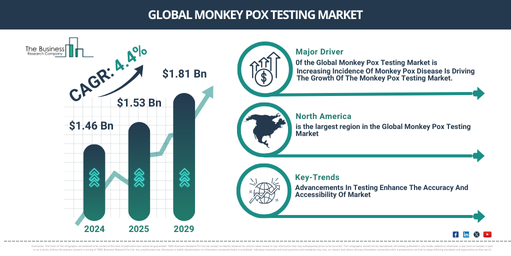
    In the past few years, the monkey pox testing market has experienced consistent growth, with its value expected to rise from $1.46 billion in 2024 to $1.53 billion in 2025, marking a 4.8% compound annual growth rate (CAGR). This prior growth can be credited to factors such as heightened governmental funding and initiatives, surging demand for quick testing solutions, the extension of testing capacity, escalating research and development efforts, and broadened public awareness campaigns.

    In the coming years, the monkey pox testing market is predicted to witness consistent growth, expanding to a market size of $1.81 billion in 2029 with a compound annual growth rate (CAGR) of 4.4%. This projected growth during the forecasted period can be credited to factors such as an increase in healthcare spending, development of point-of-care (POC) tests, growing popularity of at-home testing kits, focusing on affordability and accessibility, and betterment of healthcare infrastructure. The upcoming trend forecast includes integrating testing with surveillance systems, incorporation with digital health tools, technological progression, assimilation into public health systems, and advancements in diagnostic studies.

    Download a free sample to assess the report’s scope and structure:

    https://www.thebusinessresearchcompany.com/sample.aspx?id=18817&type=smp

    Which Factors and External Forces Are Driving Demand in the Monkey Pox Testing Market?

    The escalating occurrence of the monkey pox virus is predicted to stimulate the expansion of the monkey pox testing market in the future. Monkeypox, an infrequent viral infection caused by the monkeypox virus – a part of the orthodox virus genus closely related to the smallpox virus, is increasingly prevalent due to enhanced human-to-human transmission, worldwide travel, and diminished immunity from halted smallpox vaccination initiatives. Monkeypox testing plays an essential role in recognizing infected persons promptly, enabling immediate medical intervention and quarantine to curtail the disease’s further diffusion. It also aids in monitoring outbreaks and unravelling the virus’s transmission dynamics. For instance, the European Centre for Disease Prevention and Control (ECDC), a governmental agency based in Sweden, reported in May 2022 that from January to April 2022, there were 1,152 probable monkeypox incidences, resulting in 55 fatalities and a case-fatality rate of 4.8%, dispersed across 54 health zones in 14 provinces. Furthermore, compared to the same timeframe in 2021, there is an upsurge of 138 likely cases and 14 deaths, correlating to a higher case-fatality rate of 10.1%. Hence, the escalating occurrence of the monkey pox disease is propelling the augmentation of the monkey pox testing market.

    Which Primary Segments of the Monkey Pox Testing Market Are Driving Growth and Industry Transformations?

    The monkey pox testing market covered in this report is segmented –

    1) By Technology: Polymerase Chain Reaction (PCR), Lateral Flow Assay (LFA), Other Technologies

    2) By Mode: Laboratory Testing, Point Of Care Testing

    3) By End-Use: Hospitals And Clinics, Diagnostic Laboratories, Other End-Uses

    Subsegments:

    1) By Polymerase Chain Reaction (PCR): Real-Time PCR (qPCR), Reverse Transcription PCR (RT-PCR), Multiplex PCR

    2) By Lateral Flow Assay (LFA): Immunochromatographic Lateral Flow Assays, Rapid Antigen Detection Kits

    3) By Other Technologies: ELISA (Enzyme-Linked Immunosorbent Assay), CRISPR-based Testing, Serological Tests (Antibody Detection), Nucleic Acid Sequence-Based Amplification (NASBA)

    Request customized data on this market:

    https://www.thebusinessresearchcompany.com/customise?id=18817&type=smp

    What Are the Fastest-Growing Geographies in the Monkey Pox Testing Market?

    North America was the largest region in the monkey pox testing market in 2024. Asia-Pacific is expected to be the fastest-growing region in the forecast period. The regions covered in the monkey pox testing market report are Asia-Pacific, Western Europe, Eastern Europe, North America, South America, Middle East, Africa.

    What Key Trends Are Shaping the Future of the Monkey Pox Testing Market?

    Leading corporations in the monkey pox testing sector are committed to creating enhanced diagnostic solutions, like saliva-based monkey pox tests, to improve precision, usability, and access. Saliva-based testing for monkey pox involves utilizing saliva specimens to identify the occurrence of the monkeypox virus. For example, Flow Health, a US-based medical lab, in July 2022, inaugurated a saliva-based PCR test for monkeypox, revolutionizing the way testing is done by presenting a simpler, non-invasive alternative for virus identification. This groundbreaking test has high accuracy and specificity and quickly amplifies genetic material. It also offers flexibility for a range of uses, permits measurement of virus quantities, and makes pathogen detection direct and sample collection straightforward. One of its main benefits is the capability to test individuals before noticeable lesions emerge, which is vital for early diagnosis and limiting virus spread.

    View the full report here:

    https://www.thebusinessresearchcompany.com/report/monkey-pox-testing-global-market-report

    What Parameters Are Used to Define the Monkey Pox Testing Market?

    Monkeypox testing refers to the diagnostic process used to detect the presence of the monkeypox virus in an individual. This testing is crucial for identifying and confirming cases of monkeypox, a viral zoonotic disease that can be transmitted from animals to humans and between humans.

    Purchase the full report and get a swift delivery:

    https://www.thebusinessresearchcompany.com/purchaseoptions.aspx?id=18817

    About The Business Research Company:

    With over 15000+ reports from 27 industries covering 60+ geographies, The Business Research Company has built a reputation for offering comprehensive, data-rich research and insights. Armed with 1,500,000 datasets, the optimistic contribution of in-depth secondary research, and unique insights from industry leaders, you can get the information you need to stay ahead in the game.

    Get in touch with us:

    The Business Research Company: https://www.thebusinessresearchcompany.com/

    Americas +1 3156230293

    Asia +44 2071930708

    Europe +44 2071930708

    Email us at info@tbrc.info

    Follow us on:

    LinkedIn: https://in.linkedin.com/company/the-business-research-company

    YouTube: https://www.youtube.com/channel/UC24_fI0rV8cR5DxlCpgmyFQ

    Global Market Model: https://www.thebusinessresearchcompany.com/global-market-model
  • Molecular Weight Marker Market Forecast Reaching $1.38 Billion by 2029 at 12.2% CAGR

    Molecular Weight Marker Market Forecast Reaching $1.38 Billion by 2029 at 12.2% CAGR

    Discover trends, market shifts, and competitive outlooks for the molecular weight marker industry through 2025-2034 with The Business Research Company’s reliable data and in-depth research

    #How Has the Molecular Weight Marker Market Growth Performance Trended Historically, And What Lies Ahead?3

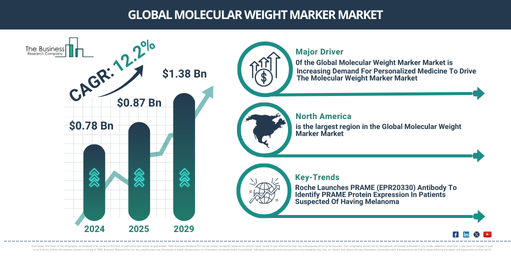
    The rapid expansion of the molecular weight marker market has been notable in recent years. With projections indicating a growth from $0.78 billion in 2024 to $0.87 billion in the next year, the market boasts a compound annual growth rate (CAGR) of 12.6%. The noteworthy growth recorded in the historic period can be credited to increased research and development initiatives, the widening scopes of genomics and proteomics, a surge in biotechnology applications, and the launch of high-resolution molecular weight markers.

    In the forthcoming years, the market size of molecular weight markers is projected to experience considerable growth, reaching a value of approximately $1.38 billion in 2029, with a compound annual growth rate (CAGR) of about 12.2%. The forecasted growth can be attributed to several factors, such as the continuous developments in molecular biology methods, the burgeoning biopharmaceutical sector’s focus on biologics and biosimilars, increased government funding, the development of research infrastructure in emerging countries, and a growing focus on personalized medicine. The prediction period forecasts several trends, including technological advancements in molecular biology, the introduction of high-resolution molecular weight markers, and the emergence of more accurate and user-friendly molecular weight markers.

    Download a free sample to assess the report’s scope and structure:

    https://www.thebusinessresearchcompany.com/sample.aspx?id=16485&type=smp

    What Are the Core Growth Drivers Propelling the Molecular Weight Marker Market Forward?

    A rise in the implementation of bespoke medical approaches is likely to boost the expansion of the molecular weight marker market. Bespoke medicine pertains to a medical belief that targets the customization of medical treatments and strategies based on individual patient’s needs. This trend is fueled by the fast-paced development of omics technology, genetic advancements, integrating data, and a growing understanding of the importance of patient-specific medications and preventative measures. Molecular weight markers provide a robust base for augmenting bespoke medicine, as they permit comprehensive proteomic examination, aid in the detection of biomarkers, enhance the understanding and development of drugs, and contribute to the development of personalized therapeutic procedures. For instance, the Personalized Medicine Coalition, a non-profit organization based in the US, reported that the FDA granted approval to 16 new bespoke therapies for patients with uncommon diseases in 2023, indicating a rise from six in 2022. As such, the acceleration in bespoke medical implementation is likely to fuel the expansion of the molecular weight marker market.

    Which Key Market Segments Comprise the Molecular Weight Marker Market and Drive Its Revenue Growth?

    The molecular weight marker market covered in this report is segmented –

    1) By Product: DNA Markers, Protein Markers, RNA Markers

    2) By Marker Type: Prestained Markers, Unstained Markers, Specialty Markers

    3) By Application: Nucleic Acid Application, Proteomics Application

    4) By End User: Academic Research Institutes, Pharmaceutical And Biotechnology Companies, Contract Research Organizations, Other End-Users

    Subsegments:

    1) By DNA Markers: Gene-Specific Markers, Fragment Length Markers, Plasmid DNA Markers

    2) By Protein Markers: Pre-Stained Protein Markers, Unstained Protein Markers, Recombinant Protein Markers

    3) By RNA Markers: mRNA Markers, Total RNA Markers, rRNA Markers

    Request customized data on this market:

    https://www.thebusinessresearchcompany.com/customise?id=16485&type=smp

    Which Geographic Areas Hold the Strongest Growth Potential in the Molecular Weight Marker Market?

    North America was the largest region in the molecular weight marker market in 2023. Asia-Pacific is expected to be the fastest-growing region in the forecast period. The regions covered in the molecular weight marker market report are Asia-Pacific, Western Europe, Eastern Europe, North America, South America, Middle East, Africa.

    What Are the Current Market Growth and Trends in the Molecular Weight Marker Industry?

    The primary focus for major players in the molecular weight markers market is the development of innovative products like monoclonal primary antibodies, allowing them to maintain market superiority. A monoclonal primary antibody is an antibody originating from a single cell clone, producing antibodies that attach to the same specific region on a target molecule. In October 2022, for example, F. Hoffmann-La Roche AG, a Swiss pharmaceutical company, introduced the PRAME (EPR20330) antibody to detect PRAME protein expression in individuals potentially suffering from melanoma. This groundbreaking antibody is designed specifically to identify PRAME protein expression in these patients, a critical step in diagnosing and monitoring melanoma – a dangerous variant of skin cancer. As a result of this breakthrough, diagnostic accuracy is improved, offering the possibility for more personalized treatment plans, thereby enhancing melanoma management and patient outcomes.

    View the full report here:

    https://www.thebusinessresearchcompany.com/report/molecular-weight-marker-global-market-report

    How Is the Molecular Weight Marker Market Conceptually Defined?

    A molecular weight marker is a set of molecules of known sizes used as a reference to estimate the size of other molecules separated by techniques such as gel electrophoresis. These markers are crucial for determining the molecular weight of proteins, nucleic acids, or other macromolecules in a sample. Molecular weight markers are essential tools in molecular biology and biochemistry, providing a reliable means to estimate the size of macromolecules during electrophoresis.

    Purchase the full report and get a swift delivery:

    https://www.thebusinessresearchcompany.com/purchaseoptions.aspx?id=16485

    About The Business Research Company:

    With over 15000+ reports from 27 industries covering 60+ geographies, The Business Research Company has built a reputation for offering comprehensive, data-rich research and insights. Armed with 1,500,000 datasets, the optimistic contribution of in-depth secondary research, and unique insights from industry leaders, you can get the information you need to stay ahead in the game.

    Get in touch with us:

    The Business Research Company: https://www.thebusinessresearchcompany.com/

    Americas +1 3156230293

    Asia +44 2071930708

    Europe +44 2071930708

    Email us at info@tbrc.info

    Follow us on:

    LinkedIn: https://in.linkedin.com/company/the-business-research-company

    YouTube: https://www.youtube.com/channel/UC24_fI0rV8cR5DxlCpgmyFQ

    Global Market Model: https://www.thebusinessresearchcompany.com/global-market-model
  • Top Trends Driving Innovation and Change in the Mitral Valve Disease Market: Advancing Mitral Valve Disease Care With Innovative Treatment Technologies

    Top Trends Driving Innovation and Change in the Mitral Valve Disease Market: Advancing Mitral Valve Disease Care With Innovative Treatment Technologies

    Discover trends, market shifts, and competitive outlooks for the mitral valve disease industry through 2025-2034 with The Business Research Company’s reliable data and in-depth research

    How Has The Mitral Valve Disease Market Growth Evolved From 2024 To 2025, And What’s Ahead?

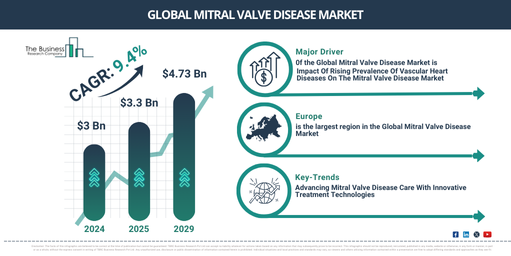
    The market for mitral valve disease has witnessed robust expansion in the past few years. It is set to rise from a size of $3 billion in 2024 to reach $3.3 billion in 2025, with a compound annual growth rate (CAGR) of 9.8%. The significant growth in the previous period can be ascribed to factors such as initiatives to educate patients, favourable reimbursement policies and insurance coverage, heightened healthcare spending, increased awareness and screening activities, and an expanding market presence.

    The market size for mitral valve disease is predicted to experience significant expansion in the coming years, reaching a value of $4.73 billion in 2029 with a compound annual growth rate (CAGR) of 9.4%. The predicted growth during the forecast period is likely due to an increase in the incidences of mitral valve disease, the rise in acceptance of minimally invasive procedures, significant advancements in heart valve surgery, an upswing in venture capital investments, as well as heightened interest from manufacturers. Key trends during this forecast period are likely to encompass technological enhancements, developments in transcatheter technologies, and the continuous evolution of surgical procedure technology.

    Download a free sample to assess the report’s scope and structure:

    https://www.thebusinessresearchcompany.com/sample.aspx?id=16480&type=smp

    What Are the Core Market Drivers Propelling Growth in the Mitral Valve Disease Industry?

    The growth of the mitral valve disease market is anticipated to be fueled by the escalating incidence of vascular heart diseases. These heart diseases, which include conditions impacting the blood vessels serving the heart or inside the heart, are increasing due to a combination of demographic shifts, lifestyle choices, environmental influences, medical conditions, and genetic elements. Vascular heart diseases like ischemic heart disease and hypertension have the potential to indirectly trigger mitral valve disease by affecting the heart’s structure and functioning, which in turn can lead to conditions that impact the mitral valve. As an illustration, data from a National Health Survey carried out by the Australia-based government agency, the Australian Institute of Health and Welfare, showed that the death rate from cardiovascular disease per 100,000 population in Australia elevated from 143.7 in 2021 to 148.2 in 2022 for males, according to the Australian Bureau of Statistics 2020-21. Consequently, the surge in vascular heart diseases is propelling the mitral valve disease market.

    What Segment Types Define the Mitral Valve Disease Market Structure?

    The mitral valve disease market covered in this report is segmented –

    1) By Treatment Type: Mitral Valve Repair, Mitral Valve Replacement, Cardiac Resynchronization Therapy, Mitral Valve Therapeutics

    2) By Indication: Mitral Valve Stenosis, Mitral Valve Prolapse, Mitral Valve Regurgitation

    3) By End-User: Hospitals, Ambulatory Surgical Centers, Other End-Users

    Subsegments:

    1) By Mitral Valve Repair: Surgical Repair, Minimally Invasive Repair, Percutaneous Mitral Valve Repair

    2) By Mitral Valve Replacement: Mechanical Valve Replacement, Biological Valve Replacement, Transcatheter Mitral Valve Replacement (TMVR)

    3) By Cardiac Resynchronization Therapy: Pacemaker Therapy, Implantable Cardioverter-Defibrillators (ICD), Biventricular Pacing

    4) By Mitral Valve Therapeutics: Pharmacological Treatments, Anticoagulation Therapy, Mitral Valve Repair Devices

    Request customized data on this market:

    https://www.thebusinessresearchcompany.com/customise?id=16480&type=smp

    Which Regions Are Driving the Next Phase of the Mitral Valve Disease Market Growth?

    Europe was the largest region in the mitral valve disease market in 2024. Asia-Pacific is expected to be the fastest-growing region in the forecast period. The regions covered in the mitral valve disease market report are Asia-Pacific, Western Europe, Eastern Europe, North America, South America, Middle East, Africa.

    What Are the Key Market Trends in the Mitral Valve Disease Market Over the Coming Years?

    Key players in the mitral valve disease market are innovating stented tissue valves to meet the rising demand for less invasive treatment methods. These valves are engineered to deliver lasting and robust performance, providing patients with an alternative to conventional surgical procedures. For example, Medtronic, a healthcare company based in Ireland, unveiled the Avalus Ultra valve in April 2024. This sophisticated surgical aortic tissue valve is specifically designed to improve implantation and ongoing patient management. The Avalus Ultra, which builds on ten years of clinical experience with its predecessor, the Avalus valve, boasts a low valve profile for simplified implantation, a PEEK base frame for consistent roundness, and an industry-leading Effective Orifice Area (EOA) for possibly enhanced blood flow. Moreover, it consists of a radiopaque coil for unambiguous visibility in potential future valve-in-valve interventions.

    View the full report here:

    https://www.thebusinessresearchcompany.com/report/mitral-valve-disease-global-market-report

    What Is the Definition of the Mitral Valve Disease Market?

    Mitral valve disease is a disorder impacting the mitral valve, which controls blood movement between the heart’s left atrium and left ventricle. It can result in the valve becoming narrowed or leaky, disrupting normal blood flow and causing issues like breathlessness, tiredness, and abnormal heart rhythms. The primary aim of managing mitral valve disease is to ensure proper blood flow through the heart and to prevent complications.

    Purchase the full report and get a swift delivery:

    https://www.thebusinessresearchcompany.com/purchaseoptions.aspx?id=16480

    About The Business Research Company:

    With over 15000+ reports from 27 industries covering 60+ geographies, The Business Research Company has built a reputation for offering comprehensive, data-rich research and insights. Armed with 1,500,000 datasets, the optimistic contribution of in-depth secondary research, and unique insights from industry leaders, you can get the information you need to stay ahead in the game.

    Get in touch with us:

    The Business Research Company: https://www.thebusinessresearchcompany.com/

    Americas +1 3156230293

    Asia +44 2071930708

    Europe +44 2071930708

    Email us at info@tbrc.info

    Follow us on:

    LinkedIn: https://in.linkedin.com/company/the-business-research-company

    YouTube: https://www.youtube.com/channel/UC24_fI0rV8cR5DxlCpgmyFQ

    Global Market Model: https://www.thebusinessresearchcompany.com/global-market-model
  • MicroRNA Market Outlook 2025: Mapping Growth, Innovation, and Regional Shifts

    MicroRNA Market Outlook 2025: Mapping Growth, Innovation, and Regional Shifts

    Discover trends, market shifts, and competitive outlooks for the microrna industry through 2025-2034 with The Business Research Company’s reliable data and in-depth research

    What Are the Key Projections for the CAGR of the MicroRNA Market Size From 2025 to 2034?

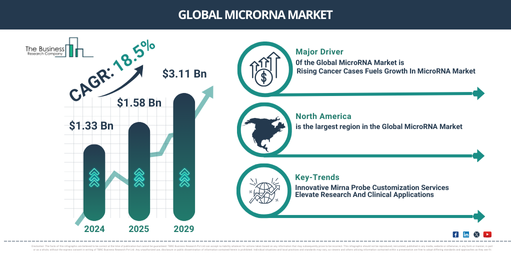
    The market size of microrna has seen significant expansion in the past few years. The market is projected to inflate from $1.33 billion in 2024 to $1.58 billion in 2025, demonstrating a compound annual growth rate (CAGR) of 18.9%. The substantial growth during the historical period is ascribed to factors such as the discovery of microRNAs, RNA interference (RNAi), genome sequencing projects, research in computational biology and bioinformatics, and studies on extracellular vehicles (EVs).

    In the coming years, there’s a forecast of swift expansion in the microrna market size, projected to hit $3.11 billion by 2029, boasting a compound annual growth rate (CAGR) of 18.5%. Key factors contributing to this growth during the forecasted period include clinical translation, regulatory systems and networks, microRNA-centered therapies, therapeutic potential, and discovery of biomarkers. Significant trends projected during the forecasted period include advancements in technology, bioinformatics and data interpretation, cross-species conservation, microbe interactions, and functional mechanisms.

    Download a free sample to assess the report’s scope and structure:

    https://www.thebusinessresearchcompany.com/sample.aspx?id=15608&type=smp

    What Are the Core Market Drivers Propelling Growth in the MicroRNA Industry?

    The rise in cancer instances is projected to fuel the expansion of the microRNA market. Characterized by uncontrolled growth and proliferation of cells, cancer often results in malignant tumors that can infiltrate nearby tissues and metastasize to far-off organs, leading to considerable health threats. An aging populace, lifestyle preferences such as smoking and a lackluster diet, environmental toxins, and better detection techniques resulting in earlier diagnoses, all fuel the increasing prevalence of cancer. Conventional cancer treatments are augmented with microRNA to enhance drug receptivity and boost results. Moreover, miRNAs function as diagnostic and prognostic biomarkers, aiding in demarcating cancer varieties, projecting disease development, and tracking treatment reactions. To illustrate, the US’s National Cancer Institute reported approximately 20 million new cases and 9.7 million cancer-related fatalities annually in 2022, as of May 2024. Forecasts also suggest around 15.3 million deaths and 29.9 million novel instances per annum by 2040. Consequently, the escalating count of cancer instances serves as a key driver for the microRNA market’s growth.

    What Segment Types Define the MicroRNA Market Structure?

    The microrna market covered in this report is segmented –

    1) By Products: Instruments, Consumables

    2) By Assay Type: Immunoassay, Next Generation Sequencing, miRNA Arrays, Polymerase Chain Reaction (PCR) Based Arrays

    3) By Application: Cancer, Infectious Diseases, Immunological Disorder, Cardiovascular Disease, Neurological Disease, Other Applications

    4) By End User: Academic And Research Institutes, Biopharmaceutical Companies, Diagnostic Centers, Clinical Research Organizations

    Subsegments:

    1) By Instruments: Qpcr Systems (Quantitative Pcr), Microarray Platforms, Next-Generation Sequencing (Ngs) Systems, Real-Time Pcr Instruments, Microrna Analyzers

    2) By Consumables: Microrna Kits ( Extraction Kits, Detection Kits), Pcr Reagents, Primers And Probes, Microarrays And Chips, Rna Sequencing Kits

    Request customized data on this market:

    https://www.thebusinessresearchcompany.com/customise?id=15608&type=smp

    Which Regions Are Driving the Next Phase of the MicroRNA Market Growth?

    North America was the largest region in the microRNA market in 2024. Asia-Pacific is expected to be the fastest-growing region in the forecast period. The regions covered in the MicroRNA market report are Asia-Pacific, Western Europe, Eastern Europe, North America, South America, Middle East, Africa.

    What Are the Key Market Trends in the MicroRNA Market Over the Coming Years?

    Top companies in the microRNA marketplace are majorly focusing their efforts on the development of sophisticated solutions like MiRNA probe personalization services. Such services are crucial to cater to the unique requirements of researchers and clinicians, to boost MiRNA detection accuracy and to support a broad spectrum of applications. The provision of MiRNA probe personalization services entails specialized services by biotech and molecular biology firms to create and deliver customized probes exclusive to certain microRNAs (miRNAs) for diverse research and clinical uses. For example, in September 2023, Taiwanese biotech firm Abnova Corporation rolled out enhanced services for personalizing miRNA probes. Alongside, the company also unveiled a fresh line of cataloged miRNA probes to fulfill the varied needs of academic, industrial, and research bodies undertaking miRNA study. These probes are instrumental in discovering and accurately pinpointing miRNAs, small non-coding RNA molecules critical for multiple biological functions. Abnova’s probe personalization services guarantee high specificity with minimal cross-reactivity, making them appropriate for examining limited miRNA content samples.

    View the full report here:

    https://www.thebusinessresearchcompany.com/report/microrna-global-market-report

    What Is the Definition of the MicroRNA Market?

    MicroRNAs are small, non-coding RNA molecules, typically about 20-22 nucleotides in length, used to regulate gene expression. They function by binding to complementary sequences on messenger RNA (mRNA) molecules, usually resulting in gene silencing through translational repression or target degradation.

    Purchase the full report and get a swift delivery:

    https://www.thebusinessresearchcompany.com/purchaseoptions.aspx?id=15608

    About The Business Research Company:

    With over 15000+ reports from 27 industries covering 60+ geographies, The Business Research Company has built a reputation for offering comprehensive, data-rich research and insights. Armed with 1,500,000 datasets, the optimistic contribution of in-depth secondary research, and unique insights from industry leaders, you can get the information you need to stay ahead in the game.

    Get in touch with us:

    The Business Research Company: https://www.thebusinessresearchcompany.com/

    Americas +1 3156230293

    Asia +44 2071930708

    Europe +44 2071930708

    Email us at info@tbrc.info

    Follow us on:

    LinkedIn: https://in.linkedin.com/company/the-business-research-company

    YouTube: https://www.youtube.com/channel/UC24_fI0rV8cR5DxlCpgmyFQ

    Global Market Model: https://www.thebusinessresearchcompany.com/global-market-model
  • Micropropagation Market in Focus: Forecasting Growth Drivers, Scaling Potential, and Global Opportunities

    Micropropagation Market in Focus: Forecasting Growth Drivers, Scaling Potential, and Global Opportunities

    Discover trends, market shifts, and competitive outlooks for the micropropagation industry through 2025-2034 with The Business Research Company’s reliable data and in-depth research

    How Has The Micropropagation Market Growth Evolved From 2024 To 2025, And What’s Ahead?

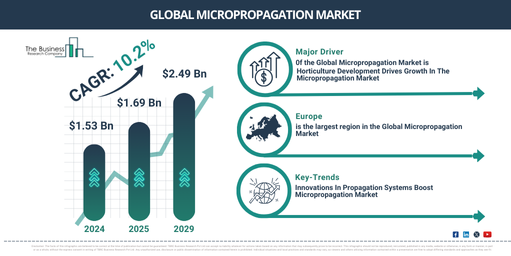
    Over the past few years, the micropropagation market has seen substantial expansion. Projected to rise from $1.53 billion in 2024 to $1.69 billion in 2025, it exhibits a compound annual growth rate (CAGR) of 10.5%. Factors contributing to the growth in the historical period include the need for disease-free planting material, preservation efforts for endangered species, crop enhancement initiatives, the worldwide spread of agriculture, and heightened knowledge among farmers.

    In the coming years, the micropropagation market is set to experience swift expansion, with projections indicating an increase to $2.49 billion by 2029, thanks to a compound annual growth rate (CAGR) of 10.2%. The expected growth in this market during the forecast period can be linked to factors such as the introduction of new plant species, biopharmaceutical production, heightened emphasis on sustainable farming practices, expansion in biofuel and biomass production, regulatory backing, and intellectual property rights. Key trends for the forecast period encompass the greater incorporation of AI and automation technologies, extension into unconventional crops, digital transformation of micropropagation services, expansion of outsourced micropropagation services, and value chains’ vertical integration.

    Download a free sample to assess the report’s scope and structure:

    https://www.thebusinessresearchcompany.com/sample.aspx?id=16737&type=smp

    Which Primay Drivers Are Accelerating Growth in the Micropropagation Market?

    The micropropagation market is predicted to soar as horticulture development progresses. Horticulture involves the cultivation of plants for different purposes such as food, medicinal applications, beautification, and pleasure. The growth of horticulture is driven by the rising demand for various crops, sustainable farming methods, urban greenery, and ornamental plants. Factors like population increase, environmental awareness, and aesthetic tastes contribute to this growth. Micropropagation is crucial in horticulture as it enables the massive production of disease-free plants with preferred traits, guaranteeing reliable quality and genetic consistency in crop production, ornamental gardening, and preservation initiatives. For example, a June 2024 report by the Department for Environment Food and Rural Affairs, a ministerial department in the UK, indicated that in 2023, the worth of local vegetables escalated by 10% to nearly £1.9 billion ($2.03 billion). The worth of field vegetables surged by 12%, totalling £1.5 billion ($1.60 billion), and the worth of protected vegetables rose by 3.7%, amounting to £374 million ($399 million). Hence, horticulture’s progression is fuelling the expansion of the micropropagation market.

    How Is the Micropropagation Market Segmented?

    The micropropagation market covered in this report is segmented –

    1) By Crop Types: Banana, Orchids And Ornamentals, Medicinal Plants, Vegetables, Small Fruits, Other Crop Types

    2) By Container Type: Test Tubes And Petri Dishes, Glass Bottles, Plastic Containers

    3) By Sales Channels: Offline, Online

    4) By End User: Farmers, Research Labs, Other End Users

    Subsegments:

    1) By Banana: Cavendish Banana, Red Banana, Plantains, Other Banana Varieties

    2) By Orchids And Ornamentals: Phalaenopsis Orchids, Cattleya Orchids, Dendrobium Orchids, Cymbidium Orchids, Other Orchid Varieties, Gerbera, Chrysanthemums, Roses, Tulips, Lilies, Other Ornamental Flowers

    3) By Medicinal Plants: Aloe Vera, Ginseng, Echinacea, Turmeric, Stevia, Lavender, Mint, Cannabis, Basil, Other Herbal And Medicinal Plants

    4) By Vegetables: Tomatoes, Peppers, Lettuce, Cucumber, Spinach, Eggplant, Carrots, Kale, Other Leafy And Root Vegetables

    5) By Small Fruits: Strawberries, Raspberries, Blueberries, Blackberries, Grapes, Gooseberries, Other Berries

    6) By Other Crop Types: Trees And Timber Species, Flowering Plants, Fruits, Nut Crops, Spices, Turfgrass And Lawn Species, Forestry And Agroforestry Crops

    Request customized data on this market:

    https://www.thebusinessresearchcompany.com/customise?id=16737&type=smp

    Which Regions Are Key Players in the Growth of the Micropropagation Market?

    Europe was the largest region in the micropropagation market in 2023. Asia-Pacific is expected to be the fastest-growing region in the forecast period. The regions covered in the micropropagation market report are Asia-Pacific, Western Europe, Eastern Europe, North America, South America, Middle East, Africa.

    Which Emerging Trends that Are Influencing the Micropropagation Industry Evolution?

    Top companies operating within the micropropagation market sphere are venturing into the creation of innovative products such as propagation systems. Their goal is to improve the efficiency and efficacy of plant duplication and cultivation. These propagation systems are unique strategies or methods geared towards the replication of plants from seeds, cuttings or other parts of the plant to breed fresh, genetically identical or diverse entities. For example, NuPlant, a biotechnology corporation based in Australia, unveiled its product, SmartClone in January 2023. This advanced plant tissue culture propagation system is specifically designed to rapidly generate superior plants from different species’ breeding programs. The system deploys precision robotics to nurture robust clones generated from parent material, ensuring adjustable conditions throughout each stage of growth. The SmartClone method anticipates a production of stronger, uniform plantlets, also contributing to labor reduction and cost-efficiency per plant.

    View the full report here:

    https://www.thebusinessresearchcompany.com/report/micropropagation-global-market-report

    How Is the Micropropagation Market Defined and What Are Its Core Parameters?

    Micropropagation is a plant propagation technique that involves growing plants from small plant parts, such as tissue cultures, under sterile conditions. It allows for the rapid production of large numbers of genetically identical plants. This method is widely used in agriculture, horticulture, and forestry for efficient plant multiplication and conservation.

    Purchase the full report and get a swift delivery:

    https://www.thebusinessresearchcompany.com/purchaseoptions.aspx?id=16737

    About The Business Research Company:

    With over 15000+ reports from 27 industries covering 60+ geographies, The Business Research Company has built a reputation for offering comprehensive, data-rich research and insights. Armed with 1,500,000 datasets, the optimistic contribution of in-depth secondary research, and unique insights from industry leaders, you can get the information you need to stay ahead in the game.

    Get in touch with us:

    The Business Research Company: https://www.thebusinessresearchcompany.com/

    Americas +1 3156230293

    Asia +44 2071930708

    Europe +44 2071930708

    Email us at info@tbrc.info

    Follow us on:

    LinkedIn: https://in.linkedin.com/company/the-business-research-company

    YouTube: https://www.youtube.com/channel/UC24_fI0rV8cR5DxlCpgmyFQ

    Global Market Model: https://www.thebusinessresearchcompany.com/global-market-model
  • Microbiology And Bacterial Culture For Industrial Testing Market Trends 2025-2034: Growth, Strategic Insights, and Opportunities Ahead

    Microbiology And Bacterial Culture For Industrial Testing Market Trends 2025-2034: Growth, Strategic Insights, and Opportunities Ahead

    Discover trends, market shifts, and competitive outlooks for the microbiology and bacterial culture for industrial testing industry through 2025-2034 with The Business Research Company’s reliable data and in-depth research

    What Is the Estimated Market Size of the Microbiology And Bacterial Culture For Industrial Testing Market In 2029?

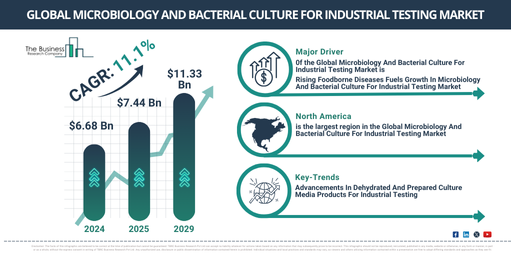
    The market size for microbiology and bacterial culture for industrial testing has been expanding swiftly in the last few years. It’s projected to swell from $6.68 billion in 2024 to $7.44 billion in 2025, displaying a compound annual growth rate (CAGR) of 11.5%. Factors contributing to this rise in the historical phase include the increasing demand for personalized medicine, readiness for global pandemics, escalating awareness about healthcare-associated infections (HAIS), the growing occurrence of foodborne diseases, and developing markets coupled with industrialization.

    Anticipated to see rapid expansion in the upcoming years, the microbiology and bacterial culture for industrial testing market is projected to reach $11.33 billion by 2029, growing at a compound annual growth rate (CAGR) of 11.1%. The projected growth during the forecast period can be ascribed to the rising incidences of foodborne diseases, regulatory compliance, the globalization of food supply chains, expansion of the pharmaceutical industry, and the increase in environmental monitoring and water quality testing. Key trends driving this growth in the forecast period include technological innovation, increased funding for research and development (R&D), advancements in analytical methods, the rise of automation and robotics, and the incorporation of data analytics.

    Download a free sample to assess the report’s scope and structure:

    https://www.thebusinessresearchcompany.com/sample.aspx?id=15607&type=smp

    What External and Internal Drivers Are Contributing to the Growth of the Microbiology And Bacterial Culture For Industrial Testing Market?

    The growth of the microbiology and bacterial culture for industrial testing market is anticipated to be spurred by the increasing occurrences of foodborne illnesses. Foodborne diseases result from the ingestion of food or drinks contaminated with harmful microorganisms, toxins, or chemicals. The escalation in foodborne incidents is linked to numerous factors, like alterations in food production, distribution, and consumption routines, globalization of food supply networks, inadequate food safety precautions, antimicrobial resistance, the effect of climate change on food production, and an increased intake of high-risk foods. Microbiology and bacterial culture play a crucial role in industrial testing for foodborne diseases by aiding in the detection and identification of harmful pathogens, ensuring the safety of food, and preventing outbreaks through rigorous quality control procedures. For instance, the UK Health Security Agency, a government organization in the UK, reported in February 2024 that England and Wales recorded 167 listeriosis cases (a severe infection caused by consuming food tainted by Listeria monocytogenes) in 2022, compared to 160 cases in 2021. Consequently, the surge in foodborne illnesses propels the expansion of the microbiology and bacterial culture for industrial testing market.

    Which Key Market Segments Comprise the Microbiology And Bacterial Culture For Industrial Testing Market and Drive Its Revenue Growth?

    The microbiology and bacterial culture for industrial testing market covered in this report is segmented –

    1) By Consumable: Media, Reagents, Sera

    2) By Application: Food And Water Testing, Bioenergy And Agricultural Research, Other Applications

    3) By End User: Industrial Laboratories, Research Laboratories, Food Testing Laboratories, Diagnostic Laboratories, Other End Users

    Subsegments:

    1) By Media: Agar Plates, Broth Media, Selective Media, Differential Media, Transport Media

    2) By Reagents: Staining Reagents (Gram Stain, Acid-Fast Stain), Biochemical Reagents, Pcr Reagents, Enzyme-Based Reagents, Chromogenic Reagents

    3) By Sera: Blood Serum, Animal Sera ( Bovine Serum), Human Sera, Culture Sera

    Request customized data on this market:

    https://www.thebusinessresearchcompany.com/customise?id=15607&type=smp

    Which Geographic Areas Hold the Strongest Growth Potential in the Microbiology And Bacterial Culture For Industrial Testing Market?

    North America was the largest region in the microbiology and bacterial culture for industrial testing market in 2024. The regions covered in the microbiology and bacterial culture for industrial testing market report are Asia-Pacific, Western Europe, Eastern Europe, North America, South America, Middle East, Africa.

    Which Cutting-Edge Market Trends Are Expected to Drive the Microbiology And Bacterial Culture For Industrial Testing Market’s Growth?

    Leading firms in the microbiology and bacterial culture for industrial testing market are emphasizing on the creation of advanced products like dehydrated and prepared culture media to establish a competitive position. These culture media forms are employed in microbiology to grow microorganisms, with dehydrated media needing water reconstitution, and prepared media serving as ready-to-use formulas that promote microbial growth. For instance, in June 2022, Gold Standard Diagnostics Industrial Solutions, a US-centric company offering diagnostic test kits, lab consumables, and automation solutions, unveiled BACGro Culture Media. It is a range of culture media products crafted to detect pathogenic microorganisms. The BACGro line features a variety of sophisticated dehydrated and liquid media products complying with global standards and accommodating diverse reference methods.

    View the full report here:

    https://www.thebusinessresearchcompany.com/report/microbiology-and-bacterial-culture-for-industrial-testing-global-market-report

    How Is the Microbiology And Bacterial Culture For Industrial Testing Market Conceptually Defined?

    Microbiology and bacterial culture for industrial testing refers to the scientific processes and methodologies used to detect, identify, quantify, and analyze microorganisms in various industrial settings. It ensures safety, quality, and compliance with regulatory standards by monitoring microbial contamination and assessing the microbiological integrity of products and environments.

    Purchase the full report and get a swift delivery:

    https://www.thebusinessresearchcompany.com/purchaseoptions.aspx?id=15607

    About The Business Research Company:

    With over 15000+ reports from 27 industries covering 60+ geographies, The Business Research Company has built a reputation for offering comprehensive, data-rich research and insights. Armed with 1,500,000 datasets, the optimistic contribution of in-depth secondary research, and unique insights from industry leaders, you can get the information you need to stay ahead in the game.

    Get in touch with us:

    The Business Research Company: https://www.thebusinessresearchcompany.com/

    Americas +1 3156230293

    Asia +44 2071930708

    Europe +44 2071930708

    Email us at info@tbrc.info

    Follow us on:

    LinkedIn: https://in.linkedin.com/company/the-business-research-company

    YouTube: https://www.youtube.com/channel/UC24_fI0rV8cR5DxlCpgmyFQ

    Global Market Model: https://www.thebusinessresearchcompany.com/global-market-model

  • Microbial Identification Methods Market Insights: In-Depth Look at Growth Trends, Market Size, and Opportunities for 2025-2034

    Microbial Identification Methods Market Insights: In-Depth Look at Growth Trends, Market Size, and Opportunities for 2025-2034

    Discover trends, market shifts, and competitive outlooks for the microbial identification methods industry through 2025-2034 with The Business Research Company’s reliable data and in-depth research

    How Fast Is The Microbial Identification Methods Market Expected to Grow Between 2025 And 2029?

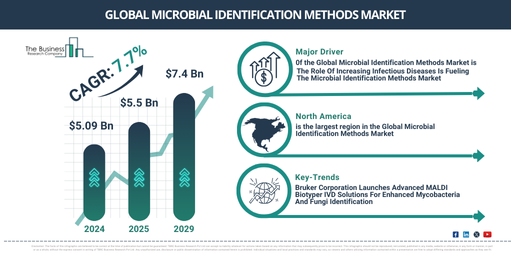
    The market for microbial identification methods has seen a robust expansion in recent years. It is projected to increase from $5.09 billion in 2024 to $5.5 billion in 2025, showing a compound annual growth rate (CAGR) of 8.0%. The previous growth can be credited to factors such as the rise in infectious diseases, enhanced funding for research and development in diagnostics, growing attention towards infection control protocols in healthcare facilities, escalating concerns regarding food safety, and the surge in demand for microbial identification methods.

    The market size for microbial identification methods is projected to experience significant expansion in the coming years, with a predicted growth to $7.4 billion by 2029 alongside a compound annual growth rate (CAGR) of 7.7%. This growth during the forecast period is largely driven by an increasing need for quick microbiology tests, advancements in microbial research, the expanded use of automated systems, the rise in disposable income, and enhanced government efforts towards food safety. The forecast period is also expected to witness several key trends, including the introduction of new products, progress in microbial identification procedures, the adoption of automated bacterial identification mechanisms, advancements in fields like microfluidics, robotics, and nanotechnology, and strategic collaborations.

    Download a free sample to assess the report’s scope and structure:

    https://www.thebusinessresearchcompany.com/sample.aspx?id=16118&type=smp

    What Are the Core Market Drivers Propelling Growth in the Microbial Identification Methods Industry?

    The surge in infectious diseases is anticipated to stimulate the expansion of the microbial identification methods market in the future. Infectious diseases, which are caused by harmful agents (pathogens) such as viruses, bacteria, fungi and parasites, include major ones like HIV/AIDS, tuberculosis, malaria and others. Factors such as antimicrobial resistance, climate change, and population growth contribute to the rise in these diseases. Microrganism identification methods are pivotal in diagnosing, treating and preventing infectious diseases as they provide comprehensive data about the pathogens, thereby assisting healthcare professionals in making knowledgeable patient care decisions. For example, the Government of Canada reported in January 2023 that there were 135 and 159 rabies samples submitted in October and November 2022, respectively. Moreover, the Centers for Disease Control and Prevention reported in March 2023 that the number of TB cases in the US witnessed a 5.9% increase from 7,874 in 2021 to 8,331 in 2022. Hence, the escalating number of infectious diseases propels the growth of the microbial identification methods market.

    What Segment Types Define the Microbial Identification Methods Market Structure?

    The microbial identification methods market covered in this report is segmented –

    1) By Method: Genotypic, Phenotypic, Proteotypic

    2) By Type: Bacterial Identification System, Microbial Enumeration System, Bacterial Resistance Identification Systems, Microbiology Analyzer, Other Type

    3) By End User: Pharmaceutical And Biotechnology Companies, Hospitals And Diagnostic Laboratories, Food Testing Laboratories, Other End-Users

    Subsegments:

    1) By Genotypic: Polymerase Chain Reaction (PCR), 16S rRNA Sequencing, DNA Microarrays, Next-Generation Sequencing (NGS), Whole Genome Sequencing (WGS), Ribotyping, Fluorescence In Situ Hybridization (FISH), Random Amplified Polymorphic DNA (RAPD) Analysis

    2) By Phenotypic: Culture-Based Methods, Biochemical Testing, Microscopic Examination, Gram Staining, Antibiotic Susceptibility Testing (AST), Growth Pattern Identification, Colony Morphology Characterization

    3) By Proteotypic: Mass Spectrometry (MALDI-TOF MS), Western Blotting, Protein Profiling, Immunoassays (ELISA), Two-Dimensional Gel Electrophoresis

    Request customized data on this market:

    https://www.thebusinessresearchcompany.com/customise?id=16118&type=smp

    Which Regions Are Driving the Next Phase of the Microbial Identification Methods Market Growth?

    North America was the largest region in the microbial identification methods market in 2023. The regions covered in the microbial identification methods market report are Asia-Pacific, Western Europe, Eastern Europe, North America, South America, Middle East, Africa.

    What Are the Key Market Trends in the Microbial Identification Methods Market Over the Coming Years?

    Key players in the microbial identification methods market are concentrating on the development of novel solutions, namely mycobacteria and fungi IVD solutions, to consolidate their market standing. When we talk about mycobacteria and fungi in vitro diagnostic (IVD) solutions, we are discussing a vast array of products and technologies which are used to detect, distinguish, and classify mycobacterial and fungal pathogens present in clinical samples. As an illustration, Bruker Corporation, a firm based in the US that manufactures scientific instruments for researching molecular and materials, introduced in April 2023 a new mycobacteria and fungi IVD solution, known as the MALDI Biotyper IVD software. This software’s unique attributes comprise of advanced precision and faster microbial identification, utilizing MALDI-TOF (matrix-assisted laser desorption/ionization-time of flight) mass spectrometry technology. This platform offers speedy identification of mycobacteria and fungi from cultivated samples in minutes, markedly curtailing the duration.required vis-à-vis traditional methods. These new solutions also come with larger databases and tough software algorithms for superior specificity and sensitivity, thereby facilitating the accurate identification of a more wide-ranging array of mycobacterial and fungal species.

    View the full report here:

    https://www.thebusinessresearchcompany.com/report/microbial-identification-methods-global-market-report

    What Is the Definition of the Microbial Identification Methods Market?

    Microbial identification methods are systematic approaches and laboratory techniques employed to determine the identity and characteristics of microorganisms by analyzing their phenotypic (observable traits) and genotypic (genetic) properties. These methods are crucial for diagnosing infectious diseases, monitoring food and water safety, studying microbial ecology, and developing effective treatments or preventive measures against pathogenic microorganisms.

    Purchase the full report and get a swift delivery:

    https://www.thebusinessresearchcompany.com/purchaseoptions.aspx?id=16118

    About The Business Research Company:

    With over 15000+ reports from 27 industries covering 60+ geographies, The Business Research Company has built a reputation for offering comprehensive, data-rich research and insights. Armed with 1,500,000 datasets, the optimistic contribution of in-depth secondary research, and unique insights from industry leaders, you can get the information you need to stay ahead in the game.

    Get in touch with us:

    The Business Research Company: https://www.thebusinessresearchcompany.com/

    Americas +1 3156230293

    Asia +44 2071930708

    Europe +44 2071930708

    Email us at info@tbrc.info

    Follow us on:

    LinkedIn: https://in.linkedin.com/company/the-business-research-company

    YouTube: https://www.youtube.com/channel/UC24_fI0rV8cR5DxlCpgmyFQ

    Global Market Model: https://www.thebusinessresearchcompany.com/global-market-model