Category: HealthcareServices

  • Gastrointestinal Pathogen Testing Market Outlook 2025–2034: Identifying Growth Drivers, Technology Trends, and Policy Impact

    Gastrointestinal Pathogen Testing Market Outlook 2025–2034: Identifying Growth Drivers, Technology Trends, and Policy Impact

    Discover trends, market shifts, and competitive outlooks for the gastrointestinal pathogen testing industry through 2025-2034 with The Business Research Company’s reliable data and in-depth research

    What Are the Key Milestones in the Gastrointestinal Pathogen Testing Market’s Growth Trajectory From 2025 To 2034?

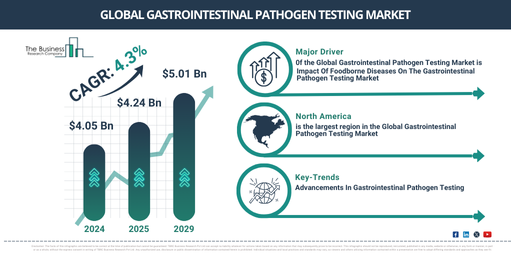
    In recent years, there has been a steady expansion in the market size of gastrointestinal pathogen testing. The projections indicate a growth from $4.05 billion in 2024 to $4.24 billion in 2025, representing a compound annual growth rate (CAGR) of 4.6%. This growth trajectory in previous years can be linked to several factors such as a rise in gastrointestinal infection cases, an increased awareness of foodborne diseases, a surge in travel-related infections due to globalization, regulatory measures aimed at food safety, an escalation in healthcare spending, and an increased demand for fast and accurate diagnostic solutions.

    Anticipated to experience consistent growth over the next several years, the market size of gastrointestinal pathogen testing is predicted to reach $5.01 billion by 2029, with a compound annual growth rate (CAGR) of 4.3%. This projected growth during the forecast period can be traced back to a variety of factors. These include the escalating frequency of gastrointestinal infections worldwide, increased consciousness about the significance of early recognition and treatment, the growth of healthcare facilities in developing economies, a surge in demand for point-of-care testing solutions, a heightened emphasis on food safety norms, and ongoing research and innovation efforts. Some key trends expected to characterize the forecast period are swift testing methods, rising acceptance of molecular diagnostic methods, the proliferation of point-of-care testing in non-conventional healthcare settings, progress in automation and robotics for efficient testing procedures, the advent of innovative biomarkers for improved pathogen identification, and the incorporation of artificial intelligence and machine learning algorithms.

    Download a free sample to assess the report’s scope and structure:

    https://www.thebusinessresearchcompany.com/sample.aspx?id=15571&type=smp

    Which Primay Drivers Are Accelerating Growth in the Gastrointestinal Pathogen Testing Market?

    The increasing prevalence of foodborne illnesses is anticipated to drive the expansion of the gastrointestinal pathogen testing market. These diseases are typically induced by the ingestion of food or drinks contaminated with pathogenic microbes, toxins, or chemicals, including illnesses like listeriosis, viral gastroenteritis, taeniasis, and trichinosis. The upswing in such diseases can be attributed to several factors, such as changes in the methods of food production, distribution, and consumption, insufficient food safety precautions, and the effect of climate change on food production. These gastrointestinal tests can identify the exact pathogens causing these foodborne diseases, assisting healthcare professionals in determining the reasons for gastrointestinal symptoms, establishing the right treatment, tracking outbreaks, and formulating measures to prevent the further spread of these diseases. For example, in February 2024, the UK Health Security Agency, a government organisation based in the UK, stated that England and Wales had 167 listeriosis cases in 2022 as opposed to 160 cases in 2021. Hence, the escalating rates of foodborne illnesses are fuelling the expansion of the gastrointestinal pathogen testing market.

    How Is the Gastrointestinal Pathogen Testing Market Segmented?

    The gastrointestinal pathogen testing market covered in this report is segmented –

    1) By Pathogen Type: Bacteria, Viruses, Parasites

    2) By Test Type: Molecular Tests, Culture, Biochemical Tests, Other Test Types

    3) By Panel Type: Syndromic Full Multiplex Panels, Other Panel Types

    4) By End-User: Hospitals, Diagnostic Laboratories, Point-Of-Care, Other End Users

    Subsegments:

    1) By Bacteria: Salmonella spp., Escherichia coli, Campylobacter spp., Shigella spp., Clostridium difficile, Vibrio spp., Listeria monocytogenes, Helicobacter pylori, Other Bacterial Pathogens

    2) By Viruses: Norovirus, Rotavirus, Enteric Adenovirus, Hepatitis A Virus (HAV), Astrovirus, Other Viral Pathogens

    3) By Parasites: Giardia lamblia, Entamoeba histolytica, Cryptosporidium spp., Trichinella spp., Toxoplasma gondii, Other Parasitic Pathogens

    Request customized data on this market:

    https://www.thebusinessresearchcompany.com/customise?id=15571&type=smp

    Which Regions Are Key Players in the Growth of the Gastrointestinal Pathogen Testing Market?

    North America was the largest region in the gastrointestinal pathogen testing market in 2023. Asia-Pacific is expected to be the fastest-growing region in the forecast period. The regions covered in the gastrointestinal pathogen testing market report are Asia-Pacific, Western Europe, Eastern Europe, North America, South America, Middle East, Africa.

    What Key Trends Are Shaping the Future of the Gastrointestinal Pathogen Testing Market?

    Leading firms in the gastrointestinal pathogen testing market are centered around creating advanced solutions such as metagenomic diagnostic tests to improve the precision, speed, and inclusiveness of identifying gastrointestinal pathogens. Metagenomic diagnostics is sophisticated technology that scrutinizes the genome of microorganisms from a sample, such as blood or stool. For example, Microba Life Sciences, a biotech company based in Australia, in April 2024 rolled out MetaPanel which is a metagenomic diagnostic test designed to detect numerous gastrointestinal pathogens with exceptional accuracy. The MetaPanel encompasses 175 pathogen targets in one test, providing medical professionals a complete solution to diagnose both usual and elusive infections. It uses the Next-Generation Sequencing (NGS) technology to examine a vast range of genetic material in a stool sample. This enables the identification of a plethora of potential pathogens, including those not normally checked for in conventional gastrointestinal panels.

    View the full report here:

    https://www.thebusinessresearchcompany.com/report/gastrointestinal-pathogen-testing-global-market-report

    How Is the Gastrointestinal Pathogen Testing Market Defined and What Are Its Core Parameters?

    Gastrointestinal pathogen testing refers to the process of diagnosing infections and diseases resulting from different pathogens impacting the digestive tract, comprising the stomach and intestines. It encompasses examining specimens, such as stool or blood, to pinpoint the particular pathogens causing gastrointestinal symptoms, facilitating the precise diagnosis and treatment of gastrointestinal disorders.

    Purchase the full report and get a swift delivery:

    https://www.thebusinessresearchcompany.com/purchaseoptions.aspx?id=15571

    About The Business Research Company:

    With over 15000+ reports from 27 industries covering 60+ geographies, The Business Research Company has built a reputation for offering comprehensive, data-rich research and insights. Armed with 1,500,000 datasets, the optimistic contribution of in-depth secondary research, and unique insights from industry leaders, you can get the information you need to stay ahead in the game.

    Get in touch with us:

    The Business Research Company: https://www.thebusinessresearchcompany.com/

    Americas +1 3156230293

    Asia +44 2071930708

    Europe +44 2071930708

    Email us at info@tbrc.info

    Follow us on:

    LinkedIn: https://in.linkedin.com/company/the-business-research-company

    YouTube: https://www.youtube.com/channel/UC24_fI0rV8cR5DxlCpgmyFQ

    Global Market Model: https://www.thebusinessresearchcompany.com/global-market-model
  • Emerging Growth Drivers in the Gastric Ulcers Market Landscape: Increasing Geriatric Population Fuels Gastric Ulcers Market Growth

    Emerging Growth Drivers in the Gastric Ulcers Market Landscape: Increasing Geriatric Population Fuels Gastric Ulcers Market Growth

    Discover trends, market shifts, and competitive outlooks for the gastric ulcers industry through 2025-2034 with The Business Research Company’s reliable data and in-depth research

    How Has The Gastric Ulcers Market Size Shifted, And What Is the Outlook Through 2034?

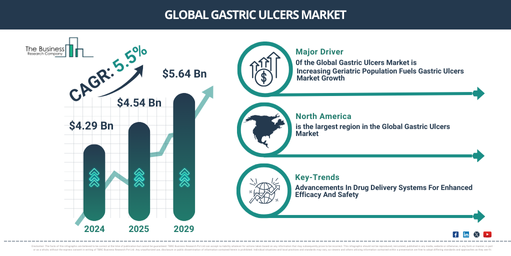
    In recent times, considerable growth has been observed in the gastric ulcers market. The market size which presently stands at $4.29 billion in 2024, is predicted to escalate to $4.54 billion in 2025, recording a compound annual growth rate (CAGR) of 5.9%. This substantial growth in the historical period is the result of a number of factors. The increasing incidence of helicobacter pylori infections, the frequent usage of nonsteroidal anti-inflammatory drugs (NSAIDs), the increasing number of elderly people worldwide, the rise in gastric ulcer prevention campaigns, and the growing occurrence of stress-related disorders have all contributed to this growth.

    In the coming years, the market for gastric ulcers is predicted to experience robust growth, with its size expected to reach $5.64 billion in 2029, growing at a compound annual growth rate (CAGR) of 5.5%. The expected growth during the projected period can be linked to enhancements in diagnostic methodologies, an increase in unhealthy eating patterns, progress in treatment alternatives such as proton pump inhibitors (PPIs), an aging population which increases the disease load, and the growth of healthcare facilities in developing markets. The future major trends include a shift towards combined therapies for better effectiveness, an increasing inclination towards minimally invasive treatment methods, the incorporation of digital health solutions in managing the disease, a surge in demand for over-the-counter (OTC) ulcer drugs, and the growth of personalized medicine strategies in ulcer therapy.

    Download a free sample to assess the report’s scope and structure:

    https://www.thebusinessresearchcompany.com/sample.aspx?id=17160&type=smp

    Which Factors and External Forces Are Driving Demand in the Gastric Ulcers Market?

    The gastric ulcers market is projected to grow due to the expansion of the geriatric population. People typically over the age of 65 constitute this demographic, which comes with unique healthcare points because of age. This group is growing due to the improvement in healthcare, which increases life expectancy and reduces birth rates worldwide. Gastric ulcers are frequently observed in this age group due to the prevalent use of NSAIDs and a reduction in mucosal protection, which often raises the likelihood of complications. For example, the Population Reference Bureau (PRB), a US-based private non-profit organization, forecasted in January 2024 that the population of Americans aged 65 and older would increase by 47% from 58 million in 2022 to 82 million by 2050. Furthermore, this demographic’s composition of the total population is predicted to grow from 17% to 23%. This shift signifies a substantial increase in the aging trend of the U.S. population. The forecast stresses the need to cater for older adults in different areas. Hence, the growing geriatric population is fuelling the expansion of the gastric ulcers market.

    Which Primary Segments of the Gastric Ulcers Market Are Driving Growth and Industry Transformations?

    The gastric ulcers market covered in this report is segmented –

    1) By Drug Class: Proton Pump Inhibitors (PPI), H2 Antagonists, Antacids, Antibiotics, Cytoprotective Agents, Other Drug Classes

    2) By Diagnosis: Stool Test, Endoscopy, Imaging Tests, Computed Tomography (CT) Scan, X-ray, Blood Tests, Other Diagnosis

    3) By Route Of Administration: Oral, Parenteral, Other Route Of Administrations

    4) By Distribution Channel: Hospital Pharmacy, Retail Pharmacy, Online Pharmacy, Other Distribution Channels

    5) By End-Users: Hospitals, Specialty Clinics, Homecare, Other End Users

    Subsegments:

    1) By Proton Pump Inhibitors (PPI): Omeprazole, Lansoprazole, Pantoprazole, Esomeprazole, Rabeprazole

    2) By H2 Antagonists: Ranitidine, Famotidine, Cimetidine, Nizatidine

    3) By Antacids: Calcium Carbonate, Magnesium Hydroxide, Aluminum Hydroxide, Sodium Bicarbonate

    4) By Antibiotics: Amoxicillin, Clarithromycin, Metronidazole, Tetracycline

    5) By Cytoprotective Agents: Sucralfate, Misoprostol, Bismuth Subsalicylate

    6) By Other Drug Classes: Prostaglandin Analogues, Prokinetic Agents, Herbal And Alternative Medications, Combination Therapies

    Request customized data on this market:

    https://www.thebusinessresearchcompany.com/customise?id=17160&type=smp

    What Are the Fastest-Growing Geographies in the Gastric Ulcers Market?

    North America was the largest region in the gastric ulcers market in 2024. Asia-Pacific is expected to be the fastest-growing region in the forecast period. The regions covered in the gastric ulcers market report are Asia-Pacific, Western Europe, Eastern Europe, North America, South America, Middle East, Africa.

    What Are the Most Significant Market Trends in the Gastric Ulcers Market?

    Leading businesses in the gastric ulcer market are concentrating on creating ground-breaking goods, such as novel drug formulations, to increase treatment effectiveness and minimize side effects. New formulation drugs are those that have been crafted with unique combinations of component parts, delivery methods, or dosages to enhance their potency, safety, and patient adherence. For example, in June 2024, Indian pharmaceutical production firm Akums Drugs and Pharmaceuticals Ltd., debuted Rabeprazole + Levosulpiride SR Capsules to offer improved relief for disorders such as gastro-oesophageal reflux disease (GERD) and other gastric tract ailments. These products merge a proton pump inhibitor and a prokinetic agent, successfully managing gastrointestinal issues like GERD and gastric ulcers. This mix not only diminishes gastric acid production but also improves gastric mobility, giving complete relief from symptoms like heartburn and digestion issues.

    View the full report here:

    https://www.thebusinessresearchcompany.com/report/gastric-ulcers-global-market-report

    What Parameters Are Used to Define the Gastric Ulcers Market?

    Gastric ulcers, also known as peptic ulcers, are open sores on the stomach’s inner lining due to the corrosive action of stomach acid. They often cause burning stomach pain, indigestion, and discomfort. Gastric ulcers are usually caused by an imbalance between stomach acid, an enzyme called pepsin, and the protective mucosal barrier lining the stomach and duodenum.

    Purchase the full report and get a swift delivery:

    https://www.thebusinessresearchcompany.com/purchaseoptions.aspx?id=17160

    About The Business Research Company:

    With over 15000+ reports from 27 industries covering 60+ geographies, The Business Research Company has built a reputation for offering comprehensive, data-rich research and insights. Armed with 1,500,000 datasets, the optimistic contribution of in-depth secondary research, and unique insights from industry leaders, you can get the information you need to stay ahead in the game.

    Get in touch with us:

    The Business Research Company: https://www.thebusinessresearchcompany.com/

    Americas +1 3156230293

    Asia +44 2071930708

    Europe +44 2071930708

    Email us at info@tbrc.info

    Follow us on:

    LinkedIn: https://in.linkedin.com/company/the-business-research-company

    YouTube: https://www.youtube.com/channel/UC24_fI0rV8cR5DxlCpgmyFQ

    Global Market Model: https://www.thebusinessresearchcompany.com/global-market-model
  • $12.14 Billion Forecast for Food Allergy Treatment Market by 2029, Backed by Demand and Innovation

    $12.14 Billion Forecast for Food Allergy Treatment Market by 2029, Backed by Demand and Innovation

    Discover trends, market shifts, and competitive outlooks for the food allergy treatment industry through 2025-2034 with The Business Research Company’s reliable data and in-depth research

    What is the Anticipated CAGR of the Food Allergy Treatment Market, and What Factors Will Drive It?

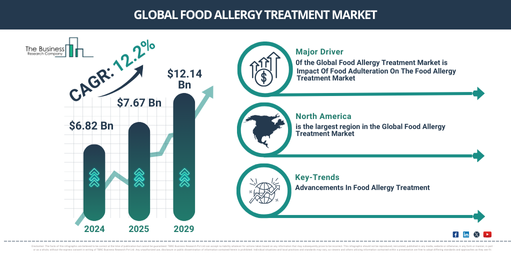
    There has been a swift expansion in the market size for food allergy treatment in the past years. The market is projected to rise from $6.82 billion in 2024 to $7.67 billion in 2025, showcasing a compound annual growth rate (CAGR) of 12.5%. Factors that are attributed to the growth during the historic period comprise of heightened occurrence of food allergies, increased regulatory approvals, progress in emergency treatments, and significant investment in cutting-edge technologies.

    Over the next few years, the market for food allergy treatments is predicted to expand rapidly, reaching a size of $12.14 billion in 2029 with a compound annual growth rate (CAGR) of 12.2%. This significant growth, anticipated over the forecast period, is due to several factors such as an increase in the elderly population, a rise in food allergy diagnoses, escalation in healthcare expenditure, a surge in reported cases of asthma, and a widespread prevalence of food allergies. Key trends during this forecast period are anticipated to include a remarkable level of innovation and technological progress, enhancements in medical technology and diagnostic methodologies, a rise in the usage of mobile applications and telemedicine services, an escalation in the number of research and development initiatives, and a steep increase in drug approvals and product launches.

    Download a free sample to assess the report’s scope and structure:

    https://www.thebusinessresearchcompany.com/sample.aspx?id=16684&type=smp

    What are the Fundamental Drivers and Innovations Shaping the Food Allergy Treatment Market?

    The rise in food adulteration is predicted to stimulate the expansion of the food allergy treatment market. The term “food adulteration” relates to the deliberate modification of foodstuffs by adding substandard, hazardous, or unauthorized substances, or by eliminating crucial ingredients, in order to increase volume or augment appearance, frequently compromising both quality and safety. Several factors such as economic benefits, intricate supply chains, regulatory insufficiency, technological developments, the appeal for ready-made products, globalization, environmental aspects, consumer consciousness, profit objectives, and slack law enforcement are making food adulteration more prevalent. The increasing preference for less expensive products is primarily fueling food adulteration as it encourages manufacturers to manage expenses and enhance profits through unprincipled methods. Food adulteration can intensify the threat of allergies by incorporating allergens into foodstuffs or by undermining the safety and soundness of the food supply. For example, the Netherlands-based government organization, Europol, stated in November 2022 that during Operation OPSON XI, managed by Europol, authorities from 26 countries confiscated nearly 27,000 tons of forged food and 15 million liters of alcoholic drinks between December 2021 and May 2022. Consequently, the ascending prevalence of food adulteration is boosting the growth of the food allergy treatment market.

    What Segment Types Define the Food Allergy Treatment Market Structure?

    The food allergy treatment market covered in this report is segmented –

    1) By Drug Type: Antihistamines, Decongestants, Corticosteroids, Mast Cell Stabilizers, Leukotriene Inhibitors, Nasal Anti-Cholinergic, Immuno-Modulators, Epinephrine, Immunotherapy

    2) By Route Of Administration: Parenteral, Oral

    3) By Allergen Type: Dairy Products, Poultry Product, Tree Nuts, Peanuts, Shellfish, Wheat, Soys, Other Allergens

    4) By End-Use: Hospital Pharmacies, Retail Pharmacies, Other End-Uses

    Subsegments:

    1) By Antihistamines: Oral Antihistamines, Topical Antihistamines, Intranasal Antihistamines

    2) By Decongestants: Oral Decongestants, Nasal Decongestants

    3) By Corticosteroids: Oral Corticosteroids, Topical Corticosteroids, Intranasal Corticosteroids

    4) By Mast Cell Stabilizers: Cromolyn Sodium, Nedocromil

    5) By Leukotriene Inhibitors: Montelukast, Zafirlukast

    6) By Nasal Anti-Cholinergic: Ipratropium Bromide

    7) By Immuno-Modulators: Omalizumab, Dupilumab

    8) By Epinephrine: Injectable Epinephrine, Auto-Injectors

    9) By Immunotherapy: Oral Immunotherapy (OIT), Sublingual Immunotherapy (SLIT), Epicutaneous Immunotherapy (EPIT)

    Request customized data on this market:

    https://www.thebusinessresearchcompany.com/customise?id=16684&type=smp

    Which Regions Are Driving the Next Phase of the Food Allergy Treatment Market Growth?

    North America was the largest region in the food allergy treatment market in 2024. Asia-Pacific is expected to be the fastest-growing region in the forecast period. The regions covered in the food allergy treatment market report are Asia-Pacific, Western Europe, Eastern Europe, North America, South America, Middle East, Africa.

    Which Cutting-Edge Market Trends Are Expected to Drive the Food Allergy Treatment Market’s Growth?

    Leading firms in the food allergy treatment sector are spearheading the creation of cutting-edge therapies like monoclonal antibodies, to delve into the root causes of food allergies and provide patients with more effective treatments. This innovation highlights a hopeful strategy in handling food allergies by focusing on specific elements of the immune system linked with allergic responses, thus offering more efficient and targeted treatment options. For instance, Novartis AG, a pharmaceutical enterprise headquartered in Switzerland, was given the green light by the FDA in February 2024 for its Xolair (omalizumab), a treatment meant to lessen IgE-mediated food allergies. Xolair, a humanized monoclonal antibody that’s given subcutaneously, functions by obstructing the binding of IgE antibodies, resulting in a decreased release of substances that cause allergy symptoms. The FDA’s endorsement came following optimistic results from the Phase III OUtMATCH trial, which revealed that a significantly higher number of food allergy patients, some as young as 1 year, who were treated with Xolair were able to tolerate minor amounts of peanuts, milk, eggs, and cashews without triggering an allergic reaction compared to those on placebo.

    View the full report here:

    https://www.thebusinessresearchcompany.com/report/food-allergy-treatment-global-market-report

    What Is the Definition of the Food Allergy Treatment Market?

    Food allergy treatment refers to the medical interventions and strategies employed to prevent, manage, and treat allergic reactions triggered by specific foods. The goal of food allergy treatment is to reduce the frequency and severity of allergic reactions, improve the quality of life for affected individuals, and enhance overall patient safety.

    Purchase the full report and get a swift delivery:

    https://www.thebusinessresearchcompany.com/purchaseoptions.aspx?id=16684

    About The Business Research Company:

    With over 15000+ reports from 27 industries covering 60+ geographies, The Business Research Company has built a reputation for offering comprehensive, data-rich research and insights. Armed with 1,500,000 datasets, the optimistic contribution of in-depth secondary research, and unique insights from industry leaders, you can get the information you need to stay ahead in the game.

    Get in touch with us:

    The Business Research Company: https://www.thebusinessresearchcompany.com/

    Americas +1 3156230293

    Asia +44 2071930708

    Europe +44 2071930708

    Email us at info@tbrc.info

    Follow us on:

    LinkedIn: https://in.linkedin.com/company/the-business-research-company

    YouTube: https://www.youtube.com/channel/UC24_fI0rV8cR5DxlCpgmyFQ

    Global Market Model: https://www.thebusinessresearchcompany.com/global-market-model
  • Global Food Allergen Testing Market Projected to Reach $1.66 Billion by 2029 at a CAGR of 10.4%

    Global Food Allergen Testing Market Projected to Reach $1.66 Billion by 2029 at a CAGR of 10.4%

    Discover trends, market shifts, and competitive outlooks for the food allergen testing industry through 2025-2034 with The Business Research Company’s reliable data and in-depth research

    What Are the Key Milestones in the Food Allergen Testing Market’s Growth Trajectory From 2025 To 2034?

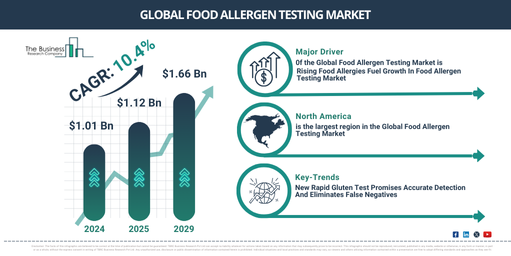
    Over the past few years, the market size for food allergen testing has witnessed a swift expansion. It is projected to expand from a worth of $1.01 billion in 2024 to $1.12 billion in 2025, representing a compound annual growth rate (CAGR) of 10.8%. The historical growth of this market is credited to elevated instances of food allergies, strict regulatory demands, amplified consumer enlightenment, the global reach of food supply chains, and progress in testing methodologies.

    The market for food allergen testing, which is expected to escalate rapidly in the forthcoming years, is predicted to reach a market value of $1.66 billion by 2029, with a compound annual growth rate (CAGR) of 10.4%. This growth for the predicted period can be accredited to factors such as stricter food industry regulations, increased demand for products free from allergens, advancements in testing techniques, the escalating prevalence of food allergies globally, and a heightened emphasis on food safety and quality assurance. Key predicted trends encompass the adoption of swift and mobile testing solutions, the integration of blockchain technology for improved traceability, expansion of point-of-care testing options, the creation of multiplex testing assays, and the introduction of artificial intelligence and machine learning in data interpretation.

    Download a free sample to assess the report’s scope and structure:

    https://www.thebusinessresearchcompany.com/sample.aspx?id=15569&type=smp

    What Are the Primary Drivers Supporting the Market Growth of the Food Allergen Testing Market?

    The surge in food allergy cases is predicted to boost the progress of the food allergen testing market. Food allergies are undesirable immune reactions triggered by specific proteins in food, which can lead to a spectrum of symptoms, from mild discomfort to severe responses. The growth in food allergy cases can be attributed to genetic predispositions, environmental factors, changes in diet, and heightened awareness and diagnosis. Food allergen testing is utilized to identify and quantify allergenic substances in food items, which helps prevent allergic reactions in individuals with food allergies. As an example, in March 2024, CPD Online College Limited, a company located in the UK, revealed that approximately 2 million people in the UK are believed to have a diagnosed food allergy. It is estimated that around 33 million people in the US have food allergies. Australia exhibits some of the highest allergy rates globally, with food allergies affecting 10% of infants, 4-8% of children, and 2% of adults. As such, the rise in food allergy cases is fostering the expansion of the food allergen testing market.

    How Is the Food Allergen Testing Market Segmented?

    The food allergen testing market covered in this report is segmented –

    1) By Test Type: Allergen Testing, Intolerance Testing

    2) By Technology: Biosensors, Immunoassay Or Enzyme Linked Immunosorbent Assay (ELISA), Polymerase Chain Reaction (PCR), Other Technologies

    3) By Application: Seafood And Meat Products, Dairy Products, Beverages, Bakery And Confectionery, Baby Food And Infant Formula, Other Applications

    Subsegments:

    1) By Allergen Testing: Immunoassay-Based Tests, PCR-Based Tests, Mass Spectrometry-Based Tests, Luminex xMAP Technology, Chromatography-Based Tests

    2) By Intolerance Testing: Breath Tests, Blood Tests, Elimination Diets And Food Challenge Testing

    Request customized data on this market:

    https://www.thebusinessresearchcompany.com/customise?id=15569&type=smp

    Which Regions Are Key Players in the Growth of the Food Allergen Testing Market?

    North America was the largest region in the food allergen testing market in 2023. Asia-Pacific is expected to be the fastest-growing region in the forecast period. The regions covered in the food allergen testing market report are Asia-Pacific, Western Europe, Eastern Europe, North America, South America, Middle East, Africa.

    What Are the Key Market Trends in the Food Allergen Testing Market Over the Coming Years?

    Leading corporations in the food allergen testing market are prioritizing the development of quick tests like immunochromatographic assays to detect allergens and establish a competitive advantage. The immunochromatographic assay is a swift diagnostic technique that identifies specific allergic proteins in food through the use of chromatography and immunological reactions. For example, in March 2024, the Hungary-based diagnostics solutions provider, Gold Standard Diagnostics Budapest Kft, introduced the SENSIStrip Gluten PowerLine lateral flow test. This test effectively limits the potential for false negatives in rapid gluten testing. The test implements an immunochromatographic assay and uses a monoclonal antibody-based, highly sensitive system to identify gluten residues in food, rinse water, and swabs. It offers fast and sensitive detection of gluten, vital for individuals with gluten intolerance or celiac disease. It also incorporates a hook line to prevent false-negative readings from highly contaminated samples. Results are visually interpretable and can also be quantitatively evaluated when used with their RapidScan ST5 lateral flow reader.

    View the full report here:

    https://www.thebusinessresearchcompany.com/report/food-allergen-testing-global-market-report

    How Is the Food Allergen Testing Market Defined and What Are Its Core Parameters?

    Food allergen testing is a process used to detect and quantify the presence of specific allergenic proteins in food products. These tests are essential for identifying allergens that may trigger adverse reactions in individuals with food allergies or intolerances. The primary purpose of food allergen testing is to ensure food safety and regulatory compliance by accurately labeling food products to alert consumers about potential allergens.

    Purchase the full report and get a swift delivery:

    https://www.thebusinessresearchcompany.com/purchaseoptions.aspx?id=15569

    About The Business Research Company:

    With over 15000+ reports from 27 industries covering 60+ geographies, The Business Research Company has built a reputation for offering comprehensive, data-rich research and insights. Armed with 1,500,000 datasets, the optimistic contribution of in-depth secondary research, and unique insights from industry leaders, you can get the information you need to stay ahead in the game.

    Get in touch with us:

    The Business Research Company: https://www.thebusinessresearchcompany.com/

    Americas +1 3156230293

    Asia +44 2071930708

    Europe +44 2071930708

    Email us at info@tbrc.info

    Follow us on:

    LinkedIn: https://in.linkedin.com/company/the-business-research-company

    YouTube: https://www.youtube.com/channel/UC24_fI0rV8cR5DxlCpgmyFQ

    Global Market Model: https://www.thebusinessresearchcompany.com/global-market-model
  • Fluoxetine Market Outlook 2025–2034: Identifying Growth Drivers, Technology Trends, and Policy Impact

    Fluoxetine Market Outlook 2025–2034: Identifying Growth Drivers, Technology Trends, and Policy Impact

    Discover trends, market shifts, and competitive outlooks for the fluoxetine industry through 2025-2034 with The Business Research Company’s reliable data and in-depth research

    How Fast Is The Fluoxetine Market Expected to Grow Between 2025 And 2029?

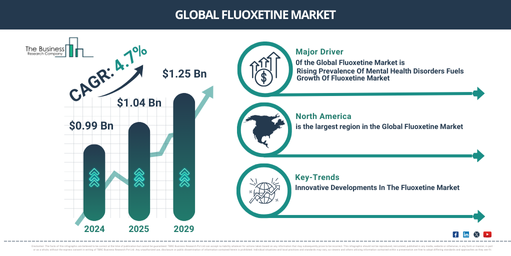
    The market for fluoxetine has seen substantial growth in recent years. Expected to increase from $0.99 billion in 2024 to $1.04 billion in 2025, with a compound annual growth rate (CAGR) of 5.1%. Factors contributing to the growth during the historic period include increased prevalence of depression and anxiety disorders, improved understanding and reduction of stigma surrounding mental health, better healthcare structure, an aging global demographic, and the existence of economically efficient generic fluoxetine.

    In the coming years, steady expansion is projected in the fluoxetine market. The market is projected to rise to $1.25 billion by 2029 at a compound annual growth rate (CAGR) of 4.7%. The growth predicted within this period can be credited to government policies and financing for mental health schemes, public health drive fostering mental health, escalating conversations and consciousness of mental health problems on social platforms, the surge of virtual pharmacies, and cultural transitions towards recognizing and addressing mental health issues. Significant trends within this forecast period encompass progress in diagnostic techniques leading to early detection, the emergence of telemedicine facilities, advances in drug delivery technologies, the escalating use of AI and machine learning in drug discovery and development, along with enhancements in pharmacogenomics.

    Download a free sample to assess the report’s scope and structure:

    https://www.thebusinessresearchcompany.com/sample.aspx?id=16428&type=smp

    Which Primay Drivers Are Accelerating Growth in the Fluoxetine Market?

    The escalating incidences of mental health conditions are predicted to stimulate the expansion of the fluoxetine market. Such conditions, which can negatively affect cognitive, emotional, and behavioral functionality, thereby causing distress or impairment in daily functioning, are on the rise due to a tangled mix of factors. These include societal factors, economic strain, lifestyle transitions, and heightened awareness and diagnosis. Fluoxetine is typically employed for these mental health issues as it aids in easing symptoms by boosting serotonin levels in the brain, a key role player in mood and emotion regulation. A survey conducted in November 2022 on 2,866 children and youth by the National Health Service, a British government-funded healthcare system, discovered that approximately 18.0% of children aged between 7 to 16 and 22.0% of young adults aged between 17 to 24 were potentially suffering from a mental disorder in 2022. The prevalence of likely mental disorders among 17 to 19 years olds escalated from 17.4% in 2021 to 25.7% in 2022. Consequently, the escalating incidence of mental health conditions is fueling the expansion of the fluoxetine market.

    Fluoxetine Market Impetus: Escalating Health-related Expenditure Augments Growth In The Fluoxetine Market


    How Is the Fluoxetine Market Segmented?

    The fluoxetine market covered in this report is segmented –

    1) By Dosage Form: Tablet, Solution, Capsule, Syrup, Other Dosage Forms

    2) By Route Of Administration: Oral, Other Routes Of Administration

    3) By Demographic: Adult, Pediatric, Geriatric

    4) By Application: Obsessive-Compulsive Disorder, Panic Disorder, Depression, Bulimia Nervosa, Other Applications

    5) By End User: Clinic, Hospital, Other End Users

    Subsegments:

    1) By Tablet: Regular Tablets, Extended-Release Tablets

    2) By Solution: Oral Solution

    3) By Capsule: Standard Capsules, Delayed-Release Capsules

    4) By Syrup: Oral Syrup

    5) By Other Dosage Forms: Injection Form, Topical Form

    Request customized data on this market:

    https://www.thebusinessresearchcompany.com/customise?id=16428&type=smp

    Which Regions Are Key Players in the Growth of the Fluoxetine Market?

    North America was the largest region in the fluoxetine market in 2024. Asia-Pacific is expected to be the fastest-growing region in the forecast period. The regions covered in the fluoxetine market report are Asia-Pacific, Western Europe, Eastern Europe, North America, South America, Middle East, Africa.

    What Are the Strategic Trends Steering the Fluoxetine Market Direction?

    Leaders in the fluoxetine market, including prominent companies, are channeling their efforts towards the creation of innovative products like fluoxetine tablets, aimed at addressing a range of mental health conditions, including major depressive disorder. These tablets are a medicinal formulation of fluoxetine hydrochloride, classified as a selective serotonin reuptake inhibitor (SSRI), a type of antidepressant medication. In a relevant development, Strides Pharma Global Pte. Limited, a pharmaceutical company based in Singapore, secured USFDA approval for Fluoxetine Tabs 10 mg and 20 mg in April 2024. This endorsement bolsters the company’s existing line of fluoxetine products by ushering in fluoxetine tablets alongside the previously approved capsules. As an SSRI, fluoxetine functions as an antidepressant used to manage conditions like major depressive disorder (MDD), obsessive-compulsive disorder (OCD), bulimia nervosa, and panic disorder with or without agoraphobia. The introduction of these new tablets augments the range of treatment options within the company’s fluoxetine list, providing both patients and healthcare practitioners with greater versatility and options in treating these mental health conditions.

    View the full report here:

    https://www.thebusinessresearchcompany.com/report/fluoxetine-global-market-report

    How Is the Fluoxetine Market Defined and What Are Its Core Parameters?

    Fluoxetine is a selective serotonin reuptake inhibitor (SSRI) medication commonly used as an antidepressant and also prescribed for other psychiatric conditions. It works by increasing the levels of serotonin, a neurotransmitter in the brain that regulates mood, emotions, and behavior. Fluoxetine is widely prescribed for depression, helping to improve sleep, appetite, and energy levels in individuals suffering from major depressive disorder.

    Purchase the full report and get a swift delivery:

    https://www.thebusinessresearchcompany.com/purchaseoptions.aspx?id=16428

    About The Business Research Company:

    With over 15000+ reports from 27 industries covering 60+ geographies, The Business Research Company has built a reputation for offering comprehensive, data-rich research and insights. Armed with 1,500,000 datasets, the optimistic contribution of in-depth secondary research, and unique insights from industry leaders, you can get the information you need to stay ahead in the game.

    Get in touch with us:

    The Business Research Company: https://www.thebusinessresearchcompany.com/

    Americas +1 3156230293

    Asia +44 2071930708

    Europe +44 2071930708

    Email us at info@tbrc.info

    Follow us on:

    LinkedIn: https://in.linkedin.com/company/the-business-research-company

    YouTube: https://www.youtube.com/channel/UC24_fI0rV8cR5DxlCpgmyFQ

    Global Market Model: https://www.thebusinessresearchcompany.com/global-market-model
  • Facial Rejuvenation Market Trends 2025-2034: Growth, Strategic Insights, and Opportunities Ahead

    Facial Rejuvenation Market Trends 2025-2034: Growth, Strategic Insights, and Opportunities Ahead

    Discover trends, market shifts, and competitive outlooks for the facial rejuvenation industry through 2025-2034 with The Business Research Company’s reliable data and in-depth research

    What is the Projected CAGR for the Facial Rejuvenation Market Size from 2025 to 2034?

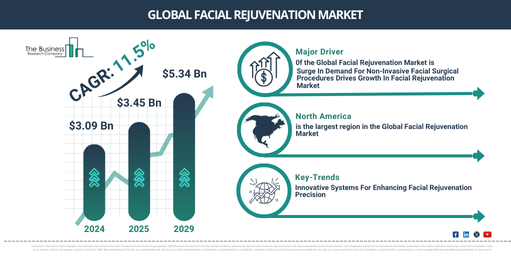
    The market size for facial rejuvenation has experienced swift growth in the recent past. Projections indicate that it will expand from $3.09 billion in 2024 to $3.45 billion in 2025, boasting a compound annual growth rate (CAGR) of 11.9%. Factors contributing to the growth in the previous years include increased demand for cosmetic surgery procedures, greater focus of society on youth and beauty, the influence of celebrities and media, growing disposable income and a burgeoning middle class, as well as advancements in the safety and effectiveness of facial rejuvenation procedures.

    Predictions indicate that the facial rejuvenation market will experience sizeable expansion in the coming years, reaching an estimated value of $5.34 billion by 2029 thanks to a compound annual growth rate (CAGR) of 11.5%. The projected growth within this timeframe can be attributed to several factors; these include the demographic transition towards an older population, advances in non-invasive or minimally invasive procedures, growing public consciousness about skincare and self-care, high demand for custom-tailored treatment plans, and the worldwide unification of beauty standards. Key trends expected to influence the market include product and technological innovation, personalized treatment strategies, a growing trend of partnerships, AI incorporation, telemedicine, and virtual consultation services.

    Download a free sample to assess the report’s scope and structure:

    https://www.thebusinessresearchcompany.com/sample.aspx?id=15809&type=smp

    What Are the Major Market Drivers Behind the Rising Adoption of Facial Rejuvenation Market?

    The facial rejuvenation market is poised for growth, driven by the escalating demand for non-invasive facial surgical treatments. These cosmetic interventions enhance facial aesthetics without necessitating significant surgical cuts or procedures. The popularity of non-invasive facial treatments is on the rise due to their less intrusive nature, shortened recovery period, decreased associated risk, and their ability to deliver results that appear natural. Facial rejuvenation leverages these non-invasive measures to diminish wrinkles and fine lines by temporarily incapacitating the muscles that induce their formation. For instance, a worldwide survey conducted by the International Society of Aesthetic Plastic Surgery (ISAPS), a professional organization based in the U.S. consisting of board-certified aesthetic plastic surgeons, revealed in September 2023 that over 9 million Botulinum toxin therapies (a non-invasive process) were carried out by plastic surgeons across all age categories in 2022, indicating a rise of 26.1%. Consequently, the mounting call for non-invasive facial surgical treatments is predicted to catalyze the expansion of the facial rejuvenation market.

    Which Key Market Segments Comprise the Facial Rejuvenation Market and Drive Its Revenue Growth?

    The facial rejuvenation market covered in this report is segmented –

    1) By Product Type: Botulinum Toxin (BOTOX), Soft Tissue Fillers, Micro Abrasion Equipment, Chemical Peels, Topical Skin Care Products, Skin Rejuvenation Devices

    2) By Mode Of Treatment: Drugs, Injectables, Surgical Means, Other Mode Of Treatment

    3) By End-User: Hospital And Clinics, Beauty Centers And Spa, Dermatology Clinics, Other End-Users

    Subsegments:

    1) Botulinum Toxin (BOTOX): Botulinum Toxin Type A, Botulinum Toxin Type B

    2) Soft Tissue Fillers: Hyaluronic Acid-Based Fillers, Collagen-Based Fillers, Calcium Hydroxylapatite-Based Fillers, Poly-L-Lactic Acid-Based Fillers

    3) Micro Abrasion Equipment: Crystal Microdermabrasion Devices, Diamond Microdermabrasion Devices, Ultrasonic Microdermabrasion Devices

    4) Chemical Peels: Alpha Hydroxy Acid (AHA) Peels, Beta Hydroxy Acid (BHA) Peels, Trichloroacetic Acid (TCA) Peels, Jessner’s Peels

    5) Topical Skin Care Products: Anti-Aging Creams And Serums, Moisturizers, Sunscreens, Exfoliators

    6) Skin Rejuvenation Devices: Laser Skin Rejuvenation Devices, Radiofrequency (RF) Skin Rejuvenation Devices, Ultrasound Skin Rejuvenation Devices, Intense Pulsed Light (IPL) Devices

    Request customized data on this market:

    https://www.thebusinessresearchcompany.com/customise?id=15809&type=smp

    Which Areas Are Leading Regions in the Facial Rejuvenation Market Expansion Across the Globe?

    North America was the largest region in the facial rejuvenation market in 2023. Asia-Pacific is expected to be the fastest-growing region in the forecast period. The regions covered in the facial rejuvenation market report are Asia-Pacific, Western Europe, Eastern Europe, North America, South America, Middle East and Africa.

    What Are the Most Significant Market Trends in the Facial Rejuvenation Market?

    Leading firms in the facial rejuvenation sector are creating groundbreaking solutions, including permanent hair elimination and skin revitalization therapies, to meet the increasing need for non-surgical and minimally invasive cosmetic procedures. Both permanent hair removal and skin revitalization therapies are sophisticated cosmetic procedures designed to enhance the skin’s appearance and health while reducing undesired hair growth. For instance, in March 2024, Reveal Lasers LLC, a company based in the United States that manufactures aesthetic laser & RF devices, introduced the AlloraPro Laser Workstation, a state-of-the-art device explicitly developed for permanent hair removal and skin revitalisation treatments. The AlloraPro offers a user-friendly interface and customizable treatment modalities, boosting efficiency with a spot size that is 25% larger. Additionally, the device can treat vascular conditions such as leg and facial veins, pigmented legions, and photo rejuvenation. The adaptable pulse width, fluency, repetition frequency, automatic spot recognition system, and handy handpiece storage of the AlloraPro Laser Workstation make it a flexible, effective, and profitable tool for aesthetic clinics worldwide.

    View the full report here:

    https://www.thebusinessresearchcompany.com/report/facial-rejuvenation-global-market-report

    How Is the Facial Rejuvenation Market Conceptually Defined?

    Facial rejuvenation refers to a set of cosmetic procedures and treatments designed to restore a more youthful appearance to the face. These procedures aim to reduce the visible signs of aging, such as wrinkles, fine lines, sagging skin, and loss of facial volume, and to improve skin texture, tone, and elasticity.

    Purchase the full report and get a swift delivery:

    https://www.thebusinessresearchcompany.com/purchaseoptions.aspx?id=15809

    About The Business Research Company:

    With over 15000+ reports from 27 industries covering 60+ geographies, The Business Research Company has built a reputation for offering comprehensive, data-rich research and insights. Armed with 1,500,000 datasets, the optimistic contribution of in-depth secondary research, and unique insights from industry leaders, you can get the information you need to stay ahead in the game.

    Get in touch with us:

    The Business Research Company: https://www.thebusinessresearchcompany.com/

    Americas +1 3156230293

    Asia +44 2071930708

    Europe +44 2071930708

    Email us at info@tbrc.info

    Follow us on:

    LinkedIn: https://in.linkedin.com/company/the-business-research-company

    YouTube: https://www.youtube.com/channel/UC24_fI0rV8cR5DxlCpgmyFQ

    Global Market Model: https://www.thebusinessresearchcompany.com/global-market-model
  • Facial Paralysis Market Insights: In-Depth Look at Growth Trends, Market Size, and Opportunities for 2025-2034

    Facial Paralysis Market Insights: In-Depth Look at Growth Trends, Market Size, and Opportunities for 2025-2034

    Discover trends, market shifts, and competitive outlooks for the facial paralysis industry through 2025-2034 with The Business Research Company’s reliable data and in-depth research

    What Is the Current and Projected Market Size of the Facial Paralysis Market Through 2034?

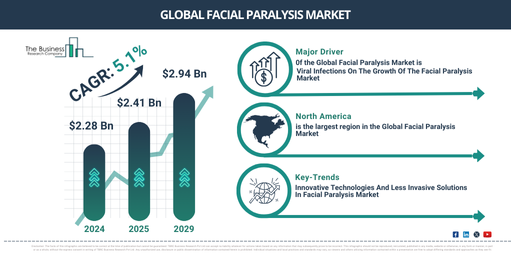
    In recent years, the market size for facial paralysis has seen significant expansion. The market is predicted to grow from $2.28 billion in 2024 to $2.41 billion in 2025, equating to a compound annual growth rate (CAGR) of 5.5%. This historic growth can be associated with factors such as increasing instances of facial paralysis, rising need for treatment options, more government support, a surge in demand for technologically advanced treatments, and the augmenting necessity for less invasive procedures.

    In the coming years, the market for facial paralysis is projected to experience substantial growth, with anticipated valuations reaching $2.94 billion by 2029, reflecting a 5.1% Compound Annual Growth Rate (CAGR). This projected growth within the forecast period can be linked to factors such as the rising availability of treatment options, growing incidence of facial nerve disorders, increased public understanding of facial aesthetics, the worldwide increase in the elderly population, and heightened impact of viral infections. Crucial trends to watch during this forecast period include the incorporation of technology, advancements in personalized medical approaches, the emergence of new surgical techniques, progress in nerve regeneration, the use of virtual reality in rehabilitation, and overall strides in technological advancements.

    Download a free sample to assess the report’s scope and structure:

    https://www.thebusinessresearchcompany.com/sample.aspx?id=18358&type=smp

    What External and Internal Drivers Are Contributing to the Growth of the Facial Paralysis Market?

    The facial paralysis market is expected to expand due to increasing instances of viral infections. Viral infections, which are triggered by tiny organisms that afflict various parts of the body, leading to diverse symptoms and health effects, have seen a rise due to worldwide travel trends, changing environment, resistance to antimicrobial substances, societal factors, and virus evolution. These infections can result in facial paralysis by causing inflammation and damage to the facial nerve, disrupting its ability to regulate facial muscles and causing either momentary or lasting weakness or paralysis. As an example, the Centers for Disease Control and Prevention, a health agency based in the US, reported that the count of influenza-associated diseases per 100,000 in October 2022 was 9,497,254, marking a 46% rise from 2021. Consequently, the growth in viral infections is leading to a surge in the facial paralysis market.

    What Segment Types Define the Facial Paralysis Market Structure?

    The facial paralysis market covered in this report is segmented –

    1) By Type: Bell’s Palsy, Ramsay Hunt Syndrome

    2) By Diagnosis: Electromyography, Computerized Tomography

    3) By Treatment: Medications, Physical Therapy

    4) By End-User: Hospitals, Specialty Centers

    Subsegments

    1) By Bell’s Palsy: Idiopathic Bell’s Palsy, Postpartum Bell’s Palsy, Bell’s Palsy in Children

    2) By Ramsay Hunt Syndrome: Type 1 (Herpes Zoster Oticus), Type 2 (Varicella-Zoster Virus)

    Request customized data on this market:

    https://www.thebusinessresearchcompany.com/customise?id=18358&type=smp

    Which Geographic Areas Hold the Strongest Growth Potential in the Facial Paralysis Market?

    North America was the largest region in the facial paralysis market in 2024. Asia-Pacific is expected to be the fastest-growing region in the market going forward. The regions covered in the facial paralysis market report are Asia-Pacific, Western Europe, Eastern Europe, North America, South America, Middle East, Africa.

    What Are the Current Market Growth and Trends in the Facial Paralysis Industry?

    Key corporations in the facial paralysis market are concentrating their efforts on the creation of novel solutions such as neuromuscular blockade monitors. This aims to improve availability and comfort for patients, thereby facilitating effective home-based therapy and recovery. One specific device, a facial nerve monitor, is utilized to evaluate the functionality and reaction of facial muscles during operations where neuromuscular blocking agents (NMBAs) are used. In a noteworthy development, Nihon Kohden Corporation, a prominent commercial enterprise based in Japan known for the production of medical electronic devices, unveiled the Smart Cable NMT Pod and single-use electrodes for monitoring neuromuscular blockades in October 2022. By making use of electromyography, the product can accurately monitor paralysis stages through peripheral nerve stimulation. Exhibiting a compact and portable design, the Smart Cable NMT Pod has neuromuscular transmission (NMT) monitoring functionalities. This permits medical personnel to oversee muscle relaxation in patients during surgeries. The electrical stimulation and monitoring of facial muscles could potentially be incorporated into the recovery process for patients suffering from Bell palsy.

    View the full report here:

    https://www.thebusinessresearchcompany.com/report/facial-paralysis-global-market-report

    What Is the Definition of the Facial Paralysis Market?

    Facial paralysis refers to the inability or difficulty in moving the muscles of the face due to damage or dysfunction of the facial nerve. This condition affects one or both sides of the face and may result in various degrees of weakness or loss of movement, including difficulty closing the eye, smiling, or making facial expressions. Facial paralysis can occur suddenly (acute) or gradually (chronic) and can be caused by conditions such as Bell’s palsy, stroke, trauma, infections, tumors, or neurological disorders.

    Purchase the full report and get a swift delivery:

    https://www.thebusinessresearchcompany.com/purchaseoptions.aspx?id=18358

    About The Business Research Company:

    With over 15000+ reports from 27 industries covering 60+ geographies, The Business Research Company has built a reputation for offering comprehensive, data-rich research and insights. Armed with 1,500,000 datasets, the optimistic contribution of in-depth secondary research, and unique insights from industry leaders, you can get the information you need to stay ahead in the game.

    Get in touch with us:

    The Business Research Company: https://www.thebusinessresearchcompany.com/

    Americas +1 3156230293

    Asia +44 2071930708

    Europe +44 2071930708

    Email us at info@tbrc.info

    Follow us on:

    LinkedIn: https://in.linkedin.com/company/the-business-research-company

    YouTube: https://www.youtube.com/channel/UC24_fI0rV8cR5DxlCpgmyFQ

    Global Market Model: https://www.thebusinessresearchcompany.com/global-market-model
  • Facial Injectable Market Outlook 2025–2034: Identifying Growth Drivers, Technology Trends, and Policy Impact

    Facial Injectable Market Outlook 2025–2034: Identifying Growth Drivers, Technology Trends, and Policy Impact

    Discover trends, market shifts, and competitive outlooks for the facial injectable industry through 2025-2034 with The Business Research Company’s reliable data and in-depth research

    What is the Anticipated CAGR of the Facial Injectable Market, and What Factors Will Drive It?

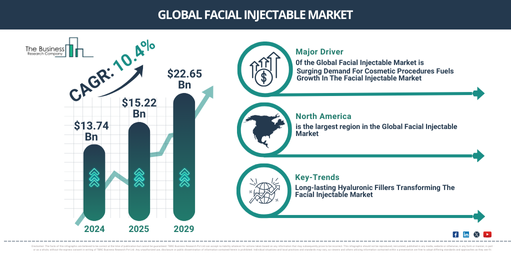
    The market for facial injectables has experienced a swift expansion in recent times. The market, valued at $13.74 billion in 2024, is projected to increase to $15.22 billion in 2025, indicating a compound annual growth rate (CAGR) of 10.8%. The growth observed during the historical period can be traced back to factors like a rise in the aging population, increased consumer awareness, evolving beauty norms, regulatory authorizations, and progression in injection methods.

    In the coming years, a swift expansion is projected for the facial injectable market, potentially reaching $22.65 billion by 2029 at a compound annual growth rate (CAGR) of 10.4%. A variety of factors are contributing to this projected expansion during the forecast period, such as the burgeoning demand for non-surgical procedures, broadening applications, increased emphasis on personalization and customization, developing markets, evolving healthcare trends, and lifestyle shifts. Key trends throughout this period include sustained rise in the demand for non-surgical treatments, growth in bespoke treatment strategies, an increased interest in combination therapies aimed at improved results, the emergence of minimally invasive techniques and tools, and a tendency towards results that appear natural and subtle.

    Download a free sample to assess the report’s scope and structure:

    https://www.thebusinessresearchcompany.com/sample.aspx?id=15567&type=smp

    What Are the Core Market Drivers Propelling Growth in the Facial Injectable Industry?

    The facial injectable market is poised to grow in response to the rising demand for cosmetic procedures. These procedures, which mainly seek to improve aesthetics with minimal disturbance to the body’s natural structure, are becoming increasingly popular owing to societal focus on appearance, technological advancements in the medical field that make them safer and more accessible, and an increased desire for self-enhancement and confidence boosting. Facial injectables, used in cosmetic procedures to temporarily lessen wrinkles, add volume to specific areas and shape facial contours, are gaining traction. They involve the accurate administration of substances like botulinum toxin or dermal fillers. As an example, a report from the British Association of Aesthetic Plastic Surgeons revealed that about 31,057 cosmetic procedures were conducted in the UK in 2022, indicating a 102% rise from 2021. This surge in demand for cosmetic procedures is significantly contributing to the growth of the facial injectable market.

    How Is the Facial Injectable Market Segmented?

    The facial injectable market covered in this report is segmented –

    1) By Type: Botulinum Toxin, Collagen, Hyaluronic Acid, Calcium Hydroxyapatite, Polylactic Acid, Polymethyl-Methacrylate Microspheres (PMMA), Fat Injection, Other Types

    2) By Application: Wrinkle Reduction, Facelift, Acne Scar Treatment, Lipoatrophy Treatment, Lip Enhancement, Other Applications

    3) By End-User: Hospitals And Ambulatory Surgery Centers, Dermatology And Cosmetic Clinics, Other End-Users

    Subsegments:

    1) By Botulinum Toxin: Botulinum Toxin Type A (Botox, Dysport, Xeomin), Botulinum Toxin Type B (Myobloc, Neurobloc)

    2) By Collagen: Bovine Collagen, Human Collagen, Synthetic Collagen

    3) By Hyaluronic Acid: Cross-linked Hyaluronic Acid, Non-Cross-Linked Hyaluronic Acid

    4) By Calcium Hydroxyapatite: Radiesse (Calcium Hydroxyapatite-Based Fillers)

    5) By Polylactic Acid: Sculptra (Polylactic Acid-Based Fillers)

    6) By Polymethyl Methacrylate Microspheres (PMMA): Artefill (PMMA-Based Fillers)

    7) By Fat Injection: Autologous Fat Transfer (Liposuction And Injection), Fat Grafting For Volume Restoration

    8) By Other Types: Poly-L-Lactic Acid, Polycaprolactone-Based Fillers, Other Emerging Injectable Fillers

    Request customized data on this market:

    https://www.thebusinessresearchcompany.com/customise?id=15567&type=smp

    Which Regions Are Driving the Next Phase of the Facial Injectable Market Growth?

    North America was the largest region in the facial injectable market in 2023. Asia-Pacific is expected to be the fastest-growing region in the forecast period. The regions covered in the facial injectable market report are Asia-Pacific, Western Europe, Eastern Europe, North America, South America, Middle East, Africa.

    What Are the Strategic Trends Steering the Facial Injectable Market Direction?

    Leading organizations in the facial injectable market are focusing on the production of novel products such as extended-release hyaluronic acid (HA) fillers. This development aligns with rising consumer preference for minimally invasive aesthetic procedures that deliver natural and lasting results. HA fillers, a type of cosmetic injectable, replenish naturally occurring components of the skin to restore volume, reduce wrinkles, and improve facial shapes. For example, in January 2023, Allergan plc, an Ireland-based pharmaceutical firm, introduced JUVEDERM VOLUX XC. This HA filler is specifically made to enhance the jawline of individuals 21 years and above experiencing medium to severe contour loss. JUVEDERM VOLUX XC promises an enduring effect of up to a year, focusing on delivering natural-looking results. Its minimally invasive feature ensures short recovery times for those looking for non-surgical alternatives. Backed by comprehensive research and high patient satisfaction rates, this innovative filler allows cosmetic experts to put together personalized treatment strategies.

    View the full report here:

    https://www.thebusinessresearchcompany.com/report/facial-injectable-global-market-report

    How Is the Facial Injectable Market Defined and What Are Its Core Parameters?

    Facial injectables refer to non-surgical cosmetic procedures involving the injection of substances into the facial tissues to enhance facial features, reduce wrinkles, restore volume, or improve overall appearance. These treatments are often used to address signs of aging or to achieve specific aesthetic goals, providing temporary or semi-permanent results.

    Purchase the full report and get a swift delivery:

    https://www.thebusinessresearchcompany.com/purchaseoptions.aspx?id=15567

    About The Business Research Company:

    With over 15000+ reports from 27 industries covering 60+ geographies, The Business Research Company has built a reputation for offering comprehensive, data-rich research and insights. Armed with 1,500,000 datasets, the optimistic contribution of in-depth secondary research, and unique insights from industry leaders, you can get the information you need to stay ahead in the game.

    Get in touch with us:

    The Business Research Company: https://www.thebusinessresearchcompany.com/

    Americas +1 3156230293

    Asia +44 2071930708

    Europe +44 2071930708

    Email us at info@tbrc.info

    Follow us on:

    LinkedIn: https://in.linkedin.com/company/the-business-research-company

    YouTube: https://www.youtube.com/channel/UC24_fI0rV8cR5DxlCpgmyFQ

    Global Market Model: https://www.thebusinessresearchcompany.com/global-market-model
  • Strategic Growth Drivers Shaping the Fabry Disease Treatment Market Outlook 2025- 2034:Impact of Increasing Renal Disease Prevalence on the Fabry Disease Treatment Market

    Strategic Growth Drivers Shaping the Fabry Disease Treatment Market Outlook 2025- 2034:Impact of Increasing Renal Disease Prevalence on the Fabry Disease Treatment Market

    Discover trends, market shifts, and competitive outlooks for the fabry disease treatment industry through 2025-2034 with The Business Research Company’s reliable data and in-depth research

    How Has The Fabry Disease Treatment Market Size Shifted, And What Is the Outlook Through 2034?

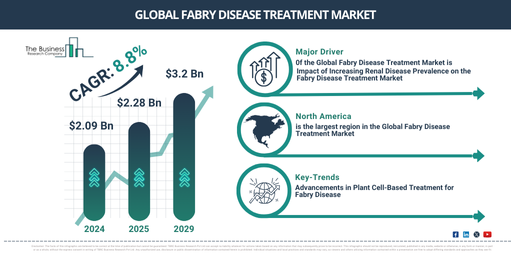
    The market size for Fabry disease treatment has seen a robust expansion in recent years. It’s predicted to surge from $2.09 billion in 2024 to approximately $2.28 billion in 2025, witnessing a compound annual growth rate (CAGR) of 9.1%. This significant development during the historical period is due to factors like heightened awareness and higher diagnosis rates, a growing rate of enzyme replacement therapies adoption, more usage of chaperone therapies, improved healthcare infrastructure, increased investment in rare disease investigations, a burgeoning population, and more regulatory rewards for orphan drugs.

    The market size for Fabry disease treatment is predicted to witness robust growth in the forthcoming years. The market is projected to escalate to $3.2 billion by 2029, fueled by a compound annual growth rate (CAGR) of 8.8%. The anticipated expansion during the forecast period is primarily due to the surging prevalence of the ailment, amplified awareness and diagnosis rates, growth in healthcare infrastructure, and an increase in investments for rare disease research. Other contributing factors include enhanced patient awareness and broadening coverage of reimbursement policies. The forecast period will also observe significant trends like advances in gene therapy, enzyme replacement therapies, developments in diagnostic methodologies, innovation in new therapeutic strategies, and the inclusion of digital health techs in patient care.

    Download a free sample to assess the report’s scope and structure:

    https://www.thebusinessresearchcompany.com/sample.aspx?id=16421&type=smp

    Which Factors and External Forces Are Driving Demand in the Fabry Disease Treatment Market?

    The rise in kidney diseases’ occurrence has been anticipated to fuel the fabry disease treatment market’s expansion in the future. Kidney diseases or renal diseases can be described as any ailment that detrimentally affects the kidneys’ activity. The growing instances of kidney diseases can be traced back to genetic influences, lifestyle decisions, environmental aspects, and pre-existing health issues. Fabry disease emerges due to the build-up of globotriaosylceramide (Gb3) in the kidney cells causing injury and disruption, underlining the vital need for prompt detection and treatment to avoid kidney-related complications. For example, the Australian Bureau of Statistics, a governmental agency of Australia, documented in December 2023 that 246,200 individuals (1.0% of the populace) were struggling with kidney disease in 2022, marking a 0.2% surge over the previous ten years. Consequently, the escalating occurrence of renal diseases is propelling the expansion of the fabry disease treatment market.

    Which Segments in the Fabry Disease Treatment Offer the Most Growth?

    The fabry disease treatment market covered in this report is segmented –

    1) By Treatment: Substrate Reduction Therapy, Enzyme Replacement Therapy, Chaperone Treatment, Other Treatments

    2) By Route Of Administration: Oral Route, Intravenous Route

    3) By Disease Severity: Classic Fabry Disease, Late-Onset Fabry Disease

    4) By Distribution Channel: Hospital Pharmacies, Retail Pharmacies, Online Pharmacies

    Subsegments:

    1) By Substrate Reduction Therapy: Migalastat Hydrochloride (Galafold), Other Substrate Reduction Therapies

    2) By Enzyme Replacement Therapy: Agalsidase Beta (Fabrazyme), Agalsidase Alfa (Replagal), Other Enzyme Replacement Therapies

    3) By Chaperone Treatment: Migalastat Hydrochloride (Galafold)

    4) By Other Treatments: Gene Therapy, Symptomatic Treatment

    Request customized data on this market:

    https://www.thebusinessresearchcompany.com/customise?id=16421&type=smp

    What Are the Fastest-Growing Geographies in the Fabry Disease Treatment Market?

    North America was the largest region in the fabry disease treatment market in 2023. Asia-Pacific is expected to be the fastest-growing region in the forecast period. The regions covered in the fabry disease treatment market report are Asia-Pacific, Western Europe, Eastern Europe, North America, South America, Middle East, Africa.

    What Key Market Trends and Innovations Are Shaping the Future of the Fabry Disease Treatment Industry?

    Major firms in the Fabry disease treatment market are focusing on the development of treatments based on plant cells to improve therapeutic effectiveness, minimize therapy costs, and achieve better health outcomes using new and sustainable methods. The plant-originated enzymes could be utilized for therapeutic benefits to replace the deficient or faulty enzymes in the body, which could potentially improve the condition of patients with Fabry disease. For example, Chiesi Global Rare Diseases, a pharmaceutical firm based in Italy, and Protalix BioTherapeutics Inc., a pharmaceutical company from Israel, in May 2023, received approval for ELFABRIO. ELFABRIO presents a substitute treatment option for Fabry disease patients. This is enzyme replacement therapy (ERT), where the recombinant human α-Galactosidase-A enzyme is cultivated in a plant cell and subsequently PEGylated to significantly prolong its half-life. This effective management of Fabry disease symptoms leads to a decrease in frequency, increased convenience, and a notable improvement in the patient’s quality of life.

    View the full report here:

    https://www.thebusinessresearchcompany.com/report/fabry-disease-treatment-global-market-report

    What Are the Key Elements That Define the Fabry Disease Treatment Market?

    Fabry disease is a rare genetic disorder caused by a deficiency of the enzyme alpha-galactosidase A. This enzyme deficiency leads to the buildup of a type of fat called globotriaosylceramide (Gb3 or GL-3) in the body’s cells, which can cause a wide range of symptoms and complications, including pain, kidney failure, heart disease, and stroke. The primary purpose of treating fabry disease is to reduce the accumulation of Gb3 in the body, alleviate symptoms, prevent or delay the progression of organ damage, and improve the overall quality of life for patients.

    Purchase the full report and get a swift delivery:

    https://www.thebusinessresearchcompany.com/purchaseoptions.aspx?id=16421

    About The Business Research Company:

    With over 15000+ reports from 27 industries covering 60+ geographies, The Business Research Company has built a reputation for offering comprehensive, data-rich research and insights. Armed with 1,500,000 datasets, the optimistic contribution of in-depth secondary research, and unique insights from industry leaders, you can get the information you need to stay ahead in the game.

    Get in touch with us:

    The Business Research Company: https://www.thebusinessresearchcompany.com/

    Americas +1 3156230293

    Asia +44 2071930708

    Europe +44 2071930708

    Email us at info@tbrc.info

    Follow us on:

    LinkedIn: https://in.linkedin.com/company/the-business-research-company

    YouTube: https://www.youtube.com/channel/UC24_fI0rV8cR5DxlCpgmyFQ

    Global Market Model: https://www.thebusinessresearchcompany.com/global-market-model
  • Major Drivers Propelling the Growth oh theCOVID-19 Saliva Screening Test Potential Market Forward: The Role Of Increasing Healthcare Expenditure In Driving The Growth Of The COVID-19 Saliva Screening Test Market

    Major Drivers Propelling the Growth oh theCOVID-19 Saliva Screening Test Potential Market Forward: The Role Of Increasing Healthcare Expenditure In Driving The Growth Of The COVID-19 Saliva Screening Test Market

    Discover trends, market shifts, and competitive outlooks for the covid-19 saliva screening test potential industry through 2025-2034 with The Business Research Company’s reliable data and in-depth research

    #How Has The COVID-19 Saliva Screening Test Potential Market Growth Evolved From 2024 To 2025, And What’s Ahead?#_x000D_

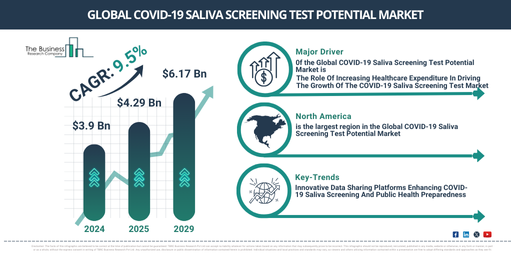
    The potential market capacity for the COVID-19 saliva screening test has seen robust growth in the preceding years. The market is projected to expand from $3.9 billion in 2024 to $4.29 billion in 2025, with a compound annual growth rate (CAGR) of 9.9%. This upswing in the historic period is due to factors such as home testing potential, the extraordinary demand for diagnostic testing, heightened public consciousness, and investments in research and development._x000D_

    _x000D_

    The potential market size for the COVID-19 saliva screening test is projected to experience significant growth in the coming years, reaching $6.17 billion by 2029 with a compound annual growth rate (CAGR) of 9.5%. This anticipated growth during the forecast period can be credited to factors such as incorporation into screening programs, regulatory backing, increasing need for rapid, point-of-care COVID-19 testing, expanding population, and the uprising of online shopping. The forecast period is also set to witness trends such as growing implementation in non-medical environments, integration with digital health systems, the appearance of future-generation technologies, advancements in technology, and strategic alliances._x000D_

    _x000D_

    #Download a free sample to assess the report’s scope and structure:#_x000D_

    https://www.thebusinessresearchcompany.com/sample.aspx?id=16026&type=smp_x000D_

    _x000D_

    #Which Major Market Drivers Are Expected to Boost the Growth Potential of the COVID-19 Saliva Screening Test Potential Market?#_x000D_

    The growth of the COVID-19 saliva screening test potential market is anticipated to be driven by the escalating healthcare expenditure. The total amount allocated for healthcare goods and services, such as prescription drugs, hospital stays, physician consultations, medical devices, and public health initiatives, is known as healthcare spending. Several variables contribute to the surge in healthcare spending, including minimally invasive procedures, state-of-the-art diagnostic equipment, increased R&D for novel drugs, utilization of healthcare facilities, and specialty drugs. Greater healthcare spending allows for the necessary resources and backing to fully exploit the potential of COVID-19 saliva screening tests, aiding in more efficient pandemic handling and improved public health results. For example, the Office for National Statistics, a UK-based-statistics firm on epilepsy, reported that the UK’s healthcare spending hit around $354.88 billion (£283 billion) in 2022, a nominal increase of 0.7% compared to 2021. Thus, the rising health care expenditure is a key driver behind the expansion of the COVID-19 saliva screening test potential market._x000D_

    _x000D_

    #Which Key Market Segments Comprise the COVID-19 Saliva Screening Test Potential Market and Drive Its Revenue Growth?#_x000D_

    The COVID-19 saliva screening test potential market covered in this report is segmented –_x000D_

    _x000D_

    1) By Location: Travel Stations, Sports Arenas, Entertainment Venues, Corporate Campus Environments, Universities And Colleges, Factories, Other Locations_x000D_

    2) By Technology: Fluorescence-Labelled Antigen, RT-PCR, CRISPR-Cas9_x000D_

    3) By Mode Of Testing: Centralized Testing, Decentralized Testing_x000D_

    _x000D_

    Subsegments:_x000D_

    1) By Travel Stations: Airports, Train Stations, Bus Stations, Seaports_x000D_

    2) By Sports Arenas: Stadiums, Arenas, Event Halls_x000D_

    3) By Entertainment Venues: Theaters, Concert Halls, Amusement Parks, Nightclubs_x000D_

    4) By Corporate Campus Environments: Offices, Corporate Campuses, Business Parks_x000D_

    5) By Universities And Colleges: Higher Education Campuses, Research Institutions, Student Housing Areas_x000D_

    6) By Factories: Manufacturing Plants, Production Facilities, Industrial Sites_x000D_

    7) By Other Locations: Healthcare Facilities, Government Buildings, Public Transportation Hubs, Shopping Centers, Other Public Or Private Venues_x000D_

    _x000D_

    _x000D_

    _x000D_

    #Request customized data on this market:#_x000D_

    https://www.thebusinessresearchcompany.com/customise?id=16026&type=smp_x000D_

    _x000D_

    #Which Areas Are Leading Regions in the COVID-19 Saliva Screening Test Potential Market Expansion Across the Globe?#_x000D_

    North America was the largest region in the COVID-19 saliva screening test potential market in 2023. The regions covered in the COVID-19 saliva screening test potential market report are Asia-Pacific, Western Europe, Eastern Europe, North America, South America, Middle East, Africa._x000D_

    _x000D_

    #What Are the Key Market Trends in theCOVID-19 Saliva Screening Test Potential Market Over the Coming Years?#_x000D_

    Leading firms in the potential market for the COVID-19 saliva screening test are focusing their efforts on introducing ground-breaking technology such as data-sharing platforms. These platforms aim to improve the real-time interaction and cooperation between healthcare providers, laboratories, and public health officials, thus increasing the effectiveness and precision of tracking, testing, and responding during the pandemic. Data-sharing platforms are digital networks that allow secure data exchange between various stakeholders including healthcare providers, researchers, and corporations. These platforms promote collaboration and access to information, enhancing decision-making, productivity, and results across a spectrum of sectors. For example, Mount Sinai Health System, a healthcare network based in the U.S, unveiled the Center for Healthcare Readiness in May 2024. This center’s mission is to improve public health emergency response strategies, ensuring that healthcare systems are able to efficiently manage large scale crises like pandemics or natural disasters. It aims to boost Mount Sinai Health System’s capacity and work in synergy with local, regional, and national partners to create thorough preparedness plans._x000D_

    _x000D_

    #View the full report here:#_x000D_

    https://www.thebusinessresearchcompany.com/report/covid-19-saliva-screening-test-potential-global-market-report_x000D_

    _x000D_

    #How Is the COVID-19 Saliva Screening Test Potential Market Conceptually Defined?#_x000D_

    The COVID-19 saliva screening test potential refers to the potential advantages and capabilities that saliva-based tests for detecting SARS-CoV-2, the virus that causes COVID-19, could offer compared to traditional methods such as nasopharyngeal or oropharyngeal swab tests. Their potential lies in improving testing accessibility, patient acceptance, cost-effectiveness, and safety while enabling new testing strategies and approaches to manage the COVID-19 pandemic better._x000D_

    _x000D_

    #Purchase the full report and get a swift delivery:#_x000D_

    https://www.thebusinessresearchcompany.com/purchaseoptions.aspx?id=16026_x000D_

    _x000D_

    #About The Business Research Company:#_x000D_

    With over 15000+ reports from 27 industries covering 60+ geographies, The Business Research Company has built a reputation for offering comprehensive, data-rich research and insights. Armed with 1,500,000 datasets, the optimistic contribution of in-depth secondary research, and unique insights from industry leaders, you can get the information you need to stay ahead in the game._x000D_

    _x000D_

    #Get in touch with us:#_x000D_

    The Business Research Company: https://www.thebusinessresearchcompany.com/_x000D_

    Americas +1 3156230293_x000D_

    Asia +44 2071930708_x000D_

    Europe +44 2071930708_x000D_

    Email us at info@tbrc.info_x000D_

    _x000D_

    #Follow us on:#_x000D_

    _x000D_

    LinkedIn: https://in.linkedin.com/company/the-business-research-company_x000D_

    YouTube: https://www.youtube.com/channel/UC24_fI0rV8cR5DxlCpgmyFQ_x000D_

    Global Market Model: https://www.thebusinessresearchcompany.com/global-market-model