Category: HealthcareServices

  • Major Drivers Propelling the Growth oh theSleep Testing Services Market Forward: Increase In The Number Of Patients Suffering From Sleep Disorders Drives The Growth Of The Sleep Testing Services Market

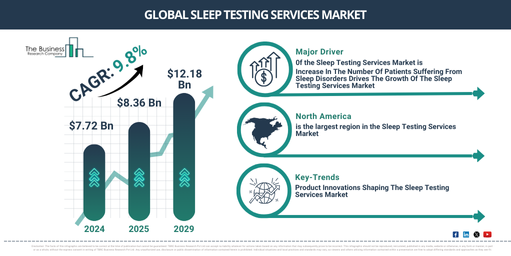
    Major Drivers Propelling the Growth oh theSleep Testing Services Market Forward: Increase In The Number Of Patients Suffering From Sleep Disorders Drives The Growth Of The Sleep Testing Services Market

    Discover trends, market shifts, and competitive outlooks for the sleep testing services industry through 2025-2034 with The Business Research Company’s reliable data and in-depth research

    How Fast Is The Sleep Testing Services Market Expected to Grow Between 2025 And 2029?

    The market for sleep testing services has experienced substantial growth in the last few years. It is projected to increase from $7.72 billion in 2024 to $8.36 billion in 2025, with a compound annual growth rate (CAGR) of 8.4%. This significant growth in the historical period can be credited to a rise in awareness of sleep disorders, increased occurrences of sleep apnea, the obesity crisis, elevated stress levels, lifestyle changes, and the expansion of insurance coverage.

    The market for sleep testing services is anticipated to witness substantial growth in the upcoming years, reaching $12.18 billion by 2029 with a compound annual growth rate (CAGR) of 9.8%. The projected growth within the forecast period can be linked to a heightened focus on mental health, the creation of home sleep testing equipment, a rise in insomnia cases, employer wellness initiatives, and increased efforts towards patient education and advocacy. Expected trends within this forecast period include the incorporation of wearable technology, the application of telemedicine and remote sleep consultation services, the development of advanced sleep monitoring tools, partnerships with healthcare providers, and research into sleep-related comorbid conditions.

    Download a free sample to assess the report’s scope and structure:

    https://www.thebusinessresearchcompany.com/sample.aspx?id=12099&type=smp

    Which Major Market Drivers Are Expected to Boost the Growth Potential of the Sleep Testing Services Market?

    The growth of the sleep testing services market is likely to be influenced by the rise in sleep disorder cases. Sleep disorders, otherwise known as sleep-wake disorders, include a range of issues linked to the nature type, volume, and timing of sleep, such as obstructive sleep apnea, parasomnias, narcolepsy, and restless leg syndrome, which often go hand in hand with physical or mental health problems like anxiety, depression, and cognitive disorders. These testing services are crucial in the treatment process of patients suffering from obstructive sleep apnea, by offering essential information for disease management and suggesting treatment methods. For example, SleepFoundation.org, a US-based charitable organization focused on providing sleep health information and comprehensive product testing, reported in May 2023 that an estimated 50 million to 70 million individuals are battling persistent sleep disorders, a tendency exacerbated by post-traumatic stress disorder (PTSD). Additionally, 70% of adults are affected by seasonal affective disorder (SAD), while insomnia that impedes daily activities impacts between 9% and 15% of the American adult population. Hence, the burgeoning number of sleep disorder cases is propelling the growth of the sleep testing services market.

    Which Key Market Segments Comprise the Sleep Testing Services Market and Drive Its Revenue Growth?

    The sleep testing services market covered in this report is segmented –

    1) By Diagnostic Type: Home Sleep Testing, In-Lab Sleep Testing

    2) By Application: Obstructive Sleep Apnea, Insomnia, Rapid Eye Movement (REM) Sleep Disorder, Restless Legs Syndrome, Narcolepsy, Circadian Rhythm Sleeping Disorders

    3) By End-User: Sleep Centers, Hospitals, Home Care Settings

    Subsegments:

    1) By Home Sleep Testing: Portable Monitors, Oximetry Testing, Full-Body Sleep Monitors

    2) By In-Lab Sleep Testing: Polysomnography (PSG), Multiple Sleep Latency Test (MSLT), Maintenance Of Wakefulness Test (MWT)

    Request customized data on this market:

    https://www.thebusinessresearchcompany.com/customise?id=12099&type=smp

    Which Areas Are Leading Regions in the Sleep Testing Services Market Expansion Across the Globe?

    North America was the largest region in the sleep testing services market in 2024. Europe is expected to be the fastest-growing region in the forecast period. The regions covered in the sleep testing services market report are Asia-Pacific, Western Europe, Eastern Europe, North America, South America, Middle East, Africa.

    What Are the Key Market Trends in theSleep Testing Services Market Over the Coming Years?

    The boom in product innovation is an emerging trend that is catching on in the sleep testing services market. To maintain their market position, leading companies in the sector are coming up with advanced and upgraded products, and adding new aspects to their existing ones. For example, Acurable, a medical device company based out of the UK, launched the AcuPebble SA100, an iteration of its AcuPebble device, in May 2023. This device, aimed at the US market, is slated for diagnosing obstructive sleep apnea (OSA). The AcuPebble SA100 seeks to bolster the troublesome home sleep apnea testing process, enabling swifter diagnosis, more prompt treatment and better handling of this recurring disorder.

    View the full report here:

    https://www.thebusinessresearchcompany.com/report/sleep-testing-services-global-market-report

    How Is the Sleep Testing Services Market Conceptually Defined?

    Sleep testing services refer to a non-invasive, overnight examination that is performed in a sleep lab during normal sleeping hours to document the physical and mental activity that takes place when a person is sleeping to identify and treat sleep problems. Sleep testing services are used to diagnose sleep disorders and record brain waves, the oxygen level in the blood, heart rate, and breathing during sleep.

    Purchase the full report and get a swift delivery:

    https://www.thebusinessresearchcompany.com/purchaseoptions.aspx?id=12099

    About The Business Research Company:

    With over 15000+ reports from 27 industries covering 60+ geographies, The Business Research Company has built a reputation for offering comprehensive, data-rich research and insights. Armed with 1,500,000 datasets, the optimistic contribution of in-depth secondary research, and unique insights from industry leaders, you can get the information you need to stay ahead in the game.

    Get in touch with us:

    The Business Research Company: https://www.thebusinessresearchcompany.com/

    Americas +1 3156230293

    Asia +44 2071930708

    Europe +44 2071930708

    Email us at info@tbrc.info

    Follow us on:

    LinkedIn: https://in.linkedin.com/company/the-business-research-company

    YouTube: https://www.youtube.com/channel/UC24_fI0rV8cR5DxlCpgmyFQ

    Global Market Model: https://www.thebusinessresearchcompany.com/global-market-model
  • Automated Microscopy Market Valuation Expected To Reach $11.14 Billion By 2029, Growing At A Rate Of 7%

    Automated Microscopy Market Valuation Expected To Reach $11.14 Billion By 2029, Growing At A Rate Of 7%

    Discover trends, market shifts, and competitive outlooks for the automated microscopy industry through 2025-2034 with The Business Research Company’s reliable data and in-depth research

    What Is the Estimated Market Size of the Automated Microscopy Market In 2029?

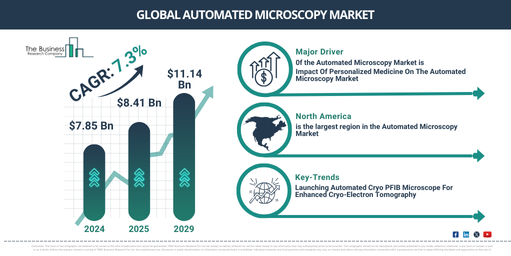
    The market size of automated microscopy has seen a significant increase in the recent past. The market, which stood at $7.85 billion in 2024, is projected to reach $8.41 billion in 2025, growing at a compound annual growth rate (CAGR) of 7.1%. The growth experienced during the historic period results from improvements in imaging technology, a rise in the complexity of biological research, the need for high throughput screenings, and the integration of automation and workflow. Also, cost reduction, accessibility, and the advent of multimodal imaging have played significant roles in this growth.

    The market for automated microscopy is predicted to witness robust expansion in the upcoming years, potentially achieving a value of $11.14 billion by 2029, presenting a compound annual growth rate (CAGR) of 7.3%. This predicted growth during the forecast period is likely due to the inclusion of artificial intelligence, smaller and more portable devices, multiplexed and multimodal integrated imaging, interdisciplinary research challenges, and a growing demand for personalized medicine and precise diagnostics. The imminent period will likely see trends such as the utilization of multi-omics techniques, high content screening intended for drug discovery, 3D and multimodal imaging, open-source hardware and software platforms, and analysis of live cell imaging and dynamics.

    Download a free sample to assess the report’s scope and structure:

    https://www.thebusinessresearchcompany.com/sample.aspx?id=14259&type=smp

    Which Factors and External Forces Are Driving Demand in the Automated Microscopy Market?

    The surging need for personalized medicine is projected to fuel the expansion of the automated microscopy market. Personalized medicine, a healthcare approach that considers an individual’s genetic variations, environmental factors, and lifestyle, is increasingly adopted due to several reasons such as heightened awareness about genetic differences, the progression in genomics, and the escalating incidence of chronic illnesses. Automated microscopy offers vital tools and technologies to researchers and clinicians, promoting the progression of personalized medicine by elucidating disease processes, pinpointing predictive biomarkers, and refining treatment plans. For example, the Personalized Medicine Coalition (PMC), a US-based entity advocating for the comprehension and implementation of personalized medicine, stated in October 2022 that over 75,000 genetic testing products and 300 personalized medicines would be accessible for individuals with various forms of cancer, rare genetic diseases, and numerous chronic and infectious diseases. Hence, the surging need for personalized medicine is accelerating the expansion of the automated microscopy market.

    Which Segments in the Automated Microscopy Offer the Most Growth?

    The automated microscopy market covered in this report is segmented –

    1) By Product Type: Optical Microscopes, Electron Microscopes, Scanning Probe Microscopes

    2) By Application: Medical Diagnostics, Nanotechnology, Material Science, Life Sciences, Semiconductors

    3) By End User: Hospitals, Research Facilities, Diagnostic Clinics

    Subsegments:

    1) By Optical Microscopes: Automated Light Microscopes, Confocal Microscopes, Fluorescence Microscopes

    2) By Electron Microscopes: Scanning Electron Microscopes (SEM), Transmission Electron Microscopes (TEM), Scanning Transmission Electron Microscopes (STEM)

    3) By Scanning Probe Microscopes: Atomic Force Microscopes (AFM), Scanning Tunneling Microscopes (STM), Other Types Of Scanning Probe Microscopes

    Request customized data on this market:

    https://www.thebusinessresearchcompany.com/customise?id=14259&type=smp

    What Are the Fastest-Growing Geographies in the Automated Microscopy Market?

    North America was the largest region in the automated microscopy market in 2024. Asia-Pacific is expected to be the fastest-growing region in the forecast period. The regions covered in the automated microscopy market report are Asia-Pacific, Western Europe, Eastern Europe, North America, South America, Middle East, Africa.

    Which Cutting-Edge Market Trends Are Expected to Drive the Automated Microscopy Market’s Growth?

    Leading companies in the automated microscopy market are pioneering novel products, like the automated Cryo PFIB (Cryo-Plasma focused ion beam) microscopes, to amplify workflow productivity, conserve time, and advance applications. One such invention is an automated Cryo-PFIB microscope, a crucial tool for expeditious preparation of cryo-lamellae needed for cellular cryo-electron tomography. For example, in August 2022, Thermo Fisher Scientific Inc., a biotechnology firm in the USA, introduced the automated Cryo PFIB microscope to make the process of preparing cryo-lamellae for cellular cryo-electron tomography research more efficient. This trailblazing technology ensures superior preparation of cryo lamella for cryo tomography and volume imaging of biological specimens, thereby strengthening the role of microscopy in life sciences and research. The technology focuses on generating superior samples of a constant thickness and averting the risks of sample contamination. It incorporates plasma FIB (Focused Ion Beam) technology for swift removal of large sample volumes and providing swift access to areas of biological interest, along with automation features for easy sample preparation and remote operation feasibility.

    View the full report here:

    https://www.thebusinessresearchcompany.com/report/automated-microscopy-global-market-report

    What Are the Key Elements That Define the Automated Microscopy Market?

    Automated microscopy refers to the use of computer-controlled systems and software to perform microscopic analysis and imaging tasks with minimal human intervention. It is used to streamline and improve scientific research, medical diagnosis, and industrial quality control by allowing for high-throughput and high-resolution imaging of biological samples, materials, and components.

    Purchase the full report and get a swift delivery:

    https://www.thebusinessresearchcompany.com/purchaseoptions.aspx?id=14259

    About The Business Research Company:

    With over 15000+ reports from 27 industries covering 60+ geographies, The Business Research Company has built a reputation for offering comprehensive, data-rich research and insights. Armed with 1,500,000 datasets, the optimistic contribution of in-depth secondary research, and unique insights from industry leaders, you can get the information you need to stay ahead in the game.

    Get in touch with us:

    The Business Research Company: https://www.thebusinessresearchcompany.com/

    Americas +1 3156230293

    Asia +44 2071930708

    Europe +44 2071930708

    Email us at info@tbrc.info

    Follow us on:

    LinkedIn: https://in.linkedin.com/company/the-business-research-company

    YouTube: https://www.youtube.com/channel/UC24_fI0rV8cR5DxlCpgmyFQ

    Global Market Model: https://www.thebusinessresearchcompany.com/global-market-model
  • Assistive Technologies For Visually Impaired Outlook 2034: Key Drivers, Trends, and Market Frontiers

    Assistive Technologies For Visually Impaired Outlook 2034: Key Drivers, Trends, and Market Frontiers

    Discover trends, market shifts, and competitive outlooks for the assistive technologies for visually impaired industry through 2025-2034 with The Business Research Company’s reliable data and in-depth research

    How Has The Assistive Technologies For Visually Impaired Market Growth Evolved From 2024 To 2025, And What’s Ahead?

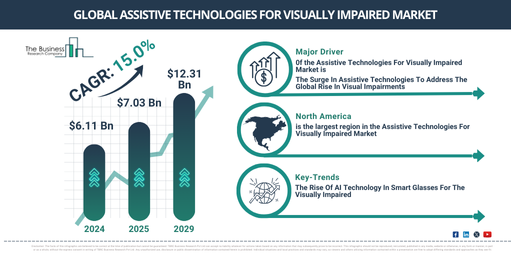
    The market size for assistive technologies for the visually impaired has seen swift growth in recent times. The market is predicted to rise from $6.11 billion in 2024 to $7.03 billion in 2025, reflecting a compound annual growth rate (CAGR) of 15.0%. The growth in previous years is believed to be due to an increase in the aging population, heightened awareness of assistive technologies, and amplified government initiatives.

    The market for assistive technologies for the visually impaired is anticipated to experience a robust expansion in the coming years. The market valuation is projected to reach $12.31 billion by 2029, growing at a compound annual growth rate (CAGR) of 15.0%. This growth during the forecast period is primarily driven by the increasing instances of visual impairments and blindness, and the escalating demand to fulfill the unaddressed needs of patients. Notable trends during the forecast period consist of AI-equipped smart glasses, sophisticated screen readers, braille displays, and the use of augmented reality (AR) for navigation.

    Download a free sample to assess the report’s scope and structure:

    https://www.thebusinessresearchcompany.com/sample.aspx?id=13598&type=smp

    How Are Key Drivers in the Industry Acting as Catalysts for the Growth of the Assistive Technologies For Visually Impaired Market?

    The assistive technologies for visually impaired market is expected to be bolstered by the escalating instances of visual impairments and blindness. These conditions, which restrict or entirely obliterate a person’s ability to see, are addressed by assistive technologies that help enhance accessibility. These include critical aids like braille displays that augment navigation, provide access to information and foster communication. For instance, the World Health Organization reported in August 2023 that approximately 2.2 billion people worldwide are struggling with vision impairments. Among them, 1 billion cases could have been prevented or are currently inadequately treated. Moreover, refractive errors impact 36% of these individuals, while cataracts contribute to impairment in 17% of the cases. Thus, the rise in visual impairments and blindness is increasingly fueling the growth of the assistive technologies market for the visually impaired.

    Which Segments in the Assistive Technologies For Visually Impaired Offer the Most Growth?

    The assistive technologies for visually impaired market covered in this report is segmented –

    1) By Type: Educational Devices And Software, Mobility Devices, Low Vision Devices

    2) By Distribution Channel: Hospital Pharmacies, Retail Pharmacies, Optical Stores, Online Pharmacies

    3) By End User: Blind Schools, Enterprises And Social Organizations, Personal Use, Hospitals, Other End Users

    Subsegments:

    1) By Educational Devices And Software: Braille Notetakers, Screen Readers, Accessible Learning Software

    2) By Mobility Devices: Canes (Traditional And Smart Canes), GPS Navigation Devices, Wearable Technology For Navigation

    3) By Low Vision Devices: Magnifiers (Handheld And Electronic), Telescopic Lenses, Digital Magnification Devices

    Request customized data on this market:

    https://www.thebusinessresearchcompany.com/customise?id=13598&type=smp

    What Are the Fastest-Growing Geographies in the Assistive Technologies For Visually Impaired Market?

    North America was the largest region in the assistive technologies for visually impaired market in 2024. Asia-Pacific is expected to be the fastest-growing region in the forecast period. The regions covered in the assistive technologies for visually impaired market report are Asia-Pacific, Western Europe, Eastern Europe, North America, South America, Middle East, Africa.

    What Are the Current Market Growth and Trends in the Assistive Technologies For Visually Impaired Industry?

    Leading firms in the assistive technologies for visually impaired market are striving to develop products with cutting-edge technology, such as AI-powered smart glasses, to enhance their market profitability. These smart glasses with AI tech grant the visually impaired the ability to navigate and interact with their environment with increased confidence and independence. For example, Envision, a company from the Netherlands, unveiled a new generation of AI-controlled smart glasses for the visually impaired in March 2022. These AI-driven glasses for the blind include advanced features like OCR, improved text recognition, multiple language support, and a wide-ranging app ecosystem for smooth integration of bespoke applications, covering specialized features such as assistance with orientation and mobility for both indoors and outdoors. Smart glasses, equipped with facial and object identification, color detection, and scene depiction, also include an encrypted video call function for fluid communication with trusted contacts. They convert visual inputs into audio signals, supporting the user’s independence and expanding their possibilities. The product, based on Google Glass Enterprise Edition 2 and weighing less than 50g, is equipped with an 8MP wide-angle camera, ensures persistent connectivity for 5-6 hours, and supports USB-C high-speed charging.

    View the full report here:

    https://www.thebusinessresearchcompany.com/report/assistive-technologies-for-visually-impaired-global-market-report

    What Are the Key Elements That Define the Assistive Technologies For Visually Impaired Market?

    Assistive technologies for the visually impaired refer to tools, devices, software, and systems specifically designed to assist individuals with visual impairments in various aspects of their daily lives. The primary goal of these technologies is to enhance accessibility, promote independence, and provide individuals with visual disabilities with the means to navigate, communicate, and access information effectively. These technologies address challenges related to reading, mobility, communication, and overall interaction with the surrounding environment.

    Purchase the full report and get a swift delivery:

    https://www.thebusinessresearchcompany.com/purchaseoptions.aspx?id=13598

    About The Business Research Company:

    With over 15000+ reports from 27 industries covering 60+ geographies, The Business Research Company has built a reputation for offering comprehensive, data-rich research and insights. Armed with 1,500,000 datasets, the optimistic contribution of in-depth secondary research, and unique insights from industry leaders, you can get the information you need to stay ahead in the game.

    Get in touch with us:

    The Business Research Company: https://www.thebusinessresearchcompany.com/

    Americas +1 3156230293

    Asia +44 2071930708

    Europe +44 2071930708

    Email us at info@tbrc.info

    Follow us on:

    LinkedIn: https://in.linkedin.com/company/the-business-research-company

    YouTube: https://www.youtube.com/channel/UC24_fI0rV8cR5DxlCpgmyFQ

    Global Market Model: https://www.thebusinessresearchcompany.com/global-market-model
  • Aspergillosis Treatment Market Forecast Reaching $4.28 Billion by 2029 at 6% CAGR

    Aspergillosis Treatment Market Forecast Reaching $4.28 Billion by 2029 at 6% CAGR

    Discover trends, market shifts, and competitive outlooks for the aspergillosis treatment industry through 2025-2034 with The Business Research Company’s reliable data and in-depth research

    How Has the Aspergillosis Treatment Market Growth Performance Trended Historically, And What Lies Ahead?

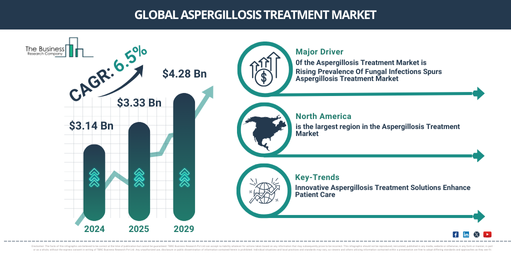
    The size of the aspergillosis treatment market has seen robust growth in the past few years. It is projected to increase from $3.14 billion in 2024 to $3.33 billion in 2025, showing a compound annual growth rate (CAGR) of 5.8%. Factors such as technological advancements in diagnostics, a rise in the need for antifungal drugs, a surge in disease prevalence, and an increase in invasive procedures contributed to the growth during the historical period.

    It is projected that the aspergillosis treatment market will see robust growth in the coming years, anticipated to reach a market size of $4.28 billion by 2029, while boasting a compound annual growth rate (CAGR) of 6.5%. Such growth within this forecasted time is due to the rising demand for transplant medicine and the prevalence of hematologic malignancies, coupled with the increasing investments in research and development, as well as public health initiatives. Furthermore, antifungal resistance, targeted therapies, therapeutic drug monitoring, and drug development are identified as major trends during this forecast period.

    Download a free sample to assess the report’s scope and structure:

    https://www.thebusinessresearchcompany.com/sample.aspx?id=12987&type=smp

    Which Major Market Drivers Are Expected to Boost the Growth Potential of the Aspergillosis Treatment Market?

    The growing incidence of fungal infections is predicted to fuel the expansion of the aspergillosis treatment market in future. Mycosis, which are diseases triggered by fungi, can also lead to infections in humans and animals. Aspergillosis is a type of fungal infection that impacts multiple parts of the body such as the respiratory system, lungs, brain, kidneys and more. Aspergillosis treatments like voriconazole are intended to manage the fungal infection, alleviate symptoms, prevent additional complications, and enhance overall health. For instance, The Health Security Agency, a governmental agency in the UK, reported that in September 2023, bloodstream infections caused by yeast per 100,000 people in England advanced from 3.8 in 2021 to 4.0 in 2022. Consequently, this growing incidence of fungal infections is the key driver behind the expansion of the aspergillosis treatment market. Aspergillosis Treatment Market Driver: The Aspergillosis Treatment Market is being propelled by increased healthcare expenditures

    Which Key Market Segments Comprise the Aspergillosis Treatment Market and Drive Its Revenue Growth?

    The aspergillosis treatment market covered in this report is segmented –

    1) By Type: Allergic Aspergillosis, Chronic Aspergillosis, Invasive Aspergillosis, Other Type

    2) By Drug Class: Corticosteroids, Antifungal drugs, Other Drug Class

    3) By Route of Administration: Oral, Injectable, Other Route Of Administration

    4) By Distribution Channel: Hospital pharmacies, Retail pharmacies, Other Distribution Channel

    Subsegments:

    1) By Allergic Aspergillosis: Allergic Fungal Sinusitis, Allergic Bronchopulmonary Aspergillosis (ABPA)

    2) By Chronic Aspergillosis: Chronic Pulmonary Aspergillosis, Chronic Cavitary Aspergillosis

    3) By Invasive Aspergillosis: Pulmonary Invasive Aspergillosis, Disseminated Invasive Aspergillosis

    4) By Other Type: Aspergilloma, Other Rare Forms of Aspergillosis

    Request customized data on this market:

    https://www.thebusinessresearchcompany.com/customise?id=12987&type=smp

    Which Areas Are Leading Regions in the Aspergillosis Treatment Market Expansion Across the Globe?

    North America was the largest region in the aspergillosis treatment market in 2024. The regions covered in aspergillosis treatment market report are Asia-Pacific, Western Europe, Eastern Europe, North America, South America, Middle East and Africa.

    What Are the Key Market Trends in the Aspergillosis Treatment Market Over the Coming Years?

    The major players in the aspergillosis treatment market are putting their efforts into developing innovative drugs and solutions, which positions them favorably within the industry. The creation of new medications for aspergillosis, including the introduction of posaconazole oral suspension, offers patients more effective treatment alternatives. For instance, in April 2023, Posaconazole oral suspension, a treatment for aspergillosis, was introduced in the US by Hikma Pharmaceuticals PLC, a UK-based pharmaceutical enterprise. These medications are suited for patients with severely weakened immune systems who are at a high risk of developing invasive aspergillus and candida infections, including hematopoietic stem cell transplant (HSCT) patients with graft-versus-host disease (GVHD). Posaconazole oral suspension is also recommended for those suffering from oropharyngeal candidiasis (OPC), particularly OPC that is resistant to treatments with itraconazole and fluconazole.

    View the full report here:

    https://www.thebusinessresearchcompany.com/report/aspergillosis-treatment-global-market-report

    How Is the Aspergillosis Treatment Market Conceptually Defined?

    Aspergillosis treatment refers to treating a fungal infection caused by the aspergillus species and its treatment depends on the severity and type of disease. Aspergillosis can be a severe and potentially life-threatening condition, especially in individuals with weakened immune systems.

    Purchase the full report and get a swift delivery:

    https://www.thebusinessresearchcompany.com/purchaseoptions.aspx?id=12987

    About The Business Research Company:

    With over 15000+ reports from 27 industries covering 60+ geographies, The Business Research Company has built a reputation for offering comprehensive, data-rich research and insights. Armed with 1,500,000 datasets, the optimistic contribution of in-depth secondary research, and unique insights from industry leaders, you can get the information you need to stay ahead in the game.

    Get in touch with us:

    The Business Research Company: https://www.thebusinessresearchcompany.com/

    Americas +1 3156230293

    Asia +44 2071930708

    Europe +44 2071930708

    Email us at info@tbrc.info

    Follow us on:

    LinkedIn: https://in.linkedin.com/company/the-business-research-company

    YouTube: https://www.youtube.com/channel/UC24_fI0rV8cR5DxlCpgmyFQ

    Global Market Model: https://www.thebusinessresearchcompany.com/global-market-model
  • Key Developments and Trends Steering the Artificial Intelligence In The Diagnostic Market Forward: Advancements In AI Computing Platforms For Diagnostic Solutions

    Key Developments and Trends Steering the Artificial Intelligence In The Diagnostic Market Forward: Advancements In AI Computing Platforms For Diagnostic Solutions

    Discover trends, market shifts, and competitive outlooks for the artificial intelligence in the diagnostic industry through 2025-2034 with The Business Research Company’s reliable data and in-depth research

    How Fast Is The Artificial Intelligence In The Diagnostic Market Expected to Grow Between 2025 And 2029?

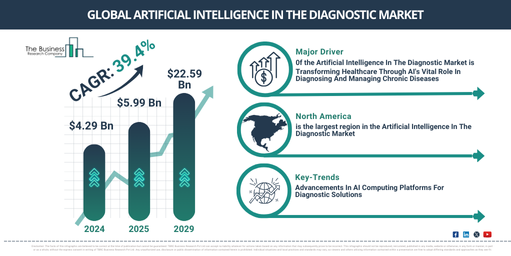
    There has been an immense expansion in the size of the artificial intelligence in the diagnostic market in the past few years. It is projected from 2024’s figure of $4.29 billion to escalate to $5.99 billion in 2025, marking a Compound Annual Growth Rate (CAGR) of 39.5%. Factors such as an increase in disease prevalence, availability of data, cost-efficiency, regulatory backing, and heightened awareness have contributed to the remarkable growth during the historical phase.

    The size of the artificial intelligence market in diagnostics is predicted to undergo significant growth in the coming years, reaching a value of $22.59 billion in 2029 with a compound annual growth rate of 39.4%. The surge in the forecast period is linked to trends in personalized medicine, swift development of healthcare data, global health issues, augmented investments, and improved integration with healthcare systems. Noteworthy developments in the forecast period encompass collaboration and investment, technological advancements, data privacy and security considerations, the emergence of explainable AI (xai), and the growing influence of computer vision.

    Download a free sample to assess the report’s scope and structure:

    https://www.thebusinessresearchcompany.com/sample.aspx?id=13593&type=smp

    How Are Key Drivers in the Industry Acting as Catalysts for the Growth of the Artificial Intelligence In The Diagnostic Market?

    The growing occurrence of long-term health conditions, often known as chronic diseases, is anticipated to drive the expansion of AI in diagnostics. Integrating AI in the diagnostics of these continuing health conditions allows for early detection, enhanced decision-making systems, remote patient monitoring, expense reduction, as well as personalized patient treatment determined by their genetic structure and disease advancement. For example, the World Health Organization, a UN specialized agency based in Switzerland, reported in September 2023, that there were 41 million associated deaths annually, making up 74% of non-communicable or chronic disease-induced deaths globally. Also, cardiovascular diseases accounted for about 17.9 million deaths, cancers 9.3 million, chronic respiratory diseases 4.1 million, and diabetes 2.0 million. Hence, the escalating prevalence of chronic diseases is fueling the advancement of AI in the diagnostic market.

    Which Segments in the Artificial Intelligence In The Diagnostic Offer the Most Growth?

    The artificial intelligence in the diagnostic market covered in this report is segmented –

    1) By Component: Hardware, Software, Services

    2) By Technology: Machine Learning, NLP (Natural Language Processing), Context-Aware Computing, Computer Vision

    3) By Diagnosis Type: Radiology, Pathology, Cardiology, Oncology, Neurology, Chest And Lung, Other Diagnosis Types

    Subsegments:

    1) By Hardware: Imaging Devices, Diagnostic Equipment, Wearable Devices

    2) By Software: Diagnostic Imaging Software, Data Analytics Software, Machine Learning Algorithms, Clinical Decision Support Systems

    3) By Services: Consulting Services, Integration Services, Maintenance And Support Services, Training Services

    Request customized data on this market:

    https://www.thebusinessresearchcompany.com/customise?id=13593&type=smp

    What Are the Fastest-Growing Geographies in the Artificial Intelligence In The Diagnostic Market?

    North America was the largest region in the artificial intelligence in diagnostics market in 2024. Asia-Pacific is expected to be the fastest-growing region in the forecast period. The regions covered in the artificial intelligence in the diagnostic market report are Asia-Pacific, Western Europe, Eastern Europe, North America, South America, Middle East, Africa.

    What Are the Current Market Growth and Trends in the Artificial Intelligence In The Diagnostic Industry?

    Leading firms in the AI in diagnostics domain are focusing on creating novel technologies, like AI modules, to establish a strong place in the market. An AI module refers to a standalone software unit that incorporates particular AI abilities or features. For example, Qritive, a provider of AI-driven solutions headquartered in Singapore, introduced QAi Prostate for diagnosing prostate cancer in March 2023. QAi Prostate is adept at identifying the most prevalent type of prostate cancer, potentially enhancing diagnostic precision and minimizing false positives. The instrument assists pathologists in differentiating between cancerous and non-cancerous tissue sections, supporting the prescription of an appropriate treatment. QAi Prostate can also prioritize cases for quicker diagnoses and reporting, thereby refining efficiency and patient care.

    View the full report here:

    https://www.thebusinessresearchcompany.com/report/artificial-intelligence-in-the-diagnostic-global-market-report

    What Are the Key Elements That Define the Artificial Intelligence In The Diagnostic Market?

    AI in diagnostics refers to the application of artificial intelligence (AI) technologies in medical diagnosis, which involves the use of advanced algorithms, machine learning, and data analysis techniques to interpret medical data, images, and clinical information. The implementation of AI in diagnostics aims to improve the accuracy, speed, and efficiency of medical diagnoses.

    Purchase the full report and get a swift delivery:

    https://www.thebusinessresearchcompany.com/purchaseoptions.aspx?id=13593

    About The Business Research Company:

    With over 15000+ reports from 27 industries covering 60+ geographies, The Business Research Company has built a reputation for offering comprehensive, data-rich research and insights. Armed with 1,500,000 datasets, the optimistic contribution of in-depth secondary research, and unique insights from industry leaders, you can get the information you need to stay ahead in the game.

    Get in touch with us:

    The Business Research Company: https://www.thebusinessresearchcompany.com/

    Americas +1 3156230293

    Asia +44 2071930708

    Europe +44 2071930708

    Email us at info@tbrc.info

    Follow us on:

    LinkedIn: https://in.linkedin.com/company/the-business-research-company

    YouTube: https://www.youtube.com/channel/UC24_fI0rV8cR5DxlCpgmyFQ

    Global Market Model: https://www.thebusinessresearchcompany.com/global-market-model
  • Emerging Trends Redefining the Artificial Intelligence In Oncology Market Landscape: Focus On Introduction Of New AI Solutions For Swift And Precise Diagnoses

    Emerging Trends Redefining the Artificial Intelligence In Oncology Market Landscape: Focus On Introduction Of New AI Solutions For Swift And Precise Diagnoses

    Discover trends, market shifts, and competitive outlooks for the artificial intelligence in radiology industry through 2025-2034 with The Business Research Company’s reliable data and in-depth research

    What is the Projected CAGR for the Artificial Intelligence In Radiology Market Size from 2025 to 2034?

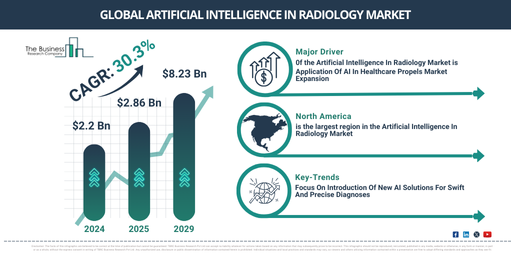
    In recent times, the market size for artificial intelligence in radiology has exhibited exponential growth. It is projected to expand from $2.2 billion in 2024 to $2.86 billion in 2025, boasting a Compound Annual Growth Rate (CAGR) of 30.2%. The substantial growth witnessed during the historical period can be tied to the expanding volume of medical imaging data, the emergence of deep learning algorithms, the rising demand for enhanced diagnostic precision, compliance with regulatory approvals and standards, and an emphasis on cost efficiency and refining workflow.

    The market for artificial intelligence applied in radiology is set to witness significant expansion in the forthcoming years, reaching a staggering $8.23 billion by 2029 with a Compound Annual Growth Rate (CAGR) of 30.3%. This predicted growth during the forecast period is linked to ongoing improvements in AI algorithms, synergy with Electronic Health Records (EHRs), the broadening applications of AI beyond just diagnosis, AI-enabled image augmentation, improved interoperability, and data exchange. Noteworthy trends for the forecast period include remote healthcare and telemedicine, cooperation between healthcare and technology businesses, advancements in imaging science, quantitative imaging analytics, and automated report preparation.

    Download a free sample to assess the report’s scope and structure:

    https://www.thebusinessresearchcompany.com/sample.aspx?id=13591&type=smp

    What Are the Core Market Drivers Propelling Growth in the Artificial Intelligence In Radiology Industry?

    The expanding usage of artificial intelligence (AI) in the healthcare sector is projected to fuel the advancement of AI in the radiology market in the future. AI-driven algorithms have shown an extraordinary ability to scrutinize and understand medical images accurately, assisting radiologists in identifying minor anomalies and enhancing the overall diagnostic results. The agility and speed provided by AI technologies not only optimize radiological procedures but also result in quicker and more precise diagnoses. For example, in July 2024, as per The Health Foundation, an independent charity based in the UK, over half (54%) of the UK public and three-quarters (76%) of the surveyed NHS staff supported the implementation of AI in patient care, with even higher percentages advocating its application for administrative responsibilities (61% of the public and 81% of NHS staff). Consequently, the expanding usage of AI in the healthcare sector is steering the advancement of artificial intelligence (AI) in the radiology market.

    How Is the Artificial Intelligence In Radiology Market Segmented?

    The artificial intelligence in radiology market covered in this report is segmented –

    1) By Solution Type: AI Software, AI Hardware

    2) By Modality: Computed Tomography (CT), Magnetic Resonance (MR), X-Ray, Mammography, Ultrasound (US), Other Modalities

    3) By Application: Neurology, Chest And Lung, Musculoskeletal, Abdomen, Cardiology, Other Applications

    4) By End-User: Hospitals, Diagnostic Imaging Centers, Other End-Users

    Subsegments:

    1) By AI Software: Image Analysis Software, Workflow Optimization Software, Radiology Reporting Software, Decision Support Systems, Predictive Analytics Tools

    2) By AI Hardware: Imaging Devices, Servers And Computing Infrastructure, Robotics For Automated Imaging, Workstations For Radiologists, Wearable Devices For Patient Monitoring

    Request customized data on this market:

    https://www.thebusinessresearchcompany.com/customise?id=13591&type=smp

    Which Regions Are Driving the Next Phase of the Artificial Intelligence In Radiology Market Growth?

    North America was the largest region in the artificial intelligence in radiology market in 2024. The regions covered in the artificial intelligence in radiology market report are Asia-Pacific, Western Europe, Eastern Europe, North America, South America, Middle East, Africa.

    What Key Market Trends and Innovations Are Shaping the Future of the Artificial Intelligence In Radiology Industry?

    Top-tier firms in the AI in radiology market are introducing innovative products like suites to enhance their market profitability. AI-enabled radiology suites are consolidated systems that use artificial intelligence to elevate diagnostic capabilities and streamline workflows in the field of medical imaging, thereby boosting accuracy and efficiency. A case in point is the Viz radiology suite launched by Viz.ai Inc., a U.S.-based healthcare software service company, in November 2022. The suite serves as a next-gen solution that incorporates sophisticated FDA-approved algorithms to quickly process a variety of medical imaging data such as CAT scans, EKGs, and echocardiograms. This extensive AI-driven care coordination solution doesn’t just deliver real-time insights, it also automates evaluations, speeding up the diagnosis and treatment procedures. In essence, this revolutionary solution aids improved patient outcomes by hastening the diagnostic and treatment pathway.

    View the full report here:

    https://www.thebusinessresearchcompany.com/report/artificial-intelligence-in-radiology-global-market-report

    How Is the Artificial Intelligence In Radiology Market Defined and What Are Its Core Parameters?

    Artificial intelligence (AI) in radiology refers to the application of artificial intelligence technologies, such as machine learning and image analysis algorithms, to enhance diagnostic accuracy and efficiency in medical imaging interpretation. AI techniques provide quantitative measurements and analysis of imaging data, offering more precise and objective information about the characteristics of tissues and structures.

    Purchase the full report and get a swift delivery:

    https://www.thebusinessresearchcompany.com/purchaseoptions.aspx?id=13591

    About The Business Research Company:

    With over 15000+ reports from 27 industries covering 60+ geographies, The Business Research Company has built a reputation for offering comprehensive, data-rich research and insights. Armed with 1,500,000 datasets, the optimistic contribution of in-depth secondary research, and unique insights from industry leaders, you can get the information you need to stay ahead in the game.

    Get in touch with us:

    The Business Research Company: https://www.thebusinessresearchcompany.com/

    Americas +1 3156230293

    Asia +44 2071930708

    Europe +44 2071930708

    Email us at info@tbrc.info

    Follow us on:

    LinkedIn: https://in.linkedin.com/company/the-business-research-company

    YouTube: https://www.youtube.com/channel/UC24_fI0rV8cR5DxlCpgmyFQ

    Global Market Model: https://www.thebusinessresearchcompany.com/global-market-model
  • Artificial Intelligence In Oncology Market 2025-2034: Key Highlights, Growth Dynamics, and Emerging Trends

    Artificial Intelligence In Oncology Market 2025-2034: Key Highlights, Growth Dynamics, and Emerging Trends

    Discover trends, market shifts, and competitive outlooks for the artificial intelligence in oncology industry through 2025-2034 with The Business Research Company’s reliable data and in-depth research

    What Is the Current and Projected Market Size of the Artificial Intelligence In Oncology Market Through 2034?

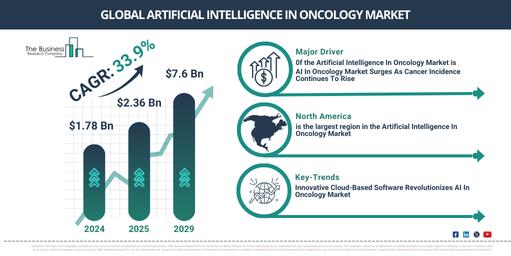
    The market size of artificial intelligence in oncology has seen significant expansion in the past few years. There is an expected increase from $1.78 billion in 2024 to $2.36 billion in 2025, demonstrating a compound annual growth rate (CAGR) of 32.4%. The notable growth during the historical timespan can be credited to the surge in cancer cases, the abundance of data in healthcare, the optimization of clinical trials, the need for individualized medicine, and increased efficiency in radiology and pathology.

    The market for artificial intelligence in oncology is predicted to expand exponentially in the coming years, with its size estimated to reach $7.6 billion by 2029, reflecting at a compound annual growth rate (CAGR) of 33.9%. This substantial growth in the forecast period is due to the integration of artificial intelligence with electronic health records (EHR), its increasing use in treatment decision support, patient engagement and education, regulatory support, and standardization. The forecast period will also see major trends like the incorporation of natural language processing (NLP) into healthcare, the application of AI in biomarker discovery, a focus on making AI explanations understandable for clinical adoption, the utilization of AI in managing population health, partnerships between AI developers and healthcare providers, and advancements in predictive analytics.

    Download a free sample to assess the report’s scope and structure:

    https://www.thebusinessresearchcompany.com/sample.aspx?id=13130&type=smp

    Which Primay Drivers Are Accelerating Growth in the Artificial Intelligence In Oncology Market?

    The escalating occurrence of cancer is projected to drive the AI in oncology market advancement. Characterized by uncontrolled multiplication and division of abnormal cells, cancer is a complex cluster of diseases. The incorporation of AI into oncology can potentially transform cancer care into a more precise, individualized, and streamlined process. For example, a report by the American Cancer Society Inc., a US-based health non-profit organization, showed that the projected quantity of cancer cases rose from 1.8 million to 1.9 million in 2023. Therefore, the escalating incidence of cancer acts as a growth catalyst for the AI in oncology market. As pharmaceutical companies increasingly adopt cloud-based applications and services, it could further boost the AI in oncology market. The uptake of these cloud technologies is on a steady climb due to their immense advantages. By accessing and analyzing vast amounts of data like genomics, proteomics, metabolomics, transcriptomics, and clinical and epidemiological data using cloud computing, researchers can significantly speed up cancer research for precision medicine. For example, as per AAG IT Services, a UK-based non-government organization, in a 2022 survey, 89% of organizations reportedly employed multi-cloud solutions for their storage and workload purposes. Only 9% relied on a single public cloud, while 2% used a single private cloud. Such a growing reliance on cloud-based applications and services by pharmaceutical firms thus fuels the AI in oncology market.

    Which Primary Segments of the Artificial Intelligence In Oncology Market Are Driving Growth and Industry Transformations?

    The artificial intelligence in oncology market covered in this report is segmented –

    1) By Component: Software Solutions, Hardware, Services

    2) By Treatment Type: Chemotherapy, Radiotherapy, Immunotherapy, Other Treatment Types

    3) By Cancer Type: Breast Cancer, Lung Cancer, Prostate Cancer, Colorectal Cancer, Brain Tumor, Other Cancer Types

    4) By Application: Cancer Detection, Drug Discovery, Drug Development, Other Applications

    5) By End-Users: Hospitals, Diagnostic Centers, Pharmaceutical Companies, Research Institutes, Other End Users

    Subsegments:

    1) By Software Solutions: Diagnostic Software, Treatment Planning Software, Patient Management Software, Data Analytics Platforms

    2) By Hardware: AI-Enabled Imaging Devices, High-Performance Computing Systems, Wearable Health Monitors

    3) By Services: Consulting Services, Integration Services, Maintenance And Support Services

    Request customized data on this market:

    https://www.thebusinessresearchcompany.com/customise?id=13130&type=smp

    Which Regions Are Key Players in the Growth of the Artificial Intelligence In Oncology Market?

    North America was the largest region in the AI in oncology market in 2024. Asia-Pacific is expected to be the fastest-growing region in the forecast period. The regions covered in the artificial intelligence in oncology market report are Asia-Pacific, Western Europe, Eastern Europe, North America, South America, Middle East, Africa

    Which Technological Trends Are Reshaping the Artificial Intelligence In Oncology Industry Dynamics?

    Key businesses in the AI in oncology market are concentrating on the creation of innovative software, including cloud-based software, to augment their potency and deliver superior solutions. Cloud-based software is pivotal in AI-use in oncology, offering a scalable, flexible, and readily available platform for the processing and interpretation of massive amounts of medical data. For example, Illumina Inc., a biotechnology company based in the U.S., unveiled “Connected Insights,” a novel cloud-based software designed for tertiary analysis in oncology applications in March 2023. This software, aided by the integration of external knowledge bases, simplifies the interpretation and publication of results from various assay kinds, enabling laboratories to broaden their utilization of NGS (Next-Generation Sequencing) and accelerate clinical reporting turnaround times.

    View the full report here:

    https://www.thebusinessresearchcompany.com/report/artificial-intelligence-in-oncology-global-market-report

    What Parameters Are Used to Define the Artificial Intelligence In Oncology Market?

    Artificial intelligence in oncology refers to applying artificial intelligence (AI) technologies and techniques in cancer diagnosis, treatment, research, and patient care. The goal of AI in oncology is to improve outcomes for cancer patients by leveraging computational methods to identify patterns, predict outcomes, and support evidence-based decision-making across the continuum of cancer care.

    Purchase the full report and get a swift delivery:

    https://www.thebusinessresearchcompany.com/purchaseoptions.aspx?id=13130

    About The Business Research Company:

    With over 15000+ reports from 27 industries covering 60+ geographies, The Business Research Company has built a reputation for offering comprehensive, data-rich research and insights. Armed with 1,500,000 datasets, the optimistic contribution of in-depth secondary research, and unique insights from industry leaders, you can get the information you need to stay ahead in the game.

    Get in touch with us:

    The Business Research Company: https://www.thebusinessresearchcompany.com/

    Americas +1 3156230293

    Asia +44 2071930708

    Europe +44 2071930708

    Email us at info@tbrc.info

    Follow us on:

    LinkedIn: https://in.linkedin.com/company/the-business-research-company

    YouTube: https://www.youtube.com/channel/UC24_fI0rV8cR5DxlCpgmyFQ

    Global Market Model: https://www.thebusinessresearchcompany.com/global-market-model
  • Artificial Intelligence In Medicine Growth Trajectory: Key Forecasts and Strategic Insights

    Artificial Intelligence In Medicine Growth Trajectory: Key Forecasts and Strategic Insights

    Discover trends, market shifts, and competitive outlooks for the artificial intelligence in medicine industry through 2025-2034 with The Business Research Company’s reliable data and in-depth research

    What is the Anticipated CAGR of the Artificial Intelligence In Medicine Market, and What Factors Will Drive It?

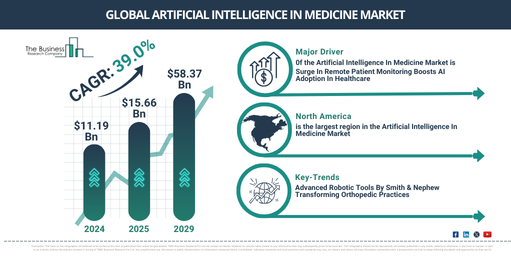
    Recent years have witnessed substantial growth in the size of the artificial intelligence in medicine market. It is set to expand from a size of $11.19 billion in 2024 to a whopping $15.66 billion in 2025, with a compound annual growth rate (CAGR) of 39.9%. This significant growth observed in the historic period is mainly due to a greater focus on guaranteeing patient well-being and a relative insufficiency of doctors, along with an increase in the number of proficient healthcare professionals and a boost in the processing capacity of AI systems.

    The market for artificial intelligence in medicine is predicted to undergo substantial expansion in the coming years, with a projected value of $58.37 billion by 2029 and a compound annual growth rate (CAGR) of 39.0%. This anticipated increase during the forecast period is tied to an escalating incidence of chronic illnesses and a growing focus on implementing digital transformation strategies. Key trends anticipated for this period include the creation of medical robots, introduction of patient management applications expected to foster considerable growth, the application of AI in drug discovery and the advancement of precision medicine.

    Download a free sample to assess the report’s scope and structure:

    https://www.thebusinessresearchcompany.com/sample.aspx?id=13590&type=smp

    Which Factors and External Forces Are Driving Demand in the Artificial Intelligence In Medicine Market?

    The growing appeal of real-time remote patient monitoring (RPM) systems is anticipated to accelerate the expansion of the artificial intelligence (AI) in the medicine market in the future. RPM systems are tech-enabled healthcare solutions that facilitate the tracking of patient health beyond standard healthcare facilities. Today, AI in medicine has revolutionised remote patient monitoring by employing sophisticated algorithms to examine comprehensive patient data, deliver predictive analysis, and promote personalised treatment. For example, as per Statistics Canada in November 2024, during the 12 months preceding the 2022 survey, residents of British Columbia (73.8%) and Newfoundland and Labrador (70.7%) had the highest probability of using a virtual consultation. Conversely, those in Prince Edward Island (36.9%) and Quebec (37.6%) had the least chance of using one. As a result, the rising demand for real-time remote patient monitoring (RPM) systems is fueling the growth of the AI in medicine market.

    Which Segments in the Artificial Intelligence In Medicine Offer the Most Growth?

    The artificial intelligence in medicine market covered in this report is segmented –

    1) By Type: Hardware, Software, Services

    2) By Technology: Machine Learning, Natural Language Processing, Context-Aware Processing, Computer Vision

    3) By Application: Medical Administration And Support, Patient Management, Research And Development, Other Applications

    4) By End User: Hospitals, Clinics, Research Institutions

    Subsegments:

    1) By Hardware: AI-Powered Imaging Devices, Robotics And Automation Devices, Wearable Health Devices, Servers And Computing Systems

    2) By Software: Machine Learning Algorithms, Natural Language Processing (NLP) Tools, Image Analysis Software, Predictive Analytics Software, Clinical Decision Support Systems

    3) By Services: AI Consulting Services, Integration Services, Maintenance And Support Services, Data Management Services, Training And Education Services

    Request customized data on this market:

    https://www.thebusinessresearchcompany.com/customise?id=13590&type=smp

    What Are the Fastest-Growing Geographies in the Artificial Intelligence In Medicine Market?

    North America was the largest region in the artificial intelligence in medicine market in 2024. Asia-Pacific is expected to be the fastest-growing region in the forecast period. The regions covered in the artificial intelligence in medicine market report are Asia-Pacific, Western Europe, Eastern Europe, North America, South America, Middle East, Africa.

    Which Cutting-Edge Market Trends Are Expected to Drive the Artificial Intelligence In Medicine Market’s Growth?

    In the field of artificial intelligence in medicine, leading corporations are concentrating on the creation of novel solutions, such as platforms powered by AI, to offer dependable services to their clients. AI-powered platforms refer to software solutions that make use of artificial intelligence technologies to automate tasks, analyse data and provide forecasts. For example, in April 2023, OM1 Inc., a digital health firm based in the US, introduced PhenOM. This platform utilises real-world data and sophisticated analytics to distinguish distinct digital phenotypes linked with conditions and outcomes, thus establishing fingerprints for diverse patient groups. PhenOM has the ability to examine individual patient data in order to forecast risks, pinpoint opportunities for intervention, and guide treatment choices.

    View the full report here:

    https://www.thebusinessresearchcompany.com/report/artificial-intelligence-in-medicine-global-market-report

    What Are the Key Elements That Define the Artificial Intelligence In Medicine Market?

    Artificial intelligence in medicine refers to the application of artificial intelligence technologies, such as machine learning and data analysis, to enhance diagnosis, treatment, and healthcare management. It aids in faster and more accurate disease detection, personalized treatment plans, and improved overall efficiency in medical processes.

    Purchase the full report and get a swift delivery:

    https://www.thebusinessresearchcompany.com/purchaseoptions.aspx?id=13590

    About The Business Research Company:

    With over 15000+ reports from 27 industries covering 60+ geographies, The Business Research Company has built a reputation for offering comprehensive, data-rich research and insights. Armed with 1,500,000 datasets, the optimistic contribution of in-depth secondary research, and unique insights from industry leaders, you can get the information you need to stay ahead in the game.

    Get in touch with us:

    The Business Research Company: https://www.thebusinessresearchcompany.com/

    Americas +1 3156230293

    Asia +44 2071930708

    Europe +44 2071930708

    Email us at info@tbrc.info

    Follow us on:

    LinkedIn: https://in.linkedin.com/company/the-business-research-company

    YouTube: https://www.youtube.com/channel/UC24_fI0rV8cR5DxlCpgmyFQ

    Global Market Model: https://www.thebusinessresearchcompany.com/global-market-model
  • Artificial Intelligence In Medical Coding Market Overview 2025: Competitive Shifts, Forecast Models, and Emerging Opportunities

    Artificial Intelligence In Medical Coding Market Overview 2025: Competitive Shifts, Forecast Models, and Emerging Opportunities

    Discover trends, market shifts, and competitive outlooks for the artificial intelligence in medical coding industry through 2025-2034 with The Business Research Company’s reliable data and in-depth research

    How Has The Artificial Intelligence In Medical Coding Market Size Shifted, And What Is the Outlook Through 2034?

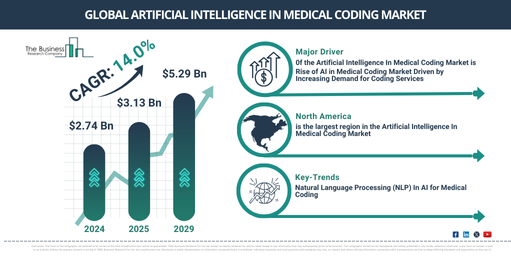
    The market size for artificial intelligence in medical coding has experienced significant growth in the past few years. Its growth is expected to rise from $2.74 billion in 2024 to an impressive $3.13 billion in 2025, marking a compound annual growth rate (CAGR) of 14.2%. Factors that have influenced growth during the historic period include an increase in healthcare data volumes, improvements in coding precision and efficiency, strict regulatory standards, enhancements in revenue cycle management, and integration with electronic health records (EHRs).

    The market size of artificial intelligence in medical coding is expected to surge significantly in the forthcoming years. It is projected to reach $5.29 billion by 2029, with a compound annual growth rate (CAGR) of 14.0%. The anticipated growth during the forecast period can be associated with the advancement in natural language processing (nlp), evolving healthcare coding standards, the proliferation of telehealth, AI-facilitated improvements in clinical documentation (cdi), and a rising demand for healthcare analytics. The forecast period will also see major trends such as the digitization of the healthcare industry, automatic coding assistance, enhancement in coding quality, integration with electronic health records, and risk adjustment coding solutions.

    Download a free sample to assess the report’s scope and structure:

    https://www.thebusinessresearchcompany.com/sample.aspx?id=13588&type=smp

    What Are the Core Growth Drivers Propelling the Artificial Intelligence In Medical Coding Market Forward?

    The escalating need for coding services is set to bolster the expansion of the artificial intelligence in medical coding market in the forthcoming period. Coding services are defined as the practice of converting healthcare diagnoses, procedures, and medical services into universal medical alphanumeric codes, a crucial element for precise billing, insurance claim processing, and reimbursement. Artificial intelligence’s role in medical coding amplifies the proficiency, precision, and adaptability of coding services, which in turn greatly benefits healthcare institutions, medical coders, and patient care. For example, the American Bureau of Labor Statistics, a US Government body, has predicted an 8% growth in employment for medical coders in 2022. Consequently, the swelling demand for coding services is fueling the development of the artificial intelligence in medical coding market.

    What Segment Types Define the Artificial Intelligence In Medical Coding Market Structure?

    The artificial intelligence in medical coding market covered in this report is segmented –

    1) By Component: In-House, Outsourced

    2) By Technology: Machine Learning, Natural Language Processing (NLP), Generative AI

    3) By End-User: Healthcare Providers, Medical Billing Companies, Payers

    Subsegments:

    1) By In-House: Internal Coding Teams, AI-Enhanced Coding Solutions, Integration With Existing Systems

    2) By Outsourced: Third-Party Coding Services, AI-Powered Outsourcing Solutions, Vendor Management For Coding Services

    Request customized data on this market:

    https://www.thebusinessresearchcompany.com/customise?id=13588&type=smp

    Which Geographic Areas Hold the Strongest Growth Potential in the Artificial Intelligence In Medical Coding Market?

    North America was the largest region in the artificial intelligence in medical coding market in 2024. The regions covered in the artificial intelligence in medical coding market report are Asia-Pacific, Western Europe, Eastern Europe, North America, South America, Middle East, Africa.

    Which Emerging Trends that Are Influencing the Artificial Intelligence In Medical Coding Industry Evolution?

    Leading companies in the medical coding sector utilizing artificial intelligence (AI) are driving innovation through technology such as Natural Language Processing (NLP). This technology supports more accurate understanding and interpretation of patient dialogue, capturing intricate details about their health. NLP is a specialized subset of AI that lets machines comprehend and process data created by human language, whether spoken or written. For example, Linguamatics, a software company based in the UK, introduced its Healthcare Product Suite in March 2023. This suite utilizes NLP to mine crucial details from unstructured data sources like electronic health records (EHRs), patient portals, and call center transcripts. It offers scalable and automated NLP transformation for key platforms through their NLP Data Factory, accommodating a wide variety of healthcare data. Wolters Kluwer’s Health Language Data Interoperability Solution also allows institutions to create harmony between structured, semi-structured, and unstructured data from multiple health industry sources.

    View the full report here:

    https://www.thebusinessresearchcompany.com/report/artificial-intelligence-in-medical-coding-global-market-report

    What Is the Definition of the Artificial Intelligence In Medical Coding Market?

    AI in medical coding refers to the use of artificial intelligence and machine learning techniques to automate the coding process in the healthcare industry. Artificial intelligence (AI) in medical coding makes use of advanced software tools that evaluate patient data and provide precise medical codes.

    Purchase the full report and get a swift delivery:

    https://www.thebusinessresearchcompany.com/purchaseoptions.aspx?id=13588

    About The Business Research Company:

    With over 15000+ reports from 27 industries covering 60+ geographies, The Business Research Company has built a reputation for offering comprehensive, data-rich research and insights. Armed with 1,500,000 datasets, the optimistic contribution of in-depth secondary research, and unique insights from industry leaders, you can get the information you need to stay ahead in the game.

    Get in touch with us:

    The Business Research Company: https://www.thebusinessresearchcompany.com/

    Americas +1 3156230293

    Asia +44 2071930708

    Europe +44 2071930708

    Email us at info@tbrc.info

    Follow us on:

    LinkedIn: https://in.linkedin.com/company/the-business-research-company

    YouTube: https://www.youtube.com/channel/UC24_fI0rV8cR5DxlCpgmyFQ

    Global Market Model: https://www.thebusinessresearchcompany.com/global-market-model
  • From Insight to Impact: Strategic Growth Mapping in the Artificial Intelligence In Life Sciences Market

    From Insight to Impact: Strategic Growth Mapping in the Artificial Intelligence In Life Sciences Market

    Discover trends, market shifts, and competitive outlooks for the artificial intelligence in life sciences industry through 2025-2034 with The Business Research Company’s reliable data and in-depth research

    How Has the Artificial Intelligence In Life Sciences Market Growth Performance Trended Historically, And What Lies Ahead?

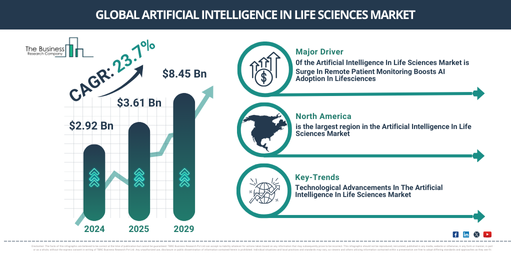
    Over the past few years, the market size of artificial intelligence within the life sciences sector has seen substantial expansion. Projections suggest an increase from $2.92 billion in 2024 to $3.61 billion in 2025, marking a compound annual growth rate (CAGR) of 23.7%. Factors such as a rise in clinical trials, enhanced adoption of AI in research and development, along with growing focus on precision medicine and personalized drug development have contributed to this historic growth.

    In the upcoming years, the market size of artificial intelligence in life sciences is predicted to witness tremendous growth, escalating to $8.45 billion by 2029, with a CAGR of 23.7%. The surge in growth during the forecast period can be linked to a growing interest in real-time remote patient monitoring systems, a rising demand for AI in discovering new drugs, and the broadening acceptance of AI in medical imaging analysis. Foresight for this period suggests key trends to comprise strategic collaborations, innovation in products, advancement in technology, investments, and research and development projects.

    Download a free sample to assess the report’s scope and structure:

    https://www.thebusinessresearchcompany.com/sample.aspx?id=13587&type=smp

    What are the Fundamental Drivers and Innovations Shaping the Artificial Intelligence In Life Sciences Market?

    The escalating curiosity in real-time remote patient monitoring (RPM) technologies is expected to fuel the advancement of artificial intelligence in the life sciences sector. Remote patient monitoring system is a technologically advanced healthcare solution planned to supervise patients’ health beyond conventional healthcare environments. AI plays a pivotal role in the life sciences by offering continuous, personalized, and data-driven findings that facilitate proactive health management. For instance, as per a survey in August 2023 by Livelink, an American digital healthcare firm, the application of remote patient monitoring (RPM) by clinicians surged by 20% in 2021 to 81% in 2022, an overall increase of 305%. Consequently, the rising curiosity in real-time remote patient monitoring (RPM) tools is contributing to the expansion of artificial intelligence in the life sciences sector.

    How Is the Artificial Intelligence In Life Sciences Market Segmented?

    The artificial intelligence in life sciences market covered in this report is segmented –

    1) By Offering: Software, Hardware, Services

    2) By Deployment: On-Premises, Cloud-Based

    3) By Application: Drug Discovery, Medical Diagnosis, Biotechnology, Clinical Trails, Precision And Personalized Medicine, Patient Monitoring

    Subsegments:

    1) By Software: Drug Discovery Software, Genomic Analysis Software, Clinical Trial Management Software, Personalized Medicine Software, Laboratory Information Management Systems (LIMS)

    2) By Hardware: AI-Enabled Laboratory Equipment, Robotics And Automation Systems, Imaging Devices And Equipment, Sensor Technologies

    3) By Services: Consulting Services, Data Analytics Services, Research And Development Services, Implementation And Integration Services, Training And Support Services

    Request customized data on this market:

    https://www.thebusinessresearchcompany.com/customise?id=13587&type=smp

    Which Regions Are Driving the Next Phase of the Artificial Intelligence In Life Sciences Market Growth?

    North America was the largest region in the Artificial Intelligence In Life Sciences market in 2024. Asia-Pacific is expected to be the fastest-growing region in the forecast period. The regions covered in the artificial intelligence in life sciences market report are Asia-Pacific, Western Europe, Eastern Europe, North America, South America, Middle East, Africa.

    What Key Trends Are Shaping the Future of the Artificial Intelligence In Life Sciences Market?

    Prominent firms in the life sciences artificial intelligence market are striving to maintain their market position through the advancement of innovative technology products, such as drug discovery software. Drug discovery software is a type of computer application aimed at aiding biotech and pharmaceutical researchers in the discovery of novel drugs. For example, in December 2023, Merck, a scientific and technology company based in Germany, introduced AIDDISON, a revolutionary drug discovery software. It is the first-ever software that links virtual molecule design to actual manufacturability utilizing generative AI, machine learning, and computer-supported drug design. AIDDISON can effectively pin down potential drug candidates from a plethora of possibilities while taking into account essential characteristics like non-toxicity and solubility. The software demonstrates a significant application of artificial intelligence in the sphere of life sciences by bridging the gap between virtual molecular design and actual manufacturability.

    View the full report here:

    https://www.thebusinessresearchcompany.com/report/artificial-intelligence-in-life-sciences-global-market-report

    How Is the Artificial Intelligence In Life Sciences Market Defined and What Are Its Core Parameters?

    Artificial intelligence (AI) in life sciences refers to the application of AI technologies and techniques in various domains within the life sciences industry. The integration of AI in life sciences aims to enhance and expedite processes, improve decision-making, and generate valuable insights from complex data sets.

    Purchase the full report and get a swift delivery:

    https://www.thebusinessresearchcompany.com/purchaseoptions.aspx?id=13587

    About The Business Research Company:

    With over 15000+ reports from 27 industries covering 60+ geographies, The Business Research Company has built a reputation for offering comprehensive, data-rich research and insights. Armed with 1,500,000 datasets, the optimistic contribution of in-depth secondary research, and unique insights from industry leaders, you can get the information you need to stay ahead in the game.

    Get in touch with us:

    The Business Research Company: https://www.thebusinessresearchcompany.com/

    Americas +1 3156230293

    Asia +44 2071930708

    Europe +44 2071930708

    Email us at info@tbrc.info

    Follow us on:

    LinkedIn: https://in.linkedin.com/company/the-business-research-company

    YouTube: https://www.youtube.com/channel/UC24_fI0rV8cR5DxlCpgmyFQ

    Global Market Model: https://www.thebusinessresearchcompany.com/global-market-model