Category: HealthcareServices

  • Revenue of the Micropropagation Market Predicted to Achieve $2.61 Billion by 2030, Driven by 9% CAGR

    Revenue of the Micropropagation Market Predicted to Achieve $2.61 Billion by 2030, Driven by 9% CAGR

    Uncover key drivers, emerging technologies, and competitive movements shaping the micropropagation market from 2026–2035 with trusted insights from The Business Research Company

    What are the forecasted starting (2026) and ending (2030) market sizes for the Micropropagation Market?

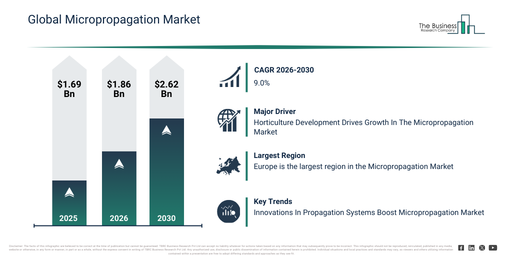
    The micropropagation market size has seen swift expansion over recent years. Forecasts show it will climb from $1.69 billion in 2025 to $1.86 billion in 2026, at a compound annual growth rate (CAGR) of 10.1%. This historical growth can be attributed to several factors including an increased demand for disease-free planting materials, the integration of tissue culture in horticulture, a rise in commercial flower production, progress in forestry and agroforestry initiatives, and its early use in banana and ornamental crops.

    The micropropagation market is projected to experience substantial expansion over the upcoming years. Its value is anticipated to reach $2.62 billion by 2030, demonstrating a compound annual growth rate (CAGR) of 9.0%. This projected growth during the forecast period is primarily driven by an increasing demand for scalable methods of plant multiplication, greater investments in crops resilient to climate change, the expansion of medicinal plant cultivation, an increase in commercial greenhouse activities, and improvements in culture media technology. Key trends expected during this period encompass the broader adoption of precision propagation techniques, a shift towards sustainability in plant production, increased automation within tissue culture laboratories, optimization of growth processes through AI, and the implementation of cloud-based data monitoring in micropropagation.

    Access Your Free Sample Report for In-Depth Market Insights:

    https://www.thebusinessresearchcompany.com/sample.aspx?id=16737&type=smp

    What Drivers Are Supporting Technological Adoption In The Micropropagation Market?

    Future growth in the micropropagation market is anticipated to be driven by the advancement of horticulture. Horticulture encompasses both the scientific discipline and practical activity of cultivating plants for purposes such as food, medicine, decoration, or aesthetic pleasure. This field is expanding due to increasing consumer demand for a variety of crops, the adoption of sustainable agricultural methods, the creation of urban green spaces, and the cultivation of ornamental plants, all influenced by population growth, environmental concerns, and evolving aesthetic preferences. Micropropagation plays a crucial role in horticulture by enabling the efficient production of large quantities of disease-free plants with desired characteristics, thereby ensuring consistent quality and genetic uniformity in crop production, ornamental gardening, and conservation initiatives. For example, a report released in June 2024 by the Department for Environment Food and Rural Affairs, a UK-based ministerial department, revealed that in 2023, the value of home-grown vegetables increased by 10% to just under £1.9 billion ($2.03 billion). During the same period, the value of field vegetables rose by 12% to £1.5 billion ($1.60 billion), and protected vegetables saw a 3.7% increase, reaching £374 million ($399 million). Thus, the progression of horticulture is a key factor propelling the expansion of the micropropagation market.

    Which Segments Are Contributing To The Growth Of The Micropropagation Market?

    The micropropagation market covered in this report is segmented –

    1) By Crop Types: Banana, Orchids And Ornamentals, Medicinal Plants, Vegetables, Small Fruits, Other Crop Types

    2) By Container Type: Test Tubes And Petri Dishes, Glass Bottles, Plastic Containers

    3) By Sales Channels: Offline, Online

    4) By End User: Farmers, Research Labs, Other End Users

    Subsegments:

    1) By Banana: Cavendish Banana, Red Banana, Plantains

    2) By Orchids And Ornamentals: Phalaenopsis Orchids, Cattleya Orchids, Dendrobium Orchids, Cymbidium Orchids, Gerbera, Chrysanthemums, Roses, Tulips, Lilies

    3) By Medicinal Plants: Aloe Vera, Ginseng, Echinacea, Turmeric, Stevia, Lavender, Mint, Cannabis, Basil

    4) By Vegetables: Tomatoes, Peppers, Lettuce, Cucumber, Spinach, Eggplant, Carrots, Kale

    5) By Small Fruits: Strawberries, Raspberries, Blueberries, Blackberries, Grapes, Gooseberries

    6) By Other Crop Types: Trees And Timber Species, Flowering Plants, Fruits, Nut Crops, Spices, Turfgrass And Lawn Species, Forestry And Agroforestry Crops

    How Are New Market Trends Shaping The Landscape Of The Micropropagation Market?

    Leading companies in the micropropagation market are creating innovative products, such as propagation systems, to improve the efficiency and success of plant cloning and cultivation. Propagation systems are techniques or methods utilized to reproduce plants from seeds, cuttings, or other plant parts to generate new individuals that are either genetically identical or varied. For instance, in January 2023, NuPlant, an Australia-based biotechnology company, introduced SmartClone. SmartClone is a sophisticated plant tissue culture propagation system designed to quickly produce enhanced plants from breeding programs for various species. This system incorporates precision robotics to generate robust clones from parent material, with adaptable conditions for each growth phase. SmartClone is projected to yield hardier, more consistent plantlets while also decreasing labor and reducing costs per plant.

    Who Are The Core Companies Influencing Trends In The Micropropagation Market?

    Major companies operating in the micropropagation market are Phytocultures Ltd., Deroose Plants Inc., Phytelligence Inc., Oglesby Plants International Inc., AgriForest Bio-Technologies Ltd., Tissue-Grown Corporation, Agribiotecnología de Costa Rica S A, Hartmann’s Plant Company, Knight Hollow Nursery Inc., Lowes TC Pty Ltd., Mountain Shadow Nursery LLC, Phytotech Labs Inc., Plant Cell Technology Inc., Rancho Tissue Technologies Inc., Xplant Laboratory Inc., Agromillora Group, Highveld Biotech, TC Propagation Ltd., In Vitro Microplants Ltd., Valley Tissue Culture, Phytoclone Inc., Okanagan Plant Improvement Co Ltd., Meristematic Laboratories

    Access The Complete Report For Deeper Market Insights:

    https://www.thebusinessresearchcompany.com/report/micropropagation-global-market-report

    Which Region Is Projected To Lead The Micropropagation Market During The Forecast Period?

    Europe was the largest region in the micropropagation market in 2025. Asia-Pacific is expected to be the fastest-growing region in the forecast period. The regions covered in the micropropagation market report are Asia-Pacific, South East Asia, Western Europe, Eastern Europe, North America, South America, Middle East, Africa.

    Request Your Customized Micropropagation Market Research Report for Competitive Advantage:

    https://www.thebusinessresearchcompany.com/customise?id=16737&type=smp

    Browse Through More Reports Similar to the Global Micropropagation Market 2026, By The Business Research Company

    Microlending Market Report 2026

    https://www.thebusinessresearchcompany.com/report/microlending-global-market-report

    Microirrigation Systems Market Report 2026

    https://www.thebusinessresearchcompany.com/report/microirrigation-systems-global-market-report

    Micromachining Market Report 2026

    https://www.thebusinessresearchcompany.com/report/micromachining-global-market-report

    Get in touch with us:

    The Business Research Company: https://www.thebusinessresearchcompany.com/

    Americas +1 310-496-7795

    Asia +44 7882 955267 & +91 8897263534

    Europe +44 7882 955267

    Email us at info@tbrc.info

    Follow us on:

    LinkedIn: https://in.linkedin.com/company/the-business-research-company

    YouTube: https://www.youtube.com/channel/UC24_fI0rV8cR5DxlCpgmyFQ

    Global Market Model: https://www.thebusinessresearchcompany.com/global-market-model
  • Microbiome Sequencing Service Market Anticipated to Record Steady Gains, Advancing to $5.29 Billion by 2030

    Microbiome Sequencing Service Market Anticipated to Record Steady Gains, Advancing to $5.29 Billion by 2030

    Uncover key drivers, emerging technologies, and competitive movements shaping the microbiome sequencing service market from 2026–2035 with trusted insights from The Business Research Company

    What level of CAGR-driven expansion is anticipated in the Microbiome Sequencing Service Market between 2026 and 2030?

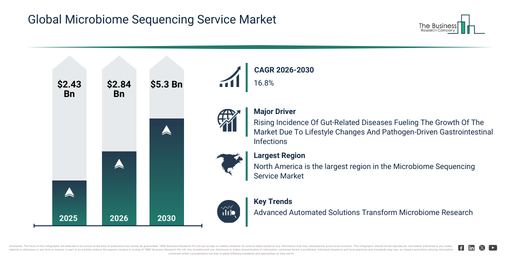
    The microbiome sequencing service market has seen rapid expansion in recent years. Its projected growth is from $2.43 billion in 2025 to $2.84 billion in 2026, at a compound annual growth rate (CAGR) of 17.1%. The historical growth of this market can be attributed to various factors, including the proliferation of microbiome research initiatives, an increase in academic research funding, a growing interest in studies related to gut and skin microbiota, the widespread availability of next-generation sequencing platforms, and enhanced collaboration between academia and industry.

    The microbiome sequencing service market size is projected to experience substantial growth in the upcoming years. It is predicted to expand to $5.3 billion by 2030, demonstrating a compound annual growth rate (CAGR) of 16.8%. The expansion during the forecast period is primarily driven by the increasing clinical acceptance of microbiome-based diagnostics, a rise in investments in microbiome therapeutics, the broadening scope of personalized nutrition research, the growing application of AI-driven microbial analysis, and an increasing demand for extensive population microbiome studies. Noteworthy trends for the forecast period include an escalating demand for high-throughput microbiome sequencing services, the increasing adoption of shotgun and amplicon sequencing techniques, the rising incorporation of advanced bioinformatics pipelines, the broadening of clinical microbiome research applications, and an intensified focus on functional microbial profiling.

    Access Your Free Sample Report for In-Depth Market Insights:

    https://www.thebusinessresearchcompany.com/sample.aspx?id=28270&type=smp

    What Drivers Are Affecting Demand-Supply Dynamics In The Microbiome Sequencing Service Market?

    An escalating occurrence of gut-related diseases is anticipated to fuel the expansion of the microbiome sequencing service market in the coming years. These conditions refer to medical issues affecting the gastrointestinal (GI) tract, which encompasses the stomach, intestines, and related organs such as the liver, pancreas, and gallbladder. This uptick in gut-related diseases is attributed to shifts in lifestyle and dietary habits, such as a high intake of processed foods and insufficient fiber, which disturbs the balance of gut microbiota. Microbiome sequencing service assists in managing these diseases by offering detailed insights into the gut’s microbial composition, thus proving valuable for diagnosing and monitoring gastrointestinal conditions. It enables targeted interventions by identifying microbial imbalances, leading to improved personalized treatment and better overall gut health management. For example, in June 2025, the UK Health Security Agency, a UK-based government agency, indicated that laboratory reports for Campylobacter grew by 27.0% from 96.1 to 122.0 per 100,000 population between 2022 and 2024. Hence, the increasing prevalence of gut-related diseases is acting as a key driver for the growth of the microbiome sequencing service market.

    What Segments Are Included Within The Microbiome Sequencing Service Market?

    The microbiome sequencing service market covered in this report is segmented –

    1) By Service: Sample Preparation, Sequencing And Library Preparation, Data Analysis

    2) By Technology: Sequencing By Litigation (SBL), Sequencing By Synthesis (SBS), Short Gun Sequencing, Targeted Gene Sequencing, RNA Sequencing, Other Technologies

    3) By Application: Autoimmune Disorder, Cancer, Gastrointestinal Disorders, Other Applications

    4) By End-User: Pharmaceutical And Biotechnology Companies, Academic Research Institutes, Other End-Users

    Subsegments:

    1) By Sample Preparation: Deoxyribonucleic Acid (DNA) Extraction, Ribonucleic Acid (RNA) Extraction, Protein Extraction, Cell Lysis, Library Construction

    2) By Sequencing And Library Preparation: Whole Genome Sequencing, Metagenomic Sequencing, Amplicon Sequencing, Shotgun Sequencing, Targeted Sequencing

    3) By Data Analysis: Taxonomic Profiling, Functional Profiling, Comparative Analysis, Statistical Analysis, Pathway Analysis

    What Trends Are Driving The Growth Trajectory Of The Microbiome Sequencing Service Market?

    Companies operating within the microbiome sequencing service market are increasingly focused on developing advanced solutions, such as automated metagenomics sequencing solutions, to enhance efficiency, accuracy, and scalability in microbiome research and analysis. An automated metagenomics sequencing solution is a comprehensive system that allows for the sequencing and analysis of microbial communities with minimal manual intervention, thereby ensuring high accuracy, consistent results, and adaptable throughput. For instance, in July 2024, MGI Tech Co. Ltd., a China-based biotechnology company, unveiled the Human Microbiome Metagenomics Sequencing Package. This product delivers a fully integrated workflow, combining automated sample pretreatment, nucleic acid extraction, library preparation, sequencing, and data analysis, to support high-throughput and cost-efficient microbiome research. Its validated performance on a significant number of human stool samples guarantees both reproducibility and accuracy, setting a new standard for large-scale human microbiome studies.

    Who Are The Prominent Global Companies Shaping The Microbiome Sequencing Service Market Landscape?

    Major companies operating in the microbiome sequencing service market are Eurofins Scientific LLC, Illumina Inc., Charles River Laboratories, QIAGEN N.V., Mérieux NutriSciences Corporation, OraSure Technologies Inc., Zifo RnD Solutions, Novogene Co. Ltd., Oxford Nanopore Technologies Plc, Macrogen Inc., Zymo Research Corporation, CD Genomics, Molzym GmbH & Co. KG (Gradian Diagnostics), Baseclear BV, Psomagen Inc., Mapmygenome, Rancho Biosciences LLC, Boster Biological Technology Ltd., Clinical Microbiomics, Microba Life Sciences Limited

    Access The Complete Report For Deeper Market Insights:

    https://www.thebusinessresearchcompany.com/report/microbiome-sequencing-service-global-market-report

    How Does The Microbiome Sequencing Service Market Perform Across Major Global Regions?

    North America was the largest region in the microbiome sequencing service market in 2025. Asia-Pacific is expected to be the fastest-growing region in the forecast period. The regions covered in the microbiome sequencing service market report are Asia-Pacific, South East Asia, Western Europe, Eastern Europe, North America, South America, Middle East, Africa.

    Request Your Customized Microbiome Sequencing Service Market Research Report for Competitive Advantage:

    https://www.thebusinessresearchcompany.com/customise?id=28270&type=smp

    Browse Through More Reports Similar to the Global Microbiome Sequencing Service Market 2026, By The Business Research Company

    Next Generation Sequencing Market 2026

    https://www.thebusinessresearchcompany.com/report/next-generation-sequencing-market

    Genomics Services Market Report 2026

    https://www.thebusinessresearchcompany.com/report/genomics-services-global-market-report

    Microbiomes Market Report 2026

    https://www.thebusinessresearchcompany.com/report/microbiomes-global-market-report

    Get in touch with us:

    The Business Research Company: https://www.thebusinessresearchcompany.com/

    Americas +1 310-496-7795

    Asia +44 7882 955267 & +91 8897263534

    Europe +44 7882 955267

    Email us at info@tbrc.info

    Follow us on:

    LinkedIn: https://in.linkedin.com/company/the-business-research-company

    YouTube: https://www.youtube.com/channel/UC24_fI0rV8cR5DxlCpgmyFQ

    Global Market Model: https://www.thebusinessresearchcompany.com/global-market-model
  • Microbiology And Bacterial Culture Media Industry Poised for Rapid Growth, Forecast to Touch $8.84 Billion by 2030 at 9.6% CAGR

    Microbiology And Bacterial Culture Media Industry Poised for Rapid Growth, Forecast to Touch $8.84 Billion by 2030 at 9.6% CAGR

    Uncover key drivers, emerging technologies, and competitive movements shaping the microbiology and bacterial culture media market from 2026–2035 with trusted insights from The Business Research Company

    What long-term size projections exist for the Microbiology And Bacterial Culture Media Market covering 2026–2035?

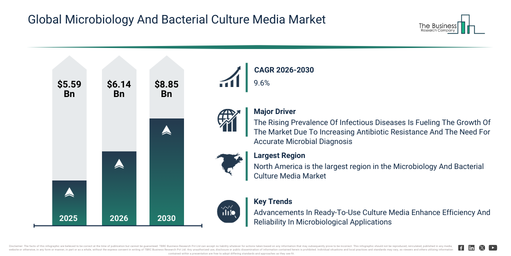
    The microbiology and bacterial culture media market size has shown substantial growth in recent years. This market is expected to expand from $5.59 billion in 2025 to $6.14 billion in 2026, achieving a compound annual growth rate (CAGR) of 9.8%. The historical growth in this period is attributed to the expansion of pharmaceutical manufacturing activities, growth in clinical diagnostics testing, increased food and water safety testing, rising use of microbiology in research laboratories, and the availability of standardized culture media products.

    The microbiology and bacterial culture media market size is anticipated to experience robust expansion over the coming years, reaching $8.85 billion by 2030 with a compound annual growth rate (CAGR) of 9.6%. This expected growth during the forecast period can be attributed to factors such as the increasing embrace of rapid microbial detection methods, rising investments in biopharmaceutical quality control, the expansion of microbiology testing in emerging markets, a growing demand for single-use media formats, and an intensified focus on laboratory automation. Noteworthy trends projected for this period include an increasing demand for chromogenic and selective media, the rising adoption of ready-to-use culture media formats, the growing customization of specialty media formulations, the expansion of automated microbiology workflows, and an enhanced focus on contamination control.

    Access Your Free Sample Report for In-Depth Market Insights:

    https://www.thebusinessresearchcompany.com/sample.aspx?id=27344&type=smp

    Which Drivers Are Impacting The Competitive Landscape Of The Microbiology And Bacterial Culture Media Market?

    The increasing occurrence of infectious diseases is anticipated to fuel the growth of the microbiology and bacterial culture media market moving forward. Infectious diseases are conditions originating from detrimental microbes that are transmissible from one individual to another. The escalating prevalence of infectious diseases is attributed to growing antibiotic resistance, as this increased resistance renders standard treatments less effective, allowing infections to persist for longer periods and disseminate more easily. Microbiology and culture media enable the identification and cultivation of harmful microbes, thereby supporting accurate diagnosis of infectious diseases and guiding targeted treatment approaches. For instance, in March 2024, according to the Centers for Disease Control and Prevention, a US-based government agency, the count of tuberculosis cases rose from 8,320 in 2022 to 9,615 in 2023, representing an increase of 1,295 cases. Consequently, the rising prevalence of infectious diseases is propelling the expansion of the microbiology and bacterial culture media market.

    What Leading Segments Are Studied In The Microbiology And Bacterial Culture Media Market?

    The microbiology and bacterial culture media market covered in this report is segmented –

    1) By Product Type: Dehydrated Culture Media, Prepared (Ready-To-Use) Culture Media, Chromogenic And Selective Culture Media, Enriched And Enrichment Media, Other Product Types

    2) By Media Composition: Complex Media, Defined Media, Selective Media, Differential Media, Transport Media

    3) By Formulation: Bulk Packaged Media, Single-Use Media Formats, Custom Or Specialty Formulated Media

    4) By Application: Pharmaceutical And Biopharmaceutical Production, Diagnostics, Food And Water Testing, Bioenergy And Agricultural Research, Cosmetics And Personal Care Applications, Other Applications

    Subsegments:

    1) By Dehydrated Culture Media: Powdered Media, Agar Media, Broth Media

    2) By Prepared (Ready-To-Use) Culture Media: Plates, Slants, Tubes, Bottles

    3) By Chromogenic And Selective Culture Media: Chromogenic Media, Selective Media

    4) By Enriched And Enrichment Media: Enriched Media, Enrichment Broth

    5) By Other Product Types: Synthetic Media, Minimal Media, Transport Media

    What Upcoming Trends Are Likely To Define The Future Path Of The Microbiology And Bacterial Culture Media Market?

    Leading companies in the microbiology and bacterial culture media market are concentrating on developing advanced products, such as ready-to-use culture media, to support high-throughput diagnostic and research applications. These sterile, pre-prepared substrates for growing microorganisms eliminate the need for manual preparation, saving time, minimizing contamination risks, and ensuring consistent laboratory results. For instance, in April 2025, AnalytiChem, a Germany-based company manufacturing laboratory equipment, reagents, and consumables, introduced Redipor, their ready-to-use culture media. Redipor culture media is designed to satisfy the strict standards and compliance requirements of microbiologists operating in various life sciences sectors, including pharmaceuticals, food and beverage, environmental, and healthcare. The product range encompasses a wide collection of media types and packaging options, such as plates, bottles, tubes, vials, chromogenic and irradiated media, and universal operator broth transfer kits. These products can also be customized for specific customer needs and regulations.

    Which Key Players Are Driving Competition In The Microbiology And Bacterial Culture Media Market?

    Major companies operating in the microbiology and bacterial culture media market are Thermo Fisher Scientific Inc., Merck KGaA, Becton Dickinson and Company, Nissui Pharmaceutical Co. Ltd., bioMérieux SA, Bio-Rad Laboratories Inc., Neogen Corporation, Eiken Chemical Co. Ltd., Hardy Diagnostics, Teknova Inc., Microbiologics Inc., HiMedia Laboratories Pvt. Ltd., Scharlab S.L., Solabia Group, Conda Laboratories, Biotecnica Instruments S.p.A., Liofilchem S.r.l., Carl Roth GmbH + Co. KG, Central Drug House Pvt. Ltd., Oxoid Limited, Titan Biotech Ltd., Sisco Research Laboratories Pvt. Ltd.

    Access The Complete Report For Deeper Market Insights:

    https://www.thebusinessresearchcompany.com/report/microbiology-and-bacterial-culture-media-global-market-report

    Which Region Is Anticipated To See The Fastest Growth In The Microbiology And Bacterial Culture Media Market?

    North America was the largest region in the microbiology and bacterial culture media market in 2025. Asia-Pacific is expected to be the fastest-growing region in the forecast period. The regions covered in the microbiology and bacterial culture media market report are Asia-Pacific, South East Asia, Western Europe, Eastern Europe, North America, South America, Middle East, Africa.

    Request Your Customized Microbiology And Bacterial Culture Media Market Research Report for Competitive Advantage:

    https://www.thebusinessresearchcompany.com/customise?id=27344&type=smp

    Browse Through More Reports Similar to the Global Microbiology And Bacterial Culture Media Market 2026, By The Business Research Company

    Healthcare Supply Chain Management Market Report 2026

    https://www.thebusinessresearchcompany.com/report/healthcare-supply-chain-management-global-market-report

    Supply Chain Security Market Report 2026

    https://www.thebusinessresearchcompany.com/report/supply-chain-security-global-market-report

    Revenue Based Financing Market Report 2026

    https://www.thebusinessresearchcompany.com/report/revenue-based-financing-global-market-report

    Get in touch with us:

    The Business Research Company: https://www.thebusinessresearchcompany.com/

    Americas +1 310-496-7795

    Asia +44 7882 955267 & +91 8897263534

    Europe +44 7882 955267

    Email us at info@tbrc.info

    Follow us on:

    LinkedIn: https://in.linkedin.com/company/the-business-research-company

    YouTube: https://www.youtube.com/channel/UC24_fI0rV8cR5DxlCpgmyFQ

    Global Market Model: https://www.thebusinessresearchcompany.com/global-market-model
  • Microbiology And Bacterial Culture For Industrial Testing Market Performance Outlook 2026–2030: Revenue to Hit $11.79 Billion at 9.4% CAGR

    Microbiology And Bacterial Culture For Industrial Testing Market Performance Outlook 2026–2030: Revenue to Hit $11.79 Billion at 9.4% CAGR

    Uncover key drivers, emerging technologies, and competitive movements shaping the microbiology and bacterial culture for industrial testing market from 2026–2035 with trusted insights from The Business Research Company

    What total market size is anticipated for the Microbiology And Bacterial Culture For Industrial Testing Market in 2030?

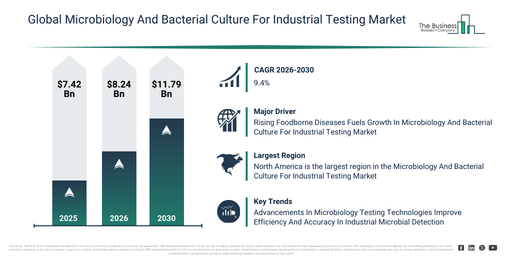
    The microbiology and bacterial culture for industrial testing market size has seen substantial growth over recent years. It is anticipated to increase from $7.42 billion in 2025 to $8.24 billion in 2026, demonstrating a compound annual growth rate (CAGR) of 11.1%. This historical growth can be linked to a surge in foodborne contamination incidents, an uptick in compulsory microbiological examinations, the advancement of industrial fermentation procedures, the expansion of pharmaceutical quality assessments, and the adoption of conventional culture-based methodologies.

    The market for microbiology and bacterial culture in industrial testing is projected to experience substantial expansion over the upcoming years. This market is anticipated to reach a valuation of $11.79 billion by 2030, demonstrating a compound annual growth rate (CAGR) of 9.4%. This projected growth during the forecast period stems from factors such as the escalating requirement for swift microbial testing, the proliferation of automated culture devices, the heightened desire for manufacturing processes free from contamination, the broadening scope of bioenergy and agricultural biotechnology, and increased capital directed towards sophisticated microbial diagnostics. Noteworthy trends anticipated during this period encompass sophisticated genomic profiling within industrial microbiology, systems for cloud-based microbial data management, the automation of culture and testing processes, microbial identification augmented by AI, and environmental monitoring systems integrated with IoT technology.

    Access Your Free Sample Report for In-Depth Market Insights:

    https://www.thebusinessresearchcompany.com/sample.aspx?id=15607&type=smp

    What Drivers Are Influencing Production Trends In The Microbiology And Bacterial Culture For Industrial Testing Market?

    The escalating occurrences of foodborne diseases are anticipated to drive the growth of the microbiology and bacterial culture for industrial testing market. These ailments stem from consuming food or beverages polluted with pathogenic microorganisms, toxins, or chemical substances. Factors contributing to this increase encompass evolving patterns in food production, distribution, and consumption, the globalization of food supply chains, insufficient food safety protocols, antimicrobial resistance, the effects of climate change on food production, and a rising intake of high-risk foods. Within industrial testing for foodborne diseases, microbiology and bacterial culture play a crucial role by enabling the detection and identification of pathogens, thereby ensuring food safety and averting outbreaks via stringent quality control. For instance, in February 2024, the UK Health Security Agency, a UK-based government body, reported that England and Wales saw 167 cases of listeriosis (a severe infection caused by eating food contaminated with the bacterium Listeria monocytogenes) in 2022, compared to 160 cases in 2021. Consequently, the increasing occurrence of foodborne diseases is a primary driver for the expansion of the microbiology and bacterial culture for industrial testing market.

    Which Segment Groups Are Influencing The Microbiology And Bacterial Culture For Industrial Testing Market?

    The microbiology and bacterial culture for industrial testing market covered in this report is segmented –

    1) By Consumable: Media, Reagents, Sera

    2) By Application: Food And Water Testing, Bioenergy And Agricultural Research, Other Applications

    3) By End User: Industrial Laboratories, Research Laboratories, Food Testing Laboratories, Diagnostic Laboratories, Other End Users

    Subsegments:

    1) By Media: Agar Plates, Broth Media, Selective Media, Differential Media, Transport Media

    2) By Reagents: Staining Reagents (Gram Stain, Acid-Fast Stain), Biochemical Reagents, PCR Reagents, Enzyme-Based Reagents, Chromogenic Reagents

    3) By Sera: Blood Serum, Animal Sera (Bovine Serum), Human Sera, Culture Sera

    Which Trends Are Shaping Activity Within The Microbiology And Bacterial Culture For Industrial Testing Market?

    Leading companies within the industrial microbiology and bacterial culture testing market are concentrating on creating cutting-edge, ready-to-use culture media plates. This focus aims to boost microbial detection effectiveness, streamline workflow processes, and refine the precision of contamination monitoring across diverse sectors. These ready-to-use plates provide an efficient method for enumerating and identifying microbial loads, thereby decreasing preparation time and elevating safety standards in laboratory settings. As an illustration, in February 2023, Hardy Diagnostics, a US-based producer of microbiology items, unveiled CompactDry TCR. This product is a ready-to-use dehydrated culture medium plate specifically engineered for the swift detection and enumeration of microorganisms. The CompactDry TCR plate facilitates total aerobic plate counts within a mere 24 hours, holds AOAC PTM-certification, and incorporates an innovative, self-diffusing design. This design simplifies colony interpretation, improves user safety, and simplifies microbial testing procedures.

    Who Are The Top-Performing Companies In The Microbiology And Bacterial Culture For Industrial Testing Market In Recent Years?

    Major companies operating in the microbiology and bacterial culture for industrial testing market are Thermo Fisher Scientific Inc., 3M Company, Danaher Corporation, Merck KGaA, Becton Dickinson and Company BD, Avantor Inc., bioMérieux SA, IDEXX Laboratories Inc., Bio-Rad Laboratories Inc., Bruker Microbiology and Diagnostics, Eiken Chemical Co Ltd, Hain Lifescience GmbH, Neogen Corporation, Hardy Diagnostics, LaMotte Company, Himedia Laboratories Pvt Ltd, Titan Biotech Limited, Serosep Ltd, Sartorius AG, Liofilchem Srl, R-Biopharm AG, MP Biomedicals LLC, CONDALAB, Alpha Teknova Inc.

    Access The Complete Report For Deeper Market Insights:

    https://www.thebusinessresearchcompany.com/report/microbiology-and-bacterial-culture-for-industrial-testing-global-market-report

    Which Region Is Anticipated To See The Fastest Growth In The Microbiology And Bacterial Culture For Industrial Testing Market?

    North America was the largest region in the microbiology and bacterial culture for industrial testing market in 2025. The regions covered in the microbiology and bacterial culture for industrial testing market report are Asia-Pacific, South East Asia, Western Europe, Eastern Europe, North America, South America, Middle East, Africa.

    Request Your Customized Microbiology And Bacterial Culture For Industrial Testing Market Research Report for Competitive Advantage:

    https://www.thebusinessresearchcompany.com/customise?id=15607&type=smp

    Browse Through More Reports Similar to the Global Microbiology And Bacterial Culture For Industrial Testing Market 2026, By The Business Research Company

    Clinical Microbiology Market Report 2026

    https://www.thebusinessresearchcompany.com/report/clinical-microbiology-global-market-report

    Industrial Microbiology Market Report 2026

    https://www.thebusinessresearchcompany.com/report/industrial-microbiology-global-market-report

    Microbiology Diagnostic Devices And Equipment Market Report 2026

    https://www.thebusinessresearchcompany.com/report/microbiology-diagnostic-devices-and-equipment-global-market-report

    Get in touch with us:

    The Business Research Company: https://www.thebusinessresearchcompany.com/

    Americas +1 310-496-7795

    Asia +44 7882 955267 & +91 8897263534

    Europe +44 7882 955267

    Email us at info@tbrc.info

    Follow us on:

    LinkedIn: https://in.linkedin.com/company/the-business-research-company

    YouTube: https://www.youtube.com/channel/UC24_fI0rV8cR5DxlCpgmyFQ

    Global Market Model: https://www.thebusinessresearchcompany.com/global-market-model
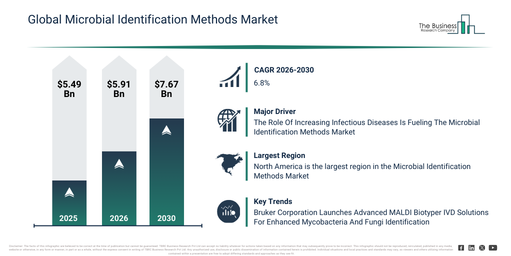
  • Global Microbial Identification Methods Market Set for Strong Expansion, Reaching $7.67 Billion With 6.8% CAGR by 2030

    Global Microbial Identification Methods Market Set for Strong Expansion, Reaching $7.67 Billion With 6.8% CAGR by 2030

    Uncover key drivers, emerging technologies, and competitive movements shaping the microbial identification methods market from 2026–2035 with trusted insights from The Business Research Company

    What is the expected shift in the Microbial Identification Methods Market’s size between 2026 and 2030?

    The microbial identification methods market size has experienced significant expansion in recent years. It is projected to increase from $5.49 billion in 2025 to $5.91 billion in 2026, growing at a compound annual growth rate (CAGR) of 7.7%. The historical progression of this market can be linked to factors such as a rise in infectious disease outbreaks, continued reliance on culture-based identification techniques, an upsurge in food safety testing, a concentrated regulatory focus on contamination control, and the broadening scope of clinical diagnostic microbiology.

    The microbial identification methods market size is projected to experience substantial expansion over the upcoming years, with an anticipated growth to $7.67 billion by 2030, exhibiting a compound annual growth rate (CAGR) of 6.8%. This growth during the forecast period is attributed to several factors, including the increasing adoption of genomic sequencing tests, the growing demand for automation in identification workflows, the advancement of rapid microbial testing technologies, the increasing integration of digital laboratory infrastructure, and rising investments in precision microbiology. Major trends expected in this period encompass genomic sequencing integration in microbial identification, cloud-based microbial data analytics, AI-assisted microbial classification, automated identification platforms in industrial laboratories, and IoT-enabled contamination monitoring solutions.

    Access Your Free Sample Report for In-Depth Market Insights:

    https://www.thebusinessresearchcompany.com/sample.aspx?id=16118&type=smp

    Which Drivers Are Shaping Strategic Decisions In The Microbial Identification Methods Market?

    The future expansion of the microbial identification methods market is anticipated to be fueled by the rising occurrence of infectious diseases. These diseases are conditions resulting from the entry of detrimental agents, known as pathogens—including viruses, bacteria, fungi, and parasites—into the body. Prominent examples of infectious diseases encompass HIV/AIDS (human immunodeficiency virus/acquired immunodeficiency syndrome), tuberculosis, and malaria, among others. This growing incidence of infectious diseases stems from factors such as antimicrobial resistance, climate shifts, and an expanding global population. Microbial identification techniques play a vital role in the diagnosis, treatment, and prevention of infectious diseases by supplying comprehensive data on the causative pathogens, thereby empowering healthcare providers to make well-informed choices for patient management. For example, as reported by the Canada-based federal authority, the Government of Canada, in January 2023, a total of 135 rabies samples were submitted in October 2022, followed by 159 rabies samples in November 2022. Consequently, the rising occurrence of infectious diseases is a key factor driving the expansion of the microbial identification methods market.

    What Segment Classifications Make Up The Microbial Identification Methods Market?

    The microbial identification methods market covered in this report is segmented –

    1) By Method: Genotypic, Phenotypic, Proteotypic

    2) By Type: Bacterial Identification System, Microbial Enumeration System, Bacterial Resistance Identification Systems, Microbiology Analyzer, Other Types

    3) By End User: Pharmaceutical And Biotechnology Companies, Hospitals And Diagnostic Laboratories, Food Testing Laboratories, Other End-Users

    Subsegments:

    1) By Genotypic: Polymerase Chain Reaction (PCR), 16S rRNA Sequencing, DNA Microarrays, Next-Generation Sequencing (NGS), Whole Genome Sequencing (WGS), Ribotyping, Fluorescence In Situ Hybridization (FISH), Random Amplified Polymorphic DNA (RAPD) Analysis

    2) By Phenotypic: Culture-Based Methods, Biochemical Testing, Microscopic Examination, Gram Staining, Antibiotic Susceptibility Testing (AST), Growth Pattern Identification, Colony Morphology Characterization

    3) By Proteotypic: Mass Spectrometry (MALDI-TOF MS), Western Blotting, Protein Profiling, Immunoassays (ELISA), Two-Dimensional Gel Electrophoresis

    Which Trends Are Influencing The Development Of The Microbial Identification Methods Market?

    Leading companies in the microbial identification methods market are concentrating on developing innovative offerings, such as mycobacteria and fungi IVD solutions, to solidify their market presence. Mycobacteria and fungi in vitro diagnostic (IVD) solutions describe a spectrum of products and technologies crafted to detect, identify, and characterize mycobacterial and fungal pathogens within clinical samples. For example, in April 2023, Bruker Corporation, a US-based manufacturer of scientific instruments for molecular and materials research, released MALDI Biotyper IVD software, a new mycobacteria and fungi IVD solution. Its distinctive capabilities include enhanced accuracy and speed in microbial identification, employing MALDI-TOF (matrix-assisted laser desorption/ionization-time of flight) mass spectrometry technology. This system delivers rapid identification of mycobacteria and fungi from cultured samples within minutes, substantially cutting down the time needed compared to older methods. These new solutions also feature expanded databases and robust software algorithms for better specificity and sensitivity, allowing for the precise identification of a broader variety of mycobacterial and fungal species.

    Which Leading Companies Dominate The Microbial Identification Methods Market Share?

    Major companies operating in the microbial identification methods market are Merck KGaA, Thermo Fisher Scientific Inc., Abbott Laboratories, Becton Dickinson and Company, GE Healthcare, Avantor Inc., Eurofins Scientific SE, Lonza Group AG, Sartorius AG, Charles River Laboratories International Inc., bioMerieux SA, Shimadzu Corporation, Waters Corporation, Bio-Rad Laboratories Inc., Bruker Corporation, Qiagen N.V., Beckman Coulter Inc., HiMedia Laboratories, Hardy Diagnostics, LuminUltra Technologies Ltd., Biolog Inc.

    Access The Complete Report For Deeper Market Insights:

    https://www.thebusinessresearchcompany.com/report/microbial-identification-methods-global-market-report

    Which Global Regions Are Shaping The Competitive Landscape Of The Microbial Identification Methods Market?

    North America was the largest region in the microbial identification methods market in 2025. The regions covered in the microbial identification methods market report are Asia-Pacific, South East Asia, Western Europe, Eastern Europe, North America, South America, Middle East, Africa.

    Request Your Customized Microbial Identification Methods Market Research Report for Competitive Advantage:

    https://www.thebusinessresearchcompany.com/customise?id=16118&type=smp

    Browse Through More Reports Similar to the Global Microbial Identification Methods Market 2026, By The Business Research Company

    Industrial Microbiology Market Report 2026

    https://www.thebusinessresearchcompany.com/report/industrial-microbiology-global-market-report

    Microbial Identification Market Report 2026

    https://www.thebusinessresearchcompany.com/report/microbial-identification-global-market-report

    Agricultural Microbial Market Report 2026

    https://www.thebusinessresearchcompany.com/report/agricultural-microbial-global-market-report

    Get in touch with us:

    The Business Research Company: https://www.thebusinessresearchcompany.com/

    Americas +1 310-496-7795

    Asia +44 7882 955267 & +91 8897263534

    Europe +44 7882 955267

    Email us at info@tbrc.info

    Follow us on:

    LinkedIn: https://in.linkedin.com/company/the-business-research-company

    YouTube: https://www.youtube.com/channel/UC24_fI0rV8cR5DxlCpgmyFQ

    Global Market Model: https://www.thebusinessresearchcompany.com/global-market-model
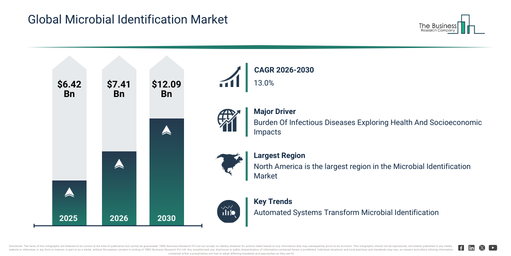
  • Microbial Identification Market Growth Projection: Expected to Surpass $12.09 Billion by 2030 at 13% CAGR

    Microbial Identification Market Growth Projection: Expected to Surpass $12.09 Billion by 2030 at 13% CAGR

    Uncover key drivers, emerging technologies, and competitive movements shaping the microbial identification market from 2026–2035 with trusted insights from The Business Research Company

    What growth pattern is forecast for the Microbial Identification Market size between 2026 and 2035?

    The microbial identification market size has seen rapid expansion in recent years. It is projected to grow from $6.42 billion in 2025 to $7.41 billion in 2026, achieving a compound annual growth rate (CAGR) of 15.4%. The historical increase in this market can be attributed to factors such as the rising prevalence of infectious diseases, the ongoing reliance on culture-based diagnostics, the expansion of food and water safety programs, an increase in regulatory compliance requirements, and the growing adoption of clinical microbiology testing.

    The microbial identification market is projected to experience substantial expansion in the coming years. By 2030, its valuation is forecast to reach $12.09 billion, driven by a compound annual growth rate (CAGR) of 13.0%. This growth during the forecast period is primarily fueled by progress in sequencing technologies, the increasing need for quick diagnostic approaches, enhanced automation within laboratory processes, the incorporation of digital solutions into microbial testing, and the broadening use cases in pharmaceutical quality assurance. Key developments expected throughout this period encompass the incorporation of genomic sequencing into microbial identification, management of microbial data via cloud platforms, AI-supported classification of microorganisms, automated identification systems for industrial applications, and IoT-driven surveillance in microbial detection.

    Access Your Free Sample Report for In-Depth Market Insights:

    https://www.thebusinessresearchcompany.com/sample.aspx?id=15606&type=smp

    Which Drivers Are Impacting Market Performance In The Microbial Identification Market?

    The increasing occurrence of infectious diseases is anticipated to fuel the expansion of the microbial identification market in the future. These illnesses are caused by pathogenic microorganisms such as bacteria, viruses, fungi, parasites, or prions. Their development is influenced by climate change, environmental disruption, antimicrobial resistance, weakened immune systems, and ecological disturbances. Microbial identification is crucial for precise diagnosis, targeted therapies, disease surveillance, outbreak management, and effective antimicrobial stewardship in addressing infectious diseases. For instance, in March 2024, the Centers for Disease Control and Prevention, a US-based government agency, reported that tuberculosis cases increased from 8,320 in 2022 to 9,615 in 2023, representing an increase of 1,295 cases. Hence, the rising prevalence of infectious diseases is a key driver for the microbial identification market.

    What Segment Types Are Examined In The Microbial Identification Market?

    The microbial identification market covered in this report is segmented –

    1) By Products And Services: Instruments, Consumables, Services

    2) By Methods: Phenotypic Methods, Proteotypic Methods, Genotypic Methods

    3) By Application: Diagnostic Application, Environmental Application, Food and Beverages Testing, Pharmaceutical Application, Other Applications

    4) By End User: Pharmaceutical And Biotechnology Industry, Food And Beverage Industry, Water And Environment Industry, Independent Research Laboratories, Diagnostic Laboratories, Hospitals, Other End Users

    Subsegments:

    1) By Instruments: Mass Spectrometers ( Maldi-Tof), Chromatography Systems, Pcr Systems, Microplate Readers, Automated Identification Systems

    2) By Consumables: Reagents And Kits ( Pcr Reagents, Biochemical Reagents), Culture Media, Sample Collection Tools ( Swabs, Vials), Test Strips

    3) By Services: Microbial Identification Services ( Laboratory Testing), Consulting And Training Services, Technical Support Services, Data Analysis Services

    What Trends Are Expected To Impact The Competitive Landscape Of The Microbial Identification Market?

    Companies operating in the microbial identification market are increasingly focused on developing advanced solutions, such as automated sample preparation platforms, to enhance the speed and accuracy of microbial detection. These sample preparation platforms are technological systems designed to process and prepare biological or clinical samples for analysis, thereby boosting efficiency and diagnostic precision. For example, in September 2024, Accelerate Diagnostics Inc., a US-based in vitro diagnostics company, secured FDA clearance for its Accelerate Arc system. This advanced automated solution is specifically designed to rapidly identify microbes directly from positive blood culture samples. Through the automation of the sample preparation process, achieved by its integration with the Bruker MALDI Biotyper CA System, the solution considerably shortens the waiting period for results, allowing clinicians to begin targeted antibiotic therapy more quickly, improve patient outcomes, and diminish the risk of antimicrobial resistance. The FDA-cleared Accelerate Arc system is engineered to elevate operational efficiency in clinical laboratories.

    Who Are The Major Companies Operating In The Microbial Identification Market?

    Major companies operating in the microbial identification market are Merck & Co Inc, ThermoFisher Scientific Inc, Danaher Corporation, Siemens Healthineers, Becton Dickinson and Company, Avantor Inc, Eurofins Scientific Corporation, Beckman Coulter Inc, VWR International LLC, Charles River Laboratories International Inc, PerkinElmer Inc, Wickham Micro Limited, Bruker Corporation, bioMérieux SA, Biolog Inc, Liofilchem Srl, Shimadzu Corporation, Scenker Biological Technology Co Ltd, Agilent Technologies Inc, Bio Rad Laboratories Inc, QIAGEN NV, Roche Diagnostics, Illumina Inc, Oxford Nanopore Technologies

    Access The Complete Report For Deeper Market Insights:

    https://www.thebusinessresearchcompany.com/report/microbial-identification-global-market-report

    Which Regions Are Poised For Strategic Growth In The Microbial Identification Market?

    North America was the largest region in the microbial identification market in 2025. Asia-Pacific is expected to be the fastest-growing region in the forecast period. The regions covered in the microbial identification market report are Asia-Pacific, South East Asia, Western Europe, Eastern Europe, North America, South America, Middle East, Africa.

    Request Your Customized Microbial Identification Market Research Report for Competitive Advantage:

    https://www.thebusinessresearchcompany.com/customise?id=15606&type=smp

    Browse Through More Reports Similar to the Global Microbial Identification Market 2026, By The Business Research Company

    Agricultural Microbial Market Report 2026

    https://www.thebusinessresearchcompany.com/report/agricultural-microbial-global-market-report

    Microbial Identification Methods Market Report 2026

    https://www.thebusinessresearchcompany.com/report/microbial-identification-methods-global-market-report

    Bactericide Market Report 2026

    https://www.thebusinessresearchcompany.com/report/bactericide-global-market-report

    Get in touch with us:

    The Business Research Company: https://www.thebusinessresearchcompany.com/

    Americas +1 310-496-7795

    Asia +44 7882 955267 & +91 8897263534

    Europe +44 7882 955267

    Email us at info@tbrc.info

    Follow us on:

    LinkedIn: https://in.linkedin.com/company/the-business-research-company

    YouTube: https://www.youtube.com/channel/UC24_fI0rV8cR5DxlCpgmyFQ

    Global Market Model: https://www.thebusinessresearchcompany.com/global-market-model
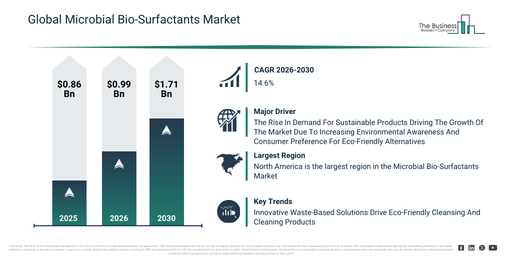
  • Microbial Bio-Surfactants Market Forecast 2026–2035: How to Leverage Market Growth

    Microbial Bio-Surfactants Market Forecast 2026–2035: How to Leverage Market Growth

    Uncover key drivers, emerging technologies, and competitive movements shaping the microbial bio-surfactants market from 2026–2035 with trusted insights from The Business Research Company

    How much larger will the Microbial Bio-Surfactants Market be in 2030 compared with 2026?

    The market for microbial bio-surfactants has seen substantial expansion in recent years. Its valuation is projected to increase from $0.86 billion in 2025 to $0.99 billion in 2026, demonstrating a compound annual growth rate (CAGR) of 14.9%. This historical expansion is primarily due to several factors, including increasing environmental regulations affecting synthetic surfactants, early adoption in oilfield and remediation applications, advancements in microbial fermentation processes, a surge in demand for industrial cleaning, and expanding research efforts in green chemistry.

    The microbial bio-surfactants market is anticipated to experience substantial growth over the next few years, with its size projected to reach $1.71 billion by 2030, exhibiting a compound annual growth rate (CAGR) of 14.6%. This projected growth is largely propelled by a rising demand for sustainable chemicals, the expansion of bio-based product ranges, increased investments in industrial biotechnology, broader adoption within personal care and food processing industries, and a greater emphasis on circular economy principles. Significant developments expected in this forecast timeframe include the increasing integration of bio-based surface active agents, a heightened call for eco-friendly formulations, wider utilization in industrial and agricultural sectors, the scaling up of fermentation-based production techniques, and an elevated focus on product biodegradability.

    Access Your Free Sample Report for In-Depth Market Insights:

    https://www.thebusinessresearchcompany.com/sample.aspx?id=24605&type=smp

    What Drivers Are Guiding Growth Patterns In The Microbial Bio-Surfactants Market?

    The increasing demand for sustainable products is projected to drive the future expansion of the microbial biosurfactants market. Sustainable products are defined as goods designed, manufactured, and utilized in ways that minimize environmental harm, conserve natural resources, and foster social and economic well-being throughout their entire lifecycle. This escalating demand for sustainable products primarily arises from growing environmental awareness, as consumers become more mindful of the ecological footprint of their purchases and seek alternatives that lessen damage to the planet. Microbial biosurfactants support sustainable products by offering eco-friendly, biodegradable options that decrease reliance on synthetic chemicals and mitigate environmental impact. For instance, in April 2024, the National Association of Convenience Stores, a US-based trade association representing the convenience and fuel retailing industry, reported survey findings from 2024 showing that 80% of consumers are concerned about the environmental impact of their purchases, a rise from 68% in 2023 and 66% in 2022. Thus, the rising need for sustainable products is propelling the microbial biosurfactants market.

    Which Segments Are Driving Activity In The Microbial Bio-Surfactants Market?

    The microbial bio-surfactants market covered in this report is segmented –

    1) By Ionic Character: Anionic Biosurfactants, Cationic Biosurfactants, Non Ionic Biosurfactants, Amphoteric Biosurfactants

    2) By Product: Methyl Ethyl Sulfonates, Alkyl Polyglucosides, Sorbitan Esters, Sophorolipids, Rhamnolipids, Sucrose Esters, Lipopeptides

    3) By Source: Plant Based, Microbial Based, Genetically Engineered Microbial Sources

    4) By Applications: Household Detergents, Agricultural Chemicals, Industrial Cleaners, Food Processing, Oilfield Chemicals, Personal Care, Textiles

    Subsegments:

    1) By Anionic Biosurfactants: Surfactin, Lichenysin, Fatty Acid Salts

    2) By Cationic Biosurfactants: Amino Acid-Based Biosurfactants, Peptide-Lipid Conjugates

    3) By Non-Ionic Biosurfactants: Trehalose Lipids, Mannosylerythritol Lipids, Polyol Lipids

    4) By Amphoteric Biosurfactants: Zwitterionic Glycolipids, Zwitterionic Lipopeptides

    Which Trends Are Guiding The Evolution Of The Microbial Bio-Surfactants Market?

    Leading companies operating in the microbial biosurfactants market are concentrating on developing sustainable solutions, such as waste-based biosurfactants, to lessen environmental impact and reduce manufacturing costs. Waste-based biosurfactants are surface-active compounds generated by microbes that use waste materials as primary inputs, thus promoting production that is both eco-friendly and economical. For instance, in October 2024, AmphiStar BV, a Belgium-based biotechnology company, unveiled two new waste-based biosurfactants, AmphiCare and AmphiClean, specifically designed for the personal care and home care industries. AmphiCare delivers high-performance, gentle, and skin-friendly cleansing for personal care products, being fully produced from upcycled bio-waste. It is devoid of sulfates, palm oil, and fossil-based ingredients, considerably decreasing its environmental footprint. AmphiClean provides potent, biodegradable cleaning solutions for home care, exclusively utilizing food and agricultural waste streams. It effectively eliminates grease and dirt while remaining palm-free, fossil-free, and safe for ecosystems.

    Which Major Firms Are Strengthening Their Position In The Microbial Bio-Surfactants Market?

    Major companies operating in the microbial bio-surfactants market are Kaneka Corporation, BASF SE, Evonik Industries AG, Solvay S.A., Givaudan SA, Clariant International AG, Stepan Company, Croda International Plc, AmphiStar BV, Jeneil Biotech Inc., BiOWiSH Technologies Inc., Geocon Products Inc., Holiferm Limited, AGAE Technologies LLC, Biotensidon GmbH, GlycoSurf Inc., Tensiogreen LLC, Locus Performance Ingredients LLC, Toyobo Corporation Ltd., Shaanxi Deguan Biotechnology Co. Ltd.

    Access The Complete Report For Deeper Market Insights:

    https://www.thebusinessresearchcompany.com/report/microbial-bio-surfactants-global-market-report

    Which Regions Are Projected To Dominate The Microbial Bio-Surfactants Market In The Coming Years?

    North America was the largest region in the microbial bio-surfactants market in 2025. Asia-Pacific is expected to be the fastest-growing region in the forecast period. The regions covered in the microbial bio-surfactants market report are Asia-Pacific, South East Asia, Western Europe, Eastern Europe, North America, South America, Middle East, Africa.

    Request Your Customized Microbial Bio-Surfactants Market Research Report for Competitive Advantage:

    https://www.thebusinessresearchcompany.com/customise?id=24605&type=smp

    Browse Through More Reports Similar to the Global Microbial Bio-Surfactants Market 2026, By The Business Research Company

    Eubiotics Market Report 2026

    https://www.thebusinessresearchcompany.com/report/eubiotics-global-market-report

    Agricultural Surfactants Market Report 2026

    https://www.thebusinessresearchcompany.com/report/agricultural-surfactants-global-market-report

    Amphoteric Surfactants Market Report 2026

    https://www.thebusinessresearchcompany.com/report/amphoteric-surfactants-global-market-report

    Get in touch with us:

    The Business Research Company: https://www.thebusinessresearchcompany.com/

    Americas +1 310-496-7795

    Asia +44 7882 955267 & +91 8897263534

    Europe +44 7882 955267

    Email us at info@tbrc.info

    Follow us on:

    LinkedIn: https://in.linkedin.com/company/the-business-research-company

    YouTube: https://www.youtube.com/channel/UC24_fI0rV8cR5DxlCpgmyFQ

    Global Market Model: https://www.thebusinessresearchcompany.com/global-market-model
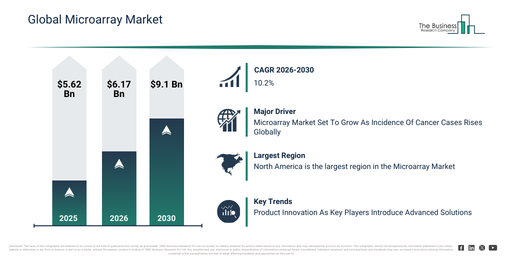
  • Global Microarray Market 2026–2030: Forecast Insights for Business Planning

    Global Microarray Market 2026–2030: Forecast Insights for Business Planning

    Uncover key drivers, emerging technologies, and competitive movements shaping the microarray market from 2026–2035 with trusted insights from The Business Research Company

    Starting from its 2026 valuation, what market size is the Microarray Market expected to reach by 2030?

    The microarray market has experienced substantial growth in recent years. Its value is projected to climb from $5.62 billion in 2025 to $6.17 billion in 2026, advancing at a compound annual growth rate (CAGR) of 9.8%. This historical expansion can be attributed to several factors, including the increasing adoption of gene expression profiling, developments in DNA sequencing technologies, the expanded utilization of microarrays in cancer research, the broadening of drug discovery programs, and the rising prevalence of genetic disorders.

    The microarray market size is anticipated to undergo significant growth in the coming years. It is projected to expand to $9.1 billion by 2030, demonstrating a compound annual growth rate (CAGR) of 10.2%. This expansion during the forecast period can be attributed to factors such as the escalating demand for personalized medicine, continuous advancements in bioinformatics processing tools, the increasing adoption of automation within microarray workflows, the broadening scope of applications in toxicological testing, and the expanding requirement for high-throughput genomic analysis. Furthermore, major trends anticipated in this period include genomics-driven microarray optimization, the utilization of cloud-based data processing for microarray analysis, AI-enhanced gene expression interpretation, the development of automated microarray manufacturing systems, and IoT-enabled sample tracking and monitoring.

    Access Your Free Sample Report for In-Depth Market Insights:

    https://www.thebusinessresearchcompany.com/sample.aspx?id=10742&type=smp

    What Drivers Are Driving Adoption Within The Microarray Market?

    The microarray market’s expansion is anticipated to be driven by the increasing incidence of cancer cases. Cancer is defined as a condition where certain body cells grow uncontrollably and disseminate to other parts of the body. The rise in cancer diagnoses is largely attributable to the increasing prevalence of established cancer risk factors, exposure to particular chemicals, an aging populace, and common cancers like breast cancer, lung cancer, and bronchial cancer, where microarray technology aids researchers in pinpointing changes in gene expression potentially linked to the disease. Illustratively, in January 2023, the American Cancer Society, a US-based voluntary health organization, stated that around 9,910 children in the US under the age of 15 received a cancer diagnosis, and approximately 1,040 children under 15 died from cancer that year, 2023. Therefore, the growing number of cancer cases is fueling the growth of the microarray market.

    How Is The Microarray Market Organized Into Various Segments?

    The microarray market covered in this report is segmented –

    1) By Type: DNA Microarray, Protein Microarray, Other Types

    2) By Application: Disease Diagnosis, Cancer Genomic Analysis, Drug Discovery, Genomic Sequencing, Expression Analysis, Toxicological Research, Other Applications

    3) By End-User: Pharmaceutical Industry, Biotechnology Industry, Academic and Research Laboratories, Other End-Users

    Subsegments:

    1) By DNA Microarray: CDNA Microarray, Oligonucleotide Microarray, SNP Microarray, Comparative Genomic Hybridization (CGH) Microarray

    2) By Protein Microarray: Antibody Microarray, Antigen Microarray, Receptor Microarray, Enzyme Microarray

    3) By Other Types: Cell Microarray, Tissue Microarray, RNA Microarray

    What Trends Are Projected To Support The Growth Of The Microarray Market?

    Leading companies in the microarray market are focusing their efforts on developing chromosomal microarrays to strengthen their market position. Chromosomal Microarray Analysis (CMA) is at the forefront of transformative technologies in genomic medicine, significantly enhancing diagnostic capabilities. For example, in August 2023, Thermo Fisher Scientific, Inc., a US-based provider of analytical instruments, life sciences solutions, specialty diagnostics, and laboratory, pharmaceutical, and biotechnology services, launched the Applied Biosystems CytoScan HD Accel array. This new chromosomal microarray is designed to improve productivity, efficiency, and profitability in cytogenetic research labs. This innovative array boasts an industry-leading two-day turnaround time, representing a significant advancement in the field. The Applied Biosystems CytoScan HD Accel array conducts a comprehensive analysis of the entire human genome. With enhanced coverage spanning over 5,000 critical genomic regions, it provides valuable insights into chromosomal variants. This advanced technology proves beneficial for a wide range of applications, including prenatal and postnatal research, as well as cancer-related studies.

    Who Are The Primary Competitors In The Global Microarray Market?

    Major companies operating in the microarray market are Agilent Technologies Inc., Arrayit Corporation, Bio-Rad Laboratories Inc., Danaher Corporation, GE Healthcare Inc., Illumina Inc., Merck KGaA, Microarray Inc., PerkinElmer Inc., Thermo Fisher Scientific Inc., Molecular Devices LLC, RayBiotech Life Inc., Schott Minifab AG, Full Moon Biosystems Inc., CapitalBio Technology Co. Ltd., Roche Diagnostics Ltd., Affymetrix Inc., SCIENION AG, NextGen Sciences Inc., PathogenDx Inc., BioGenomics Limited, BioMicro Systems Inc., Biostatus Limited, Biotechrabbit GmbH, INanoBio Inc.

    Access The Complete Report For Deeper Market Insights:

    https://www.thebusinessresearchcompany.com/report/microarray-global-market-report

    Which Region Is Expected To Experience The Fastest Growth In The Microarray Market?

    North America was the largest region in the microarray market in 2025.Asia-Pacific is expected to be the fastest-growing region in the global microarray market report during the forecast period. The regions covered in the microarray market report are Asia-Pacific, South East Asia, Western Europe, Eastern Europe, North America, South America, Middle East, Africa.

    Request Your Customized Microarray Market Research Report for Competitive Advantage:

    https://www.thebusinessresearchcompany.com/customise?id=10742&type=smp

    Browse Through More Reports Similar to the Global Microarray Market 2026, By The Business Research Company

    Microarray Scanners Market Report 2026

    https://www.thebusinessresearchcompany.com/report/microarray-scanners-global-market-report

    Dna Microarray Market Report 2026

    https://www.thebusinessresearchcompany.com/report/dna-microarray-global-market-report

    Tissue Microarray Market Report 2026

    https://www.thebusinessresearchcompany.com/report/tissue-microarray-global-market-report

    Get in touch with us:

    The Business Research Company: https://www.thebusinessresearchcompany.com/

    Americas +1 310-496-7795

    Asia +44 7882 955267 & +91 8897263534

    Europe +44 7882 955267

    Email us at info@tbrc.info

    Follow us on:

    LinkedIn: https://in.linkedin.com/company/the-business-research-company

    YouTube: https://www.youtube.com/channel/UC24_fI0rV8cR5DxlCpgmyFQ

    Global Market Model: https://www.thebusinessresearchcompany.com/global-market-model
  • Micro Computed Tomography Market Outlook 2026–2035: Growth Drivers and Industry Forecast

    Micro Computed Tomography Market Outlook 2026–2035: Growth Drivers and Industry Forecast

    Uncover key drivers, emerging technologies, and competitive movements shaping the micro computed tomography market from 2026–2035 with trusted insights from The Business Research Company

    Across 2026–2030, what is the expected market valuation path of the Micro Computed Tomography Market?

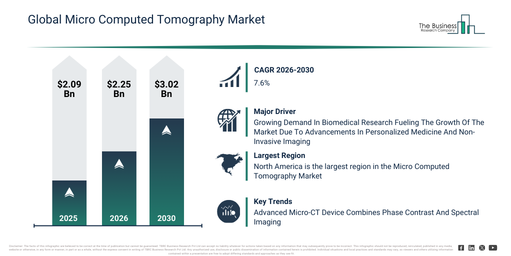
    The micro computed tomography market has seen significant expansion in recent years. It is anticipated to increase from $2.09 billion in 2025 to $2.25 billion in 2026, achieving a compound annual growth rate (CAGR) of 7.8%. The historical growth of this market can be attributed to the expanding use of micro-CT in material analysis, the increasing demand for non-destructive testing, its adoption in orthopedic and dental research, advancements in imaging resolution technology, and its growing application in geological core analysis.

    The micro computed tomography market is projected to experience substantial expansion over the coming years. By 2030, its valuation is anticipated to reach $3.02 billion, exhibiting a compound annual growth rate (CAGR) of 7.6%. This anticipated growth is driven by factors such as the broadening use cases in life sciences and agribio, increased adoption of automation within imaging processes, a greater need for high-throughput micro-CT systems, improvements in imaging software and data analysis tools, and the expansion of personalized medicine research. Key developments anticipated during this timeframe involve precision imaging facilitated by genomics integration, automated micro-CT systems for smart manufacturing, cloud-based 3D imaging analytics, AI-powered microstructure interpretation, and IoT-enabled micro-CT monitoring systems.

    Access Your Free Sample Report for In-Depth Market Insights:

    https://www.thebusinessresearchcompany.com/sample.aspx?id=24321&type=smp

    Which Drivers Are Supporting The Rise Of The Micro Computed Tomography Market?

    The increasing need within biomedical research is anticipated to drive the expansion of the micro computed tomography market in the future. Biomedical research involves the scientific examination of biological processes and illnesses, aiming to enhance medical understanding, create novel therapies, and promote human health. This rising demand in biomedical research largely stems from a heightened emphasis on personalized medicine, where treatments are customized to individual genetic makeups for more precise and effective healthcare. Micro computed tomography (micro-CT) contributes significantly to biomedical research by offering high-resolution, non-invasive imaging, enabling clear depiction of biological structures and thereby aiding in the investigation of diseases, tissue engineering, and pharmaceutical development. For example, the BioIndustry Association (BIA), a UK trade association, reported in January 2025 that the UK biotech sector experienced notable growth in 2024, securing £3.5 billion (around $4.4 billion) in investment, which marks a substantial 94% rise compared to 2023. Consequently, the expanding requirements in biomedical research are propelling the growth of the micro computed tomography market.

    What Segments Are Identified Within The Structure Of The Micro Computed Tomography Market?

    The micro computed tomography market covered in this report is segmented –

    1) By Product Type: In-Vivo, In-Vitro

    2) By Application: Life Sciences, Orthopedics, Dentistry, Agribio, Material Science, Geology Or Oil And Gas Geology

    3) By End User: Industries, Research Institutes, Diagnostic Imaging Labs, Dental Laboratories, Other End Users

    Subsegments:

    1) By In-Vivo: Small Animal Imaging Systems, Live Tissue Imaging, Functional Imaging, Longitudinal Studies

    2) By In-Vitro: Bone And Hard Tissue Analysis, Material Characterization, Industrial Inspection, Ex Vivo Biological Imaging, Forensic Imaging

    Which Trends Are Influencing The Performance And Direction Of The Micro Computed Tomography Market?

    Major entities within the micro computed tomography market are prioritizing the creation of advanced products, such as non-destructive imaging systems, to improve high-resolution internal structure analysis without causing sample damage. Non-destructive imaging systems are technologies that acquire detailed images of objects or structures without harm, typically utilized for inspection, analysis, and quality control across diverse industries. For example, in October 2024, KA Imaging Inc., a Canada-based medical technology company, unveiled the inCiTe 2.0 3D X-ray microscope, an innovative micro computed tomography system that combines both phase contrast and spectral imaging capabilities. This imaging apparatus, featuring the BrillianSe detector with an 8-micron pixel size, provides high-resolution 3D imaging for non-destructive testing in aerospace, battery research, and academia. It supports phase contrast and spectral imaging to visualize low-density materials and differentiate multiple materials in a single scan.

    Which Key Market Players Are Investing In Expansion And Innovation Within The Micro Computed Tomography Market?

    Major companies operating in the micro computed tomography market are Bruker Corporation, General Electric Company, Hitachi Ltd., Thermo Fisher Scientific Inc., Baker Hughes Company, ZEISS Group, Nikon Corporation, Shimadzu Corporation, Varex Imaging Corporation, Comet Holding AG, ProCon X Ray GmbH, WENZEL Group, Matsusada Precision, Mediso Ltd., Illinois Tool Works Inc., KA Imaging Inc., Scanco Medical AG, North Star Imaging Inc, RX Solutions SAS, TESCAN Group, Rigaku Corporation, TriFoil Imaging Inc, MILabs B V

    Access The Complete Report For Deeper Market Insights:

    https://www.thebusinessresearchcompany.com/report/micro-computed-tomography-global-market-report

    Which Geographic Areas Are Emerging As Strong Markets For The Micro Computed Tomography Market?

    North America was the largest region in the micro computed tomography market in 2025. Asia-Pacific is expected to be the fastest-growing region in the forecast period. The regions covered in the micro computed tomography market report are Asia-Pacific, South East Asia, Western Europe, Eastern Europe, North America, South America, Middle East, Africa.

    Request Your Customized Micro Computed Tomography Market Research Report for Competitive Advantage:

    https://www.thebusinessresearchcompany.com/customise?id=24321&type=smp

    Browse Through More Reports Similar to the Global Micro Computed Tomography Market 2026, By The Business Research Company

    Computed Tomography Ct Scanner Market Report 2026

    https://www.thebusinessresearchcompany.com/report/computed-tomography-ct-scanner-global-market-report

    Cone Beam Computed Tomography Market Report 2026

    https://www.thebusinessresearchcompany.com/report/cone-beam-computed-tomography-global-market-report

    Medical Imaging Market Report 2026

    https://www.thebusinessresearchcompany.com/report/medical-imaging-global-market-report

    Get in touch with us:

    The Business Research Company: https://www.thebusinessresearchcompany.com/

    Americas +1 310-496-7795

    Asia +44 7882 955267 & +91 8897263534

    Europe +44 7882 955267

    Email us at info@tbrc.info

    Follow us on:

    LinkedIn: https://in.linkedin.com/company/the-business-research-company

    YouTube: https://www.youtube.com/channel/UC24_fI0rV8cR5DxlCpgmyFQ

    Global Market Model: https://www.thebusinessresearchcompany.com/global-market-model
  • mHealth Apps Market 2026–2030: Emerging Trends and Forecast Opportunities

    mHealth Apps Market 2026–2030: Emerging Trends and Forecast Opportunities

    Uncover key drivers, emerging technologies, and competitive movements shaping the mhealth apps market from 2026–2035 with trusted insights from The Business Research Company

    What size range is anticipated for the mHealth Apps Market from 2026 to 2030?

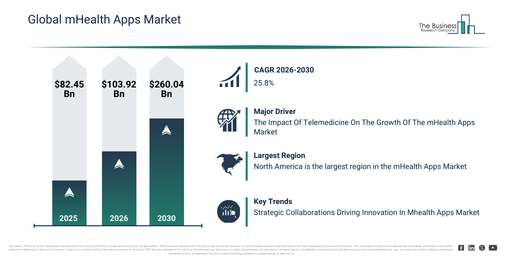
    The mhealth apps market has seen substantial expansion in recent years. Its valuation is anticipated to rise from $82.45 billion in 2025 to $103.92 billion in 2026, achieving a compound annual growth rate (CAGR) of 26.0%. The market’s growth historically has been fueled by factors such as increased smartphone adoption, the rising occurrence of chronic illnesses, the expanding use of wearable health devices, the spread of telehealth services, and greater recognition of digital health solutions.

    The mhealth apps market is projected to experience substantial expansion over the upcoming years. This market is anticipated to reach a valuation of $260.04 billion by 2030, exhibiting a compound annual growth rate (CAGR) of 25.8%. Factors contributing to this growth during the projection period include progress in AI-powered diagnostics, a rising need for customized health applications, the broadening of remote patient monitoring initiatives, the incorporation of genomics into mobile health solutions, and the increasing uptake of cloud-based healthcare frameworks. Key trends identified for the forecast period encompass AI-driven predictive health analyses, the consolidation of health data via cloud platforms, IoT-enabled remote monitoring environments, extended reality (XR) based patient interaction systems, and personalized health applications connected with genomics.

    Access Your Free Sample Report for In-Depth Market Insights:

    https://www.thebusinessresearchcompany.com/sample.aspx?id=6519&type=smp

    What Drivers Are Affecting Demand In The mHealth Apps Market?

    The expanding implementation of telemedicine is projected to stimulate the growth of the mHealth apps market in the future. Telemedicine refers to the provision of healthcare services through digital communication technologies, enabling patients to consult with healthcare providers remotely. The increase in e-medicine is driven by the rising demand for convenient and accessible healthcare options, a trend particularly underscored by the COVID-19 pandemic. Telemedicine benefits the mHealth apps market by integrating remote healthcare services, allowing users to consult with doctors and manage their health conveniently via their mobile devices. For instance, in May 2024, a report published by Eurostat, a Luxembourg-based government agency, revealed that in 2023, 8.5% of individuals in the EU aged 16 to 74 participated in online consultations using the internet. Thus, the growing adoption of telemedicine is propelling the expansion of the mHealth app market.

    Which Segments Are Gaining Traction In The mHealth Apps Market?

    The mhealth apps market covered in this report is segmented –

    1) By App Type: Disease And Treatment Management, Wellness Management, Other App Types

    2) By Connected Medical Devices: Heart Rate Meters, Wearable Fitness Sensor Device, Blood Pressure Monitors, Pulse Oximeters, Other Connected Medical Devices

    3) By Application: Monitoring Services, Fitness Solutions, Diagnostic Services, Treatment Services, Other Applications

    4) By End-User: Physicians, Patients, Insurance Companies, Research Centers, Pharmacy, Biopharmaceutical Companies, Government, Tech Companies, Other End-Users

    Subsegments:

    1) By Disease And Treatment Management: Chronic Disease Management Apps, Medication Adherence Apps, Remote Monitoring Apps

    2) By Wellness Management: Fitness And Exercise Tracking Apps, Nutrition And Diet Apps, Mental Health And Mindfulness Apps

    3) By Other App Types: Health Education And Awareness Apps, Telehealth And Virtual Consultation Apps, Personal Health Record (PHR) Apps

    What Long-Term Trends Are Expected To Shape The Future Of The mHealth Apps Market?

    Leading companies in the mHealth Apps market are increasingly adopting strategic collaborations to deliver dependable services to their clientele. Such collaborations involve mutually advantageous partnerships between two or more independent entities, working jointly towards common objectives that align with their respective strategic aims. A prime illustration of this trend occurred in October 2023, when Cedars-Sinai, a US-based non-profit medical center, announced a partnership with K Health, a US-based primary care company. Through this alliance, Cedars-Sinai, leveraging K Health’s digital primary care technology, launched a new mobile application named Cedars-Sinai Connect. This application is designed to offer convenient virtual healthcare services to both new and existing patients across California. Key features of the app include continuous, round-the-clock access to virtual care providers for immediate health concerns, scheduling of same-day primary care appointments, and seamless integration with Cedars-Sinai’s existing health record system. Furthermore, its AI-driven chat functionalities streamline the patient intake process, enabling clinicians to dedicate more time to direct patient care and thereby enhancing the overall accessibility to high-quality medical services.

    Who Are The Core Companies Influencing Trends In The mHealth Apps Market?

    Major companies operating in the mhealth apps market are Apple Inc., Johnson & Johnson, Sony Corporation, F. Hoffmann-La Roche Ltd., Sanofi, Orange S.A., Qualcomm Technologies Inc., Abbott Laboratories, GlaxoSmithKline plc, Philips Healthcare, Livongo Health Inc., Azumio Inc., Allscripts Healthcare Solutions Inc., Omron Healthcare Inc., BioTelemetry Inc., Withings S.A., AliveCor Inc., iHealth Labs Inc., Agamatrix Inc., Ovia Health Inc., Nutrimedy Inc., Dr. Pad S.r.l., Diversinet Corporation

    Access The Complete Report For Deeper Market Insights:

    https://www.thebusinessresearchcompany.com/report/mhealth-apps-global-market-report

    Which Region Is Projected To Lead The mHealth Apps Market During The Forecast Period?

    North America was the largest region in the mHealth apps market in 2025. Asia-Pacific is expected to be the fastest-growing region in mHealth apps market share. The regions covered in the mhealth apps market report are Asia-Pacific, South East Asia, Western Europe, Eastern Europe, North America, South America, Middle East, Africa.

    Request Your Customized mHealth Apps Market Research Report for Competitive Advantage:

    https://www.thebusinessresearchcompany.com/customise?id=6519&type=smp

    Browse Through More Reports Similar to the Global mHealth Apps Market 2026, By The Business Research Company

    Disease Management Apps Market Report 2026

    https://www.thebusinessresearchcompany.com/report/disease-management-apps-global-market-report

    Health Coaching Apps Market Report 2026

    https://www.thebusinessresearchcompany.com/report/health-coaching-apps-global-market-report

    Womens Health App Market Report 2026

    https://www.thebusinessresearchcompany.com/report/womens-health-app-global-market-report

    Get in touch with us:

    The Business Research Company: https://www.thebusinessresearchcompany.com/

    Americas +1 310-496-7795

    Asia +44 7882 955267 & +91 8897263534

    Europe +44 7882 955267

    Email us at info@tbrc.info

    Follow us on:

    LinkedIn: https://in.linkedin.com/company/the-business-research-company

    YouTube: https://www.youtube.com/channel/UC24_fI0rV8cR5DxlCpgmyFQ

    Global Market Model: https://www.thebusinessresearchcompany.com/global-market-model