Category: HealthcareServices

  • Understand How The Artificial Intelligence In Medical Coding Market Is Poised To Grow Through 2024-2033

    Understand How The Artificial Intelligence In Medical Coding Market Is Poised To Grow Through 2024-2033

    The Business Research Company’s global market reports are now updated with the latest market sizing information for the year 2024 and forecasted to 2033

    As per The Business Research Company’s Artificial Intelligence In Medical Coding Global Market Report 2024, the artificial intelligence in medical coding market is expected to show significant growth in the forecast period.

    The artificial intelligence (AI) in medical coding market is experiencing rapid growth, driven by a surge in healthcare data and the need for more efficient coding practices. This blog explores the current market landscape, key drivers, major trends, and future predictions.

    Rapid Market Growth

    • Current Market Size: The AI in medical coding market grew from $2.4 billion in 2023 to $2.74 billion in 2024.
    • Growth Rate: This growth represents a compound annual growth rate (CAGR) of 14.3%.
    • Future Projections: The market is expected to reach $4.64 billion by 2028, maintaining a CAGR of 14.0%.

    Key Drivers of Growth

    1. Increasing Healthcare Data Volume:
      • The massive influx of healthcare data necessitates more efficient and accurate coding.
      • AI helps manage this data by automating and optimizing the coding process.
    2. Coding Accuracy and Efficiency:
      • AI enhances the precision and speed of medical coding, reducing errors and improving patient care.
      • AI systems can adapt to new coding standards and integrate seamlessly with electronic health records (EHRs).
    3. Regulatory Requirements:
      • Stringent regulatory standards demand accurate coding for compliance.
      • AI ensures adherence to these regulations, mitigating risks of non-compliance.
    4. Revenue Cycle Management Optimization:
      • AI optimizes revenue cycle management by ensuring accurate billing and timely reimbursements.
      • This optimization is crucial for the financial health of healthcare organizations.
    5. Integration with EHRs:
      • AI systems integrate with EHRs to streamline coding and improve data interoperability.
      • This integration facilitates better patient outcomes and more efficient healthcare delivery.

    View More On The Artificial Intelligence In Medical Coding Market Report 2024 – https://www.thebusinessresearchcompany.com/report/artificial-intelligence-in-medical-coding-global-market-report

    Future Growth Factors

    1. Natural Language Processing (NLP) Advancements:
      • NLP technology allows AI to understand and interpret human language, enhancing coding accuracy.
      • Companies like Linguamatics are leveraging NLP to turn unstructured EHR data into actionable insights.
    2. Healthcare Coding Standards Evolution:
      • Continuous changes in coding standards require adaptable solutions.
      • AI-driven systems quickly adapt to these changes, ensuring compliance and accuracy.
    3. Telehealth Expansion:
      • The rise of telehealth increases the demand for accurate and efficient coding.
      • AI supports telehealth by streamlining coding processes for remote consultations.
    4. AI-Driven Clinical Documentation Improvement (CDI):
      • AI improves clinical documentation by ensuring completeness and accuracy.
      • This improvement leads to better patient care and optimized reimbursement.
    5. Increasing Demand for Healthcare Analytics:
      • AI enhances healthcare analytics by providing deep insights from coded data.
      • These insights drive better decision-making and improved healthcare outcomes.

    Major Trends Shaping the Future

    1. Healthcare Industry Digitization:
      • The ongoing digitization of healthcare drives the adoption of AI in medical coding.
      • Digital transformation initiatives improve coding efficiency and accuracy.
    2. Automated Coding Assistance:
      • AI provides automated coding assistance, reducing the workload of medical coders.
      • This automation ensures faster and more reliable coding processes.
    3. Coding Quality Improvement:
      • AI continuously monitors and improves coding quality.
      • High-quality coding reduces claim denials and enhances revenue cycle management.
    4. Interoperability with EHRs:
      • AI systems facilitate interoperability between different EHR platforms.
      • This interoperability improves data sharing and patient care coordination.
    5. Risk Adjustment Coding Solutions:
      • AI offers advanced solutions for risk adjustment coding.
      • These solutions ensure accurate coding for risk-based payment models.

    Increasing Demand for Coding Services

    • Employment Growth: The demand for medical coders increased by 8% in 2022, according to the American Bureau of Labor Statistics.
    • Benefits of AI: AI enhances the efficiency and adaptability of coding services, benefiting healthcare organizations and patients.

    Major Players in the Market

    • Key Companies: Pfizer Inc., Johnson & Johnson Services Inc., IBM, Medtronic PLC, Siemens Healthineers, Cerner Corporation, Fathom Inc., Nuance Communications Inc., and others.
    • Technological Innovations: Companies are investing in technologies like NLP to improve coding accuracy and efficiency.

    Conclusion

    The AI in medical coding market is set for significant growth, driven by technological advancements and increasing demand for accurate coding. As the healthcare industry continues to digitize, AI will play a crucial role in transforming medical coding practices, ensuring better patient outcomes, and optimizing revenue cycles.

    Request A Sample Of The Global Artificial Intelligence In Medical Coding Market Report 2024:
    https://www.thebusinessresearchcompany.com/sample_request?id=13588&type=smp

  • Artificial Intelligence In Life Sciences Market Growth Analysis Till 2033 By The Business Research Company

    Artificial Intelligence In Life Sciences Market Growth Analysis Till 2033 By The Business Research Company

    The Business Research Company’s market reports offer an in-depth analysis on the market’s growth potential, major drivers, key trends and more.

    Artificial intelligence (AI) has emerged as a transformative force in the life sciences sector, driving significant advancements in research, patient care, and drug development. This blog explores the remarkable growth of AI in life sciences, highlighting key trends, future projections, and major factors contributing to this expansion.

    Current Market Size and Growth

    Exponential Growth in Recent Years

    • Market Size in 2023: $2.35 billion
    • Market Size in 2024: $2.92 billion
    • Compound Annual Growth Rate (CAGR): 24.2%

    The recent surge in market size can be attributed to:

    • Clinical Trials: Increasing number of trials leveraging AI for efficiency and accuracy.
    • Research and Development: Widespread adoption of AI in R&D activities.
    • Precision Medicine: High emphasis on developing personalized drugs and treatments.

    Future Market Projections

    Sustained Exponential Growth

    • Market Size in 2028: $6.82 billion
    • CAGR: 23.6%

    Key drivers for future growth include:

    • Remote Patient Monitoring (RPM): Growing interest in real-time RPM systems.
    • Drug Discovery: Increasing demand for AI-driven drug discovery processes.
    • Medical Imaging Analysis: Rising adoption of AI in analyzing medical images.

    Read More On The Artificial Intelligence In Life Sciences Market Report 2024 – https://www.thebusinessresearchcompany.com/report/artificial-intelligence-in-life-sciences-global-market-report

    Trends and Innovations

    Strategic Partnerships and Product Innovations

    • Collaborations: Increasing number of strategic partnerships in AI and life sciences.
    • Technological Advancements: Continuous innovation in AI technologies and applications.
    • Investments: Significant investments in AI research and development.

    Surge in Remote Patient Monitoring

    The rising interest in RPM systems is significantly boosting AI adoption in life sciences:

    • RPM Systems: Technology-driven solutions for monitoring patients outside traditional settings.
    • AI Integration: Providing continuous, personalized, and data-driven healthcare insights.
    • Survey Insights: According to Livelink, clinicians’ use of RPM grew by 305% from 2021 to 2022.

    Technological Advancements

    Major companies are focusing on innovative AI products to maintain market leadership:

    • Drug Discovery Software: Advanced AI tools assisting in drug discovery.
    • Example: Merck’s AIDDISON software, launched in December 2023, integrates generative AI, machine learning, and computer-aided drug design to identify non-toxic and soluble drug candidates.

    Strategic Acquisitions

    Varix Acquires Start-Up.ai

    • Acquisition Date: June 2023
    • Objective: Strengthening AI and machine learning capabilities for pharma commercial operations.
    • Impact: Enhancing Varix’s AI-driven commercial optimization platform.

    Major Players in the Market

    Leading companies driving innovation in AI for life sciences include:

    • Google LLC
    • Microsoft Corporation
    • Intel Corporation
    • IBM Corporation
    • Medtronic PLC
    • Nvidia Corporation
    • Novo Nordisk A/S
    • Siemens Healthineers AG
    • Philips Healthcare

    Market Segmentation

    By Offering

    • Software
    • Hardware
    • Services

    By Deployment

    • On-Premises
    • Cloud-Based

    By Application

    • Drug Discovery
    • Medical Diagnosis
    • Biotechnology
    • Clinical Trials
    • Precision and Personalized Medicine
    • Patient Monitoring

    Regional Insights

    • North America: Largest market in 2023.
    • Asia-Pacific: Expected to be the fastest-growing region in the forecast period.

    Conclusion

    The artificial intelligence in life sciences market is poised for continued exponential growth, driven by advancements in technology, increasing demand for AI applications in healthcare, and strategic industry partnerships. As AI continues to revolutionize the life sciences sector, it will play a crucial role in enhancing patient care, accelerating drug discovery, and advancing personalized medicine.

    Request for A Sample Of The Global Artificial Intelligence In Life Sciences Market Report:
    https://www.thebusinessresearchcompany.com/sample_request?id=13587&type=smp

  • Growth Trajectory Of The AI-Based Clinical Trial Solution Providers Market 2024-2033

    Growth Trajectory Of The AI-Based Clinical Trial Solution Providers Market 2024-2033

    The Business Research Company’s global market reports are now updated with the latest market sizing information for the year 2024 and forecasted to 2033

    The AI-based clinical trial solution providers market has witnessed substantial growth over recent years, with projections indicating a continued upward trajectory. The application of AI technology in clinical trials is transforming the landscape of medical research and development, driving efficiencies and improving outcomes.

    Current Market Landscape

    Rapid Market Expansion

    • 2023 to 2024 Growth: The market is expected to expand from $2 billion in 2023 to $2.47 billion in 2024, with a compound annual growth rate (CAGR) of 23.7%.
    • Key Drivers: The surge in market size is attributed to increased complexity in clinical trials, the growing volume of clinical trial data, regulatory compliance challenges, demands in drug discovery and development, and trends in personalized medicine.

    Future Projections

    • 2024 to 2028 Growth: Looking forward, the market is projected to reach $5.65 billion by 2028, maintaining a CAGR of 23.0%.
    • Driving Factors: Growth will be driven by integration with real-world evidence (RWE), advancements in natural language processing (NLP), the adoption of decentralized clinical trials, expansion of therapeutic areas, and enhanced predictive analytics.

    View More On The AI-Based Clinical Trial Solution Providers Market Report 2024 – https://www.thebusinessresearchcompany.com/report/ai-based-clinical-trial-solution-providers-global-market-report

    Trends Shaping the Future

    Collaboration with Biotech and Pharma Companies

    • Strategic Partnerships: Increased collaboration between AI solution providers and biotech/pharma companies to drive innovation and market penetration.
    • Enhanced Solutions: These partnerships facilitate the development of more sophisticated and effective AI-driven solutions for clinical trials.

    Patient-Centric Approaches

    • Focus on Patients: Emphasis on patient-centric approaches in trial design and execution to improve patient engagement and outcomes.
    • Informed Decisions: AI tools help in tailoring clinical trials to better suit patient needs, ensuring higher compliance and retention rates.

    Predictive Analytics for Trial Design

    • Optimized Trials: Use of predictive analytics to design more efficient and targeted clinical trials.
    • Data-Driven Decisions: Leveraging AI to predict trial outcomes, identify potential issues, and streamline the trial process.

    Real-World Evidence Integration

    • Comprehensive Insights: Integration of real-world evidence to enhance the relevance and accuracy of clinical trial outcomes.
    • Enhanced Validity: RWE provides additional context and validation, making trial results more applicable to real-world scenarios.

    Blockchain for Data Security

    • Secure Data Management: Implementing blockchain technology to ensure the security and integrity of clinical trial data.
    • Trust and Transparency: Enhances trust and transparency in the management of sensitive trial information.

    Growth Drivers

    Adoption of AI Technology

    • Widespread Adoption: Increasing adoption of AI technology is a significant growth driver for the market.
    • Efficiency and Accuracy: AI brings efficiency, accuracy, and innovation to various stages of the clinical trial lifecycle.
    • Industry Statistics: In 2022, AI adoption increased significantly, with 35% of organizations globally reporting the use of AI, and 42% considering its adoption.

    Key Industry Players

    • Leading Companies: Major players in the market include IBM, AstraZeneca, Takeda Pharmaceutical, IQVIA, BenevolentAI, Charles River Laboratories, Flatiron Health, Saama Technologies, and others.
    • Technological Innovations: These companies are at the forefront of developing advanced AI-driven solutions to streamline clinical trials and improve outcomes.

    Innovative AI-Driven Data Platforms

    Saama AI-Driven Data Platform

    • Technological Advancements: Companies like Saama Technologies are developing AI-driven data platforms to accelerate clinical development.
    • Streamlined Processes: Platforms like Saama centralize and standardize data, providing real-time insights into trial operations and patient data.
    • Enhanced Productivity: AI and advanced analytics automate tasks, enhancing productivity and providing deep insights into patient behaviors.

    Strategic Acquisitions

    Florence Healthcare and VersaTrial Inc.

    • Acquisition Impact: In September 2023, Florence Healthcare acquired VersaTrial Inc., uniting strengths to offer more powerful solutions for research sites, CROs, and sponsors.
    • Enhanced Solutions: The acquisition aims to create a comprehensive eClinical portfolio, enhancing the efficiency and effectiveness of clinical trials.

    Market Segmentation

    By Clinical Trial Phase

    • Phases: Phase-I, Phase-II, Phase-III.

    By Therapeutic Application

    • Applications: Oncology, Cardiovascular Diseases, Neurological Conditions, Metabolic Diseases, Infectious Diseases, Other Therapeutic Applications.

    By End-User

    • End-Users: Pharmaceutical Companies, Academia, Other End-Users.

    Regional Insights

    • North America: The largest region in the market in 2023.
    • Asia-Pacific: Expected to be the fastest-growing region during the forecast period.

    Conclusion

    The AI-based clinical trial solution providers market is on a rapid growth trajectory, driven by the increasing adoption of AI technology, strategic collaborations, and innovative solutions. As the industry continues to evolve, the integration of advanced analytics, patient-centric approaches, and secure data management will play a crucial role in shaping the future of clinical trials.

    Request A Sample Of The Global AI-Based Clinical Trial Solution Providers Market Report 2024:
    https://www.thebusinessresearchcompany.com/sample_request?id=13575&type=smp

  • Global AI In Oncology For Analytical Solutions Market Key Insights 2024-2033

    Global AI In Oncology For Analytical Solutions Market Key Insights 2024-2033

    The Business Research Company’s global market reports are now updated with the latest market sizing information for the year 2024 and forecasted to 2033

    According to The Business Research Company’s AI In Oncology For Analytical Solutions Global Market Report 2024, the AI in oncology for analytical solutions market is expected to show promising growth in the forecast period.

    The AI in oncology for analytical solutions market has been experiencing exponential growth and is poised for continued expansion. This blog explores the factors driving this growth, future projections, and key trends shaping the market.

    Market Size and Growth Projections

    • Current Market Value: The market size surged from $0.8 billion in 2023 to $1.07 billion in 2024, reflecting a compound annual growth rate (CAGR) of 34.5%.
    • Future Market Value: By 2028, the market is expected to reach $3.47 billion, growing at a CAGR of 34.1%.

    Factors Driving Historic Growth

    • Healthcare Data Availability: Increasing availability of healthcare data has fueled market growth.
    • Rising Awareness and Acceptance: Enhanced awareness and acceptance of AI in oncology have been pivotal.
    • Advancements in Machine Learning: Continuous advancements in machine learning algorithms are key drivers.
    • Government Initiatives and Funding: Supportive government initiatives and funding have bolstered market expansion.
    • Clinical Acceptance: Growing clinical acceptance of AI-driven analytical solutions is significant.

    View More On The AI In Oncology For Analytical Solutions Market Report 2024 – https://www.thebusinessresearchcompany.com/report/ai-in-oncology-for-analytical-solutions-global-market-report

    Projected Growth Factors

    • Personalized Medicine Demand: Rising demand for personalized medicine is a major growth driver.
    • Healthcare Awareness: Increasing healthcare awareness contributes to market expansion.
    • Integration of Multi-Omics Data: Integration of multi-omics data enhances the efficacy of AI solutions.
    • Regulatory Refinement: Refinement of regulatory frameworks supports market growth.
    • Telemedicine and Remote Diagnostics: Expansion of telemedicine and remote diagnostics propels the market.

    Key Trends in the Forecast Period

    • Collaborations and Partnerships: Increasing collaborations and partnerships in the industry.
    • Technological Advancements: Continuous advancements in AI technology.
    • Industry Collaborations: Strong industry collaborations to drive innovation.
    • Research and Development: Enhanced research and development initiatives.
    • Advancements in Technology: Ongoing technological advancements in AI for oncology.

    Rising Cancer Prevalence Fuels Market Growth

    • Increasing Cancer Cases: The rising prevalence of cancer significantly drives market growth.
    • Cancer Characteristics: Cancer involves uncontrolled growth and spread of abnormal cells.
    • AI in Oncology: AI solutions provide personalized treatment, early detection, and improved patient outcomes.
    • Statistics:
      • UK Cancer Prevalence: Estimated to rise from 3 million in 2020 to 5.3 million by 2040 (Macmillan Cancer Support).

    Major Companies and Innovations

    • Key Players: IBM Watson Health, NVIDIA Corporation, Siemens Healthineers, GE Healthcare, Tempus, and others.
    • Innovative Developments: Companies are focusing on real-world data platforms to advance cancer research.
      • Example: In October 2023, Central Ohio Transit Authority launched Vista, a real-world data platform to accelerate cancer research.

    Notable Acquisition

    • ConcertAI’s Acquisition: In December 2023, ConcertAI acquired CancerLinQ.
      • Purpose: To build a leading healthcare learning and research network in oncology and provide advanced AI-powered solutions for clinical trials.

    Market Segmentation

    • By Component: Data Licensing Services, Software Solutions, Analytics, and Other Services.
    • By Treatment Type: Chemotherapy, Radiotherapy, Immunotherapy, and Other Treatments.
    • By Cancer Type: Breast Cancer, Lung Cancer, Prostate Cancer, Colorectal Cancer, Brain Tumor, Kidney Cancer, Non-Hodgkin Lymphoma, Bladder Cancer.

    Regional Insights

    • Largest Market: North America was the largest market in 2023.
    • Fastest-Growing Region: Asia-Pacific is expected to be the fastest-growing region during the forecast period.

    The AI in oncology for analytical solutions market is set for exponential growth, driven by technological advancements, increasing prevalence of cancer, and expanding applications in personalized medicine. With significant innovations and strategic acquisitions, the market dynamics are poised to transform the landscape of cancer care and research.

    Request A Sample Of The Global AI In Oncology For Analytical Solutions Market Report 2024:
    https://www.thebusinessresearchcompany.com/sample_request?id=13569&type=smp

  • Comprehensive Analysis On Size, Share, And Drivers Of The AI In Cancer Diagnostics Market

    Comprehensive Analysis On Size, Share, And Drivers Of The AI In Cancer Diagnostics Market

    The Business Research Company’s global market reports provide comprehensive analysis on the various markets in 27 industries across 60 geographies.

     The AI in cancer diagnostics market has witnessed exponential growth in recent years and is set to continue this trend. This blog delves into the factors driving this surge and the promising future of AI in this critical healthcare sector.

    Recent Market Growth

    Strong Growth from 2023 to 2024

    • Market Size Increase: The market is projected to grow from $0.55 billion in 2023 to $0.66 billion in 2024.
    • CAGR: This represents a compound annual growth rate (CAGR) of 20.5%.

    Key Drivers of Recent Growth

    • Rising Cancer Incidence Rates: Increasing cancer cases have driven the demand for advanced diagnostic tools.
    • Data Explosion in Healthcare: The vast amounts of healthcare data are ideal for AI applications.
    • Supportive Regulatory Environment: Favorable regulations are encouraging the adoption of AI in diagnostics.
    • Focus on Precision Medicine: Precision medicine’s rise emphasizes the need for accurate, AI-driven diagnostics.
    • Expansion of AI Applications: AI’s role is expanding beyond imaging to other diagnostic areas.

    View More On The AI In Cancer Diagnostics Market Report 2024 – https://www.thebusinessresearchcompany.com/report/ai-in-cancer-diagnostics-global-market-report

    Future Market Outlook

    Exponential Growth Forecast

    • Market Size Projection: The market is expected to reach $1.38 billion by 2028.
    • CAGR: The growth rate is projected to be 20.3%.

    Key Drivers of Future Growth

    • Emergence of Explainable AI: More transparent AI models are increasing trust and adoption.
    • Global Increase in Healthcare IT Spending: More investment in healthcare IT is boosting AI integration.
    • Integration with EHRs: Seamless integration with electronic health records is enhancing diagnostic capabilities.
    • Personalized Medicine Adoption: Personalized treatment plans rely heavily on accurate diagnostics.
    • Advances in AI Algorithms: Ongoing improvements in AI algorithms are enhancing diagnostic accuracy.

    Trends Shaping the Market

    Advancements in Imaging Technologies

    • Enhanced Imaging: New imaging technologies are improving the accuracy of cancer detection.
    • Technological Convergence: The convergence of different technologies is leading to more sophisticated diagnostic tools.

    Collaborations and Digital Pathology

    • Healthcare and Tech Collaborations: Partnerships between healthcare providers and tech companies are driving innovation.
    • Rise of Digital Pathology: Digital pathology is transforming the way cancer is diagnosed.

    Automation in Histopathology

    • Streamlined Processes: Automation in histopathology is improving efficiency and accuracy in diagnostics.

    Rising Cancer Cases Propel Advances

    Increasing Prevalence of Cancer

    • Global Cancer Burden: The global cancer burden is expected to reach 28.4 million cases by 2040, a 47% rise from 2020.
    • AI’s Role: AI is crucial in enhancing efficiency, accuracy, and personalized treatment in cancer care.

    Major Companies in the Market

    Leading Players

    • Microsoft Corporation
    • IBM Corporation
    • Babylon Healthcare Services Ltd.
    • Verily Life Sciences LLC
    • Paige AI Inc.
    • Ada Health GmbH
    • Viz.ai Inc.
    • Butterfly Network Inc.
    • Insilico Medicine
    • BenevolentAI SA SA
    • Enlitic Inc.
    • Ibex Medical Analytics
    • Kheiron Medical Technologies Limited
    • CureMetrix Inc.
    • CancerIQ Inc.

    AI-Driven Pathology Solutions Transforming Cancer Diagnosis

    Digital Pathology Solutions

    • AI Algorithms: AI algorithms are being used to detect cancer in various tissue types.
    • Improved Diagnostic Accuracy: These solutions provide accurate, timely diagnoses and enhance laboratory efficiency.

    Case Study: Dedalus & Ibex Medical Analytics

    • New Solution: In November 2023, Dedalus and Ibex Medical Analytics launched an AI-powered digital pathology solution in Europe.
    • Impact: This solution aims to improve diagnostic accuracy, streamline reporting, and enhance laboratory efficiency.

    Strategic Acquisitions in the Market

    Lunit Acquires Volpara

    • Acquisition Details: In December 2023, Lunit acquired Volpara for $193 million.
    • Strategic Benefits: This acquisition strengthens Lunit’s position in AI-driven cancer diagnostics, especially in the U.S. market.

    Market Segmentation

    By Component

    • Software Solutions
    • Hardware
    • Services

    By Cancer Type

    • Breast Cancer
    • Lung Cancer
    • Brain Tumor
    • Skin Cancer and Cervical Cancer
    • Prostate and Colorectal Cancer
    • Other Cancer Types

    By Application

    • Screening and Diagnosis
    • Tumor Identification
    • Monitoring

    By End User

    • Hospitals
    • Diagnostic Centers
    • Medical Research Institutes
    • Contract Research Organizations

    Regional Insights

    • North America: In 2023, North America was the largest region in the AI in cancer diagnostics market.

    Conclusion

    The AI in cancer diagnostics market is on a rapid growth trajectory, driven by technological advancements, rising cancer cases, and increasing healthcare investments. With continued innovation and strategic collaborations, AI is set to revolutionize cancer diagnostics, offering hope for improved patient outcomes and more personalized treatment approaches.

    Request A Sample Of The Global AI In Cancer Diagnostics Market Report 2024:
    https://www.thebusinessresearchcompany.com/sample_request?id=13567&type=smp

  • Key Trends And Drivers In The Artificial Intelligence In The Diagnostic Market 2024

    Key Trends And Drivers In The Artificial Intelligence In The Diagnostic Market 2024

    The Business Research Company’s market reports offer an in-depth analysis on the market’s growth potential, major drivers, key trends and more.

    The artificial intelligence (AI) in the diagnostics market is witnessing exponential growth, driven by technological advancements and increasing healthcare demands. This blog explores the market’s current state, key drivers, major trends, and future projections.

    Rapid Market Growth

    • Current Market Size: The AI in diagnostics market grew from $3.06 billion in 2023 to $4.29 billion in 2024.
    • Growth Rate: This growth represents a compound annual growth rate (CAGR) of 40.3%.
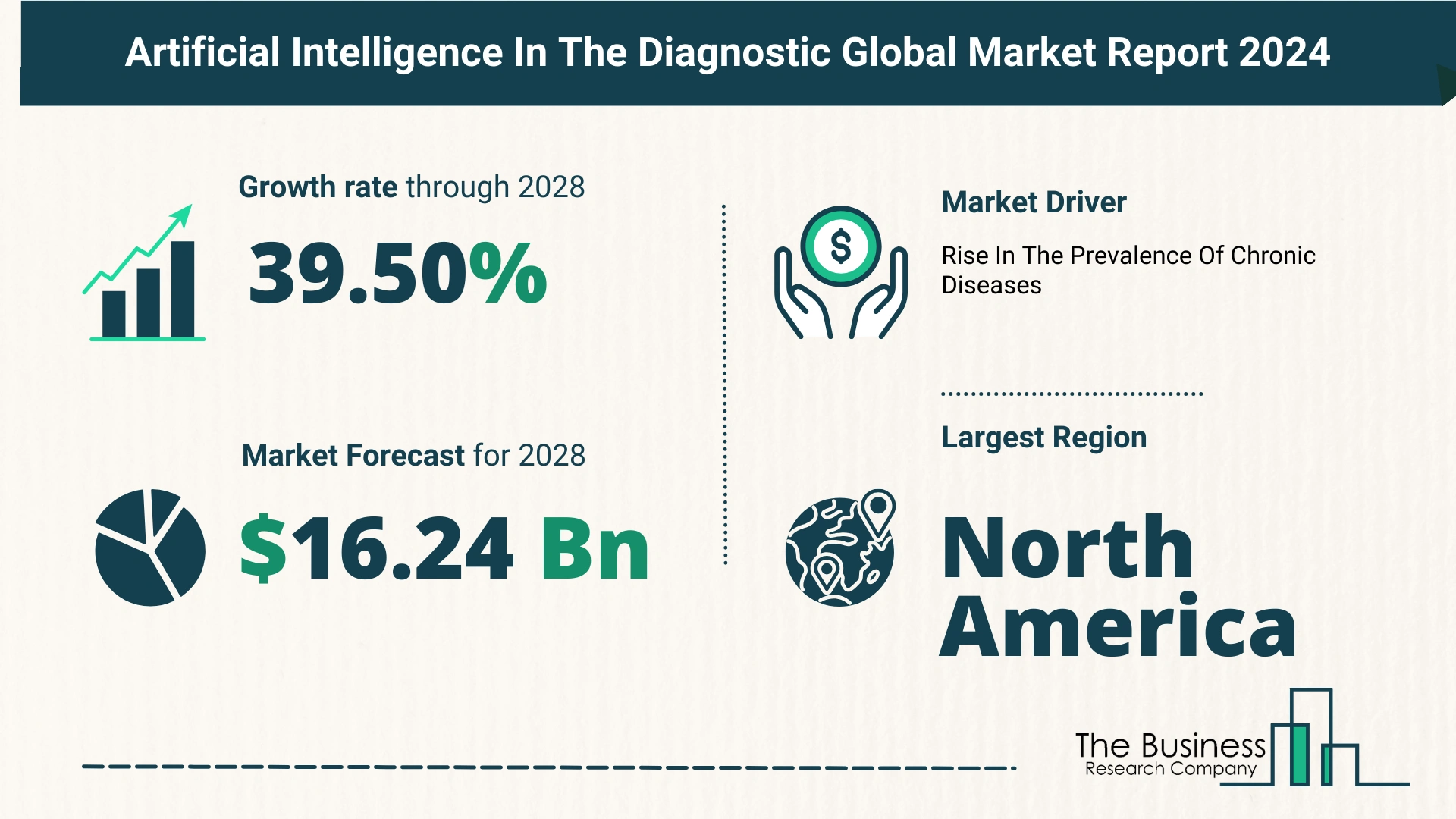
    • Future Projections: The market is expected to reach $16.24 billion by 2028, maintaining a CAGR of 39.5%.

    Key Drivers of Growth

    1. Rising Disease Burden:
      • Increasing prevalence of chronic diseases necessitates efficient diagnostic solutions.
      • AI enables early detection, prediction, and personalized treatment plans.
    2. Data Availability:
      • The abundance of healthcare data supports AI’s capabilities in diagnostics.
      • AI analyzes vast datasets to identify patterns and make accurate diagnoses.
    3. Cost Reduction:
      • AI-driven diagnostics reduce healthcare costs by streamlining processes and improving accuracy.
      • Cost-efficient diagnostics benefit both healthcare providers and patients.
    4. Regulatory Support:
      • Regulatory bodies are increasingly approving AI-based diagnostic tools.
      • This support accelerates the adoption of AI technologies in clinical settings.
    5. Increasing Awareness:
      • Growing awareness of AI’s potential in healthcare drives its adoption.
      • Patients and providers recognize the benefits of AI in improving diagnostic accuracy and efficiency.

    Read More On The Artificial Intelligence In The Diagnostic Market Report 2024 – https://www.thebusinessresearchcompany.com/report/artificial-intelligence-in-the-diagnostic-global-market-report

    Future Growth Factors

    1. Personalized Medicine Trends:
      • AI facilitates personalized medicine by analyzing individual genetic makeup and disease progression.
      • Tailored treatments improve patient outcomes and reduce adverse effects.
    2. Rapid Increase in Healthcare Data:
      • The continuous generation of healthcare data fuels AI’s analytical capabilities.
      • AI leverages this data to enhance diagnostic precision and speed.
    3. Global Health Challenges:
      • AI addresses global health challenges by providing scalable diagnostic solutions.
      • AI-driven tools are crucial in managing pandemics and other widespread health issues.
    4. Increased Investments:
      • Significant investments in AI technologies propel market growth.
      • Funding supports research, development, and deployment of advanced diagnostic tools.
    5. Enhanced Integration with Healthcare Systems:
      • AI integrates seamlessly with existing healthcare systems, improving interoperability.
      • Enhanced integration facilitates better data sharing and patient care coordination.

    Major Trends Shaping the Future

    1. Collaboration and Investment:
      • Partnerships between healthcare and tech companies drive innovation.
      • Collaboration accelerates the development and adoption of AI diagnostic solutions.
    2. Advancements in Technology:
      • Continuous advancements in AI technology enhance diagnostic capabilities.
      • Innovations include improved algorithms and more powerful computing platforms.
    3. Data Privacy and Security Concerns:
      • Ensuring data privacy and security is critical for AI adoption.
      • Regulations and technologies are evolving to address these concerns.
    4. Rise of Explainable AI (XAI):
      • XAI provides transparency in AI decision-making processes.
      • This transparency builds trust among healthcare providers and patients.
    5. Expanding Role of Computer Vision:
      • Computer vision plays a significant role in analyzing medical images.
      • AI-powered image analysis improves diagnostic accuracy and efficiency.

    AI’s Role in Diagnosing Chronic Diseases

    • Early Detection and Prediction: AI enables early detection and prediction of chronic diseases.
    • Enhanced Decision Support: AI supports clinical decision-making with precise data analysis.
    • Remote Monitoring: AI facilitates remote monitoring, improving chronic disease management.
    • Cost Reduction: AI reduces healthcare costs by streamlining diagnostic processes.
    • Personalized Treatment: AI tailors treatments to individual patients, enhancing care quality.

    Key Players in the Market

    • Major Companies: Google LLC, Microsoft Corporation, Intel Corporation, IBM Corporation, Siemens Healthineers, Koninklijke Philips N.V., GE Healthcare Technologies Inc., Paige.AI Inc., HeartFlow Inc., and others.
    • Innovative Solutions: Companies are launching new AI modules to enhance diagnostic accuracy and efficiency.

    Focus on New AI Solutions

    • Product Launches: Companies are introducing AI-powered diagnostic tools to gain a competitive edge.
    • Case Example: In March 2023, Qritive launched QAi Prostate, an AI tool for prostate cancer diagnosis, improving accuracy and efficiency.

    Nanox Imaging Acquires Zebra Medical Vision

    • Acquisition Details: In November 2021, Nanox Imaging Ltd. acquired Zebra Medical Vision Ltd. for $110 million.
    • Strategic Impact: The acquisition enhances Nanox’s AI capabilities in medical imaging, supporting advanced diagnostic solutions.

    Conclusion
    The AI in diagnostics market is set for significant growth, driven by technological advancements and increasing healthcare demands. As AI continues to evolve, it will play a crucial role in transforming diagnostics, improving accuracy, and enhancing patient outcomes. The future of healthcare diagnostics is undoubtedly AI-driven, promising more efficient and personalized care.

    Request for A Sample Of The Global Artificial Intelligence In The Diagnostic Market Report:
    https://www.thebusinessresearchcompany.com/sample_request?id=13593&type=smp

  • Global Artificial Intelligence In Radiology Market Analysis: Estimated Market Size And Growth Rate

    Global Artificial Intelligence In Radiology Market Analysis: Estimated Market Size And Growth Rate

    The Business Research Company’s global market reports are now updated with the latest market sizing information for the year 2024 and forecasted to 2033

    The artificial intelligence (AI) in radiology market is experiencing exponential growth, driven by advancements in AI technologies and the increasing volume of medical imaging data. This blog explores the current market landscape, key drivers, major trends, and future projections.

    Rapid Market Growth

    • Current Market Size: The AI in radiology market grew from $1.68 billion in 2023 to $2.2 billion in 2024.
    • Growth Rate: This growth represents a compound annual growth rate (CAGR) of 30.8%.
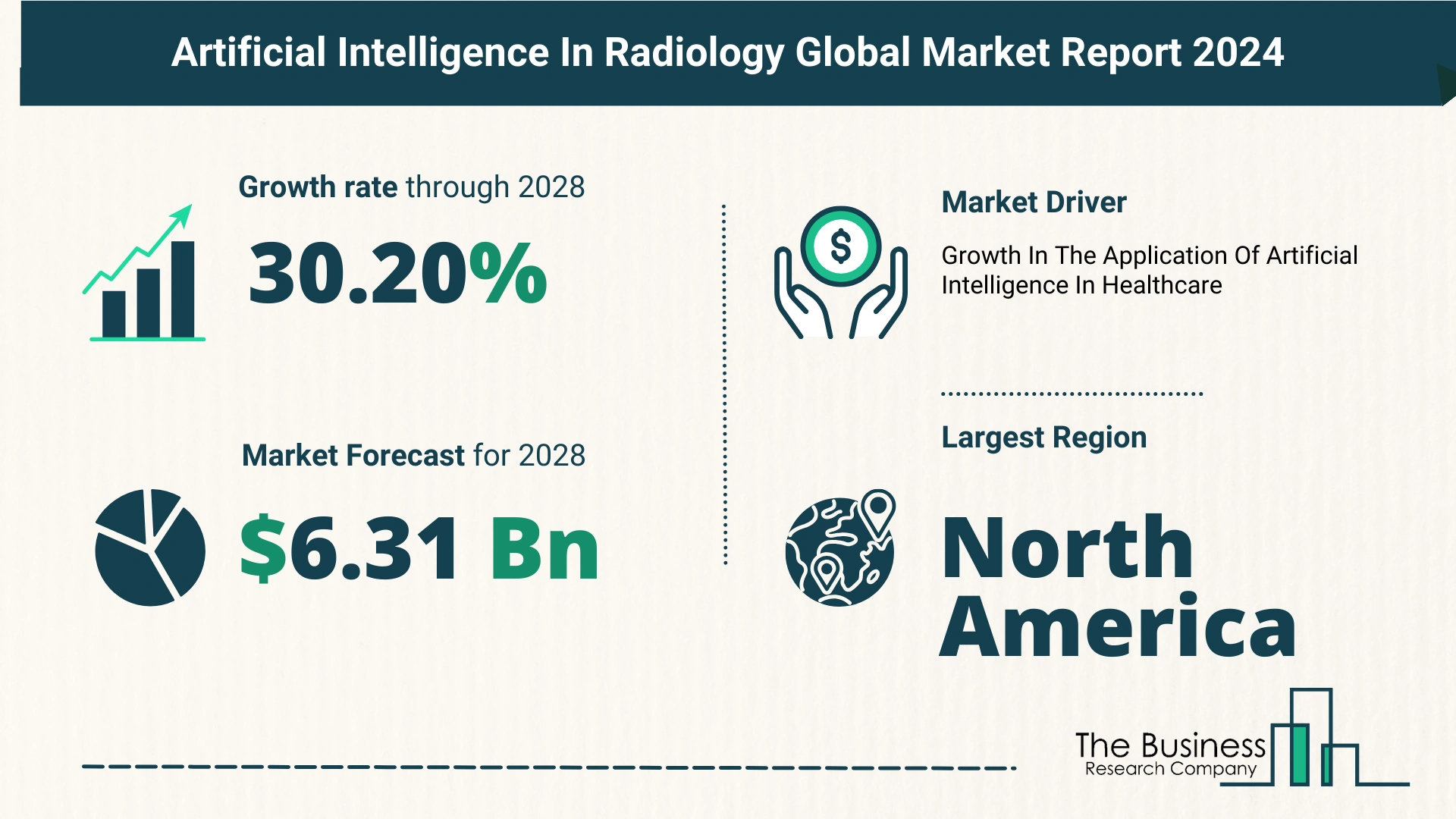
    • Future Projections: The market is expected to reach $6.31 billion by 2028, maintaining a CAGR of 30.2%.

    Key Drivers of Growth

    1. Increasing Volume of Medical Imaging Data:
      • The sheer volume of imaging data requires efficient analysis and management.
      • AI assists radiologists by quickly processing large datasets and identifying anomalies.
    2. Rise of Deep Learning Algorithms:
      • Advanced algorithms enhance the ability to interpret complex medical images.
      • These algorithms improve diagnostic accuracy and reduce human error.
    3. Demand for Improved Diagnostic Accuracy:
      • AI-powered tools offer precision in detecting subtle abnormalities.
      • Enhanced accuracy leads to better patient outcomes and treatment plans.
    4. Regulatory Approvals and Standards:
      • Regulatory bodies are approving AI solutions for clinical use.
      • Standards ensure these technologies are safe and effective.
    5. Cost-Efficiency and Workflow Improvement:
      • AI streamlines workflows, reducing the time and cost associated with manual image analysis.
      • This efficiency allows radiologists to focus on more complex cases.

    View More On The Artificial Intelligence In Radiology Market Report 2024 – https://www.thebusinessresearchcompany.com/report/artificial-intelligence-in-radiology-global-market-report

    Future Growth Factors

    1. Advancements in AI Algorithms:
      • Continuous improvements in AI algorithms enhance diagnostic capabilities.
      • These advancements allow for more nuanced analysis of medical images.
    2. Integration with Electronic Health Records (EHRs):
      • AI systems integrate seamlessly with EHRs, improving data accessibility and patient care coordination.
      • Enhanced interoperability leads to more comprehensive patient records.
    3. Expansion Beyond Diagnosis:
      • AI applications are expanding to include treatment planning and monitoring.
      • This broadens the scope of AI in radiology, offering more holistic care solutions.
    4. AI-Powered Image Enhancement:
      • AI enhances image quality, making it easier to detect and diagnose conditions.
      • Improved image clarity supports better clinical decisions.
    5. Enhanced Interoperability and Data Sharing:
      • AI facilitates better data sharing between different healthcare systems.
      • This interoperability improves collaboration and patient outcomes.

    Major Trends Shaping the Future

    1. Telemedicine and Remote Healthcare:
      • AI supports telemedicine by providing remote diagnostic capabilities.
      • This trend expands access to radiology services, especially in underserved areas.
    2. Collaboration Between Healthcare and Tech Companies:
      • Partnerships are driving innovation in AI solutions for radiology.
      • Collaboration accelerates the development and adoption of new technologies.
    3. Advancements in Imaging Technologies:
      • Emerging imaging technologies are integrated with AI for better diagnostic accuracy.
      • These advancements provide more detailed and accurate medical images.
    4. Quantitative Imaging Analytics:
      • AI offers quantitative analysis of medical images, providing measurable data.
      • This data supports evidence-based clinical decisions.
    5. Automated Report Generation:
      • AI automates the generation of radiology reports, saving time and reducing errors.
      • Automated reports enhance workflow efficiency and accuracy.

    Growing Application of AI in Healthcare

    • Enhanced Diagnostic Capabilities: AI algorithms improve the ability to analyze and interpret medical images.
    • Streamlined Workflows: AI technologies increase efficiency and speed in radiological processes.
    • Improved Patient Outcomes: Faster and more accurate diagnoses lead to better patient care.

    Key Players in the Market

    • Major Companies: Microsoft Corporation, IBM Corporation, NVIDIA Corporation, Siemens Healthineers AG, Koninklijke Philips N.V, GE Healthcare Technologies Inc., Canon Medical Systems Corporation, and others.
    • Innovative Solutions: Companies are launching new AI-powered radiology suites to enhance diagnostic accuracy and efficiency.

    Focus on New AI Solutions

    • Product Launches: Companies are introducing new AI solutions to stay competitive.
    • Case Example: In November 2022, Viz.ai Inc. launched an AI-powered radiology suite to analyze medical imaging data swiftly and accurately.

    Bayer AG Acquires Blackford Analysis Ltd.

    • Acquisition Details: In January 2023, Bayer AG acquired Blackford Analysis Ltd. to integrate AI into radiology workflows.
    • Strategic Impact: The acquisition aims to improve patient care and strengthen Bayer’s position in digital medical imaging.

    Conclusion
    The AI in radiology market is poised for significant growth, driven by technological advancements and increasing demand for efficient diagnostic solutions. As AI continues to evolve, it will play a crucial role in transforming radiology, enhancing diagnostic accuracy, and improving patient outcomes.

    Request A Sample Of The Global Artificial Intelligence In Radiology Market Report 2024:
    https://www.thebusinessresearchcompany.com/sample_request?id=13591&type=smp

  • Global Artificial Intelligence In Medicine Market Key Insights 2024-2033

    Global Artificial Intelligence In Medicine Market Key Insights 2024-2033

    The Business Research Company’s global market reports are now updated with the latest market sizing information for the year 2024 and forecasted to 2033

    According to The Business Research Company’s Artificial Intelligence In Medicine Global Market Report 2024, the artificial intelligence in medicine market is expected to show promising growth in the forecast period.

    The artificial intelligence (AI) in medicine market has been experiencing rapid growth in recent years. With advancements in technology and a rising demand for efficient healthcare solutions, the market is poised for even greater expansion in the coming years.

    Current Market Landscape

    • Market Size in 2023: $8.01 billion
    • Projected Market Size in 2024: $11.19 billion
    • Compound Annual Growth Rate (CAGR): 39.8%

    Key Growth Drivers

    • Patient Well-being Focus: Increased emphasis on patient health and safety.
    • Physician Shortage: A relative shortage of doctors driving the need for AI solutions.
    • Skilled Healthcare Professionals: Growth in the number of professionals adept at utilizing AI.
    • Processing Power: Enhanced processing capabilities of AI systems.

    Future Market Projections

    • Expected Market Size in 2028: $42.11 billion
    • CAGR: 39.3%

    Anticipated Growth Factors

    • Chronic Disease Prevalence: Rising rates of chronic diseases necessitating advanced healthcare solutions.
    • Digital Transformation: Greater emphasis on adopting digital practices in healthcare.

    View More On The Artificial Intelligence In Medicine Market Report 2024 – https://www.thebusinessresearchcompany.com/report/artificial-intelligence-in-medicine-global-market-report

    Emerging Trends

    • Medical Robots: Development and integration of robotic systems in medical practice.
    • Patient Management Applications: Significant growth expected in AI-driven patient management tools.
    • Drug Discovery: AI’s role in expediting and enhancing drug discovery processes.
    • Precision Medicine: Advances in AI leading to more accurate and personalized treatment options.

    Remote Patient Monitoring: A Catalyst for AI Adoption
    Surge in Remote Patient Monitoring

    • Real-time Monitoring: Increasing use of remote patient monitoring (RPM) systems.
    • Survey Findings: According to Vivalink’s 2023 survey, RPM usage by clinicians rose from 20% in 2021 to 81%, a 305% increase.
    • AI’s Role: Leveraging AI to analyze patient data, provide predictive insights, and enable personalized care.

    Impact on AI in Medicine

    • Growth Driver: The rising interest in RPM systems significantly boosts AI adoption in healthcare.

    Innovations by Leading Companies
    Advanced Robotic Tools

    • Smith & Nephew: Transforming orthopedic practices with cutting-edge robotic tools.
    • AI-Powered Platforms: Companies like OM1 Inc. are launching platforms like PhenOM, which uses real-world data and advanced analytics to identify unique digital phenotypes, predict risks, and inform treatment decisions.

    Strategic Acquisitions

    • Sanofi’s Acquisition of Amunix Pharmaceuticals:
      • Date: December 2021
      • Objective: Enhance Sanofi’s oncology portfolio and expedite the development of cancer treatments.
      • Impact: Acquisition brings about 20 new molecules into development.
      • Amunix’s Contribution: Utilizing AI technology to develop innovative medicines.

    Market Segmentation
    By Type

    • Hardware
    • Software
    • Services

    By Technology

    • Machine Learning
    • Natural Language Processing
    • Context-Aware Processing
    • Computer Vision

    By Application

    • Medical Administration and Support
    • Patient Management
    • Research and Development
    • Other Applications

    By End User

    • Hospitals
    • Clinics
    • Research Institutions

    Regional Insights

    • North America: The largest region in the AI in medicine market in 2023.
    • Asia-Pacific: Expected to be the fastest-growing region in the forecast period.

    Conclusion
    The artificial intelligence in medicine market is on a remarkable growth trajectory, driven by advancements in technology, a growing emphasis on digital transformation, and the increasing prevalence of chronic diseases. As major companies continue to innovate and adopt AI-driven solutions, the future of healthcare looks poised for significant transformation, promising improved patient outcomes and more efficient medical practices.

    Request A Sample Of The Global Artificial Intelligence In Medicine Market Report 2024:
    https://www.thebusinessresearchcompany.com/sample_request?id=13590&type=smp

  • Global Artificial Intelligence In Medical Imaging Market Overview 2024: Size, Drivers, And Trends

    Global Artificial Intelligence In Medical Imaging Market Overview 2024: Size, Drivers, And Trends

    The Business Research Company’s global market reports provide comprehensive analysis on the various markets in 27 industries across 60 geographies.

    Rapid Market Expansion

    • Current Growth: The artificial intelligence (AI) in medical imaging market has experienced remarkable growth, increasing from $2.6 billion in 2023 to an anticipated $3.42 billion in 2024, marking a compound annual growth rate (CAGR) of 31.7%.
    • Future Projections: This upward trajectory is expected to continue, with the market forecasted to reach $10.02 billion by 2028, maintaining a CAGR of 30.8%.

    Factors Driving Growth
    Historic Period Influences

    • AI-Powered CT Demand: Rising demand for AI-enhanced computed tomography (CT) scans.
    • Cancer Prevalence: Increased rates of cancer driving the need for advanced imaging.
    • Cloud Computing Adoption: Growing reliance on cloud technology in healthcare.
    • Aging Population: Larger geriatric demographic requiring more medical imaging.
    • Government Initiatives: Supportive policies and initiatives from governments worldwide.

    Forecast Period Influences

    • Radiologist Workload Reduction: AI’s role in reducing the burden on radiologists.
    • Investment Growth: Increased investment in AI technologies.
    • Complex Data Handling: Growing necessity to manage and analyze large datasets.
    • Continued Demand for AI CT: Sustained interest in AI-powered CT applications.

    View More On The Artificial Intelligence In Medical Imaging Market Report 2024 – https://www.thebusinessresearchcompany.com/report/artificial-intelligence-in-medical-imaging-global-market-report

    Key Trends Shaping the Future
    Technological Advancements

    • Computer Vision: Enhanced AI algorithms for precise medical image analysis.
    • Deep Learning Progress: Significant advancements in deep learning capabilities.
    • Product Innovations: New developments in nuclear medicine, ultrasound systems, and MRI technologies.

    The Surge of AI in Medical Imaging
    Role of Imaging Modalities

    • Improved Techniques: AI algorithms assist in image reconstruction, noise reduction, and artifact correction.
    • Growing Utilization: A notable increase in the number of imaging tests, such as the 43.3 million tests reported by the UK’s National Health Service from April 2021 to March 2022.

    Major Market Players

    • Leading Companies: Key players include Google LLC, Microsoft Corporation, IBM Watson Health, and NVIDIA Corporation, among others.

    AI-Enabled MRI Systems
    Innovation in MRI Technology

    • GE Healthcare’s SIGNA Champion: Launched in December 2023, this AI-enabled MRI system offers features like AIR Recon DL and Sonic DL for enhanced efficiency and image quality.
    • Patient-Centric Design: The SIGNA Champion combines generous patient clearance with reduced scan times, improving the patient experience.

    Point-of-Care Ultrasound Revolution
    Exo’s Strategic Acquisition

    • Acquisition of Medo AI: In October 2022, Exo acquired Medo AI, integrating Medo’s AI capabilities with Exo’s hardware to overcome barriers in point-of-care ultrasound adoption.
    • Enhanced Technology: This combination aims to streamline ultrasound technology, making it more accessible and effective.

    Market Segmentation
    By Modality

    • CT Scan
    • MRI
    • X-rays
    • Ultrasound
    • Nuclear Imaging

    By Technology

    • Deep Learning
    • Natural Language Processing (NLP)
    • Other Technologies

    By Application

    • Neurology
    • Respiratory and Pulmonary
    • Cardiology
    • Breast Screening
    • Orthopedics

    By End-Use

    • Hospitals
    • Diagnostic Imaging Centers
    • Other End-Users

    Regional Insights

    • North America: The largest market for AI in medical imaging in 2023.
    • Asia-Pacific: Expected to be the fastest-growing region in the coming years.

    The AI in medical imaging market is poised for unprecedented growth, driven by technological advancements, increasing healthcare demands, and significant investments. As AI continues to revolutionize medical imaging, the landscape of diagnostics and treatment will be transformed, leading to more efficient, accurate, and patient-friendly healthcare solutions.

    Request A Sample Of The Global Artificial Intelligence In Medical Imaging Market Report 2024:
    https://www.thebusinessresearchcompany.com/sample_request?id=13589&type=smp

  • Future Growth Forecast For The Teeth Whitening Global Market 2024-2033

    Future Growth Forecast For The Teeth Whitening Global Market 2024-2033

    The Business Research Company’s global market reports provide comprehensive analysis on the various markets in 27 industries across 60 geographies.

    Strong Market Growth in Recent Years

    The teeth whitening market has experienced robust growth, expanding from $6.91 billion in 2023 to $7.31 billion in 2024 at a CAGR of 5.8%. Several factors have fueled this growth:

    • Beauty and Aesthetic Consciousness: Increasing desire for aesthetic enhancement.
    • Social Media Influence: Celebrity endorsements and social media trends.
    • Dental Tourism: Expansion of dental tourism providing affordable options.
    • Over-the-Counter Products: Wide availability of easy-to-use products.
    • Consumer Awareness: Growing education on oral hygiene and aesthetic options.

    Future Growth Prospects

    Looking ahead, the market is expected to reach $8.8 billion by 2028, growing at a CAGR of 4.8%. Key drivers include:

    • Aesthetic Dentistry: Continued focus on enhancing dental aesthetics.
    • Customized Services: Personalized whitening solutions gaining popularity.
    • Aging Population: Increasing demand from an older demographic.
    • Beauty Standards: Ongoing social and cultural emphasis on beauty.
    • Wellness Trends: Integration of oral care into broader wellness movements.

    View More On The Teeth Whitening Market Report 2024 – https://www.thebusinessresearchcompany.com/report/teeth-whitening-global-market-report

    Major Trends Shaping the Market

    The teeth whitening market is evolving with several notable trends:

    • Advanced Whitening Technologies: Innovative technologies improving effectiveness.
    • At-Home Whitening Kits: Convenience and popularity of home-use products.
    • Natural Products: Rising demand for organic and natural whitening solutions.
    • Innovative Formulations: Development of new and improved whitening formulations.

    Dental Treatments Driving Market Growth

    The surge in dental treatments is significantly boosting the teeth whitening market. For instance:

    • Increased Dental Procedures: 32.5 million dental treatments reported by the UK’s National Health Service in 2023, up by 23.2% from 2021.
    • Aesthetic Enhancements: Dental professionals offering advanced whitening treatments to improve aesthetics.

    Key Players in the Market

    Several major companies are shaping the teeth whitening market:

    • Prominent Companies: Johnson & Johnson, Procter & Gamble, Unilever PLC, GlaxoSmithKline PLC, 3M Company, among others.
    • Technological Advancements: Companies like Colgate-Palmolive are developing products with advanced wavelength technology.

    Innovative Wavelength Technologies

    Companies are leveraging advanced technologies to enhance teeth whitening treatments:

    • Colgate Optic White ComfortFit LED Teeth Whitening Kit: Utilizes specific light wavelengths to boost treatment effectiveness.
    • Enhanced User Experience: Focus on comfort, uniformity, ease of use, and quick results.

    Strategic Acquisitions

    Strategic acquisitions are expanding market presence and product offerings:

    • Wellnex Life Limited Acquires Mr. Bright Ltd.: This acquisition enhances Wellnex Life’s product portfolio in oral care and teeth whitening, broadening their market reach and product range.

    Market Segmentation

    The teeth whitening market can be segmented by:

    • Product Type: Whitening toothpaste, gels, strips, light devices, and others.
    • Distribution Channel: Institutional sales and retail sales.
    • Application Type: In-office treatments and at-home solutions.

    Regional Insights

    The market exhibits significant regional variations:

    • North America: The largest market in 2023.
    • Asia-Pacific: Expected to be the fastest-growing region in the coming years.

    Conclusion

    The teeth whitening market is on a trajectory of steady growth, driven by increasing aesthetic consciousness, technological advancements, and strategic business moves. With a focus on innovation and expanding consumer options, the market is poised for continued expansion and development in the foreseeable future.

    Request A Sample Of The Global Teeth Whitening Market Report 2024:
    https://www.thebusinessresearchcompany.com/sample_request?id=13543&type=smp