Category: HealthcareServices

  • Heart Transplant Market Anticipated to Record Steady Gains, Advancing to $20.08 Billion by 2030

    Heart Transplant Market Anticipated to Record Steady Gains, Advancing to $20.08 Billion by 2030

    Uncover key drivers, emerging technologies, and competitive movements shaping the heart transplant market from 2026–2035 with trusted insights from The Business Research Company

    What total market size is anticipated for the Heart Transplant Market in 2030?

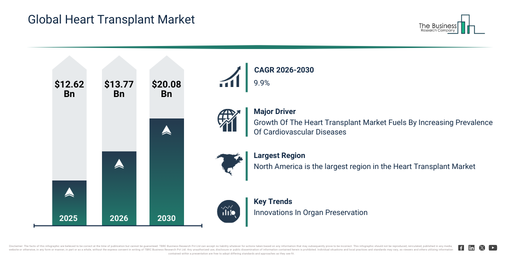
    The heart transplant market size has demonstrated significant expansion in recent years. It is anticipated to expand from $12.62 billion in 2025 to $13.77 billion in 2026, progressing at a compound annual growth rate (CAGR) of 9.1%. The historical growth can be ascribed to several factors, including the increasing prevalence of end-stage heart failure, the expansion of cardiac specialty centers, advancements in surgical techniques, the growing availability of transplant programs, and the rising use of mechanical circulatory support.

    The heart transplant market is projected to experience substantial expansion over the upcoming years. Its valuation is set to reach $20.08 billion by 2030, progressing at a compound annual growth rate (CAGR) of 9.9%. This anticipated growth stems from several factors, including heightened investments in artificial heart research, an increasing need for long-term cardiac support, advancements in donor management technologies, a sharpened focus on precise post-transplant care, and the wider uptake of digital health monitoring. Notable developments expected during this period encompass the growing acceptance of ventricular assist devices, increased deployment of sophisticated transplant monitoring systems, greater integration of digital platforms for patient management, the proliferation of artificial heart technologies, and a stronger emphasis on improving post-transplant results.

    Access Your Free Sample Report for In-Depth Market Insights:

    https://www.thebusinessresearchcompany.com/sample.aspx?id=12967&type=smp

    What Drivers Are Influencing Production Trends In The Heart Transplant Market?

    The growing incidence of cardiovascular diseases is projected to boost the expansion of the heart transplant market moving ahead. These diseases encompass various ailments impacting the heart and blood vessels. For individuals experiencing end-stage heart failure who have exhausted other treatment options, a heart transplant serves as a final therapeutic measure, enhancing both the quality of life and longevity. An example demonstrating this is the data from September 2024, where the British Heart Foundation, a cardiovascular research charity located in the UK, reported that around 7.6 million people in the UK are presently suffering from heart and circulatory conditions, split into 4 million men and 3.6 million women. Projections indicate a potential increase of 1 million by 2030, and a further rise of 2 million beyond current levels by 2040. Consequently, the widespread occurrence of cardiovascular diseases is anticipated to fuel the heart transplant market.

    Which Segment Groups Are Influencing The Heart Transplant Market?

    The heart transplant market covered in this report is segmented –

    1) By Transplant Procedure Type: Orthotopic Heart Transplant, Heterotopic Heart Transplant

    2) By Donor Type: Allograft, Extended-Criteria Donor Hearts

    3) By Indication: End-Stage Heart Failure, Ischemic Cardiomyopathy, Dilated Cardiomyopathy, Congenital Heart Disease, Valvular Heart Disease, Other Severe Cardiac Disorders

    4) By Recipient Age Group: Pediatric Patients, Adult Patients, Geriatric Patients

    5) By End User: Hospitals, Specialized Cardiac Transplant Centers, Academic & Research Institutes

    Subsegments:

    1) By Orthotopic Heart Transplant: Standard Orthotopic Heart Transplant, Donation After Brain Death (DBD) Orthotopic Transplant, Donation After Circulatory Death (DCD) Orthotopic Transplant, ABO-Compatible Orthotopic Transplant

    2) By Heterotopic Heart Transplant (HHT): Left Heterotopic Heart Transplant, Right Heterotopic Heart Transplant, Biventricular Heterotopic Heart Transplant, Bridge-to-Recovery Heterotopic Transplant

    Which Trends Are Influencing The Development Of The Heart Transplant Market?

    Major companies operating in the heart transplant market are increasingly focused on developing innovative solutions, such as heart preservation technology, to improve patient outcomes and transplant success rates. This significantly extends the preservation time of the heart outside the body compared to traditional ice storage, allowing for improved outcomes and reduced complications post-transplantation. For instance, in May 2023, Xvivo Perfusion AB, a Sweden-based medical technology company, received approval from the U.S. Food and Drug Administration (FDA) for its Investigational Device Exemption (IDE) application for its heart preservation technology, enabling the company to initiate the ‘PRESERVE Clinical Trial’. This trial is a prospective, multicenter, single-arm, open-label study focused on evaluating hearts transplanted after non-ischemic heart preservation from extended donors, specifically including Donation after Circulatory Death (DCD) hearts. The main unique feature of XVIVO’s heart preservation technology is its non-ischemic hypothermic perfusion system, which utilizes cold, oxygenated perfusion to preserve donor hearts during transport.

    Who Are The Prominent Global Companies Shaping The Heart Transplant Market Landscape?

    Major companies operating in the heart transplant market are Mayo Clinic, Cleveland Clinic, Massachusetts General Hospital, Johns Hopkins Hospital, NewYork-Presbyterian Hospital, Cedars-Sinai Medical Center, Stanford Health Care, Baylor St Lukes Medical Center, The Texas Heart Institute, Duke University Hospital, UCLA Medical Center, Mount Sinai Hospital, Brigham and Womens Hospital, University of Pittsburgh Medical Center, Houston Methodist Hospital, Northwestern Memorial Hospital, NYU Langone Health, Toronto General Hospital, Royal Papworth Hospital, Harefield Hospital

    Access The Complete Report For Deeper Market Insights:

    https://www.thebusinessresearchcompany.com/report/heart-transplant-global-market-report

    Which Region Is Projected To Lead The Heart Transplant Market During The Forecast Period?

    North America was the largest region in the heart transplant market in 2025. Asia-Pacific is expected to be the fastest-growing region in the forecast period. The regions covered in the heart transplant market report are Asia-Pacific, South East Asia, Western Europe, Eastern Europe, North America, South America, Middle East, Africa.

    Request Your Customized Heart Transplant Market Research Report for Competitive Advantage:

    https://www.thebusinessresearchcompany.com/customise?id=12967&type=smp

    Browse Through More Reports Similar to the Global Heart Transplant Market 2026, By The Business Research Company

    Pediatric Heart Valve Repair And Replacement Market Report 2026

    https://www.thebusinessresearchcompany.com/report/pediatric-heart-valve-repair-and-replacement-global-market-report

    Kidney Transplant Market Report 2026

    https://www.thebusinessresearchcompany.com/report/kidney-transplant-global-market-report

    Cardiac Valve Market Report 2026

    https://www.thebusinessresearchcompany.com/report/cardiac-valve-global-market-report

    Get in touch with us:

    The Business Research Company: https://www.thebusinessresearchcompany.com/

    Americas +1 310-496-7795

    Asia +44 7882 955267 & +91 8897263534

    Europe +44 7882 955267

    Email us at info@tbrc.info

    Follow us on:

    LinkedIn: https://in.linkedin.com/company/the-business-research-company

    YouTube: https://www.youtube.com/channel/UC24_fI0rV8cR5DxlCpgmyFQ

    Global Market Model: https://www.thebusinessresearchcompany.com/global-market-model

  • Heart Rate Variability Biofeedback App Industry Poised for Rapid Growth, Forecast to Touch $3.11 Billion by 2030 at 21.4% CAGR

    Heart Rate Variability Biofeedback App Industry Poised for Rapid Growth, Forecast to Touch $3.11 Billion by 2030 at 21.4% CAGR

    Uncover key drivers, emerging technologies, and competitive movements shaping the heart rate variability biofeedback app market from 2026–2035 with trusted insights from The Business Research Company

    What is the expected shift in the Heart Rate Variability Biofeedback App Market’s size between 2026 and 2030?

    The market size for heart rate variability biofeedback apps has experienced significant expansion in recent years. It is anticipated to grow from $1.18 billion in 2025 to $1.43 billion in 2026, achieving a compound annual growth rate (CAGR) of 21.7%. The historical increase can be attributed to heightened awareness of stress-related health conditions, a rise in the usage of mobile health applications, the widespread availability of wearable heart rate monitoring devices, increasing adoption of preventive wellness tools, and improved accuracy in smartphone sensors.

    The heart rate variability biofeedback app market is projected to experience substantial growth in the upcoming years. Its valuation is anticipated to reach $3.11 billion by 2030, demonstrating a compound annual growth rate (CAGR) of 21.4%. This expansion during the forecast period is primarily driven by a greater need for mental wellness applications, increasing incorporation into corporate wellness initiatives, the proliferation of AI-powered physiological analytics, wider application in clinical stress management, and a surge in the embrace of subscription-based digital health platforms. Key developments expected in this period encompass a rise in the use of guided breathing biofeedback programs, enhanced integration with wearable heart rate sensors, an increase in the utilization of personalized stress analytics, the scaling of cloud-based HRV tracking platforms, and a heightened emphasis on user interaction and visual presentation.

    Access Your Free Sample Report for In-Depth Market Insights:

    https://www.thebusinessresearchcompany.com/sample.aspx?id=29077&type=smp

    Which Drivers Are Shaping Strategic Decisions In The Heart Rate Variability Biofeedback App Market?

    The increasing incidence of stress-related disorders is projected to boost the expansion of the heart rate variability biofeedback app market. These disorders are defined as mental health conditions marked by persistent signs of anxiety, depression, or psychological distress that considerably affect daily activities and overall well-being. The rise in their occurrence is attributed to heightened work pressure, extended hours, strict deadlines, and high expectations, which contribute to chronic stress and negatively impact both mental and physical health. Heart rate variability biofeedback apps offer support in managing stress-related disorders by providing real-time monitoring, guided breathing exercises, personalized wellness programs, and actionable insights. These tools empower users to regulate their autonomic nervous system, decrease physiological stress responses, improve emotional resilience, and enhance overall mental and physical well-being. For example, in May 2024, the American Psychological Association, a U.S.-based professional organization, reported that 43% of adults felt more anxious than the previous year, an increase from 37% in 2023 and 32% in 2022. Among these, 70% identified current events as primary stressors, specifically mentioning the economy (77%), the 2024 U.S. election (73%), and gun violence (69%). Therefore, the growing prevalence of stress-related disorders is a key factor driving the growth of the heart rate variability biofeedback app market.

    What Segment Classifications Make Up The Heart Rate Variability Biofeedback App Market?

    The heart rate variability biofeedback app market covered in this report is segmented –

    1) By Platform: iPhone Operating System (iOS), Android, Windows, Other Platforms

    2) By Distribution Channel: App Stores, Direct Sales, Third-Party Platforms

    3) By Application: Healthcare, Sports And Fitness, Stress Management, Research, Other Applications

    4) By End User: Individuals, Hospitals And Clinics, Research Institutes, Corporate Wellness Programs, Other End Users

    Subsegments:

    1) By iPhone Operating System (iOS): Standard iPhone Operating System (iOS) Biofeedback Apps, Premium iPhone Operating System (iOS) Biofeedback Apps, Subscription-Based iPhone Operating System (iOS) Biofeedback Apps, Personalized iPhone Operating System (iOS) Biofeedback Apps

    2) By Android: Standard Android Biofeedback Apps, Premium Android Biofeedback Apps, Subscription-Based Android Biofeedback Apps, Personalized Android Biofeedback Apps

    3) By Windows: Standard Windows Biofeedback Apps, Premium Windows Biofeedback Apps, Subscription-Based Windows Biofeedback Apps, Personalized Windows Biofeedback Apps

    4) By Other Platforms: Web-Based Biofeedback Apps, Cross-Platform Biofeedback Apps, Wearable-Integrated Biofeedback Apps, Cloud-Supported Biofeedback Apps

    What Trends Are Expected To Impact The Competitive Landscape Of The Heart Rate Variability Biofeedback App Market?

    Leading companies in the heart rate variability biofeedback app market are focusing on developing innovative solutions such as real-time stress monitoring to enhance mental well-being and optimize physiological resilience. Real-time stress monitoring entails the continuous tracking of physiological signals, including heart rate variability, to detect stress levels as they emerge, assisting users in responding immediately with relaxation techniques for improved stress management and overall well-being. For instance, in May 2025, Cenli AS, a technology company based in Norway, introduced Cenli, a home-based biofeedback system that monitors heart rate variability, fingertip temperature, and muscle tension in real time. The system offers users instant feedback via a redesigned app, enabling them to practice guided breathing and relaxation techniques to better manage stress and improve nervous system balance. This includes a user-friendly interface and enhanced sensor accuracy, which allows individuals to track their physiological responses over time, identify stress patterns, and adopt personalized recovery strategies. The product is designed for daily use without medical supervision, making advanced biofeedback accessible to a broader audience and supporting improved resilience, mental well-being, and overall health.

    Which Key Players Are Driving Competition In The Heart Rate Variability Biofeedback App Market?

    Major companies operating in the heart rate variability biofeedback app market are Garmin Ltd., Polar Electro Oy, Oura Health Oy, Whoop Inc., HeartMath Inc., Welltory Inc., Empatica S.r.l., Azumio Inc., Visible Health Inc., Elite HRV Inc., Biostrap Inc., Hexoskin Inc., Lief Therapeutics Inc., cardiacSense Ltd., MySASY Inc., CardioMood Inc., Vagus Health Ltd., HRV4Training B.V., SweetWater HRV Inc., Spire Health

    Access The Complete Report For Deeper Market Insights:

    https://www.thebusinessresearchcompany.com/report/heart-rate-variability-biofeedback-app-global-market-report

    Which Region Currently Holds The Largest Share Of The Heart Rate Variability Biofeedback App Market?

    North America was the largest region in the heart rate variability biofeedback app market in 2025. Asia-Pacific is expected to be the fastest-growing region in the forecast period. The regions covered in the heart rate variability biofeedback app market report are Asia-Pacific, South East Asia, Western Europe, Eastern Europe, North America, South America, Middle East, Africa.

    Request Your Customized Heart Rate Variability Biofeedback App Market Research Report for Competitive Advantage:

    https://www.thebusinessresearchcompany.com/customise?id=29077&type=smp

    Browse Through More Reports Similar to the Global Heart Rate Variability Biofeedback App Market 2026, By The Business Research Company

    Wearable Heart Monitoring Devices Market Report 2026

    https://www.thebusinessresearchcompany.com/report/wearable-heart-monitoring-devices-global-market-report

    Physiological Monitors Market Report 2026

    https://www.thebusinessresearchcompany.com/report/physiological-monitors-global-market-report

    Sleep Monitoring Apps Market Report 2026

    https://www.thebusinessresearchcompany.com/report/sleep-monitoring-apps-global-market-report

    Get in touch with us:

    The Business Research Company: https://www.thebusinessresearchcompany.com/

    Americas +1 310-496-7795

    Asia +44 7882 955267 & +91 8897263534

    Europe +44 7882 955267

    Email us at info@tbrc.info

    Follow us on:

    LinkedIn: https://in.linkedin.com/company/the-business-research-company

    YouTube: https://www.youtube.com/channel/UC24_fI0rV8cR5DxlCpgmyFQ

    Global Market Model: https://www.thebusinessresearchcompany.com/global-market-model
  • Hearing Loss Disease Treatment Market Performance Outlook 2026–2030: Revenue to Hit $18.73 Billion at 6.4% CAGR

    Hearing Loss Disease Treatment Market Performance Outlook 2026–2030: Revenue to Hit $18.73 Billion at 6.4% CAGR

    Uncover key drivers, emerging technologies, and competitive movements shaping the hearing loss disease treatment market from 2026–2035 with trusted insights from The Business Research Company

    What growth pattern is forecast for the Hearing Loss Disease Treatment Market size between 2026 and 2035?

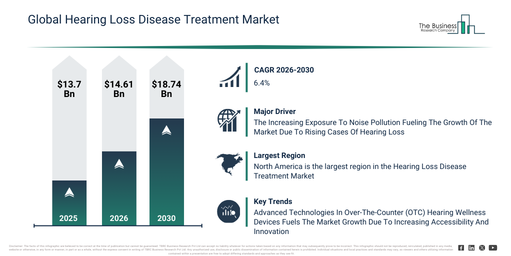
    The hearing loss disease treatment market size has experienced robust growth over recent years. It is forecast to expand from $13.7 billion in 2025 to $14.61 billion in 2026, demonstrating a compound annual growth rate (CAGR) of 6.6%. This historical development can be attributed to an increasing prevalence of age-related hearing loss, heightened awareness of hearing impairment treatments, the establishment of more audiology clinics, enhancements in hearing aid design, and the broader acceptance of cochlear implant procedures.

    The hearing loss disease treatment market size is expected to show robust expansion over the next few years. It is predicted to reach $18.74 billion in 2030, growing at a compound annual growth rate (CAGR) of 6.4%. This anticipated growth during the forecast period is driven by factors such as increasing investments in regenerative hearing therapies, a rising demand for personalized hearing solutions, the expansion of pediatric hearing screening programs, the growing integration of digital diagnostics, and the increasing adoption of smart hearing devices. Significant trends in the forecast period include a greater adoption of advanced hearing aid technologies, the increasing use of AI-based sound processing, a growing demand for minimally invasive surgical interventions, the expansion of implantable hearing solutions, and an enhanced focus on early diagnosis and intervention.

    Access Your Free Sample Report for In-Depth Market Insights:

    https://www.thebusinessresearchcompany.com/sample.aspx?id=24233&type=smp

    Which Drivers Are Impacting Market Performance In The Hearing Loss Disease Treatment Market?

    The escalating exposure to noise pollution is set to drive the growth of the hearing loss disease treatment market. Noise pollution is defined as excessive or disruptive sound levels in the environment that can negatively affect human health, wildlife, and the overall quality of life. The levels of noise pollution are increasing, primarily due to rising traffic congestion, as a greater number of vehicles on the road generate continuous engine and horn sounds that amplify ambient noise in urban settings. Given that prolonged exposure to high noise levels can cause hearing damage and heighten the prevalence of hearing loss, the demand for effective treatment solutions, including hearing aids and various medical interventions, is expected to surge. For example, in May 2025, the Office of the New York State Comptroller, a US-based government office, reported that in 2024, noise complaints exceeded 610,000, marking a 19% rise compared to 2023. Thus, the increasing exposure to noise pollution is a significant factor expanding the hearing loss disease treatment market.

    What Segment Types Are Examined In The Hearing Loss Disease Treatment Market?

    The hearing loss disease treatment market covered in this report is segmented –

    1) By Treatment: Hearing Aids, Cochlear Implants, Medication, Surgery, Other Treatments

    2) By Patient Type: Pediatric, Adult, Geriatric

    3) By Disease Type: Sensorineural Hearing Loss, Conductive Hearing Loss, Mixed Hearing Loss

    4) By Level of Severity: Mild Hearing Loss, Moderate Hearing Loss, Severe Hearing Loss, Profound Hearing Loss

    5) By End-use: Hospitals, Otology Clinics, Ambulatory Surgical Centers

    Subsegments:

    1) By Hearing Aids: Behind-The-Ear (BTE) Hearing Aids, In-The-Ear (ITE) Hearing Aids, Receiver-In-Canal (RIC) Hearing Aids, Completely-In-Canal (CIC) Hearing Aids, Invisible-In-Canal (IIC) Hearing Aids

    2) By Cochlear Implants: Unilateral Cochlear Implants, Bilateral Cochlear Implants, Pediatric Cochlear Implants, Adult Cochlear Implants

    3) By Medication: Corticosteroids, Antibiotics, Antiviral Drugs, Otoprotective Agents

    4) By Surgery: Stapedectomy, Tympanoplasty, Bone-Anchored Hearing Systems (BAHS), Middle Ear Implants, Cochlear Implant Surgery

    5) By Other Treatments: Tinnitus Management Therapies, Auditory Training And Rehabilitation, Assistive Listening Devices (ALDs), Gene Therapy For Hearing Loss, Stem Cell Therapy

    Which Trends Are Guiding The Evolution Of The Hearing Loss Disease Treatment Market?

    Leading companies in the hearing loss disease treatment market are developing sophisticated technologies, such as over-the-counter (OTC) hearing wellness devices, to enhance availability, lower costs, and increase ease of use. Over-the-counter (OTC) hearing wellness devices are non-prescription hearing aids designed for individuals experiencing mild to moderate hearing loss. These aids can be bought directly by consumers without needing a medical assessment, prescription, or professional fitting. For instance, in January 2024, Eargo Inc., a US-based medical device company, unveiled two cutting-edge over-the-counter (OTC) hearing aids, Eargo SE and LINK. The Eargo SE features an almost invisible, in-canal design and offers self-fitting functionality, rechargeable convenience, a redesigned ear tip for improved comfort, a sleek companion app, and a compact charging case. Meanwhile, LINK introduces a pioneering earbud-style design, making it the first hearing aid of its kind to support bluetooth 5.3 audio streaming. With these new products, Eargo strengthens its commitment to delivering accessible, high-quality hearing solutions tailored to the evolving requirements and preferences of contemporary consumers.

    Who Are The Top-Performing Companies In The Hearing Loss Disease Treatment Market In Recent Years?

    Major companies operating in the hearing loss disease treatment market are Sonova Holding AG, Demant A/S, GN Store Nord A/S, Amplifon SpA, Cochlear Limited, Starkey Hearing Technologies, Widex A/S, Oticon Inc, MED-EL Medical Electronics, Beltone, IntriCon Corporation, Phonak AG, RION Co Ltd, Eargo Inc, Arphi Electronics Pvt Ltd, Zounds Hearing Inc, Sivantos Group, Audina Hearing Instruments, WS Audiology, ReSound Group, Natus Medical Incorporated, Astellas Pharma Inc., Sensorion SA, Otonomy Inc, Pipeline Therapeutics, Acousia Therapeutics GmbH

    Access The Complete Report For Deeper Market Insights:

    https://www.thebusinessresearchcompany.com/report/hearing-loss-disease-treatment-global-market-report

    How Does The Hearing Loss Disease Treatment Market Perform Across Major Global Regions?

    North America was the largest region in the hearing loss disease treatment market in 2025. Asia-Pacific is expected to be the fastest-growing region in the forecast period. The regions covered in the hearing loss disease treatment market report are Asia-Pacific, South East Asia, Western Europe, Eastern Europe, North America, South America, Middle East, Africa.

    Request Your Customized Hearing Loss Disease Treatment Market Research Report for Competitive Advantage:

    https://www.thebusinessresearchcompany.com/customise?id=24233&type=smp

    Browse Through More Reports Similar to the Global Hearing Loss Disease Treatment Market 2026, By The Business Research Company

    Hearing Loop Market Report 2026

    https://www.thebusinessresearchcompany.com/report/hearing-loop-global-market-report

    Hearing Implants Market Report 2026

    https://www.thebusinessresearchcompany.com/report/hearing-implants-global-market-report

    Speech Therapy Services Market Report 2026

    https://www.thebusinessresearchcompany.com/report/speech-therapy-services-global-market-report

    Get in touch with us:

    The Business Research Company: https://www.thebusinessresearchcompany.com/

    Americas +1 310-496-7795

    Asia +44 7882 955267 & +91 8897263534

    Europe +44 7882 955267

    Email us at info@tbrc.info

    Follow us on:

    LinkedIn: https://in.linkedin.com/company/the-business-research-company

    YouTube: https://www.youtube.com/channel/UC24_fI0rV8cR5DxlCpgmyFQ

    Global Market Model: https://www.thebusinessresearchcompany.com/global-market-model
  • Global Hearing Aid Tuner App Market Set for Strong Expansion, Reaching $3.19 Billion With 16.6% CAGR by 2030

    Global Hearing Aid Tuner App Market Set for Strong Expansion, Reaching $3.19 Billion With 16.6% CAGR by 2030

    Uncover key drivers, emerging technologies, and competitive movements shaping the hearing aid tuner app market from 2026–2035 with trusted insights from The Business Research Company

    How much larger will the Hearing Aid Tuner App Market be in 2030 compared with 2026?

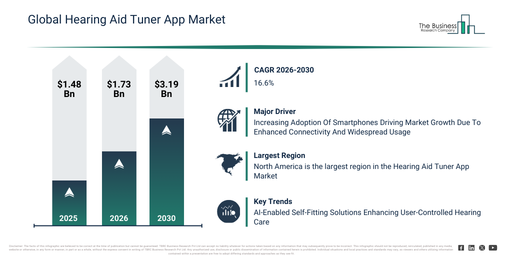
    The hearing aid tuner app market has experienced significant growth in recent years. It is projected to expand from $1.48 billion in 2025 to $1.73 billion in 2026, demonstrating a compound annual growth rate (CAGR) of 16.9%. The growth witnessed in the historic period can be attributed to the increasing prevalence of hearing loss, rising adoption of digital hearing aids, expansion of smartphone penetration among elderly users, improved bluetooth connectivity standards, and growing acceptance of remote audiology tools.

    The hearing aid tuner app market size is projected to experience substantial expansion in the coming years. It is expected to reach $3.19 billion by 2030, demonstrating a compound annual growth rate (CAGR) of 16.6%. This anticipated growth during the forecast period can be attributed to several factors, including an escalating demand for personalized hearing experiences, a rising adoption of tele-audiology services, the expansion of AI-driven sound optimization, a growing emphasis on accessibility-focused digital health tools, and increasing integration with wearable ecosystems. Significant trends anticipated for the forecast period include the increasing adoption of app-based hearing aid personalization, the rising integration of real-time sound environment detection, the growing use of cloud-connected hearing profiles, the expansion of remote fine-tuning capabilities, and an enhanced focus on user-centric interface design.

    Access Your Free Sample Report for In-Depth Market Insights:

    https://www.thebusinessresearchcompany.com/sample.aspx?id=29076&type=smp

    What Drivers Are Guiding Growth Patterns In The Hearing Aid Tuner App Market?

    The escalating integration of smartphones is anticipated to fuel the expansion of the hearing aid tuner app market moving forward. A smartphone, a portable gadget, unifies the functionalities of conventional phones with sophisticated computing abilities, empowering users to browse the internet, operate applications, and undertake various digital tasks. The heightened uptake of smartphones is propelled by better connectivity, as these devices offer effortless access to apps, services, and information, which simplify and enhance routine activities. Increased smartphone penetration supports hearing aid tuner apps by allowing individuals to conveniently adjust and customize their hearing aid settings directly through mobile applications, thereby boosting user-friendliness and the overall listening experience. For example, in October 2024, the GSMA, a UK-based trade association, reported that nearly 4.3 billion people globally accessed the internet using their smartphones in 2023, an increase from approximately 3.95 billion in 2022, representing a rise of about 350 million users during that one-year period. Thus, the growing adoption of smartphones is a significant driver for the hearing aid tuner app market’s growth.

    Which Segments Are Driving Activity In The Hearing Aid Tuner App Market?

    The hearing aid tuner app market covered in this report is segmented –

    1) By App Type: Standalone Apps, Companion Apps

    2) By Operating System: Android, iOS, Windows, Other Operating Systems

    3) By Application: Personal Use, Clinical Use

    4) By Distribution Channel: App Stores, Hearing Clinics, Online Platforms, Other Distribution Channels

    5) By End-User: Adults, Pediatrics, Elderly

    Subsegments:

    1) By Standalone Apps: Basic Hearing Amplification, Prescription Hearing Aid Companion, Tinnitus Masking And Management, Hearing Test And Diagnostics, Sound Enhancement And Personalization

    2) By Companion Apps: Remote Control And Adjustment, Hearing Health And Data Analytics, Accessibility And Connectivity, Professional Support And Telehealth, Battery And Device Management

    What Trends Are Projected To Support The Growth Of The Hearing Aid Tuner App Market?

    Leading companies operating in the hearing aid tuner app market are concentrating on developing advanced solutions, such as self-fitting applications, to provide users with greater command and ease by allowing them to adjust their devices whenever needed without professional intervention. Self-fitting apps are programs that empower users to independently configure and customize their assistive or medical devices, including hearing aids, to match their individual requirements and comfort. For example, in September 2023, Tuned, an Israel-based hearing aid technology company, secured FDA Class II 510(k) clearance for its AI-driven self-fitting hearing aid application. The system distinguishes itself by employing artificial intelligence to conduct personalized hearing assessments and automatically optimize hearing aid settings for each user. It features a patented AI hearing assistant, developed by audiologists, which offers continuous guidance, educational resources, and troubleshooting support.

    Which Leading Companies Dominate The Hearing Aid Tuner App Market Share?

    Major companies operating in the hearing aid tuner app market are Apple Inc., Sonova Holding AG, Demant A/S, ReSound, WS Audiology AS, Starkey Hearing Technologies, Oticon, Phonak, HearUSA Inc., Bose Corporation, Unitron BV, Tuned, Signia, MDHearingAid Inc., Sound World Solutions, Widex AS, GN Group, Audicus Inc., Nuheara Limited, Eargo Inc.

    Access The Complete Report For Deeper Market Insights:

    https://www.thebusinessresearchcompany.com/report/hearing-aid-tuner-app-global-market-report

    Which Region Is Anticipated To See The Fastest Growth In The Hearing Aid Tuner App Market?

    North America was the largest region in the hearing aid tuner app market in 2025. Asia-Pacific is expected to be the fastest-growing region in the forecast period. The regions covered in the hearing aid tuner app market report are Asia-Pacific, South East Asia, Western Europe, Eastern Europe, North America, South America, Middle East, Africa.

    Request Your Customized Hearing Aid Tuner App Market Research Report for Competitive Advantage:

    https://www.thebusinessresearchcompany.com/customise?id=29076&type=smp

    Browse Through More Reports Similar to the Global Hearing Aid Tuner App Market 2026, By The Business Research Company

    Mobile Speech Recognition Software Market Report 2026

    https://www.thebusinessresearchcompany.com/report/mobile-speech-recognition-software-global-market-report

    Hearing Diagnostic Devices And Equipment Market Report 2026

    https://www.thebusinessresearchcompany.com/report/hearing-diagnostic-devices-and-equipment-global-market-report

    Hearing Loop Market Report 2026

    https://www.thebusinessresearchcompany.com/report/hearing-loop-global-market-report

    Get in touch with us:

    The Business Research Company: https://www.thebusinessresearchcompany.com/

    Americas +1 310-496-7795

    Asia +44 7882 955267 & +91 8897263534

    Europe +44 7882 955267

    Email us at info@tbrc.info

    Follow us on:

    LinkedIn: https://in.linkedin.com/company/the-business-research-company

    YouTube: https://www.youtube.com/channel/UC24_fI0rV8cR5DxlCpgmyFQ

    Global Market Model: https://www.thebusinessresearchcompany.com/global-market-model
  • Healthcare Visual Assistants Market Growth Projection: Expected to Surpass $12.39 Billion by 2030 at 41.2% CAGR

    Healthcare Visual Assistants Market Growth Projection: Expected to Surpass $12.39 Billion by 2030 at 41.2% CAGR

    Uncover key drivers, emerging technologies, and competitive movements shaping the healthcare visual assistants market from 2026–2035 with trusted insights from The Business Research Company

    Starting from its 2026 valuation, what market size is the Healthcare Visual Assistants Market expected to reach by 2030?

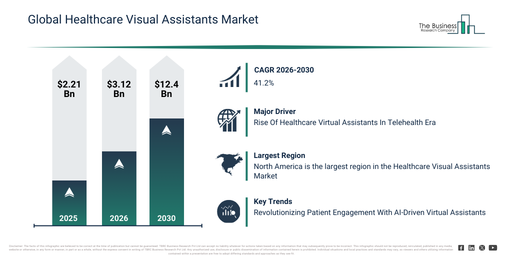
    The healthcare visual assistants market has experienced substantial growth in recent years. This market is expected to expand from $2.21 billion in 2025 to $3.12 billion in 2026, at a compound annual growth rate (CAGR) of 41.2%. The historical increase can be attributed to increasing patient demand for digital engagement tools, expansion of telehealth services, growing administrative workload in healthcare facilities, adoption of basic chatbot solutions, and improvements in speech recognition accuracy.

    The healthcare visual assistants market is projected to experience rapid expansion over the upcoming years. By 2030, this market is anticipated to reach $12.4 billion, demonstrating a compound annual growth rate (CAGR) of 41.2%. This projected growth during the forecast period stems from factors such as the increasing integration of virtual assistants with EHR systems, a rising demand for personalized patient communication, the expanding application of AI in clinical workflows, the proliferation of remote patient engagement platforms, and growing investments in conversational AI technologies. Key trends anticipated for this period encompass the wider adoption of AI-driven patient interaction tools, the increasing utilization of voice-enabled healthcare assistants, the growing implementation of virtual front-desk solutions, the expansion of multilingual assistant capabilities, and a heightened emphasis on patient engagement.

    Access Your Free Sample Report for In-Depth Market Insights:

    https://www.thebusinessresearchcompany.com/sample.aspx?id=13854&type=smp

    What Drivers Are Driving Adoption Within The Healthcare Visual Assistants Market?

    The anticipated expansion of telehealth services is set to boost the healthcare virtual assistant market in the future. Telehealth services encompass the provision of health-related support and data through digital communication tools, offering care, guidance, notifications, learning, intervention strategies, oversight, and distant admissions. Healthcare virtual assistants improve telehealth offerings by delivering automated, round-the-clock patient assistance via digital platforms, streamlining tasks like booking appointments, assessing symptoms, setting medication alerts, and offering tailored health recommendations, ultimately enhancing the ease of access and operational effectiveness in healthcare. An illustrative example comes from September 2024, where the Australian Bureau of Statistics (ABS), the national statistical agency of Australia, reported that in 2023–24, 83.5% of males utilized telehealth services, marking an increase from 78.6% in 2022–23. Consequently, the expansion of telehealth services is stimulating the growth of the healthcare virtual assistant market.

    How Is The Healthcare Visual Assistants Market Organized Into Various Segments?

    The healthcare visual assistants market covered in this report is segmented –

    1) By Product: Chatbots, Smart Speakers

    2) By Technology: Automatic Speech Recognition (ASR) And Speech Recognition, Text Based, Text-To-Speech

    3) By End User: Providers, Payers, Other End Users

    Subsegments:

    1) By Chatbots: Rule-Based Chatbots, AI-Driven Chatbots, Voice-Enabled Chatbots, Patient Engagement Chatbots

    2) By Smart Speakers: Voice-Activated Smart Speakers, Health-Focused Smart Speakers, Smart Speakers With Display Screens, Multi-Functional Smart Speakers

    Which Trends Are Influencing The Performance And Direction Of The Healthcare Visual Assistants Market?

    Leading companies in the healthcare visual assistants market are concentrating on developing innovative products featuring advanced technologies, such as AI-enabled omnichannel conversational virtual assistants, to boost their market profitability. These AI-powered omnichannel conversational healthcare virtual assistants are digital tools designed to offer personalized, automated patient support across multiple communication platforms using artificial intelligence. For instance, in April 2023, TeleVox, a US-based healthcare technology company, launched Iris. Iris serves as an AI-driven virtual agent capable of engaging in natural language conversations with patients. Unlike basic chatbots that rely on limited content and predefined responses, Iris utilizes advanced AI capabilities, including large-scale generative models from Microsoft Azure OpenAI Service, enabling it to comprehend a wide range of patient queries and provide immediate and relevant responses.

    Who Are The Major Companies Operating In The Healthcare Visual Assistants Market?

    Major companies operating in the healthcare visual assistants market are Amazon.com Inc., Alphabet Inc., Microsoft Corporation, Epic Systems Corporation, Babylon Holdings Limited, Amelia LLC, Medical Information Technology Inc., Lyra Health Inc., Omada Health Inc., Ada Health GmbH, Talkspace, Headspace Inc., eGain Corporation, TytoCare Ltd., Viz.ai Inc., K Health Inc., Haptik Technologies Limited, Woebot Health, Your.MD Ltd., NOHOLD Inc., Sanvello Health, Oxygen Group of Companies, ScribeEMR Systems Private Limited, Tucuvi Care S.L.

    Access The Complete Report For Deeper Market Insights:

    https://www.thebusinessresearchcompany.com/report/healthcare-visual-assistants-global-market-report

    Which Region Is Anticipated To See The Fastest Growth In The Healthcare Visual Assistants Market?

    North America was the largest region in the healthcare virtual assistant market in 2025. Asia-Pacific is expected to be the fastest-growing region in the forecast period. The regions covered in the healthcare visual assistants market report are Asia-Pacific, South East Asia, Western Europe, Eastern Europe, North America, South America, Middle East, Africa.

    Request Your Customized Healthcare Visual Assistants Market Research Report for Competitive Advantage:

    https://www.thebusinessresearchcompany.com/customise?id=13854&type=smp

    Browse Through More Reports Similar to the Global Healthcare Visual Assistants Market 2026, By The Business Research Company

    Intelligent Virtual Assistant Market Report 2026

    https://www.thebusinessresearchcompany.com/report/intelligent-virtual-assistant-global-market-report

    Virtual Assistant Market Report 2026

    https://www.thebusinessresearchcompany.com/report/virtual-assistant-global-market-report

    Computer Vision In Healthcare Market Report 2026

    https://www.thebusinessresearchcompany.com/report/computer-vision-in-healthcare-global-market-report

    Get in touch with us:

    The Business Research Company: https://www.thebusinessresearchcompany.com/

    Americas +1 310-496-7795

    Asia +44 7882 955267 & +91 8897263534

    Europe +44 7882 955267

    Email us at info@tbrc.info

    Follow us on:

    LinkedIn: https://in.linkedin.com/company/the-business-research-company

    YouTube: https://www.youtube.com/channel/UC24_fI0rV8cR5DxlCpgmyFQ

    Global Market Model: https://www.thebusinessresearchcompany.com/global-market-model
  • Healthcare Third-Party Logistics Market Forecast 2026–2035: How to Leverage Market Growth

    Healthcare Third-Party Logistics Market Forecast 2026–2035: How to Leverage Market Growth

    Uncover key drivers, emerging technologies, and competitive movements shaping the healthcare third-party logistics market from 2026–2035 with trusted insights from The Business Research Company

    Across 2026–2030, what is the expected market valuation path of the Healthcare Third-Party Logistics Market?

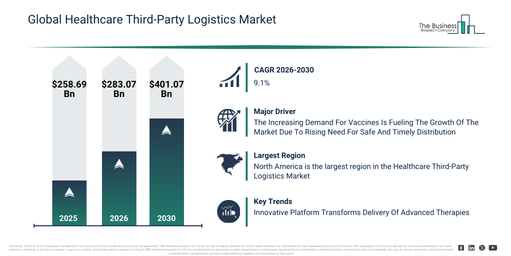
    The healthcare third-party logistics market has experienced robust expansion in recent years. It is anticipated to grow from $258.69 billion in 2025 to $283.07 billion in 2026, demonstrating a compound annual growth rate (CAGR) of 9.4%. The historical growth of this market can be attributed to the broadening of pharmaceutical distribution networks, a rise in biologics and vaccine transportation, increased outsourcing of healthcare logistics, the expansion of global clinical trials, and intensified regulatory scrutiny on drug distribution.

    The healthcare third-party logistics market size is projected for significant growth over the next few years. It is expected to expand to $401.07 billion by 2030, achieving a compound annual growth rate (CAGR) of 9.1%. This expansion during the forecast period can be attributed to increased investments in smart healthcare logistics platforms, a rising demand for cryogenic and ultra-cold storage, the broadening of AI-enabled logistics optimization, the growing adoption of sustainable transport solutions, and an increasing focus on resilient healthcare supply chains. Major developments anticipated in this period include the wider adoption of cold chain monitoring technologies, a surging demand for end-to-end supply chain visibility, the increasing integration of real-time tracking solutions, the expansion of automated healthcare warehousing, and an enhanced focus on regulatory-compliant logistics.

    Access Your Free Sample Report for In-Depth Market Insights:

    https://www.thebusinessresearchcompany.com/sample.aspx?id=25779&type=smp

    Which Drivers Are Supporting The Rise Of The Healthcare Third-Party Logistics Market?

    The healthcare third-party logistics market is anticipated to expand as the demand for vaccines continues to rise. Vaccines, which are biological preparations that prompt the body’s immune system to recognize and fight particular diseases by mimicking an infection without causing it, are seeing increased demand primarily due to the growing prevalence of infectious diseases, as more individuals require safeguarding against pervasive health threats. Healthcare third-party logistics facilitates vaccine distribution by ensuring their safe, timely, and temperature-controlled transportation and storage throughout the entire supply chain. For example, in July 2024, the World Health Organization documented that global coverage with the first dose of the HPV vaccine among girls climbed from 20% in 2022 to 27% in 2023, with an ambitious goal of reaching 90% by 2030. Thus, the increasing need for vaccines is a significant driver of growth for the healthcare third-party logistics market.

    What Segments Are Identified Within The Structure Of The Healthcare Third-Party Logistics Market?

    The healthcare third-party logistics market covered in this report is segmented –

    1) By Type: Cold Chain Logistics, Non-Cold Chain Logistics

    2) By Mode Of Transport: Ground Transportation, Air Cargo, Ocean Freight

    3) By Technology: Automated Storage And Retrieval Systems, Warehouse Management Systems, Transportation Management Systems, Blockchain, Internet Of Things, Artificial Intelligence And Machine Learning, Robotics

    4) By Temperature Control: Ambient, Controlled, Refrigerated, Frozen, Cryogenic

    5) By End User: Pharmaceutical And Biopharmaceutical Companies, Hospitals And Clinics, Medical Device Manufacturers, Research Laboratories, Healthcare Providers, Other End Users

    Subsegments:

    1) By Cold Chain Logistics: Refrigerated Storage, Refrigerated Transportation, Packaging Solutions For Temperature-Sensitive Products, Cold Chain Monitoring Systems, Specialized Cold Chain Warehousing

    2) By Non-Cold Chain Logistics: Warehousing And Storage, Transportation Management, Inventory Management, Order Fulfillment Services, Packaging And Labeling

    What Long-Term Trends Are Expected To Shape The Future Of The Healthcare Third-Party Logistics Market?

    Major companies operating in the healthcare third-party logistics market are concentrating on creating innovative solutions, such as specialized platforms for cell and gene therapy logistics, to guarantee the secure, time-sensitive, and temperature-regulated transportation of advanced therapies. These specialized cell and gene therapy logistics platforms represent sophisticated systems engineered to manage the precise, urgent, and temperature-controlled movement and storage of delicate biological therapies utilized in personalized medicine. For instance, in October 2024, McKesson Corporation, a US-based healthcare corporation, introduced Inspirogene, a dedicated business unit established to aid the commercialization of cell and gene therapies through cutting-edge third-party logistics and specialized distribution offerings. This innovative offering combines advanced supply chain management, temperature-controlled storage, and live tracking to uphold product integrity, ensure prompt delivery, and facilitate efficient distribution of vital vaccines and therapies. Inspirogene provides an adaptable platform customized for the distinct logistical requirements of cell and gene therapies, thereby streamlining their delivery and supporting their market introduction with accuracy and dependability.

    Which Major Firms Are Strengthening Their Position In The Healthcare Third-Party Logistics Market?

    Major companies operating in the healthcare third-party logistics market are McKesson Corporation, Cencora Inc, Cardinal Health Inc, Federal Express Corporation, AP Moller Maersk AS, Kuhne And Nagel International AG, Schenker AG, CEVA Logistics India Private Limited, GEODIS SA, Rhenus SE And Co KG, XPO Inc, Agility Logistics Private Limited, Allcargo Logistics Limited, Noatum Logistics India Private Limited, Barrett Distribution Centers Inc, UPS Supply Chain Solutions Inc, Buske Logistics Inc, DHL Supply Chain India Private Limited, Coldman Logistics Private Limited, AmerisourceBergen Logistics Services, DB Schenker Healthcare, Nippon Express Co Ltd

    Access The Complete Report For Deeper Market Insights:

    https://www.thebusinessresearchcompany.com/report/healthcare-third-party-logistics-global-market-report

    Which Global Regions Are Shaping The Competitive Landscape Of The Healthcare Third-Party Logistics Market?

    North America was the largest region in the healthcare third-party logistics market in 2025. Asia-Pacific is expected to be the fastest-growing region in the forecast period. The regions covered in the healthcare third-party logistics market report are Asia-Pacific, South East Asia, Western Europe, Eastern Europe, North America, South America, Middle East, Africa.

    Request Your Customized Healthcare Third-Party Logistics Market Research Report for Competitive Advantage:

    https://www.thebusinessresearchcompany.com/customise?id=25779&type=smp

    Browse Through More Reports Similar to the Global Healthcare Third-Party Logistics Market 2026, By The Business Research Company

    Healthcare Supply Chain Management Market Report 2026

    https://www.thebusinessresearchcompany.com/report/healthcare-supply-chain-management-global-market-report

    Biopharmaceutical Third Party Logistics Market Report 2026

    https://www.thebusinessresearchcompany.com/report/biopharmaceutical-third-party-logistics-global-market-report

    Third Party Logistics 3Pl Market 2026

    https://www.thebusinessresearchcompany.com/report/third-party-logistics-3pl-market

    Get in touch with us:

    The Business Research Company: https://www.thebusinessresearchcompany.com/

    Americas +1 310-496-7795

    Asia +44 7882 955267 & +91 8897263534

    Europe +44 7882 955267

    Email us at info@tbrc.info

    Follow us on:

    LinkedIn: https://in.linkedin.com/company/the-business-research-company

    YouTube: https://www.youtube.com/channel/UC24_fI0rV8cR5DxlCpgmyFQ

    Global Market Model: https://www.thebusinessresearchcompany.com/global-market-model
  • Global Healthcare Technology Management Market 2026–2030: Forecast Insights for Business Planning

    Global Healthcare Technology Management Market 2026–2030: Forecast Insights for Business Planning

    Uncover key drivers, emerging technologies, and competitive movements shaping the healthcare technology management market from 2026–2035 with trusted insights from The Business Research Company

    What size range is anticipated for the Healthcare Technology Management Market from 2026 to 2030?

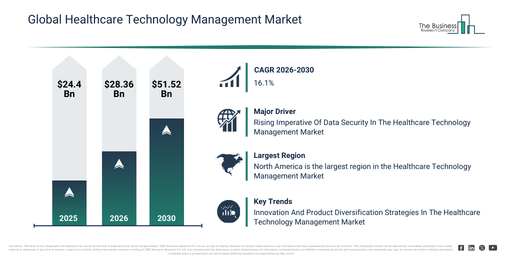
    The healthcare technology management market size has demonstrated rapid expansion in recent years. It is projected to increase from $24.4 billion in 2025 to $28.36 billion in 2026, registering a compound annual growth rate (CAGR) of 16.2%. This growth during the historic period can be attributed to factors such as the increasing deployment of medical equipment in hospitals, the rising maintenance complexity of healthcare technology, the expansion of acute care facilities, the growing need for cost control in technology management, and the adoption of scheduled maintenance practices.

    The market size for healthcare technology management is projected to experience swift expansion over the upcoming years. This market is predicted to reach $51.52 billion by 2030, demonstrating a compound annual growth rate (CAGR) of 16.1%. Factors contributing to this growth during the forecast period include greater investments in digital hospital infrastructure, an escalating demand for interoperable healthcare systems, a heightened focus on device cybersecurity management, the expansion of data-driven maintenance approaches, and intensified regulatory oversight of healthcare technology. Key trends anticipated during this period encompass the increased adoption of integrated HTM software platforms, a growing need for predictive equipment maintenance, an intensifying focus on cybersecurity for medical devices, the broader implementation of asset lifecycle management solutions, and a stronger emphasis on adhering to regulatory compliance.

    Access Your Free Sample Report for In-Depth Market Insights:

    https://www.thebusinessresearchcompany.com/sample.aspx?id=7460&type=smp

    What Drivers Are Affecting Demand In The Healthcare Technology Management Market?

    The increasing requirement for data security is projected to propel the healthcare technology management market in the future. Data security is defined as the process of safeguarding data from unauthorized entry and degradation. The demand for data security is growing due to the escalating actions of hackers who steal patient information to perpetrate fraud. Healthcare technology management assists in protecting data from hacking by employing production and operations management techniques, which help identify phishing emails and report them directly to the user. For instance, in July 2024, according to International Business Machines Corporation, a US-based technology company, the global average cost of a data breach in 2024 was USD 4.88 million, representing a 10% increase from the previous year and the highest total ever recorded. Consequently, the need for data security is fostering the growth of the healthcare technology market.

    Which Segments Are Gaining Traction In The Healthcare Technology Management Market?

    The healthcare technology management market covered in this report is segmented –

    1) By Type Of Service: Maintenance and Repair, Capital Planning, Integrated Software Platform, Labor Management, Supply Chain (Procurement), Cyber Security, Quality and Regulatory Compliance

    2) By Component: Software, Hardware, Services

    3) By Facility Type: Acute Care Facility, Post Acute Care Facility, Non Acute Care Facility

    Subsegments:

    1) By Maintenance and Repair: Preventive Maintenance, Corrective Maintenance, Equipment Calibration and Testing, Asset Lifecycle Management

    2) By Capital Planning: Technology Assessment and Planning, Equipment Replacement Planning, Budgeting and Cost Optimization, Technology Standardization

    3) By Integrated Software Platform: Computerized Maintenance Management Systems (CMMS), Clinical Asset Management Software, Equipment Tracking and Analytics Platforms, Interoperability and Integration Tools

    4) By Labor Management: Biomedical Engineering Workforce Management, Staff Scheduling and Utilization, Training and Competency Management, Outsourced Technical Services

    5) By Supply Chain (Procurement): Medical Equipment Procurement, Spare Parts and Inventory Management, Vendor and Contract Management, Logistics and Distribution Management

    6) By Cyber Security: Medical Device Cybersecurity, Network and Endpoint Security, Data Protection and Encryption, Threat Monitoring and Risk Assessment

    7) By Quality and Regulatory Compliance: Regulatory Compliance Management, Quality Assurance and Audits, Documentation and Reporting Systems, Accreditation and Certification Support

    Which Market Trends Are Opening Growth Opportunities In The Healthcare Technology Management Market?

    Companies operating significantly within the healthcare technology management market are concentrating on developing new products, including automated management solutions, to expand their customer bases, increase sales, and enhance revenue. An automated management solution refers to a system, software, or technology that streamlines and optimizes various administrative or operational processes within an organization, thereby reducing the requirement for manual intervention. For example, in May 2023, TeleVox Software Inc., a US-based provider of patient engagement technology, launched an automated reputation management solution, enabling hospitals, health systems, and physician practices to manage and improve their online visibility and reputation. TeleVox’s latest reputation management technology allows healthcare teams to set up automated patient notifications via text and email, inviting feedback on their healthcare visits. The automated system can guide patients in sharing their feedback or alert healthcare providers to responses that require immediate attention. Furthermore, the technology utilizes natural language processing (NLP) to interpret collected comments and perform sentiment analysis.

    Who Are The Primary Competitors In The Global Healthcare Technology Management Market?

    Major companies operating in the healthcare technology management market are ABM Industries Inc., Agility Inc., Allscripts Healthcare Solutions Inc., Athenahealth Inc., InterMed Group, Januarynx Medical Systems Inc., Koninklijke Philips NV, Renovo Solutions Ltd., Siemens Healthcare GmbH, TRIMEDX Holdings LLC, Welldoc Inc., Advanced Ultrasound Electronics Ltd., Althea Group, Aramark Healthcare Technologies LLC, Asimily India Pvt. Ltd., Atlantic Biomedical Co., Clinical Technology Management, Comprehensive Technical Group, Conquest Imaging, DirectMed Parts Services LLC, GE Healthcare, Innovatus Imaging Corp., MasterPlan Healthcare, MedWrench LLC, Metis Medical Services, IQVIA Holdings LLC, Tech Knowledge Associates LLC, Healthcare Technology Management Company

    Access The Complete Report For Deeper Market Insights:

    https://www.thebusinessresearchcompany.com/report/healthcare-technology-management-global-market-report

    Which Regions Are Poised For Strategic Growth In The Healthcare Technology Management Market?

    North America was the largest region in the healthcare technology management market in 2025. The regions covered in the healthcare technology management market report are Asia-Pacific, South East Asia, Western Europe, Eastern Europe, North America, South America, Middle East, Africa.

    Request Your Customized Healthcare Technology Management Market Research Report for Competitive Advantage:

    https://www.thebusinessresearchcompany.com/customise?id=7460&type=smp

    Browse Through More Reports Similar to the Global Healthcare Technology Management Market 2026, By The Business Research Company

    Healthcare Facility Management Market Report 2026

    https://www.thebusinessresearchcompany.com/report/healthcare-facility-management-global-market-report

    Healthcare Technology Market Report 2026

    https://www.thebusinessresearchcompany.com/report/healthcare-technology-global-market-report

    Healthcare Workforce Management System Market Report 2026

    https://www.thebusinessresearchcompany.com/report/healthcare-workforce-management-system-global-market-report

    Get in touch with us:

    The Business Research Company: https://www.thebusinessresearchcompany.com/

    Americas +1 310-496-7795

    Asia +44 7882 955267 & +91 8897263534

    Europe +44 7882 955267

    Email us at info@tbrc.info

    Follow us on:

    LinkedIn: https://in.linkedin.com/company/the-business-research-company

    YouTube: https://www.youtube.com/channel/UC24_fI0rV8cR5DxlCpgmyFQ

    Global Market Model: https://www.thebusinessresearchcompany.com/global-market-model
  • Healthcare Supply Chain Management Market Outlook 2026–2035: Growth Drivers and Industry Forecast

    Healthcare Supply Chain Management Market Outlook 2026–2035: Growth Drivers and Industry Forecast

    Uncover key drivers, emerging technologies, and competitive movements shaping the healthcare supply chain management market from 2026–2035 with trusted insights from The Business Research Company

    How is the Healthcare Supply Chain Management Market size predicted to change over the forecast window of 2026–2035?

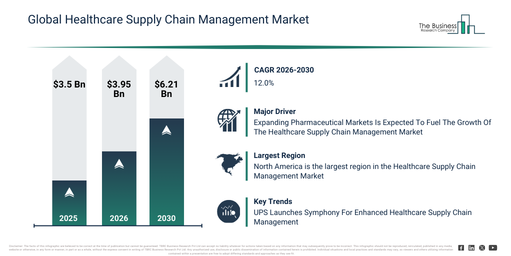
    The healthcare supply chain management market size has experienced rapid growth in recent years. It is forecast to expand from $3.5 billion in 2025 to $3.95 billion in 2026, achieving a compound annual growth rate (CAGR) of 12.8%. The historical period’s growth can be attributed to factors such as increasing complexity of healthcare logistics, rising demand for cost containment in hospitals, expansion of pharmaceutical distribution networks, growing use of inventory digitization tools, and adoption of basic supply chain software.

    The healthcare supply chain management market is projected to experience significant expansion in the coming years. Its valuation is anticipated to reach $6.21 billion by 2030, exhibiting a compound annual growth rate (CAGR) of 12.0%. This projected growth during the forecast period is primarily driven by an intensified focus on predictive demand planning, escalating investments in digital health infrastructure, a heightened demand for robust medical supply chains, the broadening scope of analytics-driven procurement strategies, and the greater uptake of comprehensive end-to-end visibility solutions. Key trends anticipated during this period encompass the wider deployment of cloud-based inventory platforms, the increasing application of real-time supply chain analytics, the enhanced integration of RFID and barcode tracking technologies, the proliferation of centralized procurement models, and a stronger emphasis on overall supply chain resilience.

    Access Your Free Sample Report for In-Depth Market Insights:

    https://www.thebusinessresearchcompany.com/sample.aspx?id=6937&type=smp

    Which Drivers Are Contributing To The Expansion Of The Healthcare Supply Chain Management Market?

    The projected expansion of the pharmaceutical industry is set to stimulate the growth of the healthcare supply chain management market in the future. This industry refers to the economic sector responsible for the research, development, production, and distribution of drugs and medications. An increasing pharmaceutical industry naturally leads to the greater production and dissemination of medications. This necessitates more efficient supply chain management to ensure the timely and accurate delivery of pharmaceutical products to healthcare providers and patients. For instance, in January 2023, a report from IQVIA Inc., a US-based pharmaceutical company, indicated that over the next five years, both global spending on and the demand for medicines are forecast to rise, reaching an approximate total of $1.9 trillion by 2027. Enhanced access to medications has contributed to a 36% rise in medicine utilization, measured in defined daily doses, over the past decade. By 2027, specialty medicines are anticipated to account for around 43% of global spending and a majority share of 56% in developed markets. Global expenditure on cancer drugs is expected to reach $370 billion by 2027, primarily propelled by the introduction and utilization of innovative drugs, with limited impact from new biosimilars. Therefore, the increase in the geriatric population is driving the growth of the healthcare mobility solutions market.

    What Segment Categories Are Covered In The Healthcare Supply Chain Management Market?

    The healthcare supply chain management market covered in this report is segmented –

    1) By Component: Software Application, Hardware Type

    2) By Delivery Mode: On-Premise, Cloud-Based

    3) By End-User: Healthcare Providers, Healthcare Manufacturers, Other End-Users

    Subsegments:

    1) By Software Application: Inventory Management Software, Procurement Management Software, Supply Chain Analytics Software, Order Management Software

    2) By Hardware Type: Barcode Scanners, RFID Systems, Mobile Computing Devices

    How Are Emerging Trends Affecting The Progression Of The Healthcare Supply Chain Management Market?

    Leading firms within the healthcare supply chain management sector are innovating sophisticated solutions, notably cloud-based platforms, with the goal of increasing operational effectiveness, boosting real-time access to data, and simplifying processes for procurement, inventory, and logistics across healthcare entities. These platforms represent digital frameworks that utilize remote servers accessible through the internet, contrasting with systems hosted locally or within an organization’s premises. As an illustration, in March 2024, the U.S.-based shipping, receiving, and supply chain management firm, United Parcel Service (UPS) Inc., introduced UPS Supply Chain Symphony tailored for UPS Healthcare. This UPS Supply Chain Symphony is a cloud-native platform crafted to improve healthcare supply chain oversight by consolidating diverse logistical elements into one unified system. The tool empowers users to effectively oversee and visualize their warehouse and transportation data, furnishing crucial insights for optimizing overall supply chain activities. Furthermore, users gain the ability to track shipment specifics from initial dispatch to final arrival, alongside receiving on-demand reports detailing UPS consignments, current warehouse conditions, and inventory quantities.

    Which Key Market Players Are Investing In Expansion And Innovation Within The Healthcare Supply Chain Management Market?

    Major companies operating in the healthcare supply chain management market are SAP AG Group, Oracle Corporation, McKesson Corporation, TECSYS Inc., Global Healthcare Exchange LLC, Cardinal Health Inc., Epicor, Llamasoft Ltd., Manhattan Associates, Blue Yonder Group Inc., Cerner Corporation, Jump Technologies Inc., LogiTag Systems, Premier Ltd., Accurate InfoSoft Pvt. Ltd., Hybrent Inc., Arvato Systems, Jabil Inc., AmerisourceBergen Corporation, Infor Global Solutions, Henry Schein Inc., Becton Dickinson and Company, Owens & Minor Inc., Medtronic plc, Novo Nordisk AS, Stryker Corporation, F. Hoffmann-La Roche AG, Boston Scientific Corp., Biogen Inc., Johnson & Johnson Services Inc.

    Access The Complete Report For Deeper Market Insights:

    https://www.thebusinessresearchcompany.com/report/healthcare-supply-chain-management-global-market-report

    Which Regions Are Projected To Dominate The Healthcare Supply Chain Management Market In The Coming Years?

    North America will be the largest region in the healthcare supply chain management market in 2025. Asia-Pacific is expected to be the fastest-growing region in the forecast period. The regions covered in the healthcare supply chain management market report are Asia-Pacific, South East Asia, Western Europe, Eastern Europe, North America, South America, Middle East, Africa.

    Request Your Customized Healthcare Supply Chain Management Market Research Report for Competitive Advantage:

    https://www.thebusinessresearchcompany.com/customise?id=6937&type=smp

    Browse Through More Reports Similar to the Global Healthcare Supply Chain Management Market 2026, By The Business Research Company

    Medical Supply Delivery Service Market Report 2026

    https://www.thebusinessresearchcompany.com/report/medical-supply-delivery-service-global-market-report

    Pharmaceutical Supply Chain Management Market Report 2026

    https://www.thebusinessresearchcompany.com/report/pharmaceutical-supply-chain-management-global-market-report

    Healthcare Logistics Market Report 2026

    https://www.thebusinessresearchcompany.com/report/healthcare-logistics-global-market-report

    Get in touch with us:

    The Business Research Company: https://www.thebusinessresearchcompany.com/

    Americas +1 310-496-7795

    Asia +44 7882 955267 & +91 8897263534

    Europe +44 7882 955267

    Email us at info@tbrc.info

    Follow us on:

    LinkedIn: https://in.linkedin.com/company/the-business-research-company

    YouTube: https://www.youtube.com/channel/UC24_fI0rV8cR5DxlCpgmyFQ

    Global Market Model: https://www.thebusinessresearchcompany.com/global-market-model
  • Healthcare Staffing Market 2026–2030: Emerging Trends and Forecast Opportunities

    Healthcare Staffing Market 2026–2030: Emerging Trends and Forecast Opportunities

    Uncover key drivers, emerging technologies, and competitive movements shaping the healthcare staffing market from 2026–2035 with trusted insights from The Business Research Company

    What market expansion outlook does the Healthcare Staffing Market show for the 2026–2030 period?

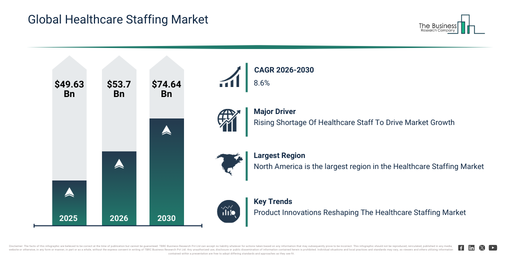
    The healthcare staffing market size has demonstrated robust growth in recent years. This market is projected to expand from $49.63 billion in 2025 to $53.7 billion in 2026, reflecting a compound annual growth rate (CAGR) of 8.2%. The growth observed in the historic period can be attributed to increasing healthcare workforce shortages, rising patient volumes, expansion of hospital networks, growing reliance on temporary staffing, and increased regulatory staffing requirements.

    The healthcare staffing market is projected to experience substantial expansion in the coming years. Its valuation is anticipated to reach $74.64 billion by 2030, exhibiting a compound annual growth rate (CAGR) of 8.6%. This anticipated expansion during the forecast period stems from factors such as the increasing integration of AI in workforce planning, a growing need for remote and telehealth personnel, the broadening of international healthcare staffing, a heightened emphasis on strategies to mitigate burnout, and the expanded application of predictive staffing analytics. Furthermore, key developments expected over this period encompass the wider embrace of digital platforms for staffing, an escalating requirement for temporary and travel healthcare professionals, the increased utilization of workforce analytics instruments, the development of flexible and gig-based staffing models, and a stronger emphasis on workforce adherence to regulations and credentialing.

    Access Your Free Sample Report for In-Depth Market Insights:

    https://www.thebusinessresearchcompany.com/sample.aspx?id=10335&type=smp

    What Drivers Are Shaping The Development Of The Healthcare Staffing Market?

    The increasing scarcity of healthcare personnel is anticipated to fuel the expansion of the healthcare staffing market in the future. Healthcare staff encompasses individuals employed in healthcare or social care environments, such as medical students undergoing clinical rotations, direct care providers, and other healthcare experts not directly interacting with patients. Their role involves preventing illness and disability, as well as being responsible for evaluating conditions, diagnosing, and providing treatment. In recent years, numerous hospitals worldwide have experienced a reduction in healthcare personnel. For example, in January 2023, reports from the US-based technology company Oracle Corporation indicated a study’s forecast: should present workforce trends continue in the U.S., over 6.5 million healthcare professionals are projected to leave their positions permanently by 2026, with only 1.9 million new workers joining the sector, leading to a nationwide deficit exceeding 4 million healthcare workers. Consequently, the expanding scarcity of healthcare staff is propelling the development of the healthcare staffing market moving forward.

    Which Segments Are Contributing To The Growth Of The Healthcare Staffing Market?

    The healthcare staffing market covered in this report is segmented –

    1) By Service: Travel Nurse Staffing, Per Diem Nurse Staffing, Locum Tenens Staffing, Allied Healthcare Staffing

    2) By Function: Patient Care Staff, Administrative Staff, Support Staff, Technicians, Allied Health Professionals

    3) By End User: Hospitals, Government Agencies

    Subsegments:

    1) By Travel Nurse Staffing: Registered Nurses (RNs), Licensed Practical Nurses (LPNs), Specialty Nurses

    2) By Per Diem Nurse Staffing: Temporary RNs, LPNs For Short-Term Needs, CNAs (Certified Nursing Assistants)

    3) By Locum Tenens Staffing: Physicians, Nurse practitioners (NPs), Physician Assistants (PAs)

    4) By Allied Healthcare Staffing: Physical Therapists (PTs), Radiologic Technologists, Medical Lab Technicians (MLTs)

    Which Innovation Trends Are Advancing Developments Within The Healthcare Staffing Market?

    Leading companies in the healthcare staffing market are developing new instruments for flexible staffing pools to sustain their market position. Flexible staffing pools represent a dynamic and adaptable workforce strategy where an organization, such as a healthcare system, maintains a group of employees available to work on a flexible basis. For instance, in August 2023, CareRev, a US-based healthcare staffing company, launched a new workforce management tool to address ongoing healthcare workforce challenges. This tool enables health systems to create flexible staffing pools by utilizing their existing in-house workforce. While initially focused on connecting healthcare facilities with local, vetted professionals on demand, CareRev’s expanded platform now allows part-time or full-time W2 employees within a healthcare system to pick up additional shifts when staffing requirements exceed the core full-time workforce. The technology, which was developed during the COVID-19 pandemic, aims to provide health systems with efficient and real-time management of their flexible staffing resources, offering a solution to nurse shortages, retention issues, and clinician burnout. CareRev’s innovative approach includes features like AI-based shift pricing and in-app communications, offering health systems visibility, control, and seamless communication for effective workforce management.

    Who Are The Core Companies Influencing Trends In The Healthcare Staffing Market?

    Major companies operating in the healthcare staffing market are Envision Healthcare Corporation, AMN Healthcare Holdings Inc., CHG Healthcare Services Inc., Maxim Healthcare Group Inc., Cross Country Healthcare Inc., Aya Healthcare Inc., Trustaff Inc., TeamHealth Holdings Inc., LocumTenens.com LLC, Jackson Healthcare LLC, Favorite Healthcare Staffing Inc., Medical Solutions LLC, Aureus Medical Group LLC, CompHealth LLC, CoreMedical Group LLC, CrossMed Healthcare Staffing Solutions LLC, Emerald Health Services LLC, Health Carousel LLC, HealthTrust Workforce Solutions LLC, KPG Healthcare LLC, MAS Medical Staffing LLC, MedPro Healthcare Staffing LLC, MedStaff Healthcare Solutions LLC, Next Travel Nursing LLC, NurseFly LLC, Onward Healthcare LLC, ProLink Healthcare LLC, Provenir Healthcare LLC, RNnetwork LLC, Soliant Health LLC, Supplemental Health Care LLC

    Access The Complete Report For Deeper Market Insights:

    https://www.thebusinessresearchcompany.com/report/healthcare-staffing-global-market-report

    Which Region Is Expected To Experience The Fastest Growth In The Healthcare Staffing Market?

    North America was the largest region in the healthcare staffing market in 2025. Asia-Pacific is expected to be the fastest-growing region in the global healthcare staffing market during the forecast period. The regions covered in the healthcare staffing market report are Asia-Pacific, South East Asia, Western Europe, Eastern Europe, North America, South America, Middle East, Africa.

    Request Your Customized Healthcare Staffing Market Research Report for Competitive Advantage:

    https://www.thebusinessresearchcompany.com/customise?id=10335&type=smp

    Browse Through More Reports Similar to the Global Healthcare Staffing Market 2026, By The Business Research Company

    Healthcare Consulting Services Market Report 2026

    https://www.thebusinessresearchcompany.com/report/healthcare-consulting-services-global-market-report

    Healthcare Workforce Management System Market Report 2026

    https://www.thebusinessresearchcompany.com/report/healthcare-workforce-management-system-global-market-report

    Healthcare Services Market 2026

    https://www.thebusinessresearchcompany.com/report/healthcare-services-market

    Get in touch with us:

    The Business Research Company: https://www.thebusinessresearchcompany.com/

    Americas +1 310-496-7795

    Asia +44 7882 955267 & +91 8897263534

    Europe +44 7882 955267

    Email us at info@tbrc.info

    Follow us on:

    LinkedIn: https://in.linkedin.com/company/the-business-research-company

    YouTube: https://www.youtube.com/channel/UC24_fI0rV8cR5DxlCpgmyFQ

    Global Market Model: https://www.thebusinessresearchcompany.com/global-market-model
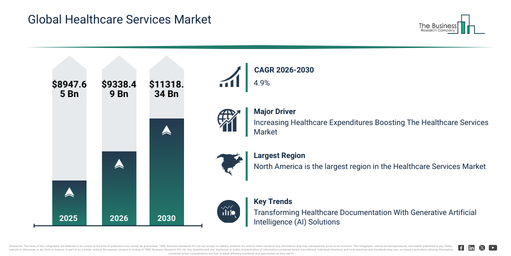
  • Global Healthcare Services Market Forecast 2026–2035: Long-Term Growth Insights

    Global Healthcare Services Market Forecast 2026–2035: Long-Term Growth Insights

    Uncover key drivers, emerging technologies, and competitive movements shaping the healthcare services market from 2026–2035 with trusted insights from The Business Research Company

    What level of growth is expected in the Healthcare Services Market between 2026 and 2030?

    The healthcare services market size has experienced consistent expansion in recent years. It is projected to increase from $8947.65 billion in 2025 to $9338.49 billion in 2026, exhibiting a compound annual growth rate (CAGR) of 4.4%. This historic growth can be primarily linked to rising healthcare demand from aging populations, the expansion of hospital and outpatient networks, increased public healthcare expenditure, growth in private healthcare services, and an enhanced focus on clinical specialization.

    The healthcare services market is projected to experience consistent expansion in the coming years. By 2030, it is anticipated to reach $11318.34 billion, growing at a compound annual growth rate (CAGR) of 4.9%. This projected growth can be ascribed to several factors, including the increasing uptake of digital health services, greater incorporation of AI into clinical processes, a rising need for care delivered at home, the broadening scope of population health management, and increased financial commitments to healthcare infrastructure. Key trends expected during this forecast timeframe encompass the expanding embrace of telehealth and virtual care solutions, a surge in the utilization of data-driven tools for clinical decision support, an intensified focus on care that is both preventive and value-based, the proliferation of integrated models for care delivery, and a heightened importance placed on designing services with the patient at the center.

    Access Your Free Sample Report for In-Depth Market Insights:

    https://www.thebusinessresearchcompany.com/sample.aspx?id=3612&type=smp

    Which Drivers Are Expected To Impact The Healthcare Services Market During The Forecast Period?

    The anticipated increase in healthcare expenditures is set to drive the expansion of the healthcare services market moving forward. These health expenditures refer to all costs associated with providing health services, family planning activities, nutrition programs, and emergency help with a focus on health. Higher healthcare expenditures enhance access to healthcare services, reducing barriers to care and potentially benefiting a larger segment of the population. For instance, in April 2025, a report published by the Office for National Statistics, a UK-based government department, revealed that total healthcare expenditure grew by 6.5% in nominal terms between 2023 and 2024, which was a higher growth rate compared to the 6.3% recorded in 2023. Therefore, the rise in healthcare expenditures is a significant driver of growth for the healthcare services market.

    How Is The Healthcare Services Market Divided Into Segments?

    The healthcare services market covered in this report is segmented –

    1) By Type: Medical And Diagnostic Laboratory Services, Dental Services, Home Health Care And Residential Nursing Care Services, Residential Substance Abuse And Mental Health Facilities, Hospitals And Outpatient Care Centers, Physicians And Other Health Practitioners, Ambulance Services

    2) By Type of Expenditure: Public, Private

    3) By End User Gender: Male, Female

    Subsegments:

    1) By Medical and Diagnostic Laboratory Services: Clinical Laboratories, Diagnostic Imaging Services

    2) By Dental Services: General Dentistry, Specialized Dental Services

    3) By Home Health Care and Residential Nursing Care Services: Home Health Care, Nursing Care Facilities

    4) By Residential Substance Abuse and Mental Health Facilities: Residential Mental Health Facilities, Substance Abuse Rehabilitation Centers

    5) By Hospitals and Outpatient Care Centers: General Medical and Surgical Hospitals, Specialty Hospitals, Outpatient Care Centers

    6) By Physicians and Other Health Practitioners: General Practitioners, Specialist Physicians, Chiropractors and Other Health Practitioners

    7) By Ambulance Services: Ground Ambulance Services, Air Ambulance Services

    Which Competitive Trends Are Impacting The Structure Of The Healthcare Services Market?

    Leading firms within the healthcare services market are intensifying their efforts to create sophisticated solutions, including generative artificial intelligence (AI) offerings, aiming to enhance profitability within the sector. Generative AI solutions encompass artificial intelligence systems and algorithms specifically engineered to produce diverse content like text, images, audio, or video, frequently demonstrating creativity, coherence, and contextual appropriateness. An example of this is Amazon Web Services, a US-based IT service management company, which introduced AWS HealthScribe in July 2023, a new service tailored for healthcare, utilizing generative AI for automated clinical documentation generation. This service leverages speech recognition and generative AI to interpret patient-clinician dialogues and generate clinical notes, thereby accelerating documentation processing and boosting clinical efficiency. Furthermore, AWS HealthScribe meets Health Insurance Portability and Accountability Act (HIPAA) eligibility requirements and is applicable for both telehealth and in-clinic consultation settings.

    Which Major Industry Participants Are Leading The Healthcare Services Market Growth?

    Major companies operating in the healthcare services market are Kaiser Permanente, HCA Healthcare, Tenet Healthcare, Mayo Clinic, Cleveland Clinic, Community Health Systems, Fresenius Medical Care, DaVita Inc., Quest Diagnostics, Laboratory Corporation of America, Ascension, CommonSpirit Health, Trinity Health, Universal Health Services, Encompass Health, Select Medical, LifePoint Health, Brookdale Senior Living, Amedisys, LHC Group

    Access The Complete Report For Deeper Market Insights:

    https://www.thebusinessresearchcompany.com/report/healthcare-service-global-market-report

    Which Geographic Areas Are Emerging As Strong Markets For The Healthcare Services Market?

    North America was the largest region in the healthcare services market in 2025. Western Europe was the second largest region in the healthcare services market. The regions covered in the healthcare services market report are Asia-Pacific, South East Asia, Western Europe, Eastern Europe, North America, South America, Middle East, Africa.

    Request Your Customized Healthcare Services Market Research Report for Competitive Advantage:

    https://www.thebusinessresearchcompany.com/customise?id=3612&type=smp

    Browse Through More Reports Similar to the Global Healthcare Services Market 2026, By The Business Research Company

    Services Market Report 2026

    https://www.thebusinessresearchcompany.com/report/services-global-market-report

    Care Services Market Report 2026

    https://www.thebusinessresearchcompany.com/report/care-services-global-market-report

    Facility Management Services Market Report 2026

    https://www.thebusinessresearchcompany.com/report/facility-management-services-global-market-report

    Get in touch with us:

    The Business Research Company: https://www.thebusinessresearchcompany.com/

    Americas +1 310-496-7795

    Asia +44 7882 955267 & +91 8897263534

    Europe +44 7882 955267

    Email us at info@tbrc.info

    Follow us on:

    LinkedIn: https://in.linkedin.com/company/the-business-research-company

    YouTube: https://www.youtube.com/channel/UC24_fI0rV8cR5DxlCpgmyFQ

    Global Market Model: https://www.thebusinessresearchcompany.com/global-market-model