Category: HealthcareServices

  • Thermal Spa And Wellness Market Size and Demand Forecast 2026–2030

    Thermal Spa And Wellness Market Size and Demand Forecast 2026–2030

    Uncover key drivers, emerging technologies, and competitive movements shaping the thermal spa and wellness market from 2026–2035 with trusted insights from The Business Research Company

    How is the Thermal Spa And Wellness Market size predicted to change over the forecast window of 2026–2035?

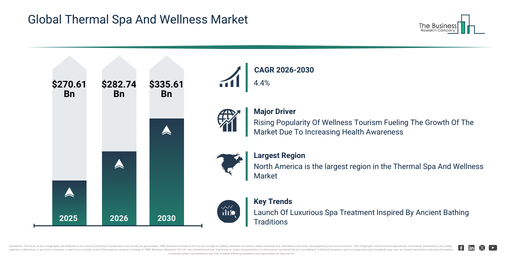
    The thermal spa and wellness market has demonstrated consistent expansion in its overall size over recent years. This market is projected to expand from $270.61 billion in 2025 to $282.74 billion by 2026, exhibiting a compound annual growth rate (CAGR) of 4.5%. The growth witnessed in the historic period can be attributed to several factors, including the growth of wellness tourism destinations, rising consumer awareness of preventive healthcare, the expansion of spa resort infrastructure, increased disposable income levels, and the cultural acceptance of alternative therapies.

    The thermal spa and wellness market is projected to experience consistent expansion over the upcoming years. This market is anticipated to reach a valuation of $335.61 billion by 2030, exhibiting a compound annual growth rate (CAGR) of 4.4%. This expansion during the projection period stems from a heightened emphasis on integrative health strategies, increased desire for tailored wellness programs, the proliferation of environmentally friendly spa establishments, wider use of digital platforms for wellness management, and greater capital allocation towards experiential wellness products. Key developments expected within this period encompass a surging preference for comprehensive wellness experiences, the increasing convergence of medical and wellness provisions, the escalating appeal of therapies utilizing thermal and mineral elements, the expansion of upscale wellness travel, and an intensified concentration on mental well-being and mitigating stress.

    Access Your Free Sample Report for In-Depth Market Insights:

    https://www.thebusinessresearchcompany.com/sample.aspx?id=23540&type=smp

    Which Drivers Are Contributing To The Expansion Of The Thermal Spa And Wellness Market?

    The increasing appeal of wellness tourism is anticipated to drive the future expansion of the thermal spa and wellness market. Wellness tourism describes travel undertaken to improve personal health and well-being through activities such as spa treatments, yoga retreats, and holistic therapies. This surge in popularity is attributed to a heightened awareness of the importance of mental health and self-care. As contemporary life becomes more demanding and stressful, individuals seek destinations that offer relaxation, rejuvenation, and an escape from their routines. Thermal spas and wellness centers bolster wellness tourism by delivering distinct and revitalizing experiences that merge natural healing with comprehensive wellness programs. The inherent mineral-rich thermal waters provide various health benefits to visitors, including improved circulation, pain relief, and detoxification. For instance, in October 2025, a report published by Hoteligio, a Ukraine-based hospitality company, revealed that global wellness tourism spending reached $830 billion in 2023, with travelers making 1,034.5 million wellness-focused trips that year. Thus, the growing popularity of wellness tourism is fueling the growth of the thermal spa and wellness market.

    What Segment Classifications Make Up The Thermal Spa And Wellness Market?

    The thermal spa and wellness market covered in this report is segmented –

    1) By Treatment Type: Hydrotherapy, Aromatherapy, Massage Therapy, Mud Baths And Wraps, Facial And Skin Treatments, Other Treatment Types

    2) By Type Of Facility: Thermal Spas, Wellness Resorts And Hotels, Medical Wellness Centers

    3) By Customer Preference: Luxury Experience, Budget-Friendly Experience

    4) By Consumer Group: Men, Women

    Subsegments:

    1) By Hydrotherapy: Hot Spring Bathing, Vichy Showers, Hydro-Massage Pools, Kneipp Therapy, Contrast Water Therapy

    2) By Aromatherapy: Essential Oil Massage, Diffuser-Based Therapy, Aromatic Steam Inhalation, Herbal Baths, Scented Sauna Experiences

    3) By Massage Therapy: Swedish Massage, Deep Tissue Massage, Shiatsu, Thai Massage, Reflexology

    4) By Mud Baths And Wraps: Thermal Mud Baths, Volcanic Mud Wraps, Moor Mud Therapy, Algae And Seaweed Wraps, Clay Detox Wraps

    5) By Facial And Skin Treatments: Thermal Water Facials, Anti-Aging Treatments, Exfoliation And Peeling, Acne And Blemish Treatments, Hydration And Brightening Facials

    6) By Other Treatment Types: Sauna And Steam Rooms, Yoga And Meditation Sessions, Balneotherapy, Infrared Therapy, Salt Rooms

    What Industry Trends Are Transforming The Thermal Spa And Wellness Market?

    Key companies operating within the thermal spa and wellness market are prioritizing the creation of innovative solutions, such as specialized thermal spa treatment services, aimed at enhancing client experiences, fostering relaxation, and providing comprehensive wellness approaches. Thermal spa treatment refers to therapeutic wellness practices that leverage natural hot springs, water rich in minerals, or heated baths to encourage relaxation, improve circulation, and elevate overall health. Illustratively, in March 2025, Jo Malone London, a cosmetics company based in the UK, partnered with AIRE Ancient Baths, a luxury wellness and spa chain from Spain inspired by the bathing traditions of ancient Roman, Greek, and Ottoman civilizations, to unveil The Restorative Ritual, their first spa treatment, offered exclusively at AIRE Ancient Baths London. This journey begins with a sensory exploration through AIRE’s signature thermal circuit, featuring a variety of baths designed for both soothing and revitalizing purposes, including the Tepidarium, Caldarium, and Frigidarium. The experience also integrates hydrotherapy, a steam room, and a flotation bath. The core treatment involves a full-body exfoliation on a warm marble bed, followed by a calming massage utilizing Jo Malone’s Restore Body Oil, which is available solely at Selfridges.

    Which Leading Companies Dominate The Thermal Spa And Wellness Market Share?

    Major companies operating in the thermal spa and wellness market are Villeroy & Boch, Aman Resorts, Jacuzzi Inc, Lemi Group, Lux Elements GmbH & Co. KG, SIX Senses Hotels Resorts Spas, HydroCo, Balboa Water Group, Chiva-Som International Health Resort, Therme Group, Oakworks Inc., Gharieni Group, Sommerhuber GmbH, Aquavia Spa, SpaEquip Inc., Thai-Me Spa, Blue Lagoon, Canyon Ranch, Lanserhof Group, Grand Resort Bad Ragaz, Mandarin Oriental Hotel Group

    Access The Complete Report For Deeper Market Insights:

    https://www.thebusinessresearchcompany.com/report/thermal-spa-and-wellness-global-market-report

    Which Region Is Anticipated To See The Fastest Growth In The Thermal Spa And Wellness Market?

    North America was the largest region in the thermal spa and wellness market in 2025. The regions covered in the thermal spa and wellness market report are Asia-Pacific, South East Asia, Western Europe, Eastern Europe, North America, South America, Middle East, Africa.

    Request Your Customized Thermal Spa And Wellness Market Research Report for Competitive Advantage:

    https://www.thebusinessresearchcompany.com/customise?id=23540&type=smp

    Browse Through More Reports Similar to the Global Thermal Spa And Wellness Market 2026, By The Business Research Company

    Corporate Wellness Solutions Market Report 2026

    https://www.thebusinessresearchcompany.com/report/corporate-wellness-solutions-global-market-report

    Wellness Retreat Market Report 2026

    https://www.thebusinessresearchcompany.com/report/wellness-retreat-global-market-report

    Sauna Services Market Report 2026

    https://www.thebusinessresearchcompany.com/report/sauna-services-global-market-report

    Get in touch with us:

    The Business Research Company: https://www.thebusinessresearchcompany.com/

    Americas +1 310-496-7795

    Asia +44 7882 955267 & +91 8897263534

    Europe +44 7882 955267

    Email us at info@tbrc.info

    Follow us on:

    LinkedIn: https://in.linkedin.com/company/the-business-research-company

    YouTube: https://www.youtube.com/channel/UC24_fI0rV8cR5DxlCpgmyFQ

    Global Market Model: https://www.thebusinessresearchcompany.com/global-market-model
  • Therapeutic Plasma Exchange Market Outlook: Growth and Forecast Highlights 2030

    Therapeutic Plasma Exchange Market Outlook: Growth and Forecast Highlights 2030

    Uncover key drivers, emerging technologies, and competitive movements shaping the therapeutic plasma exchange market from 2026–2035 with trusted insights from The Business Research Company

    What market expansion outlook does the Therapeutic Plasma Exchange Market show for the 2026–2030 period?

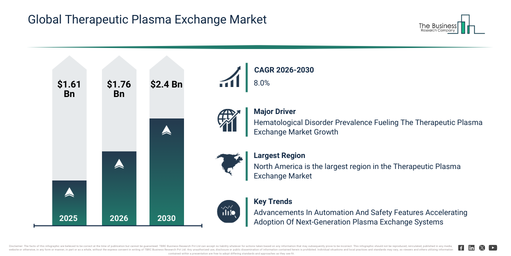
    The therapeutic plasma exchange market size has experienced strong growth in recent years. It is anticipated to increase from $1.61 billion in 2025 to $1.76 billion in 2026, achieving a compound annual growth rate (CAGR) of 9.4%. The expansion observed in the historic period is attributable to an increase in the diagnosis of autoimmune disorders, the broadening of hospital transfusion services, the accessibility of centrifugation-based technologies, rising clinician familiarity with apheresis procedures, and the adoption of standardized treatment protocols.

    The therapeutic plasma exchange market is projected to experience substantial expansion over the next few years. It is anticipated to grow to $2.4 billion in 2030, driven by a compound annual growth rate (CAGR) of 8.0%. This growth during the forecast period can be attributed to an escalating demand for advanced autoimmune therapies, the increasing adoption of membrane separation technology, the expansion of outpatient apheresis services, rising investment in blood purification technologies, and an elevated focus on personalized immunological treatments. Key trends identified for this period encompass the growing integration of automated plasma exchange systems, the expanding application of tpe in neurological disorders, a heightened demand for high-efficiency separation technologies, the proliferation of hospital-based apheresis units, and an intensified emphasis on treatment safety and continuous monitoring.

    Access Your Free Sample Report for In-Depth Market Insights:

    https://www.thebusinessresearchcompany.com/sample.aspx?id=15683&type=smp

    What Drivers Are Shaping The Development Of The Therapeutic Plasma Exchange Market?

    The increasing occurrence of hematological disorders is anticipated to fuel the expansion of the therapeutic plasma exchange market going forward. These conditions, also known as blood disorders, refer to medical issues impacting the blood and blood-forming tissues, including the bone marrow, lymph nodes, and spleen. The rise in hematological disorders is attributed to factors like genetic predispositions, environmental influences, and lifestyle changes. Therapeutic plasma exchange (TPE) is employed in these disorders to extract pathogenic substances from the plasma, such as autoantibodies in autoimmune hemolytic anemia or immune complexes in thrombotic thrombocytopenic purpura, thereby lessening disease severity and improving patient outcomes. For instance, in July 2024, Cancer Research UK, a UK-based charity, reported that the average number of new Hodgkin lymphoma cases per year in the UK is projected to rise from approximately 2,400 cases in 2023-2025 to around 2,900 cases in 2038-2040. Consequently, the high prevalence of hematological disorders is driving the growth of the therapeutic plasma exchange market.

    What Segment Types Are Examined In The Therapeutic Plasma Exchange Market?

    The therapeutic plasma exchange market covered in this report is segmented –

    1) By Type: Therapeutic Plasma Exchange (TPE), Double Filtered Plasmapheresis (DFPP)

    2) By Indication: Neurological Disorders, Hematological Disorders, Renal Disorders, Metabolic Disorders, Other Indications

    3) By Technology: Centrifugation, Membrane Separation

    4) By End User: Blood Collection Centers, Hospitals And Clinics, Transfusion Centers, Other End Users

    Subsegments:

    1) By Therapeutic Plasma Exchange (TPE): Manual TPE, Automated TPE

    2) By Double Filtered Plasmapheresis (DFPP): Single-Stage DFPP, Multi-Stage DFPP

    What Trends Are Reshaping The Dynamics Of The Therapeutic Plasma Exchange Market?

    Key players within the therapeutic plasma exchange market are prioritizing improvements in automation, device safety, and system efficiency to enhance clinical adoption and streamline operational processes. Automation refers to the use of systems and technology to perform tasks autonomously, without the need for constant human oversight. For example, in November 2024, Terumo BCT, a US-based medical device company, launched software update V12.1 for its flagship Spectra Optia Apheresis System. This update improves usability, strengthens cybersecurity, and optimizes workflow, which includes an automatic pump pause during single needle exchange and reduced alarm occurrences. The system effectively supports therapeutic plasma exchange, demonstrating a mean plasma removal efficiency of 87 %, a minimal extracorporeal volume of 141 mL, and only 1.0 % median platelet loss. While this progression towards sophisticated automation and enhanced device safety is driving increased TPE uptake in hospitals and specialty clinics, the high initial investment cost and the requirement for trained personnel still constrain its adoption in settings with limited resources.

    Who Are The Major Companies Operating In The Therapeutic Plasma Exchange Market?

    Major companies operating in the therapeutic plasma exchange market are Medica S.p.A., Fresenius SE and Co. KGaA, Medtronic Plc., Asahi Kasei Corporation, Toray Industries Inc., Baxter International Inc., B Braun Melsungen AG, Terumo Corporation, Kaneka Corporation, Octapharma AG, Haemonetics Corporation, Miltenyi Biotec Technology And Trading Co. Ltd., Macopharma SA, Cerus Corporation, Apellis Pharmaceuticals Inc., ImmunoTek Bio Centers LLC, CytoSorbents Corporation, Kawasumi Laboratories America Inc.

    Access The Complete Report For Deeper Market Insights:

    https://www.thebusinessresearchcompany.com/report/therapeutic-plasma-exchange-global-market-report

    Which Global Regions Are Shaping The Competitive Landscape Of The Therapeutic Plasma Exchange Market?

    North America was the largest region in the therapeutic plasma exchange market in 2025. Asia-Pacific is expected to be the fastest-growing region in the forecast period. The regions covered in the therapeutic plasma exchange market report are Asia-Pacific, South East Asia, Western Europe, Eastern Europe, North America, South America, Middle East, Africa.

    Request Your Customized Therapeutic Plasma Exchange Market Research Report for Competitive Advantage:

    https://www.thebusinessresearchcompany.com/customise?id=15683&type=smp

    Browse Through More Reports Similar to the Global Therapeutic Plasma Exchange Market 2026, By The Business Research Company

    Blood Plasma Derivatives Market Report 2026

    https://www.thebusinessresearchcompany.com/report/blood-plasma-derivatives-global-market-report

    Convalescent Plasma Therapy Market Report 2026

    https://www.thebusinessresearchcompany.com/report/convalescent-plasma-therapy-global-market-report

    Plasma Protein Therapeutics Market Report 2026

    https://www.thebusinessresearchcompany.com/report/plasma-protein-therapeutics-global-market-report

    Get in touch with us:

    The Business Research Company: https://www.thebusinessresearchcompany.com/

    Americas +1 310-496-7795

    Asia +44 7882 955267 & +91 8897263534

    Europe +44 7882 955267

    Email us at info@tbrc.info

    Follow us on:

    LinkedIn: https://in.linkedin.com/company/the-business-research-company

    YouTube: https://www.youtube.com/channel/UC24_fI0rV8cR5DxlCpgmyFQ

    Global Market Model: https://www.thebusinessresearchcompany.com/global-market-model
  • Theranostics Market Insights Report: Opportunities and Drivers 2030

    Theranostics Market Insights Report: Opportunities and Drivers 2030

    Uncover key drivers, emerging technologies, and competitive movements shaping the theranostics market from 2026–2035 with trusted insights from The Business Research Company

    What level of growth is expected in the Theranostics Market between 2026 and 2030?

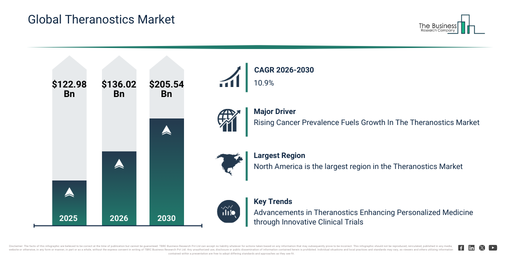
    The theranostics market size has seen rapid expansion in recent years. It is projected to increase from $122.98 billion in 2025 to $136.02 billion in 2026, achieving a compound annual growth rate (CAGR) of 10.6%. Historically, this growth can be attributed to advancements in molecular diagnostics, an increased prevalence of chronic diseases, the growth of oncology-focused research programs, the availability of targeted therapeutics, and the expansion of diagnostic laboratory infrastructure.

    The theranostics market is anticipated to experience substantial expansion over the coming years. This market is projected to reach a value of $205.54 billion by 2030, exhibiting a compound annual growth rate (CAGR) of 10.9%. This projected increase is driven by factors such as growing investments in precision medicine, wider acceptance of AI-powered diagnostic instruments, the broadening scope of theranostic uses in oncology, increased incorporation of genomics into medical procedures, and a greater need for individualized treatment results. Key developments anticipated in the forecast period involve a heightened integration of diagnostics with targeted therapies, increased embrace of personalized medicine platforms, expanded application of molecular imaging techniques, growth in the creation of companion diagnostics, and a sharpened emphasis on treatment plans tailored to individual patients.

    Access Your Free Sample Report for In-Depth Market Insights:

    https://www.thebusinessresearchcompany.com/sample.aspx?id=10823&type=smp

    Which Drivers Are Expected To Impact The Theranostics Market During The Forecast Period?

    The expanding occurrence of cancer is projected to stimulate the growth of the theranostics market moving forward. Cancer, characterized by uncontrolled cell multiplication, affects various organs and significantly contributes to illness and death globally. Theranostics, which unites therapeutic and diagnostic functions, holds considerable promise for managing cancer and other chronic conditions. This methodology facilitates personalized and precise treatments by integrating diagnostic insights with therapeutic actions, thereby creating avenues for innovation within the healthcare sector. Consequently, the growing population of cancer patients will fuel the expansion of the theranostics market. For example, in August 2024, the UK-based Macmillan Cancer Support reported that over 3 million individuals in the UK are living with cancer in 2024, with forecasts indicating an increase to 3.5 million by 2025, 4 million by 2030, and 5.3 million by 2040. Thus, the escalating prevalence of cancer is propelling the theranostics market.

    Which Segments Are Driving Activity In The Theranostics Market?

    The theranostics market covered in this report is segmented –

    1) By Disease Type: Neurological Disorders, Cardiovascular Diseases, Immunological Disorders, Oncology Diseases, Other Diseases

    2) By Technology: Polymerase Chain Reaction, Immunohistochemistry, In-Situ Hybridization, Sequencing, Other Technologies

    3) By End User: Hospitals And Clinics, Diagnostic Laboratories, Other End Users

    Subsegments:

    1) By Neurological Disorders: Alzheimer’s Disease, Parkinson’s Disease, Multiple Sclerosis, Epilepsy

    2) By Cardiovascular Diseases: Coronary Artery Disease, Heart Failure, Atrial Fibrillation, Hypertension

    3) By Immunological Disorders: Rheumatoid Arthritis, Systemic Lupus Erythematosus, Inflammatory Bowel Disease, Psoriasis

    4) By Oncology Diseases: Breast Cancer, Lung Cancer, Colorectal Cancer, Prostate Cancer

    5) By Other Diseases: Infectious Diseases, Metabolic Disorders, Genetic Disorders

    How Are New Market Trends Shaping The Landscape Of The Theranostics Market?

    Leading companies in the theranostics market are prioritizing the development of advanced technological solutions, such as theranostics clinical trials, to advance personalized medicine and enhance patient outcomes by merging diagnostics and therapeutics into a unified treatment approach. Theranostics clinical trials are research endeavors designed to assess the combined application of diagnostic tests and targeted therapies to customize treatment strategies for individual patients. These studies aim to ascertain the effectiveness of specific treatments based on patient-specific biomarkers, thereby strengthening personalized medicine initiatives. For instance, in May 2024, BAMF Health, a US-based cancer treatment center, inaugurated the COMBAT Trial, officially titled “A Phase I/II Theranostic Study of 64Cu-SAR-BBN and 67Cu-SAR-BBN for Identification and Treatment of GRPR-expressing Metastatic Castrate Resistant Prostate Cancer in Patients Who Are Ineligible for Therapy With 177Lu-PSMA-617” (NCT05633160). Significant aspects include a swift activation process enabled by BAMF Health’s BAMF RapAct program, which facilitated the trial’s launch in merely seven weeks, and a concentrated effort on utilizing innovative radiopharmaceuticals aimed at the Gastrin-Releasing Peptide receptor (GRPR) to broaden treatment possibilities for patients with limited therapeutic avenues.

    Which Major Firms Are Strengthening Their Position In The Theranostics Market?

    Major companies operating in the theranostics market are Abbott Laboratories, Agilent Technologies Inc., Beckman Coulter Inc., Thermo Fisher Scientific Inc, Astellas Pharma, Radiopharm Theranostics Ltd, Alpha-Theranostics, Cardio-Theranostics LLC, Curium, Theradiag, Cell Theranostics, F. Hoffmann-La Roche AG, GE HealthCare Technologies Inc, Qiagen NV, Foundation Medicine Inc., Leica Biosystems Nussloch GmBH, Pfizer Inc., Siemens Healthineers, Advanced Accelerator Applications, AstraZeneca plc, Bayer AG, Bio-Rad Laboratories, Bristol-Myers Squibb Company, Danaher Corporation, Illumina Inc., Merck KGaA, Roche Diagnostics Corporation, PerkinElmer Inc.

    Access The Complete Report For Deeper Market Insights:

    https://www.thebusinessresearchcompany.com/report/theranostics-global-market-report

    Which Regions Are Poised For Strategic Growth In The Theranostics Market?

    North America was the largest region in the global theranostics market in 2025.Asia-Pacific is expected to be the fastest-growing region in the forecast period. The regions covered in the theranostics market report are Asia-Pacific, South East Asia, Western Europe, Eastern Europe, North America, South America, Middle East, Africa.

    Request Your Customized Theranostics Market Research Report for Competitive Advantage:

    https://www.thebusinessresearchcompany.com/customise?id=10823&type=smp

    Browse Through More Reports Similar to the Global Theranostics Market 2026, By The Business Research Company

    Antidotes Market Report 2026

    https://www.thebusinessresearchcompany.com/report/antidotes-global-market-report

    Radiopharmaceutical Theranostics Market Report 2026

    https://www.thebusinessresearchcompany.com/report/radiopharmaceutical-theranostics-global-market-report

    Music Therapy Market Report 2026

    https://www.thebusinessresearchcompany.com/report/music-therapy-global-market-report

    Get in touch with us:

    The Business Research Company: https://www.thebusinessresearchcompany.com/

    Americas +1 310-496-7795

    Asia +44 7882 955267 & +91 8897263534

    Europe +44 7882 955267

    Email us at info@tbrc.info

    Follow us on:

    LinkedIn: https://in.linkedin.com/company/the-business-research-company

    YouTube: https://www.youtube.com/channel/UC24_fI0rV8cR5DxlCpgmyFQ

    Global Market Model: https://www.thebusinessresearchcompany.com/global-market-model
  • Testicular Cancer Global Forecast: Market to Scale Up to $5.27 Billion by 2030 at 7.3% CAGR

    Testicular Cancer Global Forecast: Market to Scale Up to $5.27 Billion by 2030 at 7.3% CAGR

    Uncover key drivers, emerging technologies, and competitive movements shaping the testicular cancer market from 2026–2035 with trusted insights from The Business Research Company

    How much is the Testicular Cancer Market valued at in 2026, and what valuation is forecast for 2030?

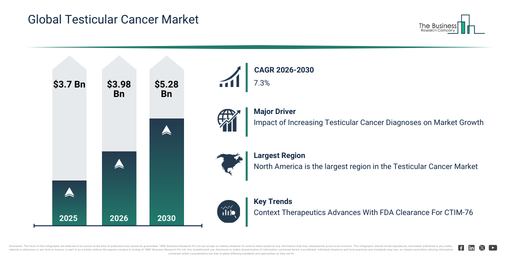
    The testicular cancer market size has experienced strong growth in recent years. It is projected to expand from $3.7 billion in 2025 to $3.98 billion in 2026, exhibiting a compound annual growth rate (CAGR) of 7.6%. This historical expansion can be attributed to improvements in cancer diagnostic accuracy, the proliferation of oncology treatment centers, increased awareness of testicular cancer symptoms, the availability of effective chemotherapy protocols, and the adoption of standardized treatment guidelines.

    The testicular cancer market is projected to experience substantial expansion in the coming years. It is anticipated to reach a valuation of $5.28 billion by 2030, exhibiting a compound annual growth rate (CAGR) of 7.3%. This expansion is primarily attributed to rising investments in personalized cancer medicine, the growing adoption of immunotherapy and targeted therapy, the broadening of early screening initiatives, increasing utilization of digital oncology platforms, and a heightened focus on survivorship and long-term care. Key developments during this period are expected to encompass the increasing acceptance of precision oncology treatments, a rise in biomarker-based diagnostics, further integration of personalized chemotherapy regimens, advancements in surgical techniques, and a sharpened emphasis on early detection and screening.

    Access Your Free Sample Report for In-Depth Market Insights:

    https://www.thebusinessresearchcompany.com/sample.aspx?id=20977&type=smp

    What Drivers Are Influencing The Growth Of The Testicular Cancer Market?

    The rising incidence of testicular cancer diagnoses is poised to fuel the expansion of the testicular cancer market in the coming years. Testicular cancer, a malignancy developing in male testicles, commonly presents as painless lumps or swelling. This increase in diagnoses can be attributed to heightened public awareness, enhanced diagnostic methodologies, and more frequent self-examinations, in addition to possible environmental and lifestyle influences. The testicular cancer market actively contributes to boosting diagnoses by financing research, refining diagnostic instruments, and endorsing awareness initiatives aimed at promoting early detection. For example, a report released in May 2025 by the Cancer Council Victoria, an Australia-based non-profit organization, indicated that in 2023, the incidence of testicular cancer among Victorian males was 7.1 per 100,000, showcasing a persistent substantial disease burden. Hence, the growing diagnosis rate of testicular cancer is indeed propelling the growth of the testicular cancer market.

    How Is The Testicular Cancer Market Organized Into Various Segments?

    The testicular cancer market covered in this report is segmented –

    1) By Treatment Type: Surgery, Chemotherapy, Radiotherapy, Immunotherapy, Targeted Therapy

    2) By Histology: Seminoma, Non-Seminoma, Mixed

    3) By Dosage Form: Tablet, Capsule, Creams

    4) By Route Of Administration: Oral, Topical

    5) By End-use: Hospitals, Clinics

    Subsegments:

    1) By Surgery: Orchiectomy, Retroperitoneal Lymph Node Dissection (RPLND)

    2) By Chemotherapy: Platinum-Based Chemotherapy, Chemotherapy Regimens (BEP regimen)

    3) By Radiotherapy: External Beam Radiation, Retroperitoneal Radiation

    4) By Immunotherapy: Immune Checkpoint Inhibitors, Cancer Vaccines

    5) By Targeted Therapy: Tyrosine Kinase Inhibitors, Monoclonal Antibodies

    Which Trends Are Expected To Influence The Testicular Cancer Market In The Upcoming Years?

    Major companies within the testicular cancer market are prioritizing the development of innovative products, such as cell-engaging bispecific antibodies, specifically targeting CLDN6-positive gynecologic and testicular cancers. A cell-engaging bispecific antibody operates by binding to two distinct targets, thereby facilitating the activation of immune cells to locate and eliminate cancer or diseased cells. For instance, in May 2024, Context Therapeutics Inc., a US-based biopharmaceutical company, announced that the U.S. Food and Drug Administration (FDA) had approved its Investigational New Drug (IND) application for CTIM-76, a CLDN6 x CD3 T cell-engaging bispecific antibody. This approval enables the company to launch a Phase 1 clinical trial to evaluate CTIM-76 in patients with CLDN6-positive gynecologic and testicular cancers. The trial is designed to focus on dose escalation and expansion to assess the drug’s safety, efficacy, and pharmacokinetics.

    Who Are The Primary Competitors In The Global Testicular Cancer Market?

    Major companies operating in the testicular cancer market are Pfizer Inc., Merck & Co. Inc., Bristol-Myers Squibb Company, Fresenius Kabi, BioNTech SE, Teva Pharmaceuticals Industries Ltd., Mount Sinai Health System, UCLA Medical Center, Duke University Medical Center, Accord Healthcare Limited, UC San Diego Health, Venus Remedies Limited, Hirslanden Group, Ziopharm Oncology Inc., Beijing Biostar Pharmaceuticals Co. Ltd., Scripps Health, Roche Holding AG, Novartis AG, AstraZeneca PLC, Eli Lilly and Company, Gilead Sciences Inc.

    Access The Complete Report For Deeper Market Insights:

    https://www.thebusinessresearchcompany.com/report/testicular-cancer-global-market-report

    Which Regions Are Projected To Dominate The Testicular Cancer Market In The Coming Years?

    North America was the largest region in the testicular cancer market in 2025. Asia-Pacific is expected to be the fastest-growing region in the forecast period. The regions covered in the testicular cancer market report are Asia-Pacific, South East Asia, Western Europe, Eastern Europe, North America, South America, Middle East, Africa.

    Request Your Customized Testicular Cancer Market Research Report for Competitive Advantage:

    https://www.thebusinessresearchcompany.com/customise?id=20977&type=smp

    Browse Through More Reports Similar to the Global Testicular Cancer Market 2026, By The Business Research Company

    Urinary Tract Cancer Market Report 2026

    https://www.thebusinessresearchcompany.com/report/urinary-tract-cancer-global-market-report

    Prostate Cancer Diagnostics Market Report 2026

    https://www.thebusinessresearchcompany.com/report/prostate-cancer-diagnostics-global-market-report

    Penile Cancer Market Report 2026

    https://www.thebusinessresearchcompany.com/report/penile-cancer-global-market-report

    Get in touch with us:

    The Business Research Company: https://www.thebusinessresearchcompany.com/

    Americas +1 310-496-7795

    Asia +44 7882 955267 & +91 8897263534

    Europe +44 7882 955267

    Email us at info@tbrc.info

    Follow us on:

    LinkedIn: https://in.linkedin.com/company/the-business-research-company

    YouTube: https://www.youtube.com/channel/UC24_fI0rV8cR5DxlCpgmyFQ

    Global Market Model: https://www.thebusinessresearchcompany.com/global-market-model
  • Metaverse In Surgical Operations Market 2026–2030: Forecast, Innovation, and Competitive Trends

    Metaverse In Surgical Operations Market 2026–2030: Forecast, Innovation, and Competitive Trends

    Uncover key drivers, emerging technologies, and competitive movements shaping the metaverse in surgical operations market from 2026–2035 with trusted insights from The Business Research Company

    How much is the Metaverse In Surgical Operations Market valued at in 2026, and what valuation is forecast for 2030?

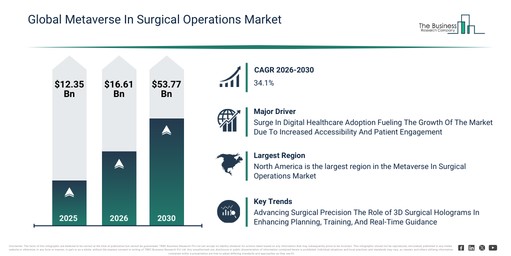
    The market size for the metaverse in surgical operations has witnessed substantial growth in recent years. It is anticipated to expand from $12.35 billion in 2025 to $16.61 billion in 2026, achieving a compound annual growth rate (CAGR) of 34.5%. This historic development can be credited to progress in surgical simulation technologies, an increase in the use of minimally invasive procedures, the expansion of medical training programs, a growing requirement for surgical accuracy, and the broader availability of telemedicine capabilities.

    The metaverse in surgical operations market size is anticipated to undergo substantial expansion in the coming years. It is forecast to achieve a valuation of $53.77 billion by 2030, growing at a compound annual growth rate (CAGR) of 34.1%. This projected growth is driven by several factors, including greater investments in immersive healthcare technologies, an escalating need for remote surgical collaboration, the expansion of digital hospitals and smart operating rooms, the increasing integration of AI-assisted surgical planning, and a sharper focus on mitigating surgical errors. Significant trends expected during this period include the wider deployment of immersive platforms for surgical training, the rising adoption of virtual and augmented reality in preoperative planning, the proliferation of remote and collaborative surgical environments, the growing integration of real-time 3D visualization tools, and an amplified emphasis on surgical precision and skill development.

    Access Your Free Sample Report for In-Depth Market Insights:

    https://www.thebusinessresearchcompany.com/sample.aspx?id=19587&type=smp

    What Drivers Are Influencing The Growth Of The Metaverse In Surgical Operations Market?

    The increasing need for digital healthcare is anticipated to drive the future expansion of the metaverse in surgical operations market. Digital healthcare involves integrating digital instruments and services into healthcare delivery, including mobile applications, telehealth, distant monitoring, and online patient portals. This demand for digital healthcare is escalating due to greater patient adoption of digital platforms, improved access to care, enhanced convenience, and better coordination among healthcare providers. Metaverse-powered surgical operations support this growing demand by offering immersive virtual simulations, real-time data visualization, and remote collaboration features that enhance surgical planning, training, and outcomes. For instance, in December 2023, according to NHS England, a UK-based government organization, nearly 33.6 million adults in England (˜75% of adults) had registered for the NHS App, with monthly logins increasing by 54% from 16.8 million in November 2022 to 25.8 million in November 2023. Thus, the rising adoption of digital healthcare is propelling the growth of the metaverse in surgical operations market.

    What Segments Are Included Within The Metaverse In Surgical Operations Market?

    The metaverse in surgical operations market covered in this report is segmented –

    1) By Component: Hardware, Software, Service

    2) By Technology: Virtual Reality (VR), Augmented Reality (AR), Mixed Reality (MR)

    3) By Application: Surgical Training, Preoperative Planning, Other Applications

    4) By End User: Hospitals And Surgical Centers, Medical Training Institutes

    Subsegments:

    1) By Hardware: Surgical Headsets (AR/VR), Haptic Feedback Devices, Sensors and Tracking Devices, Computing Systems and Servers

    2) By Software: Surgical Simulation Software, Augmented Reality Software for Surgical Guidance, Collaboration Platforms

    3) By Service: Implementation and Integration Services, Training and Education Services, Technical Support and Maintenance, Content Development for Training Simulations

    Which Competitive Trends Are Impacting The Structure Of The Metaverse In Surgical Operations Market?

    Major companies within the metaverse in surgical operations market are concentrating on developing interactive 3D holograms. These are designed to boost surgical planning and precision, elevate the standard of training and education for medical professionals, and offer instantaneous guidance and visual insight during operations. Interactive 3D holograms function as sophisticated imaging instruments, generating three-dimensional depictions of anatomical parts and operational areas. For instance, in January 2024, HoloCare AS, a Sweden-based company specializing in holographic solutions for healthcare and medical training, introduced 3D surgical holograms. This technology allows surgeons to visualize a patient’s anatomy interactively in 3D, particularly for intricate operations such as liver surgeries. This innovation promises to transform various surgical disciplines and enhance patient care and results throughout Europe.

    Who Are The Top-Performing Companies In The Metaverse In Surgical Operations Market In Recent Years?

    Major companies operating in the metaverse in surgical operations market are Microsoft Corporation, Meta Platforms Inc., NVIDIA Corporation, Siemens Healthineers AG, Koninklijke Philips N.V., Medtronic Plc, Stryker Corporation, Intuitive Surgical Inc., Brainlab AG, EchoPixel Inc., Augmedics Ltd, Osso VR Inc., VirtaMed AG, FundamentalVR Ltd, Precision OS Technologies Inc., Surgical Theater Inc., CAE Inc., Laerdal Medical AS, Mentice AB, Simulab Corporation, 3D Systems Corporation, GigXR Inc., SimX Inc., Virti Ltd

    Access The Complete Report For Deeper Market Insights:

    https://www.thebusinessresearchcompany.com/report/metaverse-in-surgical-operations-global-market-report

    Which Region Is Anticipated To See The Fastest Growth In The Metaverse In Surgical Operations Market?

    North America was the largest region in the metaverse in surgical operations market in 2025. Asia-Pacific is expected to be the fastest-growing region in the forecast period. The regions covered in the metaverse in surgical operations market report are Asia-Pacific, South East Asia, Western Europe, Eastern Europe, North America, South America, Middle East, Africa.

    Request Your Customized Metaverse In Surgical Operations Market Research Report for Competitive Advantage:

    https://www.thebusinessresearchcompany.com/customise?id=19587&type=smp

    Browse Through More Reports Similar to the Global Metaverse In Surgical Operations Market 2026, By The Business Research Company

    Handheld Surgical Devices And Equipment Market Report 2026

    https://www.thebusinessresearchcompany.com/report/handheld-surgical-devices-and-equipment-global-market-report

    Metaverse In Healthcare Market Report 2026

    https://www.thebusinessresearchcompany.com/report/metaverse-in-healthcare-global-market-report

    Dental Surgical Devices And Equipment Market Report 2026

    https://www.thebusinessresearchcompany.com/report/dental-surgical-devices-and-equipment-global-market-report

    Get in touch with us:

    The Business Research Company: https://www.thebusinessresearchcompany.com/

    Americas +1 310-496-7795

    Asia +44 7882 955267 & +91 8897263534

    Europe +44 7882 955267

    Email us at info@tbrc.info

    Follow us on:

    LinkedIn: https://in.linkedin.com/company/the-business-research-company

    YouTube: https://www.youtube.com/channel/UC24_fI0rV8cR5DxlCpgmyFQ

    Global Market Model: https://www.thebusinessresearchcompany.com/global-market-model
  • Metaverse In Medical Training Market Forecast 2026–2035: Data Trends and Industry Insights

    Metaverse In Medical Training Market Forecast 2026–2035: Data Trends and Industry Insights

    Uncover key drivers, emerging technologies, and competitive movements shaping the metaverse in medical training market from 2026–2035 with trusted insights from The Business Research Company

    By how much is the Metaverse In Medical Training Market expected to grow between 2026 and 2030?

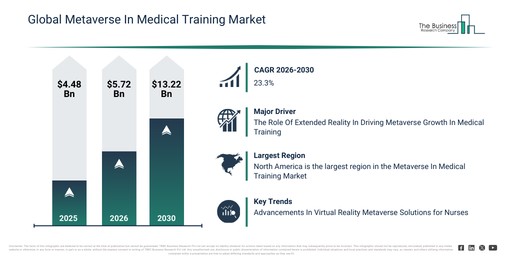
    The metaverse in medical training market has experienced substantial growth in its size over recent years. This market is projected to expand from $4.48 billion in 2025 to $5.72 billion in 2026, exhibiting a compound annual growth rate (CAGR) of 27.8%. This historic growth can be ascribed to several factors, including the increasing adoption of virtual simulation tools, a rising demand for remote medical training, early integration of vr technology, growth in healthcare digitalization, and the need for standardized training modules.

    The market for the metaverse in medical training is projected to experience rapid expansion over the coming years. This market is set to reach $13.22 billion by 2030, exhibiting a compound annual growth rate (CAGR) of 23.3%. Factors contributing to this growth during the projected timeframe include the spread of AI-assisted learning, increased investment in simulation laboratories, the advancement of mixed reality hardware, a heightened need for skill-based evaluations, and integration with telemedicine environments. Key trends anticipated in this forecast period encompass the growth of AR/VR-based medical simulations, AI-improved skill assessment instruments, virtual training platforms powered by the cloud, the integration of smart medical training infrastructure, and IoT-enabled real-time performance monitoring.

    Access Your Free Sample Report for In-Depth Market Insights:

    https://www.thebusinessresearchcompany.com/sample.aspx?id=14958&type=smp

    Which Drivers Are Influencing Market Acceleration In The Metaverse In Medical Training Market?

    The anticipated expansion of the metaverse within the medical training market is driven by the growing integration of extended reality technology. Extended reality (XR) refers to technologies that merge digital components with the physical world, thereby modifying reality. This encompasses augmented reality (AR), mixed reality (MR), virtual reality (VR), and other related innovations, with their applications being broad. The increasing uptake of extended reality is largely due to its capacity to transform remote collaborative efforts and educational programs. Through extended reality, users can virtually interact with intricate medical data and objects within the metaverse, thereby circumventing the constraints posed by real-world visual perception and available resources in medical treatment scenarios. For example, data from September 2024, reported by the US-based industry body XR Association (XRA), indicated that among 500 patient-facing healthcare professionals, 64% observed beneficial outcomes from XR use in healthcare areas like training, medical education, and remote surgery. Furthermore, 84% of these professionals anticipate a positive influence of AR/VR on the healthcare sector. Consequently, the expanding use of extended reality technology is a key factor propelling the development of the metaverse in the medical training market.

    What Leading Segments Are Studied In The Metaverse In Medical Training Market?

    The metaverse in medical training market covered in this report is segmented –

    1) By Component: Software, Hardware

    2) By Technology: Augmented Reality (AR), Virtual Reality (VR), Artificial Intelligence (AI), Mixed Reality (MR)

    3) By End User: Medical Schools And Universities, Hospitals And Healthcare Institutions, Pharmaceutical Companies, Other End Users

    Subsegments:

    1) By Software: Simulation Software, Training Platforms, Content Development Tools, Learning Management Systems (LMS), Virtual Reality (VR) and Augmented Reality (AR) Software, AI-Based Training Software, Collaboration And Communication Tools

    2) By Hardware: Virtual Reality (VR) Headsets, Augmented Reality (AR) Glasses, Motion Tracking Devices, Haptic Feedback Devices, Computing Devices (PCs, Servers), Input Devices (Gloves, Controllers), Wearable Sensors

    What Industry Trends Are Transforming The Metaverse In Medical Training Market?

    Leading firms in the metaverse within the medical training market are prioritizing the creation of cutting-edge, inventive solutions, particularly virtual reality metaverse training for nurses, to secure a market advantage. This type of training submerges nurses into lifelike situations, thereby improving their clinical proficiencies and decision-making abilities within an interactive and dynamic setting, fundamentally transforming healthcare learning. A prime example occurred in February 2023 when Stamford Health Inc., a US-based medical group, introduced a virtual reality (VR) training initiative for nurses. This was a joint effort with Oxford Medical Simulation, a virtual reality (VR) platform recognized for providing top-tier, evidence-informed, and exceptionally realistic simulation education for healthcare professionals. Utilizing the Metaverse and the Meta Quest 2 VR headset, this particular program empowers nurses to refine their expertise through engagement with virtual patients displaying replicated medical conditions. The VR platform further tracks nurses’ clinical competence, allowing for the customization of individual training plans to target specific areas needing enhancement and to support their ongoing professional growth.

    Which Leading Companies Dominate The Metaverse In Medical Training Market Share?

    Major companies operating in the metaverse in medical training market are Microsoft Corporation, NVIDIA Corporation, Siemens Healthineers AG, GE HealthCare Technologies Inc. , CAE Inc., 3D Systems Corporation, Brainlab AG, Surgical Science Sweden AB, EON Reality Inc., CMR Surgical Ltd , Novarad Corporation, XRHealth USA Inc., VirtaMed AG, Level Ex Inc., FundamentalVR plc, WorldViz Inc., Medical Realities Ltd., ImmersiveTouch Inc., BioflightVR, Devden Creative Solutions Pvt. Ltd., 8Chili Inc., PrecisionOS Technologies Inc., SimX Inc., Osso VR Inc., Arch Virtual

    Access The Complete Report For Deeper Market Insights:

    https://www.thebusinessresearchcompany.com/report/metaverse-in-medical-training-global-market-report

    Which Global Regions Are Shaping The Competitive Landscape Of The Metaverse In Medical Training Market?

    North America was the largest region in the metaverse in medical training market in 2025. Asia-Pacific is expected to be the fastest-growing region in the forecast period. The regions covered in the metaverse in medical training market report are Asia-Pacific, South East Asia, Western Europe, Eastern Europe, North America, South America, Middle East, Africa.

    Request Your Customized Metaverse In Medical Training Market Research Report for Competitive Advantage:

    https://www.thebusinessresearchcompany.com/customise?id=14958&type=smp

    Browse Through More Reports Similar to the Global Metaverse In Medical Training Market 2026, By The Business Research Company

    Metaverse Market Report 2026

    https://www.thebusinessresearchcompany.com/report/metaverse-global-market-report

    Metaverse In Healthcare Market Report 2026

    https://www.thebusinessresearchcompany.com/report/metaverse-in-healthcare-global-market-report

    Metaverse In Education Market Report 2026

    https://www.thebusinessresearchcompany.com/report/metaverse-in-education-global-market-report

    Get in touch with us:

    The Business Research Company: https://www.thebusinessresearchcompany.com/

    Americas +1 310-496-7795

    Asia +44 7882 955267 & +91 8897263534

    Europe +44 7882 955267

    Email us at info@tbrc.info

    Follow us on:

    LinkedIn: https://in.linkedin.com/company/the-business-research-company

    YouTube: https://www.youtube.com/channel/UC24_fI0rV8cR5DxlCpgmyFQ

    Global Market Model: https://www.thebusinessresearchcompany.com/global-market-model
  • Metastatic Urothelial Carcinoma Market Outlook 2026–2030: Key Business Drivers and Trends

    Metastatic Urothelial Carcinoma Market Outlook 2026–2030: Key Business Drivers and Trends

    Uncover key drivers, emerging technologies, and competitive movements shaping the metastatic urothelial carcinoma market from 2026–2035 with trusted insights from The Business Research Company

    What is the estimated market size of the Metastatic Urothelial Carcinoma Market by the end of 2030?

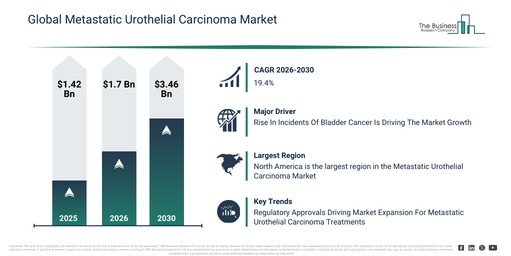
    The metastatic urothelial carcinoma market size has seen swift expansion in recent years. It is anticipated to increase from $1.42 billion in 2025 to $1.7 billion in 2026, registering a compound annual growth rate (CAGR) of 19.9%. The historical period’s expansion is attributable to a rising incidence of bladder cancer, the early adoption of chemotherapy regimens, a heightened use of cystoscopy diagnostics, increasing demand for targeted therapy, and developments in immunotherapy research.

    The market for metastatic urothelial carcinoma is projected to experience swift expansion in the coming years, anticipated to reach $3.46 billion by 2030, exhibiting a compound annual growth rate (CAGR) of 19.4%. This projected growth can be attributed to several factors, including the wider application of FGFR inhibitors, the increasing use of combination immunotherapies, advancements in biopsy accuracy technology, greater investment in oncology research and development, and a noticeable trend towards personalized treatment approaches. Key trends expected during this period involve oncology development driven by precision medicine, improvements in diagnostics aided by AI, optimization of cancer treatment through big data integration, assessment utilizing virtual imaging and simulation, and the implementation of automated oncology workflow solutions.

    Access Your Free Sample Report for In-Depth Market Insights:

    https://www.thebusinessresearchcompany.com/sample.aspx?id=21221&type=smp

    What Drivers Are Shaping Future Opportunities In The Metastatic Urothelial Carcinoma Market?

    The increasing occurrence of bladder cancer is anticipated to propel the expansion of the metastatic urothelial carcinoma market. Bladder cancer is characterized by the formation of malignant cells within the bladder tissues, often originating in the urothelial lining. The surge in bladder cancer cases can be attributed to factors such as smoking, exposure to chemicals, chronic bladder inflammation, and advancements in detection methods. Metastatic urothelial carcinoma, representing an advanced and aggressive stage of this cancer, underscores the urgent need for early diagnosis, improved therapeutic options, and enhanced research efforts. This directly fuels innovations and progress in managing bladder cancer cases, ultimately leading to better patient outcomes. For example, a February 2023 report from a Cancer Research UK-based charity indicated that new bladder cancer cases in the UK are projected to rise from approximately 9,800 cases annually between 2023 and 2025 to around 10,700 cases per year by 2038-2040. Consequently, the growing prevalence of bladder cancer is a key driver for the metastatic urothelial carcinoma market.

    Which Segment Groups Are Influencing The Metastatic Urothelial Carcinoma Market?

    The metastatic urothelial carcinoma market covered in this report is segmented –

    1) By Treatment: Chemotherapy, Targeted Therapy, Immunotherapy, Radiation Therapy

    2) By Diagnosis: Urine Lab Tests, Cystoscopy, Intravenous Pyelogram (IVP), Biopsy

    3) By End User: Hospital, Oncology Clinics, Research Institutes, Other End Users

    Subsegments:

    1) By Chemotherapy: Platinum-Based Chemotherapy, Gemcitabine-Based Chemotherapy

    2) By Targeted Therapy: FGFR Inhibitors, Immune Checkpoint Inhibitors

    3) By Immunotherapy: PD-1 Or PD-L1 Inhibitors, CTLA-4 Inhibitors, Combination Immunotherapies

    4) By Radiation Therapy: External Beam Radiation Therapy, Stereotactic Body Radiation Therapy

    What Trends Are Reshaping The Dynamics Of The Metastatic Urothelial Carcinoma Market?

    Leading companies operating within the metastatic urothelial carcinoma market are actively pursuing regulatory authorizations for their drugs. This strategy aims to broaden their market reach and strengthen their position in treating adult patients with locally advanced or metastatic urothelial carcinoma (la/mUC). Regulatory approvals denote the formal consent granted by governmental or regulatory bodies, permitting a drug, medical device, or treatment to be commercialized and utilized by the public. For instance, in April 2023, Merck & Co. Inc., a US-based pharmaceutical company, obtained FDA approval for KEYTRUDA (pembrolizumab) for the initial treatment of certain patients afflicted with locally advanced or metastatic urothelial cancer. This represents a significant achievement in urothelial cancer treatment, as the pairing of KEYTRUDA (pembrolizumab) with enfortumab vedotin is now the first anti-PD-1 therapy sanctioned in the U.S. when combined with an antibody-drug conjugate for patients experiencing locally advanced or metastatic urothelial cancer. During the trial, this combination therapy exhibited a statistically substantial improvement in overall survival (OS) and progression-free survival (PFS) when benchmarked against traditional platinum-based chemotherapy (gemcitabine plus cisplatin or carboplatin). This combined approach provides a new therapeutic avenue for these patients who might not have had efficacious treatment options previously.

    Who Are The Major Companies Operating In The Metastatic Urothelial Carcinoma Market?

    Major companies operating in the metastatic urothelial carcinoma market are Pfizer Inc., Johnson & Johnson Services Inc., F. Hoffmann-La Roche Ltd., Merck & Co., Inc., AbbVie Inc., Bayer AG, Bristol-Myers Squibb Company, AstraZeneca PLC, Eli Lilly and Company, Gilead Sciences Inc., Merck KGaA, Astellas Pharma Inc., Genentech Inc., Genentech Inc., Exelixis Inc., EMD Serono, Zymeworks Inc., Mirati Therapeutics Inc., UroGen Pharma Ltd.

    Access The Complete Report For Deeper Market Insights:

    https://www.thebusinessresearchcompany.com/report/metastatic-urothelial-carcinoma-global-market-report

    Which Regions Are Poised For Strategic Growth In The Metastatic Urothelial Carcinoma Market?

    North America was the largest region in the metastatic urothelial carcinoma market in 2025. Asia-Pacific is expected to be the fastest-growing region in the forecast period. The regions covered in the metastatic urothelial carcinoma market report are Asia-Pacific, South East Asia, Western Europe, Eastern Europe, North America, South America, Middle East, Africa.

    Request Your Customized Metastatic Urothelial Carcinoma Market Research Report for Competitive Advantage:

    https://www.thebusinessresearchcompany.com/customise?id=21221&type=smp

    Browse Through More Reports Similar to the Global Metastatic Urothelial Carcinoma Market 2026, By The Business Research Company

    Urinary Tract Cancer Market Report 2026

    https://www.thebusinessresearchcompany.com/report/urinary-tract-cancer-global-market-report

    Urothelial Carcinoma Treatment Market Report 2026

    https://www.thebusinessresearchcompany.com/report/urothelial-carcinoma-treatment-global-market-report

    Urothelial Cancer Drugs Market Report 2026

    https://www.thebusinessresearchcompany.com/report/urothelial-cancer-drugs-global-market-report

    Get in touch with us:

    The Business Research Company: https://www.thebusinessresearchcompany.com/

    Americas +1 310-496-7795

    Asia +44 7882 955267 & +91 8897263534

    Europe +44 7882 955267

    Email us at info@tbrc.info

    Follow us on:

    LinkedIn: https://in.linkedin.com/company/the-business-research-company

    YouTube: https://www.youtube.com/channel/UC24_fI0rV8cR5DxlCpgmyFQ

    Global Market Model: https://www.thebusinessresearchcompany.com/global-market-model
  • Global Metastatic Prostate Cancer Market Report 2026: Emerging Trends and Growth Scenarios

    Global Metastatic Prostate Cancer Market Report 2026: Emerging Trends and Growth Scenarios

    Uncover key drivers, emerging technologies, and competitive movements shaping the metastatic prostate cancer market from 2026–2035 with trusted insights from The Business Research Company

    What was the valuation of the Metastatic Prostate Cancer Market in 2026, and what figure is it projected to hit by 2030?

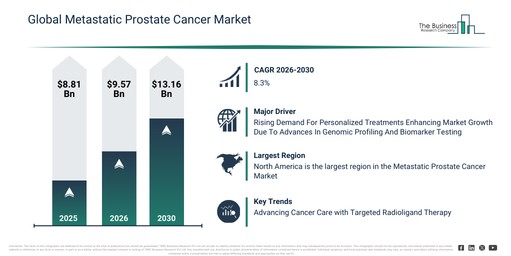
    The metastatic prostate cancer market size has demonstrated robust growth over recent years. It is anticipated to increase from $8.81 billion in 2025 to $9.57 billion in 2026, reflecting a compound annual growth rate (CAGR) of 8.6%. This historical expansion can be attributed to several factors, including the rising incidence of advanced prostate cancer cases, the expansion of oncology treatment centers, improved survival rates achieved through early intervention, the availability of multiple therapeutic options, and the increased utilization of chemotherapy protocols.

    The market size for metastatic prostate cancer is anticipated to experience robust expansion over the next few years, projected to reach $13.16 billion by 2030, exhibiting a compound annual growth rate (CAGR) of 8.3%. This growth during the forecast period is attributable to several factors, including the increasing development of novel immunotherapies, the rising adoption of personalized cancer treatments, the expansion of clinical trials for advanced therapies, the growing use of radiopharmaceutical treatments, and an increasing focus on quality-of-life outcomes. Furthermore, significant trends in the forecast period involve the increasing adoption of targeted and hormonal therapies, a rising use of combination treatment regimens, a growing focus on precision oncology approaches, the expansion of advanced diagnostic and biomarker testing, and an enhanced emphasis on patient-centered treatment strategies.

    Access Your Free Sample Report for In-Depth Market Insights:

    https://www.thebusinessresearchcompany.com/sample.aspx?id=25833&type=smp

    Which Drivers Are Affecting Market Participation In The Metastatic Prostate Cancer Market?

    The increasing need for individualized therapies is projected to boost the expansion of the metastatic prostate cancer market in the future. Such treatments involve medical strategies customized based on a person’s genetic makeup, daily habits, and distinct disease features, aiming for more precise and impactful results. This surge in demand stems from the expanding access to genomic analysis and biomarker screening, tools that aid in pinpointing particular mutations and biological indicators, enabling medical professionals to choose interventions with a higher probability of success for each patient. Individualized therapeutic methods, including therapies guided by biomarkers and drugs targeting specific genes, are revolutionizing the management of metastatic prostate cancer by matching particular treatments with each patient’s distinct tumor characteristics, thereby enhancing efficacy and reducing adverse reactions. For example, in February 2024, information from the US-based non-profit, Personalized Medicine Coalition, indicated that the US Food and Drug Administration (FDA) gave its approval to 16 novel personalized therapies for rare conditions in 2023, an increase from 6 in 2022. Consequently, the increasing requirement for personalized treatments is fueling the expansion of the metastatic prostate cancer market.

    What Segment Classifications Make Up The Metastatic Prostate Cancer Market?

    The metastatic prostate cancer market covered in this report is segmented –

    1) By Treatment Type: Chemotherapy, Immunotherapy, Hormonal Therapy, Radiation Therapy, Other Treatments

    2) By Route of Administration: Oral, Parenteral Route, Intravenous

    3) By Distribution Channel: Hospital Pharmacy, Retail Pharmacy, Online Pharmacy, Other Distribution Channels

    4) By End User: Hospitals, Clinics, Cancer Centers, Research Laboratories, Other End-Users

    Subsegments:

    1) By Chemotherapy: Docetaxel, Cabazitaxel, Mitoxantrone, Combination Chemotherapy Regimens

    2) By Immunotherapy: Sipuleucel-T, Immune Checkpoint Inhibitors, Cancer Vaccines, Cytokine Therapies

    3) By Hormonal Therapy: Luteinizing Hormone-Releasing Hormone (LHRH) Agonists, LHRH Antagonists, Anti-Androgens, Androgen Synthesis Inhibitors, Combined Androgen Blockade (CAB)

    4) By Radiation Therapy: External Beam Radiation Therapy (EBRT), Stereotactic Body Radiotherapy (SBRT), Radiopharmaceutical Therapy, Intensity-Modulated Radiation Therapy (IMRT)

    5) By Other Treatments: Targeted Therapy, Bone-Targeted Therapy, Clinical Trial Drugs, Palliative Therapy

    How Are New Market Trends Shaping The Landscape Of The Metastatic Prostate Cancer Market?

    Leading companies within the metastatic prostate cancer market are concentrating on technological advancements in cancer treatment, such as sophisticated targeted radioligand technology designed to deliver precise radiation to cancer cells while preserving healthy tissue. This advanced targeted radioligand technology is a therapy that combines a molecule specifically targeting prostate specific membrane antigen (PSMA) with a radioactive isotope, thereby enabling the focused destruction of cancer cells throughout the body. For example, in March 2025, Novartis AG, a Switzerland-based multinational pharmaceutical company, obtained U.S. Food and Drug Administration (FDA) approval for Pluvicto for earlier administration in patients with PSMA-positive metastatic castration-resistant prostate cancer. Pluvicto is composed of a prostate-specific membrane antigen (PSMA) targeting ligand linked to a beta-emitting radionuclide; it operates by binding to PSMA-expressing tumor cells and delivering localized radiation to eliminate cancer cells. Its distinctive characteristics include high tumor specificity, a favorable safety profile, and the potential for combination with other therapies. Applications span the treatment of advanced-stage prostate cancer, particularly in patients who have experienced progression following androgen deprivation therapy. The benefits observed include improved progression-free survival, targeted cytotoxicity, reduced off-target effects, and enhanced patient outcomes.

    Which Major Firms Are Strengthening Their Position In The Metastatic Prostate Cancer Market?

    Major companies operating in the metastatic prostate cancer market are Pfizer Inc., Merck & Co. Inc., AbbVie Inc., Bayer AG, Bristol-Myers Squibb Company, AstraZeneca PLC, Novartis AG, Astellas Pharma Inc., Ipsen Group, Exelixis Inc., Ferring Pharmaceuticals, Dendreon Pharmaceuticals LLC, Hinova Pharmaceuticals Inc., Janux Therapeutics Inc., Clarity Pharmaceuticals Ltd., Convergent Therapeutics Inc., Johnson & Johnson, Sanofi, Eli Lilly And Company, Roche Holding AG, Takeda Pharmaceutical Company Limited

    Access The Complete Report For Deeper Market Insights:

    https://www.thebusinessresearchcompany.com/report/metastatic-prostate-cancer-global-market-report

    Which Regions Are Projected To Dominate The Metastatic Prostate Cancer Market In The Coming Years?

    North America was the largest region in the metastatic prostate cancer market in 2025. Asia-Pacific is expected to be the fastest-growing region in the forecast period. The regions covered in the metastatic prostate cancer market report are Asia-Pacific, South East Asia, Western Europe, Eastern Europe, North America, South America, Middle East, Africa.

    Request Your Customized Metastatic Prostate Cancer Market Research Report for Competitive Advantage:

    https://www.thebusinessresearchcompany.com/customise?id=25833&type=smp

    Browse Through More Reports Similar to the Global Metastatic Prostate Cancer Market 2026, By The Business Research Company

    Prostate Cancer Drugs Market Report 2026

    https://www.thebusinessresearchcompany.com/report/prostate-cancer-drugs-global-market-report

    Metastatic Cancer Drugs Market Report 2026

    https://www.thebusinessresearchcompany.com/report/metastatic-cancer-drugs-global-market-report

    Prostate Cancer Diagnostics Market Report 2026

    https://www.thebusinessresearchcompany.com/report/prostate-cancer-diagnostics-global-market-report

    Get in touch with us:

    The Business Research Company: https://www.thebusinessresearchcompany.com/

    Americas +1 310-496-7795

    Asia +44 7882 955267 & +91 8897263534

    Europe +44 7882 955267

    Email us at info@tbrc.info

    Follow us on:

    LinkedIn: https://in.linkedin.com/company/the-business-research-company

    YouTube: https://www.youtube.com/channel/UC24_fI0rV8cR5DxlCpgmyFQ

    Global Market Model: https://www.thebusinessresearchcompany.com/global-market-model
  • Metastatic Melanoma Therapeutics Market Forecast 2026: Where the Industry Is Headed

    Metastatic Melanoma Therapeutics Market Forecast 2026: Where the Industry Is Headed

    Uncover key drivers, emerging technologies, and competitive movements shaping the metastatic melanoma therapeutics market from 2026–2035 with trusted insights from The Business Research Company

    What are the forecasted starting (2026) and ending (2030) market sizes for the Metastatic Melanoma Therapeutics Market?

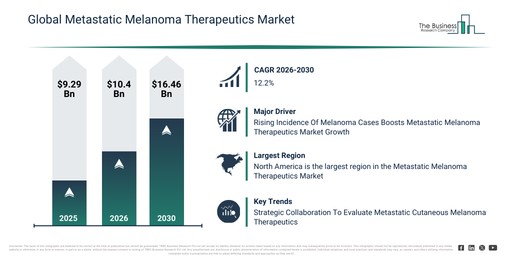
    The metastatic melanoma therapeutics market has experienced significant expansion recently. This market is projected to expand from $9.29 billion in 2025 to $10.4 billion in 2026, demonstrating a compound annual growth rate (CAGR) of 11.9%. Historically, this growth can be ascribed to several factors, including an increase in melanoma cases, the advent of checkpoint inhibitors, progress in targeted therapies, the uptake of stereotactic radiosurgery, and heightened awareness leading to earlier detection.

    The metastatic melanoma therapeutics market is projected to experience substantial growth over the coming years.

    It is forecasted to expand to $16.46 billion by 2030, achieving a compound annual growth rate (CAGR) of 12.2%.

    This expansion during the forecast period is driven by factors such as the broader use of combination immunotherapies, the introduction of next-generation BRAF and MEK inhibitors, a rise in oncology research and development investments, enhanced diagnostic precision from AI tools, and the increasing embrace of personalized cancer treatments.

    Significant trends for the upcoming period encompass the incorporation of precision medicine in melanoma therapy, AI-assisted tumor identification and treatment formulation, the optimization of immunotherapy through big data, virtual simulations for oncology education and prognostic assessment, and automated treatment workflows and therapy surveillance.

    Access Your Free Sample Report for In-Depth Market Insights:

    https://www.thebusinessresearchcompany.com/sample.aspx?id=12065&type=smp

    What Drivers Are Supporting Technological Adoption In The Metastatic Melanoma Therapeutics Market?

    An expected surge in melanoma cases is set to drive the expansion of the metastatic melanoma therapeutics market in the future. Melanoma is a form of skin cancer that originates in the melanocytes, which are the cells responsible for regulating skin pigment. These melanomas can develop anywhere on the skin. Metastatic melanoma therapeutics involve various treatments designed to block mutant chemicals and inhibit the growth of melanoma cells without harming healthy tissue. For instance, in January 2023, the American Cancer Society, a US-based voluntary health organization dedicated to eliminating cancer, reported projections for 2023 indicating 58,120 new cases of melanoma diagnosed in males and 39,490 in women in the US, leading to a total of roughly 97,610 cases, with melanoma deaths predicted to reach approximately 7,990. Therefore, the increasing incidence of melanoma is a key factor propelling the growth of the metastatic melanoma therapeutics market.

    What Segment Types Are Examined In The Metastatic Melanoma Therapeutics Market?

    The metastatic melanoma therapeutics market covered in this report is segmented –

    1) By Therapy: Chemotherapy, Immunotherapy, Targeted Therapy, Radiation Therapy, Surgery

    2) By Line Of Therapy: First-Line, Second-Line, Third-Line

    3) By End User: Hospitals, Specialty Clinics, Home Healthcare, Other End-Users

    Subsegments:

    1) By Chemotherapy: Dacarbazine, Temozolomide, Carboplatin And Cisplatin Combinations

    2) By Immunotherapy: Checkpoint Inhibitors, Interleukin-2 (IL-2), Oncolytic Virus Therapies

    3) By Targeted Therapy: BRAF Inhibitors, MEK Inhibitors, KIT Inhibitors

    4) By Radiation Therapy: Stereotactic Radiosurgery, Palliative Radiation Therapy

    5) By Surgery: Tumor Resection, Sentinel Lymph Node Biopsy, Debulking Surgery

    Which Trends Are Expected To Influence The Metastatic Melanoma Therapeutics Market In The Upcoming Years?

    Major companies in the metastatic melanoma therapeutics market are prioritizing the creation of new immunotherapies and combined treatment approaches to better patient outcomes and strengthen the efficacy of initial treatments. These innovative immunotherapies and concurrent treatments represent advanced medical interventions designed to stimulate or adjust the body’s immune system against diseases, often integrated with other therapies to amplify their impact and yield synergistic benefits. An example of this is seen in March 2024, when IO Biotech A/S, a US-based biotechnology company, finalized the recruitment of 380 patients for its crucial Phase 3 trial (IOB-013/KN-D18 NCT05155254). This trial is assessing IO102-IO103 combined with pembrolizumab (KEYTRUDA) against pembrolizumab by itself for the initial treatment of unresectable or metastatic melanoma. IO Biotech sponsors this study, which is being conducted in partnership with Merck, a U.S.-based pharmaceutical company, with Merck providing pembrolizumab for the research. The goal of this combined therapeutic approach is to strengthen anti-tumor immune reactions, potentially leading to better overall response rates and more favorable long-term clinical results for individuals suffering from advanced melanoma.

    Who Are The Primary Competitors In The Global Metastatic Melanoma Therapeutics Market?

    Major companies operating in the metastatic melanoma therapeutics market are Pfizer Inc., F. Hoffmann-La Roche AG, Merck & Co. Inc., Novartis AG, Bristol-Myers Squibb Company, AstraZeneca PLC, Amgen Inc., Regeneron Pharmaceuticals Inc., Exelixis Inc., Immunocore Holdings plc, Genentech Inc., Iovance Biotherapeutics Inc., Adaptimmune Therapeutics plc, Evaxion Biotech A/S, InxMed Co. Ltd., AiVita Biomedical Inc., Cytovation AS, Biocad, Apexigen Inc., Checkmate Pharmaceuticals, HUYABIO International LLC, IO Biotech, Nykode Therapeutics, Karyopharm Therapeutics, Zucero Therapeutics, Ultimovacs ASA, Immuneering Corporation, TILT Biotherapeutics

    Access The Complete Report For Deeper Market Insights:

    https://www.thebusinessresearchcompany.com/report/metastatic-melanoma-therapeutics-global-market-report

    Which Region Is Expected To Experience The Fastest Growth In The Metastatic Melanoma Therapeutics Market?

    North America was the largest region in the metastatic melanoma therapeutics market in 2025. The regions covered in the metastatic melanoma therapeutics market report are Asia-Pacific, South East Asia, Western Europe, Eastern Europe, North America, South America, Middle East, Africa.

    Request Your Customized Metastatic Melanoma Therapeutics Market Research Report for Competitive Advantage:

    https://www.thebusinessresearchcompany.com/customise?id=12065&type=smp

    Browse Through More Reports Similar to the Global Metastatic Melanoma Therapeutics Market 2026, By The Business Research Company

    Melanoma Drugs Market Report 2026

    https://www.thebusinessresearchcompany.com/report/melanoma-drugs-global-market-report

    Melanoma Therapeutics Market Report 2026

    https://www.thebusinessresearchcompany.com/report/melanoma-therapeutics-global-market-report

    Malignant Melanoma Treatment Market Report 2026

    https://www.thebusinessresearchcompany.com/report/malignant-melanoma-treatment-global-market-report

    Get in touch with us:

    The Business Research Company: https://www.thebusinessresearchcompany.com/

    Americas +1 310-496-7795

    Asia +44 7882 955267 & +91 8897263534

    Europe +44 7882 955267

    Email us at info@tbrc.info

    Follow us on:

    LinkedIn: https://in.linkedin.com/company/the-business-research-company

    YouTube: https://www.youtube.com/channel/UC24_fI0rV8cR5DxlCpgmyFQ

    Global Market Model: https://www.thebusinessresearchcompany.com/global-market-model
  • Metastatic Lung Adenocarcinoma Treatment Industry Growth Insights: Revenue Forecast to 2030

    Metastatic Lung Adenocarcinoma Treatment Industry Growth Insights: Revenue Forecast to 2030

    Uncover key drivers, emerging technologies, and competitive movements shaping the metastatic lung adenocarcinoma treatment market from 2026–2035 with trusted insights from The Business Research Company

    What upper market value could the Metastatic Lung Adenocarcinoma Treatment Market reach by 2030 starting from 2026 levels?

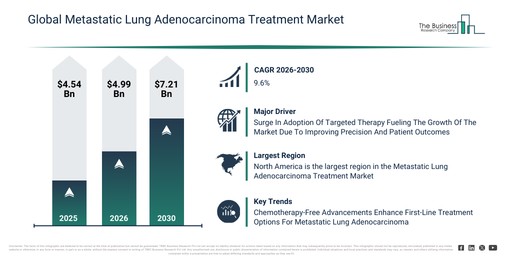
    The metastatic lung adenocarcinoma treatment market has shown significant growth in recent years. Its value is expected to rise from $4.54 billion in 2025 to $4.99 billion in 2026, achieving a compound annual growth rate (CAGR) of 9.9%. Historically, this growth can be ascribed to factors such as the increasing prevalence of lung cancer, the adoption of platinum chemotherapy, the early use of EGFR inhibitors, greater reliance on radiation therapy, and advancements in diagnostics.

    The metastatic lung adenocarcinoma treatment market size is anticipated to experience substantial growth in the upcoming years, with projections indicating it will expand to $7.21 billion in 2030, achieving a compound annual growth rate (CAGR) of 9.6%. This expansion during the forecast period is primarily driven by the increasing application of ALK and ROS1 inhibitors, the growing adoption of immunotherapy combinations, progress in CAR-T research for lung cancer, improvements in advanced imaging techniques, and heightened investment in targeted therapy development. Major trends during this period are expected to include the integration of precision medicine into lung adenocarcinoma treatment, AI-powered tumor detection and therapy optimization, big data-enhanced immunotherapy, the introduction of virtual simulation platforms for oncology training, and automated diagnostic and treatment workflow solutions.

    Access Your Free Sample Report for In-Depth Market Insights:

    https://www.thebusinessresearchcompany.com/sample.aspx?id=24320&type=smp

    Which Drivers Are Influencing Long-Term Growth In The Metastatic Lung Adenocarcinoma Treatment Market?

    The widespread use of targeted therapy is projected to fuel expansion in the metastatic lung adenocarcinoma treatment market moving ahead. This cancer treatment precisely inhibits tumor growth and dissemination by employing drugs that focus on particular genes or proteins implicated in cancer progression. It is becoming increasingly popular because it specifically targets genetic mutations, leading to better treatment results and fewer adverse effects than traditional approaches. In the context of metastatic lung adenocarcinoma, targeted therapy functions by blocking the specific genetic mutations responsible for the cancer’s proliferation and spread. This method provides a more accurate strategy with less severe side effects, significantly improving survival rates and quality of life for patients with identifiable mutations. For example, data from July 2023, reported by the American Society of Gene and Cell Therapy (ASGCT), a US-based professional membership organization, and Citeline, a US-based provider of drugs and devices, indicated that 247 gene therapies were in Phase II at the close of the first quarter of 2023. This number then rose by 5% to 260 by the end of the second quarter. Consequently, the growing acceptance of targeted therapy is a key factor propelling the expansion of the metastatic lung adenocarcinoma treatment market.

    Which Segments Are Driving Activity In The Metastatic Lung Adenocarcinoma Treatment Market?

    The metastatic lung adenocarcinoma treatment market covered in this report is segmented –

    1) By Treatment: Chemotherapy, Targeted Therapy, Immunotherapy, Radiation Therapy

    2) By Route Of Administration: Oral, Intravenous

    3) By End-User: Hospitals, Cancer Research Centers, Specialty Clinics

    Subsegments:

    1) By Chemotherapy: Platinum-Based Chemotherapy, Non-Platinum Chemotherapy, Combination Therapy, Single-Agent Chemotherapy

    2) By Targeted Therapy: Epidermal Growth Factor Receptor Inhibitors, Anaplastic Lymphoma Kinase Inhibitors, C-Ros Oncogene 1 Receptor Tyrosine Kinase Inhibitors, V-Raf Murine Sarcoma Viral Oncogene Homolog B1 Inhibitors, Rearranged During Transfection Inhibitors, Mesenchymal-Epithelial Transition Factor Inhibitors, Neurotrophic Tropomyosin Receptor Kinase Inhibitors

    3) By Immunotherapy: PD-1 Inhibitors, PD-L1 Inhibitors, CTLA-4 Inhibitors, Combination Immunotherapy, CAR-T Cell Therapy (Emerging)

    4) By Radiation Therapy: External Beam Radiation Therapy (EBRT), Stereotactic Body Radiotherapy (SBRT), Intensity-Modulated Radiation Therapy (IMRT), Proton Therapy

    What Trends Are Driving The Growth Trajectory Of The Metastatic Lung Adenocarcinoma Treatment Market?

    Leading companies within the metastatic lung adenocarcinoma treatment market are concentrating on creating sophisticated treatments, including chemotherapy-free options, to boost long-term survival rates by targeting specific genetic mutations and improving patient results. Chemotherapy-free treatment denotes cancer therapies that employ alternatives like targeted therapy or immunotherapy, with the goal of effective cancer management alongside mitigating the harsh side effects commonly associated with conventional chemotherapy. As an illustration, in August 2024, Johnson & Johnson, a US-based healthcare company, revealed that the U.S. Food and Drug Administration (FDA) had granted approval for RYBREVANT (amivantamab-vmjw) paired with LAZCLUZE (lazertinib) as a first-line, chemotherapy-free intervention for adults diagnosed with locally advanced or metastatic non-small cell lung cancer (NSCLC) exhibiting EGFR exon 19 deletions or exon 21 L858R substitution mutations. This approval was substantiated by findings from the Phase 3 MARIPOSA study, which indicated superior progression-free survival in contrast to osimertinib.

    Which Key Market Players Are Investing In Expansion And Innovation Within The Metastatic Lung Adenocarcinoma Treatment Market?

    Major companies operating in the metastatic lung adenocarcinoma treatment market are Pfizer Inc., Johnson & Johnson, F. Hoffmann-La Roche Ltd, Merck & Co. Inc., Bristol-Myers Squibb Company, AstraZeneca PLC, Novartis AG, Boehringer Ingelheim International GmbH, BeiGene Ltd., Novocure, Gilead Sciences, Daiichi Sankyo Company Limited, Mirati Therapeutics Inc., Nuvalent Inc., Moderna Therapeutics, Shanghai Henlius Biotech, Duality BioSciences Inc., Arcus Biosciences Inc., NeoImmuneTech Inc., Hutchison Medipharma Limited, Betta Pharma Company Limited, OncoC4 Inc., Xcovery Holding Company, BioNTech SE

    Access The Complete Report For Deeper Market Insights:

    https://www.thebusinessresearchcompany.com/report/metastatic-lung-adenocarcinoma-treatment-global-market-report

    Which Geographic Areas Are Emerging As Strong Markets For The Metastatic Lung Adenocarcinoma Treatment Market?

    North America was the largest region in the metastatic lung adenocarcinoma treatment market in 2025. Asia-Pacific is expected to be the fastest-growing region in the forecast period. The regions covered in the metastatic lung adenocarcinoma treatment market report are Asia-Pacific, South East Asia, Western Europe, Eastern Europe, North America, South America, Middle East, Africa.

    Request Your Customized Metastatic Lung Adenocarcinoma Treatment Market Research Report for Competitive Advantage:

    https://www.thebusinessresearchcompany.com/customise?id=24320&type=smp

    Browse Through More Reports Similar to the Global Metastatic Lung Adenocarcinoma Treatment Market 2026, By The Business Research Company

    Small Cell Lung Cancer Therapeutics Market Report 2026

    https://www.thebusinessresearchcompany.com/report/small-cell-lung-cancer-therapeutics-global-market-report

    Metastatic Cancer Drugs Market Report 2026

    https://www.thebusinessresearchcompany.com/report/metastatic-cancer-drugs-global-market-report

    Metastatic Breast Cancer Treatment Market Report 2026

    https://www.thebusinessresearchcompany.com/report/metastatic-breast-cancer-treatment-global-market-report

    Get in touch with us:

    The Business Research Company: https://www.thebusinessresearchcompany.com/

    Americas +1 310-496-7795

    Asia +44 7882 955267 & +91 8897263534

    Europe +44 7882 955267

    Email us at info@tbrc.info

    Follow us on:

    LinkedIn: https://in.linkedin.com/company/the-business-research-company

    YouTube: https://www.youtube.com/channel/UC24_fI0rV8cR5DxlCpgmyFQ

    Global Market Model: https://www.thebusinessresearchcompany.com/global-market-model