Category: HealthcareServices

  • Global Congenital Adrenal Hyperplasia Market Set for Strong Expansion, Reaching $0.69 Billion With 6.8% CAGR by 2030

    Global Congenital Adrenal Hyperplasia Market Set for Strong Expansion, Reaching $0.69 Billion With 6.8% CAGR by 2030

    Uncover key drivers, emerging technologies, and competitive movements shaping the congenital adrenal hyperplasia market from 2026–2035 with trusted insights from The Business Research Company

    What growth pattern is forecast for the Congenital Adrenal Hyperplasia Market size between 2026 and 2035?

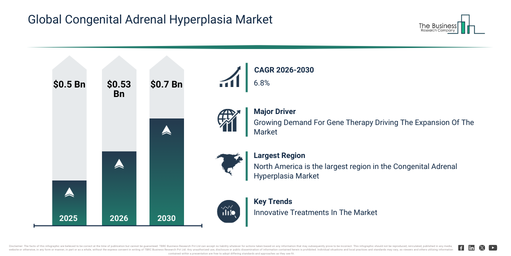
    The congenital adrenal hyperplasia market has shown strong expansion in recent years. It is forecast to grow from $0.5 billion in 2025 to $0.53 billion in 2026, exhibiting a compound annual growth rate (CAGR) of 7.1%. The historical increase can be attributed to limited options for enzyme replacement, the requirement for lifelong glucocorticoid therapy, low levels of awareness in developing regions, delayed diagnosis resulting from a lack of screening, and a dependence on hospital-based endocrinology care.

    The congenital adrenal hyperplasia market is projected to experience substantial expansion, reaching $0.7 billion by 2030, demonstrating a compound annual growth rate (CAGR) of 6.8%. This anticipated growth stems from progress in precision medicine, wider availability of genetic testing, increased spending on healthcare, the rise of specialty clinics, and better patient compliance with new drug formulations. Key trends anticipated for this period involve broadened newborn screening initiatives, the development of long-acting and modified-release steroid treatments, enhanced mineralocorticoid and androgen suppression strategies, a growing embrace of multidisciplinary care approaches, and an intensified focus on managing the condition throughout a patient’s life.

    Access Your Free Sample Report for In-Depth Market Insights:

    https://www.thebusinessresearchcompany.com/sample.aspx?id=21157&type=smp

    Which Drivers Are Impacting Market Performance In The Congenital Adrenal Hyperplasia Market?

    The increasing need for gene therapy is projected to drive expansion within the congenital adrenal hyperplasia market in the future. Gene therapy is a medical technique involving the modification or manipulation of an individual’s genes to treat or prevent disease. The growing interest in gene therapy stems from progress in genetic research and biotechnology, allowing for more accurate and specific treatments for various conditions, including genetic disorders, cancers, and other long-term ailments. Congenital adrenal hyperplasia (CAH), a condition resulting from gene mutations affecting adrenal hormone production, is a significant area of focus for gene therapy, providing avenues for precise genetic interventions to rectify the root genetic issues and re-establish proper hormone activity. For example, data from April 2024 by the American Society of Gene and Cell Therapy (ASGCT), a professional membership organization based in the US, indicated that among the 1,023 gene therapies being developed for rare diseases, eight of the top 10 rare diseases were oncological. During the second quarter of 2024, 76 gene therapy trials commenced, marking a 25% rise compared to the preceding quarter. Consequently, the increased demand for gene therapy is fueling expansion in the congenital adrenal hyperplasia market.

    What Segment Types Are Examined In The Congenital Adrenal Hyperplasia Market?

    The congenital adrenal hyperplasia market covered in this report is segmented –

    1) By Type: Classic Congenital Adrenal Hyperplasia, Non-Classic Congenital Adrenal Hyperplasia

    2) By Treatment And Diagnosis: Diagnosis, Treatment

    3) By End-Use: Hospitals, Specialty Clinics, Ambulatory Surgical Centers, Research Institutes

    Subsegments:

    1) By Classic Congenital Adrenal Hyperplasia: Salt-Wasting Classic Congenital Adrenal Hyperplasia, Simple Virilizing Classic Congenital Adrenal Hyperplasia

    2) By Non-Classic Congenital Adrenal Hyperplasia: Late-Onset Non-Classic Congenital Adrenal Hyperplasia, Mild Non-Classic Congenital Adrenal Hyperplasia

    Which Trends Are Influencing The Development Of The Congenital Adrenal Hyperplasia Market?

    Major companies in the congenital adrenal hyperplasia market are increasingly focused on developing innovative treatments, such as CRF1 receptor antagonists, to help regulate cortisol production and diminish adrenal androgen excess. A CRF1 receptor antagonist refers to a drug that specifically blocks the corticotropin-releasing factor 1 (CRF1) receptor to modulate the body’s stress response and reduce excessive adrenal androgen production in conditions like congenital adrenal hyperplasia. For instance, in December 2024, Neurocrine Biosciences, Inc., a US-based biopharmaceutical company, obtained FDA approval for crenessity (crinecerfont), marking the first new treatment for congenital adrenal hyperplasia (CAH) in 70 years. This oral medication operates as a selective antagonist of corticotropin-releasing factor type 1 receptors, thereby assisting in the control of excess adrenocorticotropic hormone (ACTH) and adrenal androgens, while also allowing for reduced glucocorticoid doses. This approval was granted based on data derived from the CAHtalyst Phase 3 studies, which evidenced significant efficacy in lowering androgen levels. Crenessity is projected to be available soon, representing a notable progression in CAH management.

    Who Are The Core Companies Influencing Trends In The Congenital Adrenal Hyperplasia Market?

    Major companies operating in the congenital adrenal hyperplasia market are Pfizer Inc., Sanofi S.A., Thermo Fisher Scientific Inc., Takeda Pharmaceutical Company Limited, Eli Lilly and Company, Eton Pharmaceuticals Inc, Teva Pharmaceutical Industries, Macleods Pharmaceuticals, H. Lundbeck A/S, Neurocrine Biosciences Inc., BridgeBio Pharma Inc, Regenxbio Inc., Millendo Therapeutics Inc., Applied Therapeutics, Inc., OMass Therapeutics Limited, ViennaLab Diagnostics GmbH, EffRx Pharmaceuticals SA, Adrenas Therapeutics Inc, HBM Alpha Therapeutics, Spruce Biosciences Inc., Crinetics Pharmaceuticals Inc.

    Access The Complete Report For Deeper Market Insights:

    https://www.thebusinessresearchcompany.com/report/congenital-adrenal-hyperplasia-global-market-report

    Which Geographic Areas Are Emerging As Strong Markets For The Congenital Adrenal Hyperplasia Market?

    North America was the largest region in the congenital adrenal hyperplasia market in 2025. Asia-Pacific is expected to be the fastest-growing region in the forecast period. The regions covered in the congenital adrenal hyperplasia market report are Asia-Pacific, South East Asia, Western Europe, Eastern Europe, North America, South America, Middle East, Africa.

    Request Your Customized Congenital Adrenal Hyperplasia Market Research Report for Competitive Advantage:

    https://www.thebusinessresearchcompany.com/customise?id=21157&type=smp

    Browse Through More Reports Similar to the Global Congenital Adrenal Hyperplasia Market 2026, By The Business Research Company

    Pituitary Dwarf Treatment Market Report 2026

    https://www.thebusinessresearchcompany.com/report/pituitary-dwarf-treatment-global-market-report

    Congenital Heart Disease Chd Market Report 2026

    https://www.thebusinessresearchcompany.com/report/congenital-heart-disease-chd-global-market-report

    Pheochromocytoma Market Report 2026

    https://www.thebusinessresearchcompany.com/report/pheochromocytoma-global-market-report

    Get in touch with us:

    The Business Research Company: https://www.thebusinessresearchcompany.com/

    Americas +1 310-496-7795

    Asia +44 7882 955267 & +91 8897263534

    Europe +44 7882 955267

    Email us at info@tbrc.info

    Follow us on:

    LinkedIn: https://in.linkedin.com/company/the-business-research-company

    YouTube: https://www.youtube.com/channel/UC24_fI0rV8cR5DxlCpgmyFQ

    Global Market Model: https://www.thebusinessresearchcompany.com/global-market-model
  • Condyloma Acuminata Treatment Market Growth Projection: Expected to Surpass $2.26 Billion by 2030 at 4% CAGR

    Condyloma Acuminata Treatment Market Growth Projection: Expected to Surpass $2.26 Billion by 2030 at 4% CAGR

    Uncover key drivers, emerging technologies, and competitive movements shaping the condyloma acuminata treatment market from 2026–2035 with trusted insights from The Business Research Company

    How much larger will the Condyloma Acuminata Treatment Market be in 2030 compared with 2026?

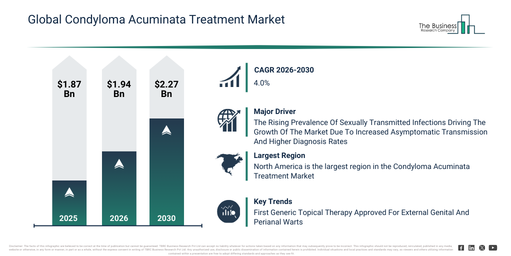
    The condyloma acuminata treatment market has observed consistent expansion over recent years. It is anticipated to increase from $1.87 billion in 2025 to $1.94 billion in 2026, demonstrating a compound annual growth rate (CAGR) of 3.9%. This historical growth can be linked to several factors, including advancements in diagnostic capabilities, the expansion of endocrine specialty care, increased awareness regarding rare genetic disorders, the availability of hormone replacement therapies, and the development of specialty clinics.

    The condyloma acuminata treatment market is projected to experience consistent expansion in the coming years, reaching $2.27 billion by 2030, driven by a compound annual growth rate (CAGR) of 4.0%. This anticipated growth is largely due to factors such as the intensified development of targeted therapies, the growing acceptance of precision medicine strategies, the broadening availability of genetic counseling services, a heightened emphasis on managing diseases throughout a person’s life, and increased financial commitments to research on rare diseases. Key trends anticipated during this period encompass the wider implementation of newborn screening initiatives, the increasing application of individualized hormone therapies, the greater incorporation of genetic testing into diagnostic processes, the development of more extensive solutions for long-term disease management, and a stronger emphasis on early intervention approaches.

    Access Your Free Sample Report for In-Depth Market Insights:

    https://www.thebusinessresearchcompany.com/sample.aspx?id=13824&type=smp

    What Drivers Are Guiding Growth Patterns In The Condyloma Acuminata Treatment Market?

    The condyloma acuminata treatment market is anticipated to expand due to the rising occurrence of sexually transmitted infections (STIs). STIs, also referred to as sexually transmitted diseases (STDs), are infections transmitted between individuals through sexual contact. This growing prevalence of STIs stems from asymptomatic cases, where numerous people are unaware of their infection and inadvertently pass it on. Treatment for condyloma acuminata helps in managing STIs by alleviating symptoms, lowering the risk of transmission, avoiding complications, and fostering general health. An illustration of this trend is found in data from July 2024 by the UK Health Security Agency, a UK-based government agency, which reported 401,800 new STI diagnoses in 2023. This figure indicates a 4.7% rise compared to 2022, when 383,789 diagnoses were recorded. Consequently, the escalating incidence of sexually transmitted infections (STIs) is fueling the expansion of the condyloma acuminata treatment market.

    Which Segments Are Driving Activity In The Condyloma Acuminata Treatment Market?

    The condyloma acuminata treatment market covered in this report is segmented –

    1) By Drug Type: Imiquimod, Podophyllin And Podofilox, Trichloroacetic Acid (TCA), Sine Catechins, Isotretinoin

    2) By Treatment Type: Physical Destruction, Chemical Destruction, Immunomodulation

    3) By Distribution Channel: Hospital Pharmacies, Retail Pharmacies, Online Pharmacies

    4) By End-User: Hospitals, Specialty Clinics, Other End Users

    Subsegments:

    1) By Imiquimod: Topical Imiquimod Cream, Immune Response Modifier Imiquimod

    2) By Podophyllin And Podophyllotoxin (Podofilox): Podophyllin Resin Solutions, Podophyllotoxin (Podofilox) Topical Preparations

    3) By Trichloroacetic Acid (TCA): High-Concentration Trichloroacetic Acid Applications, Physician-Applied Trichloroacetic Acid Treatments

    4) By Sinecatechins: Botanical Sinecatechins Ointments, Green Tea Extract–Based Sinecatechins

    5) By Isotretinoin: Oral Isotretinoin Therapy, Topical Isotretinoin Formulations

    What Trends Are Expected To Impact The Competitive Landscape Of The Condyloma Acuminata Treatment Market?

    Major companies in the condyloma acuminata treatment market are focused on developing innovative drugs, such as podofilox gel, to enhance treatment cost-effectiveness and patient accessibility. Podofilox gel is a topical medication specifically utilized for the management of external genital and perianal warts. For instance, in December 2023, the U.S. Food and Drug Administration (FDA) granted approval for Podofilox Gel to Hyloris Pharmaceuticals SA, a Belgium-based specialty biopharma company, and its partner Padagis US LLC, a US-based pharmaceutical manufacturing company. This newly approved topical medication stands as the first generic version of Condylox Gel 0.5% and is indicated for treating external genital and perianal warts by inducing necrosis of the wart tissue. The product’s approval was facilitated through an abbreviated New Drug Application (ANDA) pathway, granting Padagis 180-day Competitive Generic Therapy exclusivity.

    Which Major Industry Participants Are Leading The Condyloma Acuminata Treatment Market Growth?

    Major companies operating in the condyloma acuminata treatment market are Pfizer Inc., Merck & Co. Inc., Bayer AG, Sanofi S.A., GlaxoSmithKline plc, 3M Company, Medtronic plc, Teva Pharmaceutical Industries Ltd., IQVIA Holdings, AbbVie Inc., Astellas Pharma US Inc., Bausch Health, Shanghai Fosun Pharmaceutical (Group) Co. Ltd., Syneos Health Inc., Perrigo Company plc, Chiesi Farmaceutici S.p.A., Gedeon Richter Plc, Meda AB, Recordati Industria Chimica e Farmaceutica S.p.A., Zhejiang Hisun Pharmaceutical Co. Ltd. , Mylan N.V., Ferring Pharmaceuticals AS, Indivior PLC, Parthenon Therapeutics

    Access The Complete Report For Deeper Market Insights:

    https://www.thebusinessresearchcompany.com/report/condyloma-acuminata-treatment-global-market-report

    Which Region Is Projected To Lead The Condyloma Acuminata Treatment Market During The Forecast Period?

    North America was the largest region in the condyloma acuminata treatment market in 2025. Asia-Pacific is expected to be the fastest-growing region in the forecast period. The regions covered in the condyloma acuminata treatment market report are Asia-Pacific, South East Asia, Western Europe, Eastern Europe, North America, South America, Middle East, Africa.

    Request Your Customized Condyloma Acuminata Treatment Market Research Report for Competitive Advantage:

    https://www.thebusinessresearchcompany.com/customise?id=13824&type=smp

    Browse Through More Reports Similar to the Global Condyloma Acuminata Treatment Market 2026, By The Business Research Company

    Alpers Disease Treatment Market Report 2026

    https://www.thebusinessresearchcompany.com/report/alpers-disease-treatment-global-market-report

    Conjunctivitis Treatment Market Report 2026

    https://www.thebusinessresearchcompany.com/report/conjunctivitis-treatment-global-market-report

    Aspergillosis Treatment Market Report 2026

    https://www.thebusinessresearchcompany.com/report/aspergillosis-treatment-global-market-report

    Get in touch with us:

    The Business Research Company: https://www.thebusinessresearchcompany.com/

    Americas +1 310-496-7795

    Asia +44 7882 955267 & +91 8897263534

    Europe +44 7882 955267

    Email us at info@tbrc.info

    Follow us on:

    LinkedIn: https://in.linkedin.com/company/the-business-research-company

    YouTube: https://www.youtube.com/channel/UC24_fI0rV8cR5DxlCpgmyFQ

    Global Market Model: https://www.thebusinessresearchcompany.com/global-market-model
  • Concussion Market Forecast 2026–2035: How to Leverage Market Growth

    Concussion Market Forecast 2026–2035: How to Leverage Market Growth

    Uncover key drivers, emerging technologies, and competitive movements shaping the concussion market from 2026–2035 with trusted insights from The Business Research Company

    Starting from its 2026 valuation, what market size is the Concussion Market expected to reach by 2030?

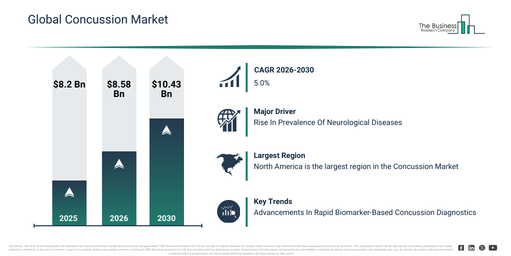
    The concussion market has experienced consistent expansion in recent years. Its size is expected to increase from $8.2 billion in 2025 to $8.58 billion in 2026, achieving a compound annual growth rate (CAGR) of 4.6%. This historical growth can be attributed to several factors, including a higher occurrence of sports-related injuries, increased understanding of traumatic brain injuries, wider availability of diagnostic imaging, the expansion of rehabilitation services, and refined clinical assessment protocols.

    The concussion market is projected to experience substantial growth over the next few years, with its size expected to reach $10.43 billion by 2030, driven by a compound annual growth rate (CAGR) of 5.0%. This expansion during the forecast period is attributable to increasing adoption of AI-assisted concussion diagnostics, a rising focus on long-term brain health monitoring, the expansion of remote patient monitoring solutions, growing investment in neurorehabilitation technologies, and an increasing demand for personalized concussion management. Major trends anticipated in this period include the increasing adoption of advanced neuroimaging tools, a rising use of digital cognitive assessment platforms, the growing integration of wearable monitoring devices, the expansion of multidisciplinary rehabilitation approaches, and an enhanced focus on early and accurate diagnosis.

    Access Your Free Sample Report for In-Depth Market Insights:

    https://www.thebusinessresearchcompany.com/sample.aspx?id=11888&type=smp

    What Drivers Are Driving Adoption Within The Concussion Market?

    The increasing occurrence of neurological diseases is anticipated to boost the expansion of the concussion market. Neurological diseases represent a broad spectrum of medical conditions affecting the nervous system, including the brain, spinal cord, and peripheral nerves. Concussions frequently serve as an initial trigger or an exacerbating element in these conditions, particularly those stemming from traumatic brain injuries, influencing the onset, progression, or complications of disorders like chronic traumatic encephalopathy (CTE) or post-concussion syndrome. For instance, in February 2023, according to the World Health Organization (WHO), a US-based intergovernmental organization, epilepsy, a neurological disease, impacts 5 million people globally, with 49 per 100,000 cases observed in high-income countries, while low- and middle-income countries experience up to 139 per 100,000. Therefore, the growing prevalence of neurological diseases is a key driver for the concussion market’s growth.

    How Is The Concussion Market Organized Into Various Segments?

    The concussion market covered in this report is segmented –

    1) By Assessment: Diagnosis, Treatment

    2) By Device: Imaging Devices, Magnetic Resonance Imaging (MRI) Devices, X-Ray, Computed Tomography, Monitoring Devices, Other Devices

    3) By End User: Hospitals And Clinics, Diagnostic Centers, Medical Camps, Other End-Users

    Subsegments:

    1) By Diagnosis: Clinical Assessments, Imaging Techniques

    2) By Treatment: Pharmacological Treatments, Cognitive Rehabilitation, Physical Therapy

    Which Trends Are Guiding The Evolution Of The Concussion Market?

    Major companies operating in the concussion market are concentrating on developing innovative solutions, including swift point-of-care biomarker blood tests, to address increasing demand driven by heightened concussion awareness. Rapid point-of-care biomarker blood tests are quick assessments performed near the patient that measure specific blood markers to identify or monitor a condition, aiding clinicians in making immediate decisions about diagnosis, treatment, or further testing. For instance, in April 2024, Abbott Laboratories, a US-based medical device and diagnostics company, introduced a whole blood rapid test for traumatic brain injury (TBI) on its portable i-STAT Alinity platform. This test enables clinicians to evaluate suspected concussions at the patient’s bedside, providing lab-quality results in just 15 minutes. Previously, TBI tests necessitated plasma or serum samples to be sent to a laboratory, but the new clearance facilitates faster, on-site evaluation, potentially lessening the need for CT scans and improving timely decision-making in urgent care and other healthcare settings.

    Who Are The Prominent Global Companies Shaping The Concussion Market Landscape?

    Major companies operating in the concussion market are Pfizer Inc., Novartis AG, Sanofi SA, Abbott Laboratories, Medtronic plc, Viatris Inc., Zydus Lifesciences Ltd., Integra LifeSciences Corporation, Nihon Kohden Corporation, Raumedic AG, Lupin Limited, NeuroPace Inc., Compumedics Limited, NeuroLogica Corporation, Neural Analytics Inc., NovaSignal Corp., Back Bay Life Science Advisors, BrainScope Company Inc., Neuro Kinetics Inc., ImPACT Applications Inc., NanoDx Inc., Neuren Pharmaceuticals Limited, Advanced Brain Monitoring Inc., ElMindA Ltd., NeurOptics Inc., InfraScan Inc., Neuro Assessment Systems Inc., NeuroTrauma Sciences LLC, SyncThink Inc., Oxeia Biopharmaceuticals Inc., Oculogica Inc., Banyan Biomarkers Inc., Emotiv Inc., BioDirection Inc.

    Access The Complete Report For Deeper Market Insights:

    https://www.thebusinessresearchcompany.com/report/concussion-global-market-report

    Which Region Currently Holds The Largest Share Of The Concussion Market?

    North America was the largest region in the concussion market in 2025. Asia-Pacific is expected to be the fastest-growing region in the forecast period. The regions covered in the concussion market report are Asia-Pacific, South East Asia, Western Europe, Eastern Europe, North America, South America, Middle East, Africa.

    Request Your Customized Concussion Market Research Report for Competitive Advantage:

    https://www.thebusinessresearchcompany.com/customise?id=11888&type=smp

    Browse Through More Reports Similar to the Global Concussion Market 2026, By The Business Research Company

    Migraine Market Report 2026

    https://www.thebusinessresearchcompany.com/report/migraine-global-market-report

    Traumatic Brain Injury Market Report 2026

    https://www.thebusinessresearchcompany.com/report/traumatic-brain-injury-global-market-report

    Traumatic Brain Injuries Assessment Market Report 2026

    https://www.thebusinessresearchcompany.com/report/traumatic-brain-injuries-assessment-global-market-report

    Get in touch with us:

    The Business Research Company: https://www.thebusinessresearchcompany.com/

    Americas +1 310-496-7795

    Asia +44 7882 955267 & +91 8897263534

    Europe +44 7882 955267

    Email us at info@tbrc.info

    Follow us on:

    LinkedIn: https://in.linkedin.com/company/the-business-research-company

    YouTube: https://www.youtube.com/channel/UC24_fI0rV8cR5DxlCpgmyFQ

    Global Market Model: https://www.thebusinessresearchcompany.com/global-market-model
  • Global Computerized Physician Order Entry Market 2026–2030: Forecast Insights for Business Planning

    Global Computerized Physician Order Entry Market 2026–2030: Forecast Insights for Business Planning

    Uncover key drivers, emerging technologies, and competitive movements shaping the computerized physician order entry market from 2026–2035 with trusted insights from The Business Research Company

    Across 2026–2030, what is the expected market valuation path of the Computerized Physician Order Entry Market?

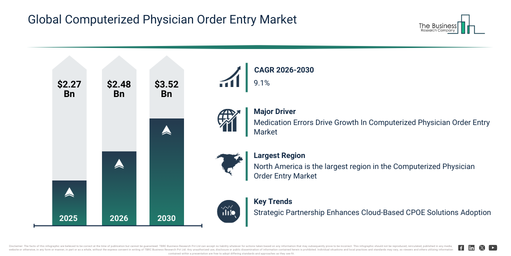
    The market size for computerized physician order entry has demonstrated strong growth in recent years. It is anticipated to expand from $2.27 billion in 2025 to $2.48 billion in 2026, exhibiting a compound annual growth rate (CAGR) of 9.4%. Historically, this growth has been driven by factors including the increasing adoption of electronic health records, a heightened focus on patient safety regulations, greater awareness of medication errors, the expansion of hospital digitization initiatives, and the availability of healthcare IT infrastructure.

    The computerized physician order entry market is projected to experience robust expansion over the coming years. This market is forecast to reach $3.52 billion by 2030, exhibiting a compound annual growth rate (CAGR) of 9.1%. The anticipated growth during this period stems from factors such as heightened investments in smart hospital technologies, a surging demand for real-time clinical decision support, the proliferation of cloud-based healthcare solutions, an intensified emphasis on interoperability standards, and the increasing uptake of AI-assisted prescribing tools. Key trends foreseen for the forecast horizon encompass the increasing integration of CPOE systems, greater utilization of clinical decision support tools, the expanding implementation of cloud-based order entry platforms, the broader deployment of interoperable healthcare IT systems, and a sharpened focus on minimizing medication errors.

    Access Your Free Sample Report for In-Depth Market Insights:

    https://www.thebusinessresearchcompany.com/sample.aspx?id=19380&type=smp

    Which Drivers Are Supporting The Rise Of The Computerized Physician Order Entry Market?

    The increasing occurrence of medication errors is projected to fuel the expansion of the computerized physician order entry market in the future. Medication errors are defined as mistakes during the prescription, dispensing, or administration of drugs that can result in harm to patients. These numerous instances of errors stem from various factors, including poor communication among healthcare providers, inaccurate dosage calculations, similar-sounding drug names, and insufficient patient information. Computerized physician order entry (CPOE) systems effectively mitigate medication errors by offering automated checks and alerts, ensuring precise drug prescriptions, and minimizing manual data entry mistakes. As an illustration, in April 2024, data from the Pennsylvania Patient Safety Authority (PA-PSRS), a US-based health-care oversight body, indicated that the proportion of medication error reports climbed from 13.2% of all patient-safety reports in 2022 to 14.1% in 2023. Concurrently, the total number of medication-error reports increased from 33,980 to 40,680 during the identical period, signifying a substantial year-over-year rise in reported medication error events. Consequently, the rising frequency of medication errors is propelling the growth of the computerized physician order entry market. The expanding integration of electronic health records (EHR) is anticipated to drive the computerized physician order entry market forward. Electronic health records (EHR) adoption involves healthcare providers implementing and utilizing digital systems to electronically store, manage, and share patient medical data, thereby replacing traditional paper-based record-keeping methods. This rising adoption of electronic health records is spurred by government directives and incentive initiatives that promote healthcare digitization, as regulatory mandates and financial motivations encourage medical facilities to shift from paper records to unified digital systems, enhancing care coordination and data accessibility. Increased EHR adoption directly facilitates the broader implementation of digital prescription and treatment order systems, allowing physicians to electronically input, modify, and transmit medication orders and clinical instructions directly within the electronic medical record infrastructure. For example, in July 2024, the European Commission, a Belgium-based organization, reported that Europe demonstrated progress in eHealth maturity in 2024, with the EU27-average overall composite score improving to 79% from 72% in the preceding year. Thus, the increasing adoption of electronic health records is a key driver for the growth of the computerized physician order entry market.

    What Segments Are Identified Within The Structure Of The Computerized Physician Order Entry Market?

    The computerized physician order entry market covered in this report is segmented –

    1) By Type: Standalone Computerized Physician Order Entry (CPOE), Integrated Computerized Physician Order Entry (CPOE)

    2) By Component: Hardware, Software, Services

    3) By Deployment: Web-Based, Cloud-Based, On-Premise

    4) By End User: Pharmacies, Hospitals, Emergency Healthcare Service Providers, Office-Based Physicians, Other End Users

    Subsegments:

    1) By Standalone Computerized Physician Order Entry (CPOE): Single-Function CPOE Systems, Specialty-Specific Standalone CPOE Solutions, Customizable Standalone CPOE Applications

    2) By Integrated Computerized Physician Order Entry (CPOE): Fully Integrated EHR (Electronic Health Record) CPOE Systems, CPOE with Decision Support Systems (DSS), Integrated CPOE with Laboratory and Pharmacy Management Systems, Comprehensive Healthcare Management Systems With CPOE Functionality

    What Trends Are Projected To Support The Growth Of The Computerized Physician Order Entry Market?

    Leading firms within the computerized physician order entry market are increasingly forming strategic alliances to advance wireless and cloud technologies designed for substantial workload management. These alliances involve companies utilizing each other’s unique strengths and resources to attain shared advantages and successful outcomes. An illustrative example occurred in August 2023 when Microsoft Corporation, a technology firm based in the US, collaborated with US-based healthcare software provider Epic Systems Corporation. Their joint effort aimed to provide a cloud-based electronic health records (EHR) solution, which considerably bolstered the functionalities of computerized physician order entry (CPOE) systems. This integration of Epic’s EHR platform with Microsoft Azure enables healthcare professionals to efficiently handle extensive EHR database loads, thereby providing immediate access to patient information and streamlining clinical workflows.

    Which Key Players Are Driving Competition In The Computerized Physician Order Entry Market?

    Major companies operating in the computerized physician order entry market are UnitedHealth Group, McKesson Corporation, Kaiser Permanente, International Business Machines Corp (IBM), Siemens Healthineers, Philips Healthcare Inc., GE HealthCare Technologies Inc., Epic Systems Corporation, Athenahealth Inc., eClinicalWorks LLC, Allscripts Healthcare Solutions Inc., NextGen Healthcare, Medical Information Technology Inc. (Meditech), Computer Programs and Systems Inc, Greenway Health LLC, CareCloud Inc., Medhost, Picis Clinical Solutions, CliniComp International Inc., Zynx Health Inc.

    Access The Complete Report For Deeper Market Insights:

    https://www.thebusinessresearchcompany.com/report/computerized-physician-order-entry-global-market-report

    How Does The Computerized Physician Order Entry Market Perform Across Major Global Regions?

    North America was the largest region in the computerized physician order entry market in 2025. Asia-Pacific is expected to be the fastest-growing region in the forecast period. The regions covered in the computerized physician order entry market report are Asia-Pacific, South East Asia, Western Europe, Eastern Europe, North America, South America, Middle East, Africa.

    Request Your Customized Computerized Physician Order Entry Market Research Report for Competitive Advantage:

    https://www.thebusinessresearchcompany.com/customise?id=19380&type=smp

    Browse Through More Reports Similar to the Global Computerized Physician Order Entry Market 2026, By The Business Research Company

    Point Of Entry Water Treatment Systems Market Report 2026

    https://www.thebusinessresearchcompany.com/report/point-of-entry-water-treatment-systems-global-market-report

    Computerized Maintenance Management System Market Report 2026

    https://www.thebusinessresearchcompany.com/report/computerized-maintenance-management-system-global-market-report

    Automotive Keyless Entry System Market Report 2026

    https://www.thebusinessresearchcompany.com/report/automotive-keyless-entry-system-global-market-report

    Get in touch with us:

    The Business Research Company: https://www.thebusinessresearchcompany.com/

    Americas +1 310-496-7795

    Asia +44 7882 955267 & +91 8897263534

    Europe +44 7882 955267

    Email us at info@tbrc.info

    Follow us on:

    LinkedIn: https://in.linkedin.com/company/the-business-research-company

    YouTube: https://www.youtube.com/channel/UC24_fI0rV8cR5DxlCpgmyFQ

    Global Market Model: https://www.thebusinessresearchcompany.com/global-market-model
  • Computer-Aided Oral And Maxillofacial Surgery Market Outlook 2026–2035: Growth Drivers and Industry Forecast

    Computer-Aided Oral And Maxillofacial Surgery Market Outlook 2026–2035: Growth Drivers and Industry Forecast

    Uncover key drivers, emerging technologies, and competitive movements shaping the computer-aided oral and maxillofacial surgery market from 2026–2035 with trusted insights from The Business Research Company

    What size range is anticipated for the Computer-Aided Oral And Maxillofacial Surgery Market from 2026 to 2030?

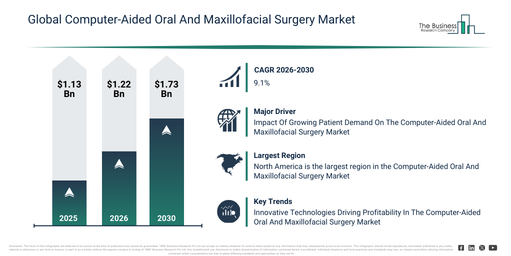
    The computer-aided oral and maxillofacial surgery market size has demonstrated robust growth in recent years. This market is projected to expand from $1.13 billion in 2025 to $1.22 billion in 2026, exhibiting a compound annual growth rate (CAGR) of 8.2%. The growth observed in the past can be ascribed to an increase in complex craniofacial surgeries, the rising adoption of digital imaging technologies, the proliferation of specialized oral surgery centers, a heightened demand for surgical accuracy, and the availability of advanced surgical planning tools.

    The market for computer-aided oral and maxillofacial surgery is projected to experience substantial expansion over the upcoming years. This market is anticipated to reach a valuation of $1.73 billion by 2030, demonstrating a compound annual growth rate (CAGR) of 9.1%. The foreseen growth throughout this period can be ascribed to several factors, including the rising acceptance of AI-assisted surgical simulation, increased funding for digital operating rooms, the proliferation of personalized surgical solutions, the expanding application of 3D printed surgical guides, and the heightened need for surgical planning focused on specific outcomes. Key trends identified for the forecast timeframe encompass the wider adoption of virtual surgical planning instruments, the increasing deployment of 3D imaging and simulation software, the greater incorporation of CAD/CAM technologies into surgical processes, the development of patient-specific surgical guides, and a stronger emphasis on minimally invasive procedural techniques.

    Access Your Free Sample Report for In-Depth Market Insights:

    https://www.thebusinessresearchcompany.com/sample.aspx?id=13289&type=smp

    What Drivers Are Affecting Demand In The Computer-Aided Oral And Maxillofacial Surgery Market?

    An anticipated increase in the demand for patents is projected to propel the growth of the computer-aided oral and maxillofacial surgery market moving forward. Patent demand typically refers to the quest for patents, which are legal protections granted to inventors and creators for their novel inventions, processes, or designs. Computer-aided oral and maxillofacial surgeries often utilize 3D imaging, computer modelling, and virtual planning to customize surgical procedures for individual patient needs. The patient’s desire for personalized and effective treatments encourages the integration of these technologies into clinical practice. For instance, in September 2023, according to the British Medical Association, a UK-based registered trade union, a record-breaking high of around 62.68 million patients were registered with GP offices in England in August 2023. As a result, the typical number of patients each full-time equivalent general practitioner is in charge of is currently 2,301. Therefore, the escalating patent demand is a key driver for the growth of the computer-aided oral and maxillofacial surgery market.

    Which Segments Are Gaining Traction In The Computer-Aided Oral And Maxillofacial Surgery Market?

    The computer-aided oral and maxillofacial surgery market covered in this report is segmented –

    1) By Component: Dental Printers, Milling Machine, Scanners, Software, Other Components

    2) By Application: Dental Implantology, Orthognathic Surgery, Other Applications

    3) By End User: Neurosurgery, Orthognathic And Dental Surgery, Plastic Surgery, Dental Surgery, Oral Surgery

    Subsegments:

    1) By Dental Printers: 3D Printers For Surgical Models, Stereolithography Printers, Digital Light Processing Printers

    2) By Milling Machine: CAD Or CAM Milling Machines, In-Office Milling Machines, Industrial Milling Machines

    3) By Scanners: Intraoral Scanners, Extraoral Scanners, Cone Beam Computed Tomography (CBCT) Scanners

    4) By Software: Surgical Planning Software, Simulation Software, CAD Software For Prosthetics, Workflow Management Software

    5) By Other Components: Imaging Devices, Surgical Guides, Custom Implants

    Which Trends Are Influencing The Performance And Direction Of The Computer-Aided Oral And Maxillofacial Surgery Market?

    Leading companies in the computer-aided oral and maxillofacial surgery market are emphasizing technological innovations, specifically surgical dynamic navigation systems, to bolster their market profitability. A surgical dynamic navigation system enables real-time visualization of anatomical structures, such as bone and teeth, during surgical operations. Specifically, in March 2023, the Switzerland-based Straumann Group, known for dental implants and specialized technologies, launched its inaugural surgical dynamic navigation system, developed for performing implant treatments within a fully digital workflow. This computer-assisted system assists surgeons in precisely guiding their instruments during dental procedures. It helps prevent inadvertent contact with vital anatomical structures and ensures accurate implant placement according to the treatment plan, by providing a clear view of the instrument’s precise location within the surgical area. The Straumann Group’s surgical dynamic navigation system is instrumental in the company’s success, delivering a more accurate and reliable method for implant procedures.

    Who Are The Top-Performing Companies In The Computer-Aided Oral And Maxillofacial Surgery Market In Recent Years?

    Major companies operating in the computer-aided oral and maxillofacial surgery market are Dentsply Sirona Ltd., Align Technology Inc., Straumann Group, Planmeca Oy, Renishaw plc, Osstem Implant Co Ltd, Nobel Biocare Services AG, 3Shape A/S, KaVo Dental, Materialise NV, Geomagic, BioHorizons IPH Inc, Ivoclar Vivadent Marketing Pvt Ltd, Overjet, Orchestrate 3D, 3D Systems Corporation, Medacta International, Neocis Inc, Zygote3D, InVivo Surgical (DEXIS Invivo), Carestream Dental, Brainlab SE, Cybermed Inc.

    Access The Complete Report For Deeper Market Insights:

    https://www.thebusinessresearchcompany.com/report/computer-aided-oral-and-maxillofacial-surgery-global-market-report

    Which Region Is Anticipated To See The Fastest Growth In The Computer-Aided Oral And Maxillofacial Surgery Market?

    North America was the largest region in the computer-aided oral and maxillofacial surgery market in 2025. Asia-Pacific is expected to be the fastest-growing region in the forecast period. The regions covered in the computer-aided oral and maxillofacial surgery market report are Asia-Pacific, South East Asia, Western Europe, Eastern Europe, North America, South America, Middle East, Africa.

    Request Your Customized Computer-Aided Oral And Maxillofacial Surgery Market Research Report for Competitive Advantage:

    https://www.thebusinessresearchcompany.com/customise?id=13289&type=smp

    Browse Through More Reports Similar to the Global Computer-Aided Oral And Maxillofacial Surgery Market 2026, By The Business Research Company

    Dental Surgical Devices And Equipment Market Report 2026

    https://www.thebusinessresearchcompany.com/report/dental-surgical-devices-and-equipment-global-market-report

    Computer Aided Oral And Maxillofacial Surgery Market Report 2026

    https://www.thebusinessresearchcompany.com/report/computer-aided-oral-and-maxillofacial-surgery-global-market-report

    Dental Flap Surgery Market Report 2026

    https://www.thebusinessresearchcompany.com/report/dental-flap-surgery-global-market-report

    Get in touch with us:

    The Business Research Company: https://www.thebusinessresearchcompany.com/

    Americas +1 310-496-7795

    Asia +44 7882 955267 & +91 8897263534

    Europe +44 7882 955267

    Email us at info@tbrc.info

    Follow us on:

    LinkedIn: https://in.linkedin.com/company/the-business-research-company

    YouTube: https://www.youtube.com/channel/UC24_fI0rV8cR5DxlCpgmyFQ

    Global Market Model: https://www.thebusinessresearchcompany.com/global-market-model
  • Computer-Aided Drug Discovery Market 2026–2030: Emerging Trends and Forecast Opportunities

    Computer-Aided Drug Discovery Market 2026–2030: Emerging Trends and Forecast Opportunities

    Uncover key drivers, emerging technologies, and competitive movements shaping the computer-aided drug discovery market from 2026–2035 with trusted insights from The Business Research Company

    How is the Computer-Aided Drug Discovery Market size predicted to change over the forecast window of 2026–2035?

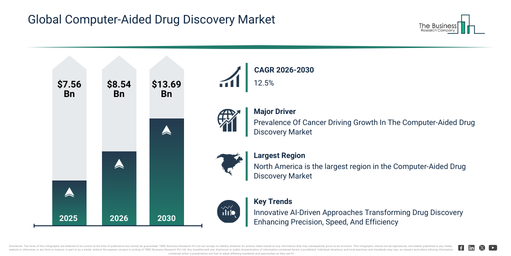
    The computer-aided drug discovery market has experienced significant expansion in recent years. Its valuation is projected to rise from $7.56 billion in 2025 to $8.54 billion by 2026, achieving a compound annual growth rate (CAGR) of 12.9%. The historical progression of this market can be ascribed to several factors, including the increasing complexity inherent in drug development, a rise in R&D spending within pharmaceuticals, the broadening scope of computational biology capabilities, the enhanced accessibility of biological data, and the widespread implementation of in silico modeling techniques.

    The computer-aided drug discovery market is projected to experience substantial expansion in the coming years, anticipated to reach $13.69 billion by 2030, exhibiting a compound annual growth rate (CAGR) of 12.5%. This growth during the forecast period is primarily driven by factors such as escalating investments in AI-powered drug discovery, a heightened need for accelerated drug development processes, the broadening scope of personalized medicine research, increased incorporation of machine learning into pharmacology, and the expanded utilization of cloud computing for extensive simulations. Key trends anticipated within this period encompass the increased deployment of AI-driven virtual screening, a surge in the adoption of molecular docking simulations, the deeper integration of genomic data into drug design, the proliferation of cloud-based drug discovery platforms, and an intensified emphasis on refining predictive modeling accuracy.

    Access Your Free Sample Report for In-Depth Market Insights:

    https://www.thebusinessresearchcompany.com/sample.aspx?id=19379&type=smp

    Which Drivers Are Contributing To The Expansion Of The Computer-Aided Drug Discovery Market?

    The increasing incidence of cancer cases is anticipated to drive the expansion of the computer-aided drug discovery market in the future. Cancer refers to a collection of illnesses marked by the unchecked proliferation and separation of atypical cells within the organism. This growth in cancer diagnoses stems from multiple elements, including shifts in lifestyle and urban development, environmental contaminants, consumption of tobacco and alcohol, and variations in healthcare availability and public understanding. Computer-aided drug discovery offers capabilities to formulate medicines that precisely target cancer cells exhibiting specific genetic alterations, thereby facilitating the development of more tailored and potent cancer treatments. For example, reports from July 2024 by the Australian Institute of Health and Welfare, an Australia-based government organization, showed roughly 165,000 new cancer diagnoses in 2023. Furthermore, predictions suggest about 204,000 cases will be identified each year by 2033, leading to an estimated 1.9 million cancer cases in total from 2024 to 2033. Consequently, the escalating occurrence of cancer cases stimulates the computer-aided drug discovery market.

    What Segment Categories Are Covered In The Computer-Aided Drug Discovery Market?

    The computer-aided drug discovery market covered in this report is segmented –

    1) By Type: Structure Based Drug Design, Ligand-Based Drug Design, Sequence-Based Approaches

    2) By Therapeutic Area: Oncology, Neurology, Cardiovascular Disease, Respiratory Disease, Diabetes, Other Therapeutic Areas

    3) By End User: Pharmaceutical Companies, Biotechnology Companies, Research Laboratories

    Subsegments:

    1) By Structure Based Drug Design: X-ray Crystallography, Nuclear Magnetic Resonance (NMR) Spectroscopy, Molecular Docking Studies, Virtual Screening

    2) By Ligand-Based Drug Design: Quantitative Structure-Activity Relationship (QSAR) Models, Pharmacophore Modeling, Ligand Similarity Searching, Fragment-Based Drug Design

    3) By Sequence-Based Approaches: Protein Structure Prediction, Homology Modeling, Bioinformatics for Drug Target Identification, Genomic Data Analysis for Drug Discovery

    What Long-Term Trends Are Expected To Shape The Future Of The Computer-Aided Drug Discovery Market?

    Leading companies operating within the computer-aided drug discovery (CADD) market are developing innovative solutions, such as artificial intelligence in drug discovery, to boost the accuracy, speed, and efficiency in identifying potential drug candidates, optimizing lead compounds, and facilitating personalized medicine development. Artificial intelligence (AI) in drug discovery involves the application of AI technologies, including machine learning and deep learning, leveraging advanced algorithms to make the discovery and development of new drugs faster, more efficient, and more precise. For example, in December 2023, Merck KGaA, a Germany-based science and technology company, unveiled AIDDISONTM, the first software-as-a-service platform that integrates drug discovery and synthesis. This platform, by combining generative AI, machine learning, and computer-aided drug design, accelerates drug development through virtual screening of compounds from over 60 billion chemical targets and recommending optimal synthesis routes. AIDDISONTM is trained on two decades of pharmaceutical R&D data to pinpoint drug-like candidates exhibiting properties like non-toxicity and stability. Moreover, by incorporating Merck’s SynthiaTM retrosynthesis API, the platform optimizes drug manufacturing for enhanced efficiency and sustainability, aiming to reduce the cost and time associated with drug discovery.

    Which Leading Companies Dominate The Computer-Aided Drug Discovery Market Share?

    Major companies operating in the computer-aided drug discovery market are Dassault Systèmes SE, PerkinElmer Inc., Roivant Sciences Ltd., Certara Inc., Schrödinger Inc., XtalPi Inc., Dotmatics Limited, Simulations Plus Inc., ChemAxon Ltd., Exscientia Ltd., Insilico Medicine Inc., Collaborative Drug Discovery Inc., OpenEye Scientific Software Inc., Nimbus Therapeutics LLC, Atomwise Inc., GNS Healthcare Inc., BenevolentAI Limited, EpiVax Inc., Numerate Inc., Cloud Pharmaceuticals Inc., Aris Pharmaceuticals Inc., Cyclica Inc., BioSolveIT GmbH, Chemical Computing Group ULC, InSilicoTrials Technologies S.p.A

    Access The Complete Report For Deeper Market Insights:

    https://www.thebusinessresearchcompany.com/report/computer-aided-drug-discovery-global-market-report

    Which Region Is Anticipated To See The Fastest Growth In The Computer-Aided Drug Discovery Market?

    North America was the largest region in the computer-aided drug discovery (CADD) market in 2025. The regions covered in the computer-aided drug discovery market report are Asia-Pacific, South East Asia, Western Europe, Eastern Europe, North America, South America, Middle East, Africa.

    Request Your Customized Computer-Aided Drug Discovery Market Research Report for Competitive Advantage:

    https://www.thebusinessresearchcompany.com/customise?id=19379&type=smp

    Browse Through More Reports Similar to the Global Computer-Aided Drug Discovery Market 2026, By The Business Research Company

    Drug Discovery Informatics Market Report 2026

    https://www.thebusinessresearchcompany.com/report/drug-discovery-informatics-global-market-report

    Computer Aided Oral And Maxillofacial Surgery Market Report 2026

    https://www.thebusinessresearchcompany.com/report/computer-aided-oral-and-maxillofacial-surgery-global-market-report

    Drug Discovery Services Market Report 2026

    https://www.thebusinessresearchcompany.com/report/drug-discovery-services-global-market-report

    Get in touch with us:

    The Business Research Company: https://www.thebusinessresearchcompany.com/

    Americas +1 310-496-7795

    Asia +44 7882 955267 & +91 8897263534

    Europe +44 7882 955267

    Email us at info@tbrc.info

    Follow us on:

    LinkedIn: https://in.linkedin.com/company/the-business-research-company

    YouTube: https://www.youtube.com/channel/UC24_fI0rV8cR5DxlCpgmyFQ

    Global Market Model: https://www.thebusinessresearchcompany.com/global-market-model
  • Global Computer-Aided Diagnosis Market Forecast 2026–2035: Long-Term Growth Insights

    Global Computer-Aided Diagnosis Market Forecast 2026–2035: Long-Term Growth Insights

    Uncover key drivers, emerging technologies, and competitive movements shaping the computer-aided diagnosis market from 2026–2035 with trusted insights from The Business Research Company

    What market expansion outlook does the Computer-Aided Diagnosis Market show for the 2026–2030 period?

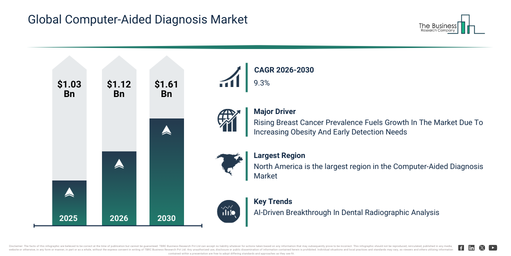
    The computer-aided diagnosis market has experienced substantial growth in recent years. It is expected to increase from $1.03 billion in 2025 to $1.12 billion in 2026, demonstrating a compound annual growth rate (CAGR) of 9.7%. The expansion observed in the historic period can be attributed to the increasing complexity of medical imaging interpretation, a rising demand for consistent diagnostic outcomes, the expansion of digital healthcare infrastructure, the growing use of imaging-based diagnostics, and improvements in computational power.

    The computer-aided diagnosis market size is projected to experience substantial growth in the coming years. It is anticipated to reach $1.61 billion by 2030, expanding at a compound annual growth rate (CAGR) of 9.3%. This forecasted growth stems from several factors, including the increasing adoption of ai-assisted clinical workflows, a rising focus on value-based healthcare, the expansion of personalized diagnostics, the growing integration of cloud-based diagnostic platforms, and increasing investments in healthcare analytics. Additionally, major trends during this period are expected to involve the increasing adoption of decision-support diagnostic software, a rising use of cad in chronic disease management, growing integration with electronic health records, the expansion of multi-disease diagnostic algorithms, and an enhanced focus on diagnostic accuracy and consistency.

    Access Your Free Sample Report for In-Depth Market Insights:

    https://www.thebusinessresearchcompany.com/sample.aspx?id=24508&type=smp

    What Drivers Are Shaping The Development Of The Computer-Aided Diagnosis Market?

    The increasing incidence of breast cancer is set to propel the expansion of the computer-aided diagnosis market in the future. Breast cancer is characterized by a malignant proliferation of abnormal cells that originate in the breast tissue, commonly in the milk ducts or lobules. Rising obesity levels elevate breast cancer risk because excess adipose tissue increases estrogen levels, fostering tumor growth. Computer-Aided Diagnosis (CAD) assists with breast cancer by improving the accuracy and efficiency of tumor detection in medical images, thereby helping radiologists achieve an earlier and more reliable diagnosis. For instance, in October 2025, Breastcancer.org, a US-based nonprofit research and awareness organization, estimated that in 2025 approximately 316,950 women in the United States will be diagnosed with invasive breast cancer, alongside an additional 59,080 new cases of ductal carcinoma in situ (DCIS). Furthermore, around 42,170 women are forecast to die from the disease, and breast cancer consistently accounts for about 32% of all new cancer cases among U.S. women annually. Therefore, the growing prevalence of breast cancer is a significant driver for the computer-aided diagnosis market.

    Which Segments Are Contributing To The Growth Of The Computer-Aided Diagnosis Market?

    The computer-aided diagnosis market covered in this report is segmented –

    1) By Imging Modalities: Mammography, Nuclear Imaging, Ultrasound Imaging, Magnetic Resonance Imaging, Other Imaging Modalities

    2) By Application: Breast Cancer, Lung Cancer, Prostate Cancer, Alzheimer’s Disease, Diabetic Retinopathy, Other Applications

    3) By End Use: Hospitals, Clinics, Medical Diagnstic Centers, Other End Uses

    Subsegments:

    1) By Mammography: Full-Field Digital Mammography (FFDM), Contrast-Enhanced Mammography, Digital Breast Tomosynthesis (DBT)

    2) By Nuclear Imaging: Positron Emission Tomography (PET), Single-Photon Emission Computed Tomography (SPECT)

    3) By Ultrasound Imaging: 2D Ultrasound, Doppler Ultrasound, 3D Or 4D Ultrasound

    4) By Magnetic Resonance Imaging: Brain Magnetic Resonance Imaging, Cardiac Magnetic Resonance Imaging, Breast Magnetic Resonance Imaging

    5) By Other Imaging Modalities: Computed Tomography (CT), Optical Imaging, X-ray Imaging

    Which Market Trends Are Opening Growth Opportunities In The Computer-Aided Diagnosis Market?

    Major companies in the computer-aided diagnosis market are concentrating on developing technologically advanced products, such as AI-powered computer-aided detection (CADe) software, to boost diagnostic accuracy and workflow efficiency. AI-powered computer-aided detection (CADe) software refers to intelligent systems that utilize artificial intelligence and machine learning to automatically identify and highlight potential abnormalities or diseases in medical images, thereby supporting clinicians in early and accurate diagnosis. For instance, in March 2025, Align Technology Inc., a US-based manufacturing company, unveiled Align X-ray Insights, an AI-powered software-based computer-aided detection (CADe) solution. This solution harnesses automated analysis of 2D dental radiographs to assist clinicians in diagnosing dental and oral pathologies, while also promoting standardized assessments, optimized clinical workflows, and increased patient involvement. It enhances dental practice by automating radiographic analysis, standardizing diagnostics, streamlining workflows, and improving patient communication and treatment acceptance.

    Who Are The Major Companies Operating In The Computer-Aided Diagnosis Market?

    Major companies operating in the computer-aided diagnosis market are Hitachi Ltd, International Business Machines Corporation (IBM), Median Technologies, Siemens Healthineers AG, Fujifilm Holdings Corporation, Koninklijke Philips N.V., GE Healthcare Technologies Inc., Nano-X Imaging Ltd, Hologic Inc., Agfa-Gevaert NV, ESAOTE S.p.A., Samsung Medison, Merge Healthcare Inc., Canon Medical Systems Corporation, iCAD Inc., THERAPIXEL S.A.S., Riverain Technologies LLC, Zebra Medical Vision Ltd, CureMetrix Inc., EDDA Technology Inc.

    Access The Complete Report For Deeper Market Insights:

    https://www.thebusinessresearchcompany.com/report/computer-aided-diagnosis-global-market-report

    Which Global Regions Are Shaping The Competitive Landscape Of The Computer-Aided Diagnosis Market?

    North America was the largest region in the computer-aided diagnosis market in 2025. The regions covered in the computer-aided diagnosis market report are Asia-Pacific, South East Asia, Western Europe, Eastern Europe, North America, South America, Middle East, Africa.

    Request Your Customized Computer-Aided Diagnosis Market Research Report for Competitive Advantage:

    https://www.thebusinessresearchcompany.com/customise?id=24508&type=smp

    Browse Through More Reports Similar to the Global Computer-Aided Diagnosis Market 2026, By The Business Research Company

    Ai In Medical Diagnostics Market Report 2026

    https://www.thebusinessresearchcompany.com/report/ai-in-medical-diagnostics-global-market-report

    Artificial Intelligence In Healthcare Diagnosis Market Report 2026

    https://www.thebusinessresearchcompany.com/report/artificial-intelligence-in-healthcare-diagnosis-global-market-report

    Diagnostic Contract Manufacturing Market Report 2026

    https://www.thebusinessresearchcompany.com/report/diagnostic-contract-manufacturing-global-market-report

    Get in touch with us:

    The Business Research Company: https://www.thebusinessresearchcompany.com/

    Americas +1 310-496-7795

    Asia +44 7882 955267 & +91 8897263534

    Europe +44 7882 955267

    Email us at info@tbrc.info

    Follow us on:

    LinkedIn: https://in.linkedin.com/company/the-business-research-company

    YouTube: https://www.youtube.com/channel/UC24_fI0rV8cR5DxlCpgmyFQ

    Global Market Model: https://www.thebusinessresearchcompany.com/global-market-model
  • Computer-Aided Detection Market 2026–2030: Forecasting Business Opportunities Ahead

    Computer-Aided Detection Market 2026–2030: Forecasting Business Opportunities Ahead

    Uncover key drivers, emerging technologies, and competitive movements shaping the computer-aided detection market from 2026–2035 with trusted insights from The Business Research Company

    What level of growth is expected in the Computer-Aided Detection Market between 2026 and 2030?

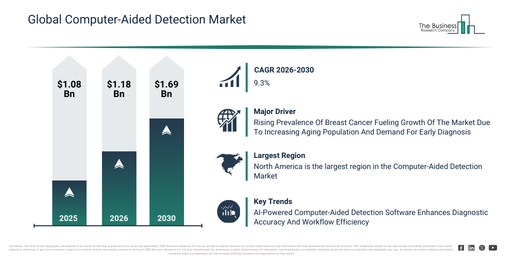
    The computer-aided detection market has experienced robust expansion over recent years. This market is projected to expand from $1.08 billion in 2025 to $1.18 billion by 2026, demonstrating a compound annual growth rate (CAGR) of 9.6%. The historical growth of this market can be ascribed to several factors, including an increased volume of medical imaging procedures, the emergence of more cancer screening programs, the enlargement of radiology departments, enhancements in digital imaging technologies, and the provision of extensive annotated imaging datasets.

    The computer-aided detection market size is anticipated to experience robust expansion over the coming years. It is predicted to reach $1.69 billion by 2030, demonstrating a compound annual growth rate (CAGR) of 9.3%. This expansion during the forecast period is driven by factors such as the increasing requirement for early and precise diagnosis, the growing implementation of AI-driven clinical decision support, the broadening of precision medicine initiatives, rising investments in healthcare AI solutions, and an increase in regulatory approvals for CAD systems. Significant trends expected during this period involve the increasing application of AI-based image analysis tools, a rise in the adoption of CAD in oncology screening, enhanced integration of CAD with various imaging modalities, the development of multi-modal diagnostic platforms, and a heightened focus on detecting diseases early.

    Access Your Free Sample Report for In-Depth Market Insights:

    https://www.thebusinessresearchcompany.com/sample.aspx?id=24507&type=smp

    Which Drivers Are Expected To Impact The Computer-Aided Detection Market During The Forecast Period?

    The growing incidence of breast cancer is projected to fuel the expansion of the computer-aided detection market. Breast cancer describes a malignant growth forming in breast cells, typically starting in the ducts or lobules, with the potential to disseminate to adjacent tissues or other body parts without early detection and treatment. The increase in breast cancer rates is largely attributed to lifestyle changes, such as increasing obesity, which elevate estrogen levels and thereby foster cancer development. Computer-aided detection (CAD) improves breast cancer diagnosis by analyzing medical images for potential anomalies, leading to earlier and more accurate identification. It assists radiologists in detecting tumors that might otherwise be missed, enhancing screening precision. For instance, data from October 2024, shared by the American Cancer Society, a US-based cancer organization, revealed that new invasive breast cancer cases among US women reached approximately 310,720. Concurrently, diagnoses of ductal carcinoma in situ (DCIS) climbed to 56,500. Similarly, in October 2025, Breastcancer.org, a US-based nonprofit research and awareness organization, estimated that 316,950 women in the United States would be diagnosed with invasive breast cancer in 2025, alongside 59,080 new cases of ductal carcinoma in situ (DCIS). Roughly 42,170 women are anticipated to succumb to the illness, with breast cancer consistently making up about 32% of all new cancer diagnoses among U.S. women each year. Consequently, the increasing incidence of breast cancer is stimulating the expansion of the computer-aided detection market.

    How Is The Computer-Aided Detection Market Divided Into Segments?

    The computer-aided detection market covered in this report is segmented –

    1) By Product: Mammography, Ultrasound Imaging, Magnetic Resonance Imaging, Tomosynthesis, Computed Tomography, Other Products

    2) By Application: Tuberculosis, Breast Cancer, Lung Cancer, Colon Cancer, Prostate Cancer, Liver Cancer, Bone Cancer, Neurological Indications

    3) By End-User: Hospitals, Clinics, Diagnostic Centres, Other End-Users

    Subsegments:

    1) By Mammography: Full-Field Digital Mammography (FFDM), Screen-Film Mammography (SFM), Three-Dimensional (3D) Mammography

    2) By Ultrasound Imaging: Automated Breast Ultrasound (ABUS), Handheld Ultrasound, Doppler Ultrasound, Elastography

    3) By Magnetic Resonance Imaging: Breast Magnetic Resonance Imaging (MRI), Brain Magnetic Resonance Imaging (MRI), Abdominal Magnetic Resonance Imaging (MRI), Musculoskeletal Magnetic Resonance Imaging (MRI)

    4) By Tomosynthesis: Breast Tomosynthesis, Chest Tomosynthesis, Orthopedic Tomosynthesis

    5) By Computed Tomography: Chest Computed Tomography (CT), Abdominal Computed Tomography (CT), Brain Computed Tomography (CT), Cardiac Computed Tomography (CT)

    6) By Other Products: Nuclear Medicine, X-Ray Imaging, Optical Imaging, Thermography

    How Are Emerging Trends Affecting The Progression Of The Computer-Aided Detection Market?

    Leading companies within the computer-aided detection market are concentrating on developing advanced solutions, such as artificial intelligence (AI)-powered computer-aided detection (CADe) software, to boost diagnostic accuracy, optimize image analysis, and facilitate early disease identification. This AI-powered CADe software harnesses artificial intelligence to scrutinize medical images for signs of anomalies, thereby elevating diagnostic precision and assisting in the prompt detection of conditions like cancer. For example, in March 2025, Align Technology, Inc., a Switzerland-based company specializing in digital orthodontics and restorative dentistry, introduced Align X-ray Insights for analyzing dental radiographs. This platform leverages AI to refine dental imaging analysis for more precise diagnoses. It also boosts workflow efficiency by providing real-time insights directly within current imaging systems. The software is designed to assist dental professionals in delivering accurate and timely patient care throughout the EU and UK.

    Which Major Firms Are Strengthening Their Position In The Computer-Aided Detection Market?

    Major companies operating in the computer-aided detection market are Hitachi Ltd., IBM, Fujifilm Holdings Corporation, Siemens Healthineers AG, Koninklijke Philips N.V., GE Healthcare Technologies Inc., Hologic Inc., Canon Medical Systems Corporation, Agfa‑Gevaert NV, Carestream Health Inc., ESAOTE S.p.A., Aidoc Medical Ltd., Median Technologies S.A., iCAD Inc., Riverain Technologies LLC, Zebra Medical Vision Ltd., CureMetrix Inc., THERAPIXEL S.A.S., ScreenPoint Medical B.V., Lunit Inc., Qure.ai, Delft Imaging, VinBrain

    Access The Complete Report For Deeper Market Insights:

    https://www.thebusinessresearchcompany.com/report/computer-aided-detection-global-market-report

    Which Regions Are Poised For Strategic Growth In The Computer-Aided Detection Market?

    North America was the largest region in the computer-aided detection market in 2025. Asia-Pacific is expected to be the fastest-growing region in the forecast period. The regions covered in the computer-aided detection market report are Asia-Pacific, South East Asia, Western Europe, Eastern Europe, North America, South America, Middle East, Africa.

    Request Your Customized Computer-Aided Detection Market Research Report for Competitive Advantage:

    https://www.thebusinessresearchcompany.com/customise?id=24507&type=smp

    Browse Through More Reports Similar to the Global Computer-Aided Detection Market 2026, By The Business Research Company

    Financial Analytics Market Report 2026

    https://www.thebusinessresearchcompany.com/report/financial-analytics-global-market-report

    Artificial Intelligence In Marketing Market Report 2026

    https://www.thebusinessresearchcompany.com/report/artificial-intelligence-in-marketing-global-market-report

    Product Analytics Market Report 2026

    https://www.thebusinessresearchcompany.com/report/product-analytics-global-market-report

    Get in touch with us:

    The Business Research Company: https://www.thebusinessresearchcompany.com/

    Americas +1 310-496-7795

    Asia +44 7882 955267 & +91 8897263534

    Europe +44 7882 955267

    Email us at info@tbrc.info

    Follow us on:

    LinkedIn: https://in.linkedin.com/company/the-business-research-company

    YouTube: https://www.youtube.com/channel/UC24_fI0rV8cR5DxlCpgmyFQ

    Global Market Model: https://www.thebusinessresearchcompany.com/global-market-model
  • Global Computer-Aided Design (CAD) Computer-Aided Manufacturing (CAM) Dental Milling Machine Market Report 2026–2035: Key Forecasts and Growth Areas

    Global Computer-Aided Design (CAD) Computer-Aided Manufacturing (CAM) Dental Milling Machine Market Report 2026–2035: Key Forecasts and Growth Areas

    Uncover key drivers, emerging technologies, and competitive movements shaping the computer-aided design (cad) computer-aided manufacturing (cam) dental milling machine market from 2026–2035 with trusted insights from The Business Research Company

    How much is the Computer-Aided Design (CAD) Computer-Aided Manufacturing (CAM) Dental Milling Machine Market valued at in 2026, and what valuation is forecast for 2030?

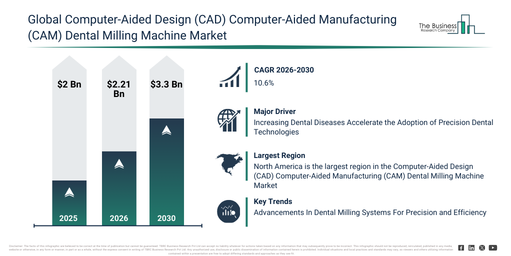
    The computer-aided design (cad) computer-aided manufacturing (cam) dental milling machine market has experienced significant expansion recently. This market is anticipated to expand from $2 billion in 2025 to $2.21 billion in 2026, achieving a compound annual growth rate (CAGR) of 10.6%. The historical increase can be ascribed to an escalating demand for dental prosthetics, the spread of digital dentistry practices, a growing inclination towards same-day restorations, enhancements in milling accuracy, and the increasing uptake of cad software in dental laboratories.

    The computer-aided design (cad) computer-aided manufacturing (cam) dental milling machine market is projected for significant expansion in the coming years, reaching $3.3 billion by 2030, driven by a compound annual growth rate (CAGR) of 10.6%. This anticipated growth during the forecast period is primarily fueled by factors such as the increasing integration of AI-assisted dental design, escalating investments in modern dental clinics, a rising demand for minimally invasive restorative procedures, the expansion of in-house dental manufacturing capabilities, and a heightened emphasis on cost-effective dental workflows. Key trends characterizing this period involve the growing uptake of chairside CAD/CAM systems, an increasing need for high-precision milling machines, the expanding application of zirconia and ceramic materials, the proliferation of compact and benchtop milling units, and a stronger focus on automating dental workflows.

    Access Your Free Sample Report for In-Depth Market Insights:

    https://www.thebusinessresearchcompany.com/sample.aspx?id=19009&type=smp

    What Drivers Are Influencing The Growth Of The Computer-Aided Design (CAD) Computer-Aided Manufacturing (CAM) Dental Milling Machine Market?

    The growing prevalence of dental diseases is projected to propel the expansion of the computer-aided design (CAD) or computer-aided manufacturing (CAM) dental milling machine markets going forward. These conditions encompass various issues affecting teeth, gums, and oral tissues, including cavities, gum disease, and oral infections. The escalation in dental diseases can be attributed to poor oral hygiene and the rising consumption of sugary foods and beverages. Computer-aided design (CAD) or computer-aided manufacturing (CAM) dental milling machines improve the precision of creating dental restorations, thereby reducing the likelihood of fitting issues and complications. For instance, in March 2023, the World Health Organization reported that nearly 3.5 billion people worldwide suffer from oral diseases, with three-quarters living in middle-income countries. Common dental issues like gum disease and tooth decay affect approximately 2 billion adults and 514 million children with permanent and primary teeth cavities, respectively. Therefore, the increase in the number of dental diseases is driving the growth of the computer-aided design (CAD) or computer-aided manufacturing (CAM) dental milling machine market.

    What Segments Are Included Within The Computer-Aided Design (CAD) Computer-Aided Manufacturing (CAM) Dental Milling Machine Market?

    The computer-aided design (cad) computer-aided manufacturing (cam) dental milling machine market covered in this report is segmented –

    1) By Product Type: 5-Axis, 4-Axis, 3-Axis

    2) By Technology: Dry Milling, Wet Milling

    3) By Modality: Bench-Top, Tabletop, Standalone

    4) By Application: Crowns And Bridges, Dental Implants, Dentures, Inlays And Onlays, Veneers And Lumineers

    5) By End-User: Dental, Medical, Orthopedic

    Subsegments:

    1) By 5-Axis: Full 5-Axis Milling Machines, Hybrid 5-Axis Milling Machines

    2) By 4-Axis: Standard 4-Axis Milling Machines, 4-Axis Milling Machines With Rotation

    3) By 3-Axis: Standard 3-Axis Milling Machines, 3-Axis Milling Machines With Additional Features

    Which Innovation Trends Are Advancing Developments Within The Computer-Aided Design (CAD) Computer-Aided Manufacturing (CAM) Dental Milling Machine Market?

    Leading companies within the computer-aided design (CAD) or computer-aided manufacturing (CAM) dental milling machine market are prioritizing the development of innovative solutions, such as advanced high-speed dry-milling 5-axis systems. This focus aims to address the increasing demand for same-day restorations, improved digital workflow integration, and greater material versatility. These sophisticated systems enable dental laboratories and clinics to fabricate components like crowns, bridges, inlays, and veneers in-house (or chair-side), thereby avoiding outsourcing to traditional production centers and improving turnaround time, accuracy, and cost-efficiency. As an illustration, in April 2024, UP3D Tech, a Finnish digital-dentistry company, unveiled its P55D high-end dry milling machine. The P55D is a 5-axis dry-milling unit equipped with a high-speed German spindle that reaches up to 60,000 rpm, an air-free plug-and-play design, “MillMind” remote-monitoring software for tracking jobs and tool-life alerts, and broad compatibility with materials including zirconia, wax, PMMA, PEEK, and soft metals. Its generous milling chamber, dust-proof housing, and continuous-milling capability contribute to enhanced productivity and reduced maintenance needs.

    Who Are The Primary Competitors In The Global Computer-Aided Design (CAD) Computer-Aided Manufacturing (CAM) Dental Milling Machine Market?

    Major companies operating in the computer-aided design (cad) computer-aided manufacturing (cam) dental milling machine market are Dentsply Sirona Inc., Ivoclar Vivadent AG, Dentium Co. Ltd., INTERDENT d.o.o., Amann Girrbach AG, Roland DGA Corporation, Zirkonzahn, Imes-Icore GmbH, vhf camfacture AG, UP3D, MECANUMERIC Group, B and D Dental Technologies, Bloomden Bioceramics Co. Ltd., Reitel Feinwerktechnik GmbH, Arum Dentistry Co. Ltd., AXSYS TECHNOLOGY LIMITED, Manix, Yenadent, Bien-Air Medical Technologies, Jiny Dental, Chongqing Zotion Dentistry Technology Co. Ltd.

    Access The Complete Report For Deeper Market Insights:

    https://www.thebusinessresearchcompany.com/report/computer-aided-design-cad-computer-aided-manufacturing-cam-dental-milling-machine-global-market-report

    Which Regions Are Projected To Dominate The Computer-Aided Design (CAD) Computer-Aided Manufacturing (CAM) Dental Milling Machine Market In The Coming Years?

    North America was the largest region in the computer-aided design (CAD) and computer-aided manufacturing (CAM) dental milling machine market in 2025. Asia-Pacific is expected to be the fastest-growing region in the forecast period. The regions covered in the computer-aided design (cad) computer-aided manufacturing (cam) dental milling machine market report are Asia-Pacific, South East Asia, Western Europe, Eastern Europe, North America, South America, Middle East, Africa.

    Request Your Customized Computer-Aided Design (CAD) Computer-Aided Manufacturing (CAM) Dental Milling Machine Market Research Report for Competitive Advantage:

    https://www.thebusinessresearchcompany.com/customise?id=19009&type=smp

    Browse Through More Reports Similar to the Global Computer-Aided Design (CAD) Computer-Aided Manufacturing (CAM) Dental Milling Machine Market 2026, By The Business Research Company

    Machining Centres Market Report 2026

    https://www.thebusinessresearchcompany.com/report/machining-centres-global-market-report

    Dental Cad Or Cam Market Report 2026

    https://www.thebusinessresearchcompany.com/report/dental-cad-or-cam-global-market-report

    Computer Aided Design Cad Software Market Report 2026

    https://www.thebusinessresearchcompany.com/report/computer-aided-design-cad-software-global-market-report

    Get in touch with us:

    The Business Research Company: https://www.thebusinessresearchcompany.com/

    Americas +1 310-496-7795

    Asia +44 7882 955267 & +91 8897263534

    Europe +44 7882 955267

    Email us at info@tbrc.info

    Follow us on:

    LinkedIn: https://in.linkedin.com/company/the-business-research-company

    YouTube: https://www.youtube.com/channel/UC24_fI0rV8cR5DxlCpgmyFQ

    Global Market Model: https://www.thebusinessresearchcompany.com/global-market-model
  • Computer Assisted Coding Market 2026–2030: Forecast, Innovation, and Competitive Trends

    Computer Assisted Coding Market 2026–2030: Forecast, Innovation, and Competitive Trends

    Uncover key drivers, emerging technologies, and competitive movements shaping the computer assisted coding market from 2026–2035 with trusted insights from The Business Research Company

    By how much is the Computer Assisted Coding Market expected to grow between 2026 and 2030?

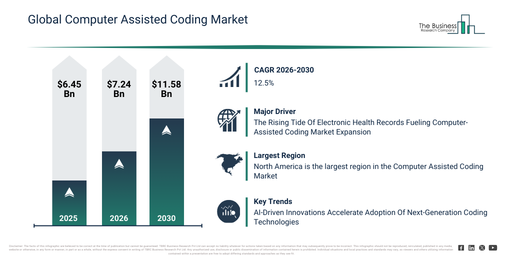
    The computer assisted coding market size has seen rapid expansion in recent years. It is forecast to increase from $6.45 billion in 2025 to $7.24 billion in 2026, demonstrating a compound annual growth rate (CAGR) of 12.4%. Historically, this growth can be linked to rising healthcare documentation volumes, the increasing complexity of medical coding standards, growing pressure to reduce billing errors, the expansion of digital health records adoption, and a shortage of skilled medical coders.

    The computer assisted coding market is projected to experience swift expansion over the coming years. By 2030, its valuation is anticipated to reach $11.58 billion, demonstrating a compound annual growth rate (CAGR) of 12.5%. This projected growth during the forecast period stems from factors such as the increasing embrace of ai-driven clinical documentation, a heightened need for value-based care reimbursement accuracy, the broadening scope of cloud-based healthcare analytics, an intensified focus on revenue cycle optimization, and greater regulatory scrutiny concerning coding compliance. Key trends emerging in this period encompass the escalating adoption of nlp-based coding engines, increasing integration with ehr systems, a developing requirement for real-time coding accuracy, the proliferation of automated audit and compliance tools, and an enhanced emphasis on coding productivity optimization.

    Access Your Free Sample Report for In-Depth Market Insights:

    https://www.thebusinessresearchcompany.com/sample.aspx?id=13627&type=smp

    Which Drivers Are Influencing Market Acceleration In The Computer Assisted Coding Market?

    The escalating integration of electronic health records (EHR) is anticipated to drive the expansion of the computer-assisted coding market in the future. EHRs represent digital counterparts to traditional patient paper charts, facilitating the structured collection of health data in a computerized manner. Computer-assisted coding (CAC) improves the efficacy and precision of electronic health records through the automated retrieval and allocation of medical codes from clinical records. As an illustration, a July 2024 report from the European Commission, a governmental body situated in Belgium, indicated that approximately half of Member States (48%) offer online portals and mobile applications for citizens to gain access to electronic health records, concurrently with 74% of Member States confirming that 80-100% of their populace possesses the technical capability to access health data online. In summary, 16 Member States have shown advancements in their access technology and coverage. Consequently, the rising acceptance of electronic health records (EHR) is propelling the expansion of the computer-assisted coding market.

    What Leading Segments Are Studied In The Computer Assisted Coding Market?

    The computer assisted coding market covered in this report is segmented –

    1) By Product: Software, Services

    2) By Mode Of Delivery: Web And Cloud Based, On-Premises

    3) By Application: Automated Computer-Assisted Encoding, Management Reporting And Analytics, Clinical Coding Auditing

    4) By End User: Hospitals, Physicians, Academic Medical Centers, Clinical Labs And Diagnosis Centers, Other End Users

    Subsegments:

    1) By Software: Computer-Assisted Coding (CAC) Software, Natural Language Processing (NLP) Solutions, Electronic Health Record (EHR) Integration Tools, Audit And Compliance Software, Reporting And Analytics Tools

    2) By Services: Implementation Services, Training And Support Services, Auditing And Consulting Services, Maintenance And Upgrades, Outsourcing Services For Coding And Billing

    Which Competitive Trends Are Impacting The Structure Of The Computer Assisted Coding Market?

    Leading companies within the computer-assisted coding (CAC) market are prioritizing the integration of sophisticated technologies, such as artificial intelligence (AI)–driven augmented intelligence coding assistants, to bolster coding precision, accelerate revenue-cycle operations, and ensure adherence to evolving payer and CMS guidelines. These AI-powered augmented intelligence coding assistants are advanced tools that utilize AI to analyze clinical documentation, highlight key clinical concepts, and propose accurate medical codes with evidence-backed reasoning. This capability helps healthcare organizations enhance coding accuracy, minimize manual workload, expedite revenue-cycle processes, and maintain real-time compliance with changing CMS and payer regulations. For example, in November 2025, Netsmart Technologies Inc., a US-based technology company, unveiled AlphaCoding, an artificial intelligence (AI)–powered coding solution featuring an embedded coding assistant named “Benny.” AlphaCoding employs advanced AI models consistent with CMS standards to deliver near-real-time, evidence-based ICD-10 code suggestions and support computer-assisted coding workflows. Benny automatically extracts clinical records, pinpoints crucial clinical concepts, recommends appropriate code assignments, and allows coders to verify results and finalize updates directly within the EHR. The platform further incorporates features for quality reporting to align coding with CMS metrics, productivity enhancements to streamline reviewer workflows, and citation links with clear explanations, enabling coders to make confident and compliant coding decisions.

    Which Key Market Players Are Investing In Expansion And Innovation Within The Computer Assisted Coding Market?

    Major companies operating in the computer assisted coding market are UnitedHealth Group Inc., McKesson Corporation, Microsoft Corporation, Oracle Corporation, 3M Company, GE HealthCare Technologies Inc., Epic Systems Corporation, Athenahealth Inc., Cerner Corporation, FinThrive Revenue Systems LLC, eClinicalWorks, NextGen Healthcare Inc., Medical Information Technology Inc., Computer Programs and Systems Inc., Availity LLC, Craneware plc, AGS Health, CareCloud Inc., ezDI Inc., Streamline Health Solutions Inc., ZyDoc Corporation, Codifyd Inc., Dolbey Systems Inc., Alpha II LLC, M-Scribe Technologies LLC, ChartWise Medical Systems Inc., Saince Inc., Talix Inc., Apervita Inc., Artificial Medical Intelligence Inc.

    Access The Complete Report For Deeper Market Insights:

    https://www.thebusinessresearchcompany.com/report/computer-assisted-coding-global-market-report

    Which Region Is Expected To Experience The Fastest Growth In The Computer Assisted Coding Market?

    North America was the largest region in the computer assisted coding market in 2025. Asia-Pacific is expected to be the fastest-growing region in the forecast period. The regions covered in the computer assisted coding market report are Asia-Pacific, South East Asia, Western Europe, Eastern Europe, North America, South America, Middle East, Africa.

    Request Your Customized Computer Assisted Coding Market Research Report for Competitive Advantage:

    https://www.thebusinessresearchcompany.com/customise?id=13627&type=smp

    Browse Through More Reports Similar to the Global Computer Assisted Coding Market 2026, By The Business Research Company

    Medical Coding Market Report 2026

    https://www.thebusinessresearchcompany.com/report/medical-coding-global-market-report

    Programming Software Market Report 2026

    https://www.thebusinessresearchcompany.com/report/programming-software-global-market-report

    Artificial Intelligence Ai Code Tools Market Report 2026

    https://www.thebusinessresearchcompany.com/report/artificial-intelligence-ai-code-tools-global-market-report

    Get in touch with us:

    The Business Research Company: https://www.thebusinessresearchcompany.com/

    Americas +1 310-496-7795

    Asia +44 7882 955267 & +91 8897263534

    Europe +44 7882 955267

    Email us at info@tbrc.info

    Follow us on:

    LinkedIn: https://in.linkedin.com/company/the-business-research-company

    YouTube: https://www.youtube.com/channel/UC24_fI0rV8cR5DxlCpgmyFQ

    Global Market Model: https://www.thebusinessresearchcompany.com/global-market-model