Category: HealthcareServices

  • Global Avian Flu Treatment Industry Trends and Market Forecast 2026–2030

    Global Avian Flu Treatment Industry Trends and Market Forecast 2026–2030

    Uncover key drivers, emerging technologies, and competitive movements shaping the avian flu treatment market from 2026–2035 with trusted insights from The Business Research Company

    What market expansion outlook does the Avian Flu Treatment Market show for the 2026–2030 period?

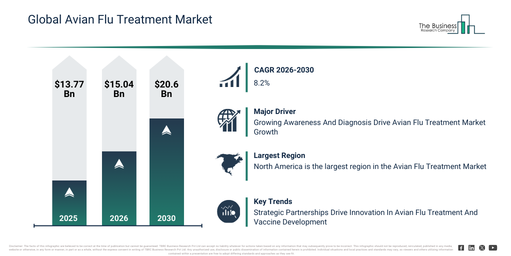
    The market for avian flu treatment has experienced robust expansion in recent times. Projections indicate its value will escalate from $13.77 billion in 2025 to $15.04 billion by 2026, demonstrating a compound annual growth rate (CAGR) of 9.3%. Historically, this expansion has been driven by factors such as a rise in avian influenza outbreaks, the adoption of antiviral stockpiling approaches, governmental efforts in disease control, the broadening of hospital-based infectious disease care, and enhanced public health consciousness.

    The avian flu treatment market is projected to experience substantial expansion in the coming years. This market is forecast to reach $20.6 billion by 2030, demonstrating a compound annual growth rate (CAGR) of 8.2%. This anticipated growth is driven by factors such as greater investments in zoonotic disease research, the ongoing development of next-generation vaccines, the expansion of global disease surveillance networks, an increased emphasis on rapid response therapeutics, and enhanced international collaboration for pandemic preparedness. Key trends during this period are anticipated to involve the wider adoption of advanced antiviral therapies, a heightened focus on platforms for rapid vaccine development, the increasing application of monoclonal antibody treatments, the broadening of early diagnosis and surveillance initiatives, and a strengthened commitment to pandemic preparedness.

    Access Your Free Sample Report for In-Depth Market Insights:

    https://www.thebusinessresearchcompany.com/sample.aspx?id=16352&type=smp

    What Drivers Are Shaping The Development Of The Avian Flu Treatment Market?

    The expanding recognition and identification of avian flu are anticipated to propel the growth of the avian flu treatment market in the future. Awareness refers to recognizing a condition, while diagnosis involves pinpointing a specific issue based on that recognition. The demand for avian flu treatment is driven by the urgent necessity to safeguard public health, prevent potential pandemics, and protect poultry populations from substantial economic losses. Both awareness and early diagnosis are essential for effective avian flu treatment, enabling swift intervention and containment to prevent its dissemination. For instance, in April 2024, the World Health Organization (WHO), a Switzerland-based intergovernmental organization, stated that more than 8000 people in the US were under active surveillance from February 9, 2022, to March 29, 2024, after encountering animals believed to be infected with the HPAI A (H5N1) virus. Therefore, increasing awareness and diagnosis are contributing to the growth in the avian flu treatment market.

    What Segment Types Are Examined In The Avian Flu Treatment Market?

    The avian flu treatment market covered in this report is segmented –

    1) By Type: Vaccines, Antiviral Agents, Immunoglobulins

    2) By Distribution Channel: Online Pharmacies, Offline Pharmacies

    3) By End User: Hospital, Institutional Health Centers, Clinics

    Subsegments:

    1) By Vaccines: Inactivated Vaccines, Live Attenuated Vaccines, Recombinant Vaccines, Subunit Vaccines, Dna Vaccines, Bivalent And Multivalent Vaccines

    2) By Antiviral Agents: Neuraminidase Inhibitors (Oseltamivir, Zanamivir), Polymerase Inhibitors, Antiviral Combination Therapies

    3) By Immunoglobulins: Human Immunoglobulin (Ivig), Monoclonal Antibodies, Hyperimmune Serum, Polyvalent Immunoglobulins, Avian Flu-Specific Immunoglobulins

    How Are Emerging Trends Affecting The Progression Of The Avian Flu Treatment Market?

    Leading companies in the avian flu treatment market are strategically forming alliances to boost the effectiveness and accelerate the creation of new therapies. These partnerships involve joint ventures among pharmaceutical firms, research institutions, and government bodies, designed to combine resources, share expertise, and conduct pioneering clinical trials. For instance, in April 2024, CureVac N.V., a Germany-based biotechnology company, collaborated with GSK plc, a UK-based pharmaceutical company, to develop an investigative influenza A (H5N1) pre-pandemic vaccine candidate. This initiative aims to address the potential future pandemic threat posed by the H5N1 avian influenza virus. The objective of this collaboration is to evaluate the safety, reactogenicity, and immunogenicity of the monovalent vaccine candidate, which encodes an influenza A H5 antigen utilizing CureVac’s proprietary second-generation mRNA backbone. The integrated Phase 1/2 study will assess the vaccine candidate’s safety and efficacy in healthy adults aged 18 to 64, as well as in older adults aged 65 to 85.

    Who Are The Top-Performing Companies In The Avian Flu Treatment Market In Recent Years?

    Major companies operating in the avian flu treatment market are Pfizer Inc., F. Hoffmann-La Roche Ltd., Merck & Co. Inc., Sanofi S.A., GlaxoSmithKline Plc, Novartis AG, AstraZeneca Plc, Gilead Sciences Inc., CSL Limited, Moderna Inc., Shionogi & Co. Ltd., Cipla Ltd., Seqirus, Novavax Inc., Sinovac Biotech Ltd., Valneva SE, CureVac AG, BioCryst Pharmaceuticals Inc., Emergent BioSolutions Inc., Dynavax Technologies Corporation, Baxter International Inc., Takeda Pharmaceutical Company Limited

    Access The Complete Report For Deeper Market Insights:

    https://www.thebusinessresearchcompany.com/report/avian-flu-treatment-global-market-report

    Which Region Currently Holds The Largest Share Of The Avian Flu Treatment Market?

    North America was the largest region in the avian flu treatment market in 2025. Asia-Pacific is expected to be the fastest growing region in the market. The regions covered in the avian flu treatment market report are Asia-Pacific, South East Asia, Western Europe, Eastern Europe, North America, South America, Middle East, Africa.

    Request Your Customized Avian Flu Treatment Market Research Report for Competitive Advantage:

    https://www.thebusinessresearchcompany.com/customise?id=16352&type=smp

    Browse Through More Reports Similar to the Global Avian Flu Treatment Market 2026, By The Business Research Company

    Influenza Vaccines Market Report 2026

    https://www.thebusinessresearchcompany.com/report/influenza-vaccines-global-market-report

    Influenza Treatment Market Report 2026

    https://www.thebusinessresearchcompany.com/report/influenza-treatment-global-market-report

    Swine Flu Vaccination Market Report 2026

    https://www.thebusinessresearchcompany.com/report/swine-flu-vaccination-global-market-report

    Get in touch with us:

    The Business Research Company: https://www.thebusinessresearchcompany.com/

    Americas +1 310-496-7795

    Asia +44 7882 955267 & +91 8897263534

    Europe +44 7882 955267

    Email us at info@tbrc.info

    Follow us on:

    LinkedIn: https://in.linkedin.com/company/the-business-research-company

    YouTube: https://www.youtube.com/channel/UC24_fI0rV8cR5DxlCpgmyFQ

    Global Market Model: https://www.thebusinessresearchcompany.com/global-market-model
  • Autorefractor Market Size and Demand Forecast 2026–2030

    Autorefractor Market Size and Demand Forecast 2026–2030

    Uncover key drivers, emerging technologies, and competitive movements shaping the autorefractor market from 2026–2035 with trusted insights from The Business Research Company

    What level of growth is expected in the Autorefractor Market between 2026 and 2030?

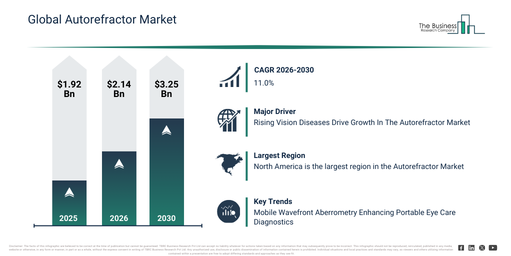
    The autorefractor market has experienced significant expansion recently. Projections indicate its value will increase from $1.92 billion in 2025 to $2.14 billion in 2026, demonstrating a compound annual growth rate (CAGR) of 11.2%. Historically, this expansion has been driven by several factors, including the wider availability of ophthalmic diagnostic services, an increasing occurrence of refractive errors, greater utilization of automated eye testing, the proliferation of optometry clinics, and enhanced access to vision care.

    The autorefractor market is projected to experience substantial expansion over the next few years, with its size anticipated to reach $3.25 billion by 2030, demonstrating a compound annual growth rate (CAGR) of 11.0%. This growth during the forecast period is primarily driven by a surge in demand for point-of-care eye diagnostics, the increasing availability of tele-optometry services, a heightened focus on the early detection of vision disorders, the growing integration of smart ophthalmic devices, and rising investments in eye care infrastructure. Notable trends expected in this period include the widespread adoption of portable automatic autorefractors, the increasing incorporation of AI-based refraction analysis, expanded utilization of multi-function diagnostic devices, the broadening of vision screening programs, and an intensified focus on rapid eye examinations.

    Access Your Free Sample Report for In-Depth Market Insights:

    https://www.thebusinessresearchcompany.com/sample.aspx?id=18242&type=smp

    Which Drivers Are Expected To Impact The Autorefractor Market During The Forecast Period?

    The increasing occurrence of vision ailments is anticipated to fuel the expansion of the autorefractor market in the future. A vision disease refers to a health condition that hinders clear sight, impacting various parts of the visual system such as the eyes, optic nerves, or brain. The rise in these conditions is attributable to factors like an aging demographic, extended periods of screen use, unhealthy lifestyle decisions, and a greater incidence of long-term health issues. Autorefractors play a role in diagnosing vision diseases by swiftly and precisely measuring refractive errors to identify suitable corrective lenses. For example, a report from August 2023 by the Centers for Disease Control and Prevention, a US-based government body, projected that by 2050, the number of people in the United States experiencing vision impairment would climb to 8.96 million. Furthermore, in the U.S., roughly 6.8% of children younger than 18 have been identified with eye and vision problems, with almost 3% suffering from blindness or visual impairment that remains even with corrective eyewear. Consequently, the growing frequency of vision diseases is propelling the expansion of the autorefractor market.

    Which Segments Are Driving Activity In The Autorefractor Market?

    The autorefractor market covered in this report is segmented –

    1) By Type: Manual Autorefractor, Automatic Autorefractor

    2) By Application: Hyperopia, Myopia, Other Applications

    3) By End-User: Hospitals, Ophthalmic Clinics, Diagnostic Centers

    Subsegments:

    1) By Manual Autorefractor: Tabletop Manual Autorefractor, Handheld Manual Autorefractor

    2) By Automatic Autorefractor: Desktop Automatic Autorefractor, Portable Automatic Autorefractor

    Which Innovation Trends Are Advancing Developments Within The Autorefractor Market?

    Leading companies operating in the autorefractor market are increasingly focused on developing mobile wavefront aberrometry systems. These systems cleverly combine handheld autorefractors with sophisticated software to capture precise eye measurements, keratometry data, and comprehensive wavefront analysis in a portable and user-friendly format, ultimately enhancing accessibility and efficiency in eye care diagnostics. Specifically, mobile wavefront aberrometry systems are defined as portable diagnostic solutions that integrate a handheld autorefractor with advanced wavefront analysis software. A notable illustration occurred in February 2025, when PlenOptika, a US-based ophthalmic technology company, unveiled the QuickSee Free Pro Companion App. This mobile platform allows eye care professionals to generate detailed wavefront maps, simulate visual acuity, and produce professional patient reports. The application seamlessly integrates keratometry and autorefractor readings into a unified interface, offers real-time data visualization, and provides patient-friendly reports, thereby improving communication and facilitating informed decision-making. This innovative development optimizes clinical workflows, broadens access to high-quality refraction diagnostics, especially in remote environments, and strengthens patient engagement.

    Which Leading Companies Dominate The Autorefractor Market Share?

    Major companies operating in the autorefractor market are Topcon Corporation, Nidek Co. Ltd., Canon Medical Systems Corporation, Carl Zeiss Meditec, Rexxam Co. Ltd., Huvitz Co. Ltd., CSO Italia, Righton, Takagi Seiko Co. Ltd., Tomey Corporation, Oculus Optikgeräte GmbH, Kowa Company Ltd., Marco Ophthalmic Inc., Reichert Inc., Visionix Ltd., Luneau Technology GmbH, URK Corporation, Medizs Inc., Optopol Technology, Essilor Instruments, Sonomed Escalon

    Access The Complete Report For Deeper Market Insights:

    https://www.thebusinessresearchcompany.com/report/autorefractor-global-market-report

    How Does The Autorefractor Market Perform Across Major Global Regions?

    North America was the largest region in the autorefractor market in 2025. Asia-Pacific is expected to be the fastest-growing region in the forecast period. The regions covered in the autorefractor market report are Asia-Pacific, South East Asia, Western Europe, Eastern Europe, North America, South America, Middle East, Africa.

    Request Your Customized Autorefractor Market Research Report for Competitive Advantage:

    https://www.thebusinessresearchcompany.com/customise?id=18242&type=smp

    Browse Through More Reports Similar to the Global Autorefractor Market 2026, By The Business Research Company

    Automation Components Market Report 2026

    https://www.thebusinessresearchcompany.com/report/automation-components-global-market-report

    Autoinjectors Market Report 2026

    https://www.thebusinessresearchcompany.com/report/autoinjectors-global-market-report

    Automatic Weapons Market Report 2026

    https://www.thebusinessresearchcompany.com/report/automatic-weapons-global-market-report

    Get in touch with us:

    The Business Research Company: https://www.thebusinessresearchcompany.com/

    Americas +1 310-496-7795

    Asia +44 7882 955267 & +91 8897263534

    Europe +44 7882 955267

    Email us at info@tbrc.info

    Follow us on:

    LinkedIn: https://in.linkedin.com/company/the-business-research-company

    YouTube: https://www.youtube.com/channel/UC24_fI0rV8cR5DxlCpgmyFQ

    Global Market Model: https://www.thebusinessresearchcompany.com/global-market-model
  • Automation In Biopharma Industry Market Outlook: Growth and Forecast Highlights 2030

    Automation In Biopharma Industry Market Outlook: Growth and Forecast Highlights 2030

    Uncover key drivers, emerging technologies, and competitive movements shaping the automation in biopharma industry market from 2026–2035 with trusted insights from The Business Research Company

    How much is the Automation In Biopharma Industry Market valued at in 2026, and what valuation is forecast for 2030?

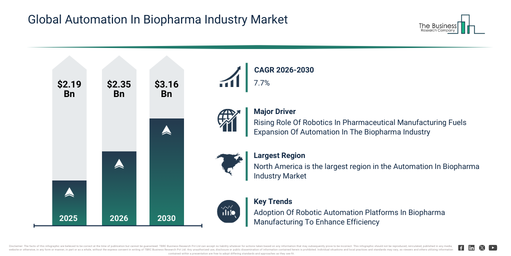
    The market size for automation in the biopharma industry has shown robust growth in recent years. It is anticipated to increase from $2.19 billion in 2025 to $2.35 billion in 2026, at a compound annual growth rate (CAGR) of 7.1%. The historical expansion can be attributed to the increasing complexity of biologic drug production, rising demand for scalable biopharma manufacturing, early adoption of laboratory automation, expansion of contract manufacturing services, and advancements in process control technologies.

    The automation in biopharma industry market is predicted to experience robust expansion over the coming years. It is projected to achieve a value of $3.16 billion by 2030, growing at a compound annual growth rate (CAGR) of 7.7%. This anticipated growth is driven by factors such as increasing investments in intelligent biomanufacturing facilities, the rising adoption of continuous manufacturing processes, the expansion of personalized biologics production, a surging demand for regulatory-compliant automation solutions, and a heightened emphasis on optimizing manufacturing efficiency. Furthermore, significant trends for this period encompass the increasing embrace of robotic manufacturing platforms, the growing integration of digital twin technologies, an expanding use of automated quality control systems, the broadening of end-to-end bioprocess automation, and a strengthened focus on data-driven manufacturing approaches.

    Access Your Free Sample Report for In-Depth Market Insights:

    https://www.thebusinessresearchcompany.com/sample.aspx?id=12704&type=smp

    What Drivers Are Influencing The Growth Of The Automation In Biopharma Industry Market?

    The expanded utilization of robots in pharmaceutical manufacturing is projected to stimulate the growth of the automation in biopharma industry market. These robots are sophisticated automated systems and machines capable of performing various tasks in the production and packaging of pharmaceutical products. They are frequently employed in numerous applications within pharmaceutical manufacturing, such as secondary packaging, intralogistics, laboratory automation, pick and place, automation of pharmacy processes, and personalized medicine, thereby boosting productivity, improving precision, reducing contamination risks, and enhancing worker safety. For example, in September 2024, data from the International Federation of Robotics, a professional non-profit organization based in Germany, showed that industrial robot installations in Europe’s manufacturing industry climbed by 9%, reaching an unprecedented 92,393 units. Of this total, 80% were installed within the European Union, amounting to 73,534 units, representing a 2% increase from the previous year. Thus, the rising adoption of robots in pharmaceutical manufacturing will be a key driver for the growth of the automation in biopharma industry market.

    How Is The Automation In Biopharma Industry Market Organized Into Various Segments?

    The automation in biopharma industry market covered in this report is segmented –

    1) By Technology: Automation Technology, Digitization Technology

    2) By Component: Automation Hardware, Automation Software, Services Project Phase, Services Operation Phase

    3) By Application: Clinical Phase, Drug Discovery Phase, Production Phase

    Subsegments:

    1) By Automation Technology: Process Automation, Laboratory Automation, Robotics And Artificial Intelligence, Control Systems, Programmable Logic Controllers (PLCs)

    2) By Digitization Technology: Data Analytics And Visualization, Electronic Lab Notebooks (ELN), Cloud Computing, Internet Of Things (IoT) In Pharma, Digital Twin Technology

    Which Competitive Trends Are Impacting The Structure Of The Automation In Biopharma Industry Market?

    Major companies in the biopharma industry market are adopting automation, concentrating on developing technological advancements such as robotic cell-therapy manufacturing platforms to achieve scalable, efficient, and reduced-error production of advanced therapies. A robotic cell-therapy manufacturing platform combines mobile robotics, aseptic fluid-handling systems, automated tube welding, and digital process control within a fully closed and modular system, thereby replacing traditional manual bioprocessing that relies heavily on labor and open systems. For instance, in May 2023, Cellular Origins, a UK-based life sciences automation company, unveiled Constellation, a configurable robotic platform designed for advanced therapy manufacture. This platform integrates autonomous mobile robots, sterile fluid-transfer technology, and modular processing consoles, allowing for seamless integration with existing bioprocessing workflows. It boosts space efficiency by 30 times, reduces labor requirements by 16-fold, and cuts production costs by 51%, while also offering full digital interconnection for quality control and remote monitoring.

    Who Are The Major Companies Operating In The Automation In Biopharma Industry Market?

    Major companies operating in the automation in biopharma industry market are F. Hoffmann-La Roche Ltd., Thermo Fisher Scientific Inc., Danaher Corporation, ABB Ltd, Siemens Healthineers AG, Emerson Electric Co., Becton Dickinson and Company (BD), Corning Incorporated, Rockwell Automation Inc., Agilent Technologies Inc., PerkinElmer Inc., Sartorius AG, bioMérieux SA, Mettler-Toledo International Inc., Beckman Coulter Inc., Waters Corporation, Pall Corporation, Bruker Corporation, Qiagen N.V., Eppendorf AG, Tecan Group Ltd., Promega Corporation, Brooks Automation Inc., Omron Automation, Hamilton Company, Integra Biosciences AG, Gilson Inc., Analytik Jena AG, BioTek Instruments Inc.

    Access The Complete Report For Deeper Market Insights:

    https://www.thebusinessresearchcompany.com/report/automation-in-biopharma-industry-global-market-report

    Which Region Is Anticipated To See The Fastest Growth In The Automation In Biopharma Industry Market?

    North America was the largest region in the automation in biopharma industry market in 2025. The regions covered in the automation in biopharma industry market report are Asia-Pacific, South East Asia, Western Europe, Eastern Europe, North America, South America, Middle East, Africa.

    Request Your Customized Automation In Biopharma Industry Market Research Report for Competitive Advantage:

    https://www.thebusinessresearchcompany.com/customise?id=12704&type=smp

    Browse Through More Reports Similar to the Global Automation In Biopharma Industry Market 2026, By The Business Research Company

    Pharmacy Automation Systems Market Report 2026

    https://www.thebusinessresearchcompany.com/report/pharmacy-automation-systems-global-market-report

    Bioprocess Automation Market Report 2026

    https://www.thebusinessresearchcompany.com/report/bioprocess-automation-global-market-report

    Pharmacy Automation Market Report 2026

    https://www.thebusinessresearchcompany.com/report/pharmacy-automation-global-market-report

    Get in touch with us:

    The Business Research Company: https://www.thebusinessresearchcompany.com/

    Americas +1 310-496-7795

    Asia +44 7882 955267 & +91 8897263534

    Europe +44 7882 955267

    Email us at info@tbrc.info

    Follow us on:

    LinkedIn: https://in.linkedin.com/company/the-business-research-company

    YouTube: https://www.youtube.com/channel/UC24_fI0rV8cR5DxlCpgmyFQ

    Global Market Model: https://www.thebusinessresearchcompany.com/global-market-model
  • Automated Sample Preparation Market Insights Report: Opportunities and Drivers 2030

    Automated Sample Preparation Market Insights Report: Opportunities and Drivers 2030

    Uncover key drivers, emerging technologies, and competitive movements shaping the automated sample preparation market from 2026–2035 with trusted insights from The Business Research Company

    By how much is the Automated Sample Preparation Market expected to grow between 2026 and 2030?

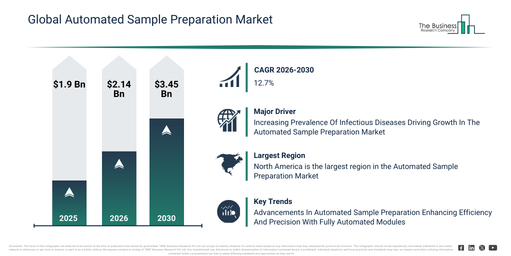
    The automated sample preparation market has seen substantial growth in recent years. This market is projected to expand from $1.9 billion in 2025 to $2.14 billion in 2026, achieving a compound annual growth rate (CAGR) of 13.0%. Historically, this expansion has been driven by factors such as the increase in laboratory automation initiatives, a rising volume of clinical and research samples, a heightened focus on reproducibility in testing, the ongoing expansion of pharmaceutical R&D activities, and the greater availability of advanced laboratory instruments.

    The automated sample preparation market is anticipated to experience substantial expansion over the upcoming years. Its valuation is projected to reach $3.45 billion by 2030, demonstrating a compound annual growth rate (CAGR) of 12.7%. This expansion during the forecast period is primarily fueled by the increasing adoption of fully automated laboratories, rising demand for precision diagnostics, the expansion of personalized medicine research, growing investments in smart laboratory infrastructure, and the increasing integration of AI-driven analytics in sample preparation. Significant trends expected during this period encompass the increasing adoption of robotic liquid handling systems, rising demand for high-throughput sample processing, the growing integration of automated workstations in laboratories, the expansion of error-reduction focused sample handling, and enhanced standardization of laboratory workflows.

    Access Your Free Sample Report for In-Depth Market Insights:

    https://www.thebusinessresearchcompany.com/sample.aspx?id=19325&type=smp

    Which Drivers Are Influencing Market Acceleration In The Automated Sample Preparation Market?

    The expanding occurrence of infectious diseases is anticipated to boost the growth of the automated sample preparation market moving forward. Infectious diseases are defined as illnesses caused by pathogens such as bacteria, viruses, fungi, or parasites, capable of transmission between individuals or through contaminated means. The increase in these disease cases stems from factors like inadequate sanitation, limited healthcare availability, climate change, and the proliferation of drug-resistant pathogens. Automated sample preparation improves the accuracy and efficiency of infectious disease diagnostics by expediting and standardizing the processing of biological samples, thus lessening human error and guaranteeing consistent results in large-scale examinations. For instance, in March 2024, the Centers for Disease Control and Prevention (CDC), a US-based public health agency, reported that tuberculosis cases increased from 8,320 in 2022 to 9,615 in 2023, representing a jump of 1,295 cases. Additionally, the rate per 100,000 people climbed from 2.5 in 2022 to 2.9 in 2023. As a result, the rising prevalence of infectious diseases is propelling the expansion of the automated sample preparation market.

    What Segments Are Identified Within The Structure Of The Automated Sample Preparation Market?

    The automated sample preparation market covered in this report is segmented –

    1) By Product Type: Kits And Consumables, Instruments

    2) By Application: Research And Development, Diagnostics

    3) By End User: Biotechnology And Pharmaceutical Companies, Clinical And Diagnostic Laboratories, Academic And Research Institutions

    Subsegments:

    1) By Kits And Consumables: DNA/RNA Extraction Kits, Protein Purification Kits, Sample Collection Consumables, Reagents And Buffers, Assay Kits

    2) By Instruments: Automated Liquid Handling Systems, Magnetic Bead Separation Systems, Centrifuges, Robotically Controlled Pipetting Systems, Workstations For Sample Preparation

    What Industry Trends Are Transforming The Automated Sample Preparation Market?

    Leading companies active in the automated sample preparation market are prioritizing the development of advanced solutions, such as fully automated sample preparation modules, to enhance efficiency, reduce human errors, and improve reproducibility across laboratory processes. Fully automated sample preparation modules are sophisticated systems engineered to manage all stages of sample processing with minimal human involvement. For instance, in July 2024, Shimadzu Corporation, a Japan-based manufacturer of precision instruments and medical equipment, launched the MUP-3100. This fully automated sample preparation module is specifically designed for glycan analysis and streamlines the pretreatment of antibody glycans. By utilizing a 6-axis robot, it automates tasks like reagent dispensing and sample processing, thereby decreasing labor, minimizing procedural errors, and enhancing safety. Capable of processing up to 24 samples in six hours, the MUP-3100 considerably speeds up workflows compared to traditional methods, which can take over two days. This advanced system is particularly beneficial for pharmaceutical companies and contract manufacturing organizations (CMOs) working on biosimilars and antibody drugs.

    Which Major Firms Are Strengthening Their Position In The Automated Sample Preparation Market?

    Major companies operating in the automated sample preparation market are F. Hoffmann-La Roche Ltd., Thermo Fisher Scientific Inc., Danaher Corporation, Agilent Technologies, Hitachi High-Technologies Corp, Sartorius AG, Mettler-Toledo International Inc., Shimadzu Corporation, PerkinElmer, Waters Corporation, Bio-Rad Laboratories, Bruker Corporation, QIAGEN NV, Eppendorf, Tecan Group, Hamilton Company, Malvern Panalytical, Promega Corporation, Biotage AB, Gilson Inc., Aurora Biomed

    Access The Complete Report For Deeper Market Insights:

    https://www.thebusinessresearchcompany.com/report/automated-sample-preparation-global-market-report

    Which Region Is Anticipated To See The Fastest Growth In The Automated Sample Preparation Market?

    North America was the largest region in the automated sample preparation market in 2025. The regions covered in the automated sample preparation market report are Asia-Pacific, South East Asia, Western Europe, Eastern Europe, North America, South America, Middle East, Africa.

    Request Your Customized Automated Sample Preparation Market Research Report for Competitive Advantage:

    https://www.thebusinessresearchcompany.com/customise?id=19325&type=smp

    Browse Through More Reports Similar to the Global Automated Sample Preparation Market 2026, By The Business Research Company

    Automated Storage And Retrieval System Market Report 2026

    https://www.thebusinessresearchcompany.com/report/automated-storage-and-retrieval-system-global-market-report

    Automated Breach And Attack Simulation Market Report 2026

    https://www.thebusinessresearchcompany.com/report/automated-breach-and-attack-simulation-global-market-report

    Automated Test Equipment Market Report 2026

    https://www.thebusinessresearchcompany.com/report/automated-test-equipment-global-market-report

    Get in touch with us:

    The Business Research Company: https://www.thebusinessresearchcompany.com/

    Americas +1 310-496-7795

    Asia +44 7882 955267 & +91 8897263534

    Europe +44 7882 955267

    Email us at info@tbrc.info

    Follow us on:

    LinkedIn: https://in.linkedin.com/company/the-business-research-company

    YouTube: https://www.youtube.com/channel/UC24_fI0rV8cR5DxlCpgmyFQ

    Global Market Model: https://www.thebusinessresearchcompany.com/global-market-model
  • Automated Next-Generation Sequencing (NGS) Library Preparation Global Forecast: Market to Scale Up to $1.35 Billion by 2030 at 13.3% CAGR

    Automated Next-Generation Sequencing (NGS) Library Preparation Global Forecast: Market to Scale Up to $1.35 Billion by 2030 at 13.3% CAGR

    Uncover key drivers, emerging technologies, and competitive movements shaping the automated next-generation sequencing (ngs) library preparation market from 2026–2035 with trusted insights from The Business Research Company

    What is the estimated market size of the Automated Next-Generation Sequencing (NGS) Library Preparation Market by the end of 2030?

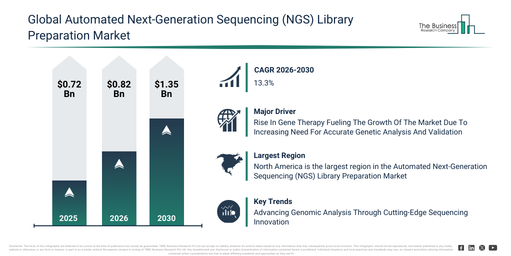
    The size of the automated next-generation sequencing (ngs) library preparation market has experienced significant expansion in recent years. It is anticipated to grow from $0.72 billion in 2025 to $0.82 billion in 2026, achieving a compound annual growth rate (CAGR) of 13.9%. This historical growth can be attributed to several factors, including the broadening of genomic research activities, the increasing integration of NGS in clinical research, the advancement of precision medicine initiatives, a growing need for scalable sequencing workflows, and continuous improvements in sequencing chemistry technologies.

    The automated next-generation sequencing (ngs) library preparation market size is anticipated to experience substantial growth in the upcoming years, expanding to $1.35 billion by 2030, demonstrating a compound annual growth rate (CAGR) of 13.3%. This expansion during the forecast period is propelled by factors such as the increasing application of NGS in diagnostics, greater investments in automated laboratory infrastructure, the broadening of population genomics programs, a growing need for rapid sequencing turnaround times, and the rising adoption of single-cell sequencing workflows. Significant trends expected in this period include the increased integration of fully automated library preparation platforms, a heightened demand for high-throughput sequencing workflows, the expanding use of robotics in sample processing, the development of standardized and reproducible ngs pipelines, and an enhanced emphasis on minimizing errors and maintaining workflow consistency.

    Access Your Free Sample Report for In-Depth Market Insights:

    https://www.thebusinessresearchcompany.com/sample.aspx?id=27216&type=smp

    What Drivers Are Shaping Future Opportunities In The Automated Next-Generation Sequencing (NGS) Library Preparation Market?

    The increasing prevalence of gene therapy is anticipated to fuel expansion within the automated next-generation sequencing (NGS) library preparation market. This therapeutic approach involves modifying an individual’s genes to treat or avert illnesses. Its growth stems from the growing incidence of genetic conditions demanding precise and enduring therapeutic interventions. In gene therapy, automated NGS library preparation facilitates the accurate analysis and validation of genetic alterations through the creation of high-quality DNA or RNA samples for subsequent sequencing. Illustrating this trend, data from April 2024 by the American Society of Gene and Cell Therapy, a US-based non-profit medical and scientific organization, showed a 10% increase in phase III gene therapy clinical trials during the fourth quarter of 2023. This represented the initial quarterly rise observed since the third quarter of 2022. Consequently, the expansion of gene therapy is a key factor propelling the development of the automated next-generation sequencing (NGS) library preparation market.

    Which Segments Are Gaining Traction In The Automated Next-Generation Sequencing (NGS) Library Preparation Market?

    The automated next-generation sequencing (ngs) library preparation market covered in this report is segmented –

    1) By Type: Targeted Genome Sequencing, Whole Genome Sequencing, Whole Exome Sequencing, Other Sequencing Types

    2) By Workflow: Nucleic Acid Extraction, Fragmentation, Adapter Ligation, Purification And Quantification

    3) By Application: Drug And Biomarker Discovery, Disease Diagnostics, Other Applications

    4) By End-Use: Hospitals And Clinics, Academic And Research Institutions, Pharmaceutical And Biotechnology Companies, Other End-Users

    Subsegments:

    1) By Targeted Genome Sequencing: Amplicon-Based Targeted Sequencing, Hybridization Capture-Based Targeted Sequencing, Custom Targeted Panels, Pre-designed Gene Panels

    2) By Whole Genome Sequencing: Human Whole Genome Sequencing, Animal Whole Genome Sequencing, Plant Whole Genome Sequencing, Microbial Whole Genome Sequencing

    3) By Whole Exome Sequencing: Standard Exome Sequencing, Clinical Exome Sequencing, Custom Exome Panels, Ultra-Rapid Exome Sequencing

    4) By Other Sequencing Types: RNA Sequencing (RNA-Seq), Epigenome Sequencing, Metagenomic Sequencing, Single-Cell Sequencing

    What Trends Are Reshaping The Dynamics Of The Automated Next-Generation Sequencing (NGS) Library Preparation Market?

    Major companies operating in the automated next-generation sequencing (NGS) library preparation market are concentrating on creating advanced technologies, like Xpandomer technology, to improve sequencing speed, enhance data accuracy, and increase scalability. This effort aims to optimize workflows and support more efficient and reliable genomic analysis. Xpandomer technology is an advanced method for deoxyribonucleic acid (DNA) or ribonucleic acid (RNA) sequencing, transforming a target nucleic acid molecule into a synthetic, expanded polymer called an Xpandomer, which is approximately 50 times longer than the initial deoxyribonucleic acid (DNA) or ribonucleic acid (RNA) strand. For instance, in February 2025, Roche AG, a Switzerland-based biotechnology company, launched Sequencing by Expansion, a cutting-edge sequencing platform designed to boost genomic resolution for advanced diagnostics, disease research, and precision medicine applications. This innovative automated next-generation sequencing (NGS) library preparation system simplifies complex workflows, elevates data quality, and accelerates genomic analysis to support advanced research and personalized medicine. The Sequencing by Expansion platform offers high versatility, enabling precise analysis of various genomic alterations across a wide array of diseases, including cancer and rare genetic disorders, by enhancing resolution and accuracy for deeper biological insights.

    Who Are The Primary Competitors In The Global Automated Next-Generation Sequencing (NGS) Library Preparation Market?

    Major companies operating in the automated next-generation sequencing (ngs) library preparation market are F. Hoffmann-La Roche Ltd., Thermo Fisher Scientific Inc., Agilent Technologies India Private Limited, Illumina Inc., Beckman Coulter Inc., Bio-Rad Laboratories Inc., IDT Corporation, Tecan Group AG, Hamilton Company, Takara Bio Inc., 10x Genomics Inc., Oxford Nanopore Technologies plc, Twist Bioscience Corporation, New England Biolabs Inc., SPT Labtech Limited, Watchmaker Genomics Inc., Pillar Biosciences Inc., Aurora Biomed Inc., BGI Group, SEQWELL INC., Hudson Robotics Inc.

    Access The Complete Report For Deeper Market Insights:

    https://www.thebusinessresearchcompany.com/report/automated-next-generation-sequencing-ngs-library-preparation-global-market-report

    Which Global Regions Are Shaping The Competitive Landscape Of The Automated Next-Generation Sequencing (NGS) Library Preparation Market?

    North America was the largest region in the automated next-generation sequencing (NGS) library preparation market in 2025. Asia-Pacific is expected to be the fastest-growing region in the forecast period. The regions covered in the automated next-generation sequencing (ngs) library preparation market report are Asia-Pacific, South East Asia, Western Europe, Eastern Europe, North America, South America, Middle East, Africa.

    Request Your Customized Automated Next-Generation Sequencing (NGS) Library Preparation Market Research Report for Competitive Advantage:

    https://www.thebusinessresearchcompany.com/customise?id=27216&type=smp

    Browse Through More Reports Similar to the Global Automated Next-Generation Sequencing (NGS) Library Preparation Market 2026, By The Business Research Company

    Equine Healthcare Market Report 2026

    https://www.thebusinessresearchcompany.com/report/equine-healthcare-global-market-report

    Insurance Market Report 2026

    https://www.thebusinessresearchcompany.com/report/insurance-global-market-report

    Rideshare Insurance Market Report 2026

    https://www.thebusinessresearchcompany.com/report/rideshare-insurance-global-market-report

    Get in touch with us:

    The Business Research Company: https://www.thebusinessresearchcompany.com/

    Americas +1 310-496-7795

    Asia +44 7882 955267 & +91 8897263534

    Europe +44 7882 955267

    Email us at info@tbrc.info

    Follow us on:

    LinkedIn: https://in.linkedin.com/company/the-business-research-company

    YouTube: https://www.youtube.com/channel/UC24_fI0rV8cR5DxlCpgmyFQ

    Global Market Model: https://www.thebusinessresearchcompany.com/global-market-model
  • Automated Microscopy Market Future Outlook: Strong Growth Expected Toward $11.59 Billion by 2030

    Automated Microscopy Market Future Outlook: Strong Growth Expected Toward $11.59 Billion by 2030

    Uncover key drivers, emerging technologies, and competitive movements shaping the automated microscopy market from 2026–2035 with trusted insights from The Business Research Company

    What was the valuation of the Automated Microscopy Market in 2026, and what figure is it projected to hit by 2030?

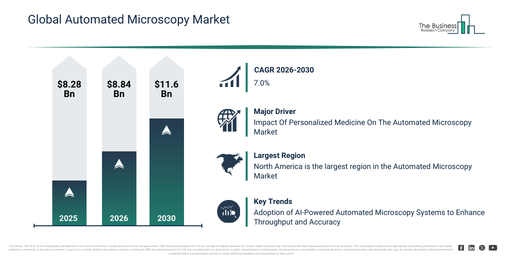
    The automated microscopy market has demonstrated strong growth in recent years. It is projected to increase from $8.28 billion in 2025 to $8.84 billion in 2026, at a compound annual growth rate (CAGR) of 6.8%. This historical expansion is attributable to factors such as the increasing utilization of microscopy in life sciences research, the broadening scope of clinical diagnostics imaging, progress in optical and electron microscopy, an increase in materials science research, and the rising need for consistent imaging results.

    The automated microscopy market size anticipates robust expansion over the coming years, projected to reach $11.6 billion by 2030, exhibiting a compound annual growth rate (CAGR) of 7.0%. This growth during the forecast period is driven by factors such as the increasing embrace of AI-assisted diagnostics, the widening scope of semiconductor inspection applications, greater investments in automated research facilities, a rising need for scalable imaging technologies, and the growing incorporation of cloud-based microscopy platforms. Key trends anticipated in this period include the increased implementation of AI-based image analysis, a surge in the adoption of high-throughput imaging platforms, enhanced integration of automated sample handling, the expansion of remote and digital microscopy solutions, and a heightened emphasis on high-resolution imaging precision.

    Access Your Free Sample Report for In-Depth Market Insights:

    https://www.thebusinessresearchcompany.com/sample.aspx?id=14259&type=smp

    Which Drivers Are Affecting Market Participation In The Automated Microscopy Market?

    The increasing demand for personalized medicine is projected to fuel the expansion of the automated microscopy market moving forward. Personalized medicine is a healthcare methodology that considers individual variations in genetics, environment, and lifestyle for each person. Its adoption is increasing due to several factors, including enhanced awareness of genetic diversity, advancements in genomics, and the rising prevalence of chronic conditions. Automated microscopy supplies researchers and clinicians with the necessary tools and technologies to advance personalized medicine by clarifying disease mechanisms, identifying prognostic biomarkers, and perfecting treatment plans. For instance, in February 2024, the Personalized Medicine Coalition, a US-based advocacy organization for custom medical treatments, announced that the FDA sanctioned 16 novel personalized treatments for rare disease patients in 2023, an increase from six in 2022. Thus, the escalating need for personalized medicine is propelling the growth of the automated microscopy market.

    What Segment Categories Are Covered In The Automated Microscopy Market?

    The automated microscopy market covered in this report is segmented –

    1) By Product Type: Optical Microscopes, Electron Microscopes, Scanning Probe Microscopes

    2) By Application: Medical Diagnostics, Nanotechnology, Material Science, Life Sciences, Semiconductors

    3) By End User: Hospitals, Research Facilities, Diagnostic Clinics

    Subsegments:

    1) By Optical Microscopes: Automated Light Microscopes, Confocal Microscopes, Fluorescence Microscopes

    2) By Electron Microscopes: Scanning Electron Microscopes (SEM), Transmission Electron Microscopes (TEM), Scanning Transmission Electron Microscopes (STEM)

    3) By Scanning Probe Microscopes: Atomic Force Microscopes (AFM), Scanning Tunneling Microscopes (STM)

    How Are New Market Trends Shaping The Landscape Of The Automated Microscopy Market?

    Leading companies within the automated microscopy market are prioritizing technological advancements, such as AI-driven automated fluorescence microscopes, to boost throughput, enhance image accuracy, and reduce manual effort in cell analysis and drug discovery processes. An AI-powered automated microscope integrates motorized stages, autofocus, multi-channel imaging, and intelligent image analysis software, enabling automated tasks like cell counting, confluency assessment, and time-lapse imaging with minimal human intervention. For instance, in August 2024, Leica Microsystems, a Germany-based scientific instrumentation company, unveiled the Mateo FL, an AI-powered digital fluorescence microscope created for automated cell-culture analysis. This product combines transmitted-light imaging for label-free monitoring with multi-channel fluorescence imaging, employs AI algorithms for automated confluency checks and cell counting, and delivers high reproducibility with quicker experimental workflows compared to traditional manual microscopes.

    Which Key Market Players Are Investing In Expansion And Innovation Within The Automated Microscopy Market?

    Major companies operating in the automated microscopy market are Thermo Fisher Scientific Inc., Zeiss Group, Agilent Technologies Inc., Keyence Corporation, Hitachi High-Tech Corporation, PerkinElmer Inc., Nikon Corporation, Bruker Corporation, Hamamatsu Photonics K.K., Jenoptik AG, HORIBA Scientific, Molecular Devices LLC, JEOL Ltd., Olympus Corporation, Prior Scientific Instruments Ltd., Phase Holographic Imaging PHI AB, Andor Technology Ltd., Crest Optics S.p.A, Delmic B.V., Nanolive SA, Nanosurf AG, Photometrics

    Access The Complete Report For Deeper Market Insights:

    https://www.thebusinessresearchcompany.com/report/automated-microscopy-global-market-report

    Which Regions Are Poised For Strategic Growth In The Automated Microscopy Market?

    North America was the largest region in the automated microscopy market in 2025. Asia-Pacific is expected to be the fastest-growing region in the forecast period. The regions covered in the automated microscopy market report are Asia-Pacific, South East Asia, Western Europe, Eastern Europe, North America, South America, Middle East, Africa.

    Request Your Customized Automated Microscopy Market Research Report for Competitive Advantage:

    https://www.thebusinessresearchcompany.com/customise?id=14259&type=smp

    Browse Through More Reports Similar to the Global Automated Microscopy Market 2026, By The Business Research Company

    Optical Microscopes Market Report 2026

    https://www.thebusinessresearchcompany.com/report/optical-microscopes-global-market-report

    Microscopy Market Report 2026

    https://www.thebusinessresearchcompany.com/report/microscopy-global-market-report

    Biological Microscope Market Report 2026

    https://www.thebusinessresearchcompany.com/report/biological-microscope-global-market-report

    Get in touch with us:

    The Business Research Company: https://www.thebusinessresearchcompany.com/

    Americas +1 310-496-7795

    Asia +44 7882 955267 & +91 8897263534

    Europe +44 7882 955267

    Email us at info@tbrc.info

    Follow us on:

    LinkedIn: https://in.linkedin.com/company/the-business-research-company

    YouTube: https://www.youtube.com/channel/UC24_fI0rV8cR5DxlCpgmyFQ

    Global Market Model: https://www.thebusinessresearchcompany.com/global-market-model
  • Revenue of the Automated Microbiology Market Predicted to Achieve $17.19 Billion by 2030, Driven by 12.8% CAGR

    Revenue of the Automated Microbiology Market Predicted to Achieve $17.19 Billion by 2030, Driven by 12.8% CAGR

    Uncover key drivers, emerging technologies, and competitive movements shaping the automated microbiology market from 2026–2035 with trusted insights from The Business Research Company

    What are the forecasted starting (2026) and ending (2030) market sizes for the Automated Microbiology Market?

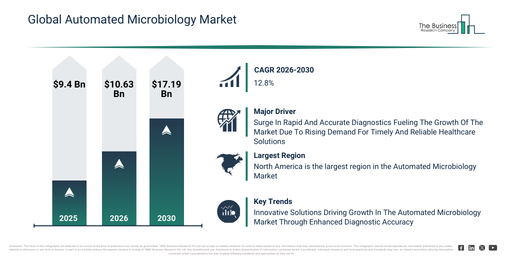
    The automated microbiology market has observed significant expansion in recent years. It is anticipated to increase in size from $9.4 billion in 2025 to $10.63 billion in 2026, achieving a compound annual growth rate (CAGR) of 13.0%. The historical development of this market can be attributed to several factors, including rising volumes of clinical testing, an increasing demand for faster diagnostic results, the expansion of hospital laboratory infrastructure, shortages of skilled laboratory personnel, and the adoption of standardized diagnostic protocols.

    The automated microbiology market size is projected to experience swift expansion in the coming years. This market is anticipated to reach $17.19 billion by 2030, exhibiting a compound annual growth rate (CAGR) of 12.8%. This projected growth can be linked to several factors, including heightened investments in intelligent laboratories, a rising need for swift infectious disease diagnostics, the broadening of molecular microbiology applications, increased uptake of data-integrated laboratory systems, and a sharpened emphasis on diagnostic accuracy. Key trends during this period encompass a greater embrace of fully automated microbiology systems, the escalating utilization of AI-driven pathogen identification, increasing integration of LIMS platforms, the widening scope of high-throughput diagnostic testing, and an elevated focus on laboratory workflow automation.

    Access Your Free Sample Report for In-Depth Market Insights:

    https://www.thebusinessresearchcompany.com/sample.aspx?id=24163&type=smp

    What Drivers Are Supporting Technological Adoption In The Automated Microbiology Market?

    The increasing need for swift and precise diagnostic methods is anticipated to propel the growth of the automated microbiology market in the foreseeable future. Such diagnostics encompass medical testing approaches that quickly and accurately identify infections or diseases, thereby enabling timely and effective treatments. This surge in demand for rapid and accurate diagnostics is fueled by the escalating requirement for prompt disease detection to avert complications and enhance patient outcomes, all while minimizing wait times for results. Automated microbiology supports this need by facilitating high-throughput, standardized, and error-minimized testing, which guarantees faster results and improved patient care. For instance, in 2024, the World Health Organization, a Switzerland-based national agency, reported that the initial diagnostic test was performed for 54% (4.5 million) of the 8.3 million people newly diagnosed with TB, which represents an increase from 48% (out of a total of 8.2 million) in 2023. Thus, the growing demand for rapid and accurate diagnostics is a key driver for the automated microbiology market’s expansion.

    Which Segments Are Contributing To The Growth Of The Automated Microbiology Market?

    The automated microbiology market covered in this report is segmented –

    1) By Product: Instruments, Reagents And Kits, Software

    2) By Automation Type: Fully Automated, Semi-Automated

    3) By Diagnostic Technology: DNA And RNA Probe Technology, Detection Techniques

    4) By Application: Biopharmaceutical Production, Clinical Diagnostics, Environmental And Water Testing, Food And Beverage Testing, Other Applications

    5) By End Use: Pharmaceutical And Biotechnology Companies, Hospitals And Diagnostic Laboratories, Academic And Research Institutes, Other End Uses

    Subsegments:

    1) By Instruments: Automated Gram Stainers, Microbial Detection Systems, Automated ID/AST Systems, Blood Culture Systems, Sample Preparation Systems

    2) By Reagents And Kits: Culture Media, Identification Kits, Susceptibility Testing Kits, Staining Reagents, Molecular Diagnostic Reagents

    3) By Software: Data Analysis And Interpretation Tools, Laboratory Workflow Management Software, Integration And Connectivity Solutions, Quality Control And Compliance Software

    Which Trends Are Expected To Influence The Automated Microbiology Market In The Upcoming Years?

    Leading companies in the automated microbiology market are focusing on developing advanced solutions, such as matrix-assisted laser desorption or ionization (MALDI) biotyper systems, to improve the speed and accuracy of microbial identification. This method, based on mass spectrometry, identifies microorganisms including bacteria and fungi by analyzing their unique protein profiles. For instance, in April 2024, Bruker Corporation, a US-based manufacturer of scientific instruments for molecular and materials research, launched the MBT Pathfinder IVD robot for automated MALDI Biotyper target preparation. This innovation automates the preparation of targets for matrix-assisted laser desorption or ionization (MALDI) biotyper analysis, enhancing efficiency within clinical workflows. It streamlines sample loading, matrix application, and plate preparation, enabling more rapid and accurate identification of microorganisms.

    Who Are The Core Companies Influencing Trends In The Automated Microbiology Market?

    Major companies operating in the automated microbiology market are Thermo Fisher Scientific Inc, Danaher Corporation, Becton Dickinson and Company, bioMérieux SA, Abbott Laboratories, Merck KGaA, Agilent Technologies Inc, Sysmex Corporation, Bio-Rad Laboratories Inc, PerkinElmer Inc, HORIBA Ltd, DiaSorin SpA, Neogen Corporation, Rapid Micro Biosystems Inc, Bruker Corporation, Tecan Group AG, Roche Diagnostics International AG, QIAGEN NV, Illumina Inc, Luminex Corporation

    Access The Complete Report For Deeper Market Insights:

    https://www.thebusinessresearchcompany.com/report/automated-microbiology-global-market-report

    Which Regions Are Projected To Dominate The Automated Microbiology Market In The Coming Years?

    North America was the largest region in the automated microbiology market in 2025. The regions covered in the automated microbiology market report are Asia-Pacific, South East Asia, Western Europe, Eastern Europe, North America, South America, Middle East, Africa.

    Request Your Customized Automated Microbiology Market Research Report for Competitive Advantage:

    https://www.thebusinessresearchcompany.com/customise?id=24163&type=smp

    Browse Through More Reports Similar to the Global Automated Microbiology Market 2026, By The Business Research Company

    Microbial Api Market Report 2026

    https://www.thebusinessresearchcompany.com/report/microbial-api-global-market-report

    Clinical Microbiology Market Report 2026

    https://www.thebusinessresearchcompany.com/report/clinical-microbiology-global-market-report

    Bioprocess Automation Market Report 2026

    https://www.thebusinessresearchcompany.com/report/bioprocess-automation-global-market-report

    Get in touch with us:

    The Business Research Company: https://www.thebusinessresearchcompany.com/

    Americas +1 310-496-7795

    Asia +44 7882 955267 & +91 8897263534

    Europe +44 7882 955267

    Email us at info@tbrc.info

    Follow us on:

    LinkedIn: https://in.linkedin.com/company/the-business-research-company

    YouTube: https://www.youtube.com/channel/UC24_fI0rV8cR5DxlCpgmyFQ

    Global Market Model: https://www.thebusinessresearchcompany.com/global-market-model
  • Automated Cell Cultures Sector Forecast Shows Robust Momentum, Climbing to $11.57 Billion With 10.5% CAGR

    Automated Cell Cultures Sector Forecast Shows Robust Momentum, Climbing to $11.57 Billion With 10.5% CAGR

    Uncover key drivers, emerging technologies, and competitive movements shaping the automated cell cultures market from 2026–2035 with trusted insights from The Business Research Company

    What upper market value could the Automated Cell Cultures Market reach by 2030 starting from 2026 levels?

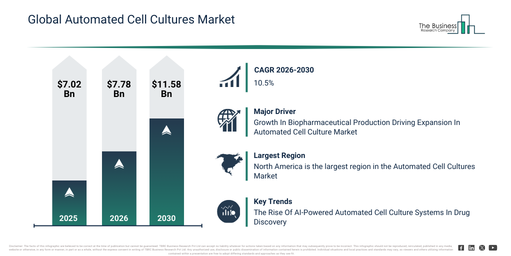
    The automated cell cultures market has shown significant growth in recent years. It is anticipated to expand from $7.02 billion in 2025 to $7.78 billion in 2026, demonstrating a compound annual growth rate (CAGR) of 10.8%. This historical growth can be attributed to an increase in biopharmaceutical research activity, a rising demand for standardized cell culture processes, the expansion of drug discovery programs, the availability of modular automation solutions, and an increase in academic life science research.

    The automated cell cultures market is anticipated to experience significant growth in the upcoming years. It is forecast to grow to $11.58 billion by 2030, achieving a compound annual growth rate (CAGR) of 10.5%. The expansion within this forecast period is primarily driven by escalating investments in cell and gene therapy manufacturing, an increasing need for high-throughput screening, the broadening scope of personalized medicine research, the wider adoption of automation in laboratory settings, and a heightened focus on scalable biologics production. Major trends identified for the forecast period include the increasing deployment of fully automated cell culture platforms, a rising adoption of robotic liquid handling systems, the growing utilization of scalable cell culture automation, the expansion of closed-system cell processing, and an enhanced emphasis on reproducibility and sterility control.

    Access Your Free Sample Report for In-Depth Market Insights:

    https://www.thebusinessresearchcompany.com/sample.aspx?id=20499&type=smp

    Which Drivers Are Influencing Long-Term Growth In The Automated Cell Cultures Market?

    The escalating production of biopharmaceuticals is projected to propel the growth of the automated cell cultures market moving forward. Biopharmaceuticals are defined as medical drugs manufactured using biotechnology methods, including recombinant DNA technology and cell culture techniques. The increasing demand for biopharmaceuticals is fueled by their capacity to provide targeted, effective treatments with fewer side effects when contrasted with traditional therapies. Automated cell culture enhances efficiency and consistency in biopharmaceutical production by streamlining the processes of cell growth, monitoring, and harvesting. For instance, in July 2025, according to Sartorius, a Germany-based international life science technology company, global sales of biopharmaceutical drugs saw an increase of about 9% to reach USD 458 billion in 2024, an uptick from the previous year, constituting 41% of the total pharmaceutical market compared with 40% in 2023. Therefore, the rising production of biopharmaceuticals is a key driver for the expansion of the automated cell cultures market.

    How Is The Automated Cell Cultures Market Divided Into Segments?

    The automated cell cultures market covered in this report is segmented –

    1) By Type: Modular Automation, Whole Label Automation

    2) By Equipment Type: Automated Liquid Handling Systems, Microplate Readers, Robotic Systems, Automated Storage And Retrieval Systems, Other Equipment Types

    3) By Application: Biopharmaceuticals Production, Diagnostics, Gene Therapy, Drug Screening And Development, Toxicity Testing, Stem Cell Research, Tissue Engineering And Regenerative Medicine, Personalized Medicine, Other Applications

    4) By End User: Pharmaceuticals And Biotechnology Companies, Hospital And Diagnostic Laboratories, Research Institutes, Cell Banks

    Subsegments:

    1) By Modular Automation: Automated Cell Culture Systems, Robotic Workstations, Modular Bioreactors

    2) By Whole Label Automation: Fully Automated Cell Culture Systems, Integrated Cell Culture Platforms, Automated Cell Handling Solutions

    What Trends Are Driving The Growth Trajectory Of The Automated Cell Cultures Market?

    Leading companies in the automated cell cultures market are concentrating on technological advancements, such as integrated artificial intelligence (AI)-powered software, to gain a competitive advantage. Integrated AI-powered software in automated cell culture optimizes experimental conditions and boosts efficiency by analyzing real-time data, thus enhancing cell growth and productivity. For instance, in October 2023, Molecular Devices LLC, a US-based biotechnology company, launched the CellXpress.ai Automated Cell Culture System, a breakthrough innovation aimed at improving drug discovery processes through advanced automation and artificial intelligence. This system is designed to streamline complex cell culture workflows, allowing researchers to focus on more critical tasks while simultaneously enhancing efficiency and reliability.

    Which Major Industry Participants Are Leading The Automated Cell Cultures Market Growth?

    Major companies operating in the automated cell cultures market are Hitachi Ltd., Panasonic Holdings Corporation, Thermo Fisher Scientific Inc., Danaher Corporation, Corning Incorporated, Lonza Group AG, Nikon healthcare, Sartorius AG, Beckman Coulter Inc., Celltrio Inc., Eppendorf AG, Tecan Trading AG, Shibuya Corp, Hamilton Company, Molecular Devices LLC, FORMULATRIX, Highres Biosolutions, Biotron Healthcare, Agilent Technologies, Miltenyi Biotec

    Access The Complete Report For Deeper Market Insights:

    https://www.thebusinessresearchcompany.com/report/automated-cell-cultures-global-market-report

    Which Region Is Expected To Experience The Fastest Growth In The Automated Cell Cultures Market?

    North America was the largest region in the automated cell cultures market in 2025. Asia-Pacific is expected to be the fastest-growing region in the forecast period. The regions covered in the automated cell cultures market report are Asia-Pacific, South East Asia, Western Europe, Eastern Europe, North America, South America, Middle East, Africa.

    Request Your Customized Automated Cell Cultures Market Research Report for Competitive Advantage:

    https://www.thebusinessresearchcompany.com/customise?id=20499&type=smp

    Browse Through More Reports Similar to the Global Automated Cell Cultures Market 2026, By The Business Research Company

    Cells Therapy Market Report 2026

    https://www.thebusinessresearchcompany.com/report/cells-therapy-global-market-report

    Cellular Telephone Market Report 2026

    https://www.thebusinessresearchcompany.com/report/cellular-telephone-global-market-report

    Cell Cultures Market Report 2026

    https://www.thebusinessresearchcompany.com/report/cell-cultures-global-market-report

    Get in touch with us:

    The Business Research Company: https://www.thebusinessresearchcompany.com/

    Americas +1 310-496-7795

    Asia +44 7882 955267 & +91 8897263534

    Europe +44 7882 955267

    Email us at info@tbrc.info

    Follow us on:

    LinkedIn: https://in.linkedin.com/company/the-business-research-company

    YouTube: https://www.youtube.com/channel/UC24_fI0rV8cR5DxlCpgmyFQ

    Global Market Model: https://www.thebusinessresearchcompany.com/global-market-model
  • Automated Cell Culture Equipment Market Anticipated to Record Steady Gains, Advancing to $4.02 Billion by 2030

    Automated Cell Culture Equipment Market Anticipated to Record Steady Gains, Advancing to $4.02 Billion by 2030

    Uncover key drivers, emerging technologies, and competitive movements shaping the automated cell culture equipment market from 2026–2035 with trusted insights from The Business Research Company

    What level of CAGR-driven expansion is anticipated in the Automated Cell Culture Equipment Market between 2026 and 2030?

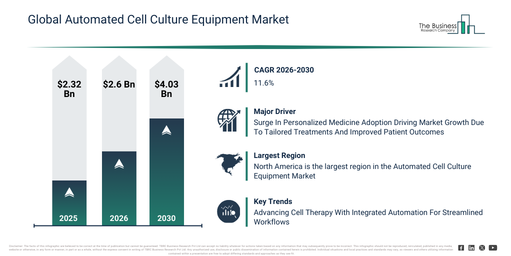
    The automated cell culture equipment market size has demonstrated rapid expansion in recent years. It is projected to increase from $2.32 billion in 2025 to $2.6 billion in 2026, reflecting a compound annual growth rate (CAGR) of 11.9%. The historical growth experienced by this market can be attributed to factors such as the rise in pharmaceutical and biologics research, a heightened demand for consistent cell culture outcomes, the expansion of drug discovery pipelines, the increasing complexity of cell-based assays, and the early adoption of laboratory automation.

    The automated cell culture equipment market is set to experience significant expansion in the coming years, with its value projected to reach $4.03 billion by 2030, driven by a compound annual growth rate (CAGR) of 11.6%. This anticipated growth is largely due to increased investments in regenerative medicine, the ongoing development of cell and gene therapy pipelines, a rising demand for scalable cell culture solutions, a heightened focus on minimizing laboratory variability, and the growing adoption of AI-driven lab automation. Throughout this forecast period, major trends are expected to include the widespread deployment of fully automated cell culture platforms, a greater adoption of high-throughput cell processing systems, the deeper integration of robotics and imaging technologies, an expansion of closed-system and contamination-controlled workflows, and an enhanced emphasis on reproducibility and process standardization.

    Access Your Free Sample Report for In-Depth Market Insights:

    https://www.thebusinessresearchcompany.com/sample.aspx?id=30201&type=smp

    What Drivers Are Affecting Demand-Supply Dynamics In The Automated Cell Culture Equipment Market?

    The increasing acceptance of personalized medicine is anticipated to stimulate the expansion of the automated cell culture equipment market in the future. Personalized medicine involves customizing medical treatments for individuals based on their genetic, lifestyle, and environmental factors to achieve more precise and effective care. This rise in adoption is primarily driven by the greater efficacy of treatments, as therapies are tailored to an individual’s unique genetic and biological profile, thereby enhancing patient outcomes. Automated cell culture equipment supports personalized medicine by providing accurate, high-throughput, and reproducible cell culture processes, essential for developing patient-specific therapies and customized drug testing. For example, in February 2024, the Personalized Medicine Coalition, a US-based non-profit organization, reported that the FDA approved 16 new personalized treatments for patients with rare diseases in 2023, which represents a significant increase from the six approved in 2022. Therefore, the growing adoption of personalized medicine is a key driver for the automated cell culture equipment market’s growth.

    What Segments Are Included Within The Automated Cell Culture Equipment Market?

    The automated cell culture equipment market covered in this report is segmented –

    1) By Product Type: Instruments, Consumables, Software

    2) By Automation Level: Fully Automated Systems, Semi-Automated Systems, Manual Systems With Automation Features

    3) By Application: Drug Discovery And Development, Regenerative Medicine, Toxicology Testing, Vaccine Development, Stem Cell Research

    4) By End-User: Pharmaceutical Companies, Biotechnology Companies, Academic And Research Institutions, Contract Research Organizations (CROs), Diagnostics And Testing Laboratories

    Subsegments:

    1) By Instruments: Automated Cell Culture Systems, Bioreactors, Incubators, Centrifuges, Cell Counters And Analyzers, Liquid Handling Systems, Cell Imaging Systems, Robotic Arms And Manipulators, Cell Harvesting Systems, Filtration And Separation Devices

    2) By Consumables: Culture Media, Reagents And Supplements, Microplates And Culture Dishes, Flasks And Bottles, Single-Use Bags And Tubing, Filters And Membranes, Pipette Tips And Cartridges, Cell Culture Inserts, Sterile Connectors And Clamps

    3) By Software: Data Management Software, Process Control And Monitoring Software, Laboratory Information Management Systems (LIMS), Image Analysis Software, Workflow Automation Software, Quality Control And Compliance Software, Remote Monitoring And Cloud Integration Tools

    What Upcoming Trends Are Likely To Define The Future Path Of The Automated Cell Culture Equipment Market?

    Companies active in the automated cell culture equipment market are concentrating on innovations in seamless workflow integration, such as closed single-use consumable systems, to boost process standardization, lower contamination risks, reduce manual handling, and allow for efficient scaling from research to clinical manufacturing. A closed single-use consumable system is a sterile, disposable setup that integrates multiple cell culture processes into one unit, effectively minimizing contamination risks and enabling scalable, reproducible workflows. For example, in March 2025, Limula SA, a Switzerland-based biotechnology company specializing in automated cell therapy manufacturing solutions, launched LimONE. This integrated system merges hardware, software, and single-use consumables to streamline and standardize cell culture and processing workflows. This launch introduces a commercial product catering to both research and GMP-compliant manufacturing sectors. LimONE facilitates faster technology transfer, decreases labor and infrastructure costs, and supports the scalable production of advanced cell therapies, including CAR-T and gene-edited stem cells. The system significantly improves workflow efficiency and guarantees reproducibility across various cell therapy processes. Overall, this product introduction solidifies Limula’s standing in the automated cell culture equipment market while simultaneously aiding regulatory compliance.

    Who Are The Prominent Global Companies Shaping The Automated Cell Culture Equipment Market Landscape?

    Major companies operating in the automated cell culture equipment market are F. Hoffmann-La Roche Ltd, Hitachi Ltd., Merck KGaA, Panasonic Holdings Corporation, Thermo Fisher Scientific Inc., Danaher Corporation, Becton Dickinson and Company, Corning Incorporated, Lonza Group AG, Olympus Corporation, Sartorius AG, Eppendorf SE, Tecan Group Ltd., STEMCELL Technologies Inc., Miltenyi Biotec B.V. & Co. KG, Hamilton Company, Greiner Bio-One International GmbH, Solida Biotech GmbH, Biostream International B.V., HiMedia Laboratories Pvt. Ltd., Kuhner Shaker AG, Cellexus International Ltd.

    Access The Complete Report For Deeper Market Insights:

    https://www.thebusinessresearchcompany.com/report/global-automated-cell-culture-equipment-market-report

    Which Geographic Areas Are Emerging As Strong Markets For The Automated Cell Culture Equipment Market?

    North America was the largest region in the automated cell culture equipment market in 2025. Asia-Pacific is expected to be the fastest-growing region in the forecast period. The regions covered in the automated cell culture equipment market report are Asia-Pacific, South East Asia, Western Europe, Eastern Europe, North America, South America, Middle East, Africa.

    Request Your Customized Automated Cell Culture Equipment Market Research Report for Competitive Advantage:

    https://www.thebusinessresearchcompany.com/customise?id=30201&type=smp

    Browse Through More Reports Similar to the Global Automated Cell Culture Equipment Market 2026, By The Business Research Company

    Cell Culture Media Market Report 2026

    https://www.thebusinessresearchcompany.com/report/cell-culture-media-global-market-report

    Cell Cultures Market Report 2026

    https://www.thebusinessresearchcompany.com/report/cell-cultures-global-market-report

    Cell Cultures Market Report 2026

    https://www.thebusinessresearchcompany.com/report/cell-cultures-global-market-report

    Get in touch with us:

    The Business Research Company: https://www.thebusinessresearchcompany.com/

    Americas +1 310-496-7795

    Asia +44 7882 955267 & +91 8897263534

    Europe +44 7882 955267

    Email us at info@tbrc.info

    Follow us on:

    LinkedIn: https://in.linkedin.com/company/the-business-research-company

    YouTube: https://www.youtube.com/channel/UC24_fI0rV8cR5DxlCpgmyFQ

    Global Market Model: https://www.thebusinessresearchcompany.com/global-market-model
  • Autologous Cell Therapy Industry Poised for Rapid Growth, Forecast to Touch $27.3 Billion by 2030 at 17.6% CAGR

    Autologous Cell Therapy Industry Poised for Rapid Growth, Forecast to Touch $27.3 Billion by 2030 at 17.6% CAGR

    Uncover key drivers, emerging technologies, and competitive movements shaping the autologous cell therapy market from 2026–2035 with trusted insights from The Business Research Company

    What long-term size projections exist for the Autologous Cell Therapy Market covering 2026–2035?

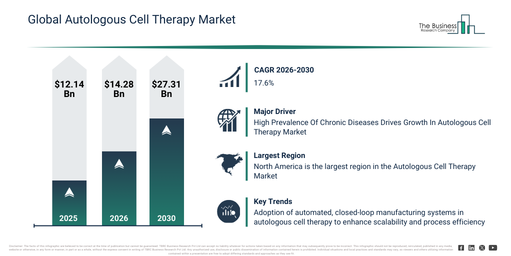
    The autologous cell therapy market has experienced rapid expansion in recent years. It is forecast to grow from $12.14 billion in 2025 to $14.28 billion in 2026, achieving a compound annual growth rate (CAGR) of 17.6%. This historical growth can be attributed to several factors such as advancements in stem cell research, the early clinical success of autologous therapies, a growing prevalence of chronic diseases, the broadening of oncology treatment options, and increasing investments in regenerative medicine.

    The autologous cell therapy market is poised for significant expansion in the coming years. It is projected to reach $27.31 billion by 2030, demonstrating a compound annual growth rate (CAGR) of 17.6%. This anticipated growth during the forecast period is primarily driven by factors such as increasing approvals of cell-based therapies, a growing demand for personalized medicine, the expansion of manufacturing automation in cell therapy, rising clinical trial activity, and increased healthcare spending on advanced therapies. Major trends expected in the forecast period include the increasing adoption of CAR T-cell therapies, a rising use of personalized regenerative treatments, the growing integration of automated cell processing systems, the expansion of autologous stem cell applications, and an enhanced focus on patient-specific therapeutic outcomes.

    Access Your Free Sample Report for In-Depth Market Insights:

    https://www.thebusinessresearchcompany.com/sample.aspx?id=10771&type=smp

    Which Drivers Are Impacting The Competitive Landscape Of The Autologous Cell Therapy Market?

    The expansion of autologous cell therapy is anticipated to be fueled by the widespread occurrence of chronic illnesses. A chronic disease refers to a medical condition or ailment persisting for over a year and necessitating continuous care. Autologous cell therapy presents a hopeful strategy for addressing and overseeing these conditions, as it involves utilizing a person’s own cells that are grown and multiplied externally before being given back to the same individual. An illustrative example is the projection, made in January 2023 by the National Library of Medicine, a US-based agency, that the population in the US aged 50 and older suffering from at least one chronic condition will climb to 142.66 million by 2050. Consequently, the significant prevalence of chronic diseases is boosting the expansion of the autologous cell therapy market.

    What Leading Segments Are Studied In The Autologous Cell Therapy Market?

    The autologous cell therapy market covered in this report is segmented –

    1) By Therapy: Autologous Stem Cell Therapy, Autologous Cellular Immunotherapies

    2) By Source: Bone Marrow, Epidermis, Mesenchymal Stem Cells, Hematopoietic Stem Cells, Chondrocytes, Other Sources

    3) By Application: Cancer, Neurodegenerative Disorders, Cardiovascular Disorders, Autoimmune Disorders, Orthopedics, Wound Healing, Other Applications

    4) By End User: Hospitals And Clinics, Ambulatory Centers, Academics And Research, Other End-Users

    Subsegments:

    1) By Autologous Stem Cell Therapy: Hematopoietic Stem Cell Transplantation, Mesenchymal Stem Cell Therapy, Adipose-Derived Stem Cell Therapy

    2) By Autologous Cellular Immunotherapies: Chimeric Antigen Receptor (CAR) T-Cell Therapy, Tumor-Infiltrating Lymphocyte (TIL) Therapy, Dendritic Cell Therapy

    Which Trends Are Shaping Activity Within The Autologous Cell Therapy Market?

    Major corporations active in the autologous cell therapy market are concentrating on developing advanced technologies, such as robotic, end-to-end manufacturing platforms for patient-specific therapies. These efforts aim to improve process consistency, decrease contamination risks, and shorten the time required for patients to receive treatment. An end-to-end manufacturing platform integrates multiple cell-processing steps, including isolation, activation, transduction, expansion, formulation, and harvest, within a single closed system, thereby reducing the need for manual intervention compared to traditional open flask- or bag-based approaches. As an illustration, in April 2025, Cellares, a US-based integrated development and manufacturing organization, launched the Cell Shuttle system, which is engineered for autologous cell therapies. This product automates the entire workflow in a functionally closed cassette, enhancing reproducibility, minimizing contamination risk, and enabling scalable, patient-specific manufacturing, thus facilitating quicker development and delivery of personalized therapies.

    Which Key Players Are Driving Competition In The Autologous Cell Therapy Market?

    Major companies operating in the autologous cell therapy market are Novartis AG, Bristol-Myers Squibb Company, Gilead Sciences Inc., Johnson & Johnson, F. Hoffmann-La Roche Ltd., Vericel Corporation, Dendreon Pharmaceuticals LLC, Brainstorm Cell Therapeutics Inc., Caladrius Biosciences Inc., Castle Creek Biosciences Inc., Pharmicell Co. Ltd., Medipost Co. Ltd., Tego Science AB, Holostem Terapie Avanzate S.r.l., Opexa Therapeutics Inc., CORESTEM Inc., Takeda Pharmaceutical Company Limited, CSL Limited, AstraZeneca plc, Iovance Biotherapeutics Inc., Adaptimmune Therapeutics plc, Autolus Therapeutics plc

    Access The Complete Report For Deeper Market Insights:

    https://www.thebusinessresearchcompany.com/report/autologous-cell-therapy-global-market-report

    Which Region Is Projected To Lead The Autologous Cell Therapy Market During The Forecast Period?

    North America was the largest region in the autologous cell therapy market in 2025.Asia-pacific is expected to be the fastest-growing region in the forecast period. The regions covered in the autologous cell therapy market report are Asia-Pacific, South East Asia, Western Europe, Eastern Europe, North America, South America, Middle East, Africa.

    Request Your Customized Autologous Cell Therapy Market Research Report for Competitive Advantage:

    https://www.thebusinessresearchcompany.com/customise?id=10771&type=smp

    Browse Through More Reports Similar to the Global Autologous Cell Therapy Market 2026, By The Business Research Company

    Cell Therapy Technologies Market Report 2026

    https://www.thebusinessresearchcompany.com/report/cell-therapy-technologies-global-market-report

    Cells Therapy Market Report 2026

    https://www.thebusinessresearchcompany.com/report/cells-therapy-global-market-report

    Autologous Stem Cell And Non Stem Cell Based Therapies Market Report 2026

    https://www.thebusinessresearchcompany.com/report/autologous-stem-cell-and-non-stem-cell-based-therapies-global-market-report

    Get in touch with us:

    The Business Research Company: https://www.thebusinessresearchcompany.com/

    Americas +1 310-496-7795

    Asia +44 7882 955267 & +91 8897263534

    Europe +44 7882 955267

    Email us at info@tbrc.info

    Follow us on:

    LinkedIn: https://in.linkedin.com/company/the-business-research-company

    YouTube: https://www.youtube.com/channel/UC24_fI0rV8cR5DxlCpgmyFQ

    Global Market Model: https://www.thebusinessresearchcompany.com/global-market-model