Category: HealthcareServices

  • Allergy Treatment Market Forecast: How Big Will It Be by 2030?

    Allergy Treatment Market Forecast: How Big Will It Be by 2030?

    Uncover key drivers, emerging technologies, and competitive movements shaping the allergy treatment market from 2026–2035 with trusted insights from The Business Research Company

    What size range is anticipated for the Allergy Treatment Market from 2026 to 2030?

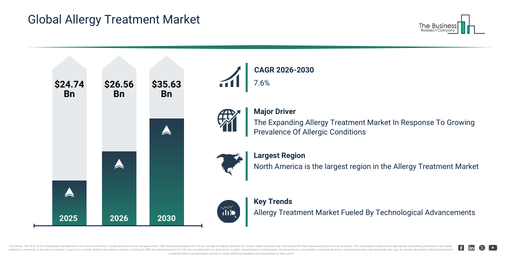
    The allergy treatment market size has exhibited substantial growth over recent years. Projections indicate a rise from $24.74 billion in 2025 to $26.56 billion in 2026, achieving a compound annual growth rate (CAGR) of 7.3%. Historically, this expansion is attributable to several factors: a global increase in allergy prevalence, the surge in allergy treatments provided by hospitals and clinics, insufficient knowledge regarding advanced immunotherapy, continued dependence on traditional antihistamines, and the broadening of retail pharmacy infrastructures.

    The allergy treatment market is projected to experience robust expansion over the coming years. This market is anticipated to reach a valuation of $35.63 billion by 2030, exhibiting a compound annual growth rate (CAGR) of 7.6%. Key factors contributing to this projected growth include the increasing need for individualized allergy care, innovations in immunotherapy delivery methods, the expansion of online pharmacy platforms, greater investment in allergy-related research, and the rising incidence of pediatric and adult asthma and rhinitis. Significant trends expected during this period involve the increasing uptake of anti-allergy medications and immunotherapy, enhanced public awareness regarding allergy management and prevention strategies, the widening availability of homecare and specialized clinic services, a heightened emphasis on customized allergy therapies, and the growing application of nasal and oral drug delivery methods.

    Access Your Free Sample Report for In-Depth Market Insights:

    https://www.thebusinessresearchcompany.com/sample.aspx?id=12130&type=smp

    What Drivers Are Affecting Demand In The Allergy Treatment Market?

    The increasing prevalence of allergic conditions is projected to significantly boost the allergy treatment market moving forward. An allergic condition involves the immune system’s excessive response to an allergen, typically a benign substance. Allergy treatments offer therapies, available through both non-prescription and prescription medicines, that assist in identifying and avoiding various allergy triggers, consequently preventing allergic responses, mitigating symptoms, decreasing severity, and enhancing individuals’ well-being. Evidence supports this trend; for example, in April 2024, Allergy UK, a UK-based national charity, reported that over 21 million people in the UK are impacted by allergies, which was the most commonly reported chronic health condition in 2022. Furthermore, projections suggest that by 2026, half of Europe’s population will have experienced at least one allergy. Thus, the increasing occurrence of allergic conditions is a primary driver for the expansion of the allergy treatment market.

    Which Segment Groups Are Influencing The Allergy Treatment Market?

    The allergy treatment market covered in this report is segmented –

    1) By Treatment Type: Anti-Allergy Drugs, Immunotherapy

    2) By Type: Eye Allergy, Skin Allergy, Food Allergy, Rhinitis, Other Types

    3) By Route of Administration: Oral, Parenteral, Nasal, Other Routes of Administration

    4) By Distribution Channels: Hospital Pharmacies, Retail Pharmacies, Online Retailers, Other Distribution Channels

    5) By End-Users: Hospitals, Specialty Clinics, Homecare, Other End-Users

    Subsegments:

    1) By Anti-Allergy Drugs: Antihistamines, Corticosteroids, Leukotriene Receptor Antagonists, Decongestants

    2) By Immunotherapy: Allergy Shots, Sublingual Immunotherapy (SLIT), Oral Immunotherapy

    What Long-Term Trends Are Expected To Shape The Future Of The Allergy Treatment Market?

    Leading companies in the allergy treatment market are concentrating on integrating advanced technologies to elevate patient care, enhance treatment delivery, and refine diagnostic and therapeutic outcomes. Innovations in allergy treatment technology include digital health platforms, telehealth solutions, wearable monitoring devices, and precision immunotherapy tools, all of which contribute to streamlining patient management, tracking allergic reactions, and providing personalized therapy options. For instance, in May 2023, Metropolis Healthcare Limited, an India-based chain of pathology labs and diagnostic centers, launched AI-powered allergy component testing, based on Component Resolved Diagnostics (CRD). This component testing utilizes artificial intelligence (AI) to assist physicians in making informed clinical decisions and provides valuable insights for selecting and optimizing an individual’s allergic disease treatment plan. It operates on a nanotechnology-based multiplex system that employs molecular components, can identify specific IgE antibodies against 295 different allergens using a simple blood test, and yields findings for 158 food allergens, ten contact allergens, and 127 respiratory allergens.

    Who Are The Prominent Global Companies Shaping The Allergy Treatment Market Landscape?

    Major companies operating in the allergy treatment market are Pfizer Inc., Johnson and Johnson, Allergy Therapeutics PLC, F. Hoffmann-La Roche Ltd, AbbVie Inc., Novartis AG, Merck & Co. Inc., Sanofi S.A., Thermo Fisher Scientific Inc., AstraZeneca, GlaxoSmithKline PLC, Eli Lilly and Company, Boehringer Ingelheim International GmbH, Regeneron Pharmaceuticals, Bausch Health Companies Inc., Teva Pharmaceutical Industries Ltd., Almirall S.A, Akorn Operating Company LLC, Alembic Pharmaceuticals Limited, ALK-Abelló A/S, Stallergenes Greer International AG, Adamis Pharmaceuticals, HollisterStier Allergy, Leti Pharma SL

    Access The Complete Report For Deeper Market Insights:

    https://www.thebusinessresearchcompany.com/report/allergy-treatment-global-market-report

    Which Geographic Areas Are Emerging As Strong Markets For The Allergy Treatment Market?

    North America was the largest region in the allergy treatment market in 2025. Asia-Pacific is expected to be the fastest-growing region in the forecast period. The regions covered in the allergy treatment market report are Asia-Pacific, South East Asia, Western Europe, Eastern Europe, North America, South America, Middle East, Africa.

    Request Your Customized Allergy Treatment Market Research Report for Competitive Advantage:

    https://www.thebusinessresearchcompany.com/customise?id=12130&type=smp

    Browse Through More Reports Similar to the Global Allergy Treatment Market 2026, By The Business Research Company

    Peanut Allergy Treatment Market Report 2026

    https://www.thebusinessresearchcompany.com/report/peanut-allergy-treatment-global-market-report

    Food Allergy Treatment Market Report 2026

    https://www.thebusinessresearchcompany.com/report/food-allergy-treatment-global-market-report

    Allergy Immunotherapy Market Report 2026

    https://www.thebusinessresearchcompany.com/report/allergy-immunotherapy-global-market-report

    Get in touch with us:

    The Business Research Company: https://www.thebusinessresearchcompany.com/

    Americas +1 310-496-7795

    Asia +44 7882 955267 & +91 8897263534

    Europe +44 7882 955267

    Email us at info@tbrc.info

    Follow us on:

    LinkedIn: https://in.linkedin.com/company/the-business-research-company

    YouTube: https://www.youtube.com/channel/UC24_fI0rV8cR5DxlCpgmyFQ

    Global Market Model: https://www.thebusinessresearchcompany.com/global-market-model
  • Allergy Immunotherapy Market Report 2026: Strategic Insights and Revenue Outlook

    Allergy Immunotherapy Market Report 2026: Strategic Insights and Revenue Outlook

    Uncover key drivers, emerging technologies, and competitive movements shaping the allergy immunotherapy market from 2026–2035 with trusted insights from The Business Research Company

    How is the Allergy Immunotherapy Market size predicted to change over the forecast window of 2026–2035?

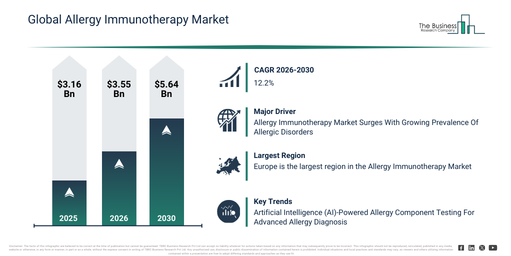
    The allergy immunotherapy market has seen rapid expansion in recent years. Its size is expected to increase from $3.16 billion in 2025 to $3.55 billion in 2026, registering a compound annual growth rate (CAGR) of 12.3%. This historical growth can be attributed to several factors including limited awareness about allergy immunotherapy, rising incidence of seasonal allergic rhinitis, dependency on hospital-based treatment channels, adoption of traditional treatment methods, and regulatory approvals for immunotherapy products.

    The allergy immunotherapy market is projected to experience substantial expansion in the coming years. It is anticipated to grow to **$5.64 billion** by 2030, exhibiting a compound annual growth rate (CAGR) of **12.2%**. This projected growth during the forecast period can be attributed to the rise in personalized immunotherapy solutions, increasing adoption of online pharmacy channels, the expansion of pediatric allergy treatment, growing investment in immunotherapy research, and the development of combination immunotherapy products. Significant trends for the forecast period include the increasing acceptance of subcutaneous and sublingual immunotherapy, the rising prevalence of allergic rhinitis and asthma, the broadening of food and venom allergy treatments, a heightened focus on personalized allergy treatment protocols, and improved awareness leading to earlier diagnosis of allergic conditions.

    Access Your Free Sample Report for In-Depth Market Insights:

    https://www.thebusinessresearchcompany.com/sample.aspx?id=9416&type=smp

    Which Drivers Are Contributing To The Expansion Of The Allergy Immunotherapy Market?

    The increasing occurrence of allergic disorders is anticipated to drive the future expansion of the allergy immunotherapy market. Allergic disorders are characterized by excessive immune responses to specific antigens, distinct from autoimmune diseases where immune responses are misdirected against the body’s own components. Allergy immunotherapy is administered to atopic individuals suffering from allergic conditions such as IgE-mediated allergic rhinitis and allergic asthma, which are triggered by inhaled allergens like pollens and house dust mites (HDMs). For instance, in August 2023, the Medicines and Healthcare Products Regulatory Agency (MHRA), a UK executive agency, reported that English hospitals recorded over 25,000 admissions for allergies and anaphylaxis during 2022-23, a figure more than double that observed in the last twenty years. Additionally, in May 2024, the UK’s Food Standards Agency published its Patterns and Prevalence of Adult Food Allergy (PAFA) report, revealing that approximately 6% of adults in the UK, equating to around 2.4 million individuals, are affected by food allergies. As a result, the rising prevalence of allergic disorders is significantly contributing to the growth of the allergy immunotherapy market.

    What Segment Classifications Make Up The Allergy Immunotherapy Market?

    The allergy immunotherapy market covered in this report is segmented –

    1) By Allergy Type: Allergic Rhinitis, Allergic Asthma, Food Allergy, Venom Allergy, Allergic Conjunctivitis, Environmental Allergies

    2) By Treatment: Subcutaneous Immunotherapy (SCIT), Sublingual Immunotherapy, Specific Immunotherapy (SIT)

    3) By Channel: Hospital Pharmacy, Retail Pharmacy

    Subsegments:

    1) By Allergic Rhinitis: Seasonal Allergic Rhinitis, Perennial Allergic Rhinitis

    2) By Allergic Asthma: House Dust Mite–Induced Allergic Asthma, Pollen-Induced Allergic Asthma, Animal Dander–Induced Allergic Asthma

    3) By Food Allergy: Peanut Allergy, Tree Nut Allergy, Milk Allergy, Egg Allergy, Other Food Allergies

    4) By Venom Allergy: Bee Venom Allergy, Wasp Venom Allergy, Hornet Venom Allergy, Other Insect Venom Allergies

    5) By Allergic Conjunctivitis: Seasonal Allergic Conjunctivitis, Perennial Allergic Conjunctivitis

    6) By Environmental Allergies: House Dust Mite Allergy, Pollen Allergy, Mold Allergy, Animal Dander Allergy

    Which Market Trends Are Opening Growth Opportunities In The Allergy Immunotherapy Market?

    Major companies within the allergy immunotherapy market are developing innovative technological products, such as artificial intelligence (AI)-powered allergy component testing, to maintain their market position. This AI-powered allergy component testing is a novel diagnostic platform based on component resolved diagnostics (CRD) for identifying various types of allergies. As an illustration, in May 2023, Metropolis Healthcare Limited, an Indian medical laboratory company, launched its artificial intelligence (AI)-powered allergy component testing. This technology is recognized as a fourth-generation allergy testing solution that utilizes Artificial Intelligence (AI) to support clinicians in their clinical decision-making. It offers significant insights for selecting and optimizing treatment plans for allergic diseases, and it can also predict the effectiveness of immunotherapy for allergy vaccinations.

    Which Key Players Are Driving Competition In The Allergy Immunotherapy Market?

    Major companies operating in the allergy immunotherapy market are LETI Pharma, Stallergenes Greer International AG, Allergy Therapeutics plc, ALK-Abelló A/S, HAL Allergy B.V., DBV Technologies, Circassia Pharmaceuticals Inc., Jubilant HollisterStier LLC, Allergopharma GmbH & Co. KG, Biomay AG, Anergis SA, HollisterStier Allergy, Desentum Oy, WOLW Pharma Limited, AllerGenics Inc., Greer Laboratories Inc., Aimmune Therapeutics Inc., Reliant Laboratories Inc., Mylan N.V., Adamis Pharmaceuticals Corporation, Endo Pharmaceuticals Inc., Sun Pharmaceutical Industries Ltd., Cipla Ltd.

    Access The Complete Report For Deeper Market Insights:

    https://www.thebusinessresearchcompany.com/report/allergy-immunotherapy-global-market-report

    Which Region Is Projected To Lead The Allergy Immunotherapy Market During The Forecast Period?

    Europe was the largest region in the allergy immunotherapy market in 2025. Asia-Pacific is expected to be the fastest-growing region in the allergy immunotherapy market report during the forecast period. The regions covered in the allergy immunotherapy market report are Asia-Pacific, South East Asia, Western Europe, Eastern Europe, North America, South America, Middle East, Africa.

    Request Your Customized Allergy Immunotherapy Market Research Report for Competitive Advantage:

    https://www.thebusinessresearchcompany.com/customise?id=9416&type=smp

    Browse Through More Reports Similar to the Global Allergy Immunotherapy Market 2026, By The Business Research Company

    Cellulars Immunotherapy Market Report 2026

    https://www.thebusinessresearchcompany.com/report/cellulars-immunotherapy-global-market-report

    Allergy Treatment Market Report 2026

    https://www.thebusinessresearchcompany.com/report/allergy-treatment-global-market-report

    Allergy Diagnostics Market Report 2026

    https://www.thebusinessresearchcompany.com/report/allergy-diagnostics-global-market-report

    Get in touch with us:

    The Business Research Company: https://www.thebusinessresearchcompany.com/

    Americas +1 310-496-7795

    Asia +44 7882 955267 & +91 8897263534

    Europe +44 7882 955267

    Email us at info@tbrc.info

    Follow us on:

    LinkedIn: https://in.linkedin.com/company/the-business-research-company

    YouTube: https://www.youtube.com/channel/UC24_fI0rV8cR5DxlCpgmyFQ

    Global Market Model: https://www.thebusinessresearchcompany.com/global-market-model
  • Global Allergy Diagnostics Industry Trends and Market Forecast 2026–2030

    Global Allergy Diagnostics Industry Trends and Market Forecast 2026–2030

    Uncover key drivers, emerging technologies, and competitive movements shaping the allergy diagnostics market from 2026–2035 with trusted insights from The Business Research Company

    What market expansion outlook does the Allergy Diagnostics Market show for the 2026–2030 period?

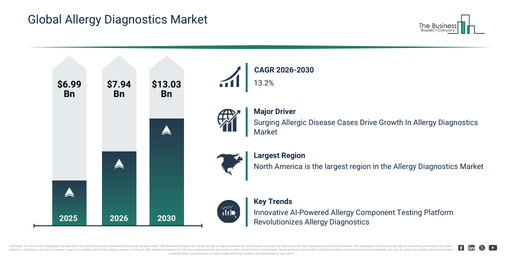
    The allergy diagnostics market size has observed rapid expansion in recent years. It is anticipated to grow from $6.99 billion in 2025 to $7.94 billion in 2026, achieving a compound annual growth rate (CAGR) of 13.5%. The past growth can be ascribed to several factors, including the increasing prevalence of allergies worldwide, the adoption of skin prick and intradermal tests, the expansion of hospital-based laboratories, growing awareness about allergy management, and the limited availability of advanced in-vitro kits.

    The allergy diagnostics market is projected to experience substantial growth over the next few years, with its size anticipated to reach $13.03 billion by 2030, demonstrating a compound annual growth rate (CAGR) of 13.2%. This expansion during the forecast period is attributed to advancements in component-resolved diagnostics, the incorporation of automation into allergy testing, increased investment in research on novel allergens, the proliferation of academic and diagnostic laboratories, and a rising demand for personalized allergy treatment. Major trends anticipated in this period include an increasing need for accurate allergy diagnostics, the growing adoption of in-vitro testing methods, the broadening scope of food and drug allergen testing, enhanced utilization of ELISA, RAST, and CRD kits, and a strategic focus on rapid and point-of-care allergy detection.

    Access Your Free Sample Report for In-Depth Market Insights:

    https://www.thebusinessresearchcompany.com/sample.aspx?id=5655&type=smp

    What Drivers Are Shaping The Development Of The Allergy Diagnostics Market?

    The escalating incidence of allergic conditions is set to drive the expansion of the allergy diagnostics market. This surge in allergies is linked to elevated environmental pollution stemming from vehicular traffic and various industrial activities. An allergic reaction is defined as an atypical response of the immune system when exposed to an allergen. Examples of allergic diseases encompass anaphylaxis, allergic rhinitis (commonly known as ‘hay fever’), food allergies, skin allergies, and allergic asthma. The primary treatment for allergic conditions involves avoiding the specific allergen. Consequently, accurate allergy diagnosis becomes vital for successful allergy management. For example, data from Anaphylaxis UK, a charity in the UK, indicated in September 2024 that 20% of food allergy reactions happen in school settings. Furthermore, one in five children affected by food allergies face bullying, and one in five parents experience moderate-to-extreme anxiety. Almost all parents of children with allergies show symptoms of post-traumatic stress (PTSS), with these rates being seven times higher for parents whose children rely on adrenaline auto-injectors (AAIs). Therefore, the increasing prevalence of allergic diseases is expected to further bolster the expansion of the allergic diagnostics market.

    What Segment Types Are Examined In The Allergy Diagnostics Market?

    The allergy diagnostics market covered in this report is segmented –

    1) By Test Type: In-Vivo Allergy Tests, In-Vitro Allergy Tests

    2) By Allergen: Inhaled Allergens, Food Allergens, Drug Allergens

    3) By Products: Consumables, Instruments

    4) By End User: Diagnostics Laboratories, Hospital-based Laboratories, Academic and Research Institutes

    Subsegments:

    1) By In-Vivo Allergy Tests: Skin Prick Tests, Intradermal Tests, Patch Tests, Oral Food Challenge Tests

    2) By In-Vitro Allergy Tests: Enzyme-Linked Immunosorbent Assay (ELISA), Radioallergosorbent Test (RAST), Component-Resolved Diagnostics (CRD), Basophil Activation Tests (BAT)

    How Are Emerging Trends Affecting The Progression Of The Allergy Diagnostics Market?

    Leading companies in the allergy diagnostics market are developing innovative technologies, such as an AI-powered allergy component testing platform, to enhance their market profitability. Such a platform is a highly advanced system that uses artificial intelligence (AI) to interpret and analyze allergy testing outcomes. For instance, in May 2023, Metropolis, an India-based pathology lab and diagnostic center, introduced an AI-driven platform for testing allergy components, which can identify 127 respiratory allergens, 10 contact allergens, and 158 food allergens. This testing platform offers substantial information for establishing and optimizing an individual’s allergy treatment plan, enabling clinicians to make astute clinical decisions by leveraging component-resolved diagnostics (CRD) and artificial intelligence (AI).

    Who Are The Top-Performing Companies In The Allergy Diagnostics Market In Recent Years?

    Major companies operating in the allergy diagnostics market are bioMérieux SA, Danaher Corporation, HOB Biotech Group Corp. Ltd., HYCOR Biomedical, Lincoln Diagnostics Inc., Omega Diagnostics Group PLC, Siemens Healthineers AG, Thermo Fisher Scientific Inc., PerkinElmer Inc., R-Biopharm AG, Abbott Laboratories, HollisterStier Allergy, NEOGEN Corporation, AESKU.GROUP GmbH, ACON Laboratories Inc., Erba Group, Stallergenes Greer, HAL Allergy Group, INDOOR Biotechnologies Inc., MacroArray Technologies LLC, Phadia AB, Quest Diagnostics, Randox Laboratories Ltd., Eurofins Viracor Inc., VRL Laboratories

    Access The Complete Report For Deeper Market Insights:

    https://www.thebusinessresearchcompany.com/report/allergy-diagnostics-global-market-report

    Which Region Currently Holds The Largest Share Of The Allergy Diagnostics Market?

    North America was the largest region in the allergy diagnostics market in 2025. The regions covered in the allergy diagnostics market report are Asia-Pacific, South East Asia, Western Europe, Eastern Europe, North America, South America, Middle East, Africa.

    Request Your Customized Allergy Diagnostics Market Research Report for Competitive Advantage:

    https://www.thebusinessresearchcompany.com/customise?id=5655&type=smp

    Browse Through More Reports Similar to the Global Allergy Diagnostics Market 2026, By The Business Research Company

    Immunoglobulin E Ige Allergy Blood Tests Market Report 2026

    https://www.thebusinessresearchcompany.com/report/immunoglobulin-e-ige-allergy-blood-tests-global-market-report

    Allergy Treatment Market Report 2026

    https://www.thebusinessresearchcompany.com/report/allergy-treatment-global-market-report

    Allergy Immunotherapy Market Report 2026

    https://www.thebusinessresearchcompany.com/report/allergy-immunotherapy-global-market-report

    Get in touch with us:

    The Business Research Company: https://www.thebusinessresearchcompany.com/

    Americas +1 310-496-7795

    Asia +44 7882 955267 & +91 8897263534

    Europe +44 7882 955267

    Email us at info@tbrc.info

    Follow us on:

    LinkedIn: https://in.linkedin.com/company/the-business-research-company

    YouTube: https://www.youtube.com/channel/UC24_fI0rV8cR5DxlCpgmyFQ

    Global Market Model: https://www.thebusinessresearchcompany.com/global-market-model
  • Allergic Rhinitis Market Size and Demand Forecast 2026–2030

    Allergic Rhinitis Market Size and Demand Forecast 2026–2030

    Uncover key drivers, emerging technologies, and competitive movements shaping the allergic rhinitis market from 2026–2035 with trusted insights from The Business Research Company

    What level of growth is expected in the Allergic Rhinitis Market between 2026 and 2030?

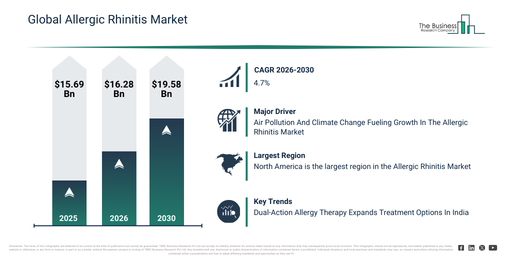
    The allergic rhinitis market has demonstrated consistent expansion in recent years. It is projected to increase from $15.69 billion in 2025 to $16.28 billion in 2026, driven by a compound annual growth rate (CAGR) of 3.8%. This historical growth is attributable to several factors, including heightened awareness of allergies, increased exposure to environmental allergens, the adoption of traditional antihistamines and corticosteroids, the expansion of hospital pharmacy networks, and the advancement of diagnostic skin testing methods.

    The allergic rhinitis market is projected to experience consistent expansion in the coming years. This market is anticipated to reach a valuation of $19.58 billion by 2030, demonstrating a compound annual growth rate (CAGR) of 4.7%. This projected growth during the forecast timeframe is attributable to developments in immunotherapy, an increasing need for tailored allergy solutions, the growing use of online pharmacies, enhancements in diagnostic tools like IgE RAST and blood tests, and the broadening of global markets for allergy treatments. Key trends anticipated over this period encompass the global increase in allergic rhinitis cases, a greater uptake of immunotherapy and customized therapies, wider acceptance of nasal corticosteroids and antihistamines, the growth of online pharmacy and e-commerce distribution channels, and advancements in diagnostic testing, such as skin and IgE RAST tests.

    Access Your Free Sample Report for In-Depth Market Insights:

    https://www.thebusinessresearchcompany.com/sample.aspx?id=12926&type=smp

    Which Drivers Are Expected To Impact The Allergic Rhinitis Market During The Forecast Period?

    The allergic rhinitis market is anticipated to expand due to significant air pollution and climate change. Air pollution is defined as the existence of detrimental elements in the Earth’s atmosphere, which negatively impact human well-being, the ecosystem, and the breathability of air. Climate change denotes enduring shifts in global weather phenomena, encompassing temperature, rainfall, and various other climatic elements. It is increasingly acknowledged that air pollution is a major environmental factor driving the prevalence and exacerbation of allergic rhinitis, underscoring the complex link between air quality and respiratory well-being. For example, data from August 2024, provided by the United States Environmental Protection Agency, a US-based Government agency, indicated that around 66 million tons of pollutants entered the atmosphere throughout the United States in 2023. Consequently, elevated levels of air pollution and climate change are key drivers for the allergic rhinitis market.

    Which Segments Are Driving Activity In The Allergic Rhinitis Market?

    The allergic rhinitis market covered in this report is segmented –

    1) By Type: Seasonal Allergic Rhinitis, Perennial Allergic Rhinitis, Occupational Allergic Rhinitis

    2) By Treatment: Antihistamines, Corticosteroids, Immunotherapy, Decongestants, Other Treatments

    3) By Test: Skin Test, IgE Radioallergosorbent (RAST) Test

    4) By Route Of Administration: Oral, Nasal, Other Route Of Administration

    5) By Distribution Channel: Hospital Pharmacies, Retail Pharmacies, Online Stores

    Subsegments:

    1) By Seasonal Allergic Rhinitis: Pollen Allergy, Mold Allergy

    2) By Perennial Allergic Rhinitis: Dust Mite Allergy, Pet Allergy, Mold Allergy

    3) By Occupational Allergic Rhinitis: Chemical Allergens, Biological Allergens

    Which Innovation Trends Are Advancing Developments Within The Allergic Rhinitis Market?

    Companies active in the allergic rhinitis market are concentrating on creating cutting-edge products, including combination allergy therapies, designed to improve multi-pathway symptom relief and enhance the enduring management of allergic conditions. A combination allergy therapy functions as a dual-action preparation, uniting diverse classes of active ingredients to provide more extensive and efficient control over allergy-related inflammation. For instance, in October 2025, Cadila Pharmaceuticals, an India-based pharmaceutical manufacturer, unveiled Dlorfast-M Tablets. This formulation combines Desloratadine and Montelukast to inhibit both histamine- and leukotriene-mediated pathways, delivering more potent and thorough relief than either component by itself. Its once-daily dosage promotes improved treatment adherence and broadens the therapeutic possibilities for patients afflicted with allergic rhinitis and urticaria.

    Which Leading Companies Dominate The Allergic Rhinitis Market Share?

    Major companies operating in the allergic rhinitis market are Merck and Co. Inc., Bayer AG, Novartis AG, Sanofi-Aventis LLC., AstraZeneca PLC, GlaxoSmithKline plc., Boehringer Ingelheim International GmbH, Viatris Inc., Teva Pharmaceutical Industries Ltd., Regeneron Pharmaceuticals Inc., Sun Pharmaceutical Industries Limited, Menarini Group, Perrigo Company plc, Dr. Reddy’s Laboratories Ltd., Hikma Pharmaceuticals PLC, Cipla Limited, Zydus Lifesciences Ltd., Lupin Limited, Glenmark Pharma Ltd., Almirall S.A., Kyowa Kirin Co. Ltd., Hanmi Pharmaceutical Co. Ltd.

    Access The Complete Report For Deeper Market Insights:

    https://www.thebusinessresearchcompany.com/report/allergic-rhinitis-global-market-report

    How Does The Allergic Rhinitis Market Perform Across Major Global Regions?

    North America was the largest region in the allergic rhinitis market in 2025. Asia-Pacific is expected to be the fastest-growing region in the forecast period. The regions covered in the allergic rhinitis market report are Asia-Pacific, South East Asia, Western Europe, Eastern Europe, North America, South America, Middle East, Africa.

    Request Your Customized Allergic Rhinitis Market Research Report for Competitive Advantage:

    https://www.thebusinessresearchcompany.com/customise?id=12926&type=smp

    Browse Through More Reports Similar to the Global Allergic Rhinitis Market 2026, By The Business Research Company

    Allergy Treatment Market Report 2026

    https://www.thebusinessresearchcompany.com/report/allergy-treatment-global-market-report

    Allergic Rhinitis Drugs Market Report 2026

    https://www.thebusinessresearchcompany.com/report/allergic-rhinitis-drugs-global-market-report

    Allergy Diagnostics Market Report 2026

    https://www.thebusinessresearchcompany.com/report/allergy-diagnostics-global-market-report

    Get in touch with us:

    The Business Research Company: https://www.thebusinessresearchcompany.com/

    Americas +1 310-496-7795

    Asia +44 7882 955267 & +91 8897263534

    Europe +44 7882 955267

    Email us at info@tbrc.info

    Follow us on:

    LinkedIn: https://in.linkedin.com/company/the-business-research-company

    YouTube: https://www.youtube.com/channel/UC24_fI0rV8cR5DxlCpgmyFQ

    Global Market Model: https://www.thebusinessresearchcompany.com/global-market-model
  • Allergic Contact Dermatitis Market Outlook: Growth and Forecast Highlights 2030

    Allergic Contact Dermatitis Market Outlook: Growth and Forecast Highlights 2030

    Uncover key drivers, emerging technologies, and competitive movements shaping the allergic contact dermatitis market from 2026–2035 with trusted insights from The Business Research Company

    How much is the Allergic Contact Dermatitis Market valued at in 2026, and what valuation is forecast for 2030?

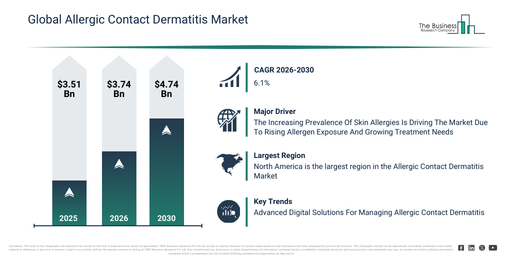
    The market for allergic contact dermatitis has experienced robust expansion in recent years. It is expected to grow from $3.51 billion in 2025 to $3.74 billion in 2026, at a compound annual growth rate (CAGR) of 6.4%. This historical growth can be attributed to factors such as increased exposure to metals and chemicals, limited public awareness concerning skin allergens, the growing adoption of patch testing, rising dermatology research initiatives, and the expanding use of topical corticosteroids.

    The allergic contact dermatitis market is projected to see significant expansion in the coming years, with its value expected to reach $4.74 billion by 2030, exhibiting a compound annual growth rate (CAGR) of 6.1%. This growth during the forecast period can be attributed to several factors such as the development of advanced immunomodulators, increasing public awareness of hypoallergenic products, the broadening of personalized dermatology treatments, a rise in the prevalence of occupational skin allergies, and the integration of digital dermatology diagnostics. Prominent trends anticipated for this period include a global increase in the occurrence of allergic contact dermatitis, enhanced awareness and diagnosis through patch testing procedures, a surge in demand for topical corticosteroids and immunomodulators, the expansion of dermatological care tailored for pediatric and geriatric populations, and a growing preference for natural and hypoallergenic product options.

    Access Your Free Sample Report for In-Depth Market Insights:

    https://www.thebusinessresearchcompany.com/sample.aspx?id=21092&type=smp

    What Drivers Are Influencing The Growth Of The Allergic Contact Dermatitis Market?

    The escalating occurrence of skin allergies is poised to drive the expansion of the allergic contact dermatitis market moving forward. Skin allergies manifest when the immune system exhibits an exaggerated response to specific allergens, resulting in symptoms like redness, itching, swelling, and rashes. The uptick in skin allergy cases largely stems from increased exposure to environmental allergens, cosmetic chemicals, and irritants, alongside a growing population experiencing sensitive skin and impaired skin-barrier function. Allergic contact dermatitis treatments are instrumental in managing these ailments by lessening inflammation, providing relief from itching, averting recurrent reactions, and restoring the skin barrier through the application of topical agents, antihistamines, and lifestyle modifications that minimize allergen contact. For instance, in April 2025, data from the Asthma and Allergy Foundation of America (AAFA), a US-based suburban nonprofit organization, indicated that skin and contact allergies affect roughly 1 in 5 people, with eczema impacting 18.9 million adults and 8 million children in the U.S., highlighting a considerable and expanding disease burden. Hence, the rising prevalence of skin allergies is fueling the growth of the allergic contact dermatitis market.

    How Is The Allergic Contact Dermatitis Market Organized Into Various Segments?

    The allergic contact dermatitis market covered in this report is segmented –

    1) By Allergen Type: Metals, Chemicals, Latex, Fragrances, Preservatives

    2) By Diagnosis Method: Patch Testing, Clinical Evaluation

    3) By Treatment Type: Topical Corticosteroids, Immunomodulators, Oral Corticosteroids

    4) By Severity Level: Mild, Moderate, Severe

    5) By Patient Demographics: Children, Adults, Elderly

    Subsegments:

    1) By Metals: Nickel, Cobalt, Chromium

    2) By Chemicals: Pesticides, Solvents, Cleaning Agents

    3) By Latex: Natural Rubber Latex, Synthetic Latex

    4) By Fragrances: Synthetic Fragrances, Natural Fragrances

    5) By Preservatives: Parabens, Formaldehyde Releasers, Isothiazolinones

    Which Competitive Trends Are Impacting The Structure Of The Allergic Contact Dermatitis Market?

    Major companies operating in the allergic contact dermatitis market are increasingly concentrating on creating advanced web- and app-based resource solutions to enable remote consultations with healthcare professionals. Such a solution is a digital platform accessible through websites and mobile applications, offering tools, information, and interactive features to support patient requirements, thereby improving patient self-management and adherence to treatment. As an illustration, in November 2024, the American Contact Dermatitis Society, a US-based non-profit organization focused on the diagnosis and care of dermatitis through education, research, and advocacy, introduced the Contact Allergen Management Program (CAMP) 2.0 to assist patients in managing allergic contact dermatitis. This tool helps patients identify safe products by providing comprehensive product details and allergen transparency. It incorporates an enhanced provider interface, allergen search capabilities, cross-reactor groupings, and automated allergen information sheets. Patients are able to suggest products, evaluate their experiences, submit reports, and scan UPC codes for instant safety feedback. CAMP 2.0 further expands its offerings with an unsafe list, which highlights allergens in bold red, and it also monitors the impact of allergic contact dermatitis on an individual’s quality of life.

    Who Are The Major Companies Operating In The Allergic Contact Dermatitis Market?

    Major companies operating in the allergic contact dermatitis market are Bausch Health Companies Inc., GlaxoSmithKline plc, Pfizer Inc., Sanofi S.A., AbbVie Inc., Johnson & Johnson, LEO Pharma A/S, Novartis AG, Bayer AG, Eli Lilly and Company, Galderma SA, Astellas Pharma Inc., Ferrer Pharma, Stallergenes Greer International AG, HAL Allergy B.V., Hycor Biomedical Inc., HollisterStier Allergy, Dormer Laboratories Inc., Chemotechnique MB Diagnostics AB, Aesku.Diagnostics GmbH, AllergoTek

    Access The Complete Report For Deeper Market Insights:

    https://www.thebusinessresearchcompany.com/report/allergic-contact-dermatitis-global-market-report

    Which Region Is Anticipated To See The Fastest Growth In The Allergic Contact Dermatitis Market?

    North America was the largest region in the allergic contact dermatitis market in 2025. Asia-Pacific is expected to be the fastest-growing region in the forecast period. The regions covered in the allergic contact dermatitis market report are Asia-Pacific, South East Asia, Western Europe, Eastern Europe, North America, South America, Middle East, Africa.

    Request Your Customized Allergic Contact Dermatitis Market Research Report for Competitive Advantage:

    https://www.thebusinessresearchcompany.com/customise?id=21092&type=smp

    Browse Through More Reports Similar to the Global Allergic Contact Dermatitis Market 2026, By The Business Research Company

    Allergy Treatment Market Report 2026

    https://www.thebusinessresearchcompany.com/report/allergy-treatment-global-market-report

    Atopic Dermatitis Market Report 2026

    https://www.thebusinessresearchcompany.com/report/atopic-dermatitis-global-market-report

    Allergy Conjunctivitis Market Report 2026

    https://www.thebusinessresearchcompany.com/report/allergy-conjunctivitis-global-market-report

    Get in touch with us:

    The Business Research Company: https://www.thebusinessresearchcompany.com/

    Americas +1 310-496-7795

    Asia +44 7882 955267 & +91 8897263534

    Europe +44 7882 955267

    Email us at info@tbrc.info

    Follow us on:

    LinkedIn: https://in.linkedin.com/company/the-business-research-company

    YouTube: https://www.youtube.com/channel/UC24_fI0rV8cR5DxlCpgmyFQ

    Global Market Model: https://www.thebusinessresearchcompany.com/global-market-model
  • Alcoholic Hepatitis Treatment Market Insights Report: Opportunities and Drivers 2030

    Alcoholic Hepatitis Treatment Market Insights Report: Opportunities and Drivers 2030

    Uncover key drivers, emerging technologies, and competitive movements shaping the alcoholic hepatitis treatment market from 2026–2035 with trusted insights from The Business Research Company

    By how much is the Alcoholic Hepatitis Treatment Market expected to grow between 2026 and 2030?

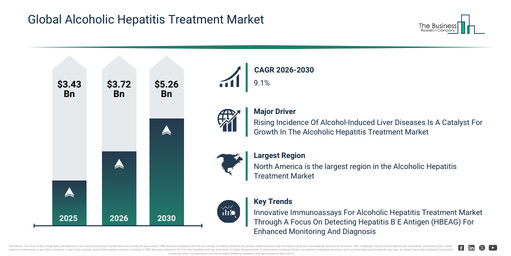
    The market for alcoholic hepatitis treatment has experienced robust growth in recent years. This market is projected to expand from $3.43 billion in 2025 to $3.72 billion in 2026, demonstrating a compound annual growth rate (CAGR) of 8.5%. Historically, this expansion has been driven by factors such as a rise in the incidence of alcoholic liver disease, increased public knowledge regarding health problems linked to alcohol consumption, the incorporation of corticosteroids and other pharmaceutical treatments, the spread of treatment initiatives within hospitals, and the restricted accessibility of stem cell therapies.

    The alcoholic hepatitis treatment market is anticipated to experience substantial expansion in the coming years, reaching $5.26 billion by 2030, exhibiting a compound annual growth rate (CAGR) of 9.1%. This projected increase during the forecast period is primarily driven by progress in regenerative medicine and stem cell treatments, increased private investment in treatment facilities, the growing acceptance of personalized medicine strategies, heightened government efforts for liver disease management, and the creation of innovative biologics for liver protection. Significant trends expected in this period encompass the increasing integration of corticosteroid and hemorheologic therapies, expanded application of stem cell therapy for liver regeneration, the proliferation of private treatment centers and clinics, a heightened emphasis on customized treatment plans for alcoholic hepatitis, and improved awareness and early diagnostic initiatives.

    Access Your Free Sample Report for In-Depth Market Insights:

    https://www.thebusinessresearchcompany.com/sample.aspx?id=12104&type=smp

    Which Drivers Are Influencing Market Acceleration In The Alcoholic Hepatitis Treatment Market?

    A rise in liver illnesses stemming from alcohol intake is projected to fuel the expansion of the alcoholic hepatitis treatment market. Alcoholic liver disease occurs when the liver’s normal functioning is compromised. The liver carries out vital bodily tasks, including blood detoxification and bile production for digestion. Treatment for alcoholic hepatitis addresses liver inflammation in certain patients affected by this condition. Individuals experiencing severe alcoholic hepatitis might necessitate hospital-based therapy. For example, statistics released in April 2024 by the Office for Health Improvement and Disparities, a UK-based government unit, revealed that premature deaths from liver disease in 2022 amounted to 10,593, with 6,664 being males and 3,929 females. Furthermore, the financial year ending in 2023 recorded 85,665 hospital admissions for liver disease in England, a rate of 155.2 per 100,000 population, of which 27,085 admissions were specifically for alcoholic liver disease, corresponding to a rate of 49.4 per 100,000 population. Consequently, the rising incidence of alcohol-induced liver diseases is stimulating the expansion of the alcoholic hepatitis treatment market.

    What Segments Are Identified Within The Structure Of The Alcoholic Hepatitis Treatment Market?

    The alcoholic hepatitis treatment market covered in this report is segmented –

    1) By Treatment Type: Drug Therapy, Supportive And Nutritional Therapy

    2) By Route Of Administration: Oral, Injectable

    3) By Severity Of Disease: Mild Alcoholic Hepatitis, Moderate Alcoholic Hepatitis, Severe Alcoholic Hepatitis

    4) By End-User: Hospitals, Specialty Clinics, Rehabilitation And De-Addiction Centers

    Subsegments:

    1) By Drug Therapy: Corticosteroid Therapy, Hemorheologic Therapy, Immunomodulatory And Anti-Inflammatory Therapy, Antioxidant And Hepatoprotective Therapy, Adjunctive Pharmacological Therapy

    2) By Supportive And Nutritional Therapy: Alcohol Abstinence And Detoxification Support, Nutritional Supplementation (Protein Vitamins And Minerals), Enteral Nutrition Support, Electrolyte And Fluid Management, Management Of Alcohol Withdrawal Symptoms

    What Industry Trends Are Transforming The Alcoholic Hepatitis Treatment Market?

    Leading companies in the alcoholic hepatitis treatment market are focusing their efforts on product innovation, particularly immunoassays, to enhance their market revenues. Immunoassays are a type of biochemical assay that leverages the specific binding of antibodies to antigens to detect and quantify the presence or concentration of a target molecule (analyte) in a given sample. For instance, in November 2023, F. Hoffmann-La Roche Ltd., a Switzerland-based healthcare company, introduced Elecsys HBeAg quant. This immunoassay provides both qualitative and quantitative measurements of hepatitis B e antigen (HBeAg) levels in human serum and plasma. It can serve as a predictive tool for chronic active hepatitis and an early indicator of acute hepatitis B infection. When used alongside additional laboratory findings and clinical data, this test can assist in the diagnosis and ongoing monitoring of individuals with hepatitis B virus infection. The Elecsys HBeAg quant is compatible with Roche’s Cobas e analyzers and is intended for samples from patients who have previously tested positive, as well as those with an unknown HBeAg status.

    Which Major Firms Are Strengthening Their Position In The Alcoholic Hepatitis Treatment Market?

    Major companies operating in the alcoholic hepatitis treatment market are Mallinckrodt Pharmaceuticals, Intercept Pharmaceuticals Inc., DURECT Corporation, BioVie Inc., Conatus Pharmaceuticals Inc., AbbVie Inc., Gilead Sciences Inc., Pfizer Inc., Merck And Co Inc., Bristol Myers Squibb Company, Johnson And Johnson, Sanofi SA, Novartis AG, Takeda Pharmaceutical Company Limited, Bayer AG, Boehringer Ingelheim International GmbH, Madrigal Pharmaceuticals Inc., Genfit SA, CymaBay Therapeutics Inc., Zydus Cadila, Dr Reddys Laboratories Ltd

    Access The Complete Report For Deeper Market Insights:

    https://www.thebusinessresearchcompany.com/report/alcoholic-hepatitis-treatment-global-market-report

    Which Region Is Anticipated To See The Fastest Growth In The Alcoholic Hepatitis Treatment Market?

    North America was the largest region in the alcoholic hepatitis treatment market in 2025. It is expected to be the fastest-growing region in the forecast period. The regions covered in the alcoholic hepatitis treatment market report are Asia-Pacific, South East Asia, Western Europe, Eastern Europe, North America, South America, Middle East, Africa.

    Request Your Customized Alcoholic Hepatitis Treatment Market Research Report for Competitive Advantage:

    https://www.thebusinessresearchcompany.com/customise?id=12104&type=smp

    Browse Through More Reports Similar to the Global Alcoholic Hepatitis Treatment Market 2026, By The Business Research Company

    Nicotine Addiction Treatment Market Report 2026

    https://www.thebusinessresearchcompany.com/report/nicotine-addiction-treatment-global-market-report

    Hepatitis Therapeutics Market Report 2026

    https://www.thebusinessresearchcompany.com/report/hepatitis-therapeutics-global-market-report

    Hepatitis Drugs Market Report 2026

    https://www.thebusinessresearchcompany.com/report/hepatitis-drugs-global-market-report

    Get in touch with us:

    The Business Research Company: https://www.thebusinessresearchcompany.com/

    Americas +1 310-496-7795

    Asia +44 7882 955267 & +91 8897263534

    Europe +44 7882 955267

    Email us at info@tbrc.info

    Follow us on:

    LinkedIn: https://in.linkedin.com/company/the-business-research-company

    YouTube: https://www.youtube.com/channel/UC24_fI0rV8cR5DxlCpgmyFQ

    Global Market Model: https://www.thebusinessresearchcompany.com/global-market-model
  • Alcohol Wipes Global Forecast: Market to Scale Up to $1.53 Billion by 2030 at 9% CAGR

    Alcohol Wipes Global Forecast: Market to Scale Up to $1.53 Billion by 2030 at 9% CAGR

    Uncover key drivers, emerging technologies, and competitive movements shaping the alcohol wipes market from 2026–2035 with trusted insights from The Business Research Company

    What is the estimated market size of the Alcohol Wipes Market by the end of 2030?

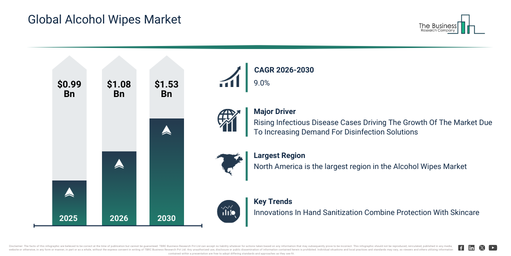
    The alcohol wipes market has shown substantial expansion in recent years. Its valuation is anticipated to rise from $0.99 billion in 2025 to $1.08 billion in 2026, reflecting a compound annual growth rate (CAGR) of 9.3%. This past growth can be attributed to elements such as greater understanding of infection control measures, the widespread implementation of disinfectants in healthcare, the broadening of personal hygiene routines, the expansion of hospital and clinical infrastructure, and the increasing adoption of pre-moistened wipes.

    The alcohol wipes market size is anticipated to undergo significant expansion in the coming years, projected to reach $1.53 billion by 2030 with a compound annual growth rate (CAGR) of 9.0%. This growth during the forecast period is primarily driven by factors such as the increasing demand for preventive healthcare hygiene products, a heightened focus on surface disinfection standards, the expansion of home healthcare services, a growing preference for convenient hygiene solutions, and the increasing development of eco-friendly wipe materials. Furthermore, major trends expected in this period include an increasing demand for single-use hygiene products, rising adoption of medical-grade disinfectant wipes, the growing use of alcohol wipes in healthcare settings, the expansion of portable and travel hygiene solutions, and an enhanced focus on skin-safe disinfectant formulations.

    Access Your Free Sample Report for In-Depth Market Insights:

    https://www.thebusinessresearchcompany.com/sample.aspx?id=24456&type=smp

    What Drivers Are Shaping Future Opportunities In The Alcohol Wipes Market?

    The rising occurrence of infectious diseases is anticipated to boost the expansion of the alcohol wipes market in the future. These diseases are conditions resulting from pathogenic microorganisms, capable of spreading from person to person or via environmental contact. Urbanization fuels the increasing spread of infectious diseases because concentrated populations in cities lead to more intimate interactions, thus speeding up community transmission. Alcohol wipes aid in preventing infectious diseases by efficiently eliminating or rendering inactive detrimental microorganisms like bacteria, viruses, and fungi. With high levels of isopropyl or ethyl alcohol, generally ranging from 60–90%, these wipes break down microbial cell membranes, causing their demise. For example, in March 2024, the Centers for Disease Control and Prevention, a US-based government agency, reported that cases of tuberculosis (an infectious disease) increased from 8,320 in 2022 to 9,615 in 2023, marking a rise of 1,295 cases. Consequently, the heightened incidence of infectious diseases is a key factor propelling the growth of the alcohol wipes market.

    Which Segments Are Gaining Traction In The Alcohol Wipes Market?

    The alcohol wipes market covered in this report is segmented –

    1) By Product Form: Pre-Moistened Wipes, Dry Wipes

    2) By Fabric Material: Natural, Synthetic

    3) By Formulation Type: Isopropyl Alcohol Wipes, Ethyl Alcohol Wipes, Hydrogen Peroxide Wipe

    4) By Distribution Channels: Supermarkets And Hypermarkets, Convenience Stores, Specialty Stores, Online, Other Distribution Channels

    5) By End-Use: Personal And Household, Commercial

    Subsegments:

    1) By Pre-Moistened Wipes: Isopropyl Alcohol Wipes, Ethanol-Based Wipes, Benzalkonium Chloride Wipes, Multi-Surface Disinfecting Wipes, Skin Antiseptic Wipes, Equipment Cleaning Wipes, Medical Use Wipes, Personal Hygiene Wipes

    2) By Dry Wipes: Nonwoven Fabric Dry Wipes, Cotton-Based Dry Wipes, Spunlace Dry Wipes, Airlaid Dry Wipes, Refillable Alcohol Dry Wipes, Multipurpose Dry Sheets, Industrial Cleaning Dry Wipes, Medical-Grade Dry Wipes

    What Trends Are Reshaping The Dynamics Of The Alcohol Wipes Market?

    Leading companies in the alcohol wipes market are prioritizing the incorporation of skin-friendly, clean, and wellness innovations, such as botanical infused sanitizing wipes, to enhance user comfort, skin safety, and convenience, in addition to ensuring disinfection effectiveness. Botanical infused sanitizing wipes integrate alcohol-based germ protection with skincare ingredients to offer both sanitization and hydration. For instance, in July 2025, Noshinku, Inc., a US-based personal care brand, launched its noshinku nourishing travel hand sanitizing wipes. This botanical-infused wipe is designed to sanitize hands while moisturizing and soothing the skin during travel or daily use, featuring pharma grade sugar cane alcohol as the antiseptic agent combined with hydrating aloe, green tea, and oat extracts. The formulation is free from dyes, parabens, artificial fragrances, and harsh antiseptics, and is presented in compact, travel-friendly packaging for on-the-go hygiene. This product enhances the user experience by providing effective germ protection alongside gentle skincare benefits, thus expanding the appeal of the alcohol wipes market among consumers focused on wellness.

    Who Are The Primary Competitors In The Global Alcohol Wipes Market?

    Major companies operating in the alcohol wipes market are Cardinal Health Inc., Medline Industries, Kimberly-Clark Worldwide Inc., Reckitt Benckiser, The Clorox Company, Unicharm, Diversey Holdings, Hartmann Group, Gojo Industries, Kirkland Signature, GAMA Healthcare Ltd., Diamond Wipes International Inc., Pal International Ltd., Zogics, High-Tech Conversions, GermX, Robinson Healthcare Ltd., Clarisan Ltd., Hocleans

    Access The Complete Report For Deeper Market Insights:

    https://www.thebusinessresearchcompany.com/report/alcohol-wipes-global-market-report

    Which Global Regions Are Shaping The Competitive Landscape Of The Alcohol Wipes Market?

    North America was the largest region in the alcohol wipes market in 2025. Asia-Pacific is expected to be the fastest-growing region in the forecast period. The regions covered in the alcohol wipes market report are Asia-Pacific, South East Asia, Western Europe, Eastern Europe, North America, South America, Middle East, Africa.

    Request Your Customized Alcohol Wipes Market Research Report for Competitive Advantage:

    https://www.thebusinessresearchcompany.com/customise?id=24456&type=smp

    Browse Through More Reports Similar to the Global Alcohol Wipes Market 2026, By The Business Research Company

    Alcoholic Beverage Packaging Market Report 2026

    https://www.thebusinessresearchcompany.com/report/alcoholic-beverage-packaging-global-market-report

    Isopropyl Alcohol Market Report 2026

    https://www.thebusinessresearchcompany.com/report/isopropyl-alcohol-global-market-report

    Alcohol Excipients Market Report 2026

    https://www.thebusinessresearchcompany.com/report/alcohol-excipients-global-market-report

    Get in touch with us:

    The Business Research Company: https://www.thebusinessresearchcompany.com/

    Americas +1 310-496-7795

    Asia +44 7882 955267 & +91 8897263534

    Europe +44 7882 955267

    Email us at info@tbrc.info

    Follow us on:

    LinkedIn: https://in.linkedin.com/company/the-business-research-company

    YouTube: https://www.youtube.com/channel/UC24_fI0rV8cR5DxlCpgmyFQ

    Global Market Model: https://www.thebusinessresearchcompany.com/global-market-model
  • Albumin And Creatinine Tests Market Future Outlook: Strong Growth Expected Toward $9.64 Billion by 2030

    Albumin And Creatinine Tests Market Future Outlook: Strong Growth Expected Toward $9.64 Billion by 2030

    Uncover key drivers, emerging technologies, and competitive movements shaping the albumin and creatinine tests market from 2026–2035 with trusted insights from The Business Research Company

    What was the valuation of the Albumin And Creatinine Tests Market in 2026, and what figure is it projected to hit by 2030?

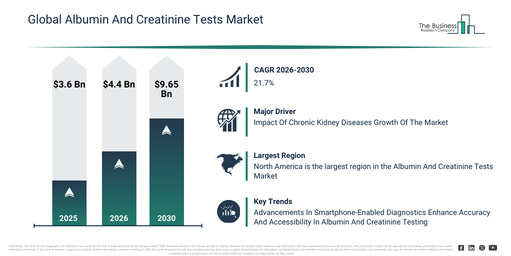
    The albumin and creatinine tests market has seen considerable expansion in its size over recent years. It is anticipated to increase from $3.6 billion in 2025 to $4.4 billion in 2026, demonstrating a compound annual growth rate (CAGR) of 22.2%. The progress observed during the historic period can be ascribed to elements such as the limited accessibility of point-of-care testing devices, the continued reliance on manual urine dipstick tests, a rising incidence of kidney-related disorders, the expansion of hospital and diagnostic laboratory infrastructure, and increased awareness surrounding kidney disease screening.

    The market for albumin and creatinine tests is projected to experience substantial growth over the coming years. By 2030, this market is anticipated to reach $9.65 billion, demonstrating a compound annual growth rate (CAGR) of 21.7%. This expansion during the forecast period is fueled by several factors, including advancements in urine analyzers and their cartridges, the wider deployment of automated laboratory solutions, the rising acceptance of glycated albumin testing, increased investment in developing innovative diagnostic reagents, and the incorporation of data analytics for the early identification of kidney disease. Key trends anticipated during this period encompass the growing integration of point-of-care albumin and creatinine tests, a heightened demand for automated urine analyzers, the broader application of microalbumin test kits for detecting kidney disease early, the expanding utilization of colorimetric and immunoassay reagents, and improved precision achieved through standardized calibration and control solutions.

    Access Your Free Sample Report for In-Depth Market Insights:

    https://www.thebusinessresearchcompany.com/sample.aspx?id=21091&type=smp

    Which Drivers Are Affecting Market Participation In The Albumin And Creatinine Tests Market?

    The increasing occurrence of chronic kidney diseases (CKD) is projected to boost the expansion of the albumin and creatinine tests market in the future. CKD signifies a progressive decline in kidney function over time, wherein the kidneys gradually lose their ability to efficiently remove waste products and surplus fluids from the bloodstream, resulting in a toxic accumulation and potential adverse effects across different bodily systems. The rising prevalence of chronic kidney diseases is fueled by a surge in risk factors like diabetes, high blood pressure, and obesity. Albumin and creatinine tests play a crucial role in diagnosing and monitoring chronic kidney diseases by quantifying protein levels, specifically albumin, in urine, and by evaluating kidney function via creatinine levels, thereby facilitating the prompt identification and management of kidney impairment. For example, a report from June 2023 by Kidney Research UK, a non-profit organization based in the UK, revealed that approximately 7.2 million individuals in the UK, representing over 10% of the population, are currently living with chronic kidney disease. This total comprises 3.25 million in advanced stages and 3.9 million in early stages. Projections indicate that by 2033, the number of affected individuals is anticipated to rise to 7.61 million. Consequently, the increasing incidence of chronic kidney disease is a key factor propelling the expansion of the albumin and creatinine tests market.

    What Segment Categories Are Covered In The Albumin And Creatinine Tests Market?

    The albumin and creatinine tests market covered in this report is segmented –

    1) By Product: Dipsticks And Kits, Analyzers, Cartridges, Reagents, Other Products

    2) By Test Parameter: Blood And Urine Creatinine, Urine Albumin

    3) By End-User: Hospital And Clinics, Diagnostic Laboratories, Research Laboratories And Institutes, Other End-User

    Subsegments:

    1) By Dipsticks And Kits: Urine Dipstick Tests, Microalbumin Test Kits, Point-of-Care Test Kits

    2) By Analyzers: Automated Urine Analyzers, Benchtop Analyzers, Handheld Analyzers

    3) By Cartridges: Single-Use Cartridges, Multi-Parameter Cartridges

    4) By Reagents: Colorimetric Reagents, Enzymatic Reagents, Immunoassay Reagents

    5) By Other Products: Control Solutions, Calibration Standards, Accessories And Consumables

    How Are New Market Trends Shaping The Landscape Of The Albumin And Creatinine Tests Market?

    Major companies within the albumin and creatinine tests market are concentrating on creating advanced digital diagnostic solutions, including smartphone-enabled uACR testing, to enhance the timely identification of chronic kidney disease and broaden patient availability of at-home testing. This smartphone-enabled uACR testing method employs mobile phone cameras, AI-driven analysis, and test strips to determine the urine albumin-to-creatinine ratio, delivering rapid and dependable results without requiring clinic visits. For instance, in November 2024, Healthy.io, an Israel-based digital diagnostics company, presented new clinical study findings at ASN Kidney Week 2024, demonstrating that its smartphone-enabled Minuteful Kidney test provides accuracy comparable to laboratory analyzers for measuring uACR. The study further indicated that the AI-powered test reliably identified elevated albumin levels and supported early CKD detection, thereby reducing barriers to testing and enabling proactive kidney health management.

    Which Key Market Players Are Investing In Expansion And Innovation Within The Albumin And Creatinine Tests Market?

    Major companies operating in the albumin and creatinine tests market are Siemens Healthineers Company, Roche Diagnostics GmbH, Thermo Fisher Scientific Inc., Abbott Laboratories, FUJIFILM Corporation, Laboratory Corporation of America Holdings, Sysmex Corporation, Ortho Clinical Diagnostics Inc., Randox Laboratories Ltd., Nova Biomedical Corporation, Eagle Biosciences Inc., Sekisui Diagnostics LLC, BTNX Inc., RayBiotech Life Inc., ARKRAY Inc., PromoCell GmbH, Arbor Assays Inc., Teco Diagnostics Inc., J. Mitra & Co. Pvt. Ltd., Anamol Laboratories Pvt. Ltd.

    Access The Complete Report For Deeper Market Insights:

    https://www.thebusinessresearchcompany.com/report/albumin-and-creatinine-tests-global-market-report

    Which Regions Are Poised For Strategic Growth In The Albumin And Creatinine Tests Market?

    North America was the largest region in the albumin and creatinine tests market in 2025. Asia-Pacific is expected to be the fastest-growing region in the forecast period. The regions covered in the albumin and creatinine tests market report are Asia-Pacific, South East Asia, Western Europe, Eastern Europe, North America, South America, Middle East, Africa.

    Request Your Customized Albumin And Creatinine Tests Market Research Report for Competitive Advantage:

    https://www.thebusinessresearchcompany.com/customise?id=21091&type=smp

    Browse Through More Reports Similar to the Global Albumin And Creatinine Tests Market 2026, By The Business Research Company

    Protein Assays Market Report 2026

    https://www.thebusinessresearchcompany.com/report/protein-assays-global-market-report

    Albumin Excipient Market Report 2026

    https://www.thebusinessresearchcompany.com/report/albumin-excipient-global-market-report

    C Reactive Protein Testing Market Report 2026

    https://www.thebusinessresearchcompany.com/report/c-reactive-protein-testing-global-market-report

    Get in touch with us:

    The Business Research Company: https://www.thebusinessresearchcompany.com/

    Americas +1 310-496-7795

    Asia +44 7882 955267 & +91 8897263534

    Europe +44 7882 955267

    Email us at info@tbrc.info

    Follow us on:

    LinkedIn: https://in.linkedin.com/company/the-business-research-company

    YouTube: https://www.youtube.com/channel/UC24_fI0rV8cR5DxlCpgmyFQ

    Global Market Model: https://www.thebusinessresearchcompany.com/global-market-model
  • Revenue of the Albumin Market Predicted to Achieve $10.61 Billion by 2030, Driven by 8% CAGR

    Revenue of the Albumin Market Predicted to Achieve $10.61 Billion by 2030, Driven by 8% CAGR

    Uncover key drivers, emerging technologies, and competitive movements shaping the albumin market from 2026–2035 with trusted insights from The Business Research Company

    What are the forecasted starting (2026) and ending (2030) market sizes for the Albumin Market?

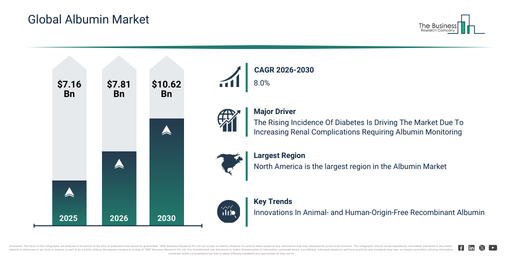
    The albumin market size has demonstrated significant expansion in recent years. It is anticipated to expand from $7.16 billion in 2025 to $7.81 billion in 2026, reflecting a compound annual growth rate (CAGR) of 9.1%. The historical growth of this market is attributable to the constrained supply of plasma-derived albumin, an increase in the prevalence of liver diseases and burns, greater utilization in diagnostic kits, growing biopharmaceutical research and development activities, and its early integration into laboratory and research applications.

    The albumin market is anticipated to experience robust expansion over the coming years. Its value is projected to reach $10.62 billion by 2030, demonstrating a compound annual growth rate (CAGR) of 8.0%. This projected increase within the forecast period stems from progress in recombinant albumin technology, increasing requirements for personalized medicine, the broader application of albumin in drug delivery mechanisms, a rise in biopharmaceutical production, and heightened investment in both therapeutic and cosmetic uses. Key developments expected during this timeframe involve a surging need for human serum albumin in medical treatments, its increasing incorporation into drug formulations and vaccines, the widening scope of recombinant albumin’s utility in biopharma, greater uptake of albumin in cell culture and diagnostic kits, and a concentrated effort on albumin-centric research and customized medicine.

    Access Your Free Sample Report for In-Depth Market Insights:

    https://www.thebusinessresearchcompany.com/sample.aspx?id=16333&type=smp

    What Drivers Are Supporting Technological Adoption In The Albumin Market?

    The growing occurrence of diabetes is projected to fuel the expansion of the albumin market. This chronic metabolic condition is characterized by abnormally high blood glucose levels, which can lead to kidney issues such as diabetic nephropathy over time. A significant contributor to the increasing incidence of diabetes is the surge in obesity rates, with substantial epidemiological evidence demonstrating a strong link between higher body mass index levels and a considerably elevated diabetes risk. Albumin supports patient management by aiding in the monitoring of kidney function and guiding treatment strategies for diabetic individuals. For instance, in April 2025, according to the International Diabetes Federation (IDF), a Belgium-based non-profit organization, diabetes impacted an estimated 589 million adults and 9.5 million people with type 1 diabetes in 2024, including 1.9 million children and adolescents, and the total number of individuals living with the disease is projected to rise to 853 million by 2050. Consequently, the increasing prevalence of diabetes is propelling the growth of the albumin market.

    Which Segments Are Contributing To The Growth Of The Albumin Market?

    The albumin market covered in this report is segmented –

    1) By Type: Human Serum Albumin, Bovine Serum Albumin, Recombinant Albumin

    2) By Application: Therapeutics, Drug Formulation And Vaccines, Component Of Media, Other Applications

    3) By End-User: Hospitals And Clinics, Pharmaceutical And Biotechnology Companies, Research Institutes

    Subsegments:

    1) By Human Serum Albumin: Plasma-Derived Human Serum Albumin, Recombinant Human Serum Albumin, Human Serum Albumin For Therapeutic Use (In Liver Disease, Burns), Human Serum Albumin For Drug Delivery And Research Applications

    2) By Bovine Serum Albumin: Bovine Serum Albumin For Laboratory Use (In Cell Culture), Bovine Serum Albumin For Diagnostic Kits, Bovine Serum Albumin As A Stabilizer In Vaccines And Biopharmaceuticals

    3) By Recombinant Albumin: Recombinant Human Albumin For Therapeutic Applications, Recombinant Albumin For Biopharmaceutical Formulation, Recombinant Albumin For Cosmetic And Personal Care Applications, Recombinant Albumin For Research And Diagnostic Applications

    Which Trends Are Expected To Influence The Albumin Market In The Upcoming Years?

    Leading companies within the albumin market are innovating offerings, including animal- and human-origin-free recombinant albumin, to provide enhanced functionalities to clients. This particular albumin is produced via non-mammalian expression systems, like yeast, and is entirely devoid of animal or human-derived ingredients. As an illustration, in March 2023, UK’s Albumedix, a recombinant human albumin (rHA) producer, joined forces with Japan’s Heartseed Inc., a clinical-stage biotech firm. Their collaboration aims to introduce Recombin, an essential excipient for Heartseed’s investigational cell therapy, HS-001, coinciding with the start of its initial human clinical trial. This partnership represents a crucial advancement for HS-001, a product anticipated to transform disease treatment. Incorporating Recombin into the manufacturing process guarantees optimal performance and stability for the cell therapy, thereby strengthening its prospects for therapeutic achievement.

    Who Are The Core Companies Influencing Trends In The Albumin Market?

    Major companies operating in the albumin market are Bristol-Myers Squibb Company, Thermo Fisher Scientific Inc., Takeda Pharmaceutical Company Limited, Merck KGaA, Baxter International Inc., CSL Limited, Grifols SA, Mitsubishi Tanabe Pharma Corporation, Octapharma AG, Kedrion S.p.A., Biotest AG, Jiangxi Boya Bio-Pharmaceutical Co. Ltd., BPL (Bio Products Laboratory), Kamada Ltd., Proliant Biologicals, SeraCare Life Sciences Inc., HiMedia Laboratories, Albumedix Ltd., Medxbio Pte Ltd., Ventria Bioscience Inc., China Biologic Products Holdings Inc.

    Access The Complete Report For Deeper Market Insights:

    https://www.thebusinessresearchcompany.com/report/albumin-global-market-report

    Which Regions Are Projected To Dominate The Albumin Market In The Coming Years?

    North America was the largest region in the albumin market in 2025. Asia-Pacific is expected to be the fastest-growing region in the forecast period. The regions covered in the albumin market report are Asia-Pacific, South East Asia, Western Europe, Eastern Europe, North America, South America, Middle East, Africa.

    Request Your Customized Albumin Market Research Report for Competitive Advantage:

    https://www.thebusinessresearchcompany.com/customise?id=16333&type=smp

    Browse Through More Reports Similar to the Global Albumin Market 2026, By The Business Research Company

    Catalogue Market Report 2026

    https://www.thebusinessresearchcompany.com/report/catalogue-global-market-report

    Albumin Excipient Market Report 2026

    https://www.thebusinessresearchcompany.com/report/albumin-excipient-global-market-report

    Music Recording Market Report 2026

    https://www.thebusinessresearchcompany.com/report/music-recording-global-market-report

    Get in touch with us:

    The Business Research Company: https://www.thebusinessresearchcompany.com/

    Americas +1 310-496-7795

    Asia +44 7882 955267 & +91 8897263534

    Europe +44 7882 955267

    Email us at info@tbrc.info

    Follow us on:

    LinkedIn: https://in.linkedin.com/company/the-business-research-company

    YouTube: https://www.youtube.com/channel/UC24_fI0rV8cR5DxlCpgmyFQ

    Global Market Model: https://www.thebusinessresearchcompany.com/global-market-model
  • AL Amyloidosis Sector Forecast Shows Robust Momentum, Climbing to $6.37 Billion With 12.6% CAGR

    AL Amyloidosis Sector Forecast Shows Robust Momentum, Climbing to $6.37 Billion With 12.6% CAGR

    Uncover key drivers, emerging technologies, and competitive movements shaping the al amyloidosis market from 2026–2035 with trusted insights from The Business Research Company

    What upper market value could the AL Amyloidosis Market reach by 2030 starting from 2026 levels?

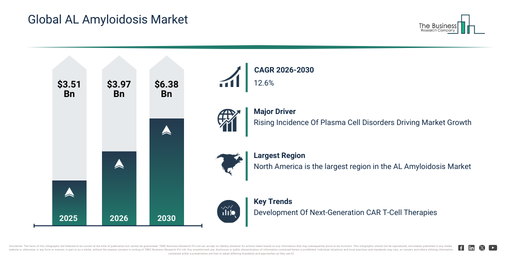
    The al amyloidosis market has seen rapid expansion in recent years. It is forecast to rise from $3.51 billion in 2025 to $3.97 billion in 2026, reflecting a compound annual growth rate (CAGR) of 13.0%. The growth observed in the past can be linked to factors such as restricted treatment options, dependence on conventional chemotherapy, insufficient disease awareness, inadequate organ-specific supportive care, and limited access to specialized treatment facilities.

    The al amyloidosis market is projected to experience swift expansion in the coming years. It is anticipated to reach $6.38 billion by 2030, demonstrating a compound annual growth rate (CAGR) of 12.6%. This growth during the forecast period stems from factors such as the emergence of new targeted treatments, the growing acceptance of monoclonal antibodies and proteasome inhibitors, the broadening of stem cell transplant initiatives, the strengthening of healthcare infrastructure for rare conditions, and advancements in diagnostic tools for prompt identification. Key trends anticipated during this period encompass the escalating utilization of targeted therapies for al amyloidosis, the increased application of monoclonal antibodies and proteasome inhibitors, the extension of stem cell transplant methods, an amplified emphasis on organ-specific supportive care, and heightened awareness coupled with earlier diagnosis of al amyloidosis.

    Access Your Free Sample Report for In-Depth Market Insights:

    https://www.thebusinessresearchcompany.com/sample.aspx?id=20710&type=smp

    Which Drivers Are Influencing Long-Term Growth In The AL Amyloidosis Market?

    An increasing occurrence of plasma cell disorders is anticipated to fuel expansion within the AL amyloidosis market moving ahead. These disorders involve atypical plasma cells generating an overabundance or irregular antibodies, which can potentially harm organs. The growing prevalence of plasma cell disorders is linked to an aging demographic, extended longevity, and progress in diagnostic methods. AL amyloidosis is a consequence of plasma cell disorders, specifically characterized by the excessive creation of abnormal light chain proteins. This process results in amyloid deposits accumulating in organs and tissues, intensifying the impact of plasma cell dyscrasias. As an illustration, reports from The American Cancer Society (ACS), a US-based nonprofit, indicated in August 2024 that for 2024, approximately 35,780 new multiple myeloma cases are projected for diagnosis (comprising 19,520 in men and 16,260 in women). Additionally, around 12,540 fatalities are forecast, with 7,020 among men and 5,520 among women. Consequently, the increased occurrence of plasma cell disorders is propelling the expansion of the AL amyloidosis market.

    How Is The AL Amyloidosis Market Divided Into Segments?

    The al amyloidosis market covered in this report is segmented –

    1) By Treatment: Chemotherapy, Supportive Care, Stem Cell Transplant, Targeted Therapy

    2) By Drugs: Immunomodulatory Drugs, Monoclonal Antibodies, Proteasome Inhibitors, Other Drugs

    3) By Route Of Administration: Intravenous, Oral

    4) By Distribution Channel: Hospital Pharmacies, Retail Pharmacies

    Subsegments:

    1) By Chemotherapy: Conventional Chemotherapy Agents, High-Dose Chemotherapy

    2) By Supportive Care: Pain Management, Organ-specific Supportive Care (Cardiac, Renal)

    3) By Stem Cell Transplant: Autologous Stem Cell Transplant, Allogeneic Stem Cell Transplant

    4) By Targeted Therapy: Monoclonal Antibodies, Proteasome Inhibitors, Kinase Inhibitors

    What Trends Are Driving The Growth Trajectory Of The AL Amyloidosis Market?

    Major companies operating in the AL amyloidosis market are concentrating on developing innovative therapies, such as next-generation B-cell maturation antigen (BCMA)-directed CAR T-cell therapy, to improve treatment efficacy and patient outcomes. This advanced form of immunotherapy, next-generation BCMA-directed CAR T-cell therapy, involves engineering a patient’s T cells to target and attack BCMA on the surface of cancer cells, specifically in multiple myeloma. For instance, in September 2023, Immix Biopharma Inc., a US-based biopharmaceutical company, received approval from the U.S. Food and Drug Administration (FDA) for NXC-201 for the treatment of a life-threatening blood disorder, Amyloid Light Chain (AL) Amyloidosis. NXC-201 is a next-generation CAR-T cell therapy undergoing clinical trials for the treatment of amyloid light chain (AL) amyloidosis, showing promising results with a 100% hematologic response rate and organ improvements in patients who had failed previous treatments.

    Which Major Industry Participants Are Leading The AL Amyloidosis Market Growth?

    Major companies operating in the al amyloidosis market are Johnson & Johnson, Bristol-Myers Squibb Company, Takeda Pharmaceutical Company Limited, Pfizer Inc., Amgen Inc., AbbVie Inc., Sanofi S.A., AstraZeneca PLC, Roche Holding AG, Novartis AG, Merck & Co. Inc., Eli Lilly and Company, GlaxoSmithKline plc, Genmab A/S, Prothena Corporation plc, BridgeBio Pharma Inc., Oncopeptides AB, Ionis Pharmaceuticals Inc., Neurimmune AG, Immix Biopharma Inc., Attralus Inc.

    Access The Complete Report For Deeper Market Insights:

    https://www.thebusinessresearchcompany.com/report/al-amyloidosis-global-market-report

    Which Region Is Expected To Experience The Fastest Growth In The AL Amyloidosis Market?

    North America was the largest region in the AL amyloidosis market in 2025. The regions covered in the al amyloidosis market report are Asia-Pacific, South East Asia, Western Europe, Eastern Europe, North America, South America, Middle East, Africa.

    Request Your Customized AL Amyloidosis Market Research Report for Competitive Advantage:

    https://www.thebusinessresearchcompany.com/customise?id=20710&type=smp

    Browse Through More Reports Similar to the Global AL Amyloidosis Market 2026, By The Business Research Company

    Keloids Treatment Market Report 2026

    https://www.thebusinessresearchcompany.com/report/keloids-treatment-global-market-report

    Transthyretin Amyloidosis Treatment Market Report 2026

    https://www.thebusinessresearchcompany.com/report/transthyretin-amyloidosis-treatment-global-market-report

    Alzheimers Drugs Market Report 2026

    https://www.thebusinessresearchcompany.com/report/alzheimers-drugs-global-market-report

    Get in touch with us:

    The Business Research Company: https://www.thebusinessresearchcompany.com/

    Americas +1 310-496-7795

    Asia +44 7882 955267 & +91 8897263534

    Europe +44 7882 955267

    Email us at info@tbrc.info

    Follow us on:

    LinkedIn: https://in.linkedin.com/company/the-business-research-company

    YouTube: https://www.youtube.com/channel/UC24_fI0rV8cR5DxlCpgmyFQ

    Global Market Model: https://www.thebusinessresearchcompany.com/global-market-model