Category: HealthcareServices

  • Virtual Reality (VR) Metaverse Concussion Rehabilitation Market Anticipated to Record Steady Gains, Advancing to $6.02 Billion by 2030

    Virtual Reality (VR) Metaverse Concussion Rehabilitation Market Anticipated to Record Steady Gains, Advancing to $6.02 Billion by 2030

    Uncover key drivers, emerging technologies, and competitive movements shaping the virtual reality (vr) metaverse concussion rehabilitation market from 2026–2035 with trusted insights from The Business Research Company

    What are the forecasted starting (2026) and ending (2030) market sizes for the Virtual Reality (VR) Metaverse Concussion Rehabilitation Market?

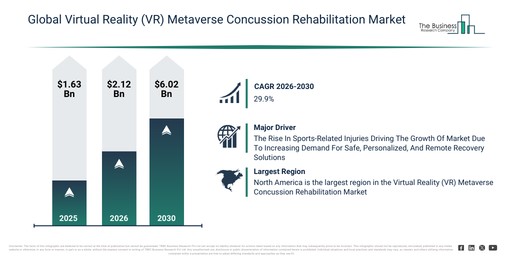
    The market size for virtual reality (VR) metaverse concussion rehabilitation has seen rapid expansion in recent years. This market is projected to increase from $1.63 billion in 2025 to $2.12 billion in 2026, exhibiting a compound annual growth rate (CAGR) of 30.2%. The historical growth can be attributed to several factors, including the increasing occurrence of sports-related concussions, a heightened awareness of digital rehabilitation solutions, the integration of VR into neurological therapy, the growing availability of VR hardware in healthcare environments, and the expansion of outpatient rehabilitation services.

    The virtual reality (vr) metaverse concussion rehabilitation market size is projected to experience rapid expansion over the upcoming years. This market is anticipated to reach $6.02 billion by 2030, progressing at a compound annual growth rate (CAGR) of 29.9%. The expansion during this forecast period stems from factors such as increasing capital directed towards metaverse-based healthcare platforms, a surge in the need for at-home concussion recovery services, the rising incorporation of AI-powered personalized therapy, the broadening of remote patient surveillance solutions, and a greater embrace of digital therapeutic methods. Prominent developments expected in the forecast timeframe encompass the increasing uptake of immersive VR-driven rehabilitation initiatives, a growing utilization of individualized cognitive recovery modules, the escalating integration of distant tele-rehabilitation services, the proliferation of motion tracking and sensory feedback technologies, and a heightened emphasis on patient involvement and therapy compliance.

    Access Your Free Sample Report for In-Depth Market Insights:

    https://www.thebusinessresearchcompany.com/sample.aspx?id=28353&type=smp

    What Drivers Are Supporting Technological Adoption In The Virtual Reality (VR) Metaverse Concussion Rehabilitation Market?

    The increasing prevalence of sports-related injuries is expected to propel the growth of the virtual reality (VR) metaverse concussion rehabilitation market going forward. Sports-related injuries refer to physical injuries occurring during athletic or exercise activities, commonly affecting the muscles, bones, joints, and the head. The prevalence of sports-related injuries is rising due to growing participation in high-intensity, competitive, and recreational sports during the post-pandemic period. The virtual reality (VR) metaverse concussion rehabilitation supports this driver by providing immersive and controlled cognitive-physical therapy environments that enable safer recovery, personalized rehabilitation, and remote return-to-play monitoring. For instance, in October 2024, according to the Insideworldfootball, a UK-based web-based news-driven service, sport injuries reached a total of 4,123 during the 2023-24 season, marking a 4% increase compared to the 2022-23. Therefore, the increasing prevalence of sports-related injuries is driving the virtual reality (VR) metaverse concussion rehabilitation market.

    Which Segments Are Contributing To The Growth Of The Virtual Reality (VR) Metaverse Concussion Rehabilitation Market?

    The virtual reality (vr) metaverse concussion rehabilitation market covered in this report is segmented –

    1) By Component: Hardware, Software, Services

    2) By Deployment Mode: On-Premises, Cloud-Based

    3) By Therapy Type: Physical Therapy, Cognitive Therapy, Occupational Therapy, Speech Therapy, Other Therapy Types

    4) By End-User: Hospitals And Clinics, Rehabilitation Centers, Homecare Settings, Other End-Users

    Subsegments:

    1) By Hardware: Virtual Reality (VR) Headsets, Motion Sensors And Trackers, Controllers And Haptics Devices, Cameras And Wearables, Computing Devices

    2) By Software: Therapy And Rehabilitation Software, Cognitive Training Programs, Balance And Motor Skills Training Software, Speech And Occupational Therapy Software, Cloud-Based Virtual Reality (VR) Platforms

    3) By Services: Deployment And Integration Services, Training And Education Services, Support And Maintenance Services, Tele-rehabilitation And Remote Monitoring Services, Customization And Consulting Services

    Who Are The Prominent Global Companies Shaping The Virtual Reality (VR) Metaverse Concussion Rehabilitation Market Landscape?

    Major companies operating in the virtual reality (vr) metaverse concussion rehabilitation market are MindMaze SA, Oculus Health Inc., XRHealth Inc., Cureosity GmbH, AppliedVR Inc., Takeaway Reality Ltd., Mieron VR Inc., Virtualis Sàrl, Rehametrics S.L., TechVillage Technologies Pvt. Ltd., Neuromersiv Pty Ltd., Cognihab, ORamaVR SA, BehaVR Inc., Neuro Rehab VR Inc., Eye-Sync Inc., HeadRehab VR Inc., Kinesim S.r.l., MindMotion SA, Corpus VR B.V.

    Access The Complete Report For Deeper Market Insights:

    https://www.thebusinessresearchcompany.com/report/virtual-reality-vr-metaverse-concussion-rehabilitation-global-market-report

    Which Geographic Areas Are Emerging As Strong Markets For The Virtual Reality (VR) Metaverse Concussion Rehabilitation Market?

    North America was the largest region in the virtual reality (VR) metaverse concussion rehabilitation market in 2025. The regions covered in the virtual reality (vr) metaverse concussion rehabilitation market report are Asia-Pacific, South East Asia, Western Europe, Eastern Europe, North America, South America, Middle East, Africa.

    Request Your Customized Virtual Reality (VR) Metaverse Concussion Rehabilitation Market Research Report for Competitive Advantage:

    https://www.thebusinessresearchcompany.com/customise?id=28353&type=smp

    Browse Through More Reports Similar to the Global Virtual Reality (VR) Metaverse Concussion Rehabilitation Market 2026, By The Business Research Company

    Concussion Market Report 2026

    https://www.thebusinessresearchcompany.com/report/concussion-global-market-report

    Virtual Reality Vr In Medical Simulation Market Report 2026

    https://www.thebusinessresearchcompany.com/report/virtual-reality-vr-in-medical-simulation-global-market-report

    Traumatic Brain Injury Market Report 2026

    https://www.thebusinessresearchcompany.com/report/traumatic-brain-injury-global-market-report

    Get in touch with us:

    The Business Research Company: https://www.thebusinessresearchcompany.com/

    Americas +1 310-496-7795

    Asia +44 7882 955267 & +91 8897263534

    Europe +44 7882 955267

    Email us at info@tbrc.info

    Follow us on:

    LinkedIn: https://in.linkedin.com/company/the-business-research-company

    YouTube: https://www.youtube.com/channel/UC24_fI0rV8cR5DxlCpgmyFQ

    Global Market Model: https://www.thebusinessresearchcompany.com/global-market-model
  • Virtual Reality (VR) In Telerehabilitation Industry Poised for Rapid Growth, Forecast to Touch $2.66 Billion by 2030 at 22% CAGR

    Virtual Reality (VR) In Telerehabilitation Industry Poised for Rapid Growth, Forecast to Touch $2.66 Billion by 2030 at 22% CAGR

    Uncover key drivers, emerging technologies, and competitive movements shaping the virtual reality (vr) in telerehabilitation market from 2026–2035 with trusted insights from The Business Research Company

    What upper market value could the Virtual Reality (VR) In Telerehabilitation Market reach by 2030 starting from 2026 levels?

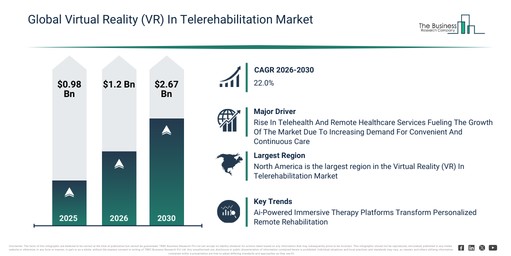
    The virtual reality (vr) in telerehabilitation market has experienced substantial expansion in its size over recent years. Projections indicate it is set to expand from $0.98 billion in 2025 to $1.2 billion in 2026, achieving a compound annual growth rate (CAGR) of 22.3%. The historic growth can be ascribed to the broader availability of telerehabilitation services, the rising adoption of digital therapeutics, an increasing emphasis on patient-centered care, the accessibility of consumer VR hardware, and the general growth of remote healthcare delivery.

    The virtual reality (vr) in telerehabilitation market size is anticipated to experience substantial growth over the next few years. It is projected to reach $2.67 billion by 2030, demonstrating a compound annual growth rate (CAGR) of 22.0%. The expansion foreseen during this period stems from factors such as increasing investment in immersive healthcare technologies, a rising demand for home-based rehabilitation solutions, the proliferation of AI-enabled therapy platforms, greater integration with wearable devices, and an intensified focus on outcome-based rehabilitation models. Prominent trends for the forecast period include the increasing adoption of immersive remote rehabilitation programs, wider utilization of gamified therapy environments, growing incorporation of AI-based progress tracking, the expansion of home-based VR therapy solutions, and an enhanced commitment to patient engagement and adherence.

    Access Your Free Sample Report for In-Depth Market Insights:

    https://www.thebusinessresearchcompany.com/sample.aspx?id=28352&type=smp

    Which Drivers Are Influencing Long-Term Growth In The Virtual Reality (VR) In Telerehabilitation Market?

    The increasing acceptance of telehealth and remote healthcare services is anticipated to fuel expansion in the virtual reality (VR) in telerehabilitation market moving ahead. These services involve providing medical care to individuals via digital and telecommunication platforms, eliminating the need for physical appointments. Telehealth is gaining traction because patients desire convenient consultations from home and ongoing supervision, which minimizes travel, delays, and breaks in treatment. The virtual reality (VR) in telerehabilitation market facilitates this trend by improving distant rehabilitation through engaging, interactive, and medically supervised VR settings that lead to better recovery results. For example, data from Vivalink, a US-based healthcare technology company, indicated that in August 2023, 81% of clinicians stated they utilized remote patient monitoring (RPM) technologies in 2023, highlighting a significant and accelerating uptake of remote care solutions. Consequently, the growing adoption of telehealth and remote healthcare services is a key factor propelling the expansion of the virtual reality (VR) in telerehabilitation market.

    How Is The Virtual Reality (VR) In Telerehabilitation Market Divided Into Segments?

    The virtual reality (vr) in telerehabilitation market covered in this report is segmented –

    1) By Component: Hardware, Software, Services

    2) By Rehabilitation: In-Person Rehabilitation, Remote Rehabilitation

    3) By Application: Physical Rehabilitation, Neurological Rehabilitation, Cardiac Rehabilitation, Psychological Rehabilitation, Orthopedic Rehabilitation

    4) By End-User: Healthcare Providers, Rehabilitation Centers, Homecare Settings, Fitness And Wellness Centers, Corporates

    Subsegments:

    1) By Hardware: Head-Mounted Displays (HMDs), Motion Tracking Sensors, Haptic Feedback Devices, Virtual Reality (VR) Gloves, Virtual Reality (VR) Treadmills, Eye-Tracking Devices, Cameras And Depth Sensors, Computing And Graphics Processing Units (GPUs)

    2) By Software: Immersive Virtual Reality (VR) Therapy Applications, Non-Immersive Virtual Reality (VR) Therapy Applications, Mixed Reality Therapy Applications, Artificial Intelligence (AI)-Based Therapy Modules, Gamified Rehabilitation Software, Patient Data Management And Analytics Platforms, Cloud-Based Therapy Software

    3) By Services: Clinical Implementation Services, Remote Patient Monitoring Services, Maintenance And Support Services, Training And Education Services, Consultation And Integration Services

    Which Trends Are Influencing The Development Of The Virtual Reality (VR) In Telerehabilitation Market?

    Major companies operating within the virtual reality (VR) telerehabilitation market are emphasizing the development of advanced solutions, including AI-powered immersive therapy platforms, to facilitate personalized, remote rehabilitation and cognitive care. AI-powered immersive therapy platforms are digital systems that combine virtual reality (VR) environments with artificial intelligence to produce personalized, interactive therapy experiences for rehabilitation, mental health, or cognitive training. For example, in November 2024, XRHealth Inc., a US-based digital therapeutics company, launched an AI-enhanced multidisciplinary extended reality (XR) therapeutic platform. This platform integrates advanced artificial intelligence with immersive XR experiences to deliver personalized and interactive therapeutic environments. Its features include an AI Generator Space, enabling clinicians to develop custom 360-degree therapeutic environments tailored to individual patient needs, and dynamic avatars for improved patient interaction.

    Which Key Players Are Driving Competition In The Virtual Reality (VR) In Telerehabilitation Market?

    Major companies operating in the virtual reality (vr) in telerehabilitation market are Penumbra Inc., DIH Holding US Inc., MindMaze, Reflexion Interactive Technologies Inc., Saebo, VR Rehab Inc., CUREosity GmbH, InfiVR, SyncVR Medical, Rehametrics, GestureTek Health, Doctor Kinetic, Cognihab Inc., Neuro Rehab VR, Virtualware, Mice Labs, Evolv Rehabilitation Technologies, XR4REHAB, MIRA Rehab Limited, LiteGait.

    Access The Complete Report For Deeper Market Insights:

    https://www.thebusinessresearchcompany.com/report/virtual-reality-vr-in-telerehabilitation-global-market-report

    Which Region Is Projected To Lead The Virtual Reality (VR) In Telerehabilitation Market During The Forecast Period?

    North America was the largest region in the virtual reality (VR) in telerehabilitation market in 2025. Asia-Pacific is expected to be the fastest-growing region in the forecast period. The regions covered in the virtual reality (vr) in telerehabilitation market report are Asia-Pacific, South East Asia, Western Europe, Eastern Europe, North America, South America, Middle East, Africa.

    Request Your Customized Virtual Reality (VR) In Telerehabilitation Market Research Report for Competitive Advantage:

    https://www.thebusinessresearchcompany.com/customise?id=28352&type=smp

    Browse Through More Reports Similar to the Global Virtual Reality (VR) In Telerehabilitation Market 2026, By The Business Research Company

    Virtual Reality Vr Fitness Game Market Report 2026

    https://www.thebusinessresearchcompany.com/report/virtual-reality-vr-fitness-game-global-market-report

    Virtual Reality In Healthcare Market Report 2026

    https://www.thebusinessresearchcompany.com/report/virtual-reality-in-healthcare-global-market-report

    Virtual Rehabilitation Market Report 2026

    https://www.thebusinessresearchcompany.com/report/virtual-rehabilitation-global-market-report

    Get in touch with us:

    The Business Research Company: https://www.thebusinessresearchcompany.com/

    Americas +1 310-496-7795

    Asia +44 7882 955267 & +91 8897263534

    Europe +44 7882 955267

    Email us at info@tbrc.info

    Follow us on:

    LinkedIn: https://in.linkedin.com/company/the-business-research-company

    YouTube: https://www.youtube.com/channel/UC24_fI0rV8cR5DxlCpgmyFQ

    Global Market Model: https://www.thebusinessresearchcompany.com/global-market-model
  • Virtual Reality (VR) In Medical Simulation Market Performance Outlook 2026–2030: Revenue to Hit $24.17 Billion at 30.2% CAGR

    Virtual Reality (VR) In Medical Simulation Market Performance Outlook 2026–2030: Revenue to Hit $24.17 Billion at 30.2% CAGR

    Uncover key drivers, emerging technologies, and competitive movements shaping the virtual reality (vr) in medical simulation market from 2026–2035 with trusted insights from The Business Research Company

    What level of CAGR-driven expansion is anticipated in the Virtual Reality (VR) In Medical Simulation Market between 2026 and 2030?

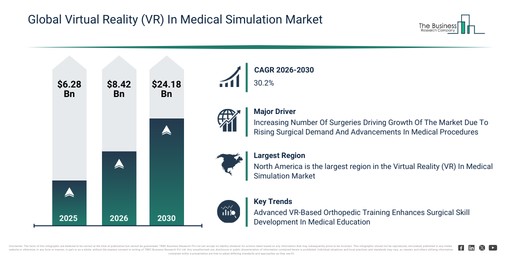
    The market size for virtual reality (vr) in medical simulation has experienced significant expansion over recent years. This sector is projected to expand from $6.28 billion in 2025 to $8.42 billion in 2026, demonstrating a compound annual growth rate (CAGR) of 34.2%. Historically, this expansion has been driven by factors such as the broadening of medical education facilities, a greater need for uniform clinical training, increased acceptance of learning methods based on simulation, heightened financial commitments to medical training innovations, and better availability of vr hardware.

    The virtual reality (vr) in medical simulation market size is projected to undergo significant expansion in the coming years. It is expected to grow to $24.18 billion by 2030, achieving a compound annual growth rate (CAGR) of 30.2%. The anticipated growth during this period stems from increasing investments in immersive medical education, a rising demand for remote and scalable training solutions, the broadening use of VR in clinical assessment, the growing integration of AI-driven feedback systems, and wider adoption across healthcare institutions. Noteworthy trends for the forecast period include the increasing uptake of VR-based medical training simulations, the expanding utilization of virtual surgical practice platforms, the deeper incorporation of AI-assisted clinical scenarios, the enlargement of remote medical education programs, and an enhanced emphasis on risk-free skill development.

    Access Your Free Sample Report for In-Depth Market Insights:

    https://www.thebusinessresearchcompany.com/sample.aspx?id=16211&type=smp

    What Drivers Are Affecting Demand-Supply Dynamics In The Virtual Reality (VR) In Medical Simulation Market?

    The rising number of surgical procedures is anticipated to drive the expansion of virtual reality (VR) in the medical simulation market in the coming years. Surgeries, which encompass medical interventions performed by surgeons to diagnose, treat, or prevent ailments or injuries, frequently involve making incisions to access internal tissues or organs. The surge in surgical volumes is a result of advancements in medical technologies, refinements in surgical techniques, and an expanded eligibility for surgical interventions across various medical specialties. VR in medical simulation plays a crucial role in supporting this trend by delivering immersive and highly realistic training environments. These environments accurately simulate complex anatomical structures and surgical scenarios, enabling surgeons to safely acquire and refine their skills before entering an operating room. For instance, in June 2024, data from the International Society of Aesthetic Plastic Surgery (ISAPS), a US-based professional association, indicated in its Global Survey 2023 that total aesthetic procedures reached 34.9 million. This included more than 15.8 million surgical procedures carried out by plastic surgeons in 2023, marking a 5.5% year-over-year increase and a 40% rise over four years. Thus, the increasing frequency of surgeries is a key catalyst for the growth of virtual reality (VR) within the medical simulation market.

    What Segments Are Included Within The Virtual Reality (VR) In Medical Simulation Market?

    The virtual reality (vr) in medical simulation market covered in this report is segmented –

    1) By Age Group: Adult, Children, Infant

    2) By Application: Medical Education, Virtual Reality In Diagnostics, Pain Management, Mental Illness Treatment, Physical Fitness And Therapy, Virtual Reality In Surgery, Human Simulation Techniques, Virtual Reality In Dentistry, Virtual Reality In Nursing, Other Applications

    3) By End-User: Hospitals, Physician Clinics, Ambulatory Surgical Centers, Medical Institutes, Research Laboratory, Pharmaceutical Industry, Other End-Users

    Subsegments:

    1) By Adult: Vr Medical Simulations For Surgical Training, Vr Simulations For Clinical Diagnosis And Procedures, Vr For Pain Management And Physical Rehabilitation, Vr For Emergency And Trauma Care Training, Vr For Mental Health Therapy (Anxiety, Ptsd)

    2) By Children: Pediatric Vr Simulations For Medical Procedures, Vr For Pediatric Pain Management And Relaxation, Vr For Children’s Health Education (Explaining Procedures), Vr For Pediatric Physical Therapy And Rehabilitation, Vr For Cognitive And Emotional Development

    3) By Infant: Neonatal Vr Simulations For Caregivers And Healthcare Providers, Vr For Infant Care Training (Resuscitation Techniques), Vr For Monitoring Infant Vital Signs And Development, Vr For Early Developmental Therapy (Sensory Stimulation)

    What Trends Are Expected To Impact The Competitive Landscape Of The Virtual Reality (VR) In Medical Simulation Market?

    Major companies active in the virtual reality (VR) medical simulation market are dedicating efforts to developing advanced solutions, including immersive arthroscopic training modules, with the goal of enhancing surgical competence, reducing training risks, and providing anatomically accurate, repeatable practice environments for students. Arthroscopic VR training modules are instructional tools based on virtual reality that replicate minimally invasive orthopedic procedures, allowing trainees to practice crucial skills such such as instrument handling, triangulation, arm positioning, and repair techniques within a controlled, lifelike setting that significantly surpasses the limitations of traditional cadaver labs or textbook learning. As an illustration, in May 2023, PrecisionOS, a Canada-based medical simulation technology company, launched its VR Shoulder Simulation Module, an innovative training solution for arthroscopic double-row rotator cuff repair sponsored by CONMED. This module is designed to strengthen trainee proficiency by offering high-fidelity anatomical visualization, real-time feedback, procedural step guidance, rotator cuff tear pattern assessment, and the flexibility to practice independently or with remote mentorship, ultimately helping residents and fellows acquire the skill set essential for safe and effective surgical performance.

    Who Are The Top-Performing Companies In The Virtual Reality (VR) In Medical Simulation Market In Recent Years?

    Major companies operating in the virtual reality (vr) in medical simulation market are CAE Healthcare Inc, Brainlab AG, Surgical Science Sweden AB, Osso VR Inc, Mentice AB, Augmedics, Virtalis Holdings Ltd, VirtaMed AG, Oxford Medical Simulation Ltd, Health Scholars Inc, AppliedVR Inc, Medisim Ltd, Fundamental Surgery, ImmersiveTouch Inc, SimforHealth, SimX, PrecisionOS Technologies Inc, Body Interact, XRHealth, Oxford Medical Simulation Ltd, Psious, Surgical Theater, MedVR Education, Medical Realities

    Access The Complete Report For Deeper Market Insights:

    https://www.thebusinessresearchcompany.com/report/virtual-reality-vr-in-medical-simulation-global-market-report

    Which Region Currently Holds The Largest Share Of The Virtual Reality (VR) In Medical Simulation Market?

    North America was the largest region in the virtual reality (VR) in medical simulation market in 2025. Asia-Pacific is expected to be the fastest-growing region in the forecast period. The regions covered in the virtual reality (vr) in medical simulation market report are Asia-Pacific, South East Asia, Western Europe, Eastern Europe, North America, South America, Middle East, Africa.

    Request Your Customized Virtual Reality (VR) In Medical Simulation Market Research Report for Competitive Advantage:

    https://www.thebusinessresearchcompany.com/customise?id=16211&type=smp

    Browse Through More Reports Similar to the Global Virtual Reality (VR) In Medical Simulation Market 2026, By The Business Research Company

    Patient Simulators Market Report 2026

    https://www.thebusinessresearchcompany.com/report/patient-simulators-global-market-report

    Virtual Reality In Healthcare Market Report 2026

    https://www.thebusinessresearchcompany.com/report/virtual-reality-in-healthcare-global-market-report

    Ar Or Vr Medical Simulation Market Report 2026

    https://www.thebusinessresearchcompany.com/report/ar-or-vr-medical-simulation-global-market-report

    Get in touch with us:

    The Business Research Company: https://www.thebusinessresearchcompany.com/

    Americas +1 310-496-7795

    Asia +44 7882 955267 & +91 8897263534

    Europe +44 7882 955267

    Email us at info@tbrc.info

    Follow us on:

    LinkedIn: https://in.linkedin.com/company/the-business-research-company

    YouTube: https://www.youtube.com/channel/UC24_fI0rV8cR5DxlCpgmyFQ

    Global Market Model: https://www.thebusinessresearchcompany.com/global-market-model
  • Global Virtual Nutrition Coach App Market Set for Strong Expansion, Reaching $898.4 Billion With 19% CAGR by 2030

    Global Virtual Nutrition Coach App Market Set for Strong Expansion, Reaching $898.4 Billion With 19% CAGR by 2030

    Uncover key drivers, emerging technologies, and competitive movements shaping the virtual nutrition coach app market from 2026–2035 with trusted insights from The Business Research Company

    What long-term size projections exist for the Virtual Nutrition Coach App Market covering 2026–2035?

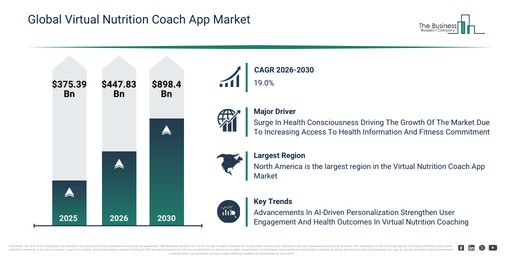
    The virtual nutrition coach app market size has experienced rapid expansion in recent years. Projections indicate it will increase from $375.39 billion in 2025 to $447.83 billion in 2026, achieving a compound annual growth rate (CAGR) of 19.3%. The drivers for this growth during the historic period include the rise in smartphone penetration, greater consumer awareness of healthy lifestyles, the expansion of digital health applications, the growing availability of health data analytics tools, and the increasing acceptance of remote wellness solutions.

    The market for virtual nutrition coach applications is projected to experience substantial expansion over the upcoming years. This sector is anticipated to reach a valuation of $898.4 billion by 2030, demonstrating a compound annual growth rate (CAGR) of 19.0%. Factors contributing to this expansion during the projected timeframe encompass a heightened need for tailored healthcare options, the expanding incorporation of AI into consumer health applications, the broadening scope of data-informed nutrition guidance, an intensified emphasis on preventing chronic conditions, and the growing uptake of digital health services offered on a subscription basis. Key developments anticipated within this forecast period involve the wider acceptance of AI-powered customized nutrition programs, greater connectivity with wearable health technology, the escalating utilization of features for real-time dietary monitoring, the proliferation of subscription-model nutrition platforms, and an elevated commitment to proactive health and overall well-being.

    Access Your Free Sample Report for In-Depth Market Insights:

    https://www.thebusinessresearchcompany.com/sample.aspx?id=24425&type=smp

    Which Drivers Are Impacting The Competitive Landscape Of The Virtual Nutrition Coach App Market?

    The growing emphasis on health among consumers is projected to drive the expansion of the virtual nutrition coach app market moving forward. Health consciousness refers to an individual’s mindfulness and proactive approach towards maintaining and enhancing their overall health and well-being. This awareness among consumers is increasing, primarily due to greater accessibility to health information via social media, which enables individuals to make more educated decisions about their well-being. A virtual nutrition coach app proves beneficial for health-conscious consumers by offering personalized dietary recommendations, tracking nutritional objectives, providing instant feedback, and assisting users in making informed food choices, ultimately promoting healthier eating patterns and overall well-being. For instance, in February 2025, Experian Information Solutions, Inc., a US-based information services company, reported that gym membership spending increased by 11% during Christmas and 4% in January, signifying an early dedication to fitness in 2025. Moreover, individuals aged 35-44 experienced a 7% surge in fitness spending, reflecting their prioritization of health and well-being. Therefore, the heightened health consciousness among consumers is propelling the growth of the virtual nutrition coach app market.

    What Leading Segments Are Studied In The Virtual Nutrition Coach App Market?

    The virtual nutrition coach app market covered in this report is segmented –

    1) By Product Type: Live Streaming, On-Demand Streaming

    2) By Device Type: Smart TVs, Smartphones, Laptops Desktops, Other Device Types

    3) By Revenue Model: Subscription, Advertisement

    Subsegments:

    1) By Live Streaming: One-On-One Coaching Sessions, Group Coaching Sessions, Interactive Q&A Sessions, Real-Time Meal Planning, Live Fitness and Nutrition Integration

    2) By On-Demand Streaming: Pre-Recorded Nutrition Courses, Diet-Specific Modules, Meal Prep Tutorials, Habit-Building Video Series, Expert-Led Educational Content

    Which Trends Are Guiding The Evolution Of The Virtual Nutrition Coach App Market?

    Leading companies in the virtual nutrition coach app market are concentrating on utilizing sophisticated technologies, such as artificial intelligence (AI)-powered personalized nutrition planning platforms, to boost user involvement, aid in preventing chronic illnesses, and improve health outcomes. These AI-enabled platforms employ machine learning algorithms to process user information, encompassing eating habits, health indicators, daily activities, and wellness objectives. This enables them to deliver customized meal recommendations, instant dietary responses, and flexible coaching that adapts as individuals advance, presenting a more exact option compared to conventional, generic diet approaches. An illustrative example is the launch of the Cleveland Clinic Diet App in June 2024 by Cleveland Clinic, a U.S.-based healthcare provider. This advanced wellness and diet-coaching platform was created in collaboration with FitNow, Inc. Its purpose is to enhance nutritional choices and sustained adherence, providing programs developed by clinicians, smart food identification through photos, barcodes, and voice input, an extensive food database, individualized tracking instruments, and structured lifestyle guidance modules like the “BodyGuard” and “HeartSmart” plans. The app facilitates users receiving bespoke, practical, and scalable nutrition assistance by integrating scientifically-backed programs with AI-powered personalization.

    Which Leading Companies Dominate The Virtual Nutrition Coach App Market Share?

    Major companies operating in the virtual nutrition coach app market are Noom Inc., GOQii Inc., MyFitnessPal Inc., HealthifyMe Inc., Lark Health Inc., Zoe Global Ltd., 8fit Inc., Lifesum AB., Fooducate Inc., DayTwo Ltd., Asken Diet Inc., GB HealthWatch Inc., Yazio GmbH., Nourishly Inc., Eat This Much Inc., MacroFactor, Cronometer, Fitia, FoodNoms, CalBye, RP Strength (RP Diet Coach App), Fastic, Lose It!, My Macros Plus, Nutrium

    Access The Complete Report For Deeper Market Insights:

    https://www.thebusinessresearchcompany.com/report/virtual-nutrition-coach-app-global-market-report

    How Does The Virtual Nutrition Coach App Market Perform Across Major Global Regions?

    North America was the largest region in the virtual nutrition coach app market in 2025. Asia-Pacific is expected to be the fastest-growing region in the forecast period. The regions covered in the virtual nutrition coach app market report are Asia-Pacific, South East Asia, Western Europe, Eastern Europe, North America, South America, Middle East, Africa.

    Request Your Customized Virtual Nutrition Coach App Market Research Report for Competitive Advantage:

    https://www.thebusinessresearchcompany.com/customise?id=24425&type=smp

    Browse Through More Reports Similar to the Global Virtual Nutrition Coach App Market 2026, By The Business Research Company

    Online Virtual Fitness Market Report 2026

    https://www.thebusinessresearchcompany.com/report/online-virtual-fitness-global-market-report

    Diet And Nutrition Apps Market Report 2026

    https://www.thebusinessresearchcompany.com/report/diet-and-nutrition-apps-global-market-report

    Fitness App Market Report 2026

    https://www.thebusinessresearchcompany.com/report/fitness-app-global-market-report

    Get in touch with us:

    The Business Research Company: https://www.thebusinessresearchcompany.com/

    Americas +1 310-496-7795

    Asia +44 7882 955267 & +91 8897263534

    Europe +44 7882 955267

    Email us at info@tbrc.info

    Follow us on:

    LinkedIn: https://in.linkedin.com/company/the-business-research-company

    YouTube: https://www.youtube.com/channel/UC24_fI0rV8cR5DxlCpgmyFQ

    Global Market Model: https://www.thebusinessresearchcompany.com/global-market-model
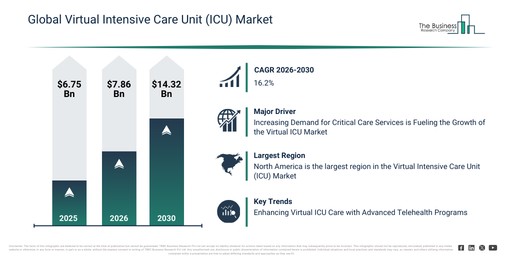
  • Virtual Intensive Care Unit (ICU) Market Growth Projection: Expected to Surpass $14.32 Billion by 2030 at 16.2% CAGR

    Virtual Intensive Care Unit (ICU) Market Growth Projection: Expected to Surpass $14.32 Billion by 2030 at 16.2% CAGR

    Uncover key drivers, emerging technologies, and competitive movements shaping the virtual intensive care unit (icu) market from 2026–2035 with trusted insights from The Business Research Company

    What total market size is anticipated for the Virtual Intensive Care Unit (ICU) Market in 2030?

    The virtual intensive care unit (icu) market has experienced substantial growth in recent years. It is projected to expand from $6.75 billion in 2025 to $7.86 billion in 2026, demonstrating a compound annual growth rate (CAGR) of 16.5%. This historical expansion can be attributed to factors such as an increasing shortage of on-site intensivists, the expansion of telemedicine infrastructure, rising icu patient volumes, the adoption of electronic health records, and the need for centralized critical care management.

    The virtual intensive care unit (icu) market size is projected to undergo rapid expansion in the coming years. It is expected to reach $14.32 billion in 2030, demonstrating a compound annual growth rate (CAGR) of 16.2%. The anticipated growth within this forecast period can be attributed to several factors, including a surging demand for scalable critical care delivery, increasing financial commitments to digital health platforms, the expanding application of AI-assisted clinical monitoring, a heightened focus on value-based care frameworks, and the growing integration of virtual hospital solutions. Noteworthy trends predicted during this period include an increased embrace of remote ICU monitoring platforms, a rising incorporation of real-time patient data analytics, the broader implementation of tele-intensivist coverage models, a growing utilization of predictive clinical decision support tools, and an enhanced emphasis on continuous critical care supervision.

    Access Your Free Sample Report for In-Depth Market Insights:

    https://www.thebusinessresearchcompany.com/sample.aspx?id=19752&type=smp

    What Drivers Are Influencing Production Trends In The Virtual Intensive Care Unit (ICU) Market?

    The increasing requirement for critical care services is anticipated to drive the expansion of the virtual intensive care unit (ICU) market in the future. Specialized medical attention given to individuals with life-threatening illnesses needing constant observation and therapy is defined as critical care services. This need for critical care stems from the increasing occurrence of chronic illnesses, an older demographic, and more intricate medical situations. Virtual ICUs improve critical care by offering remote, real-time monitoring and assistance from expert intensivists, leading to better patient results and more efficient resource use, particularly in rural or underserved regions where expert access on-site is scarce. For example, in November 2025, the Organisation for Economic Co operation and Development, an intergovernmental organization located in France, stated that the average for 31 OECD countries in 2023 was 17 ICU beds per 100,000 population. The figures showed significant variation, ranging from approximately 40 beds or more per 100 000 population in Czechia and Estonia to fewer than 5 beds per 100 000 in New Zealand and Sweden. Most nations have expanded their ICU capacity when contrasted with the period before the pandemic. Consequently, the escalating requirement for critical care services is propelling the expansion of the virtual intensive care unit (ICU) market.

    Which Segment Groups Are Influencing The Virtual Intensive Care Unit (ICU) Market?

    The virtual intensive care unit (icu) market covered in this report is segmented –

    1) By Type: Traditional Medical Intensive Care Unit (ICU), Cardiac Care Unit, Neonatal Intensive Care Unit (ICU), Pediatric Intensive Care Unit (ICU), Trauma Intensive Care Unit (ICU), Psychiatric Intensive Care Unit (ICU), High-Dependency Unit, Other Types

    2) By Component: Software, Hardware

    3) By Technology: Machine Learning, Deep Learning, Artificial Intelligence, Other Technologies

    4) By End User: Payer, Patient, Provider

    Subsegments:

    1) By Traditional Medical Intensive Care Unit (ICU): General Medical ICU, Surgical ICU, Respiratory ICU

    2) By Cardiac Care Unit: Coronary Care Unit, Cardiac Surgery ICU

    3) By Neonatal Intensive Care Unit (ICU): Level I Neonatal ICU, Level II Neonatal ICU, Level III Neonatal ICU

    4) By Pediatric Intensive Care Unit (ICU): General Pediatric ICU, Cardiac Pediatric ICU, Neuro Pediatric ICU

    5) By Trauma Intensive Care Unit (ICU): Surgical Trauma ICU, Medical Trauma ICU

    6) By Psychiatric Intensive Care Unit (ICU): Adult Psychiatric ICU, Adolescent Psychiatric ICU

    7) By High-Dependency Unit: Step-Down Unit, Intermediate Care Unit

    8) By Other Types: Burn Unit, Post-Anesthesia Care Unit, Stroke Unit

    What Trends Are Projected To Support The Growth Of The Virtual Intensive Care Unit (ICU) Market?

    Companies prominent in the virtual intensive care unit (ICU) market are prioritizing the development of advanced solutions like telehealth programs to elevate ICU care, thereby facilitating real-time monitoring, expert consultations, and improved patient outcomes. Telehealth programs leverage digital communication technologies to deliver medical care and services remotely, enabling healthcare professionals to monitor patients, conduct consultations, and provide treatment advice without requiring in-person visits. For example, in August 2024, Aster DM Healthcare, an India-based healthcare provider, introduced its Tele ICU service under the Aster Connected Care arm. This Tele ICU is an advanced virtual critical care program designed to allow remote intensivists and critical care nurses to support patient care through real-time monitoring, virtual rounds, and clinical decision-support systems. It further enhances the quality and accessibility of intensive care expertise via continuous remote monitoring and 24/7 audio-visual communication with on-site medical teams.

    Who Are The Major Companies Operating In The Virtual Intensive Care Unit (ICU) Market?

    Major companies operating in the virtual intensive care unit (icu) market are Cisco Systems Inc., Oracle Corporation, Medtronic plc, Siemens Healthineers AG, Koninklijke Philips N.V., GE HealthCare Technologies Inc., ResMed Inc., Hill-Rom Holdings Inc., Teladoc Health Inc., Masimo Corporation, Nihon Kohden Corporation, American Well Corporation, Caregility Corporation, Hicuity Health Inc., Eagle Telemedicine, HealthNet Global, Apollo TeleHealth Services Private Limited, Philips Healthcare, Medsphere Systems Corporation, eCareManager

    Access The Complete Report For Deeper Market Insights:

    https://www.thebusinessresearchcompany.com/report/virtual-intensive-care-unit-icu-global-market-report

    Which Region Is Anticipated To See The Fastest Growth In The Virtual Intensive Care Unit (ICU) Market?

    North America was the largest region in the virtual intensive care unit (ICU) market in 2025. Asia-Pacific is expected to be the fastest-growing region in the forecast period. The regions covered in the virtual intensive care unit (icu) market report are Asia-Pacific, South East Asia, Western Europe, Eastern Europe, North America, South America, Middle East, Africa.

    Request Your Customized Virtual Intensive Care Unit (ICU) Market Research Report for Competitive Advantage:

    https://www.thebusinessresearchcompany.com/customise?id=19752&type=smp

    Browse Through More Reports Similar to the Global Virtual Intensive Care Unit (ICU) Market 2026, By The Business Research Company

    Pharmacies And Healthcare Stores Market Report 2026

    https://www.thebusinessresearchcompany.com/report/pharmacies-and-healthcare-stores-global-market-report

    Neonatal Intensive Care Units Nicu Catheters Market Report 2026

    https://www.thebusinessresearchcompany.com/report/neonatal-intensive-care-units-nicu-catheters-global-market-report

    Wound Care Devices Market Report 2026

    https://www.thebusinessresearchcompany.com/report/wound-care-devices-global-market-report

    Get in touch with us:

    The Business Research Company: https://www.thebusinessresearchcompany.com/

    Americas +1 310-496-7795

    Asia +44 7882 955267 & +91 8897263534

    Europe +44 7882 955267

    Email us at info@tbrc.info

    Follow us on:

    LinkedIn: https://in.linkedin.com/company/the-business-research-company

    YouTube: https://www.youtube.com/channel/UC24_fI0rV8cR5DxlCpgmyFQ

    Global Market Model: https://www.thebusinessresearchcompany.com/global-market-model
  • Virtual Human Anatomy Software Market Forecast 2026–2035: How to Leverage Market Growth

    Virtual Human Anatomy Software Market Forecast 2026–2035: How to Leverage Market Growth

    Uncover key drivers, emerging technologies, and competitive movements shaping the virtual human anatomy software market from 2026–2035 with trusted insights from The Business Research Company

    What is the expected shift in the Virtual Human Anatomy Software Market’s size between 2026 and 2030?

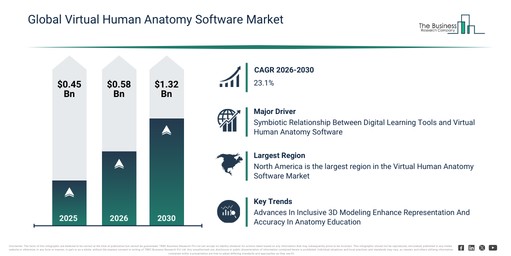
    The virtual human anatomy software market size has experienced substantial growth in recent years. This market is expected to expand from $0.45 billion in 2025 to $0.58 billion in 2026, exhibiting a compound annual growth rate (CAGR) of 27.5%. The market’s historical expansion can be attributed to the increasing digitization of medical education, the growing use of 3D visualization in healthcare training, the expansion of anatomy software adoption in institutions, rising investments in medical simulation tools, and improved availability of high-performance computing systems.

    The virtual human anatomy software market is projected to experience substantial expansion in the coming years, anticipated to reach $1.32 billion by 2030, exhibiting a compound annual growth rate (CAGR) of 23.1%. This anticipated growth is driven by several factors, including the increasing embrace of immersive learning technologies, a surge in demand for remote medical education solutions, the broader integration of VR and AR into healthcare training, a heightened emphasis on personalized learning platforms, and the expanding utilization of cloud-based medical software. Key trends foreseen for this period encompass the growing adoption of interactive 3D anatomy visualization, the increasing deployment of VR-based anatomy learning platforms, the deepening integration of cloud-based anatomy software, the broader availability of simulation-driven medical education tools, and a sharpened focus on realistic anatomical modeling.

    Access Your Free Sample Report for In-Depth Market Insights:

    https://www.thebusinessresearchcompany.com/sample.aspx?id=15021&type=smp

    Which Drivers Are Shaping Strategic Decisions In The Virtual Human Anatomy Software Market?

    The rising acceptance of online education is anticipated to stimulate the expansion of the virtual human anatomy software market in the foreseeable future. Online education defines a learning method that employs the internet and digital technologies to deliver educational content remotely. Its growing widespread adoption is attributable to factors such as its accessibility, adaptability, cost-effectiveness, technological progress, and congruence with changing societal and economic patterns. Virtual human anatomy software significantly enhances online learning by providing immersive, interactive, and accessible experiences that improve learners’ comprehension and recognition of human anatomy. To illustrate this trend, in January 2024, according to Eurostat, a Luxembourg-based statistical office of the European Union, it was reported that in 2023, 30% of EU internet users aged 16 to 74 indicated engagement in online courses or the use of online learning materials over the preceding three months, representing a 2 %-point rise from the 28% recorded in 2022. Consequently, the heightened adoption of online education is set to propel the growth of the virtual human anatomy software market.

    What Segment Classifications Make Up The Virtual Human Anatomy Software Market?

    The virtual human anatomy software market covered in this report is segmented –

    1) By Type: 3D Anatomy Software, VR Anatomy Software

    2) By Technology: Cloud-Based, On-Premise

    3) By Application: Educational Institution, Hospitals And Clinics, Other Applications

    Subsegments:

    1) By 3D Anatomy Software: Interactive 3D Visualization, 3D Rendering And Simulation, Anatomical Modeling Tools

    2) By VR Anatomy Software: Virtual Reality-Based Anatomy Exploration, VR Simulation For Medical Training, Immersive 3D Anatomy Visualization

    Which Trends Are Influencing The Performance And Direction Of The Virtual Human Anatomy Software Market?

    Leading companies in the virtual human anatomy software market are dedicated to developing advanced solutions, such as diversity-enhanced 3D anatomical modeling, to address persistent gaps in racial representation and enhance the accuracy and inclusivity of medical education. Diversity-enhanced 3D modeling refers to the integration of various skin tones, facial characteristics, and anatomically precise variations into virtual anatomy platforms, allowing students to learn from representations that more accurately mirror real patient populations. For example, in January 2023, Elsevier, a Netherlands-based provider of clinical practice content and medical education technologies, launched Complete Anatomy 2023, an upgraded version of its flagship 3D anatomy teaching platform showcasing the most extensive set of skin-tone options ever introduced in medical learning. The platform incorporates deeply researched anthropological data, customizable models reflecting diverse physical characteristics, and high-fidelity anatomical structures to diminish unconscious bias, improve diagnostic preparedness, and elevate the realism of virtual dissection. These advancements help overcome the limitations of traditional anatomy education, which has historically relied on uniform, light-skinned models, by offering a more inclusive, accurate, and globally representative learning experience.

    Which Major Firms Are Strengthening Their Position In The Virtual Human Anatomy Software Market?

    Major companies operating in the virtual human anatomy software market are VirtaMed AG, Wolters Kluwer Health, Inc., Anatomage Inc., Biomax Informatics AG, Visible Body, BioDigital Inc., 3D4Medical Ltd., Primal Pictures Ltd., BodyViz LLC, Kenhub GmbH, Zygote Media Group Inc., Medicalholodeck GmbH, Lifeliqe, s.r.o., 3D Organon Ltd., Vrtual Medicine, 4D Interactive Anatomy, Anatomy 3D Atlas, Elsevier B.V., Anatronica, Anomalous Medical, LLC, Cyber-Anatomy, Inc., Brain Science Tools B.V., BodyParts3D/Anatomography, BodyMaps, Digiscope Ltd., Human Anatomy VR

    Access The Complete Report For Deeper Market Insights:

    https://www.thebusinessresearchcompany.com/report/virtual-human-anatomy-software-global-market-report

    Which Region Is Anticipated To See The Fastest Growth In The Virtual Human Anatomy Software Market?

    North America was the largest region in the virtual human anatomy market in 2025. The regions covered in the virtual human anatomy software market report are Asia-Pacific, South East Asia, Western Europe, Eastern Europe, North America, South America, Middle East, Africa.

    Request Your Customized Virtual Human Anatomy Software Market Research Report for Competitive Advantage:

    https://www.thebusinessresearchcompany.com/customise?id=15021&type=smp

    Browse Through More Reports Similar to the Global Virtual Human Anatomy Software Market 2026, By The Business Research Company

    Virtual Reality In Healthcare Market Report 2026

    https://www.thebusinessresearchcompany.com/report/virtual-reality-in-healthcare-global-market-report

    Virtual Reality Software Market Report 2026

    https://www.thebusinessresearchcompany.com/report/virtual-reality-software-global-market-report

    Virtual Reality Vr In Medical Simulation Market Report 2026

    https://www.thebusinessresearchcompany.com/report/virtual-reality-vr-in-medical-simulation-global-market-report

    Get in touch with us:

    The Business Research Company: https://www.thebusinessresearchcompany.com/

    Americas +1 310-496-7795

    Asia +44 7882 955267 & +91 8897263534

    Europe +44 7882 955267

    Email us at info@tbrc.info

    Follow us on:

    LinkedIn: https://in.linkedin.com/company/the-business-research-company

    YouTube: https://www.youtube.com/channel/UC24_fI0rV8cR5DxlCpgmyFQ

    Global Market Model: https://www.thebusinessresearchcompany.com/global-market-model
  • Global Virtual Health Service Market 2026–2030: Forecast Insights for Business Planning

    Global Virtual Health Service Market 2026–2030: Forecast Insights for Business Planning

    Uncover key drivers, emerging technologies, and competitive movements shaping the virtual health service market from 2026–2035 with trusted insights from The Business Research Company

    What growth pattern is forecast for the Virtual Health Service Market size between 2026 and 2035?

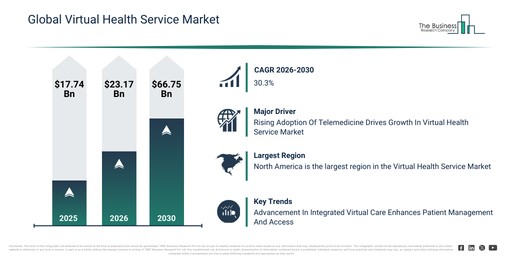
    The virtual health service market size has experienced substantial expansion in recent years. It is forecast to grow from $17.74 billion in 2025 to $23.17 billion in 2026, exhibiting a compound annual growth rate (CAGR) of 30.6%. The historical growth of this market was influenced by factors such as the increasing penetration of the internet and smartphones, the rising acceptance of telemedicine services, widening healthcare access gaps, the early adoption of digital health platforms, and an increasing demand for convenient care delivery.

    The virtual health service market is projected to experience substantial expansion in the coming years. Its valuation is anticipated to reach $66.75 billion by 2030, exhibiting a compound annual growth rate (CAGR) of 30.3%. This growth over the forecast period stems from factors such as heightened investments in virtual care infrastructure, a growing need for remote management of chronic diseases, the proliferation of digital-first healthcare models, an increase in employer-backed virtual health initiatives, and the deeper integration of virtual care within conventional healthcare frameworks. Key trends during this period are expected to encompass the broader embrace of teleconsultation platforms, greater incorporation of remote patient monitoring tools, an expanding application of AI-powered clinical decision support, the development of app-centric healthcare delivery models, and a heightened emphasis on ensuring continuity of care.

    Access Your Free Sample Report for In-Depth Market Insights:

    https://www.thebusinessresearchcompany.com/sample.aspx?id=20691&type=smp

    Which Drivers Are Impacting Market Performance In The Virtual Health Service Market?

    The increasing adoption of telemedicine is set to drive the expansion of the virtual health service market moving forward. Telemedicine encompasses the delivery of healthcare services and consultations via electronic communication tools, enabling patients to access medical care from their homes. The rising embrace of telemedicine is propelled by technological progress, a heightened patient preference for convenience, and efforts to broaden healthcare access. Virtual health services underpin telemedicine by supplying the digital framework and tools essential for remote consultations, allowing healthcare providers to diagnose, treat, and monitor patients without requiring in-person visits. For instance, in July 2023, according to the Ministry of Justice, a UK-based government department, the number of individuals fitted with a location monitoring device (GPS) as of 30 June 2023 was 8,028, an increase of 67% from 4,799 as of 30 June 2022. Thus, the growing integration of telemedicine is a key driver for the virtual health service market.

    What Segment Types Are Examined In The Virtual Health Service Market?

    The virtual health service market covered in this report is segmented –

    1) By Component: Software And Services, Hardware

    2) By Consultation Mode: Video, Audio, Messaging, Kiosks

    3) By Specialty And Use Case: General Medicine, Mental Health, Dermatology, Chronic Condition Management, Remote Surgery Assistance, Nutrition And Fitness, Women’s Health, Pediatrics

    4) By Mode Of Delivery: Web Based, App Based, Phone Based

    5) By End User: Patients, Healthcare Providers, Payers, Employers, Other End Users

    Subsegments:

    1) By Software And Services: Telemedicine Software, Health Monitoring Software, Electronic Health Records (EHR) Systems, Mobile Health Applications, Remote Patient Monitoring Services, Consultation Services, Analytics And Reporting Services

    2) By Hardware: Telehealth Kits, Medical Devices for Remote Monitoring, Computers and Tablets, Wearable Health Devices, Video Conferencing Equipment

    What Long-Term Trends Are Expected To Shape The Future Of The Virtual Health Service Market?

    Major corporations within the virtual health service market are prioritizing the development of innovative solutions, such as integrated virtual care platforms, to meet the escalating demand for healthcare delivery that is coordinated, accessible, and data-driven. Integrated virtual care unifies telemedicine, remote patient monitoring, digital health records, and patient engagement tools into a singular, cohesive ecosystem, presenting a more fluid and efficient option compared to conventional in-person or fragmented digital health services. For example, in March 2023, Royal Philips, a healthcare technology company based in the Netherlands, introduced Philips Virtual Care Management. This platform consolidates connected medical devices, cloud-based monitoring functions, clinical oversight, and engagement tools to support health systems, provider organizations, payers, and employers across the United States. It enhances chronic disease management through continuous data gathering, facilitates coordinated care among clinical teams, and optimizes real-time decision-making. By embedding virtual care directly into current workflows, the solution effectively reduces hospitalizations and emergency visits while simultaneously improving patient outcomes, marking a significant step forward in scalable, technology-enabled care provision.

    Who Are The Primary Competitors In The Global Virtual Health Service Market?

    Major companies operating in the virtual health service market are Teladoc Health Inc., Babylon Health Limited, Allscripts Healthcare Solutions Inc., WELL Health Technologies Corp., American Well Corporation, MDLive Inc., Doctor On Demand Inc., HealthTap Inc., TytoCare Ltd, 98point6 Inc., Medici Inc., VSee Lab Inc., Doxy.me LLC, eVisit Inc., MDTech Inc., Lemonaid Health Inc., Epic Systems Corporation, Dell Technologies Inc., Cisco Systems Inc., Qualcomm Incorporated

    Access The Complete Report For Deeper Market Insights:

    https://www.thebusinessresearchcompany.com/report/virtual-health-service-global-market-report

    Which Global Regions Are Shaping The Competitive Landscape Of The Virtual Health Service Market?

    North America was the largest region in the virtual health service market in 2025. The regions covered in the virtual health service market report are Asia-Pacific, South East Asia, Western Europe, Eastern Europe, North America, South America, Middle East, Africa.

    Request Your Customized Virtual Health Service Market Research Report for Competitive Advantage:

    https://www.thebusinessresearchcompany.com/customise?id=20691&type=smp

    Browse Through More Reports Similar to the Global Virtual Health Service Market 2026, By The Business Research Company

    Consumer Healthcare Market Report 2026

    https://www.thebusinessresearchcompany.com/report/consumer-healthcare-global-market-report

    Equine Healthcare Market Report 2026

    https://www.thebusinessresearchcompany.com/report/equine-healthcare-global-market-report

    Connected Healthcare Market Report 2026

    https://www.thebusinessresearchcompany.com/report/connected-healthcare-global-market-report

    Get in touch with us:

    The Business Research Company: https://www.thebusinessresearchcompany.com/

    Americas +1 310-496-7795

    Asia +44 7882 955267 & +91 8897263534

    Europe +44 7882 955267

    Email us at info@tbrc.info

    Follow us on:

    LinkedIn: https://in.linkedin.com/company/the-business-research-company

    YouTube: https://www.youtube.com/channel/UC24_fI0rV8cR5DxlCpgmyFQ

    Global Market Model: https://www.thebusinessresearchcompany.com/global-market-model
  • Virtual Colonoscopy Software Market Outlook 2026–2035: Growth Drivers and Industry Forecast

    Virtual Colonoscopy Software Market Outlook 2026–2035: Growth Drivers and Industry Forecast

    Uncover key drivers, emerging technologies, and competitive movements shaping the virtual colonoscopy software market from 2026–2035 with trusted insights from The Business Research Company

    How much larger will the Virtual Colonoscopy Software Market be in 2030 compared with 2026?

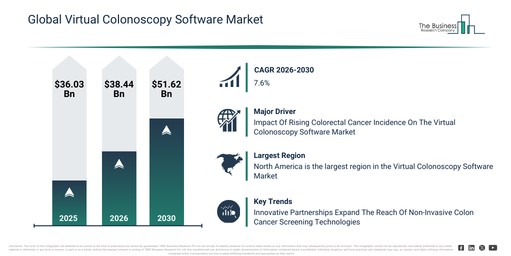
    The virtual colonoscopy software market size has demonstrated robust growth in recent years. It is anticipated to expand from $36.03 billion in 2025 to $38.44 billion in 2026, achieving a compound annual growth rate (CAGR) of 6.7%. The observed growth in past periods can be credited to factors such as increasing colorectal cancer screening initiatives, the expansion of diagnostic imaging centers, a rising adoption of CT imaging in diagnostics, heightened awareness of non-invasive procedures, and advancements in imaging software capabilities.

    The virtual colonoscopy software market is anticipated to experience robust growth in the coming years. It is set to expand to $51.62 billion by 2030, achieving a compound annual growth rate (CAGR) of 7.6%. The expansion during this forecast period can be attributed to the increasing uptake of AI-powered diagnostic tools, rising capital expenditure in preventive healthcare, the proliferation of cloud-based medical imaging, a growing need for early cancer detection, and enhanced integration with hospital information systems. Key trends for the forecast period encompass a wider adoption of 3D virtual colonoscopy imaging, an increased utilization of AI-assisted polyp detection, the growing deployment of cloud-based imaging platforms, the expansion of non-invasive screening programs, and a heightened emphasis on diagnostic accuracy and workflow efficiency.

    Access Your Free Sample Report for In-Depth Market Insights:

    https://www.thebusinessresearchcompany.com/sample.aspx?id=13002&type=smp

    What Drivers Are Guiding Growth Patterns In The Virtual Colonoscopy Software Market?

    The rising occurrences of colorectal cancer are projected to drive the future expansion of the virtual colonoscopy software market. Colorectal cancer refers to a malignancy that forms in the tissues of the colon or rectum. Virtual colonoscopy software holds a vital position in addressing colorectal cancer by offering a minimally invasive and non-invasive technique for both screening and identifying irregularities within the colon. For instance, in June 2023, data from the National Cancer Institution, a UK-based government agency, indicated that new colorectal cancer diagnoses in individuals under the age of 50 have escalated at an alarming rate over recent decades. This observation was based on more than 5,000 people diagnosed before age 50, referred to as early-onset colorectal cancer, alongside over 22,000 people without cancer (controls). Consequently, the increasing incidence of colorectal cancer is propelling the growth of the virtual colonoscopy software market.

    Which Segments Are Driving Activity In The Virtual Colonoscopy Software Market?

    The virtual colonoscopy software market covered in this report is segmented –

    1) By Product Type: Two Dimensional (2D), Three Dimensional (3D)

    2) By Deployment: On-Premises, Cloud-based

    3) By Application: Polyps, Crohn’s Disease, Ulcerative Colitis, Colorectal Cancer (CRC), Diverticulosis, Stenosis

    4) By End-User: Hospitals, Clinics, Diagnostic Centers, Ambulatory Surgical Centers

    Subsegments:

    1) By Two Dimensional (2D): Standard 2D Imaging Software, Advanced 2D Visualization Tools

    2) By Three Dimensional (3D): Standard 3D Imaging Software, Enhanced 3D Reconstruction Software, Interactive 3D Analysis Tools

    Which Market Trends Are Opening Growth Opportunities In The Virtual Colonoscopy Software Market?

    Leading companies in the virtual colonoscopy software market are concentrating on employing innovative approaches, such as turnkey access models, to expand non-invasive colorectal cancer screening and enhance patient outcomes. These turnkey access models are complete, ready-to-use virtual colonoscopy platforms that integrate imaging, workflow management tools, and standardized procedures, allowing healthcare facilities to implement screening services rapidly and effectively. For example, in November 2024, Bracco Diagnostics Inc., an Italy-based diagnostic imaging company, collaborated with ColoWatch, a US-based virtual colonoscopy services provider, to widen access to virtual colonoscopy for the early detection of colon and rectal cancer. This partnership merges Bracco’s imaging expertise with ColoWatch’s standardized virtual colonoscopy methodology to deliver an integrated solution that enables clinics to offer scalable, consistent, and patient-friendly colorectal screening services. By simplifying adoption across imaging centers, the alliance improves accessibility to early cancer detection, supports efficient clinical workflows, and ensures a consistent, high-quality patient experience.

    Which Key Market Players Are Investing In Expansion And Innovation Within The Virtual Colonoscopy Software Market?

    Major companies operating in the virtual colonoscopy software market are Hitachi Medical Corporation, Siemens Healthineers, Koninklijke Philips N.V., GE HealthCare Technologies Inc., Carestream Health, Agfa Healthcare, Intelerad Medical Systems Incorporated, Canon Medical Informatics Inc., TeraRecon Inc., iCAD Inc., Median Technologies, Pie Medical Imaging, Ziosoft USA Inc., Intrasense SA, Medweb, Viatronix Inc., Fujifilm Holdings Corporation, Infervision, Rendoscopy AG, Radi Insight 3D, Neusoft Medical Systems

    Access The Complete Report For Deeper Market Insights:

    https://www.thebusinessresearchcompany.com/report/virtual-colonoscopy-software-global-market-report

    Which Regions Are Poised For Strategic Growth In The Virtual Colonoscopy Software Market?

    North America was the largest region in the virtual colonoscopy software market in 2025. The regions covered in the virtual colonoscopy software market report are Asia-Pacific, South East Asia, Western Europe, Eastern Europe, North America, South America, Middle East, Africa.

    Request Your Customized Virtual Colonoscopy Software Market Research Report for Competitive Advantage:

    https://www.thebusinessresearchcompany.com/customise?id=13002&type=smp

    Browse Through More Reports Similar to the Global Virtual Colonoscopy Software Market 2026, By The Business Research Company

    Gastrointestinal Endoscopy Market Report 2026

    https://www.thebusinessresearchcompany.com/report/gastrointestinal-endoscopy-global-market-report

    Virtual Human Anatomy Software Market Report 2026

    https://www.thebusinessresearchcompany.com/report/virtual-human-anatomy-software-global-market-report

    Endoscopy Video Systems Market Report 2026

    https://www.thebusinessresearchcompany.com/report/endoscopy-video-systems-global-market-report

    Get in touch with us:

    The Business Research Company: https://www.thebusinessresearchcompany.com/

    Americas +1 310-496-7795

    Asia +44 7882 955267 & +91 8897263534

    Europe +44 7882 955267

    Email us at info@tbrc.info

    Follow us on:

    LinkedIn: https://in.linkedin.com/company/the-business-research-company

    YouTube: https://www.youtube.com/channel/UC24_fI0rV8cR5DxlCpgmyFQ

    Global Market Model: https://www.thebusinessresearchcompany.com/global-market-model
  • Virtual Clinical-Trial Participant Avatars Market 2026–2030: Emerging Trends and Forecast Opportunities

    Virtual Clinical-Trial Participant Avatars Market 2026–2030: Emerging Trends and Forecast Opportunities

    Uncover key drivers, emerging technologies, and competitive movements shaping the virtual clinical-trial participant avatars market from 2026–2035 with trusted insights from The Business Research Company

    Starting from its 2026 valuation, what market size is the Virtual Clinical-Trial Participant Avatars Market expected to reach by 2030?

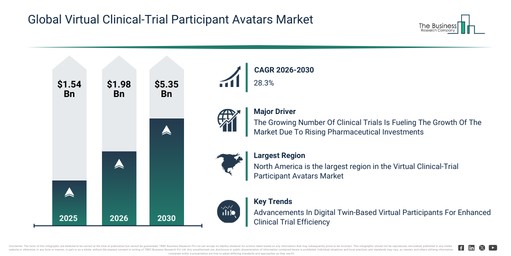
    The virtual clinical-trial participant avatars market size has experienced significant expansion over recent years. Projections indicate it will ascend from $1.54 billion in 2025 to $1.98 billion in 2026, representing a compound annual growth rate (CAGR) of 28.6%. The historical period’s growth can be attributed to limitations of traditional clinical trial recruitment, rising costs of physical trial execution, advancements in computational modeling, increased availability of health data, and early adoption of simulation-based trial tools.

    The virtual clinical-trial participant avatars market size is anticipated to experience substantial expansion over the next few years. It is projected to achieve a value of $5.35 billion by 2030, growing at a compound annual growth rate (CAGR) of 28.3%. This expansion during the forecast period can be primarily attributed to factors such as the escalating demand for expedited drug development cycles, increased investment in virtual trial infrastructure, the ongoing expansion of precision medicine research, the growing regulatory acceptance of digital evidence, and the increasing integration of avatars with real-world clinical data. Prominent trends expected within this period include a greater reliance on AI-driven patient simulation models, the rising adoption of digital twin technologies in trials, an increasing integration of predictive analytics into trial design, the broadening of hybrid avatar modeling approaches, and a stronger focus on optimizing trial efficiency.

    Access Your Free Sample Report for In-Depth Market Insights:

    https://www.thebusinessresearchcompany.com/sample.aspx?id=28351&type=smp

    What Drivers Are Driving Adoption Within The Virtual Clinical-Trial Participant Avatars Market?

    An escalating volume of clinical trials is anticipated to propel the expansion of the virtual clinical-trial participant avatars market moving forward. These trials represent systematic investigations conducted to evaluate the safety and efficacy of medical interventions involving human participants. The increase in clinical trial numbers is attributed to heightened pharmaceutical investment in drug development, as companies endeavor to create novel therapies for complex illnesses and personalized medicine. The virtual clinical-trial participant avatars market supports this trend by generating AI-powered digital patient models that simulate disease progression, treatment response, and safety outcomes, thereby enabling quicker participant recruitment, more strategic trial design, and a reduction in research costs and risks. For instance, in December 2024, the Association of the British Pharmaceutical Industry (ABPI), a UK-based organization, highlighted that the number of pharmaceutical industry trials launched in the UK increased for the second consecutive year, rising from 411 in 2022 to 426 in 2023. Thus, the increasing number of clinical trials is a key driver for the growth of the virtual clinical-trial participant avatars market.

    How Is The Virtual Clinical-Trial Participant Avatars Market Organized Into Various Segments?

    The virtual clinical-trial participant avatars market covered in this report is segmented –

    1) By Avatar Type: Artificial Intelligence-Generated Avatars, Digitally Modeled Human Avatars, Hybrid Avatars

    2) By Deployment Mode: Cloud-Based, On-Premises

    3) By Application: Drug Development, Patient Recruitment, Data Simulation, Remote Monitoring, Other Applications

    4) By End-User: Pharmaceutical Companies, Contract Research Organizations, Academic And Research Institutes, Other End-Users

    Subsegments:

    1) By Artificial Intelligence-Generated Avatars: Machine Learning-Based Avatars, Deep Learning-Based Avatars, Natural Language Processing (NLP)-Enabled Avatars, Generative Adversarial Network (GAN)-Based Avatars

    2) By Digitally Modeled Human Avatars: Three-Dimensional (3D) Scanned Human Avatars, Motion Capture Modeled Avatars, Photorealistic Rendered Avatars, Anatomically Accurate Human Avatars

    3) By Hybrid Avatars: Artificial Intelligence (AI)-Enhanced Digitally Modeled Avatars, Mixed Reality (MR) Enabled Avatars, Cognitive Simulation Avatars, Sensor-Integrated Virtual Avatars

    How Are Emerging Trends Affecting The Progression Of The Virtual Clinical-Trial Participant Avatars Market?

    Major companies operating in the virtual clinical trial participant avatars market are focused on developing advanced solutions, such as digital twin-based clinical trial participants, to improve trial efficiency and enhance predictive accuracy in drug development. Digital twin-based clinical trial participants are virtual representations of real patients that simulate their physiological and behavioral responses, enabling researchers to foresee treatment outcomes and optimize trial designs while minimizing the reliance on extensive physical testing. For instance, in July 2023, Unlearn.ai, Inc., a US-based AI clinical trial technology company, released the updated digital twin generator (DTG) for Alzheimer’s disease, version 3.1. This update improved the handling of missing baseline data by incorporating a neural network imputation model within a Neural Boltzmann Machine architecture, leading to reduced sensitivity to missing data and better overall performance. The DTG utilizes diverse patient datasets to create personalized digital twins that can reliably predict clinical and biomarker trajectories, supporting clinical trials with more precise and robust modeling of Alzheimer’s progression.

    Who Are The Core Companies Influencing Trends In The Virtual Clinical-Trial Participant Avatars Market?

    Major companies operating in the virtual clinical-trial participant avatars market are NVIDIA Corporation, Dassault Systèmes SE, Signant Health Holding Corp., Owkin Inc, Medable Inc., Insilico Medicine Inc., Science 37 Inc., THREAD Inc., Lindus Health Limited, Obvio Health, Sano Genetics Limited, GNS Healthcare, Unlearn.ai Inc., Novadiscovery SAS, Deep 6 AI, Ai Cure Technologies, Altis Labs Inc., Physiomics Plc, OneThree Biotech, Aitia Bio

    Access The Complete Report For Deeper Market Insights:

    https://www.thebusinessresearchcompany.com/report/virtual-clinical-trial-participant-avatars-global-market-report

    Which Regions Are Projected To Dominate The Virtual Clinical-Trial Participant Avatars Market In The Coming Years?

    North America was the largest region in the virtual clinical-trial participant avatars market in 2025. Asia-Pacific is expected to be the fastest-growing region in the forecast period. The regions covered in the virtual clinical-trial participant avatars market report are Asia-Pacific, South East Asia, Western Europe, Eastern Europe, North America, South America, Middle East, Africa.

    Request Your Customized Virtual Clinical-Trial Participant Avatars Market Research Report for Competitive Advantage:

    https://www.thebusinessresearchcompany.com/customise?id=28351&type=smp

    Browse Through More Reports Similar to the Global Virtual Clinical-Trial Participant Avatars Market 2026, By The Business Research Company

    Virtual Reality Vr In Medical Simulation Market Report 2026

    https://www.thebusinessresearchcompany.com/report/virtual-reality-vr-in-medical-simulation-global-market-report

    Patient Simulators Market Report 2026

    https://www.thebusinessresearchcompany.com/report/patient-simulators-global-market-report

    Virtual Human Anatomy Software Market Report 2026

    https://www.thebusinessresearchcompany.com/report/virtual-human-anatomy-software-global-market-report

    Get in touch with us:

    The Business Research Company: https://www.thebusinessresearchcompany.com/

    Americas +1 310-496-7795

    Asia +44 7882 955267 & +91 8897263534

    Europe +44 7882 955267

    Email us at info@tbrc.info

    Follow us on:

    LinkedIn: https://in.linkedin.com/company/the-business-research-company

    YouTube: https://www.youtube.com/channel/UC24_fI0rV8cR5DxlCpgmyFQ

    Global Market Model: https://www.thebusinessresearchcompany.com/global-market-model
  • Global Virtual Care Market Forecast 2026–2035: Long-Term Growth Insights

    Global Virtual Care Market Forecast 2026–2035: Long-Term Growth Insights

    Uncover key drivers, emerging technologies, and competitive movements shaping the virtual care market from 2026–2035 with trusted insights from The Business Research Company

    Across 2026–2030, what is the expected market valuation path of the Virtual Care Market?

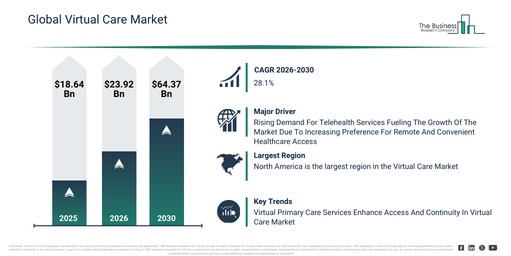
    The virtual care market has experienced rapid expansion in recent years. The market is projected to expand from $18.64 billion in 2025 to $23.92 billion in 2026, demonstrating a compound annual growth rate (CAGR) of 28.3%. Historically, this expansion has been driven by factors such as the broadening of digital health infrastructure, increased adoption of smartphones and internet access, enhanced provider acceptance of telemedicine, a surge in chronic disease prevalence, and the initial embrace of remote consultation services.

    The virtual care market size is set to experience substantial expansion over the next few years. It is projected to reach $64.37 billion by 2030, exhibiting a compound annual growth rate (CAGR) of 28.1%. This growth during the forecast period can be linked to rising investments in virtual-first healthcare models, an increasing demand for home-based care delivery, the expansion of AI-enabled diagnostic support, a growing focus on value-based healthcare, and increasing regulatory backing for telehealth reimbursement. Significant trends anticipated in the forecast period include the wider adoption of remote patient monitoring solutions, a surge in video-based medical consultations, the development of integrated telehealth platforms, an intensified focus on continuous care management models, and enhanced interoperability across virtual care systems.

    Access Your Free Sample Report for In-Depth Market Insights:

    https://www.thebusinessresearchcompany.com/sample.aspx?id=25930&type=smp

    Which Drivers Are Supporting The Rise Of The Virtual Care Market?

    The surging need for telehealth services is anticipated to boost the expansion of the virtual care market in the coming years. Telehealth services involve the application of digital technologies to provide medical care remotely, allowing patients and providers to connect virtually for consultations, diagnoses, monitoring, and treatment. The growing adoption of telehealth services stems from individuals seeking quicker, more convenient, and safer access to healthcare for remote appointments, continuous health tracking, and reduced travel. Telehealth services facilitate virtual care by enabling patients to consult healthcare professionals from a distance, thereby enhancing accessibility, ease, and continuity of care while decreasing the necessity for in-person visits. As an illustration, in September 2024, according to the Australian Bureau of Statistics (ABS), the national statistical agency of Australia, data showed that in 2023–24, 83.5% of males reported utilizing telehealth services, an increase from 78.6% in 2022–23. This demonstrates that the escalating demand for telehealth services is fueling the growth of the virtual care market.

    What Segments Are Identified Within The Structure Of The Virtual Care Market?

    The virtual care market covered in this report is segmented –

    1) By Component: Hardware, Software, Services

    2) By Consultation Type: Video Consultation, Audio Consultation, Messaging

    3) By Technology Type: Video Conferencing, Wearable Devices, Mobile Health Applications, Health Information Systems, Remote Monitoring Devices

    4) By Application: Diagnostics, Therapeutics, Monitoring And Consultation, Preventive Care, Rehabilitation Services, Other Applications

    5) By End User: Patients, Healthcare Providers, Government Organizations, Corporate Wellness Programs, Other End Users

    Subsegments:

    1) By Hardware: Wearable Devices, Remote Patient Monitoring Devices, Telecommunication Devices, Diagnostic Devices

    2) By Software: Telehealth Platforms, Mobile Health Applications, Virtual Consultation Software, Remote Monitoring Software

    3) By Services: Remote Patient Monitoring Services, Teleconsultation Services, Technical Support And Maintenance, Training And Implementation Services

    Which Innovation Trends Are Advancing Developments Within The Virtual Care Market?

    Major companies operating in the virtual care market are concentrating on unveiling inventive solutions, such as virtual primary care services, to elevate the standard of care, enhance patient participation, and expand the reach of healthcare provisions. Virtual primary care service refers to the remote provision of routine healthcare services, including general check-ups and the management of chronic conditions, utilizing digital communication instruments like video or phone consultations. For example, in January 2023, CVS Health, a US-based healthcare company, rolled out Virtual Primary Care, a digital health platform designed to offer virtual primary care visits and 24/7 on-demand care, aiming to improve access, convenience, and the continuous nature of care for patients nationwide. This innovative virtual care platform provides immediate access to primary care and ensures smooth coordination between virtual and in-person services. It demonstrates high versatility, allowing for effective management of a broad spectrum of health conditions, ranging from routine examinations to chronic disease management, by leveraging digital connections and synchronized care teams for enhanced accessibility and ongoing care.

    Which Major Industry Participants Are Leading The Virtual Care Market Growth?

    Major companies operating in the virtual care market are Medtronic plc, Siemens Healthcare GmbH, Koninklijke Philips N.V., GE Healthcare Limited, Teladoc Health Inc., Comarch S.A., American Well Corporation, MDLive Inc., Doctor on Demand Inc., Talkspace Inc., AMC Health Inc., 98point6 Technologies, Altibbi Inc., GlobalMed Inc., Binah.ai Ltd., InTouch Health Inc., Vivify Health Inc., VSee Lab Inc., Biotricity Inc., eVisit Inc., Aerotel Medical Systems Ltd., Chiron Health Inc.

    Access The Complete Report For Deeper Market Insights:

    https://www.thebusinessresearchcompany.com/report/virtual-care-global-market-report

    Which Region Is Expected To Experience The Fastest Growth In The Virtual Care Market?

    North America was the largest region in the virtual care market in 2025. Asia-Pacific is expected to be the fastest-growing region in the forecast period. The regions covered in the virtual care market report are Asia-Pacific, South East Asia, Western Europe, Eastern Europe, North America, South America, Middle East, Africa.

    Request Your Customized Virtual Care Market Research Report for Competitive Advantage:

    https://www.thebusinessresearchcompany.com/customise?id=25930&type=smp

    Browse Through More Reports Similar to the Global Virtual Care Market 2026, By The Business Research Company

    Virtual Rehabilitation Market Report 2026

    https://www.thebusinessresearchcompany.com/report/virtual-rehabilitation-global-market-report

    Virtual Reality Vr In Medical Simulation Market Report 2026

    https://www.thebusinessresearchcompany.com/report/virtual-reality-vr-in-medical-simulation-global-market-report

    Virtual Reality Services Market Report 2026

    https://www.thebusinessresearchcompany.com/report/virtual-reality-services-global-market-report

    Get in touch with us:

    The Business Research Company: https://www.thebusinessresearchcompany.com/

    Americas +1 310-496-7795

    Asia +44 7882 955267 & +91 8897263534

    Europe +44 7882 955267

    Email us at info@tbrc.info

    Follow us on:

    LinkedIn: https://in.linkedin.com/company/the-business-research-company

    YouTube: https://www.youtube.com/channel/UC24_fI0rV8cR5DxlCpgmyFQ

    Global Market Model: https://www.thebusinessresearchcompany.com/global-market-model