Category: HealthcareServices

  • Telehealth And Telemedicine Market 2026–2030: Forecast, Innovation, and Competitive Trends

    Telehealth And Telemedicine Market 2026–2030: Forecast, Innovation, and Competitive Trends

    Uncover key drivers, emerging technologies, and competitive movements shaping the telehealth and telemedicine market from 2026–2035 with trusted insights from The Business Research Company

    What market expansion outlook does the Telehealth And Telemedicine Market show for the 2026–2030 period?

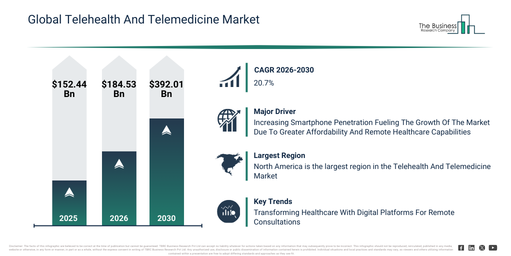
    The telehealth and telemedicine market has experienced substantial expansion in recent years. It is anticipated to grow from $152.44 billion in 2025 to $184.53 billion in 2026, achieving a compound annual growth rate (CAGR) of 21.1%. The growth observed in the past can be ascribed to elements such as the development of digital healthcare infrastructure, wider smartphone and internet penetration, an increasing need for remote access to care, the proliferation of teleconsultation platforms, and favorable regulatory environments.

    The telehealth and telemedicine market is projected to experience substantial expansion in the coming years. This market is forecast to reach $392.01 billion by 2030, exhibiting a compound annual growth rate (CAGR) of 20.7%. Key factors driving this growth during the forecast period include a heightened demand for hybrid care models, the increasing incorporation of AI diagnostics within telehealth, the broadening availability of tele-ICU and telepsychiatry services, a rise in employer-based telehealth adoption, and an enhanced emphasis on value-based care delivery. Significant trends anticipated for this period involve the broader provision of virtual care and remote consultations, increased integration of remote patient monitoring solutions, a surge in the adoption of cloud-based healthcare platforms, a greater focus on data-driven clinical decision support, and the expanded utilization of multi-specialty telemedicine services.

    Access Your Free Sample Report for In-Depth Market Insights:

    https://www.thebusinessresearchcompany.com/sample.aspx?id=24719&type=smp

    What Drivers Are Shaping The Development Of The Telehealth And Telemedicine Market?

    The increasing prevalence of smartphone ownership is projected to fuel the expansion of the telehealth and telemedicine market moving forward. Smartphone penetration refers to the percentage of the population that owns and uses these devices, illustrating the widespread embrace and embedding of mobile technology in everyday existence. The growth in smartphone penetration is primarily attributed to more affordable pricing and enhanced accessibility, making smartphones available to a broader spectrum of consumers. Smartphones improve telehealth and telemedicine by enabling effortless remote access to healthcare services, facilitating real-time consultations, health monitoring, and medical advice. They enhance the ease and availability of healthcare, especially for individuals in remote locations or with limited mobility. For instance, in October 2023, according to the GSM Association, a UK-based non-profit organization, nearly 4.3 billion people (53% of the global population) were utilizing their smartphones to access the internet, and approximately 80% of mobile internet users now employ 4G or 5G smartphones, indicating an increase of 330 million people from 2022 to 2023. Therefore, the rising smartphone penetration is a significant driver for the growth of the telehealth and telemedicine market.

    Which Segments Are Contributing To The Growth Of The Telehealth And Telemedicine Market?

    The telehealth and telemedicine market covered in this report is segmented –

    1) By Component: Hardware, Software, Services

    2) By Mode of Delivery: Cloud-Based, On-Premise, Web-Based

    3) By Application: Teleconsultation, Tele Intensive Care Unit (TeleICU), Telestroke, Teleradiology, Telepsychiatry, Teledermatology

    4) By End-User: Healthcare Providers, Patients, Payers, Employers, Other End Users

    Subsegments:

    1) By Hardware: Telemedicine Carts, Diagnostic Devices, Digital Imaging Devices, Wearable Devices, Video Conferencing Equipment, Peripheral Devices

    2) By Software: Real-time Communication Software, Remote Patient Monitoring (RRM) Software, Electronic Health Record (EHR) Integration Software, Scheduling And Billing Software, Diagnostic Software, Mobile Health Apps

    3) By Services: Teleconsultation Services, Telemonitoring Services, Store-and-forward Services, Support And Maintenance Services, Training And Education Services, Managed Services

    How Are New Market Trends Shaping The Landscape Of The Telehealth And Telemedicine Market?

    Key companies operating within the telehealth and telemedicine market are concentrating on developing advanced technological solutions, such as online platforms, to improve the delivery of virtual care, streamline interactions between patients and providers, and broaden remote access to healthcare services. In the context of telehealth and telemedicine, an online platform functions as a digital interface allowing patients and healthcare providers to connect remotely for consultations, diagnoses, treatment, and health monitoring via the internet. For instance, in August 2024, Pfizer Inc., a US-based biopharmaceutical company, launched PfizerForAll, a complimentary digital health online platform designed to connect patients with telehealth providers, facilitate the delivery of prescribed medications, and assist with scheduling vaccinations and diagnostic tests.

    Who Are The Top-Performing Companies In The Telehealth And Telemedicine Market In Recent Years?

    Major companies operating in the telehealth and telemedicine market are Cisco Systems Inc, Oracle Corporation, Medtronic plc, Koninklijke Philips NV, Teladoc Health Inc, Monogram Health Inc, GoodRx Holdings Inc, Doximity Inc, Modernizing Medicine Inc, Doctor On Demand Inc, MDLIVE Inc, Azalea Health Innovations Inc, Sesame Inc, Apollo TeleHealth Services, TytoCare Ltd, Azova Inc, Push Doctor Ltd, Avel eCare LLC, CureCompanion Inc, CareClix Inc, Curve Health Inc, Amwell Corporation

    Access The Complete Report For Deeper Market Insights:

    https://www.thebusinessresearchcompany.com/report/telehealth-and-telemedicine-global-market-report

    Which Region Is Anticipated To See The Fastest Growth In The Telehealth And Telemedicine Market?

    North America was the largest region in the telehealth and telemedicine market in 2025. Asia-Pacific is expected to be the fastest-growing region in the forecast period. The regions covered in the telehealth and telemedicine market report are Asia-Pacific, South East Asia, Western Europe, Eastern Europe, North America, South America, Middle East, Africa.

    Request Your Customized Telehealth And Telemedicine Market Research Report for Competitive Advantage:

    https://www.thebusinessresearchcompany.com/customise?id=24719&type=smp

    Browse Through More Reports Similar to the Global Telehealth And Telemedicine Market 2026, By The Business Research Company

    Video Telemedicine Market Report 2026

    https://www.thebusinessresearchcompany.com/report/video-telemedicine-global-market-report

    Veterinary Telehealth Market Report 2026

    https://www.thebusinessresearchcompany.com/report/veterinary-telehealth-global-market-report

    Telemedicine Services Market Report 2026

    https://www.thebusinessresearchcompany.com/report/telemedicine-services-global-market-report

    Get in touch with us:

    The Business Research Company: https://www.thebusinessresearchcompany.com/

    Americas +1 310-496-7795

    Asia +44 7882 955267 & +91 8897263534

    Europe +44 7882 955267

    Email us at info@tbrc.info

    Follow us on:

    LinkedIn: https://in.linkedin.com/company/the-business-research-company

    YouTube: https://www.youtube.com/channel/UC24_fI0rV8cR5DxlCpgmyFQ

    Global Market Model: https://www.thebusinessresearchcompany.com/global-market-model
  • Telehealth Market Forecast 2026–2035: Data Trends and Industry Insights

    Telehealth Market Forecast 2026–2035: Data Trends and Industry Insights

    Uncover key drivers, emerging technologies, and competitive movements shaping the telehealth market from 2026–2035 with trusted insights from The Business Research Company

    What level of growth is expected in the Telehealth Market between 2026 and 2030?

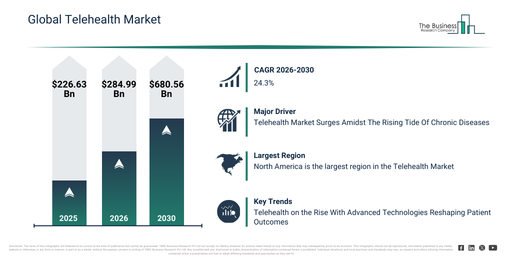
    The telehealth market’s scale has seen an exponential rise over recent years. Projections indicate it will expand from $226.63 billion in 2025 to reach $284.99 billion by 2026, demonstrating a compound annual growth rate (CAGR) of 25.8%. Historically, this expansion has been driven by increased healthcare digitization efforts, a heightened demand for remote care options, the widening of broadband connectivity, the greater adoption of electronic health records, and enhancements in telecommunication infrastructure.

    The telehealth market is projected to experience significant growth in the coming years, with its size expected to reach $680.56 billion by 2030, exhibiting a compound annual growth rate (CAGR) of 24.3%. This growth during the forecast period is primarily driven by the increasing adoption of hybrid care models, rising investments in digital health ecosystems, the expansion of tele-specialty services, a growing focus on population health management, and increasing regulatory support for telehealth reimbursement. Major trends anticipated in this period include the rising adoption of virtual medical consultations, the increased use of remote patient monitoring solutions, enhanced integration of telehealth platforms with EHR systems, the expansion of cloud-based telehealth services, and a stronger focus on virtual care continuity.

    Access Your Free Sample Report for In-Depth Market Insights:

    https://www.thebusinessresearchcompany.com/sample.aspx?id=3954&type=smp

    Which Drivers Are Expected To Impact The Telehealth Market During The Forecast Period?

    The escalating incidence of chronic illnesses such as cancer, diabetes, and hypertension is anticipated to be a primary catalyst for the telehealth market. Prolonged working hours, insufficient physical activity, and unhealthy dietary and drinking habits contribute to the widespread occurrence of these diseases, making individuals afflicted by them more susceptible and thus fueling the demand for telehealth service platforms. For instance, in September 2023, the World Health Organization, a Switzerland-based specialized agency of the United Nations, reported 41 million global deaths annually due to non-communicable diseases (NCDs) or chronic diseases, accounting for 74% of total fatalities. Among these, cardiovascular diseases were responsible for 17.9 million deaths, cancer for 9.3 million deaths, chronic respiratory diseases for 4.1 million deaths, and diabetes for 2.0 million deaths. Consequently, the growing prevalence of chronic diseases is projected to drive significant market growth.

    How Is The Telehealth Market Divided Into Segments?

    The telehealth market covered in this report is segmented –

    1) By Offering: Software, Services, Hardware

    2) By Mode Of Delivery: Cloud-based, On-Premise

    3) By Application: Teleradiology, Telepathology, Teledermatology, Telecardiology, Others

    4) By End-User: Healthcare Providers, Patients, Payers, Other End-Users

    Subsegments:

    1) By Software: Telemedicine Software, Remote Patient Monitoring Software, Practice Management Software, Electronic Health Record (EHR) Integration Software

    2) By Services: Telehealth Consultation Services, Remote Monitoring Services, Education and Training Services, Support And Maintenance Services

    3) By Hardware: Mobile Health Devices, Telemedicine Carts, Digital Stethoscopes, Diagnostic And Imaging Devices

    Which Trends Are Expected To Influence The Telehealth Market In The Upcoming Years?

    Leading companies operating within the telehealth market are prioritizing the integration of advanced technologies, such as remote patient monitoring and AI-driven diagnostics along with disease management resources, to enhance healthcare accessibility and improve patient outcomes across various medical conditions. Disease management resources consist of tools and support services developed to help patients effectively manage their chronic conditions, including educational materials, treatment plans, medication management, and access to healthcare professionals. For instance, in January 2024, Eli Lilly and Company, a US-based pharmaceutical company, unveiled LillyDirect, a digital healthcare experience designed to support patients in the U.S. living with obesity, migraine, and diabetes. This platform offers disease management resources, access to independent healthcare providers, and direct home delivery of select Lilly medicines facilitated by third-party pharmacy services.

    Which Leading Companies Dominate The Telehealth Market Share?

    Major companies operating in the telehealth market are Teladoc Health, Amwell (American Well), MDLIVE, Doctor On Demand, 1Life Healthcare, HealthTap, Babylon Health, PlushCare, MeMD, Pager, Lemonaid Health, SteadyMD, InTouch Health, SnapMD, Zipnosis, SOC Telemed, Vsee Lab, Maven Clinic, HeyDoctor, Kareo, Medici, OnCall Health, Qure4u, Spruce Health, GlobalMed, MDBox, Doxy.me, Vida Health

    Access The Complete Report For Deeper Market Insights:

    https://www.thebusinessresearchcompany.com/report/telehealth-global-market-report

    Which Region Is Anticipated To See The Fastest Growth In The Telehealth Market?

    North America was the largest region in the telehealth market in 2025. The regions covered in the telehealth market report are Asia-Pacific, South East Asia, Western Europe, Eastern Europe, North America, South America, Middle East, Africa.

    Request Your Customized Telehealth Market Research Report for Competitive Advantage:

    https://www.thebusinessresearchcompany.com/customise?id=3954&type=smp

    Browse Through More Reports Similar to the Global Telehealth Market 2026, By The Business Research Company

    Teledentistry Market Report 2026

    https://www.thebusinessresearchcompany.com/report/teledentistry-global-market-report

    Telehealth Software Market Report 2026

    https://www.thebusinessresearchcompany.com/report/telehealth-software-global-market-report

    Veterinary Telehealth Market Report 2026

    https://www.thebusinessresearchcompany.com/report/veterinary-telehealth-global-market-report

    Get in touch with us:

    The Business Research Company: https://www.thebusinessresearchcompany.com/

    Americas +1 310-496-7795

    Asia +44 7882 955267 & +91 8897263534

    Europe +44 7882 955267

    Email us at info@tbrc.info

    Follow us on:

    LinkedIn: https://in.linkedin.com/company/the-business-research-company

    YouTube: https://www.youtube.com/channel/UC24_fI0rV8cR5DxlCpgmyFQ

    Global Market Model: https://www.thebusinessresearchcompany.com/global-market-model
  • Tele-Dermatology Prescription Market Outlook 2026–2030: Key Business Drivers and Trends

    Tele-Dermatology Prescription Market Outlook 2026–2030: Key Business Drivers and Trends

    Uncover key drivers, emerging technologies, and competitive movements shaping the tele-dermatology prescription market from 2026–2035 with trusted insights from The Business Research Company

    How much is the Tele-Dermatology Prescription Market valued at in 2026, and what valuation is forecast for 2030?

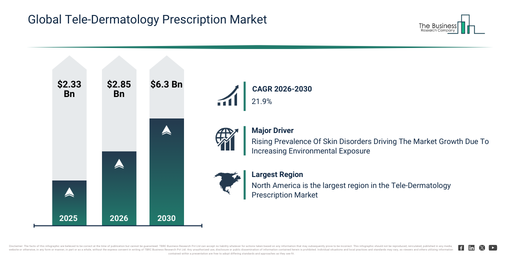
    The size of the tele-dermatology prescription market has seen significant growth recently. This market is projected to expand from $2.33 billion in 2025 to $2.85 billion in 2026, demonstrating a compound annual growth rate (CAGR) of 22.2%. Factors contributing to its historical growth include the increased adoption of telehealth amidst healthcare disruptions, a rising prevalence of chronic skin conditions, the scarcity of dermatologists in remote areas, enhanced smartphone-based access to healthcare services, and a greater acceptance of virtual consultations.

    The tele-dermatology prescription market is projected to experience substantial growth in the coming years. Its size is expected to reach $6.3 billion by 2030, driven by a compound annual growth rate (CAGR) of 21.9%. This expansion during the forecast period is attributable to the increasing demand for remote specialist care, rising investments in digital dermatology platforms, the growth of AI-powered diagnostic support, clearer regulatory guidelines for tele-prescriptions, and advancements in image analysis technologies. Key trends anticipated in the forecast period include the increasing adoption of AI-assisted remote skin diagnosis, a rise in the use of store-and-forward consultation models, the expanding integration of e-prescription platforms, the proliferation of mobile dermatology applications, and an enhanced focus on secure patient data exchange.

    Access Your Free Sample Report for In-Depth Market Insights:

    https://www.thebusinessresearchcompany.com/sample.aspx?id=28338&type=smp

    What Drivers Are Influencing The Growth Of The Tele-Dermatology Prescription Market?

    The increasing occurrence of skin disorders is expected to fuel the expansion of the tele-dermatology prescription market in the future. Skin disorders are medical conditions that impact the skin’s structure, function, or appearance, leading to symptoms such as redness, itching, inflammation, or lesions. This rise in prevalence is primarily due to escalating environmental pollution, which exposes the skin to harmful chemicals and irritants that trigger or worsen various conditions. Tele-dermatology prescription aids in managing skin disorders more effectively by enabling quicker diagnosis, prompt treatment, and ongoing remote follow-up care. For instance, in August 2023, Skin Health Institute Inc., an Australia-based non-profit organization, reported that psoriasis affects an estimated 2–3% of the population in Australia, emphasizing its status as a common skin condition. Therefore, the growing prevalence of skin disorders is a key driver for the tele-dermatology prescription market.

    What Segments Are Included Within The Tele-Dermatology Prescription Market?

    The tele-dermatology prescription market covered in this report is segmented –

    1) By Service Type: Real-Time Tele-Dermatology, Store-And-Forward Tele-Dermatology, Hybrid Tele-Dermatology

    2) By Delivery Mode: Web-Based, Cloud-Based, On-Premises

    3) By Application: Skin Cancer, Psoriasis, Acne, Eczema, Other Applications

    4) By End User: Hospitals And Clinics, Homecare, Pharmacies, Other End-Users

    Subsegments:

    1) By Real-Time Tele-Dermatology: Video Consultation, Live Chat Consultation, Remote Monitoring

    2) By Store-And-Forward Tele-Dermatology: Image-Based Consultation, Asynchronous Messaging, Medical Record Sharing

    3) By Hybrid Tele-Dermatology: Combined Live And Image Consultation, Integrated Remote Monitoring And Messaging, Synchronous And Asynchronous Follow-Up

    Who Are The Major Companies Operating In The Tele-Dermatology Prescription Market?

    Major companies operating in the tele-dermatology prescription market are Teladoc Health Inc., PharmEasy Online Services Private Limited, American Well Corporation (Amwell), Hims & Hers Health Inc., Curology Inc., Doctor On Demand Inc., Zocdoc Inc., HealthTap Inc., Maple Corporation, Sesame Care Inc., Medweb Inc., SkyMD Inc., Dermatica Limited, CureSkin Technologies Pvt. Ltd., Nurx Inc., DermatologistOnCall Inc., Clinikally Ltd., MapleDerm Inc., MDLive Inc., eDermConsult GmbH, First Derm ApS, iCliniq Technologies Private Limited, Practo Technologies Private Limited, Babylon Health Services Limited, Push Health Inc., PlushCare Inc., HeyDoctor by GoodRx Inc., K Health Inc.

    Access The Complete Report For Deeper Market Insights:

    https://www.thebusinessresearchcompany.com/report/tele-dermatology-prescription-global-market-report

    Which Global Regions Are Shaping The Competitive Landscape Of The Tele-Dermatology Prescription Market?

    North America was the largest region in the tele-dermatology prescription market in 2025. Asia-Pacific is expected to be the fastest-growing region in the forecast period. The regions covered in the tele-dermatology prescription market report are Asia-Pacific, South East Asia, Western Europe, Eastern Europe, North America, South America, Middle East, Africa.

    Request Your Customized Tele-Dermatology Prescription Market Research Report for Competitive Advantage:

    https://www.thebusinessresearchcompany.com/customise?id=28338&type=smp

    Browse Through More Reports Similar to the Global Tele-Dermatology Prescription Market 2026, By The Business Research Company

    Dermatology Market Report 2026

    https://www.thebusinessresearchcompany.com/report/dermatology-global-market-report

    Dermatology Drugs Market Report 2026

    https://www.thebusinessresearchcompany.com/report/dermatology-drugs-global-market-report

    Online Dermatology Consultation Market Report 2026

    https://www.thebusinessresearchcompany.com/report/online-dermatology-consultation-global-market-report

    Get in touch with us:

    The Business Research Company: https://www.thebusinessresearchcompany.com/

    Americas +1 310-496-7795

    Asia +44 7882 955267 & +91 8897263534

    Europe +44 7882 955267

    Email us at info@tbrc.info

    Follow us on:

    LinkedIn: https://in.linkedin.com/company/the-business-research-company

    YouTube: https://www.youtube.com/channel/UC24_fI0rV8cR5DxlCpgmyFQ

    Global Market Model: https://www.thebusinessresearchcompany.com/global-market-model
  • Tele-Derm Robot Camera Arm Market Future Outlook: Strong Growth Expected Toward $3.76 Billion by 2030

    Tele-Derm Robot Camera Arm Market Future Outlook: Strong Growth Expected Toward $3.76 Billion by 2030

    Uncover key drivers, emerging technologies, and competitive movements shaping the tele-derm robot camera arm market from 2026–2035 with trusted insights from The Business Research Company

    What upper market value could the Tele-Derm Robot Camera Arm Market reach by 2030 starting from 2026 levels?

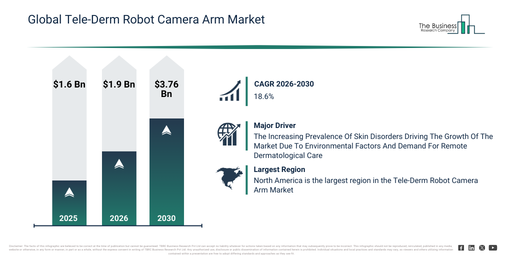
    The tele-derm robot camera arm market has seen rapid expansion in recent years. This market is expected to increase from $1.6 billion in 2025 to $1.9 billion in 2026, registering a compound annual growth rate (CAGR) of 18.9%. The factors contributing to its historical growth include the rise in telemedicine adoption, a growing scarcity of dermatology specialists, the broadening of remote clinical consultation services, improvements in robotic camera hardware, and increasing acceptance of digital diagnostics.

    The tele-derm robot camera arm market is projected for significant expansion over the coming years. This market is anticipated to reach $3.76 billion by 2030, exhibiting a compound annual growth rate (CAGR) of 18.6%. This growth during the forecast period is primarily driven by factors such as enhanced investments in telehealth robotics, a surge in demand for remote specialty medical care, the proliferation of wireless medical imaging technologies, the increasing incorporation of AI diagnostics, and expanded implementation in outpatient and ambulatory environments. Key trends expected during this period involve the greater uptake of robotic-assisted teledermatology devices, an escalating need for high-precision remote imaging systems, the burgeoning integration of AI-enhanced skin analysis, the wider availability of portable and flexible camera arm solutions, and a heightened emphasis on the accuracy of remote diagnostics.

    Access Your Free Sample Report for In-Depth Market Insights:

    https://www.thebusinessresearchcompany.com/sample.aspx?id=29225&type=smp

    Which Drivers Are Influencing Long-Term Growth In The Tele-Derm Robot Camera Arm Market?

    The increasing prevalence of skin disorders is anticipated to fuel the expansion of the tele-derm robot camera arm market in the coming years. These conditions encompass any medical issues impacting the skin’s structure, performance, or look, leading to signs such as rashes, lesions, inflammation, or alterations in color or texture. The rising occurrence of skin disorders stems from environmental influences, given that exposure to pollutants, UV radiation, shifts in climate, and detrimental chemicals can harm the skin and instigate diverse dermatological ailments. The tele-derm robot camera arm facilitates accurate remote examinations of the skin, enhancing the early identification, diagnosis, and ongoing observation of various skin disorders, while also broadening access to dermatological services. For instance, in August 2023, according to Skin Health Institute Inc., an Australia-based non-profit organization, in Australia, psoriasis affects an estimated 2–3% of the population, highlighting it as a fairly common skin condition. Consequently, the growing incidence of skin disorders is propelling the tele-derm robot camera arm market.

    How Is The Tele-Derm Robot Camera Arm Market Divided Into Segments?

    The tele-derm robot camera arm market covered in this report is segmented –

    1) By Product Type: Fixed Camera Arm, Articulated Camera Arm, Portable Camera Arm, Other Product Types

    2) By Technology: Wired, Wireless

    3) By Application: Teledermatology, Remote Patient Monitoring, Clinical Diagnostics, Other Applications

    4) By End-User: Hospitals, Clinics, Ambulatory Surgical Centers, Other End-Users

    Subsegments:

    1) By Fixed Camera Arm: Wall Mounted, Ceiling Mounted, Tripod Mounted, Desk Mounted

    2) By Articulated Camera Arm: Single Joint, Double Joint, Multi Joint, Telescopic

    3) By Portable Camera Arm: Handheld, Foldable, Collapsible, Lightweight

    4) By Other Product Types: Robotic, Motorized, Pneumatic, Hydraulic

    Which Key Market Players Are Investing In Expansion And Innovation Within The Tele-Derm Robot Camera Arm Market?

    Major companies operating in the tele-derm robot camera arm market are Olympus Corporation, KUKA Systems GmbH, Comau S.p.A., Universal Robots AS, FotoFinder Systems Inc., Canfield Scientific Inc., Mecademic Robotics, Blackcam Robotics, Dermavision Solutions S.L., Elephant Robotics, Fourth Arrow Camera Arms, Shenzhen Wisonic Medical Technology Co. Ltd, Adept Technology Inc., Kinova Robotics, Staubli Robotics, Denso Robotics, Robotiq Inc., iRobot Medical Systems, Yaskawa Motoman, ABB Robotics

    Access The Complete Report For Deeper Market Insights:

    https://www.thebusinessresearchcompany.com/report/tele-derm-robot-camera-arm-global-market-report

    Which Regions Are Poised For Strategic Growth In The Tele-Derm Robot Camera Arm Market?

    North America was the largest region in the tele-derm robot camera arm market in 2025. Asia-Pacific is expected to be the fastest-growing region in the forecast period. The regions covered in the tele-derm robot camera arm market report are Asia-Pacific, South East Asia, Western Europe, Eastern Europe, North America, South America, Middle East, Africa.

    Request Your Customized Tele-Derm Robot Camera Arm Market Research Report for Competitive Advantage:

    https://www.thebusinessresearchcompany.com/customise?id=29225&type=smp

    Browse Through More Reports Similar to the Global Tele-Derm Robot Camera Arm Market 2026, By The Business Research Company

    Drone Camera Market Report 2026

    https://www.thebusinessresearchcompany.com/report/drone-camera-global-market-report

    Bike Camera Market Report 2026

    https://www.thebusinessresearchcompany.com/report/bike-camera-global-market-report

    Automotive Camera Market Report 2026

    https://www.thebusinessresearchcompany.com/report/automotive-camera-global-market-report

    Get in touch with us:

    The Business Research Company: https://www.thebusinessresearchcompany.com/

    Americas +1 310-496-7795

    Asia +44 7882 955267 & +91 8897263534

    Europe +44 7882 955267

    Email us at info@tbrc.info

    Follow us on:

    LinkedIn: https://in.linkedin.com/company/the-business-research-company

    YouTube: https://www.youtube.com/channel/UC24_fI0rV8cR5DxlCpgmyFQ

    Global Market Model: https://www.thebusinessresearchcompany.com/global-market-model
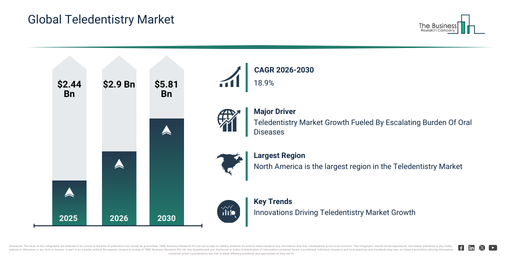
  • Revenue of the Teledentistry Market Predicted to Achieve $5.81 Billion by 2030, Driven by 18.9% CAGR

    Revenue of the Teledentistry Market Predicted to Achieve $5.81 Billion by 2030, Driven by 18.9% CAGR

    Uncover key drivers, emerging technologies, and competitive movements shaping the teledentistry market from 2026–2035 with trusted insights from The Business Research Company

    What level of CAGR-driven expansion is anticipated in the Teledentistry Market between 2026 and 2030?

    The teledentistry market has seen significant expansion in recent years. Its valuation is set to rise from $2.44 billion in 2025 to $2.9 billion in 2026, achieving a compound annual growth rate (CAGR) of 19.0%. Historically, this growth can be ascribed to several factors, including broader internet access in healthcare settings, an increasing shortage of dental practitioners in rural areas, greater public acceptance of remote healthcare provisions, the proliferation of digital dental records, and improvements in video conferencing technologies.

    The teledentistry market is projected to experience substantial growth over the coming years. By 2030, this market is anticipated to reach a valuation of $5.81 billion, exhibiting a compound annual growth rate (CAGR) of 18.9%. This expansion during the forecast period is driven by several factors, including a greater need for remote oral healthcare, increased funding for digital dental technologies, a stronger emphasis on preventative dental care, the proliferation of AI in dental diagnostics, and the deeper incorporation of teledentistry into standard dental practices. Key trends anticipated for this period involve a rise in virtual dental appointments, broader utilization of digital imaging and remote diagnostic tools, more comprehensive integration of practice management platforms, the spread of cloud-based solutions for dental communication, and a heightened emphasis on engaging patients remotely.

    Access Your Free Sample Report for In-Depth Market Insights:

    https://www.thebusinessresearchcompany.com/sample.aspx?id=8311&type=smp

    What Drivers Are Affecting Demand-Supply Dynamics In The Teledentistry Market?

    The expanding prevalence of oral health conditions is anticipated to fuel the expansion of the teledentistry market in the coming years. Oral diseases encompass various conditions affecting the mouth and its components, including teeth, gums, and the tongue. Teledentistry plays a crucial role in broadening access to oral healthcare and enhancing the management of these conditions. For example, the World Health Organization, a Switzerland-based intergovernmental organization, reported in March 2025 that in 2022, there were an estimated 389,846 new global cases of lip and oral cavity cancers, leading to approximately 188,438 fatalities. This escalating occurrence of oral diseases is consequently propelling the growth of the teledentistry market.

    What Segments Are Included Within The Teledentistry Market?

    The teledentistry market covered in this report is segmented –

    1) By Component: Hardware, Software

    2) By Delivery Mode: On-premise, Cloud-based

    3) By Application: Tele-consultation, Remote patient monitoring, Education and training

    4) By End User: Healthcare providers, Patients, Other End-Users

    Subsegments:

    1) By Hardware: Intraoral Cameras, X-Ray Scanners, Mobile Devices, Computer Systems

    2) By Software: Practice Management Software, Appointment Scheduling Software, Image Analysis and Diagnosis Software, Communication And Video Conferencing Software

    Which Trends Are Shaping Activity Within The Teledentistry Market?

    Leading companies in the teledentistry market are concentrating on technological advancements, such as AI-powered diagnostic instruments and virtual consultation platforms, to expand patient access and elevate the quality of dental care, fostering enhanced oral health outcomes and increased patient satisfaction. Artificial intelligence (AI) for photo analysis employs algorithms to assess and interpret visual data from images, enabling accurate evaluations and diagnoses in various fields, including healthcare. For instance, in June 2023, Virtual Dental Care, Inc., a US-based firm providing teledentistry software and services, launched Teledentistry 3.0. Teledentistry 3.0 aims to improve patient access to dental care by offering a comprehensive range of virtual services from the convenience of their homes. This version of teledentistry extends beyond traditional problem-focused services to include wellness-oriented offerings such as preventive care and ongoing oral health monitoring. This innovative platform utilizes advanced technologies like artificial intelligence to enhance diagnosis and customize treatment plans, thereby improving accessibility to dental care.

    Who Are The Core Companies Influencing Trends In The Teledentistry Market?

    Major companies operating in the teledentistry market are The TeleDentists, Dentulu Inc, Toothpic, Virtudent Inc, SmileMate, DentalChat, Denteractive, DigiDentista, Odonto Virtual, Odontología Virtual, Dentaly.org, Teladent, Zahnarzt-Hotline, Dentist.cz, DentistulTau, Dentaltap, Dentalink, Odontovida, Smileneo, Teledentistry

    Access The Complete Report For Deeper Market Insights:

    https://www.thebusinessresearchcompany.com/report/teledentistry-global-market-report

    Which Regions Are Projected To Dominate The Teledentistry Market In The Coming Years?

    North America was the largest region in the teledentistry market in 2025. The regions covered in the teledentistry market report are Asia-Pacific, South East Asia, Western Europe, Eastern Europe, North America, South America, Middle East, Africa.

    Request Your Customized Teledentistry Market Research Report for Competitive Advantage:

    https://www.thebusinessresearchcompany.com/customise?id=8311&type=smp

    Browse Through More Reports Similar to the Global Teledentistry Market 2026, By The Business Research Company

    Telepsychiatry Market Report 2026

    https://www.thebusinessresearchcompany.com/report/telepsychiatry-global-market-report

    Telehealth Market Report 2026

    https://www.thebusinessresearchcompany.com/report/telehealth-global-market-report

    Teleradiology Market Report 2026

    https://www.thebusinessresearchcompany.com/report/teleradiology-global-market-report

    Get in touch with us:

    The Business Research Company: https://www.thebusinessresearchcompany.com/

    Americas +1 310-496-7795

    Asia +44 7882 955267 & +91 8897263534

    Europe +44 7882 955267

    Email us at info@tbrc.info

    Follow us on:

    LinkedIn: https://in.linkedin.com/company/the-business-research-company

    YouTube: https://www.youtube.com/channel/UC24_fI0rV8cR5DxlCpgmyFQ

    Global Market Model: https://www.thebusinessresearchcompany.com/global-market-model
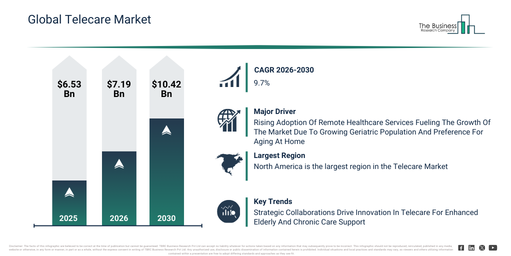
  • Telecare Sector Forecast Shows Robust Momentum, Climbing to $10.42 Billion With 9.7% CAGR

    Telecare Sector Forecast Shows Robust Momentum, Climbing to $10.42 Billion With 9.7% CAGR

    Uncover key drivers, emerging technologies, and competitive movements shaping the telecare market from 2026–2035 with trusted insights from The Business Research Company

    What long-term size projections exist for the Telecare Market covering 2026–2035?

    The telecare market size has demonstrated rapid expansion in recent years. It is projected to increase from $6.53 billion in 2025 to $7.19 billion in 2026, growing at a compound annual growth rate (CAGR) of 10.1%. This historical growth can be ascribed to a rising elderly population, the increasing prevalence of chronic conditions, the expansion of home healthcare services, improvements in connectivity infrastructure, and the growing acceptance of remote care models.

    The telecare market size is projected to undergo substantial expansion in the coming years. Its valuation is anticipated to reach $10.42 billion by 2030, demonstrating a compound annual growth rate (CAGR) of 9.7%. This expansion during the forecast period is largely driven by increased investments in digital health platforms, the growing acceptance of AI-powered telecare analytics, the broadening of smart home healthcare ecosystems, a heightened emphasis on preventive health strategies, and the rising need for cost-efficient care solutions. Key developments expected within this period encompass the wider implementation of remote patient monitoring solutions, the increasing deployment of wearable telecare devices, the enhanced incorporation of emergency alert systems, the proliferation of home-based chronic care models, and a stronger emphasis on aging-in-place solutions.

    Access Your Free Sample Report for In-Depth Market Insights:

    https://www.thebusinessresearchcompany.com/sample.aspx?id=25921&type=smp

    Which Drivers Are Impacting The Competitive Landscape Of The Telecare Market?

    The increasing utilization of remote healthcare services is anticipated to fuel the expansion of the telecare market in the future. These services encompass the provision of medical care via telecommunication tools, allowing individuals to obtain assistance remotely, eliminating the necessity of physical visits to healthcare centers. The expansion of remote healthcare services stems from an aging population, given that a growing number of seniors opt to age in their homes, thereby boosting the need for ongoing remote oversight and support. Telecare supports remote healthcare by facilitating real-time observation, immediate emergency reactions, and communication via linked devices, ensuring the provision of care without requiring physical attendance. As an illustration, in June 2024, data from Telehealth Access for America, a US-based non-profit advocacy group, indicated that during Q1 2024, almost 3 million Medicare beneficiaries (2,751,044) utilized telehealth services, showing a persistent national dependence on remote healthcare provision. Consequently, the growing embrace of remote healthcare service solutions is a key factor propelling the expansion of the telecare market.

    What Leading Segments Are Studied In The Telecare Market?

    The telecare market covered in this report is segmented –

    1) By Type: Activity Monitoring, Remote Medication Management

    2) By Technology: Non Wearable, Wearable

    3) By End Use: Healthcare Consumers, Healthcare Providers, Payers

    Subsegments:

    1) By Activity Monitoring: Motion Sensors, Bed And Chair Occupancy Sensors, Door And Window Sensors, Wearable Activity Trackers, Fall Detection Devices

    2) By Remote Medication Management: Smart Pill Dispensers, Automated Medication Reminders, Mobile Medication Management Apps, Connected Inhalers, Remote Dose Monitoring Platforms

    Which Trends Are Influencing The Development Of The Telecare Market?

    Major companies operating in the telecare market are concentrating on introducing innovative solutions through strategic collaborations to enhance remote monitoring capabilities and broaden their service offerings, thereby addressing the growing demand for elderly and chronic care support. Strategic collaborations refer to partnerships between organizations that unite their resources and expertise to develop innovative solutions, improve service delivery, and achieve mutual goals more effectively. For instance, in December 2024, Skyresponse AB, a Sweden-based technology company, and OneCo Technologies AS, a Norway-based company specializing in health technology solutions, formed a strategic partnership to deliver innovative, fully digital, and cloud-based telecare solutions. These solutions aim to enhance independent living, care homes, institutions, and hospitals in both the private and public sectors. This collaboration combines Skyresponse’s advanced alarm management platform with OneCo’s expertise in electronics, automation, and telecommunications to provide flexible, cost-effective, and user-friendly telecare services. The partnership initially focuses on a remote night check-in solution integrating KeplerVision and the Skyresponse Responder App, with Norway’s largest private care home operator being among the first to implement it.

    Which Major Industry Participants Are Leading The Telecare Market Growth?

    Major companies operating in the telecare market are Philips Healthcare, The Access Group Limited, Tunstall Healthcare Group Limited, ConnectAmerica.com LLC, Ascom Holding AG, Resideo Technologies Inc., Cera Care Limited, Enovation Group B.V., iHealth Labs Inc., Vivify Health Inc., Careium AB, Essence SmartCare Ltd., Helios Telecare Inc., Rest Assured LLC, Tyto Care Ltd., Alarm.com, Legrand Care, Essence Group, Everon Group, AT Technology Services, Doro Care, Televic Healthcare

    Access The Complete Report For Deeper Market Insights:

    https://www.thebusinessresearchcompany.com/report/telecare-global-market-report

    Which Region Is Expected To Experience The Fastest Growth In The Telecare Market?

    North America was the largest region in the telecare market in 2025. Asia-Pacific is expected to be the fastest-growing region in the forecast period. The regions covered in the telecare market report are Asia-Pacific, South East Asia, Western Europe, Eastern Europe, North America, South America, Middle East, Africa.

    Request Your Customized Telecare Market Research Report for Competitive Advantage:

    https://www.thebusinessresearchcompany.com/customise?id=25921&type=smp

    Browse Through More Reports Similar to the Global Telecare Market 2026, By The Business Research Company

    Commercial Telematics Market Report 2026

    https://www.thebusinessresearchcompany.com/report/commercial-telematics-global-market-report

    Teleradiology Market Report 2026

    https://www.thebusinessresearchcompany.com/report/teleradiology-global-market-report

    Telehealth Market Report 2026

    https://www.thebusinessresearchcompany.com/report/telehealth-global-market-report

    Get in touch with us:

    The Business Research Company: https://www.thebusinessresearchcompany.com/

    Americas +1 310-496-7795

    Asia +44 7882 955267 & +91 8897263534

    Europe +44 7882 955267

    Email us at info@tbrc.info

    Follow us on:

    LinkedIn: https://in.linkedin.com/company/the-business-research-company

    YouTube: https://www.youtube.com/channel/UC24_fI0rV8cR5DxlCpgmyFQ

    Global Market Model: https://www.thebusinessresearchcompany.com/global-market-model
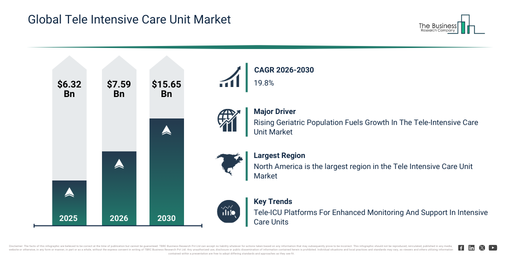
  • Tele Intensive Care Unit Market Anticipated to Record Steady Gains, Advancing to $15.64 Billion by 2030

    Tele Intensive Care Unit Market Anticipated to Record Steady Gains, Advancing to $15.64 Billion by 2030

    Uncover key drivers, emerging technologies, and competitive movements shaping the tele intensive care unit market from 2026–2035 with trusted insights from The Business Research Company

    What total market size is anticipated for the Tele Intensive Care Unit Market in 2030?

    Recent years have witnessed a rapid expansion in the tele intensive care unit market size. This market is set to grow from $6.32 billion in 2025 to $7.59 billion in 2026, achieving a compound annual growth rate (CAGR) of 20.0%. The growth observed in the historic period primarily stems from the expansion of hospital critical care capacity, a rising shortage of intensivists, the increased use of telemedicine platforms, growth in digital health infrastructure, and the demand for continuous patient monitoring.

    The tele intensive care unit market is projected for swift expansion in the upcoming years. By 2030, its valuation is anticipated to reach $15.65 billion, demonstrating a compound annual growth rate (CAGR) of 19.8%. This anticipated surge during the forecast timeframe stems from greater funding in intelligent hospital infrastructure, the burgeoning uptake of cloud-powered healthcare solutions, the broadening availability of remote critical care services, the expanding application of predictive analytics in ICU care, and a heightened emphasis on delivering healthcare efficiently and affordably. Key developments projected for this period encompass the greater incorporation of remote ICU monitoring systems, the proliferation of centralized tele-ICU frameworks, the deepening integration of AI-driven clinical decision assistance, an escalating need for instantaneous patient data analysis, and a sharpened emphasis on optimizing the critical care workforce.

    Access Your Free Sample Report for In-Depth Market Insights:

    https://www.thebusinessresearchcompany.com/sample.aspx?id=8164&type=smp

    What Drivers Are Influencing Production Trends In The Tele Intensive Care Unit Market?

    The increasing number of older adults is projected to drive the growth of the tele-intensive care unit market going forward. The geriatric population comprises older adults, typically defined as individuals who are 65 or older. Tele-Intensive Care Units (Tele-ICUs) ensure timely medical interventions and improved patient outcomes for the elderly. These systems deliver care to critically ill patients and support the on-site staff in the intensive care unit (ICU) via secured audio–video and electronic links. For example, according to the World Health Organization, a US-based specialized health agency, in October 2025, it was stated that globally, 1 in 6 individuals would be 60 or older by 2030, with this number anticipated to reach 2.1 billion elderly people by 2050. Hence, the rising geriatric population is fueling the growth of the tele-intensive care unit market.

    Which Segment Groups Are Influencing The Tele Intensive Care Unit Market?

    The tele intensive care unit market covered in this report is segmented –

    1) By Type: Centralized Models, Decentralized Models, Other Types

    2) By Type Of Management: Intensivist, Open, Co-Managed, Open With Consultants, Other Types Of Management

    3) By Component: Hardware, Software

    4) By End User: Hospitals, Clinics, Other End Users

    Subsegments:

    1) By Centralized Models: Single Hub With Multiple Remote ICUs, Centralized Monitoring Systems, Integrated Care Coordination Platforms

    2) By Decentralized Models: Distributed Care Teams Across Multiple Locations, Localized Monitoring With Remote Support, Hybrid Care Models

    3) By Other Types: Mobile Tele-ICU Units, Cloud-Based Tele-ICU Solutions, Specialized Tele-ICU Applications

    What Trends Are Expected To Impact The Competitive Landscape Of The Tele Intensive Care Unit Market?

    Key players in the tele-intensive care unit market are intensifying their efforts to introduce tele-ICU platforms to achieve a competitive edge. A tele-ICU platform is a technologically driven system designed to offer remote monitoring, consultation, and support for intensive care units (ICUs). For instance, in October 2023, HealthNet Global (HNG), an India-based healthcare provider, launched a tele-ICU program at Apollo Spectra Hospitals in India. This program connects Apollo Spectra’s ICU facility with the Apollo Command Center using HNG’s advanced Tele-ICU platform, ensuring the delivery of critical care services with unparalleled precision. The initiative provides remote intensive care physicians and nurses who support the treatment of ICU patients through sophisticated telehealth technology.

    Who Are The Prominent Global Companies Shaping The Tele Intensive Care Unit Market Landscape?

    Major companies operating in the tele intensive care unit market are Hicuity Health LLC, Banner Health System, Teladoc Health Inc., Koninklijke Philips NV, University of Pittsburgh Medical Center, Inova Health System, Apollo TeleHealth Services Limited, Eagle Telemedicine LLC, iMDsoft Ltd., CLEW Medical Ltd., General Electric Company, Cloudphysician Healthcare Company, GlobalMed Inc., Mercy Virtual Inc., SynsorMed Inc., TeleICU by eCatalyst Healthcare Solutions LLC, Vidyo Inc., Vituity Telehealth Services Inc., CyberMed Inc., Dignity Health Telemedicine

    Access The Complete Report For Deeper Market Insights:

    https://www.thebusinessresearchcompany.com/report/tele-intensive-care-unit-global-market-report

    Which Geographic Areas Are Emerging As Strong Markets For The Tele Intensive Care Unit Market?

    North America was the largest region in the tele intensive care unit market in 2025. The regions covered in the tele intensive care unit market report are Asia-Pacific, South East Asia, Western Europe, Eastern Europe, North America, South America, Middle East, Africa.

    Request Your Customized Tele Intensive Care Unit Market Research Report for Competitive Advantage:

    https://www.thebusinessresearchcompany.com/customise?id=8164&type=smp

    Browse Through More Reports Similar to the Global Tele Intensive Care Unit Market 2026, By The Business Research Company

    Teleradiology Market Report 2026

    https://www.thebusinessresearchcompany.com/report/teleradiology-global-market-report

    Tele Intensive Care Market Report 2026

    https://www.thebusinessresearchcompany.com/report/tele-intensive-care-global-market-report

    Tele Radiology Market Report 2026

    https://www.thebusinessresearchcompany.com/report/tele-radiology-global-market-report

    Get in touch with us:

    The Business Research Company: https://www.thebusinessresearchcompany.com/

    Americas +1 310-496-7795

    Asia +44 7882 955267 & +91 8897263534

    Europe +44 7882 955267

    Email us at info@tbrc.info

    Follow us on:

    LinkedIn: https://in.linkedin.com/company/the-business-research-company

    YouTube: https://www.youtube.com/channel/UC24_fI0rV8cR5DxlCpgmyFQ

    Global Market Model: https://www.thebusinessresearchcompany.com/global-market-model
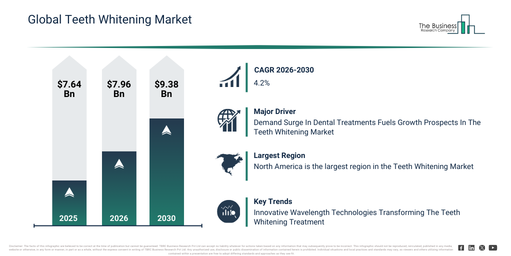
  • Teeth Whitening Industry Poised for Rapid Growth, Forecast to Touch $9.37 Billion by 2030 at 4.2% CAGR

    Teeth Whitening Industry Poised for Rapid Growth, Forecast to Touch $9.37 Billion by 2030 at 4.2% CAGR

    Uncover key drivers, emerging technologies, and competitive movements shaping the teeth whitening market from 2026–2035 with trusted insights from The Business Research Company

    What is the expected shift in the Teeth Whitening Market’s size between 2026 and 2030?

    The teeth whitening market has experienced consistent expansion in its size over recent years. It is projected to grow from $7.64 billion in 2025 to $7.96 billion in 2026, at a compound annual growth rate (CAGR) of 4.3%. Historically, this expansion can be attributed to increased awareness of cosmetic dentistry, a growing consumer emphasis on personal aesthetics, the broader availability of retail oral care products, rising disposable income levels, and the accessibility of professional whitening treatments.

    The teeth whitening market is projected to experience consistent expansion in the coming years. This market is anticipated to reach a valuation of $9.38 billion by 2030, exhibiting a compound annual growth rate (CAGR) of 4.2%. This projected growth is driven by factors such as the increasing integration of digital dental technologies, a heightened demand for high-quality oral care items, the proliferation of cosmetic dental clinics, the expanding impact of social media on aesthetic preferences, and ongoing advancements in whitening product formulations. Key developments expected during this period involve a surge in demand for at-home whitening products, the growing use of LED-based whitening devices, a noticeable shift towards non-invasive cosmetic dentistry, the broadening scope of professional whitening services, and a greater emphasis on enamel-safe formulations.

    Access Your Free Sample Report for In-Depth Market Insights:

    https://www.thebusinessresearchcompany.com/sample.aspx?id=13543&type=smp

    Which Drivers Are Shaping Strategic Decisions In The Teeth Whitening Market?

    The rising need for dental procedures is projected to fuel expansion within the teeth whitening market in the future. These treatments encompass medical interventions and processes carried out by dental experts to resolve oral health problems and ailments. Specifically, dentists provide teeth whitening as a dental treatment to improve the color and look of teeth, thereby boosting patients’ aesthetic appeal. An illustrative example comes from Align Technology, Inc., a US-based medical device company, which reported in April 2025 that its Q1 2025 clear aligner volumes reached 642.3 thousand cases. This represented a 2.2% sequential increase and a 6.2% growth compared to the previous year’s corresponding period. Consequently, this heightened demand for dental procedures is anticipated to propel the growth of the teeth whitening market.

    What Segment Classifications Make Up The Teeth Whitening Market?

    The teeth whitening market covered in this report is segmented –

    1) By Product Type: Whitening Toothpaste, Whitening Gels And Strips, Light Teeth Whitening Device, Other Product Types

    2) By Distribution Channel: Institutional Sales, Retail Sales

    3) By Application Type: In-Office, At-Home

    Subsegments:

    1) By Whitening Toothpaste: Abrasive Whitening Toothpaste, Enzyme-Based Whitening Toothpaste

    2) By Whitening Gels And Strips: Gel-Based Whitening Products, Whitening Strips

    3) By Light Teeth Whitening Device: LED Teeth Whitening Devices, UV Teeth Whitening Devices

    4) By Other Product Types: Whitening Mouthwashes, Whitening Pens, Professional Teeth Whitening Kits

    Which Trends Are Guiding The Evolution Of The Teeth Whitening Market?

    Leading companies within the teeth whitening market are creating cutting-edge oral care items incorporating wavelength technology to secure a competitive edge. These advanced products leverage specific light frequencies to improve dental treatments and achieve better oral hygiene results. An example is the Colgate Optic White ComfortFit LED Teeth Whitening Kit, launched in February 2023 by Colgate-Palmolive Company, a US-based dental and personal-care product firm, which features wavelength technology. This kit employs particular light wavelengths, including blue or violet spectrums, to boost the efficacy of teeth whitening procedures. Its design specifically aims to elevate the user experience through an emphasis on comfort, consistent whitening, straightforward usage, effectiveness, and quick results. Utilizing wavelength technology, the kit facilitates the application of a thin layer of whitening serum onto teeth, with the included LED device used for 10 minutes daily over a 10-day period to rapidly eliminate stains. The package comprises a flexible LED whitening light and a teeth whitening pen, offering convenient smartphone power compatibility for both iPhone and Android devices.

    Which Key Players Are Driving Competition In The Teeth Whitening Market?

    Major companies operating in the teeth whitening market are Johnson And Johnson, Procter And Gamble, Unilever PLC, GlaxoSmithKline Plc, 3M Company, Koninklijke Philips N.V., Colgate-Palmolive Company, Church And Dwight Co, DENTSPLY International, Ivoclar Vivadent AG, Kerr Corp, Ultradent Products Inc., Dr. Fresh LLC, Onuge Personal Care (Guangzhou) Co. Ltd., TECNO-GAZ SpA, Pearl Smile GmbH, Beaming White LLC, WHITEsmile GmbH, WSD Labs USA INC., DentMate Technology Co. Ltd., Mavrik Dental Systems Ltd., GLO Science LLC, Cosmolab Manufacturing Ltd

    Access The Complete Report For Deeper Market Insights:

    https://www.thebusinessresearchcompany.com/report/teeth-whitening-global-market-report

    Which Region Is Projected To Lead The Teeth Whitening Market During The Forecast Period?

    North America was the largest region in the teeth whitening market in 2025. Asia-Pacific is expected to be the fastest-growing region in the forecast period. The regions covered in the teeth whitening market report are Asia-Pacific, South East Asia, Western Europe, Eastern Europe, North America, South America, Middle East, Africa.

    Request Your Customized Teeth Whitening Market Research Report for Competitive Advantage:

    https://www.thebusinessresearchcompany.com/customise?id=13543&type=smp

    Browse Through More Reports Similar to the Global Teeth Whitening Market 2026, By The Business Research Company

    Mouthwash Market Report 2026

    https://www.thebusinessresearchcompany.com/report/mouthwash-global-market-report

    Endodontics Market Report 2026

    https://www.thebusinessresearchcompany.com/report/endodontics-global-market-report

    Cosmetic Dentistry Market Report 2026

    https://www.thebusinessresearchcompany.com/report/cosmetic-dentistry-global-market-report

    Get in touch with us:

    The Business Research Company: https://www.thebusinessresearchcompany.com/

    Americas +1 310-496-7795

    Asia +44 7882 955267 & +91 8897263534

    Europe +44 7882 955267

    Email us at info@tbrc.info

    Follow us on:

    LinkedIn: https://in.linkedin.com/company/the-business-research-company

    YouTube: https://www.youtube.com/channel/UC24_fI0rV8cR5DxlCpgmyFQ

    Global Market Model: https://www.thebusinessresearchcompany.com/global-market-model
  • Technology Spending On Core Administration In Healthcare Market Performance Outlook 2026–2030: Revenue to Hit $64.77 Billion at 7.9% CAGR

    Technology Spending On Core Administration In Healthcare Market Performance Outlook 2026–2030: Revenue to Hit $64.77 Billion at 7.9% CAGR

    Uncover key drivers, emerging technologies, and competitive movements shaping the technology spending on core administration in healthcare market from 2026–2035 with trusted insights from The Business Research Company

    What growth pattern is forecast for the Technology Spending On Core Administration In Healthcare Market size between 2026 and 2035?

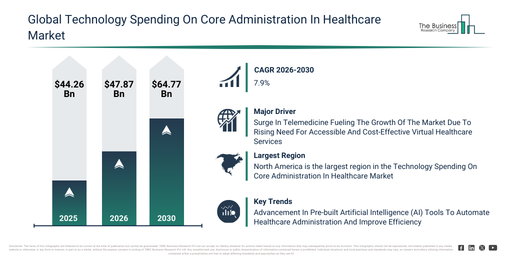
    The market size for technology expenditure on core administration in healthcare has demonstrated significant expansion in recent years. This area is forecast to grow from $44.26 billion in 2025 to $47.87 billion in 2026, achieving a compound annual growth rate (CAGR) of 8.2%. The past growth can be attributed to factors such as the increasing administrative workload in healthcare systems, the adoption of electronic records for billing and enrollment, a rise in healthcare operational complexity, the expansion of insurance coverage programs, and the demand for efficient revenue cycle management.

    The technology spending on core administration in healthcare market size is expected to undergo strong growth in the coming years. It is projected to expand to $64.77 billion by 2030, achieving a compound annual growth rate (CAGR) of 7.9%. This growth during the forecast period is attributable to increasing investments in intelligent automation tools, a rising demand for real-time financial analytics, the expansion of digital payer-provider ecosystems, a growing focus on regulatory compliance automation, and the integration of advanced data management platforms. Major trends anticipated in this period include the increasing automation of healthcare administrative workflows, a rising adoption of cloud-based core administration platforms, the expansion of AI-enabled claims and billing systems, a growing emphasis on data accuracy and interoperability, and an enhanced focus on cost optimization in healthcare operations.

    Access Your Free Sample Report for In-Depth Market Insights:

    https://www.thebusinessresearchcompany.com/sample.aspx?id=27432&type=smp

    Which Drivers Are Impacting Market Performance In The Technology Spending On Core Administration In Healthcare Market?

    The increasing need for telemedicine is projected to fuel expenditure on core administrative technology within the healthcare sector. Telemedicine involves delivering medical services remotely using digital tools like video calls, messaging platforms, or mobile applications for patient diagnosis, treatment, and monitoring. The rising acceptance of telemedicine enables patients to receive healthcare from a distance, decreasing travel requirements and boosting accessibility, particularly for individuals in remote or underserved regions. Allocating resources to core administrative technology in healthcare improves telemedicine operations by automating tasks such as patient registration, appointment scheduling, billing, and claims processing. This boosts efficiency, minimizes delays, and allows providers to concentrate on delivering timely virtual care. For instance, in November 2025, the Australian Bureau of Statistics (ABS), an Australia-based government statistical agency, reported that 22.5% of Australians utilized telehealth services in 2024–25. Of those who had a telehealth consultation, 90.3% stated they would use telehealth again if available, an increase from 89.2% in 2023–24. Consequently, the expanding demand for telemedicine is driving the rise in technology spending on core administration in the healthcare market.

    What Segment Types Are Examined In The Technology Spending On Core Administration In Healthcare Market?

    The technology spending on core administration in healthcare market covered in this report is segmented –

    1) By Type: Software, Hardware, Services

    2) By Technology: Electronic Health Records (EHRs), Patient Management Systems, Financial Management Systems, Supply Chain Management Systems, Revenue Cycle Management System

    3) By Deployment Mode: On-Premise, Cloud-Based, Hybrid

    4) By Application: Patient Management, Staff Management, Inventory Management, Other Applications

    5) By End-User: Hospitals, Clinics, Insurance Providers, Other End-Users

    Subsegments:

    1) By Software: Electronic Health Record (EHR) Systems, Practice Management Software, Revenue Cycle Management (RCM) Software, Patient Scheduling Software, Claims Management Software

    2) By Hardware: Servers and Storage Devices, Workstations and Desktops, Networking Equipment, Scanners And Imaging Devices, Administrative Endpoints And Secure Access Devices

    3) By Services: Information Technology Consulting and Support, System Integration Services, Managed Services, Training and Education Services, Maintenance and Upgrades

    What Trends Are Projected To Support The Growth Of The Technology Spending On Core Administration In Healthcare Market?

    Leading technology companies operating in the technology spending on core administration in the healthcare market are focusing on developing advanced solutions, such as prebuilt artificial intelligence tools for healthcare, to automate administrative tasks and enhance decision-making accuracy. Prebuilt artificial intelligence tools are ready-to-use artificial intelligence (AI) solutions that eliminate the need for extensive custom development, enabling quick adoption of advanced capabilities like automation, data analysis, and prediction for streamlined workflows. For instance, in February 2025, Salesforce Inc., a US-based cloud-based software company, launched Agentforce for Health. It is a library of prebuilt agentic AI tools designed to automate time-consuming administrative, clinical, and public health tasks in the healthcare sector. The platform includes features such as patient appointment scheduling, eligibility checks with insurers, and care coordination support. It also assists in disease surveillance and clinical trial matching by pulling data from various registries. This aims to reduce administrative burden, combat workforce burnout, and improve operational efficiency for providers and and payers.

    Who Are The Top-Performing Companies In The Technology Spending On Core Administration In Healthcare Market In Recent Years?

    Major companies operating in the technology spending on core administration in healthcare market are Microsoft Corporation, Siemens AG, International Business Machines Corporation, Oracle Corporation, Tata Consultancy Services Limited, Cognizant Technology Solutions Corporation, GE Healthcare Technologies Inc., Infosys Limited, Conduent Incorporated, Evolent Health Inc., Veradigm Inc., Tebra Inc., 314e Corporation, Qventus Inc., Meditab Software Inc., CodaMetrix Inc., Raintree Systems Inc., ReLi Med Solutions Inc., Cerner Corporation, Epic Systems Corporation, Allscripts Healthcare Solutions Inc., McKesson Corporation

    Access The Complete Report For Deeper Market Insights:

    https://www.thebusinessresearchcompany.com/report/technology-spending-on-core-administration-in-healthcare-global-market-report

    Which Region Currently Holds The Largest Share Of The Technology Spending On Core Administration In Healthcare Market?

    North America was the largest region in the technology spending on core administration in healthcare market in 2025. Asia-Pacific is expected to be the fastest-growing region in the forecast period. The regions covered in the technology spending on core administration in healthcare market report are Asia-Pacific, South East Asia, Western Europe, Eastern Europe, North America, South America, Middle East, Africa.

    Request Your Customized Technology Spending On Core Administration In Healthcare Market Research Report for Competitive Advantage:

    https://www.thebusinessresearchcompany.com/customise?id=27432&type=smp

    Browse Through More Reports Similar to the Global Technology Spending On Core Administration In Healthcare Market 2026, By The Business Research Company

    Casino Market Report 2026

    https://www.thebusinessresearchcompany.com/report/casino-global-market-report

    Smart Stadium Market Report 2026

    https://www.thebusinessresearchcompany.com/report/smart-stadium-global-market-report

    Hospitality Market Report 2026

    https://www.thebusinessresearchcompany.com/report/hospitality-global-market-report

    Get in touch with us:

    The Business Research Company: https://www.thebusinessresearchcompany.com/

    Americas +1 310-496-7795

    Asia +44 7882 955267 & +91 8897263534

    Europe +44 7882 955267

    Email us at info@tbrc.info

    Follow us on:

    LinkedIn: https://in.linkedin.com/company/the-business-research-company

    YouTube: https://www.youtube.com/channel/UC24_fI0rV8cR5DxlCpgmyFQ

    Global Market Model: https://www.thebusinessresearchcompany.com/global-market-model
  • Global Tay-Sachs Disease Treatment Market Set for Strong Expansion, Reaching $3.44 Billion With 7% CAGR by 2030

    Global Tay-Sachs Disease Treatment Market Set for Strong Expansion, Reaching $3.44 Billion With 7% CAGR by 2030

    Uncover key drivers, emerging technologies, and competitive movements shaping the tay-sachs disease treatment market from 2026–2035 with trusted insights from The Business Research Company

    How much larger will the Tay-Sachs Disease Treatment Market be in 2030 compared with 2026?

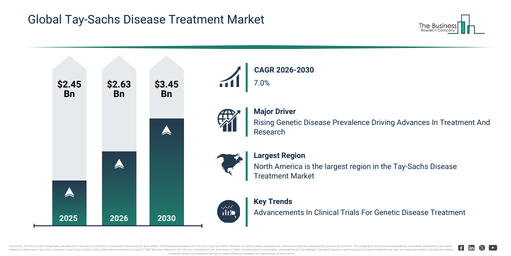
    The tay-sachs disease treatment market has experienced robust expansion over the past few years. Projections indicate it will expand from $2.45 billion in 2025 to $2.63 billion in 2026, demonstrating a compound annual growth rate (CAGR) of 7.3%. Historically, this expansion has been driven by factors such as enhanced genetic screening capabilities, greater understanding of rare genetic disorders, broader pediatric neurology services, the presence of various supportive therapies, and the rise in orphan drug research initiatives.

    The tay-sachs disease treatment market is projected to experience robust expansion over the coming years. This market is anticipated to reach a valuation of $3.45 billion by 2030, exhibiting a compound annual growth rate (CAGR) of 7.0%. Several factors are contributing to this expansion during the projection period, including a rise in clinical trials for gene therapies, enhanced regulatory backing for orphan drugs, wider application of precision medicine in uncommon diseases, an increase in patient advocacy programs, and greater funding for cutting-edge biotechnologies. Key trends for the forecast period encompass a heightened emphasis on developing gene therapies, expanded research into enzyme replacement, an increasing adoption of substrate reduction therapies, growing financial commitments to rare disease drug development, and improved supportive care guidelines.

    Access Your Free Sample Report for In-Depth Market Insights:

    https://www.thebusinessresearchcompany.com/sample.aspx?id=21295&type=smp

    What Drivers Are Guiding Growth Patterns In The Tay-Sachs Disease Treatment Market?

    The increasing occurrence of genetic diseases is projected to propel the tay-sachs disease treatment market forward. A genetic disease is characterized as a disorder stemming from abnormalities in an individual’s DNA, which can be inherited or develop from spontaneous mutations. The surge in genetic diseases is driven by advancements in diagnostics, heightened awareness, environmental elements, and elevated mutation rates resulting from delayed parenthood and changes in lifestyle. This growing prevalence of genetic diseases emphasizes the critical need for enhancements in tay-sachs disease treatment, stimulating research in fields such as gene therapy, enzyme replacement, and early diagnostics. For example, in October 2024, information from the Cystic Fibrosis Trust, a UK-based charity supporting those with cystic fibrosis, indicated that around 11,148 cystic fibrosis (a genetic disorder) patients were registered in 2022, with this total climbing to 11,318 in 2023, showing a 1.5% year-over-year rise in patient registrations. Consequently, the expanding prevalence of genetic diseases will stimulate the tay-sachs disease treatment market.

    Which Segments Are Driving Activity In The Tay-Sachs Disease Treatment Market?

    The tay-sachs disease treatment market covered in this report is segmented –

    1) By Treatment: Medication, Respiratory Care, Physical Therapy

    2) By Mode Of Administration: Injectable, Oral, Other Mode Of Administration

    3) By End-Users: Hospitals, Homecare, Specialty Clinics

    Subsegments:

    1) By Medication: Antiepileptic Drugs, Miglustat, Supportive Symptomatic Medications

    2) By Respiratory Care: Mechanical Ventilation, Airway Clearance Therapy, Oxygen Therapy

    3) By Physical Therapy: Motor Function Exercises, Hydrotherapy, Assistive Mobility Devices

    Which Trends Are Influencing The Performance And Direction Of The Tay-Sachs Disease Treatment Market?

    Major companies within the tay-sachs disease treatment market are prioritizing the creation of novel treatments, notably by conducting clinical trials to explore advanced therapies such as gene therapy, enzyme replacement, and small-molecule drugs, aiming for better patient outcomes. A clinical trial is a research endeavor that evaluates the safety, effectiveness, and potential side effects of medical treatments, drugs, or procedures in human subjects. For instance, in July 2024, IntraBio Inc., a US-based biopharmaceutical company, announced it had received US Food and Drug Administration (FDA) approval for its Investigational New Drug (IND) Application, allowing it to initiate a clinical trial (IB1001-202) for IB1001, which targets GM2 Gangliosidosis (Tay-Sachs and Sandhoff Disease). This trial is being conducted across the U.S., UK, Germany, and Spain, with the goal of addressing these fatal neurodegenerative disorders that currently lack approved treatments. IntraBio’s chairman underscored the urgency of developing effective therapies for these debilitating diseases.

    Which Leading Companies Dominate The Tay-Sachs Disease Treatment Market Share?

    Major companies operating in the tay-sachs disease treatment market are Pfizer Inc., Sanofi S.A., Novartis AG, Takeda Pharmaceutical Company Limited, Regeneron Pharmaceuticals Inc., Biogen Inc., Vertex Pharmaceuticals Incorporated, BioMarin Pharmaceutical Inc., Sarepta Therapeutics Inc., Ultragenyx Pharmaceutical Inc., Amicus Therapeutics Inc., Spark Therapeutics Inc., Rocket Pharmaceuticals Inc., RegenxBio Inc., Forge Biologics Inc., Passage Bio Inc., Protalix BioTherapeutics Inc., Orchard Therapeutics plc, Affinia Therapeutics Inc., IntraBio Inc., Taysha Gene Therapies Inc.

    Access The Complete Report For Deeper Market Insights:

    https://www.thebusinessresearchcompany.com/report/tay-sachs-disease-treatment-global-market-report

    How Does The Tay-Sachs Disease Treatment Market Perform Across Major Global Regions?

    North America was the largest region in the tay-sachs disease treatment market in 2025. Asia-Pacific is expected to be the fastest-growing region in the forecast period. The regions covered in the tay-sachs disease treatment market report are Asia-Pacific, South East Asia, Western Europe, Eastern Europe, North America, South America, Middle East, Africa.

    Request Your Customized Tay-Sachs Disease Treatment Market Research Report for Competitive Advantage:

    https://www.thebusinessresearchcompany.com/customise?id=21295&type=smp

    Browse Through More Reports Similar to the Global Tay-Sachs Disease Treatment Market 2026, By The Business Research Company

    Malaria Treatment Market Report 2026

    https://www.thebusinessresearchcompany.com/report/malaria-treatment-global-market-report

    Rare Diseases Treatment Market Report 2026

    https://www.thebusinessresearchcompany.com/report/rare-diseases-treatment-global-market-report

    Lysosomal Disease Treatment Market Report 2026

    https://www.thebusinessresearchcompany.com/report/lysosomal-disease-treatment-global-market-report

    Get in touch with us:

    The Business Research Company: https://www.thebusinessresearchcompany.com/

    Americas +1 310-496-7795

    Asia +44 7882 955267 & +91 8897263534

    Europe +44 7882 955267

    Email us at info@tbrc.info

    Follow us on:

    LinkedIn: https://in.linkedin.com/company/the-business-research-company

    YouTube: https://www.youtube.com/channel/UC24_fI0rV8cR5DxlCpgmyFQ

    Global Market Model: https://www.thebusinessresearchcompany.com/global-market-model