Category: HealthcareServices

  • Single-Use Mixers Market 2026–2030: Emerging Trends and Forecast Opportunities

    Single-Use Mixers Market 2026–2030: Emerging Trends and Forecast Opportunities

    Uncover key drivers, emerging technologies, and competitive movements shaping the single-use mixers market from 2026–2035 with trusted insights from The Business Research Company

    Across 2026–2030, what is the expected market valuation path of the Single-Use Mixers Market?

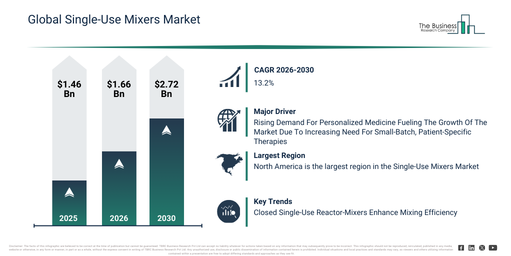
    The market size for single-use mixers has experienced swift expansion recently. This market is projected to expand from $1.46 billion in 2025 to $1.66 billion by 2026, exhibiting a compound annual growth rate (CAGR) of 13.4%. Historically, this growth can be attributed to factors such as the expansion of biopharmaceutical manufacturing, the increasing adoption of disposable process equipment, the growth in contract manufacturing organizations, a rising demand for small-batch production, and advancements in polymer materials.

    The single-use mixers market size is projected to experience swift expansion over the coming years, reaching $2.72 billion by 2030, demonstrating a compound annual growth rate (CAGR) of 13.2%. This anticipated growth during the forecast period stems from factors such as the increasing need for personalized biologics, higher investments in the manufacturing of cell and gene therapies, the broadening of flexible manufacturing facilities, a heightened emphasis on operational efficiency, and advancements in sustainable single-use materials. Key developments characterizing this period involve the growing adoption of single-use bioprocessing systems, an increasing need for quick batch turnaround solutions, a stronger focus on manufacturing free from contamination, the expansion of adaptable and modular production configurations, and improved integration of disposable mixing technologies.

    Access Your Free Sample Report for In-Depth Market Insights:

    https://www.thebusinessresearchcompany.com/sample.aspx?id=30392&type=smp

    Which Drivers Are Supporting The Rise Of The Single-Use Mixers Market?

    The increasing need for personalized medicine is anticipated to fuel the expansion of the single-use mixers market in the future. Personalized medicine defines a medical strategy that customizes treatments for individual patients, considering their genetic, environmental, and lifestyle elements to enhance results and patient care. The escalating need for personalized medicine stems from breakthroughs in genomic technologies, allowing for accurate identification of genetic variations and the development of specific treatments for individuals. Single-use mixers benefit personalized medicine by offering adaptable, sterile, and effective mixing solutions, making them well-suited for therapies requiring small batches and patient-specific formulations. They mitigate the risk of contamination and optimize biomanufacturing procedures, thus improving the accuracy of treatments and efficiency of production. As an illustration, in February 2024, data from the Personalized Medicine Coalition (PMC), a US-based nonprofit organization, indicated that the U.S. Food and Drug Administration (FDA) sanctioned 26 new personalized medicines in 2023, which represents a notable rise from the 12 approved in 2022. Consequently, the growing demand for personalized medicine is propelling the growth of the single-use mixers market.

    What Segments Are Identified Within The Structure Of The Single-Use Mixers Market?

    The single-use mixers market covered in this report is segmented –

    1) By Product Type: Disposable Mixers, Reusable Mixers

    2) By Material: Polypropylene, Polyethylene, Polycarbonate, Glass, Stainless Steel

    3) By Distribution Channel: Online Retail, Offline Retail, Wholesale

    4) By Application: Biopharmaceutical Manufacturing, Pharmaceutical, Food And Beverage, Chemical, Other Applications

    5) By End-User: Food And Beverage Industry, Healthcare, Household Consumers

    Subsegments:

    1) By Disposable Mixers: Magnetic Drive Mixers, Levitated Impeller Mixers, Rocking Motion Mixers, Overhead Impeller Mixers, Recirculation Jet Mixers, Static Inline Mixers, Paddle Mixers, Tumbler Drum Mixers

    2) By Reusable Mixers: Top Entry Agitators, Bottom Entry Magnetic Mixers, Side Entry Agitators, High Shear Mixers, Planetary Mixers, Anchor Agitator Mixers, Turbine Agitator Mixers

    Which Trends Are Expected To Influence The Single-Use Mixers Market In The Upcoming Years?

    Companies active in the single-use mixers market are prioritizing the development of sophisticated products, such as closed single-use reactor-mixers, to enhance efficiency, ensure sterility, and streamline biomanufacturing operations. A closed single-use reactor-mixer describes a disposable mixing apparatus where mixing occurs within a sealed, pre-sterilized bag or chamber, preventing environmental exposure. For instance, in September 2024, Merck KGaA, a Germany-based biopharmaceutical company, launched its Mobius ADC Reactor. This product offers up to a 70% improvement in mixing efficiency compared to stainless steel or glass setups, while its closed single-use assembly, fabricated with durable Ultimus Film, reduces the risk of cross-contamination and enhances batch integrity. This platform accelerates changeovers and enables safer handling of high-potency chemistries, resulting in greater asset utilization, decreased cleaning and validation requirements, and faster, more predictable production cycles.

    Which Leading Companies Dominate The Single-Use Mixers Market Share?

    Major companies operating in the single-use mixers market are Thermo Fisher Scientific Inc., Danaher Corporation, Merck KGaA, Avantor Inc., Sartorius AG, Repligen Corporation, LePure Biotech LLC, Tofflon Science and Technology Group Co. Ltd., ABEC Inc., Ami Polymer Pvt. Ltd., Morimatsu LifeSciences Co. Ltd., Dr. Mueller AG, Meissner Filtration Products Inc., BioLink-BioHub Single-Use Mixing Systems, Hangzhou Cobetter Filtration Co. Ltd., PharmNXT Biotech, White Mountain Process, BioPulse Solutions, Tezalon Biotech, Pall Corporation

    Access The Complete Report For Deeper Market Insights:

    https://www.thebusinessresearchcompany.com/report/global-single-use-mixers-market-report

    How Does The Single-Use Mixers Market Perform Across Major Global Regions?

    North America was the largest region in the single-use mixers market in 2025. Asia-Pacific is expected to be the fastest-growing region in the forecast period. The regions covered in the single-use mixers market report are Asia-Pacific, South East Asia, Western Europe, Eastern Europe, North America, South America, Middle East, Africa.

    Request Your Customized Single-Use Mixers Market Research Report for Competitive Advantage:

    https://www.thebusinessresearchcompany.com/customise?id=30392&type=smp

    Browse Through More Reports Similar to the Global Single-Use Mixers Market 2026, By The Business Research Company

    Mixer Grinders Market Report 2026

    https://www.thebusinessresearchcompany.com/report/mixer-grinders-global-market-report

    Amplifiers And Mixers Market Report 2026

    https://www.thebusinessresearchcompany.com/report/amplifiers-and-mixers-global-market-report

    Food Blenders And Mixers Market Report 2026

    https://www.thebusinessresearchcompany.com/report/food-blenders-and-mixers-global-market-report

    Get in touch with us:

    The Business Research Company: https://www.thebusinessresearchcompany.com/

    Americas +1 310-496-7795

    Asia +44 7882 955267 & +91 8897263534

    Europe +44 7882 955267

    Email us at info@tbrc.info

    Follow us on:

    LinkedIn: https://in.linkedin.com/company/the-business-research-company

    YouTube: https://www.youtube.com/channel/UC24_fI0rV8cR5DxlCpgmyFQ

    Global Market Model: https://www.thebusinessresearchcompany.com/global-market-model
  • Global Single-Molecule Real-Time Sequencing (SMRT) Market Forecast 2026–2035: Long-Term Growth Insights

    Global Single-Molecule Real-Time Sequencing (SMRT) Market Forecast 2026–2035: Long-Term Growth Insights

    Uncover key drivers, emerging technologies, and competitive movements shaping the single-molecule real-time sequencing (smrt) market from 2026–2035 with trusted insights from The Business Research Company

    What size range is anticipated for the Single-Molecule Real-Time Sequencing (SMRT) Market from 2026 to 2030?

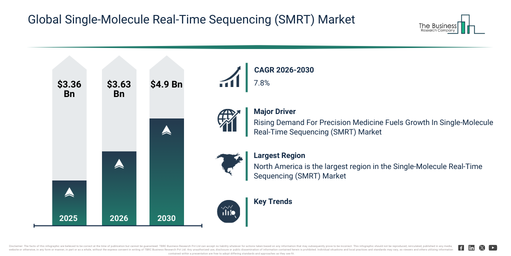
    The single-molecule real-time sequencing (smrt) market has experienced robust growth in recent years. It is projected to expand from $3.36 billion in 2025 to $3.63 billion in 2026, exhibiting a compound annual growth rate (CAGR) of 8.1%. The growth observed in the historic period can be attributed to several factors, including the expansion of genomic research initiatives, the increasing adoption of next-generation sequencing platforms, a growing demand for whole genome sequencing, rising investments in life sciences research, and advancements in sequencing chemistry.

    The single-molecule real-time sequencing (smrt) market is projected to experience substantial expansion over the upcoming years. This market is anticipated to reach $4.9 billion by 2030, exhibiting a compound annual growth rate (CAGR) of 7.8%. Key drivers for this growth during the forecast period include the expanding application of precision medicine, increasing demand for population-scale genomic studies, broader use of clinical genomics, greater integration of AI-powered bioinformatics, and augmented funding for sophisticated sequencing technologies. Prominent trends expected over the forecast period encompass a wider adoption of long-read sequencing, increased utilization of smrt sequencing for identifying structural variants, growing need for highly accurate epigenetic analysis, broadening of real-time sequencing workflows, and a heightened emphasis on resolving complex genomes.

    Access Your Free Sample Report for In-Depth Market Insights:

    https://www.thebusinessresearchcompany.com/sample.aspx?id=19696&type=smp

    What Drivers Are Affecting Demand In The Single-Molecule Real-Time Sequencing (SMRT) Market?

    The increasing demand for precision medicine is projected to fuel the expansion of the single-molecule real-time sequencing (SMRT) market in the future. Precision medicine, also known as personalized medicine, is a medical strategy that customizes treatment and healthcare plans for individual patients, taking into account their genetic, environmental, and lifestyle factors. This growing need for personalized medicine stems from breakthroughs in genomic technologies, which facilitate more precise and tailored treatments, alongside a greater focus on individualized patient care to achieve improved outcomes. Single-molecule real-time sequencing (SMRT) significantly bolsters precision medicine by delivering detailed and accurate genomic and epigenetic data, thereby leading to enhanced diagnosis, customized treatments, and better patient results. As an illustration, in May 2025, the U.S. Food and Drug Administration (FDA) approved 18 new personalized medicines in 2023, making up approximately 38% of all newly approved therapeutic molecular entities, as reported by the U.S.-based professional organization, the Personalized Medicine Coalition (PMC). Consequently, the escalating demand for precision medicine is a key factor driving growth in the single-molecule real-time sequencing (SMRT) market. The increasing occurrence of genetic disorders is anticipated to stimulate the growth of the single-molecule real-time sequencing (SMRT) market moving forward. Genetic disorders are health conditions resulting from anomalies in an individual’s DNA, which can either be inherited or develop from mutations, impacting physical development, metabolism, or overall health. The rising prevalence of genetic disorders is mainly attributed to heightened awareness, advancements in diagnostic technologies, and factors such as environmental influences and parental age. Single-molecule real-time sequencing (SMRT) plays a crucial role in genetic disorders by providing accurate, long-read DNA sequences, which enables the identification of complex mutations and structural variations that might be overlooked by conventional methods. For example, in March 2024, according to the Gene People, a UK-based registered charity for people with genetic disorders, there are more than 6,000 genetic conditions, with new ones being discovered daily. In the UK, 1 in 25 children are affected, leading to 30,000 new diagnoses annually and over 2.4 million individuals living with genetic conditions. Hence, the escalating incidence of genetic disorders is a significant impetus for growth in the single-molecule real-time sequencing (SMRT) market.

    Which Segments Are Gaining Traction In The Single-Molecule Real-Time Sequencing (SMRT) Market?

    The single-molecule real-time sequencing (smrt) market covered in this report is segmented –

    1) By Product: Consumable, Instrument, Services

    2) By Application: DNA Sequencing, RNA Sequencing, Epigenetics, Whole Genome Sequencing, Other Applications

    3) By End-Users: Hospitals, Diagnostic Laboratories, Biopharmaceutical Companies, Academic Institutes And Research Centers, Other End-Users

    Subsegments:

    1) By Consumable: Reagents, Sample Preparation Kits, Flow Cells

    2) By Instrument: SMRT Sequencers, Accessories, Software

    3) By Services: Data Analysis Services, Sequencing Services, Technical Support Services

    Who Are The Major Companies Operating In The Single-Molecule Real-Time Sequencing (SMRT) Market?

    Major companies operating in the single-molecule real-time sequencing (smrt) market are Thermo Fisher Scientific Inc., Illumina Inc., Qiagen N.V., BGI Group, 10x Genomics Inc., Ginkgo Bioworks Inc., Oxford Nanopore Technologies Limited, Genewiz Inc., Pacific Biosciences of California Inc., Macrogen Inc., Element Biosciences Inc., Asuragen Inc., BioNano Genomics Inc., Zymo Research Corporation, Dovetail Genomics LLC, SeqWell Inc., Paragon Genomics Inc., Nabsys Inc., Eurofins Scientific SE, Novogene Corporation

    Access The Complete Report For Deeper Market Insights:

    https://www.thebusinessresearchcompany.com/report/single-molecule-real-time-sequencing-smrt-global-market-report

    Which Region Is Anticipated To See The Fastest Growth In The Single-Molecule Real-Time Sequencing (SMRT) Market?

    North America was the largest region in the single-molecule real-time sequencing (SMRT) market in 2025. The regions covered in the single-molecule real-time sequencing (smrt) market report are Asia-Pacific, South East Asia, Western Europe, Eastern Europe, North America, South America, Middle East, Africa.

    Request Your Customized Single-Molecule Real-Time Sequencing (SMRT) Market Research Report for Competitive Advantage:

    https://www.thebusinessresearchcompany.com/customise?id=19696&type=smp

    Browse Through More Reports Similar to the Global Single-Molecule Real-Time Sequencing (SMRT) Market 2026, By The Business Research Company

    Typhoid Vi Polysaccharide Vaccine Market Report 2026

    https://www.thebusinessresearchcompany.com/report/typhoid-vi-polysaccharide-vaccine-global-market-report

    Molecular Biology Enzymes And Kits And Reagents Market Report 2026

    https://www.thebusinessresearchcompany.com/report/molecular-biology-enzymes-and-kits-and-reagents-global-market-report

    Neuroscience Market Report 2026

    https://www.thebusinessresearchcompany.com/report/neuroscience-global-market-report

    Get in touch with us:

    The Business Research Company: https://www.thebusinessresearchcompany.com/

    Americas +1 310-496-7795

    Asia +44 7882 955267 & +91 8897263534

    Europe +44 7882 955267

    Email us at info@tbrc.info

    Follow us on:

    LinkedIn: https://in.linkedin.com/company/the-business-research-company

    YouTube: https://www.youtube.com/channel/UC24_fI0rV8cR5DxlCpgmyFQ

    Global Market Model: https://www.thebusinessresearchcompany.com/global-market-model
  • Single-Cell Protein Market 2026–2030: Forecasting Business Opportunities Ahead

    Single-Cell Protein Market 2026–2030: Forecasting Business Opportunities Ahead

    Uncover key drivers, emerging technologies, and competitive movements shaping the single-cell protein market from 2026–2035 with trusted insights from The Business Research Company

    How is the Single-Cell Protein Market size predicted to change over the forecast window of 2026–2035?

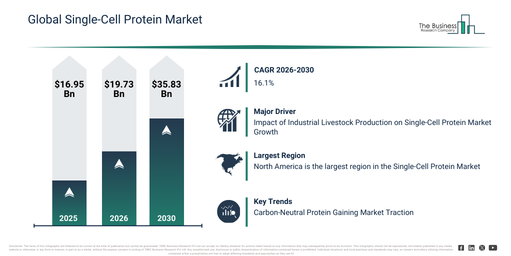
    The single-cell protein market has experienced rapid growth in recent years. It is projected to expand from $16.95 billion in 2025 to $19.73 billion in 2026, achieving a compound annual growth rate (CAGR) of 16.4%. This historical growth can be attributed to factors such as increasing global protein demand, the expansion of fermentation-based food production, greater utilization of microbial biomass in feed, a rising interest in alternative protein sources, and the availability of industrial fermentation infrastructure.

    The single-cell protein market is projected to expand significantly over the coming years. This market is anticipated to reach $35.83 billion by 2030, exhibiting a compound annual growth rate (CAGR) of 16.1%. This projected expansion is driven by several factors, including the increased integration of single-cell proteins into human food items, growing investments in eco-friendly food production methods, the broadening scope of circular bioeconomy programs, enhanced regulatory endorsement for innovative protein sources, and the rising need for protein solutions with reduced carbon footprints. Key developments expected during this period involve the wider implementation of microbial protein fermentation, an escalating demand for sustainable protein options, the increased utilization of waste materials as feedstocks, a broader application of single-cell proteins in animal nutrition, and a stronger emphasis on developing scalable protein manufacturing processes.

    Access Your Free Sample Report for In-Depth Market Insights:

    https://www.thebusinessresearchcompany.com/sample.aspx?id=20632&type=smp

    Which Drivers Are Contributing To The Expansion Of The Single-Cell Protein Market?

    The expansion of industrial livestock production is projected to drive the growth of the single-cell protein market. Livestock production, which encompasses raising animals such as cattle, pigs, and poultry to fulfill market needs for food, fiber, and other products, is vital for global food security, rural economies, and supplying resources like meat, milk, and leather. This sector facilitates single-cell protein development by offering organic waste materials, including manure and agricultural residues. These serve as substrates for microbial growth, enabling the cultivation of single-cell organisms as sustainable protein sources. For instance, in 2023, the United States Department of Agriculture’s National Agricultural Statistics Service (USDA NASS) reported a 17% increase in cash receipts for cattle and calves, rising to US$ 101.0 billion from US$ 86.3 billion in 2022. Consequently, the rising industrial livestock production is a key driver for the single-cell protein market.

    What Segment Categories Are Covered In The Single-Cell Protein Market?

    The single-cell protein market covered in this report is segmented –

    1) By Species: Algae, Fungi, Bacteria, Yeast

    2) By Feedstock: Organic, Conventional

    3) By Application: Food And Beverages, Dietary Supplements, Animal Feed, Pharmaceuticals, Cosmetics, Other Applications

    Subsegments:

    1) By Algae: Spirulina, Chlorella, Dunaliella

    2) By Fungi: Mycoprotein, Edible Mushrooms, Filamentous Fungi Proteins

    3) By Bacteria: Methylophilus Methylotrophus, Propionibacterium Spp., Rhizobium Spp.

    4) By Yeast: Saccharomyces Cerevisiae, Candida Utilis, Kluyveromyces Marxianus

    What Upcoming Trends Are Likely To Define The Future Path Of The Single-Cell Protein Market?

    Major companies operating in the single cell protein market are prioritizing technological advancements, such as precision microbial fermentation, to achieve a competitive advantage. This method, precision microbial fermentation, involves the controlled cultivation of specific microorganisms (including yeast, bacteria, or fungi) in bioreactors, utilizing defined feedstocks to efficiently generate protein-rich biomass. For example, in November 2023, MicroHarvest, a biotechnology company headquartered in Portugal, inaugurated a pilot plant in Lisbon for the production of single cell protein, capable of delivering daily yields of 25 kg with over 60 percent raw protein content, employing renewable feedstock. This technology supports scalable and consistent protein production for the food, pet food, and feed markets.

    Which Major Firms Are Strengthening Their Position In The Single-Cell Protein Market?

    Major companies operating in the single-cell protein market are Cargill Incorporated, Archer Daniels Midland Company, Evonik Industries AG, Koninklijke DSM N.V., Nutreco N.V., Green Plains Inc., GNC Holdings Inc., Novozymes A/S, Angel Yeast Co. Ltd., Lallemand Inc., Chr. Hansen Holding A/S, Marlow Foods Ltd., Cyanotech Corporation, Novus Biologicals LLC, TerraVia Holdings Inc., Calysta Inc., Algatechnologies Ltd, Mara Renewables Corporation, KnipBio Inc., Deep Branch Biotechnology Ltd., Solar Foods, BioProcess Algae LLC, Blue Bio Tech International GmbH, Unibio A/S, Willows Ingredients Ltd.

    Access The Complete Report For Deeper Market Insights:

    https://www.thebusinessresearchcompany.com/report/single-cell-protein-global-market-report

    Which Region Is Anticipated To See The Fastest Growth In The Single-Cell Protein Market?

    North America was the largest region in the single-cell protein market in 2025. The regions covered in the single-cell protein market report are Asia-Pacific, South East Asia, Western Europe, Eastern Europe, North America, South America, Middle East, Africa.

    Request Your Customized Single-Cell Protein Market Research Report for Competitive Advantage:

    https://www.thebusinessresearchcompany.com/customise?id=20632&type=smp

    Browse Through More Reports Similar to the Global Single-Cell Protein Market 2026, By The Business Research Company

    Cells Therapy Market Report 2026

    https://www.thebusinessresearchcompany.com/report/cells-therapy-global-market-report

    Cellular Telephone Market Report 2026

    https://www.thebusinessresearchcompany.com/report/cellular-telephone-global-market-report

    Cell Cultures Market Report 2026

    https://www.thebusinessresearchcompany.com/report/cell-cultures-global-market-report

    Get in touch with us:

    The Business Research Company: https://www.thebusinessresearchcompany.com/

    Americas +1 310-496-7795

    Asia +44 7882 955267 & +91 8897263534

    Europe +44 7882 955267

    Email us at info@tbrc.info

    Follow us on:

    LinkedIn: https://in.linkedin.com/company/the-business-research-company

    YouTube: https://www.youtube.com/channel/UC24_fI0rV8cR5DxlCpgmyFQ

    Global Market Model: https://www.thebusinessresearchcompany.com/global-market-model
  • Global Single-Cell Genome Sequencing Market Report 2026–2035: Key Forecasts and Growth Areas

    Global Single-Cell Genome Sequencing Market Report 2026–2035: Key Forecasts and Growth Areas

    Uncover key drivers, emerging technologies, and competitive movements shaping the single-cell genome sequencing market from 2026–2035 with trusted insights from The Business Research Company

    What market expansion outlook does the Single-Cell Genome Sequencing Market show for the 2026–2030 period?

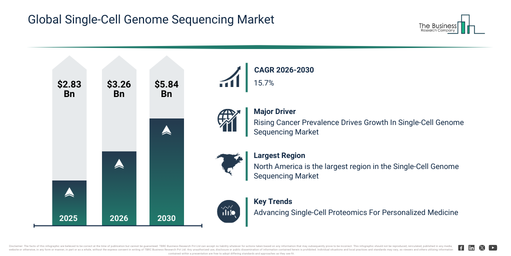
    The single-cell genome sequencing market size has seen rapid expansion in recent years. Its value is projected to climb from $2.83 billion in 2025 to $3.26 billion in 2026, achieving a compound annual growth rate (CAGR) of 15.2%. The historical growth of this market is attributable to early adoption in research, limited sequencing resolution, the high cost of single-cell analysis, a growing demand for personalized medicine research, and increasing collaborations in genomics.

    The single-cell genome sequencing market is anticipated to experience substantial growth in the coming years. This market is projected to reach $5.84 billion by 2030, demonstrating a compound annual growth rate (CAGR) of 15.7%. Several factors contribute to this expansion during the forecast period, including the development of high-throughput single-cell platforms, increased use in clinical diagnostics, integration with AI and bioinformatics, broader adoption in multi-omics studies, and growth in drug discovery applications. Furthermore, major trends expected during this forecast period involve increasing application in cancer research, continued integration with multi-omics studies, wider adoption in drug discovery, the advancement of automated sequencing platforms, and an expansion in clinical diagnostics applications.

    Access Your Free Sample Report for In-Depth Market Insights:

    https://www.thebusinessresearchcompany.com/sample.aspx?id=12655&type=smp

    What Drivers Are Shaping The Development Of The Single-Cell Genome Sequencing Market?

    The increasing incidence of cancer is anticipated to drive the growth of the single-cell genome sequencing market. Cancer describes a wide array of conditions where abnormal cells multiply and divide without control, stemming from changes in genes that regulate cell division and normal cellular function. Given that cancer is characterized by genetic alterations, single-cell genome sequencing provides a means to identify the genetic modifications within individual cancer cells. For example, in January 2023, the American Cancer Society, a US-based organization dedicated to fighting cancer, reported approximately 1.9 million new cancer cases and 609,360 cancer deaths in the US in 2022. Furthermore, projections estimate around 27.5 million new cancer cases and 16.3 million cancer deaths by 2040. Consequently, the rising prevalence of cancer is expected to propel the expansion of the single-cell genome sequencing market.

    Which Segments Are Contributing To The Growth Of The Single-Cell Genome Sequencing Market?

    The single-cell genome sequencing market covered in this report is segmented –

    1) By Type: Instruments, Reagents

    2) By Technology: Next-Generation Sequencing (NGS), Polymerase Chain Reaction (PCR), Quantitative Polymerase Chain Reaction (qPCR), Microarray, Multiple Displacement Amplification (MDA)

    3) By Disease Area: Cancer, Immunology, Prenatal Diagnosis, Neurobiology, Microbiology, Other Disease Areas

    4) By Application: Circulating Cells, Cell Differentiation Or Reprogramming, Genomic Variation, Subpopulation Characterization, Other Applications

    5) By End User: Academic Research Laboratories, Biotechnology Biopharmaceutical Companies, Clinics, Other End Users

    Subsegments:

    1) By Instruments: Single-Cell Isolation Systems, Sequencing Platforms, Automation And Robotic Systems

    2) By Reagents: Library Preparation Kits, Amplification Reagents, DNA Extraction Kits, Quality Control Reagents

    Which Trends Are Shaping Activity Within The Single-Cell Genome Sequencing Market?

    Leading firms in the single-cell genome sequencing market are concentrating on the advancement of single cell proteomics. This emerging field, single cell proteomics, aims to understand the diverse protein expression present within individual cells. It involves combining single-cell genomics with proteomics methods to investigate the link between genomic data and protein expression at the individual cell level. As an illustration, in October 2023, Proteome Sciences plc, a biotechnology firm based in the UK, introduced SysQuant SCP, a commercial single-cell proteomics service utilizing its TMTproTM isobaric labelling reagents. The SysQuant SCP pipeline generates and analyzes quantitative mass spectrometry data to detect subtle differences in individual cells and within subpopulations of the same primary cell type. This information will substantially enhance our knowledge of the biological factors influencing heterogeneity and evolution in disease and treatment response contexts, by identifying new therapeutic and diagnostic targets for personalized medicine.

    Who Are The Primary Competitors In The Global Single-Cell Genome Sequencing Market?

    Major companies operating in the single-cell genome sequencing market are F Hoffmann-La Roche Ltd., Thermo Fisher Scientific Inc., DH Life Sciences LLC., Becton Dickinson And Company (BD), Agilent Technologies Inc., Illumina Inc., Bio-Rad Laboratories Inc., QIAGEN GmbH, Bio-Techne Corporation, BGI Genomics Co. Ltd., Fulgent Genetics Inc., 10x Genomics Inc., Promega Corporation, Takara Bio Inc., Oxford Nanopore Technologies PLC, Pacific Biosciences of California Inc., Standard BioTools Inc., Singleron Biotechnologies, MGI Tech Co. Ltd, GENEWIZ Inc., Mission Bio Inc., Zymo Research Corporation, Menarini Silicon Biosystems SpA, Novogene Co. Ltd., RareCyte Inc., Fluxion Biosciences Inc., Single Cell Discoveries B.V., Parse Biosciences Inc., BioSpyder Technologies Inc., SeqWell Inc.

    Access The Complete Report For Deeper Market Insights:

    https://www.thebusinessresearchcompany.com/report/single-cell-genome-sequencing-global-market-report

    Which Global Regions Are Shaping The Competitive Landscape Of The Single-Cell Genome Sequencing Market?

    North America was the largest region in the single-cell genome sequencing market in 2025. Asia-Pacific is expected to be the fastest-growing region in the forecast period. The regions covered in the single-cell genome sequencing market report are Asia-Pacific, South East Asia, Western Europe, Eastern Europe, North America, South America, Middle East, Africa.

    Request Your Customized Single-Cell Genome Sequencing Market Research Report for Competitive Advantage:

    https://www.thebusinessresearchcompany.com/customise?id=12655&type=smp

    Browse Through More Reports Similar to the Global Single-Cell Genome Sequencing Market 2026, By The Business Research Company

    Metagenomic Sequencing Market Report 2026

    https://www.thebusinessresearchcompany.com/report/metagenomic-sequencing-global-market-report

    Single Cell Analysis Market 2026

    https://www.thebusinessresearchcompany.com/report/single-cell-analysis-market

    Whole Genome And Exome Sequencing Market Report 2026

    https://www.thebusinessresearchcompany.com/report/whole-genome-and-exome-sequencing-global-market-report

    Get in touch with us:

    The Business Research Company: https://www.thebusinessresearchcompany.com/

    Americas +1 310-496-7795

    Asia +44 7882 955267 & +91 8897263534

    Europe +44 7882 955267

    Email us at info@tbrc.info

    Follow us on:

    LinkedIn: https://in.linkedin.com/company/the-business-research-company

    YouTube: https://www.youtube.com/channel/UC24_fI0rV8cR5DxlCpgmyFQ

    Global Market Model: https://www.thebusinessresearchcompany.com/global-market-model
  • Single Use Bioprocessing Market 2026–2030: Forecast, Innovation, and Competitive Trends

    Single Use Bioprocessing Market 2026–2030: Forecast, Innovation, and Competitive Trends

    Uncover key drivers, emerging technologies, and competitive movements shaping the single use bioprocessing market from 2026–2035 with trusted insights from The Business Research Company

    What level of growth is expected in the Single Use Bioprocessing Market between 2026 and 2030?

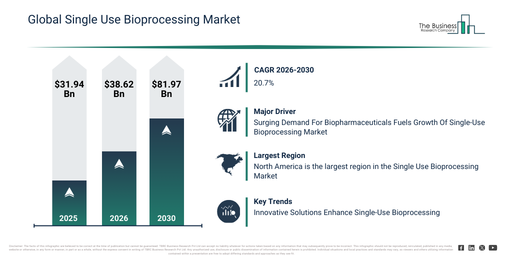
    The single use bioprocessing market has expanded significantly over recent years. It is projected to expand from $31.94 billion in 2025 to $38.62 billion in 2026, achieving a compound annual growth rate (CAGR) of 20.9%. This historical expansion can be ascribed to factors such as the limitations of traditional stainless steel systems, significant capital investment, increasing demand for biologics, early adoption in pilot-scale manufacturing processes, and the essential need for sterile production.

    The single use bioprocessing market is anticipated to experience substantial growth over the coming years. It is projected to reach $81.97 billion by 2030, demonstrating a compound annual growth rate (CAGR) of 20.7%. This expansion during the forecast period is driven by factors such as the growth in large-scale biologics manufacturing, its uptake in gene and cell therapy, the incorporation of automation and digital monitoring, the rise of modular and flexible systems, and a growing need for cost-effective single-use options. Key trends for the forecast period encompass its integration with continuous manufacturing processes, its application in vaccine production, the proliferation of modular bioprocessing systems, its utilization in clinical trial manufacturing, and the increasing regulatory adherence for single-use technologies.

    Access Your Free Sample Report for In-Depth Market Insights:

    https://www.thebusinessresearchcompany.com/sample.aspx?id=7700&type=smp

    Which Drivers Are Expected To Impact The Single Use Bioprocessing Market During The Forecast Period?

    The escalating demand for biopharmaceuticals is projected to propel the expansion of the single-use bioprocessing market moving forward. Biopharmaceuticals are medications created from living cells or organisms. Single-use bioprocessing systems are commonly utilized in the manufacturing of biopharmaceuticals to boost productivity, achieve cost savings, and facilitate safe waste disposal. For instance, in January 2024, IQVIA, a US-based provider of biopharmaceutical development services, reported that global biotech spending is expected to exceed $892 billion by 2028. Hence, the growing need for biopharmaceuticals is a key driver for the single-use bioprocessing market’s growth.

    How Is The Single Use Bioprocessing Market Divided Into Segments?

    The single use bioprocessing market covered in this report is segmented –

    1) By Product: Single-Use Media Bags And Containers, Single-Use Assemblies, Single-Use Bioreactors, Disposable Mixers, Other Products

    2) By Workflow: Upstream, Fermentation, Downstream

    3) By Application: Filtration, Storage, Cell Culture, Mixing, Purification

    4) By End User: Biopharmaceutical And Pharmaceutical companies, Contract Research Organizations And Contract Manufacturing Organizations (CROs and CMOs), Academic And Research institutes

    Subsegments:

    1) By Single-Use Media Bags And Containers: Media Bags, Storage Containers, Transport Bags

    2) By Single-Use Assemblies: Preassembled Kits, Tubing Sets, Connector Assemblies

    3) By Single-Use Bioreactors: Stirred-Tank Bioreactors, Wave-Mixed Bioreactors, Other Bioreactor Types

    4) By Disposable Mixers: Single-Use Stirring Devices, Single-Use Agitators

    5) By Other Products: Filtration Devices, Sampling Devices, Accessories

    Which Trends Are Influencing The Development Of The Single Use Bioprocessing Market?

    Leading companies in the single-use bioprocessing market are concentrating on innovative products like single-use process container film to achieve a competitive edge and enhance their technological offerings. The Ultimus single-use process container film is an innovation integrated into Mobius 3D process containers, providing a remarkable tenfold increase in abrasion resistance compared to other single-use bioprocessing films. For example, in April 2023, Merck Group, a Germany-based science and technology company, launched a Single-Use Process Container Film, a solution intended to deliver exceptional durability and leak resistance for single-use assemblies used in bioprocessing liquid applications. This Ultimus film incorporates a unique woven nylon structure, contributing to enhanced bag strength, improved durability, and resilience to mitigate issues such as abrasions, tears, and material fatigue. Additionally, Ultimus film features an animal-origin-free contact resin with minimal extractables, supporting robust cell growth performance.

    Which Key Market Players Are Investing In Expansion And Innovation Within The Single Use Bioprocessing Market?

    Major companies operating in the single use bioprocessing market are GE Healthcare Technologies Ltd, Eppendorf AG, Corning Incorporated, Thermo Fisher Scientific Inc, Sartorius AG, JM BioConnect BV, Merck KGaA, Pall Corporation, PBS Biotech Inc, Entegris Inc, DistriCell Inc, ABEC Inc, Solida Biotech GmbH, OmniBRx Biotechnologies Pvt Ltd, Celltainer Biotech BV, Cellexus BV, Danaher Corporation, Repligen Corporation, Lonza Group Ltd, Meissner Filtration Products Inc, MilliporeSigma, Avantor Performance Materials India Limited, Saint-Gobain Performance Plastics Corp, Rentschler Biopharma SE, Charter Medical Inc, Sollesis Medical Plc, Catalent Inc, Patheon Inc

    Access The Complete Report For Deeper Market Insights:

    https://www.thebusinessresearchcompany.com/report/single-use-bioprocessing-global-market-report

    Which Regions Are Poised For Strategic Growth In The Single Use Bioprocessing Market?

    North America was the largest region in the single-use bioprocessing market in 2025. Asia-Pacific is expected to be the fastest-growing region in the forecast period. The regions covered in the single use bioprocessing market report are Asia-Pacific, South East Asia, Western Europe, Eastern Europe, North America, South America, Middle East, Africa.

    Request Your Customized Single Use Bioprocessing Market Research Report for Competitive Advantage:

    https://www.thebusinessresearchcompany.com/customise?id=7700&type=smp

    Browse Through More Reports Similar to the Global Single Use Bioprocessing Market 2026, By The Business Research Company

    Bioprocess Technology Market Report 2026

    https://www.thebusinessresearchcompany.com/report/bioprocess-technology-global-market-report

    Large And Small Scale Bioprocessing Market Report 2026

    https://www.thebusinessresearchcompany.com/report/large-and-small-scale-bioprocessing-global-market-report

    Bioprocessing Technology Market Report 2026

    https://www.thebusinessresearchcompany.com/report/bioprocessing-technology-global-market-report

    Get in touch with us:

    The Business Research Company: https://www.thebusinessresearchcompany.com/

    Americas +1 310-496-7795

    Asia +44 7882 955267 & +91 8897263534

    Europe +44 7882 955267

    Email us at info@tbrc.info

    Follow us on:

    LinkedIn: https://in.linkedin.com/company/the-business-research-company

    YouTube: https://www.youtube.com/channel/UC24_fI0rV8cR5DxlCpgmyFQ

    Global Market Model: https://www.thebusinessresearchcompany.com/global-market-model
  • Single Tooth Implants And Dental Bridges Market Forecast 2026–2035: Data Trends and Industry Insights

    Single Tooth Implants And Dental Bridges Market Forecast 2026–2035: Data Trends and Industry Insights

    Uncover key drivers, emerging technologies, and competitive movements shaping the single tooth implants and dental bridges market from 2026–2035 with trusted insights from The Business Research Company

    How much is the Single Tooth Implants And Dental Bridges Market valued at in 2026, and what valuation is forecast for 2030?

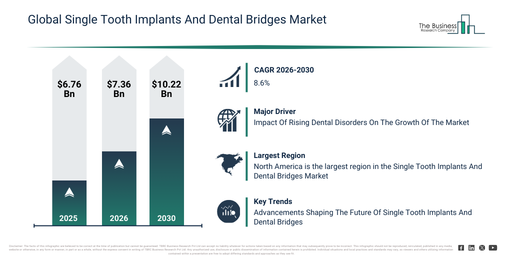
    The single tooth implants and dental bridges market has demonstrated strong growth in recent years. It is anticipated to increase from $6.76 billion in 2025 to $7.36 billion in 2026, achieving a compound annual growth rate (CAGR) of 8.8%. The expansion observed historically can be attributed to the high prevalence of tooth loss, limited access to advanced implants, the early adoption of dental bridges, an increase in dental clinics, and growing patient awareness.

    The single tooth implants and dental bridges market is projected to experience substantial expansion in the coming years. Its valuation is anticipated to reach $10.22 billion by 2030, demonstrating a compound annual growth rate (CAGR) of 8.6%. This projected increase over the forecast period can be primarily ascribed to advancements in digital dentistry solutions, the uptake of minimally invasive implantology, the diversification of dental implant materials, a rise in dental insurance coverage, and the expansion of dental tourism. Key trends identified for the forecast period encompass the proliferation of 3D-printed dental implants, a growing utilization of biocompatible materials, an increase in minimally invasive implant procedures, the embrace of guided surgery techniques, and an broadened dental insurance coverage for restorative treatments.

    Access Your Free Sample Report for In-Depth Market Insights:

    https://www.thebusinessresearchcompany.com/sample.aspx?id=20955&type=smp

    What Drivers Are Influencing The Growth Of The Single Tooth Implants And Dental Bridges Market?

    The rising prevalence of dental disorders is projected to drive the growth of the single tooth implants and dental bridges market. These disorders encompass a range of conditions affecting the teeth, gums, jaw, or oral cavity, thereby impairing oral health and function. Their increasing occurrence is attributed to factors such as elevated consumption of sugary diets, poor oral hygiene, an aging global population, and the growing incidence of lifestyle-related diseases like diabetes. Single tooth implants and dental bridges offer effective solutions for patients suffering from dental disorders by restoring missing or damaged teeth, improving oral functionality, enhancing aesthetic appeal, and boosting overall confidence, simultaneously preventing complications like shifting teeth and jawbone deterioration. For instance, in May 2024, the National Board of Health and Welfare, a Sweden-based government agency, reported that approximately 3.9 million individuals aged 24 or older sought dental care in Sweden in 2023, representing an increase from 2022. Thus, the increasing prevalence of dental disorders is a key driver for the single tooth implants and dental bridges market.

    What Segments Are Included Within The Single Tooth Implants And Dental Bridges Market?

    The single tooth implants and dental bridges market covered in this report is segmented –

    1) By Type: 3-Unit Bridges, 4-Unit Bridges, Titanium Bridges, Silicone Bridges, Maryland Bridges, Cantilever Bridges, Partial Bridges

    2) By Material: Porcelain-Fused-To-Metal (PFM), All Ceramics, Metal Alloys

    3) By Application: Hospitals, Ambulatory Surgical Centers, Organ Transplant Centers, Orthopedic And Traumas Centers

    Subsegments:

    1) By 3-Unit Bridges: Fixed 3-Unit Bridges, Resin-Bonded 3-Unit Bridges

    2) By 4-Unit Bridges: Fixed 4-Unit Bridges, Cantilever 4-Unit Bridges

    3) By Titanium Bridges: Titanium-Alloy Bridges, Titanium-Based Fixed Bridges

    4) By Silicone Bridges: Flexible Silicone Bridges, Temporary Silicone Bridges

    5) By Maryland Bridges: Resin-Bonded Maryland Bridges, Metallic Framework Maryland Bridges

    6) By Cantilever Bridges: Single Cantilever Bridges, Multiple Cantilever Bridges

    7) By Partial Bridges: Partial Fixed Bridges, Removable Partial Bridges

    What Trends Are Expected To Impact The Competitive Landscape Of The Single Tooth Implants And Dental Bridges Market?

    Leading companies in the single tooth implants and dental bridges market are focused on developing innovative solutions, such as advanced dental implant technologies, aimed at improving osseointegration, long-term stability, and overall treatment outcomes for patients undergoing restorative dental procedures. These modern implant systems are engineered to enhance surgical precision, promote faster healing, and offer superior biomechanical performance in both anterior and posterior restorations. For example, in November 2023, Keystone Dental, a US-based oral healthcare company, launched its GENESIS ACTIVE dental implant system, which utilizes a next-generation surface technology designed to accelerate bone integration and provide stronger primary stability. The system incorporates advanced thread geometry and surface activation to optimize implant-to-bone contact, enabling clinicians to achieve predictable surgical results even in challenging cases with low-density bone. With its enhanced surgical efficiency and lasting durability, the GENESIS ACTIVE system expands treatment possibilities for single-tooth replacements and complex bridge restorations, supporting the global demand for high-performance dental implant solutions.

    Who Are The Core Companies Influencing Trends In The Single Tooth Implants And Dental Bridges Market?

    Major companies operating in the single tooth implants and dental bridges market are Henry Schein Inc., Zimmer Biomet Holdings Inc., Straumann Group, Envista Holdings Corporation, Nobel BioCare Services AG, Zim Vie Inc., Osstem Implant Co. Ltd., Bio Horizons IPH Inc., Keystone Dental Inc., Zest Dental Solutions, Neoss Limited, Thommen Medical AG, Southern Implants Pty Ltd, Meagan Implant Co. Ltd., AVINENT Implant System S.L., CAMLOG Biotechnologies AG, Dentsply Sirona, TBR Dental, MegaGen Implant Co. Ltd, Dentium Co. Ltd, Alpha Bio Tec, Implant Direct, Biomet 3i, Anthogyr, Straumann Neodent, Ossean Implant System

    Access The Complete Report For Deeper Market Insights:

    https://www.thebusinessresearchcompany.com/report/single-tooth-implants-and-dental-bridges-global-market-report

    Which Regions Are Projected To Dominate The Single Tooth Implants And Dental Bridges Market In The Coming Years?

    North America was the largest region in the single tooth implants and dental bridges market in 2025. Asia-Pacific is expected to be the fastest-growing region in the forecast period. The regions covered in the single tooth implants and dental bridges market report are Asia-Pacific, South East Asia, Western Europe, Eastern Europe, North America, South America, Middle East, Africa.

    Request Your Customized Single Tooth Implants And Dental Bridges Market Research Report for Competitive Advantage:

    https://www.thebusinessresearchcompany.com/customise?id=20955&type=smp

    Browse Through More Reports Similar to the Global Single Tooth Implants And Dental Bridges Market 2026, By The Business Research Company

    Dental Implants And Prosthetics Market Report 2026

    https://www.thebusinessresearchcompany.com/report/dental-implants-and-prosthetics-global-market-report

    Dental Implants And Abutment Systems Market Report 2026

    https://www.thebusinessresearchcompany.com/report/dental-implants-and-abutment-systems-global-market-report

    Dental Crown And Bridges Market Report 2026

    https://www.thebusinessresearchcompany.com/report/dental-crown-and-bridges-global-market-report

    Get in touch with us:

    The Business Research Company: https://www.thebusinessresearchcompany.com/

    Americas +1 310-496-7795

    Asia +44 7882 955267 & +91 8897263534

    Europe +44 7882 955267

    Email us at info@tbrc.info

    Follow us on:

    LinkedIn: https://in.linkedin.com/company/the-business-research-company

    YouTube: https://www.youtube.com/channel/UC24_fI0rV8cR5DxlCpgmyFQ

    Global Market Model: https://www.thebusinessresearchcompany.com/global-market-model
  • Single Nucleotide Polymorphism (SNP) Genotyping Market Outlook 2026–2030: Key Business Drivers and Trends

    Single Nucleotide Polymorphism (SNP) Genotyping Market Outlook 2026–2030: Key Business Drivers and Trends

    Uncover key drivers, emerging technologies, and competitive movements shaping the single nucleotide polymorphism (snp) genotyping market from 2026–2035 with trusted insights from The Business Research Company

    By how much is the Single Nucleotide Polymorphism (SNP) Genotyping Market expected to grow between 2026 and 2030?

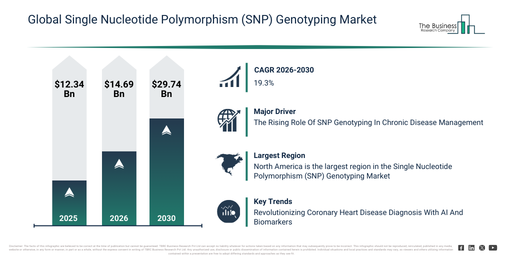
    The single nucleotide polymorphism (snp) genotyping market has experienced rapid expansion in recent years. Projections indicate it will increase from $12.34 billion in 2025 to $14.69 billion in 2026, demonstrating a compound annual growth rate (CAGR) of 19.1%. Historically, this expansion has been driven by factors such as limited early-stage genotyping capabilities, an escalating demand in research, the elevated expense of genomic analysis, increasing collaborations between research laboratories, and the initial integration into pharmacogenomics.

    The single nucleotide polymorphism (snp) genotyping market size is anticipated to undergo substantial expansion in the coming years. By 2030, it is projected to reach $29.74 billion, exhibiting a compound annual growth rate (CAGR) of 19.3%. This projected growth throughout the forecast period stems from factors such as the advancement of high-throughput SNP platforms, a rise in its application within personalized medicine, the incorporation of AI for predictive analysis, its increasing use in clinical diagnostics, and the expansion of agricultural genomics applications. Furthermore, significant trends expected during this period include its integration with pharmacogenomics, an increase in disease risk prediction, broader application in agriculture and animal breeding, the wider adoption of microarray-based genotyping, and the emergence of point-of-care SNP testing.

    Access Your Free Sample Report for In-Depth Market Insights:

    https://www.thebusinessresearchcompany.com/sample.aspx?id=12569&type=smp

    Which Drivers Are Influencing Market Acceleration In The Single Nucleotide Polymorphism (SNP) Genotyping Market?

    The single nucleotide polymorphism (SNP) genotyping market is projected to expand due to the escalating burden of chronic conditions, which are health issues persisting for a year or more, often requiring continuous medical management or limiting daily activities. Given the rising incidence of these conditions, single-nucleotide polymorphism (SNP) genotyping becomes vital for pinpointing genetic predispositions and fostering personalized medicine. As an illustration, data from the Centers for Disease Control and Prevention (CDC) in April 2025 revealed that in 2023, roughly 194 million U.S. adults, or 76.4%, reported living with at least one chronic condition. This included 59.5% of young adults, 78.4% of midlife adults, and 93.0% of older adults. Thus, the increasing burden of chronic conditions is a key factor propelling the single nucleotide polymorphism (SNP) genotyping systems market forward.

    What Leading Segments Are Studied In The Single Nucleotide Polymorphism (SNP) Genotyping Market?

    The single nucleotide polymorphism (snp) genotyping market covered in this report is segmented –

    1) By Product: Consumables, Instruments, Services

    2) By Technology: TaqMan SNP Genotyping, Mass Array SNP Genotyping, SNP Gene Chip Arrays, Other Technologies

    3) By Application: Animal Genetics, Plant Improvement, Diagnostic Research, Pharmaceuticals And Pharmacogenomics, Agricultural Biotechnology, Other Applications

    Subsegments:

    1) By Consumables: Reagents And Kits, DNA Probes, Microarrays

    2) By Instruments: SNP Genotyping Platforms, Sequencers, PCR Machines

    3) By Services: SNP Genotyping Services, Data Analysis Services, Consultation Services

    Which Trends Are Guiding The Evolution Of The Single Nucleotide Polymorphism (SNP) Genotyping Market?

    Major companies operating in the single nucleotide polymorphism (SNP) genotyping market are concentrating on creating biomarkers valuable for coronary heart disease detection to enhance their market profitability. Single nucleotide polymorphism (SNP) biomarkers linked to coronary heart disease (CHD) detection represent specific genetic variations discovered through genomic research, which are associated with an increased risk or susceptibility to coronary heart disease. For instance, in February 2023, Cardio Diagnostics, a US-based biotechnology company, introduced PrecisionCHD. PrecisionCHD is an AI-powered blood test that employs a combination of epigenetic (DNA methylation) and genetic (single nucleotide polymorphism) biomarkers for CHD detection. The test leverages a machine-learning model to achieve over 75% sensitivity for both genders, offering a non-invasive choice for blood sample collection either in-office or at home. This innovation removes the requirement for conventional tests such as stress tests, ensuring objectivity by solely depending on biomarkers, rather than self-reported patient data.

    Which Major Industry Participants Are Leading The Single Nucleotide Polymorphism (SNP) Genotyping Market Growth?

    Major companies operating in the single nucleotide polymorphism (snp) genotyping market are Thermo Fischer Scientific Inc, Danaher Corporation, Roche Diagnostics Corporation, GE HealthCare Technologies Inc, Eurofins Genomics LLC, Beckman Coulter Inc, Bio-Rad Laboratories Inc, Qiagen N.V, Sigma-Aldrich Corporation, Agilent Technologies Inc, PerkinElmer Inc, Illumina Inc, Promega Corporation, GenScript Biotech Corporation, Integrated DNA Technologies Inc, LGC Ltd, Sequenom Inc, Fluidigm Corporation, Oxford Gene Technology, Affymetrix Inc, PREMIER Biosoft International Inc, Rubicon Genomics, Xcelris Genomics, Douglas Scientific LLC, Golden Helix Inc

    Access The Complete Report For Deeper Market Insights:

    https://www.thebusinessresearchcompany.com/report/single-nucleotide-polymorphism-snp-genotyping-global-market-report

    Which Region Is Expected To Experience The Fastest Growth In The Single Nucleotide Polymorphism (SNP) Genotyping Market?

    North America was the largest region in the single nucleotide polymorphism (SNP) genotyping market in 2025. Asia-Pacific is expected to be the fastest-growing region in the forecast period. The regions covered in the single nucleotide polymorphism (snp) genotyping market report are Asia-Pacific, South East Asia, Western Europe, Eastern Europe, North America, South America, Middle East, Africa.

    Request Your Customized Single Nucleotide Polymorphism (SNP) Genotyping Market Research Report for Competitive Advantage:

    https://www.thebusinessresearchcompany.com/customise?id=12569&type=smp

    Browse Through More Reports Similar to the Global Single Nucleotide Polymorphism (SNP) Genotyping Market 2026, By The Business Research Company

    Genomics Market Report 2026

    https://www.thebusinessresearchcompany.com/report/genomics-global-market-report

    Genotyping Market Report 2026

    https://www.thebusinessresearchcompany.com/report/genotyping-global-market-report

    Genotyping Assay Market Report 2026

    https://www.thebusinessresearchcompany.com/report/genotyping-assay-global-market-report

    Get in touch with us:

    The Business Research Company: https://www.thebusinessresearchcompany.com/

    Americas +1 310-496-7795

    Asia +44 7882 955267 & +91 8897263534

    Europe +44 7882 955267

    Email us at info@tbrc.info

    Follow us on:

    LinkedIn: https://in.linkedin.com/company/the-business-research-company

    YouTube: https://www.youtube.com/channel/UC24_fI0rV8cR5DxlCpgmyFQ

    Global Market Model: https://www.thebusinessresearchcompany.com/global-market-model
  • Single Nucleotide Polymorphism (SNP) Genotyping Market Outlook 2026–2030: Key Business Drivers and Trends

    Uncover key drivers, emerging technologies, and competitive movements shaping the single nucleotide polymorphism (snp) genotyping market from 2026–2035 with trusted insights from The Business Research Company

    By how much is the Single Nucleotide Polymorphism (SNP) Genotyping Market expected to grow between 2026 and 2030?

    The single nucleotide polymorphism (snp) genotyping market has experienced rapid expansion in recent years. Projections indicate it will increase from $12.34 billion in 2025 to $14.69 billion in 2026, demonstrating a compound annual growth rate (CAGR) of 19.1%. Historically, this expansion has been driven by factors such as limited early-stage genotyping capabilities, an escalating demand in research, the elevated expense of genomic analysis, increasing collaborations between research laboratories, and the initial integration into pharmacogenomics.

    The single nucleotide polymorphism (snp) genotyping market size is anticipated to undergo substantial expansion in the coming years. By 2030, it is projected to reach $29.74 billion, exhibiting a compound annual growth rate (CAGR) of 19.3%. This projected growth throughout the forecast period stems from factors such as the advancement of high-throughput SNP platforms, a rise in its application within personalized medicine, the incorporation of AI for predictive analysis, its increasing use in clinical diagnostics, and the expansion of agricultural genomics applications. Furthermore, significant trends expected during this period include its integration with pharmacogenomics, an increase in disease risk prediction, broader application in agriculture and animal breeding, the wider adoption of microarray-based genotyping, and the emergence of point-of-care SNP testing.

    Access Your Free Sample Report for In-Depth Market Insights:

    https://www.thebusinessresearchcompany.com/sample.aspx?id=12569&type=smp

    Which Drivers Are Influencing Market Acceleration In The Single Nucleotide Polymorphism (SNP) Genotyping Market?

    The single nucleotide polymorphism (SNP) genotyping market is projected to expand due to the escalating burden of chronic conditions, which are health issues persisting for a year or more, often requiring continuous medical management or limiting daily activities. Given the rising incidence of these conditions, single-nucleotide polymorphism (SNP) genotyping becomes vital for pinpointing genetic predispositions and fostering personalized medicine. As an illustration, data from the Centers for Disease Control and Prevention (CDC) in April 2025 revealed that in 2023, roughly 194 million U.S. adults, or 76.4%, reported living with at least one chronic condition. This included 59.5% of young adults, 78.4% of midlife adults, and 93.0% of older adults. Thus, the increasing burden of chronic conditions is a key factor propelling the single nucleotide polymorphism (SNP) genotyping systems market forward.

    What Leading Segments Are Studied In The Single Nucleotide Polymorphism (SNP) Genotyping Market?

    The single nucleotide polymorphism (snp) genotyping market covered in this report is segmented –

    1) By Product: Consumables, Instruments, Services

    2) By Technology: TaqMan SNP Genotyping, Mass Array SNP Genotyping, SNP Gene Chip Arrays, Other Technologies

    3) By Application: Animal Genetics, Plant Improvement, Diagnostic Research, Pharmaceuticals And Pharmacogenomics, Agricultural Biotechnology, Other Applications

    Subsegments:

    1) By Consumables: Reagents And Kits, DNA Probes, Microarrays

    2) By Instruments: SNP Genotyping Platforms, Sequencers, PCR Machines

    3) By Services: SNP Genotyping Services, Data Analysis Services, Consultation Services

    Which Trends Are Guiding The Evolution Of The Single Nucleotide Polymorphism (SNP) Genotyping Market?

    Major companies operating in the single nucleotide polymorphism (SNP) genotyping market are concentrating on creating biomarkers valuable for coronary heart disease detection to enhance their market profitability. Single nucleotide polymorphism (SNP) biomarkers linked to coronary heart disease (CHD) detection represent specific genetic variations discovered through genomic research, which are associated with an increased risk or susceptibility to coronary heart disease. For instance, in February 2023, Cardio Diagnostics, a US-based biotechnology company, introduced PrecisionCHD. PrecisionCHD is an AI-powered blood test that employs a combination of epigenetic (DNA methylation) and genetic (single nucleotide polymorphism) biomarkers for CHD detection. The test leverages a machine-learning model to achieve over 75% sensitivity for both genders, offering a non-invasive choice for blood sample collection either in-office or at home. This innovation removes the requirement for conventional tests such as stress tests, ensuring objectivity by solely depending on biomarkers, rather than self-reported patient data.

    Which Major Industry Participants Are Leading The Single Nucleotide Polymorphism (SNP) Genotyping Market Growth?

    Major companies operating in the single nucleotide polymorphism (snp) genotyping market are Thermo Fischer Scientific Inc, Danaher Corporation, Roche Diagnostics Corporation, GE HealthCare Technologies Inc, Eurofins Genomics LLC, Beckman Coulter Inc, Bio-Rad Laboratories Inc, Qiagen N.V, Sigma-Aldrich Corporation, Agilent Technologies Inc, PerkinElmer Inc, Illumina Inc, Promega Corporation, GenScript Biotech Corporation, Integrated DNA Technologies Inc, LGC Ltd, Sequenom Inc, Fluidigm Corporation, Oxford Gene Technology, Affymetrix Inc, PREMIER Biosoft International Inc, Rubicon Genomics, Xcelris Genomics, Douglas Scientific LLC, Golden Helix Inc

    Access The Complete Report For Deeper Market Insights:

    https://www.thebusinessresearchcompany.com/report/single-nucleotide-polymorphism-snp-genotyping-global-market-report

    Which Region Is Expected To Experience The Fastest Growth In The Single Nucleotide Polymorphism (SNP) Genotyping Market?

    North America was the largest region in the single nucleotide polymorphism (SNP) genotyping market in 2025. Asia-Pacific is expected to be the fastest-growing region in the forecast period. The regions covered in the single nucleotide polymorphism (snp) genotyping market report are Asia-Pacific, South East Asia, Western Europe, Eastern Europe, North America, South America, Middle East, Africa.

    Request Your Customized Single Nucleotide Polymorphism (SNP) Genotyping Market Research Report for Competitive Advantage:

    https://www.thebusinessresearchcompany.com/customise?id=12569&type=smp

    Browse Through More Reports Similar to the Global Single Nucleotide Polymorphism (SNP) Genotyping Market 2026, By The Business Research Company

    Genomics Market Report 2026

    https://www.thebusinessresearchcompany.com/report/genomics-global-market-report

    Genotyping Market Report 2026

    https://www.thebusinessresearchcompany.com/report/genotyping-global-market-report

    Genotyping Assay Market Report 2026

    https://www.thebusinessresearchcompany.com/report/genotyping-assay-global-market-report

    Get in touch with us:

    The Business Research Company: https://www.thebusinessresearchcompany.com/

    Americas +1 310-496-7795

    Asia +44 7882 955267 & +91 8897263534

    Europe +44 7882 955267

    Email us at info@tbrc.info

    Follow us on:

    LinkedIn: https://in.linkedin.com/company/the-business-research-company

    YouTube: https://www.youtube.com/channel/UC24_fI0rV8cR5DxlCpgmyFQ

    Global Market Model: https://www.thebusinessresearchcompany.com/global-market-model
  • Global Polymyositis Market Performance Report: Global Trends 2026–2030

    Global Polymyositis Market Performance Report: Global Trends 2026–2030

    Uncover key drivers, emerging technologies, and competitive movements shaping the polymyositis market from 2026–2035 with trusted insights from The Business Research Company

    What long-term size projections exist for the Polymyositis Market covering 2026–2035?

    The polymyositis market has witnessed substantial growth in recent years. It is projected to increase from $1.74 billion in 2025 to $1.85 billion in 2026, reflecting a compound annual growth rate (CAGR) of 6.2%. This historical growth can be attributed to an improved understanding of autoimmune myopathies, the availability of muscle biopsy diagnostics, expanded use of corticosteroids, enhanced hospital diagnostic capabilities, and a rising identification of rare muscle disorders.

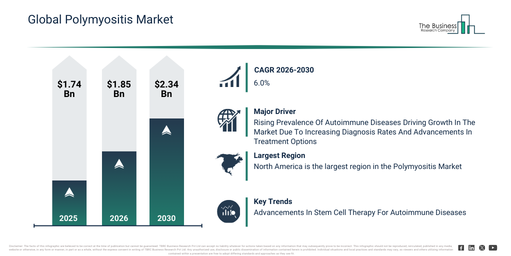
    The market size for polymyositis is projected to experience robust expansion over the coming years. It is forecast to reach $2.34 billion by 2030, demonstrating a compound annual growth rate (CAGR) of 6.0%. This growth during the forecast period is attributable to the increasing development of targeted immune therapies, the rising integration of precision diagnostics, a greater utilization of biologics and immunoglobulins, the expansion of personalized treatment strategies, and intensified research into autoimmune disease mechanisms. Significant trends anticipated in the forecast period include the growing application of immunosuppressive therapies, increased adoption of monoclonal antibody treatments, a heightened focus on accurate differential diagnosis, the broadening of advanced diagnostic imaging, and enhanced patient monitoring protocols.

    Access Your Free Sample Report for In-Depth Market Insights:

    https://www.thebusinessresearchcompany.com/sample.aspx?id=22104&type=smp

    Which Drivers Are Impacting The Competitive Landscape Of The Polymyositis Market?

    The expanding occurrence of autoimmune conditions is anticipated to fuel the expansion of the polymyositis market in the future. These conditions involve the body’s immune system erroneously targeting its own healthy cells, tissues, or organs, resulting in inflammation and harm. Their rising incidence is linked to specific genetic variations causing an overactive immune response, heightening individuals’ vulnerability to self-tissue attacks. This genetic predisposition, coupled with environmental factors like infections, stress, and lifestyle choices, contributes to the growing number of autoimmune cases. Polymyositis itself aids in comprehending autoimmune diseases by illustrating how immune system irregularities cause muscle inflammation, thereby providing valuable insights into underlying mechanisms and potential therapies for associated conditions. For example, in February 2024, data from Arthritis Australia, an Australia-based charitable not-for-profit organisation advocating for people with arthritis and musculoskeletal conditions, indicated that by 2025, roughly 562,378 Australians will be affected by rheumatoid arthritis (RA), comprising 14% of the overall arthritis demographic. Consequently, the growing prevalence of autoimmune diseases is a key driver for the polymyositis market.

    What Segments Are Identified Within The Structure Of The Polymyositis Market?

    The polymyositis market covered in this report is segmented –

    1) By Type: Idiopathic Polymyositis, Dermatomyositis, Inclusion Body Myositis, Overlapping Myositis Syndromes

    2) By Diagnosis: Physical Examination, Muscle Biopsy, Electromyography (EMG), Blood Tests, Magnetic Resonance Imaging (MRI)

    3) By Treatment: Immunosuppressant, Immunoglobulins, Corticosteroids, Alkylating agents, Monoclonal Antibodies

    4) By Distribution Channel: Offline, Online

    5) By End User: Hospital pharmacy, Online pharmacy, Retail pharmacy

    Subsegments:

    1) By Idiopathic Polymyositis: Immune-Mediated Polymyositis, Virus-Associated Polymyositis

    2) By Dermatomyositis: Classic Dermatomyositis, Amyopathic Dermatomyositis, Juvenile Dermatomyositis

    3) By Inclusion Body Myositis: Sporadic Inclusion Body Myositis, Hereditary Inclusion Body Myopathy

    4) By Overlapping Myositis Syndromes:Polymyositis with Systemic Lupus Erythematosus (SLE), Polymyositis with Rheumatoid Arthritis (RA), Polymyositis with Systemic Sclerosis, Polymyositis with Mixed Connective Tissue Disease (MCTD)

    What Upcoming Trends Are Likely To Define The Future Path Of The Polymyositis Market?

    Companies operating within the polymyositis market are primarily focused on developing innovative therapies, such as stem cell treatments, to improve treatment efficacy and slow the progression of the disease. Stem cell therapy involves the application of umbilical cord-derived stem cells for regenerative medical purposes. These stem cells exhibit powerful immunomodulatory and anti-inflammatory properties, making them a viable option for treating autoimmune conditions like polymyositis. For example, in December 2024, RESTEM, a US-based clinical-stage biotechnology company, received Orphan Drug Designation (ODD) from the U.S. Food and Drug Administration (FDA) for its stem cell program that utilizes umbilical cord outer lining stem cells (ULSCs). This program employs umbilical cord outer lining stem cells to treat polymyositis and Dermatomyositis by regulating the immune system and reducing muscle inflammation. Early trials have demonstrated promising safety and efficacy for this therapy, with the potential to decrease steroid dependency.

    Which Leading Companies Dominate The Polymyositis Market Share?

    Major companies operating in the polymyositis market are Pfizer Inc., F Hoffmann La Roche AG, Bristol Myers Squibb Company, AstraZeneca plc, Novartis AG, GlaxoSmithKline plc, Merck & Co. Inc., C H Boehringer Sohn AG & Co. KG, Regeneron Pharmaceuticals Inc., Astellas Pharma Inc., Fresenius SE & Co. KGaA, UCB S.A., Teva Pharmaceuticals USA Inc., Kezar Life Sciences Inc., Argenx SE, Mallinckrodt Pharmaceuticals plc, Mitsubishi Tanabe Pharma Corporation, Sanofi S.A., AbbVie Inc., Eli Lilly and Company, Janssen Pharmaceuticals Inc., Takeda Pharmaceutical Company Limited, Amgen Inc., CSL Behring

    Access The Complete Report For Deeper Market Insights:

    https://www.thebusinessresearchcompany.com/report/polymyositis-global-market-report

    How Does The Polymyositis Market Perform Across Major Global Regions?

    North America was the largest region in the polymyositis market in 2025. Asia-Pacific is expected to be the fastest-growing region in the forecast period. The regions covered in the polymyositis market report are Asia-Pacific, South East Asia, Western Europe, Eastern Europe, North America, South America, Middle East, Africa.

    Request Your Customized Polymyositis Market Research Report for Competitive Advantage:

    https://www.thebusinessresearchcompany.com/customise?id=22104&type=smp

    Browse Through More Reports Similar to the Global Polymyositis Market 2026, By The Business Research Company

    Pheochromocytoma Market Report 2026

    https://www.thebusinessresearchcompany.com/report/pheochromocytoma-global-market-report

    Pericarditis Market Report 2026

    https://www.thebusinessresearchcompany.com/report/pericarditis-global-market-report

    Interstitial Cystitis Market Report 2026

    https://www.thebusinessresearchcompany.com/report/interstitial-cystitis-global-market-report

    Get in touch with us:

    The Business Research Company: https://www.thebusinessresearchcompany.com/

    Americas +1 310-496-7795

    Asia +44 7882 955267 & +91 8897263534

    Europe +44 7882 955267

    Email us at info@tbrc.info

    Follow us on:

    LinkedIn: https://in.linkedin.com/company/the-business-research-company

    YouTube: https://www.youtube.com/channel/UC24_fI0rV8cR5DxlCpgmyFQ

    Global Market Model: https://www.thebusinessresearchcompany.com/global-market-model

  • Polymyalgia Rheumatica Market Future Outlook 2026: Key Drivers and Growth Potential

    Polymyalgia Rheumatica Market Future Outlook 2026: Key Drivers and Growth Potential

    Uncover key drivers, emerging technologies, and competitive movements shaping the polymyalgia rheumatica market from 2026–2035 with trusted insights from The Business Research Company

    What total market size is anticipated for the Polymyalgia Rheumatica Market in 2030?

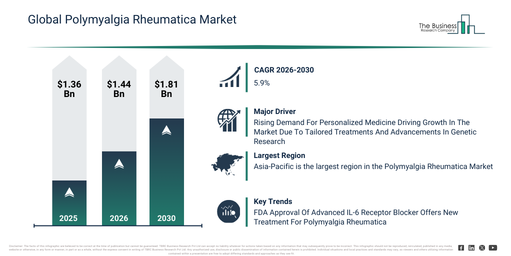
    The market for polymyalgia rheumatica has shown robust expansion over the past few years. Projections indicate it will expand from $1.36 billion in 2025 to reach $1.44 billion by 2026, demonstrating a compound annual growth rate (CAGR) of 6.2%. Historically, this expansion has been driven by factors such as a rising elderly demographic, enhanced clinical understanding of inflammatory conditions, the widespread adoption of corticosteroids as the initial treatment, increasing diagnostic rates among older patients, and the provision of rheumatology care within hospitals.

    The polymyalgia rheumatica market size is projected to observe significant expansion in the coming years. It is forecast to grow to $1.81 billion by 2030, demonstrating a compound annual growth rate (CAGR) of 5.9%. This anticipated growth during the forecast period is largely due to the increasing development of steroid-sparing therapies, escalating research into inflammatory biomarkers, the rising adoption of biologics and targeted drugs, expanding access to specialized medical care, and a growing focus on reducing long-term treatment side effects. Prominent trends expected in this period include the increased uptake of biologic therapies, a heightened focus on early and accurate diagnosis, the growing implementation of long-term corticosteroid management, the expansion of personalized treatment approaches, and enhanced monitoring of disease progression.

    Access Your Free Sample Report for In-Depth Market Insights:

    https://www.thebusinessresearchcompany.com/sample.aspx?id=22103&type=smp

    What Drivers Are Influencing Production Trends In The Polymyalgia Rheumatica Market?

    The increasing demand for personalized medicine is anticipated to propel the expansion of the polymyalgia rheumatica market moving forward. Personalized medicine refers to medical care specifically adapted to an individual’s genetic profile, lifestyle, and unique health conditions to achieve more effective results. The impetus behind the need for personalized medicine stems from breakthroughs in genetic research, rising patient desires for customized therapies, and enhancements in diagnostic technologies. Genetic research has provided a profound understanding of distinct genetic variations, enabling the creation of more tailored treatments aimed at specific genetic markers. This approach helps in selecting drugs most likely to be effective based on the patient’s characteristics, thereby leading to a more efficient and secure treatment strategy. For instance, in February 2024, according to the Personalised Medicine Coalition, a US-based hospital and health care organization, in 2023, the Food and Drug Administration approved 16 new personalized treatments for rare disease patients, which was an increase from six in 2022. Consequently, the advent of personalized medicine is fueling the growth of the polymyalgia rheumatica market.

    Which Segments Are Gaining Traction In The Polymyalgia Rheumatica Market?

    The polymyalgia rheumatica market covered in this report is segmented –

    1) By Treatment: Corticosteroids, Nonsteroidal Anti-Inflammatory Drugs, Disease-Modifying Antirheumatic Drugs, Biologics

    2) By Route Of Administration: Oral, Intravenous, Subcutaneous

    3) By Patient Type: Adult, Geriatric, Elderly Or Aging Population

    4) By Distribution Channel: Hospital Pharmacies, Retail Pharmacies, Online Pharmacies

    Subsegments:

    1) By Corticosteroids: Prednisone, Methylprednisolone, Hydrocortisone, Dexamethasone

    2) By Nonsteroidal Anti-Inflammatory Drugs (NSAIDs): Ibuprofen, Naproxen, Aspirin, Celecoxib

    3) By Disease-Modifying Antirheumatic Drugs (DMARDs): Methotrexate, Leflunomide, Sulfasalazine, Hydroxychloroquine

    4) By Biologics: Tumor Necrosis Factor (TNF) Inhibitors, Interleukin-6 (IL-6) Inhibitors, B-Cell Inhibitors, Janus Kinase (JAK) Inhibitors

    Which Trends Are Shaping Activity Within The Polymyalgia Rheumatica Market?

    Leading firms within the polymyalgia rheumatica market are prioritizing the creation of advanced medications, including interleukin-6 (IL-6) receptor blockers, to offer more precise and potent therapeutic alternatives. These interleukin-6 (IL-6) receptor blockers function as biological agents, working to suppress IL-6, a significant pro-inflammatory cytokine implicated in autoimmune conditions. Their mechanism of action, by inhibiting IL-6, leads to a reduction in inflammation and an alleviation of symptoms, thereby improving the quality of life for individuals suffering from PMR. As an illustration, in February 2023, Regeneron Pharmaceuticals, Inc., a US-based biotechnology firm, together with Sanofi, a France-based healthcare enterprise, disclosed that the Food and Drug Administration (FDA) had granted approval for Kevzara (sarilumab) to treat polymyalgia rheumatica (PMR) in adults who had not adequately responded to corticosteroids or were unable to gradually discontinue their use. Kevzara, notably the inaugural and sole biologic medication sanctioned for this ailment, operates by preventing IL-6-mediated signaling pathways. This approval stemmed from a clinical investigation demonstrating that 28.3% of patients receiving sarilumab attained sustained remission by week 52, in contrast to 10.3% of those on placebo. Kevzara is administered through subcutaneous injection bi-weekly and has also secured approval for the management of moderately to severely active rheumatoid arthritis. Currently, Sanofi’s stock (SNY) trades at $54.13 on the NASDAQ.

    Who Are The Major Companies Operating In The Polymyalgia Rheumatica Market?

    Major companies operating in the polymyalgia rheumatica market are AbbVie Inc., Sanofi S.A., Eli Lilly and Co., Regeneron Pharmaceuticals Inc., Horizon Therapeutics plc, Sparrow Pharmaceuticals Inc., Roche Holding AG, Novartis AG, Pfizer Inc., Bristol Myers Squibb Company, GlaxoSmithKline plc, AstraZeneca plc, Merck & Co. Inc., Janssen Pharmaceuticals Inc., Takeda Pharmaceutical Company Limited, UCB S.A., Amgen Inc., Boehringer Ingelheim, Bayer AG, Teva Pharmaceutical Industries Ltd., Sun Pharmaceutical Industries Ltd., Lupin Limited, Aurobindo Pharma Limited

    Access The Complete Report For Deeper Market Insights:

    https://www.thebusinessresearchcompany.com/report/polymyalgia-rheumatica-global-market-report

    Which Region Is Anticipated To See The Fastest Growth In The Polymyalgia Rheumatica Market?

    Asia-Pacific was the largest region in the polymyalgia rheumatica market in 2025. The regions covered in the polymyalgia rheumatica market report are Asia-Pacific, South East Asia, Western Europe, Eastern Europe, North America, South America, Middle East, Africa.

    Request Your Customized Polymyalgia Rheumatica Market Research Report for Competitive Advantage:

    https://www.thebusinessresearchcompany.com/customise?id=22103&type=smp

    Browse Through More Reports Similar to the Global Polymyalgia Rheumatica Market 2026, By The Business Research Company

    Sciatica Market Report 2026

    https://www.thebusinessresearchcompany.com/report/sciatica-global-market-report

    Fibromyalgia Treatment Market Report 2026

    https://www.thebusinessresearchcompany.com/report/fibromyalgia-treatment-global-market-report

    Esophageal Dysphagia Market Report 2026

    https://www.thebusinessresearchcompany.com/report/esophageal-dysphagia-global-market-report

    Get in touch with us:

    The Business Research Company: https://www.thebusinessresearchcompany.com/

    Americas +1 310-496-7795

    Asia +44 7882 955267 & +91 8897263534

    Europe +44 7882 955267

    Email us at info@tbrc.info

    Follow us on:

    LinkedIn: https://in.linkedin.com/company/the-business-research-company

    YouTube: https://www.youtube.com/channel/UC24_fI0rV8cR5DxlCpgmyFQ

    Global Market Model: https://www.thebusinessresearchcompany.com/global-market-model