Category: HealthcareServices

  • Global Stem Cell Services Market Forecast 2026–2035: Long-Term Growth Insights

    Global Stem Cell Services Market Forecast 2026–2035: Long-Term Growth Insights

    Uncover key drivers, emerging technologies, and competitive movements shaping the stem cell services market from 2026–2035 with trusted insights from The Business Research Company

    What market expansion outlook does the Stem Cell Services Market show for the 2026–2030 period?

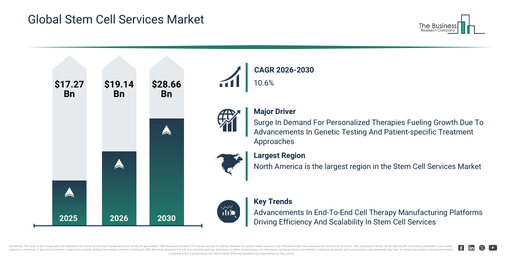
    The stem cell services market has experienced rapid expansion in recent years. This market is projected to expand from $17.27 billion in 2025 to $19.14 billion in 2026, demonstrating a compound annual growth rate (CAGR) of 10.8%. Historically, this growth has been driven by the expansion of stem cell research activities, the increasing application of cell-based assays in drug development, a rising demand for long-term stem cell storage, the growth of biopharmaceutical R&D pipelines, and increasing regulatory standardization.

    The stem cell services market is projected to experience substantial expansion over the coming years. By 2030, its size is anticipated to reach $28.66 billion, demonstrating a compound annual growth rate (CAGR) of 10.6%. This projected growth throughout the forecast period stems from factors such as increased investments in personalized medicine services, a surging demand for IPSC-based research solutions, the broadening scope of regenerative medicine applications, the rising tendency of pharmaceutical companies to outsource stem cell services, and the greater embrace of digital laboratory platforms. Key developments expected during this period involve a wider acceptance of advanced stem cell banking services, an increasing need for tailored stem cell processing, the growing use of high-throughput cell screening services, the greater incorporation of data-driven cell analytics, and a heightened emphasis on quality and regulatory compliance.

    Access Your Free Sample Report for In-Depth Market Insights:

    https://www.thebusinessresearchcompany.com/sample.aspx?id=30407&type=smp

    What Drivers Are Shaping The Development Of The Stem Cell Services Market?

    The growing demand for personalized therapies is expected to contribute significantly to the growth of the stem cell services market. Personalized therapies refer to medical treatments tailored to an individual’s genetic makeup, lifestyle, and specific disease characteristics, aiming to maximize effectiveness and minimize side effects by targeting each patient’s unique biological profile. The increasing demand for personalized therapies is driven by advancements in genetic testing and molecular diagnostics, which enable treatments to be customized to an individual’s specific biological and genetic characteristics, improving therapeutic outcomes and reducing adverse effects. Stem cell services support the development of personalized therapies by providing patient-specific stem cells and customized regenerative solutions, enabling precise and targeted treatment strategies that align with each individual’s biological profile. For instance, in April 2024, according to a report published by the Personalized Medicine Coalition (PMC), a U.S.-based advocacy organization for personalized healthcare, the U.S. Food and Drug Administration’s (FDA) Center for Drug Evaluation and Research (CDER) approved 50 new molecular entities (NMEs) in 2024, of which 18 or approximately 38% were classified as personalized medicines by the PMC. Therefore, the growing demand for personalized therapies is expected to drive the expansion of the stem cell services market.

    Which Segments Are Contributing To The Growth Of The Stem Cell Services Market?

    The stem cell services market covered in this report is segmented –

    1) By Type: Customize Service, Stem Cell Differentiation, Assay Development, Screening, Other Types

    2) By Type Of Stem Cells: Embryonic Stem Cells, Adult Stem Cells, Induced Pluripotent Stem Cells (iPSCs)

    3) By Therapy Type: Autologous Stem Cell Therapy, Allogenic Stem Cell Therapy

    4) By Application: Regenerative Medicine, Stem Cell Banking, Cell-Based Assays, Drug Discovery And Development

    5) By End User: Hospitals, Research Institutes, Pharmaceutical Companies, Biotechnology Companies

    Subsegments:

    1) By Customize Service: Personalized Protocol Design, Tailored Culture Conditions, Patient Specific Cell Processing, Custom Analytical Reporting

    2) By Stem Cell Differentiation: Mesenchymal Lineage Differentiation, Neural Lineage Differentiation, Hematopoietic Lineage Differentiation, Cardiac Lineage Differentiation

    3) By Assay Development: Functional Assay Design, Cellular Assay Optimization, Biomarker Assay Development, High Throughput Assay Design

    4) By Screening: Small Molecule Screening, Drug Candidate Screening, Gene Editing Screening, Toxicity Screening

    5) By Other Types: Cell Banking Services, Quality Control Testing, Process Development Support, Bioinformatics Analysis

    How Are New Market Trends Shaping The Landscape Of The Stem Cell Services Market?

    Companies operating within the stem cell services market are increasingly concentrating on technological advancements, such as single-use consumable systems, to boost operational efficiency, mitigate contamination risks, and streamline the entire process of cell therapy manufacturing. A single-use consumable system denotes a production methodology where equipment that interfaces with biological materials is engineered for one-time utilization, thereby significantly reducing the potential for contamination and elevating overall production effectiveness. As an example, in March 2025, Limula SA, a life science tools company based in Switzerland, unveiled LimONE, a groundbreaking platform designed for comprehensive cell therapy manufacturing. This system is crafted to automate and integrate intricate, previously fragmented processes into a unified, uninterrupted workflow. By consolidating multiple individual operations into a single closed consumable, LimONE reduces the need for extensive labor, equipment, and infrastructure, while also ensuring process standardization, scalability, and expedited production timelines for highly personalized cell therapies.

    Who Are The Major Companies Operating In The Stem Cell Services Market?

    Major companies operating in the stem cell services market are Thermo Fisher Scientific Inc., FUJIFILM Holdings Corporation, Lonza Group AG, WuXi AppTec Co. Ltd., Charles River Laboratories International Inc., Miltenyi Biotec B.V. & Co. KG, AGC Biologics Inc., GenScript Biotech Corporation, Vericel Corporation, LifeCell International Private Limited, Cryo-Cell International Inc., Reelabs Private Limited, Medipost Co. Ltd., Celltex Therapeutics Corporation, Kangstem Biotech Co. Ltd., CellThera Ltd., Anterogen Co. Ltd., Healios K.K., Sanpower Group Co. Ltd., InoCells Co. Ltd.

    Access The Complete Report For Deeper Market Insights:

    https://www.thebusinessresearchcompany.com/report/global-stem-cell-services-market-report

    Which Region Is Anticipated To See The Fastest Growth In The Stem Cell Services Market?

    North America was the largest region in the stem cell services market in 2025. Asia-Pacific is expected to be the fastest-growing region in the forecast period. The regions covered in the stem cell services market report are Asia-Pacific, South East Asia, Western Europe, Eastern Europe, North America, South America, Middle East, Africa.

    Request Your Customized Stem Cell Services Market Research Report for Competitive Advantage:

    https://www.thebusinessresearchcompany.com/customise?id=30407&type=smp

    Browse Through More Reports Similar to the Global Stem Cell Services Market 2026, By The Business Research Company

    Stem Cell Manufacturing Market Report 2026

    https://www.thebusinessresearchcompany.com/report/stem-cell-manufacturing-global-market-report

    Human Embryonic Stem Cells Market Report 2026

    https://www.thebusinessresearchcompany.com/report/human-embryonic-stem-cells-global-market-report

    Stem Cell Assay Market Report 2026

    https://www.thebusinessresearchcompany.com/report/stem-cell-assay-global-market-report

    Get in touch with us:

    The Business Research Company: https://www.thebusinessresearchcompany.com/

    Americas +1 310-496-7795

    Asia +44 7882 955267 & +91 8897263534

    Europe +44 7882 955267

    Email us at info@tbrc.info

    Follow us on:

    LinkedIn: https://in.linkedin.com/company/the-business-research-company

    YouTube: https://www.youtube.com/channel/UC24_fI0rV8cR5DxlCpgmyFQ

    Global Market Model: https://www.thebusinessresearchcompany.com/global-market-model
  • Stem Cell Reconstructive Market 2026–2030: Forecasting Business Opportunities Ahead

    Stem Cell Reconstructive Market 2026–2030: Forecasting Business Opportunities Ahead

    Uncover key drivers, emerging technologies, and competitive movements shaping the stem cell reconstructive market from 2026–2035 with trusted insights from The Business Research Company

    What level of growth is expected in the Stem Cell Reconstructive Market between 2026 and 2030?

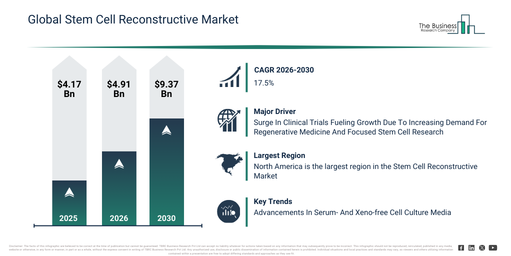
    The stem cell reconstructive market has experienced rapid expansion in its size over recent years. Projections indicate its growth from $4.17 billion in 2025 to $4.91 billion in 2026, demonstrating a compound annual growth rate (CAGR) of 17.7%. The historical increase can be ascribed to advancements in regenerative medicine research, increasing prevalence of traumatic injuries and degenerative conditions, rising adoption of minimally invasive reconstruction procedures, growth of clinical stem cell trials, and expanding availability of cell processing technologies.

    The stem cell reconstructive market is projected to experience substantial expansion in the coming years. By 2030, this market is anticipated to reach a valuation of $9.37 billion, demonstrating a compound annual growth rate (CAGR) of 17.5%. This projected growth is driven by several factors, including the escalating demand for personalized regenerative treatments, increased capital investment in advanced cell manufacturing facilities, broadening clinical acceptance of stem cell reconstruction procedures, the widening scope of regenerative applications in cosmetic and orthopedic surgery, and ongoing advancements in scaffold and delivery technologies. Key trends emerging during this forecast period encompass the greater embrace of autologous stem cell therapies, an increase in biomaterial-assisted cell delivery methods, a heightened emphasis on individualized reconstructive care, the proliferation of 3D cell culture and bioreactor systems, and improved integration of various regenerative surgery techniques.

    Access Your Free Sample Report for In-Depth Market Insights:

    https://www.thebusinessresearchcompany.com/sample.aspx?id=30406&type=smp

    Which Drivers Are Expected To Impact The Stem Cell Reconstructive Market During The Forecast Period?

    The increasing occurrence of clinical trials focused on stem cell therapies is projected to notably fuel the expansion of the stem cell reconstructive market in the future. These trials are organized research investigations undertaken to assess the safety, effectiveness, and medicinal capabilities of stem cell treatments in human subjects. The surge in these trials stems from a rising need for regenerative medicine to tackle chronic and degenerative conditions, prompting more intensive research into stem cells’ capacity to mend or substitute compromised tissues and organs. The stem cell reconstructive segment aids clinical trials through its provision of advanced solutions for cell processing, regenerative products, and uniform treatment platforms, thereby improving safety, efficacy, and consistency within clinical research. For example, a report released in January 2025 by the Cell and Gene Therapy (CGT) Catapult, a UK-based entity supporting advanced therapy development, indicated that the UK documented 187 active advanced therapy clinical trials in 2024, marking a 7% rise from the previous year. Consequently, the increasing volume of clinical trials for stem cell therapies is anticipated to propel the growth of the stem cell reconstructive market.

    How Is The Stem Cell Reconstructive Market Divided Into Segments?

    The stem cell reconstructive market covered in this report is segmented –

    1) By Product Type: Stem Cell Therapies, Stem Cell Storage Services, Stem Cell Media And Reagents, Stem Cell Culture Systems

    2) By Mode Of Administration: Surgical Implantation, Injection-Based, Topical Application, Scaffold Or Biomaterial-Assisted Delivery

    3) By Source: Bone Marrow, Adipose Tissue, Umbilical Cord Blood, Other Sources

    4) By Application: Orthopedic Reconstruction, Plastic And Cosmetic Surgery, Wound And Burn Healing, Soft Tissue Regeneration, Other Applications

    5) By End Use: Hospitals And Surgical Centers, Cosmetic Clinics, Orthopedic And Sports Medicine Centers, Burn And Trauma Care Centers, Academic And Research Institutions, Other End Uses

    Subsegments:

    1) By Stem Cell Therapies: Autologous Stem Cell Therapy, Allogeneic Stem Cell Therapy, Induced Pluripotent Stem Cell Therapy, Embryonic Stem Cell Therapy

    2) By Stem Cell Storage Services: Cord Blood Storage, Cord Tissue Storage, Bone Marrow Storage, Peripheral Blood Stem Cell Storage

    3) By Stem Cell Media And Reagents: Growth Factors, Cytokines, Culture Media, Supplements

    4) By Stem Cell Culture Systems: Two Dimensional Culture Systems, Three Dimensional Culture Systems, Bioreactors, Microcarrier Based Culture Systems

    Which Trends Are Expected To Influence The Stem Cell Reconstructive Market In The Upcoming Years?

    Major companies operating in the stem cell reconstructive market are concentrating on developing innovations such as serum- and xeno-free cell culture medium, with the aim of boosting the safety, effectiveness, and scalability of stem cell therapies for regenerative applications. This type of cell culture medium is defined as a formulation entirely devoid of animal- and human-derived components, crafted to facilitate cell growth and maintenance under controlled, consistent conditions. For instance, in July 2023, PromoCell GmbH, a Germany-based biotechnology company, introduced PromoExQ MSC Growth Medium XF. This particular serum- and xeno-free cell culture medium is engineered for GMP-compliant maintenance and long-term expansion of mesenchymal stem cells (MSCs). The medium supports the reliable proliferation of MSCs derived from sources including bone marrow, umbilical cord, and adipose tissue. It guarantees superior cell quality and consistent results, making it appropriate for both investigative and therapeutic uses. PromoExQ MSC Growth Medium XF also mitigates the inconsistencies often linked with conventional serum-based media. This product introduction underscores PromoCell’s dedication to offering sophisticated solutions for regenerative medicine and stem cell studies.

    Which Major Firms Are Strengthening Their Position In The Stem Cell Reconstructive Market?

    Major companies operating in the stem cell reconstructive market are Bayer Aktiengesellschaft, Astellas Pharma Inc., Globus Medical Inc., Organogenesis Holdings Inc., Vericel Corporation, BioTissue Technologies GmbH, AVITA Medical Inc., SanBio Company Limited, MEDIPOST Co. Ltd., CUTISS AG, Novadip Biosciences SA, Pandorum Technologies Pvt. Ltd., Mesoblast Limited, EmCyte Corporation, Pluri Inc., HEALIOS K.K., Anterogen Co. Ltd., AcceGen, Orthocell Ltd., Gamida Cell Ltd.

    Access The Complete Report For Deeper Market Insights:

    https://www.thebusinessresearchcompany.com/report/global-stem-cell-reconstructive-market-report

    Which Region Is Anticipated To See The Fastest Growth In The Stem Cell Reconstructive Market?

    North America was the largest region in the stem cell reconstructive market in 2025. Asia-Pacific is expected to be the fastest-growing region in the forecast period. The regions covered in the stem cell reconstructive market report are Asia-Pacific, South East Asia, Western Europe, Eastern Europe, North America, South America, Middle East, Africa.

    Request Your Customized Stem Cell Reconstructive Market Research Report for Competitive Advantage:

    https://www.thebusinessresearchcompany.com/customise?id=30406&type=smp

    Browse Through More Reports Similar to the Global Stem Cell Reconstructive Market 2026, By The Business Research Company

    Stem Cell Assay Market Report 2026

    https://www.thebusinessresearchcompany.com/report/stem-cell-assay-global-market-report

    Human Embryonic Stem Cells Market Report 2026

    https://www.thebusinessresearchcompany.com/report/human-embryonic-stem-cells-global-market-report

    Stem Cells Therapy Market Report 2026

    https://www.thebusinessresearchcompany.com/report/stem-cells-therapy-global-market-report

    Get in touch with us:

    The Business Research Company: https://www.thebusinessresearchcompany.com/

    Americas +1 310-496-7795

    Asia +44 7882 955267 & +91 8897263534

    Europe +44 7882 955267

    Email us at info@tbrc.info

    Follow us on:

    LinkedIn: https://in.linkedin.com/company/the-business-research-company

    YouTube: https://www.youtube.com/channel/UC24_fI0rV8cR5DxlCpgmyFQ

    Global Market Model: https://www.thebusinessresearchcompany.com/global-market-model
  • Global Stem Cell Manufacturing Market Report 2026–2035: Key Forecasts and Growth Areas

    Global Stem Cell Manufacturing Market Report 2026–2035: Key Forecasts and Growth Areas

    Uncover key drivers, emerging technologies, and competitive movements shaping the stem cell manufacturing market from 2026–2035 with trusted insights from The Business Research Company

    How much is the Stem Cell Manufacturing Market valued at in 2026, and what valuation is forecast for 2030?

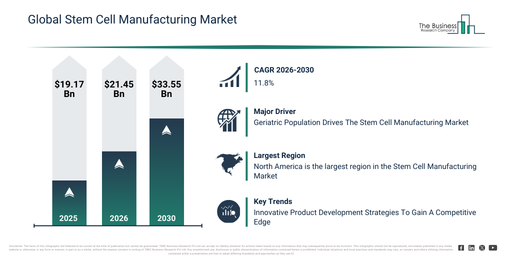
    The stem cell manufacturing market has expanded considerably in recent years. It is anticipated to expand from $19.17 billion in 2025 to $21.45 billion in 2026, maintaining a compound annual growth rate (CAGR) of 11.9%. In historical terms, this market’s expansion is due to factors like the rise in clinical trials, approvals for stem cell therapies, investments in bioprocessing, the advancement of regulatory frameworks, and the growth of contract manufacturing.

    The stem cell manufacturing market size is anticipated to experience rapid growth over the next few years. It is projected to expand to $33.55 billion by 2030, demonstrating a compound annual growth rate (CAGR) of 11.8%. This growth during the forecast period can be attributed to factors such as commercial-scale therapy production, advancements in cost reduction technologies, the adoption of decentralized manufacturing models, sophisticated cell expansion techniques, and regulatory harmonization. Key trends expected in the forecast period include the utilization of closed-system bioreactors, the development of scalable manufacturing platforms, increased automation of cell expansion processes, the implementation of quality-by-design methodologies, and the optimization of cryopreservation.

    Access Your Free Sample Report for In-Depth Market Insights:

    https://www.thebusinessresearchcompany.com/sample.aspx?id=9402&type=smp

    What Drivers Are Influencing The Growth Of The Stem Cell Manufacturing Market?

    The expanding geriatric population is anticipated to boost the stem cell manufacturing market. This demographic, comprising individuals aged 65 and over, is particularly susceptible to a range of illnesses stemming from diminished immunity and the aging process. As aging escalates the likelihood of chronic conditions, stem cell manufacturing presents a vital approach to combat these health challenges. For example, data from January 2024, provided by the Population Reference Bureau, a Kenya-based Nonprofit organization, indicates that the number of Americans aged 65 and above is projected to surge from 58 million in 2022 to 82 million by 2050, representing a 47% increase. Concurrently, this segment’s proportion of the total population is also forecasted to climb from 17% to 23% within the same timeframe. Consequently, the increasing number of older adults is a key factor propelling the expansion of the stem cell manufacturing market.

    What Segments Are Included Within The Stem Cell Manufacturing Market?

    The stem cell manufacturing market covered in this report is segmented –

    1) By Product: Consumables, Instruments, Stem Cell Lines

    2) By Application: Research Applications, Clinical Application, Cell And Tissue Banking Applications

    3) By End User: Pharmaceutical And Biotechnology Companies, Academic Institutes, Research Laboratories And Contract Research Organizations, Hospitals And Surgical Centers, Cell And Tissue Banks, Other End Users

    Subsegments:

    1) By Consumables: Media And Reagents, Cell Culture Vessels, Assay Kits

    2) By Instruments: Bioreactors, Cell Counters, Flow Cytometers

    3) By Stem Cell Lines: Embryonic Stem Cell Lines, Adult Stem Cell Lines, Induced Pluripotent Stem Cell Lines (iPSCs)

    What Trends Are Driving The Growth Trajectory Of The Stem Cell Manufacturing Market?

    Leading companies in the stem cell manufacturing market are focusing on creating innovative products, such as GM-grade protein, to secure a competitive advantage within the sector. GM-grade protein denotes a classification for protein powders and similar products that adhere to specific quality and safety standards. For instance, in November 2023, ACROBiosystems Inc., a US-based supplier of recombinant proteins and other vital reagents, launched GM-grade DLL4 protein. This substance is a recombinant, soluble version of Delta-like Ligand 4 (DLL4), a key signaling molecule indispensable for stem cell development and differentiation. The availability of GMP-grade DLL4 marks a significant milestone for the advancement of stem cell-based therapies, providing a high-quality, consistent, and scalable supply of this important protein. DLL4 is known to promote the self-renewal and expansion of hematopoietic stem cells (HSCs), which are the precursors to all blood cells, and can be used to supplement stem cell cultures in vitro, thus enhancing the growth and differentiation of HSCs.

    Who Are The Primary Competitors In The Global Stem Cell Manufacturing Market?

    Major companies operating in the stem cell manufacturing market are Thermo Fisher Scientific Inc., Merck Millipore, Stemcell Technologies, Fujifilm Holdings Corporation, Takara Bio Group, Lonza Group AG, Sartorius AG, Bio-Rad Laboratories, Becton Dickinson and Company, Bio-Techne Corporation, Miltenyi Biotec, Terumo BCT Inc., Corning Inc., Eppendorf AG, ViaCyte Inc., Merck KGaA, Danaher Corporation, Vericel Corporation, American Cryostem Corporation, Cellgenix GMBH, Aspen Neuroscience Inc., Magenta Therapeutics Inc, Pluristem Therapeutics Inc., Takeda Pharmaceutical Company Limited, AbbVie Inc., 3D Biomatrix Inc., Worthington Biochemical Corporation, Bico Group

    Access The Complete Report For Deeper Market Insights:

    https://www.thebusinessresearchcompany.com/report/stem-cell-manufacturing-global-market-report

    Which Global Regions Are Shaping The Competitive Landscape Of The Stem Cell Manufacturing Market?

    North America was the largest region in the stem cell manufacturing market in 2025. Europe was the second-largest region in the stem cell manufacturing market. The regions covered in the stem cell manufacturing market report are Asia-Pacific, South East Asia, Western Europe, Eastern Europe, North America, South America, Middle East, Africa.

    Request Your Customized Stem Cell Manufacturing Market Research Report for Competitive Advantage:

    https://www.thebusinessresearchcompany.com/customise?id=9402&type=smp

    Browse Through More Reports Similar to the Global Stem Cell Manufacturing Market 2026, By The Business Research Company

    Cell And Gene Therapy Manufacturing Services Market 2026

    https://www.thebusinessresearchcompany.com/report/cell-and-gene-therapy-manufacturing-services-market

    Human Embryonic Stem Cells Market Report 2026

    https://www.thebusinessresearchcompany.com/report/human-embryonic-stem-cells-global-market-report

    Stem Cells Therapy Market Report 2026

    https://www.thebusinessresearchcompany.com/report/stem-cells-therapy-global-market-report

    Get in touch with us:

    The Business Research Company: https://www.thebusinessresearchcompany.com/

    Americas +1 310-496-7795

    Asia +44 7882 955267 & +91 8897263534

    Europe +44 7882 955267

    Email us at info@tbrc.info

    Follow us on:

    LinkedIn: https://in.linkedin.com/company/the-business-research-company

    YouTube: https://www.youtube.com/channel/UC24_fI0rV8cR5DxlCpgmyFQ

    Global Market Model: https://www.thebusinessresearchcompany.com/global-market-model
  • Stem Cell Cryopreservation Market 2026–2030: Forecast, Innovation, and Competitive Trends

    Stem Cell Cryopreservation Market 2026–2030: Forecast, Innovation, and Competitive Trends

    Uncover key drivers, emerging technologies, and competitive movements shaping the stem cell cryopreservation market from 2026–2035 with trusted insights from The Business Research Company

    By how much is the Stem Cell Cryopreservation Market expected to grow between 2026 and 2030?

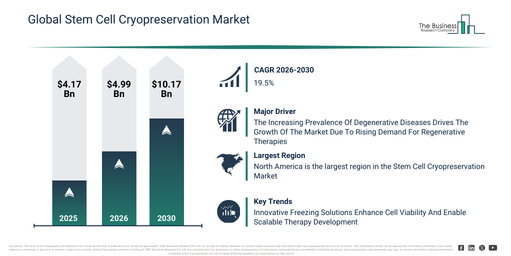
    The stem cell cryopreservation market has experienced rapid expansion in recent years. Its valuation is projected to rise from $4.17 billion in 2025 to $4.99 billion in 2026, achieving a compound annual growth rate (CAGR) of 19.8%. Historically, this growth can be ascribed to factors such as the proliferation of stem cell banking initiatives, the increasing utilization of cryopreservation in research, the growth in IVF and fertility treatments, the rising demand for long-term cell storage, and improvements in cryogenic storage technologies.

    The stem cell cryopreservation market size is anticipated to undergo significant expansion in the next few years. It is projected to reach $10.17 billion by 2030, demonstrating a compound annual growth rate (CAGR) of 19.5%. This growth during the forecast period is attributed to the increasing uptake of regenerative medicine therapies, rising investments in biobanking infrastructure, a growing need for personalized medicine storage solutions, the broadening of clinical cell therapy pipelines, and a heightened focus on standardized storage protocols. Key trends for the forecast period include an escalating demand for long-term stem cell storage, increased adoption of advanced cryoprotectants, a rising implementation of automated cryopreservation systems, the expansion of stem cell banking services, and an enhanced emphasis on preserving cell viability.

    Access Your Free Sample Report for In-Depth Market Insights:

    https://www.thebusinessresearchcompany.com/sample.aspx?id=30405&type=smp

    Which Drivers Are Influencing Market Acceleration In The Stem Cell Cryopreservation Market?

    The rising occurrence of degenerative diseases is anticipated to drive the expansion of the stem cell cryopreservation market in the future. Degenerative diseases are health conditions characterized by the gradual decline in the structure or function of tissues or organs, frequently resulting in impaired normal functionality. The growing incidence of degenerative diseases stems from the expanding elderly population, given that older individuals are more prone to cellular and tissue decay contributing to these ailments. Stem cell cryopreservation facilitates the extended preservation of living stem cells, offering a dependable supply for regenerative treatments aimed at mending and substituting compromised tissues in degenerative conditions. To illustrate, in March 2023, data from the Alzheimer’s Association, a US-based nonprofit voluntary health organization, indicated that around 6.7 million Americans aged 65 and older were suffering from Alzheimer’s dementia, with projections showing this figure increasing to 13.8 million by 2060. Consequently, the rising occurrence of degenerative diseases is fueling the expansion of the stem cell cryopreservation market.

    What Leading Segments Are Studied In The Stem Cell Cryopreservation Market?

    The stem cell cryopreservation market covered in this report is segmented –

    1) By Type: Embryonic Stem Cell, Adult Stem Cell, Induced Pluripotent Stem Cell

    2) By Application: Cell Freezing Media, Equipment And Consumables

    3) By End User: Biopharmaceutical Companies, Research Institutes, Blood Banks, In Vitro Fertilization (IVF) Clinics

    Subsegments:

    1) By Embryonic Stem Cell: Human Embryonic Stem Cell, Mouse Embryonic Stem Cell, Primate Embryonic Stem Cell, Other Embryonic Stem Cells

    2) By Adult Stem Cell: Hematopoietic Stem Cell, Mesenchymal Stem Cell, Neural Stem Cell, Epithelial Stem Cell

    3) By Induced Pluripotent Stem Cell: Fibroblast-Derived iPSC, Blood Cell-Derived iPSC, Epithelial Cell-Derived iPSC

    What Upcoming Trends Are Likely To Define The Future Path Of The Stem Cell Cryopreservation Market?

    Major companies in the stem cell cryopreservation market are concentrating on developing innovative solutions, such as advanced cryopreservation media and automation-friendly freezing systems, to boost post-thaw cell viability and accelerate stem cell therapy development. Advanced cryopreservation media are specifically formulated solutions designed to safeguard stem cells during freezing and thawing, thereby maintaining their viability and function. Automation-friendly freezing systems, conversely, are equipment or processes engineered for scalable, reproducible, and hands-free cell freezing in large-scale manufacturing. For example, in April 2024, Pluristyx, Inc., a US-based biotechnology company, introduced PluriFreeze, a proprietary cryopreservation medium. This sophisticated solution is engineered to enhance the freezing and thawing of pluripotent stem cells and other sensitive cell types, ensuring superior post-thaw viability and functional integrity. Featuring an entirely synthetic, animal-origin-free formulation with low viscosity, PluriFreeze is ideal for automated and large-scale cell production. It is complemented by the DMSO-free PluriPrep wash solution, which permits extended processing times. Made from Generally Recognized as Safe (GRAS) components, the medium offers consistent, dependable, and secure cryopreservation for both research and clinical applications. By seamlessly integrating with platforms such as PluriBank, this launch strengthens the stem cell cryopreservation workflow, providing efficient and scalable solutions from initial laboratory research through to clinical implementation.

    Which Key Market Players Are Investing In Expansion And Innovation Within The Stem Cell Cryopreservation Market?

    Major companies operating in the stem cell cryopreservation market are Thermo Fisher Scientific Inc., Danaher Corporation, Corning Incorporated, Lonza Group Ltd., Sartorius AG, Eppendorf SE, Vitalant Inc., BioLife Solutions Inc., Cryoviva Biotech Private Limited., HiMedia Laboratories Private Limited, Cryo-Cell International Inc., Celularity Inc., PromoCell GmbH, Creative Biolabs Inc., StemCyte Inc., Reprocell Inc., OriGen Biomedical Inc., American CryoStem Corporation, Ossium Health Inc., Pluristyx Inc.

    Access The Complete Report For Deeper Market Insights:

    https://www.thebusinessresearchcompany.com/report/global-stem-cell-cryopreservation-market-report

    Which Regions Are Poised For Strategic Growth In The Stem Cell Cryopreservation Market?

    North America was the largest region in the stem cell cryopreservation market in 2025. Asia-Pacific is expected to be the fastest-growing region in the forecast period. The regions covered in the stem cell cryopreservation market report are Asia-Pacific, South East Asia, Western Europe, Eastern Europe, North America, South America, Middle East, Africa.

    Request Your Customized Stem Cell Cryopreservation Market Research Report for Competitive Advantage:

    https://www.thebusinessresearchcompany.com/customise?id=30405&type=smp

    Browse Through More Reports Similar to the Global Stem Cell Cryopreservation Market 2026, By The Business Research Company

    Cell Regeneration Medicine Market Report 2026

    https://www.thebusinessresearchcompany.com/report/cell-regeneration-medicine-global-market-report

    Cryoablation Devices Market Report 2026

    https://www.thebusinessresearchcompany.com/report/cryoablation-devices-global-market-report

    Stem Cells Therapy Market Report 2026

    https://www.thebusinessresearchcompany.com/report/stem-cells-therapy-global-market-report

    Get in touch with us:

    The Business Research Company: https://www.thebusinessresearchcompany.com/

    Americas +1 310-496-7795

    Asia +44 7882 955267 & +91 8897263534

    Europe +44 7882 955267

    Email us at info@tbrc.info

    Follow us on:

    LinkedIn: https://in.linkedin.com/company/the-business-research-company

    YouTube: https://www.youtube.com/channel/UC24_fI0rV8cR5DxlCpgmyFQ

    Global Market Model: https://www.thebusinessresearchcompany.com/global-market-model
  • Stem Cell Characterization Kits Market Forecast 2026–2035: Data Trends and Industry Insights

    Stem Cell Characterization Kits Market Forecast 2026–2035: Data Trends and Industry Insights

    Uncover key drivers, emerging technologies, and competitive movements shaping the stem cell characterization kits market from 2026–2035 with trusted insights from The Business Research Company

    What is the estimated market size of the Stem Cell Characterization Kits Market by the end of 2030?

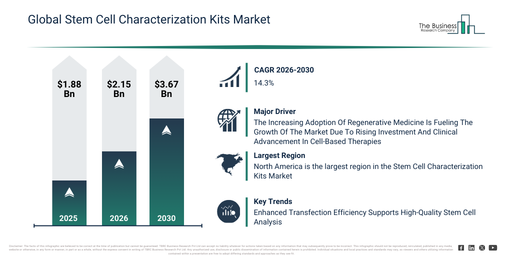
    The market for stem cell characterization kits has experienced significant expansion recently. Projections indicate this market will increase from $1.88 billion in 2025 to $2.15 billion by 2026, demonstrating a compound annual growth rate (CAGR) of 14.5%. This historical growth is largely due to factors such as the proliferation of stem cell research initiatives, a heightened demand for verifying cell quality, an increase in drug discovery uses, expanding partnerships between academia and industry, and the accessibility of sophisticated analytical instruments.

    The stem cell characterization kits market size is projected for swift expansion in the coming years. This market is set to reach $3.67 billion by 2030, demonstrating a compound annual growth rate (CAGR) of 14.3%. This anticipated growth during the forecast period stems from factors such as heightened regulatory oversight for cell-based therapies, a growing need for consistent characterization approaches, the scaling up of clinical-grade stem cell manufacturing, increased financial commitments to translational research, and the expanded application of sophisticated omics-based kits. Key developments expected during this timeframe involve a greater uptake of multi-parameter characterization kits, an escalating imperative for quality assurance in stem cell investigations, wider deployment of flow cytometry-based kits, the development of standardized stem cell validation procedures, and a sharpened emphasis on the replicability of data.

    Access Your Free Sample Report for In-Depth Market Insights:

    https://www.thebusinessresearchcompany.com/sample.aspx?id=30404&type=smp

    What Drivers Are Shaping Future Opportunities In The Stem Cell Characterization Kits Market?

    The future expansion of the stem cell characterization kits market is anticipated due to the growing acceptance of regenerative medicine. This field encompasses medical strategies focused on repairing, substituting, or regenerating human cells, tissues, or organs to reinstate their normal biological functions. The increasing uptake of regenerative medicine stems from greater investments by governments, research bodies, and clinical facilities in cell-based therapies, which have shown superior clinical results compared to traditional treatments. Stem cell characterization kits play a crucial role in regenerative medicine by supplying vital instruments to confirm the identity, purity, and differentiation state of stem cells, thereby ensuring uniformity in therapeutic advancement. As an illustration, in November 2025, data from the Food and Drug Administration, a US-based federal agency, showed 35 requests for regenerative medicine advanced therapy (RMAT) designation in fiscal year 2023, an increase from 30 requests in fiscal year 2022, signifying an uptick in application submissions. Consequently, the expanding use of regenerative medicine is fueling the growth of the stem cell characterization kits market.

    Which Segment Groups Are Influencing The Stem Cell Characterization Kits Market?

    The stem cell characterization kits market covered in this report is segmented –

    1) By Type: Embryonic Stem Cells, Mesenchymal Stem Cells, Induced Pluripotent Stem Cells

    2) By Technology: Flow Cytometry-Based Kits, Immunocytochemistry-Based Kits, Enzyme-Linked Immunosorbent Assay-Based Kits, Western Blot-Based Kits, Microarray and Next-Generation Sequencing Kits

    3) By End-User: Biopharmaceutical Companies, Contract Research Organizations, Academics and Research Institutes, Biotechnology Companies

    Subsegments:

    1) By Embryonic Stem Cells: Human Embryonic Stem Cells, Mouse Embryonic Stem Cells

    2) By Mesenchymal Stem Cells: Bone Marrow Derived Mesenchymal Stem Cells, Adipose Tissue Derived Mesenchymal Stem Cells, Umbilical Cord Derived Mesenchymal Stem Cells

    3) By Induced Pluripotent Stem Cells: Patient Derived Induced Pluripotent Stem Cells, Gene Edited Induced Pluripotent Stem Cells, Disease Model Induced Pluripotent Stem Cells

    Which Trends Are Shaping Activity Within The Stem Cell Characterization Kits Market?

    Leading companies in the stem cell characterization kits market are concentrating on technological innovations, such as microfluidic mechanoporation, to achieve effective intracellular delivery while preserving stem cell viability and phenotype for precise downstream characterization. Microfluidic mechanoporation is a method that employs controlled mechanical forces within microscale fluidic channels to temporarily disrupt cell membranes, allowing for efficient molecule delivery into cells. For example, in July 2024, STEMCELL Technologies, a Canada-based biotechnology firm, introduced the CellPore Transfection System. This offering combines a benchtop instrument with the CellPore Transfection Kit 300, which provides single-use delivery cartridges and utilizes rapid, controlled cell deformation within microfluidic channels to enable mechanoporation. The system is engineered to accomplish efficient delivery into hard-to-transfect and primary cells, all while maintaining cell quality for subsequent assays.

    Who Are The Core Companies Influencing Trends In The Stem Cell Characterization Kits Market?

    Major companies operating in the stem cell characterization kits market are Thermo Fisher Scientific Inc., BD Biosciences, Corning Incorporated, Bruker Spatial Biology, STEMCELL Technologies Inc., Miltenyi Biotec B.V. & Co. KG, Takara Bio Inc., Cyagen Biosciences Inc., GeneTex Inc., Creative Bioarray LLC, Creative Biolabs Inc., Ncardia GmbH, REPROCELL Inc., ScienCell Research Laboratories Inc., Cosmo Bio USA Inc., ImmunoStep S.L., Celprogen Inc., Cloud-Clone Corp., Pluristyx Inc., Enzo Life Sciences Inc.

    Access The Complete Report For Deeper Market Insights:

    https://www.thebusinessresearchcompany.com/report/global-stem-cell-characterization-kits-market-report

    Which Regions Are Projected To Dominate The Stem Cell Characterization Kits Market In The Coming Years?

    North America was the largest region in the stem cell characterization kits market in 2025. Asia-Pacific is expected to be the fastest-growing region in the forecast period. The regions covered in the stem cell characterization kits market report are Asia-Pacific, South East Asia, Western Europe, Eastern Europe, North America, South America, Middle East, Africa.

    Request Your Customized Stem Cell Characterization Kits Market Research Report for Competitive Advantage:

    https://www.thebusinessresearchcompany.com/customise?id=30404&type=smp

    Browse Through More Reports Similar to the Global Stem Cell Characterization Kits Market 2026, By The Business Research Company

    Stem Cells Therapy Market Report 2026

    https://www.thebusinessresearchcompany.com/report/stem-cells-therapy-global-market-report

    Stem Cell Assay Market Report 2026

    https://www.thebusinessresearchcompany.com/report/stem-cell-assay-global-market-report

    Human Embryonic Stem Cells Market Report 2026

    https://www.thebusinessresearchcompany.com/report/human-embryonic-stem-cells-global-market-report

    Get in touch with us:

    The Business Research Company: https://www.thebusinessresearchcompany.com/

    Americas +1 310-496-7795

    Asia +44 7882 955267 & +91 8897263534

    Europe +44 7882 955267

    Email us at info@tbrc.info

    Follow us on:

    LinkedIn: https://in.linkedin.com/company/the-business-research-company

    YouTube: https://www.youtube.com/channel/UC24_fI0rV8cR5DxlCpgmyFQ

    Global Market Model: https://www.thebusinessresearchcompany.com/global-market-model
  • Stem Cell Assay Market Outlook 2026–2030: Key Business Drivers and Trends

    Stem Cell Assay Market Outlook 2026–2030: Key Business Drivers and Trends

    Uncover key drivers, emerging technologies, and competitive movements shaping the stem cell assay market from 2026–2035 with trusted insights from The Business Research Company

    What was the valuation of the Stem Cell Assay Market in 2026, and what figure is it projected to hit by 2030?

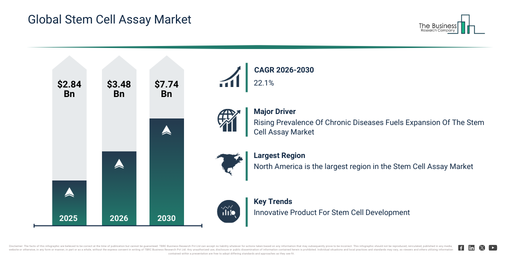
    The stem cell assay market has witnessed considerable expansion in recent years. It is anticipated to grow from $2.84 billion in 2025 to $3.48 billion in 2026, achieving a compound annual growth rate (CAGR) of 22.4%. This historical growth can be ascribed to an increase in stem cell research, the rise in academic funding, the demand for drug discovery, the adoption of laboratory automation, and advancements in regenerative medicine trials.

    The stem cell assay market is projected to experience substantial growth in the upcoming years. Its valuation is forecast to reach $7.74 billion by 2030, propelled by a compound annual growth rate (CAGR) of 22.1%. This expansion during the forecast period is largely attributable to advancements in cell-based therapy development, the increasing demand for assay standardization, broader pharmaceutical screening applications, the advent of AI-enabled assay analysis, and the proliferation of emerging biotech startups. Major trends anticipated in this period include the widespread adoption of high-throughput assay platforms, sophisticated functional stem cell analysis, deeper integration with omics technologies, automated cell viability testing methods, and the availability of standardized assay kits.

    Access Your Free Sample Report for In-Depth Market Insights:

    https://www.thebusinessresearchcompany.com/sample.aspx?id=7701&type=smp

    Which Drivers Are Affecting Market Participation In The Stem Cell Assay Market?

    The escalating occurrence of chronic diseases is projected to stimulate the expansion of the stem cell assay market moving forward. A chronic disease is characterized as an ailment or illness that commonly endures for three months or longer and has the potential to worsen progressively. Stem cells offer the prospect of treating numerous conditions, including chronic diseases, by assisting in the formation of novel antibodies and specialized cells that contribute to the recovery from chronic illnesses like cancer. For instance, in March 2024, data from The Government of the United Kingdom, a UK-based website, indicated that in the financial year ending in 2023, just over 1,862,500 people in England, accounting for 3% of the population, were diagnosed with coronary heart disease (CHD) by a GP. Hence, the increasing prevalence of chronic diseases is a key factor propelling the growth of the stem cell assay market.

    What Segment Classifications Make Up The Stem Cell Assay Market?

    The stem cell assay market covered in this report is segmented –

    1) By Assay Type: Cell Viability And Toxicity Assays, Cell Apoptosis Assays, Cell Function Assays, Cell Identification Assays, Isolation And Purification Assays, Cell Differentiation Assay, Other Types

    2) By Product: Instruments, Detection kit

    3) By Application: Regenerative Medicine And Therapy Development, Drug Discovery And Development, Clinical Research

    4) By End User: Government Research Institutes, Private Research Institutes, Industry Research

    Subsegments:

    1) By Cell Viability and Toxicity Assays: MTT Assay, Resazurin Assay, ATP Assay, LDH Release Assay

    2) By Cell Apoptosis Assays: Caspase Activity Assays, Annexin V Staining Assays, TUNEL Assay, Cell Death Detection Assays

    3) By Cell Function Assays: Proliferation Assays, Migration And Invasion Assays, Differentiation Assays

    4) By Cell Identification Assays: Flow Cytometry-Based Assays, Surface Marker Characterization, Immunocytochemistry Assays

    5) By Isolation and Purification Assays: Magnetic-Activated Cell Sorting (MACS), Fluorescence-Activated Cell Sorting (FACS), Density Gradient Centrifugation

    6) By Cell Differentiation Assay: Lineage-Specific Differentiation Assays, Gene Expression Analysis During Differentiation

    7) By Other Types: 3D Culture Assays, High-Content Screening Assays, Biomarker Discovery Assays

    Which Trends Are Influencing The Development Of The Stem Cell Assay Market?

    Key companies active in the stem cell assay market are concentrating on developing technological enhancements, such as next-generation tissue dissociation and sample preparation systems, to improve cell viability, processing efficiency, and reproducibility across various research applications. Advanced dissociation platforms allow for automated, gentle, and standardized handling of complex tissues, facilitating the creation of high-quality single-cell suspensions vital for subsequent stem cell research, regenerative medicine, and cell-based assays. For example, in June 2025, STEMCELL Technologies, a Canada-based biotechnology company specializing in tools for stem cell research, launched the STEMprep Tissue Dissociator System, an integrated mechanical and enzymatic dissociation platform engineered to simplify and speed up tissue processing workflows. The system provides programmable protocols, closed-system handling, and consistent cell yields, enabling researchers to cut down processing time, reduce variability, and boost assay reliability while furthering discoveries in stem cell biology and translational research.

    Which Major Industry Participants Are Leading The Stem Cell Assay Market Growth?

    Major companies operating in the stem cell assay market are Thermo Fisher Scientific Inc., Merck KGaA, Danaher Corporation, Becton Dickinson and Company, Bio-Rad Laboratories Inc., PerkinElmer Inc., Agilent Technologies Inc., Promega Corporation, Cell Biolabs Inc., Miltenyi Biotec GmbH, STEMCELL Technologies Inc., Bio-Techne Corporation, Charles River Laboratories International Inc., Hemogenix Inc., Lonza Group AG, Takara Bio Inc., Creative Bioarray, AAT Bioquest Inc., BPS Bioscience Inc., Enzo Life Sciences Inc., PromoCell GmbH, Biotium Inc., Geno Technology Inc., Abcam plc, ReachBio Research Labs. Inc., Sartorius AG, Eppendorf AG, Corning Incorporated, MEDIPOST Co. Ltd., Anterogen Co. Ltd., Corestemchemon Inc., Pharmicell Inc., NuVasive Inc., RTI Surgical Holdings Inc., AlloSource LifeSource Services Inc., JCR Pharmaceuticals Co. Ltd.

    Access The Complete Report For Deeper Market Insights:

    https://www.thebusinessresearchcompany.com/report/stem-cell-assay-global-market-report

    Which Region Is Expected To Experience The Fastest Growth In The Stem Cell Assay Market?

    North America was the largest region in the stem cell assay market share in 2025. Asia-Pacific is expected to be the fastest-growing region in the forecast period. The regions covered in the stem cell assay market report are Asia-Pacific, South East Asia, Western Europe, Eastern Europe, North America, South America, Middle East, Africa.

    Request Your Customized Stem Cell Assay Market Research Report for Competitive Advantage:

    https://www.thebusinessresearchcompany.com/customise?id=7701&type=smp

    Browse Through More Reports Similar to the Global Stem Cell Assay Market 2026, By The Business Research Company

    Stem Cells Therapy Market Report 2026

    https://www.thebusinessresearchcompany.com/report/stem-cells-therapy-global-market-report

    Cell Based Assays Market Report 2026

    https://www.thebusinessresearchcompany.com/report/cell-based-assays-global-market-report

    Human Embryonic Stem Cells Market Report 2026

    https://www.thebusinessresearchcompany.com/report/human-embryonic-stem-cells-global-market-report

    Get in touch with us:

    The Business Research Company: https://www.thebusinessresearchcompany.com/

    Americas +1 310-496-7795

    Asia +44 7882 955267 & +91 8897263534

    Europe +44 7882 955267

    Email us at info@tbrc.info

    Follow us on:

    LinkedIn: https://in.linkedin.com/company/the-business-research-company

    YouTube: https://www.youtube.com/channel/UC24_fI0rV8cR5DxlCpgmyFQ

    Global Market Model: https://www.thebusinessresearchcompany.com/global-market-model
  • Global Stem Cell Antibody Market Report 2026: Emerging Trends and Growth Scenarios

    Global Stem Cell Antibody Market Report 2026: Emerging Trends and Growth Scenarios

    Uncover key drivers, emerging technologies, and competitive movements shaping the stem cell antibody market from 2026–2035 with trusted insights from The Business Research Company

    What are the forecasted starting (2026) and ending (2030) market sizes for the Stem Cell Antibody Market?

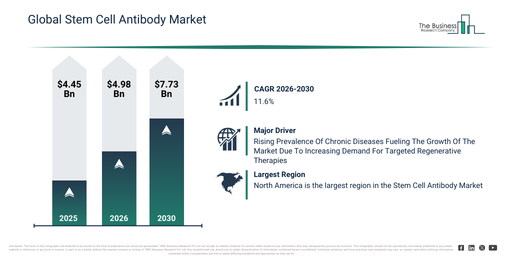
    The market for stem cell antibodies has experienced significant expansion in recent years. It is anticipated to grow from $4.45 billion in 2025 to $4.98 billion in 2026, reaching a compound annual growth rate (CAGR) of 11.9%. The historical growth can be attributed to factors such as the broadening of stem cell research endeavors, the wider availability of monoclonal antibody technologies, an increase in academic and clinical research funding, the heightened need for cell identification instruments, and advancements in antibody engineering.

    The stem cell antibody market is anticipated to undergo significant expansion in the coming years. It is projected to reach $7.73 billion by 2030, exhibiting a compound annual growth rate (CAGR) of 11.6%. The anticipated growth over this period is driven by factors such as the increasing adoption of advanced regenerative therapies, a growing demand for precision research tools, the expansion of biopharmaceutical research pipelines, rising investments in antibody innovation, and the increasing use of stem cell-based diagnostics. Notable trends during the forecast period include the expanding use of monoclonal antibodies in stem cell research, a rising demand for recombinant antibodies, their growing application in regenerative medicine development, the expansion of custom antibody production, and an enhanced focus on marker-specific targeting.

    Access Your Free Sample Report for In-Depth Market Insights:

    https://www.thebusinessresearchcompany.com/sample.aspx?id=30403&type=smp

    What Drivers Are Supporting Technological Adoption In The Stem Cell Antibody Market?

    The increasing incidence of chronic diseases is anticipated to drive the expansion of the stem cell antibody market. These are long-lasting health issues that progress slowly and often demand ongoing medical attention, with their growing occurrence partly attributed to sedentary lifestyles, which heighten the risk of conditions like heart disease and diabetes. Stem cell antibodies assist in managing chronic diseases by facilitating the accurate identification and isolation of stem cells, thereby proving valuable for research and therapeutic innovation. They enhance targeted treatments by helping oversee and adjust stem cell activity, boosting the efficacy of regenerative medicine and customized therapies. A relevant example from June 2024 indicates that the National Health Service reported 3,615,330 individuals registered with a general practitioner (GP) were diagnosed with pre-diabetes in 2023, representing an 18% rise from 3,065,825 cases recorded in 2022. Consequently, the growing prevalence of chronic diseases is a key factor propelling the stem cell antibody market’s growth. Stem Cell Antibody Market Driver: Rise In Demand For Personalized Medicine Fueling The Growth Of The Market Due To Advancements In Genomic Technologies And Targeted Therapies

    What Segment Types Are Examined In The Stem Cell Antibody Market?

    The stem cell antibody market covered in this report is segmented –

    1) By Type of Antibody: Monoclonal Antibodies, Polyclonal Antibodies, Recombinant Antibodies, Bispecific Antibodies

    2) By Product Formulation: Liquid Formulations, Lyophilized Formulations, Conjugated Antibodies, Unconjugated Antibodies

    3) By Application: Research, Clinical Diagnostics, Therapeutic Use, Protein Purification

    4) By End User: Academic Institutions, Pharmaceutical Companies, Biotechnology Firms, Hospitals and Diagnostic Laboratories

    Subsegments:

    1) By Monoclonal Antibodies: Humanized Monoclonal Antibodies, Chimeric Monoclonal Antibodies, Murine Monoclonal Antibodies, Fully Human Monoclonal Antibodies

    2) By Polyclonal Antibodies: Animal-Derived Polyclonal Antibodies, Recombinant Polyclonal Antibodies, Affinity-Purified Polyclonal Antibodies, Secondary Polyclonal Antibodies

    3) By Recombinant Antibodies: Single-Chain Variable Fragment Antibodies, Fragment Antigen-Binding Antibodies, Nanobodies, Chimeric Recombinant Antibodies

    4) By Bispecific Antibodies: Stem Cell Marker–Dual Targeting Bispecific Antibodies, Stem Cell Marker–Reporter Conjugatable Bispecific Antibodies, Stem Cell–Microenvironment Interaction Bispecific Antibodies, Stem Cell Isolation and Enrichment Bispecific Antibodies

    Who Are The Prominent Global Companies Shaping The Stem Cell Antibody Market Landscape?

    Major companies operating in the stem cell antibody market are Thermo Fisher Scientific Inc., Merck KGaA, Bio-Rad Laboratories Inc., Bio-Techne Corporation, STEMCELL Technologies Inc., Miltenyi Biotec GmbH, Cell Signaling Technology Inc., OriGene Technologies Inc., Enzo Life Sciences Inc., GeneTex Inc., Proteintech Group Inc., Rockland Immunochemicals Inc., Bioss Antibodies Inc., ReproCELL Inc., Jackson ImmunoResearch Laboratories Inc., Lucerna-Chem AG, LifeSpan BioSciences Inc., Creative Biogene Inc., MyBioSource Inc., Imgenex Inc., Amsbio LLC

    Access The Complete Report For Deeper Market Insights:

    https://www.thebusinessresearchcompany.com/report/global-stem-cell-antibody-market-report

    Which Geographic Areas Are Emerging As Strong Markets For The Stem Cell Antibody Market?

    North America was the largest region in the stem cell antibody market in 2025. Asia-Pacific is expected to be the fastest-growing region in the forecast period. The regions covered in the stem cell antibody market report are Asia-Pacific, South East Asia, Western Europe, Eastern Europe, North America, South America, Middle East, Africa.

    Request Your Customized Stem Cell Antibody Market Research Report for Competitive Advantage:

    https://www.thebusinessresearchcompany.com/customise?id=30403&type=smp

    Browse Through More Reports Similar to the Global Stem Cell Antibody Market 2026, By The Business Research Company

    Human Embryonic Stem Cells Market Report 2026

    https://www.thebusinessresearchcompany.com/report/human-embryonic-stem-cells-global-market-report

    Stem Cells Therapy Market Report 2026

    https://www.thebusinessresearchcompany.com/report/stem-cells-therapy-global-market-report

    Next Generation Antibody Therapeutics Market Report 2026

    https://www.thebusinessresearchcompany.com/report/next-generation-antibody-therapeutics-global-market-report

    Get in touch with us:

    The Business Research Company: https://www.thebusinessresearchcompany.com/

    Americas +1 310-496-7795

    Asia +44 7882 955267 & +91 8897263534

    Europe +44 7882 955267

    Email us at info@tbrc.info

    Follow us on:

    LinkedIn: https://in.linkedin.com/company/the-business-research-company

    YouTube: https://www.youtube.com/channel/UC24_fI0rV8cR5DxlCpgmyFQ

    Global Market Model: https://www.thebusinessresearchcompany.com/global-market-model
  • Stem Cell Market Forecast 2026: Where the Industry Is Headed

    Stem Cell Market Forecast 2026: Where the Industry Is Headed

    Uncover key drivers, emerging technologies, and competitive movements shaping the stem cell market from 2026–2035 with trusted insights from The Business Research Company

    What upper market value could the Stem Cell Market reach by 2030 starting from 2026 levels?

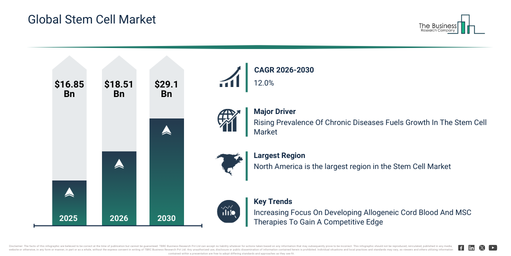
    The stem cell market has demonstrated strong growth over recent years. Its size is expected to increase from $16.85 billion in 2025 to $18.51 billion in 2026, at a compound annual growth rate (CAGR) of 9.9%. This past growth is attributable to several factors, including advancements in cell biology research, an expansion of clinical trials in regenerative medicine, the growing application of stem cells in drug discovery, the development of biobanking infrastructure, and increased investment in life sciences research.

    The stem cell market is anticipated to experience rapid expansion in the coming years, projected to reach $29.1 billion by 2030, with a compound annual growth rate (CAGR) of 12.0%. This growth throughout the forecast period is attributable to several factors, including the increasing approval of stem cell-based therapies, a rising demand for personalized medicine, the expansion of large-scale stem cell manufacturing, the growing integration of automation in cell processing, and increasing global healthcare investment. Major trends expected during this forecast period involve the increasing advancement of regenerative medicine therapies, the rising adoption of induced pluripotent stem cells, the growing integration of AI in cell research and development, the expansion of stem cell banking services, and an enhanced focus on standardized manufacturing processes.

    Access Your Free Sample Report for In-Depth Market Insights:

    https://www.thebusinessresearchcompany.com/sample.aspx?id=2584&type=smp

    Which Drivers Are Influencing Long-Term Growth In The Stem Cell Market?

    The worldwide increase in the occurrence of chronic diseases is a significant driver for the stem cell market. Stem-cell therapy is defined as the application of stem cells to treat or avert a disease or condition. Bone marrow transplant stands as the most widespread stem-cell therapy, though some treatments originating from umbilical cord blood are also in use. Presently, a commonly employed stem cell treatment involves the transplantation of blood stem cells to address blood and immune system diseases and conditions, or to facilitate the restoration of the blood system after treatments for specific cancers. As an illustration, in July 2024, the Australian Institute of Health and Welfare (AIHW), an Australia-based government health statistics agency, noted that chronic conditions were responsible for 78% of the fatal burden, marking an increase from previous years. Therefore, the rising global prevalence of chronic diseases is boosting the growth of the stem cell market.

    Which Segments Are Driving Activity In The Stem Cell Market?

    The stem cell market covered in this report is segmented –

    1) By Source: Autologous, Allogeneic

    2) By Product Type: Adult Stem Cell, Human Embryonic Stem Cell, Induced Pluripotent Stem Cell, Other Products

    3) By Application: Regenerative Medicine, Drug Discovery And Development

    Subsegments:

    1) By Autologous: Bone Marrow-Derived Stem Cells, Adipose Tissue-Derived Stem Cells, Peripheral Blood Stem Cells

    2) By Allogeneic: Bone Marrow-Derived Stem Cells, Umbilical Cord Blood Stem Cells, Peripheral Blood Stem Cells From Donors

    Which Trends Are Guiding The Evolution Of The Stem Cell Market?

    Leading firms within the stem cell market are concentrating their efforts on creating sophisticated treatments, including allogeneic cord blood and mesenchymal stem cell (MSC) therapies, with the goal of achieving a competitive edge. These allogeneic cord blood treatments utilize hematopoietic stem cells sourced from donor umbilical cord blood to rebuild or restore the blood and immune systems of individuals suffering from hematologic or immunologic conditions. An example of this is StemCyte Inc., a US-based biotech firm, which introduced REGENECYTE in November 2024; this product is an allogeneic cord blood stem cell therapy designed for transplantation in patients afflicted with blood and immune system ailments. REGENECYTE provides progenitor cells originating from donors, which are preserved and immediately available, thus allowing for immediate treatment and shortening the time typically spent on donor matching and cell procurement. This development increases access for patients without suitable donors and facilitates the expansion of treatment capacity, although it could present difficulties in managing the supply chain and ensuring consistent long-term engraftment.

    Which Key Players Are Driving Competition In The Stem Cell Market?

    Major companies operating in the stem cell market are Danaher Corporation, Cryo-Cell International Inc., Daiichi Sankyo Company Limited, Lonza Group Ltd, PerkinElmer Inc., CellGenix GmbH, China Cord Blood Corporation, Organogenesis Holdings Inc., LifeCell International, Cord Blood America Inc., StemCyte Inc., Cryoviva India, Cordlife Group Limited, Thermo Fisher Scientific Inc., CordVida, Cryo Stemcell Inc., Pluristem Therapeutics Inc., Mesoblast Limited, Americord Registry LLC, Smart Cells International, Athersys Inc., ReeLabs Pvt. Ltd., Cytori Therapeutics Inc., Esperite N.V., Stemade Biotech, ViaCord, Aldagen Inc, Isto Biologics, Brainstorm Cell Therapeutics Inc.

    Access The Complete Report For Deeper Market Insights:

    https://www.thebusinessresearchcompany.com/report/stem-cell-global-market-report

    Which Region Is Projected To Lead The Stem Cell Market During The Forecast Period?

    North America was the largest region in the stem cell market in 2025. Western Europe was the second largest region in the global stem cell market share. The regions covered in the stem cell market report are Asia-Pacific, South East Asia, Western Europe, Eastern Europe, North America, South America, Middle East, Africa.

    Request Your Customized Stem Cell Market Research Report for Competitive Advantage:

    https://www.thebusinessresearchcompany.com/customise?id=2584&type=smp

    Browse Through More Reports Similar to the Global Stem Cell Market 2026, By The Business Research Company

    Induced Pluripotent Stem Cell Market Report 2026

    https://www.thebusinessresearchcompany.com/report/induced-pluripotent-stem-cell-global-market-report

    Stem Cells Therapy Market Report 2026

    https://www.thebusinessresearchcompany.com/report/stem-cells-therapy-global-market-report

    Stem Cell Assay Market Report 2026

    https://www.thebusinessresearchcompany.com/report/stem-cell-assay-global-market-report

    Get in touch with us:

    The Business Research Company: https://www.thebusinessresearchcompany.com/

    Americas +1 310-496-7795

    Asia +44 7882 955267 & +91 8897263534

    Europe +44 7882 955267

    Email us at info@tbrc.info

    Follow us on:

    LinkedIn: https://in.linkedin.com/company/the-business-research-company

    YouTube: https://www.youtube.com/channel/UC24_fI0rV8cR5DxlCpgmyFQ

    Global Market Model: https://www.thebusinessresearchcompany.com/global-market-model
  • Status Epilepticus Industry Growth Insights: Revenue Forecast to 2030

    Status Epilepticus Industry Growth Insights: Revenue Forecast to 2030

    Uncover key drivers, emerging technologies, and competitive movements shaping the status epilepticus market from 2026–2035 with trusted insights from The Business Research Company

    What level of CAGR-driven expansion is anticipated in the Status Epilepticus Market between 2026 and 2030?

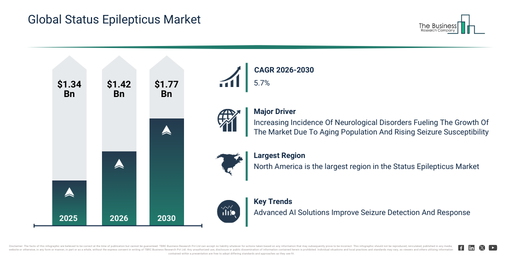
    The status epilepticus market size has experienced robust expansion in recent years. Projections indicate it will grow from $1.34 billion in 2025 to $1.42 billion in 2026, demonstrating a compound annual growth rate (CAGR) of 6.0%. The growth observed in the historic period is attributable to the increasing prevalence of epilepsy disorders, the expansion of emergency neurological care services, the availability of first- and second-generation antiepileptic drugs, rising hospital admission rates for seizures, and enhanced clinician awareness of status epilepticus.

    The status epilepticus market size is anticipated to undergo significant expansion in the coming years. It is projected to achieve a value of $1.77 billion by 2030, exhibiting a compound annual growth rate (CAGR) of 5.7%. This projected growth can be attributed to the escalating development of new anticonvulsant drugs, increased investments in neuromodulation technologies, the wider availability of digital seizure monitoring tools, an intensifying focus on tailored epilepsy treatment, and a greater emphasis on swift-response treatment pathways. Prominent trends observed during the forecast period involve a heightened focus on rapid emergency seizure management, the increasing adoption of advanced antiepileptic therapies, the expanding deployment of hospital-based neuromodulation devices, the broader implementation of early diagnosis and monitoring tools, and an enhanced emphasis on optimizing critical care protocols.

    Access Your Free Sample Report for In-Depth Market Insights:

    https://www.thebusinessresearchcompany.com/sample.aspx?id=25911&type=smp

    What Drivers Are Affecting Demand-Supply Dynamics In The Status Epilepticus Market?

    The expansion of the status epilepticus market is anticipated to be fueled by the rising occurrence of neurological disorders. These conditions are medical ailments impacting the brain, spinal cord, and nerves, leading to diverse symptoms such as cognitive, motor, and sensory impairments. The heightened prevalence of neurological disorders is connected to the aging worldwide population, given that aging progressively impairs neuronal function, diminishes brain plasticity, and heightens oxidative stress, thereby fostering the development and progression of these conditions. Neurological conditions contribute to status epilepticus by disrupting typical brain activity, rendering individuals more prone to prolonged seizures. They escalate the risk of seizure recurrence by influencing neuronal stability, underscoring the necessity for swift diagnosis and effective management approaches. For instance, in July 2024, according to the National Health Service, a UK-based government agency, there were 487,432 patients diagnosed with dementia (a progressive brain disorder affecting memory, thinking, and daily activities) by June 30, 2024, an increase of 3,155 cases compared to May 31, 2024. Consequently, the increasing incidence of neurological disorders is propelling the growth of the status epilepticus market.

    How Is The Status Epilepticus Market Organized Into Various Segments?

    The status epilepticus market covered in this report is segmented –

    1) By Type: Convulsive Status Epileptics, Non-Convulsive Status Epileptics

    2) By Medication: First Generation, Second Generation, Third Generation

    3) By Drug: Ganaxolone, Diazepam, Phenobarbital, Phenytoin And Fosphenytoin, Valproate, Other Drugs

    4) By Distribution Channel: Hospital Pharmacies, Online Pharmacies, Retail Pharmacies

    Subsegments:

    1) By Convulsive Status Epilepticus: Generalized Tonic–Clonic Status Epilepticus (GTCS SE), Focal Onset With Bilateral Tonic–Clonic Generalization, Myoclonic Status Epilepticus

    2) By Non-Convulsive Status Epilepticus (NCSE): Absence Status Epilepticus, Complex Partial Status Epilepticus, Subtle Status Epilepticus

    What Trends Are Projected To Support The Growth Of The Status Epilepticus Market?

    Major companies operating within the status epilepticus market are concentrating on developing technologically advanced solutions, such as artificial intelligence (AI)-powered diagnostic tools, to enhance seizure detection, accelerate clinical decision-making, and improve the efficiency of neurological care. These AI-powered diagnostic solutions are integrated software platforms that utilize artificial intelligence to analyze real-time brain activity data, enabling the rapid identification of seizure patterns and facilitating early intervention in critical care settings. For instance, in October 2023, Ceribell Inc., a US-based medical technology company, launched ClarityPro AI, an artificial intelligence (AI)-driven diagnostic software designed for the detection and monitoring of status epilepticus. The platform integrates seamlessly with Ceribell’s EEG systems to provide continuous, real-time seizure analysis at the bedside, and it also assists healthcare providers in delivering timely treatment and improving patient outcomes in emergency neurological care.

    Who Are The Top-Performing Companies In The Status Epilepticus Market In Recent Years?

    Major companies operating in the status epilepticus market are Pfizer Inc., Novartis AG, Takeda Pharmaceutical Company Limited, Bausch Health Companies Inc., Eisai Co. Ltd., Dr. Reddy’s Laboratories, Hikma Pharmaceuticals plc, Mylan N.V., Lupin Pharmaceuticals Limited, Torrent Pharmaceuticals Ltd., Neuraxpharm, Ligand Pharmaceuticals Incorporated, Rafa Laboratories Ltd., Aquestive Therapeutics, Nobelpharma Co. Ltd., Neurelis Inc., SAGE Therapeutics, Immedica Pharma AB, Sedor Pharmaceuticals, Crossject SA.

    Access The Complete Report For Deeper Market Insights:

    https://www.thebusinessresearchcompany.com/report/status-epilepticus-global-market-report

    Which Region Currently Holds The Largest Share Of The Status Epilepticus Market?

    North America was the largest region in the status epilepticus market in 2025. The regions covered in the status epilepticus market report are Asia-Pacific, South East Asia, Western Europe, Eastern Europe, North America, South America, Middle East, Africa.

    Request Your Customized Status Epilepticus Market Research Report for Competitive Advantage:

    https://www.thebusinessresearchcompany.com/customise?id=25911&type=smp

    Browse Through More Reports Similar to the Global Status Epilepticus Market 2026, By The Business Research Company

    Penile Prosthesis Market Report 2026

    https://www.thebusinessresearchcompany.com/report/penile-prosthesis-global-market-report

    Antiepileptic Drugs Market Report 2026

    https://www.thebusinessresearchcompany.com/report/antiepileptic-drugs-global-market-report

    Epilepsy Drugs Market Report 2026

    https://www.thebusinessresearchcompany.com/report/epilepsy-drugs-global-market-report

    Get in touch with us:

    The Business Research Company: https://www.thebusinessresearchcompany.com/

    Americas +1 310-496-7795

    Asia +44 7882 955267 & +91 8897263534

    Europe +44 7882 955267

    Email us at info@tbrc.info

    Follow us on:

    LinkedIn: https://in.linkedin.com/company/the-business-research-company

    YouTube: https://www.youtube.com/channel/UC24_fI0rV8cR5DxlCpgmyFQ

    Global Market Model: https://www.thebusinessresearchcompany.com/global-market-model
  • Global Starter Cultures Market Performance Report: Global Trends 2026–2030

    Global Starter Cultures Market Performance Report: Global Trends 2026–2030

    Uncover key drivers, emerging technologies, and competitive movements shaping the starter cultures market from 2026–2035 with trusted insights from The Business Research Company

    What long-term size projections exist for the Starter Cultures Market covering 2026–2035?

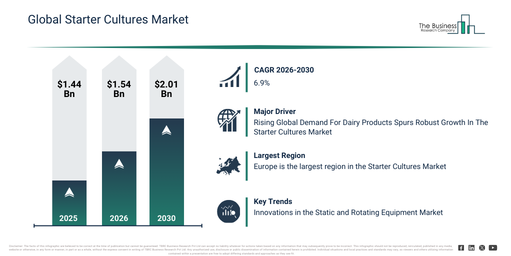
    The starter cultures market has seen strong expansion in recent years. It is forecast to increase from $1.44 billion in 2025 to $1.54 billion in 2026, exhibiting a compound annual growth rate (CAGR) of 6.6%. The historical growth of this market is attributable to the rise in dairy consumption, the increased adoption of industrial fermentation, the demand for processed food, developments in microbial research, and the need for food standardization.

    The starter cultures market size is projected to experience robust expansion in the coming years, with its valuation reaching $2.01 billion by 2030, at a compound annual growth rate (CAGR) of 6.9%. This anticipated growth during the forecast period is primarily driven by factors such as plant-based food fermentation, increasing demand for functional foods, advancements in precision fermentation, evolving food processing in emerging markets, and sustainable culture production. Significant trends expected during this period include the development of customized microbial blends, non-dairy fermentation cultures, shelf-stable starter solutions, flavor-enhancing cultures, and the greater integration of probiotics.

    Access Your Free Sample Report for In-Depth Market Insights:

    https://www.thebusinessresearchcompany.com/sample.aspx?id=8200&type=smp

    Which Drivers Are Impacting The Competitive Landscape Of The Starter Cultures Market?

    The growing demand for dairy products is poised to boost the expansion of the starter cultures market. Dairy products, encompassing any food items made from milk, are increasingly favored by consumers due to a rising preference for protein-rich foods and greater awareness of their nutritional benefits. Given that starter cultures are vital for crafting fermented dairy foods like cheese and yogurt, the heightened demand for dairy products directly influences their market growth. As an illustration, the United States Of Department Of Agriculture reported in April 2025 that total cheese production, excluding cottage cheeses, reached 14.2 billion pounds, representing a 0.7 percent increase from 2023 production. Consequently, the sustained increase in dairy product demand will act as a significant driver for the starter cultures market.

    What Segments Are Identified Within The Structure Of The Starter Cultures Market?

    The starter cultures market covered in this report is segmented –

    1) By Microorganism: Bacteria, Yeast, Molds

    2) By Composition: Multi-Strain Mix, Single Strain, Multi-Strain

    3) By Form: Freeze-Dried, Frozen

    4) By Application: Dairy And Dairy Products, Meat And Seafood, Alcoholic Beverages, Other Applications

    Subsegments:

    1) By Bacteria: Lactic Acid Bacteria (LAB), Non-Lactic Acid Bacteria

    2) By Yeast: Baker’s Yeast, Brewer’s Yeast, Other Yeasts

    3) By Molds: Filamentous Fungi, Other Molds

    Which Trends Are Influencing The Performance And Direction Of The Starter Cultures Market?

    Leading companies active in the static and rotating equipment market are introducing innovative products, such as smart rotating equipment monitoring, to address several crucial demands. This smart rotating equipment monitoring refers to a system that continuously observes the performance of rotating machinery, including pumps and motors, by tracking key parameters. For example, in June 2024, Henkel, a Germany-based chemicals company, introduced Henkel’s Loctite Pulse Smart Rotating Equipment Monitoring. Henkel’s Loctite Pulse Smart Rotating Equipment Monitoring provides a plug-and-play sensor system that monitors six critical data parameters for improved equipment reliability. Additionally, the Smart Pipes and Tanks Leak Detection employs carbon nanotube sensors for early hydrocarbon leak detection, thereby enhancing safety and sustainability.

    Which Leading Companies Dominate The Starter Cultures Market Share?

    Major companies operating in the starter cultures market are Chr. Hansen Holding A/S, Lallemand Inc., Koninklijke DSM N.V., Sacco System S.r.l., LB Bulgaricum AD, International Flavors & Fragrances Inc., Biochem Srl, Wyeast Laboratories Inc., Mad Millie Pty Ltd, Futura Ingredients AB, Angel Yeast Co. Ltd., Benebios Inc., Benny Impex, Mediterranea Biotecnologie Srl, Bioprox Healthcare SAS, Codex-ing Biotech Ingredients Inc., CSK Food Enrichment B.V., Danisco A/S, Lesaffre et Compagnie, DSM Food Specialties B.V., Abiasa Corporativo S.A. de C.V.

    Access The Complete Report For Deeper Market Insights:

    https://www.thebusinessresearchcompany.com/report/starter-cultures-global-market-report

    How Does The Starter Cultures Market Perform Across Major Global Regions?

    Europe was the largest region in the starter cultures market in 2025. Asia-Pacific is expected to be the fastest-growing region in the forecast period. The regions covered in the starter cultures market report are Asia-Pacific, South East Asia, Western Europe, Eastern Europe, North America, South America, Middle East, Africa.

    Request Your Customized Starter Cultures Market Research Report for Competitive Advantage:

    https://www.thebusinessresearchcompany.com/customise?id=8200&type=smp

    Browse Through More Reports Similar to the Global Starter Cultures Market 2026, By The Business Research Company

    Cultured Meat Market Report 2026

    https://www.thebusinessresearchcompany.com/report/cultured-meat-global-market-report

    Food Cultures Market Report 2026

    https://www.thebusinessresearchcompany.com/report/food-cultures-global-market-report

    Starter Feed Market Report 2026

    https://www.thebusinessresearchcompany.com/report/starter-feed-global-market-report

    Get in touch with us:

    The Business Research Company: https://www.thebusinessresearchcompany.com/

    Americas +1 310-496-7795

    Asia +44 7882 955267 & +91 8897263534

    Europe +44 7882 955267

    Email us at info@tbrc.info

    Follow us on:

    LinkedIn: https://in.linkedin.com/company/the-business-research-company

    YouTube: https://www.youtube.com/channel/UC24_fI0rV8cR5DxlCpgmyFQ

    Global Market Model: https://www.thebusinessresearchcompany.com/global-market-model