Category: Medical Equipment

  • Global Physiotherapy Equipment Market Performance Report: Global Trends 2026–2030

    Global Physiotherapy Equipment Market Performance Report: Global Trends 2026–2030

    Uncover key drivers, emerging technologies, and competitive movements shaping the worker heat stress monitoring wearable market from 2026–2035 with trusted insights from The Business Research Company

    What level of CAGR-driven expansion is anticipated in the Physiotherapy Equipment Market between 2026 and 2030?

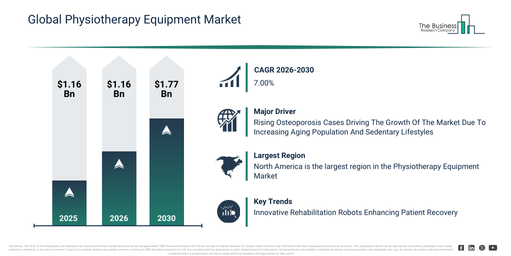
    The physiotherapy equipment market has seen considerable growth recently. Its value is projected to increase from $20.91 billion in 2025 to $22.38 billion in 2026, achieving a compound annual growth rate (CAGR) of 7.0%. This historical expansion can be attributed to factors such as an increase in musculoskeletal disorders, a rise in physical injuries, the expansion of rehabilitation centers, the necessity for post-surgical recovery, and an aging demographic.

    The physiotherapy equipment market is projected to experience substantial expansion over the coming years. Its valuation is anticipated to reach $29.29 billion by 2030, demonstrating a compound annual growth rate (CAGR) of 7.0%. This anticipated growth during the forecast period is primarily driven by factors such as the increasing adoption of remote physiotherapy, the rise of wearable rehabilitation devices, the widespread prevalence of chronic pain, the higher incidence of sports injuries, and the emergence of digital therapy platforms. Key trends expected within this period encompass the expansion of home-based rehabilitation solutions, a greater uptake of electrotherapy devices, a rising demand for non-invasive pain management techniques, the broadening scope of sports rehabilitation, and the increasing integration of smart therapy equipment.

    Access Your Free Sample Report for In-Depth Market Insights:

    https://www.thebusinessresearchcompany.com/sample.aspx?id=22097&type=smp

    What Drivers Are Affecting Demand-Supply Dynamics In The Physiotherapy Equipment Market?

    The escalating occurrence of osteoporosis is anticipated to drive the expansion of the physiotherapy equipment market in the future. This condition involves bones becoming fragile and susceptible to fractures due to reduced density and strength. The rising prevalence of osteoporosis stems from factors such as an aging demographic, inactive routines, and inadequate nutrition. With longer lifespans, a greater number of individuals attain advanced ages, during which natural bone density loss occurs, thereby elevating their vulnerability to osteoporosis. Physiotherapy equipment aids in managing osteoporosis through therapies that reinforce bones, enhance equilibrium, and boost muscle performance, thus mitigating the likelihood of tumbles and breaks. To illustrate, in July 2025, the Institute for Health Transformation, an Australia-based health research institute, reported that in 2023, Australia observed a fracture every 2.7 minutes, with predictions indicating a rapid increase to a fracture every 30 seconds by 2033. Consequently, the escalating incidence of osteoporosis serves as a key driver for the growth of the physiotherapy equipment market.

    How Is The Physiotherapy Equipment Market Organized Into Various Segments?

    The physiotherapy equipment market covered in this report is segmented –

    1) By Type: Cryotherapy, Hydrotherapy, Continuous Passive Motion (CPM), Ultrasound, Electric Stimulation, Heat Therapy, Therapeutic Exercise, Other Types

    2) By Application: Neurology, Musculoskeletal, Pediatric, Cardiovascular And Pulmonary, Other Applications

    3) By End-User: Hospitals And Clinics, Rehabilitation Centers, Other End-Users

    Subsegments:

    1) By Cryotherapy: Ice Packs, Cold Compression Therapy Units, Cryo Chambers, Vapocoolant Sprays

    2) By Hydrotherapy: Whirlpool Therapy Equipment, Underwater Treadmills, Aquatic Therapy Pools, Hydrotherapy Tanks

    3) By Continuous Passive Motion (CPM): Knee CPM Machines, Shoulder CPM Machines, Elbow CPM Machines, Ankle CPM Machines

    4) By Ultrasound: Therapeutic Ultrasound Devices, High-Intensity Focused Ultrasound (HIFU), Low-Intensity Pulsed Ultrasound (LIPUS)

    5) By Electric Stimulation: Transcutaneous Electrical Nerve Stimulation (TENS) Units, Neuromuscular Electrical Stimulation (NMES) Devices, Functional Electrical Stimulation (FES) Devices, Interferential Current Therapy (IFC) Units

    6) By Heat Therapy: Infrared Lamps, Heating Pads, Paraffin Wax Baths, Hot Packs

    7) By Therapeutic Exercise: Resistance Bands And Tubes, Balance And Stability Equipment, Exercise Balls, Strength Training Machines

    8) By Other Types: Laser Therapy Devices, Traction Therapy Equipment, Shockwave Therapy Machines, Magnetotherapy Devices

    Which Trends Are Influencing The Performance And Direction Of The Physiotherapy Equipment Market?

    Leading companies in the physiotherapy equipment market are concentrating on creating advanced products, including rehabilitation robots, to enhance patient recovery and improve treatment outcomes. These pioneering rehabilitation robots are sophisticated robotic systems that incorporate state-of-the-art technologies such as AI, brain-computer interfaces (BCI), and high-precision sensors, aiming to accelerate patient healing, restore motor functions, and elevate rehabilitation outcomes. For instance, in November 2023, Syrebo, a China-based technology company, launched its Hand Rehabilitation Robot (BCI) SY-BR09 and Upper Limb Rehabilitation Robot SY-UEA2. The Hand Rehabilitation Robot (BCI) SY-BR09 integrates brain-computer interface (BCI) technology, stimulating the brain for ‘top-down’ neural reshaping and enhancing active movement awareness, which significantly improves rehabilitation effectiveness. Meanwhile, the Upper Limb Rehabilitation Robot SY-UEA2 features a comprehensive mobile chassis and high-precision optical positioning technology, providing targeted upper limb training to aid functional recovery.

    Who Are The Core Companies Influencing Trends In The Physiotherapy Equipment Market?

    Major companies operating in the physiotherapy equipment market are Medtronic plc, Zimmer Biomet Holdings Inc., Oceanic Healthcare, Dynatronics Corporation, Chirag Electronics Pvt. Ltd., HMS Medical Systems, Bio-Med International Pvt Ltd., Naugra Medical, Hi-Tech Surgical Company, Bit & Byte Technosys Private Limited, Physio Medicare, Cerabest Healthcare, Bharath Medical Systems, Divine Physiotherapy Equipments, JaincoLab, Syrebo, Sonka Medical, Maktrex International, Life Care Systems, Tapsi Electro Medical Systems & Services

    Access The Complete Report For Deeper Market Insights:

    https://www.thebusinessresearchcompany.com/report/physiotherapy-equipment-global-market-report

    Which Region Is Expected To Experience The Fastest Growth In The Physiotherapy Equipment Market?

    North America was the largest region in the physiotherapy equipment market in 2025. The regions covered in the physiotherapy equipment market report are Asia-Pacific, South East Asia, Western Europe, Eastern Europe, North America, South America, Middle East, Africa.

    Request Your Customized Physiotherapy Equipment Market Research Report for Competitive Advantage:

    https://www.thebusinessresearchcompany.com/customise?id=22097&type=smp

    Browse Through More Reports Similar to the Global Physiotherapy Equipment Market 2026, By The Business Research Company

    Physiotherapy Services Global Market Report 2026

    https://www.thebusinessresearchcompany.com/report/physiotherapy-services-global-market-report

    Physiotherapy And Rehabilitation Products And Services Global Market Report 2026

    https://www.thebusinessresearchcompany.com/report/physiotherapy-and-rehabilitation-products-and-services-global-market-report

    Fitness Equipment Global Market Report 2026

    https://www.thebusinessresearchcompany.com/report/fitness-equipment-global-market-report

    Get in touch with us:

    The Business Research Company: https://www.thebusinessresearchcompany.com/

    Americas +1 310-496-7795

    Asia +44 7882 955267 & +91 8897263534

    Europe +44 7882 955267

    Email us at info@tbrc.info

    Follow us on:

    LinkedIn: https://in.linkedin.com/company/the-business-research-company
  • Physiotherapy Devices Market Future Outlook 2026: Key Drivers and Growth Potential

    Physiotherapy Devices Market Future Outlook 2026: Key Drivers and Growth Potential

    Uncover key drivers, emerging technologies, and competitive movements shaping the workstation graphics processing unit (gpu) market from 2026–2035 with trusted insights from The Business Research Company

    What long-term size projections exist for the Physiotherapy Devices Market covering 2026–2035?

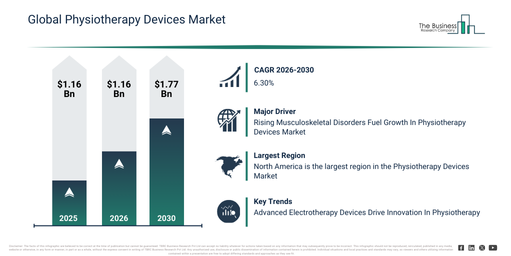
    The physiotherapy devices market size has demonstrated robust growth in recent years. It is anticipated to expand from $23.15 billion in 2025 to $24.67 billion in 2026, exhibiting a compound annual growth rate (CAGR) of 6.6%. The expansion observed historically is linked to factors such as the rising incidence of musculoskeletal disorders, growth in geriatric population, expansion of rehabilitation centers, increased road accident injuries, and the adoption of non-invasive therapies.

    The physiotherapy devices market size is anticipated to experience robust expansion over the coming years. This market is projected to reach $31.49 billion in 2030, demonstrating a compound annual growth rate (CAGR) of 6.3%. The growth during the forecast period can be primarily attributed to the rise in home rehabilitation, an increase in sports participation injuries, growing post-surgical recovery requirements, the expansion of physiotherapy clinics, and the demand for portable devices. Major trends expected in this period involve the increasing adoption of home-based physiotherapy equipment, a heightened demand for pain management devices, the broadening scope of sports injury rehabilitation, the rising utilization of wearable therapy devices, and the integration of multimodal therapy solutions.

    Access Your Free Sample Report for In-Depth Market Insights:

    https://www.thebusinessresearchcompany.com/sample.aspx?id=20590&type=smp

    Which Drivers Are Impacting The Competitive Landscape Of The Physiotherapy Devices Market?

    The increasing occurrence of musculoskeletal disorders is anticipated to fuel the expansion of the physiotherapy devices market in the future. Musculoskeletal disorders, or MSDs, encompass injuries and conditions impacting muscles, bones, joints, tendons, ligaments, and adjacent tissues, resulting in discomfort, rigidity, and restricted motion. The prevalence of musculoskeletal disorders is increasing, largely attributable to the aging population, given that older individuals naturally experience deterioration of bones, joints, and muscles, making them more vulnerable to such ailments. Physiotherapy devices play a crucial role in managing musculoskeletal disorders by assisting with pain alleviation, enhancing movement, and fostering recovery via focused rehabilitation. As an illustration, in January 2024, data from the Office for Health Improvement & Disparities, a UK-based government body, indicated that in 2023, 18.4% of people aged 16 and above reported a long-term musculoskeletal (MSK) condition, which represented a rise from the 17.6% prevalence noted in 2022. Consequently, the growing frequency of musculoskeletal disorders is a significant impetus for the physiotherapy devices market.

    What Segments Are Identified Within The Structure Of The Physiotherapy Devices Market?

    The physiotherapy devices market covered in this report is segmented –

    1) By Type: Equipment, Kit, Accessories

    2) By Application: Musculoskeletal, Neurology, Cardiovascular, Other Applications

    3) By End User: Hospitals, Physiotherapy Clinics, Rehabilitation Centers, Other End Users

    Subsegments:

    1) By Equipment: Electrical Stimulation Devices, Ultrasound Therapy Machines, Traction Equipment, Laser Therapy Devices, Cryotherapy Equipment, Heat Therapy Devices, Electrotherapy Units, Exercise Equipment

    2) By Kit: Physiotherapy Treatment Kits, Mobility Assistance Kits, Pain Relief Kits, Post-Surgery Recovery Kits, Home Physiotherapy Kits

    3) By Accessories: Massage Rollers, Therapy Balls, Resistance Bands And Tubes, Knee And Back Supports, Foot And Ankle Supports, Electrode Pads For Electrotherapy, Therapy Straps And Bands, Posture Correction Devices

    What Long-Term Trends Are Expected To Shape The Future Of The Physiotherapy Devices Market?

    Major companies operating in the physiotherapy devices market are developing home-use solutions, such as electrotherapy devices, to enhance treatment outcomes and improve patient recovery times. An electrotherapy device is a medical apparatus that applies electrical currents to the body for therapeutic purposes, such as pain relief, muscle stimulation, and tissue healing. For instance, in March 2023, Zynex Inc., a US-based medical device company, launched NexWave, an advanced electrotherapy device designed for pain management, offering 50 times stronger relief than standard transcutaneous electrical nerve stimulation (TENS) units without side effects. It works by sending electrical signals that block pain at the nervous system level, making it a safer alternative to pain medication. Ideal for patients recovering from surgeries or experiencing chronic pain, Nexwave enhances blood circulation, promotes natural movement, and speeds up rehabilitation. It is designed for home use, and it delivers higher frequencies and a stronger electrical output than non-prescription devices, making it highly recommended by both patients and doctors.

    Which Major Industry Participants Are Leading The Physiotherapy Devices Market Growth?

    Major companies operating in the physiotherapy devices market are 3M Company, DJO LLC, BTL Industries Inc., Performance Health Holding Inc., Zynex Medical Inc., Morris Group International Inc., Dynatronics Corporation, Storz Medical AG, Chattanooga Group, Zimmer MedizinSysteme GmbH, Mectronic Medicale S.r.l., Mettler Electronics Corp., EMS Physio Ltd., International Electro Medical Co., Medisport S.r.l., Enovis Corporation, Enraf Nonius B.V., ITO Co Ltd, Whitehall Manufacturing Inc., Richmar, HMS Medical Systems Pvt Ltd, Life Care Systems Pvt Ltd, Meden-Inmed, Gymna Uniphy, CoolSystems Inc.

    Access The Complete Report For Deeper Market Insights:

    https://www.thebusinessresearchcompany.com/report/physiotherapy-devices-global-market-report

    Which Geographic Areas Are Emerging As Strong Markets For The Physiotherapy Devices Market?

    North America was the largest region in the physiotherapy devices market in 2025. Asia-Pacific is expected to be the fastest-growing region in the forecast period. The regions covered in the physiotherapy devices market report are Asia-Pacific, South East Asia, Western Europe, Eastern Europe, North America, South America, Middle East, Africa.

    Request Your Customized Physiotherapy Devices Market Research Report for Competitive Advantage:

    https://www.thebusinessresearchcompany.com/customise?id=20590&type=smp

    Browse Through More Reports Similar to the Global Physiotherapy Devices Market 2026, By The Business Research Company

    Medical Devices Market 2026

    https://www.thebusinessresearchcompany.com/report/medical-devices-market

    Portable Ultrasound Devices Market 2026

    https://www.thebusinessresearchcompany.com/report/portable-ultrasound-devices-market

    Portable X Ray Devices Market 2026

    https://www.thebusinessresearchcompany.com/report/portable-x-ray-devices-market

    Get in touch with us:

    The Business Research Company: https://www.thebusinessresearchcompany.com/

    Americas +1 310-496-7795

    Asia +44 7882 955267 & +91 8897263534

    Europe +44 7882 955267

    Email us at info@tbrc.info

    Follow us on:

    LinkedIn: https://in.linkedin.com/company/the-business-research-company
  • Photochromic Lenses Market Trends and Insights: Global Forecast to 2030

    Photochromic Lenses Market Trends and Insights: Global Forecast to 2030

    Uncover key drivers, emerging technologies, and competitive movements shaping the worker heat stress monitoring wearable market from 2026–2035 with trusted insights from The Business Research Company

    What total market size is anticipated for the Photochromic Lenses Market in 2030?

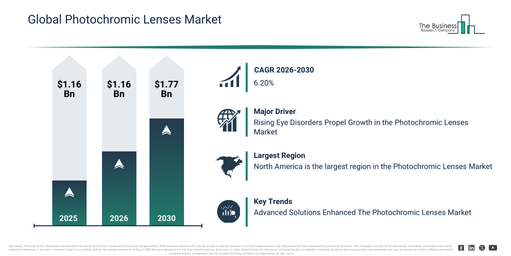
    The photochromic lenses market has experienced substantial growth in recent years. This market is projected to expand from $6.98 billion in 2025 to $7.46 billion in 2026, demonstrating a compound annual growth rate (CAGR) of 7.0%. The historical growth of the market was primarily driven by the rising prevalence of vision correction needs, increased consumer awareness of UV eye protection, the expansion of optical retail networks, a surge in prescription eyewear adoption, and advancements in lens material science.

    The photochromic lenses market size is projected to experience significant growth in the coming years. It is forecast to expand to $9.48 billion in 2030, with a compound annual growth rate (CAGR) of 6.2%. This growth during the forecast period can be attributed to an increasing demand for adaptive eyewear solutions, a rising adoption of premium optical products, the expansion of online eyewear distribution channels, a growing focus on sustainable lens materials, and continuous innovation in photochromic technologies. Prominent trends for the forecast period include advancements in faster light-responsive lens materials, an escalating demand for scratch-resistant and durable coatings, the rising uptake of lightweight high-index lenses, an increased emphasis on aesthetic and fashion-oriented designs, and the broader availability of UV-protection integrated eyewear.

    Access Your Free Sample Report for In-Depth Market Insights:

    https://www.thebusinessresearchcompany.com/sample.aspx?id=16765&type=smp

    What Drivers Are Influencing Production Trends In The Photochromic Lenses Market?

    The increasing prevalence of eye-related disorders is projected to boost the growth of the photochromic lenses market moving forward. These conditions encompass various ailments affecting vision and overall eye health, such as myopia, cataracts, glaucoma, and age-related macular degeneration. The rising occurrence of ocular conditions is influenced by aging populations, increased screen time, environmental pollution, inadequate diet, and higher rates of chronic illnesses like diabetes. Photochromic lenses assist in alleviating eye strain and provide UV protection, offering comfort and improved visual well-being for individuals with eye-related disorders. For instance, in July 2025, according to the UK government’s vision health profile, there were nearly 3.7 million people who attended 9.8 million hospital outpatient appointments for vision in England in the financial year ending 2024, and rates of cataract surgery and injection therapy significantly increased. Therefore, the escalating demand for clinical eye-care services reinforces the need for adaptive optical solutions like photochromic lenses. The expansion of the geriatric population is anticipated to propel the growth of the photochromic lenses market in the future. This demographic comprises older adults, typically aged 65 years and above, who frequently require specialized healthcare and support due to age-related physiological changes. The growing geriatric population is primarily a result of increasing life expectancy, which allows people to live longer, and declining birth rates, which reduce the proportion of younger individuals in the population. Photochromic lenses benefit the geriatric population by automatically adjusting to changing light conditions, reducing glare, enhancing visual comfort, and minimizing eye strain, which is particularly advantageous for age-related sensitivity to bright light. For instance, in July 2024, according to the UK Parliament’s House of Commons Library, a UK-based government administration, in 2022, there were 12.7 million people aged 65 or older in the UK, representing 19% of the total population. This number is projected to rise to 22.1 million by 2072, accounting for 27% of the population. Consequently, the expanding geriatric population is a key driver for the photochromic lenses market’s growth.

    Which Segments Are Gaining Traction In The Photochromic Lenses Market?

    The photochromic lenses market covered in this report is segmented –

    1) By Material: Glass, Polycarbonate, Plastic, Other Materials

    2) By Technology: Ultra-Violet (UV) And Visible Light, Imbibing And Trans-bonding, In Mass, Other Technologies

    3) By Distribution Channel: Online, Optical Chains, Independent Eye Care Professionals (ECPs)

    4) By Application: Corrective, Preventive

    Subsegments:

    1) By Glass: Standard Glass Photochromic Lenses, High-Index Glass Photochromic Lenses, Ultra-Thin Glass Photochromic Lenses, Glass Lenses With Scratch-Resistant Coatings, Glass Lenses For Prescription Eyewear

    2) By Polycarbonate: Standard Polycarbonate Photochromic Lenses, High-Impact Polycarbonate Photochromic Lenses, Polycarbonate Lenses For Sports Eyewear, Polycarbonate Lenses With UV Protection, Polycarbonate Lenses For Children’s Eyewear

    3) By Plastic: Standard Plastic Photochromic Lenses (CR-39), High-Index Plastic Photochromic Lenses, Lightweight Plastic Photochromic Lenses, Plastic Lenses With Anti-Reflective Coatings, Plastic Lenses For Fashion Eyewear

    4) By Other Materials: Trivex Photochromic Lenses, Acrylic Photochromic Lenses, Biodegradable Plastic Photochromic Lenses, Polyurethane Photochromic Lenses, Photochromic Lenses Made From Recycled Materials

    Which Market Trends Are Opening Growth Opportunities In The Photochromic Lenses Market?

    Leading companies within the photochromic lenses market are concentrating on developing advanced photochromic lenses to elevate the user experience through improved clarity, faster transition periods, and enhanced UV protection. An innovative photochromic lens represents an optical apparatus that autonomously adjusts its tint in response to different lighting scenarios, offering heightened visual comfort and safeguard. For instance, in May 2024, LensCrafters, a US-based optical company, unveiled Transitions GEN S. This new item delivers exceptionally responsive light adaptation, a diverse array of vibrant shades at varying darkness levels, and superior UV and blue-violet light defense. These characteristics effectively meet consumers’ requirements for seamless visual adjustments and robust eye protection.

    Who Are The Prominent Global Companies Shaping The Photochromic Lenses Market Landscape?

    Major companies operating in the photochromic lenses market are EssilorLuxottica SA, Mitsui Chemicals Inc., Carl Zeiss AG, HOYA Corporation, Rodenstock GmbH, Shanghai Conant Optics Co. Ltd., Younger Optics Inc., Vision Ease LP, Signet Armorlite Inc., SEIKO Optical Europe GmbH, S.T International Ltd, Optiswiss AG, GKB Optic Technologies Pvt. Ltd., Nikon Lenswear, BBGR Ltd, Norville Opticians Co, Tokai Optical Co. Ltd., Shamir Optical Industry Ltd., Indo Optical Company, Essilor India Pvt. Ltd.

    Access The Complete Report For Deeper Market Insights:

    https://www.thebusinessresearchcompany.com/report/photochromic-lenses-global-market-report

    Which Region Is Projected To Lead The Photochromic Lenses Market During The Forecast Period?

    North America was the largest region in the photochromic lenses market in 2025. Asia-Pacific is expected to be the fastest-growing region in the forecast period. The regions covered in the photochromic lenses market report are Asia-Pacific, South East Asia, Western Europe, Eastern Europe, North America, South America, Middle East, Africa.

    Request Your Customized Photochromic Lenses Market Research Report for Competitive Advantage:

    https://www.thebusinessresearchcompany.com/customise?id=16765&type=smp

    Browse Through More Reports Similar to the Global Photochromic Lenses Market 2026, By The Business Research Company

    Prescription Lens Global Market Report 2026

    https://www.thebusinessresearchcompany.com/report/prescription-lens-global-market-report

    Spectacle Lens Global Market Report 2026

    https://www.thebusinessresearchcompany.com/report/spectacle-lens-global-market-report

    Coloured Contact Lenses Global Market Report 2026

    https://www.thebusinessresearchcompany.com/report/coloured-contact-lenses-global-market-report

    Get in touch with us:

    The Business Research Company: https://www.thebusinessresearchcompany.com/

    Americas +1 310-496-7795

    Asia +44 7882 955267 & +91 8897263534

    Europe +44 7882 955267

    Email us at info@tbrc.info

    Follow us on:

    LinkedIn: https://in.linkedin.com/company/the-business-research-company

  • Global Pharmacy Repackaging Systems Market Report 2026–2030: Data-Driven Growth Insights

    Global Pharmacy Repackaging Systems Market Report 2026–2030: Data-Driven Growth Insights

    Uncover key drivers, emerging technologies, and competitive movements shaping the workstation graphics processing unit (gpu) market from 2026–2035 with trusted insights from The Business Research Company

    What is the expected shift in the Pharmacy Repackaging Systems Market’s size between 2026 and 2030?

    The pharmacy repackaging systems market has experienced significant expansion in recent years. This market is expected to increase from $2.36 billion in 2025 to $2.59 billion in 2026, registering a compound annual growth rate (CAGR) of 9.3%. The factors contributing to its historical growth include the rise of hospital pharmacy automation, escalating initiatives to prevent medication errors, the broadening scope of long-term care pharmacies, an uptick in prescription volumes, and enhancements in pharmaceutical packaging technologies.

    The market size for pharmacy repackaging systems is projected to achieve significant growth in the upcoming years, expanding to $3.69 billion by 2030 with a compound annual growth rate (CAGR) of 9.3%. This expected growth throughout the forecast period stems from the increasing integration of smart pharmacy systems, a heightened focus on traceability and compliance, the expansion of mail-order pharmacy services, a rising demand for high-throughput repackaging, and increased investments in pharmacy automation. Significant developments foreseen in this period include the wider adoption of automated unit dose packaging systems, growing demand for blister and pouch packaging automation, enhanced integration of barcode and tracking systems, the proliferation of high-speed repackaging solutions, and an elevated emphasis on medication safety and accuracy.

    Access Your Free Sample Report for In-Depth Market Insights:

    https://www.thebusinessresearchcompany.com/sample.aspx?id=18697&type=smp

    Which Drivers Are Shaping Strategic Decisions In The Pharmacy Repackaging Systems Market?

    The increasing occurrence of chronic illnesses is anticipated to boost the expansion of the pharmacy repackaging systems market moving forward. Chronic diseases are defined as long-term medical conditions that are typically progressive and enduring, often lasting for a year or more and necessitating ongoing medical attention or limiting daily activities. The growing prevalence of these diseases is mainly attributed to an aging demographic, lifestyle changes such as poor diet and physical inactivity, increasing urbanization, and associated environmental factors. Pharmacy repackaging systems play an essential role in chronic disease management by facilitating accurate medication administration, improving patient adherence, and enhancing patient safety through efficient dispensing into patient-specific doses. For instance, in June 2024, the National Health Service, a UK-based government department, reported that 3,615,330 individuals registered with a general practitioner (GP) were diagnosed with non-diabetic hyperglycemia or pre-diabetes (a condition with elevated blood sugar levels, not high enough to be classified as diabetes) in 2023, which marked an 18% increase from 3,065,825 cases in 2022. Therefore, the rising prevalence of chronic diseases is driving the growth of the pharmacy repackaging systems market.

    What Segment Categories Are Covered In The Pharmacy Repackaging Systems Market?

    The pharmacy repackaging systems market covered in this report is segmented –

    1) By Type: Blister Card Packaging Systems, Pouch Packaging Automation Systems, Liquid Medication Packaging Systems, Bottle Filling Automation Systems

    2) By Dosage Type: Unit Dose Packaging, Multiple Unit Packaging

    3) By End Use: Retail Or Community Pharmacies, Hospital Pharmacies, Long-Term Care (LTC) Pharmacies, Mail Order Pharmacies

    Subsegments:

    1) By Blister Card Packaging Systems: Manual Blister Card Packaging, Semi-Automatic Blister Card Systems, Fully Automatic Blister Packaging Systems

    2) By Pouch Packaging Automation Systems: Single-Use Pouch Packaging, Multi-Dose Pouch Systems, Automatic Pouch Sealing and Filling Systems

    3) By Liquid Medication Packaging Systems: Vial Filling Systems, Syringe and Ampoule Filling Systems, Bottle Liquid Filling and Capping Systems, Bottle Filling Automation Systems

    4) By Bottle Filling Systems: Single-Stage Bottle Filling Systems, Multi-Stage Filling and Capping Systems, High-Speed Bottle Filling Systems

    How Are Emerging Trends Affecting The Progression Of The Pharmacy Repackaging Systems Market?

    Leading firms in the pharmacy repackaging systems market are concentrating on enlarging their operations by implementing automated repackaging systems, addressing the increasing global need for precise medication administration in healthcare settings. These automated systems are sophisticated devices built to precisely and effectively package medicines into diverse forms, thereby minimizing human mistakes and boosting output. As an example, in June 2024, MEDISCA Plattsburgh, a US-based pharmaceutical compounding company, inaugurated a new pharmaceutical repackaging plant, aiming to satisfy the rising requirements for personalized medicine. This new plant bolsters Medisca’s capacity to provide tailored medication repackaging solutions, utilizing cutting-edge machinery for exact dosage assessment and sophisticated labeling technology to ensure precision and adherence to regulations. Consequently, Medisca will be able to supply premium, bespoke pharmaceutical products to its international clientele, guaranteeing prompt delivery and conformity with regulatory mandates. The facility incorporates specifically designed, ISO-rated production areas and sophisticated warehouse management systems, allowing for complete traceability from start to finish, thereby assuring superior product quality and the safety of its staff.

    Which Key Players Are Driving Competition In The Pharmacy Repackaging Systems Market?

    Major companies operating in the pharmacy repackaging systems market are McKesson Corporation, Becton Dickinson And Company, Baxter International Inc., Syntegon Technology GmbH, Omnicell Inc., ACG Worldwide, Swisslog Holding Ltd., ScriptPro LLC, Capsa Healthcare, ARxIUM, Yuyama Co. Ltd., Kirby Lester, RxSafe LLC, Deenova S.r.l., Noritsu Pharmacy Automation, Pearson Medical Technologies, Takazono Corporation, JVM Co. Ltd., TCGRx, Parata Systems

    Access The Complete Report For Deeper Market Insights:

    https://www.thebusinessresearchcompany.com/report/pharmacy-repackaging-systems-global-market-report

    Which Region Currently Holds The Largest Share Of The Pharmacy Repackaging Systems Market?

    North America was the largest region in the pharmacy repackaging systems market in 2025. Asia-Pacific is expected to be the fastest-growing region in the forecast period. The regions covered in the pharmacy repackaging systems market report are Asia-Pacific, South East Asia, Western Europe, Eastern Europe, North America, South America, Middle East, Africa.

    Request Your Customized Pharmacy Repackaging Systems Market Research Report for Competitive Advantage:

    https://www.thebusinessresearchcompany.com/customise?id=18697&type=smp

    Browse Through More Reports Similar to the Global Pharmacy Repackaging Systems Market 2026, By The Business Research Company

    Pharmacy Management System Global Market Report 2026

    https://www.thebusinessresearchcompany.com/report/pharmacy-management-system-global-market-report

    Pharmacy Automation Solution Global Market Report 2026

    https://www.thebusinessresearchcompany.com/report/pharmacy-automation-solution-global-market-report

    Pharmacy Inventory Management Software Solutions And Cabinets Global Market Report 2026

    https://www.thebusinessresearchcompany.com/report/pharmacy-inventory-management-software-solutions-and-cabinets-global-market-report

    Get in touch with us:

    The Business Research Company: https://www.thebusinessresearchcompany.com/

    Americas +1 310-496-7795

    Asia +44 7882 955267 & +91 8897263534

    Europe +44 7882 955267

    Email us at info@tbrc.info

    Follow us on:

    LinkedIn: https://in.linkedin.com/company/the-business-research-company
  • Pharmacy Automation Devices Market Dynamics 2026: Future Outlook and Key Insights

    Pharmacy Automation Devices Market Dynamics 2026: Future Outlook and Key Insights

    Uncover key drivers, emerging technologies, and competitive movements shaping the worker heat stress monitoring wearable market from 2026–2035 with trusted insights from The Business Research Company

    What growth pattern is forecast for the Pharmacy Automation Devices Market size between 2026 and 2035?

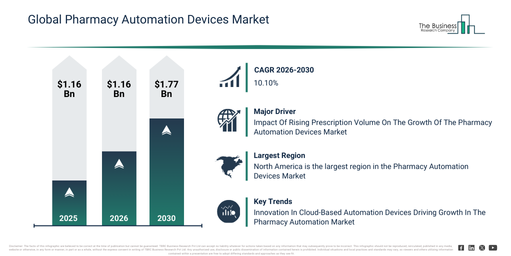
    The pharmacy automation devices market size has seen substantial growth in recent years. It is forecast to grow from $6.62 billion in 2025 to $7.31 billion in 2026, achieving a compound annual growth rate (CAGR) of 10.3%. This historical growth can be attributed to several factors, including increasing prescription volumes, a shortage of pharmacy workforce, the expansion of hospital pharmacy infrastructure, the adoption of automated dispensing cabinets, and a rising focus on patient safety.

    The pharmacy automation devices market is poised for significant expansion in the coming years. Projections indicate it will reach $10.73 billion by 2030, exhibiting a compound annual growth rate (CAGR) of 10.1%. This anticipated growth during the forecast period is fueled by several factors, including the escalating need for efficient, high-volume pharmacy operations, the growing embrace of centralized fill pharmacies, the expansion of both mail-order and specialty pharmacy services, increasing capital allocation towards healthcare automation, and a heightened regulatory emphasis on ensuring medication precision. Key trends anticipated within the same period encompass the wider implementation of robotic medication dispensing systems, a surge in the adoption of automated packaging and labeling technologies, deeper integration of pharmacy information systems, the broader spread of centralized pharmacy automation, and a sharper commitment to minimizing medication errors.

    Access Your Free Sample Report for In-Depth Market Insights:

    https://www.thebusinessresearchcompany.com/sample.aspx?id=7894&type=smp

    Which Drivers Are Impacting Market Performance In The Pharmacy Automation Devices Market?

    The increasing prescription volume is projected to stimulate the growth of the pharmacy automation devices market in the future. This rise in prescription volume stems from an aging population, a greater prevalence of chronic conditions, and enhanced availability of healthcare services. Pharmacy automation devices streamline the processing of prescriptions, which helps in reducing errors and boosting efficiency to manage the growing number of prescriptions. For example, in July 2024, data from the Australian Institute of Health and Welfare, an Australia-based government agency, indicated that during 2022–23, PBS prescriptions were dispensed to 17.8 million Australians, representing 67% of the population. Prescription dispensing rates were found to rise with age; the lowest rates were observed in individuals aged 0–14 (184 prescriptions per 100 people in this age group), while the highest rates occurred in those aged 85 and older (6,031 prescriptions per 100 people in this age group). Therefore, the expanding prescription volume is a significant driver for the pharmacy automation devices market.

    Which Segments Are Contributing To The Growth Of The Pharmacy Automation Devices Market?

    The pharmacy automation devices market covered in this report is segmented –

    1) By Product: Medication Dispensing Systems, Packaging And Labeling Systems, Storage And Retrieval Systems, Automated Medication Compounding Systems, Tabletop Tablet Counters

    2) By Component: Hardware, Software, Services

    3) By End-User: Retail Pharmacy, Inpatient Pharmacies, Outpatient Pharmacies, Pharmacy Benefit Management Organizations And Mail-Order Pharmacies

    Subsegments:

    1) By Medication Dispensing Systems: Automated Dispensing Machines, Robotic Dispensing Systems

    2) By Packaging And Labeling Systems: Automated Packaging Machines, Labeling Systems For Prescription Medications

    3) By Storage And Retrieval Systems: Automated Storage Systems, Carousel Storage Systems

    4) By Automated Medication Compounding Systems: IV Compounding Systems, Oral Compounding Systems

    5) By Tabletop Tablet Counters: Electronic Tablet Counters, Manual Tablet Counters

    Which Innovation Trends Are Advancing Developments Within The Pharmacy Automation Devices Market?

    Key players in the pharmacy automation devices market are developing inventive products, such as cloud-based automation devices, to gain a competitive advantage. Cloud-based automation devices refer to systems that leverage cloud computing for remote data management, storage, and processing, enabling automation tasks to be performed without relying on on-site hardware. For instance, in March 2023, iA, a US-based provider of robotic and automation solutions, introduced advanced fulfillment solutions to meet the growing needs of the pharmacy industry. These new offerings include Shared Central Fulfillment, which employs cloud-based technology to allow pharmacy fulfillment centers to serve multiple pharmacy partners from a single site. This approach integrates iA’s NEXiA fulfillment and NEXiA cloud software with sophisticated automation and robotics, enhancing the efficiency of prescription fulfillment processes for pharmacies of all sizes.

    Who Are The Top-Performing Companies In The Pharmacy Automation Devices Market In Recent Years?

    Major companies operating in the pharmacy automation devices market are Omnicell Inc., ARxIUM Inc., ScriptPro LLC, Capsa Healthcare, Swisslog Healthcare, RxSafe LLC, Yuyama Co Ltd., Parata Systems LLC, Aesynt Incorporated, Talyst LLC, Kirby Lester, TouchPoint Medical, Health Robotics Srl, Innovation PharmaAssist Robotics Pvt Ltd., R/X Automation Solutions Inc., Pearson Medical Technologies LLC, Becton Dickinson & Company, Baxter International Inc., McKesson Corporation, AmerisourceBergen Corp, Danaher Corporation, KUKA AG

    Access The Complete Report For Deeper Market Insights:

    https://www.thebusinessresearchcompany.com/report/pharmacy-automation-devices-global-market-report

    How Does The Pharmacy Automation Devices Market Perform Across Major Global Regions?

    North America was the largest region in the pharmacy automation devices market in 2025. The regions covered in the pharmacy automation devices market report are Asia-Pacific, South East Asia, Western Europe, Eastern Europe, North America, South America, Middle East, Africa.

    Request Your Customized Pharmacy Automation Devices Market Research Report for Competitive Advantage:

    https://www.thebusinessresearchcompany.com/customise?id=7894&type=smp

    Browse Through More Reports Similar to the Global Pharmacy Automation Devices Market 2026, By The Business Research Company

    Pharmacy Automation Global Market Report 2026

    https://www.thebusinessresearchcompany.com/report/pharmacy-automation-global-market-report

    Pharmacy Automation Systems Global Market Report 2026

    https://www.thebusinessresearchcompany.com/report/pharmacy-automation-systems-global-market-report

    Pharmacy Automation Solution Global Market Report 2026

    https://www.thebusinessresearchcompany.com/report/pharmacy-automation-solution-global-market-report

    Get in touch with us:

    The Business Research Company: https://www.thebusinessresearchcompany.com/

    Americas +1 310-496-7795

    Asia +44 7882 955267 & +91 8897263534

    Europe +44 7882 955267

    Email us at info@tbrc.info

    Follow us on:

    LinkedIn: https://in.linkedin.com/company/the-business-research-company
  • Pharmacogenomics Market Research: Growth Projections and Trends 2030

    Pharmacogenomics Market Research: Growth Projections and Trends 2030

    Uncover key drivers, emerging technologies, and competitive movements shaping the workstation graphics processing unit (gpu) market from 2026–2035 with trusted insights from The Business Research Company

    How much larger will the Pharmacogenomics Market be in 2030 compared with 2026?

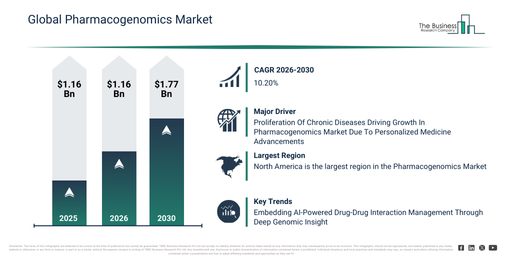
    The pharmacogenomics market has seen significant expansion in recent years. This market is set to increase from $9.84 billion in 2025 to $10.85 billion in 2026, achieving a compound annual growth rate (CAGR) of 10.3%. Key drivers for its historical growth include heightened genomic research activities, the broadening of targeted therapy development, the increasing incidence of chronic diseases, advancements in sequencing technologies, and the rising accessibility of genetic testing services.

    The pharmacogenomics market size is anticipated to undergo significant growth in the coming years. It is forecast to reach $15.98 billion in 2030, growing at a compound annual growth rate (CAGR) of 10.2%. This projected expansion during the forecast period stems from factors such as increasing investments in precision medicine programs, the rising adoption of AI-driven genomic analysis, the expansion of pharmacogenomics into oncology and cardiology, a growing emphasis on individualized drug development, and continuous advancements in bioinformatics platforms. Key trends expected in this period include the increasing uptake of personalized medicine approaches, a rising reliance on genetic testing for drug selection, growing integration of pharmacogenomic data within clinical workflows, the expansion of companion diagnostics, and an enhanced focus on precision therapeutics.

    Access Your Free Sample Report for In-Depth Market Insights:

    https://www.thebusinessresearchcompany.com/sample.aspx?id=7072&type=smp

    What Drivers Are Guiding Growth Patterns In The Pharmacogenomics Market?

    The escalating prevalence of chronic diseases is anticipated to boost the expansion of the pharmacogenomics market in the coming years. These conditions are defined as long-term health issues that frequently last throughout an individual’s life. The rise in chronic illnesses stems from an extended global average life expectancy alongside the widespread engagement in lifestyle risk factors such as inactivity, unhealthy eating, and tobacco use. Pharmacogenomics provides a tailored method for managing chronic diseases by considering unique genetic differences influencing how individuals react to medication. To illustrate, the International Diabetes Federation, a Belgium-based health organization, reported that in 2024, approximately 589 million adults between 20-79 years old were living with diabetes, with this figure expected to climb to 853 million by 2050; notably, in 2025, over 4 in 5 adults with diabetes reside in low and middle income countries. Consequently, the growing number of chronic diseases is fueling the development of the pharmacogenomics market.

    How Is The Pharmacogenomics Market Divided Into Segments?

    The pharmacogenomics market covered in this report is segmented –

    1) By Technology: Next Generation Sequencing, Polymerase Chain Reaction, Gel Electrophoresis, Mass Spectrometry, Microarray, Other Technologies

    2) By Application: Neurological Diseases, Infectious Diseases, Oncology, Cardiovascular Diseases, Pain Management, Other Applications

    3) By End User: Hospitals and Clinics, Research Institutions, Academic Institutes, Other End Users

    Subsegments:

    1) By Next Generation Sequencing (NGS): Whole Genome Sequencing, Targeted Sequencing, Exome Sequencing

    2) By Polymerase Chain Reaction (PCR): Quantitative PCR (qPCR), Reverse Transcription PCR (RT-PCR), Digital PCR

    3) By Gel Electrophoresis: Agarose Gel Electrophoresis, Polyacrylamide Gel Electrophoresis, Capillary Gel Electrophoresis

    4) By Mass Spectrometry: LC-MS/MS (Liquid Chromatography-Tandem Mass Spectrometry), MALDI-TOF MS (Matrix-Assisted Laser Desorption/Ionization Time of Flight), HRMS (High-Resolution Mass Spectrometry)

    5) By Microarray: SNP Microarrays, Expression Microarrays, Comparative Genomic Hybridization (CGH) Arrays

    6) By Other Technologies: Sanger Sequencing, CRISPR-Based Technologies, Bioinformatics Tools

    Which Competitive Trends Are Impacting The Structure Of The Pharmacogenomics Market?

    Leading entities within the pharmacogenomics market are progressively prioritizing AI-powered systems designed to handle drug-drug interactions at the genomic scale, which enhances medication safety, diminishes adverse reactions, and facilitates highly tailored prescribing. These AI-powered pharmacogenetics engines are sophisticated digital platforms employing artificial intelligence to examine an individual’s genetic makeup and forecast their reactions to particular drugs. An illustrative case occurred in December 2024 when PGxAI, a pharmacogenetics firm based in the US and powered by AI, unveiled its Sirius model. This AI-driven pharmacogenetics engine customizes drug selection, dosing, and the handling of drug-drug interactions, all informed by a person’s genome. The Sirius model encompasses 730 drugs and 40 key pharmacogenes, providing significantly wider coverage compared to conventional pharmacogenomic offerings. Intended for utilization by hospital systems, diagnostic laboratories, and clinical research organizations, the model aims to lessen adverse reactions and elevate therapeutic results.

    Which Leading Companies Dominate The Pharmacogenomics Market Share?

    Major companies operating in the pharmacogenomics market are Illumina Inc, Eurofins Scientific, Myriad Genetics Inc, PerkinElmer Inc, Centogene N.V, Invitae Corporation, Genomind, Pacific Biosciences of California Inc, Oneome LLC, Admera Health, MapMyGenome, Positive Bioscience, Xcode Life Sciences, Takeda Pharmaceutical Company Limited, Garvan Institute of Medical Research, 3D Medicines Inc, Berry Genomics, BGI, GenomiCare Biotechnology, F Hoffmann-La Roche AG, Merck KGaA, QIAGEN N.V, Centro de Genoma e Biologia de Sistemas, Datar Cancer Genetics Limited, MedGenome Labs, 23andMe, Color Genomics, Pathway Genomics, Genomika Diagnósticos

    Access The Complete Report For Deeper Market Insights:

    https://www.thebusinessresearchcompany.com/report/pharmacogenomics-global-market-report

    Which Region Is Anticipated To See The Fastest Growth In The Pharmacogenomics Market?

    North America was the largest region in the pharmacogenomics market in 2025. Asia-Pacific is expected to be the fastest-growing region in the forecast period. The regions covered in the pharmacogenomics market report are Asia-Pacific, South East Asia, Western Europe, Eastern Europe, North America, South America, Middle East, Africa.

    Request Your Customized Pharmacogenomics Market Research Report for Competitive Advantage:

    https://www.thebusinessresearchcompany.com/customise?id=7072&type=smp

    Browse Through More Reports Similar to the Global Pharmacogenomics Market 2026, By The Business Research Company

    Pharma 4 0 Global Market Report 2026

    https://www.thebusinessresearchcompany.com/report/pharma-4-0-global-market-report

    Consumer Genomics Global Market Report 2026

    https://www.thebusinessresearchcompany.com/report/consumer-genomics-global-market-report

    Pharmaceutical Label Global Market Report 2026

    https://www.thebusinessresearchcompany.com/report/pharmaceutical-label-global-market-report

    Get in touch with us:

    The Business Research Company: https://www.thebusinessresearchcompany.com/

    Americas +1 310-496-7795

    Asia +44 7882 955267 & +91 8897263534

    Europe +44 7882 955267

    Email us at info@tbrc.info

    Follow us on:

    LinkedIn: https://in.linkedin.com/company/the-business-research-company

  • Global Pharmaceutical Isolator Industry Insights: Key Trends and Growth Estimates

    Global Pharmaceutical Isolator Industry Insights: Key Trends and Growth Estimates

    Uncover key drivers, emerging technologies, and competitive movements shaping the worker heat stress monitoring wearable market from 2026–2035 with trusted insights from The Business Research Company

    Starting from its 2026 valuation, what market size is the Pharmaceutical Isolator Market expected to reach by 2030?

    The pharmaceutical isolator market size has experienced significant expansion in recent years. It is projected to increase from $9.9 billion in 2025 to $10.81 billion in 2026, demonstrating a compound annual growth rate (CAGR) of 9.2%. This historical growth can be linked to factors such as the rise in sterile pharmaceutical manufacturing, more stringent regulatory demands for aseptic processing, the expansion of biologics and injectable drug production, the increasing adoption of containment technologies, and improvements in cleanroom standards.

    The pharmaceutical isolator market is anticipated to experience substantial expansion over the upcoming years. By 2030, its value is projected to reach $15.64 billion, demonstrating a compound annual growth rate (CAGR) of 9.7%. This projected growth is primarily driven by several factors, including escalating investments in automating pharmaceutical manufacturing, a surging need for high-containment solutions, the broadened production of personalized medicine, an intensified emphasis on ensuring operator safety, and ongoing innovations in isolator design and materials. Key trends anticipated during this period encompass a greater uptake of automated isolator systems, an escalating requirement for modular and mobile isolators, a heightened concentration on adherence to aseptic processing standards, the broadening scope of containment isolator applications, and improved incorporation of monitoring and control technologies.

    Access Your Free Sample Report for In-Depth Market Insights:

    https://www.thebusinessresearchcompany.com/sample.aspx?id=11905&type=smp

    What Drivers Are Driving Adoption Within The Pharmaceutical Isolator Market?

    Anticipated expansion within the pharmaceutical industry is projected to boost the pharmaceutical isolator market in the future. The pharmaceutical sector encompasses an industry where public and commercial entities participate in discovering, developing, and producing drugs and treatments. Within a pharmaceutical manufacturing facility, an isolator enables the containment of processes, necessitating a sterile environment free of live bacteria. It also segregates the production zone from staff or the surrounding environment, preventing contamination spread and offering superior containment compared to typical clean rooms. For example, data from June 2023, released by the European Federation of Pharmaceutical Industries and Associations (EFPIA), a Belgium-based trade group representing Europe’s pharmaceutical industry, showed that total pharmaceutical production in Europe reached €390,000 million ($422,803 million) in 2023, an increase from €363,300 million ($393,857 million) in 2022. Consequently, the ongoing expansion of the pharmaceutical sector is a key driver for the growth of the pharmaceutical isolator market.

    What Segments Are Included Within The Pharmaceutical Isolator Market?

    The pharmaceutical isolator market covered in this report is segmented –

    1) By Type: Closed Isolator Systems, Open Isolator Systems

    2) By Configuration: Floor-Standing, Modular, Compact

    3) By Application: Aseptic Isolators, Containment Isolators, Other Applications

    4) By End-User: Pharmaceutical And Biotechnology Companies, Research Laboratories, Other End Users

    Subsegments:

    1) By Closed Isolator Systems: Glovebox Isolators, Barrier Isolators

    2) By Open Isolator Systems: Compounding Isolators, Sterility Testing Isolators

    What Industry Trends Are Transforming The Pharmaceutical Isolator Market?

    Major companies within the pharmaceutical isolator market are directing their efforts towards creating products like isolators and isolator platforms for sterility testing, alongside boosting the efficiency of such testing. These isolators and their platforms, intended for sterility testing, are specialized enclosures or containment setups engineered to uphold aseptic environments while pharmaceutical and medical products undergo examination for microbial contamination. As an illustration, in June 2023, Getinge, a medical technology company based in Sweden, unveiled ISOPRIME. This adaptable and economical isolator is designed for pharmaceutical applications, providing enhanced connectivity and traceability functionalities. It is developed for aseptic filling, sterility testing, and other sterile processes, ensuring high quality and uninterrupted operations. The ISOPRIME’s integrated hydrogen peroxide bio-decontamination system and flexible airflow configurations position it as a prime selection for preserving sterility within pharmaceutical manufacturing.

    Who Are The Major Companies Operating In The Pharmaceutical Isolator Market?

    Major companies operating in the pharmaceutical isolator market are Getinge AB, Chiyoda Corporation, Azbil Corporation, Hosokawa Micron Ltd., Bioquell Limited, M Braun Inertgas-Systeme GmbH, Fedegari Group, Extract Technology Ltd., Germfree Laboratories Inc., COMECER SpA, Hosokawa Micron Powder Systems, ACIC Pharmaceutical Machinery, SKAN AG, Custom Powder Systems, NuAire Limited, Contained Air Solutions Ltd., DEC Group, ITECO Engineering Srl, Schematic Engineering Industries Private Limited, Containment Technologies Group Inc., Inert Corporation

    Access The Complete Report For Deeper Market Insights:

    https://www.thebusinessresearchcompany.com/report/pharmaceutical-isolator-global-market-report

    Which Region Is Anticipated To See The Fastest Growth In The Pharmaceutical Isolator Market?

    North America was the largest region in the pharmaceutical isolator market in 2025. Asia-Pacific is expected to be the fastest-growing region in the forecast period. The regions covered in the pharmaceutical isolator market report are Asia-Pacific, South East Asia, Western Europe, Eastern Europe, North America, South America, Middle East, Africa.

    Request Your Customized Pharmaceutical Isolator Market Research Report for Competitive Advantage:

    https://www.thebusinessresearchcompany.com/customise?id=11905&type=smp

    Browse Through More Reports Similar to the Global Pharmaceutical Isolator Market 2026, By The Business Research Company

    Pharmaceutical Label Global Market Report 2026

    https://www.thebusinessresearchcompany.com/report/pharmaceutical-label-global-market-report

    Pharmaceuticals Market 2026

    https://www.thebusinessresearchcompany.com/report/pharmaceuticals-market

    Isotretinoin Drugs Global Market Report 2026

    https://www.thebusinessresearchcompany.com/report/isotretinoin-drugs-global-market-report

    Get in touch with us:

    The Business Research Company: https://www.thebusinessresearchcompany.com/

    Americas +1 310-496-7795

    Asia +44 7882 955267 & +91 8897263534

    Europe +44 7882 955267

    Email us at info@tbrc.info

    Follow us on:

    LinkedIn: https://in.linkedin.com/company/the-business-research-company

  • Pharma Microbiology Testing Kits Market Forecast: How Big Will It Be by 2030?

    Pharma Microbiology Testing Kits Market Forecast: How Big Will It Be by 2030?

    Uncover key drivers, emerging technologies, and competitive movements shaping the workstation graphics processing unit (gpu) market from 2026–2035 with trusted insights from The Business Research Company

    Across 2026–2030, what is the expected market valuation path of the Pharma Microbiology Testing Kits Market?

    The market size for pharma microbiology testing kits has demonstrated significant growth in recent years. This market is anticipated to expand from $7.26 billion in 2025 to $7.94 billion in 2026, achieving a compound annual growth rate (CAGR) of 9.4%. The historical increase can be ascribed to several factors, including pharmaceutical quality regulations, the expansion of biologics production, heightened awareness of contamination risks, the scaling up of vaccine manufacturing, and the imperatives of GMP compliance.

    The market for pharma microbiology testing kits is anticipated to experience substantial expansion over the upcoming years. This market is projected to reach a valuation of $11.98 billion by 2030, exhibiting a compound annual growth rate (CAGR) of 10.8%. Several factors will drive this expansion during the forecast period, including the growth of the biopharmaceutical pipeline, the increasing adoption of rapid testing technologies, more stringent regulatory requirements, the expansion of contract manufacturing, and greater automation in quality control processes. Key trends anticipated during the same period encompass a heightened frequency of sterility testing, growing acceptance of rapid microbial detection methods, the broadening of environmental monitoring initiatives, an increased need for convenient ready-to-use test kits, and the outsourcing of specialized microbiology testing services.

    Access Your Free Sample Report for In-Depth Market Insights:

    https://www.thebusinessresearchcompany.com/sample.aspx?id=2487&type=smp

    Which Drivers Are Supporting The Rise Of The Pharma Microbiology Testing Kits Market?

    The increasing occurrence of infectious diseases is anticipated to boost the expansion of the pharma microbiology testing kits market in the future. These diseases are conditions resulting from disease-causing microorganisms, including bacteria, viruses, fungi, or parasites, capable of direct or indirect person-to-person transmission. The frequency of infectious disease cases is increasing, partly due to more travel, which aids the quick dissemination of pathogens internationally. Pharma microbiology testing kits assist in diagnosing infectious diseases by offering precise and quick pathogen detection, proving crucial for prompt clinical choices. These kits enhance laboratory effectiveness through reliable testing capabilities and support effective treatment and outbreak control. For example, data from February 2024 released by the UK Health Security Agency, a government body in the UK, indicated that tuberculosis (a communicable bacterial infection mainly affecting the lungs) instances in England climbed to 4,850 in 2023, representing a 10.7% rise from 4,380 cases in 2022. Consequently, the escalating prevalence of infectious diseases is fueling the expansion of the pharma microbiology testing kits market.

    What Leading Segments Are Studied In The Pharma Microbiology Testing Kits Market?

    The pharma microbiology testing kits market covered in this report is segmented –

    1) By Product: Consumables, Equipment

    2) By Test: Endotoxin Testing, Sterility Testing, Microbial Examination, Environmental Monitoring, Other Tests

    3) By End User: Hospitals And Diagnostic Centers, Custom Lab Service Providers, Academic And Research Institutes

    Subsegments:

    1) By Consumables: Media and Reagents, Test Kits, Sample Collection Containers

    2) By Equipment: Incubators, Autoclaves, Microbial Identification Systems

    What Trends Are Reshaping The Dynamics Of The Pharma Microbiology Testing Kits Market?

    Leading firms within the pharma microbiology testing kits market are concentrating on employing cutting-edge technologies, like artificial intelligence-powered software, to improve efficiency, sharpen diagnostic precision, and optimize laboratory processes. Within this context, artificial intelligence-powered software denotes advanced algorithms designed to examine intricate data from diagnostic equipment, thereby assisting in the detection and recognition of pathogens. An example of this is when, in May 2023, Becton, Dickinson, and Company, a US-based medical device firm, obtained 510(k) clearance from the U.S. Food and Drug Administration (FDA) for its novel BD Kiestra MRSA Imaging Application, a tool that leverages artificial intelligence (AI) to advance the diagnosis of Methicillin-resistant Staphylococcus aureus (MRSA). This application automates the examination of Petri dishes, a process that has historically been labor-intensive and consumed significant time. It scrutinizes bacterial growth on BBL CHROMagar MRSA II plates and can promptly pinpoint samples exhibiting no significant growth, facilitating quicker processing and the issuance of negative outcomes.

    Which Major Firms Are Strengthening Their Position In The Pharma Microbiology Testing Kits Market?

    Major companies operating in the pharma microbiology testing kits market are F. Hoffmann-La Roche AG, Becton Dickinson and Company, Abbott Laboratories, ThermoFisher Scientific, SGS SA, Toxikon Corp., Pace Analytical Services, Boston Analytics, Charles River Laboratories International, Nelson Laboratories, Siemens healthcare AG, Hologic Inc., Neogen Corporation, Shimadzu Corporation, Merck KGaA, Agilent TechnologiesInc., QIAGEN N.V., Bruker Corporation, bioMérieux SA, Lucideon, Lonza Group AG, MilliporeSigma, Hardy Diagnostics, Sartorius AG, 3M Company, Waters Corporation, PerkinElmer Inc., Luminex Corporation

    Access The Complete Report For Deeper Market Insights:

    https://www.thebusinessresearchcompany.com/report/pharma-microbiology-testing-kits-global-market-report

    Which Global Regions Are Shaping The Competitive Landscape Of The Pharma Microbiology Testing Kits Market?

    North America was the largest region in the pharma microbiology testing kits market in 2025. Western Europe was the second-largest region in the global pharma microbiology testing kits market report. The regions covered in the pharma microbiology testing kits market report are Asia-Pacific, South East Asia, Western Europe, Eastern Europe, North America, South America, Middle East, Africa.

    Request Your Customized Pharma Microbiology Testing Kits Market Research Report for Competitive Advantage:

    https://www.thebusinessresearchcompany.com/customise?id=2487&type=smp

    Browse Through More Reports Similar to the Global Pharma Microbiology Testing Kits Market 2026, By The Business Research Company

    Rapid Microbiology Testing Kits Global Market Report 2026

    https://www.thebusinessresearchcompany.com/report/rapid-microbiology-testing-kits-global-market-report

    Drug Screening Global Market Report 2026

    https://www.thebusinessresearchcompany.com/report/drug-screening-global-market-report

    Antimicrobial Susceptibility Testing Global Market Report 2026

    https://www.thebusinessresearchcompany.com/report/antimicrobial-susceptibility-testing-global-market-report

    Get in touch with us:

    The Business Research Company: https://www.thebusinessresearchcompany.com/

    Americas +1 310-496-7795

    Asia +44 7882 955267 & +91 8897263534

    Europe +44 7882 955267

    Email us at info@tbrc.info

    Follow us on:

    LinkedIn: https://in.linkedin.com/company/the-business-research-company
  • Phacoemulsification System Market Report 2026: Strategic Insights and Revenue Outlook

    Phacoemulsification System Market Report 2026: Strategic Insights and Revenue Outlook

    Uncover key drivers, emerging technologies, and competitive movements shaping the worker heat stress monitoring wearable market from 2026–2035 with trusted insights from The Business Research Company

    What size range is anticipated for the Phacoemulsification System Market from 2026 to 2030?

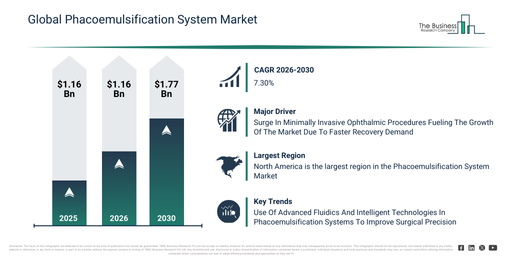
    The phacoemulsification system market size has experienced substantial growth in recent years. It is anticipated to increase from $1.51 billion in 2025 to $1.63 billion in 2026, registering a compound annual growth rate (CAGR) of 7.6%. This historical expansion can be attributed to several factors including the rising prevalence of cataracts, the growth of the aging population, the adoption of phaco techniques, the expansion of ophthalmic infrastructure, and surgeons’ preference for minimally invasive tools.

    The phacoemulsification system market size is anticipated to experience substantial growth over the next few years, projected to reach $2.16 billion by 2030, expanding at a compound annual growth rate (CAGR) of 7.3%. This growth during the forecast period is primarily driven by an increase in outpatient eye surgeries, technological innovations within ultrasound systems, a rising demand for premium IOLs, the market’s expansion into emerging regions, and greater awareness of vision care. Significant trends anticipated for this period include the introduction of advanced fluidics control systems, broader adoption of minimally invasive cataract surgery, high-precision ultrasonic energy delivery, reduced surgical procedure times, and improved patient safety outcomes.

    Access Your Free Sample Report for In-Depth Market Insights:

    https://www.thebusinessresearchcompany.com/sample.aspx?id=30352&type=smp

    What Drivers Are Affecting Demand In The Phacoemulsification System Market?

    The phacoemulsification system market is projected to grow due to the increasing adoption of minimally invasive ophthalmic procedures. These procedures are advanced eye care techniques that utilize small incisions, micro-instruments, or laser-based approaches for diagnosing or treating eye conditions with minimal tissue disruption. The surge in minimally invasive ophthalmic procedures is attributed to a rising preference for faster recovery, as these methods reduce surgical trauma and allow patients to resume daily activities much earlier. The phacoemulsification system assists minimally invasive ophthalmic procedures by using ultrasonic energy to break down and remove cataracts through a tiny incision, facilitating quicker healing, less tissue damage, and improved surgical precision. For instance, in May 2024, according to Gov.UK, a UK-based government agency, there were 516,073 hospital admissions in England for cataract surgery among individuals aged 65 and above, representing a rate of 4,679 per 100,000 population in 2023. Therefore, the expanding adoption of minimally invasive ophthalmic procedures is propelling the growth of the phacoemulsification system market.

    Which Segment Groups Are Influencing The Phacoemulsification System Market?

    The phacoemulsification system market covered in this report is segmented –

    1) By Product Type: Standalone Phacoemulsification Systems, Portable Phacoemulsification Systems

    2) By Application: Cataract Surgery, Refractive Lens Exchange (RLE), Secondary Lens Removal Procedures

    3) By End-User: Hospitals, Ophthalmic Clinics, Ambulatory Surgical Centers, Other End-Users

    Subsegments:

    1) By Standalone Phacoemulsification Systems: Ultrasonic Handpiece Units, Control Console Units, Fluid Management Units, Illumination Module Units

    2) By Portable Phacoemulsification Systems: Battery Powered Units, Compact Console Units, Handheld Operation Units, Mobile Surgical Kits

    How Are New Market Trends Shaping The Landscape Of The Phacoemulsification System Market?

    Leading companies within the phacoemulsification system market are prioritizing the incorporation of femtosecond laser technology, such as the novel fluidics concept, to sustain stable intraocular pressure (IOP), enhance chamber stability, and ensure consistent fluid control throughout all phases of cataract surgery, thereby improving surgical precision and patient safety. This novel fluidics concept represents an advanced fluid management technology in phacoemulsification systems that precisely regulates the equilibrium between irrigation and aspiration during eye surgery. For instance, in September 2025, Beaver-Visitec International, Inc. (BVI), a US-based ophthalmic medical device company, unveiled Virtuoso, a new dual-function phaco-vitrectomy surgical platform designed for both cataract and vitreoretinal procedures. This system integrates a novel fluidics concept that maintains target intraocular pressure (IOP) across all surgical steps, a hybrid flow and pressure pump design for superior chamber stability, and Load Sensing Phaco technology that automatically adjusts ultrasound energy based on lens resistance to enhance precision and surgical efficiency.

    Who Are The Primary Competitors In The Global Phacoemulsification System Market?

    Major companies operating in the phacoemulsification system market are Alcon, Johnson & Johnson, Bausch + Lomb, NIDEK, Oertli Instrumente, Optikon, Geuder, Appasamy Associates, Biotech Visioncare, Meda, SIFI, Ziemer Ophthalmic Systems, Topcon, Carl Zeiss Meditec, Huvitz, Rumex International, DORC International, MicroSurgical Technology, LIGHTMED, Aurolab, MTP Medical Technical Products

    Access The Complete Report For Deeper Market Insights:

    https://www.thebusinessresearchcompany.com/report/global-phacoemulsification-system-market-report

    Which Regions Are Poised For Strategic Growth In The Phacoemulsification System Market?

    North America was the largest region in the phacoemulsification system market in 2025. Asia-Pacific is expected to be the fastest-growing region in the forecast period. The regions covered in the phacoemulsification system market report are Asia-Pacific, South East Asia, Western Europe, Eastern Europe, North America, South America, Middle East, Africa.

    Request Your Customized Phacoemulsification System Market Research Report for Competitive Advantage:

    https://www.thebusinessresearchcompany.com/customise?id=30352&type=smp

    Browse Through More Reports Similar to the Global Phacoemulsification System Market 2026, By The Business Research Company

    Food Emulsifiers Global Market Report 2026

    https://www.thebusinessresearchcompany.com/report/food-emulsifiers-global-market-report

    Powered Air Purifying Respirator Papr Global Market Report 2026

    https://www.thebusinessresearchcompany.com/report/powered-air-purifying-respirator-papr-global-market-report

    Phosphoric Acid Global Market Report 2026

    https://www.thebusinessresearchcompany.com/report/phosphoric-acid-global-market-report

    Get in touch with us:

    The Business Research Company: https://www.thebusinessresearchcompany.com/

    Americas +1 310-496-7795

    Asia +44 7882 955267 & +91 8897263534

    Europe +44 7882 955267

    Email us at info@tbrc.info

    Follow us on:

    LinkedIn: https://in.linkedin.com/company/the-business-research-company

  • Global Personalized Knee Implants Industry Trends and Market Forecast 2026–2030

    Global Personalized Knee Implants Industry Trends and Market Forecast 2026–2030

    Uncover key drivers, emerging technologies, and competitive movements shaping the workstation graphics processing unit (gpu) market from 2026–2035 with trusted insights from The Business Research Company

    How is the Personalized Knee Implants Market size predicted to change over the forecast window of 2026–2035?

    The personalized knee implants market has experienced robust expansion in recent years. The market is projected to expand from $2.45 billion in 2025 to $2.62 billion in 2026, exhibiting a compound annual growth rate (CAGR) of 6.9%. Factors contributing to its historical growth include an escalating geriatric population, the rising prevalence of osteoarthritis, heightened awareness regarding personalized healthcare, progress in imaging technologies, and an uptick in orthopedic surgical procedures.

    The market for personalized knee implants is projected to experience substantial expansion over the upcoming years. By 2030, this market is anticipated to reach a valuation of $3.41 billion, demonstrating a compound annual growth rate (CAGR) of 6.8%. This expansion during the projection period can be attributed to factors such as the increasing embrace of 3D printing, the incorporation of AI into surgical planning, a growing demand for less invasive surgical techniques, progress in implant material technology, and the development of new markets. Key trends expected during this forecast timeframe encompass bespoke 3D-printed implants, individualized surgical planning for patients, less invasive knee replacement surgeries, improved post-operative recovery programs, and the incorporation of wearable technology.

    Access Your Free Sample Report for In-Depth Market Insights:

    https://www.thebusinessresearchcompany.com/sample.aspx?id=25874&type=smp

    Which Drivers Are Contributing To The Expansion Of The Personalized Knee Implants Market?

    The rising incidence of osteoarthritis is set to propel the personalized knee implants market. This condition involves the gradual wearing down of cartilage cushioning bone ends, leading to discomfort, stiffness, and restricted joint movement. The increased occurrence of osteoarthritis is largely attributed to an aging population, as the risk escalates with age due to the natural wear and tear of joint cartilage. Personalized knee implants offer a tailored solution for osteoarthritis by providing a customized fit that matches each patient’s unique anatomy, thereby improving joint alignment, alleviating pain, and enhancing mobility more effectively than conventional implants. For instance, data from a June 2024 report by the Australian Institute of Health and Welfare revealed that in Australia, osteoarthritis contributed to 143,410 disability-adjusted life years (DALYs) (4.46 per 1,000 people) in 2023 and 2,314 deaths (8.9 per 100,000) in 2022, making up 2.5% of the total disease burden and 1.2% of all deaths, respectively. Thus, the growing prevalence of osteoarthritis is driving the expansion of the personalized knee implants market.

    What Segment Classifications Make Up The Personalized Knee Implants Market?

    The personalized knee implants market covered in this report is segmented –

    1) By Type: Femoral, Tibia, Patella

    2) By Fixation Material: Cemented, Cementless, Hybrid

    3) By Material: Metal-On-Plastic, Ceramic-On-Plastic

    4) By Procedure: Primary, Partial, Revision

    5) By End Use: Hospitals, Ambulatory Surgical Centers, Other End Uses

    Subsegments:

    1) By Femoral Type: Standard Femoral Implants, Customized Femoral Implants, Gender-Specific Femoral Implants

    2) By Tibia Type: Standard Tibial Implants, Customized Tibial Implants, Modular Tibial Baseplates

    3) By Patella Type: Standard Patellar Implants, Customized Patellar Implants, Patellar Resurfacing Implants

    Which Trends Are Expected To Influence The Personalized Knee Implants Market In The Upcoming Years?

    Companies prominent in the personalized knee implants market are directing their efforts towards technological advancements, particularly robotic-assisted total knee arthroplasty, to elevate surgical precision, the accuracy of implant alignment, patient-specific customization, and overall clinical outcomes. Robotic-assisted total knee arthroplasty refers to a knee replacement surgery where a robotic system assists the surgeon in planning and executing the procedure with increased accuracy. For example, in April 2025, THINK Surgical, Inc., a US-based provider of robotic surgical systems, launched and first utilized the Freedom Total Knee Implant, marking Maxx Orthopedics’ initial use of the TMINI miniature robotic system. The Freedom total knee implant provides extensive patient-specific customization while maintaining surgical efficiency. It incorporates a bone-preserving design, which means less bone removal during implantation, and presents various sizing and configuration choices to align with individual patient anatomy. The system supports both cemented and cementless fixation and integrates an optimized polyethylene insert for superior wear resistance and fluid articulation. Its architecture aims to deliver natural knee kinematics, stability across the entire range of motion, and long-term durability.

    Which Key Market Players Are Investing In Expansion And Innovation Within The Personalized Knee Implants Market?

    Major companies operating in the personalized knee implants market are Stryker Corporation, DePuy Synthes Inc., Zimmer Biomet Holdings Inc., Smith & Nephew plc, Stanmore Implants Worldwide Ltd, Exactech Inc., Medacta International SA, Corin Group PLC, MicroPort Orthopedics Inc., B. Braun Melsungen AG, LimaCorporate S.p.A., Waldemar Link GmbH & Co. KG, THINK Surgical Inc., Signature Orthopaedics Pty Ltd, Maxx Orthopedics Inc., restor3d Inc., NanoKnee LLC, Conformis Inc., Aesculap Implant Systems LLC, United Orthopedic Corporation, Kyocera Medical Corporation, Mathys Ltd Bettlach

    Access The Complete Report For Deeper Market Insights:

    https://www.thebusinessresearchcompany.com/report/personalized-knee-implants-global-market-report

    Which Regions Are Projected To Dominate The Personalized Knee Implants Market In The Coming Years?

    North America was the largest region in the personalized knee implants market in 2025. Asia-Pacific is expected to be the fastest-growing region in the forecast period. The regions covered in the personalized knee implants market report are Asia-Pacific, South East Asia, Western Europe, Eastern Europe, North America, South America, Middle East, Africa.

    Request Your Customized Personalized Knee Implants Market Research Report for Competitive Advantage:

    https://www.thebusinessresearchcompany.com/customise?id=25874&type=smp

    Browse Through More Reports Similar to the Global Personalized Knee Implants Market 2026, By The Business Research Company

    Advanced Orthopedic Technologies Implants And Regenerative Products Global Market Report 2026

    https://www.thebusinessresearchcompany.com/report/advanced-orthopedic-technologies-implants-and-regenerative-products-global-market-report

    Pediatric Orthopedic Implants Global Market Report 2026

    https://www.thebusinessresearchcompany.com/report/pediatric-orthopedic-implants-global-market-report

    Dental Implants Global Market Report 2026

    https://www.thebusinessresearchcompany.com/report/dental-implants-global-market-report

    Get in touch with us:

    The Business Research Company: https://www.thebusinessresearchcompany.com/

    Americas +1 310-496-7795

    Asia +44 7882 955267 & +91 8897263534

    Europe +44 7882 955267

    Email us at info@tbrc.info

    Follow us on:

    LinkedIn: https://in.linkedin.com/company/the-business-research-company