Category: Medical Equipment

  • Personalized Cranial Implant Market Size and Demand Forecast 2026–2030

    Personalized Cranial Implant Market Size and Demand Forecast 2026–2030

    Uncover key drivers, emerging technologies, and competitive movements shaping the worker heat stress monitoring wearable market from 2026–2035 with trusted insights from The Business Research Company

    What market expansion outlook does the Personalized Cranial Implant Market show for the 2026–2030 period?

    The personalized cranial implant market has experienced robust expansion over recent years. Projections indicate its value will increase from $0.96 billion in 2025 to $1.03 billion by 2026, demonstrating a compound annual growth rate (CAGR) of 7.3%. Historically, this growth has been driven by factors such as a rise in traumatic brain injury cases, an increasing volume of tumor resection surgeries, developments in cranial imaging technologies, expanded neurosurgical procedure volumes, and enhanced access to biocompatible implant materials.

    The personalized cranial implant market is projected to experience substantial expansion in the coming years, reaching a size of $1.34 billion by 2030, demonstrating a compound annual growth rate (CAGR) of 6.8%. This growth during the forecast period can be attributed to the adoption of personalized medicine approaches, the expansion of 3D printing infrastructure within hospitals, an increasing demand for custom cosmetic correction, technological improvements in implant design software, and growing healthcare expenditure on advanced neurosurgery. Major trends anticipated in this period include the growing adoption of patient-specific cranial reconstruction, an increasing use of 3D printing in neurosurgical implants, a rising demand for minimally invasive cranial procedures, the expansion of personalized implants into complex trauma cases, and improved aesthetic and functional outcomes influencing surgeon preference.

    Access Your Free Sample Report for In-Depth Market Insights:

    https://www.thebusinessresearchcompany.com/sample.aspx?id=25873&type=smp

    What Drivers Are Shaping The Development Of The Personalized Cranial Implant Market?

    The increasing occurrence of traumatic brain injuries (TBIs) is projected to drive the personalized cranial implant market’s expansion. TBIs refer to brain damage caused by external mechanical forces, with their growing prevalence attributed to increased public awareness of head injury risks and advancements in medical diagnostics. Personalized cranial implants are vital for addressing traumatic brain injuries, providing exact, custom-fit skull reconstruction that enhances brain protection, aesthetic outcomes, and patient recovery. For instance, in 2024, data from the Tennessee Department of Health, a US-based government agency, indicated a 2.4% rise in patients registered for traumatic brain injury (TBI) in 2023 compared to 2022. Consequently, the escalating incidence of traumatic brain injuries (TBIs) and cranial defects is fueling growth within the personalized cranial implants market.

    What Segment Types Are Examined In The Personalized Cranial Implant Market?

    The personalized cranial implant market covered in this report is segmented –

    1) By Implant Material: Titanium, Polymethylmethacrylate (PMMA), Polyether Ether Ketone (PEEK), Other Implant Materials

    2) By Indication: Traumatic Brain Injury, Oncology (Tumor Resection), Congenital Disorders, Infections, Cosmetic Or Deformity Correction

    3) By End Use: Hospitals, Ambulatory Surgical Centers, Other End Uses

    Subsegments:

    1) By Titanium: Pure Titanium, Titanium Alloy, Mesh Titanium Implants, Solid Titanium Plates

    2) By Polymethylmethacrylate: Preformed Polymethylmethacrylate Implants, Hand-Molded Polymethylmethacrylate, Custom Molded Polymethylmethacrylate, Antibiotic-Impregnated Polymethylmethacrylate

    3) By Polyether Ether Ketone: Standard Polyether Ether Ketone Implants, Reinforced Polyether Ether Ketone Implants, Three-Dimensionally Printed Polyether Ether Ketone Implants, Patient-Specific Polyether Ether Ketone Implants

    4) By Other Implant Materials: Ceramic Implants, Composite Material Implants, Bioactive Glass Implants, Bioresorbable Polymer Implants

    What Trends Are Driving The Growth Trajectory Of The Personalized Cranial Implant Market?

    Leading companies in the personalized cranial implant market are prioritizing advanced technologies, such as hospital-site sterile 3D printing, to streamline manufacturing and enhance the delivery of patient-specific implants. This hospital-site sterile 3D printing technology involves utilizing specialized cleanroom-compatible 3D printers capable of fabricating medical-grade implants directly within healthcare facilities, thereby minimizing contamination risk and improving turnaround times. For instance, in April 2024, 3D Systems, a US-based additive manufacturing company, launched the VSP PEEK Cranial Implant. This is a patient-specific cranial implant solution that uses high-performance PEEK material and an FDA-cleared 3D printing workflow, which includes modeling software, a sterile-environment 3D printer, and a streamlined post-processing system. It is designed to replicate the mechanical properties of human bone, offering superior biocompatibility, radiolucency, and resistance to bodily fluids. The system reduces material usage by up to 85% compared to traditional machining, leading to significantly lower costs. Its sterile, hospital-site deployment enables faster surgical planning and improved outcomes, establishing it as a transformative tool in neurosurgery and cranioplasty.

    Who Are The Core Companies Influencing Trends In The Personalized Cranial Implant Market?

    Major companies operating in the personalized cranial implant market are Medtronic PLC, Stryker Corporation, Zimmer Biomet Holdings Inc., Renishaw PLC, KLS Martin Group, B. Braun Melsungen AAG, Medartis Holding AG, CranioTech GmbH, evonos GmbH & Co. KG, Matrix Surgical USA LLC, Jeil Medical Corporation, Anatomics Pty Ltd., Calavera Surgical Design Inc., KELYNIAM Global Incorporated, Xilloc Medical B.V., INCREDIBLE AM Private Limited, LUCID Implants Private Limited, Ortho Baltic Joint Stock Company, OssDsign AB, 3D Systems Healthcare, Materialise NV, Oxford Performance Materials

    Access The Complete Report For Deeper Market Insights:

    https://www.thebusinessresearchcompany.com/report/personalized-cranial-implant-global-market-report

    Which Region Is Expected To Experience The Fastest Growth In The Personalized Cranial Implant Market?

    North America was the largest region in the personalized cranial implant market in 2025. Asia-Pacific is expected to be the fastest-growing region in the forecast period. The regions covered in the personalized cranial implant market report are Asia-Pacific, South East Asia, Western Europe, Eastern Europe, North America, South America, Middle East, Africa.

    Request Your Customized Personalized Cranial Implant Market Research Report for Competitive Advantage:

    https://www.thebusinessresearchcompany.com/customise?id=25873&type=smp

    Browse Through More Reports Similar to the Global Personalized Cranial Implant Market 2026, By The Business Research Company

    Neural Implants Global Market Report 2026

    https://www.thebusinessresearchcompany.com/report/neural-implants-global-market-report

    Facial Implants Global Market Report 2026

    https://www.thebusinessresearchcompany.com/report/facial-implants-global-market-report

    Cosmetic Implants Global Market Report 2026

    https://www.thebusinessresearchcompany.com/report/cosmetic-implants-global-market-report

    Get in touch with us:

    The Business Research Company: https://www.thebusinessresearchcompany.com/

    Americas +1 310-496-7795

    Asia +44 7882 955267 & +91 8897263534

    Europe +44 7882 955267

    Email us at info@tbrc.info

    Follow us on:

    LinkedIn: https://in.linkedin.com/company/the-business-research-company
  • Personal Protective Equipment For Infection Control Market Outlook: Growth and Forecast Highlights 2030

    Personal Protective Equipment For Infection Control Market Outlook: Growth and Forecast Highlights 2030

    Uncover key drivers, emerging technologies, and competitive movements shaping the workstation graphics processing unit (gpu) market from 2026–2035 with trusted insights from The Business Research Company

    What level of growth is expected in the Personal Protective Equipment For Infection Control Market between 2026 and 2030?

    The personal protective equipment for infection control market has demonstrated robust growth over recent years. It is forecast to expand from $26.64 billion in 2025 to $28.25 billion in 2026, advancing at a compound annual growth rate (CAGR) of 6.0%. This historical market expansion can be ascribed to a pandemic-driven surge in ppe demand, increasing healthcare-associated infection rates, heightened awareness of occupational safety, government-led infection control mandates, and the expansion of hospital infrastructure.

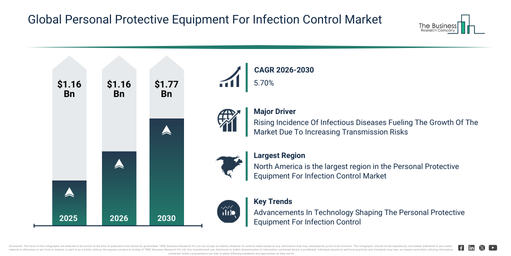
    The personal protective equipment for infection control market is poised for robust expansion over the forthcoming years. This market is projected to reach a valuation of $35.31 billion by 2030, exhibiting a compound annual growth rate (CAGR) of 5.7%. Several factors are expected to fuel this expansion during the forecast period, including an increase in outpatient and ambulatory care centers, a higher incidence of infectious disease outbreaks, the implementation of more stringent global safety compliance norms, elevated healthcare spending in developing economies, and significant demand originating from non-healthcare sectors like public safety. Key developments anticipated during the forecast period encompass the broadening of antimicrobial and self-sterilizing PPE offerings, a transition towards reusable and cost-effective PPE solutions, an increase in stockpiling and emergency preparedness initiatives, a growing preference for comfort-oriented and ergonomically designed PPE, and the standardization and regulatory alignment of PPE products.

    Access Your Free Sample Report for In-Depth Market Insights:

    https://www.thebusinessresearchcompany.com/sample.aspx?id=25872&type=smp

    Which Drivers Are Expected To Impact The Personal Protective Equipment For Infection Control Market During The Forecast Period?

    The anticipated expansion of the personal protective equipment for infection control market is driven by the growing prevalence of infectious diseases. These illnesses originate from pathogenic microorganisms such such as bacteria, viruses, fungi, or parasites, and possess the capability to transmit, directly or indirectly, among individuals or from animals or the environment to humans. The increase in infectious disease cases can be attributed to people’s preference for densely populated urban environments and heightened global travel, both of which accelerate disease transmission. Personal protective equipment (PPE) for infection control plays a crucial role in curbing the spread of infectious diseases by enabling healthcare professionals and the general public to establish a physical barrier against pathogens, thereby preventing direct exposure to infectious agents. For example, a report published in March 2025 by the UK Health Security Agency, a UK-based government department, indicated that in England, between 2023 and 2024, hospital admission rates for infectious diseases and infections were nearly twice as high among residents in the most deprived 20% of areas compared to those in the least deprived areas. Additionally, in February 2024, GOV.UK, another UK-based government department, reported that the number of tuberculosis (TB) cases in England increased from 4,380 in 2022 to 4,850 in 2023, representing a 10.7% rise. Consequently, the increasing occurrence of infectious diseases is a key factor propelling the growth of the personal protective equipment for infection control market.

    Which Segments Are Driving Activity In The Personal Protective Equipment For Infection Control Market?

    The personal protective equipment for infection control market covered in this report is segmented –

    1) By Product Type: Gloves, Face Masks, Gowns And Coveralls, Eye Protection, Respirators

    2) By Material Type: Latex, Nitrile, Polyethylene, Polypropylene, Other Advanced Materials

    3) By Distribution Channel: Direct Sales, Online Retail, Traditional Retail, Catalog Sales, Wholesalers And Distributors

    4) By Application Area: Infection Prevention, Occupational Safety, Emergency Response, Aerosol Transmission Protection, Healthcare Settings

    5) By End-User: Hospitals, Ambulatory Surgical Centers, Pharmacies, Diagnostic Laboratories, Public Health Institutions

    Subsegments:

    1) By Gloves: Disposable Gloves, Sterile Gloves, Non-Sterile Gloves, Latex Gloves, Nitrile Gloves, Vinyl Gloves, Polyethylene Gloves

    2) By Face Masks: Surgical Masks, N95 Respirators, KN95 Masks, Face Shields

    3) By Gowns And Coveralls: Isolation Gowns, Surgical Gowns, Coveralls, Reusable Gowns, Disposable Gowns, Fluid-Resistant Gowns

    4) By Eye Protection: Safety Goggles, Face Shields, Protective Glasses

    5) By Respirators: Half-Face Respirators, Full-Face Respirators, Powered Air-Purifying Respirators (PAPR), Reusable Respirators, Disposable Respirators

    What Upcoming Trends Are Likely To Define The Future Path Of The Personal Protective Equipment For Infection Control Market?

    Leading companies in the personal protective equipment for infection control market are concentrating on developing advanced solutions, such as next-generation personal protective shields, with the aim of enhancing user safety, improving comfort, and offering superior protection against airborne pathogens. These next-generation personal protective shields represent sophisticated face and body shielding equipment, engineered with improved materials, ergonomic designs, and enhanced protective features to deliver outstanding defense against infectious agents. For example, in March 2025, Stryker Corporation, a US-based medical technology company, launched the Steri-Shield 8 personal protection system, which is a next-generation personal protective equipment (PPE) tailored for healthcare professionals. This system features a customizable helmet with three points of contact for a secure and adjustable fit, and notably includes a unique ponytail path to accommodate long-haired users. It provides improved visibility through a 22% wider field of vision and a brighter helmet light, alongside a redesigned fan system that cools the front and back of the neck for enhanced comfort. The system incorporates three toga styles that offer AAMI level 4 (2012) protection, ensuring the highest level of fluid and microbial barrier. Additionally, it comes with a sleeker battery and a more efficient charging station, reflecting Stryker’s commitment to innovation and user-centric design in PPE.

    Which Major Industry Participants Are Leading The Personal Protective Equipment For Infection Control Market Growth?

    Major companies operating in the personal protective equipment for infection control market are Cardinal Health Inc., Honeywell International Inc., 3M Company, Kimberly Clark Corporation, DuPont de Nemours Inc., STERIS plc, ELIS UK Limited, Ansell Limited, SHOWA Group, SAS Safety Corp., Moldex Metric Inc., Uvex Arbeitsschutz GmbH, Alpha Pro Tech Ltd., Polyco Healthline Ltd., Gateway Safety Inc., Plasti Surge Industries Pvt. Ltd., Franz Mensch GmbH, Univet S.p.A., Dastex Reinraumzubehör GmbH & Co. KG, Medline Industries LP, Hartalega Holdings Berhad, Top Glove Corporation Berhad, Supermax Corporation Berhad

    Access The Complete Report For Deeper Market Insights:

    https://www.thebusinessresearchcompany.com/report/personal-protective-equipment-for-infection-control-global-market-report

    Which Geographic Areas Are Emerging As Strong Markets For The Personal Protective Equipment For Infection Control Market?

    North America was the largest region in the personal protective equipment for infection control market in 2025. Asia-Pacific is expected to be the fastest-growing region in the forecast period. The regions covered in the personal protective equipment for infection control market report are Asia-Pacific, South East Asia, Western Europe, Eastern Europe, North America, South America, Middle East, Africa.

    Request Your Customized Personal Protective Equipment For Infection Control Market Research Report for Competitive Advantage:

    https://www.thebusinessresearchcompany.com/customise?id=25872&type=smp

    Browse Through More Reports Similar to the Global Personal Protective Equipment For Infection Control Market 2026, By The Business Research Company

    Infection Control Global Market Report 2026

    https://www.thebusinessresearchcompany.com/report/infection-control-global-market-report

    Law Enforcement Personal Protective Equipment Global Market Report 2026

    https://www.thebusinessresearchcompany.com/report/law-enforcement-personal-protective-equipment-global-market-report

    Military Personal Protective Equipment Global Market Report 2026

    https://www.thebusinessresearchcompany.com/report/military-personal-protective-equipment-global-market-report

    Get in touch with us:

    The Business Research Company: https://www.thebusinessresearchcompany.com/

    Americas +1 310-496-7795

    Asia +44 7882 955267 & +91 8897263534

    Europe +44 7882 955267

    Email us at info@tbrc.info

    Follow us on:

    LinkedIn: https://in.linkedin.com/company/the-business-research-company
  • Personal Mobility Devices Market Insights Report: Opportunities and Drivers 2030

    Personal Mobility Devices Market Insights Report: Opportunities and Drivers 2030

    Uncover key drivers, emerging technologies, and competitive movements shaping the worker heat stress monitoring wearable market from 2026–2035 with trusted insights from The Business Research Company

    How much is the Personal Mobility Devices Market valued at in 2026, and what valuation is forecast for 2030?

    The personal mobility devices market has witnessed strong expansion in recent years. It is forecast to rise from $12.57 billion in 2025 to $13.53 billion in 2026, advancing at a compound annual growth rate (CAGR) of 7.6%. The historical growth of this market is attributable to the limited availability of electric mobility options, a significant reliance on traditional walking aids, an increasing urban population with mobility needs, growing requirements for mobility within hospitals and clinics, and an emerging awareness of smart mobility devices.

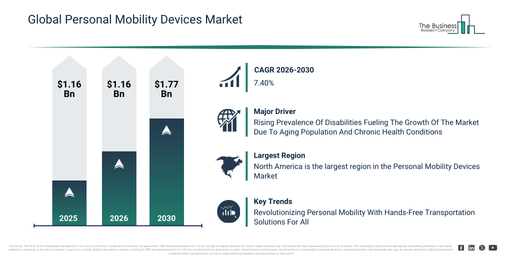
    The personal mobility devices market is anticipated to experience robust expansion over the coming years. By 2030, this market is projected to reach $18.03 billion, demonstrating a compound annual growth rate (CAGR) of 7.4%. This projected growth is driven by several factors, including technological progress in electric and hybrid PMDs, increased funding for smart and connected mobility solutions, more government programs promoting accessible urban transportation, the expansion of homecare and outpatient services, and the broader acceptance of IoT-enabled and autonomous mobility devices. Key trends anticipated during this period involve the increasing use of personal mobility devices for city travel, a rising need for compact and light mobility options, a heightened emphasis on accessibility for seniors and people with disabilities, the incorporation of smart features and iot connectivity into pmds, and the expansion of mobility services in homecare and outpatient settings.

    Access Your Free Sample Report for In-Depth Market Insights:

    https://www.thebusinessresearchcompany.com/sample.aspx?id=24362&type=smp

    What Drivers Are Influencing The Growth Of The Personal Mobility Devices Market?

    The increasing occurrence of disabilities is anticipated to drive the expansion of the personal mobility devices market in the coming years. Disabilities are defined as long-term physical, mental, intellectual, or sensory impairments that, when interacting with various societal barriers, can impede an individual’s full and effective participation in society on an equal footing with others. The rise in disability prevalence is primarily attributed to the aging population, as age-related conditions such as arthritis, vision impairment, and dementia become more common alongside longer life expectancies. Personal mobility devices, including wheelchairs and scooters, are vital for individuals with disabilities, as they enhance independence, improve access to daily activities, and support greater involvement in social and professional life. For instance, in June 2025, a report issued by the Department for Work and Pensions, a UK-based government department, indicated that during the 2023-24 period, the number of working-age people reporting a long-term health condition increased by 300,000 (2.0%), the number classed as disabled increased by 290,000 (3.1%), and those whose day-to-day activities are limited a lot increased by 170,000 (4.4%). Consequently, the growing prevalence of disabilities is stimulating the growth of the personal mobility devices market.

    How Is The Personal Mobility Devices Market Organized Into Various Segments?

    The personal mobility devices market covered in this report is segmented –

    1) By Product Type: Walking Aids, Handbikes, Mobility Scooters, Medical Beds, Stair-lifts, Power Add On Products, Wheelchairs, Other Product Types

    2) By Distribution Channel: Wholesalers Or Distributors, Online Retailers, Multi-Brand Stores, Specialty Stores

    3) By End User: Hospital And Clinics, Ambulatory Surgical Centers, Rehabilitation Centers, Homecare Setting, Other End Users

    Subsegments:

    1) By Walking Aids: Canes, Crutches, Walkers, Rollators

    2) By Handbikes: Manual Handbikes, Electric Handbikes, Hybrid Handbikes

    3) By Mobility Scooters: 3-Wheel Scooters, 4-Wheel Scooters, Foldable Or Portable Scooters, Heavy-Duty Scooters

    4) By Medical Beds: Manual Beds, Semi-Electric Beds, Fully Electric Beds, Bariatric Beds

    5) By Stair-Lifts: Straight Stair-Lifts, Curved Stair-Lifts, Outdoor Stair-Lifts, Platform Stair-Lifts

    6) By Power Add On Products: Power Assist Wheels, Power Drive Units, Motorized Attachments

    7) By Wheelchairs: Manual Wheelchairs, Power Wheelchairs, Transport Wheelchairs, Sports Wheelchairs

    8) By Other Product Types: Patient Lifts, Transfer Aids, Standing Frames, Mobility Accessories

    Which Trends Are Shaping Activity Within The Personal Mobility Devices Market?

    Leading companies operating in the personal mobility devices market are focusing on creating technologically advanced products, such as hands-free personal mobility devices, to enhance personal mobility by merging movement assistance with immersive digital experiences for broader uses. A hands-free personal mobility device is a self-balancing, motorized transportation solution that allows users to travel without employing their hands, typically operated through body movements or posture control for short-distance, individual journeys. For instance, in February 2024, Honda Motor Co., Ltd., a Japan-based automotive manufacturer, unveiled the UNI-ONE, a hands-free personal mobility device designed to improve user interaction and mobility through sophisticated self-balancing technology and intuitive control mechanisms. The UNI-ONE incorporates a seat that can be adjusted in height, enabling users to maintain eye-level communication with both standing and seated individuals, thus promoting more natural social interactions. Furthermore, the device is equipped with Honda’s Omni Traction Drive Systems, facilitating smooth, multi-directional movement controlled by the user’s body posture, which not only delivers a seamless mobility experience but also expands accessibility for users with varying mobility requirements.

    Who Are The Prominent Global Companies Shaping The Personal Mobility Devices Market Landscape?

    Major companies operating in the personal mobility devices market are Medline Industries Inc., Stryker Corporation, Hill Rom Holdings Inc., Ottobock, Arjo AB, Invacare Holdings Corporation, NOVA Medical Products, Permobil, Sunrise Medical LLC, DRIVE MEDICAL GMBH & CO. KG, Performance Health Supply Inc., Pride Mobility Products Corp., Carex Health Brands Inc., Compass Health Brands, GF Health Products Inc., Handicare Group, Golden Technologies, Falcon Mobility Singapore, Rehabilitation Manufacturing Services Limited (RMS), Karman Healthcare, Triride srl, Eurovema Mobility AB, Rollz International.

    Access The Complete Report For Deeper Market Insights:

    https://www.thebusinessresearchcompany.com/report/personal-mobility-devices-global-market-report

    Which Region Is Projected To Lead The Personal Mobility Devices Market During The Forecast Period?

    North America was the largest region in the personal mobility devices market in 2025. Asia-Pacific is expected to be the fastest-growing region in the forecast period. The regions covered in the personal mobility devices market report are Asia-Pacific, South East Asia, Western Europe, Eastern Europe, North America, South America, Middle East, Africa.

    Request Your Customized Personal Mobility Devices Market Research Report for Competitive Advantage:

    https://www.thebusinessresearchcompany.com/customise?id=24362&type=smp

    Browse Through More Reports Similar to the Global Personal Mobility Devices Market 2026, By The Business Research Company

    Ultra Mobile Devices Global Market Report 2026

    https://www.thebusinessresearchcompany.com/report/ultra-mobile-devices-global-market-report

    Managed Mobility Services Global Market Report 2026

    https://www.thebusinessresearchcompany.com/report/managed-mobility-services-global-market-report

    Mobility As A Service Global Market Report 2026

    https://www.thebusinessresearchcompany.com/report/mobility-as-a-service-global-market-report

    Get in touch with us:

    The Business Research Company: https://www.thebusinessresearchcompany.com/

    Americas +1 310-496-7795

    Asia +44 7882 955267 & +91 8897263534

    Europe +44 7882 955267

    Email us at info@tbrc.info

    Follow us on:

    LinkedIn: https://in.linkedin.com/company/the-business-research-company

  • Personal Emergency Response Systems (PERS) Global Forecast: Market to Scale Up to $12.59 Billion by 2030 at 8.8% CAGR

    Personal Emergency Response Systems (PERS) Global Forecast: Market to Scale Up to $12.59 Billion by 2030 at 8.8% CAGR

    Uncover key drivers, emerging technologies, and competitive movements shaping the workstation graphics processing unit (gpu) market from 2026–2035 with trusted insights from The Business Research Company

    By how much is the Personal Emergency Response Systems (PERS) Market expected to grow between 2026 and 2030?

    The personal emergency response systems (pers) market has experienced significant growth in recent years. This market is anticipated to expand from $8.23 billion in 2025 to $8.97 billion by 2026, exhibiting a compound annual growth rate (CAGR) of 9.0%. Historically, this expansion has been driven by factors including an increasing aging population, a rise in independent living among seniors, the demand for emergency healthcare, a shortage of caregivers, and heightened awareness of elderly safety.

    The market for personal emergency response systems (PERS) is projected for significant expansion in the coming years. This market is anticipated to reach $12.6 billion by 2030, demonstrating a compound annual growth rate (CAGR) of 8.8%. Factors driving this growth during the forecast period include smart home integration, AI-based emergency detection, the expanding scope of home healthcare, government initiatives for elderly care programs, and the increasing adoption of mobile health. Key trends expected during this period involve the proliferation of wearable emergency devices, the uptake of GPS-enabled mobile PERS, the incorporation of fall detection sensors, the development of home-based elderly safety solutions, and the implementation of voice-activated emergency systems.

    Access Your Free Sample Report for In-Depth Market Insights:

    https://www.thebusinessresearchcompany.com/sample.aspx?id=22095&type=smp

    Which Drivers Are Influencing Market Acceleration In The Personal Emergency Response Systems (PERS) Market?

    The increasing occurrence of chronic illnesses is anticipated to boost the expansion of the personal emergency response systems (PERS) market in the future. These long-lasting health conditions, such as diabetes, heart disease, and arthritis, emerge progressively and require ongoing management. The growing incidence of chronic diseases stems from poor lifestyle choices and an aging populace. Such unhealthy habits heighten the chances of obesity, insulin resistance, and inflammation, all critical factors in developing chronic conditions. The expanding prevalence of chronic diseases thus elevates the need for personal emergency response systems (PERS), as these systems offer continuous oversight and rapid access to medical assistance. PERS serves as an essential tool, enabling individuals to notify emergency services or caregivers during health emergencies, thereby safeguarding patient well-being and providing reassurance. For instance, in June 2024, the National Health Service, a UK-based government department, reported that in 2023, half a million (549,000) more people in England were identified as being at risk of developing type 2 diabetes, bringing the total number of individuals with non-diabetic hyperglycemia, or pre-diabetes, registered with a GP to 3,615,330. This marks a substantial rise from 3,065,825 in 2022, indicating an increase of nearly 20%. Consequently, the rising prevalence of chronic diseases is a key driver for the growth of the personal emergency response systems (PERS) market.

    What Segments Are Identified Within The Structure Of The Personal Emergency Response Systems (PERS) Market?

    The personal emergency response systems (pers) market covered in this report is segmented –

    1) By Type: Landline Personal Emergency Response System (PERS), Mobile Personal Emergency Response System (PERS)

    2) By Component: Smoke Detectors, Bed Sensors, Pull-Cord Residential, Fall Detection Sensors, Flood Detectors

    3) By End-User: Nursing Home, Home-Based User, Assisted Living Facilities, Hospices, Senior Living Facilities

    Subsegments:

    1) By Landline Personal Emergency Response System (PERS): Basic Landline PERS, Auto-Alert Landline PERS, Voice-Activated Landline PERS

    2) By Mobile Personal Emergency Response System (PERS): GPS-enabled Mobile PERS, Non-GPS Mobile PERS, Wearable Mobile PERS, Smartphone-based Mobile PERS

    Which Trends Are Influencing The Development Of The Personal Emergency Response Systems (PERS) Market?

    Major companies in the personal emergency response systems (PERS) market are concentrating on developing advanced products, like medical alert devices, to improve real-time monitoring for better emergency responses and proactive healthcare management. A medical alert device is an electronic system that provides immediate help during medical emergencies and includes a wearable assistance button linking users to emergency response services. For instance, in February 2025, LogicMark, Inc., a US-based medical equipment manufacturing company, released the next-generation Guardian Alert 911 Plus. This sophisticated personal emergency response device includes fall detection, 4G LTE technology, and a sleek, discreet design, offering essential, hands-free fall detection and direct access to emergency services, thereby providing enhanced safety and independence for aging adults and individuals with medical conditions without the burden of recurring costs.

    Which Key Players Are Driving Competition In The Personal Emergency Response Systems (PERS) Market?

    Major companies operating in the personal emergency response systems (pers) market are ADT Inc, Tunstall Healthcare, Lifeline Systems Company, Medical Guardian, LifeStation, LifeFone Medical Alert Services, LifeWatch, Rescue Alert, AlertOne Services LLC, GreatCall, Bay Alarm Medical, Lifelink USA, Galaxy Medical Alert Systems, Alarm Systems, MediPendant, QMedic, Life Guardian LLC, Philips Lifeline, Bay Alarm Medical (Expanded Division), Philips Personal Emergency Response Solutions

    Access The Complete Report For Deeper Market Insights:

    https://www.thebusinessresearchcompany.com/report/personal-emergency-response-systems-pers-global-market-report

    Which Region Currently Holds The Largest Share Of The Personal Emergency Response Systems (PERS) Market?

    North America was the largest region in the personal emergency response systems market in 2025. The regions covered in the personal emergency response systems (pers) market report are Asia-Pacific, South East Asia, Western Europe, Eastern Europe, North America, South America, Middle East, Africa.

    Request Your Customized Personal Emergency Response Systems (PERS) Market Research Report for Competitive Advantage:

    https://www.thebusinessresearchcompany.com/customise?id=22095&type=smp

    Browse Through More Reports Similar to the Global Personal Emergency Response Systems (PERS) Market 2026, By The Business Research Company

    Emergency Department Information System Global Market Report 2026

    https://www.thebusinessresearchcompany.com/report/emergency-department-information-system-global-market-report

    Emergency Medical Services Products Global Market Report 2026

    https://www.thebusinessresearchcompany.com/report/emergency-medical-services-products-global-market-report

    Incident And Emergency Management Global Market Report 2026

    https://www.thebusinessresearchcompany.com/report/incident-and-emergency-management-global-market-report

    Get in touch with us:

    The Business Research Company: https://www.thebusinessresearchcompany.com/

    Americas +1 310-496-7795

    Asia +44 7882 955267 & +91 8897263534

    Europe +44 7882 955267

    Email us at info@tbrc.info

    Follow us on:

    LinkedIn: https://in.linkedin.com/company/the-business-research-company

  • Personal Care Robotics Market Future Outlook: Strong Growth Expected Toward $31.02 Billion by 2030

    Personal Care Robotics Market Future Outlook: Strong Growth Expected Toward $31.02 Billion by 2030

    Uncover key drivers, emerging technologies, and competitive movements shaping the worker heat stress monitoring wearable market from 2026–2035 with trusted insights from The Business Research Company

    What is the estimated market size of the Personal Care Robotics Market by the end of 2030?

    The personal care robotics market size has witnessed rapid expansion in recent years. It is projected to increase from $16.69 billion in 2025 to $18.92 billion in 2026, reflecting a compound annual growth rate (CAGR) of 13.3%. The growth observed during the historic period stems from factors such as the limited availability of personal care robots, a reliance on semi-automated devices, an expanding elderly population, increasing awareness of assisted living solutions, and the early adoption of AI-based healthcare devices.

    The personal care robotics market is poised for significant expansion in the coming years. It is projected to reach $31.02 billion by 2030, exhibiting a compound annual growth rate (CAGR) of 13.2%. This growth during the forecast period is fueled by advancements in AI and machine learning for robotics, the rising adoption of smart homes, increased investment in home care and nursing facilities, the broadening scope of sensor and actuator technologies, and the increasing need for personalized care solutions for the elderly and disabled. Prominent trends throughout this period encompass the growing integration of personal care robots in elderly assistance, an elevated focus on health monitoring and remote support, the expanding incorporation of robotic wearables for daily tasks, the development of companion robots for mental well-being, and enhanced automation for hygiene and cleaning within home care environments.

    Access Your Free Sample Report for In-Depth Market Insights:

    https://www.thebusinessresearchcompany.com/sample.aspx?id=24361&type=smp

    What Drivers Are Shaping Future Opportunities In The Personal Care Robotics Market?

    The rising incidence of disabilities is expected to boost the personal care robotics market’s expansion in the coming years. Disabilities encompass physical, mental, sensory, or cognitive limitations that hinder an individual’s ability to perform daily activities or interact with their environment. The rise in disabilities is attributed to aging populations, given that extended lifespans elevate the likelihood of developing conditions like mobility impairments, cognitive decline, and chronic illnesses. Personal care robotics assists individuals with disabilities by improving their independence, safety, and overall quality of life via assistive technologies. Such robots are capable of executing everyday tasks that might be difficult or unachievable for certain individuals, including activities like feeding, dressing, grooming, or providing mobility assistance. As an illustration, a report from the House of Commons Library, a UK-based research department within the British Parliament, indicated in October 2024 that during the 2022–2023 fiscal year, 16.1 million persons in the UK had a disability, representing approximately 24% of the total population. The incidence of disability escalated with age, affecting around 11% of children, 23% of individuals of working age, and 45% of people over the State Pension age. Consequently, the growing occurrence of disabilities is set to propel the expansion of the personal care robotics market.

    Which Segments Are Gaining Traction In The Personal Care Robotics Market?

    The personal care robotics market covered in this report is segmented –

    1) By Product: Smart Robots, Half Smart Robots

    2) By Technology: Artificial Intelligence (AI) And Machine Learning, Sensors And Actuators, Speech Recognition, Other Technologies

    3) By Application: Elderly Care, Disabled Assistance, Personal Hygiene, Others Applications

    4) By End-User: Hospitals, Nursing Homes, Home Care Settings, Other End-Users

    Subsegments:

    1) By Smart Robots: Personal Assistants, Health Monitoring Robots, Cleaning Robots, Robotic Wearables, Companion Robots

    2) By Half Smart Robots: Semi-Automated Cleaning Robots, Semi-Automated Health Monitoring Devices, Semi-Automated Personal Care Robots

    What Trends Are Expected To Impact The Competitive Landscape Of The Personal Care Robotics Market?

    Leading companies within the personal care robotics market are concentrating on developing advanced products, such as artificial intelligence (AI)-powered caregiver solutions, designed to continuously monitor and respond to an individual’s requirements in real-time. These AI-powered caregiver solutions represent technologically driven systems that employ machine learning and other AI technologies to support caregiving tasks, improving efficiency and offering assistance to individuals with disabilities or aging needs. For example, in January 2025, Intuition Robotics Inc., an Israel-based developer of digital companion technology, launched the ElliQ Caregiver Solution. This system integrates the ElliQ companion robot with a specialized Caregiver App for managing care remotely. Together, they form a comprehensive platform utilizing artificial intelligence to support the care of senior citizens. The solution empowers caregivers to stay connected, informed, and actively involved in their loved one’s care, even from a distance. ElliQ aids in monitoring health and activity, establishing personalized care objectives, and delivering proactive, AI-driven updates, ensuring caregivers are consistently aware of important changes. By serving as both a companion and a care assistant, ElliQ alerts caregivers to significant shifts in behavior or health, enabling effective remote care without the need for physical presence.

    Who Are The Top-Performing Companies In The Personal Care Robotics Market In Recent Years?

    Major companies operating in the personal care robotics market are SoftBank Robotics, Blue Ocean Robotics, Aethon Inc, Toyota Motor Corporation, Omron Corporation, Cyberdyne Care Robotics GmbH, ReWalk Robotics Ltd, REX Bionics Ltd, Paro Therapeutic Robots, Blue Frog Robotics, Labrador Systems Inc, Pillo Health, KOMPAÏ Robotics, Service Robotics Limited, PAL Robotics, Ekso Bionics Holdings Inc, Sarcos Technology and Robotics Corporation, Honda Robotics, Focal Meditech BV, Intuition Robotics, Ubtech Robotics, Giraff Technologies AB

    Access The Complete Report For Deeper Market Insights:

    https://www.thebusinessresearchcompany.com/report/personal-care-robotics-global-market-report

    How Does The Personal Care Robotics Market Perform Across Major Global Regions?

    North America was the largest region in the personal care robotics market in 2025. Asia-Pacific is expected to be the fastest-growing region in the forecast period. The regions covered in the personal care robotics market report are Asia-Pacific, South East Asia, Western Europe, Eastern Europe, North America, South America, Middle East, Africa.

    Request Your Customized Personal Care Robotics Market Research Report for Competitive Advantage:

    https://www.thebusinessresearchcompany.com/customise?id=24361&type=smp

    Browse Through More Reports Similar to the Global Personal Care Robotics Market 2026, By The Business Research Company

    Healthcare Companion Robots Global Market Report 2026

    https://www.thebusinessresearchcompany.com/report/healthcare-companion-robots-global-market-report

    Healthcare Mobile Robots Global Market Report 2026

    https://www.thebusinessresearchcompany.com/report/healthcare-mobile-robots-global-market-report

    Robotic Surgery Services Global Market Report 2026

    https://www.thebusinessresearchcompany.com/report/robotic-surgery-services-global-market-report

    Get in touch with us:

    The Business Research Company: https://www.thebusinessresearchcompany.com/

    Americas +1 310-496-7795

    Asia +44 7882 955267 & +91 8897263534

    Europe +44 7882 955267

    Email us at info@tbrc.info

    Follow us on:

    LinkedIn: https://in.linkedin.com/company/the-business-research-company

  • Revenue of the Peripherally Inserted Central Catheter (PICC) Market Predicted to Achieve $1.32 Billion by 2030, Driven by 4.3% CAGR

    Revenue of the Peripherally Inserted Central Catheter (PICC) Market Predicted to Achieve $1.32 Billion by 2030, Driven by 4.3% CAGR

    Uncover key drivers, emerging technologies, and competitive movements shaping the workstation graphics processing unit (gpu) market from 2026–2035 with trusted insights from The Business Research Company

    What was the valuation of the Peripherally Inserted Central Catheter (PICC) Market in 2026, and what figure is it projected to hit by 2030?

    The peripherally inserted central catheter (picc) market has seen consistent expansion over recent years. Its value is projected to climb from $1.07 billion in 2025 to $1.12 billion in 2026, demonstrating a compound annual growth rate (CAGR) of 4.4%. This past growth can be attributed to several factors, including an increase in chronic illnesses necessitating prolonged intravenous therapy, hospitals’ greater adoption of picc lines for administering chemotherapy and antibiotics, the early clinical acceptance of standard single and double lumen kits, the expansion of catheterization laboratory services facilitating vascular access, and the increasing use of piccs in both inpatient and critical care environments.

    The peripherally inserted central catheter (picc) market size is projected for consistent expansion over the upcoming years. By 2030, this market is anticipated to reach $1.32 billion, achieving a compound annual growth rate (CAGR) of 4.3%. This anticipated growth is driven by several factors, including the escalating demand for power-injectable and multi-lumen picc systems, the increased adoption of tip-placement kits to enhance procedural precision, a rise in procedure volumes within ambulatory surgical centers, the broadening use of piccs in home infusion and outpatient settings, and a heightened emphasis on minimizing complications and optimizing long-term vascular access results. Key trends during this period are expected to encompass the growing acceptance of power-injectable picc lines for sophisticated diagnostic and therapeutic interventions, the expanded deployment of multi-lumen piccs in intricate long-term intravenous therapy, a developing preference for tip-placement and navigation-assisted picc insertion kits, the broader application of piccs in oncology nutrition support and the management of chronic infections, and the increasing implementation of picc lines throughout hospitals, ambulatory surgical centers (ASCs), and catheterization laboratories.

    Access Your Free Sample Report for In-Depth Market Insights:

    https://www.thebusinessresearchcompany.com/sample.aspx?id=13908&type=smp

    Which Drivers Are Affecting Market Participation In The Peripherally Inserted Central Catheter (PICC) Market?

    The increasing incidence of long-term health conditions is anticipated to fuel expansion in the peripherally inserted central catheter market in the foreseeable future. These conditions are defined as enduring health issues that persist over time and typically advance gradually, encompassing ailments like cancer, diabetes, hypertension, stroke, heart disease, respiratory diseases, arthritis, obesity, and oral diseases. Peripherally inserted central catheters (PICCs) find application in chronic illness management, offering prolonged intravenous access for administering medications, fluids, parenteral nutrition, and for blood sampling. For example, data from January 2023, sourced from the US-based National Library of Medicine, indicates a projected increase of 99.5% in the number of people aged 50 years and older suffering from at least one chronic ailment, reaching 142.66 million by 2050, an increase from 71.522 million in 2022 in the United States. Consequently, the rising occurrence of chronic illnesses is propelling the expansion of the peripherally inserted central catheter (PICC) market.

    What Segment Categories Are Covered In The Peripherally Inserted Central Catheter (PICC) Market?

    The peripherally inserted central catheter (picc) market covered in this report is segmented –

    1) By Device Type: Power-Injectable, Non-Power Injectable

    2) By Lumen Type: Single, Double, Triple

    3) By Kit Type: Tip-Placement Kit, Conventional Kit

    4) By End User: Hospitals and Clinics, Ambulatory Surgical Centers, Catheterization Laboratories

    Subsegments:

    1) By Power-Injectable PICCs: Single Lumen Power-Injectable PICCs, Double Lumen Power-Injectable PICCs, Triple Lumen Power-Injectable PICCs

    2) By Non-Power Injectable PICCs: Single Lumen Non-Power Injectable PICCs, Double Lumen Non-Power Injectable PICCs, Triple Lumen Non-Power Injectable PICCs

    Which Trends Are Guiding The Evolution Of The Peripherally Inserted Central Catheter (PICC) Market?

    Leading companies within the peripherally inserted central catheter (PICC) market are focusing on innovative technologies, such as peripherally inserted central catheter insertion devices, to better serve their clientele with advanced functionalities. These peripherally inserted central catheter insertion devices are specialized medical instruments designed specifically for the accurate placement of peripherally inserted central catheters (PICCs) by inserting them into a peripheral vein, typically located in the arm, and carefully guiding them through the vascular system until their tip reaches a larger vein situated near the heart. For example, in May 2023, Teleflex Incorporated, a US-based medical device company, unveiled two new peripherally inserted central catheter insertion devices: the Arrow VPS Rhythm DLX Device and the NaviCurve Stylet. The VPS Rhythm DLX Device utilizes cardiac electrical activity to provide real-time information regarding the catheter tip’s position. This device also incorporates an optional integrated ultrasonography feature with a catheter-to-vessel ratio tool, which helps ensure consistency in vessel measurements. This tool, when used in conjunction with the Arrow PICC packaged with the NaviCurve Stylet, offers cutting-edge tip navigation or location technology. The VPS Rhythm DLX Device, featuring TipTracker Technology, removes the requirement for a confirmatory x-ray, thereby allowing the physician to achieve smooth insertion through ultrasound vascular evaluation, peripherally inserted central catheter navigation, and definitive tip verification in the inferior third of the superior vena cava.

    Which Leading Companies Dominate The Peripherally Inserted Central Catheter (PICC) Market Share?

    Major companies operating in the peripherally inserted central catheter (picc) market are Cardinal Health Inc., Medtronic plc, Becton Dickinson and Company, B. Braun Medical Ltd, Teleflex Incorporated, ICU Medical Inc., Cook Medical, AngioDynamics, Argon Medical, PFM Medical Inc., Poly Medicure Ltd., Kimal Plc, Utah Medical Products Inc., Martech Medical Products, NeoMedical, Medical Components Inc, DeltaMed Solutions Inc., Access Vascular Inc., Medi-Tech Devices, Footprint Medical Incorporated, Biowy Corporation, Husk Medical B.V., Medcomp, Vygon Ltd, Haolang Technology (Foshan) Limited Co. Ltd

    Access The Complete Report For Deeper Market Insights:

    https://www.thebusinessresearchcompany.com/report/peripherally-inserted-central-catheter-picc-global-market-report

    Which Region Is Anticipated To See The Fastest Growth In The Peripherally Inserted Central Catheter (PICC) Market?

    North America was the largest region in the peripherally inserted central catheter (PICC) market in 2025. Asia-Pacific is expected to be the fastest-growing region in the forecast period. The regions covered in the peripherally inserted central catheter (picc) market report are Asia-Pacific, South East Asia, Western Europe, Eastern Europe, North America, South America, Middle East, Africa.

    Request Your Customized Peripherally Inserted Central Catheter (PICC) Market Research Report for Competitive Advantage:

    https://www.thebusinessresearchcompany.com/customise?id=13908&type=smp

    Browse Through More Reports Similar to the Global Peripherally Inserted Central Catheter (PICC) Market 2026, By The Business Research Company

    Peripheral Iv Catheters Global Market Report 2026

    https://www.thebusinessresearchcompany.com/report/peripheral-iv-catheters-global-market-report

    Central Venous Catheters Global Market Report 2026

    https://www.thebusinessresearchcompany.com/report/central-venous-catheters-global-market-report

    Intravascular Catheters Global Market Report 2026

    https://www.thebusinessresearchcompany.com/report/intravascular-catheters-global-market-report

    Get in touch with us:

    The Business Research Company: https://www.thebusinessresearchcompany.com/

    Americas +1 310-496-7795

    Asia +44 7882 955267 & +91 8897263534

    Europe +44 7882 955267

    Email us at info@tbrc.info

    Follow us on:

    LinkedIn: https://in.linkedin.com/company/the-business-research-company
  • Peripheral Vascular Devices And Equipment Sector Forecast Shows Robust Momentum, Climbing to $13.15 Billion With 5.7% CAGR

    Peripheral Vascular Devices And Equipment Sector Forecast Shows Robust Momentum, Climbing to $13.15 Billion With 5.7% CAGR

    Uncover key drivers, emerging technologies, and competitive movements shaping the worker heat stress monitoring wearable market from 2026–2035 with trusted insights from The Business Research Company

    What are the forecasted starting (2026) and ending (2030) market sizes for the Peripheral Vascular Devices And Equipment Market?

    The peripheral vascular devices and equipment market has experienced consistent growth in recent years. This market is forecasted to increase from $10.29 billion in 2025 to $10.56 billion in 2026, demonstrating a compound annual growth rate (CAGR) of 2.5%. The expansion witnessed during the historic period can be linked to factors including the rising prevalence of peripheral artery disease, an increasing aging population, the broader adoption of interventional cardiology practices, the growing use of catheter-based therapies, and enhanced investments in hospital infrastructure.

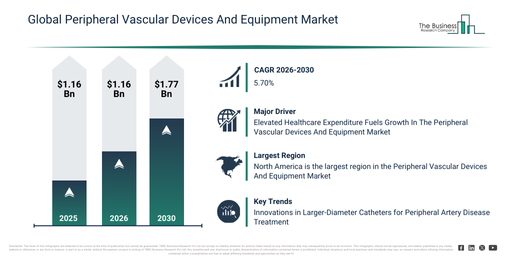
    The peripheral vascular devices and equipment market size is anticipated to experience robust expansion in the coming years. It is forecast to grow to $13.15 billion in 2030, demonstrating a compound annual growth rate (CAGR) of 5.7%. This growth during the forecast period is propelled by factors such as the increasing demand for minimally invasive vascular treatments, the rising utilization of bioresorbable materials, the expanding scope of outpatient vascular procedures, a growing emphasis on precision-guided interventions, and increasing innovation in peripheral stent technologies. Major developments foreseen in this period include the rising adoption of drug-coated vascular devices, an increase in the use of minimally invasive endovascular procedures, a surging demand for advanced atherectomy systems, the widening application of image-guided peripheral interventions, and an enhanced focus on long-term device patency.

    Access Your Free Sample Report for In-Depth Market Insights:

    https://www.thebusinessresearchcompany.com/sample.aspx?id=2408&type=smp

    What Drivers Are Supporting Technological Adoption In The Peripheral Vascular Devices And Equipment Market?

    The peripheral vascular devices and equipment market is projected to expand with the growth in healthcare expenditure. Healthcare expenditure refers to the aggregate sum of money disbursed by individuals, organizations, or governments for health-related goods and services within a specific timeframe. An increase in this spending typically fuels a higher demand for peripheral vascular devices and equipment, as healthcare systems allocate resources towards advanced medical technologies to enhance the diagnosis and treatment of conditions like peripheral artery disease, thereby improving patient care and results. For instance, in April 2025, The Office for National Statistics (ONS), a UK-based producer of official statistics and the government’s principal source of data, reported that government-financed healthcare attained USD 2.91 billion (£258 billion) in 2024, marking a real-terms rise of 2.5% from 2023, which indicates stronger financial backing for care provision and equipment. Hence, the increasing healthcare expenditure will act as a significant driver for the peripheral vascular devices and equipment market.

    Which Segments Are Contributing To The Growth Of The Peripheral Vascular Devices And Equipment Market?

    The peripheral vascular devices and equipment market covered in this report is segmented –

    1) By Type: Peripheral vascular stents, Percutaneous transluminal angioplasty balloons, Catheters, PTA guide wires, Atherectomy devices, Chronic total acclusion devices, Aortic stents, Synthetic surgical grafts, Embolic protection devices, Inferior vena cava filters

    2) By Application: Treatment of Peripheral Blood Vessels Damaged, Treatment of Peripheral Blood Vessels Blockage

    3) By End User: Hospital applications, Clinic applications

    Subsegments:

    1) By Peripheral Vascular Stents: Balloon-expandable Stents, Self-expanding Stents

    2) By Percutaneous Transluminal Angioplasty Balloons: Drug-coated Balloons, Non-drug-Coated Balloons

    3) By Catheters: Diagnostic Catheters, Therapeutic Catheters

    4) By PTA Guide Wires: Hydrophilic Guide Wires, Non-hydrophilic Guide Wires

    5) By Atherectomy Devices: Rotational Atherectomy Devices, Orbital Atherectomy Devices, Laser Atherectomy Devices, Directional Atherectomy Devices

    6) By Chronic Total Occlusion Devices: CTO crossing devices, CTO re-entry devices

    7) By Aortic Stents: Self-expanding Aortic Stents, Balloon-expandable Aortic Stents

    8) By Synthetic Surgical Grafts: Polyester Grafts, Polytetrafluoroethylene (PTFE) Grafts, Dacron Grafts

    9) By Embolic Protection Devices: Distal Protection Devices, Proximal Protection Devices

    10) By Inferior Vena Cava Filters: Permanent Filters, Retrievable Filters

    What Trends Are Projected To Support The Growth Of The Peripheral Vascular Devices And Equipment Market?

    Leading companies active in the peripheral vascular devices and equipment market are prioritizing the creation of advanced products, like larger-diameter catheters, to improve the management of peripheral artery diseases. These larger-diameter catheters are medical instruments engineered to enable the drainage or delivery of fluids, medications, or other materials. For example, in March 2023, Shockwave Medical Inc., a US-based medical device firm, introduced the peripheral intravascular lithotripsy (IVL) catheter. The defining characteristic of the Shockwave L6 Peripheral IVL catheter is its specialized construction, designed to effectively modify calcification in difficult lesions within major peripheral vessels, including the iliac and common femoral arteries. This targeted strategy aims to resolve the prevalent issue of calcification in these arteries, which is frequently associated with diminished procedural success and elevated complication rates when employing standard endovascular techniques.

    Who Are The Major Companies Operating In The Peripheral Vascular Devices And Equipment Market?

    Major companies operating in the peripheral vascular devices and equipment market are Medtronic plc, Boston Scientific Corporation, Abbott Laboratories, Cook Group, Angiomed GmbH & Co. Medizintechnik KG, Terumo Corporation, ENDOLOGIX Inc., Bolton Medical Inc., JOTEC GmbH, Clearstream Technologies, Aesculap AG, Curative Medical Devices, Lepu Medical Technology, MicroPort, Bioteque Corporation Co.Ltd., Cardinal Health, iVascular, B. Braun Group, Biosensors International Group, BIOTRONIK SE & Co., COVIDien, Volcano Corporation, AngioScore, Edwards Lifesciences Corporation, Cordis Corporation, Koninklijke Philips N.V., Nipro Corporation, Bluesail Medical Co. Ltd, Rex Medical, Teleflex Incorporated, Penumbra Inc., Lombard Medical Technologies PLC, W.L. Gore & Associates Inc., Merit Medical Systems Inc., Vascular Solutions Inc., LeMaitre Vascular Inc., Spectranetics Corporation

    Access The Complete Report For Deeper Market Insights:

    https://www.thebusinessresearchcompany.com/report/peripheral-vascular-devices-and-equipment-global-market-report

    Which Region Is Anticipated To See The Fastest Growth In The Peripheral Vascular Devices And Equipment Market?

    North America was the largest region in global peripheral vascular devices and equipment market in 2025. Western Europe was the second-largest region in global peripheral vascular devices and equipment market. The regions covered in the peripheral vascular devices and equipment market report are Asia-Pacific, South East Asia, Western Europe, Eastern Europe, North America, South America, Middle East, Africa.

    Request Your Customized Peripheral Vascular Devices And Equipment Market Research Report for Competitive Advantage:

    https://www.thebusinessresearchcompany.com/customise?id=2408&type=smp

    Browse Through More Reports Similar to the Global Peripheral Vascular Devices And Equipment Market 2026, By The Business Research Company

    Vascular Access Devices Global Market Report 2026

    https://www.thebusinessresearchcompany.com/report/vascular-access-devices-global-market-report

    Vascular Closure Devices Global Market Report 2026

    https://www.thebusinessresearchcompany.com/report/vascular-closure-devices-global-market-report

    Biopsy Devices Global Market Report 2026

    https://www.thebusinessresearchcompany.com/report/biopsy-devices-global-market-report

    Get in touch with us:

    The Business Research Company: https://www.thebusinessresearchcompany.com/

    Americas +1 310-496-7795

    Asia +44 7882 955267 & +91 8897263534

    Europe +44 7882 955267

    Email us at info@tbrc.info

    Follow us on:

    LinkedIn: https://in.linkedin.com/company/the-business-research-company

  • Peripheral Nerve Repair Devices Market Anticipated to Record Steady Gains, Advancing to $9.96 Billion by 2030

    Peripheral Nerve Repair Devices Market Anticipated to Record Steady Gains, Advancing to $9.96 Billion by 2030

    Uncover key drivers, emerging technologies, and competitive movements shaping the workstation graphics processing unit (gpu) market from 2026–2035 with trusted insights from The Business Research Company

    What upper market value could the Peripheral Nerve Repair Devices Market reach by 2030 starting from 2026 levels?

    The market for peripheral nerve repair devices has experienced robust growth recently. Projections indicate its expansion from $6.67 billion in 2025 to $7.24 billion by 2026, demonstrating a compound annual growth rate (CAGR) of 8.5%. Historically, this expansion has been driven by factors such as a rise in trauma injuries, an increase in reconstructive surgical procedures, the widespread use of nerve grafting, the broadening scope of orthopedic surgery, and innovations in microsurgical techniques.

    The peripheral nerve repair devices market size is anticipated to undergo significant expansion in the coming years. It is projected to achieve a value of $9.96 billion by 2030, growing at a compound annual growth rate (CAGR) of 8.3%. This projected growth can be attributed to several factors, including bioengineered nerve scaffolds, the increasing development of regenerative medicine, nerve disorders associated with an aging population, robotic-assisted surgeries, and advancements in synthetic grafts. Prominent trends expected during the forecast period involve biodegradable nerve conduits, advanced nerve regeneration materials, minimally invasive techniques for nerve repair, tailored nerve graft solutions, and improved surgical handling designs.

    Access Your Free Sample Report for In-Depth Market Insights:

    https://www.thebusinessresearchcompany.com/sample.aspx?id=20922&type=smp

    Which Drivers Are Influencing Long-Term Growth In The Peripheral Nerve Repair Devices Market?

    The expanding occurrence of neurological conditions is projected to boost the growth of the peripheral nerve repair devices market in the future. These disorders encompass various ailments impacting the brain, spinal cord, and nerves, resulting in challenges related to movement, mental processes, and other nervous system operations. The increasing incidence of neurological conditions stems from factors like an aging demographic, improved diagnostic tools, environmental influences, genetic susceptibilities, and lifestyle decisions including inadequate nutrition and insufficient physical activity. Peripheral nerve repair devices assist in managing neurological disorders by facilitating nerve regrowth, enhancing functional capabilities, and accelerating recovery via techniques such as electrical stimulation and the use of bioactive substances. For example, in May 2024, the Alzheimer’s Society, a dementia charity situated in the UK, reported that around one million individuals in the UK are currently affected by some type of dementia in 2024, with this figure anticipated to rise to 1.4 million by 2040. Consequently, the growing occurrence of neurological disorders is fueling the expansion of the peripheral nerve repair devices market.

    How Is The Peripheral Nerve Repair Devices Market Divided Into Segments?

    The peripheral nerve repair devices market covered in this report is segmented –

    1) By Type: Nerve Grafts, Nerve Protectors, Nerve Conduit

    2) By Application: Extremity Trauma, Breast Neurotization, Carpal And Cubital Tunnel Revision, Oral And Maxillofacial

    3) By End-User: Hospitals, Ambulatory Surgical Centers, Clinics

    Subsegments:

    1) By Nerve Grafts: Autografts, Allografts, Xenografts, Synthetic Nerve Grafts

    2) By Nerve Protectors: Nerve Wrapping Devices, Nerve Repair Gels And Films, Nerve Protection Matrices, Biodegradable Nerve Protectors

    3) By Nerve Conduit: Hollow Nerve Conduits, Collagen-Based Nerve Conduits, Silicone-Based Nerve Conduits, Tubular Nerve Conduits, Biodegradable Nerve Conduits

    Which Trends Are Influencing The Performance And Direction Of The Peripheral Nerve Repair Devices Market?

    Leading companies within the peripheral nerve repair devices market are prioritizing innovation, particularly in sutureless nerve-coaptation technologies, to enhance surgical efficiency and improve nerve regeneration outcomes. These sutureless devices facilitate the precise alignment and fixation of severed nerve ends without the need for microsutures, utilizing elements such as microhooks, adhesives, or mechanical clips to minimize trauma and reduce operative time. For instance, in June 2024, BioCircuit Technologies, a US-based medical device company, announced the first human implants of Nerve Tape, a sutureless nerve-repair device that incorporates a resorbable SIS backing with nitinol microhooks to enable rapid, precise coaptation of peripheral nerves and simplify repair procedures. This innovation is engineered to decrease the technical complexity and time needed for nerve repair, providing surgeons with a more consistent alternative to traditional suturing methods. The early clinical adoption of Nerve Tape further emphasizes the ongoing progress in regenerative technologies, aimed at boosting functional recovery for patients with peripheral nerve injuries.

    Which Major Firms Are Strengthening Their Position In The Peripheral Nerve Repair Devices Market?

    Major companies operating in the peripheral nerve repair devices market are Abbott Laboratories Inc., Medtronic Plc, Stryker Corporation, Baxter International Inc., Boston Scientific Corporation, Terumo Corporation, Teleflex Incorporated, Integra LifeSciences Holdings Corporation, LivaNova PLC, Nevro Corp., KLS Martin Group, Axonics Modulation Technologies Inc., Axogen Corporation, Toyobo Co. Ltd., NeuroPace Inc., SPR Therapeutics Inc., Biotronik, Neuraptive Therapeutics Inc., Synovis Micro Companies Alliance Inc., Synapse Biomedical Inc.

    Access The Complete Report For Deeper Market Insights:

    https://www.thebusinessresearchcompany.com/report/peripheral-nerve-repair-devices-global-market-report

    Which Global Regions Are Shaping The Competitive Landscape Of The Peripheral Nerve Repair Devices Market?

    Asia-Pacific was the largest region in the peripheral nerve repair devices market in 2025. North America is expected to be the fastest-growing region in the forecast period. The regions covered in the peripheral nerve repair devices market report are Asia-Pacific, South East Asia, Western Europe, Eastern Europe, North America, South America, Middle East, Africa.

    Request Your Customized Peripheral Nerve Repair Devices Market Research Report for Competitive Advantage:

    https://www.thebusinessresearchcompany.com/customise?id=20922&type=smp

    Browse Through More Reports Similar to the Global Peripheral Nerve Repair Devices Market 2026, By The Business Research Company

    Nerve Repair And Regenerative Global Market Report 2026

    https://www.thebusinessresearchcompany.com/report/nerve-repair-and-regenerative-global-market-report

    Neurology Devices Global Market Report 2026

    https://www.thebusinessresearchcompany.com/report/neurology-devices-global-market-report

    Neurosurgery Devices And Equipment Global Market Report 2026

    https://www.thebusinessresearchcompany.com/report/neurosurgery-devices-and-equipment-global-market-report

    Get in touch with us:

    The Business Research Company: https://www.thebusinessresearchcompany.com/

    Americas +1 310-496-7795

    Asia +44 7882 955267 & +91 8897263534

    Europe +44 7882 955267

    Email us at info@tbrc.info

    Follow us on:

    LinkedIn: https://in.linkedin.com/company/the-business-research-company
  • Peripheral Nerve Injuries Industry Poised for Rapid Growth, Forecast to Touch $7.65 Billion by 2030 at 11.4% CAGR

    Peripheral Nerve Injuries Industry Poised for Rapid Growth, Forecast to Touch $7.65 Billion by 2030 at 11.4% CAGR

    Uncover key drivers, emerging technologies, and competitive movements shaping the worker heat stress monitoring wearable market from 2026–2035 with trusted insights from The Business Research Company

    What level of CAGR-driven expansion is anticipated in the Peripheral Nerve Injuries Market between 2026 and 2030?

    The peripheral nerve injuries market size has experienced substantial expansion in recent years. It is projected to increase from $4.41 billion in 2025 to $4.97 billion in 2026, demonstrating a compound annual growth rate (CAGR) of 12.7%. The historical growth of this market can be linked to a higher incidence of traumatic injuries, an uptick in surgical nerve repair procedures, developments in microsurgical techniques, growing recognition of nerve injury treatment options, and enhanced post-surgical rehabilitation services.

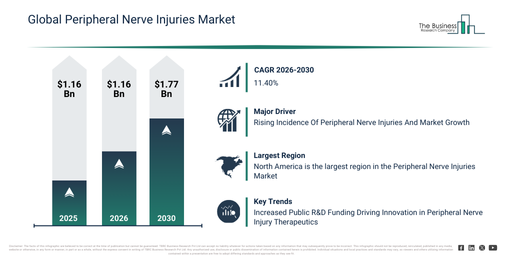
    The peripheral nerve injuries market is poised for significant expansion in the coming years. This market is projected to reach $7.65 billion by 2030, exhibiting a compound annual growth rate (CAGR) of 11.4%. This anticipated growth during the forecast period is fueled by several factors, including the increasing integration of stem cell-assisted nerve repair, heightened investments in regenerative medicine research, the broader application of advanced biomaterials, an escalating demand for minimally invasive nerve repair techniques, and an enhanced emphasis on achieving long-term functional recovery. Key developments expected over this period involve the expanding utilization of bioabsorbable nerve repair products, a rising uptake of sophisticated nerve conduits and wraps, a deepening integration of regenerative medicine methodologies, the broadened application of microsurgical nerve repair techniques, and a more pronounced focus on improving functional recovery outcomes.

    Access Your Free Sample Report for In-Depth Market Insights:

    https://www.thebusinessresearchcompany.com/sample.aspx?id=15893&type=smp

    What Drivers Are Affecting Demand-Supply Dynamics In The Peripheral Nerve Injuries Market?

    The peripheral nerve injuries market is projected to expand due to a rising occurrence of accidents. This increase in accidents stems from various elements, including evolving urbanization leading to higher traffic, shifts in lifestyle, environmental influences, and behaviors involving distraction. Effectively addressing peripheral nerve injuries often requires thorough treatment plans to lessen their impact and aid recovery. Innovative treatments like stem cell therapy, growth factor application, or gene therapy show promise for enhancing nerve regeneration and functional restoration for individuals who sustain injuries from accidents. For instance, In August 2025, according to the International Transport Forum, a France-based intergovernmental organization, in 2024, Australia recorded 1,297 road deaths, marking a 4% increase compared to 2023. Consequently, the growing frequency of accidents is propelling the expansion of the peripheral nerve injuries market.

    What Segments Are Included Within The Peripheral Nerve Injuries Market?

    The peripheral nerve injuries market covered in this report is segmented –

    1) By Product: Nerve Conduit, Nerve Protector, Nerve Connector, Nerve Wraps

    2) By Injury: Traumatic Injuries, Compression Injuries, Surgical Injuries

    3) By Surgery: Direct Nerve Repair, Nerve Grafting

    4) By Application: Upper Extremities, Lower Extremities

    5) By End-User: Hospitals And Clinics, Rehabilitation Centers, Home Care Settings

    Subsegments:

    1) By Nerve Conduit: Collagen Nerve Conduits, Silicone Nerve Conduits, Polymeric Nerve Conduits

    2) By Nerve Protector: Nerve Guarding Agents, Nerve Protecting Gel And Films

    3) By Nerve Connector: Nerve Suture Connectors, Nerve Stitching Connectors

    4) By Nerve Wraps: Collagen Nerve Wraps, Tubular Nerve Wraps, Bioabsorbable Nerve Wraps

    What Long-Term Trends Are Expected To Shape The Future Of The Peripheral Nerve Injuries Market?

    Leading companies in the peripheral nerve injuries market are concentrating on developing innovative solutions, such as resorbable soft-tissue barrier allografts, to improve nerve protection and enhance surgical healing outcomes. These allografts function as temporary physical barriers that prevent adhesions and soft-tissue attachments during the crucial early stage of nerve repair, providing benefits over conventional methods like synthetic wraps or no coverage, which often lead to scarring, restricted movement, or compromised nerve gliding. For example, in June 2024, Axogen Inc., a US-based biotechnology company, introduced Avive+ Soft Tissue Matrix, a resorbable, multi-layer amniotic membrane allograft designed to offer temporary protection and tissue separation during the initial phases of peripheral nerve healing. Avive+ consists of a multi-layer placental (amniotic) membrane, processed in accordance with FDA HCT/P regulations (21 CFR Part 1271), and is engineered to remain in place for up to 16 weeks, providing robust handling, suturability, and a strong barrier function while maintaining the natural properties of the amniotic tissue. Its applications include acutely traumatized nerves, crushed (non-transected) injuries, and surgical environments where soft-tissue protection is essential.

    Who Are The Primary Competitors In The Global Peripheral Nerve Injuries Market?

    Major companies operating in the peripheral nerve injuries market are Medtronic Plc, Stryker Corporation, Integra LifeSciences Holdings Corp., Bioventus LLC, MicroPort Scientific Corporation, AxoGen Inc., Bioness Inc., SPR Therapeutics Inc., NeuroMetrix Inc., Polyganics BV, Regenity Biosciences, Renerva LLC, Neuraptive Therapeutics Inc., Neuros Medical Inc., Synapse Biomedical Inc., Orthocell Ltd., NeuraLace Medical Inc., Epineuron LLC, Checkpoint Surgical Inc., Collagen Matrix Inc.

    Access The Complete Report For Deeper Market Insights:

    https://www.thebusinessresearchcompany.com/report/peripheral-nerve-injuries-global-market-report

    Which Regions Are Poised For Strategic Growth In The Peripheral Nerve Injuries Market?

    North America was the largest region in the peripheral nerve injuries market in 2025. The regions covered in the peripheral nerve injuries market report are Asia-Pacific, South East Asia, Western Europe, Eastern Europe, North America, South America, Middle East, Africa.

    Request Your Customized Peripheral Nerve Injuries Market Research Report for Competitive Advantage:

    https://www.thebusinessresearchcompany.com/customise?id=15893&type=smp

    Browse Through More Reports Similar to the Global Peripheral Nerve Injuries Market 2026, By The Business Research Company

    Peripheral Neuropathy Global Market Report 2026

    https://www.thebusinessresearchcompany.com/report/peripheral-neuropathy-global-market-report

    Nerve Repair And Regenerative Global Market Report 2026

    https://www.thebusinessresearchcompany.com/report/nerve-repair-and-regenerative-global-market-report

    Chemotherapy Induced Peripheral Neuropathy Treatment Global Market Report 2026

    https://www.thebusinessresearchcompany.com/report/chemotherapy-induced-peripheral-neuropathy-treatment-global-market-report

    Get in touch with us:

    The Business Research Company: https://www.thebusinessresearchcompany.com/

    Americas +1 310-496-7795

    Asia +44 7882 955267 & +91 8897263534

    Europe +44 7882 955267

    Email us at info@tbrc.info

    Follow us on:

    LinkedIn: https://in.linkedin.com/company/the-business-research-company
  • Peripheral Interventions Market Performance Outlook 2026–2030: Revenue to Hit $15.28 Billion at 8.8% CAGR

    Peripheral Interventions Market Performance Outlook 2026–2030: Revenue to Hit $15.28 Billion at 8.8% CAGR

    Uncover key drivers, emerging technologies, and competitive movements shaping the workstation graphics processing unit (gpu) market from 2026–2035 with trusted insights from The Business Research Company

    What long-term size projections exist for the Peripheral Interventions Market covering 2026–2035?

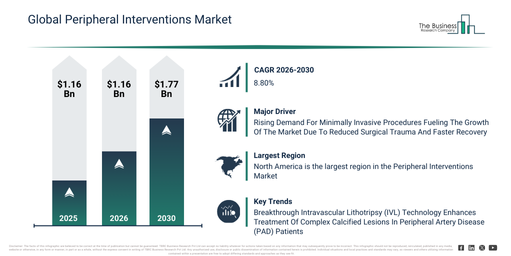
    The peripheral interventions market size has observed substantial growth over recent years. It is projected to increase from $10 billion in 2025 to $10.91 billion in 2026, achieving a compound annual growth rate (CAGR) of 9.1%. This historical growth can be linked to factors such as the rising incidence of peripheral artery disease, an aging demographic experiencing vascular disorders, breakthroughs in catheter-based technologies, heightened clinical understanding of limb ischemia, and improved reimbursement for endovascular procedures.

    The peripheral interventions market size is projected to experience substantial growth in the upcoming years. It is foreseen to expand to $15.28 billion by 2030, achieving a compound annual growth rate (CAGR) of 8.8%. This expansion over the forecast period can be attributed to the increasing preference for minimally invasive treatments, advancements in stent and guide wire technology, the proliferation of ambulatory surgical centers, escalating healthcare spending in emerging markets, and a growing demand for quicker recovery procedures. Significant trends anticipated during the forecast period involve a shift towards minimally invasive peripheral procedures, the rising adoption of drug-eluting and covered stents, increased utilization of image-guided endovascular interventions, a surging demand for atherectomy and thrombectomy devices, and the expansion of peripheral interventions into outpatient settings.

    Access Your Free Sample Report for In-Depth Market Insights:

    https://www.thebusinessresearchcompany.com/sample.aspx?id=25871&type=smp

    Which Drivers Are Impacting The Competitive Landscape Of The Peripheral Interventions Market?

    The peripheral interventions market is anticipated to expand due to the increasing demand for minimally invasive procedures. These procedures refer to medical techniques that involve performing surgeries or interventions through small incisions or natural body openings, resulting in less trauma, reduced pain, and faster recovery compared to traditional open surgery. The increase in minimally invasive procedures is driven by advancements in medical imaging and surgical technologies that enhance precision and safety during operations. Peripheral interventions assist minimally invasive procedures by enabling targeted treatment of vascular conditions through small incisions, thereby reducing the need for open surgery. For instance, in June 2024, according to the American Society of Plastic Surgeons, a US-based professional organization, the total number of minimally invasive procedures performed in 2023 reached approximately 25.4 million, reflecting a 7% increase compared to 2022. Therefore, the rising demand for minimally invasive procedures is driving the growth of the peripheral interventions market.

    What Leading Segments Are Studied In The Peripheral Interventions Market?

    The peripheral interventions market covered in this report is segmented –

    1) By Product Type: Catheters, Sheath, Stents, Guide Wires, Atherectomy Devices, Embolic Devices, Thrombectomy Devices, Inferior Vena Cava (IVC) Filters, Other Types

    2) By Technology: Drug-Eluting Stents, Balloon-Expandable Stents, Self-Expanding Stents, Rotational Atherectomy, Directional Atherectomy

    3) By Application: Peripheral Artery Disease, Venous Thromboembolism, Other Applications

    4) By End User: Hospitals, Ambulatory Surgical Centers, Clinics, Specialty Vascular Centers

    Subsegments:

    1) By Catheters: Angiographic Catheters, Balloon Catheters, Guiding Catheters, Support Catheters

    2) By Sheath: Introducer Sheaths, Guiding Sheaths

    3) By Stents: Bare Metal Stents, Drug-Eluting Stents, Covered Stents, Self-Expanding Stents, Balloon-Expandable Stents

    4) By Guide Wires: Hydrophilic Guide Wires, Nitinol Guide Wires, Stainless Steel Guide Wires

    5) By Atherectomy Devices: Directional Atherectomy Devices, Rotational Atherectomy Devices, Orbital Atherectomy Devices, Laser Atherectomy Devices

    6) By Embolic Devices: Embolization Coils, Embolic Protection Devices, Liquid Embolic Agents

    7) By Thrombectomy Devices: Mechanical Thrombectomy Devices, Aspiration Thrombectomy Devices, Rheolytic Thrombectomy Devices

    8) By Inferior Vena Cava (IVC) Filters: Permanent Filters, Retrievable Filters

    9) By Other Types: Vascular Closure Devices, Hemostatic Agents, Guide Catheter

    Which Market Trends Are Opening Growth Opportunities In The Peripheral Interventions Market?

    Leading companies within the peripheral interventions market are focused on developing innovative solutions, such as peripheral intravascular lithotripsy catheters, to improve the safety and efficacy of treating calcified peripheral artery disease. These peripheral intravascular lithotripsy catheters are devices that employ sonic pressure waves to break apart calcified plaque in peripheral arteries, thus making angioplasty or stent placement procedures easier and safer. For instance, in March 2025, Shockwave Medical Inc., a US-based medical device company, launched the Shockwave Javelin Peripheral IVL Catheter. This novel forward IVL platform is designed to treat patients with peripheral artery disease (PAD) who present with difficult-to-cross, heavily calcified lesions. This advanced catheter features a 150 cm working length and a single distal emitter that delivers up to 120 shockwave pulses, creating a spherical energy field that modifies calcium and enables the device to cross extremely narrowed or occluded vessels where other devices might fail. Clinical trials have demonstrated that Javelin maintains a safety and effectiveness profile comparable to existing balloon-based IVL catheters, offering a transformative approach to treating complex calcified peripheral lesions and improving procedural success for PAD patients.

    Which Key Market Players Are Investing In Expansion And Innovation Within The Peripheral Interventions Market?

    Major companies operating in the peripheral interventions market are Abbott Laboratories, Medtronic plc, Boston Scientific Corporation, Johnson & Johnson, Terumo Corporation, B. Braun Melsungen AG, Nipro Corporation, Teleflex Incorporated, Cook Group Incorporated, Merit Medical Systems Inc., Lepu Medical Technology Beijing Co. Ltd., Cordis Corporation, MicroPort Scientific Corporation, Penumbra Inc., W. L. Gore & Associates Inc., Reflow Medical Inc., ArtVentive Medical Group Inc., AngioDynamics Inc., Cook Medical Inc., BD Bard Peripheral Vascular Inc., Endologix Inc., Cardiovascular Systems Inc., Surmodics Inc.

    Access The Complete Report For Deeper Market Insights:

    https://www.thebusinessresearchcompany.com/report/peripheral-interventions-global-market-report

    Which Regions Are Projected To Dominate The Peripheral Interventions Market In The Coming Years?

    North America was the largest region in the peripheral interventions market in 2025. Asia-Pacific is expected to be the fastest-growing region in the forecast period. The regions covered in the peripheral interventions market report are Asia-Pacific, South East Asia, Western Europe, Eastern Europe, North America, South America, Middle East, Africa.

    Request Your Customized Peripheral Interventions Market Research Report for Competitive Advantage:

    https://www.thebusinessresearchcompany.com/customise?id=25871&type=smp

    Browse Through More Reports Similar to the Global Peripheral Interventions Market 2026, By The Business Research Company

    Interventional Oncology Devices Global Market Report 2026

    https://www.thebusinessresearchcompany.com/report/interventional-oncology-devices-global-market-report

    Peripheral Neuropathy Global Market Report 2026

    https://www.thebusinessresearchcompany.com/report/peripheral-neuropathy-global-market-report

    Peripheral Nerve Injuries Global Market Report 2026

    https://www.thebusinessresearchcompany.com/report/peripheral-nerve-injuries-global-market-report

    Get in touch with us:

    The Business Research Company: https://www.thebusinessresearchcompany.com/

    Americas +1 310-496-7795

    Asia +44 7882 955267 & +91 8897263534

    Europe +44 7882 955267

    Email us at info@tbrc.info

    Follow us on:

    LinkedIn: https://in.linkedin.com/company/the-business-research-company